
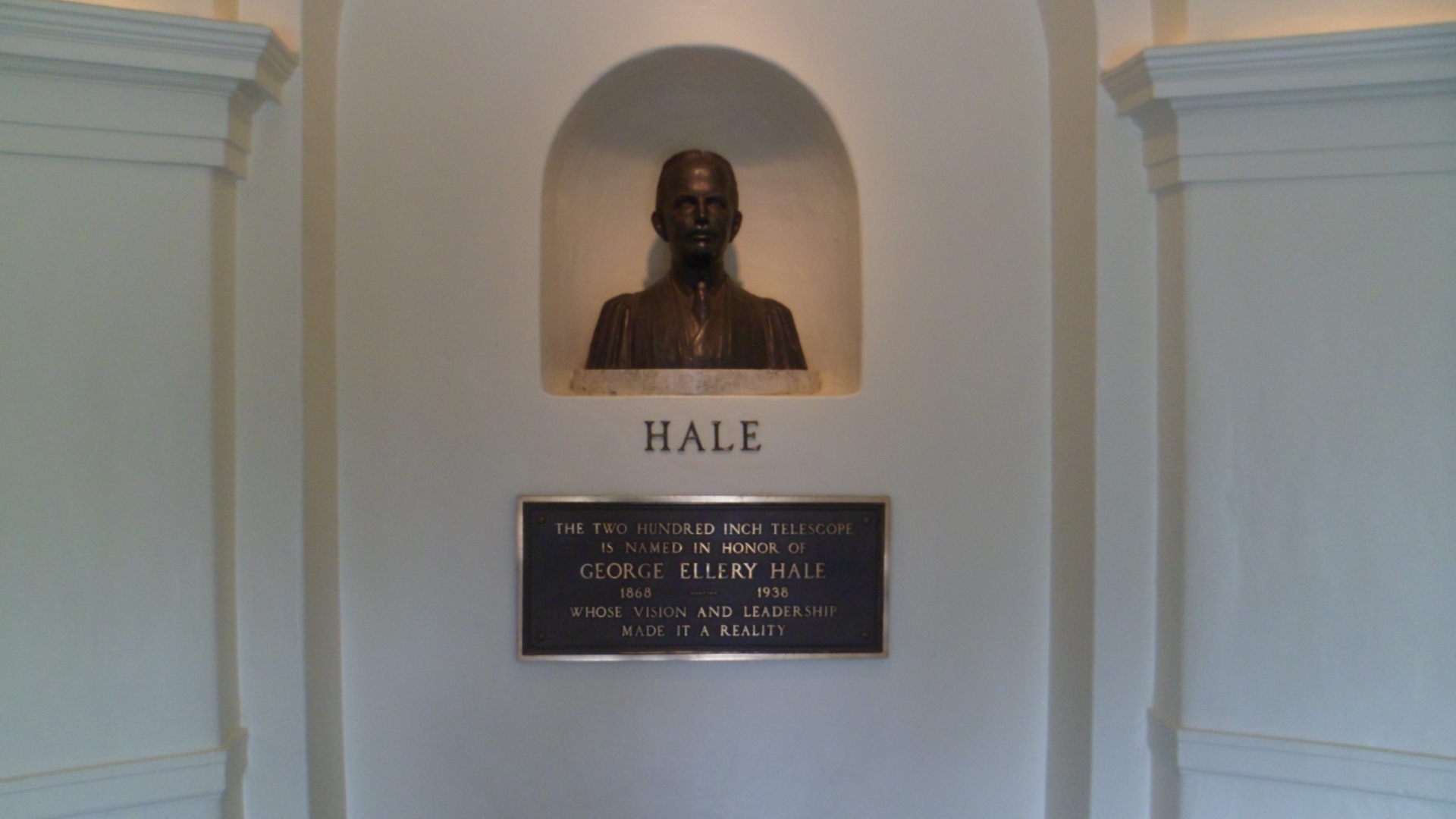
March 11, 2015, Palm Desert- After a restful night under the stars at Oak Grove Campground, near Aguanga, CA, I made the drive back up to Palomar Mountain, and the Caltech Observatory. The story of this first great West Coast astronomical site is the story of George Hale, its first chief astronomer;
 of Kurt Zwicky and Maarten Schmidt, who developed telescopes and focused on far-flung galaxies;
 and of Eleanor Helin.

“Glo”, as she was endearingly called by her co-workers at Palomar, had an intense focus on asteroids. Her Near-Earth Asteroid Tracking project resulted in the discovery of 872 asteroids, including # 3267, which was named Glo, in her honour. Because of her work, which ended only with her passing in 2009, NASA has summoned enough interest within its ranks to have sent probes to the Kuyper Belt, and has found such orbs as an asteroid with its own moon, a find which surely must delight “Glo”, in the Spirit Realm. She deserves to be in the ranks of all those women who inspire girls to pursue their dreams, regardless of the heights those dreams seek to reach.
I spent about ninety minutes walking and reading in the Observatory Museum (Here is the original 1930 telescope, made by Bernhardt Schmidt). and the Gallery, on the first two floors of the Observatory itself, then took in the surroundings.

Here is the Hale Telescope’s home.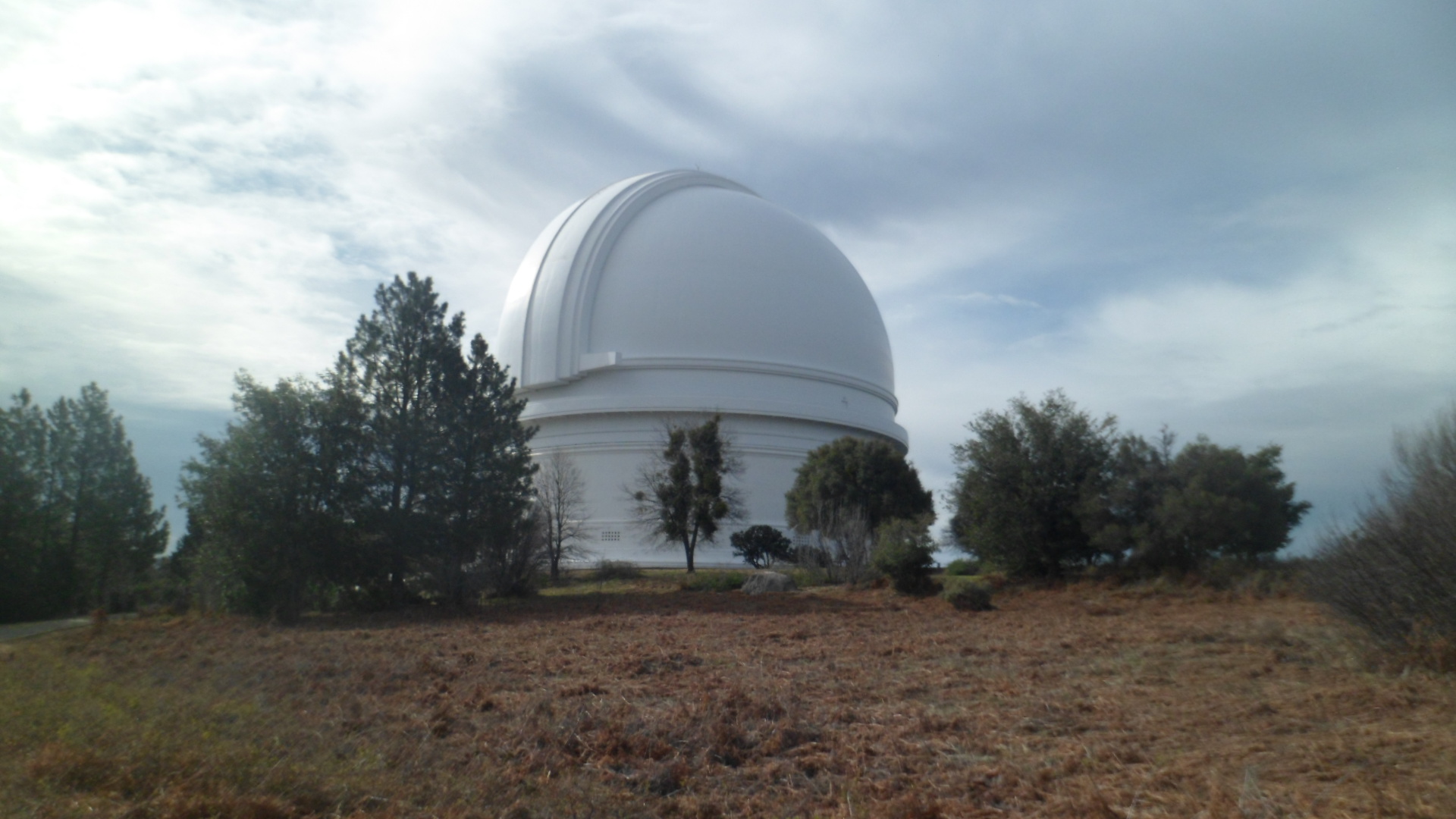
This small telescope, off-limits to the public, is ancillary to the Hale Telescope’s work.

I spent a few minutes afterward, checking out the base of a California Live Oak, and observing woodpeckers at their craft, in the picnic area.


On the way down the mountain, there is a memorial to a firefighter from Picuris, NM, who was one of those killed in the 1999 La Jolla Fire, so-named for its devastation of the nearby La Jolla Reservation, of the Luiseno people.

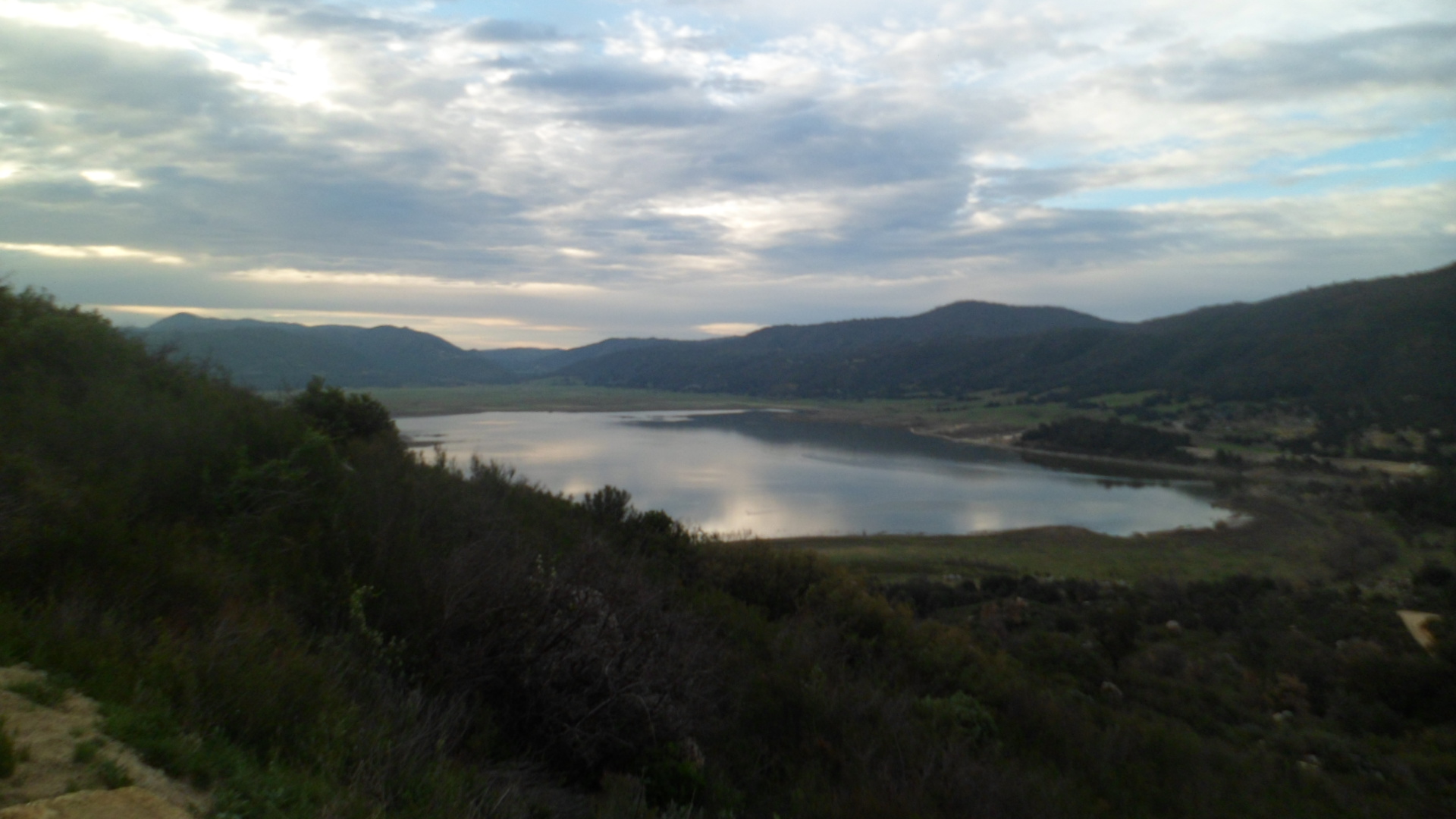
An overlook near the memorial shows the outline of the Laguna and Cuyamaca Mountains, which comprise San Diego’s highest peaks.
Near the area leading east to the Colorado Desert, lies Lake Henshaw, a reservoir behind an earthen dam, that draws birds and sportsmen alike.
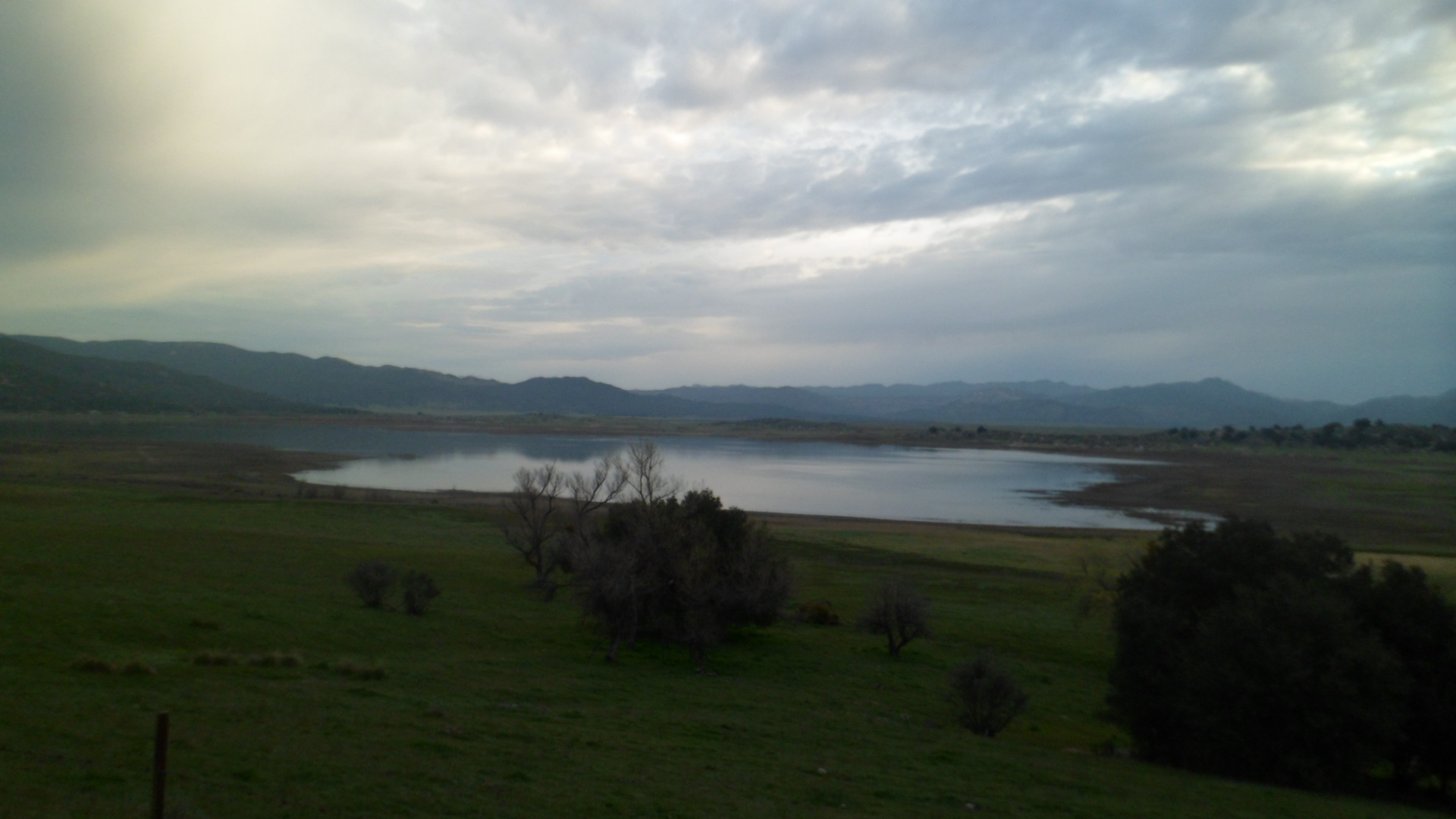

The desert emerged, about an hour or so later, after I navigated a seven-mile series of switchbacks, through the San Jacinto Wilderness.

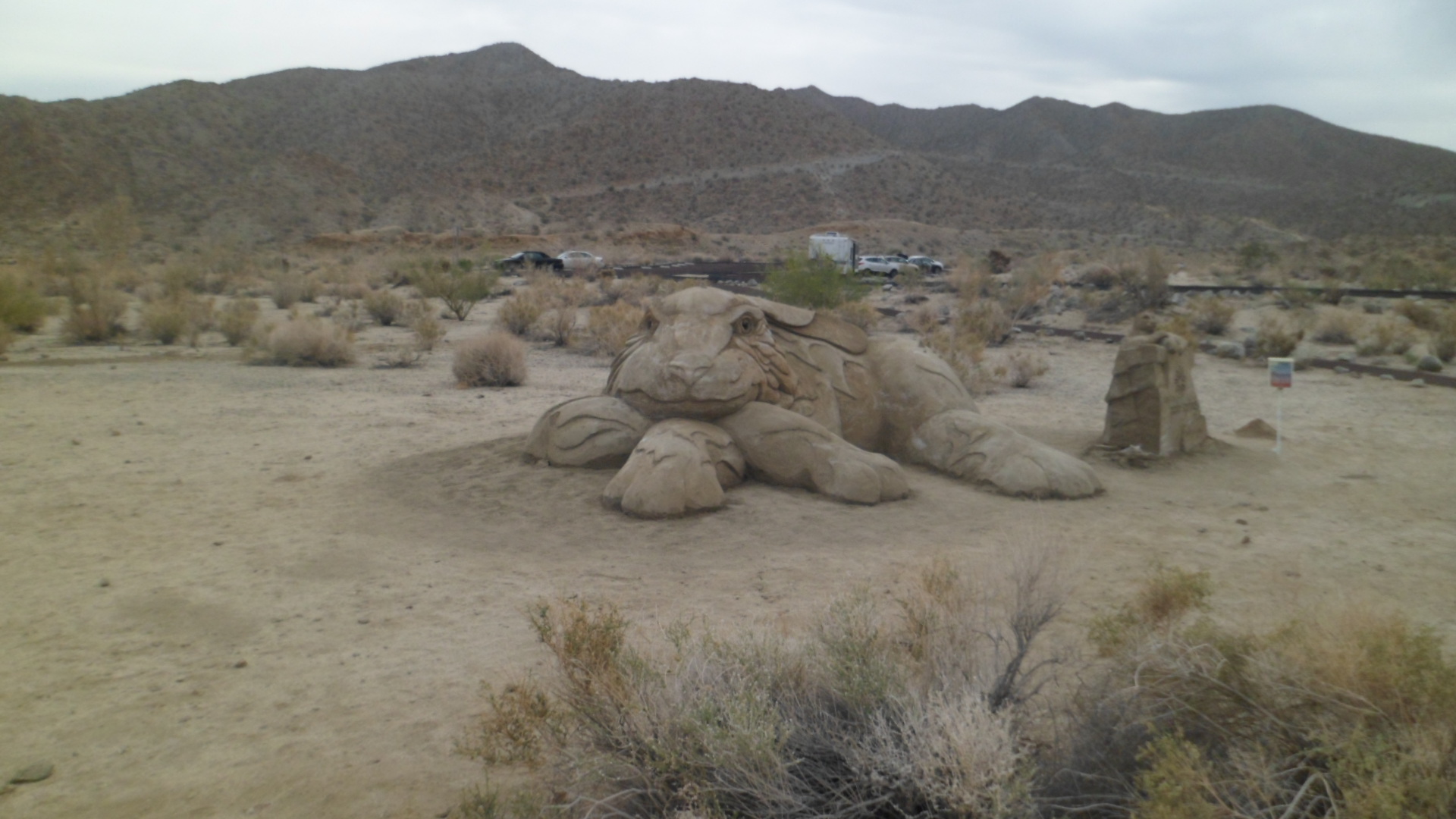
At the San Jacinto Visitor Center, I was greeted by a pleasant-looking jackrabbit.
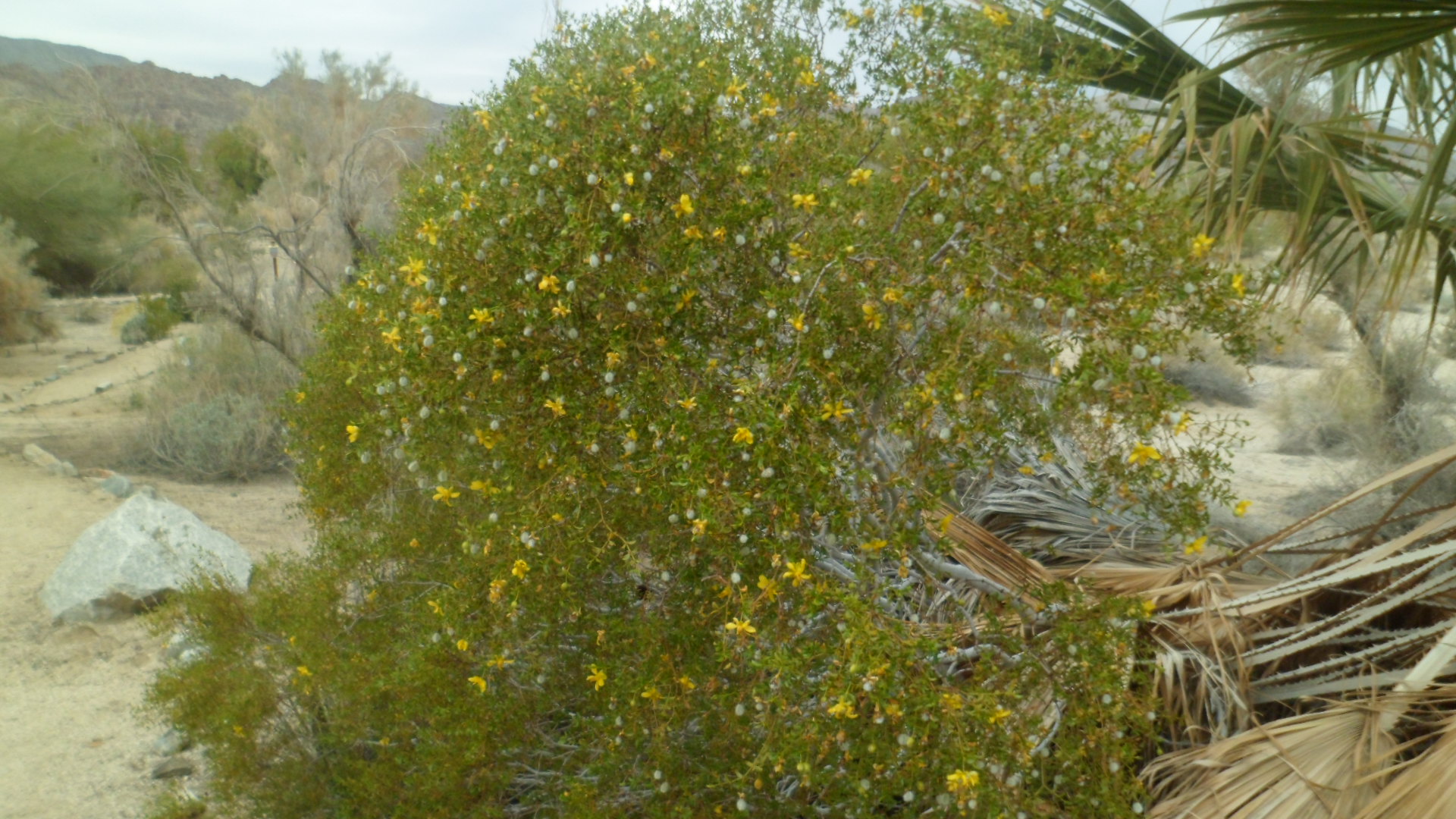
Creosote and primrose are blossoming.
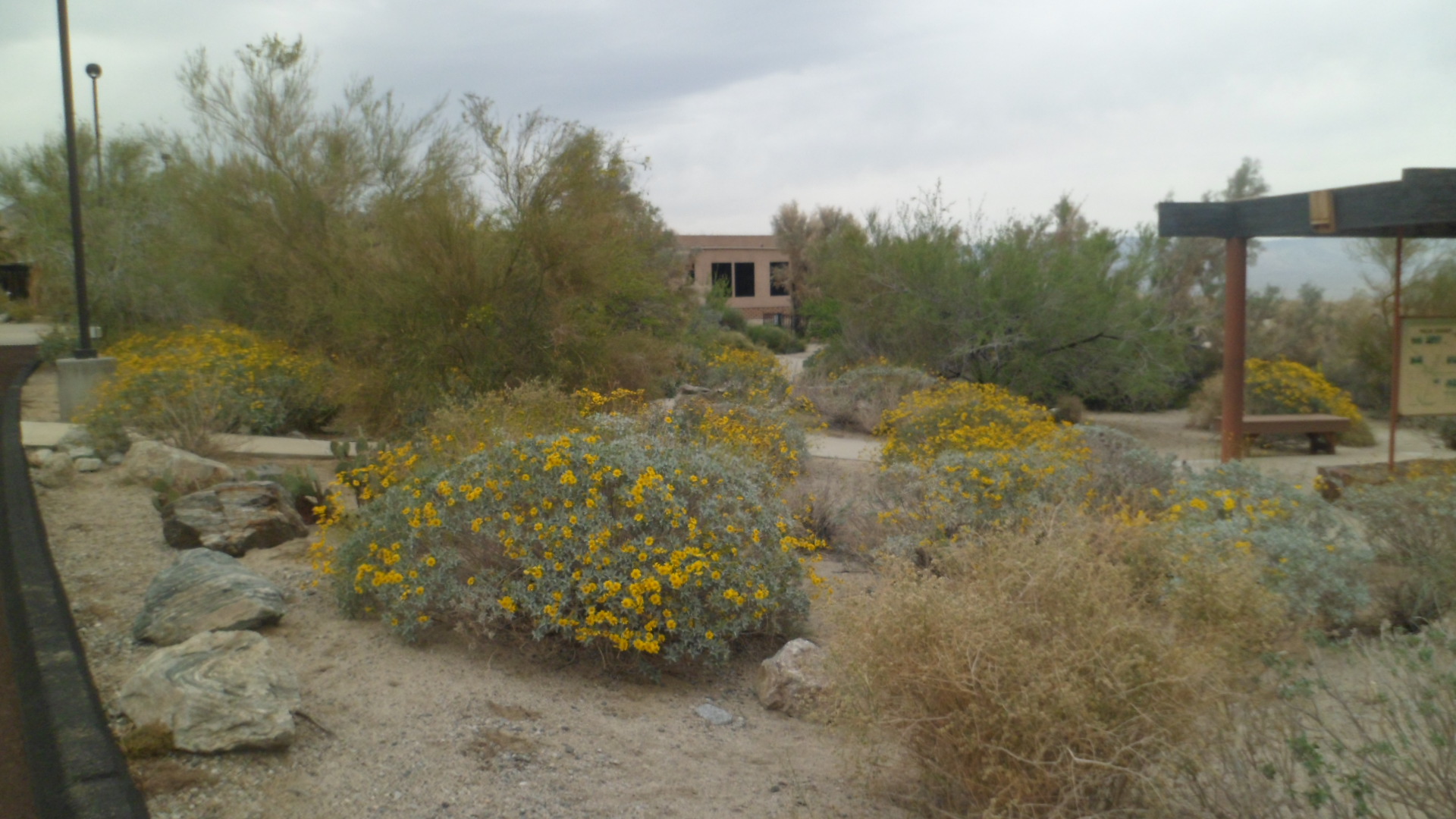
The smoke trees, though, do not.

With the Visitor Center closed, due to illness, I headed the rest of the way back to Prescott- and 2 1/2 months or so of working to replenish my resources.
 A Sagittarian Seeker
Beautiful shots, Gary. 🙂 And I love the information about it.
This must have been a very adventurous outing.
LikeLike
It was, as they all tend to be.
LikeLike
It’s cool the way that tree has grown over the rocks. It must be very old. Thanks for the info about the observatory. I find space to be endlessly fascinating.
LikeLike
Palomar was the first observatory my wife and I visited, back in 1982. Yep, space is limitless!
LikeLike
Nice shots of Palomar, and interesting about Glo Helin — she must have died about the time I was last up at the observatory! I’m delighted by the shrine for the fallen firefighter — and the evidence of so many visitors honoring him. Aguanga is a part of the desert I’ve never visited — yet it looks remarkably similar to those I have 🙂 ! And Lake Henshaw looks remarkably green — were there cattle there?
LikeLike
I didn’t see any cattle by the lake, but there was a herd in the meadow near the resort.
LikeLike