The Fable of the Carrots

0

May 13, 2026- I read this to Hana this afternoon. “Once there was a rabbit who had gathered so many carrots, that he had no room in his house. He went about, asking his friends for a place to sleep.” Long story short, he crowded a turtle, a bird and a beaver out of their homes, as he brought many of his carrots along with him. Eventually, he brought his friends with him back to his house, and shared the carrots with them.

She will hear this story again and again, as her parents and I teach her about the importance of not hoarding, and of sharing. She sees us sharing, constantly, so it will not come as a surprise to her that this is expected.

I thought, after the activity, of the dynamics of hoarding; of how it reflects the insecurity of the person amassing, whether it is of money, land, or physical items. The rabbit in the story had so many carrots with him that the branch, on which the bird’s nest sat, broke and the beaver’s house became top-heavy from the overload, and fell into the river. Is the excess of wealth that we see among the oligarchs not the same?

To a certain extent, no one can assess for another, as to how much the other person needs, but billions of dollars are like the carrots in the fable: Both an unwieldy burden and a nuisance to those around the owner. The rabbit ends up deciding to share his excess, to make it up to his friends. Some billionaires have made similar decisions; others give a fair amount of money away to charity, each year, and share with loved ones. The hoarders, though, are going to be faced, sooner or later, with the sky high pile that poses more problems than it relieves.

I am waiting to see who will end up in which group-sharer, or hoarder?

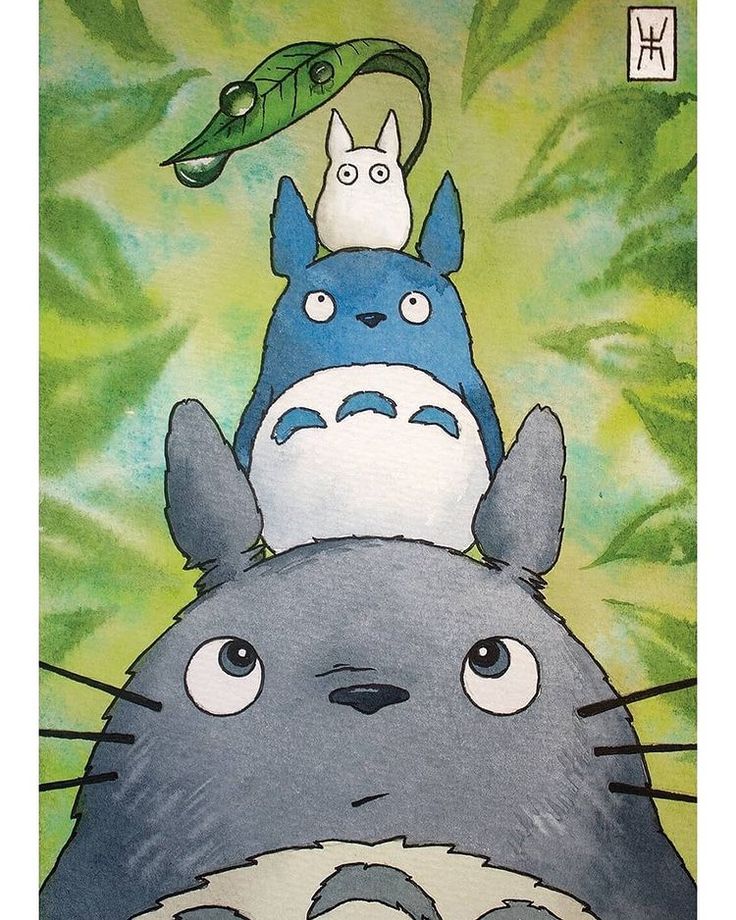
The Totoro Wallpaper

0

May 12, 2026- Hana’s mother has been very busy, these past two days, receiving and arranging two boxes of books, and carefully putting a mural of the Japanese character Totoro and his friends on the wall of Hana’s play area. My curious granddaughter now has friendly faces upon which to gaze, when she looks upon the wall, while resting from all the crawling she’s been doing.

Above, are Totoro (bottom) and his two rabbit friends, who are called “Smaller Totoros”.

I am getting a quick education on popular Japanese cartoon characters. Others, who have their own plush toys, include Pompomporin, a dog who likes caramel pudding; Hello Kitty; My Melody ( a rabbit); Kerokerokeroppi ( a frog) and My Sweet Piano (a sheep), These are Sanrio characters. There are also many Pokemon plush toys, including the ubiquitous Pikachu, who is, of course, a pika. With these characters, and more, Hana will be able to let her imagination run wild. I look forward to her weaving stories, in her toddler and middle childhood years.

All this is actually a balm for me as well. Paying attention to the goings on outside these four walls, I almost think the anime world is saner. I know that all that is going wrong will fall away, in time, yet I want to keep my granddaughter’s world as innocent as possible, while her character forms.

Magical Thinking

0

May 7, 2026- Hana pushes herself to reach certain places on her crawling mat, but was showing a bit of frustration at being limited to the same route, day after day. It was time for another segment, so down went the multi-modal quilt, with its alphabet, colour bar, shapes and illustrations of animals and objects. This doubled the area that she has to navigate, and she took to it right away.

My granddaughter had been acting as if she should be able to go through walls or pieces of furniture, getting frustrated at this also, so Papa has the task of gently encouraging her to turn, when confronted with a barrier. I even showed her that my almighty self can’t go through a wall, which she found amusing, while getting the point.

Many of the old stories I am reading her now, European fairy tales, present magical solutions to harrowing scenes. I choose to focus more on the character-building elements that are embedded in the tales, rather than the amazing feats of derring do. It only touches a slight level of her consciousness, of course, but I can recall, from my own toddlerhood, having a sense that I had heard stories that pointed the way to correctness, even earlier in my life. So, we go down this path together, She will retain what sticks in her mind and re-learn the rest later.

Much magical thinking comes from being used to having certain things happen almost instantaneously- like fast food being prepared and served in minutes, or AI popping up with answers to questions, in mere seconds. Another friend, examining the matter, points out that experiencing something, even several times, does not mean that it will be integrated with one’s psyche or behavioural repertoire. “I spent a week in Sweden” hardly qualifies me to claim any more than cursory knowledge of the country and its people. “I changed the spark plugs in my Ford LTD, back in 1975”, does not make me anywhere near a skilled auto mechanic. It is integration, not encountering, that determines the level of any change one wishes to see in life.

There is also a larger process at work, sometimes called “the arc of history” and in other forums, “the Major Plan of God”. We on the ground can only understand a smidgen of it, but here’s the thing: Just as a motor vehicle can go either forward or in reverse, it moves most efficiently forward. Reverse is meant only for short distances, like backing out of a parking space, or going a few yards back to where a loved one is waiting to communicate a last-minute thought. Going backwards in society can only be temporary, mostly to correct errors made in moving ahead too quickly. It cannot be done with a view towards reinstating the “Golden Days of Yesteryear”.

I will have more to say about this in an upcoming post.

Brevity and Longevity

0

May 2, 2026- If I live to be 100, or longer, it may well be partly due to the things in which I invest time and energy. Certainly, being fully involved in the life of my grandchild has a part to play. So does any exercise or even resuming travel again, once Hana is of school age and her parents have earned vacation time. Diet also comes into play.

Then, there is the reading material in which I invest time. I am rediscovering classics, in my choice of what to read to Hana. I have read her “Heidi” and am currently reading her “The Red Pony”, by John Steinbeck. It’s a bit tougher than Johanna Spyri’s classic,and shows a different way of looking at life’s challenges. She will only have a slight sense of the mood of the story, so I am not concerned with its effects. I will revert more to more conventional children’s works, going forward, as her awareness grows and she actually starts asking questions. That day is coming faster than some of you may think.

My personal reading, both print books and long form Substack pieces, is also going to keep the gray matter oiled and lubed. Both media are comprised of thought=provoking pieces. I am presently reading “The Beginning Comes After The End”, by Rebecca Solnit and “The God of the Woods”, by Liz Moore. Substack sites range from “The Hungary Report” and “Life Intelligence” to “The Gut Check Guy” and “The Good Men Project”. There are a total of ten sites, not all of which show in my feed every day.

Many people opt for the fast food of journalism: Reels and clips. The problem I have with high brevity is that only part of any given story is presented. Then there is a hint, “Click to continue”, which the one time I fell for it, I was asked to subscribe to the reel’s host site-big bucks for the equivalent of a Big Mac.

Brevity has its place, but the maintenance of a well-oiled thinking machine needs a considerably higher-level investment. I may not be digging into “War and Peace” anytime soon, but long-form is a better investment of time and energy.

The New Tar Baby

0

March 24, 2026- In the late Nineteenth Century, Joel Chandler Harris compiled a host of stories told by enslaved Blacks in the rural South, featuring anthropomorphized animals ( a fox, a rabbit and a bear). One of these stories involves the devising of a doll made of tar and turpentine by Br’er (“brother”) Fox, to trap Br’er Rabbit. When the rabbit perceives self insulted by the real-life looking doll, he attacks it and gets stuck. (I acknowledge that some see the likeness of the Tar Baby to a Black person, but that is not my intent here. Bear with me.)

The present class of international oligarchs is extremely thin-skinned, almost to a one. There are laws on the books, in many countries ruled by an oligarchy, that prohibit criticism of the leader. Some even prescribe the death penalty for such criticism. These oligarchs are akin to Br’er Rabbit, in the above-mentioned story. The Tar Baby is almost always an attractive ruse, set forth by an opposing force (the Br’er Fox of the situation.)

Here we are, in the early part of 2026. and the Tar Baby of the Iranian Revolutionary government has been used by one set of oligarchs to draw in another. Here is Vladimir Putin, as Br’er Fox, drawing in not one, but two Br’er Rabbits-Donald Trump and Benjamin Netanyahu- by standing on the sidelines and daring them to take action against the Iranians. This is not the first time that a trickster has gotten the goat of a hubris-laden elitist.

Will either of them call his bluff and ask to be “thrown into the briar patch”(Br’er Rabbit’s counter gambit, in the series)? The briar patch would be combat with nuclear weapons, so let’s hope not.

The Road to Diamond, Day 250: “Every Story is A Treasure”

5

August 5,2025- I watched a remarkable 2015 Canadian miniseries, “The Book of Negroes”, based on novel by Lawrence Hill, which in turn was based on an actual British Naval record of 3000 freed African slaves who were brought to Nova Scotia and New Brunswick, after the American Revolution.

The story is told through the eyes of an African woman who is also a polymath, at a time when most Africans were seen as illiterate savages, worthy of no treatment better than brutality or manipulation. Aminata Diallo is a fictional character, somewhat inspired by Phillis Wheatly, who was an actual African-American poet of about the time Aminata’s story unfolded. Phillis lived in colonial Massachusetts, while Aminata’s story unfolds in what is now Guinea, then to South Carolina, moving by turns to New York, Nova Scotia, Sierra Leone and London. Actual historical characters General Guy Carleton, Samuel Fraunces and George Washington appear in the New York segment of the story, with Fraunces presented as a mentor and protector of Aminata.

Aminata tells her adult daughter that every story is a treasure, and that even the losses (of which she had several) are worthy of gratitude. Her story does not spare any of the principal forces in the slave trade, yet she faces them all with a life force born in honour. Her fortitude is showcased throughout, and most clearly when she humbles a young slavery advocate during a meeting of the British House of Commons, leading up to the vote to end the slave trade.

A childhood friend remarked to me, about ten years ago, that everyone our age has been through a fair amount of hardship. This is a man who has known quite a bit of success in life, so for him to come forward about the rough patches is quite a revelation. It underscores what Lawrence Hill addresses in his novel, and puts my own highs and lows into perspective. I stopped wallowing in self-pity some time back and can see exactly what Hill’s protagonist is saying.

Those of us who are fully alive have amassed many treasures.

The Road to Diamond, Day 124: Judgment

0

April 1, 2025- I received three unrelated photos from a friend, this evening. There is no context and no explanation; just a puzzle. Maybe that is this person’s idea of an April Fool’s joke. In any case, I pass no judgment on them. They were nice photos, in any case.

People spent the day sending one another outlandish, ludicrous stories. Those who are aware of what day this is, responded with outlandish yarns of their own. It was a good day for such things. Even the stock market told itself everything is pretty much okay. No judgment there; I’ll take the small gains.

There are some judgments that do irk me: The woman with the perfect life, who looks down on mothers with problems; conversely, the “free spirit”, who finds fault with the counterpart who has tied self to a more conventional life; finally, the above-board thug, who makes others toe an untenable line, knowing that when things fall apart, it’ll be the little guys who take the full heat.

Life can be hard. I see those who are struggling, and having been there, I know there is only one way to make things right: Ask how I can be of help, without adding fuel to the guilt fire or toxic liquid to the gallon jug. Expect the person to do something for self, but don’t just sit and watch the writhing, the shaking, the wailing. Know that it is always about more than money, or thoughts and prayers. It is always about heart and soul.

Be A Tiger

4

August 16, 2024- Joseph Campbell, in his 2003 book, Myths of Light, ends his discourse on Eastern religions and thought with the story of “The Tigers and the Goats”. It seems that a pregnant tiger was out seeking food, for herself and her baby. She came upon a herd of goats. Charging and pouncing too hard, she landed roughly, laboured and gave birth, then died.

The goats took pity upon the helpless tiger cub, raised him as one of their own, teaching him to eat grass and bleat. He had no idea there was any difference between him and the goats, though he felt a discomfort. One day, a male tiger came along and charged at the goats, roaring and snarling. The genuine goats scattered, while the tiger-goat stood facing his larger nemesis.

The wise older cat listened, as the tiger-goat explained that he was a grass-eater, a goat. The grown tiger took the juvenile by the neck, led him to a pond and showed him his true likeness. Then he brought his new apprentice to his den, where other tigers were reveling in eating a gazelle they had killed. The young tiger struggled with the meat, but something inside him felt right, and he stayed with the group, learning to seize his true nature.

Each of us should be our true selves. A frugal person, who treasures conserving the best of tradition, cannot pass as a spendthrift or as a free-spirited innovator, without feeling that something is off. Likewise, an innovator, a progressive, fools no one by demanding that tradition be maintained, at all costs. Each can, and hopefully will endeavour to, see the value in what the other is doing, and work to find common ground.

The introvert needs time alone. The extrovert craves company and an expanded network. Most others, like myself, toggle between the two states of being, as ambiverts. Society needs all three personality types.

This is the balance, rooted in the love that was imbued in us by the Divine. We will ever have the process of reaching out, expanding and welcoming more to our circle, then taking time to consolidate and absorb the best of that expansion into our systems.

If you are a tiger, be fierce. If you are an ox, be taurine. If you are a goat, graze peacefully. There is space for all.

Laughter and Forgetting

2

July 13, 2023- Milan Kundera, born and having cut his literary teeth in the place then known as Czechoslovakia, passed to the ethereal realm yesterday, at the age of 94. Best known for his 1984 novel “The Unbearable Lightness of Being”, a unique take on the Butterfly Effect, if you will, examining a world in which conflicting needs-as well as seemingly unrelated events, intertwine.

Kundera’s works, including the 1979 anthology, “The Book of Laughter and Forgetting”, both revel in and bemoan the conflicts that arise between even the most tightly-connected people. It looks at the origins of laughter-which Kundera hints may have been demonic-then was used by angels to mock the devil. In its seven tales, this theme of using something dear to a being, in order to cut him/her down to size, circles and swirls through the plot threads.

Kundera himself started out as an idealist, who saw communism as the great leveler. Once the Soviet behemoth stomped out the reforms of Alexander Dubcek, in 1968, Milan began to openly question his own orthodoxy-even while stubbornly holding to the ethos of grassroots reform. After having lived for a time in France, and seeing that there was much dissatisfaction among the youth there, he began to adopt a far broader perspective on reform, one that transcended any given system that depended on an authoritarian bent, in order to maintain control.

Often in life, we take what offends us, often about ourselves, and project the blemish onto those who challenge us or who have other ways of looking at life, methods which we don’t understand. Kundera tried to hang on to communism, the way some here in America hang on to a view of class or racial dominance and others, a view of a nation that has forcibly overcome its practices that have engendered such domination.

In the end, as I began to note in a conversation which has just started, with a slightly older friend, we can only address the conflict that presents itself in the mirror, and like Milan Kundera, decide which is the best recourse for dealing with it-laughter, or forgetting. Which of these, best melds with atoning for, or changing, those of our thoughts and actions that have caused pain to self and others?

Game Plans

0

August 21, 2022- This evening, I came upon a film called ” A Feral World”, in which a teen boy and a woman have a chance meeting in the wilderness of what looks like the Front Range of Colorado, following a widespread disaster, which has rendered the human race into scattered groups of men, women and children, operating in survival mode. One clever and amoral man has gathered a group of children and teens around him, Fagin-like, and sends them out to scavenge items from abandoned factories and stores, with private homes also on the table. One of these is the daughter of the woman mentioned above, who is in fact searching for her daughter. He sends a swarm of genetically-engineered bees to help the scavengers. The bees can cause a human or animal to become liquefied.

This scenario plays out, in a bittersweet manner. It struck me as similar to several tyrant stories, both real and fictional, which have been in the public view over the centuries. Tyrants who are successful, up to a point, always have a plausible excuse for each of their actions, no matter how vile. They rely on a combination of fear, grooming techniques, deception and deflection of blame-including what is called “whataboutism” . Those who are duped by these tactics are often people who have felt left out of the march of history and progress. They were in the vanguard of the social hierarchy, for a fairly good stretch of time, but find movements to include others, who have a history of deprivation, in society’s path forward to be both incomprehensible and threatening. They fall for the notion of a zero-sum game.

I have sensed, for many years, that including one group in social progress does not mean depriving others. There is no real zero-sum game. Recognizing that we are all essentially worthy of respect and treatment with dignity removes the incentive to follow a person or group which espouses tyranny. Sounds simplistic, I know, but there really is no other way to avoid a stretch of totalitarian rule.