
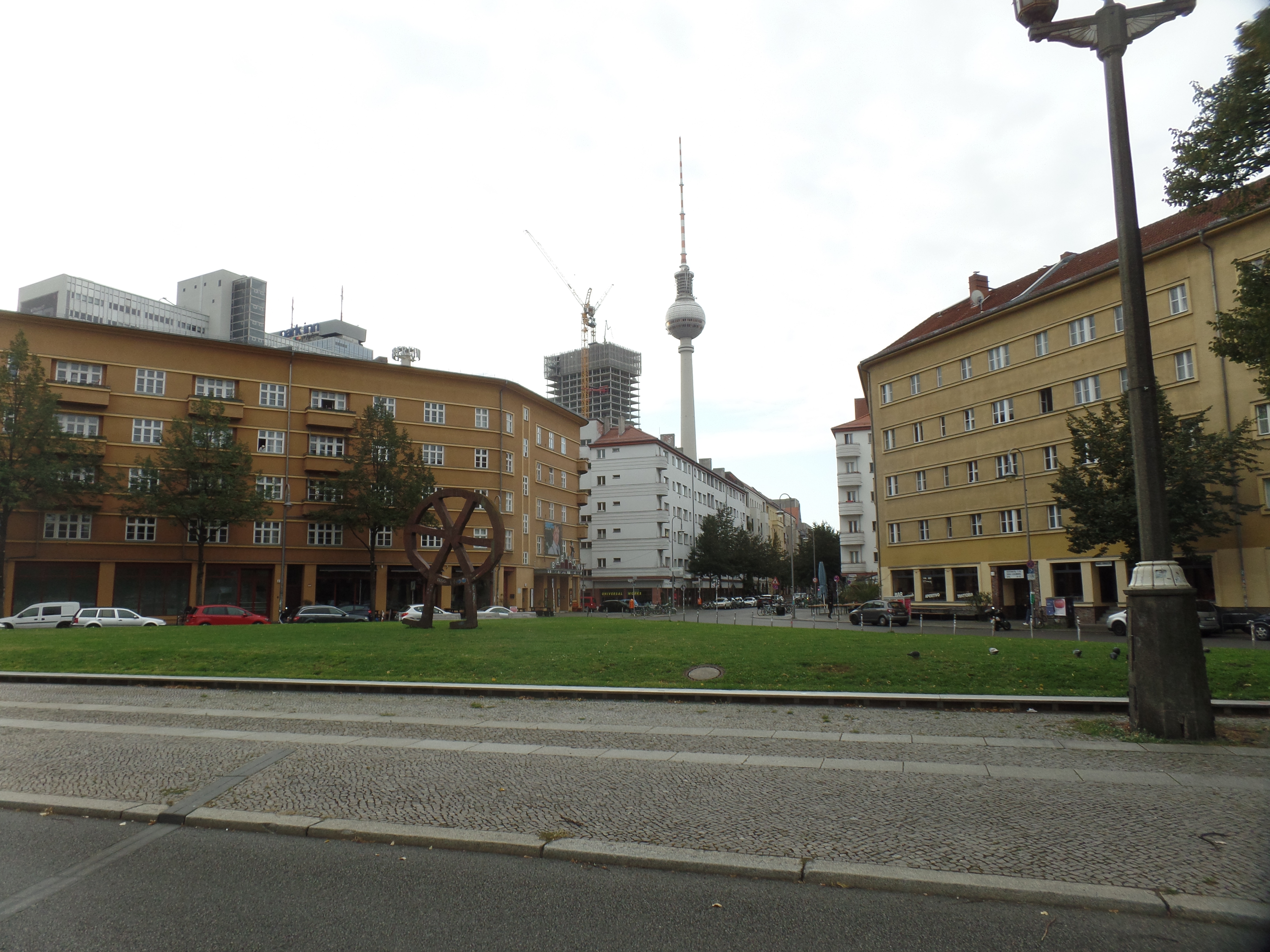
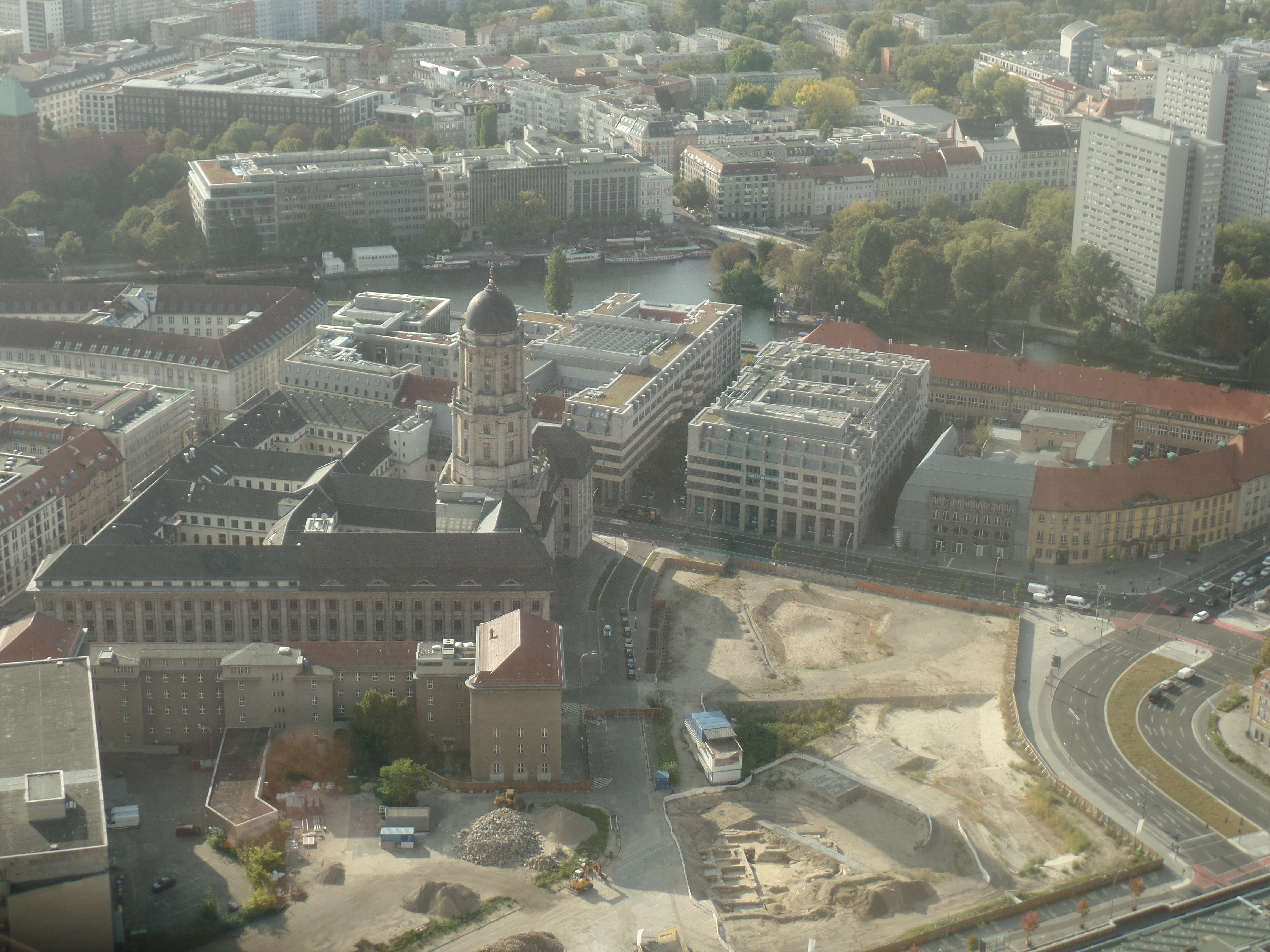
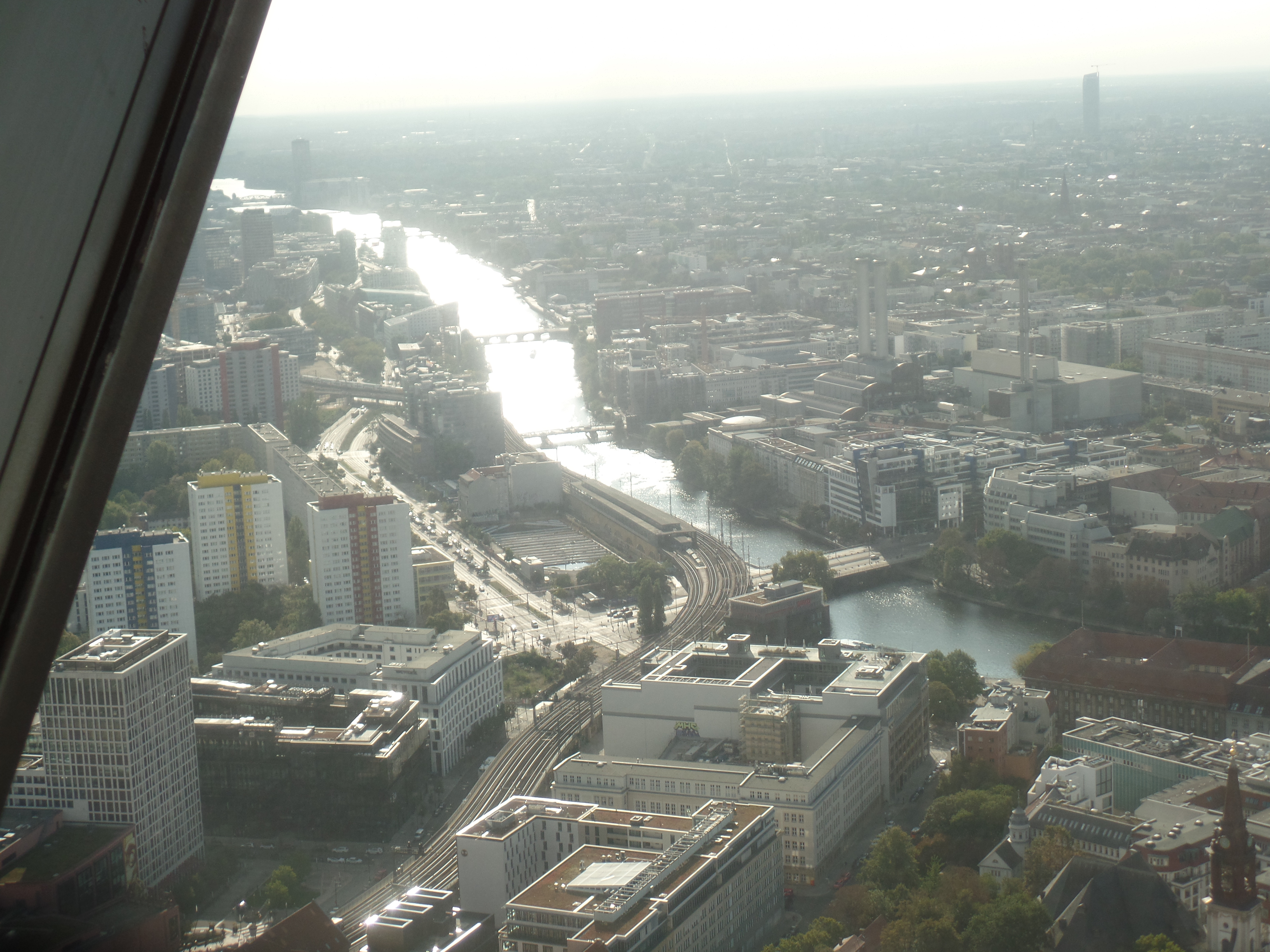
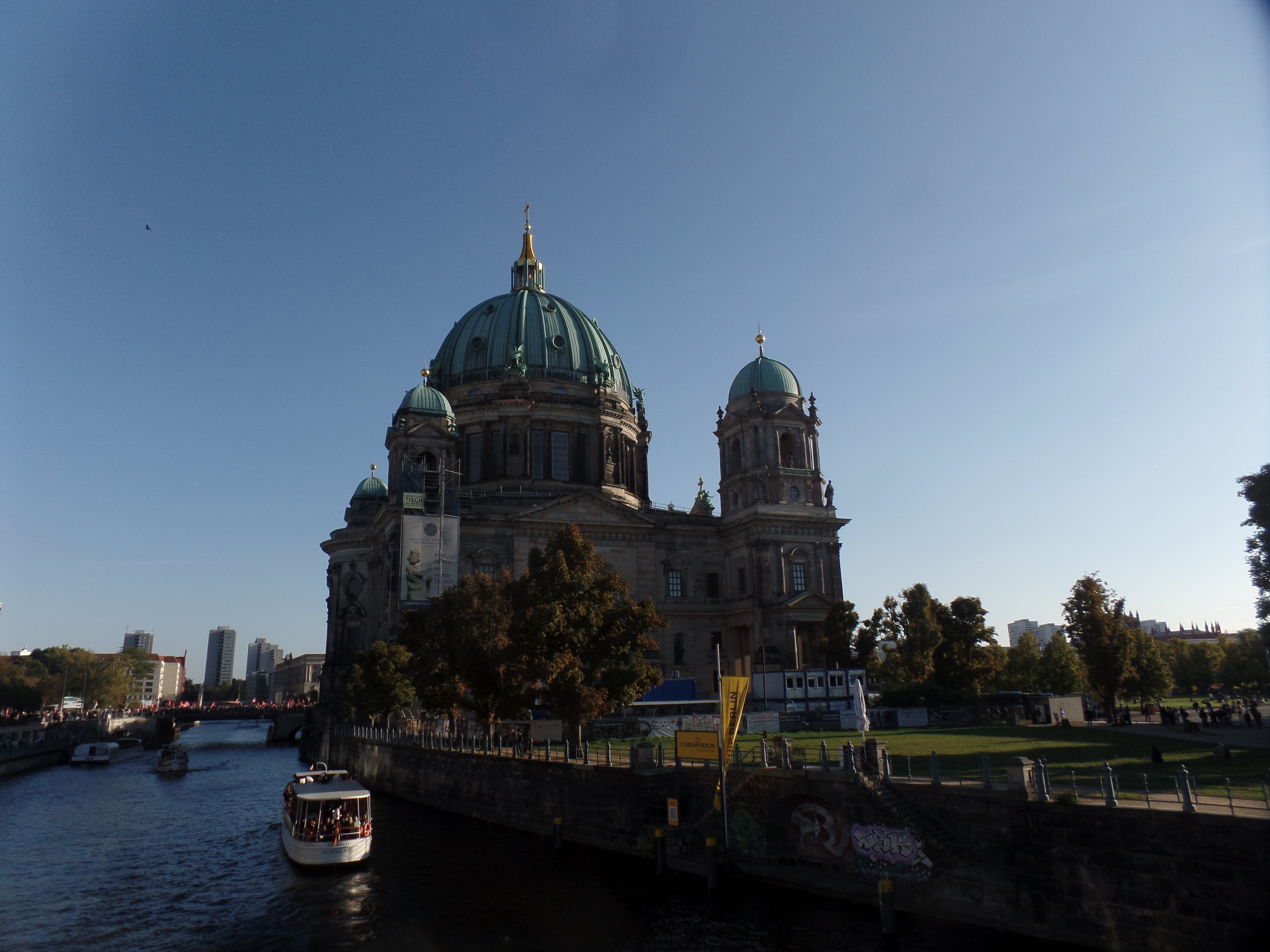
September 27, 2025, Berlin- Today was a momentous day, for both me and for Berlin itself. After breakfast at St. Christopher’s, I headed over to Berlin TV Tower. From the observation deck, on the 21st floor, I had a panoramic view of about half of Brandenburg. The great city never should have been divided, but since it was, there are remnants of the Wall barely visible from this vantage point. Brandenburg Gate is also discernible, to say nothing of the prominent buildings, like Berlin Cathedral (I saw the exterior), St. Nikolai Kirke (also could only view outside) and the Bundestag (off-limits, for the reason I will mention in a bit).
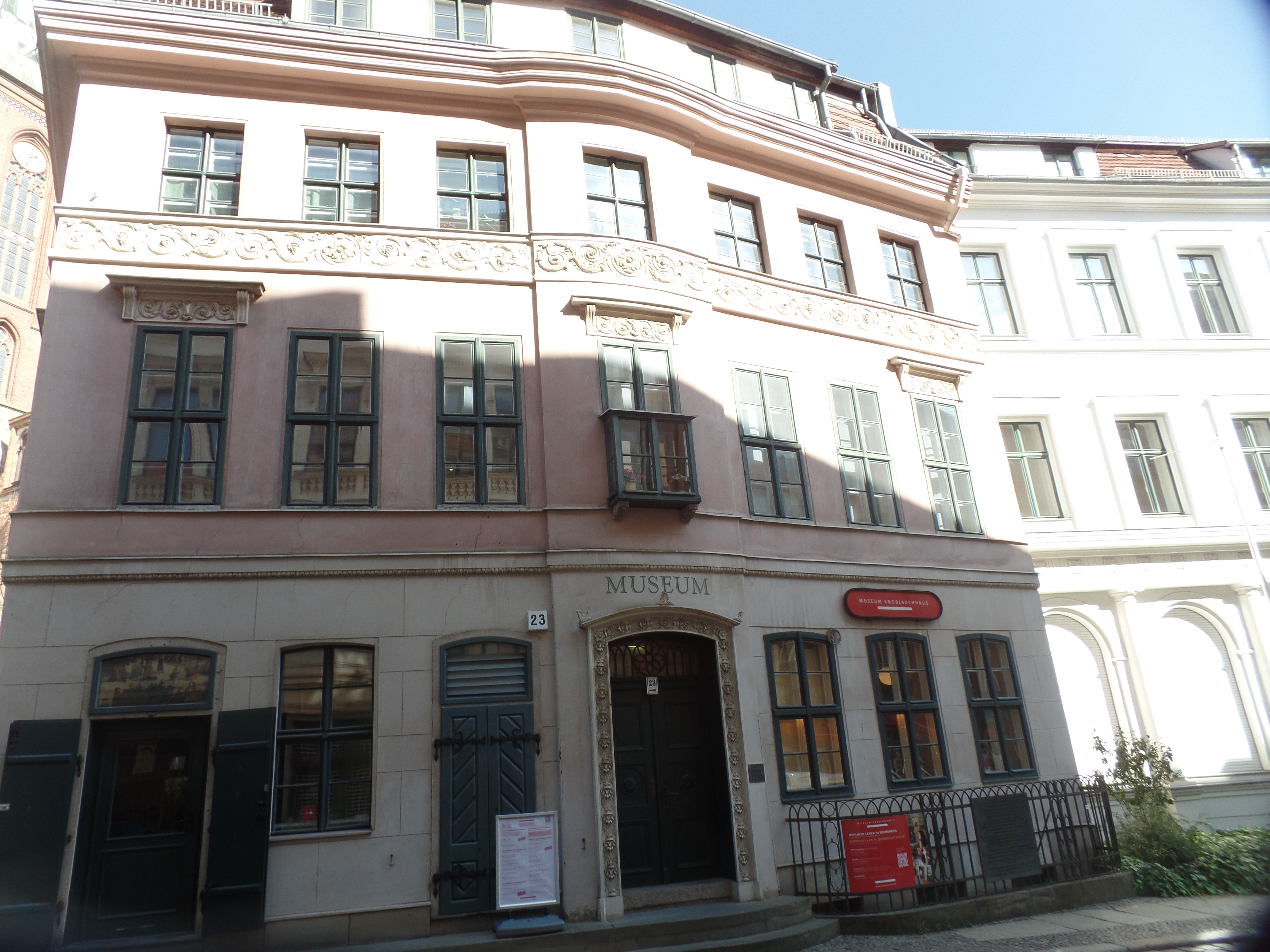
Once down from the tower, I headed to Berlin’s oldest neighbourhood, Nikolai Platz. I spotted the original spelling of the name of some extended family members, attached to the name of a museum, in what is described as Berlin’s oldest standing house, built between 1759-1761. Knoblauchhaus, the creation of Johann Kristian Knoblauch, a merchant of hooks and sockets, and of his builder sons, Carl and Christian. The family business continued, and thrived, under Carl’s watchful eyes. He became friends with several other prominent Berliners, including the brothers Wilhelm and Alexander von Humboldt, whose surname graces the city’s prominent university.
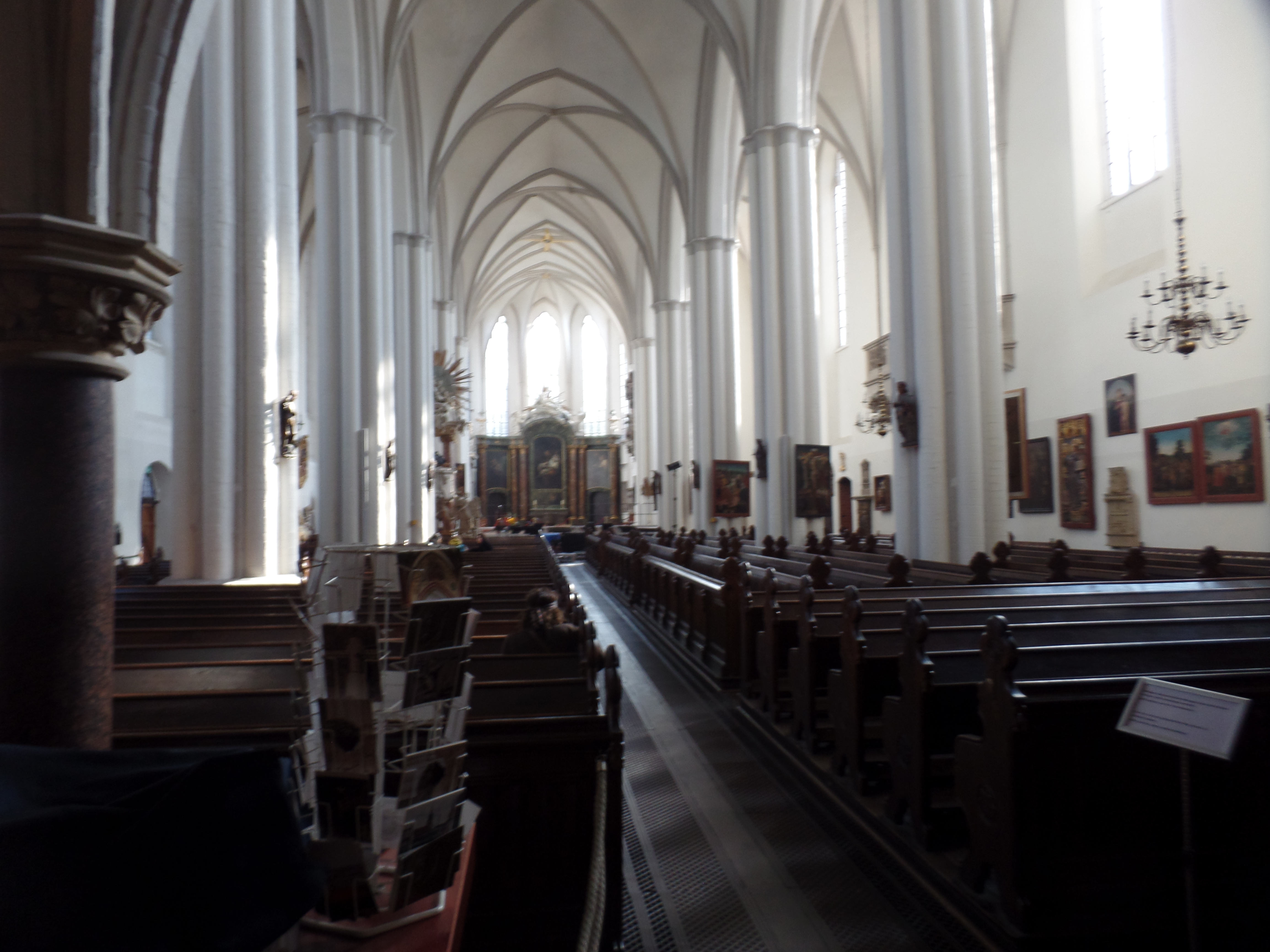
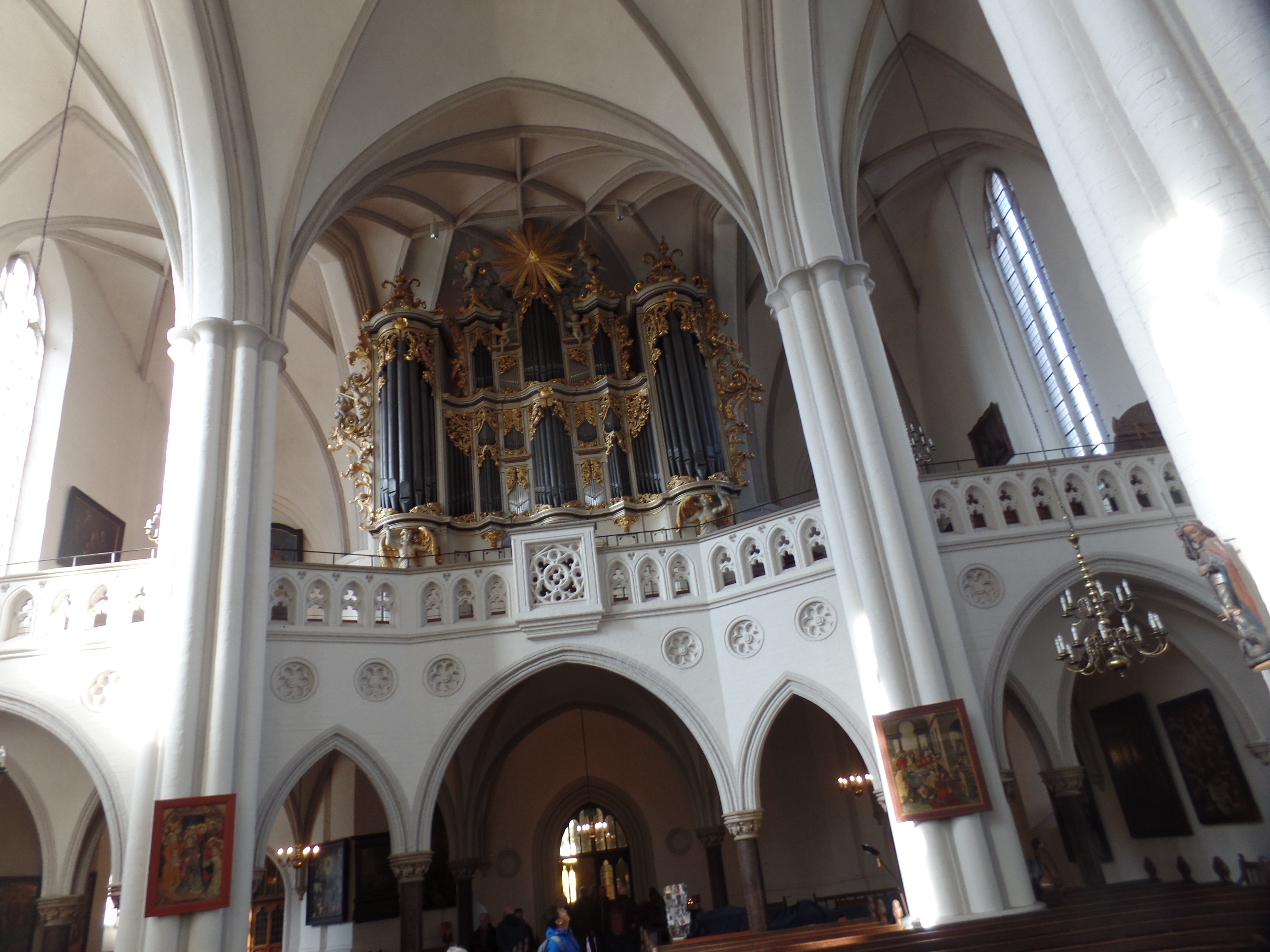
I was able to spend time in Marienkerke(St. Mary’s Church), as the planned demonstrations had not begun to form.

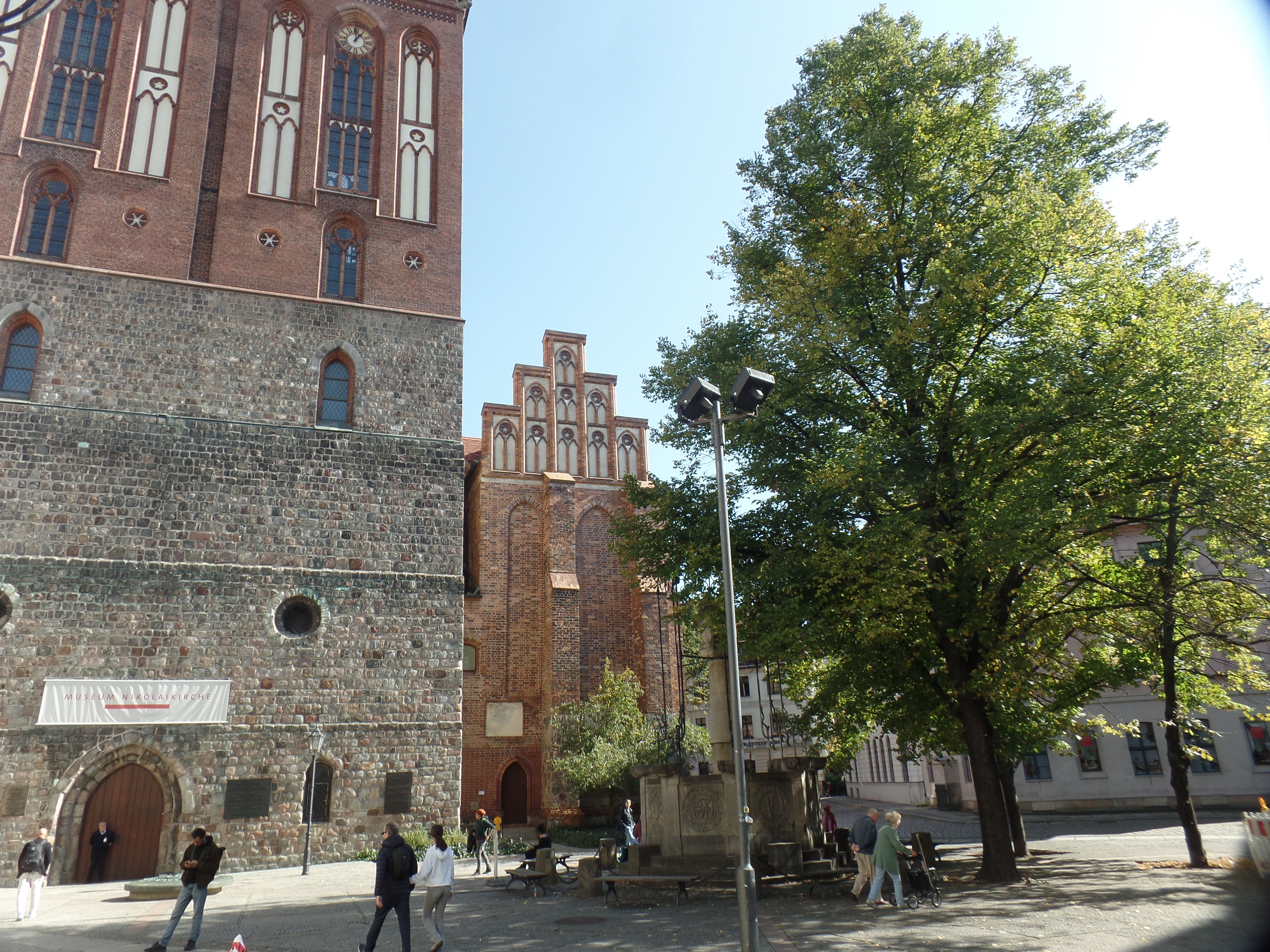
I could not enter St. Nikolaikerke. I was able to visit Museum Knoblauchhaus. I got a lot of insight into one of Berlin’s oldest families, who were merchants, builders and patrons of art and science. They knew the brothers Wilhelm and Alexander von Humboldt, for whom Berlin’s great university is named. (Carl Heinrich) Eduard Knoblauch was an eminent builder in Berlin, in the mid-19th Century, designing and initiating the building of Berlin Synagogue, along with dozens of family homes.
One of the branches of my extended family has a variation of the name, Knoblauch.
I also could not enter the great cathedral, nor could I visit the greater portion of the Museum of German History, because of this: 50,000 people, give or take, were taking part in the largest protest march I have ever witnessed.
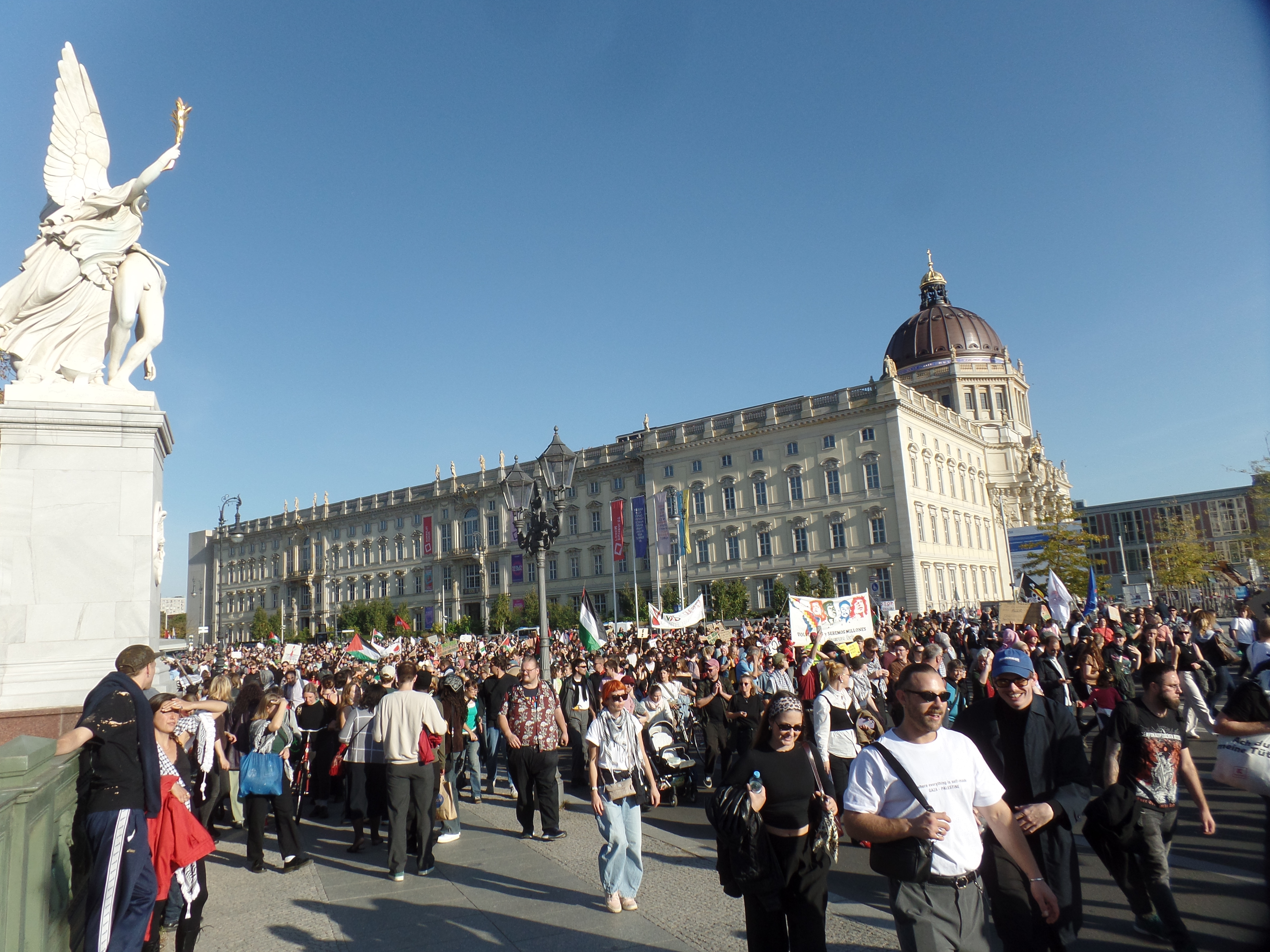
The focus was on Gaza and the ongoing military operation there. Yes, I stayed on the sidelines and minded my business. Besides,the Berlin police were there, peacefully, in force. It remained a peaceful event, from all accounts, but I focused on making my way back to the hostel, after an insightful two hours at two special exhibits of the Museum of German History.
The first exhibit pondered the question, “What if things had turned out differently, in the decades leading up to and during, World War II? ” It presented the causes of the Fascist takeover, and the various events that occurred under Hitler, as well as the long aftermath, up to German reunification. It asked several questions: “Suppose someone other than von Hindenburg had led Germany after the Versailles Treaty was signed? ” “What if Hitler HAD been assassinated?” “What if Patton HAD gone all the way to Moscow?” “What if there had been no policy of Ostpolitik, in the 1970s and early ’80s?”
The second exhibit showed various aspects of the Nazi occupation in Europe, with a particular focus on Poland, the former Czechoslovakia and France. There was no sugar-coating of what was done, so this exhibit made for a tough, but well-crated, prelude to my coming visit to Auschwitz-Birkenau.
Back at St.Christopher’s, there was little talk of the march downtown. The focus was all on soccer and rugby finals. I enclosed myself in my own world, and focused on this blog-and on my e-mails. Those were enough, after a momentous day.
 A Sagittarian Seeker