The Road to Diamond, Day 311: Split, The Unified

2

October 4, 2025, Split, Croatia- Boris met me at the designated spot, which I found only by happenstance. This was another of those “We can’t help you because you have no Internet connection” catch-22s that Spectrum/Safari plays with abandon. (They are the ones denying Internet service, btw). I went to Pazar 1’s gate and waited just a bit-and there he was, telling me that I looked more like a Croatian local than he would have imagined. That felt good.
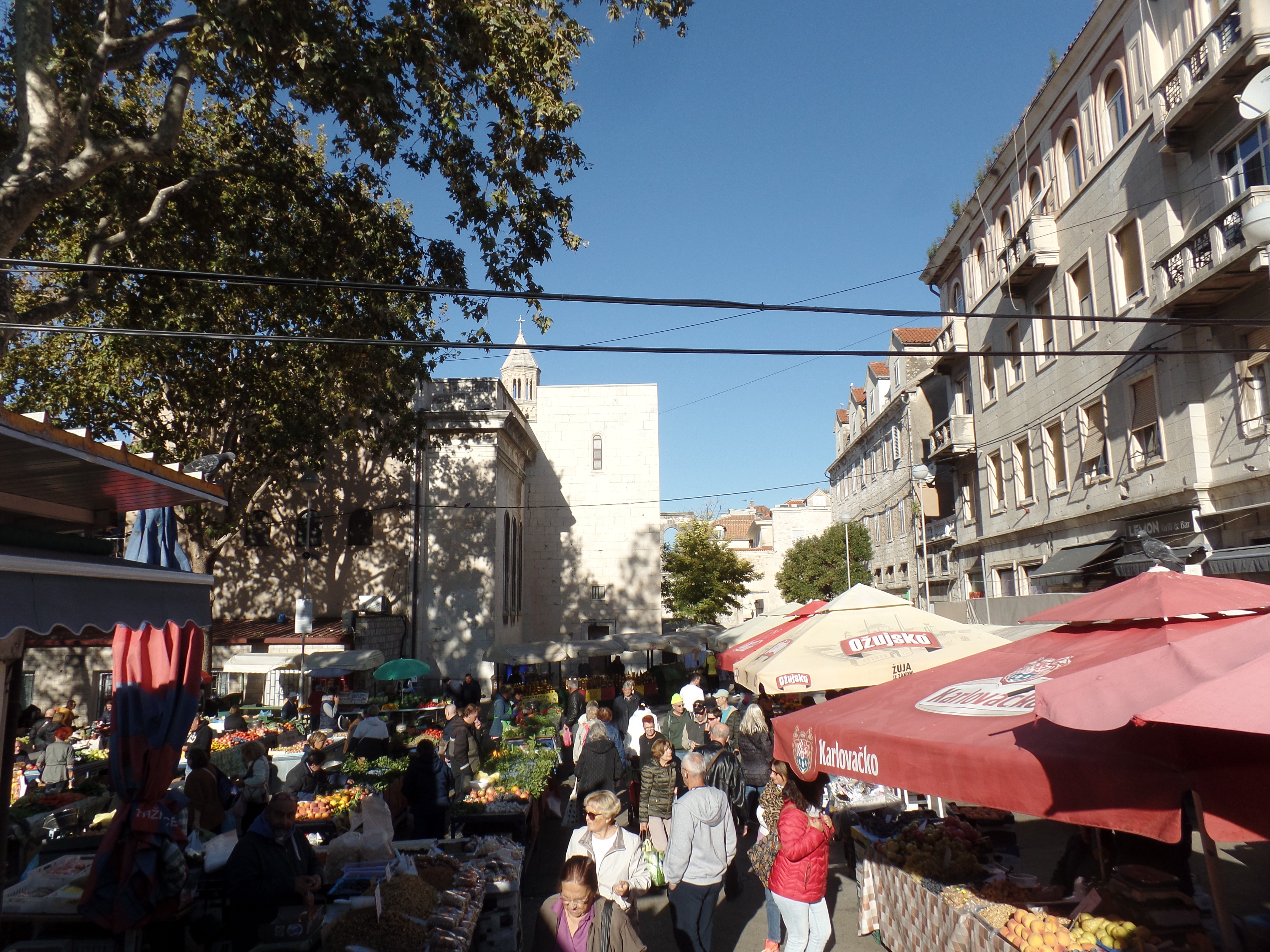
Pazar 1, Split

Our game plan was a full one: We walked through Pazar (the city market since Ottoman times, or longer.) The south and east areas of Diocletian’s Palace were next on the agenda. Diocletian was a native of this area, an Illyrian, born and raised in Salona, over the mountain, from what is now Split. He rose through the ranks of the Roman Army and became co-Emperor, at first along with Maximian in 286 AD/CE. This started the process of the Empire being divided into East and West. Diocletian built his palace at Spalatum, claiming the East for himself. Although he was an autocrat, Diocletian went along with Maximius’ plan to further divide the Empire, this time into four units, with Galerius and Constantius as junior co-Emperors. This arrangement actually helped the Romans defeat Persia, in 200, with the sacking of the Persian capital, Ctesiphon.

Diocletian carried out a bloody, but unsuccessful campaign to eradicate Christianity in the Empire. When the campaign failed, Diocletian retired from imperial duties, in 305. Co-Emperor Constantine, son of Constantius, recognized it as the official religion of the Roman Empire in 324. He lived out his days at this palace of Spalatum, now known as Split.

Pazar 1, east gate of Diocletian’s Palace and the Church of St,, Domnius

Domnius was sent, by the Apostle Paul to Dalmatia, the region that encompasses Croatia’s coast and the immediate interior, to preach the Gospel to the Illyrian people. Despite Diocletian’s imprisonment and execution of Domnius, in 304, Dalmatia became a steadfast Catholic region, under the encouragement of Constantine. Croatia is still a largely Roman Catholic country, as is neighbouring Slovenia.

Church of St. Domnius, Split
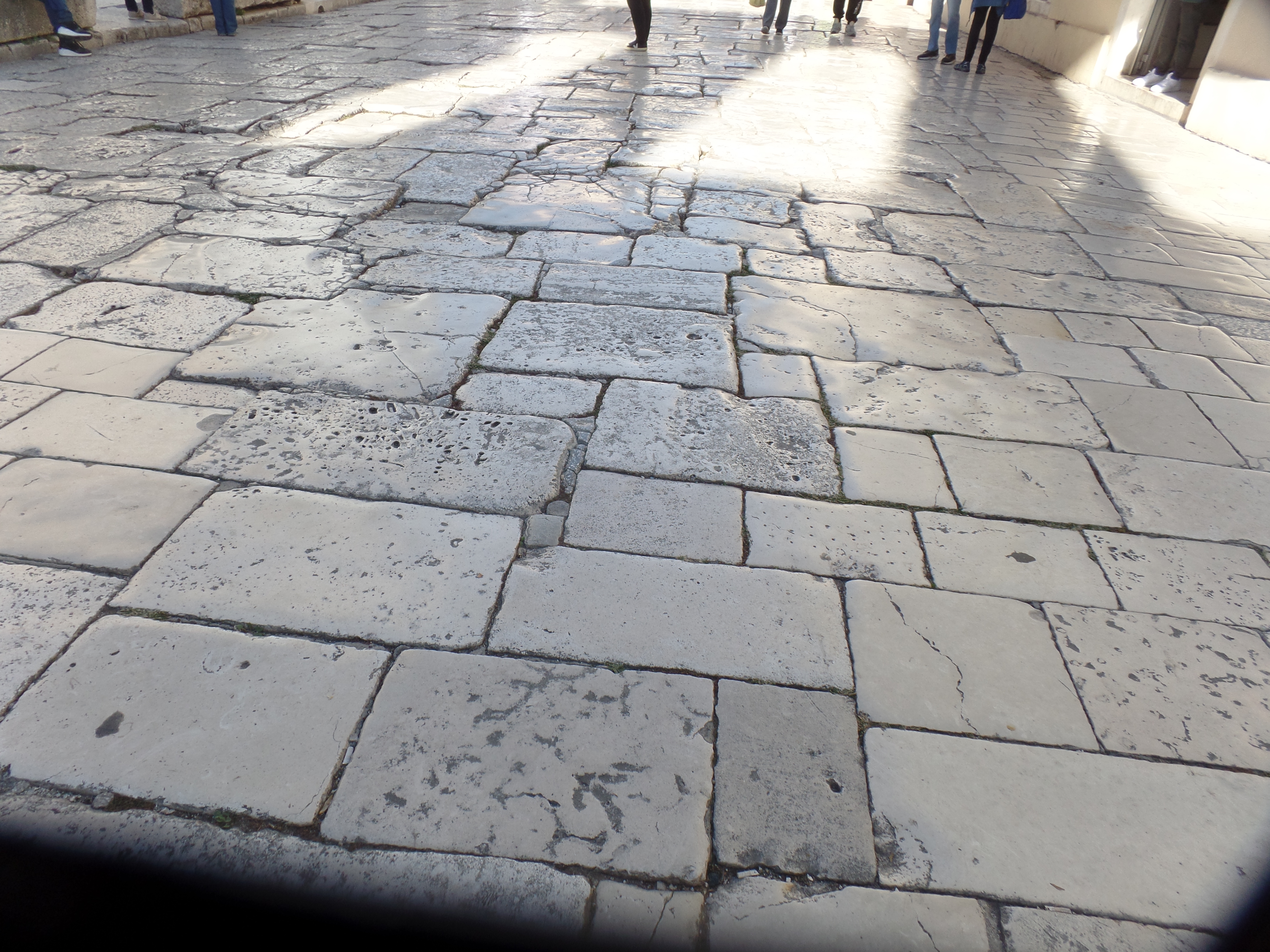
Original paving stones from the time of Diocletian

Here is a more complete view of the east and south areas of Diocletian’s Palace.

South courtyard of Diocletian’s Palace, Split

Diocletian’s Palace is the only place, outside ot Rome and Gizeh, that still has sphinxes (There are two here).
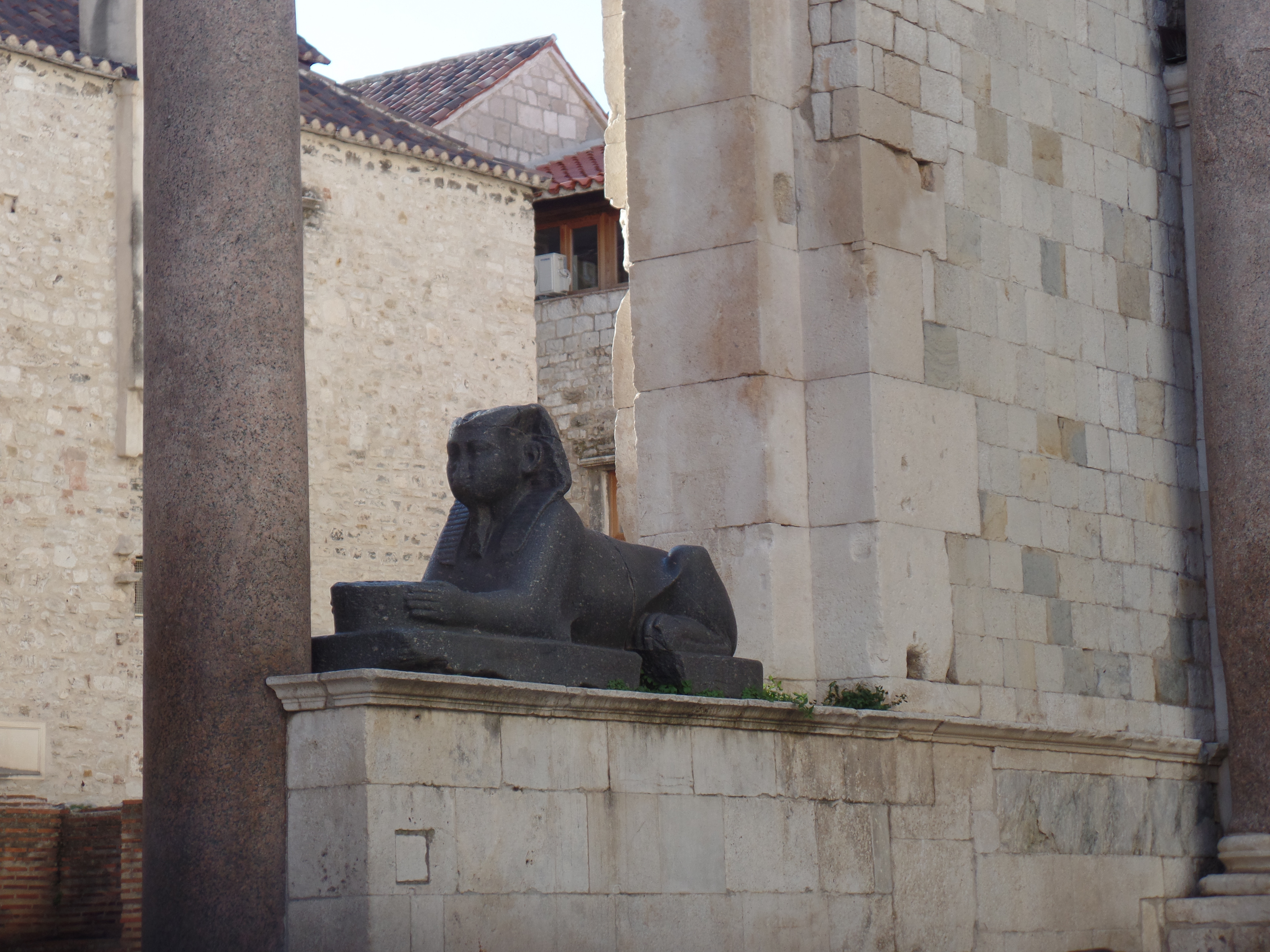
One of the two Sphinxes of Diocletian’s Palace, Split

We left this part of the palace, heading toward Marjan (marYAN) Hill. To get there, we had to pass through the “Street that can fit only one at a time”. Here I am, having gotten through it.
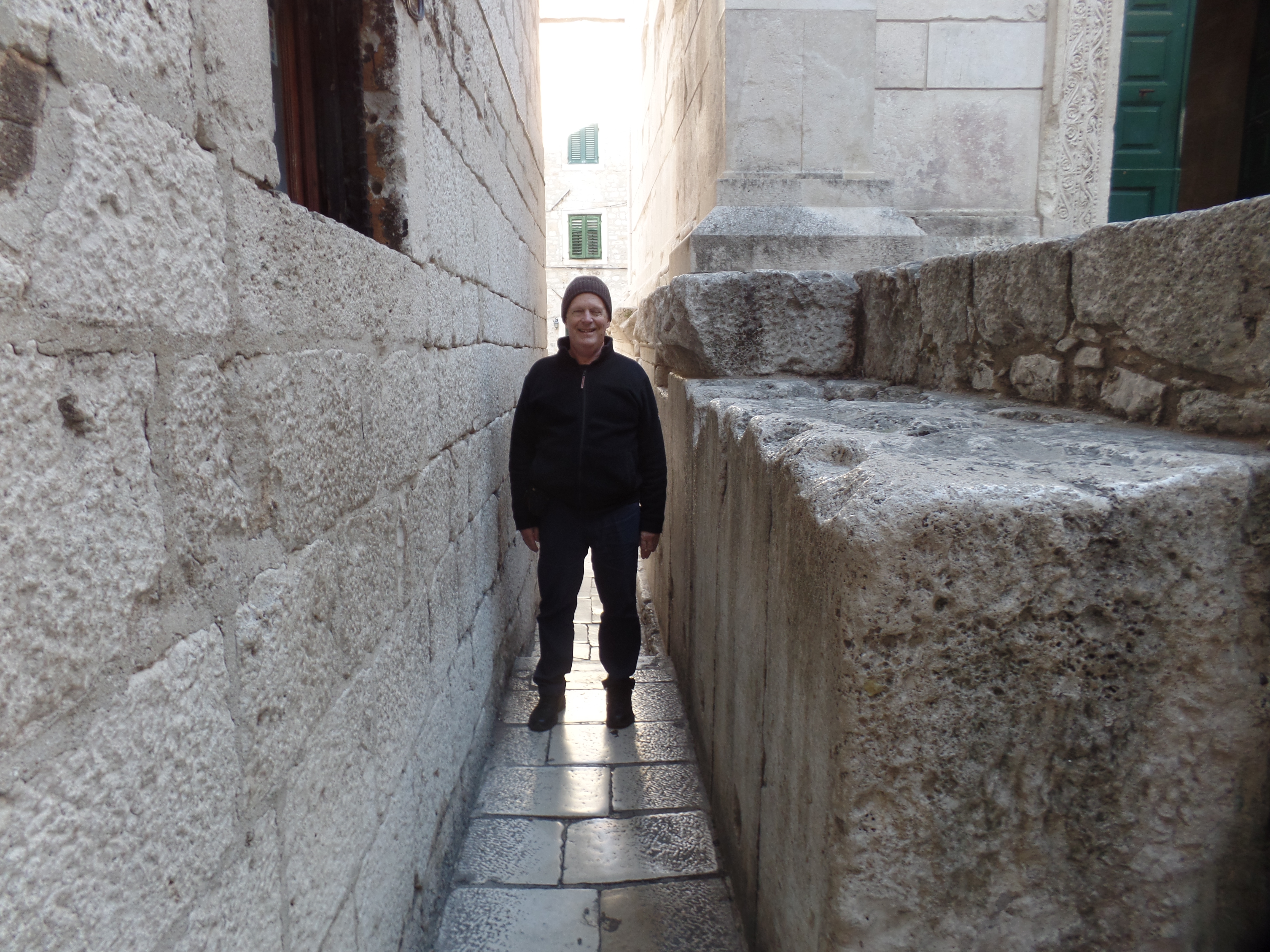
“The street that can fit only only at a time”.

The next photo shows the melange of architectural styles that can be found in Split’s oldest neighbourhood. These are Roman, Venetian,Ottoman, and Austrian.
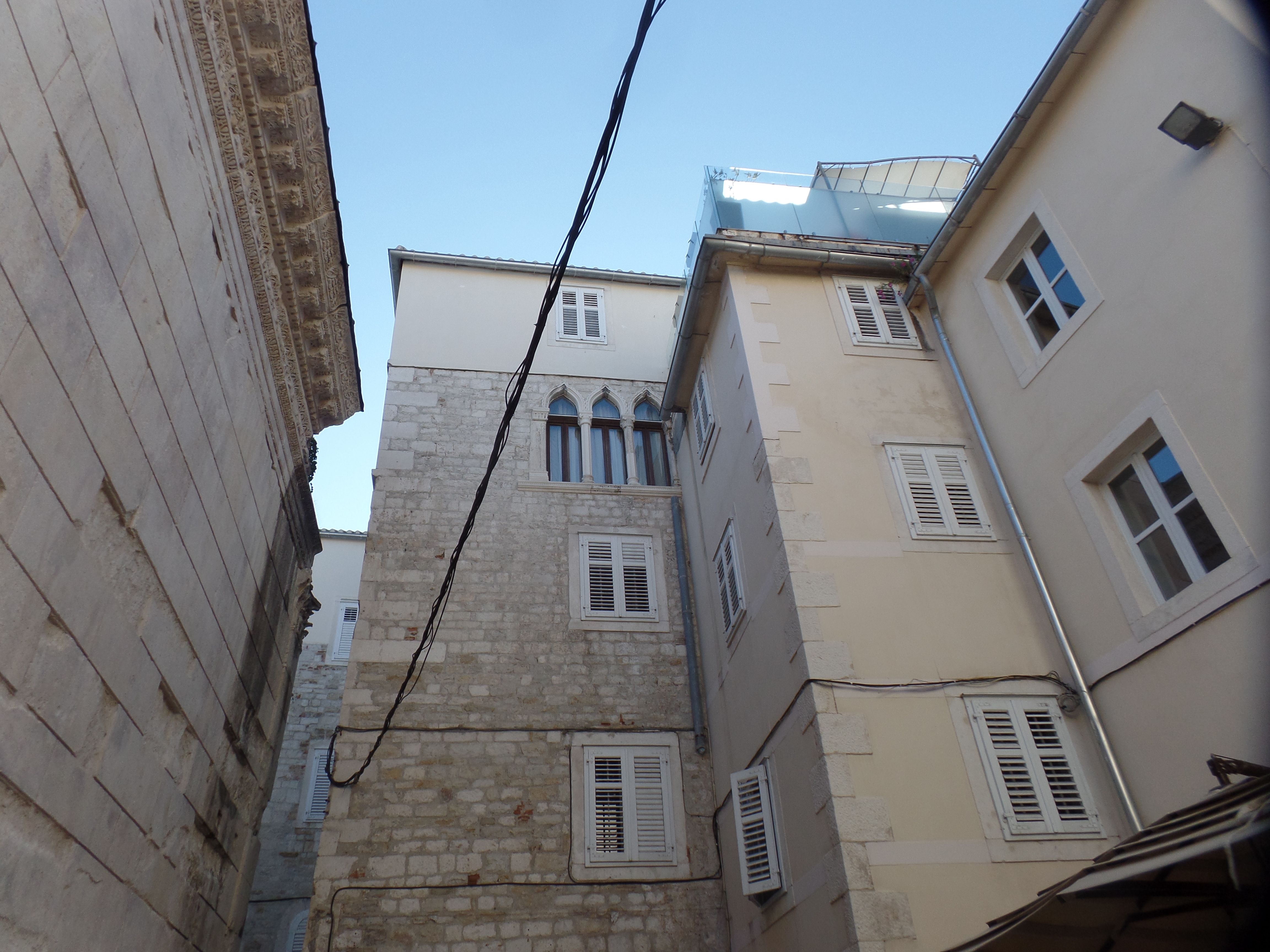
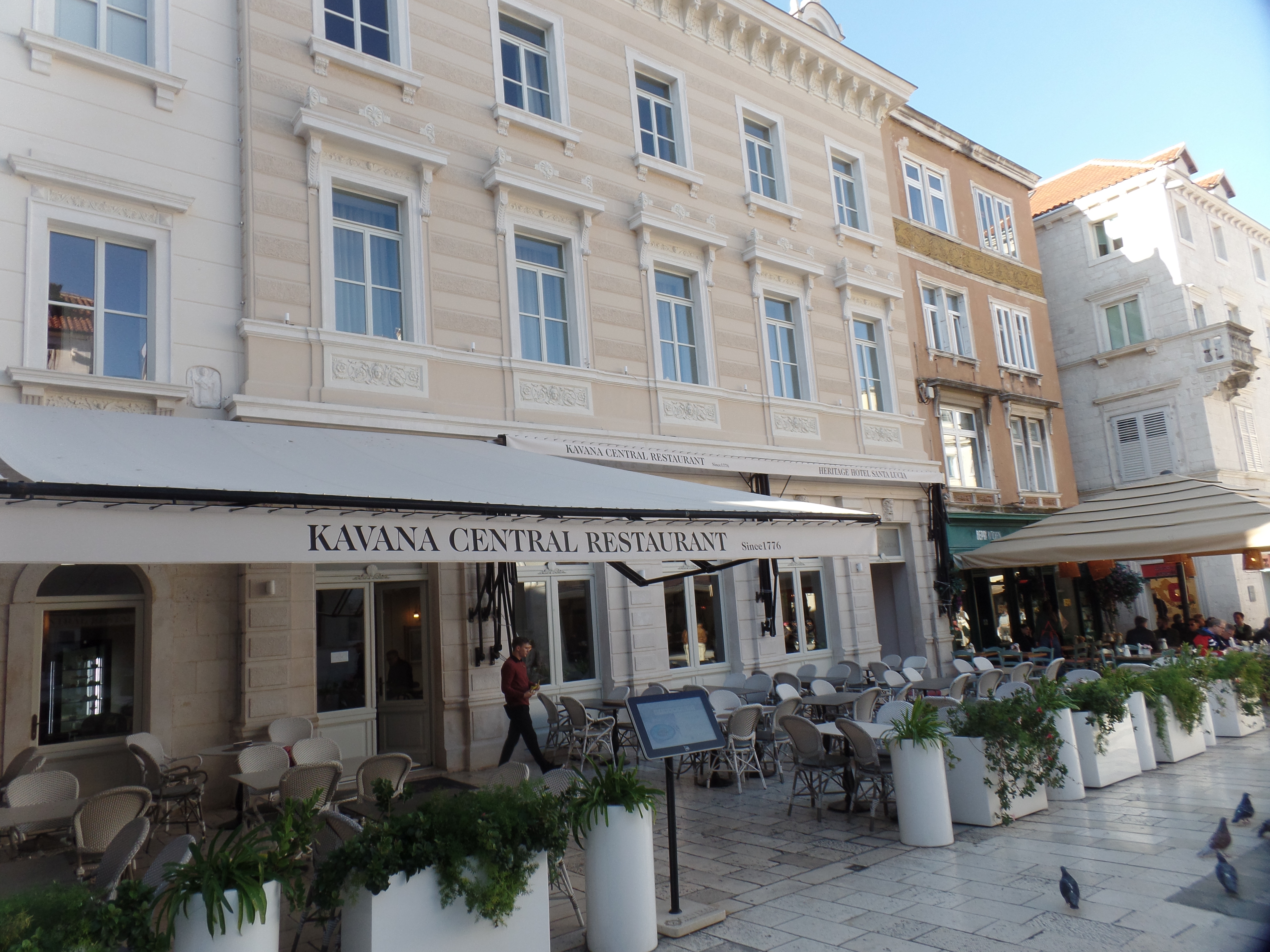
Four styles of architecture, in one neighbourhood
The place to be seen in the Split of the mid-Twentieth Century.
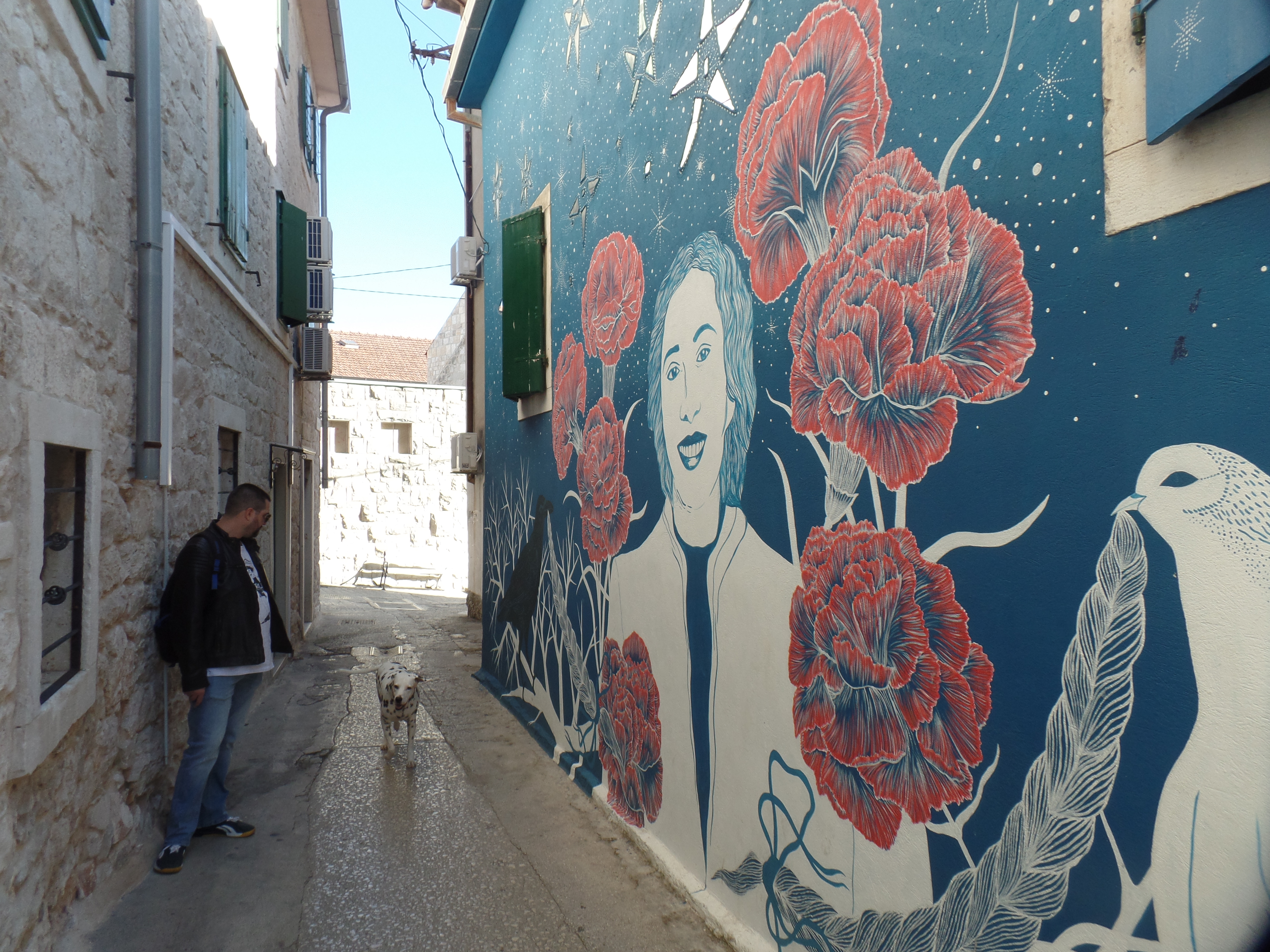
A martyr for freedom from Fascism-and a Dalmatian

Vahida Magajlic was a Croatian Muslim, who fought the puppet regime that was installed by the Nazis in Croatia. She gave her life for the freedom of Croatia-and of all Yugoslavia.

We took many steps up Marjan Hill. (Mar YAN).
View from first overlook, Marjan Hill

Boris enjoys coming up here, when he needs peace and quiet.
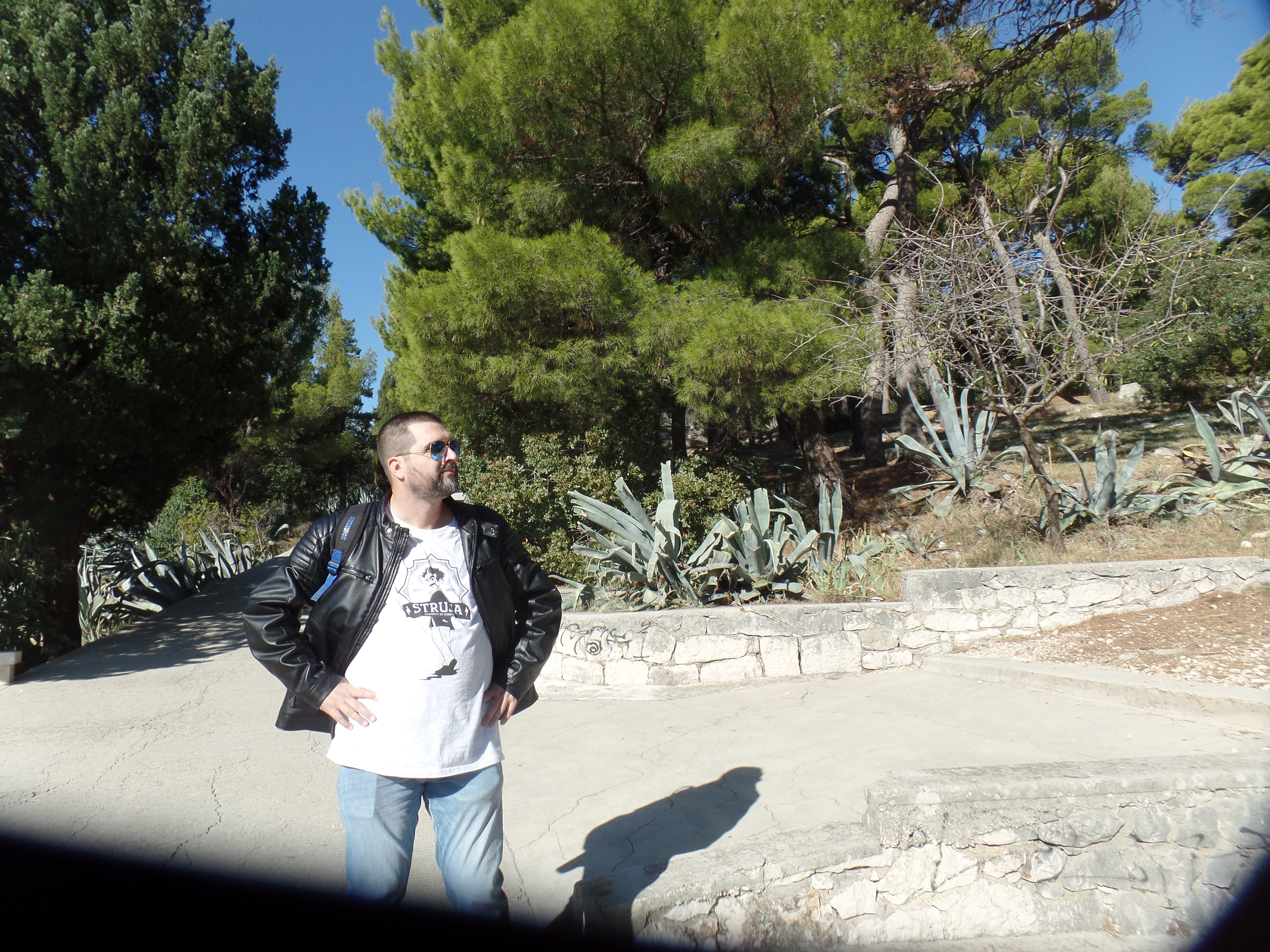
Boris at Marjan Hill’s Botanical Garden
The Adriatic, from atop Marjan Hill

Orofessor Humbert Girometta was the man who spearheaded both this park and the promotion of hiking and wilderness training in the Split area. He was a mentor of Boris’ mentor.
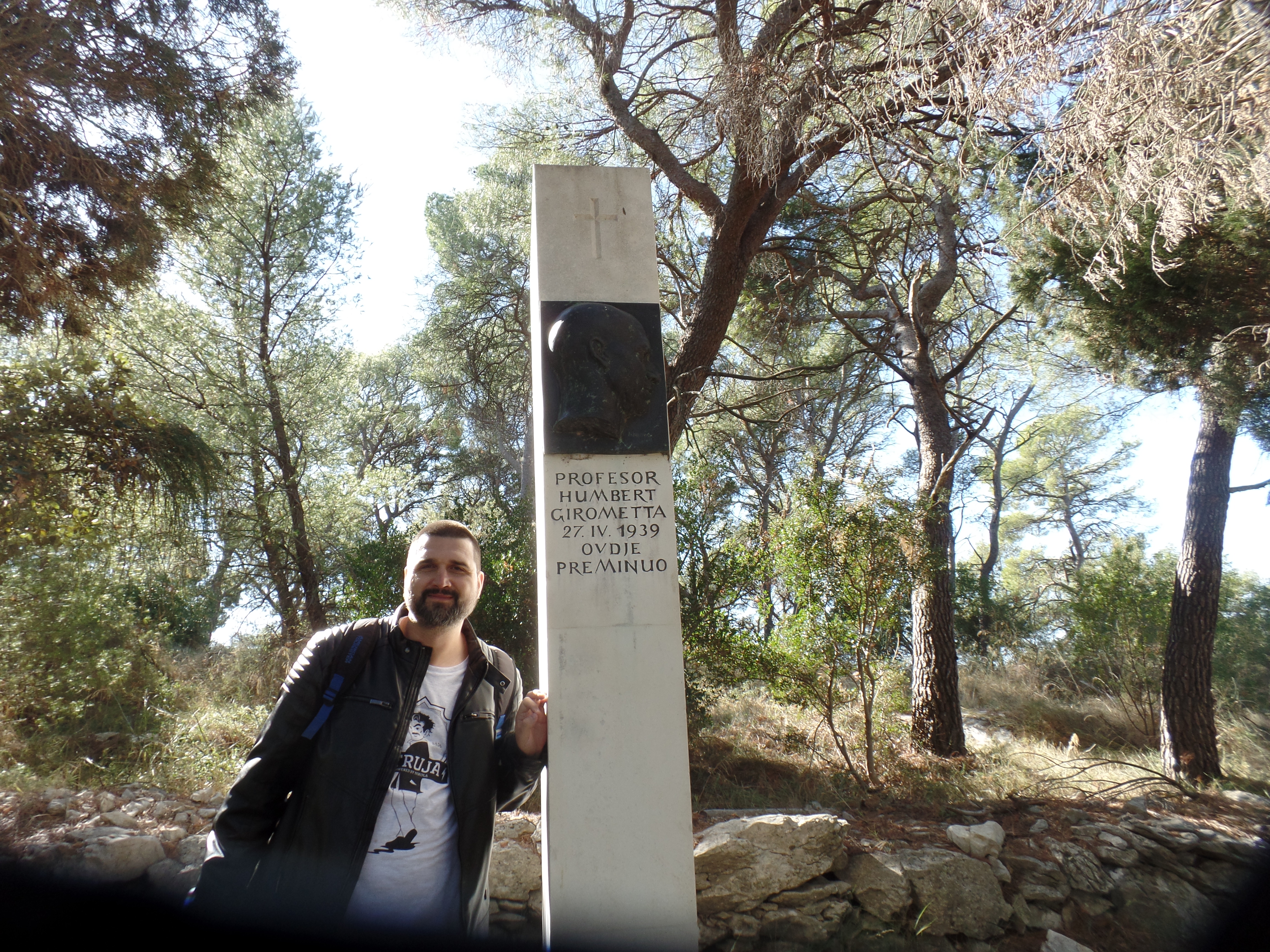
Memorial to Dr. Humbert Girometta, Marjan Hill, Split
The Adriatic, from the third vantage point on Marjan Hill, Spli
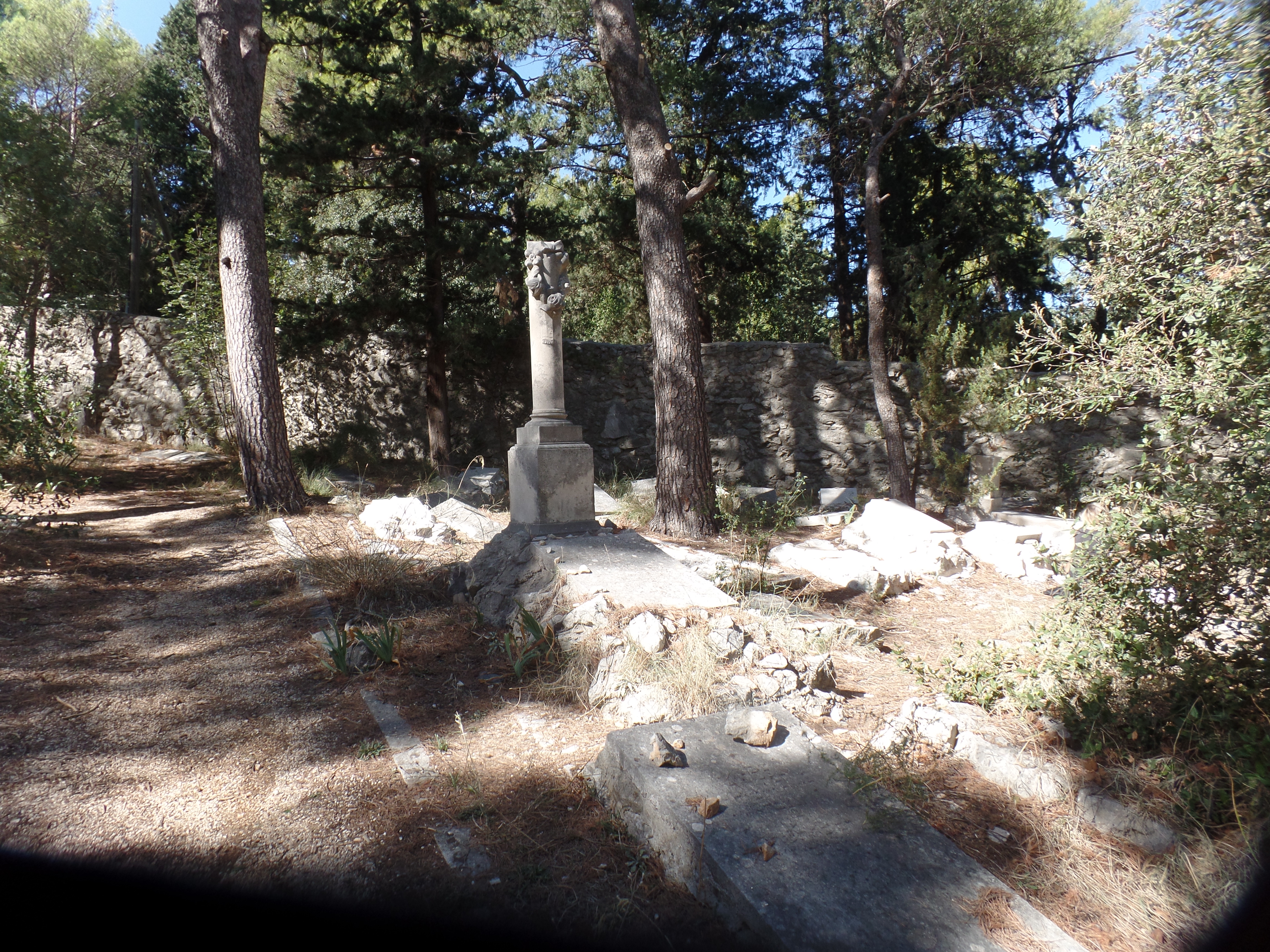
Jewish Cemetery of Marjan Hill. Jews have been in Dalmatia since shortly after the destruction of the temple in Jerusalem, by the Romans.

We next had a delectable Croatian lunch, of beef in marinade, with a side of gnocchi and beet salad. Ice cream, dipped in chocolate, at Split’s oldest ice cream parlour, followed.

Next were the northern and western sides of Diocletian’s Palace

The exterior of the north side of Diocletian’s Palace
Archway, north side of Diocletian’s Palace
Entrance to North Courtyard
Again, three styles of architecture in one building.
The grand north courtyard, Diocletian’s Palace

Here is the most astonishing view: The vestibule of Diocletian’s Palace, which once led to his living quarters.
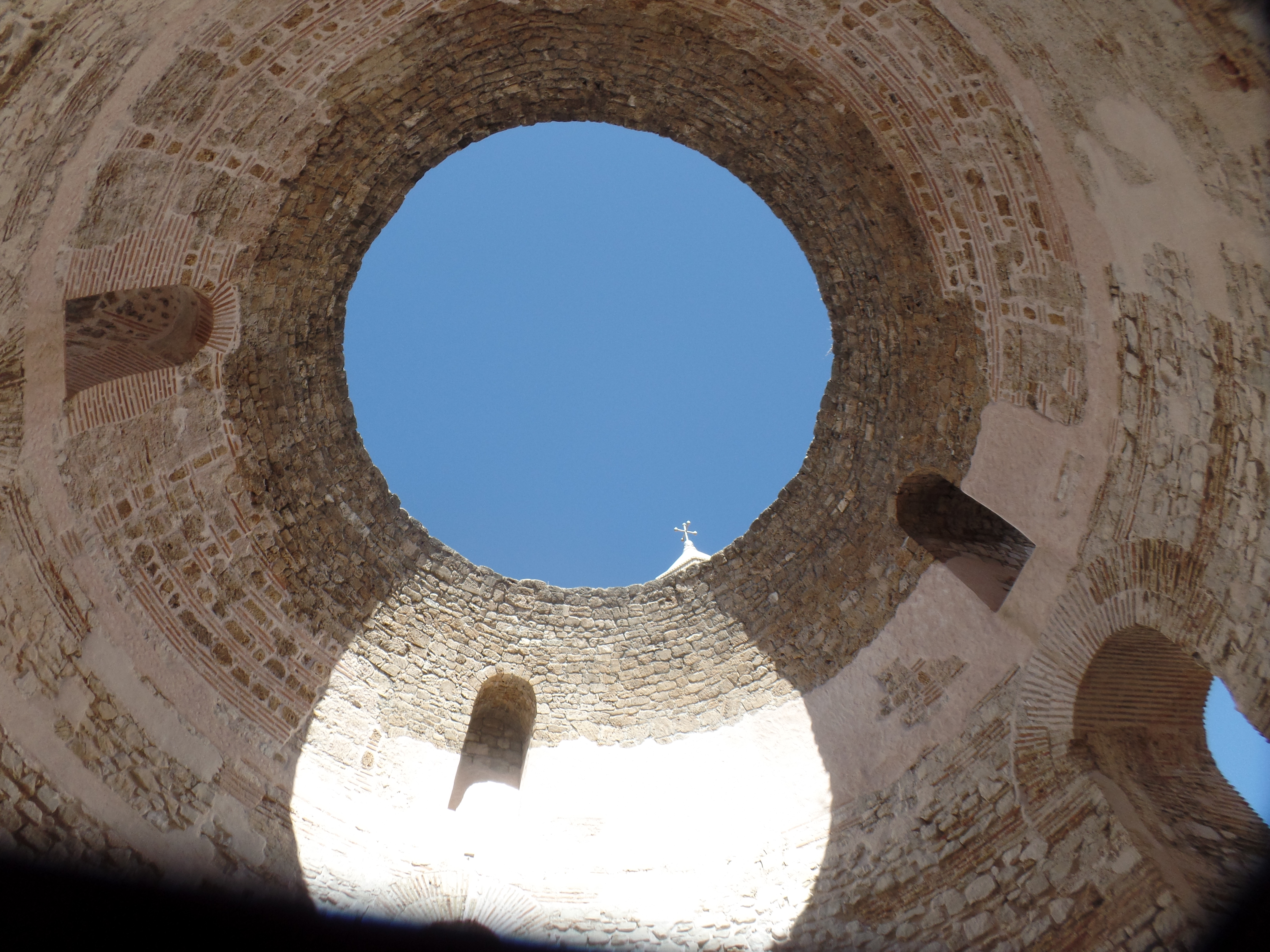
Vestibule, Diocletian’s Palace
Underneath the palace

We closed out this extraordinary day with a visit to Split’s Athletes’ Walk of Fame. Many of Croatia’s stellar athletes came from Split.
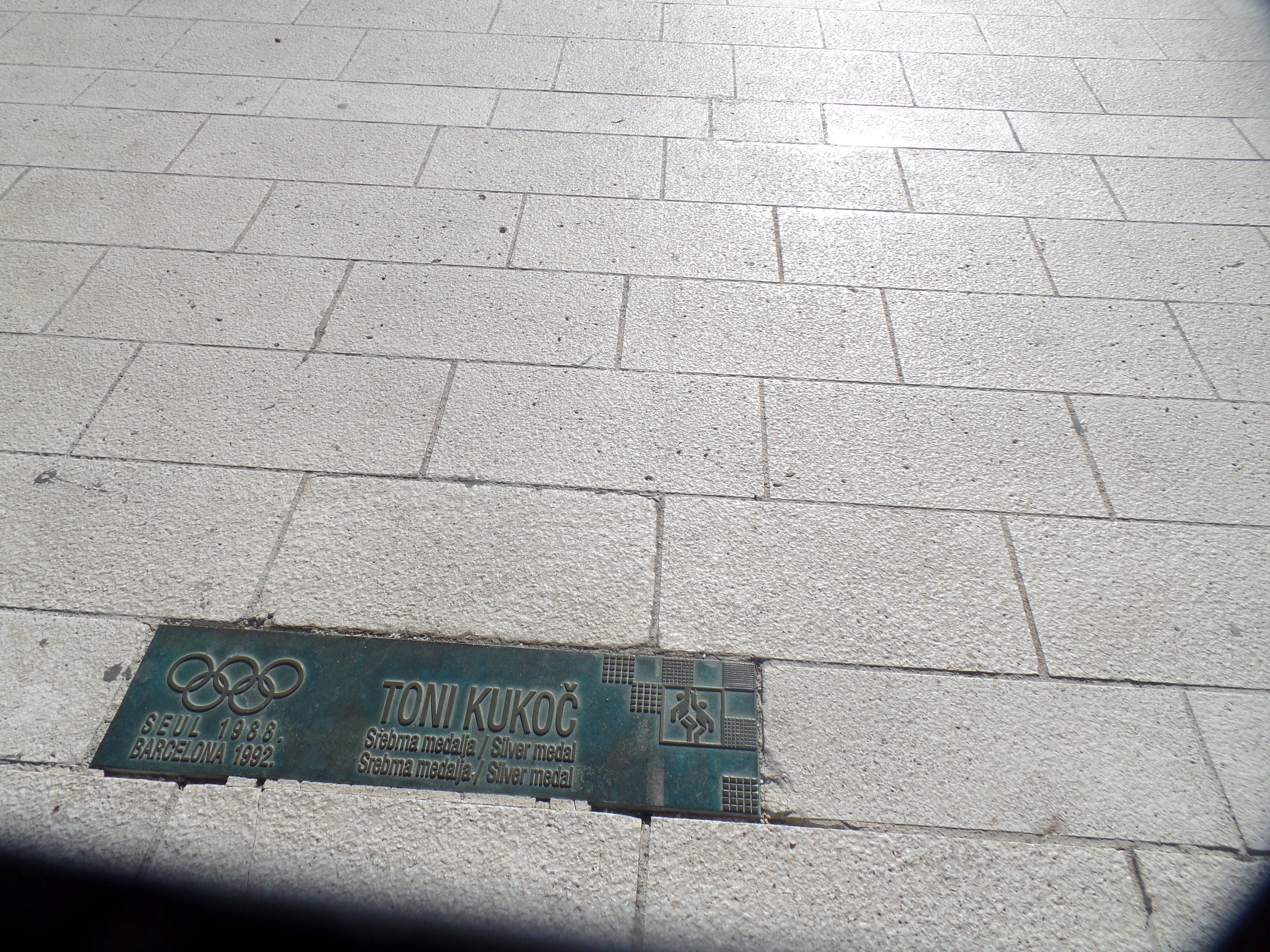
Toni Kukoc, “The Croatian Sensation” of NBA fame
Goran Ivanesevic, a great tennis player

With a few more views of the Walk of fame, I bid farewell to my friend, Boris and headed back towards Hotel Pax, and a restful night, before the next leg of the journey: Bosnia and Hercegovina. Split will long shine in my heart.

The Road to Diamond, Day 310: Journey to Pax

0

October 3, 2025, Split, Croatia- One of the key stops on this long journey through Europe is a meet-up with a long time online friend, in this seaside community. It isn’t hard to see why he is an avid booster of the place.

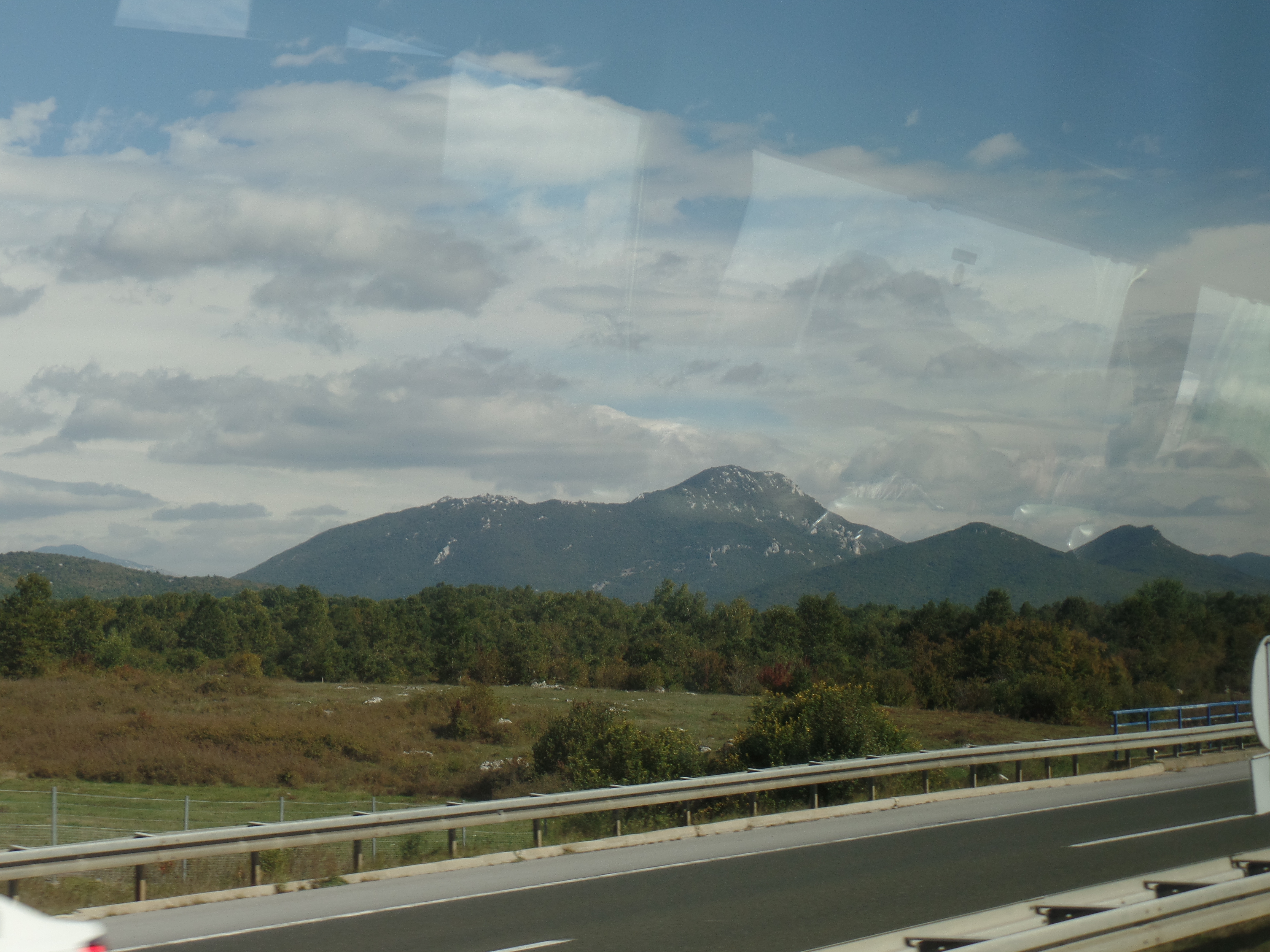
I found leaving Zagreb fairly easy, taking a tram for a short distance, then walking the rest of the way tot he Bus Terminal. The bus down to Split went through some lovely country.

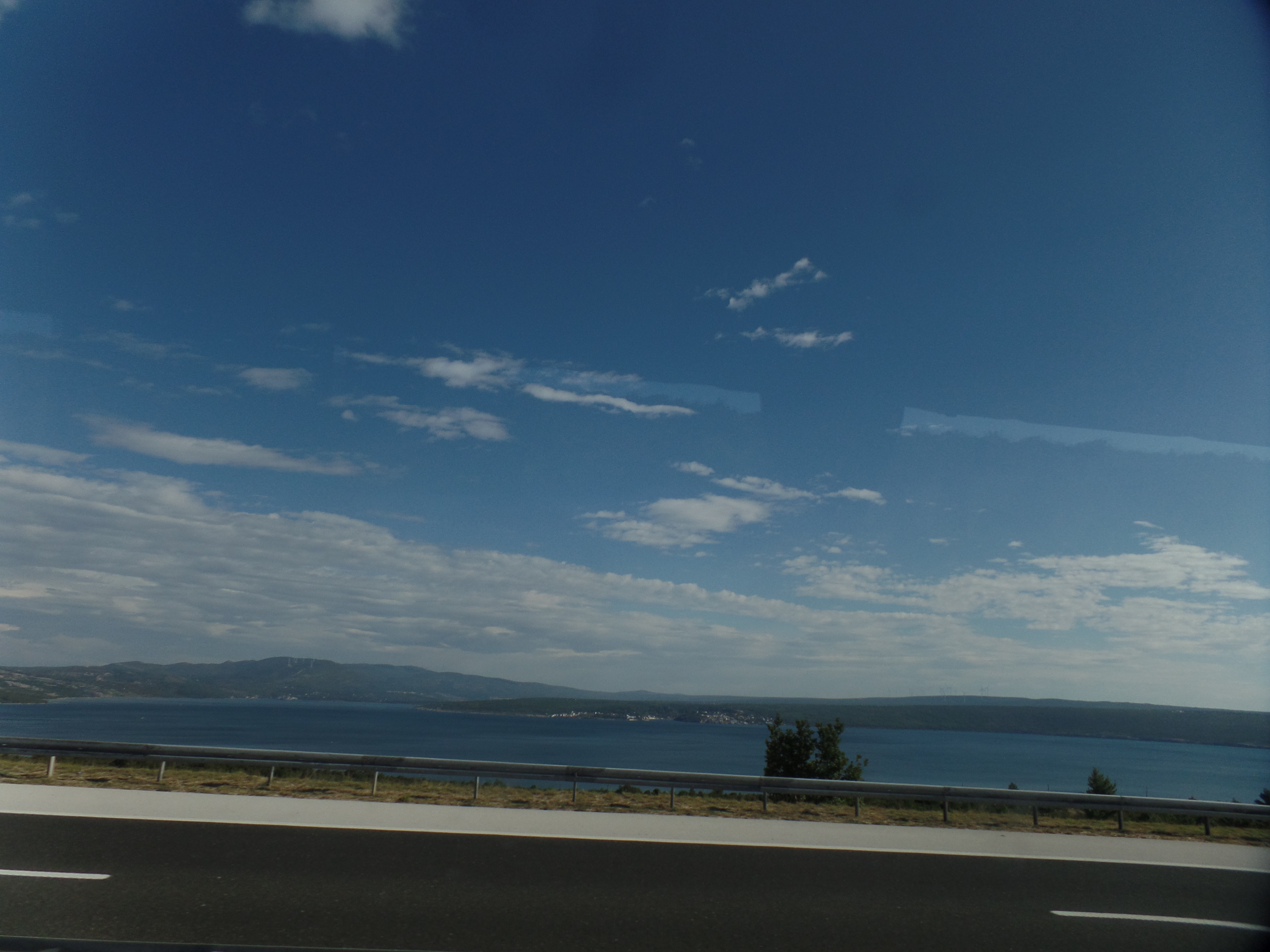
Countryside between Zagreb and Split
There is already snow on top.
Glimpses of trapped inlets

.

A larger inlet, twenty Km from Split

It was a fairly uneventful ride, which suited me just fine. Tomorrow will be filled with Diocletian’s Palace, classic Croatian food, a nice little mountain hike, the company and the commentary of an old friend. Hotel Pax is a great break from start-up apartments and hostels, as joyful as they have been.

The Road to Diamond, Day 309: Silver at the End of a Dark Staircase

3

October 1, 2025, Zagreb- The two young men standing on the dark street corner were not at all menacing. Just two guys having come off work at a nearby nightclub. Seeing me trying to access a door code, they offered to call the building’s owner and find both the door code and the code for the key box that would get me into my room. (Start-ups like this in central Europe frequently have a building entry code and a key box. I found that out, too late, at the original venue in Vienna. Tonight was happily different.)

In the end, I had no luck finding a small memorial that was recommended to me by friends in Vienna. I have a Plan B to remedy that, next week. Vacating Radisson Red and getting to Vienna Hauptbanhof was not hard, though I had to book another train, as my quest for the memorial took longer than I thought it might. It was not hard to get on the second train, which was going through Budapest, instead of Graz. I had a nice seat, initially with one other person, a Hungarian man in his 40s. We exchanged views on a few matters of common import, before he was berated by a conductor for not having a proper ticket. At Gyor Station, a family of three and a woman in her 30s entered, and he exited, for Standage.
Fun part #2 took place at the station at which I planned to disembark. The conductor glanced quickly at my ticket and said that I should stay onboard, until the next station. Once we were underway again, something told him to look at my ticket again. To both of our chagrins, he had told me the wrong information! We got off at the second station, and he brought me to the Information Center. The lady in the info Center offered to put me on the same train, tomorrow evening. As that would have had a serious domino effect on my plans for visiting my friend in Split, Croatia and for the time I have scheduled to spend in Sarajevo and Srebrenica, Bosnia-Hercegovina, I asked her for information on getting to the International Bus Terminal. Budapest has an excellent tram system, so with the note in hand, I went to that terminal and got on a bus bound for Zagreb.

A few notes are in order: I have a Eurail Pass, good for a few more weeks, so the train snafus were minimal in cost. As for the Budapest train stations, there is Kelenfold, on the west side of town and Keleti, in the center. It was at Kelenfold, that my ticket said to switch to the Zagreb train. The conductor had me wait until Keleti. So, if you are ever taking a train and are going through Budapest, en route to somewhere south, mind the spelling of the station. Had I not already have made plans that were eight years in the making, it would have been a pleasure to spend a few days in Budapest. The lovely city will wait, until God knows when, but I am sure I will be back, at some point.

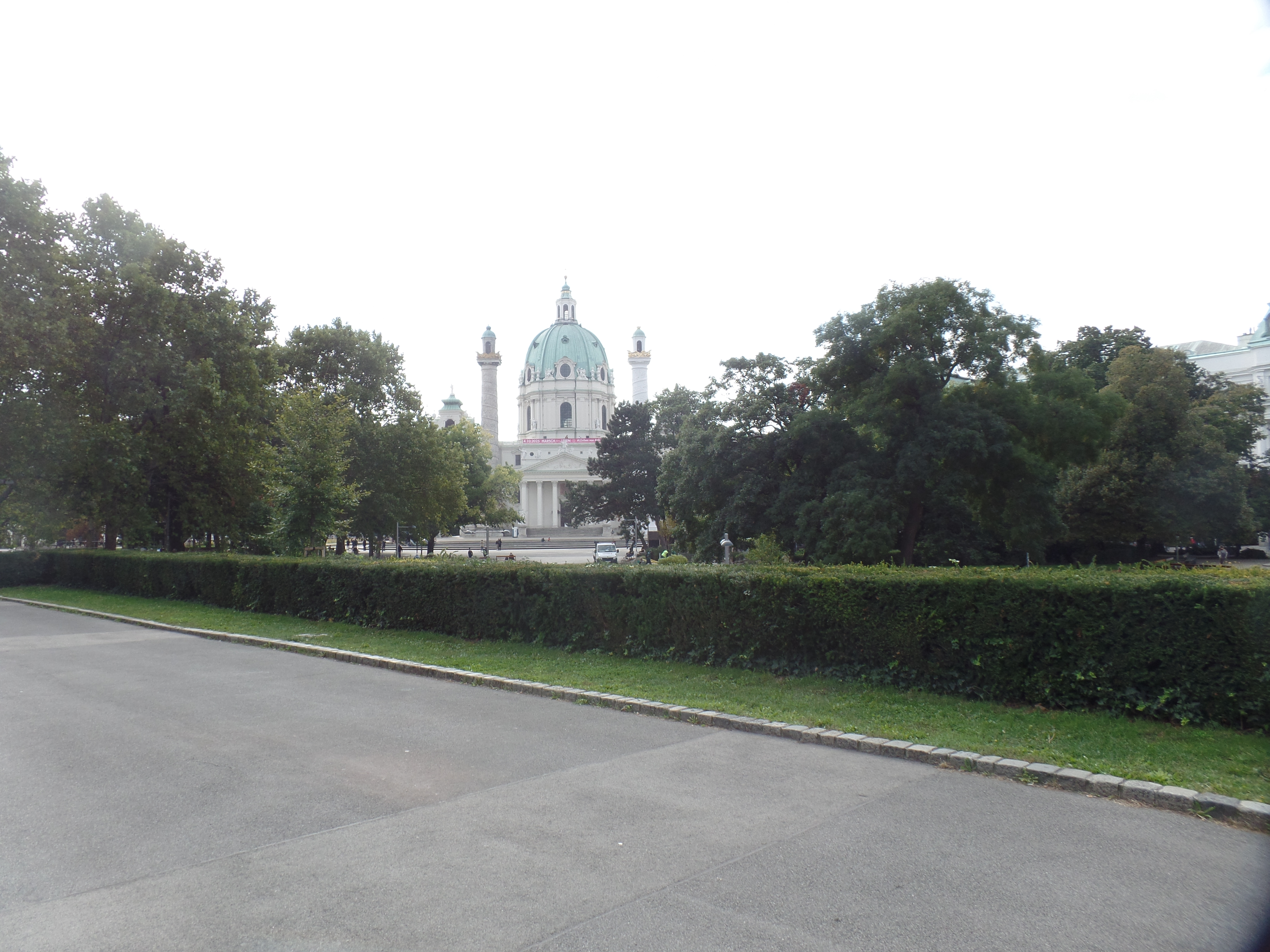
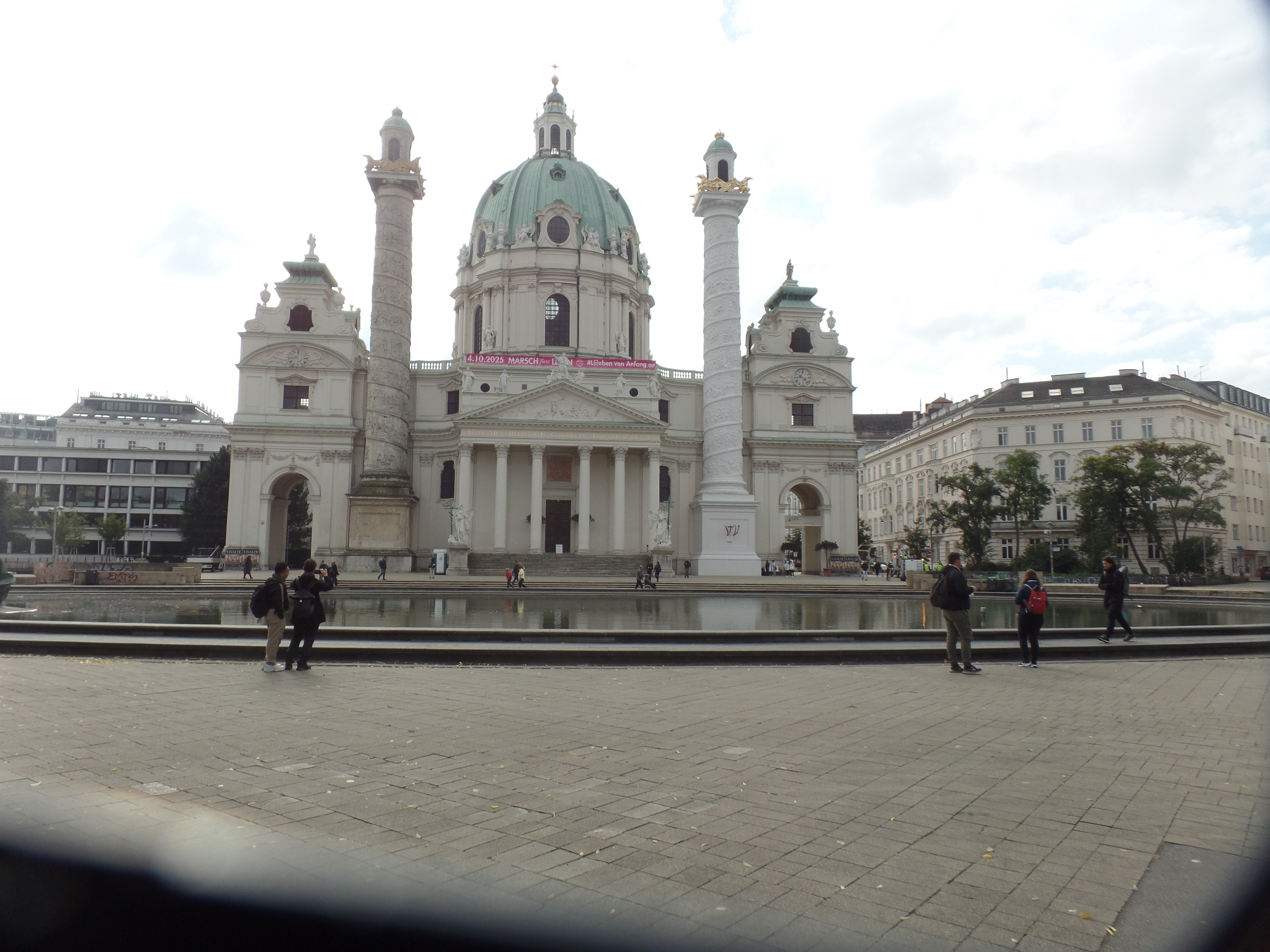
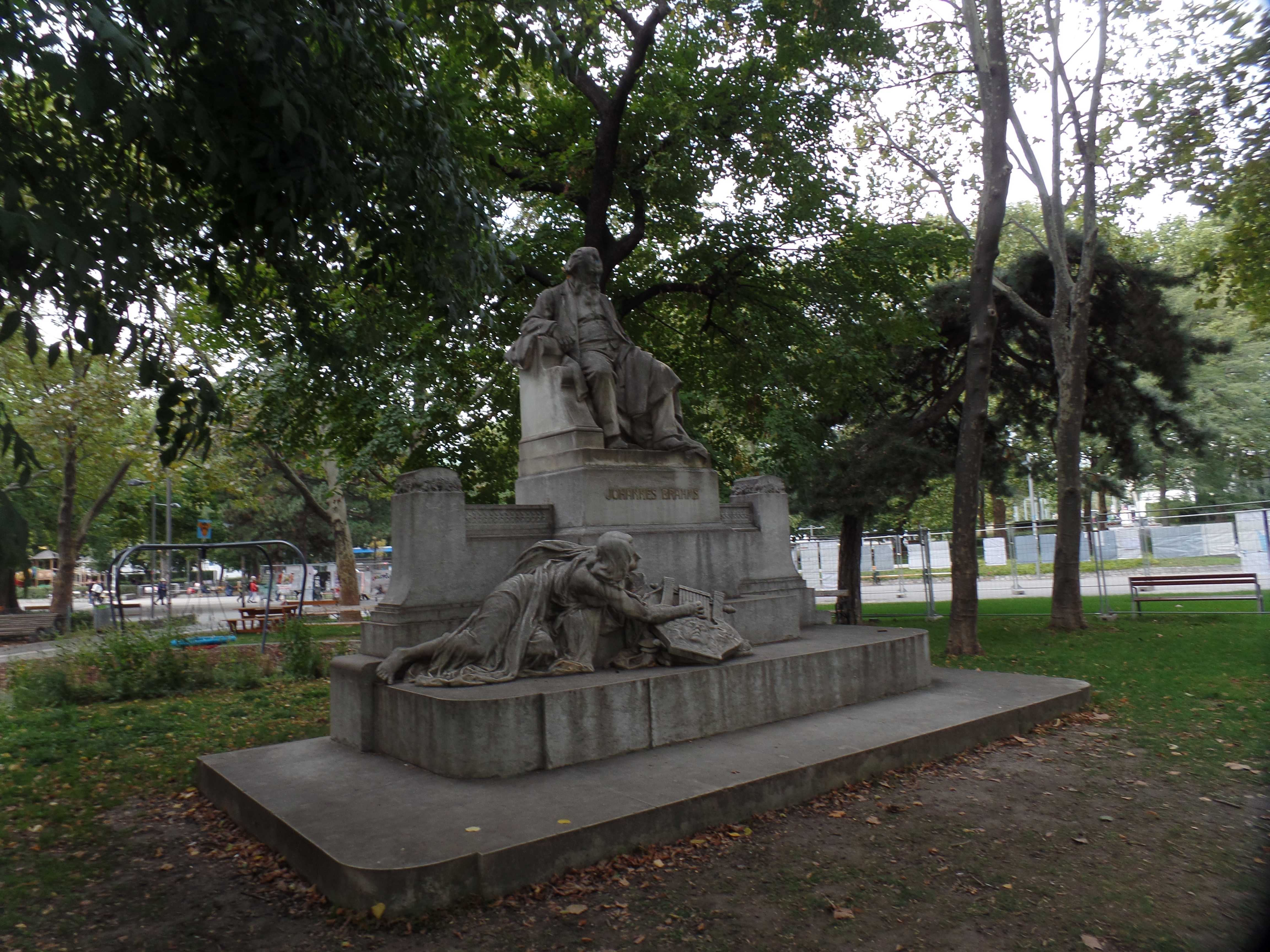
Here are a few scenes of my wanderings about Vienna.

Karlskirche, Karlsplatz, Vienna (above and below)
Statue of Johannes Brahms, Karlsplatz, Vienna
Wien River, central Vienna

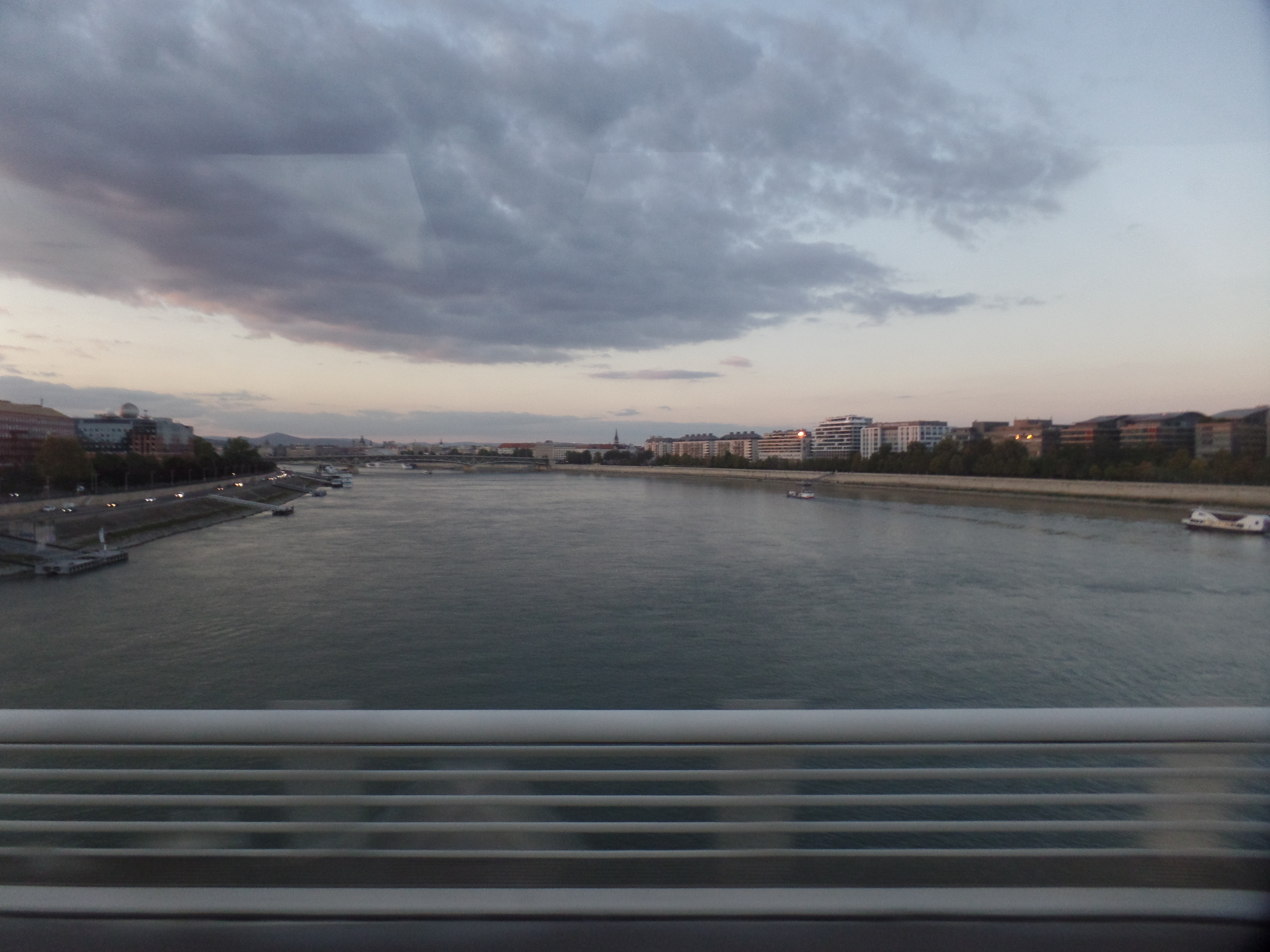
In the evening, once truly underway from Budapest, the sight of the mighty Danube came into view.

Danube River, at Budapest

There would not be a train trip, without an attempt at a sunset photo. Here is a mysterious glow to the west of south Budapest.

Sunset near Budapest

As the evening winds down, I am in a comfortable little apartment, having not been put off by the “work in progress” as I entered, downstairs. This sort of thing is meant for those who can excuse a bit of dust and debris, before getting to a fine bit of silver upstairs: Alora Heart of Zagreb.

The Road to Diamond, Day 308: Fatigue Leads to Upgrade

0

October 1, 2025, Vienna- Up early enough, I got to Oscwiecim’s small train station and caught the train back to Krakow, only to boomerang right back past the station, as we made our way down to Vienna.
I had a seat, clear to the Austrian capital, going through southern Poland and the Czech Republic. It was a long ride, though, as you can imagine, and I was ready for the mattress by the time we crossed the Danube and got into town. Somehow, I read, and re-read, the message from my lodging, and saw one too many codes for that hour of night. It also indicated that it was past time for check-in (“Office closes at 8 p.m.”, and it was 10:15.)

These things happen a lot, and yes, the train was delayed for about forty minutes. Still, I was frustrated at not getting to the Baha’i National Centre in Vienna, this evening, and at what seemed to be one too many Internet-centric snags, in connecting with the lodging. Besides, they didn’t answer their phone, which is supposedly on 24/7. End of rant.

I got a briefing on Vienna’s excellent public transportation system and found my way to Radisson Red Vienna. I am usually not partial to high-end hotels, but I was exhausted and besides, this was Vienna. So, the welcoming desk clerks got a guest with no reservation, and I got a very refreshing place at which to not have to enter codes.

A gowned angel watched over me, at Radisson Red, Vienna

The Road to Diamond, Day 307: Auschwitz-Birkenau

0

September 30, 2025, Oswiecim, Poland Today would have been Penny’s 71st birthday. Each year since I first met her, including the fourteen years since her passing, the day always brings a special event, either Baha’i teaching or a visit of significance.

Entrance to Auschwitz-Birkenau Museum

Today, I had the opportunity to visit the sites of one of the darkest chapters in human history. Auschwitz and Birkenau were concentration camps, separated by 3 kilometers, but under the same commander: The infamous Rudolf Hoss (not to be confused with Deputy Fuhrer Rudolf Hess), implemented the use of Zyklon B, a pesticide that became the nerve agent which alone killed a million people. Hoss was tried, convicted and executed in Poland, in 1947. (Rudolf Hess, as is well-known, flew to Scotland, believing he could convince Scottish “opponents” of the War to hasten British withdrawal from World War II. The Scots were not amused, Hess was imprisoned and then transferred to Germany’s Spandau Prison, in 1947. He was the sole remaining prisoner there, when he committed suicide, in 1987, at age 93.)

My late father-in-law was a Jewish-American, served as a soldier in the final months of World War II, during which he was captured during the tail-end of the Battle of the Bulge, and was held in the POW camp at Berga, in eastern Germany. I have been to Berga and seen the V-2 Rocket Factory’s remains. Pop was sent to work the salt mines. When he was rescued by a unit of American soldiers, in June, 1945, he was nearly skeletal.

That was the fate of many, if not most, of the survivors of Auschwitz and Birkenau, as well. They numbered about 6200, out of over 1,100,000 who had been held in at the Auschwitz Complex. Jews, who Hitler and his henchmen wanted above all to exterminate, were the preponderance of victims. Men between the ages of 17-60 were made to work, usually until they were broken, physically and mentally. They were then executed. Women, children, the elderly and the infirm, including the mentally ill, were summarily gassed to death.

Besides the Jews, Romany, Russians, Poles, Czechs, Freemasons and the occasional Afro-Germans, were also sent to concentration camps, and executed by poison gas. Auschwitz and Birkenau were the two largest facilities for such hideous practices. in time, even Christian critics of Hitler found themselves in the gas chambers. Birkenau, being the larger camp, had 30 gas chambers. Auschwitz, with four sectors, had ten. As the Soviet forces closed in on Auschwitz, the fleeing German Army forced most of the remaining prisoners west, on a Death March to Germany and Austria. Thus did many die on their feet, though not as many as were gassed.

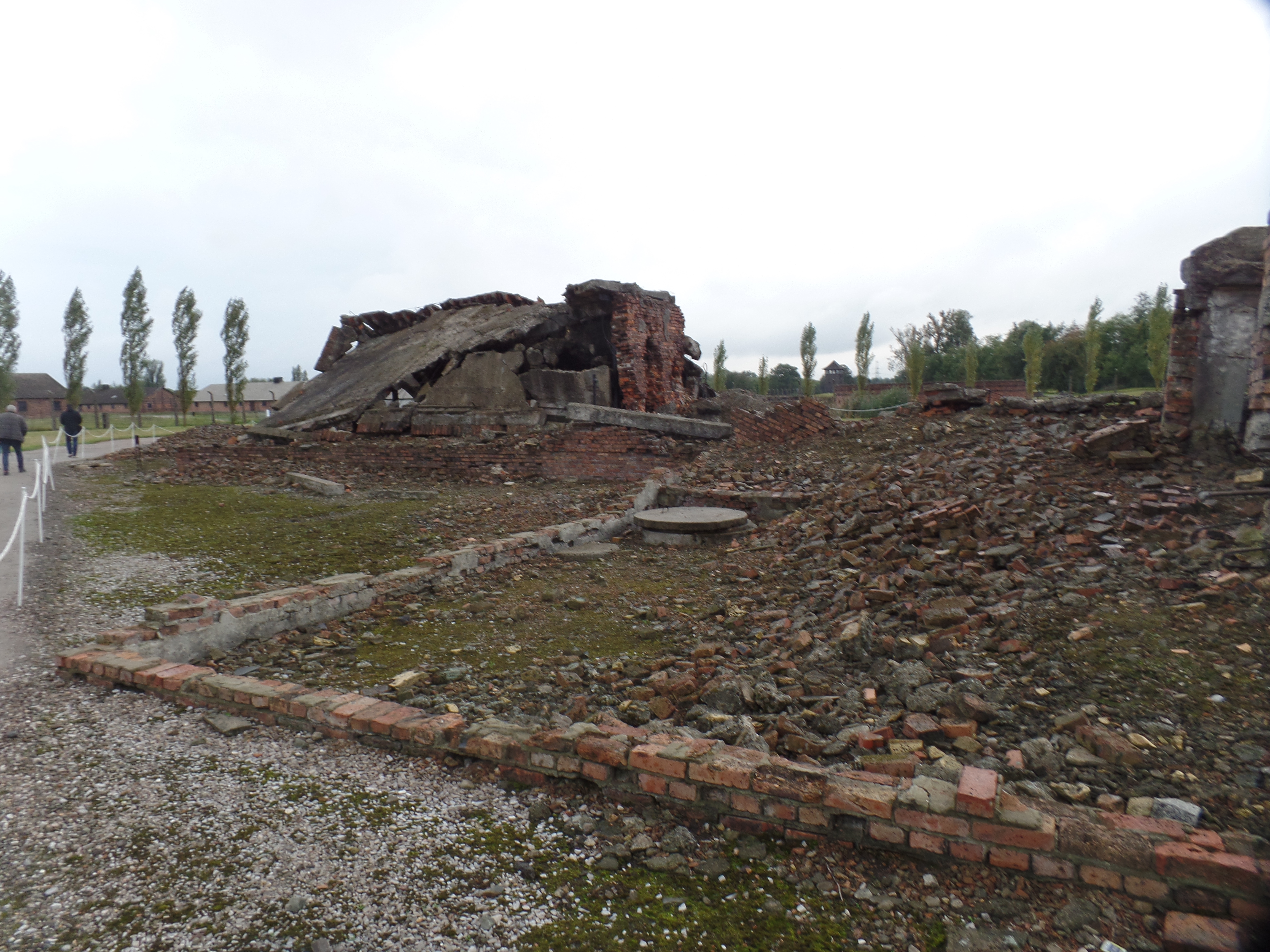
Here are five scenes that are here to remind us that the Holocaust was no Hologram.

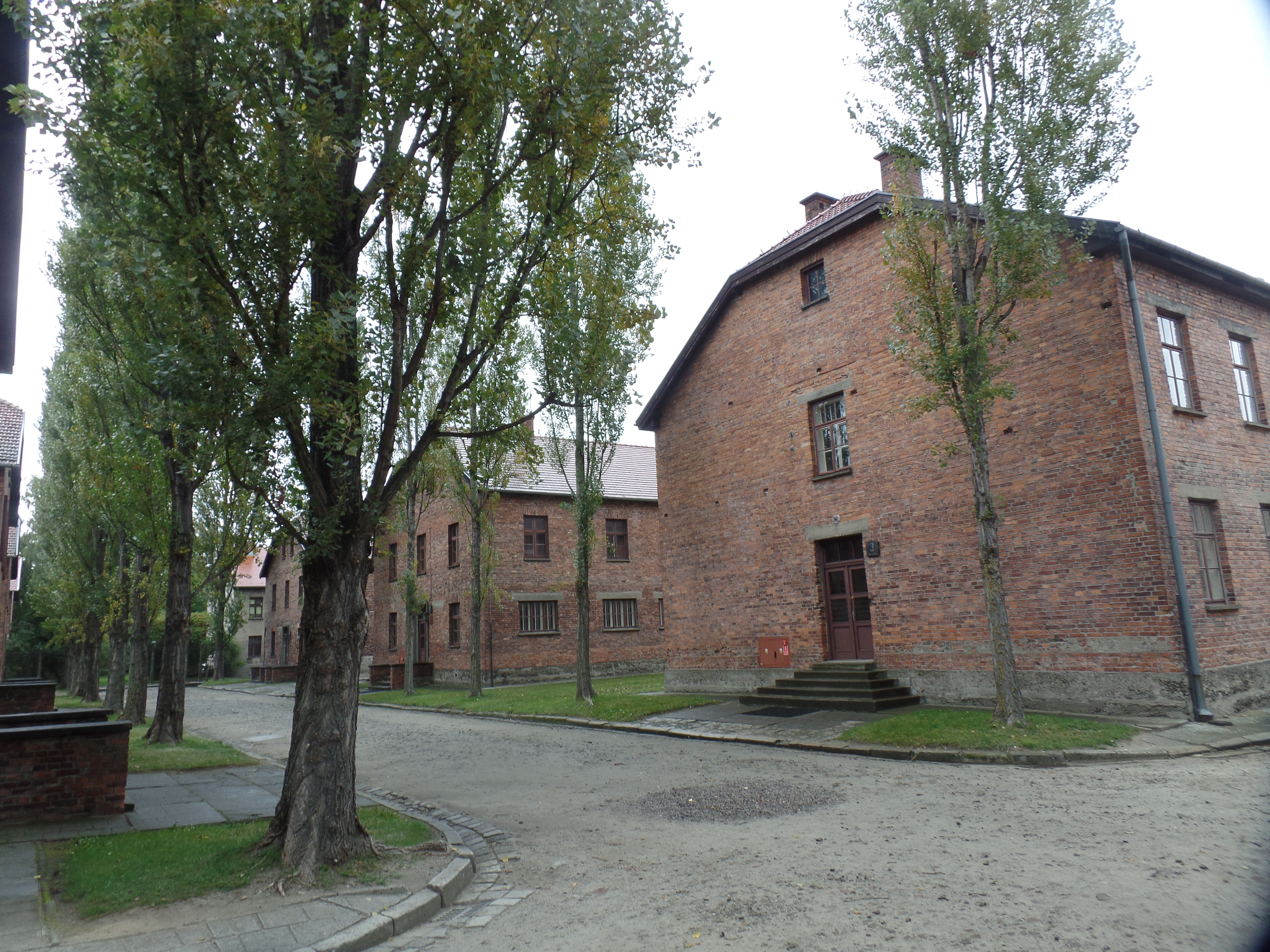
“Barracks” # 1, Auschwitz
Torture House,, Auschwitz
Women and children victims, on their way to the gas chambers. (They had been told they were on their way to a glorious new life.)
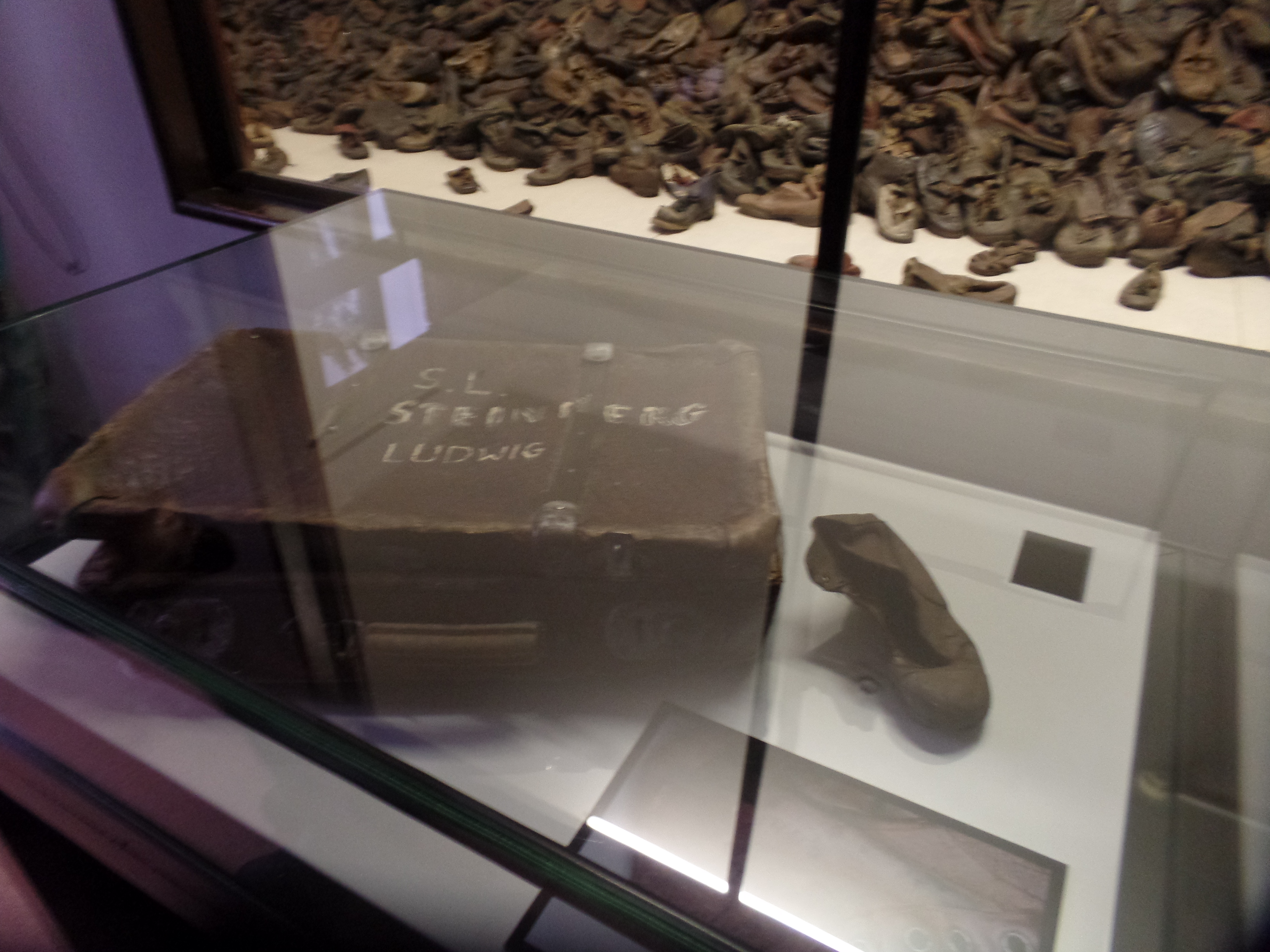
Discarded children’s shoes and a father’s suitcase, with his son’s name written on it.
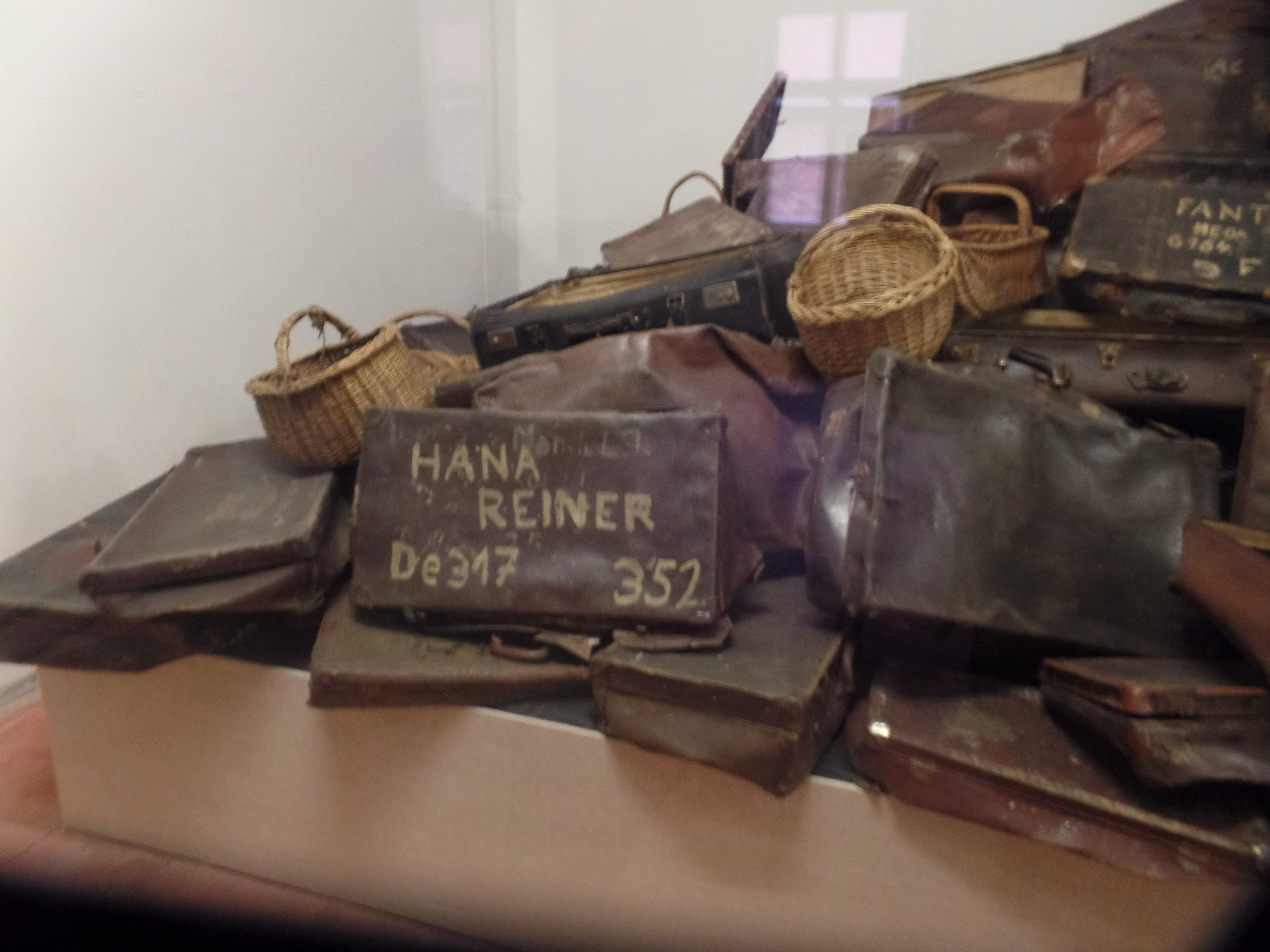
Hana Reiner would not let herself be forgotten. https://www.writeoutloud.net/public/blogentry.php?blogentryid=139212
The Nazis themselves destroyed this barracks, rather than allow it to be preserved by the Soviets and Poles,for what it had been,

I thought back to the early morning, when I boarded a train in Krakow, bound for the city of Oswiecim, (the Polish name which was translated into German as Auschwitz). A mentally disabled man chose to sit across from me. He was an Italian, who had little vocabulary, in any language. He knew “English” and “Deutsch”, as well as a few words in Italian and Spanish. While he was annoying to the young man sitting by the window and the well-dressed Italian man who sat across the aisle, I let him show me the soccer games on his phone. At the end of the one-hour trip, he cheerfully said “Grazie!” and went on his way.

That gentle man would not have had a chance to ride the rails, in Hitler’s Germany. He’d have ended up in the pile of corpses found by the Russians, or in one of the piles of ashes that were dumped in the Vistula River or behind the Subcommandant’s House at Birkenau. He can ride the rails, as he pleases, in today’s Europe, not being harmed and harming no one,

Auschwitz-Birkenau, and all places like it, are needed reminders of exactly what levels of depravity can come from a deluded pursuit of false perfection.

NEVER FORGET!

The Road to Diamond, Day 306: Overworked Treasure

0

September 29, 2025, Krakow- The guard was unequivocal: “No, this ticket is only for the tower. Cathedral is off limits.” I had read that Krakow, like Venice and Barcelona, was getting tired of the hordes of people streaming in and overwhelming the most popular sites. Here was very strong proof of the toll that being loved too much is taking on several places around the world, where each new face just wants one more selfie. Besides, the Cathedral is one of the world’s great religious art museums. I should have come here first.

I had already been in several historic sites in Krakow today, so not seeing Wawel Cathedral was not going to ruin my visit. The nearby castle had closed at 3, and the proprietors of Wawel complex are finding that the underground area is in need of a break from visitors. They put a cap on the number of people allowed down there, and had reached it, by the time I arrived.

I am determined, among other things, to be an ambassador for goodwill and to honour the work which people in the communities on my itinerary are doing, whether it is serving visitors or as part of the normal life of a community. The Wawel team is among those who have put up with a lot, especially in the travel explosion that has followed the 2020 Pandemic. I went with what the tired ticket clerk set for me-and indeed, there was nothing about going into the Cathedral. I walked around outside for several minutes, then left. It was getting towards evening, anyway.

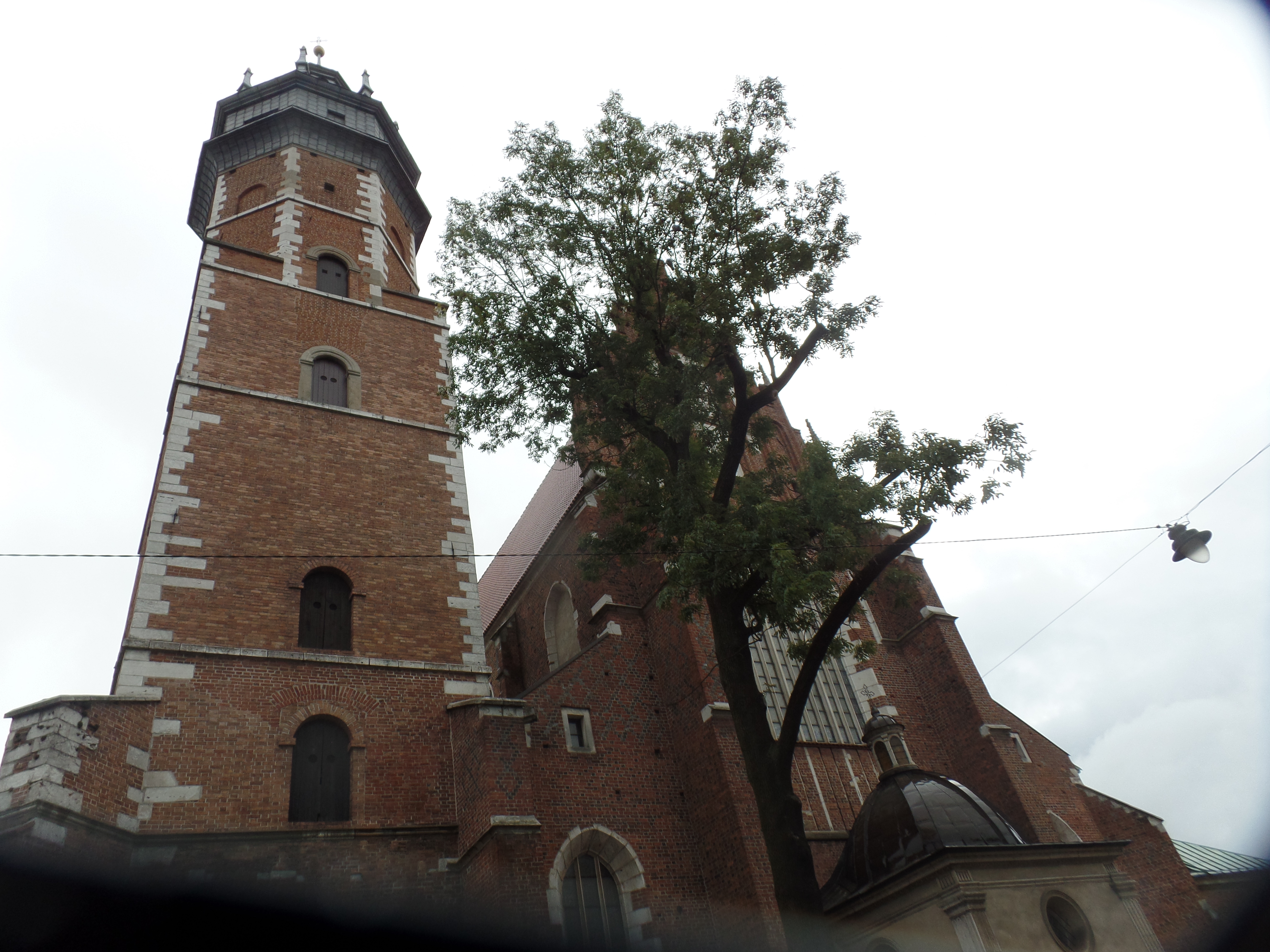
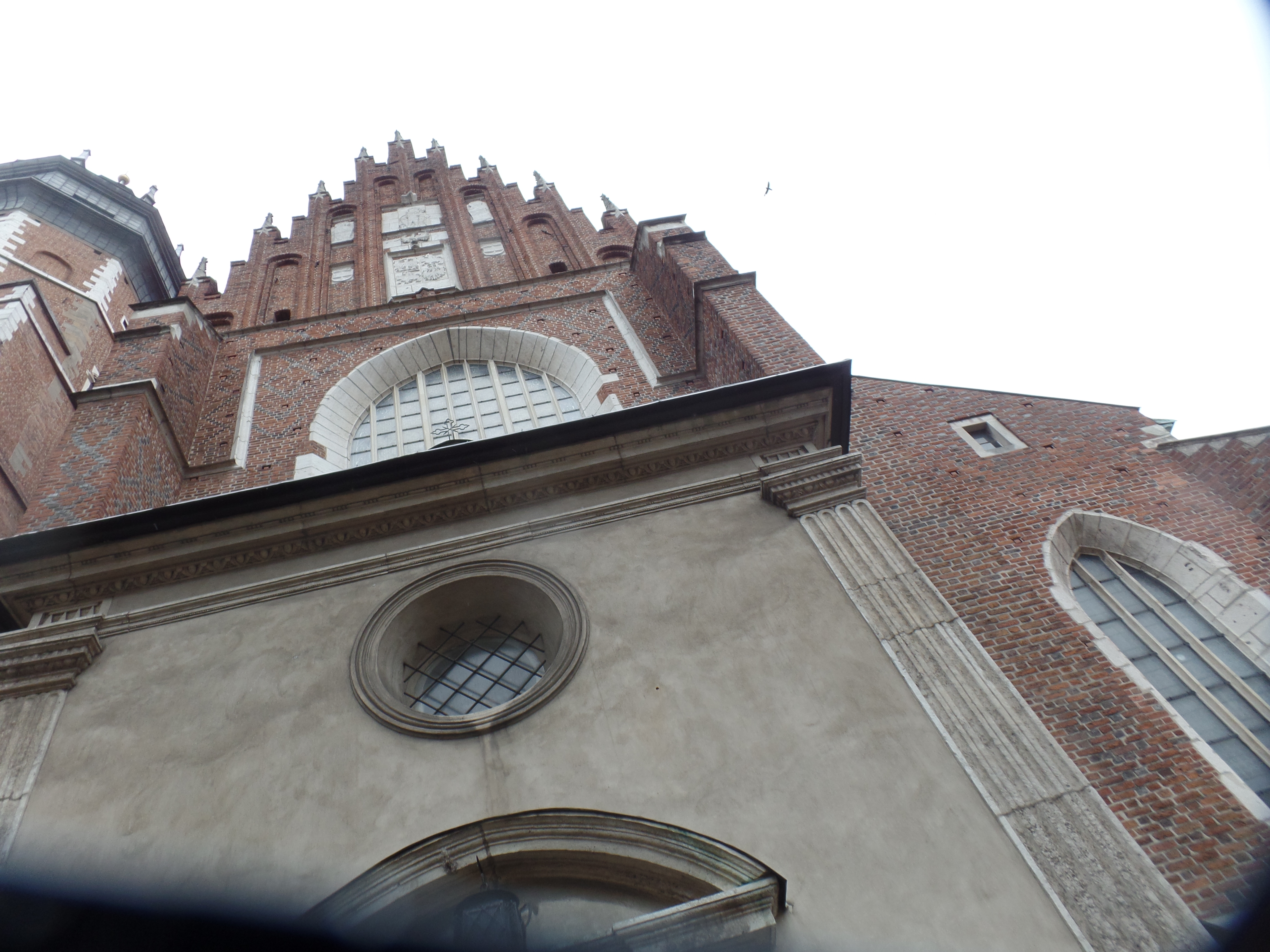
The day started with my anticipated roommate finally showing up, at 7:20 a.m, after what sounded like an enervating train ride. I left him to get a good sleep, and had breakfast downstairs. The day outside began with a short walk from Meininger Hostel to Old Town Krakow. First stop was Corpus Christi Church, built on the orders of Polish King Kasimir III, in 1335. It is one of three impressive houses of worship in Old Town.

Corpus Christi Church, Kasimierz District of Krakow
Front of Corpus Christi Church, Kasimierz District, Krakow

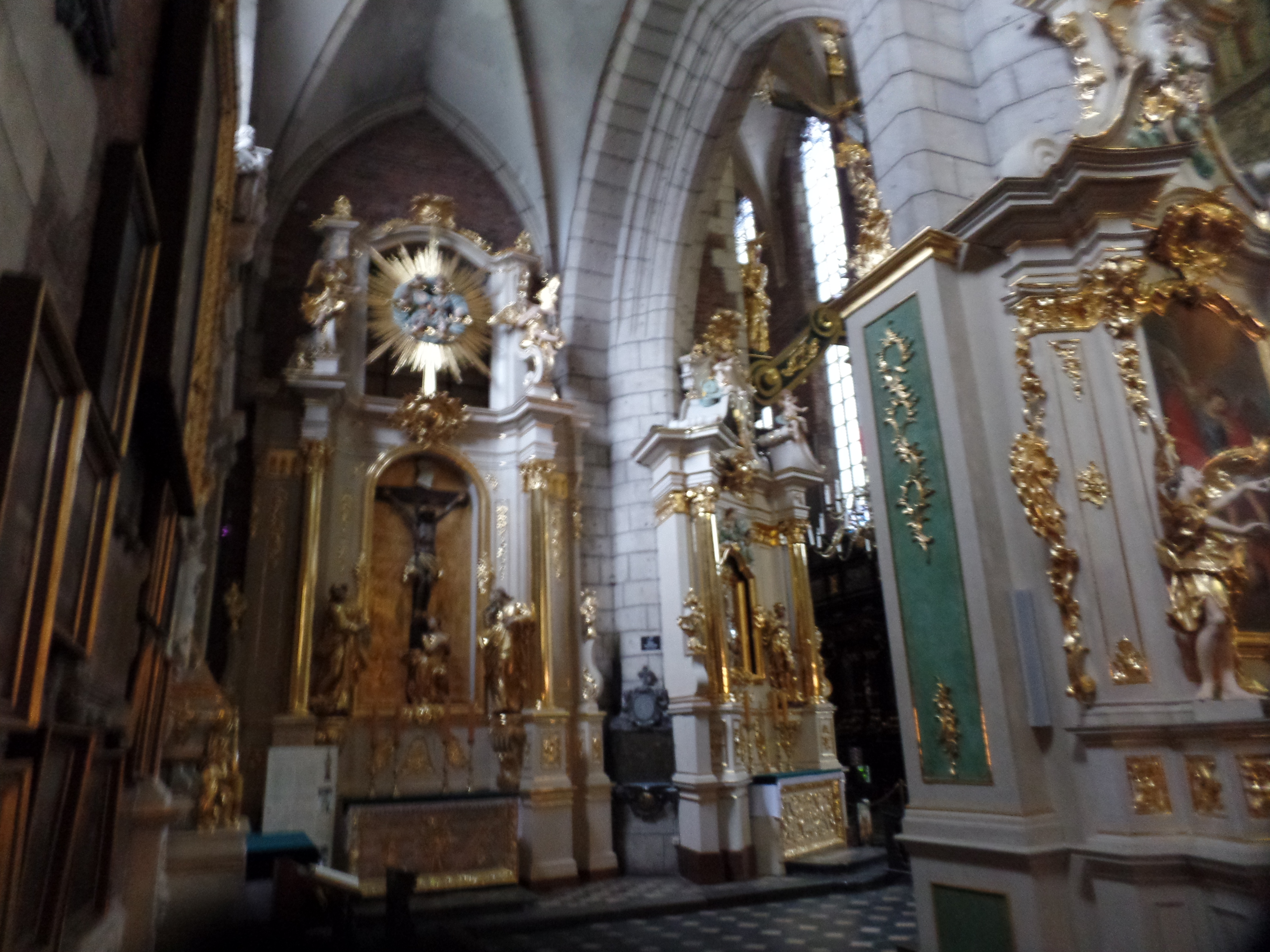
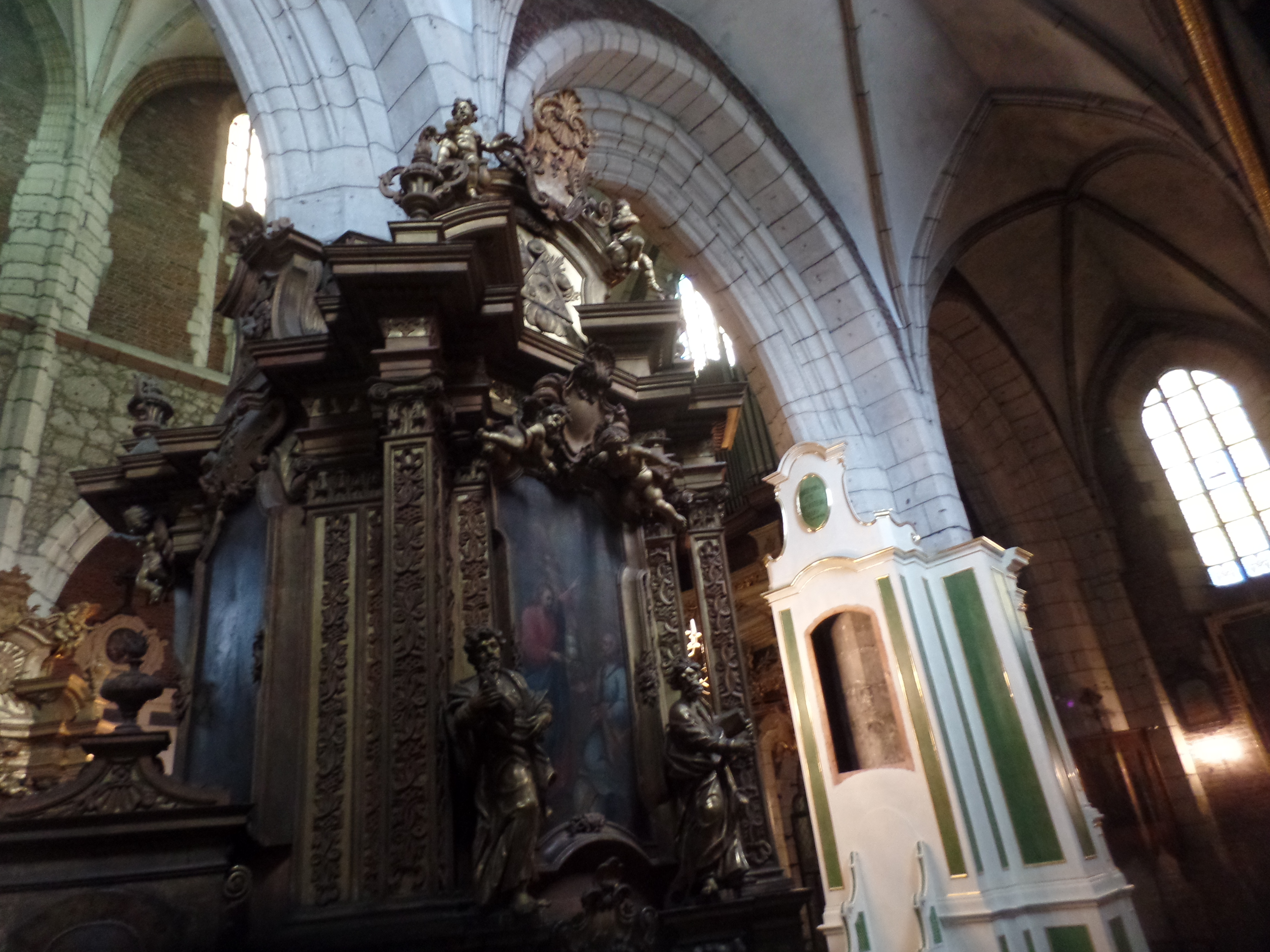
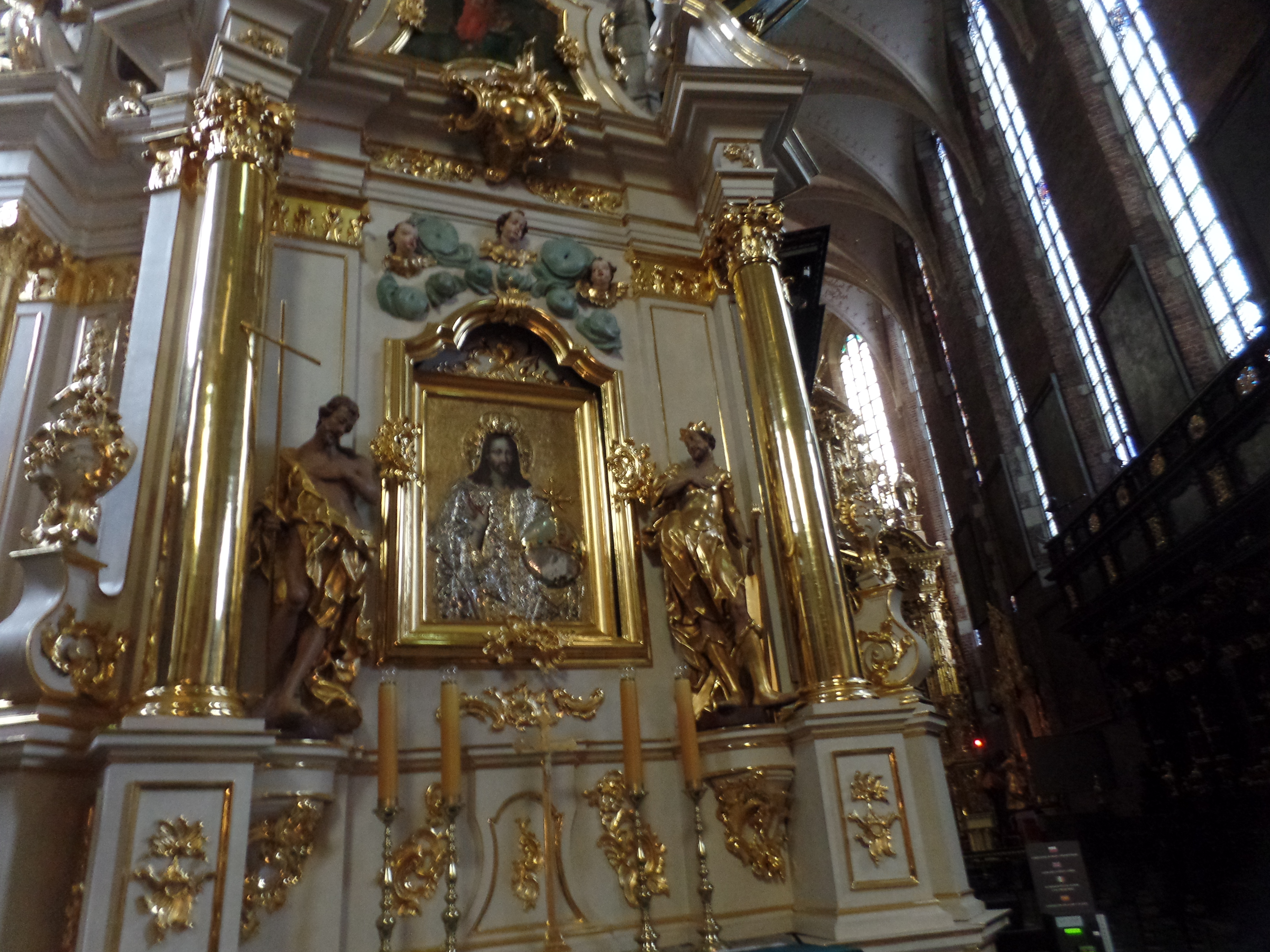
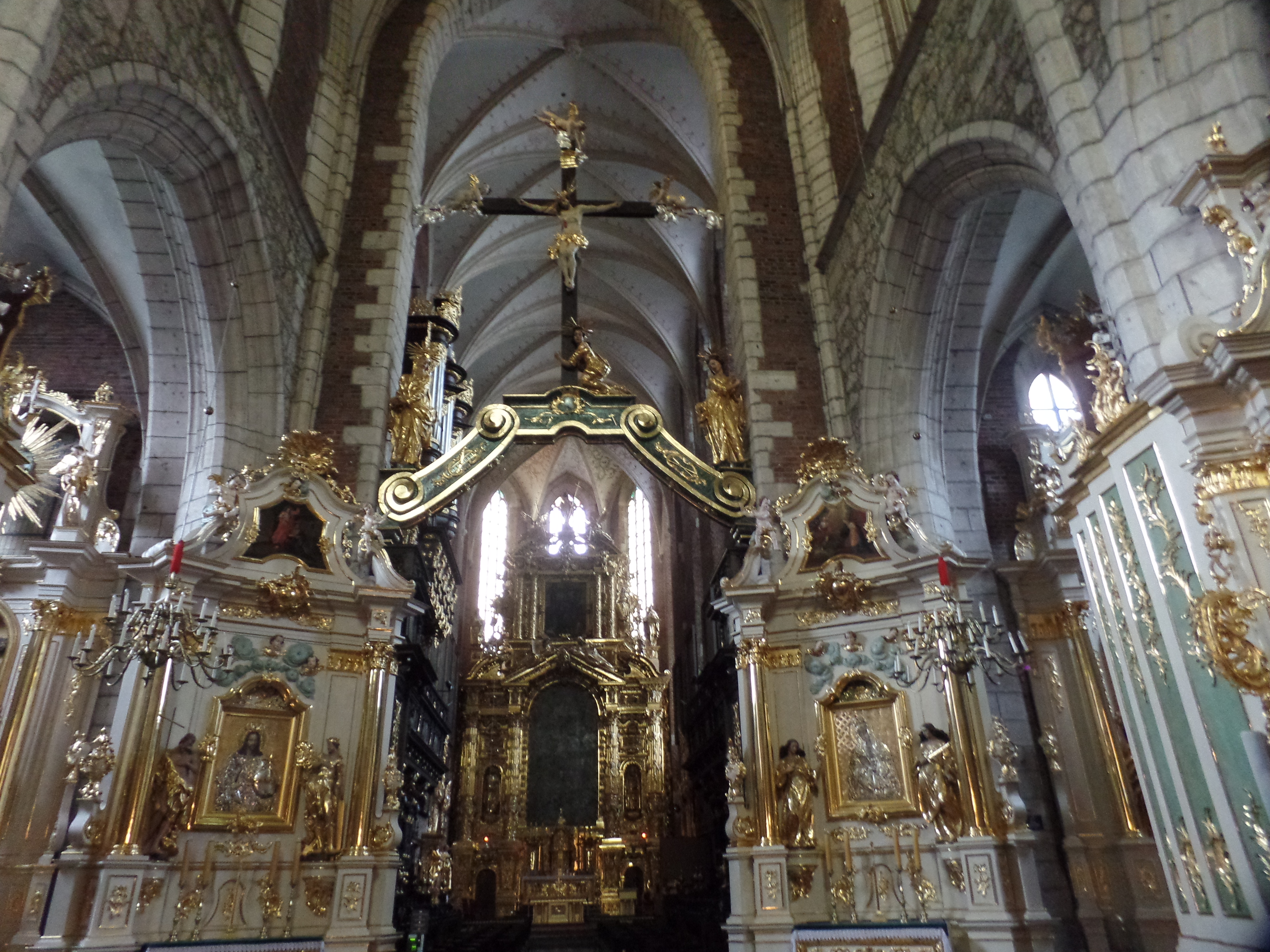
The interior is meticulously maintained. There were a few ladies inside, engaged in their devotions, so I was careful in choosing places to share here. Kasimir III loved to showcase gold, so the most striking scenes of Corpus Christi are accented in the metal.

Interior of Corpus Christi Church, Old Town Krakow
Notice the light colours of the archways, contrasting with the darker wooden cabinets.
More gold, at the altar (above and below)
More of the golden altar
Monastery at Corpus Christi Church, Old Town Krakow. This was occupied by the Canons Regular of the Lateran, who King Kasimier had brought in from the older town of Klodzko.

I needed a little coffee break, so Green Times, just up the street from Corpus Christi, had a good organic brew.

Green Times Coffee House, Old Town Krakow

I didn’t need a hospital, but there is large one in Old Town.

Szipital Zakonu Bonifrarow SW Jana Grandego (Zakonu Hospital), Old Town Krakow

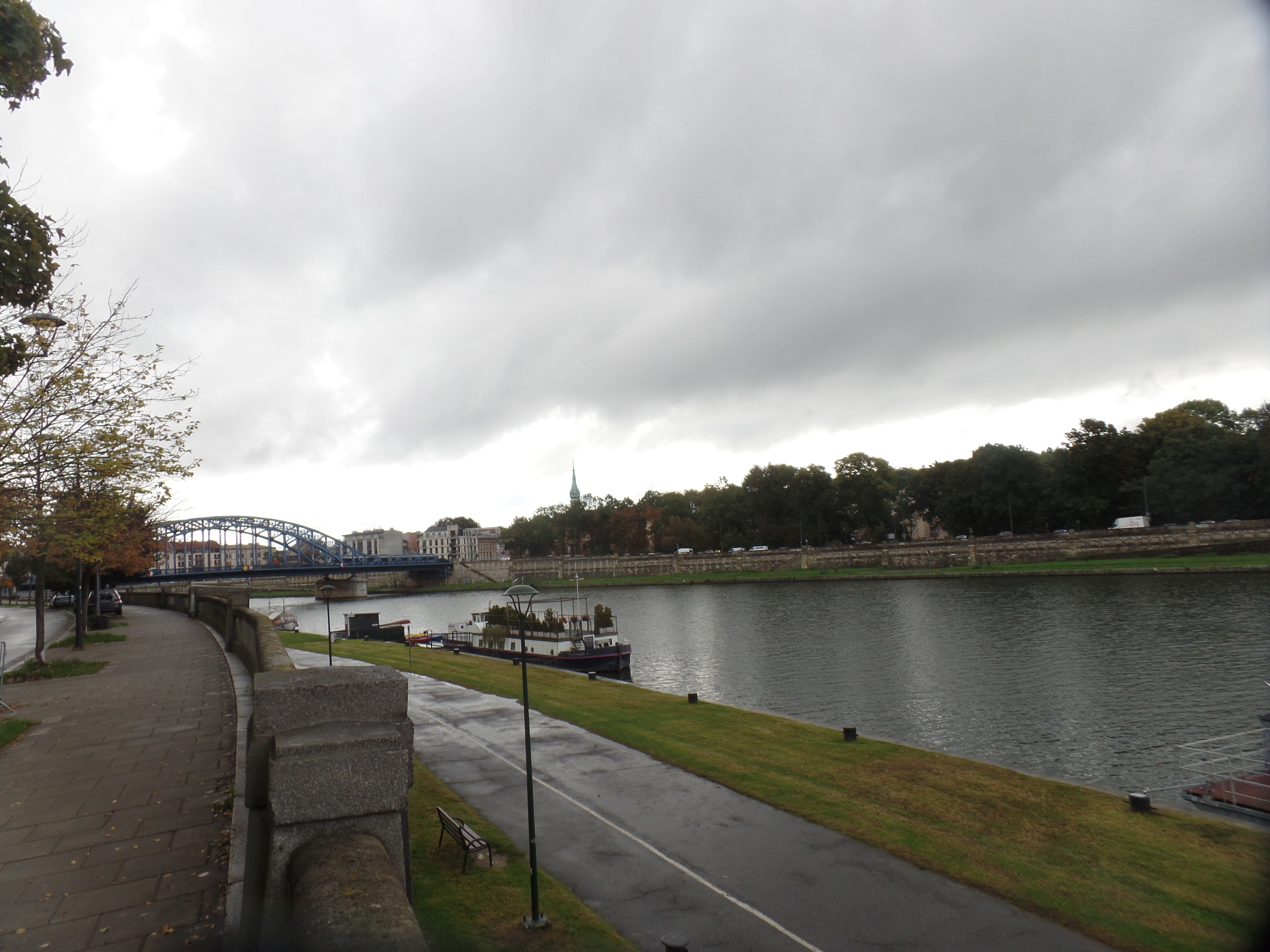
I came next to the divider and lifegiver: Beautiful Mother Vistula

Vistula River, Krakow

The fish look happy!

Vistula River, Krakow

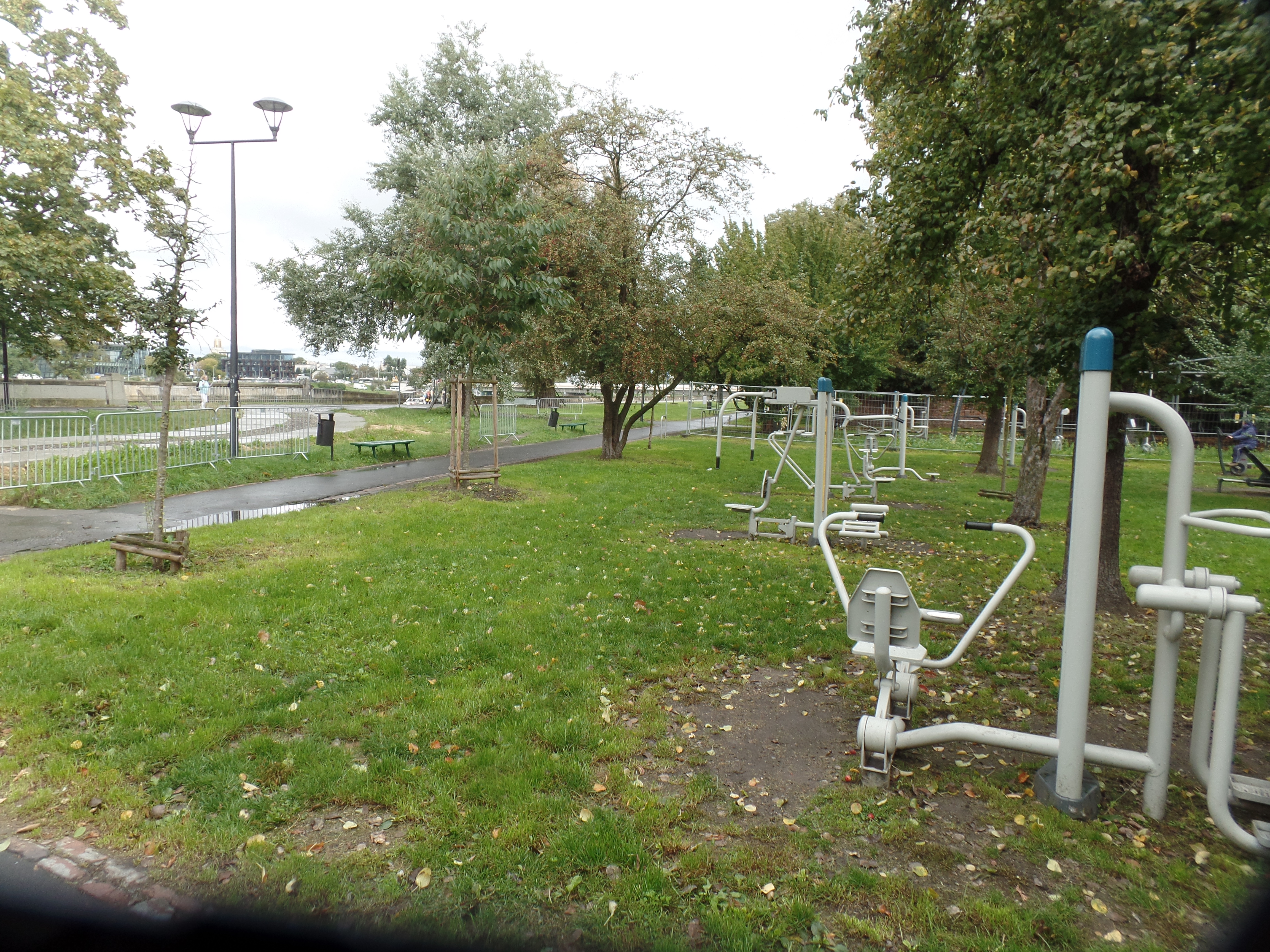
An exercise yard for adults!

Public Park, near St. Rita’s Church, Old Town Krakow

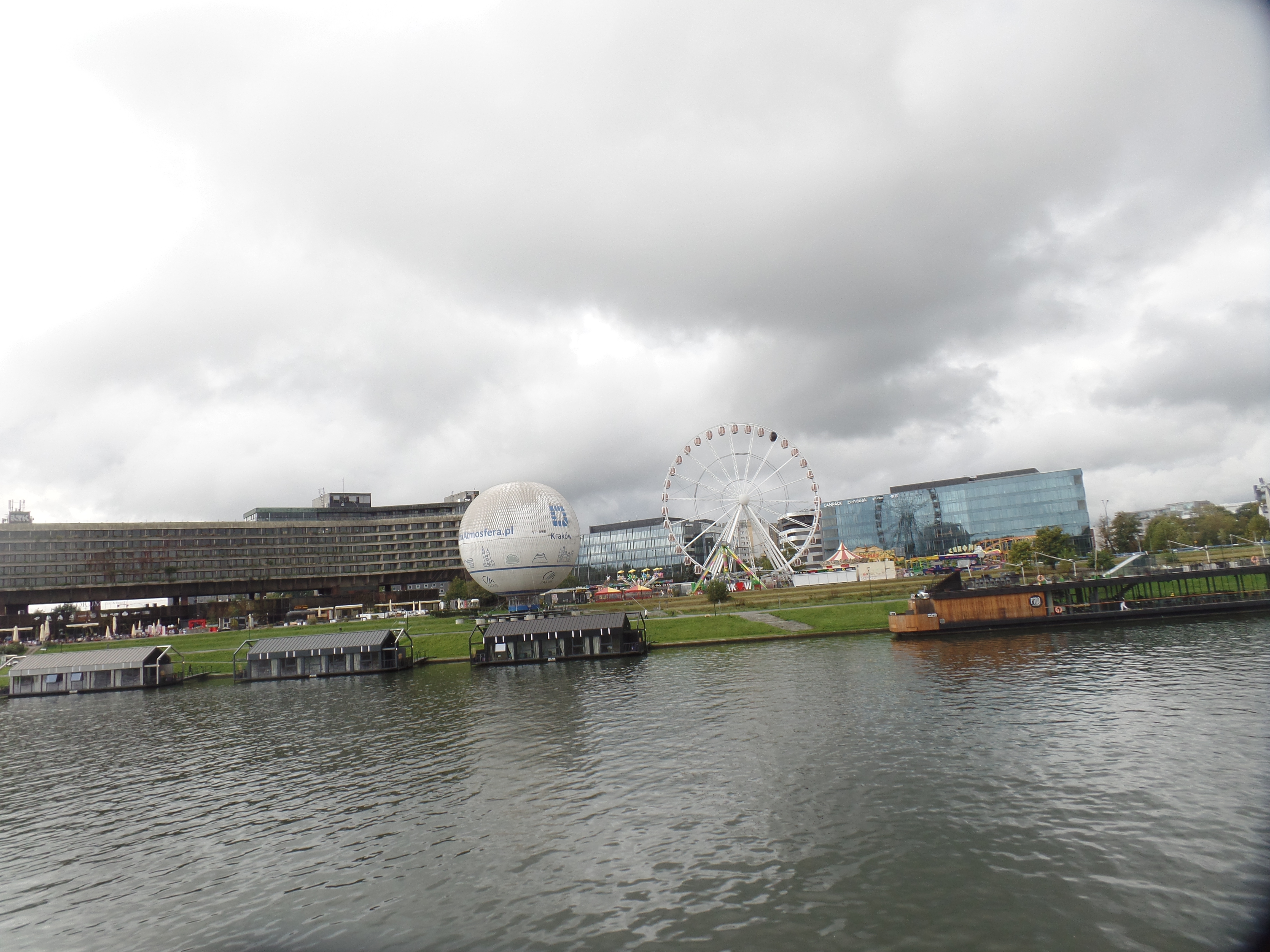
The new part of town beckons.

Balon Krakow Widowky (Sightseeing Balloon of Krakow), across the Vistula
Church of St, Rita, Old Town Krakow

As Mass was being said, I did not go in.

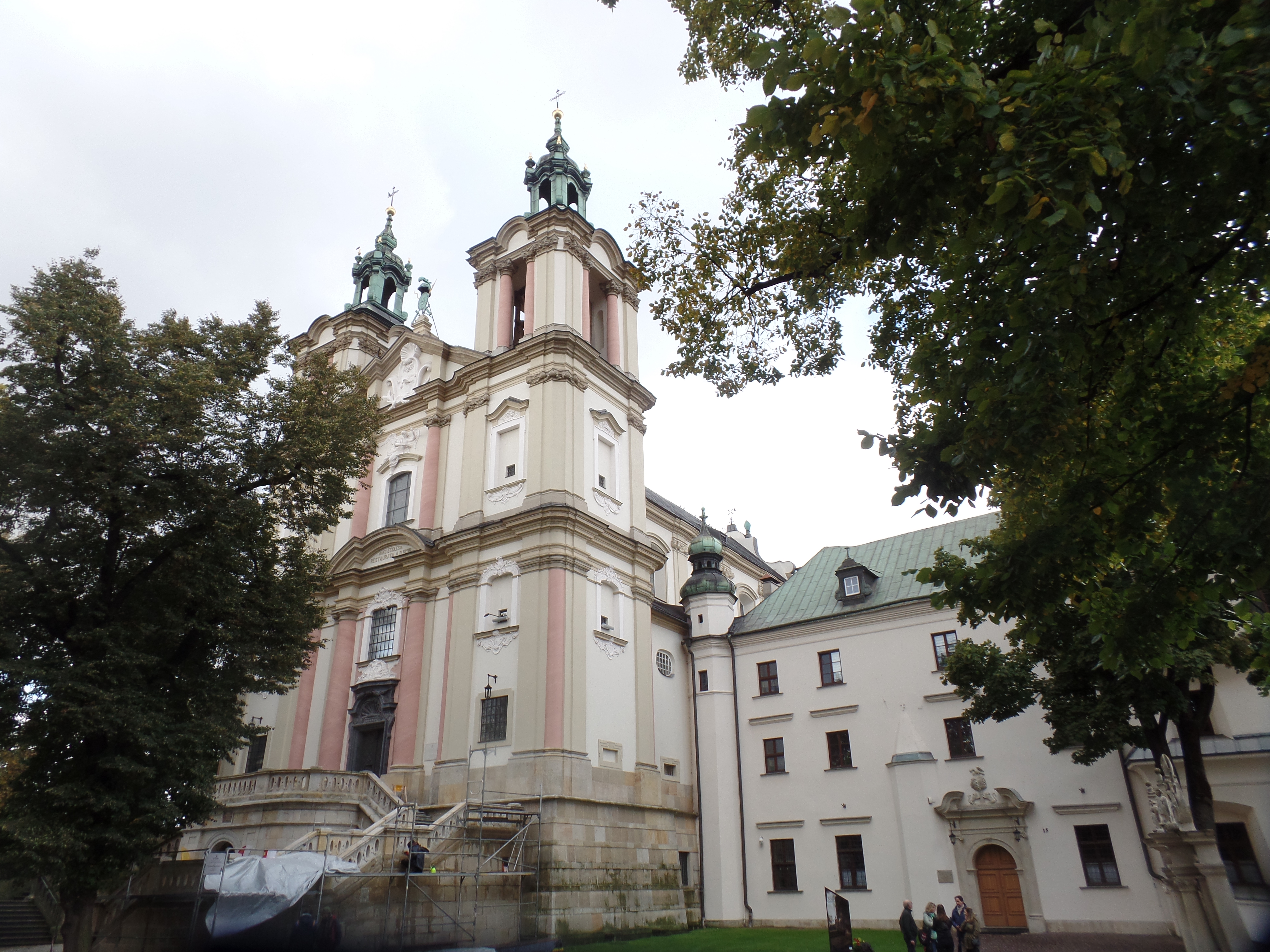
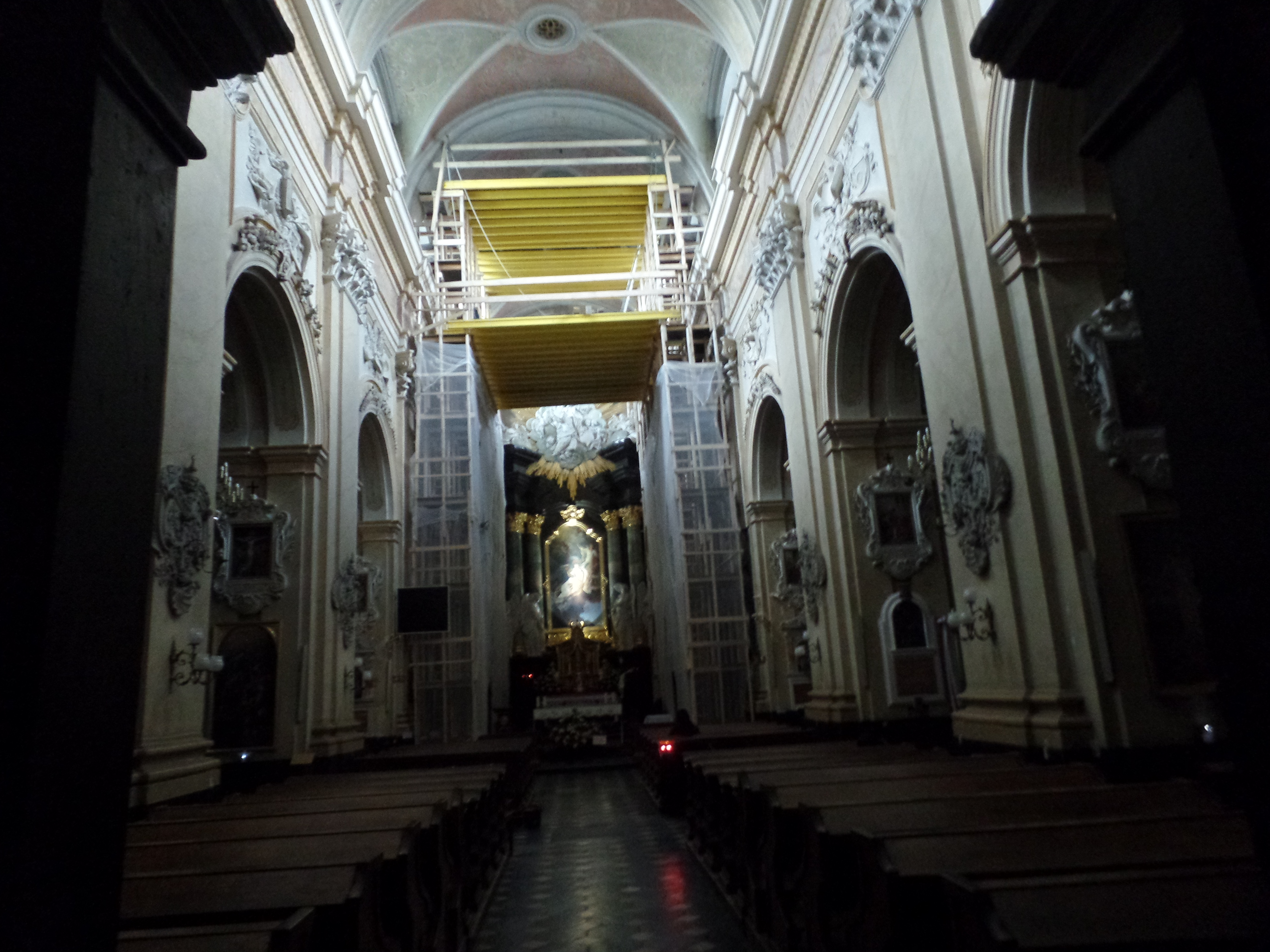
Church of St, Michael the Archangel and St. Stanislaus, Old Town Krakow

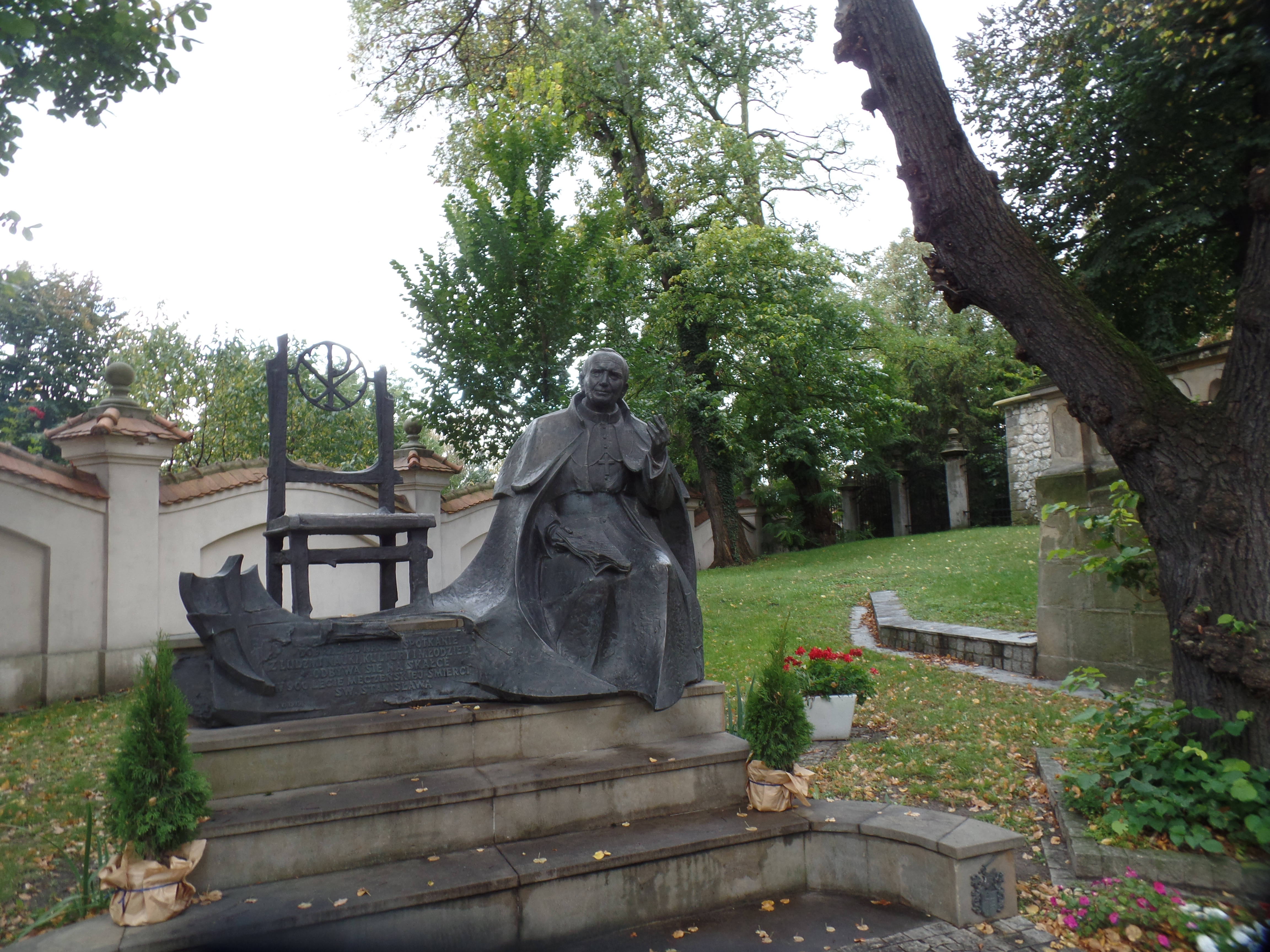
This turned out to be my final church visit of the day. The structure was blessed, many times, by this man.

St. John Paul II
Interior, Church of St.Michael and St. Stanislaus, Old Town Krakow

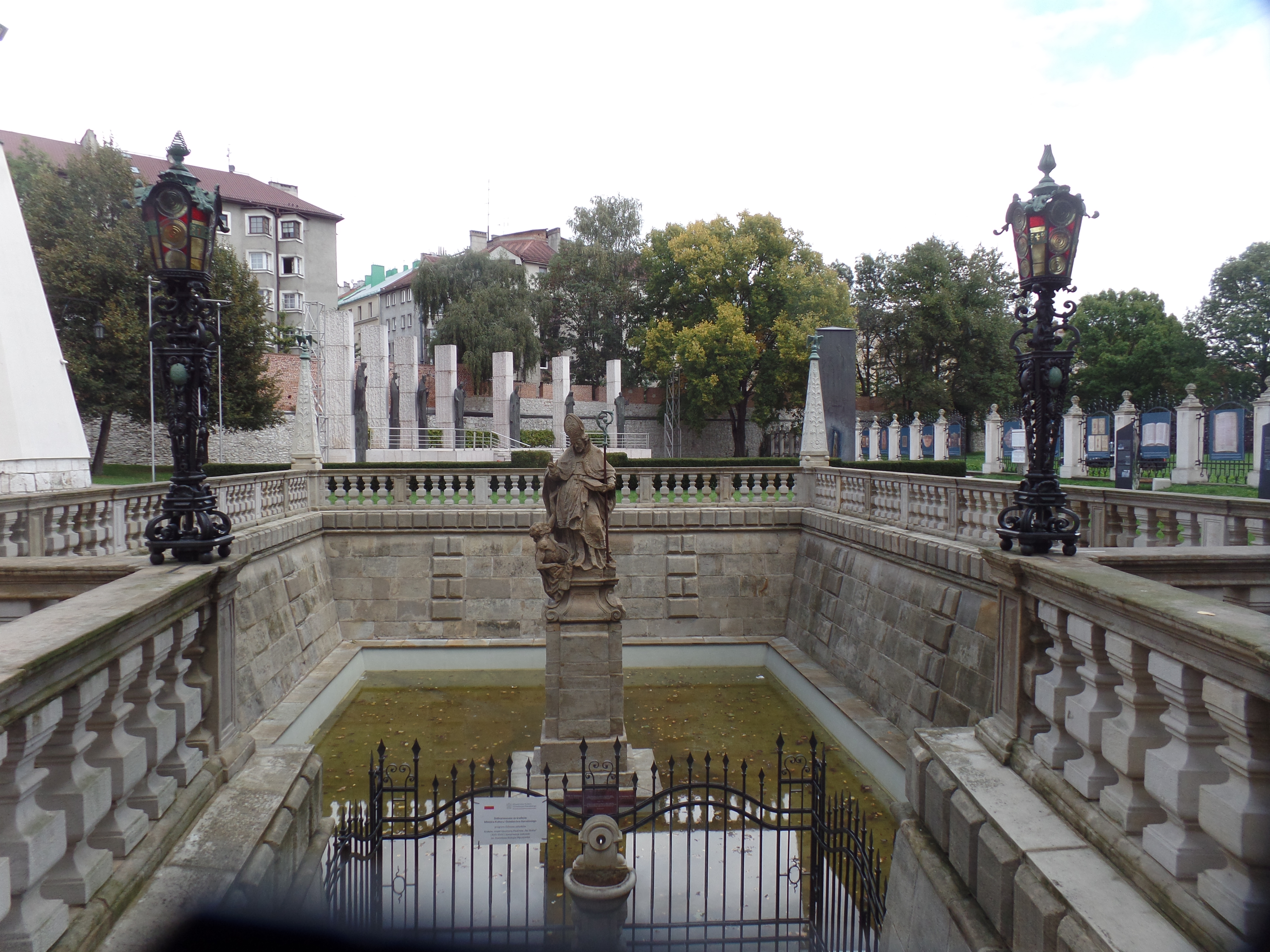
Outside, there is a courtyard, where several bishops of the church are laid to rest and memorialized.

Courtyard Memorial Garden, Church of St. Michael and St. Stanislaus, Old Town Krakow

I came next to Rynek Glowny (Main Market Square), the heart of Old Town.

Rynek Glowny (Main Market Square), Old Town Krakow. Not a whole lot was going on today, it being Monday and a bit rainy.

After a bowl of oatmeal, at Krakow’s branch of Grain Cafe, I went back to Meininger and rested a bit. It was around three, that I got the urge to walk over to Wawek Castle. It was a pleasant walk of about 15 minutes. Here is a view of the castle, from the base of the hill.

Wawel Palace, Krakow

The place is an essential locus of Polish history, having been a fortress of the Vistulan tribe, as early as 800 A.D. It became the center of a Polish nation, in the Tenth Century. A castle was built in the heart of the earlier fortress, and several churches, those of St. Gereon, St. George, and another one of St,Michael, were built around the Cathedral. A large statue of a fire-breathing dragon is on the grounds, though I did not find it.

Vistula River, from the Tower, Wawel Palace

Here are a few photos of the fortress itself.

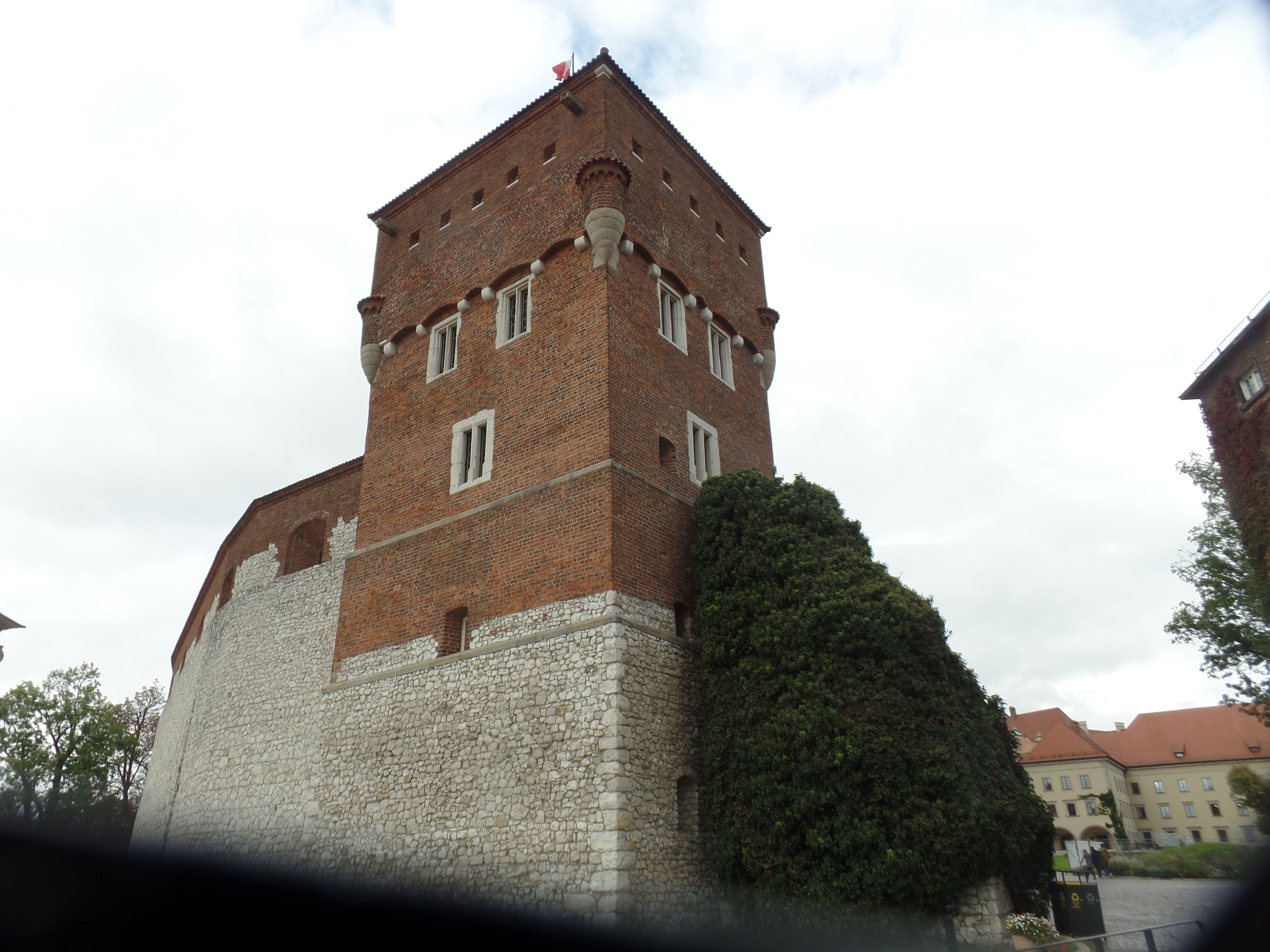
Watchtower, Wawel Royal Castle
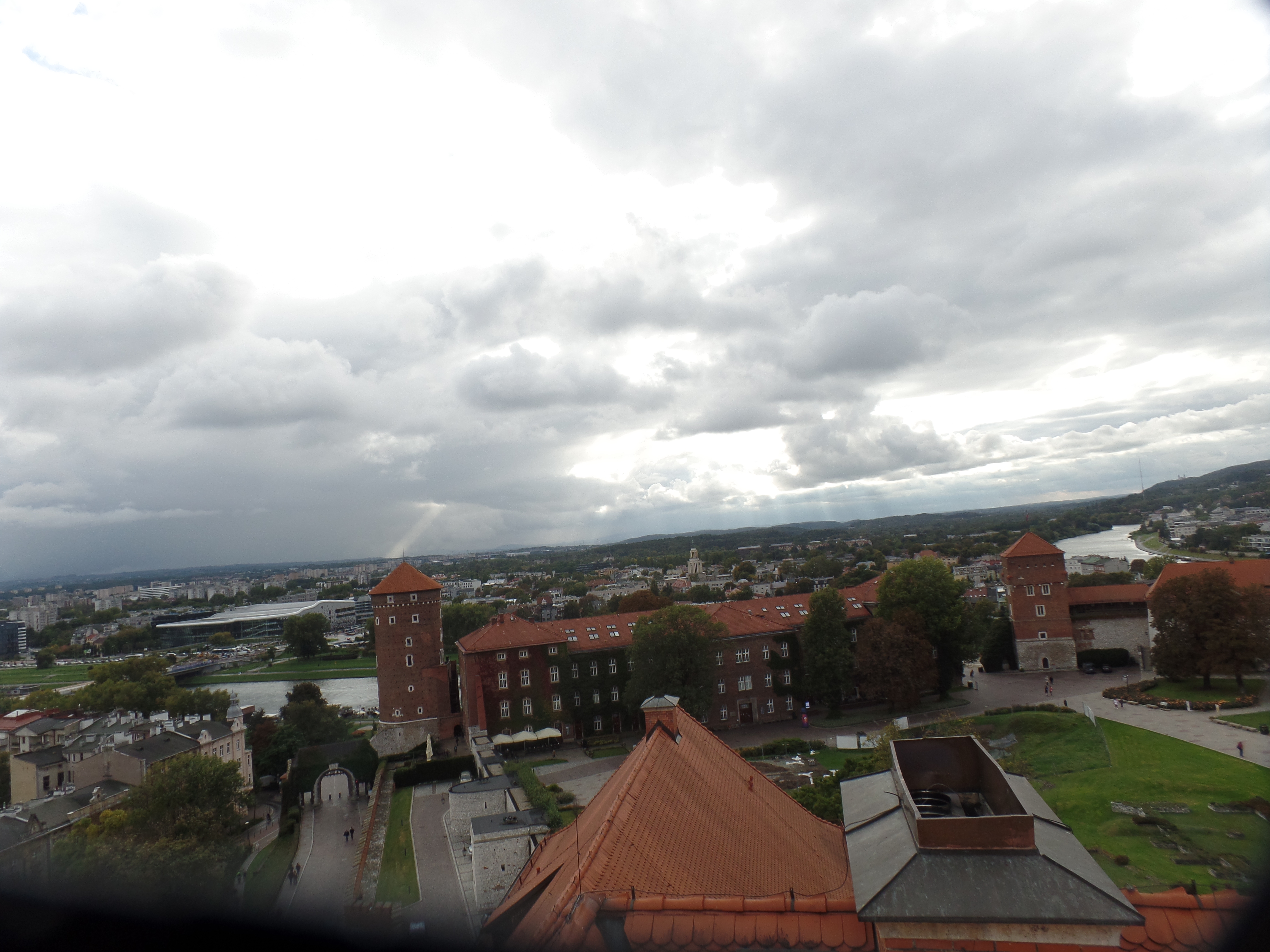
View from Tower, Wawel Royal Castle, Krakow
View from tower, Wawel Royal Palace, Krakow

Once down from the Tower, and having been denied entry into the Cathedral, I at least got the outside of the edifice.

Wawel Cathedral, Krakow

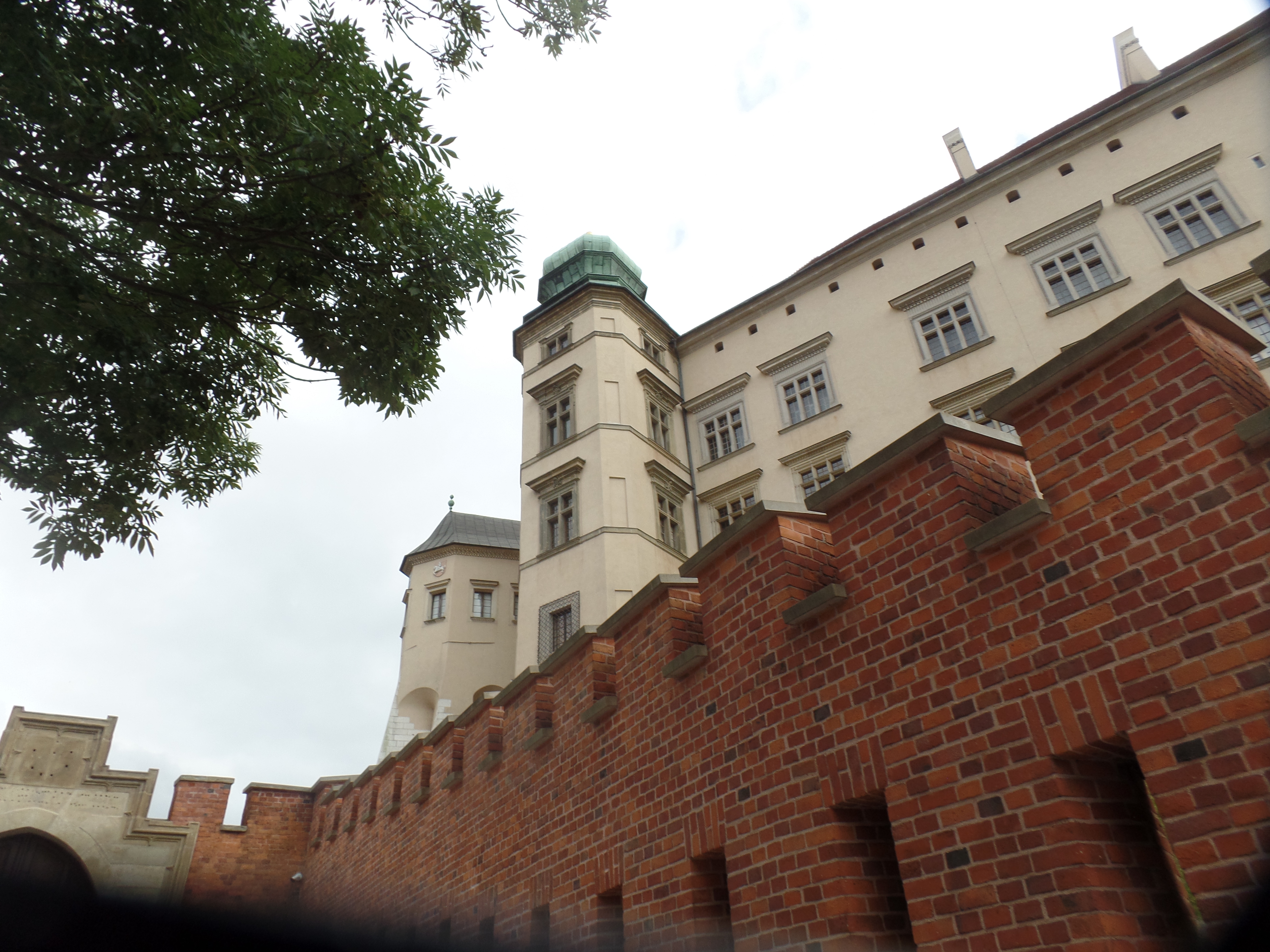
Near the southeast area of the complex, the Great Wall safeguarded the place for a time, being eventually scaled by Swedish troops.

Wall around old town, Wawel Castle, Krakow

With that, I said farewell to Wawel Castle, and headed back to check on R and enjoy a restful evening, as tomorrow will not require an early departure, being an afternoon appointment at Auschwitz_Birkenau.

The Road to Diamond, Day 305: Standing Room Only

0

September 28, 2025, Krakow– “Where do I get the train to Krakow?”, I asked a conductor, after getting off the train that had brought me from Berlin to Poznan, in western Poland. “Go downstairs to Platform 10.”, was all she said. Many European train platforms have two tracks, which go in directions opposite each other. This reduces the need for multiple platforms, each with a track that only goes one way. I knew this, but looking at my watch, seeing it was close to departure for the Krakow train and seeing a train that lots of people were getting off and on, I put two and two together and got…five.

When I got to the cabin which had my seat number, I found it was occupied by a family of four, with the younger son in “my” seat. I went out of the cabin and was met by an older Polish woman, who “knew” that was my seat “by rights”. We got underway, with me in standage, where I was chatted up by a couple, who were happy that someone from Arizona was visiting Poland. The husband asked to look at my ticket, and gasped. “You go north now, instead of south! You must get off at next station, and catch train back to Poznan, then good luck getting to Krakow!” That explained the young boy sitting in his rightful seat.

I got off at the next station, reversed course, got on a Krakow-bound train from Poznan, and took my place among university students and poorer older adults, in Standage, all the way to Krakow, five hours south. Of course, I didn’t stand the whole way. I had my rolling suitcase, and a relatively clean section of floor on which to sit. When people needed to get on or off, at the ensuing stations, we in Standage had to make room for them. This made a few of the students quite surly-but surely they know this is part of the deal. Most, though, seemed concerned for one another, on a couple of occasions consoling those who were openly distraught. Not speaking Polish,I kept my mouth shut, the whole way, and was “welcomed” by the conductors, none of whom were concerned with why I was there.

I got to Krakow around 11 p.m. and caught a taxi to Meininger Hostel, part of a chain of hotels and hostels across central Europe. It is a lovely establishment, and while the city itself is rather tired of mass tourism, I was cheerfully welcomed by those I encountered on the street and at the hostel. I had the room to myself for the night, as the young man who was to be my roommate had his own tale of train woe and would not be arriving until early tomorrow morning. Thus, another decent end was found, to a strange day.

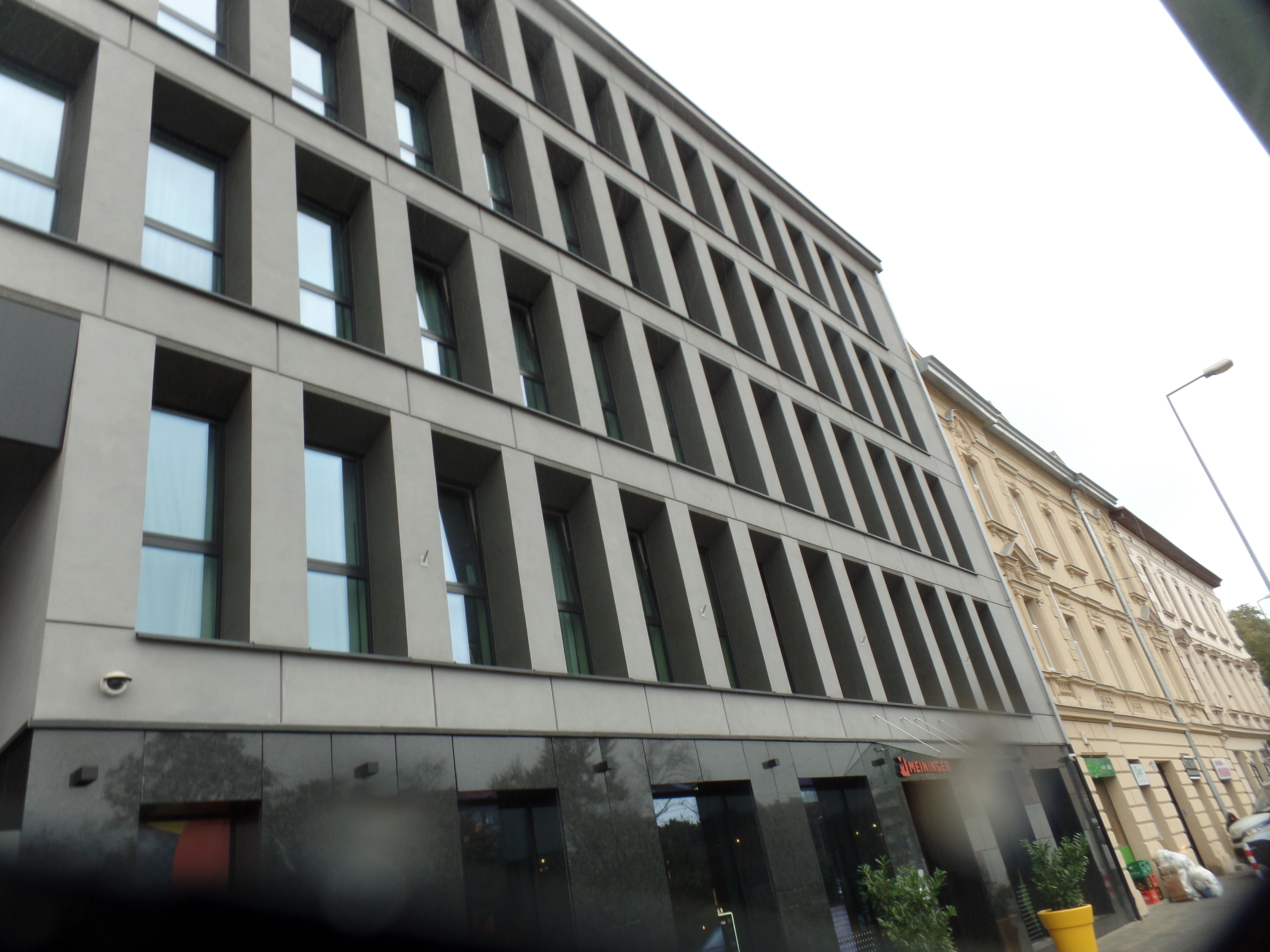
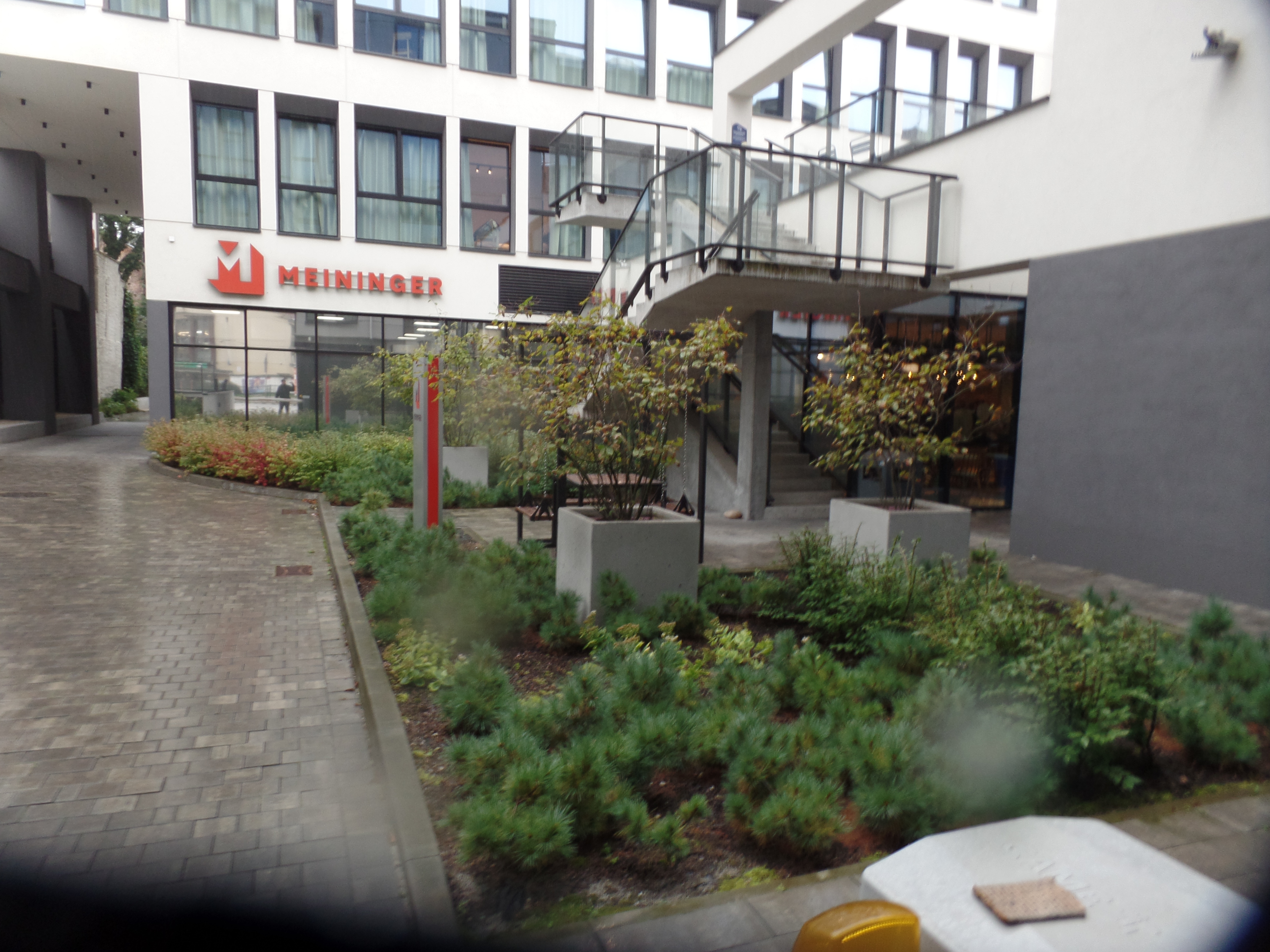
Meininger Hostel (above and below)

The Road to Diamond, Day 304: The Streets of Berlin

0

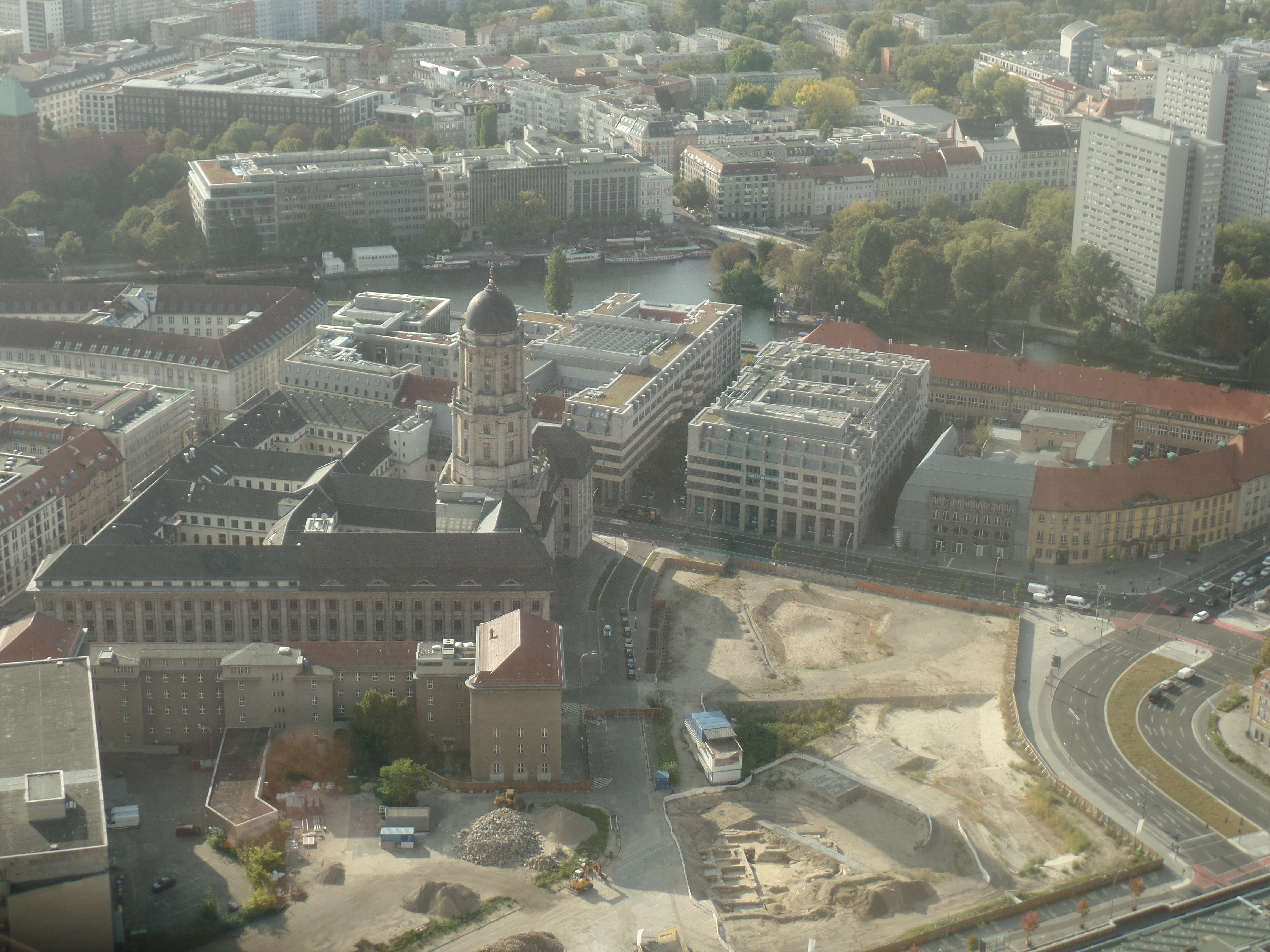
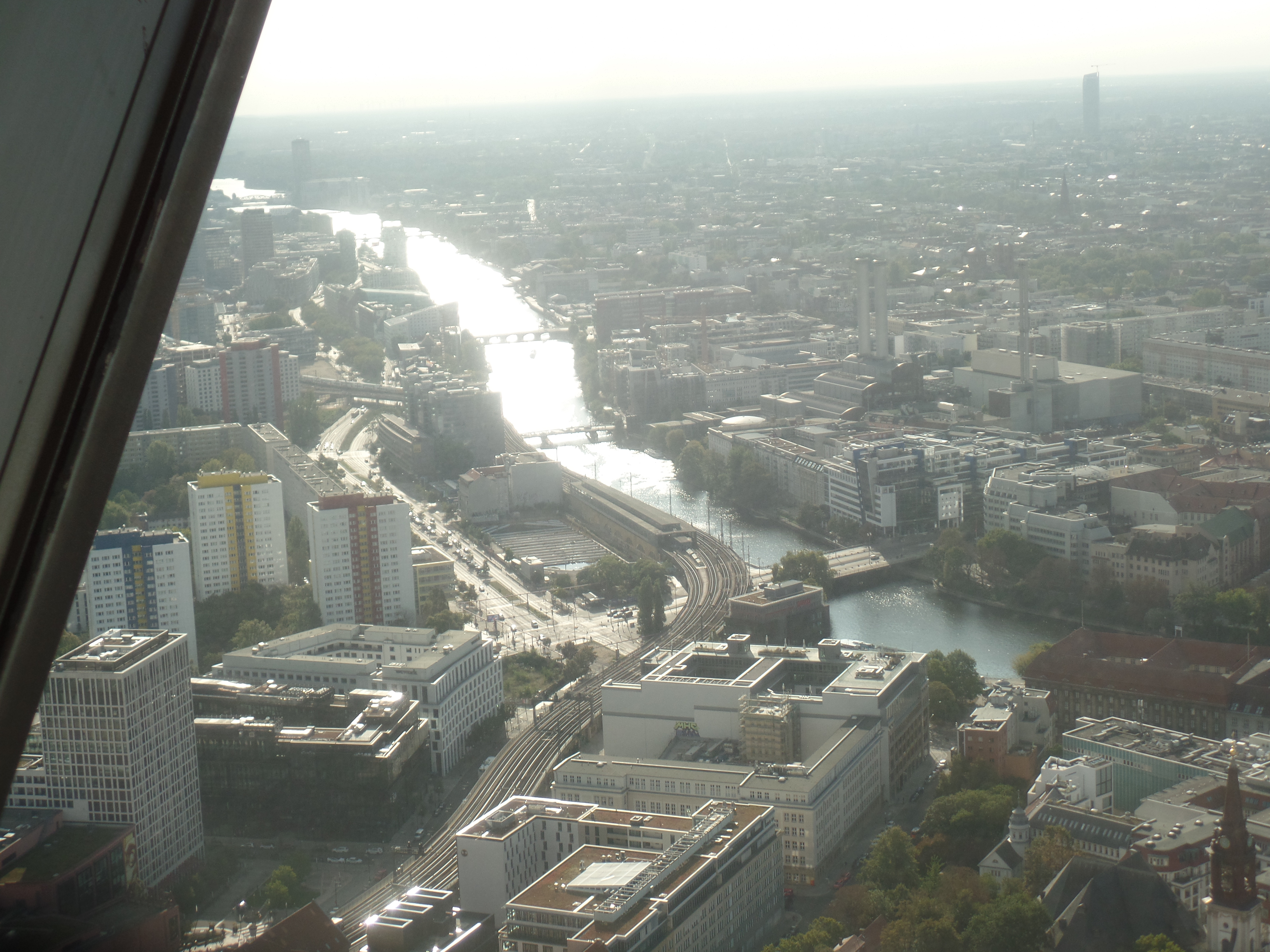
September 27, 2025, Berlin- Today was a momentous day, for both me and for Berlin itself. After breakfast at St. Christopher’s, I headed over to Berlin TV Tower. From the observation deck, on the 21st floor, I had a panoramic view of about half of Brandenburg. The great city never should have been divided, but since it was, there are remnants of the Wall barely visible from this vantage point. Brandenburg Gate is also discernible, to say nothing of the prominent buildings, like Berlin Cathedral (I saw the exterior), St. Nikolai Kirke (also could only view outside) and the Bundestag (off-limits, for the reason I will mention in a bit).

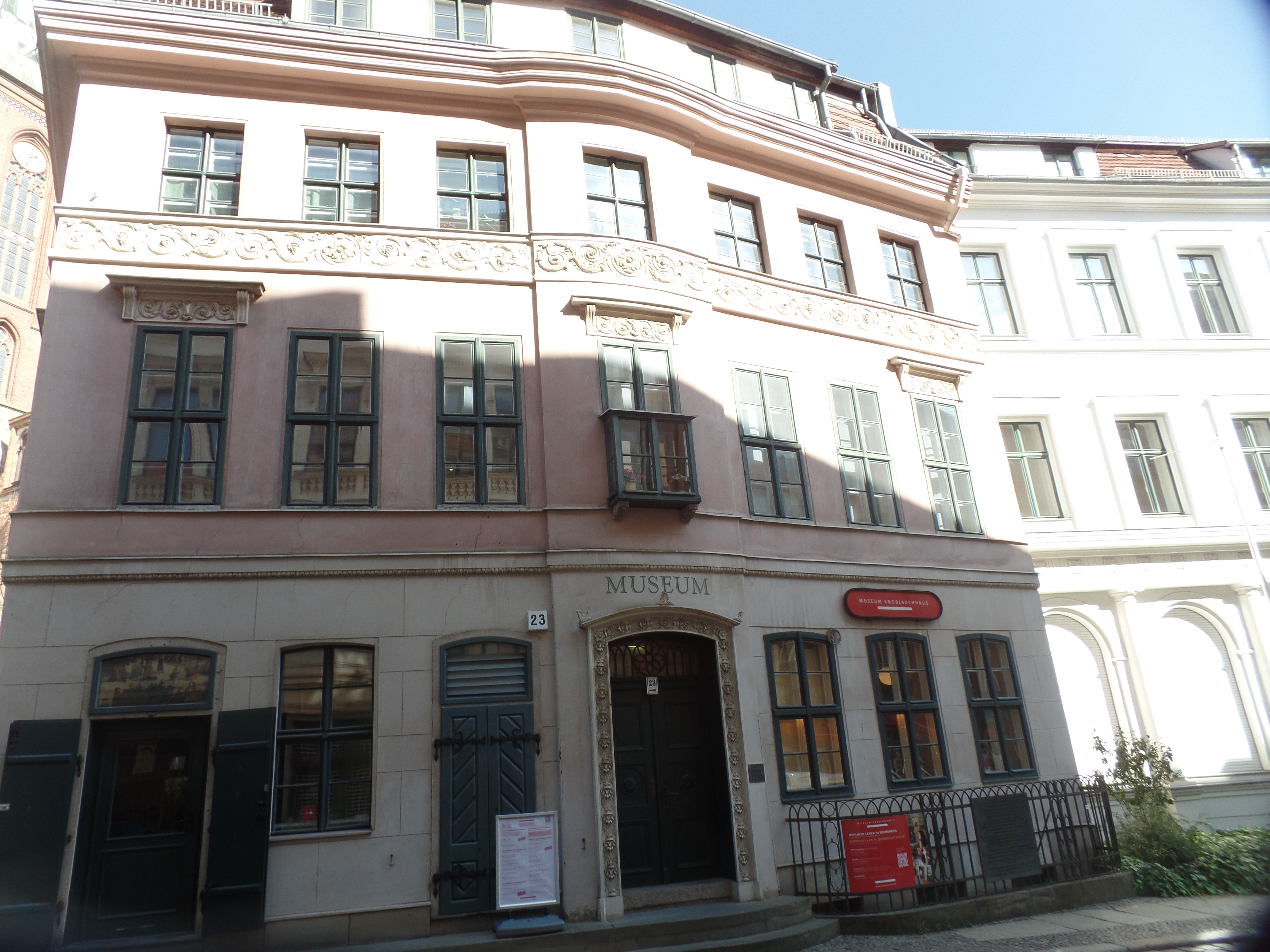
Once down from the tower, I headed to Berlin’s oldest neighbourhood, Nikolai Platz. I spotted the original spelling of the name of some extended family members, attached to the name of a museum, in what is described as Berlin’s oldest standing house, built between 1759-1761. Knoblauchhaus, the creation of Johann Kristian Knoblauch, a merchant of hooks and sockets, and of his builder sons, Carl and Christian. The family business continued, and thrived, under Carl’s watchful eyes. He became friends with several other prominent Berliners, including the brothers Wilhelm and Alexander von Humboldt, whose surname graces the city’s prominent university.

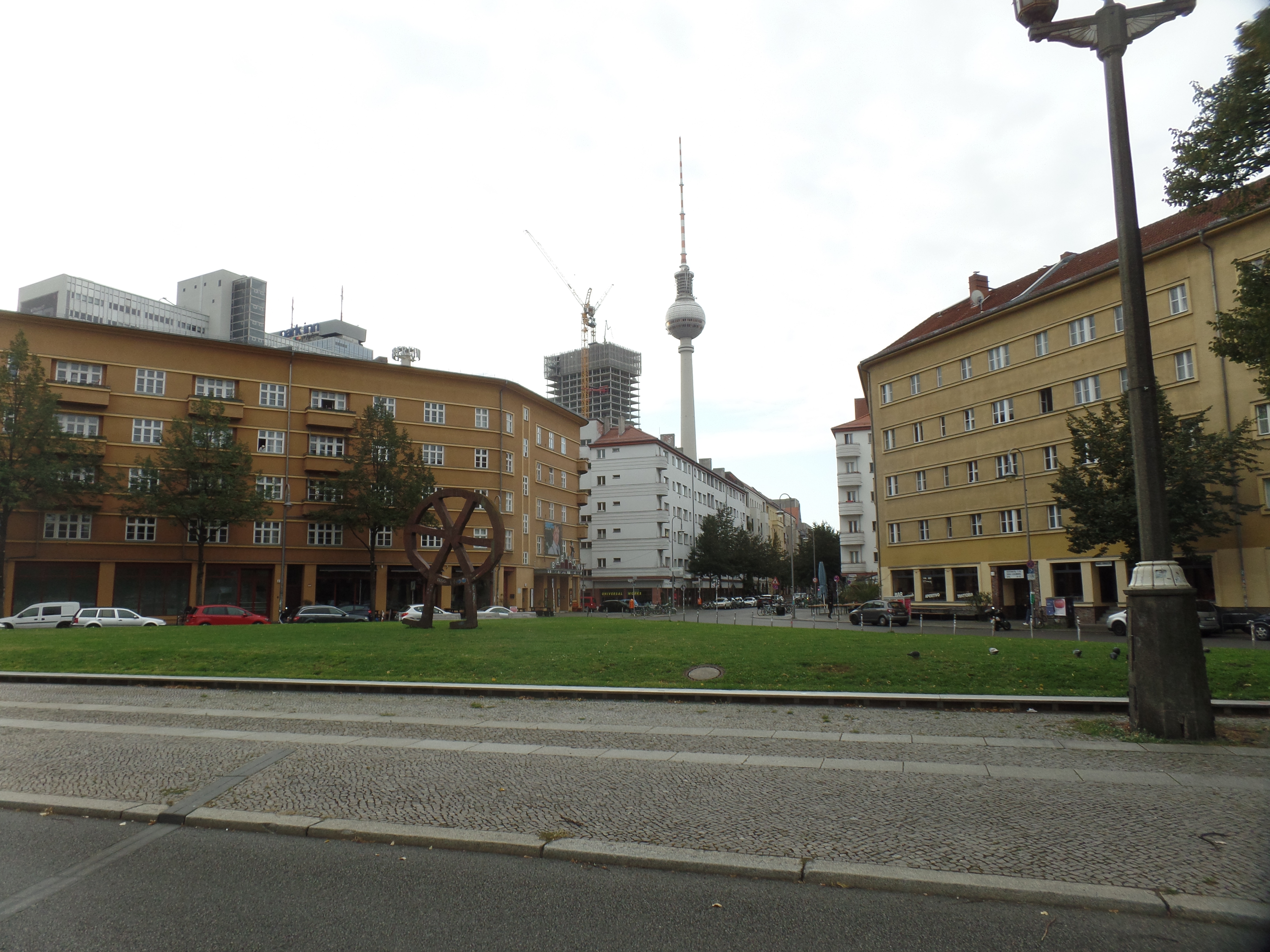
View of Berlin TV Tower, from St. Christopher’s Inn
View of Old Berlin, from Observation Deck, Berlin TV Tower
View of River Spree, from Observation Deck, Berlin TV Tower

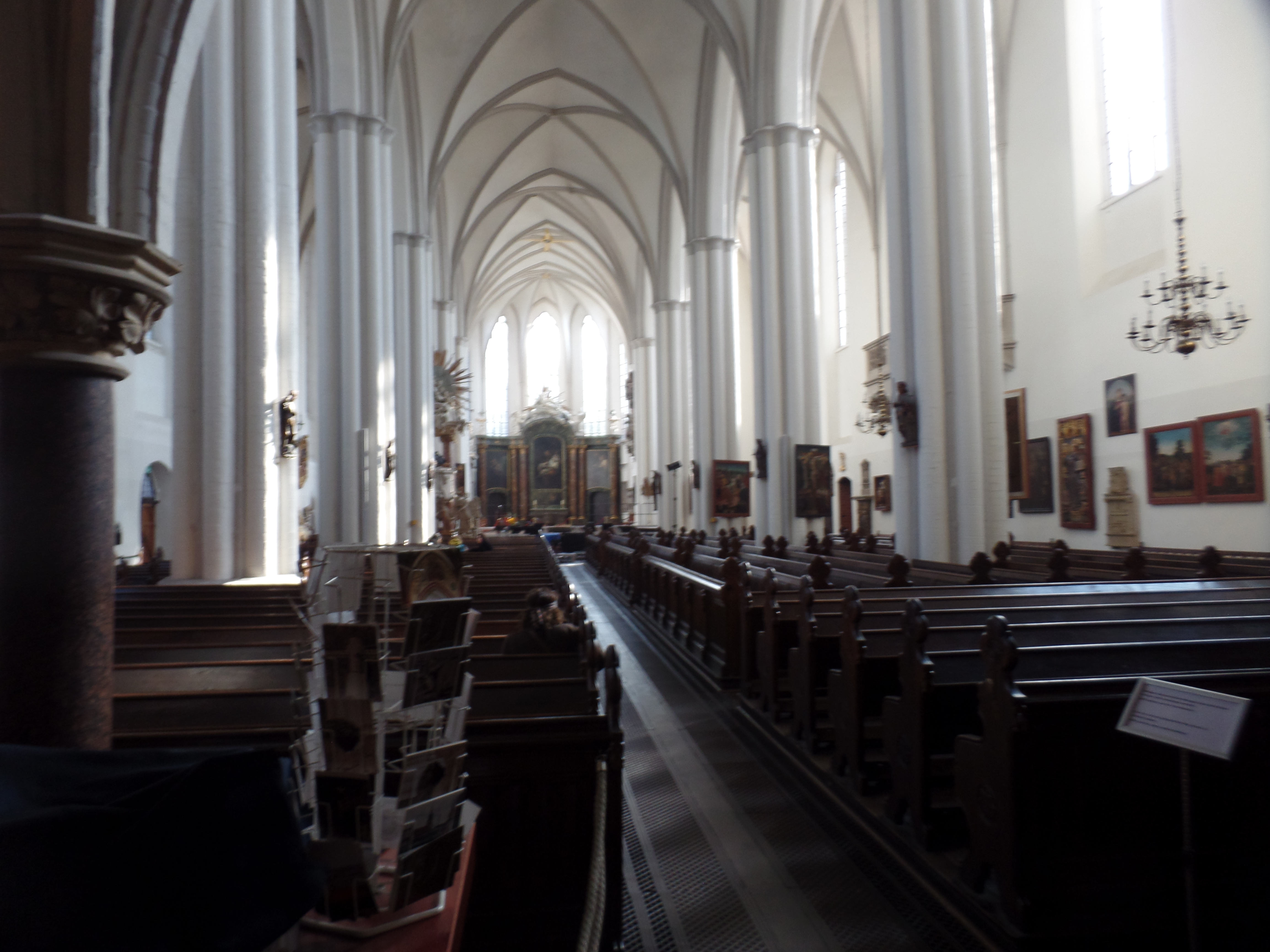
I was able to spend time in Marienkerke(St. Mary’s Church), as the planned demonstrations had not begun to form.

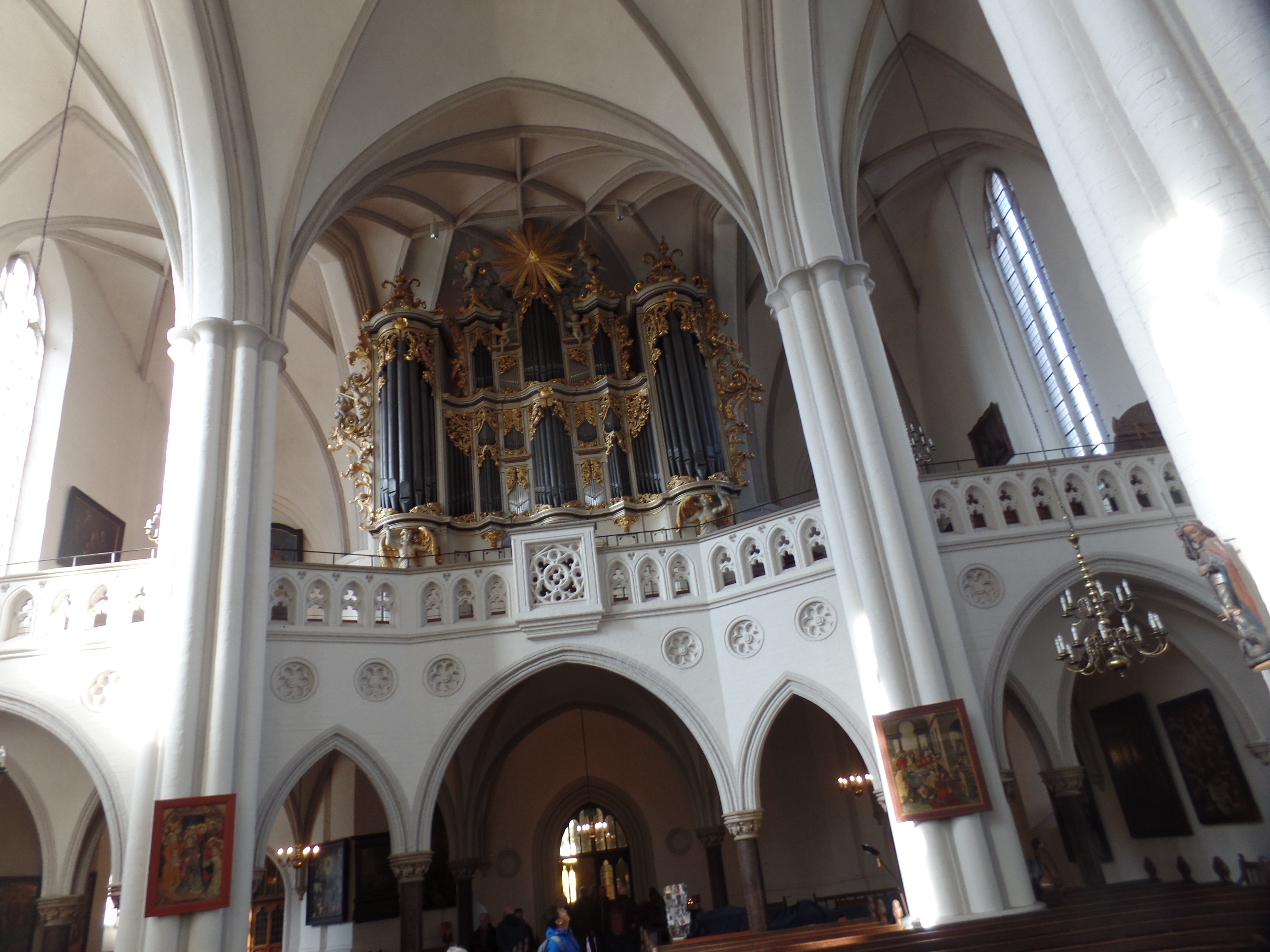
Marienkirche (St, Mary’s Church), Berlin
Interior of Marienkerke, Berlin (above and below)
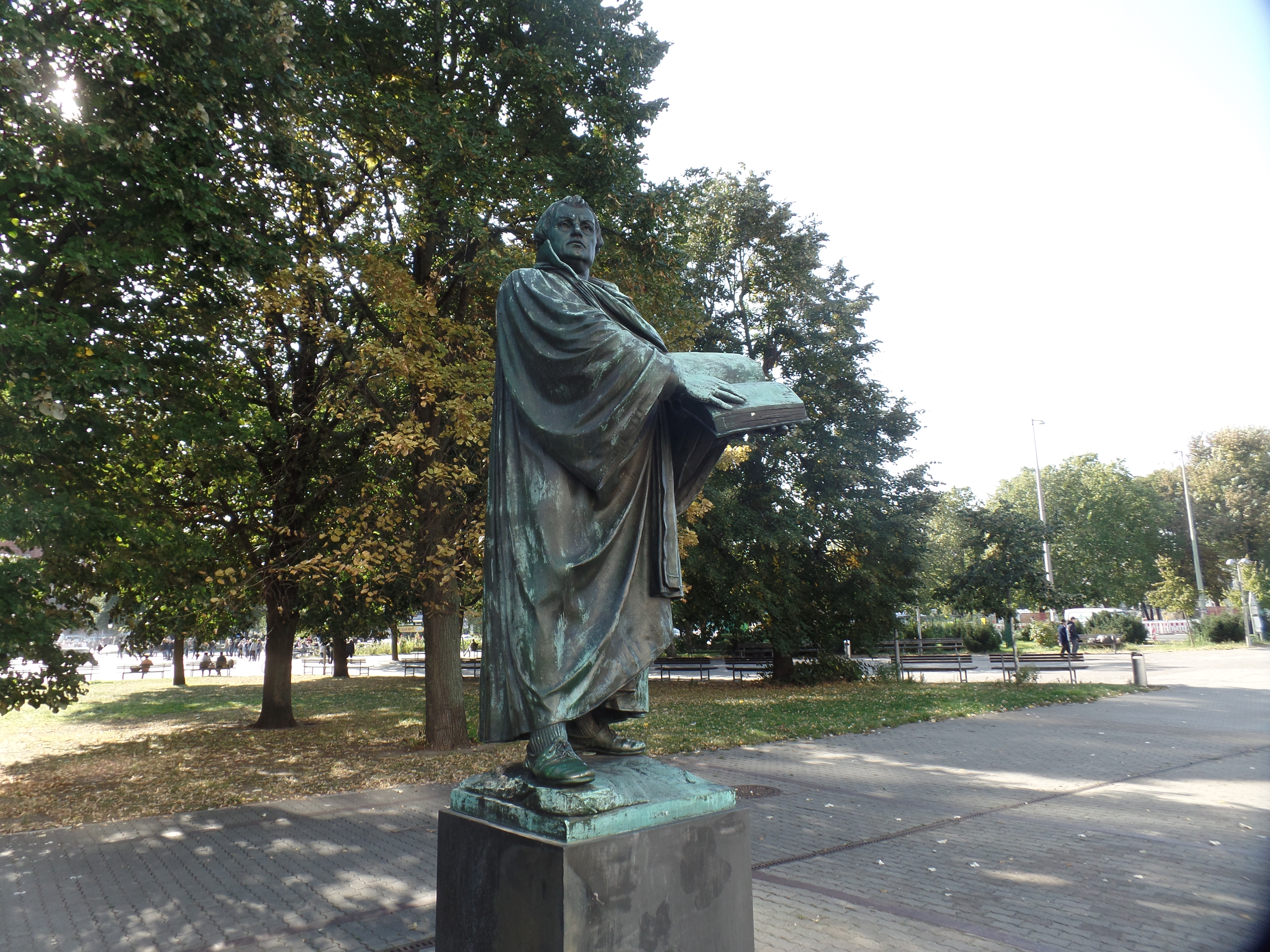
Statue of Martin Luther, near St. Mary’s Church
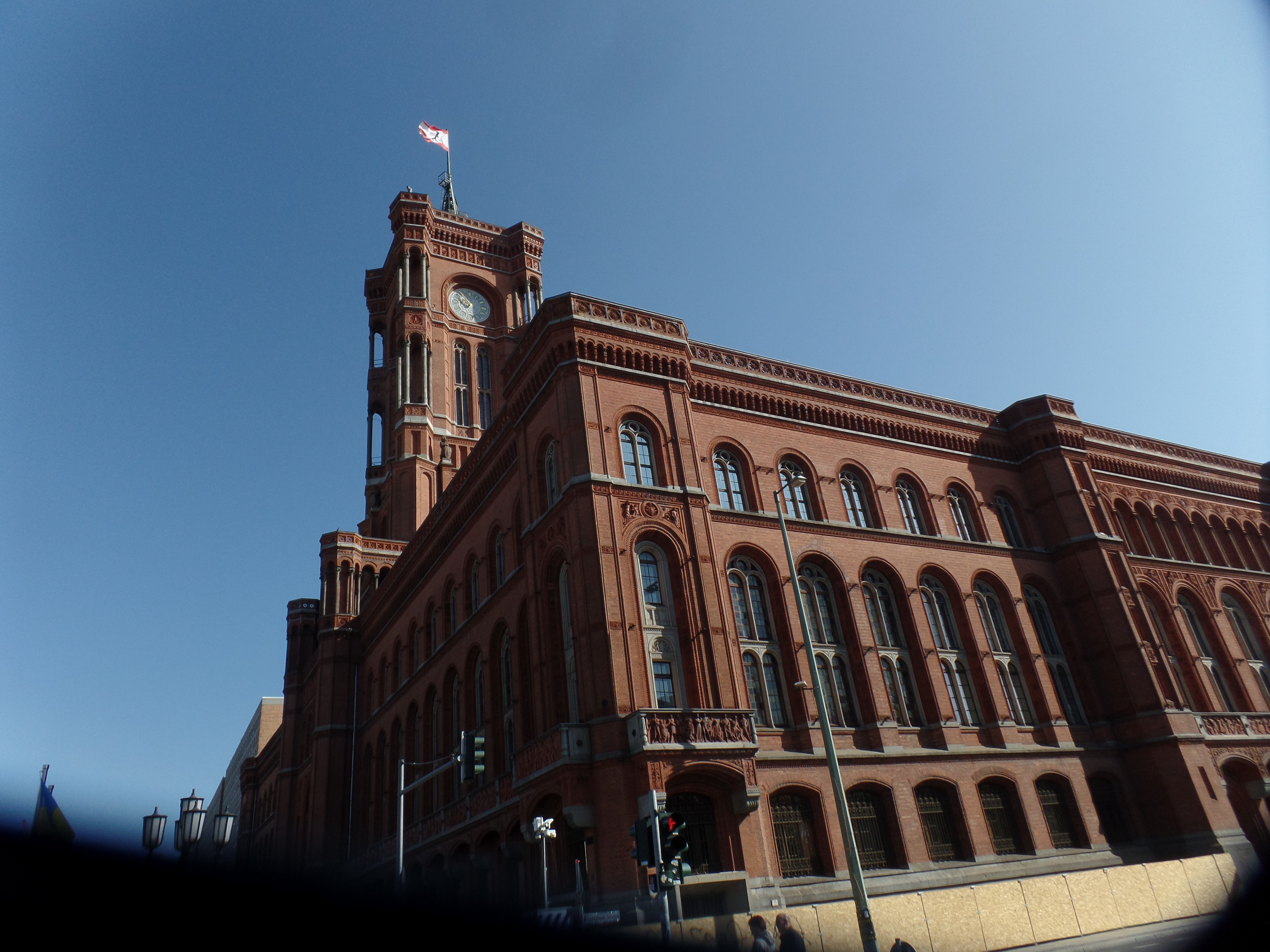
Rotes Rathaus (Berlin City Hall), about a block south of Marienkerke
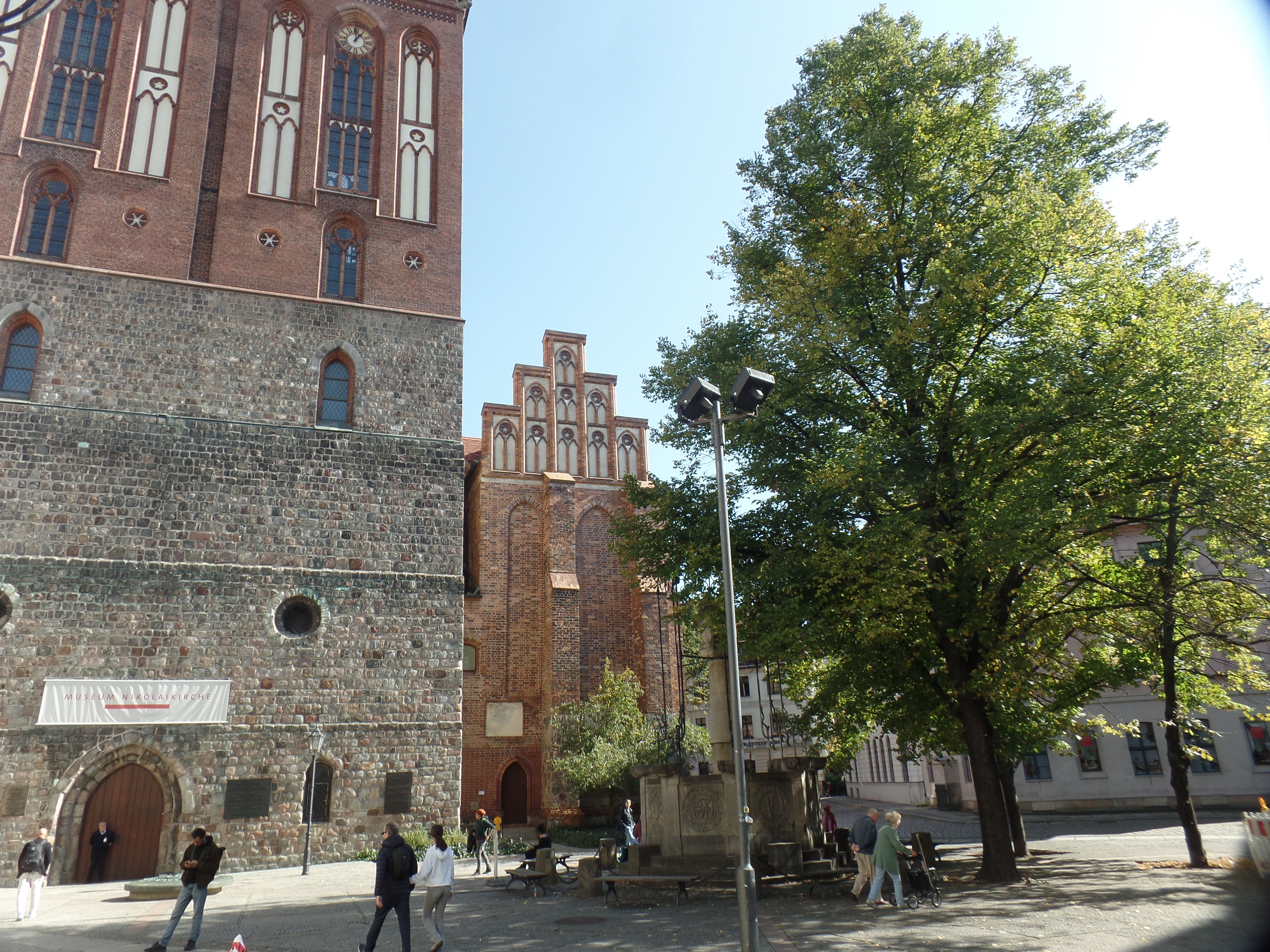
St. Nicholas’ Church, in Nikolaiplatz (Oldest Berlin neighbourhood). You can barely see the guard at the door to St. Nikolai’s. He was there to turn away visitors.

I could not enter St. Nikolaikerke. I was able to visit Museum Knoblauchhaus. I got a lot of insight into one of Berlin’s oldest families, who were merchants, builders and patrons of art and science. They knew the brothers Wilhelm and Alexander von Humboldt, for whom Berlin’s great university is named. (Carl Heinrich) Eduard Knoblauch was an eminent builder in Berlin, in the mid-19th Century, designing and initiating the building of Berlin Synagogue, along with dozens of family homes.

One of the branches of my extended family has a variation of the name, Knoblauch.

Museum Knoblauchaus (Oldest house still standing in Berlin)

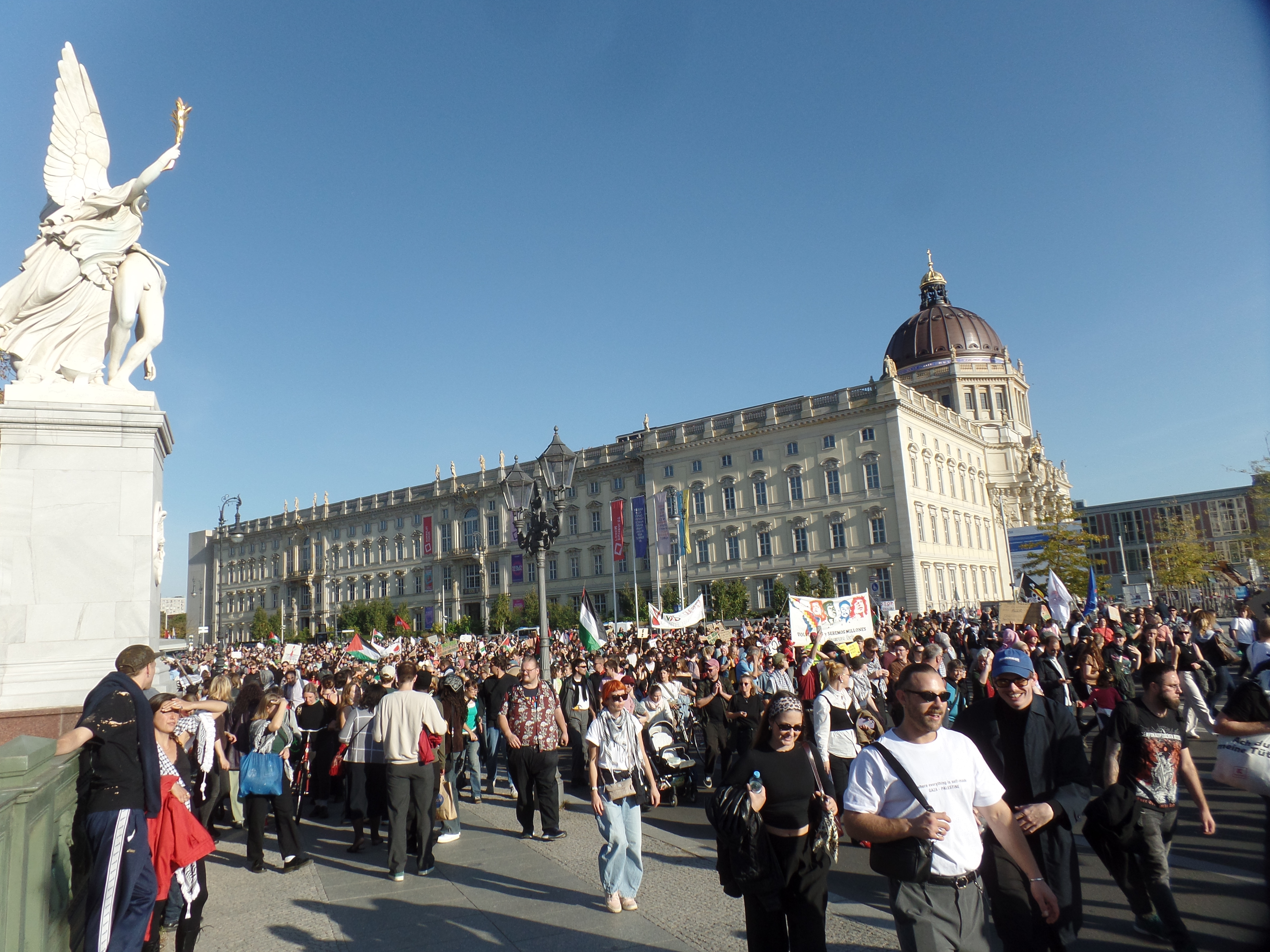
I also could not enter the great cathedral, nor could I visit the greater portion of the Museum of German History, because of this: 50,000 people, give or take, were taking part in the largest protest march I have ever witnessed.

Berlin speaks out

The focus was on Gaza and the ongoing military operation there. Yes, I stayed on the sidelines and minded my business. Besides,the Berlin police were there, peacefully, in force. It remained a peaceful event, from all accounts, but I focused on making my way back to the hostel, after an insightful two hours at two special exhibits of the Museum of German History.

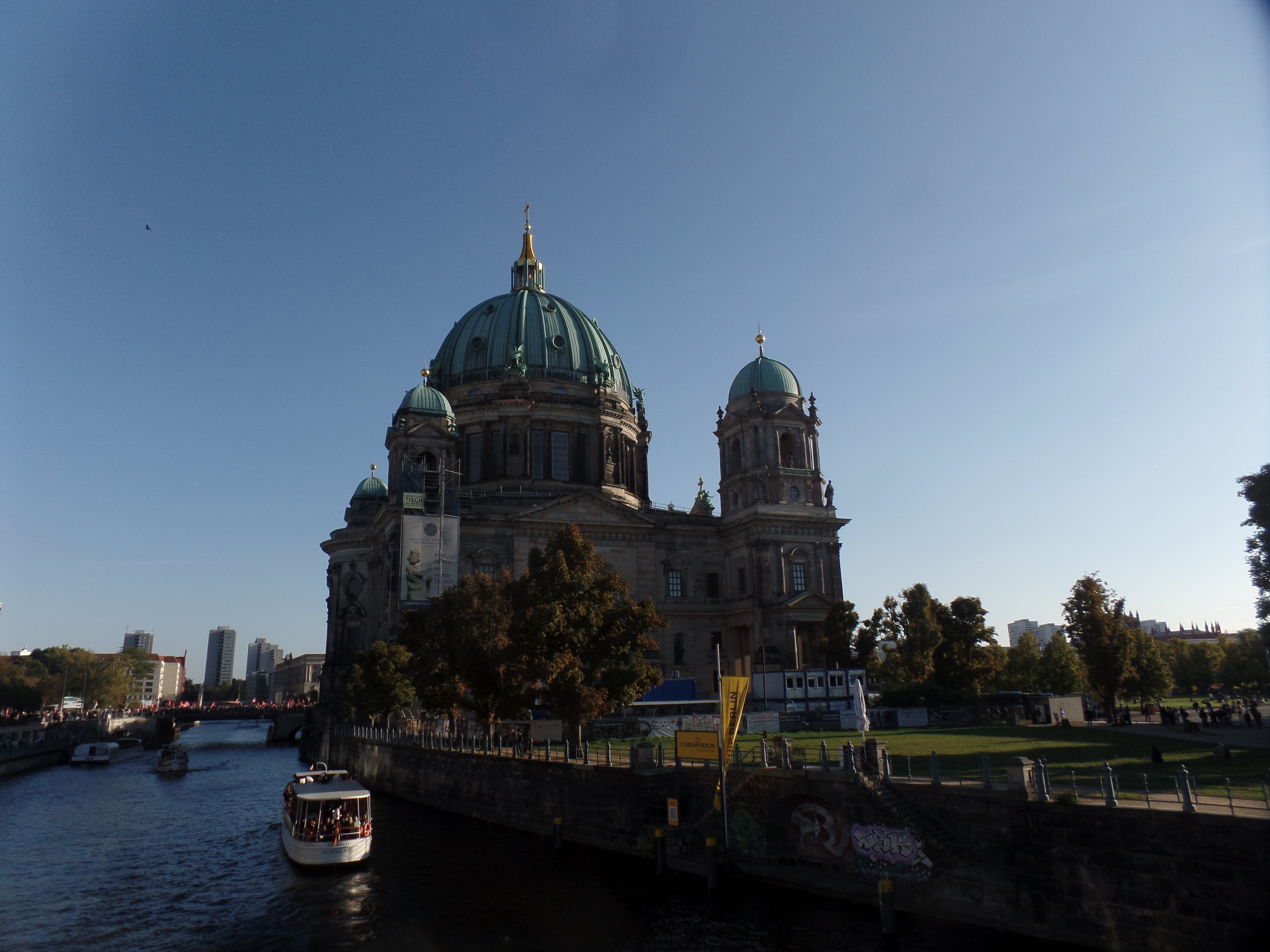
Berlin Cathedral, on River Spree

The first exhibit pondered the question, “What if things had turned out differently, in the decades leading up to and during, World War II? ” It presented the causes of the Fascist takeover, and the various events that occurred under Hitler, as well as the long aftermath, up to German reunification. It asked several questions: “Suppose someone other than von Hindenburg had led Germany after the Versailles Treaty was signed? ” “What if Hitler HAD been assassinated?” “What if Patton HAD gone all the way to Moscow?” “What if there had been no policy of Ostpolitik, in the 1970s and early ’80s?”

The second exhibit showed various aspects of the Nazi occupation in Europe, with a particular focus on Poland, the former Czechoslovakia and France. There was no sugar-coating of what was done, so this exhibit made for a tough, but well-crated, prelude to my coming visit to Auschwitz-Birkenau.

Back at St.Christopher’s, there was little talk of the march downtown. The focus was all on soccer and rugby finals. I enclosed myself in my own world, and focused on this blog-and on my e-mails. Those were enough, after a momentous day.