March 14, 2026- My hiking buddy, back in Prescott, lost her best fur baby yesterday. Cancer took the lovable fluffy cat, leaving behind her “brother” and their devoted human. I know the pain of losing an animal friend, having had to put down two of my dogs, over a period of fifteen years-and having seen a third, who I had sold to a woman an hour from our then house, dead by the side of the road, near her house, four months after he had been sold.
Animals, from fish and snakes, to cats, dogs and horses, enrich our lives, in ways that can’t be quantified in dollars and cents. It is a shame that dogs and cats cost so much, these days, as pet ownership has been so heavily monetized. That is not the reason why I don’t presently have an animal. My peripatetic nature, while I lived in Arizona, had more to do with that. An animal deserves a human who will be able to offer quality time and attention to its needs.
There may come a time when my grandchild(ren) show(s) interest in having a pet. In that case, I will support the choice that the family makes. It was good for Aram to have been around dogs, and to a lesser extent, around horses. It may be good for his child(ren) to experience the same All I would ask is that the kids treat the animal kindly and that the animal be of suitable temperament to be around children.
A good animal-human match is a forever friendship.
February 18, 2026- The video showed a little girl getting ready to go back in her house, after playing in the snow. Of a sudden, a cheerful polar bear cub scampered up and put its paws around the delighted child. She asked her mother if she could bring the bear cub inside, as “it’s freezing out”. The frantic woman called for her husband, and probably figured that the other mother was about to show up and charge at her daughter. The video cut off=and may well have been an AI-created snippet.
A South African Big Cat specialist, Kevin Richardson, has posted several videos of his work with hyenas, leopards and lions. I watched a couple of segments where he treated a male lion for ringworm and monitored the animal’s tooth, which had abscessed, but was somehow starting to heal on its own; another of him playing with “normally aloof ” hyenas, after he returned from a trip to another part of South Africa; and a third, “memorial” to a black leopard, which had died of advanced age. He had bonded with the panther, and noted that the male was a congenial sort, but had its boundaries, which responsible keepers respected.
Hana likes the four little figures on the mobile above her smaller bassinet. She coos and talks to them, as they revolve while she is laying there and gazing at them. There are an elephant, a zebra, a giraffe and a sheep. They are all grey and white, which matters none to my granddaughter. She is a generally happy little girl and smiles at the animals, as she watches and talks to them.
She will be taught to be careful with real animals, being kind to them, while remembering that they are going to defend themselves if they feel threatened. She will learn, as hopefully the little girl in the video did, to not intrude on a wild animal’s territory or try to touch an animal that is not cleared by her parents or the animal’s owner/keeper. The jury’s still out, as to whether we will have a pet here. Penny and I got Aram his first pet when he was five, and he learned the basics of caring for a dog. He and Yunhee will consider the matter, a few years hence.
Animals can co-exist with us, yet we have a duty to understand their natures and show restraint, not being either overly trusting or adversarial to our fellow creatures.
February3,2026- I watched a lone sparrow, sitting on a branch of an oak tree next door. The bird was quietly resting, before continuing its flight, in search of bugs or worms. In the house, Hana was in her smaller bassinet, quietly watching the revolving dogs of the mobile that hangs above. She cooed and talked to them, before drifting off to sleep. “Lullaby by Brahms” contributed to the calm.
Babies and animals, alike, are never really alone, when in their family groups. Hana has her mother, father and me, one of us always within earshot, and/or line of sight, until she is old enough to play, or walk to school, with friends. Our local animals, from the birds, squirrels, rabbits and coyotes that live nearby, in Hoblitzelle Park and visit our neighbourhood to the pets that are kept safe from those same coyotes, all have at leas one other of their species to keep them company.
I was somewhat comfortable in my own company, growing up, but have always needed a presence nearby. There were usually family and friends, when I was a child,yet when I was solitary, invented a cadre of imaginary people. That came back to haunt me later, when I couldn’t quite let go of my imagined world. Still. the ideals that I conjured up have turned out to be rather beneficial to humanity: The ideas that there are no real strangers,that people of different nations can be friends across thousands of miles, that we might talk with one another on phones that are not confined to a house, that there is value in learning geography, that there is life on other planets, have largely become so commonplace as to be cliched.
We are seeing, however, a different sort of imaginary world surfacing , in the isolationist pronouncements that are behind much of the recent actions by some in governmental capacity. One may idle a car in neutral, for a time, and certainly should back up on occasion, but driving long distance in reverse is just as foolhardy as, say, driving 190 mph anywhere other than a designated race track. My fantasies of being alone with imaginary people did me no good. Neither will pretending that one group of people, holding one set of ideas, and practicing one way of life, work to their advantage, or anyone else’s, in the long run.
Michael Jackson sums it up, in another context, at a very basic level.
February 2, 2026- I sat and told Hana the story of Punxsutawney Phil, replete with the talking animal character. In my version, Phil asked the top-hatted farmers to get him some relief for the stomach ache that had compelled him to poke his head out of his burrow. They did, on condition that he advise them as to how many more weeks of winter lay ahead. He replied, “That’s easy. I see my shadow, which tells me to hunker down for six more weeks.” So, in the imagination of Hana’s papa, the tradition began. Each year, Phil needs relief from his stomach ache, and each year, he strikes the same deal with the farmers. (This year, Phil “said”, there will be six more weeks of winter.)
Here in north Texas, it will be a bit nippy tonight and tomorrow night, but then we will see weather more like early Spring. That’s fine by us, as the family just bought a bucket of Icy Melt, sort of washing the car to generate rain-just in reverse.
I am glad to be back on the Word Press site, via laptop. The whole process of recovery, by the Happiness Team, involved recalling my old moniker, “Righteous Bruin”, which became the target of sarcasm, back in 2013-14, after some unfortunate choices on my part. Matters were corrected, though, and “Sagittarian Seeker” makes more sense. RB still has a role to play, in keeping this site afloat. We are off to another fresh start.
Thank you to all friends who have been sticking with me, during the phone-generated posts. The full peaceful warrior site is back.
January 6,2026- Sportage is now a Texan. In this state, a vehicle is to have a license plate i front and one in back. The rear plate is easy to attach. The front will take a bit of professional installation, in a few days. In the meantime, there is, for good measure, a registration tag that sits inside the front windshield. Sportage will soon be two platesful. I will get my Texas driver’s license at the end of the month. Same with my voter ID.
I am again in the practice of eating three meals a day-each with one plateful. Our family is doing fairly well, and food is plentiful. I just don’t want my torso to become too plentiful.
Hana is now getting a bit more active, and wanting to stay awake more during the day. She wants to be with us during dinner, so one of us will start eating late and whoever finishes first will take over snuggling honours. She can see a shadowy figure of someone talking to her from the upstairs landing, as she is held by her grandmother on the downstairs couch.
There is a small garden plot, that Yunhee’s mother has cleared in the backyard. We can plant things like turnips and spinach, and I will need to build a fence that will keep the squirrels out, once the seeds are planted. We want to fill our bellies, not theirs. They have plenty of acorns.
December 8, 2025, Banning- Two small piles of notebooks, coloured pencils, a therapeutic colouring book and post cards which had accumulated over the past fourteen years were offered to those gathered at the weekly Soup Kitchen. It took exactly fifteen minutes for six people to go through the offerings and take what suited them, in a discerning manner.
I will be doing more of that, over the ten days left to me to prepare for the move to Plano, especially as most of what I am giving was itself given me, following Penny’s passing, in 2011. Of course, it will largely go to Thrift Stores or to Habitat for Humanity, but new uses will be found for even the most well-worn items.
First, though, is my final visit to Orange County, at least until my granddaughter, whose birth is fourteen days away, attains toddlerhood. With that in mind, I took advantage of an easy clean-up after Soup Kitchen and headed west, through Arizona’s Outback and the Colorado Desert of eastern California. Only a couple of brief incidents coloured the generally smooth trip.
Between Aguila and Wenden, along US 60, there happened to be two rather large deer standing in the road. As Sportage approached, one deer went north and the other dashed south-no collision tonight!
Later, after I topped off the gas tank at Ehrenburg, a Honda Accord appeared to my left, as I was leaving the station-the driver bulling his way onto the road, to get ahead of me. Since he had been right behind a pick-up, I figured they were traveling together and he didn’t want to get separated. That was, until he zipped past the pick-up. Oh, well, we all got to stop, a half-mile further west, at the Ag Inspection. CHP also had a Safety Zone set up, for five miles through Blythe and just beyond, so we were all limited to 60 mph. Sometimes, taking ends up becoming giving, in terms of personal freedom. It’s often better to just go with the flow, at least when it comes to traffic.
From Wiley’s Well onward, the trip was uneventful, and I pulled into a different motel, the Margarita, around 10:15, PST. Tomorrow, I will meet my Orange County friend at Ladera Ranch and share my joys of this past year and the year to come.
November 25, 2025, Amarillo- Having been interested in prehistoric life since I was around 6 years old, I had to seize the opportunity to visit a place which I had sped past, about two dozen times, over the last 25 years: Mesalands Dinosaur Museum, in Tucumcari, New Mexico.
“Tucumcari Tonight!” was a billboard slogan that was shown as far west as Gallup and as far east as Clinton, OK., in the 1980s and ’90s. The little town’s motels and restaurants were billed as a fine halfway point between Albuquerque and Amarillo, in a bid to recover from the loss of traffic, after I-40 replaced U.S. Highway 66, as the prime east-west conduit in the upper South.
I’ve stayed in Tucumcari a couple of times and stopped for dinner there once. I found it a welcoming place-just a bit too far west, when I was going from Gallup eastward and a bit too far east, when going from Oklahoma City or Amarillo, westward. Today gave me the reason to take in the museum, as my itinerary was Moriarty to Amarillo.
The day started with a wonderfully flavourful “Classic Breakfast” at a Country Pride restaurant, on Moriarty’s west side. After about ten minutes, I was the lone diner in the place, a shame, as this Country Pride’s cooks and server seem to care about their customers. K looked bored stiff, but was pleasant and attentive to me and to those who were about to leave. I felt sorry for her, but she said this is the way in Moriarty, from October to April-slow traffic at the Travel Center. I wouldn’t have guessed it was Shoulder Season last night, though, as the nearby Nachos Mexican Restaurant was packed.
I left Moriarty around 9:15 and headed towards Tucumcari and Amarillo, stopping for gas at some friends’ station in Milagro, a rural stop about halfway between Moriarty and “Tuke”. About five miles west of Tucumcari, there was a one car accident, closing the highway fro about twenty minutes. Some people decided to cross the grassy median, and drive west to the frontage road at Cuervo, then head back east. I thought better of that and stayed put, not being in any particular hurry.
Once traffic resumed, it was not long before I was in the first section of Mesalands, the Early Life exhibit, focusing on ancient sea life: Trilobites, ammonites and prehistoric insects are prominent in the collection of fossils from the Cambrian and Carboniferous Ages, the time before the emergence of amphibians in the Permian Era. There are then open rooms displaying fossils and bronze castings of dinosaurs and related reptilians, early avians and some mammalian megafauna. The Triassic, Jurassic and Cretaceous Eras are all well-covered. A small section is devoted to the Cenozoic Era, the modern time of mammals, including us humans.
This being a largely fossil-centric institution, minerals have their place in the exhibits, including the Shanks Collection, one of the loveliest mineral exhibits this side of Jerome State Park, in Arizona, which to me is the Gold Standard for mineral displays. Howard and Laura Shanks were keenly interested in the mineral and fossil troves of the Quay County area, collecting sizable amounts of all manner of unearthed gems, minerals and petrified animals and plants. These were donated to Mesalands Community College, in 2004, and the Museum was born. Paleontology has continued apace, with bronze castings and careful restoration of even large dinosaur fossils finding their places in this marvelous collaboration between Mesalands Community College and the people of Tucumcari.
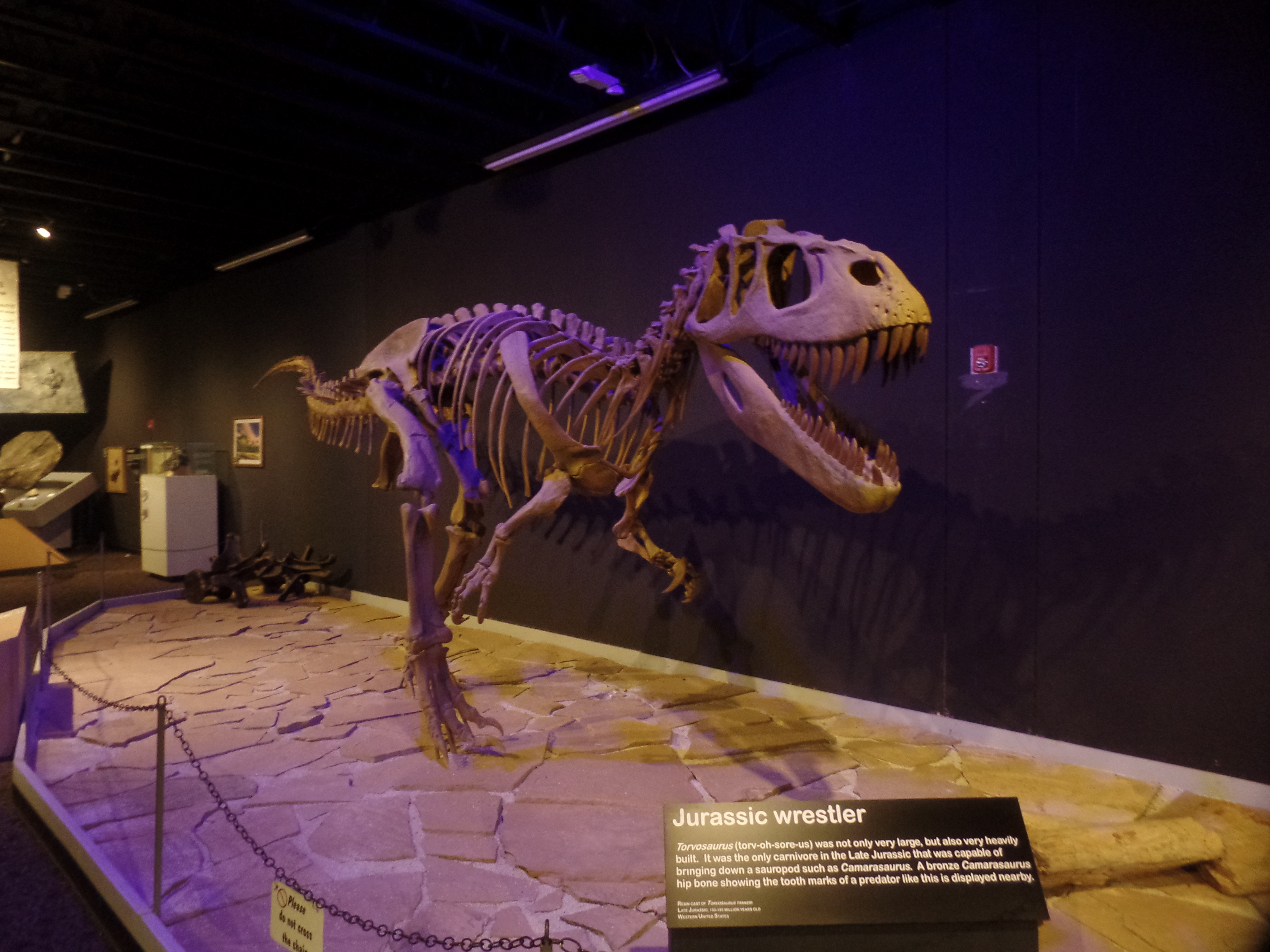
Here are five photos from today’s visit to Tucumcari, Back Then.
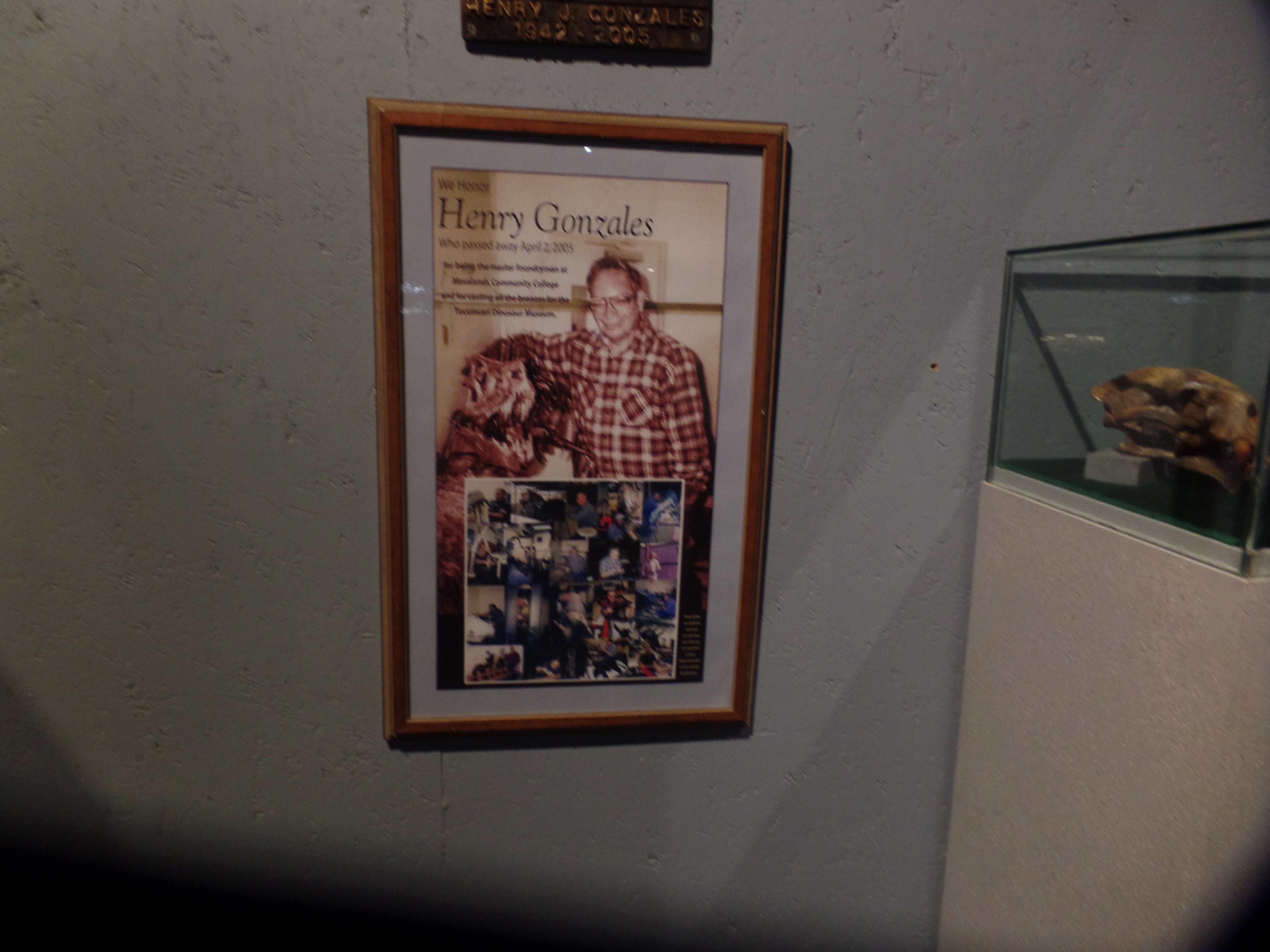
Henry Gonzales, professional bronzecaster, who created the dinosaur marvels of Mesalands Dinosaur Museum and taught others his craft.Coelophysis, one of the terrors of the Triassic Period, was an ancestor of velociraptors, and of birds.An Apatosaurus got stuck in the mud, and left this for us.Torvosaurus, an apex predator of the Jurassic Era.A variety of petrified material, in one stone.
There was enough in this Best Kept Secret of northeastern New Mexico to keep me enthralled for two hours. Many more photos will be posted on my Flickr account: https://www.flickr.com/photos/86298326@N07/, over the next several days.
Now, I am resting at a Motel 6, on the west side of Amarillo. After breakfast, tomorrow, in this city’s “Fun Zone” (Old 66), I will make my way down to my little family’s home.
November 16, 2025- The American bison has long been the stuff of both reverence and legend. It was also, following the late Pleistocene die-off of other Megafauna ( Cave bears, American camels, giant ground sloths, American rhinoceroses and giant beavers), the largest source of protein for First Nations people.
It is true that First Nations people offered thanks to each animal they killed for food and sustenance. It is true that many tribes, especially in the Plains region, used as many parts of the animal as they could salvage, for food or for tool-making. It is also true that many tribes employed the technique of the Bison Jump, forcing large numbers of a given herd off fairly shallow cliffs, to their deaths or to severe injury that incapacitated many animals, who then could be slaughtered. This was mainly a late autumn/early winter practice, done for the express purpose of ensuring a food supply in winter. The practice is explained here:https://www.youtube.com/watch?v=qDjUHPzLn5E.
I learned these facts from the film “Singing Back the Buffalo”, which was shown this afternoon, at Sacred Heart Roman Catholic Church, in downtown Prescott. The film, by Tasha Hubbard and Jason Ryle, explores efforts by First Nations people, in Canada, Mexico and the United States, to restore healthy bison herds, primarily in plains and prairie regions. Ceremonies are held, often within hearing distance of bison herds. (The name “buffalo” is used by some First Nations groups, interchangeably with the more correct term, bison.) There is much singing and dancing at these ceremonies, which both thank the bison for their sacrifice and appeal to them to gather and procreate. It is said that, when a specific group of five juvenile male bison were the focus of a dance, and were too far away to hear the songs, another group of five juvenile male bison came to the site and presented themselves to the assembled Band. This is documented by the film-makers.
It is gratifying that these efforts to promulgate healthy bison herds are gaining traction. Sustainable hunting is also going on, in areas where the bison herds are large and healthy. There are, however, no more “buffalo jumps”. Discussion afterward extended to efforts at promulgating other species, “rewilding” in both North America and Europe. Indeed, I noticed that efforts at protecting and re-introducing the beaver and the lynx are well underway in Scotland. British wildcats are a focus of re-wilding efforts in England and Wales. The lynx is also a focus of re-introduction in Spain and Portugal.
As we learn how to co-exist with wild animals, there is hope for a mutually beneficial solution to the problems of conflict between species. (Of course, we also need to devote a great deal of energy to solving conflicts between humans!)
October 26, 2025, Edinburgh- We had a fine Scottish breakfast, on this misty morning. Again, there was no haggis-and nary a bit of porridge. Scrambled eggs, a small bit of bacon and grilled tomatoes filled the bill, along with Alan’s fresh-baked bread and plum jam-plus cheese.
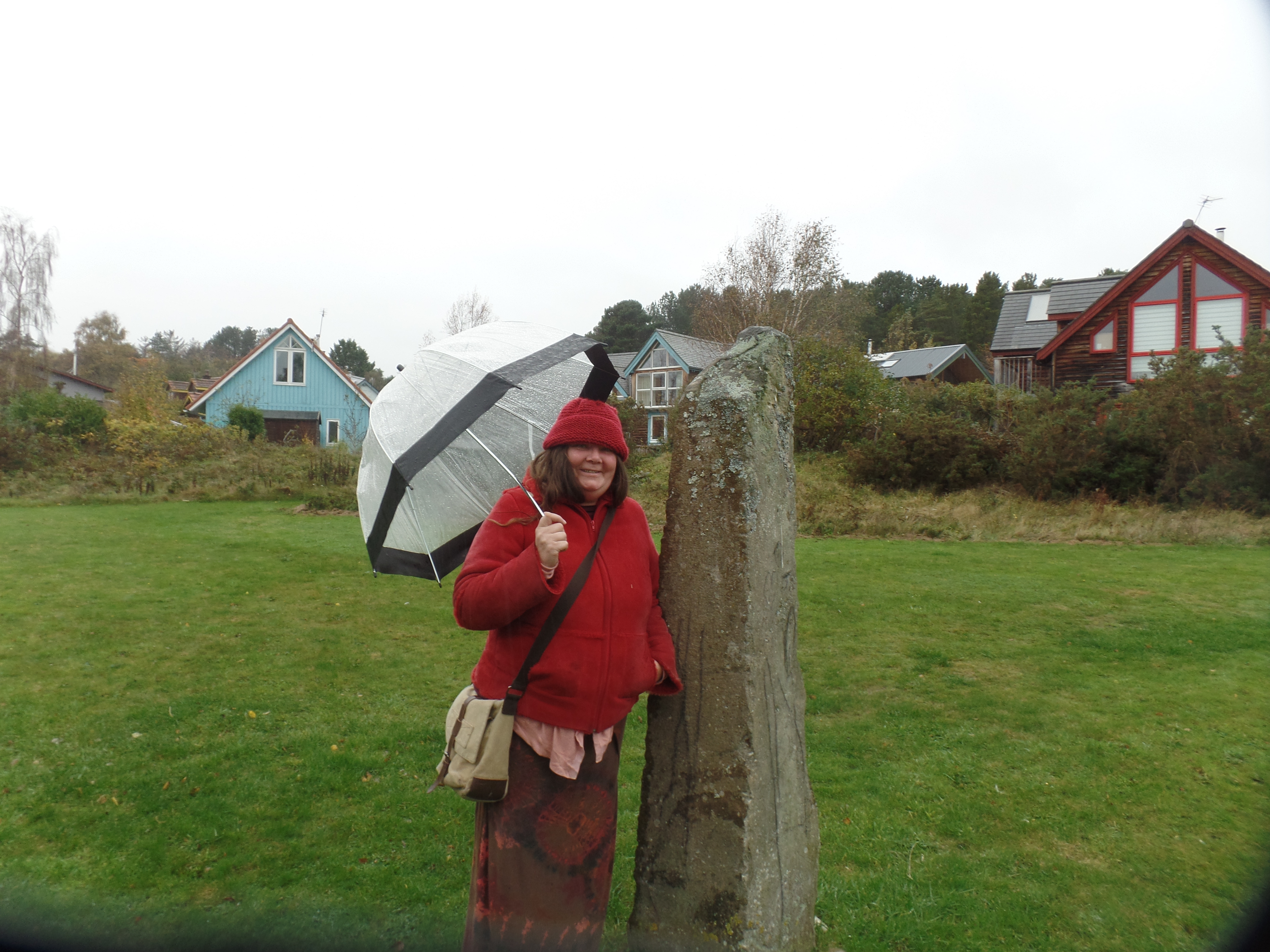
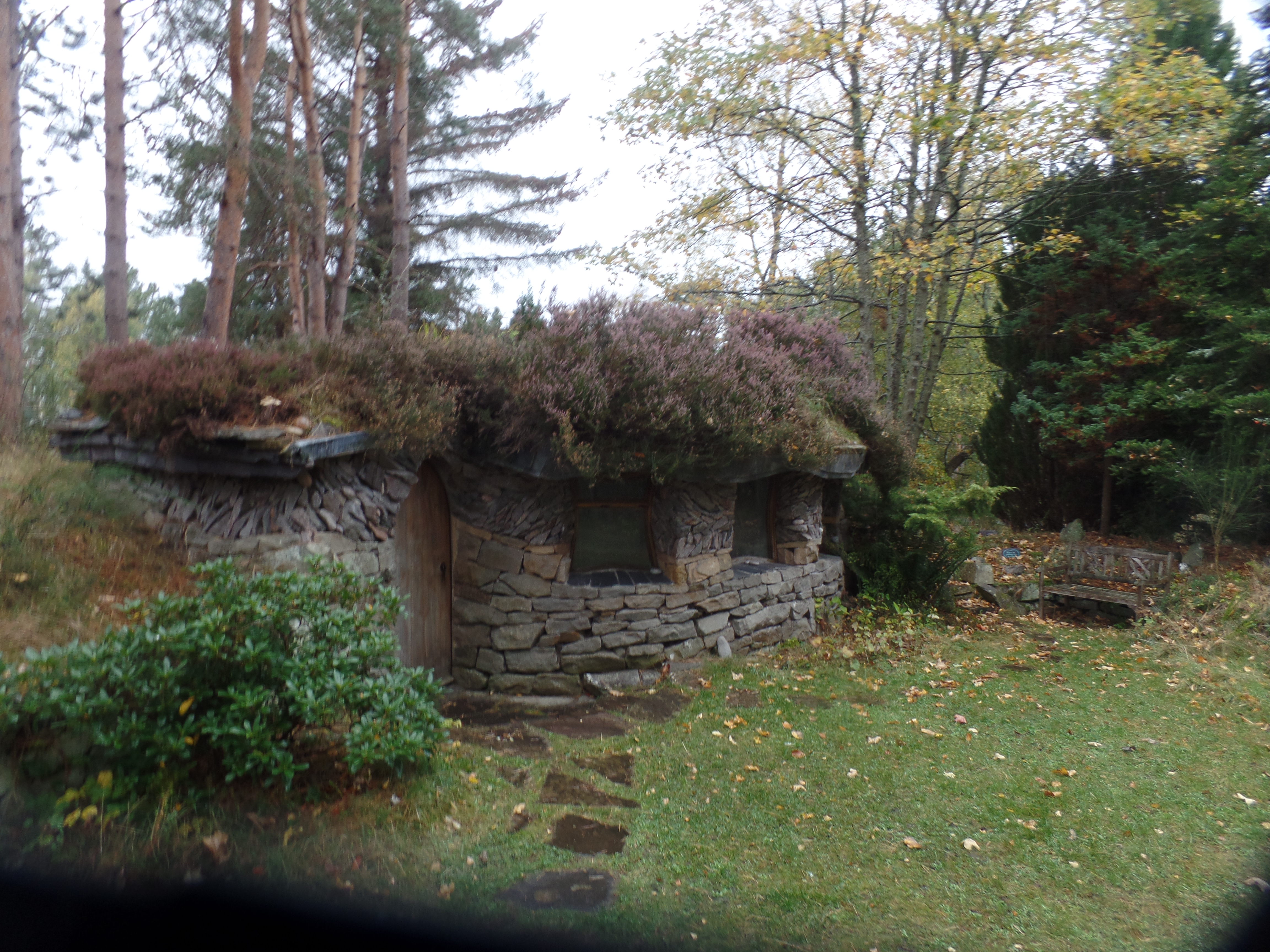
Lisa then took me on a tour of Findhorn’s round houses and small gardens. Here is a look at some of these.
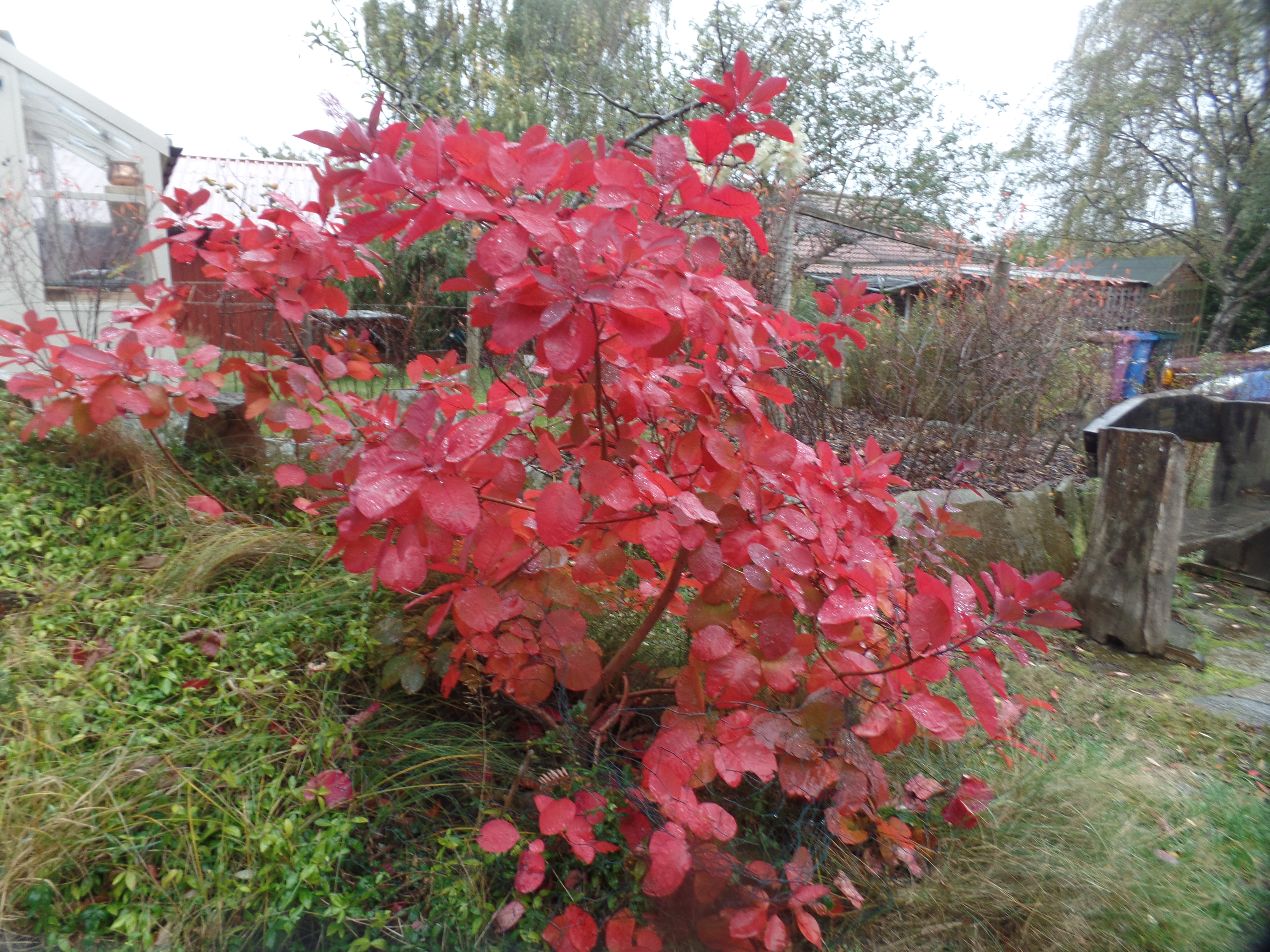
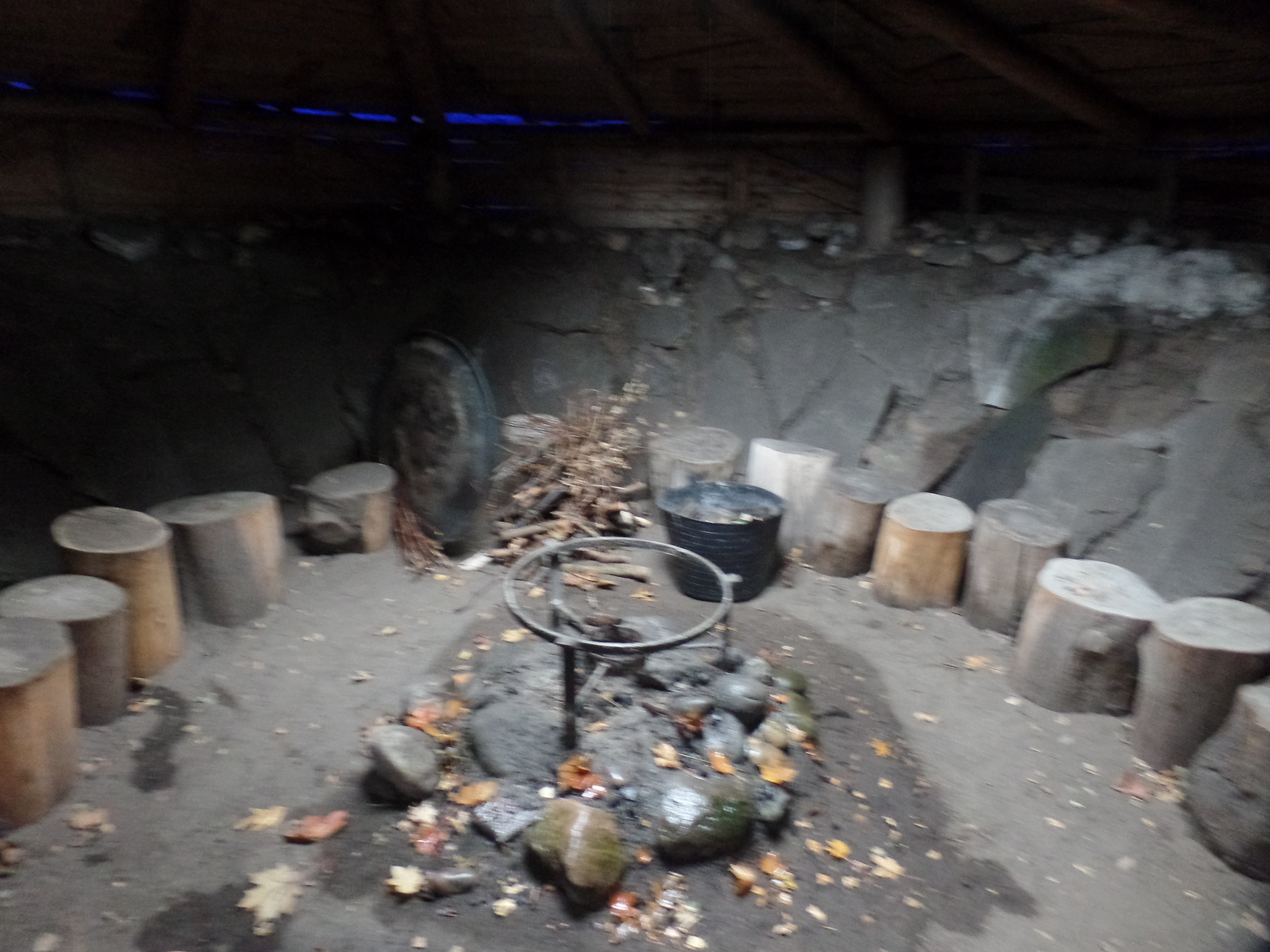
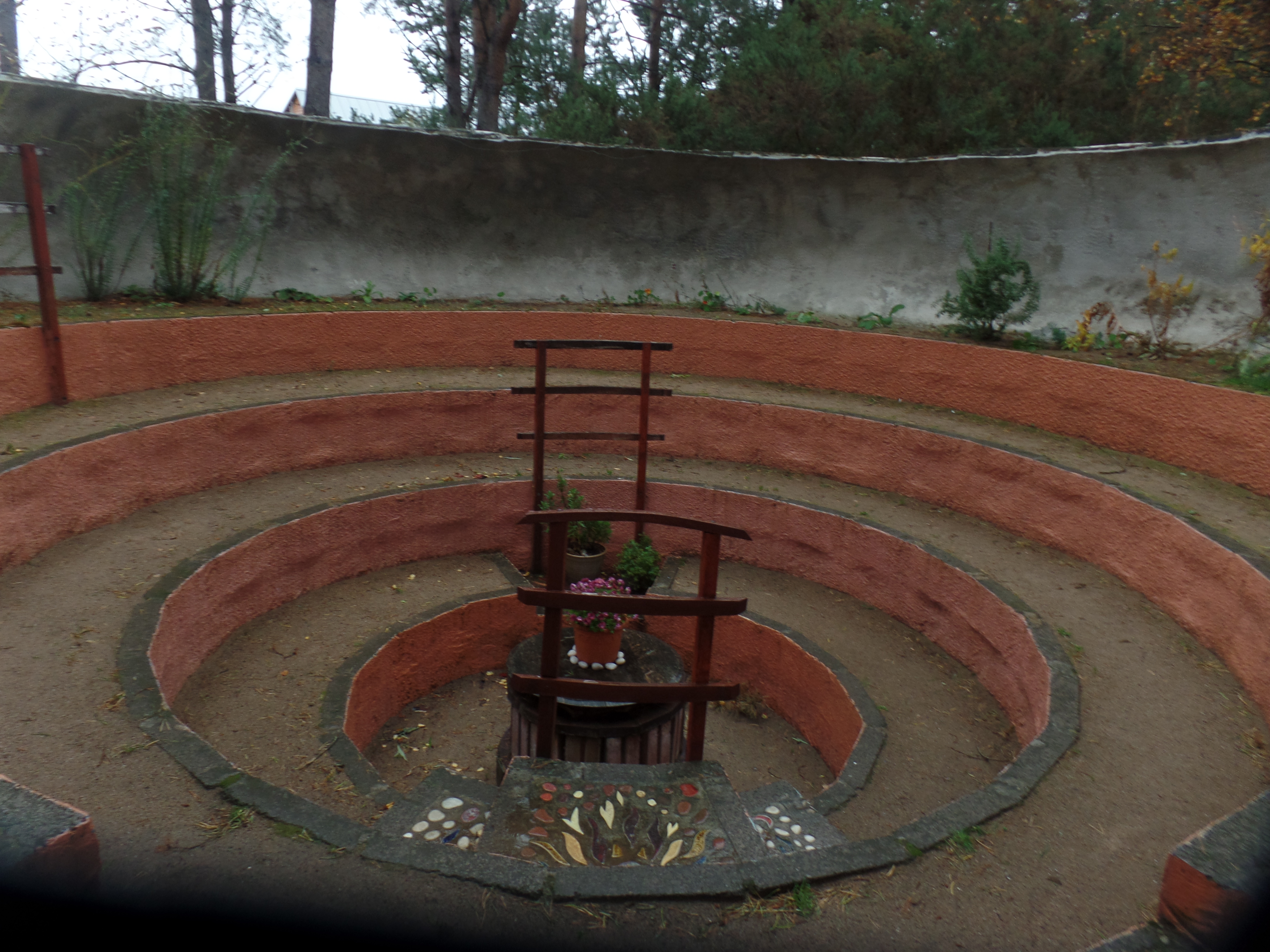
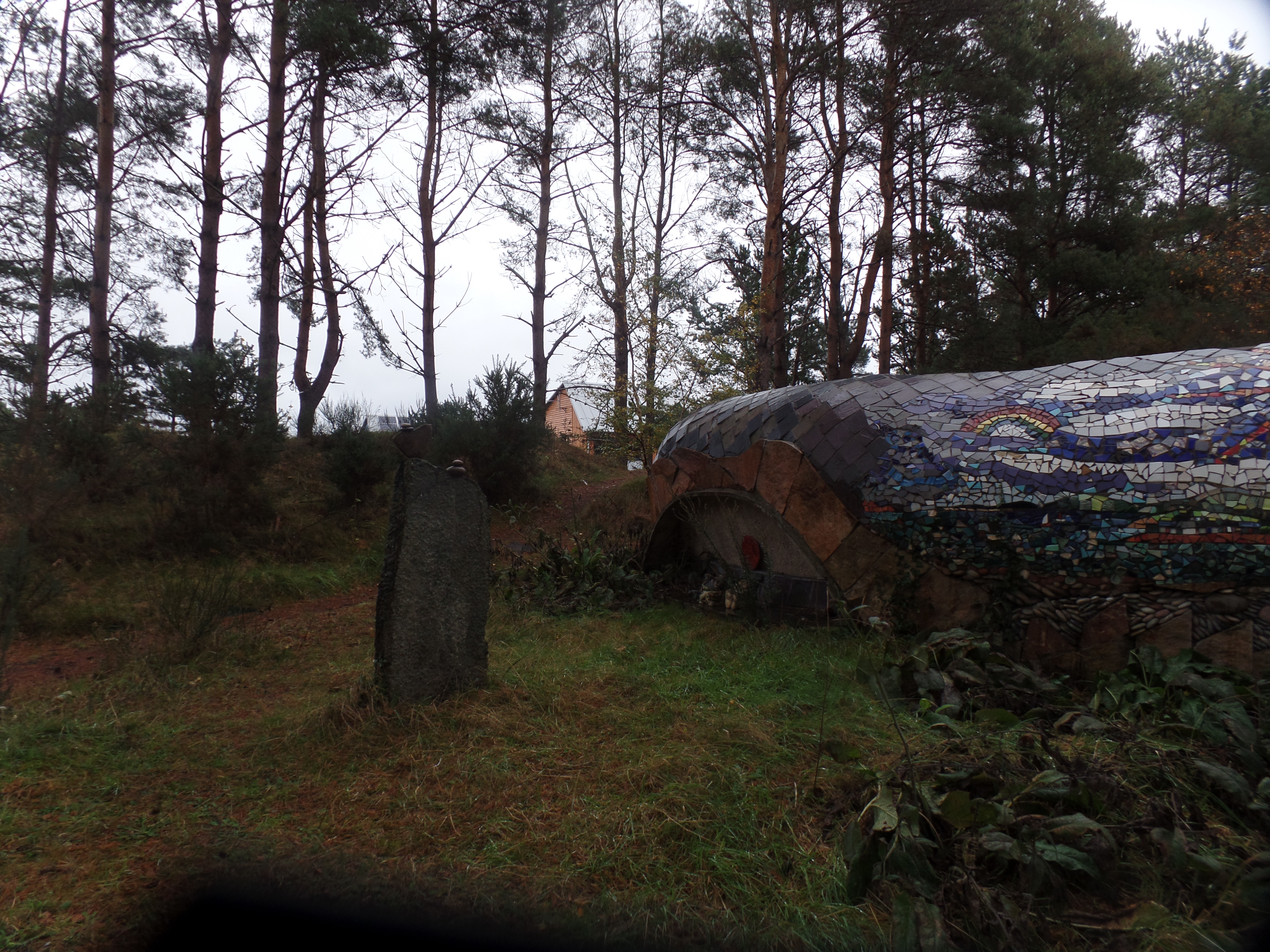
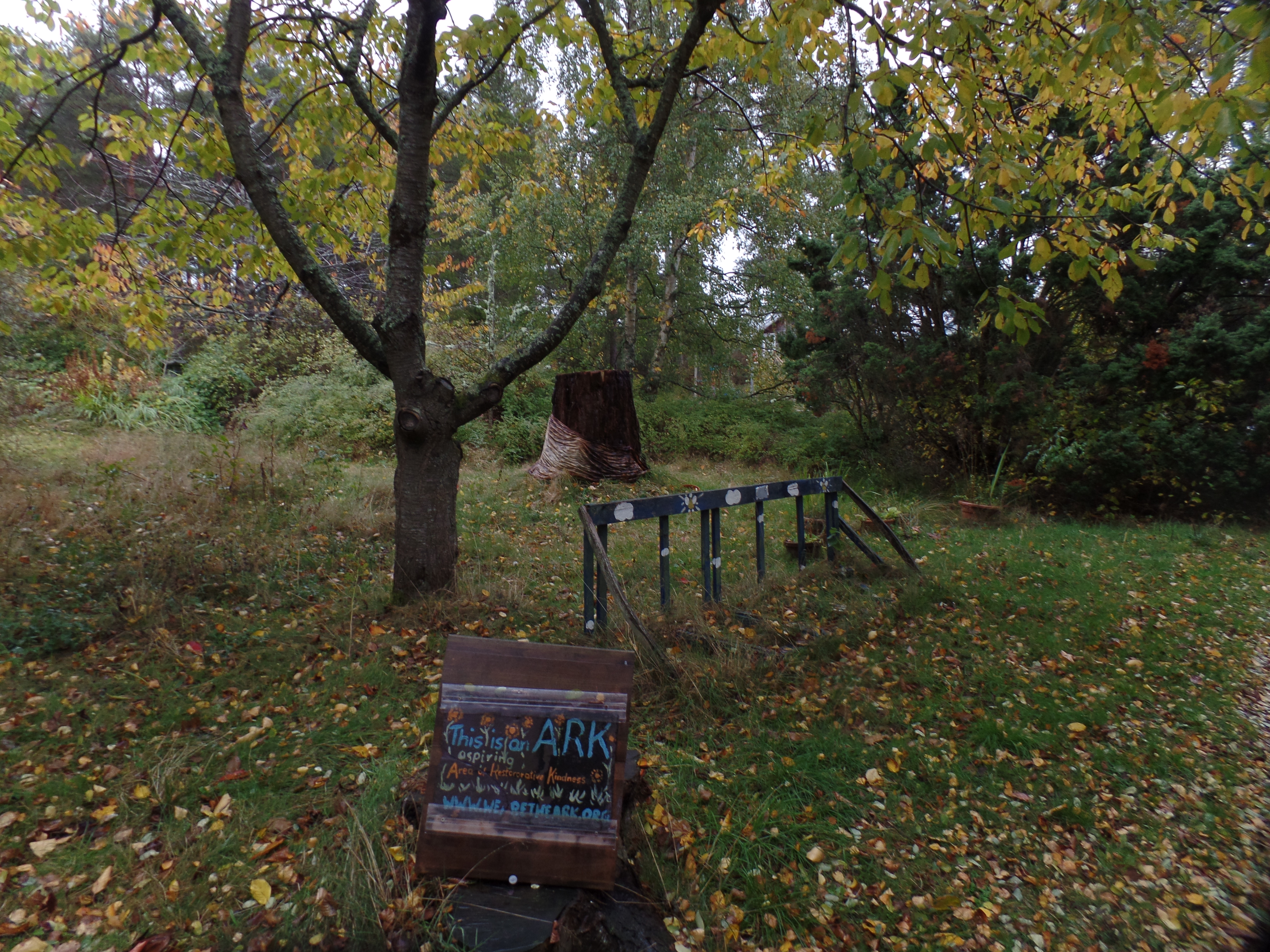
Round home, Findhorn Eco Village. Lisa said this house is presently unoccupied.Wishing Stone, Findhorn Eco Village. Here is a good place for meditation, on a fine day. (Above and below)Lisa at the Wishing StoneThis round house is near my lodging of last night.A wee bit of foliageTwo more round housesFindhorn ForestInside a gathering placeInside Meditation Round House. The similarity of this and another such house with Indigenous American round houses is remarkable.A “hobbit house” (Above and below)Community CenterOpen meditation centreOpen meditation centreAnother sacred space and standing stone, an ARK (Area of Restorative Kindness) above and below
This is the sort of place where one goes for restoration. Thankfully, I need not board a plane to find such a space. There are ARKs of this sort, just about anywhere one might go in the world, and we have our share in the Southwest U.S. I will return here again, if it be the Divine Will, yet in the meantime, it makes me all the more appreciative of sacred spaces closer to Home Base.
I bid farewell to Lisa, Alan and Pupak- and boarded a train bound for Edinburgh, via Aberdeen. The magic was not done with me yet.
Today’s festivities will be shared in two parts, as some photos are on the iPhone gallery and the cable for my phone doesn’t quite connect to the Lenovo.
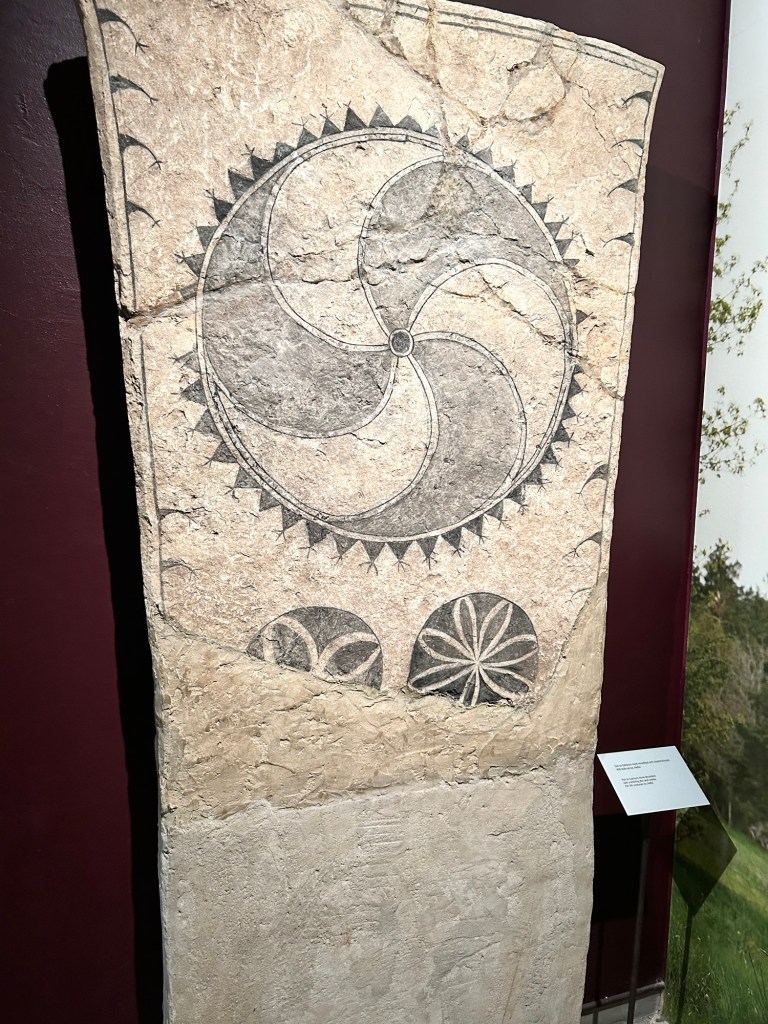
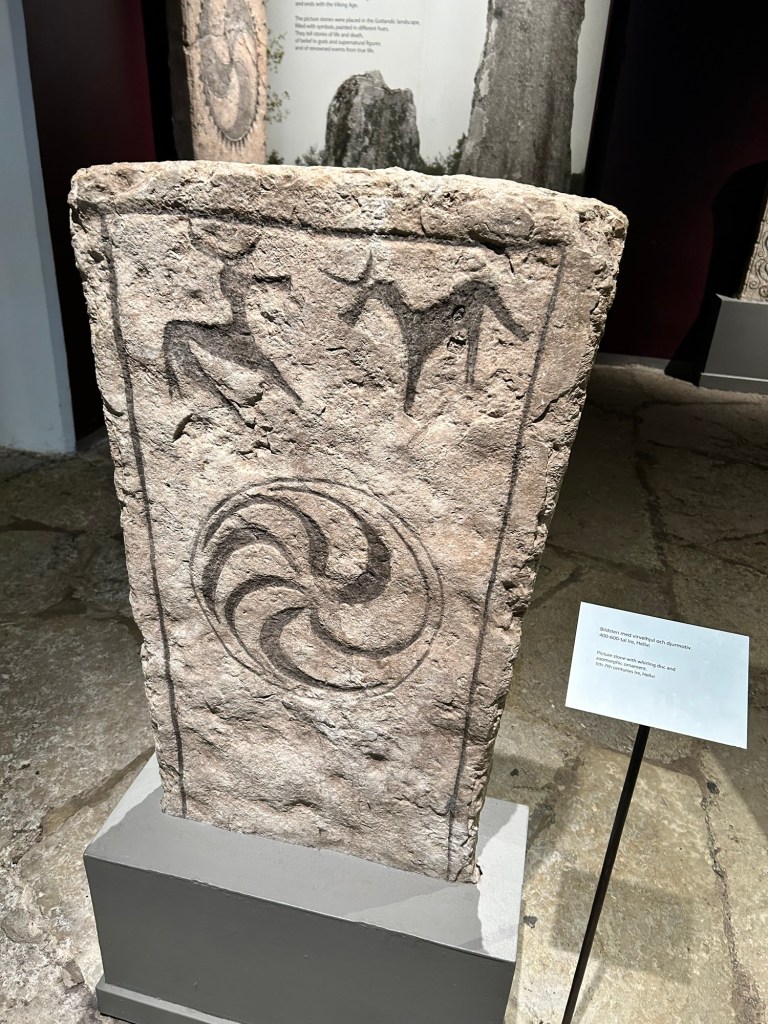
Sharing is caring, regardless, so let’s take a look at Gotland Museum. There are four floors, each with two or three galleries. Floor 0 is where we enter, pay admission, check out the bookstore and spend time with Gotland’s unique Picture Stones.
Many picture stones were originally painted with red, yellow or blue pigment. Most have lost the pigmentation, over the centuries.
The standing stones are all over Gotland and its northern offshore sibling, Faro (not to be confused with the resort city in Portugal’s Algarve). See gotlandpicturestones.se
Here are a few scenes of that gallery.
This came from the early Christian era, most likely commissioned by someone looking to protect his farm.The pinwheel also is a harbinger of good fortune.This tells the story of a horse and a deer.
This one has a sensor, which fills in the colours when someone approaches.
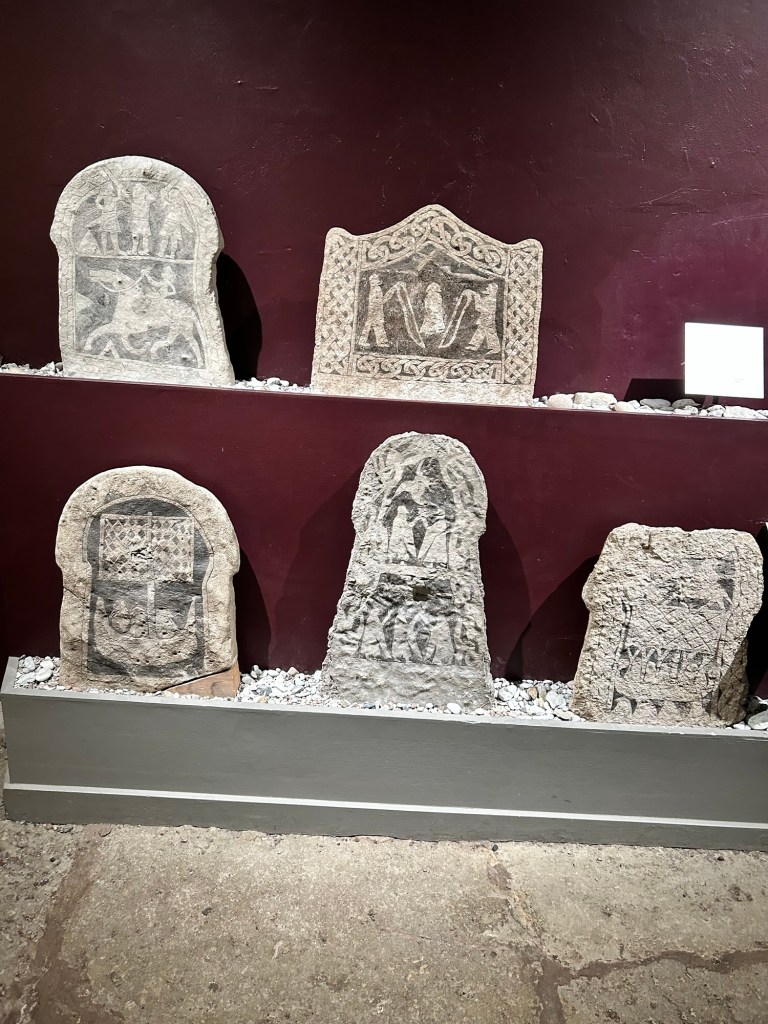
There are several others in the gallery, but here is a tableau of some smaller reproductions from around Gotland.
Up to Floor #1, we find The geology of Gotland. It, like the rest of Scandinavia, was once buried under ice. As the glaciers retreated, the Baltic Sea filled in, while islands like Oland, Aland, Bornholm and Gotland remained above water, being the tops of small hills.
Sandstone and limestone predominate the gently rising, but mostly flat landscape. There are some forests, but Gotland is still mostly farmland.
Floors 2 and 3 feature the history of Gotland and stories told by local children and youth, respectively. The historical part begins with a Norse creation story. Odin, representing the Sun, brings the world to life. He and other deities guide people in the ways of right living. All the while, the ravenous Wolf watches and waits. At the end time of Ragnarok, the Wolf will swallow Odin.
On that cheerful note, the story of Gotland proceeds, through its early days of increasingly successful farming, the Viking Era, Hanseatic League and incorporation into the Kingdom of Sweden.
It was during the Hanseatic period that the wall encircling Visby was built. At the East Gate, all peasants wanting to sell produce at Visby’s market had to pay a toll. Those trying to sell elsewhere were fined pr flogged. This was the stricture of the manorial system.
On the third floor, there are both paintings and recorded stories by Gotland residents.
The painting above shows the juxtaposition of hillside Visby with the sea.
The museum was founded in 1875, by Per Arvid Save( pronounced SAH- vay) and the Friends of Gotlanf, with the aim of preserving the island’s rich heritage and sharing it with the world. Dr. Save encouraged the farmers and fishers of Gotland to safeguard the picture stones they found about their homes and nearby lands.
Next, I will visit the ruined churches of Visby’s centrum, with the help of my laptop.














 A Sagittarian Seeker