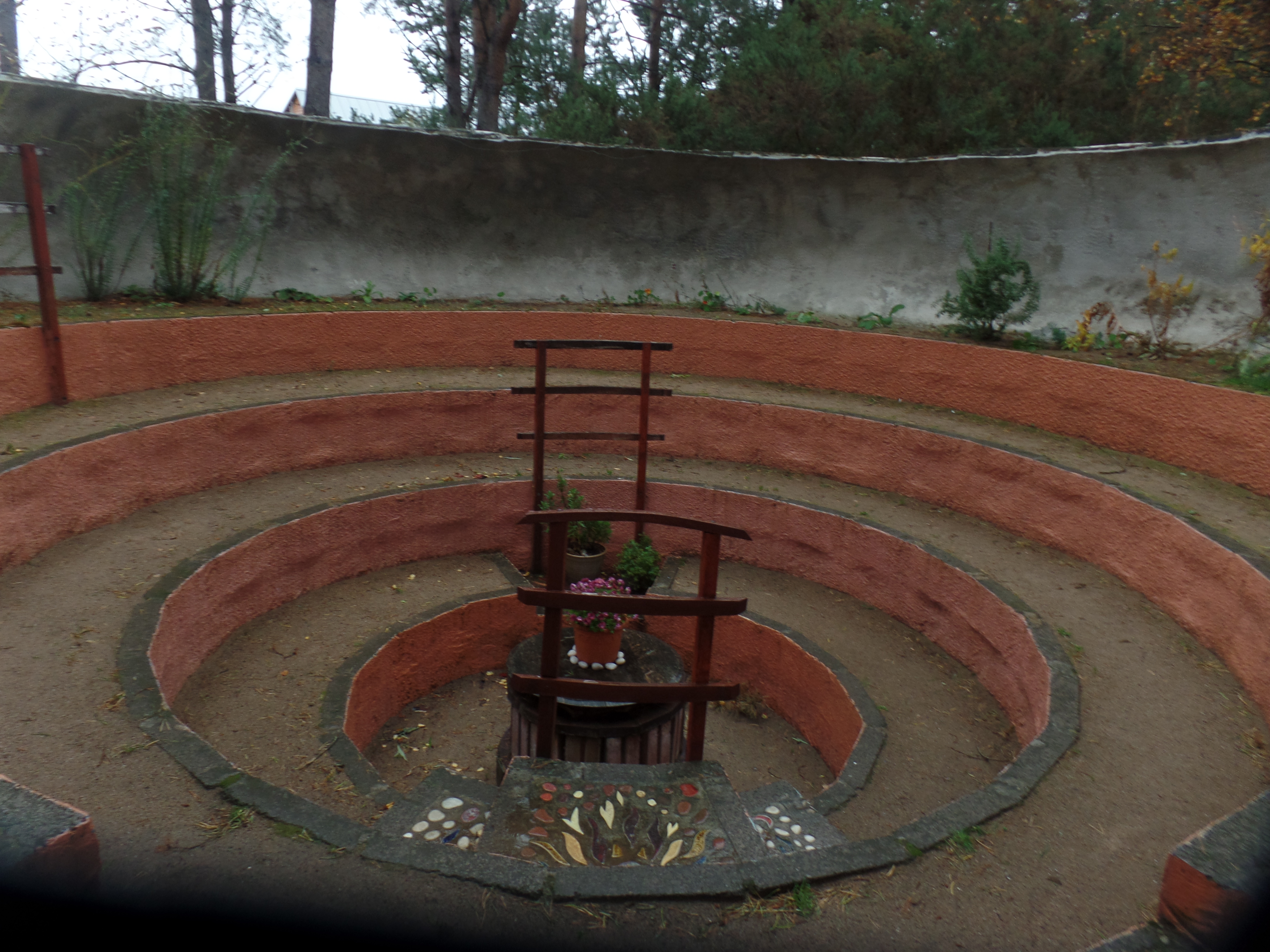
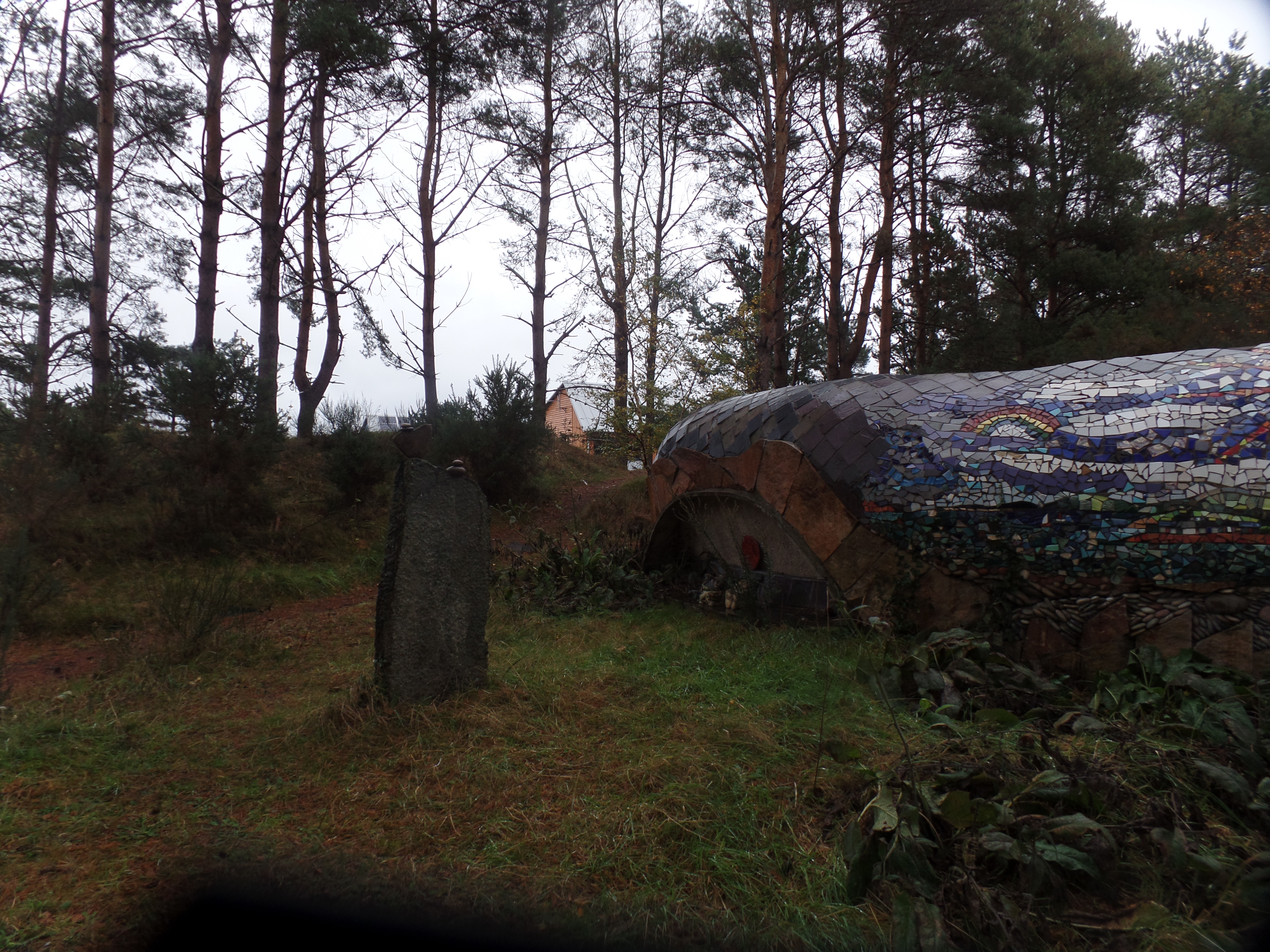
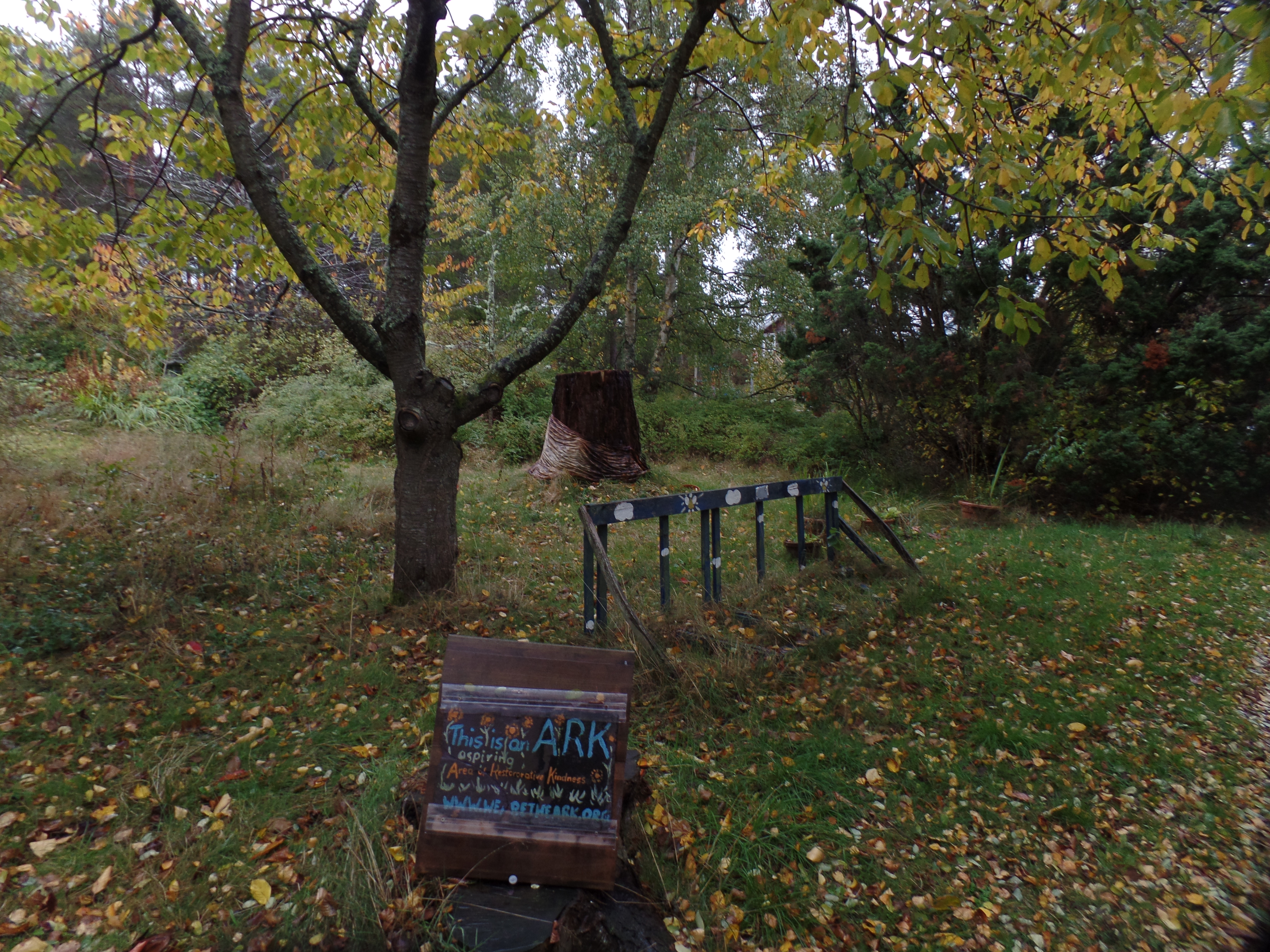
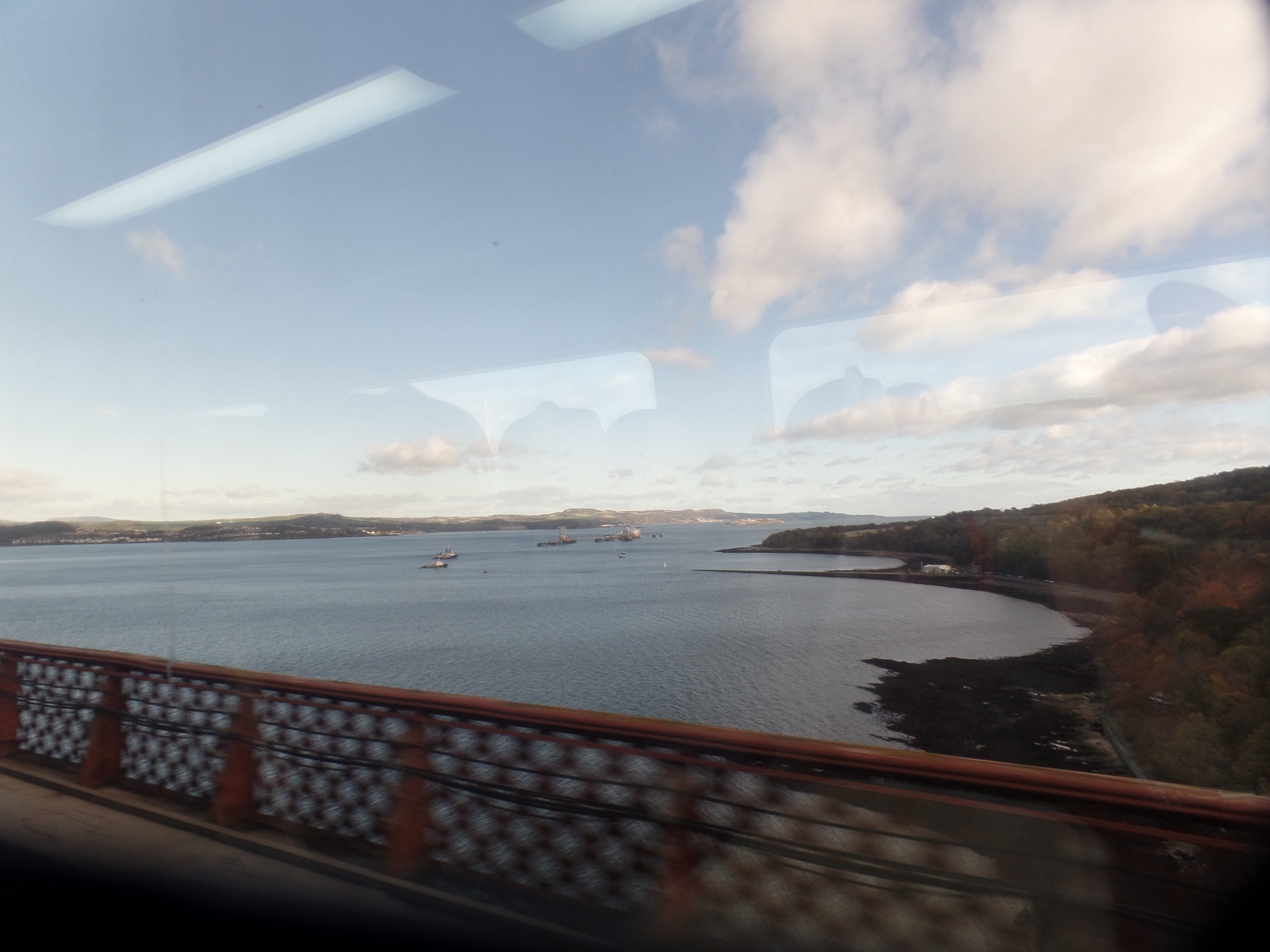
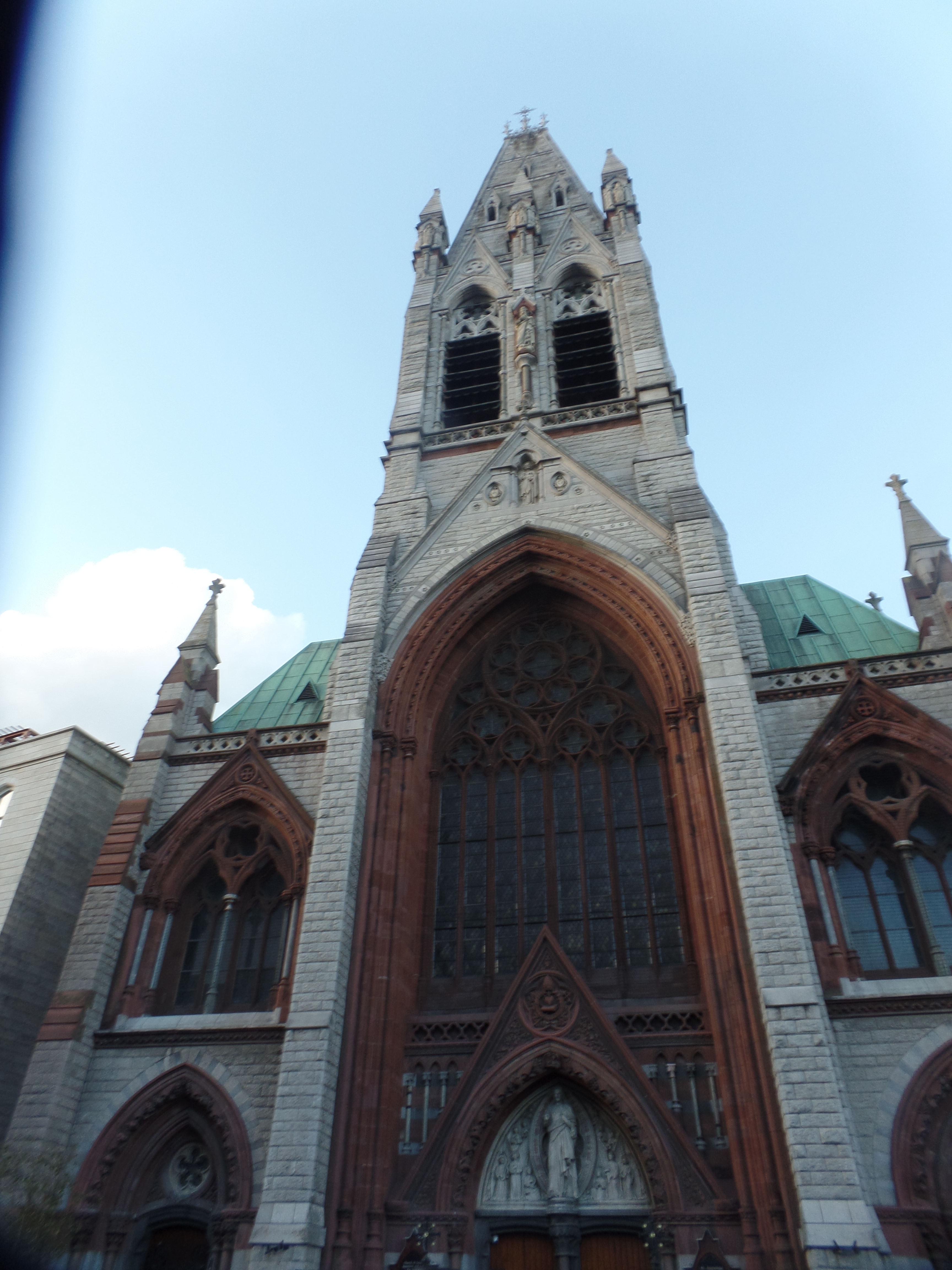
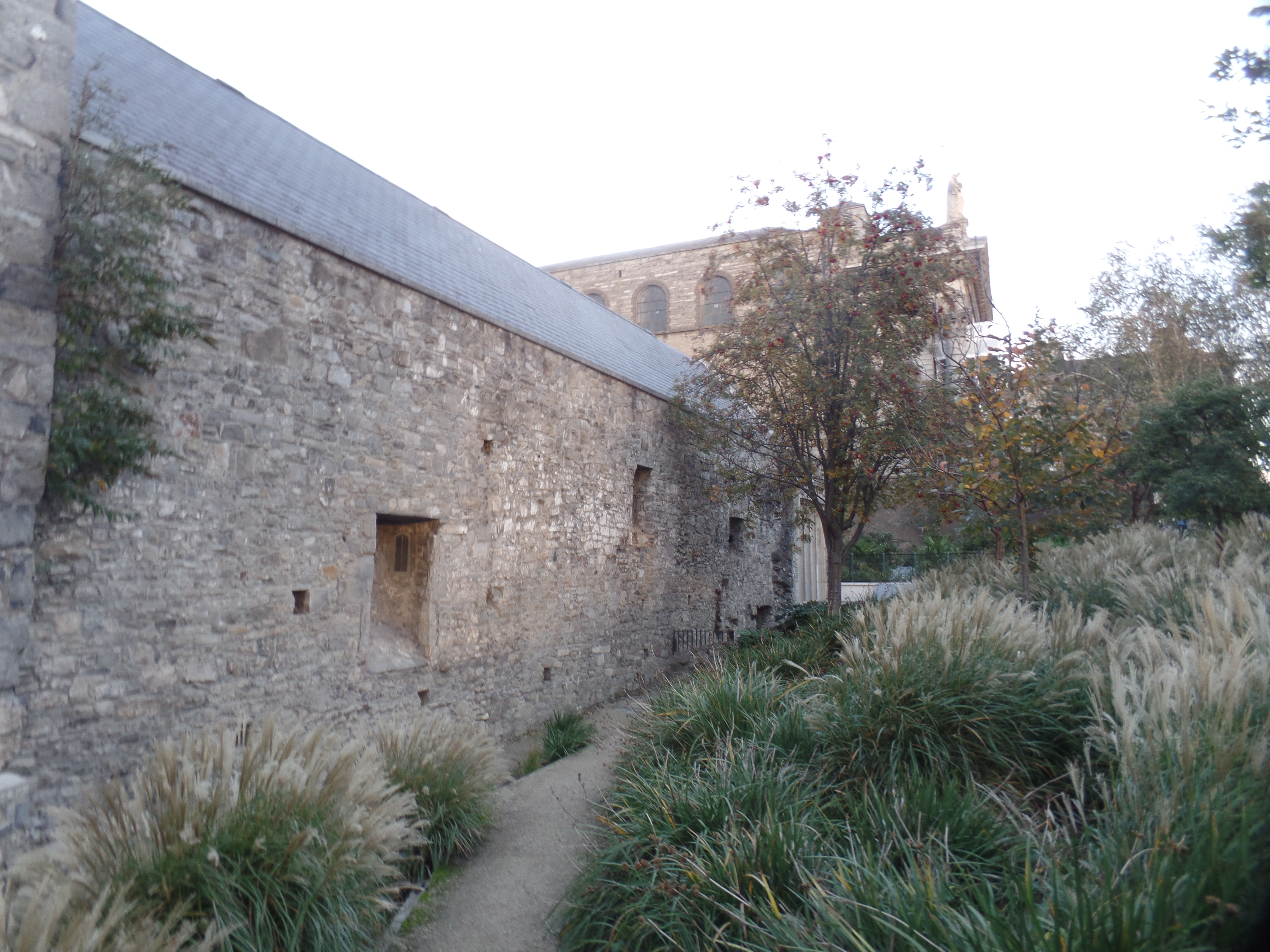
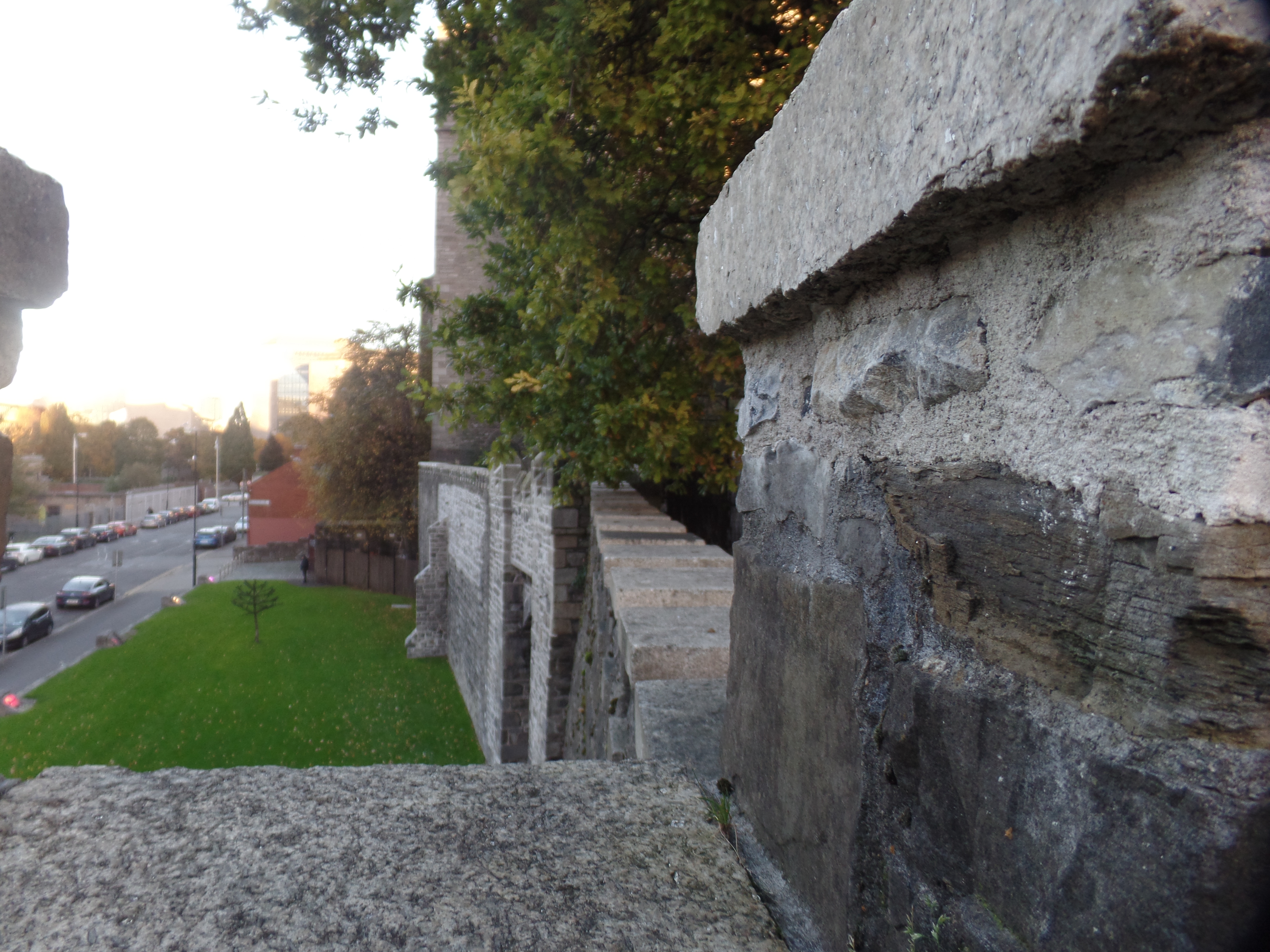
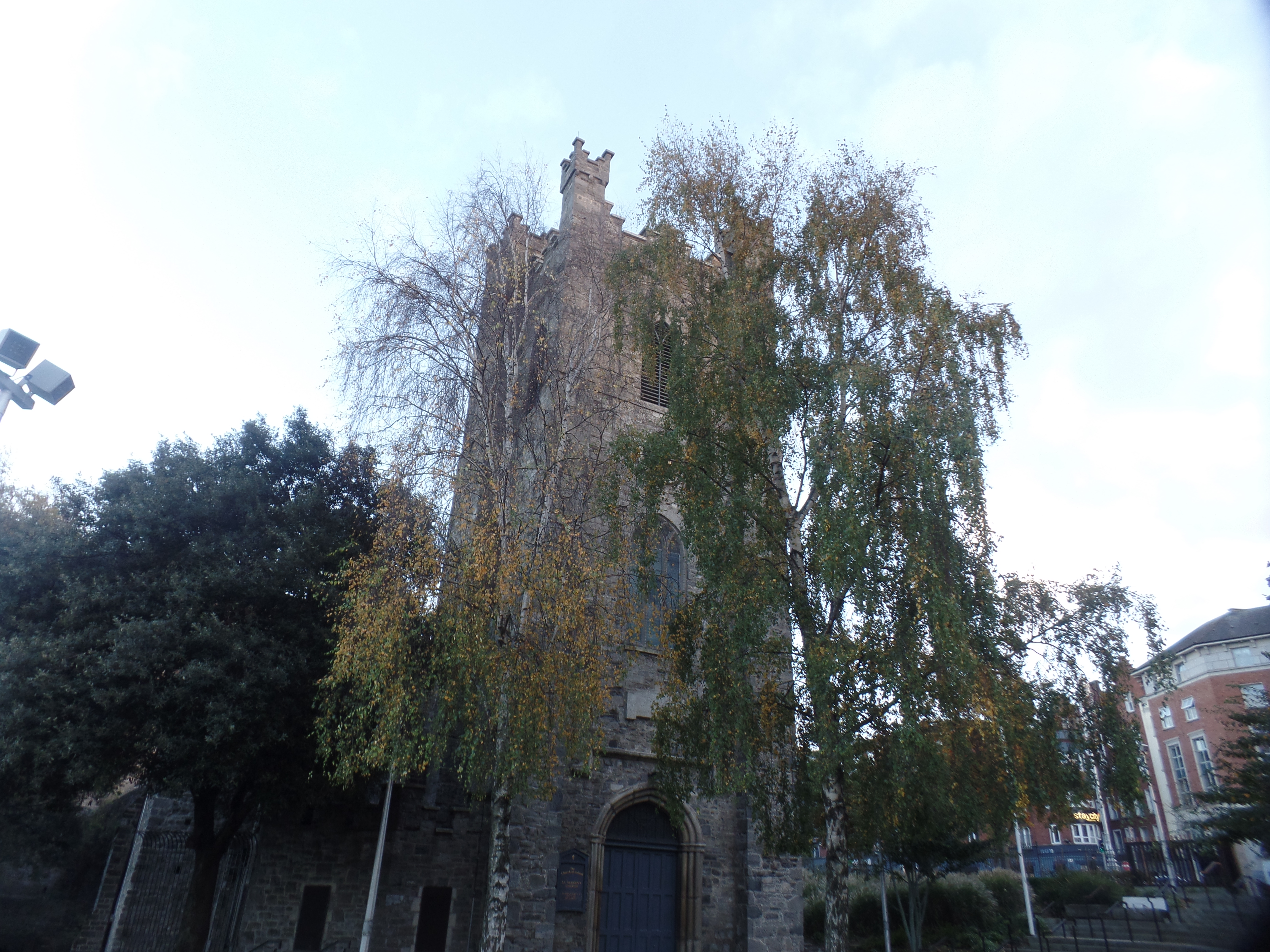
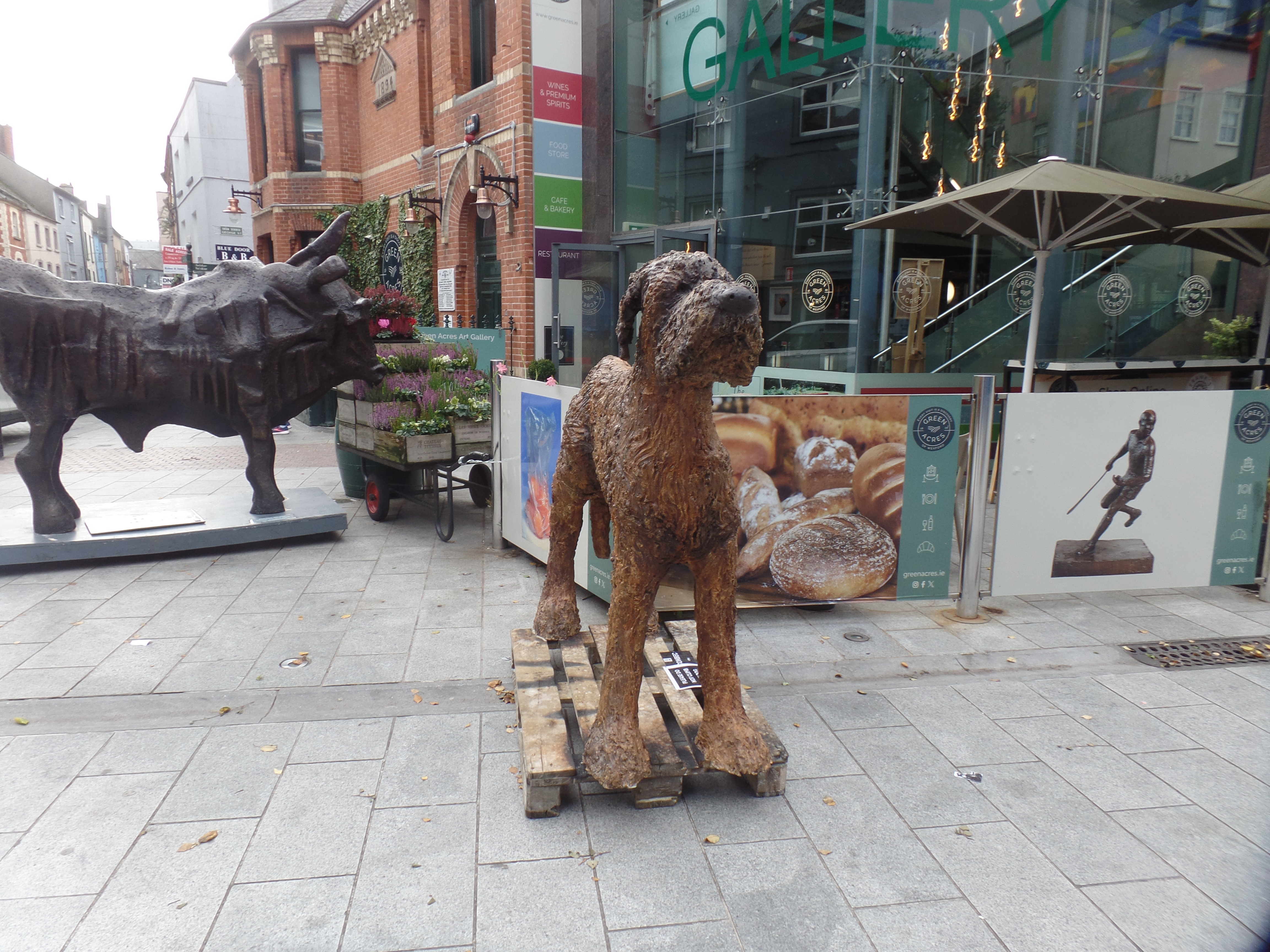
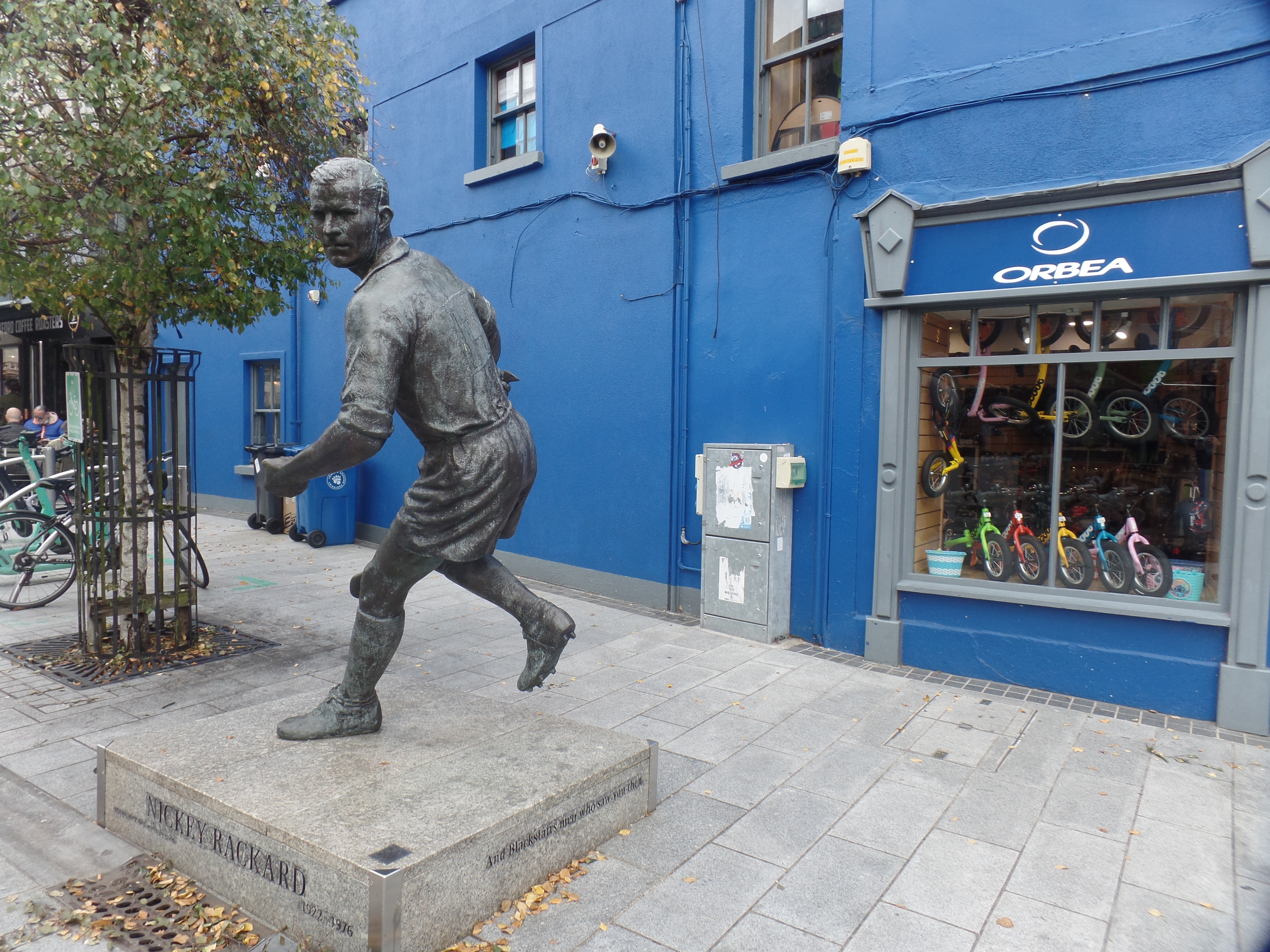
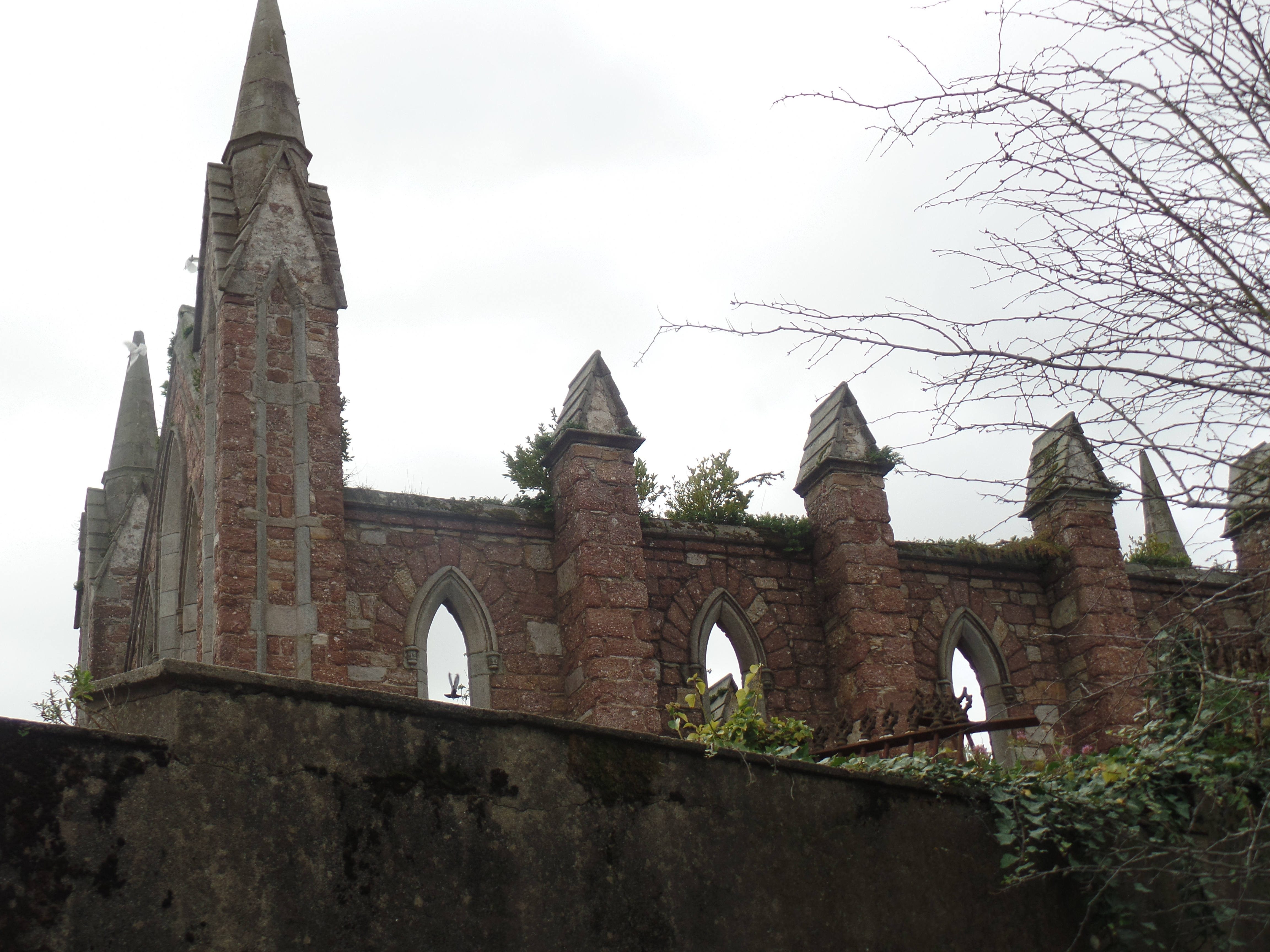
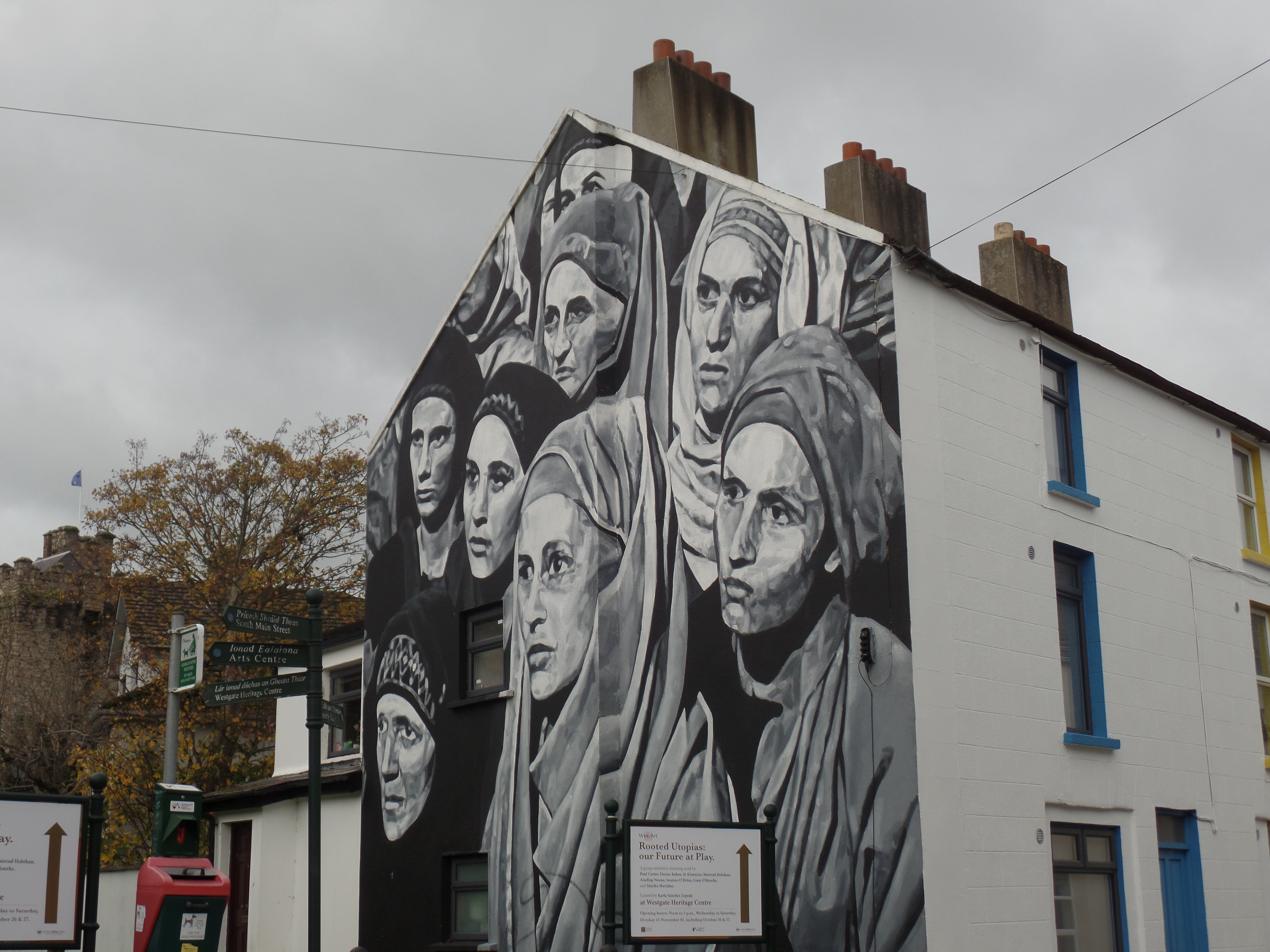
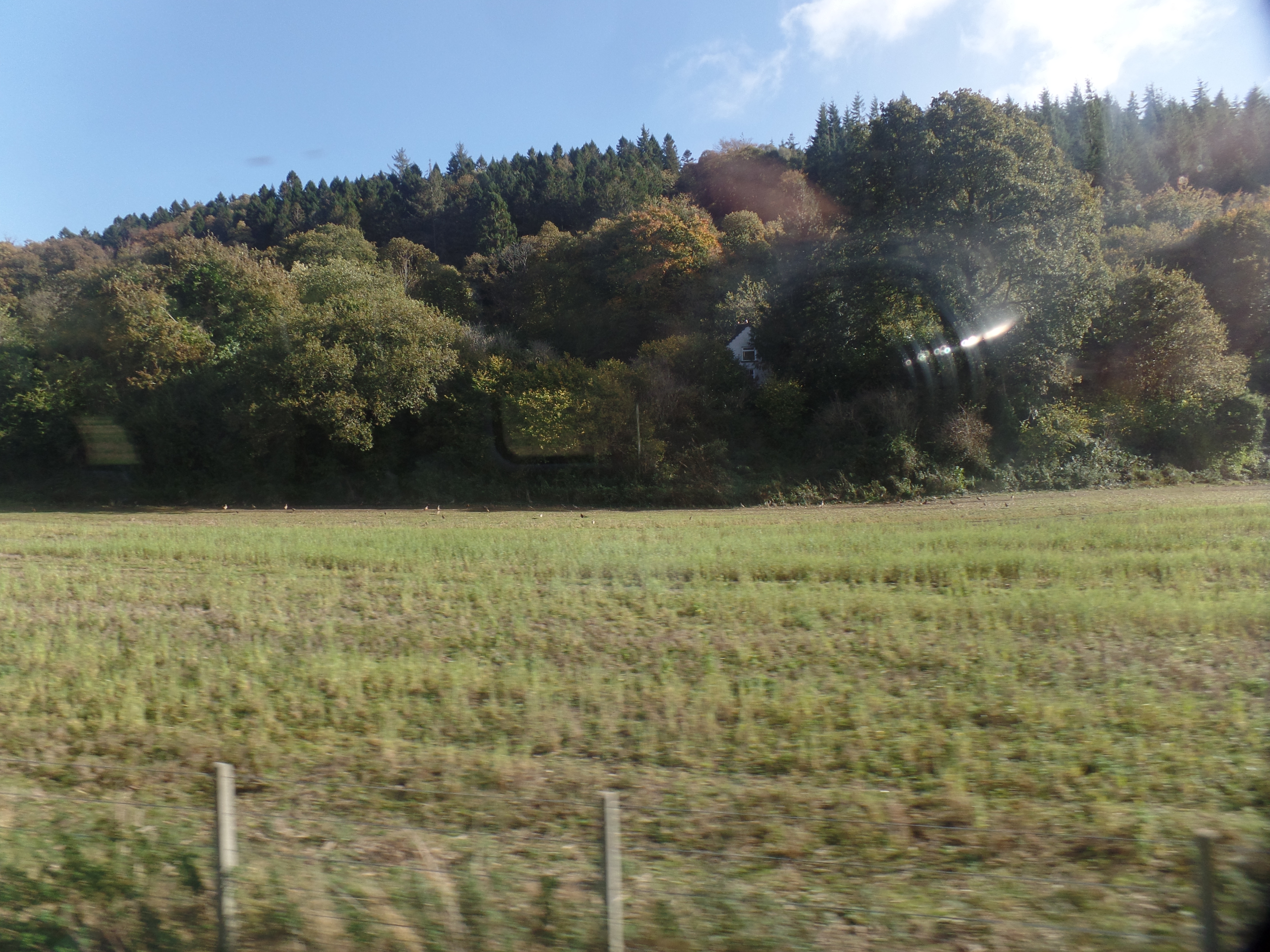
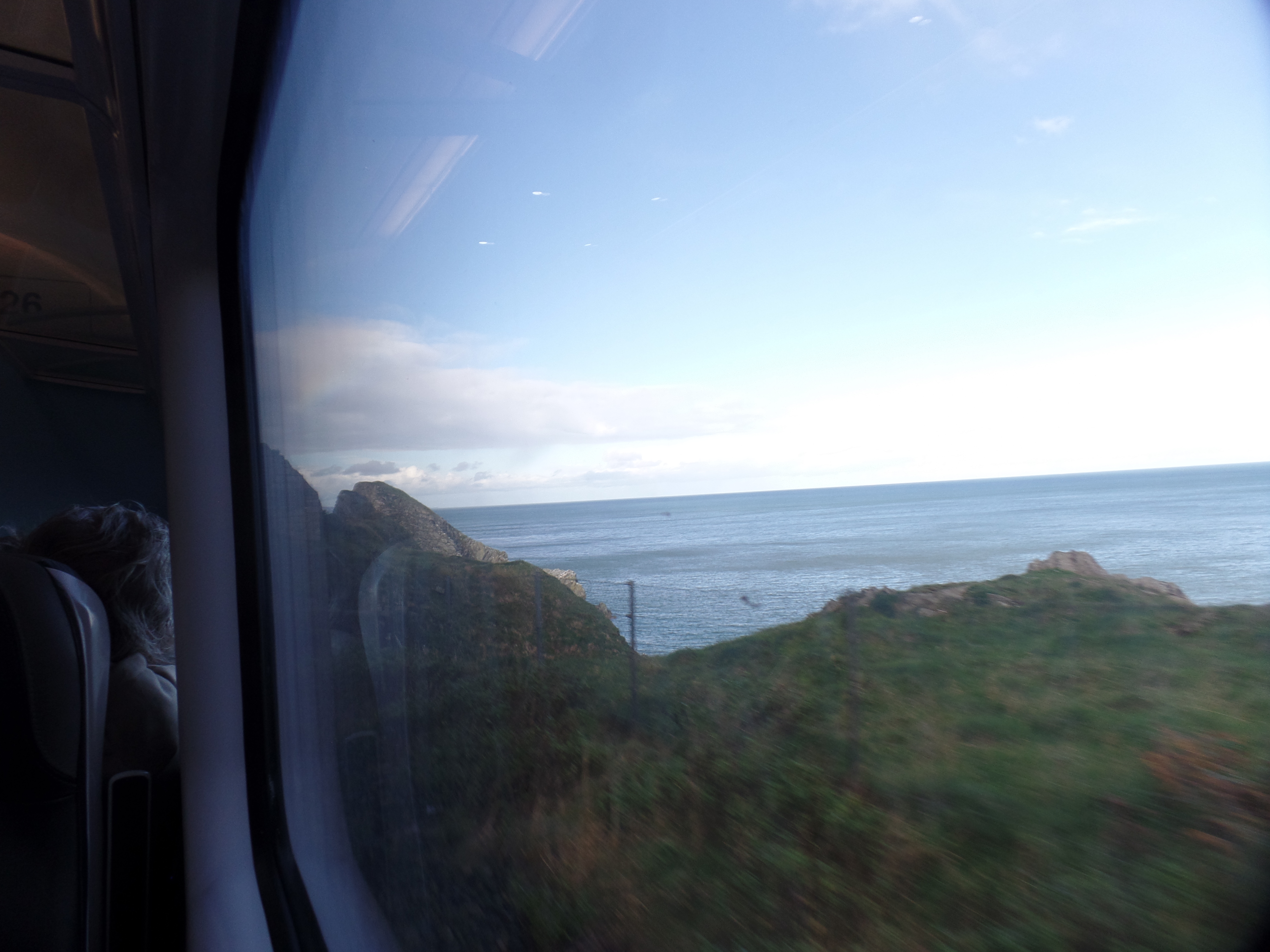
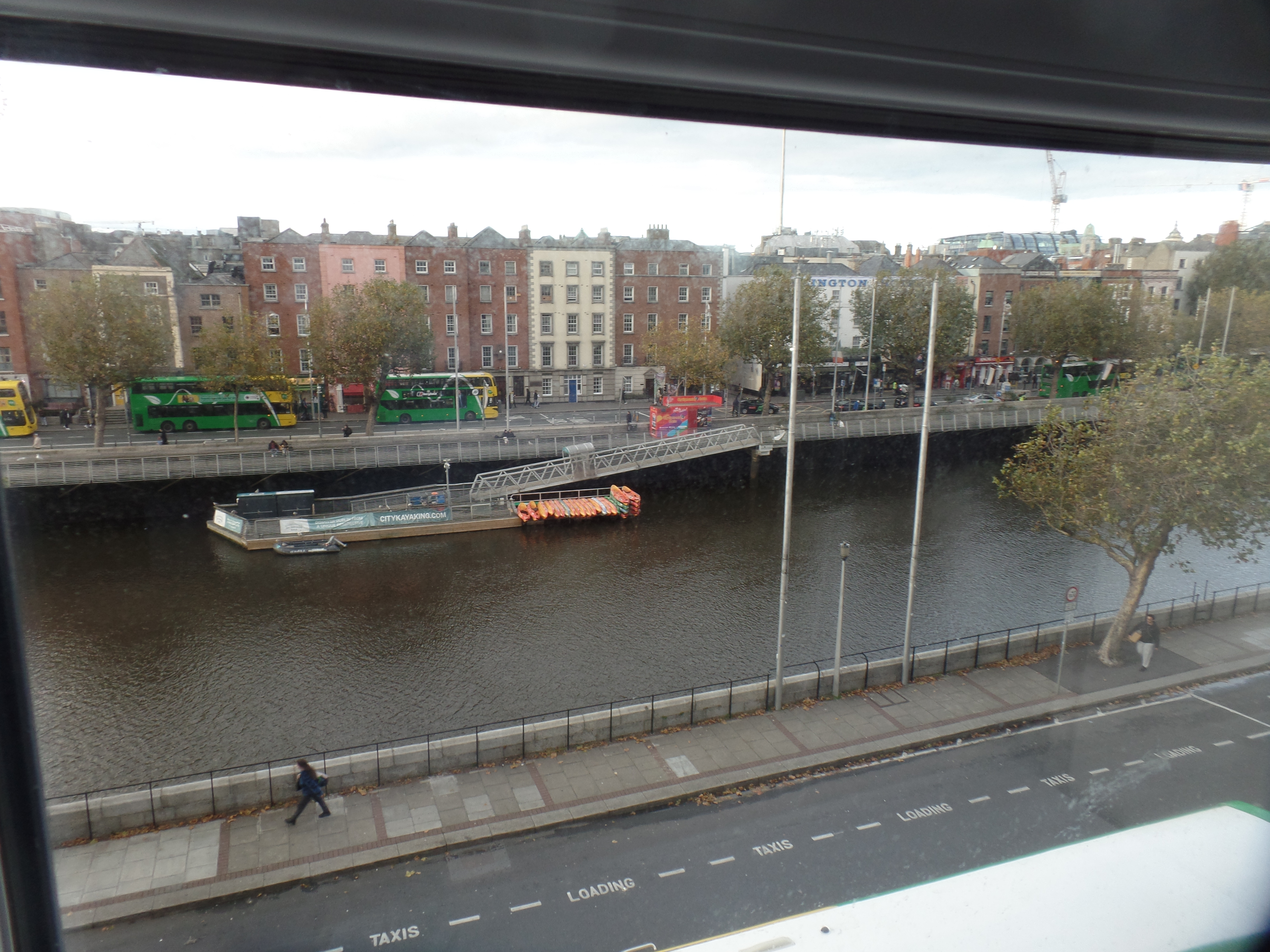
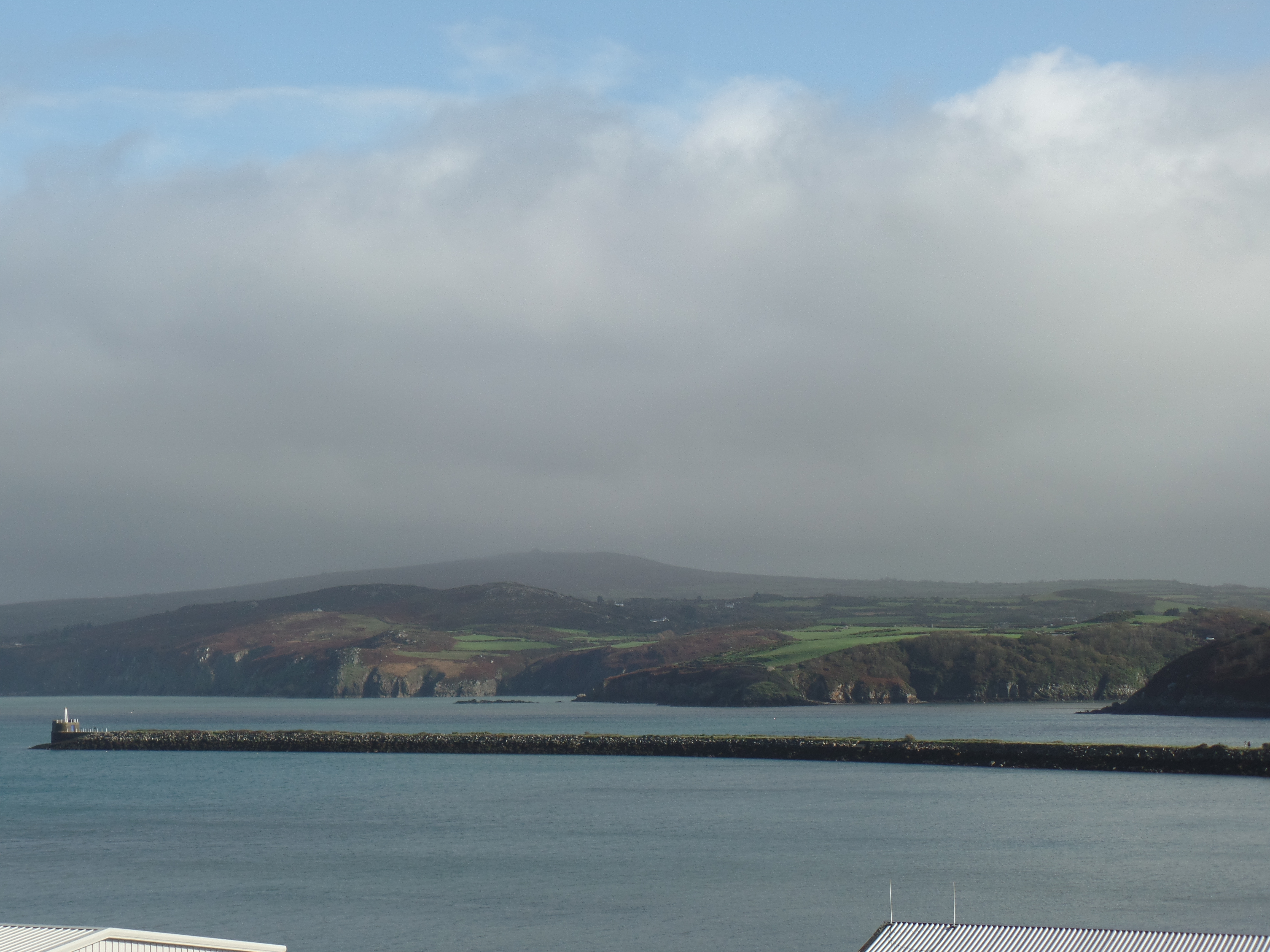
October 17, 2025, Portsmouth, England- The earnest young man, a maintenance worker for the City of Dieppe, told me that the route to the ferry terminal was “not long” and was “visible straightaway from around the corner to the left.” I followed his directions, met a couple who were out walking on a delightful Friday afternoon and got more complete directions. Twenty-five minutes later, I walked into the Ferry Terminal.
Taking on the road involves just this sort of time allowance, and patience with people whose own understanding of routes and systems is not as complete as they fancy it to be. It also involves workarounds for spotty WiFi and being a quicker study for technological innovations than has ever been the case. That alone, to me, is a cure for dementia. (Disclaimer: I am not a medical professional. I just know how it feels to be adapting to a savvier world.)
The day started with a fine breakfast at JOST Hostel. Before checking out, I did a walkabout to Le Havre’s waterfront and back. Here are some scenes:
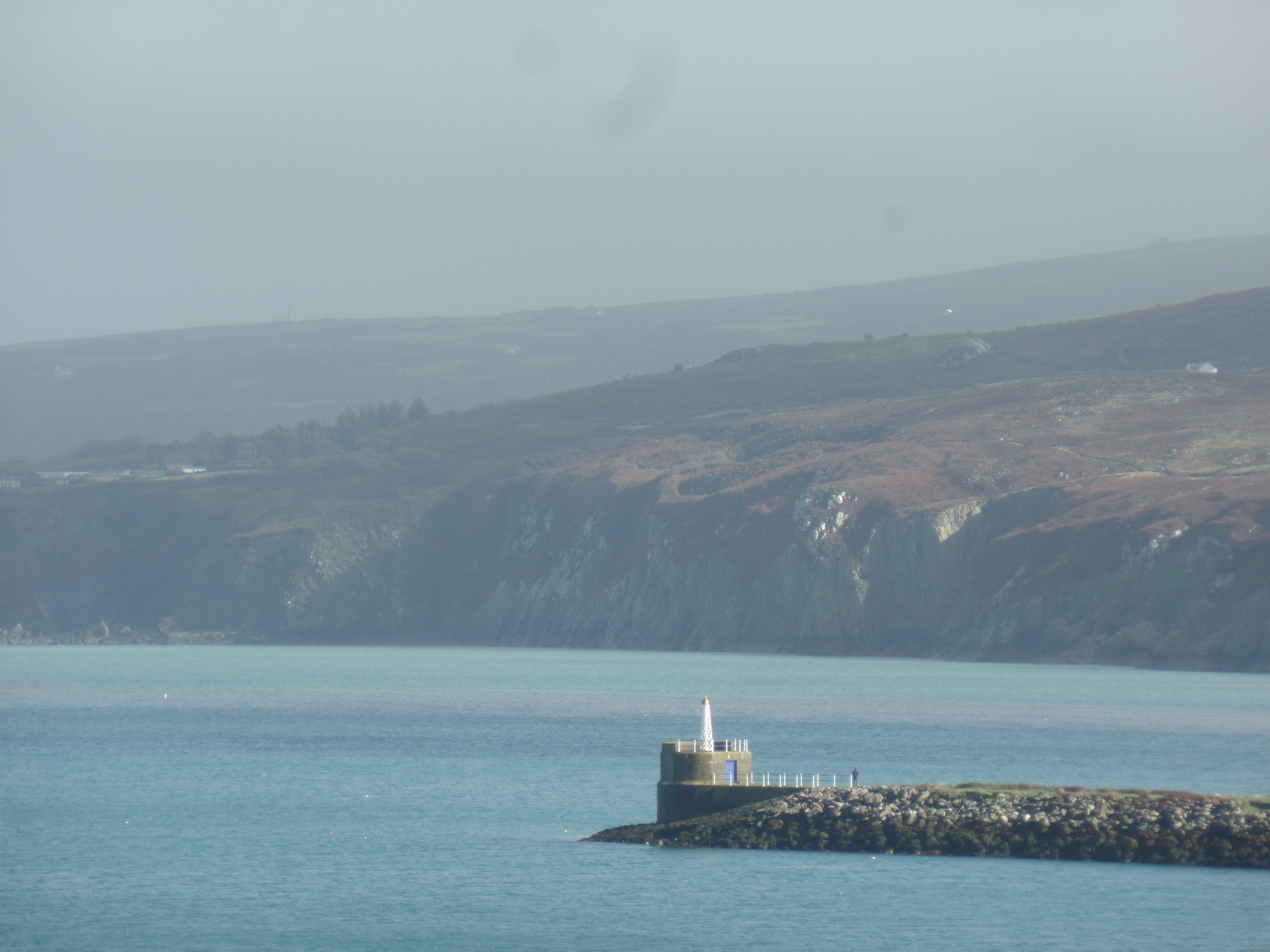
Le Havre Palais de JusticeLe Havre City HallMonument to Resistance Fighters of World War IISeine River, approaching the English Channel (La Manche)Monument aux Morts, Le HavreAlta Tower, with fluid geometry; created by Auguste PerretTwin Rainbow Arches, Le Havre Port. This was in celebration of Le Havre’s 500th anniversary and was also designed by Auguste Perret. It is made of 36 shipping containers, welded together.Sea gate, with approaching ferry ship.“The Signal”, by Henri-Georges Adam, at Malraux Museum of Modern ArtAuguste Perret’s Show ApartmentNotre Dame de Le Havre (Cathedral)Interior of Notre Dame de Le HavrePipe Organ, Notre Dame de Le HavreStained glass, at Le Havre Central Train Station
With my walkabout complete, I headed on the train bound for Rouen, then transferred to another train to Dieppe.
October 16,2025, Le Havre– I left Metz, after a sumptuous breakfast in Hotel Escurial’s fine restaurant. The train ride to Paris Est was uneventful, though the French countryside is always a tonic for the soul. Once in Paris, I asked an African immigrant, a security guard, where to find the bus to Gare St. Lazare, from which trains to Normandy and Brittany are dispatched. He personally favoured the Metro, but with baggage to handle, I was in no mood for the grifters and pickpockets who hang out in all too many Metro stations. He then directed me to the area south of the train station, where buses arrive and depart.
After a few minutes of asking around, I spotted the bus that goes to St. Lazare. Another young immigrant was getting set to start his driving shift, and invited me on, sans ticket. He maneuvered swiftly through Paris traffic, and we were near St. Lazare, with plenty of time to spare before my train to Rouen and Le Havre was set to depart. His “price”? I had to get off two stops later and walk back. “No one can have everything”, he said, knowingly. It was no big deal.
In 2014, I was on another train to Rouen, and we passed through a suburb called Mantes-La Jolie. My seat mate pointed out that there was little “jolie” about the town. This time, though, Mantes-La Jolie presented a clean, upbeat appearance-even lacking the graffiti that seems to be universal elsewhere across Europe.
Rouen, too, seemed a tad happier a place than what I saw eleven years ago. For that matter, at least in the above-ground gathering places and along surface streets, I felt perfectly safe in Paris as well. The hype about “crime-ridden France” seems to be just that-a false flag. The train strikes of two weeks ago are a blip.
It was in an upbeat mood, bolstered by the kind, if snarky, immigrants who I encountered everywhere, that I found myself in the shiny port and university city of Le Havre. I had half expected a gritty seaport. There was none of that, and I walked a short distance to JOST (Joy of Sharing Together) Hostel. It is the closest lodging to any train station thus far, except for Helsingor. It also has a Food Court, with six restaurants under the auspices of one bar. I chose a northern Italian option.
The University quarter of Le Havre is a place of great modern art and architecture. Here are a few scenes.
JOST Hostel. I was “only” on the fourth floor.Pole- Simone Veil. This social and sport event center is named for the late magistrate Simone Veil, who was a survivor of the Holocaust of 1941-45. She became the first President of the directly-elected European Parliament, in 1979. In her years of recovery from the horrors of war, Simone Veil was a champion of women’s rights in France and across Europe. She died in 2017, at the age of 89.Enclosed arbor, Allee Aimee Cesar. The great social activist from Martinique offered a thought which is apt for people like me, who visit different places, almost with abandon. “Beware, my body and my soul, beware above all of crossing your arms and assuming the sterile attitude of the spectator, for life is not a spectacle, a sea of griefs is not a proscenium, and a man who wails is not a dancing bear.” It is indeed the duty of the traveler to show empathy with those visited. Rue Le SueurSidewalk cafe, Place Le SueurTorso in Action, Place Le Sueur
Le Havre has indeed cast off its former image as a gritty port, and is fully embracing the vibrant commercial culture that has continued across the English Channel, despite BREXIT and largely because of, rather than despite, the Chunnel. I will have time, tomorrow morning, to more fully look around this energetic port.
October 14, 2025, Strasbourg- I took no photos of Strasbourg this time. Hotel Strasbourg-Monatagne Verte is lovely and the area around it is serene, almost bucolic. The quiet paths that lead, safely, across the bustling highway into older neighbourhoods of this economic hub of northeastern France are worthy of several shots.
I simply was not in the photographic frame of mind, no pun intended. My camera has a day to charge and I am giving myself time to sit and reflect. Tomorrow morning, I will go across to Laverie Valiwash and take care of my wardrobe. This evening, I will rest, as my message to friends here received no reply. A nice French dinner was my solace. The staff at Hotel Strasbourg are superb.
The trains from Frankfurt were a standard car to Offenburg, then a commuter train the rest of the way. Most of the people on the second leg were university students heading to one of the small German border towns that serve as suburbs to Strasbourg: Places like Kehl, where a team of German and French border police checked tickets and passports. Once the kids were gone, there were only a few of us going the rest of the way to Strasbourg. The trams and buses at Centre Gare (railway station) go towards the Cathedral, to the European Union facilities and other areas that are in the direction opposite where I was headed. Montagne-Verte is a fairly new area of town, and as was said earlier, has a rustic air to it, even with the apartment buildings and tourist hotels that are carefully interspersed within its greenery.
One of these years, I will set aside three days or so, to give justice to a visit to this bustling town. Tonight, though, I am just regrouping, getting ready for the last week or so of a fascinating journey that has had many aspects of whirlwind to it.
October 13, 2025, Frankfurt-am-Main- I stayed in a nice hotel, though not a “green” one. I had a fine meal in a restaurant run by Palestinians, and there was no bratwurst on the menu. I took high-speed rail, instead of a bus, to a spot fairly close to the Baha’i House of Worship, at Langenhain, though I still got in my steps. Those were the biggest differences between this visit to Frankfurt, as well as the fact that it was not my home base this time. (That honour has been spread across several cities.)
I had no trouble catching the train from Heidelberg and there were no delays. The S-Bahn got me close to Garner Hotel, with the walk being .4 mile. Once there, I found that getting dinner involved a bit of exploration of a nearby business district, so my Sagitarrian instincts took me down the street-almost, but not quite, back to the S-Bahn drop-off.
Old watch tower at Bockenheimer Warte station, Frankfurt-am- MainMarkuskirche, near Palmengarten, Frankfurt-am-Main
My meal at Konig Doner Pizza was superb, Turkish-style served by Palestinians. It set a fine tone for the rest of my visit here. After a restful night, it was time to revisit the Baha’i House of Worship. The S-Bahn took me to the village of Lorsbach, where I found the directions from Google Maps taking me along a country highway, up a hill and into a nature preserve.
Naturpark Hochtanus, near Hofheim. (Above and below)Roadside Memorial to a man named Lars. This is at an area which features a treacherous bend in the road. I can only imagine the circumstances of his passing.
After I had come to the limits of the town of Langenhain, a young woman stopped and gave me a ride the rest of the way to the House of Worship. Here are some scenes of that simple, yet majestic site, which I last visited in 2014.
Visitors Center, Baha’i House of Worship, LangenhainBaha’i House of Worship, Langenhain (above and below)Small planter gardens, Baha’i House of Worship, LangenhainDome of Baha’i House of Worship, Langenhain, bearing the inscription, “God is the All-Glorious”, in Arabic.
After visiting with the volunteer caretakers, Lutz and Hannah, I walked back into Langenhain village. There, I found what was supposed to be the bus stop back to Hofheim. It was near a K-9 school, where the parents of kindergartners were picking up their children, at day’s end. One of the ninth graders walked back towards the main road, and kept looking over her shoulder, more out of curiosity than apprehension-as if trying to send me an unspoken message. Once a certain amount of time went by, I saw a bus on the main road, heading towards Hofheim, so it occurred to me that the girl was probably trying to convey that the stop was elsewhere. I went back to the main road, found the right bus stop and was in Hofheim, twenty minutes later. From there, it was easy to catch the S-Bahn back to Frankfurt, with a stop at Domplatz, near Frankfurt Cathedral and the Main River.
That area was one that I visited in 2014, as well, and the photos were lost, so spending about an hour there was in order. Here are a few photos of the Dom (Cathedral).
Dom (Cathedral) of Frankfurt (above and below)Exterior and spires of Frankfurt Dom (above and below)
After enjoying a fine German meal, at Main Kai, I walked a bit along the Main itself.
Main River, near Dom
It was a soothing visit to the House of Worship, and reminiscing about the area gave me some peace. Tomorrow, I will spend a day going to Strasbourg, though not having much time there, I will most likely be focused on regrouping my energy.
October 12, 2025, Frankfurt-am-Main- It was suggested by a fellow hosteler in Salzburg that I take dinner at Vetter’s, an authentic Bavarian establishment in Old Town Heidelberg. Apparently, a lot of Vetter’s fans were telling their friends the same thing. There was no room to be had there this evening. The reservation list stretched into next week.
I found another fabulous spot for dinner-Joe Molese Burgers and Sandwiches. More about Joe’s and its fabulous staff later. First off, though, some words about my stroll down the hill and around Old Town, in areas both full of my fellow travelers and others with only a few locals going about their affairs.
As I bid farewell to Schloss Heidelberg, it was the foliage that stood out.
Foliage at south end of Schlosse HeidelbergHeiliggeistkirche (Holy Spirit Church), Heidelberger Alstadt
I continued looking for a place called the Red Church, wandering through the alleys near Heidelberg University.
University DistrictRosenkirche, Heidelberg
I found the Red Church at the north end of Old Town.
Rosenkirche, HeidelbergHeidelberg University, with Peterskirche in backgroundPeterskirche, Old Town Heidelberg
As I rounded a corner, there was an apartment courtyard, where a man was playing table tennis with his young daughter. Nearby was this gem of a mural.
Modernist mural, Old Town Heidelberg
and this:
Cubist leopard, Old Town Heidelberg
The girl’s favourites were these:
Pokemon characters, Old Town HeidelbergPlay space, Old Town HeidelbergBored face, Old Town HeidelbergGuard tower, east end of Old HeidelbergRiver Neckar, from Old Town Heidelberg (above and below)Good luck Monkey, Old Bridge, Heidelberg
It’s said that to rub the gold orb will bring good fortune. many visitors were doing just that, before I took this photo.
Elector Karl-Theodor of Heidelberg
Karl-Theodor became Elector of the Palatinate in 1742 and united it with Bavaria in 1777, setting upon a program of economic modernization of this realm. He built the English garden in Munich and was an avid patron of the arts. In the long run, however, Karl-Theodor showed little interest in his realm, leaving it to Austrian and French invaders, in the 1790s. This statue shows that it was his earlier programs that matter most to posterity.
South Gate, Old Bridge, Heidelberg
Now, back to Joe Molese.
Joe Molese Burgers and Sandwiches, Old Town Heidelberg
This establishment provided the absolute best burger I have ever had-and that’s after a lot of hamburgers over 70 +years. It was not overly messy, such as I normally enjoy. It was simply flavourful and was not overshadowed by a mound of French fries. The lovely server and the effusive manager made everyone feels at home, despite the fact that the place was as packed as every other restaurant in Old Town, on Saturday night. When I went to pay, furthermore, it turned out that the young couple sitting to my right had already covered my tab! We had not spoken a word to one another, but there it was. I would go back to Joe Molese’s again, in a heartbeat.
Finally, this is the shop whose clerk helped me locate Lotte-The Backpackers Hostel. I bought a couple of items from her. It would be nice if more people patronized her little place.
My favourite souvenir shop, Old Town Heidelberg
It was not easy to say farewell to this enchanting place, but there was more joy waiting for me here in Frankfurt, and at the Baha’i House of Worship in Langenhain.
October 10, 2025, Munich- I went down the 327 steps this time, bidding farewell to the paradise called Monchsberg and its shining star, Stadtalm Naturfreund. I would gladly walk up the steps again and stay there for three or four days.
It was time to have at least a brief look at Munich and see how that city is adapting to the changes that surely would have shocked the reactionary forces who caused such mayhem there, nearly one hundred years ago.
First, though, here is a bit more of Salzburg’s centrum.
Ancient German god of natureInformation about Gherkins sculpture (seen below)Gherkins Sculpture, with Friedrich Schiller in the background. Schiller was one of Germany’s greatest Classical playwrights.
My breakfast companions had urged me to make mention of Sanktfranciskirche. It is the one church in Salzburg where anyone can find a safe haven, even if being pursued by police. It has not been put to the test recently, but there are many past examples of this.
Sankfranzikirche, Salzburg
Notice the open door below.
Salzburg Cathedral, my last stop before the Hauptbanhof and on to Munich.
The journey to the heart of Bavaria was uneventful. I had a bit of confusion, again because of WiFi loss, but finding The 4You Hostel was not hard, once I got bearings after stopping in a store for a couple of necessities. I even found a nice nearby hotel restaurant and enjoyed a good Bavarian dinner.
From what I have seen so far, Munich is every bit a multicultural and tolerant city-pretty much the opposite of what its leaders in the 1930s hoped to achieve. I will enjoy more of it tomorrow morning.
October 6, 2025, Sarajevo- The vivacious young lady engaged all her patrons, in a charming yet suitably guarded way. She made us all feel welcomed and appreciated, but remained a bit of a mysterious presence. Her father, nearby in the kitchen, was watching all. Sebilj is a bit of Turkiye in Old Sarajevo. True, there are lots of bits of Turkiye in this city, but Kemal and Harina (not their real names) pack the house, with local regulars, day and night because of their Turkish welcome and the quality of their food.
I was very blessed to enjoy comforting split pea soup-not something I had associated with Turkiye before tonight, but it was golden, especially after a jarring day at Srebrenica. The shish was also well-seasoned and tender.
There is lots of resilience across Sarajevo. This evening, I focused on a swath of the Old City, the area that embraced Islam, the story goes, because the Ottoman Turks had a policy of not taxing those who converted to Islam. That story came from a man who has not embraced any organized religion, so who knows? I thought better than to ask any of the fervent Muslims I encountered here, as to such matters.
Here are some of this evening’s scenes.
Evening at the Edge of Old TownMinarets light the night. Harina lights our hearts.The Central Circle of Old TownBascarsija Mosque. Here worshipers were still very active, at 9 p.m.
Some streets were bustling; some were quiet. All were safe.
Old Town streets (above and below)A quiet alleyContrasting spiresA Mosque courtyard. The Imam only said “no worshipers!”. The empty courtyard was okay to photograph.
Old Sarajevo is filled with beauty-and that includes the lilting voice of the lady of the house, at Guesthouse Yildiz, as she offers her prayers in morning and afternoon. That includes the rug merchants, the shoppers haggling with the vendors, the children squealing with delight at their taste of ” Authentic Turkish Ice Cream”, and it includes people like Harina, who love what they do. Old Sarajevo was the perfect salve for the heart that was broken by what was shared in Srebrenica.
October 6, 2025, Sarajevo- Once again, I found myself looking at piles of children’s shoes, mounds of abandoned luggage, faces of frightened families being herded onto to trucks-instead of train cars, with the same promise of “a better life”. I looked into hundreds of pairs of eyes, of men of various ages; indeed, some of the “men” were only 14 or 15. Every last one of the more than 8,000 male human beings killed in July, 1995, in and around Srebrenica, Bosnia& Hercegovina was “guilty” of only one thing-being a Muslim in what their captors conceived to be a pure, Christian, Serbian nation of Yugoslavia.
The Srebrenica Memorial Center sits in what is styled the Republic of Srpska (Serp-ska), its existence and its mission protected by the overarching government of Bosnia i Hercegovina, under the Dayton Accords, which ended the war in Bosnia, in 1996. The Bosnian Serbs make no pretense of liking the message the Museum offers, but they abide its presence. In that sense, it is no different from, say, the Civil Rights Museum in Montgomery, AL or the Sand Creek Massacre National Monument, in southern Colorado. Those who view things only one way cannot easily accept even established fact, when it disrupts their world view.
Three of us were taken to this Museum, by a man named Adis. He is a veteran of the Bosnian War for Independence. He is also an accomplished de-mining technician, and has helped remove mines in over two dozen countries, since 1998. Adis is a Bosnian Muslim. He told us of the background of the horrors that nearly tore his country apart, in the years 1992-96. He told us, as did staff members at the Museum, of the unreliability of United Nations Peacekeepers, held back by the envoy of the U.N. to Yugoslavia and by their own commanders. These men told us what was the result of overemphasis on preserving the status quo. The Big Picture fell on top of the people who only wanted to live their lives in peace.
Here are some of the scenes presented us at the Museum, in Srebrenica itself and at the Memorial Cemetery, down the street from this powerful institution.
Srebrenica Memorial Center, Polocari, Bosnia i HercegovinaRijad Fejzic’s story
Riki was 18 when he died, probably alongside his father and most likely not when engaged in combat. He had no training, no weapon, only his faith and love for his family. Riki’s story is a recurring presence in the 26 rooms, in which the story of this conflict unfolds in the Memorial Center. His remains were only identified after the war had ended. His father’s have never been found. Riki was beaten to death.
Presentation at Memorial Center, Polocari
This man’s father was a Bosnian Army soldier. He himself has been a presenter at the Memorial Center, for almost fifteen years. He is showing the course of the attacks on Srebrenica, which had been deemed a protected zone of the United Nations. Bosnian Serb forces, aided by the Serbian regulars, decided to ignore the UN’s presence in the area, and marched on the town, on July 11, 1995. The UN’s troops, a Dutch battalion, were under-equipped and outnumbered. It could have been different, but those in control of the situation simply had other priorities.
A relative few of the abandoned shoes left by fleeing children, in July, 2011.A mother’s sorrowTaking a page from Nazi Germany, the Bosnian Serb and Serbian commanders overruled even the misgivings of their own rank and file soldiers, many of whom had known the Bosnian Muslims as neighbours- for decades.Some of the 8,000 men and boys killed in July, 2011.Survivors gathered at the site of a mass grave, in 1996.The city of Srebrenica is a shell of its old self, but its young people still hold it close.The city from a former healing spa, high above. The spires are those of two mosques.Peace Monument in the central square of Srebrenica.An estimate of the total number of Bosnian men and boys killed in July, 1995. Posted at Memorial Cemetery.Row upon row of Muslim graves, all from that fateful day in July, 1995.
No one should condemn the Serbian people for what happened, any more than one could condemn the German nation for the Nazi reign of terror or the average Southern white male for the horrors of slavery and Jim Crow, or the majority of Hutu farmers for the slaughter of the Tutsi, in Rwanda. Adis put it clearly: “Most people just want to live their lives in peace and provide for their families. It’s as true of the Serbs around us as it is of we Bosniaks.”
The lesson of Srebrenica, of Auschwitz-Birkenau, of Rwanda, of Cambodia, of the oppression of Indigenous peoples the world over, is that the people of any given community cannot just leave the affairs of a community, state/province or nation to the ambitious and those with an agenda. Each of us has a say in what goes on around us. This is one of the keys to peace-It starts within and radiates outward, lest it die on its own vine.
October 5, 2025, Sarajevo- The bus driver had a long face, as we all boarded his vehicle, in Split. I don’t think the man’s demeanour changed much, even after he had a sit-down meal at a nice roadside restaurant. The weather was equally gloomy, but I felt a comfort that transcended both the driver and the skies.
We went down the coastal highway, very close to tourist haven Dubrovnik, and then turned inland towards Mostar and Sarajevo. Here is a view of the Adriatic from Jesenice, the first major town south of Split.
View from cliffs near Omis, Dalmatia
At Brela, the wonders shifted to the mountains above the southern Dalmatian coast.
Limestone mountains above Brela, CroatiaHeading inland, near Ljubuski (Lee-oo-boo-skee)These lakes are near the well-known Kravica (Kra-VEET-sa) waterfall .
Passing through Mostar, a worthy stop in its own right (for me, maybe on a future Mediterranean visit), the weather was really getting nasty, but the mountains are always stunning.
Prenj Range (Pren-yeh), outside MostarNeretva River, near Donja Jablanica (Donya Yablanitsa), Hercegovina. It was near here that we stopped and the driver had his lunch. I opted to wait until Sarajevo. Below, are the rotating barbecue wheels at Lamb House.Old-style roasting spits, Lamb house, Donja Jablonica
About an hour later, we were in Sarajevo. I caught a taxi in short order, and that driver, from Libya, was determined to find Guesthouse Yildiz. He was very close, but it took asking around the immediate Old Town neighbourhood to get the exact spot. Now, he has another hard-to-find address on his phone.
I found a gem of a place, with a dear young couple from Turkiye, the owners. (Since we’re on a pronunciation binge- it’s Tur-kee-yuh). Here is how to spot Guesthouse Yildiz, on a short alley way off Old Town Sarajevo’s main road.
Guest House Yildiz, Old Town Sarajevo
Here is the junction of Yildiz’s street, with the main road through Old Town.
Intersection near Guesthouse Yildiz
I was in a comfortable place for the evening, and after a well-prepared dinner of Chicken Stir Fry and rice, settled in to get ready for tomorrow’s visit to Srebrenica.
October 4, 2025, Split, Croatia- Boris met me at the designated spot, which I found only by happenstance. This was another of those “We can’t help you because you have no Internet connection” catch-22s that Spectrum/Safari plays with abandon. (They are the ones denying Internet service, btw). I went to Pazar 1’s gate and waited just a bit-and there he was, telling me that I looked more like a Croatian local than he would have imagined. That felt good.
Pazar 1, Split
Our game plan was a full one: We walked through Pazar (the city market since Ottoman times, or longer.) The south and east areas of Diocletian’s Palace were next on the agenda. Diocletian was a native of this area, an Illyrian, born and raised in Salona, over the mountain, from what is now Split. He rose through the ranks of the Roman Army and became co-Emperor, at first along with Maximian in 286 AD/CE. This started the process of the Empire being divided into East and West. Diocletian built his palace at Spalatum, claiming the East for himself. Although he was an autocrat, Diocletian went along with Maximius’ plan to further divide the Empire, this time into four units, with Galerius and Constantius as junior co-Emperors. This arrangement actually helped the Romans defeat Persia, in 200, with the sacking of the Persian capital, Ctesiphon.
Diocletian carried out a bloody, but unsuccessful campaign to eradicate Christianity in the Empire. When the campaign failed, Diocletian retired from imperial duties, in 305. Co-Emperor Constantine, son of Constantius, recognized it as the official religion of the Roman Empire in 324. He lived out his days at this palace of Spalatum, now known as Split.
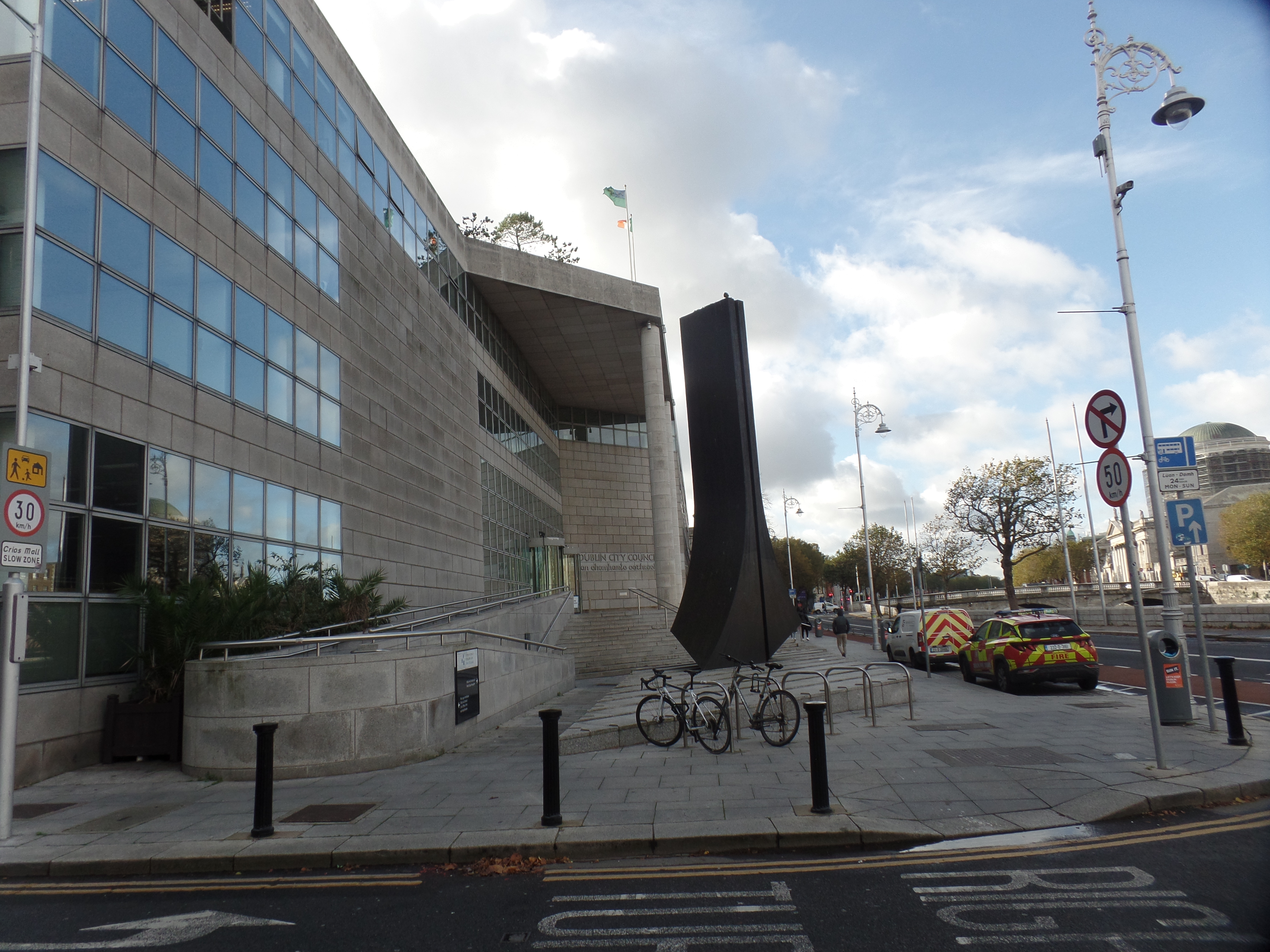
Pazar 1, east gate of Diocletian’s Palace and the Church of St,, Domnius
Domnius was sent, by the Apostle Paul to Dalmatia, the region that encompasses Croatia’s coast and the immediate interior, to preach the Gospel to the Illyrian people. Despite Diocletian’s imprisonment and execution of Domnius, in 304, Dalmatia became a steadfast Catholic region, under the encouragement of Constantine. Croatia is still a largely Roman Catholic country, as is neighbouring Slovenia.
Church of St. Domnius, SplitOriginal paving stones from the time of Diocletian
Here is a more complete view of the east and south areas of Diocletian’s Palace.
South courtyard of Diocletian’s Palace, Split
Diocletian’s Palace is the only place, outside ot Rome and Gizeh, that still has sphinxes (There are two here).
One of the two Sphinxes of Diocletian’s Palace, Split
We left this part of the palace, heading toward Marjan (marYAN) Hill. To get there, we had to pass through the “Street that can fit only one at a time”. Here I am, having gotten through it.
“The street that can fit only only at a time”.
The next photo shows the melange of architectural styles that can be found in Split’s oldest neighbourhood. These are Roman, Venetian,Ottoman, and Austrian.
Four styles of architecture, in one neighbourhoodThe place to be seen in the Split of the mid-Twentieth Century.A martyr for freedom from Fascism-and a Dalmatian
Vahida Magajlic was a Croatian Muslim, who fought the puppet regime that was installed by the Nazis in Croatia. She gave her life for the freedom of Croatia-and of all Yugoslavia.
We took many steps up Marjan Hill. (Mar YAN).View from first overlook, Marjan Hill
Boris enjoys coming up here, when he needs peace and quiet.
Boris at Marjan Hill’s Botanical GardenThe Adriatic, from atop Marjan Hill
Orofessor Humbert Girometta was the man who spearheaded both this park and the promotion of hiking and wilderness training in the Split area. He was a mentor of Boris’ mentor.
Memorial to Dr. Humbert Girometta, Marjan Hill, SplitThe Adriatic, from the third vantage point on Marjan Hill, SpliJewish Cemetery of Marjan Hill. Jews have been in Dalmatia since shortly after the destruction of the temple in Jerusalem, by the Romans.
We next had a delectable Croatian lunch, of beef in marinade, with a side of gnocchi and beet salad. Ice cream, dipped in chocolate, at Split’s oldest ice cream parlour, followed.
Next were the northern and western sides of Diocletian’s Palace
The exterior of the north side of Diocletian’s PalaceArchway, north side of Diocletian’s PalaceEntrance to North CourtyardAgain, three styles of architecture in one building.The grand north courtyard, Diocletian’s Palace
Here is the most astonishing view: The vestibule of Diocletian’s Palace, which once led to his living quarters.
Vestibule, Diocletian’s PalaceUnderneath the palace
We closed out this extraordinary day with a visit to Split’s Athletes’ Walk of Fame. Many of Croatia’s stellar athletes came from Split.
Toni Kukoc, “The Croatian Sensation” of NBA fameGoran Ivanesevic, a great tennis player
With a few more views of the Walk of Fame, I bid farewell to my friend, Boris and headed back towards Hotel Pax, and a restful night, before the next leg of the journey: Bosnia and Hercegovina. Split will long shine in my heart.