The Parthenon, Natchez Trace, and The Sanctity of Family

2

July 10, 2022, Florence, AL- The woman, standing 5’2”, and looking for all the world like a present-day Madonna, arrived at her family’s gathering, and instantly commanded the room. Her strapping teenaged son, who had been alternating between being a responsible big brother and goofing around, for the benefit of the three girls at the teenagers’ table, straightened up with a brief, sharp glance from Mama. Her husband, likewise, exercised a measure of control- distributing portions of food and drink from the adults’ table. to the teens and the younger children. The after-church dinner thus proceeded smoothly, in the small, cozy southern Tennessee eatery. I sensed, though, that there was nothing but love in this family-no patriarchy, per se, just a devoted couple who treasure all their children, and one another.

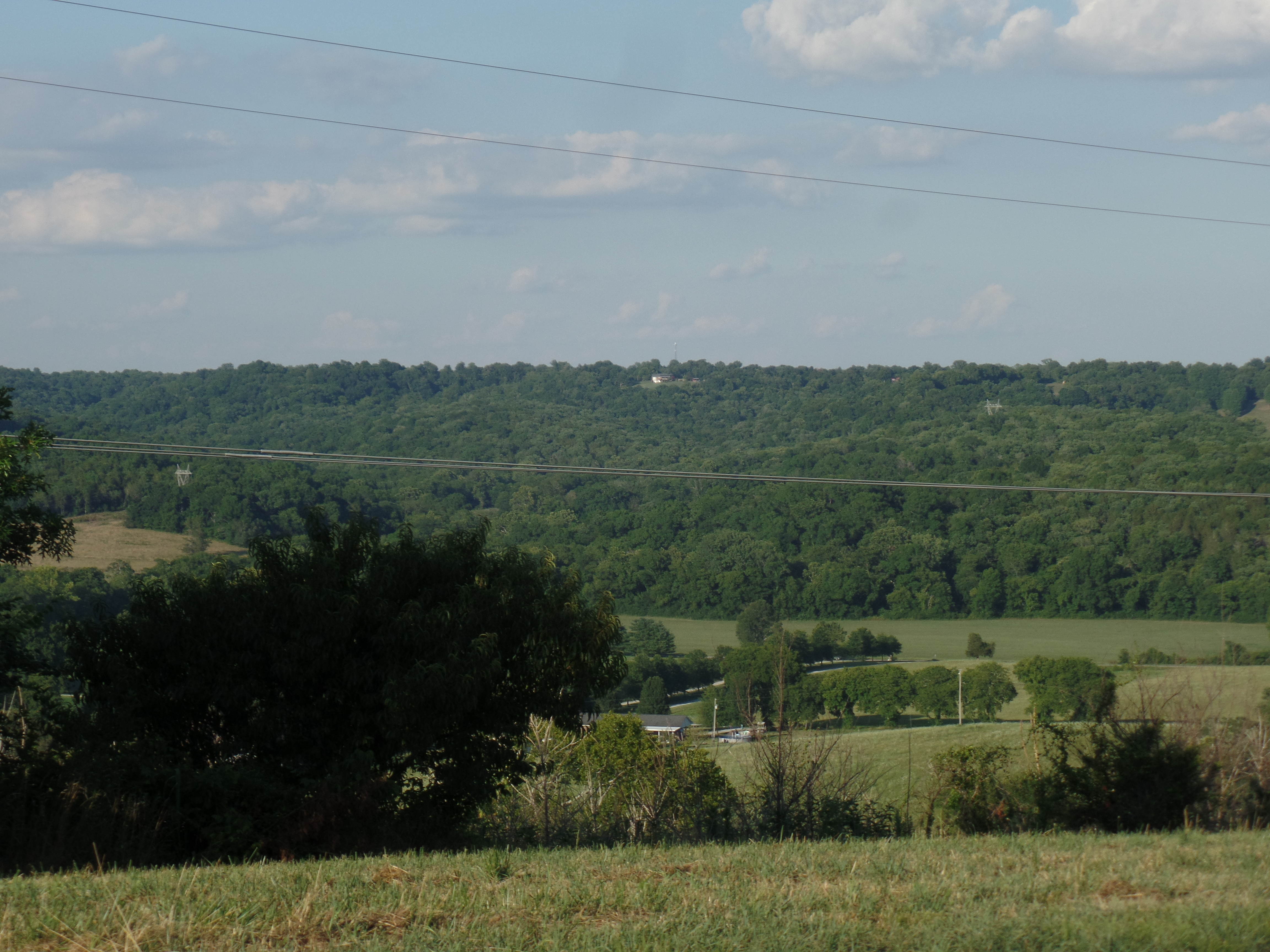
I had left my friends’ house, in a bucolic section of Crossville, a little after 10 a.m., stopping for a few photographs along the route I had taken to yesterday’s Food Truck event. The most breathtaking was this view of Sparta, TN, from an overlook.

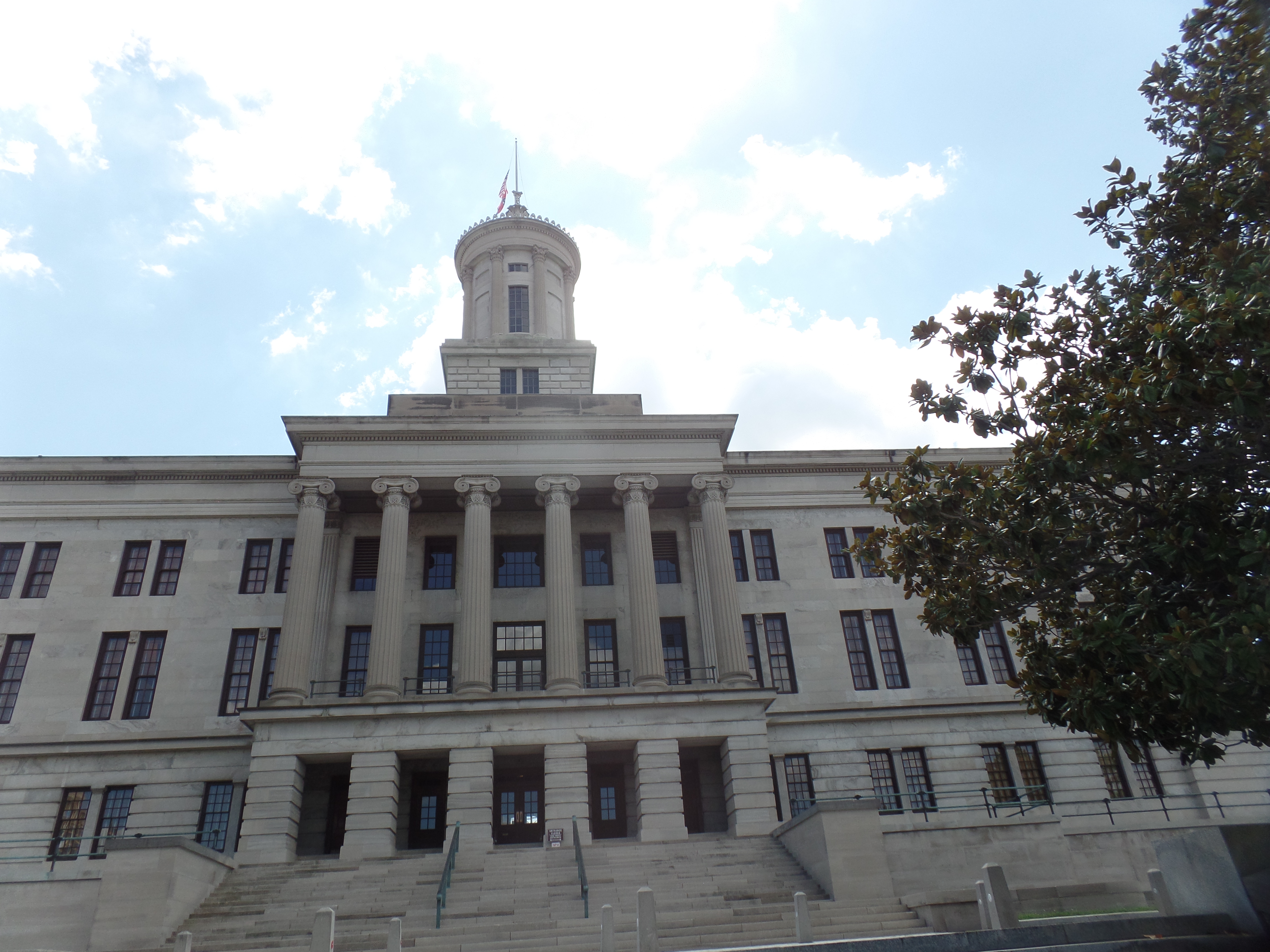
I was given an inkling to spend a bit of time in Nashville, a city that I have tended to overlook, in many of the journeys across our home continent. So, a brief visit was first made to the Tennessee State Capitol.
I headed out of downtown, along a route that took me to The Parthenon, a recreation of the original building by that name, in Athens, Greece. Tennesseans treasure the Classical Age, and this museum is the centerpiece of Centennial Park, a vast and salubrious gathering place for all of Nashville. This lush urban park was dedicated in 1897, one year after the centenary of Tennessee’s statehood. Parthenon has two floors: The first hosts special collections of art; the present exhibit being selections from the private collection of James M. Cowan, a Tennessee native and businessman base din the Chicago area. https://static1.squarespace.com/static/5e305abfabc0e4424fd1454a/t/5f0ceb6694be7a33f9f830bf/1594682228862/15139+Parthenon+Cowan+brochure_PROOF+%281%29.pdf

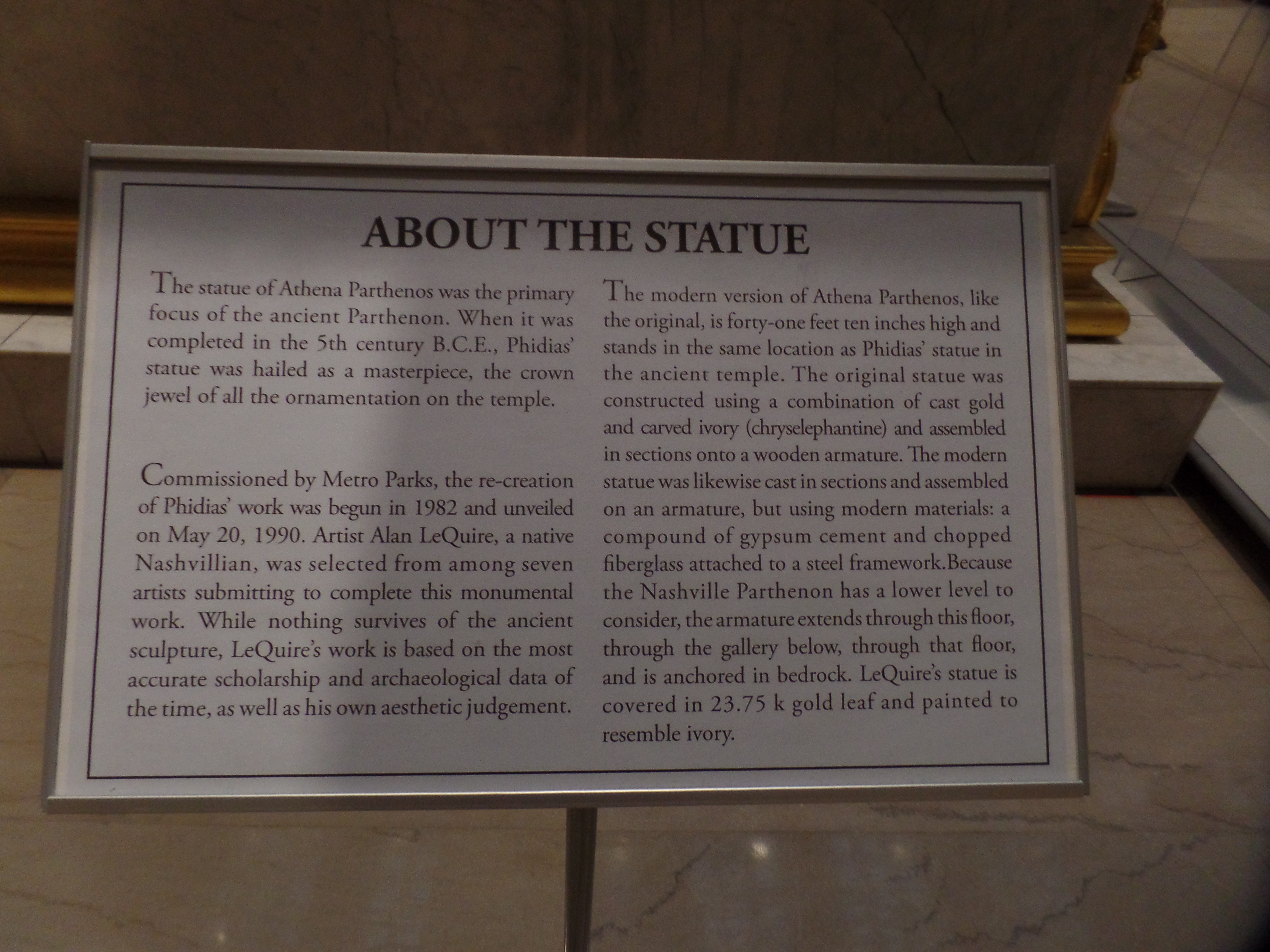
On the second floor, there stands an impressive statue of the Greek goddess Athena. Here are some scenes of the lady, the building and the park itself.

The true circumstances of this woman’s life are lost in the mists of time; yet it is clear that she had a powerful personality, being influential in a variety of areas, from education and craftsmanship to the conduct of warfare. That such personages were dubbed gods and goddesses, by pastoral people, is not surprising.

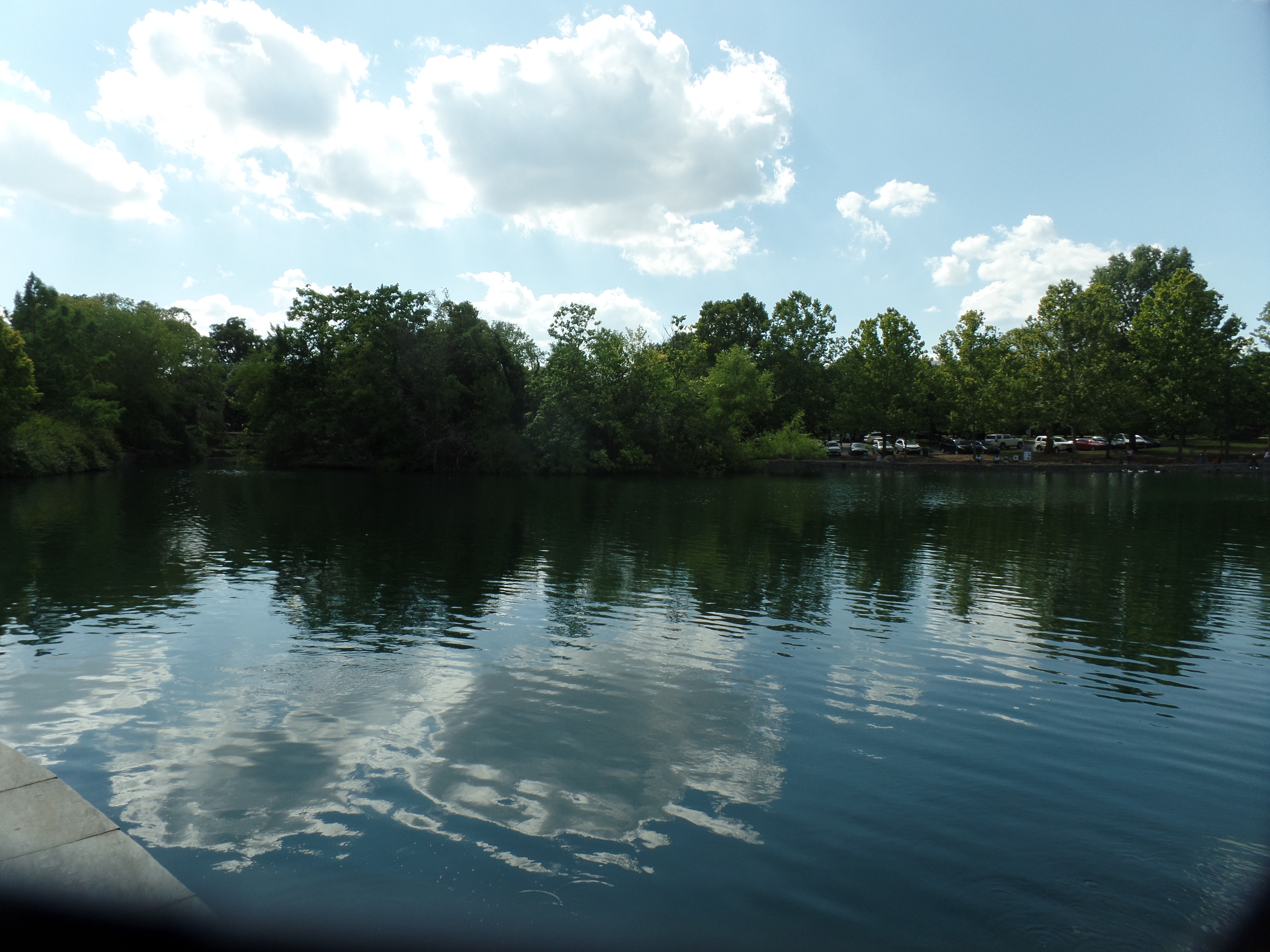
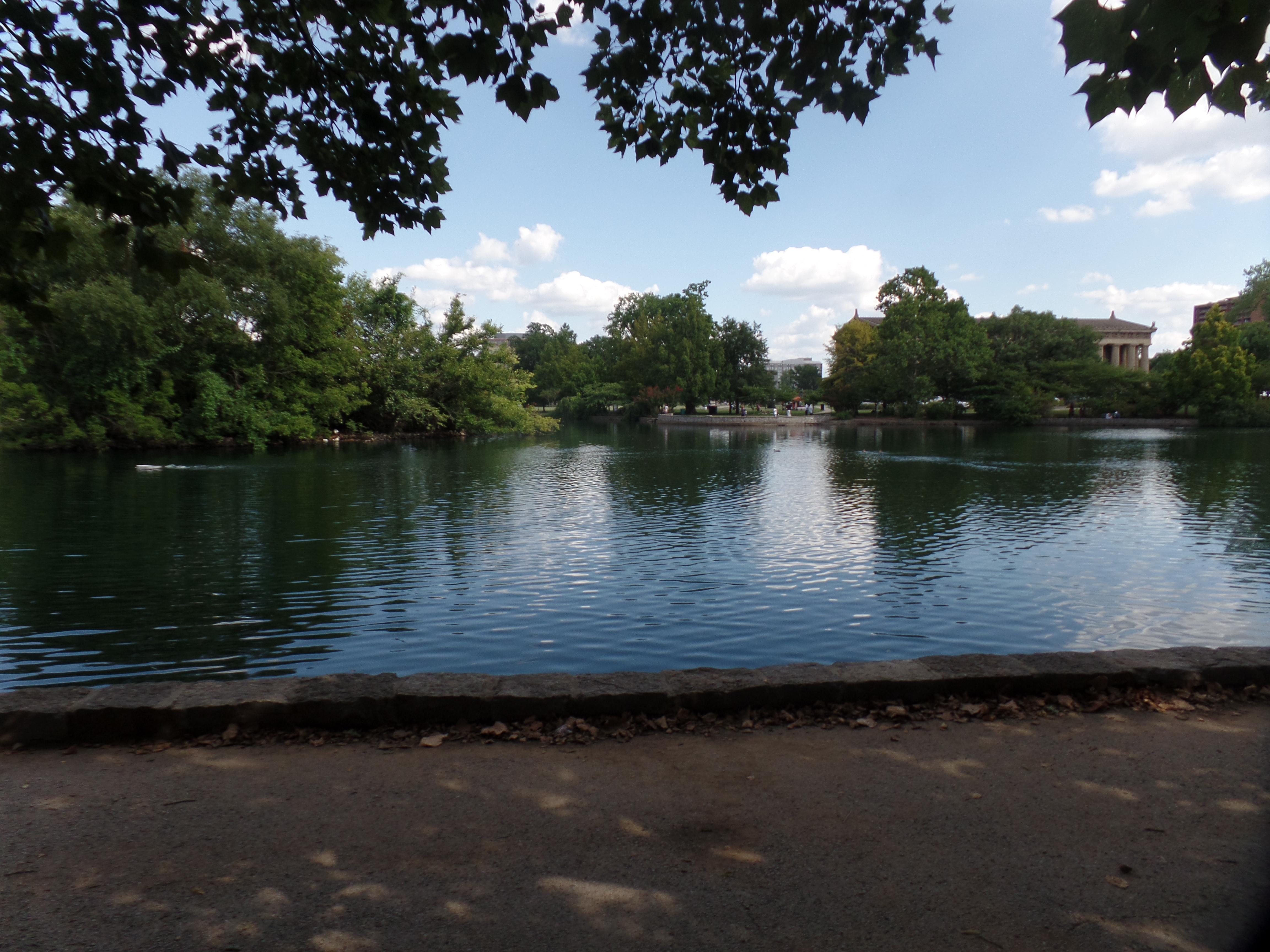
I wandered about the park itself, after spending about a half hour in the museum, which was about to close, anyway. Here’s Lake Watauga, just north of the Parthenon.
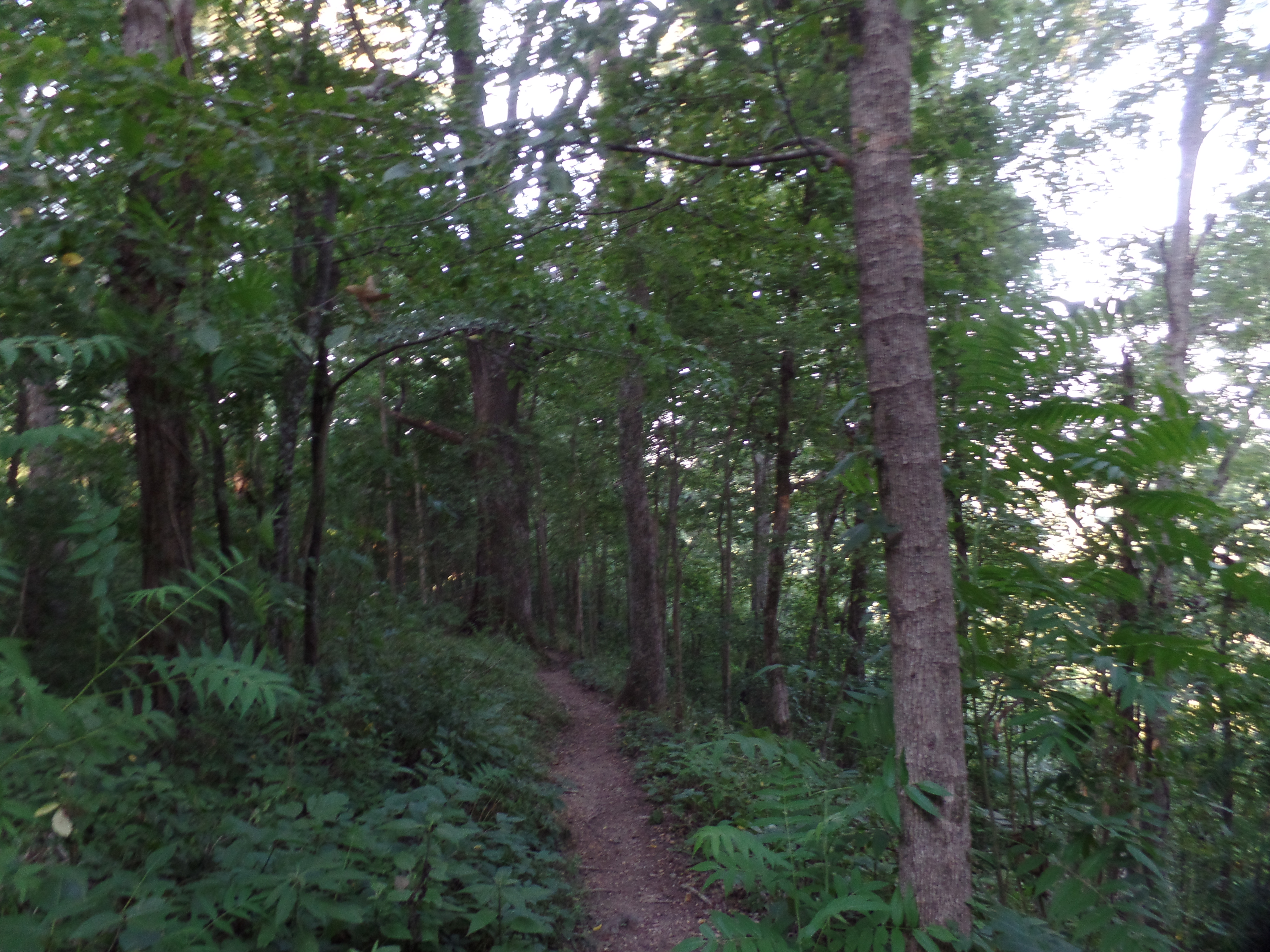
After this long overdue attention to the delights of Nashville, I headed west and took in a sliver of Natchez Trace Parkway, which I encountered while looking for Loveless Cafe, a small restaurant southwest of Nashville. The Trace runs for 440 miles, from Nashville to Natchez, and offers a fine cross-section of Southern wilderness.
The Falls themselves were a trickle, as were other waterfalls in the area. The South could use more rain, as could any number of places. I left the Parkway and spotted a sign for Hohenwald, a town whose name means “High Forest”, in German. It has a sanctuary for elephants and is a haven for people in recovery. It is also home to very devout people, including the family mentioned above. The women and girls were conservatively dressed; the men and boys looked more like they had been working a bit. Nonetheless, they were all very relaxed and could have been any close-knit family, anywhere-an attractive, happy bunch. The very sweet waitress took good care of all of us, and it made for a pleasant end to a solemn (Martyrdom of the Bab) but hopeful day. I came to this northern Alabama town, on the Tennessee River, around 9:30.

I will long remember the strong women, both real and stuff of legend, encountered today. It was interesting that, just before leaving Centennial Park, I encountered two young men who claim to worship God the Mother.
An Invisible Frontier

4

June 30, 2022, Jonesboro, Maine- The breakfast serving room was stifling, at the Comfort Inn, Amherst, NS, and I had some concern for the well-being of the attendant. She was quite vocal about the heat-mainly from the ovens in her immediate food preparation space. I thought it would be a good idea for the management to consider better ventilation. A good worker, to paraphrase the old United Black College Fund ad, is terrible to waste. We patrons at least were to take our food to our rooms. COVID protocols are still in place, in many establishments.

Two very different reactions to my presence in Amherst were to present themselves, as errands were discharged. When I went to the laundromat, the attendant was friendly at first, but once I told her where I was from, the smile faded and I was asked what I was doing in Amherst. At least I was left alone to complete my washing and drying. The people at the car wash were a lot nicer, and gladly exchanged four quarters for a dollar coin, so the wash could proceed.

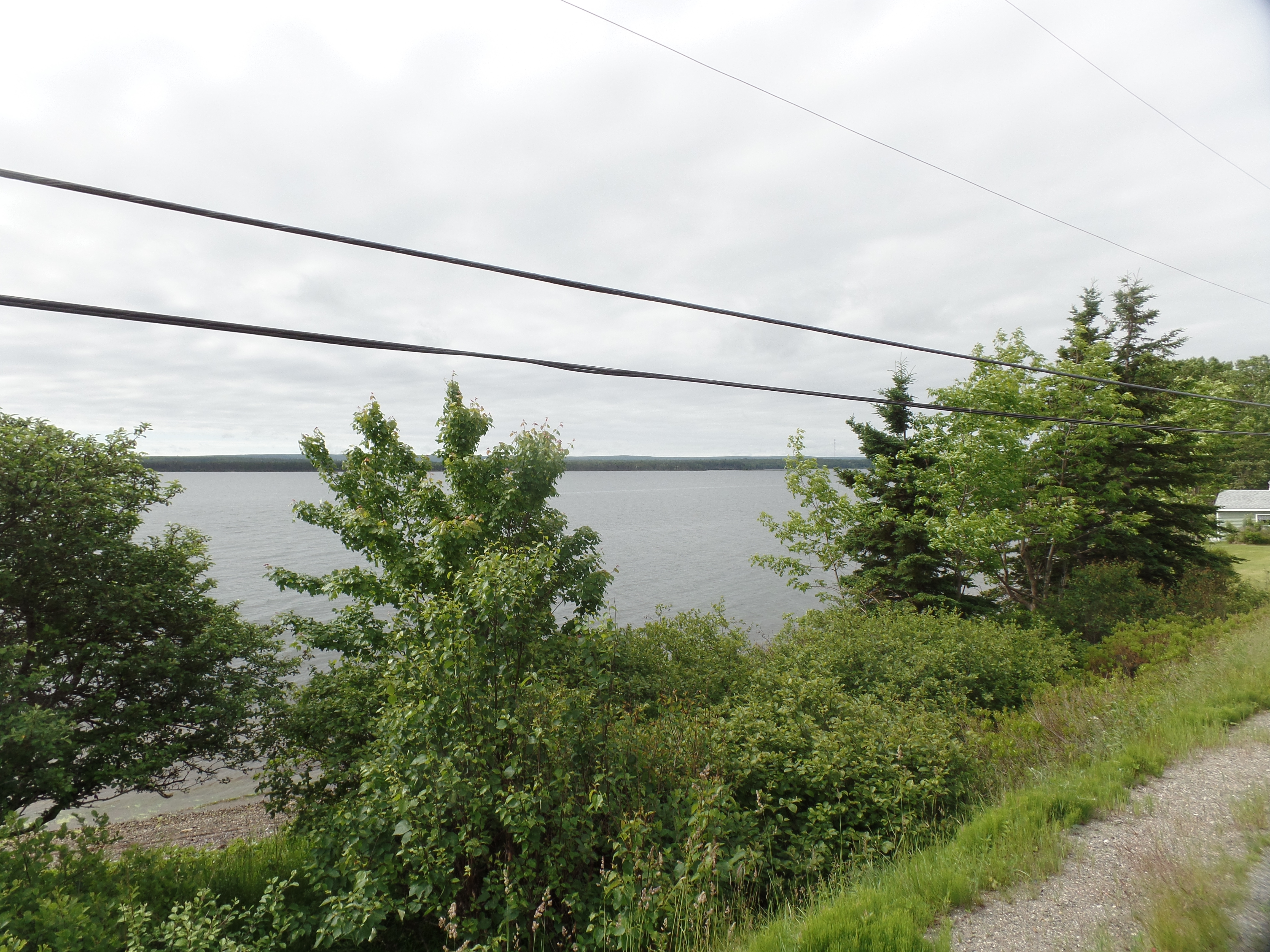
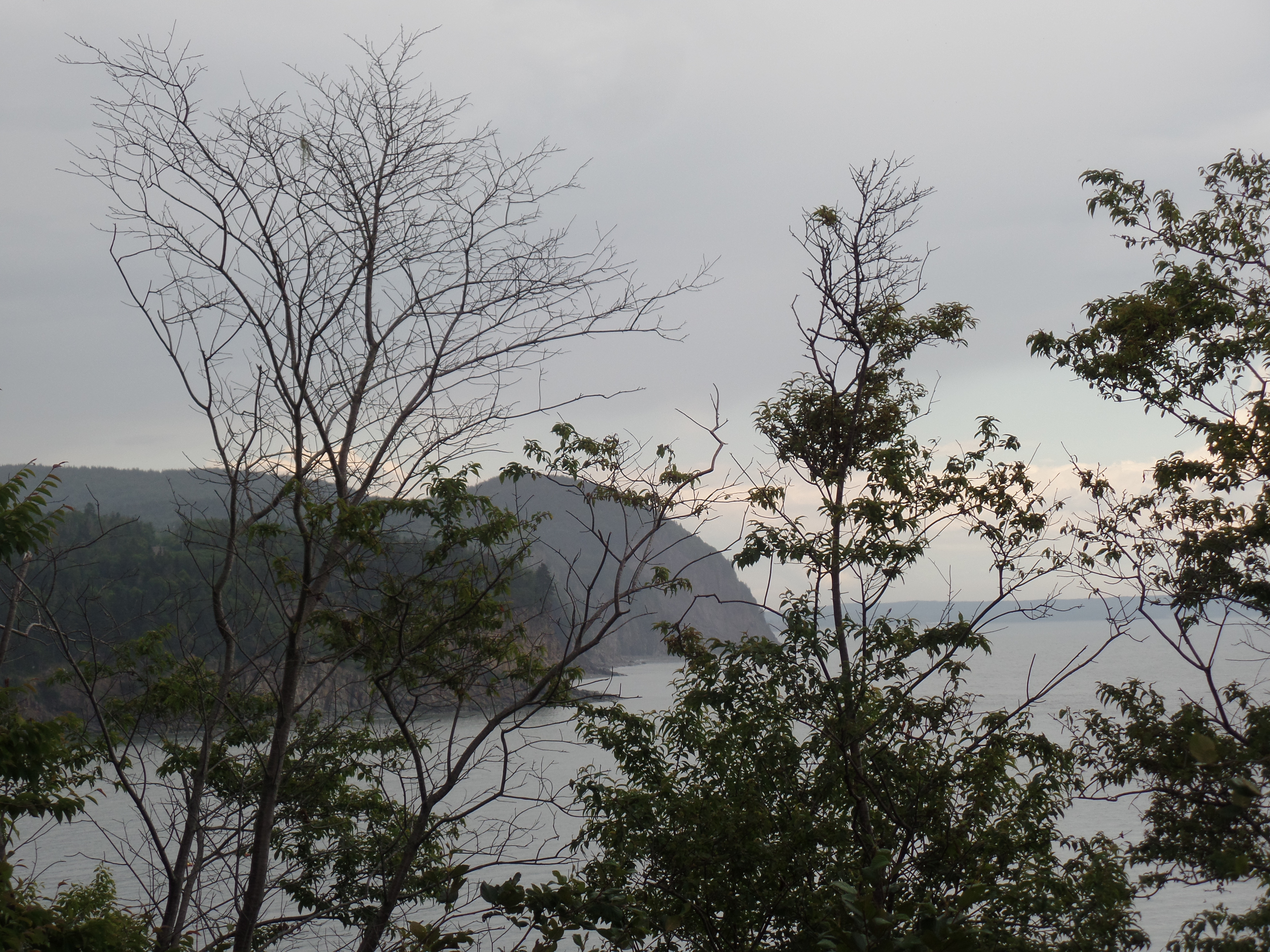
My business in the Chignecto area complete, I drove over to Fundy National Park, in New Brunswick, and caught a few scenes of that home of high tides.

Any thoughts I might have had of further exploring Fundy were brought to a close by the approaching rain. It got quite heavy, at times, as I drove west, on TransCanada Highway 2. In and around Saint John, the province’s largest city, the rain was the heaviest. Being rush hour made things go that much slower-and of course, there was road construction, with lane closures. Nonetheless, the people along the Loyalist Trail (Saint John was a haven for those loyal to the Crown, during the American Revolution.) have the rush hour thing down to a fine art, with taking turns entering the open lane de rigeur.

A relatively short time, maybe forty minutes, later, I was at the border crossing, where the inspector briefly peered into my back seat, glanced at my passport and said “Welcome home”. If only we lived in a world where everyone could have that kind of a border greeting, each time. The invisible frontier, however, attracts its share of grifters and smugglers-so sometimes, the rest of us need to exercise forbearance.

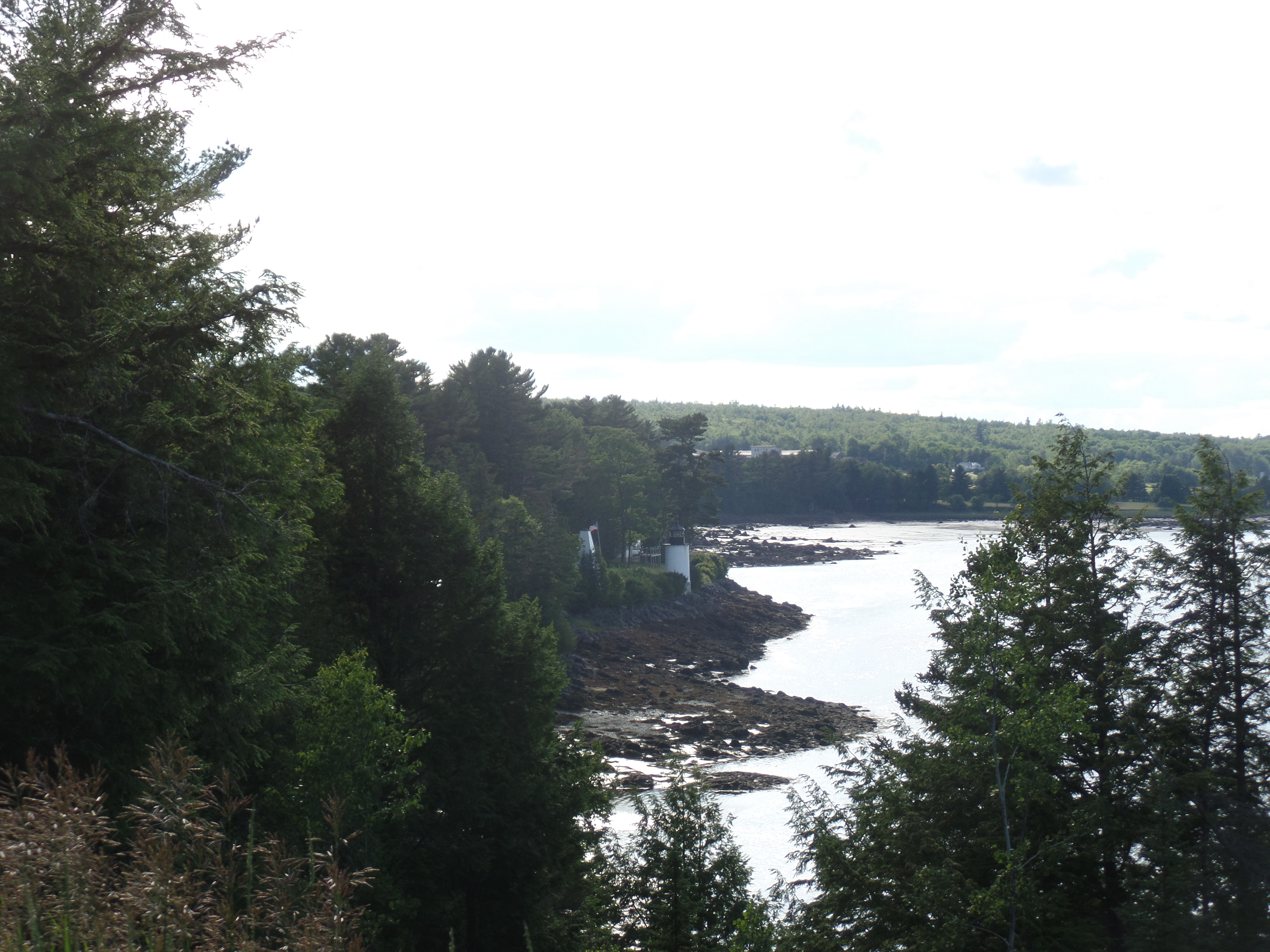
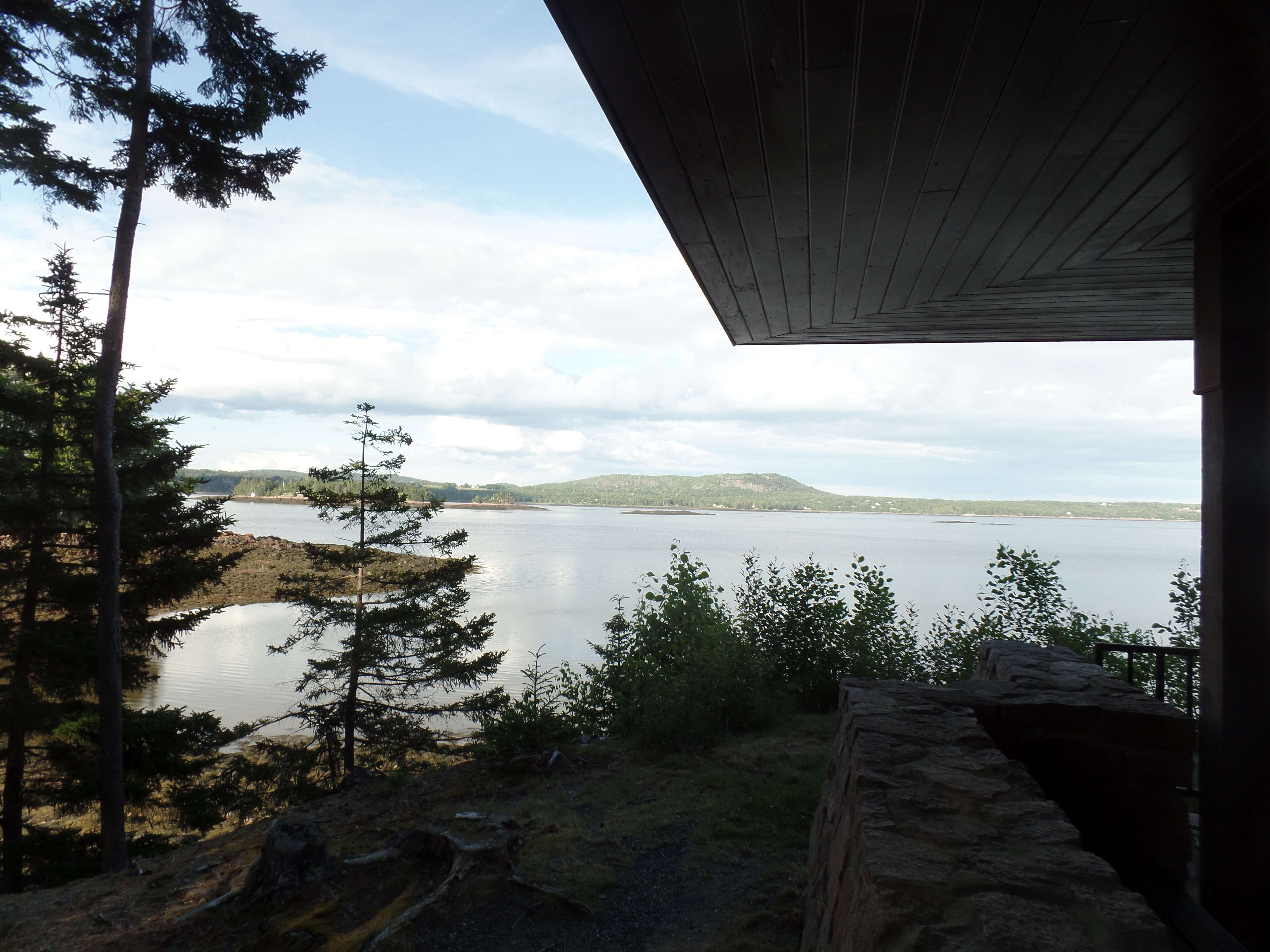
Beyond Calais, Maine, I took note of these scenes along the St. Croix River.

A few miles further south, the St. Croix Island International Peace Monument commemorates the first, ill-fated French expedition, led by Pierre Dugua, an explorer, soldier and fur trapper. The group landed on St. Croix Island in the Fall of 1604, with the intention of claiming the area for France. A harsh winter ensued, and despite the assistance of the Passamaquoddy people, who were native to the area, the party lost about half of its members. In the spring of 1605, Dugua and his group departed the area, for another point on the Canadian mainland. Canada and the United States jointly maintain this historical site.

The presence of this monument underscores the value of seeing that “The Earth is but one country and Mankind its citizens”- Baha’u’llah.

I continued on to the small town of Perry. There, a restaurant called New Friendly featured a cheerful, talkative waitress, who seemed to connect with everyone, a shy teenaged girl, who was looking around for something productive she might do and a visibly flustered, rather crochety woman, who seemed to be the owner. I was served by the waitress, and enjoyed a nice meal of fried clams-with full bellies, which I love, being a son of New England. I was the last one in the door, and so was about the last one to pay. The owner took my payment, seemingly glad to see me leave.

The end of the line, for tonight, is Blueberry Patch Motel and Cabins. I am in a tiny cabin, recommended to me by the night clerk, who said I had just made it through the door, before she turned out the Welcome sign. Yes, I got the last cabin-with one motel room going unclaimed. Rural Mainers do things a bit differently, and the invisible frontier, between being hard at work and being tired enough to stop for the night, takes on a different hue up here.

From One Bit of Heaven to the Next

2

June 28, 2022, North Sydney, NS-

The return ferry out of Channel-Port aux Basques was a much more elaborate arrangement than that which I took from North Sydney, five days ago. It is all part of the run-up to the Canada Day weekend, which is also the Independence Day weekend. Our two great nations have long collaborated on celebration of their respective nationhood, so it all makes sense. I lined up my vehicle, with at least 200 others, two hours before loading. A breakfast cafeteria was available, in the Ferry Terminal, so I got coffee and a bagel with cheddar cheese. Sitting back in the Saturn, devotions and random thoughts whiled away the remaining ninety minutes.

Once we were underway, and the above scene passed by, I was pleasantly occupied, by turns, with observing the passing ocean, reading a book I had purchased while at the Baha’i House of Worship, having lunch and napping. Then, Nova Scotia came back into view and before long, I was ensconced in Highland Motel- a spare, but adequate, establishment that is clean and comfortable, at least. I launched into writing about my last day or so in Newfoundland, only to have the laptop quit on me. It turns out that the electrical wall outlet in my room has no power. The desk clerk, already surly from dealing with other guests who were unnecessarily argumentative (IMHO) and rather rude to him, just shrugged his shoulders. I am now getting ready to go to bed ( FYI: This post has been completed, four days later).

Newfoundland and Nova Scotia, and for that matter-New Brunswick, Maine and states clear down to Alabama, are part of the geological uplift known to us as the Appalachians. The same geological features can be found in eastern Quebec, Labrador, Prince Edward Island, southern Greenland, Iceland, the British Isles, Norway and all along the western seaboard of Europe, into Morocco. An International Appalachian Trail exists, in one form or another, in many of these regions. Indeed, an Eastern Continental Recreational Trail is also in place, from Key West to St. John’s. I have whimsically thought, at times, of taking on the challenge of that long walk-but there is, realistically, much more for me to do than to shuck it all and walk for 2-3 years.

Nonetheless, I have found many elements of Heaven on Earth, in so many places visited, these past few decades, both in terms of scenery and of humanity. Newfoundland and Cape Breton make two more. I will be back to both, in 2-3 years, for more focused, selective visits, knowing that my life, far from being more relaxed and sanguine, is just getting busier-though in a happy and rewarding way. I feel good and have more energy now, than even two or three years ago.

Tomorrow, hopefully, will find me visiting some First Nations friends, along the shore of Bras d’Or Lake.

Breakfast of Champions and A Long Ride

4

June 27, 2022, Channel- Port aux Basques, NL- I was warmly welcomed this morning, into the main house of Abbie’s Garden, and directed to sit in a place by myself at a well-set table. The arrangement, of each party being seated separately, apparently is a Newfoundland tradition, derived from the British Isles. Having not been anywhere in that archipelago, other than London, this is new to me. It was very pleasant, though, as the host took egg orders, poured beverages and proudly presented a superbly-plated hot breakfast of eggs, crisp bacon, pancakes and fresh biscuits. Condiments were in serving vessels, not in their store containers. Juice (orange, in my case) was the last item presented. My maternal grandmother would be very pleased.

Prior to breakfast, I went around the garden and over to the chicken coop, where the flock, still inside the predator-proof coop, came to the netting and greeted me. All the little beaks were at the wire netting, clucking or peeping away.

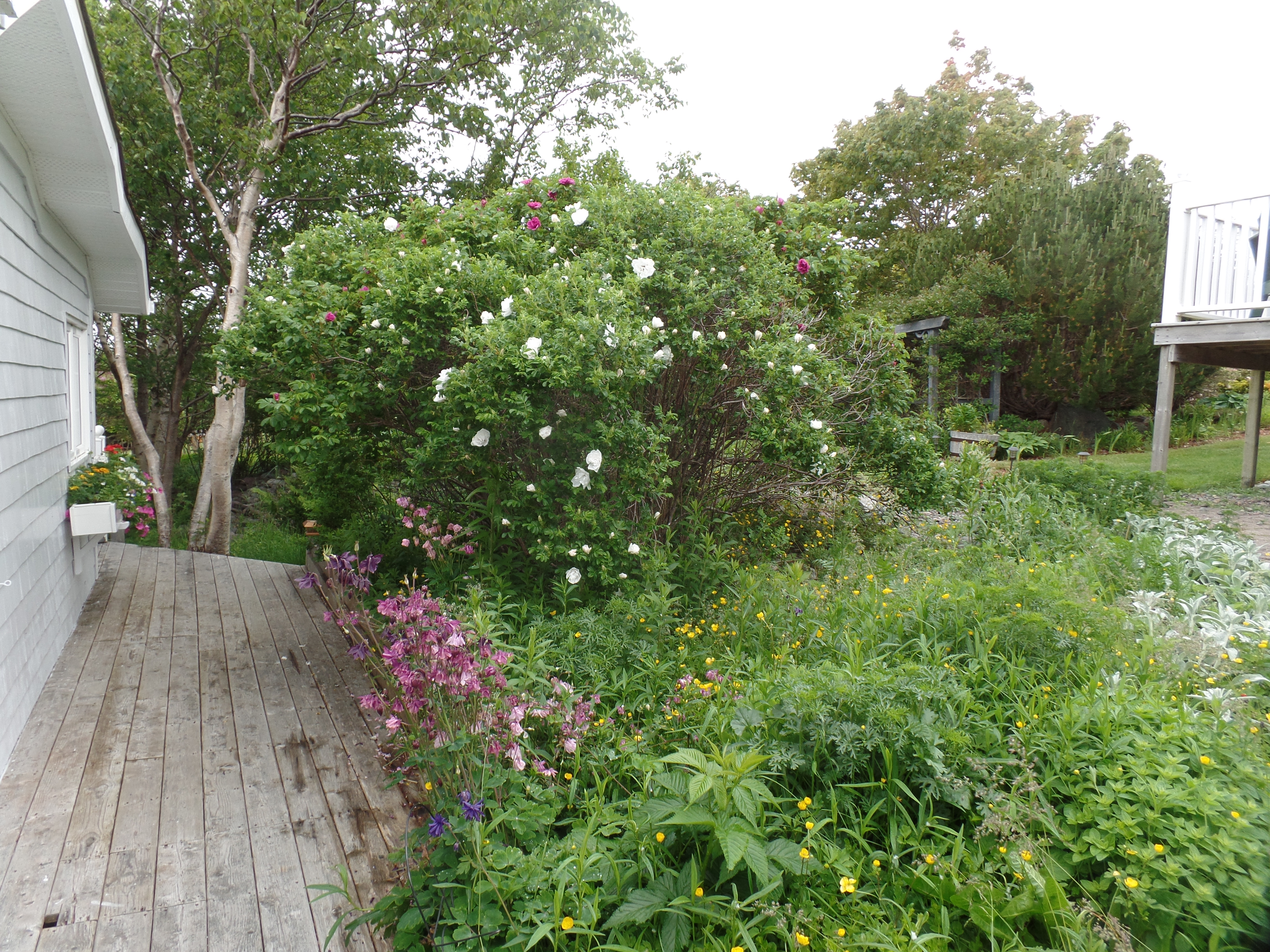
Here are some scenes of Abbie’s Garden. First, here is The Loft, where I spent the night.

Upon bidding a fond farewell to the family at Abbie’s, I resolved to check out some spots along the road in the Burin Peninsula. Here are a few of these.

About an hour after leaving the Burin, I came upon Joey’s Lookout, named after Joseph R. Smallwood, the first Provincial Premier of Newfoundland and Labrador. The place overlooks his home town of Gambo.

As dinner hour approached, I was at a park overlooking the Humber River, just outside Deer Lake. A few other picnickers were at the lone table, so I took a bench and watched a lone fly fisherman, in the river, with his hip waders on.

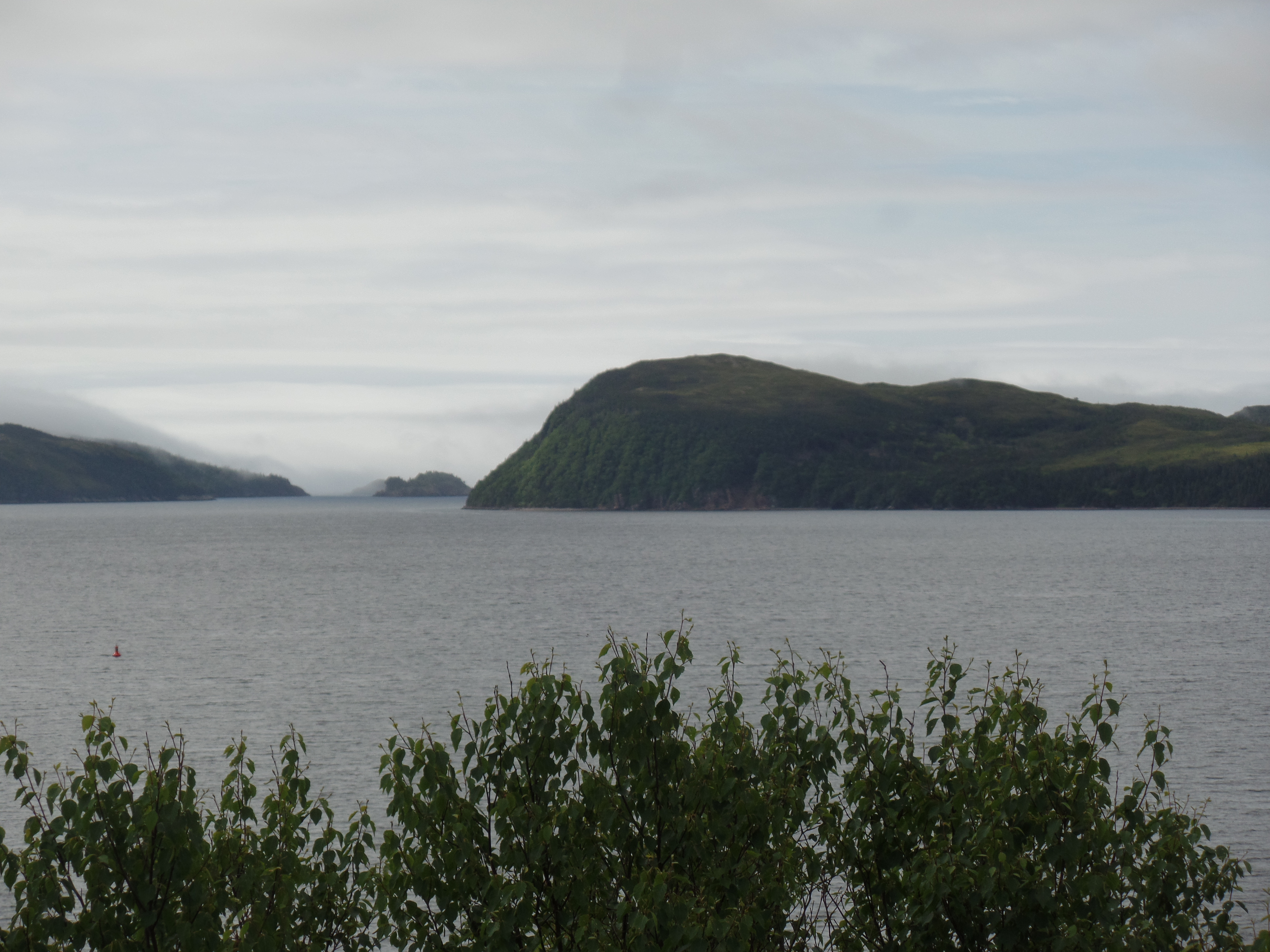
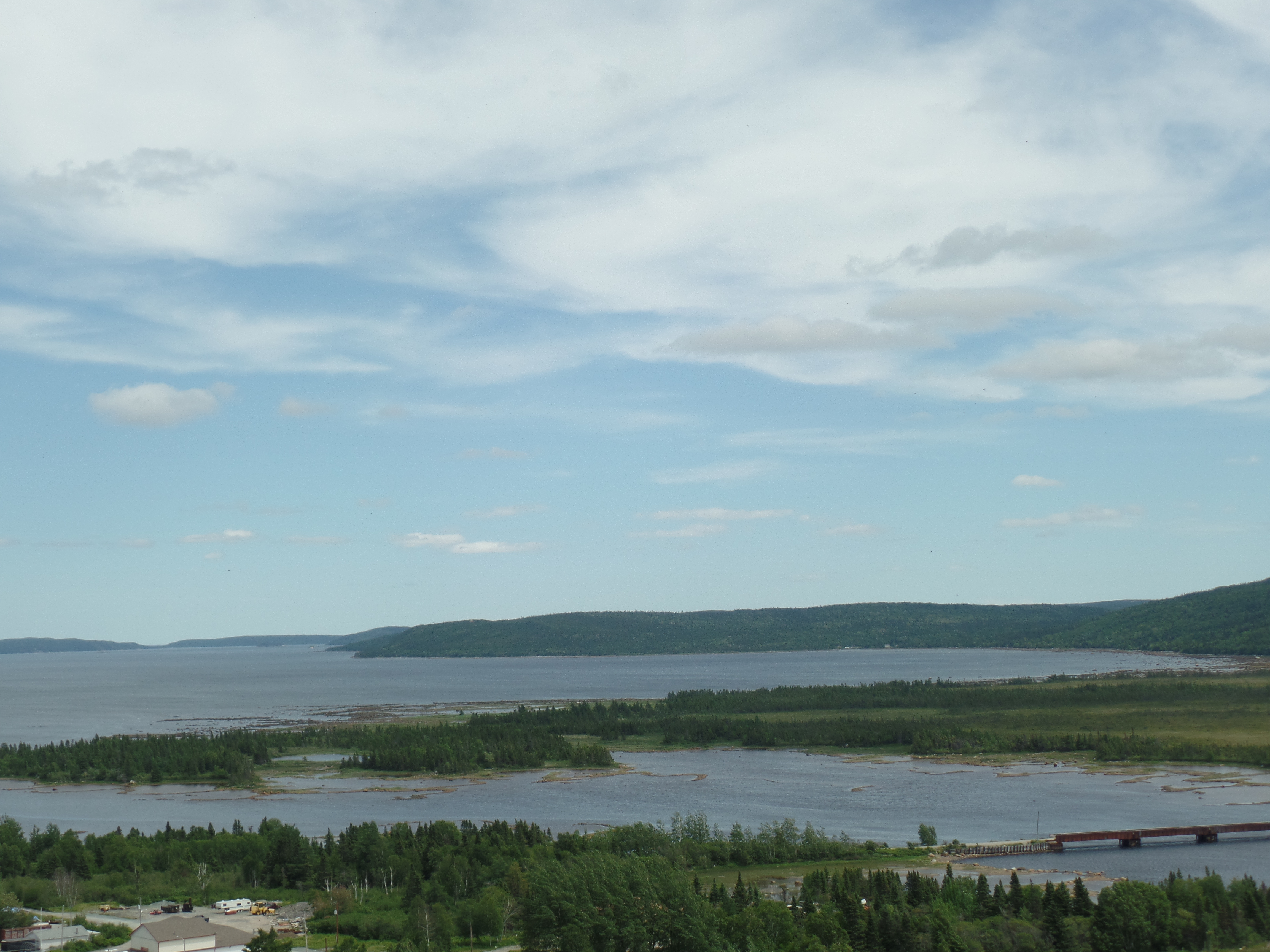
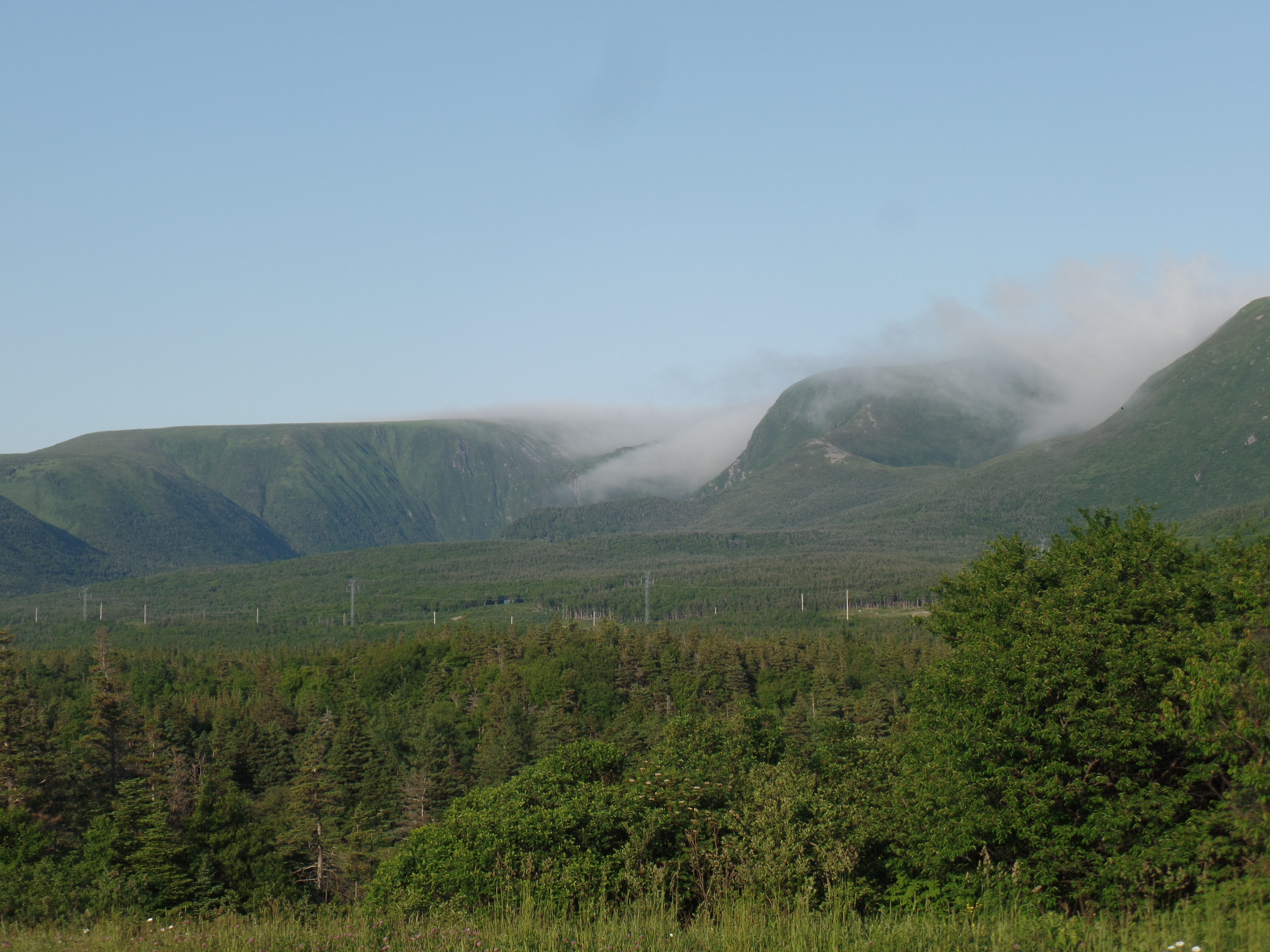
As I got closer to this port city, the grandeur of the Long Range Mountains made itself known again.

Once settled in my room, at Hotel Port aux Basques, the chatter and antics of a group of teens caught my attention. They were likely enjoying the first days of summer, as school just let out in Newfoundland, last Friday. This is part of the park where they were hanging out. No, I did not photograph the group!

The long drive was not so bad. Tomorrow, I bid farewell to this consummately civilized people and their salubrious island.

Abbie’s, and Pippy’s, Gardens

2

June 26, 2022, Grand Bank, NL-

The scenes went from jaw-dropping to heart-warming, as the day was spent traversing a more sublimely lovely part of this island. After a packaged breakfast, indicative of the ongoing seriousness with which the Canadian government still takes the pandemic-with considerable merit, I bid farewell to Memorial University, and went-across the street, to Pippy Park. This large and ecologically rich urban park was established by the Province of Newfoundland and Labrador, in 1966, and named for one of its prime boosters: Chesley A. Pippy, a St. John’s businessman and philanthropist. I focused on the area of the park around Long Pond. Here are some scenes.

Seeing a family go to this area and examine the plants, with the children playing some of these instruments, I naturally went there, after they had left and was delighted to see what is being done, in the name of autism research. The autistic children with whom I have worked love tending gardens and are comforted by soft vibrational sounds, as am I.

Returning to the parking lot, via the South Shore of Long Pond Loop, I picked up a snack of potato wedges, from an Irish gentleman, who proudly told me of his progress in curbing his smoking habit. Congratulating him and commiserating, just a bit. with his plaint that the day was too hot (I told him I was from Arizona, which gave him pause in bemoaning the 70-degree heat), I said his taters were mighty tasty.

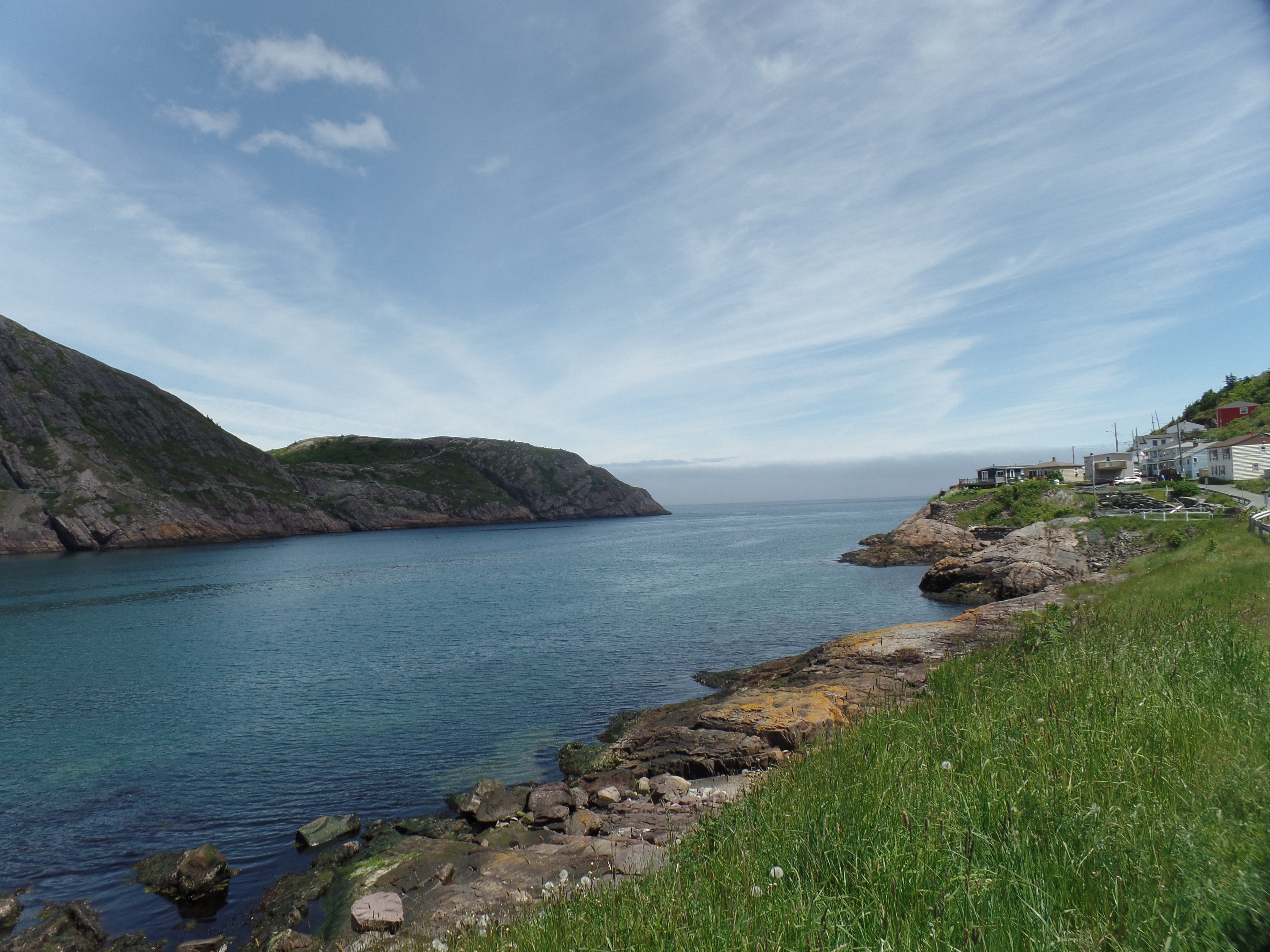
I next made a brief drive over to the Fort Amherst area, near the south bank of St. John’s Harbour. From here, are views of Cabot Tower, on Signal Hill and of the confluence of the Harbour with the Atlantic Ocean.

Of course, more time is warranted in St. John’s. I sense there will be an Avalon and Burin-centric visit back to the island, in two or three years, along with everything else. For today, though, it was time to head over to the Burin Peninsula, three hours away and settle in for the night at Abbie’s Garden Bed and Breakfast.

I arrived here around 5:45, was warmly greeted by Abbie’s widower, his second wife and his daughter, who is the proprietress of her mother’s Garden. My room, in a lovely house called The Loft, has all the comforts of home, including a thick Newfoundland comforter. The gardens, which I will photograph tomorrow morning, are indeed Abbie’s legacy. The houses and the trails are the work of her husband, Bruce. Their daughter has maintained and built on this legacy.

I enjoyed a fine meal in town, at Copper Kettle. A finer lobster and bacon wrap has never been had by man. This, after being followed by a utility worker, who the waitress at Copper Kettle says is a self-appointed pair of eyes for the Royal Newfoundland Constabulary, until I pulled into the restaurant’s parking lot. I guess they don’t see too many vehicles with Arizona plates around here. For my part, I saw a vehicle with St. Pierre and Miquelon plates, which makes sense, as the French territory is a short set of nautical miles off the Burin. Marystown, the Burin’s commercial hub, is “town” for the St. Pierrois, and their “mainland” neighbours.

After a lovely time relaxing around Bruce’s firepit, and enjoying some of his homemade rhubarb pie, it is time to go up and crawl under that comforter. Thanks, Abbie, for all you did.

The Towering Guardians

2

June 25, 2022, St. John’s- Some days, like today, present themselves with two themes. At L’Anse aux Meadows, to which I was directed to go, way back nine years ago-and again in January of this year, the focus was on connecting with the spirits of the past-both First Nations and Scandinavian. As I headed towards this oldest European city in North America, predating St. Augustine, FL by four decades, my focus was knowingly on its modern aspects-especially Memorial University of Newfoundland and Labrador, where I am spending the night.

In between the northwestern and southeastern areas of this vast island, there is much of both natural and human accomplishment. The most striking example of the former are Newfoundland’s two National Parks: Gros Morne and Terra Nova. The first was easy to stop and appreciate. There are several areas visible from the TransCanada Highway. Terra Nova, on the other hand, has no safe turn-offs from which to photograph, along the highway. It was also very foggy and rainy as I passed the lovely park. I’m getting ahead of the story though.

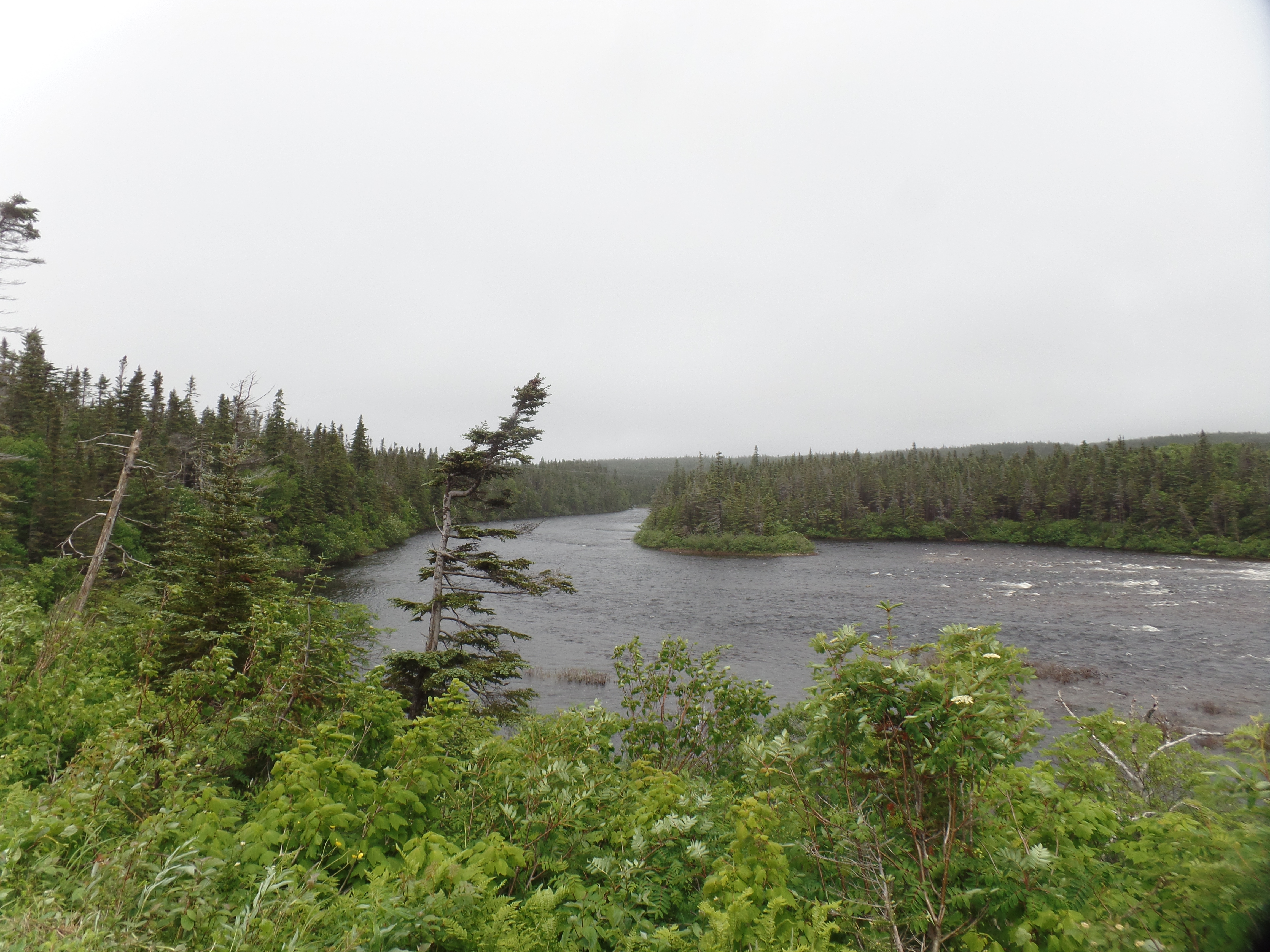
Here are a few scenes from Gros Morne and two other places along the Viking Trail, between L’Anse aux Meadows and Deer Lake. First is River of Ponds, a mecca for fly fishermen.

Next, came the ocean, at Parsons Pond.

The beauty of the north is indeed rather stark, with lots of rainy days, foggy nights and as someone commented, low light-even in summer. I am fortunate to have been raised far enough north that these things are not so much a factor in my appreciation of this sort of beauty. Then again, I also enjoy lower latitudes.

What I did not enjoy so much was the rain, fog and wind while driving between Gander and St. John’s. I saved time and money by getting a handheld sandwich from a convenience store in Springdale, a bit west of Gander. That was a good thing, because the inclement weather started right around the aviation center. Some may remember that Gander was important to connecting with the rest of the world, during 9/11/2001. It is still a bustling-and growing community.

St. John’s has welcomed me, even at this late hour (midnight), and I am settling in to a university dorm room, single occupancy. Thank you, Memorial University, for this Summer Accommodations Program.

Vikings, Beothuk, Bogs and Fog

6

June 25, 2022, St. John’s-

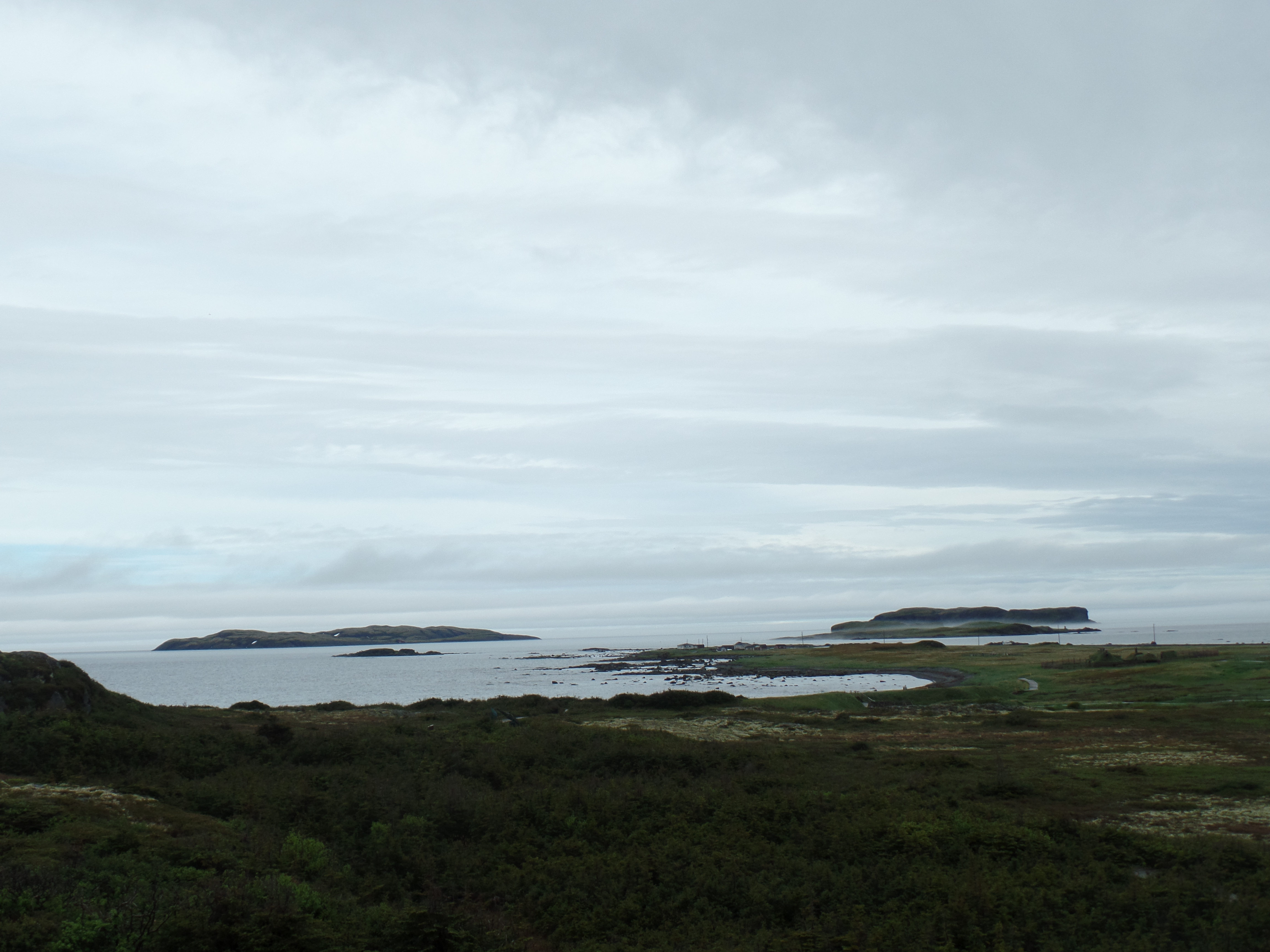
L’Anse aux Meadows Along the northern tip of Newfoundland, there once lived at least three nations of people, who were lumped together by the Viking fishermen, upon their landing at Quirpon Island and the nearby mainland, and called Skraeling, after the term they used to describe the Inuit of Greenland. The term variously means “wearer of animal pelts”, “wearer of dried skins”, “barbarians” or even “weaklings”.

At first, the Vikings stayed on Quirpon and at the sight now known as L’Anse aux Meadows ,a corruption of the French L’Anse aux Medee, which means “Medea’s Cove”, after a ship Medea, of the French commercial fishing fleet that docked in what is now Gumper’s Bay, in the 16th and 17th Centuries. The Vikings first settled here in 990 A.D. and went back to Greenland in 1050. so their artifacts being here at all are an extra treasure. Whether they also went south to Cape Cod is still up for debate.

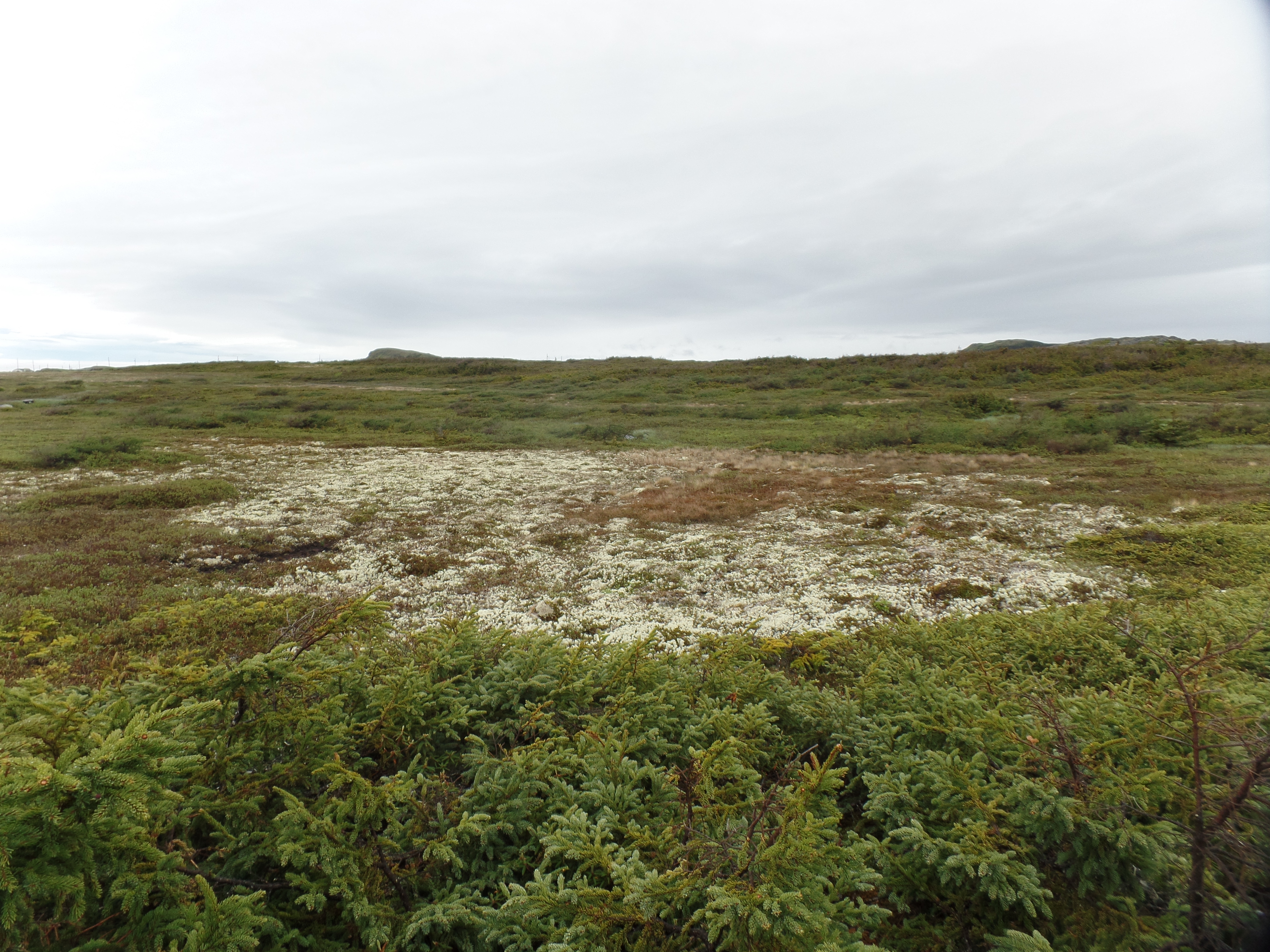
The above scene shows the boggy area that greeted the Vikings. They had to choose their steps very carefully. Visitors today have nice boardwalks on which to tread.

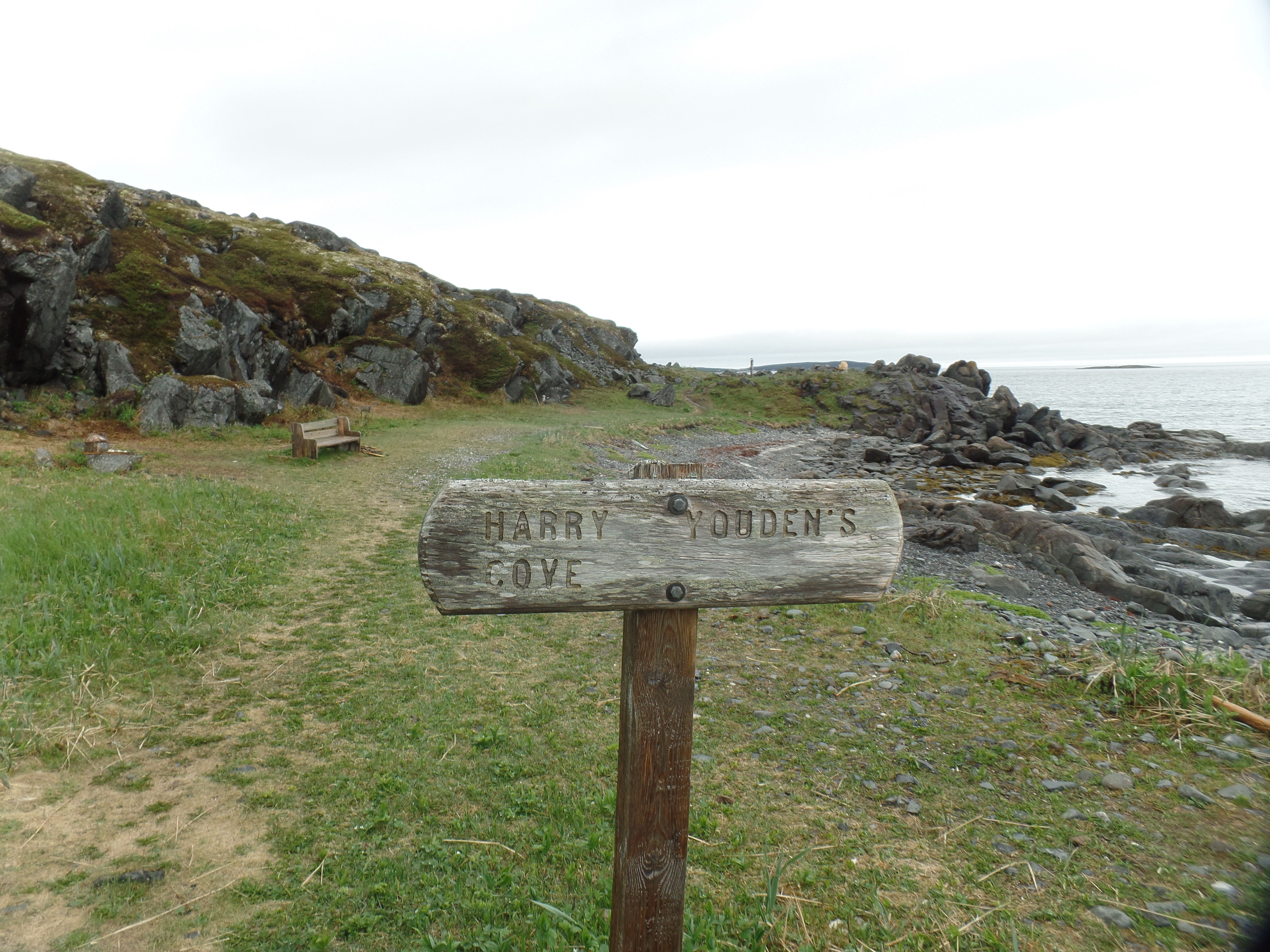
My first walk was on Harry Youden’s Trail. He was a fervent supporter of unearthing Viking relics in this area, which was one of his favourite places to walk and meditate.

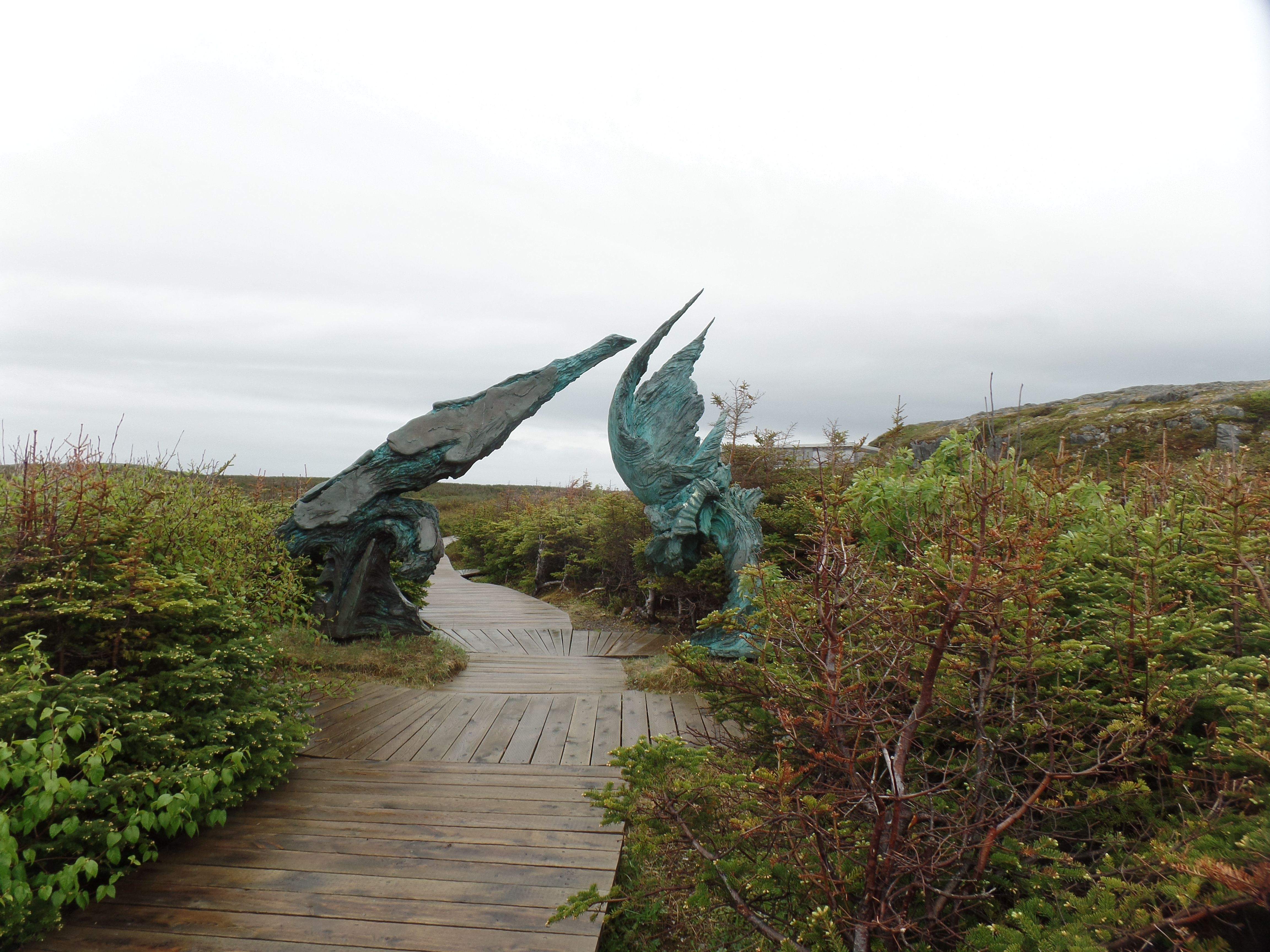
The above sculpture was commissioned by UNESCO, when L’Anse aux Meadows was designated a World Heritage Site.

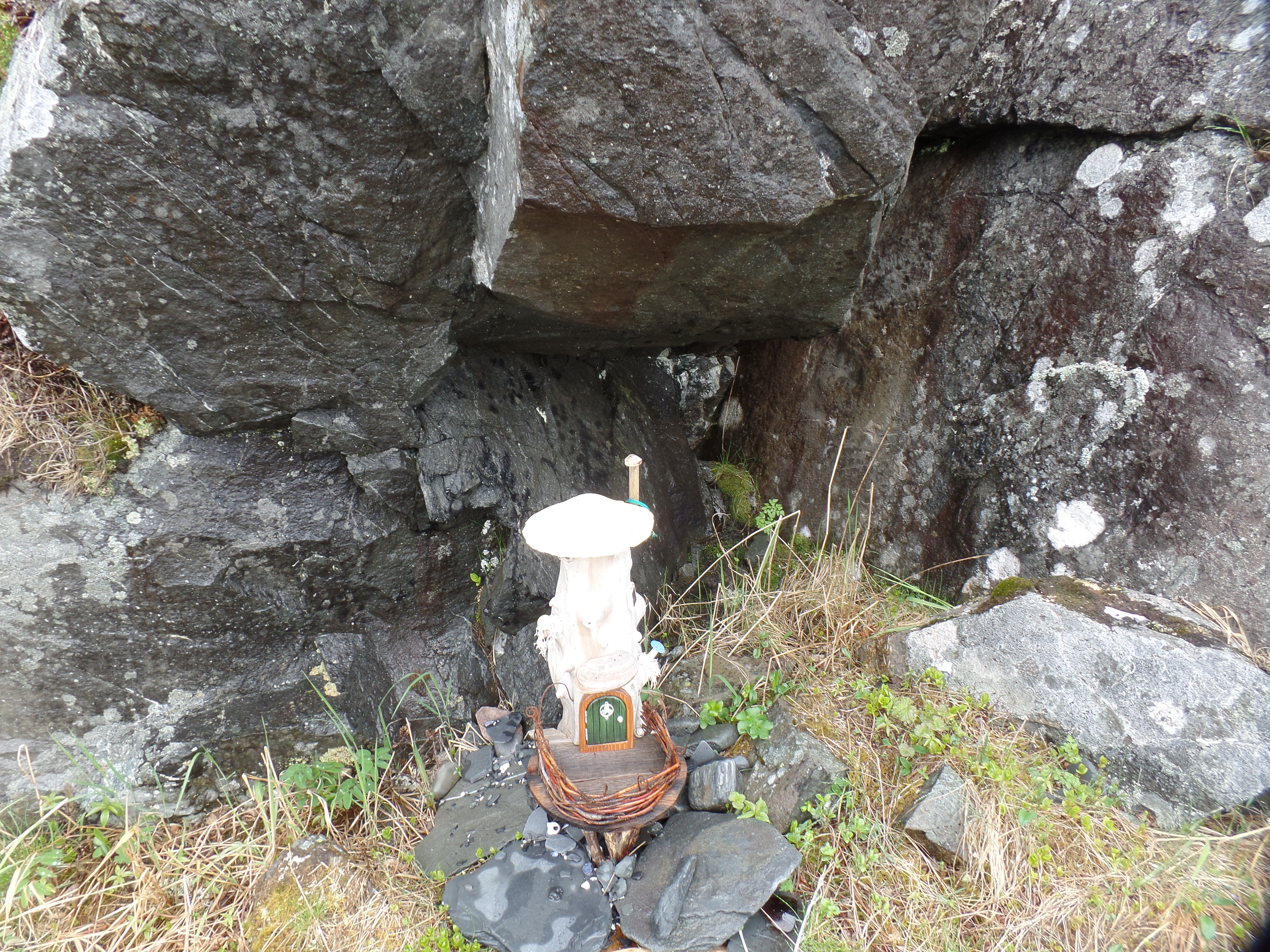
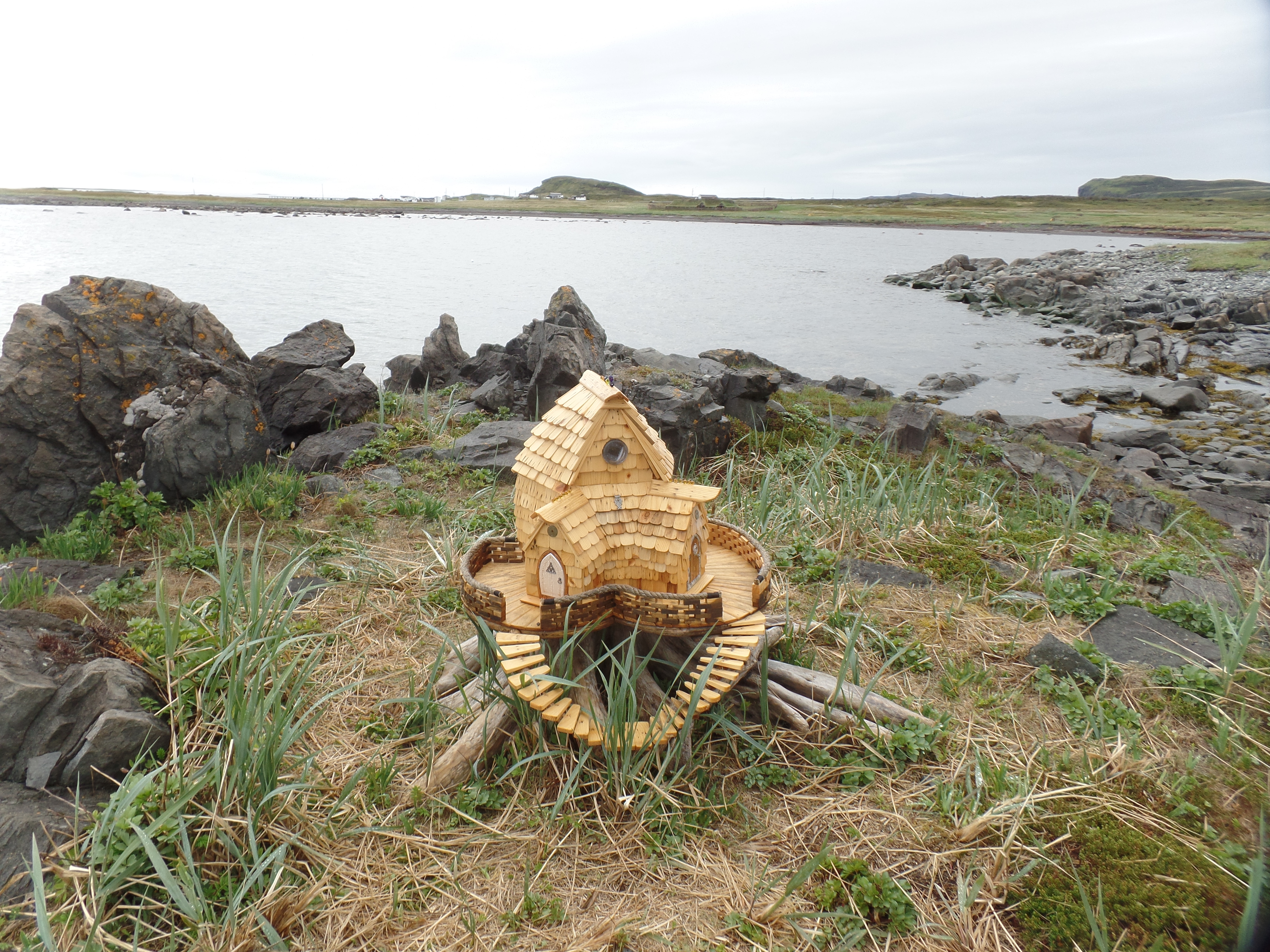
Below, one of several mementos left by Harry, creating both a personal and “Fae” ambiance.

Note the ventilation ducts. The Norse used them, and here’s why:

One of the few women in the settlement group was a sailor’s wife, who was also a sale maker. As she was not sewing sails all the time, she busied herself with creative projects, like this above.

I spoke for several minutes with the docent who portrayed this busy woman, as well as with the woodworking and cook docents. All of them emphasized the constant work that needed doing, twelve hours a day, seven days a week, in this novel environment. All of the settlers longed, constantly, for “home”-Greenland.

NEXT POST: The road to Deer Lake (with Gros Morne National Park along the way)

The Long Range and Its Bounty

4

June 24, 2022, St. Lunaire-Griquet, NL- After privately observing Baha’i Feast last night, in what may have been the first time that’s happened in Doyles, I noted a more gregarious Mr. Devine offering me his thanks for the visit and a suggestion of going over to Cape Anguille, the westernmost part of Newfoundland. This, I did, even waiting for later to have a brunch of sorts.

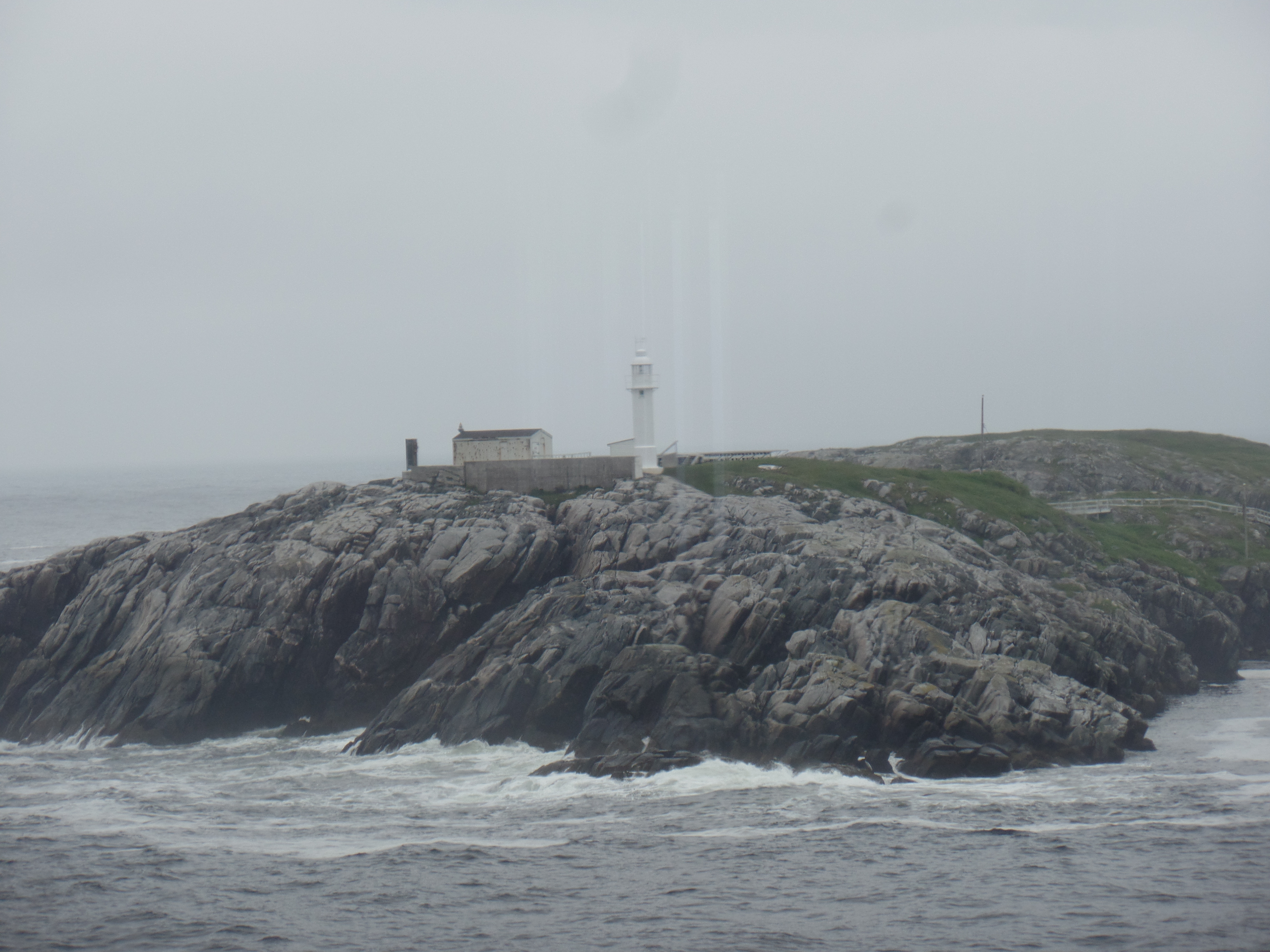
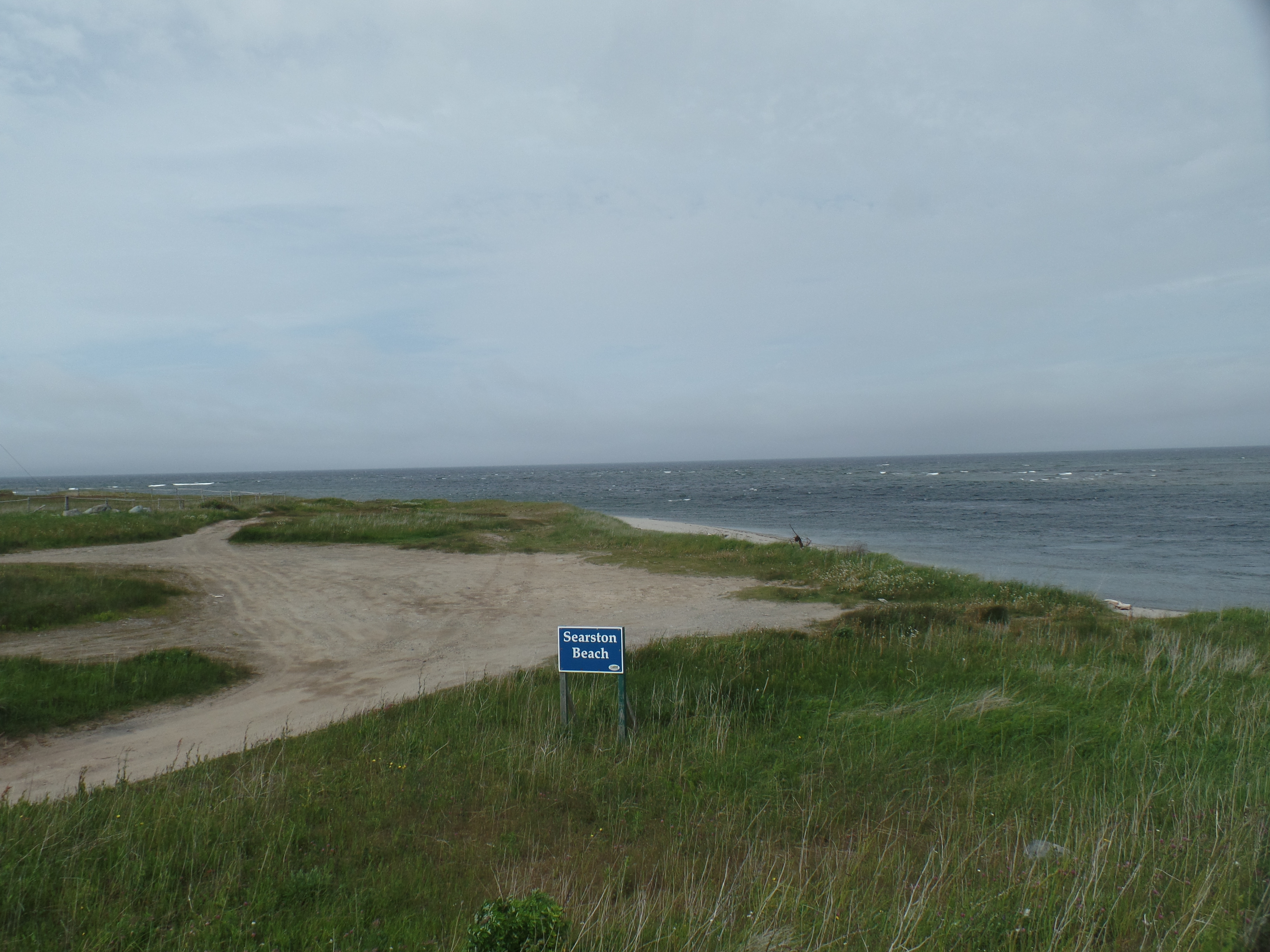
There are two points of interest, in particular, at the juncture of the Grand Codroy with the Atlantic. Cape Anguille (pronounced An-GWILL) Lighthouse is an active station, and thus off-limits to entry by visitors. It may be freely photographed from the exterior, though.

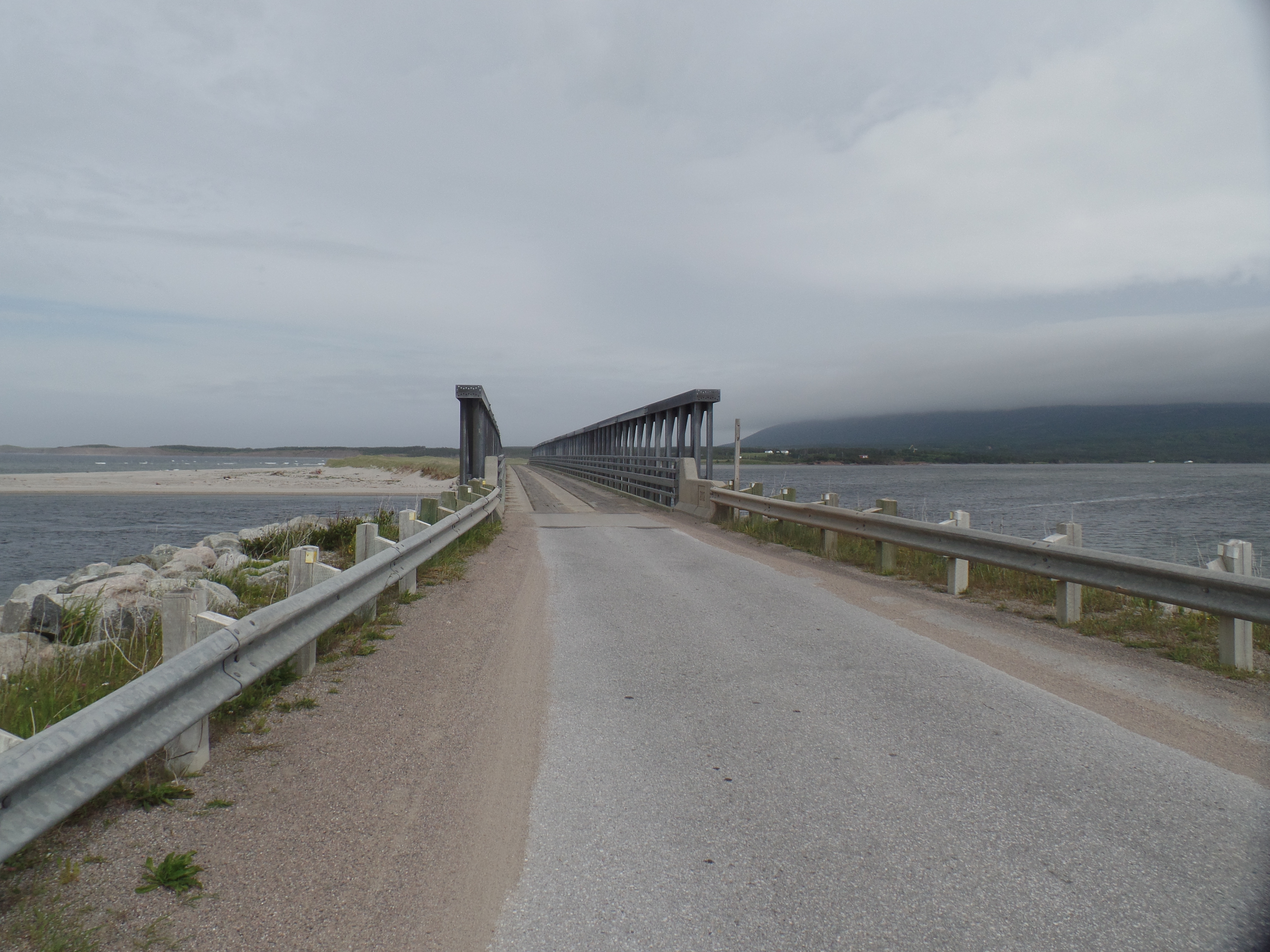
I followed Mr. Devine’s recommended route, going around clockwise, to Searston Beach, where the Grand Codroy actually meets the Atlantic. It has a one-lane bridge, with a wooden base and steel siding/underpinning.

Once back on the Trans-Canada Highway, I noted that the quality of the road varied, as it does in many places where the climate can be harsh. Newfoundland, like much of the Northeast, is said to have two seasons, “July and Winter”. This day, however, the area of the Long Range Mountains is quite pleasant, and the rest of the island promises to be so, for the next few days.

Reaching western Newfoundland’s commercial hub of Corner Brook, I found a bustling, surprisingly frenetic traffic scene-and had to be as “on guard” as in any good-sized community, these days. I stopped for lunch at a Jungle Jim’s, which is Newfoundland’s chain of gourmet burger places. There, I learned of the U.S. Supreme Court’s decision on Roe vs. Wade, about which I will keep my own counsel-though the issue of how to approach pregnancy, and any complications therefrom, should be strictly a matter between a woman, her mate (if one is involved) and a competent medical professional. The meal itself was of modest portion and quite good, as one would expect of a successful sit-down chain.

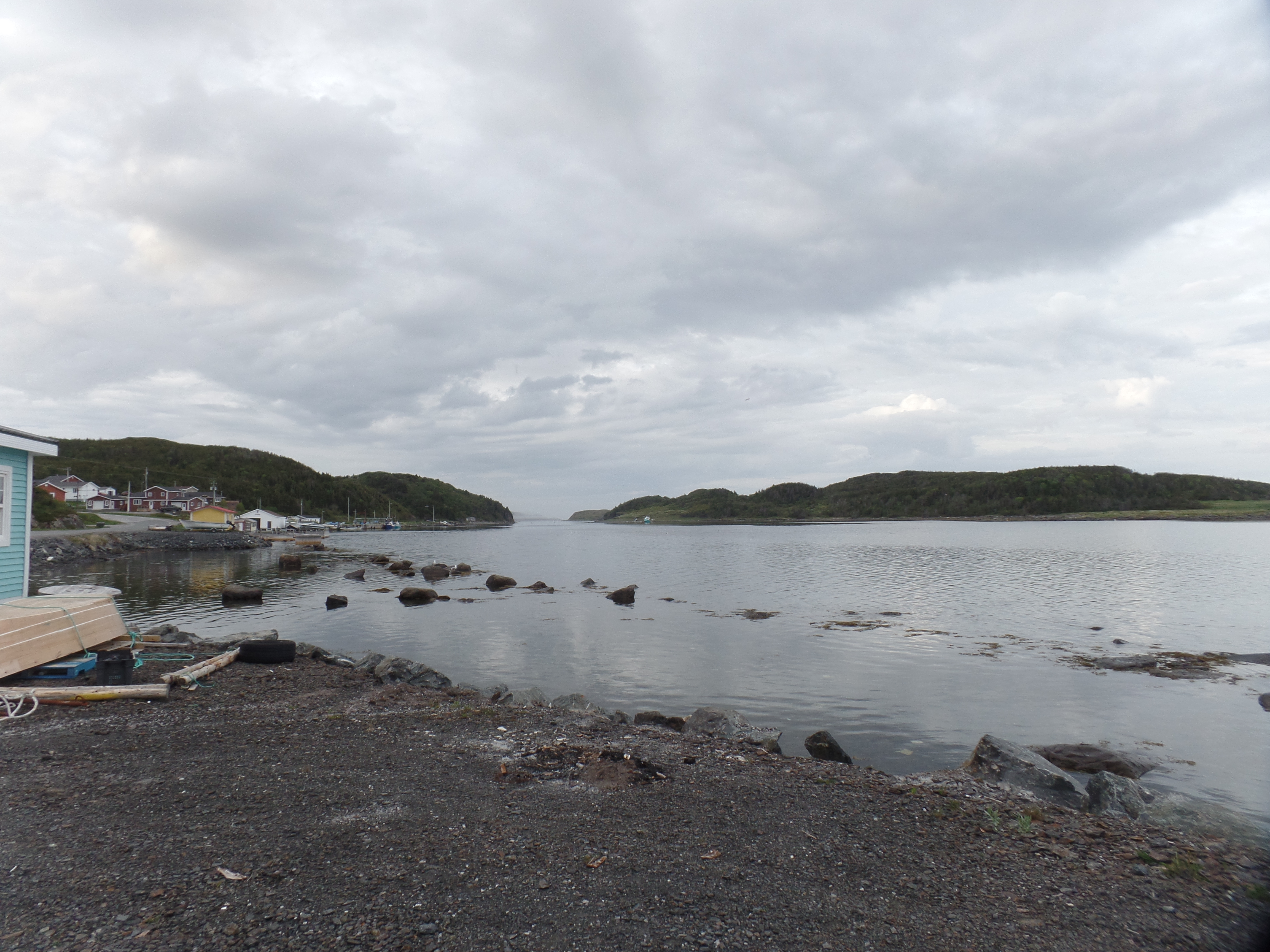
I continued on, towards L’Anse aux Meadows, the site of a Viking settlement of the 13th Century, A.D.-about which more in the next post. Photos of astonishing Gros Morne National Park will also wait until then. It took all I had, in terms of time, to get to my motel, St. Brendan’s, in this little village just shy of the monument. I took in the village’s lovely harbour, after enjoying a nice dinner at The Daily Catch, where I made fast friends of the owner and one of the docents at L’Anse.

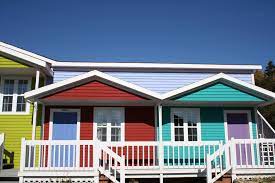
With that, I get ready to lay down and sleep, at the colourful and welcoming St. Brendan’s Motel. As there were too many other guests out and about, when I was there, I leave you with their stock photo.

St. Brendan’s Motel, St. Lunaire-Griquet, Newfoundland. (Courtesy of St. Brendan’s Motel.)

Cape Breton, High and Low

2

June 22, 2022, Whycocomagh, NS-I had originally come here to this island of both intense and sublime beauty, to honour the First Nations people who keep the flame of dignity and well-being, for all creatures, alive and well. The person who I was hoping to meet, along those lines, had to work extra long hours and our meeting is deferred until next Wednesday. I did meet a young First Nations lady who works for Parks Canada, and who processed my admission to Cape Breton Highlands. I also encountered a road crew of Miqmak people, who were clearing what appeared to have been a serious rock slide, on the Cabot Trail.

Cape Breton is defined, topographically, by two features: The mountains of the Highland region and Bras D’Or Lake (Pronounced “Brah Dor”, though a local wag once had a restaurant he called The Old Brass Door, situated on the lake shore.), representing the forces of uplifting and nurturing. The lake, a salty offshoot of the Atlantic Ocean, extends virtually the length of eastern Cape Breton, from St. Peter’s, in the southeast, to Sydney Mines, in the northeast.

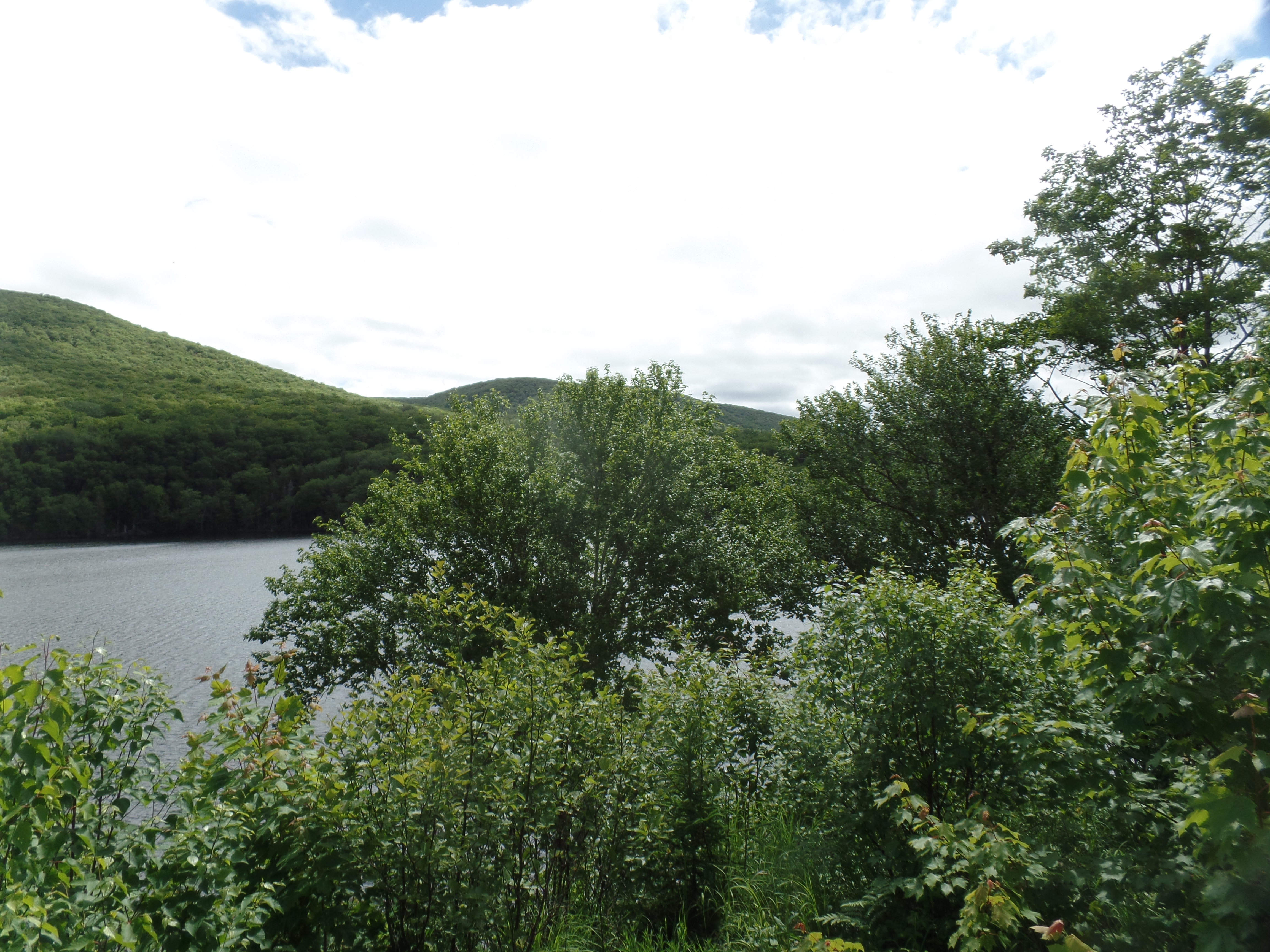
Here are a few views of Bras D’Or, from near Fair Isle Motel, where I am staying, and a viewpoint close to the Cabot Trail’s southern entrance

Bras D’Or Lake, near Watogomah First Nations Community, NS

Less than twenty minutes later, the view changed dramatically, as the clockwise route around the Cabot Trail beckoned.

View from Cabot Trail, near Nyanza, NS

The road ran out, briefly, just shy of Margaree, as the aforementioned crew had me turn around and use a short detour. Once back in the Margaree region, views of a healthy river and the Atlantic were abundant.

Here is a view of the Margaree River.

Margaree River, near its namesake town, Cape Breton Island

Next are some views of the coast, in western Cape Breton.

Margaree Harbour, NS
Margaree Harbour Beach
Beach at Cheticamp Island, NS

The three main communities of Cape Breton are the Miqmak First Nation, the Scots and the French-speaking Acadiens, distant cousins of Louisiana’s Cajuns-those who left Atlantic Canada, after the French and Indian War of 1756-63. The Acadien communities, such as Cheticamp, are very much thriving today.

Paroisse St. Pierre, Cheticamp

It was time to go up into Cape Breton Highlands, so after gassing up, in Cheticamp, I went to the Park Visitor Center, where the young lady I mentioned earlier greeted me warmly and sold me the admission pass. The mountains themselves were not long in providing a warm greeting of their own.

Here is Grande Faillante:

Grande Faillante, Cape Breton Highlands National Park

Next is La Bloc.

La Bloc, Cape Breton Highlands National Park

Sorry to have to do this, but the photos will have to stop here, so that I may get this out. Something is blocking my uploading of photos, regardless of which platform I use (whether Chrome or Firefox). I had to fight to get these last two photos posted. Wanting to keep this series going, so, for now, let words suffice. When I get this issue resolved, photos will be posted of the rest of Cabot Trail.

From La Bloc, the Cabot Trail goes on to the glorious greens of French Mountain and MacKenzie River Valley. The view of Pleasant Bay, from the top of the switchbacks to its north, is nothing short of breathtaking. Green Cove, between Pleasant Bay and Ingonish, allows for clambering and being as one with a smoothed mass of boulders, jutting out into the sea. There were many doing just that, including a mother and daughter who sat in meditation, as the rest of us took in the clifftop view of the Atlantic. The scene would repeat itself at MacKinnon’s Cove and at North Beach, in Ingonish.

By the time I reached Tartans and Treasures, in Dingwall, it would have been easy to identify with the “cranky” Scottish owner (“Patrick was a saint, but I ain’t”)-but the scenery is too soothing, so I got a second wind and kept on, past St. Ann’s and the “north” junction with Highway 105, which took me back to Bayside, which was full with golfers and day fishermen, as well as tired waitresses-who nonetheless took my order-the last one of the evening. The chowder was again superb. Getting back to Fair Isle, I got laundry done and am now ready for a good night’s rest.

Tomorrow, it’s off to Newfoundland.

Unrecognized Truth; Unparalleled Beauty

2

June 21, 2022, Whycocomagh, Nova Scotia- As I was finishing up a full and sumptuous breakfast, at Comfort Inn, Fredericton, I got a message to go to the Legislative Assembly House, in the New Brunswick capital’s centre. Not knowing why the message was insistent, I went there after checking out of the motel. I had heard that today was Indigenous Peoples’ Day, as well as Solstice.

There was a modest, but growing crowd, in front of the Assembly House. A leader of the Maliseet Nation, Allan Polchies, gave a direct, though open-hearted invitation to the Premier of New Brunswick to re-instate the terms “unceded and unsurrendered” into Truth and Reconciliation documents, especially those dealing with the revelations of abuse and neglect at Boarding Schools and Day Schools for First Nations children, across the Dominion of Canada (as well as in the United States), over the past 150 years. My take: No matter what the relationship between people, there is always room for improvement. This is especially true of ties between people of different cultural and ethnic groups. No one can truthfully say: “I’ve done enough already. Put it to rest!”

I took in a bit of the scene around Fredericton, underscoring what Chief Polchies was stressing in his talk. The land, the water, and all forms of life are more sacred to a good many First Nations people than they are to those who have a transactional view of this life. I am a mutt, so to speak, and can’t boast physical lineage that leaves me with more than 1/64 First Nations blood. Quantum, though, does not have anything to do with genetic memory, and my bent has always gravitated towards forests, nature, even flowing water.

Here is a view of the St. John River, flowing through Fredericton.

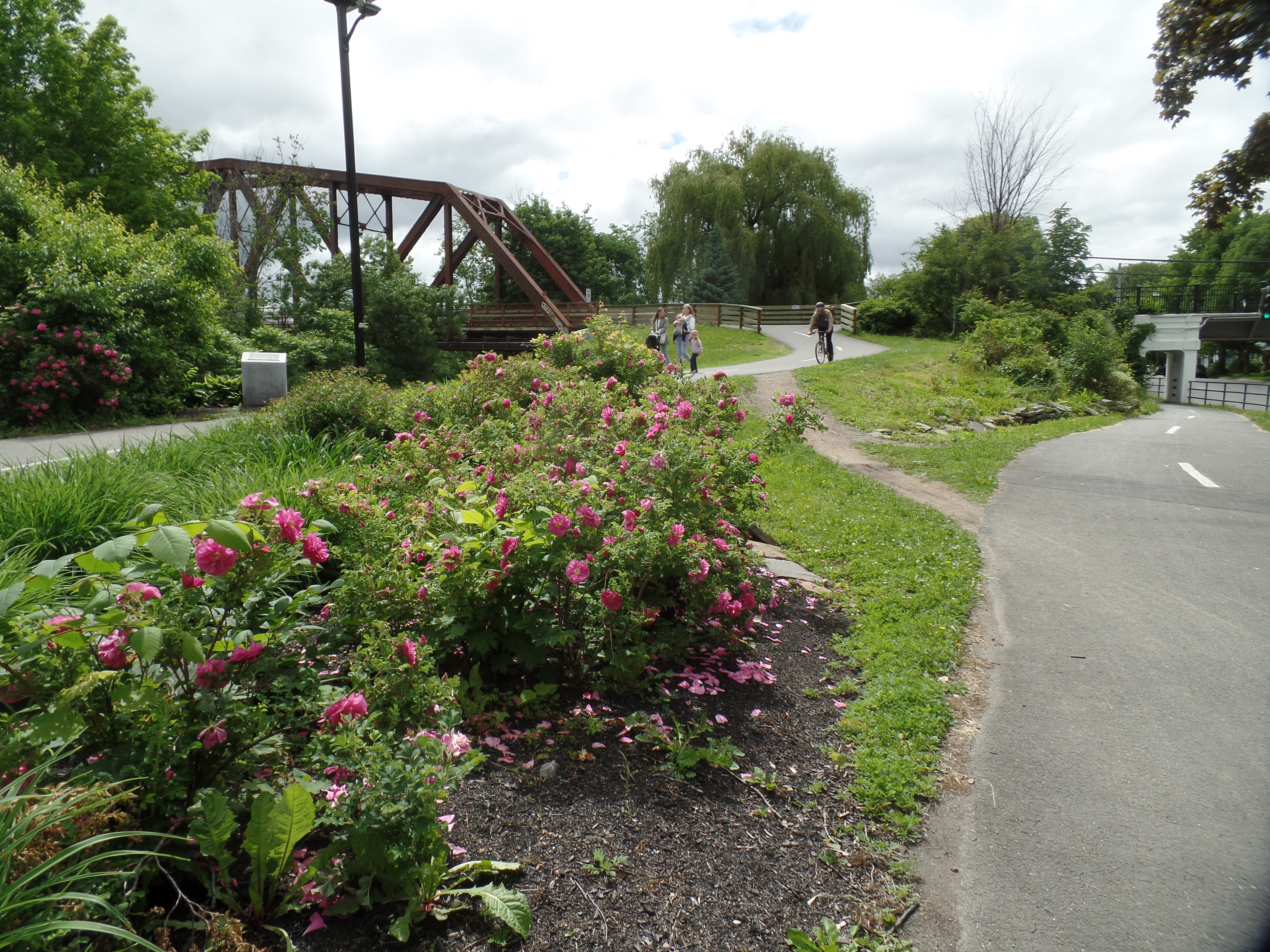
Below, are some scenes from Wilmot Park, west of the Town Plat.

Rail bridge, across St. John River, Fredericton

Next on the itinerary was Shediac, a town on the east coast of New Brunswick, from whence my paternal grandfather’s Acadian forebears moved to Lynn, MA, when that city first became industrialized, in the mid-Nineteenth Century.

Here a few Shediac scenes. The town is a vibrant summer getaway, for both urban New Brunswickers and people from Montreal and Quebec City.

Pascal Poirier was a Shediac native, who was Canada’s longest-serving Senator, putting in 48 years, 6 months and 17 days. He was a scholar of Acadian history, putting to rest many myths about his native ethnic group.

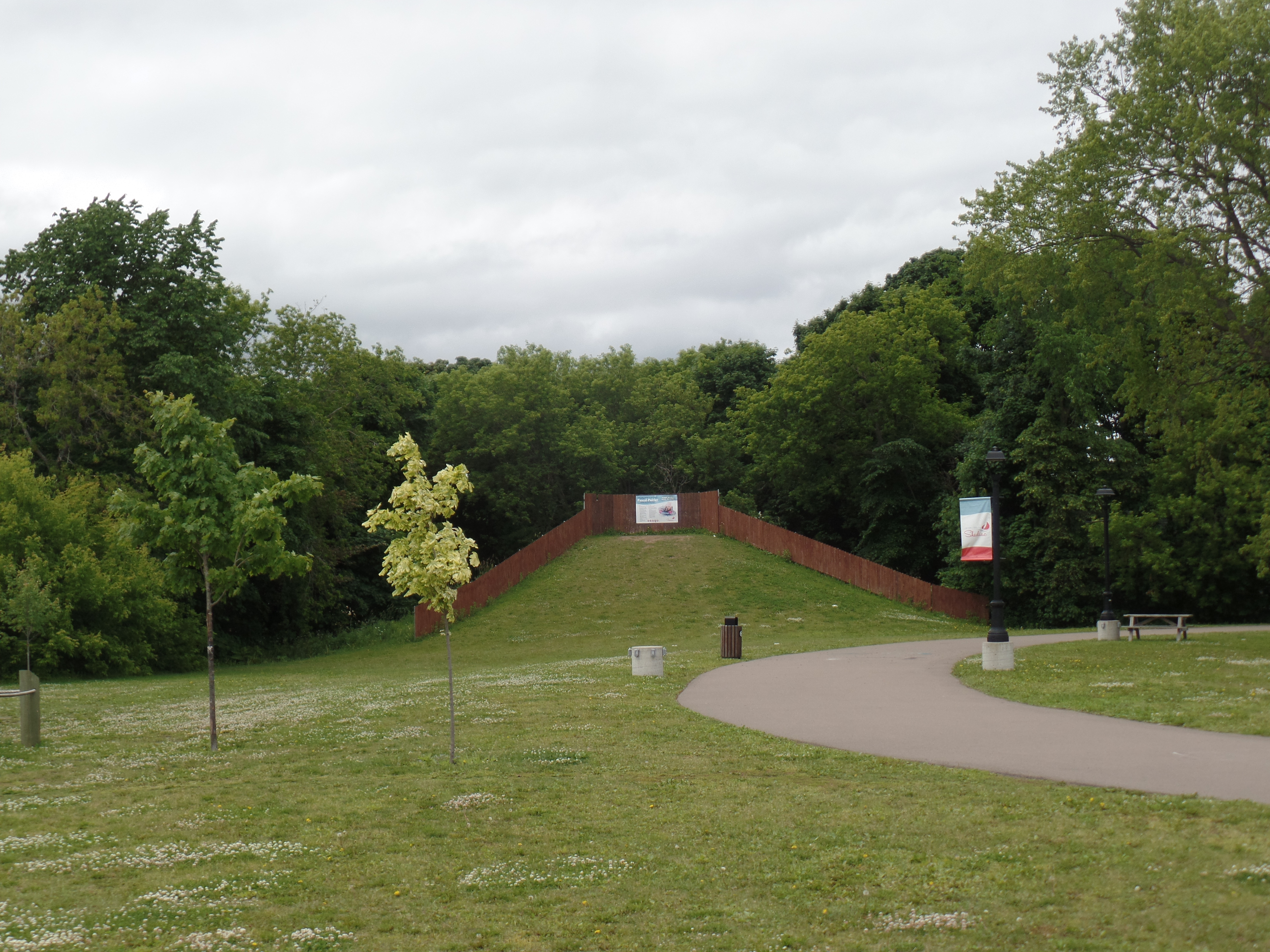
Entry to Pascal Poirier Park, Shediac, NB
Exercise incline, Pascal Poirier Park, Shediac
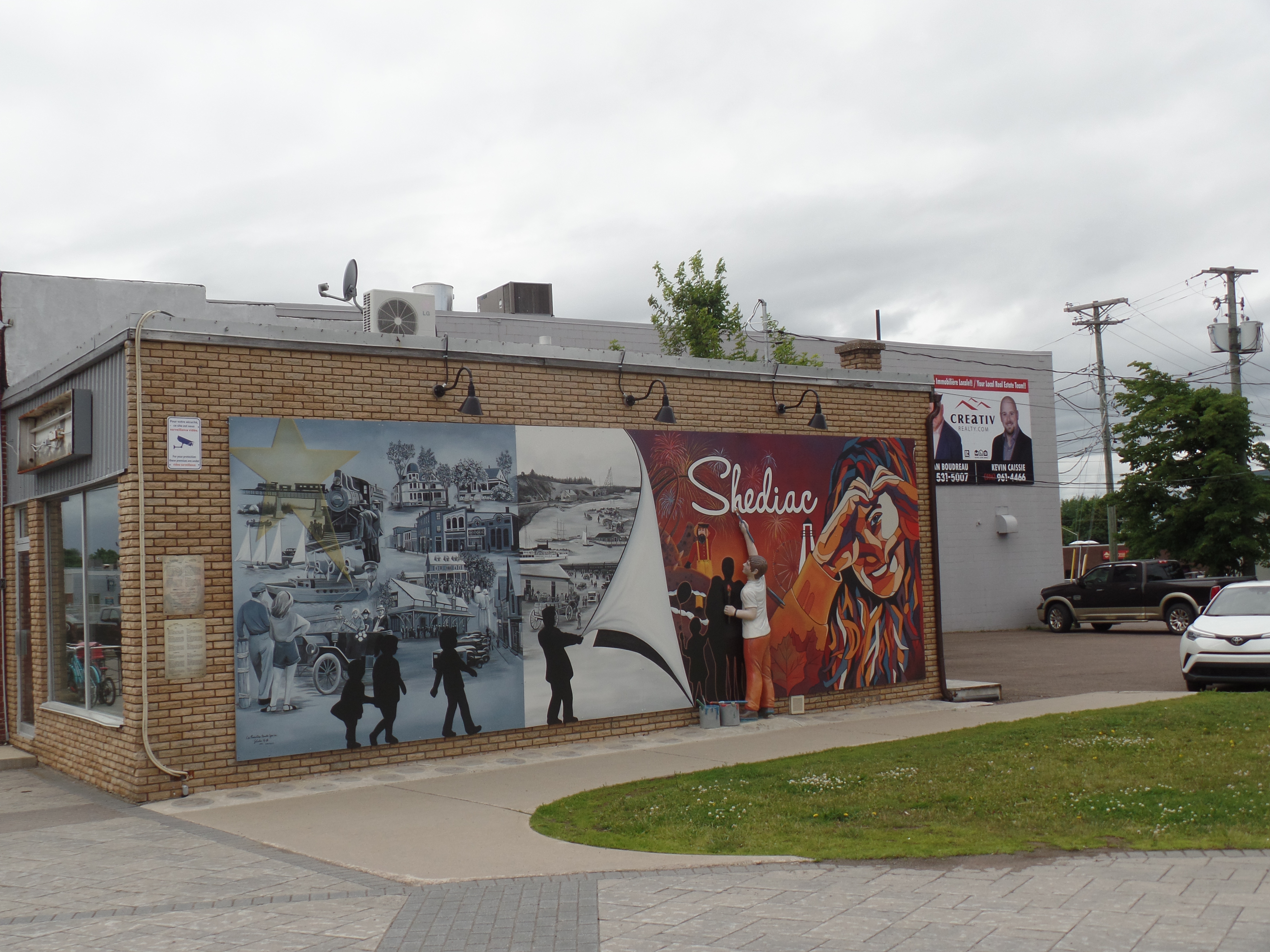
An image, creating an image, Shediac Centre
Shediac Harbour, on Northumberland Strait

As I sat on a lone park bench, watching the gulls and a small amount of marine activity, it occurred to me that the sea will not be far from my awareness, for the next eight days. With that, I got a couple of dozen gluten-free cookies, from Culinanny Bakery, in Shediac’s Centre-Ville Mall, to hopefully give to friends in Cape Breton, and headed off to that storied island.

I had a couple of small surprises, along the way. The Cobequid Valley, of western Nova Scotia, has a toll road, operated by the Provincial Transportation Authority. It’s the only non-bridge toll that I’ve seen in Canada, thus far. A young man walked out of a donut shop, barefoot. I have not seen “no shoes” get service in a food shop, until today.

A far more pleasant surprise awaited in the small village of Whycocomagh, one of the first communities one encounters on Cape Breton, approaching from the west. Bayside Restaurant offers some of the most delectable seafood chowder I’ve ever tasted, anywhere. Essentially, generous portions of fish and assorted shellfish, milk and onions-no potatoes. The other ingredients are Chef Charlene’s secret. My lodging for tonight and tomorrow night is equally superb: Fair Isle Motel, with a large kitchenette as well as firm, chiropractor-approved mattresses. The hosts are a wonderful family of seven.

Tomorrow, I will experience the Cabot Trail-at least the automotive part, and hopefully meet up with some local Baha’is.