September 20, 2023- Several tree branches graced the highway, between Winslow and Strawberry, leading us to stop and wait for fifteen minutes at a stretch, as one lane was open, and we took turns with oncoming traffic. At least this time, no one jumped the gun and refused to wait-unlike last year on Cape Breton, when a pick-up coming towards our traffic line challenged the lead vehicle-a semi-trailer. Guess who backed up five hundred yards?
Today’s episode led to a pushed -back chiropractic adjustment-which was no big deal. The evening Zoom meeting, which was the other reason for making sure I was back at Home Base-Prescott by this evening, was lengthy, but well-organized. These next three weeks need to be similarly focused, on my end at least. A fair amount of work is on tap and renewed attention to weight reduction, though this journey has not been as hard on that part of my life as it might have been. Connecting a few more dots on the Philippines trip needs to happen-so long as the plug is not pulled on TSA and the air traffic controllers, come October 1.
Recapping, the four-day Colorado East Baha’i Summer School provided spiritual grounding before I headed north and east. Laying a wreath at the grave of a fallen police officer was the other side of the coin from George Floyd World Square, where I stopped in 2021. A corollary visit to Oheyaw Ahi, land sacred to the Dakota people, was an added blessing. Visiting the Baha’i House of Worship, Wilmette is essential to me, personally, in ensuring both physical and spiritual well-being on any cross-country jaunt. My mother’s 95th birthday, though rather low-key, was the centerpiece of the drive. The birth of a grand niece, though I did not hang around and witness it, was as good a reason as any to stop in the beloved climes of southeast Pennsylvania, spend time with my newly relocated brother and sister-in-law, and of course stop in at Glick’s Greenhouse. It was also a reason to make homage to a much-loved cousin, who spent her final years in York, a place of considerable historical importance-as is its namesake in England. Visits with old friends in Crossville, TN and Amarillo topped off this year’s cross-country.
Other old friends were welcoming, in Wilmette, IL; Saugus, Bedford and Wilkes-Barre, PA; and Moriarty, NM. There were new friends made-in Luverne, MN; Toledo; Kittery, ME; Harrisburg; Marion, VA; Atoka, OK-and Amarillo. The most important, enduring feature of any journey, though, is the connection with family. At journey’s end, I can say that it, almost alone, determines the success or failure of the effort.
September 19, 2023, Moriarty- The clerk in the spanking new service station regarded me curiously, as I was putting a lid on the soup bowl I had just filled-“You’re in the right place. If you’re ready, this way please.” She is one of the archetypal personages who show up, whenever I am starting to feel befuddled. There are the cheerful Irish girl or woman with long black hair and a crinkled smile, the concerned Black man or woman who sets me straight-often without saying a word, and the slender, no-nonsense woman or girl with an air of self-confidence. The clerk was one of the latter, her understated message being”You need not doubt yourself. Go forward with confidence”. These archetypal persons are all souls that I seem to have met before.
After checking out of Palace Motel, I crossed the state line into Oklahoma, and saw “Welcome to the Choctaw Nation”. As many are aware, the record of the Federal government, with regard to what is now Oklahoma, is rather shoddy. Native Americans were forcibly removed from their lands in the Southeast, brought to this area and given small segments of what was then viewed as marginal land. Once oil was discovered, there was a land rush and races were held, to see who would grab “newly-opened” parcels of land. The Oklahoma Territory took the western 2/3 of Indian Territory, and the two were again joined, to become the State of Oklahoma, in 1907. It was from the days of the land rush that the term “Sooners”, or claim jumpers, was bestowed upon the citizens of Oklahoma.
I entered the Sooner State fairly early, and drove through Broken Bow, Idabel, Hugo and Durant, before heading northward, towards Atoka. These towns are all in Choctaw jurisdiction, and variously show signs of prosperity and sections that could use some love. The Choctaw seem to have used their resources rather well: Oil and casino resorts draw other enterprises. Atoka, in particular, is making strides to increase its draw as a business location. Along with Durant, it has established the commercial strips common to most regional hubs in North America.
As I began to feel like I was aimlessly meandering, a check of the GPS revealed that I was not all that far from Oklahoma City. It was lunch time, and the Pilot station offered comforting hot soup, along with a chicken sandwich-plenty good enough for a road meal. The above-mentioned clerk summoned me to her station, and conveyed a message of confidence. From there, I spotted a sign directing me towards Ada, a town where Penny and I stayed with friends, while she was recuperating from an illness incurred while traveling, in 1984. I knew that from Ada, it would be an hour or so to Oklahoma City, and relaxed enough to just pull into Atoka City Park, enjoying lunch, while admiring the lake that the city has constructed.
Atoka Lake (above and below)
The sky looked a bit ominous, and I would later hear from a friend elsewhere in Oklahoma, that her area had experienced severe downpours, with thunder and lightning. My drive was briefly interrupted, near Shawnee, when I drove into a speed trap-55 down to 40, in a matter of seconds. I was given an oral warning and sent on my way, no worse for the wear. The officer did not seem to even agree with the posting, but was just another soul-dispatched to make sure I was in a good frame of mind. The weather, save a few sprinkles, near Weatherford (no pun, cosmic, or otherwise), was rather tame.
By dinner time, I was in Amarillo, and so headed to the Fun Zone, Georgia Street to 6th-9th Avenues. There was my pal, Wes, in his convertible, hood down and ready to make anew friend or two. At Smokey Joe’s, we were treated like royalty by a comely young woman named Ella, who brought out a fine basket of Southern style catfish-no hush puppies, but a modest portion of fries and a generous helping of cole slaw. Wes, being shy and retiring, was more concerned with speaking of his business’s progress and sharing pictures of his surrogate grand-niece than with eating. He did make a new friend, so the stop was a success.
I promised both of them that I would drive safely-and kept that promise, arriving here to a rather crowded town, many here for a Gun Show. There was a room for me, at a friend’s establishment, so I am happily ensconced at Lariat Motel.
September 18, 2023, De Queen, AR- “Sit wherever you want, hun. What can I get you to drink, my love?” Each person who came into Huddle House, in Corinth, this morning was greeted thus endearingly by the lead server, Ryanne- and what better way is there to start a Monday morning? She recounted to me, at table, that her morning had not exactly been a time of sweetness and light. She was not, however, about to let before-work woes ruin her day at the diner, or anyone else’s. As she worked, calls came that conveyed the message that solutions to the mishaps were in progress. I get the sense that her attitude towards life generates such positive outcomes.
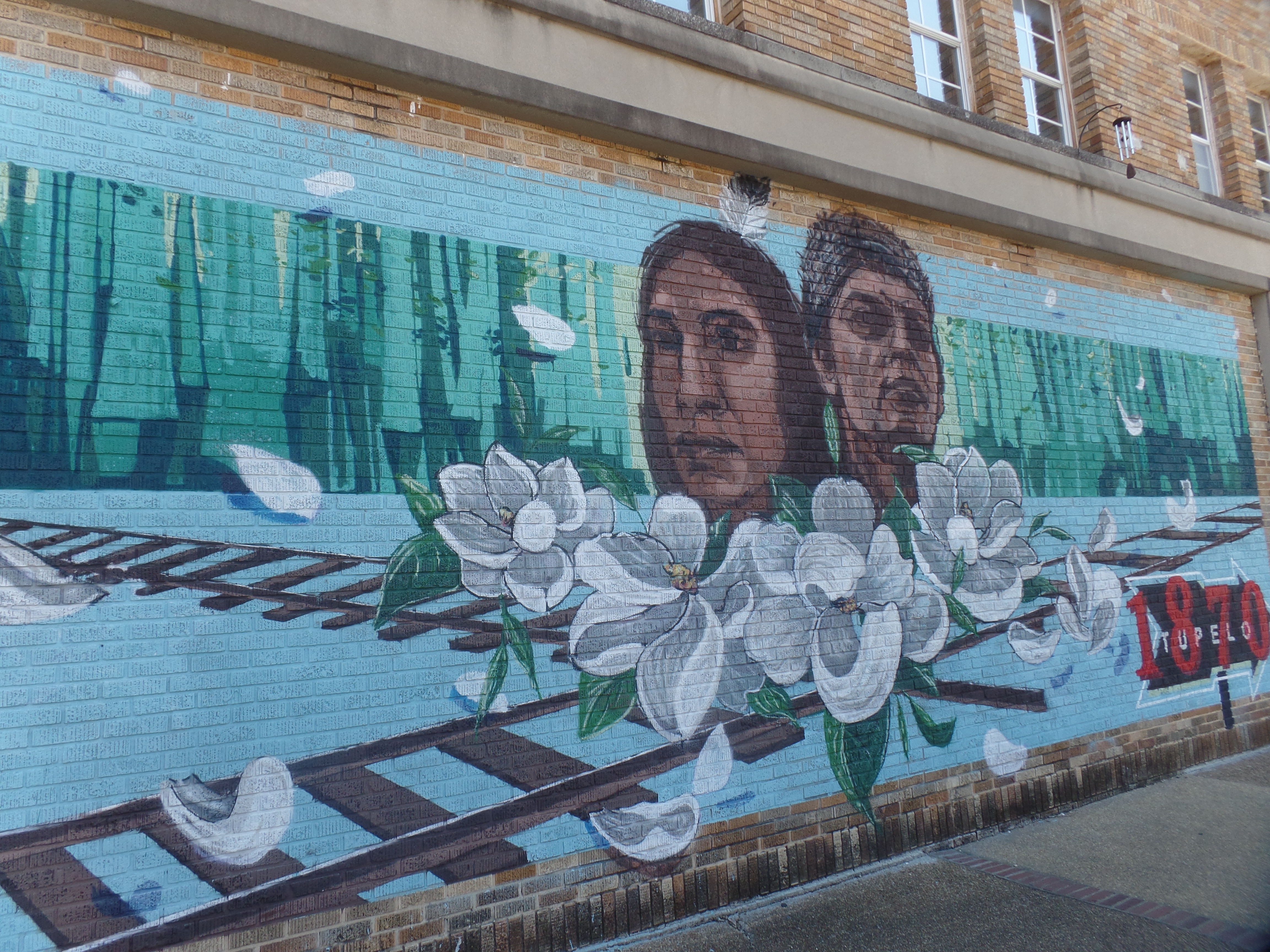
The next stop, on a horseshoe-shaped ramble, was Tupelo- birthplace of Elvis Presley. Though I did not make a stop at the King’s boyhood home, getting the ambiance of the place and a sense of how it affected his musical trajectory came from stops in downtown and at Ballard Park, in midtown Tupelo. There is a tolerance of individuality in Tupelo- borne out by the boutique, Main Attraction, where I purchased a latte from a flamboyant, but rather soft-spoken entrepreneur- whose main wares were women’s clothing and New Age items, such as Buddha tea mugs and incense burners. There was also this mural, honouring the spirit of the region’s indigenous Chickasaw people.
Mural in downtown Tupelo
There are scattered memorials to the area’s Confederate dead, but these are tempered by acknowledgement of the contributions of African-Americans, including this marker at Tupelo National Battlefield. The battle that took place there, in 1862, set the way for both the Federal occupation of Vicksburg and Sherman’s March to the Sea, by disrupting Confederate supply lines.
Honouring the brigade of United States Colored Troops, for its efforts at the Battle of Tupelo.
The Lee County Courthouse, like others in mid-sized southern towns, has its dome. This construction feature is designed to convey the majesty of law. That majesty has come hard, only gradually overcoming the resistance of many residents to a more inclusive community ethos.
Lee County Courthouse, Tupelo
The Deep South is changing, though, and I felt only welcome and conviviality on this initial swing through the heartland of the Civil Rights struggle. Ballard Park, where a lone Hispanic woman was jogging while pushing her infant in a stroller and feeding the gaggles of Canadian geese that dominate the south shore of the lake, is a case in point.
South Shore of Ballard Lake, Tupelo.
At some point in the not-too-distant future, I will make a music-centered return visit, and the actual Elvis Presley Lake, as well as his boyhood home, will be part of that itinerary. There is resistance in the Universe to my being on the road, though, epitomized by the current financial downturn, so I have to be patient and perhaps focus more on working, to rebuild my nest egg. A lot of people have goals that face similar straits; yet on we go.
Despite having those thoughts, the road continued-to Philadelphia, MS, scene of the murders of three Civil Rights activists, in the “Freedom Summer” of 1964. At that time in my life, a revulsion towards authoritarian Communism existed side by side with an equally strong conviction that African-Americans were being grossly denied full citizenship, especially in the South, but also in my hometown, north of Boston, where few Black people were allowed to live, at the time. Debates on the subject were civil, yet I was regarded as somewhat naive in “the way life really is”. How times have changed!
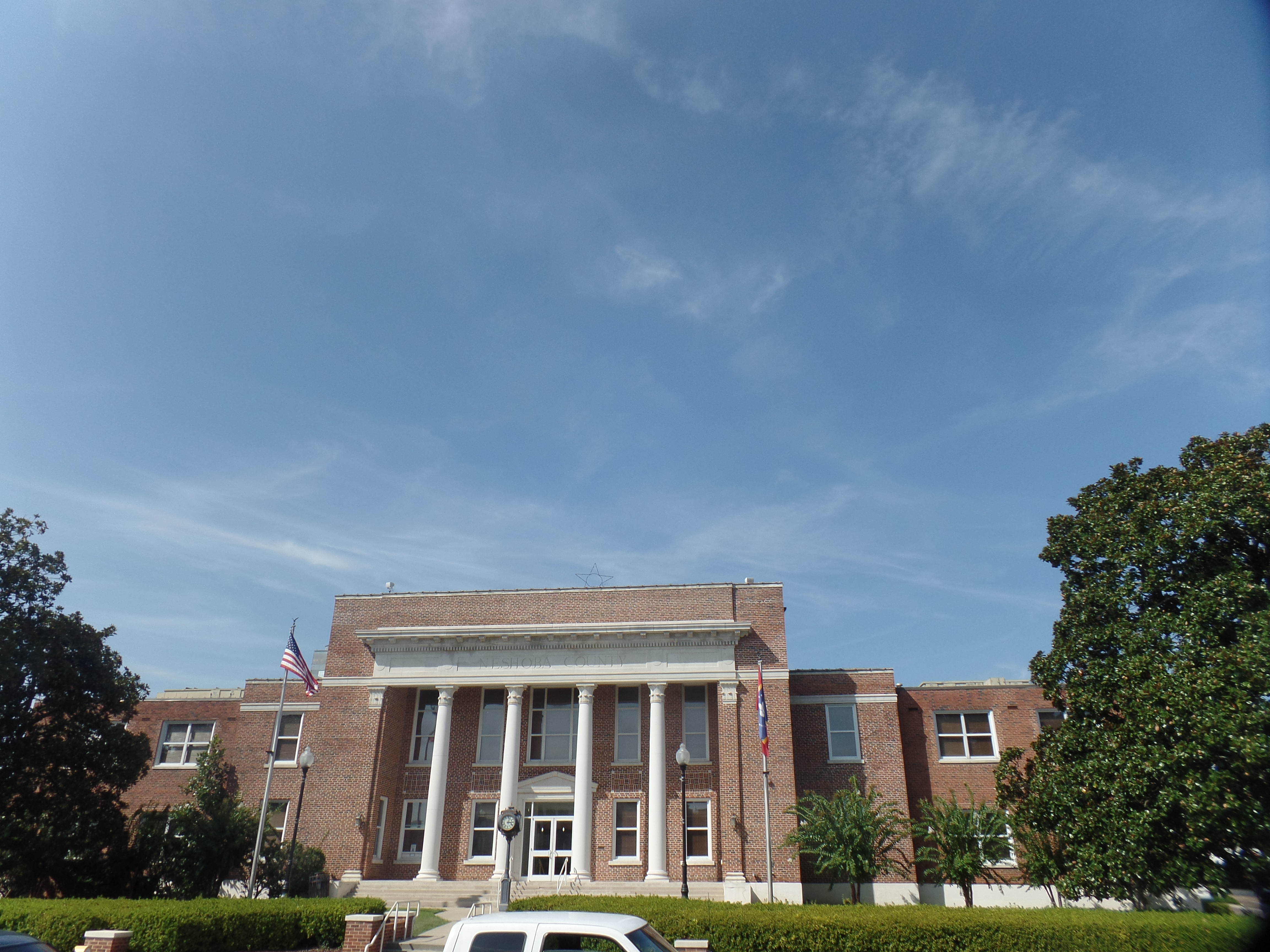
I felt a rather dark energy, approaching Philadelphia. It was almost as if the ghosts of the murdered were trying to communicate. When I got to downtown, and parked my vehicle, beginning a short stroll, I was greeted warmly by a well-dressed gentleman, who somehow recognized me from who knows where. He shortly went about his business, and I made note of Neshoba County Courthouse, and the water tower that draws from a reservoir near where the three men were buried. Downtown, for the most part, was quiet.
Downtown Philadelphia, MSNeshoba County Courthouse, Philadelphia, MS.
Headed out of town, towards Jackson, I found myself behind several school buses. One of them led the way, for about eight miles, and I noticed rambunctious behaviour through the opaque rear window, similar to the shenanigans of countless children and youth, the world over.
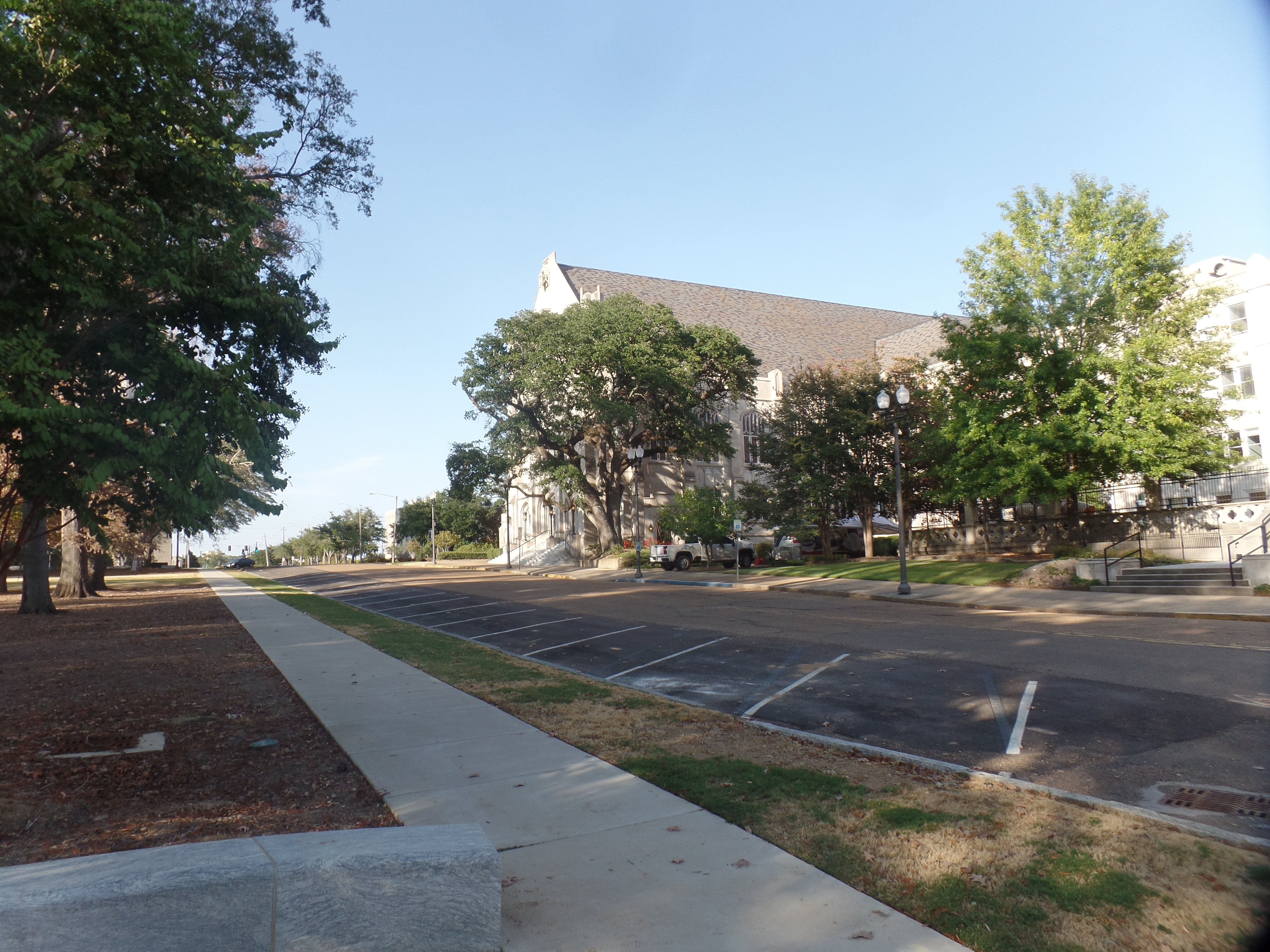
It was also quitting time in the state capital, so when I got to the seat of Mississippi state government, I had a “state business only” streetside parking space to myself-for five minutes, under the watchful eye of a Capitol Police Officer. Here, then, are the Mississippi Capitol and a nearby First Baptist Church.
South side of Mississsippi State Capitol, JacksonFirst Baptist Church, Capitol Hill, Jackson
The road west and north passed a sizable back-up, across I-20, near Tallulah, LA, where I stopped for dinner and heard details of the overturned truck, from another driver who witnessed the rollover. Leaving the Interstate, just shy of Shreveport, my memory of map study when I was a teenager and young adult came in handy-and up through Springhill, into Arkansas, it was. I passed through the place called Hope, in which Bill Clinton still believed, on the night of his election to the Presidency, in 1992. Respite, though, has come, at the Palace Hotel, in this little town of De Queen, just shy of the Oklahoma border. I was the last guest checked in for the night, before the clerk decided he’d had enough, and locked the office door.
The Universe may be resistant, in some ways, but there are plenty in it, who are looking out for me.
September 15, 2023, Marion, VA- In the small Korean market, the emphasis is on organic foods, combined with a standard American submarine sandwich shop menu. Besides that, there is a mash-up with convenience foods on the shelves. Green Foods Market is on the east end of downtown York, an area of unexpectedly broad streets, high traffic and seemingly prosperous residents.
York drew my late cousin, Linda, many years ago, during a time of uncertainty in her life. There was a farm and a sense of plenitude, a place where she could deal with matters that had inserted themselves into her previously serene life. Linda was like an angel, and was always helping others, especially us cousins. She was almost too good for this world.
I went there, on my way south, early this afternoon, stopping at the aforementioned Green Foods, for a seafood salad, which would become lunch and dinner, on my way southward along Virginia’s “spine”: I-81. I have long wanted to visit York and see what drew one of my favourite cousins. While not getting to the area where she lived, I did get a sense of the source of York’s good fortune. Here was where the United States of America came together, with the Articles of Confederation being ratified-away from the uncertainty of Philadelphia and the imminent threat of British occupation. Confederation Square remains the town’s centerpiece.
Enough rambling. Here are some scenes from downtown York.
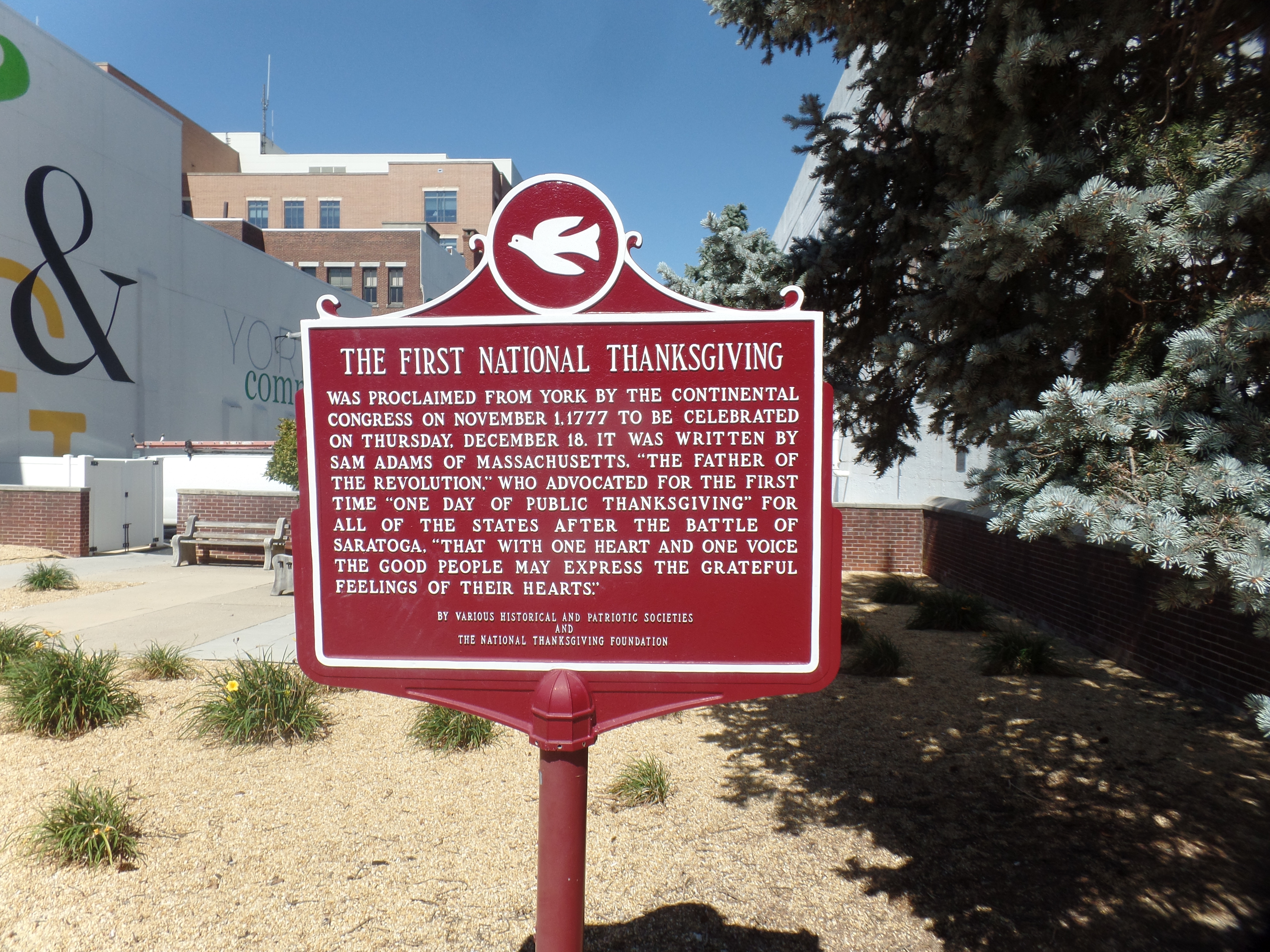
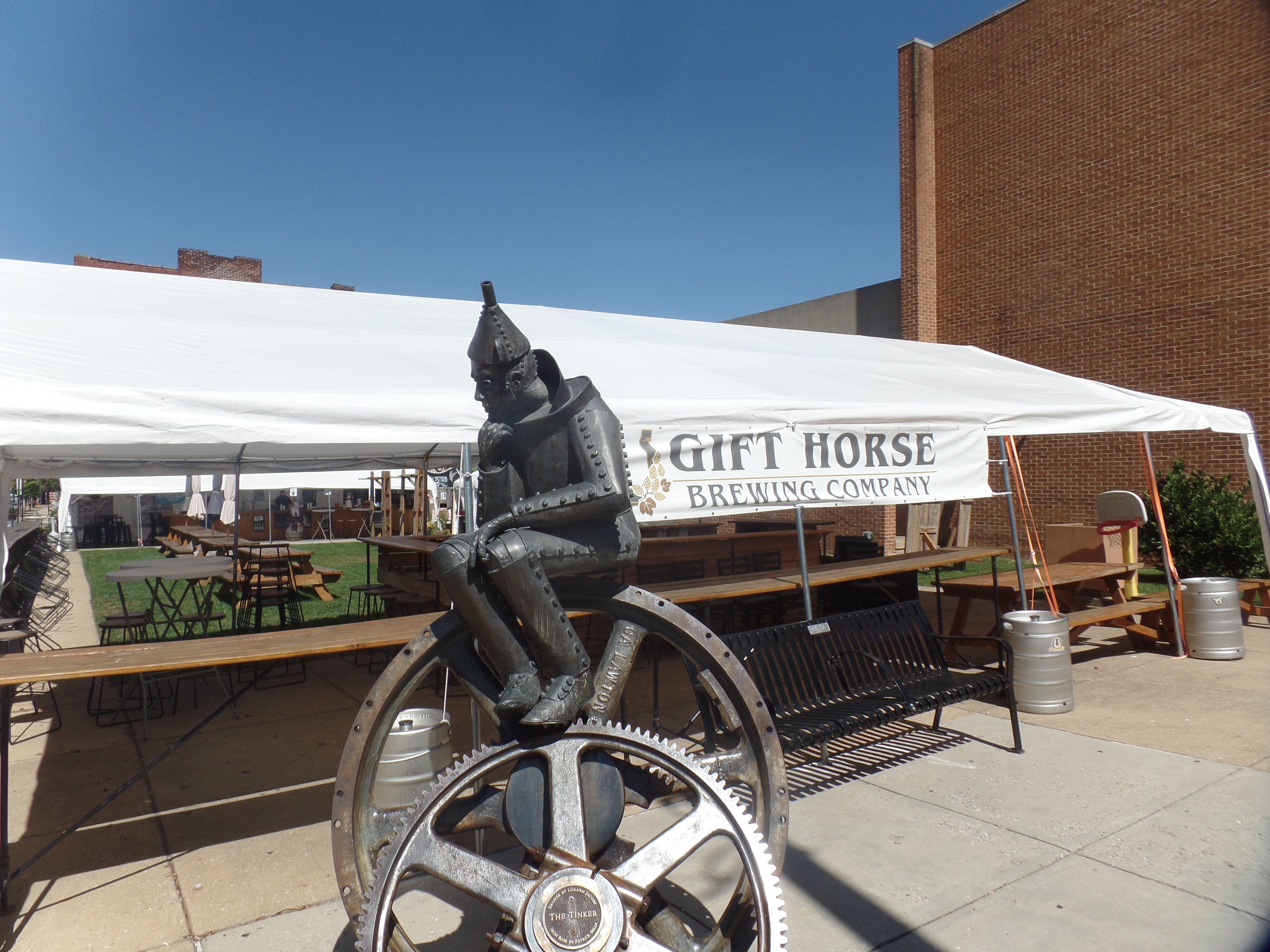
A homeless man, sitting on a bench, pointed to this sign. It was, he said, a sign of the city’s commitment to public health. That he himself was well-groomed, wearing clean clothes, was proof of an effort being made in that regard.York City HallLaurel Fire Station-one of the few I’ve seen with its original bell tower.The blue-black bear image is quite common, in south central Pennsylvania.York County Courthouse, with domes in the back.In 1777, the seeds of a national culture were sown, from York.For no reason, other than levity, Jack Haley’s Tin Woodman is presented as “The Tinker”.
With a favourable image of York, and satisfied that this town treated a beloved family member well, I headed southward, with relatively little trouble, save brief interludes of Washington area traffic headed out of town, briefly visited treasured Harrisonburg and arrived in Marion, on the south end of Appalachian Virginia, in time to tumble into bed.
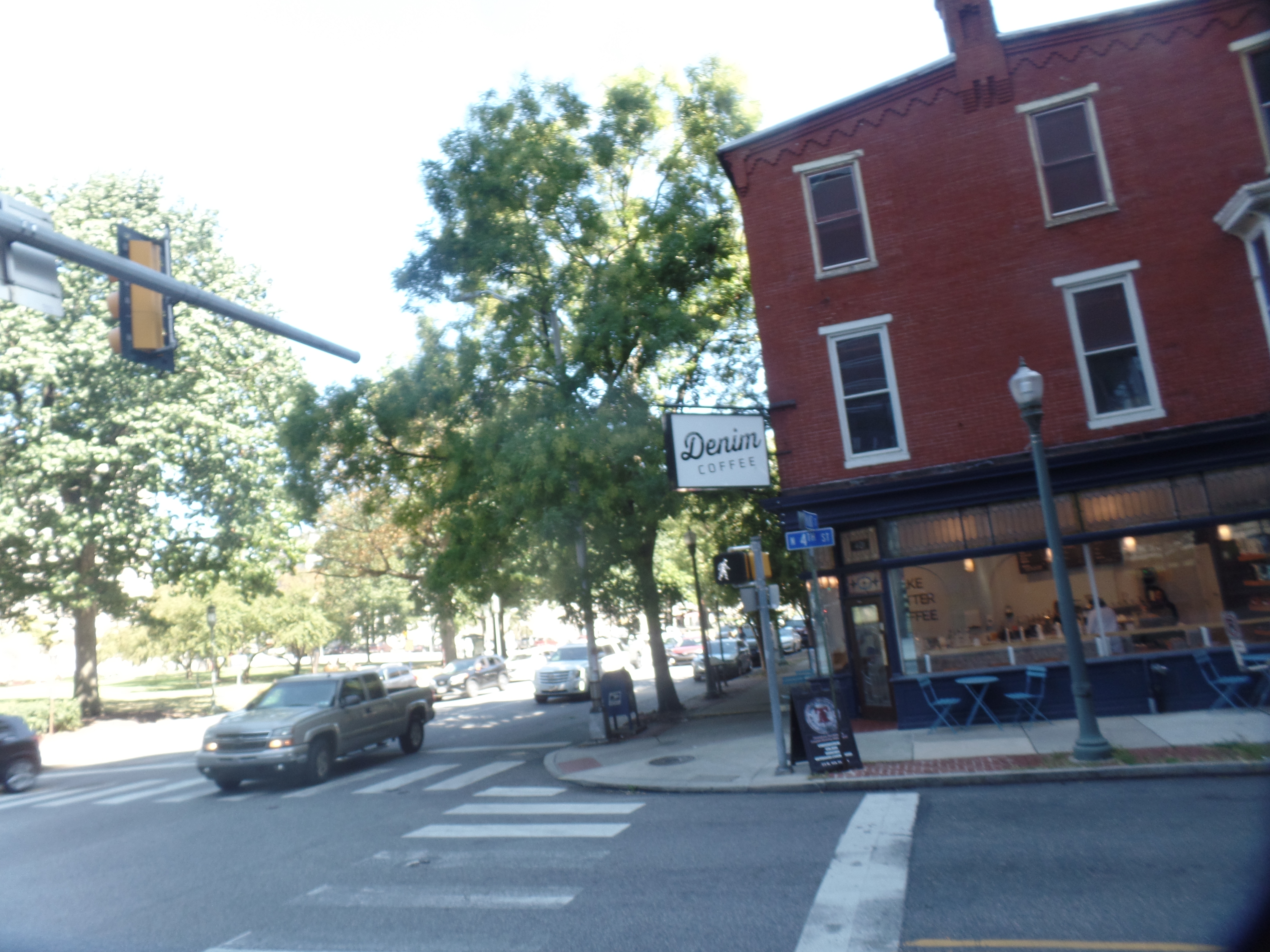
September 15, 2023, Marion, VA- Denim Coffee has a nondescript sign, and takes up a small storefront, across the street from the Pennsylvania State Capitol-and Strawberry Square. It also produces what, to me, is eastern Pennsylvania’s finest cup of coffee-and I know a thing or two about good java. The perky barista who greeted me this morning is another plus for the shop.
Harrisburg’s Best Little Coffee House
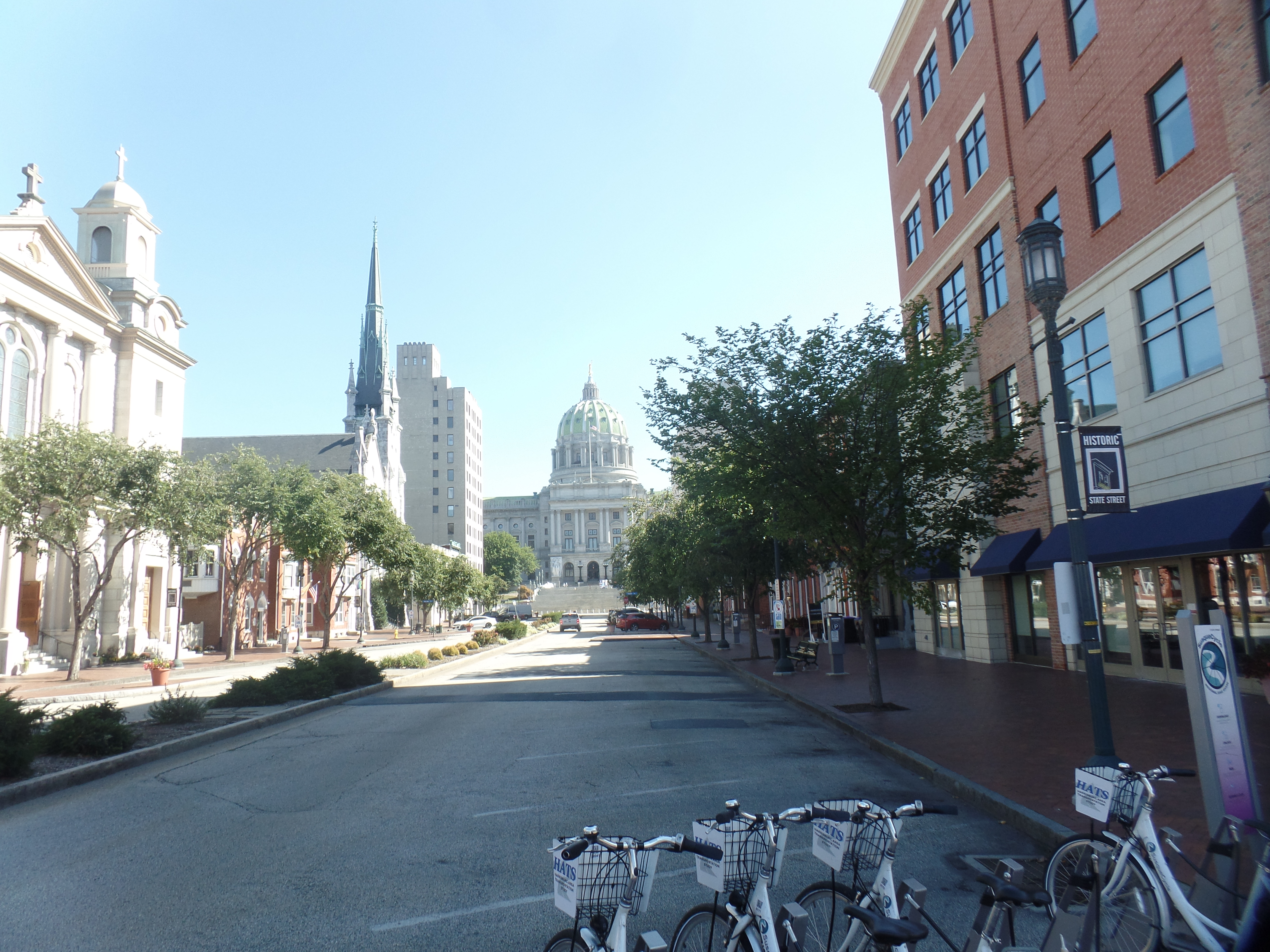
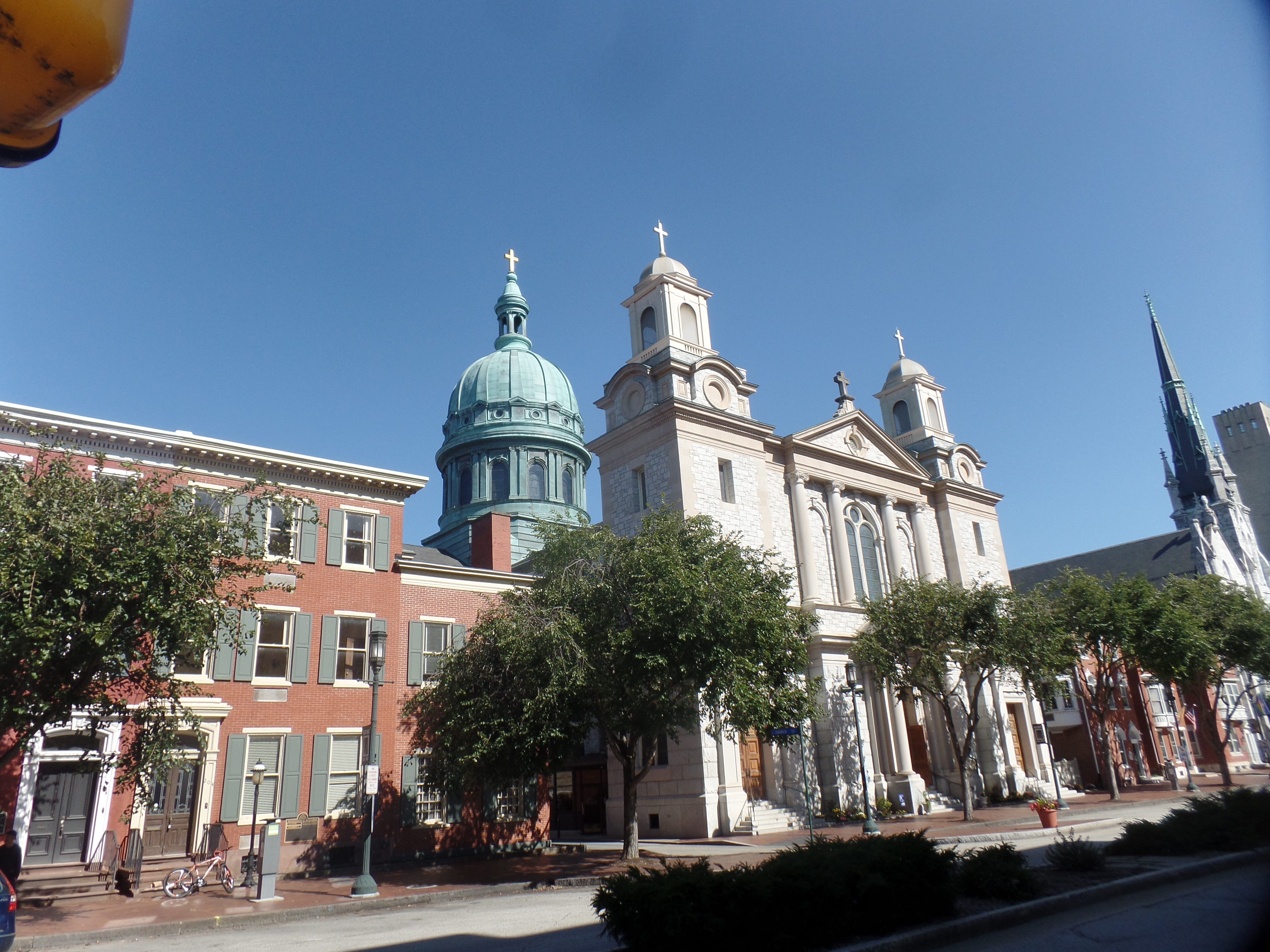
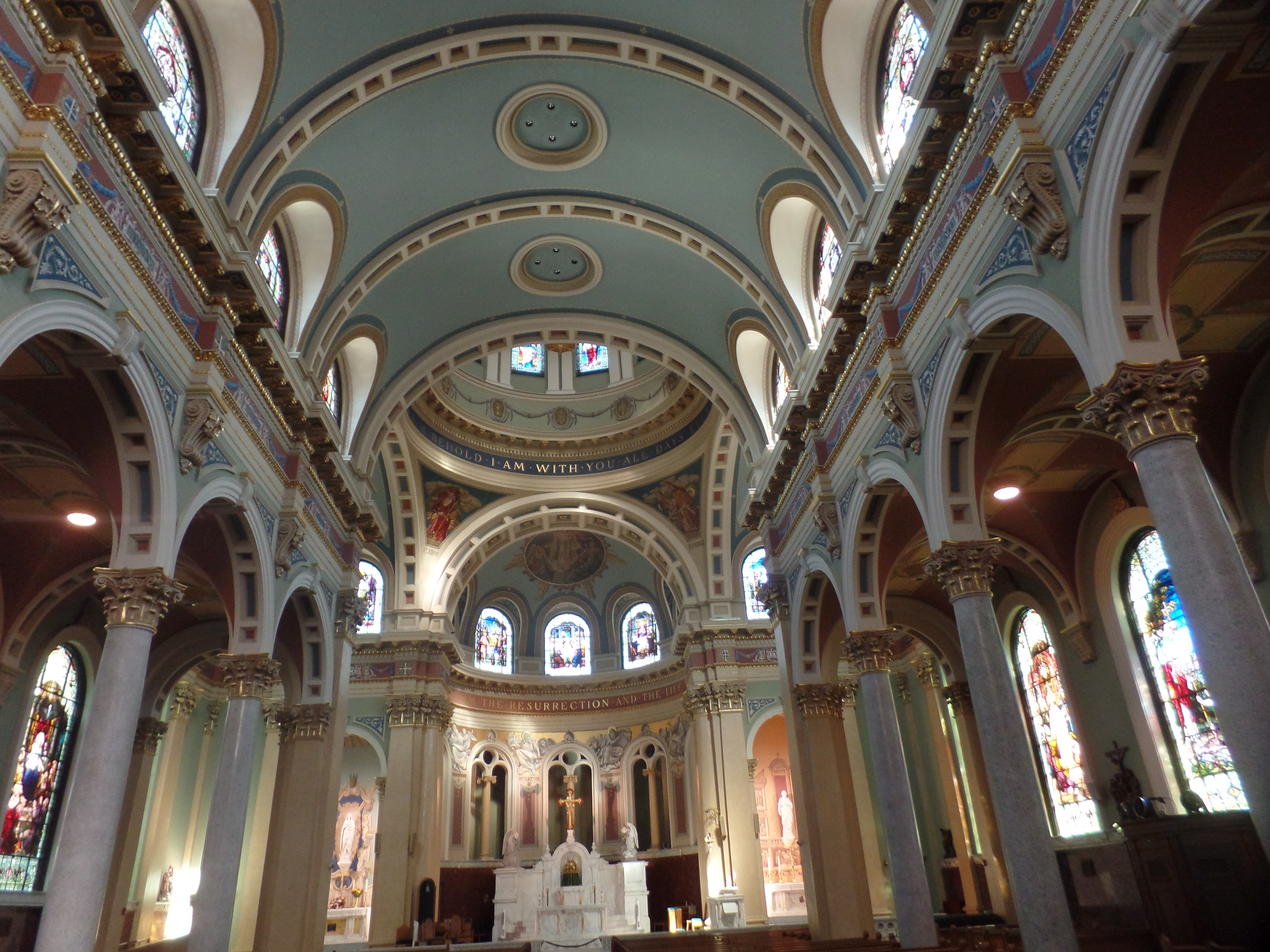
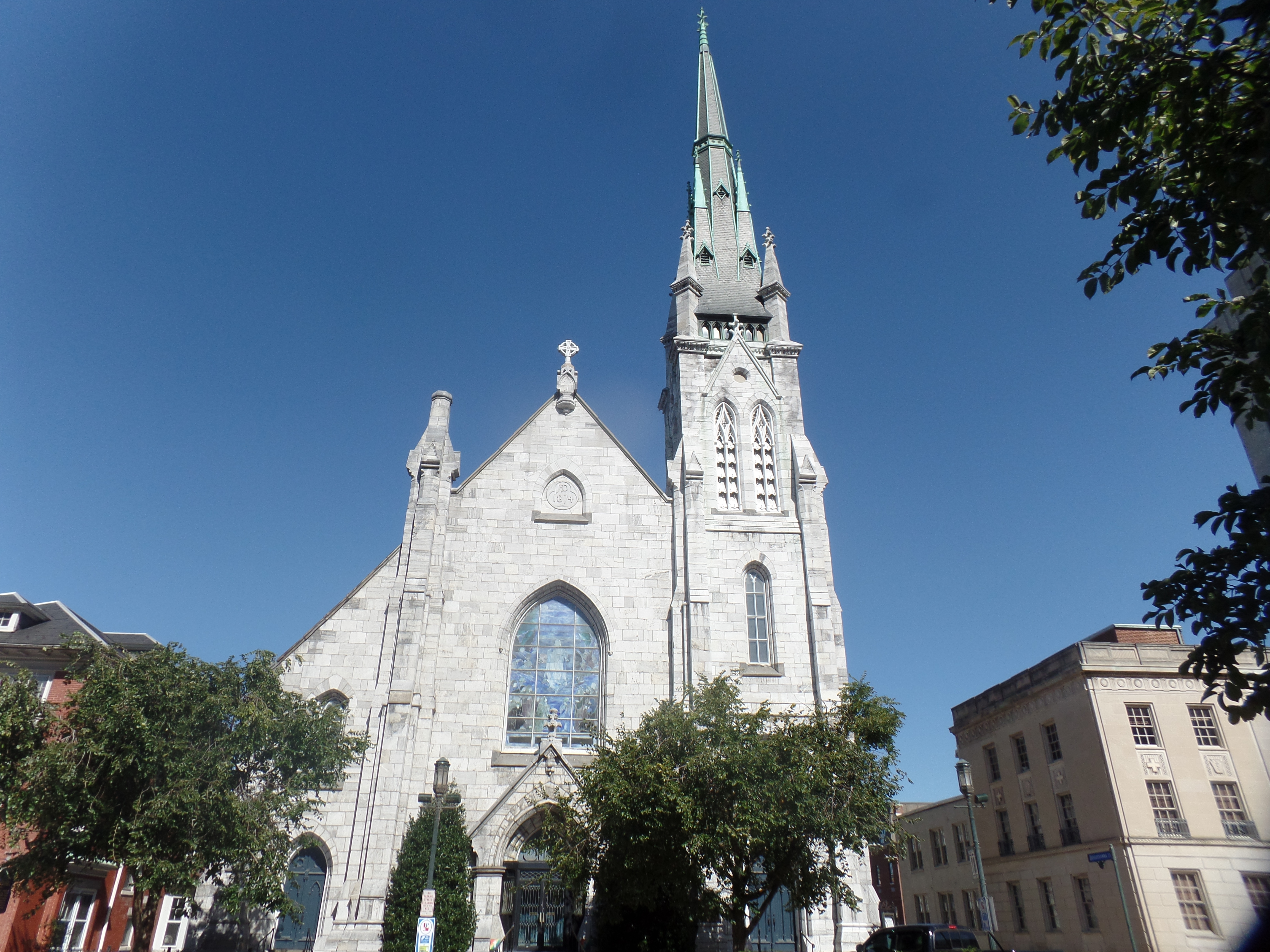
The coffee stop, and a walk through Strawberry Square-the delightful indoor mall that abuts the Capitol, on its southwest corner, are definite rewards for the visitor to Harrisburg, who will find a dignified, solidly-constructed complex, bordered to the north by Historic State Street, with its magnificent St. Patrick’s Cathedral and Grace Church. The Susquehanna River and its bridges add further luster to the community.
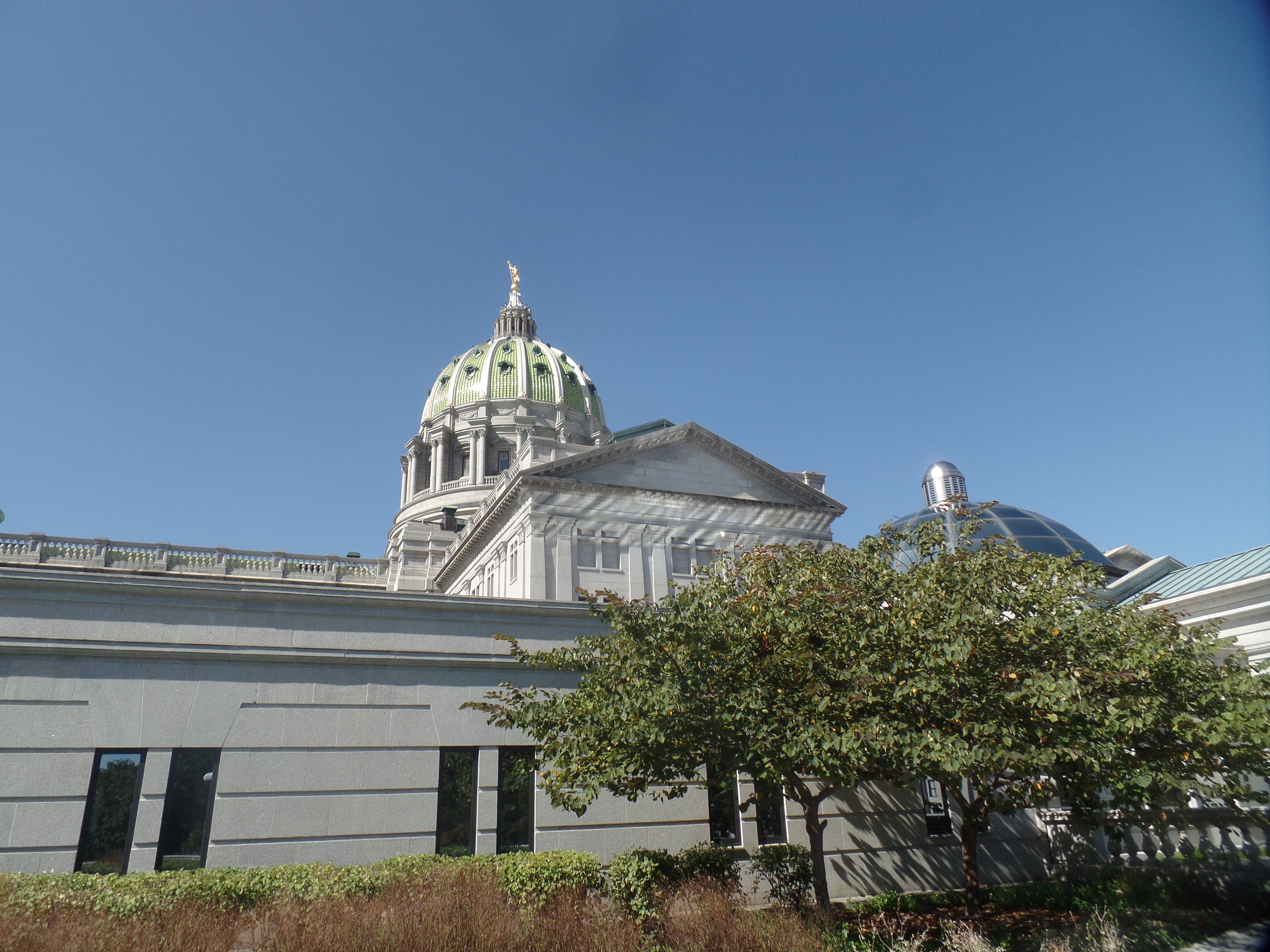
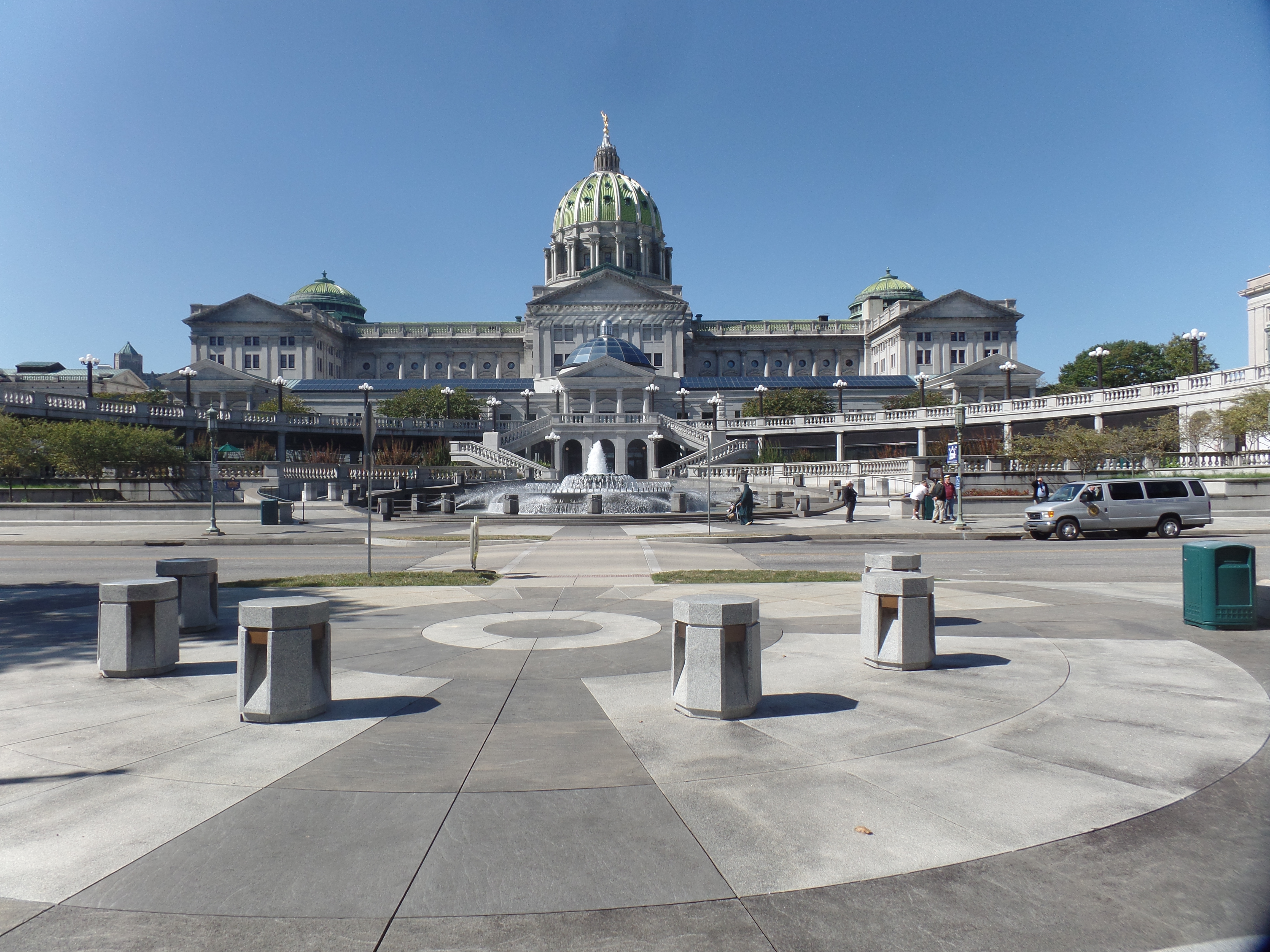
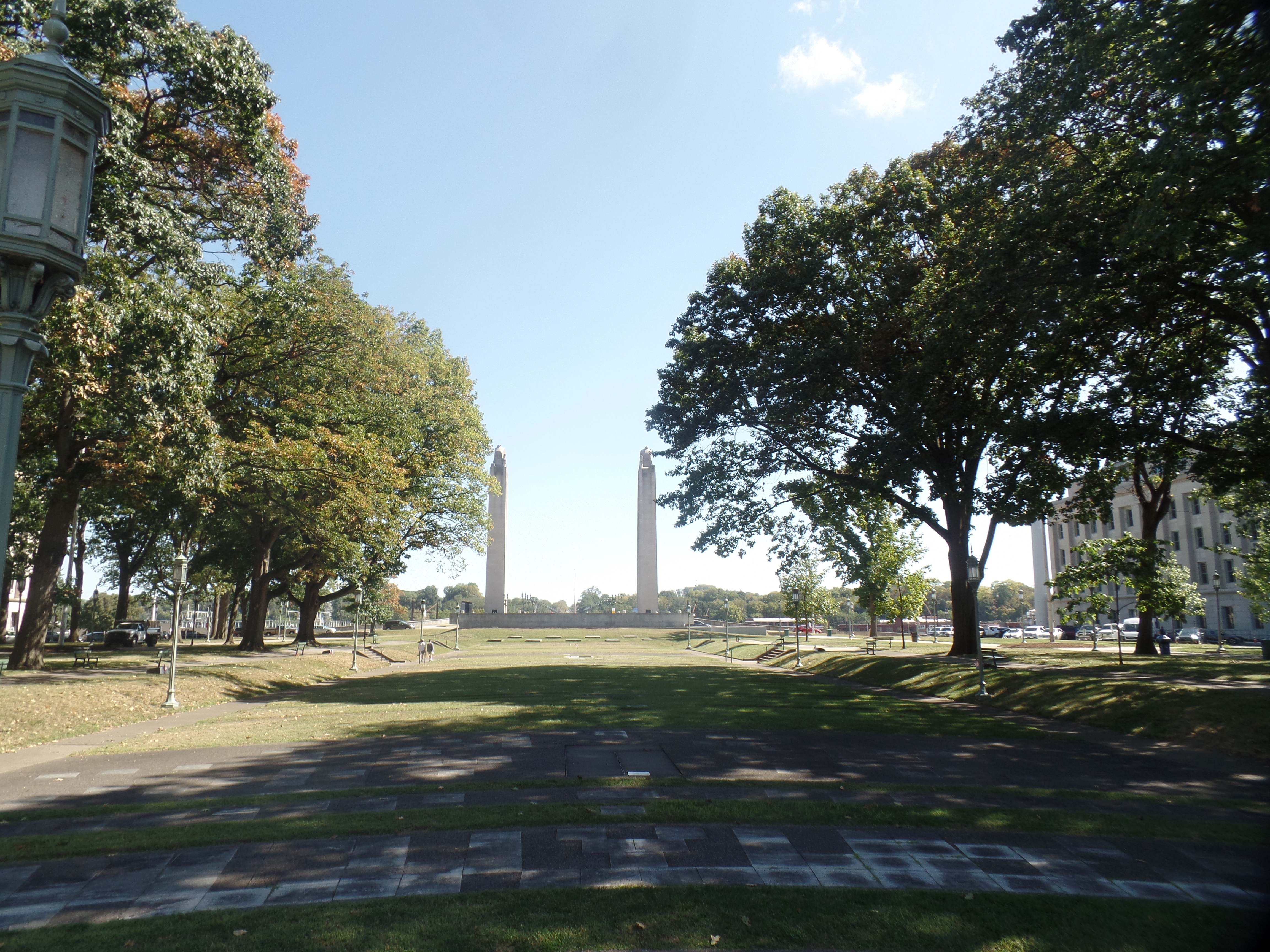
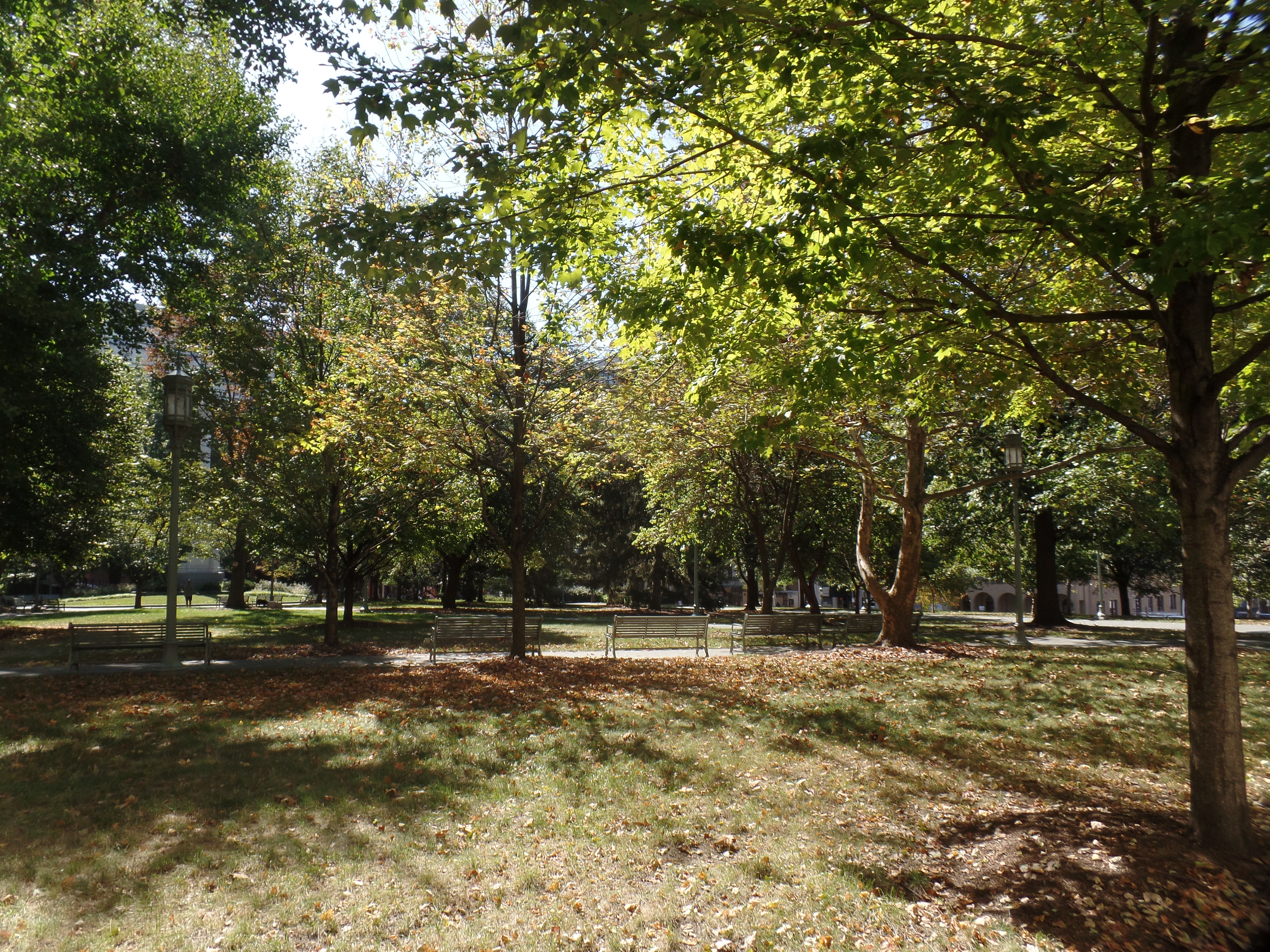
Harrisburg will see me again, but in the meantime, here are a few scenes of another part of the historical core of Keystone- which spreads from Gettysburg to Philadelphia’s Old City.
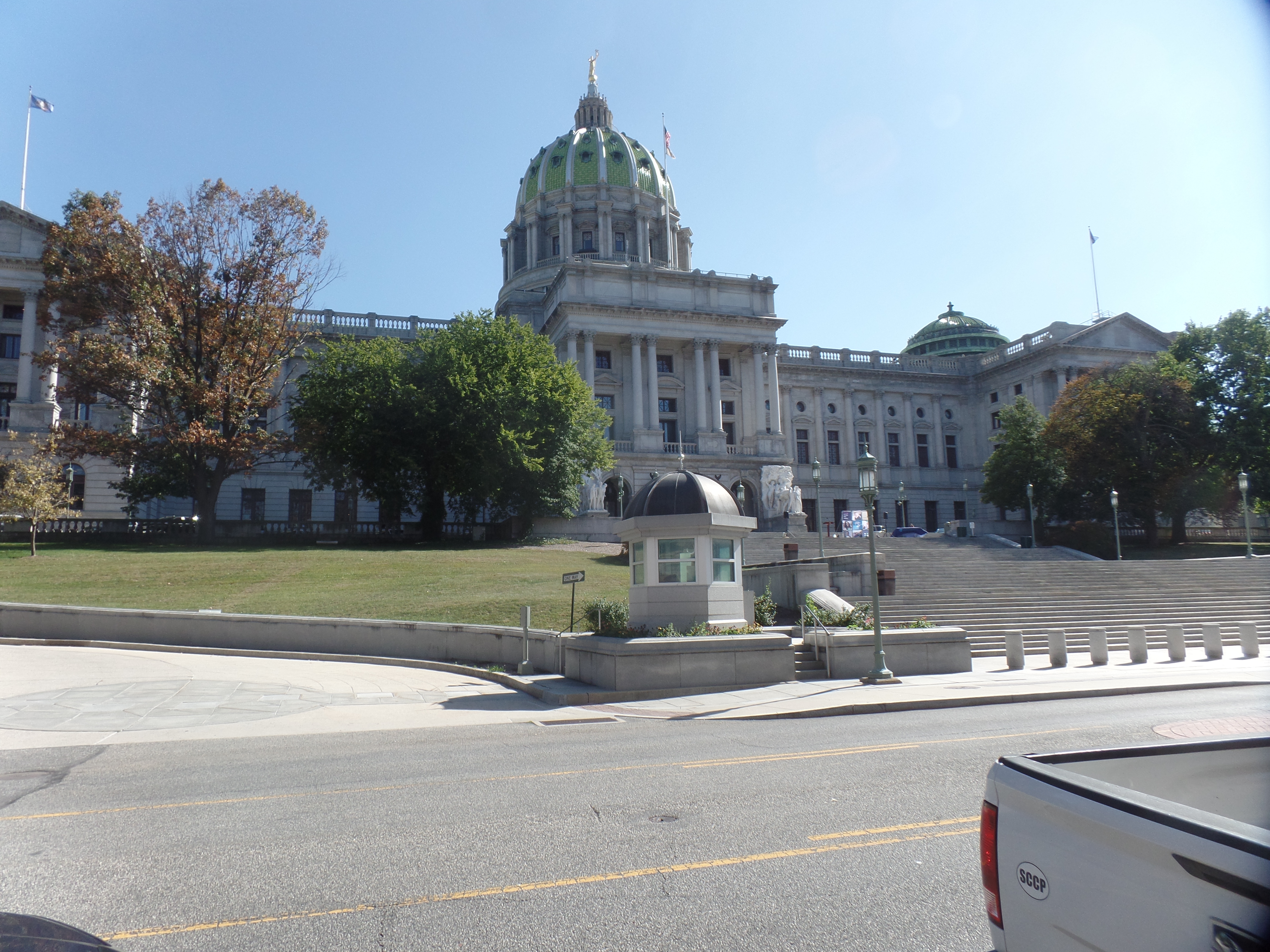
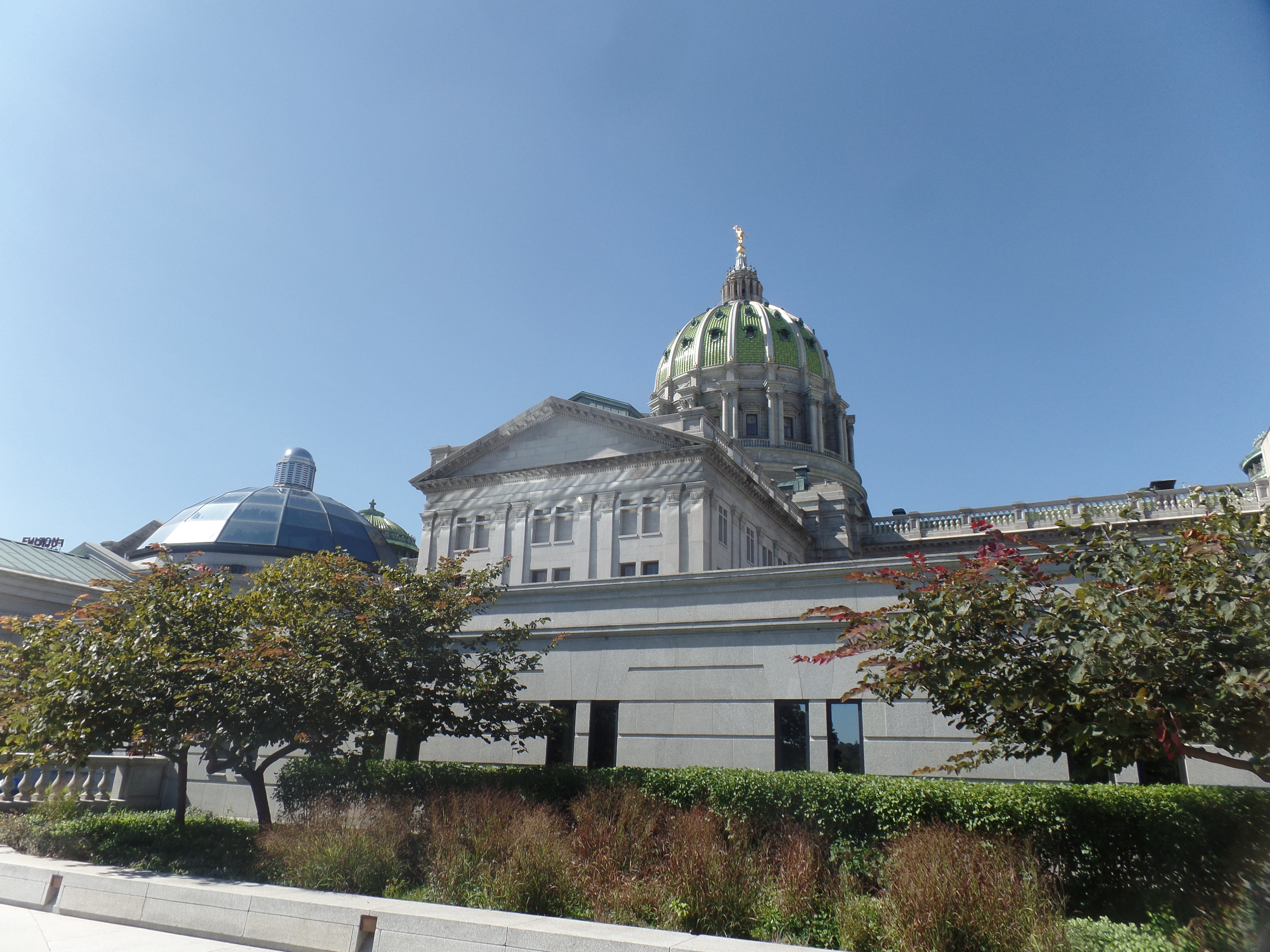
Pennyslvania State Capitol, from the north.Capitol viewed from the east.Capitol viewed from the west.Majestic view of the Pennysylvania State Capitol, from the south. Capitol Courtyard fountainView of State Street Bridge, from Capitol Mall, HarrisburgAs Pennsylvania translated in English means “Penn’s woods”, a grove on the Capitol grounds is certainly in order.Historic State Street, HarrisburgSt.Patrick’s Cathedral, HarrisburgInterior of St. Patrick’s CathedralGrace Church, Harrisburg
I have, in a few cases, entered a state capitol building and enjoyed its interior. I hope to do so in this Capitol, next Spring, as well as to focus on the Susquehanna, and its role in Harrisburg’s, and the state’s, growth.
The barista at Denim reminded me, strikingly, of my late cousin, Linda, who spent her final years in York, to the south of Harrisburg. It was in Linda’s memory that I went to York, the subject of the next post.
September 12, 2023, Exton, PA- Bushnell Park is one of New England’s best kept secrets.
The park, designed according to the style used by Frederick Law Olmsted, in his construction of New York’s Central Park, was constructed, in 1861, by a Swiss-born landscape architect, Jacob Weidenmann, who came recommended by Olmsted. It is named for Dr. Horace Bushnell, a health-conscious minister and community activist, who recognized the benefits to the public weal, of urban green space, at a time when business leaders were more concerned with making money from tax rolls than with any government involvement in the health of the citizenry.
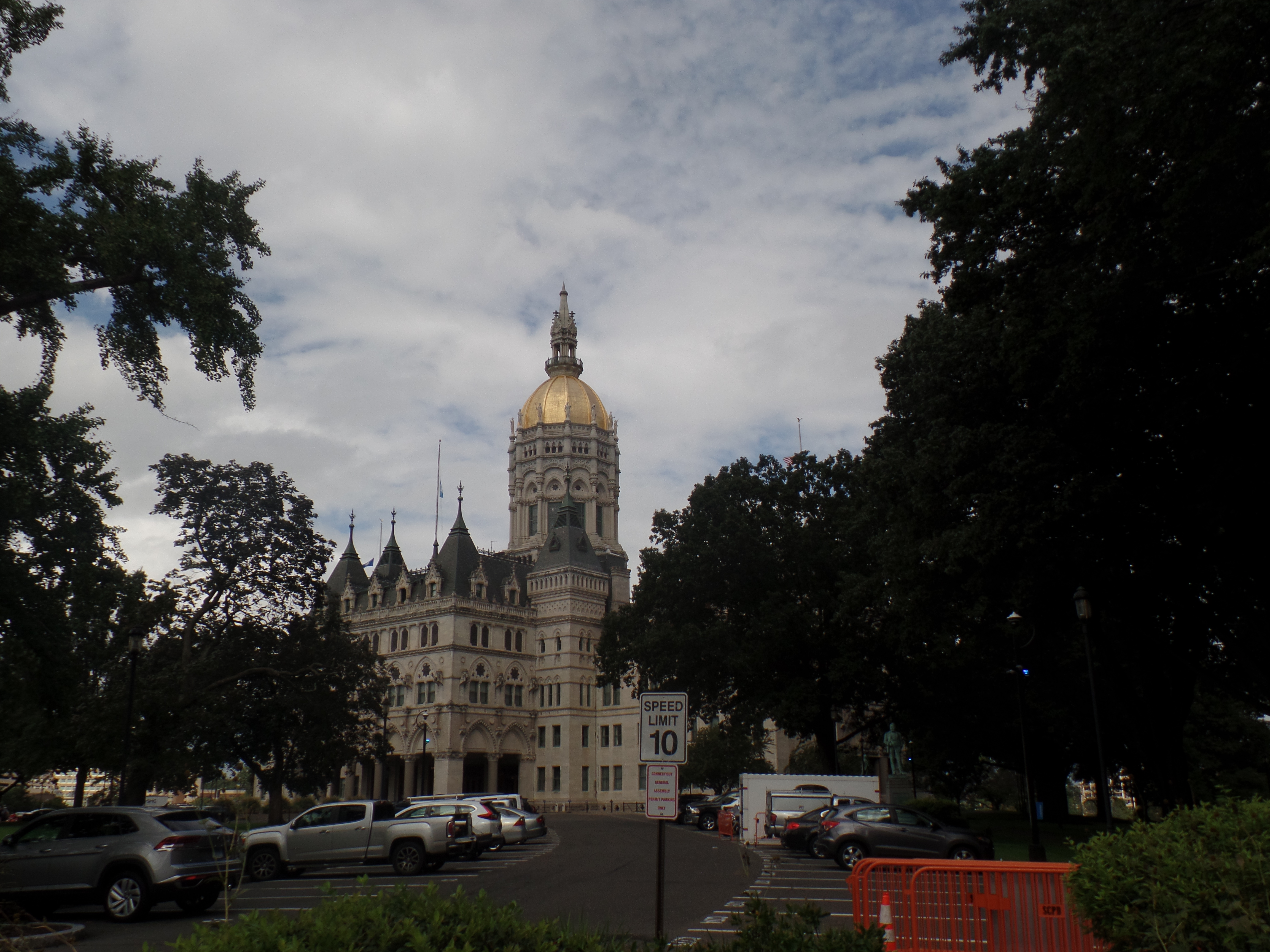
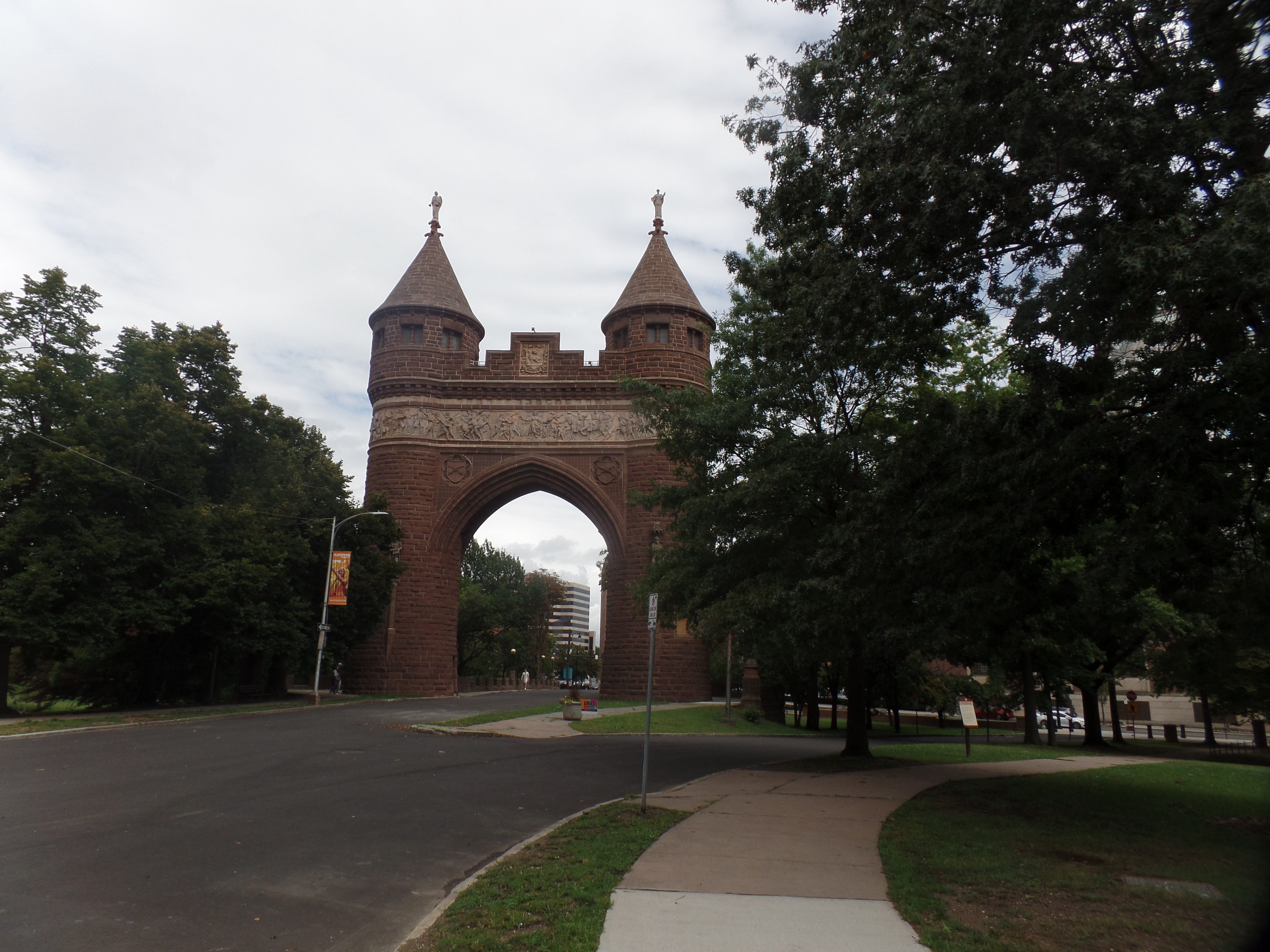
Bushnell Park is one of the crown jewels of Hartford. Connecticut’s capital city is known for its insurance corporate headquarters and, along with so many other northeastern cities, for its struggles to renew vitality. Hartford has a magnificent core. Stopping there today, on the way from Kittery to this small, and vibrant, western suburb of Philadelphia, I found these gems:
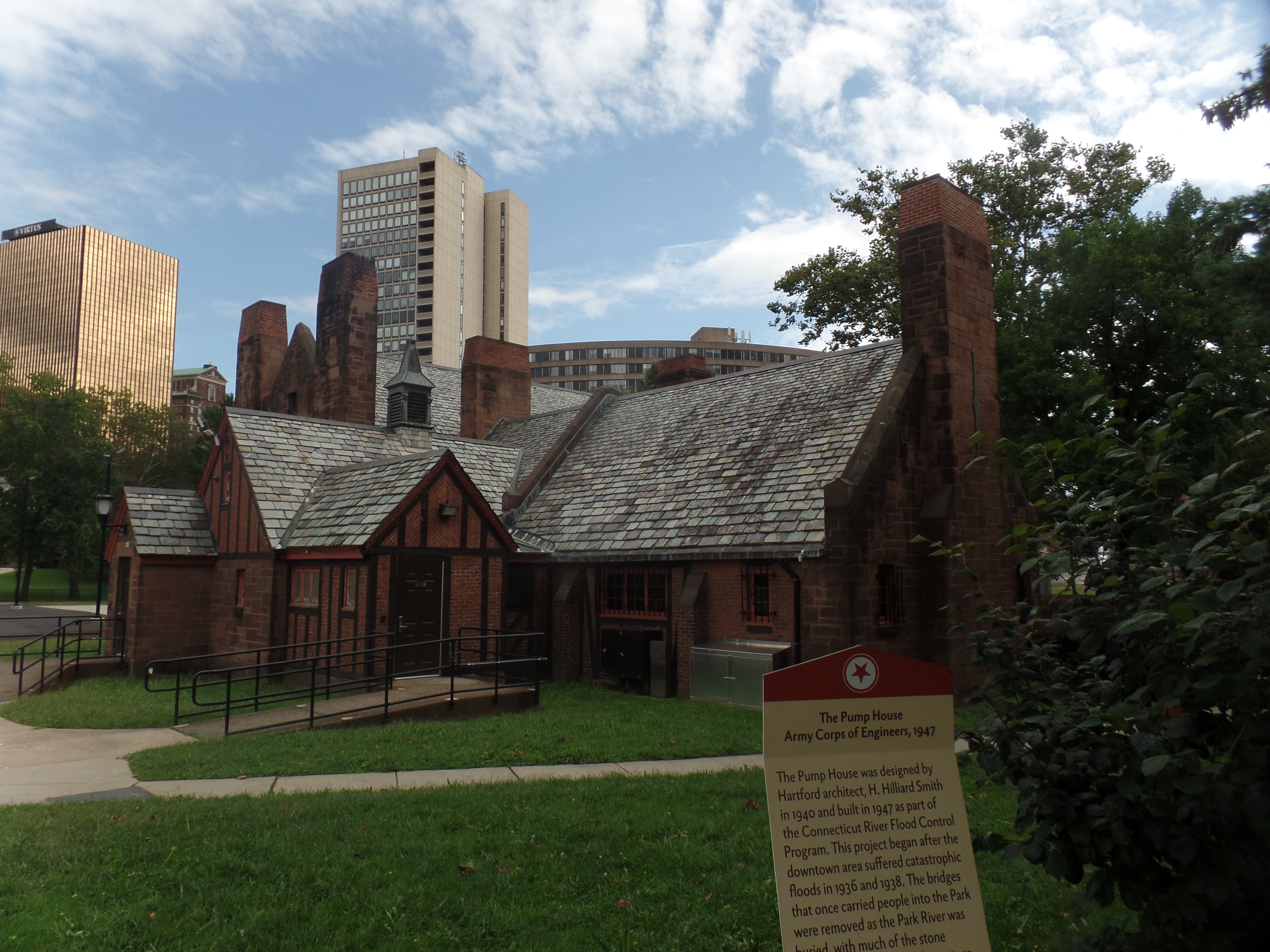
Statue of Apollo, near State Capitol, HartfordEast side view of State Capitol, HartfordHorace Bushnell Theater, HartfordPond and fountains, Bushnell Park, HartfordSoldiers and Sailors Memorial Arch, HartfordThe Pump House was built in 1947, as part of the Connecticut River Flood Control Project, after downtown Hartford suffered deluges in 1936 and 1938.
This last item hints at solutions that might be pertinent to resolving the woes of other flood-stricken communities. As I write this, two Massachusetts towns: Leominster and North Attleboro, are dealing with severe damage caused by flooding. Several Alaska towns had flood damage, earlier this year. Across the globe, fire in the Mediterranean region (Greece, Sicily, Algeria) has been followed by flooding (Libya). It is perhaps essential to more closely examine the role that wetlands might have, in mitigating both flood and fire, since one usually follows the other.,
It also helps, that the majesty of smaller cities be recognized, appreciated and celebrated.
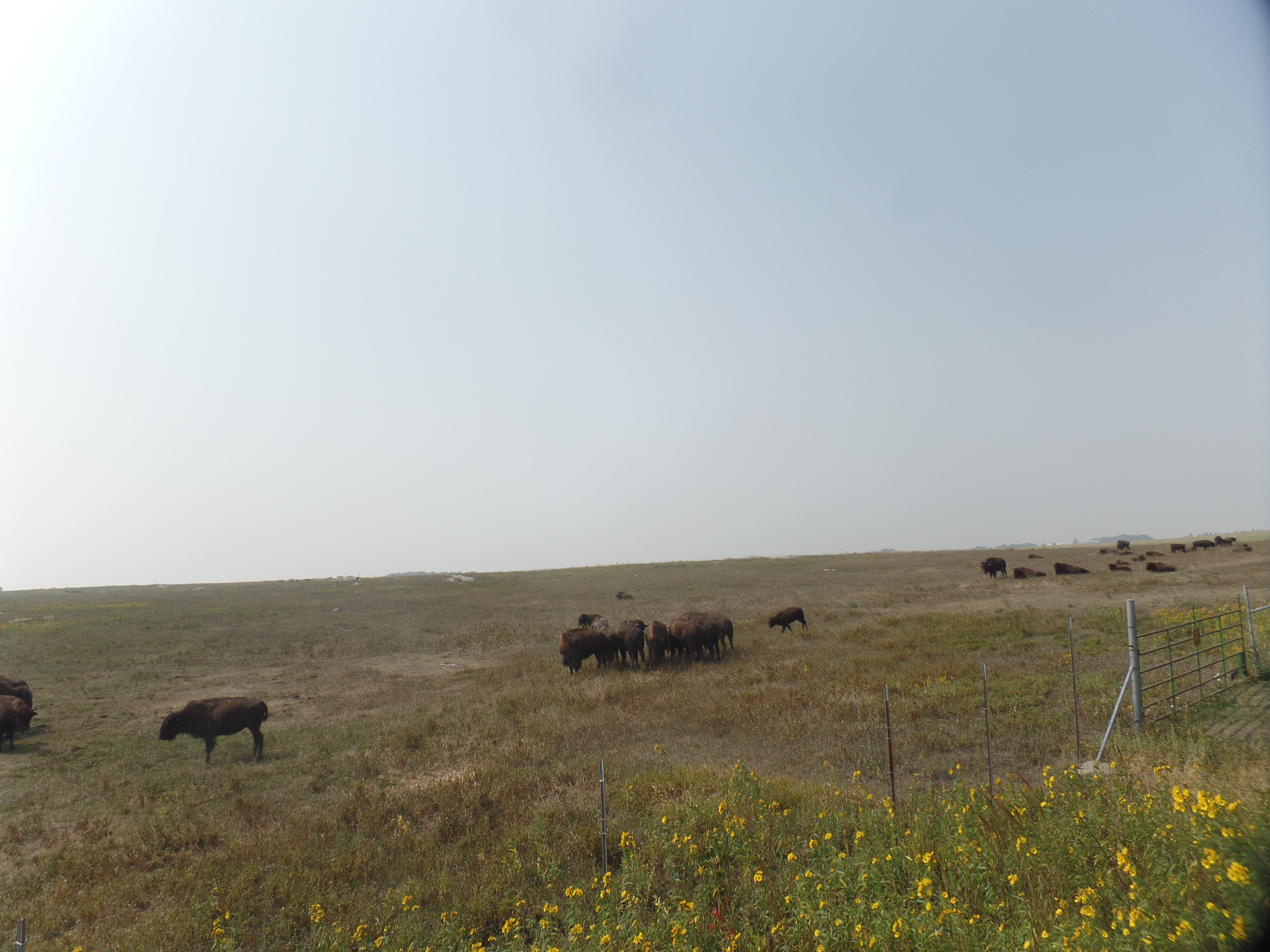
September 6, 2023, Mauston, WI- The bison herd was spread out, mostly standing around, with some lying peacefully about and a few rolling in the dust. This was the order of the morning, at Blue Mounds State Park, just north of Luverne, MN. I had come here partly to walk along the pinkish-blue rocks and partly to sit and watch the bison, who were safely behind a fence, with a three-mile range in which to graze, wallow and just be bison, without any “intrepid” ( I think of another word that ends in -pid) tourists trying to get selfies with the beasts.
Bison herd at Blue Mounds State Park, Luverne, MN (above and below)
There was only respect for these magnificent animals, from those of us who stopped to see them today. A woman who had come with a friend, and her little dog, sat in the car with the pet, while her friend went to observe the herd.
The rocks on the cliffs to the north of the bison pasture were equally magnificent- in an understated way.
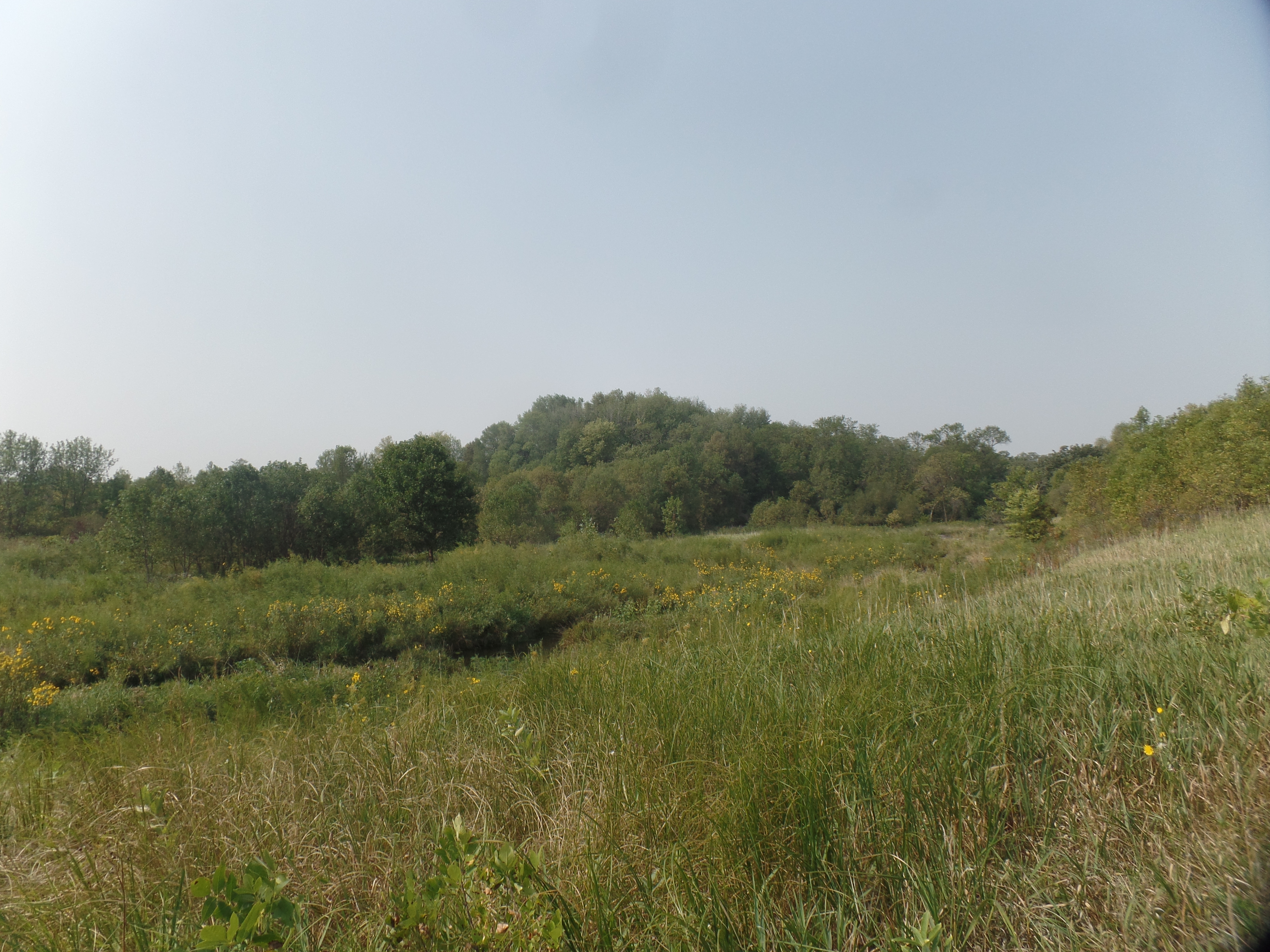
Blue and pink ledges, at Blue Mounds.Top of north Blue MoundRolling prairie, along Blue Mound Loop Trail
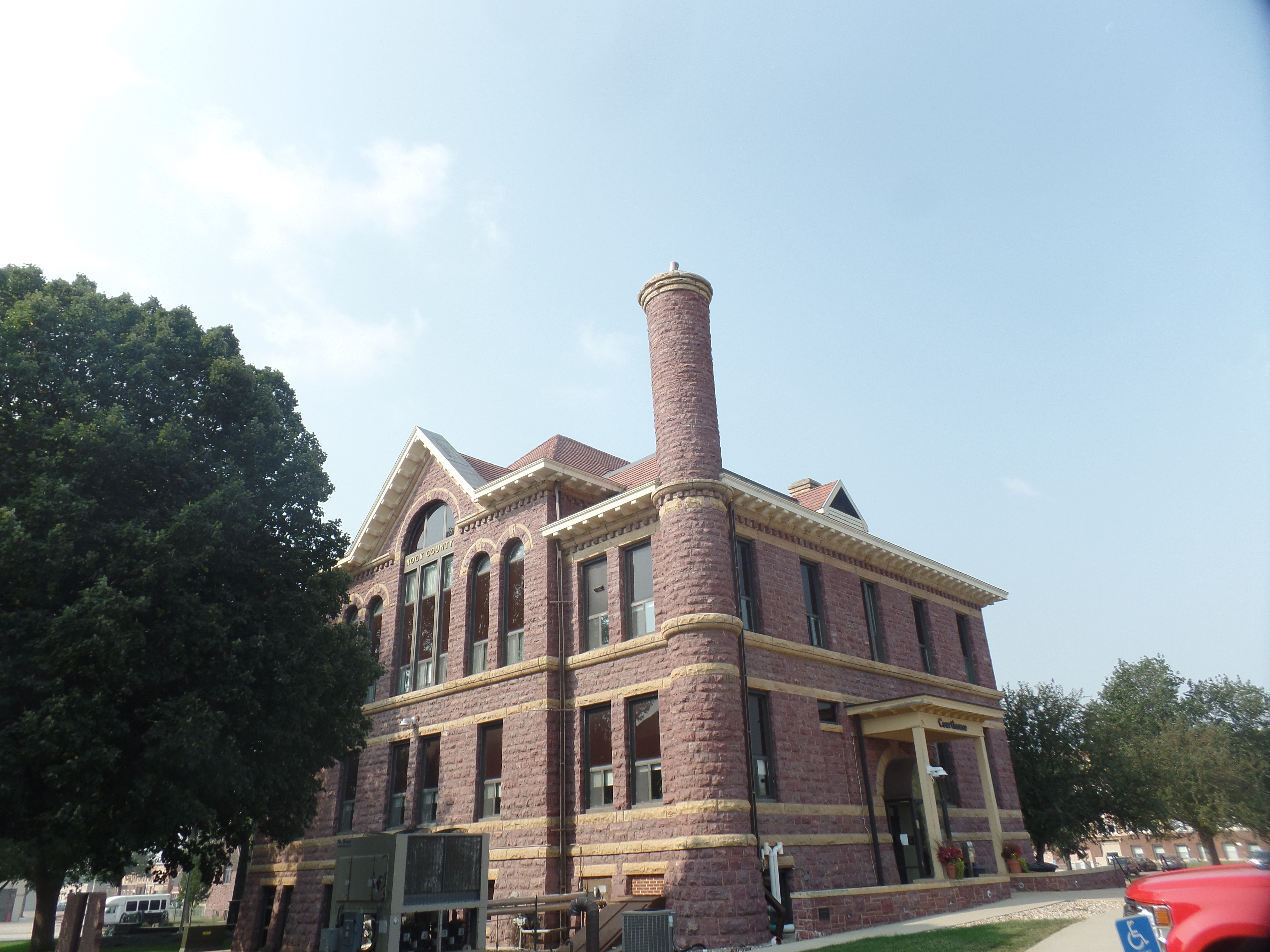
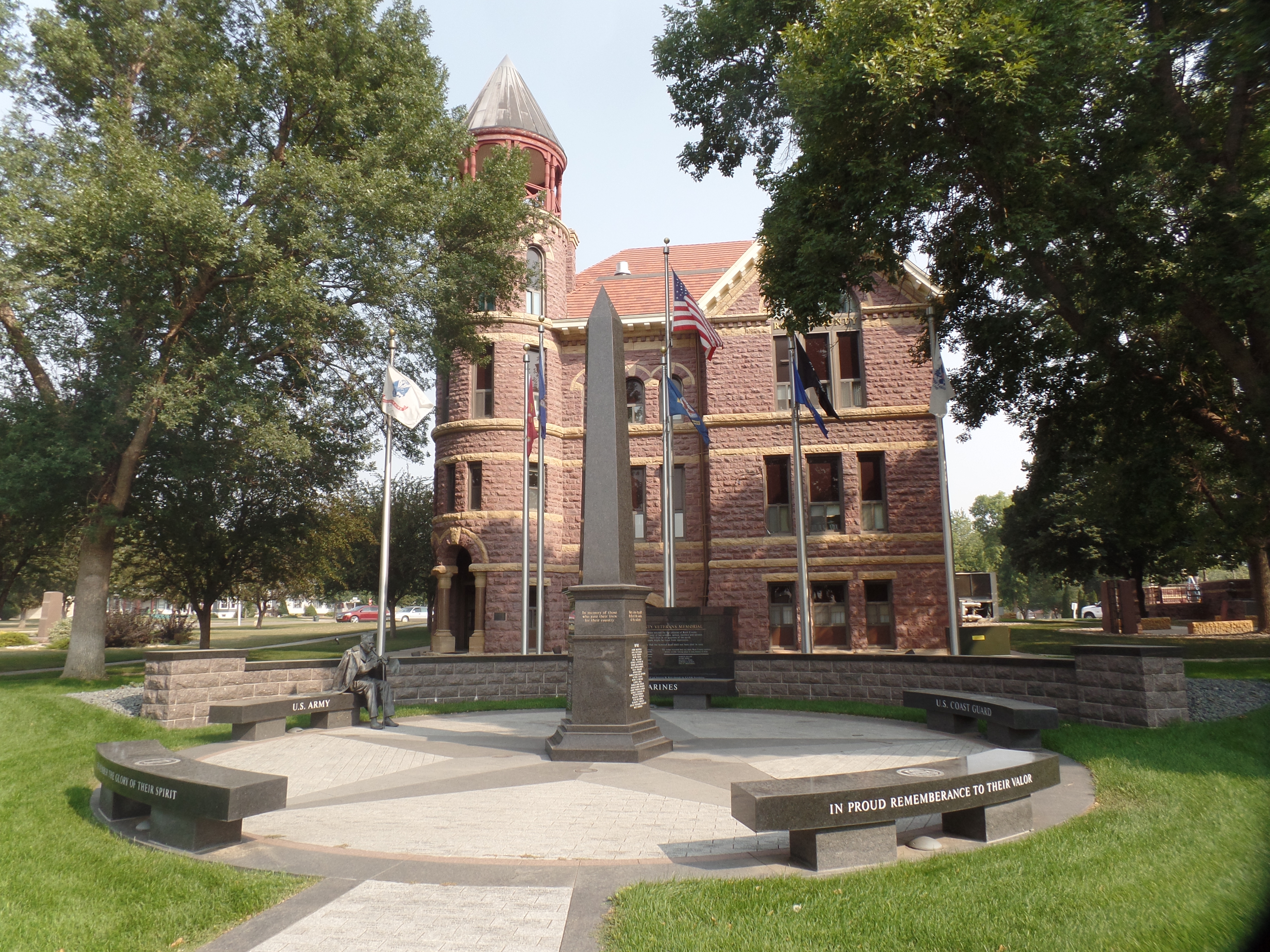
Like Pipestone to the north, Luverne relied greatly on locally quarried stone to build its public structures.
Rock County Courthouse, Luverne, MNRock County Veterans Memorial, with front of Courthouse in view
After a three-hour drive, the second homage of the day was on a more somber note: Laying a wreath at the gravesite of Mendota Heights Police Officer Scott Patrick, slain in the line of duty, on July 30, 2014, at a traffic stop in nearby West St. Paul. He had been a partner to an extended family member; thus, the added impetus to pay my respects.
Let all know the value of a life cut short. It is gratifying that his killer was caught and brought to justice, serving a life sentence for first degree murder.
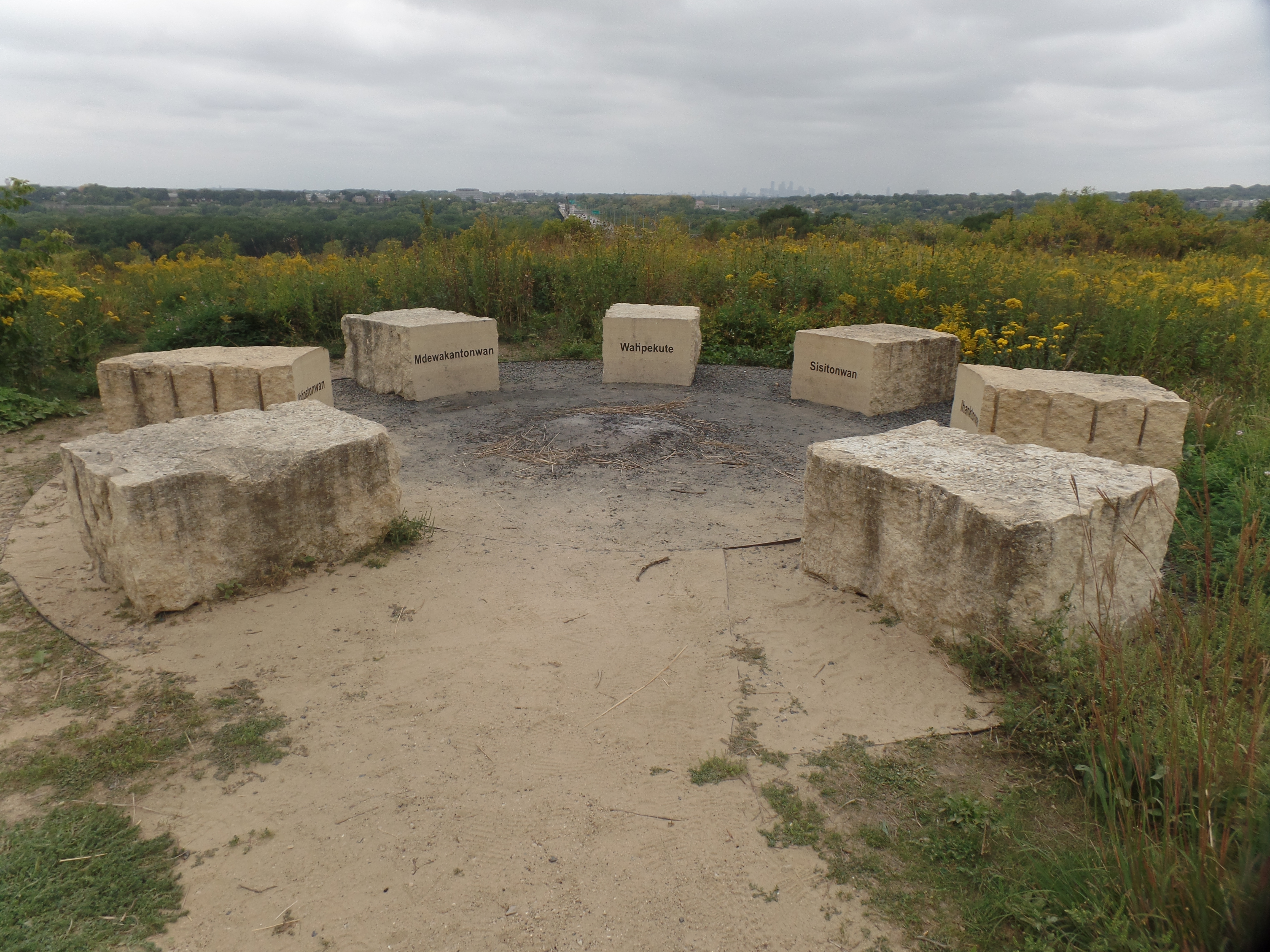
Adjacent to Acacia Park Cemetery, where Officer Patrick was laid to rest, is Oheyaw ahi, “A Place Much Visited”, in the Dakota language. It is also known as Pilot Knob. This is a site sacred to the Dakota people, who occupied the area, when Europeans first came there. The hill was a regular gathering place, as the name implies. Sacred ceremonies were commonly observed at Oheyaw ahi. After a treaty was signed, in 1851, giving control of the area to the U.S. government and land to white settlers, 1300 Dakota people were confined to a fenced camp on the opposite bank of the Minnesota River. Many died there, during the winter of 1851-52, and were buried at Oheyaw ahi. Thus, to this day, the site is hallowed ground and sacred to the Dakota Nation. I walked quietly, on established trails, and offered prayers for those who suffered then, and those who may be suffering now.
The north gathering place, on Oheyaw ahi, near Mendota Heights, MN.
After the full day, it took a while, but I found my rest stop for the night, at Quality Inn, Mauston.
September 5, 2023, Luverne, MN- The lady from somewhere in Florida stepped out into the open air observation deck, at Golden Spike Tower, North Platte, felt the bracing Great Plains wind and rushed back inside. When I came back in, myself, she remarked that it was “a nice two seconds of fresh air- Brrr!” My mind went back to the February, 1987, ride on the Chicago El, and a stoned goofball opening the door, which got stuck until a world-weary conductor came along, giving the rest of us a true dose of “bracing”. 67 F , 40 mph winds and all, just felt refreshing, this morning.
Golden Spike Tower
I like the Great Plains, finding more here to appreciate than many do. Then again, that may be said of anywhere I’ve been-and the Southwest does remain my Home Base of choice. Nebraska has its share of flat cornfields, which are themselves hugely important to the nation’s, and the world’s sustenance. It also has its share of forested land, including a National Forest, up near Chadron, in the northwest of the state. I did not get anywhere near there, today, but did pass a number of small forests, particularly along the Platte River, its forks and the many irrigation-focused reservoirs that dot its plain. The Platte, like its fellows to the west, is suffering. It is mostly sand bars, these days-hoping for rain.
The first part of the morning was spent in homage to all that the railroad industry has done for the good of humanity-even as we, with some degree of justification, fret about the after-effects of fossil fuel use. My take is that all this concern should propel us into a Green Economy, which it is doing-just not fast enough to suit some people. The change-over needs to be done carefully, though, lest those whose interests lie in the old energy format convince the masses of people to resist what is, in the long run, best for the planet and for all living things within its gravitational pull.
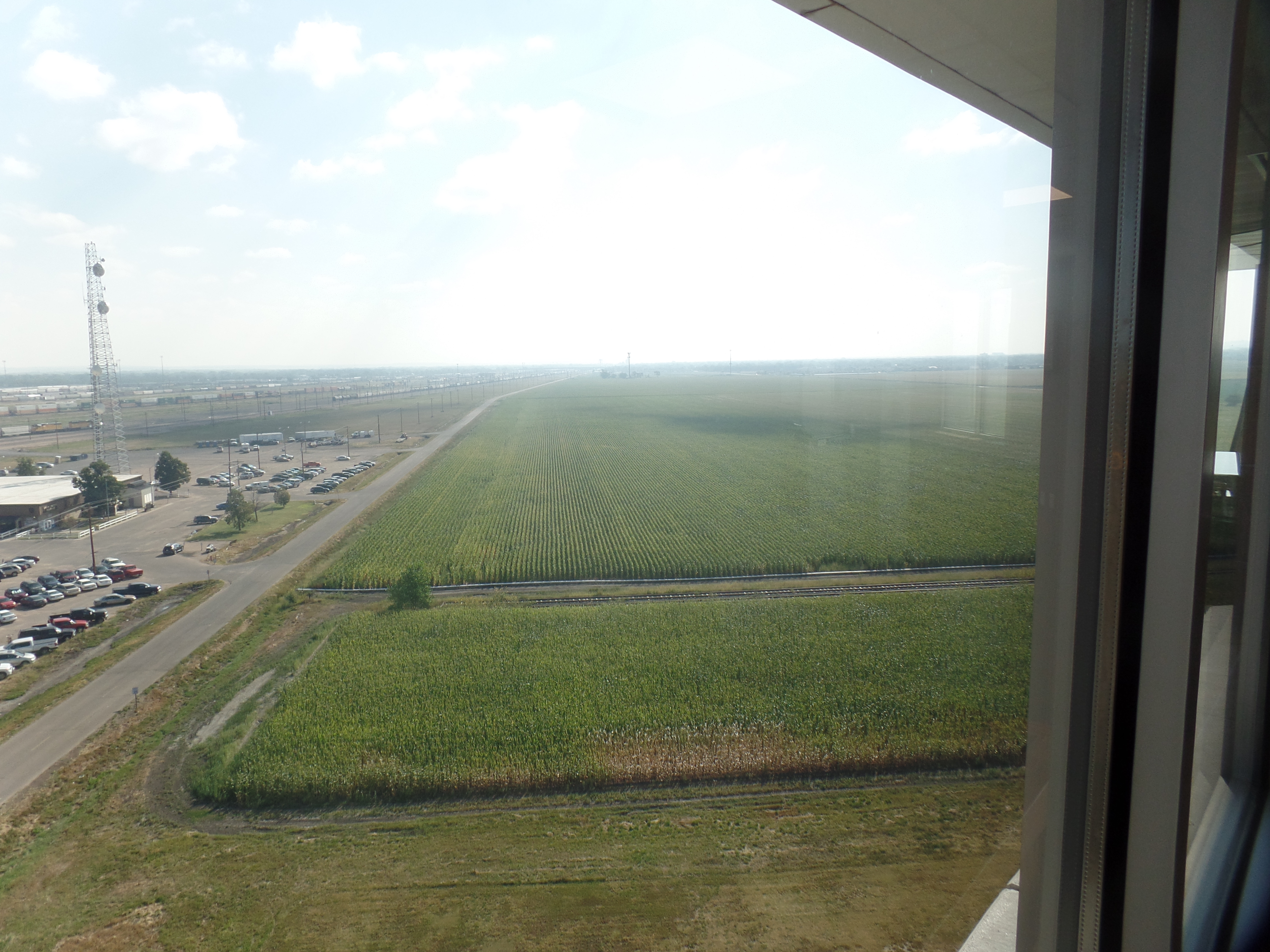
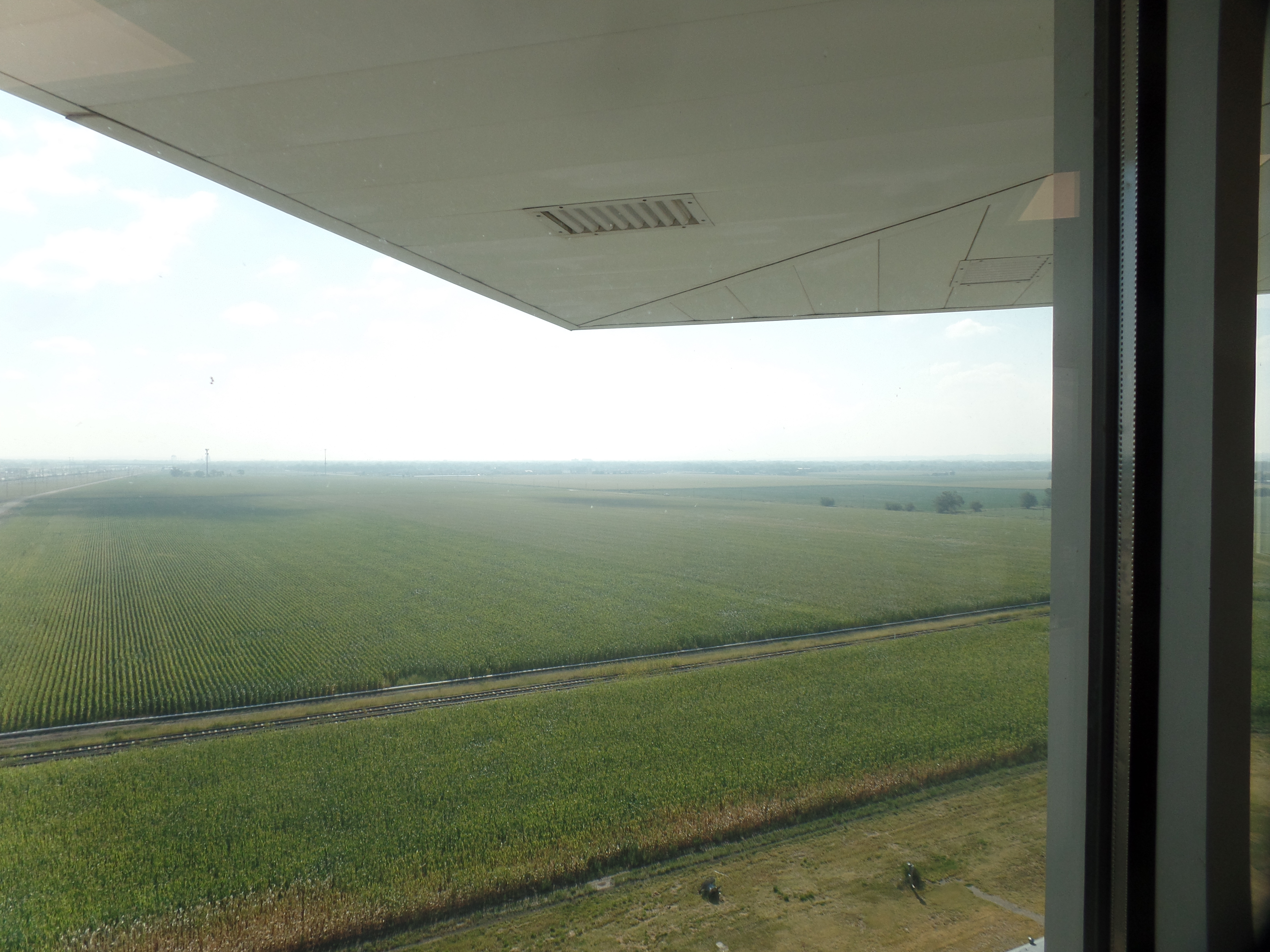
Corn fields abut the Bailey Yard, home to Golden Spike Tower. The Bailey is the largest Classification Rail Yard in the world, being 8 miles long and occupying 2,850 acres. Union Pacific trains, centered here, transport goods, and more than a few crafty travelers, to 23 states. As the name, Golden Spike, implies, it was on a Union Pacific track, in Promontory, Utah, where the spike that brought the country’s rail system to completion was driven into the ground. This tower, at this yard, underscores that feat.
Union Pacific’s leased cornfield, at Bailey Yard, North Platte (above and below)
There has been more care taken to let tired land lie fallow or be protected by cover crops, in the past five or six years. People are learning, from the excesses of the Monoculture Boom of the last two decades.
A field at rest, on the northwest side of Bailey Yard.
One more fact about Bailey Yard: In 1941,in the aftermath of Pearl Harbor, a young North Platte woman named Rae Wilson recalled that the grandmothers of her town had operated a canteen for servicemen, during World War I. She wanted to do the same in her time, and approached Bill Jeffers, the President of Union Pacific, and a North Platte native, for permission to use a vacant room in his company’s North Platte terminal. He gladly offered the space, free of charge, with the caveat that the community provide all that was needed-food, drink and furniture. He knew that North Platte, and the surrounding area, would rise to the occasion. That, the community did, in spades. Beginning with a company of Kansas National Guardsmen, on Christmas Eve, 1941, thousands of troops passing through North Platte were fed and shown a warm welcome by the community-with plenty of support from communities across Nebraska, northern Kansas and northeastern Colorado. Remember, this was before there many processed foods, before microwave ovens; everything was made from scratch. The effort continued until 1946. The passenger terminal was torn down in 1973, so Bailey Yard maintains a replica of the canteen and offers a video account of the efforts.
I continued on, after viewing the video, stopping for lunch in the town of Gothenburg, an hour east of North Platte. Here, at Deb’s Diner/Nana’s Country Kitchen, I struck up a conversation with two local gentlemen, over lunch. One of the men had been in Colorado Springs, as I had, this past weekend. He told of taking a cabin at a large facility on the northwest side of town, and of his hapless wife getting into bed-and being stung by a bee, that had been trapped between the sheets! Good thing she wasn’t allergic-and there was plenty of mud outside, as it rained almost incessantly, on that side of town. (Mud, for those too young to remember, was the farmer’s medicine for insect stings. I’ve used it quite a few times, though I am no farmer.)
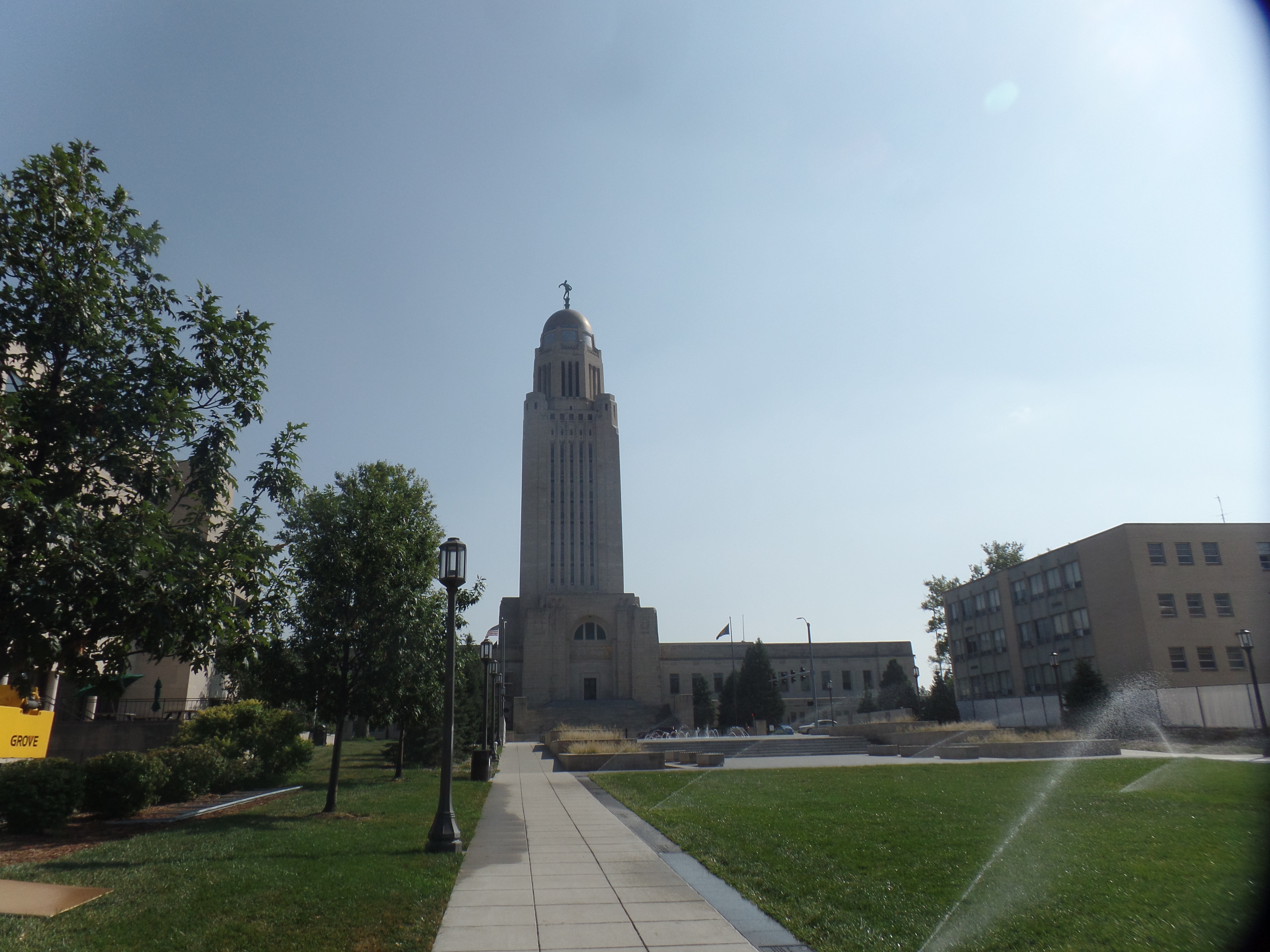
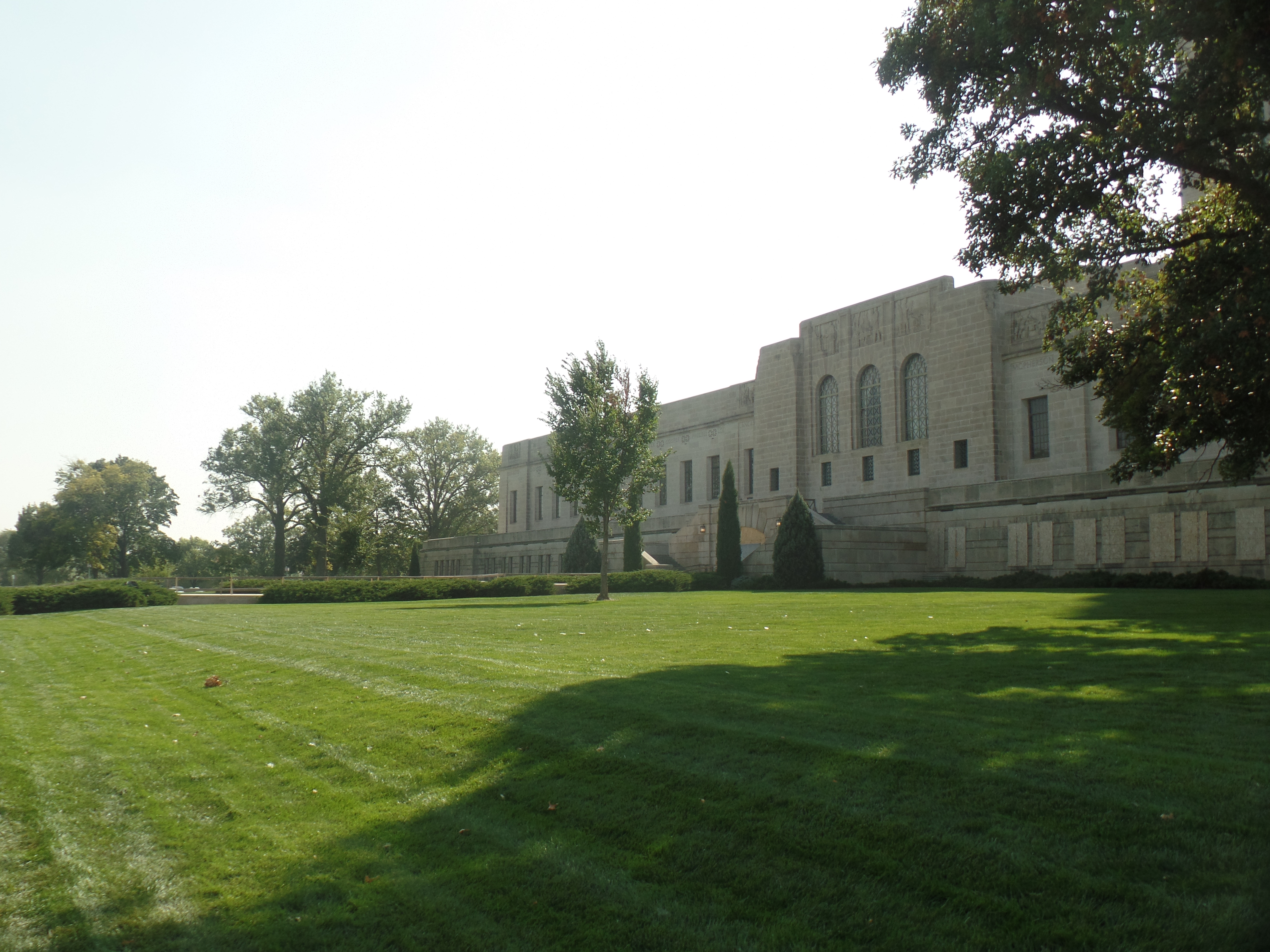
The capital of the Cornhusker State, Lincoln, is a medium-sized city, about an hour west of Omaha, which is somewhat larger. I stopped by the state capitol, for a short circumambulation. The edifice is in the shape of a skyscraper, though its base has expanded, as state government has grown over the decades.
Nebraska State Capitol, LincolnBase of Nebraska State Capitol, spreading southward.View of Nebraska State Capitol, from the east.The capital city’s namesake.
The day was fading, though I had plenty of energy left, so I wended the way north, past Fremont, Winnebago, Sioux City and the southeastern sliver of South Dakota, to the small quarry town of Luverne. Tomorrow, I might hike a bit at Blue Earth State Park, and pay respects to the victims of the Mankato massacre, before heading to Mendota Heights, and laying a wreath at the grave of a police officer, who was the work partner of an extended family member, and who was killed in the line of duty, nine years ago. I became aware of his murder,whilst paying similar respects to George Floyd, in 2021. It is past time, but murder is murder-and Officer Scott Patrick deserves to be remembered for his service and his life, every bit as much as any other victim of our national intemperance.
August 23, 2023- In August, 1974, a family visiting from Montreal had taken a cabin at a resort, in western Maine, where I was working for the summer. A fire was built in the hearth, then thinking that it would be secure and burn itself out-in the hearth, the family went to bed. At 2 a.m., the older daughter, 13, smelled smoke and got her parents and sister up and out of the cabin. I was one of the volunteer firefighters who did the best we could to extinguish the fire-and did keep it from spreading. Many of the other crew members were year-round residents of the village. Their own homes would have been at serious risk, in short order, had the blaze spread.
Tusayan is a small town, of about 6,000 people, most of whom work in service industries connected to Grand Canyon National Park’s South Rim. There are also those who serve the servers: The Coconino County Sheriff’s Substation, the Grand Canyon Unified School District and the Town of Tusayan’s government.
Yesterday, much of the town’s populace, and many visitors, were evacuated, due to unusual flash floods. While clean-up will take time, and there is an ongoing threat of more rain, through Friday, the main road-AZ Highway 64, has been re-opened, from the South Rim’s entrance to Williams. The eastern section, from the entrance to Cameron, did not need to be closed, though in taking that road last night, due to a commitment at a school in Prescott, today, I noticed that a severe hail storm had struck the eastern part of South Rim, earlier in the afternoon.
This is yet another in a series of wake-up calls for the tourism industry, and for travelers in general, that the places being visited are inhabited by people who are essentially the same as those who have left their homes to take a rest, be served or to just enjoy a change of pace from home sweet home. Lahaina is the largest, and worst, such tragedy, in a series spanning several years. Gatlinburg, Big Sur, Talkeetna and dozens of small forest encampments all over the continent-and across the globe, have seen fire and flood drive those involved in hospitality lose house and home.
There are many reactions to a tragedy in a vacation-oriented area, as I discussed last week. It has been reported that at least one tourist raged about his dinner reservation being canceled by the Lahaina fire’s burning down the restaurant. We are all on a journey away from self, and towards seeing “all humanity created from the same stock”, as Baha’u’llah wrote in a prayer, 150 years ago. Some of us have, in all sincerity and from a place of generosity, gone to the suffering area and purchased a vacation package, thinking that THIS is the way to help the people in the afflicted community know that the world stands with them. Others have sent large supplies of goods, often without checking as to what is actually needed. These are good-hearted people, who have just not taken the time to hear from the victims themselves, or from their spokespeople. Thus, some want to go to Maui, anyway. Others will go to Tusayan, and expect that business as usual has resumed, because the highway is open. The clean-up will continue, for some time.
Humanity isn’t minimized by where someone lives, or by which economic group they occupy. Yes, paying for a service does mean that one gets a product for one’s money. It is also true, in this age when nearly every place on Earth has something of interest to offer, that we are all both visitors and visited, servers and served.
I find that it is the deep connecting with those who live in a community, that makes visiting the locale worthwhile in the first place.
August 22, 2023- The robust cat sat in my carport, right by the hatchback, and looked at me, as if tho say: “Have you thought this through? Are you sure you want to go up to the South Rim?” It was raining lightly, which was one reason why the cat was sitting in that dry spot. I had, however, looked at the weather forecast for Grand Canyon, and saw PC (partly cloudy).
So, northward I went. Stopping at my Williams favourite, Brewed Awakenings, I fueled up with a Light Wrap and coffee, then headed up to the Park, an hour away from downtown Williams. The first hour or so of my shuttle bus ride/walk was quite pleasant. I took these shots of the Bright Angel Trail, from Trailview Point, just to the west of the Bright Angel.
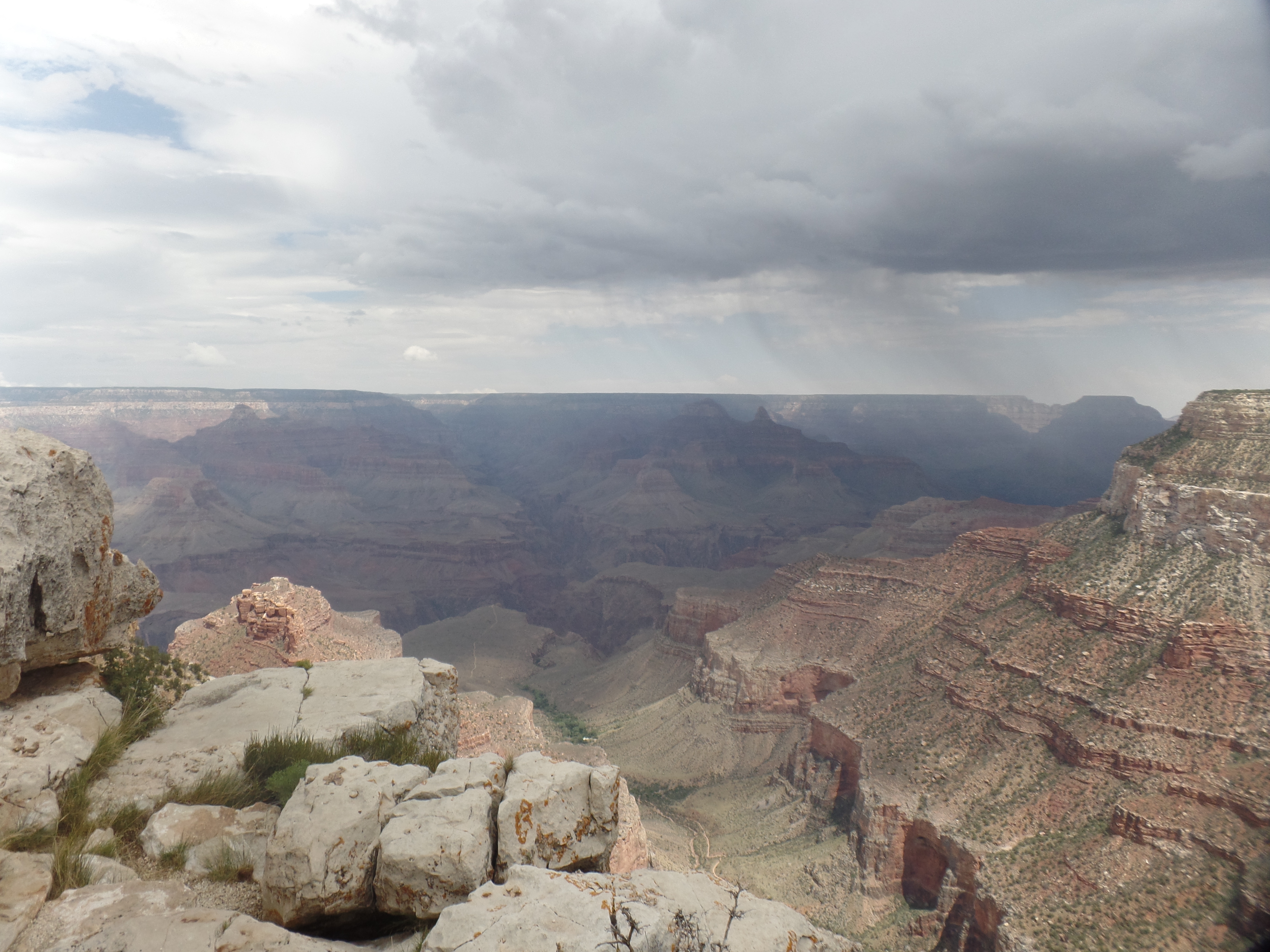
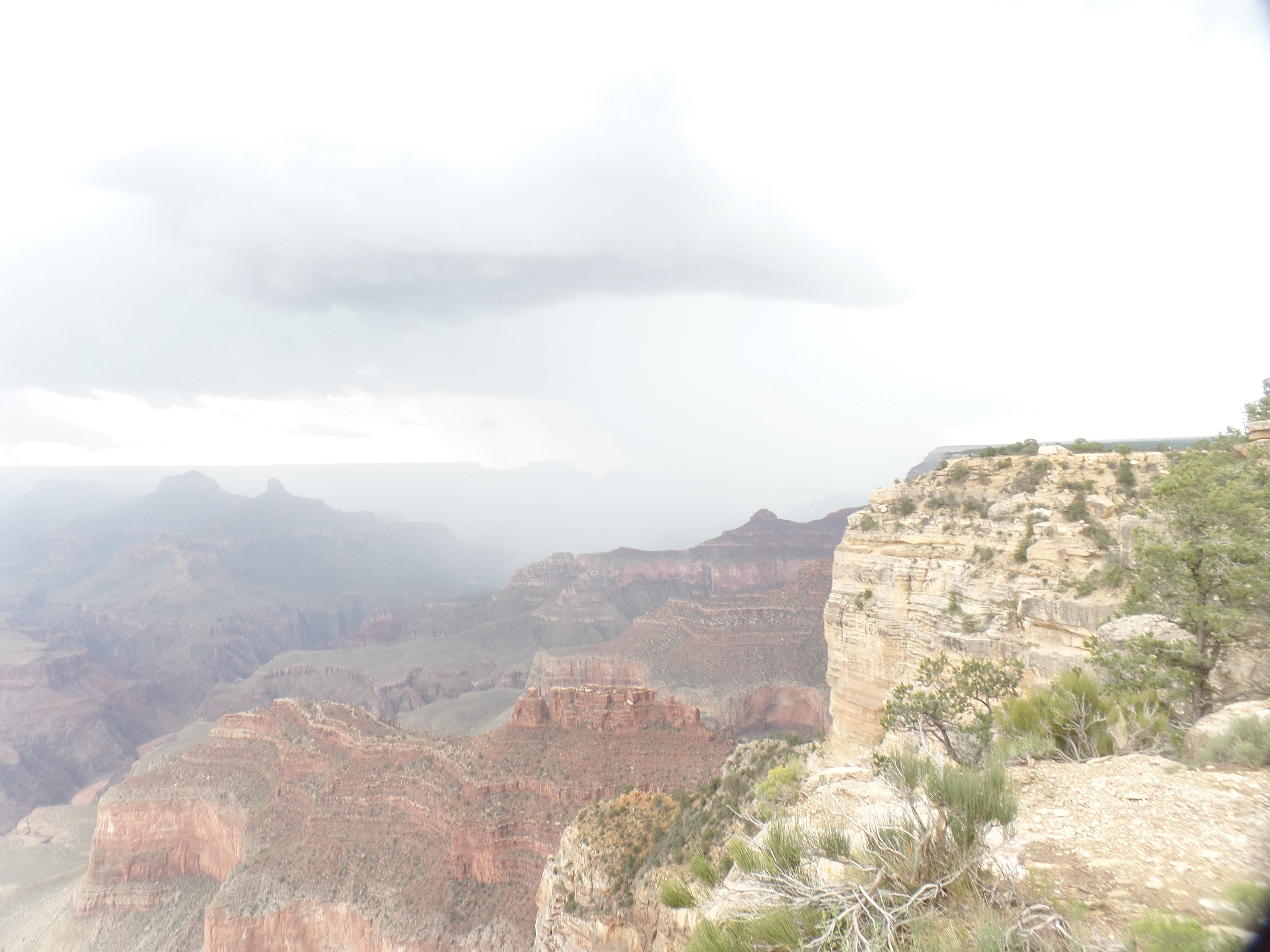
Bright Angel Trail, seen from the west.More of the Bright Angel Trail, from the west.Approaching rain, from Trailview Point
I got back on the shuttle bus and headed to Hopi Point, from where I planned to walk back towards the JW Powell Memorial and Maricopa Point. I got in these shots at Hopi.
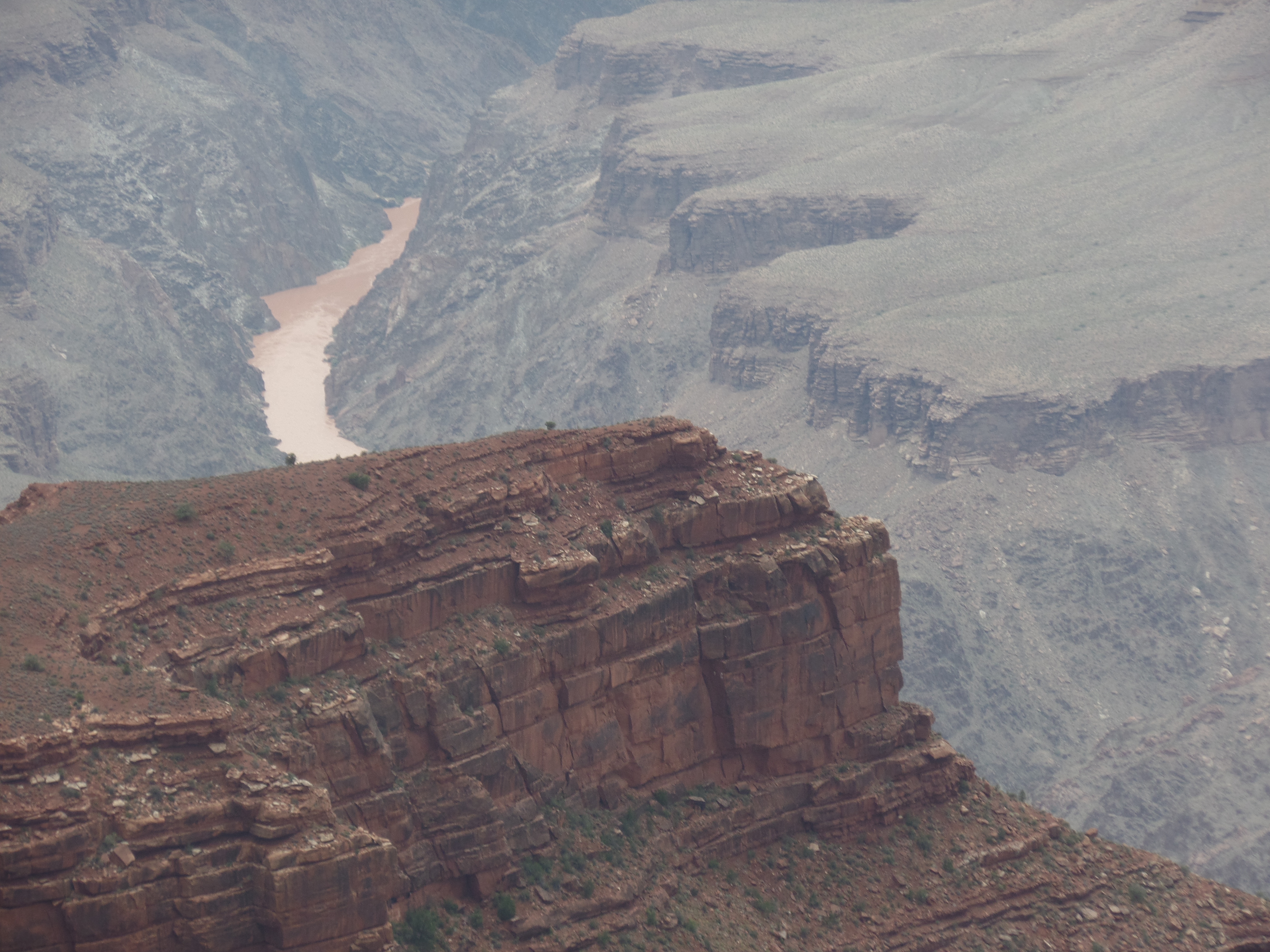
Hopi Point and the Colorado River below.Approaching storm, from Hopi Point
I walked the short distance from Hopi Point to the Powell Memorial. It was then that lightning flashed in the east, a bus driver told me that we would all be evacuated from the Hermit Sector (the near west segment of the Rim Trail, which I had planned to explore in its entirety) and I found a spot to wait for an empty bus, as his was full. In about ten minutes, one arrived and took a bunch of us back to the transfer station. I went into Bright Angel Lodge and had a leisurely lunch, then returned to the transfer point and waited with about sixty other people, for the lightning danger to abate.
After about forty minutes, the storm was judged to have let up, and we went back towards Hermits Rest. I got off at Maricopa Point, walking about 200 yards, to these scenes.
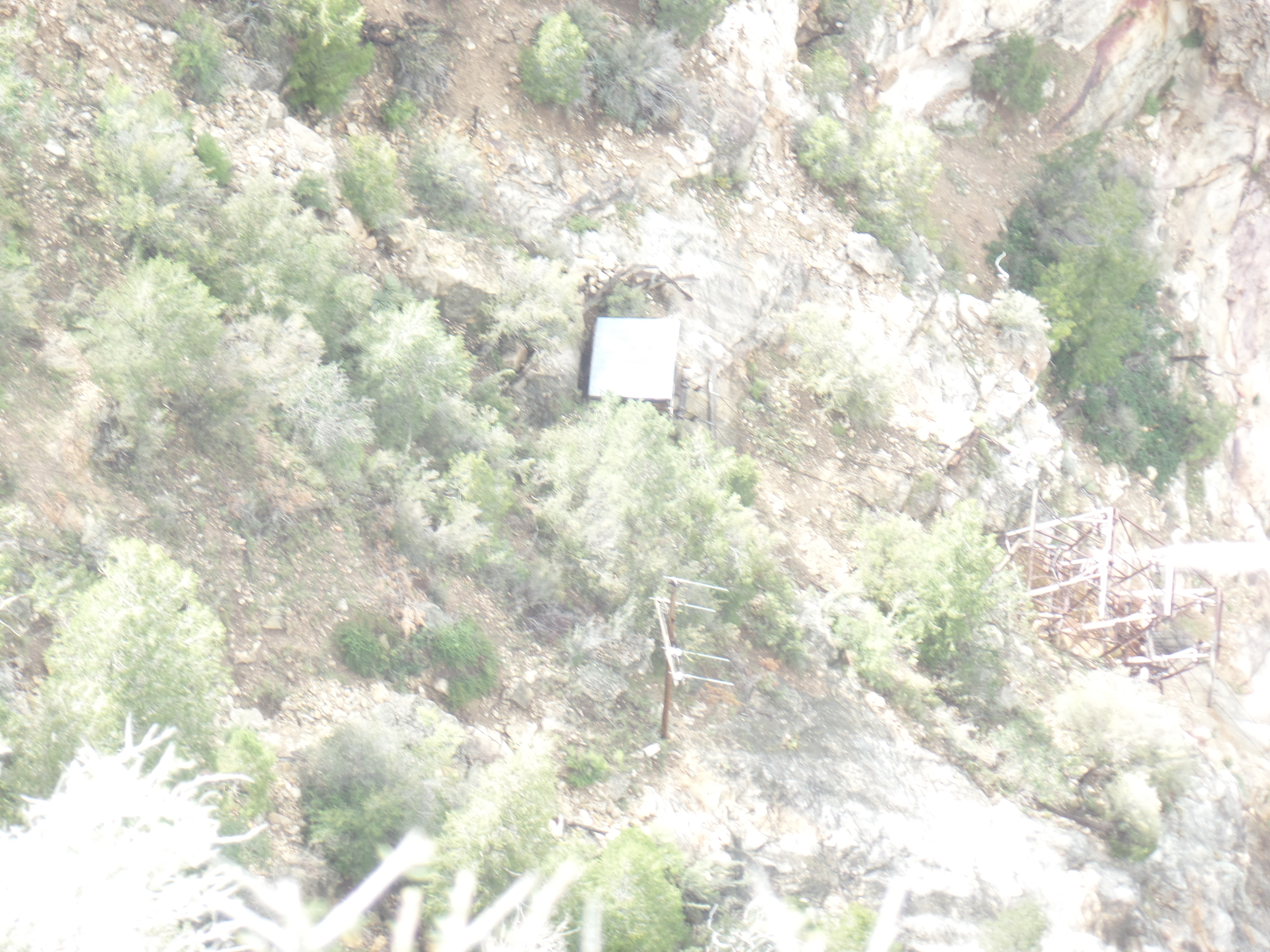
Trailview Point, from Maricopa PointColorado River, from Maricopa PointThe defunct Orphan Mine (copper and uranium) was just below Maricopa Point. It is marked by this memorial.
As it was still not raining again, yet, I walked the .9 miles from Maricopa to Powell Memorial.
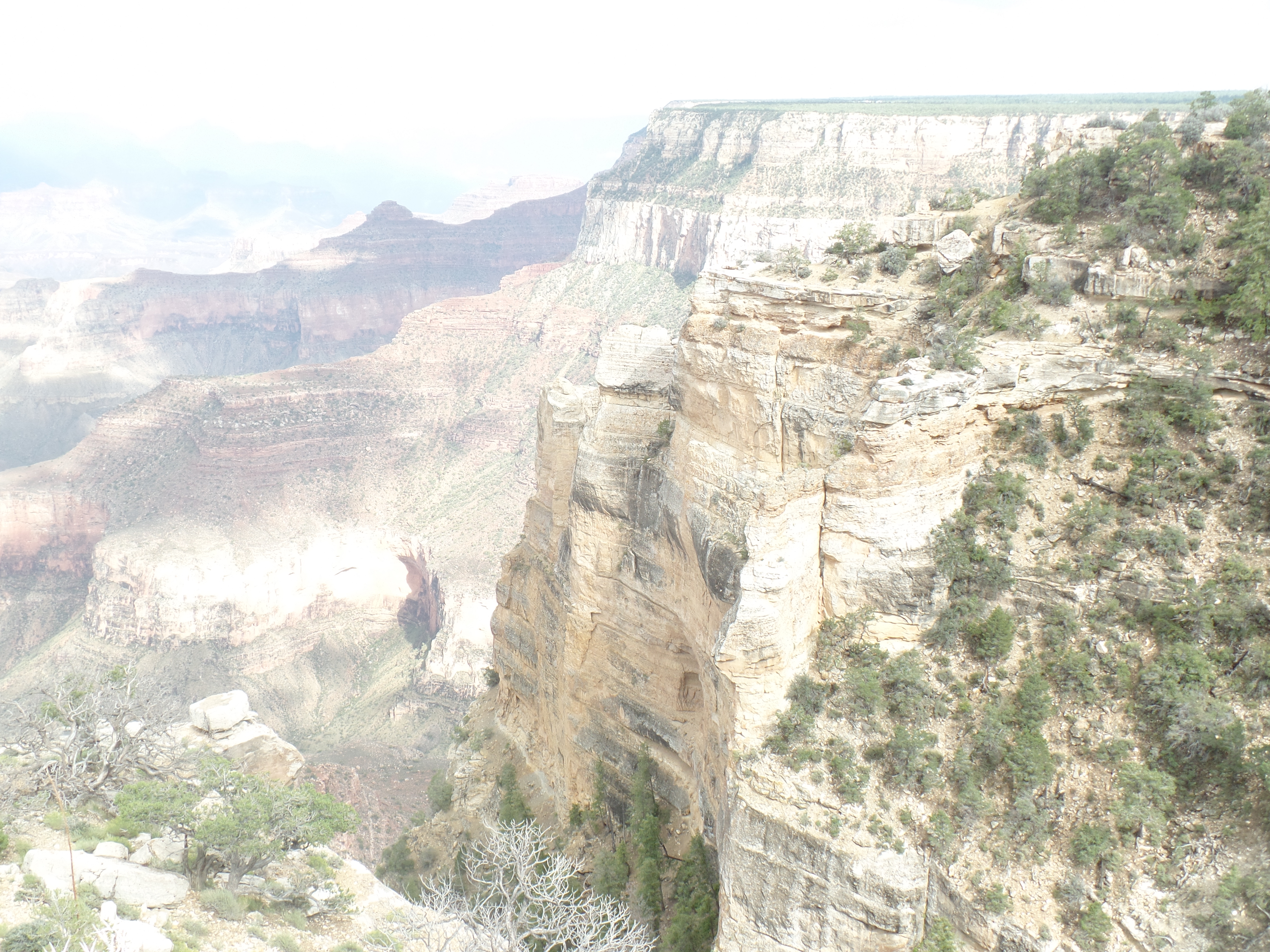
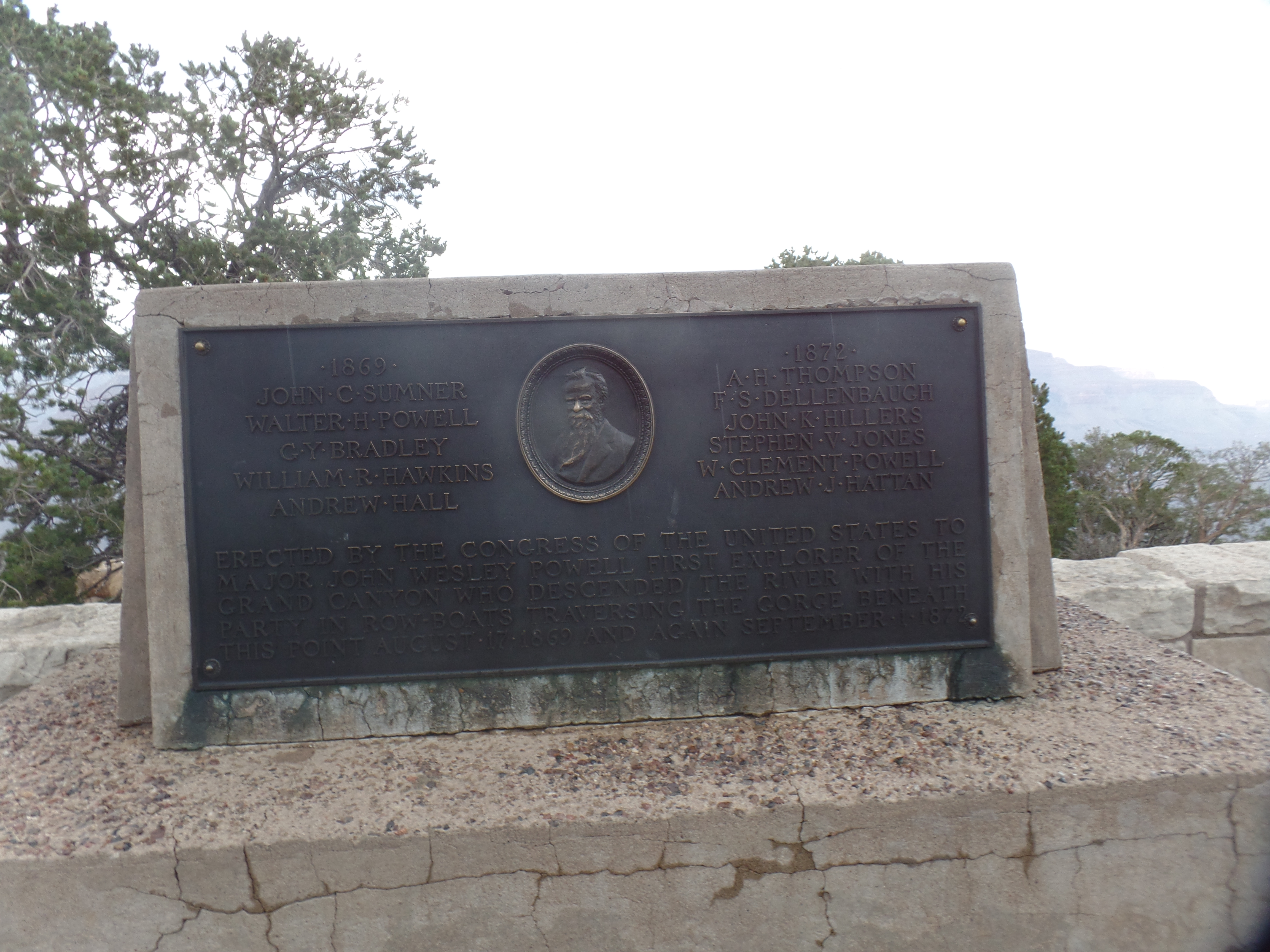
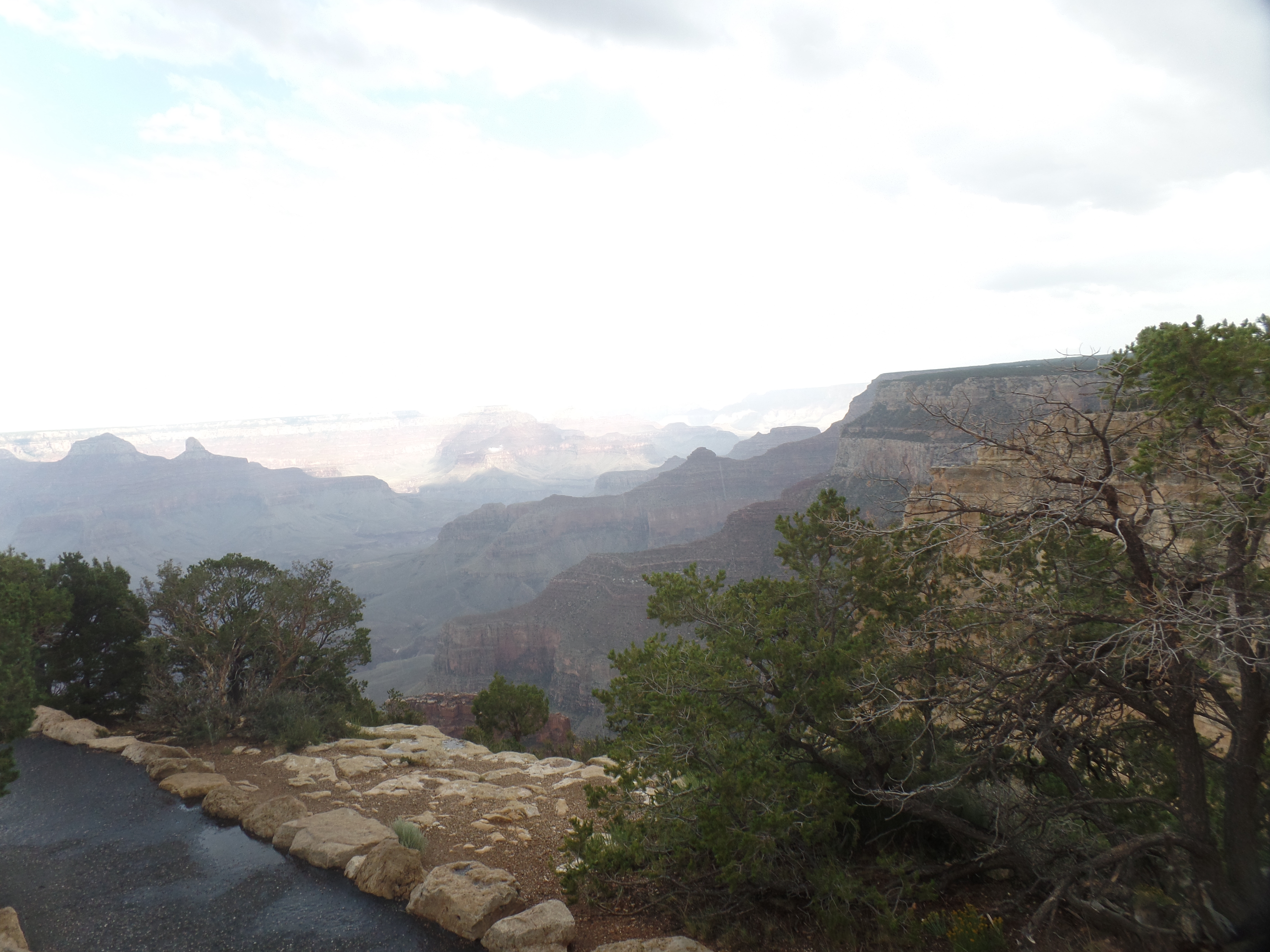
Plaque memorializing John Wesley Powell, first American navigator of the Colorado River, in the Grand Canyon.View of canyon, from Powell Point
Once I got this shot off, the rain began to return, and we were evacuated a second time. I commiserated with the shuttle driver, as it must be quite frustrating to have to repeat an evacuation, only an hour after the first one was lifted. Needless to say, it was time to head for the car and towards home base.
There was a slight hitch in that, as well. The road back to Williams goes through Tusayan, and that little tourist village was flooded. The county sheriff had a road block up, which put those staying in Tusayan, Valle or Williams-or who were scheduled to fly out of Grand Canyon Airport, in a bit of a pickle. For me, it meant driving back by way of Cameron and Flagstaff, which I did. On the way to Cameron, I saw one thing we on the Hermit Sector missed: A huge pile of hail had remnants at roadside, from Mather Point, east to Desert View.
Let it not be said that this year’s monsoon was a total bust.




















 A Sagittarian Seeker