I am always interested in days which match the numerical position of the month in which they occur. 1/1 is universally understood to be special, as it marks the new Gregorian year. 2/2 has the folksy attachment of Groundhog Day, important to those who are sick of winter. 5/5 also has a folksy theme, commemorating the Mexican people’s revolt against a French invader. 6/6 is the day Penny and I were married, in 1982. 7/7 was the day Aram was born. 10/10 is the National Day of Taiwan. 11//11 is both Armistice Day, which ended World War I and Veteran’s Day in the United States.
12/12 is the cusp of autumn and spring, taking on the attributes of the seasons which follow them, more than those which define them in the human mind. For me, the day gave me the energy and focus to make changes in some of my affairs, which needed to be simplified. It was also another day of remaining on the healthy side of things, which is never a small matter.
It is mildly cold here, and will likely remain so until mid-January, when the days gradually begin lengthening, a minute at a time. I’ve actually found December to offer the greatest chance of snow, here in Prescott, though it looks like that won’t happen this year. Someone recently made a remark- “We get the weather we deserve.” Well, if sunshine is what we have coming to us, that will be okay for a time, but there is the water question.
So far, though, 12/12 has not been a day of either significance or trouble-at least around here. May the Christmas season, even with physical distancing, remain a time for celebrating commonality.
When someone tells me that no one died, six years ago next Monday, at Sandy Hook Elementary School and that all the kids are in Witness Protection somewhere,
I beg to differ.
When someone tells me to shut up about those trying to overturn a free and fair election,,
I beg to differ.
When someone says there is no reason to stop putting fetal humans to death, because they aren’t “real people”,
I beg to differ.
When someone says that advocating the increased participation of people of colour in the life of the nation is itself racist,
I beg to differ.
When someone insists that White people can only lose, if “those others” advance,
I beg to differ.
When someone sprinkles urine, and tells me it’s raining,
I beg to differ.
The days when we ought to accept being treated as if we were all born yesterday are long gone.
A few days ago, I took breakfast at a cafe whose owners subscribe to a more dated world view, one more widely expressed in the American West, of the 19th and early 20th Century. There are many good things about the Old West- Respect for others, unbreakable honesty and “My word is my bond”, parents who stood tall for their children. The immediacy of frontier justice, however, may have worked then, but it is now a tool of dark forces.
I felt a bit sluggish, most of today, until my chiropractor adjusted me back into shape. It underscores just how much more I need to ramp up my stamina. While I continue to monitor my temperature and vital signs, as long as COVID-19 remains a nationwide threat, thus far I feel no symptoms. I practice CDC-recommended hygiene, prudently, and know that stressing wellness, and not panicking, are what will get us through in the long run. It has been hard to say farewell to thirty-one people this year, but others have had it far worse. In the end, the darkness of coronavirus will be sundered, by policies and practices of wellness and medical treatment.
Depending on one’s point of view, either the will of the people is being honoured or it is being flouted. I have been told, by fearful individuals, to keep my views on the state of this country to myself, as if silence will stop the worst of things from happening. Truth is, only vigilance will do that and vigilance requires following the laws of the land. The darkness of wishful thinking, combined with the darkness of censorship-both institutional and individual, will cause only continula heartbreak.
The darkness always prepares us for the light that will follow, if we pay attention. In twelve days’ time, the planets Jupiter and Saturn will appear as one, in the southern sky. They will remind us that darkness, though it occupies half of the twenty-four hour day, in time of winter, is no more than the absence of light.
The darkness of ignorance cries out for knowledge. The darkness of disease summons us to better slef-care and wellness. The darkness of fear and hate asks for understanding and a safe way forward.
We can, and will, move into the Light, but it will take a great deal of forebearance and caution, on all sides.
December 8, 2020- At long last, I got myself on track and found the trailhead from which one may walk from the far western edge of Sedona to the northern edge of Cottonwood, a distance of five miles via Limekiln Trail. It was not a particularly chanllenging trail, though I felt the effects of being housebound and Zoom-bound, for much of the past eight months. A series of 30-minute workouts at Planet Fitness keep me in a modicum of shape, but it will take the rigours of the trail, even a fairly flat trail like the Deer Pass-Bill Grey segment, to get back into a semblance of “fighting trim”.
A rumour reached me that I was likely in the presence of a COVID-positive person, last week. It happens, though, that this individual was nowhere near the school, during the days I was working there, so once again, no worries. People are so worn down, so exaperated by the pandemic, that they will often take anything they hear, and run with it, whilst inwardly trembling. I ask one and all, to step back and breathe-We will beat this challenge, by adhering to common sense rules of hygiene, and ,more importantly, of wellness.
Now, back to the trail-
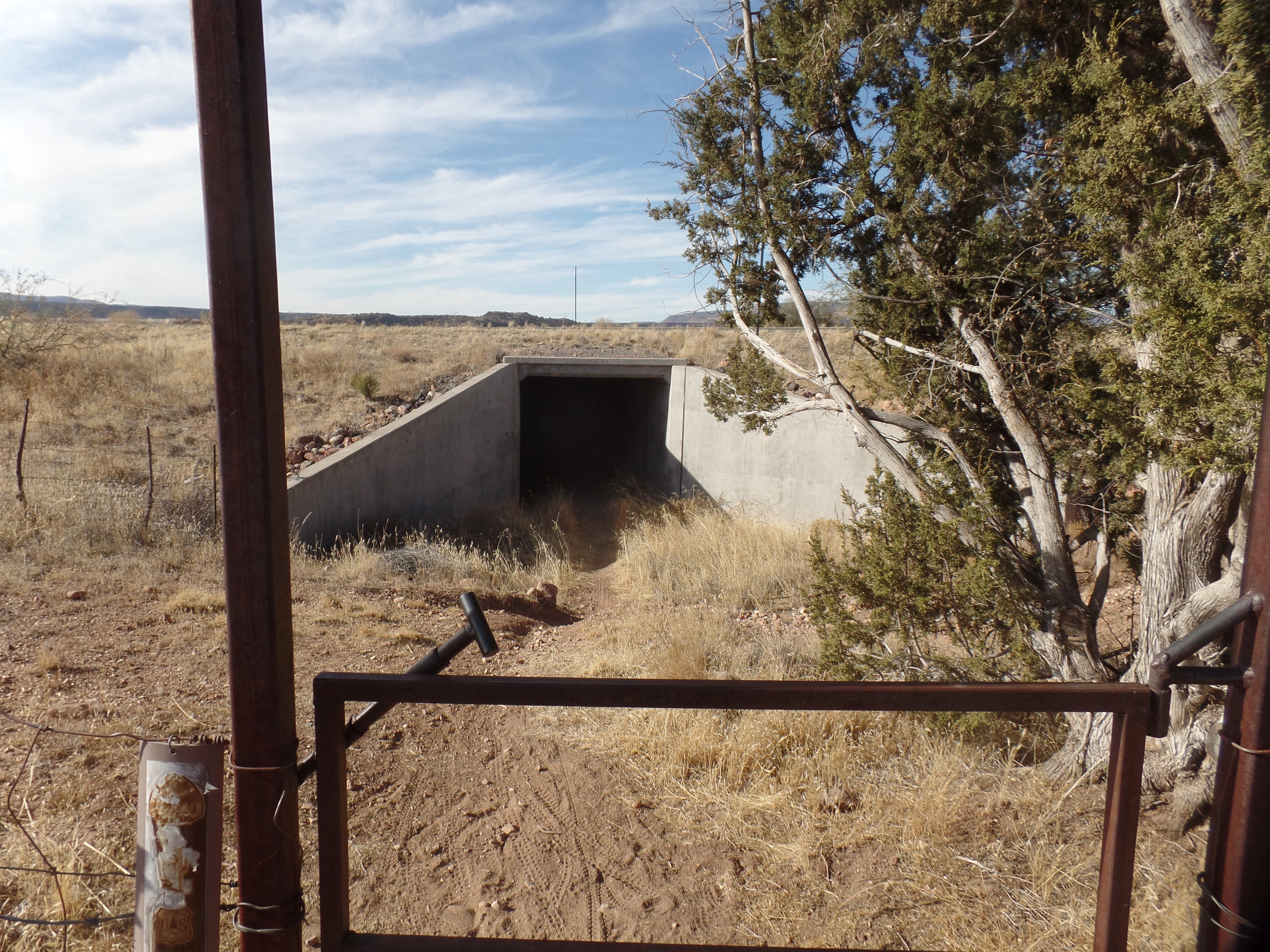
Here is the eastern end of the segment, at Deer Pass. A discerning eye might notice a human face or two, in the midst of the cairn .In order to access the trail to the west, one must use this underpass, under Highway 89 A.
The handles to the gates, on this segment, are diagonal, and after wiggling the handle out, it is then necessary to either lift the gate up, or push it down, in order to secure it again.
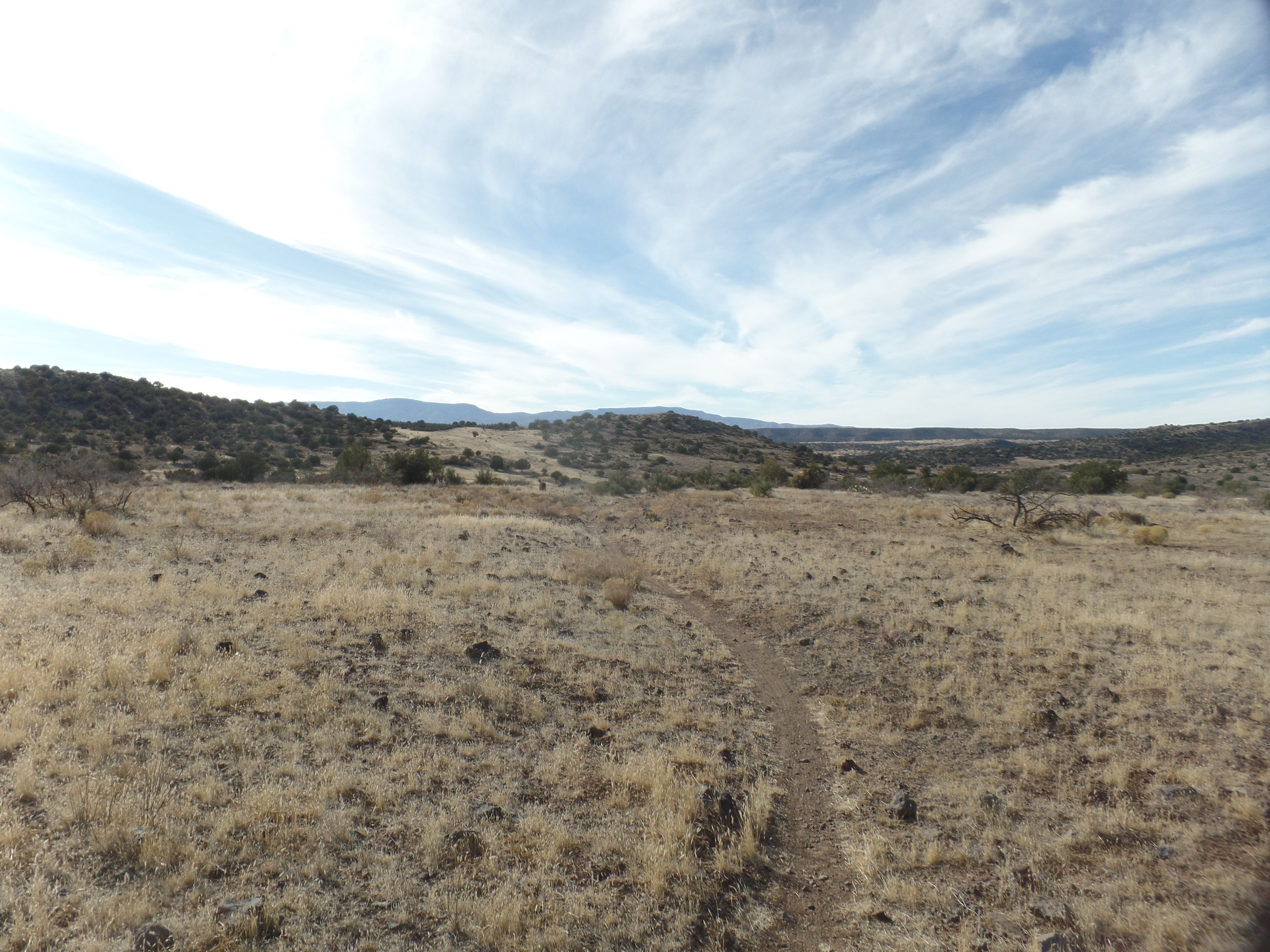
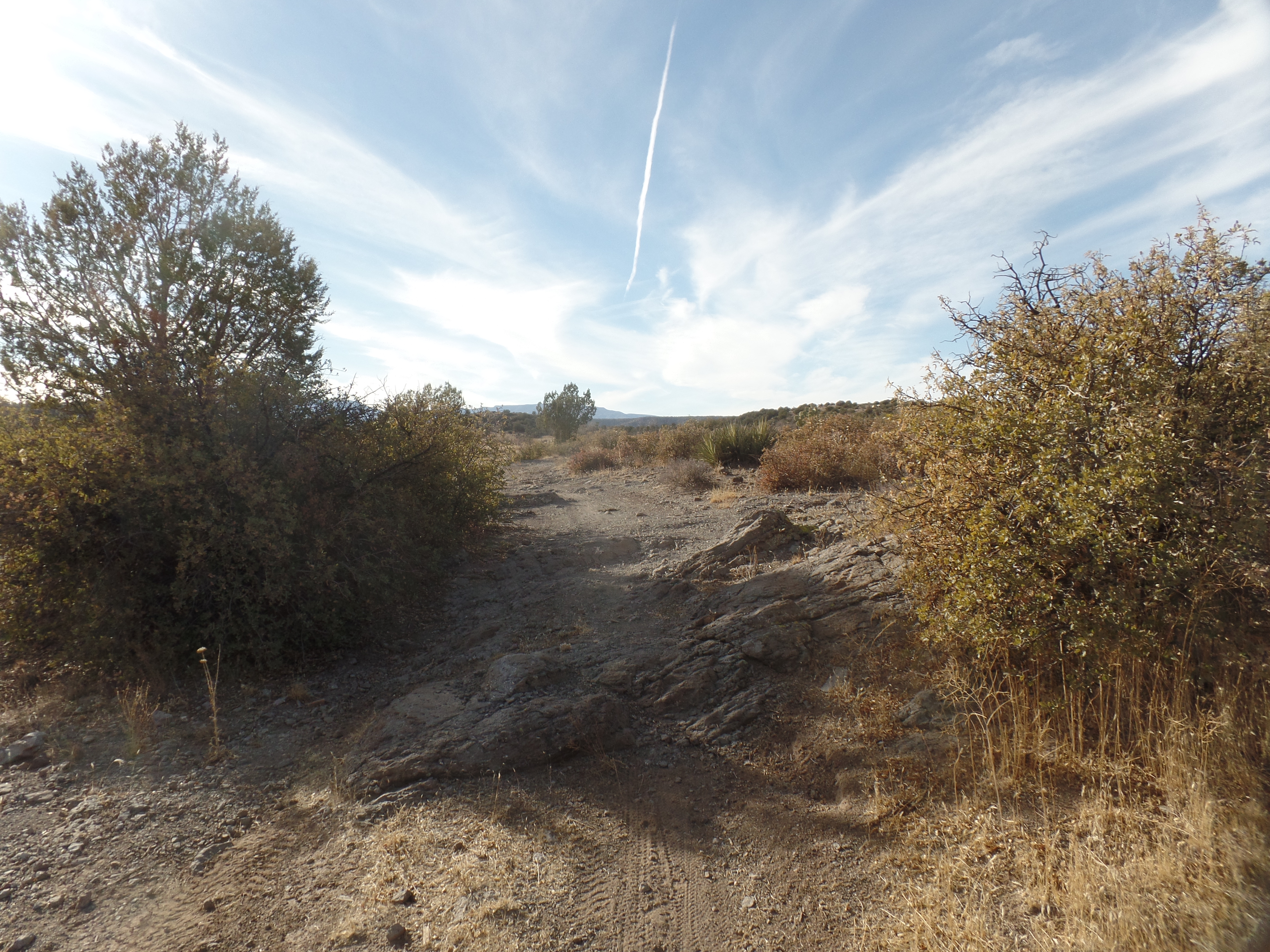
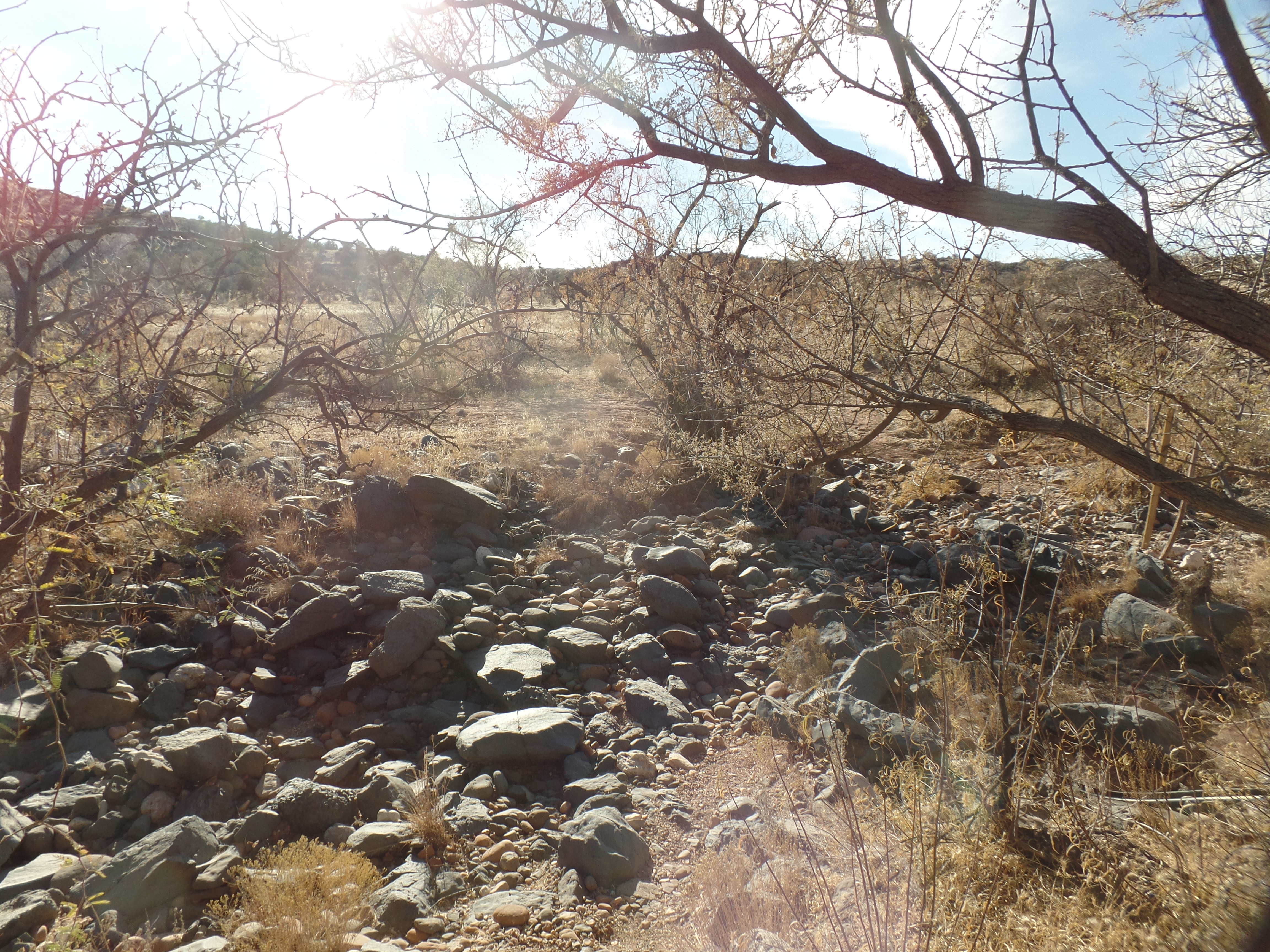
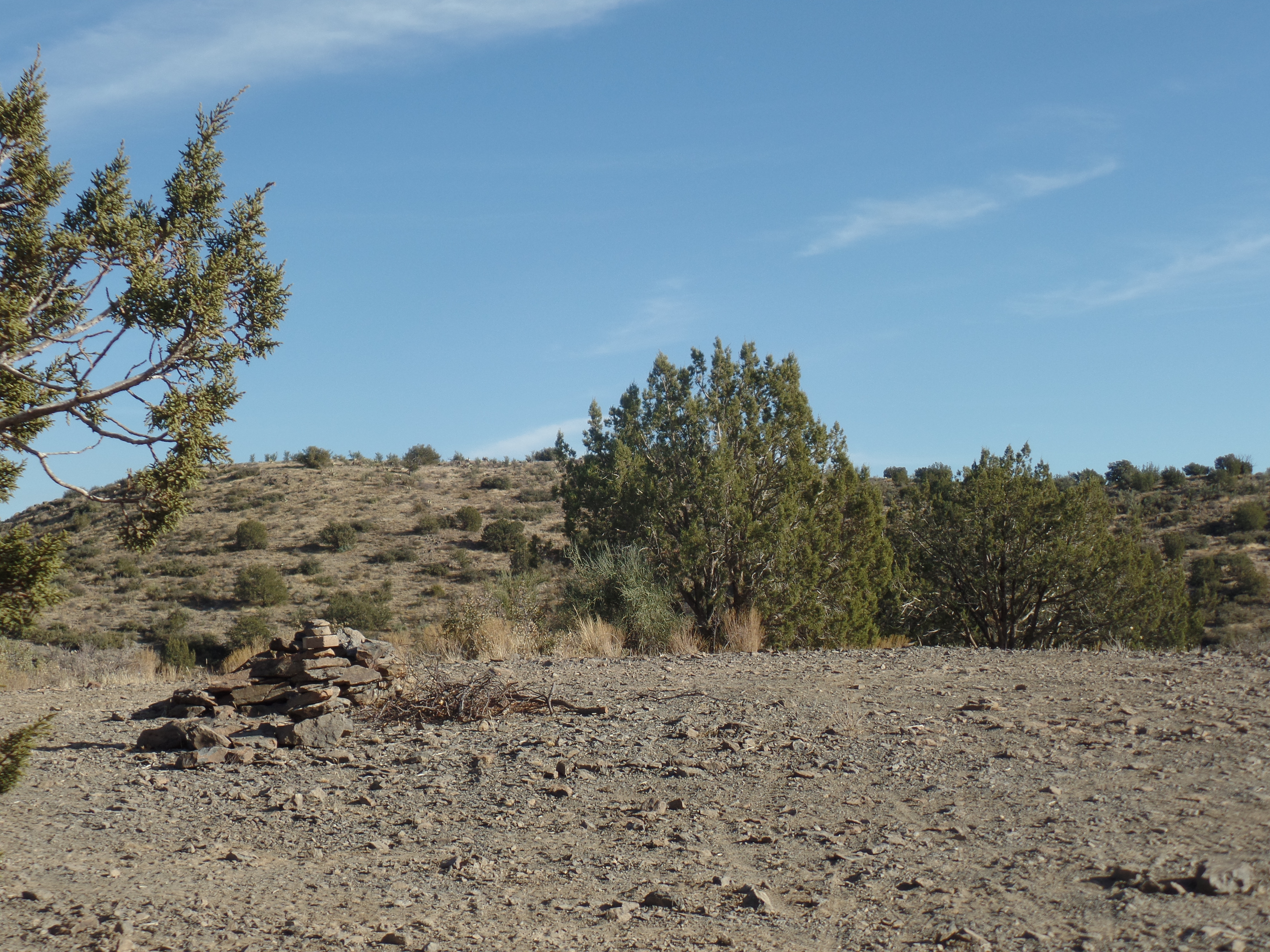
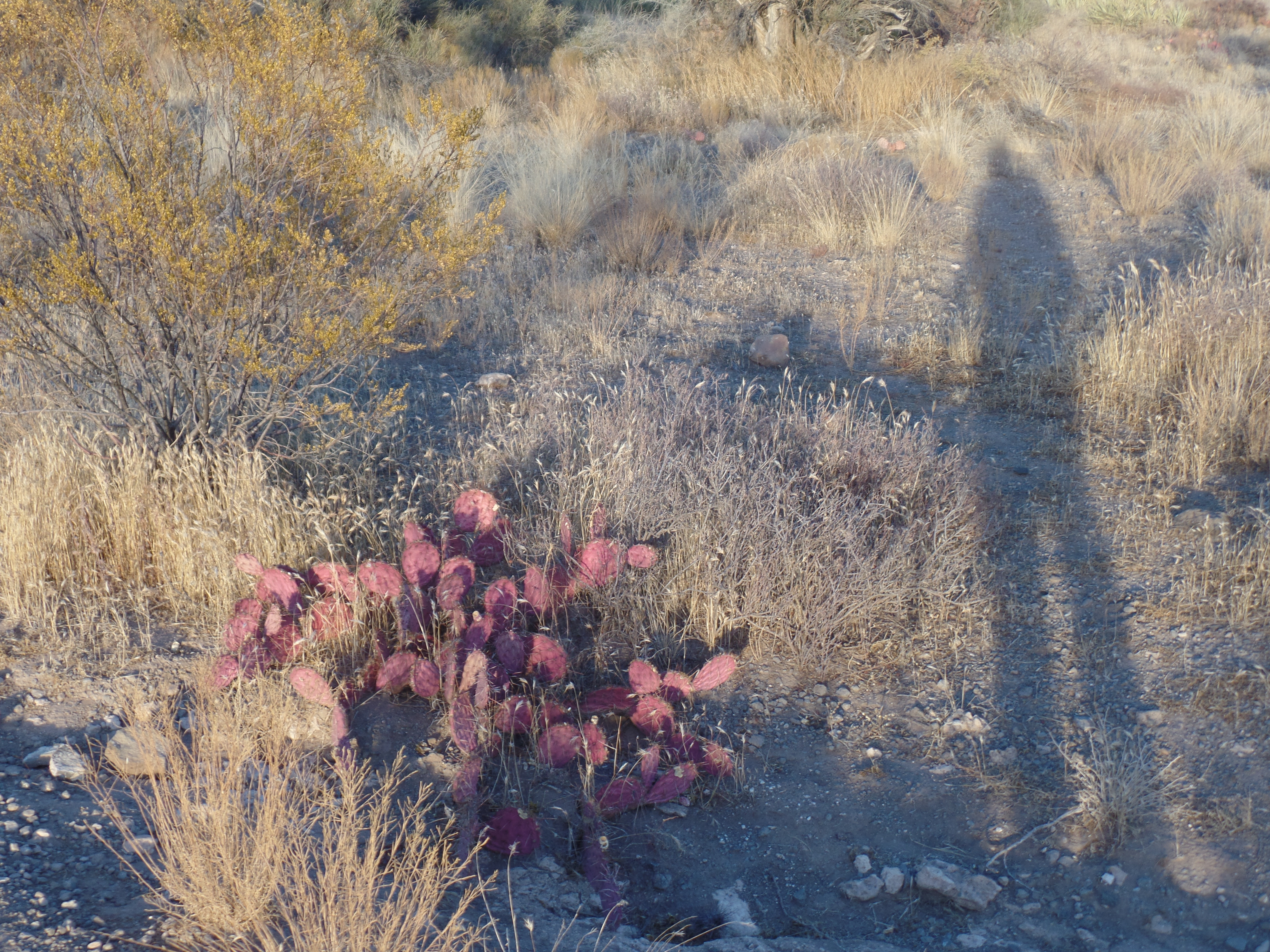
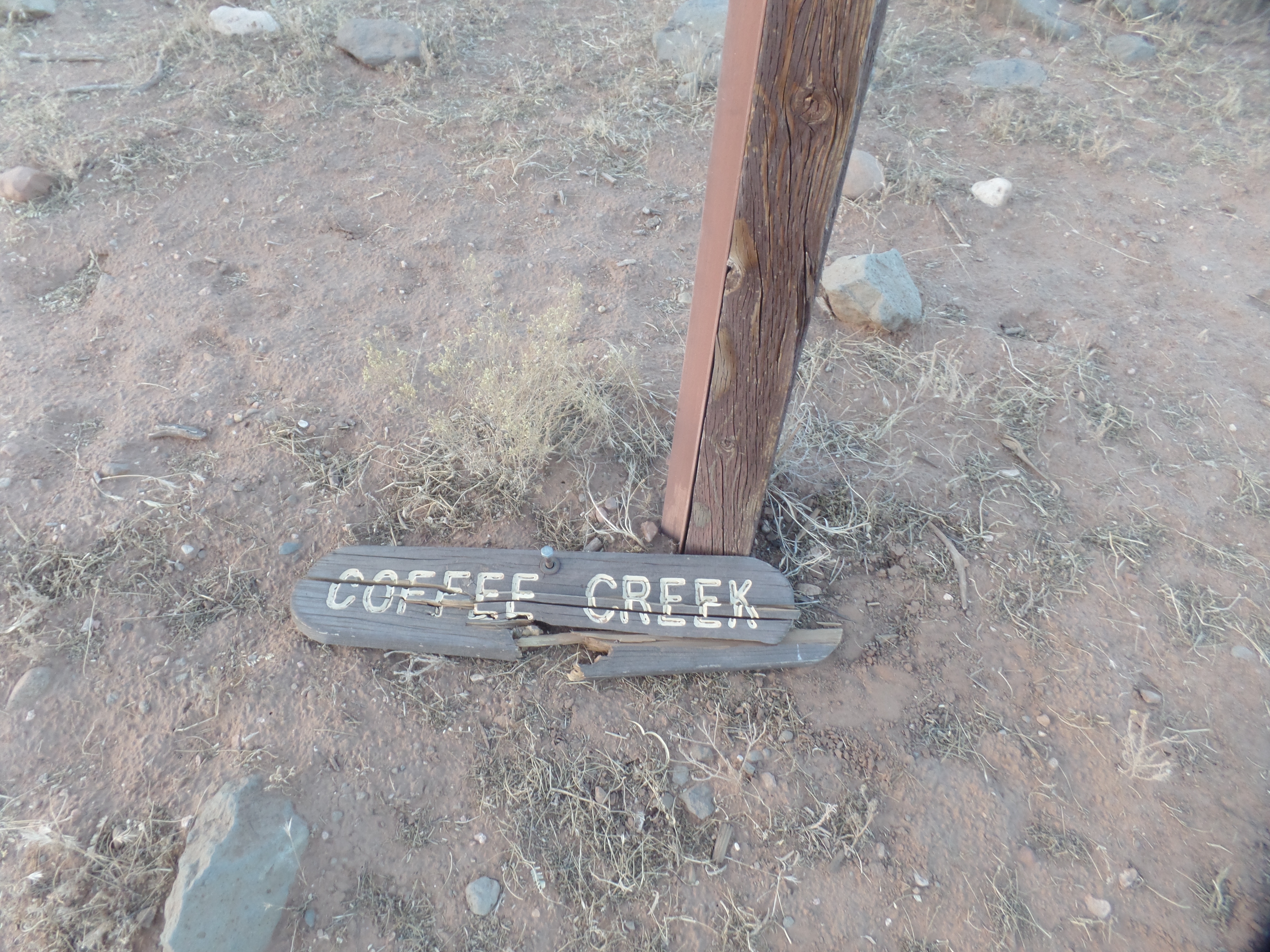
Most of the trail is single track, like this, though some of the hike involved walking on US Forest Service roads.One of the Forest Service roads that serve as connectors.Igneous rock, deposited by volcanic eruptions, further afield, hundreds of thousands of years ago, make the long hike through the Sheepshead Mountain/Canyon sector, all the more fascinating.This is the remnant of what was likely a miner’s camp, atop Sheepshead Mountain.This is another marker of a miner’s camp, also long-abandoned.Here is the top of Sheepshead Mountain’s west ridge. The summit, east of the trail, is fairly lush.Sage brush has its own fall colours, which arrive on the scene when deciduous trees have long since turned a ghastly gray.So, too, does Prickly Pear Cactus, especially at higher elevations, offer its fall colours.Crossings of dry creekbeds and washes abound on this sector of the trail. There are Spring Creek, Sheepshead Creek-and Coffee Creek, which was also a favoured gathering place for miners, in the early Twentieth Century.
So, a long-standing itch in my saddle got scratched. I re-found the junction of Limekiln and Bill Grey Road, which had gotten lost in my mind, for several months.
Bill Grey Road, at its junction with Limekiln Trail.
The remaining sector of Limekiln runs from Deer Pass to Red Rock State Park, further in towards Sedona. It is a distance of seven miles, one way, so I would likely either start early in the morning or would camp overnight at Red Rock. Either way, it’s likely to wait for March or April, with a smidgen more daylight. There are a few other trails in our area that await, and which present shorter distances, out and back.
Today was my first weekday without work, in quite a while. I toyed with taking a hike somewhere, but ended up focusing on getting my Christmas cards and message ready for mailing-actually getting a few of them sent out. I also organized the Beta version of my life story, with the draft now in the hands of its editor.
Otherwise, today was a day for taking stock of our debt of gratitude to a generation who, in a very real sense, saved the best of our way of life. The 79th anniversary of the attack on Pearl Harbor once again put the spotlight on my parents’ generation. Two survivors of the attack on the USS Arizona are still alive. Several thousand veterans of World War II, as a whole, are still with us- including a dozen or so Code Talkers, from various First Nations and a small number of Tuskegee Airmen. All who served, regardless of their status in a then-segregated military, merit the appreciation of their countrymen.
Pearl Harbor, among all attacks on United States soil, remains perhaps the most infamous such event, if only because it came totally without warning-and at a time when good faith negotiations were underway between Imperial Japan and the United States. We saw, for the first time, a comprehensive plan for bringing a global conflict to North America. We saw the possibility of domination by forces whose philosophies of governance and economics were at variance with our own.
Because of the novelty of this attack, there were overreactions- Internment of Japanese-Americans being the worst of those. Mistakes get made, in dealing with situations with which we have no experience. Nonetheless, our country’s overall response to the attack on Pearl Harbor was rapid, intense and correct. Our continuing expressions of appreciation, for those who carried out that response, should never let up.
Seven weeks from now, Texas Home Base will shift, from this sprawling corporate headquarters town to the mid-19th Century agricultural hub of Grapevine. Of course, Arizona Home base will remain primary, but little family is here-for some holiday and milestone celebrations.
Grapevine was founded in 1844, near the site of a village of Caddo people, known as Tah-wa-Karro, after the wild grapes that grew there. Despite the name, Grapevine’s mainstays were cotton, then cantaloupes. Its produce, and place on the main route from Dallas to Fort Worth, have drawn a railroad station and Dallas-Fort Worth International Airport, for which Grapevine has the north entrance.
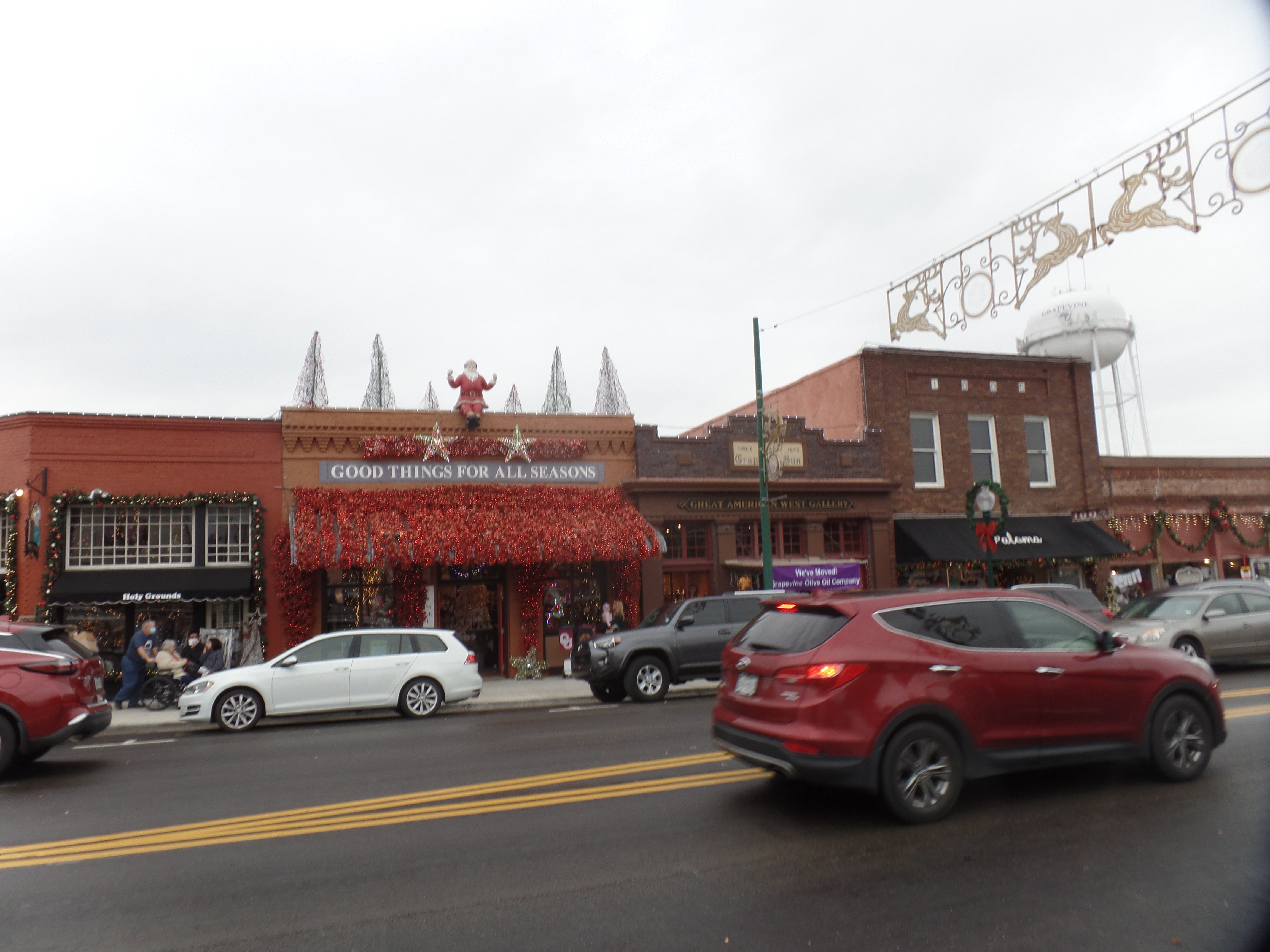
Grapevine has also marketed iself as “Texas’s Christmas City”, so on our visit yesterday, we spotted many holiday decorations and displays. Then, too, there are several parks, for outdoor activities in the short-grass pririe setting. We also spent some time at Meadowmere Park, in Grapevine and at Bob Jones Park, in nearby Southlake.
Here are some scenes of downtown Grapevine and of Bob Jones Park.
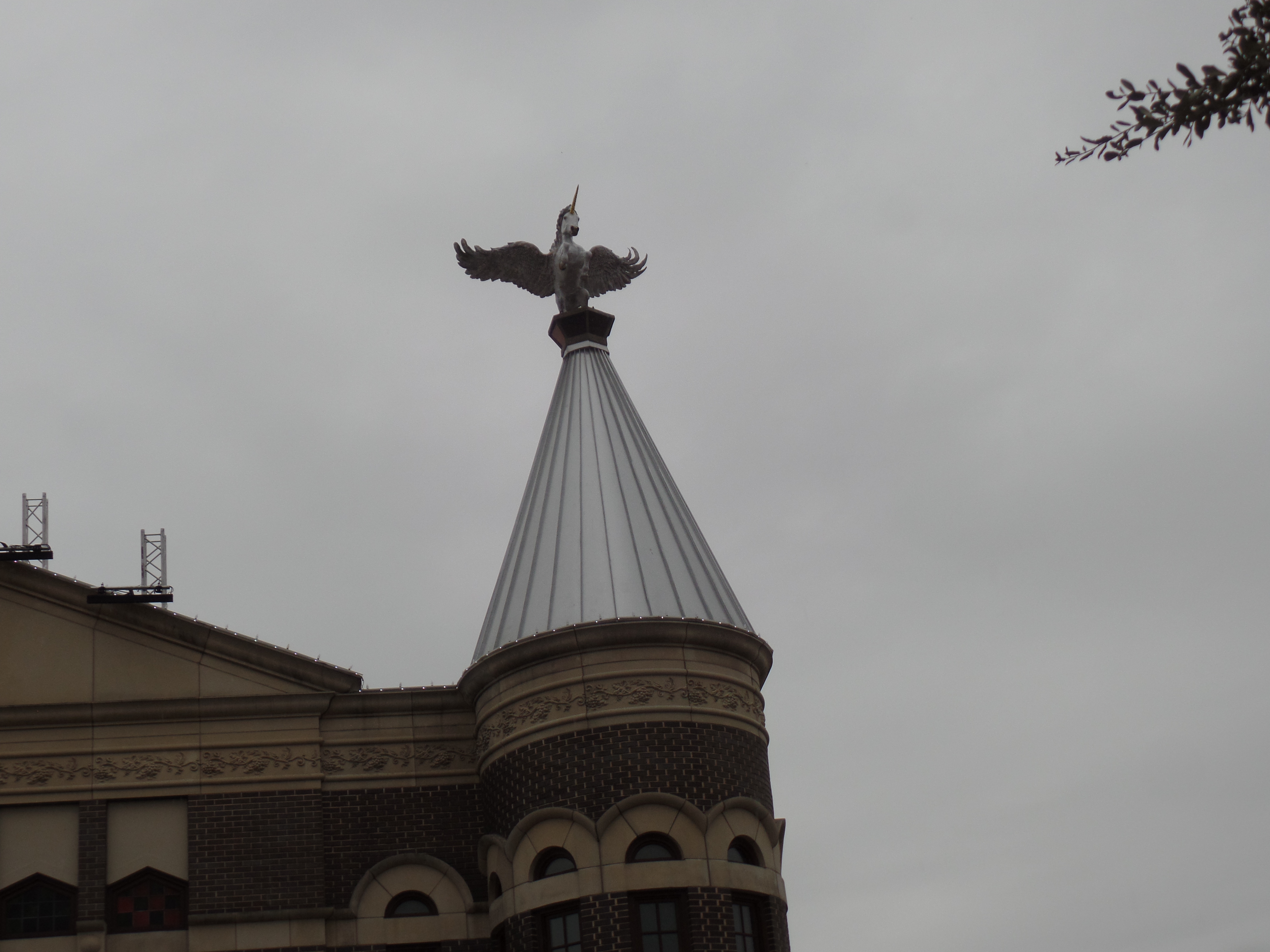
Main Street, Grapevine-with a rail station waiting roomFlying Unicorn, Main Street, GrapevineChristmas Greetings, Main Street, GrapevineGrapevine City HallFishing Pond, Bob Jones Park, Southlake, TXChristmas display, near restored log cabin, downtown Grapevine
The Grapevine area has many other sights and treasures, which will be part of the anchor, in the coming years.
I hope one and all had a Happy Thanksgiving, as the three of us had.It was non-traditional, as we grilled chicken sausages and carne asada on a gas grill outside, in Plano Home’s outside pavilion. The dessert was chocolate pecan pie. It was as close to the traditional Thanksgiving Dinner as the original meal probably was- with its menu of oysters and clams, squab, pheasant, maize and fiddlehead greens. It was unlikely that any turkey with dressing was served, nor was there any pumpkin pie. Thanksgiving, then as now, is a festival of the heart.
On this day, fifty-seven years ago, the trigger was pulled on hope and change in America, as fleeting as it seemed to be under John F. Kennedy. Too many who flew the banner of progress, in the 1960s and ’70s, had their lives cut short by those who had much invested in the status quo.
On that day, I remember sitting in a middle-of-the room seat, in a Study Hall, in the East Wing of Saugus High School. We were attending afternoon sessions, as eighth graders, as our Junior High School had been torched by a disturbed individual, several weeks before. Thus, the high school was the site of double sessions, with the upper level students taking classes in the morning, so as to be able to go their jobs, in the afternoon.
A classmate, who was sitting behind me, asked “Why did you kill the President?” I turned around and looked at him curiously, then noted he was listening to his transistor radio (the predecessor to a cell phone, for the disaffected of our adolescence), through ear buds. All the same, I went back to my reading material.
Several minutes later, the School Counselor came on the Intercom and informed us that President Kennedy had been shot and that classes were being dismissed for the day. I walked home, somberly, and found my sobbing mother, saying he had died in hospital.
The East Wing was itself torched, by the same individual, who was eventually caught by a vigilant school custodian, at our third venue of that year. 1963-64 was, for me, the 2020 of virulent mayhem. There was no microbial pandemic, but I began to wonder who, and what, were next. Five years later, we had our answer.
I will always be fond, though, of the East Wing. All the schools we used that year are now gone, replaced by consolidated school buildings, which the present administration of Saugus Public Schools regards as more efficient. For the sake of the children and youth who depend on that school system, I trust it works out well.
The day dawned, crisp and clear, with the news that our entire county was without Internet. I took that as an opportunity to set out early, from Cottonwood and towards Homol’ovi State Park, just north of Winslow. The route goes through Camp Verde, so breakfast at Verde Cafe was the first order of business. Many of the dishes there have a Mexican flair and the place is relaxed, with vivacious servers. Today’s meal did not disappoint.
It was a quiet drive up the hill to Strawberry Junction, then to Winslow, with remnants of snow all along the road, in the sun shadows. I got to Homol’ovi,a mile north of town, around 11:30, and had to ring the doorbell at the Visitor’s Center, to purchase my admission. The ranger seemed surprised, though grateful, that I was even bothering. Indeed, nobody else was stopping there, but I don’t take something for nothing.
Here is the Visitor’s Center.
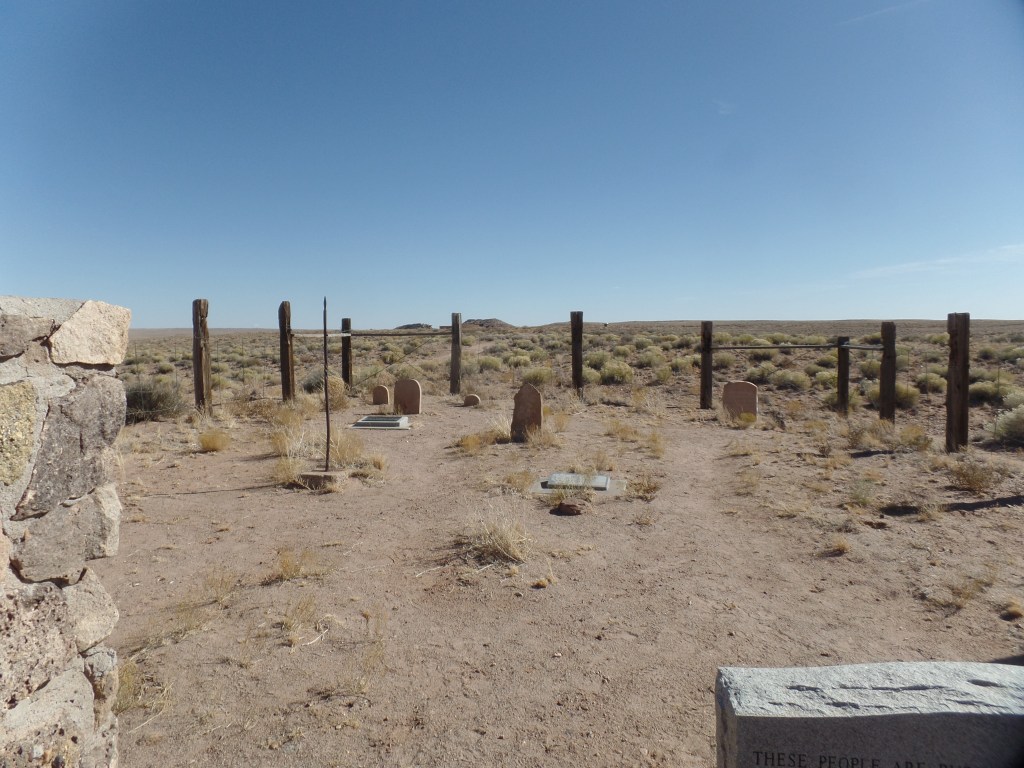
There are two 13th Century ruins, and a 19th Century Mormon cemetery, preserved in the park’s grounds. I walked to Sunset Cemetery, the only remnant of the Mormon settlement of Sunset, which had been built on the floodplain of the Little Colorado River. As the Mormon party had had no experience with the monsoons of the Southwest, they felt it would not be problematic to build on the flat area. When the monsoons came, and the settlement was washed away, they left. The hilltop cemetery bears witness to their simple lifestyle.
The names of those laid to rest are on this one stone, set by the LDS Church and the State Park.
Above, is a description of Sunset, the settlement. Below, is a view of the cemetery as a whole.
The park maintains a small observatory, for Star Viewing parties, during more normal times.
Tsu’Vo, above, is a short nature trail, where there are petroglyphs scattered among the stones. I did not see any, from the trail itself. Tsu’Vo means “Place of Rattlesnakes”, in Hopi, but with the weather being cool, I didn’t see any of them, either. Below, there is much evidence of volcanic debris, which is this area’s legacy from the eruption of Sunset Crater, 60 miles to the west.
After walking around Tsu’Vo, I headed to Homol’ovi II, the larger of the two preserved ruins of the settlements built by the likely ancestors of the Hopi. Hopi spiritual leaders are regularly consulted by the park curators, with regard to preservation issues. The park has brought a halt to vandalism and theft of artifacts, which was worse here than at other parts of the area.
Below is a view of the central kiva, where religous ceremonies were held. This kiva was restored, after having been vandalized, prior to the park’s establishment.
The, as now, the San Francisco Peaks were regarded as sacred, by the Hopi, as well as Dineh and other Indigenous peoples of the region.
Removing pottery shards, or any other artifacts, is a Federal and State crime. Flat stones are set, off the trail, as a safe place where people may place any shards found on the sidewalk and view the collections.
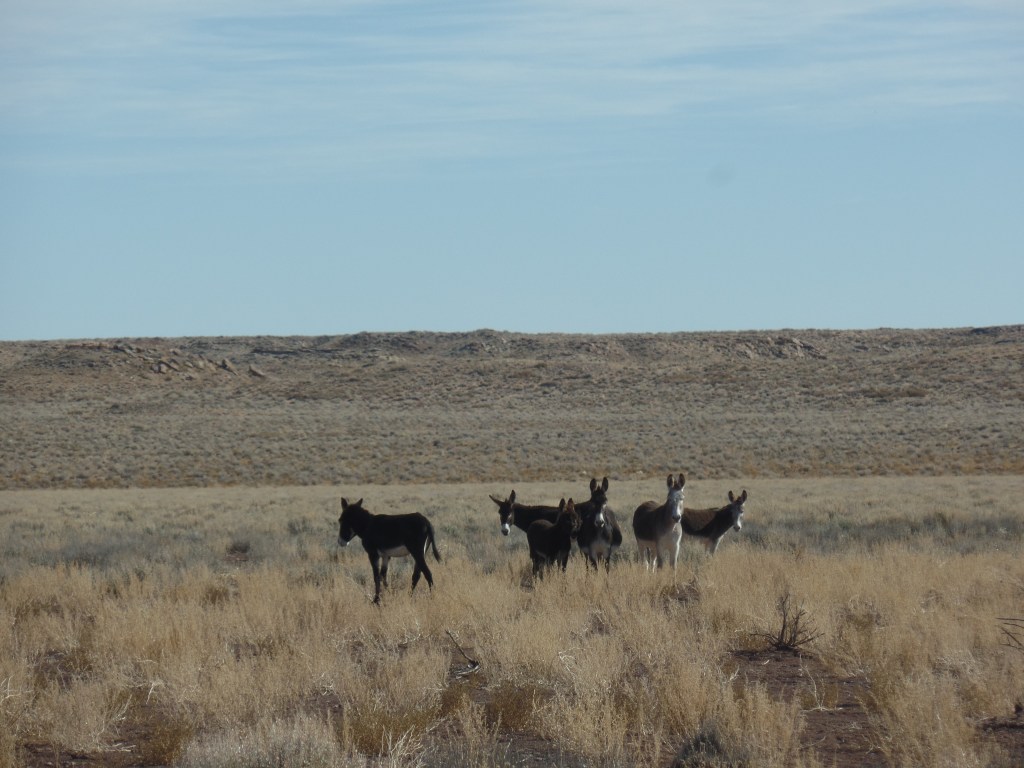
Two herds of wild burros have made their home here, between the two main ruin sites. I spent a few minutes, silently conversing with the equines, then headed to Homol’ovi I, the first settlement uncovered by archaeologists. Below, is one of the few intact walled rooms.
The scattered remnants of Homol’ovi I’s central plaza are seen above. Plazas were, and are, the main gathering places of Pueblo dwellers, including the Hopi. Homol’ovi’s preservation, along with those of other civilized communities which pre-date European settlement, is a sincere effort at acknowledging the foundation of Man’s presence in this exquisite, harsh environment.
“O My servants! Sorrow not if, in these days and on this earthly plane, things contrary to your wishes have been ordained and manifested by God, for days of blissful joy, of heavenly delight, are assuredly in store for you. Worlds, holy and spiritually glorious, will be unveiled to your eyes. You are destined by Him, in this world and hereafter, to partake of their benefits, to share in their joys, and to obtain a portion of their sustaining grace. To each and every one of them you will, no doubt, attain.” (Baha’u’llah, Gleanings from the Writings of Baha’u’llah, p. 327)
I thought of, and recited this prayer, during the time that I was Penny’s caretaker. I have often called it forth, during the past year or so, as well. Knowing that so many will be down-hearted and feeling left out, regardless of the final outcome of the vote count, I offer this prayer to anyone who needs it.
There has never been a time when I viewed my fellow humans as “deplorables”, despite that unfortunate comment of four years ago. I think there are many behaviours that are certainly deplorable, especially the murder of innocent beings, abuse of others-especially of women, children and elders, lying and fabrication, calumny against those with whom one disagrees, and theft. That said, we are all children of God and as such are free to return to the enfoldment of His grace-any time we are willing to renounce our past misdeeds and make amends to those whom we’ve wronged.
My advice, to whoever ends up in the White House, on January 20, 2021, is to redouble efforts to include ALL Americans in the life of the nation. I wrote to President Obama, a few times, urging him to visit the South and other parts of the country which had spurned him. He did make it to several states whose electorate had supported his opponents- though he might have done so more often. It didn’t come across as pandering, and should not, this time around. A listening tour would do either #45-2.0, or #46, and the country, a world of good. A Cabinet that is genuinely inclusive of critics, as well as of supporters, whould go along way towards reuniting this frazzled country.