November 10, 2025- I was thirty-five minutes out from Bellemont, when I got the message that the plumber was “on his way”. Knowing that two other people were already on site, I continued on towards the property. Once on the access road, I spotted the plumber’s truck and one other car ahead of me. Plumber turned onto a neighbouring development, so I followed the second car to Bellemont and four of us waited for the plumber to get his bearings.
The winterization process, for a property that will see minimal use during the off-season, involves draining the water tanks, pipes and hoses. Plumber had to “blow out” the tanks and pipes, to prevent against freezing that would lead to rupture. This property is in an area that gets more snow than even Flagstaff, a scant fifteen miles to the east, so no precaution is too extreme.
I will need to “winterize” my friendships with people in Home Base I, and in the Philippines, given that my life plans have changed. Immediate family has to come first, so whatever is necessary to avoid rupture, by way of transparency and honest, direct interest in what is going on in friends’ lives will have to suffice-until the day when I can spend time with them again. Making the most of remaining time here, and possibly going to “the Phils”, between the time of my grandchild’s birth and the day that I am needed permanently in Texas, will alleviate things somewhat.
November 7, 2025- I went to a quiet place, this morning, instead of dropping in at the crowded, delightful and noisy jam fest that takes place each Friday morning.. As time moves on, I am finding that where I go, on a given day, matters little to anyone outside a small group. That’s probably how it’s always been, as in the verse of an old song, “Most folks just go their way, don’t pay me any mind.”
Sitting in Century Lounge, I drew cursory attention from a couple of small children. I smiled at each and went back to my writing, which was the main reason I wanted relative quiet this morning. The rest of the patrons were busily involved with business, politics or affairs of the heart.
As the day progressed, there were signs that the situation on the national level might be resolved, sort of, sometime next week. For now, though, the transportation piece of that situation leaves me little choice but to drive out and back, over Thanksgiving. I generally think that the right thing will happen. It just takes time to sort out all the egoism and perceived “need” that emanates from the human psyche.
Tonight, I spent some time on a Zoom call, from which I have been absent for several weeks. My presence was briefly acknowledged, then the regulars went about their business and I stayed on as an observer. It was a nice hour, though, as three wonderful children came on as participants, getting the support they deserved from the regulars.
Things that matter most in life are what usually end up transpiring.
November 3, 2025- I revisited a small regular gathering today. One usually consistent attendee was conspicuously absent. It was explained to me that this person is on an inward journey and does not wish to be with anyone, for the time being. While this news is a bit disconcerting, I have to wish friend well.
I have rarely, if ever, ensconced myself in seclusion for very long. There was a period of time, after Penny passed (2011), when I kept a lot to myself, but there were always other people in the house and I never really felt like I was cocooning. In truth, though, old habits and ways of viewing the world, some of which I had held since adolescence, were being shed. Wrapped up in contemplation, I came out of that period, towards the end of 2014. During those three years, there were a few adventures and a couple of colossal missteps, that might have wrecked my life, and those of a few other people, but for the Grace of the Almighty.
We are each ever in a state of flux, with changing circumstances that could either propel us forward, or upend everything we know and cherish. Sometimes, life brings us a little of both. I see that this might be happening to said friend, and can only be a well-wisher. My own life, in the next six weeks, will see the conclusion of one great chapter and the beginning of another, perhaps grander. I will not be cocooning, though.
November 2, 2025- The meeting, held unusually on a Sunday, was going like clockwork. Out of the blue came a rash of cursing and threatening language. Those involved knew fully well that they were disrupting the meeting next door. They made it clear that they didn’t care-and further, that no one was going to tell them to stop arguing and leave the building.
The right to use foul language and disrupt business, however, seems to end three feet from one’s neighbour’s face. In a privately-owned facility, moreover, a person may be compelled to leave, at the discretion of the building’s owner, or her/his lawful representatives. This is what ended up happening today. The person responsible for keeping order in the meeting, aided by two other officers, escorted the four disquiet people out of the building. There was some discussion outside, but the four went their separate ways, apparently understanding that attracting the attention of the police was not in their best interests.
This is my own main argument for not letting alcohol, or any mind-altering substance, affect one’s ability to carry on with life. I was, at one time, a terrible drunk, and I will leave it at that. I seldom, if ever, though, threw my weight around. On the few occasions that I did so, I was readily called to account, and there are those in my past who are all too happy to remind me of that time when…. So be it. Life is a series of mishaps and, hopefully, of lessons learned.
As a society, though, we still have drug allusions that are used to extol the virtues of a legitimate food or beverage-i.e. “It’s better than crack”. Oh? How do you know about crack? The fact that such a horrible substance is seen in a positive light gives me the willies. Disquietude can be found in any nook and cranny of society. Dealing with it, rooting it out, takes fortitude-and persistent effort-the kind that does not allow for a positive view of an addicting substance.
November 1, 2025- One of the things that appeals to me most about Home Base I is that not a whole lot changes, on occasions when I am away-even for almost two months. A restaurant closed, with the promise of re-opening in another location, “soon”. Taking its place was a high-priced establishment that serves dinner only, five nights a week. No other changes are evident, though.
I dropped in at one favourite stop, and found the owner, a friend, uncharacteristically angry. It turned out that someone reneged on a promised gig, for the flimsiest of excuses. I would have been furious. I think my friend handled it rather well, considering.
Today was All Saints Day, mostly celebrated heartily in predominately Roman Catholic countries. It is a national holiday in the Philippines and in several Latin American nations. In Mexico, it dovetails with Dia de los Muertos (Day of the Dead), which is more prominent in Mexican culture. I was present for the holiday in Manila, in 2022, even if I was merely wending my way to Aquino International Airport. It was still a day when many Filipinos were on the move, both domestically and internationally. To me, sainthood is relative. Only a few souls have neared perfection, in this mortal life, and even fewer have attained it.
I have a long way to go, but that’s okay. I am giving life my best shot.
October 31, 2025- The idea of staging our Post 6 Trick or Treat Table on the corner sidewalk “paid off” handsomely: At least a hundred people stopped by and partook of candy, which was distributed, for the most part, by the fistful. Tiny tots and babies were fairly present. No one was trick or treating with a costumed dog, so that is an improvement. Mostly, though, the revelers were between the ages of 7-70.
I barely missed the older, and less flamboyant, version of All Hallows Eve: Samhain, still widely celebrated by people in Ireland, Scotland, Isle of Man and some parts of Wales, is also celebrated by Wiccans in England and other countries. The gist of the day is to honour the dead and guard against malevolence. There was some costuming, also called “mumming”, and going door to door for food, but those were secondary to the above focuses. Bonfires were common on Samhain, in pre-Christian Britain and Ireland. Putting a candle inside a hollowed-out pumpkin was more a function of helping revelers find their way, on darkened streets. A hollowed out turnip was also used for this purpose. Dressing up as devils or ghouls is more of an aberration, in modern Halloweens, and would have been abhorred by the Celtic pagans.
I have observed Halloween, in a conventional manner, most years since I was six and could go about on my own. I recall that the plastic masks caused my face to sweat profusely, almost every year. By the time I was fourteen, I decided to give up trick or treating and focused more on handing out goodies. On my own, in places as sparsely populated as South Deerfield, MA and Toltec City, AZ, kids knocked at my door and were welcomed with treats. So, this year was no different and given the vibrant Halloween celebrations on Mount Vernon Street and Park Street, it is a joy to hand out treats at the American Legion post, as I’ve done every year that I’ve been in Prescott, since 2015. (Before that, my north Prescott house, then my apartment, were just too far off the beaten path for most revelers.)
Whatever one’s view of Halloween, let us honour our departed loved ones just as we do on Memorial Day or on their individual special days.
October 29. 2025- The longest journey I have ever undertaken, across the largest number of countries, would be meaningless, but for the people I met along the way, who made Europe in general feel like a giant Home Base and certain places feel as homey as Prescott, Oley or Grapevine.
Above all the rest was my Nynashamn family: Sarah, Matias and their children. First Camp was my lodging, and it is salubrious, the perfect blend of forest and sea. My heart’s home, though, was that little apartment on a hill, Home Base #4.
Not far behind were Boris, in Split, with his hospitality and knowledge of the Dalmatian coast and its antiquity; Adis, in Sarajevo and Srebrenica, bringing the struggles of the Bosnian people into stark relief, without vilifying the present Serbian people who live among them; Lisa, Pupak and Alan, in Findhorn, giving me Home Base # 5, with the energy and spirit of the northeastern Scottish coast, mixed with a sense of mysticism; Sian, in Fishguard & Goodwick, going out of her way to make sure I felt welcome; Badi, in Reykjavik, taking time form his schedule to welcome me to the Icelandic Baha’i Center; Sasha, in Vienna, guiding me around the Baha’i National Center and the volunteers at the Baha’i House of Worship, Langenhain. My gratitude also to the Baha’i friends of Dublin, for including me in the Twin Holy Day celebrations and to Carmel, who came from Derry and met me in mid-town Dublin, albeit for a short while.
People I met randomly, along the way, also stay in my heart: The concierge at START Hostel, Keflavik, who did my laundry on short notice and summoned a taxi driver, to guide me around Thingvellir (Junction of two tectonic plates) and the geysers that are continuously spewing forth, not far from there; the driver himself, with his deep knowledge of the Reykjanes Peninsula; servers who made me feel like family, at Gray Cat, Bao Bites, Reykjavik Fish (Reykjavik) Take Off Bistro(Keflavik); Brod & Salt; Grain Cafe, Meno Male, Mahalo and La Solo (Stockholm); Espresso House, and Taco Bar(Nynashamn); Wisby Hof, Cafe Amalia and Visby Ost (Visby); The Rib House (Helsingor); Mr. Pho (Copenhagen); St. Christopher’s Cafe (Berlin);Pryztanek Pierogarnia (Krakow); Chata na Zaborskiej (Oswiecim); Konoba Fratelli (Split); Restaurant Sebilj (Sarajevo); Station Bar and Cafe (Ljubljana); Stadtalm Naturfreund Restaurant (Salzburg); Eden Hotel Restaurant (Munich); Joe Molese Burgers and Sandwiches (Heidelberg); Main Kai (Frankfurt am Main); Hotel Strasbourg Dining Room (Strasbourg); The Coffee Shop (Metz); JOST Hostel Italian Cafe (Le Havre); IBIS Hotel Breakfast Bar (Portsmouth, UK); Cote French Cafe (Salisbury, UK); Rose and Crown Inn Dining Room (Goodwick, UK); Coast Hotel Dining Room (Rosslare, Ireland); La Rendezvous and Ne Zha (Dublin); NUVA and Burgers & Beers (Edinburgh); The Captain’s Table (Findhorn); The Pheasant Inn and The Flying Egg (Harlington). There were also the homeless couple on the train from Newhaven to Portsmouth, the tourist office clerk in Budapest,the souvenir vendor in Heidelberg and the admission clerk at Christ Church Cathedral, Dublin, who showed particular concern fro my well-being.
HI Loft (Reykjavik); First Camp (Nynashamn); Hotel Skandia (Helsingor); Generator Hostel (Copenhagen); St. Christopher’s Hostel (Berlin); Villa Centro (Oswiecim); Red Radisson (Vienna); Stadtalm Naturfreund (Salzburg); Alora Heart of Zagreb and Mickey Mouse Apartment (Zagreb); Hotel Pax (Split); Guest House Yildiz (Sarajevo); Lotte Backpackers Hostel (Heidelberg); Hotel Strasbourg Montagne Verte(Strasbourg); Hotel Escurial (Metz); Rose and Crown (Fishguard & Goodwick); Home from Home (Rosslare) and Argyle Backpackers Hostel (Edinburgh) were standout lodging facilities. While I had no substandard experience anywhere, those are places I would recommend to the adventurous soul.
There are seven weeks of gratitude, in a few long paragraphs. I have taken today off, pretty much, other than going through two boxes of mail and old newspapers (The delivery man and the front office at Gannett don’t seem to communicate much). Two months are left to me, at Home Base Prescott. More about what lies ahead in November, December and beyond, in the next post.
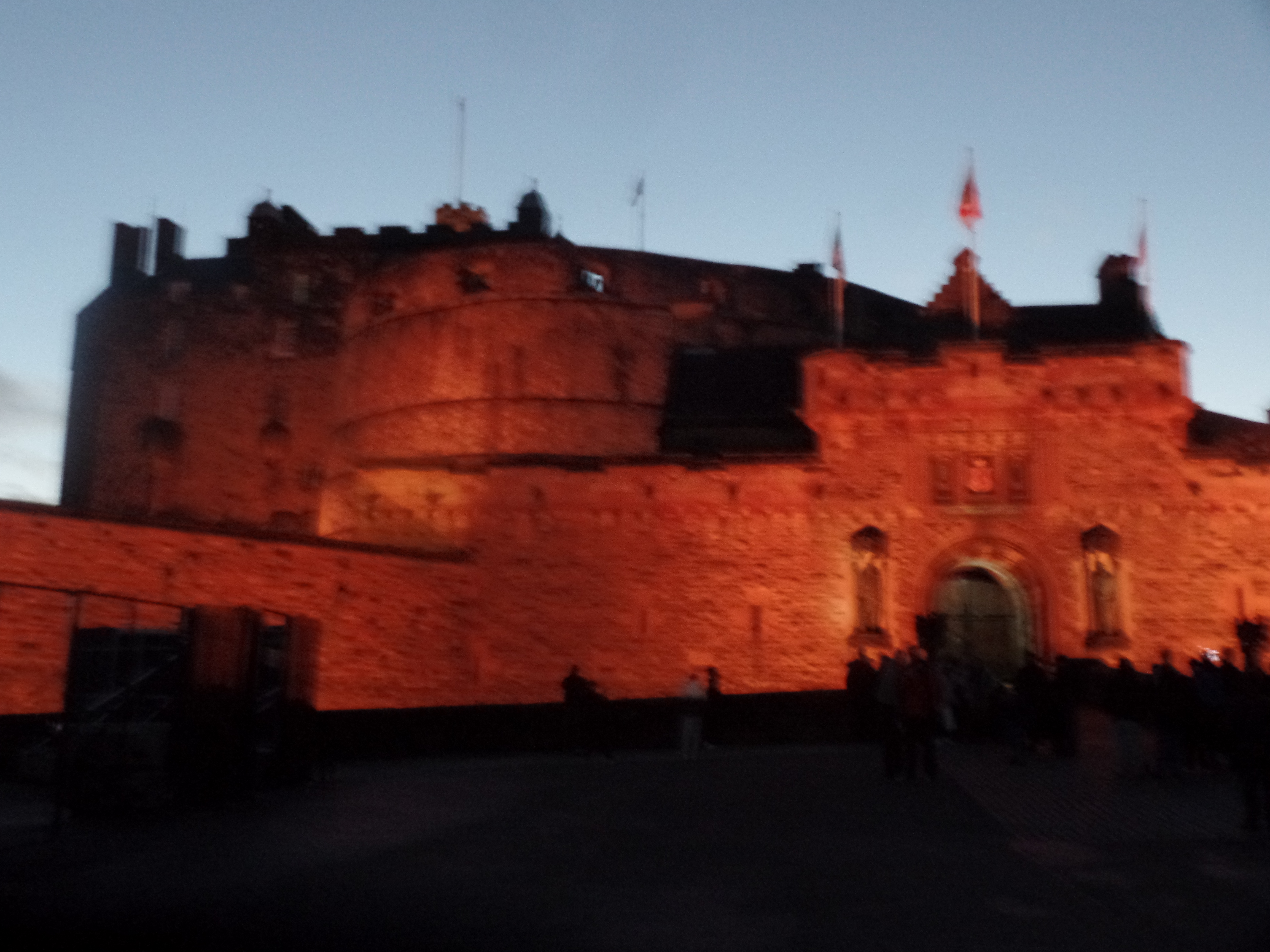
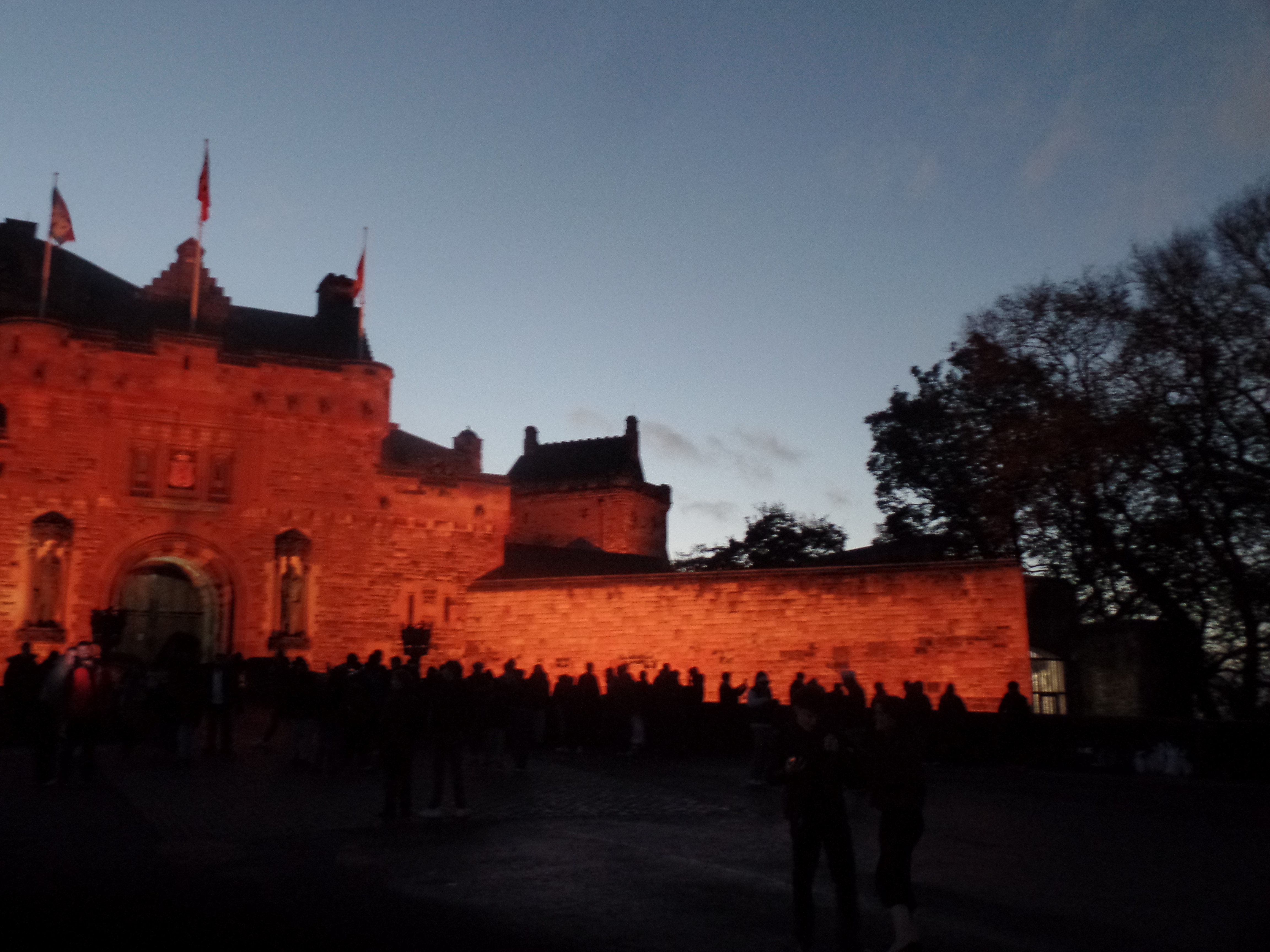
October 26, 2025, Edinburgh- The crowd stood, silently, almost breathless, in front of the great castle gate. It was past sunset and the building was closed, yet the multitude stood in awe. The allure of so many centuries’ legacy cannot be easily explained, but there it was.
I took the train from the small town of Forres, past Elgin (where a couple of disgruntled travelers had gone, after the long bus ride to Inverness yesterday), and through Aberdeen, a surprisingly bustling city-even on a Sunday.
North Sea, off Elgin, ScotlandMontrose Harbour
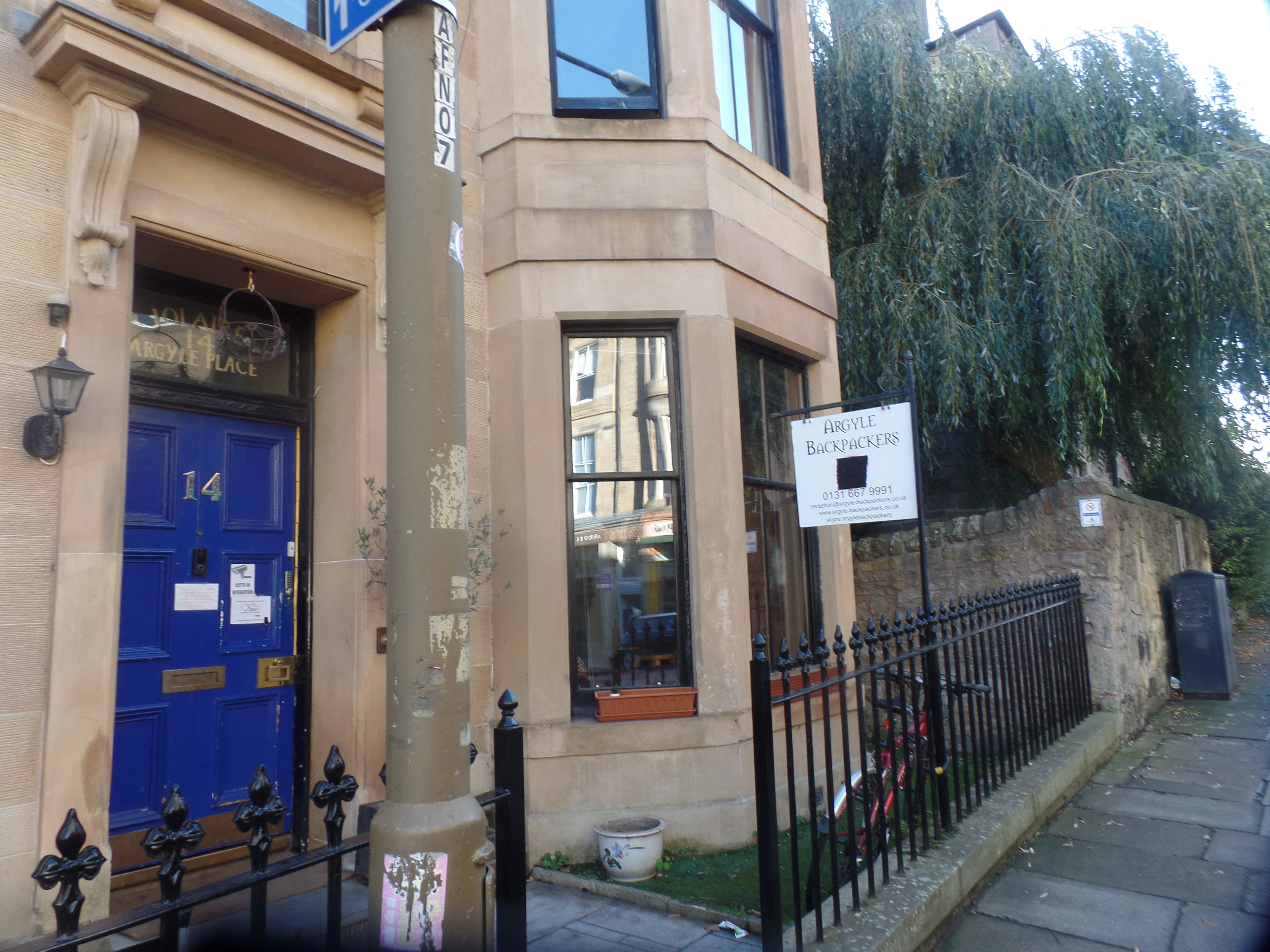
The train ride this time was uncomplicated, and I was back at Waverley around 3:30. Getting to my lodging, Argyle Backpackers, involved a short walk (albeit up the Roxborough Steps) and one bus ride. Along the steps, there is a “greeter”, who offers to help carry one’s bags. I was able to carry my own, but he offers a nice service to those in need.
Argyle is an old building, a bit shopworn, but the warmth of this place and the enthusiasm of its staff would bring me back, in a heartbeat, if I am ever again in Edinburgh.
Argyle Backpackers Hostel, Edinburgh New Town
After check-in, though, I felt the clock ticking, if I had any hope of visiting Royal Mile-and Edinburgh Castle, so back on the bus I went.
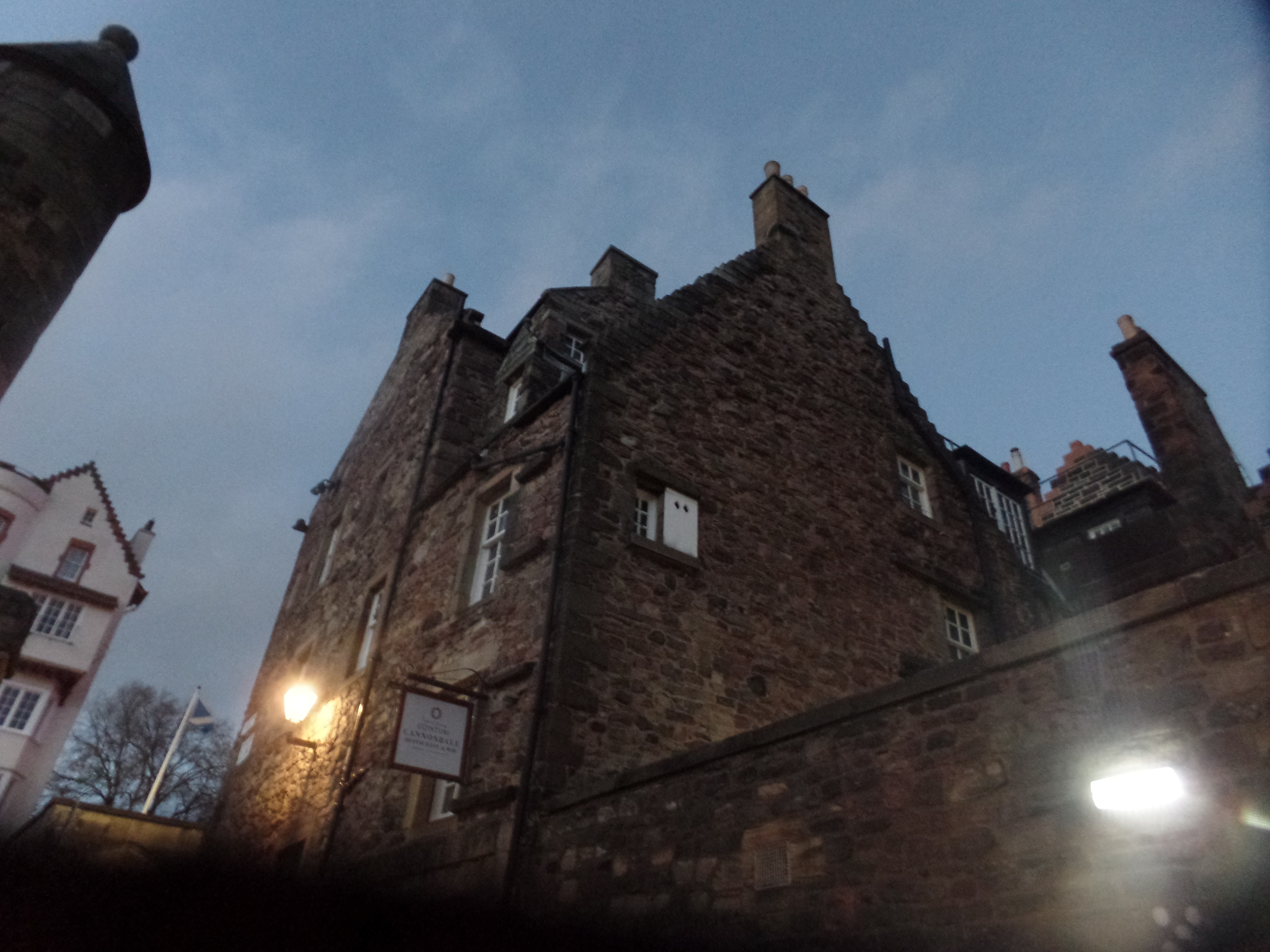
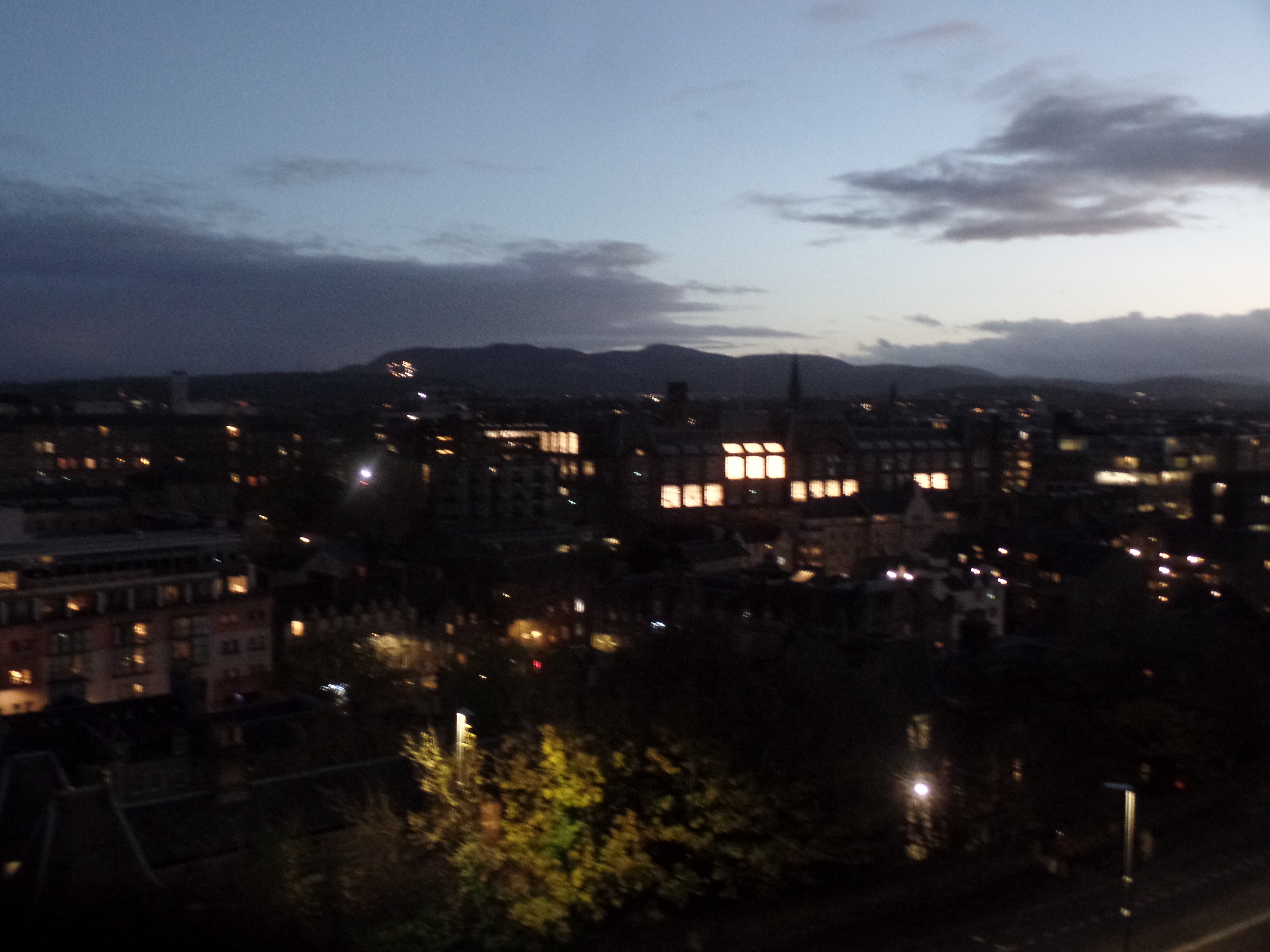
The Mile was already enveloped in gloaming, but no matter. Several enthusiastic crowds, of all ages, were in the streets, and looking down from the castle walls.
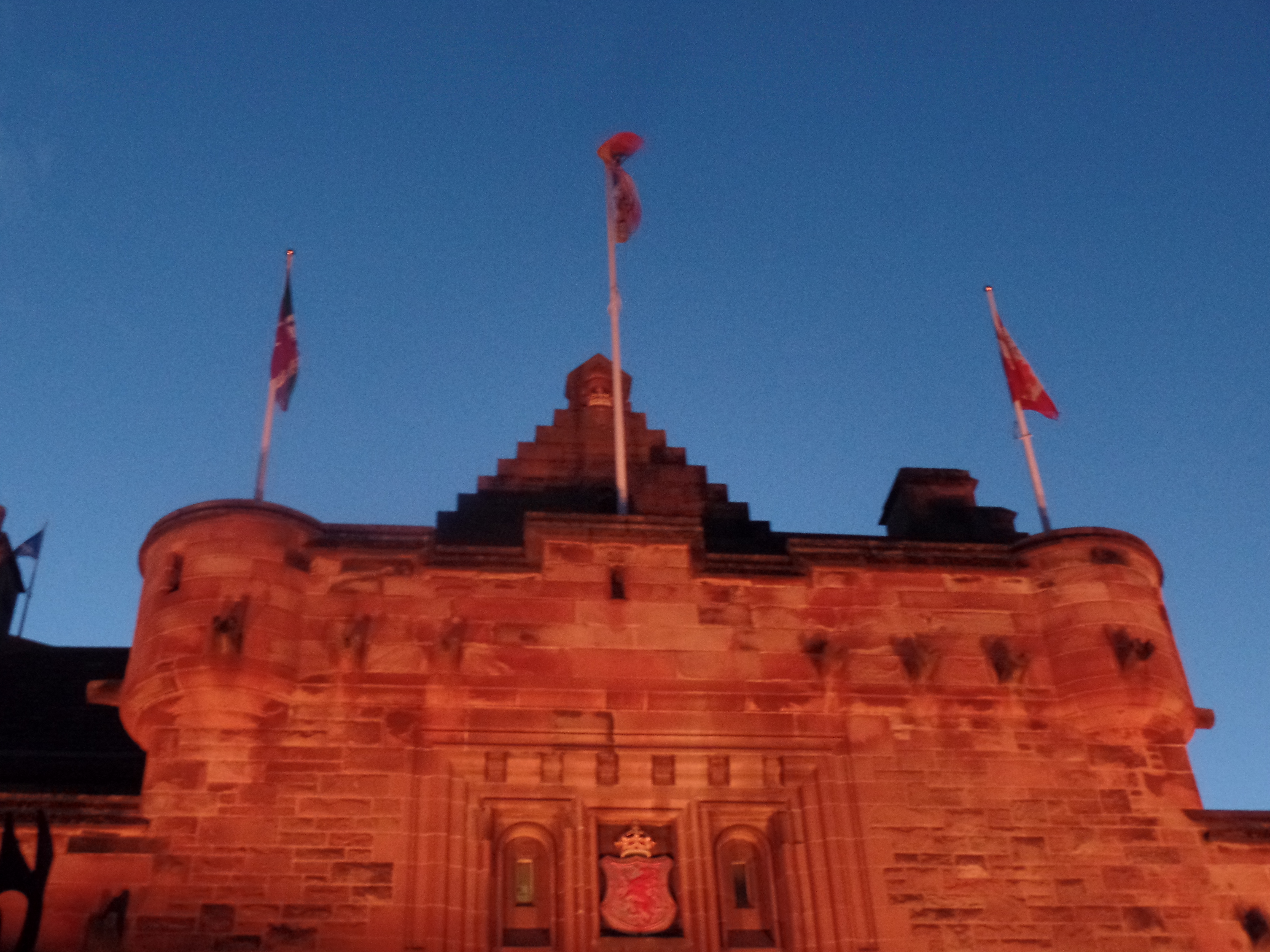
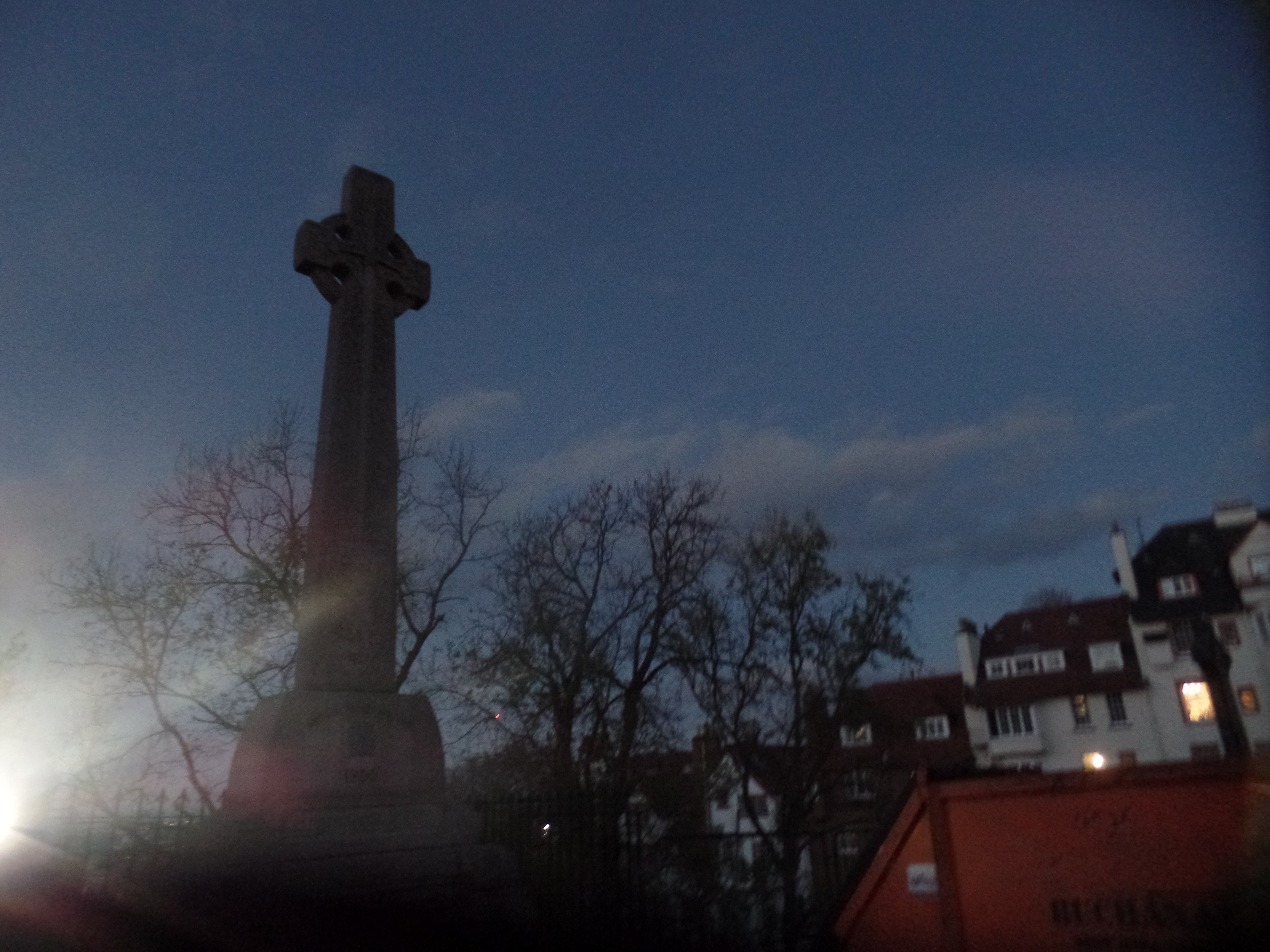
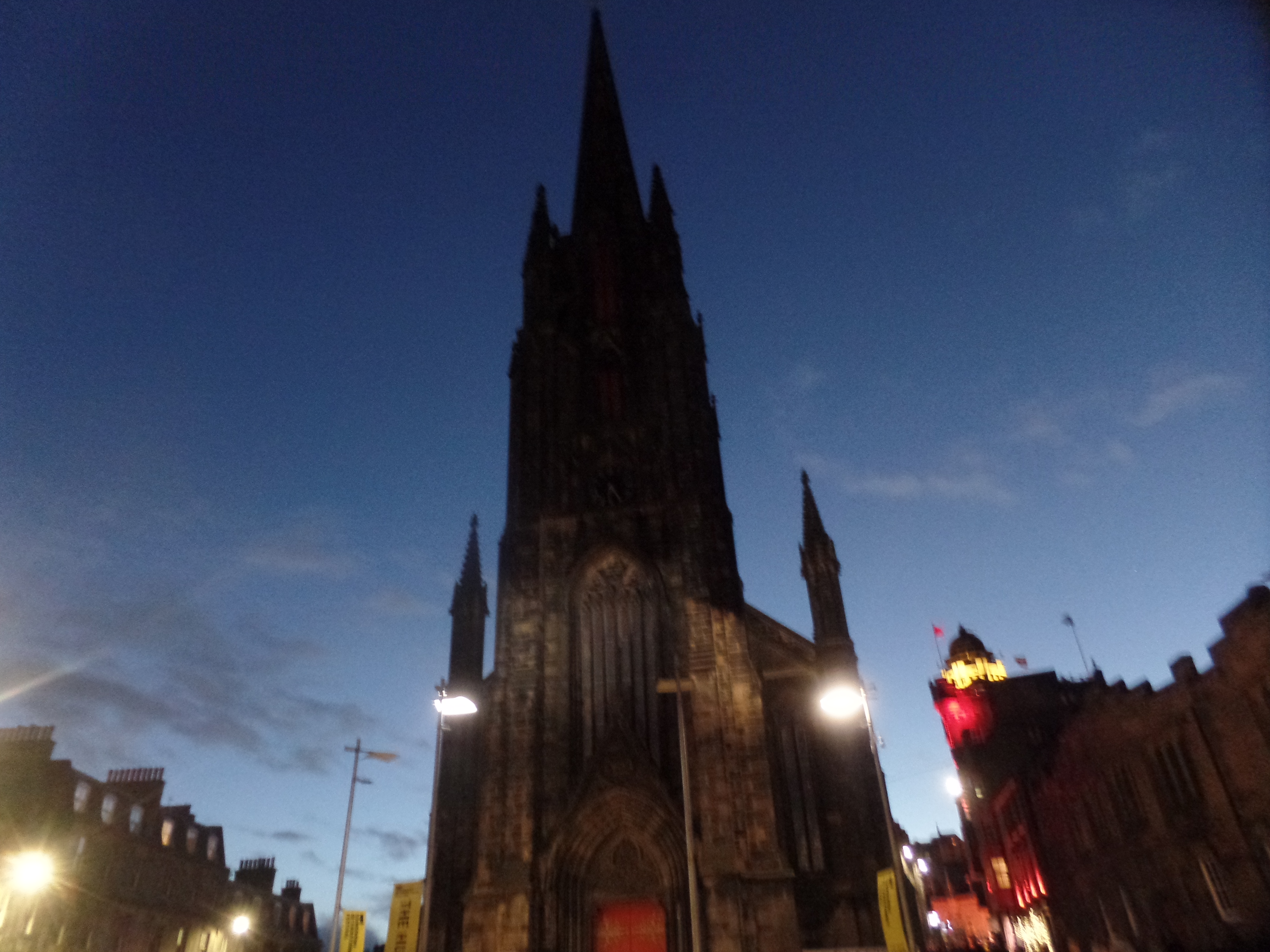
Royal Mile (above, and below)Brightness along Royal MileView from Edinburgh Castle (above and below)Edinburgh Castle (above and below)Castle and crowdEdinburgh Castle-banners and high watch tower72nd Highlanders Memorial-honouring those who died in the Afghan Campaigns of 1878-80.Celtic Cross, at Castle Esplanade. This honours Scottish cavalrymen who died in the Boer War.
Once down from the Castle, I headed to Burgers and Beers-for a burger and an N/A. The staff and a few of us patrons, offered encouragement to a fellow visitor who was having a medical issue. Her uncle showed up a few minutes later, and took charge of the situation. The place was, all in all, lively, with families flowing through to the back restaurant and a few of us just enjoying the atmosphere in the front. Afterward, I resumed my walkabout of Royal Mile.
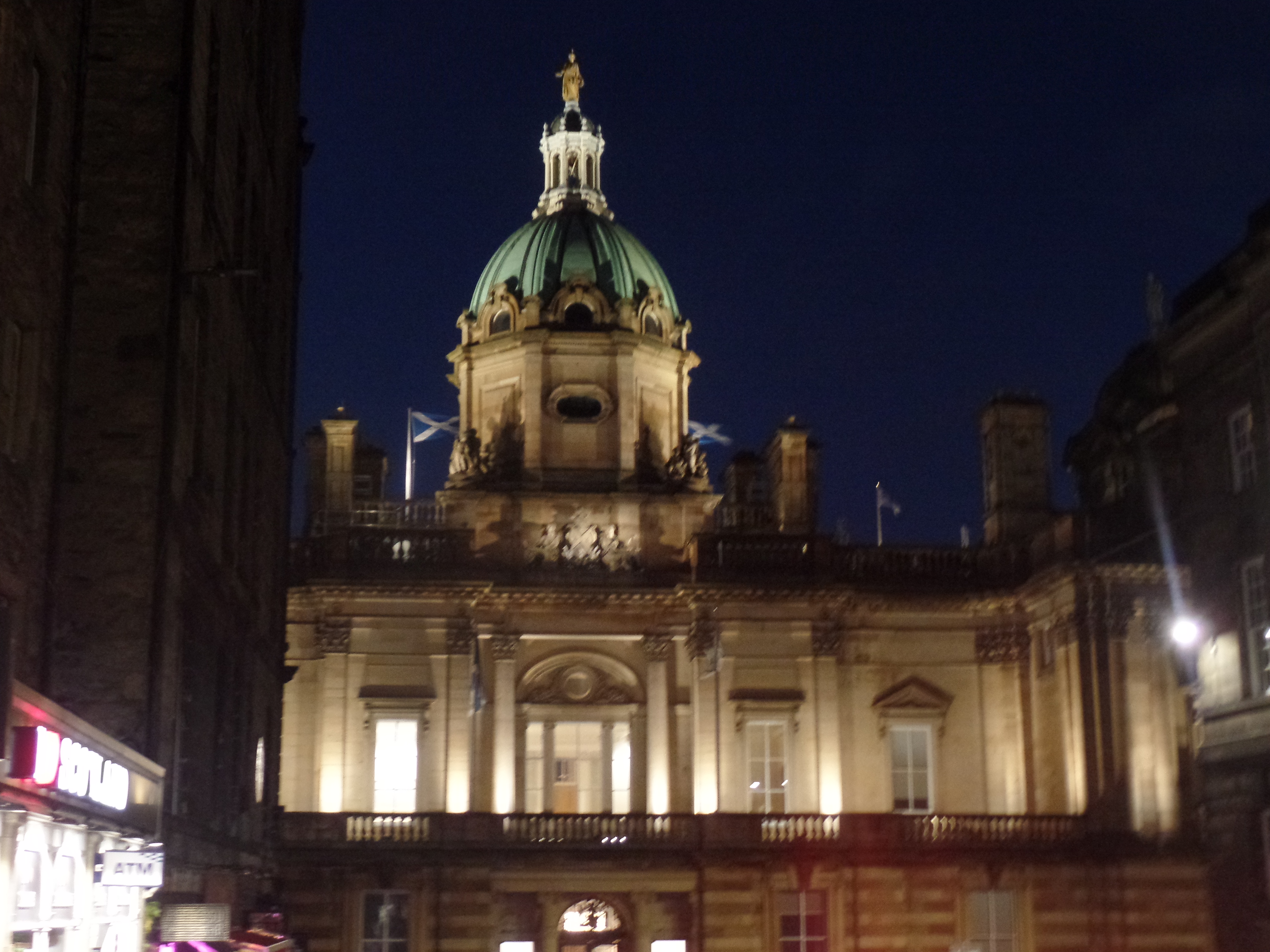
St. Giles CathedralBank of Scotland Statue of Adam Smith
Seeing the founder of capitalism was enough for one night, so I headed back to the warmth and comfort of Argyle, spending the rest of the evening with other hostelers, from Italy and Spain. The sounds of Spanish guitar are ever soothing.
October 26, 2025, Edinburgh- We had a fine Scottish breakfast, on this misty morning. Again, there was no haggis-and nary a bit of porridge. Scrambled eggs, a small bit of bacon and grilled tomatoes filled the bill, along with Alan’s fresh-baked bread and plum jam-plus cheese.
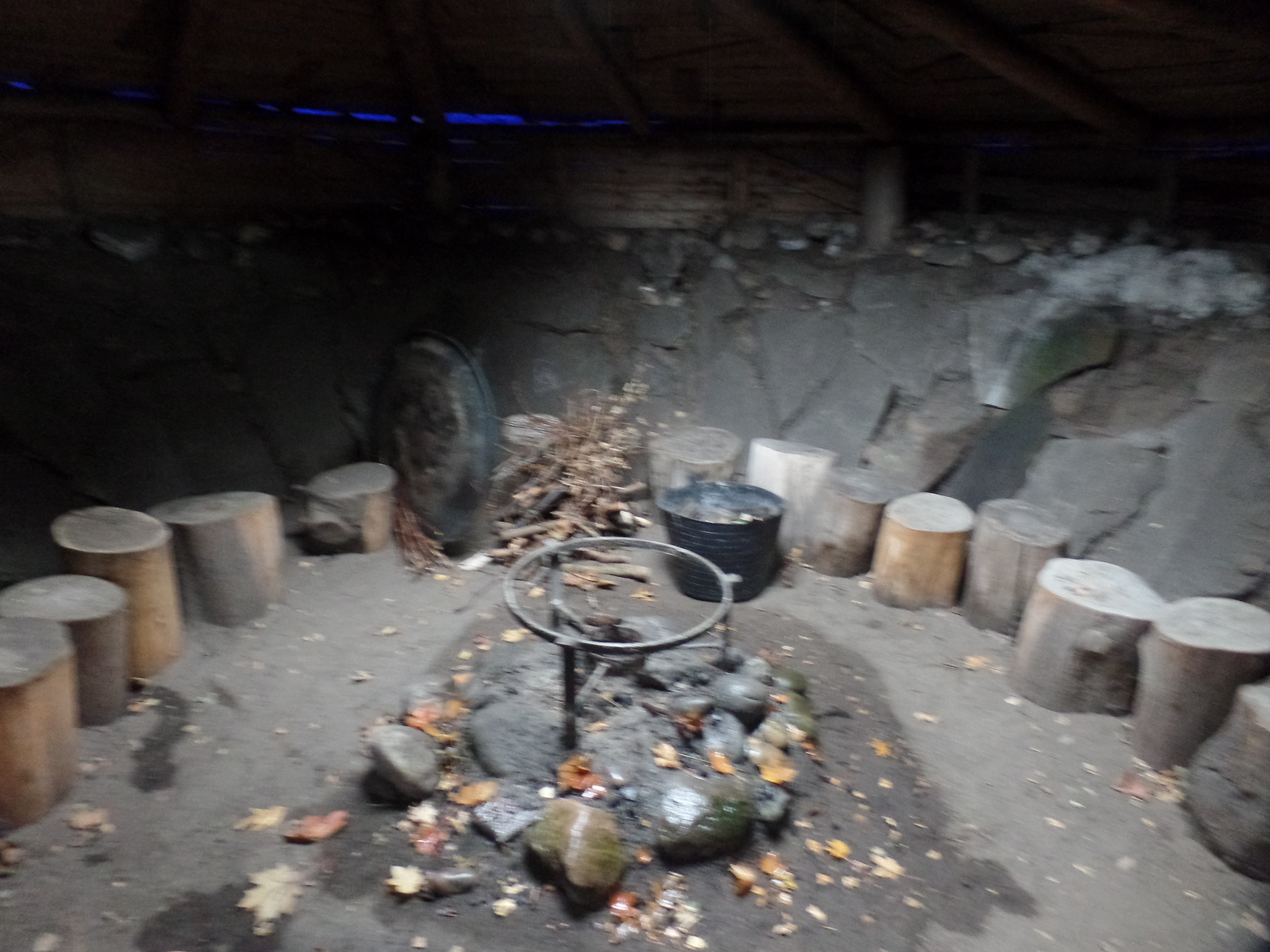
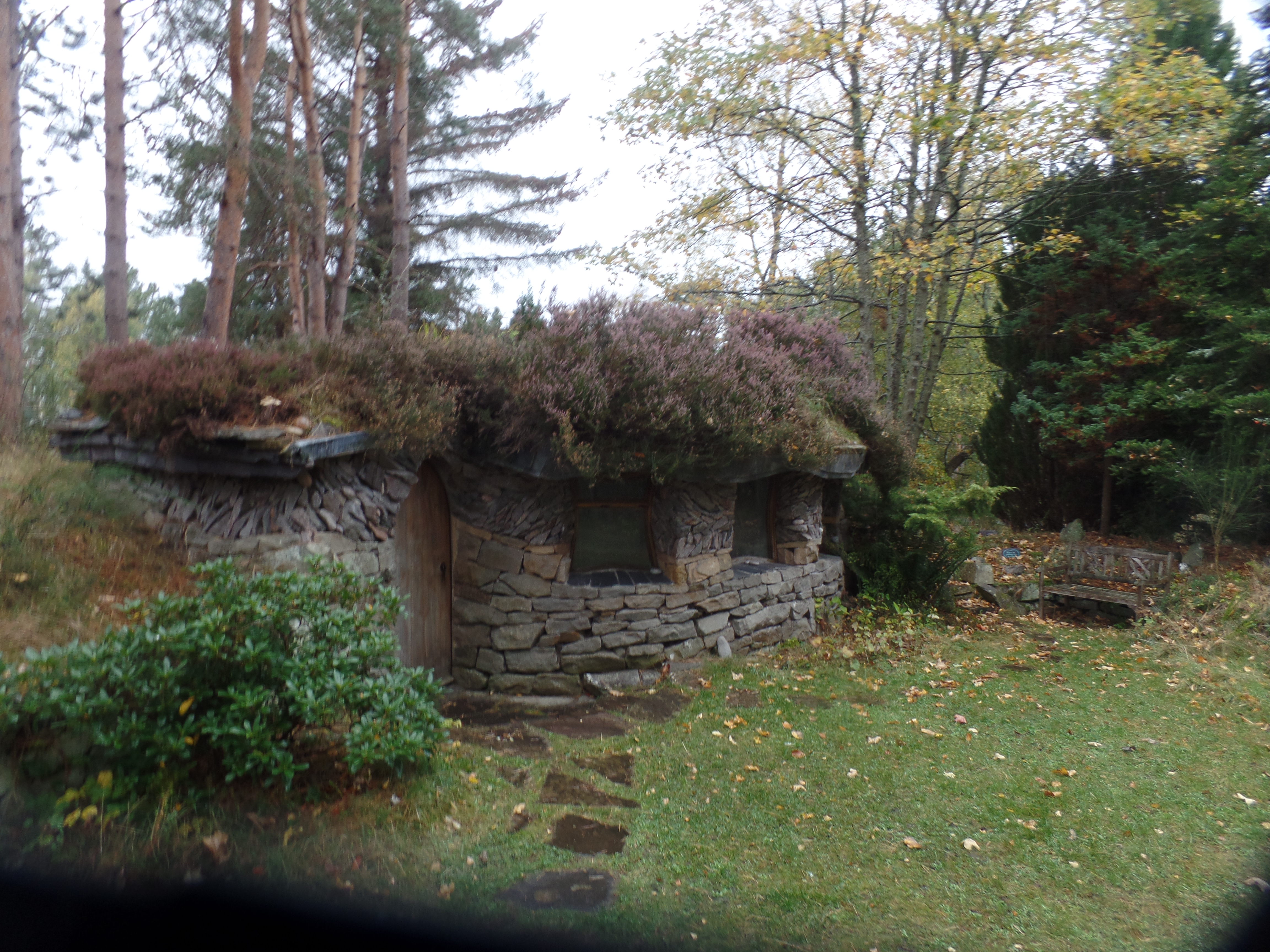
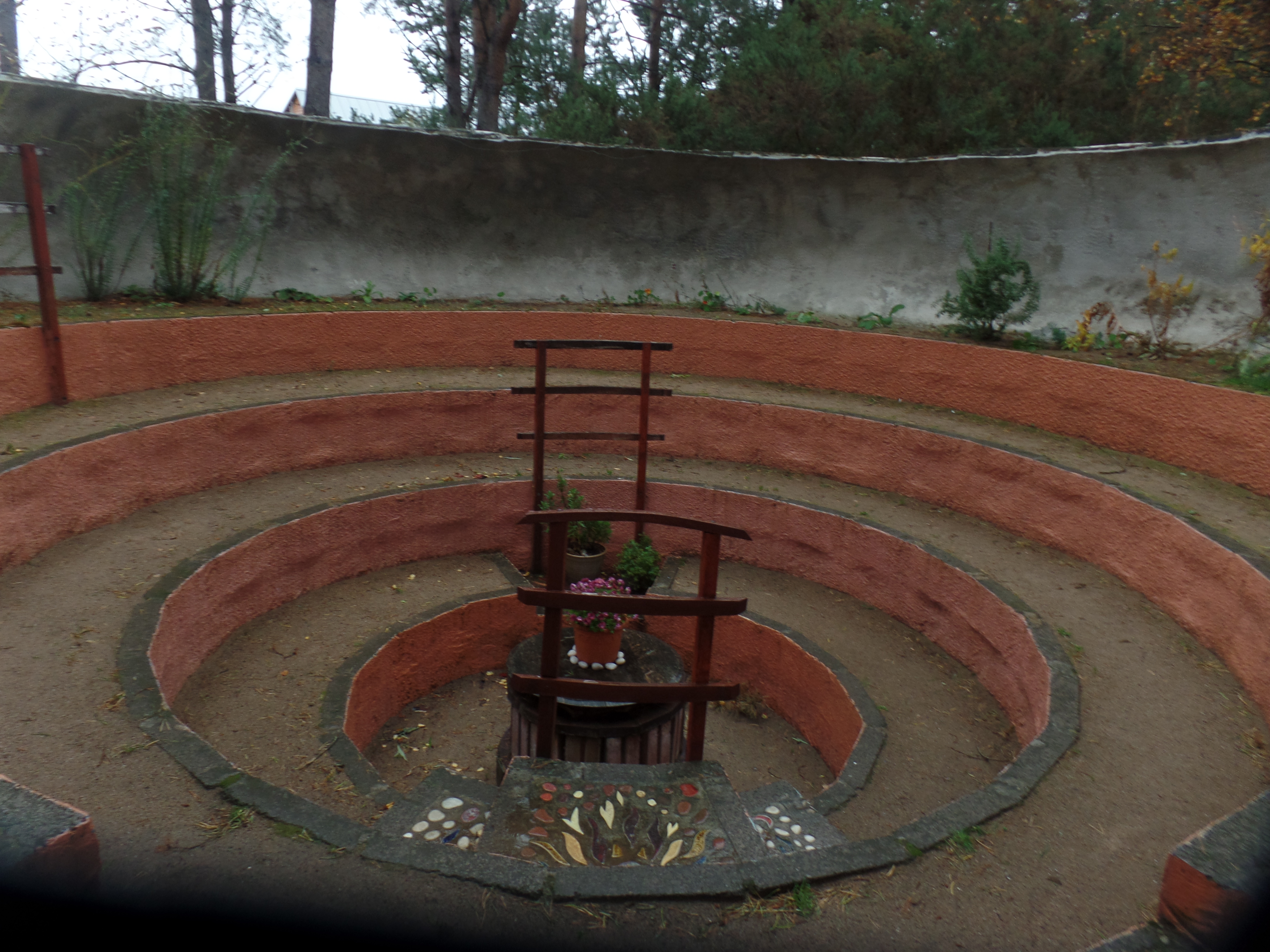
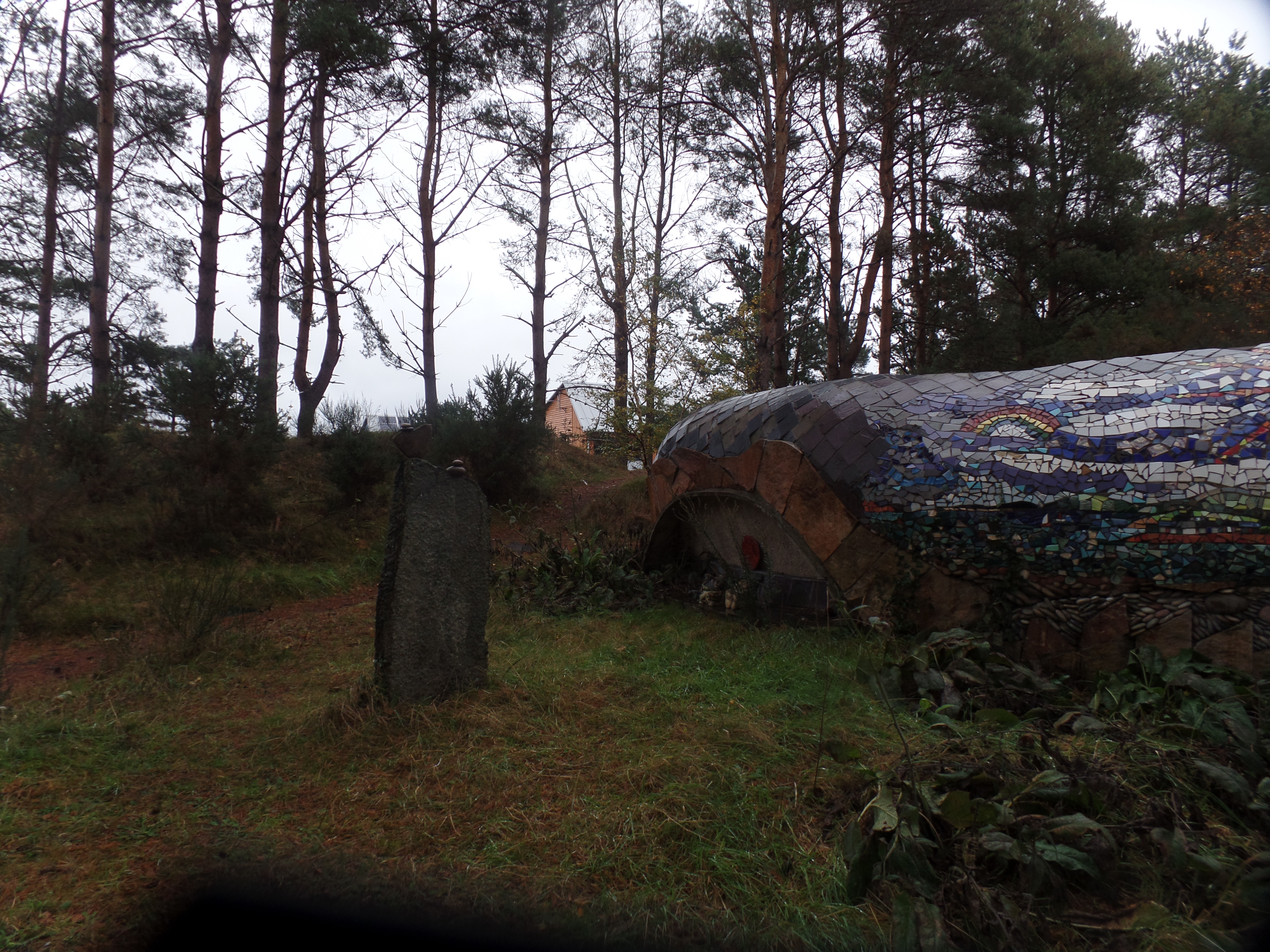
Lisa then took me on a tour of Findhorn’s round houses and small gardens. Here is a look at some of these.
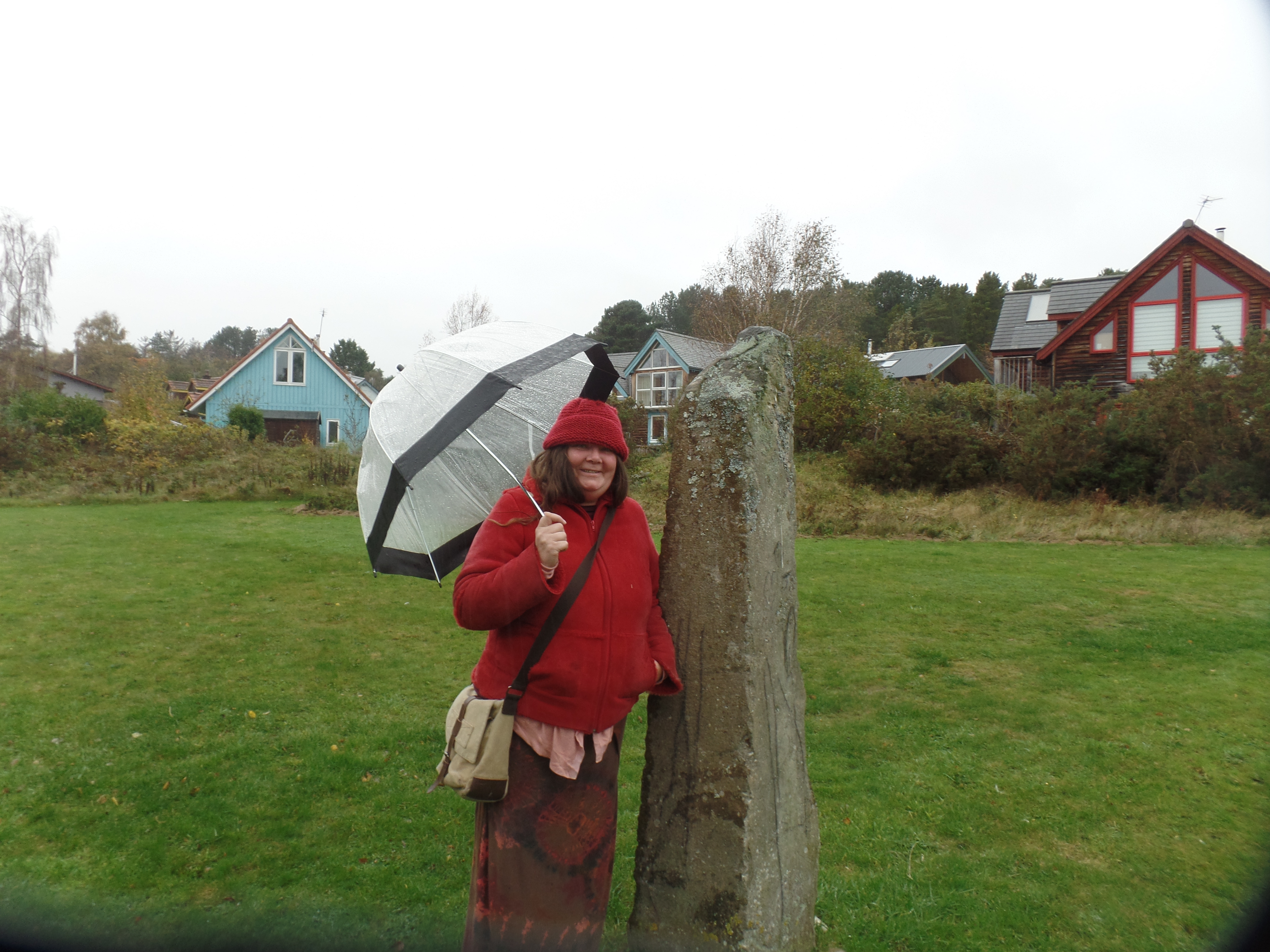
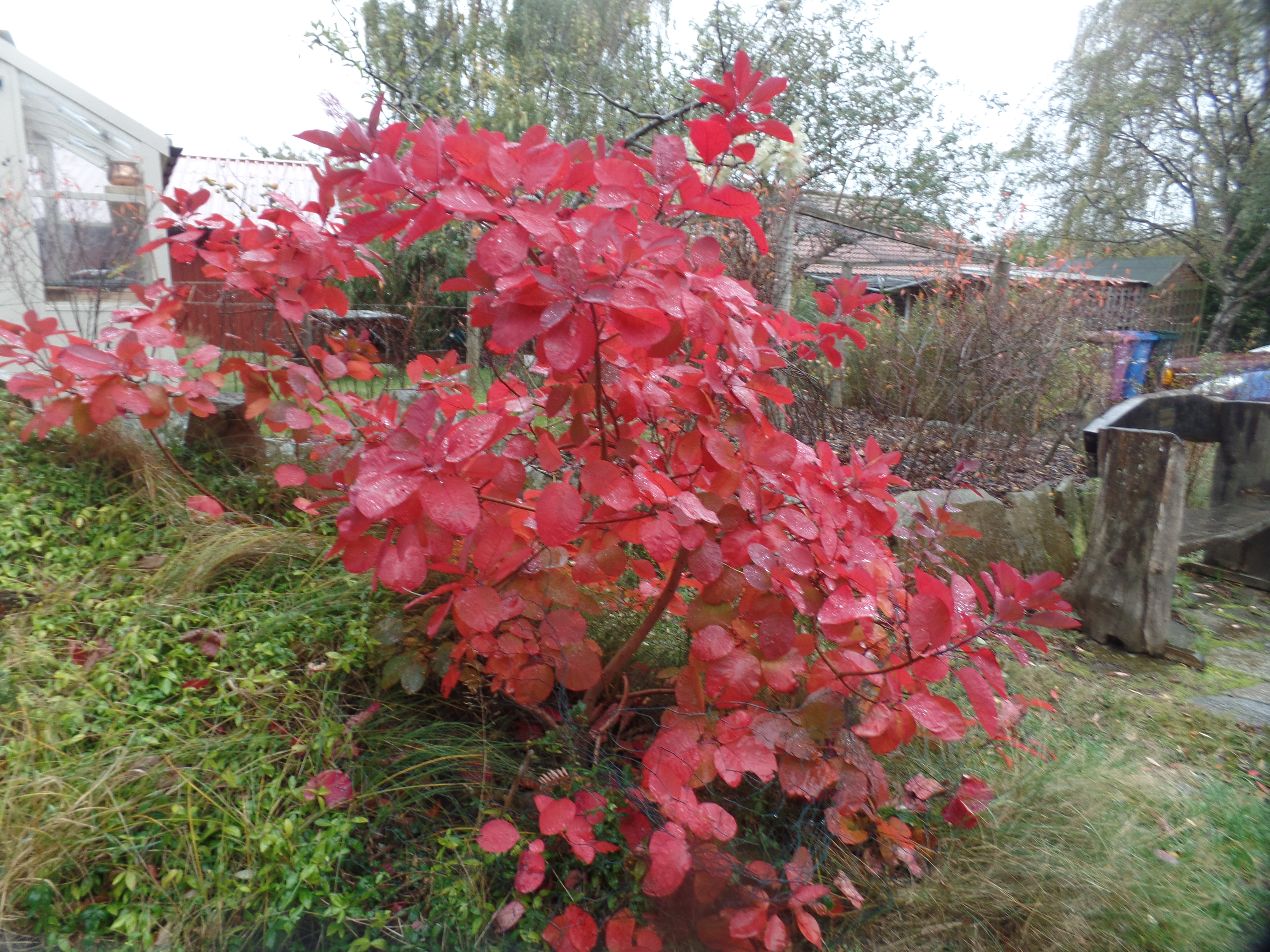
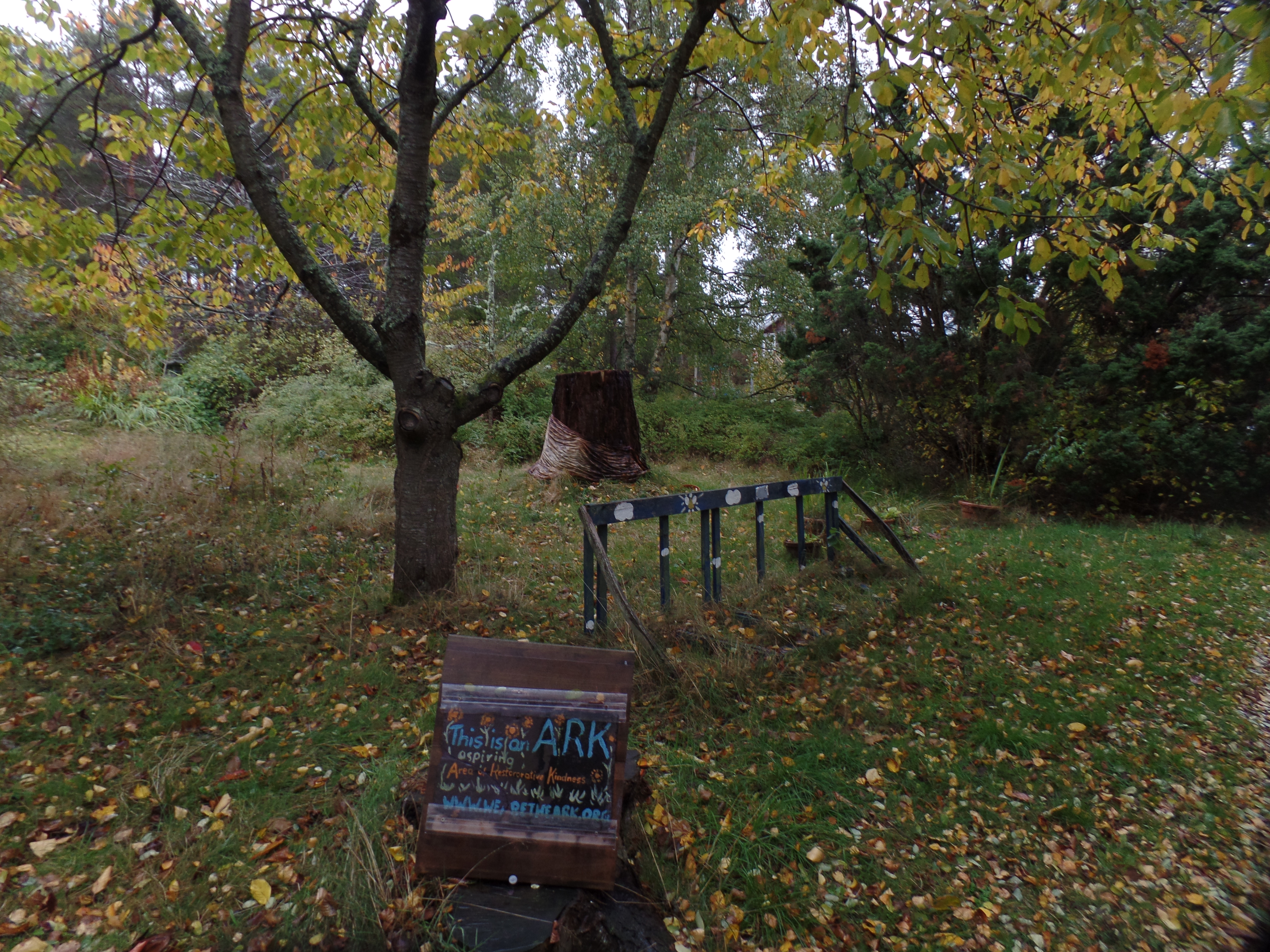
Round home, Findhorn Eco Village. Lisa said this house is presently unoccupied.Wishing Stone, Findhorn Eco Village. Here is a good place for meditation, on a fine day. (Above and below)Lisa at the Wishing StoneThis round house is near my lodging of last night.A wee bit of foliageTwo more round housesFindhorn ForestInside a gathering placeInside Meditation Round House. The similarity of this and another such house with Indigenous American round houses is remarkable.A “hobbit house” (Above and below)Community CenterOpen meditation centreOpen meditation centreAnother sacred space and standing stone, an ARK (Area of Restorative Kindness) above and below
This is the sort of place where one goes for restoration. Thankfully, I need not board a plane to find such a space. There are ARKs of this sort, just about anywhere one might go in the world, and we have our share in the Southwest U.S. I will return here again, if it be the Divine Will, yet in the meantime, it makes me all the more appreciative of sacred spaces closer to Home Base.
I bid farewell to Lisa, Alan and Pupak- and boarded a train bound for Edinburgh, via Aberdeen. The magic was not done with me yet.
October 25, 2025, Findhorn, Scotland- The gentle couple welcomed me into their home, the last of three cozy, warm cottages that greeted me upon my arrival in this ecological village, high on the North Sea. It is a place of learning, of adaptation and of unrelenting hope. Here, I will spend a peaceful night, knowing that the residents have endured gales and storms that are far worse than the mild chill that whispers outside.
I easily made my way from Travel Guest House to Waverley Train Station, and stopped to enjoy a Cornish pasty for breakfast. Looking at the nearby sign board, just two minutes before we were to board a train to Aberdeen, the ride was canceled. After finishing the pasty, I went to the Travel Centre and rebooked- this time for a train to Perth, which would be followed by a bus that would take us through Cairngorms National Park-the crown jewel of the eastern Highlands, thence to Inverness, where I would meet my friend Lisa and go on to Findhorn.
I walked up to platform 19, where the train to Perth was already waiting. Needless to say, there were a number of folks from just north of Aberdeen, who were irritated by the last-minute scrub, but they were making the best of it. In fairly short order, we were underway, and I was seeing a Scotland that was enjoying clear skies, after the cold rain of yesterday afternoon and evening.
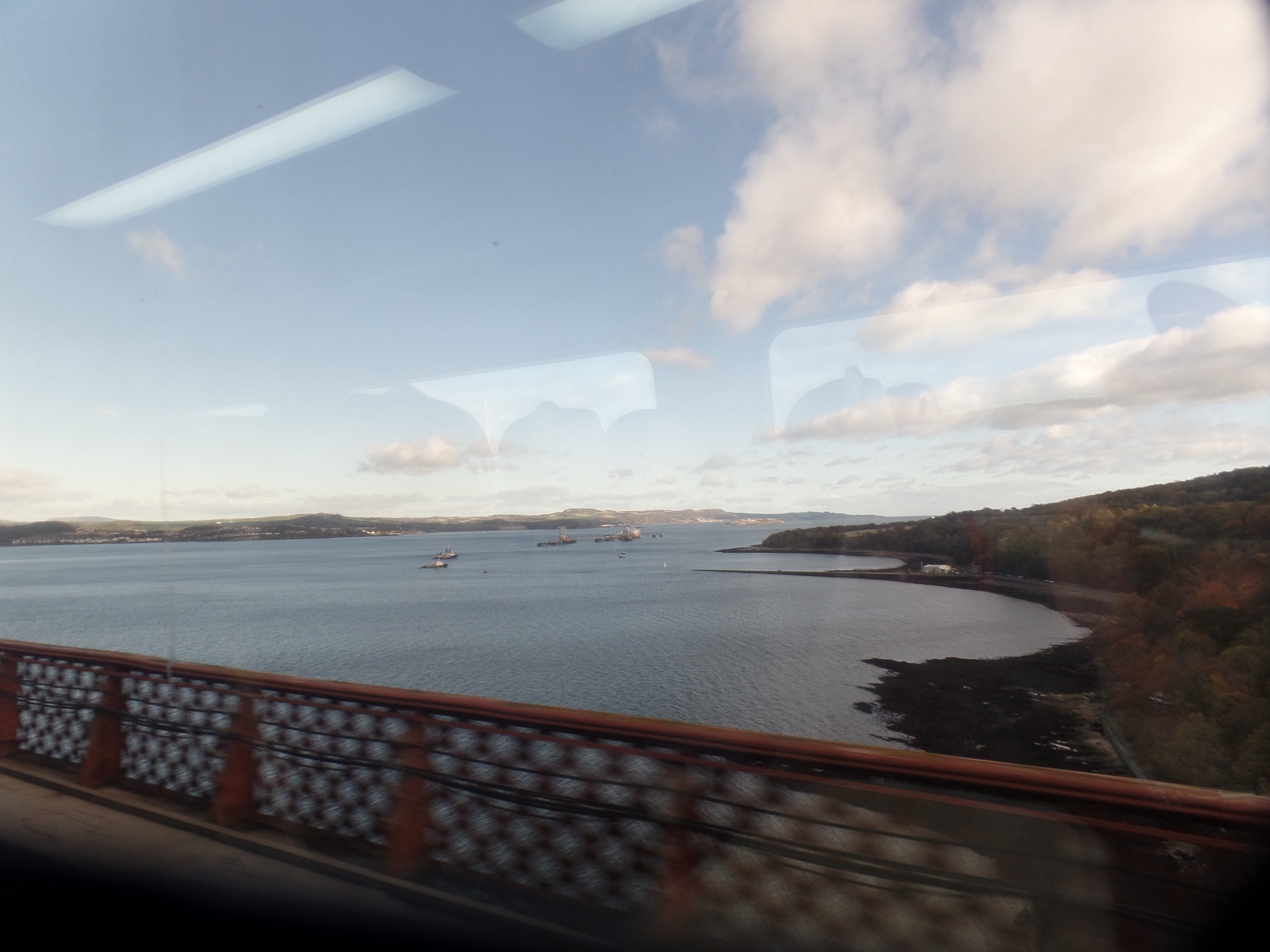
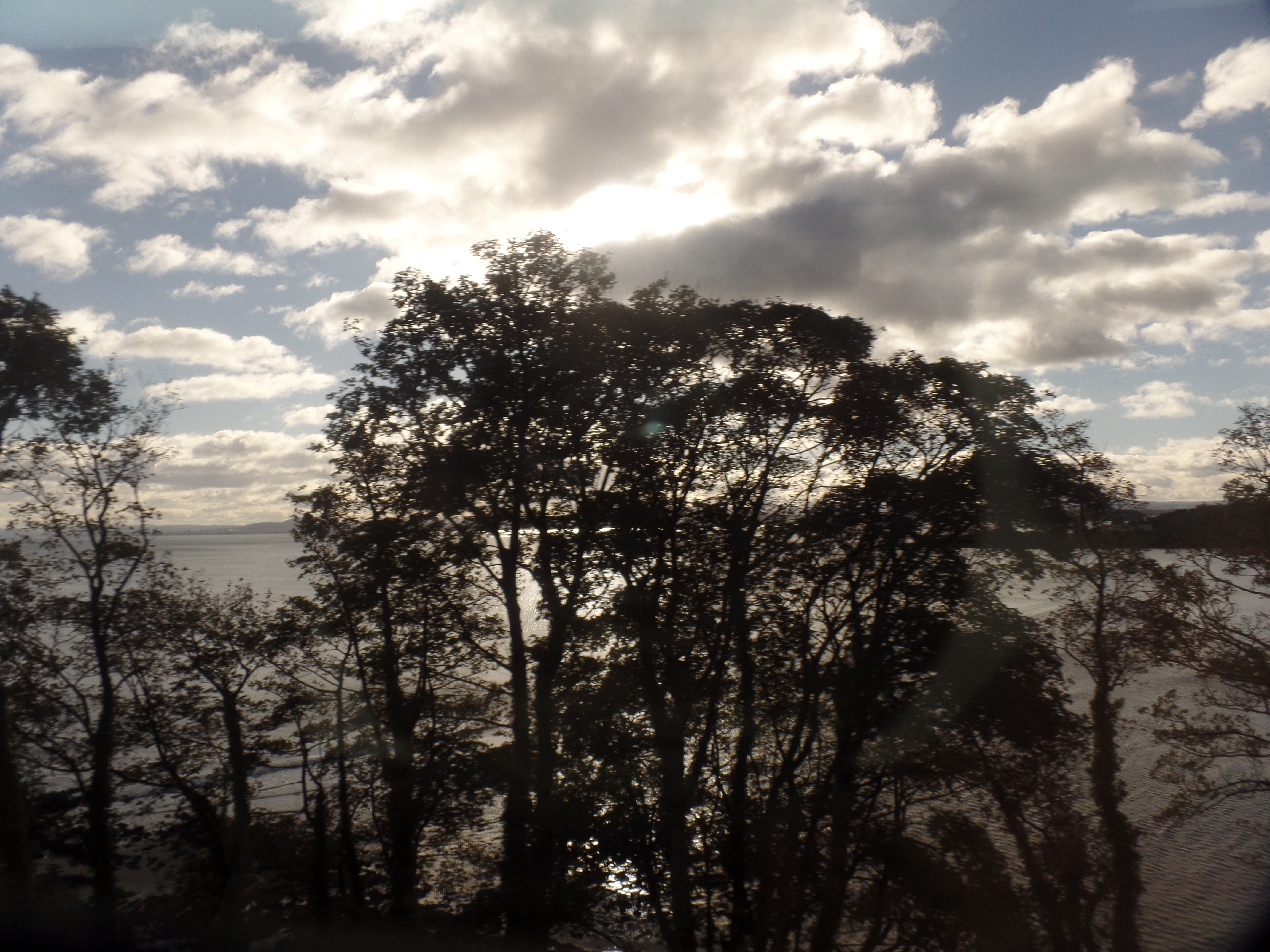
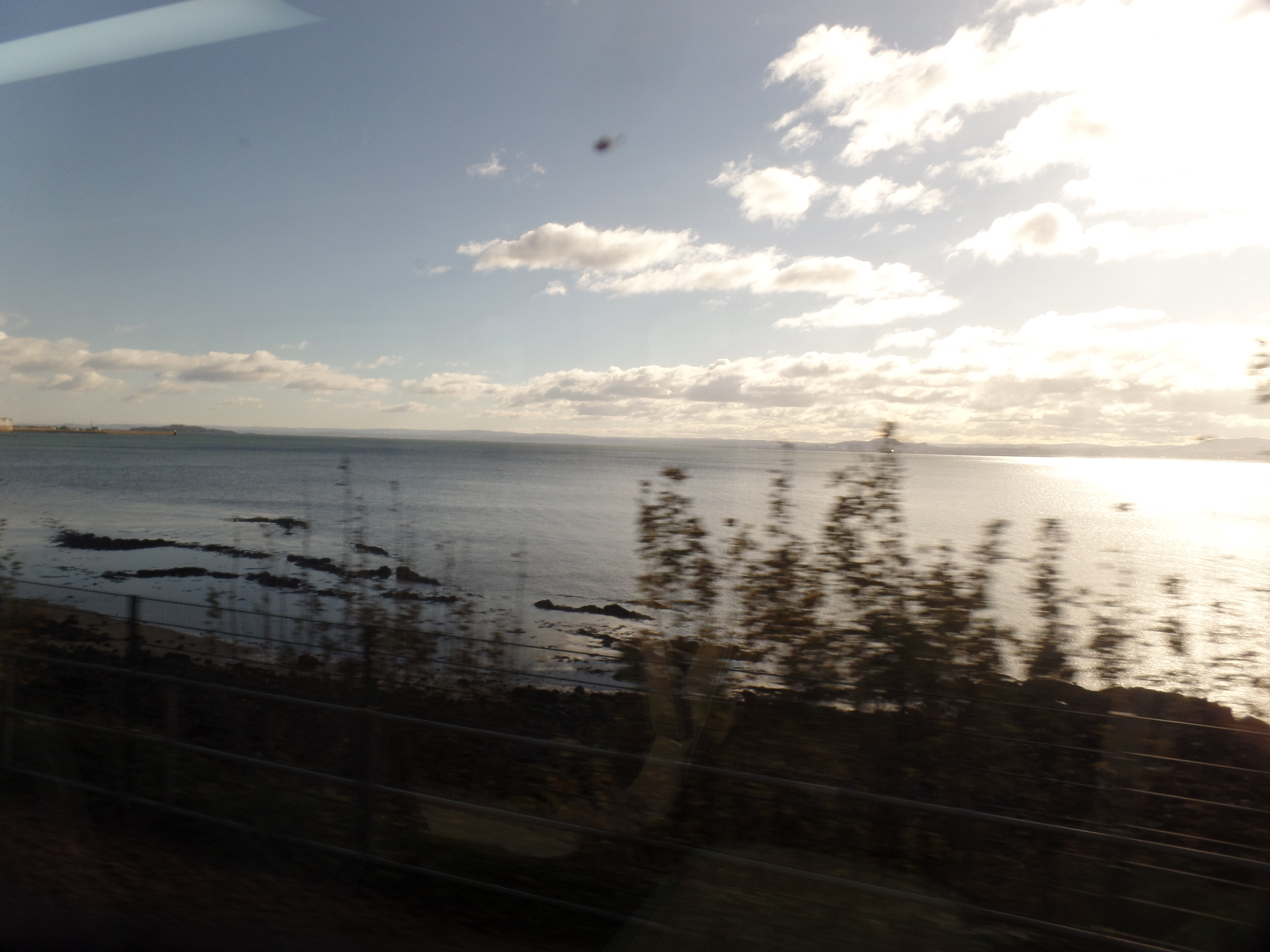
Crossing the Forth Bridge to RosythFirth of Forth, through the trees (above and below)Firth of Forth meets the North SeaBurntisland
From there, it was only another hour before we reached Perth, turning inland at Leven and passing through Cupar and Abernethy to the home of Scone Palace. We would not see the palace, though, as the bus took us through glorious highland scenes. I was, however, in a crowded vehicle, with no room to maneuver either a camera or phone, without being a nuisance to the patient grandmother to my right. Take my word for it, though, Caringorms is well worth a journey in itself.
A number of people got off the bus at Landmark Forest Adventure Park, and in another half hour, we were in Inverness. There was no view of Loch Ness- it’s another 20 miles to the southwest, but the city has Beauly Firth, Moray Firth and Clava Cairns to recommend it to a visitor, besides being the northern gateway to Cairngorms. Lisa, a friend from the Earth Rising internet group, which has been meeting once a month, for the past six years, was there to greet me and be my guide to Findhorn.
We headed straightaway to The Captain’s Table, the first warm, cozy cabin-like place of welcome. I “tucked in” to a hearty bowl of cullen skink- Scotland’s other signature dish, (no haggis was either offered or served on this visit). Cullen skink is fish chowder: Smoked haddock, potatoes and onions, usually in a broth of milk or cream. It was a wee bit o’ heaven!
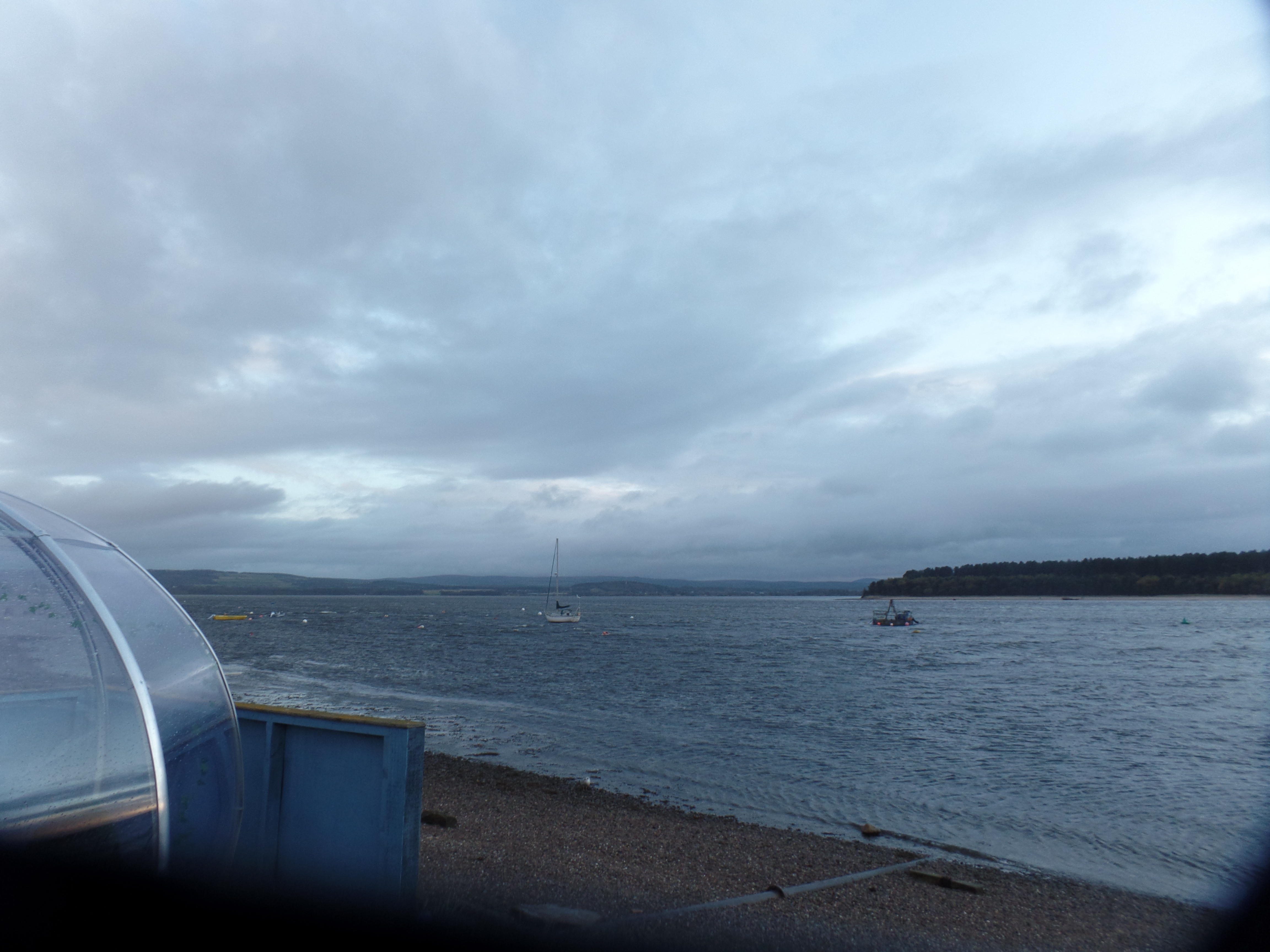
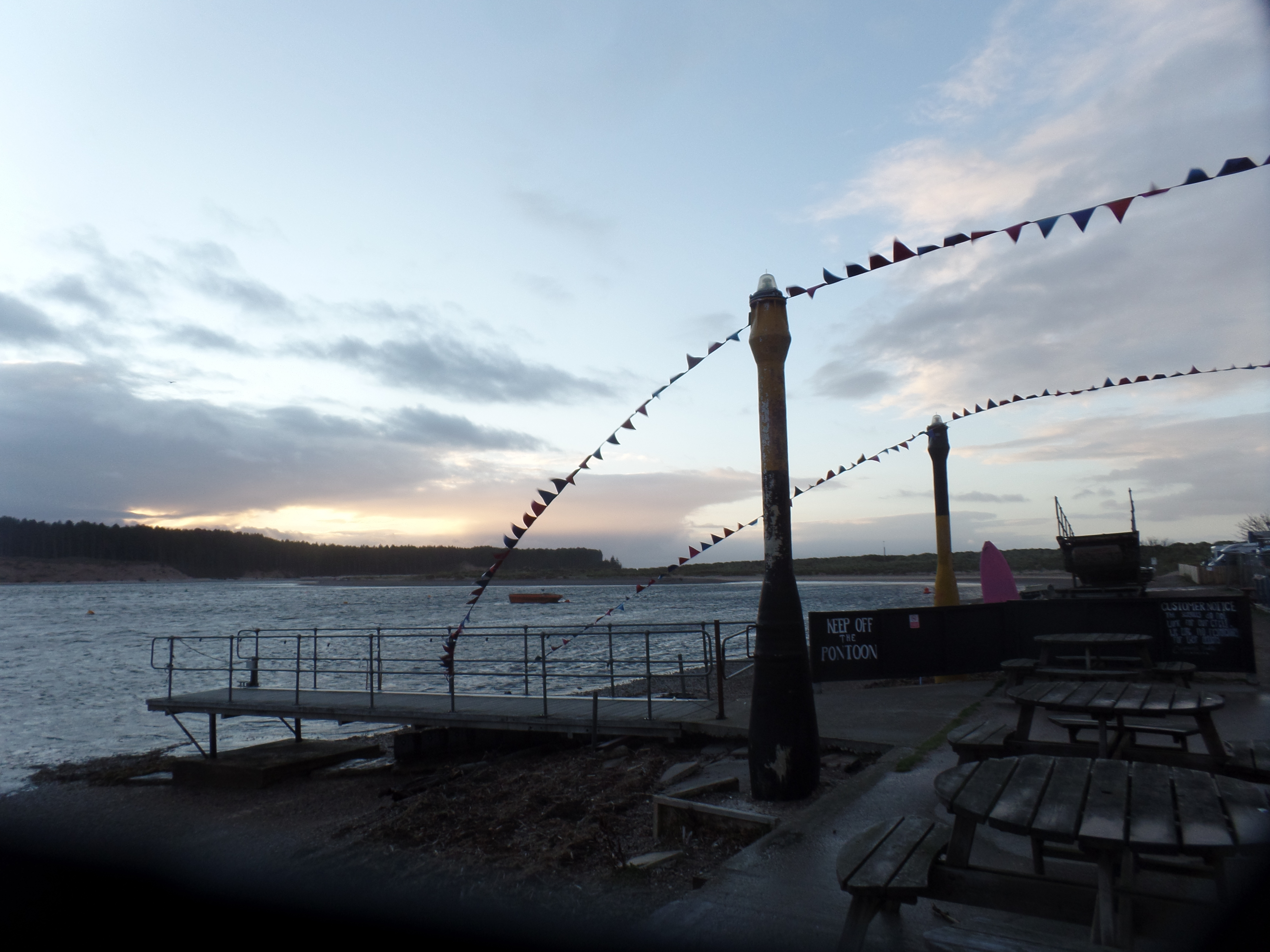
With me fortified against the chill, we explored the small beach at the confluence of River Findhorn and Forres Cove.
Forres Cove Wharf at The Captain’s Table CafeA Scottish sunset (above and below)
Lisa finds the shades of grey things of beauty. Tonight, I agree with her.
Surf meets sedge Lonely walkers on an evening beach A neap tide-not as cold as it looks.
We drove back to the village, and stopped for a bit at Lisa’s house, the second cozy cabin. After a brief chat, it was time to head to the home of friends Alan and Pupak, my lodging for the night. We sat and discussed spiritual matters, and health protocols. Now, it is time for rest, so I bid all A’chiu va (aye chuh va)-good night, in Scottish Gaelic.















 A Sagittarian Seeker