October 1, 2025, Vienna- Up early enough, I got to Oscwiecim’s small train station and caught the train back to Krakow, only to boomerang right back past the station, as we made our way down to Vienna. I had a seat, clear to the Austrian capital, going through southern Poland and the Czech Republic. It was a long ride, though, as you can imagine, and I was ready for the mattress by the time we crossed the Danube and got into town. Somehow, I read, and re-read, the message from my lodging, and saw one too many codes for that hour of night. It also indicated that it was past time for check-in (“Office closes at 8 p.m.”, and it was 10:15.)
These things happen a lot, and yes, the train was delayed for about forty minutes. Still, I was frustrated at not getting to the Baha’i National Centre in Vienna, this evening, and at what seemed to be one too many Internet-centric snags, in connecting with the lodging. Besides, they didn’t answer their phone, which is supposedly on 24/7. End of rant.
I got a briefing on Vienna’s excellent public transportation system and found my way to Radisson Red Vienna. I am usually not partial to high-end hotels, but I was exhausted and besides, this was Vienna. So, the welcoming desk clerks got a guest with no reservation, and I got a very refreshing place at which to not have to enter codes.
A gowned angel watched over me, at Radisson Red, Vienna
September 30, 2025, Oswiecim, Poland– Today would have been Penny’s 71st birthday. Each year since I first met her, including the fourteen years since her passing, the day always brings a special event, either Baha’i teaching or a visit of significance.
Entrance to Auschwitz-Birkenau Museum
Today, I had the opportunity to visit the sites of one of the darkest chapters in human history. Auschwitz and Birkenau were concentration camps, separated by 3 kilometers, but under the same commander: The infamous Rudolf Hoss (not to be confused with Deputy Fuhrer Rudolf Hess), implemented the use of Zyklon B, a pesticide that became the nerve agent which alone killed a million people. Hoss was tried, convicted and executed in Poland, in 1947. (Rudolf Hess, as is well-known, flew to Scotland, believing he could convince Scottish “opponents” of the War to hasten British withdrawal from World War II. The Scots were not amused, Hess was imprisoned and then transferred to Germany’s Spandau Prison, in 1947. He was the sole remaining prisoner there, when he committed suicide, in 1987, at age 93.)
My late father-in-law was a Jewish-American, served as a soldier in the final months of World War II, during which he was captured during the tail-end of the Battle of the Bulge, and was held in the POW camp at Berga, in eastern Germany. I have been to Berga and seen the V-2 Rocket Factory’s remains. Pop was sent to work the salt mines. When he was rescued by a unit of American soldiers, in June, 1945, he was nearly skeletal.
That was the fate of many, if not most, of the survivors of Auschwitz and Birkenau, as well. They numbered about 6200, out of over 1,100,000 who had been held in at the Auschwitz Complex. Jews, who Hitler and his henchmen wanted above all to exterminate, were the preponderance of victims. Men between the ages of 17-60 were made to work, usually until they were broken, physically and mentally. They were then executed. Women, children, the elderly and the infirm, including the mentally ill, were summarily gassed to death.
Besides the Jews, Romany, Russians, Poles, Czechs, Freemasons and the occasional Afro-Germans, were also sent to concentration camps, and executed by poison gas. Auschwitz and Birkenau were the two largest facilities for such hideous practices. in time, even Christian critics of Hitler found themselves in the gas chambers. Birkenau, being the larger camp, had 30 gas chambers. Auschwitz, with four sectors, had ten. As the Soviet forces closed in on Auschwitz, the fleeing German Army forced most of the remaining prisoners west, on a Death March to Germany and Austria. Thus did many die on their feet, though not as many as were gassed.
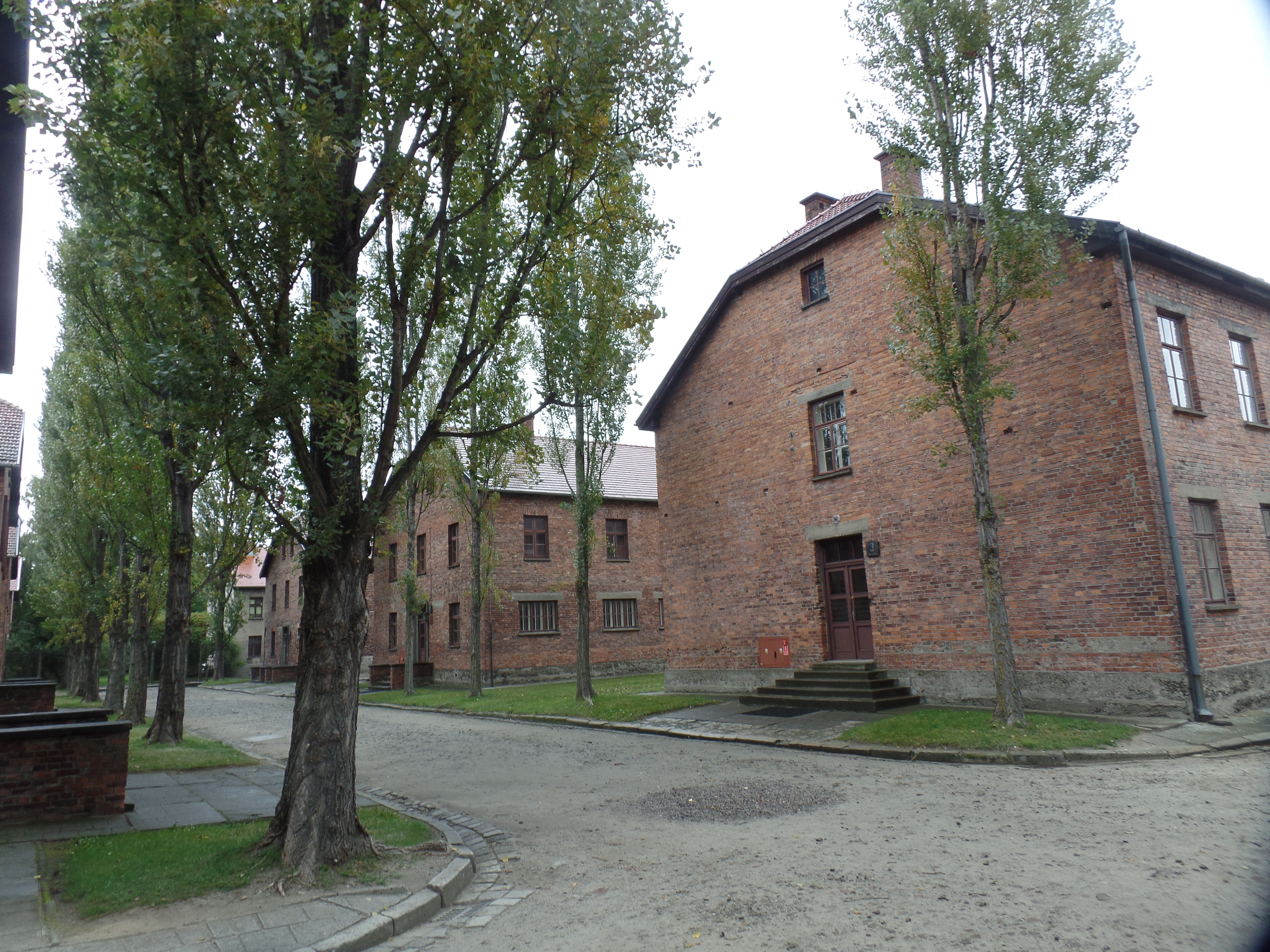
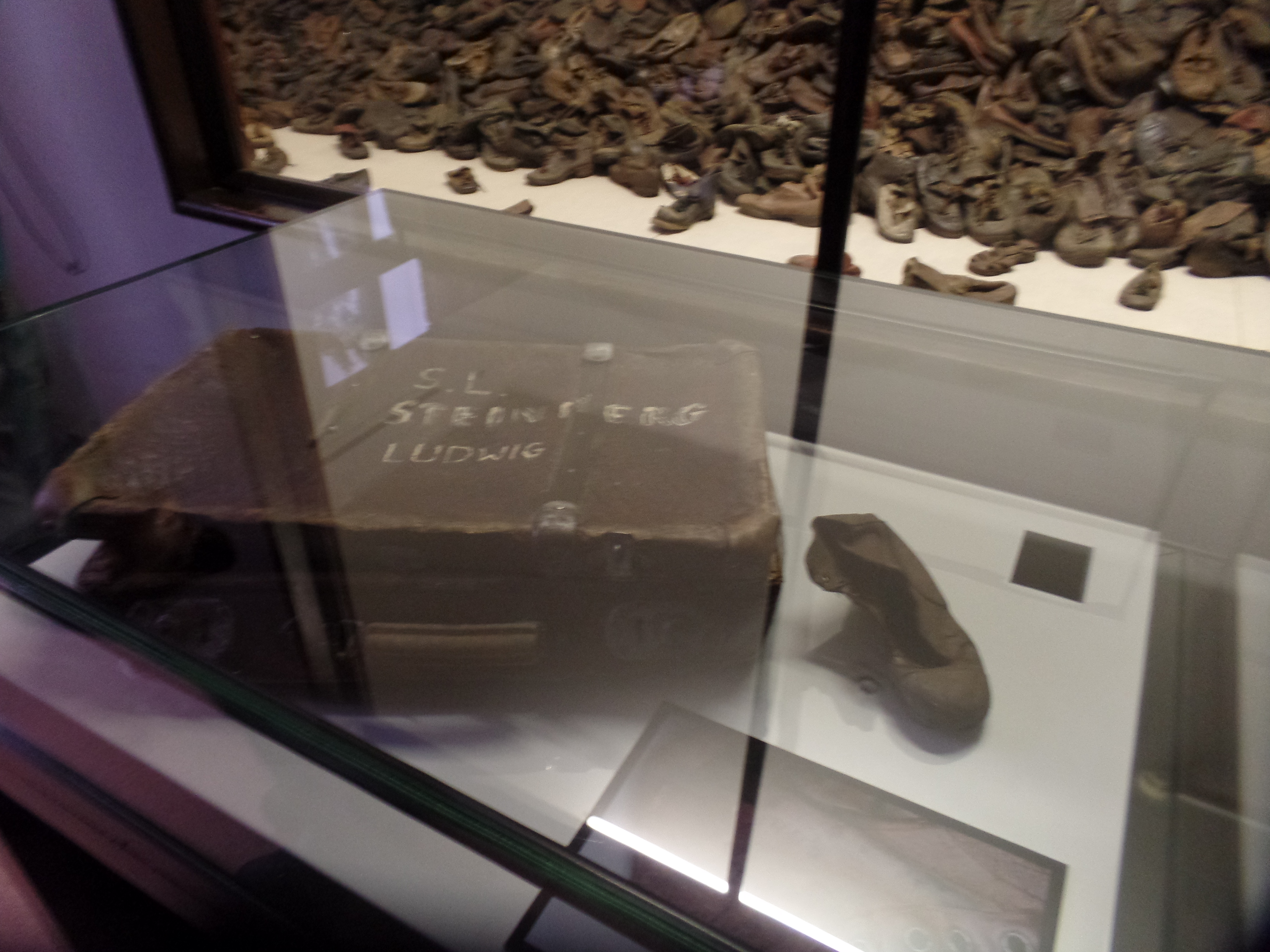
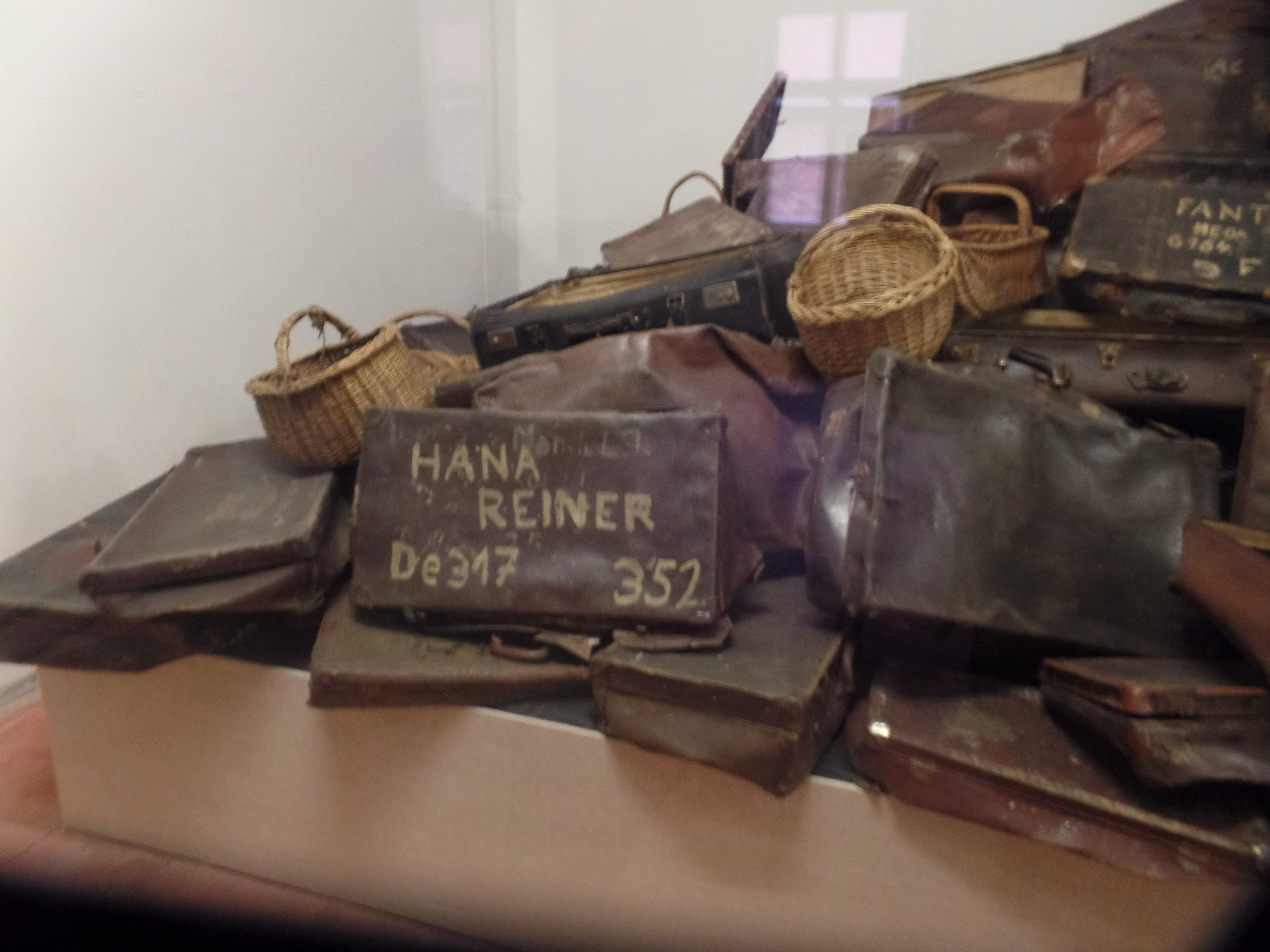
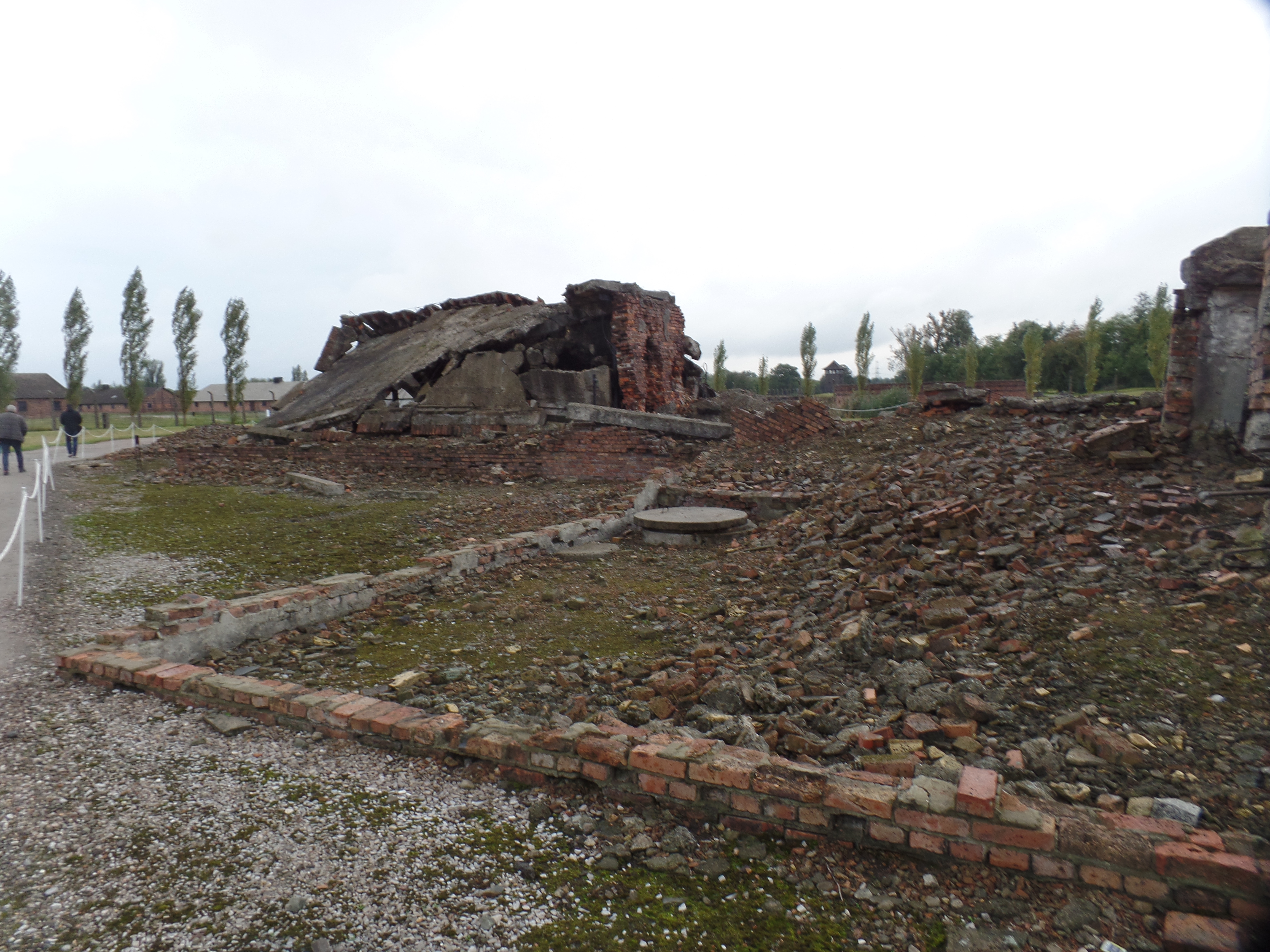
Here are five scenes that are here to remind us that the Holocaust was no Hologram.
“Barracks” # 1, AuschwitzTorture House,, AuschwitzWomen and children victims, on their way to the gas chambers. (They had been told they were on their way to a glorious new life.)Discarded children’s shoes and a father’s suitcase, with his son’s name written on it.Hana Reiner would not let herself be forgotten. https://www.writeoutloud.net/public/blogentry.php?blogentryid=139212The Nazis themselves destroyed this barracks, rather than allow it to be preserved by the Soviets and Poles,for what it had been,
I thought back to the early morning, when I boarded a train in Krakow, bound for the city of Oswiecim, (the Polish name which was translated into German as Auschwitz). A mentally disabled man chose to sit across from me. He was an Italian, who had little vocabulary, in any language. He knew “English” and “Deutsch”, as well as a few words in Italian and Spanish. While he was annoying to the young man sitting by the window and the well-dressed Italian man who sat across the aisle, I let him show me the soccer games on his phone. At the end of the one-hour trip, he cheerfully said “Grazie!” and went on his way.
That gentle man would not have had a chance to ride the rails, in Hitler’s Germany. He’d have ended up in the pile of corpses found by the Russians, or in one of the piles of ashes that were dumped in the Vistula River or behind the Subcommandant’s House at Birkenau. He can ride the rails, as he pleases, in today’s Europe, not being harmed and harming no one,
Auschwitz-Birkenau, and all places like it, are needed reminders of exactly what levels of depravity can come from a deluded pursuit of false perfection.
September 29, 2025, Krakow- The guard was unequivocal: “No, this ticket is only for the tower. Cathedral is off limits.” I had read that Krakow, like Venice and Barcelona, was getting tired of the hordes of people streaming in and overwhelming the most popular sites. Here was very strong proof of the toll that being loved too much is taking on several places around the world, where each new face just wants one more selfie. Besides, the Cathedral is one of the world’s great religious art museums. I should have come here first.
I had already been in several historic sites in Krakow today, so not seeing Wawel Cathedral was not going to ruin my visit. The nearby castle had closed at 3, and the proprietors of Wawel complex are finding that the underground area is in need of a break from visitors. They put a cap on the number of people allowed down there, and had reached it, by the time I arrived.
I am determined, among other things, to be an ambassador for goodwill and to honour the work which people in the communities on my itinerary are doing, whether it is serving visitors or as part of the normal life of a community. The Wawel team is among those who have put up with a lot, especially in the travel explosion that has followed the 2020 Pandemic. I went with what the tired ticket clerk set for me-and indeed, there was nothing about going into the Cathedral. I walked around outside for several minutes, then left. It was getting towards evening, anyway.
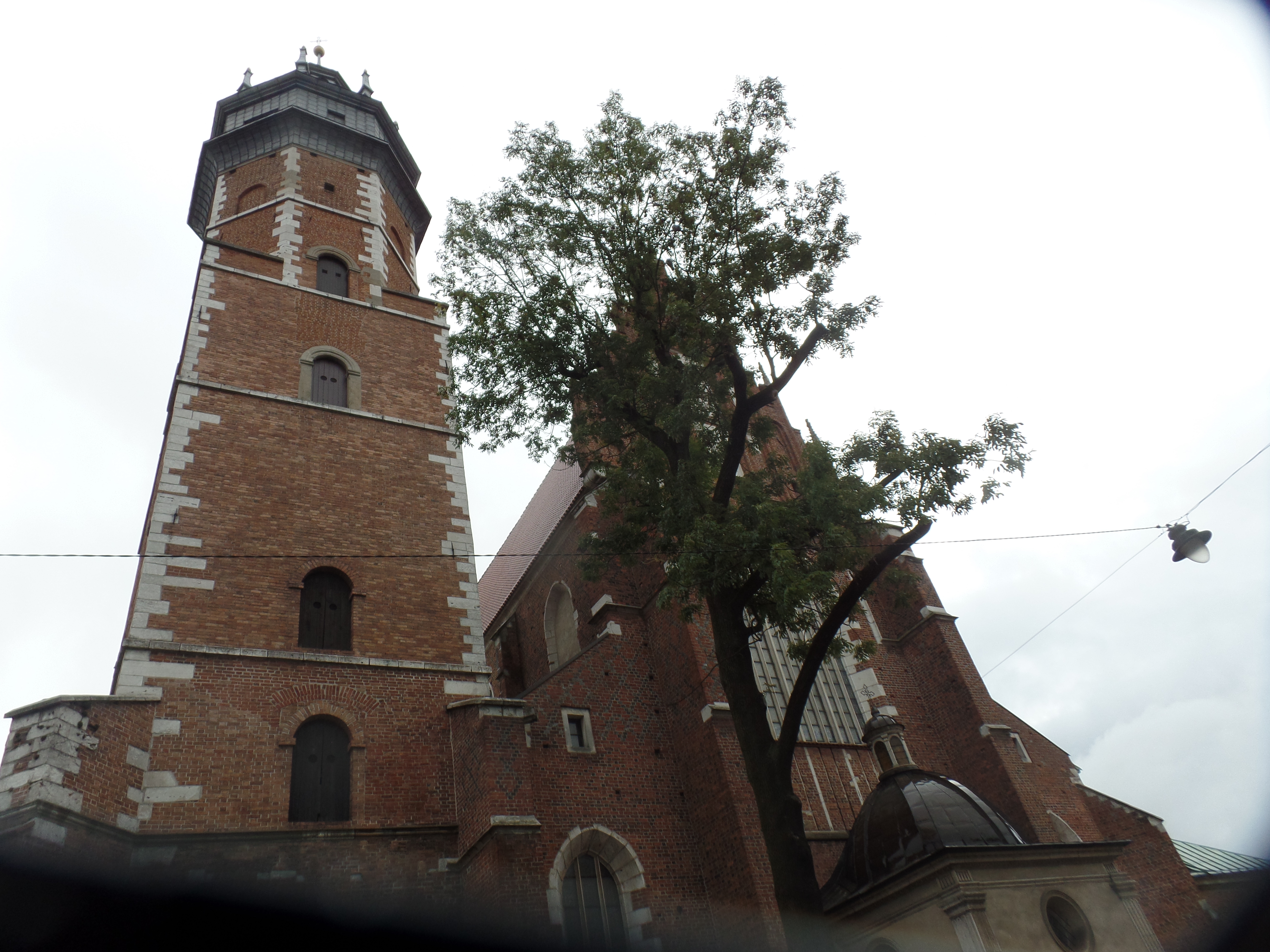
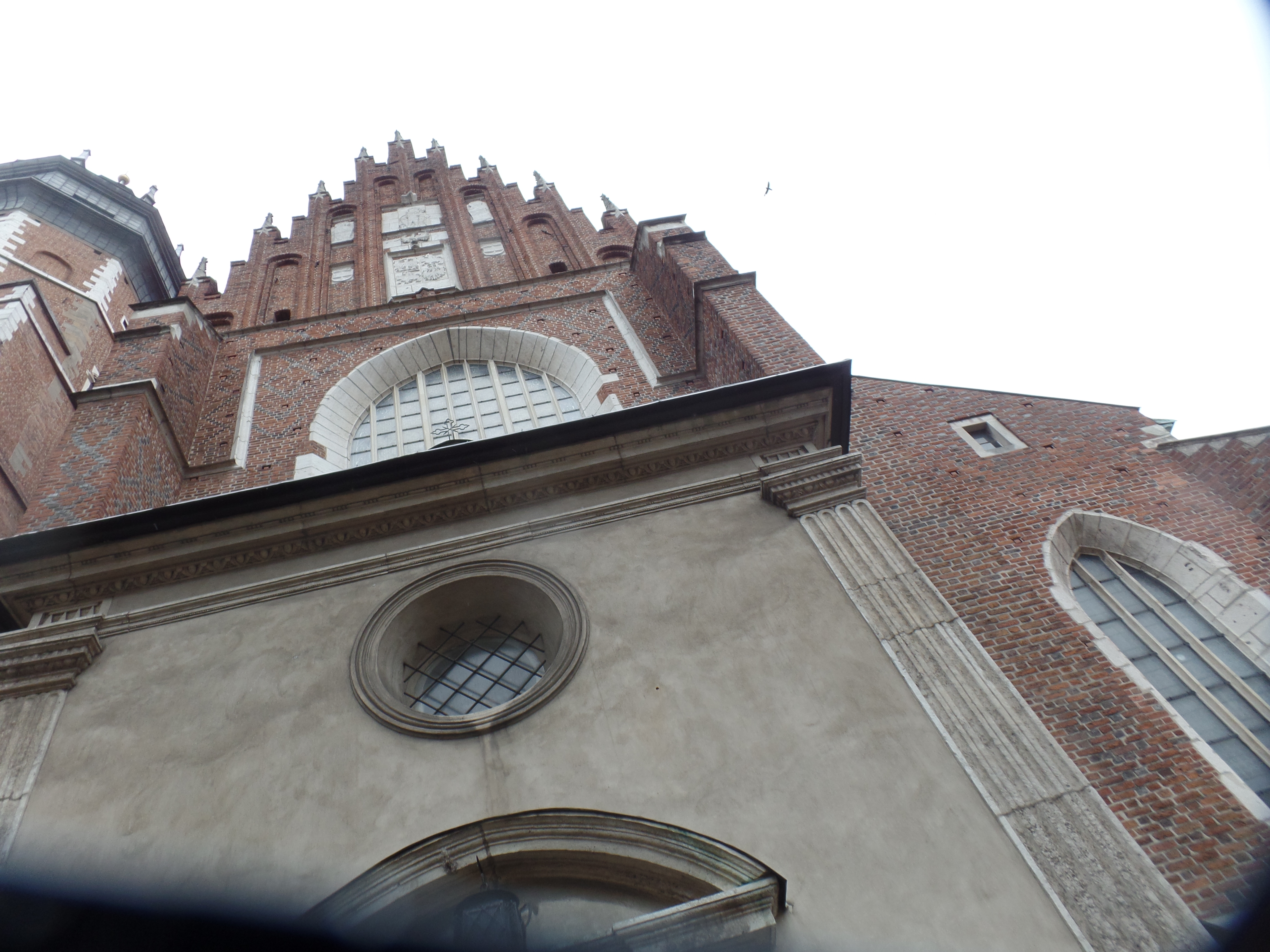
The day started with my anticipated roommate finally showing up, at 7:20 a.m, after what sounded like an enervating train ride. I left him to get a good sleep, and had breakfast downstairs. The day outside began with a short walk from Meininger Hostel to Old Town Krakow. First stop was Corpus Christi Church, built on the orders of Polish King Kasimir III, in 1335. It is one of three impressive houses of worship in Old Town.
Corpus Christi Church, Kasimierz District of KrakowFront of Corpus Christi Church, Kasimierz District, Krakow
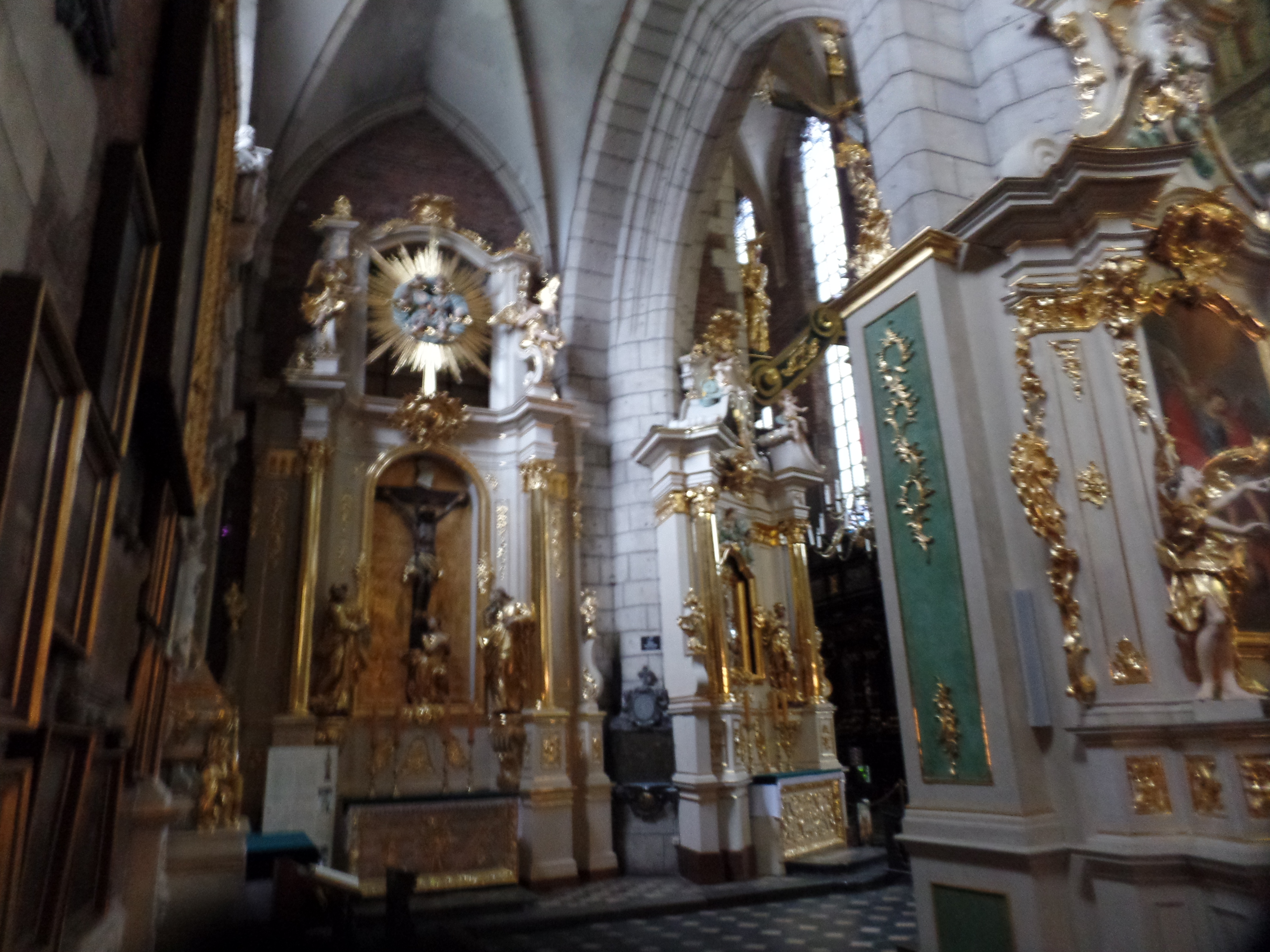
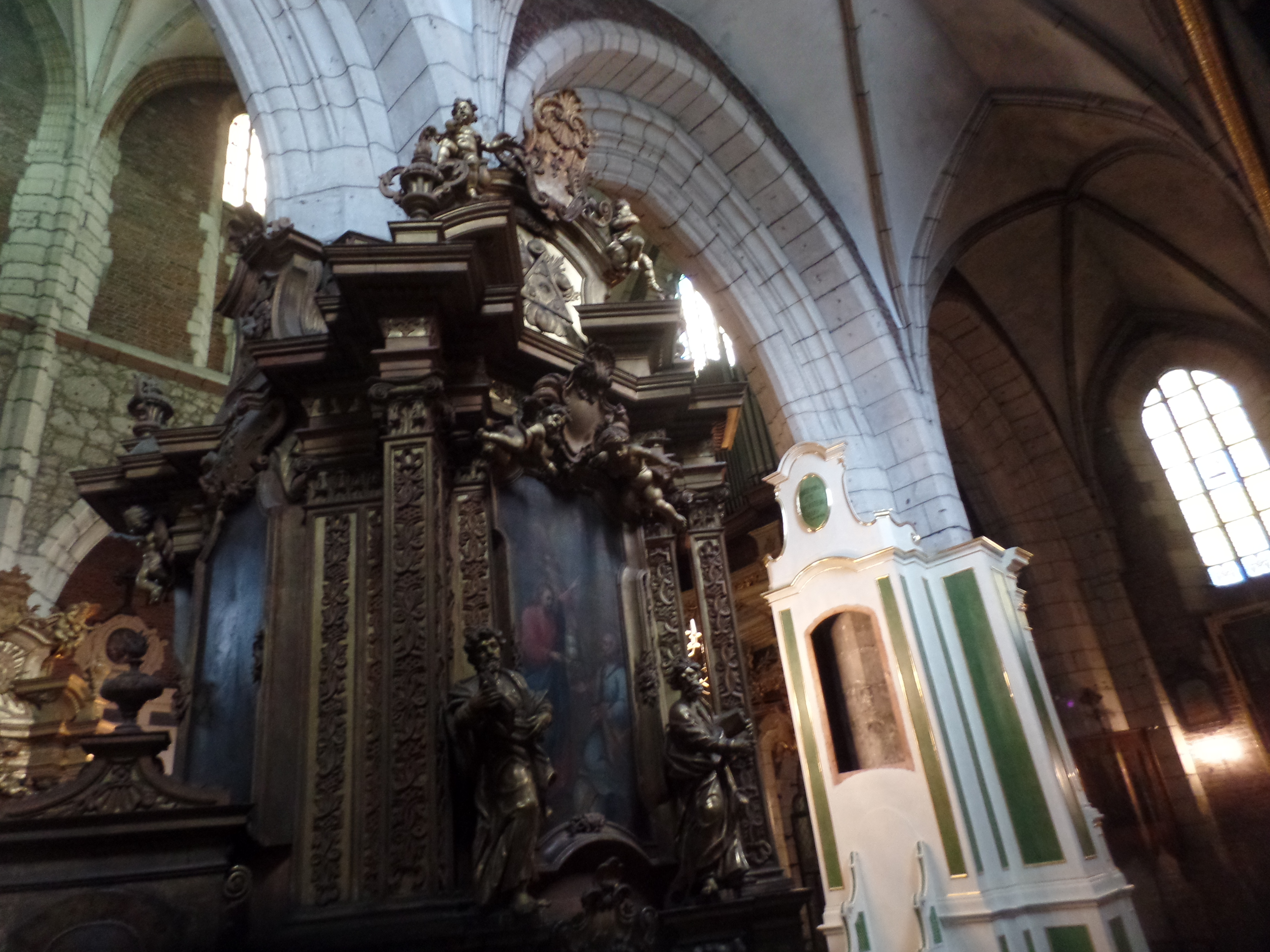
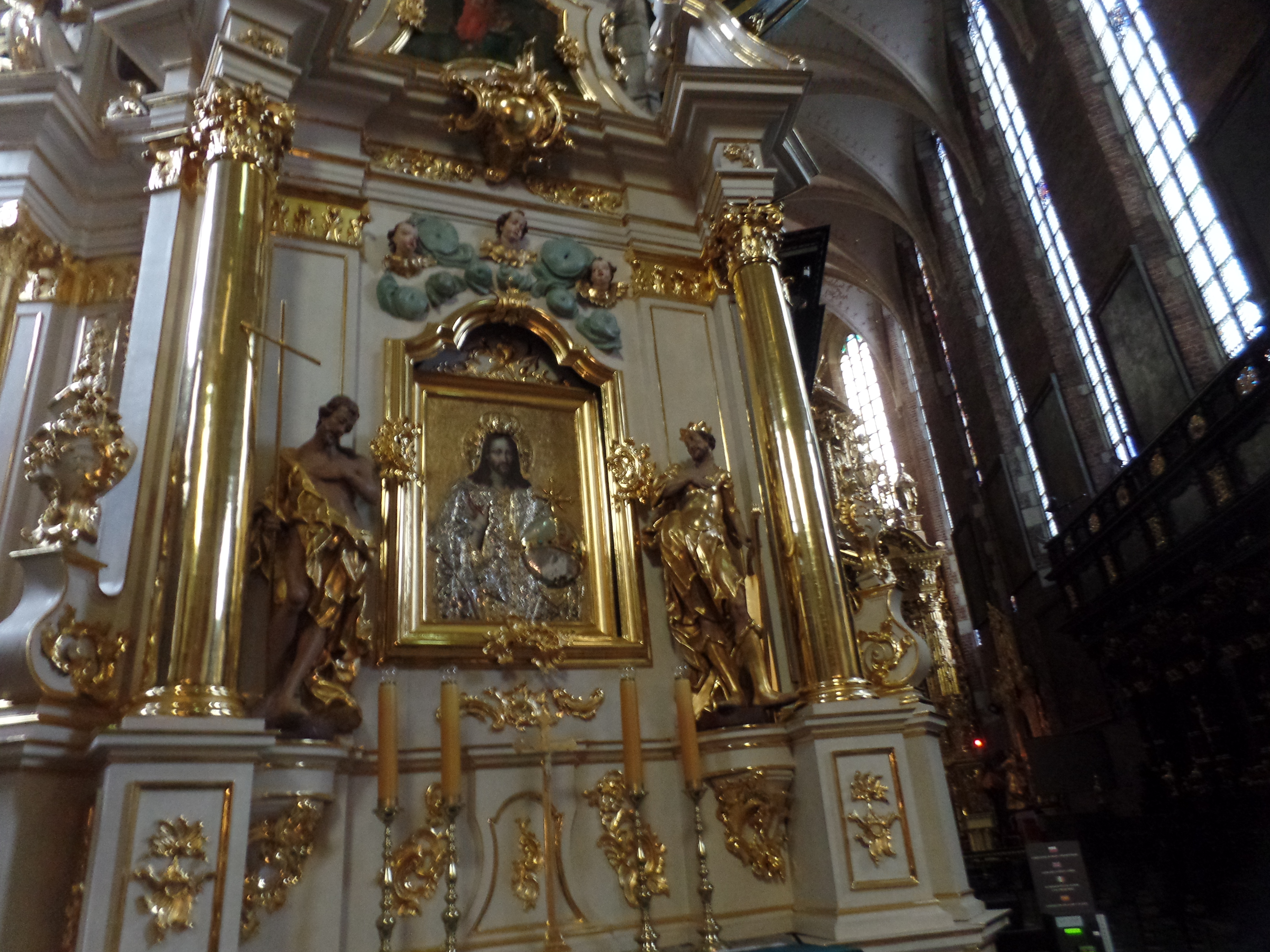
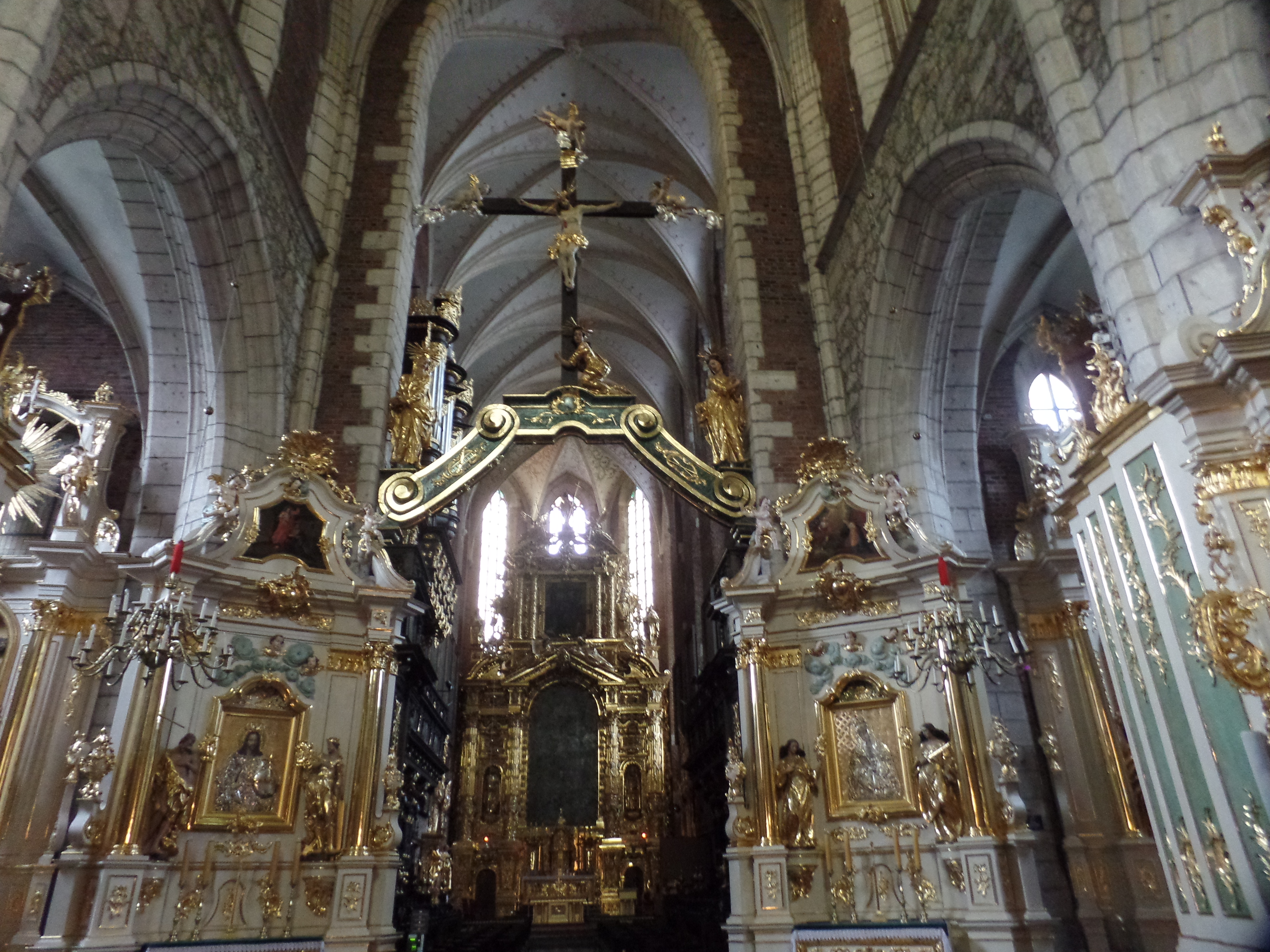
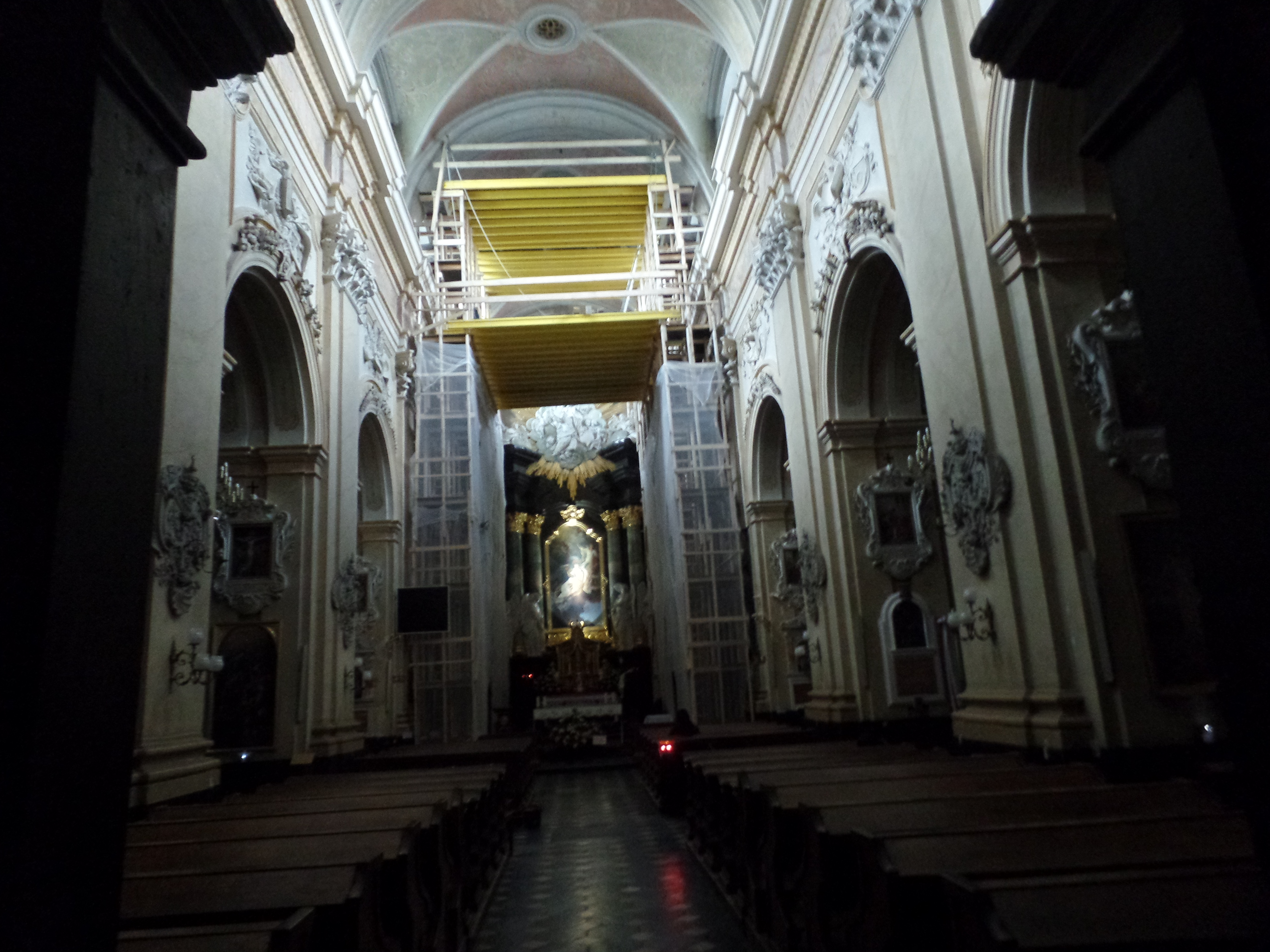
The interior is meticulously maintained. There were a few ladies inside, engaged in their devotions, so I was careful in choosing places to share here. Kasimir III loved to showcase gold, so the most striking scenes of Corpus Christi are accented in the metal.
Interior of Corpus Christi Church, Old Town KrakowNotice the light colours of the archways, contrasting with the darker wooden cabinets.More gold, at the altar (above and below)More of the golden altarMonastery at Corpus Christi Church, Old Town Krakow. This was occupied by the Canons Regular of the Lateran, who King Kasimier had brought in from the older town of Klodzko.
I needed a little coffee break, so Green Times, just up the street from Corpus Christi, had a good organic brew.
Green Times Coffee House, Old Town Krakow
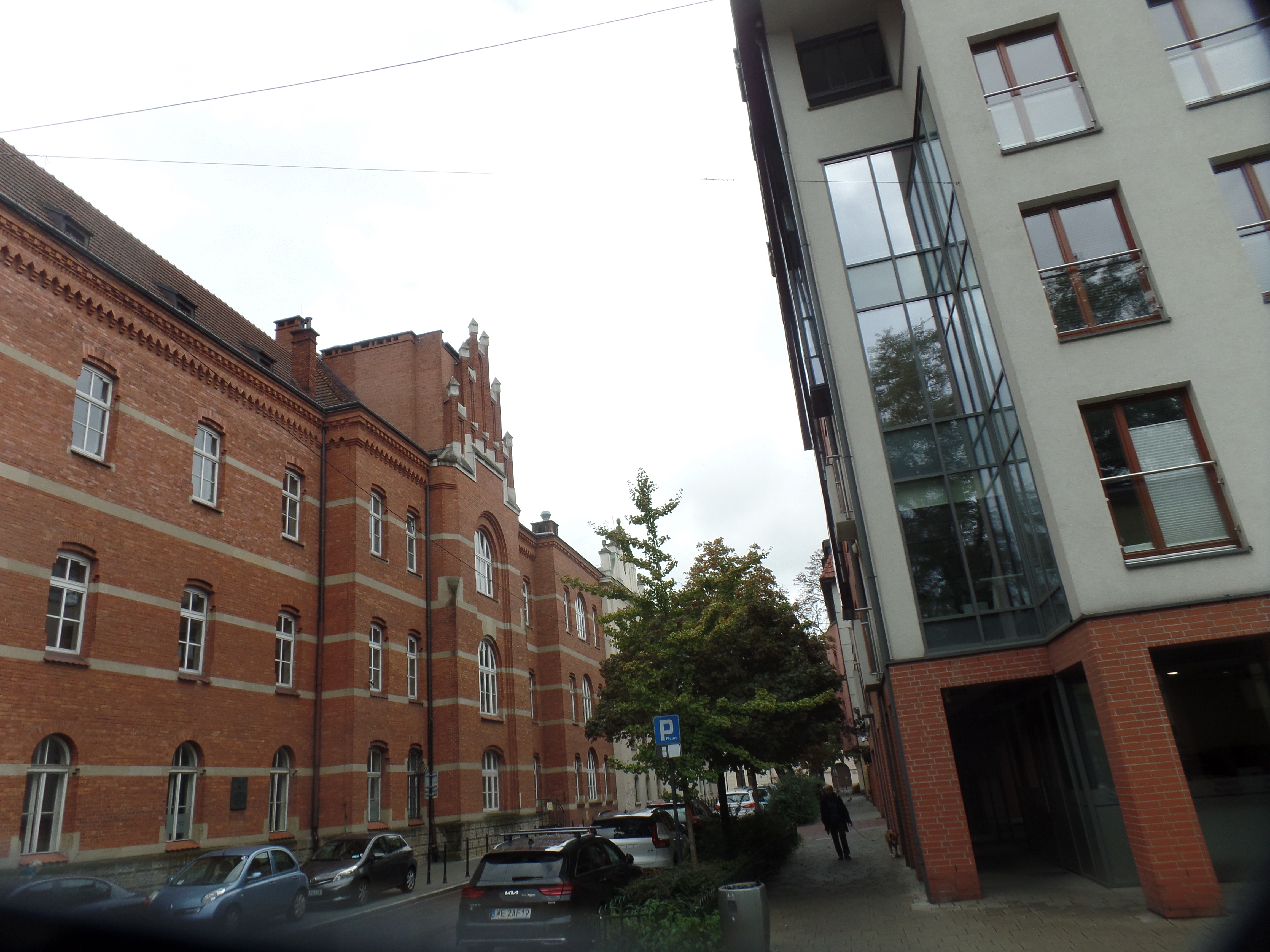
I didn’t need a hospital, but there is large one in Old Town.
Szipital Zakonu Bonifrarow SW Jana Grandego (Zakonu Hospital), Old Town Krakow
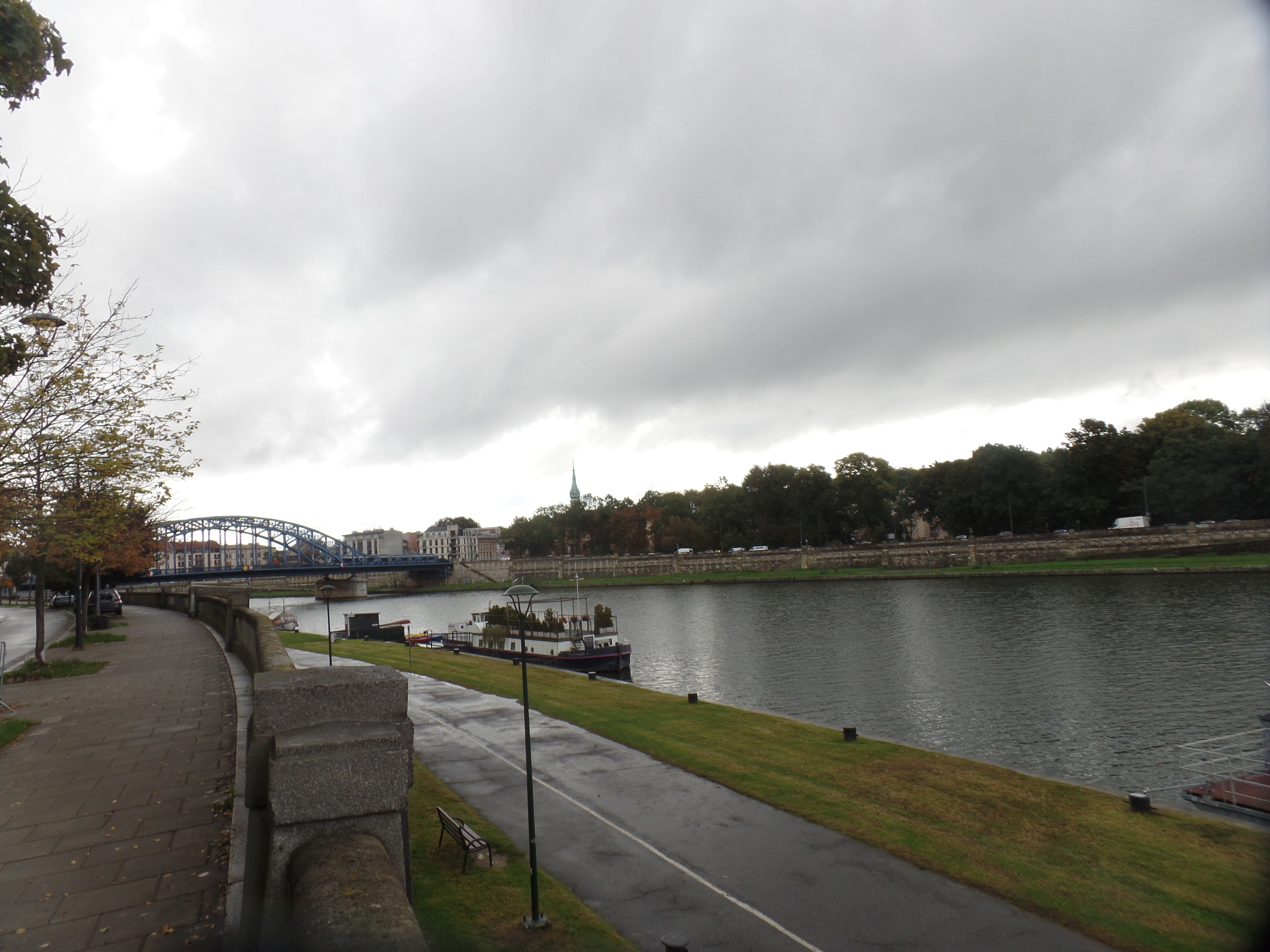
I came next to the divider and lifegiver: Beautiful Mother Vistula
Vistula River, Krakow
The fish look happy!
Vistula River, Krakow
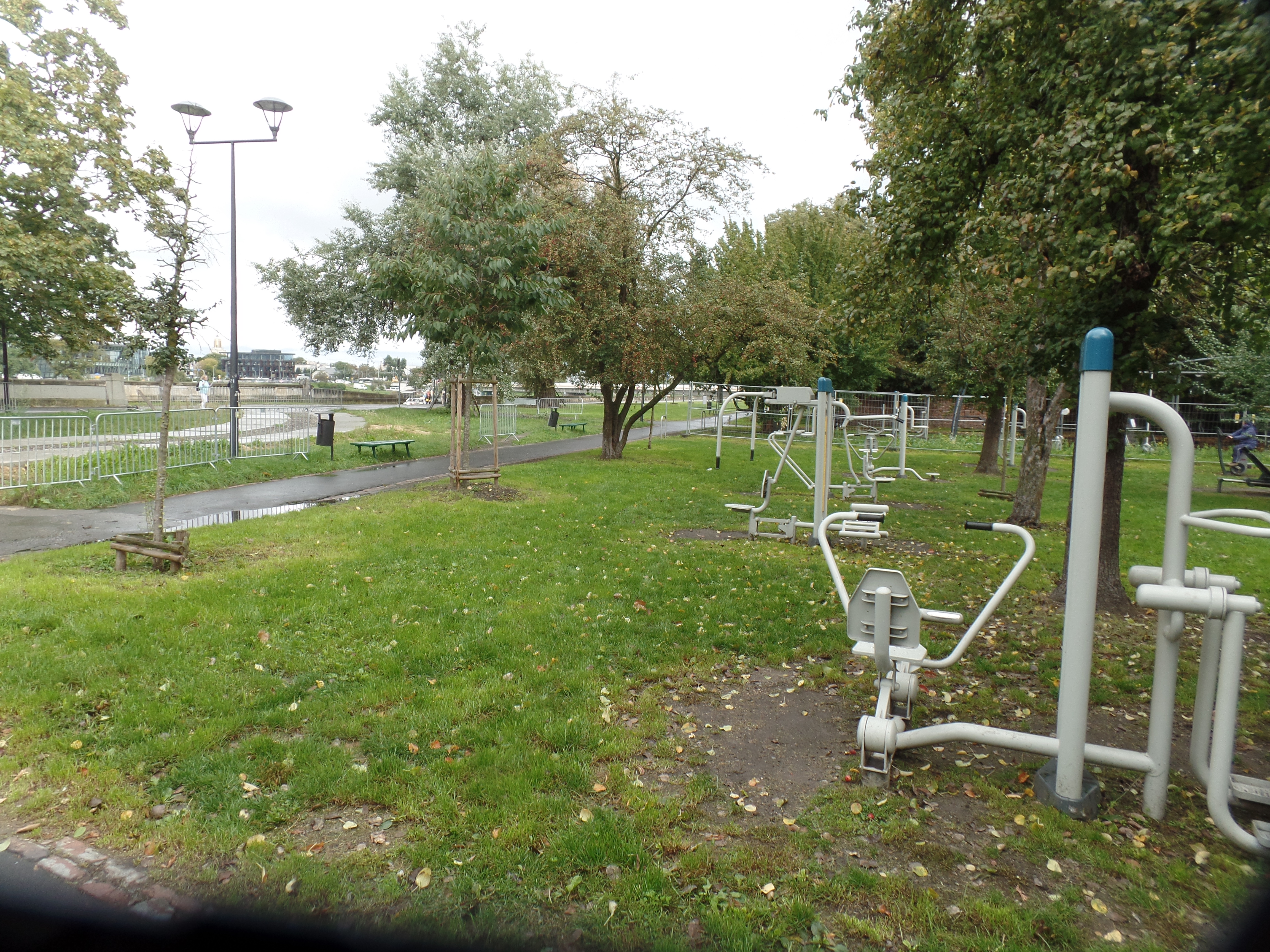
An exercise yard for adults!
Public Park, near St. Rita’s Church, Old Town Krakow
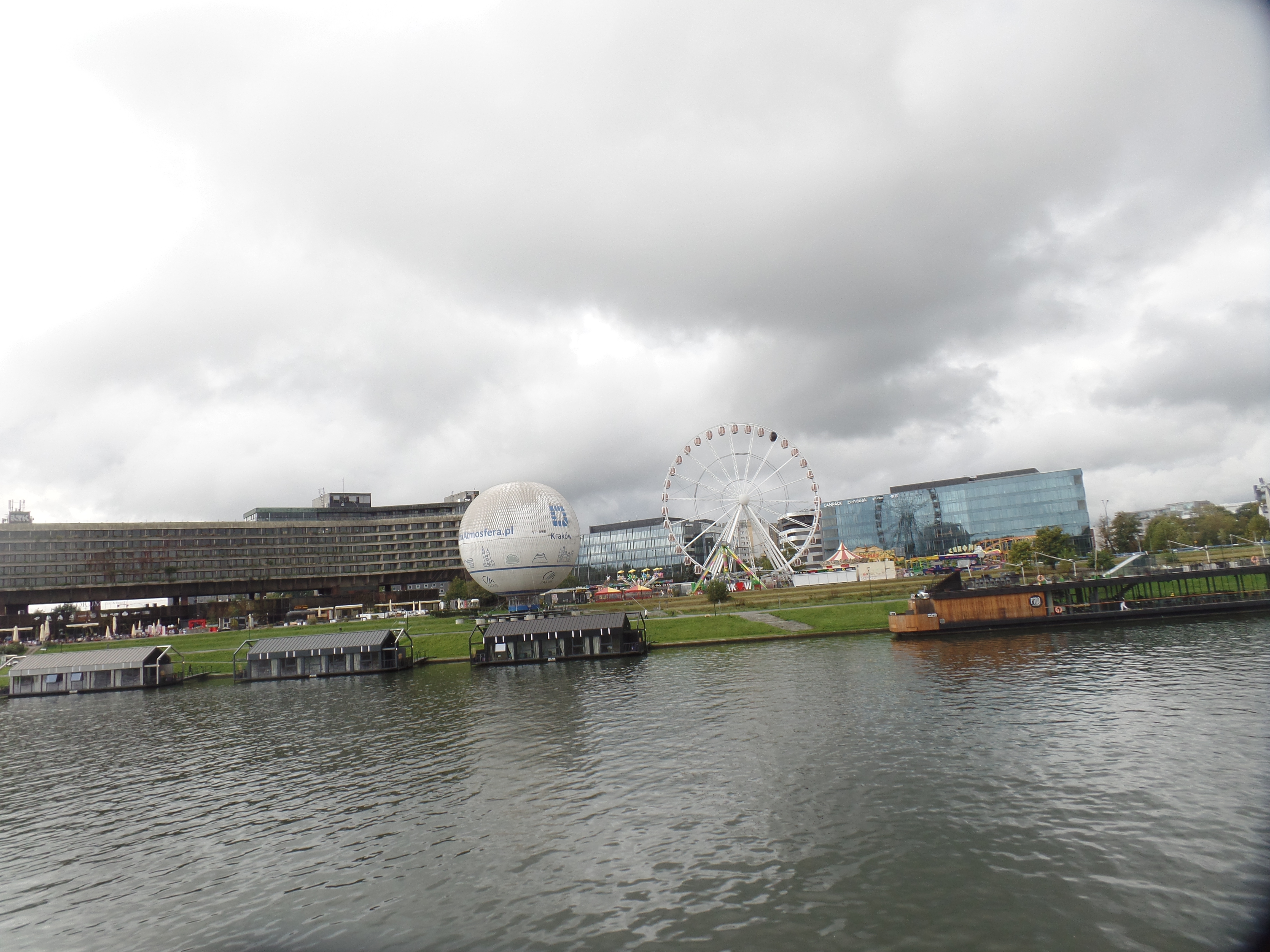
The new part of town beckons.
Balon Krakow Widowky (Sightseeing Balloon of Krakow), across the Vistula Church of St, Rita, Old Town Krakow
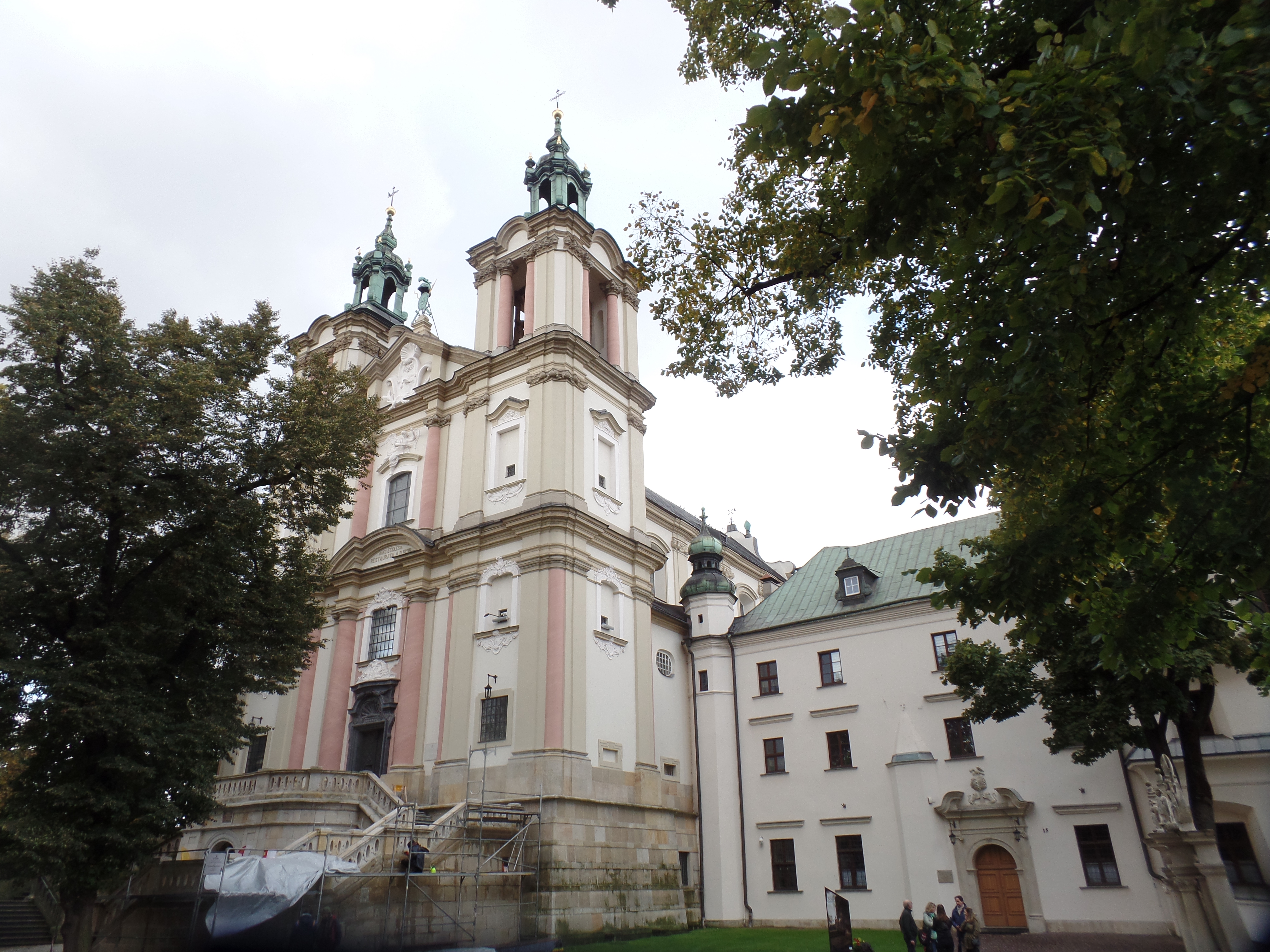
As Mass was being said, I did not go in.
Church of St, Michael the Archangel and St. Stanislaus, Old Town Krakow
This turned out to be my final church visit of the day. The structure was blessed, many times, by this man.
St. John Paul IIInterior, Church of St.Michael and St. Stanislaus, Old Town Krakow
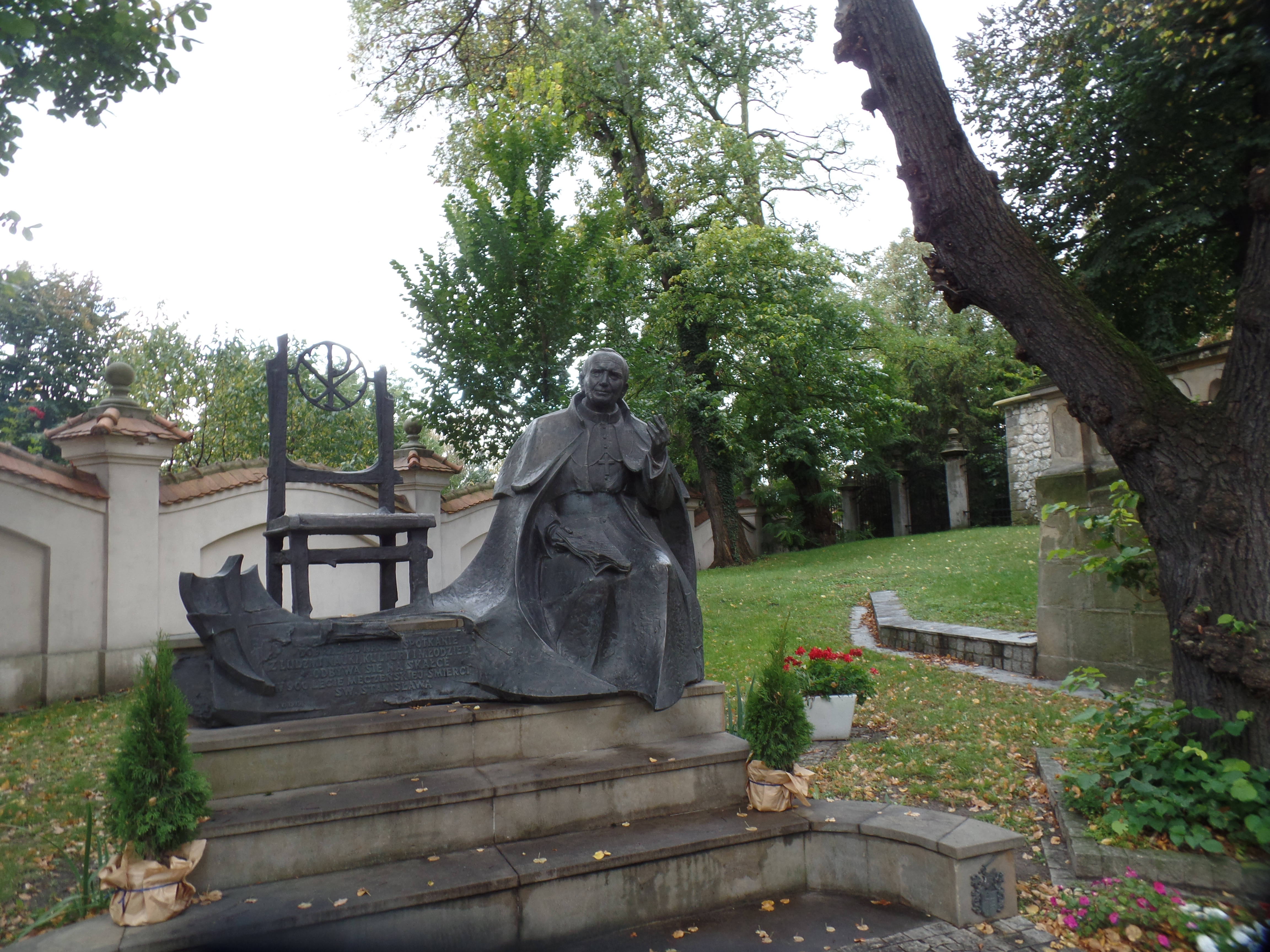
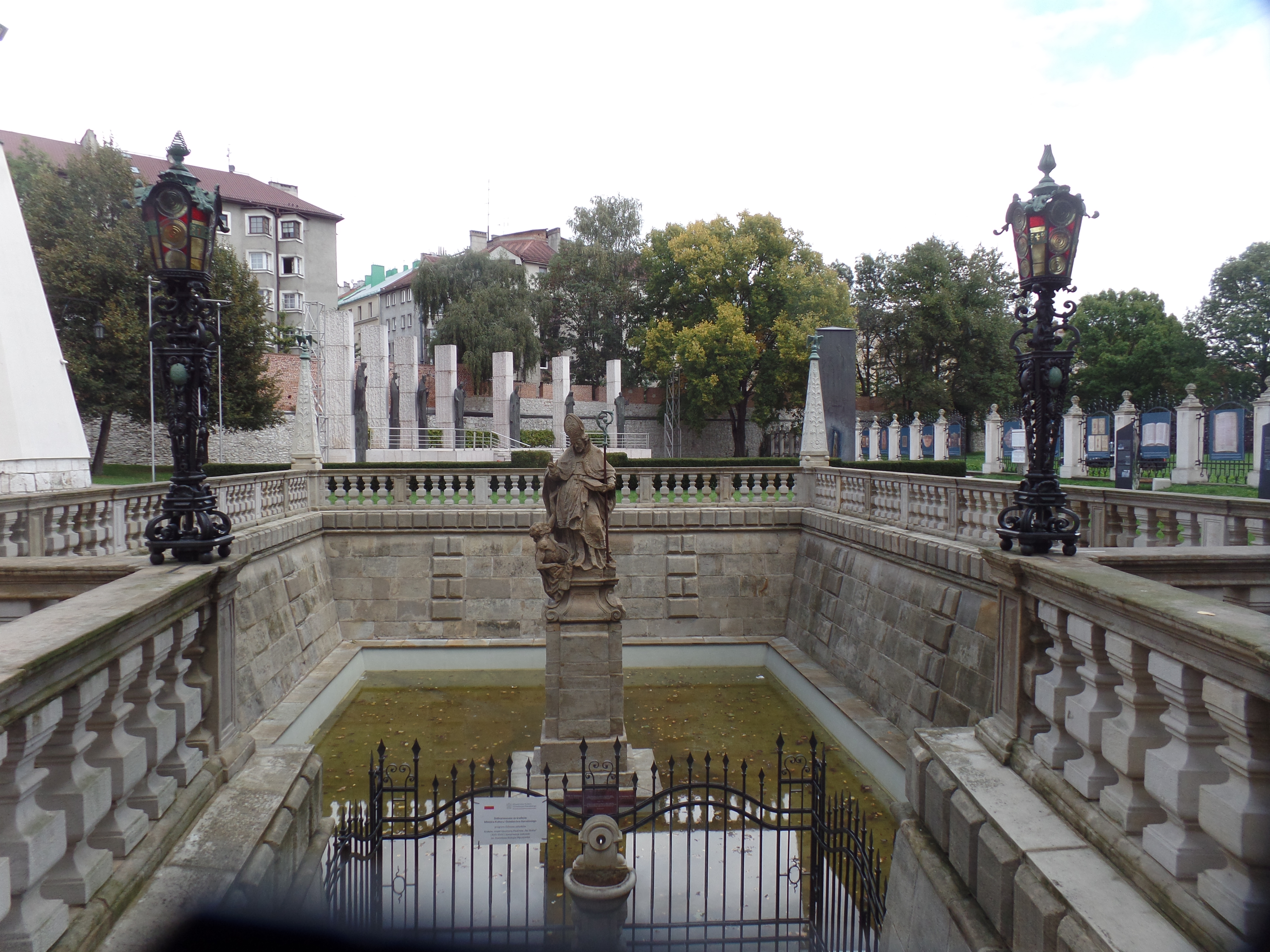
Outside, there is a courtyard, where several bishops of the church are laid to rest and memorialized.
Courtyard Memorial Garden, Church of St. Michael and St. Stanislaus, Old Town Krakow
I came next to Rynek Glowny (Main Market Square), the heart of Old Town.
Rynek Glowny (Main Market Square), Old Town Krakow. Not a whole lot was going on today, it being Monday and a bit rainy.
After a bowl of oatmeal, at Krakow’s branch of Grain Cafe, I went back to Meininger and rested a bit. It was around three, that I got the urge to walk over to Wawek Castle. It was a pleasant walk of about 15 minutes. Here is a view of the castle, from the base of the hill.
Wawel Palace, Krakow
The place is an essential locus of Polish history, having been a fortress of the Vistulan tribe, as early as 800 A.D. It became the center of a Polish nation, in the Tenth Century. A castle was built in the heart of the earlier fortress, and several churches, those of St. Gereon, St. George, and another one of St,Michael, were built around the Cathedral. A large statue of a fire-breathing dragon is on the grounds, though I did not find it.
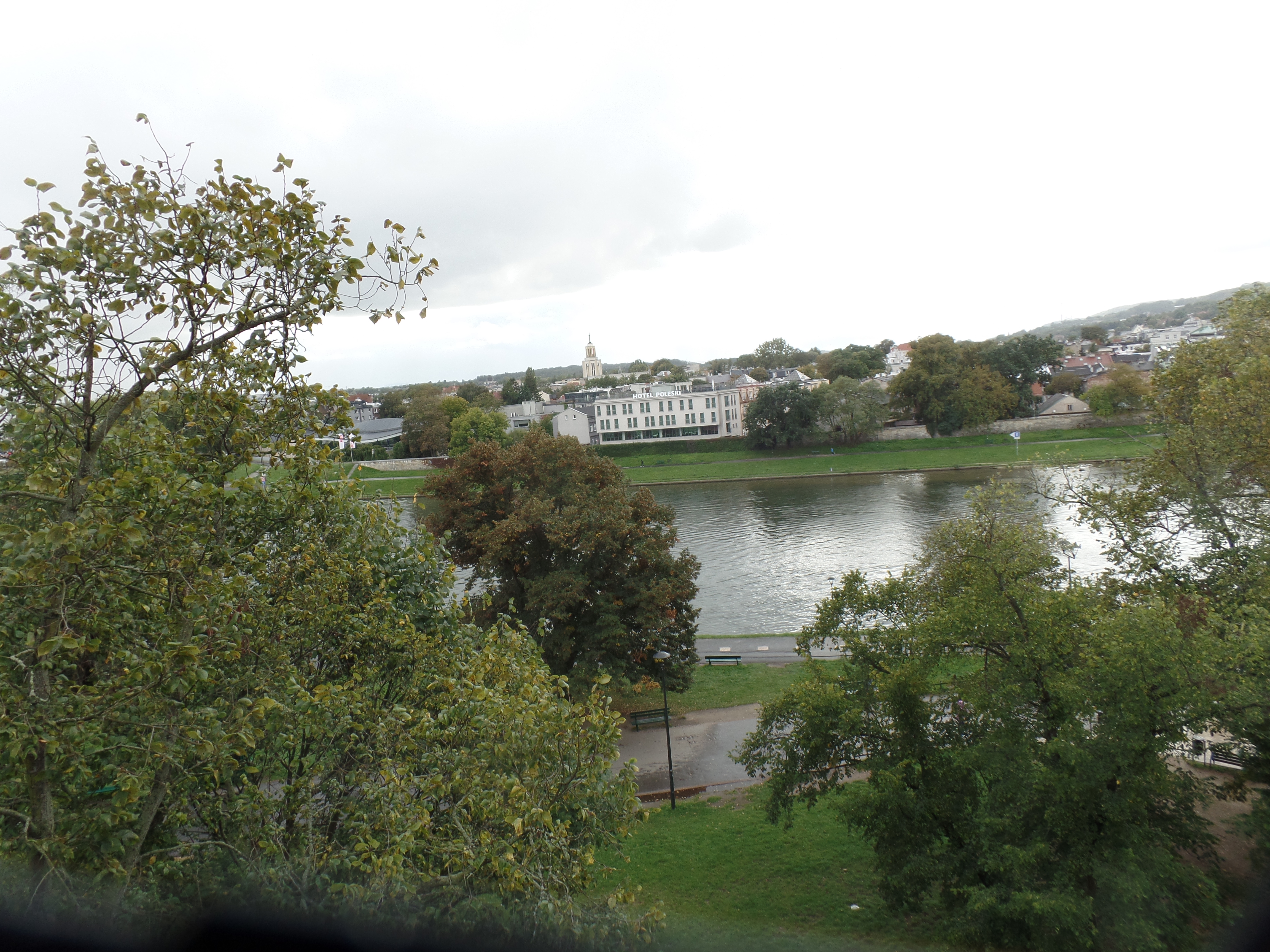
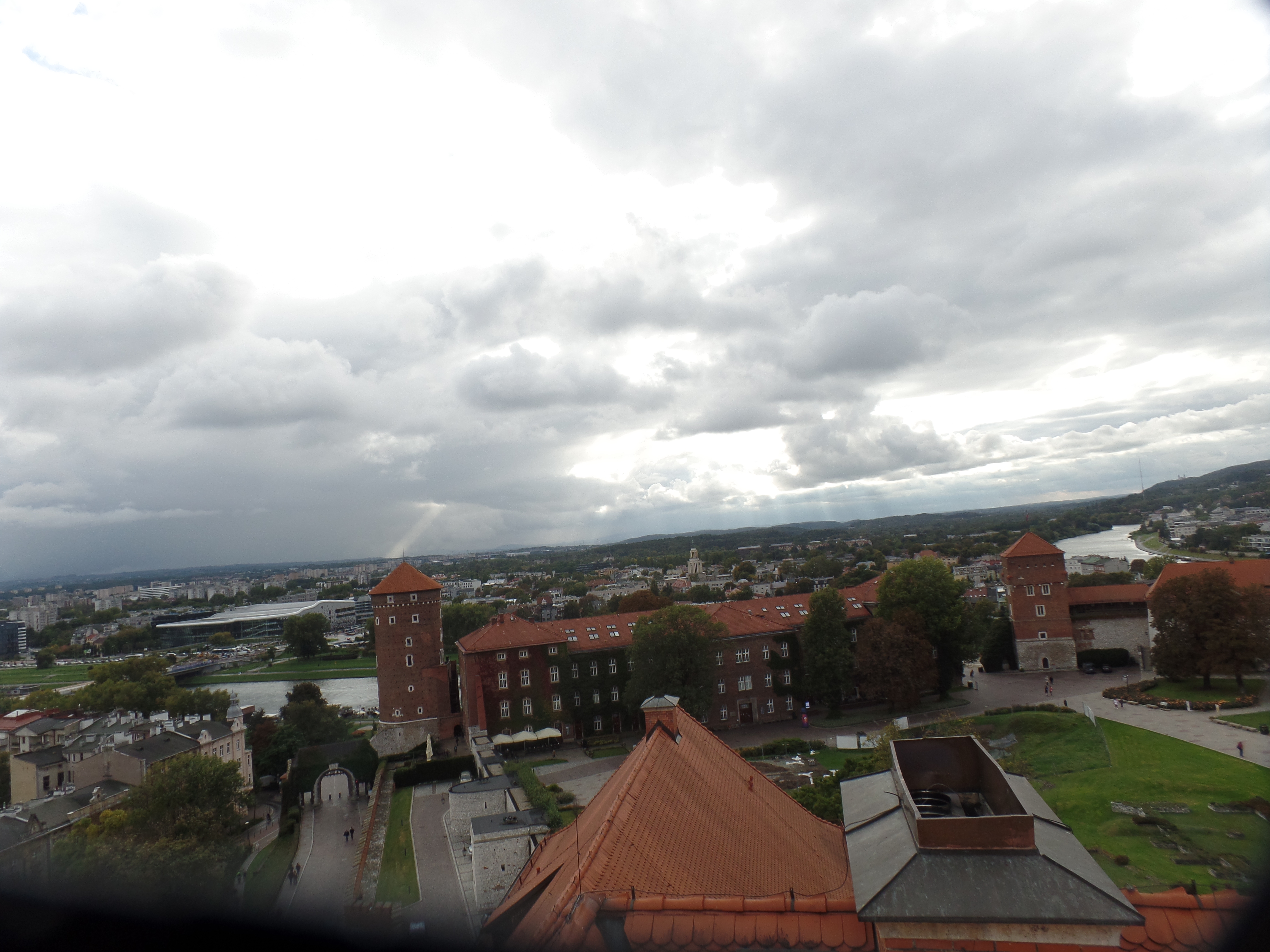
Vistula River, from the Tower, Wawel Palace
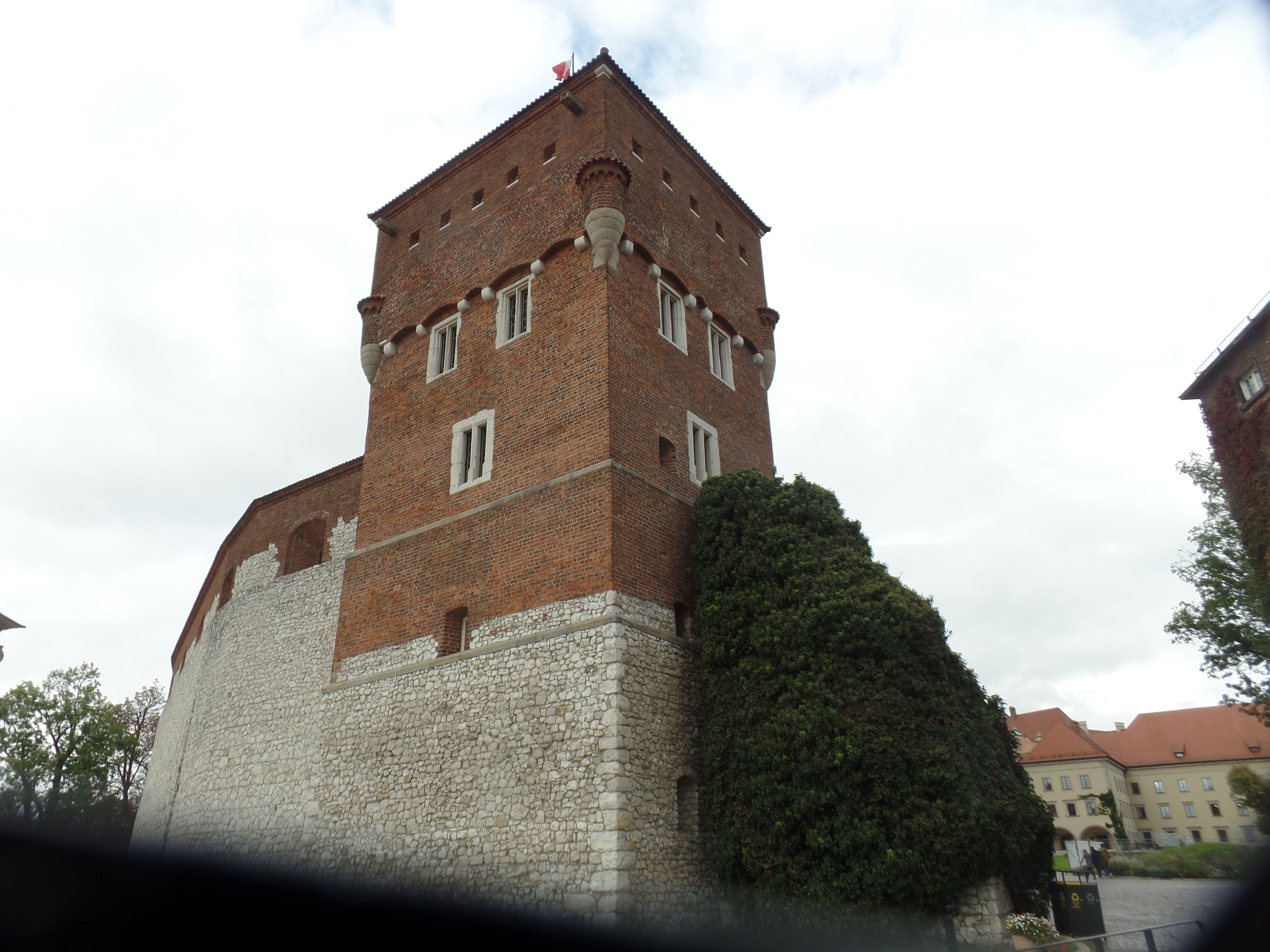
Here are a few photos of the fortress itself.
Watchtower, Wawel Royal CastleView from Tower, Wawel Royal Castle, KrakowView from tower, Wawel Royal Palace, Krakow
Once down from the Tower, and having been denied entry into the Cathedral, I at least got the outside of the edifice.
Wawel Cathedral, Krakow
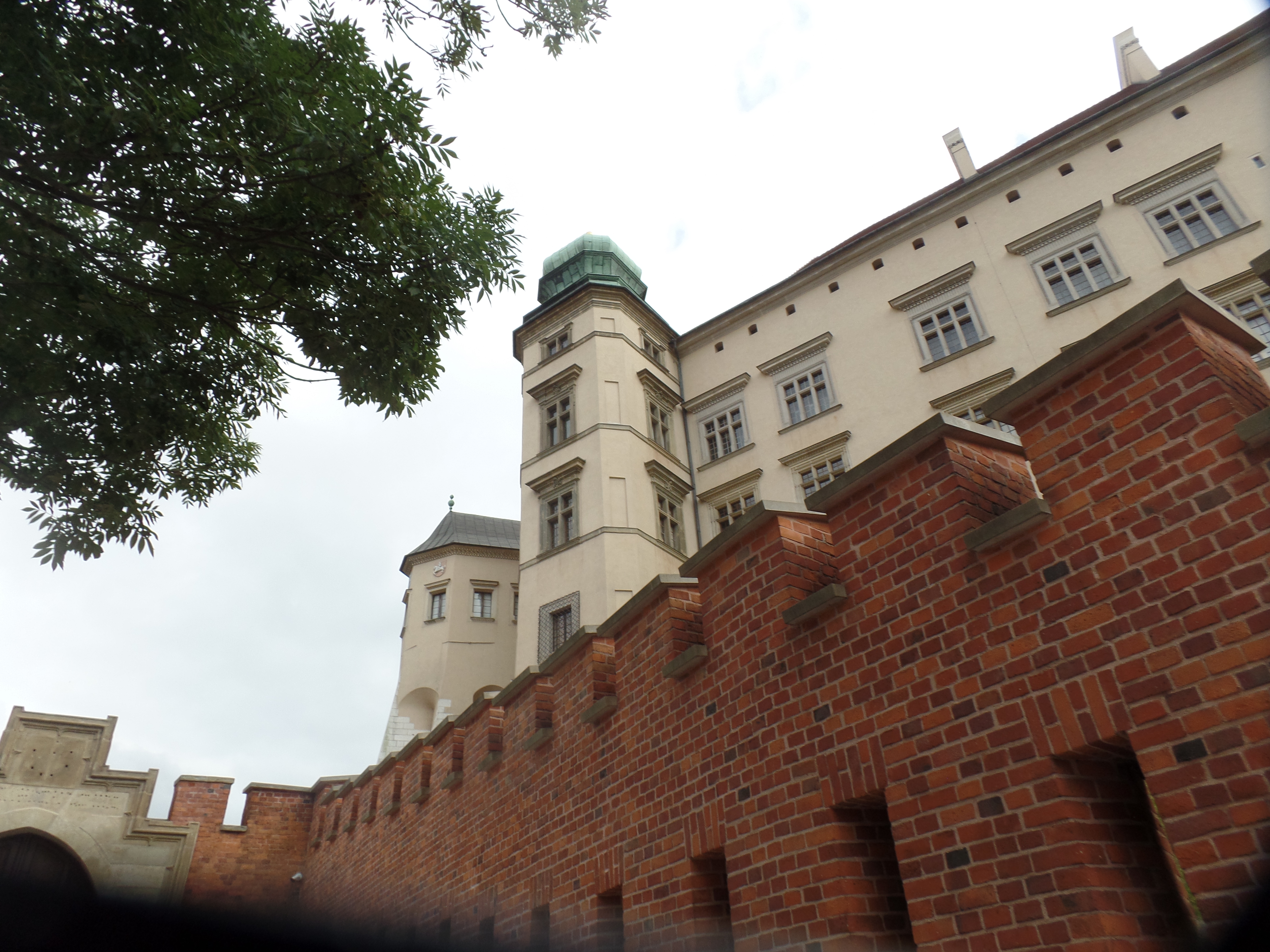
Near the southeast area of the complex, the Great Wall safeguarded the place for a time, being eventually scaled by Swedish troops.
Wall around old town, Wawel Castle, Krakow
With that, I said farewell to Wawel Castle, and headed back to check on R and enjoy a restful evening, as tomorrow will not require an early departure, being an afternoon appointment at Auschwitz_Birkenau.
September 28, 2025, Krakow– “Where do I get the train to Krakow?”, I asked a conductor, after getting off the train that had brought me from Berlin to Poznan, in western Poland. “Go downstairs to Platform 10.”, was all she said. Many European train platforms have two tracks, which go in directions opposite each other. This reduces the need for multiple platforms, each with a track that only goes one way. I knew this, but looking at my watch, seeing it was close to departure for the Krakow train and seeing a train that lots of people were getting off and on, I put two and two together and got…five.
When I got to the cabin which had my seat number, I found it was occupied by a family of four, with the younger son in “my” seat. I went out of the cabin and was met by an older Polish woman, who “knew” that was my seat “by rights”. We got underway, with me in standage, where I was chatted up by a couple, who were happy that someone from Arizona was visiting Poland. The husband asked to look at my ticket, and gasped. “You go north now, instead of south! You must get off at next station, and catch train back to Poznan, then good luck getting to Krakow!” That explained the young boy sitting in his rightful seat.
I got off at the next station, reversed course, got on a Krakow-bound train from Poznan, and took my place among university students and poorer older adults, in Standage, all the way to Krakow, five hours south. Of course, I didn’t stand the whole way. I had my rolling suitcase, and a relatively clean section of floor on which to sit. When people needed to get on or off, at the ensuing stations, we in Standage had to make room for them. This made a few of the students quite surly-but surely they know this is part of the deal. Most, though, seemed concerned for one another, on a couple of occasions consoling those who were openly distraught. Not speaking Polish,I kept my mouth shut, the whole way, and was “welcomed” by the conductors, none of whom were concerned with why I was there.
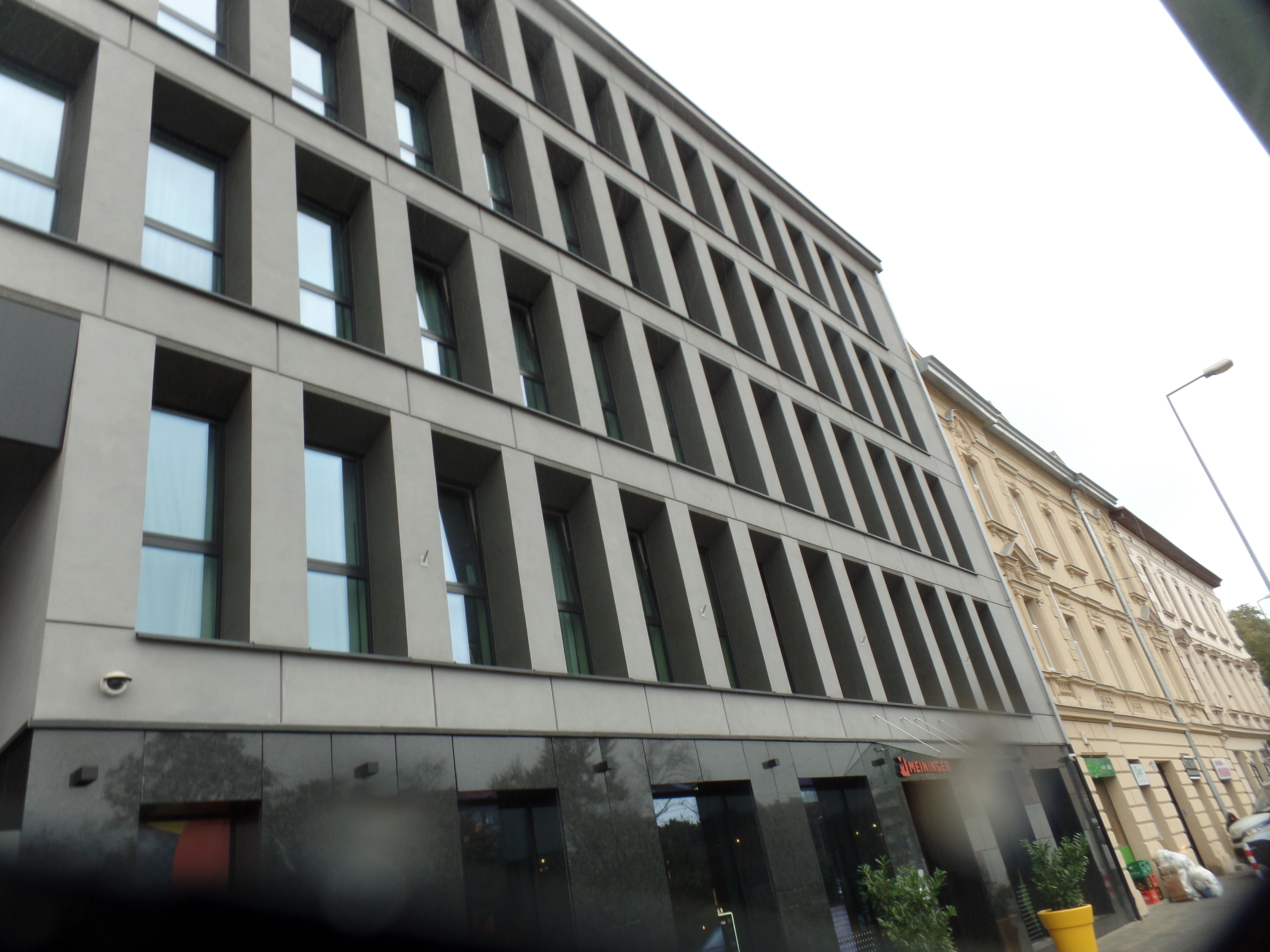
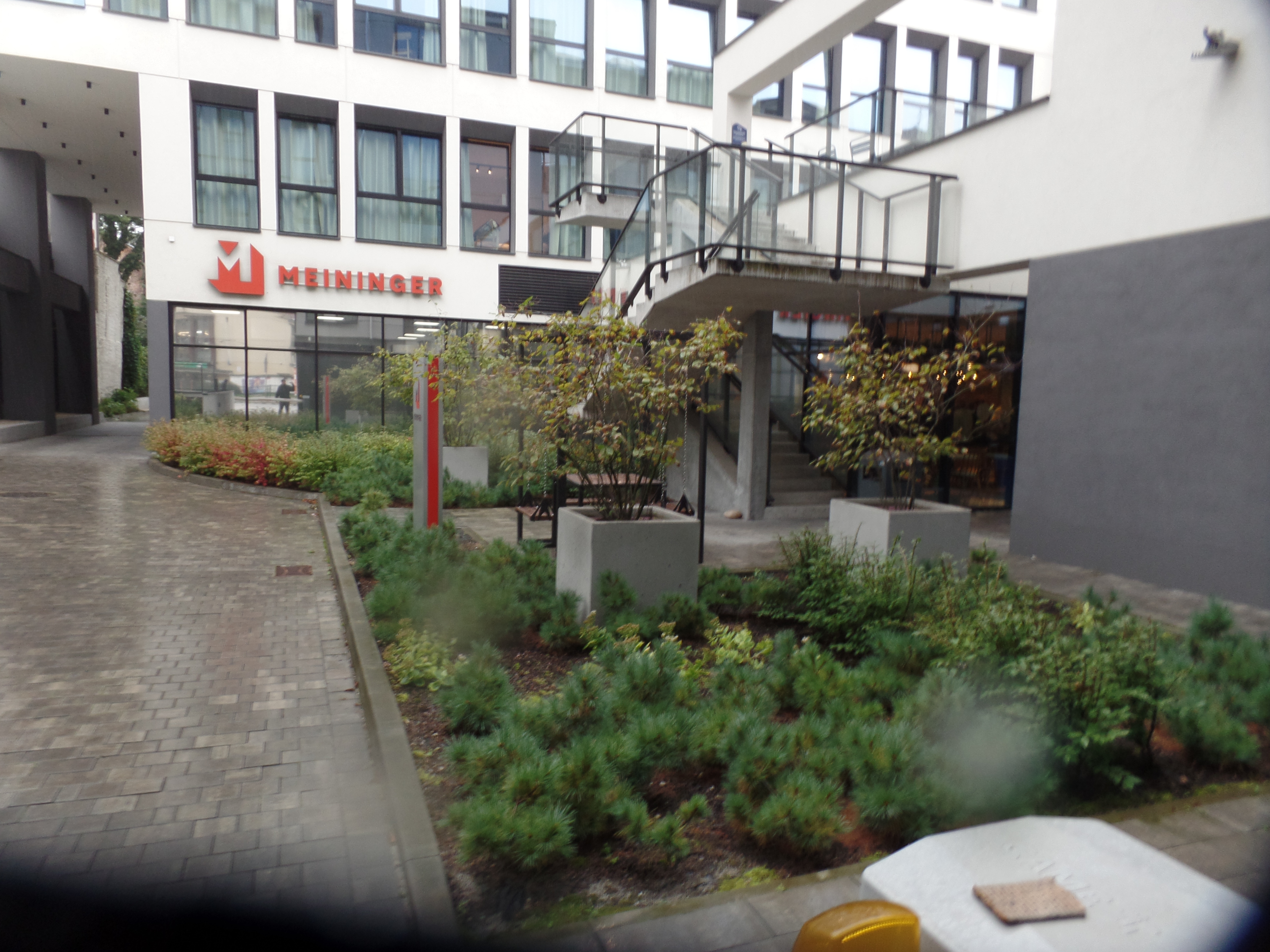
I got to Krakow around 11 p.m. and caught a taxi to Meininger Hostel, part of a chain of hotels and hostels across central Europe. It is a lovely establishment, and while the city itself is rather tired of mass tourism, I was cheerfully welcomed by those I encountered on the street and at the hostel. I had the room to myself for the night, as the young man who was to be my roommate had his own tale of train woe and would not be arriving until early tomorrow morning. Thus, another decent end was found, to a strange day.
September 26, 2025, Berlin- “Well now, that is certainly a rude awakening”, the burly leader of a group of German tourists huffed, as the news came over the loudspeaker that one of the cars on our train to Hamburg, from Kolding, DK, had broken down and that those of us (including me) who were scheduled to be on that train would now either have to ride in Standage or wait for a replacement car. He gathered the group, and held a brief consultation, while looking at me. A minute later, he told me that, as one of their group had dropped out of the trip, there was a seat in their cabin, and I was welcome to take it.
It turned out to be a most pleasant two hours. I even was offered, and accepted the no-show’s sandwich, which had been purchased, freshly made, from a delicatessen in the Aarhus area, earlier in the morning. Chicken salad with bacon is a favourite in Denmark and Germany. It was divine.
The day had started with my walking the .9 mile from Roberta’s Society Hostel to Aarhus Train Station. The challenge came onboard, when I had to remember how to call up the Rail Planner application on my phone, which contained my actual ticket to Berlin, with the seat reservations only supplementary. The conductor, at one point, wanted to see a QR code on the RP page, but was overruled by her supervisor, who saw that as a waste of time. Good thing, as Rail Planner doesn’t provide QR Codes for its Rail Pass system.
With that behind me, one of my seat mates on the first leg (Aarhus to Kolding) opined that she had never heard of a QR code for a train ticket. She was Gen Z, so that pretty much settled the matter. Kids can pretty much do any transaction on a phone that can be done.
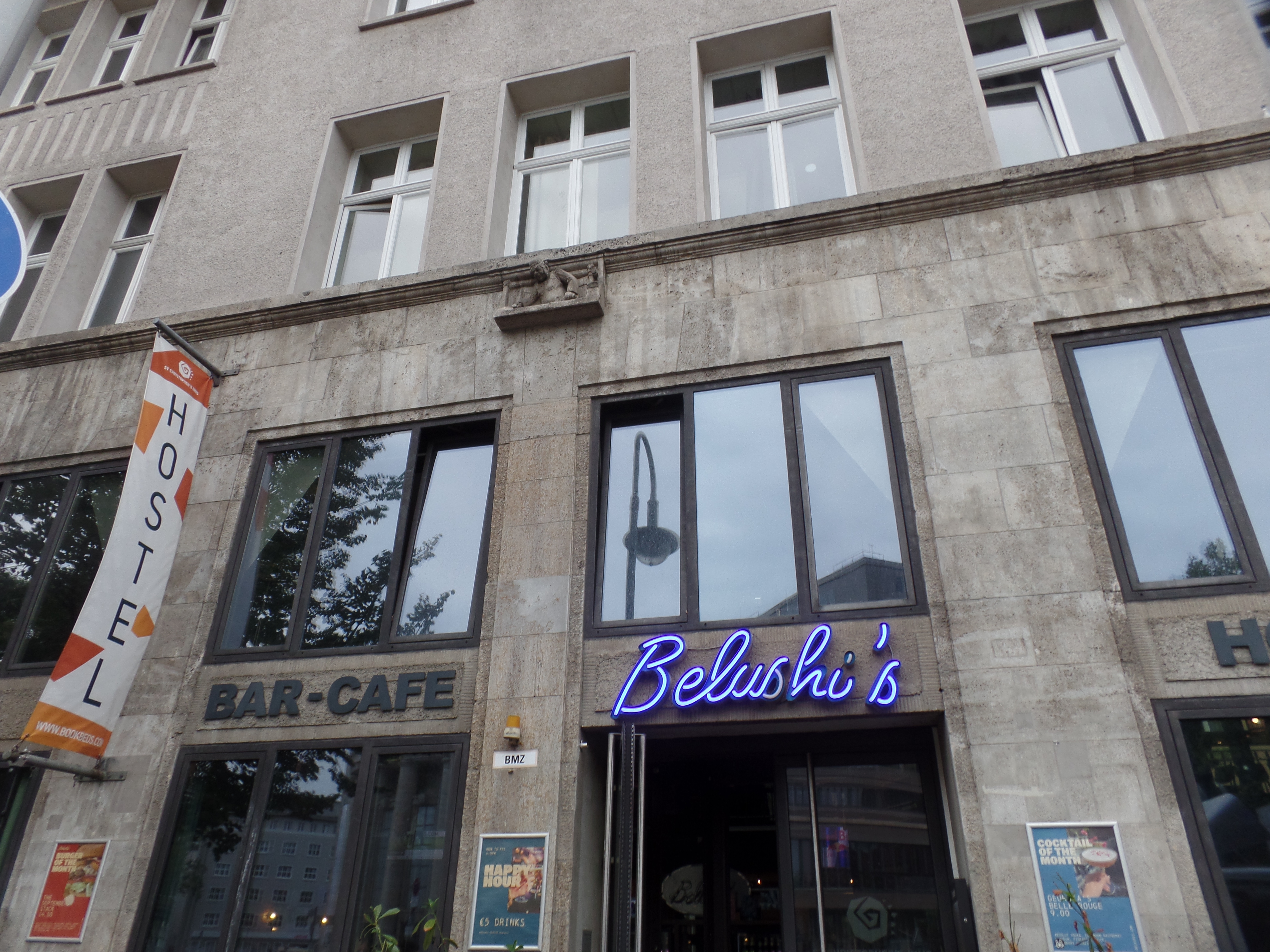
Once in Hamburg, I bid farewell to the German tour group and settled in for a smooth, non-eventful final leg to Berlin Hauptbanhof (Central Station). It took my usual fussing at Spectrum’s stingy Internet service (non-existent outside North America) and scrambling to find a shop or cafe whose WiFi I could use to get directions to St. Christopher’s Hostel from Central Station, over a period of thirty-five minutes, before I settled on the S-bahn (Streetcars). I ended up at Alexanderplatz, where a Tourist Office worker gave me directions for walking the rest of the way. I found the hostel, which has a bar and grill attached, in short order (no pun intended, especially as John Belushi would have either groaned or thrown something at me). St,. Christopher’s and Belushi’s are teamed up in various cities around Europe. Chain hostels, including Generator (my Copenhagen digs), are quite the rage.
The Berlin hostel is in an old building, so it has its challenges, but I like the vibe here. The Rugby championships and various soccer matches are on the TV screens, so it wouldn’t be a dull 1 1/2 days, even if I opted to sit in the hostel all day. That is not happening. I will be out and about, exploring Berlin’s oldest neighbourhood and possibly seeking out remnants of the Berlin Wall-a reminder of what happens to attempts to separate people on artificial grounds.
September 25, 2025, Aarhus- The gathering was much larger than I had anticipated-and the kitchen manager apologetically told me there was no more room in the dining area during the Communal Dining session. I had come here to see how Danes manage their Slow Food movement.
Staying for the presentation afterward, all in Danish, of course, but worth watching for the dynamics, I enjoyed Miso Lasagna, with the healthful Japanese paste taking the place of cheese. There were organic ground beef and squash lasagna noodles, to round out the dish.
Here is a photo of one of the breakout groups, who discussed the benefits of communal food preparation and dining.
Communal Dining Presentation, at Roberta’s Society Hostel, Aarhus
We have similar gatherings, from time to time, in Prescott and this weekend, in Sacramento, there is a Slow Food Americas festival, with dozens of breakout groups and presentations, celebrating the benefits of healthful food production, sustainable agriculture and animal husbandry and careful composting.
Roberta’s Society Hostel, Aarhus
Roberta was not a person, as such, but a name attached to a concept: The Kalpin brothers, Danish entrepreneurs, established the hostel in a former library. The idea was to get away from the standard “locals shall not stay in hostels” policy that has been in place around the world for many decades, and bring people together in community, thus communal dining and other positive gatherings are regularly held at Roberta’s Society.
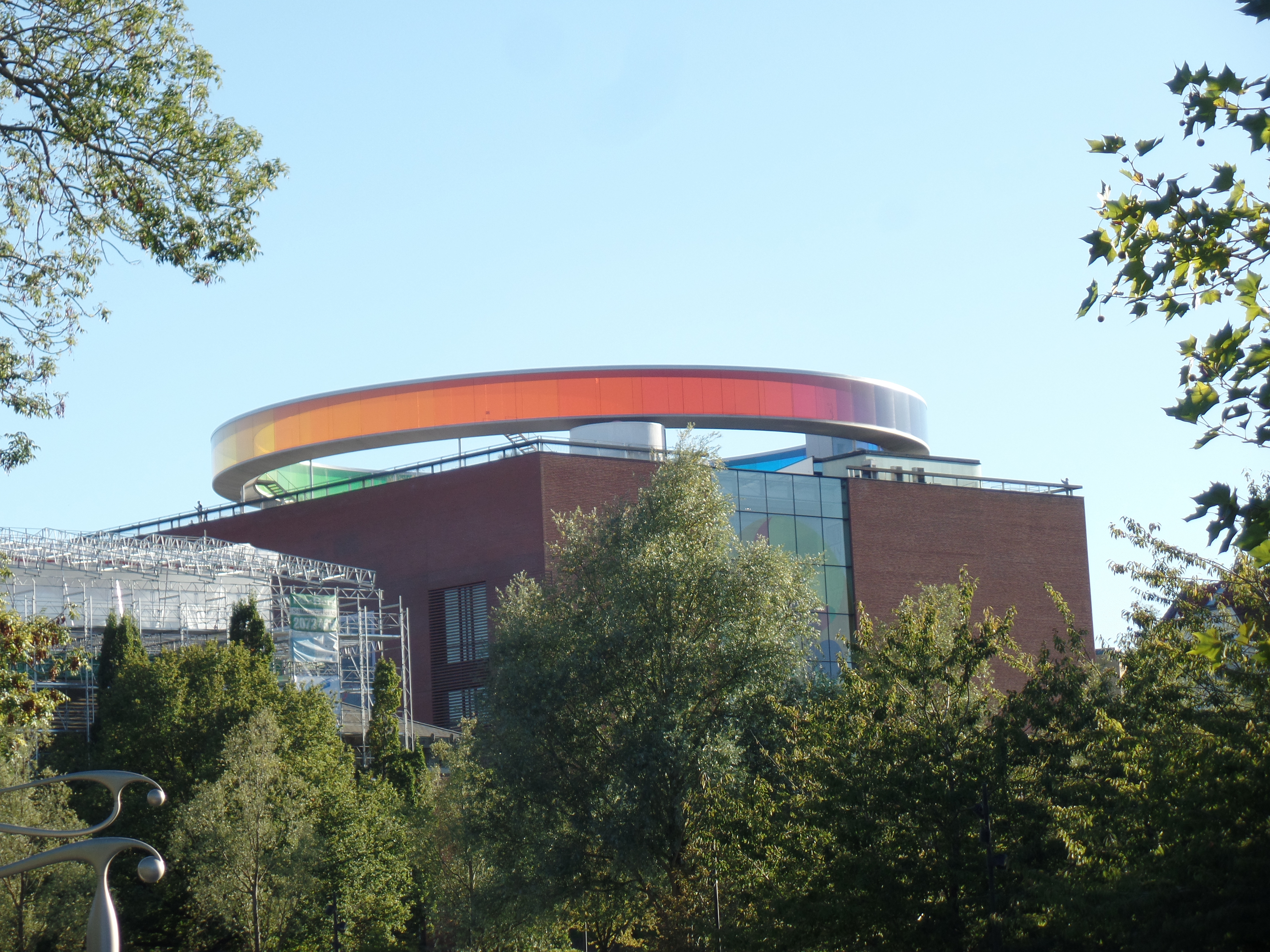
ARoS Aarhus Art Museum
The museum with a rainbow roof was designed by Danish/Icelandic artist, Olafur Eliasson. It is one of the reasons that Roberta’s is fairly easy to find, being just to the west of ARoS, near the northern portion of Aarhus’ tree-lined park. The city is fairly bustling,as any second-largest city would have to be, but Roberta’s is actually within walking distance of the train station.
I found that out, only after catching a bus and learning Aarhus’ unique phone-app based bus fare payment system. That involved going to three different 7-11 stores (The chain is big in Denmark) and finally getting a clerk to sell me a card that is affiliated with the phone app.
Walking close to Roberta’s, I captured a few of Aarhu’s older buildings, including this stately bank building.
Old Bank building, Central Aarhus
Aarhus embraces the new, in sculpture, as well as in cuisine. Here is Phil Price’s “Snake, Aarhus, 2253”.
Arhus is another fascinating place that would be worth 2-3 more days. Alas, I have promises to keep……..Next up, Berlin.
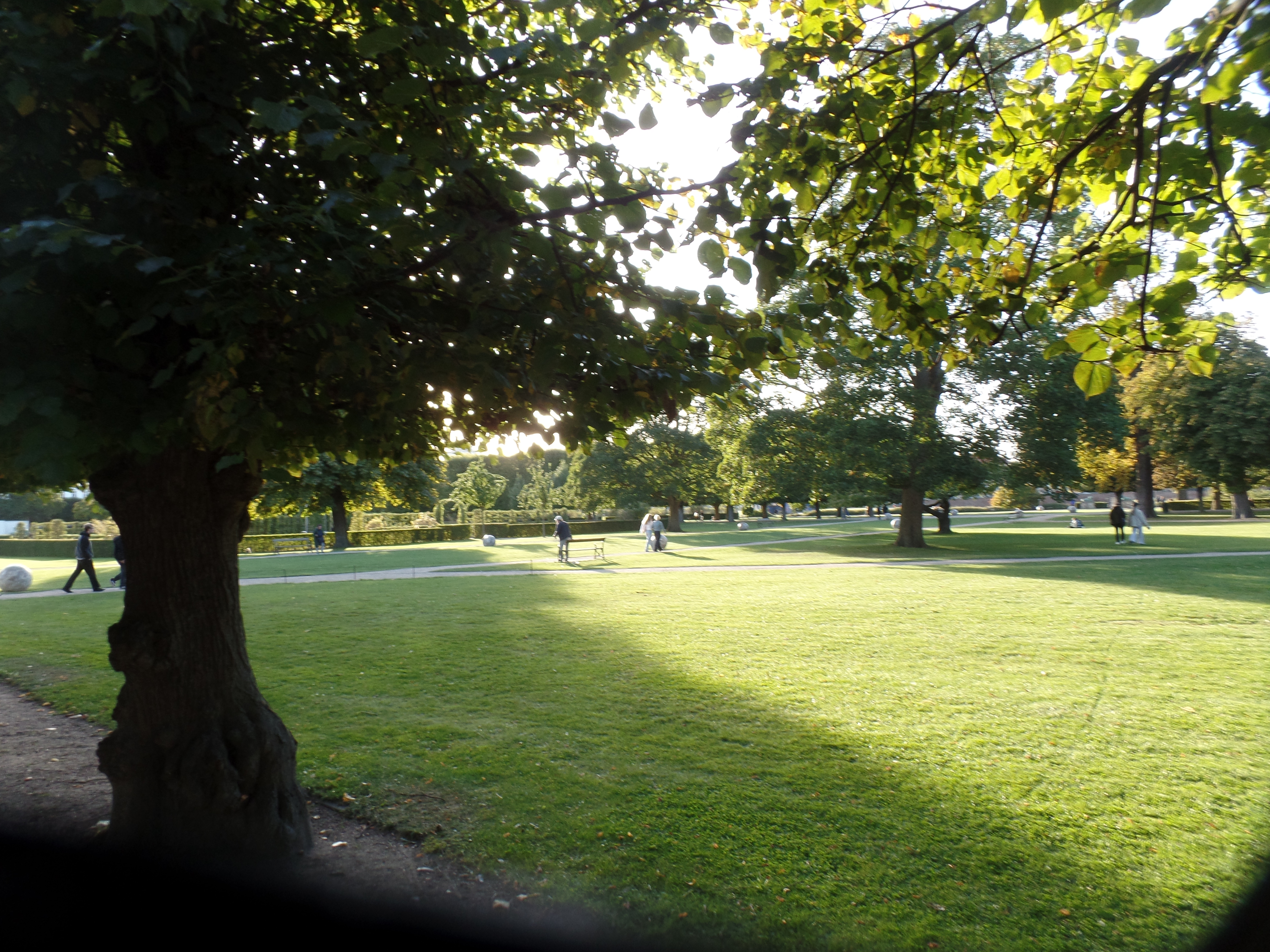
September 24, 2025, Copenhagen- Kongen Have, the King’s Garden, was the third place where I experienced quiet today. It was certainly filled with people, but it was day’s end. People were quietly jogging, sitting on a blanket enjoying a picnic supper or closer to Rosenberg Palace, walking among the flowers for which the edifice is named.
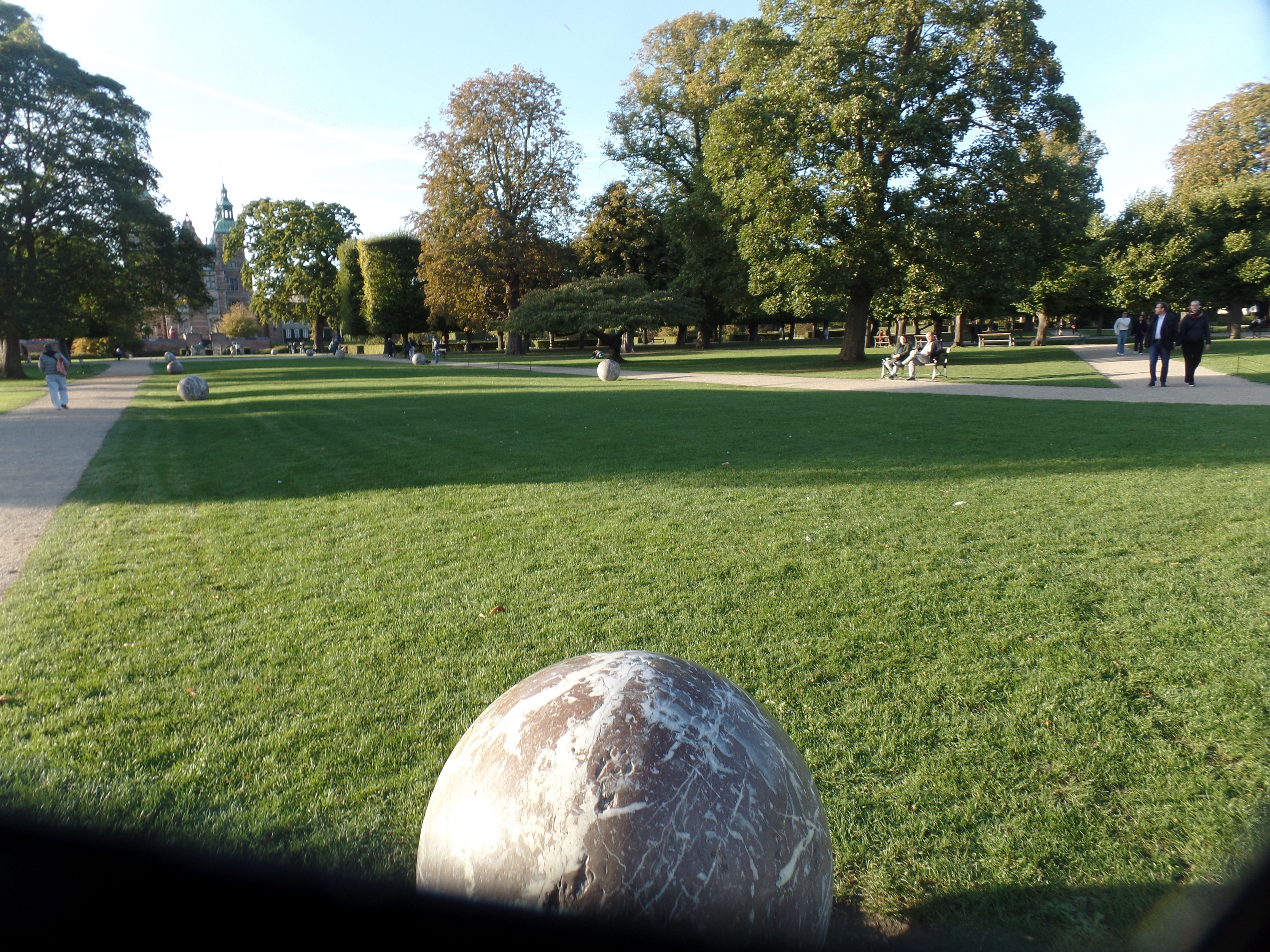
Roses, near Rosenberg PalaceRosenberg Palace-It was closed by the time I got here, but the grounds were well worth the walkabout. So, too, was the main section of this salubrious public space.Foreground of King’s GardenFashioned boulders, arranged in a triangleThe garden runs the gamut, from wild….to the sculpted and curated.
All was calm and bright, even in the gloaming.
Rosenberg Palace, across the moat. Ariel was a bit off my path, but she would feel right at home here, especially in the moat!
The mandarin ducks were certainly delighted!
With that came the realization that my Copenhagen visit is coming to a close. An all-too-brief visit to the “foodie city” of Aarhus is next, and a visit to Berlin will give me a sense of another of the world’s great cities. I am sure there will be some special moments in each. Stay tuned!
September 24, 2025, Copenhagen– The amazing thing about today was the three instances of almost total quiet that enveloped a place where I happened to be, even though there were large numbers of people about.
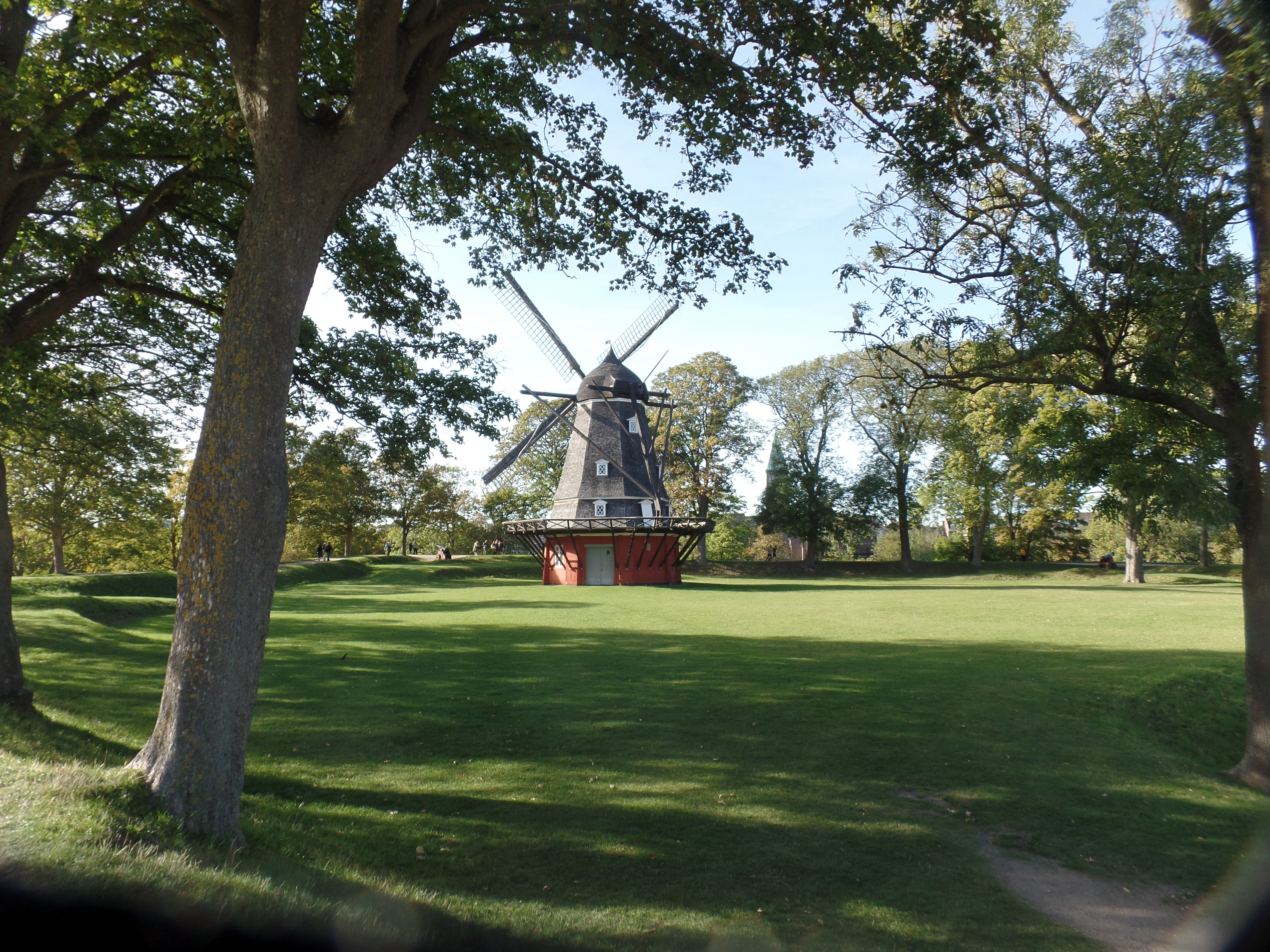
First was Kastellet, a one-time regal fortress that was totally given over to the Danish military, following World War II. It had been fortified after a Swedish siege of Copenhagen, in the Seventeenth Century, but proved an effective deterrent against the British, in 1704. Today, I was impressed with the intensity of Danish troops engaged in individual and group training. Kastellet’s archives detail the various occasions in which Denmark has contributed to peacekeeping activities, since World War Ii. The nation is a vital part of NATO, and of United Nations peacekeeping efforts. It behooves other nations to keep this in mind.
Moat at Kastellet, CopenhagenAnother visitor from North America-a Great Blue Heron!Another view of the moat and ramparts, KastelletA view of the wallCommander’s HouseBarracks, KastelletCitadel ChurchDutch-style windmill-replaced an earlier mill that was destroyed in a storm.
After leaving Kastellet, I had only to walk a short distance before noticing a large dome. This turned out to be Frederiks Kirke, and it is the largest domed church in Scandinavia. Once inside, all are to maintain silence-and we all did. Soft, soothing music was the only sound. No loudly-clicking cameras or flash photography are permitted inside, either.About seventy of us were inside, and quiet.
Frederiks Kirke
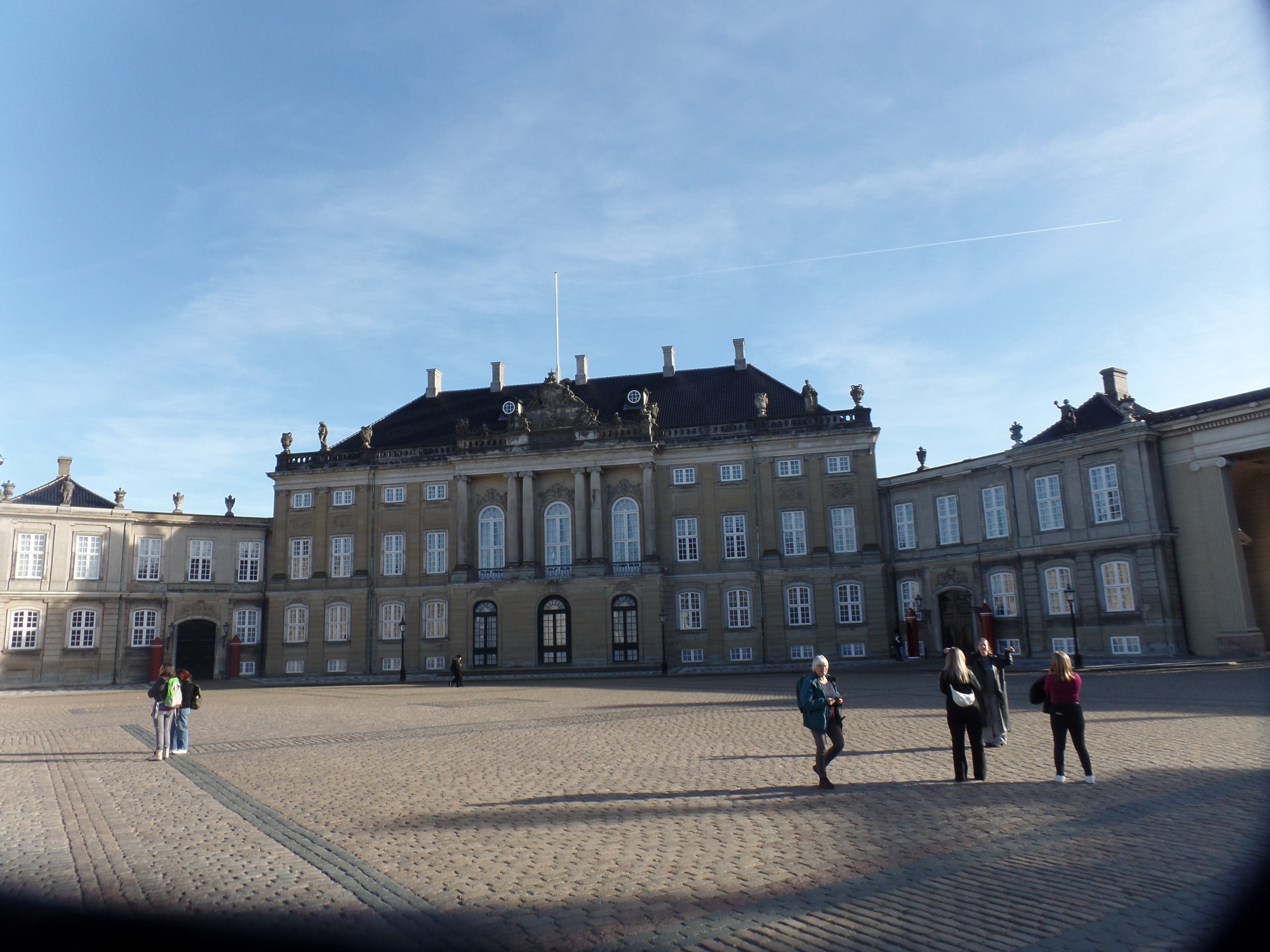
After spending about twenty minutes in the great church, I went across the street to the large complex of palaces, which punctuate Frederikssgade. Below are the palaces, in a clockwise direction.
Amalianborg, on the left, with Christian VIII’s palace to the right.Frederik VIII’s PalaceChristian IX’s palace
I left the quiet atmosphere of the royal courtyard, and went back to the bustle of Old Town, via the Yellow Palace, which now houses many offices of the Danish government.
Yellow Palace, Copenhagen
It was time to get a bit of supper, and reflect. Ironically, both would take me the third place of solitude- Kongen Have (King’s Garden) More on this bit of heaven, in the next post.
September 24, 2025, Copenhagen- Today started out as a minor shopping day: I had to replace lost sunglasses and a knot cap, as well as worn-out socks. So, a visit to Magasin du Nord, a major department store of Indre By (downtown) was the first order of business. MDN is a throwback to the great department stores of old. Department stores still mean something on this side of the Atlantic.
In the afternoon, I set out on another random stroll, heading west on Adelgade, towards a church that beckoned towards the midst of that street’s span. St. Petri Kirke’s conical spire calls out to the party animals at Generator. Being one to roam off the beaten path, I walked its way.
St.Petri Kirke, Frederiksstaden, Copenhagen
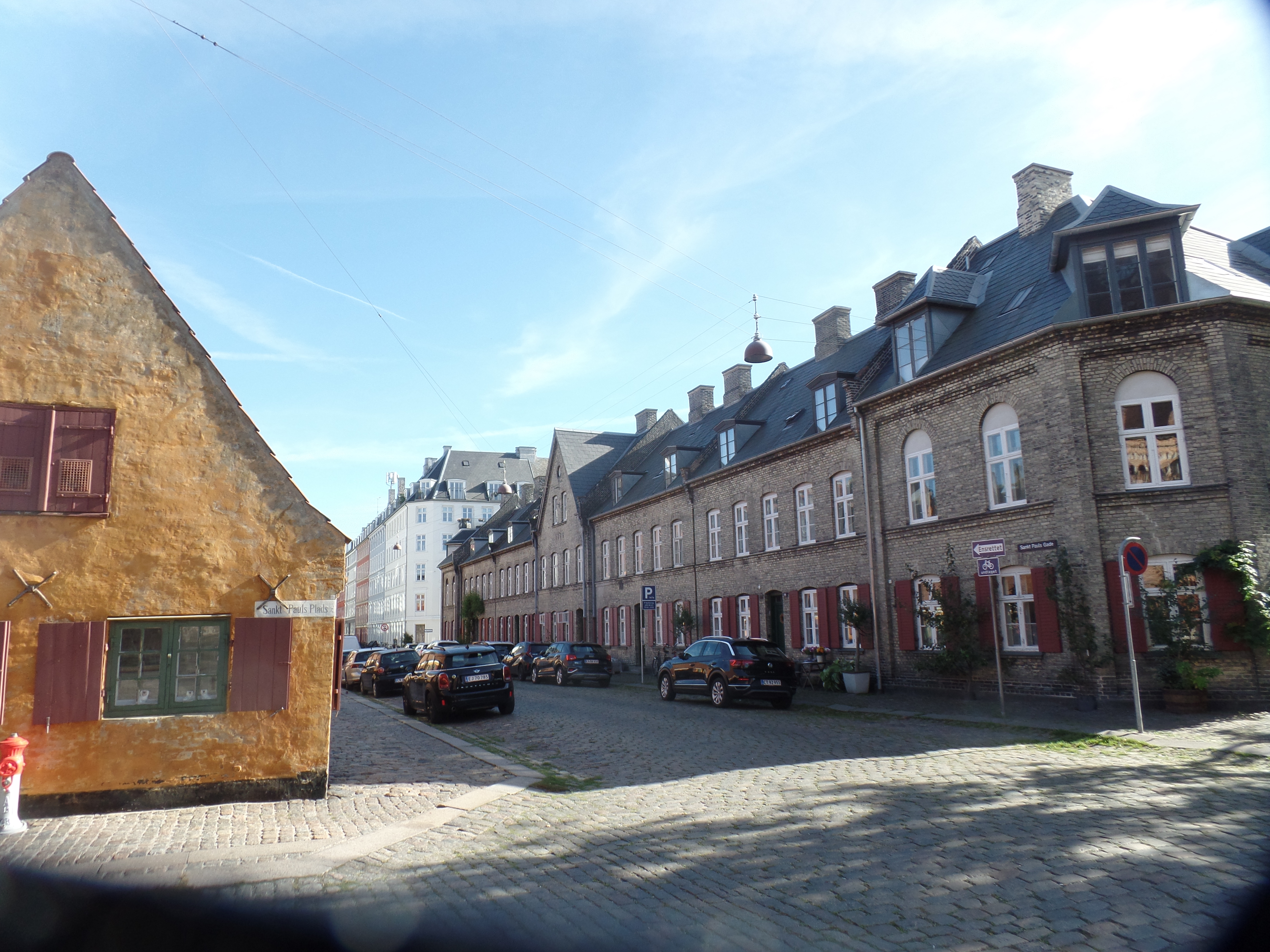
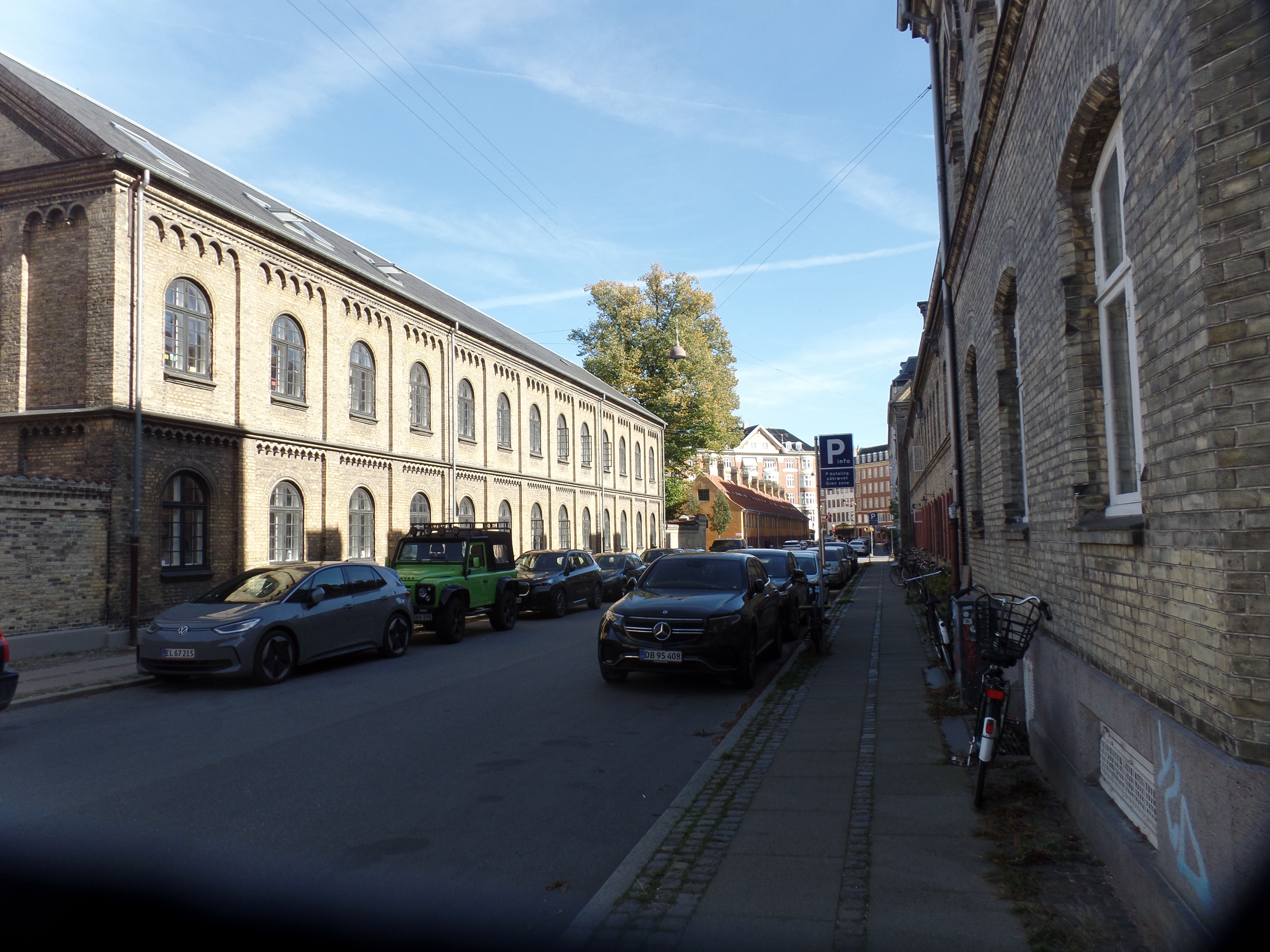
A block or so later, I came to Sankt Pauls Gade, the Nyboder district, built by King Christian IV for naval personnel and now preserved as a national treasure.
Nyboder, Sankt Pauls Gade (above and below)
It was another three blocks towards Osterport that I came upon a Swedish Church, close to the waterfront, and bordering a small marsh. Here is a view of Svenske Kirkes Julebasar.
Svenske Kirkes Julebasar (above and below)Senske Kirkes Julebasar
The small marsh became a stream, which became a moat. The afternoon was about to show the majesty of Frederiksstaden, as Osterport swung towards the International Ferry Terminal.
Small marsh and pond, near Svenke Kirkes Julebasar
I am taking my time with this, so next up will feature Kastellet, Frederiks Kirke and Amalienborg, with Part III focused on Kongen Have (King’s Garden) and the exterior of Rosenberg Palace.
September 23, 2025, Copenhagen- There is something fairy tale-like about Helsingor. Like a Danish version of Visby, it largely is filled with cobblestone streets. Unlike Visby, its Old Town is mostly a no-car zone. Here are some of the Old Town scenes I promised you last night.
Old Town street, HelsingorHamlet Hotel, Helsingor is across the street from Skandia, where I stayed last night.St.Marie’s Church, HelsingorDom Church (Cathedral) of Helsingor
Now, here is the crown jewel of Old Elsinore: Kronborg Castle, which was William Shakespeare’s setting for Hamlet.
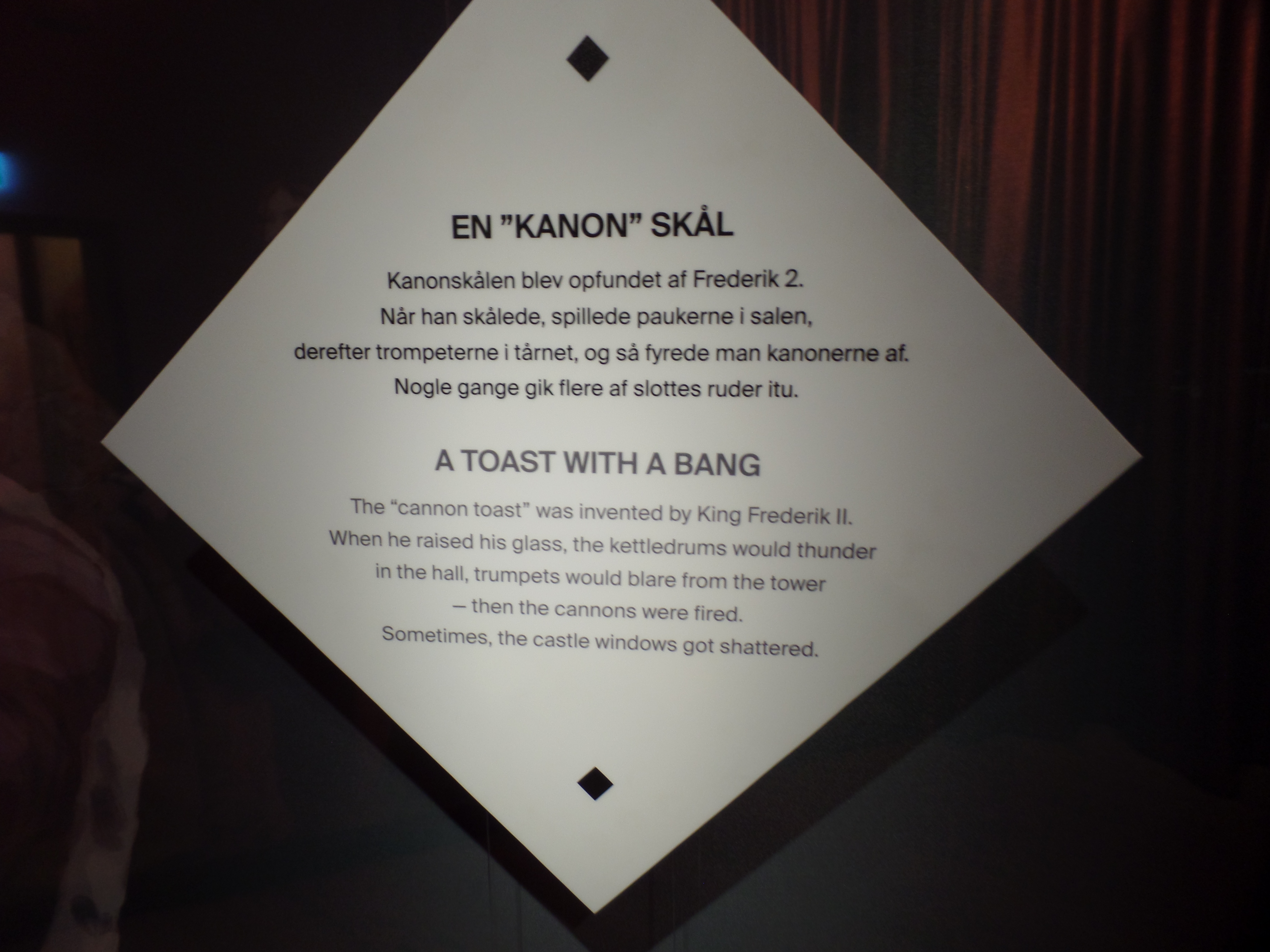
Denmark has been a country since the 11th Century. Around 1424, King Eric VII built the prototype of the fortress, overlooking Oresund, which separates Sjaelland (“SHEL-land) from the Swedish Peninsula, at its narrowest point, In 1585, King Frederick II expanded the fortress into a magnificent castle. The fortress burned down, in 1629, after which King Kristian IV had it rebuilt. In 1658, the fortress proved insufficient to withstand an attack by Sweden, during the war in which the latter seized control of Scandia, the southernmost part of the peninsula, from the Danes. In 1785, Kronborg became a military barracks, as the king had moved to Copenhagen. It was given to the Danish people, in the 1920s, as an historical treasure.
What a treasure it is! Here are seven photos of the grounds and the interior, including the extensive Casemates (the dungeons and underground refuge of the royals, during the war with Sweden.).
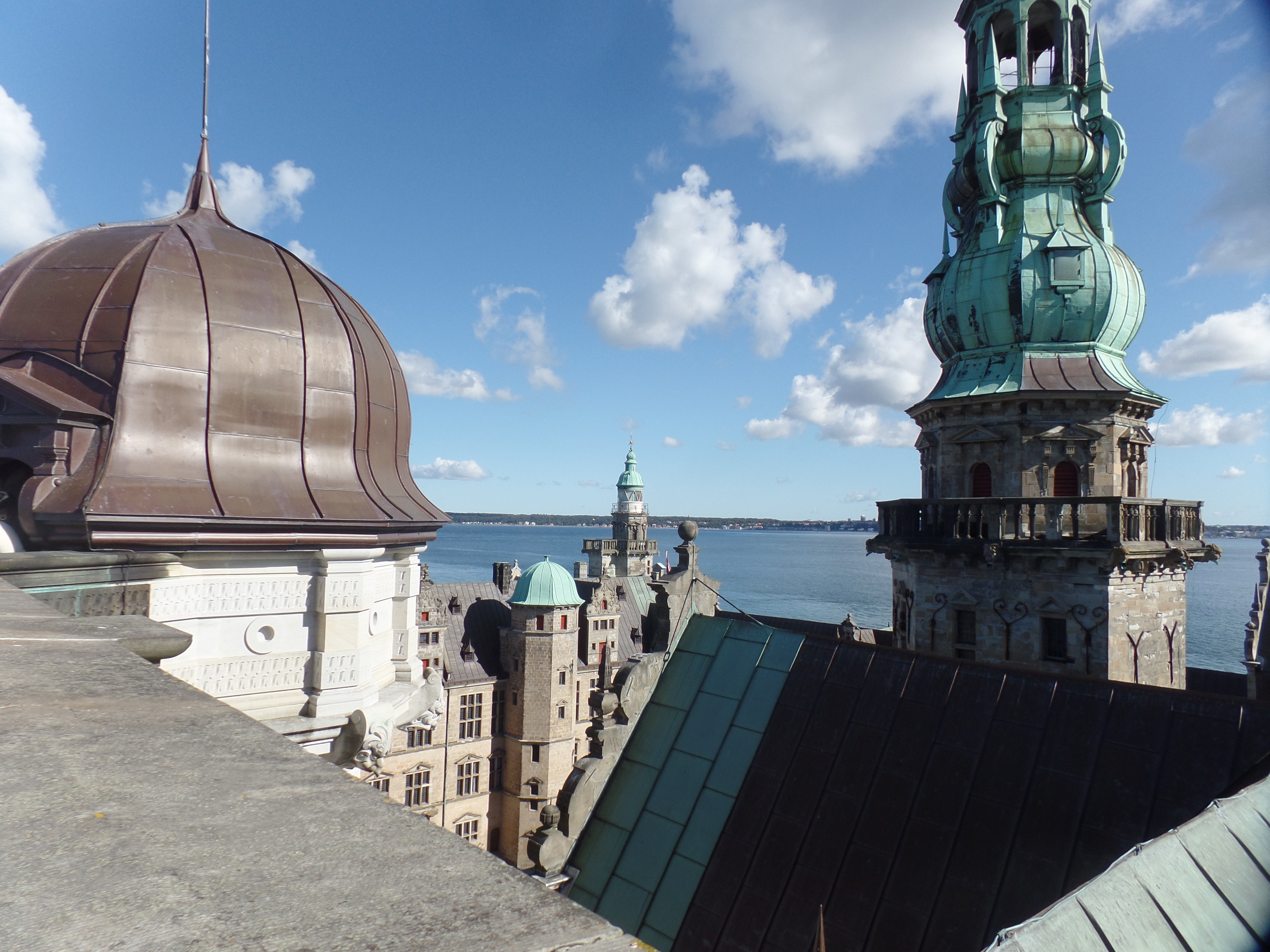
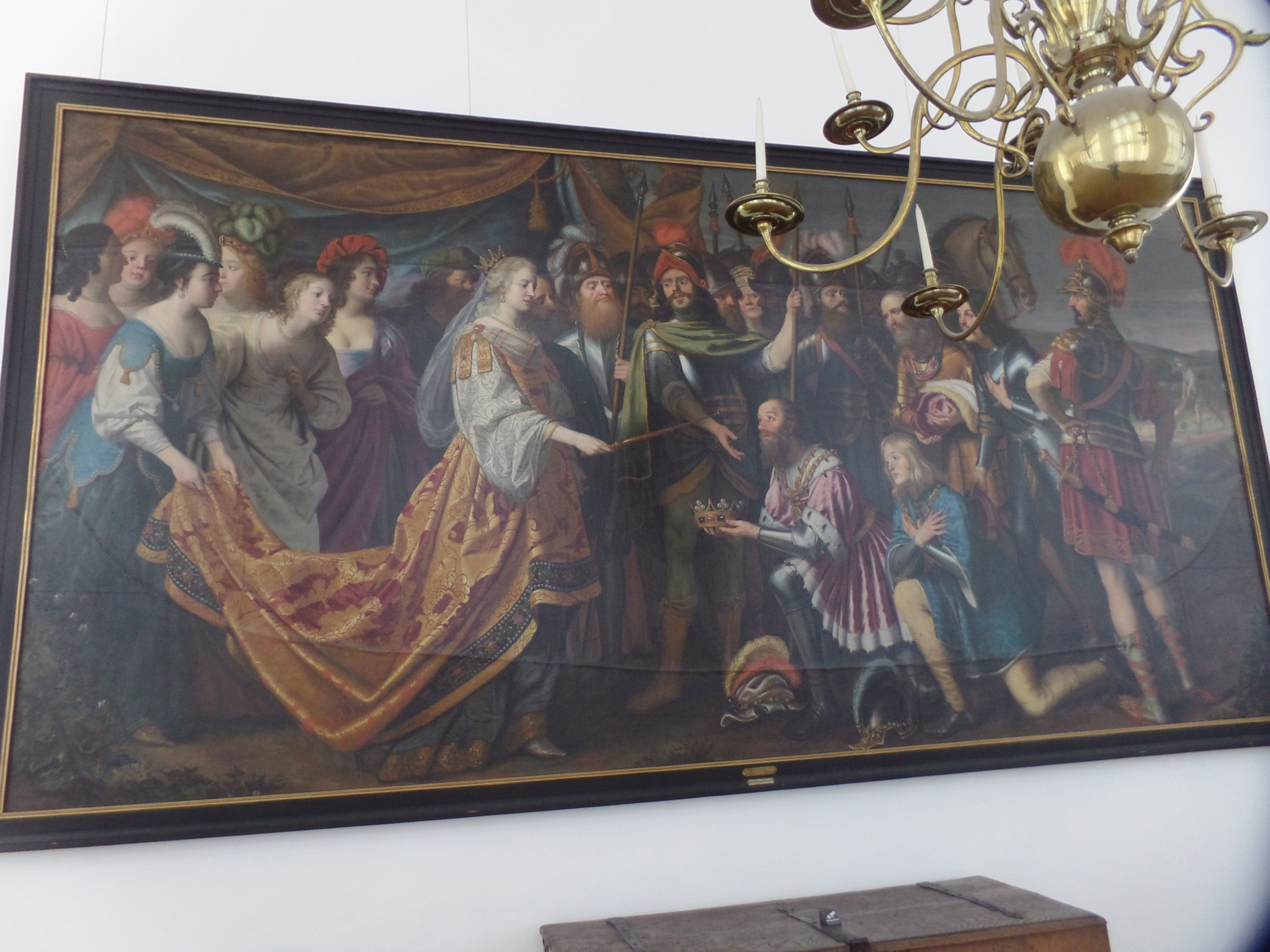
The Moat of Kronborg CastleCannons, facing north, from Kronborg CastleKronborg’s Cannon Tower, from the courtyardThe Chapel, which was the only area, not affected by the Fire of 1629.Oresund, and other parts of Kronborg, from the Cannon Tower. This viewpoint is reached after climbing 145 steps. I still have it, even if it means taking 2 twenty-second breathers going up.Holger the Dane, legendary protector of the nation, who awakens when Denmark has met its darkest hour. He otherwise sleeps in the Casemates.In the Casemates-Is down up or is up, down?A Word of Caution. Queen Margrethe I, who ruled Denmark and all of Scandinavia.
No display of a castle is complete without a scene of the ballroom. So here is #8.
The Ballroom
With this lovely visit, I headed back to Skandia, retrieved my bags and headed across the street to the train station. I learned last night, from the ferry monitor, how to work a ticket machine, and so got my own ticket to Copenhagen. Sadly, the Baha’i National Centre turned out to be in a suburban location-so I missed seeing the friends there. I did speak with one on the phone and may be able to join a meeting at my next place of visitation.
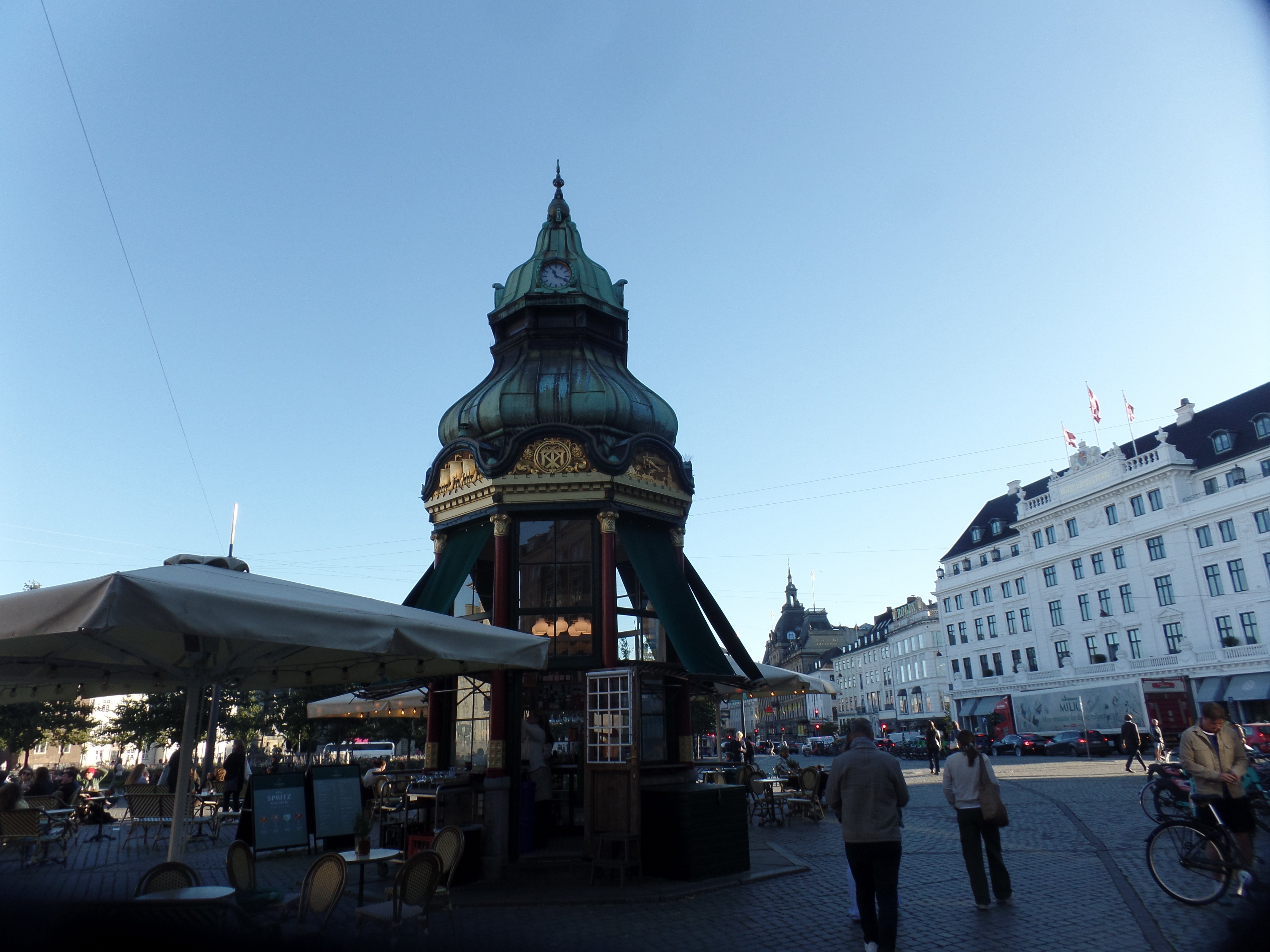
Copenhagen, though, is exquisite. I will be here tomorrow and early Thursday. Let us close with this scene of Indre By, the “Old Town” of the Danish capital, of which more tomorrow.
Ornate small cafe, with Hotel D’Angleterre in the background. An enterprising young woman runs a small coffee shop here.
Rumour has it that Tivoli is temporarily closed. I will check that one out further, tomorrow. Even so, there is plenty of opportunity to keep occupied here.



































 A Sagittarian Seeker