October 26, 2025, Edinburgh- We had a fine Scottish breakfast, on this misty morning. Again, there was no haggis-and nary a bit of porridge. Scrambled eggs, a small bit of bacon and grilled tomatoes filled the bill, along with Alan’s fresh-baked bread and plum jam-plus cheese.
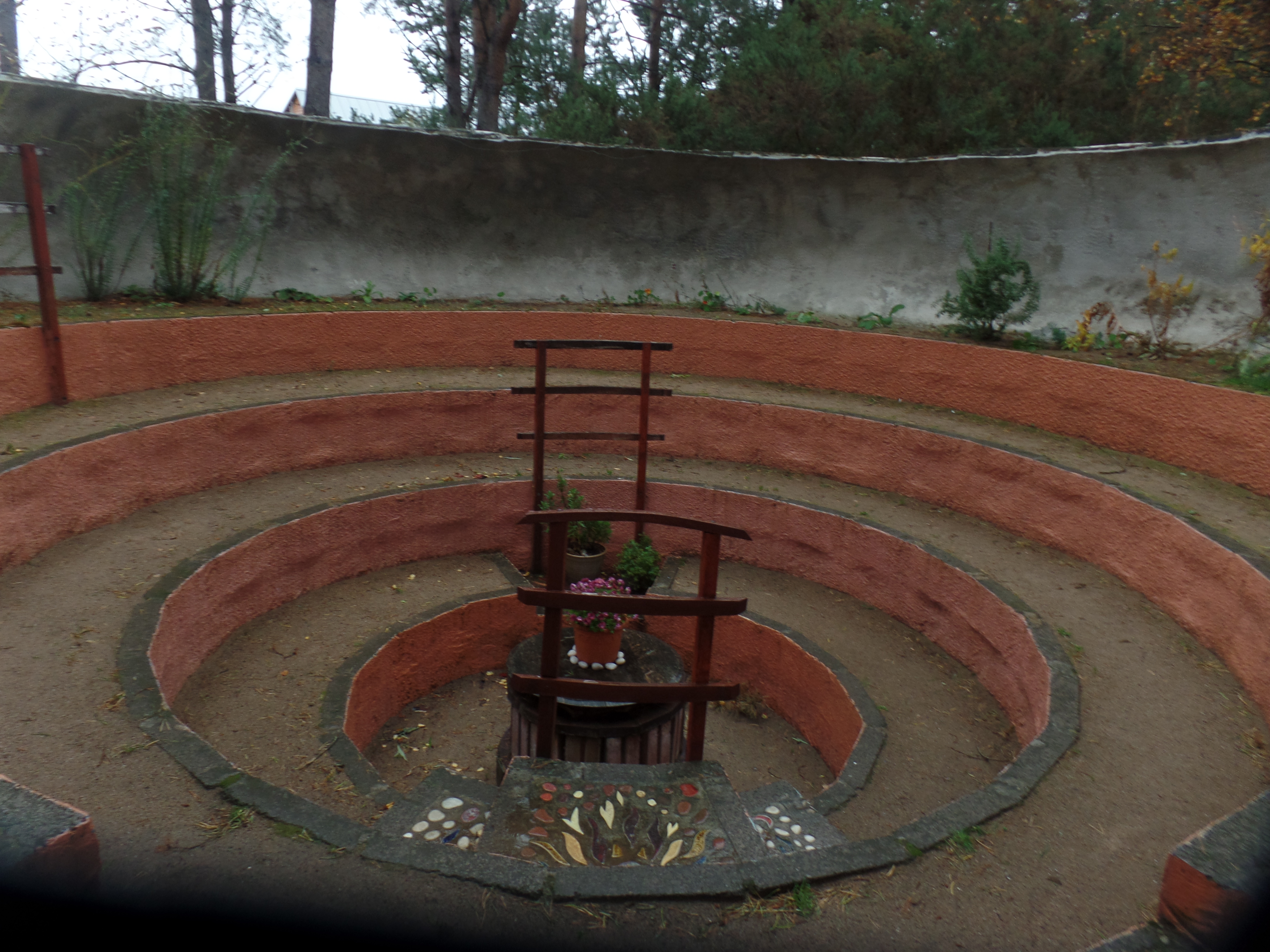
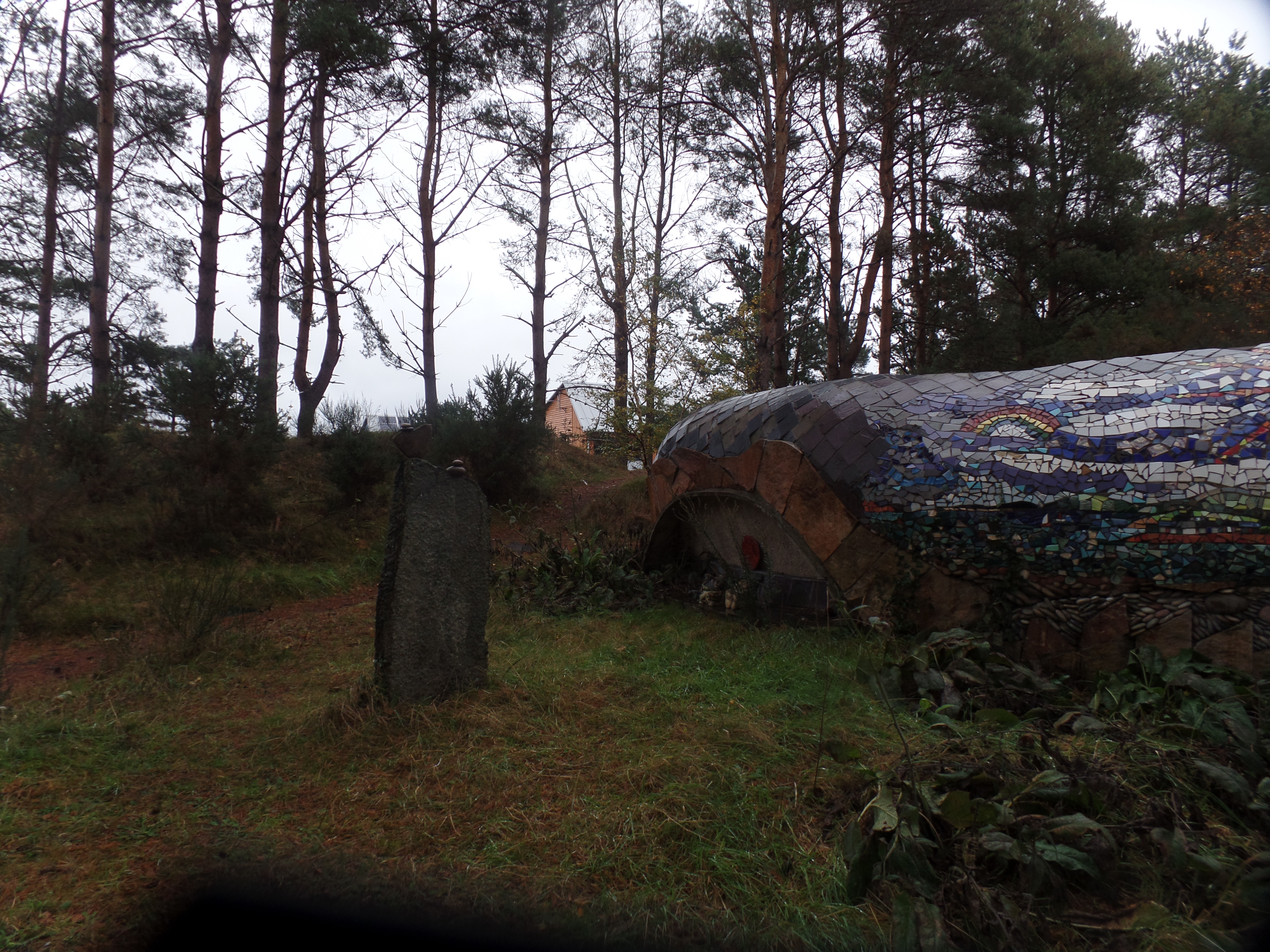
Lisa then took me on a tour of Findhorn’s round houses and small gardens. Here is a look at some of these.
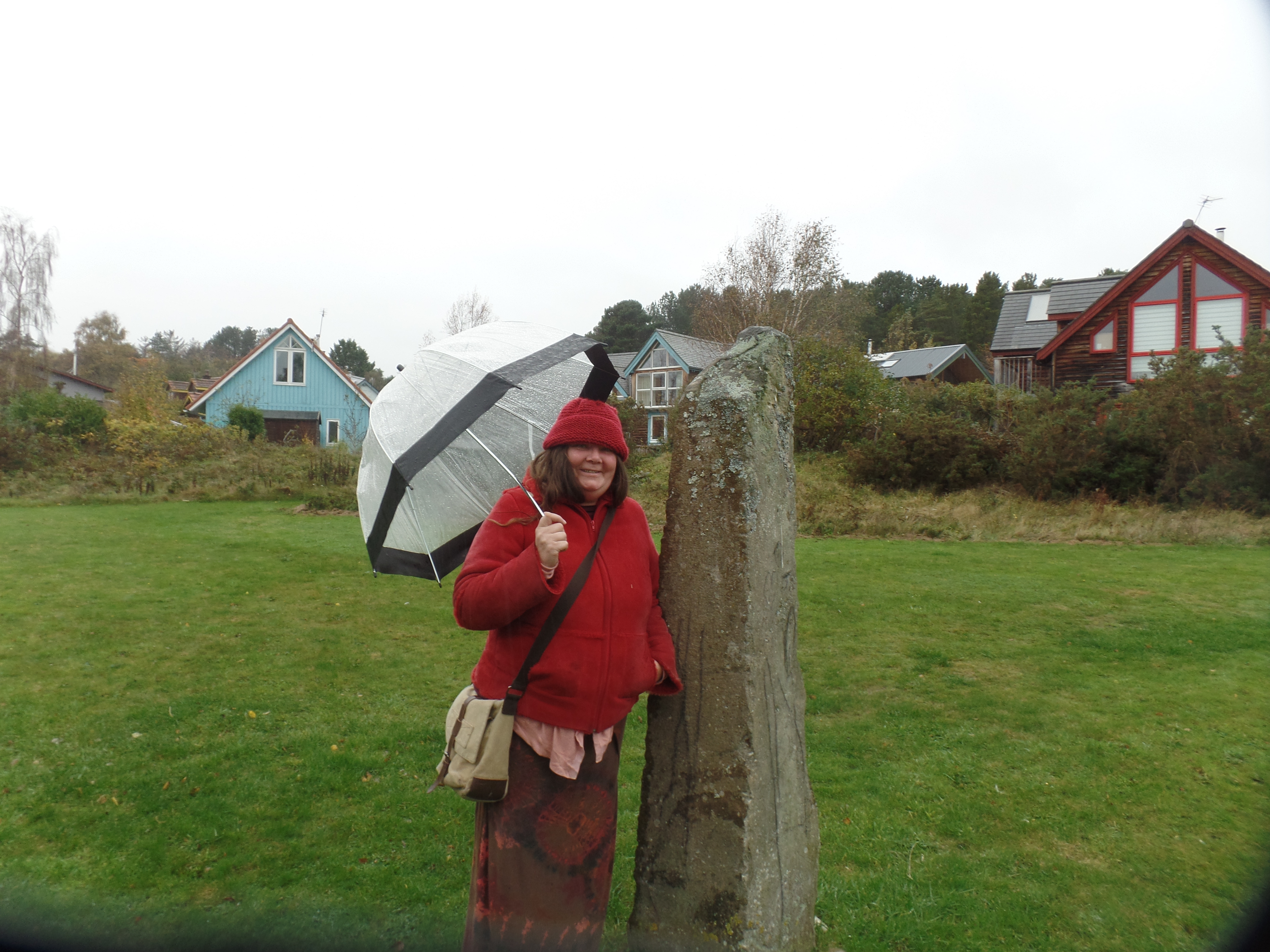
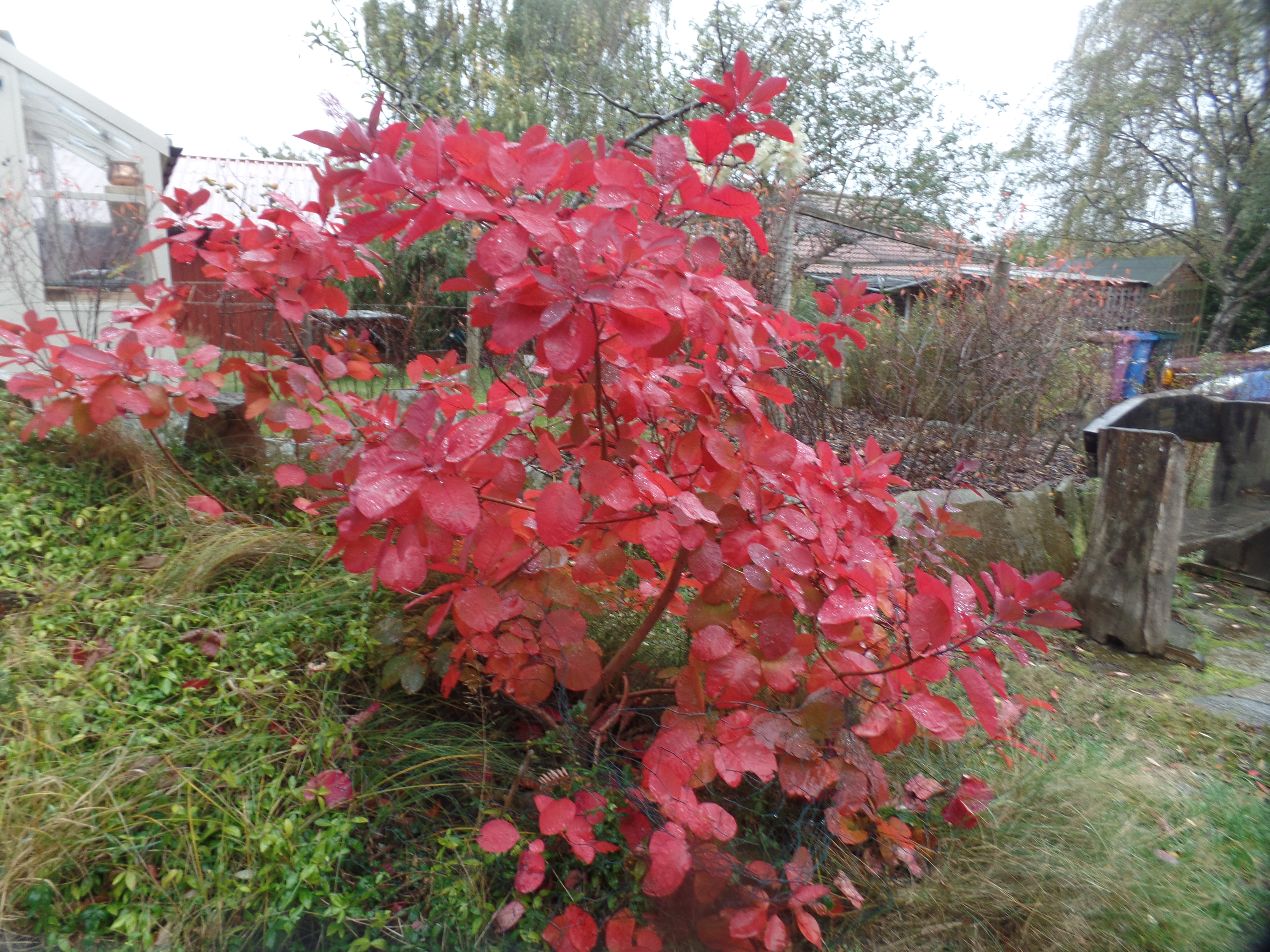
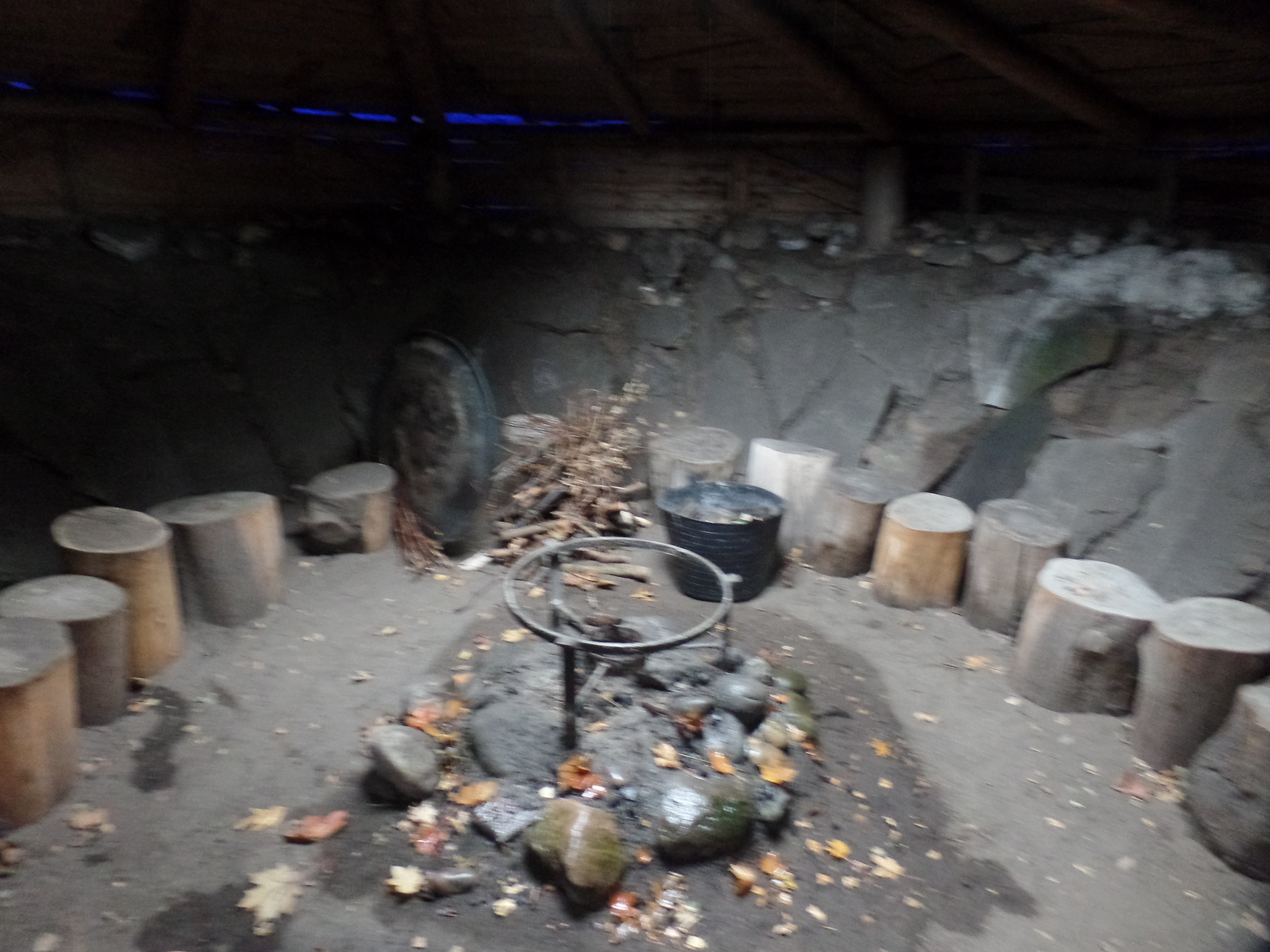
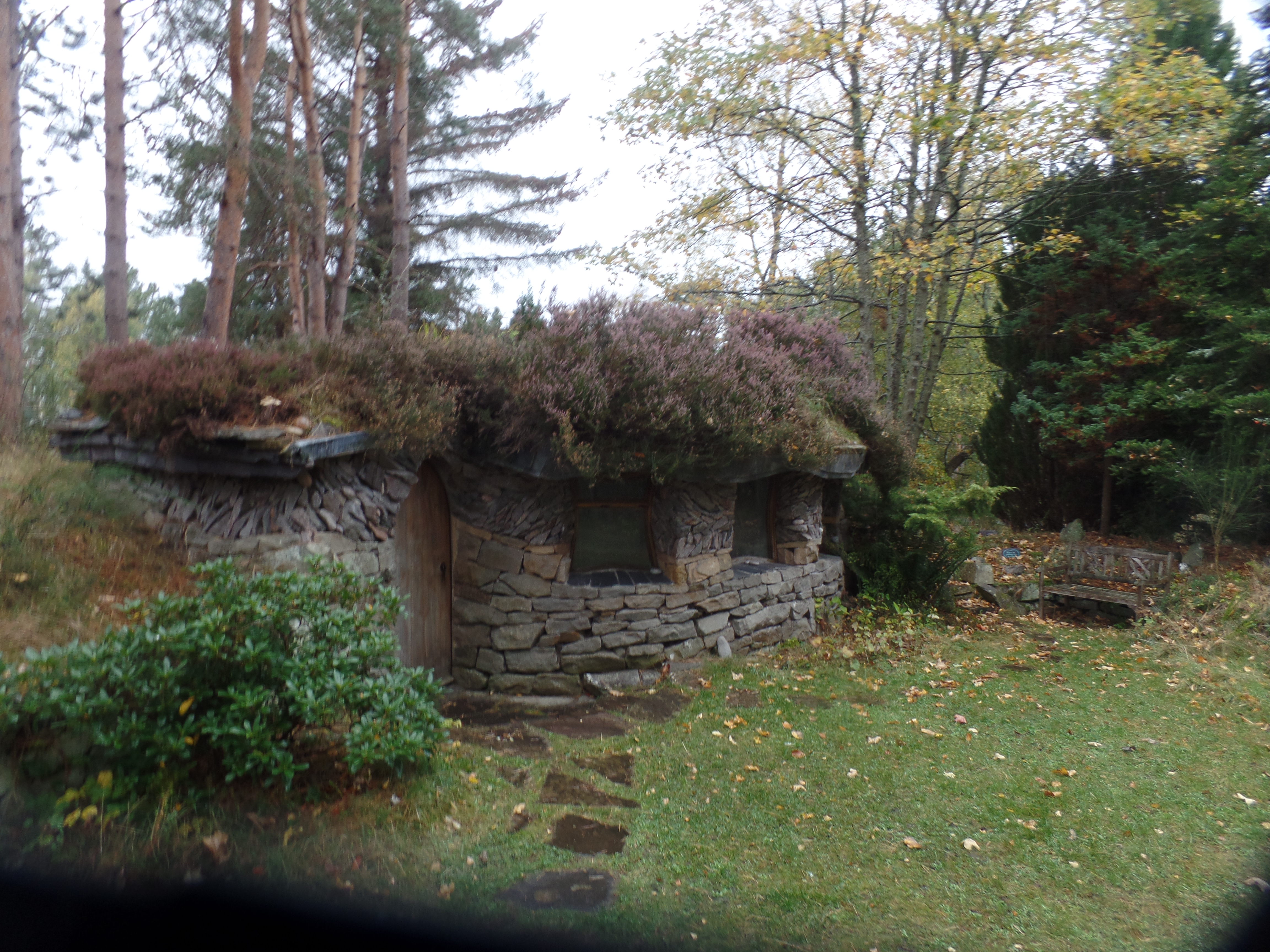
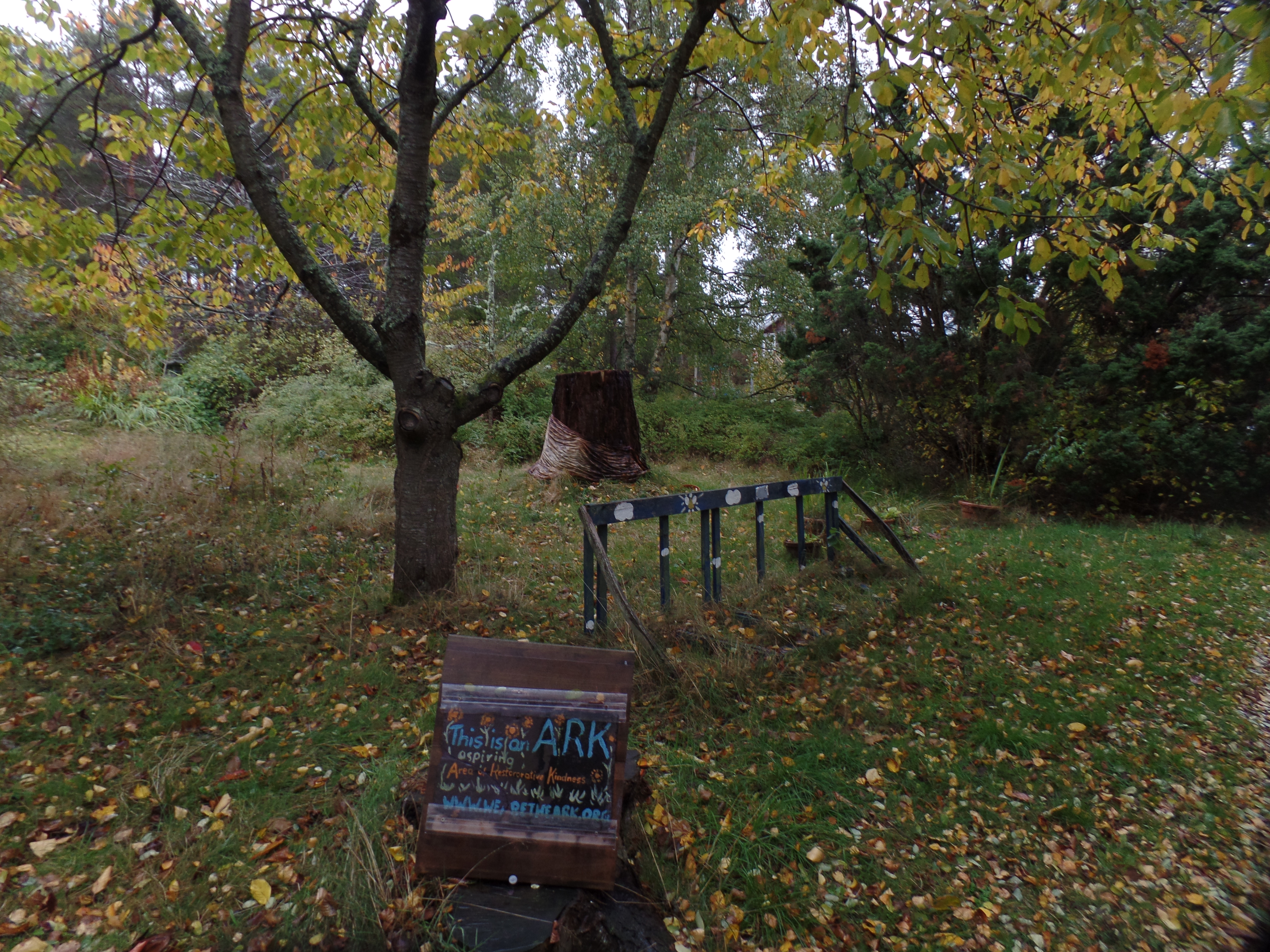
Round home, Findhorn Eco Village. Lisa said this house is presently unoccupied.Wishing Stone, Findhorn Eco Village. Here is a good place for meditation, on a fine day. (Above and below)Lisa at the Wishing StoneThis round house is near my lodging of last night.A wee bit of foliageTwo more round housesFindhorn ForestInside a gathering placeInside Meditation Round House. The similarity of this and another such house with Indigenous American round houses is remarkable.A “hobbit house” (Above and below)Community CenterOpen meditation centreOpen meditation centreAnother sacred space and standing stone, an ARK (Area of Restorative Kindness) above and below
This is the sort of place where one goes for restoration. Thankfully, I need not board a plane to find such a space. There are ARKs of this sort, just about anywhere one might go in the world, and we have our share in the Southwest U.S. I will return here again, if it be the Divine Will, yet in the meantime, it makes me all the more appreciative of sacred spaces closer to Home Base.
I bid farewell to Lisa, Alan and Pupak- and boarded a train bound for Edinburgh, via Aberdeen. The magic was not done with me yet.
October 25, 2025, Findhorn, Scotland- The gentle couple welcomed me into their home, the last of three cozy, warm cottages that greeted me upon my arrival in this ecological village, high on the North Sea. It is a place of learning, of adaptation and of unrelenting hope. Here, I will spend a peaceful night, knowing that the residents have endured gales and storms that are far worse than the mild chill that whispers outside.
I easily made my way from Travel Guest House to Waverley Train Station, and stopped to enjoy a Cornish pasty for breakfast. Looking at the nearby sign board, just two minutes before we were to board a train to Aberdeen, the ride was canceled. After finishing the pasty, I went to the Travel Centre and rebooked- this time for a train to Perth, which would be followed by a bus that would take us through Cairngorms National Park-the crown jewel of the eastern Highlands, thence to Inverness, where I would meet my friend Lisa and go on to Findhorn.
I walked up to platform 19, where the train to Perth was already waiting. Needless to say, there were a number of folks from just north of Aberdeen, who were irritated by the last-minute scrub, but they were making the best of it. In fairly short order, we were underway, and I was seeing a Scotland that was enjoying clear skies, after the cold rain of yesterday afternoon and evening.
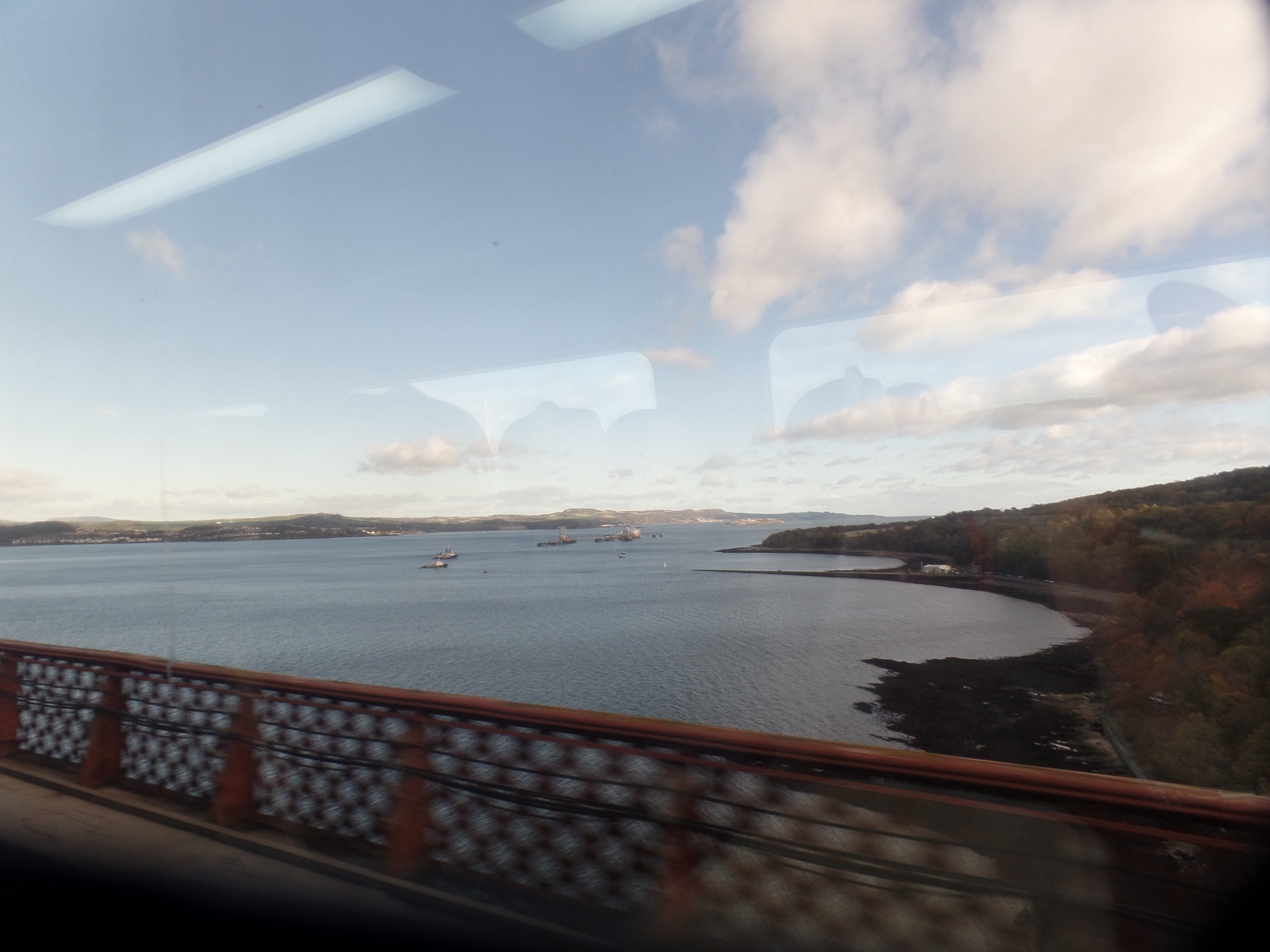
Crossing the Forth Bridge to RosythFirth of Forth, through the trees (above and below)Firth of Forth meets the North SeaBurntisland
From there, it was only another hour before we reached Perth, turning inland at Leven and passing through Cupar and Abernethy to the home of Scone Palace. We would not see the palace, though, as the bus took us through glorious highland scenes. I was, however, in a crowded vehicle, with no room to maneuver either a camera or phone, without being a nuisance to the patient grandmother to my right. Take my word for it, though, Caringorms is well worth a journey in itself.
A number of people got off the bus at Landmark Forest Adventure Park, and in another half hour, we were in Inverness. There was no view of Loch Ness- it’s another 20 miles to the southwest, but the city has Beauly Firth, Moray Firth and Clava Cairns to recommend it to a visitor, besides being the northern gateway to Cairngorms. Lisa, a friend from the Earth Rising internet group, which has been meeting once a month, for the past six years, was there to greet me and be my guide to Findhorn.
We headed straightaway to The Captain’s Table, the first warm, cozy cabin-like place of welcome. I “tucked in” to a hearty bowl of cullen skink- Scotland’s other signature dish, (no haggis was either offered or served on this visit). Cullen skink is fish chowder: Smoked haddock, potatoes and onions, usually in a broth of milk or cream. It was a wee bit o’ heaven!
With me fortified against the chill, we explored the small beach at the confluence of River Findhorn and Forres Cove.
Forres Cove Wharf at The Captain’s Table CafeA Scottish sunset (above and below)
Lisa finds the shades of grey things of beauty. Tonight, I agree with her.
Surf meets sedge Lonely walkers on an evening beach A neap tide-not as cold as it looks.
We drove back to the village, and stopped for a bit at Lisa’s house, the second cozy cabin. After a brief chat, it was time to head to the home of friends Alan and Pupak, my lodging for the night. We sat and discussed spiritual matters, and health protocols. Now, it is time for rest, so I bid all A’chiu va (aye chuh va)-good night, in Scottish Gaelic.
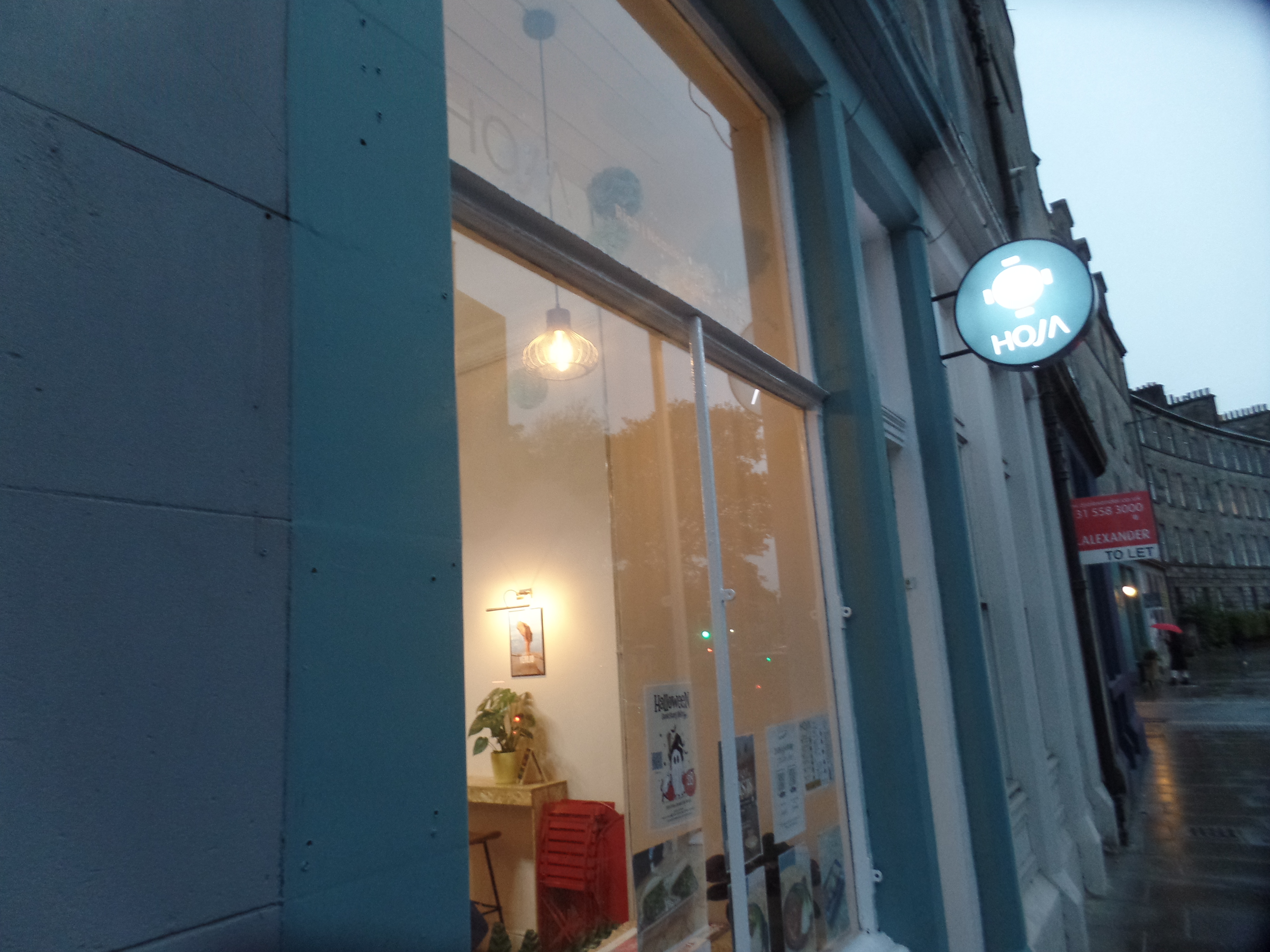
October 24, 2025, Edinburgh- The bright face of the young lady in the small Taiwanese cafe radiated outside and clear across the street, almost as if she had been expecting me. I crossed the road, glanced at Hoja’s small menu, then went inside and had a fabulous Korean-Cantonese fusion meal, for which Taiwan has become famous. We were in Edinburgh, not T’aipei, making it all the more delicious.
Hoju Taiwanese Cafe
The day broke, bright and sunny, and I checked out of Abigail’s Hostel, crossing quickly over to Eden Quay and the Bus Stop for Dublin Airport. Though the bus came late, I had no problem getting to the airport, and through security on time. Ryan Air left on time also, and we were in Edinburgh in 45 minutes.
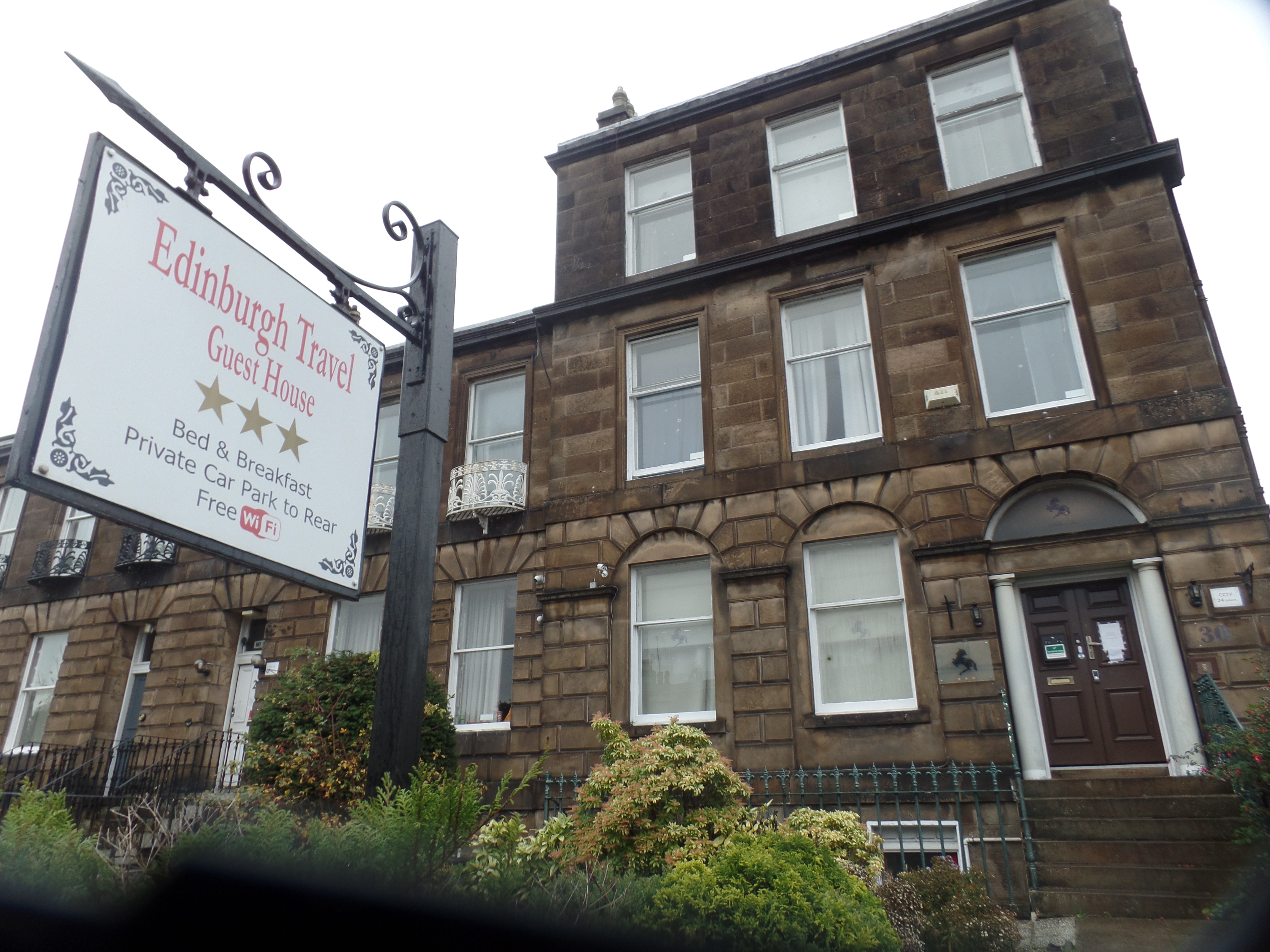
It was not bright and sunny here, yet despite the rain, a combination of tram, bus and hoofin’ it got me to Edinburgh Travel Guest House, in less than an hour after landing. The door bell camera had shorted out, though, so I waited outside a bit, until a couple of Chilean ladies who were going out, let me inside. A German hosteler arrived fifteen minutes later, and was able to reach the attendant on his phone. The eight of us who had gathered in the living room were thus able to get settled in our respective rooms: Four young women from Canada, two young men from Spain, the German gentleman and me. I have a room to myself tonight, a nice change, every so often.
Edinburgh Travel Guest House
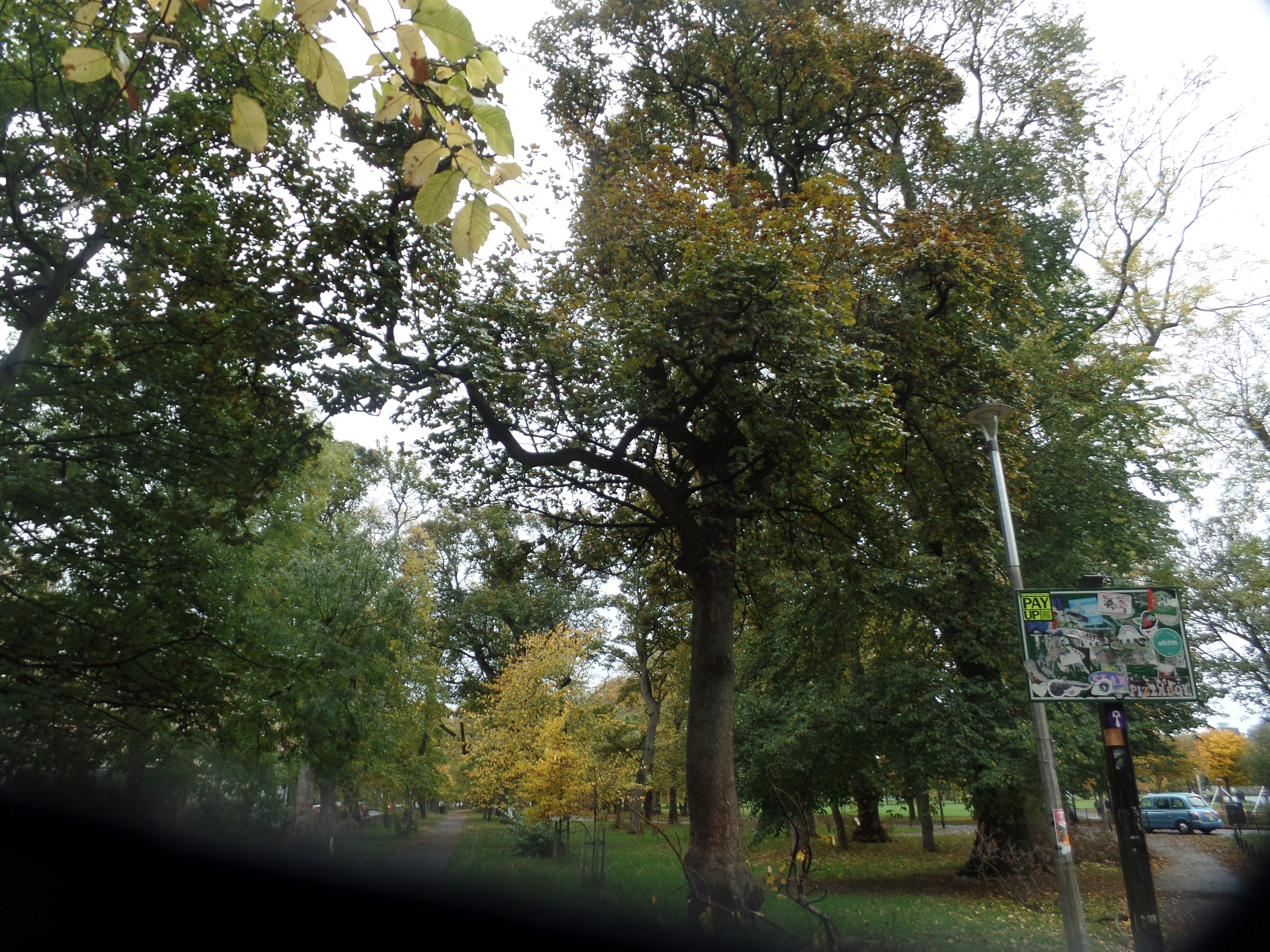
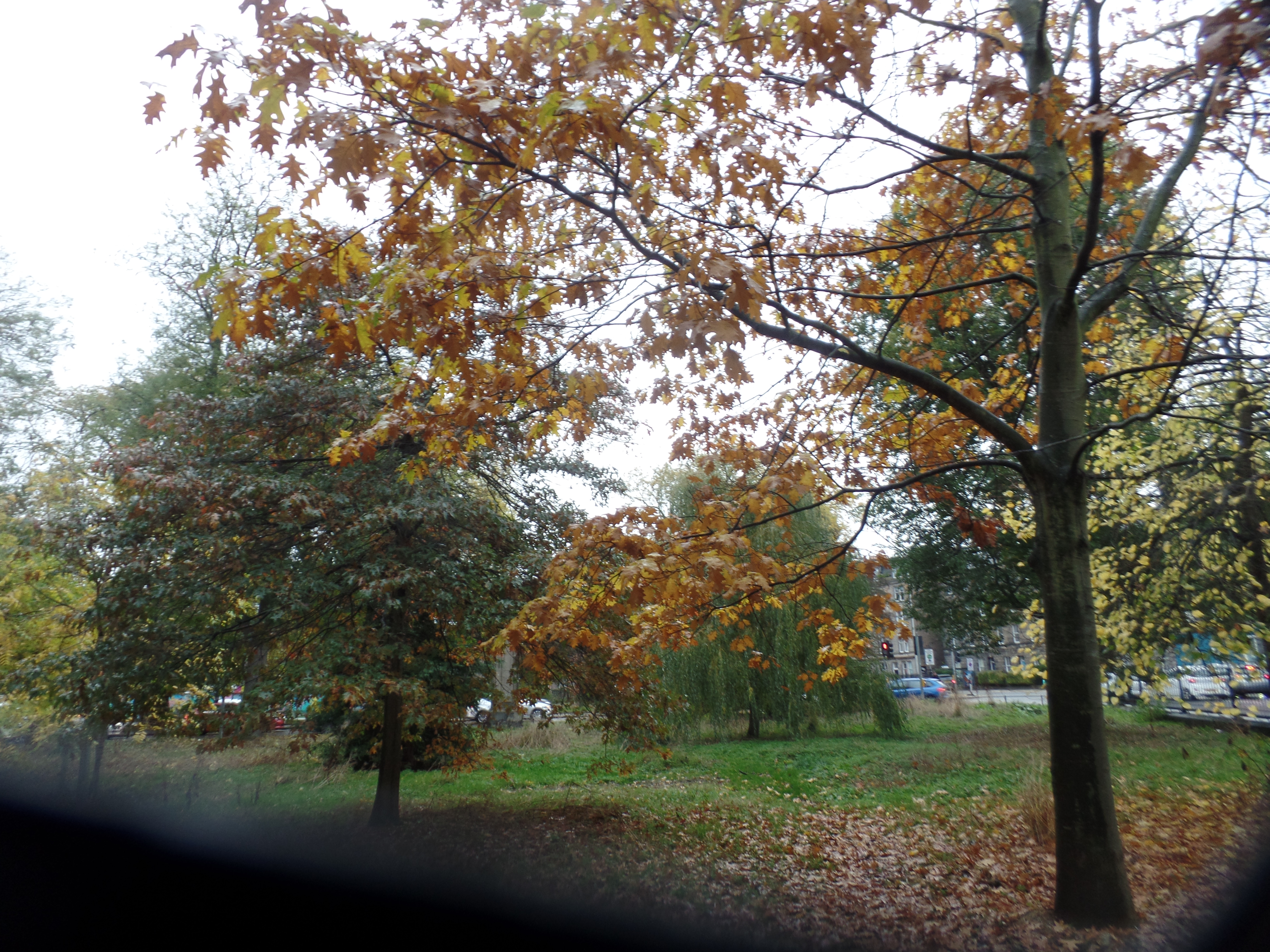
Despite the lingering drizzle, I wanted to maximize my time here, so I headed out, to look at the neighbourhood of south Edinburgh. This brought me to a lovely park, across from a technological school.
Newington Road
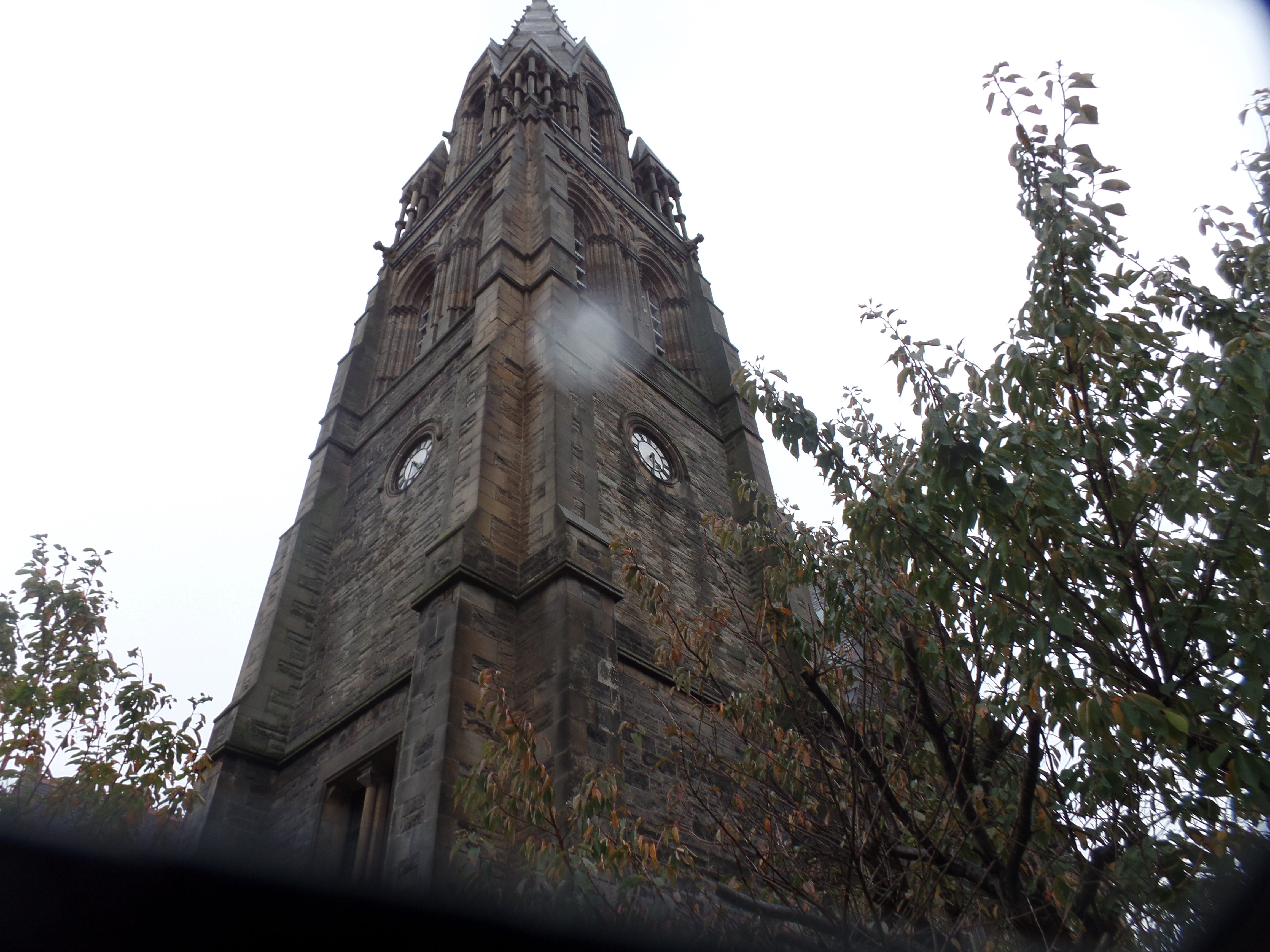
I came upon a stately church, and a quiet neighbourhood, where shops were closing for the evening.
Newington Trinity Church of Scotland (above and below)
Walking eastward, I came upon The Meadows, directly across from the University of Edinburgh.
Foliage, in The Meadows (above and next two scenes)Queen’s Hall-along with Summerhall, is an entertainment venue. Walking further south, I came upon St. Margaret and Leonard Catholic Church.
Had I kept on, in the gathering dusk, I’d have ended up in Holyrood Park, then would have found myself overlooking the Firth of Forth. So, in the interests of rest and well-being, I headed back to Travel Guest House.
Tomorrow will bring me north, to an all too brief visit with more friends, in Findhorn.
October 23, 2025, Dublin- The status of churches and cathedrals in Ireland, in terms of denomination, often needs a scorecard. Some great buildings are under the Church of Ireland. Others are under the Roman Catholic Church. One parish, St. Audoen’s, has one of each. (The Protestant building is under renovation.)
Into the morass of denominational turmoil, in the mid-19th Century, stepped the figures of al-Bab and Baha’ullah, Whose birthdays, close together on the Badi (Persian Lunar) calendar, we Baha’is celebrate in back-to-back Holy Days. The concept of Progressive Revelation explains the differences among the Faiths of the past and offers a way for those of all Faiths to reconcile.
Our observance of the Birth of Baha’ullah took place in the cafe of the National Gallery of Ireland. The arts are celebrated and honoured in the Baha’i traditions. So, in an environment of splendour, some 25 of us sat and discussed various topics of interest. Following the celebration, which of course included a slice of cake and beverage, of one’s choosing, some of us went to enjoy other rooms of the Gallery.
National Gallery of Ireland
The paintings I found of interest included John Lavery’s “Her First Communion”, Jan De Beer’s “The Flight Into Egypt”, Adam Pankraz Ferg’s “A Landscape with Figures and Horses”, Jack B. Yeats’ “Above the Fair”. None of these may be shown outside the Gallery, save on its website. Thus, there are no photos, even with watermarks.
Upon leaving the National Gallery, I headed to Dublinia, a museum dedicated to the interaction between Celts, Vikings and Norman French, over the centuries, in the development of the city.
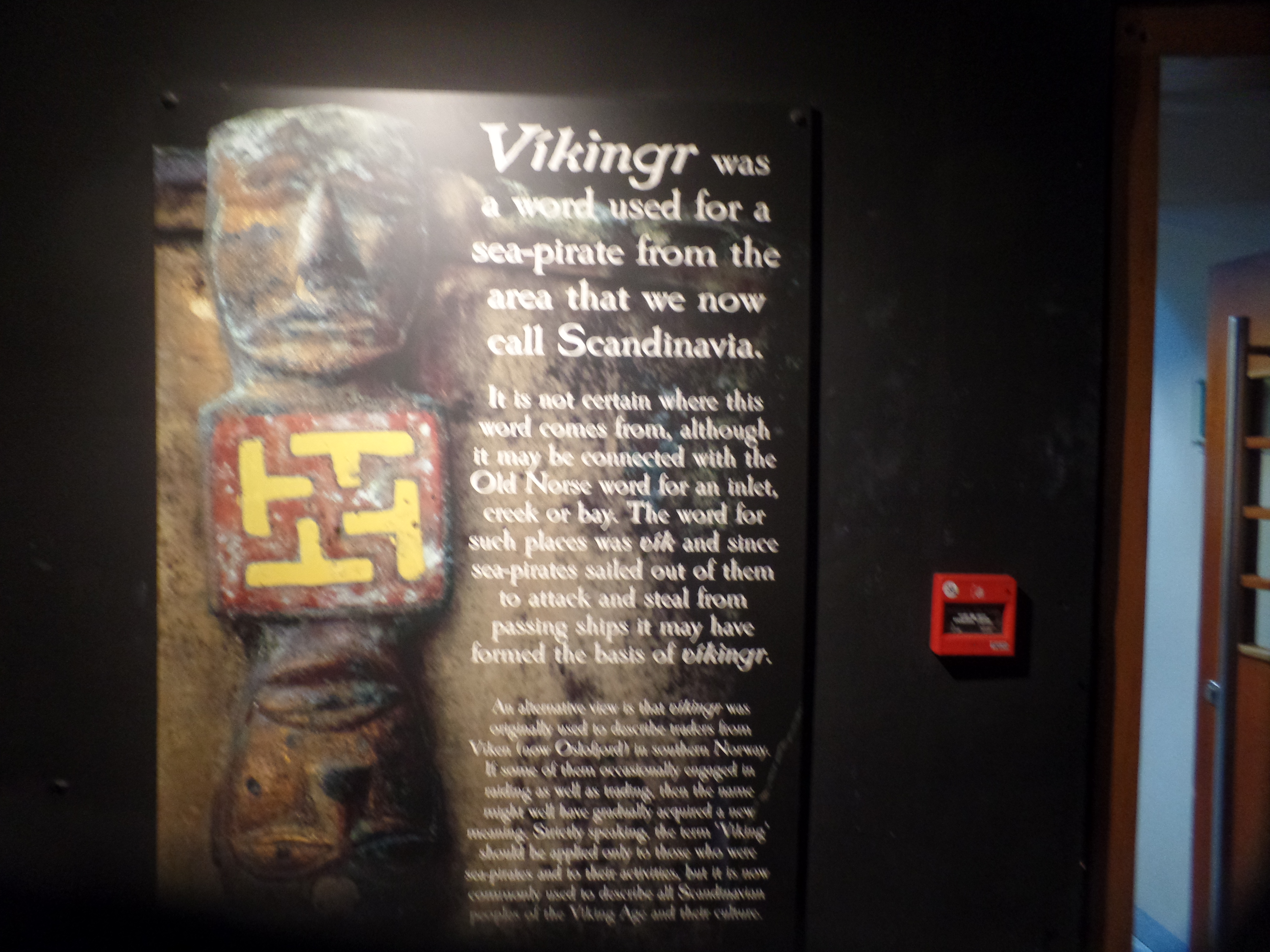
Viking information, at Dublinia
As we learned in Reykjavik, and further in Stockholm, the word Viking most likely refers to one who lives near or comes from an area near, a vik– a bay or cove. Over time, it came to mean anyone who came to the British Isles or mainland Europe, from Scandinavia or Denmark.
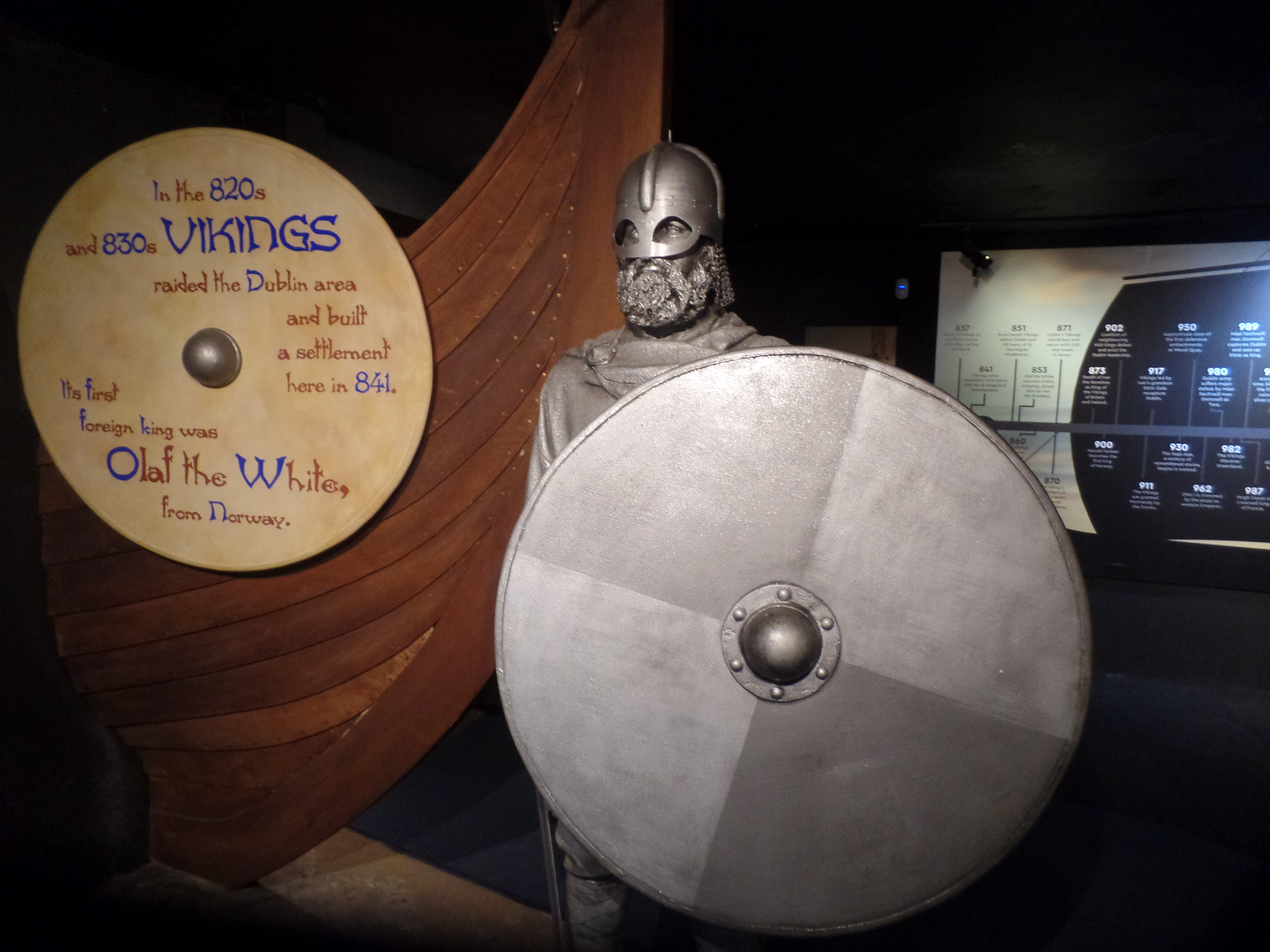
Here is the basic truth about the founding of Dublin.
Origin of modern Dublin
The Vikings found two Celtic settlements in the area, one on each bank of the River Liffey.
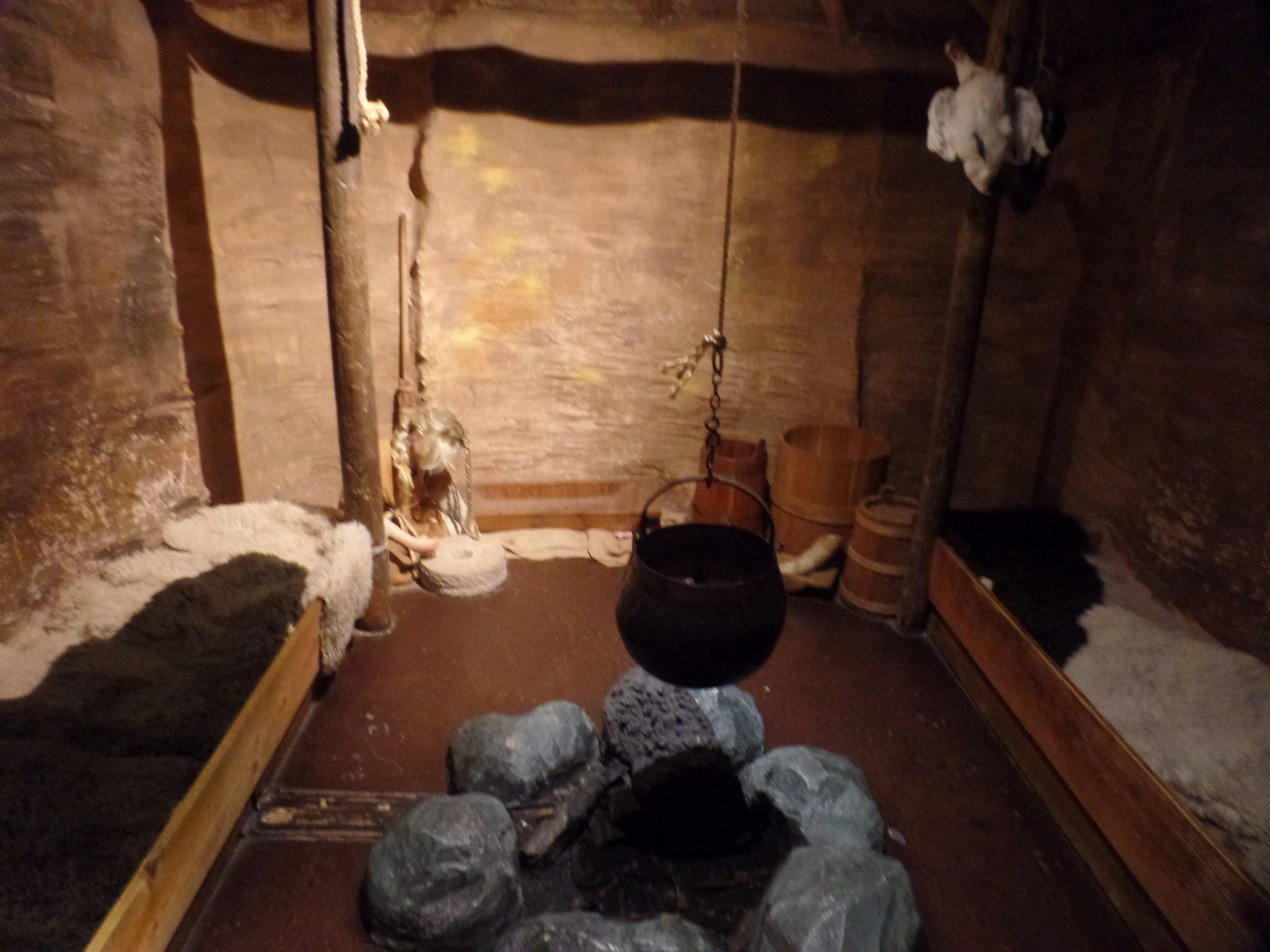
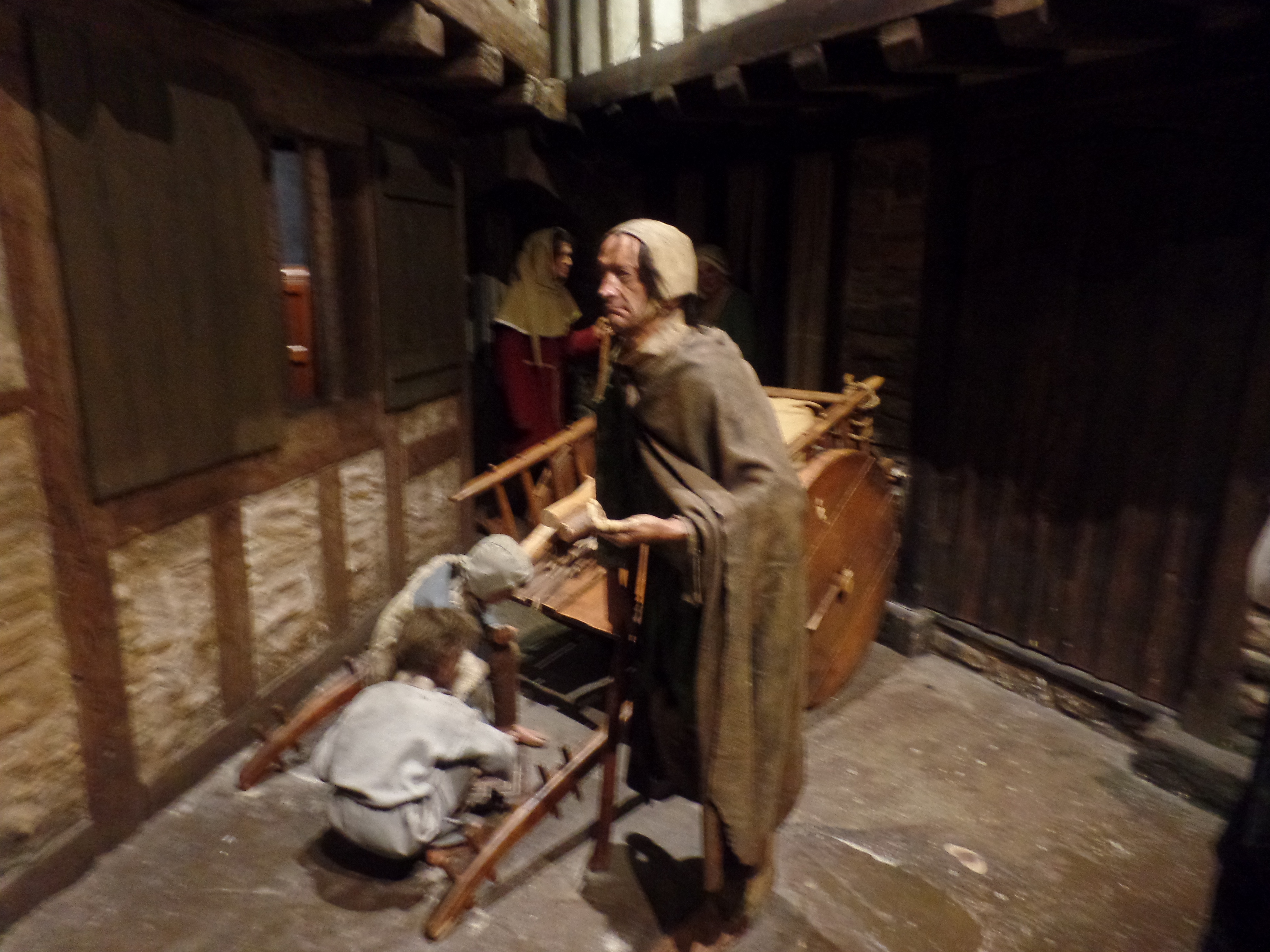
Ath Cliath (u-thuh clee uh) and Duiblinn (dove-lin).Interior of a simple peasant hut, during Viking ruleA street scene, in 14th Century DublinLooking down from the steps to St. Michael’s Tower, Dublinia
Looking at my watch, it did not seem wise to go up the steps to St. Michael’s Tower, as I normally would. There was a meeting with an old Baha’i friend, at a hotel across town, in a relatively short time. Iveah Gardens Hotel was shown to me as being at a major intersection in central Dublin, except that the people who worked at that location had never heard of it. They directed me westward, towards “a big building, that you can’t miss”. In other words, they couldn’t find it on their GPS, either.
I eventually did find an Iveah Court, an apartment building. The guard there thought it was back towards where I had just been, “but in any case, just walk straight, no turns”. Two inquiries later, I came upon Iveah Garden Hotel. It is indeed an elegant place, but is discretely signed. The young lady for whom Penny and I were mentors, in the 2000s, had grown into an elegant and well-spoken teacher of the French language, the promulgation of which was one of her principal reasons for being in Dublin. We got to catch up on the course of our respective lives, for twenty minutes in the hotel tea shop and fifteen minutes walking towards her work site.
Bidding farewell to C, I headed down Cameron Street, towards Temple Bar. I found Ne Zha, an intriguing Asian tapas cafe, which normally requires reservations. The owner found a stool, on which I could sit by the kitchen and observe the chefs at work. It was a fabulous small dinner that ensued.
Tomorrow, I bid farewell to Dublin and to Ireland, with its cousin to the northeast on my radar screen.
October 22, 2025, Dublin- In any given new city, my wont is to wander a bit, usually towards a spire, dome or other prominent landmark-and sometimes off to a nearby spot that captures my attention.
After leaving Peace Park, that meant heading towards St. Patrick’s Cathedral. Knowing that it had closed to visitors for the day, I still wanted to get a sense of the exterior and the ambiance of the cathedral close. This was the deanery of one of 17th-18th Century Ireland’s most fascinating thinkers: Jonathan Swift. His satire was brought to me, early on. I treasured reading “Gulliver’s Travels”, when I was nine. I discussed “A Modest Proposal” with a cousin, when I was twelve. His admirers were the original “Swifties”.
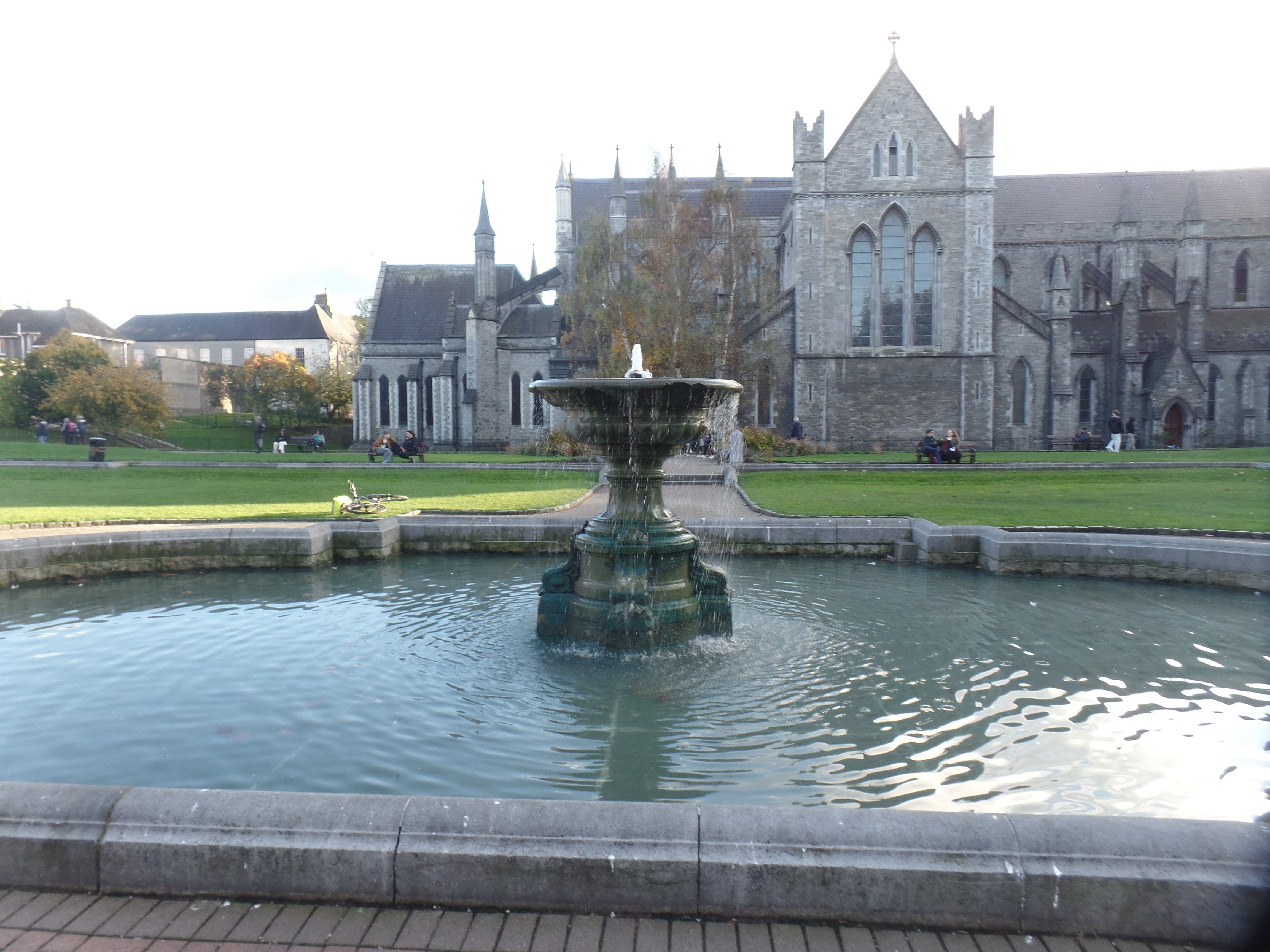
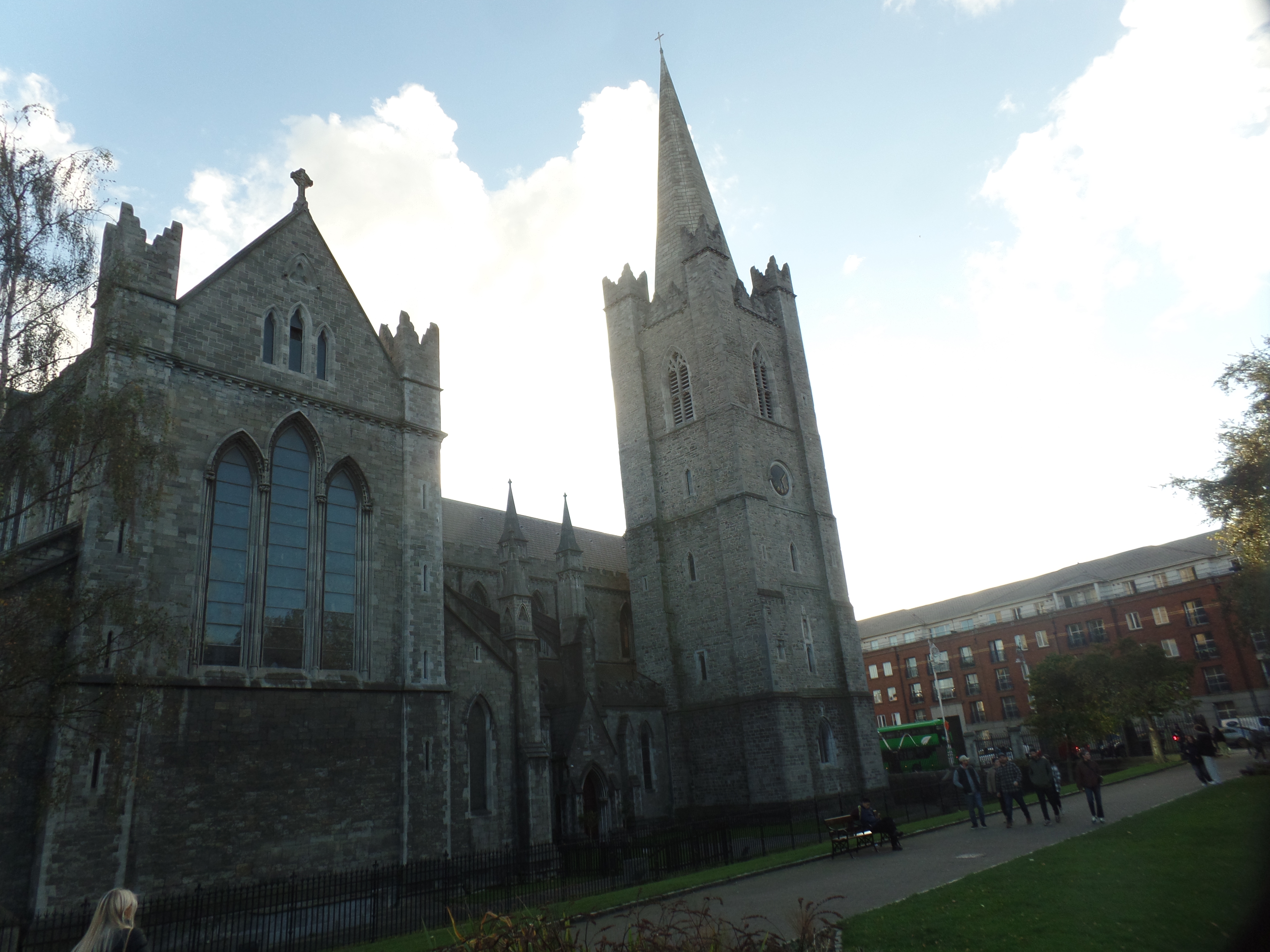
The seat of the Church of Ireland was the second point in what turned out to be a triangular route. Here are some scenes of the exterior and of St. Patrick’s Park.
Main fountain, St. Patrick’s Park, DublinNorth face, St. Patrick’s Cathedral, Dublin (above and below)Bridge between Towers, St. Patrick’s CathedralWest face (front) of St. Patrick’s Cathedral, Dublin
I will return here some day and look into the interior of the great cathedral. For now, my quest turned a bit westward in Wood Quay, and past 18th Century row houses near St. Patrick’s Close.
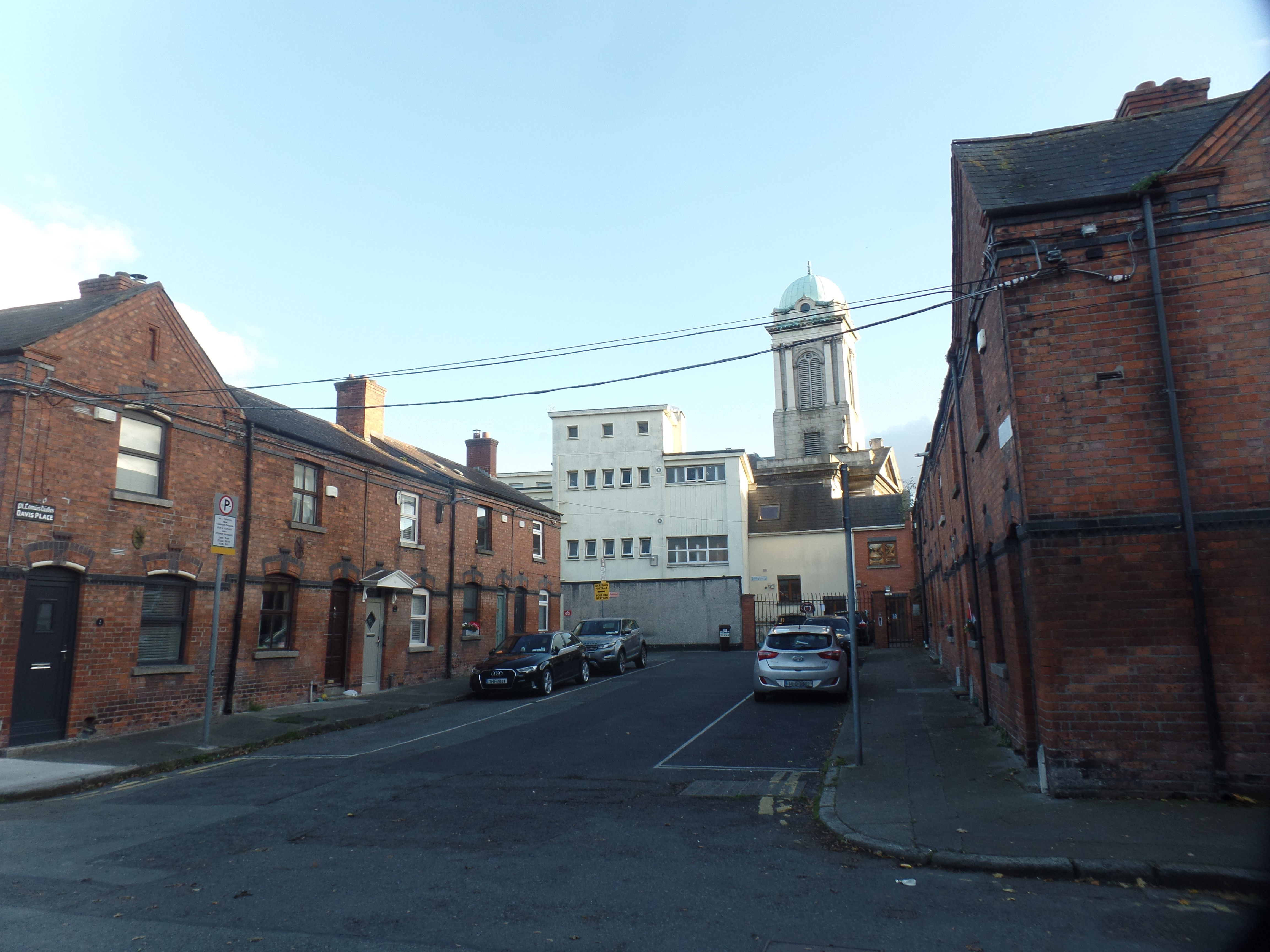
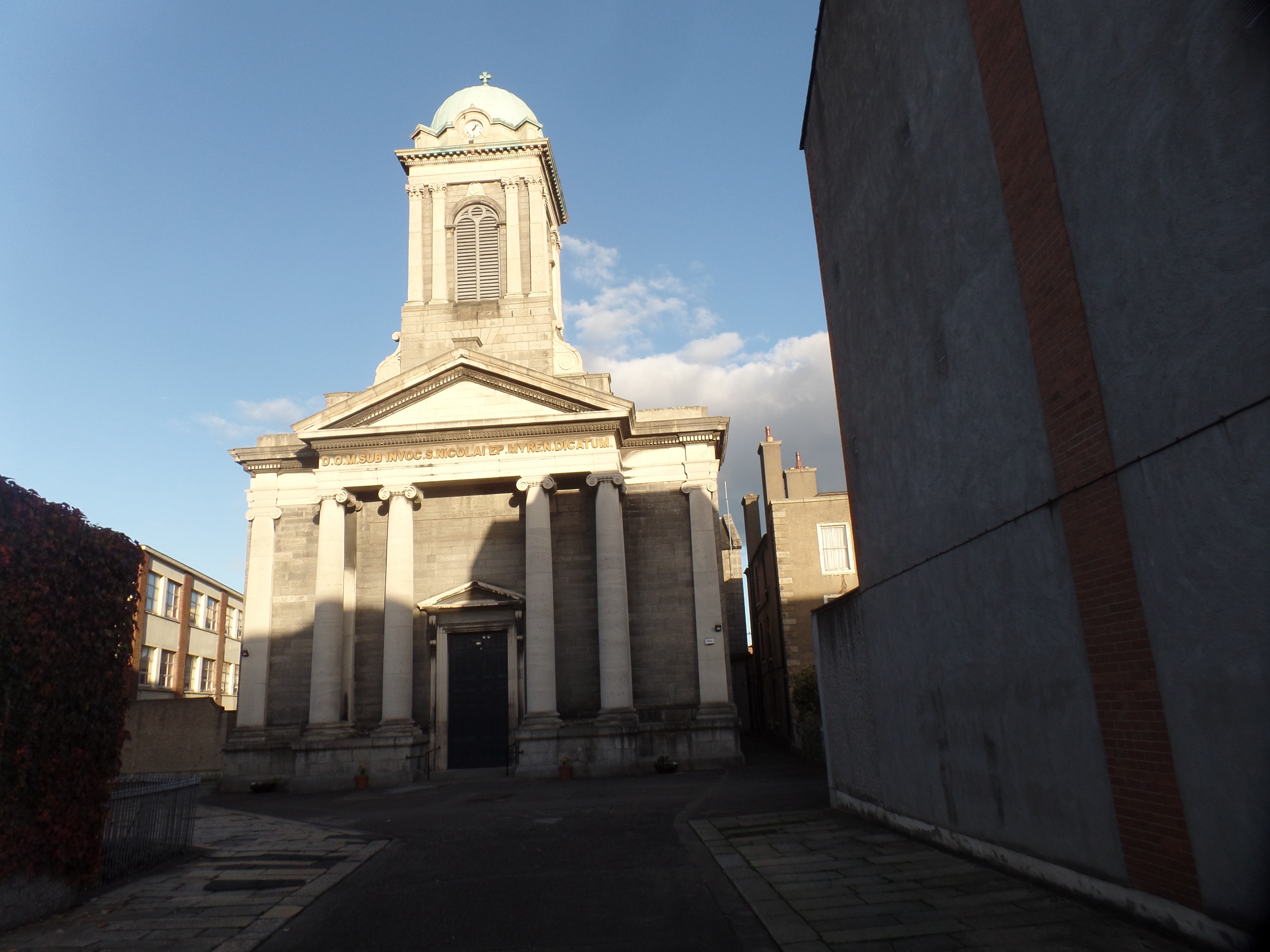
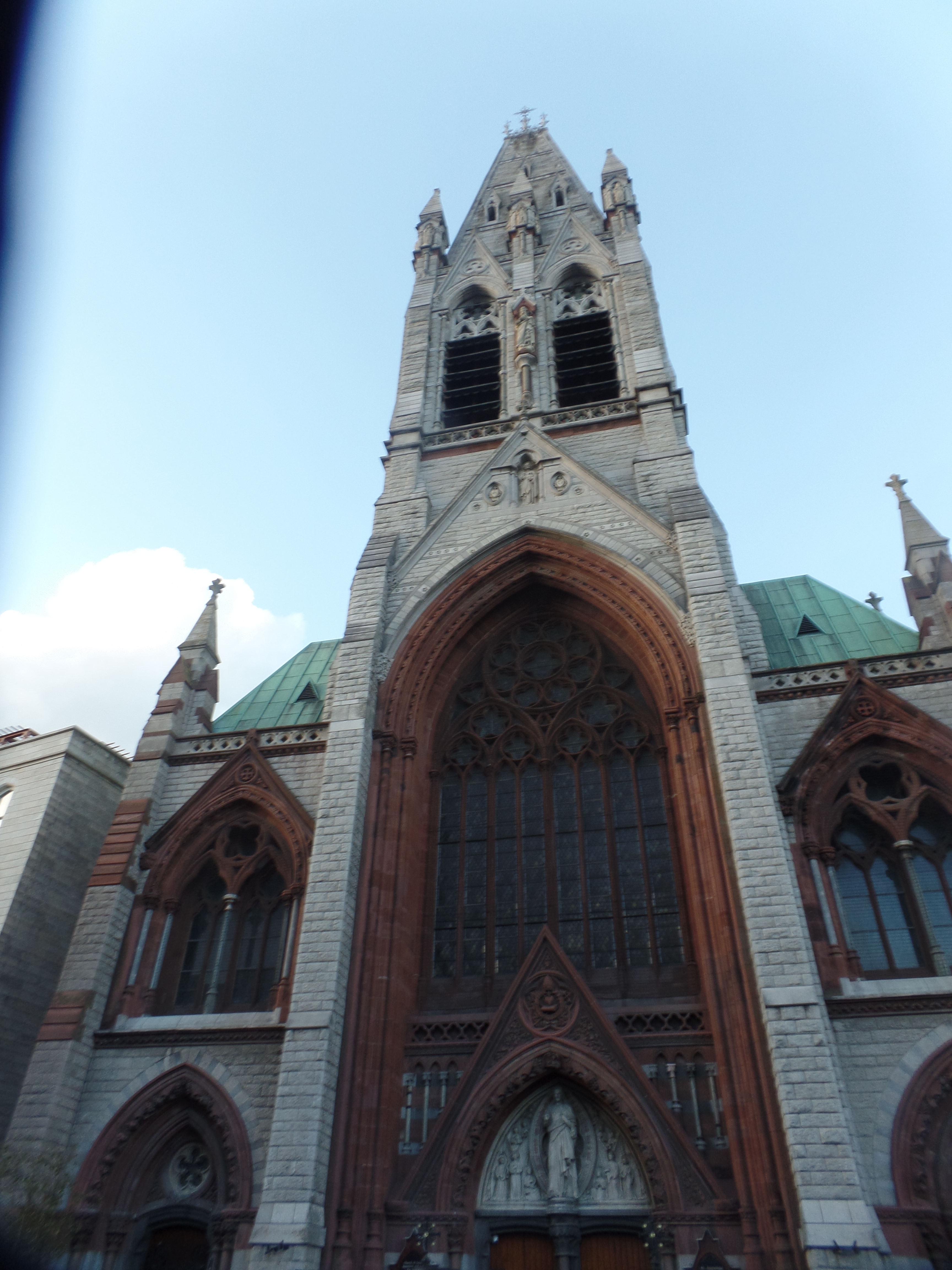
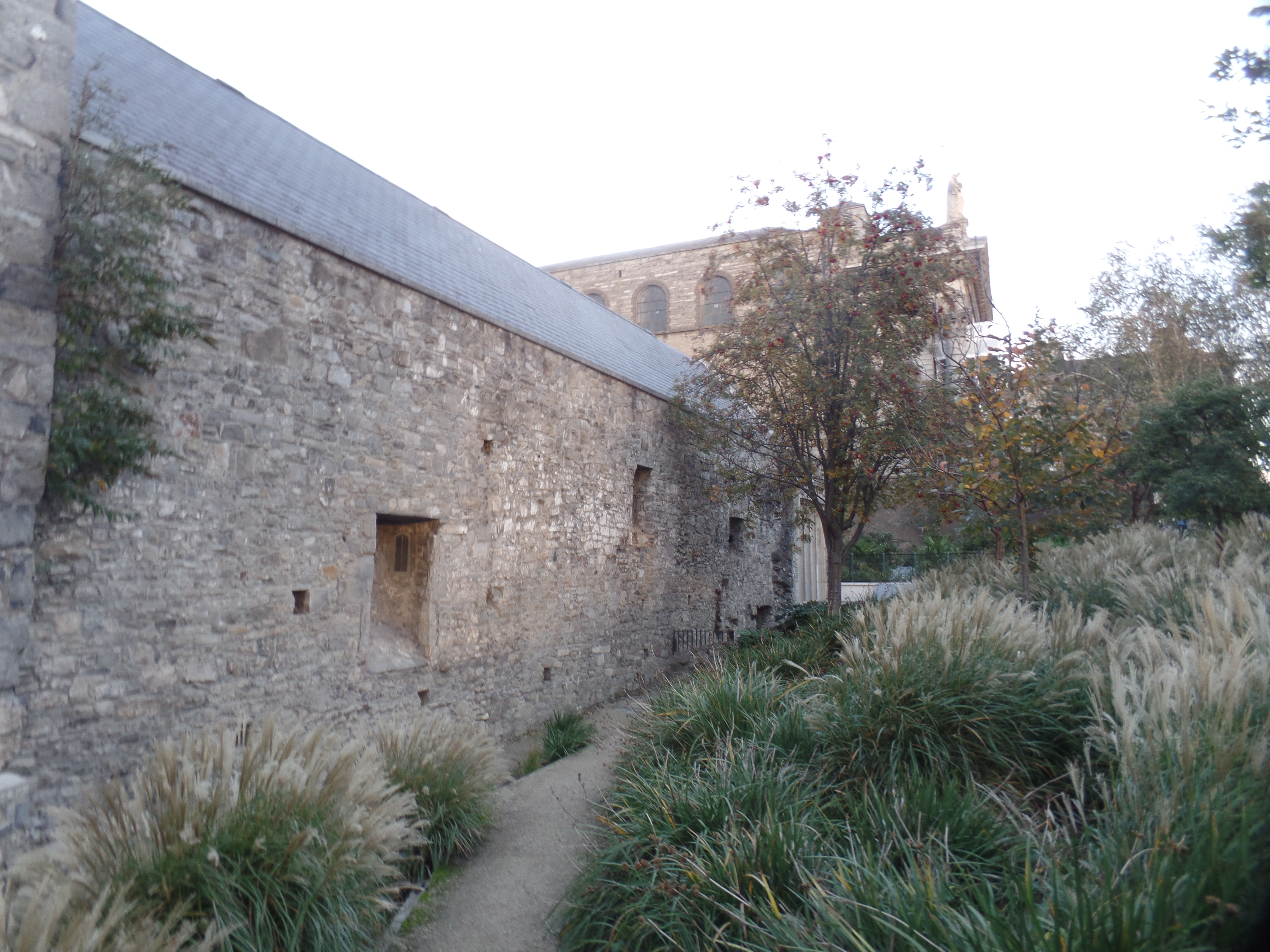
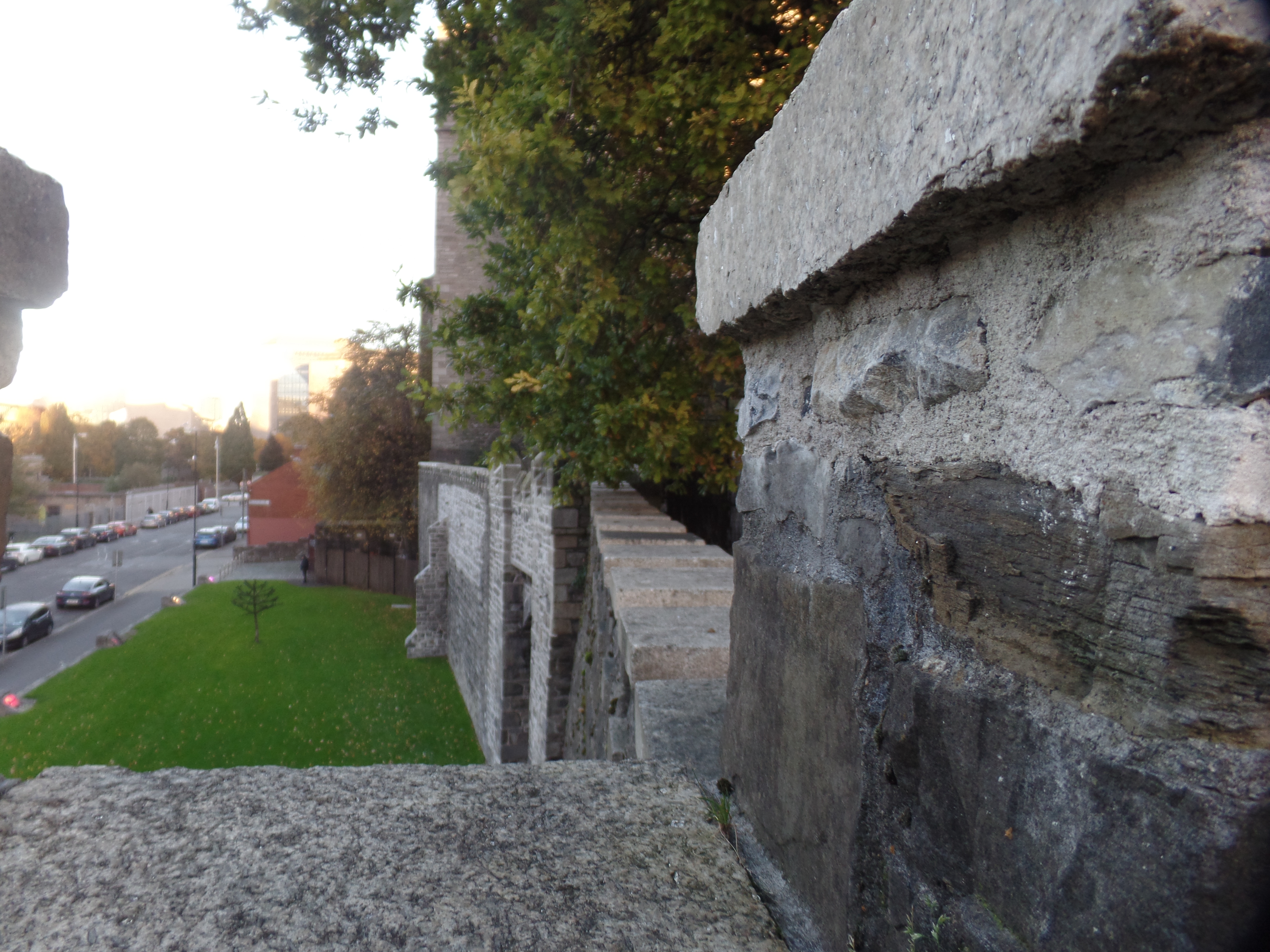
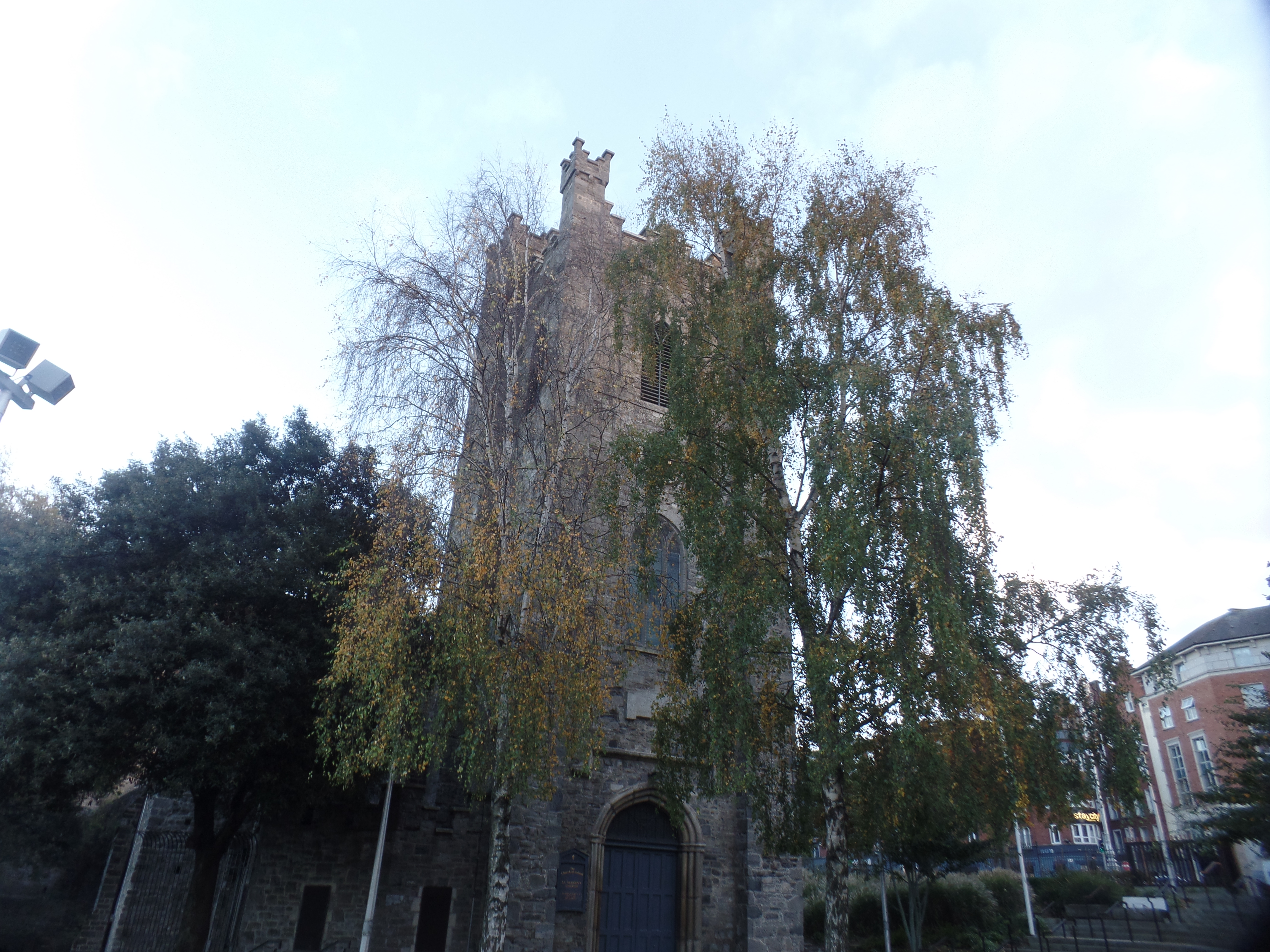
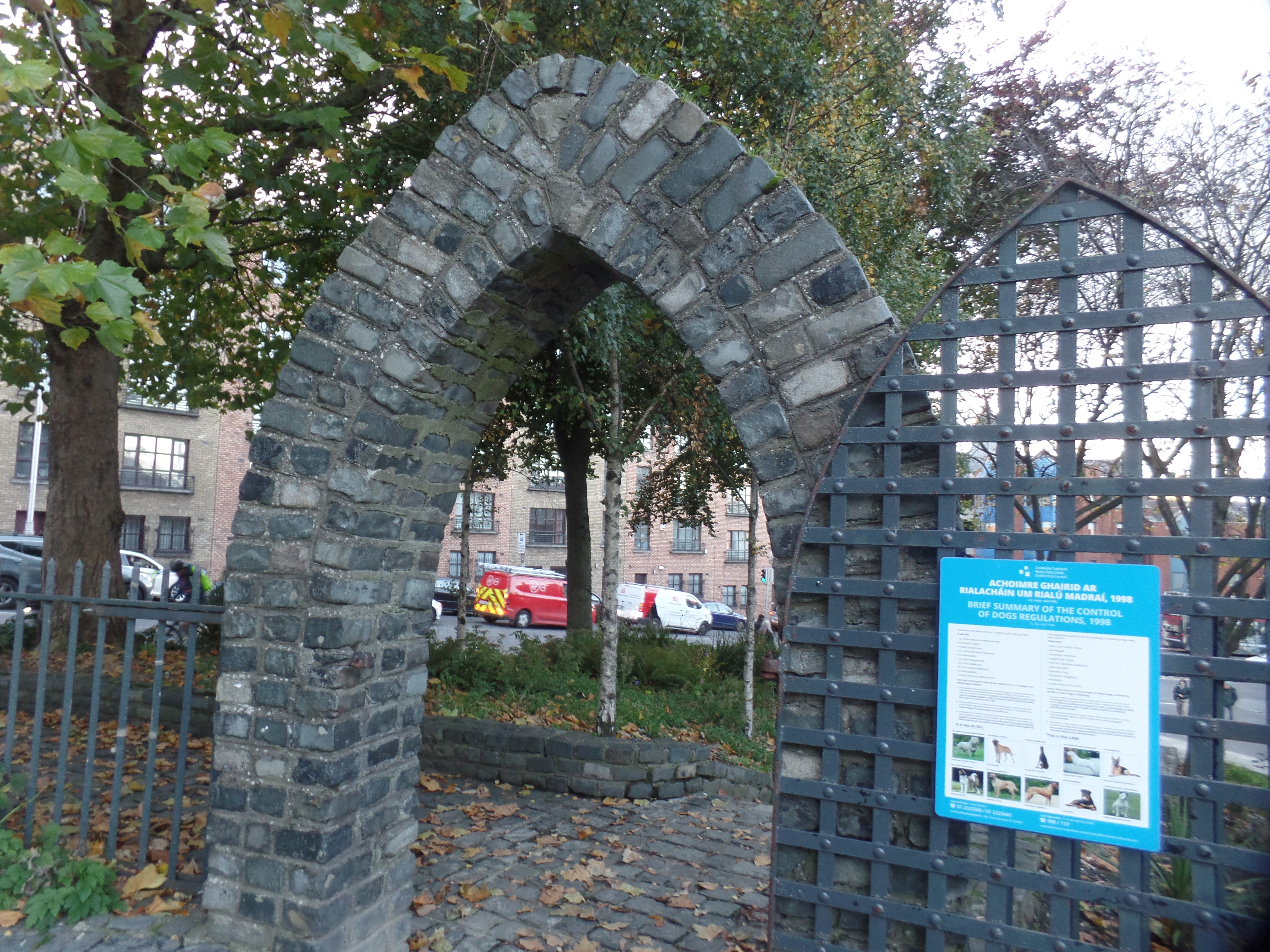
Row houses of Davies Place, Dublin (above and below). There was an election scheduled for Friday, thus the signs for Polling Place.St. Nicholas Church, Francis Street, Dublin. This little gem is tucked away, behind a secure gate.Church of St. Augustine and St. John (aka John’s Lane Church, Dublin. It is a Catholic Church, with the highest steeple in Ireland.St. Audoen’s Church. This is the third point on the triangular route I took today. It was built in the late Twelfth Century and named for St. Ouen, a Norman French cleric. St. Audoen’s also served as the west gate to Dublin and was the last gate still intact in the 20th Century. Today, it serves Polish Catholics.West Wall of Dublin, near St. Audoen’s Church (Above and below)St. Audoen’s Church, behind linden treesThe Singing Hollow, St. Audoen’s Park, Dublin. Anyone who puts their head in the hollow and makes a noise, will hear it amplified.Child’s drawing of a medieval nun, St. Audoen’s ParkWest Gate of Dublin
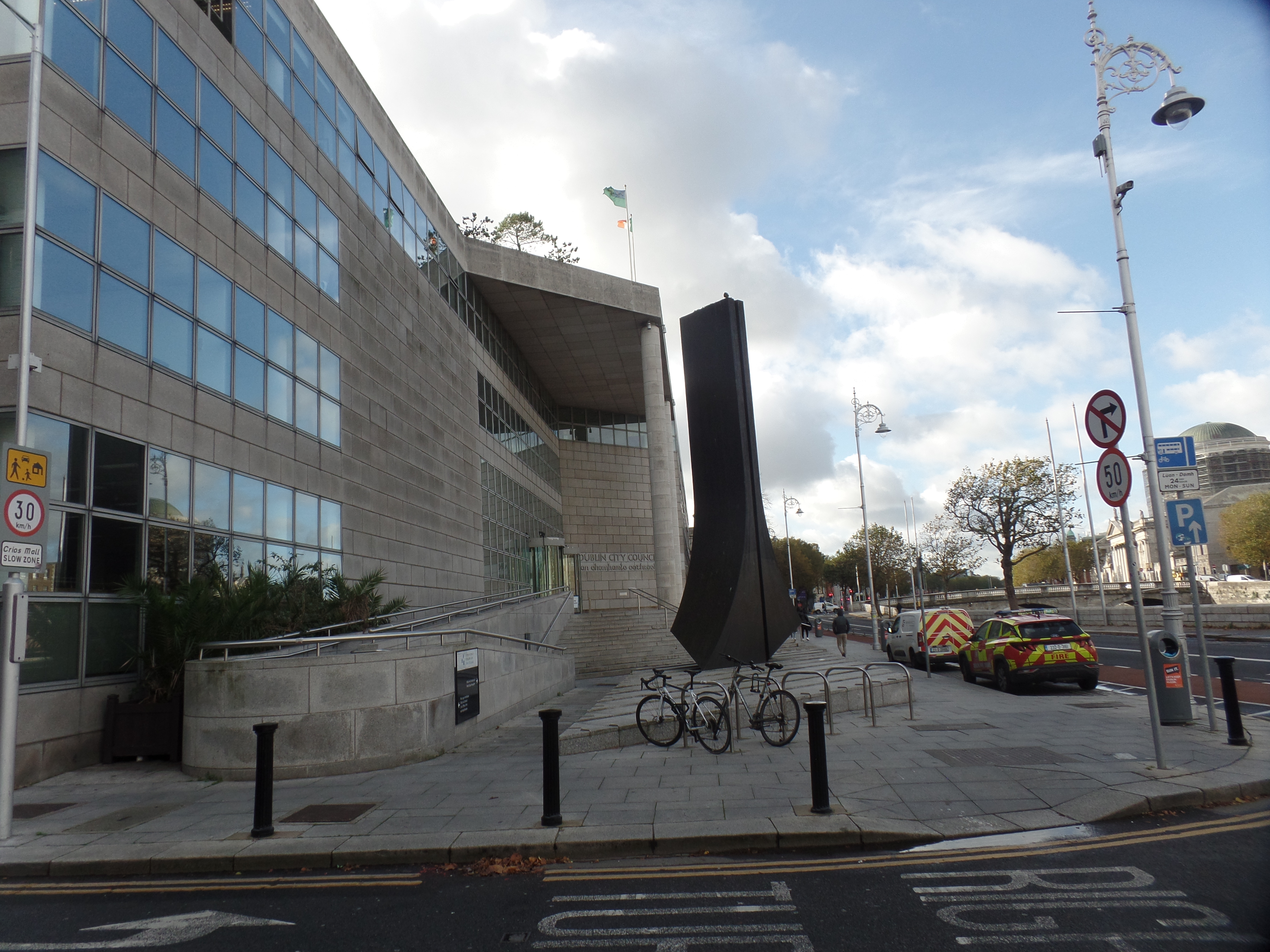
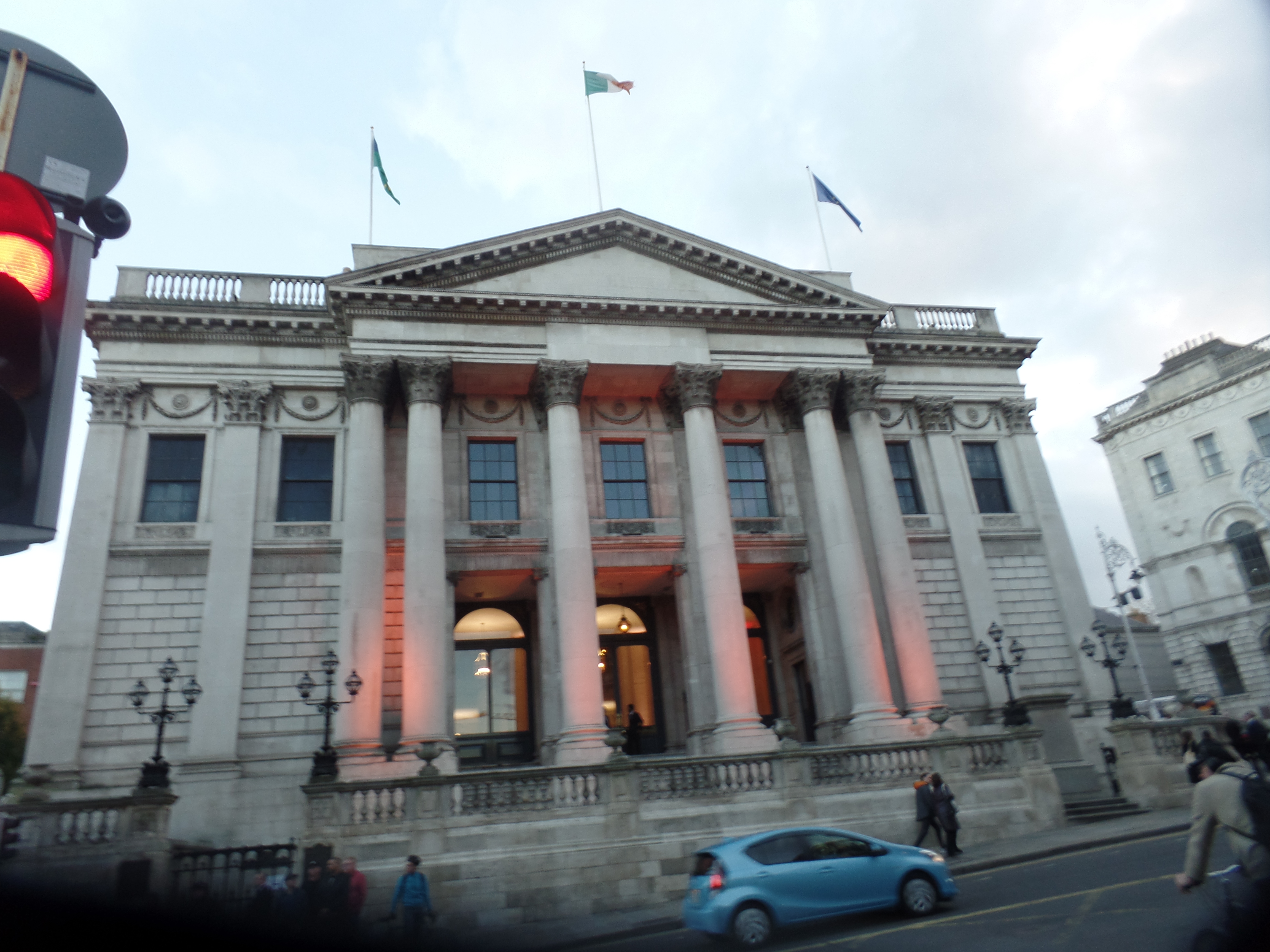
Walking back towards Temple Bar, I passed Dublin City Hall. Of course, all business was finished for the day, but it still stood in stately pose.
Dublin City Hall
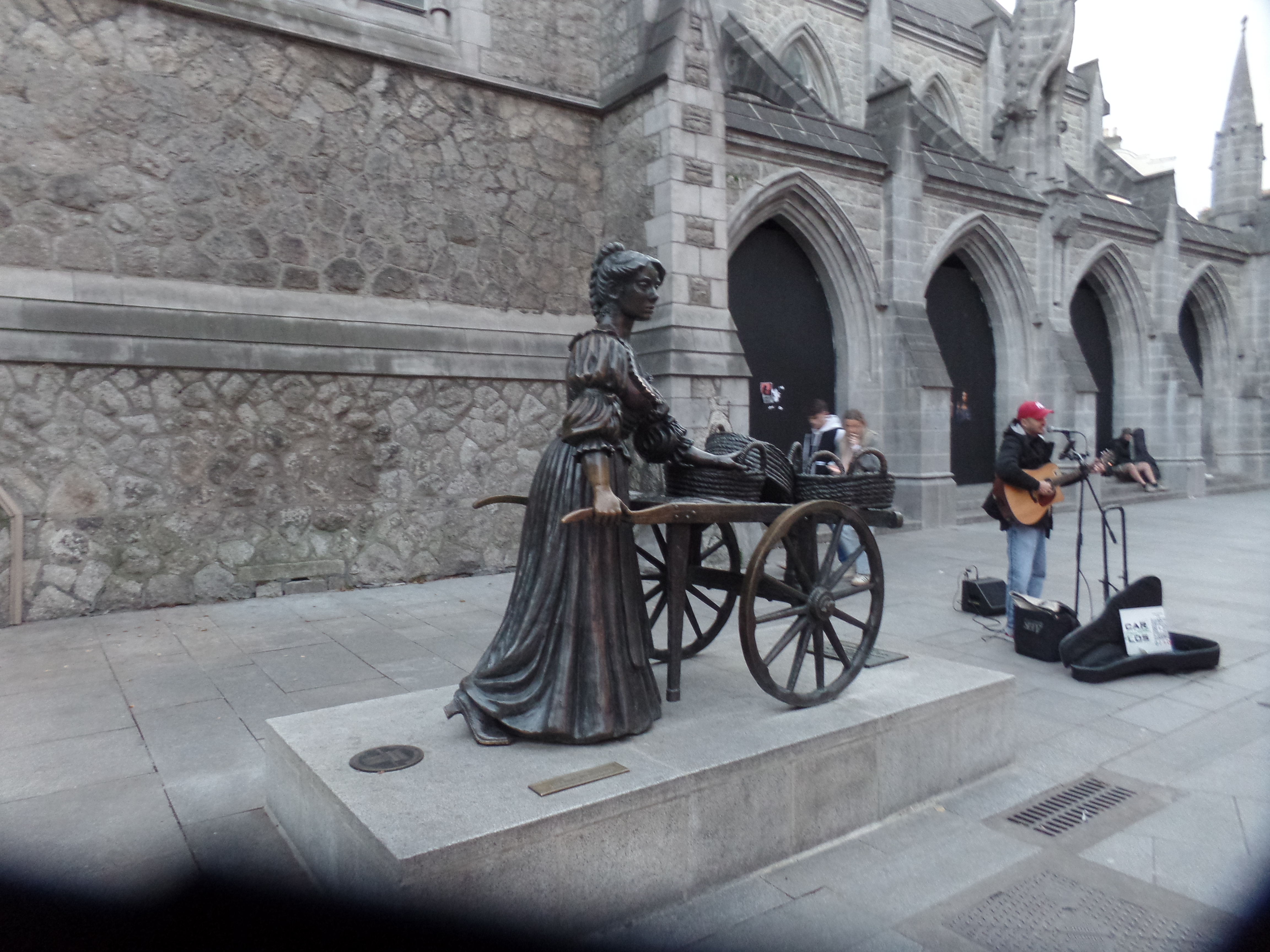
Molly Malone stood selling cockles and mussels, by Dublin Castle.
Statue of maiden selling wares, near Dublin Castle
It was a tad late, so I found Tapped, a small pub that serves a small variety of comfort food sandwiches, and whose main line is, of course, beer. I stuck with my N/A beverage and got decent service from the lone young lady who was zipping around the floor and taking the best care she could of the sizable crowd of rowdies. Cajun Chicken took care of my appetite.
Tomorrow will be another very full day-Birth of Baha’ullah celebration at the National Gallery of Ireland, a visit to Dublinia- a museum of city history, focused on the Vikings and a reunion with an old Baha’i friend from our Phoenix years.
October 7, 2025, Zagreb- The bus conductor pretended to be livid, shouting in Serbian: “Five minutes means five minutes!”, as I came back from seven minutes in a supermarket queue. Some things are more essential than others, and as he well knew, no one cuts in front of a mother and two children, with a modest basket of groceries. No one does that, anywhere in the world.
The driver shrugged his shoulders and made up the two lost minutes, once we were back on the highway. We didn’t stop again until the Croatian border. There, with two buses ahead of us, we sat for ten minutes. Then, we go out, and were exited by the Bosnian border police, got back on the bus, waited until our time to re-enter Croatia, and got back off the bus. We retrieved our luggage from the storage bins and fell in line again.
A pleasant, business-like young woman stamped everyone’s passport, checked to see that the bins were empty then joined her two colleagues in the baggage inspection room. We were especially selected for the spot check, because there were a few people on board from countries which were being watched by Europol. The U. S. is not among those countries, but I have nothing to hide, regardless. The passport stamper checked my bags, educating herself about American dietary supplements in the process. I was glad to oblige. I would proudly claim that woman as a daughter, the way she dove into her tasks and joined her teammates without being told.
The rest of the way was quiet, the conductor, who was now the driver, maneuvered his way through Zagreb’s rush hour traffic-hardly Los Angeles or Berlin, but a slowdown nonetheless. The first driver got off the bus at a truck stop and the rest of us went to the now familiar West Zagreb Terminal. From there, I caught a tram to near the Mickey Mouse Apartment-a variation on Alora-Heart of Zagreb, except the apartment was on the fourth floor, instead of in the basement. It was of similar size to Alora, and was across the hall from Mini-Suite, which had Madame Mouse on the front door. This start-up apartment business seems to be unique to Zagreb, but it’s a nice idea, even if it wouldn’t work for all travelers.
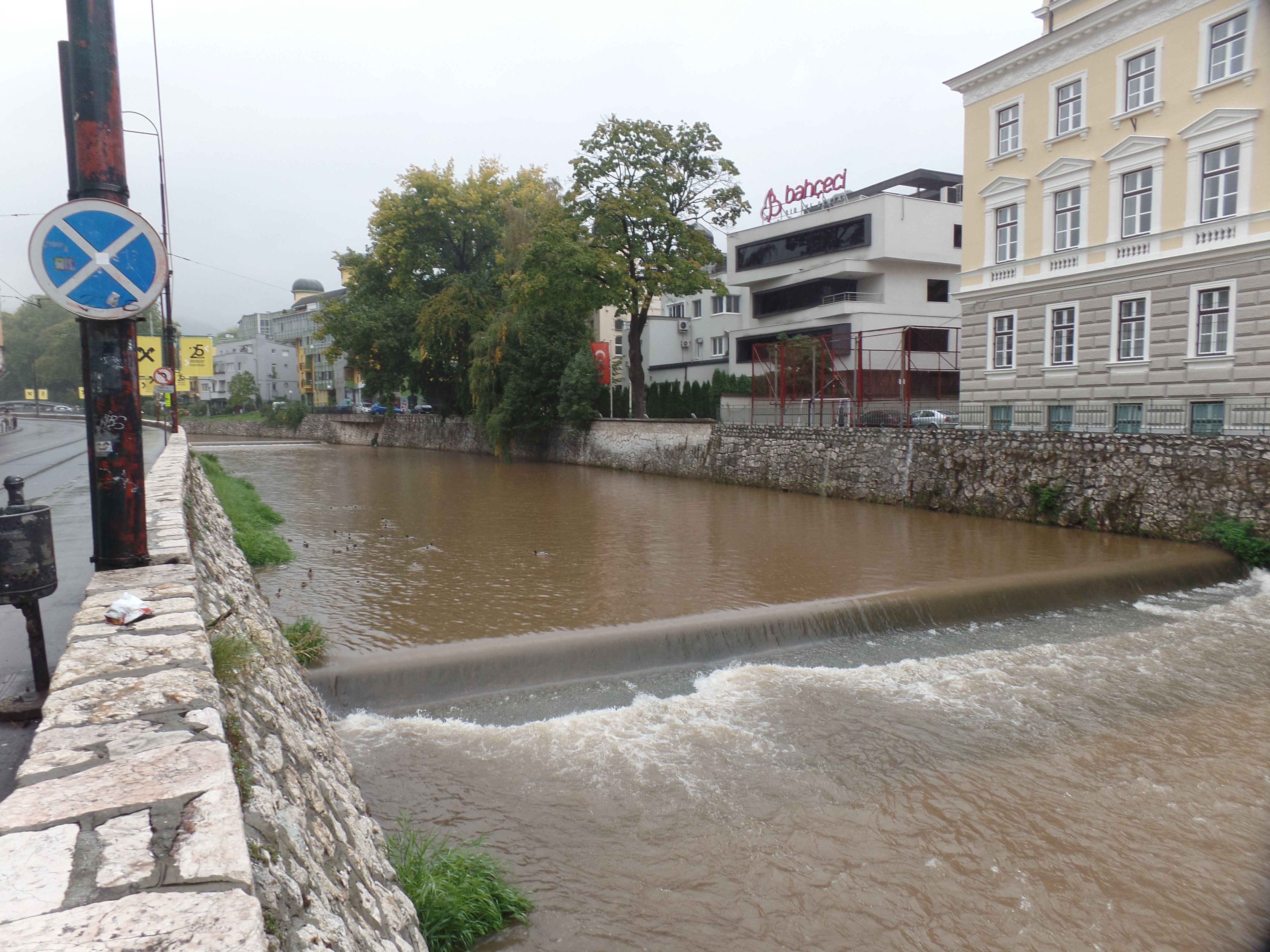
The day had started a bit less organized. Sarajevo is a larger city than one might think, and there is a world of difference between the Old Town and the modern downtown, which looks pretty standard. No one near the Miljacka River bank knew where the bus station was, but a bartender (open at 8:30 a.m.) said it was too far to walk. I caught a tram, advised by a university student, and a woman who had just taken her kids to school, that it was eight stops ahead. A young woman from Germany joined me in the luggage pile section, and we power-walked together to the bus terminal, doing a 10-minute walk in 7. She sat and waited for her bus, and I caught mine outside, leaving my Bosnian Mark coins with a destitute young man who stood, forlorn, on the platform.
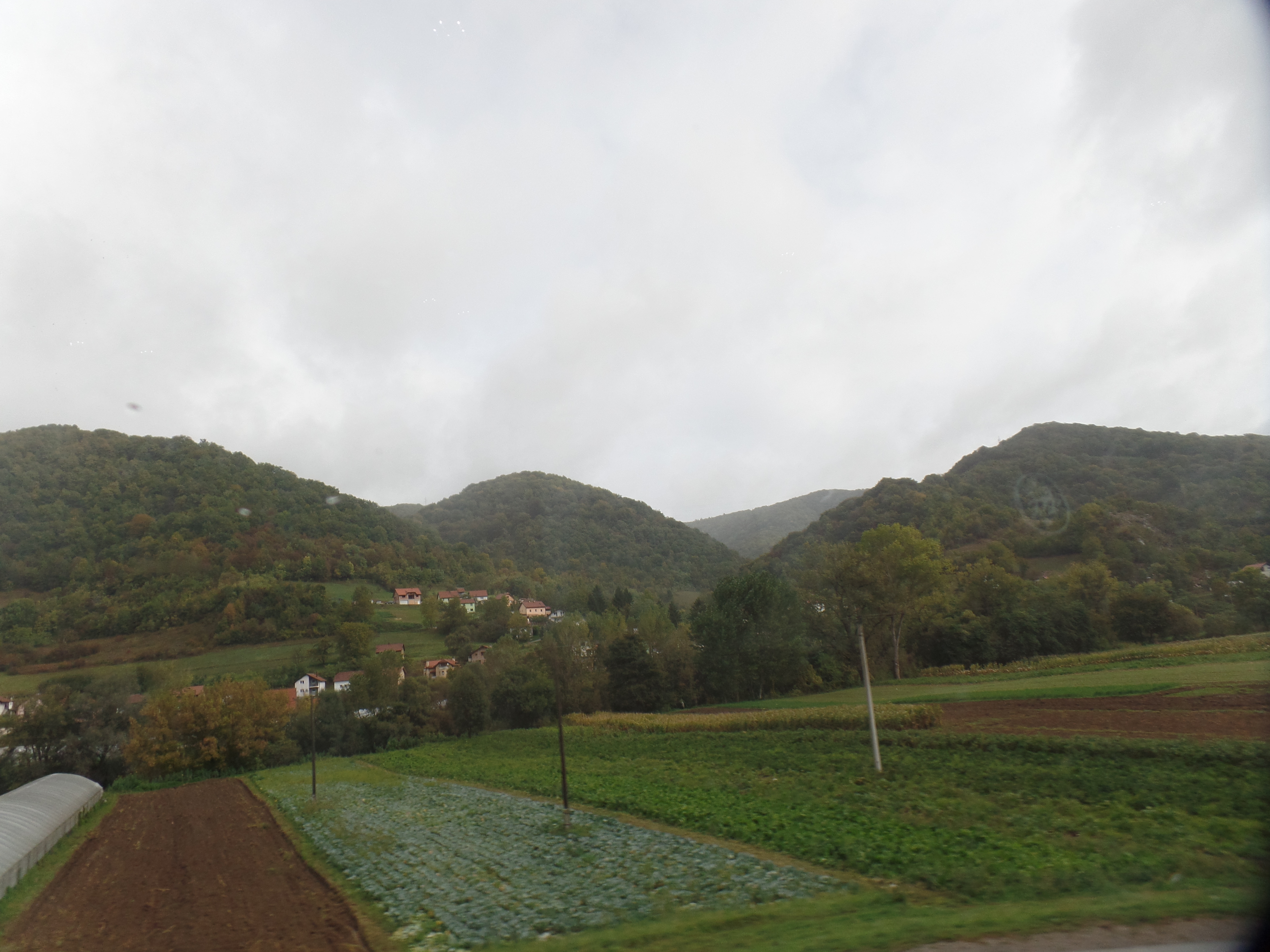
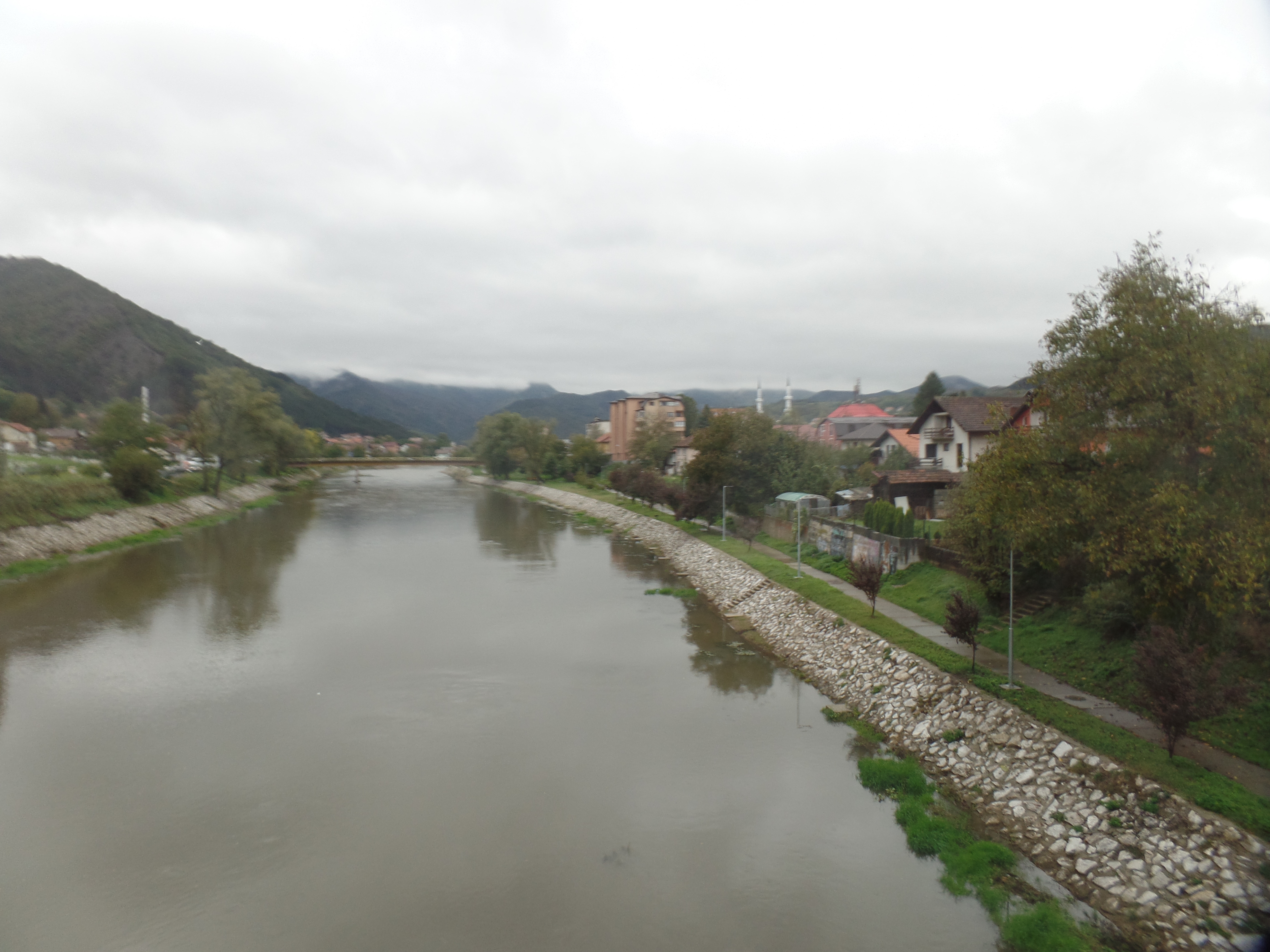
Here are some scenes of the day.
Sacred Heart Cathedral, downtown Sarajevo Miljacka River, SarajevoOutside Visoko, BosniaBosna Bucha River, north of Visoko Bosna Bucha River, near Zenica (Zeneesa). That town had the supermarket at the bus station.
Safely in Mickey Mouse Apartment, I bid all a good night. Tomorrow, it’s off to Salzburg, probably via Slovenia.
October 22, 2025, Dublin- The story is as old as mammals themselves: A pest is pursued by its primary predator, and tries to escape into a safe haven. The only problem is, the hiding place is big enough for the pursuer as well. In the end, neither got out.
Christ Church Cathedral is one of three major houses of worship in Dublin. It was the only one of the three that I was able to enter and wander its two accessible floors. Time and the flow only allow for a little on any given day. St. Patrick’s Cathedral and St. Audoen’s Church offered glimpses of their exteriors and closes. The interiors will wait for another time.
I spent last night in the company of fellow Baha’is, at our Faith’s National Centre, in Ballsbridge on the near South Side. We celebrated the Birth of al-Bab which, as readers may remember, occurs back-to-back with the celebration of the Birth of Baha’ullah. It is these Holy Days which give me the reason to stay in one place for 2-3 days, and what finer place is there than the capital of the Irish Republic, with its spirit of independent investigation and expression of truth.
Christ Church Cathedral lies almost due west of stately Dublin Castle, the old seat of the British Viceroys. These two were the focus of today’s walkabout, once I set out from Abigail’s Hostel, a bit north of them in Temple Bar, across from the River Liffey. This is the heart of Dublin and, despite their association with colonialism and the Reformation, Castle and Cathedral are reflective of the fierceness of Irish spirit.
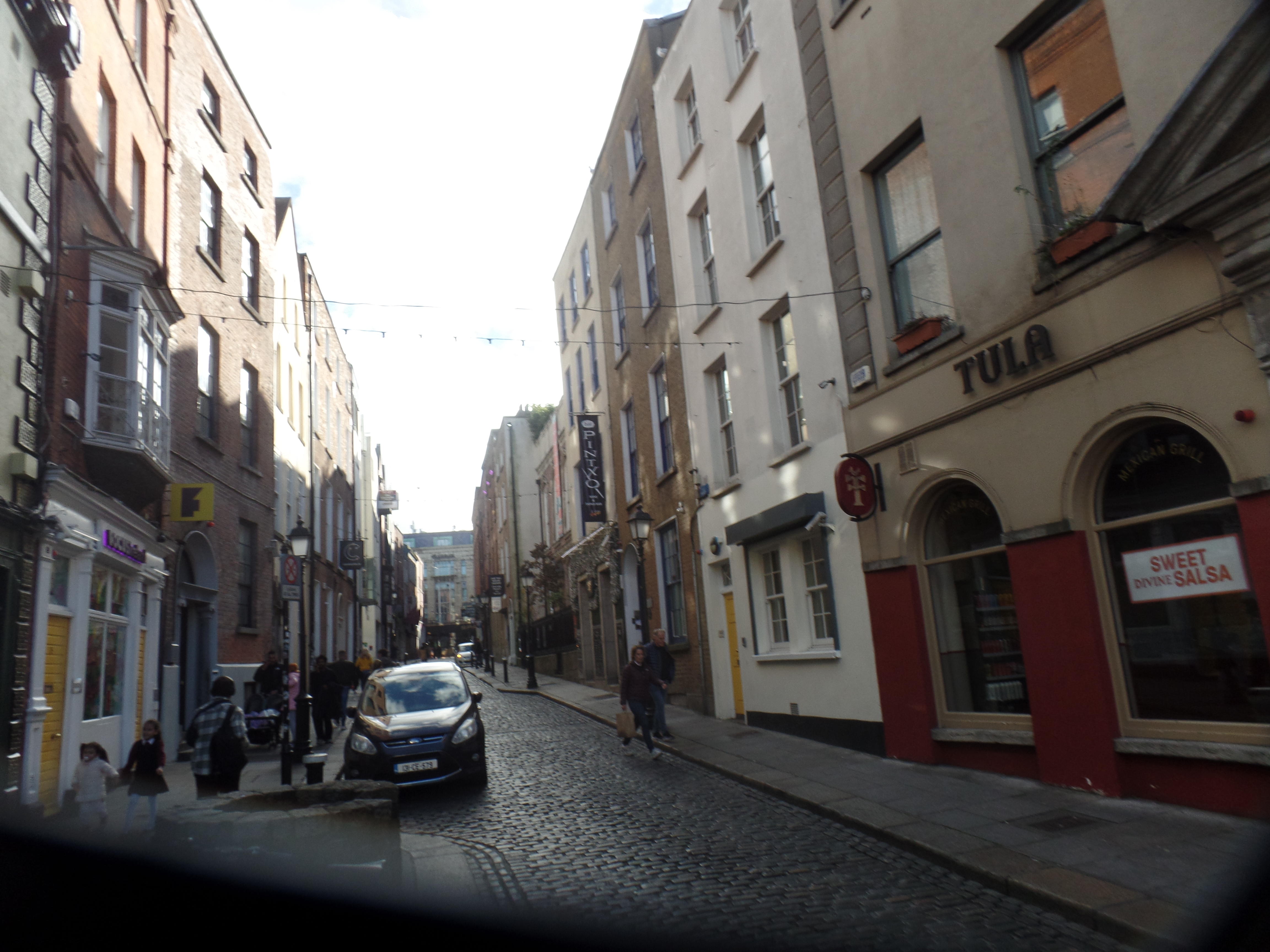
A Temple Bar scene, Dublin
I began at the Castle, and its adjacent Chapel.
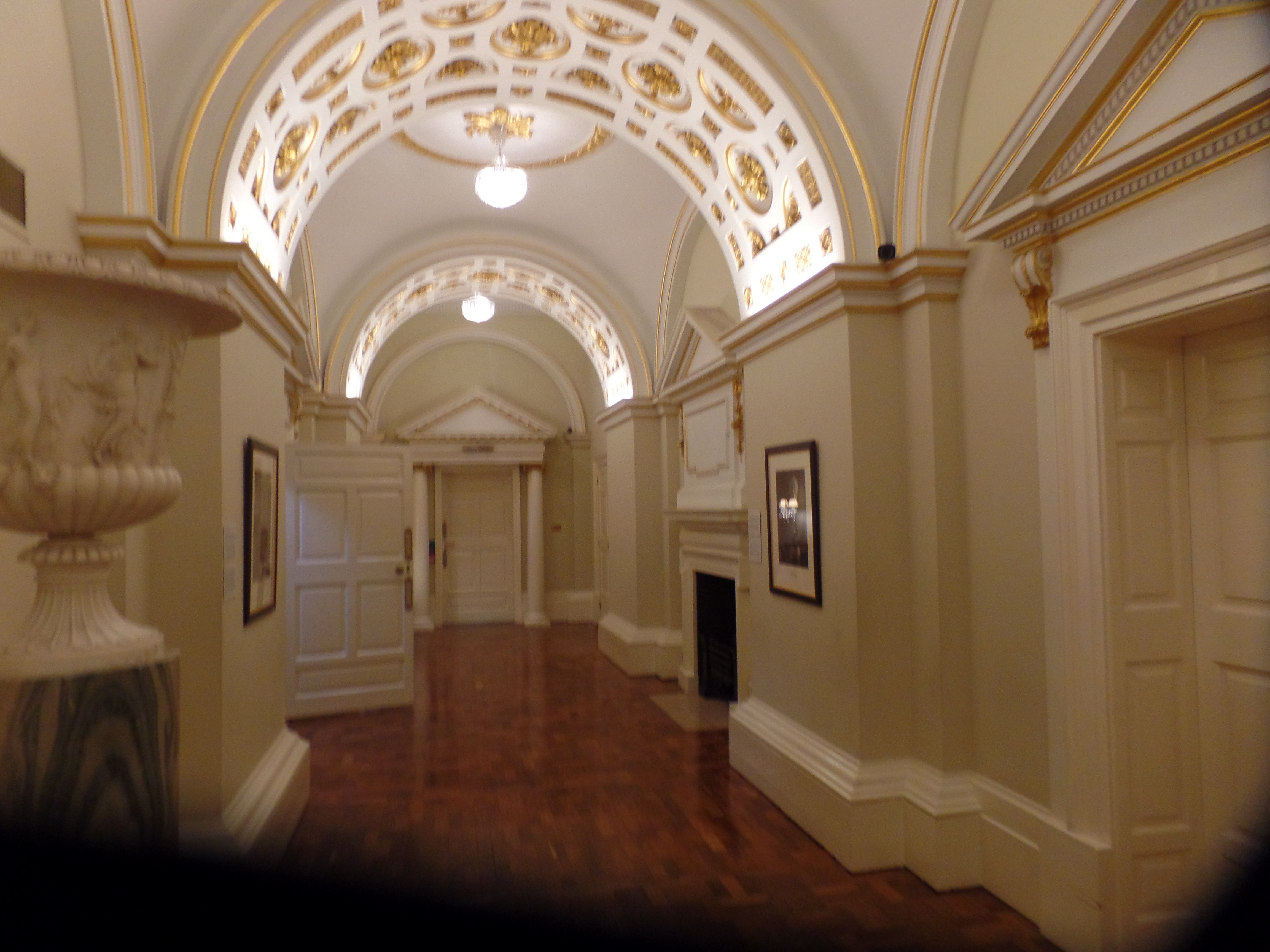
North Arch, Dublin CastleDublin Castle (Above and below)Chapel Royal, east of Dublin CastleGrand Hallway, Dublin Castle
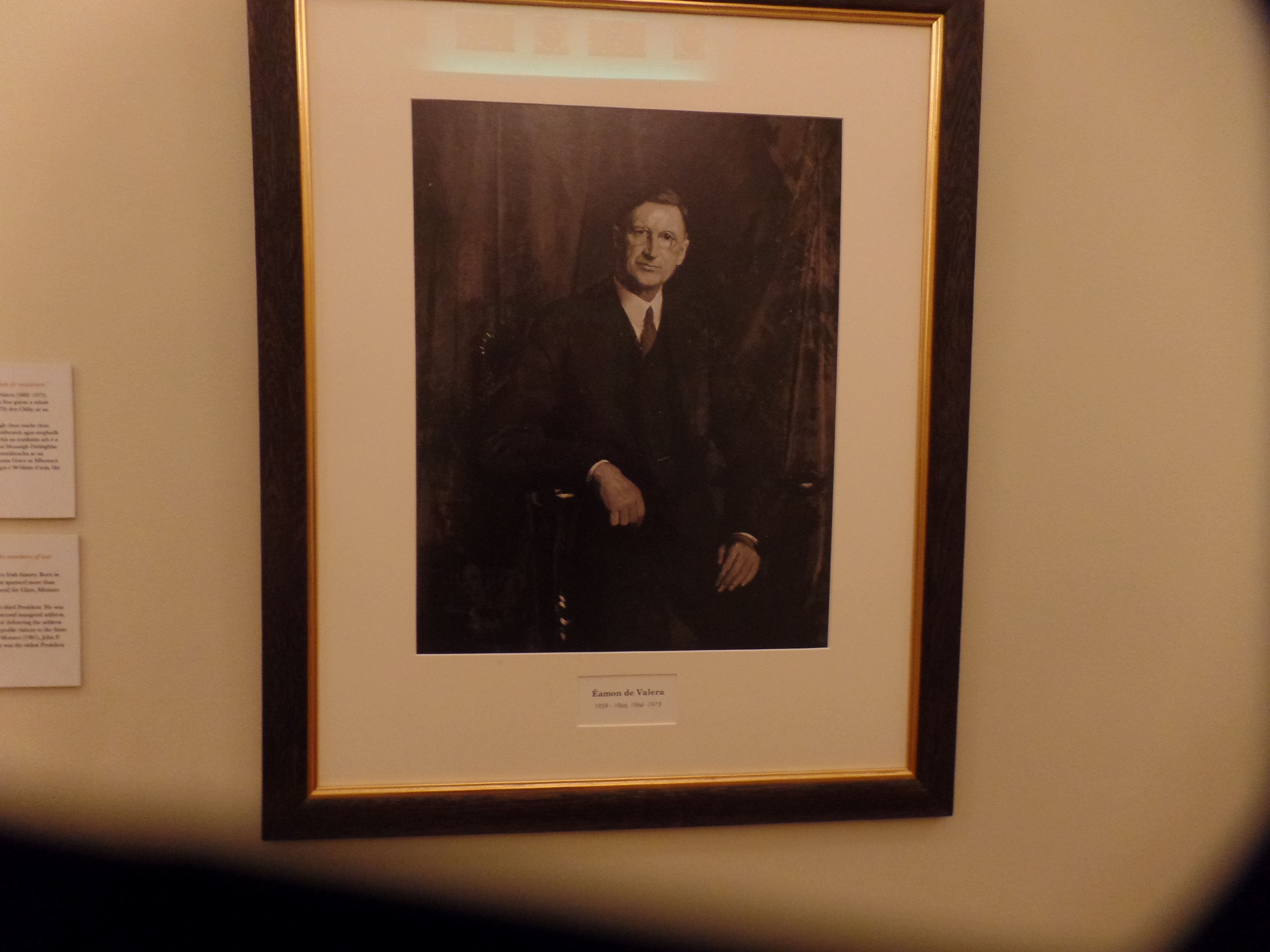
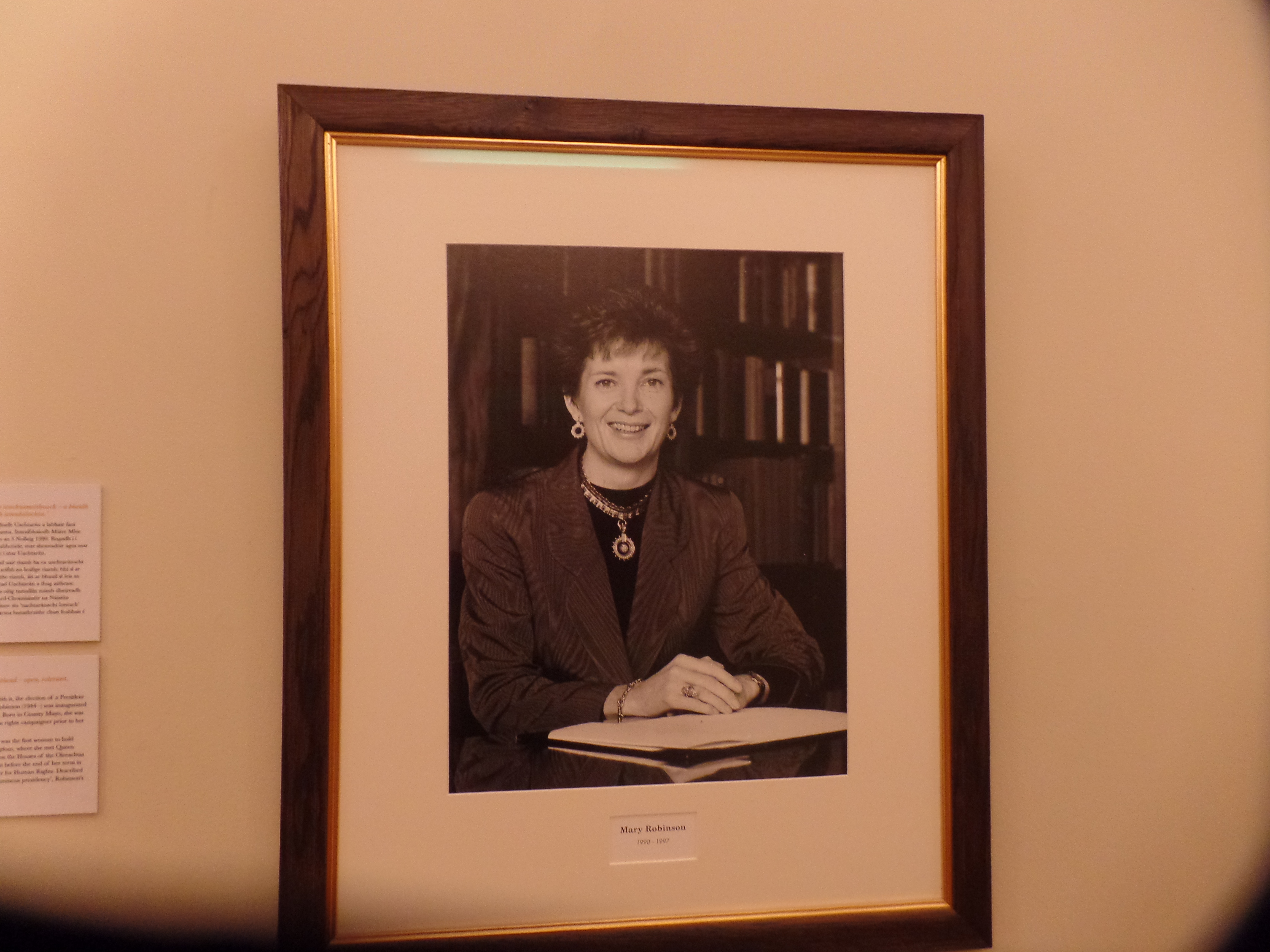
The Presidents of Ireland have their portraits hung here, as did the Viceroys of the British regime before them. Thus has the Irish nation made use of a building that was once the symbol of subjugation.
The first Irish President I remember from childhood was Eamon de Valera. He was one of the few remaining heroes of the Easter Rising (1916) and was also a celebrated figure among the Irish of eastern Massachusetts, New York, Chicago and elsewhere in North America.
Eamon de Valera, President of Ireland from 1959-1973.Mary Robinson, first female President of Ireland (1990-97)
After going through the crown rooms of the Castle, it was time to go to the Cathedral. A short five minute walk found me at the entrance to Christ Church, seat of the Church of Ireland.
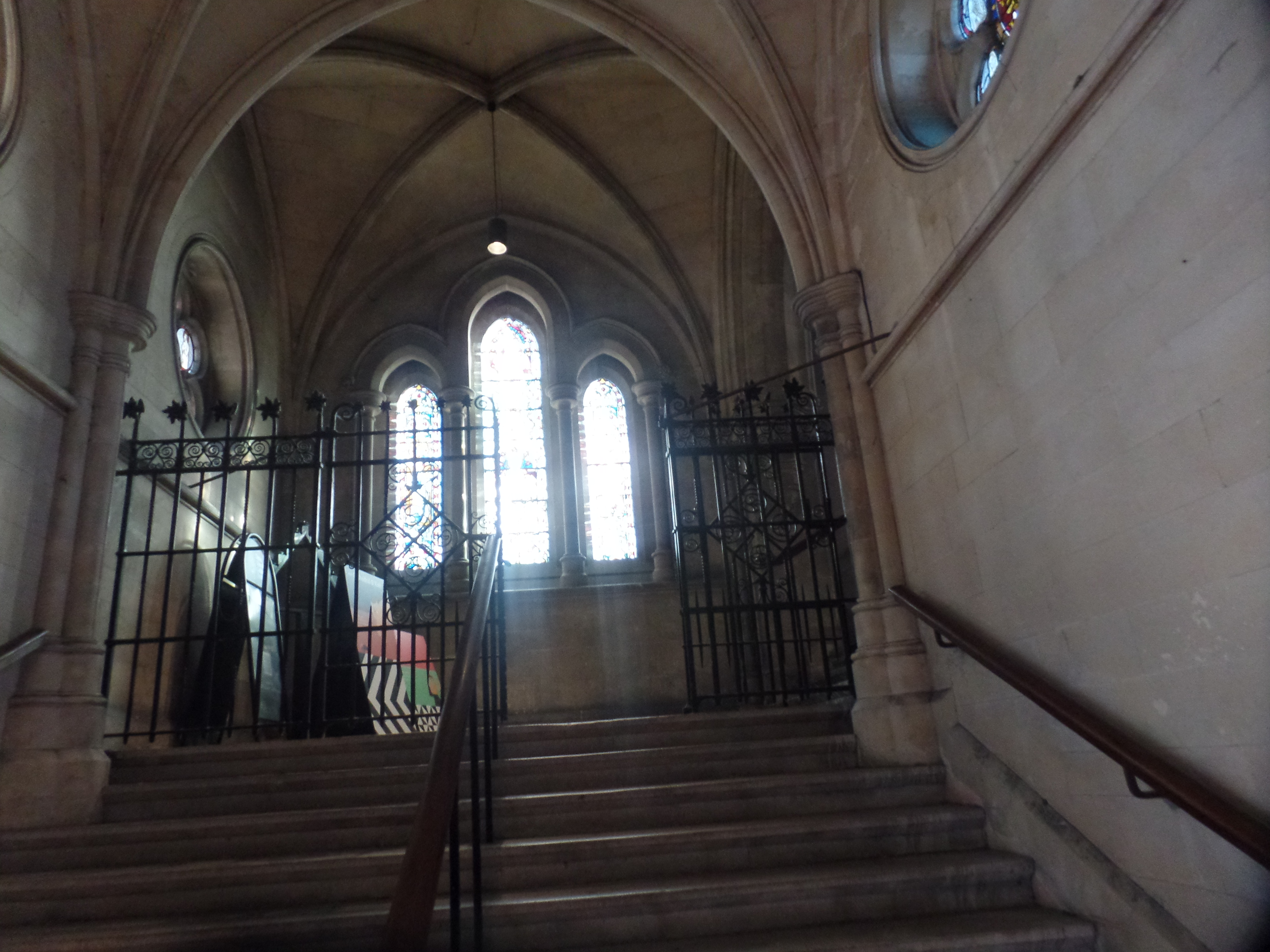
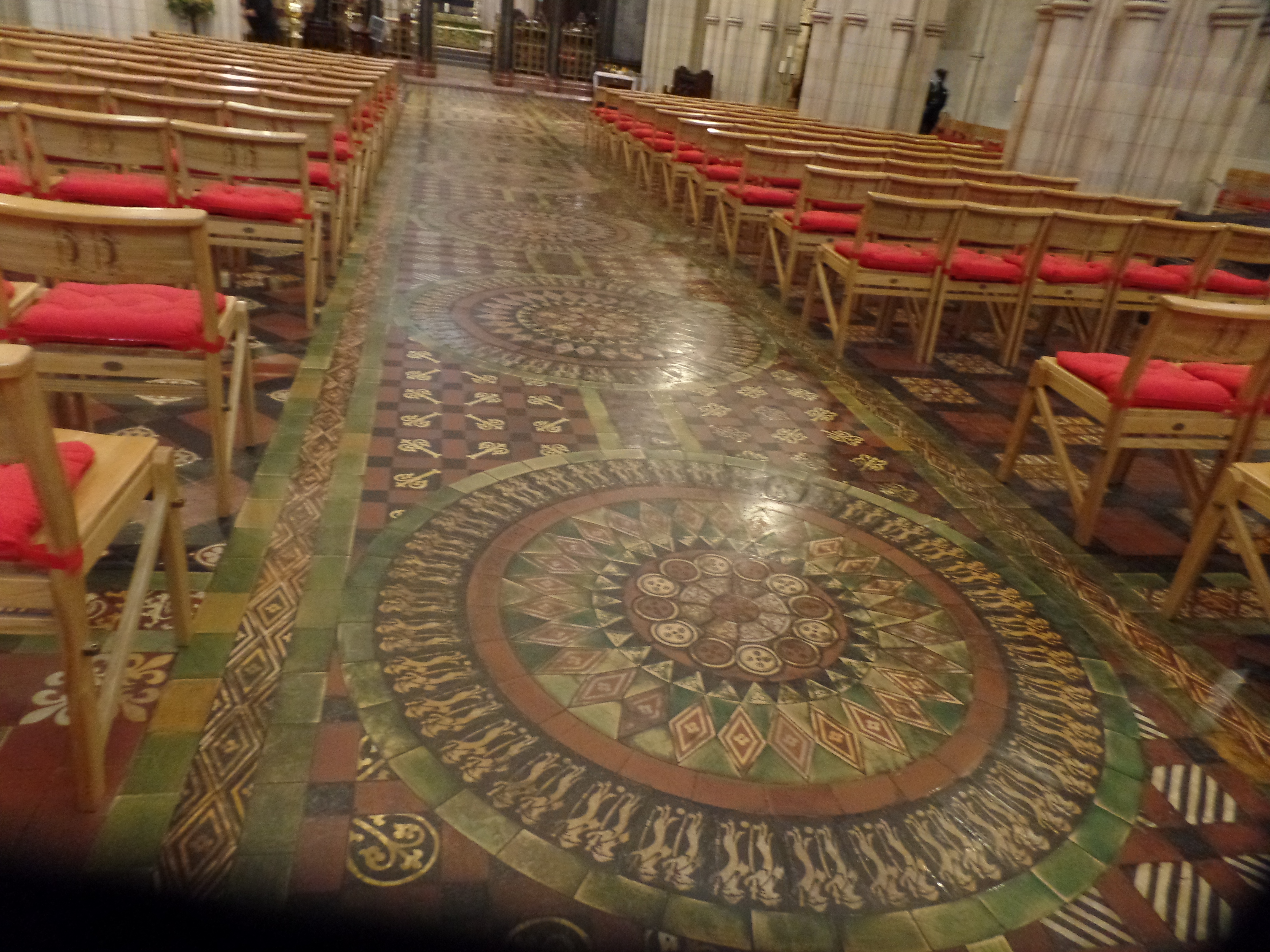
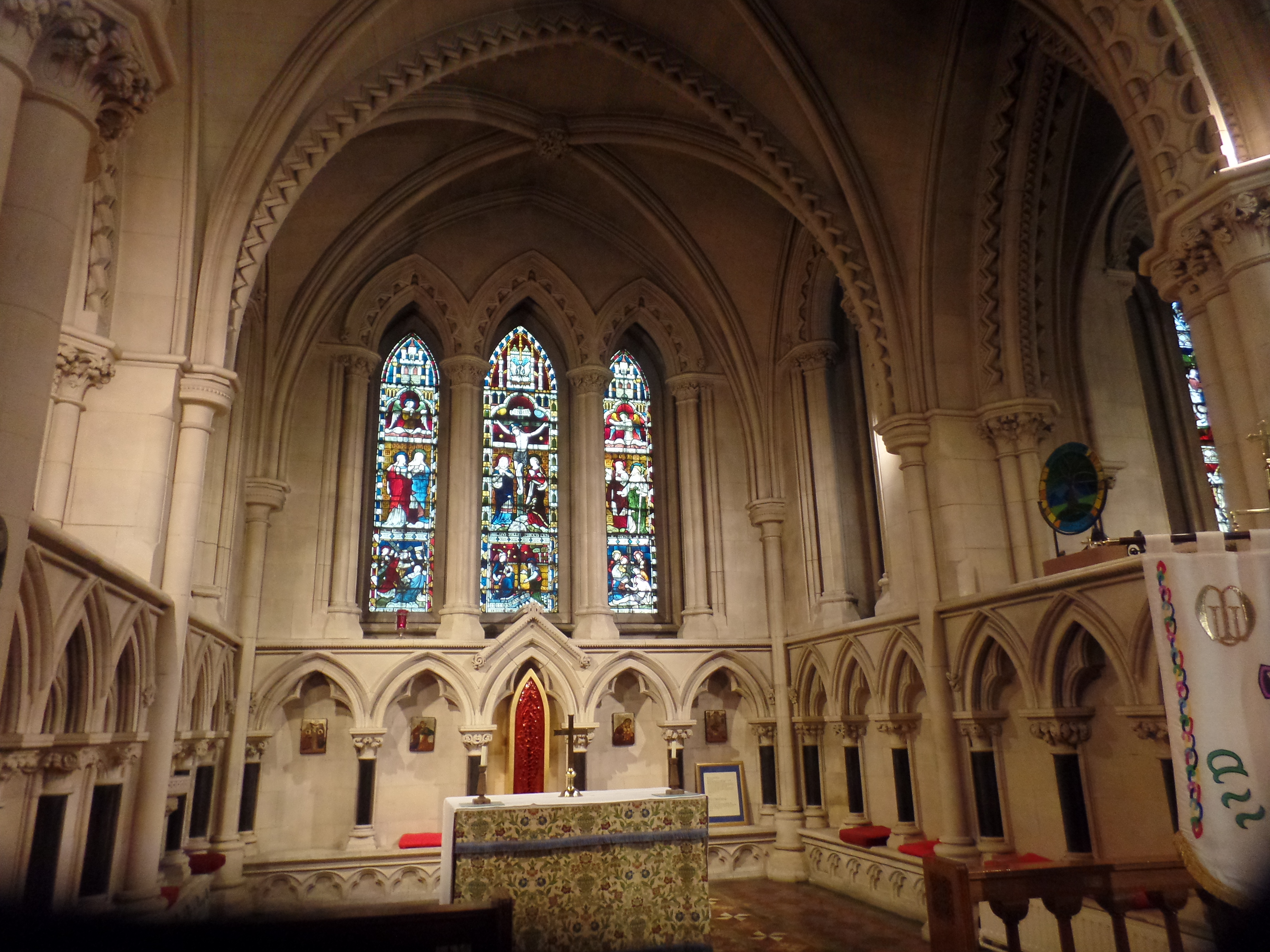
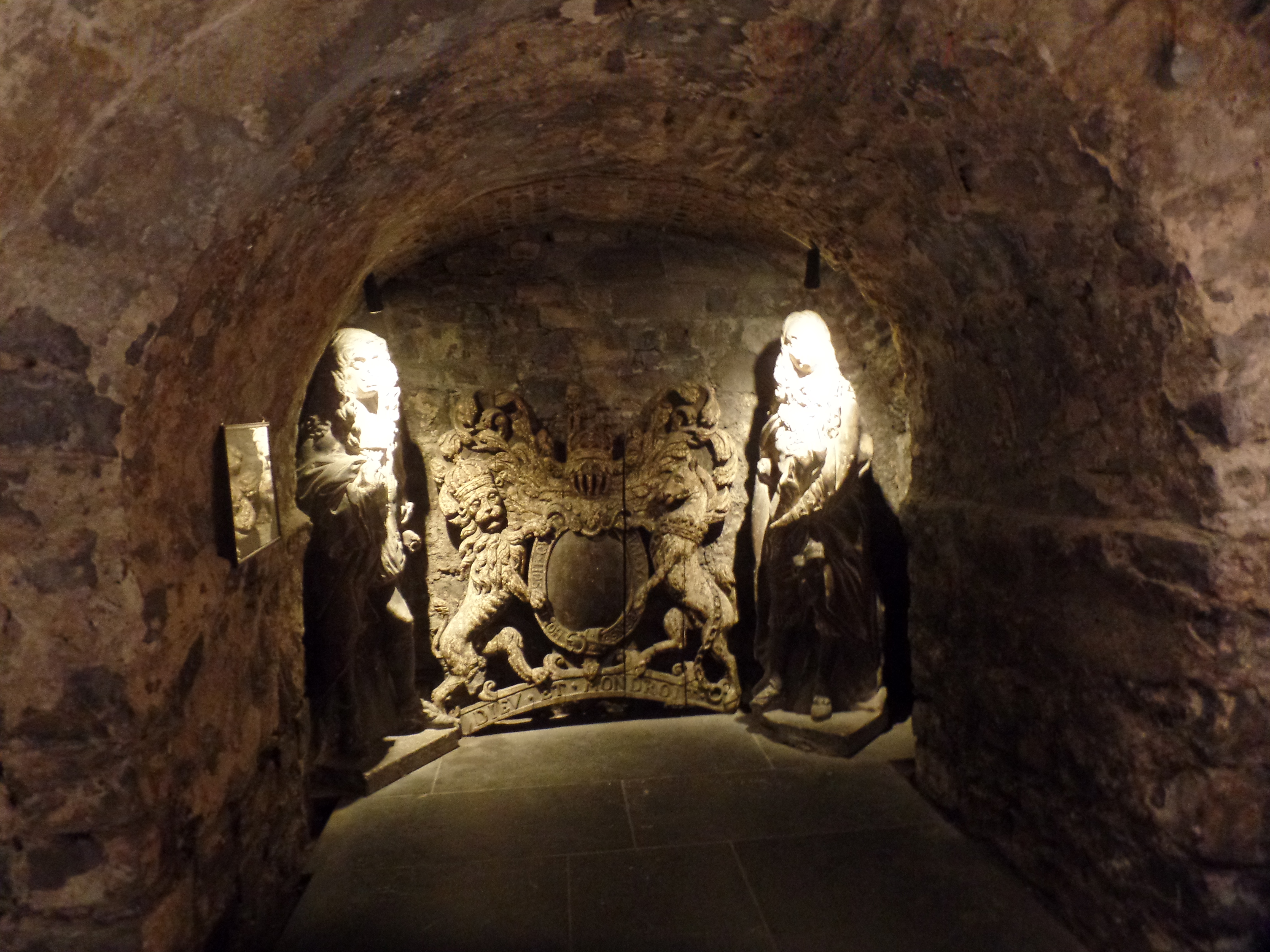
Foyer, Christ Church Cathedral, DublinNave, Christ Church Cathedral (above and below)Nave and transept, Christ Church CathedralTiled floor, Nave of Christ Church CathedralTiled floor of the south chapel, Christ Church CathedralAltar and sanctuary, South Chapel, Christ Church CathedralGreat organ, Christ Church CathedralA scene from the Crypt, Christ Church Cathedral (above and below)
This brings us to the titular cat and rat. The two were found, mummified, inside the great organ. They are now framed and placed next to the Crypt toilets.
Two errant adversaries
Once I left the Crypt, lighter figures greeted me.
Millennium Child, Peace Park, DublinPeace Park, DublinPeace Park, Dublin
With that, my attentions were drawn to the exterior and close of St. Patrick’s Cathedral, about which more in the next post.
October 21, 2025, Dublin- The two ladies, ecstatic at seeing one another after an apparently long time, began excitedly chatting as the bus left Rosslare, for central Wexford. They were mirrors of my mother, and two of her three sisters.
I know that my grandfather’s family left this part of Ireland for Germany, sometime in the late 15th or early 16th century. That information was passed to me as a child, by my eldest maternal aunt, who looked exactly like the silver-blonde haired woman holding court on the bus. The other two ladies could have been Mom and her closest sister, when they were in their forties. I have long felt a bond with the Irish, and with Celts in general, without really knowing why-until today.
Once in Wexford, I had about an hour to while away, until the train to Dublin was ready to leave. So, with bag and baggage, I walked about Redmond Square and the West Side Cultural District. Here are some scenes from this town that, in an ancient surprise, was likely the ancestral home of the Cooks, who became the Kusch family, once in Germany.
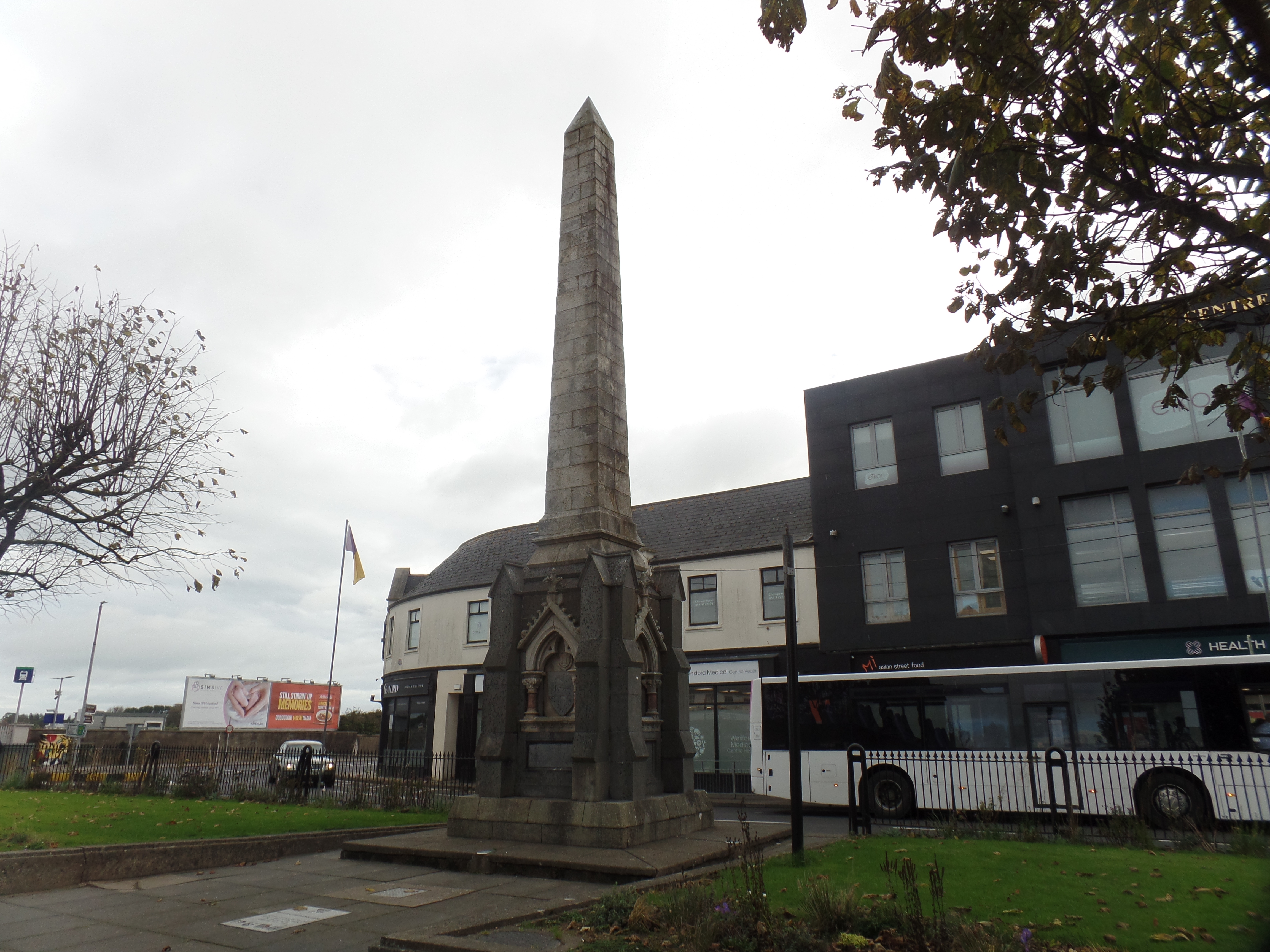
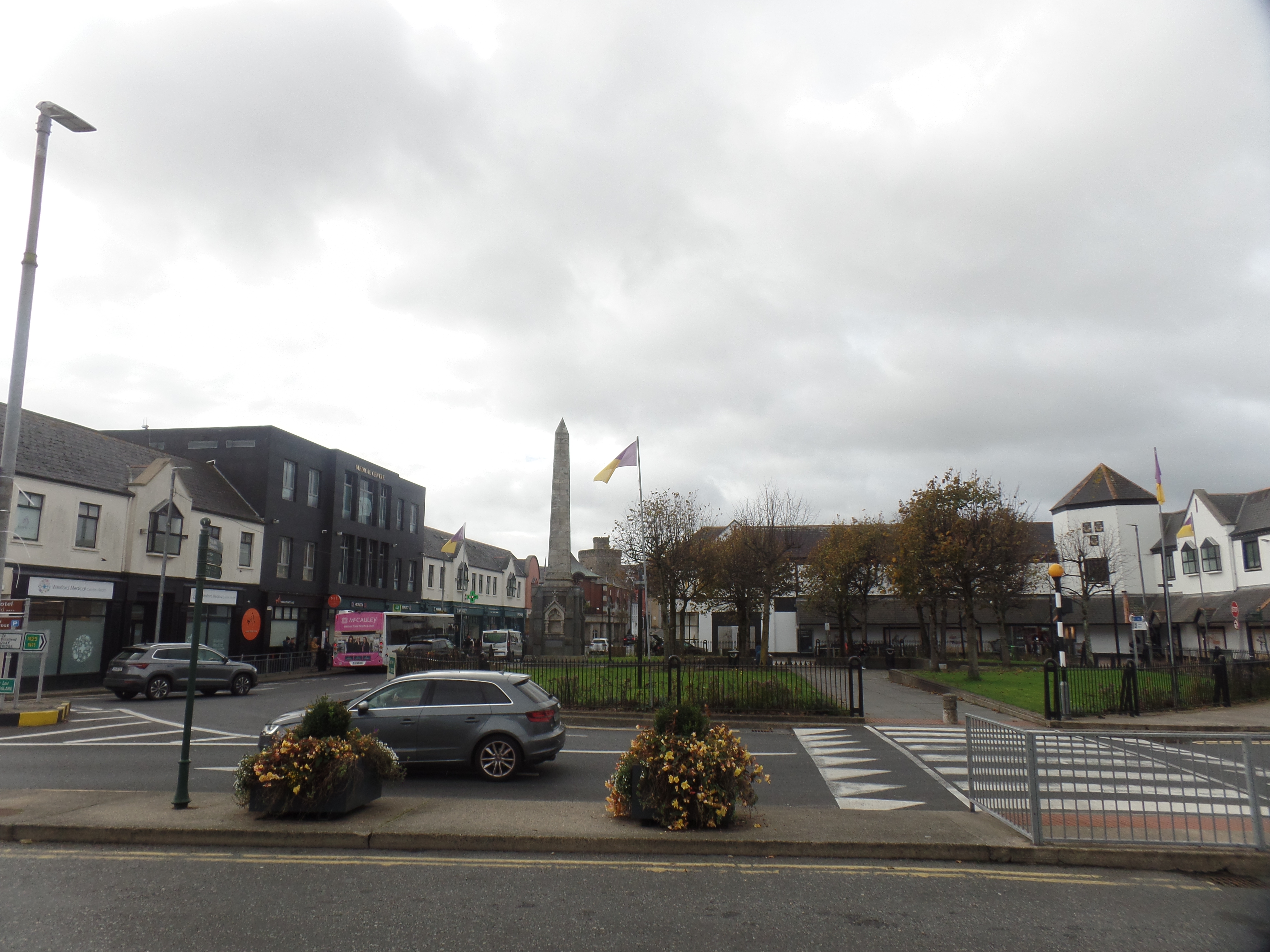
Redmond Obelisk, WexfordA broader view of Redmond Square, Wexford
The Redmond family brought the train to Wexford and drained marshland, to make the area fit for human habitation.
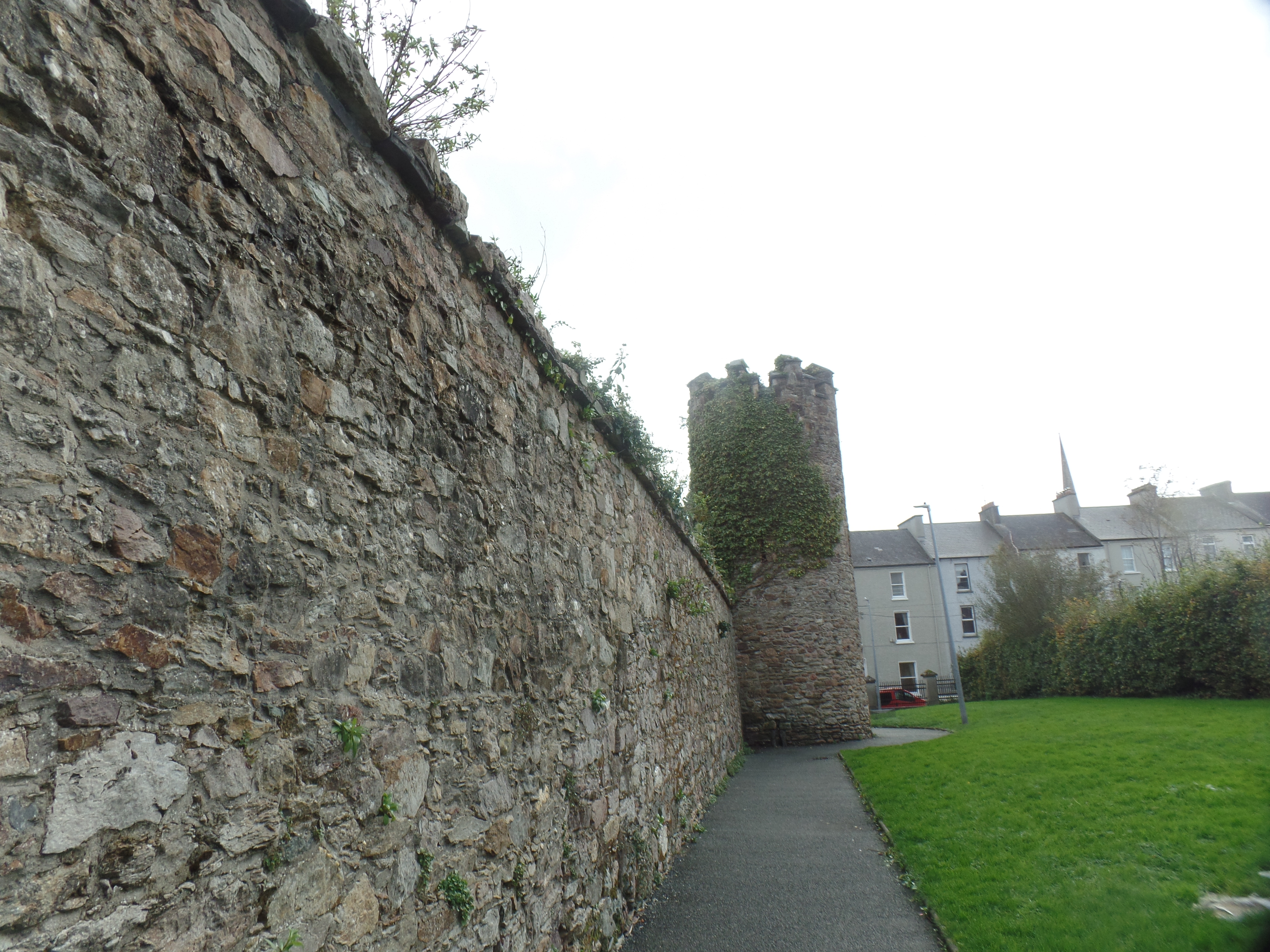
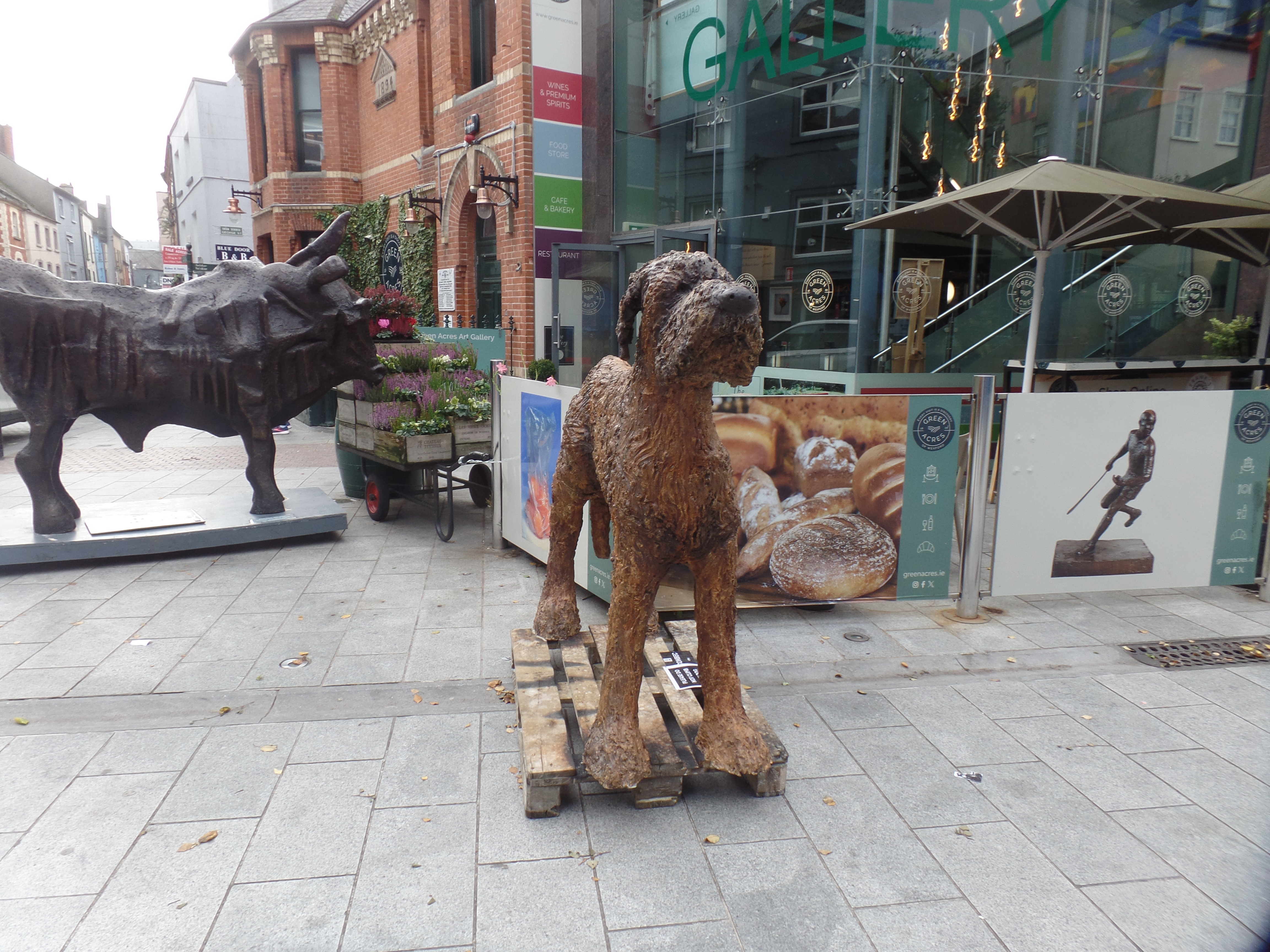
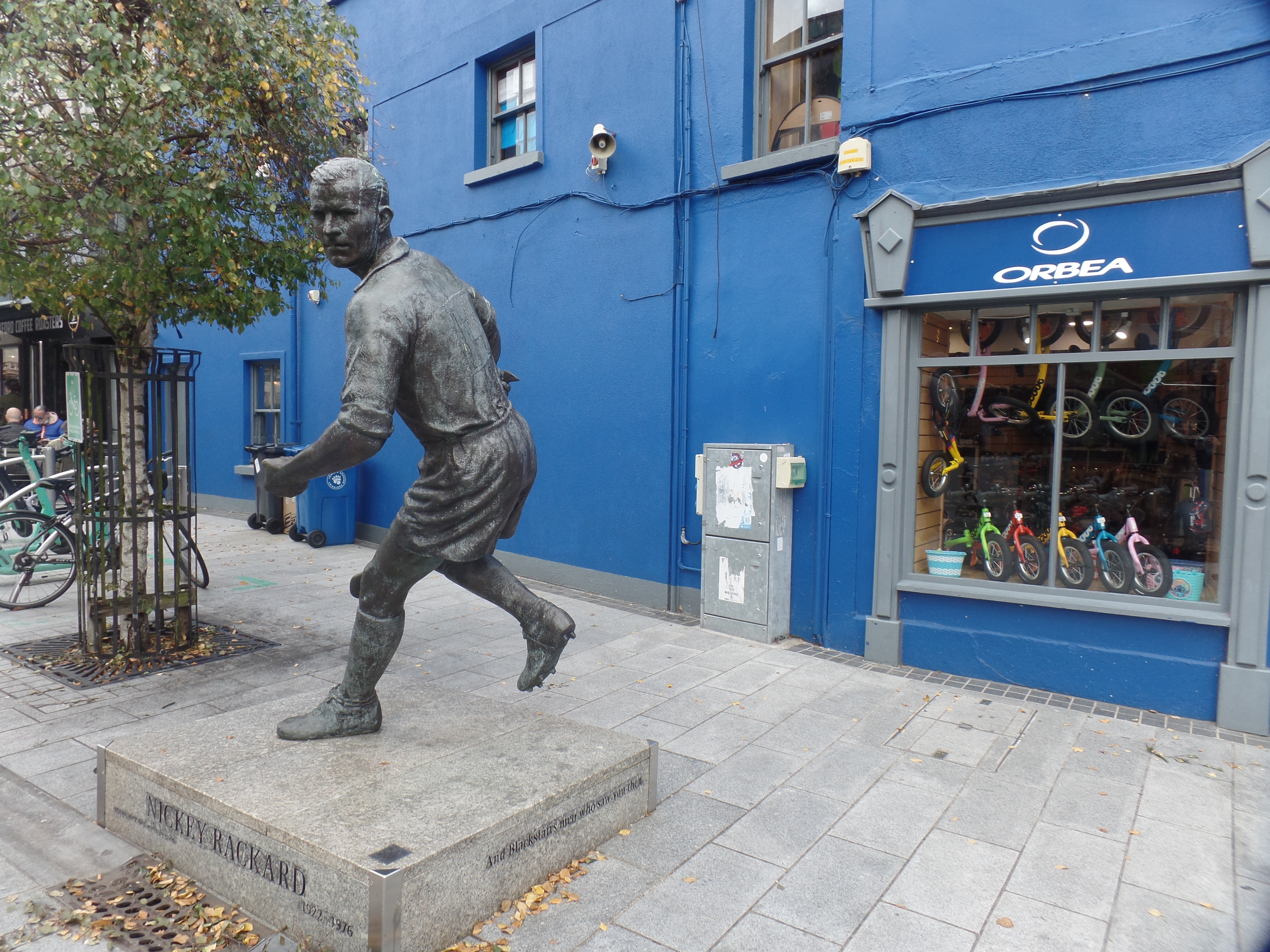
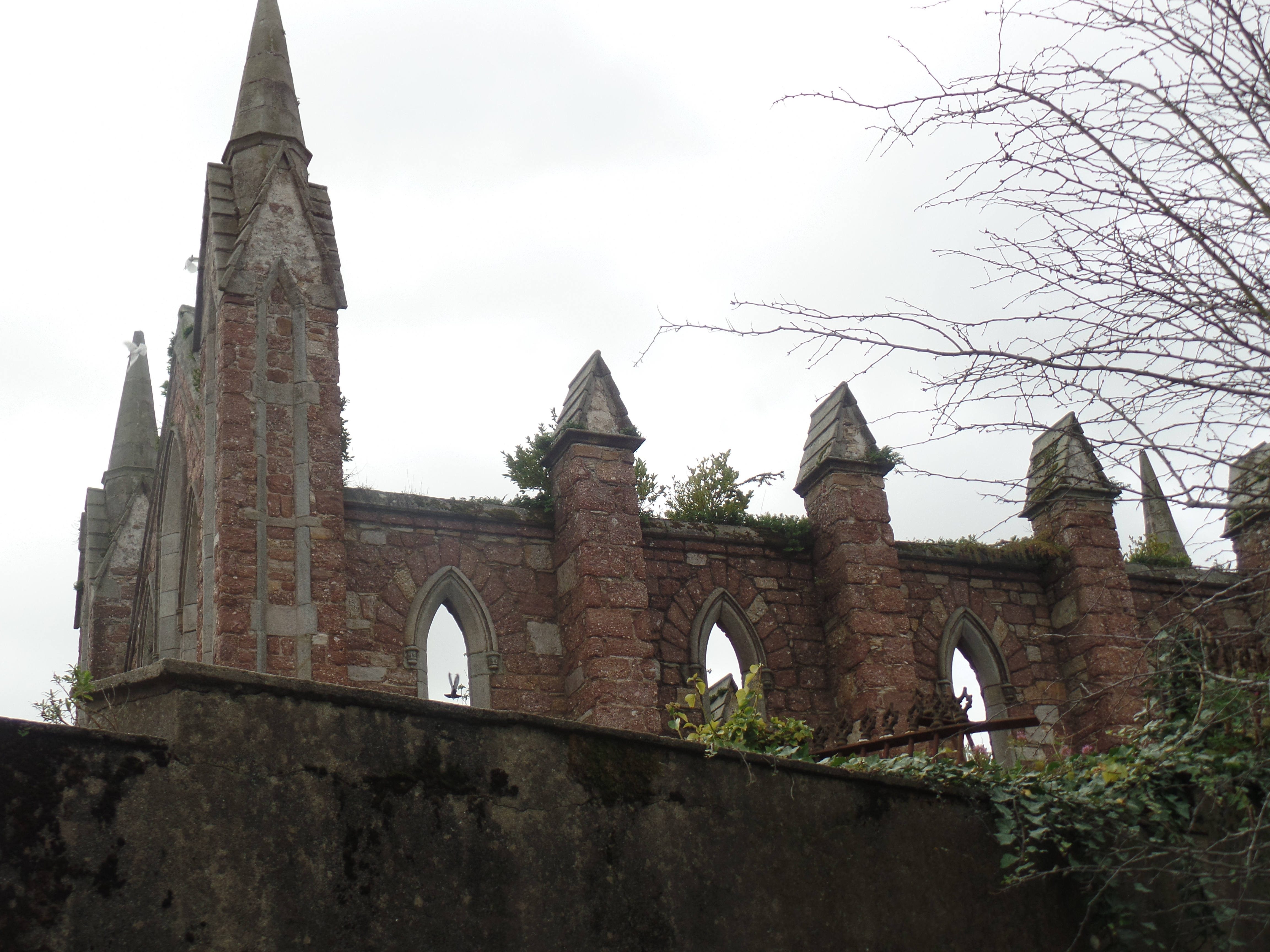
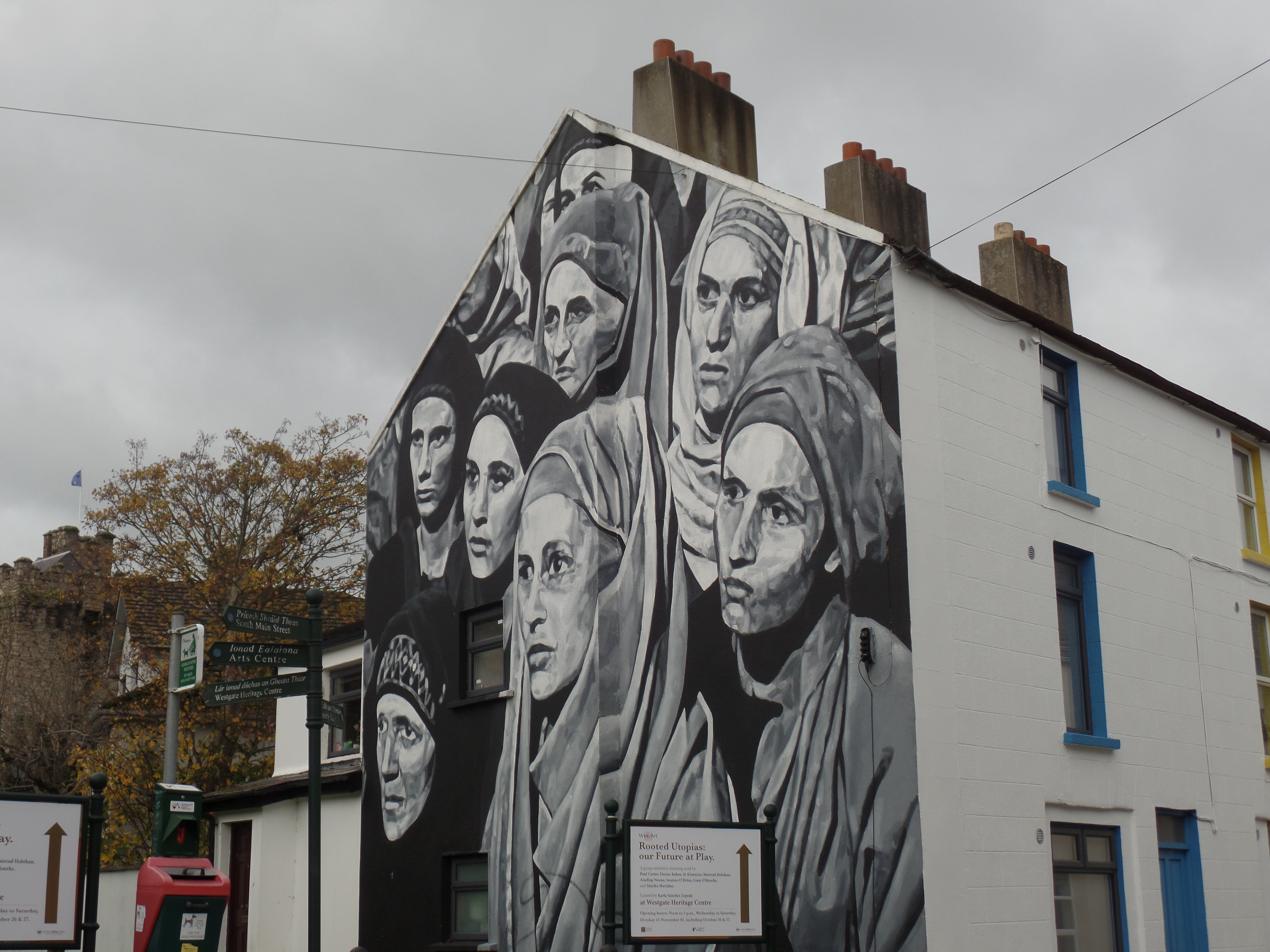
West Gate, Old WexfordWest Wall, Wexford (above and below)The “Sheriff Street Bull” of Old Wexford. Ironically, the sculpture by John Behan is titled after Sheriff Street, Dublin, which is where he grew up. There is another replica, I’m told, in Galway, western Ireland. John was fascinated with bulls, which he likened to the Irish male, who felt forced to move away or to return to an uncertain future. That may well have been the case with my Cook forebear, off to Germany to seek his fortune, in the days of the Hanseatic League.Statue of Irish Wolfhound, Westgate, WexfordNicky Rackford, a legendary Irish Hurler, who hailed from Wexford. Hurling is an ancient Gaelic sport, akin in many ways to Gaelic football. It is described more fully here: https://en.wikipedia.org/wiki/HurlingRuins of Selskar Abbey, an Augustinian monastery of the 12th Century. (Above and below)The indomitable Irish women, celebrated in Westgate, Wexford
It was time to board the train, so I left things like the John F. Kennedy Arboretum for another time. I did get a few glimpses of Muir Eirann (Irish Sea) from the train, between Wexford and Dublin.
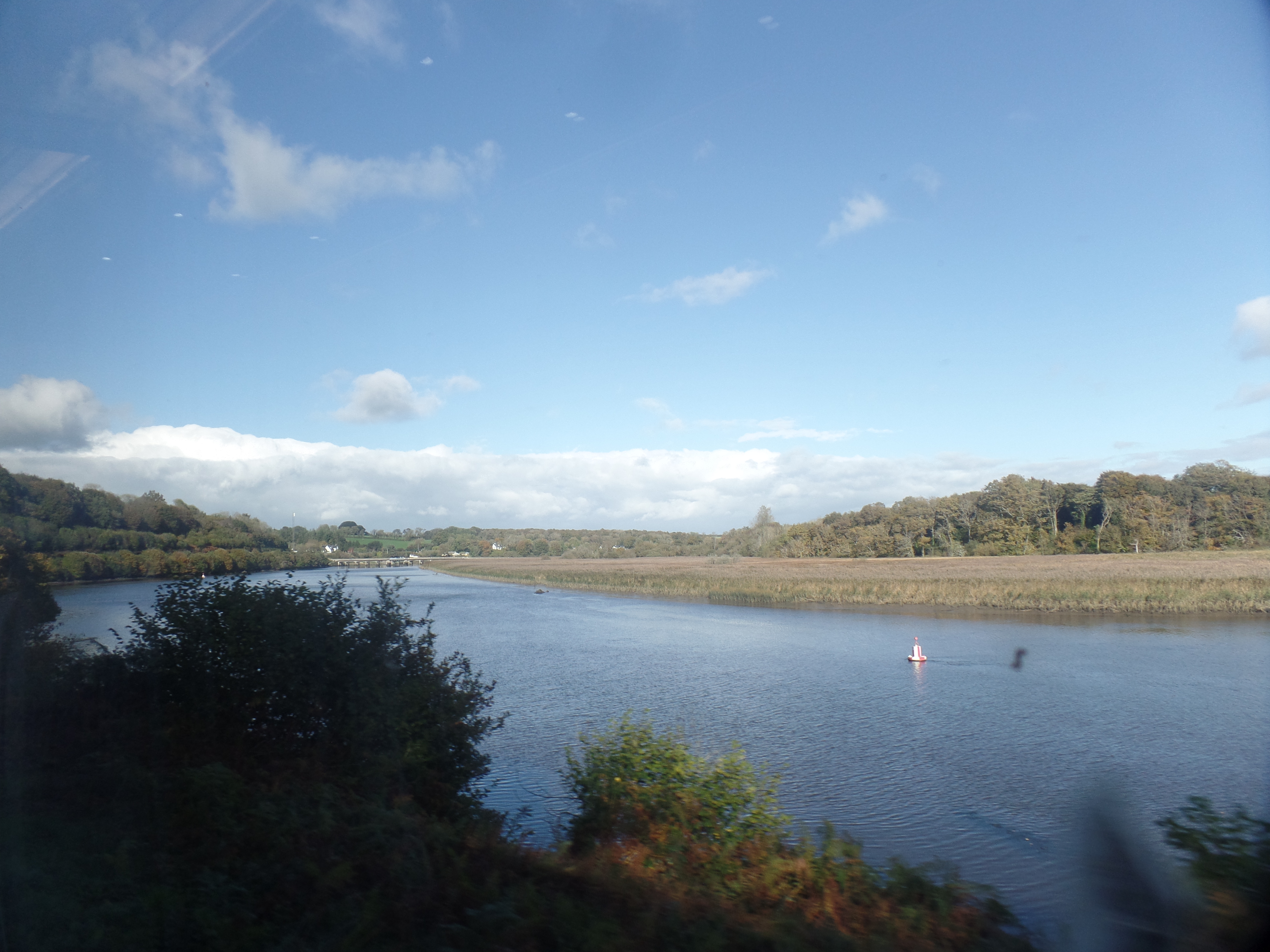
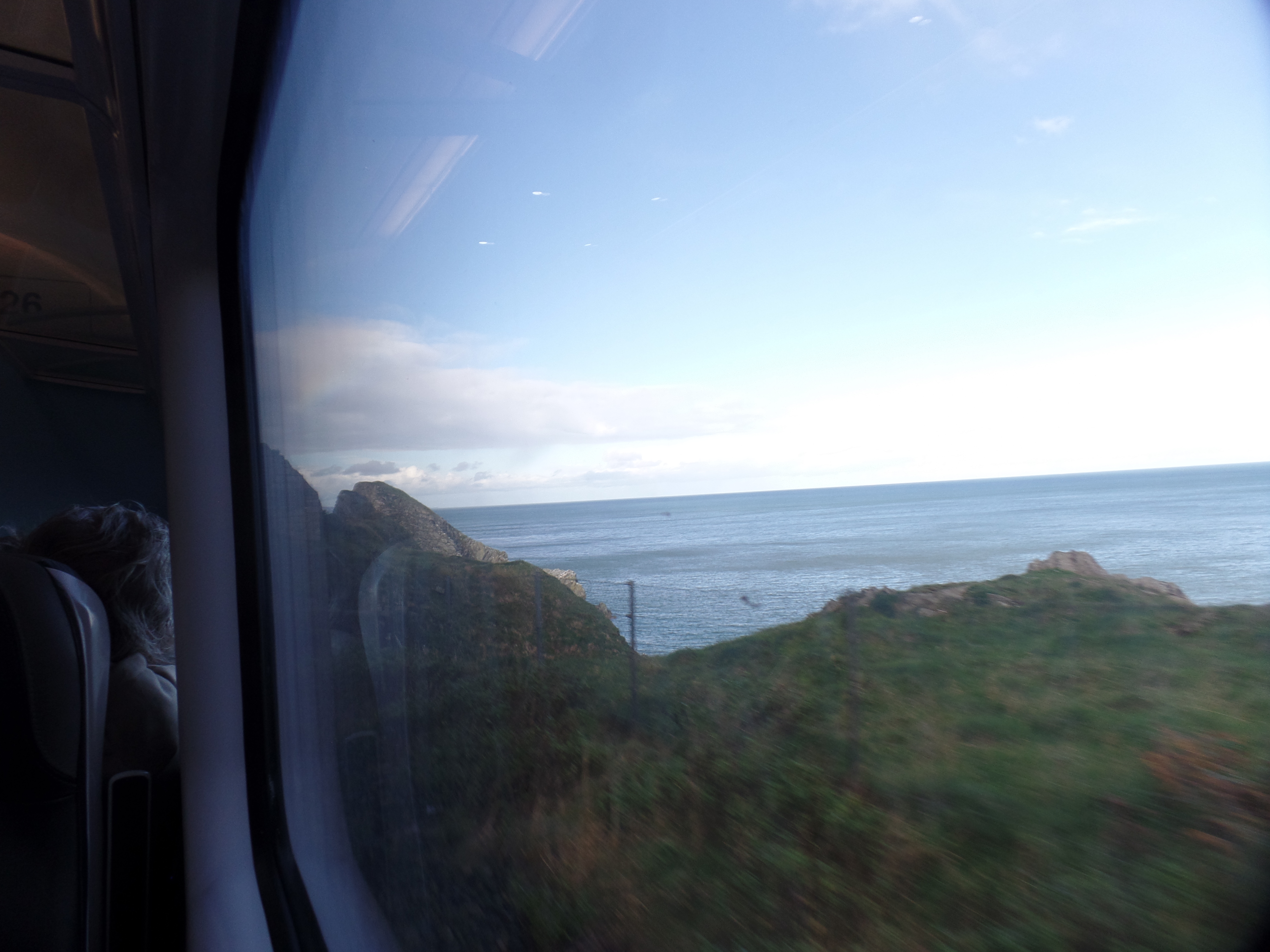
Irish Sea, south of Arklow Irish horses, enjoying life by the seaNorth end of inlet, above WexfordAvoca River, near WicklowFoliage, outside WicklowRiver Vartry, near WicklowRainbow above Irish SeaWicklow HeadWicklowIrish Lights Building, Dun Laoghire (pronounced dun leary)
At long last, we arrived at Connolly Station.
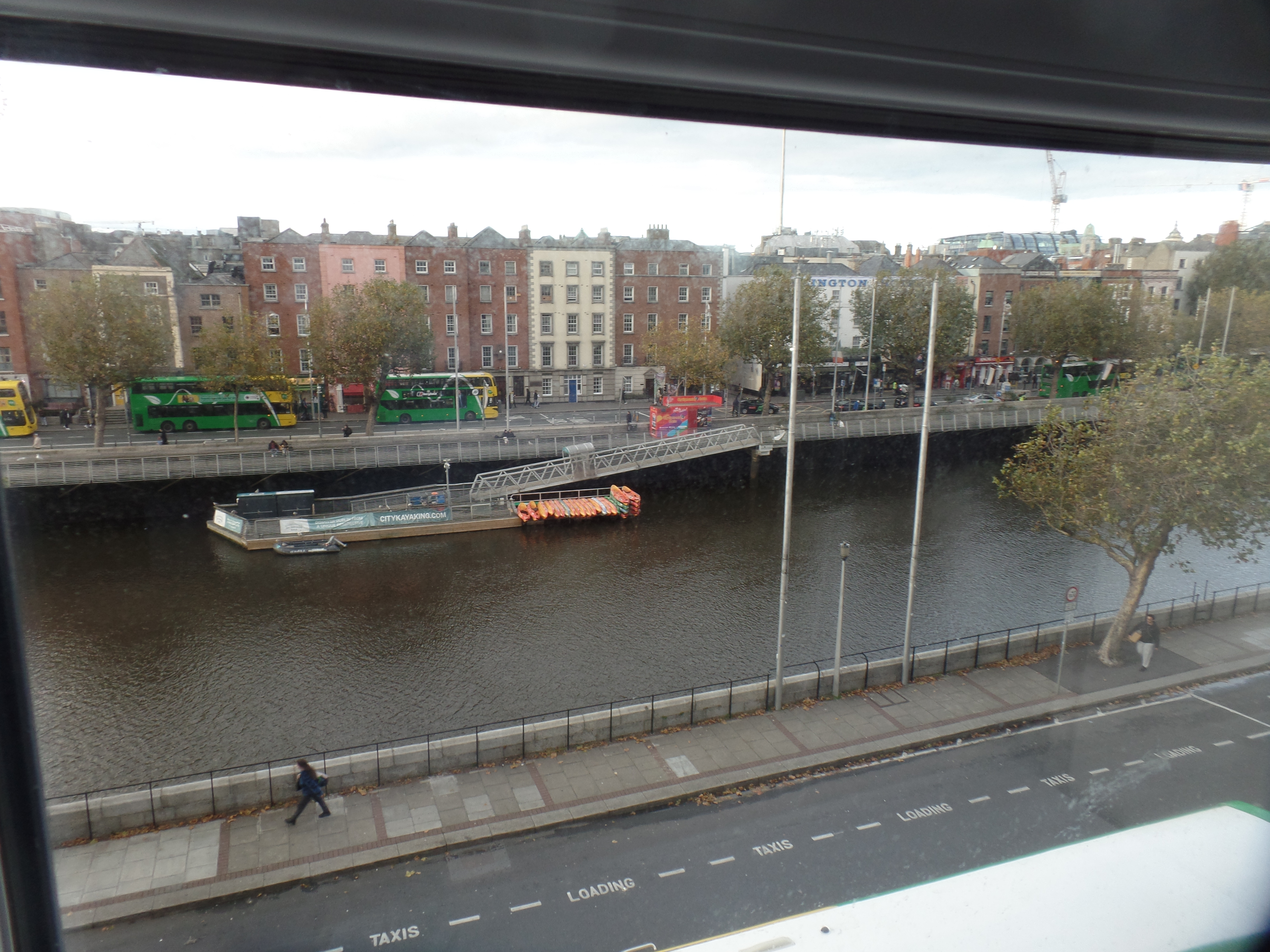
River Liffey, from Connolly Station
To my Cook relatives, your song resonates through the centuries. To my Connolly relatives (on my Dad’s side), this station is named for your distant cousin, an Irish national hero-but you knew that.
October 20, 2025, Rosslare, Ireland- It had slipped my mind, the location of Ocean Lab Cafe-a function of “landmark bleed” (my term), where two places that are close to one another while still some distance apart, become adjacent in my mind. So, my friend Sian and I walked to the grocer, looking for the cafe. As we learned, Ocean Lab Cafe is on the berm that is closer to Goodwick Jetty. The grocer is off the street below. I had been to both, yesterday, while a bit tired from the day’s journey-thus, the landmark bleed.
No matter, we sat and enjoyed hot tea, with no crumpets, as it was mid-morning, and I had enjoyed a full Irish breakfast at Rose & Crown, prior to meeting Sian in the foyer of the guest house. We walked a short bit along the beach, both savouring the salt air and very pleasant clear sky. Ocean Lab is a small aquarium and oceanographic education centre for local children. It also offers Welsh products for visitors, so I purchased a box of tea bags and a tin of chai, each produced locally.
Our meeting lasted about two hours, then it was time for me to head towards the ferry to Ireland. Sian drove me as far as the ferry entrance. I then had to walk around a few barriers, to what turned out to be the Fishguard Harbour Train Station. I was the last one through the chute, but no matter-I was still five minutes shy of the gate closing, and that was only to board the bus to the ship. As it happened, we had to go back and pick up all the people who had been inside the priority visitors’ lounge. We ended up leaving well in time.
I decided to do something different this time-put my computer and journal in stowage and turn off my mobile phone. I enjoyed a full lunch, then sat and contemplated St. George’s Channel-the narrows of the Irish Sea, only nodding off for a short time, in mid-voyage. A few small children who were excited to look for whales, and a snoring man, the next table over, were there to break any monotony. The emerald sea was basically rather calm today, and the mood on board rather relaxed. We were in Rosslare in four hours and twenty minutes.
Irish customs and immigration checked the two American passports separately, but were a pleasant, jovial pair, thanking us for our cooperation. The rest of the bus riders faced a canine unit inspection, which turned up a couple of cans of English ale, and thankfully no drugs. We were let loose within ninety minutes. My transition from Europort to Home from Home Guest House did, however, entail a workaround past the usual tut-tutting from Spectrum, that I could not call my host without being connected to WiFi, and there was no connection at the port. A kind fellow passenger, who lives in Wexford, called my host and got directions. I found the bus that serves Rosslare, rode as far as Coast Hotel and voila, my host, Gemma, was waiting for me as I got off the bus. “You’d never find the place, in this darkness”, she said, and we walked the five minutes to the apartment house. I was given a cozy and warm introduction to Irish lodging facilities, with the requisite bath tub (in the British Isles, a mere shower stall is frowned upon, though some hoteliers have little choice.) Gemma excused herself, and I headed back to Coast Hotel, for a dinner of fish and chips. The meal was more than ample, and I felt another nice day had passed.
October 19, 2025, Fishguard & Goodwick, Wales- In 1797, a group of French soldiers sailed from Camaret-sur-Mer, Brittany to an area near the port of Fishguard. Their orders were to invade Wales and destabilize Britain. The rather cockeyed scheme failed, largely due to the soldiers having been poorly trained. They spent their first hours in Wales getting drunk. When they became sober, they found themselves surrounded-by a group of local women, armed with pitchforks. The Welsh women were led by one Jemima Nicholas, who secured twelve of the soldiers by herself. The course of this invasion is chronicled on a remarkable piece of art: The Last Invasion Tapestry. https://lastinvasiontapestry.cymru/
I stood at the tip of the jetty where much of the action took place. It is not a steep path from the water’s edge up to the top of the jetty, but mooring at that part of Fishguard Harbour would require very detailed knowledge of the rocks and shoals. The Jacobin troops would not likely have had that knowledge, but the locals did then, and certainly do now. When the invaders arrived, the Welsh men were at the area now used as a ferry port for travel to Ireland, and the women were guarding the jetty. The uninvited guests had no chance.
I left Salisbury fairly early, catching what i thought would be a train to Bristol, then was prepared to catch a separate train to Cardiff, Swansea and on to Carmarthen and Goodwick. Lo and behold, the train on which I embarked was headed to Swansea, and would arrive there four hours earlier than the train for which I had a ticket. With the okay from two conductors en route, I stayed on the train, clear to Swansea.
The train ended at Swansea, a key crossroads, west of the Welsh capital of Cardiff. I had to use a replacement bus to go on to Carmarthen, and so had to exit the train area. A transit auditor looked at my ticket and gave a mild scolding about not waiting at Cardiff for the later train. He then looked at his watch, sighed and told me to just go to ticket control and have my ticket exchanged. That was done very easily and I joined the queue for the bus to Carmarthen.
This bus, which took the place of the train, due to work being done on the tracks, took us through rolling hill country, in land from the winding and rocky coast of southwest Wales. It is said that Carmarthen may be the oldest town in Wales, having been founded by the Romans, around 75 AD/CE. We did not have any time to look around, though, as the train to Fishguard & Goodwick was set to leave, eight minutes after the bus rolled in. Besides, on a Sunday, most places were closed.
Once the lightly-populated train got to Fishgaurd & Goodwick, I had about thirty minutes before check-in at Rose & Crown Inn. I was able to stow my bags in an unused room, then went down to look about the town. As I walked near the harbour, three local boys were listening to some techno pop, on a hand-held radio. One of the lads started doing a fist pump dance. I pumped my fist a bit, which got them giggling.
The jetty on which Jemima and her crew stood against the invasion force is now a place for locals to walk their dogs and for visitors to get in their steps.
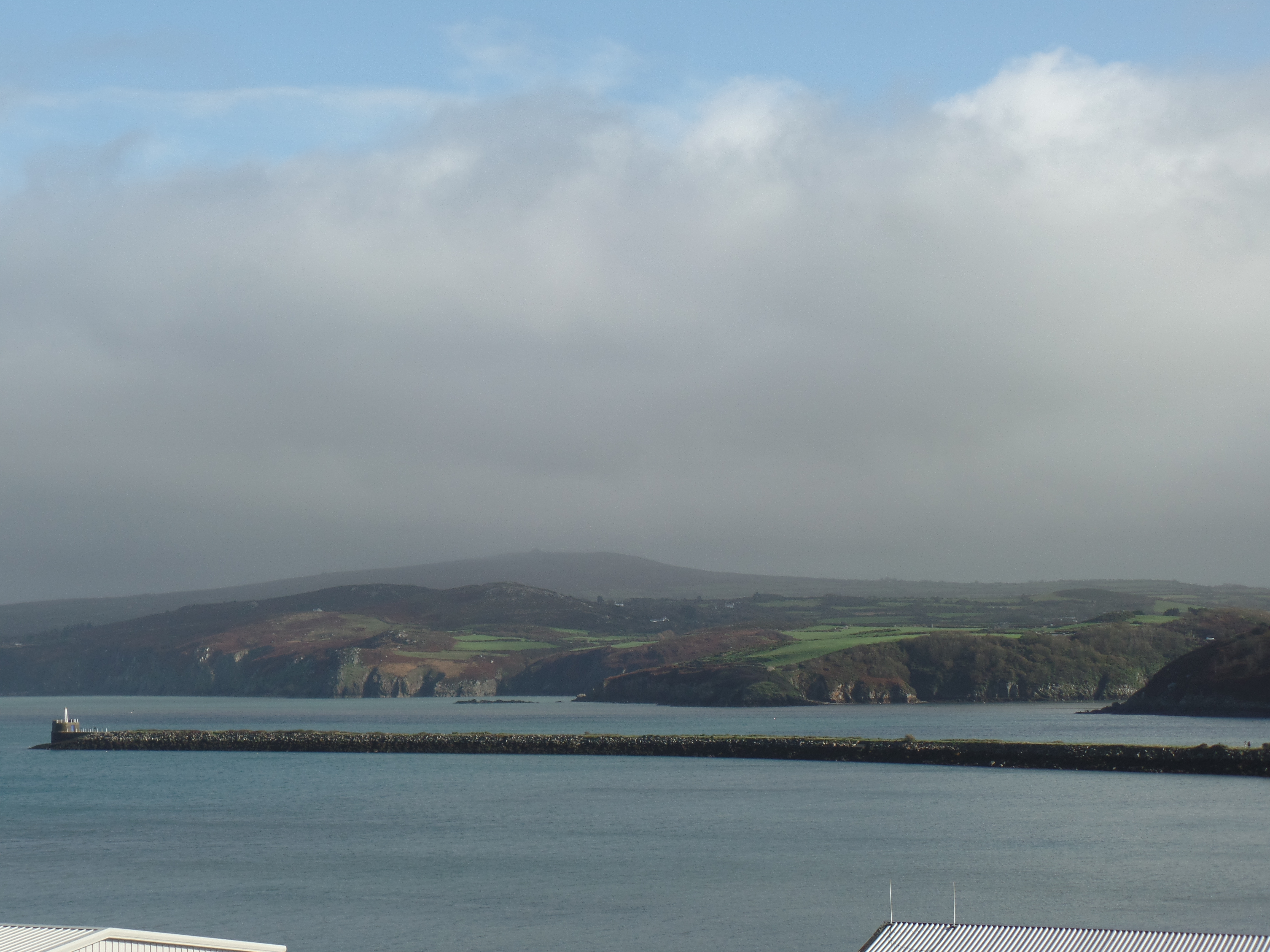
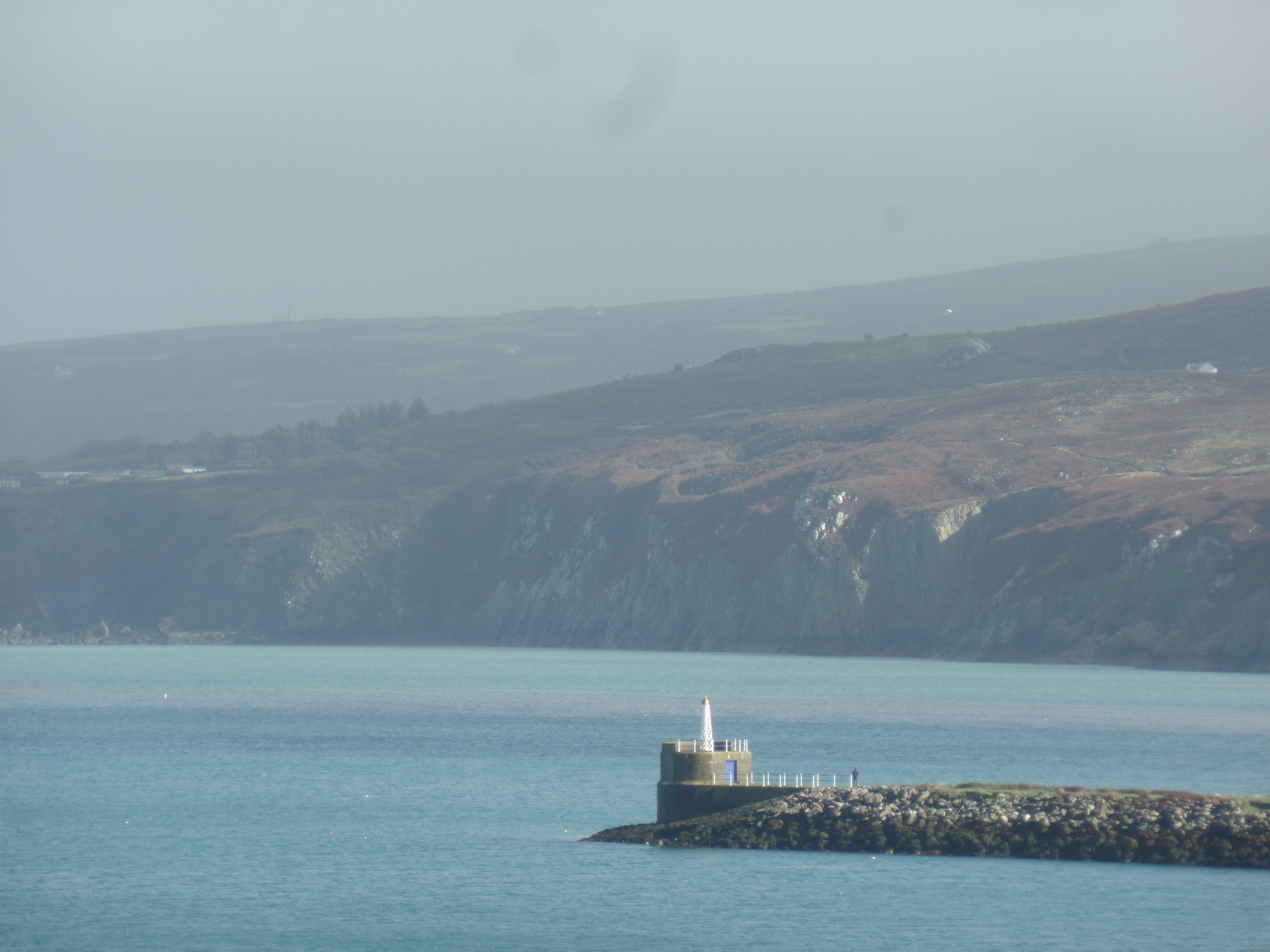
Rose & Crown Inn, GoodwickA fishing dog, at Goodwick JettyFishguard Harbour, with Goodwick Jetty to the far right.Goodwick Jetty, with Pembroke Peninsula to the south (above and below)Fishguard Town, from Goodwick Jetty
My purpose in Goodwick is to meet a friend from Pembroke, tomorrow morning. This evening, though, I settled in at Rose & Crown. The young lady at desk had been working largely alone, all day, and looked exhausted. She nonetheless summoned cheerfulness and helped me get up to the room. The fresh crew at dinner time was also very pleasant and offered a plate of brisket with fried potatoes- great stuff!
This small introduction to Wales has given me a fine impression of the country within a country. Tomorrow morning, my friend from Pembroke and I will walk about the harbour area, just a bit, then head over to Ocean Lab Cafe, a Goodwick original.
















































 A Sagittarian Seeker