
March 22, 2022, Vero Beach- The above title is also the first building one enters, at Kennedy Space Center’s Visitor Complex, in Merritt Island, FL. Heroic figures aplenty are presented, visually and audibly, at this intensely captivating and informative science center. To be sure, having grown up in the classic period of the Space Age’s inception, I have my share of those who I hold in very high regard: Alan Shepard, John Glenn, Walter Schirra, Gus Grissom, Deke Slayton, Neil Armstrong, Sally Ride, Krista McAuliffe, Ronald McNair, Eugene Cernan, even Yuri Gagarin and Gherman Titov. My heroes, in general, are both male and female, of all ethnicities and skin tones-and it does not matter that I, a heterosexual cisgender white male, hold this view. Heroism is about character and achievement.

My first hero, my father, would have turned 95 today. He worked in aeronautics his entire adult life, so to visit Kennedy Space Center on this particular day was a sublime blessing. He held the astronauts in high regard, as well, admitting to being a bit overwhelmed by all the science that the increasingly complex business of space was encapsulating. I do think he would have thoroughly enjoyed this place, though.
Several whooshes of cold air and descriptions of rocket launches later, I walked out to Rocket Garden, where those vessels that launched so many legends into space are exhibited, at least by type.
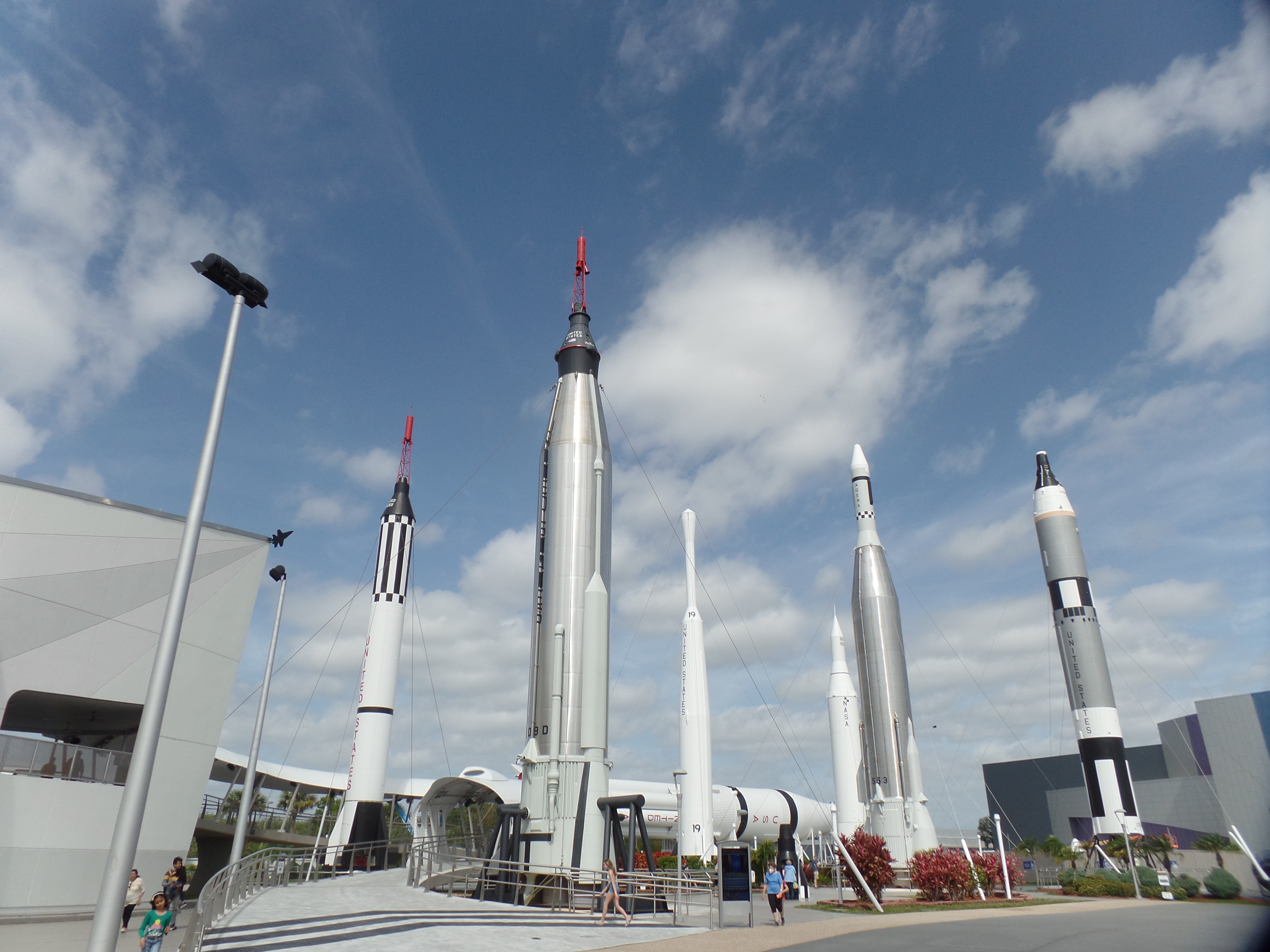

Suitable mention was made of the works of fiction that stimulated so many minds with thoughts of space travel, from the 1920s to the actual inception of successful space flight. These stimulated many young people to seek training and careers in the inchoate field of astronautics. Among them were all those we know today as astronauts-both men and women, and so many astronomers who foster and guide the space travelers.
There has been so much heartbreak and tragedy coming out of the Space program, as there is in any novel and complicated operation. Three jarring events stand out: The 1967 explosion which killed Apollo 1 astronauts Gus Grissom, Ed White and Roger Chaffee; the deaths of the seven crew members in the Challenger explosion of 1986; the launch time deaths of seven crew members in the atmospheric re-entry explosion of 2003. They underscore the fact that many failures take place, in all phases of research and implementation of aerospace work.


Project Apollo was the stuff of the greatest sagas, even of conspiracy theories that say the moon landing never happened. It was Gemini, the intermediate step between earth orbit and the moon missions, that deserves equal billing. Eugene Cernan, the first person to walk in space, described his experience: His blood pressure hit as high as 170; He lost 13 pounds in 2 hours; the heat shield on the module reached 3,500 degrees Fahrenheit, making egress and return to the capsule a tortuous affair. The work of the Gemini pioneers has made all the difference going forward, from Apollo through the shuttles and Space Station era.
My last stop at the Space center was the Shuttle Hall, at which a hundred people at a time were treated to seeing the Shuttle Atlantis, retired in July, 2011, after logging in over a million miles.

There are many things that can unite people of all backgrounds and viewpoints. The exploration of space is a field with which anyone can identify. Space, like the Earth itself, belongs to all of us.







 A Sagittarian Seeker