February 11, 2015, Tallahassee- Many people come to the Sunshine State for its modernities and for-sunshine. This time of year, there is plenty of sunshine, though Florida can’t entirely escape the cold that plagues the rest of the continent. There will be two cold snaps, before the region reverts to its signature mildness. When it’s like this, I focus on the inside scoop- What do a region’s historical treasures have to tell us about the area as it is today?
Most people are aware that Florida was ruled by the Spanish, for about 200 years. They are also aware that there are Indigenous people, called Seminoles, who had a wise and clever leader named Osceola and that these people fought three wars with the U.S. Government. Some will know that there are a different group of Indigenous people, called Miccosukee, who are descended from the Calusa and Mayaimi nations, who lived in South Florida, prior to the Spanish arrival.
Few know, however, that the Calusa, and the Apalachee of the northwest, were powerful and well-organized nations. The Apalachee chiefs recognized that the Spanish had strong medicine to fight the diseases against which Indigenous North Americans had no immunity. So, they invited the Spanish to teach their people about Christianity and to use European medicine to fight the new afflictions. They also wanted the Spanish to help defend them against British and Creek warriors, invading from the north. The British and Creeks won, though, and the Creeks became Seminoles, living around Lake Okeechobee.
The Calusa, though, became suspicious of the Spanish, when a 16th Century rendition of the Mariel Boatlift arrived on their shores, near today’s Fort Myers. The Taino people fled wholesale slaughter by the Spanish in Cuba and came, in hundreds of dugout canoes, to the land otaf the Calusa. The Calusa never really warmed to Europeans, as you might imagine.
These are a couple of Florida tidbits, revealed at the Florida Museum of Natural History, which I visited on Tuesday, at the Museum of Florida History, which I toured this afternoon- and Mission San Luis de Talimali, where I spent the morning and early afternoon. The latter two are both in Tallahassee, and are part of a renewed push by the state to focus on its rich heritage.
Here are several photos which will give you an idea of the marvels that await at Mission San Luis- a true Living History facility. It offers classes in metallurgy, tool-making, Spanish and Apalachee cooking, and foraging for plants in the moss-laden forest.
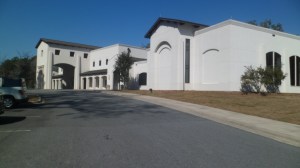
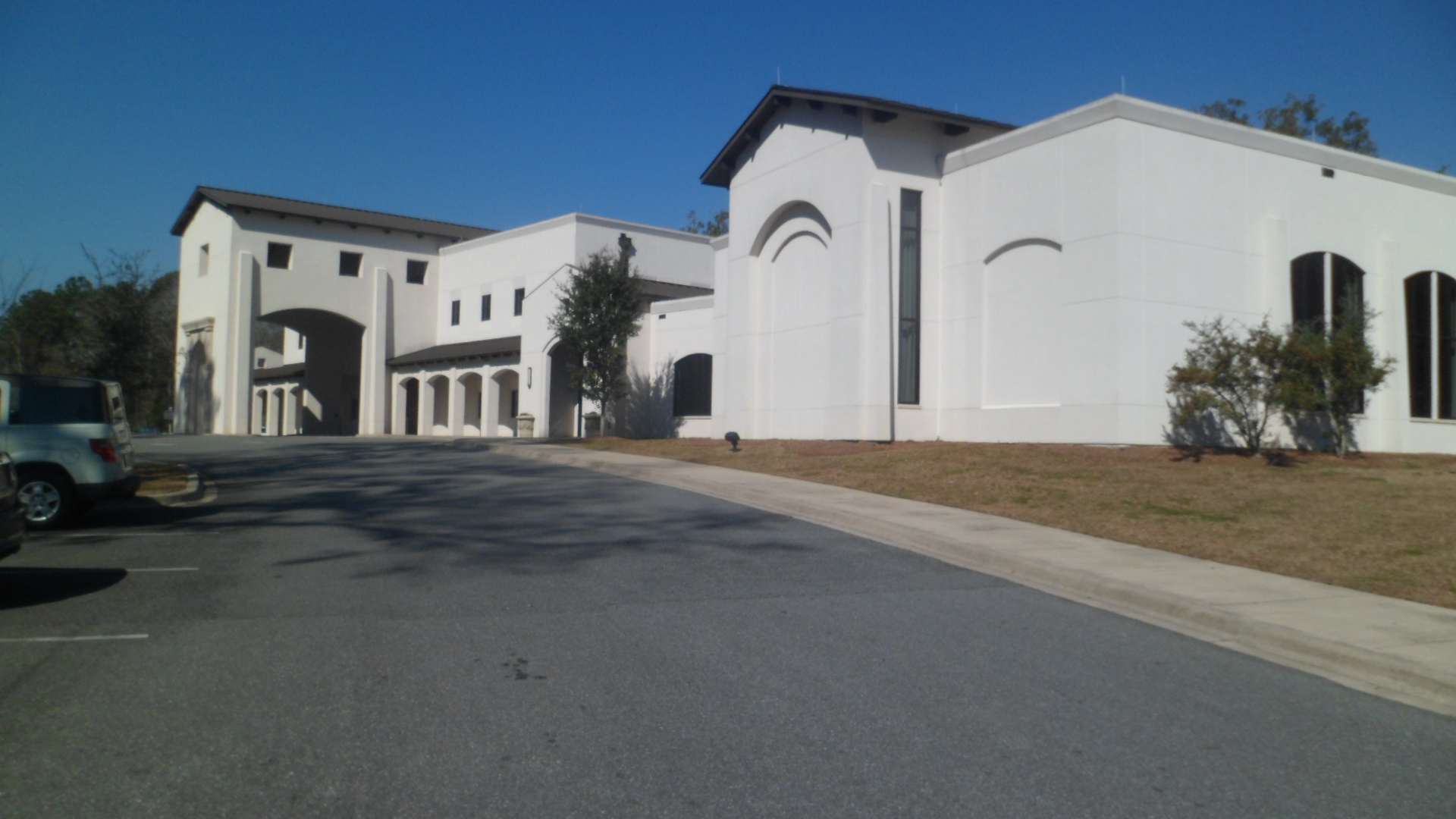
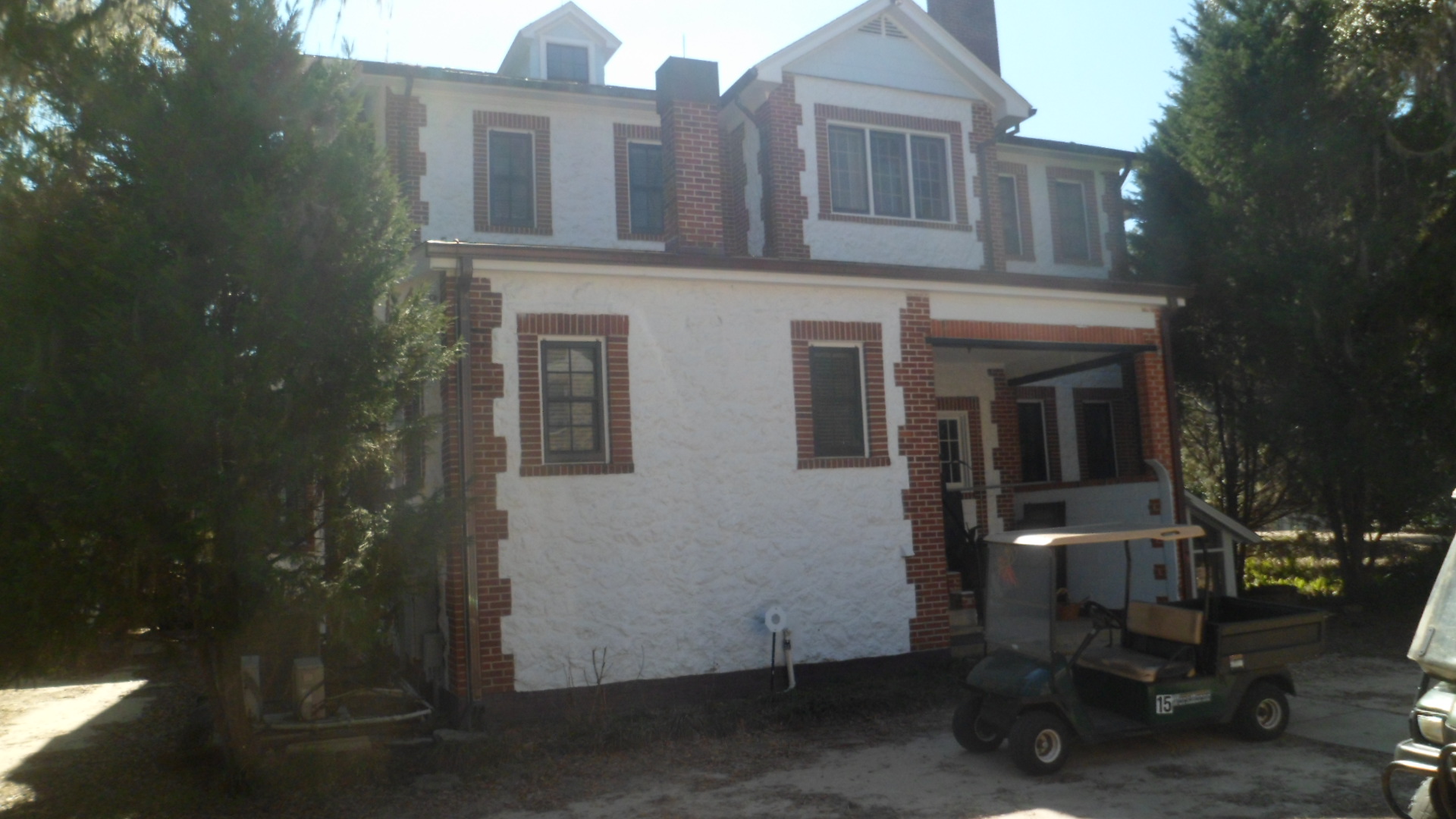
We start with the relatively new Visitor Center, which replaced the early 20th Century Messer House, now a costume-making center and office building, in 1983.

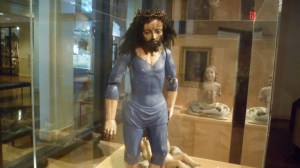
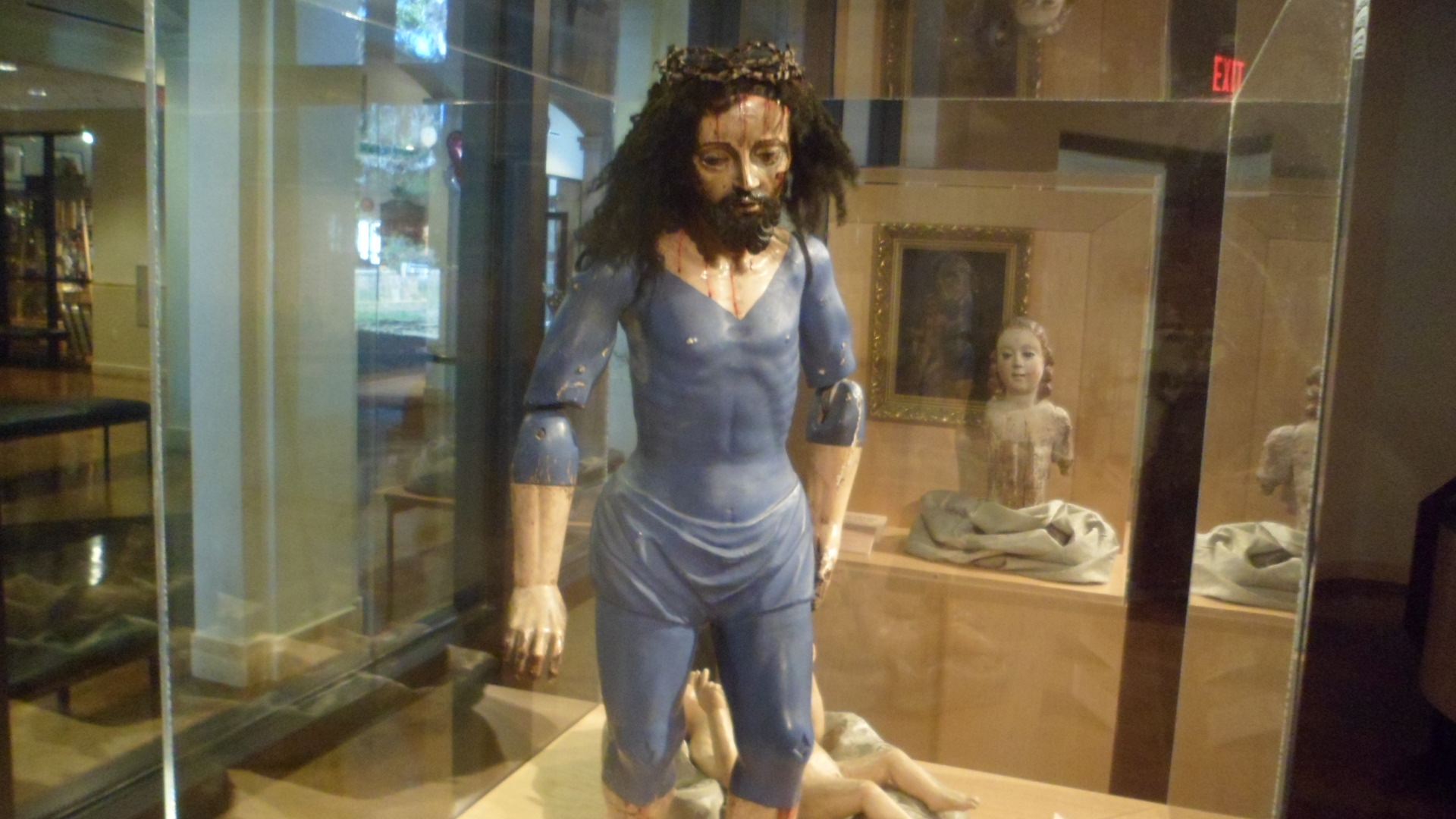
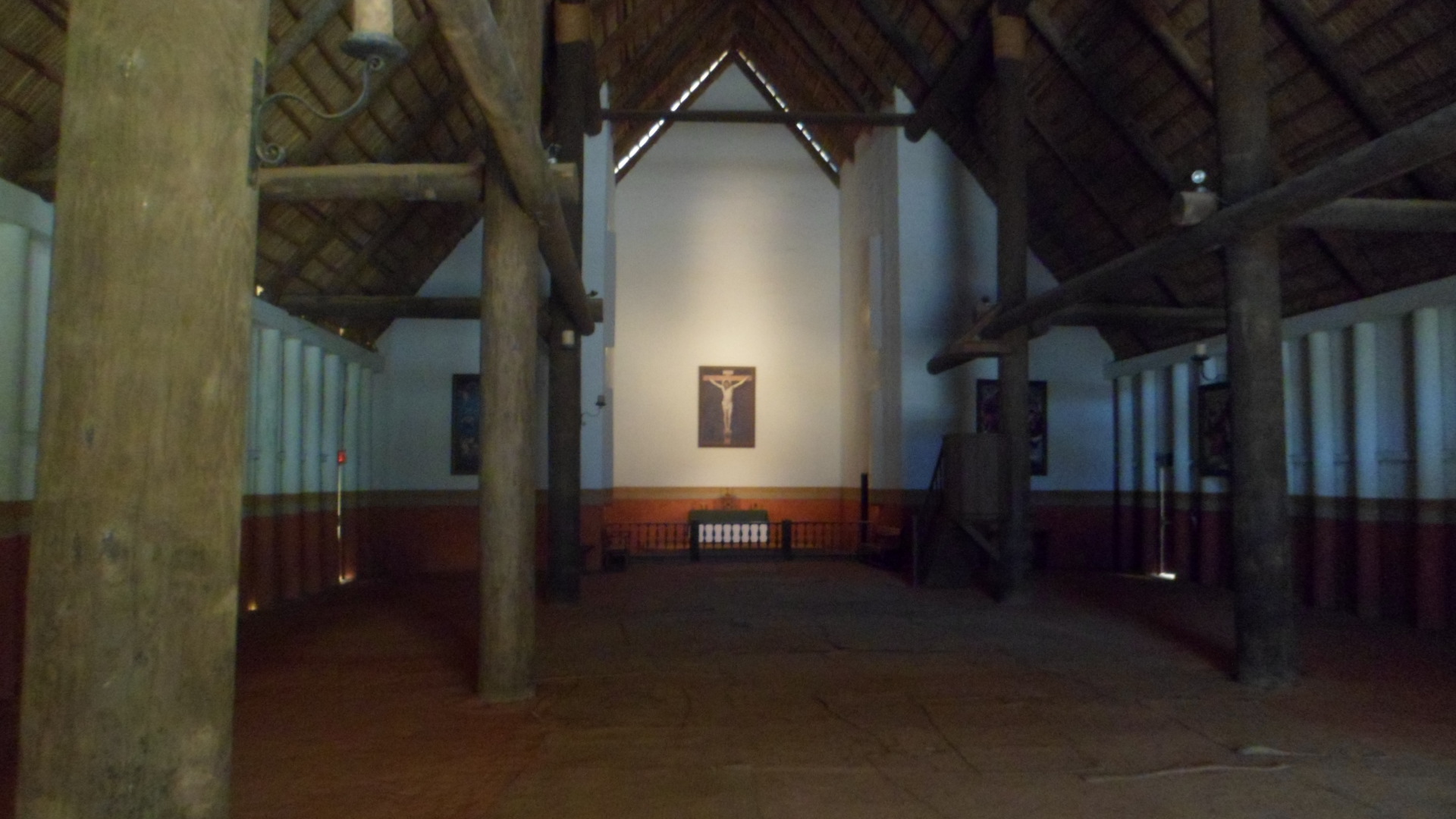
This is one of the depictions of a Crucified Christ that was presented to the Apalachee converts, by the Franciscan friars who established Mission San Luis.
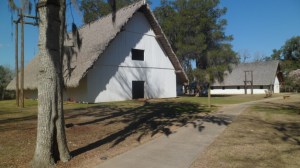
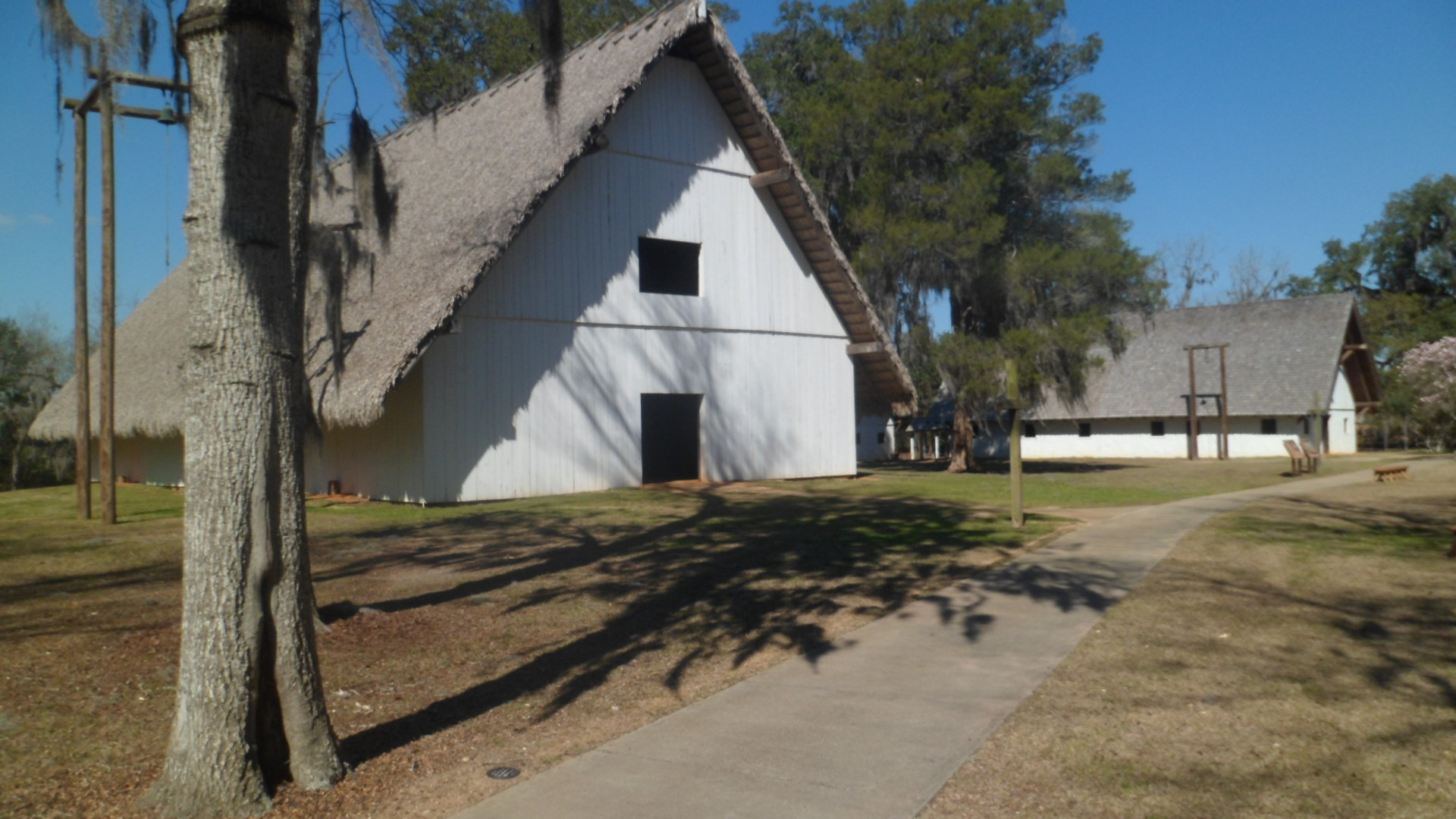
Here is an outside view of the Mission Church. Note the roof thatch, which is the same material as covers the Council House of the Apalachee.
The inside is quite spare, with no semblance of ornate flooring. The floor is sand, as is the case in the friary, the kitchen and the Council House. Woven mats were used to keep the dust down, with varying degrees of success.
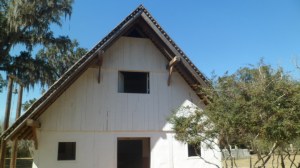
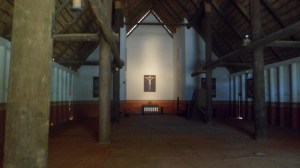
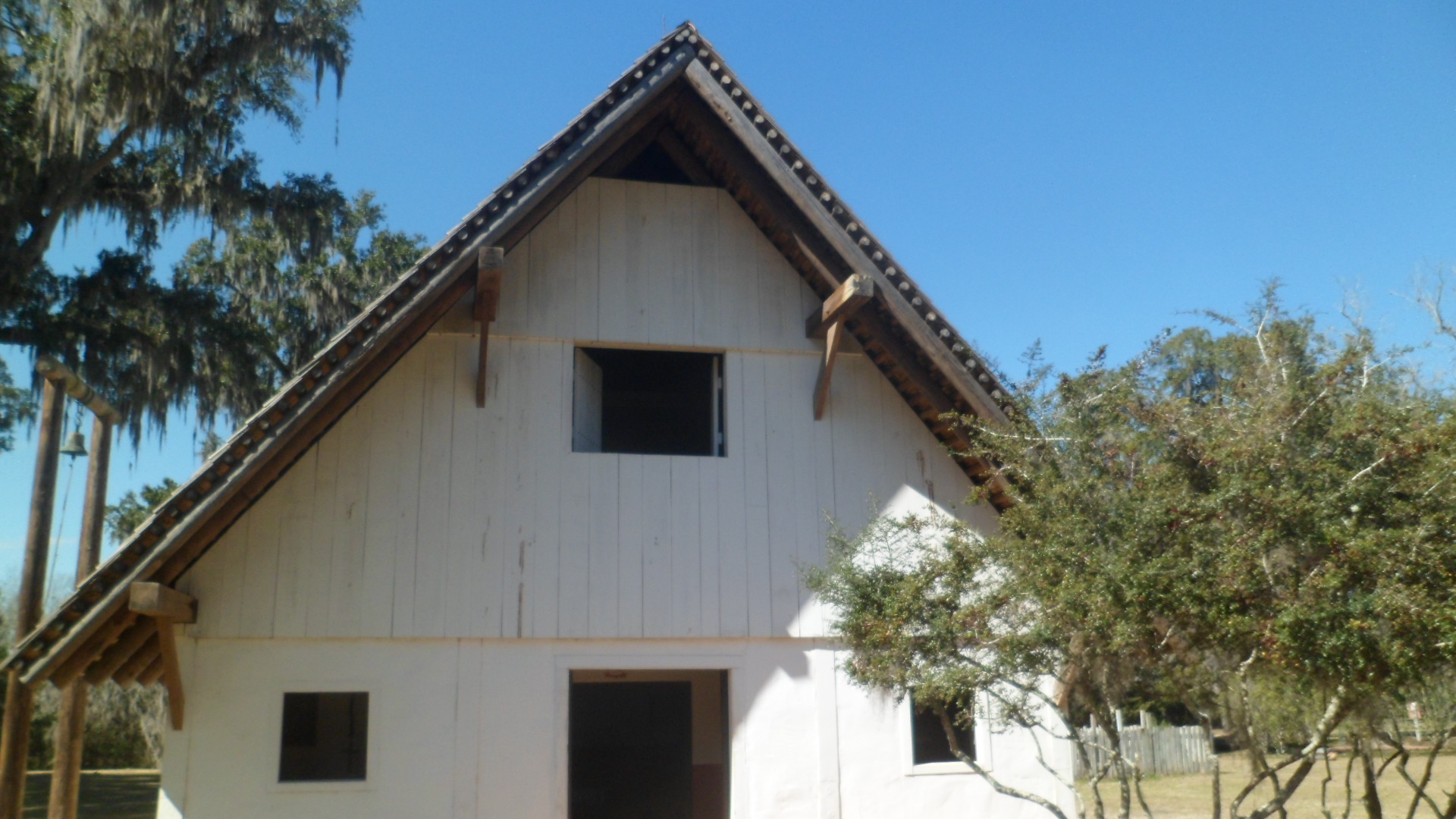
Like the Church, the Friary had a window in the attic, for heat release. The inside temperature reflected the seasons. Today, all the preserved mission buildings were cold inside.
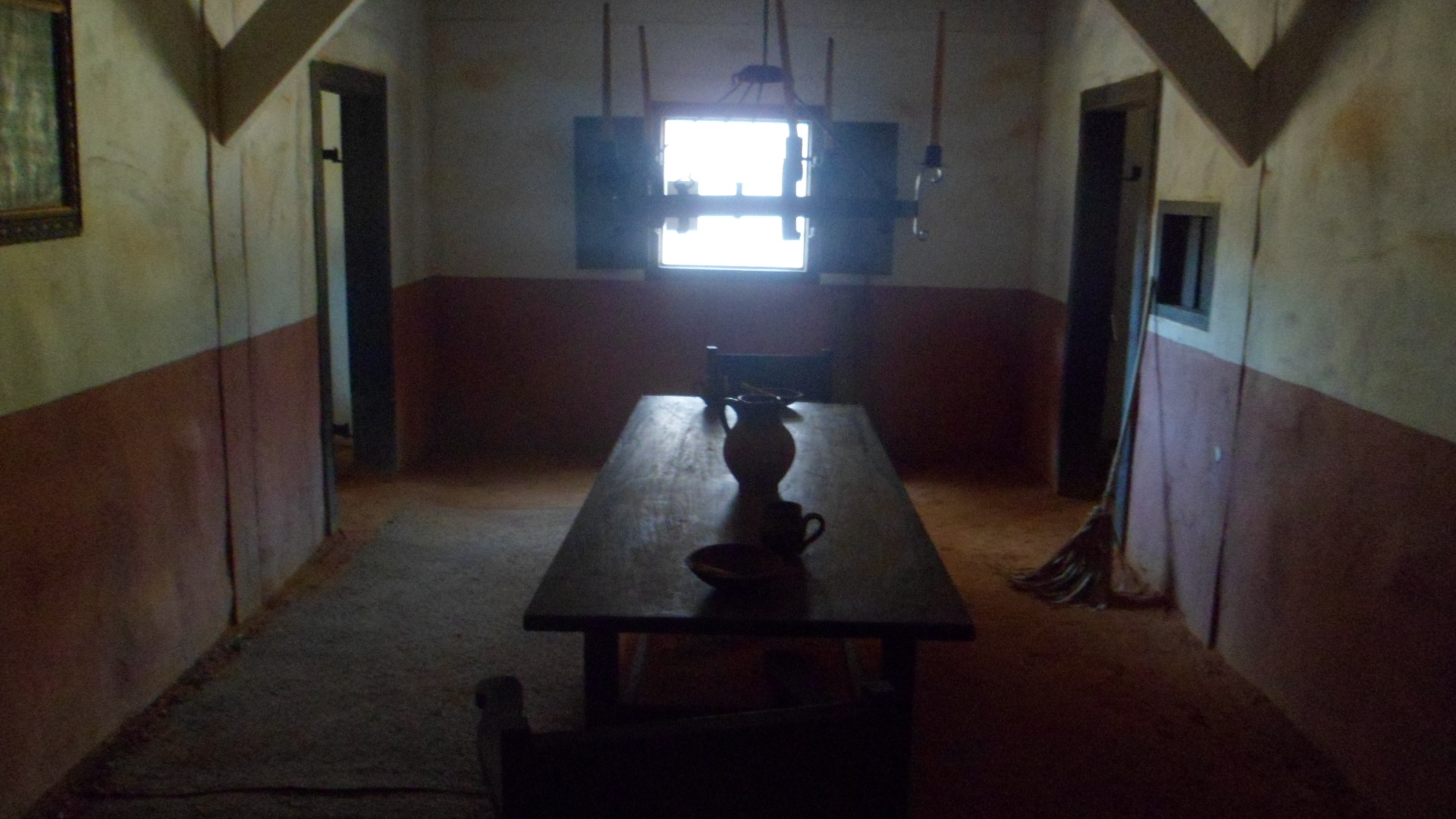
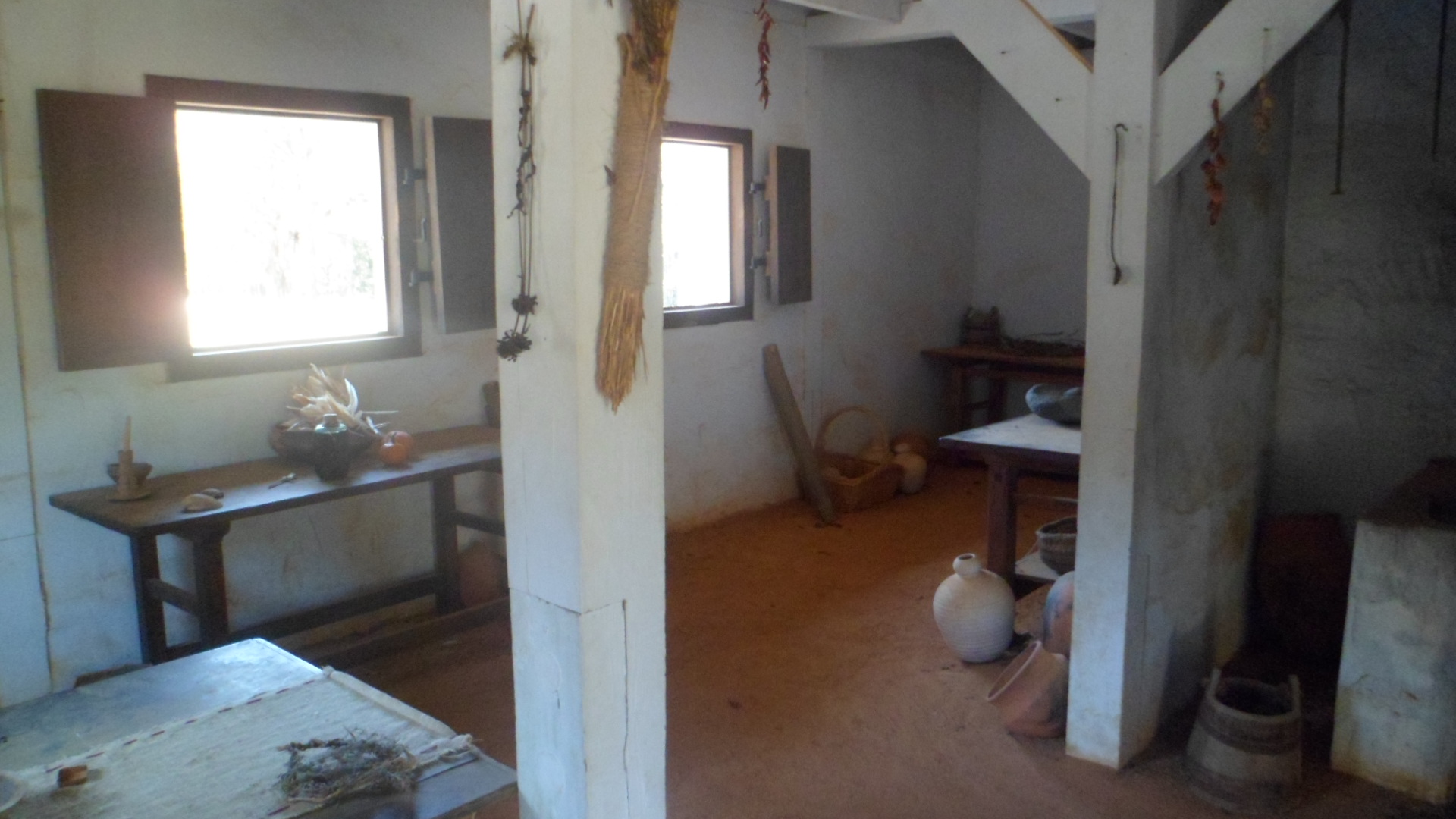
Here is a view of the friars’ dining area. They took food from dishes on the table, and sat on the floor mats to eat.
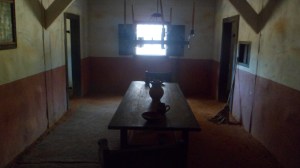
This was the friary kitchen.

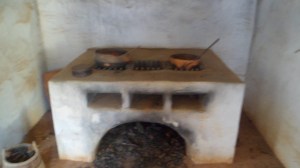
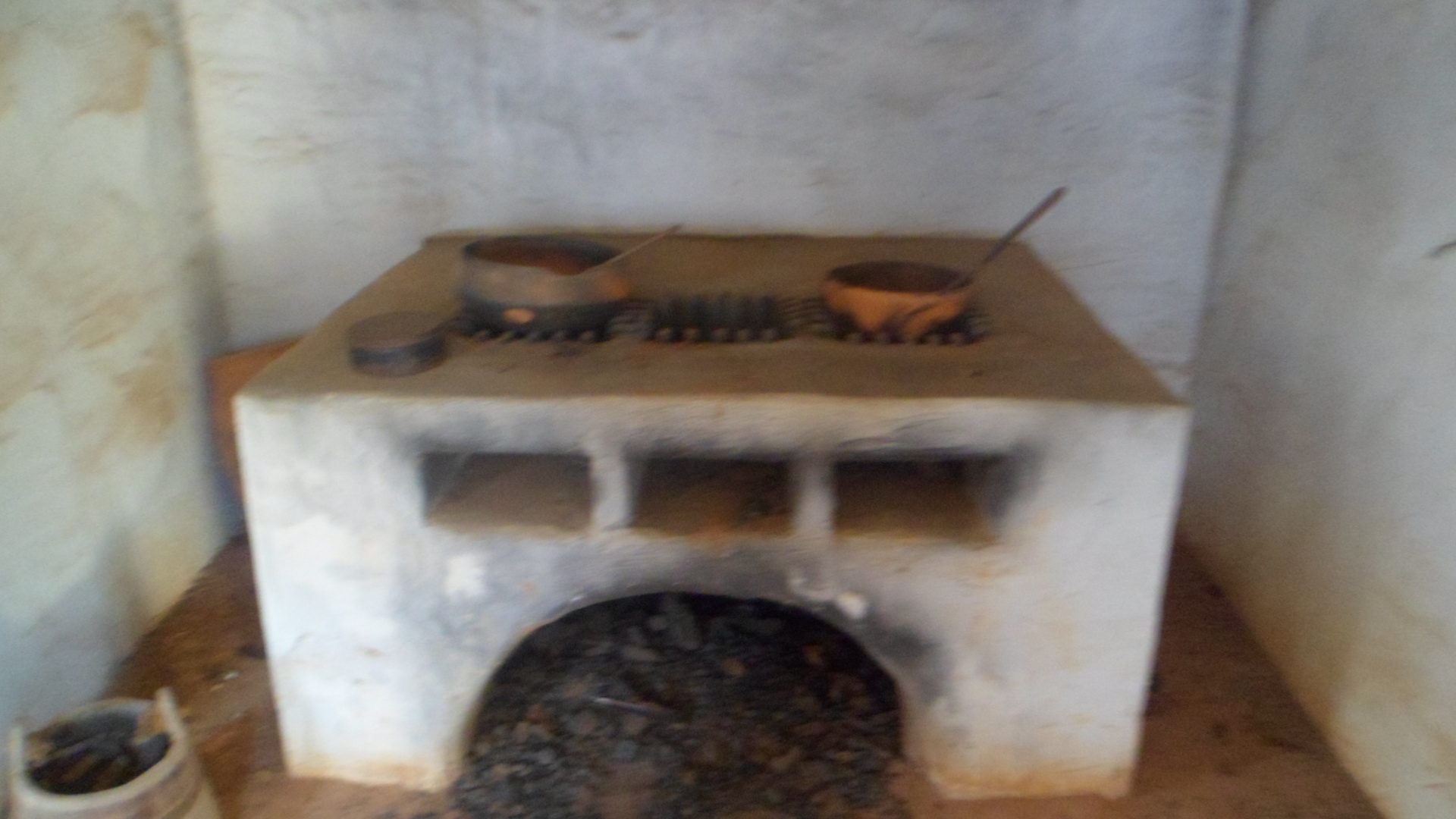
Cooking was done with this charcoal oven.
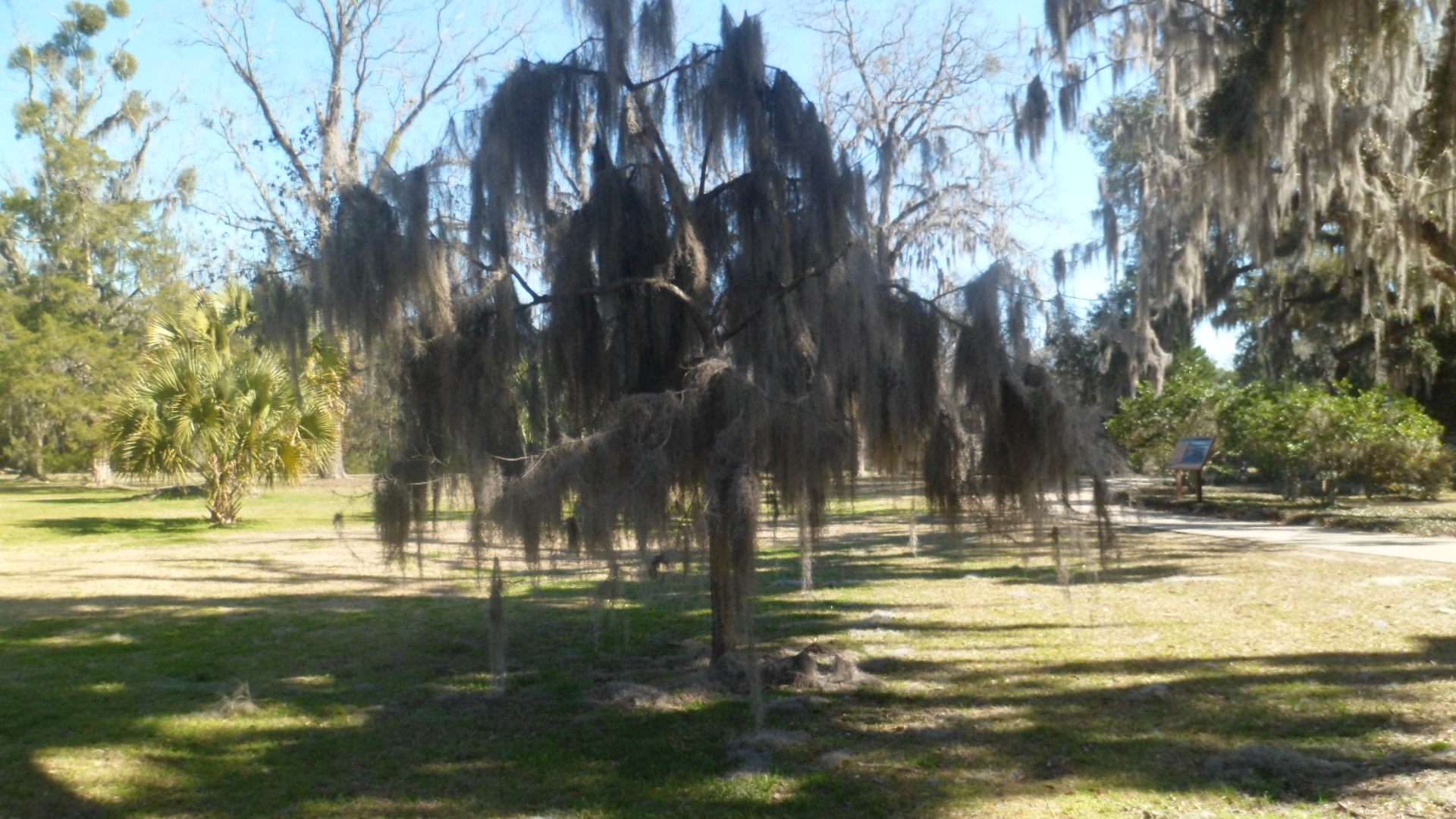
Spanish Moss covers many of the evergreens and laurels, throughout the Southeastern states.

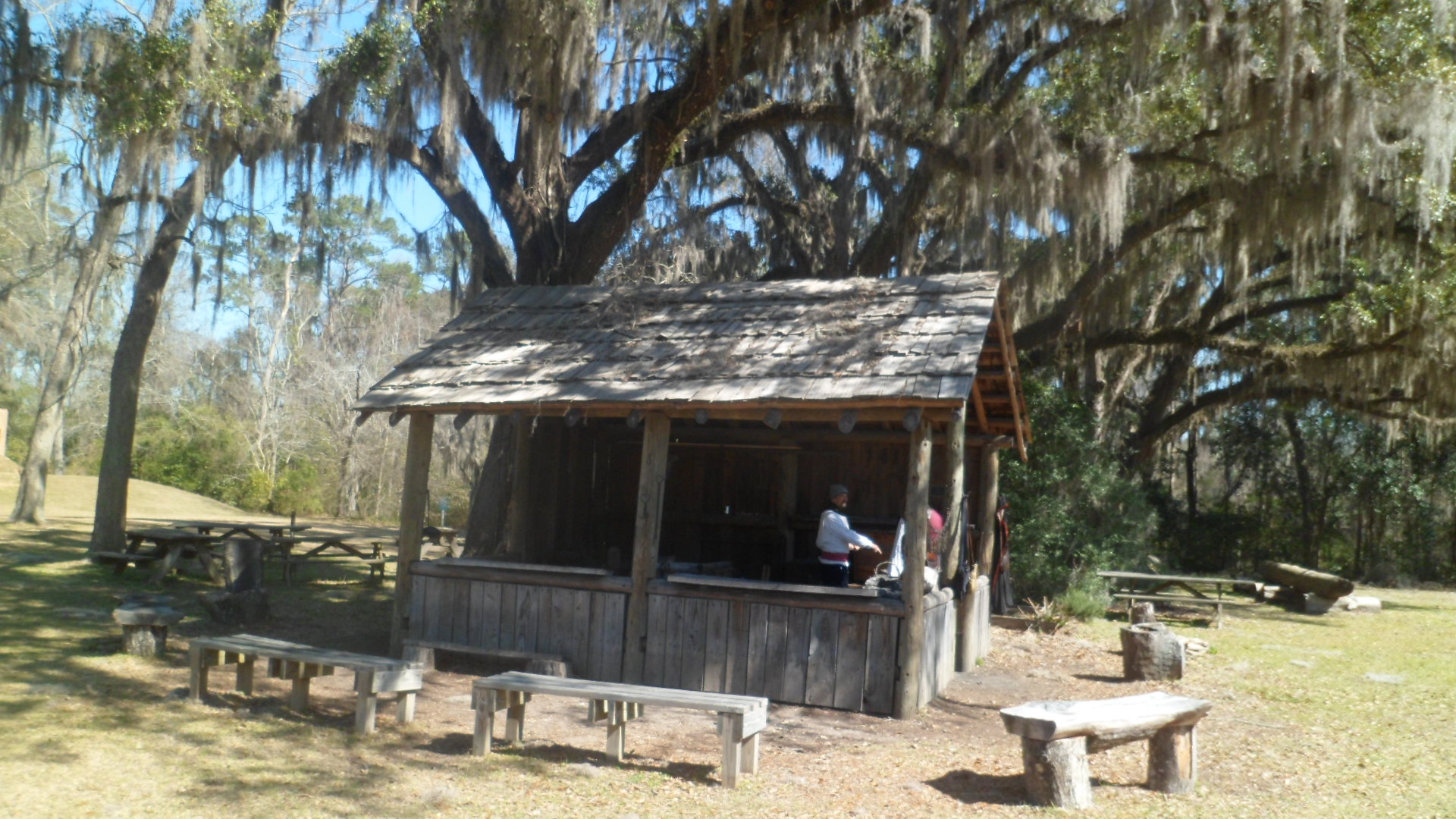
Two journeyman blacksmiths were breakng down their shop for the day, but graciously answered my questions, as to the nature of their work at the Mission, which is primarily tool-making, as opposed to farriership. The Master Blacksmith does repair munitions, though.

This blacksmith shows two pot hooks, with grooved grips that allow the cooks to lift the pot off the stove or out of the cookfire, in the absence of hot pads. The heat does not conduct through the grooves.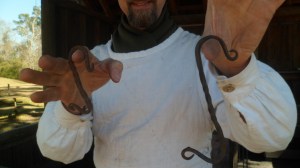
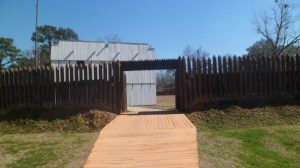
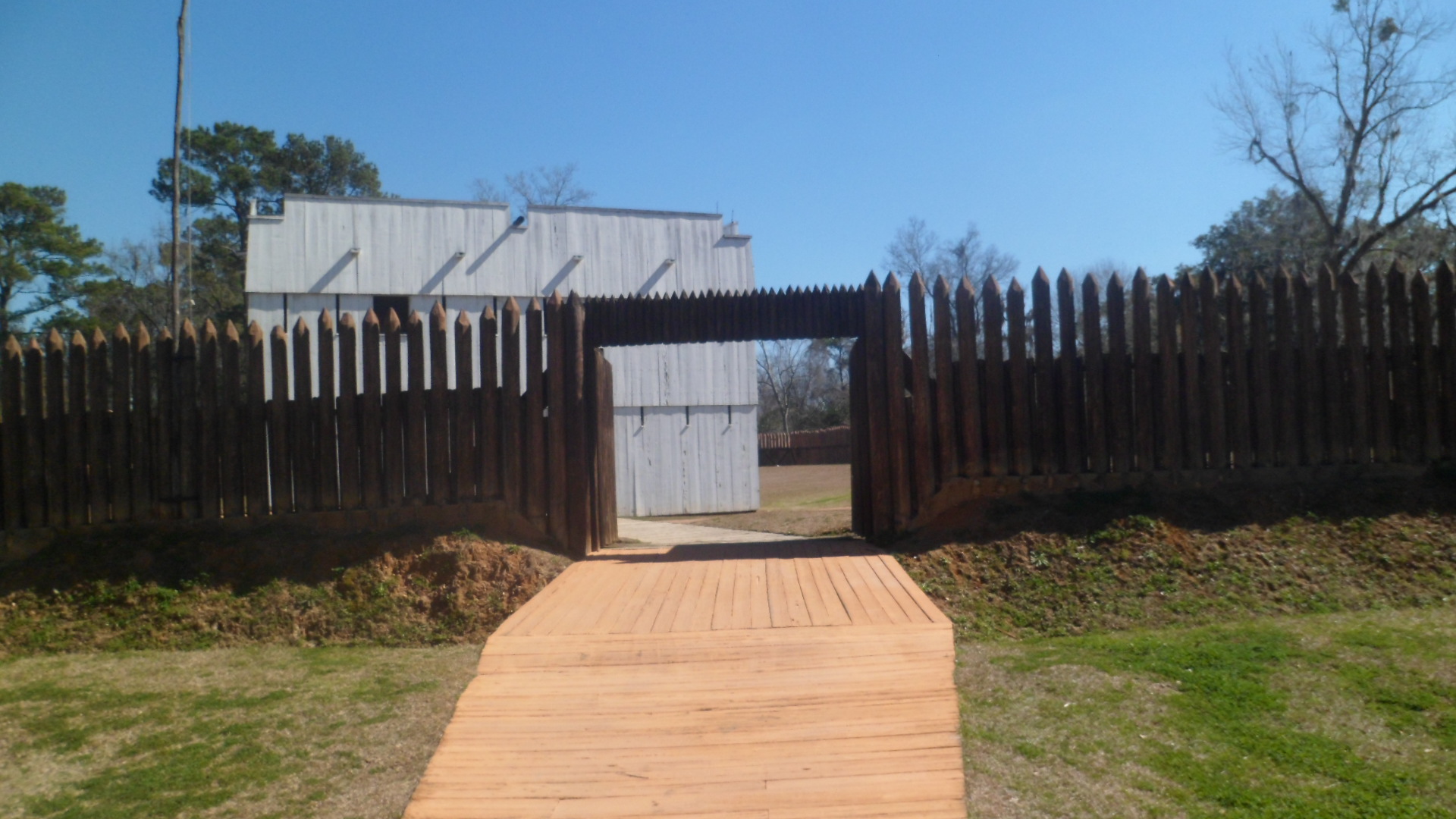
This is Fort San Luis, where a garrison of Spanish and Apalachee troops were housed and trained.
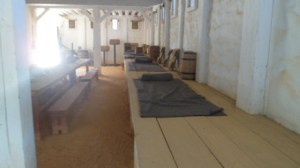
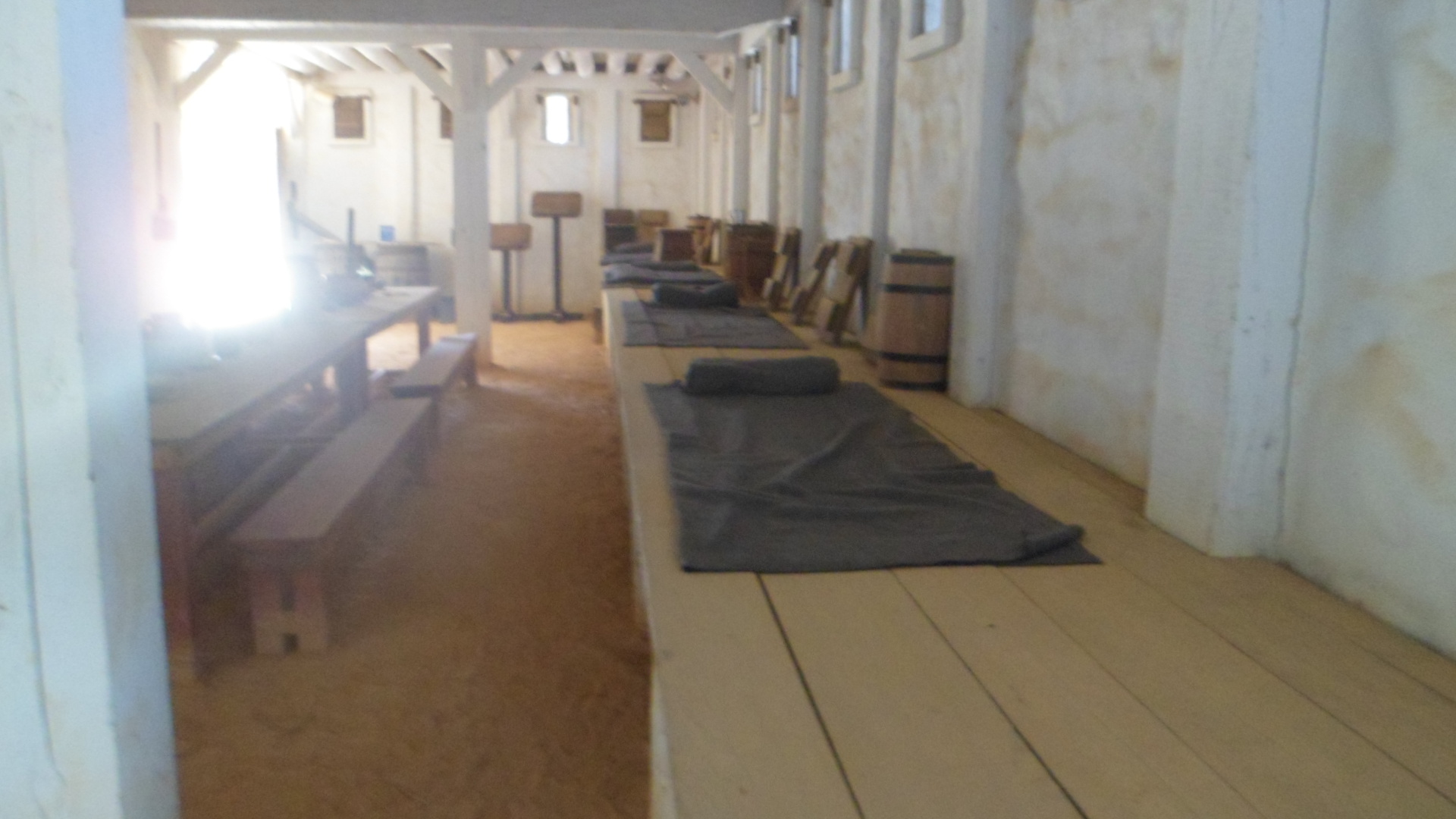
The men slept on mats, atop platforms, in the style of the Apalachee people. It is said that the Apalachee figured fleas could not jump higher than five feet. This is quite debatable, as fleas have been observed in labs, jumping ten feet or more.
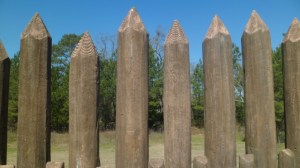
Note the points on the fence poles.
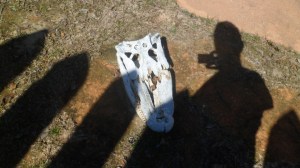
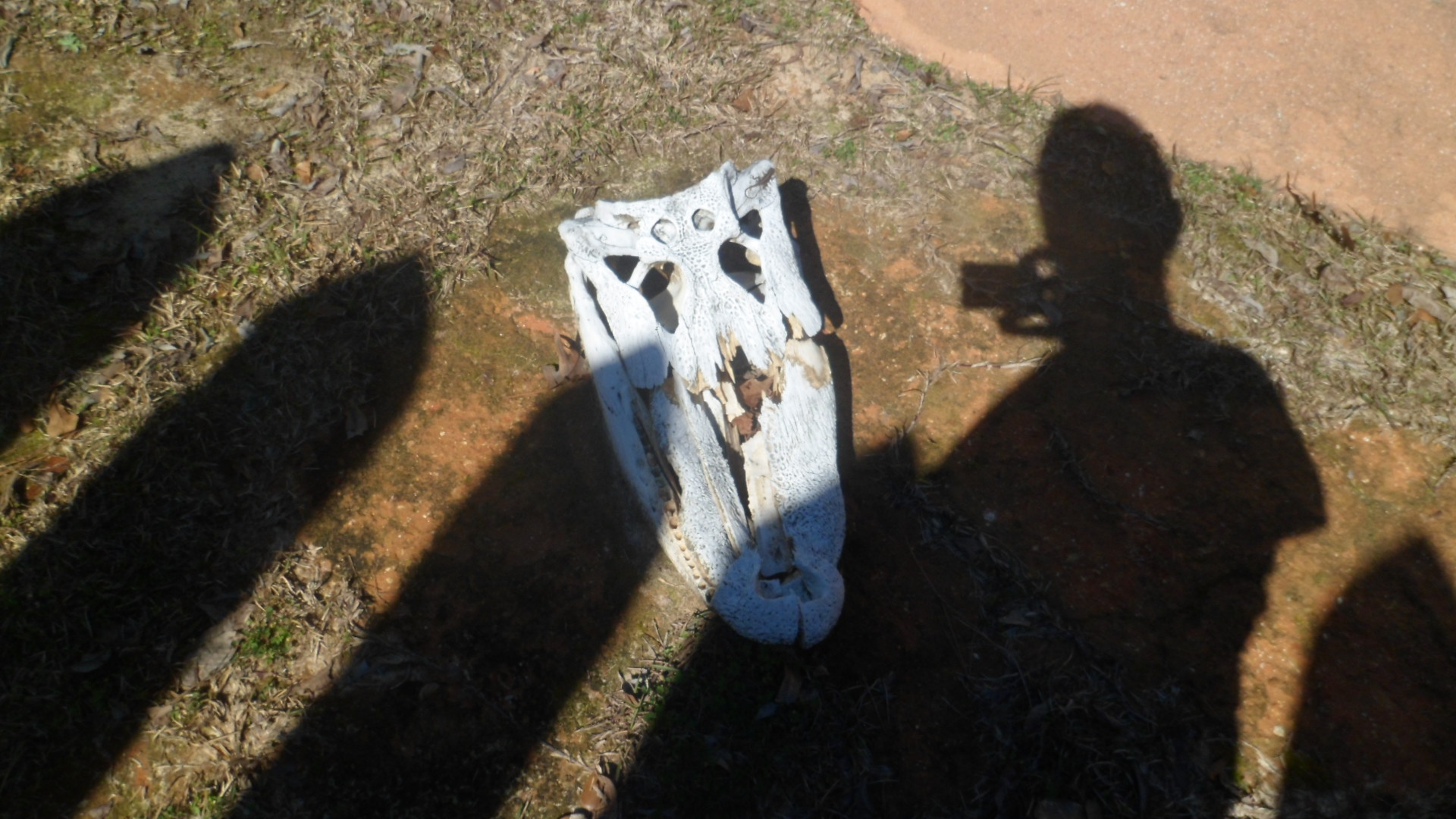
This alligator skull graces the northwest corner of the fort grounds.
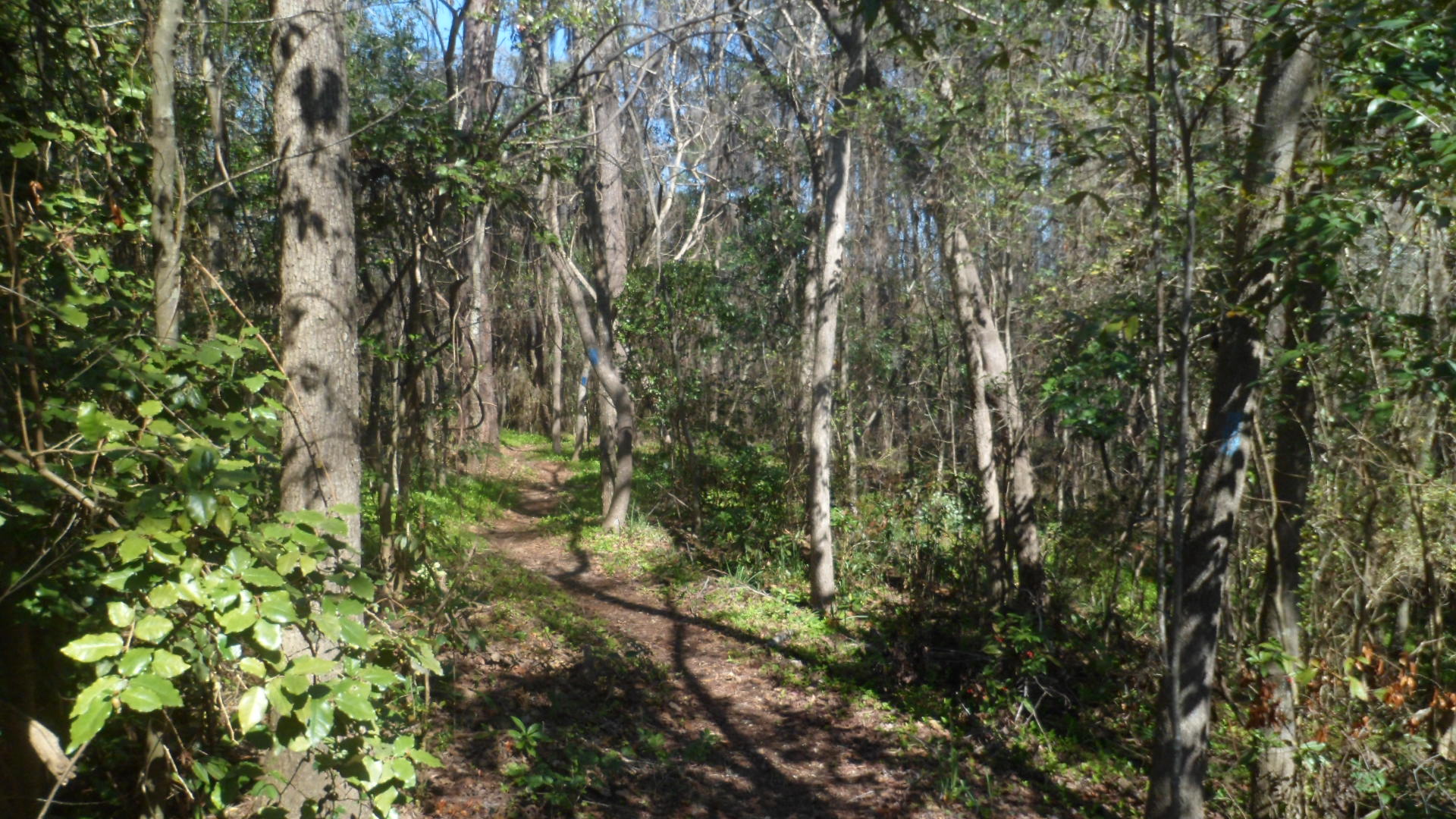
A nature trail borders the southern edge of the Mission grounds.
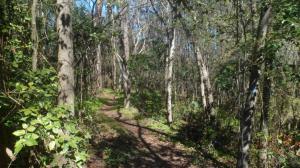
This spring house was built by American planters, and abandoned in the 1930’s.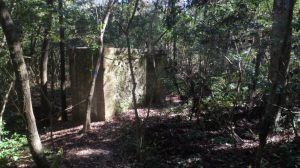
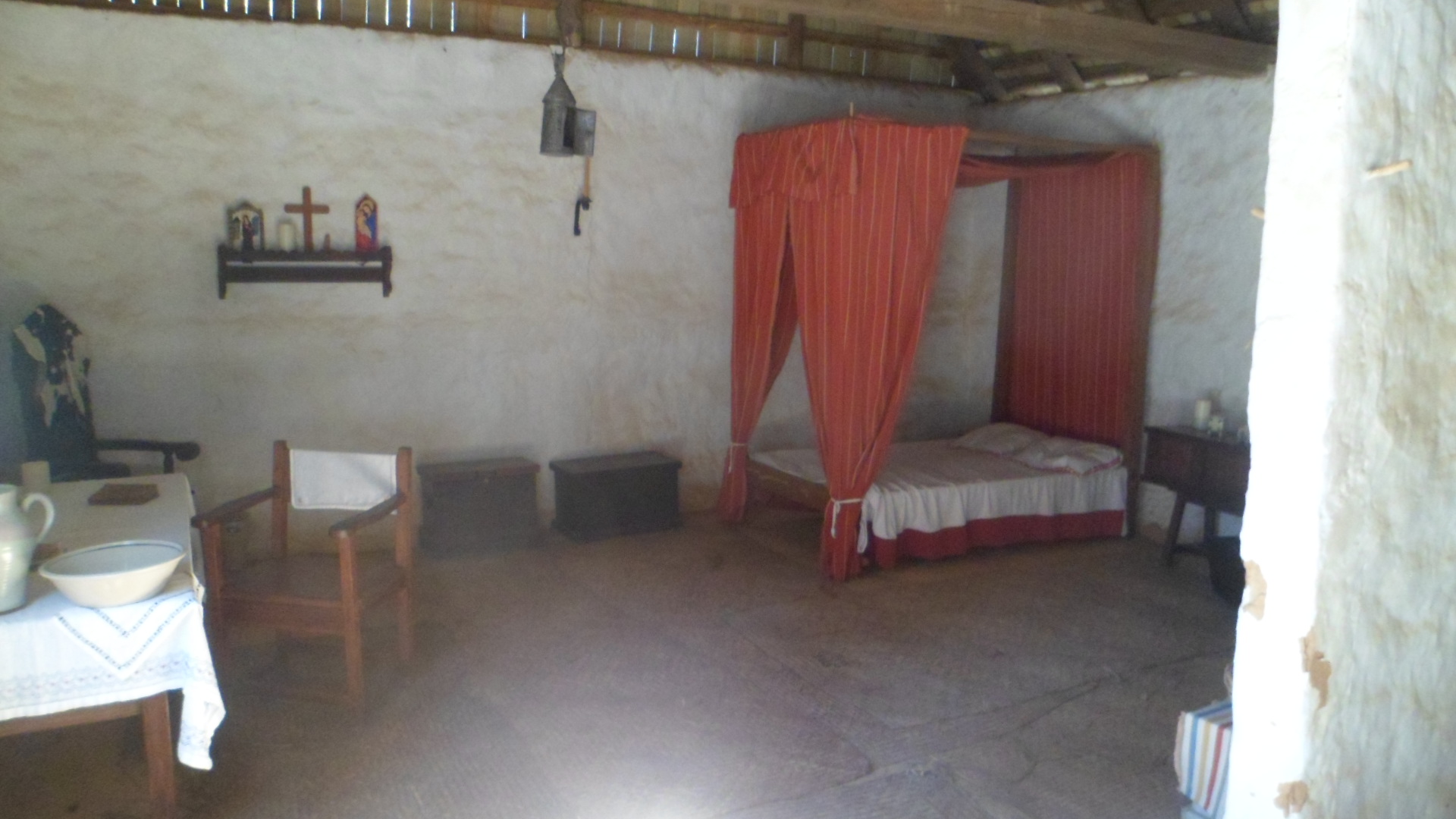
The house of the Deputy Governor houses His Excellency, his wife and at least five of their ten children, at any given time. The two adults slept in the tiny bed, the baby in a cradle and the older children on floor mats. A cook was on hand today, to explain the extensive use of herbs, both for cooking and to rid the house of odors. She also showed the carpentry area, where wooden spoons, as well as furniture, were produced. Ceramics of the Apalachee were rounded; those of the Spanish were flat.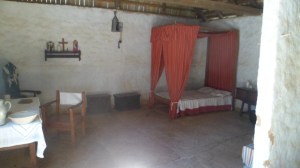
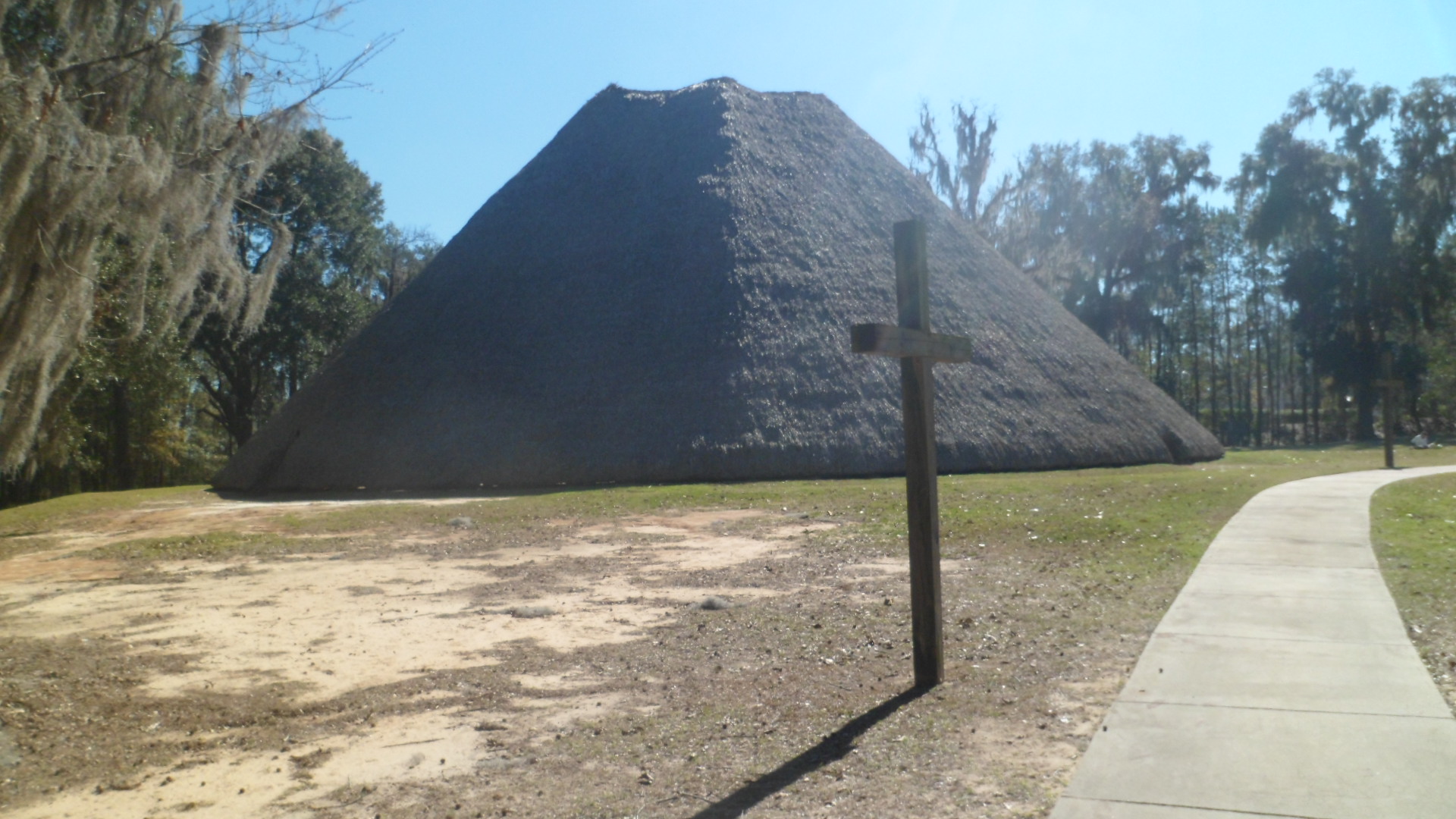
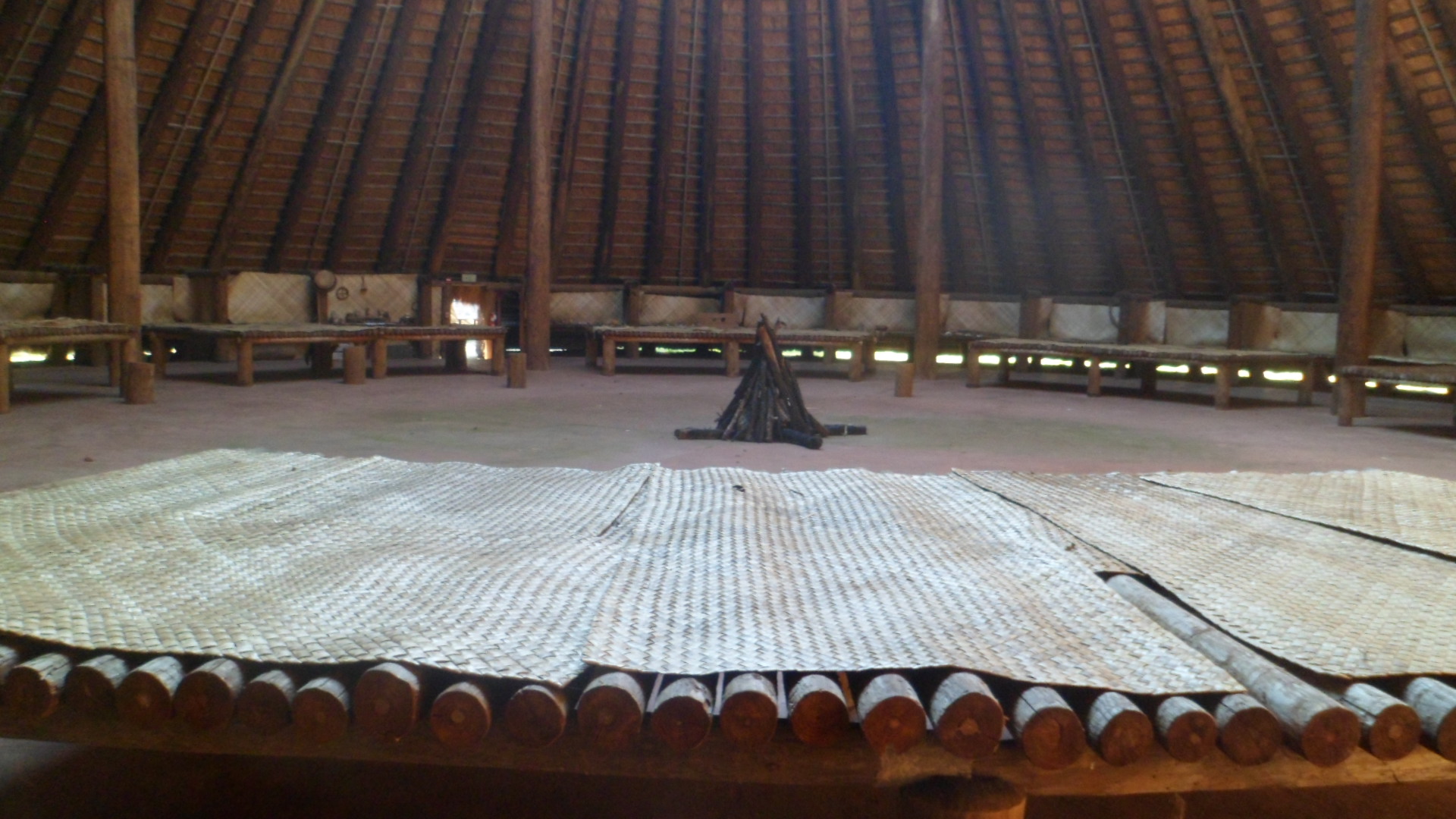
Here is the Apalachee Council House. Like public buildings today, it was a regular gathering place for the community, and could hold as many as 2,000 people.
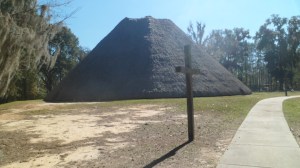
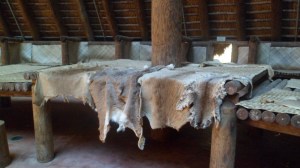
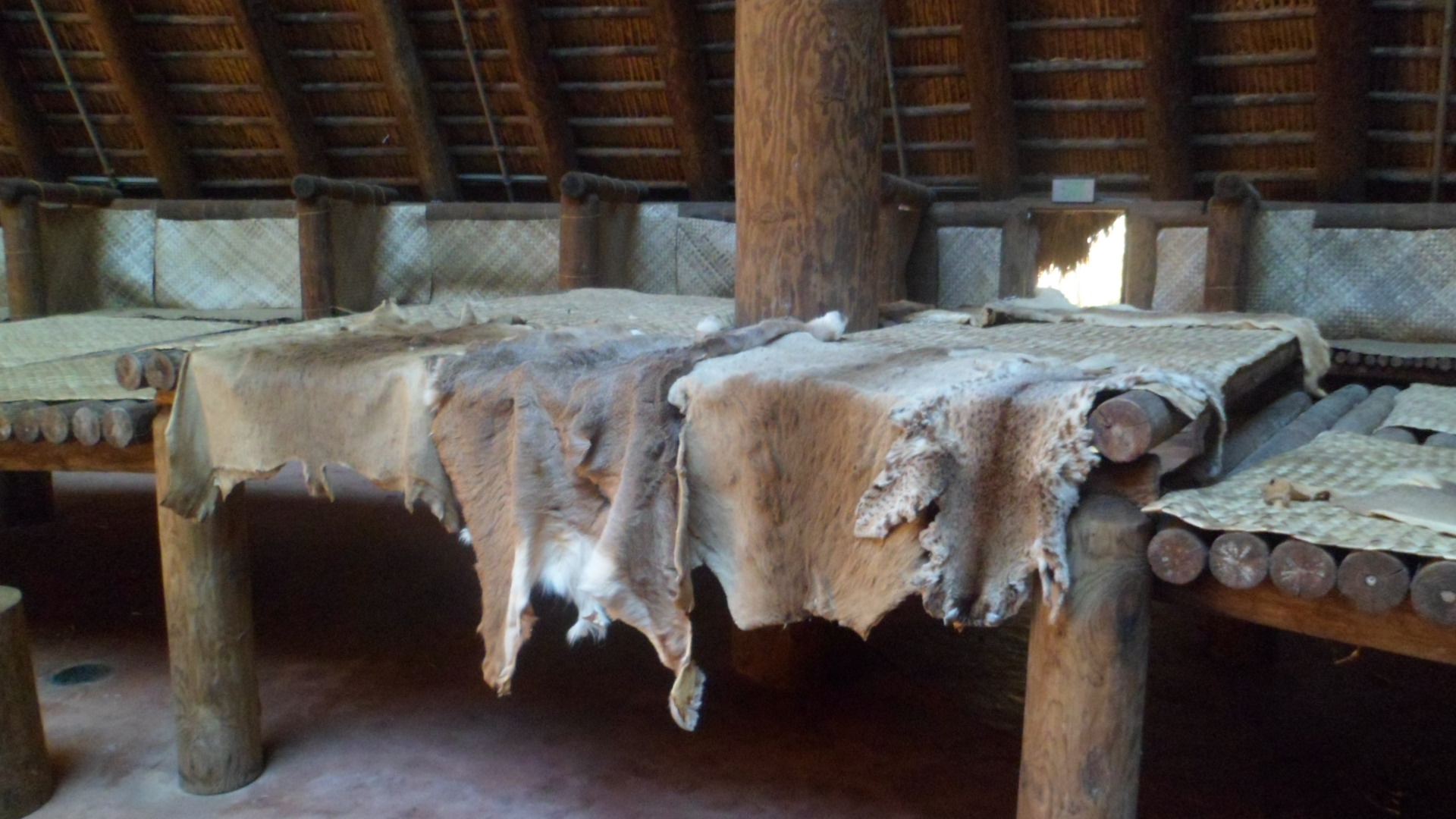
There was one entrance, warriors checked their weapons at the door, greeted the Chief, who sat on the highest platform, and sat either on lower platforms or on the floor.

Deer skins were used to cover the Chief’s and Elders’ platforms.
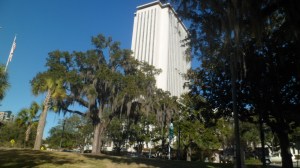
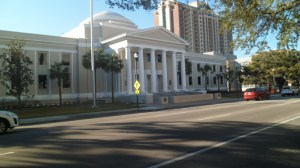
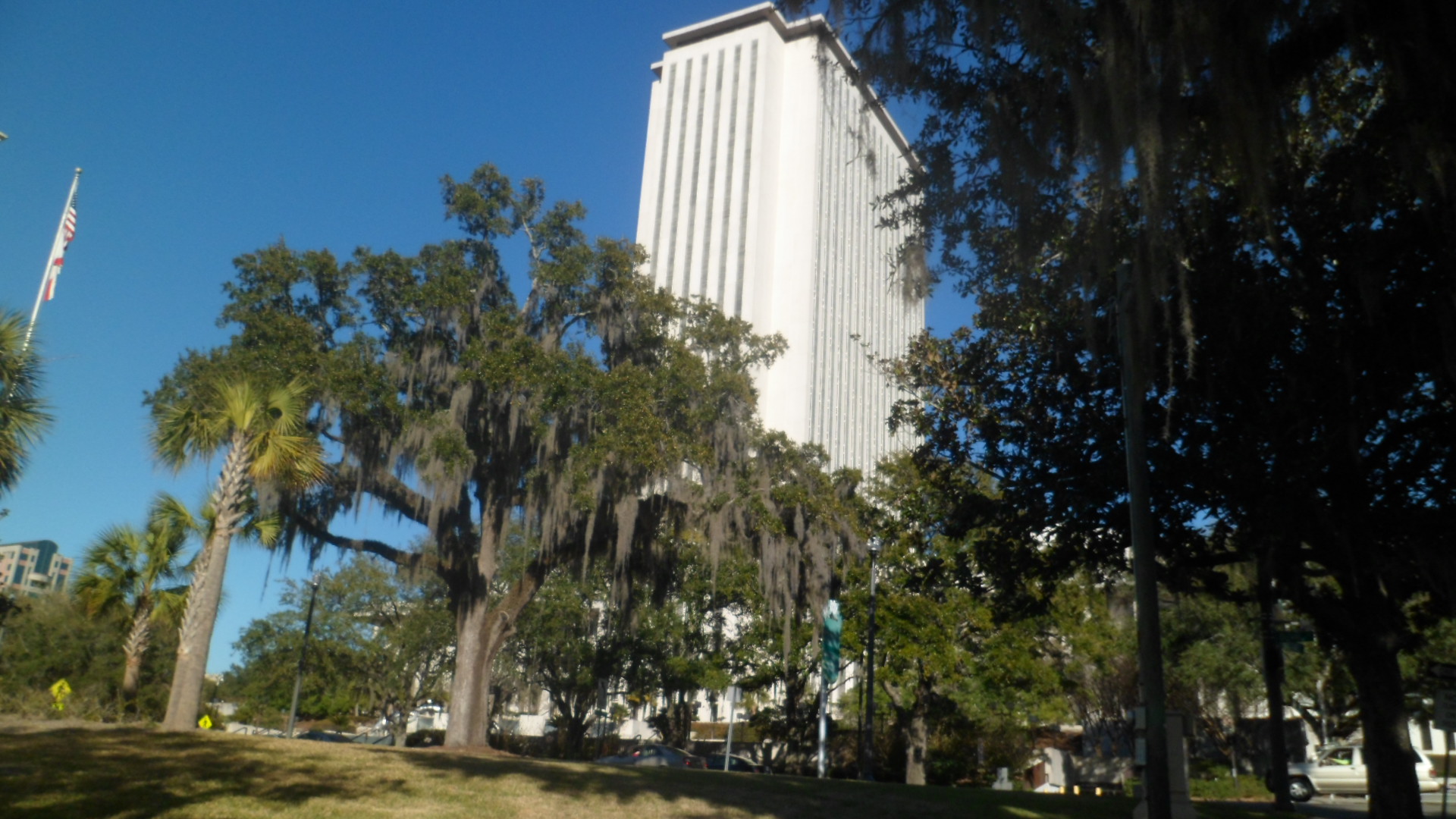
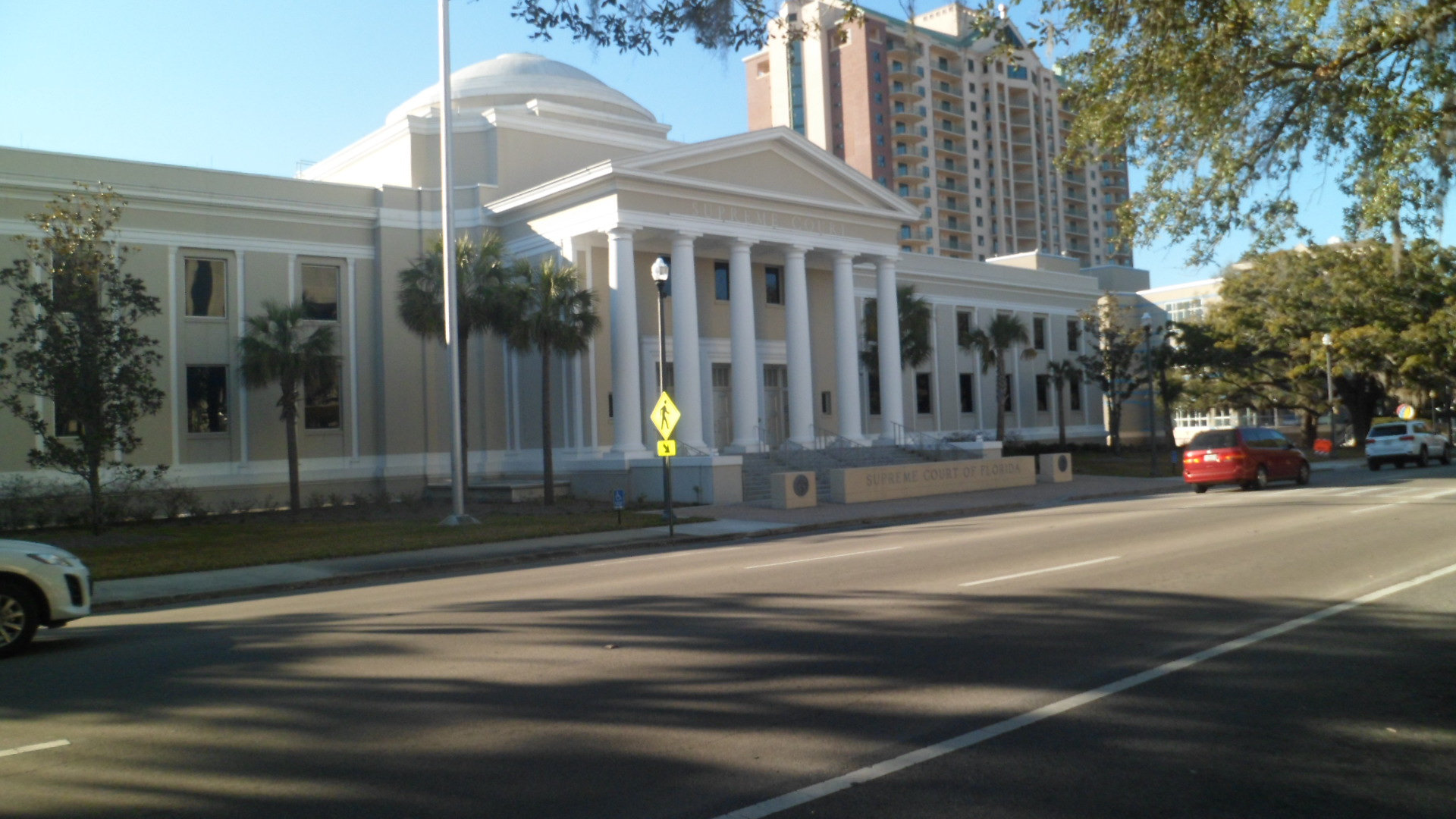
For contrast, here are the Florida State Capitol and Supreme Court buildings.
There is a lot about the early peoples of Florida that we have yet to decipher, and from which we could still learn.











 A Sagittarian Seeker