
November 25, 2025, Amarillo- Having been interested in prehistoric life since I was around 6 years old, I had to seize the opportunity to visit a place which I had sped past, about two dozen times, over the last 25 years: Mesalands Dinosaur Museum, in Tucumcari, New Mexico.
“Tucumcari Tonight!” was a billboard slogan that was shown as far west as Gallup and as far east as Clinton, OK., in the 1980s and ’90s. The little town’s motels and restaurants were billed as a fine halfway point between Albuquerque and Amarillo, in a bid to recover from the loss of traffic, after I-40 replaced U.S. Highway 66, as the prime east-west conduit in the upper South.
I’ve stayed in Tucumcari a couple of times and stopped for dinner there once. I found it a welcoming place-just a bit too far west, when I was going from Gallup eastward and a bit too far east, when going from Oklahoma City or Amarillo, westward. Today gave me the reason to take in the museum, as my itinerary was Moriarty to Amarillo.
The day started with a wonderfully flavourful “Classic Breakfast” at a Country Pride restaurant, on Moriarty’s west side. After about ten minutes, I was the lone diner in the place, a shame, as this Country Pride’s cooks and server seem to care about their customers. K looked bored stiff, but was pleasant and attentive to me and to those who were about to leave. I felt sorry for her, but she said this is the way in Moriarty, from October to April-slow traffic at the Travel Center. I wouldn’t have guessed it was Shoulder Season last night, though, as the nearby Nachos Mexican Restaurant was packed.
I left Moriarty around 9:15 and headed towards Tucumcari and Amarillo, stopping for gas at some friends’ station in Milagro, a rural stop about halfway between Moriarty and “Tuke”. About five miles west of Tucumcari, there was a one car accident, closing the highway fro about twenty minutes. Some people decided to cross the grassy median, and drive west to the frontage road at Cuervo, then head back east. I thought better of that and stayed put, not being in any particular hurry.
Once traffic resumed, it was not long before I was in the first section of Mesalands, the Early Life exhibit, focusing on ancient sea life: Trilobites, ammonites and prehistoric insects are prominent in the collection of fossils from the Cambrian and Carboniferous Ages, the time before the emergence of amphibians in the Permian Era. There are then open rooms displaying fossils and bronze castings of dinosaurs and related reptilians, early avians and some mammalian megafauna. The Triassic, Jurassic and Cretaceous Eras are all well-covered. A small section is devoted to the Cenozoic Era, the modern time of mammals, including us humans.
This being a largely fossil-centric institution, minerals have their place in the exhibits, including the Shanks Collection, one of the loveliest mineral exhibits this side of Jerome State Park, in Arizona, which to me is the Gold Standard for mineral displays. Howard and Laura Shanks were keenly interested in the mineral and fossil troves of the Quay County area, collecting sizable amounts of all manner of unearthed gems, minerals and petrified animals and plants. These were donated to Mesalands Community College, in 2004, and the Museum was born. Paleontology has continued apace, with bronze castings and careful restoration of even large dinosaur fossils finding their places in this marvelous collaboration between Mesalands Community College and the people of Tucumcari.
Here are five photos from today’s visit to Tucumcari, Back Then.
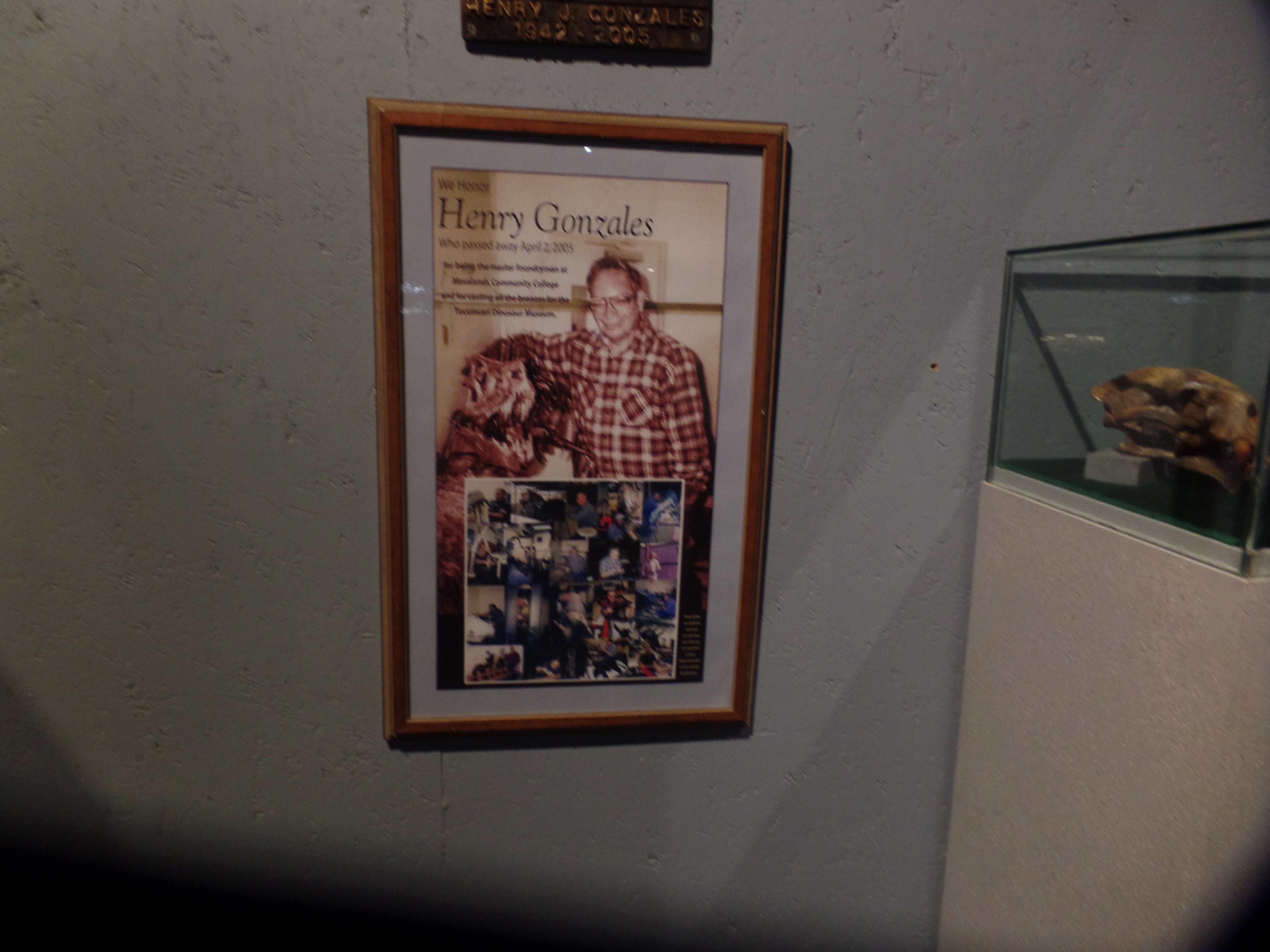


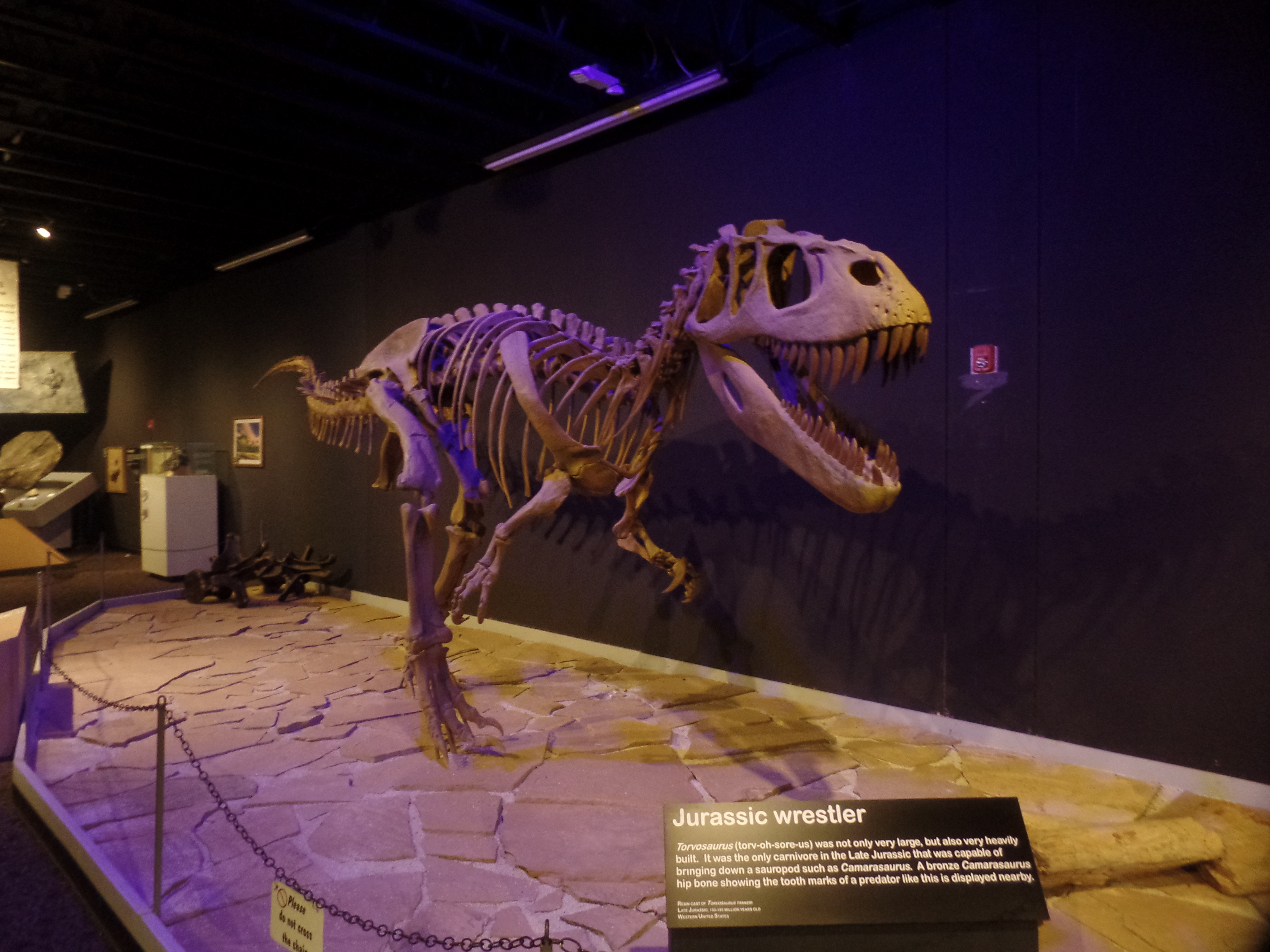

There was enough in this Best Kept Secret of northeastern New Mexico to keep me enthralled for two hours. Many more photos will be posted on my Flickr account: https://www.flickr.com/photos/86298326@N07/, over the next several days.
Now, I am resting at a Motel 6, on the west side of Amarillo. After breakfast, tomorrow, in this city’s “Fun Zone” (Old 66), I will make my way down to my little family’s home.
 A Sagittarian Seeker