October 5, 2025, Sarajevo- The bus driver had a long face, as we all boarded his vehicle, in Split. I don’t think the man’s demeanour changed much, even after he had a sit-down meal at a nice roadside restaurant. The weather was equally gloomy, but I felt a comfort that transcended both the driver and the skies.
We went down the coastal highway, very close to tourist haven Dubrovnik, and then turned inland towards Mostar and Sarajevo. Here is a view of the Adriatic from Jesenice, the first major town south of Split.
View from cliffs near Omis, Dalmatia
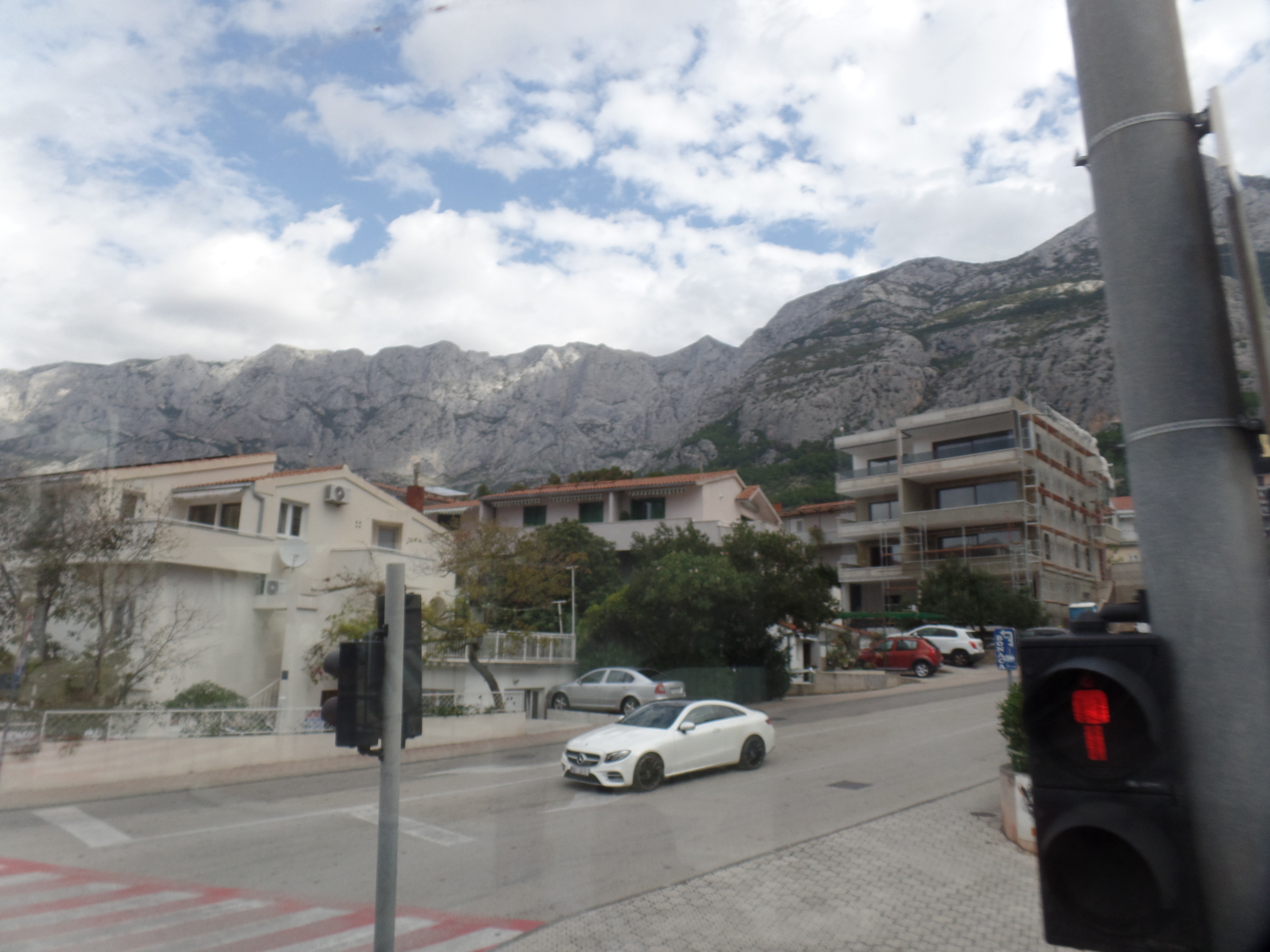
At Brela, the wonders shifted to the mountains above the southern Dalmatian coast.
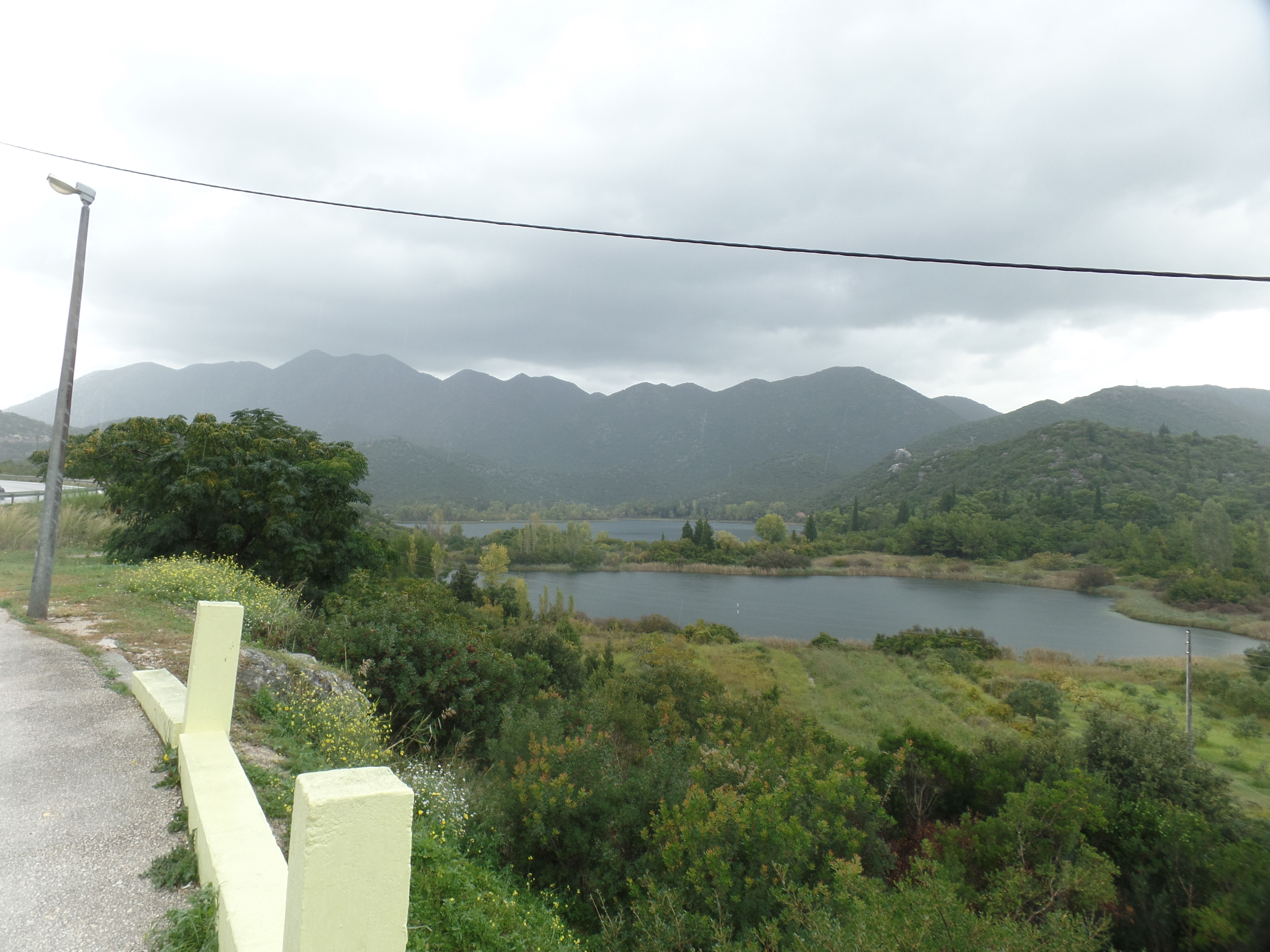
Limestone mountains above Brela, CroatiaHeading inland, near Ljubuski (Lee-oo-boo-skee)These lakes are near the well-known Kravica (Kra-VEET-sa) waterfall .
Passing through Mostar, a worthy stop in its own right (for me, maybe on a future Mediterranean visit), the weather was really getting nasty, but the mountains are always stunning.
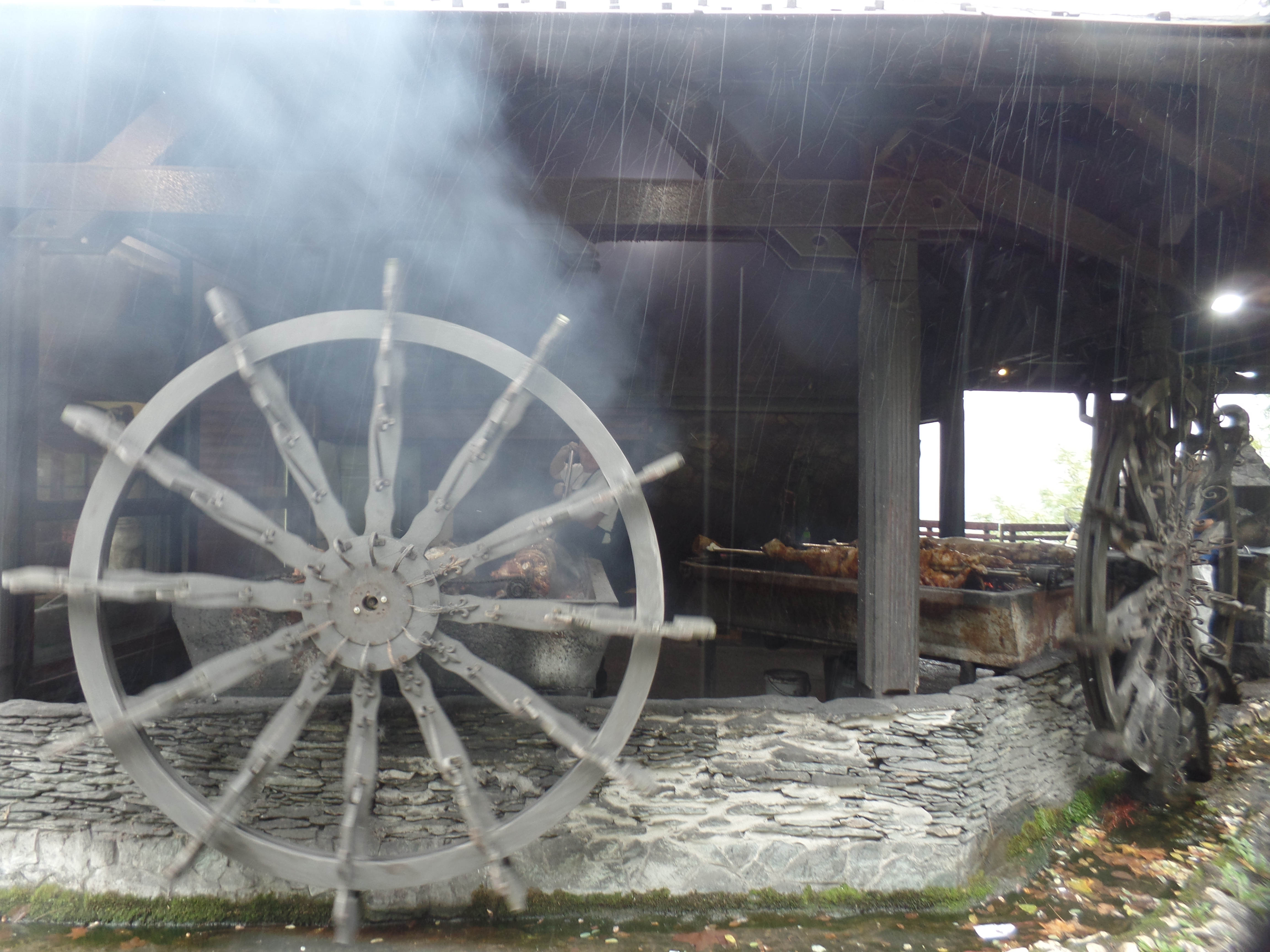
Prenj Range (Pren-yeh), outside MostarNeretva River, near Donja Jablanica (Donya Yablanitsa), Hercegovina. It was near here that we stopped and the driver had his lunch. I opted to wait until Sarajevo. Below, are the rotating barbecue wheels at Lamb House.Old-style roasting spits, Lamb house, Donja Jablonica
About an hour later, we were in Sarajevo. I caught a taxi in short order, and that driver, from Libya, was determined to find Guesthouse Yildiz. He was very close, but it took asking around the immediate Old Town neighbourhood to get the exact spot. Now, he has another hard-to-find address on his phone.
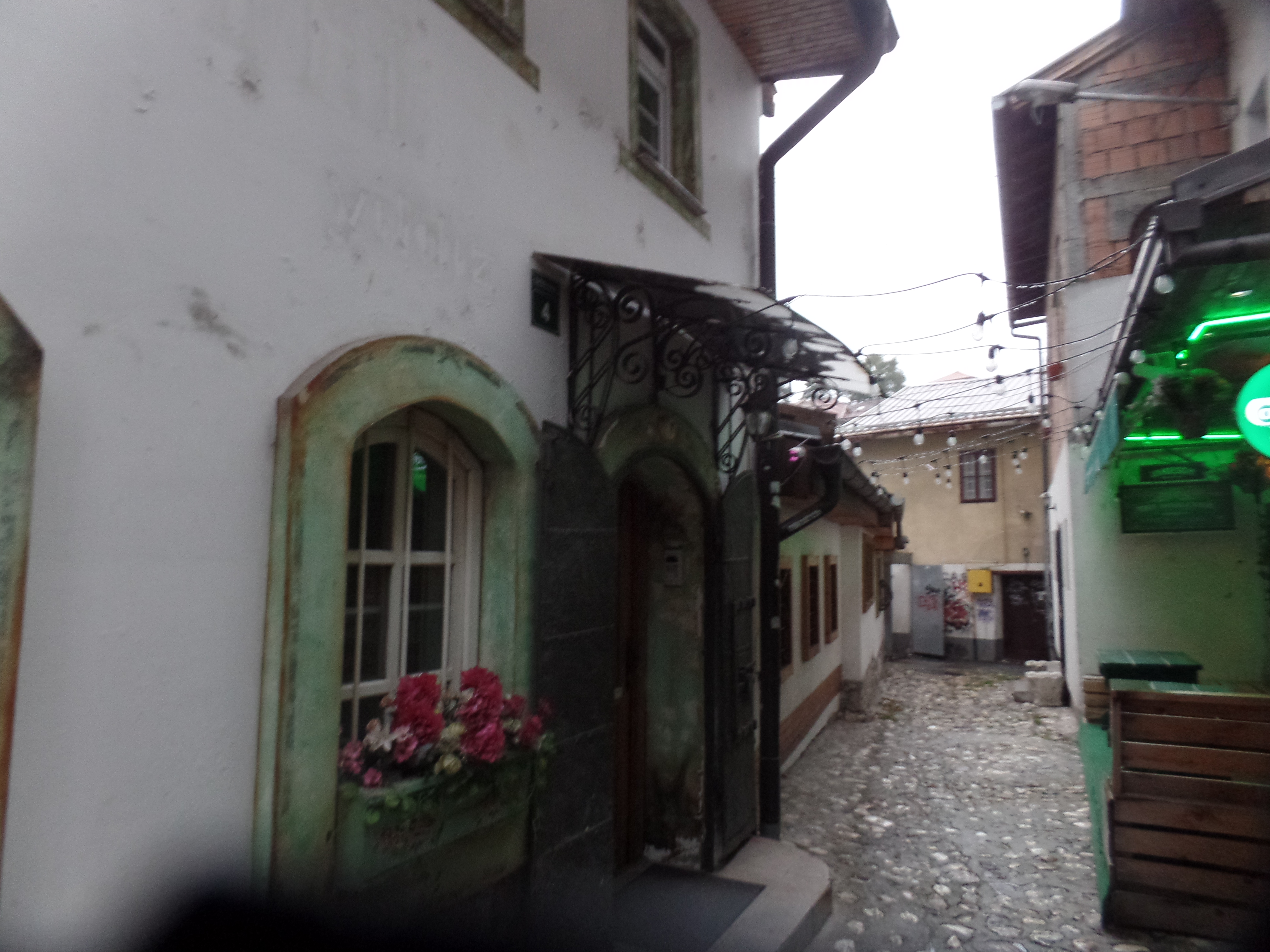
I found a gem of a place, with a dear young couple from Turkiye, the owners. (Since we’re on a pronunciation binge- it’s Tur-kee-yuh). Here is how to spot Guesthouse Yildiz, on a short alley way off Old Town Sarajevo’s main road.
Guest House Yildiz, Old Town Sarajevo
Here is the junction of Yildiz’s street, with the main road through Old Town.
Intersection near Guesthouse Yildiz
I was in a comfortable place for the evening, and after a well-prepared dinner of Chicken Stir Fry and rice, settled in to get ready for tomorrow’s visit to Srebrenica.
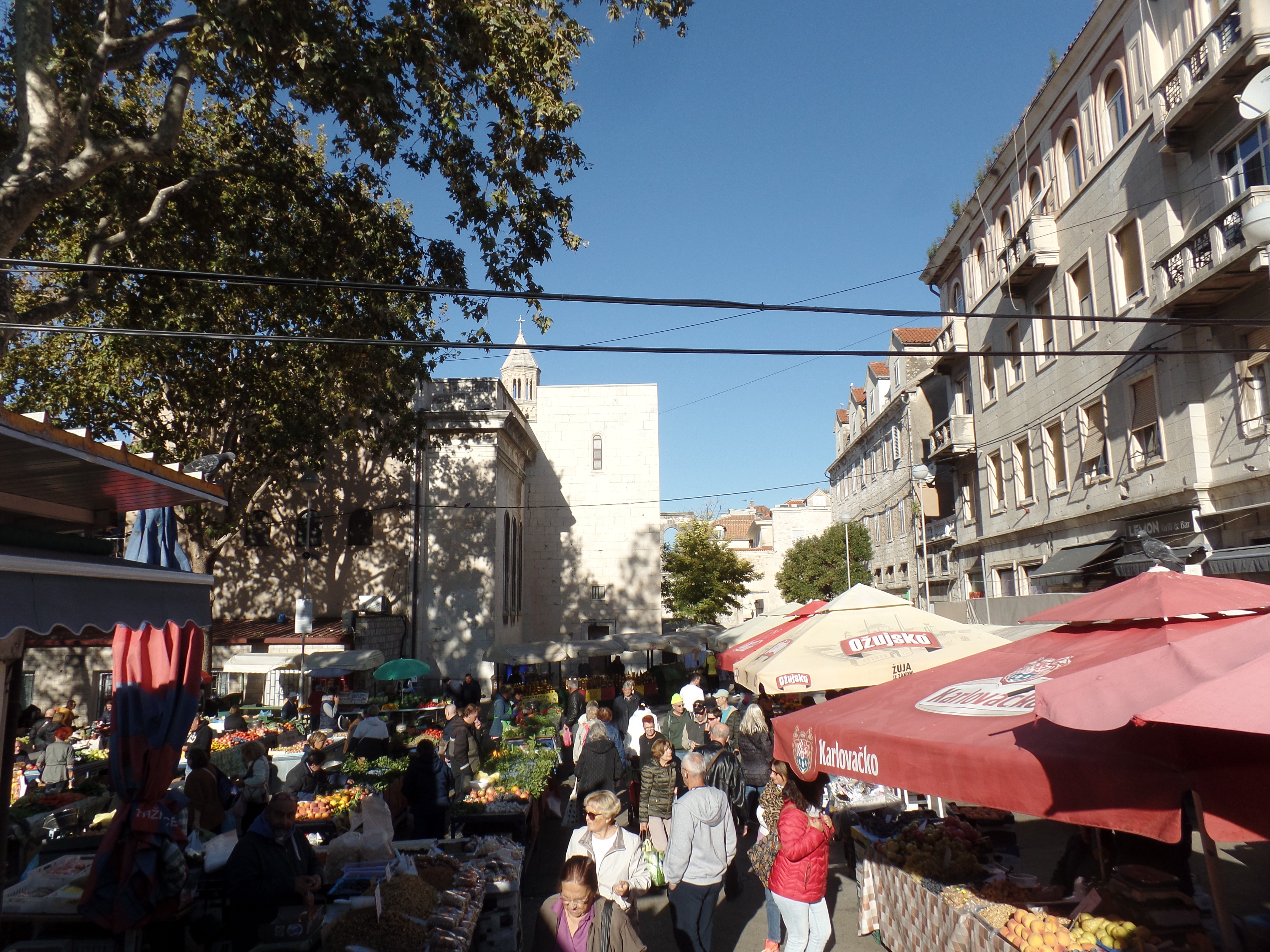
October 4, 2025, Split, Croatia- Boris met me at the designated spot, which I found only by happenstance. This was another of those “We can’t help you because you have no Internet connection” catch-22s that Spectrum/Safari plays with abandon. (They are the ones denying Internet service, btw). I went to Pazar 1’s gate and waited just a bit-and there he was, telling me that I looked more like a Croatian local than he would have imagined. That felt good.
Pazar 1, Split
Our game plan was a full one: We walked through Pazar (the city market since Ottoman times, or longer.) The south and east areas of Diocletian’s Palace were next on the agenda. Diocletian was a native of this area, an Illyrian, born and raised in Salona, over the mountain, from what is now Split. He rose through the ranks of the Roman Army and became co-Emperor, at first along with Maximian in 286 AD/CE. This started the process of the Empire being divided into East and West. Diocletian built his palace at Spalatum, claiming the East for himself. Although he was an autocrat, Diocletian went along with Maximius’ plan to further divide the Empire, this time into four units, with Galerius and Constantius as junior co-Emperors. This arrangement actually helped the Romans defeat Persia, in 200, with the sacking of the Persian capital, Ctesiphon.
Diocletian carried out a bloody, but unsuccessful campaign to eradicate Christianity in the Empire. When the campaign failed, Diocletian retired from imperial duties, in 305. Co-Emperor Constantine, son of Constantius, recognized it as the official religion of the Roman Empire in 324. He lived out his days at this palace of Spalatum, now known as Split.
Pazar 1, east gate of Diocletian’s Palace and the Church of St,, Domnius
Domnius was sent, by the Apostle Paul to Dalmatia, the region that encompasses Croatia’s coast and the immediate interior, to preach the Gospel to the Illyrian people. Despite Diocletian’s imprisonment and execution of Domnius, in 304, Dalmatia became a steadfast Catholic region, under the encouragement of Constantine. Croatia is still a largely Roman Catholic country, as is neighbouring Slovenia.
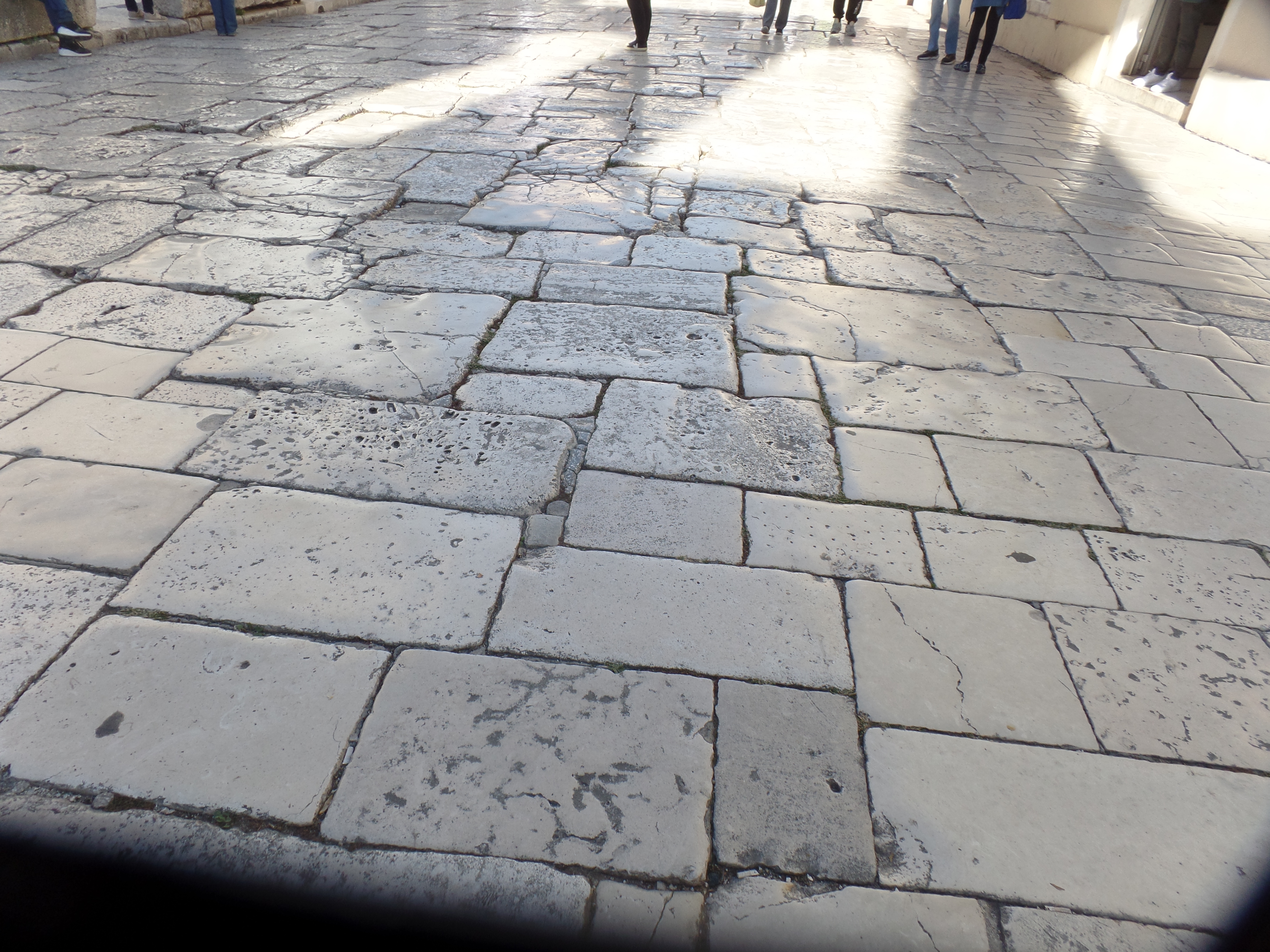
Church of St. Domnius, SplitOriginal paving stones from the time of Diocletian
Here is a more complete view of the east and south areas of Diocletian’s Palace.
South courtyard of Diocletian’s Palace, Split
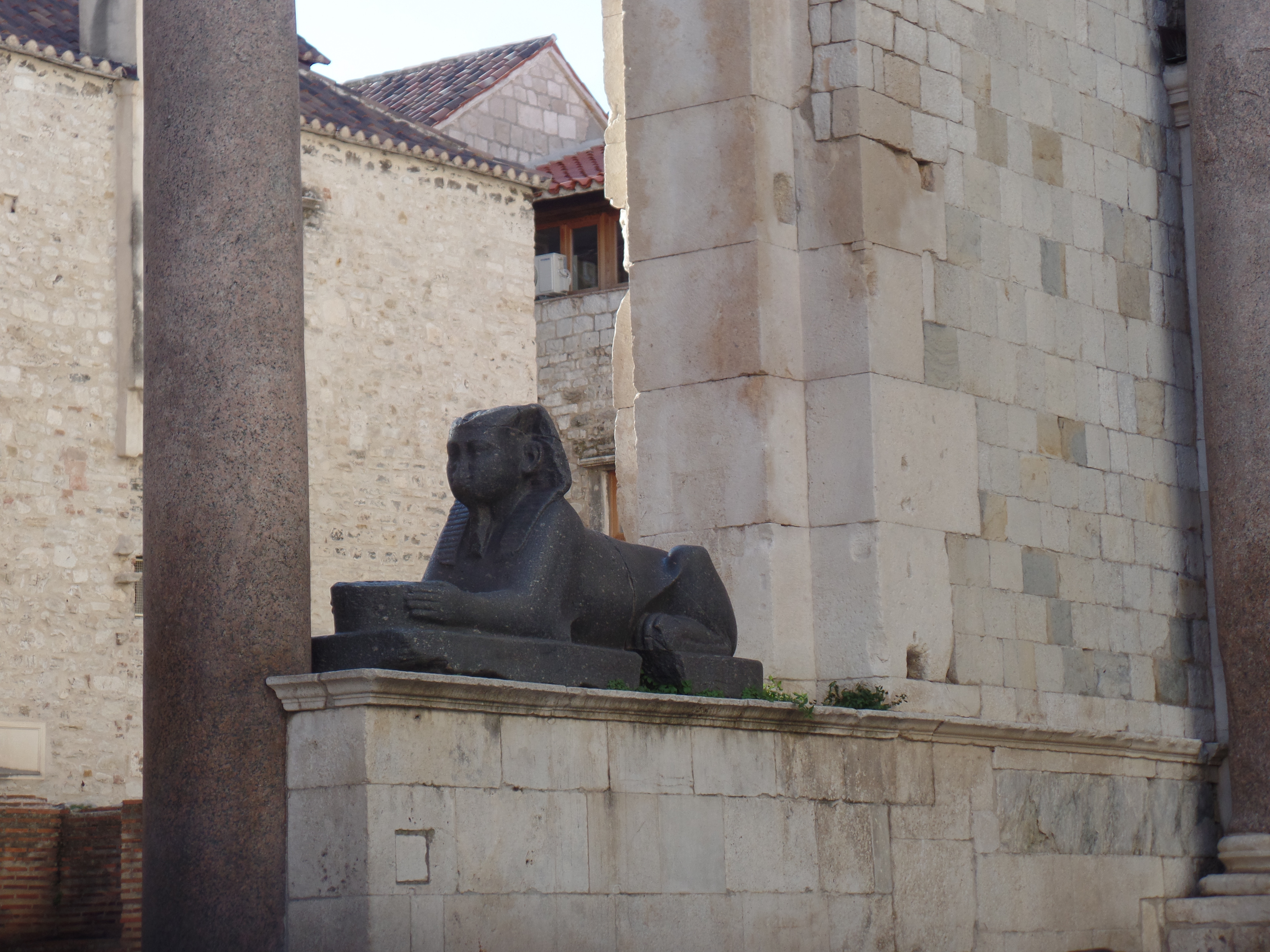
Diocletian’s Palace is the only place, outside ot Rome and Gizeh, that still has sphinxes (There are two here).
One of the two Sphinxes of Diocletian’s Palace, Split
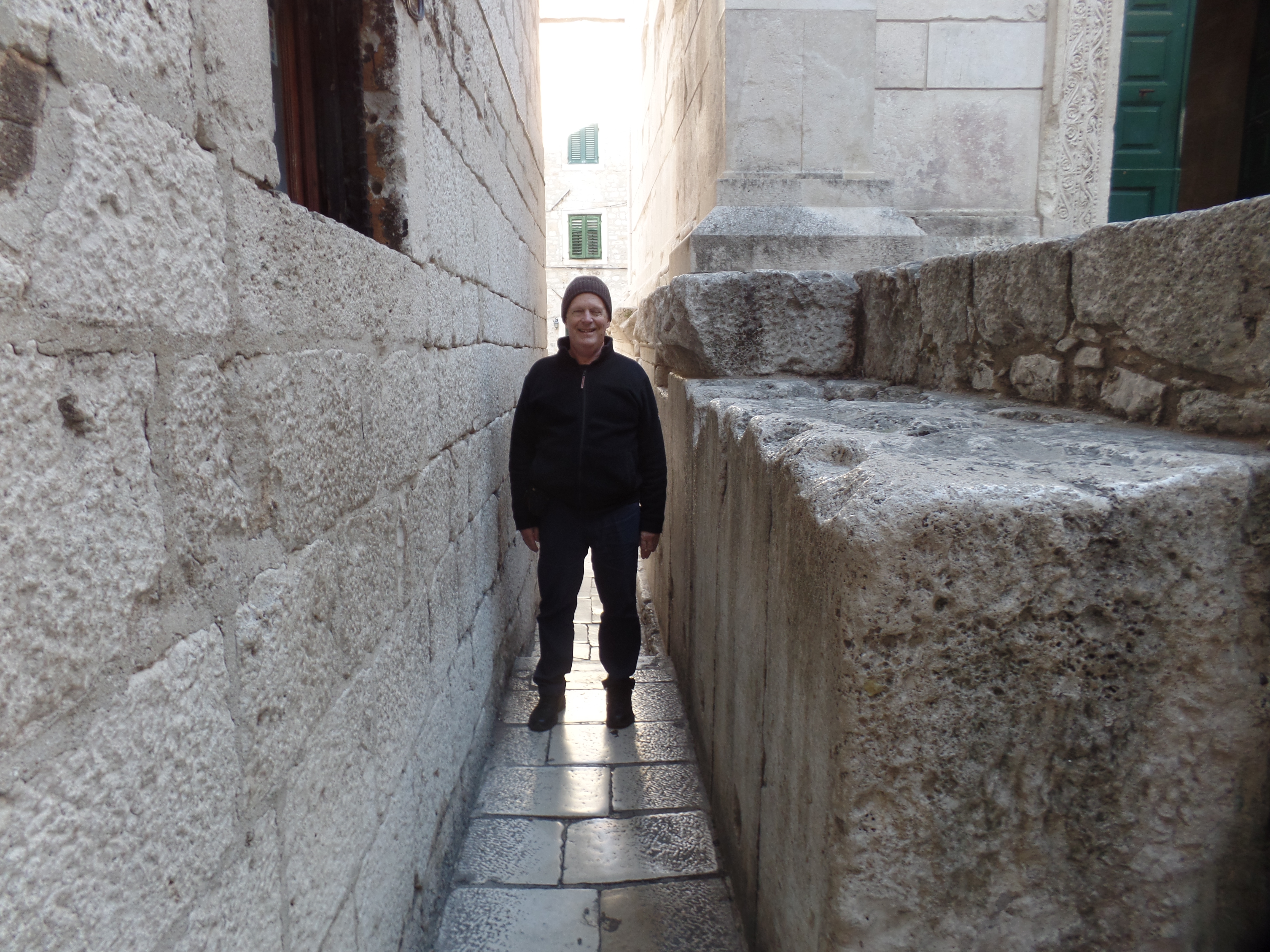
We left this part of the palace, heading toward Marjan (marYAN) Hill. To get there, we had to pass through the “Street that can fit only one at a time”. Here I am, having gotten through it.
“The street that can fit only only at a time”.
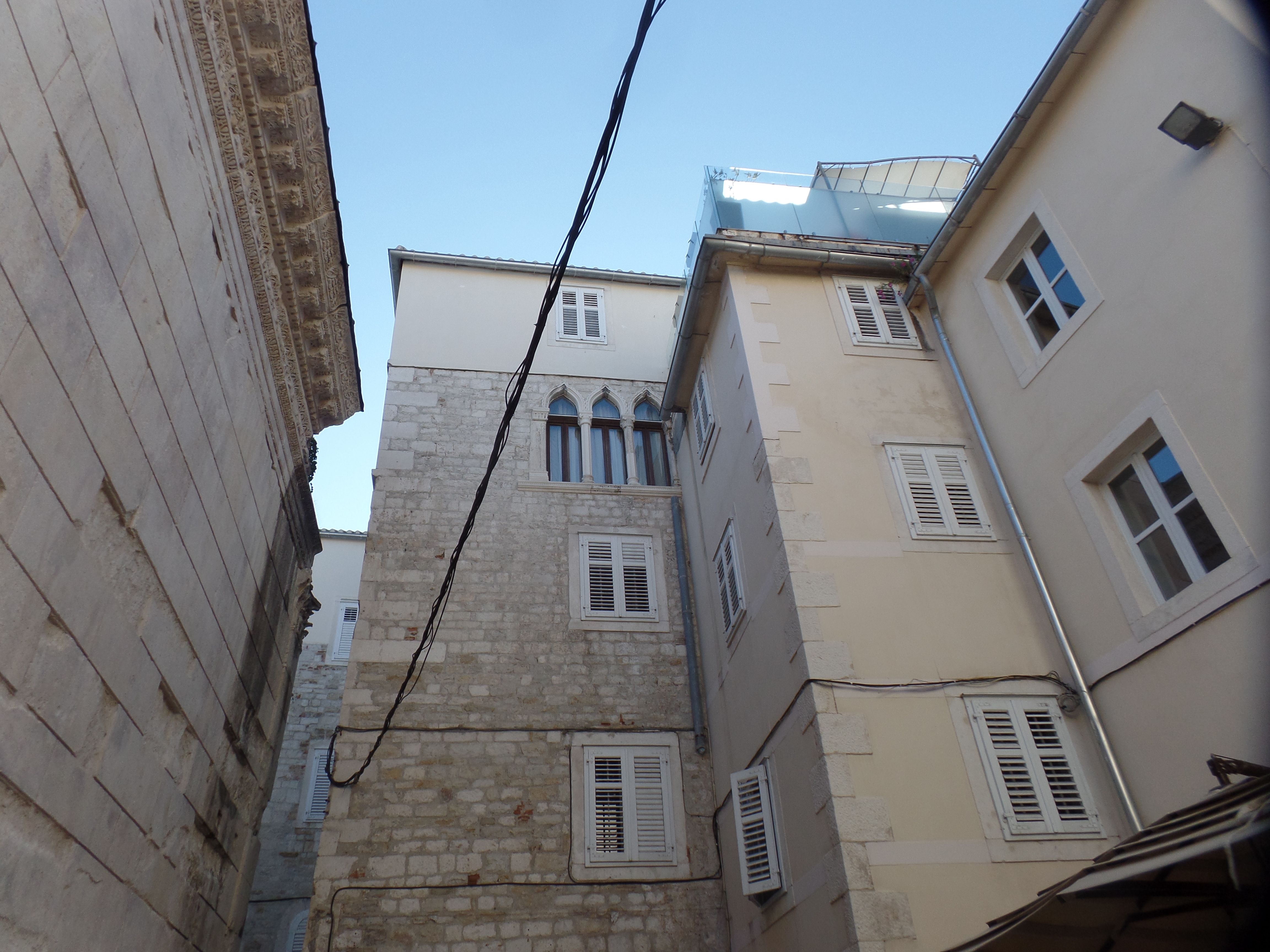
The next photo shows the melange of architectural styles that can be found in Split’s oldest neighbourhood. These are Roman, Venetian,Ottoman, and Austrian.
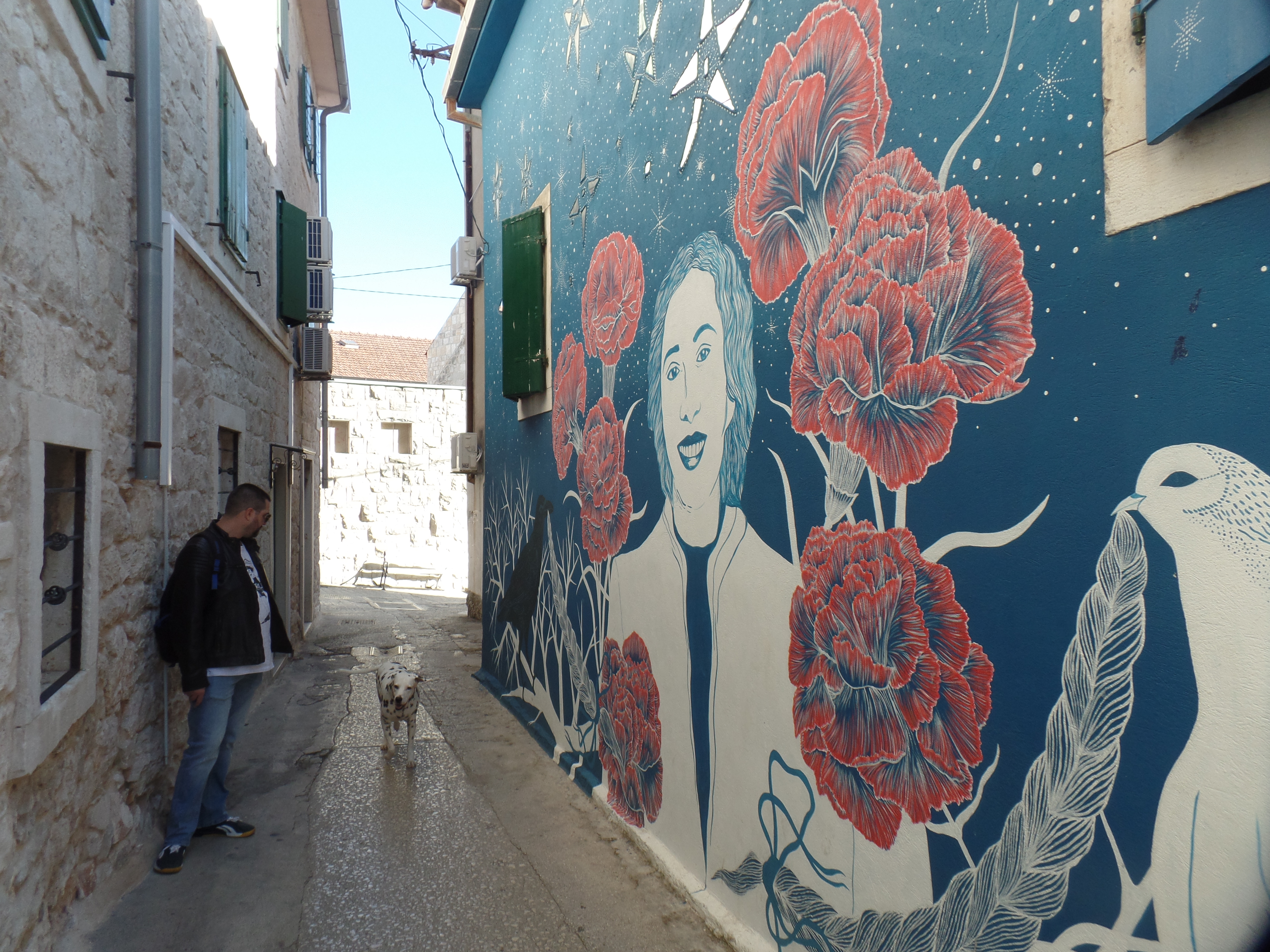
Four styles of architecture, in one neighbourhoodThe place to be seen in the Split of the mid-Twentieth Century.A martyr for freedom from Fascism-and a Dalmatian
Vahida Magajlic was a Croatian Muslim, who fought the puppet regime that was installed by the Nazis in Croatia. She gave her life for the freedom of Croatia-and of all Yugoslavia.
We took many steps up Marjan Hill. (Mar YAN).View from first overlook, Marjan Hill
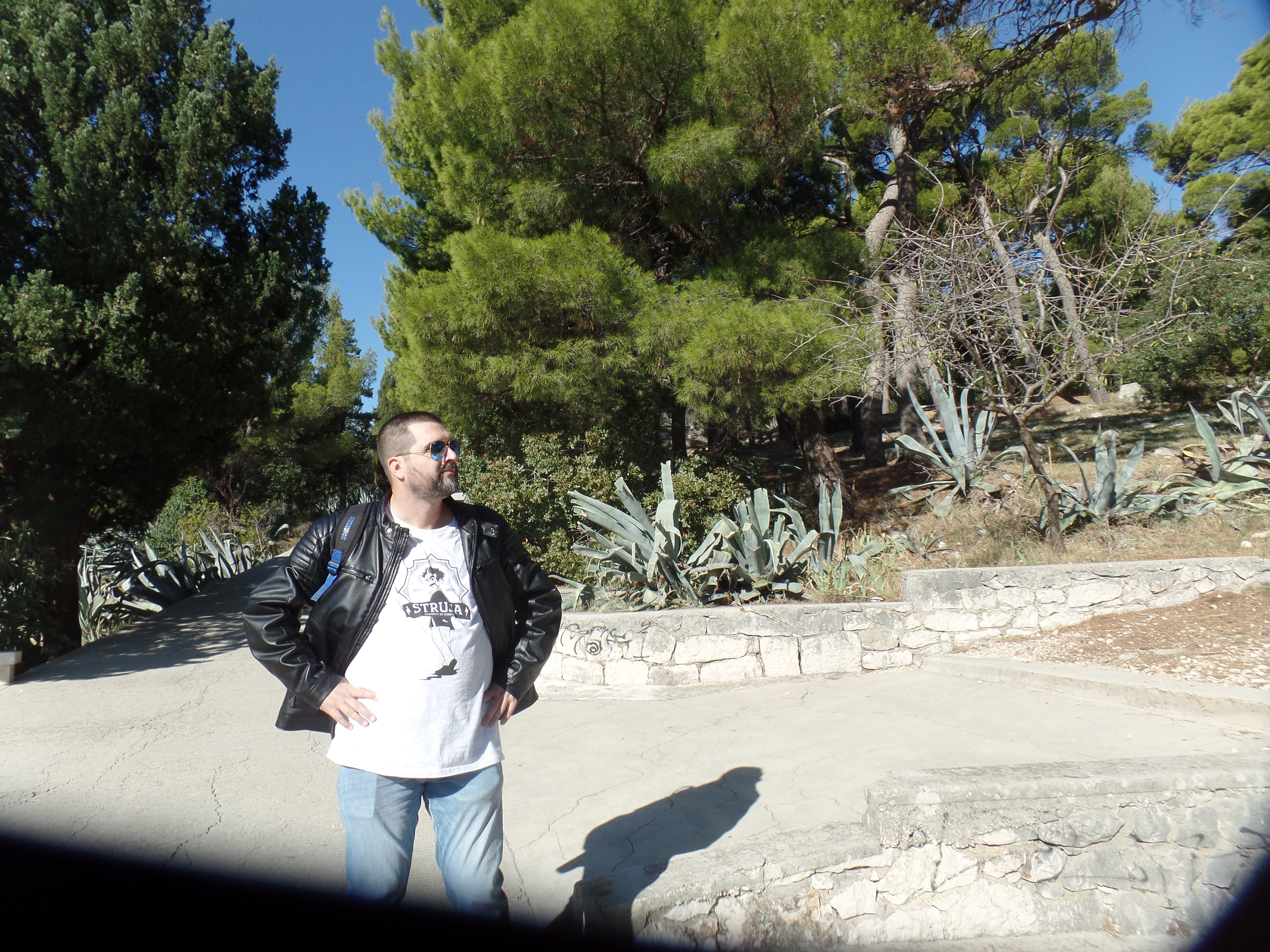
Boris enjoys coming up here, when he needs peace and quiet.
Boris at Marjan Hill’s Botanical GardenThe Adriatic, from atop Marjan Hill
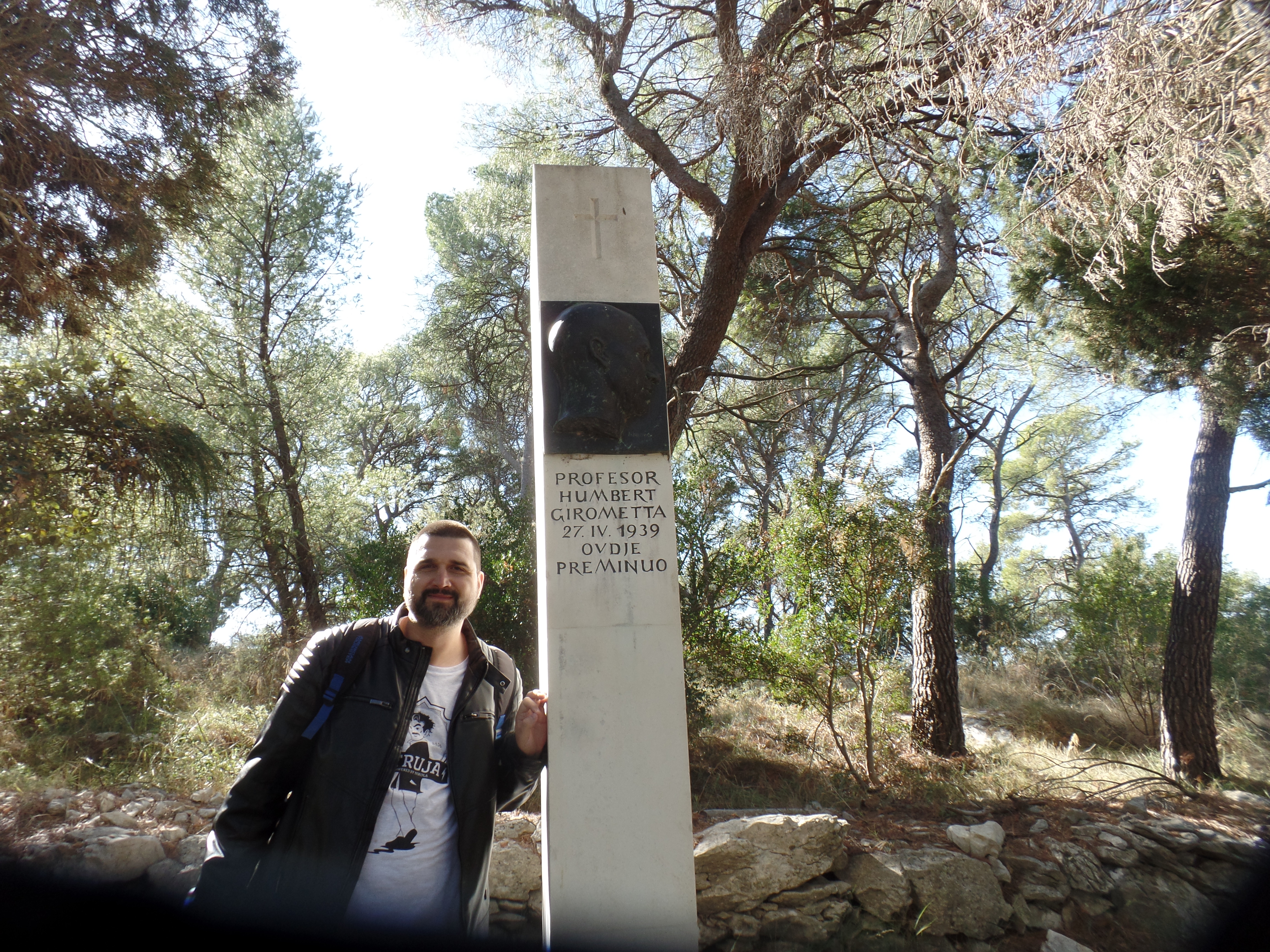
Orofessor Humbert Girometta was the man who spearheaded both this park and the promotion of hiking and wilderness training in the Split area. He was a mentor of Boris’ mentor.
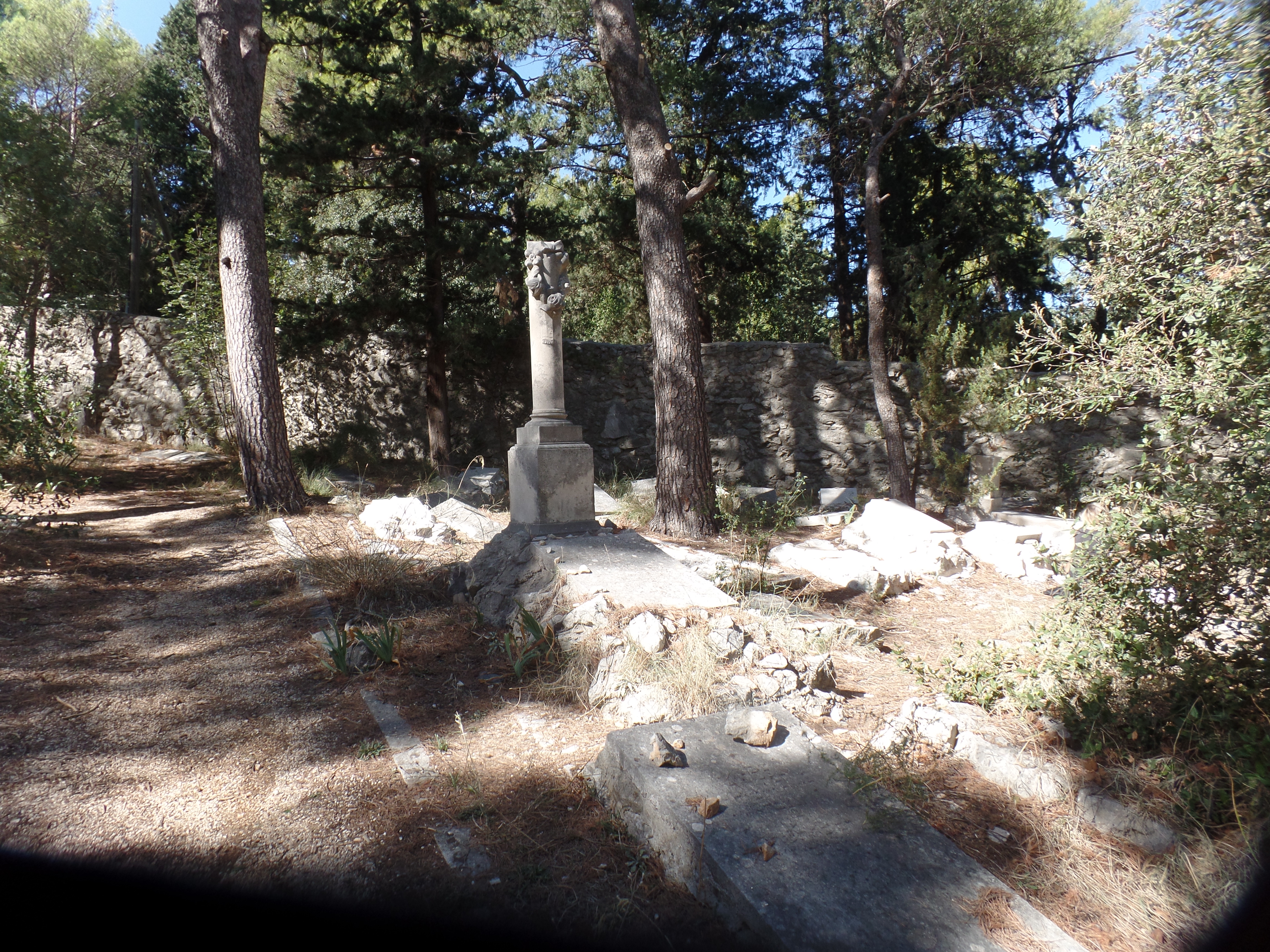
Memorial to Dr. Humbert Girometta, Marjan Hill, SplitThe Adriatic, from the third vantage point on Marjan Hill, SpliJewish Cemetery of Marjan Hill. Jews have been in Dalmatia since shortly after the destruction of the temple in Jerusalem, by the Romans.
We next had a delectable Croatian lunch, of beef in marinade, with a side of gnocchi and beet salad. Ice cream, dipped in chocolate, at Split’s oldest ice cream parlour, followed.
Next were the northern and western sides of Diocletian’s Palace
The exterior of the north side of Diocletian’s PalaceArchway, north side of Diocletian’s PalaceEntrance to North CourtyardAgain, three styles of architecture in one building.The grand north courtyard, Diocletian’s Palace
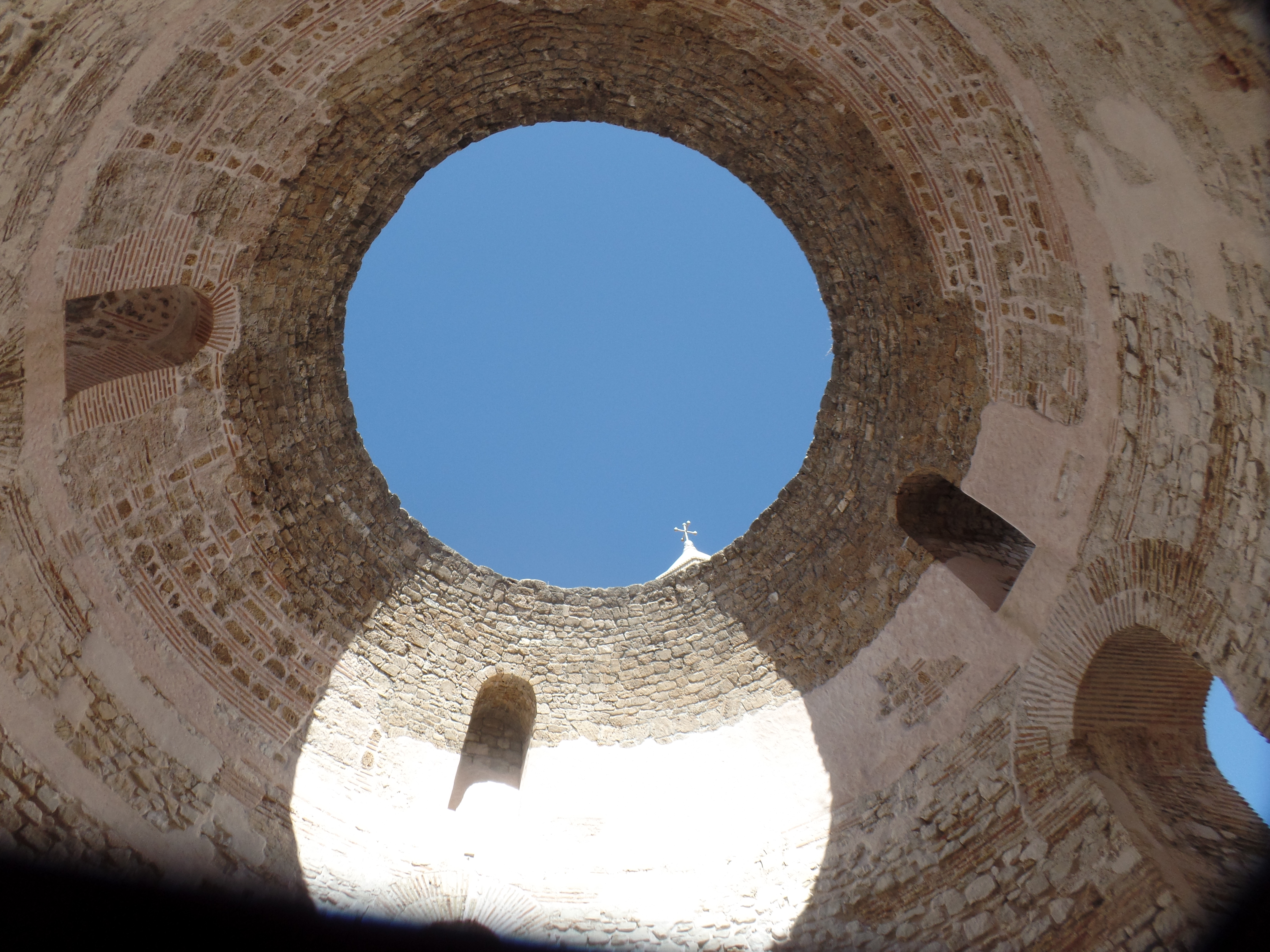
Here is the most astonishing view: The vestibule of Diocletian’s Palace, which once led to his living quarters.
Vestibule, Diocletian’s PalaceUnderneath the palace
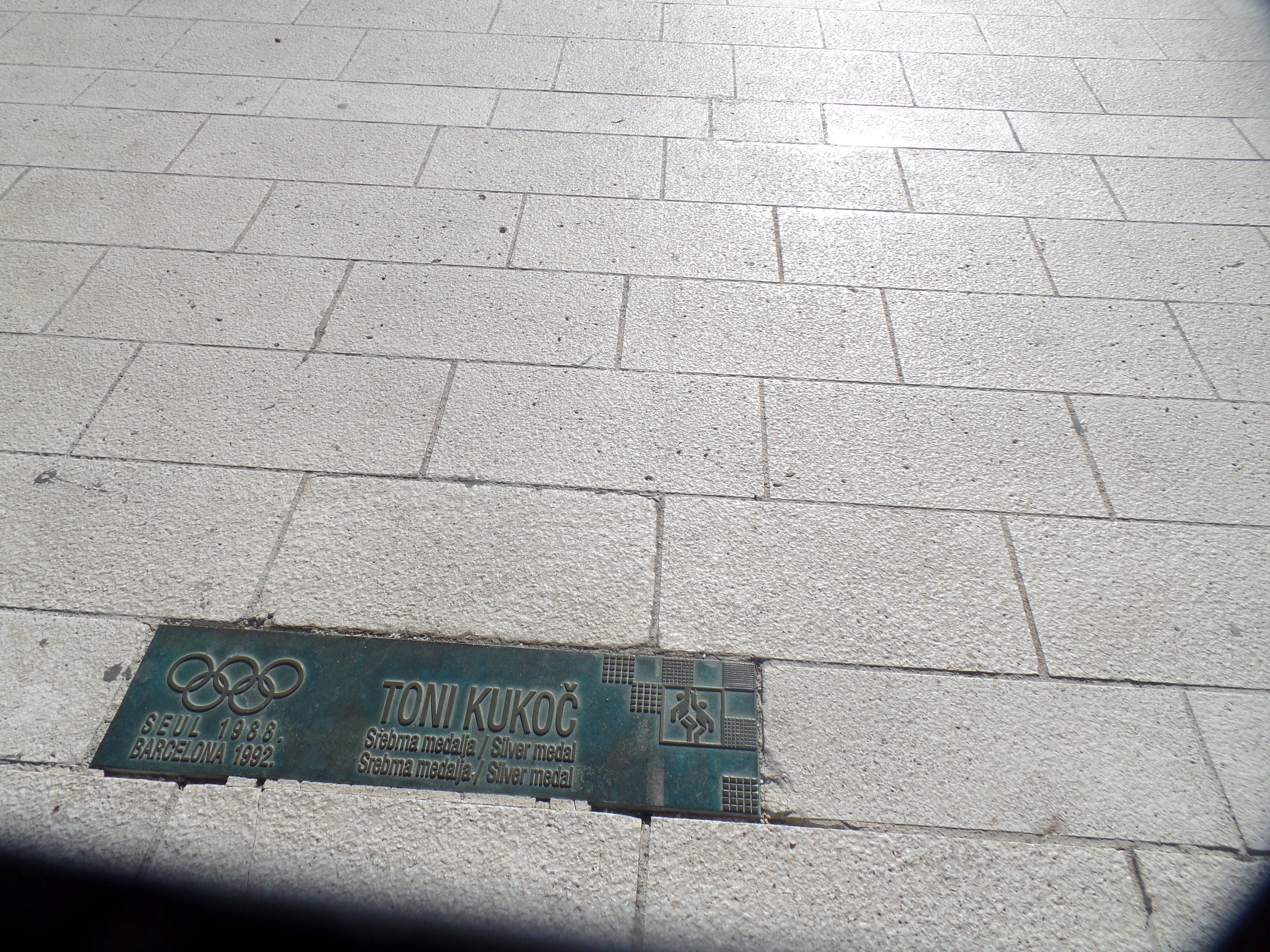
We closed out this extraordinary day with a visit to Split’s Athletes’ Walk of Fame. Many of Croatia’s stellar athletes came from Split.
Toni Kukoc, “The Croatian Sensation” of NBA fameGoran Ivanesevic, a great tennis player
With a few more views of the Walk of Fame, I bid farewell to my friend, Boris and headed back towards Hotel Pax, and a restful night, before the next leg of the journey: Bosnia and Hercegovina. Split will long shine in my heart.
















 A Sagittarian Seeker