Driftwood

4

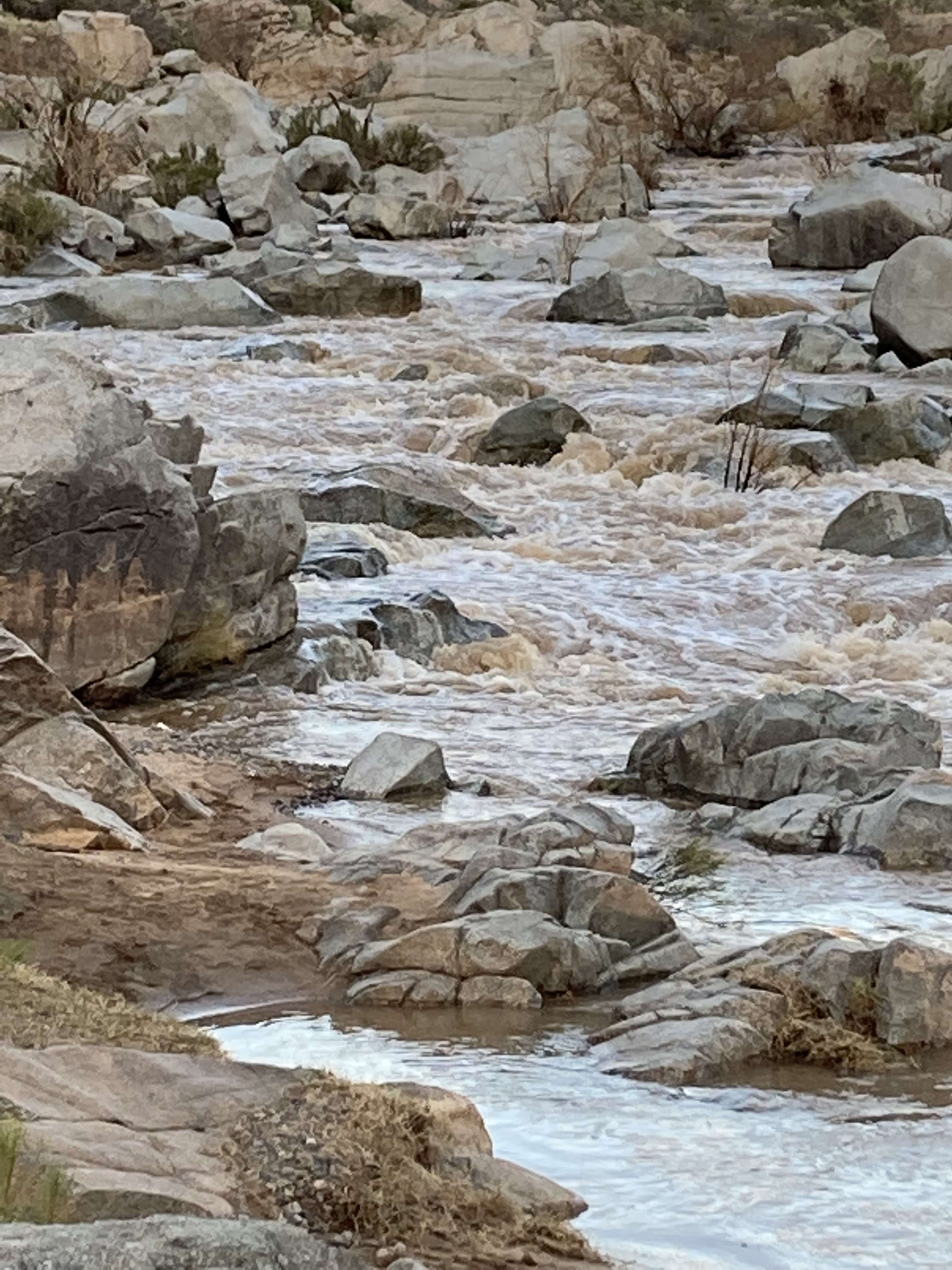
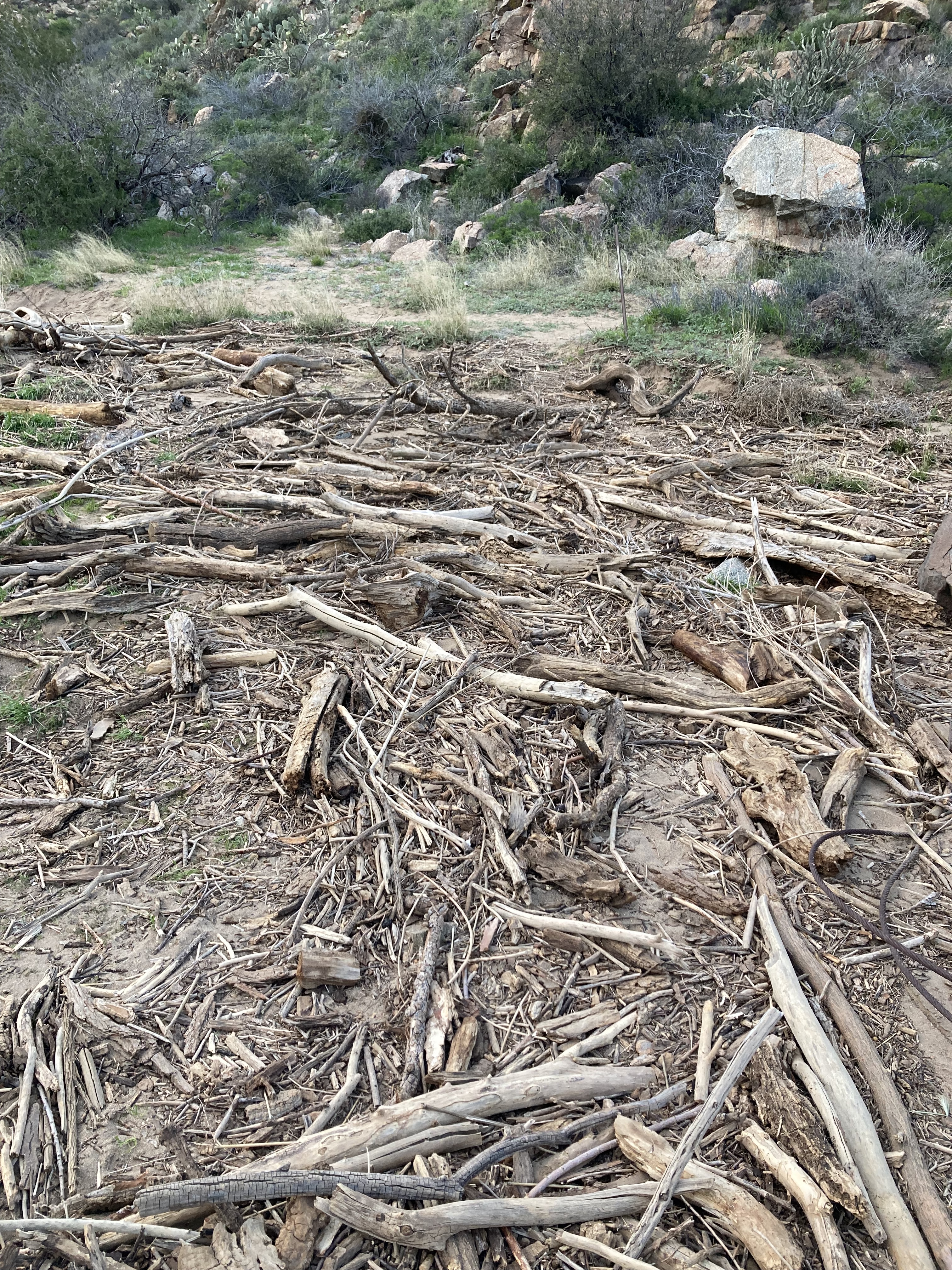
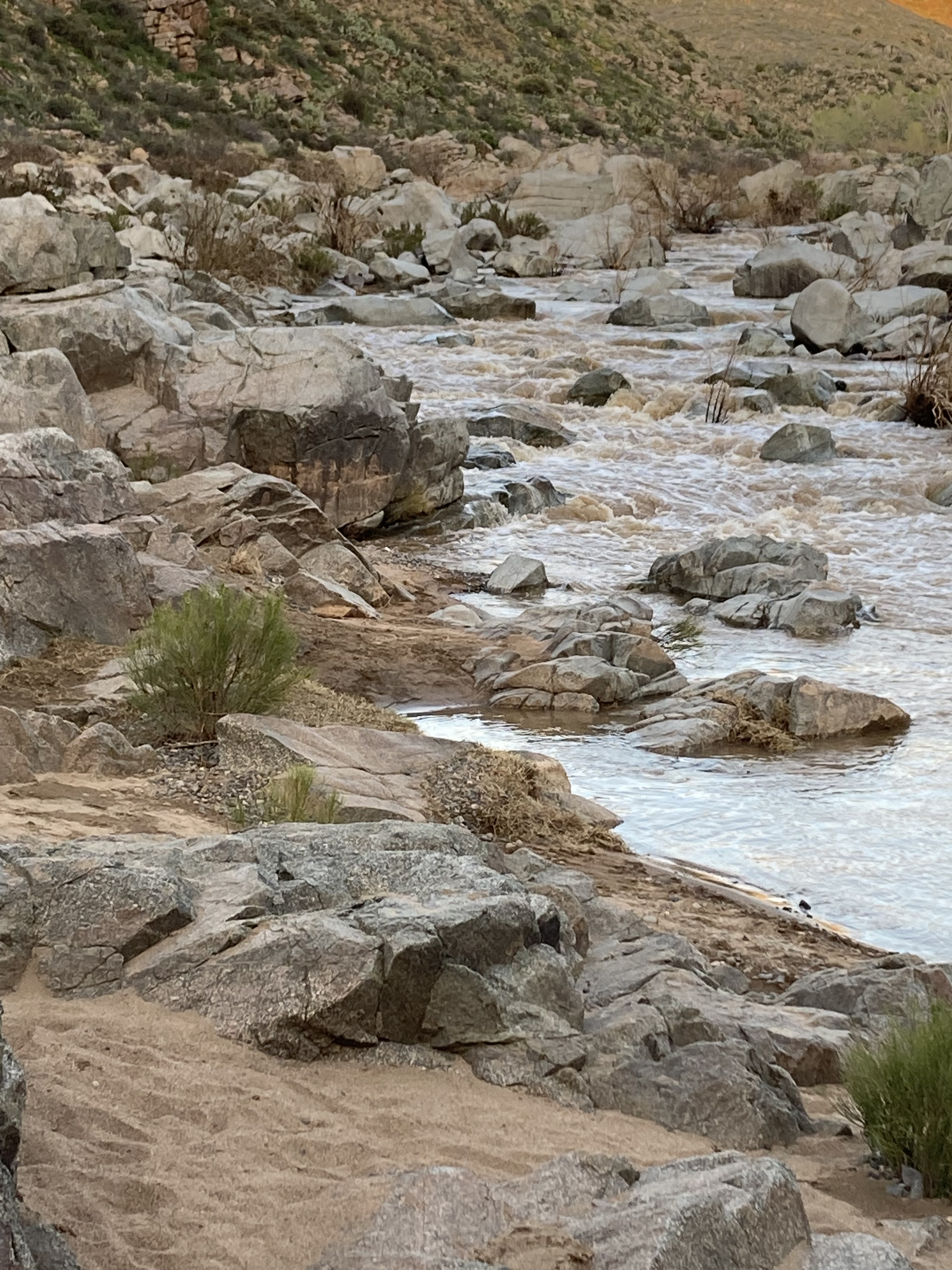
March 26, 2023- The scattered piles of cottonwood, ash and Gambel’s oak that greet the visitor to the area just north of the Agua Fria River bear testimony to the force of last week’s floods. Driftwood has long been seen as both a bounty-for those who rely on wood to heat their homes and cook their food and a bane, for the effects of deforestation on further soil erosion and both air and water pollution.

We can see analogies to other elements of life, in the presence of driftwood. Those of no fixed address are sometimes likened to these branches, logs and stumps. Their value to society consists of their accumulated knowledge and experience, to their compassion for others that is borne of their own pain and struggle. There is a similar view taken of the disabled, for much the same reason-and yet, many severely impaired people shower their families and caregivers with love-which some of those family members and caregivers may not get elsewhere.

Simply put, every element of creation has a benefit-and many have several. Everyone who has given me fits, for example, has imparted a lesson. In some cases, their presence in my life needed to be curtailed, but the lessons I drew from having encountered them was hardly diminished by the difficulties they brought to my life, however temporary those were. Likewise, the lessons of the Flood of Spring, 2023 were not diminished by the suffering it has wrought on those who have lived in the areas close to the banks of rivers and creeks whose depredations are intermittent and seasonal.

Here is what I found on a last-minute visit to Badger Springs, southeast of Prescott, early this evening.
Red Mountain, in the Blue Hills

3

October 13, 2020, Dewey, AZ-

There are two Red Mountains, within a day’s driving distance of Prescott. One of these lies just south of this little ranching and farming community, southeast of Prescott. The Blue Hills, in which this Red Mountain may be found, are a rugged subrange of foothills to the larger Bradshaw Mountain chain, which stretches from Prescott’s southern edge to Black Canyon City and Crown King, at the southern tip of Yavapai County.

I’ve hiked a fair amount in the Bradshaws, over the past nine years. The hike today was my first visit to the Blue Hills region. I got there a little past 11:30, finding only two other visitors in the parking area. They were on their way out, so I had the trail to myself. Off it was, to Red Mountain of the Blue Hills.

The trail was introduced recently by the estimable Phoenix hiking trails writer, Mare Czinar. I found the trail exactly as she described it-beginning on a stony Forest Service road, then entering a forest of Gambel’s Oak and Alligator Juniper. After about 1.5 miles, the trail loses the forest, entering into a sparsely-vegetated area of scattered lone juniper trees and prickly pear cacti.

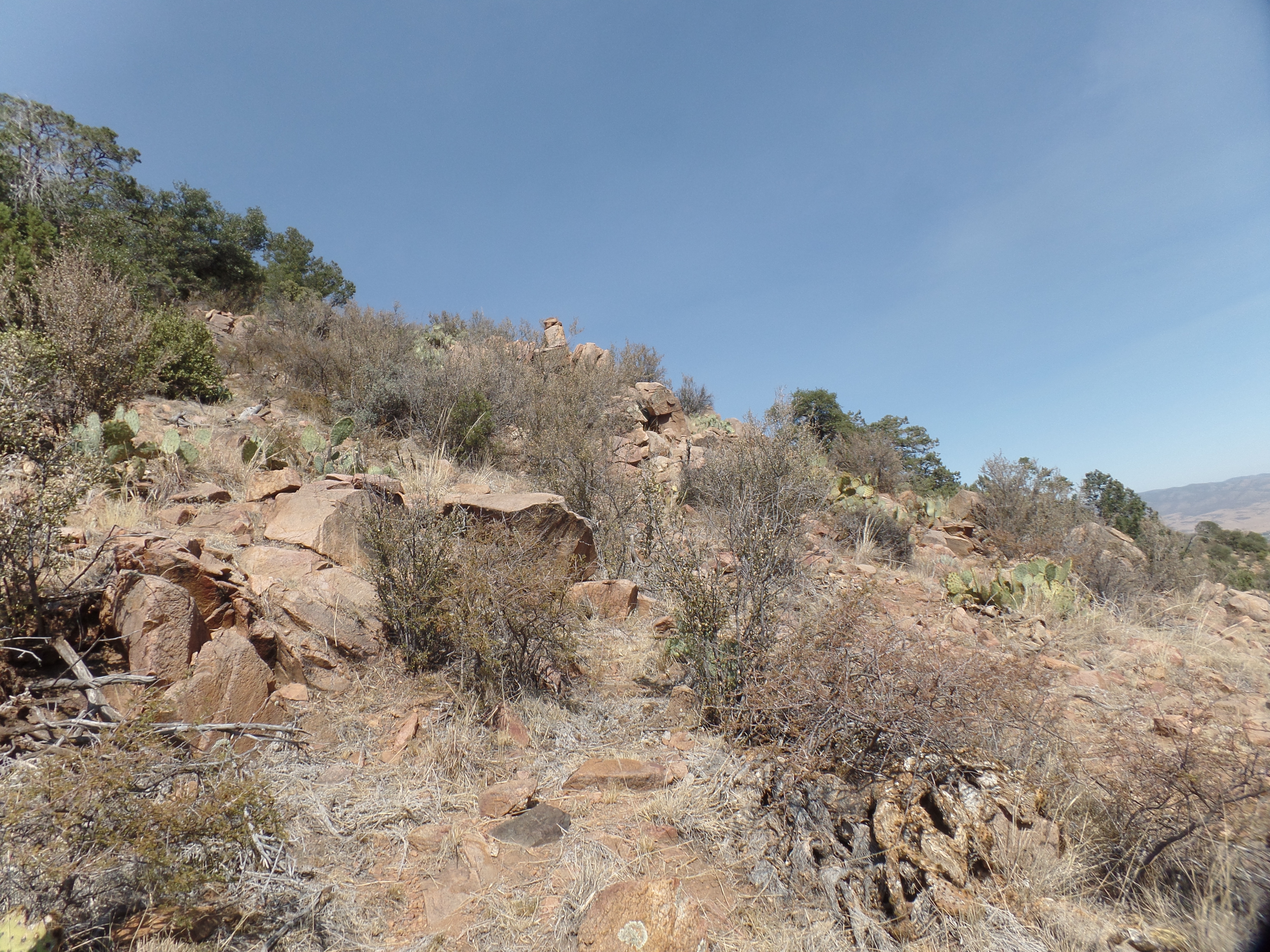
Switchbacks and mildly steep inclines take up the final mile or so, landing one very close to the summit of Red Mountain, with a Forest Service gate, that begins a trail to Lynx Lake, some five miles westward. I will check out Prospectors Trail, from the Salida Gulch area, later this Fall. For now, here are some of the views I encountered.

This message has wider implications for all of us.

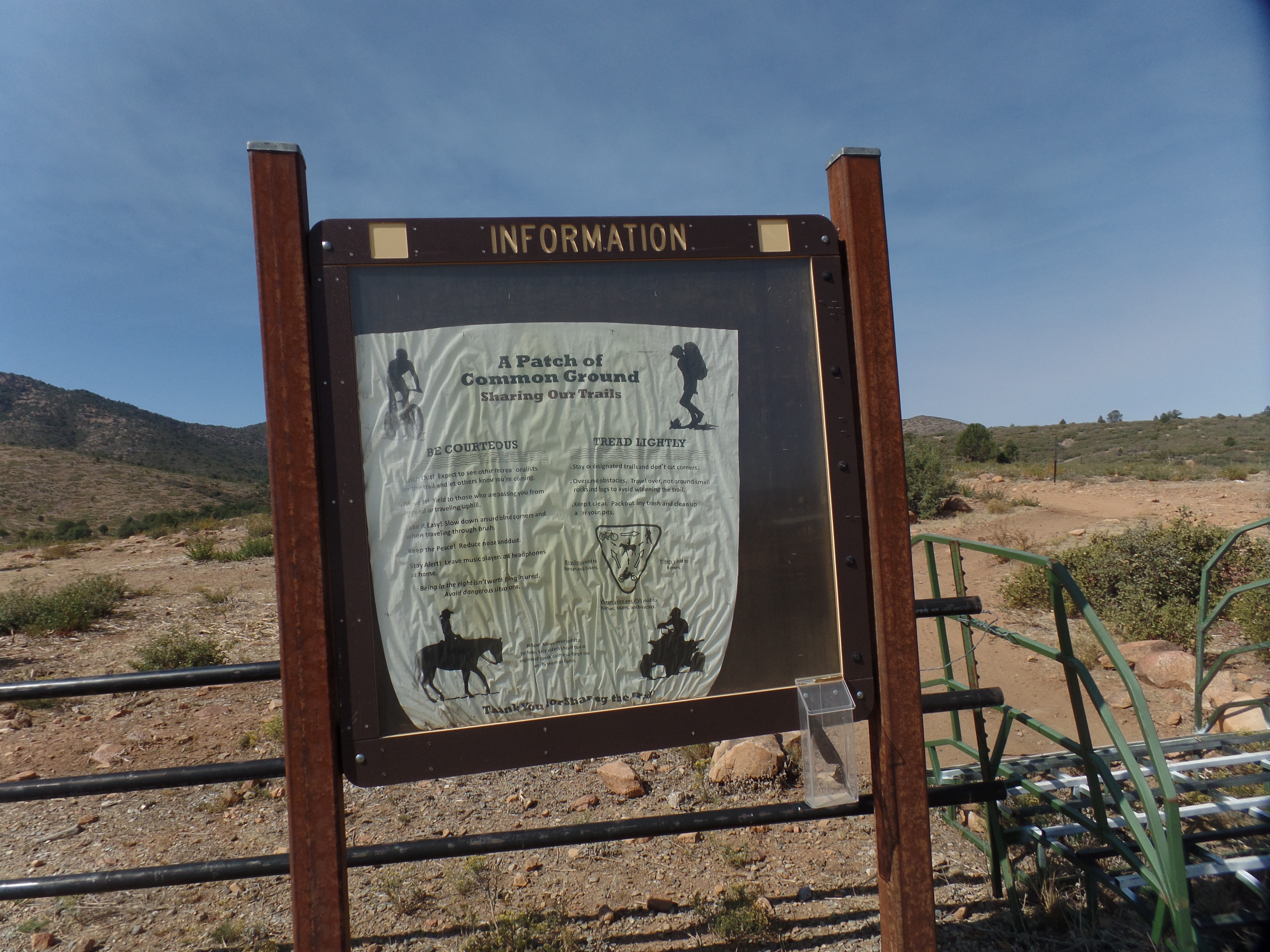
Blue Hills Trail System joint-use guide
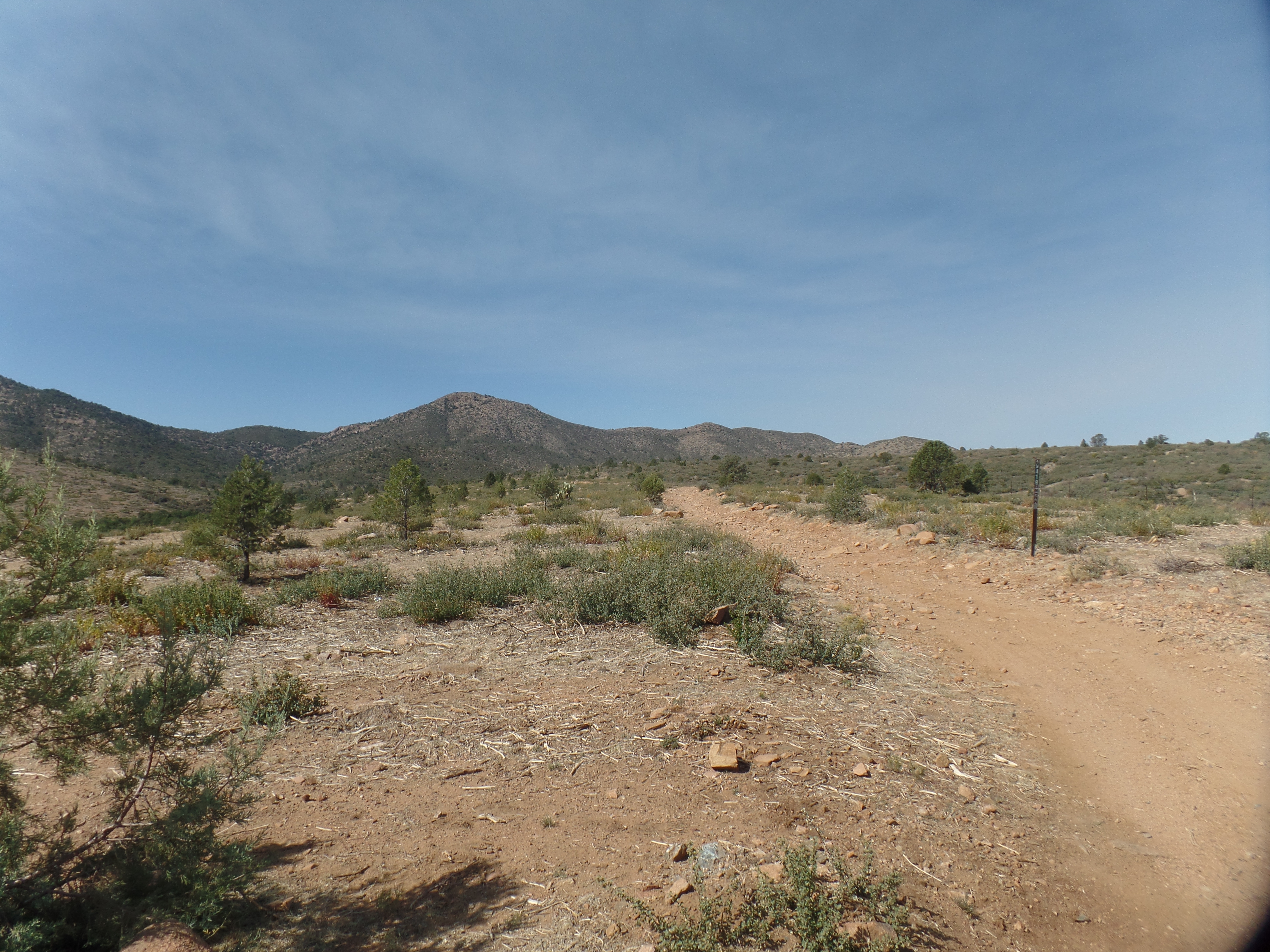
Red Mountain, from the Trailhead
Sandstone Outcropping, near Trailhead
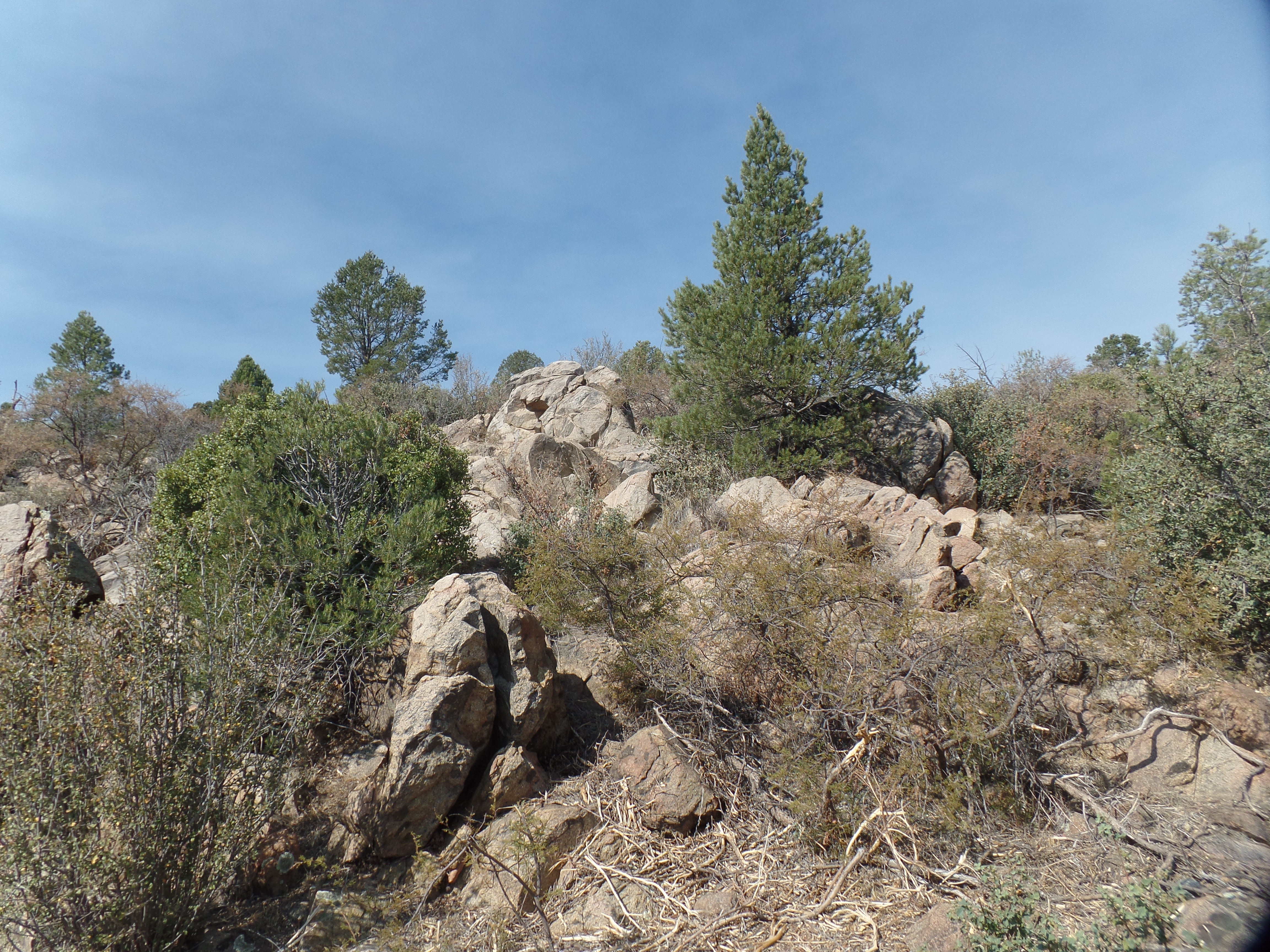
Sandstone and Juniper mix
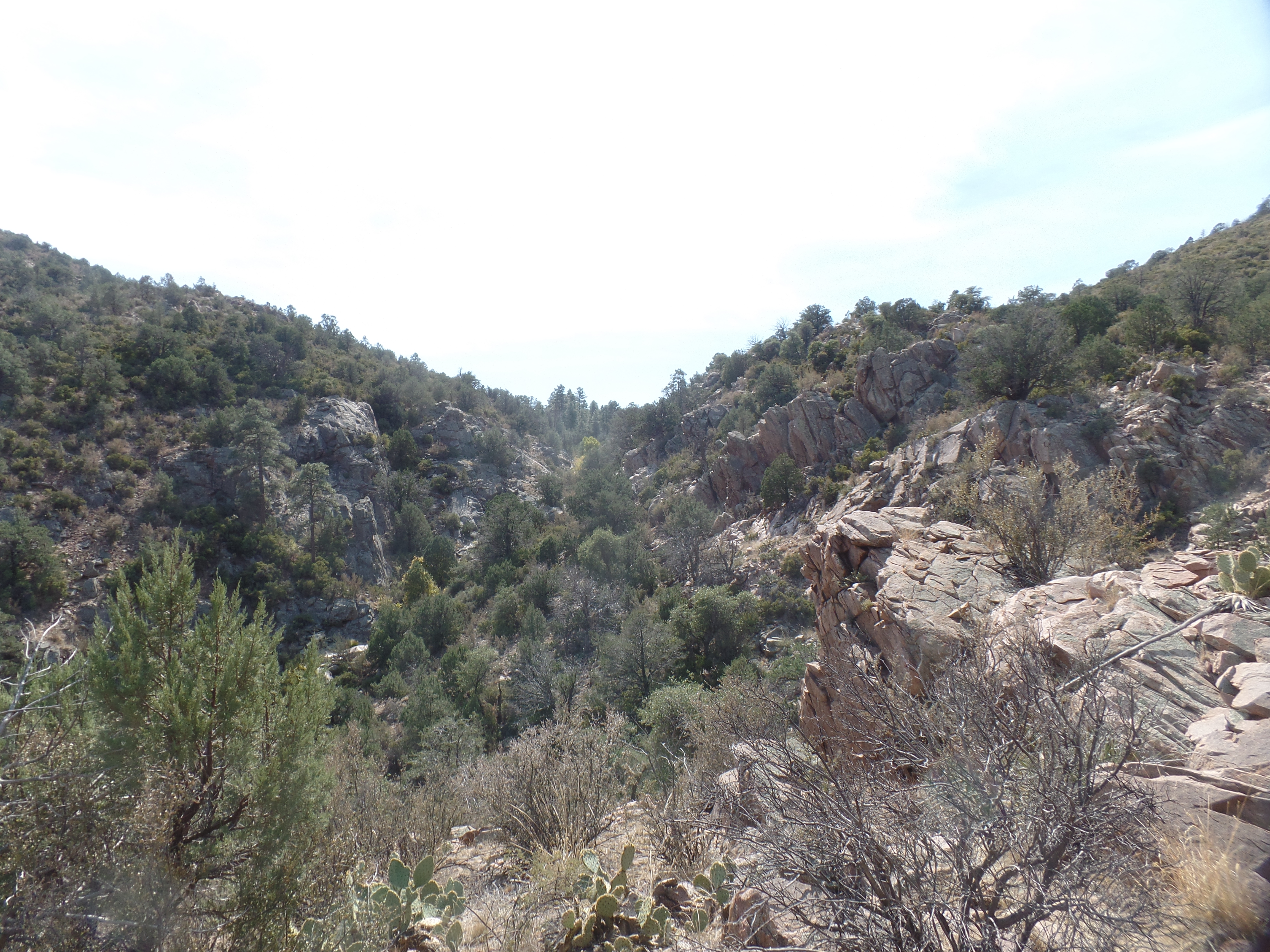
The trail passes alongside Green Gulch, for about .9 mile. Green Gulch, Red Mountain, Blue Hills-wonder where indigo and violet come in.
Year ago, there were miners panning for gold, in Green Gulch and in Salida Gulch, further southwest. This foundation is what’s left of one such mining claim.
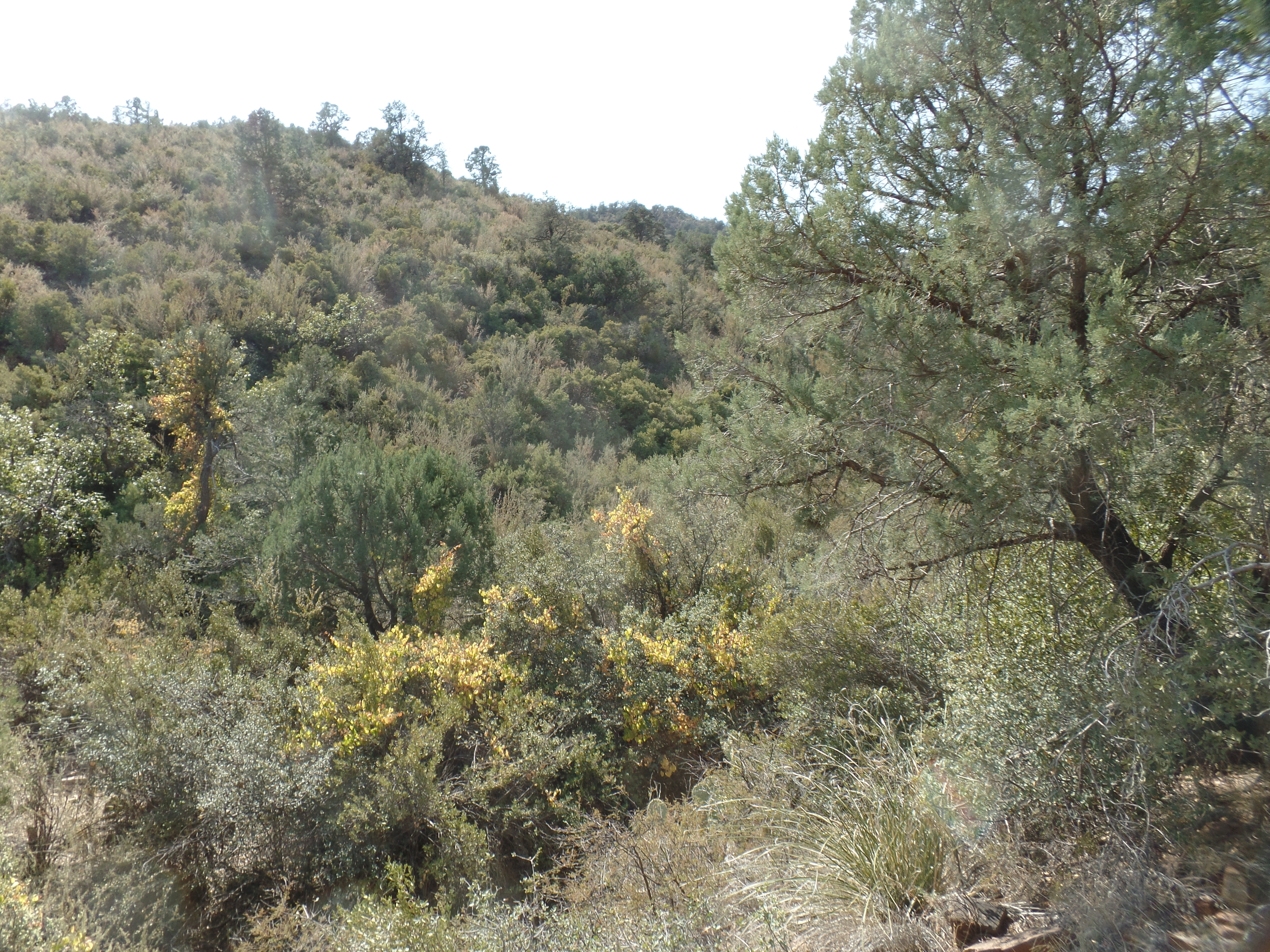
Smidgens of Fall colours could be glimpsed, here and there.
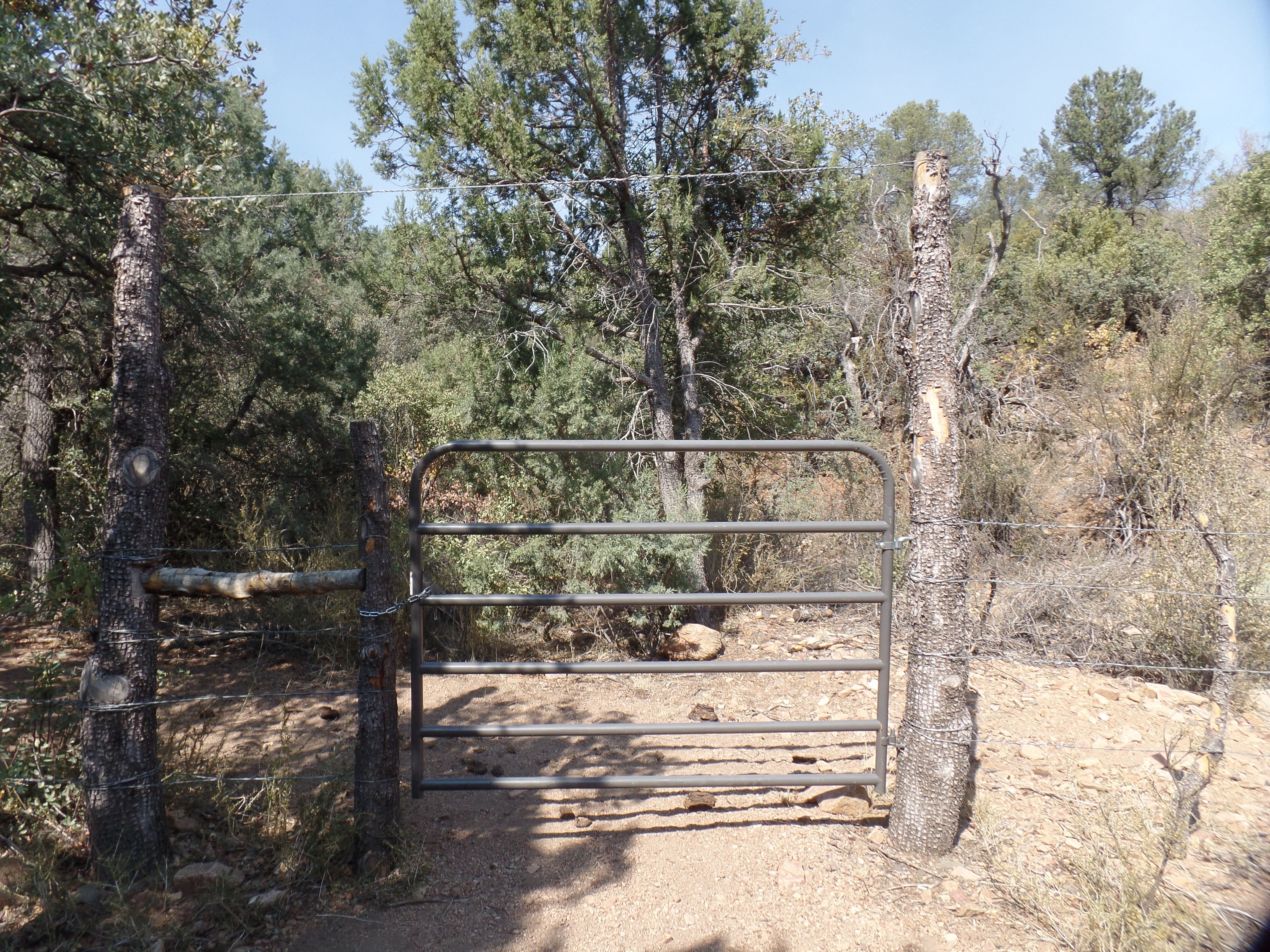
This gate took m eout of BLM land and onto Prescott National Forest.
This is close to the end of the thick forest and start of high desert scrub.
The climb out of Green Gulch, and up onto the ridges of Red Mountain, begins here.
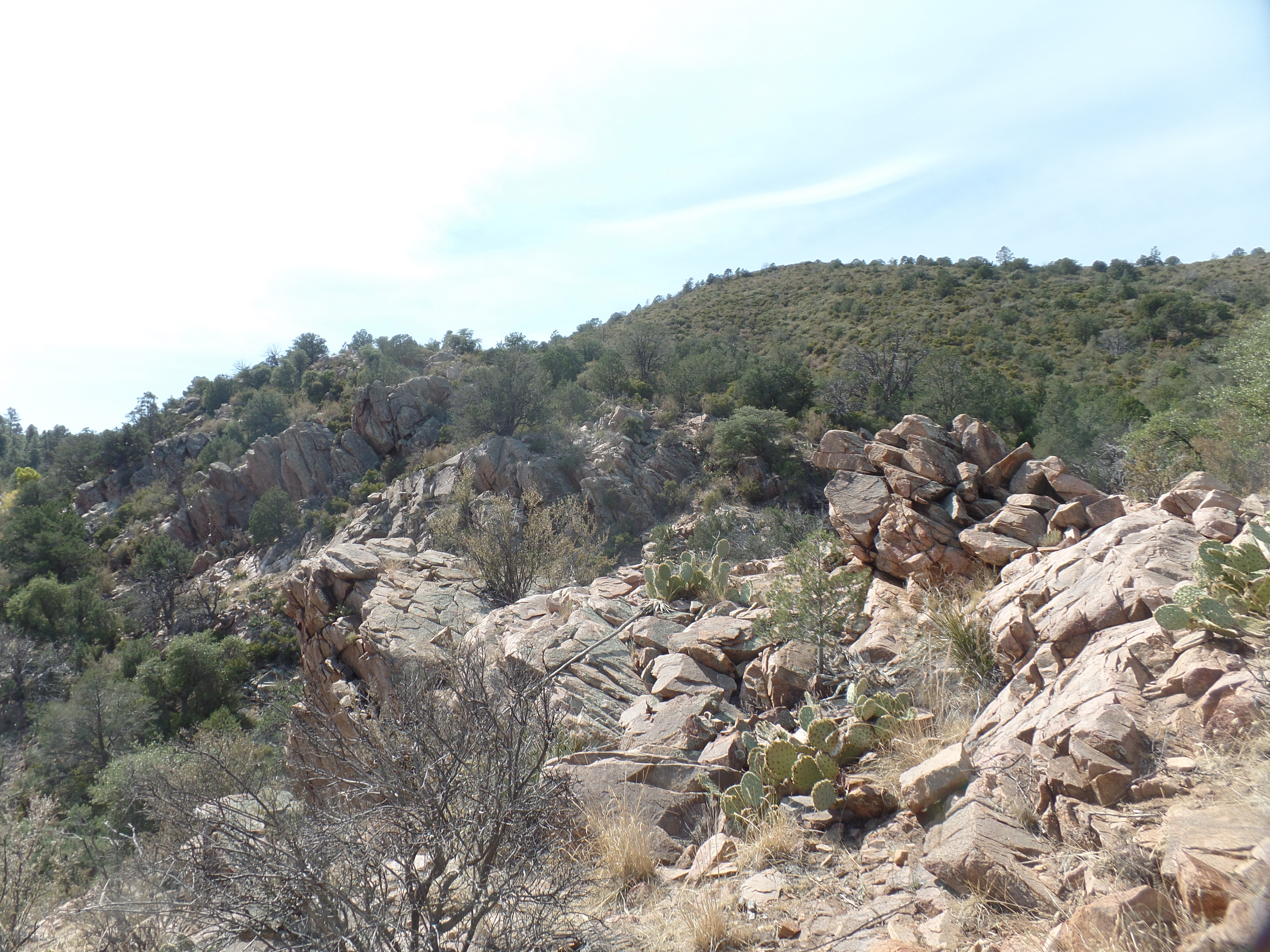
This large sandstone outcropping lies slightly to the east of the final ridge of Red Mountain.
Here is the reddish sandstone that gives the peak its name.
Once through this gate, one goes down into Salida Gulch, and on to Lynx Lake and Highlands Nature Center- five miles, one way.
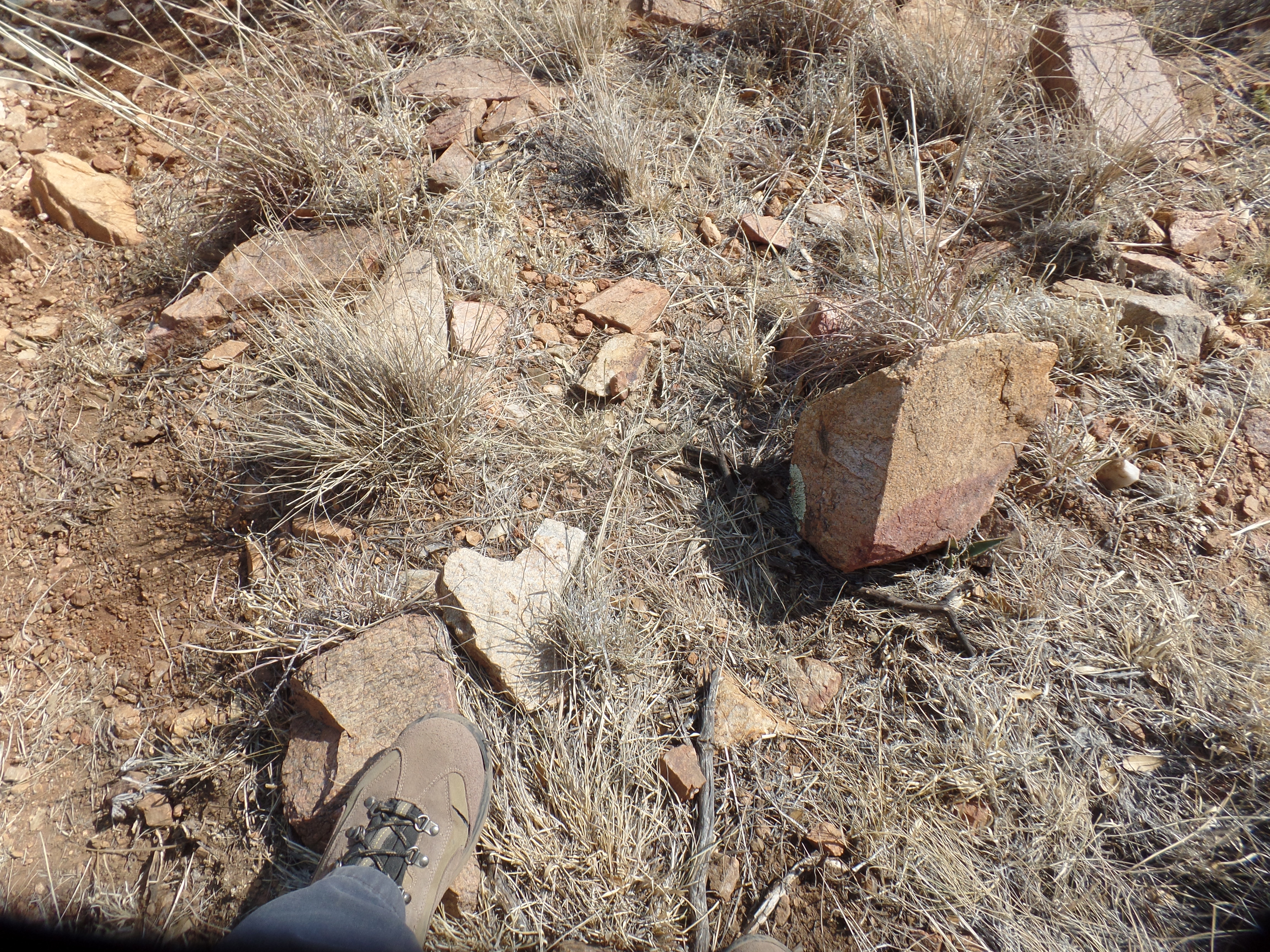
This is one of several heart-shaped rocks, which always affirm my journey.