
October 19, 2025, Fishguard & Goodwick, Wales- In 1797, a group of French soldiers sailed from Camaret-sur-Mer, Brittany to an area near the port of Fishguard. Their orders were to invade Wales and destabilize Britain. The rather cockeyed scheme failed, largely due to the soldiers having been poorly trained. They spent their first hours in Wales getting drunk. When they became sober, they found themselves surrounded-by a group of local women, armed with pitchforks. The Welsh women were led by one Jemima Nicholas, who secured twelve of the soldiers by herself. The course of this invasion is chronicled on a remarkable piece of art: The Last Invasion Tapestry. https://lastinvasiontapestry.cymru/
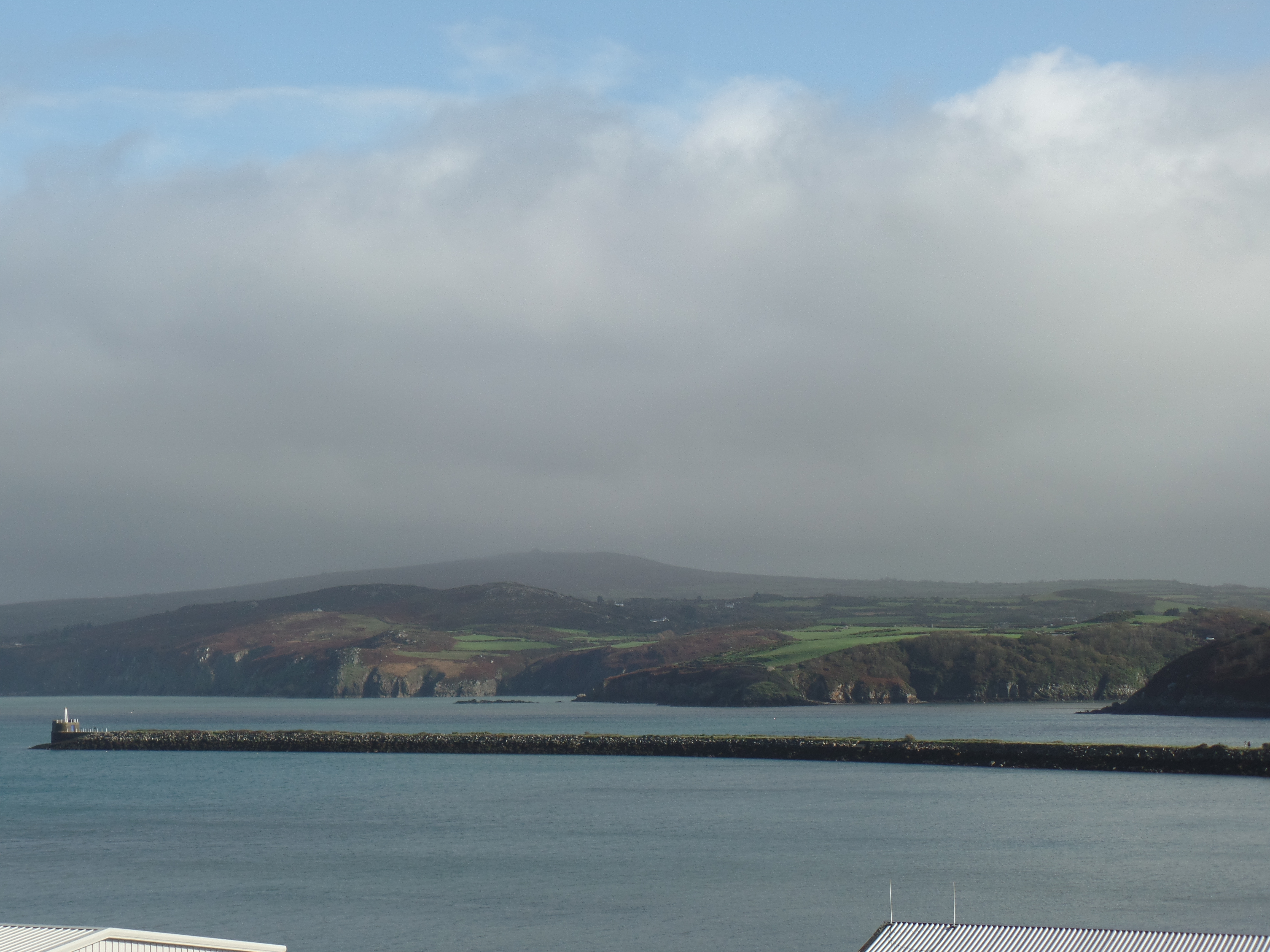
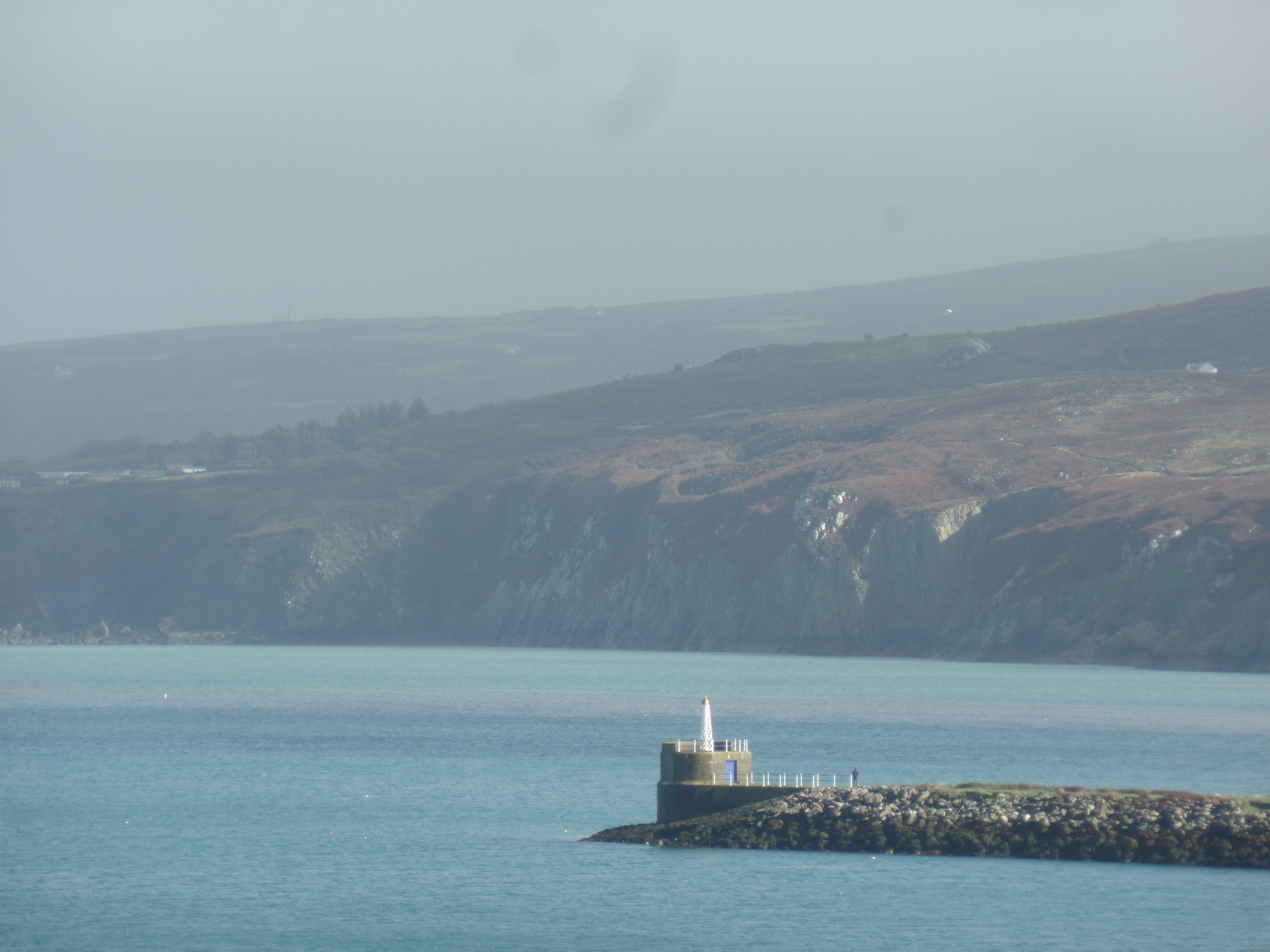
I stood at the tip of the jetty where much of the action took place. It is not a steep path from the water’s edge up to the top of the jetty, but mooring at that part of Fishguard Harbour would require very detailed knowledge of the rocks and shoals. The Jacobin troops would not likely have had that knowledge, but the locals did then, and certainly do now. When the invaders arrived, the Welsh men were at the area now used as a ferry port for travel to Ireland, and the women were guarding the jetty. The uninvited guests had no chance.
I left Salisbury fairly early, catching what i thought would be a train to Bristol, then was prepared to catch a separate train to Cardiff, Swansea and on to Carmarthen and Goodwick. Lo and behold, the train on which I embarked was headed to Swansea, and would arrive there four hours earlier than the train for which I had a ticket. With the okay from two conductors en route, I stayed on the train, clear to Swansea.
The train ended at Swansea, a key crossroads, west of the Welsh capital of Cardiff. I had to use a replacement bus to go on to Carmarthen, and so had to exit the train area. A transit auditor looked at my ticket and gave a mild scolding about not waiting at Cardiff for the later train. He then looked at his watch, sighed and told me to just go to ticket control and have my ticket exchanged. That was done very easily and I joined the queue for the bus to Carmarthen.
This bus, which took the place of the train, due to work being done on the tracks, took us through rolling hill country, in land from the winding and rocky coast of southwest Wales. It is said that Carmarthen may be the oldest town in Wales, having been founded by the Romans, around 75 AD/CE. We did not have any time to look around, though, as the train to Fishguard & Goodwick was set to leave, eight minutes after the bus rolled in. Besides, on a Sunday, most places were closed.
Once the lightly-populated train got to Fishgaurd & Goodwick, I had about thirty minutes before check-in at Rose & Crown Inn. I was able to stow my bags in an unused room, then went down to look about the town. As I walked near the harbour, three local boys were listening to some techno pop, on a hand-held radio. One of the lads started doing a fist pump dance. I pumped my fist a bit, which got them giggling.
The jetty on which Jemima and her crew stood against the invasion force is now a place for locals to walk their dogs and for visitors to get in their steps.



My purpose in Goodwick is to meet a friend from Pembroke, tomorrow morning. This evening, though, I settled in at Rose & Crown. The young lady at desk had been working largely alone, all day, and looked exhausted. She nonetheless summoned cheerfulness and helped me get up to the room. The fresh crew at dinner time was also very pleasant and offered a plate of brisket with fried potatoes- great stuff!
This small introduction to Wales has given me a fine impression of the country within a country. Tomorrow morning, my friend from Pembroke and I will walk about the harbour area, just a bit, then head over to Ocean Lab Cafe, a Goodwick original.
 A Sagittarian Seeker