Eastbound and Back, Day 18: France in North America, Part II

2

May 16, 2024, St. Pierre- White-breasted nuthatch sat on a small fir branch, and chirped at me to follow THIS way. Going in the direction he was flying, I heard rushing water, indicating there was a small waterfall. I followed a short path, through the firs, and there was indeed a small, but feisty, stream that had produced the makings of a pair of rills, just noisy enough to catch the attention of bird and man. The nuthatch flew off and I headed back towards the Anse a Pierre Road, and Auberge Quatre Temps.

Small rill, near Anse a Pierre

I seem to be getting greeted more by happy, chatty dogs and small children today. That is a good way to live. A large black lab/Rottweiler mix stood guard at one of the houses I passed, but was more glad to see me than perched ready to guard his owner’s house. A little Shih-tsu came out the sidewalk, a bit later, and wanted to play and have her belly rubbed. Her owner had other plans, and called to her: “Remy! Maintenant!”, so playtime ended. A couple of boys who were heading home for lunch (Students can still do that, here) were curious as to why I was inside the cathedral, when there were no lights on. I didn’t need lights for a brief visit, was my answer. There also was no other activity inside, other than a curious Americain saying a few Baha’i prayers and taking photos.

Cathedral de Sacre Coeur, St. Pierre

Today was a good day for crepes, so I stopped in at Roc Cafe, just as the lunch hour was starting (It’s 12-2, in the French style), for a plate of 3 Fromage Galettes, avec jambon. The young waiter gave a quizzical expression, when I mentioned having enjoyed galettes in Amiens and in Lille, ten years ago. It’s true that the dish is essentially Breton in origin, but other parts of northern France have jumped on the galette bandwagon, much as in the U.S., one can get Maine lobster in Phoenix, jambalaya and gumbo in Buffalo, Cuban sandwiches in Seattle and just about any style of barbecue anywhere besides where the style originated. I did recall later, having had my very first galettes at Daily Gourmand, in Vannes, exactly where they would be expected. Galettes are buckwheat crepes, usually with a savory filling.

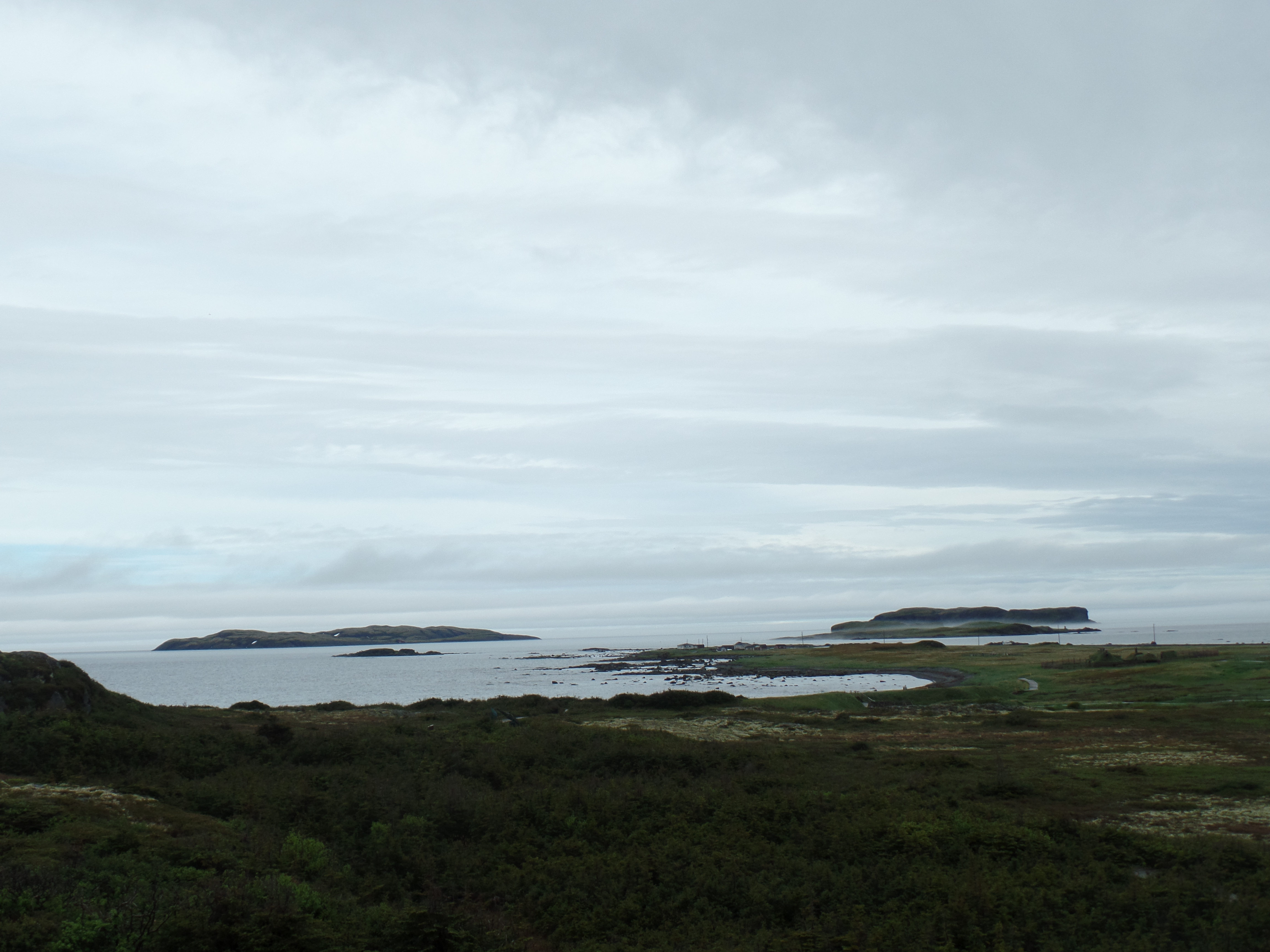
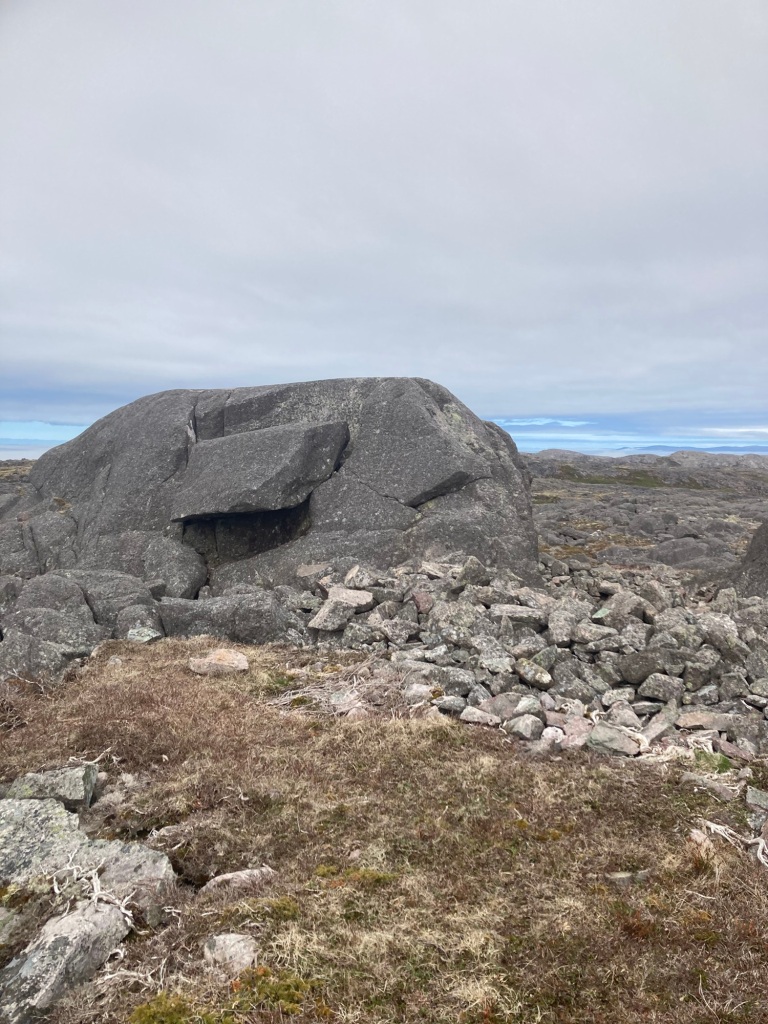
As indicated earlier, I spent a good part of the day on the trail. My route went from just north of Quatre Temps to a small rock overlooking Anse a Pierre, and the island of Langlade, five kilometers to the west. There were ups and downs, bogs to be worked around, a section of road, which served as a good marker-as this taiga/tundra landscape is just large enough for a wanderer to get lost. Fortunately, I also learned enough about hiking in boggy terrain, at L’Anse aux Meadows, two years ago, so that I scanned for trails below my vantage point, and was able to stay on course.
I
Ile Langlade, from Anse a Pierre

Now, I am back at Quatre Temps, and it is worthwhile to mention dinner. Chef Cristelle is of Michelin quality, even though she would be shocked to hear such a thing. Last night’s fresh-caught, grilled cod was accompanied by smooth risotto and freshly picked lettuce, in a light vinaigrette. This gem of a plate was followed by large pear halves, topped with caramel sauce, vanilla ice cream and not-too-sweet whipped cream. Now you know why, along with the galettes, I was easily enticed into this afternoon’s eight kilometer hike. This evening, Cristelle proposed two pressed smoked salmon cakes, served chilled, with more smoked salmon flakes on a bed of fresh lettuce and cherry tomatoes. That filled the bill nicely. Of course, 3 mini-profiteroles with ice cream and caramel sauce were the dessert, but hey, this is France-for all intents and purposes.

Tomorrow will see me back in Newfoundland, with more joyful adventures to follow-including a visit with Baha’is in Corner Brook. One of them is K’s friend from the Philippines, so I already feel connected.

Resilience

2

September 25, 2022- The image stays in my mind, of the effervescent couple, greeting everyone cheerfully at their lakeside restaurant, in the village of Bras d’Or, Cape Breton Island, Nova Scotia. Then, there were the hardworking Miqmaq people, across the lake, in Eskasoni, their workshops and tool sheds, so vital a part of their community life. Across the strait, in the southwest corner of Newfoundland, the people of Channel-Port aux Basques greet hundreds of visitors each day, during the summer months and send off equally as many, who are at the end of their visits. Nearby, in the village of Doyles, are the cabins along the Codroy River, providing quality accommodations, in a supremely rustic setting. At the northwestern tip of the island, the communities around L’Anse aux Meadows hold their own, in a climate that is already severe, nine months of the year. On the Burin Peninsula, in southeast Newfoundland, a well-kept series of gardens form the centerpiece of an exquisite Bed and Breakfast establishment, honouring its late founder.

These communities, as well as Prince Edward Island and much of New Brunswick, mainland Nova Scotia and eastern Quebec, suffered immense damage from Hurricane Fiona, the same storm that blasted Puerto Rico and several other Caribbean islands, earlier this month. I spoke with the proprietor of a motel, in an area that was spared damage this weekend. She said that much of Cape Breton and the Chignecto/Bay of Fundy region to the west of the island will be in extended recovery mode, for quite some months to come. The area has winter to keep in mind as well.

Many of us are used to thinking of tropical islands and forested lands of the north, in terms of vacations and scenery. Now, we are, more and more, coming to see the entirety of life in those communities. Every location that provides others with rest and relaxation, has its own human communities, whose members have needs, aspirations and dreams of their own. Let us stay in contact with those friends in the affected areas, and encourage their resilience as best we can.

I know that the Caribbean, Alaska and Atlantic Canada, like all places affected by disaster, will rise again.

Vikings, Beothuk, Bogs and Fog

6

June 25, 2022, St. John’s-

L’Anse aux Meadows Along the northern tip of Newfoundland, there once lived at least three nations of people, who were lumped together by the Viking fishermen, upon their landing at Quirpon Island and the nearby mainland, and called Skraeling, after the term they used to describe the Inuit of Greenland. The term variously means “wearer of animal pelts”, “wearer of dried skins”, “barbarians” or even “weaklings”.

At first, the Vikings stayed on Quirpon and at the sight now known as L’Anse aux Meadows ,a corruption of the French L’Anse aux Medee, which means “Medea’s Cove”, after a ship Medea, of the French commercial fishing fleet that docked in what is now Gumper’s Bay, in the 16th and 17th Centuries. The Vikings first settled here in 990 A.D. and went back to Greenland in 1050. so their artifacts being here at all are an extra treasure. Whether they also went south to Cape Cod is still up for debate.

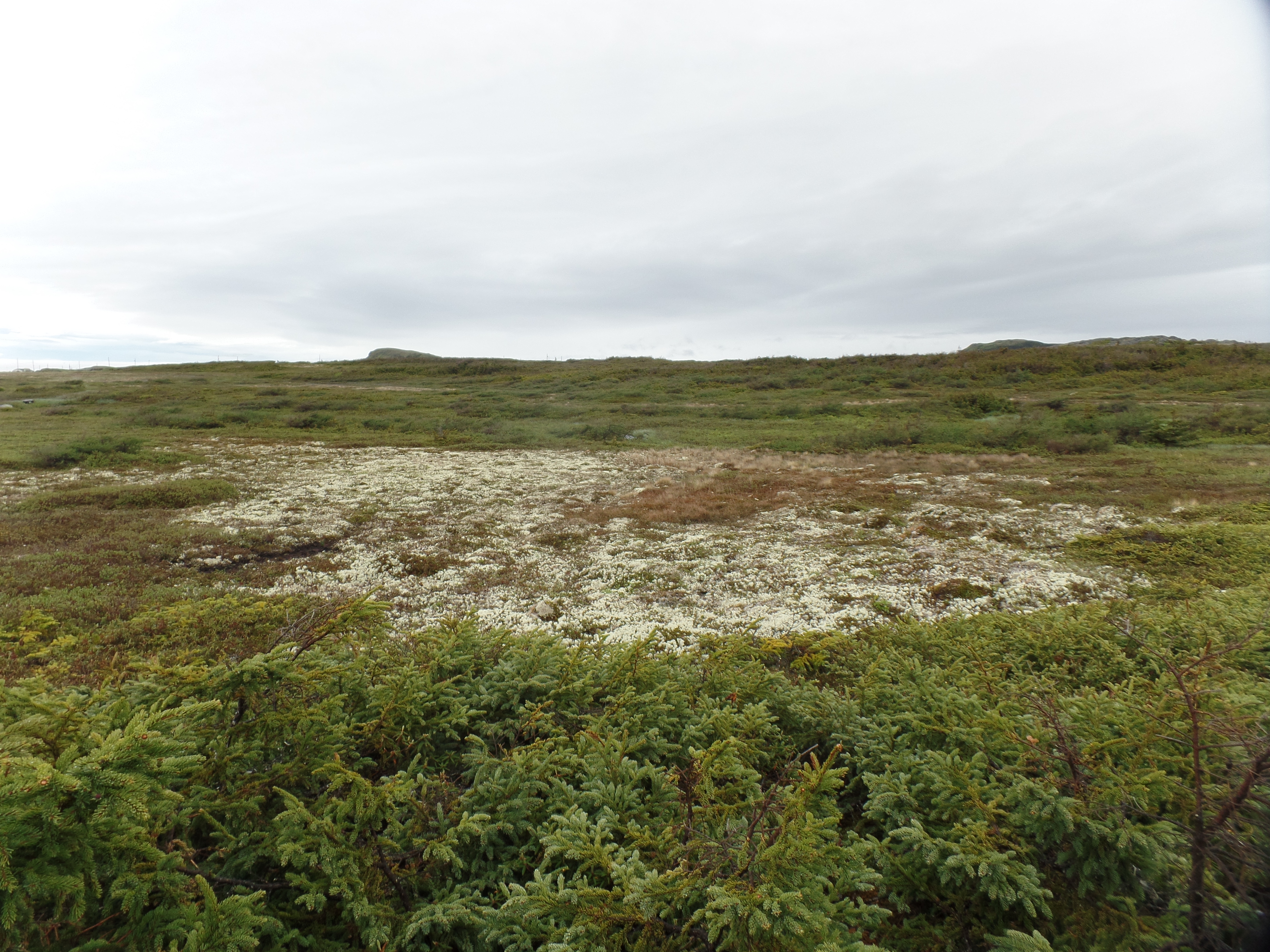
The above scene shows the boggy area that greeted the Vikings. They had to choose their steps very carefully. Visitors today have nice boardwalks on which to tread.

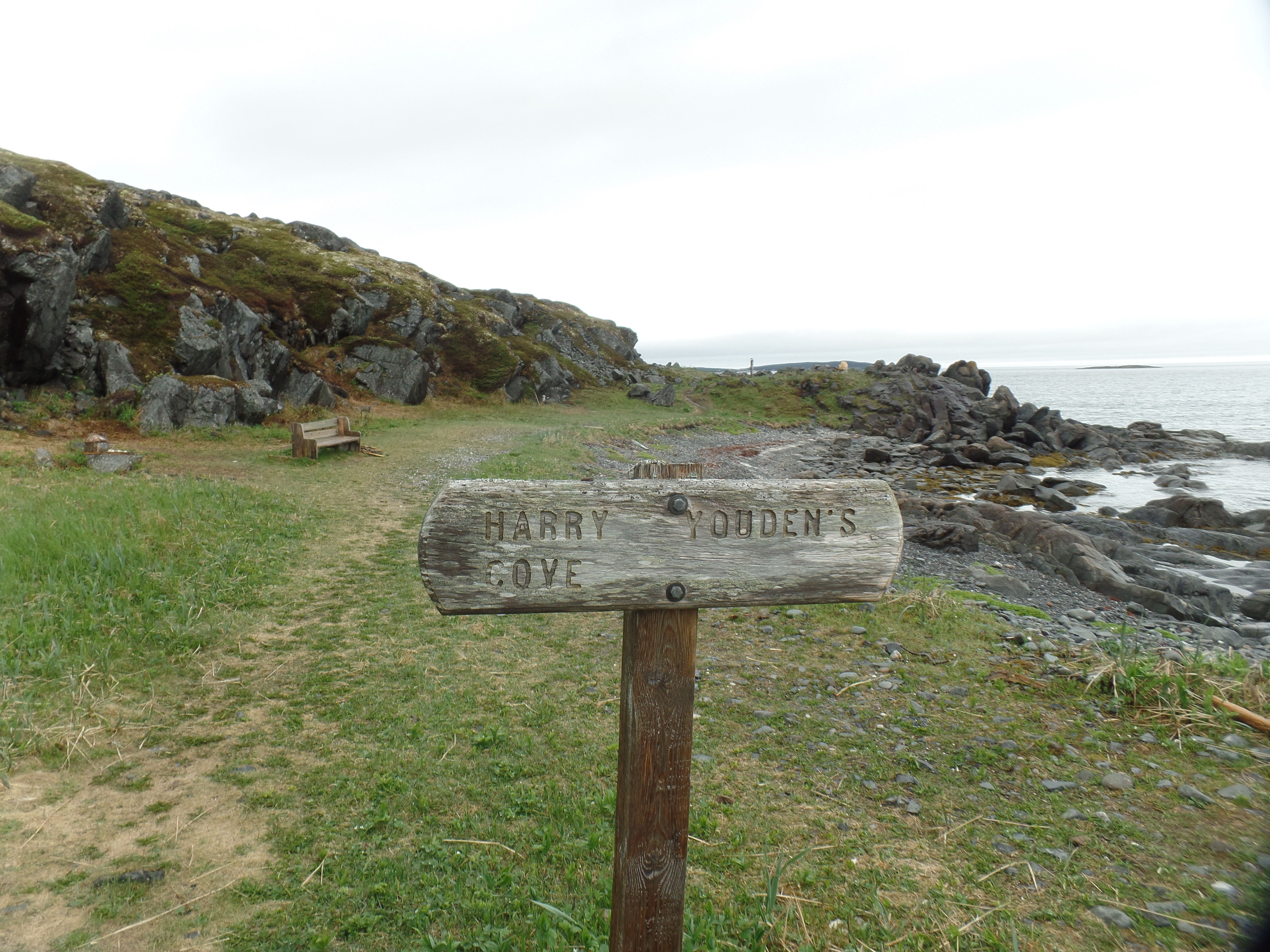
My first walk was on Harry Youden’s Trail. He was a fervent supporter of unearthing Viking relics in this area, which was one of his favourite places to walk and meditate.

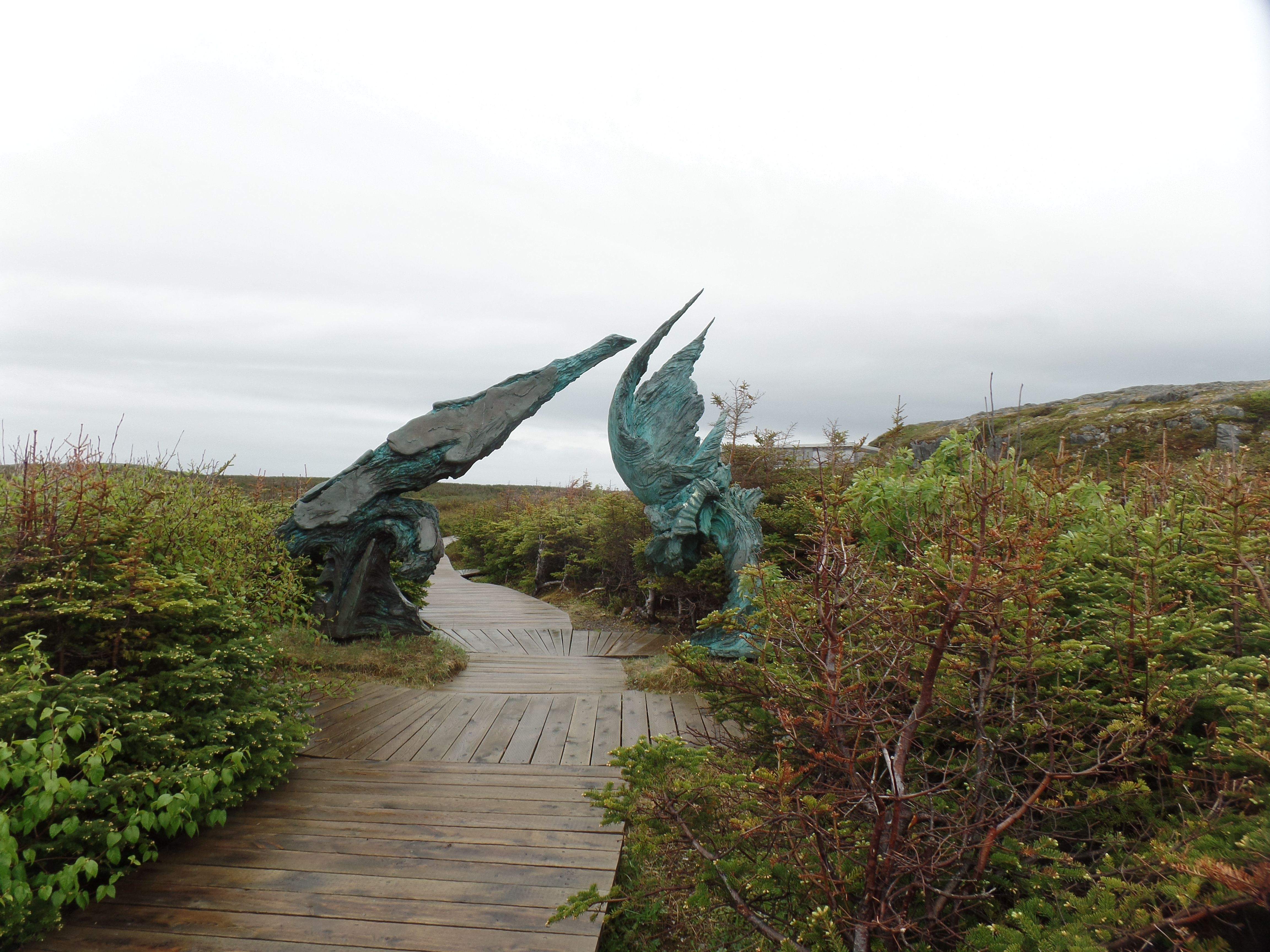
The above sculpture was commissioned by UNESCO, when L’Anse aux Meadows was designated a World Heritage Site.

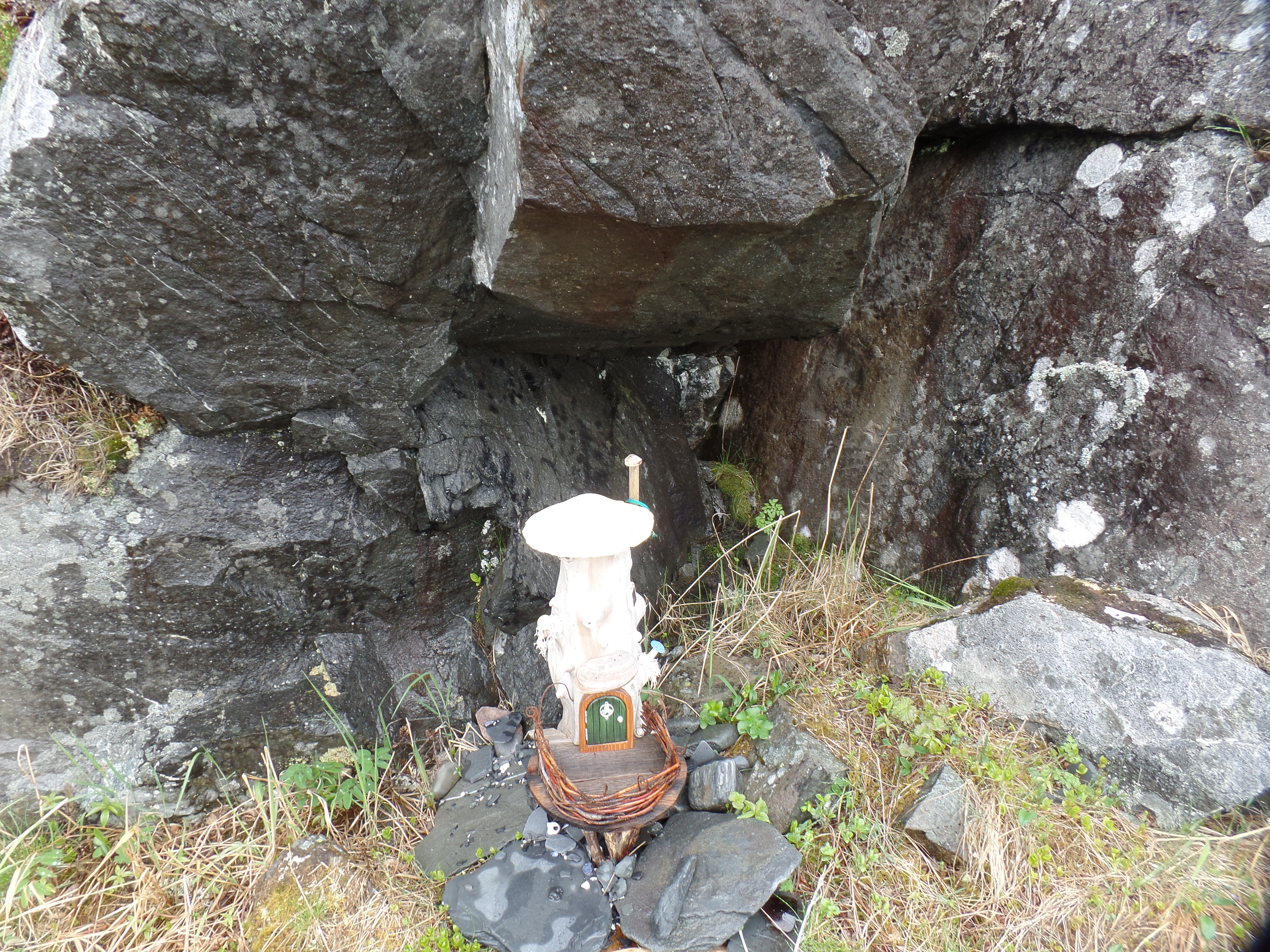
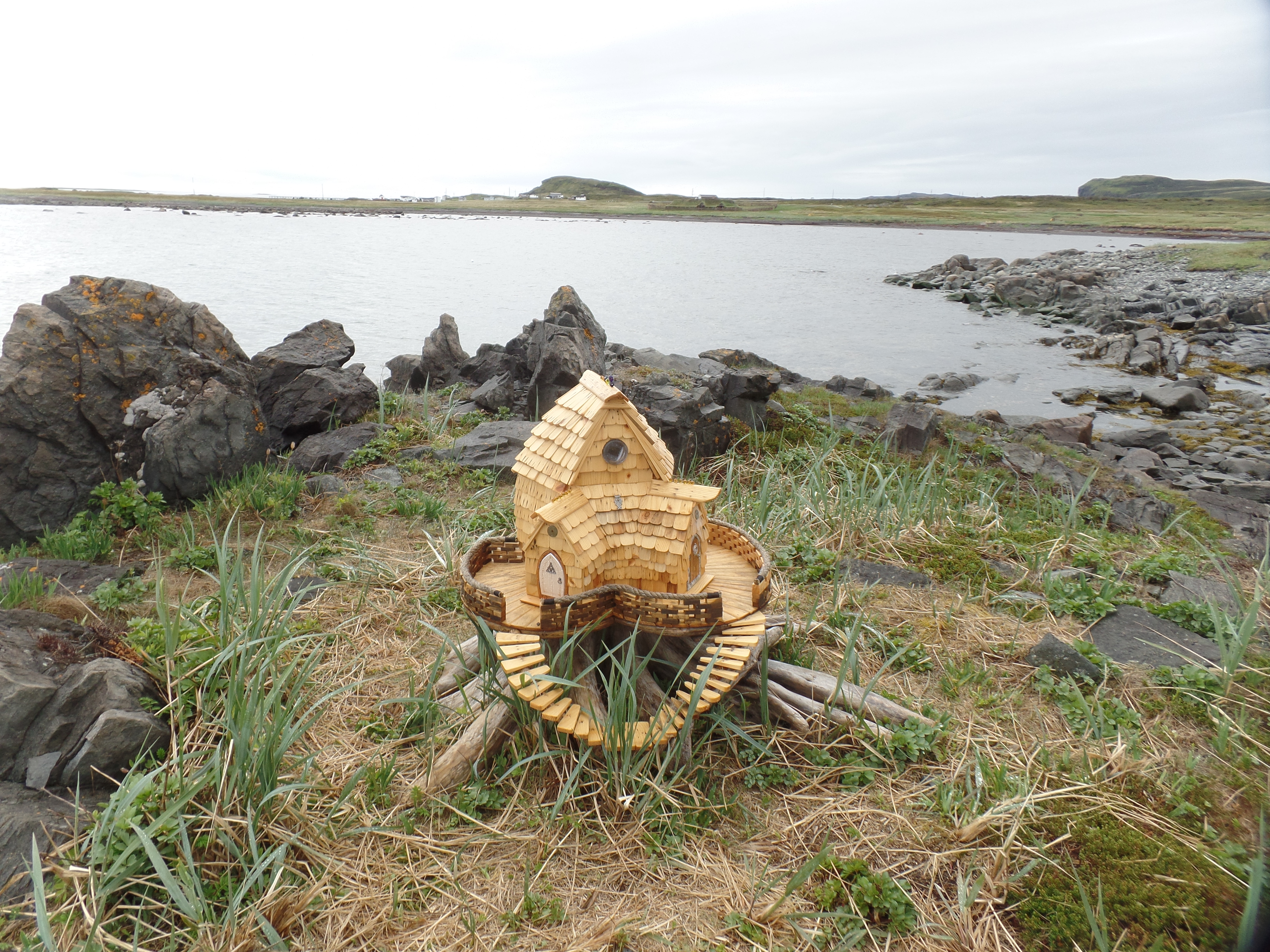
Below, one of several mementos left by Harry, creating both a personal and “Fae” ambiance.

Note the ventilation ducts. The Norse used them, and here’s why:

One of the few women in the settlement group was a sailor’s wife, who was also a sale maker. As she was not sewing sails all the time, she busied herself with creative projects, like this above.

I spoke for several minutes with the docent who portrayed this busy woman, as well as with the woodworking and cook docents. All of them emphasized the constant work that needed doing, twelve hours a day, seven days a week, in this novel environment. All of the settlers longed, constantly, for “home”-Greenland.

NEXT POST: The road to Deer Lake (with Gros Morne National Park along the way)