The Road to Diamond, Day 313, Part I: The Cost of Jingoism

2

October 6, 2025, Sarajevo- Once again, I found myself looking at piles of children’s shoes, mounds of abandoned luggage, faces of frightened families being herded onto to trucks-instead of train cars, with the same promise of “a better life”. I looked into hundreds of pairs of eyes, of men of various ages; indeed, some of the “men” were only 14 or 15. Every last one of the more than 8,000 male human beings killed in July, 1995, in and around Srebrenica, Bosnia& Hercegovina was “guilty” of only one thing-being a Muslim in what their captors conceived to be a pure, Christian, Serbian nation of Yugoslavia.

The Srebrenica Memorial Center sits in what is styled the Republic of Srpska (Serp-ska), its existence and its mission protected by the overarching government of Bosnia i Hercegovina, under the Dayton Accords, which ended the war in Bosnia, in 1996. The Bosnian Serbs make no pretense of liking the message the Museum offers, but they abide its presence. In that sense, it is no different from, say, the Civil Rights Museum in Montgomery, AL or the Sand Creek Massacre National Monument, in southern Colorado. Those who view things only one way cannot easily accept even established fact, when it disrupts their world view.

Three of us were taken to this Museum, by a man named Adis. He is a veteran of the Bosnian War for Independence. He is also an accomplished de-mining technician, and has helped remove mines in over two dozen countries, since 1998. Adis is a Bosnian Muslim. He told us of the background of the horrors that nearly tore his country apart, in the years 1992-96. He told us, as did staff members at the Museum, of the unreliability of United Nations Peacekeepers, held back by the envoy of the U.N. to Yugoslavia and by their own commanders. These men told us what was the result of overemphasis on preserving the status quo. The Big Picture fell on top of the people who only wanted to live their lives in peace.

Here are some of the scenes presented us at the Museum, in Srebrenica itself and at the Memorial Cemetery, down the street from this powerful institution.

Srebrenica Memorial Center, Polocari, Bosnia i Hercegovina
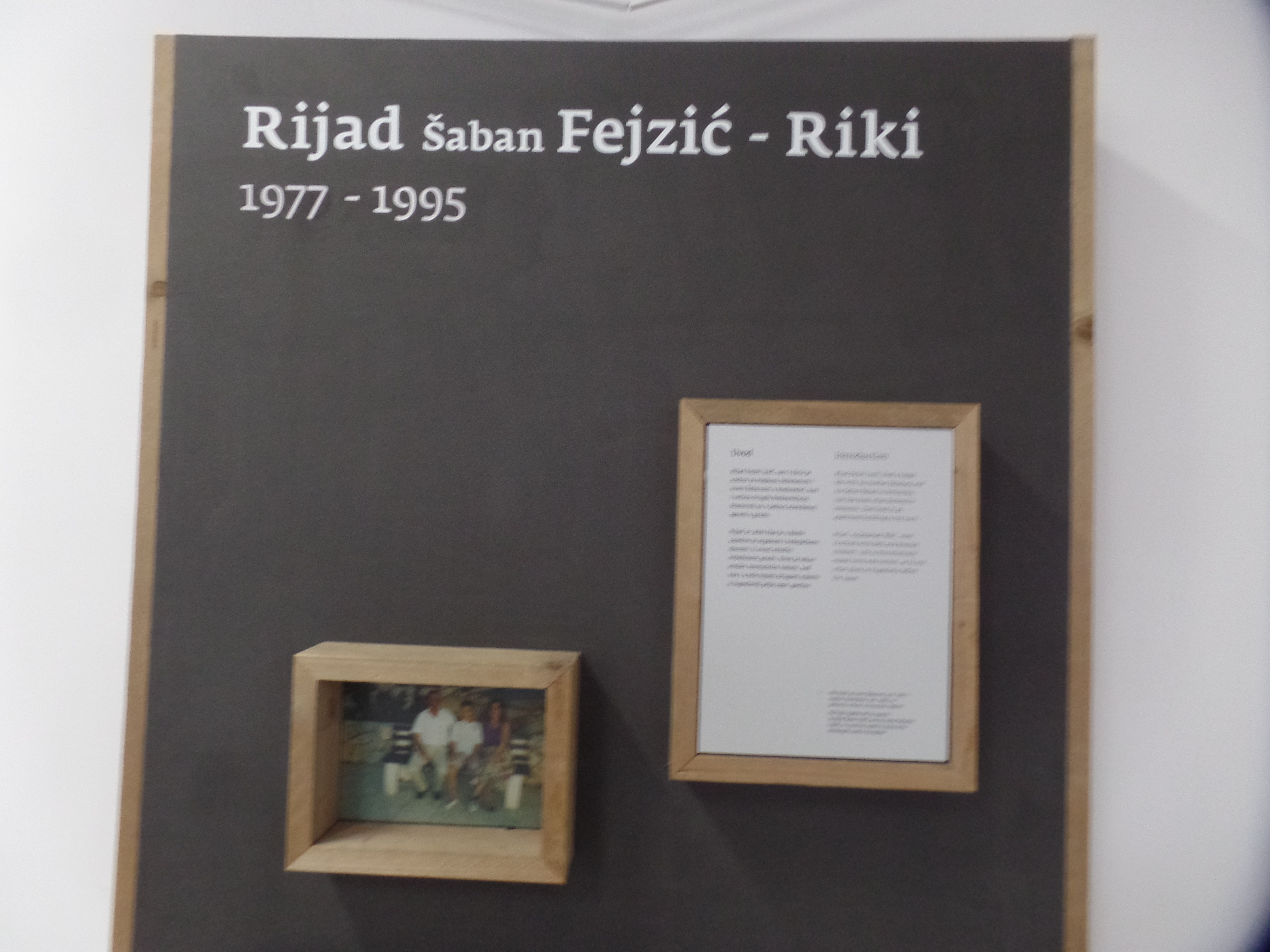
Rijad Fejzic’s story

Riki was 18 when he died, probably alongside his father and most likely not when engaged in combat. He had no training, no weapon, only his faith and love for his family. Riki’s story is a recurring presence in the 26 rooms, in which the story of this conflict unfolds in the Memorial Center. His remains were only identified after the war had ended. His father’s have never been found. Riki was beaten to death.
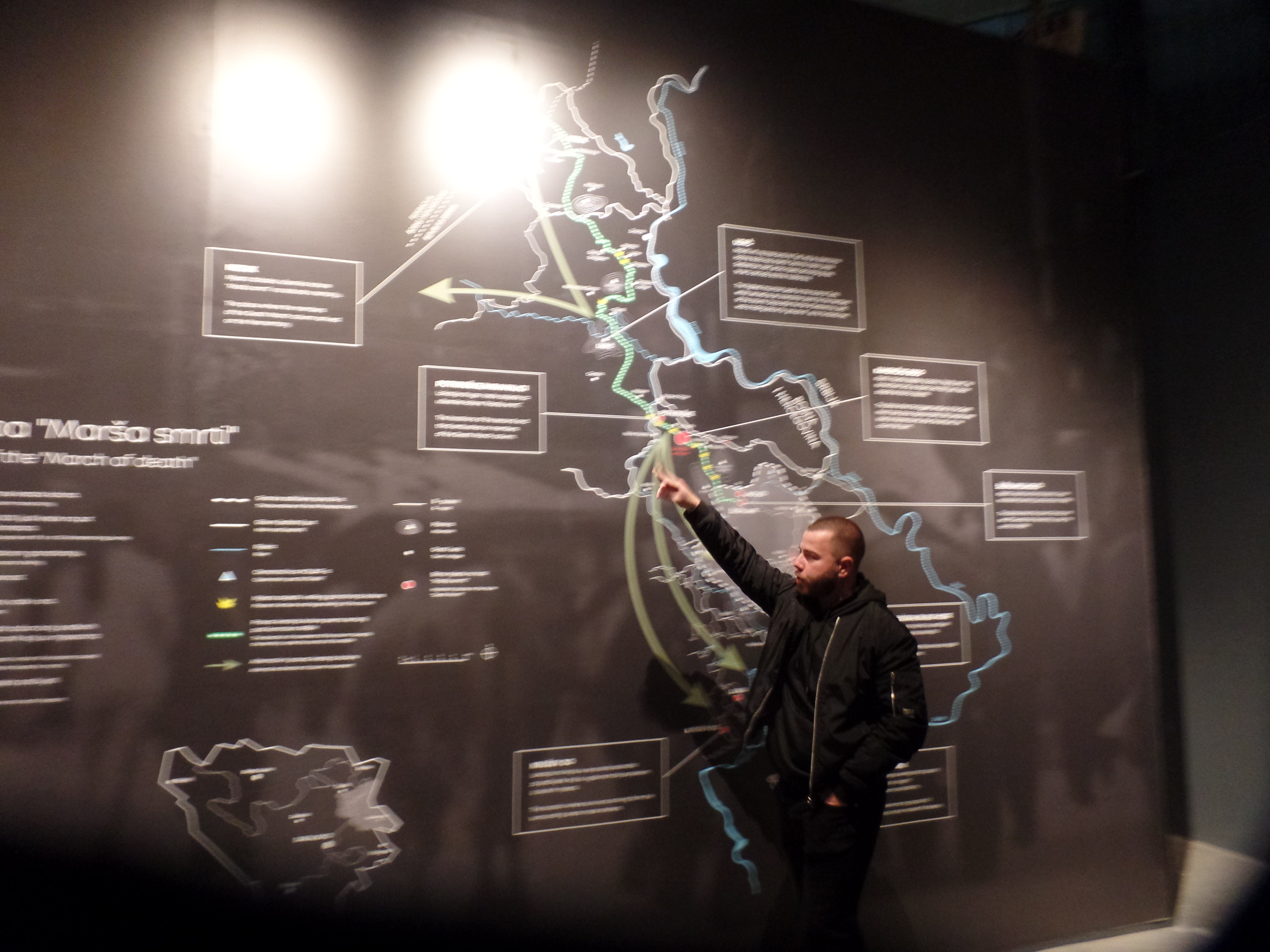
Presentation at Memorial Center, Polocari

This man’s father was a Bosnian Army soldier. He himself has been a presenter at the Memorial Center, for almost fifteen years. He is showing the course of the attacks on Srebrenica, which had been deemed a protected zone of the United Nations. Bosnian Serb forces, aided by the Serbian regulars, decided to ignore the UN’s presence in the area, and marched on the town, on July 11, 1995. The UN’s troops, a Dutch battalion, were under-equipped and outnumbered. It could have been different, but those in control of the situation simply had other priorities.

A relative few of the abandoned shoes left by fleeing children, in July, 2011.
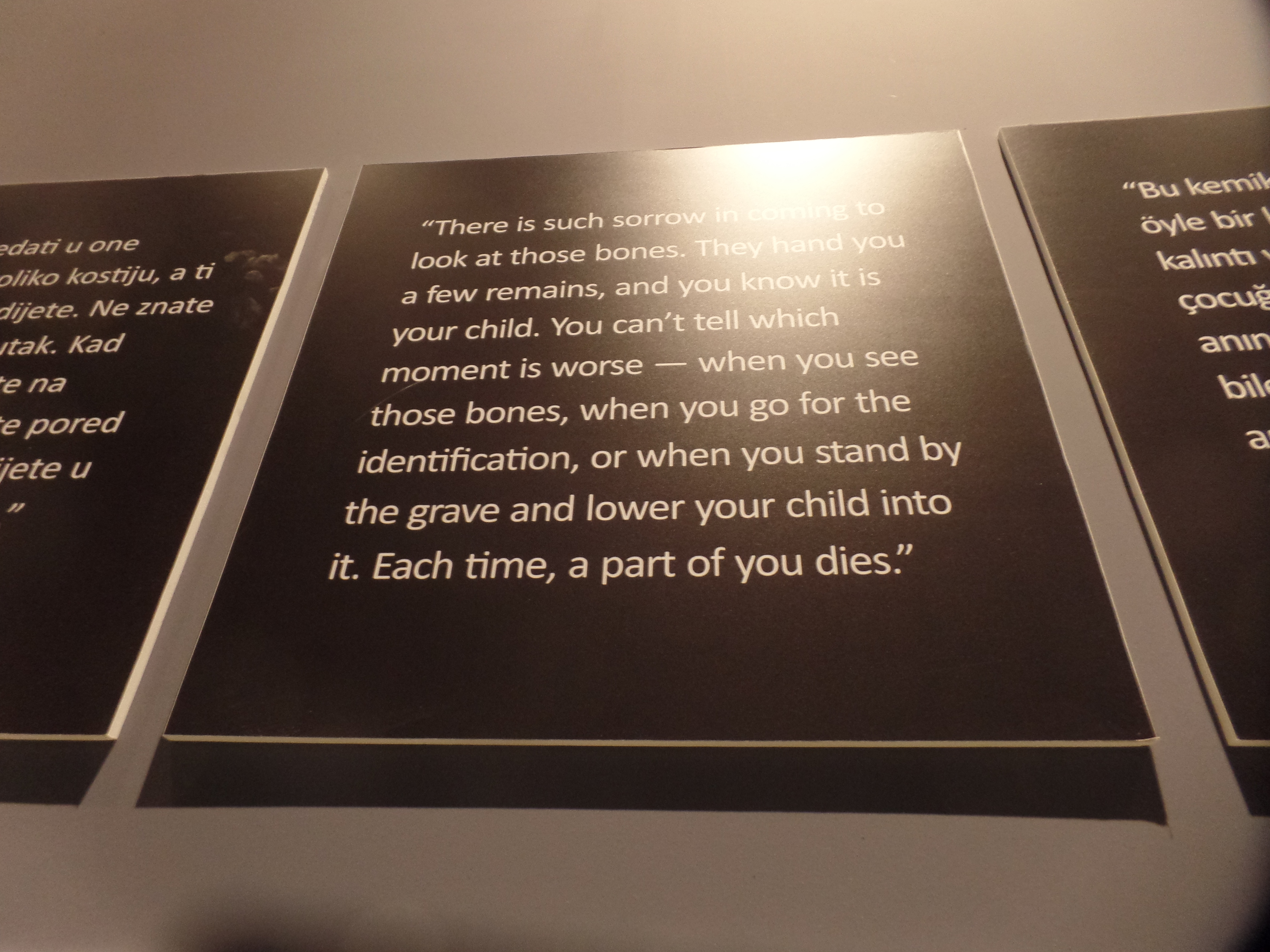
A mother’s sorrow
Taking a page from Nazi Germany, the Bosnian Serb and Serbian commanders overruled even the misgivings of their own rank and file soldiers, many of whom had known the Bosnian Muslims as neighbours- for decades.
Some of the 8,000 men and boys killed in July, 2011.
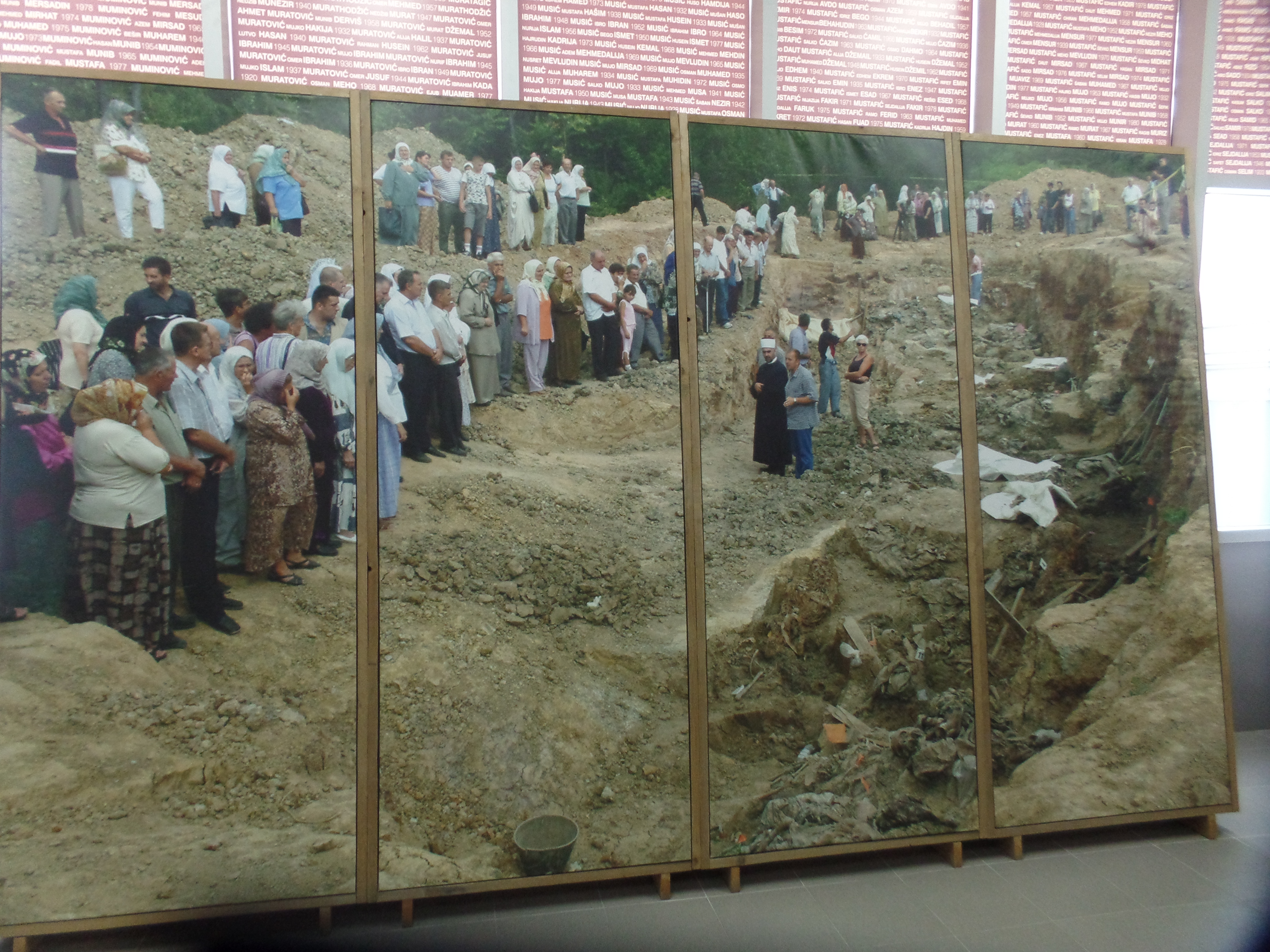
Survivors gathered at the site of a mass grave, in 1996.
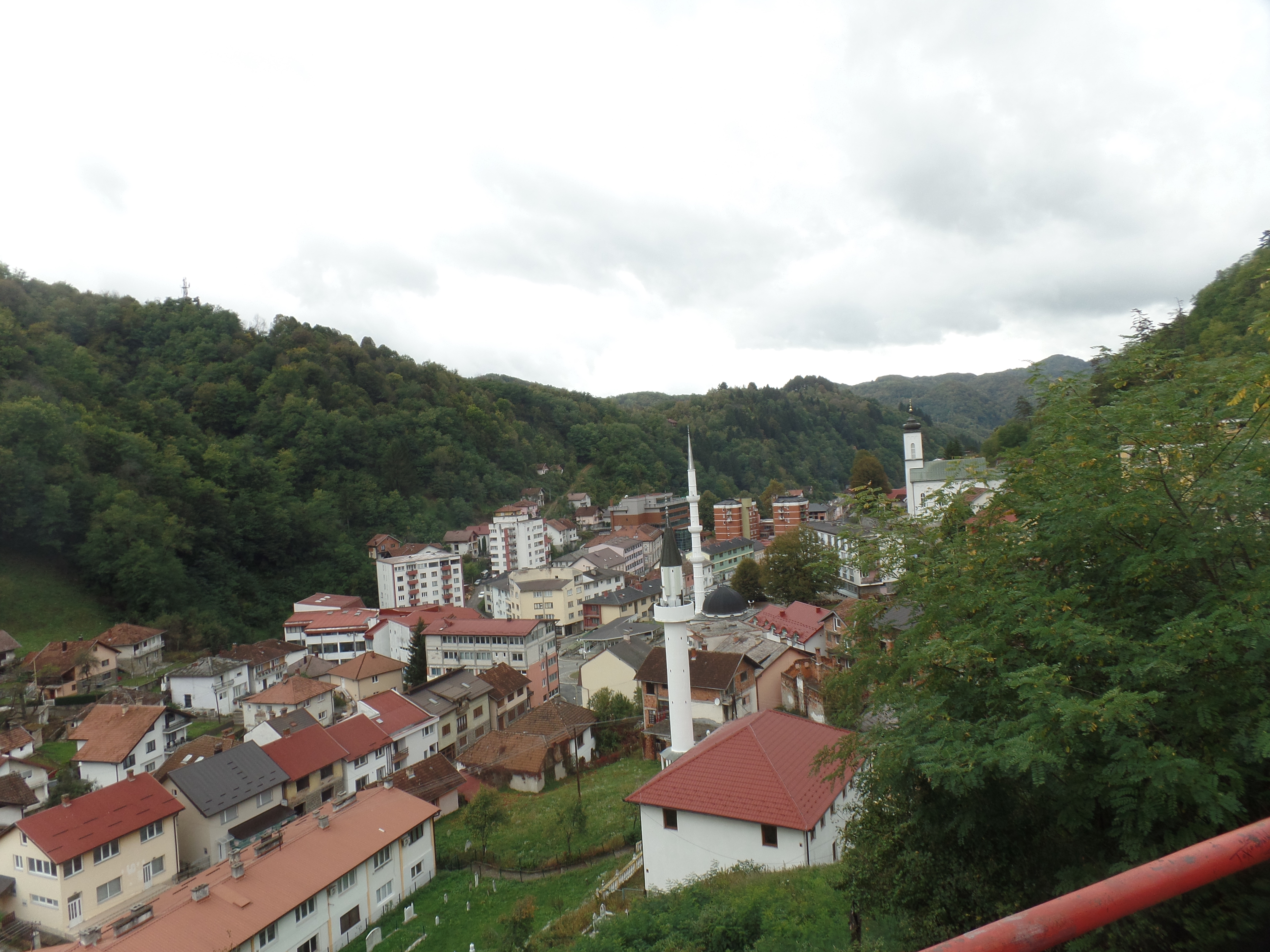
The city of Srebrenica is a shell of its old self, but its young people still hold it close.
The city from a former healing spa, high above. The spires are those of two mosques.
Peace Monument in the central square of Srebrenica.
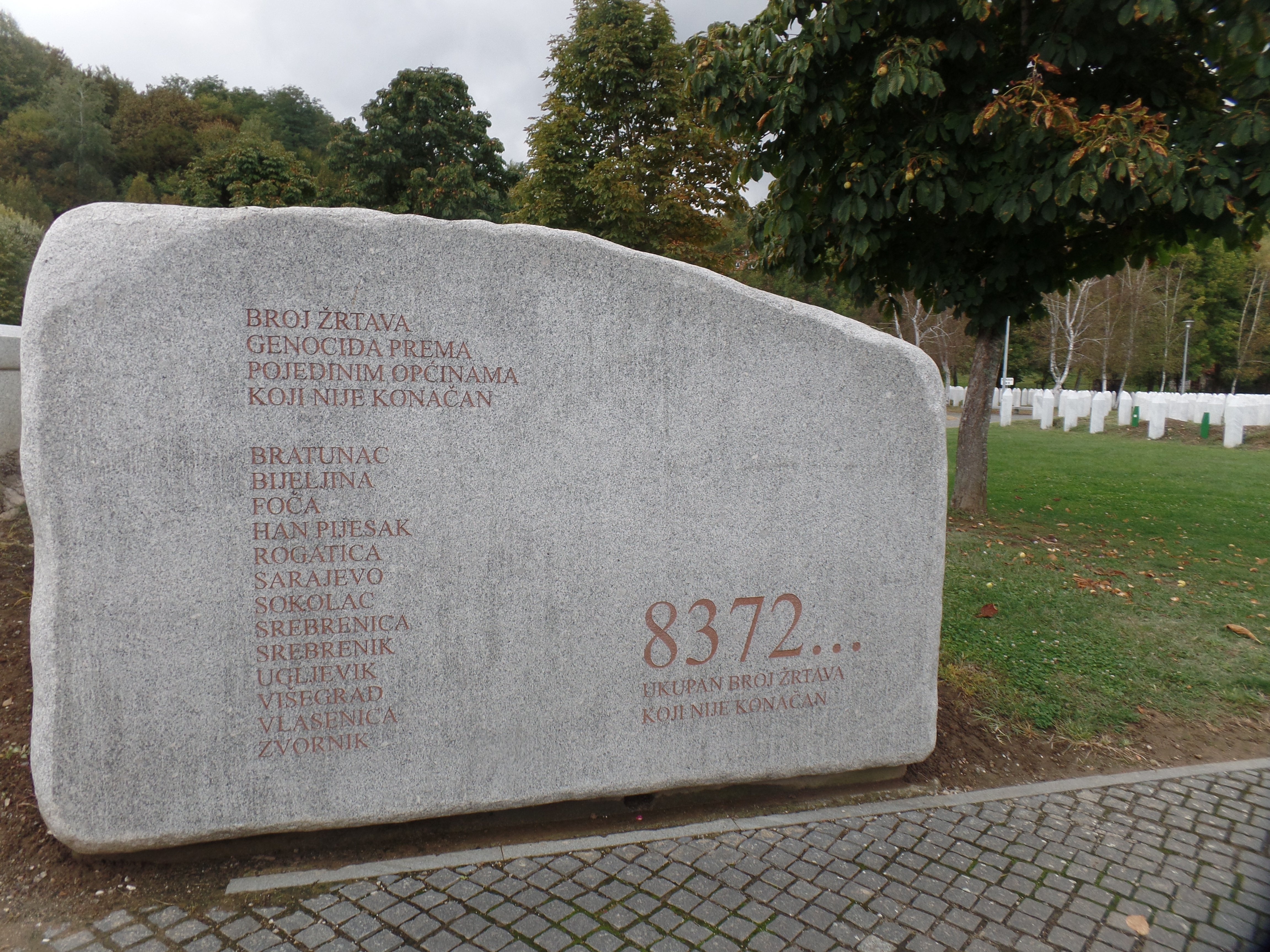
An estimate of the total number of Bosnian men and boys killed in July, 1995. Posted at Memorial Cemetery.
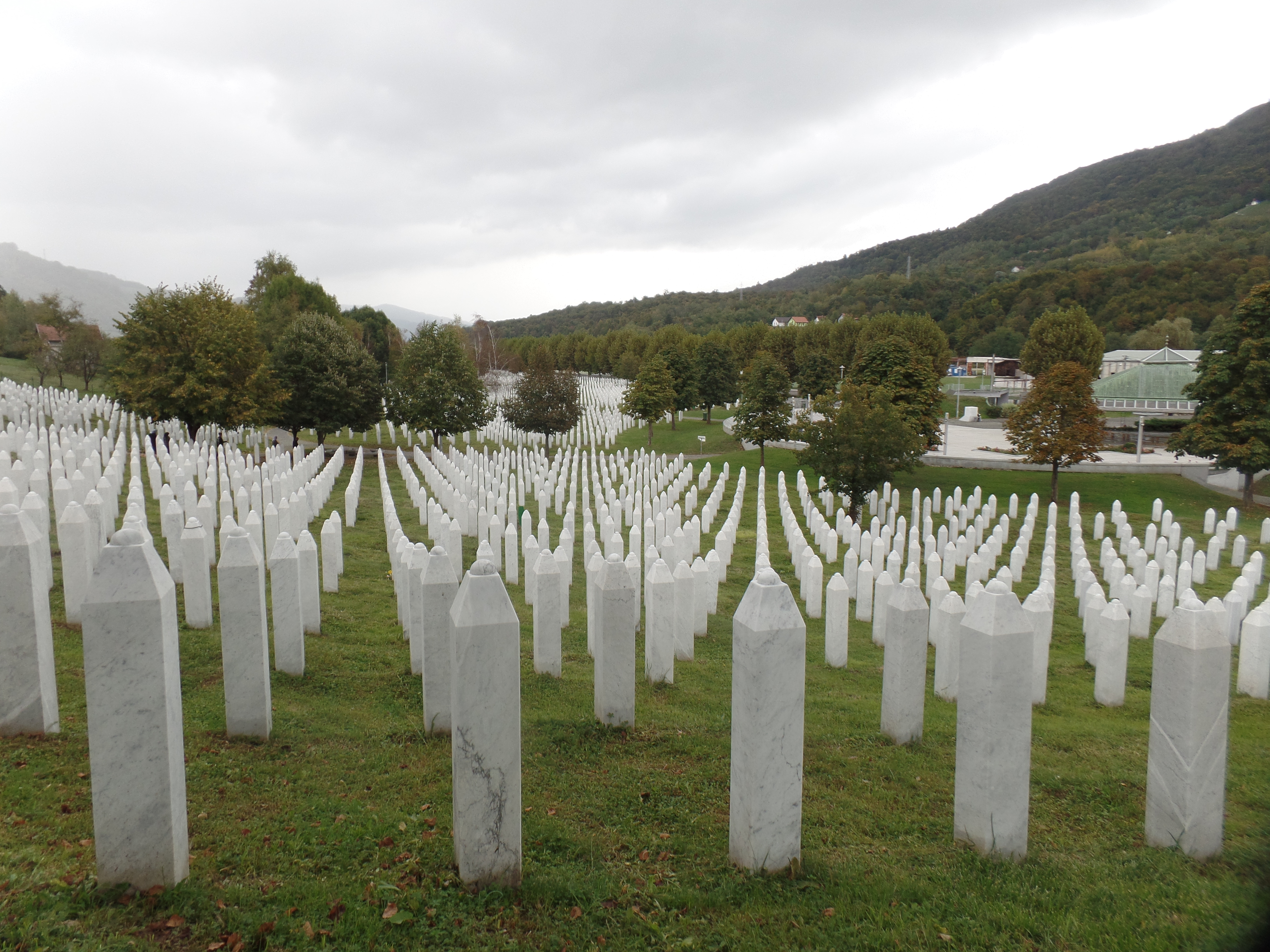
Row upon row of Muslim graves, all from that fateful day in July, 1995.

No one should condemn the Serbian people for what happened, any more than one could condemn the German nation for the Nazi reign of terror or the average Southern white male for the horrors of slavery and Jim Crow, or the majority of Hutu farmers for the slaughter of the Tutsi, in Rwanda. Adis put it clearly: “Most people just want to live their lives in peace and provide for their families. It’s as true of the Serbs around us as it is of we Bosniaks.”

The lesson of Srebrenica, of Auschwitz-Birkenau, of Rwanda, of Cambodia, of the oppression of Indigenous peoples the world over, is that the people of any given community cannot just leave the affairs of a community, state/province or nation to the ambitious and those with an agenda. Each of us has a say in what goes on around us. This is one of the keys to peace-It starts within and radiates outward, lest it die on its own vine.

The Fire and The Rose

4

December 10, 2019-

The full of night can suffuse one’s mind with a darkness that is equal to, or surpassing of, the dearth of sunlight outside.  The mind, unlike the body, does not cease to move, at a time of physical rest.  For many of us, far more than should be the case, the movement is in a downward location.  Especially, but not exclusively, for those who live alone, the mind is more susceptible to the depredations of inner demons- at least until prayer, meditation and a few drops of therapeutic grade lavender bring on a healing slumber.

I live a fairly comfortable life, with no ailments at present, and a caring, if arm’s-length, circle of family and friends.  I was told, long ago, that a little of me goes a very long way. So be it.  As long as I’m doing right by those around me, that’s hardly the worst of circumstances.  When inner demons, stoked at times by fatigue, hit me in the darkness, my mantra of late has been to self-talk into sleep, sometimes aided by the lavender oil I mentioned above.

I look, though, at those whose demons lead them to continuing depredations of their own. The oppressed who, as I remarked to a reader of my previous  post, learn to become oppressors.  Here, I think, the scene arises from a failure to take self to account, to learn to place all blame for one’s lot externally, and to thus become a violator of others’ rights, property and persons.

We did not learn the right lessons, it seems, from the French Revolution, and thus came the Maoist Cultural Revolution.  The Holocaust of 1915 was, as Hitler predicted, a flickering ember of the mid-Twentieth Century imagination and the Fuehrer’s minions accomplished a genocide that would have made Ataturk blanche.  The Turks felt wronged, hemmed in, and so they lashed out, their targets lashed back and there was a bloodbath.  Post- World War I Germany, and several other Central European nations, were given short shrift by the Treaty of Versailles, clever demagogues found their Others to use as scapegoats, and the horror played out, on the grandest scale since, arguably, the Hundred Years’ War.

Today, there are all manner of others.  Demagogues, having tasted power and wanting it all the more, find target Others, across the world.  Stories of rape and pillaging give rise to hyper-generalization, far beyond the punishment of those actually responsible. One size must fit all.  Thus, we have Twitter storms, back and forth, attacking anyone suspected of taking a pin to one’s balloon. We have the macabre spectacle of a Nobel Peace Laureate, justifying her government’s deadly attacks on people whose primary offense is to adhere to a Faith that is different from her own.  She is, she says, acting on the advice of a “man of peace”, who is after all a Buddhist monk.  Thoughts of Nicholas II and Rasputin come to mind, but  I digress.  We have coteries of sectarian radicals,from India and Iran, to Yemen and Nigeria, stoking their own acts of opprobrium, against those of other Faiths.

T.S. Eliot’s scenario of the fire and the rose becoming one, in his Four Quartets,  is practiced over and over in our world, though not in the way he envisioned.  The Hollow Men, of one of his other great verses, will not endure a world ending with a whimper, but the series of bangs that have been our lot, since at least 1912, could bring it to an alarming precipice.

Bringing oneself to account each day would seem to be advisable, for high and low, alike.