The Road to Diamond, Day 96: The Hounds of the Hoovervilles

2

March 4,2025- In the late 1920s, it was decided, by the Executive Branch, that the solution to the world’s gathering economic woes was to place trust in its economic elite, particularly the business titans of the United States. Granting exemptions and privileges to the “movers and shakers” was seen by the Hoover Administration as central to the nation’s, and the world’s , recovery following the Stock Market crash of October, 2029.

It proved to be too little, too late. The solution that worked proved to be the counterintuitive one-Massive investment by the government itself, large-scale programs that lifted society up by loaned bootstraps: The New Deal, a sequel to the Square Deal that was initiated by President Theodore Roosevelt, nearly thirty years earlier. That agenda increased government monitoring of business and enacted public health programs. The agenda of TR’s cousin, Franklin Delano Roosevelt, brought government into everything from flood control and rural electrification to the basic well-being of senior citizens and control of traded securities.

That the United States was drawn into World War II added to the economy in some respects and hampered it in others. War and defense industries flourished, while the workforce was limited by the need for so many men and women to go forth in safeguarding the nation’s, and the world’s, freedom.

Nearly a century after the Crash, we face a related reckoning. The notion that the government should be far less involved in social welfare is again gaining traction. It has been said, several times of late, including by the President in his speech to Congress, this evening, that payouts to deceased people have been ongoing. My wife of 29 years died, 14 years ago tomorrow. When she had been laid to rest, and the family members had gone back to their own lives, I took it upon myself to return funds that were no longer hers and to pay back her insurers that which had been overpaid. Further, time passed and I received Survivor Benefits from the Social Security Administration-until I filed for my own Retirement, upon reaching the age of 70. At that point, the Survivor Benefits stopped. I doubt that my handling of our situation is an anomaly.

I do not understand the insistence, by people who are independently wealthy and have no need of Social Security, that the rest of us should be asked to give up our benefits. Before anyone says that is not what Elon Musk and others are advocating-please note that he referred to Social Security as a Ponzi scheme. I paid into the fund, from November, 1966-February, 1987 and again from March, 1992- November, 2020. Heck, when I work occasionally as a Substitute Teacher, I am still paying into the Fund. I am getting back what I gave. I do not feel grifted.

Between the day after the Stock Market crash of October, 1929 and the inception of the New Deal, there emerged, across the nation, settlements of displaced workers and their families. These were called Hoovervilles. They gradually closed, as the economy slowly improved and the war effort took more people into the realm of military service. The Hoovervilles, in fairness, make today’s homeless encampments seem small by comparison-even in California.

I wonder, though, what will be the end result of slash and burn? What programs do the DOGE executives have in mind for those currently being displaced? Have they thought that far ahead, or are they acting as the new hounds of latter day Hoovervilles? I can work, if need be, for the foreseeable future. As I look around at my contemporaries, however, I see that not everyone can.
The Sooner State’s Northern Tier

0

June 14, 2022, Carthage, MO- “Hugs” helped me get up this morning, and we both got friend John out the door, a bit earlier than might otherwise have been the case. No worries, as I used all the time given me, going across Oklahoma’s northern tier and J had time to do what he needed to do for his own health and well-being.

We started as we usually do, on such visits, with a breakfast sandwich from a gas station deli and coffee at Da Vinci, Enid’s premier coffee house chain. After conversation with John and one of his friends, it was time to head east again. This time, I stayed on Route 60, eastbound, as far as the turnoff to Neosho, MO, which was a bit further south than I wanted to go today.

Passing through towns like Pond Creek, Lamont, Tonkawa, Ponca City, Pawhuska, Bartlesville, Nowato and Vinita, I was struck by the increasing greenery-even though I have been through this area dozens of times. The difference today was that there was no Turnpike involved. I was able to enjoy the back side of the northern tier.

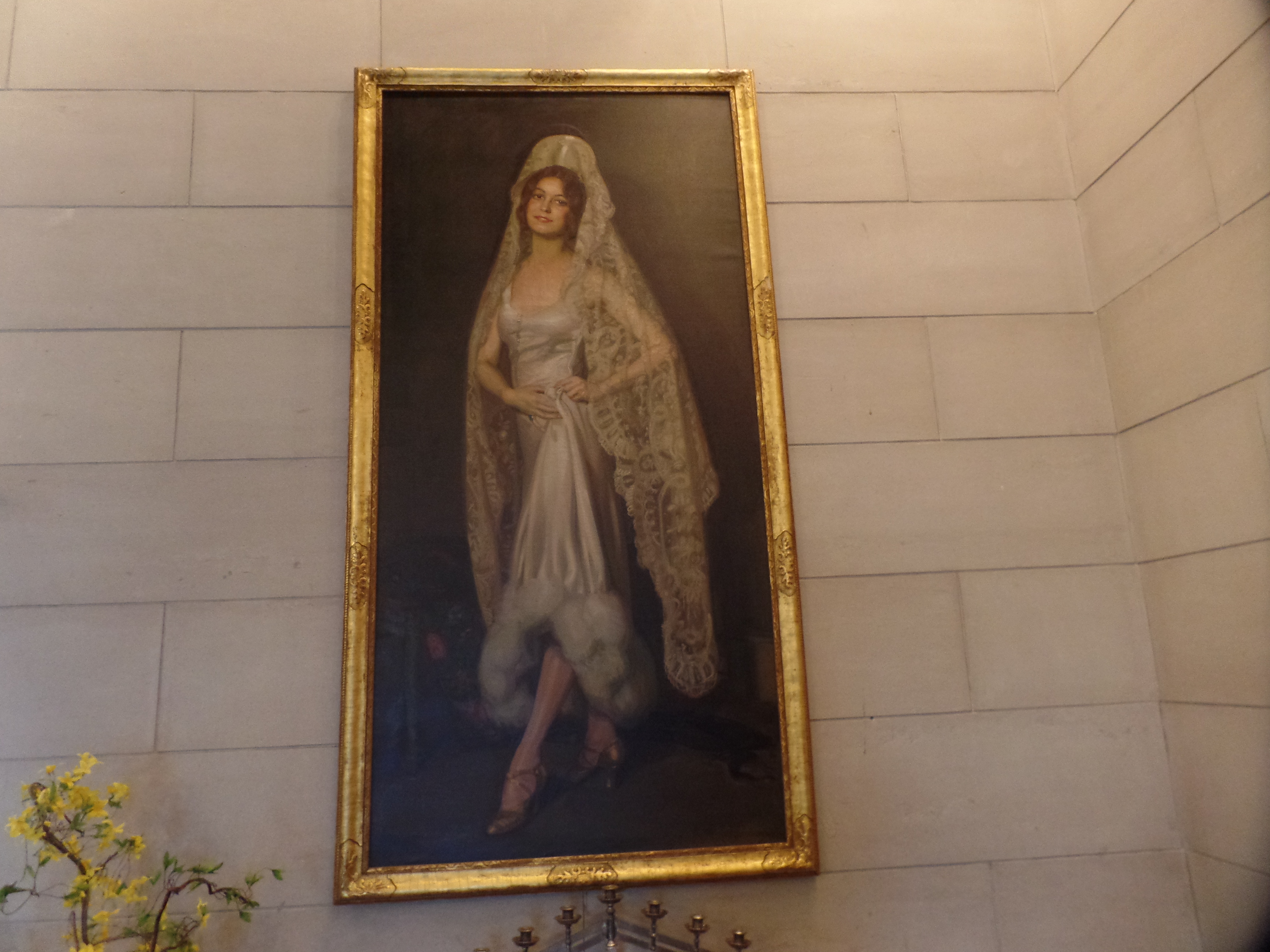
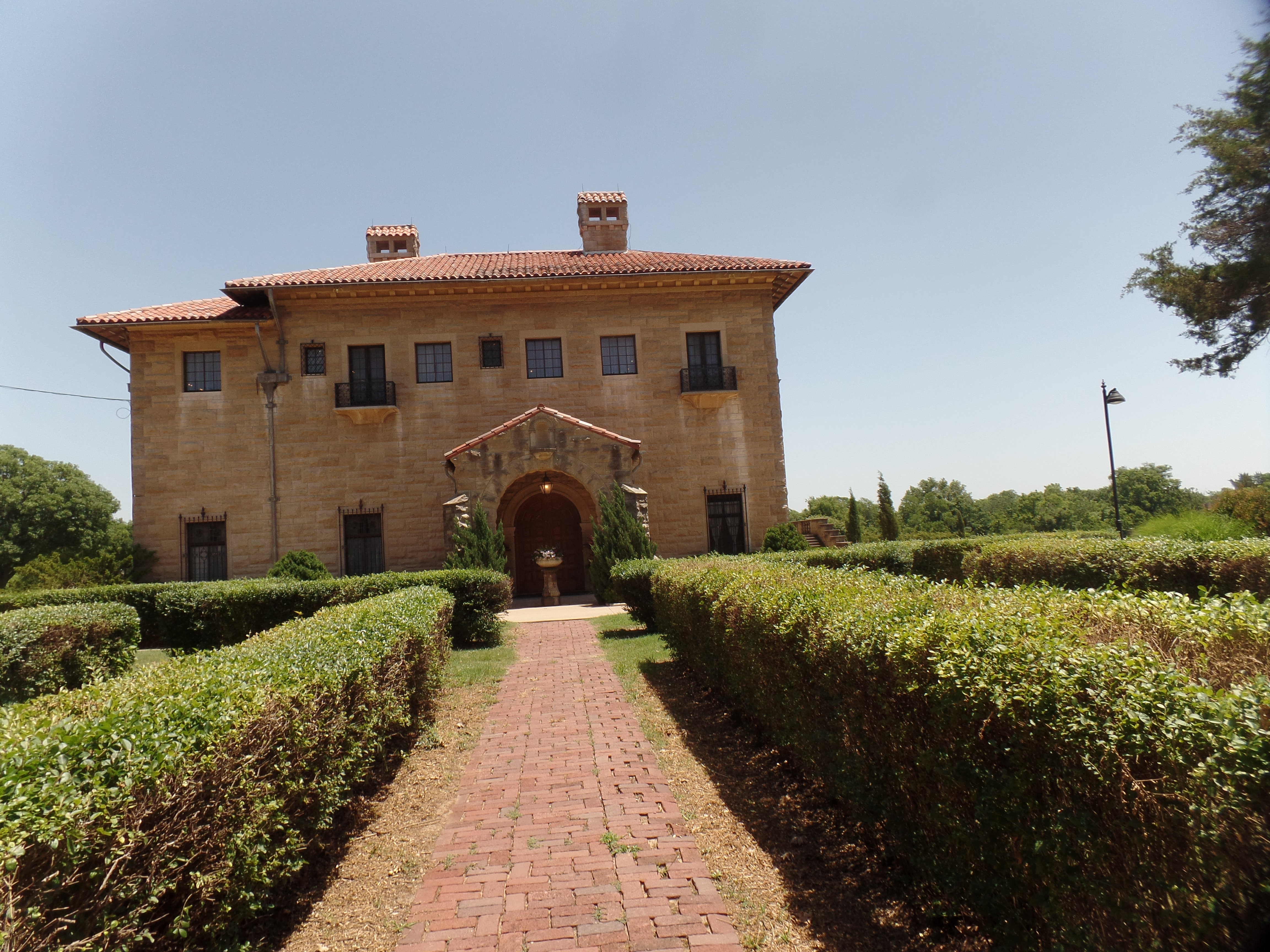
Ponca City has preserved the properties associated with Oklahoma’s tenth governor, Ernest Whitworth Marland, who was also a philanthropist, having made a fortune in the oil industry, but seeing no point in hoarding the money. His view of wealth was to spend it “like water on my people and my town (Ponca City).” The mansion and estate he shared with his gracious and socially passionate wife, Lydie, are now managed by Ponca City.

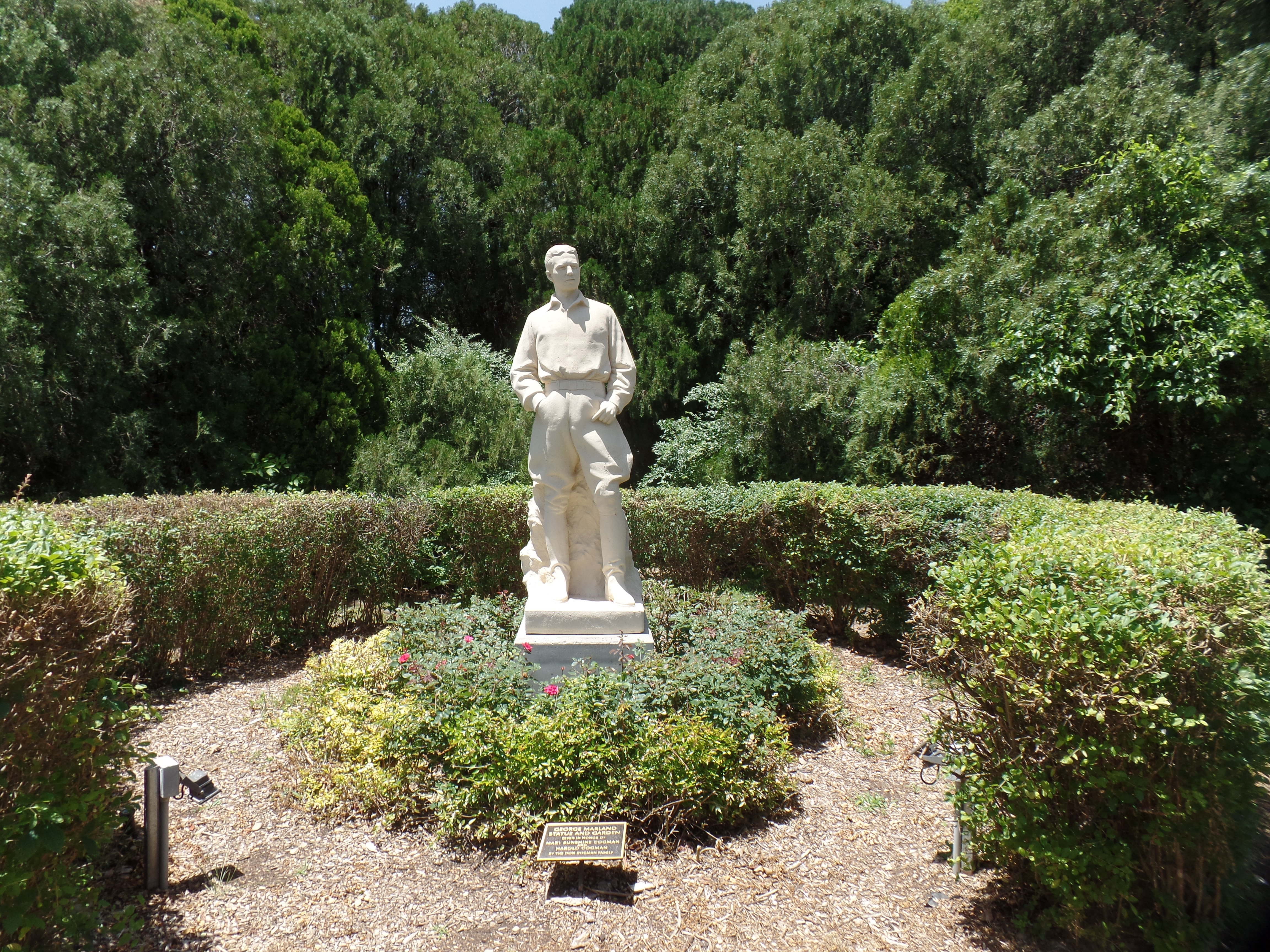
Here are some scenes of the mansion and grounds. The Marlands’ adopted son, George, is depicted here, greeting guests as they walk in from the parking lot.

‘Abdu’l-Baha identified philanthropy as the fourth means to spiritual progress. Mr. Marland’s record of contributing, both to the welfare of his employees and to the well-being of Oklahoma’s people, is a worthy counterweight to the seeming largesse he expended on his family and himself. He seemed to have transcended the distrust for the common man that was vocalized by his mentor, Andrew Carnegie, and he actively called for “bringing the New Deal to Oklahoma. In the wake of the Dust Bowl calamity, the state needed those programs, perhaps even more than many places in the coastal regions.

Wealth is not a negative attribute, when it is shared responsibly.

Fog Clears

7

October 29, 2021- Ninety-two years ago today, the Universe reacted to nearly a decade of excess and careless handling of finances, across many strata of society. Today, there was a modest amount of give and take, in the financial markets and they ended the month of October on a mildly upbeat note.

Ninety years ago, with a year left before the Presidential Election of 1932, what was left of the nation’s business elite was blaming the entire mess on “shiftless workers”, who “expect handouts”. Today, there is little changed, in that regard. The difference is that the philosophical heirs of that elite are blaming Unemployment Compensation and Social Security, as well as “lazy workers”, for what is largely a supply chain jam-up, caused by a variety of factors-only a few of which are independently verifiable. Much remains in the realm of speculation, and thus is beyond the purview of this web log.

Eighty-nine years ago, a president who was in over his head was replaced by a man who had been governor of the most populous state in the Union and who had a fair amount of experience in the financial markets. It was a gargantuan task that greeted that successor, and it took him the better part of three terms in office to promulgate a recovery. Today, we are a nation in gradual recovery from a worldwide disease pandemic, a year after another president who struggled was replaced-by a somewhat more seasoned public official-who is also struggling.

The difference between then and now is that we are faced with the ambiguity that comes from too much contradictory and rapidly flowing information. Most people are at their worst, when faced with ambiguity. No one likes to be wrong, so shades of gray flummox us. Good guys aren’t supposed to wear black hats. Villains are supposed to lack virtue. The fog is supposed to clear by Noon.

When the fog does clear, though, we see that there are all manner of contradictions-and no one gets off scot-free. The physical disease will lose its pandemic status, probably in less than a year. The disease of ego gratification will take longer to curb-and will entail some loud voices, coming from ungainly personages-on both sides of the aisle, being rendered silent-by the power of the voting booth. We will, each and all, be left with the challenge of learning to listen to those who see things differently than we.

It would be well to resume, or at least start, that process now.