Old Town, but Not Cold Town

2

December 10, 2018, Alexandria, VA-

In the years in which I was stationed at Fort Myer, VA and  in the several visits I’ve made to the Washington area, since then, I had not been in Old Town Alexandria.  The place was just enough off the beaten path that we always made to the National Mall, that I just never got over here.

The Metro has changed things and Alexandria took its rightful place on my itinerary, all the more so because our family dinner, the night before my mother-in-law’s interment, was held at The Warehouse, a fine dining establishment, in lower Old Town.
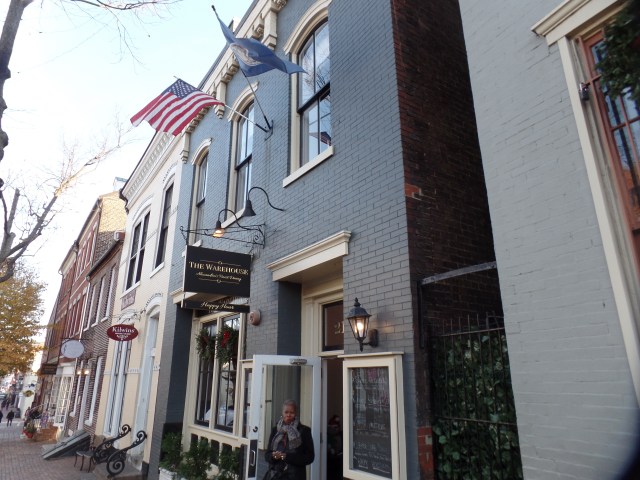
SAMSUNG CAMERA PICTURES

This would be one of the best meals I’ve had, in a long time, and that’s saying  a lot, in a year of fabulous repasts. Yet, let;s get back to the start of this visit.

I took a Blue Line train to Alexandria’s Union Station, just after noon.
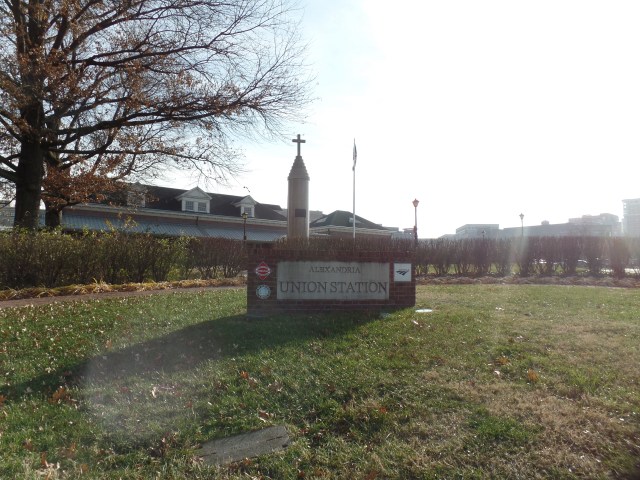
SAMSUNG CAMERA PICTURES

Being a bit hungry, and with dinner nearly five hours away, I stopped in at this simple, but charming, little cafe, across from the train station.  As good as the coffee was, I relished the gyro sandwich, as well.
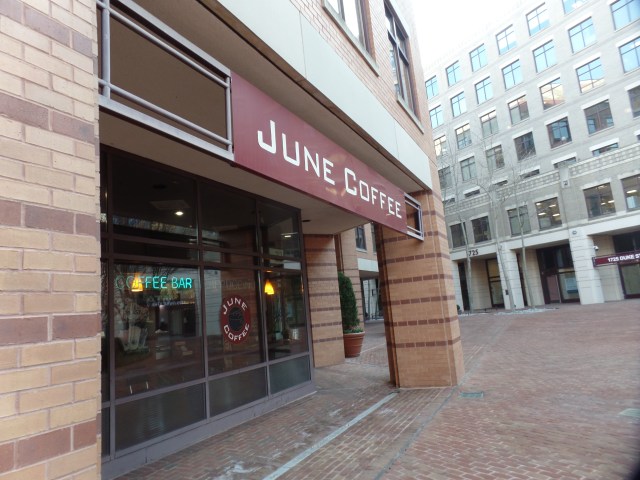
SAMSUNG CAMERA PICTURES

Old Town, especially on King Street, has a variety of shops with interesting names:  Hard Times Cafe, Stage Door Deli, and this- a unique place, which was closed-it being Monday.
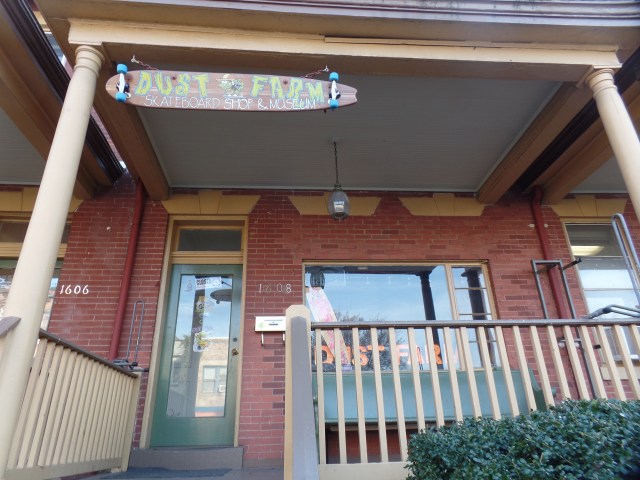
SAMSUNG CAMERA PICTURES

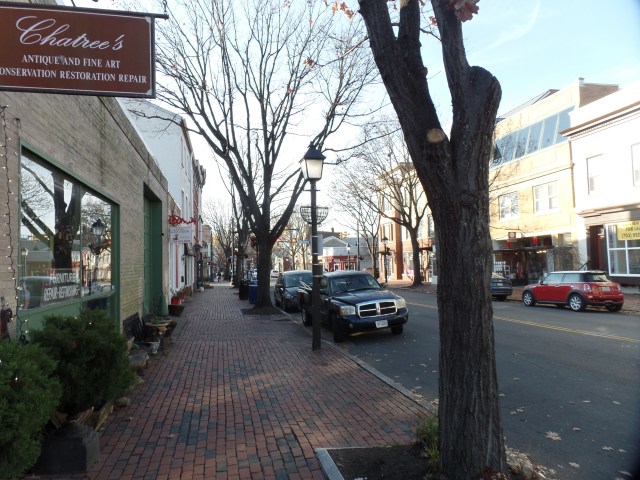
Here is an eastward view of King Street. The air was cold, but the vibe in Old Town is uniformly warm.
SAMSUNG CAMERA PICTURES

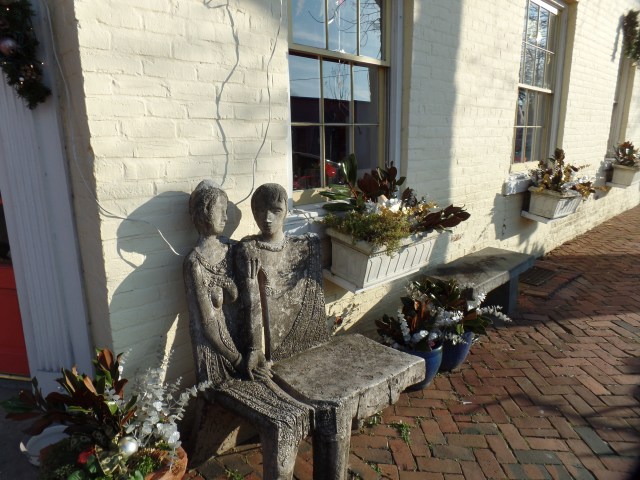
Even a broken bench was inviting.

SAMSUNG CAMERA PICTURES

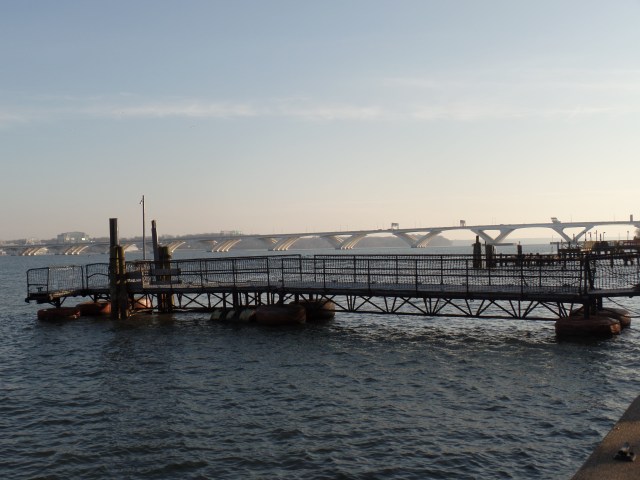
I spent about ninety minutes enjoying the scenes along the Potomac Riverfront, one of the key ingredients in the Alexandria Story.  This town was one of the first great shipbuilding and sail rigging manufacturing cities in the U.S., and continued in that role, right up through World War I.
SAMSUNG CAMERA PICTURES

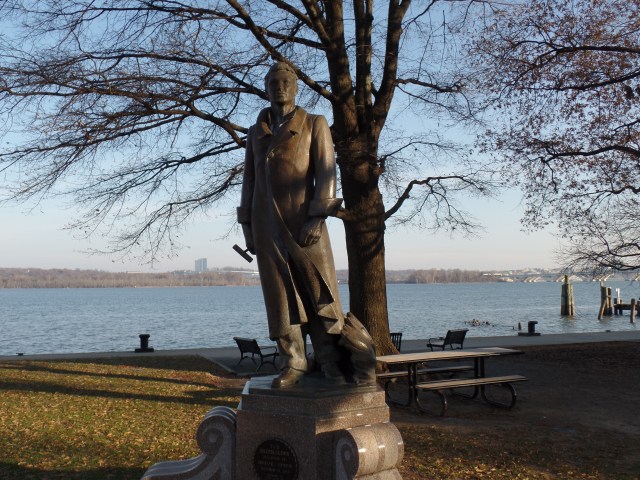
In Waterfront Park, the lone statue is that of a shipwright.
SAMSUNG CAMERA PICTURES

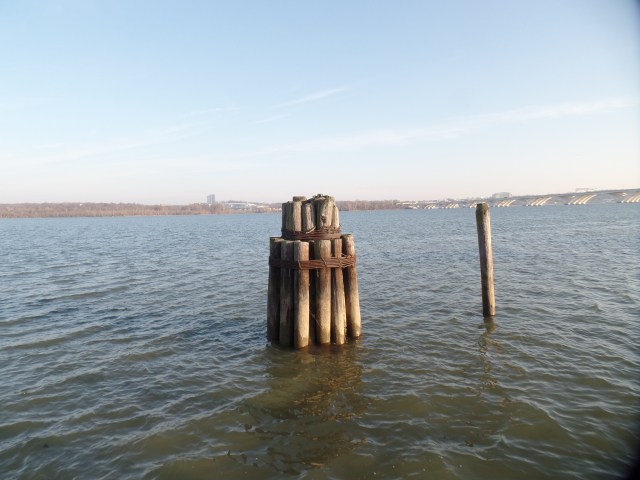
Oystering is Alexandria’s other claim to fame, and Potomac River oysters are proudly served, both on and off the half-shell.  These pilings are left from an old oystering wharf.
SAMSUNG CAMERA PICTURES

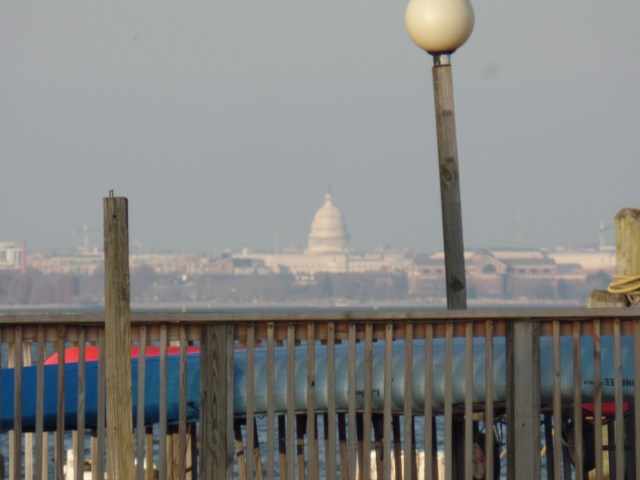
I could not resist zooming in on the U. S. Capitol, nearly six miles away to the north.
SAMSUNG CAMERA PICTURES

Animals make do with the weather they’re given.  Here, a duck is grooming its mate, in the bracing Potomac waters.

SAMSUNG CAMERA PICTURES

Jones Point, named for an indentured servant of the Eighteenth Century, is Alexandria’s largest wilderness park, and the southernmost point of Old Town.  It is the site of numerous archaeological digs, a couple of left-over border markers. From 1801-1847, the City of Alexandria was part of the District of Columbia.  A retrocession was passed by Congress in 1846 and took effect the following year, returning Alexandria to the Commonwealth of Virginia.  During the Civil War, however, the city was occupied by Union forces, thus temporarily reversing the retrocession.

SAMSUNG CAMERA PICTURES

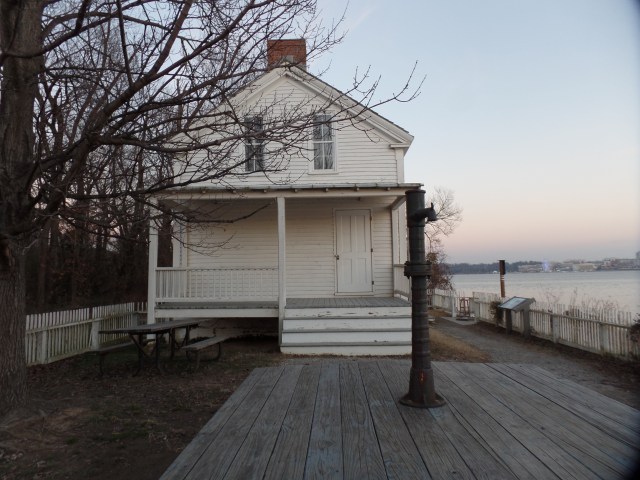
This house was occupied by the keeper of a lighthouse, at Jones Point, in the nineteenth century.
SAMSUNG CAMERA PICTURES

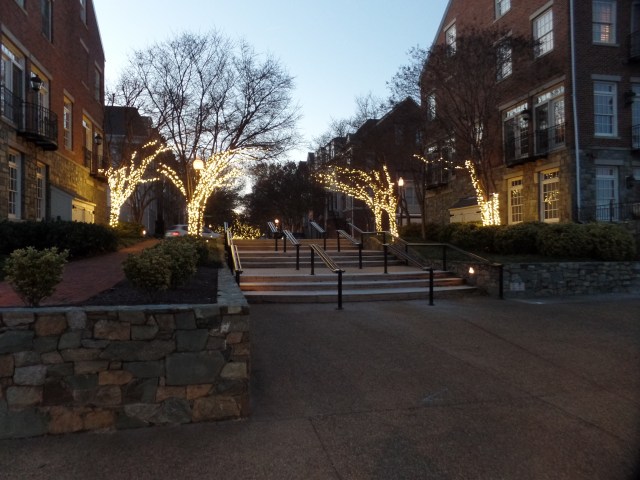
On the walk back into Old Town, I noted the area’s awakening Christmas spirit.
SAMSUNG CAMERA PICTURES

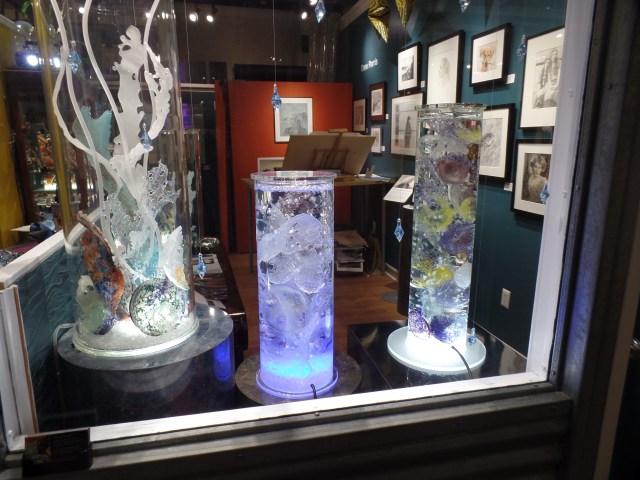
The last forty-five minutes before dinner were mostly spent in Torpedo Factory, which is actually Alexandria’s fascinating three-story arts haven.  More than fifty individual galleries are housed here, as are studios to encourage children’s art.
SAMSUNG CAMERA PICTURES

SAMSUNG CAMERA PICTURES

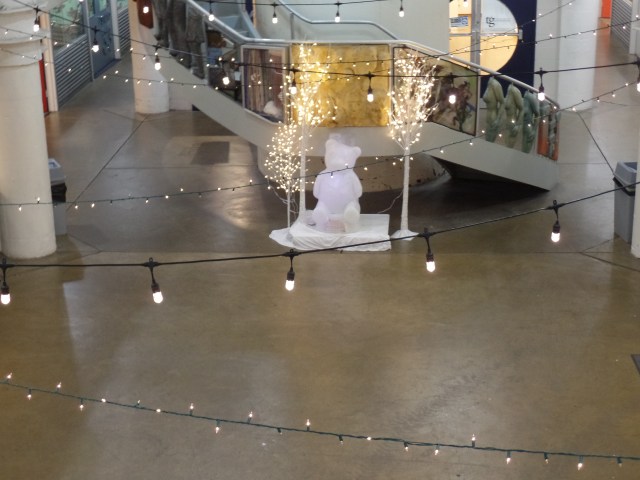
The bear reminded me to stop by the small, but heartfelt, Old Town Books, and look for a children’s book-for my ten- month-old grandniece, who was at the dinner. I found a flip book on horses, which she found most interesting, both to sight and to touch, a good early sign!

The superb dinner ended a day, the likes of which “Bunny” always approved.


,


Vale of Three Mountains

2

July 21, 2017, Harpers Ferry- After experiencing the intensity and blood-echoes of Antietam, I headed the back way southward, through tourist-clogged Shepherdstown, to slightly less congested Charles Town, not to be confused with the West Virginia capital, Charleston, which lies a good 3 hours to the south.  There, I spent a restful night, on the outskirts of town.

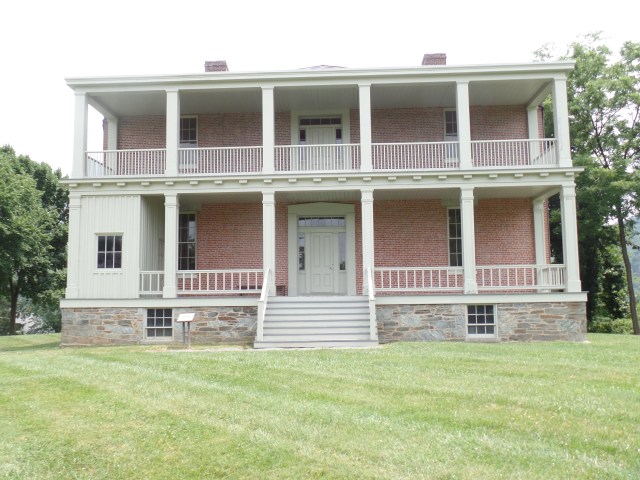
This morning, after driving past the even more-overpopulated Harpers Ferry KOA, a mini-city, I opted to first take a ranger-guided tour of the approach to Lower Town.  Ranger Michael gave us a fully- detailed visit to what had been Storer College, an institution of higher learning, founded in 1865 and aimed at training African-American teachers.   The school closed in 1955. It is now part of Harpers Ferry National Historic Park, with a National Park Service Academy (Mather Training Center) and Lockwood House, a Union Army hospital and later headquarters for Gen. Philip Sheridan.  When Storer College was founded, Rev. Nathaniel Brackett made Lockwood House the administration building.  It is now a research facility for the National Park Service.

SAMSUNG CAMERA PICTURES

Behind Lockwood House lies Harpers Ferry Cemetery.  Michael led us through the burial ground, en route to Jefferson Rock.

SAMSUNG CAMERA PICTURES

Thomas Jefferson stood on this rock, in October, 1783, and was extremely impressed by the view.  From that point on, the rock has borne his name.

SAMSUNG CAMERA PICTURES

St. Peter’s was not there, back then, but you get the idea.

SAMSUNG CAMERA PICTURES

We walked past the ruins of an Episcopal Church, which was there in 1783, before Michael bid us farewell, so he could conduct another tour.

SAMSUNG CAMERA PICTURES

I took the shuttle bus back to the upper parking lot, and drove back down, for further exploration of Lower Town.  I stopped, for about twenty minutes, at the headquarters of the Appalachian Mountain Club, this being the midpoint of the Appalachian Trail.  The staff and several through-hikers were encouraging of my pipe dreams of someday walking that venerable long path.

Here are a few scenes of the business district and Virginius Island. These are the ruins of Shenandoah Pulp Mill, built at Halls Island, by Thomas Savery, in 1887 and destroyed by the Great Flood of 1936.

SAMSUNG CAMERA PICTURES

The Flood also put an end to a cotton mill, on Virginius Island.SAMSUNG CAMERA PICTURES

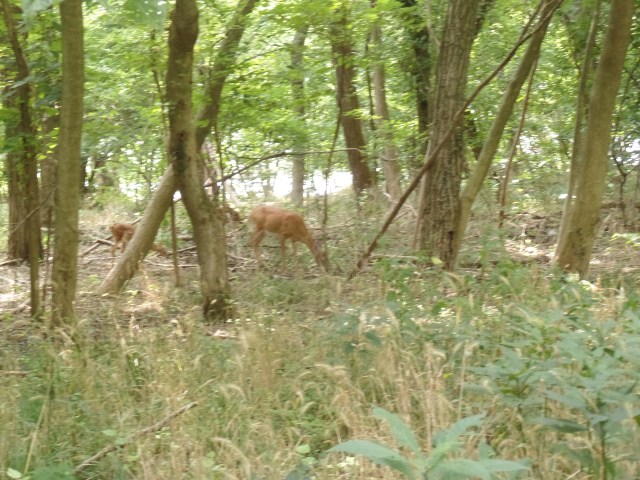
These days, Virginius is popular with swimmers, along the Shenandoah River and with the ubiquitous deer.

SAMSUNG CAMERA PICTURES

Thankfully, it is only accessible by footbridge.

SAMSUNG CAMERA PICTURES

I walked on down, to Lower Town, and gazed at the confluence of the Shenandoah, with the Potomac.

SAMSUNG CAMERA PICTURES

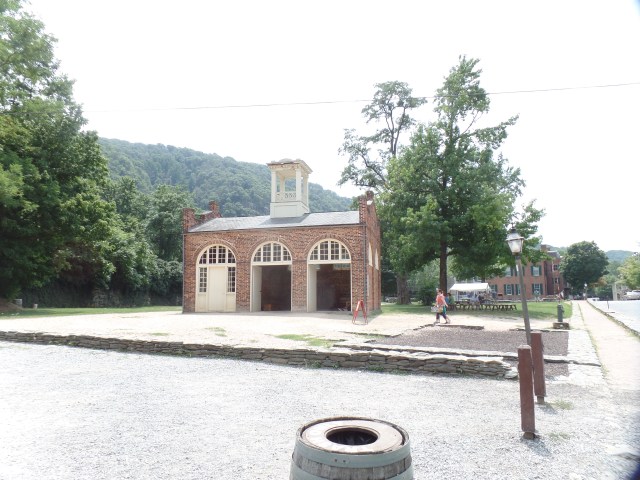
The small fire station, which once served as a “fort” for the abolitionist John Brown, faces the two rivers, at the edge of Lower Town.

SAMSUNG CAMERA PICTURES

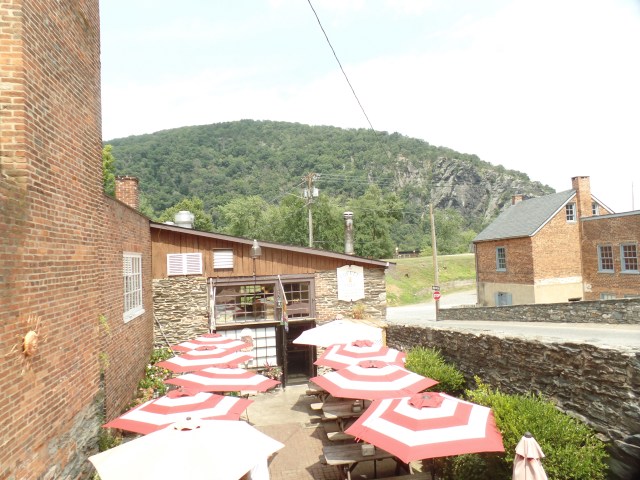
I walked on, up Main Street, avoiding the temptation to buy trinkets.SAMSUNG CAMERA PICTURES

The last stop, before heading out towards Harrisonburg, was The Coffee Mill, where the heat of afternoon called for a root beer float.

SAMSUNG CAMERA PICTURES

Harpers Ferry certainly had a hard time being hemmed in by two rivers and three mountains, during the strife of 1850-1865, but it has found a place in the hearts of grateful citizens, in this day.