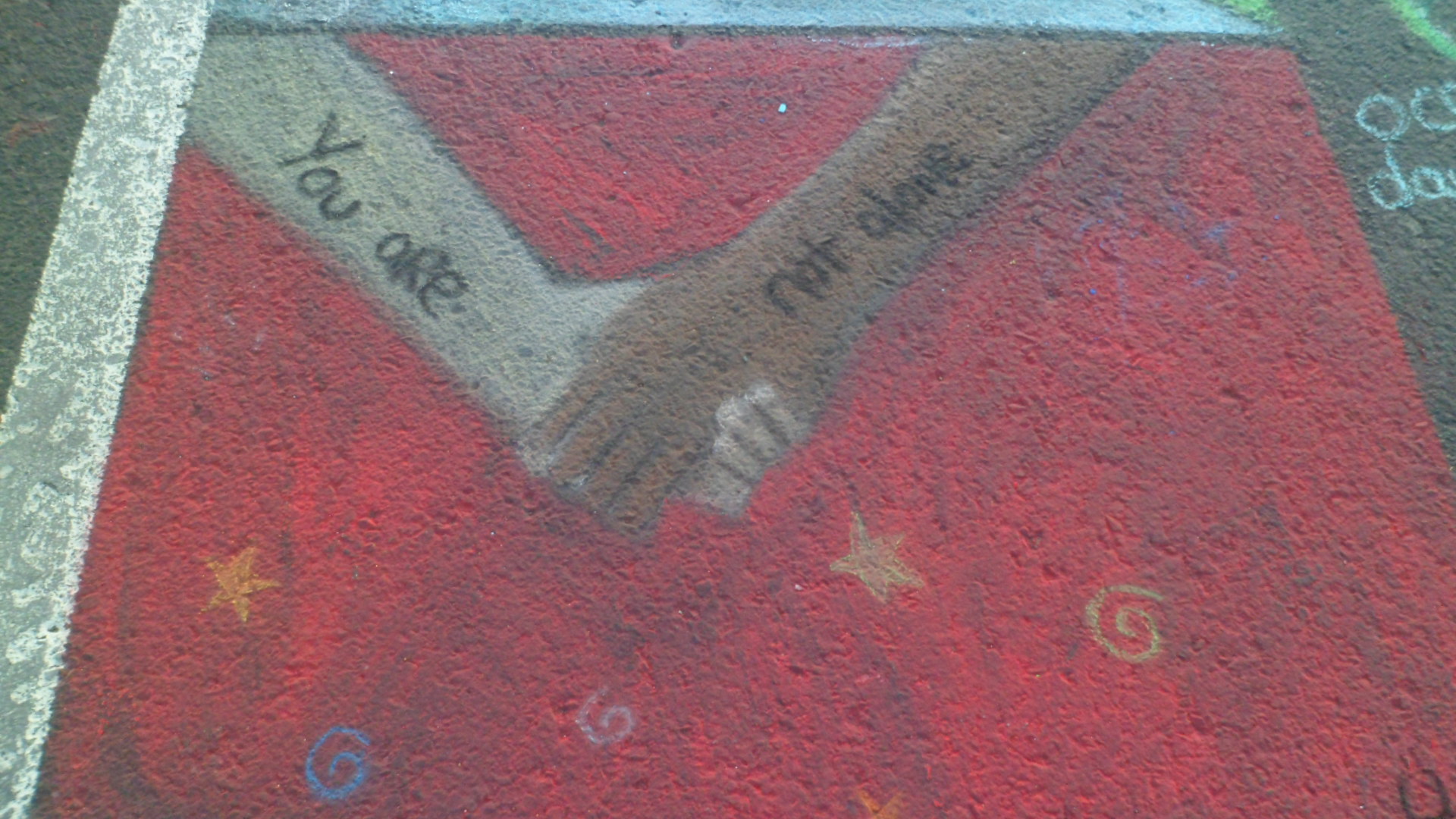
Buffalo Soldiers

2

August 13, 2024- One of my co-workers at the Monday night soup kitchen was of the understanding that the African-American troops who were organized after the Civil War were exclusively used in the Spanish-American War (1898). I corrected him, in that they were previously sent to help quell Native American resistance to the homesteading of the West, particularly the Southwest. The “Buffalo Soldiers”, so named because of the woolly nature of some of their coiffures, and their ferocious style of fighting, were sent to monitor the Ghost Dancers, among the Lakota Sioux people, fight the Comanche in the Llano Estacado of Texas and had other duties, relative to the Apache, Cheyenne, northern Puebloans and Arapaho. They also kept order among White settlers, in parts of Wyoming, a task that was at times far more brutal than anything they experienced with Indigenous people.

It has occurred to Native Americans, then and now, that using African-Americans, most of whom were formerly enslaved, to keep them “in line”, was a cynical, insidious practice. It pitted the two groups against one another, at times, and has resulted in some Native Americans taking on the worst racist notions coming from the dominant society against Black people. To be sure, I have heard a few African-Americans, over the years, denigrate Indigenous people, with ignorant slurs. The idea of controlling both groups by pitting them against one another, however, has by and large been unsuccessful.

The arc of history is moving in the direction of people understanding one another’s good qualities and towards unity, at all levels. The insipid appeal of various prejudices will continue to fade. This is “the Day that will not be followed by Night”, in that sense.

Boxcars, Boyos and Braceros

4

March 17, 2024- In 1946, a decorated soldier came back to his hometown of Galesburg, IL, and went with his friends to a downtown movie theater. They were directed, by an usher, to sit in the “Mexican section”. The honourably discharged soldier refused, saying that he wished to speak with the manager. When that wish was granted, the soldier told the manager that he had just finished serving their country, and fighting against Fascism, for nearly three years. He expected the same rights as any other citizen of the United States.

That began the end of racial segregation in Galesburg, and across Illinois. It would take another ten years for the practice to end across the northern and western states, as well as in Canada. It would be another 18-25 years for it to end in the southern states.

In 1917, as American men went off to fight in World War I, there was a vast labour shortage. Corporate representatives recruited Mexican men, by the thousands, to fill the vacant positions. These men were housed in re-purposed railway boxcars, as many of the positions were with the railroads. Boxcar villages, near towns like Galesburg, were established near the railyards.

The same thing happened, on a smaller scale, in World War II. By then, men were allowed to bring their families along, and more permanent “barrios”, many with row houses, were established by the railway companies, and other employers. Thousands of Mexican workers and families were thus brought into the United States, not by “liberal politicians”, but by business and industry leaders, seeking to accomplish their missions.

A century earlier, much the same process unfolded, on the East Coast and in the cities of the Midwest, as Irish (the boyos, they called themselves) and Italian workers, fleeing chaos in their homelands, arrived in the United States, having heard of opportunities here. They, too, encountered prejudice, and were enticed to quarrel with one another, so as to keep a united front from forming among the refuge-seekers and the dispossessed. That tactic would resurface, when each new group: Poles, Hungarians, Greeks, Arabs, Japanese, Chinese, Filipinos, arrived here and sought their chance at a new life. Then came newly freed people of African descent, fleeing the Jim Crow laws of the former Confederate states-and Mexicans, fleeing the repression and chaos of the Diaz years. Braceros, or manual labourers, did the work that few Americans wished to engage.

This is the backdrop, as the wall goes up and scapegoats are sought, by wirepullers, for the overlooking of homeless veterans and others. Two equally worthy groups of people need the help of their fellow humans, and yes, charity begins at home. It begins at home, and family members get first dibs, then community members-like those who served their country and are now getting short shrift, in many cases. It doesn’t end there, however. Only a truly unified human race can resolve the issue that stem from the mindset that some people are less than others, because of differences in their make-up, strengths and weaknesses, appearance, national origin, religion, personal predilections- you name it. Only seeing that there really is no other, just a mirror of ourselves, will lead to a systematic solution to all that has gone wrong-starting with family, then community, then state/province, country and region, until the entire globe gets the idea.

Maybe then, there will be no cross-border caravans, no twenty-foot walls, no former police/military officers seizing power in their destitute countries, no mindless interplay between ideological rivals, rather than each sharing viable solutions to deep-seated social ills.

Domhan go bragh. (Earth, til the end)

Rising

9

March 26, 2018, Prescott-

I attended a gathering, yesterday, at the Native American Baha’i Institute, which is 4 1/2 hours’ drive from here.  The occasion was an intensive flute making and playing workshop, by a long-time flautist, who is a friend.  Kevin visited our home, years ago, when Penny, Aram and I lived on the Navajo Nation.  His work is always worth supporting.

I will have more to say about the flute, and about the event, in my next post.  Today, though, a brief word is in order about the rising of those who have been subservient.

In the mid-1990’s, my mother-in–law would insist on the Victorian dictum, regarding children maintaining silence.  She would later come to regret that stance, but at the time, it was her way of keeping our son and his girl cousin in check. I disagreed, vehemently then, and do now. Children should be seen, heard, believed- and properly educated and guided.

Women have largely been relegated to a subservient role, over the centuries- across the globe.  Thankfully, this nonsense started to unravel, as far back as 1965, though people like my mother have never been content to have their voices go unheard.  The presence of so many strong women in my life has made such a state of affairs seem totally absurd to me, forever and a day.

When I was a senior in high school, one of the seminal events was the assassination of Martin Luther King, Jr., fifty years ago, next week.  In my social studies and English classes, I would raise the issue of civil rights, to a largely deaf audience.  My school, at that time, had five African-American students.  I knew two of them, brothers, who were kept at home, the day after the senseless murder.  There were hoots and hollers, expressions of satisfaction, by young men who have long since overcome their prejudice, born, as all prejudices are, by ignorance and fear.  There were tears shed by more enlightened young women, who dared to date young Black men, from the next town over.  My hometown is a more open-minded place, nowadays, and people are increasingly, though not completely, expanding their circles of friends.

There is a new world, a better place, rising from various ash heaps.

The Others

2

SAM_8808

Later this evening, I will post about the Prescott Historic House Tour, part of our city’s Sesquicentennial Celebration, and Chalk It Up, an annual chalk-art festival.  Both took place this past weekend, as did a Cinco de Mayo Block Party, in Courthouse Square.

First, though, a bit of seriousness.  Let me go further with what I wrote yesterday about the journeys on which each of us is embarked.

Human beings, alone among species, sort those they see as strangers into categories of “race”, skin tone, ethnicity, Faith, gender and sexual orientation( of course, we are the only species which experiences the latter as a life condition).  To be sure, other animals, from ants to prairie dogs to wolves and dolphins, sort by family group and/or territory.  This is all part of territoriality and population control.

Our extra selection processes, really, don’t make much sense.  There is no qualitative difference between me and any of my friends who happen to be Black, but in the 1960’s, there was no way any of them would have been able to live in a family home in the town where I came of age, outside of a small designated area on the south side of town.  That’s changed now, of course, and it was with great personal satisfaction that I learned, in 1996, that my maternal grandmother’s house was purchased by an accomplished attorney of African-American descent.

I thought of all this, while taking in the various events of Cinco de Mayo weekend, in downtown Prescott.   People of all backgrounds are welcome here.  Although Prescott has a tendency towards political conservatism, there seems little bigotry.  Those of us who indulge in politics at all, tend to be of Libertarian bent.

I’ve always had a hard time understanding prejudice, and while working to rid myself of my own pre-conceived notions, which I found confusing, the whole concept of “Other” had to be allowed to surface, and float away.  Young Black men, when I was in my twenties, did me the honour of challenging me to show that I was recognizing, and casting aside, the subtleties which I had picked up in childhood.  I was hurt and angered by my white peers’ callous reaction to the killing of  Martin Luther King, Jr., in 1968.  He hurt no one, and helped as many of us as would listen to what he had to say.

Still and all, I have had to recognize my own sense of  “Other”.  This separation is a worldwide thing, though.   Many East Asians have trouble with Whites and Blacks being in their midst.  Africans separate by tribe; West Asians, by Faith; Russians, by language.  Some of this “otherness” is rooted in hurt; some of it stems from fear.

The fact remains, however, that we are all connected.  I see this sense of connectedness increasing, incrementally, among Millennials and the current generation of children.  It’s definitely a process, not an event.  Racist teens and twenty-somethings, though, are regarded by the majority of their peers as having mental problems.  This cuts across all racial and ethnic groups, and political affiliations.

The kids are onto something.  “Otherness” is a learned paradigm.  Then again, so is helplessness.