July 20, 2017, Antietam-
Visiting the site of the bloodiest single day battle in American history was not something I particularly relished, but in these days of sanitizing history, I am doubly determined to not ignore any lesson- nor will I pretend the horrors never happened.
Antietam Creek, the farms that surrounded it and the rowdy townsfolk who, then and now, challenge those from somewhere else, make for a difficult and compelling story.
I arrived here, right around 1:30 p.m. A twenty minute walk around the Visitor Center, and its immediate surrounds, gave me a sense of the field of vision that was afforded Generals McClellan and Lee, as they prepared for the horrific face-off of September 17, 1862.

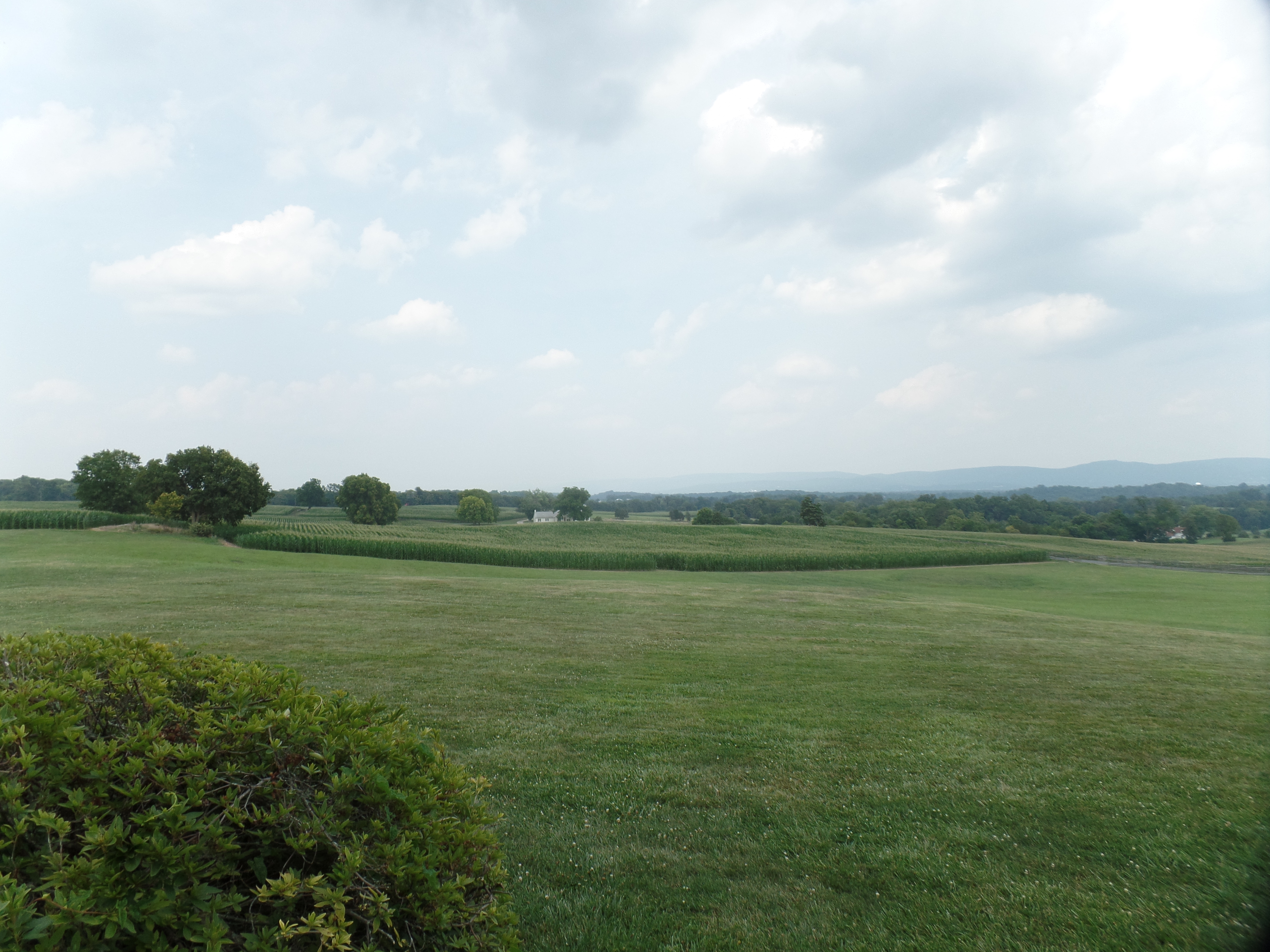
The most intense initial fighting took place around a church- shades of Brandywine. Like Birmingham Hill Friends Meeting House, during the Revolutionary War, the Dunker Church served as a makeshift hospital, for wounded of both sides.


Many of the states which sent troops to battle have monuments at Antietam, just as they do at Gettysburg. Here are photos of several monuments, from both sides. Pennsylvania, followed closely by Ohio, has the largest number of monuments here. The Philadelphia Brigade’s monument is the tallest of any at Antietam.
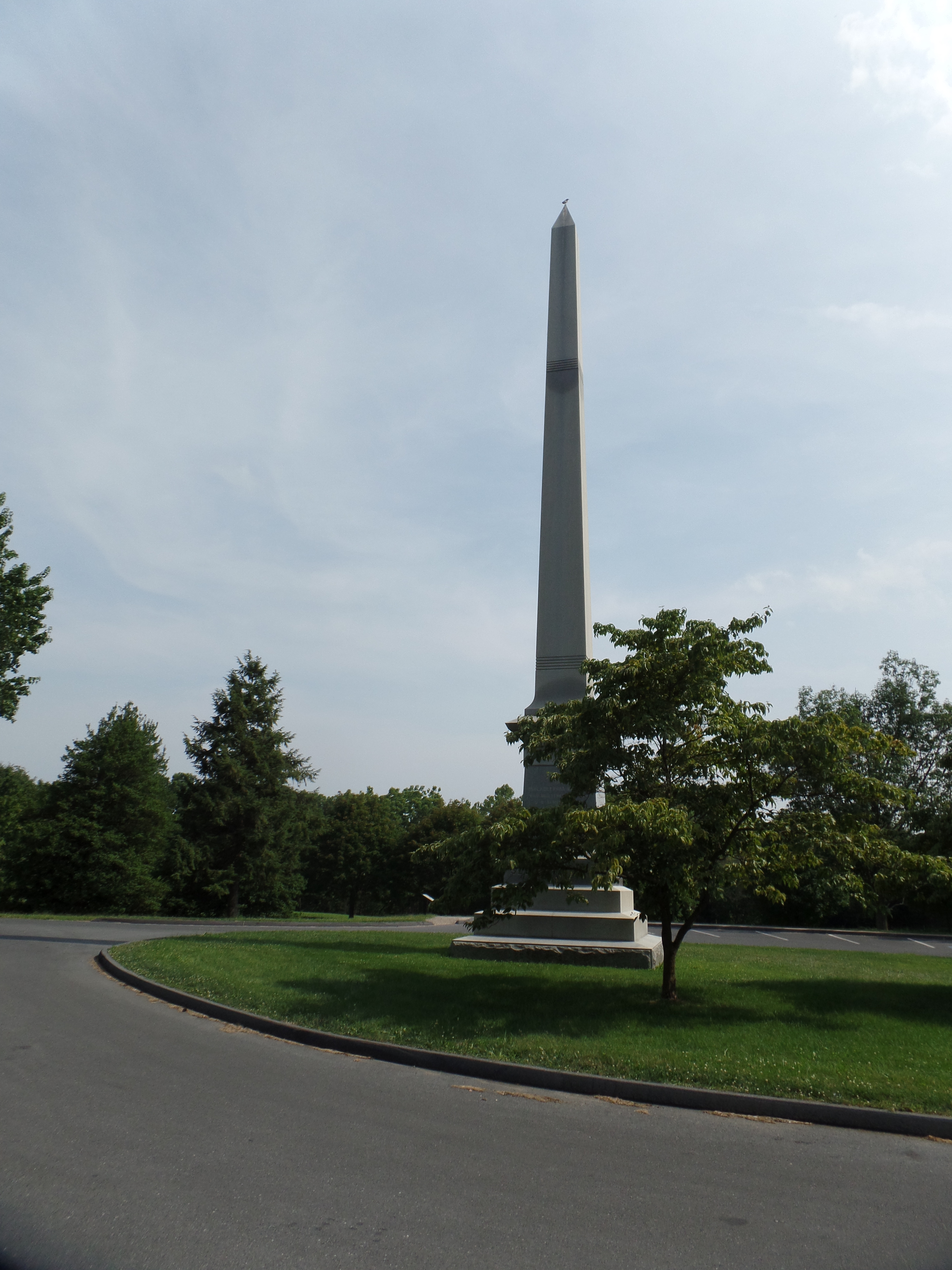
Indiana’s monument is also quite formidable.

New York has several, including two which align with one another.

The Texans, who fought perhaps more ferociously than most, have their state memorial, across the road from the New York pair.

Georgia, likewise, has honoured its soldiers,with a monument facing those dedicated to the Union cause.
 Clara
Clara
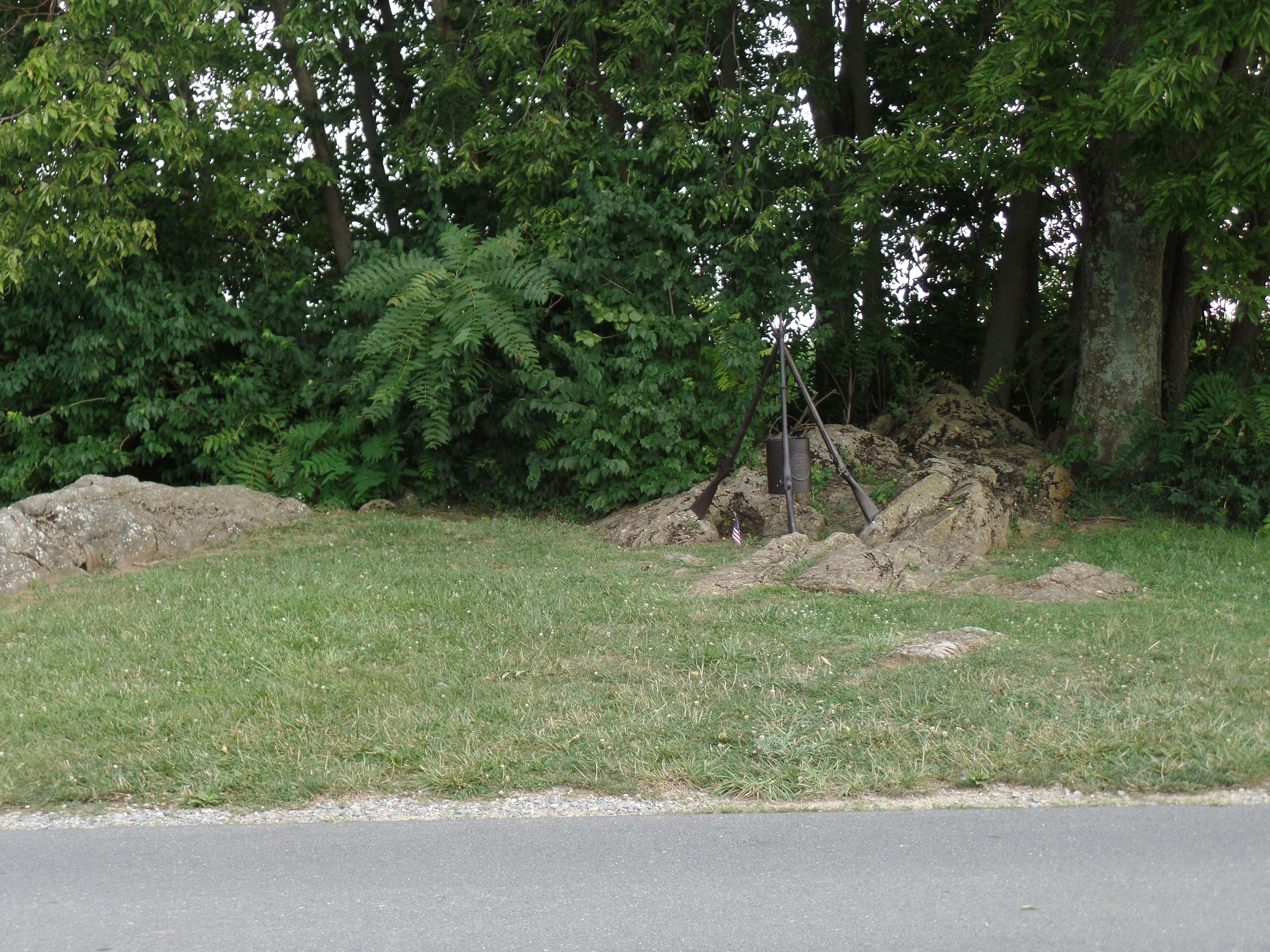
The reality of defeat, along with the vow to regroup and press on, is signified by these stacked rifles of the Pennsylvania regulars.
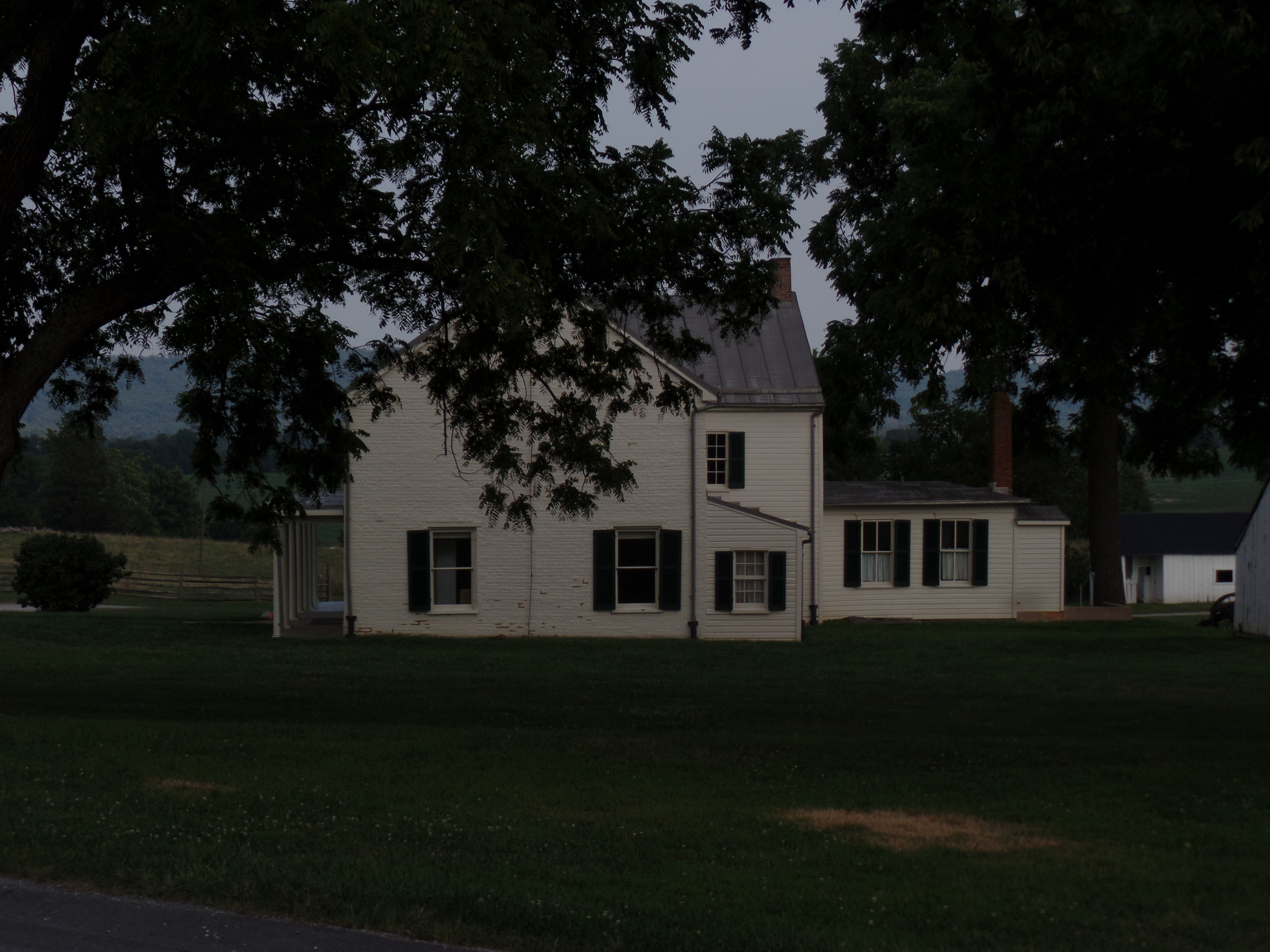
There were several farms in the area, all of whose owners stood with the Union. At the Popfenberger Farm, however, Clara Barton set up a full field hospital, to treat the wounded of both sides.

The Mumma Farm was a key supplier of provisions to the Union Army, and as such was a thorn in the side of Robert E.Lee. His troops took possession of the farm, in midday, and burned it to the ground. The Mumma family had, of course, fled to a church, six miles away, well before the Confederates arrived.
A sunken road, to the south of the property, built by Joseph Mumma, served as a trench for the Rebels, and became known as Bloody Lane, for the thousands of casualties that occurred there.
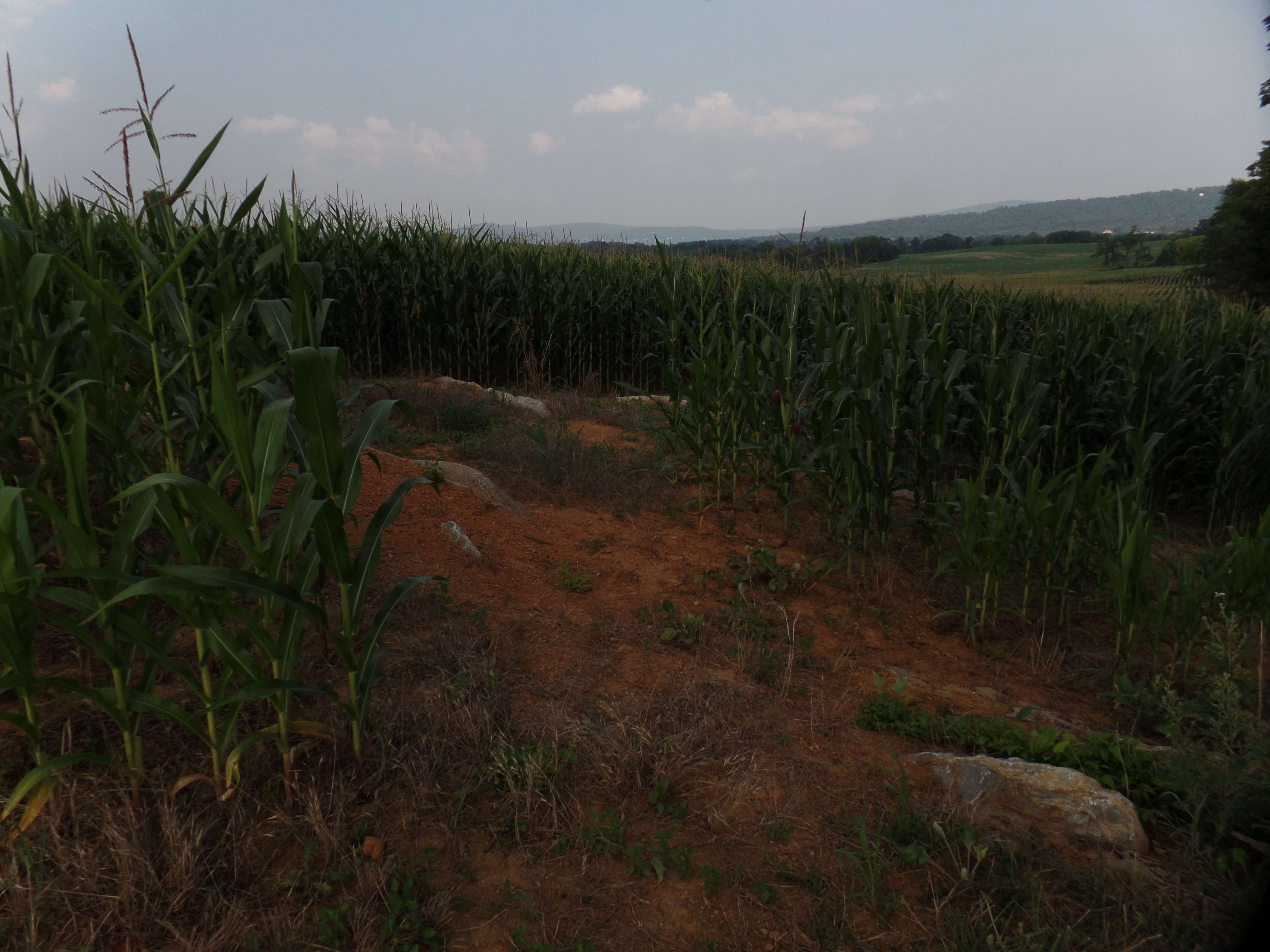
The David Miller Farm, west of the Mumma property, was likewise, a key supplier of the Union effort, and was also the scene of some of the most intense fighting of the day.
 Miller’s cornfield became known as “The Bloody Cornfield”, for the fighting that ensued there, from three directions. Anyone who has ever been in a corn maze knows how confusing it can get, to navigate a dense field.

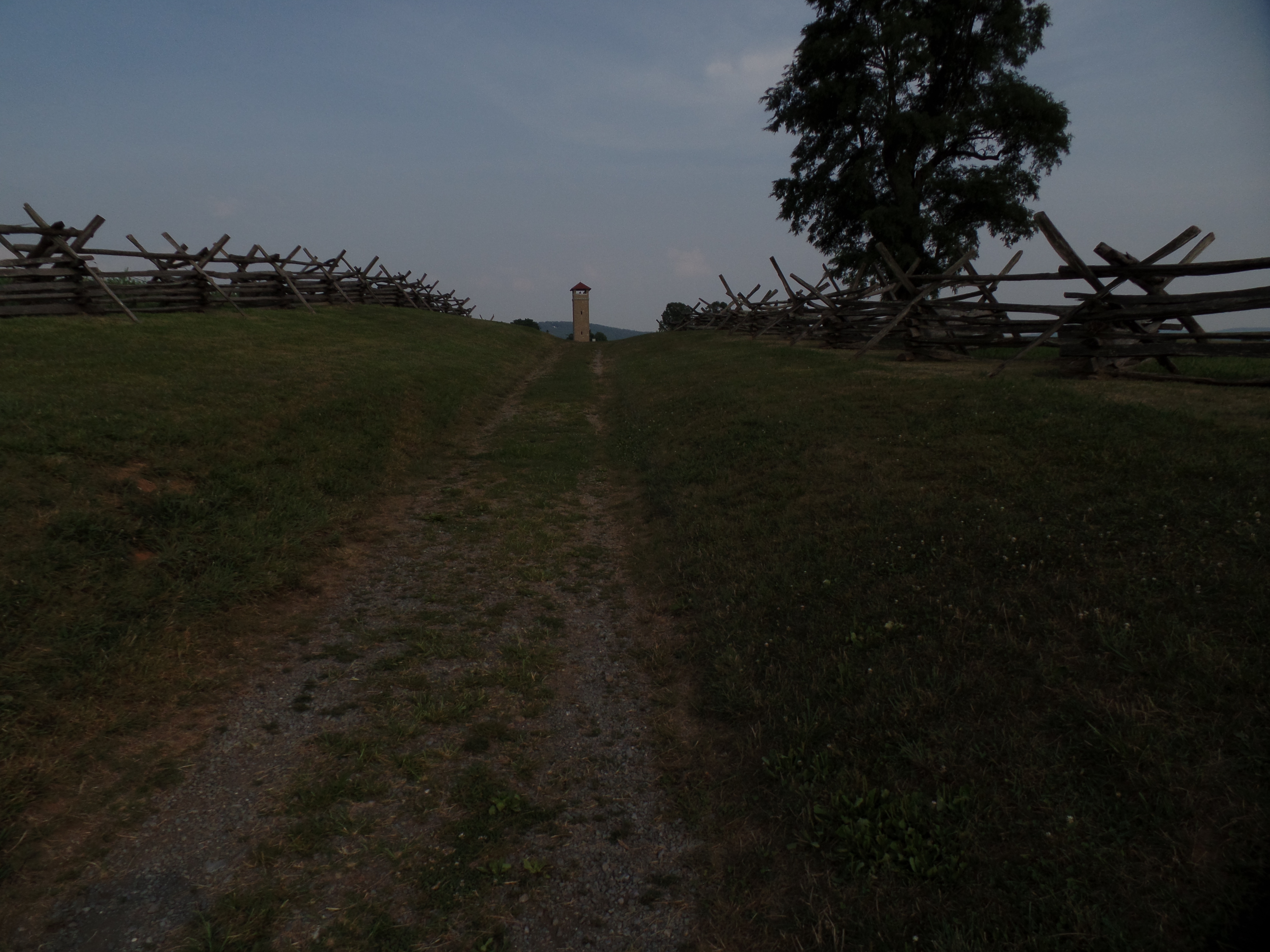
As I continued on, to the southern and western segments of the Battlefield, just southeast of Bloody Lane, there is a tower, from which one can spot twenty miles, in any direction. This was built in 1890, to provide such a bird’s eye view,
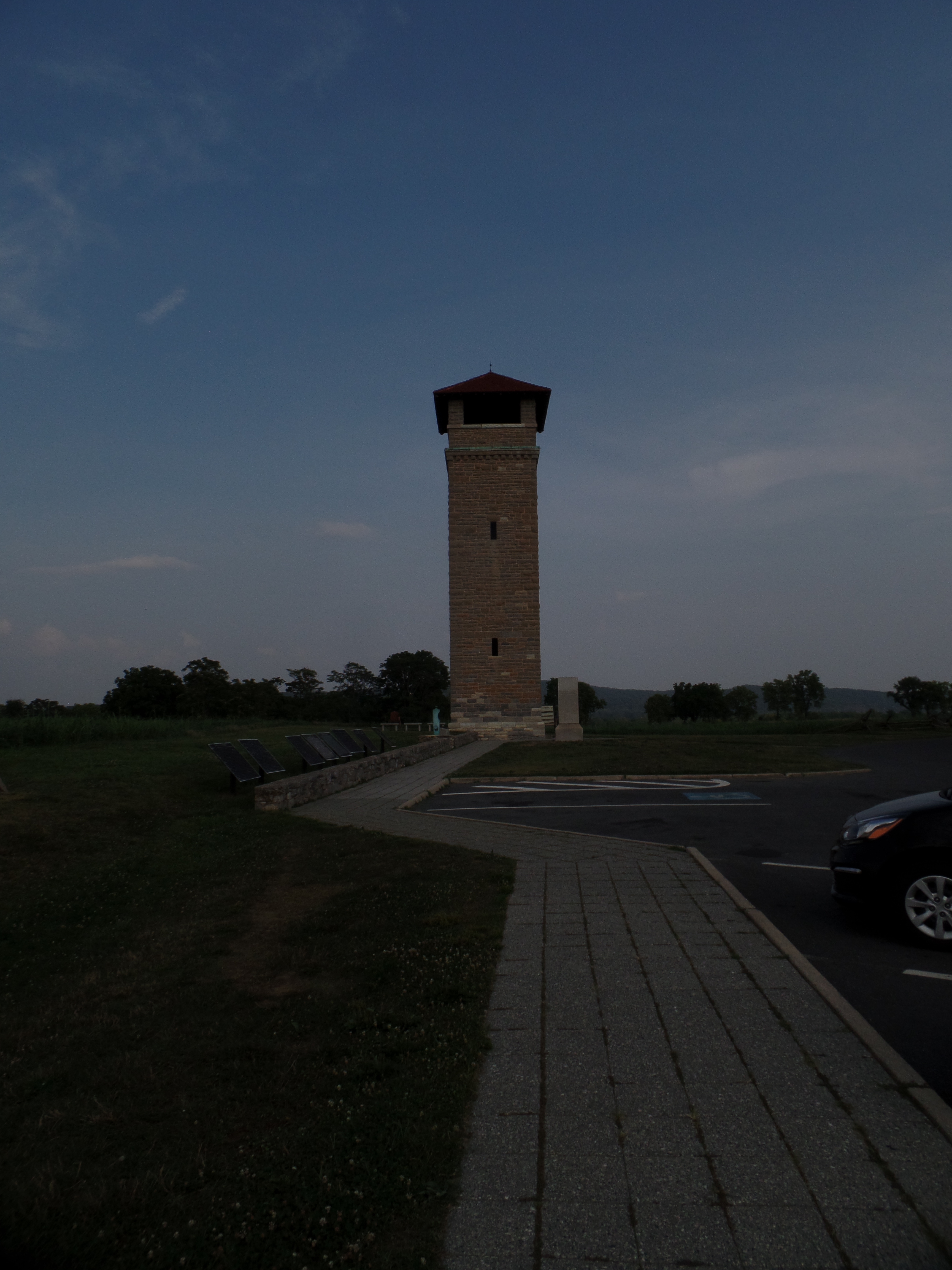
Here is a southeastward view, from the tower’s observation deck. The town of Sharpsburg is seen, eight miles away.
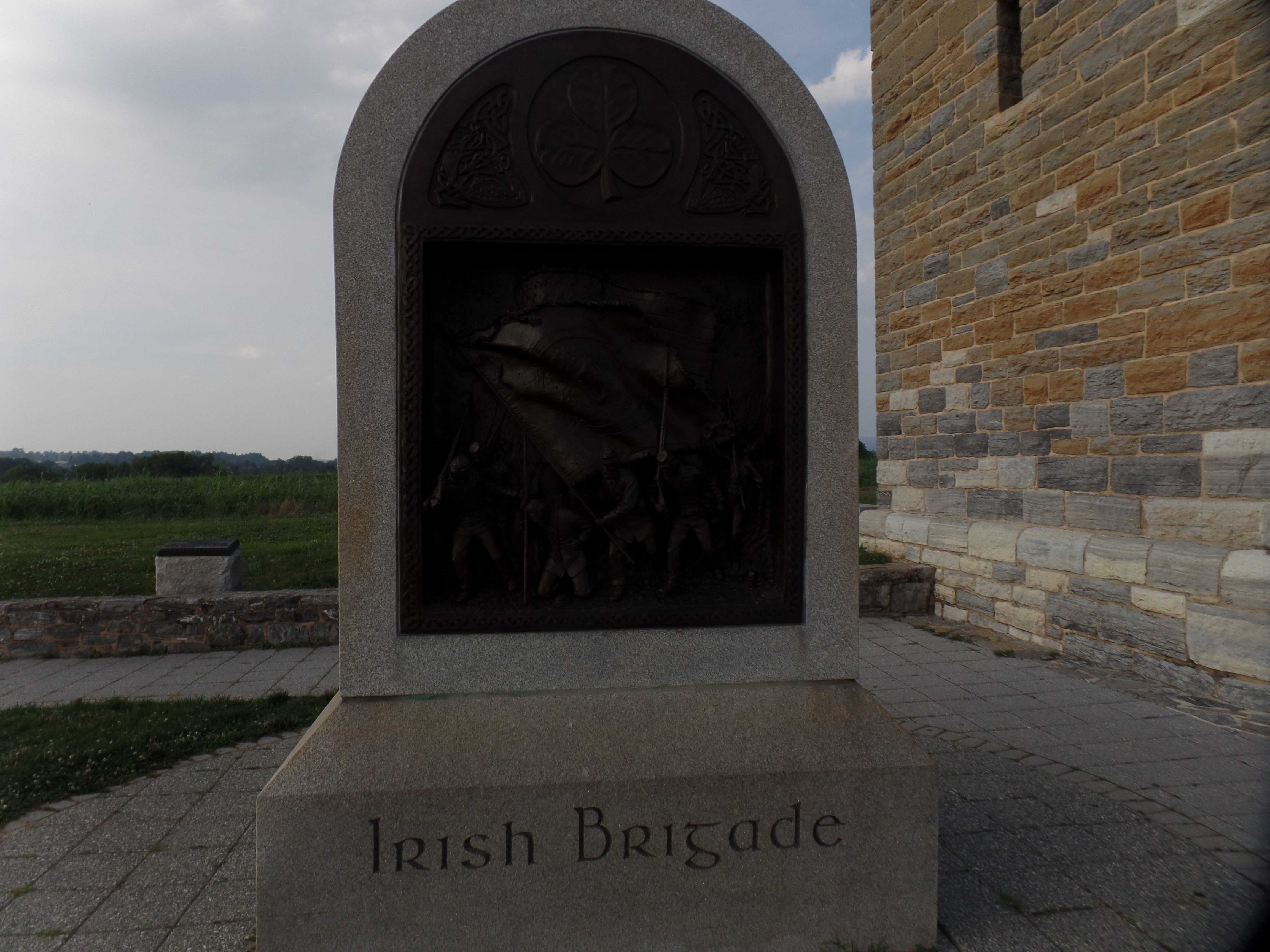
The Irish Brigade, composed of immigrants from that country, has its own memorial, at the base of the Observation Tower. It was commanded at Antietam, by Gen. Thomas Meagher (“Marr”), a refugee from the United Kingdom. This unit also formed part of the Zouaves, who have their own, collective monument, on the east side of Sharpsburg. Here is the Irish Brigade’s monument.
Lastly, here is a look at Burnside Bridge, named for the Union general, Ambrose Burnside, who miscalculated the difficulty of crossing Antietam Creek, just to the south of the bridge, and cost his troops a chance to ambush the Confederates, who were waiting in Mumma’s Lane.

With the end of the day, there was a consensus that the Union Army, by staving off Lee’s invasion of Maryland, had turned the tide of the war. Although the Confederates would go on to attack Gettysburg, PA, a relatively short distance to the northeast, a year later, Lee’s army would never again have the upper hand.
The legacy of war is often more war. People can’t be forced to change their hearts, though I am certainly glad that government-sanctioned slavery, at least, has been brought to an end. Having had enough of the Civil War for one day, I found a place to rest, in Charles Town, WV,
NEXT: Harpers Ferry

 A Sagittarian Seeker