
June 13, 2018, Scranton-
At least once, during a cross-country sojourn, I like to spend at least a few hours in a city which has contributed to the economic and material well-being of our nation. In the past, this has led me to Oakland, St. Louis, Des Moines, Kokomo, South Bend and Canton, Ohio, to say nothing of Chicago, Boston, New York, San Francisco and Los Angeles.
Today, this meant several hours in Scranton, northeast Pennsylvania’s commercial and industrial hub, and the center of the steam locomotive industry in the U.S., particularly during the 19th Century. Prior to locomotives, Scranton and nearby Wilkes-Barre were important centers for coal mining. Anthracite, or hard coal, was abundant in northeast Pennsylvania, and provided the fuel by which steam could be produced, thus being the impetus for the steam locomotive industry-major to the transcontinental railroads, which have moved a major part of passenger and freight traffic, to this day.
I began my visit with a walk around the Hill neighbourhood, on the west end of downtown. David Spencer bestowed the moniker, Electric City, upon Scranton, in 1886. Many of the large buildings of this side of downtown were among the first in the nation to rely exclusively on incandescent lighting.
Here are some of those fine structures. The churches reflect the ethnic diversity of those who came to dig coal and to help build the railroads.
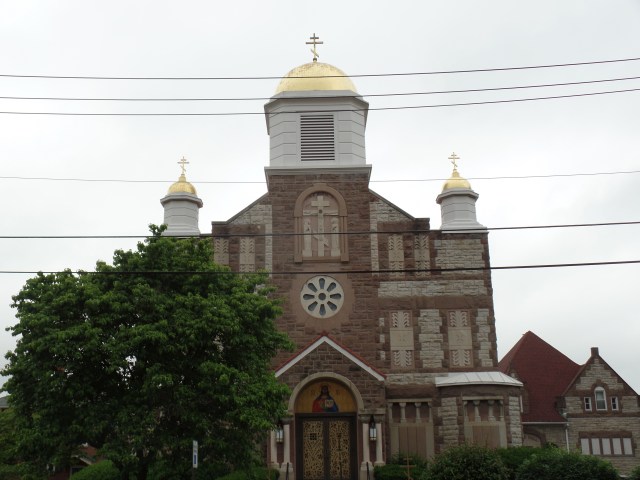
Above is St. Nicholas’ Eastern Orthodox Church, which began serving Russian and Serbian miners, in the latter Nineteenth Century.

Covenant Presbyterian Church was established by Scottish and Scots-Irish immigrants.

Spacious St. Matthew’s United Evangelical Lutheran Church reflects the central European architectural style of its German adherents.
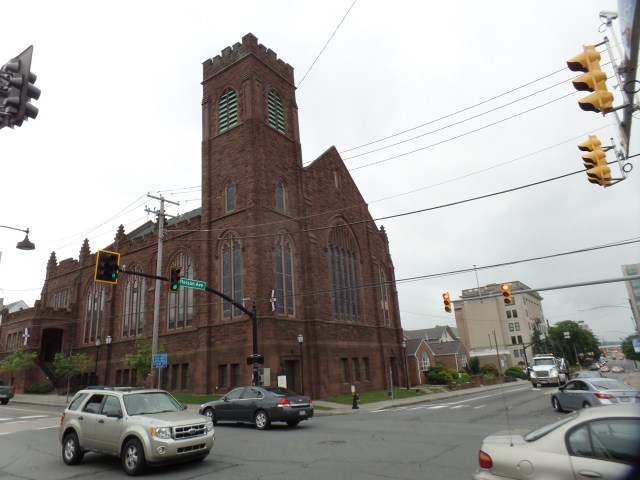
This unmarked building, west of St. Nicholas’ Church, is nonetheless impressive.
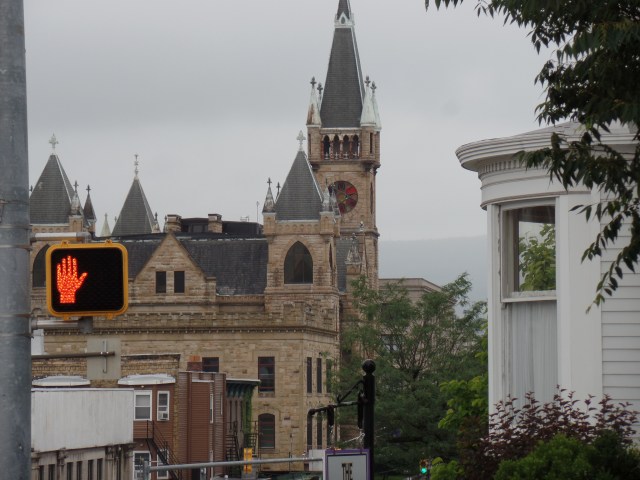
Prominent, and well-marked, is St. Peter’s Cathedral, with Scranton City Hall in the background.

This fascinating private home is certainly well-insulated.
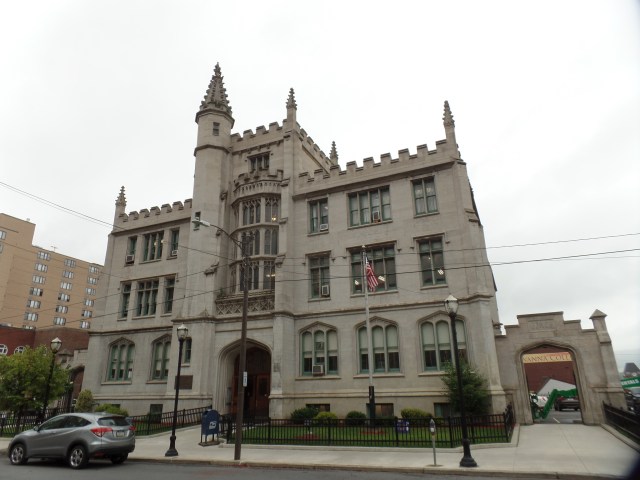
This is the Administration Building of Scranton School District. There is a history of inventive minds coming out of the Lackawanna Valley. This district’s mission is that this will long continue.
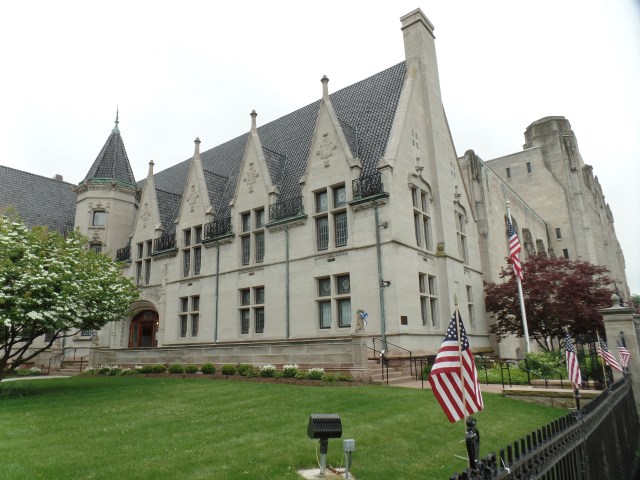
Adjacent to the District Office is Lackawanna County Public Library’s Main Branch, and, to the Library’s right, Scranton City Hall.
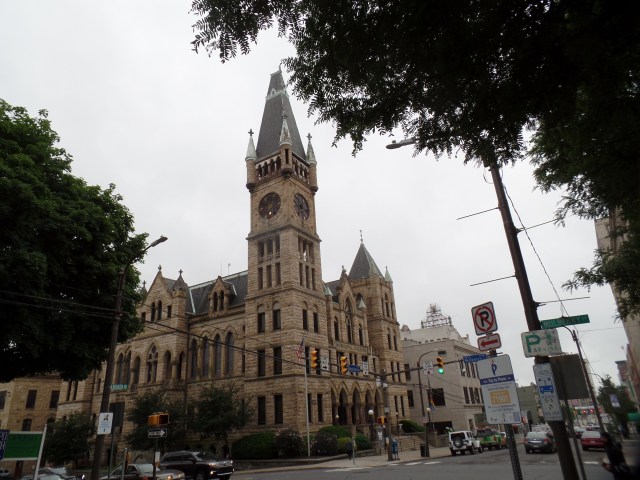
Here is a closer view of St. Peter’s Cathedral. Downtown is bordered, at the east end, by the yards of the Delaware, Lackawanna and Western Railroad. The regional commuter trains’ main terminus is here:
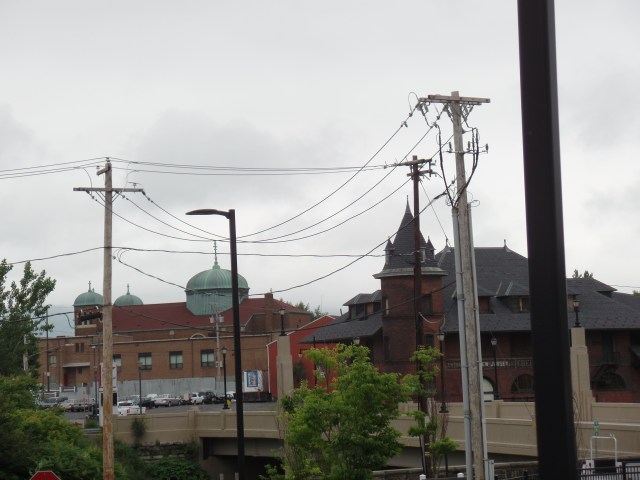
I hopped the tracks and continued slightly northeast, to the locomotives’ well-deserved resting place.
NEXT: Steamtown National Historic Site









 A Sagittarian Seeker