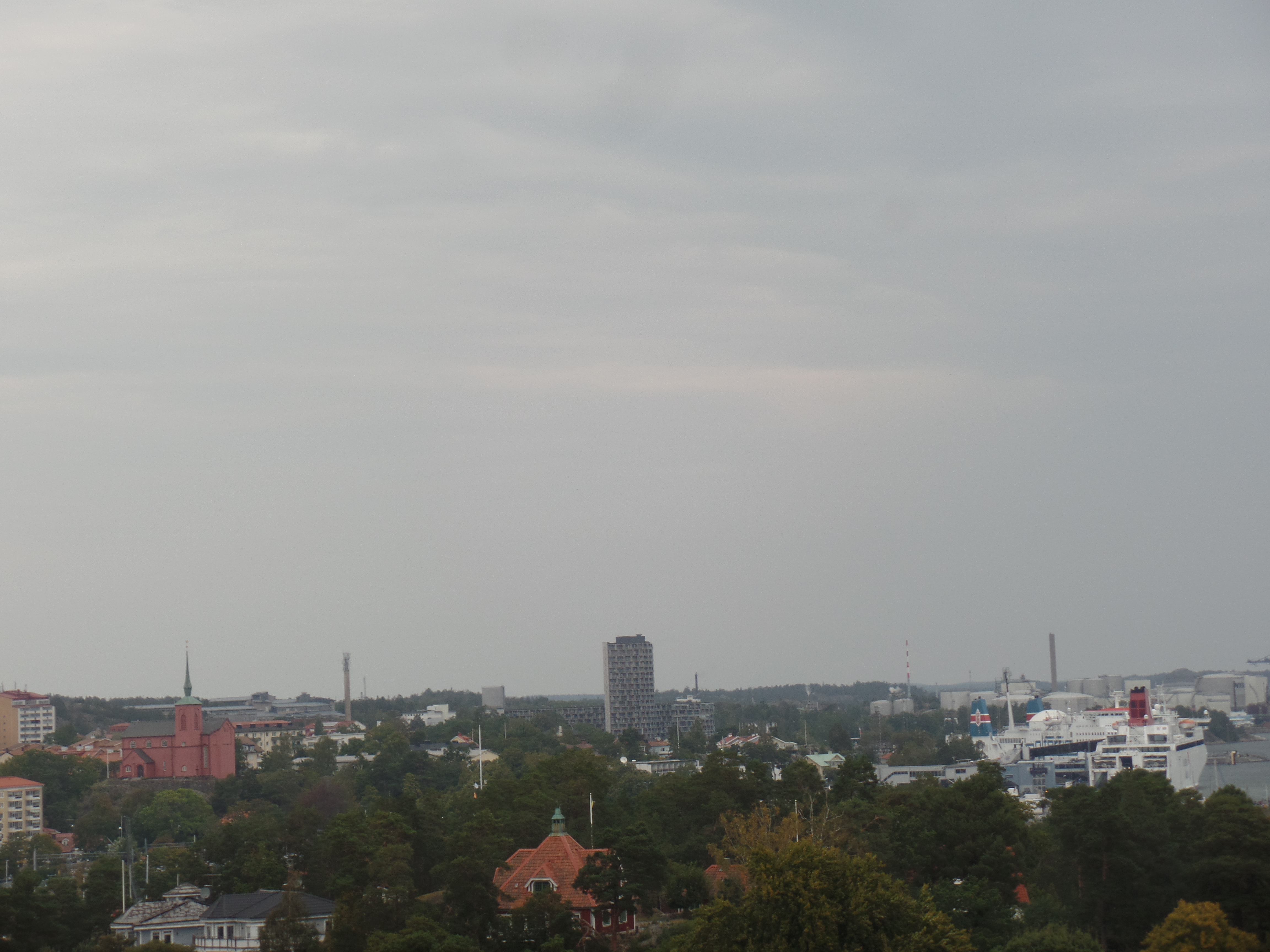
September 21, 2025, Nynashamn- It was quite windy atop the water tower that served this small city on its own, for several decades-until a larger one was built across town. The tower on which my friend, Mattias, and I stood was had burned down in 2018 and was rebuilt as an observation point, a year later. The taller and larger tower that replaced it may be seen from the top, as may a large area of the southern Stockholm Archipelago, of which Nynashamn (NEE-nahs-hahmn) is an anchor.
Here are some scenes from that vantage point.
View of Stockholm Archipelago, and south side of NynanshamnView of Grondalsviken, to the southwest of Nynashamn. View of Nynashamn Centrum (downtown)On top of Trehorningen Water Tower
Afterward, we went back to find the rest of the crew, Sarah and the kids, at Nynashamn Harbour. We had begun the day with a satisfying breakfast and had gone over to Choklad Huset (Chocolate House), which serves up the finest of hot chocolate and a full variety of solid treats. This establishment provides dessert items for the Nobel Prize Dinner, among other accomplishments. We enjoyed our delights at a playground near the harbour (The “ship playground”, say the kids.
Choklad Huset
It was soon time to go back to the cozy apartment. I spent a blissful afternoon, just soaking in all that being with a little family entails. After a well-crafted dinner of “Fresh Rolls” (spring rolls, in clear rice wraps, with “Chinese Rice” (fried rice), I took in one more Nynashamn sunset.
Sunset from Grondalsviken
Tomorrow, I double back to Stockholm’s Central Station, and take the train southward to Helsingborg and over the water, to Helsingor-the site of Elsinore Castle. It has been a truly lovely visit with my Swedish family. Now, to make more friends, in Denmark.
September 15, 2025, Stockholm- Beata and Cesar died in each other’s arms, as the “greatest ship” of their time capsized and sank, shortly into its maiden voyage. Cesar served in His Majesty’s Navy and Beata, his wife, was along for the stationment as flagship of the Reserve Fleet guarding the Stockholm Archipelago, in the midst of the Thirty Years War. The warship Vasa, with 64 guns and as many as 250 people aboard, did not make it out of Stockholm Harbour. 50 people went down with the ship that day-August 10, 1628.
A horrified public alerted the King’s Council, as Gustavus Adolphus was in Poland with his commanders, seeing to Sweden’s part in the conflict that had started as a civil war between rival princes of the Holy Roman Empire (essentially modern day Germany and Austria, with parts of northern Italy). France, Denmark, Poland and Russia had taken sides in the conflict. The Swedish king, styling himself a modern-day Augustus Caesar, was not to be left out.
Thus, in 1626, he commissioned the building of Vasa, named for his own royal house. Two years later, the great ship was deemed complete and seaworthy. The king had seen the completed ship with his own eyes, just prior to leaving with his army for Poland. He heartily approved of what he saw, and left the ship to its captain to steer towards the battle front.
The reality was, however, that the great ship was top-heavy, and in short order it became a testimony to the falsity of hubris. Gustavus Adolphus, and the Swedish nation, as great a military power as any of the era, were fighting on several fronts, feeling beleaguered by Catholic forces in Jutland, to the southwest, as well as by Poland and France. The king was therefore impatient to get the Vasa built and underway. Those immediately under him were cowed by the force of his personality, and kept their misgivings about the vessel’s seaworthiness to themselves. Further, an inquest after the ship’s sinking established no culpability in the matter. Vasa’s bronze guns were salvaged, but the ship itself was forgotten for centuries.
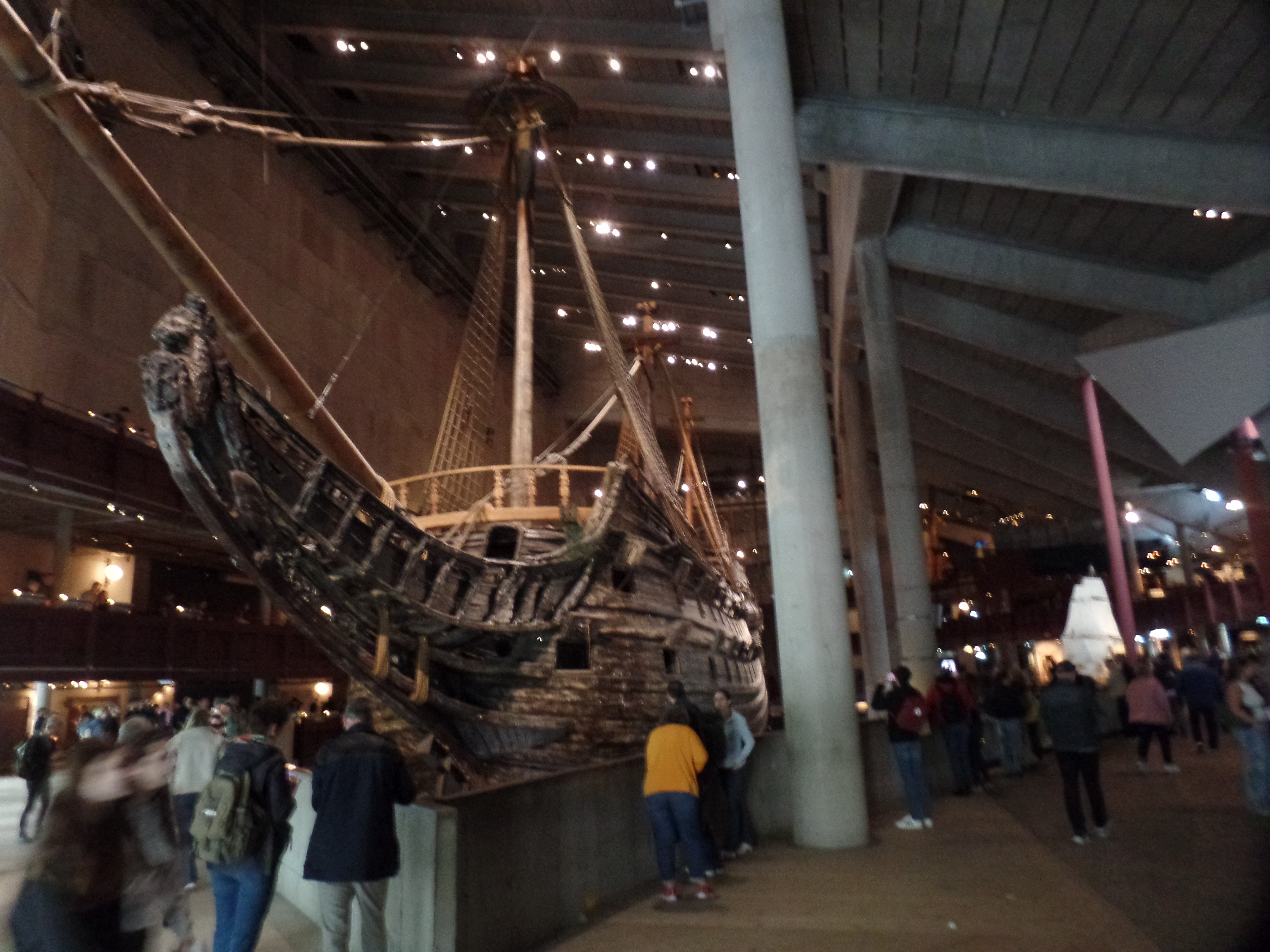
In the 1950s, King Gustav VI Adolf, namesake of the ship’s patron, commissioned a salvage operation, which was completed in 1961. Vasa’s hull was found mostly intact, owing to the brackish waters that impeded parasitic damage to the vessel. Its structure is now mounted in a dry dock, for all to see at the Vasa Museum.
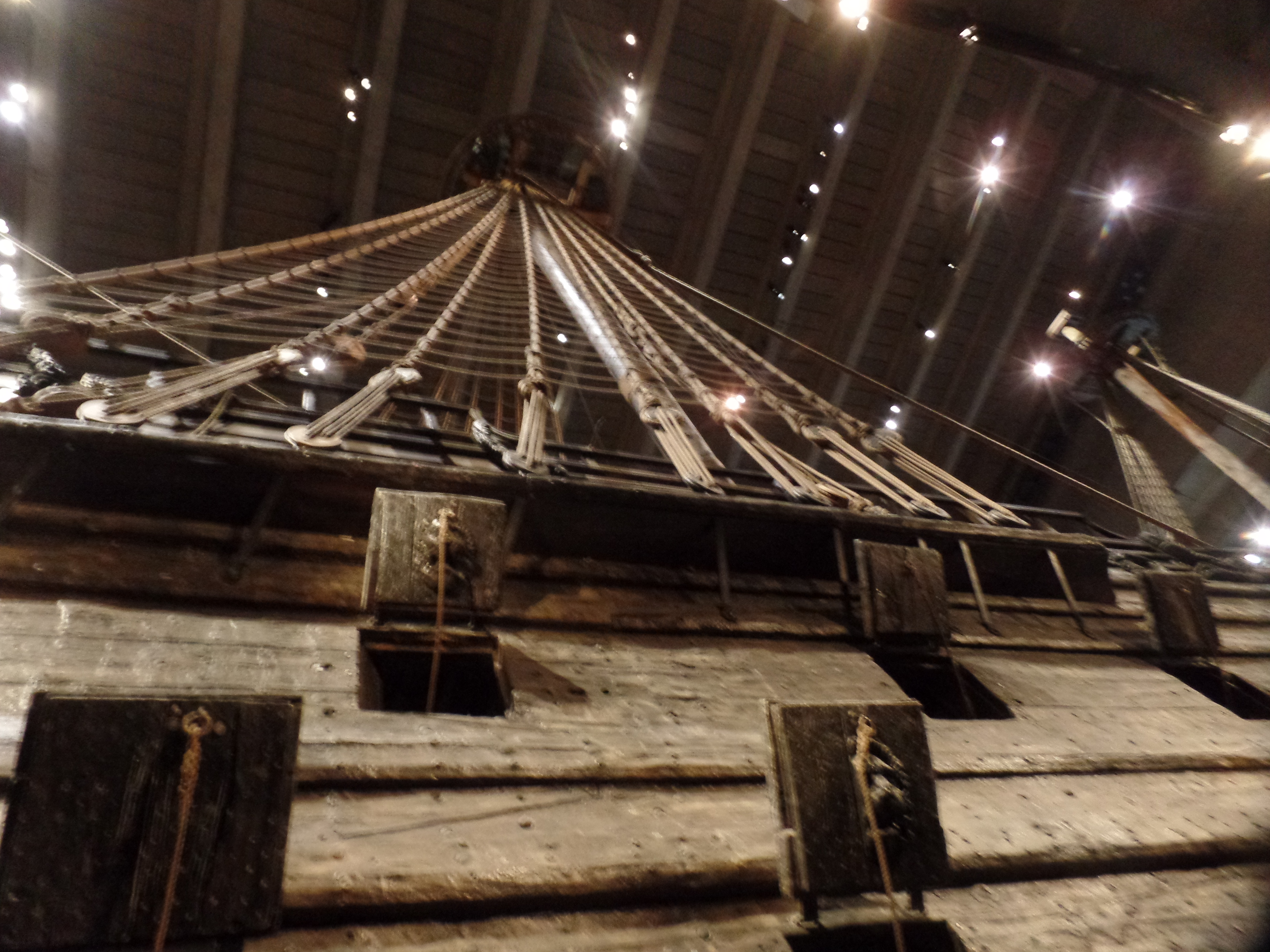
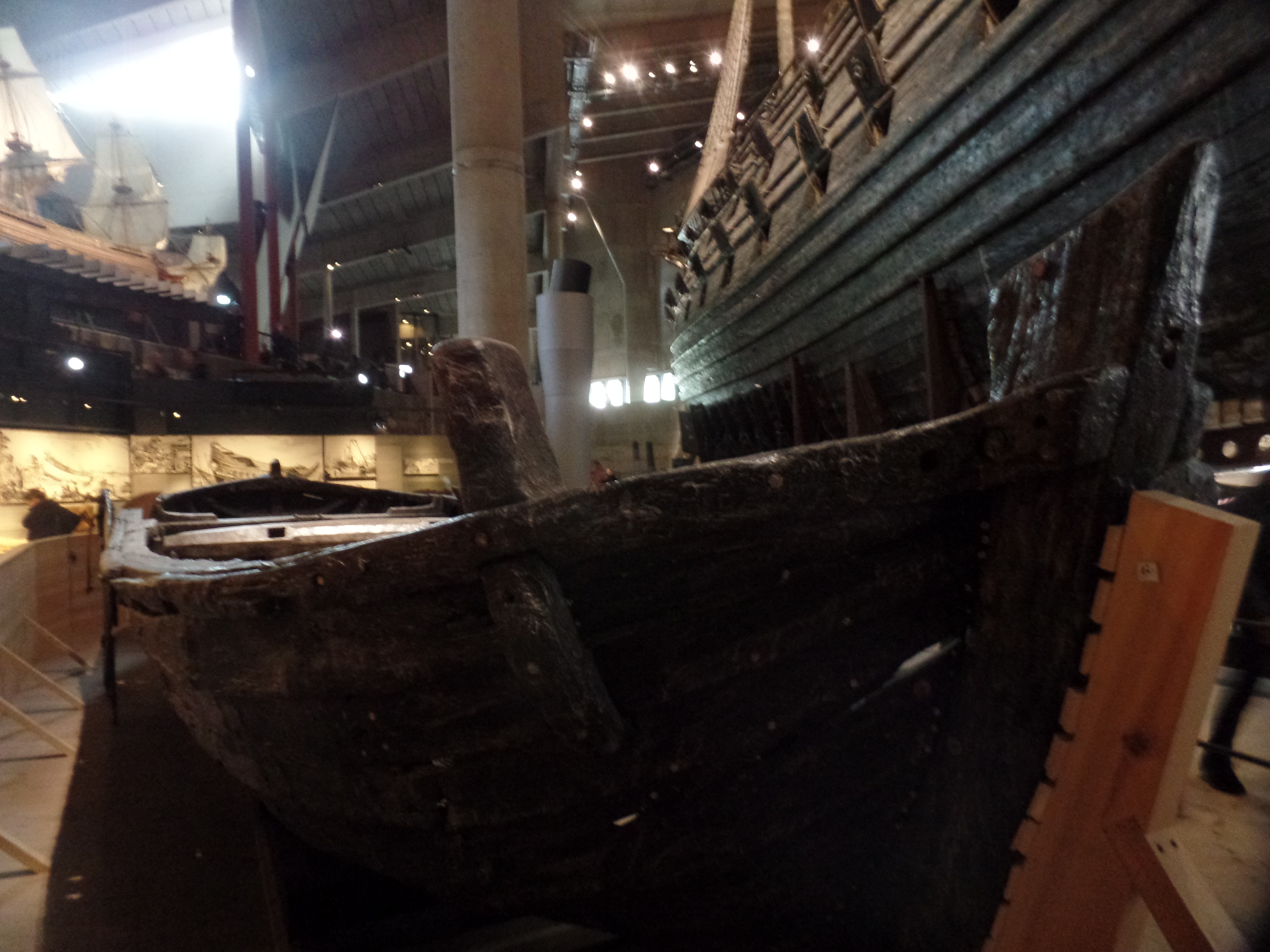
Here are some scenes from my visit to Vasa Museum, this afternoon.
Entrance to Vasa Museum
Hull of VasaLion image and air portal on port side of VasaView of Vasa’ s rigging (above and below)Images of Roman soldiersReproductions of colourful images from the sides of VasaGun ports on stern of VasaStarboard side of VasaDepiction of King and his Admiral, being briefed by Shipyard Mistress and her Crew ChiefFull port side view of Vasa, from aboveLifeboat from Vasa
I left the Vasa Museum feeling somber at the massive sense of loss that the Swedish people must have felt in the wake of the capsizing and sinking. It was surely on a scale similar to America’s losses at Pearl Harbor, or the attacks of 9/11/2001. Now, however, the country has chosen to share its great ship with the world. It is a cautionary tale, about hubris and impatience.
The Viking Museum, which I visited after taking lunch in Vasa’ cafeteria, was much more presentational, less graphic. Three docents were on hand to detail different aspects of Viking life. It was pointed out that the term, “Viking” refers to an inhabitant of a vik, or seaport. To that extent, only a fairly small percentage of Norwegians, Danes and Swedes were Vikings. Most were small farmers or inland fishermen.
Docent explains Norse farm lifeModel of a Viking residenceGuide stone, of the sort found at the entrance to a Northern village
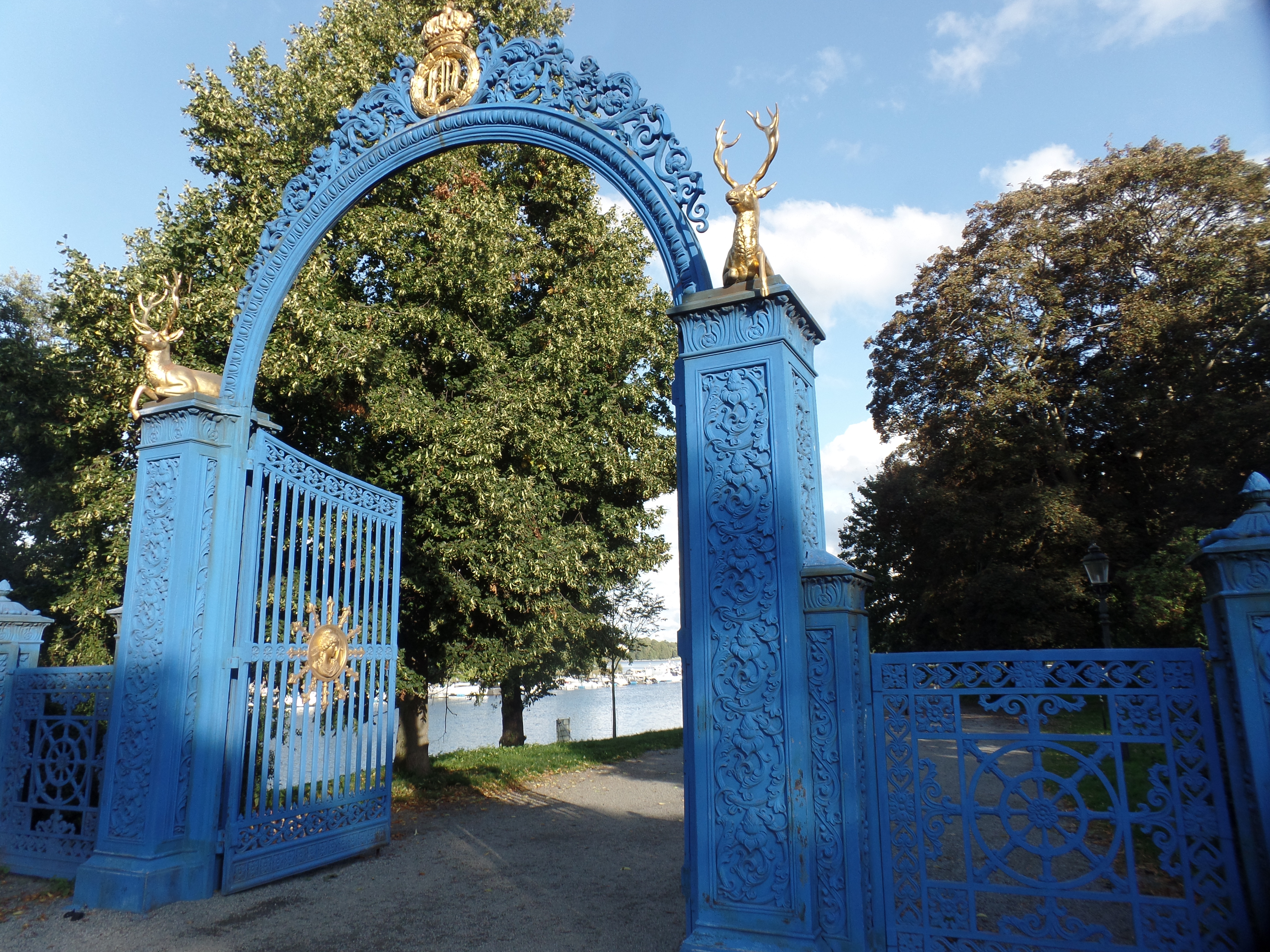
After an hour or so of listening to discourses, one of which was almost nonstop for thirty minutes, I took a walk in Djurgarden, the royal public park, east of the Museum Quadrant. This, too, is one of Stockholm’s crown jewels.
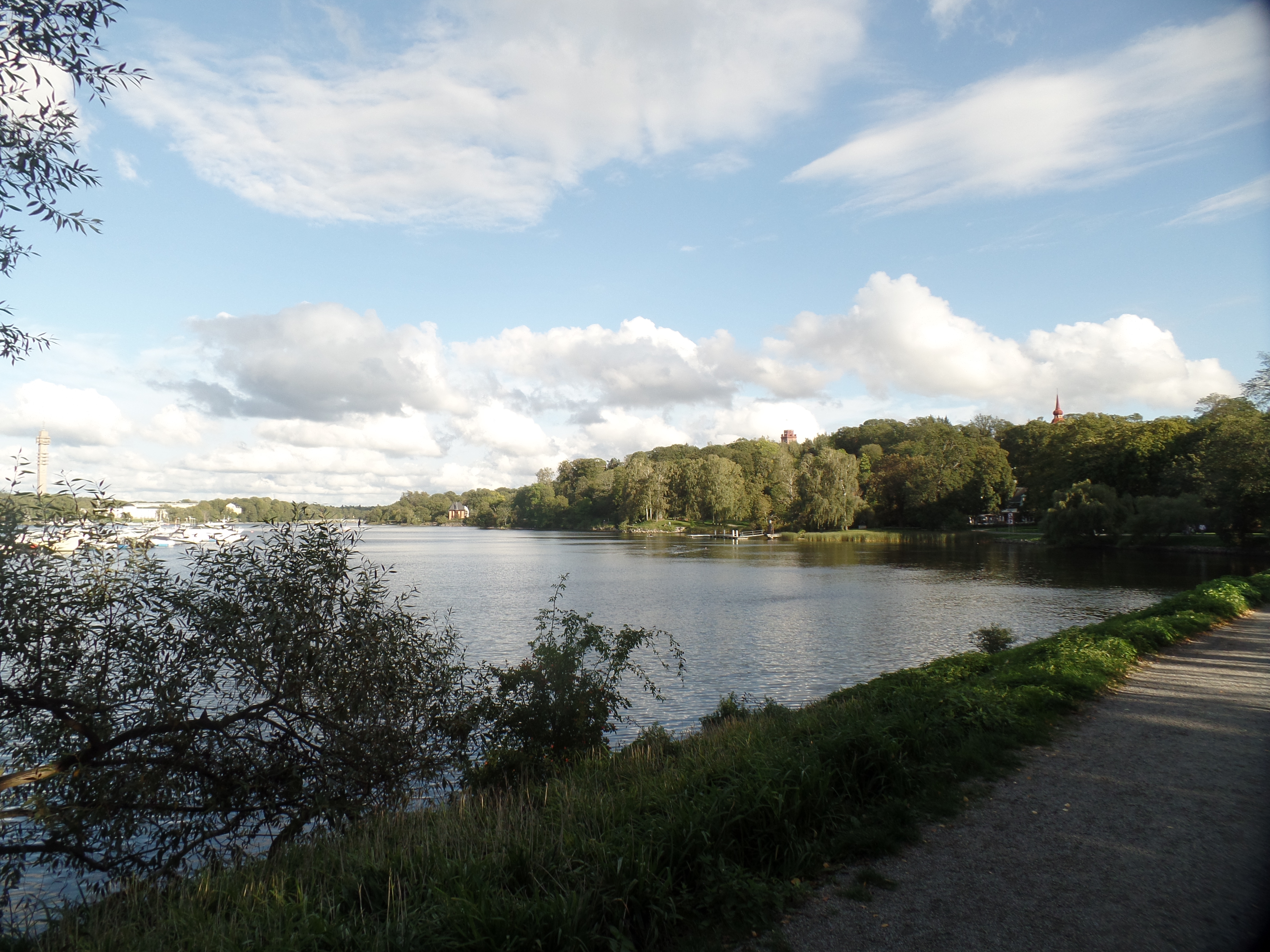
Entrance to DjurgardenRiverside in Djurgarden, Stockholm
I walked for about a half mile into the park, along the river, then doubled back to the tram and on back to Nomad Cave. Stockholm’s heritage is engraved in my memory.









 A Sagittarian Seeker