Starting at Home

8

January 27, 2019- 

One of  my mother’s favourite sayings, “Charity begins at home”, was made a basis for many of my actions, as a child and as a teen.  Nothing was made, or done, that wasn’t shared with family, on some level.

So it is, also, with conservation- as the late John McCain was also fond of saying.  A few weeks ago, during the height of the ill-fated shutdown, I went up to Sunset Crater National Monument, to see if I might help with a clean-up.  It turned out not to be necessary, though there was a mess, on Federal land, some twenty miles west.  Others took care of that clean-up.

With the shutdown over, however temporarily, I decided to take some time, after a study session this afternoon, and check a popular local trail, Lynx Lake, for residual clean-up that might be needed.  I was thanked by a few other hikers, especially accepting three pooper bags in my larger trash bag.  It was rather cute, that a lone duck followed me in the water, as I walked along the north shore, collecting a few plastic bottles.  It was almost as if it knew that the toxic items were being removed.  Long story short, I put a half-filled trash bag in the dumpster of the  south beach.

It was a minor effort, in the scheme of millions of acres of Federal land needing attention, after the lengthy hiatus.  I can only hope that there were thousands of others stepping up and doing their part, with there being way too much to be done, as it is, by those returning to work.  I think of the first National Historic Site I ever visited:  Saugus Ironworks, of the most extensive I’ve ever seen:  Grand Canyon and of the park I visited most recently for the first time:  Valley Forge.  Then, there is Arlington National Cemetery; today would have been the 95th birthday of my father-in-law, who is interred there, along with his wife.

I can only hope there are no more shutdowns of government, but if there are, I know to be ready to help, as a citizen.
The 2018 Road, Day 20: A Place of Resilience, Part 1-The Battlefield and Encampments

12

June 14, 2018, Oley, PA-

That moniker above could apply to this little farm, where I am camped, until tomorrow morning.  It more immediately applies, however, to Valley Forge, where I spent most of the day. Like Steamtown and Philadelphia’s Independence Hall, admission to Valley Forge is free of charge.  The value of the stories it tells, though, is priceless, eternal.

The day will be recounted in three parts:  This post will focus, as stated, on the battlefield and the main encampments, which also feature most of the memorials.  Part two will focus on the Washington Chapel.  Part 3 will feature Washington’s Headquarters.

For exploration of the encampments, I chose the Joseph Plumb Martin Trail, named for a private in the Continental Army, who kept a journal of his experiences during the terrible winter of 1777-78.

The first stop along that trail takes in the Muhlenberg Brigade’s encampment and redoubt.   The commander of the Virginia Line, of the 8th Brigade, was Gen. John Peter Muhlenberg.

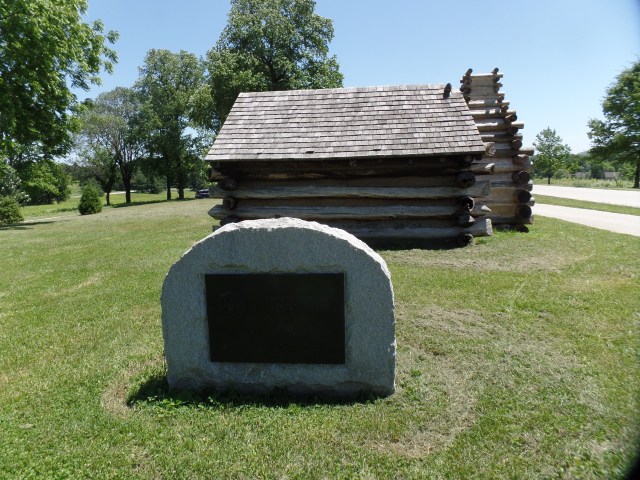
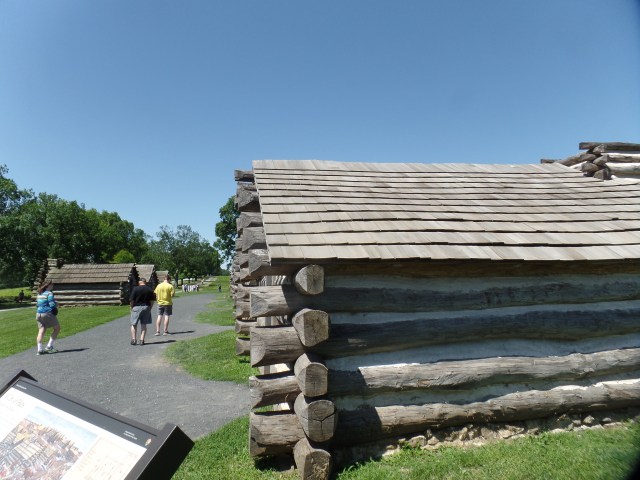
Several cabins were open for us to check out.

SAMSUNG CAMERA PICTURES

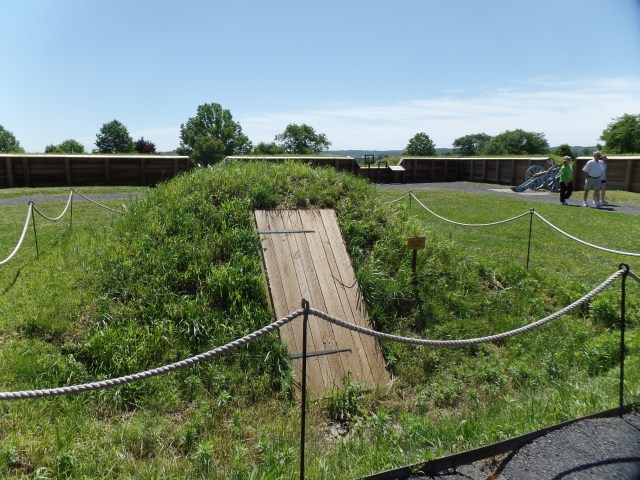
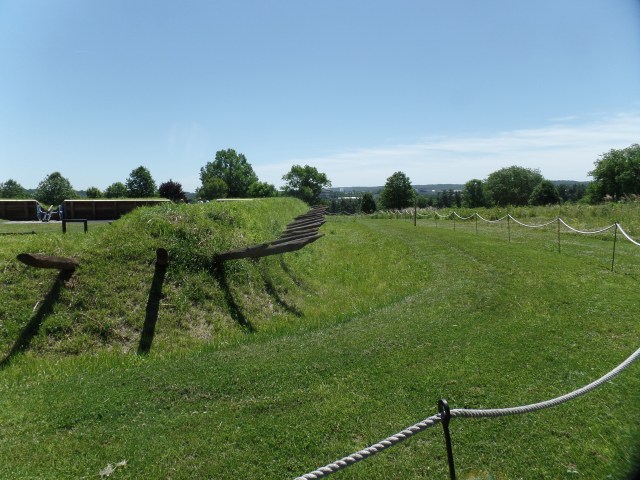
This berm is an example of the cover used by Continental troops, to guard against any British cannon fire.

SAMSUNG CAMERA PICTURES

SAMSUNG CAMERA PICTURES

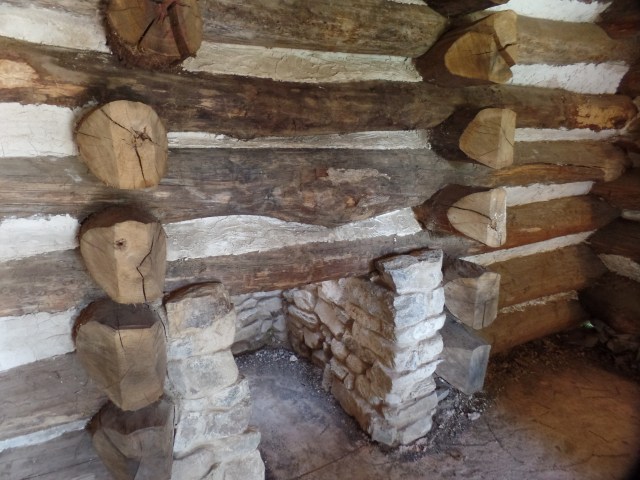
Inside another cabin, the only source of heat for the people billeted here is shown.  Some cabins had not only the soldiers, but family members who followed the Army on its mission.

SAMSUNG CAMERA PICTURES

Here is a longer view of the encampment.

SAMSUNG CAMERA PICTURES

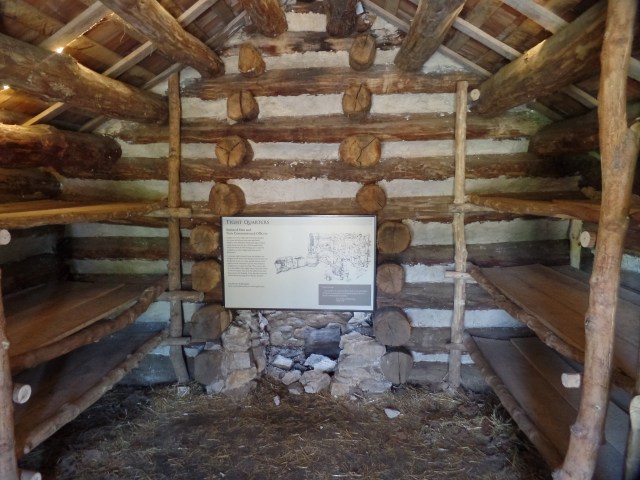
This signboard explains the situation to which I referred above. Some cabins had not only men, women and children, but household animals, as well.

SAMSUNG CAMERA PICTURES

Here is a glimpse of Washington Memorial Chapel, a mile or so to the east of Muhlenberg encampment and the National Memorial Arch.

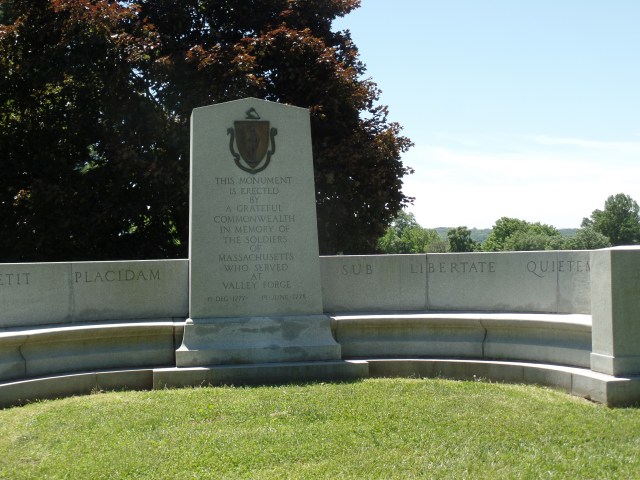
Moving further north, I found this memorial to the soldiers from Massachusetts, who served at Valley Forge.

SAMSUNG CAMERA PICTURES

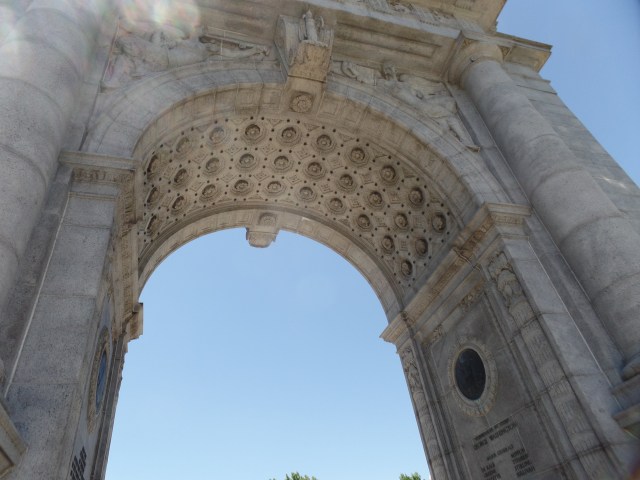
Here is the National Memorial Arch, honouring all who served the cause of independence.

SAMSUNG CAMERA PICTURES

SAMSUNG CAMERA PICTURES

This small encampment, north of the present-day Arch, was commanded by Gen. Enoch Poor, of the New Hampshire Regiment.

SAMSUNG CAMERA PICTURES

Here are the Pennsylvania Columns, which honour American Revolutionary War generals.  At the base of each column are bas-relief busts of Colonel William Irvine and Adjutant General Joseph Reed.

SAMSUNG CAMERA PICTURES

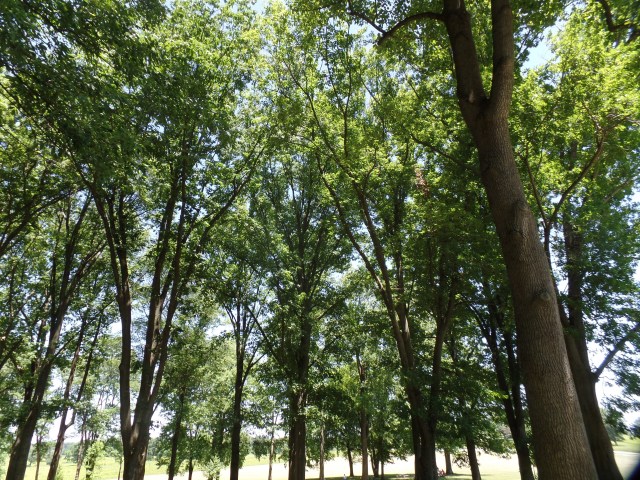
Here’s a glimpse of Wayne’s Woods, named for General Anthony Wayne, who unsuccessfully tried to invade Canada, in 1775.  He didn’t encamp here, but the woods were named for him, anyway. Today, the woods are a popular picnic area.

SAMSUNG CAMERA PICTURES

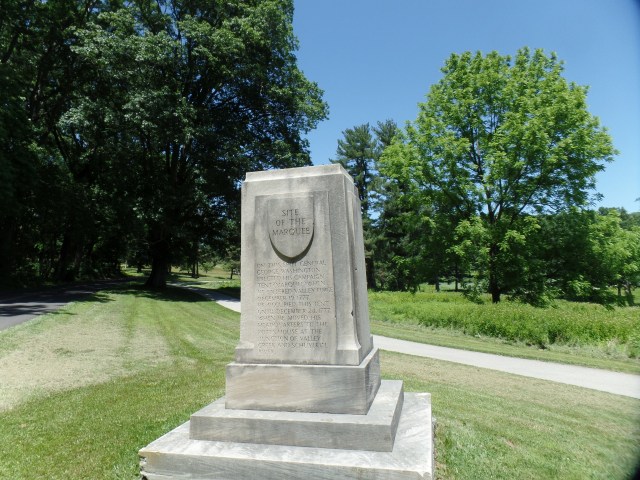
This marks the site where General Washington pitched his sleeping tent, when he entered Valley Forge, in December, 1777.

SAMSUNG CAMERA PICTURES

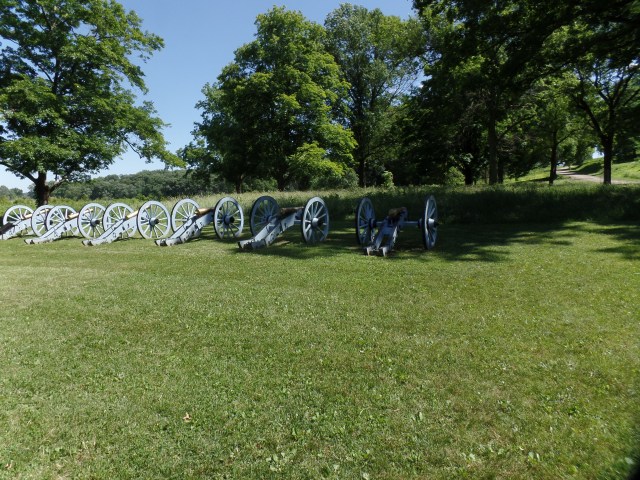
The next two photos show Artillery Park, where Continental artillery was stored and repaired.

SAMSUNG CAMERA PICTURES

SAMSUNG CAMERA PICTURES

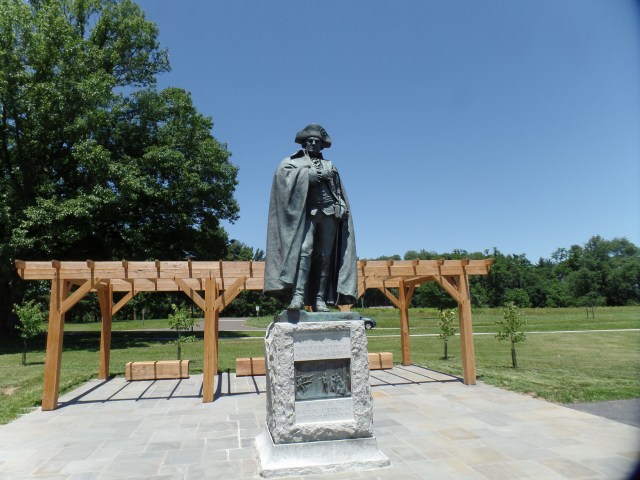
Here is a statue of the great Prussian general, Baron Wilhelm von Steuben, who instilled unity and discipline in the Continental Army, during its time at Valley Forge.

SAMSUNG CAMERA PICTURES

This house served as the quarters of General James Varnum, commander of the Connecticut and Rhode Island Brigades.  He shared the home with the Stephens family, who owned it-paying rent to David Stephens, during his stay at Valley Forge.

SAMSUNG CAMERA PICTURES


Although my visit took place in the heat of early summer, a sense of what was endured by the  troops and local residents alike was easily conveyed. My tour of the encampments ended here, and the focus now became Washington Memorial Chapel, the subject of Part 2 of this set of posts.


Freedom Within

12

June 14,2018, Oley, PA-

The past two days have been spent taking in some aspects of history. Yesterday afternoon, I learned about American railroads, by visiting Steamtown National Historical Park, in Scranton, PA. Today, I spent almost the entire day at Valley Forge, the place where George Washington regrouped and shored up his forces, for a more concerted run at the powerful British Army.

The knowledge of history is right up there with the natural world, in my pursuit of understanding. I regret not posting photos, but when I get my new laptop, all these visits will be reprised, with the photos I’ve been taking.

Back to the matter of freedom. Valley Forge is a symbol of fighting for freedom. There is even an active organization in the town:Freedom’s Foundation, made famous in the 1969’s by the late American singer, Frankie Laine.

My take, in a nutshell: Freedom is a state of mind and heart. Of course, as with money, one must work to secure outward freedom, and never take it for granted. Yet, even those living in a dictatorship have the option of keeping the flame of freedom alive in their heart and mind.

I will have more to say about this,later, but I am getting tired,after a wonderful day, capped by a lovely dinner with a new friend.

Sixty-Six, for Sixty Six, Part LXI: Brandywine’s Message

2

July 19, 2017, Chadds Ford- 

My nephew wanted to hit the trail, this morning, so after a few rendezvous snafus, due to differing GPS entries, we met at Birmingham Friends Meeting House, near the site of some of the heaviest fighting.  The battle raged here, on September 11, 1777.  Today, we were the only people on this little hill, south of Chadds Ford.  The Brandywine Valley, today, is better known for its wineries,  for the Wyeth family’s presence and for the Longwood and Main Fountain Gardens, than for one of the heaviest battles of the American Revolution.

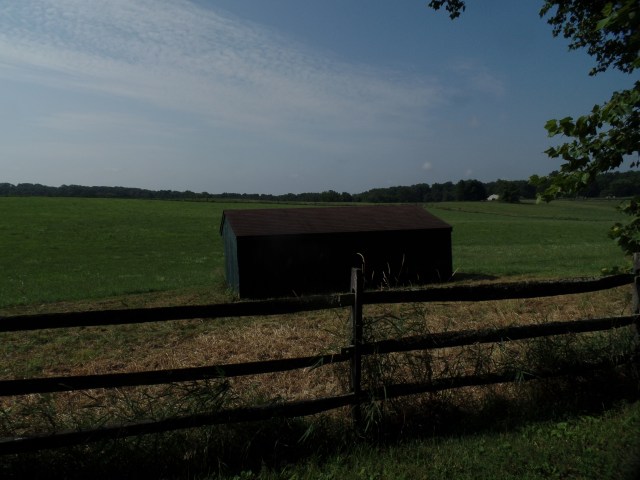
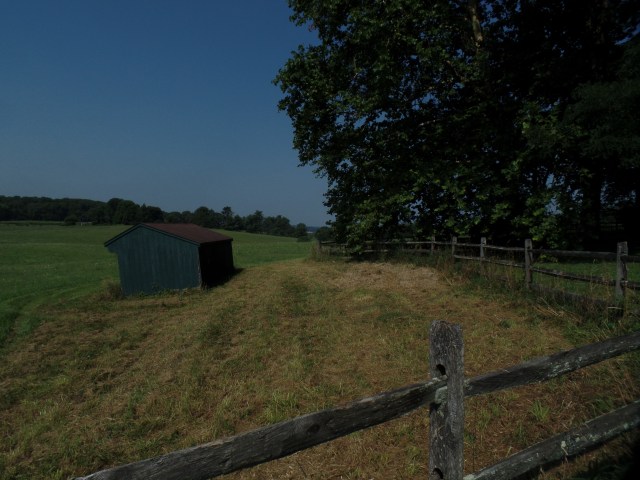
Of course, without the battle, which showed the British victors that the war was far from over, it’s likely that all the beauty of this valley would be under entirely different auspices, today.  We spent the first forty minutes of our visit, in and around Birmingham Friends Meeting House and its Peace Garden. First, though, here are a couple of views of the area that was the battle zone, 240 years ago, next month.

SAMSUNG CAMERA PICTURES

SAMSUNG CAMERA PICTURES

What is the province of grazing cows, today, was a harrowing encampment, for men on opposing sides, but all far from home.  The hospital where all, regardless of loyalty, would be treated for their injuries, was in this modest building- then and now, a Quaker Meeting House.

SAMSUNG CAMERA PICTURES

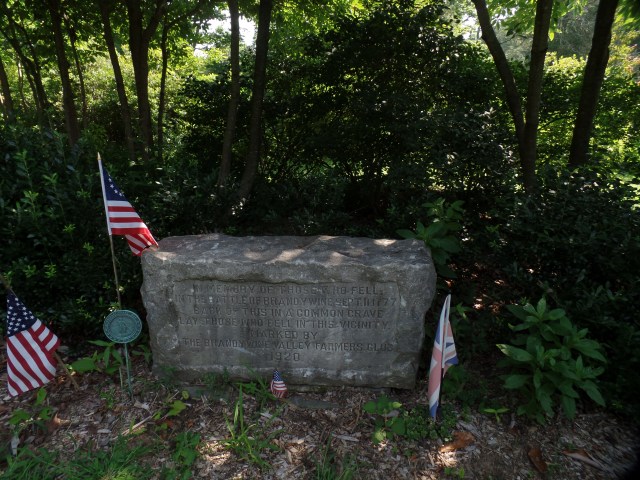
Many of their fallen comrades would be buried, in a mass grave, on the south side of this cemetery.  Hundreds lie here, with no regard for their ideology. All were viewed as humans, by the farmers of Birmingham Hill.

SAMSUNG CAMERA PICTURES

SAMSUNG CAMERA PICTURES

This plaque announces the Peace Garden of Birmingham Hill.

SAMSUNG CAMERA PICTURES

Again, the serenity of the day- with the distant echo of muskets and cannonade.

SAMSUNG CAMERA PICTURES

This verse, by John Donne, is one of several cogent quotes, placed carefully, throughout the Peace Garden.

SAMSUNG CAMERA PICTURES

William Sloane Coffin also offers a simple comment on the world of today.

SAMSUNG CAMERA PICTURES

A poignant expression of love, from a local farmer to his departed wife, signifies the ongoing daily life, around the battle and its aftermath.

SAMSUNG CAMERA PICTURES

After time for reflection, we headed to Brandywine State Museum, and spent an hour or so there, before walking to Washington’s Headquarters. The museum offers detailed exhibits of muskets, British rifles (which were largely responsible for the Royal Army’s early successes) and cannonry.  It is, like the Museum of the American Revolution, a well-balanced institution.

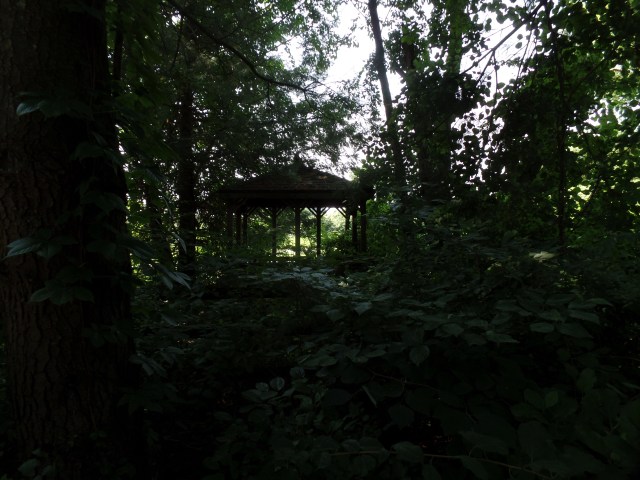
In the nearby woods, this long-abandoned gazebo tells of how nature regards the vagaries of war.  It grows over the remnants, and challenges us to unearth them.

SAMSUNG CAMERA PICTURES

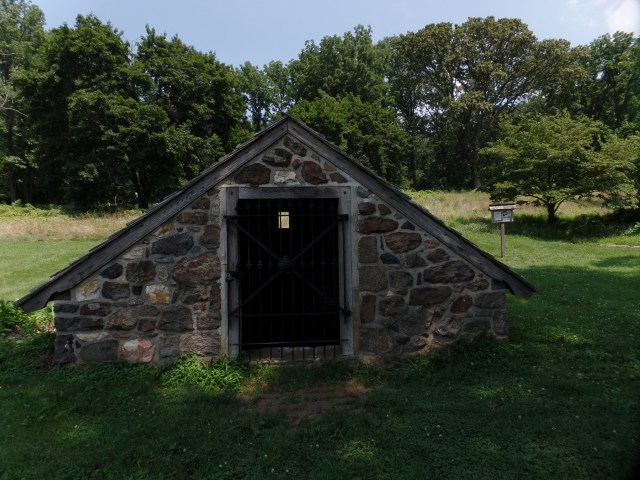
This was Benjamin Ring’s root cellar.  Mr. Ring was the host to General Washington, and his troops, who camped in the fields.

SAMSUNG CAMERA PICTURES

The Rings most likely stayed in this “servants’ quarters”, during the Revolutionaries’ encampment.

SAMSUNG CAMERA PICTURES

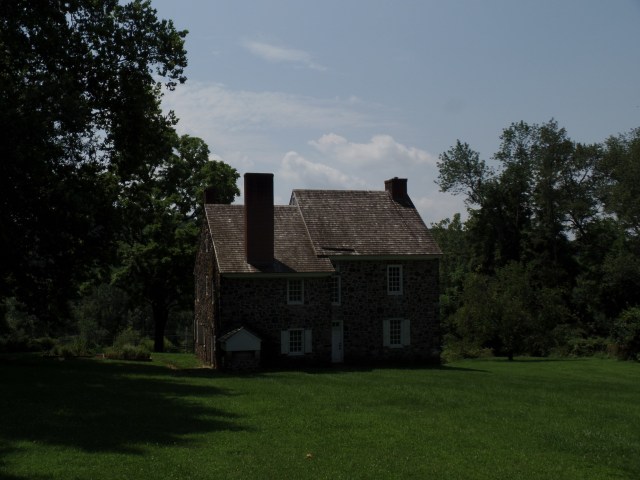
Here is the main farmhouse, where the General and his staff planned what turned out to be an inadequate strategy.  Much was learned from the battle, though, and it was the hubris of the British, combined with French and Polish support for the Americans, which led to the rising of the Revolutionary forces, after Valley Forge.

SAMSUNG CAMERA PICTURES

With this, my nephew was off to pick up his little girl, from pre-school, and I was headed to Philadelphia, after a fabulous lunch, at this bustling, somewhat friendly establishment.

SAMSUNG CAMERA PICTURES