The Bottom of The Top

2

August 16, 2023- As a five-time hiker of the Grand Canyon’s Bright Angel Trail, from rim to river and back, I can attest that there is no appreciation of the bottom, without the top, and vice versa.

This afternoon, I completed reading “PrairyErth”, William Least Heat Moon’s “sequel” to his account of a back roads ramble around the United States, entitled “Blue Highways”. The latter took in travels through 38 states. The former concentrated on one county, in Kansas, which was one of the ten contiguous states he didn’t visit the first time. Mr. Least Heat Moon’s style is consistent, covering all bases of an area, telling anecdotes of his encounters with Man and Nature, weaving details of history, sociology, biology and geology into each chapter-in both books. The micro reflects the macro.

The writer, named for his having been born during a New Moon, entered the words of this post’s title, in the final chapter of “PrairyErth”, in the course of describing a walk which he and a friend took, tracing as best they could the route taken by the Kansa (Kaw) people, when those who gave their name to the state were removed to Oklahoma, in 1872.

He christened the base of a small, but steep, hill in the west of Chase County, as “the bottom of the top”, and thus connected beginning with end, east with west, north with south. Stephen Covey, many years ago, did the same in his life coaching book, “The Seven Habits of Highly Effective People”: “See the end in the beginning”.

Continuity and connection have been essential in my own approach to life, for at least forty years-and probably longer, on a subliminal level. Leaving someone out, not seeing a task through to its completion or omitting a detail have been foreign to my thinking, often to an extent that has been maddening to those around me-and sometimes to me, as well. Dr. Covey’s book helped, in teaching that planning things ahead of time can help enormously, with regard to remembering details-and so I have made that second nature-at least in the past fifteen years.

The first part of anything signals the nature of the last. The bottom is essential to the top. The converse of these is also true.
The Carson Loop, Day 2: New Salt and Old Boulders

2

October 16, 2022, Jordan Valley, OR- William Least Heat Moon would probably find a wealth of interesting things to say about the vast expanse of sagebrush that occupies the Great Basin, from central Nevada, through eastern Oregon, southern Idaho and down into western Utah and parts of Wyoming. Going along U.S. 95, I find the towns and mountains interesting, but the flatlands are just part of the woodwork, so to speak. Were I to camp out in them, for several days, I might feel differently, and come up with detailed descriptions, such as the great man has done with the Kansas grasslands, in his fascinating tome, “Prairy Erth”. Yet, as another great man once wrote, “I have miles to go, before I sleep.”

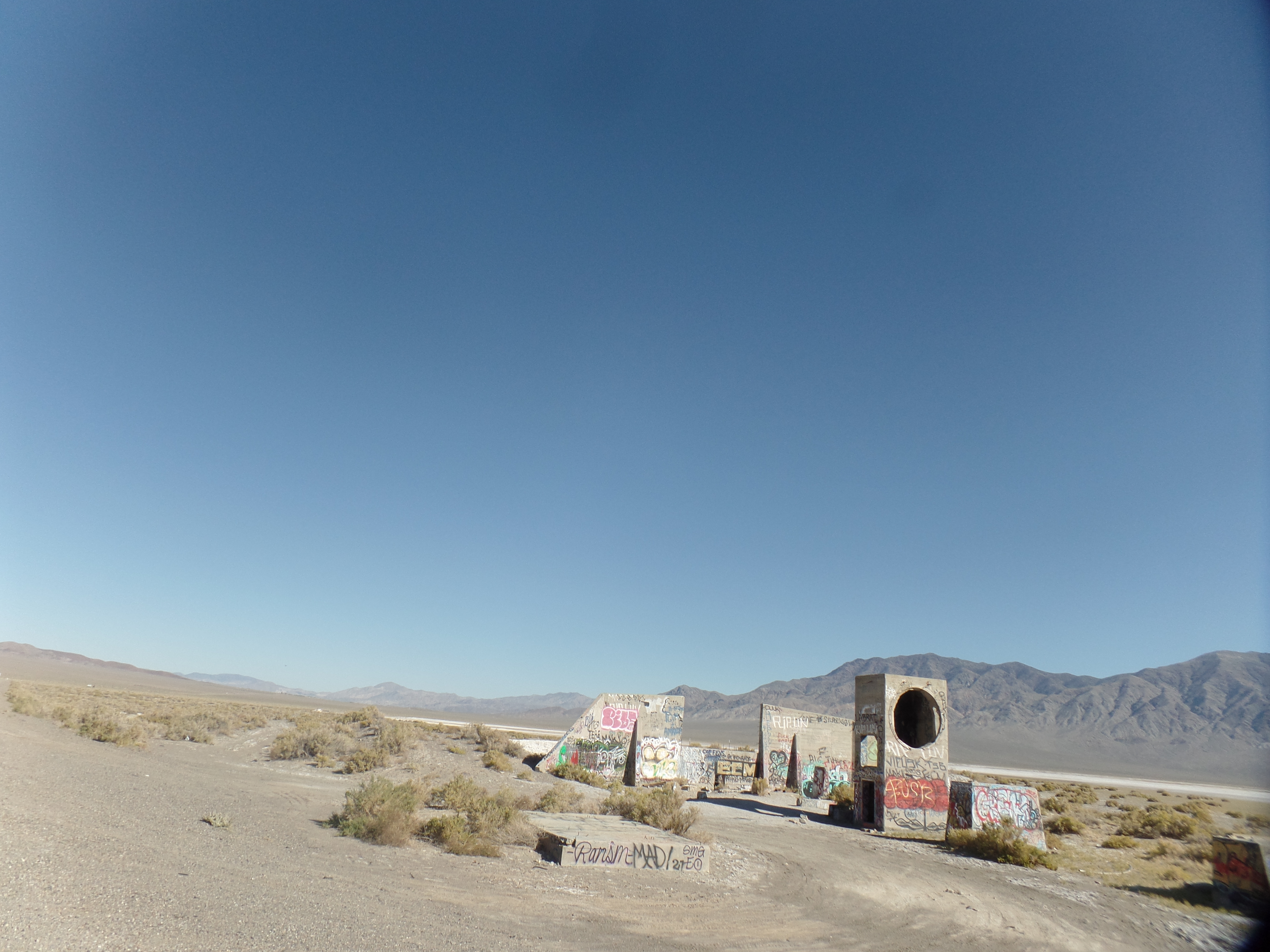
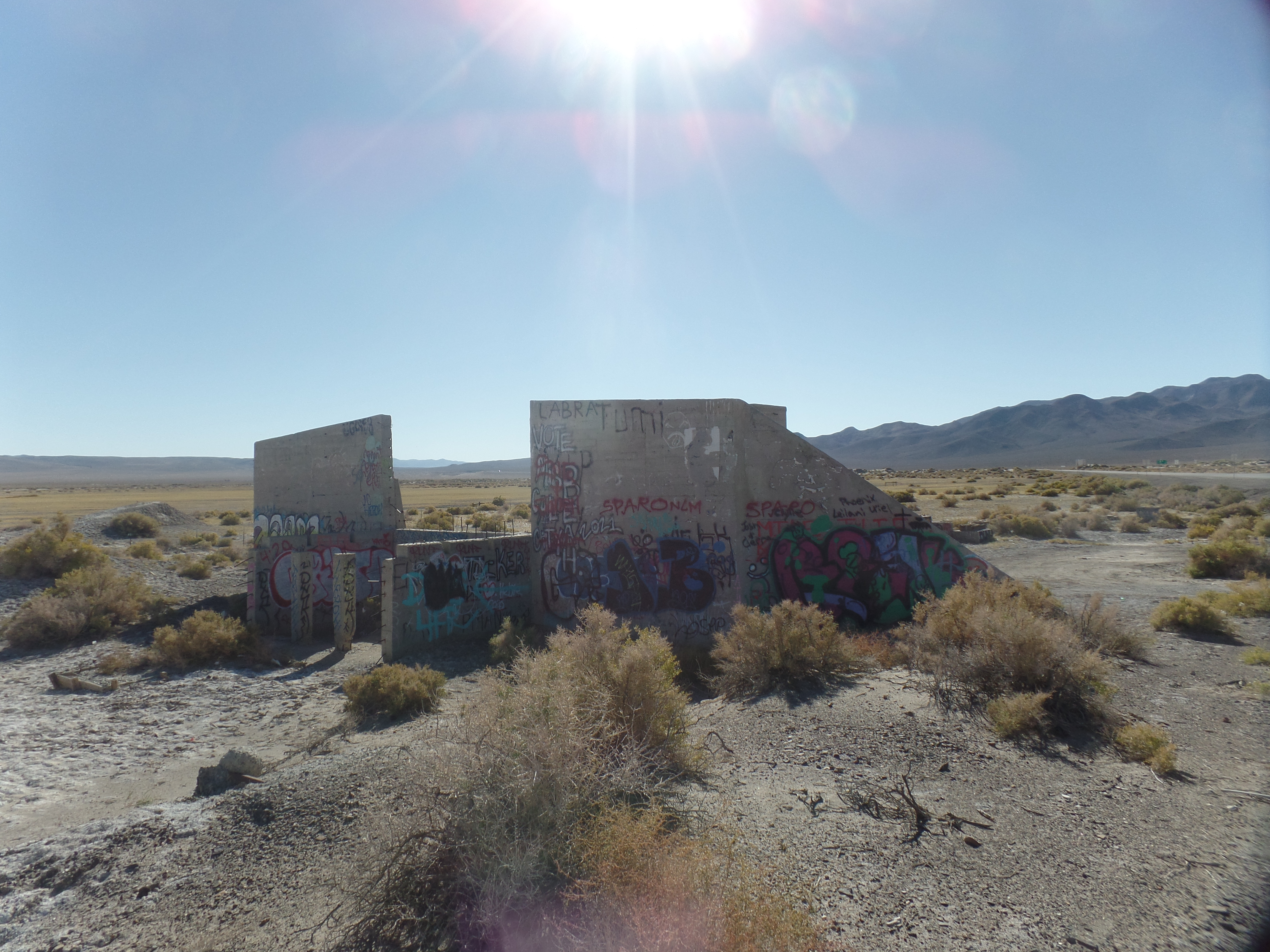
About a third of the way between Tonopah and Hawthorne, in western Nevada’s outback, there lie the remains of what was likely a mining camp. The foundations of the buildings, easily accessible to all, became for a time the hangout of a group of teens-from either of the two towns mentioned above, or from the small villages of Mina and Luling, which lie a bit north of the ruins. In any event, the colourful graffiti adds an odd splotch of brightness to the monochrome of sagebrush.

Ruins of old camp, near Mina, NV

The other, and somewhat more disturbing, element that breaks the sameness (not monotony) of the landscape is salt. Saline licks and flats have proliferated across the Basin, since I was last through the area in July, 2021. They are larger, in an area south of these ruins, and newly-established along the shores off Walker Lake, to the north of Hawthorne.

Salt flat, north of Tonopah, NV
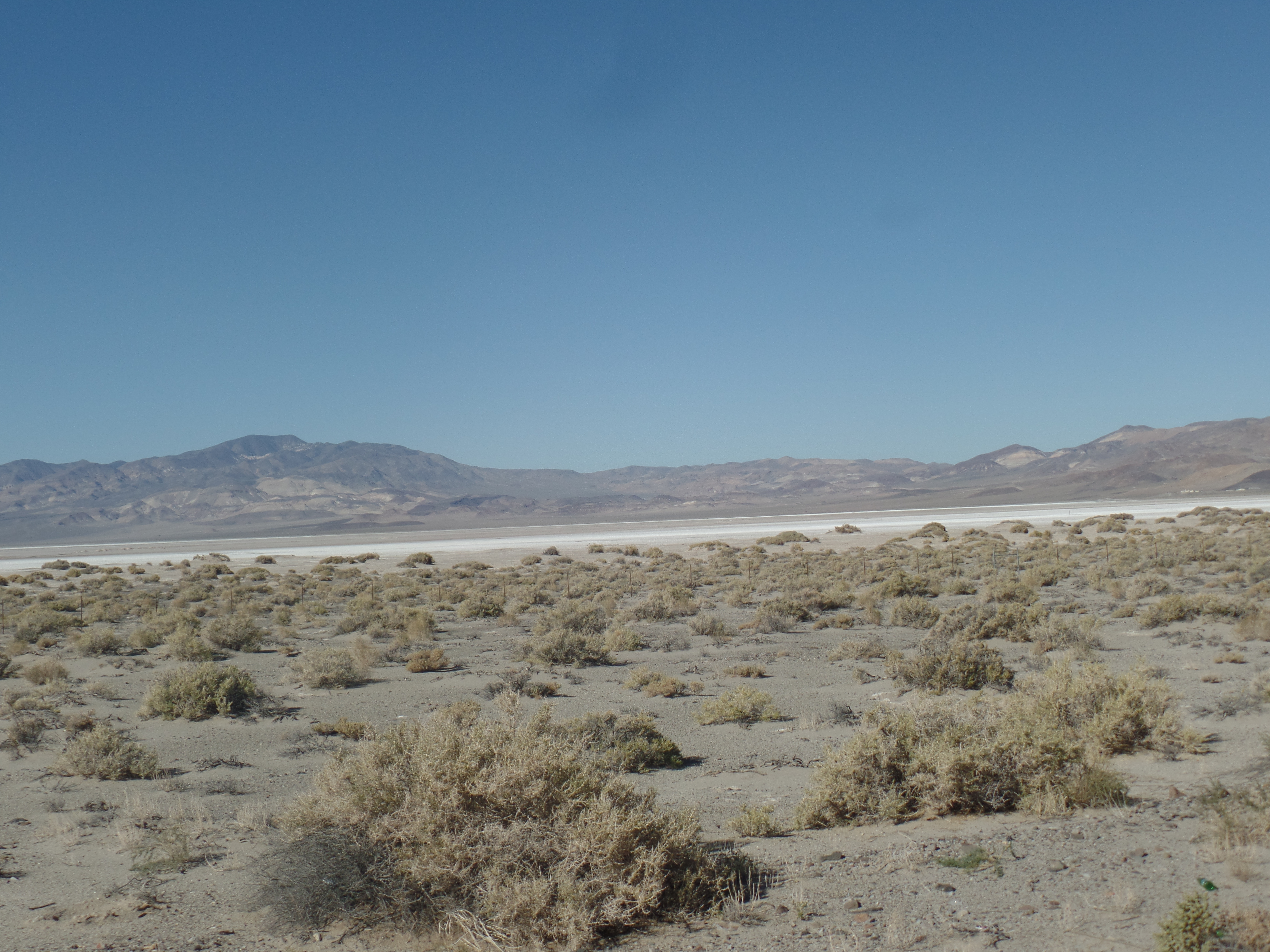
Salt lick, on south shore of Walker Lake

This type of salinity is toxic to birds and beasts, in its concentrated form. It is also not conducive to a nice day at the beach. It is, moreover, one of the consequences of the current drought and shrinkage affecting many bodies of water, throughout the planet-not just in the American West.

In the end, it was Oregon, not California, which became part of my route. Going north, from Winnemucca, I found myself tooling along the Beaver State’s share of Great Basin sagebrush. Then, just shy of the Idaho state line, lies this tiny community, which once had two motels and a cafe. One of the motels is shuttered and the cafe was locked and empty, but Basque Station and its adjuncts-Jim’s Sinclair and Mrs. Z’s Store are open and they’re glad to see you, even if their outer demeanour is world weary. Jordan Valley is a proud exurb of Boise, 1 1/2 hours away.

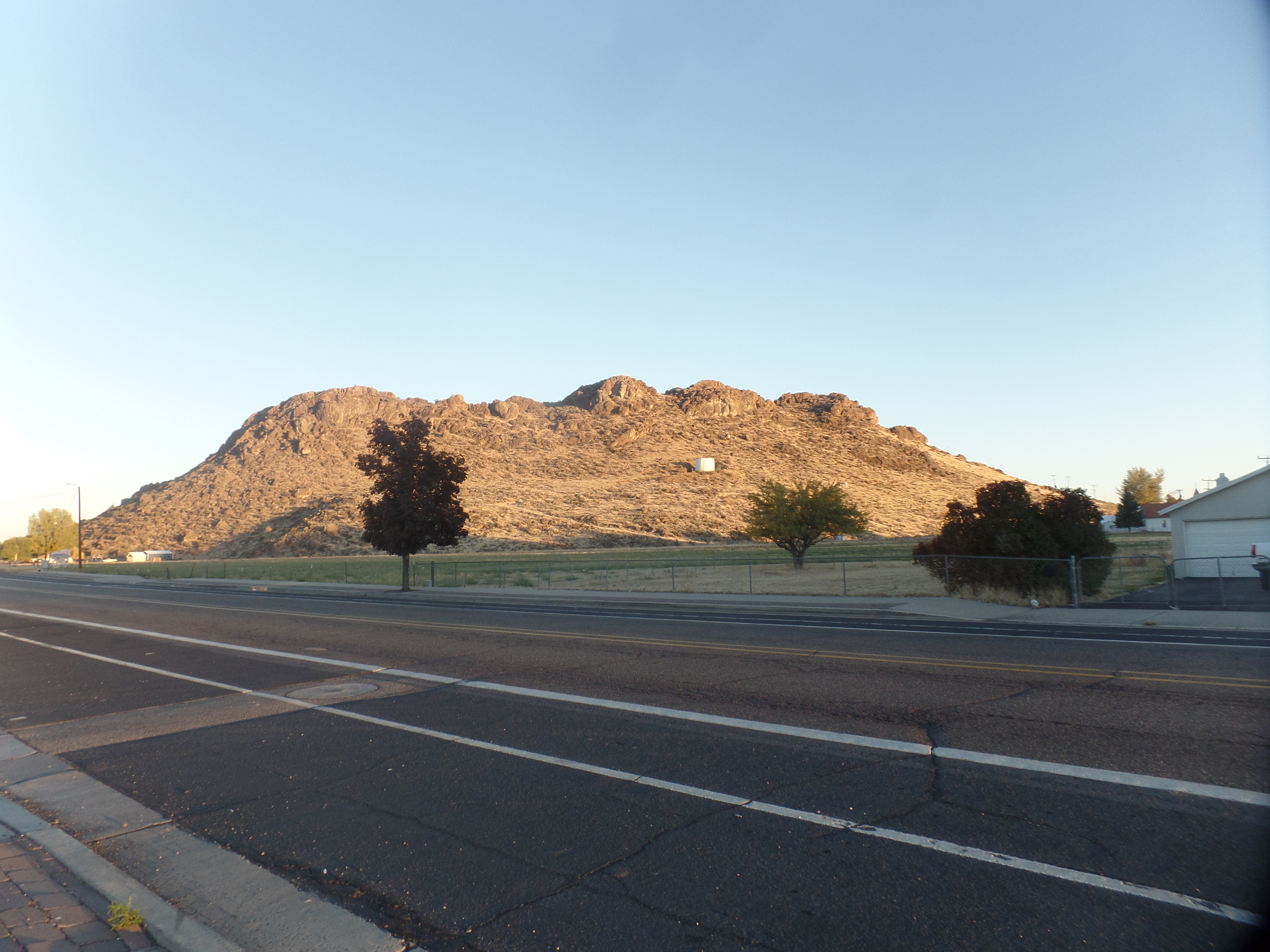
Pharmacy Hill, Jordan Valley, OR at dusk
Pharmacy Hill, at daybreak

Pharmacy Hill’s topography is of the ancient rocks that covered our continent in the Pre-Cambrian Era, as life itself was taking root, in the surrounding oceans. It reminds me a lot of the area between Kingman and Las Vegas, the first rocks thrust upwards by the actions of wind and water, which have cast the Grand Canyon. Here, though, the promontory stands by itself, oddly majestic above Jordan Valley. I will have more time, coming back this way in a few days, and may just hike up the Hill.

May mountain and hamlet long thrive.

A Gallery of Slivers

6

January 10, 2020- 

It is more common than some like to admit, to regard oneself as “well-rounded”, worldly, “Renaissance person”, or some other descriptor that accents a wide variety of experiences.
I’ve had many of those types of moments. Yet, in thinking about any given experience, how deep was any of it?  How broad?  Let me consider one example.

About five years ago, I visited Los Angeles County Museum of Art.  The size of that fine institution necessitated choosing one or two galleries.  I selected a Frida Kahlo exhibit, learning a fair amount about that astonishing artist and taking in a few of the adjoining works by Mexican and Central American painters, as well.  The other exhibit I chose featured Japanese and Korean silk calligraphy.  This was a refresher on what I had learned of the medium, whilst visiting Seoul, twenty years earlier.

Neither of these visits was in any way encyclopedic or exhaustive.  Indeed, in a two-hour stay, one is getting only a sliver of knowledge, about any given subject. That’s not a bad thing, in the least.  I would rather have a preliminary experience with a particular subject, or place, than none at all.

The fact, though, that there is vastly more to any particular person, place or thing, than we can fully appreciate, leaves me in awe.  That’s not even getting close to the topic of The Universe, which will always escape our attempts to contain it, in the realm of human consciousness.  Just considering one painting, by any given artist, can take several hours of focused contemplation.  The writer William Least Heat Moon, in “Prairy Erth” (Houghton Mifflin,Boston, 1991), took the sparsely-populated Chase County, Kansas, and delved into every aspect of the modest section of Flint Hills, until it “looms as large as the Universe”.

This is one of the true wonders of this life: No matter how many times one experiences even the most ordinary of things, it is, as another astute observer recently remarked, proof that you can’t have the same experience twice.  Life is a gallery of slivers.