The Road to Diamond, Day 351: “The Play’s The Thing”

0

November 13, 2025- It may well have been the last time I work in Chino Valley High School, but everyone made it count. The Career Exploration students took up the bulk of the day, researching and applying concepts like job descriptions and the expectations that go into their creation. The Drama students were more involved with a production that they are staging, in a few days.

“Twelve Angry Jurors” is an updated version of “Twelve Angry Men”, a film that was done, in 1957 and again in 1997, and which graphically illustrates the intensity of jury deliberations, especially in ambiguous cases. It is more than just a mixed-gender version of the film. Being audience-facing, the play thus appeals to the sensibilities of those watching, as well as acting out the viewpoints of any given juror. There are other, more subtle differences, briefly discussed here: https://www.youtube.com/watch?v=q58Wxi20Frk&t=152s.

I haven’t attended nearly as many plays, over the years, as I might have liked. Small efforts, done in the round, have been my favourites among those I have experienced. A performance of “King Lear”, earlier this year is probably my favourite, if only because it stayed truest to the play as I remember having read it, in my senior year of high school. The themes of mistrust of a loving critic and the clouds of madness, followed by rage at being deceived are most cautionary. The human tendency to reward even the most transparent sycophancy also hits home.

The most appealing thing about live theater, though, is that the efforts of the performers-and of the stage crew may be seen close up. Human effort, at changing the scenery and moving about the room, even having to navigate the audience at times, also makes the play more intimate than even the most exhilarating IMAX presentation of a motion picture.

Movies can be fabulous, but for intimacy and connection, yet, “the play’s the thing”. Long may high school and college drama programs endure. Shakespeare may have used the term as a vehicle for Hamlet to trap his father’s killer, but it certainly sums up, in general, the appeal of the medium.
The Road to Diamond, Day 300: Kronborg and Kobenhavn

0

September 23, 2025, Copenhagen- There is something fairy tale-like about Helsingor. Like a Danish version of Visby, it largely is filled with cobblestone streets. Unlike Visby, its Old Town is mostly a no-car zone. Here are some of the Old Town scenes I promised you last night.

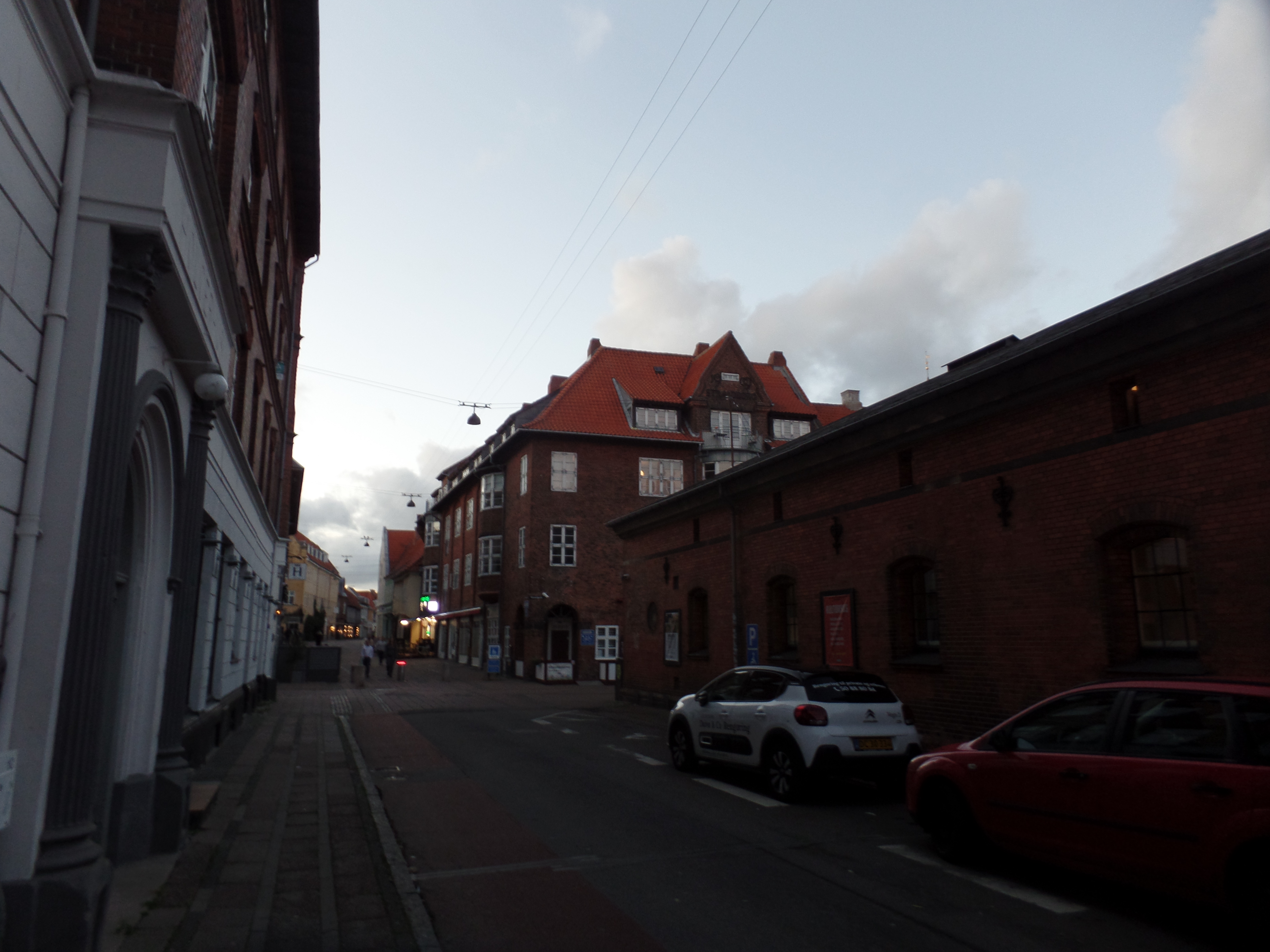
Old Town street, Helsingor
Hamlet Hotel, Helsingor is across the street from Skandia, where I stayed last night.
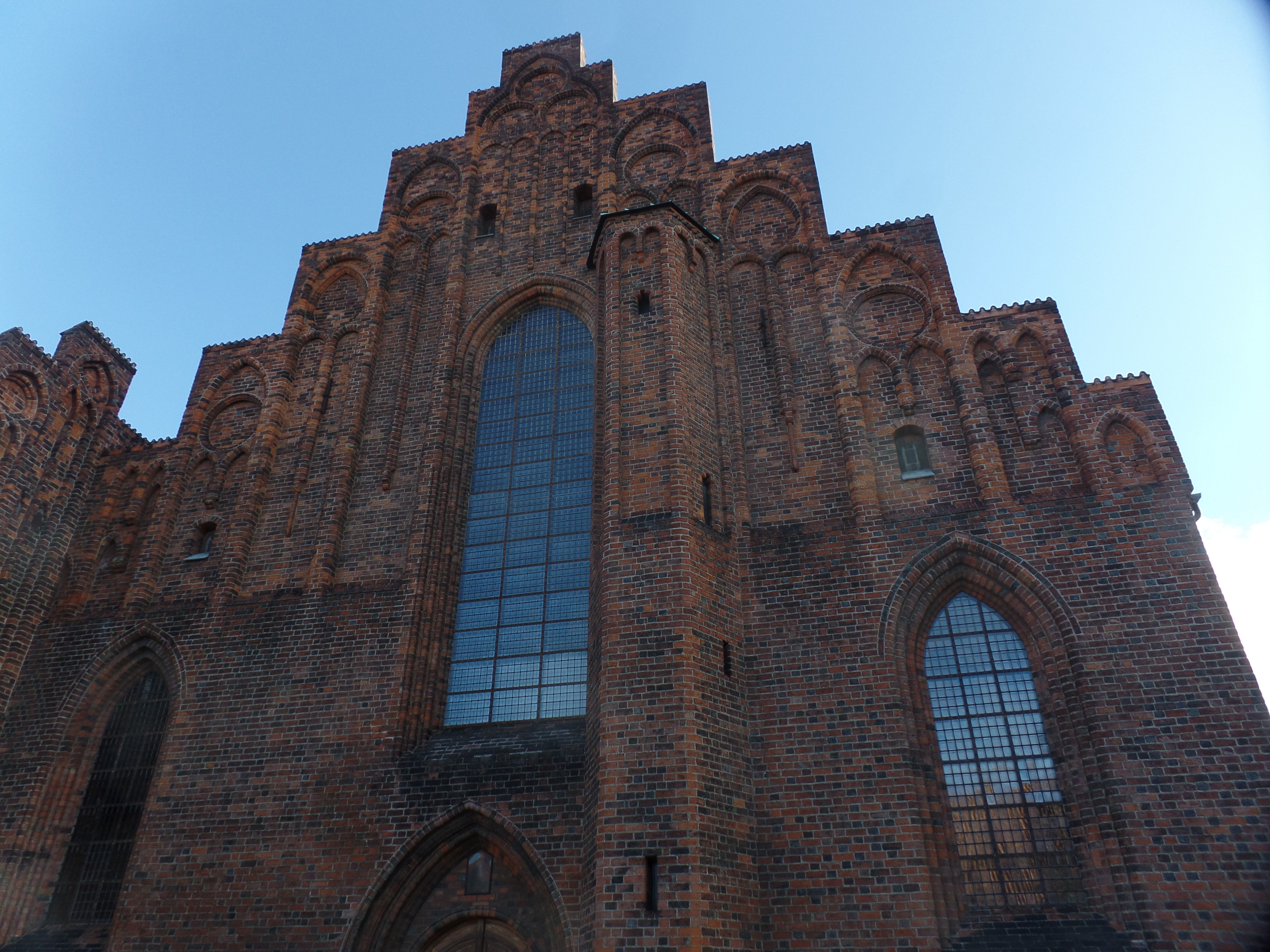
St.Marie’s Church, Helsingor
Dom Church (Cathedral) of Helsingor

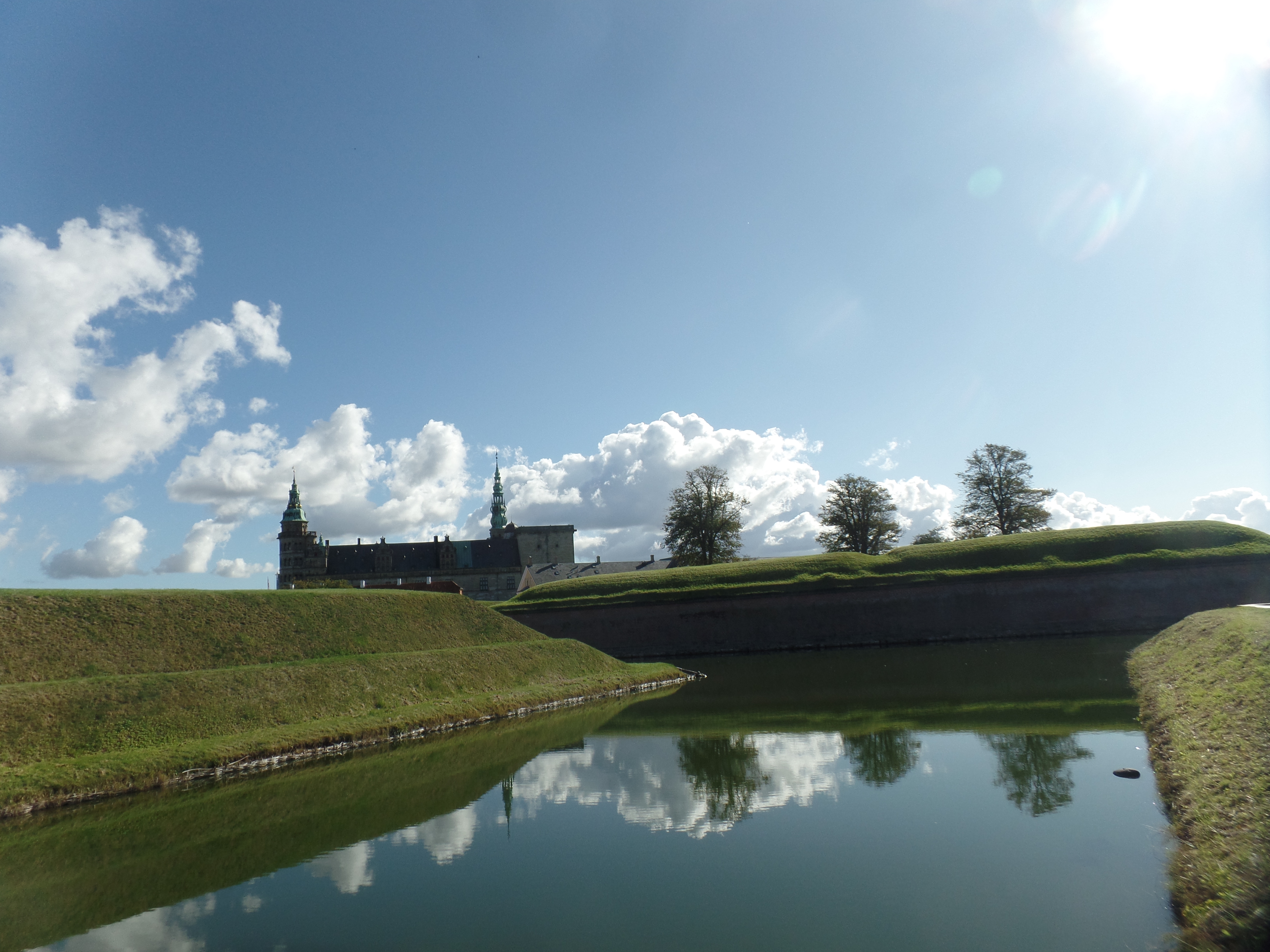
Now, here is the crown jewel of Old Elsinore: Kronborg Castle, which was William Shakespeare’s setting for Hamlet.

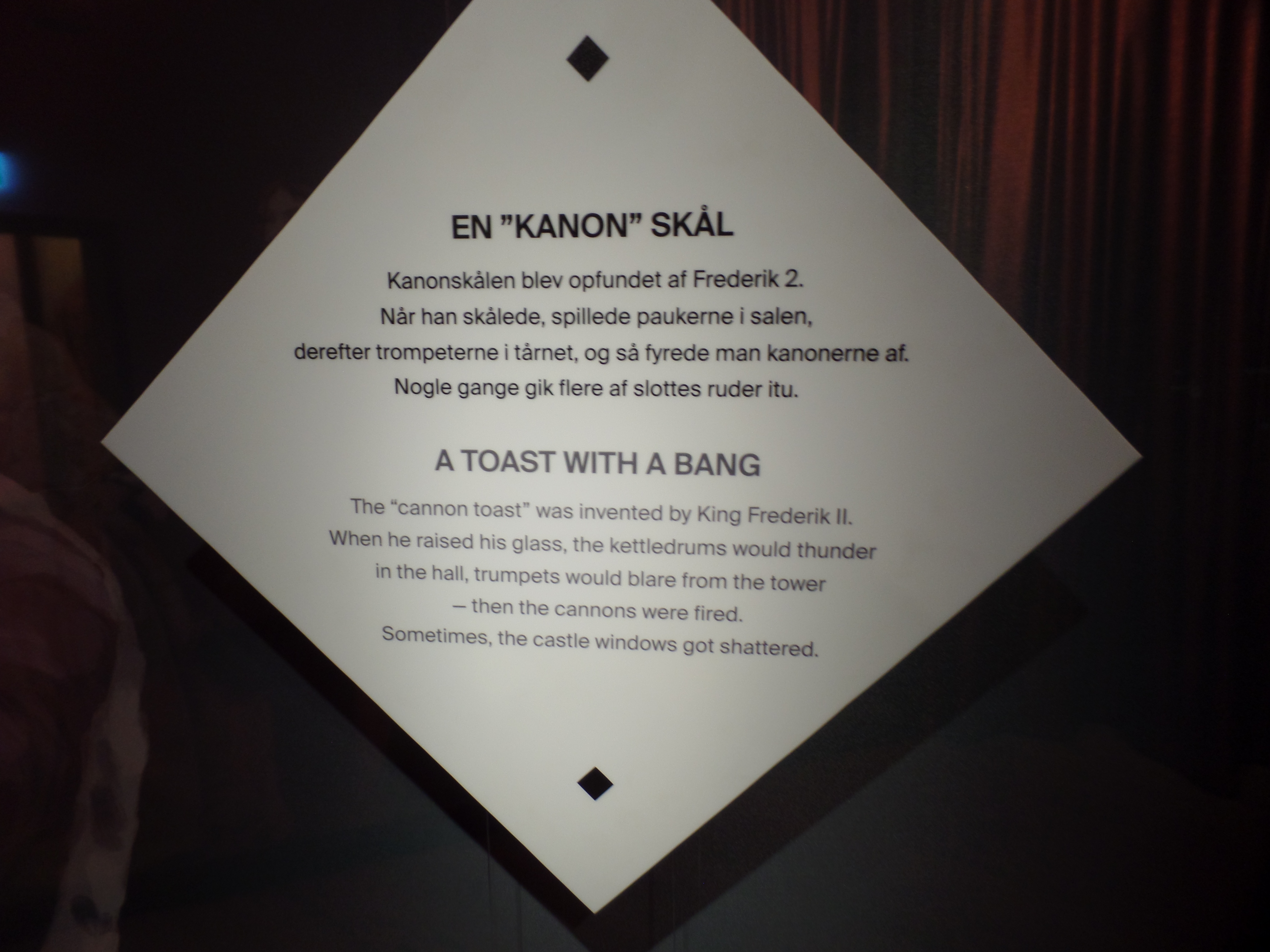
Denmark has been a country since the 11th Century. Around 1424, King Eric VII built the prototype of the fortress, overlooking Oresund, which separates Sjaelland (“SHEL-land) from the Swedish Peninsula, at its narrowest point, In 1585, King Frederick II expanded the fortress into a magnificent castle. The fortress burned down, in 1629, after which King Kristian IV had it rebuilt. In 1658, the fortress proved insufficient to withstand an attack by Sweden, during the war in which the latter seized control of Scandia, the southernmost part of the peninsula, from the Danes. In 1785, Kronborg became a military barracks, as the king had moved to Copenhagen. It was given to the Danish people, in the 1920s, as an historical treasure.

What a treasure it is! Here are seven photos of the grounds and the interior, including the extensive Casemates (the dungeons and underground refuge of the royals, during the war with Sweden.).

The Moat of Kronborg Castle
Cannons, facing north, from Kronborg Castle
Kronborg’s Cannon Tower, from the courtyard
The Chapel, which was the only area, not affected by the Fire of 1629.
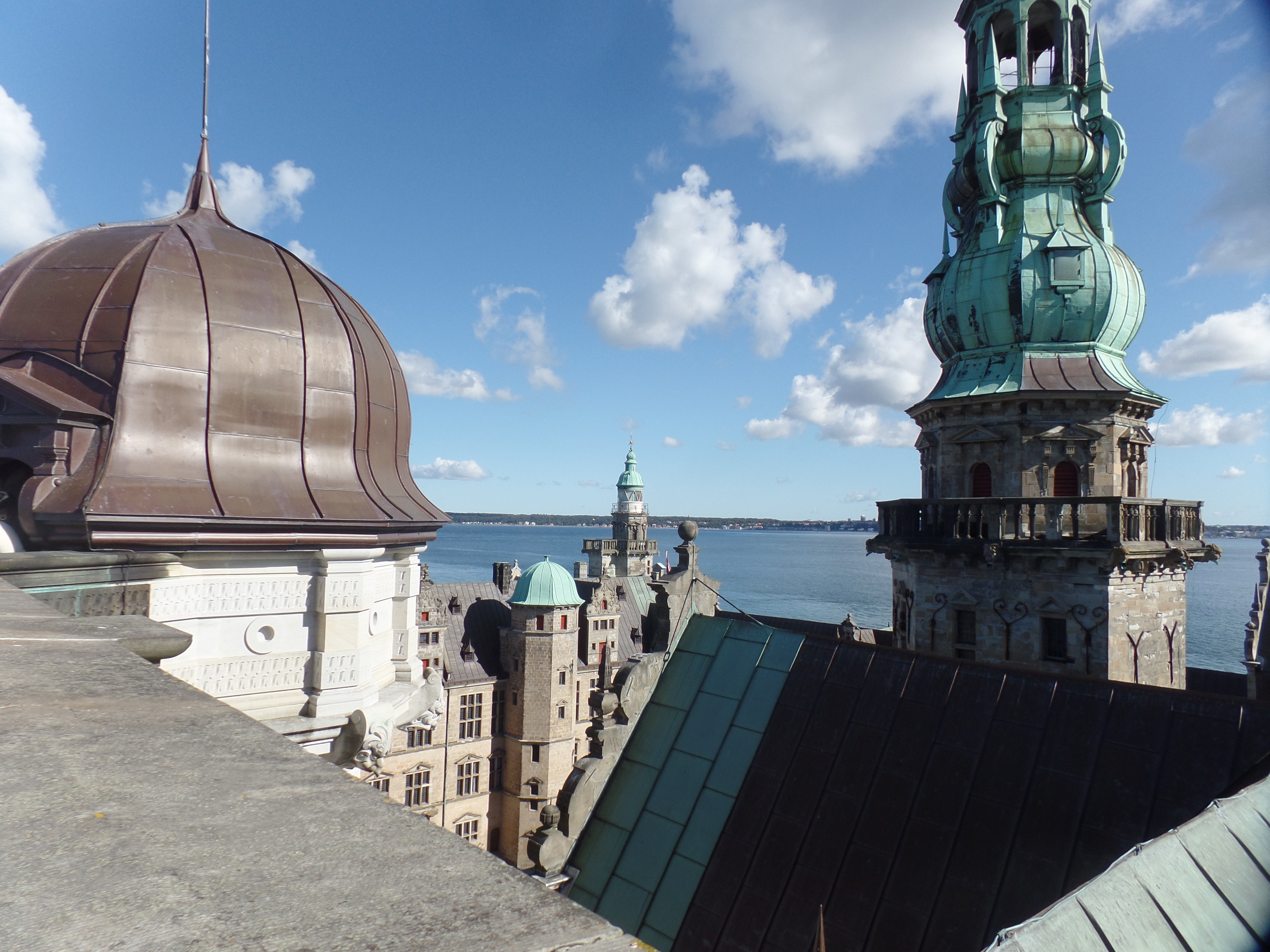
Oresund, and other parts of Kronborg, from the Cannon Tower. This viewpoint is reached after climbing 145 steps. I still have it, even if it means taking 2 twenty-second breathers going up.
Holger the Dane, legendary protector of the nation, who awakens when Denmark has met its darkest hour. He otherwise sleeps in the Casemates.
In the Casemates-Is down up or is up, down?
A Word of Caution.
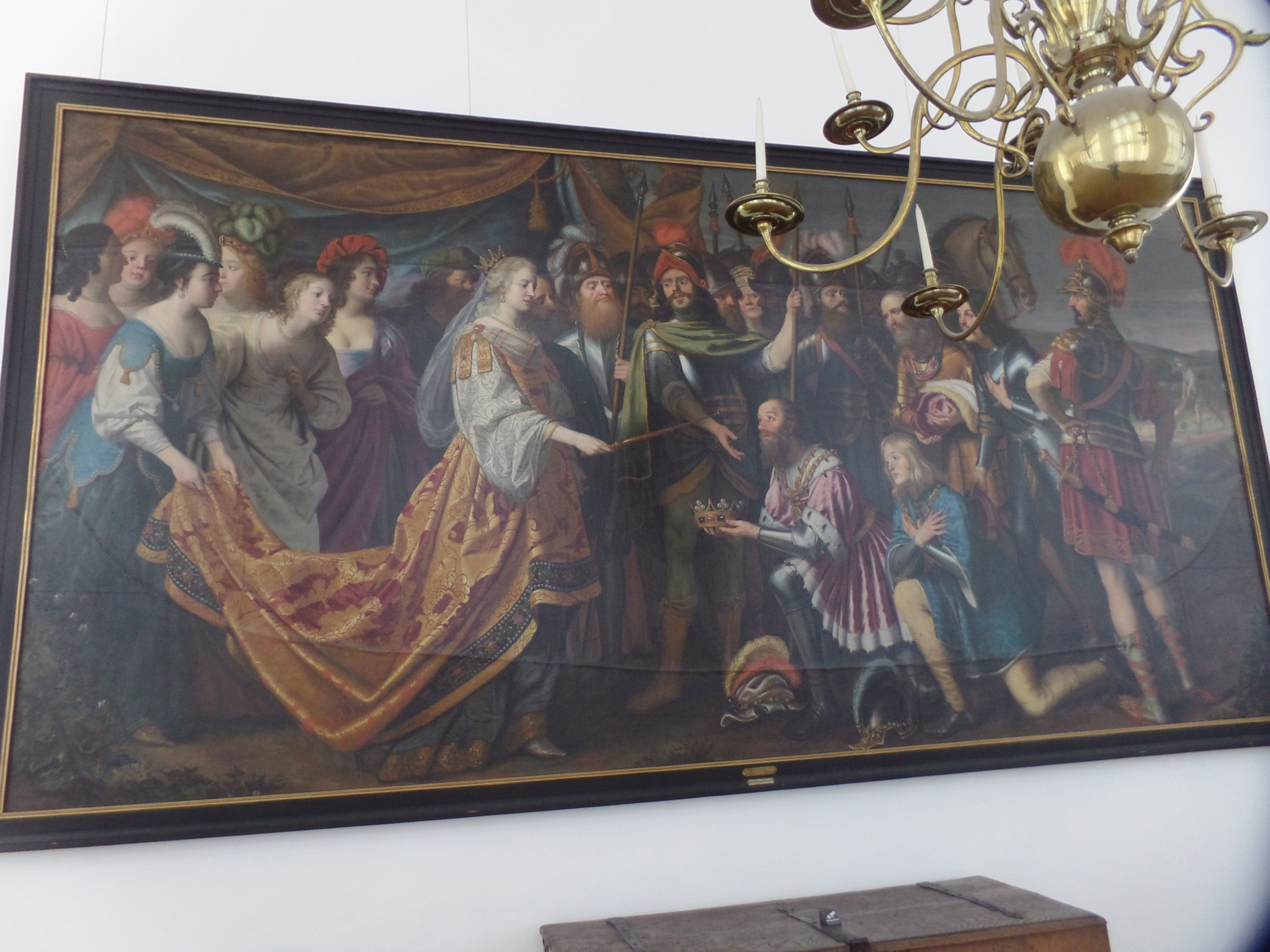
Queen Margrethe I, who ruled Denmark and all of Scandinavia.

No display of a castle is complete without a scene of the ballroom. So here is #8.

The Ballroom

With this lovely visit, I headed back to Skandia, retrieved my bags and headed across the street to the train station. I learned last night, from the ferry monitor, how to work a ticket machine, and so got my own ticket to Copenhagen. Sadly, the Baha’i National Centre turned out to be in a suburban location-so I missed seeing the friends there. I did speak with one on the phone and may be able to join a meeting at my next place of visitation.

Copenhagen, though, is exquisite. I will be here tomorrow and early Thursday. Let us close with this scene of Indre By, the “Old Town” of the Danish capital, of which more tomorrow.

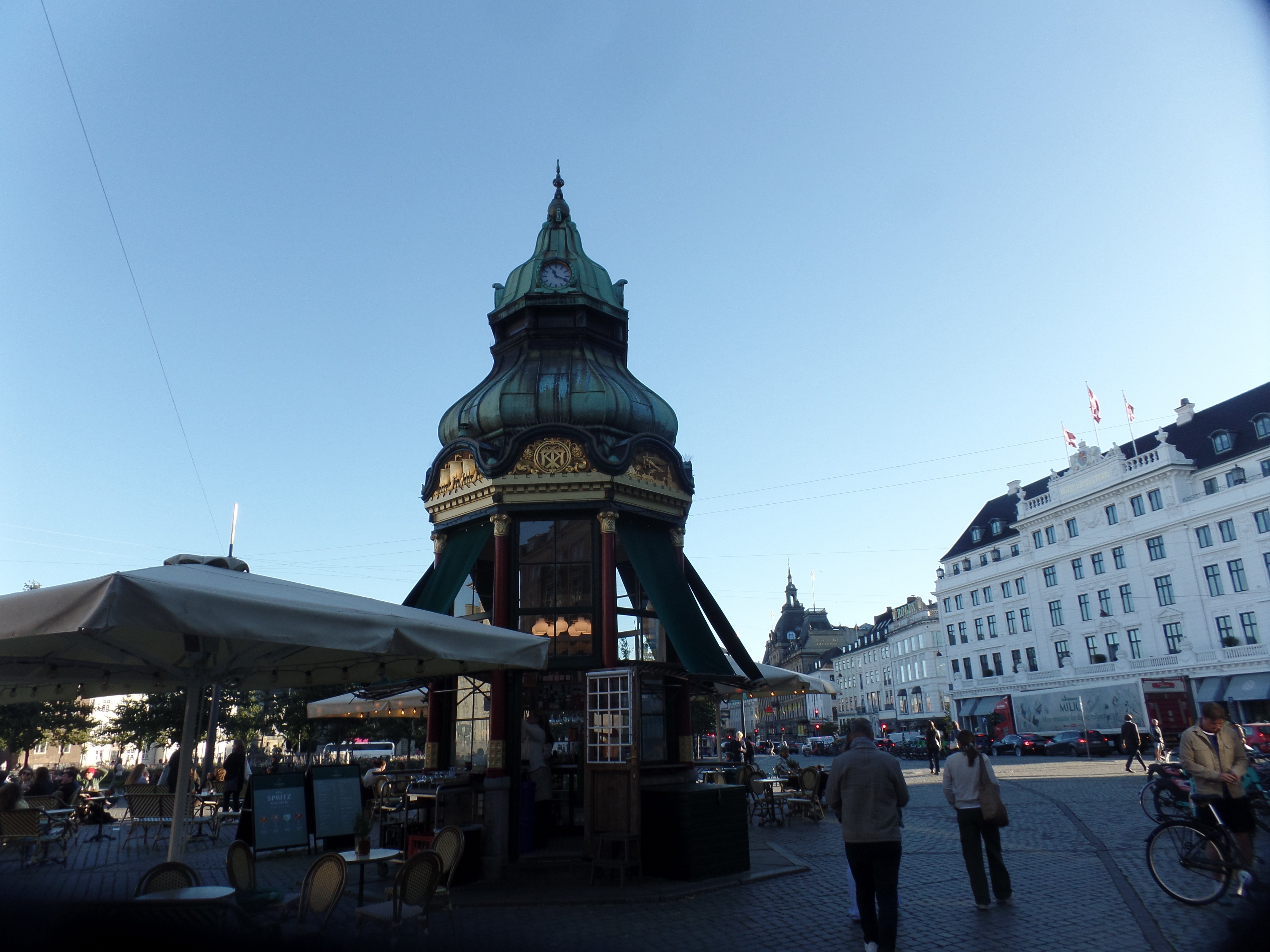
Ornate small cafe, with Hotel D’Angleterre in the background. An enterprising young woman runs a small coffee shop here.

Rumour has it that Tivoli is temporarily closed. I will check that one out further, tomorrow. Even so, there is plenty of opportunity to keep occupied here.

The Road to Diamond, Day 121: King Lear, et al.

2

March 29, 2025- The rowdy group of revelers burst into the theater-in-the-round, the jester carrying his king on his back, whilst the merry palace guardsmen jump about, yelling “Ha! Ho!”. The scene reminded me, for all the world, of a few such episodes of the last Presidential campaign, though no one would ferret our current Chief Executive on his back.

Basin Lake Theater Project is a new troupe in Prescott, whose maiden performance came tonight, at the newly re-opened Cosmos Theater. King Lear, their first effort, touched all the bases: The conniving of his two older daughters, Goneril and Regan; the plotting of their spouses, the Dukes of Albany and Cornwall, respectively; the plain-spoken sincerity of his youngest daughter, Cordelia; Lear’s deep insecurity, which led him to embrace the plotters’ expressions of fealty and reject Cordelia for her honesty; the unbroken loyalty of the Earl of Gloucester, his aide-de-camp; the ill-concealed ambition of Gloucester’s bastard son, Edmund, contrasting with the filial piety of his high-born son, Edgar. Most of all, Frank Malle, as Lear, nailed the sovereign’s bursts of rage and his descent into madness.

I sat spellbound through the two halves of the play, and found myself thinking afterward, “Are there truly parallels between the fictional Lear, a tenth-century King of Britain, and the sitting President of the United States-or, for that matter, his immediate predecessor?” There is no obvious insanity, in our current leadership, yet we are in a period in which rulers have been exhibiting a thin skin, and not just in the United States of America. There is a naked ambition, on the part of several of the presidential advisors, both in and out of government. Some members of the presidential family seek more leverage, though unlike the Family Lear (ostensibly members of House Plantagenet), there is no obvious rivalry between the children, nor does the president show favouritism for one over the others. Lear does go off on tangents, talking about the horns of snails and the cultivation of oysters, much as Trump talks about birds and whales. The above-mentioned scene evoked the impromptu dancing that Trump has done, either solo or accompanied by random visiting athletes.

All these instances, though, are not connected to actions of substance, in and of themselves. Lear does not seem to have any connection to his subjects, outside of the court itself and a small number of hangers-on. Trump regularly connects with at least his most fervent supporters, outside of Official Washington, as did Biden. That may neutralize any ambition among his inner circle, providing an unlikely safeguard for our republic, in the long run. While some of his Cabinet may invite parallels to Lear’s Fool, there is yet no one who can get away with criticizing the President-at least not openly, as the Fool does with Lear.

In the long run, it is never in the interests of a people to have their ruler descend into madness. In my lifetime, we have seen what happened in the Soviet Union, when Stalin lost his grip on reality,as well as in China, as Mao fell into senescence. The 25th Amendment to the U.S. Constitution is in place, to obviate such a situation here. Let us hope that its application does not become necessary, in the near future, if ever.

Much Ado at the Raven

4

August 4, 2024- The troupe spent a refreshing amount of time on stage dancing to an acoustic rendering of William Shakespeare’s ditty from “Much Ado About Nothing”. They sang it, while dancing, and the audience joined in. Such was the production of the comedy, by the troupe calling themselves, Halfwit Shakespeare. They were hardly half-witted, and absolutely delightful. Admission was free, with gratuities asked for the players as a group.

“Sigh no more, ladies, sigh no more.

    Men were deceivers ever,

One foot in sea, and one on shore,

    To one thing constant never.

Then sigh not so, but let them go,

    And be you blithe and bonny,

Converting all your sounds of woe

    Into hey nonny, nonny.

Sing no more ditties, sing no more

    Of dumps so dull and heavy.

The fraud of men was ever so

    Since summer first was leafy.

Then sigh not so, but let them go,

    And be you blithe and bonny,

Converting all your sounds of woe

    Into hey, nonny, nonny.”-William Shakespeare

The play, for those unfamiliar with it, is a comedy that accents the ridiculous, and avoidable, damage to a person’s reputation from backbiting and gossip. These flaws are an almost ingrained part of the human psyche and, as with many flaws, derive from insecurity. The character assassins are called out, and given one chance to redeem themselves-which they do. Would that all such incidents of assault on character be so easily resolved and reversed.

We are probably due for another round of negative back-and-forth, in the ongoing election cycle-and there is a lot of angst about who is doing what, to wreak havoc on the economy. Backbiting, however, does next to nothing to actually solve matters of concern, and is actually worse than kicking the can down the road. As in the play, however, all that is dark will be brought to light.

It may be a nice temporary fix to stop, take a few deep breaths and, if it helps any, sing a song similar to Shakespeare’s ditty. Then, we can get back up, dust ourselves off and start all over again, as Nat King Cole once advised.