Heirlooms, Presidia and The Oneness of Us All

8

Some of my finest adventures happen “close to home”.  This past watershed weekend was a prime example.  One of the organizations that has drawn me into itself is Slow Food Prescott.  This is part of a larger organization, founded in Italy in 1989, which seeks to revitalize the interplay between nutrition and socialization- a counterpoint to the phenomenon of eating in one’s car, or otherwise taking a meal “on the fly”.

This past weekend, several things happened.  Friday night, I attended a gathering at the American Legion Post, in Prescott, enjoying a well-prepared meal in a relaxed atmosphere, which we do several times each month at the Post.  This set the stage for the weekend of food that was to come.

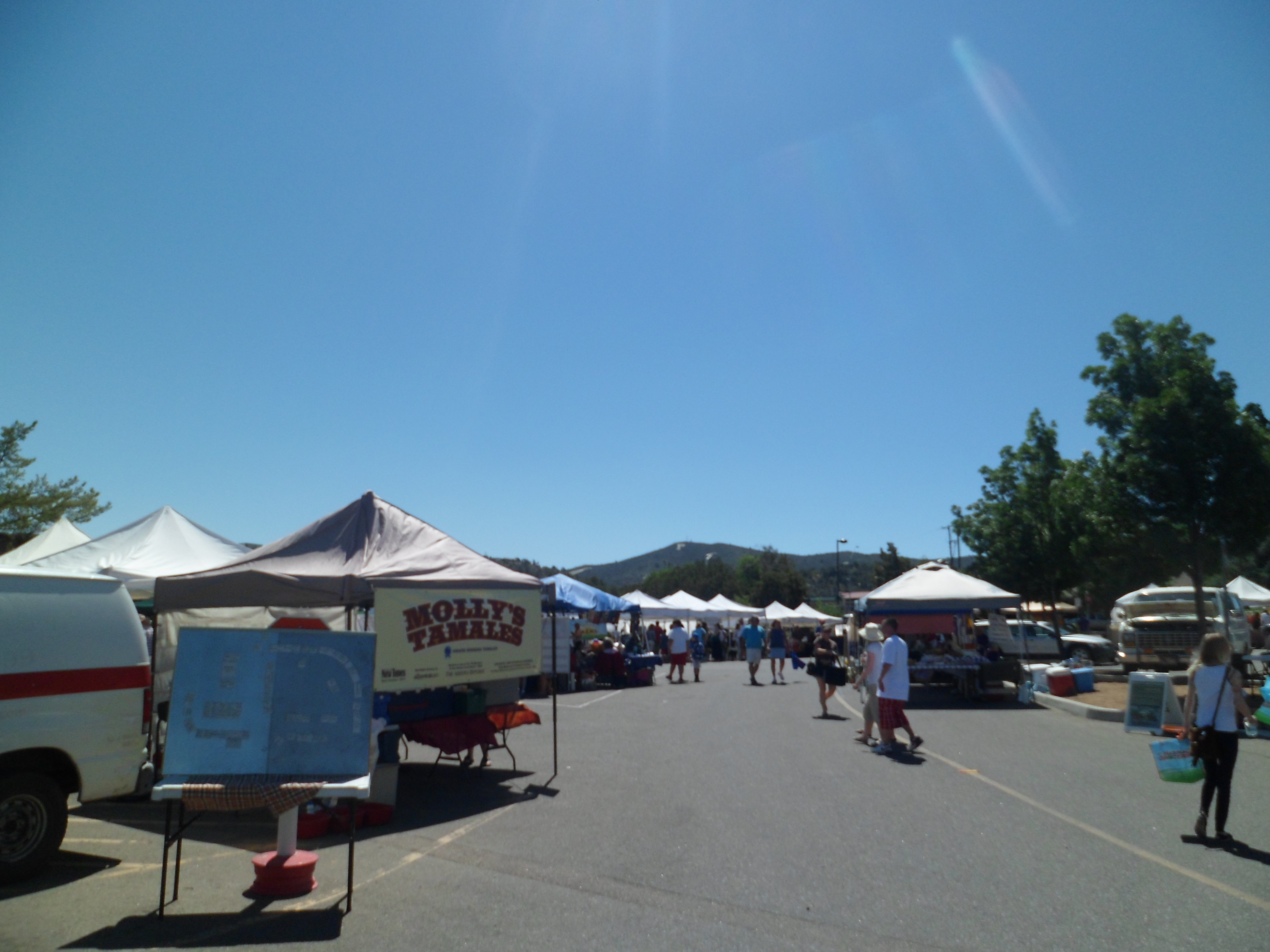
Bright and early Saturday morning, I headed to Prescott Farmers Market, purchasing enough food to get me through the coming week, before heading out on my two-weeker, either to Colorado or Oklahoma/Texas, or both.  Prescott’s Farmers Market is balanced between produce and freshly-prepared foods, such as baked goods and artisan tamales.
SAM_4951

After getting the food home and into the fridge, it was time to head to Bill’s Grill for the lunch which launched the 2013 meeting of Slow Food USA’s Southwest Region (Arizona and New Mexico).  Bill’s features organic beef, much of it from locally-raised cattle.

SAM_4952

The Slow-Food group was well-nourished, and ready for an afternoon of agricultural tourism, by 12;30.

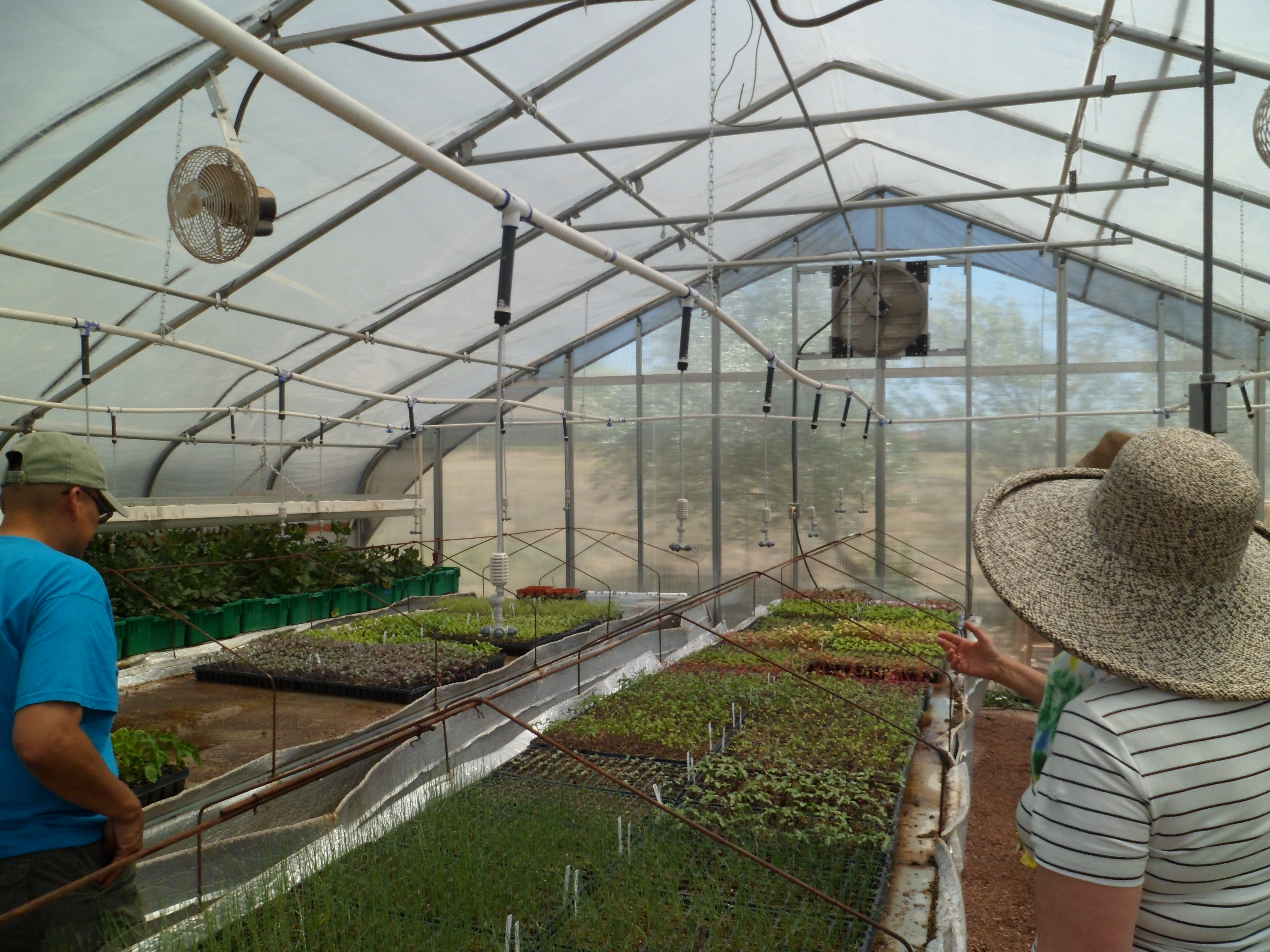
We first headed to Whipstone Farm, in the hamlet of Paulden, about 20 miles north of Prescott. This establishment raises a variety of vegetables, fruit and livestock,  from arugula and asparagus to raspberries and tomatoes,using organic methods.
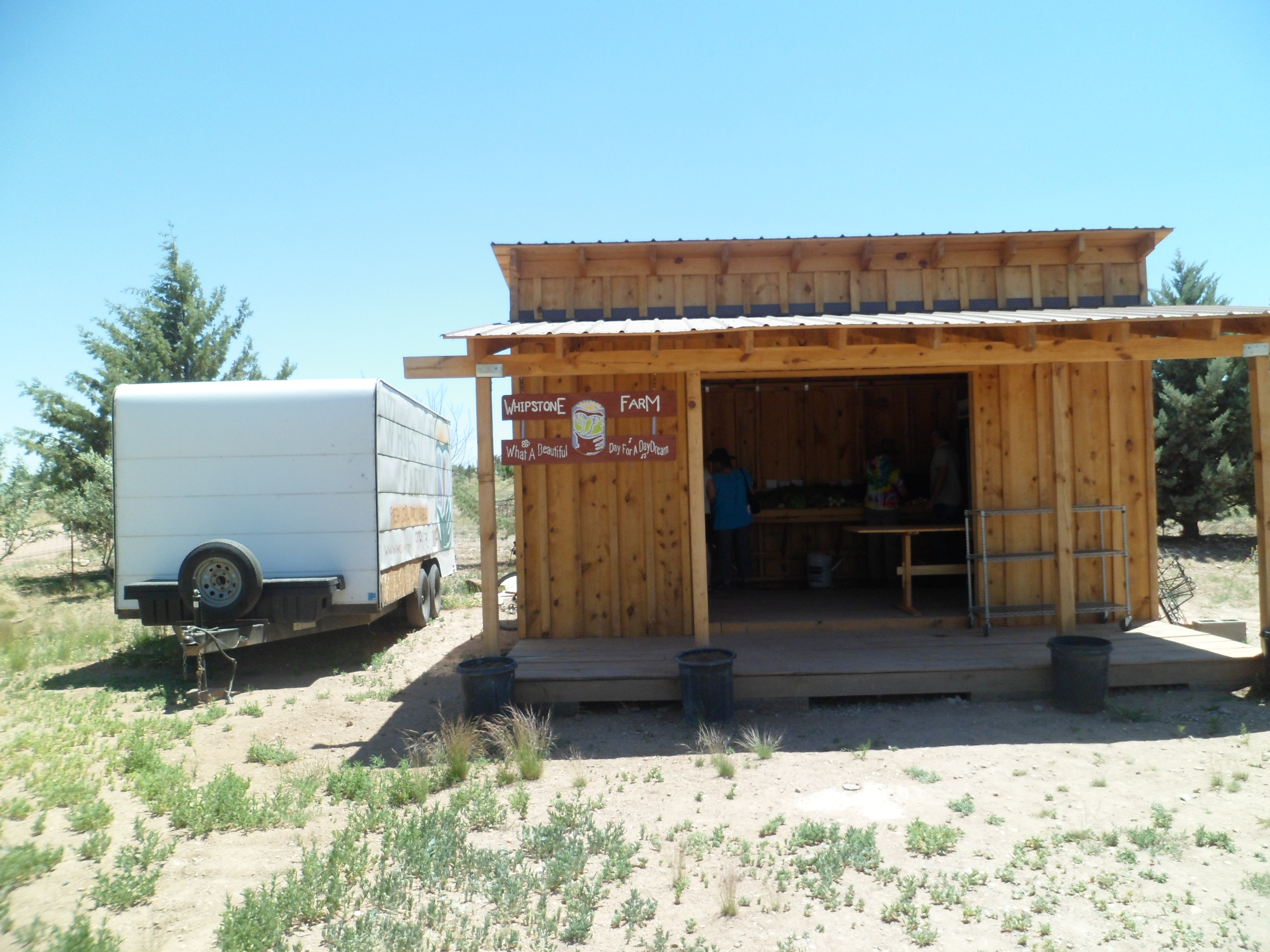
SAM_4955

SAM_4960    SAM_4972

SAM_4965    SAM_4969

SAM_4973

There are many theories as to how we ought approach the task of feeding our numbers.  Genetic modification of crops is advanced, by industry, as the most efficient way to do this.    The organic methods, which I witnessed here at Whipstone, represent another, less-intrusive method.  Certainly, it’s more work to farm organically.  I have to say, though, that there seem to be fewer health issues arising from organic farming, than from other methods.  It’s noteworthy that the group with whom I spent much of the weekend look, almost to a one, about ten-twenty years younger than their chronological age-mates in the generality of society.

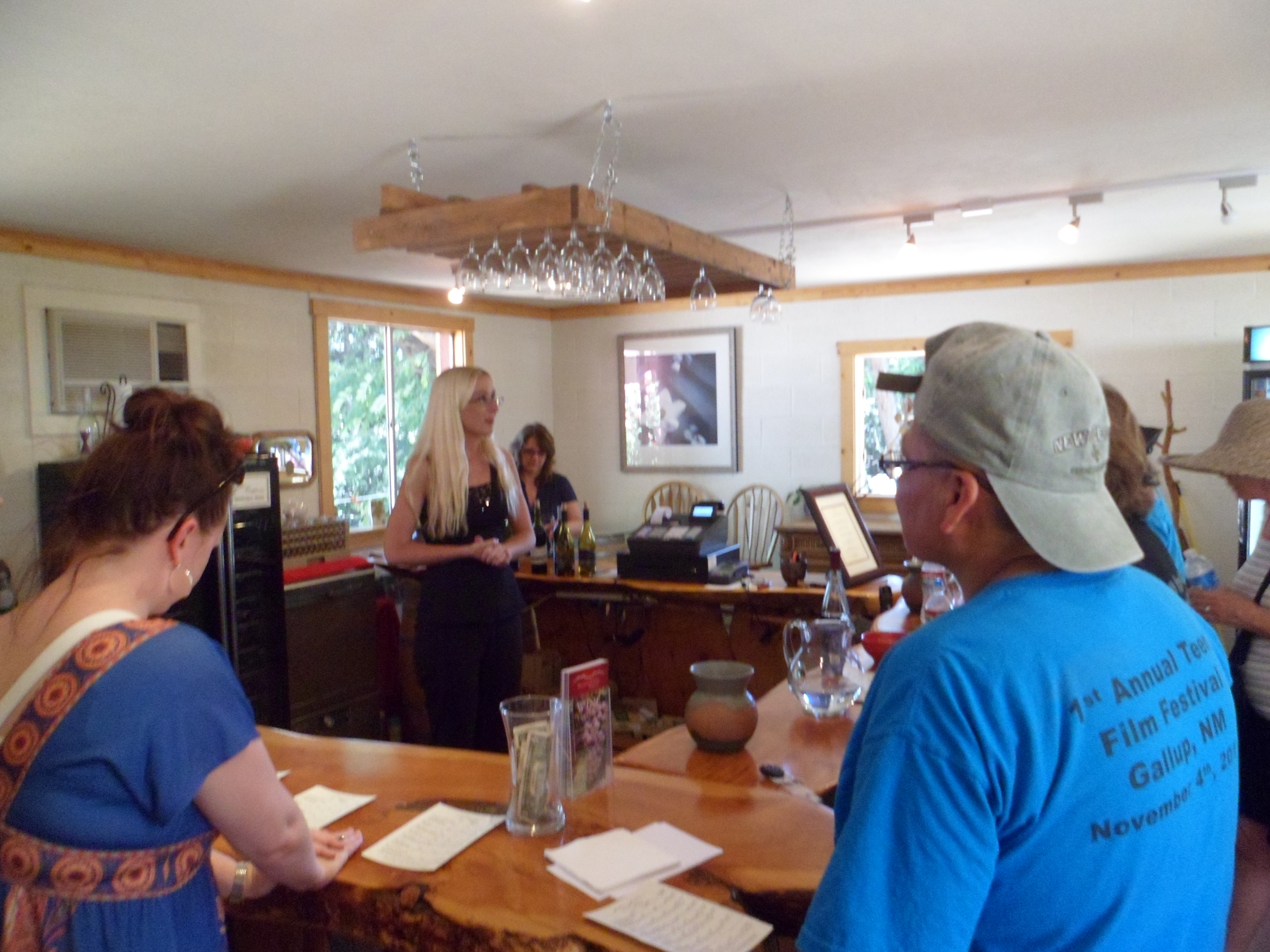
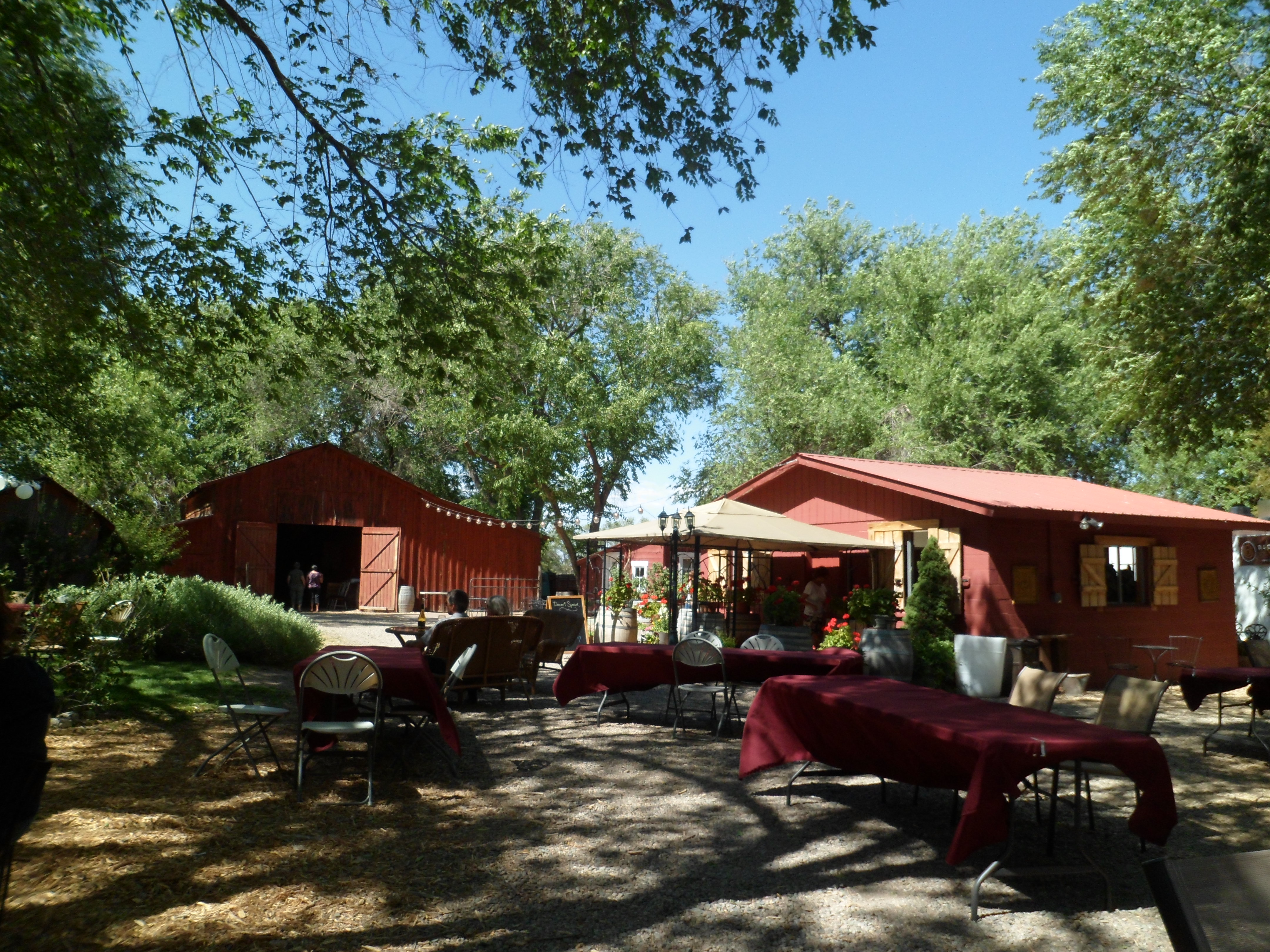
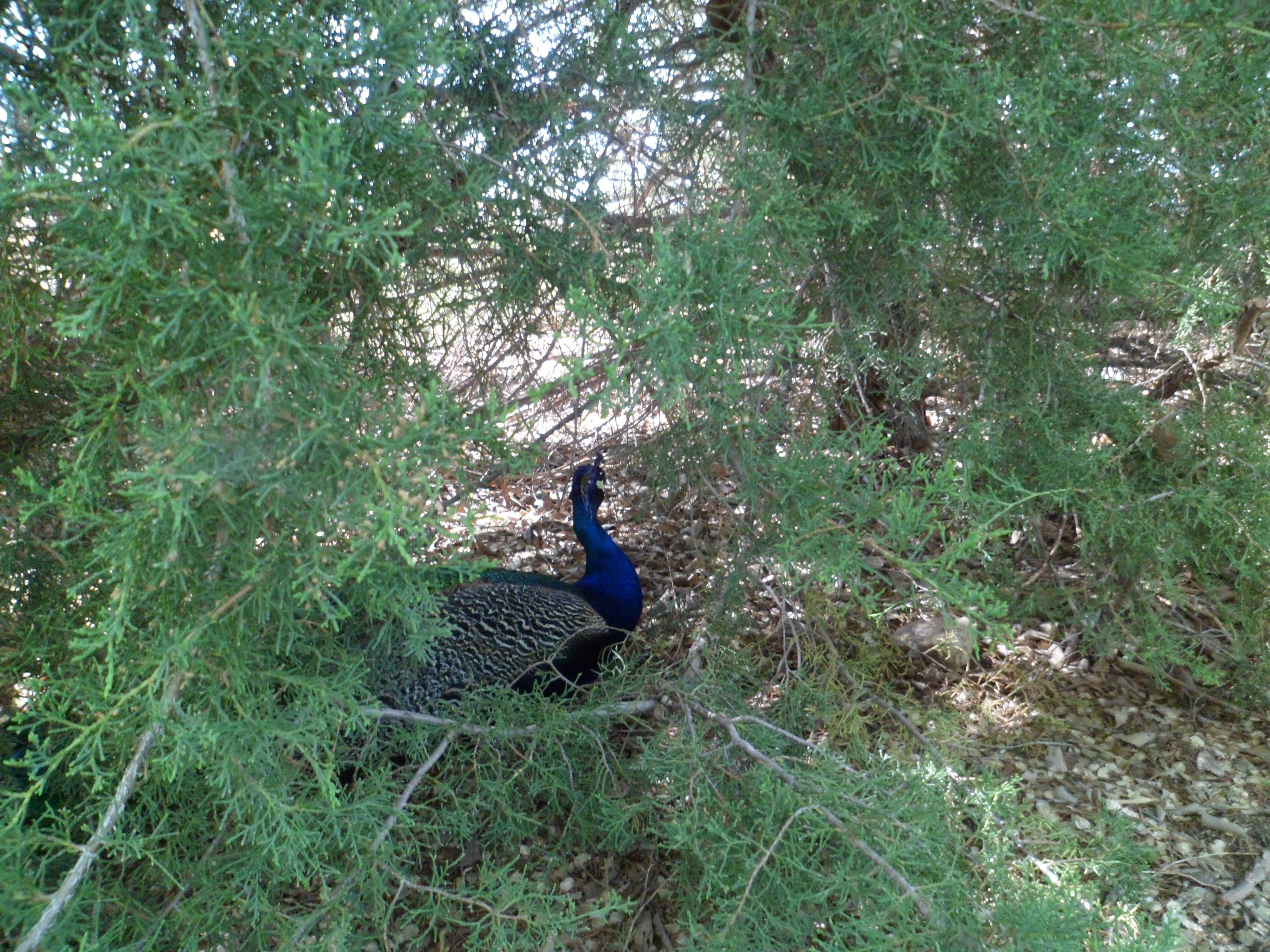
I don’t partake of alcoholic beverages, but I tagged along to Granite Creek Vineyards, on the north side of Chino Valley.  Here, several of the group members enjoyed six varieties of fruit of the vine, attended by a well- versed sommelier.   Afterwards, we retired to the lawn, enjoying live music and the company of a peacock.

SAM_4977           SAM_4981

SAM_4984           SAM_4986

Now, it was time for the main event.  We bundled into various cars, around 3:30, and headed to the hosts’ residence, just east of the vineyard.

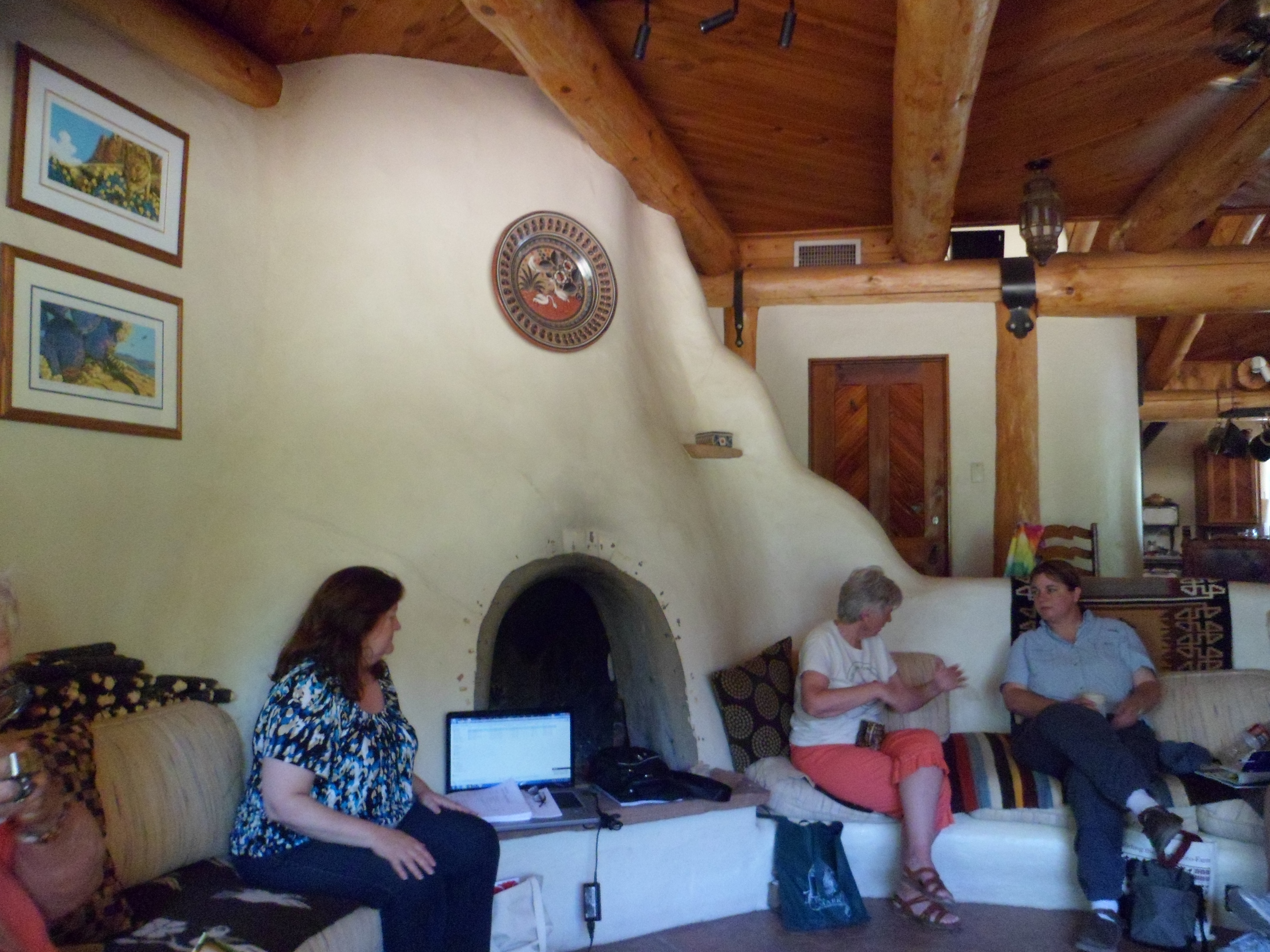
This is another of the homes which have been carefully, lovingly refurbished and made resplendent by astonishingly handy owners, across the country.                  SAM_4989  SAM_4990

So here, we enjoyed an Ark of Taste dinner. Arc of Taste alludes to Noah’s efforts at animal husbandry, and directly speaks to the effort to preserve and foster many local ingredients, which would otherwise risk being squeezed out, for the sake of monoculture.  Thus, we have the term Presidia, Italian for “fortress”.  A Presidia item, such as the Churro sheep being raised in the Four Corners region, on the Navajo Nation,   is one of the major focal points of Slow Food International.  Variety in our diet improves digestion, diet and overall health.  Many might differ, but may I say their sentiments are along the lines of “Been down so long, it looks like up to me.”

We thoroughly enjoyed a well-balanced and varied bill of fare, both on Saturday night and at the buffet-style breakfast, the next morning.  All was prepared from scratch.
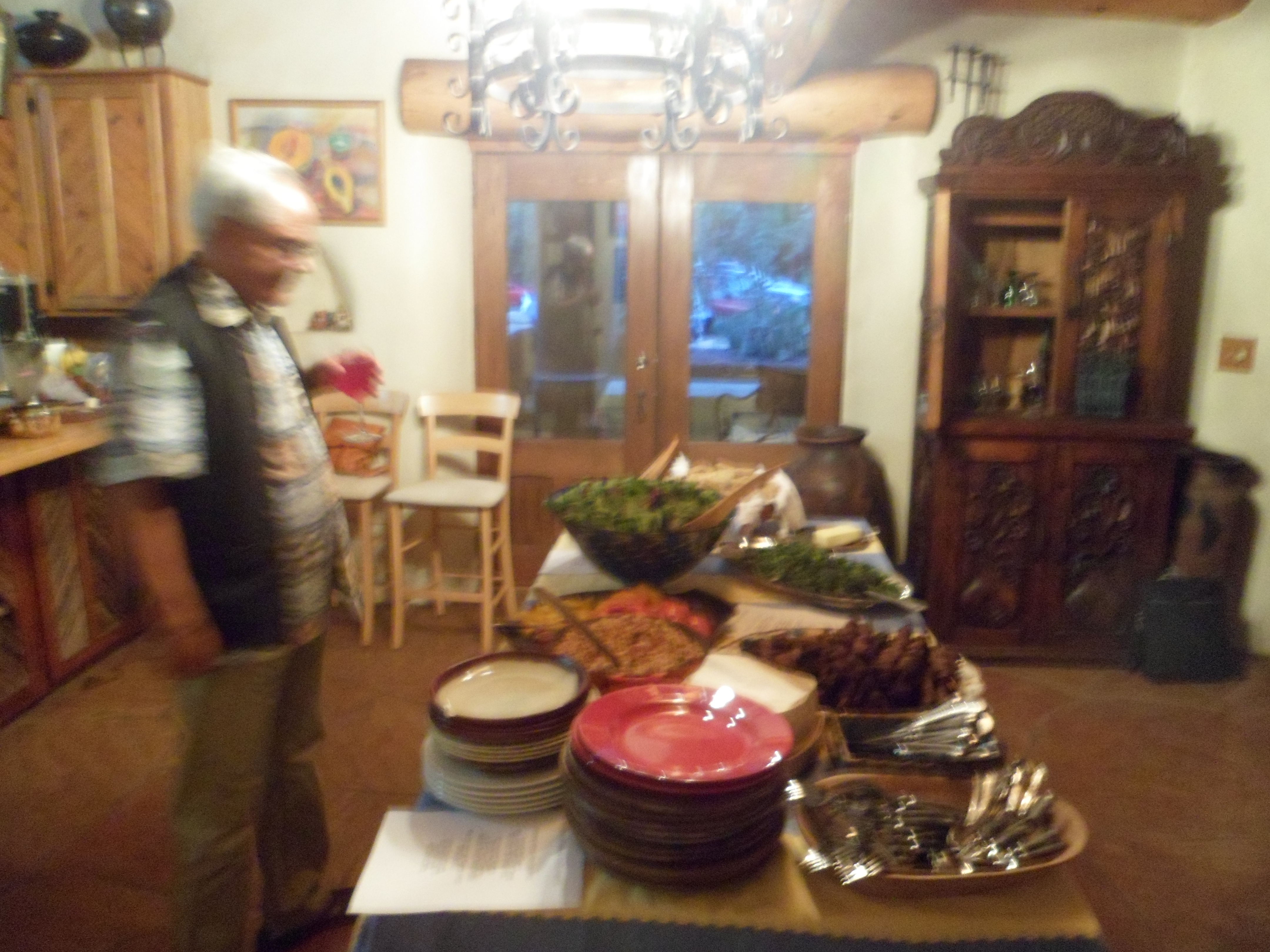
SAM_4995

On Sunday morning, after breakfast, we were honoured by a traditional Navajo blessing. I have missed this, for some time.
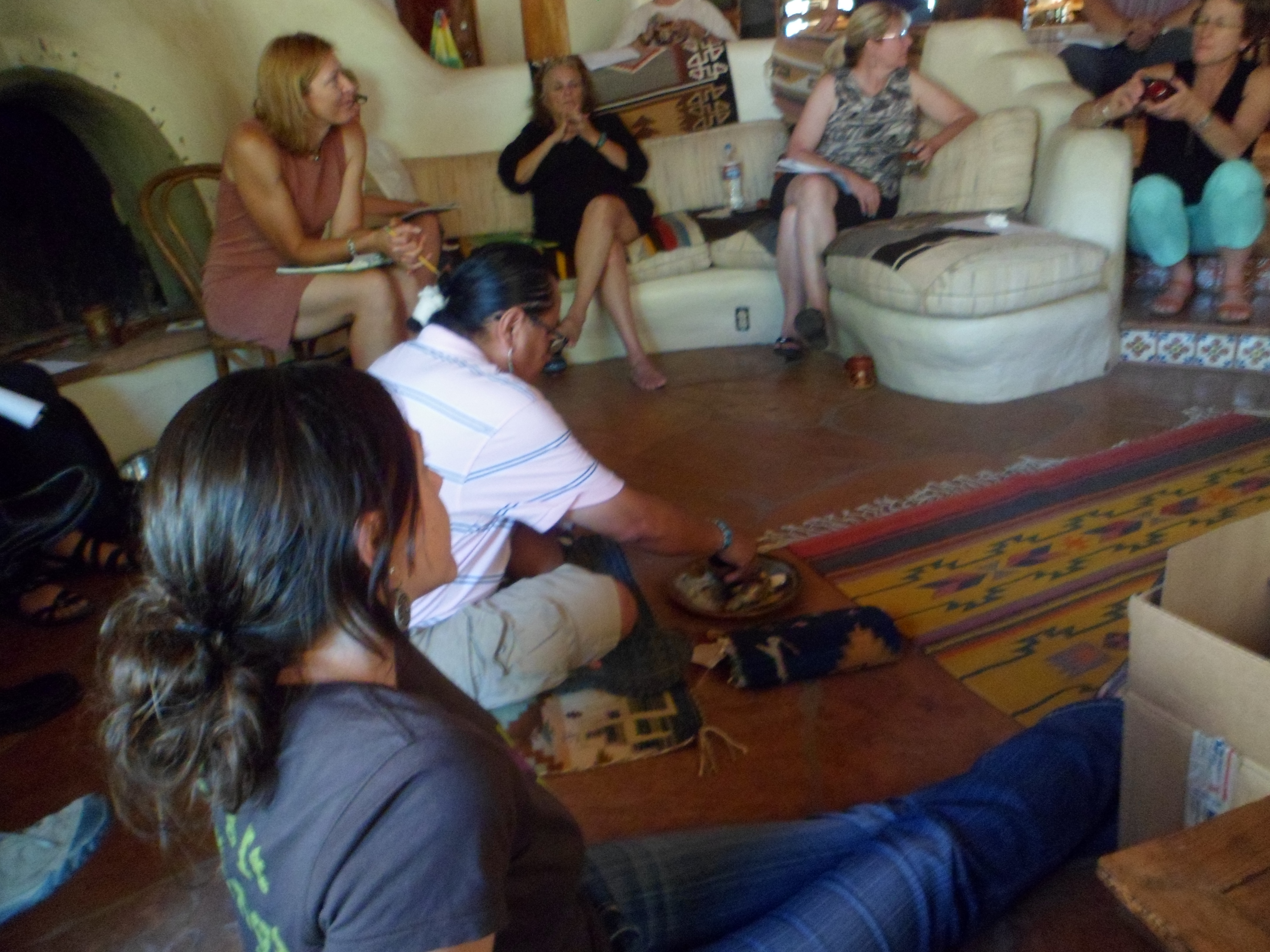
SAM_5002

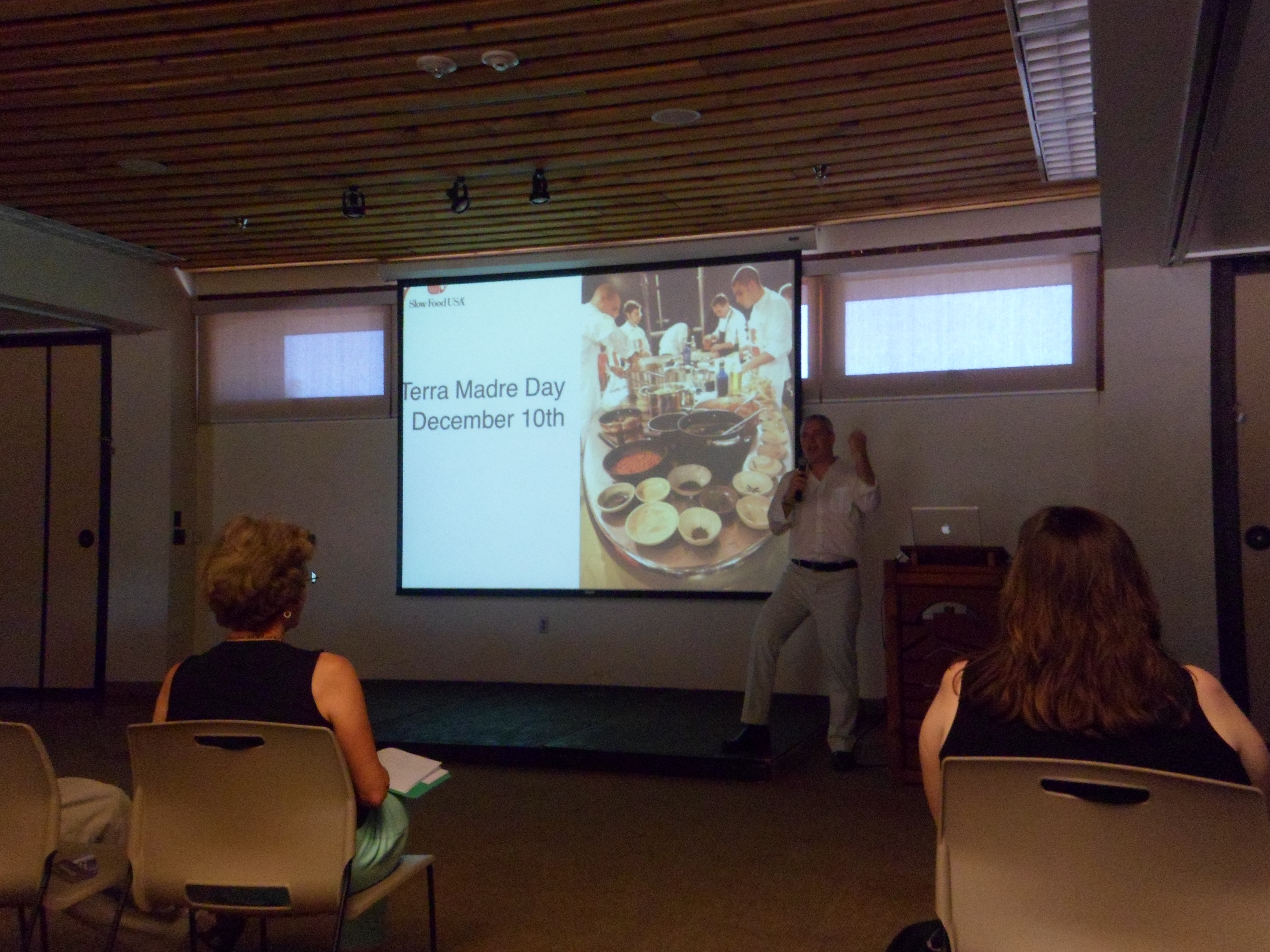
Richard McCarthy, the new director of Slow Food USA, is an accomplished gastronome, from New Orleans.  His efforts are creating sure order out of chaos and he has built a highly-functioning team at the New York headquarters.  Richard was honoured by our Dine (Navajo) friend.

SAM_5003

Sunday, June 9, was Race Unity Day, so this blessing was particularly auspicious.  The Baha’i Faith has the Oneness of Mankind as its basic tenet.  Several of us gathered in mid-day, at Goldwater Lake.  I briefly took leave of my fellows at the Slow Food gathering, for this equally worthy event.  Spirit and body must surely work as one.
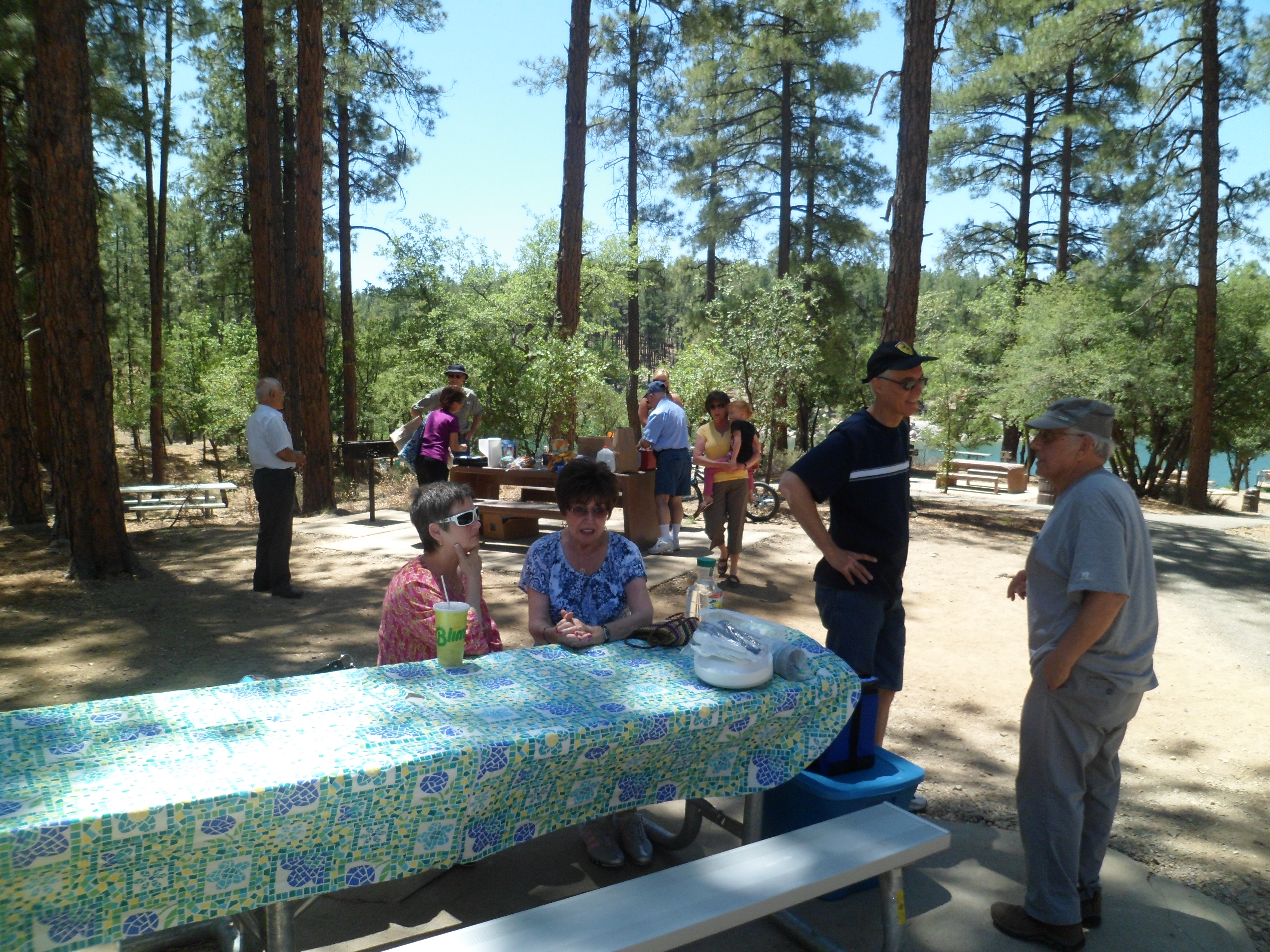
SAM_5004

It was here that I learned a steadfast friend of 32 years had passed on, two days earlier.  This was a saddening, yet also comforting backdrop to the events of the weekend.  We now have one more angel pulling for us in the Divine Light.  Meanwhile, here in the Earthly frame, I can take comfort in have made several more friends:  Richard and his assistant, Aimee; the spirited Slow Food team of Santa Fe; and engaging, creative members of the Phoenix, Tucson and Flagstaff  Slow Food groups.
SAM_5006

I look forward to so much that is good in life and to working through the challenges that lie ahead of us all.
Pine Mountain’s Mini- “Rain Forest”

4

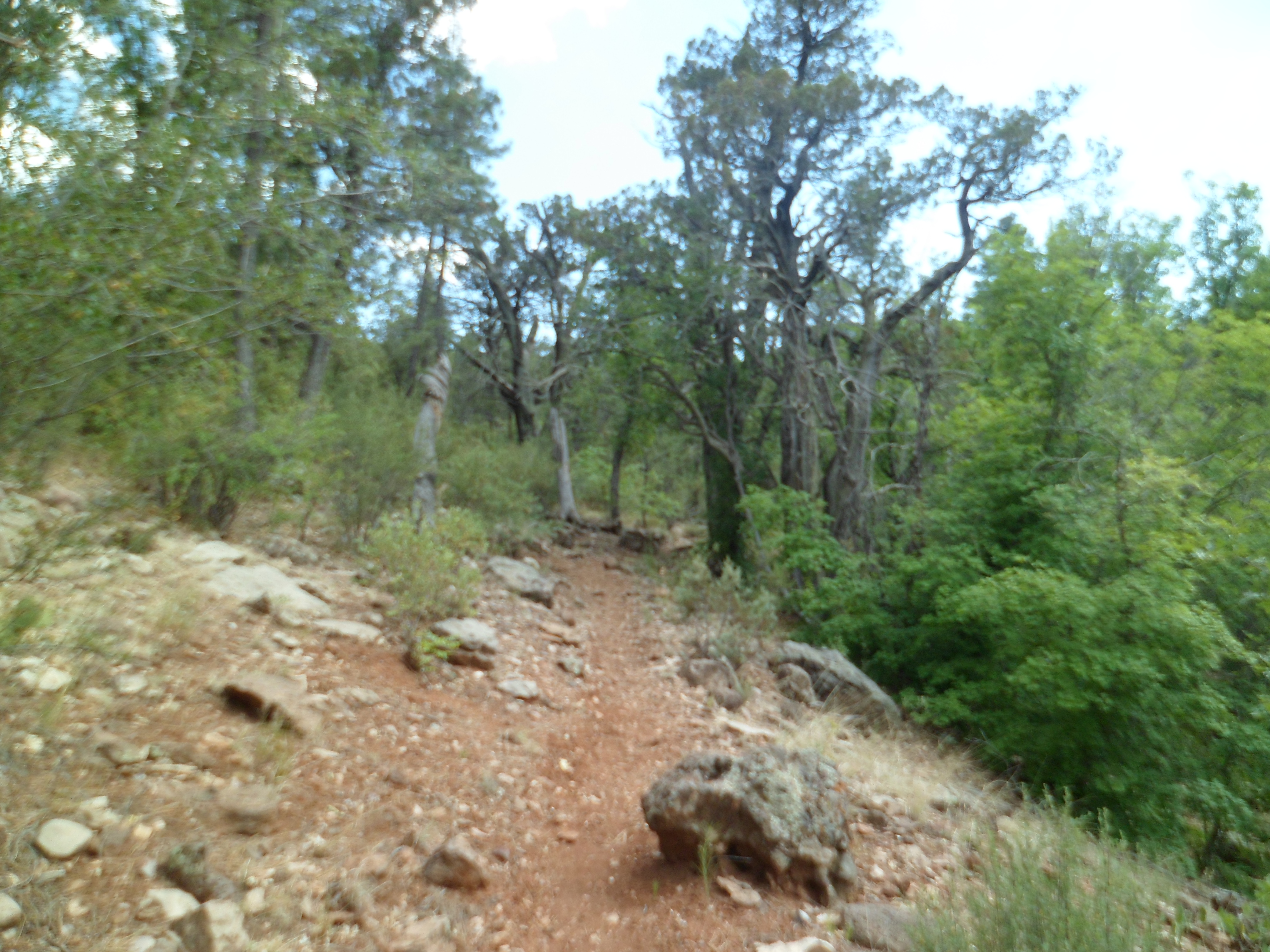
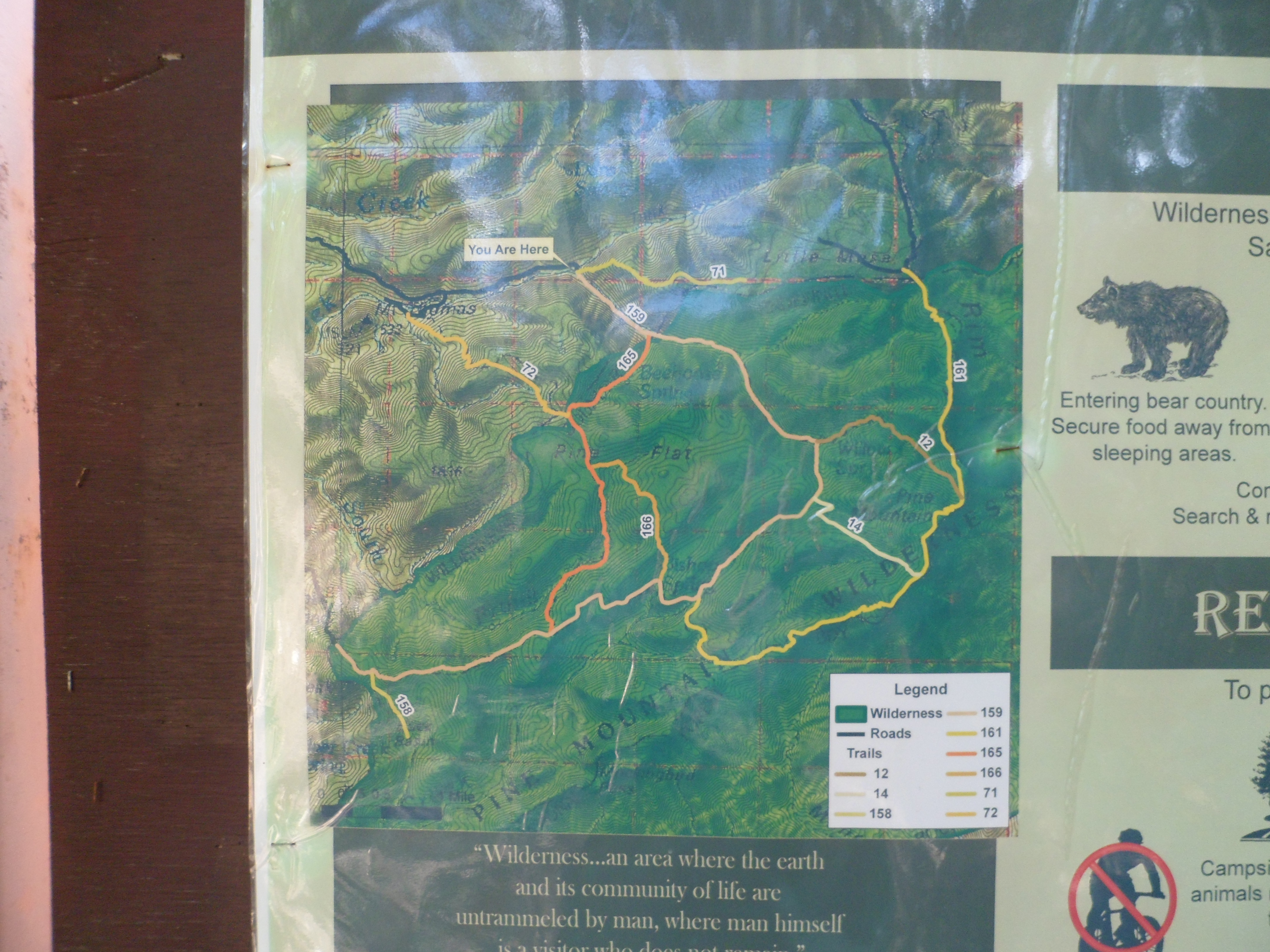
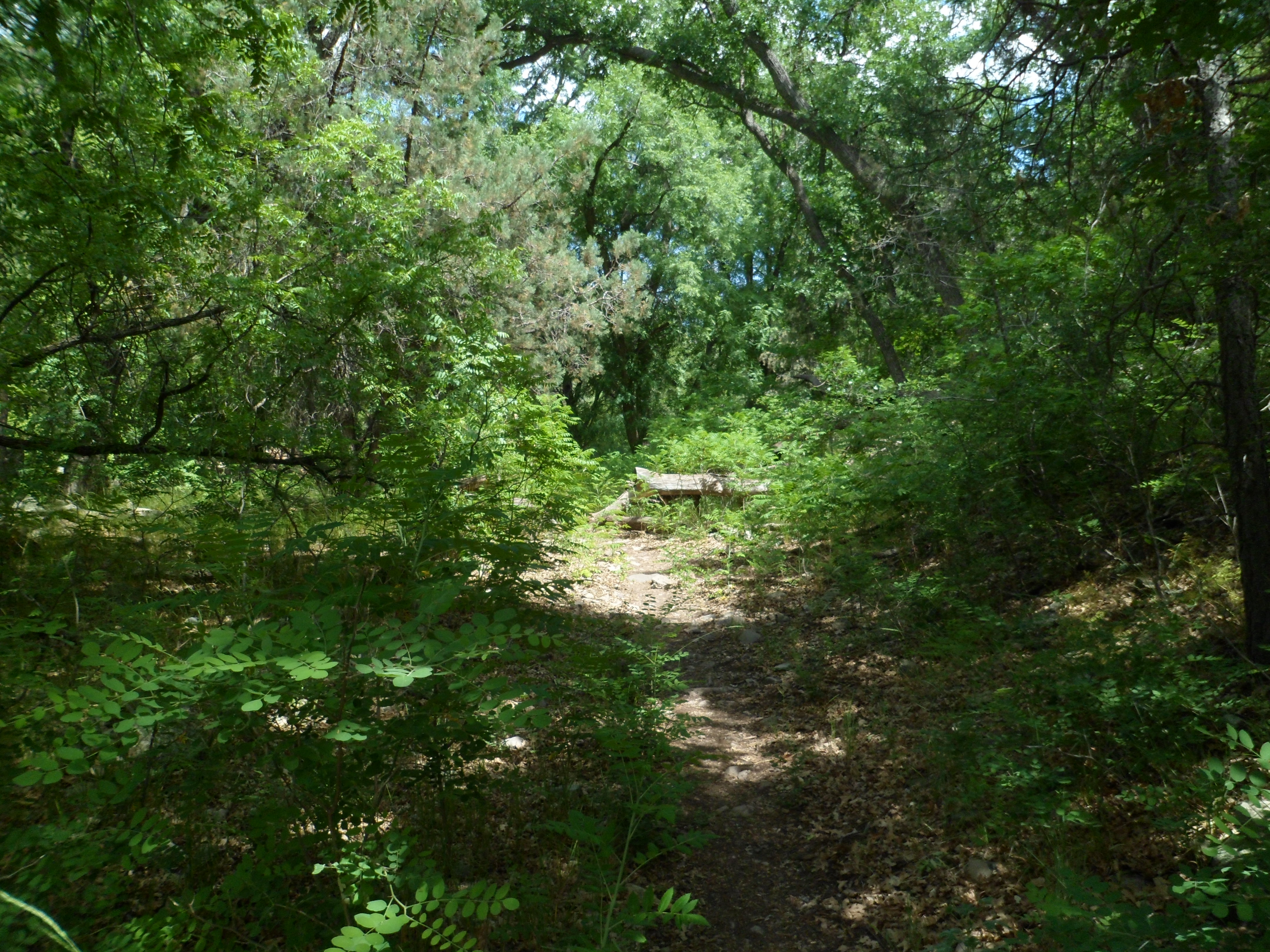
It doesn’t rain any more intensely on Pine Mountain than it does anywhere else in Arizona.  I did find, though, that the trail to Nelson Place Spring and onward along Beehouse Canyon Trail is intensely green.

It attracts the same intense wildlife as the Mazatzal Range, some forty miles to the southeast- including mountain lions, bobcats and bears.

SAM_4916

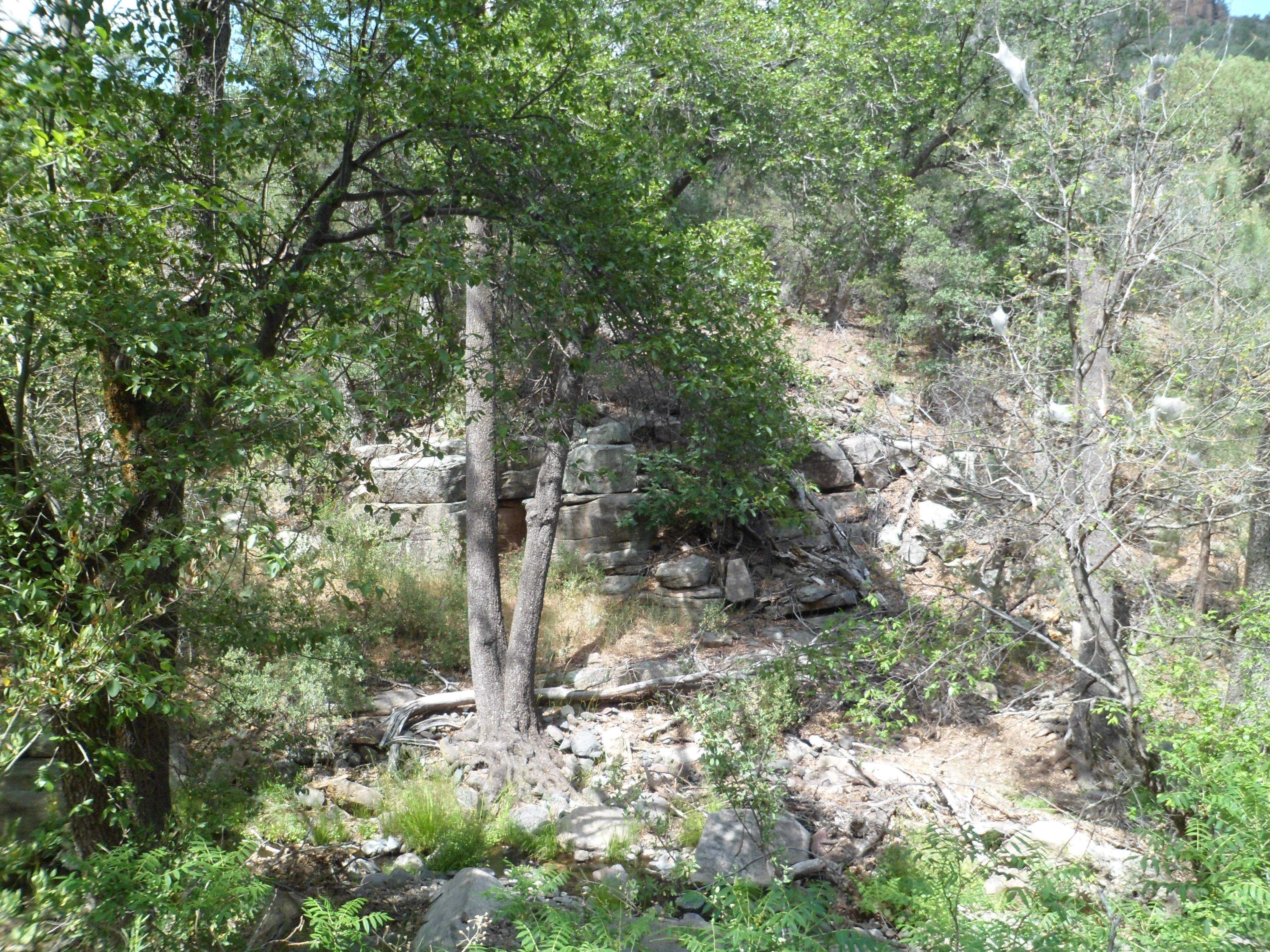
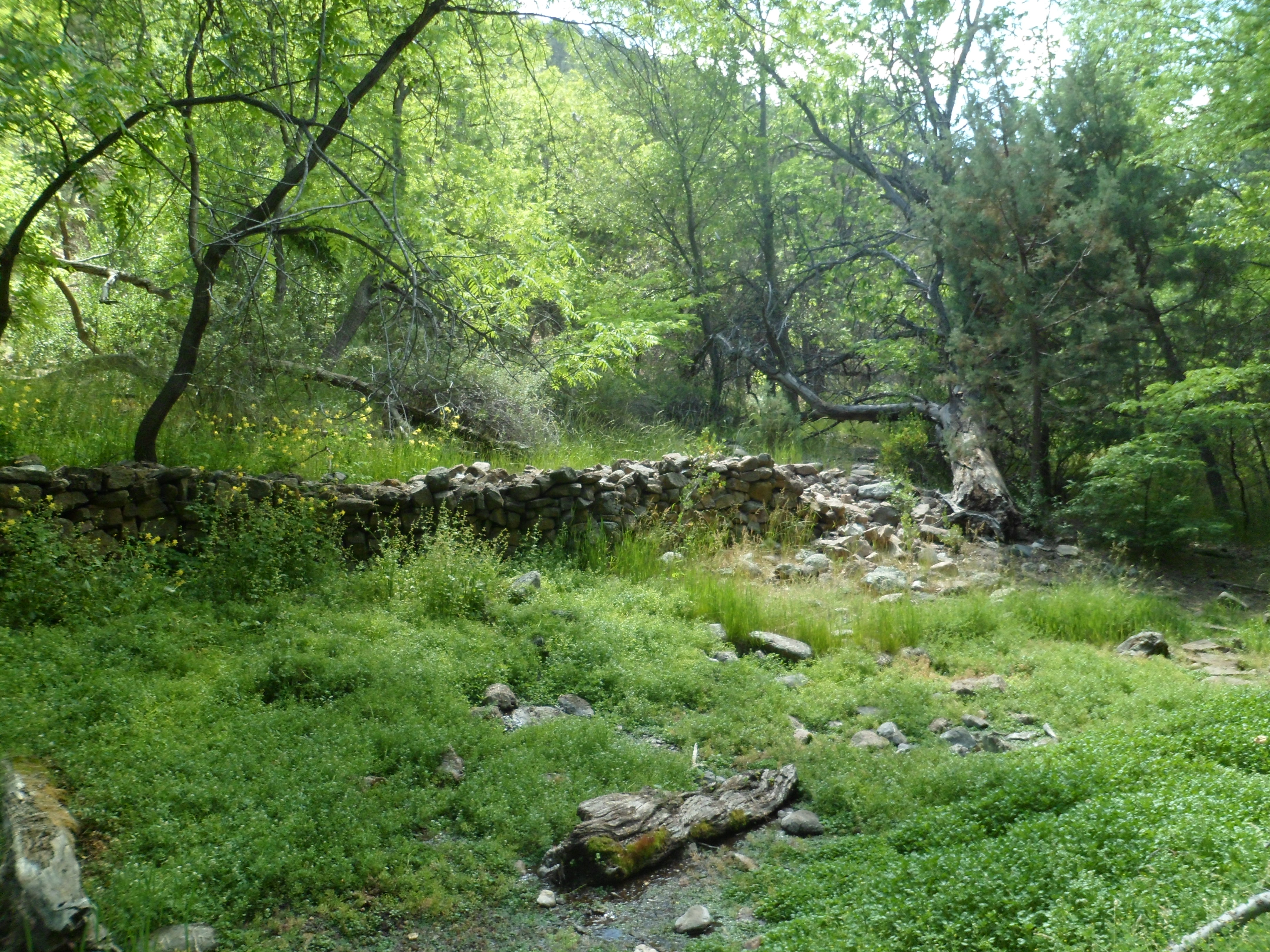
So, here are a few scenes near Nelson Place Spring, where there are but remnants of some stone walls to show the vibrant life that people had here, 100 years ago.

SAM_4919       SAM_4921

SAM_4922       SAM_4924

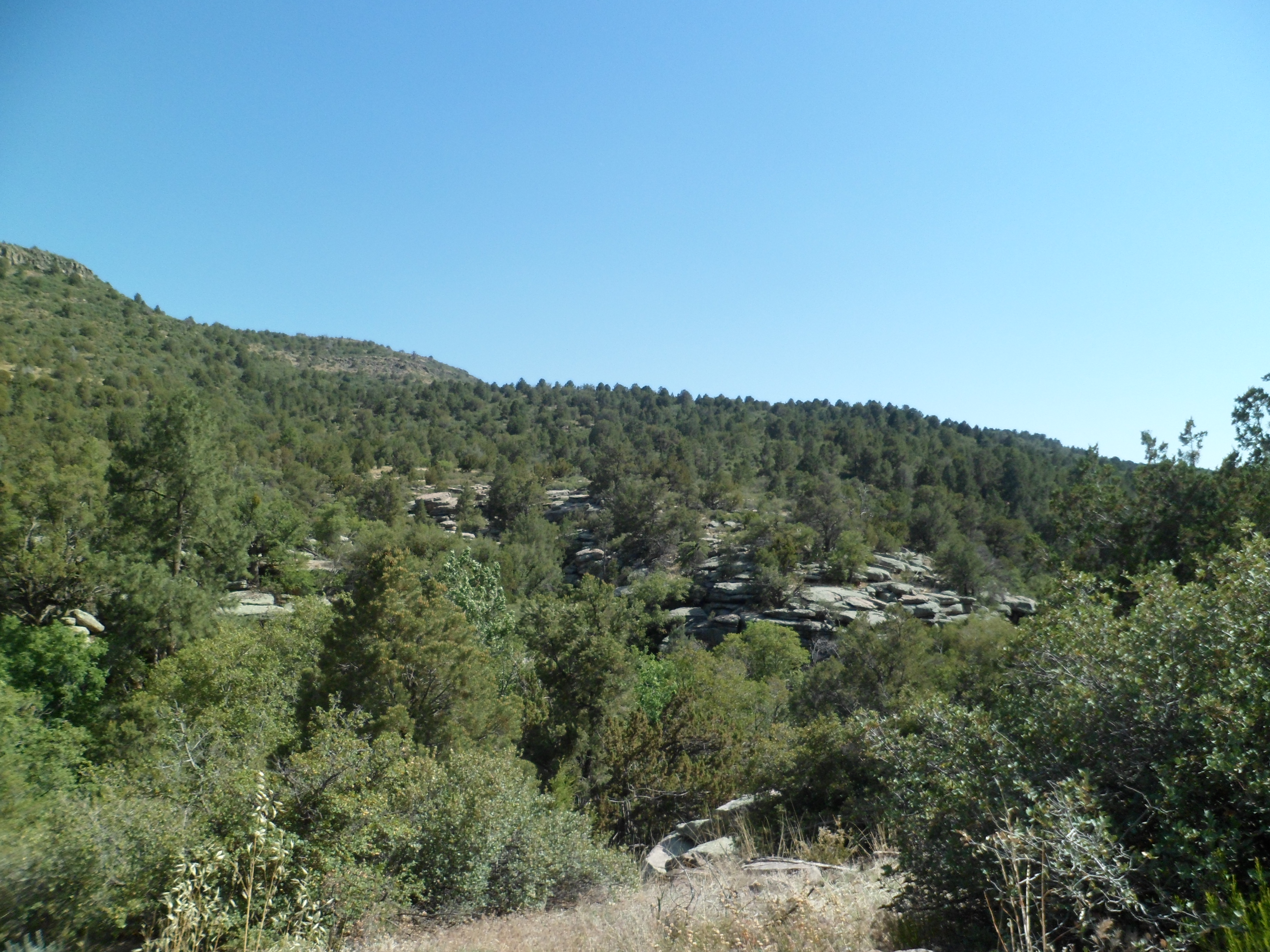
Not far along Beehouse Canyon Trail, I got a fine view of Beehouse Mesa.

SAM_4927


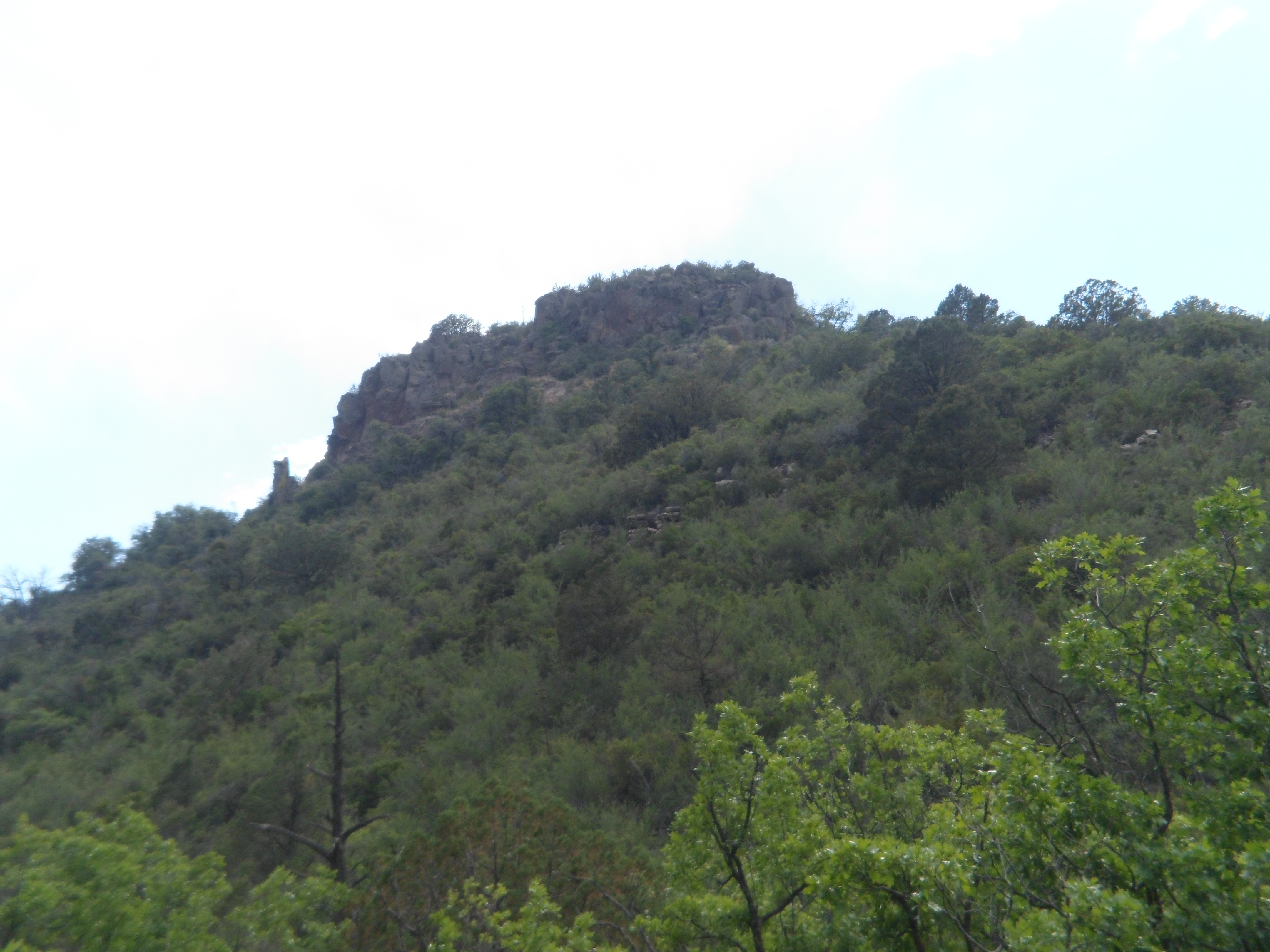
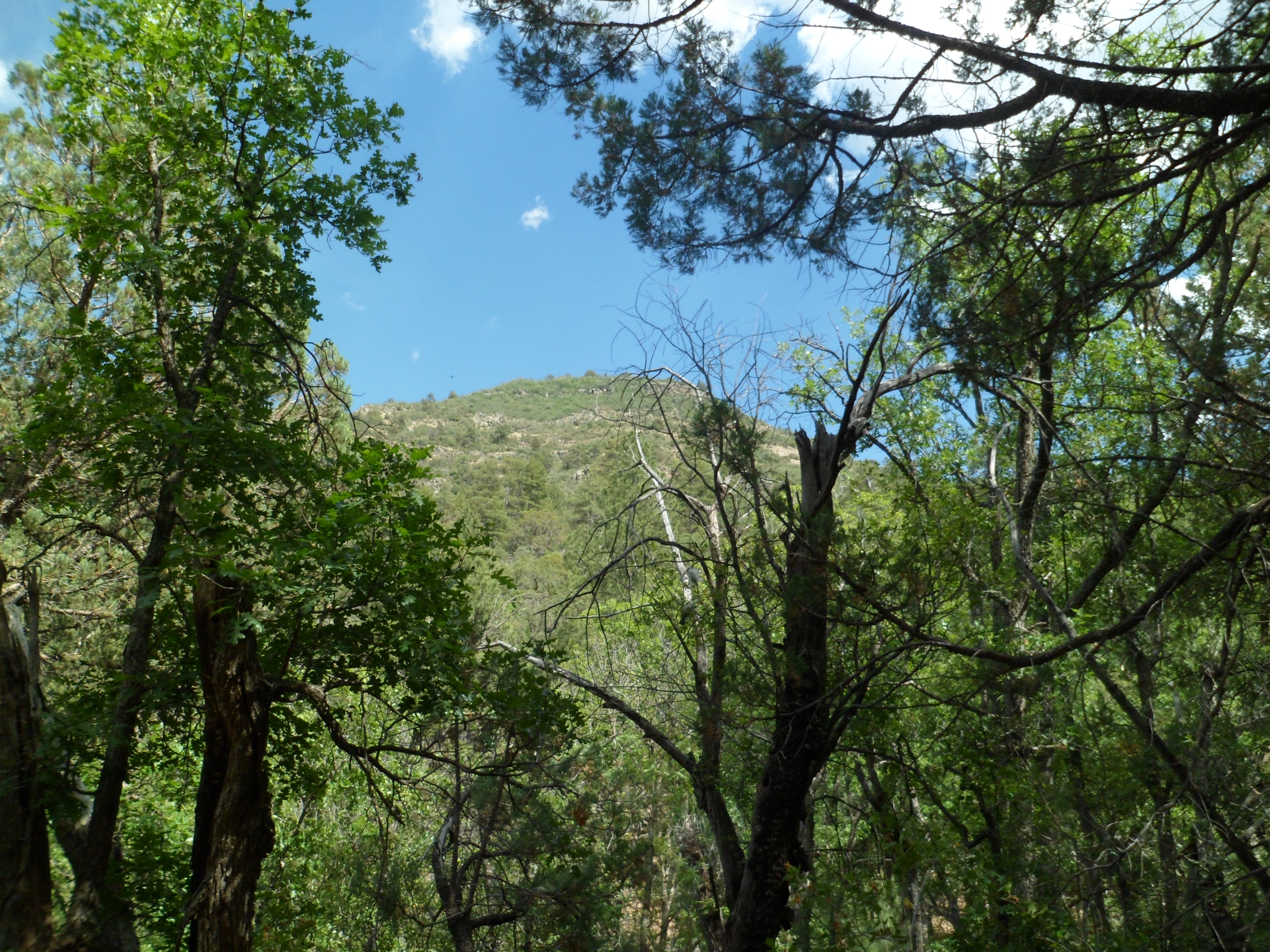
Going in and out of the forest, I got fine views of Pine Mountain itself, which will be the focus of another hike, sometime in the next year or two.


SAM_4928 SAM_4931 SAM_4935 SAM_4938

On the way out of the Wilderness, I enjoyed views of Sycamore Creek Gorge, not to be confused with Sycamore Canyon, which follows the same body of water, but lies several miles north of here.

SAM_4942


SAM_4947      SAM_4944

SAM_4942


So went my mini-adventure, on what would have been our 31st wedding anniversary, June 6, 2013.


The Road to Pine Mountain

6

Yesterday would have been our thirty-first wedding anniversary.  June 6 will always be one of those days when something out of the ordinary calls to me, to be done.

I chose to have lunch with the arcology students at Arcosanti, the avant-garde community-in-progress that was started by the late Paolo Soleri, in the early 1970’s.  I was not disappointed; the buffet fare was well-balanced and freshly made. Besides, having to wait thirty minutes, in the small outdoor garden, gave me a chance to contemplate creatures like a red-tailed hawk, hummingbirds and a chuckawalla.

After this fine meal, I headed northeast, to Pine Mountain Wilderness, a rarely visited area, between Cordes Junction and Payson.  At its highest point, PMW affords magnificent views of the Verde River, with steep canyon walls in between.  As it was late in the day for any blowout hike, I chose to spend an hour or so in Beehouse Canyon, a connector trail on the north side of PMW.

Of course, as with any remote wilderness, the route to the trailhead is itself a worthy experience.  I met few humans along the narrow dirt road, but did slow down or stop for a robust juvenile coyote, a long bull snake and a spirited mule deer.

Here are a few scenes of the features presented by Forest Road 68.  First, I encountered Estier Peak.

This short mountain is east of I-17, off Dugas Road.

This short mountain is east of I-17, off Dugas Road.

Just east of Estier is five-mile long Horner Gulch.

This long sub-canyon stretches for five miles along Forest Road 68, below Yellow Jacket Mesa, visible at the top.

This long sub-canyon stretches for five miles along Forest Road 68, below Yellow Jacket Mesa, visible at the top.

Here is a longer view of Yellow Jacket Mesa.

This ridge runs northeastward, from Horner Gulch.

This ridge runs northeastward, from Horner Gulch.

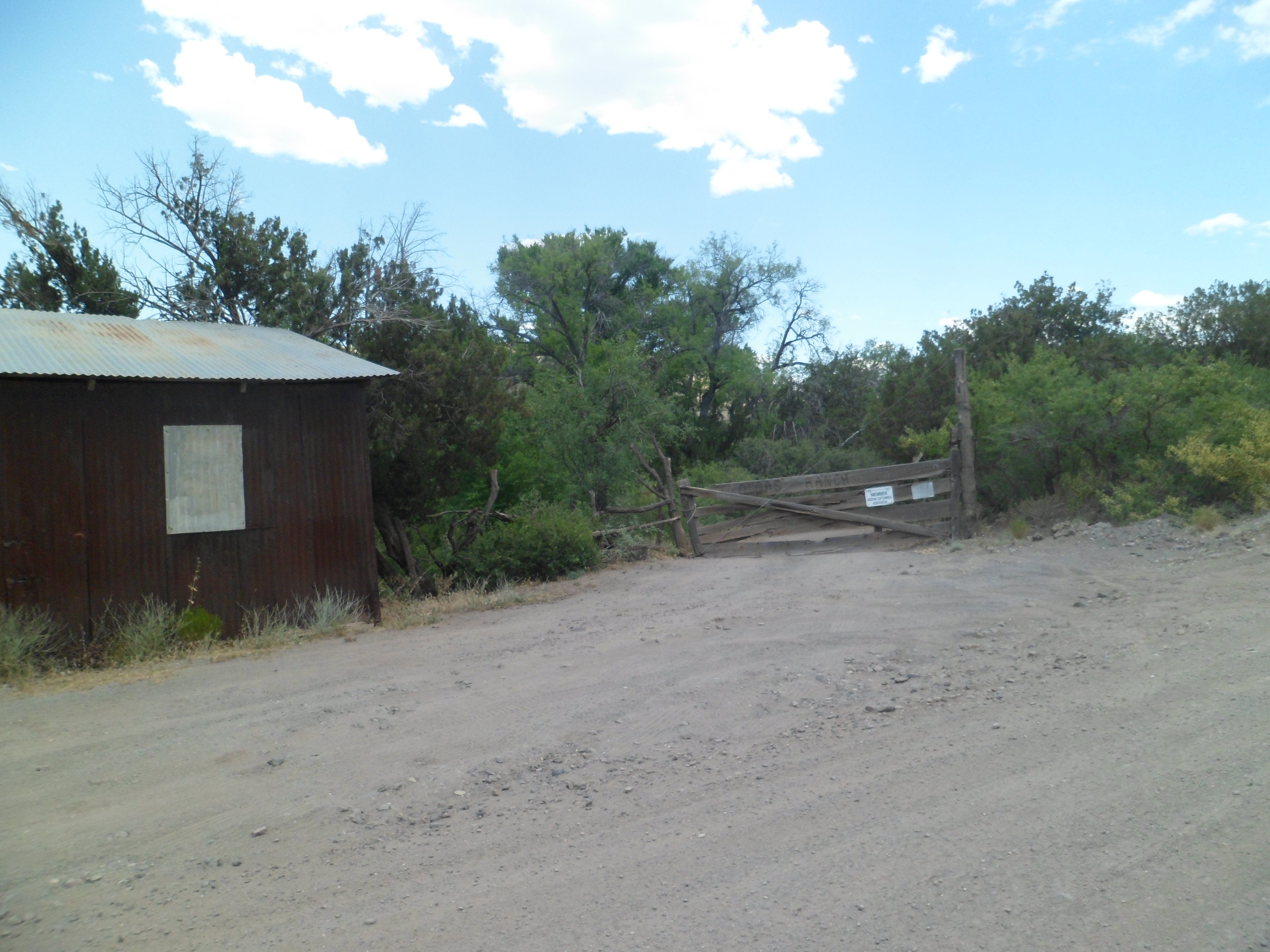
The area has several ranches, which are still fully operational.  It also has the old mining town of Dugas, now a place of refuge for those needing to be “out-of-towners”.

This is the remnant of yet another old mining town.  Now, those who want to be left alone hang out here.  They were nice enough to let me take two photos.

This is the remnant of yet another old mining town. Now, those who want to be left alone hang out here. They were nice enough to let me take two photos.

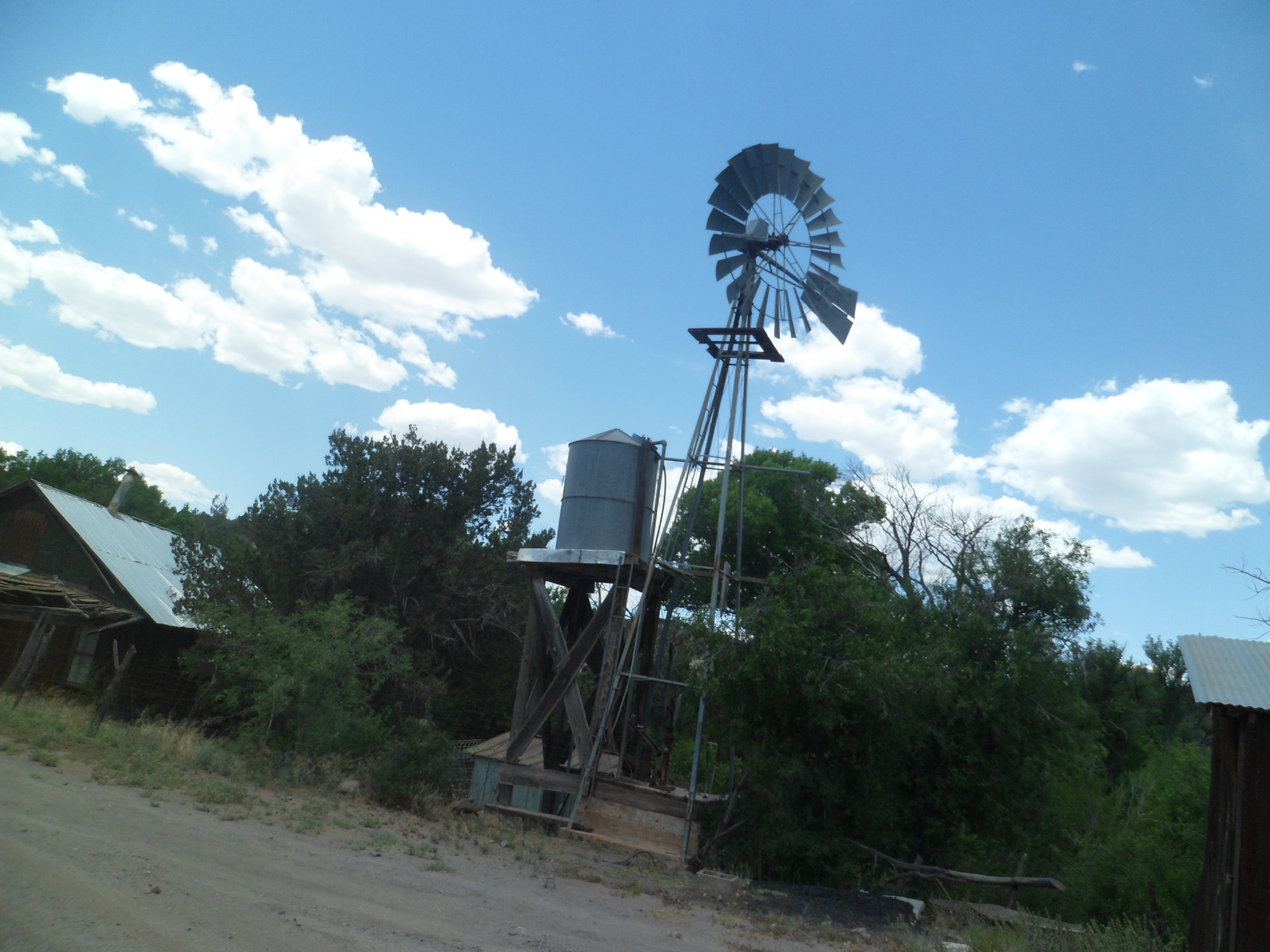
This property is mostly abandoned.  The owner supposedly just shows up once in a blue moon.

This property is mostly abandoned. The owner supposedly just shows up once in a blue moon.

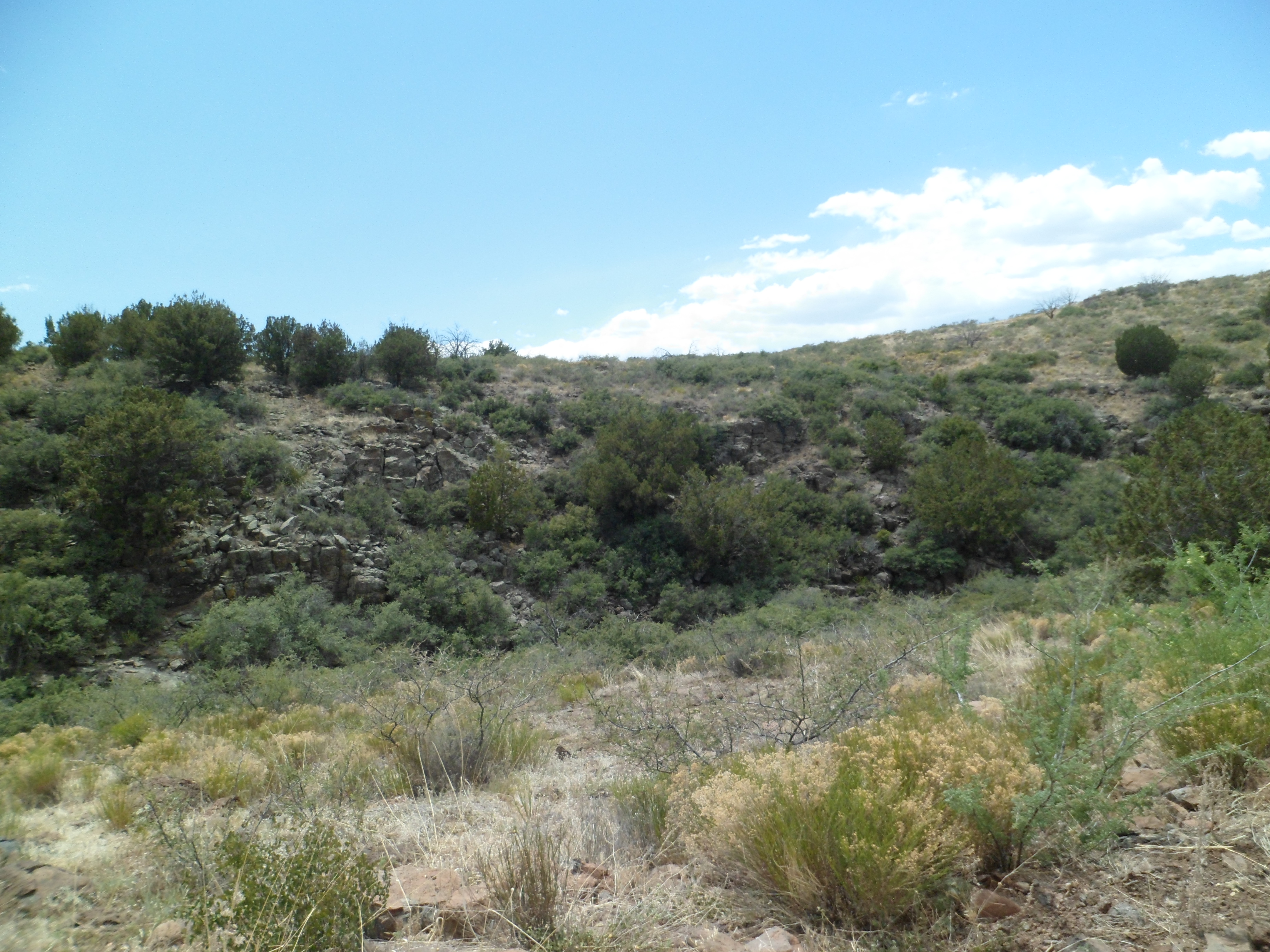
This is the north ridge of Tule Canyon, which runs east of Dugas.

This is the north ridge of Tule Canyon, which runs east of Dugas.

This is Mount Thomas. From here on, the landscape becomes more lush, with Sycamore Creek and the Verde River exerting greater influence.

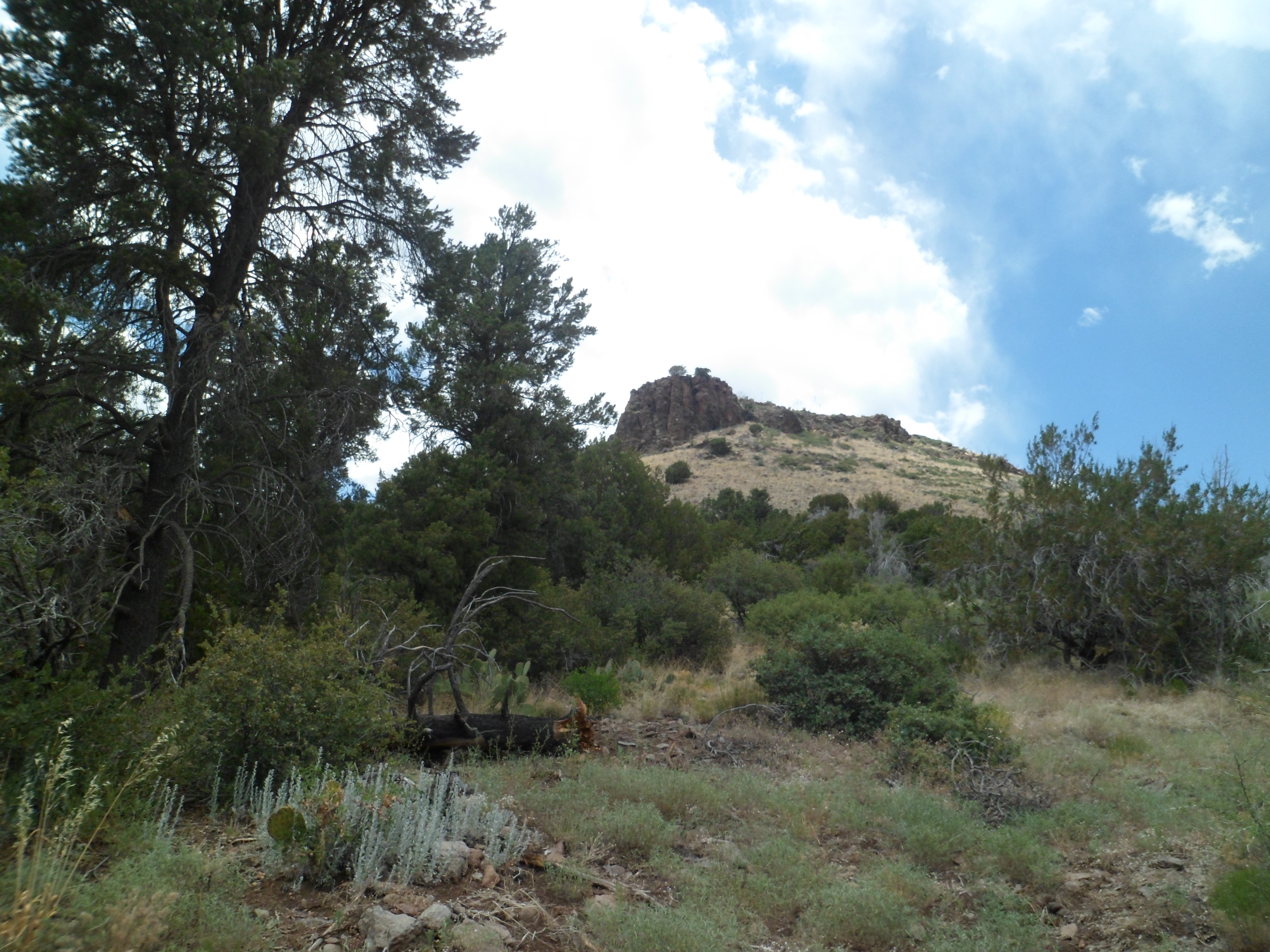
This igneous rock outcropping rises just southeast of Dugas, and about three miles southwest of Pine Mountain Wilderness

This igneous rock outcropping rises just southeast of Dugas, and about three miles southwest of Pine Mountain Wilderness

In the next post, I will showcase the canyon rising from Sycamore Creek, the northern first mile of Pine Mountain Trail,  and the lushness of Beehouse Canyon.

Prescott Folk Arts Fair and Street Concert, 2013

4

This past weekend began a three-weekends-in-a-row series of downtown festivals in our fair city.  The emphasis on June 1-2 was on Folk Arts of the Mountain Southwest, with various scenes like these at Sharlot Hall Historical Museum.  A few thousand visitors came for chance to learn crafts from the 19th Century, like shearing, quiltmaking and woodcarving.


A goat is being shorn,and not altogether willingly.


A few blocks east, in Courthouse Square, a Block Party music fest was taking place.  The Centennial Tree, planted on February 14, 2012, is tall enough to co-host the festivities.

When I was there, the Pistoleros were doing some 80’s hits.

They were followed by Zero Zero, serving up tunes of the ’90’s.

Events like these get me out of my shell, during a rare time of emotional stress, and are prime examples of what makes Prescott a special place in which to live.

Old Bill’s Favourite Mountain

2

Bill Williams was a mountain man, in the mid- 19th Century, trading with the Havasupai, Hualapai, Yavapai, Navajo and Hopi, in the north central region of Arizona.  He is remembered by having the City of Williams, Bill Williams River, and this mountain named for him.

Bill Williams Mountain is the furthest west of a series of uplifts that rise majestically out of the semi-arid Colorado Plateau.  The higher mountains in this loosely-constructed “range” are known collectively as the San Francisco Peaks, or Kachina Peaks.  All are sacred to the five nations that call the area home.  They are also used by the ski industry, at Mt. Agassiz, near Flagstaff and on one of the slopes of Bill Williams Mountain.  The two interest groups are not 100% in agreement, as to how the Peaks should be treated.  So far, though, the mountains remain in majesty.  The indigenous people, particularly the Hopi, regard the Peaks as the realm of their sacred spirits, known to the Hopi as Kachinas.

I took time yesterday to hike to the top of Bill Williams Mountain, something that I’ve had in mind for thirty years or so.  Here are some views of this western sentinel of the Peaks.

There is a map of the area, at the trail head

.

Then, we are off,up a mild set of switchbacks.


The trail is used by many creatures.  This one looks familiar.  Absalom?

The trail is three miles, one way, variously flat and inclined.


It offers nice views of Bixler Peak, the western sub-peak of Bill Williams.

There are also hints of the summit, still well ahead.

Along the way, a progress report is offered.

There are limestone boulders, on which to rest, plus plenty of aspen, ponderosa pine and fir trees (White and Douglas) for shade.


I offer here a small homage to @Buddy 71, and his friends.

Now, back to “work”.


There are numerous views, in all directions, en route to the top.


By this time, I came upon a father and two sons, who had made the trip to Mile Post 2.5,  about twenty minutes before me.  We went the rest of the way as a unit.

As you can see, the US Forest Service maintains elaborate communications and fire watch equipment, atop Bill Williams Mountain.

I moseyed on over to the west overlook, and smiled for the birdie, as a souvenir of this hike.

Now, it’s back to Prescott, and a weekend of Folk Arts Festival! happy