The Road to 65, Mile 81: Missions to Posterity, Part 1- Luling and Mission Concepcion

8

February 17, 2015- Luling to San Antonio

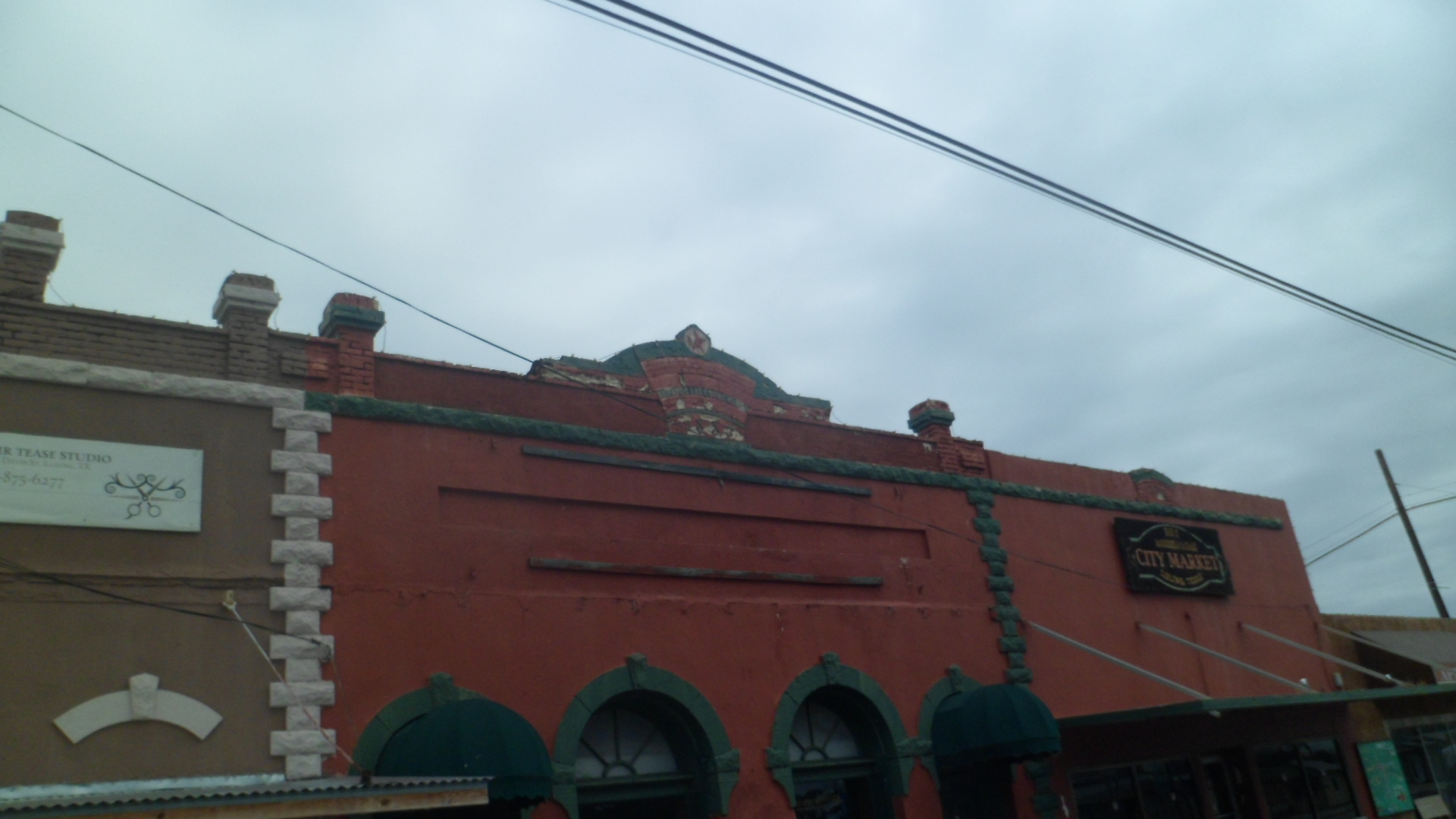
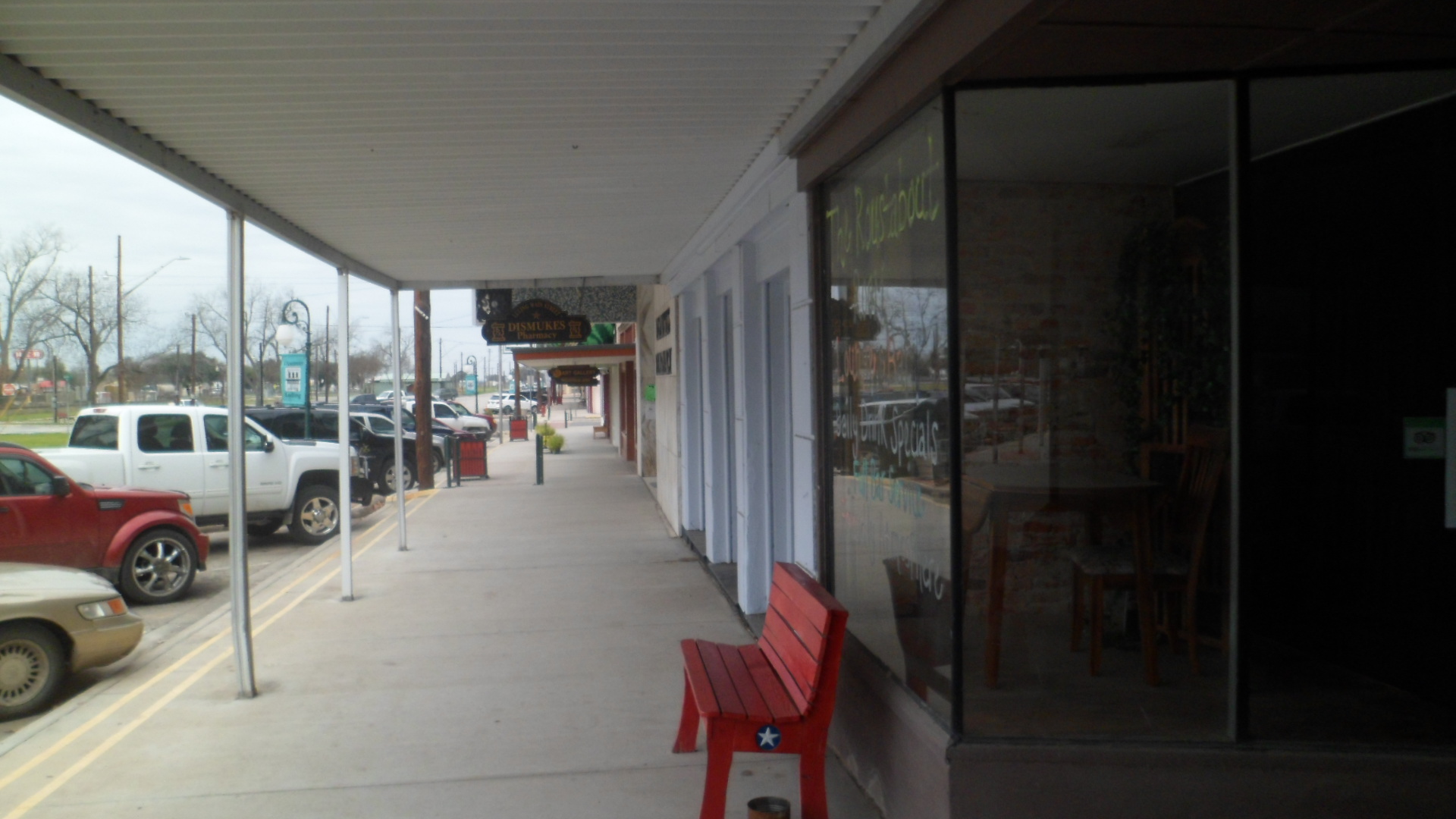
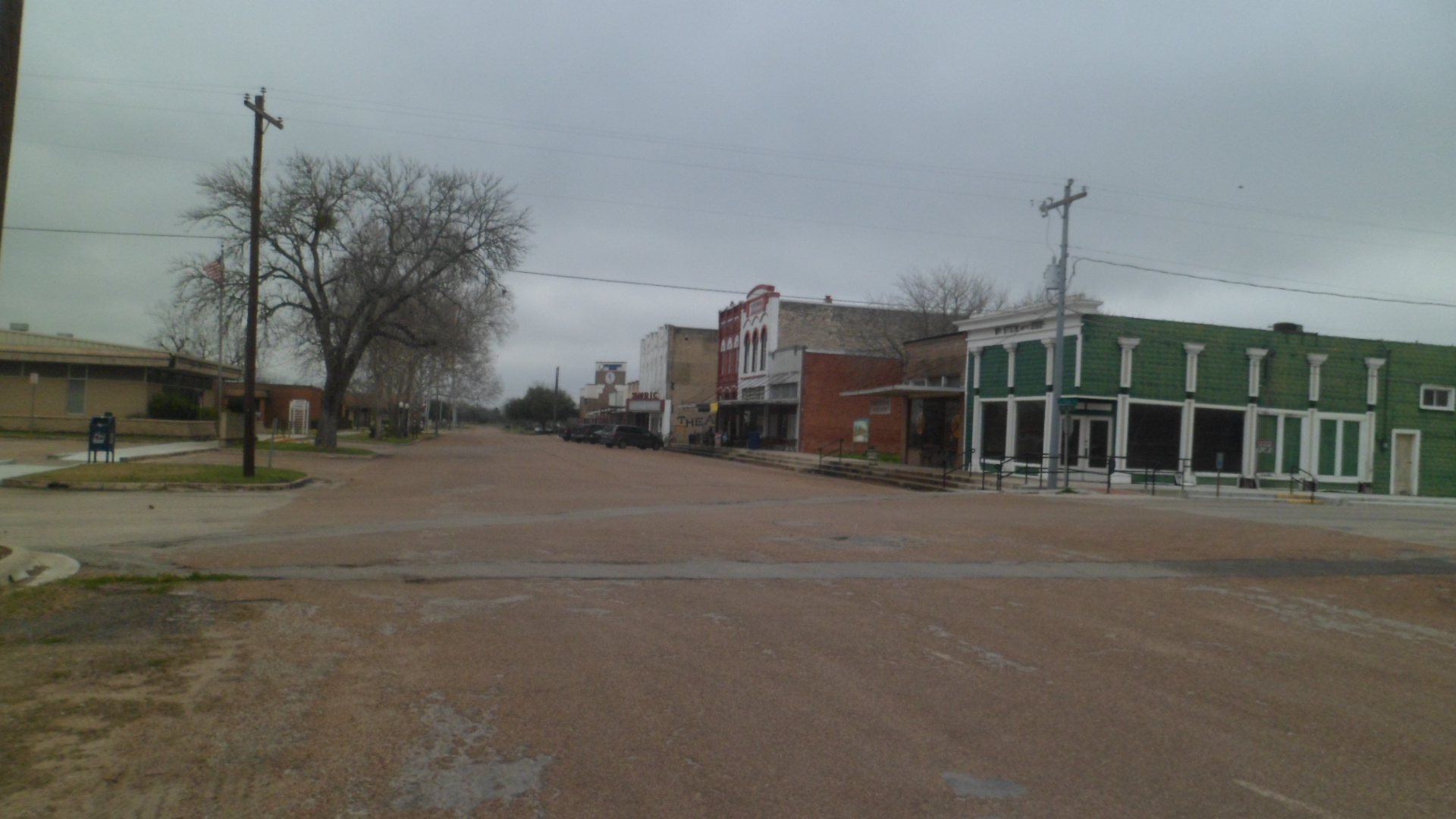
It had cleared, somewhat, when I rolled out of Coachmen’s Inn, and up to Luling’s downtown.  Going into The Coffee Shop, and seeing Granny’s baleful stare, I quickly agreed when the nice young barista offered to prepare a large coffee and blond brownie, to go.  The area is as photogenic as Texas rail towns come.SAM_4212

SAM_4211

SAM_4214

SAM_4216

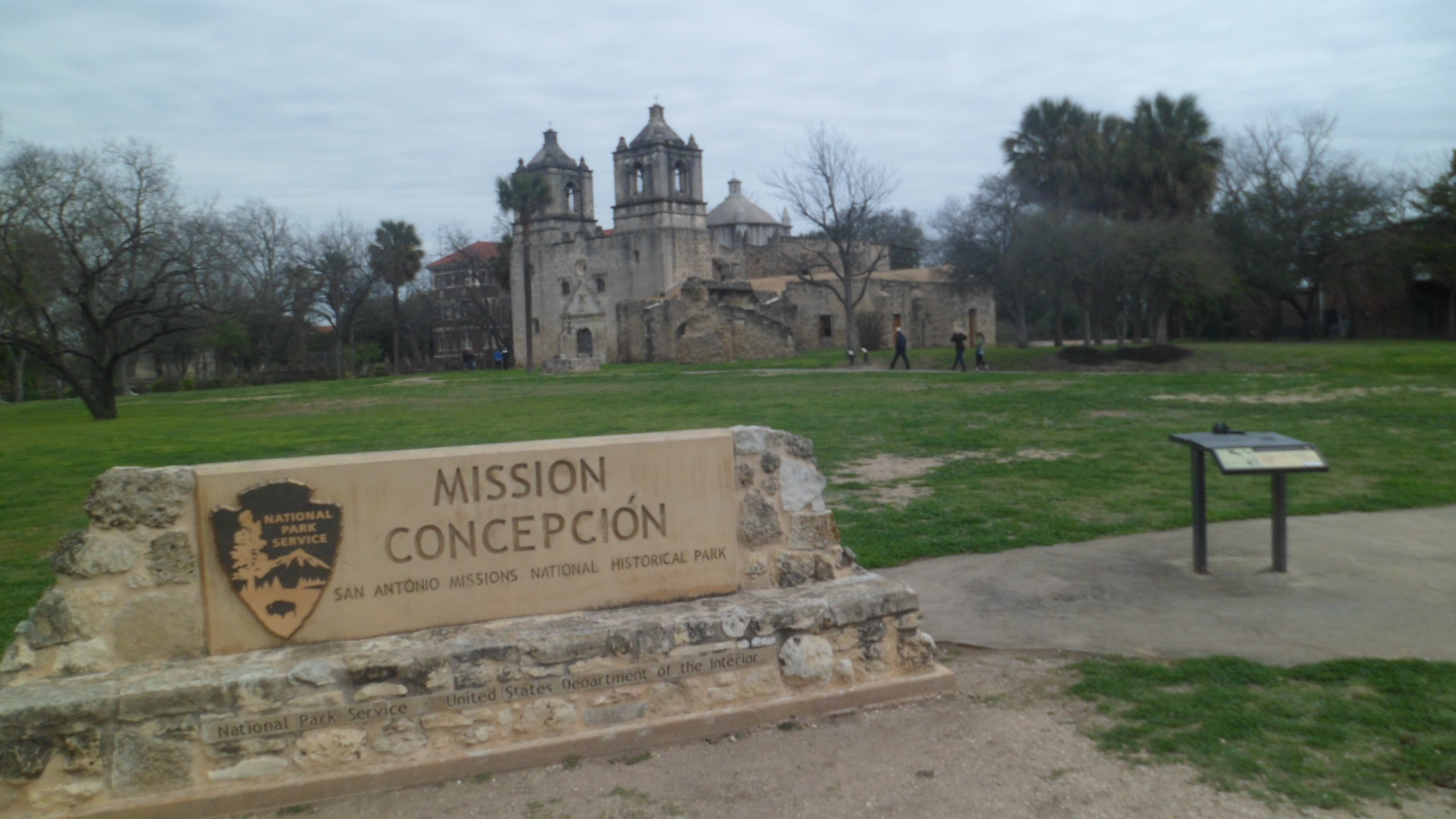
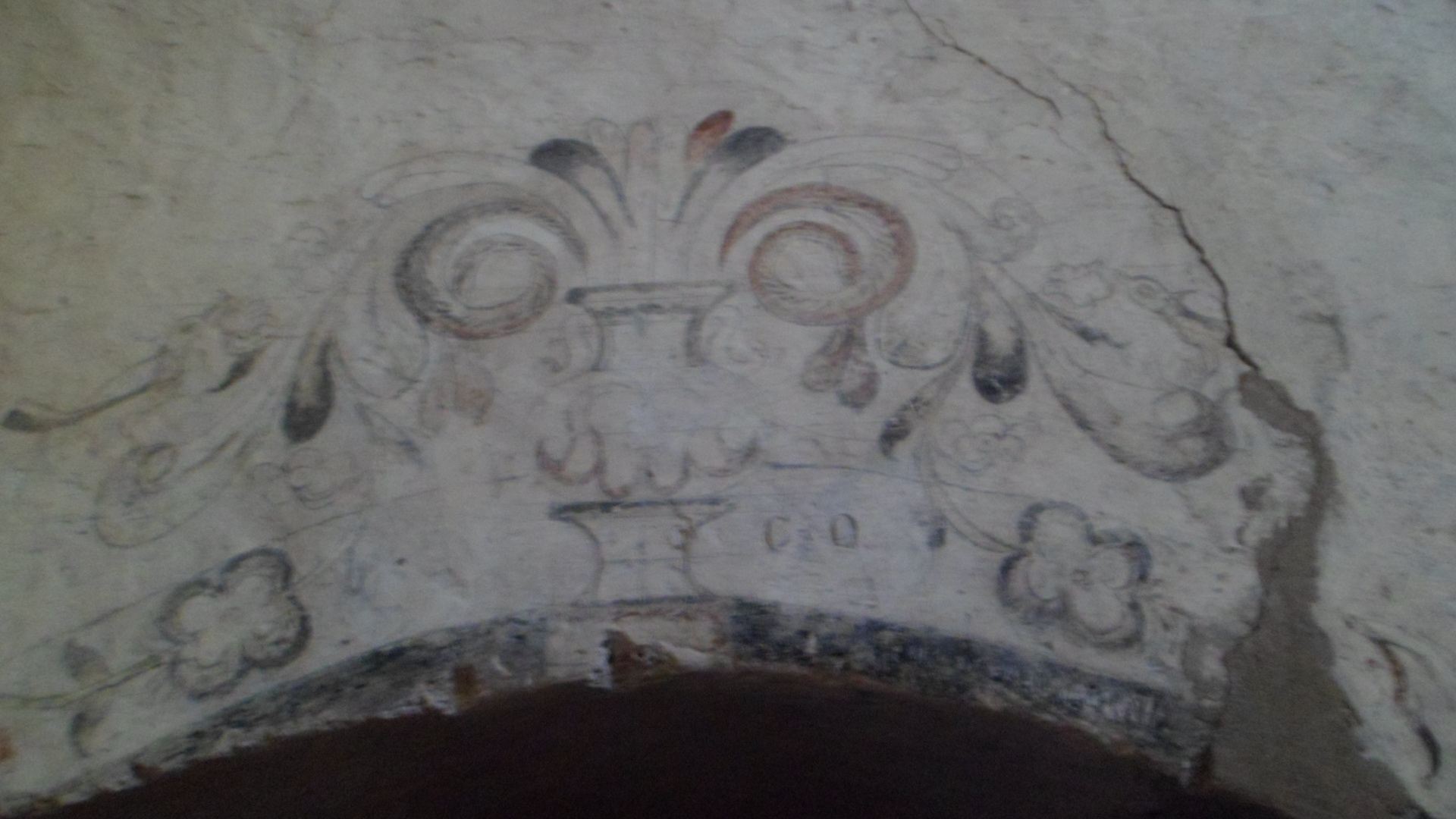
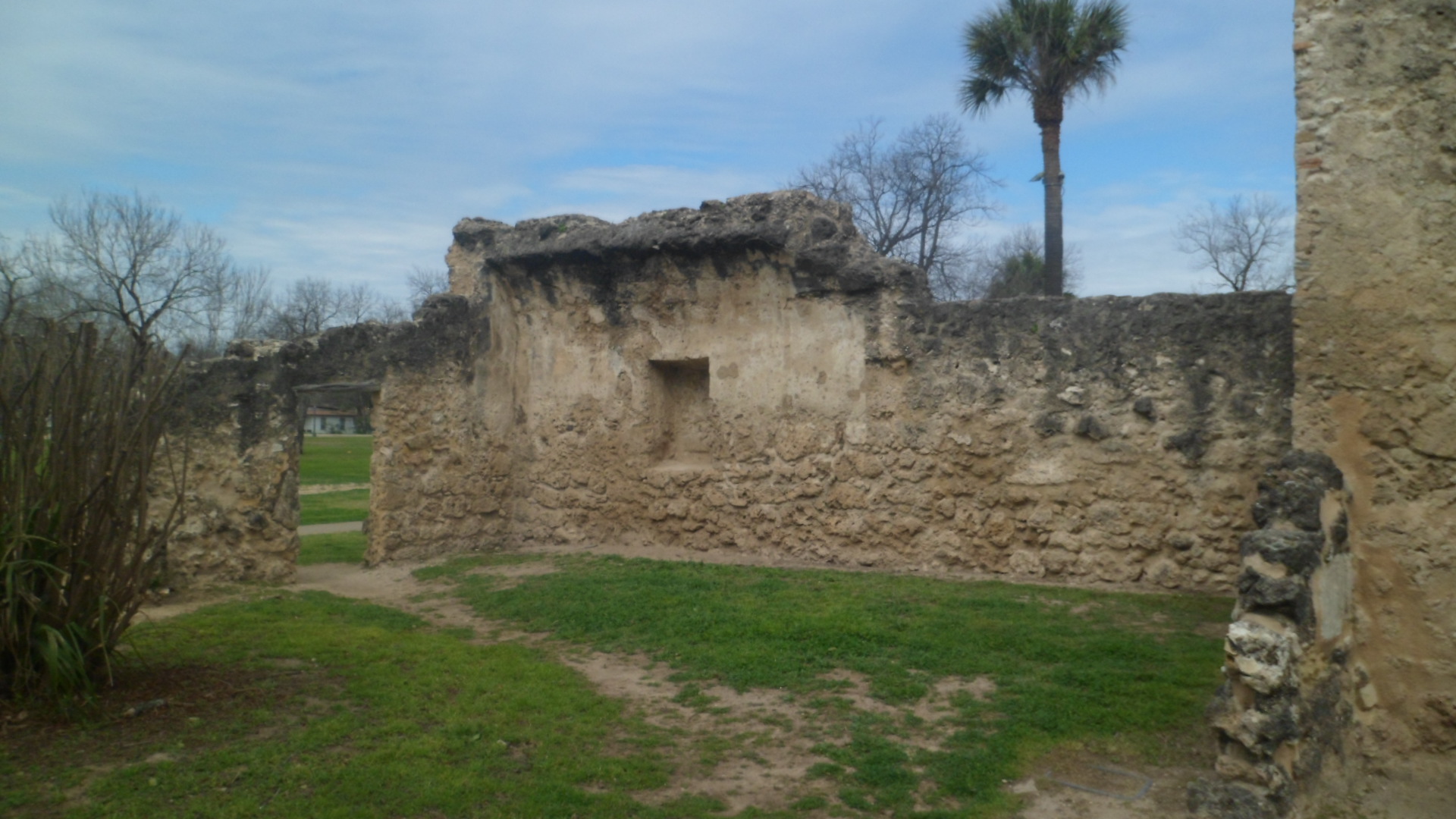
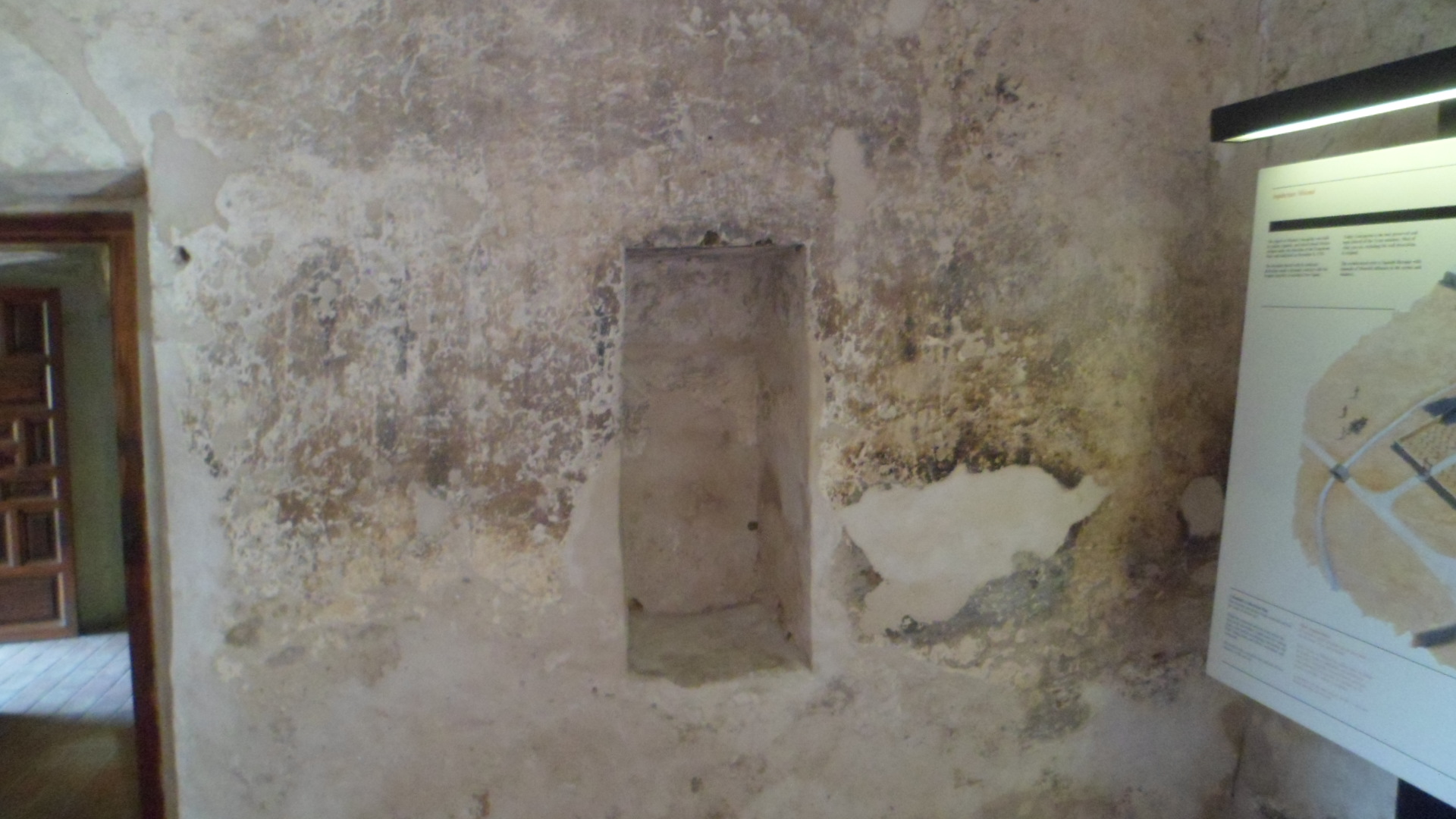
My inner urge carried the car and me on to the San Antonio Missions National Historical Park.  I had visited the two missions closest to the Alamo, in 2012, but in twilight.  Today, I would see all four of the magnificent facilities, yet in full daylight.  To keep this manageable, I present the four missions one at a time, starting with the northernmost:  Concepcion.

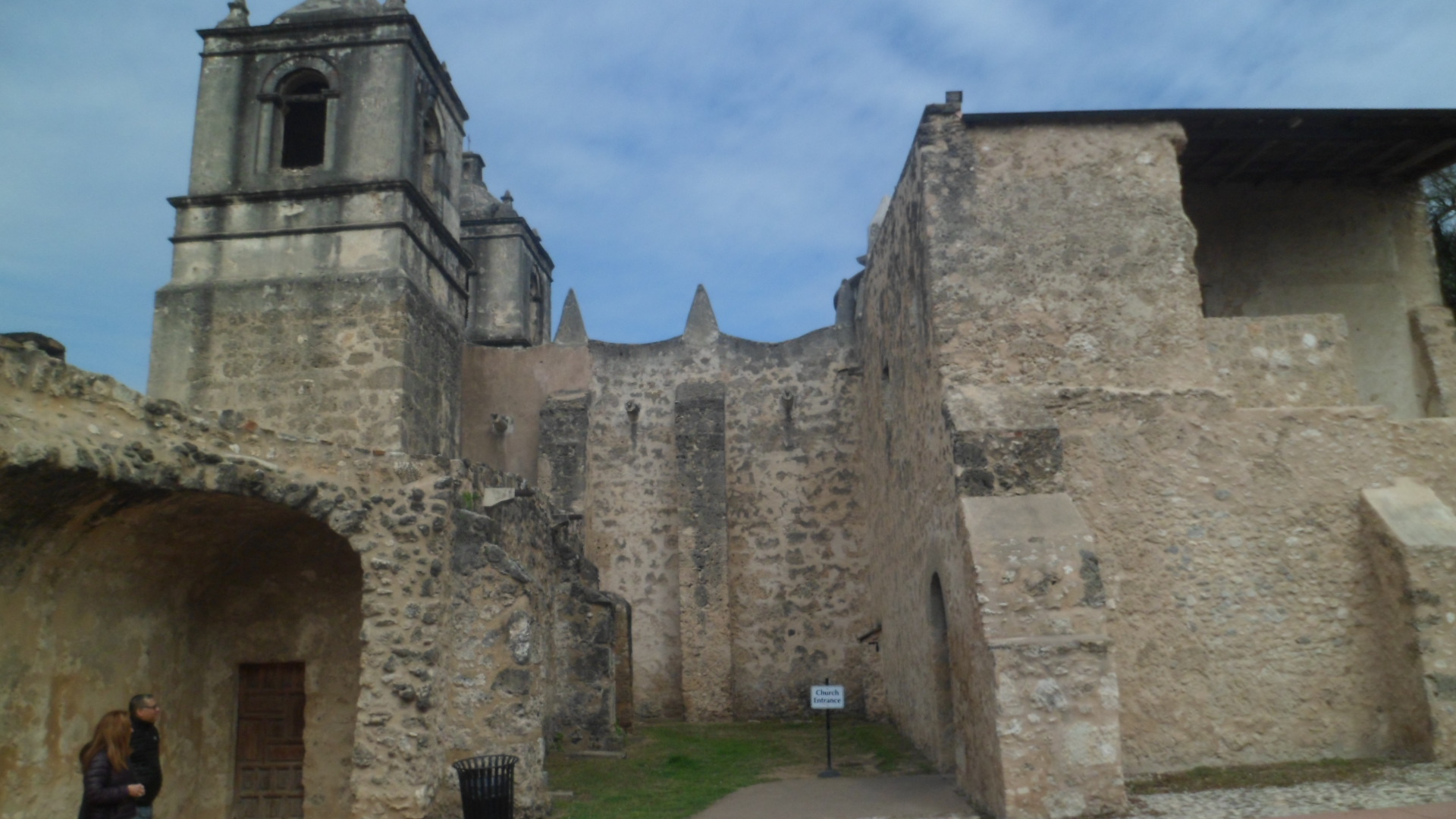
Mission Nuestra Senora de la Purisima Concepcion de Acuna was established in 1731, the fourth of five missions in the San Antonio River Valley. As with the Alamo, Concepcion was a Presidio, or garrison,as well as a mission.  The Coahuiltecan people, who were hunter-gatherers, sought protection from raiding Apaches and Comanches.  The Franciscan friars also taught agriculture to the Coahuiltecans.

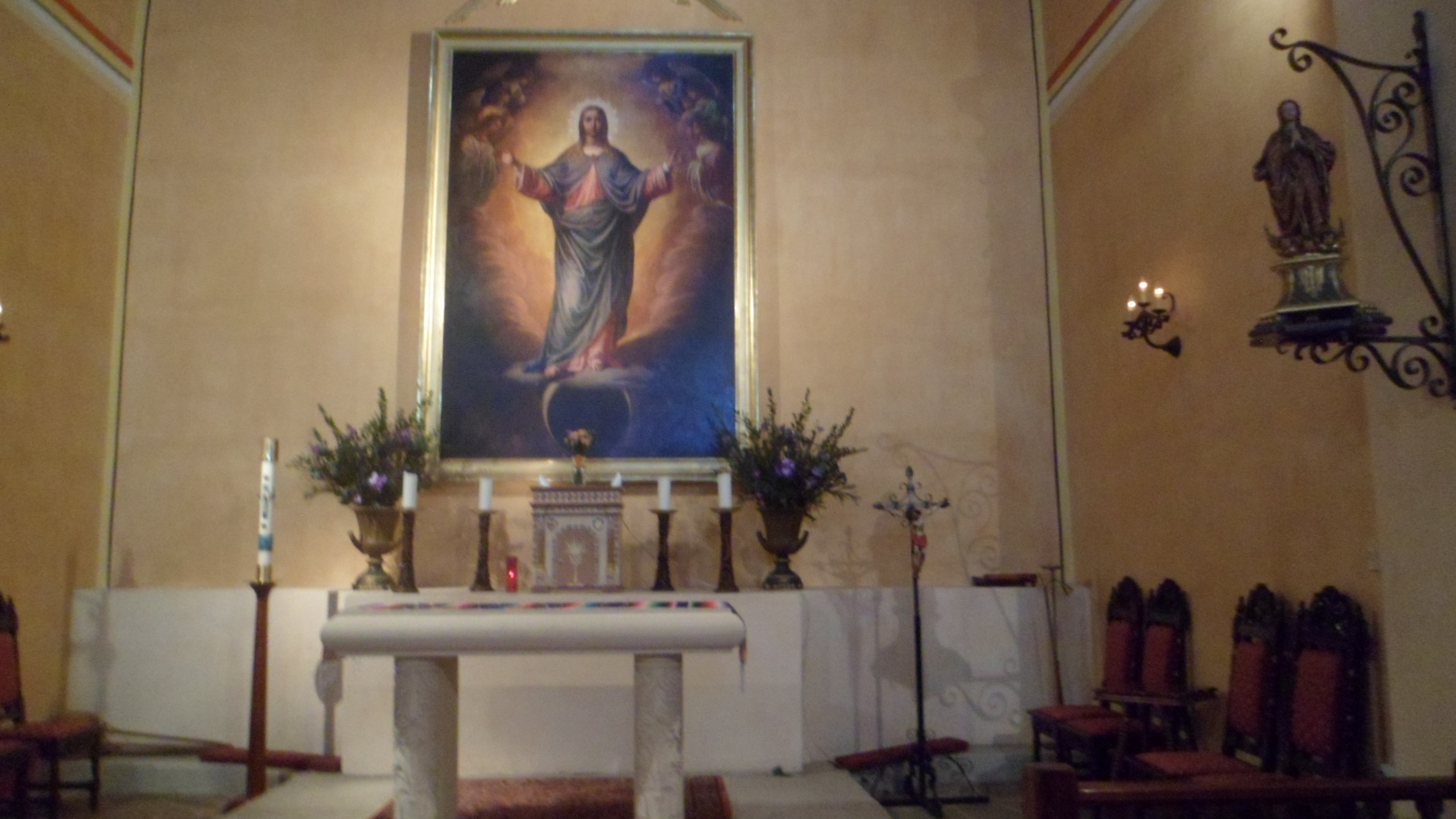
Here are several scenes of the walls, grounds and the magnificent mission church.

SAM_4218

SAM_4222

SAM_4224

SAM_4231

SAM_4235

SAM_4240

SAM_4220

SAM_4223

SAM_4226

NEXT:  The largest, and best-known,of the missions, outside the Alamo itself:  San Jose.

The Road to 65, Mile 80: Lundi Gras

6

February 16, 2015- Pearlington to Luling, With A Good Dose of NOLA

The Pearl River divides the eastern nub of Louisiana from Mississippi, before joining the Gulf of Mexico.  It’s a working man’s river, so there were dozens of fisherfolk already at work, when I moseyed on through, on this President’s Day morning.  It is a gray day, payback for three days of Florida sunshine.  This was Cajun Land, though, and the good times would roll, regardless.

SAM_4160

SAM_4162

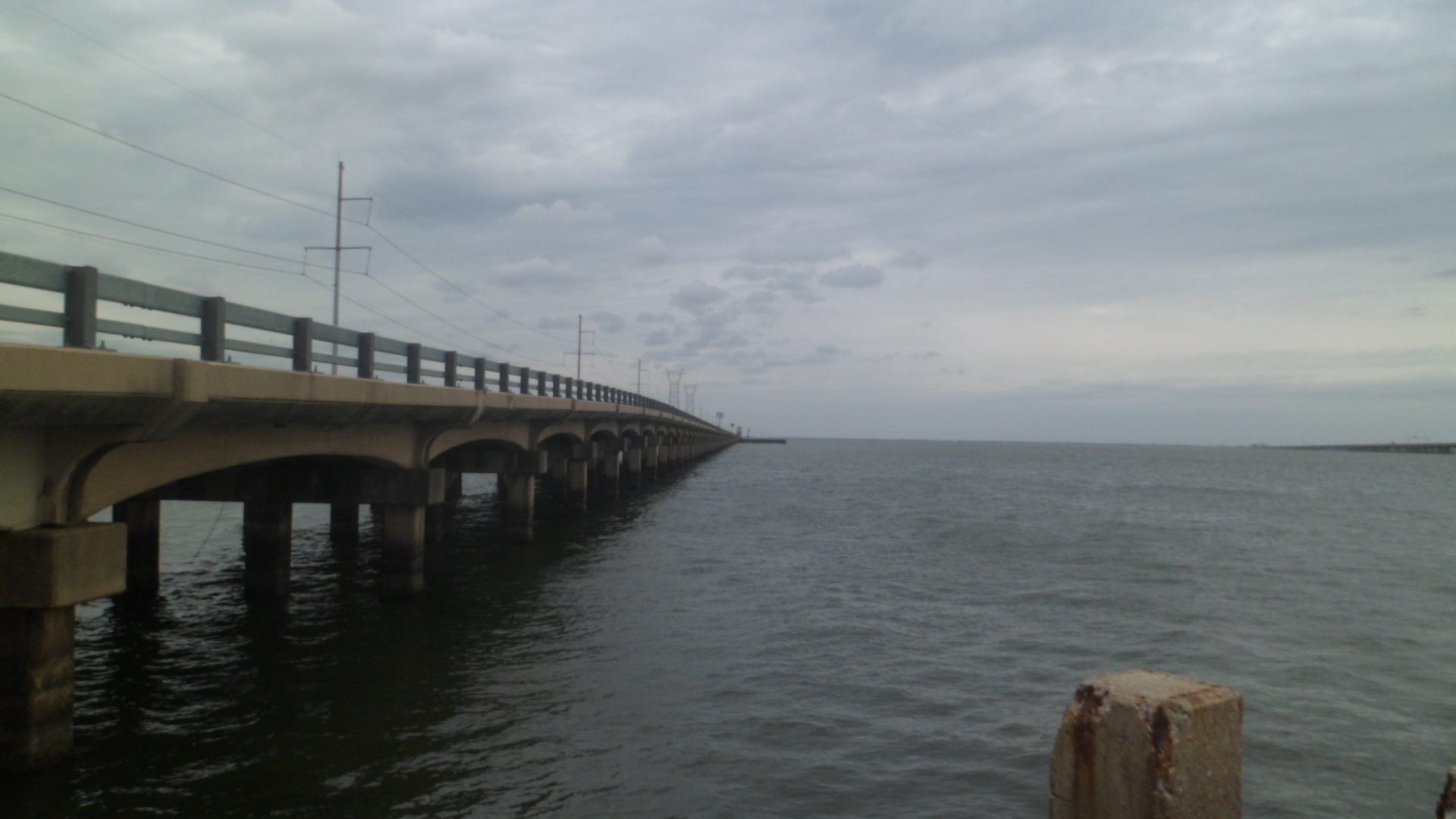
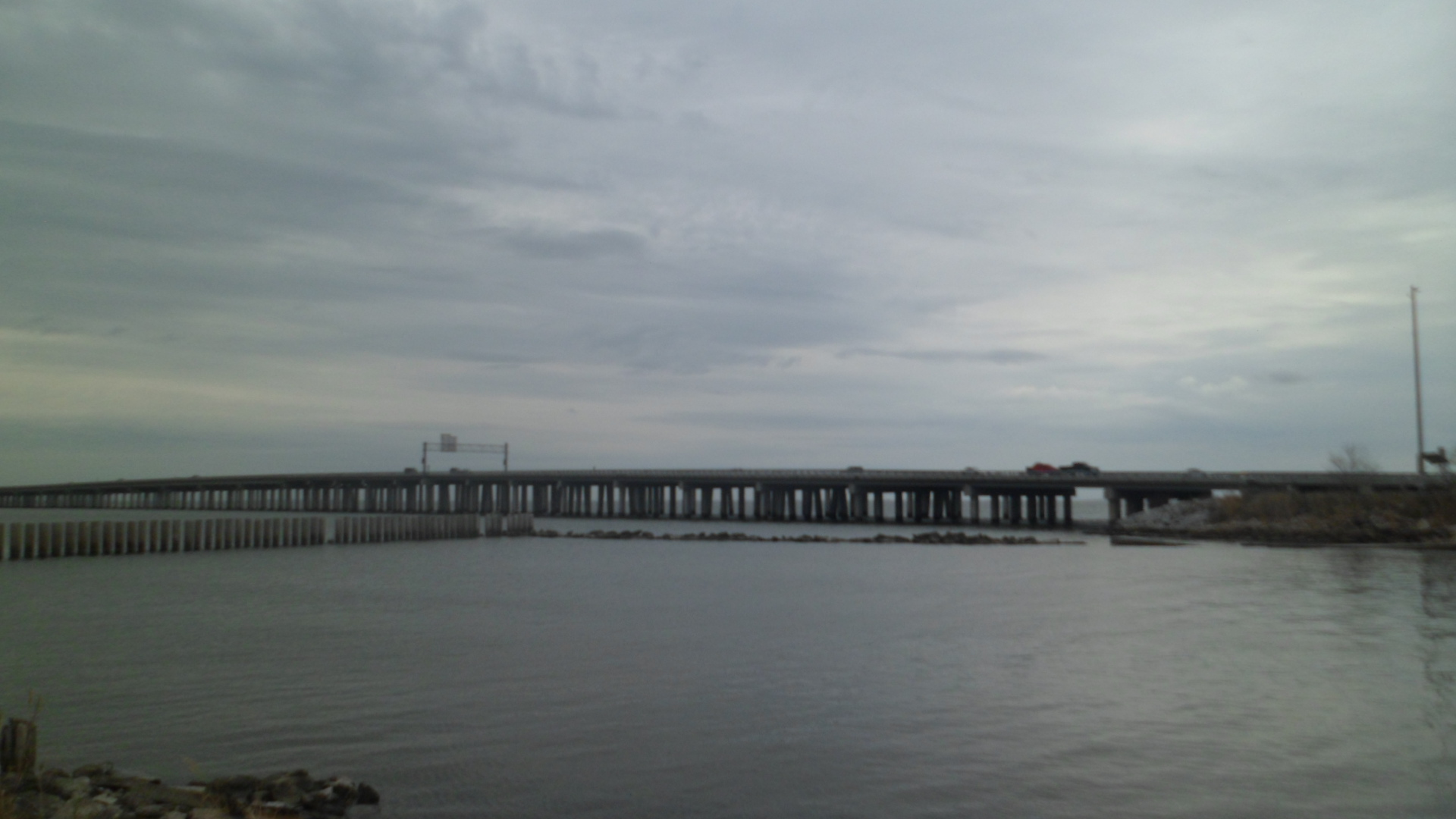
A few miles westward, Lake Pontchartrain unfolded, in all its Southern Cousin to the Great Lakes glory.  It, too, is a working man’s waterway, and many were likewise hard at labour, on its shores.  My brief visit was to Irish Bayou, on the southeast corner of the lake.

SAM_4166

SAM_4164

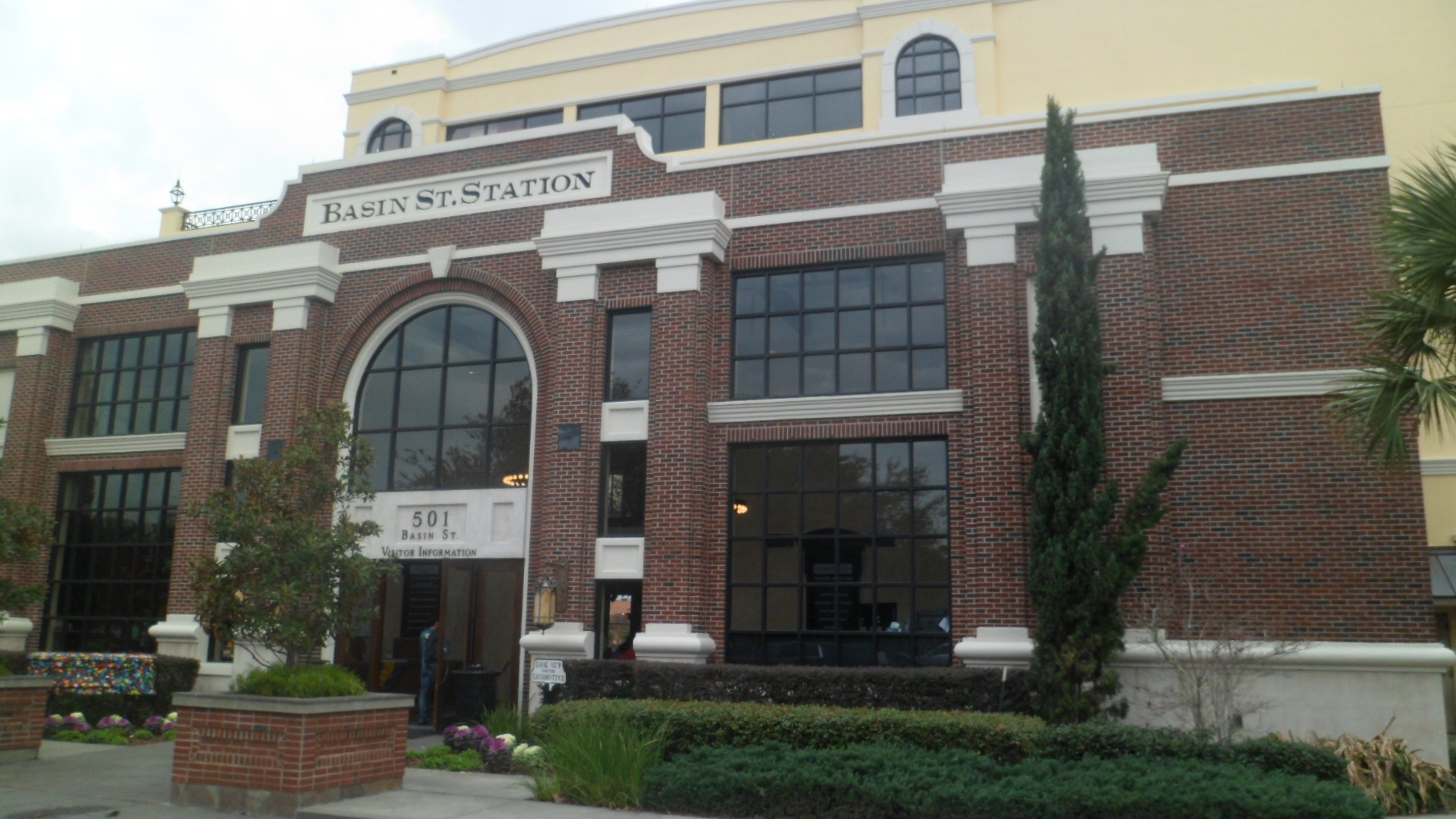
My main stop of the day, though, was New Orleans.  Granted, the Big Event in Big Easy was to come tomorrow, but my Life Path would have me elsewhere by the actual Mardi Gras, and besides, this is a SEASON with which we’re dealing, not just a one-day deal.  So, I parked at the Ten-Hour for $5 Lot, across from Basin Street Visitor Center, and made my way, slowly, towards Bourbon Street.

SAM_4169

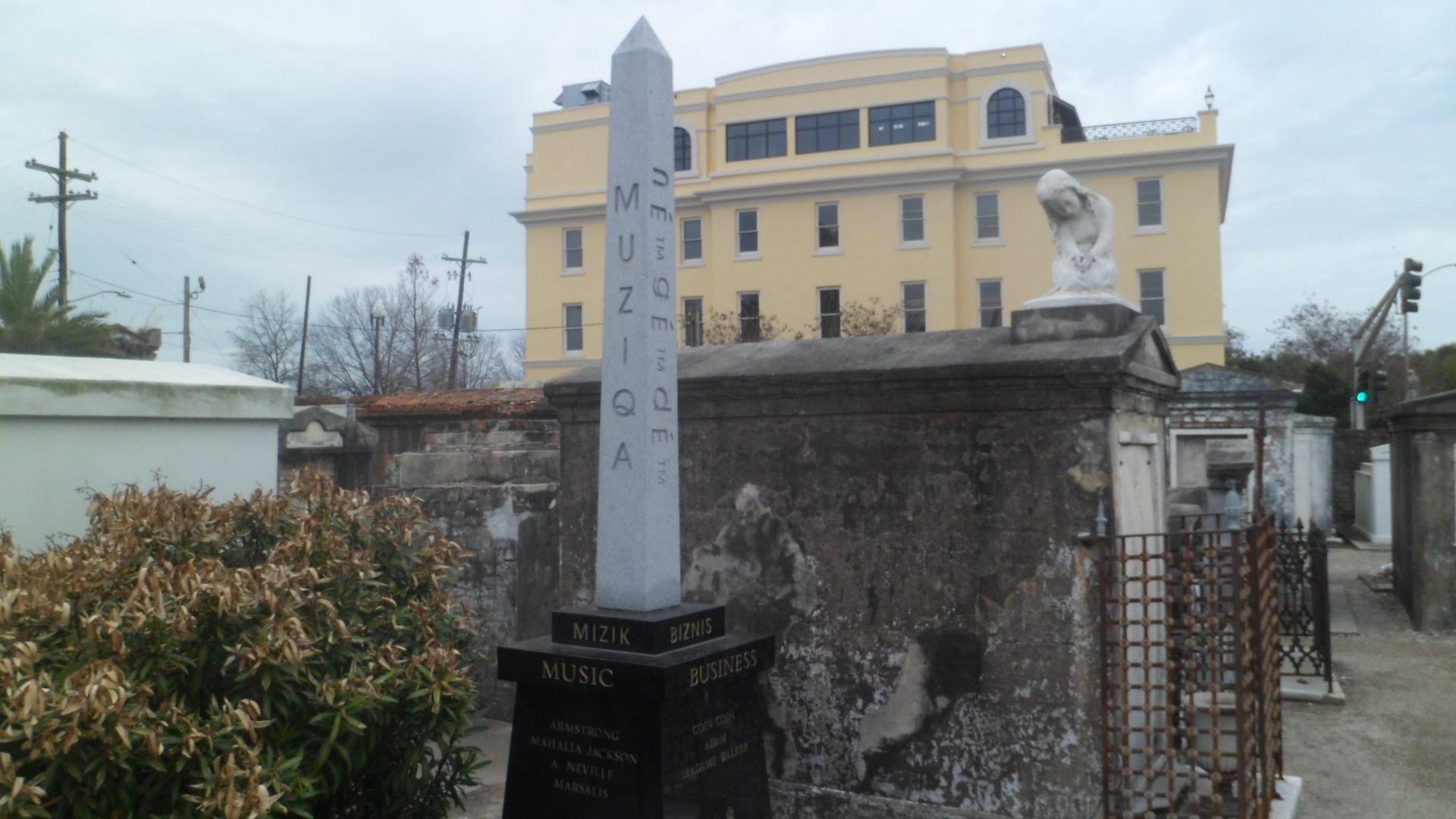
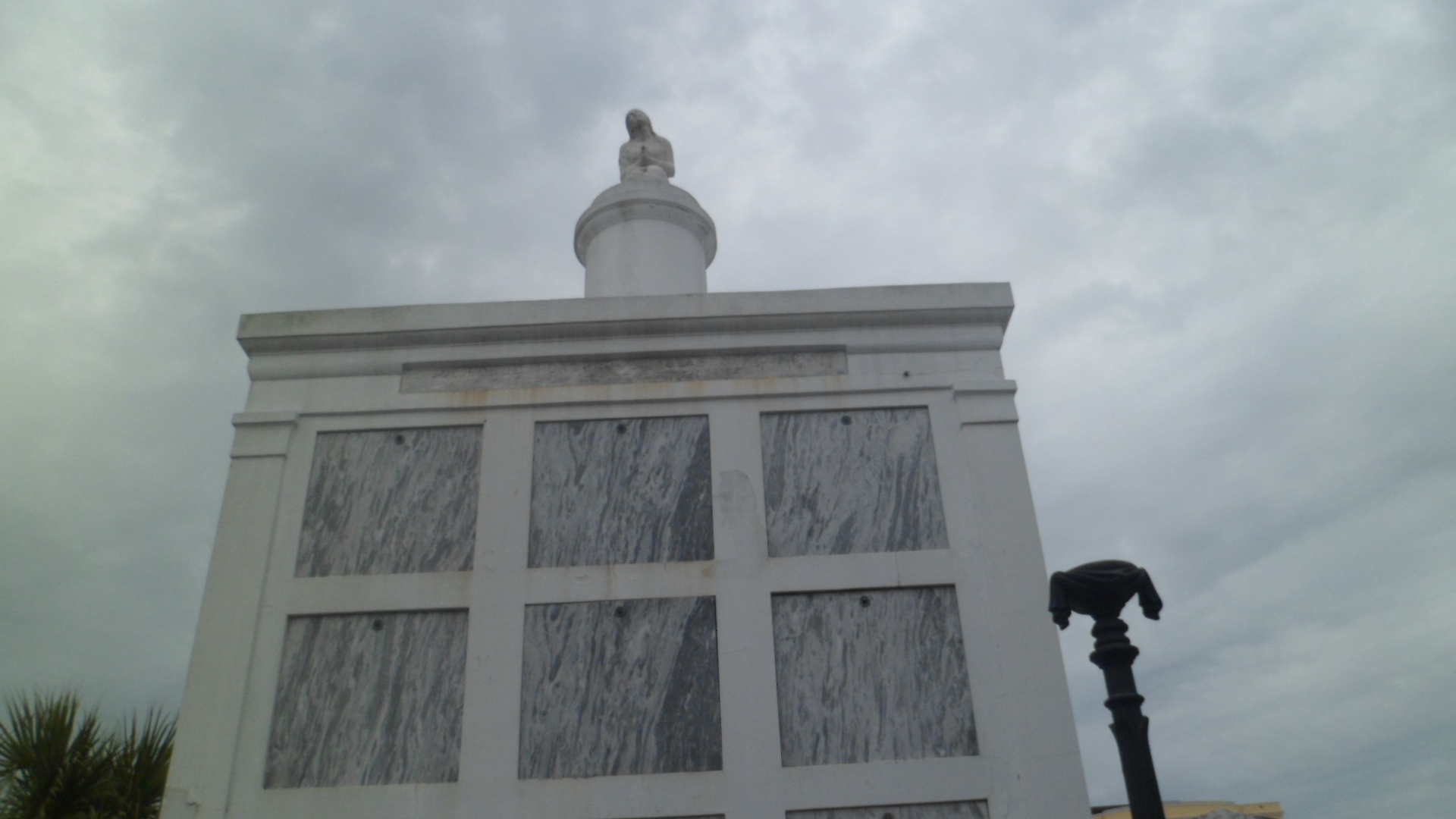
The first order of business was an homage to the departed, at St. Louis Cemetery.

SAM_4172

SAM_4173

SAM_4182

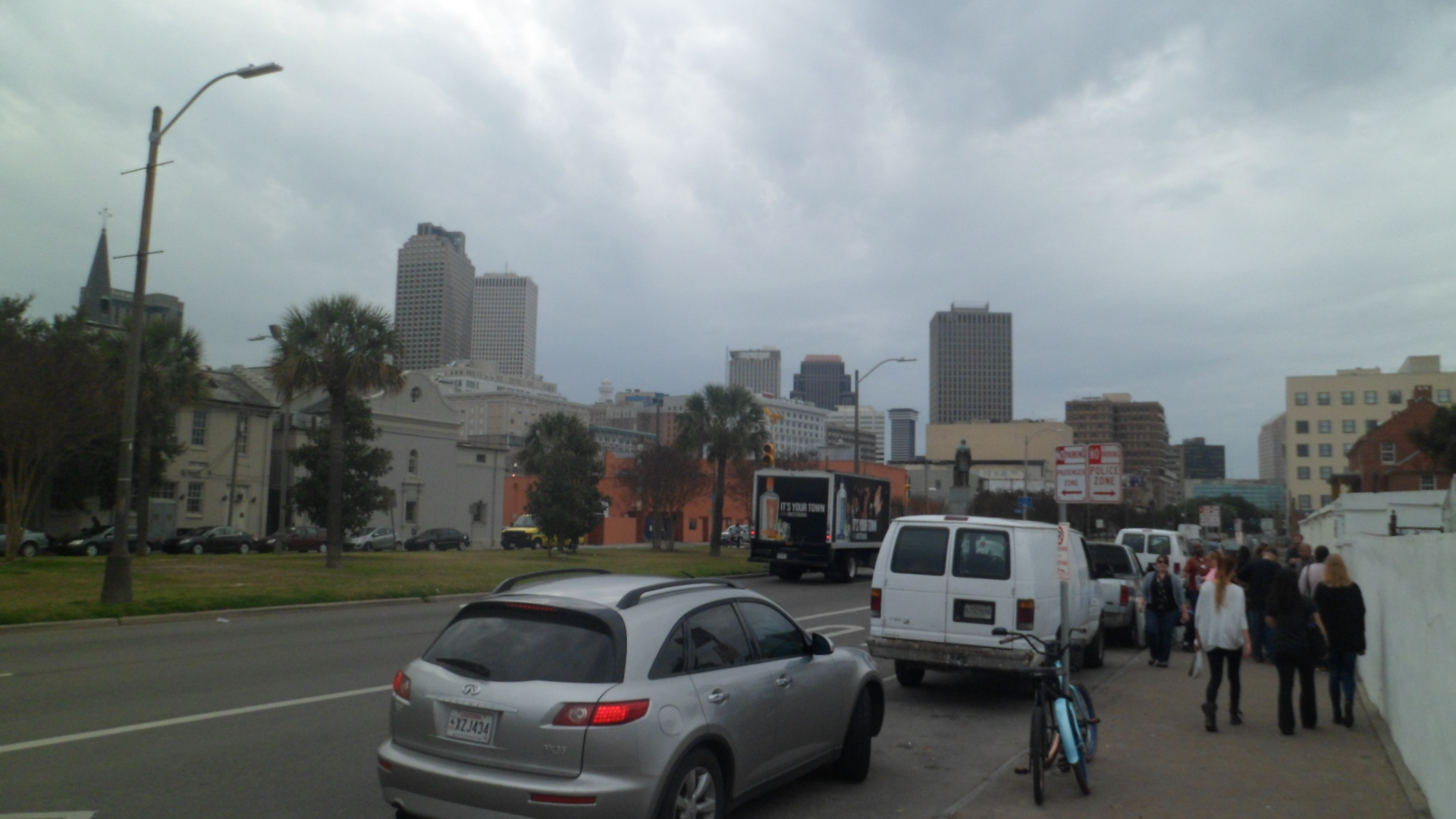
New Orleans’ skyline seems to have recovered quite a bit from 2005’s tempests and trials.

SAM_4170

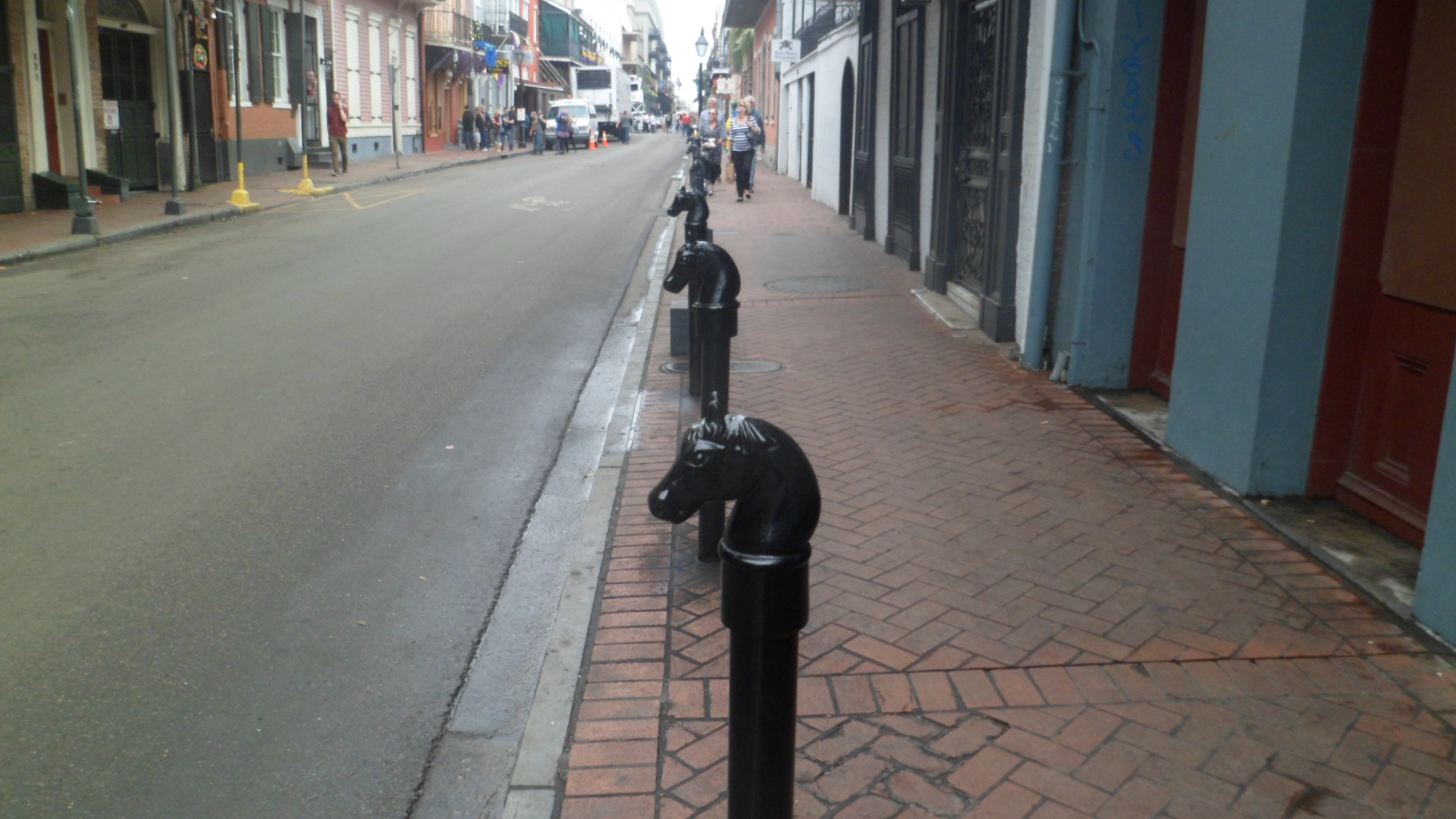
The Business District would wait for another time, though.  Bourbon Street was the main focus.  The Toulouse route was a bit on the quiet side.

SAM_4184

SAM_4188

SAM_4189

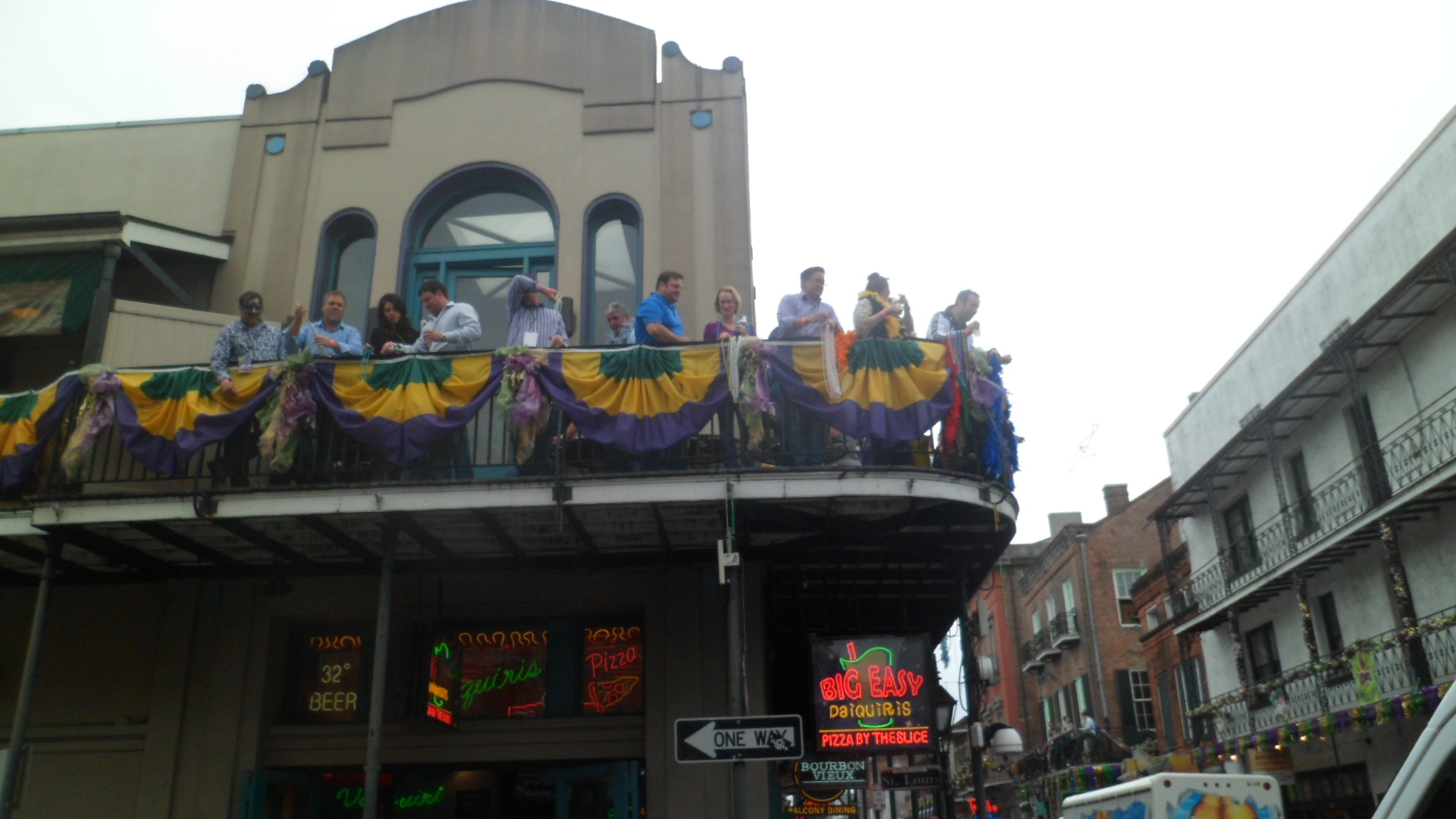
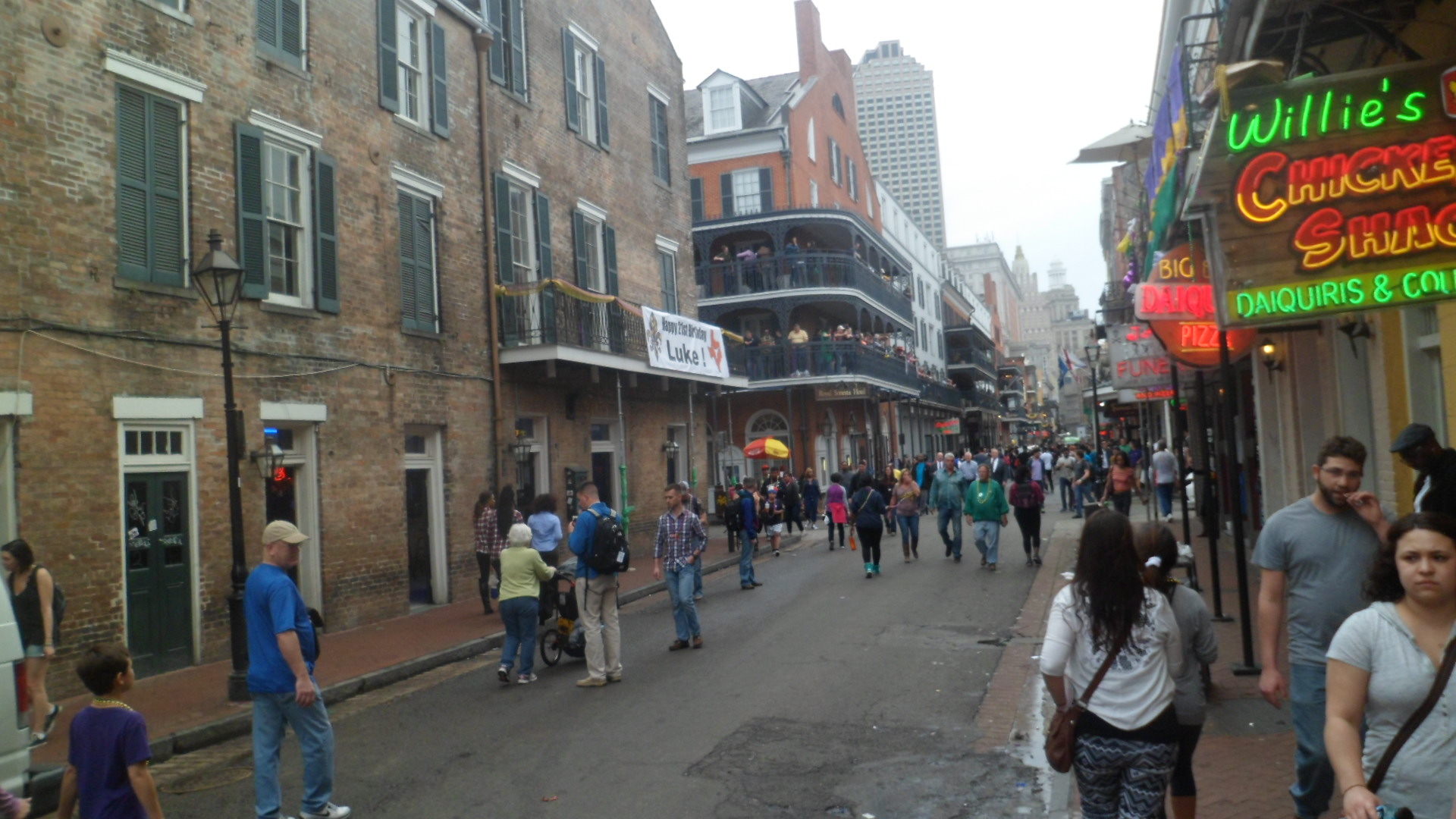
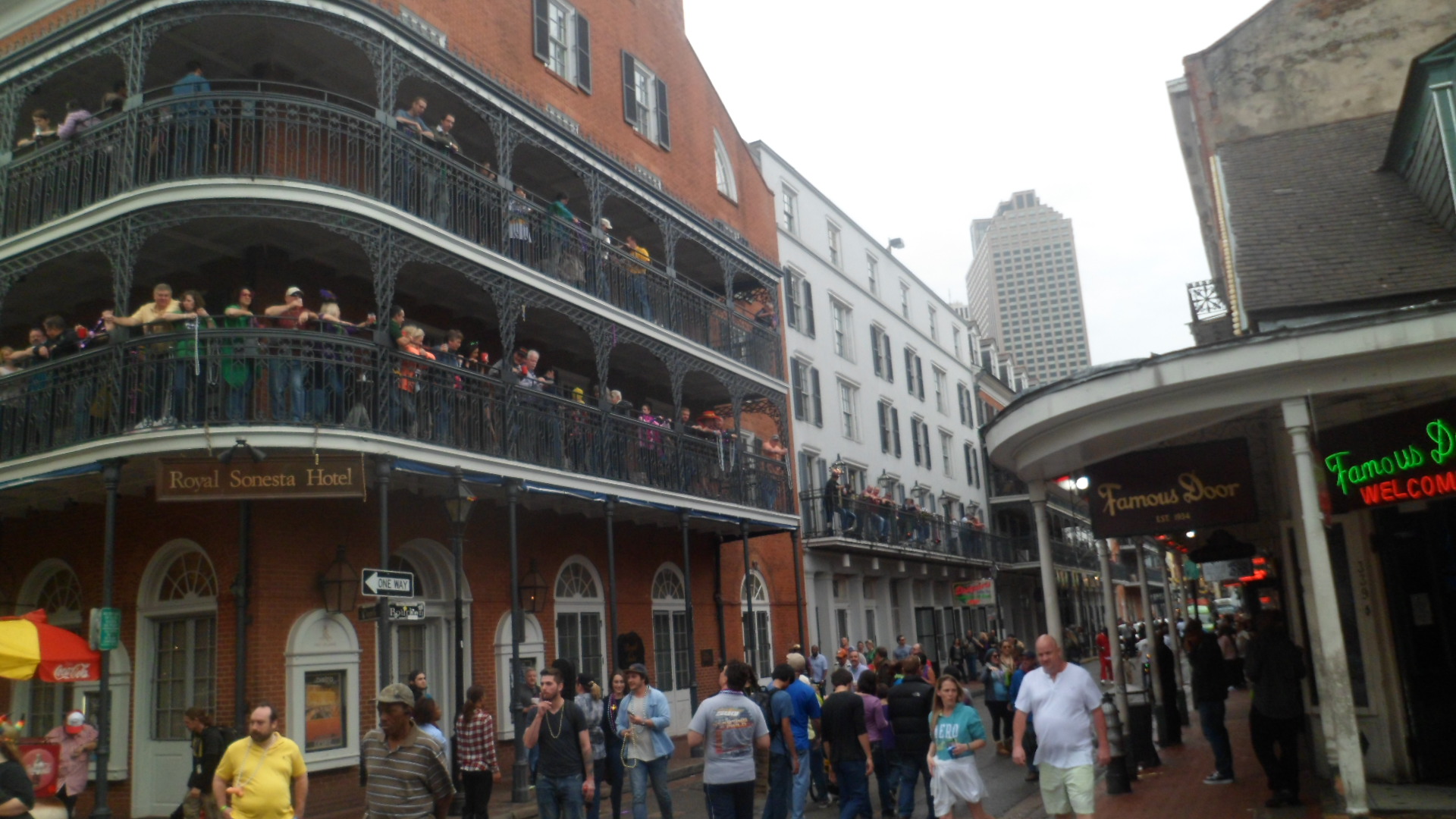
Things started popping, and beads flying, once I reached the edge of Bourbon.

SAM_4193

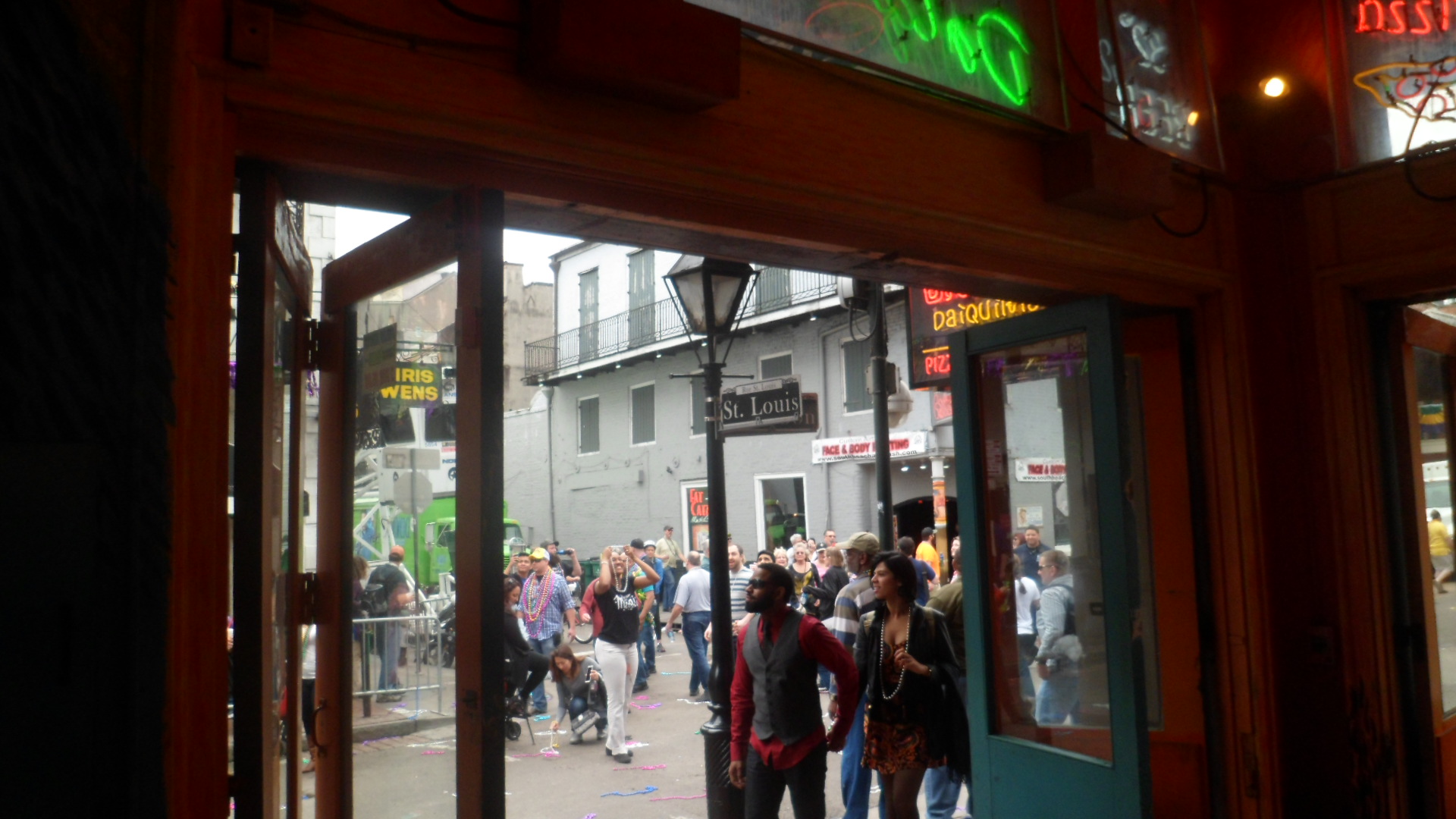
Having filled up on gumbo a few days earlier, I was happy with a jumbo slice of pizza.  There was no seating, but the doorway gave a fine vantage point for what was going on outside.

SAM_4192

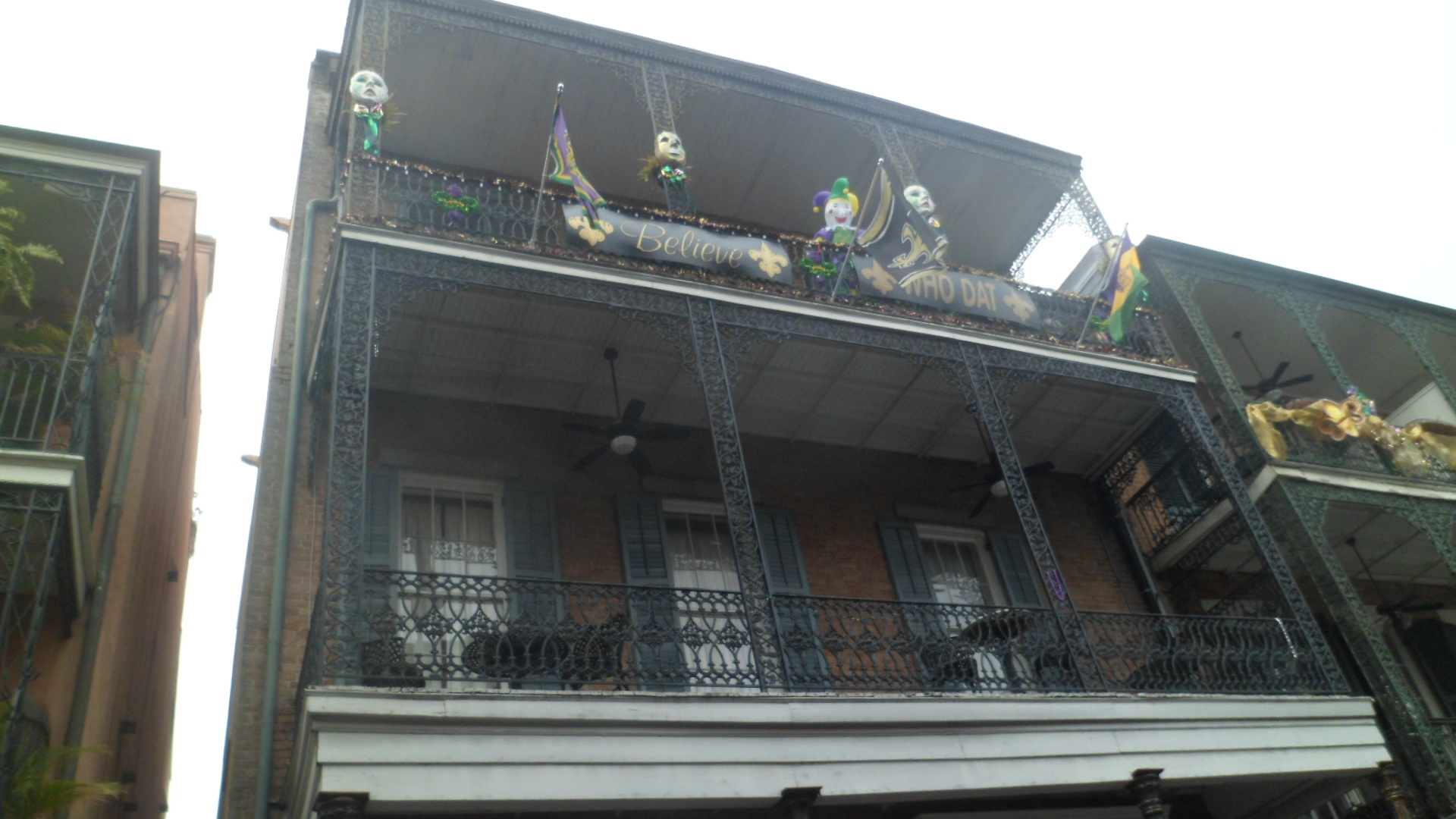
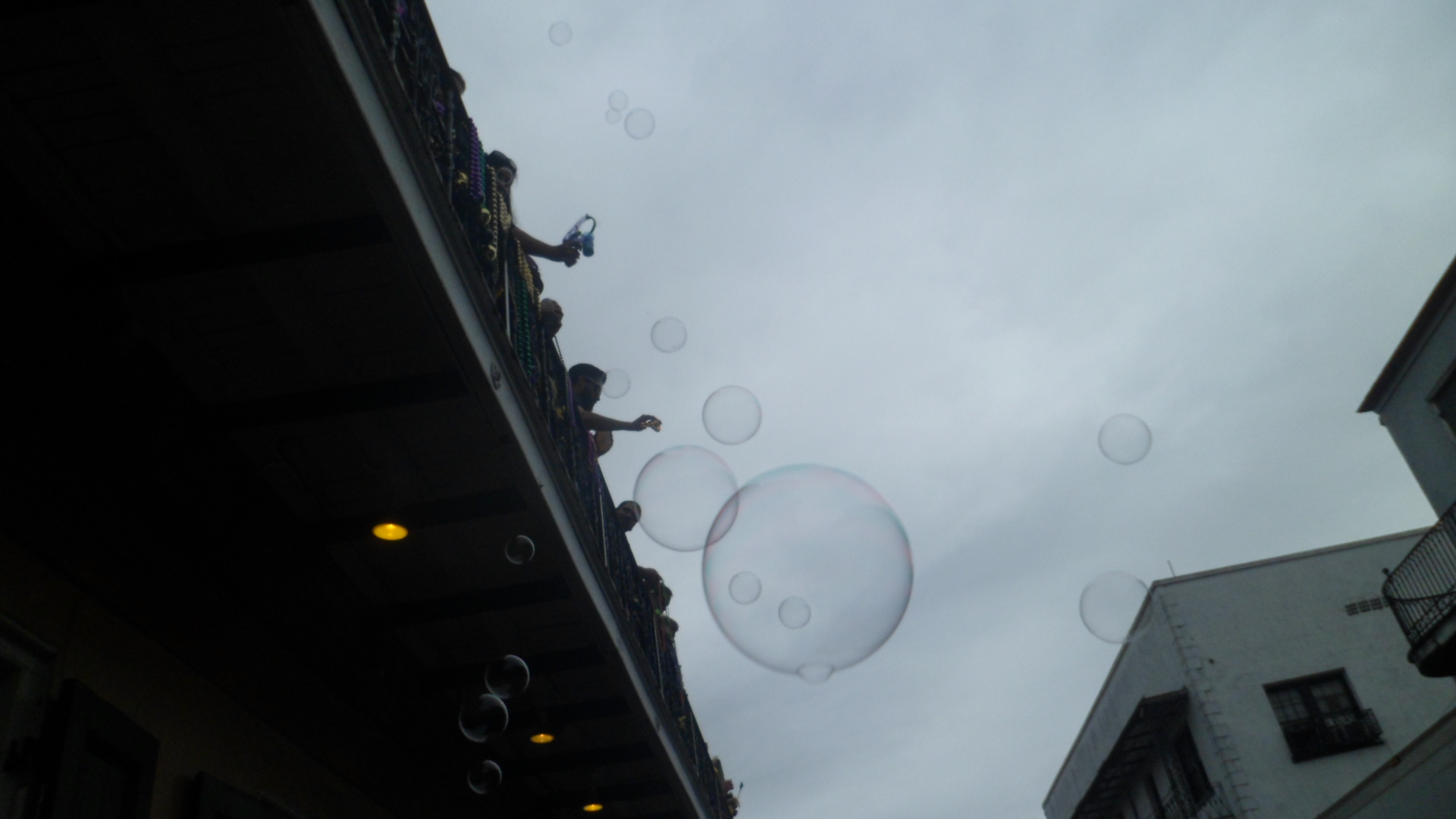
An Earth Angel was sending bubbles down on the happy crowd, from one of the ubiquitous balconies.

SAM_4194

Bourbon, at lunchtime, was getting beaucoup crowded, always a good sign.  I managed to garner four sets of beads, besides the small one I was given yesterday, in Ocean Springs.

SAM_4195

SAM_4197

It’s a nice idea, but I won’t be ready for this, for a good while yet.

SAM_4196

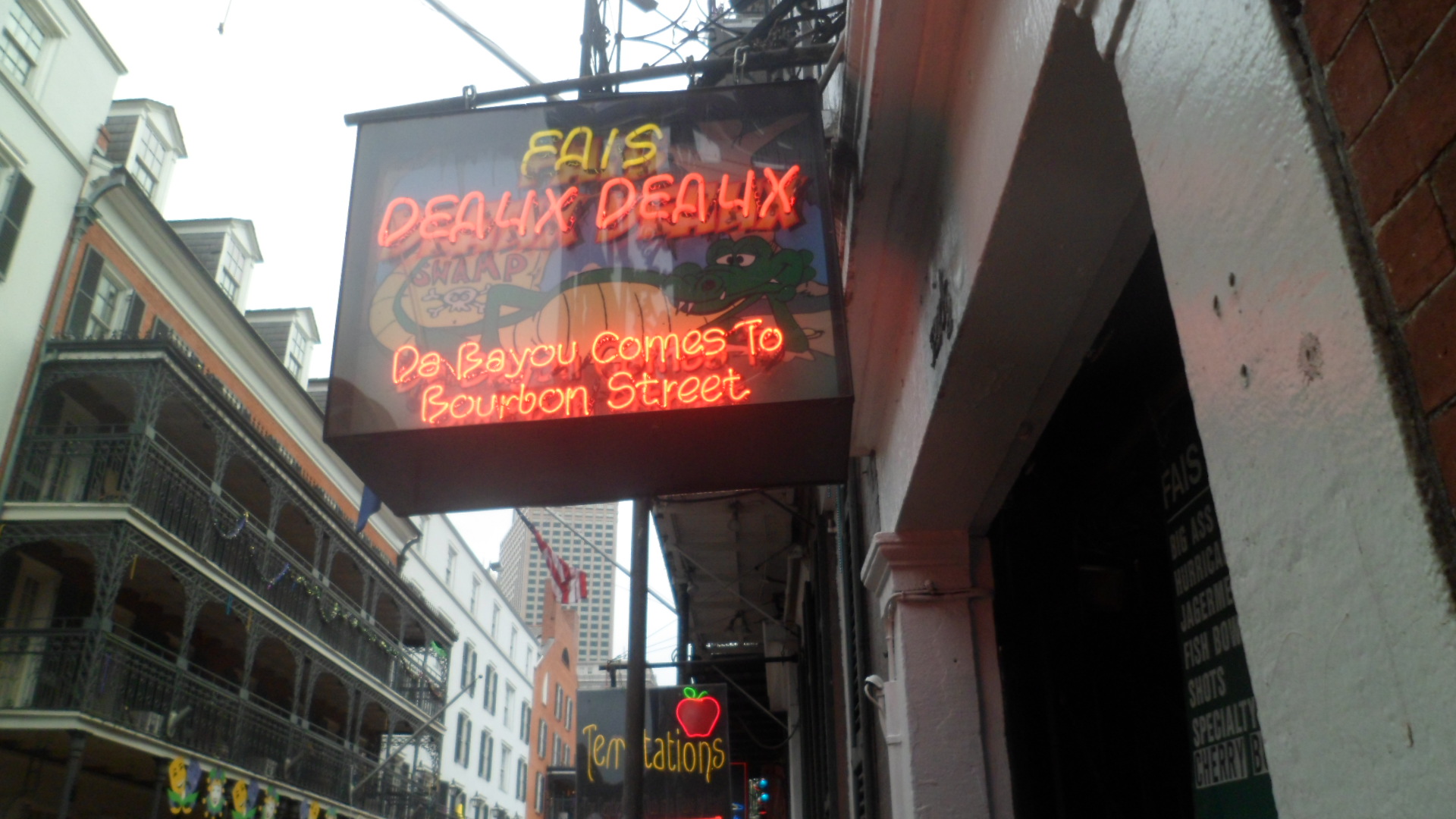
The bayou, that would be worth a week or so of camping among the Cajuns!

SAM_4201

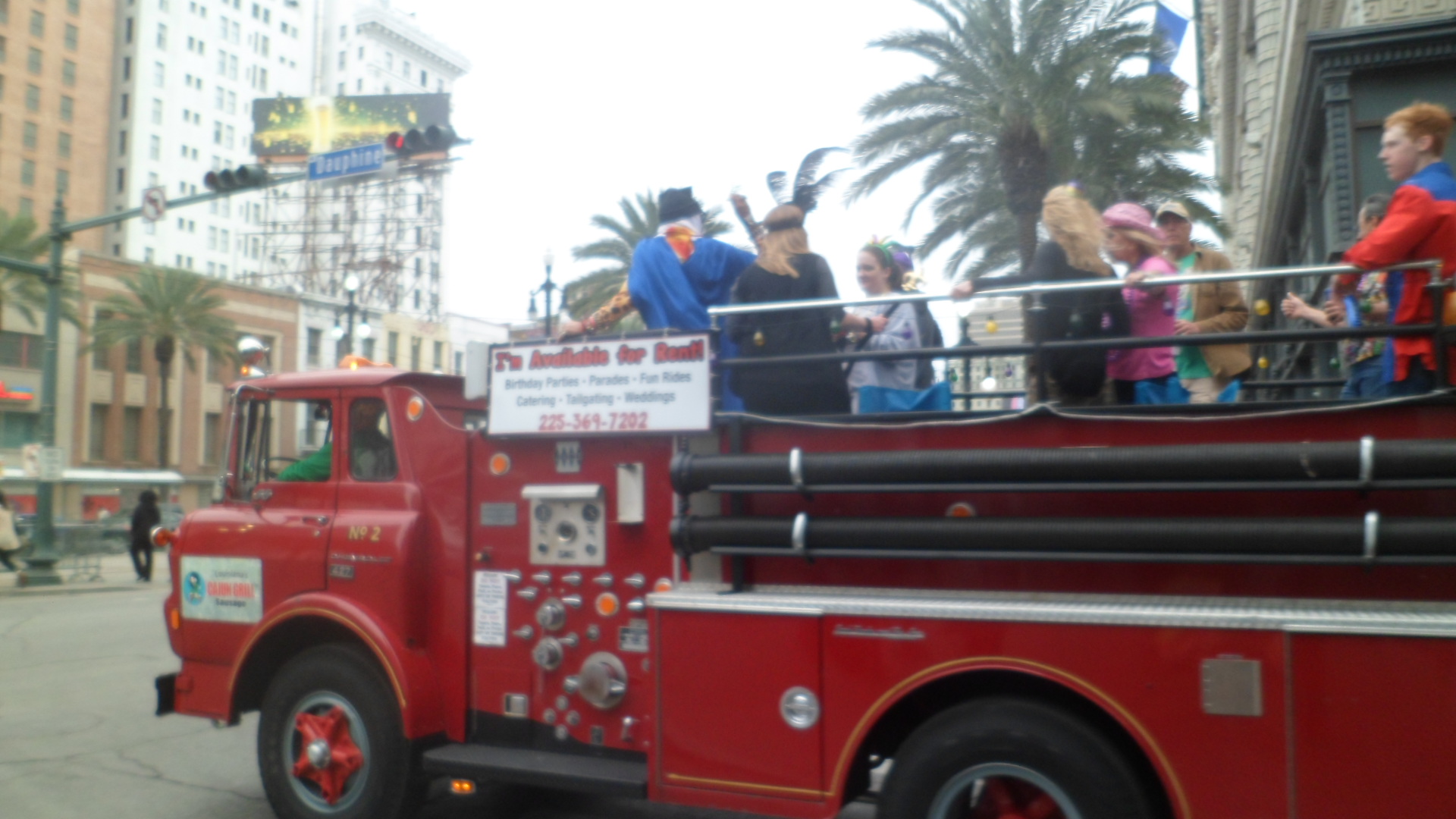
Although today was not a parade day, some krewes were out for a spin anyway.

SAM_4203

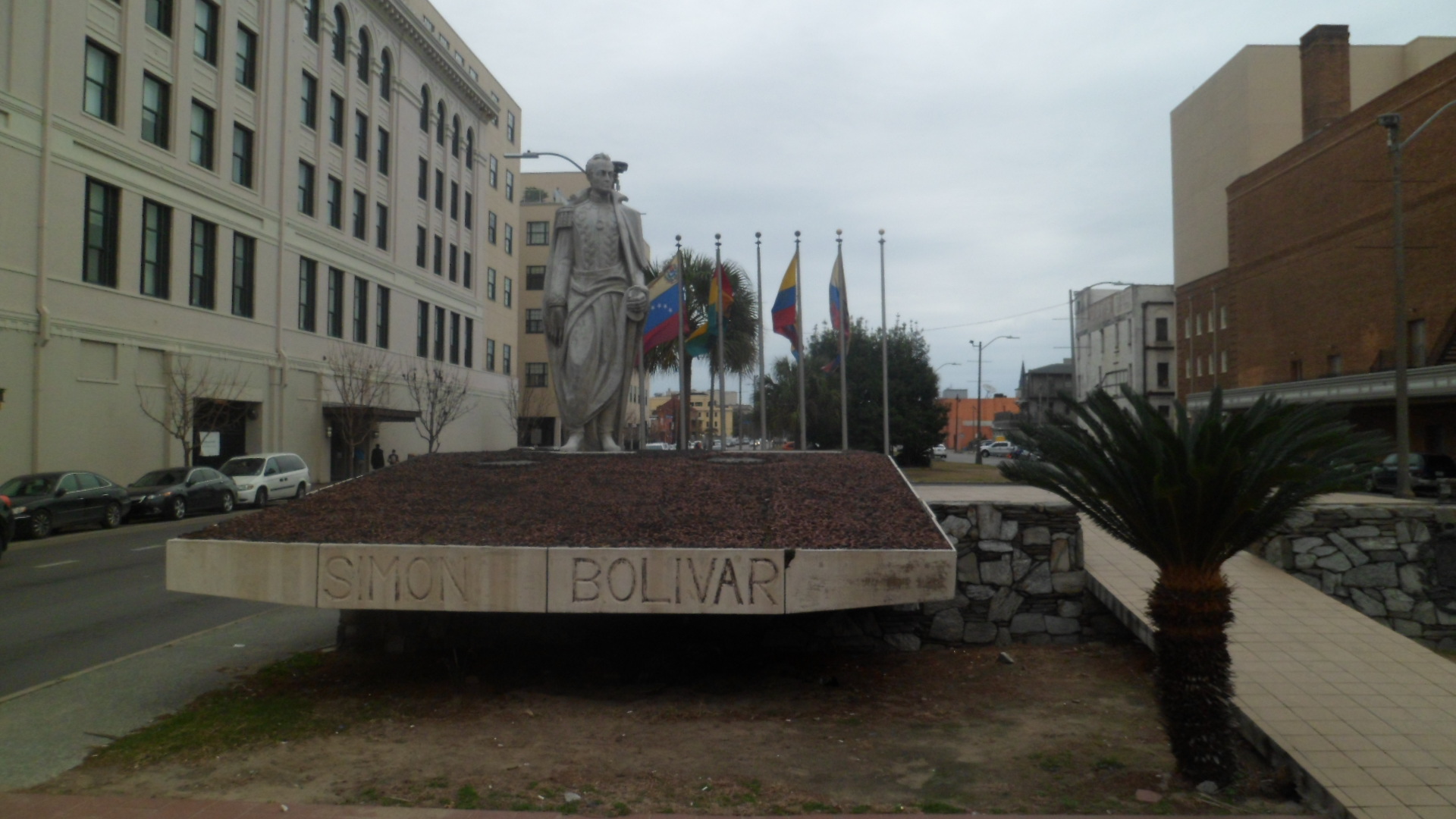
As I walked back towards Basin Street, Simon Bolivar was there, reminding us of the spirit off freedom that was starting to stir in the Gulf Region, at the dawn of the 19th Century.  The enslaved, however, would not taste of liberty until our nation had nearly been rent asunder.

SAM_4205

Once back in my car, I made an investigation into the listed address of New Orleans Baha’i Center.  Shades of Brussels, the Baha’is have moved- the place is now a snow cone establishment.  Today, being 50 degrees, was not a day for me to enjoy such fare.  I headed out of town, accompanied by rain, clear to Luling, TX,my stop for the night.  Lake Charles, however, has Steamboat Bill’s, right off the highway and packed to the rafters with diners- some of whom were headed to the Big Easy.  I was good with a pile of catfish and hush puppies, and the company of a stuffed gator.

SAM_4210

Three hours later, I was fine and dandy at Luling’s Coachmen’s Inn.

The Road to 65, Mile 79: Beach Trees, A Cannoli, and That Blissful Honky Tonk

9

February 15, 2015- Panama City to Waveland   I am a bit of a stick-in-the-mud, when it comes to breakfast.  I want no fried, boiled or poached eggs, no bananas and I think keeping the heavy to a minimum is good- so very little, in the way of biscuits and gravy, hits my plate.  I did, however, leave my friends’ home in Panama City, with a fair amount of freshly picked kumquats.  They are a fabulous snack food, and full of Vitamin C, being the only citrus fruit which may be eaten, rind and all.  I will hold these exquisite people in the highest regard, though, I’m not in the market for any of the various ladies with whom Host might want to arrange a relationship.  My presence in anyone else’s life is too fleeting.  Nonetheless, goodbyes don’t come easy.

SAM_4098

The road between destinations always throws in its share of bounties and bestowals.  That’s the magic of the journey.  So it was, that I left Panama City, headed for Pensacola, with at least the intention of spending a couple of hours poking around the historic sights and sounds of Escambia Bay.  There was, as it happened though, the chance of connecting with my friends from Alabama, down in Ocean Springs, MS, for a day or so.  Mental arithmetic led to my decision to put off Pensacola and Mobile, until an as yet undetermined “next time”.  I did stop at Shrimp Basket, in Pensacola, for a take-out lunch.  That was a good thing, as Sunday lunch in the Florida Panhandle means wearing one’s Sunday Best.  My attire was neat, clean-and very casual.    The crab cakes, though, were very tasty, once I got to that picnic table, outside Ocean Springs.  The view of the channel at the rest area, west of Pascagoula, was comforting in itself.  SAM_4099

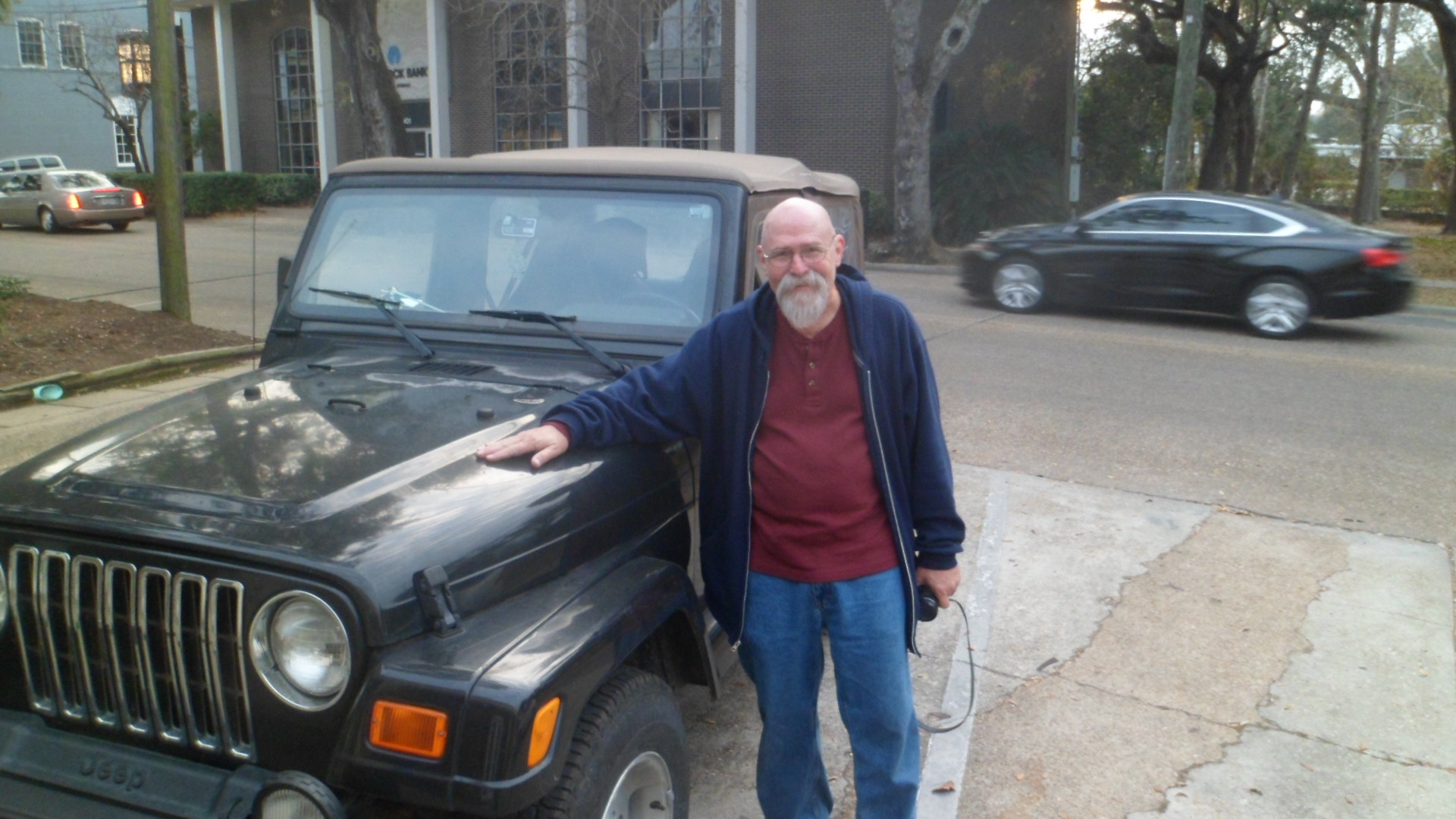
I called a new friend, who happened to be in Ocean Springs, and was pleased to share an hour or so, in that splendid little town, consisting of the two villages of Bienville and Iberville.  We met outside the old Rail Station, as he walked towards my car.

SAM_4102

SAM_4140

As you might guess, he, too, is taking the slow and easy approach to life, at least for a time.

We took the jeep to the beach area, after savouring coffee, and, at least in my case, a cannoli, at the only Coffee House in town.

SAM_4131

The beach here is a blend of sand, due to the recovery efforts from the Great Hurricanes of 2005.

SAM_4103

You can see that there are still some stands of cypress trees and pin oaks, along the Causeway, north of the beach.

SAM_4110

SAM_4120

The Gulf here shimmers as well as it does everywhere, belying the ongoing recovery efforts from the Deep Water Horizon, which only the fishermen still feel.

SAM_4104

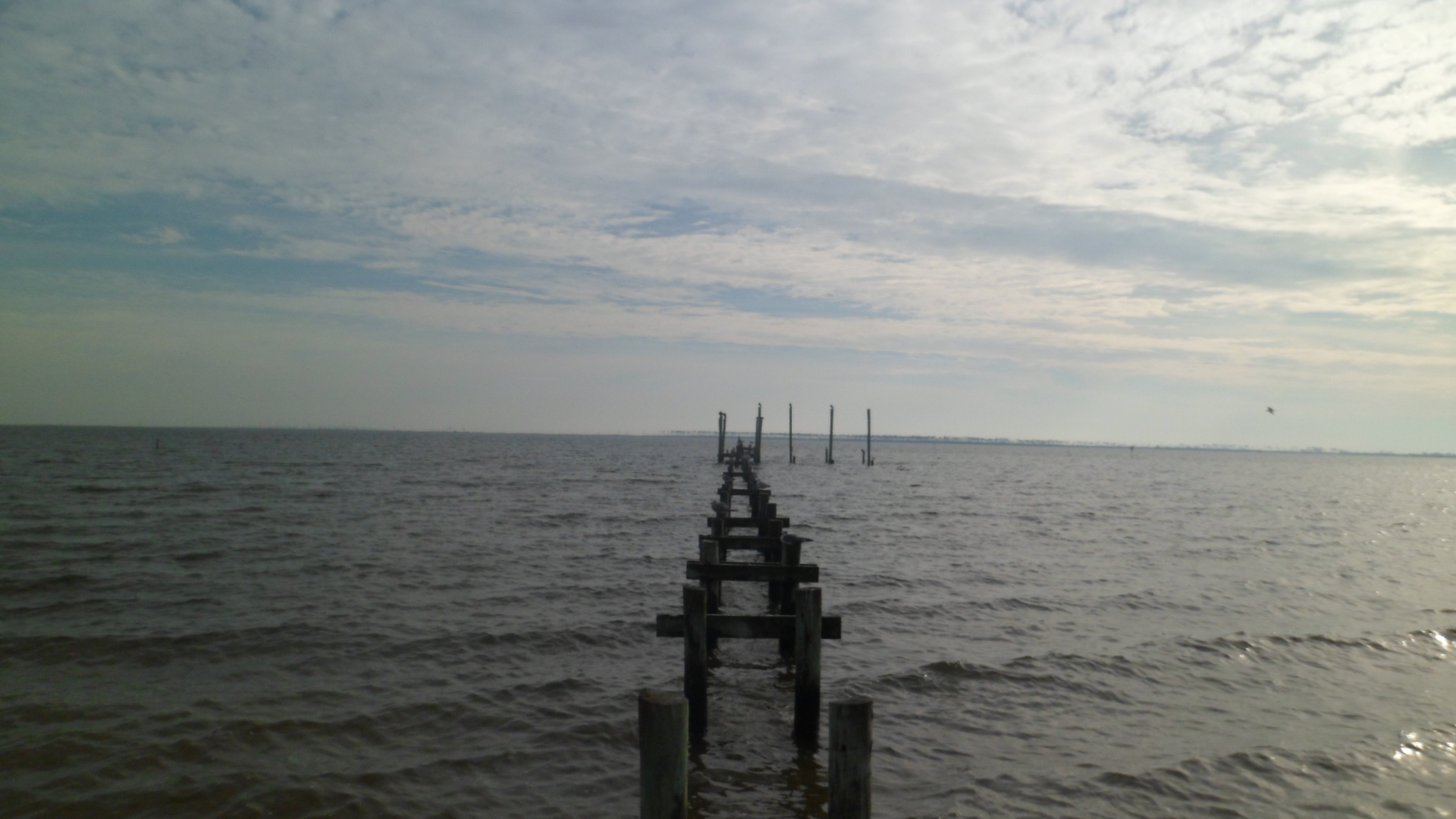
Well, the pelicans feel it, too.  They were gathered this fine evening, on posts at the end of an old pier.

SAM_4113

SAM_4135

The beach towns have always been places to while away a day, in gentlemanly fashion.  Had this been a weekday, chances are some would be gathered in the beach-side park, for a game of chess.

SAM_4114

They’d have been greeted with a fine message.

SAM_4115

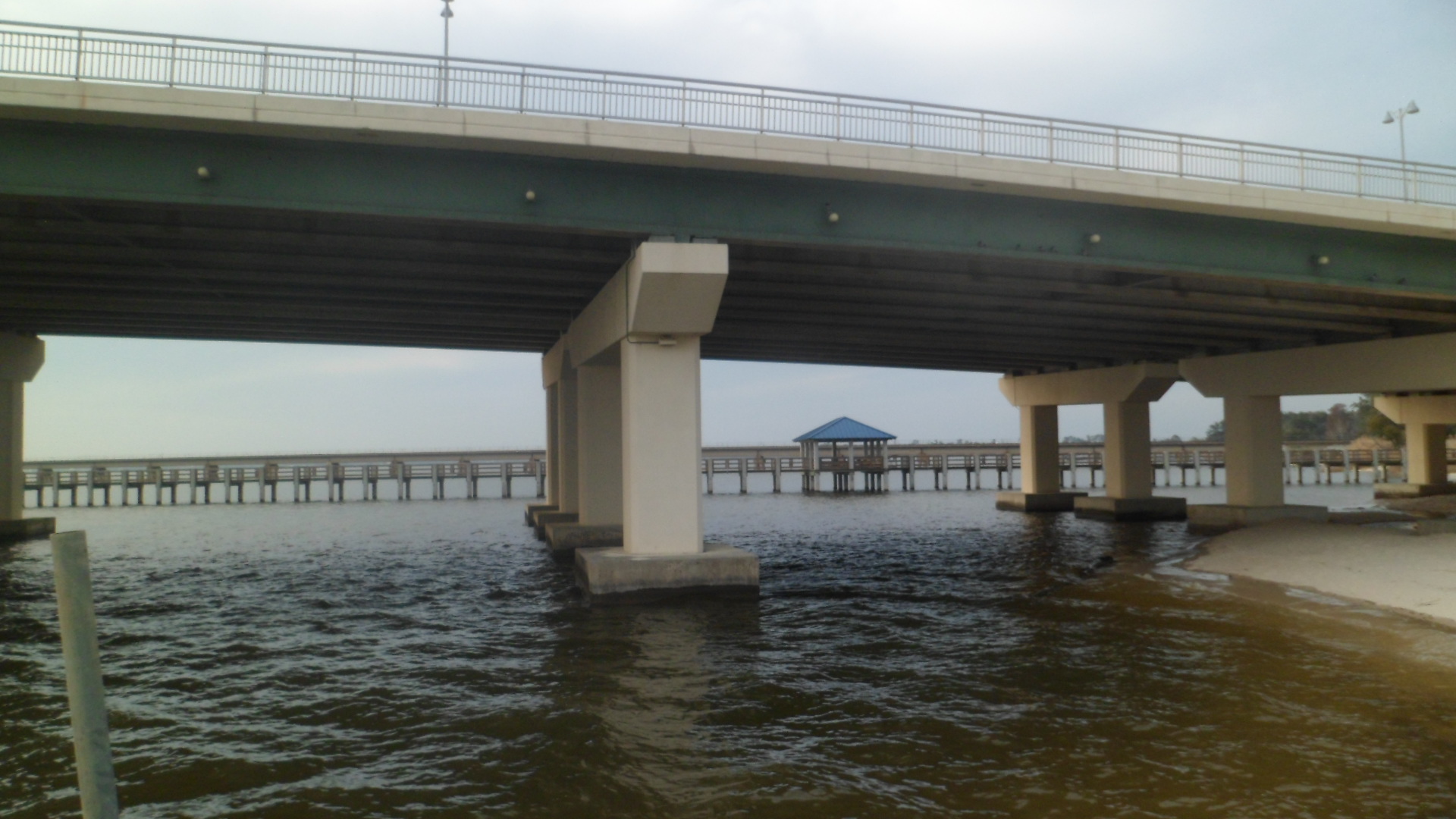
A suspension bridge connects Ocean Springs with the barrier islands just to the south.SAM_4123

SAM_4124

Downtown Ocean Springs had celebrated Mardi Gras, just a few hours earlier, as had several towns along the coast.  There were beads and other mementos of the festivities, strewn along the sidewalks.  In this grand scheme of life, even Man’s best friend gets in the act.

SAM_4137

Saying farewell to my friend, I headed further along, to Biloxi, another fine old French-heritage site.  Before I ran out of daylight, some lovely memoirs of the Mississippi that was, showed themselves during an hour’s walk.

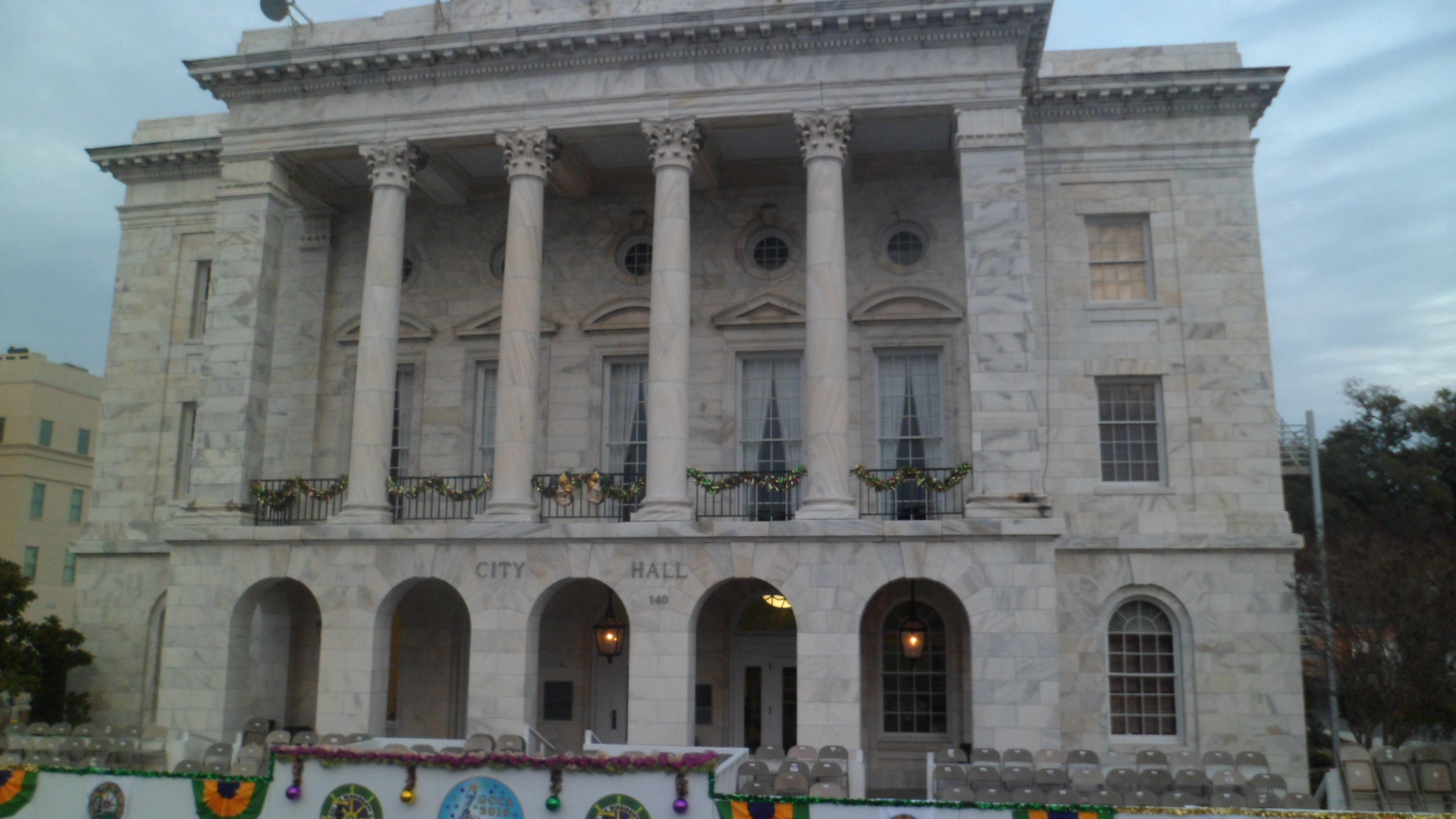
Here is Biloxi City Hall.

SAM_4143

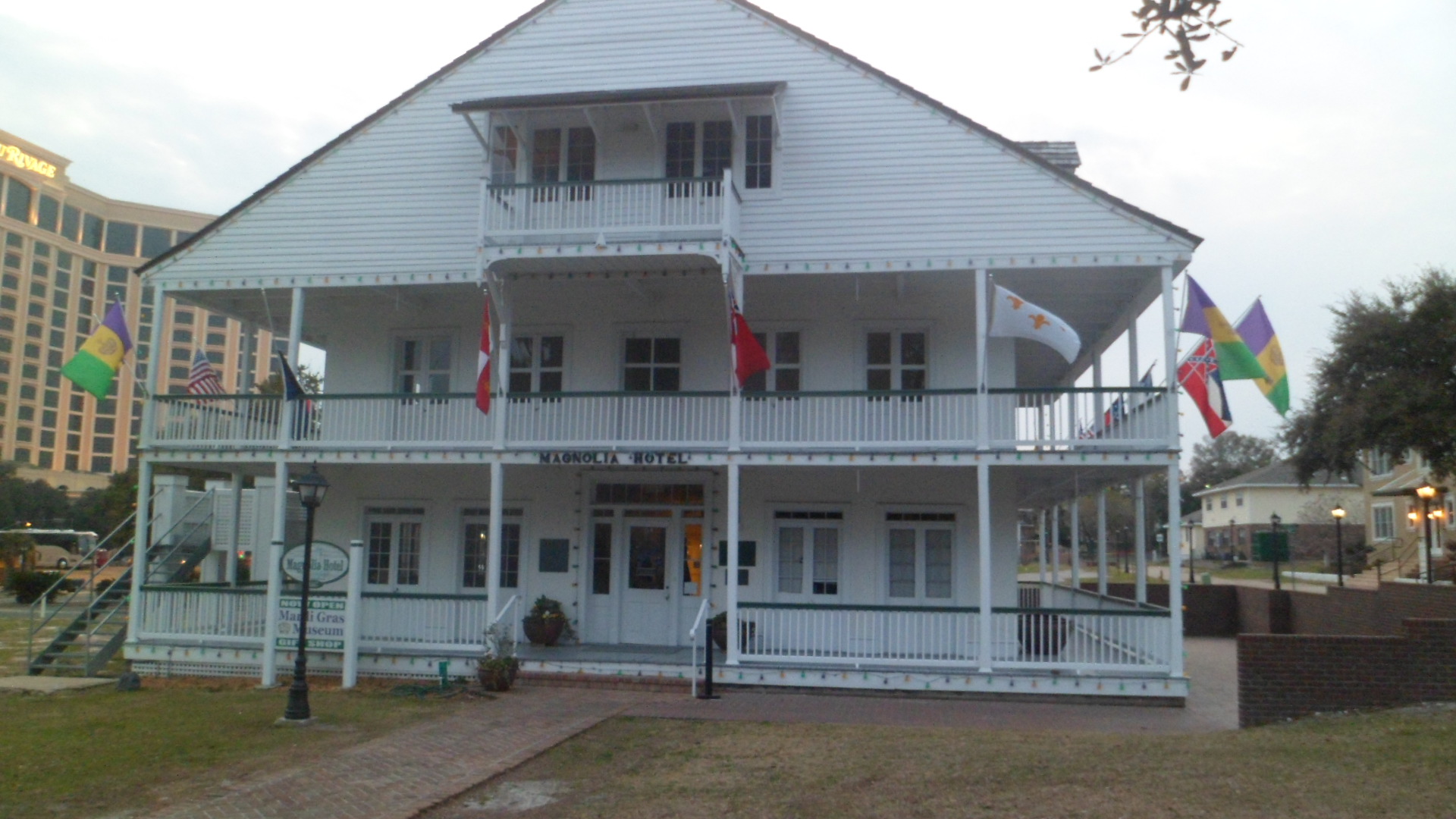
The Magnolia Hotel is Biloxi’s Grande Dame.  It was built in 1847.

SAM_4150

Mary Mahoney’s French House is the city’s premier restaurant.

SAM_4152

The white sand beaches, though, are a key element of what keeps Biloxi thriving.

SAM_4155

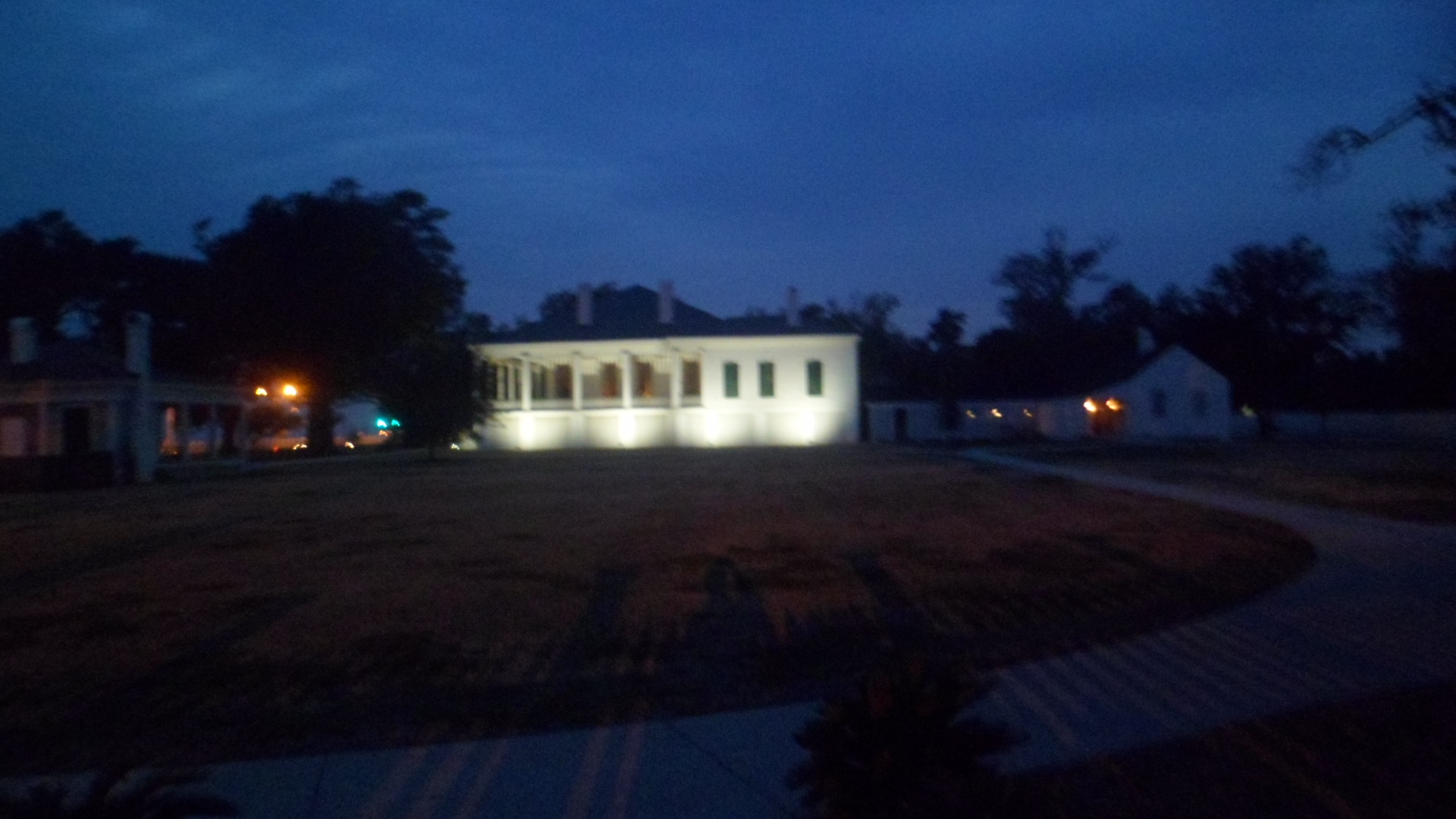
My last photo of the evening came with a brief stop at the grounds of a place bound to evoke mixed emotions for the history buff:  Beauvoir, the Jefferson Davis Home and Library.  Knowing the past helps shape the future, so on a future sojourn, I may well stop here and learn just what made the man form such an alternate view of how America was to evolve.

SAM_4158

The night did not come in a shy manner.  I continued on, through Pass Christian, which had just finished its Mardi Gras parade, Bay Saint Louis, where none of the Mom and Pop motels had their Welcome lights on, to Waveland, where I got a modest-sized room, for a premier price- this being so close to Mardi Gras and all.  Dinner was cheap, though, at Third Base Bar and Grill, a honky tonk which is one of the most convivial places I’ve yet had the pleasure to visit.  This is country Mississippi as I wish it had been in the 60’s, everyone getting along, without regard to who was from where, or from what background. I was treated just fine, with my mushroom Swiss burger, lightly-oiled fries and a pitcher of ice water- me being a teetotaler and all.

The journey becomes a destination, in and of itself.

The Road to 65, Mile 78: All Love’s Labours

4

February 14, 2015- Panama City, FL.  Actors have an open-ended mission:  To relieve tension in their audience, but also to incite thought.  This is as true of those who devote themselves to small-city “stock” theater productions, becoming more intimate with both their audiences and their crews, as it is of those who stride the Red Carpet on awards night.

The rehearsal on which I sat in, this lovely north Florida morning, was intent on taking the viewer/listener back to childhood:  Specifically, it addressed the Spelling Bee, on the surface level, and the issues of parents living through their children and the resulting effects this brazen, immature vicarious life has on the child, on the more crucial, underlying, level.

Two hours of love were put into this endeavour, at least from the actors’ perspective.  There will be more, before the February 20 presentation.  The troupe presents before school groups, so this play will hit home, for any child who is in an activity for the sake of his/her parents.

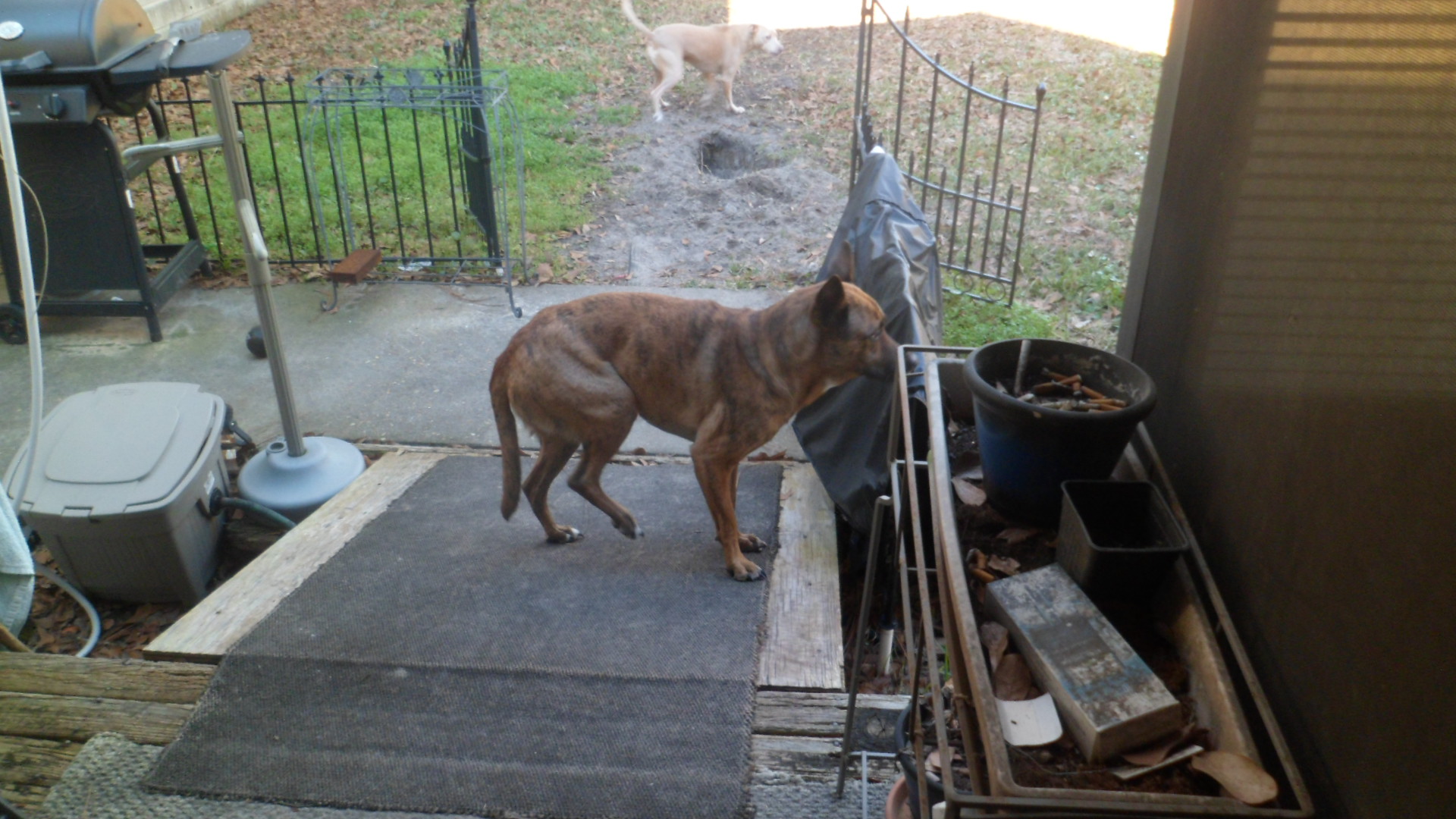
I started the morning watching my hosts’ dogs play, in the back yard.  Dogs have the right perspective:  Only do what feels right, do it as a team, and mess around a bit, while doing it.

SAM_4051

The actors have the team thing down, and so will get through the production quite well.  My host is one of the best at this, and while messing around is not on her agenda- there is no one who has more fun with her work.

SAM_4053

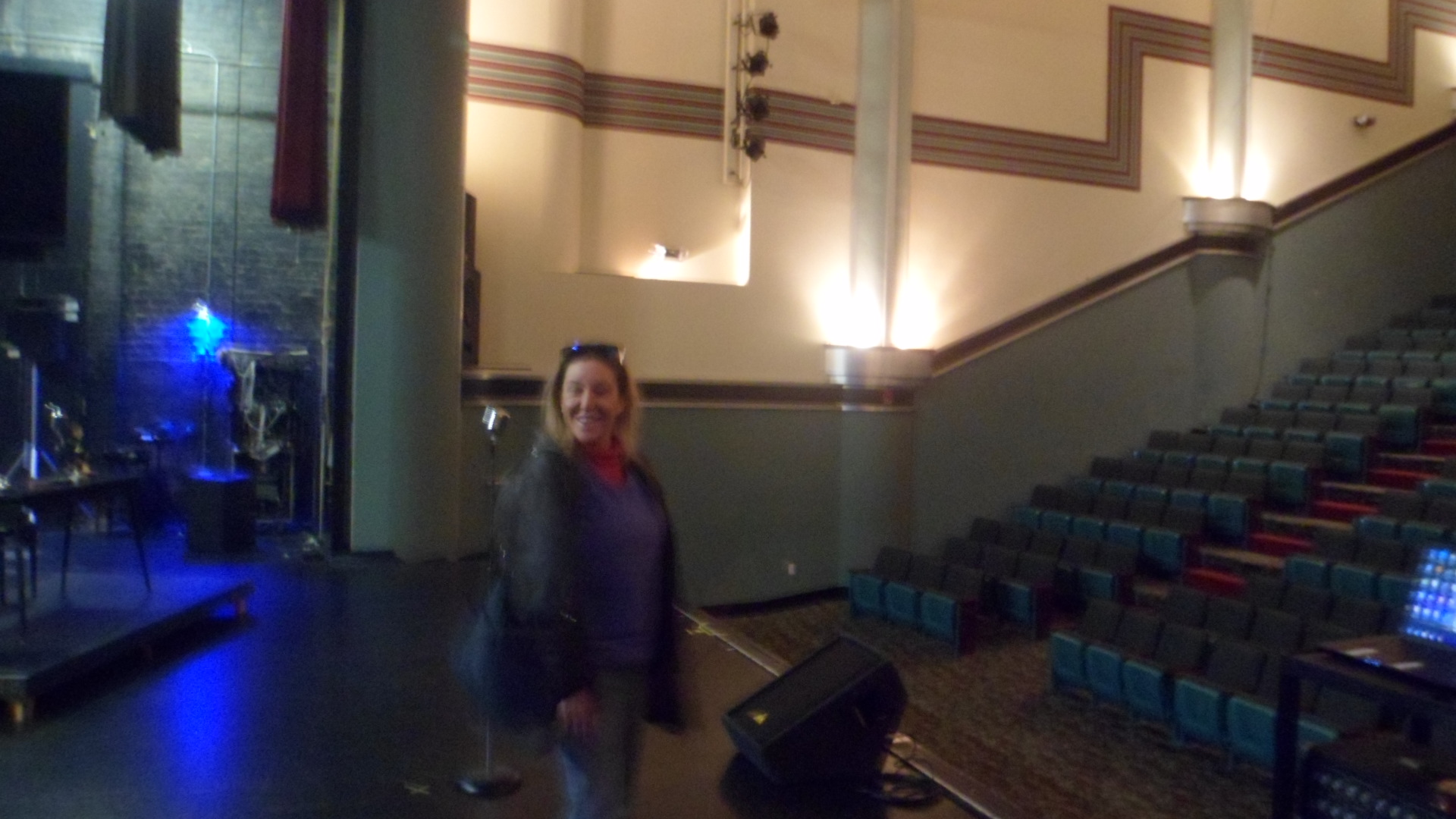
The Martin Theater, where the production will first be staged, is a venerable institution in Panama City, and was a key USO site during World War II, when north Florida was a key staging area for the European Theatre of the conflict.

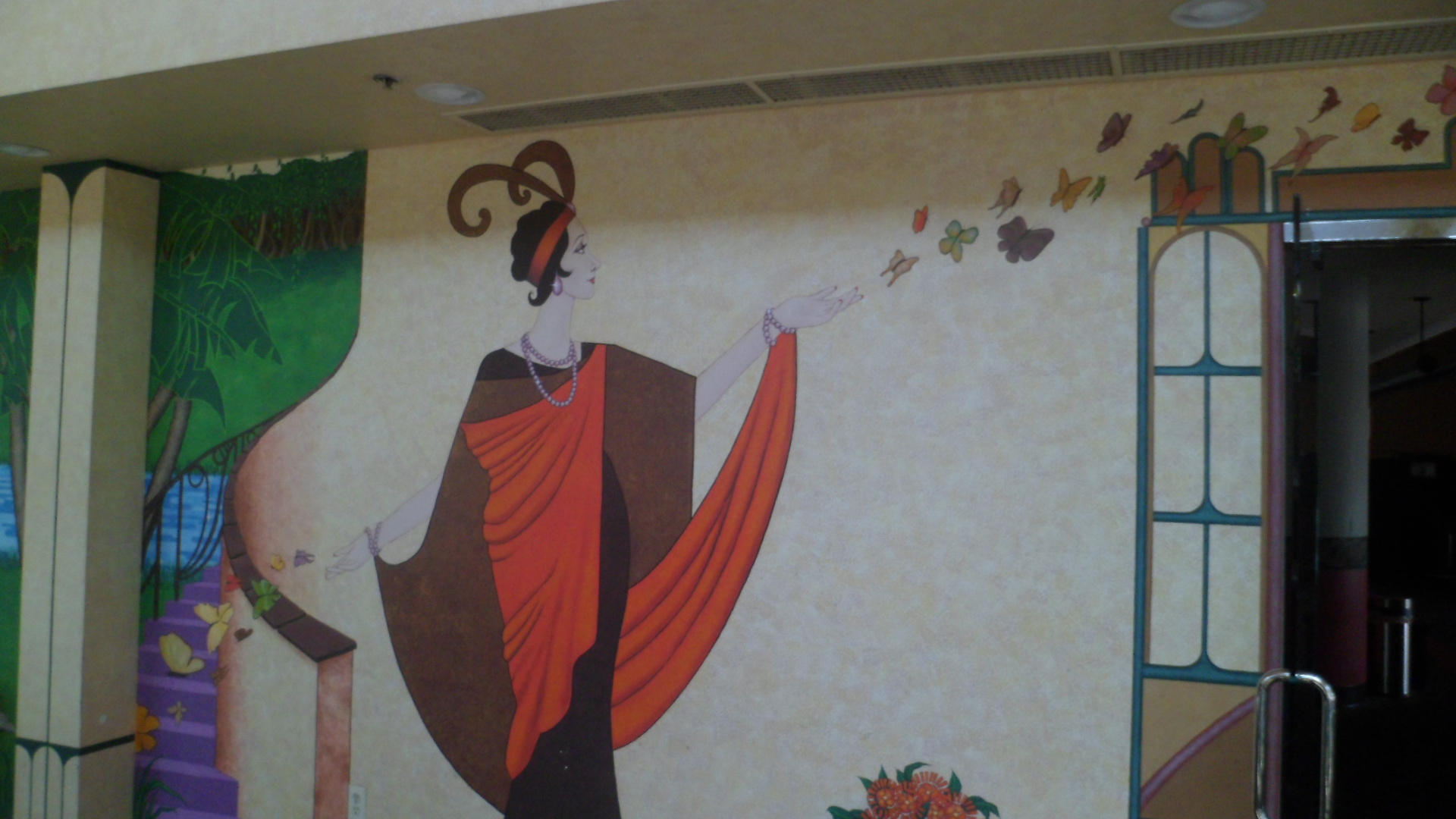
The murals on its south wall reflect the spirit of that time of national teamwork, and determination.  Womankind in those days was far more than Rosie the Riveter.  Style and grace remained key elements of maintaining morale.

SAM_4062

After the two-hour practice, there was a new mission:  Lunch.  Where better to begin this important search, than at a Farmer’s Market.  Panama City has a fine one, in the St. Andrews neighbourhood.

SAM_4065

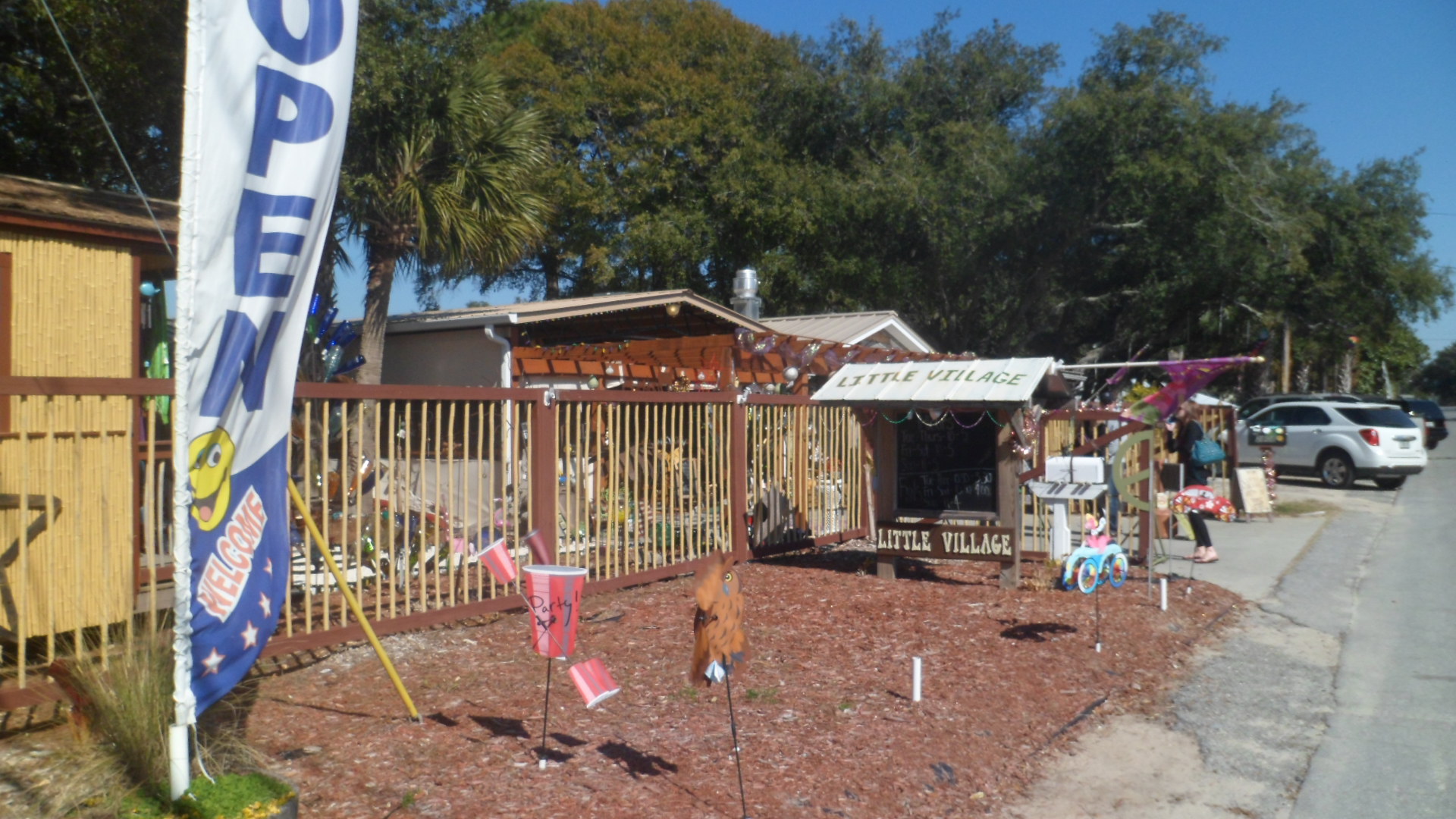
We found lots of arts, crafts and fresh vegetables, but a complete meal required crossing the street- to Little Village, a lovely old house that was converted by its owner into a small restaurant, bar and gift shop complex.  It reminds me of a similar arrangement in an airplane hangar, at Oceanside, CA.

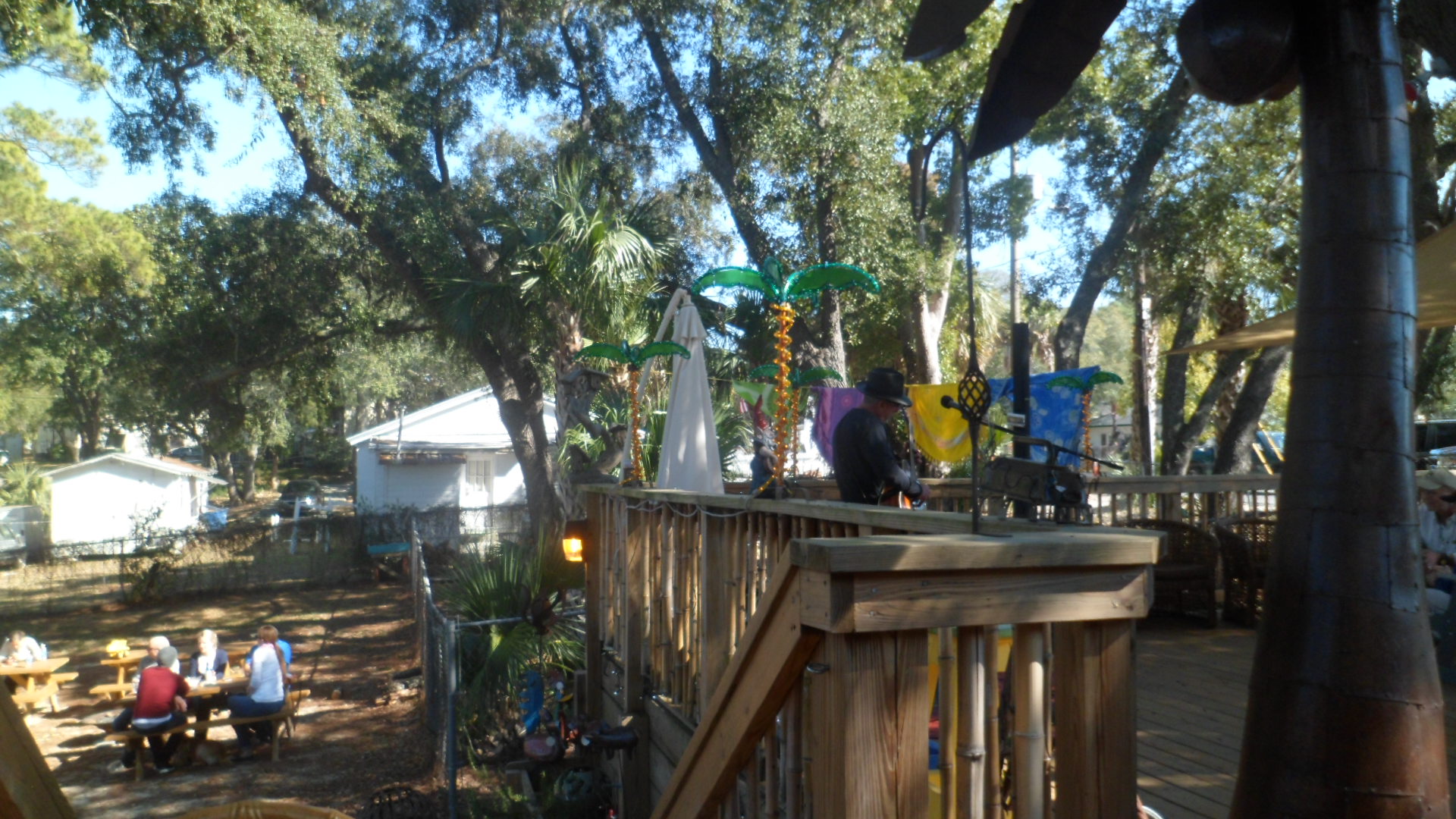
SAM_4068 Little Village is certainly well appreciated by the residents of Panama City:  The place was packed, and we got stuffed by the amazing Veracruz-style Mexican cuisine.  Music was provided by a pianist-singer, evoking a cross between Billy Joel and Carlos Santana.

SAM_4072

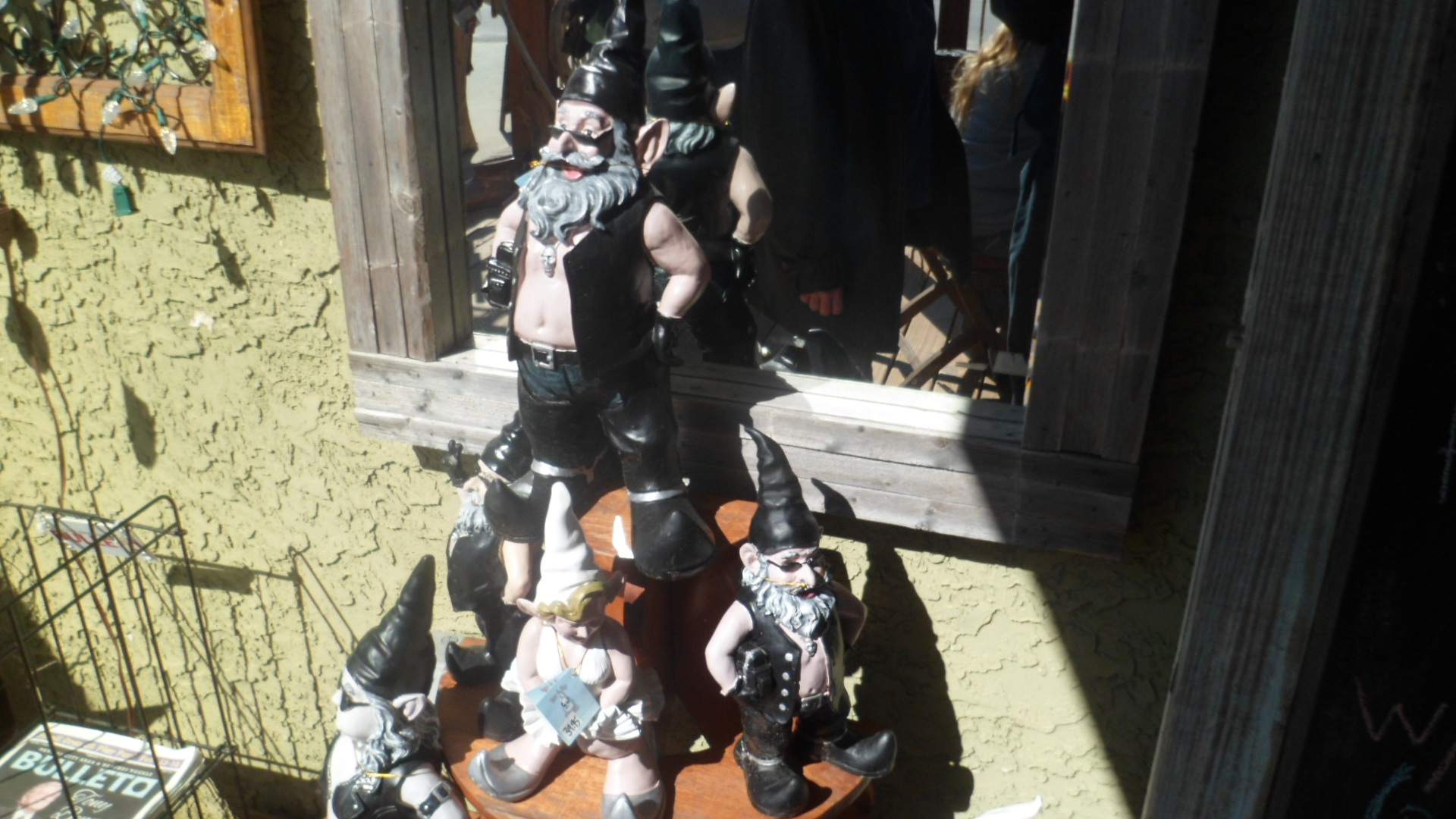
I was beginning to think that I might end this journey looking like these fellows.

SAM_4069

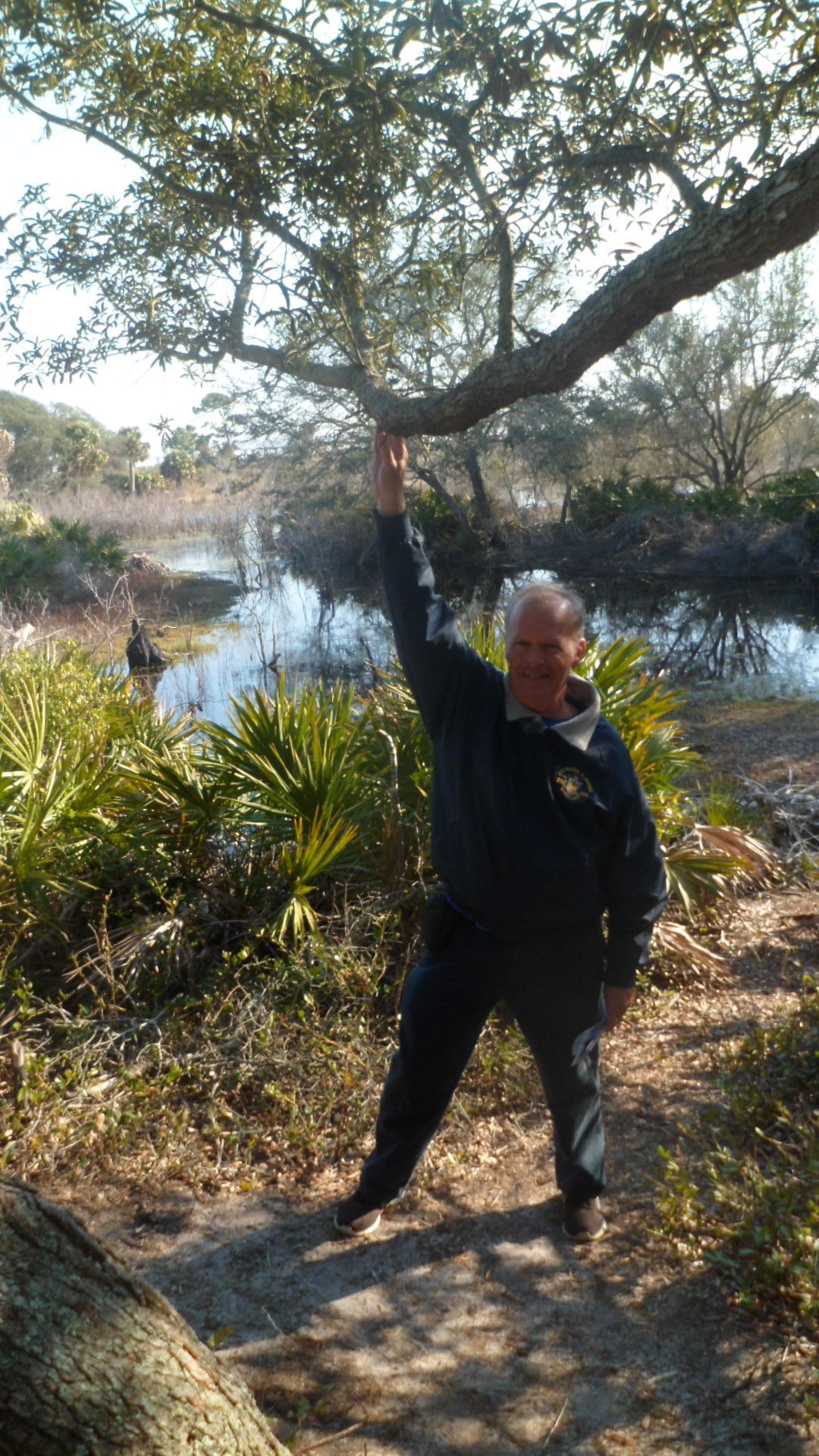
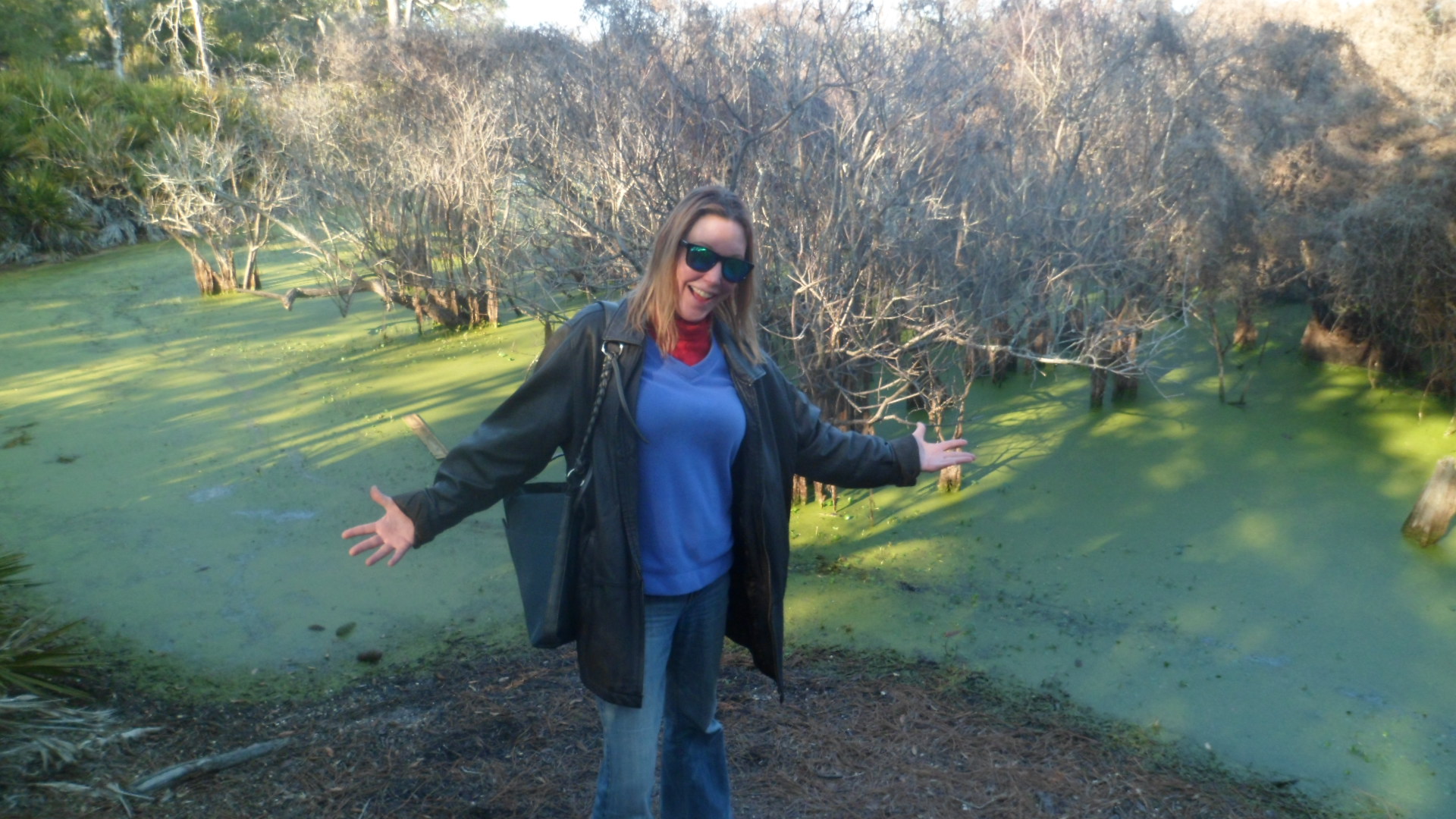
We decided to walk off the meal, as best we could, and drove to St. Andrews State Recreation Area, first visiting Gator Lake, an encounter with a swamp environment.  The signature creatures were nowhere to be seen.  Of course, it was early afternoon, and alligators usually prefer to be out and about in the morning.

SAM_4075

SAM_4089

The sand here is the whitest I’ve yet seen, being largely the result of shell deposits.

SAM_4083

Needless to say, Host and I were both in our elements.

SAM_4081

SAM_4086

The afternoon would not have been complete, though, without going across the parking lot and seeing the fabulous stretches of pure white sand and rather feisty surf.SAM_4091

SAM_4094

SAM_4096

This was a very full St. Valentine’s Day.  As much as sourpuss revisionists like to put down the Patron Saint of lovers, I like to think his devotion to his chosen mission was a path of love, much like that of the actors whom I watched last night, and this morning.

The theme of real love continued on into the night, as we sat in my hosts’ living room and watched “The Good Lie”, wherein Reese Witherspoon teaches, and is taught by, four refugees from Sudan.  We did so in segments, around the work of loving parents who put their son and his needs first.  Later this evening, with my exhausted hosts gone to bed, I had the pleasure of talking with another house guest, an amazingly insightful boy of twelve, for about ninety minutes of free-ranging exploration of just what is needed, in order for families that are fragmented, to reconnect and ultimately thrive.  I think the man-child will do just fine.

The Road to 65, Mile 77: As Luck Does Have It

7

July 13, 2015- Panama City, FL Yes, I believe from now on, I will add location to my datelines.  I am back on track, writing, after several days of focusing just on what’s in front of me.  Today, I connected with two friends:  One, an extended family member who’s in an exile, of sorts and the other, an online friend who’s been after me to come by this town, off and on, for the last three years.

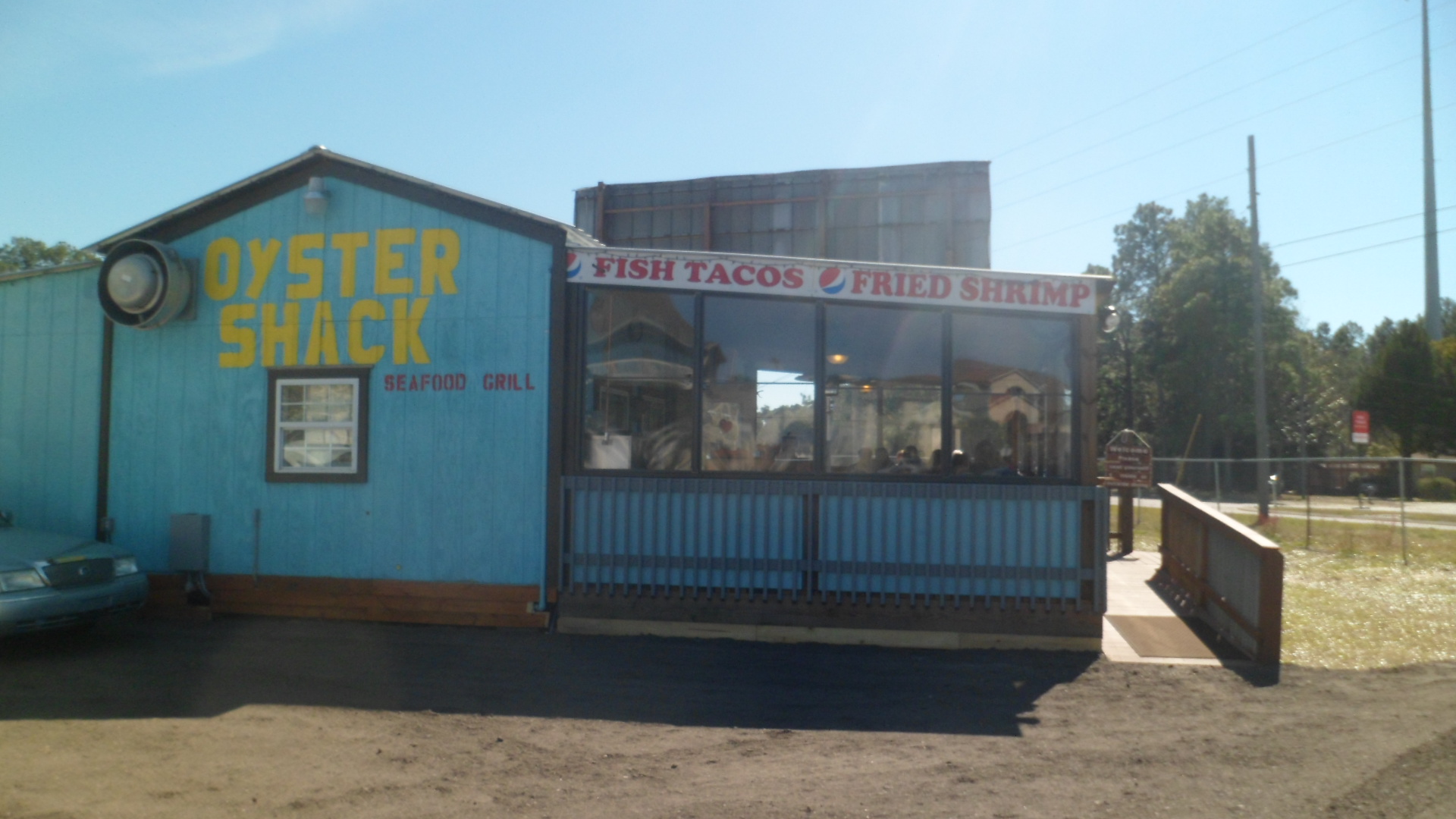
So, here I am, in lovely northwest Florida.  The area does seem more soul-connected than some other parts of the Sunshine State, but maybe that’s because its heritage, along with that of St. Augustine and the northeast, runs a bit deeper.  I began my visit by lunching with said family member at Gary’s Oyster Shack, in Springfield, about five miles east of PC.  My eponymous restaurant host was a taciturn sort, a bit reserved, but he and his kids put forth some great Low Country Boil, and a full range of other dishes.  It’s great to be back dining by, and of, the sea.

SAM_4026

After an hour’s conversation, I bid farewell and Godspeed to my friend, and leaded forth to downtown Panama City.  Walking around the seemingly defunct Hawk’s Nest Bar and Grill, I spotted signs that the place was once a fabulous place at which to while away an afternoon, or an evening. The woods outside make for a fine picnic spot.

SAM_4031

Murals most often tell a good story, as this one does.

SAM_4032

Then, there is the front veranda and patio- one of the great appeals of the Coastal South.

SAM_4033

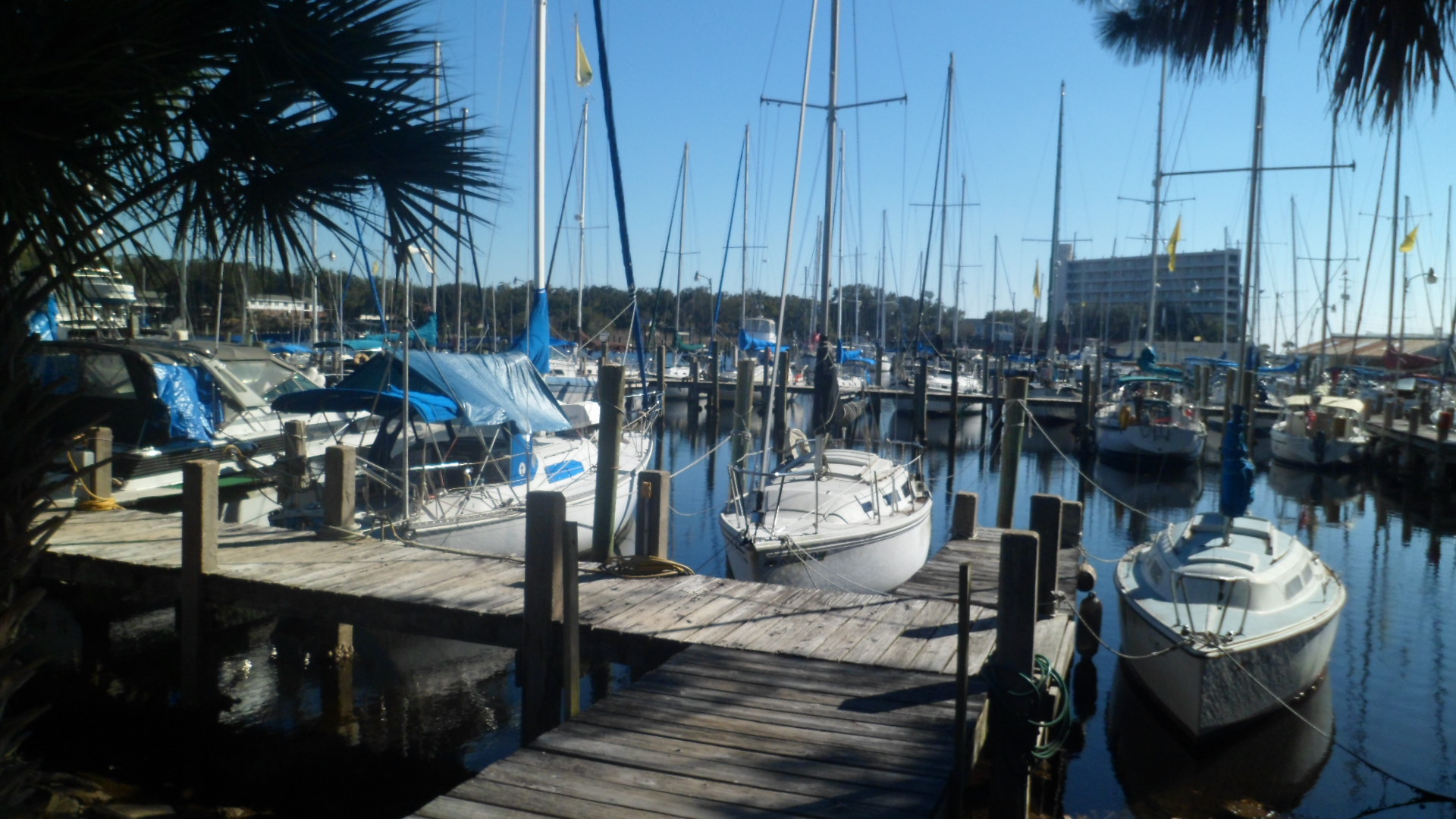
Back along the waterfront, there is a crowded marina- reminder of fishing’s prominence here.

SAM_4030

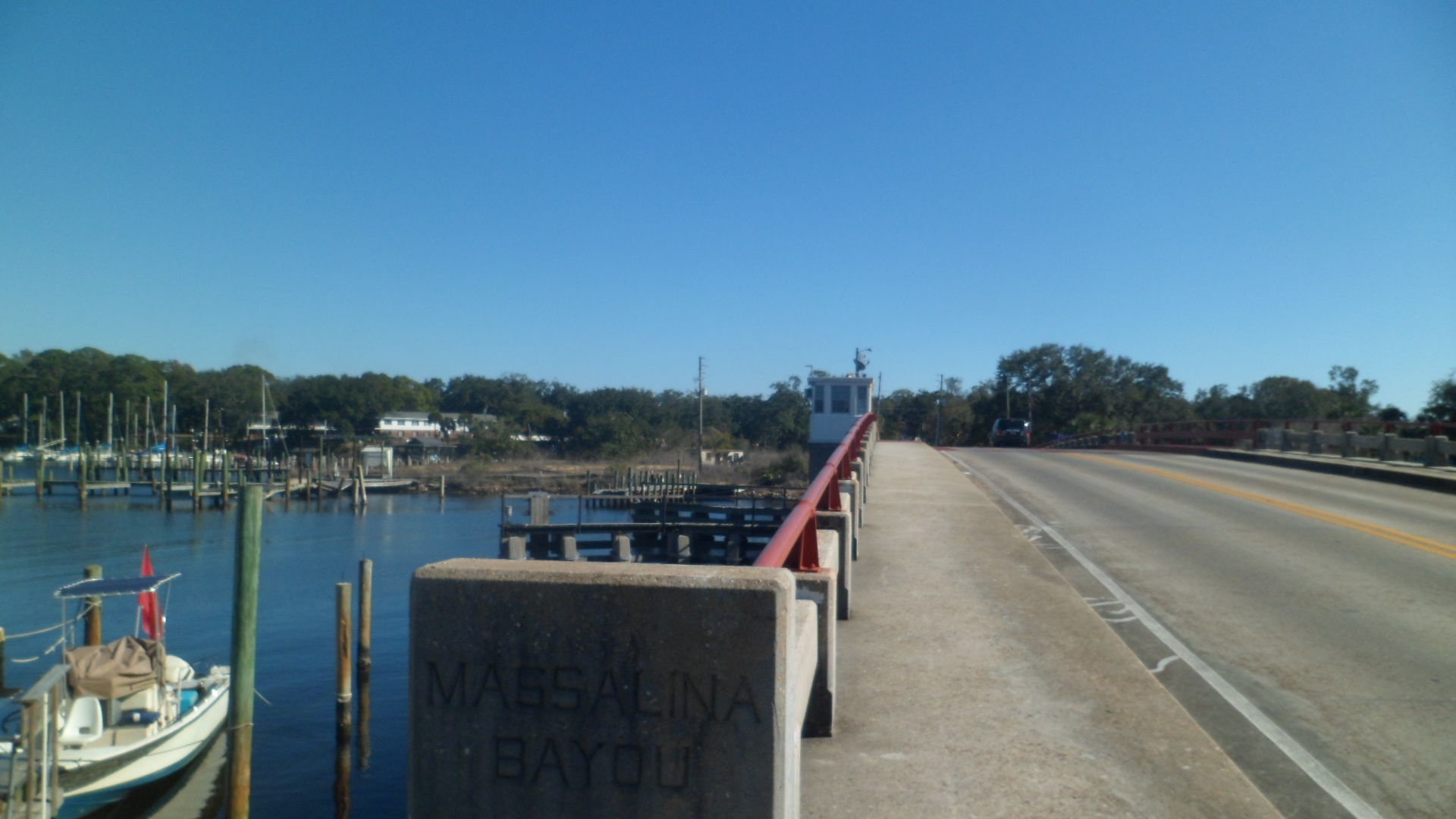
I walked along the coastal path, crossing a drawbridge- the oldest working such bridge in these parts.

SAM_4034

SAM_4035

Towards the end of the road, there were several lovely historical homes.  Some are large, like the Howell/Hobbs House (1909).

SAM_4037

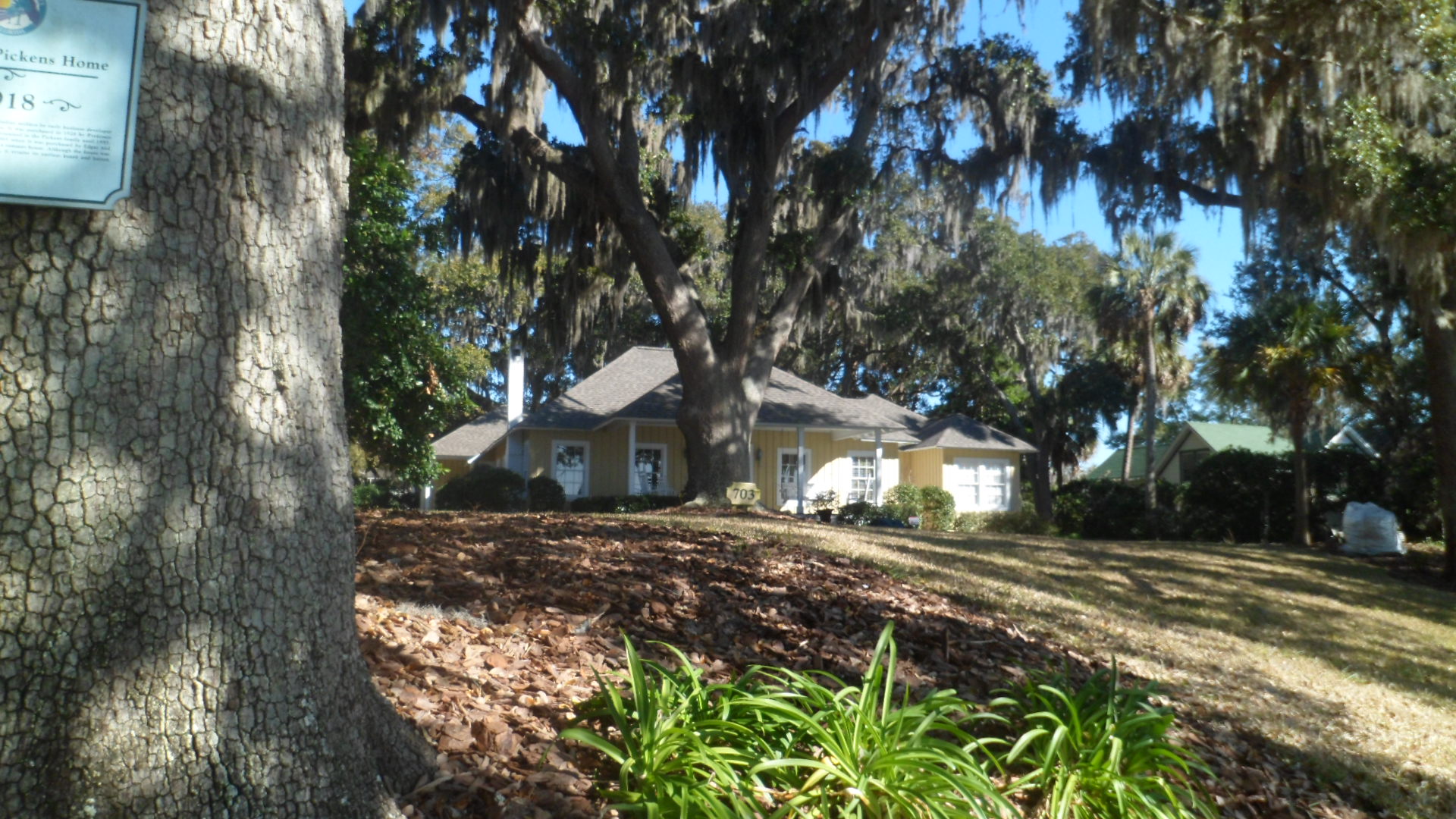
Others were cottage-style, like the McKenzie/Pickens House (1918).

SAM_4040

These homes are in grand proximity to some of the clearest ocean anywhere.

SAM_4043

My host later explained to me that there are pools of fresh water, parallel to the ocean, and that alligators traverse between the two water supplies, feasting on the best of both.

I was in need of a rest, and of wifi, after this fine little outing, and so repaired to Willows British Tea House, just up Harrison Street, as it happens, from the Martin Theater, where I would observe a play practice in a day or so. The awning shows where Willows is located.  There were some ladies inside, who did not wish to be photographed, so this is as close as I choose to show the lovely establishment.  Here, I finally connected with my host, and arranged to meet her at the Martin.  After a refreshing pot of orange tea and a piece of lemon cake, I headed for the theater.

SAM_4027

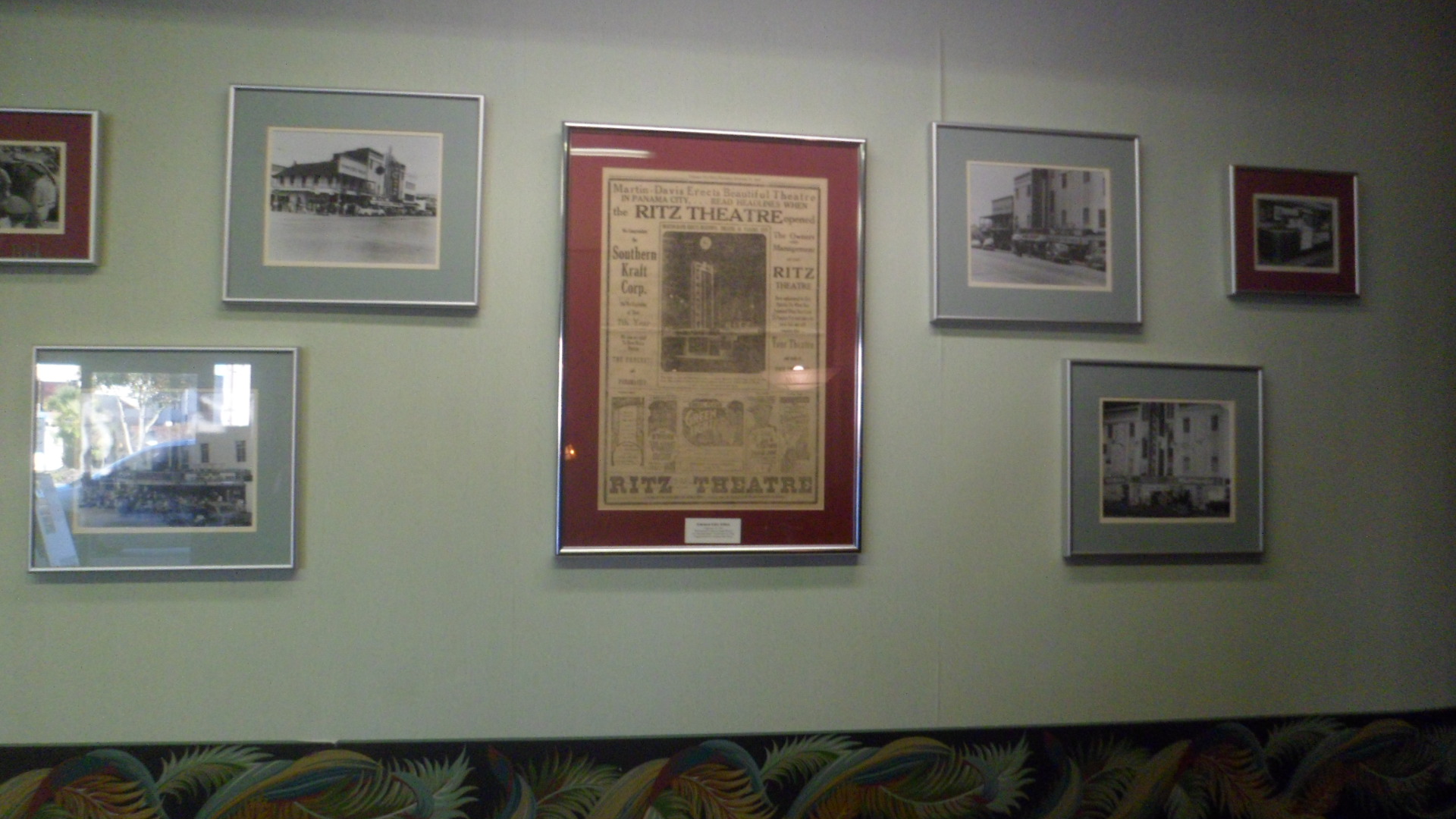
Here is a scene from the Martin Theater’s lobby.  It has a long exchequer of fine performances, and still serves as Panama City’s center for showing art cinema.

SAM_4048

That evening, after a marvelous meal of gumbo and rice, Kelly, Fernando and I headed for Kaleidoscope Theater and watched a pleasing, though overlong, production of a play entitled “There’s A Burglar In My Bed”- a British-style farce, where several people got in one another’s way, mostly in an inadvertent manner.  It’s all great fun.

The Road to 65, Mile 76: Happiness Is A Hot Wheels Tattoo

2

February 12, 2015, Marianna to Sylacauga-  Today was a day of few photographs.  The central purpose of my drive up to Sylacauga, midway between Montgomery and Birmingham, on the Beeline (U.S. 231), was to lend a listening ear to a young friend.  Alabama has lots to offer the visitor, but for this journey- it was enough to visit the Welcome Center at Madrid, enjoy a couple of barbecue meals (lunch at Smokin’s, in Wetumpka and dinner at Larry’s, in Ozark, where I spent the night), and sit conversing with my friend, while her toddler alternated between playing in the McDonald’s rumpus area and coming over to get our attention.  That’s what 3-5 year-olds have to do, to make sense of their slowly unfolding world.

I began the day in Marianna, about an hour west of Tallahassee.  I had spent the night there, at Best Value Motel, and did my laundry at a nearby coin-op.  I had an interesting conversation with the owner of the laundromat and one of the other patrons. The owner was a native of Marianna, and has watched it go through several changes.  To him, having grown up and stuck with the city’s West Side as home, the gradual deterioration of family values and increase in crime and dysfunction were not things he foresaw.  On the surface, things in that area look quite peaceful, but he advised me not to walk around much, at that hour of the night (It was 8:30).  I only had to walk next door, so it was no problem.

This morning, I took a walk around downtown Marianna, after breakfast at Bobbie’s Waffle Iron.  The mood in the breakfast spot was a bit colder than that at Jim’s Buffet, the night before.  I was pretty much served quickly and expected to eat and leave quickly- with some men at the other end of the place muttering about “stranger over there”.    No one bothered me, though, so I just went on about my exploration.

I checked out some of the noteworthy buildings and an obelisk commemorating the Confederate Veterans.  I noted the difference between First Baptist and First Methodist.

SAM_4016

SAM_4018

The Confederate Obelisk stands in front of an apartment building, in the center of Marianna.

SAM_4021

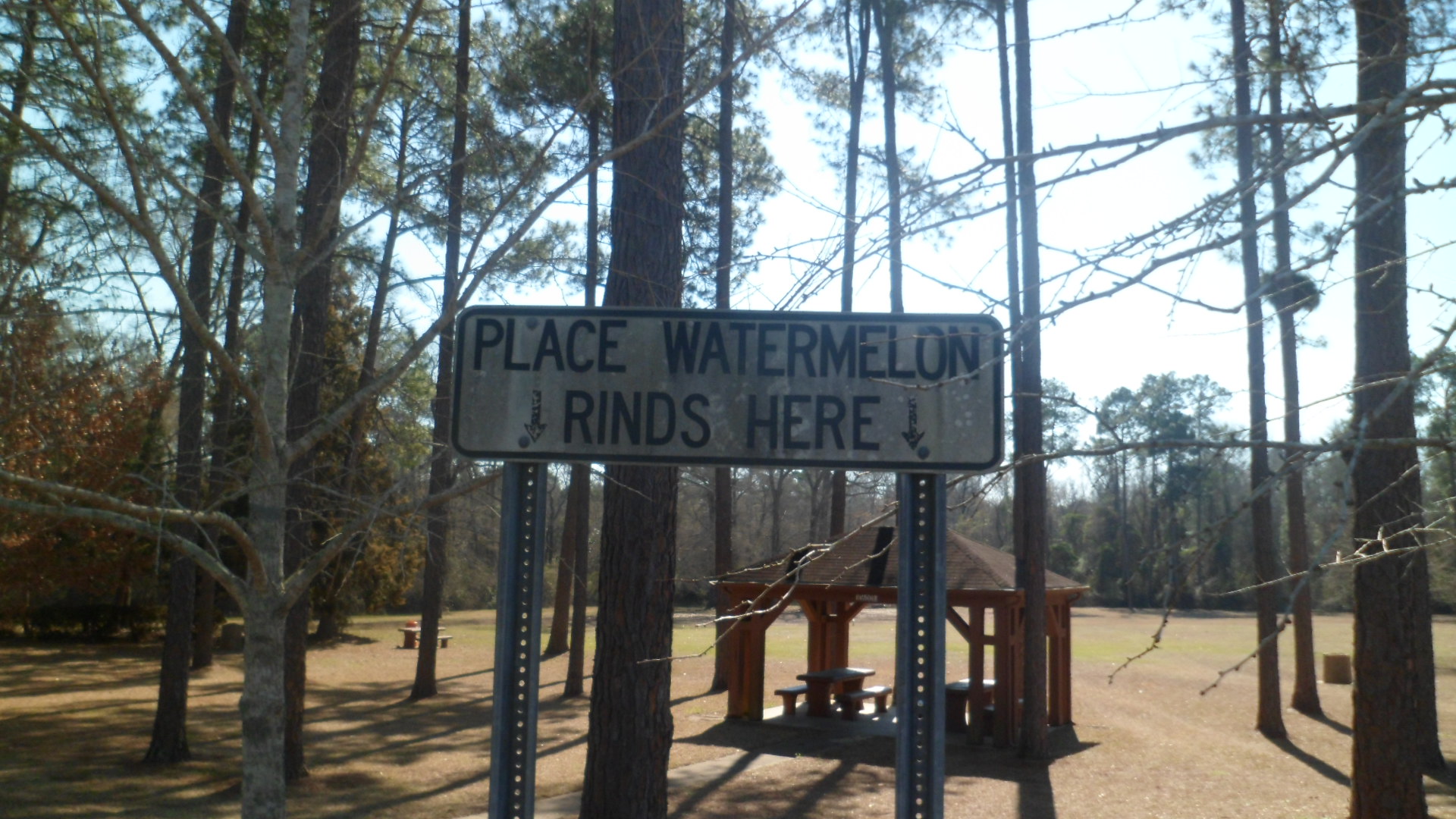
Leaving Marianna around 10 AM, I made good time along the Beeline.  Here are some scenes from the Madrid, AL Welcome Center.  Composting is done with watermelon rinds, by shredding them.

SAM_4023

This Army helicopter is a reminder of Alabama’s strong military presence.  Fort Rucker is not far away, and the regional airport is named for Igor Sikorsky, the inventor of the chopper.

SAM_4024

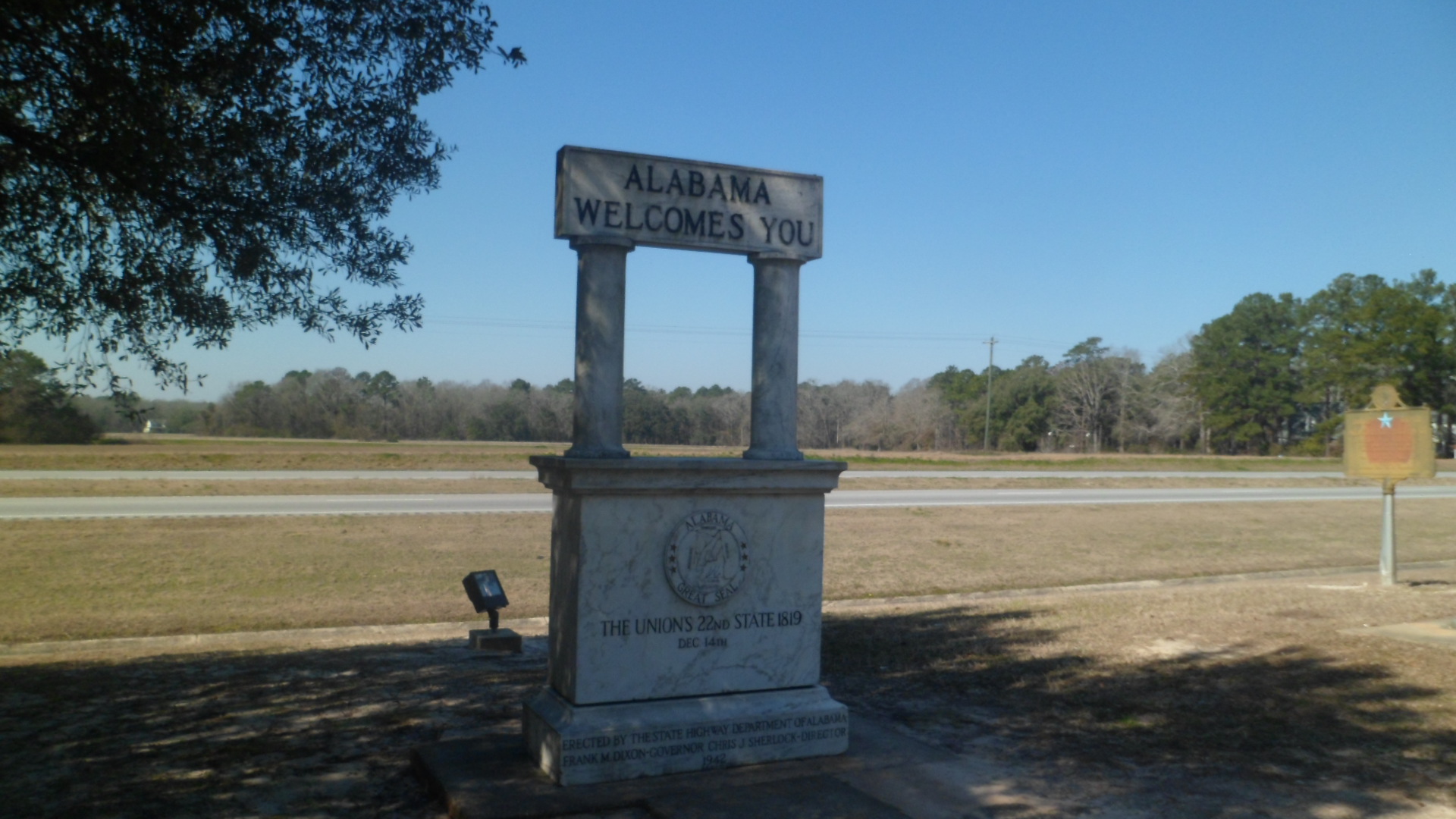
Alabama has welcomed me nicely, each time I have passed through.

SAM_4025

I didn’t take any photos of Sylacauga or of my friend, Christy and her son.  The mood didn’t feel right.  Little man was quite tired, it being mid-afternoon and all. He was, however, quite proud to show me his Hot Wheels tattoo, so I know a bond was starting to form.  His mom and I talked for a short while about things that concerned her, and I think she felt a bit better afterward.  That is time well-spent.

I headed back downstate, and took a room at Ozark Motel, 3 miles north of the town of Ozark- close enough, so that I would be on track for Friday’s two meet-ups, in Panama City.  Time grooves on.

The Road to 65, Mile 75: Florida’s Overlooked Story

5

February 11, 2015, Tallahassee-  Many people come to the Sunshine State for its modernities and for-sunshine. This time of year, there is plenty of sunshine, though Florida can’t entirely escape the cold that plagues the rest of the continent.  There will be two cold snaps, before the region reverts to its signature mildness.  When it’s like this, I focus on the inside scoop- What do a region’s historical treasures have to tell us about the area as it is today?

Most people are aware that Florida was ruled by the Spanish, for about 200 years.  They are also aware that there are Indigenous people, called Seminoles, who had a wise and clever leader named Osceola and that these people fought three wars with the U.S. Government.  Some will know that there are a different group of Indigenous people, called Miccosukee, who are descended from the Calusa and Mayaimi nations, who lived in South Florida, prior to the Spanish arrival.

Few know, however, that the Calusa, and the Apalachee of the northwest, were powerful and well-organized nations.  The Apalachee chiefs recognized that the Spanish had strong medicine to fight the diseases against which Indigenous North Americans had no immunity.  So, they invited the Spanish to teach their people about Christianity and to use European medicine to fight the new afflictions.  They also wanted the Spanish to help defend them against British and Creek warriors, invading from the north.  The British and Creeks won, though, and the Creeks became Seminoles, living around Lake Okeechobee.

The Calusa, though, became suspicious of the Spanish, when a 16th Century rendition of the Mariel Boatlift arrived on their shores, near today’s Fort Myers.  The Taino people fled wholesale slaughter by the Spanish in Cuba and came, in hundreds of dugout canoes, to the land otaf the Calusa. The Calusa never really warmed to Europeans, as you might imagine.

These are a couple of Florida tidbits, revealed at the Florida Museum of Natural History, which I visited on Tuesday, at the Museum of Florida History, which I toured this afternoon- and Mission San Luis de Talimali, where I spent the morning and early afternoon.  The latter two are both in Tallahassee, and are part of a renewed push by the state to focus on its rich heritage.

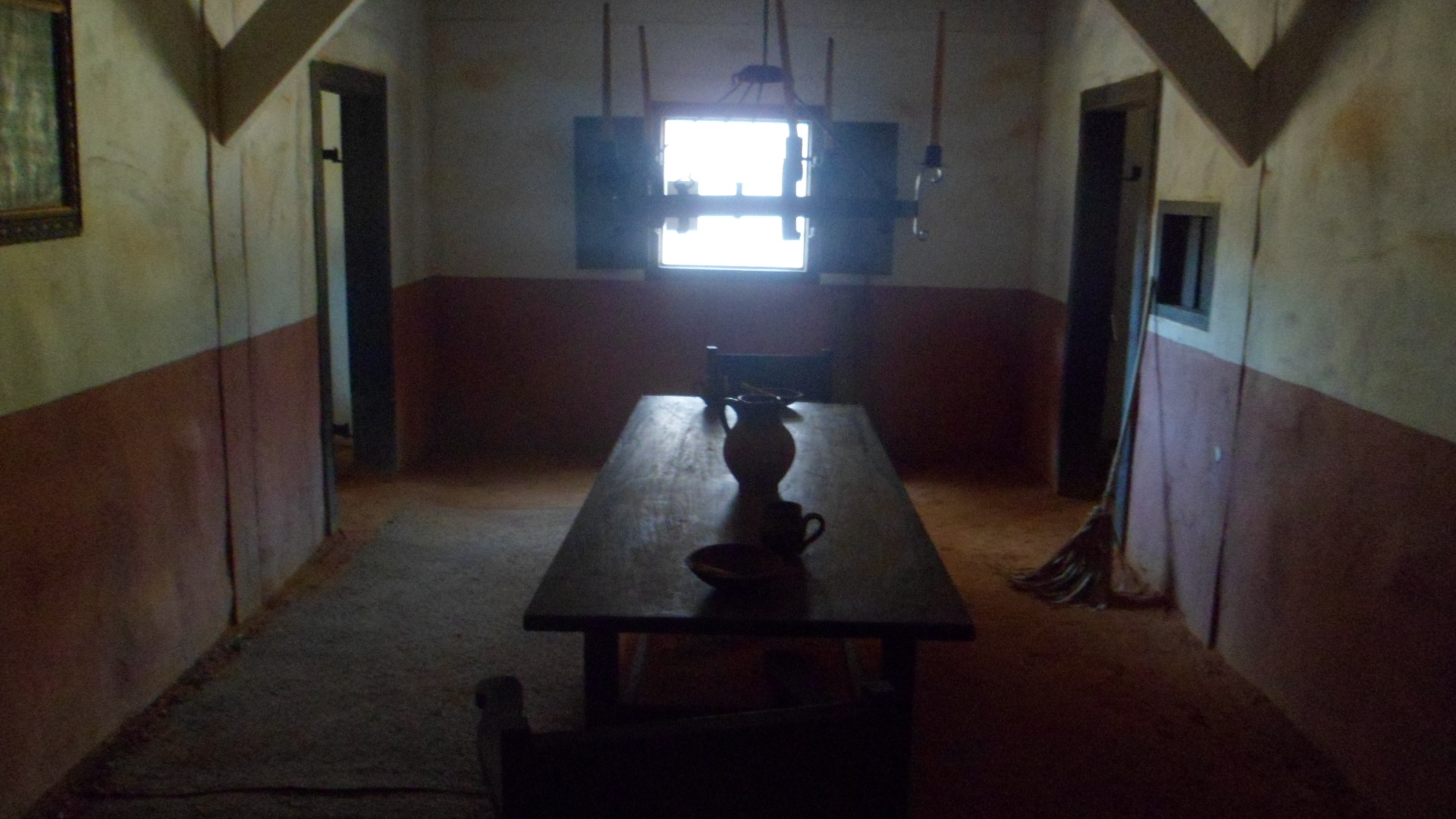
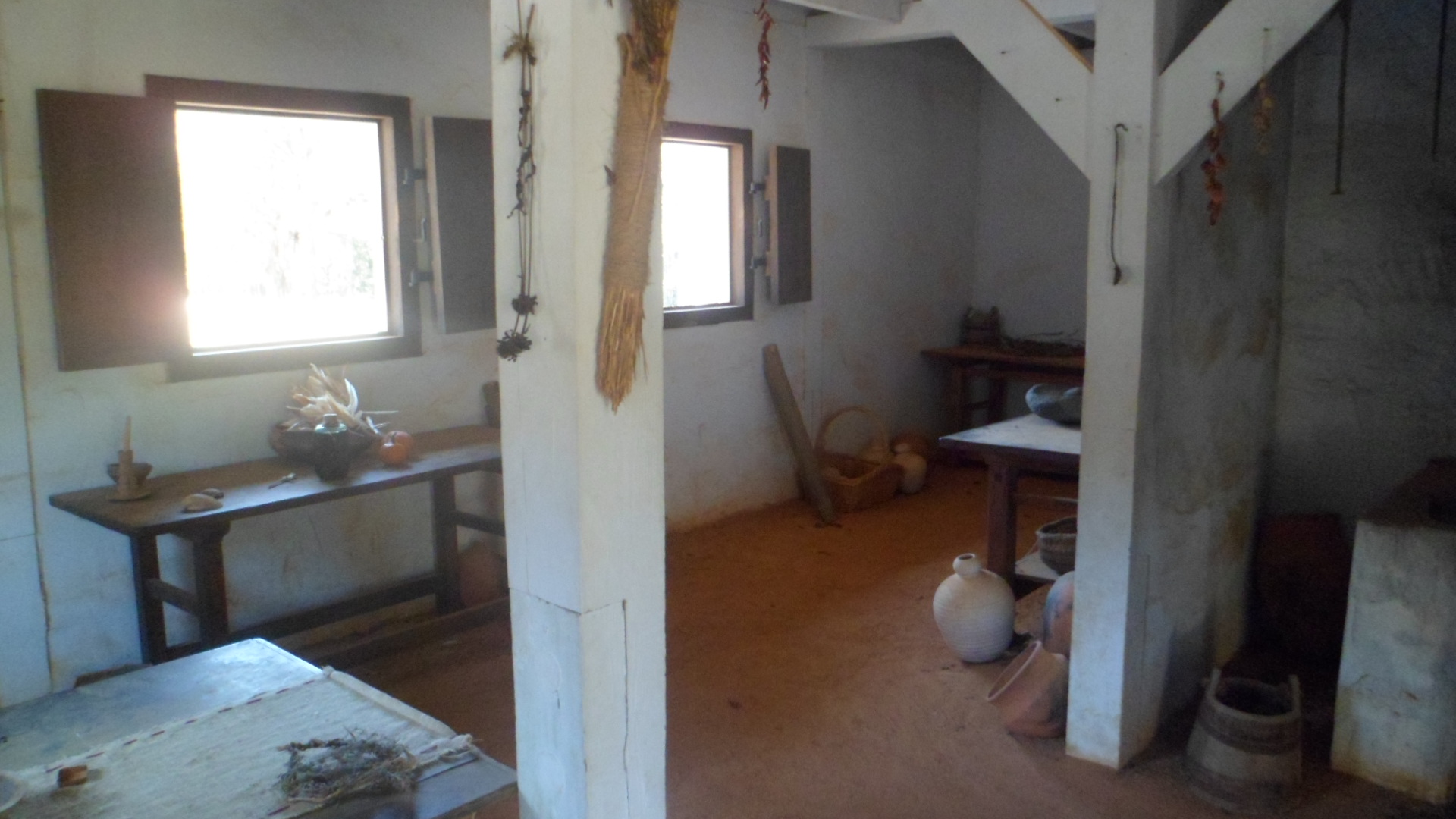
Here are several photos which will give you an idea of the marvels that await at Mission San Luis- a true Living History facility.  It offers classes in metallurgy, tool-making, Spanish and Apalachee cooking, and foraging for plants in the moss-laden forest.

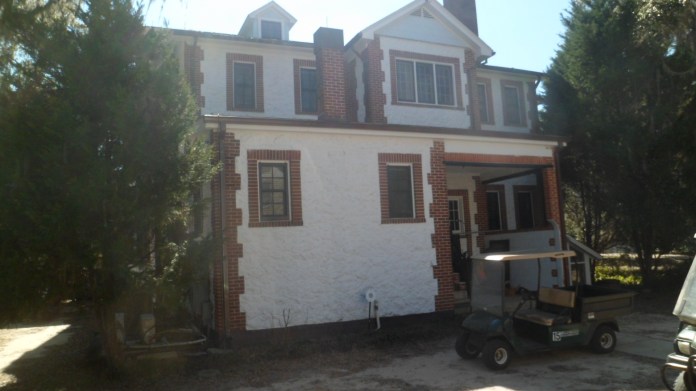
We start with the relatively new Visitor Center, which replaced the early 20th Century Messer House, now a costume-making center and office building, in 1983.

SAM_3924

SAM_3988

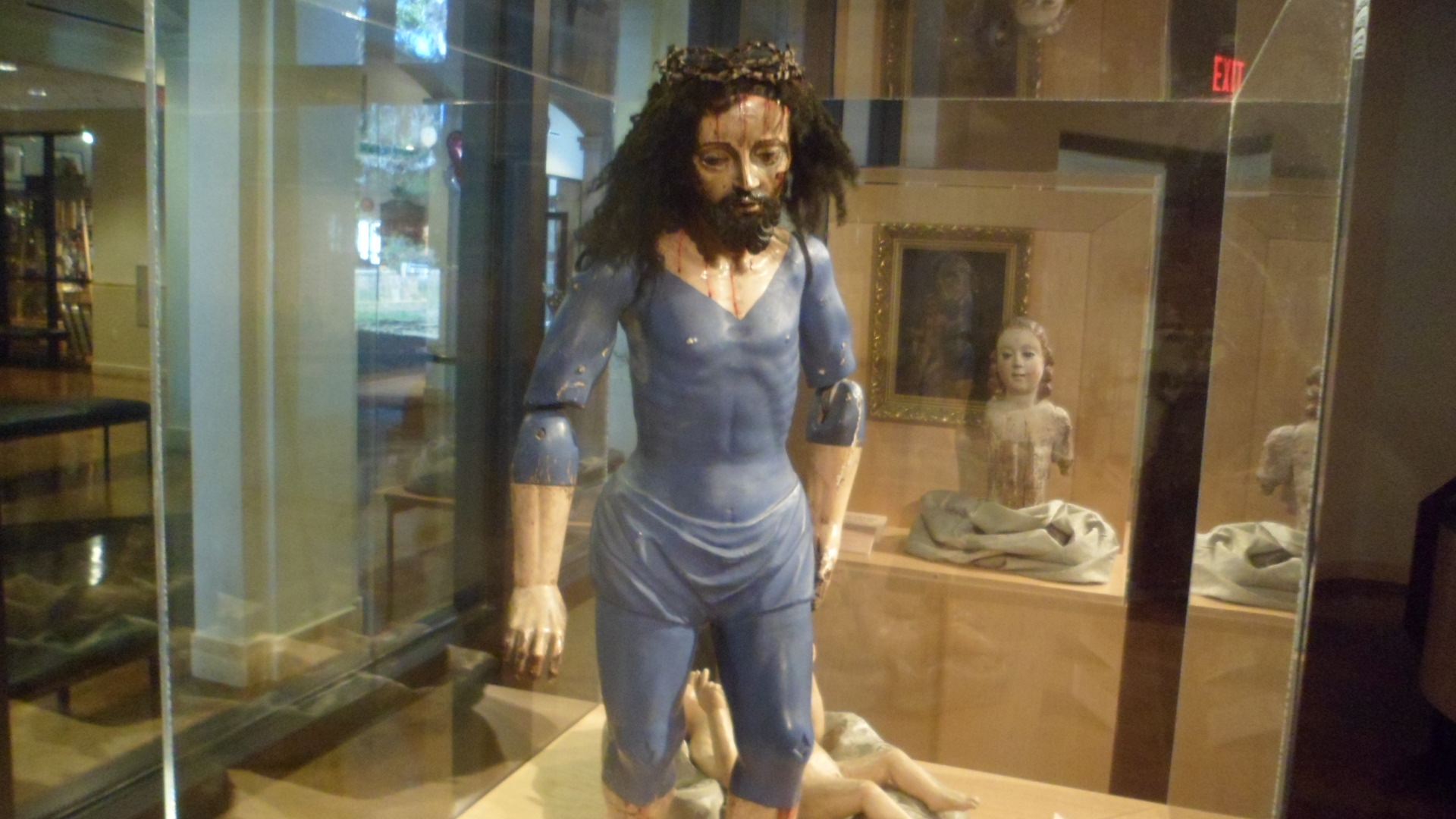
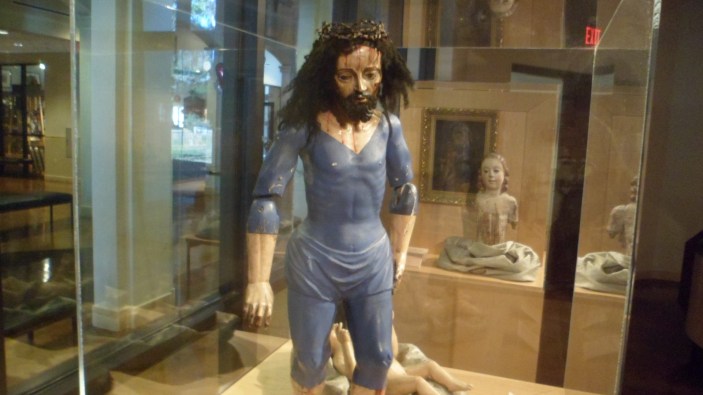
This is one of the depictions of a Crucified Christ that was presented to the Apalachee converts, by the Franciscan friars who established Mission San Luis.
SAM_3929

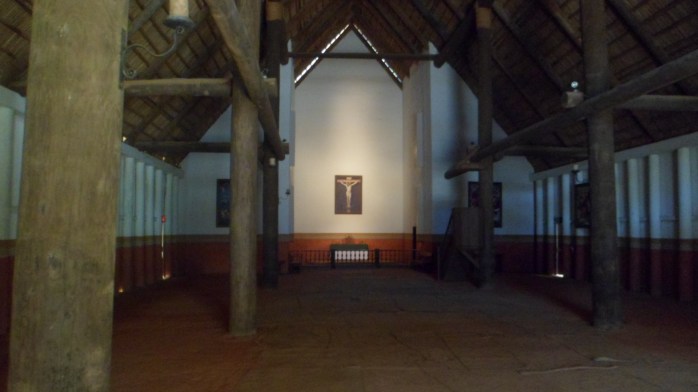
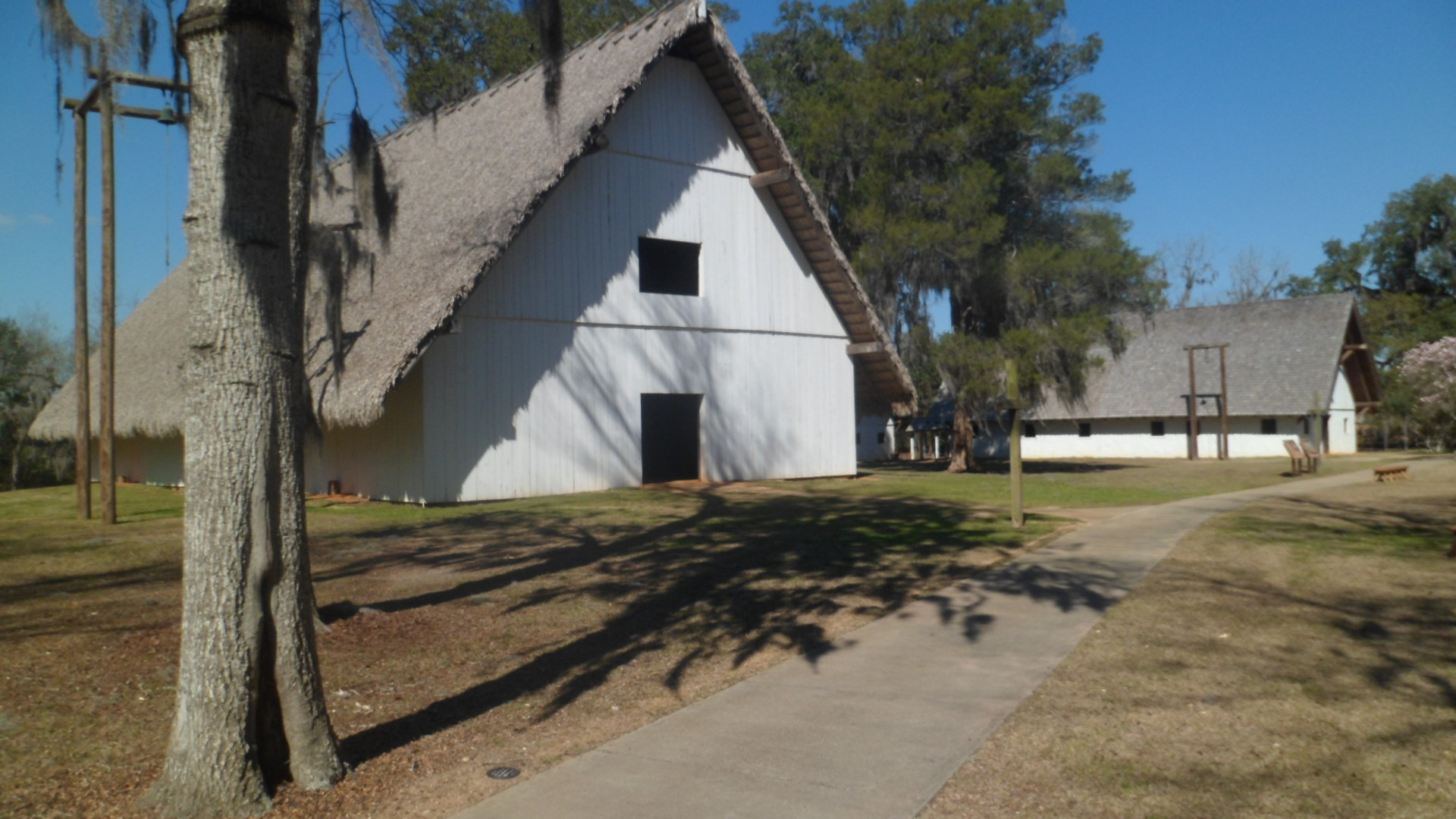
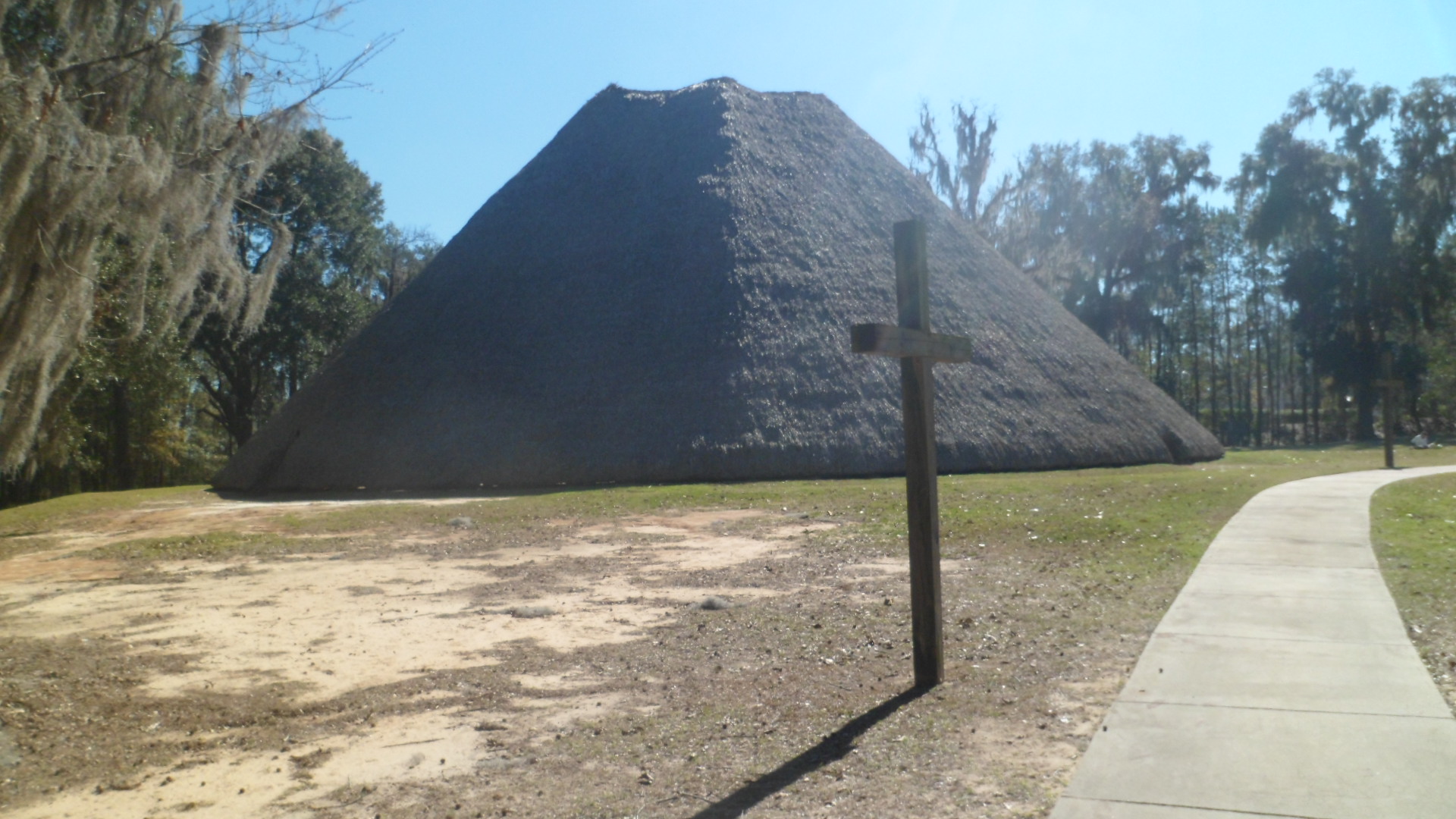
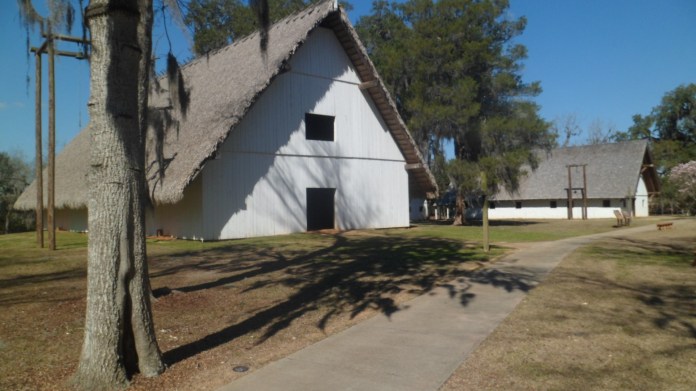
Here is an outside view of the Mission Church.  Note the roof thatch, which is the same material as covers the Council House of the Apalachee.
SAM_3934

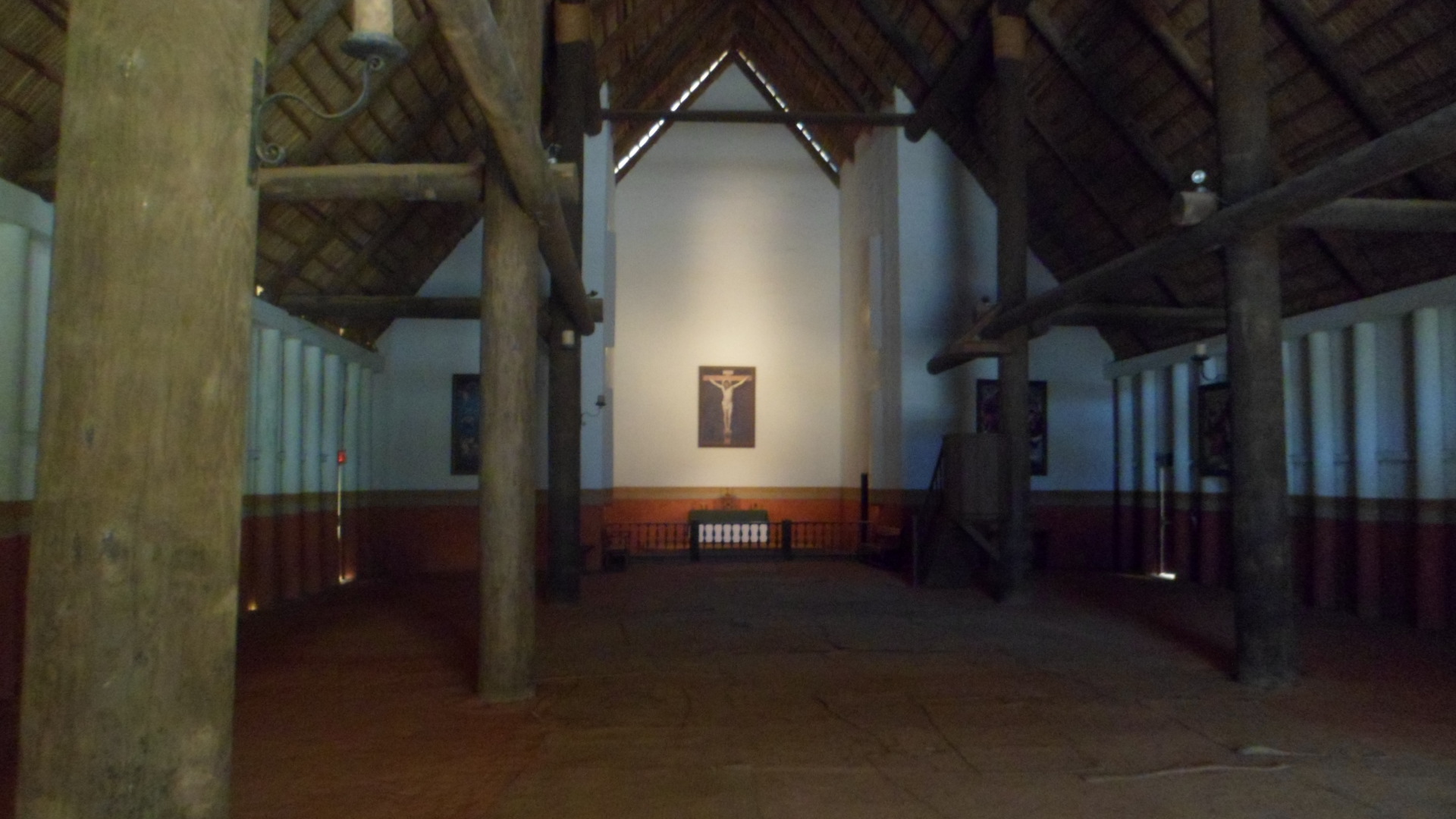
The inside is quite spare, with no semblance of ornate flooring. The floor is sand, as is the case in the friary, the kitchen and the Council House.  Woven mats were used to keep the dust down, with varying degrees of success.
SAM_3941

SAM_3937

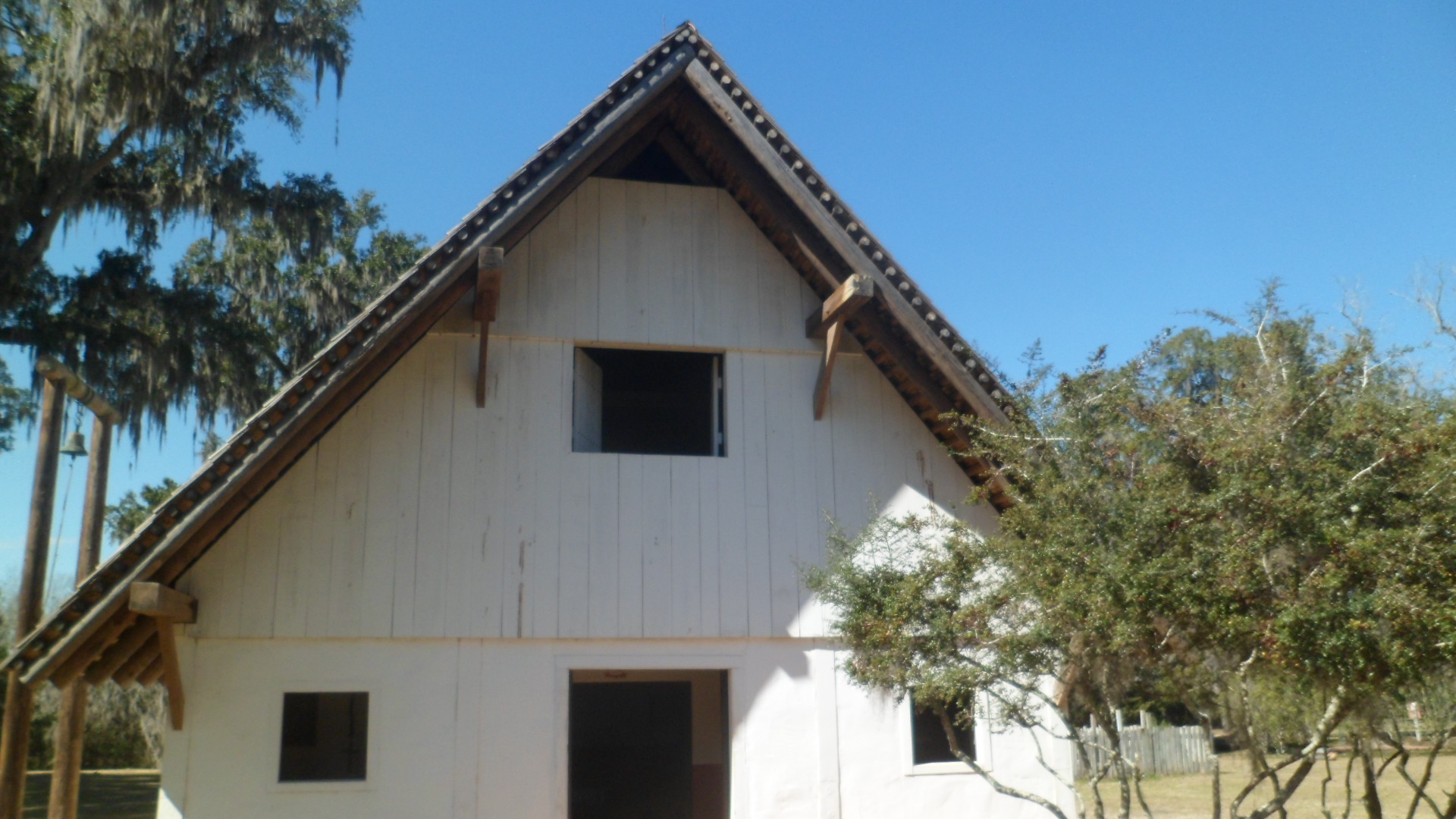
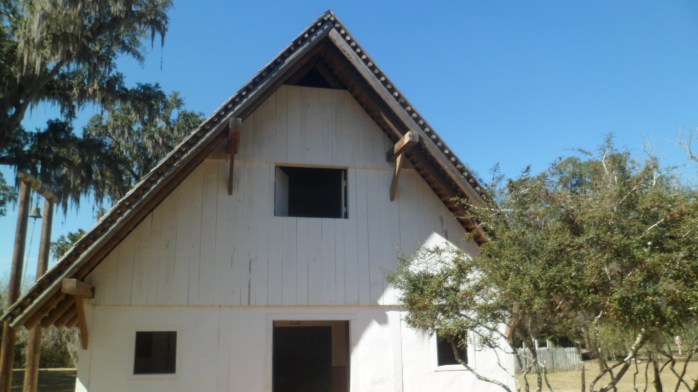
Like the Church, the Friary had a window in the attic, for heat release.  The inside temperature reflected the seasons. Today, all the preserved mission buildings were cold inside.

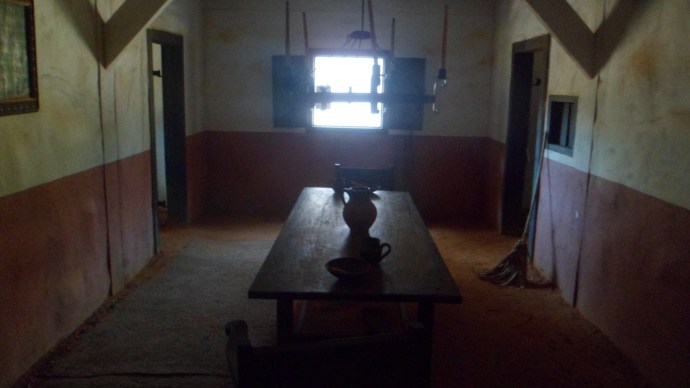
SAM_3941Here is a view of the friars’ dining area.  They took food from dishes on the table, and sat on the floor mats to eat.
SAM_3945

This was the friary kitchen.

SAM_3949

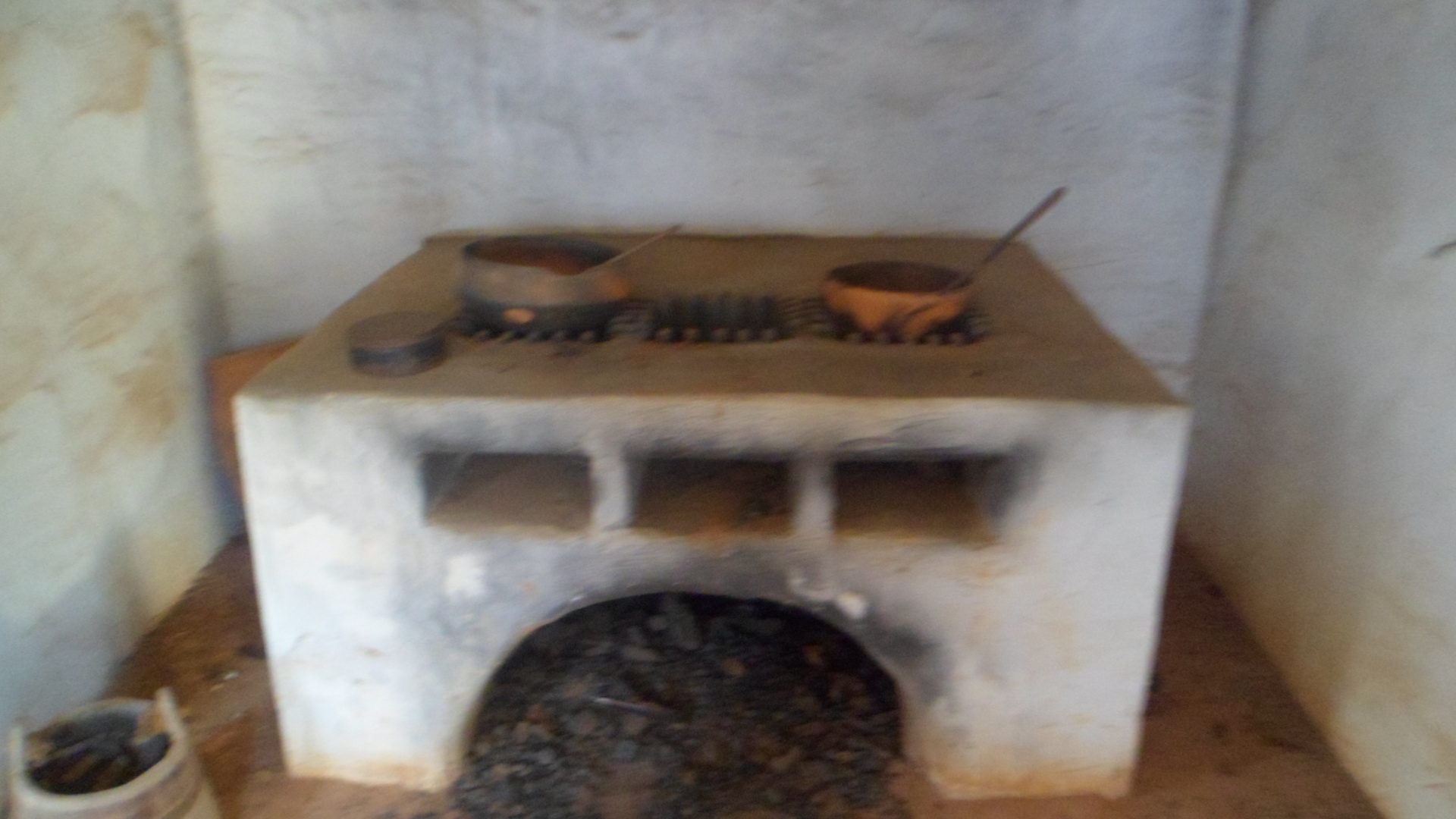
Cooking was done with this charcoal oven.

SAM_3950

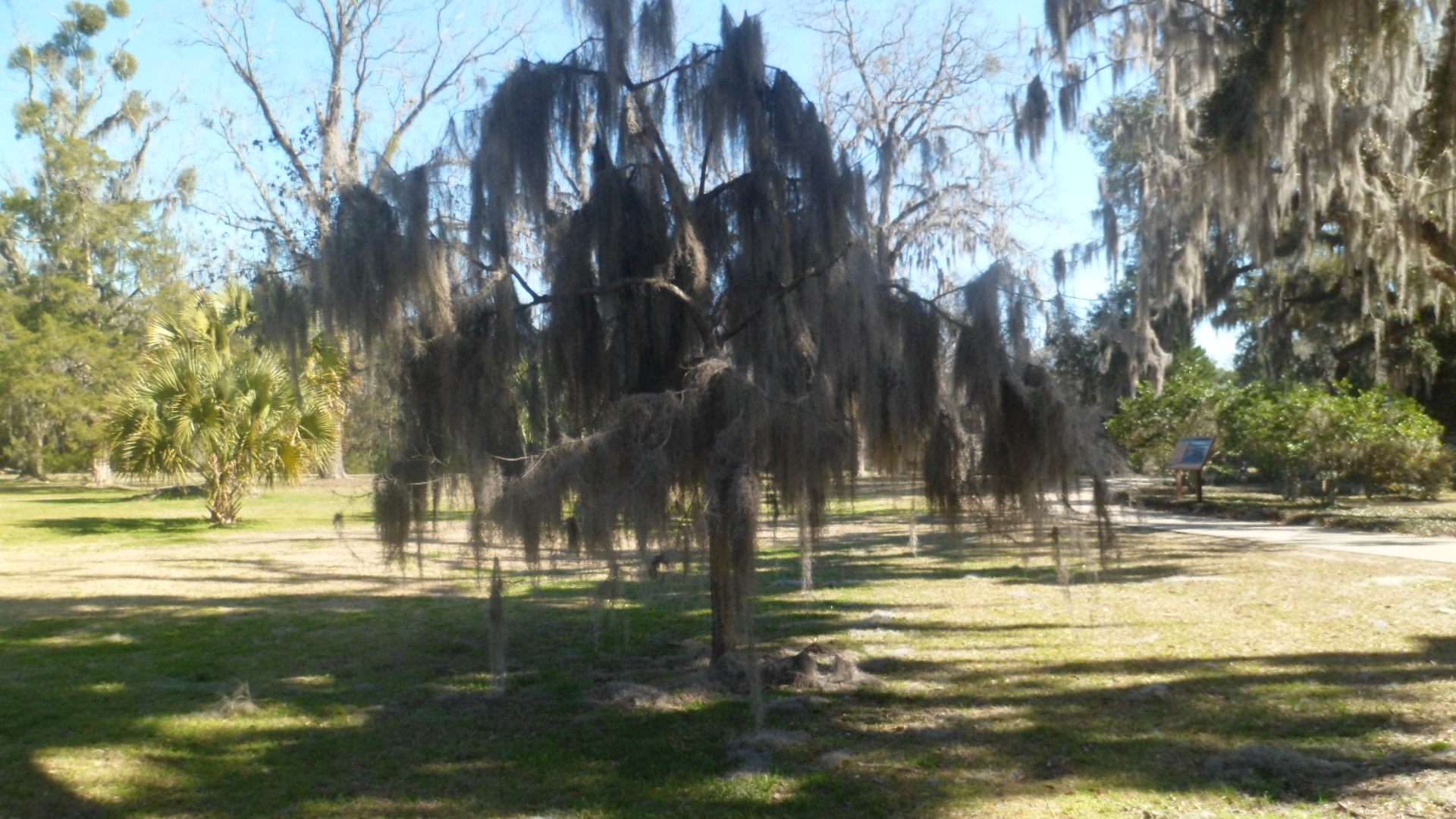
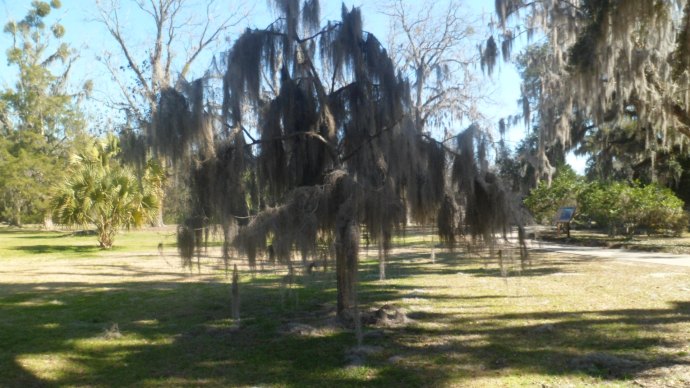
Spanish Moss covers many of the evergreens and laurels, throughout the Southeastern  states.
SAM_3954

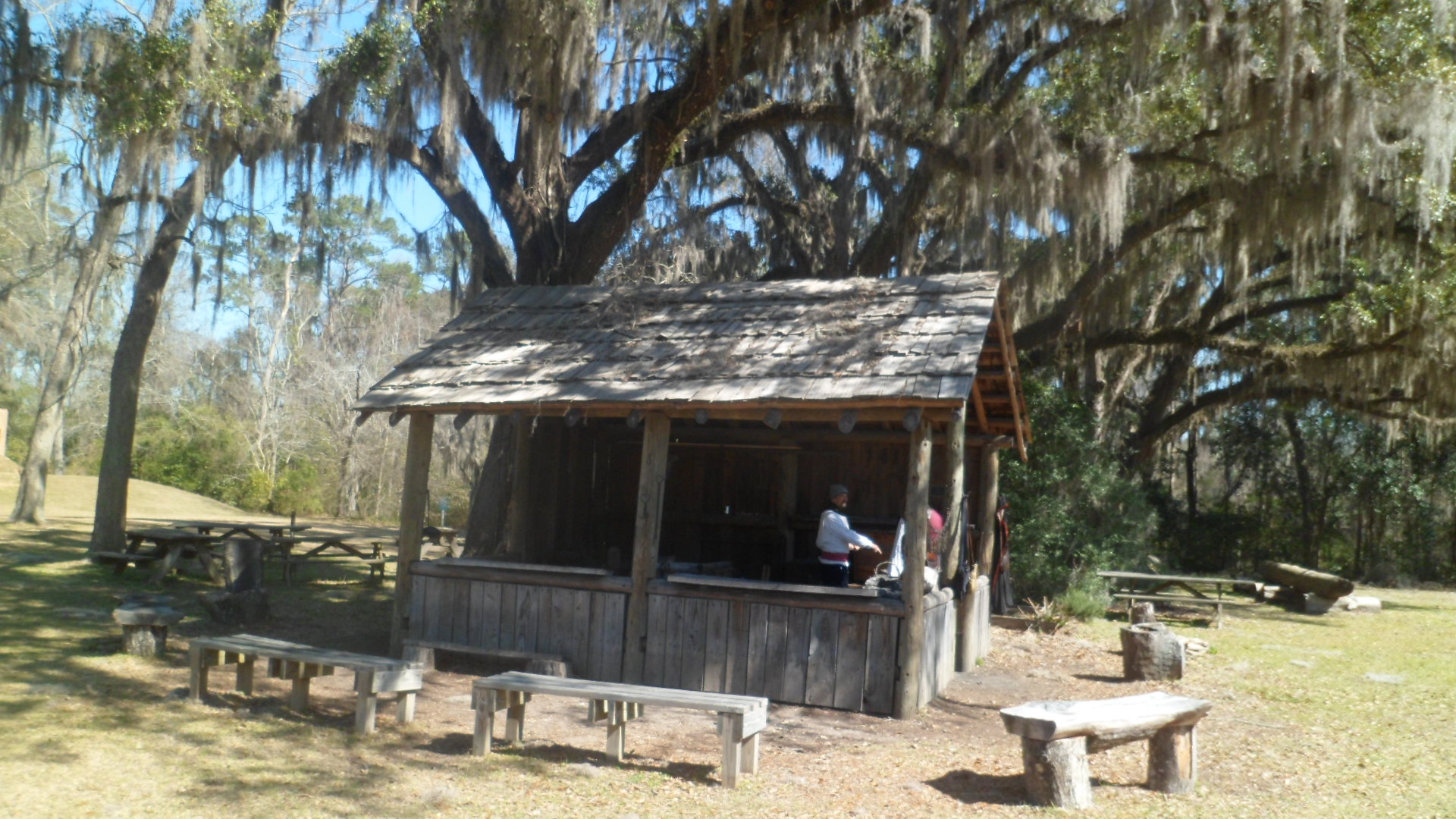
Two journeyman blacksmiths were breakng down their shop for the day, but graciously answered my questions, as to the nature of their work at the Mission, which is primarily tool-making, as opposed to farriership.  The Master Blacksmith does repair munitions, though.

SAM_3957

This blacksmith shows two pot hooks, with grooved grips that allow the cooks to lift the pot off the stove or out of the cookfire, in the absence of hot pads.  The heat does not conduct through the grooves.SAM_3958

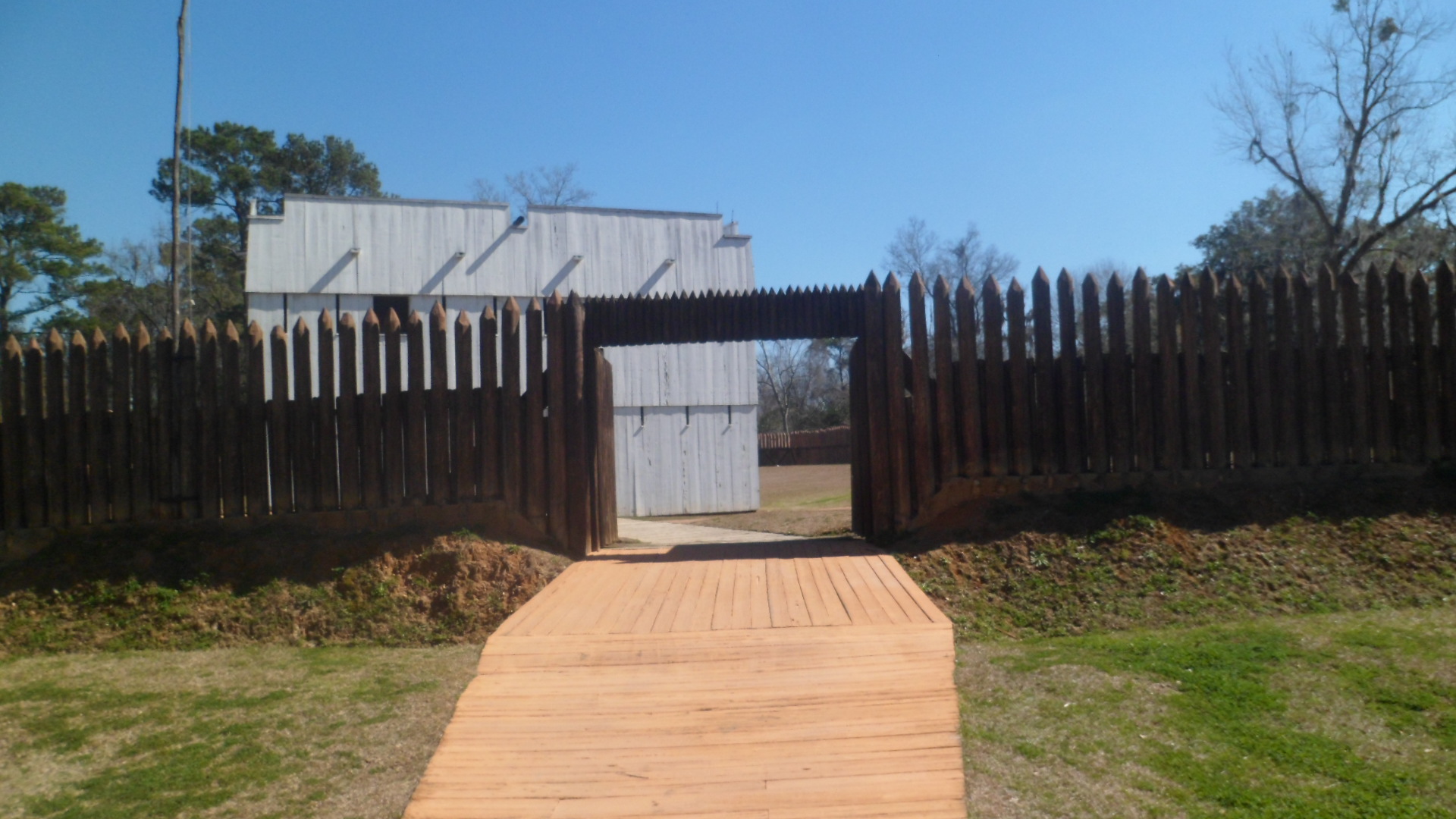
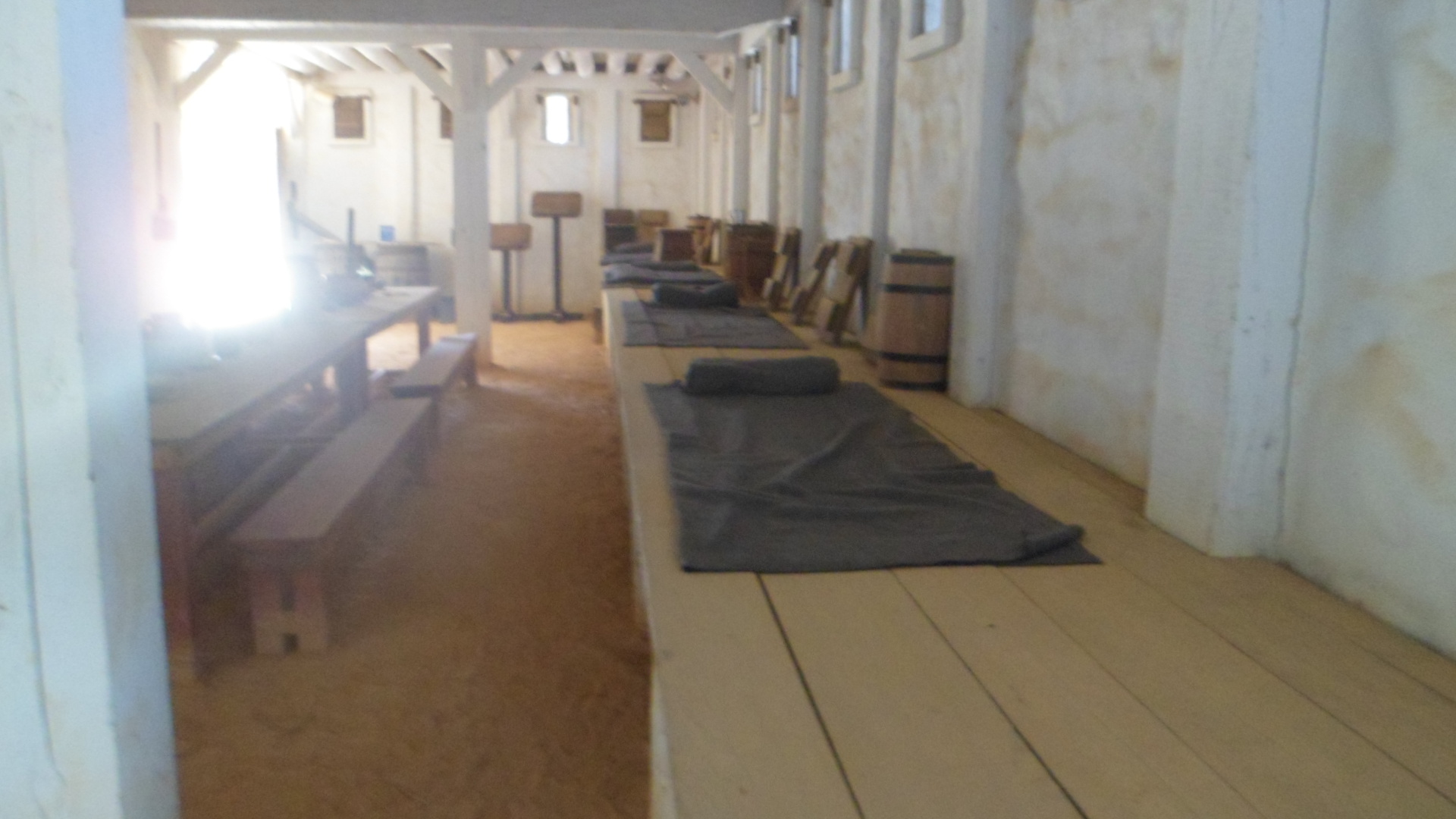
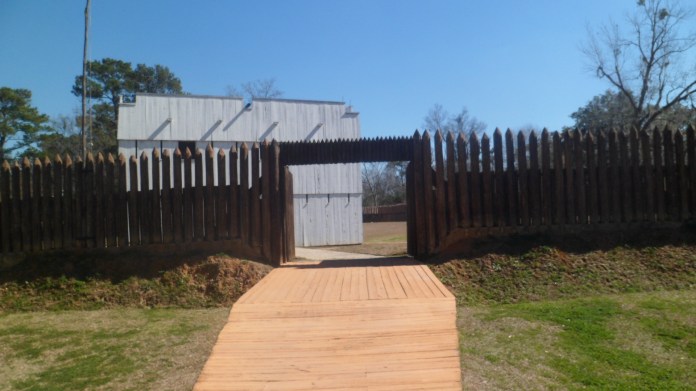
This is Fort San Luis, where a garrison of Spanish and Apalachee troops were housed and trained.
SAM_3961

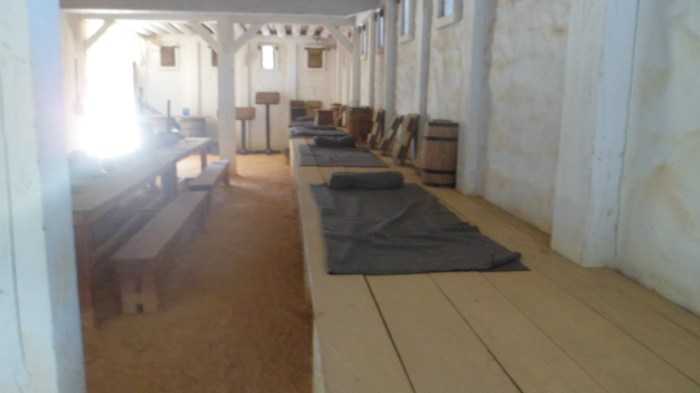
The men slept on mats, atop platforms, in the style of the Apalachee people.  It is said that the Apalachee figured fleas could not jump higher than five feet.  This is quite debatable, as fleas have been observed in labs, jumping ten feet or more.
SAM_3965

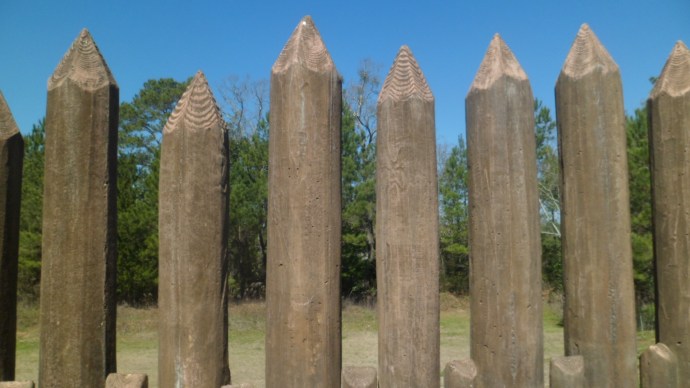
Note the points on the fence poles.

SAM_3972

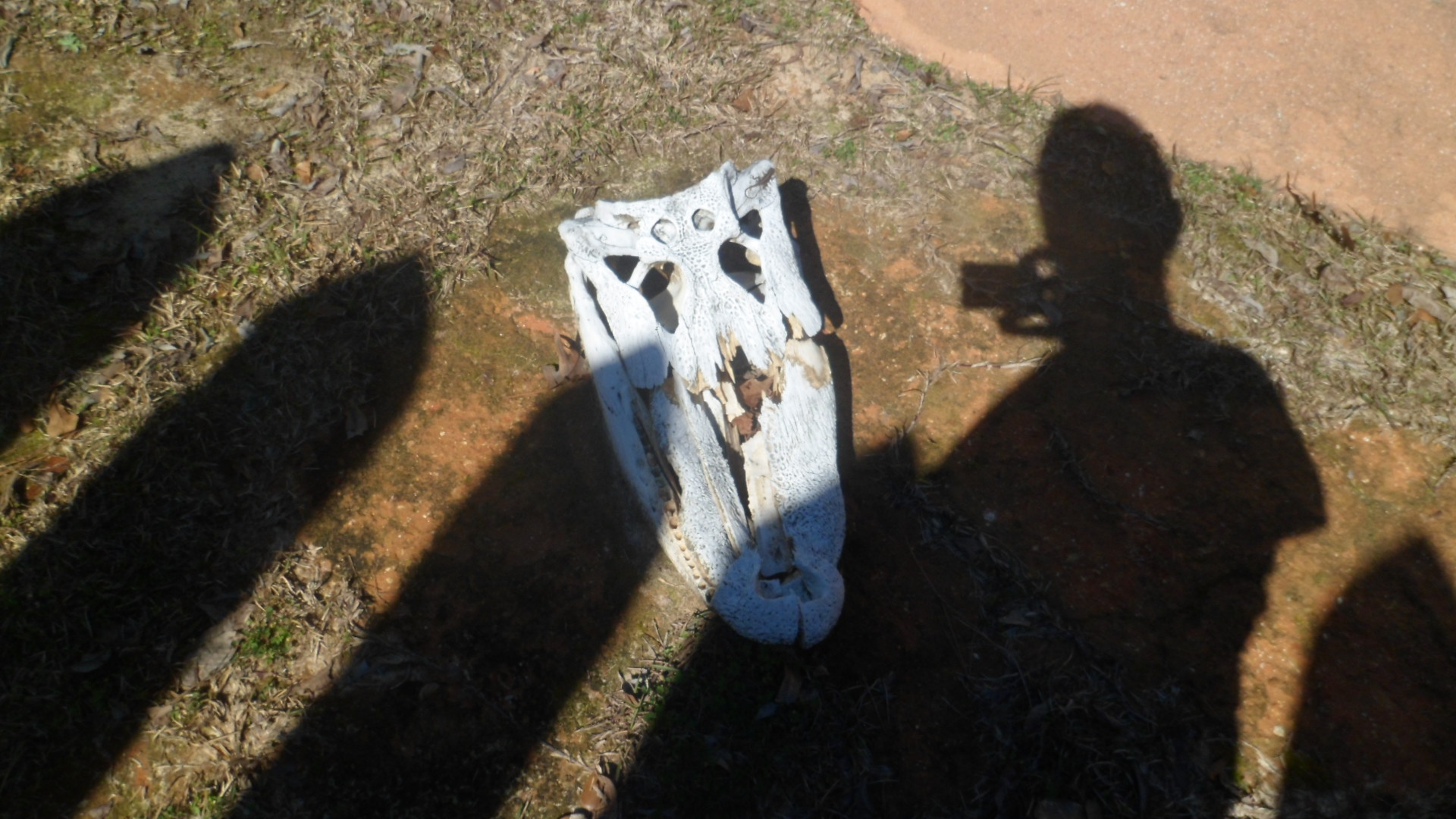
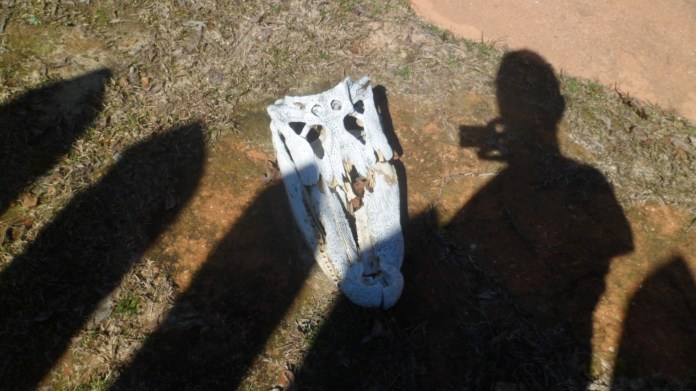
This alligator skull graces the northwest corner of the fort grounds.
SAM_3974

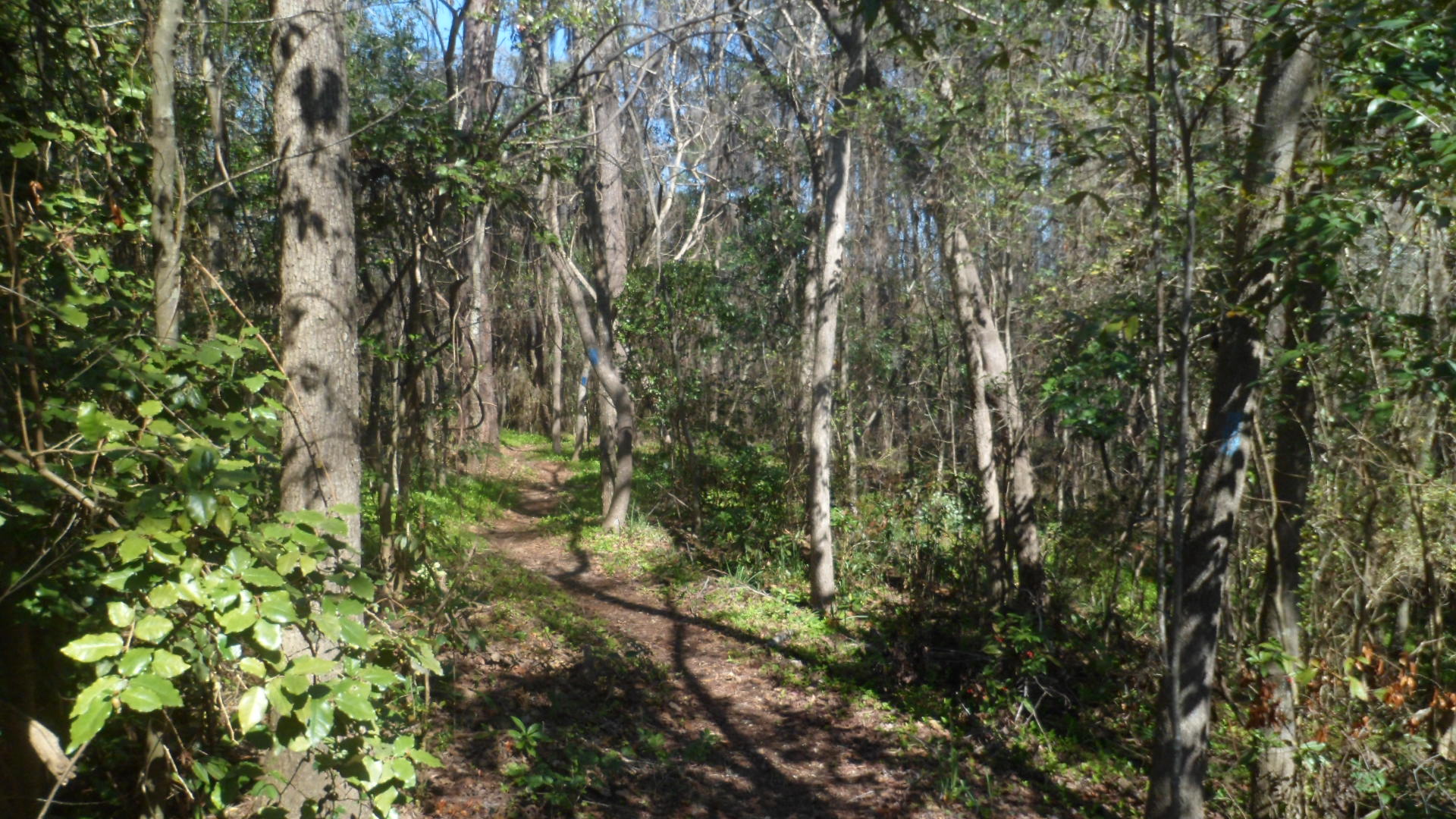
A nature trail borders the southern edge of the Mission grounds.

SAM_3976

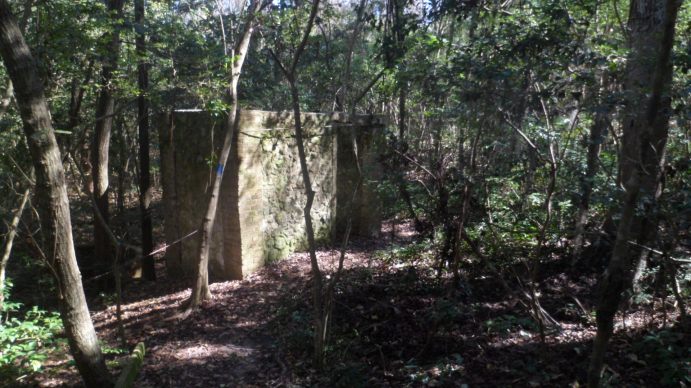
This spring house was built by American planters, and abandoned in the 1930’s.SAM_3983
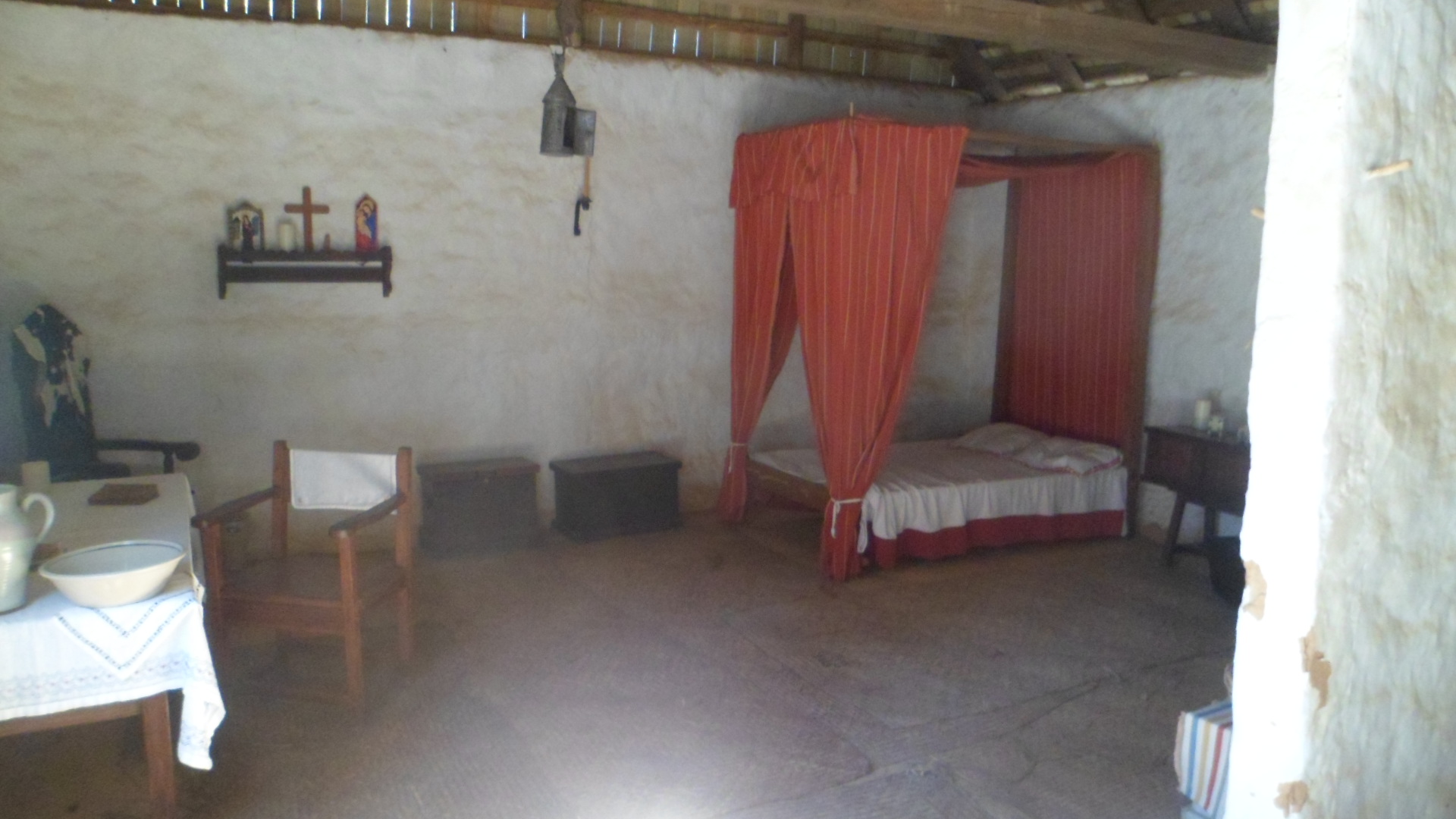
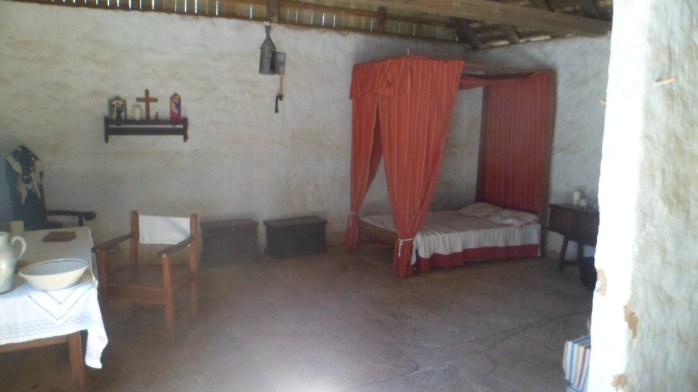
The house of the Deputy Governor houses His Excellency, his wife and at least five of their ten children, at any given time.  The two adults slept in the tiny bed, the baby in a cradle and the older children on floor mats. A cook was on hand today, to explain the  extensive use of herbs, both for cooking and to rid the house of odors.  She also showed the carpentry area, where wooden spoons, as well as furniture, were produced.  Ceramics of the Apalachee were rounded; those of the Spanish were flat.SAM_3992
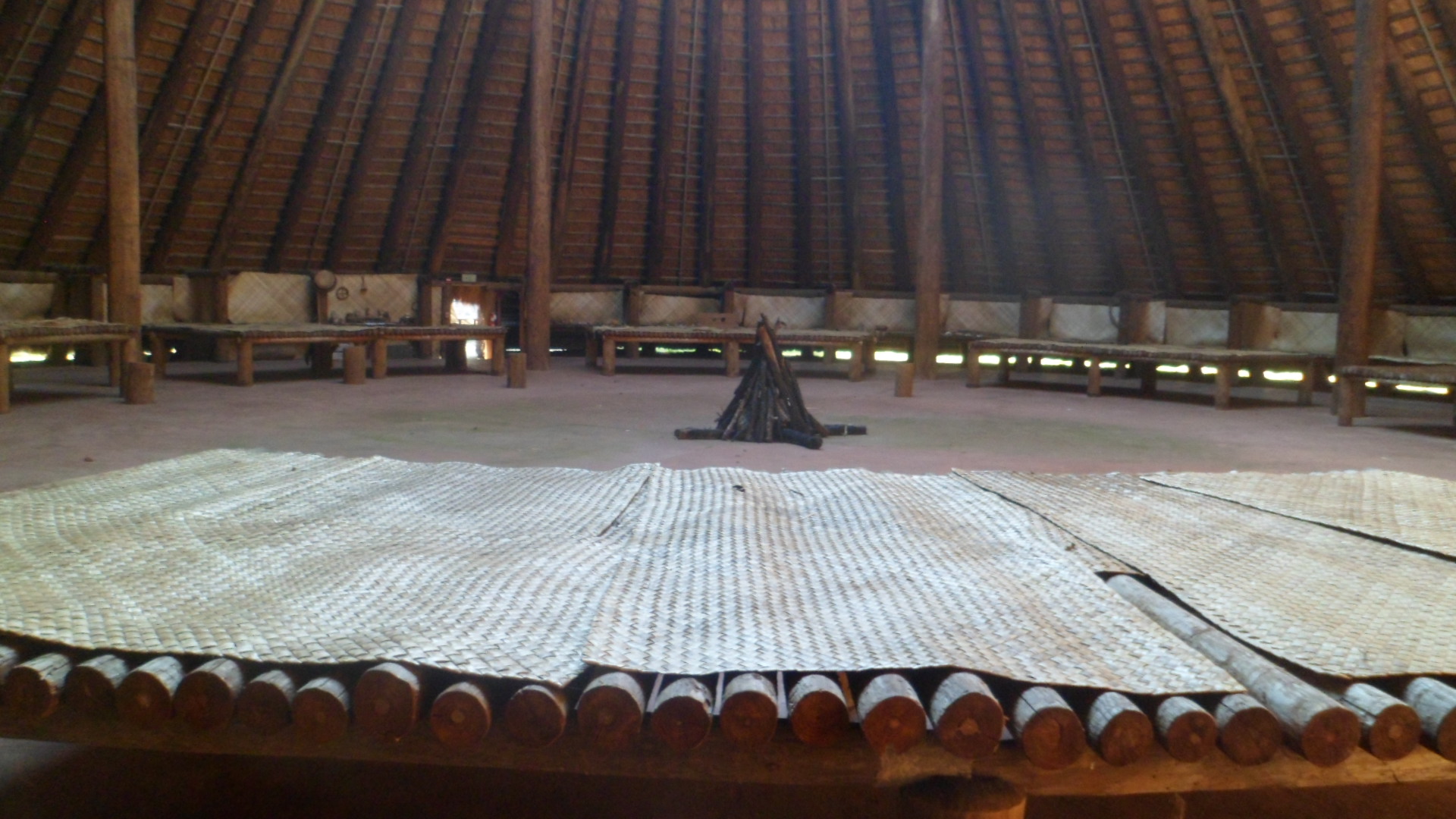
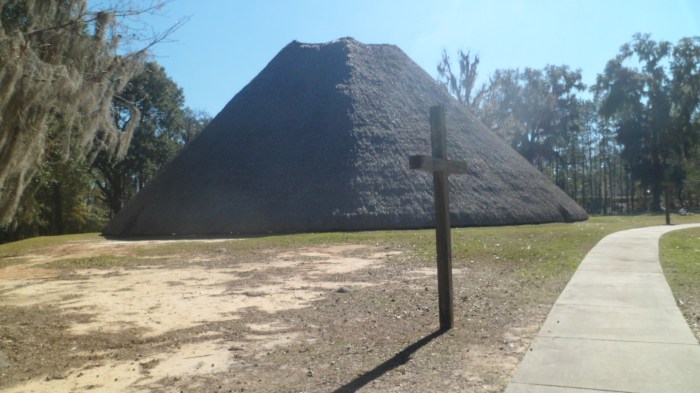
Here is the Apalachee Council House.  Like public buildings today, it was a regular gathering place for the community, and could hold as many as 2,000 people.
SAM_3995

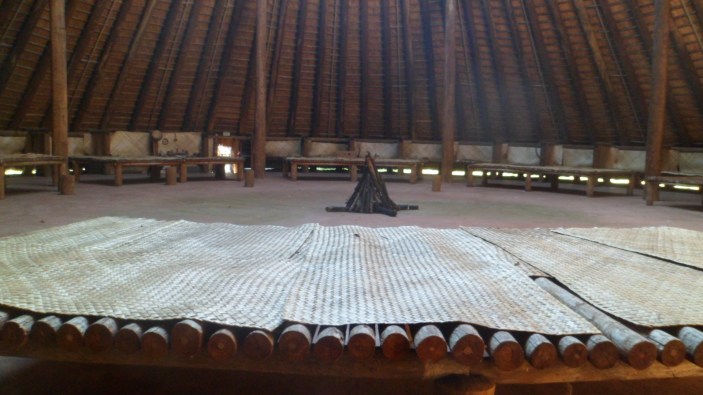
There was one entrance, warriors checked their weapons at the door, greeted the Chief, who sat on the highest platform, and sat either on lower platforms or on the floor.
SAM_3998

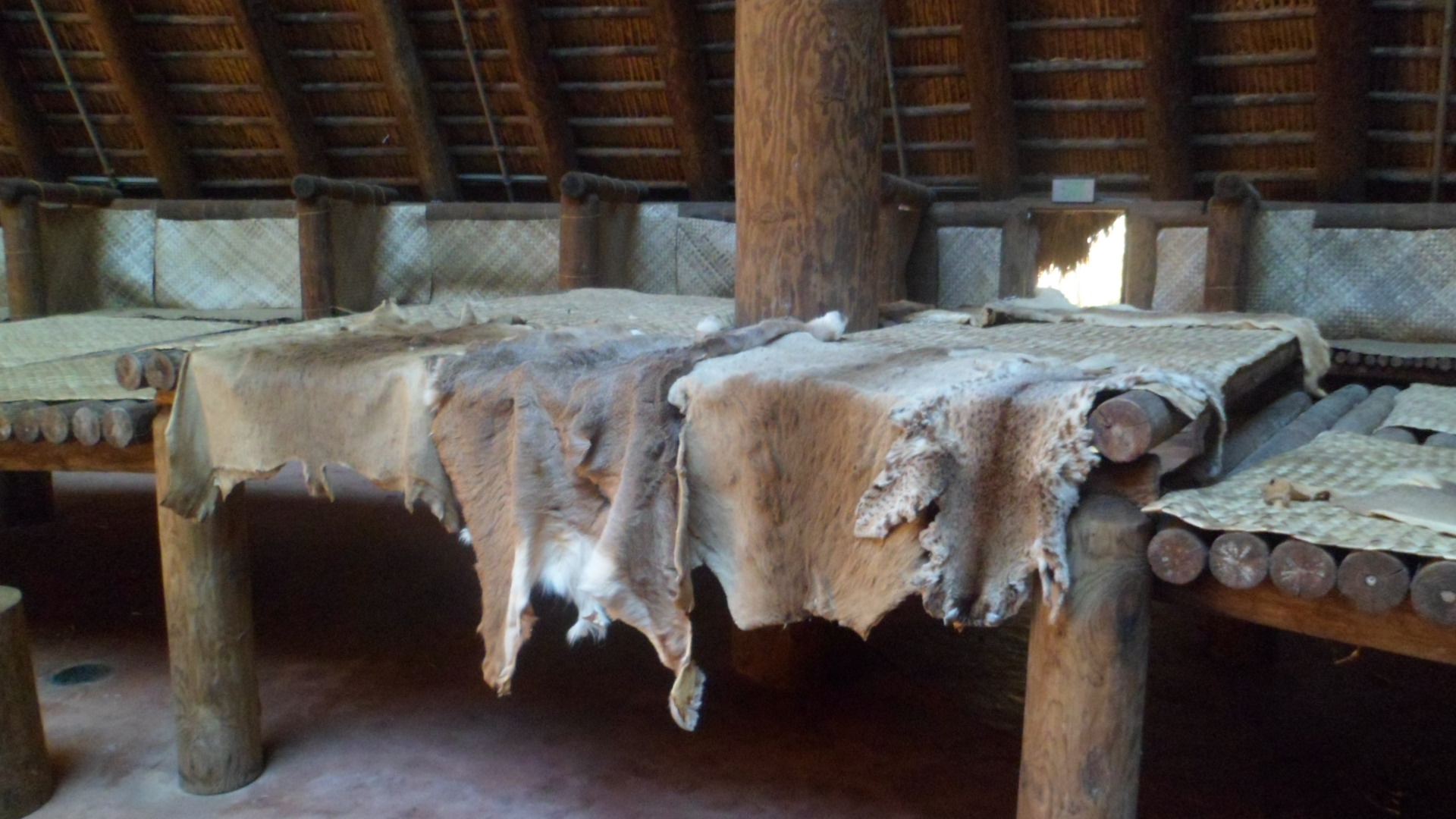
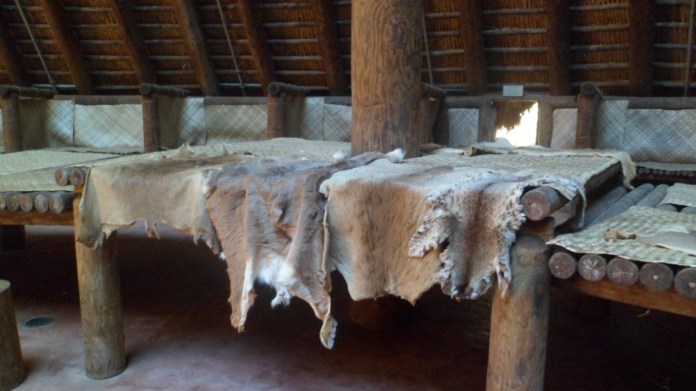
Deer skins were used to cover the Chief’s and Elders’ platforms.
SAM_4001

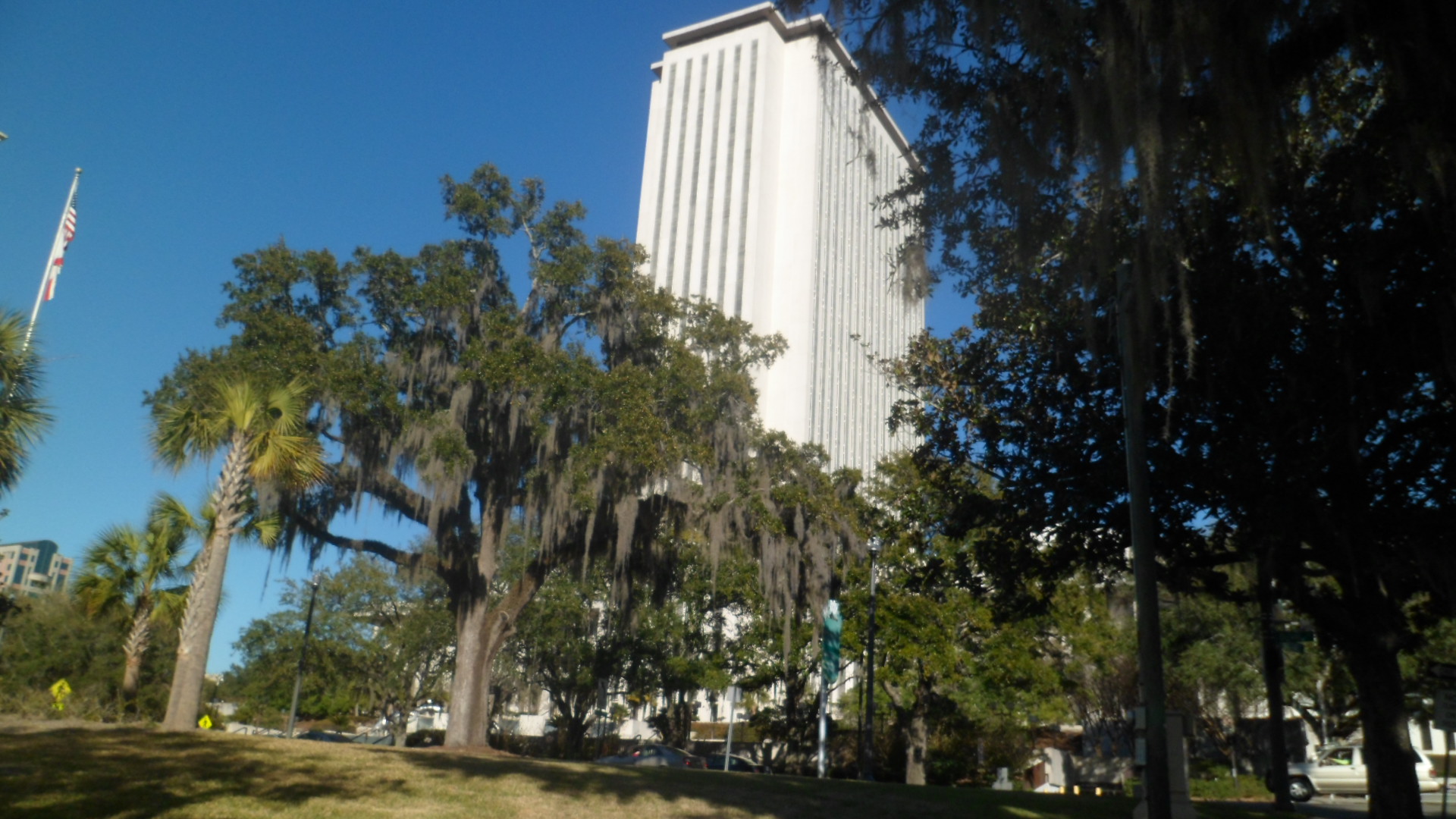
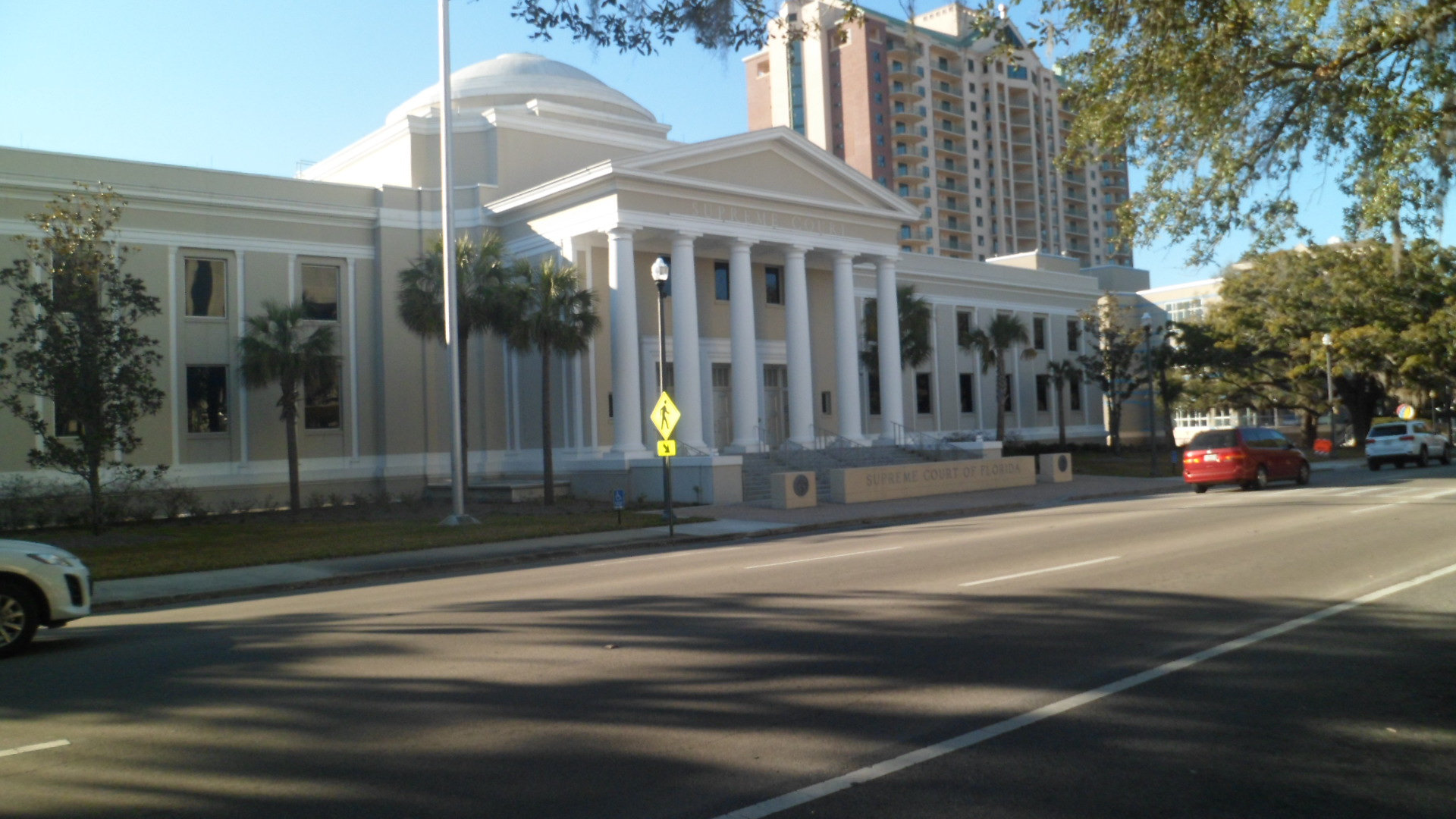
For contrast, here are the Florida State Capitol and Supreme Court buildings.

SAM_4012

SAM_4013

There is a lot about the early peoples of Florida that we have yet to decipher, and from which we could still learn.

The Road to 65, Mile 74: Reversing Course and Meeting Butterflies

7

February 10, 2015, Gainesville, FL-This has been one of those days when I am reminded that deeds done by others, with the best of intentions, can backfire and take innocent people down with them.  It just makes me weigh my own words and deeds that much more carefully. In a nutshell, my mother-in-law said she didn’t want any visitors, including me.

I was ten miles away, at that point, and so turned around, in south Ocala, feeling quite calm, actually.  I think my angel was carrying me through the rest of the day.  I had two confirmations:  One was stopping at Jim’s BBQ Pit, in Reddick, just north of Ocala.  A bubbly, very pretty young lady served me as if she were serving her father, or a favourite uncle.  The food was comfort, also:  Smoked chicken, barbecued beans and slaw, with a fabulous house barbecue sauce.

The second stop of the afternoon was Florida Museum of Natural History, on the campus of the University of Florida, at Gainesville.  The institution traces the state’s varied conditions and changes, focusing on the Pleistocene and on some of the Indigenous peoples, who pre-dated the Seminole and were ancestors of the Miccosukee.  The icing on the cake, for me this afternoon, was the Butterfly Rain Forest.

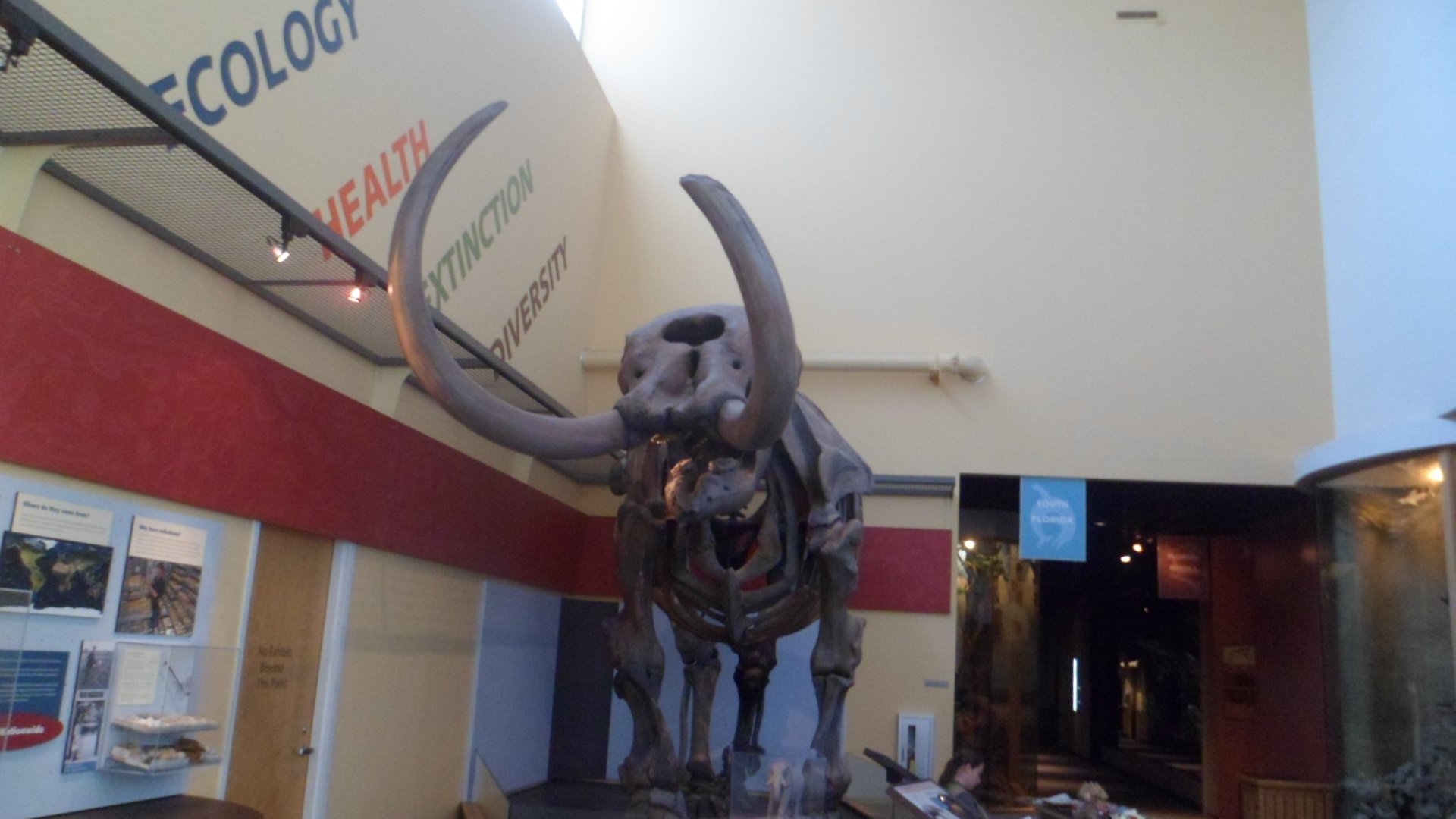
The Pleistocene exhibit’s star is the Colombian mammoth skeleton.  Colombian mammoths ranged south of their woolly cousins, and had finer hair.

SAM_3895

A Mastodon was featured next to the shovel-tusker, for comparison.  Mastodons ranged in north Florida, as well.

SAM_3896

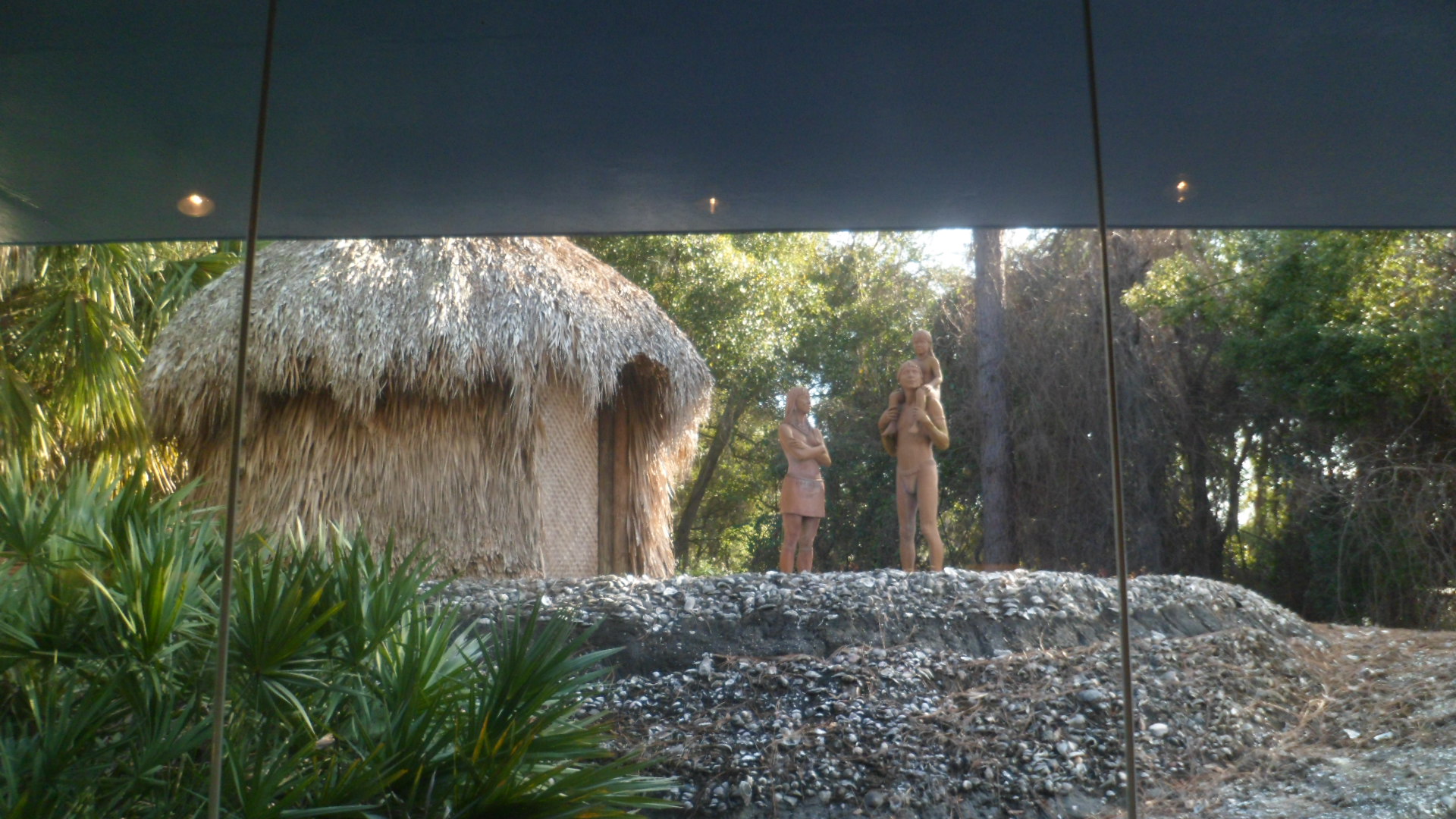
A family of Paleo-Indians was shown in the next hall. Florida’s indigenous people had a very rich culture and system of governance, well before Europeans arrived here.  The Apalachee, of the northwest, and the Calusa, of the southwest, were powerful, savvy and industrious people, pre-dating the great council-oriented Creeks, who became Seminoles, once they came down to Florida, with the British, in the 1700’s.

SAM_3898

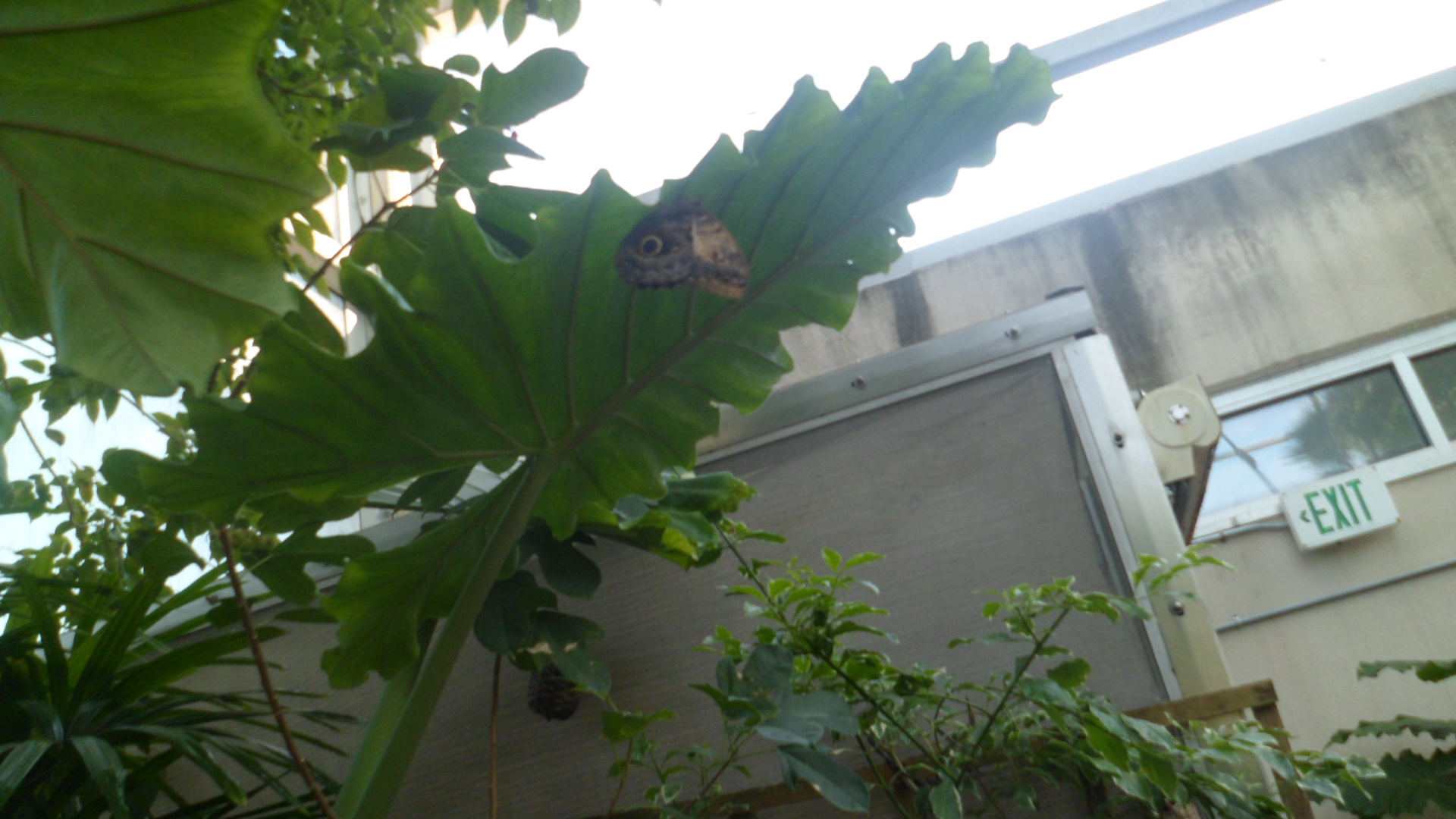
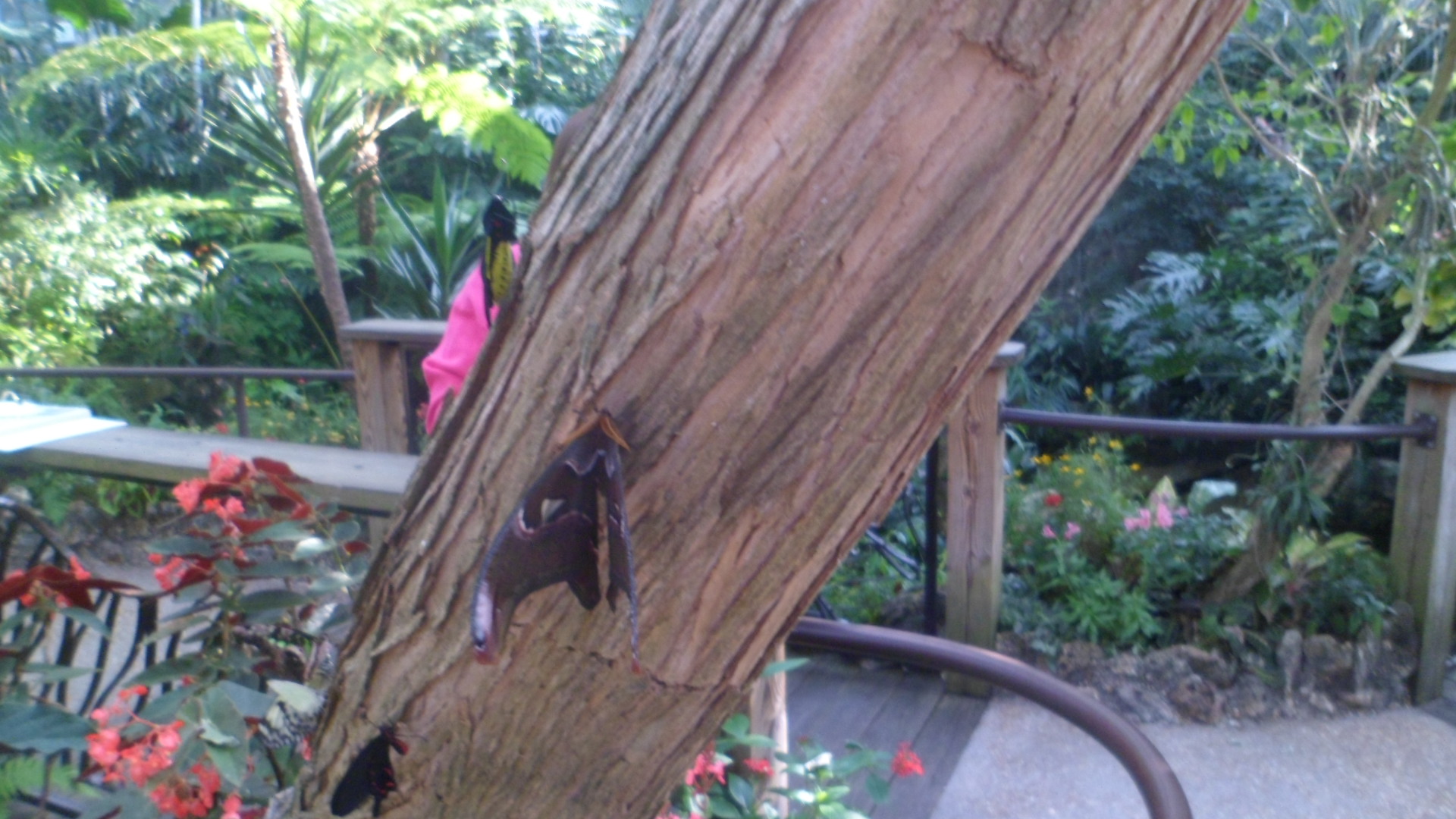
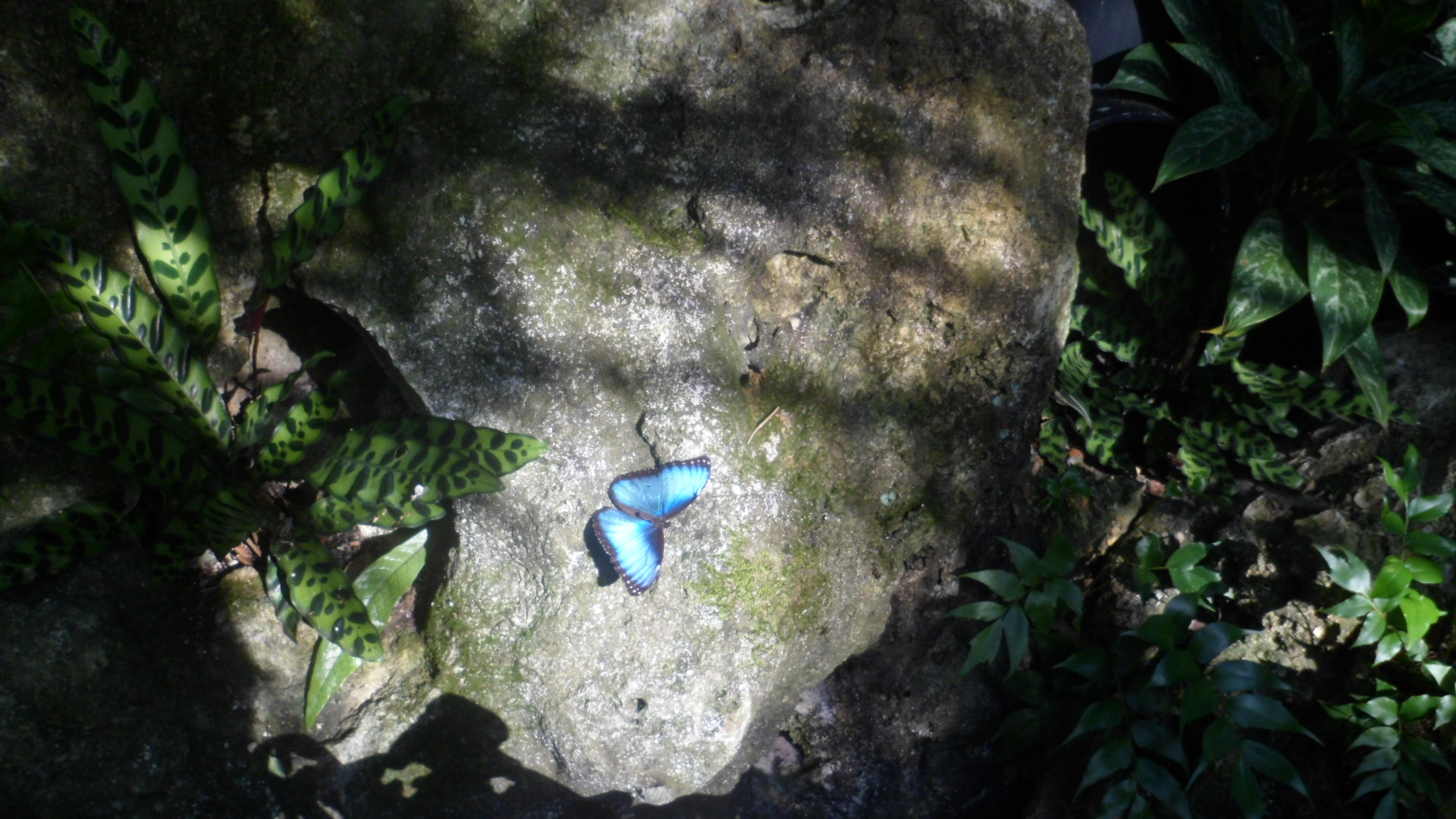
My attention was spotty at this point, so while I read and absorbed some of the remaining information about the Native Peoples, I needed nature.  So, off to the Butterfly Rain Forest it was.  The following pictures, presented without comment, represent a cross-section of the Lapidoptera and their surroundings.  See how many butterflies you can spot.

SAM_3900

SAM_3902

SAM_3905

SAM_3910

SAM_3912

SAM_3913

SAM_3914

SAM_3915

SAM_3918

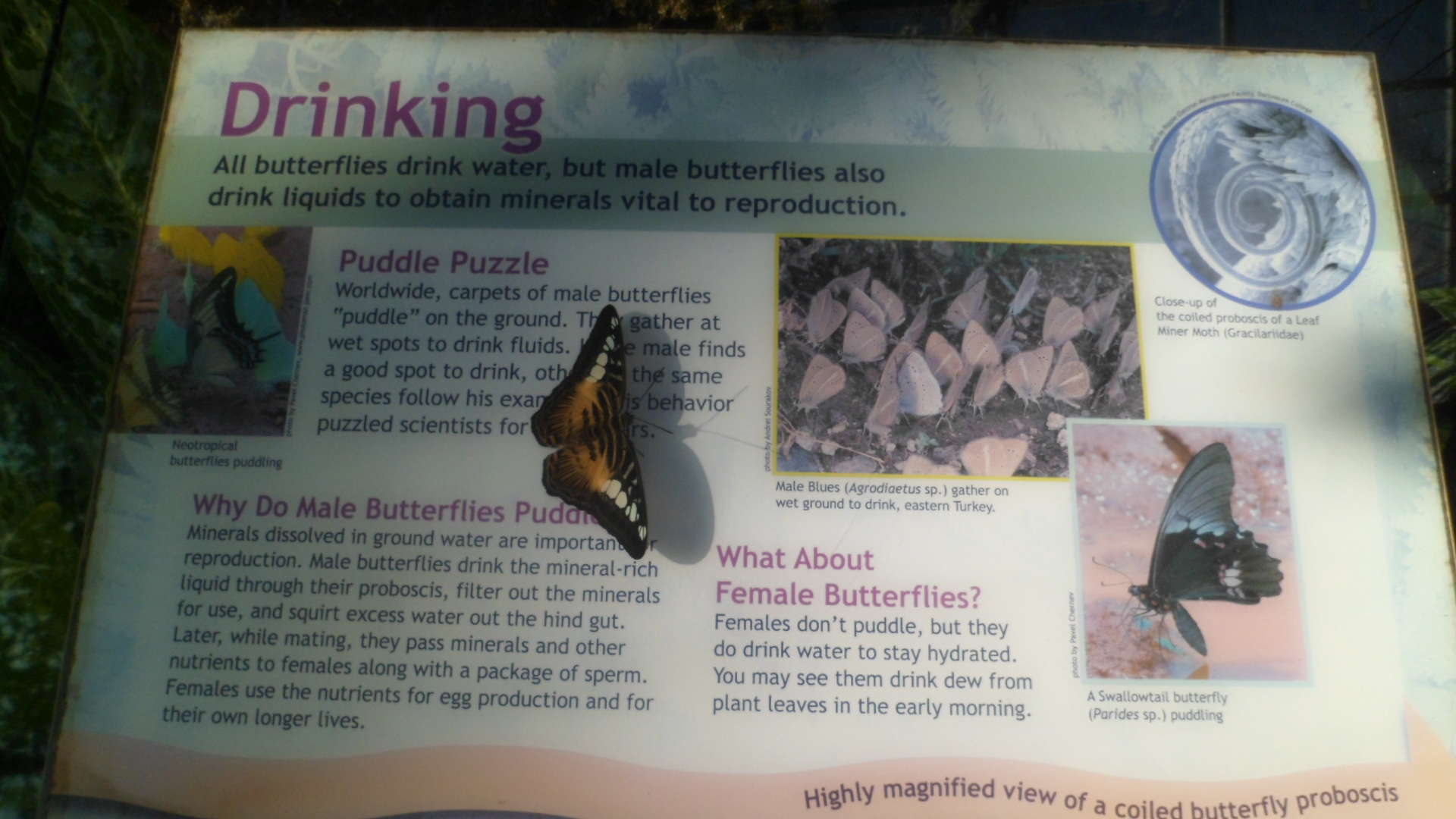
Butterflies are vital, in a variety of ways.  There is some attention here to Monarchs, but also to Swallowtails and Blues.  I recommend this to all residents and visitors to the Gainesville-Ocala area.  After such a rejuvenating afternoon, I headed north and spent a restful night in Bainbridge, GA, north of Tallahassee.  Glen Oaks Motel and a salad from Zaxby’s, served by another pretty, congenial young lady, capped the day.  Actually, a Zalad can make three meals, for someone like me.

The Road to 65, Mile 73: Light on The Water

12

February 9, 2015, Daphne, AL to Lynn Haven, FL- The Gulf of Mexico region is largely about the interplay of water and earth.  Man can only influence either, just so much.  I looked at the weather report, while eating breakfast at Key West Inn, in Fairhope, just south of Mobile.  There were scenes, straight from my childhood, of a New England that is overinundated with snow.  It was not just my imagination that the white piles were the height of two grown men.  Winter has returned, and as I regarded the bright sunshine outside, it occurred to me, “Plow it all into the sea; neutralize the acidity”.

The Gulf, at least for the moment, does not have to deal with Old Man Winter.  It did face the onslaught of cold, in December.  Now, though, the Gulf welcomes the refugees of the Big Chill.  Several of my fellows in the breakfast room were from places like Wausau, WI (There is also a Wausau, FL), Lima, OH and Bangor, ME.  Fairhope, founded on fervor and belief, is still a place of safe haven.

My first photos of the day were taken in nearby Daphne, as my initial concern was to connect with a friend on the Florida Panhandle, about three hours further east.  Daphne has narrow roads, and in the style of the rural South, no streetside parking.  This is not your tourist Antebellum-land.  Daphne City Hall, though, is magnificent and has plenty of parking space.

SAM_3873

This great laurel tree predates City Hall.

SAM_3874

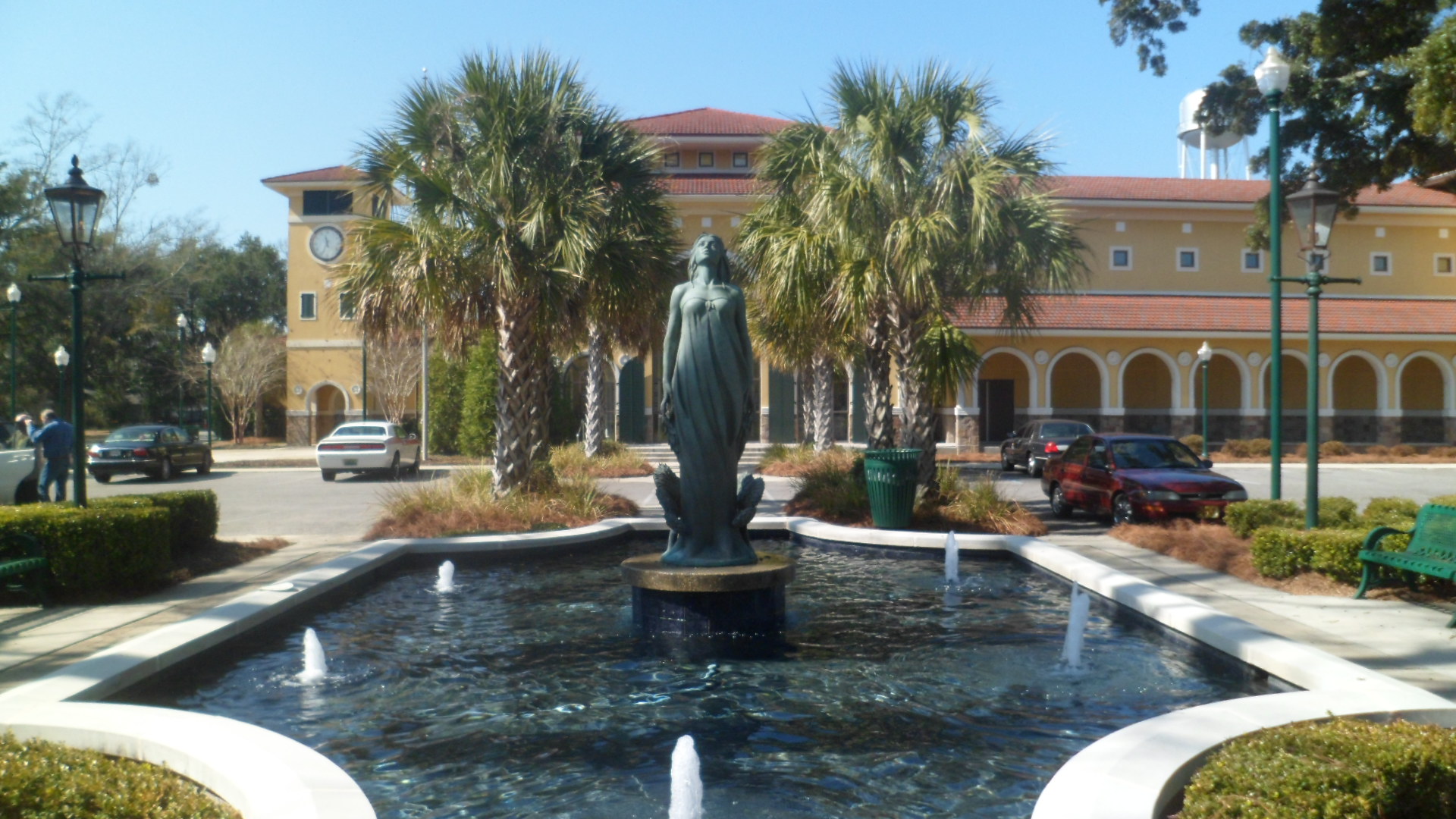
The town is named for the wife of its founder, who, in turn, proposed this statue of the Greek nymph, for whom she was named.  The original Daphne, so closely associated with fountains, is true to form here.

SAM_3875

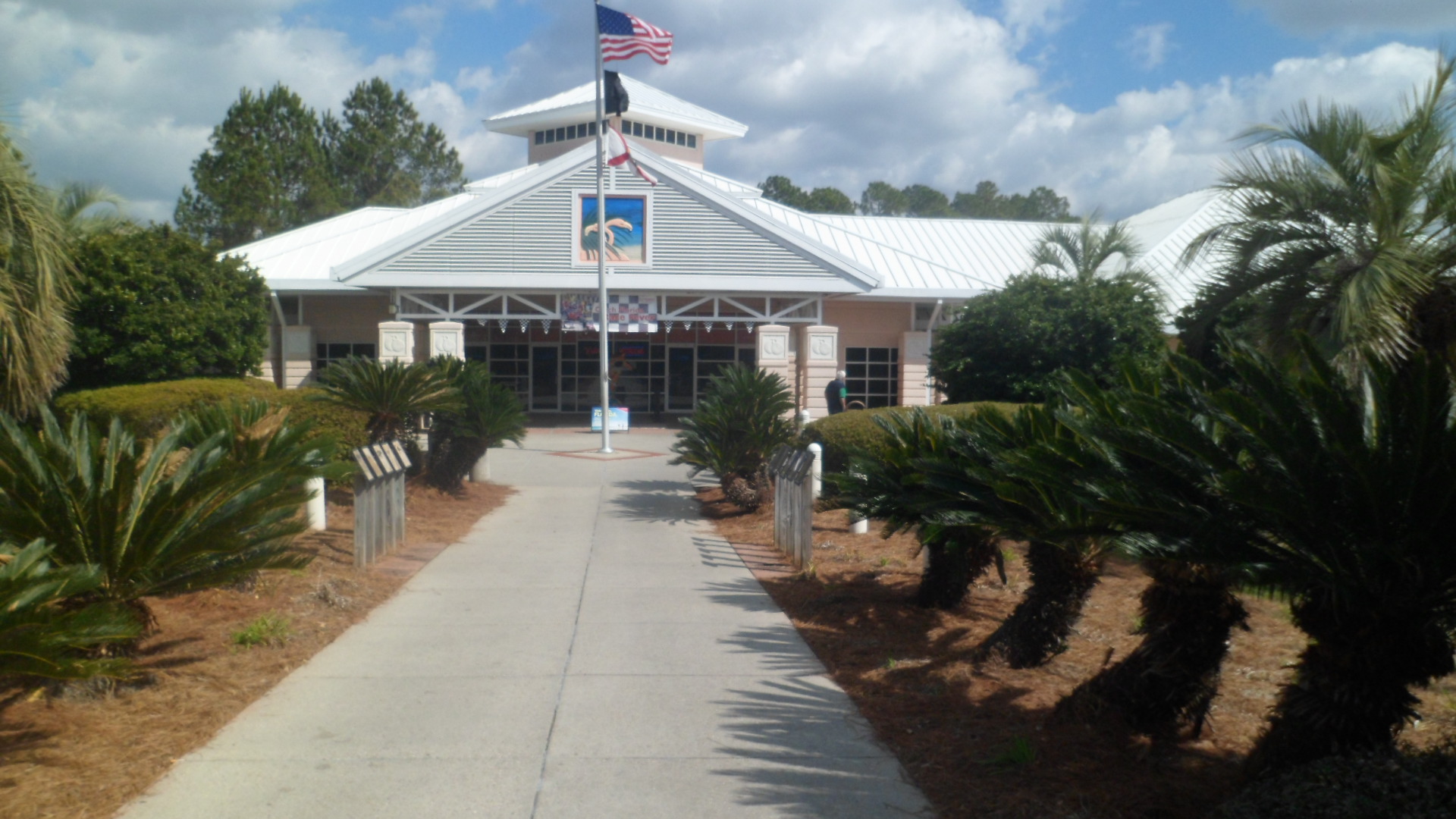
I left Alabama behind, for several days, entering Florida just west of Pensacola.  The Welcome Center is fully-stocked with all things Sunshine State, including palm trees.

SAM_3876

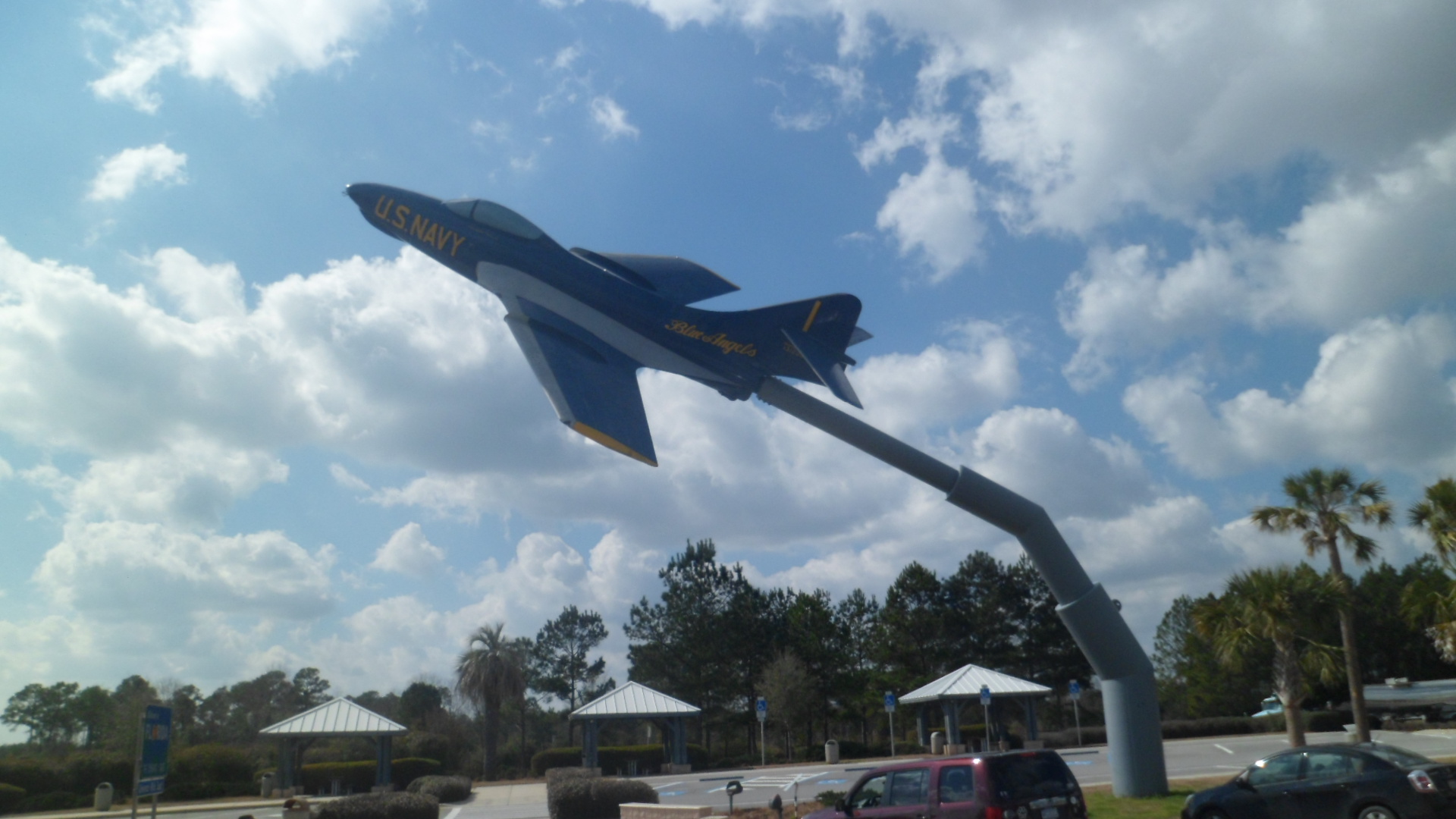
Florida has some of the oldest European settlements in this country, but is also an integral part of Man’s looking heavenward.  Pensacola is key player in aeronautics.

SAM_3877

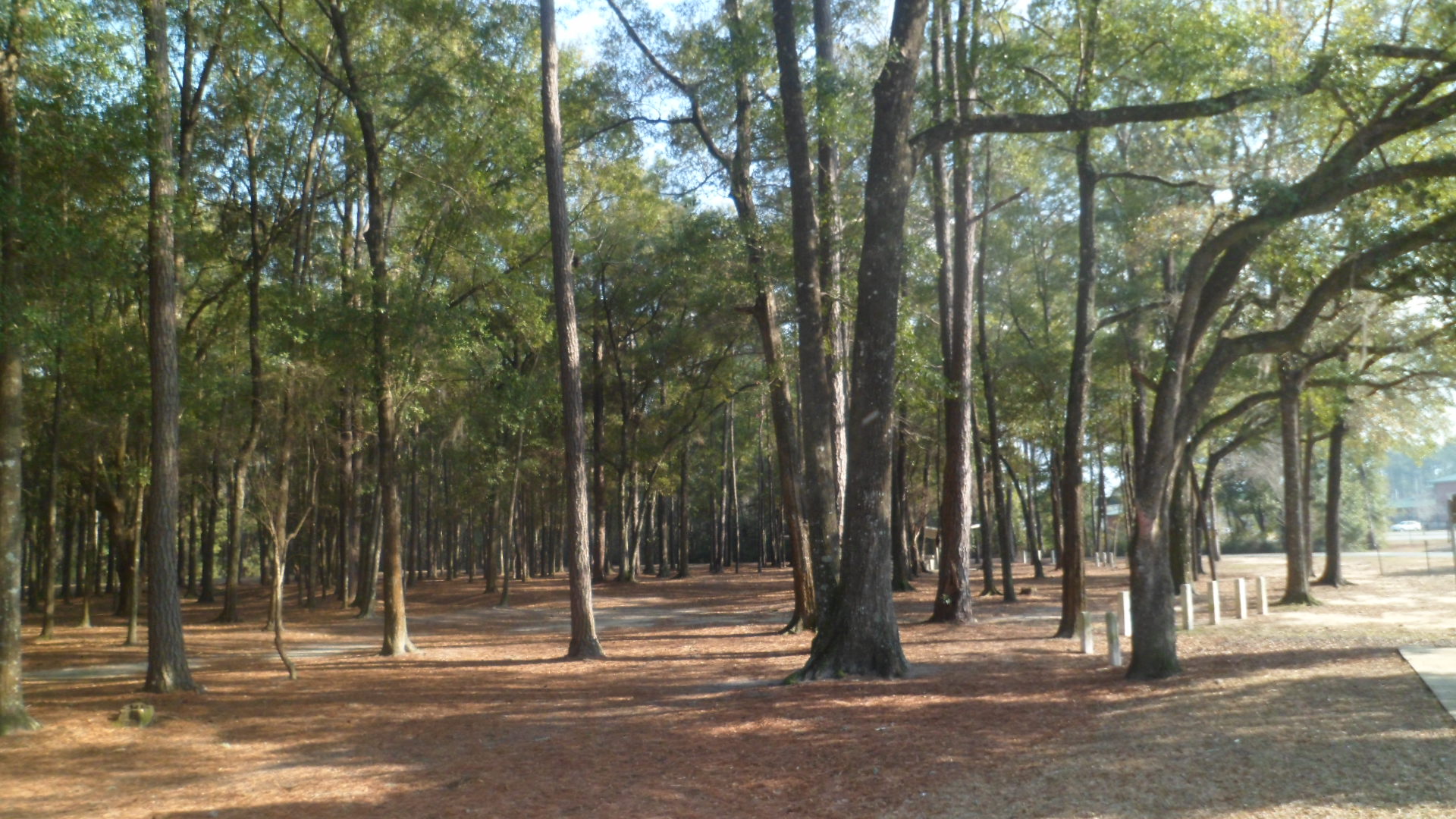
I had lunch at the local branch of Sonny’s, a regional chain of barbecue restaurants, with smoked turkey and slaw lovingly served by Brittany.  Then, it was onward towards the Panama City area, with just a stop at a rest area near the turn-off to Destin, intervening.  Florida’s Northwest is quite heavily-forested, and this grove evokes the turpentine “forests” I saw four years ago, near Live Oak.

SAM_3879

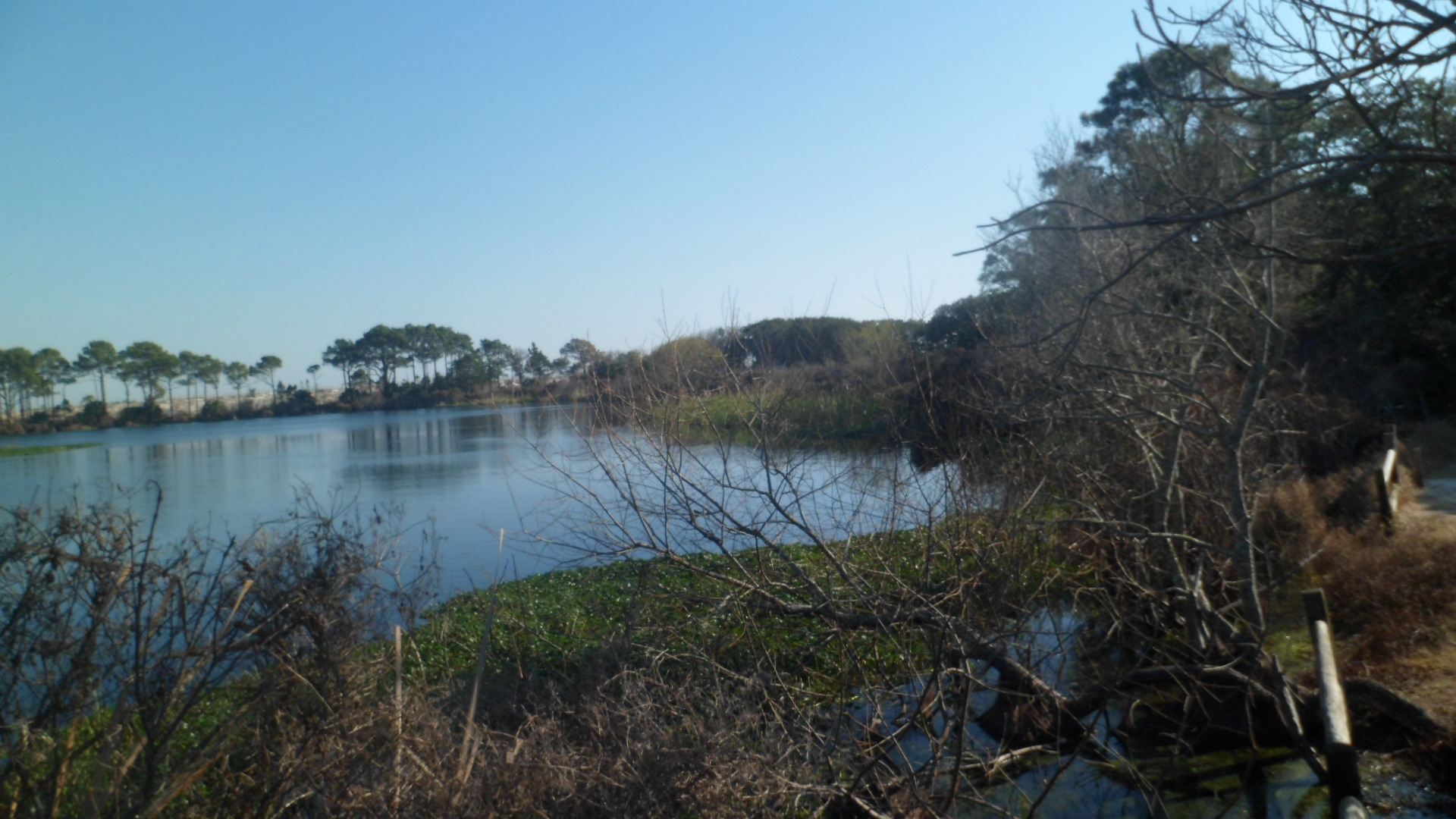
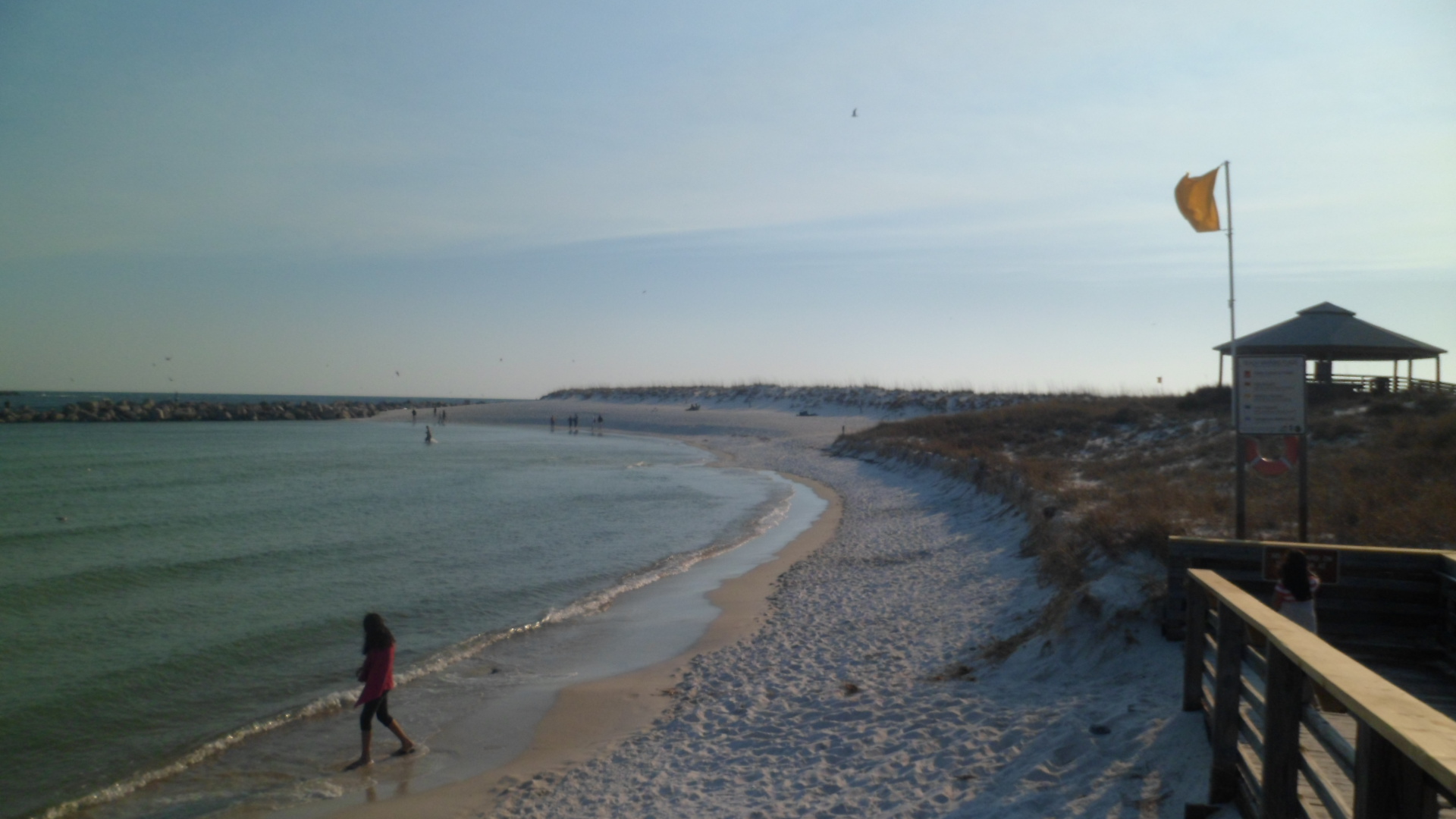
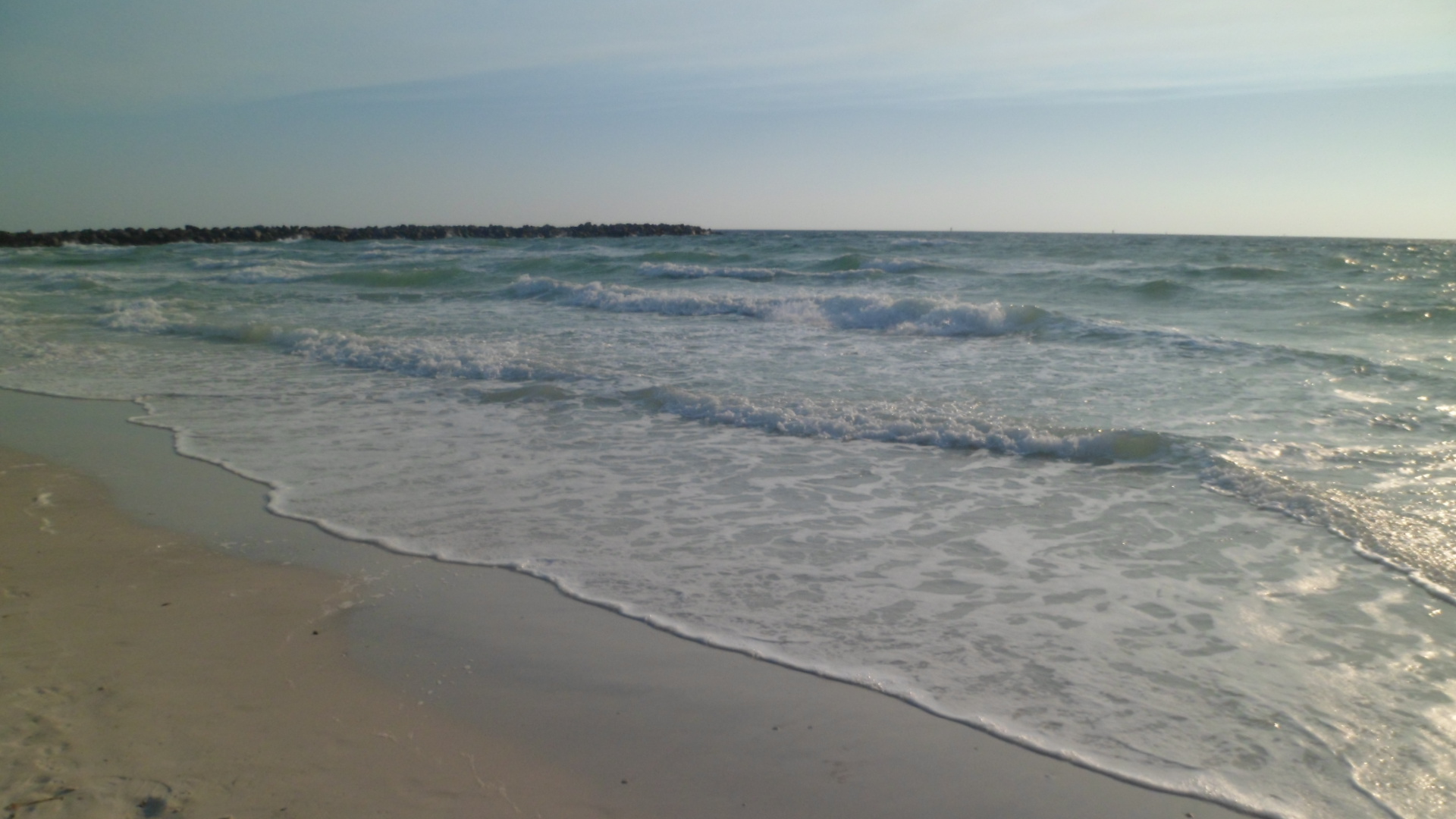
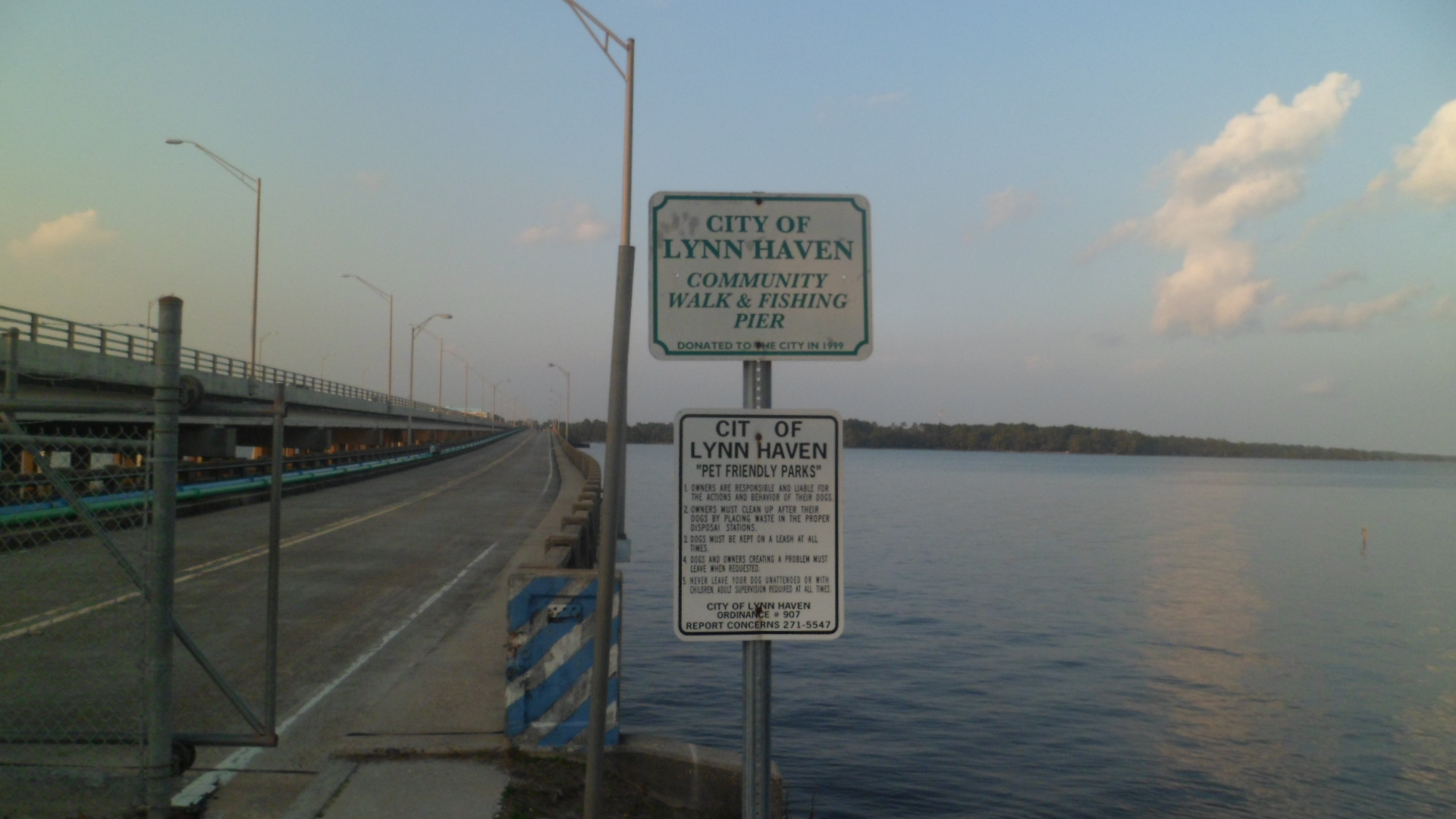
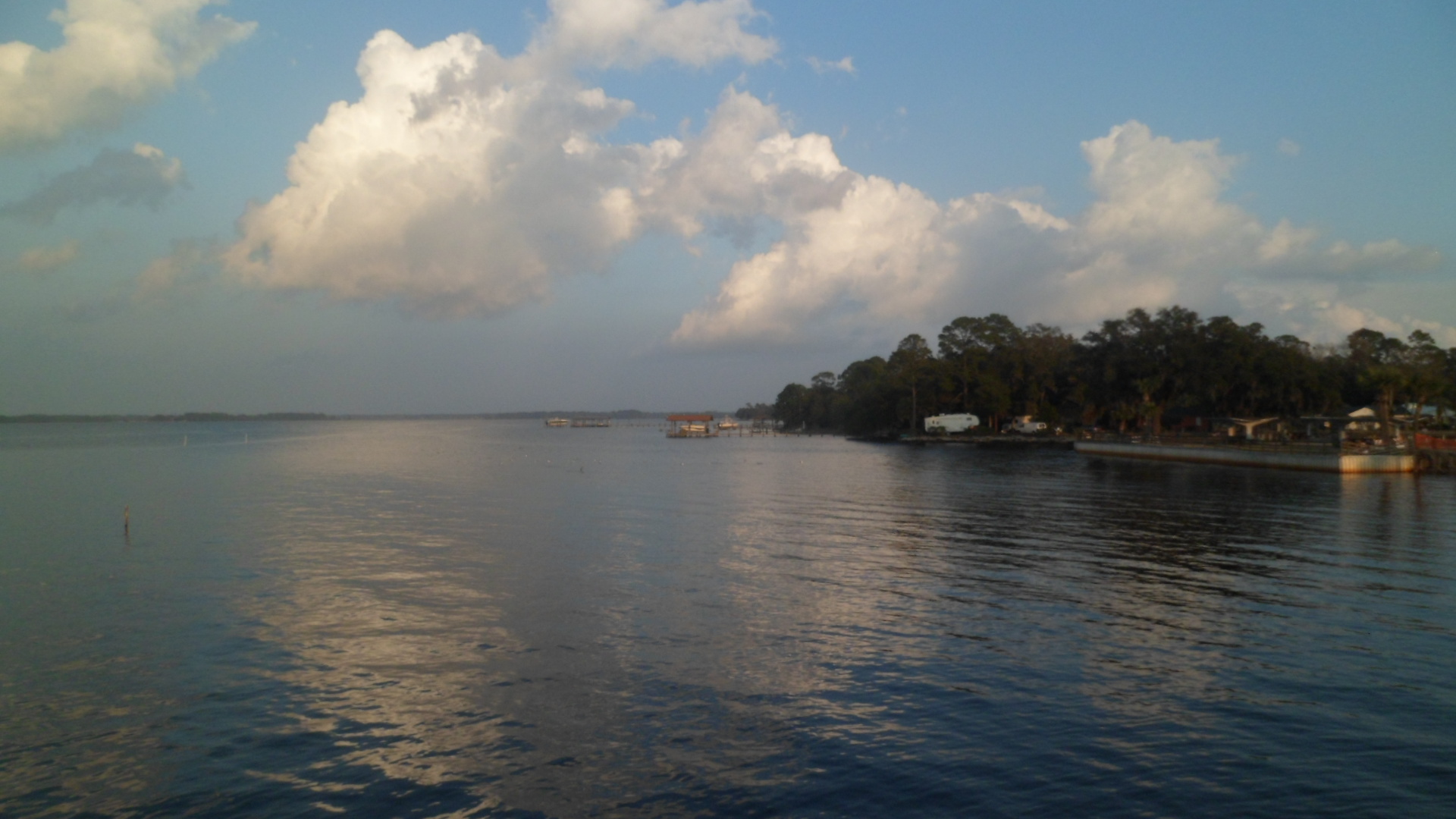
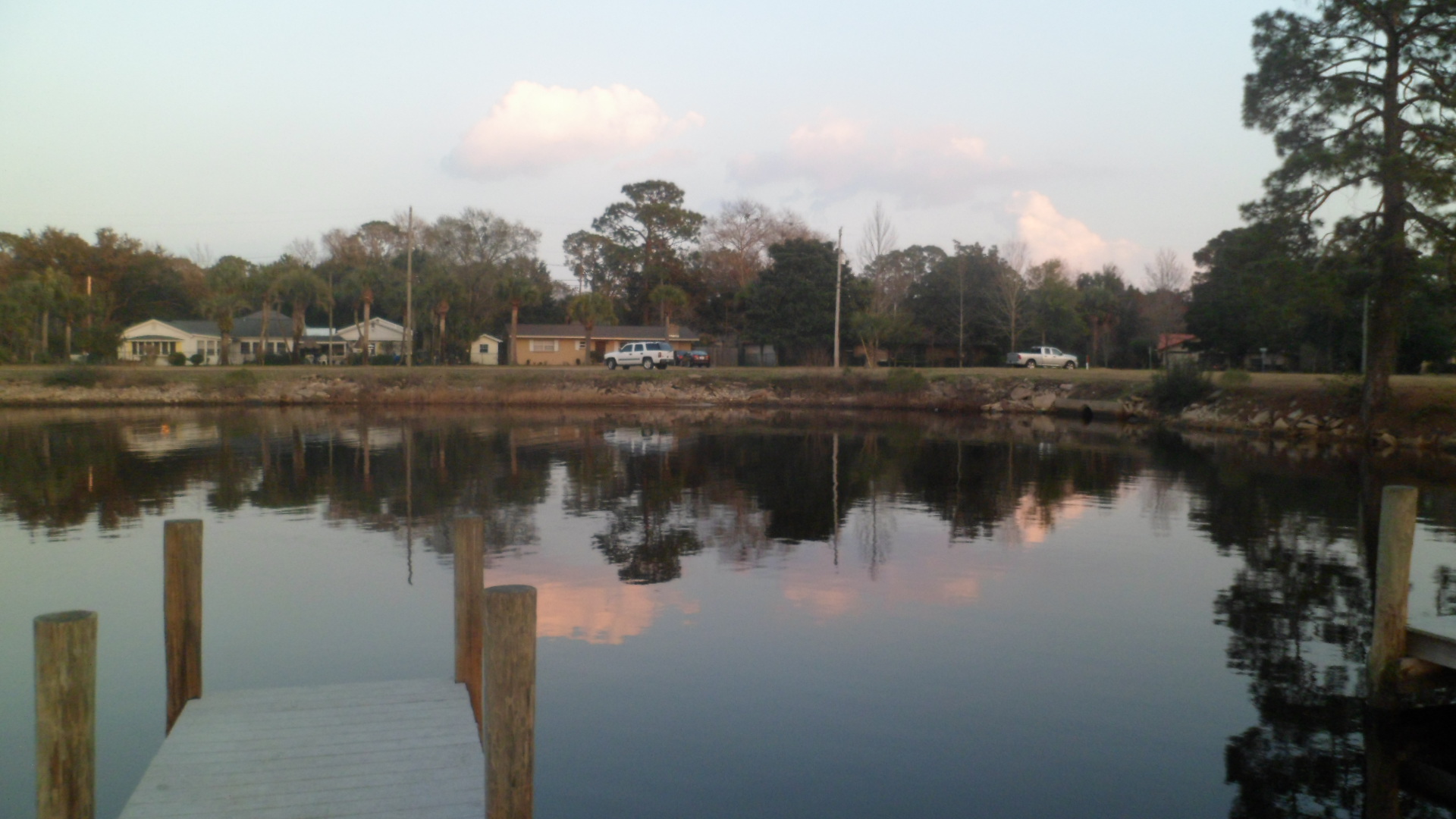
The inlets of the Gulf are a major draw, once one gets about twenty miles below I-10.  Lynn Haven, just north of Panama City, is a lovely water-based community on the island that includes PC. I spent about an hour or so at Porter Park, on the north side of Lynn Haven, enjoying the water scenes and a walking path, parallel to the Causeway connecting Panama City Island to the mainland.

SAM_3880

SAM_3882

Light and sparkle abound here.SAM_3885

SAM_3888

SAM_3891

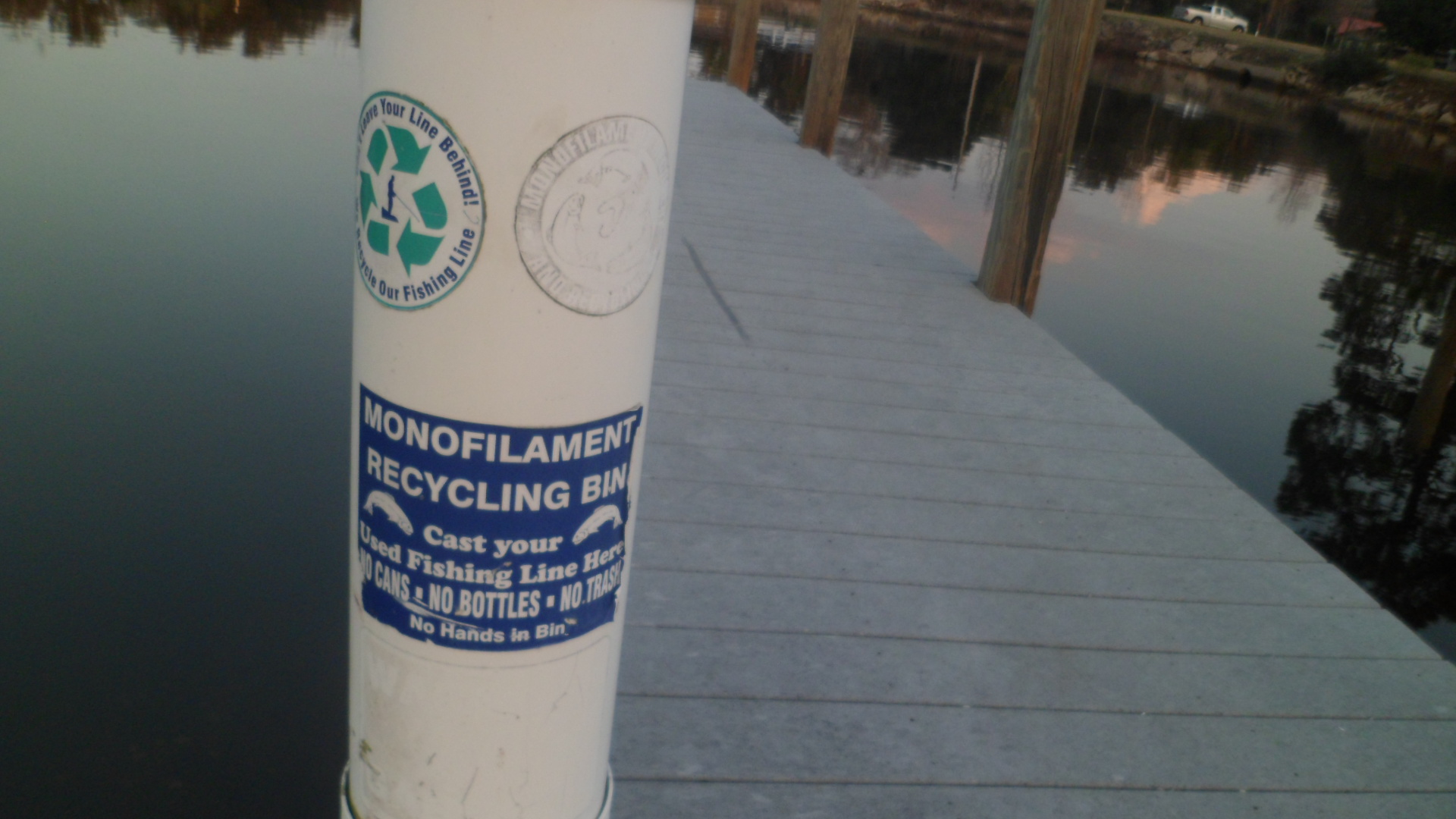
Florida depends greatly on fishing, both recreational and commercial.  With an eye towards the safety of marine life, as well as keeping eyesores to a minimum, the State and its cities provide these.

SAM_3890

With darkness approaching, I abandoned, at least for the day, the thought of connecting with a friend who lives here and caught a glimpse of sunset, at The Cove, in Panama City.

SAM_3892

It was time to head further east, in preparation for my main focus of the next few days- visiting my mother-in-law and my late wife’s cousin, near Leesburg.  I ended the day at an Econolodge, just east of Tallahassee.

The Road to 65, Mile 72: Dreams in Abundance

9

February 8, 2015, San Antonio to Fairhope, AL- A number of eateries in Texas opt to close on Sunday.  In the case of a barbecue spot in Houston, it was their loss.  After having had a good breakfast at a Country Pride franchise, east of San Antonio, I made the 200-mile jaunt to Houston, for a visit with an online friend.  His daughter, along for the visit, made the event another ten degrees of spectacular, with her views on matters and sharing her dreams for the future.

The journey included a stop outside the town of Seguin, named for a key figure in the Texas War for Independence from Mexico, in 1836. He was a mayor of San Antonio, during the transition.  The doors below are from his rancheria, south of present-day Seguin.

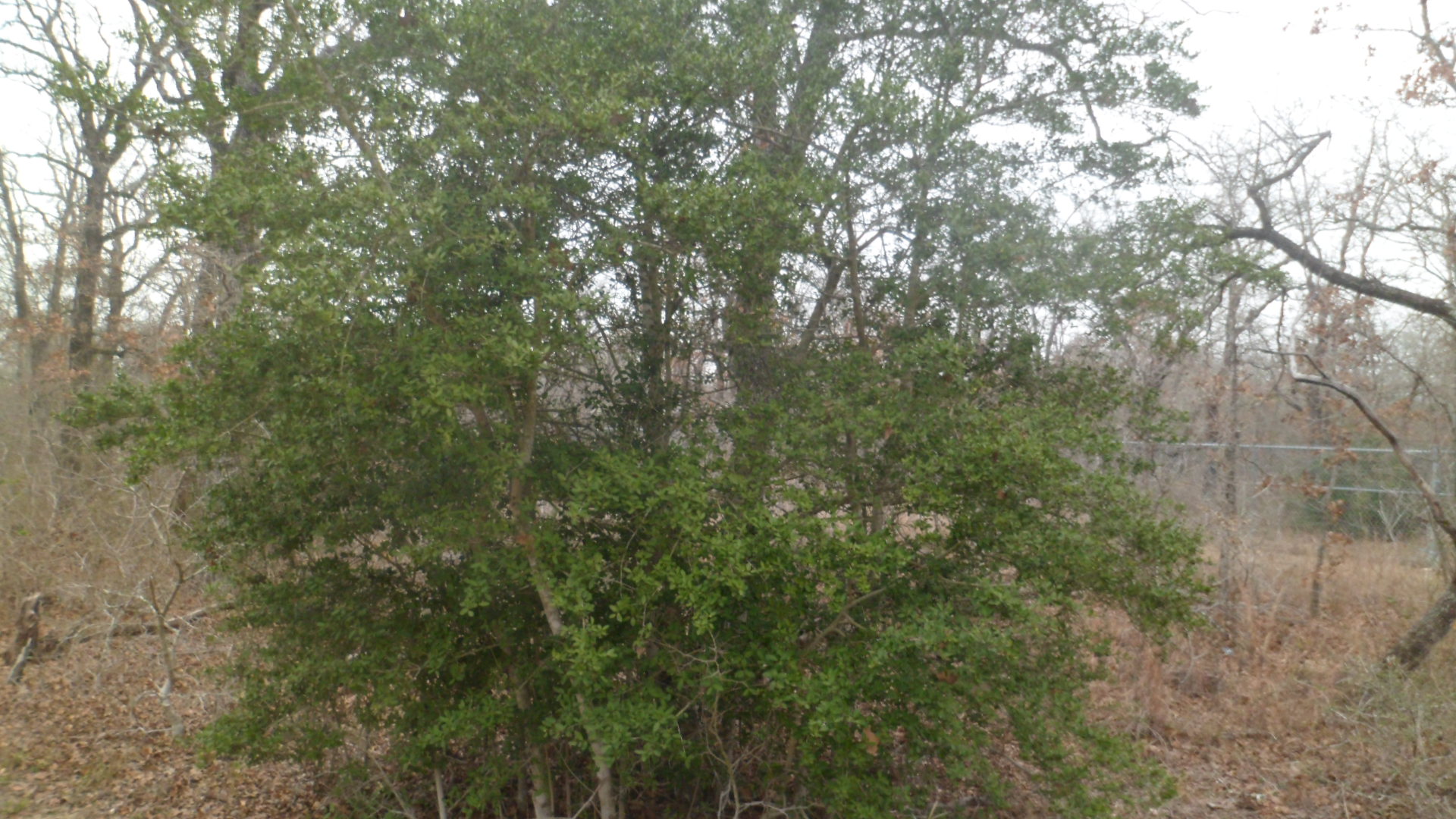
SAM_3845   The Rest Area also features a Nature Trail, in which the most notable feature, this time of year, is this holly bush.

SAM_3848

I next stopped briefly in Flatonia, a town with a sizable Czech population.  The downtown was deserted, but I got some views of what it once was.

SAM_3850 This train spotting tower once was a frenetic place.

SAM_3852

Here are some nearly forgotten gems from the early 20th Century.

SAM_3854

Once in Houston’s northwest side, I met my online friend, and new young friend, for lunch at the interesting and awesome Spaghetti Western.
SAM_3855

SAM_3856 The day thus enlivened, including with a few pirouettes and tales of confidence by the young lady, I moved on, with a stop in Anahuac, near Houston Shipping Channel and the San Jacinto Tower, across the channel.

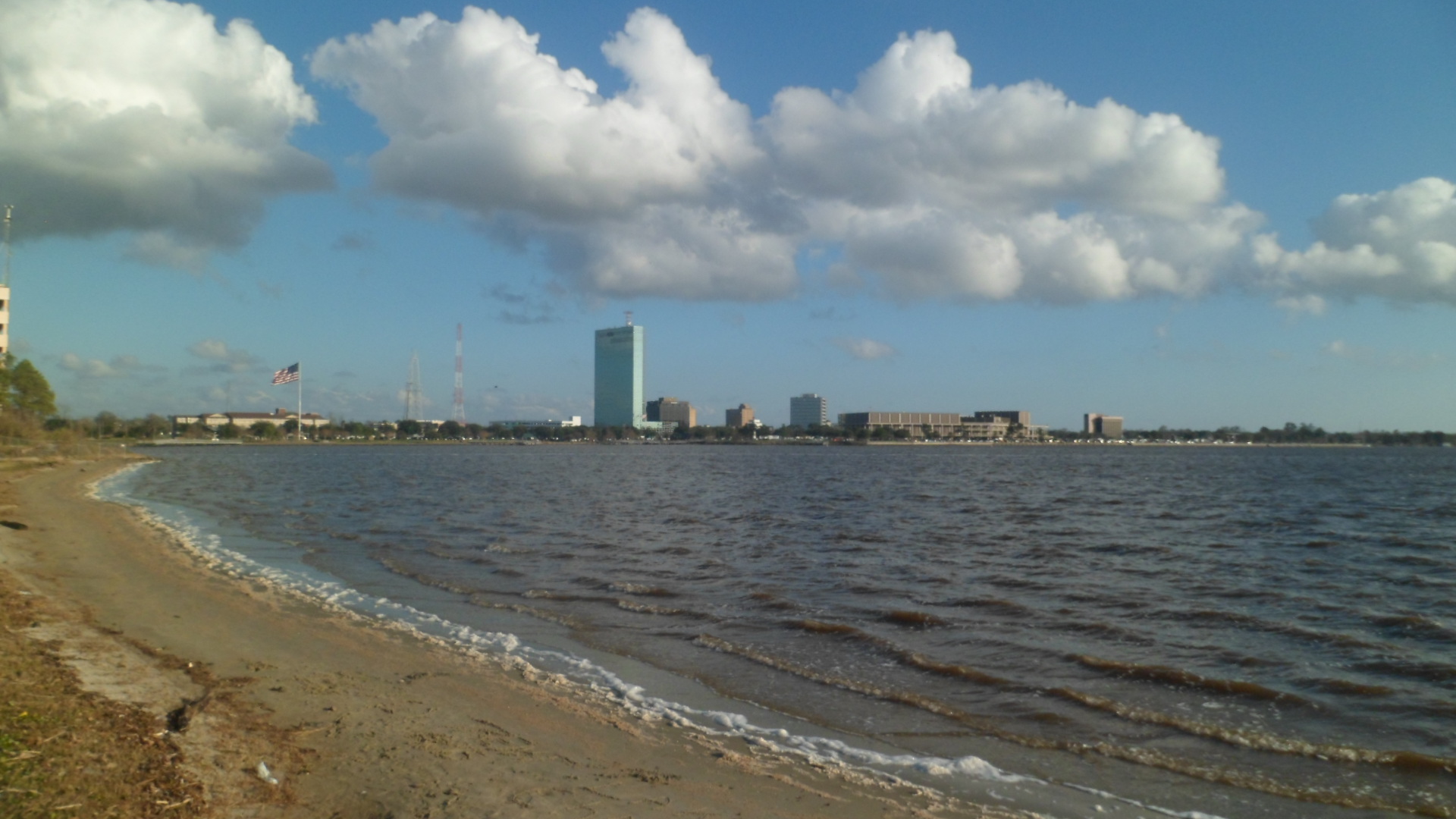
SAM_3861 Lake Charles, the first town I entered in Louisiana, has a lovely lakeside park, with a small nature walk and sizable Convention Center.
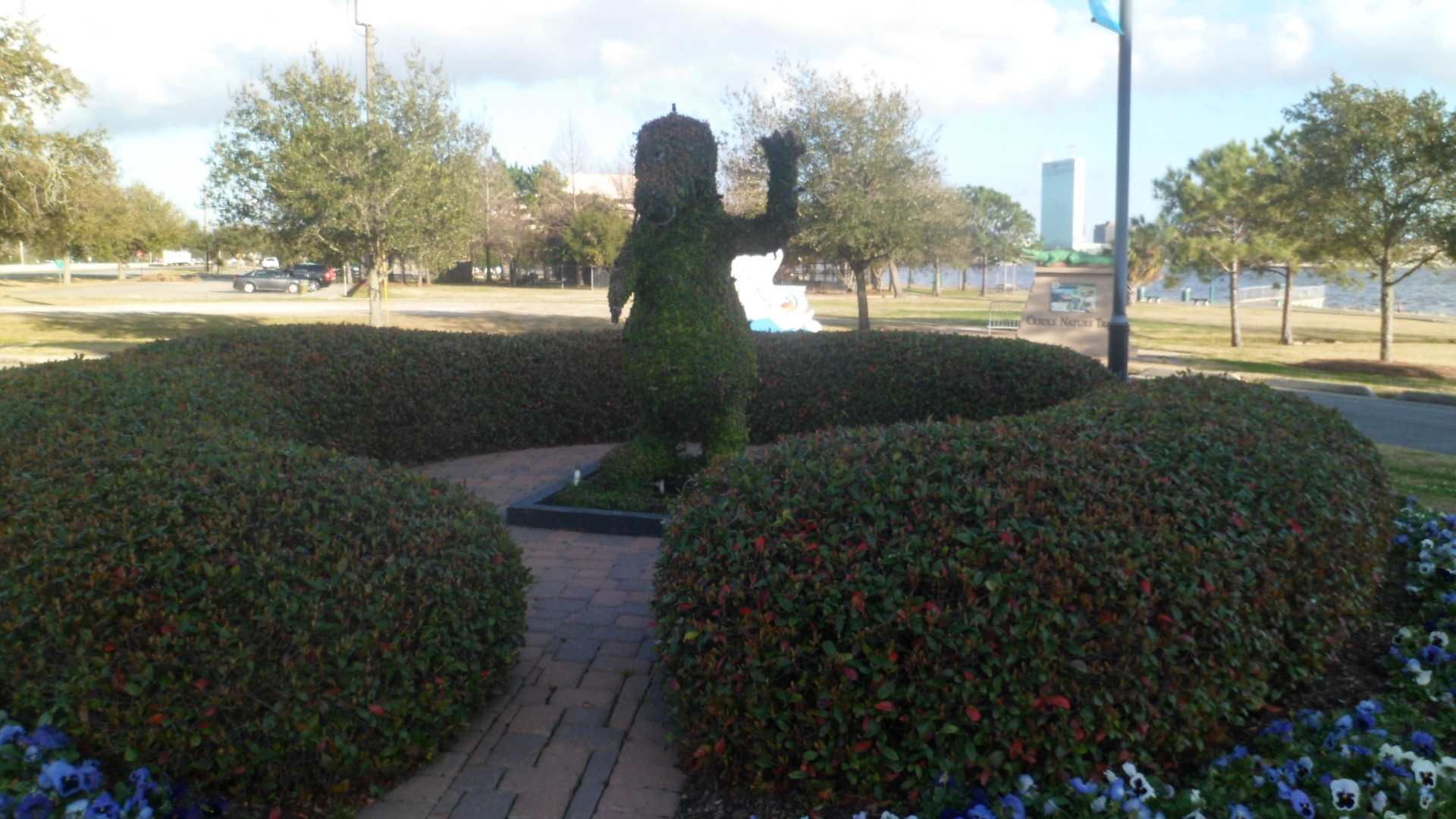
SAM_3865 An alligator topiary greets the visitor.

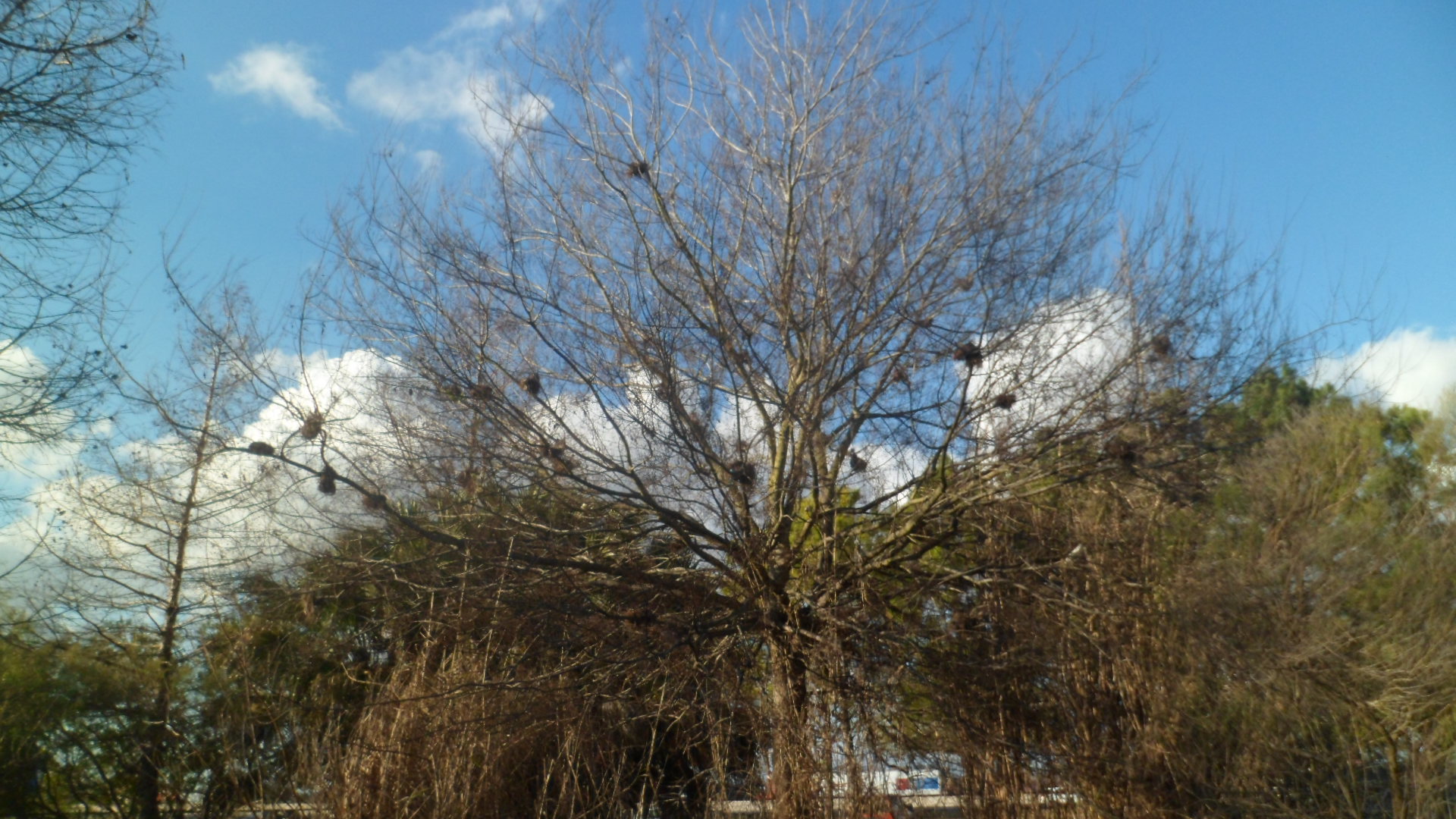
SAM_3869 The pond was empty, as were the birds’ nests.

SAM_3871

SAM_3872

I continued on, through Lafayette, Hammond, Slidell and Covington, LA (dinner was at at a Hot Wok,near there), the Mississippi Gulf Coast and Mobile, before settling in for the night in Fairhope, just southeast of Mobile.  So many wonders escape the camera, in the dark and during a time of needing to get sleep.  I will hopefully get to Mobile, Biloxi and Lafayette, at least, during daylight hours, on the way back.