September 30, 2024, Puerto Princesa- An ecstatic woman, in Long Island City, NY, screamed with delight, at the news she had just been given. Her first granddaughter, after two sons and a grandson, was born. For the Fellmans, of Long Island City and Jamesburg, NJ, the birth of little Penny righted a top-heavy ship.
She would go on, transcending a congenital defect, for over 45 years, building an Intelligence Quotient of 161, graduating summa cum laude from the University of Virginia and earning three Master’s Degrees-all in the field of education. As a member of the Baha’i Faith, from 1977, she would serve with distinction, as an educator, on the Navajo Reservation, in Jeju, South Korea, and in El Mirage, AZ. In the latter town, she would be led out to retirement, gently and with gratitude from the Superintendent’s Office, even as she was attacked by those within the school who had no understanding of her struggles.
I met Penny in December,1980, as the snow swirled around Zuni, New Mexico, as a house blessing ceremony, called Shalako, took place in a cozy, but crowded home. We took turns sitting in a single chair and became enamoured of one another. We would date, off and on, for eighteen months, and married in June, 1982. We met some auspicious milestones-Valentine’s Day engagement, marriage on the sixth day of the sixth month-and welcoming our son on the seventh day of the seventh month. Marriage was often stormy, but never rocky, and through her final eleven years, she had her men beside her-to her last breath.
Penny missed joining the Seventies Club by thirteen years and seven months. I could tell that she would have loved this day, though she was adamant about not making a big deal of her birthday-or mine, for that matter. There was always that twinkle in her eye, when she was honoured. I feel her light, shining through the veil-telling me to continue on my path. So, on I go.
September 29, 2024, Puerto Princesa- “I remember you from before”, said the six-year-old, as she came into her grandparents’ front room, “it’s so good to see you here again.” She introduced herself as Lyanna, “though that’s only my nickname”, and showed six fingers, indicating her age. I asked her what grade she was in- “One”. She then explained that she was not “so conversant” in Tagalog, as she had been initially taught English and Spanish-for whatever reason the latter was important to her Filipino parents. She further explained that her father was a Navy officer and her mother, a nurse. When her little brother came out of the back and started crawling over me, Lyanna said “It’s okay; he can’t help it.” Grandmother quickly took the boy away, and Lyanna continued: “We mustn’t pick on the people who have learning problems. Everyone has one problem or another. For example, I have trouble learning Tagalog.”
I probably could have listened to the child expound on the Universe for a lot longer, but I had to get my dirty clothes to the laundry, up the street. She quickly exited, saying “Bye, bye. See you next time!” Precocity is priceless, and those who place limits on it do so to their own eventual detriment.
The other aspect to this is the seeming closeness of young children to the spirit world. Whether their recognition of certain people, whom they had not previously met in the flesh, is based on mere generalization of people with similar countenances or demeanors, or results from an encounter in a spirit dimension, is something we will only be able to ascertain when the time comes to go to the next level. In any event, I keep running into such children, and I know I am far from alone, in that regard.
This day passed without any of the scheduled meetings taking place. I have to say, though, that the conversation with Lyanna and a longer discourse, with her grandfather, were probably far better uses of my time than meeting just for the sake of meeting.
September 28, 2024, Puerto Princesa- The shoe, it turns out, was only moved a short distance from its untouched mate. Darkness keeps us in suspense, yet I sense when patience will win out, in daylight. The pair again adorn my feet.
I met another American, this morning. He has settled here in Palawan and farms with his wife, near BM Beach, which will itself be my beach experience on Monday. I have made it known that, so long as I am welcome in the Philippines, next year will bring a longer stay. The “Great Adventures” I had planned for the next five years are better off done with someone I have come to love-and trust- very much. Before them, then, comes earning trust, myself-and so I make that commitment, even with the adjustments this will bring to my comfortable life in Arizona.
Family has only grown larger, over the years, but I have seen a bigger picture than my local scene, since I was four years old. Always branching out, farther and farther-while never forgetting my roots, it has been such a rewarding life. Some of this has been imparted to my son, who is in the rootedness phase of life, and so will be the anchor of annual or semiannual jaunts back to North America. The wider family, though, will hardly shrink.
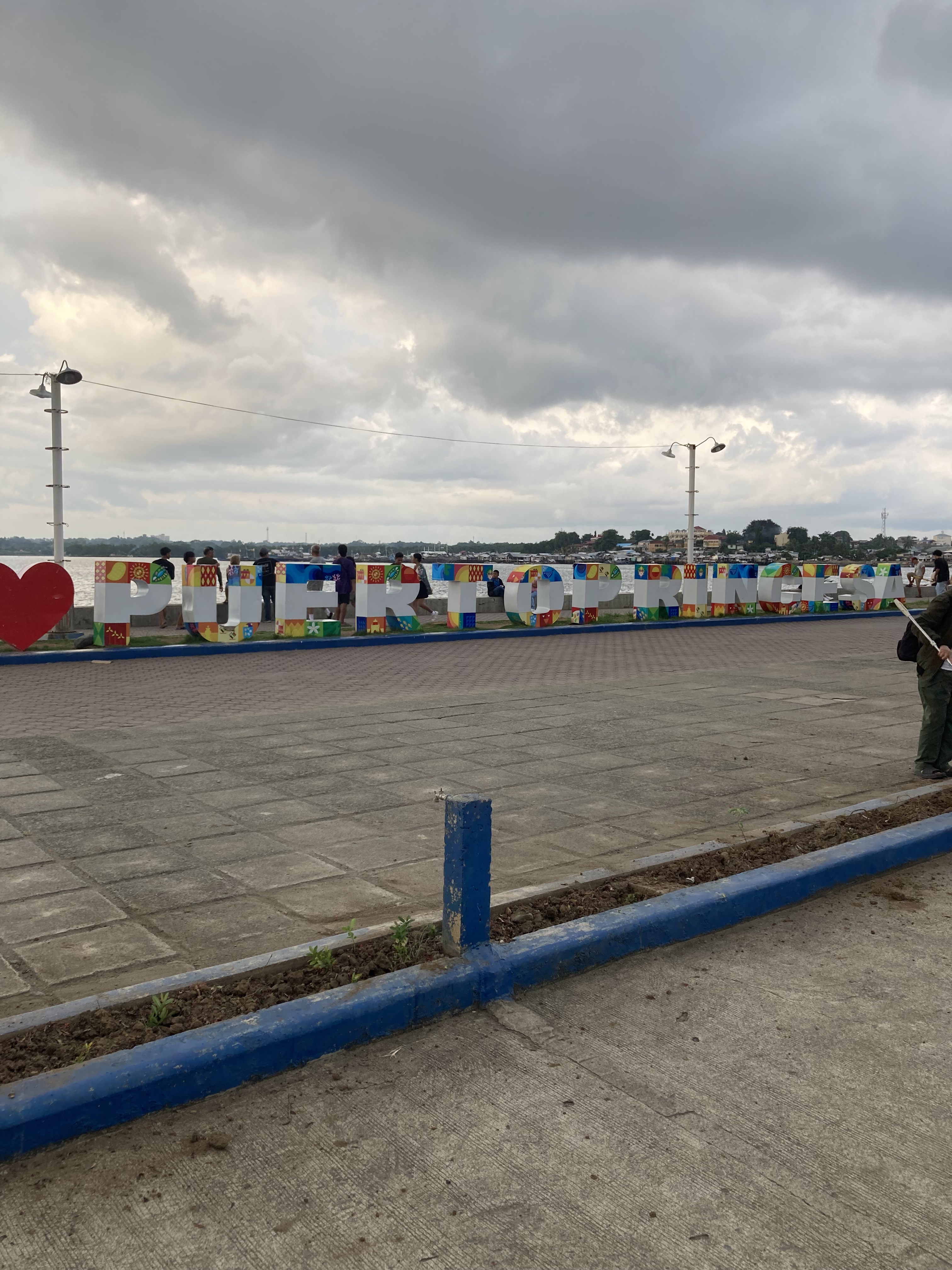
I felt comfortable enough, this evening, to walk south and west, and take in Puerto Princesa’s Bayside Park, its Cathedral and Plaza Cuartel- the scene of a brutal massacre during World War II. It may or may not be a hallmark of American travelers, but I go anywhere that is not off-limits, or is obviously dangerous turf. Puerto Princesa is not a dangerous place.
Statue of the “princess”, for whom the city is named. She was an elusive figure, it is said.
Peacock Statue (Tandikan)-the provincial bird of Palawan.
University crew members, in practice
City logo, at Bayside Park.
Cathedral of the Immaculate Conception, Puerto Princesa
Account of brutality that grew out of fear.
So went my solo visit to Hondo Bay and its interesting park.
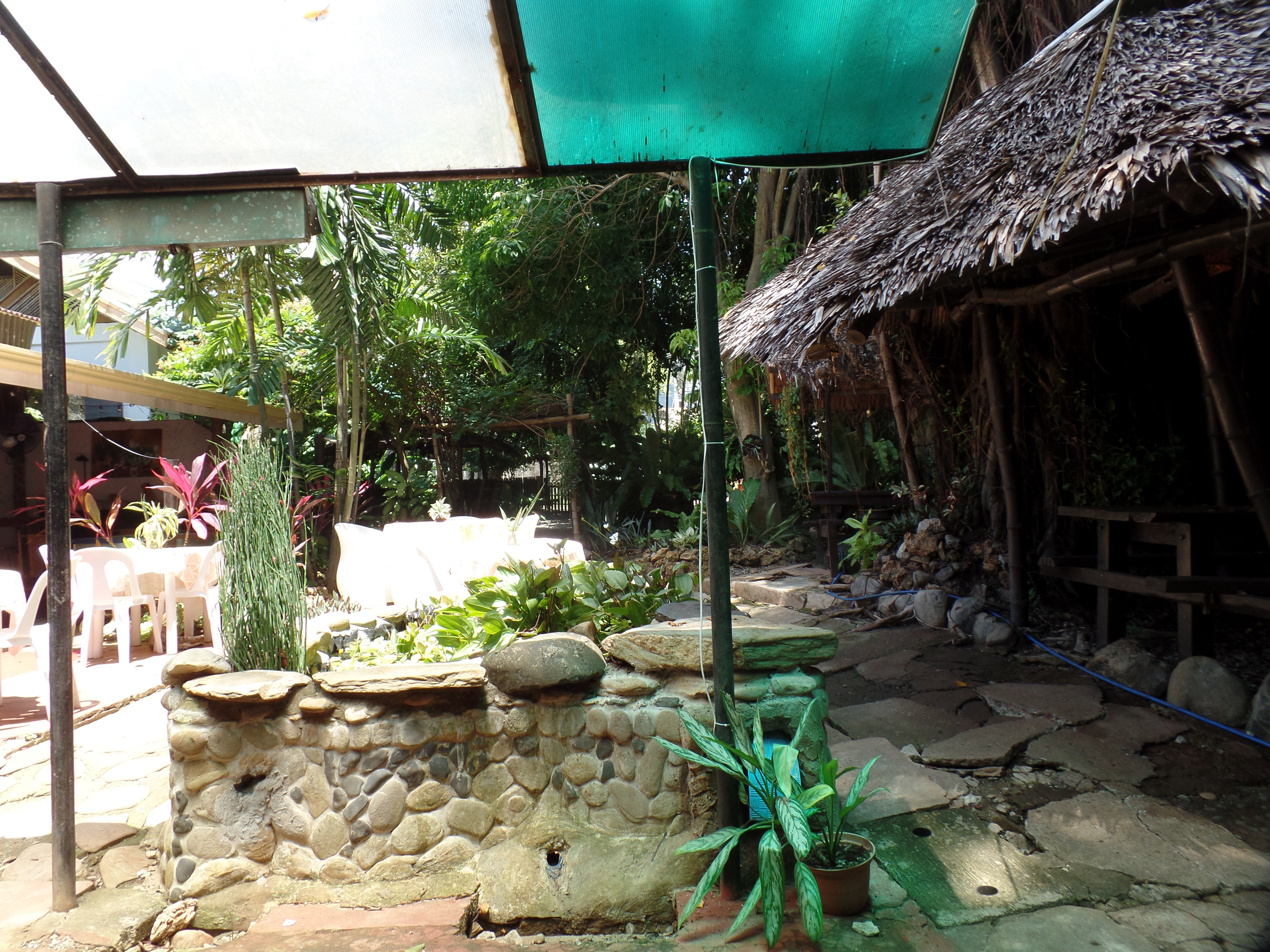
September 27, 2024, Puerto Princesa- The dog was sniffing my shoes, as a I left them outside the door to the large, comfortable villa, where our evening meal and impromptu conversation of two hours was to unfold. There are no puppies here at Dang Maria, (named for the mother of the owner), so I thought nothing of leaving them in the customary spot.
We had several lengthy and intelligent conversations today. Sister-friend Jane looms large in this seaside community, and has done nothing but good for the Puertenyos, and all Palawenyos. Her vision, like mine, is global and inclusive. I am proud to see her as a spiritual sibling.
My actual hosts here in Puerto Princesa are a furniture maker, Roger, and his wife Amie (AA mee). Roger sets the meetings and, in the tropical tradition, the times. It is vacation mode, even with my keeping view of my goals here-to encourage the Baha’is, as we continue to re-group, in the lingering aftermath of pandemic. I walk more slowly, along Manalo Street, to and from my host’s residence and my digs at Rodolfo Royale Hotel-and anywhere else we may be walking.
Our first leisurely stop was at Palawan Mall, where I refueled my wallet. We then headed over to Jane’s Restaurant, Neva’s Place, named for one of her three daughters.
Neva’s Place, Puerto Princesa, Palawan (above and below)
After a meal of garlic shrimp and noodles, with coffee as a dessert item rather than as “fuel”, we bid Jane adieu and headed back to our respective spots on Manalo Street, for siesta in the sitio (neighbourhood). It is still an institution here on Palawan-for those who don’t have a series of meetings to attend.
Our evening gathering, at Dang Maria, started “promptly at 5 p.m.”, which is Taglish for “be here around 6…or so”. We got there at 6:15. The gloaming had set in, but in the house, everything had a quiet vibrancy, and we addressed woes, both near and far. One thing we all hold in common- our Faith is not meant to have us hold our heads in the clouds. Spirituality, if real, must envelop, absorb and sanctify the material and the practical. Matters, great and small, put in front of us, are worthy of our attention. “Be anxiously concerned with the needs of the age ye live in, and centre your deliberations on its exigencies and requirements.-Baha’u’llah, “The Tabernacle of Unity”
Evening, at Casa Maria, Puerto PrincesaAmie, Roger and JaneThis is the one where I look like my maternal grandfather. (Time is flying!)
It was time to leave, being close to 9 p.m., so I went outside, to put on my shoes-except that there was only one. We looked high and low-but in the darkness, there was only one thing to do. I was graciously offered a pair of sandals, and the remaining shoe was placed out of harm’s way.
September 26, 2024, Puerto Princesa, Palawan- Today began with an urgent plea, which I answered with a long prayer for healing. It seemed to have done the trick, as the medical emergency has been relieved somewhat. So, prayers on that matter (Confidential, of course) will continue from this end.
The day played out with yet another transition from Manila to a provincial area. It was a day of even flow, with a flight delay answered by the pilot by getting us to Puerto Princesa in 2/3 of the time that the manifest stated. Passengers are far from the only people who want to get to their destinations, be those home or a temporary Home Base.
Here in “Puerto”, and elsewhere in Palawan. motorized tricycles take the place of jeepneys. Two of them got me from the airport to this 2-star hotel: Rodolfo Royale, which more than suits my needs for a few days. The first Tricycle took me to a “recommended” rooming house, whose owner was none too pleased to see a foreign national. No matter- I got a second tricycle to a popular restaurant, and my friend here in Puerto lives just up the road from RR, and getting in here was no problem.
It will be more socially intense here, as there is a larger group of people who are interested in my presence, and these are country people, not so absorbed in their own day to day business, as those who dwell in the cities. In the course of events, that is a good thing, more conducive to personal growth.
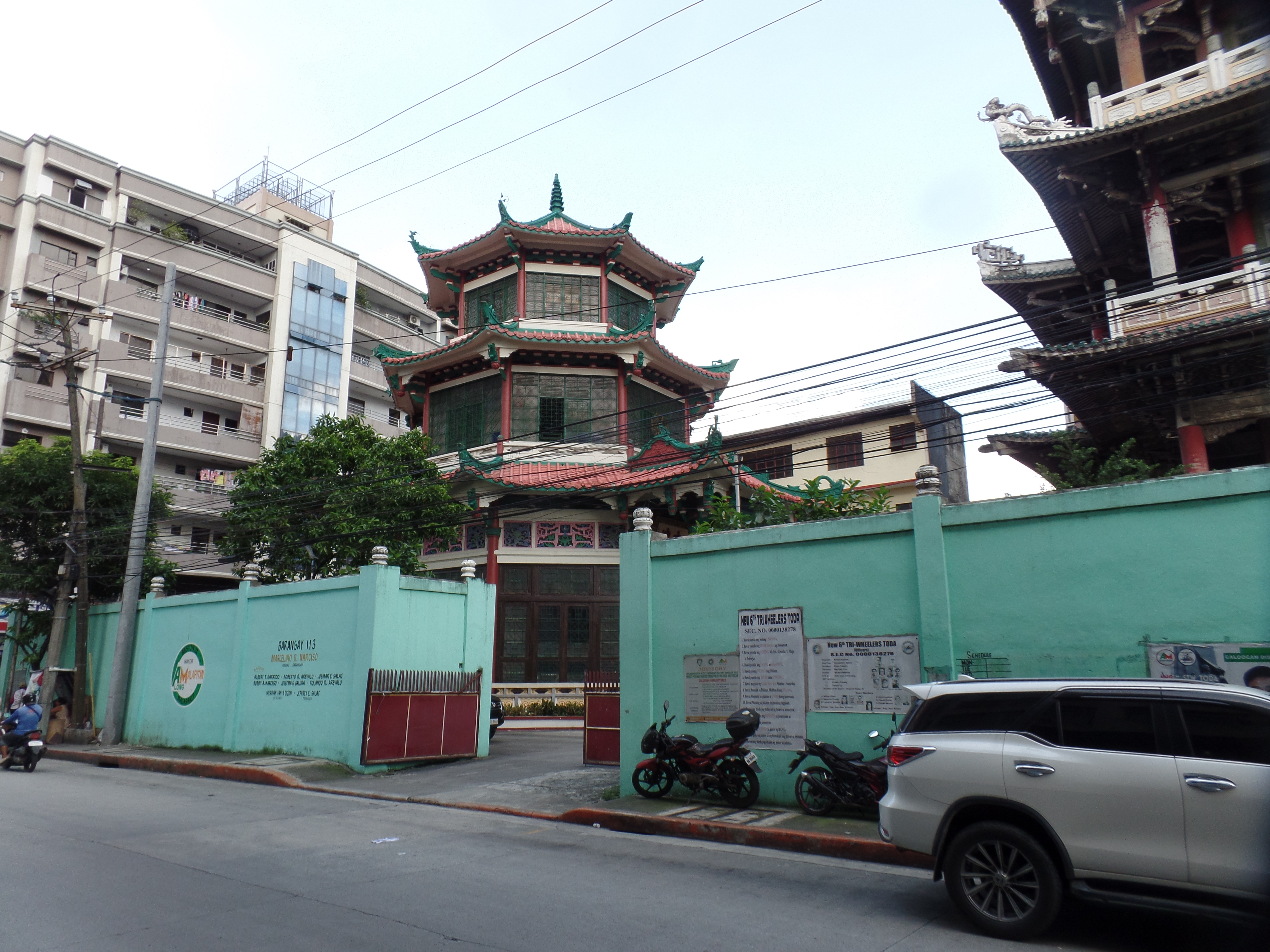
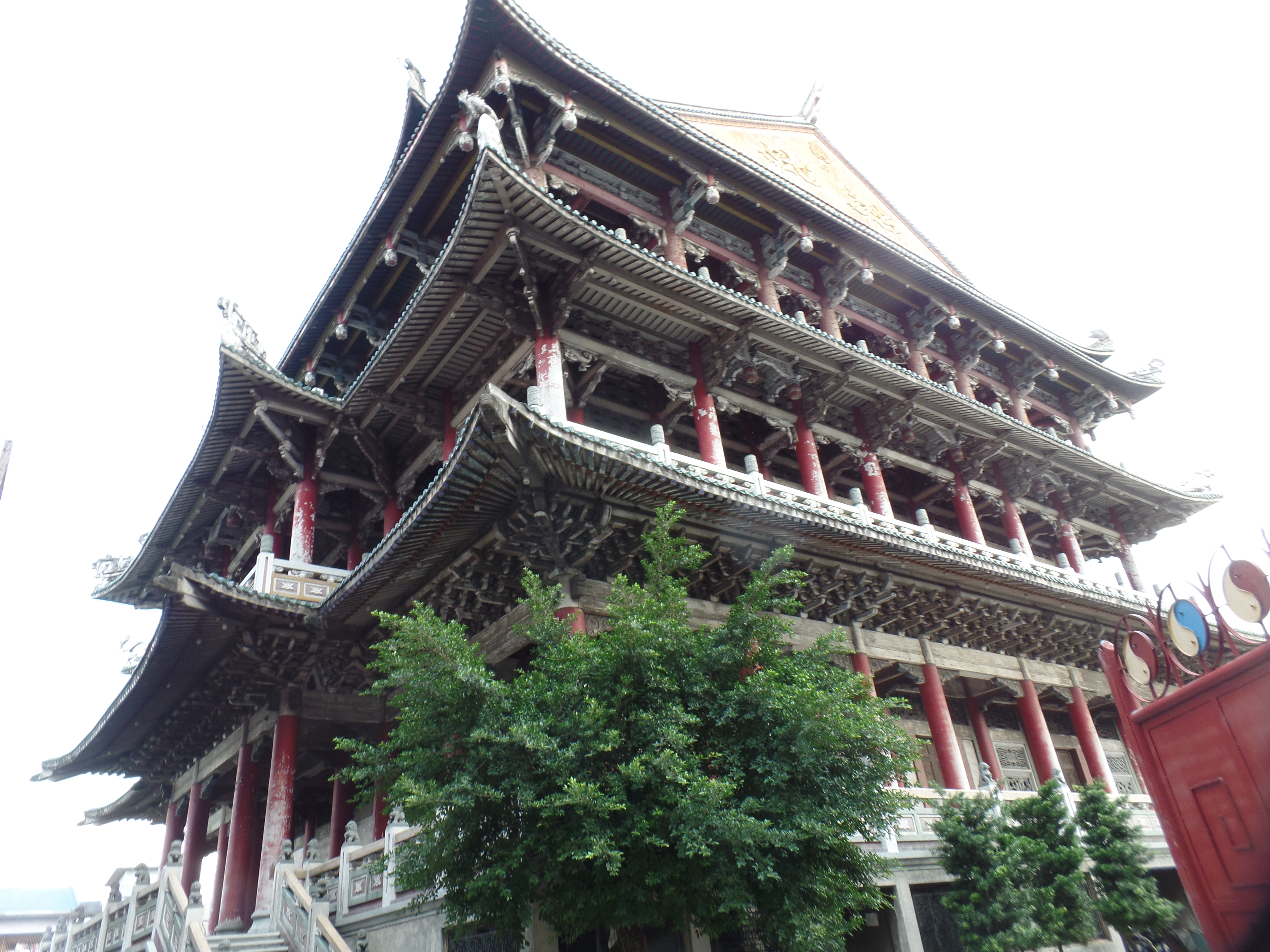
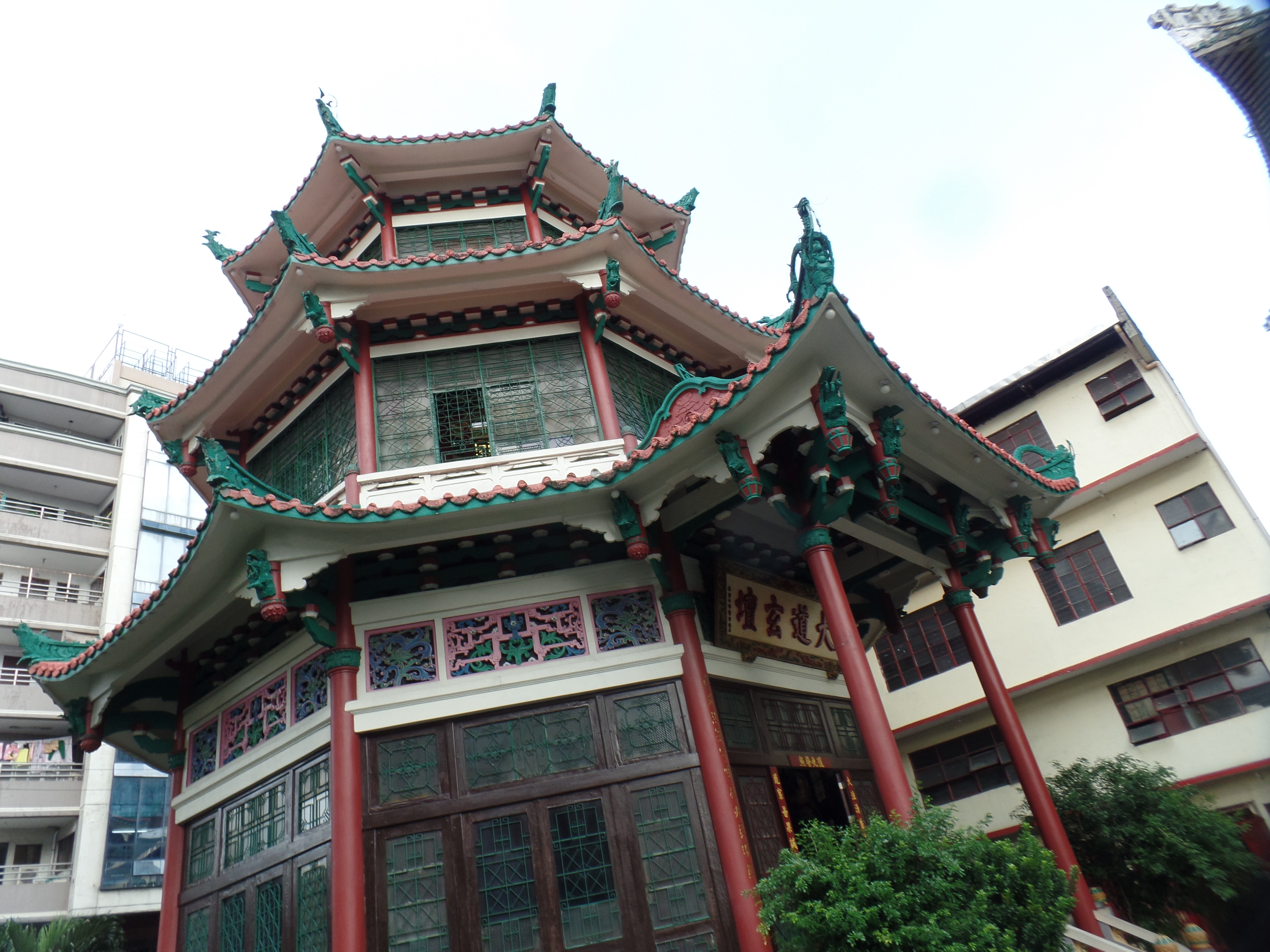
September 25, 2024, Manila- Stepping off the light rail car, at Fifth Avenue station, I spotted an ornate Chinese temple and adjoining pagoda. I was in Caloocan, the Philippines’ fourth-largest city, and the only one that is split by a neighbouring community. In this case, Quezon City, the largest city in the country and its former planned capital, has split Caloocan into the greater northern segment and a slender southern area, by way of the former’s aggressive annexation of land in the 1930s and again in the 1950s.
It is in southern Caloocan that the Chinese structures are found. The Taoist Temple, named Thai To, and its pagoda, lie to the south of the Fifth Avenue Light Rail Station. The outer gate of the complex was open, but the doors to the structures were not, so I confined my curiosity to their exteriors. I know from having lived in South Korea and visiting Taiwan that temple visitation involves serious protocol.
Thai To Taoist Temple and Pagoda, Caloogan South (above and below)
Crossing back to the main street, I noticed another old Mandarin-style building, on the north side. So, crossing over, I found Ung Siu Si, at the north end of a small area of shops and warehouses.
Ung Siu Si Temple, Caloocan South
Two older Chinese men, who had been lounging outside, got up and moved away, as they saw me approaching. A nearby security guard chuckled at their wariness, but no one had a problem with my photographing the building.
This was the extent of Caloocan South’s Chinatown remnant, save for a few small cafes with signs in Mandarin. I spent the rest of my solo afternoon at Co-Lab, a pleasant coffee shop, frequented by university students. It is ever a feature of my sojourns to seek out such haunts, and while away an hour or so by journaling. Co-Lab, also called The Coffee Project, is not far from Ola!, or from the Baha’i Center, so I will visit there again, when K and the sister-friends are busy with projects, on a given day.
Tomorrow, though, I will wrap this second stay in Manila and head southwest, to Palawan, for a three-day visit. It is the home of two of the sister-friends, who have been so important to our day-to-day activities.
September 24, 2024- A groan came from the back of the taxi, and I turned to see my sister-friend trying to stomp a cockroach, which scurried out of harm’s way-toward my beloved, who also tried to stomp and missed. Being the man in the party of three, Filipino culture dictated that I sit in the front passenger seat, so despite my annoyance at the insect being near my friends, I could do nothing-but wait and see if it came towards my space. Somehow, it stayed hidden under my seat-and we all refocused.
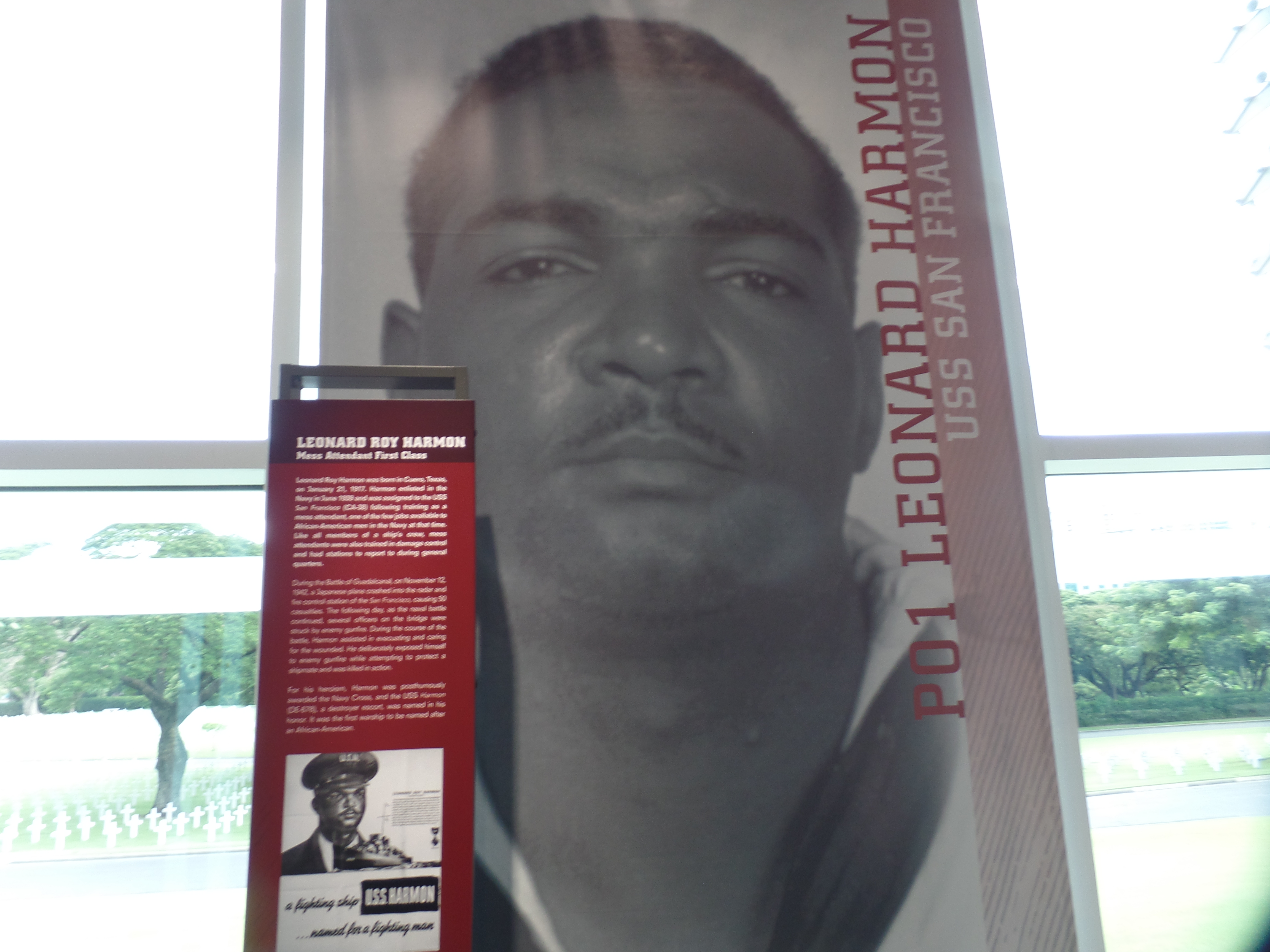
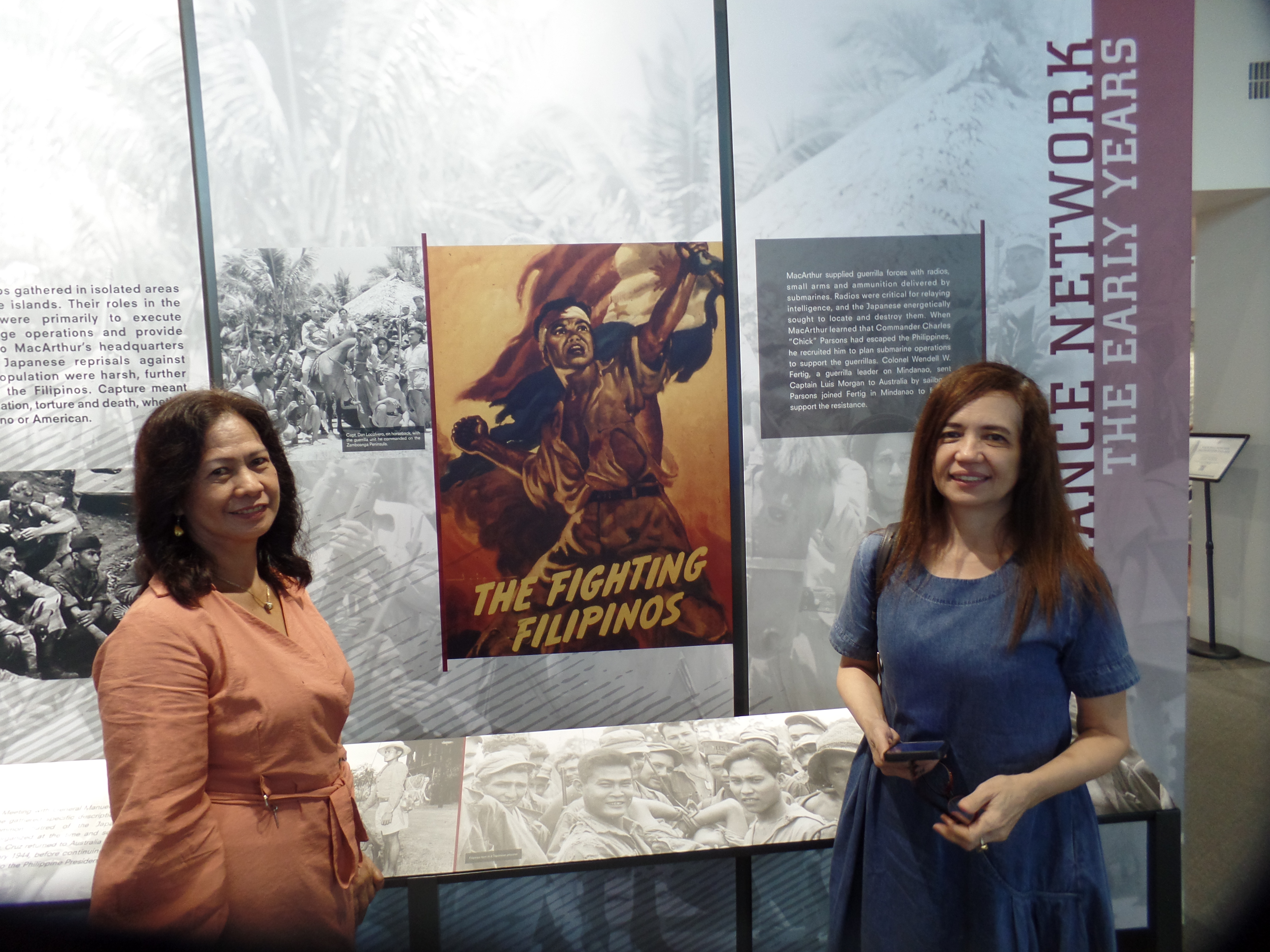
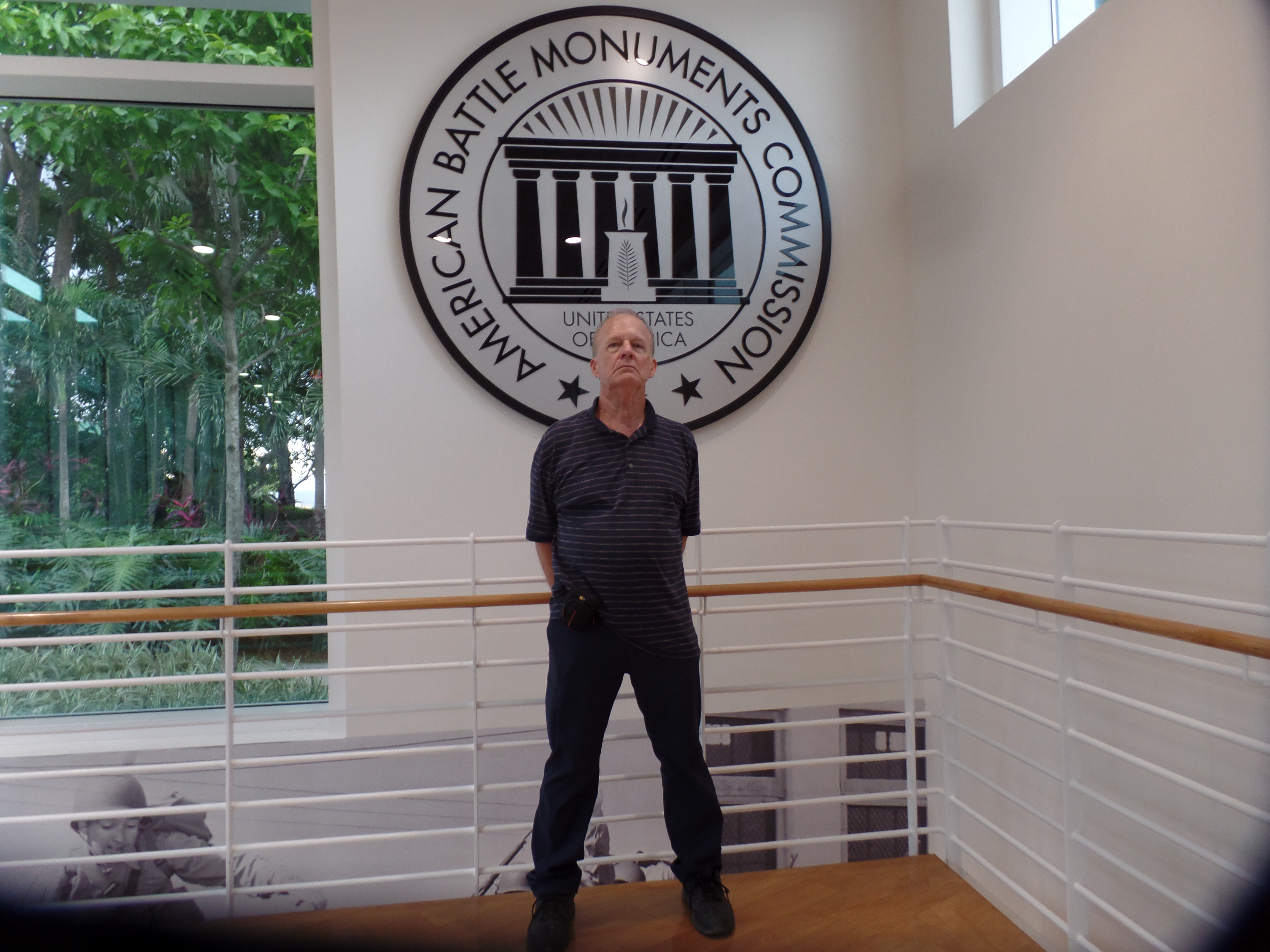
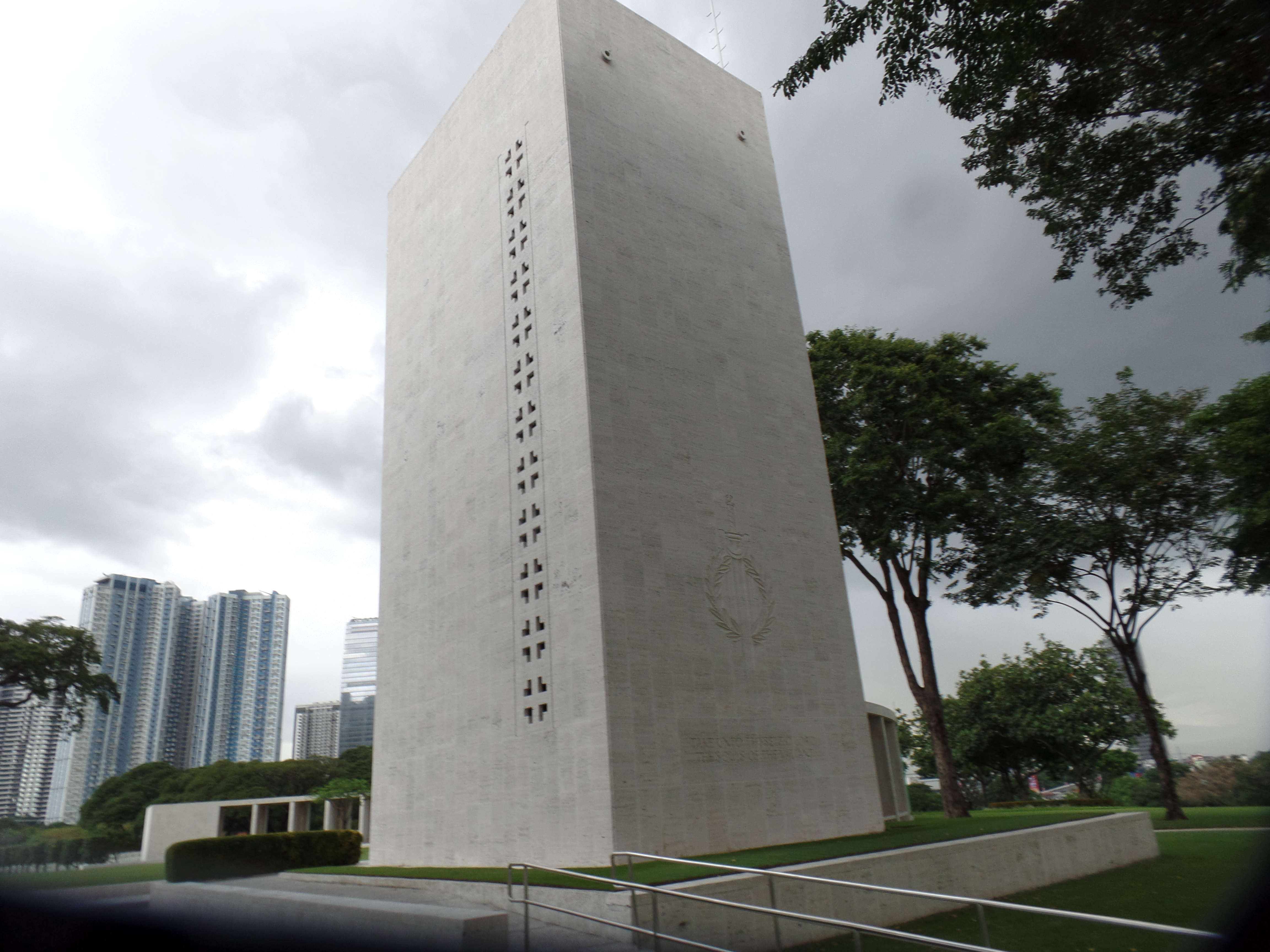
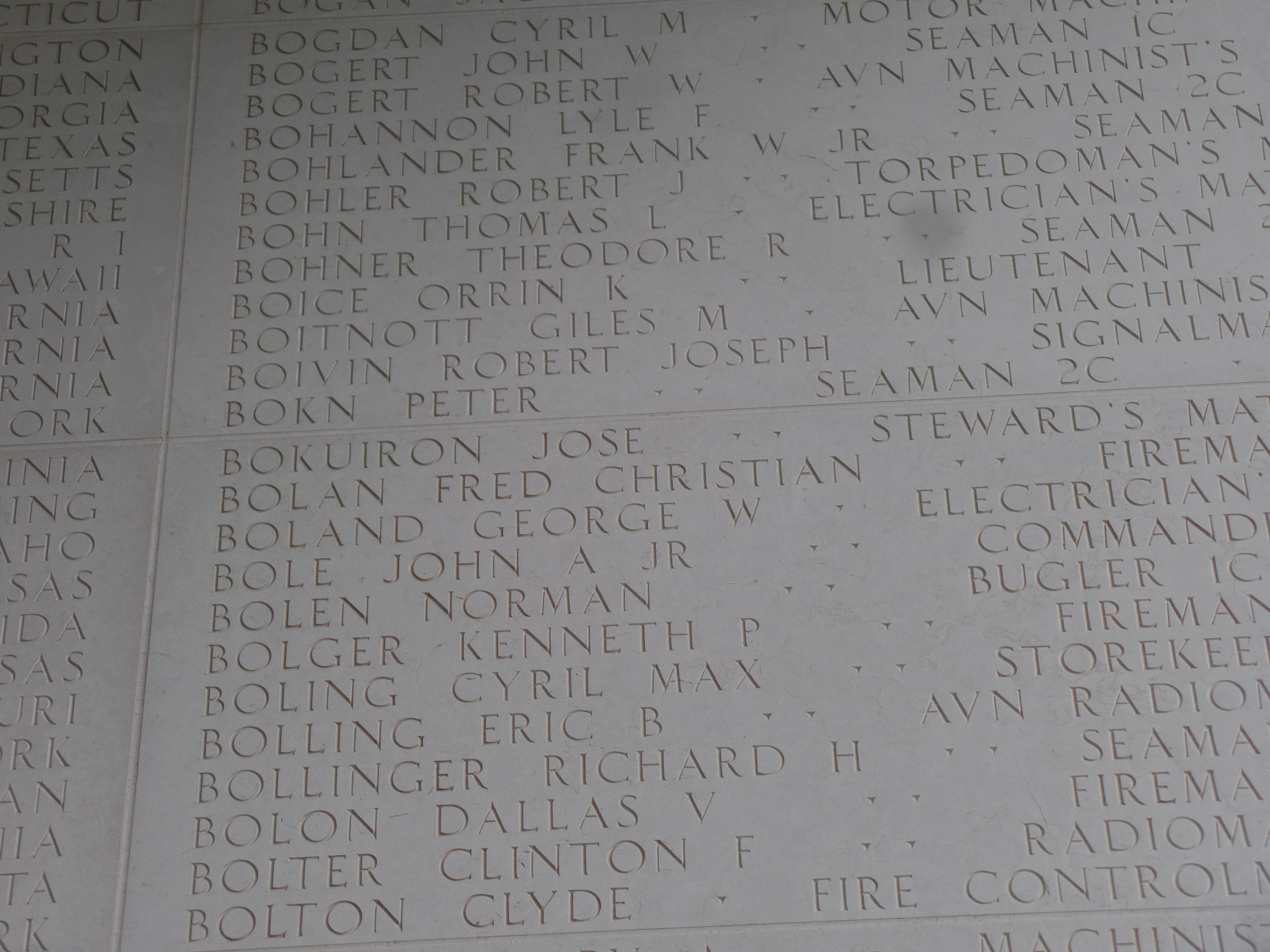
We had been on an outing, first to the Philippine-American Cemetery, where 17,000 men and women, who died fighting the Japanese invaders, between 1941-45, are laid to rest. Those Missing in Action are named also named on a Wall of Honour. This wall is in three segments, each of which has several columns. Kathy wondered if any of my family members died in service, during World War II. None did, but my late father-in-law was a prisoner of war, in Berga, Germany, for five long months, in 1945. As a Jew, he was given “special” torment. Two of my maternal uncles were in the Navy, during the Battle of Midway. One of them served with valor, when his ship was shot out from under him and crew mates. He received a Silver Star for his actions. One of my paternal aunts served in the Women’s Naval Corps, the only member of her family who was able to serve at the time. I did find a distant relative, a Robert Boivin, USN, who was killed in action in the Philippines. There may be others, as we did not go to the Army, Marines or Coast Guard sections, which we will visit another day.
We viewed a film about the sequence of events There were so many heroic figures, among the Filipino and American forces, including many of both who acted as guerillas, constantly harassing the occupants. Filipino civilians also acted in wily fashion, many operating right under the noses of the overconfident Rising Sun. All those who died, made the soil of the Philippine nation fertile, in the best of ways. My head is bowed in tribute.
Here are some scenes from our visit to this hallowed spot.
The Home Front of America sprang to action.People of colour were in the forefront of the battle for the Philippines, and elsewhere.Kathy and Norlie are among the grateful.So am I.Norlie’s grandfather was one of the above.I still stand ready.This cenotaph honours the fallen, collectively.Robert Boivin, Signal Corps, USN, was a distant cousin.Three of Penny’s distant maternal cousins, Anthony, Ervin and Kyee Faust, were also in the forefront of the battle-at Leyte Gulf (1944).
Here is another view of the Cenotaph. It is actually a chapel, with a statue of St. Mary inside.
Afterwards, we went to one of the legacies of Philippine freedom: The new financial center of Manila: Bonifacio Global Center. There, we met another friend and I became the lovely ladies’ paparazzo.
Bonifacio Global CenterNorlie, Kathy and Ylona at “BGC”.
September 23, 2024, Manila- There was not much on my plate today, except to recount to a couple of friends, as to my visit in Baguio. I also “planted” the second rose quartz heart in a Philippine locale: The front garden plot of the Regional Baha’i Center, in Manila’s Santa Ana neighbourhood. The first was “planted” on Saturday, in the front garden of Rosevilla Transient Guest House. Others will be interred on Palawan and in places I will visit, in the remaining four weeks of my present sojourn here.
I have met several men who have come from afar, and married Filipina women. Some have known their mates for several years. Others came on a wing and a prayer, and found the one they sought. I wish them all many years of happiness.
I did not come here, last year, with the intent of finding a special person. I had twenty-nine years of love from Penny, and her spirit still guides me-and so I was guided to a shimmering, radiant soul, when I least expected. As to the outcome, it’s been a lovely year of long-distance communication and an equally lovely set of in-person meet-ups, so far. We will see where this goes, but I am in a joyful state right now.
One thing is clear, though: I do not view Kathy, or any woman for that matter, as an idea, a trinket, a plaything or a pastime. Penny was for real; so is K. I am a head or so taller than she, but we are eyeball to eyeball, and her thoughts, dreams and life plan are as important to me as anything in my life.
There are those who will read this and tell me-“I remember when……” Of course you do, and so do I, sometimes to my chagrin. Those friendships, or reasonable facsimiles thereof, each imparted a lesson for me-and probably for the women involved as well. I have seen those of them who have remained my friends go on and meet good men, or continue along an intentional life of single person hood.
I have long since reached the point of no compromise with the lower nature. As my bond with K evolves, and in whatever direction it goes, I will follow the path of honour. My marriage to Penny taught me the way and all else that follows is in that vein.
September 22, 2024, Manila- The wooden Ibaloi warrior sat in my crafts souvenir bag, keeping watch over the bus, and me-like Little Bear, in “The Indian in the Cupboard”. I would not have been surprised, had he come to life and begun murmuring fiercely in the Ibaloi dialect of the time. The history of the indigenous people of the vast Malay archipelago: East Malaysia, Brunei Darussalam, Indonesia, Timor L’Este and the Philippines mirrors that of the First Nations of the Americas. Indeed, they were all subjugated by the same European conquerors-and their successor cultures.
Mabel Cook Cole provides us with this account of the origin of the Igorot nations
In the beginning there were no people on the earth.
Lumawig, the Great Spirit, came down from the sky and cut many reeds. He divided these into pairs which he placed in different parts of the world, and then he said to them, “You must speak.”
Immediately the reeds became people, and in each place was a man and a woman who could talk, but the language of each couple differed from that of the others.
Then Lumawig commanded each man and woman to marry, which they did. By and by there were many children, all speaking the same language as their parents. These, in turn, married and had many children. In this way there came to be many people on the earth.
Now Lumawig saw that there were several things which the people on the earth needed to use, so he set to work to supply them. He created salt, and told the inhabitants of one place to boil it down and sell it to their neighbors. But these people could not understand the directions of the Great Spirit, and the next time he visited them, they had not touched the salt.
Then he took it away from them and gave it to the people of a place called Mayinit. These did as he directed, and because of this he told them that they should always be owners of the salt, and that the other peoples must buy of them.
Then Lumawig went to the people of Bontoc and told them to get clay and make pots. They got the clay, but they did not understand the molding, and the jars were not well shaped. Because of their failure, Lumawig told them that they would always have to buy their jars, and he removed the pottery to Samoki. When he told the people there what to do, they did just as he said, and their jars were well shaped and beautiful. Then the Great Spirit saw that they were fit owners of the pottery, and he told them that they should always make many jars to sell.
In this way Lumawig taught the people and brought to them all the things which they now have.”-Source: Mabel Cook Cole, Philippine Folk Tales (Chicago: A. C. McClurg and Company, 1916), pp. 99-101.
The First Nations of the Malay Archipelago, including the Philippines, have much the same richness in their cultures and in their societies, as have the First Nations of the Americas-and in fact, all the First Nations, across the globe. It was all too easy for Europeans and their settler descendants to have lost sight of this, because no sooner had a wave of Eurasian nomads come across from the steppes of the landmass’s center and settled down (the Celts, the Aryans, the Teutonic tribes, the Huns, Avars and Turks), than another wave of nomads, the Mongols being the last, came thundering across the plains, to conquer and disrupt society. Each successive wave of settlers disdained those they found in place. So did the ethos of conquest become ingrained in the European mindset-and in many ways, the wisdom of the indigenous people was discounted and overlooked.
I am grateful to have had a small amount of time with the Idaloi. I will be back, possibly as early as next month.
I came back to the capital, this afternoon. The return trip was made the way the average Filipino makes it-via a local bus, that stopped in four different depots and two rest areas. The bus picked up roadside passengers in the countryside between Baguio and Sison, which was the first rest area. We continued through small cities, like Urdaneta and Moncada, stopped at a second rest area, in Angeles, and still got to Pasay Victory Line Terminal in five hours. Now, there are four days to regroup and replenish, before going to Palawan, the “frontier” of the Philippines, in the southwest.
Here, as a bonus, is a collection of Igorot legends.
September 21, 2024, Baguio- The sweet young woman was ecstatic that I had come to view and purchase several of her creations. My goal is to support indigenous artisans, around the Philippines, as I have over the years with Dineh and Hopi people. So, the wood carvings and knits of the Ibaloi lady were right in keeping with that goal. A couple of them will be for K, and one or two will go with me to Arizona.
Ili-Likha Artists’ Watering-Hole is primarily a gathering place for artists and visitors, with several restaurants and cafes. Ili-Likha is a hybrid term: Ili means “village”, in Kankanaey, one of the Igorot languages, and Likha means “create”, in Tagalog. The craft shop I visited, on the first floor of this tree-house like structure, had everything I wanted from this first visit to Baguio. Heaven on Earth, with its vurgers and other vegetarian treats, is right next door. Having had a sumptuous pizza wrap, at Pizza Volante, about 30 minutes prior, I contented myself with a refreshing cold glass of tskolate. (You guessed it, it’s chocolate!)
This evening, enjoying a lovely dinner with my hosts, at Rosevilla Transient House, I left the door open for a return visit to Baguio, later in my hopefully-extended stay in the Philippines, which would let me be in the country until October 26. If so, then my first beeline would be to Tam-awan, which is actually not that far from the guest house. Tam-awan is a living history site, much like many we have in North America (Old Sturbridge, Colonial Williamsburg, L’Anse aux Meadows, Lincoln’s New Salem, etc.) It is certainly an effort well-made, as the Igorot nations deserve to be recognized for the strength and beauty of their culture. They largely resisted the Spanish, and were in fact never completely subjugated-even by the Japanese, during the occupation of 1941-45.












 A Sagittarian Seeker