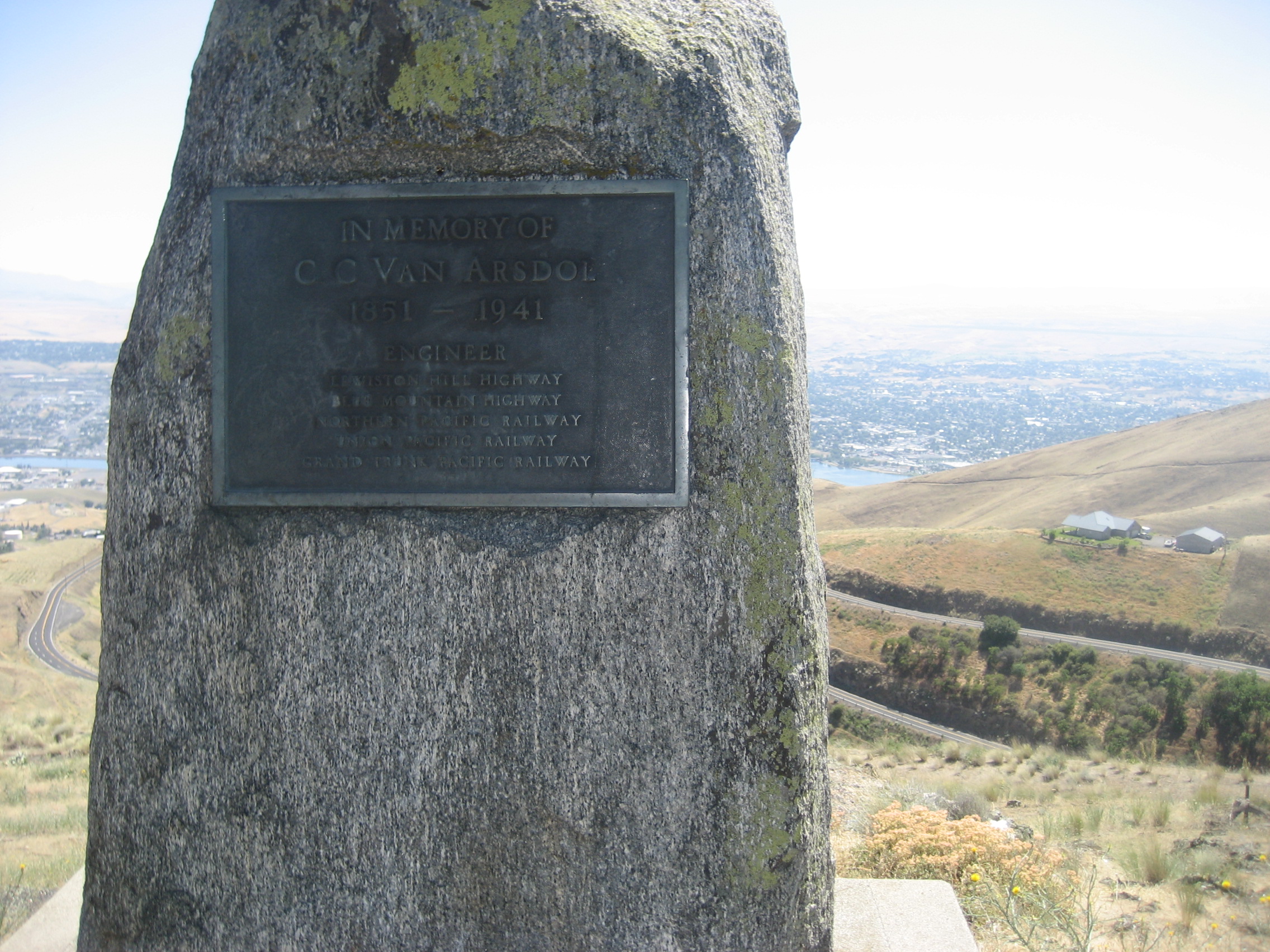
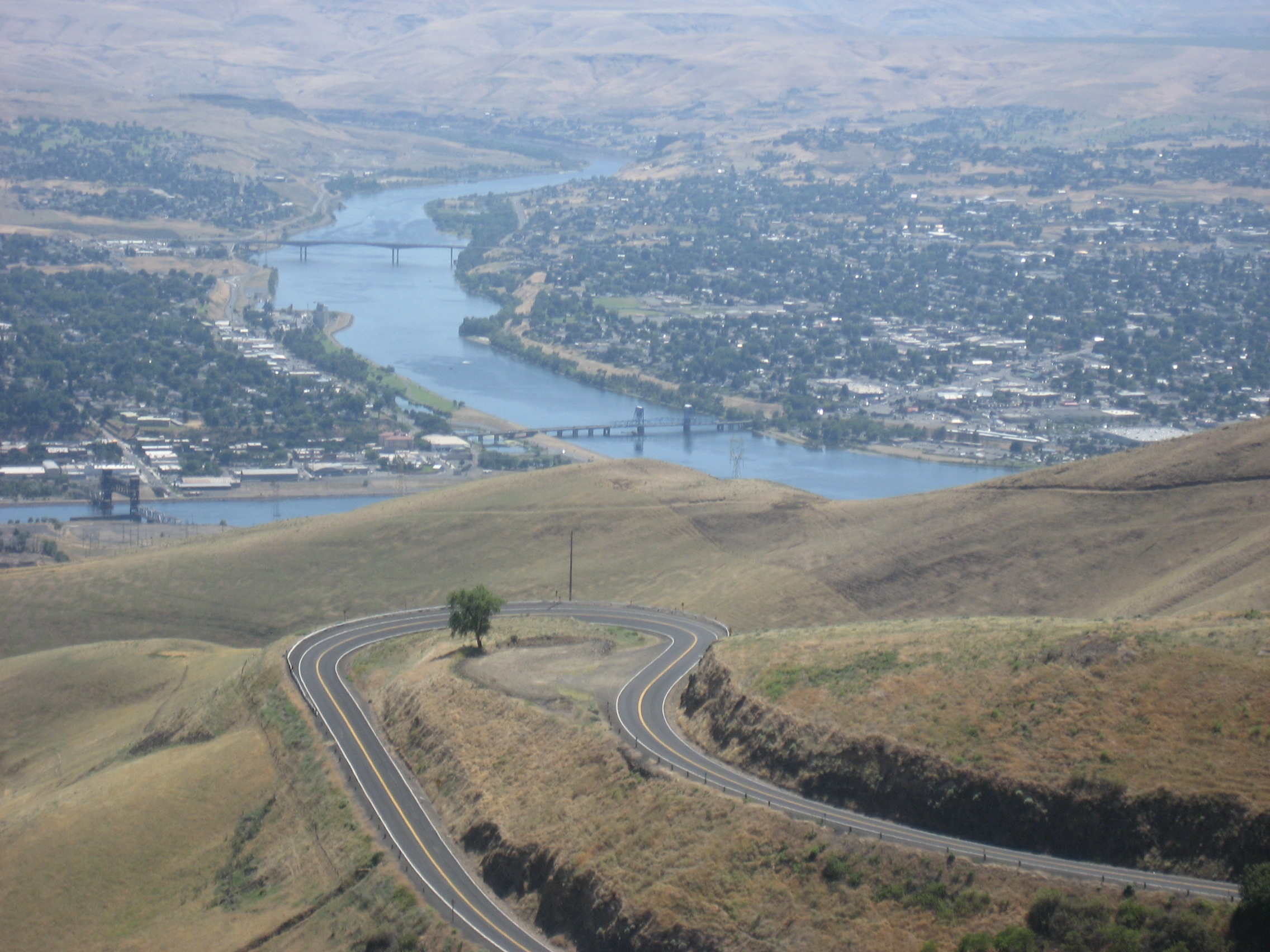
June 25, 2015, Lewiston, ID- This eastern half of the Lewis and Clark twin cities announces itself from a place at the foot of winding path, coming down a steep desert hillside.
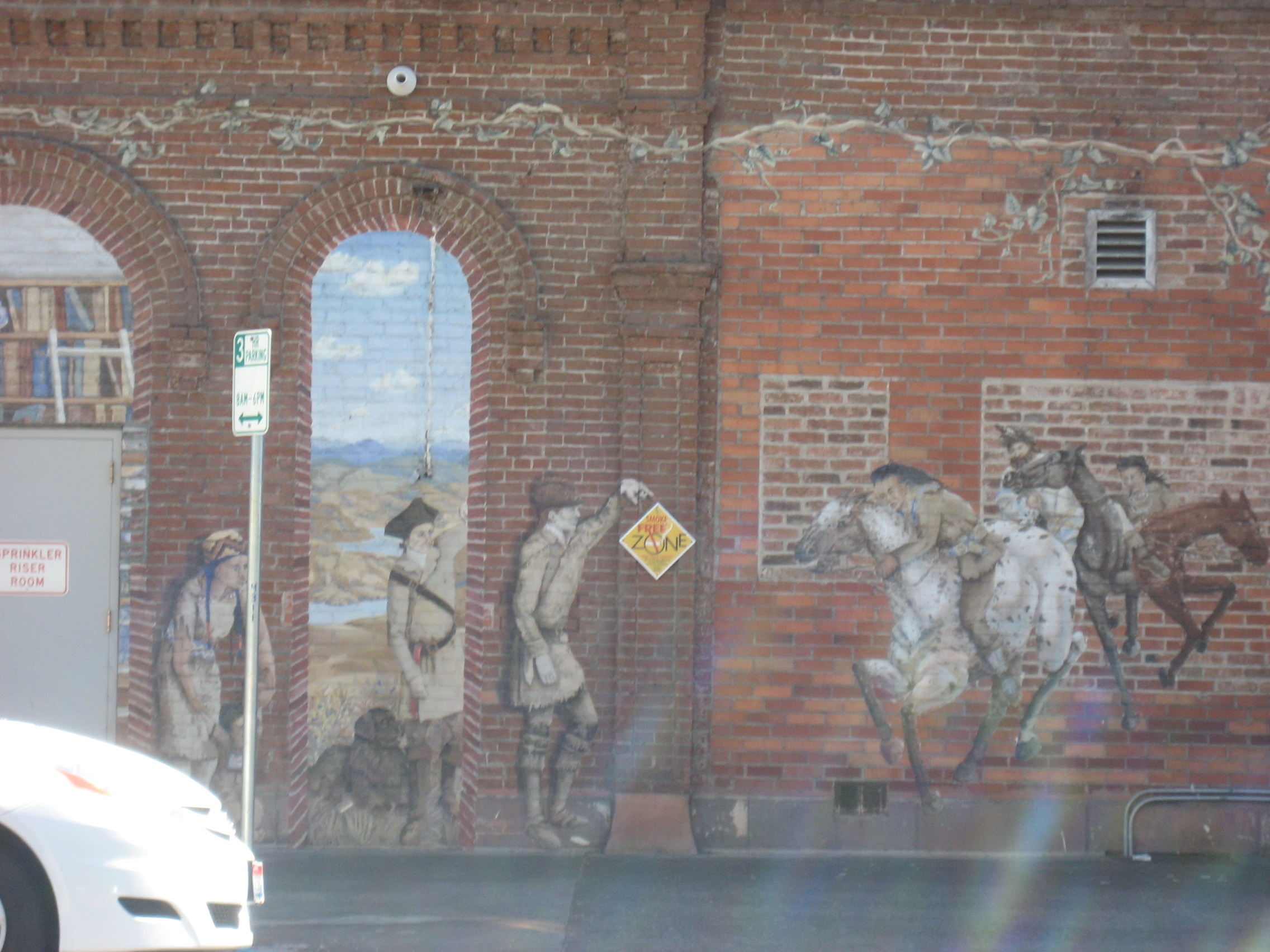
Like so many Inland Northwest towns, Lewiston presents a charming and arts-oriented downtown. Named for Meriwether Lewis, it has, as a centerpiece, Lewis and Clark State College’s Center for Arts and History
Revolving art exhibits take center stage, on the first floor. On the day I visited, the Sandpoint-based artist, Kelly Price, offered an astonishing array of Sacred Circles, making a very strong case for the interconnectedness of all things in the Universe and the security which may be found within an orb. Ms. Price’s exhibit clearly shows the universality of the notion that the circle, symbol of completion, is universally held sacred. (As is my practice, no photos were taken of her exhibit, nor of the presentation of Scott Kirby.)
Scott Kirby, a pianist based in Boulder, CO, transitioned into painting scenes of the Great Plains, after an afternoon of drawing and painting with his daughter. The flow of his art work certainly evoked a vibrant musical background.
On the second floor of the Center, lies a tribute to suffering and perseverance: Beuk Aie (“Buckeye”) Temple.
The Temple was built by immigrants from Guangdong, China, who practiced a particular blend of animism and Buddhism, which called for this sort of temple to be used in worship. It was housed in two consecutive structures, until 1959, when the second structure fell into disuse. The sacred altar and relics were preserved by Mr. Ted Loy, a Lewiston businessman, until his death in 1981. They were then curated by his family and transferred to Lewis and Clark Community College, for safekeeping.
The Beuk Aie Temple also serves as a memorial to the 34 victims of one of the many shameful incidents of persecution aimed at Chinese residents in the Pacific Northwest: The Deep Creek Massacre. In May, 1887, the victims, all miners from Guangdong, were slaughtered by White miners in Wallowa County, OR, who then took the gold that the Chinese men had mined. While the identities of those involved were determined by investigators from Lewiston, the State of Oregon, which had jurisdiction in the case, found no one guilty. There is a memorial plaque on the Oregon side of Hells Canyon, but there the matter has rested.
In fairness, the people of the Pacific Northwest have made enormous strides in White-Asian relations, and the major source of friction in the Nineteenth and early Twentieth Centuries was mainly economic. Then again, isn’t it always? Fighting over crumbs seems to be our wont, as a species.
My thoughts turned to the indigenous residents of this area: The Nez Perce Nation, symbolized by their leader, Chief Joseph (“I will fight no more, forever”) and the Shoshone, symbolized by Sacagawea, the woman who guided Lewis and Clark through this then rough wilderness.
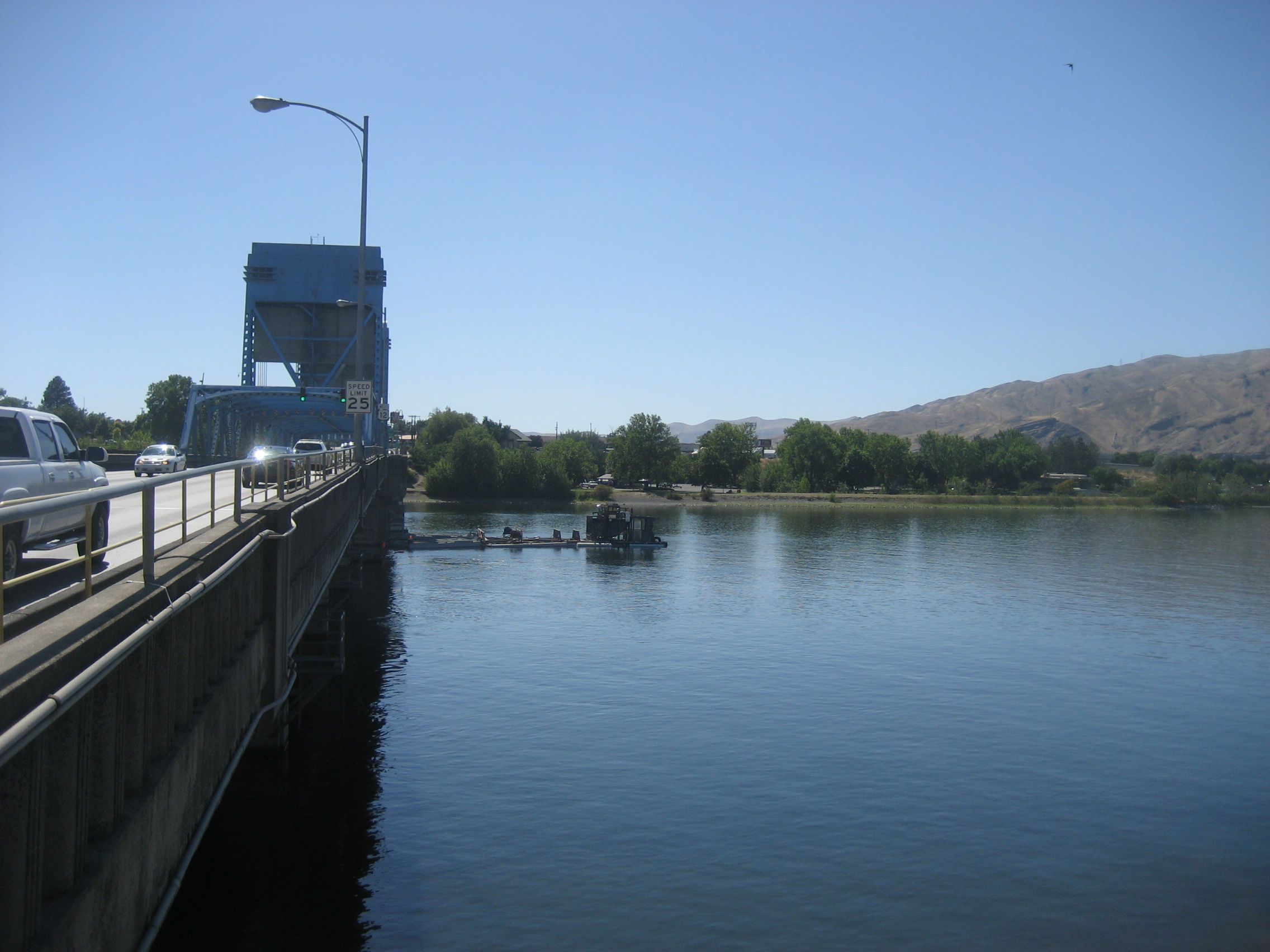
The confluence of the Snake and Clearwater Rivers has been a key resting and gathering place for humanity, for thousands of years. Now, a bridge connects Lewiston with Clarkston, WA, which I did not visit this time, as a walk along the Idaho side’s Riverwalk captivated me for nearly an hour, before it seemed time to head down to Lapwai, Nez Perce Nation and further south.
The people of this area feel a great connection to the Pacific, which both feeds, and receives from,these great rivers.
The Lewis and Clark Pavilion, at the northwest corner of the Riverwalk, honours the explorers and Sacagawea. A sculpture with her likeness graces the entrance to the small kiosk.
I will come back through here, and spend more time in both Lewiston and Clarkston, as well as connecting with a Baha’i friend who I did not realize lives in Lewiston.
After having dinner at Donald’s Restaurant, in Lapwai, it was time to move through the salubrious mountains and canyons of western Idaho. Hell’s Canyon would have made for some fine photos, but the traffic was horrible, so I went further, to Salmon River Canyon.
This trestle is one of seven built between Lewiston and Grangeville, to help move gold and other goods.
The area is among the most rugged parts of Idaho, which is saying quite a lot.
The rest of the day’s drive was through more sanguine territory, from Grangeville to Payette, then east to Ontario, OR, and a rest at the Oregon Trail Motel. The Beaver State’s Big East awaited.
June 25, 2015, Pullman- It’s hard to not crisscross between Idaho and Washington, when in this part of the Palouse. Pullman, a scant eight miles from the University of Idaho, at Moscow, has the equally estimable Washington State University. I parked in a two-hour spot, downtown, and used these steps to visit the University.
The school was begun about the time that Washington became a state, in 1889. The Palouse was already drawing farmers from the Great Plains, and the small Midwestern colleges were models for the initial Normal School.
With many of the settlers being of Germanic or Scandinavian ancestry, the turreted structures found in universities in northern Europe found emulation here.
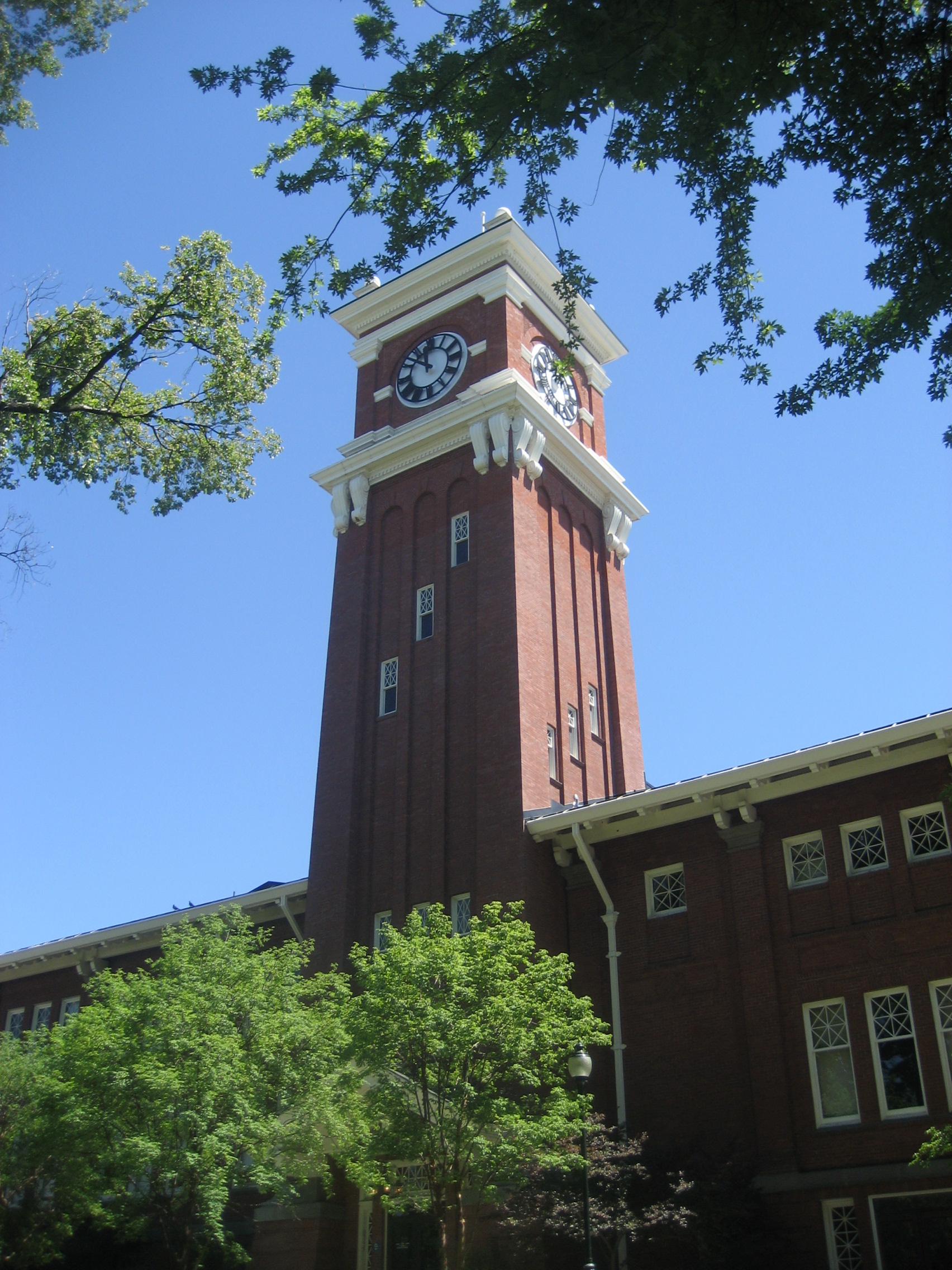
The Clock Tower, a nearly-universal feature of institutions of higher learning, was also one of WSU’s early structures.
The university library was quite busy, as summer session was still in full swing. I noted that was true at UI, and, a year ago, at the University of Heidelberg, Germany.
This touching memorial met me, along the South Fork Palouse Riverwalk, as I returned downtown from the hilltop University.
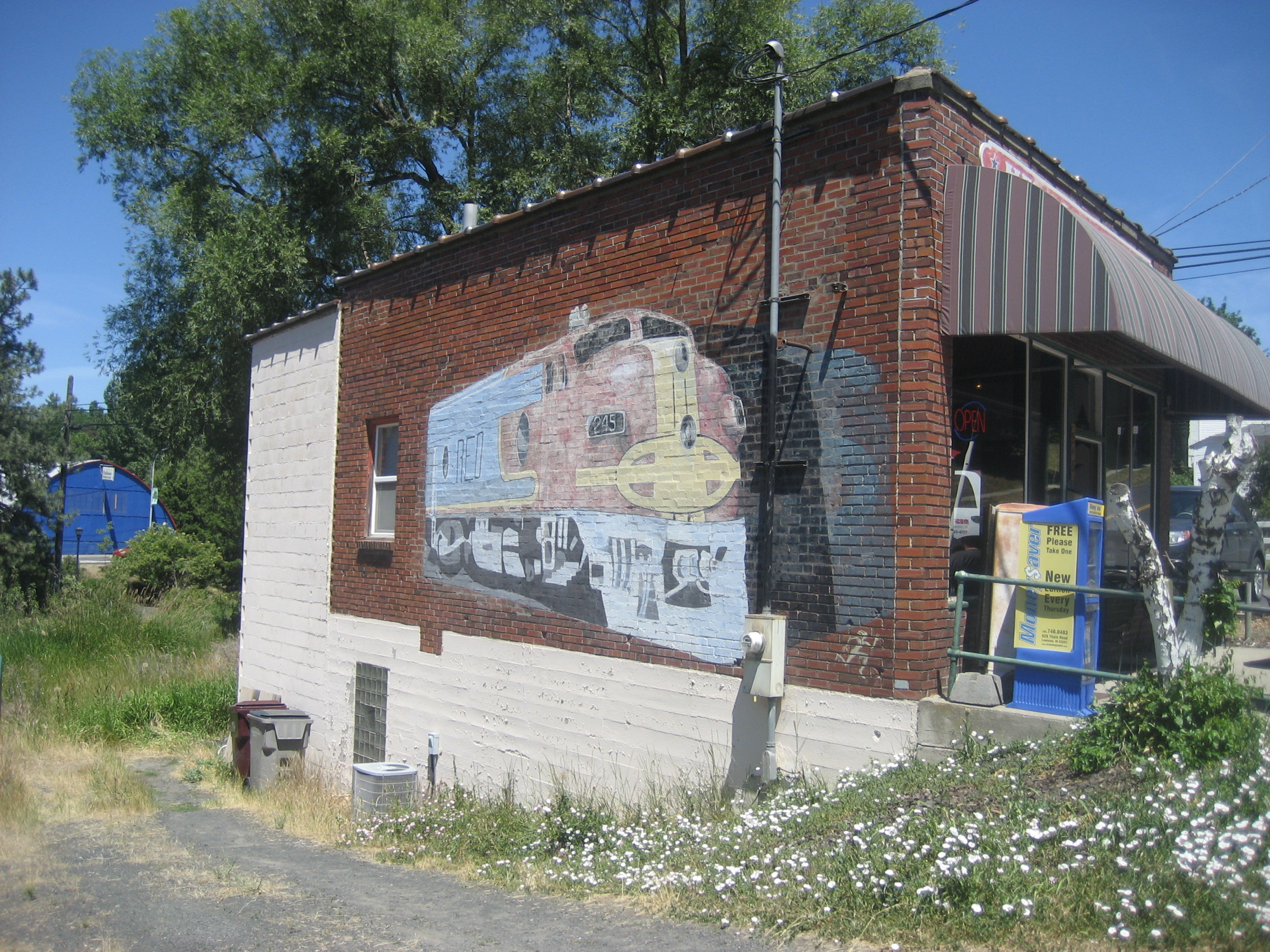
Cities worldwide are embracing outdoor murals, and Pullman’s celebrates its railroad past.
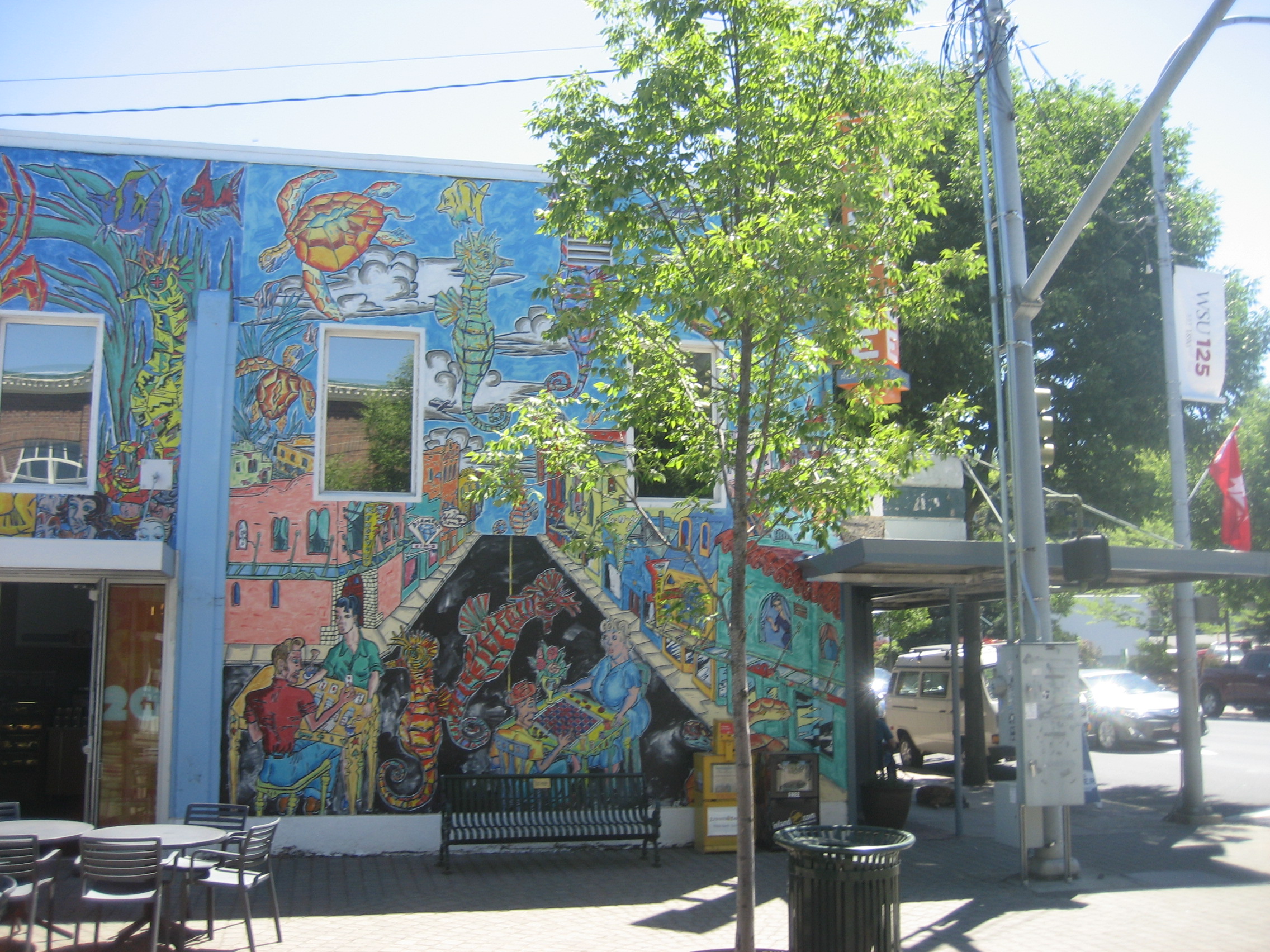
The town has a smaller art scene than Moscow, but young people here are every bit as proud of their joyful noises, as their counterparts to the east
South Fork Palouse Riverwalk is heavily used by locals, though in the lunch hour, I had the path virtually to myself.
The Nez Perce influence is still felt here, at the western edge of that great nation’s rangelands.
I enjoyed a hearty lunch at Heroes and Sports, in the building on whose exterior the railroad mural is shown, above. Two WSU ladies cheerfully welcomed about twelve of us in from the increasing heat, and I relished a Philly steak, before heading off, towards Lewiston, and points further south.
July 7, 2015, Prescott- One of the main reasons I am juxtaposing my travel posts with my thoughts whilst here at home is that, without family and community, there is only the mindless wandering of the unruddered soul.
Twenty-seven years ago today, Penny felt it was time to get to hospital. In the South Korea of 1988, every encounter between Korean workers and foreign nationals was first an economic one, then a human encounter. The woman who had been midwifing our child decided, on that day, that we were not helping her enough with her advancing in learning the English language. She declined to help Penny any further, and called a taxi driver to take us to an English-speaking Obstetrician, who would see to the birth.
Her parents were with us, but could not fit into the taxi, so I quickly hailed another for them, jumped into our taxi, and away we went, with the second taxi following us as best he could. My father-in-law’s frantic words, “Baby Hospital”, were apparently enough, as they arrived three minutes behind us.
The procedure went very well, and I was holding our newborn son up to the light, welcoming him to this world, three hours later. It was, all in all, a good life in Korea, and when we were compelled to return to the U.S., four years later, Aram was fairly well-grounded in two cultures. America was a bit tougher for all of us, but he grew up strong, and through the trials that buffeted the three of us in the 2000’s, and eventually took his mother’s life, our son emerged as a strong, healthy and amazingly resourceful individual.
Sometimes, I felt as though he was raising himself, but there was never a time, and never has been, when I haven’t had his best interests front and center. That I learned of those interests mainly by talking things through with him is the only way that ever made sense to me. Kids need steady guidance, but they have more on the ball than many of their insecure elders seem to realize.
The most inane aphorism ever is “Children should be seen and not heard.” I heard my son being told that, by a family member once, and I had to be physically restrained from hitting the individual. We need, pure and simple, to listen to one another, across generations.
Fatherhood is my greatest blessing, right after having been a husband. It will always be so.
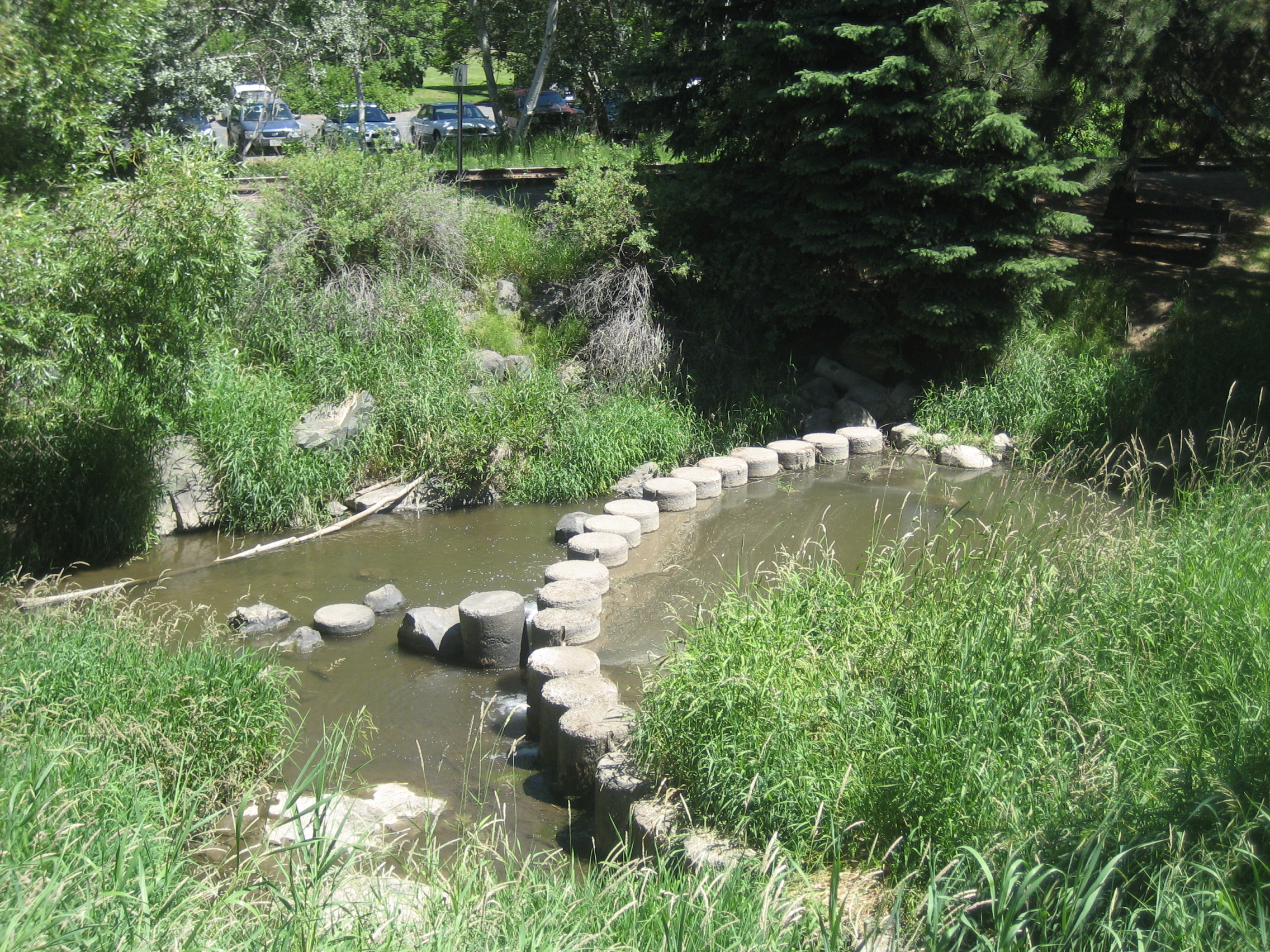
June 25, 2015, Moscow, ID – I have been intrigued by the Palouse region for quite some time now. So, it was quite a treat to have ended up in Moscow,last night. I had woken the owner-operator, at Royal Motor Lodge, so my reception there was not the warmest. This morning, though, she was a bit sad to see me check out so quickly- at 10 A.M.
I spent about an hour, walking about Moscow’s downtown area, and stopped in at the salubrious One World Coffee House, at the outset of that little jaunt. With so many people, in and around the place, the only unobtrusive photo of One World was this coffee bean puzzle.
Downtown and Fort Russell, about six blocks east, are Moscow’s two historical districts. I found Fort Russell would be interesting for a post on historical houses, but this was the Palouse in June, after all, and it was already getting hot, at 9 AM. So, I kept myself downtown.
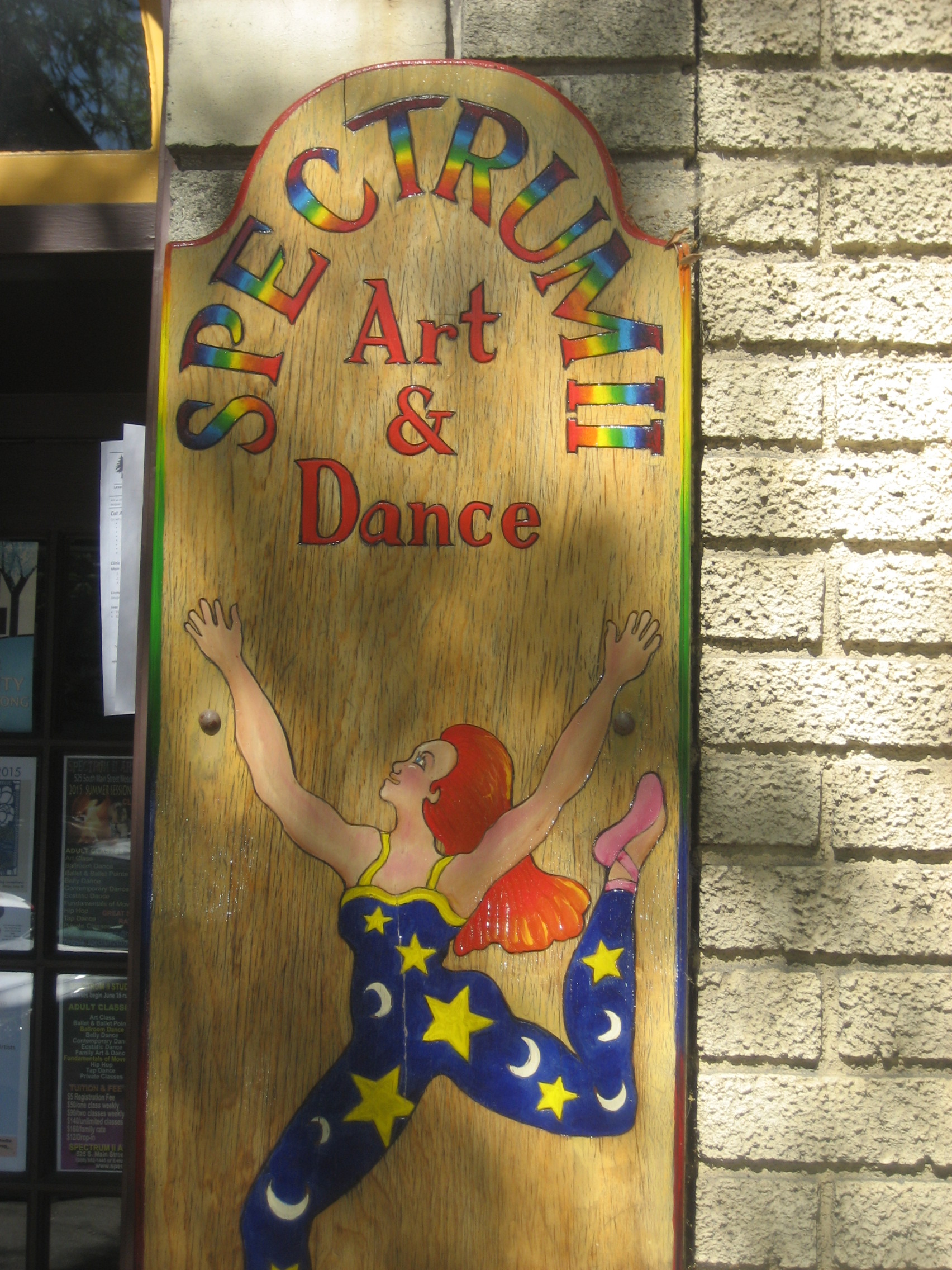
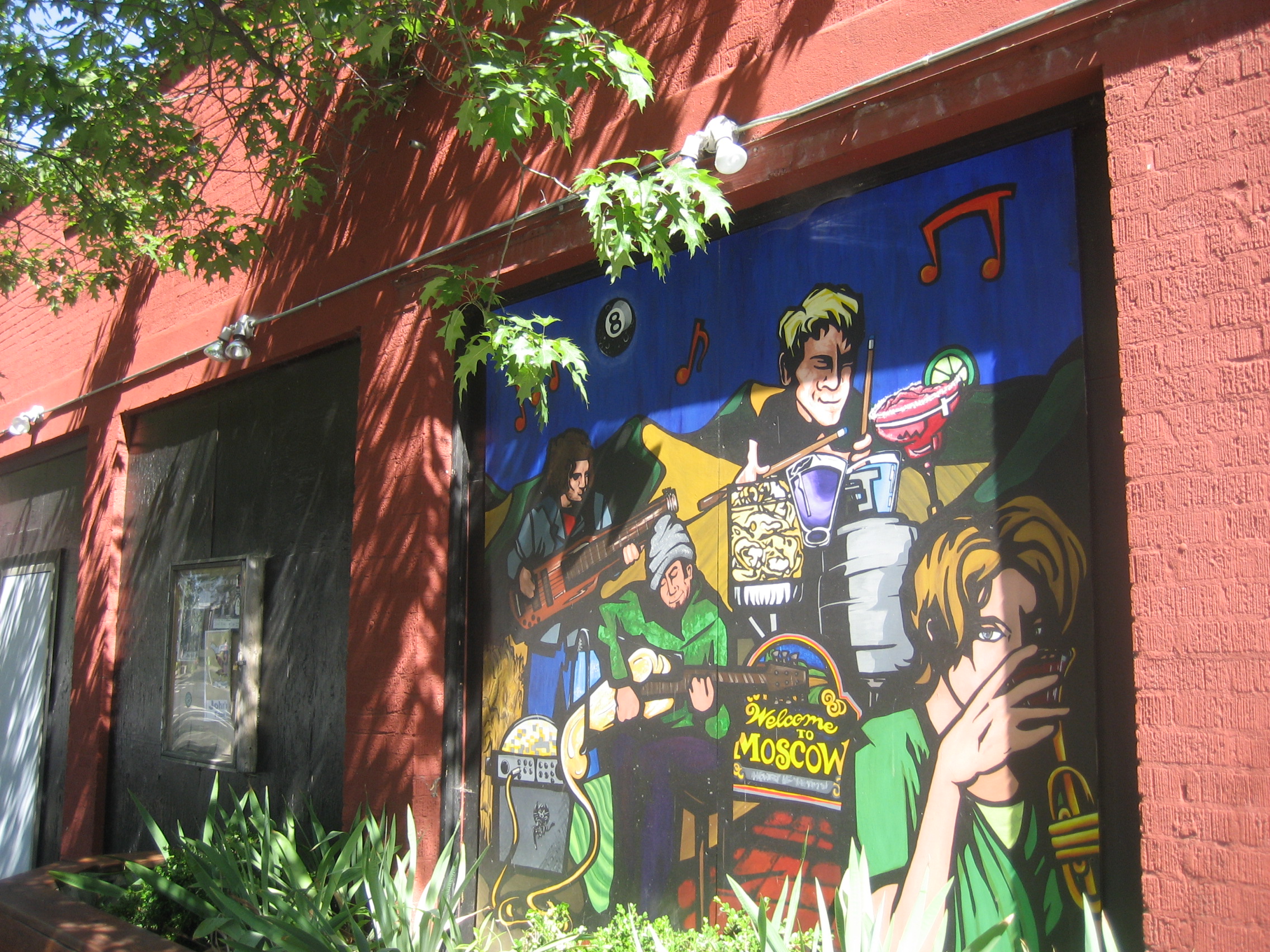
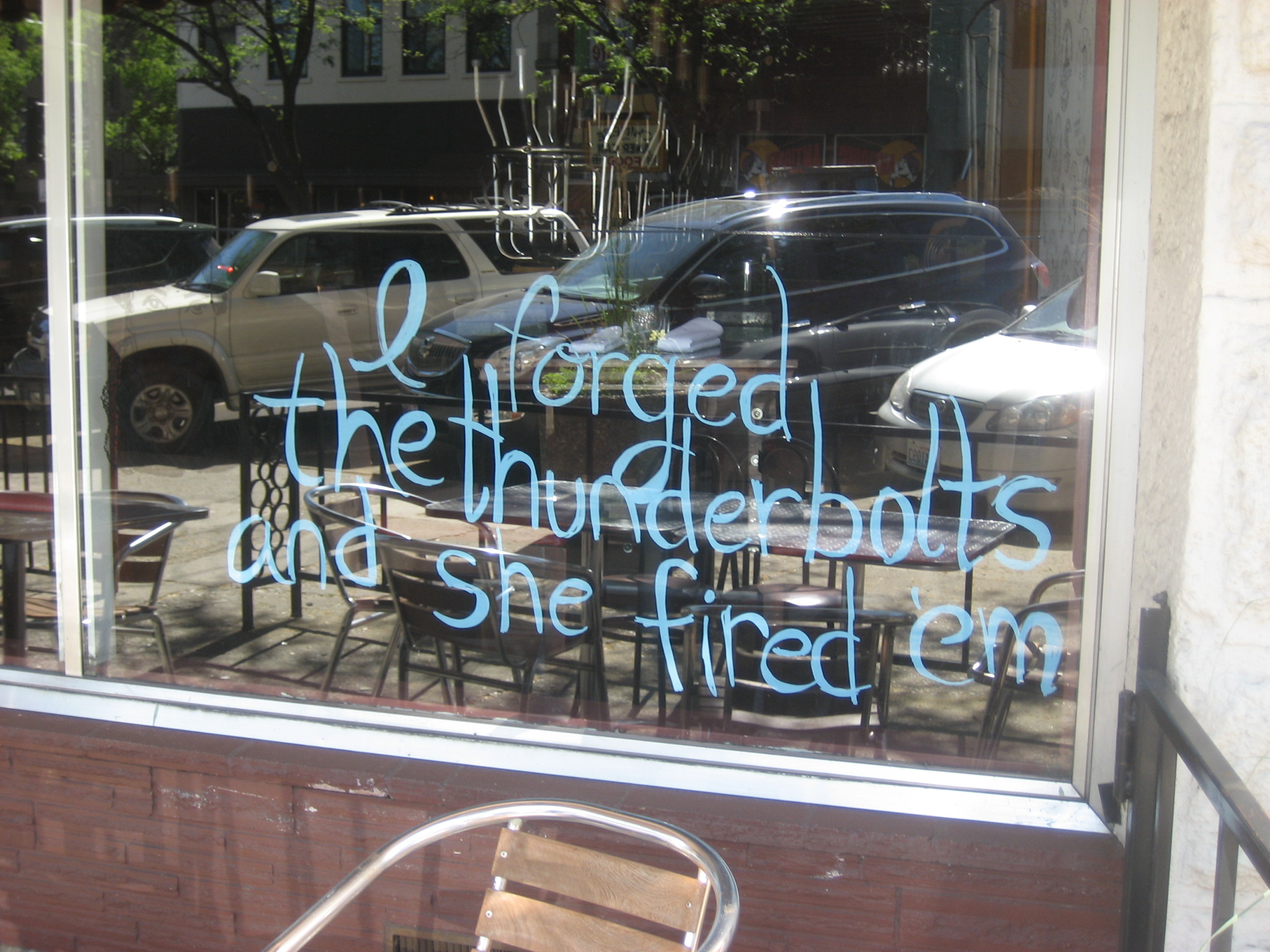
Moscow, rightfully, prides itself on being a premier arts venue.
John’s Alley looks like it’d be a great place to sit and jam.
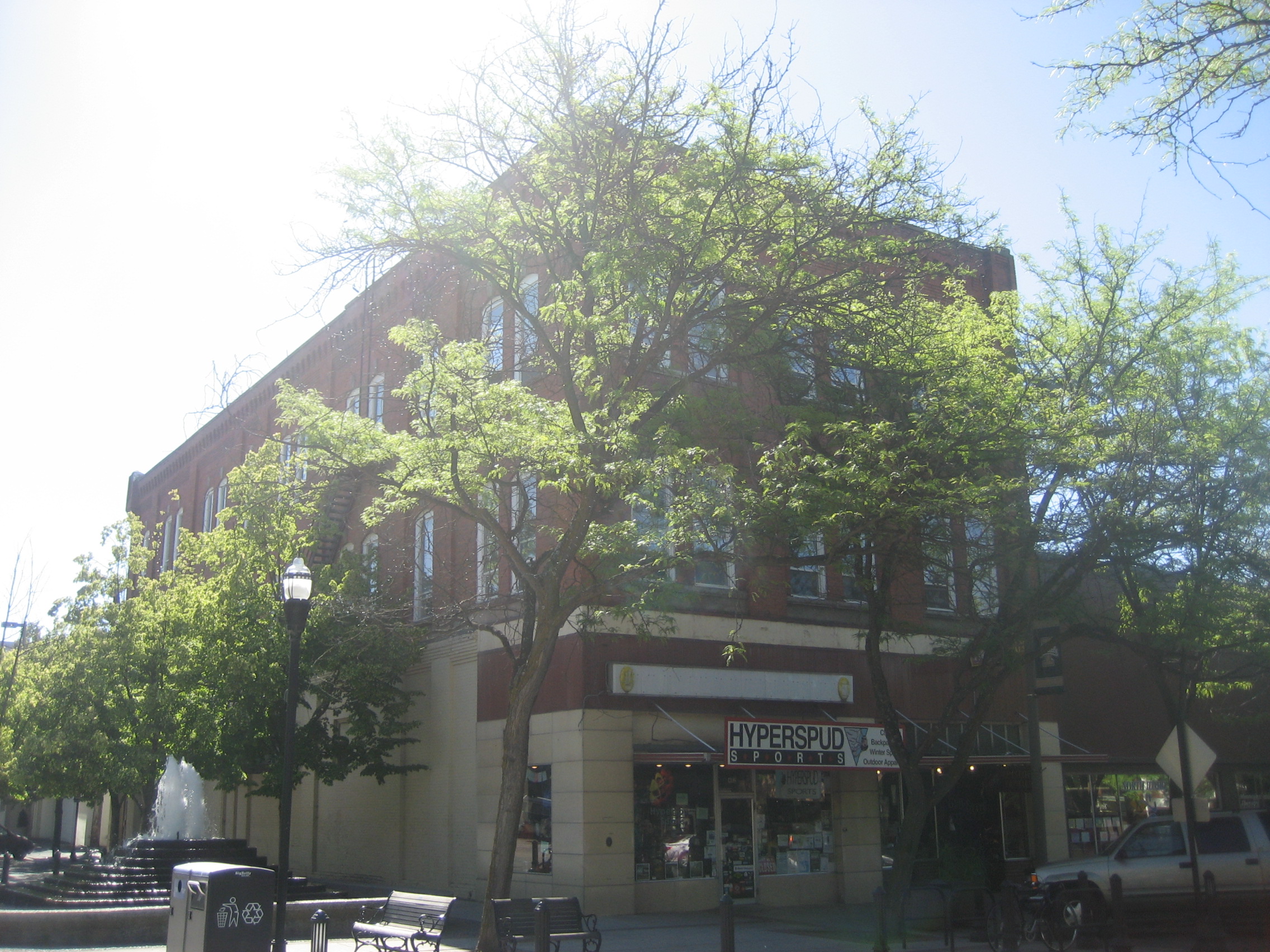
Moscow does not ignore its Idaho-ness. Hyperspuds is the local sporting goods and outfitting spot.
This message, at the northern edge of downtown, evoked images of The Avengers.
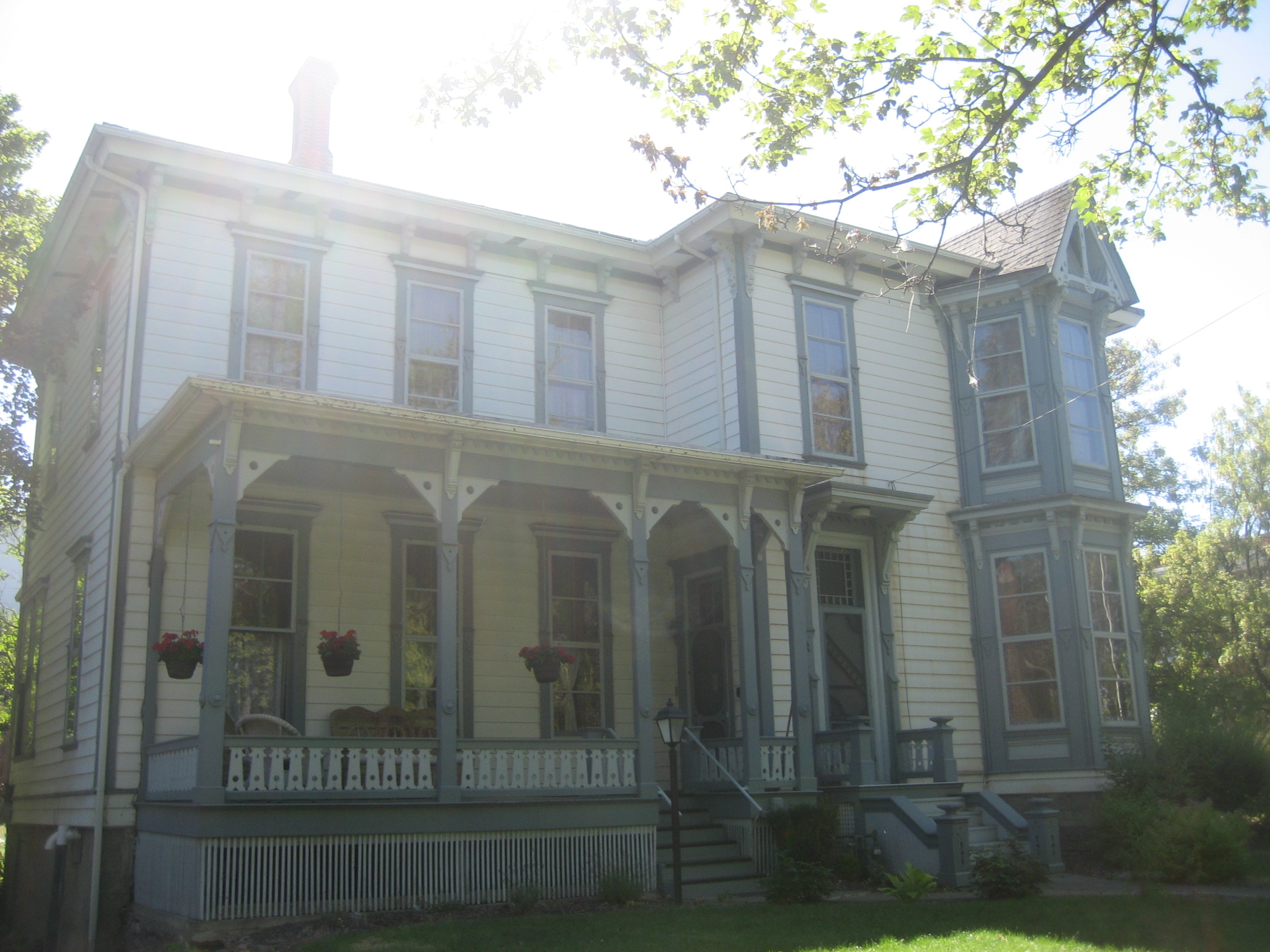
The McConnell Mansion was built in 1886, by Idaho Governor William J.McConnell. It’s now the historical museum of Moscow, and Latah County.
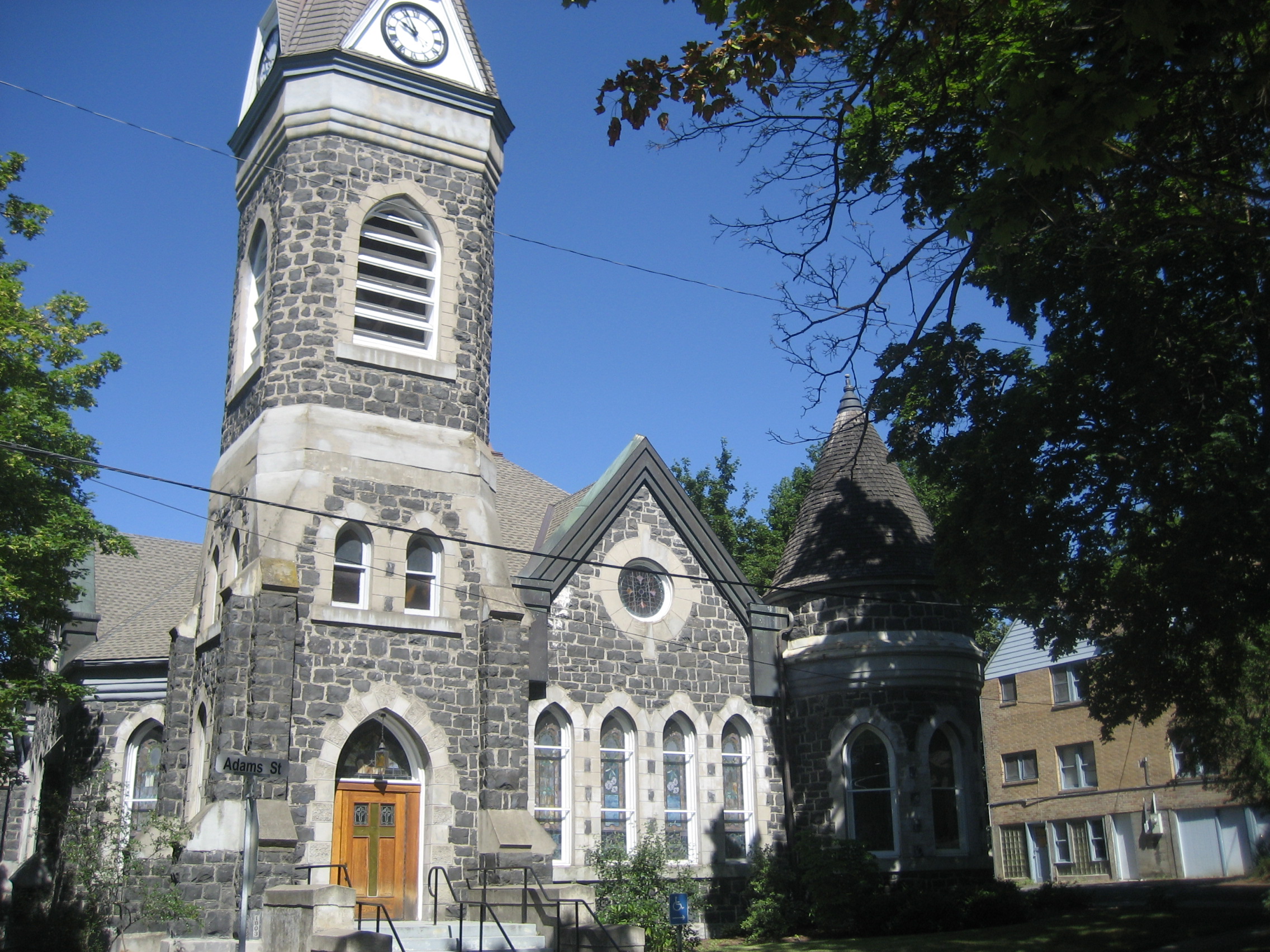
Stone is put to good use, in the Palouse Valley, as evidenced here, at the United Methodist Church.
Moscow is hip, but that doesn’t mean it ignores its roots. Farming here does not take a back seat.
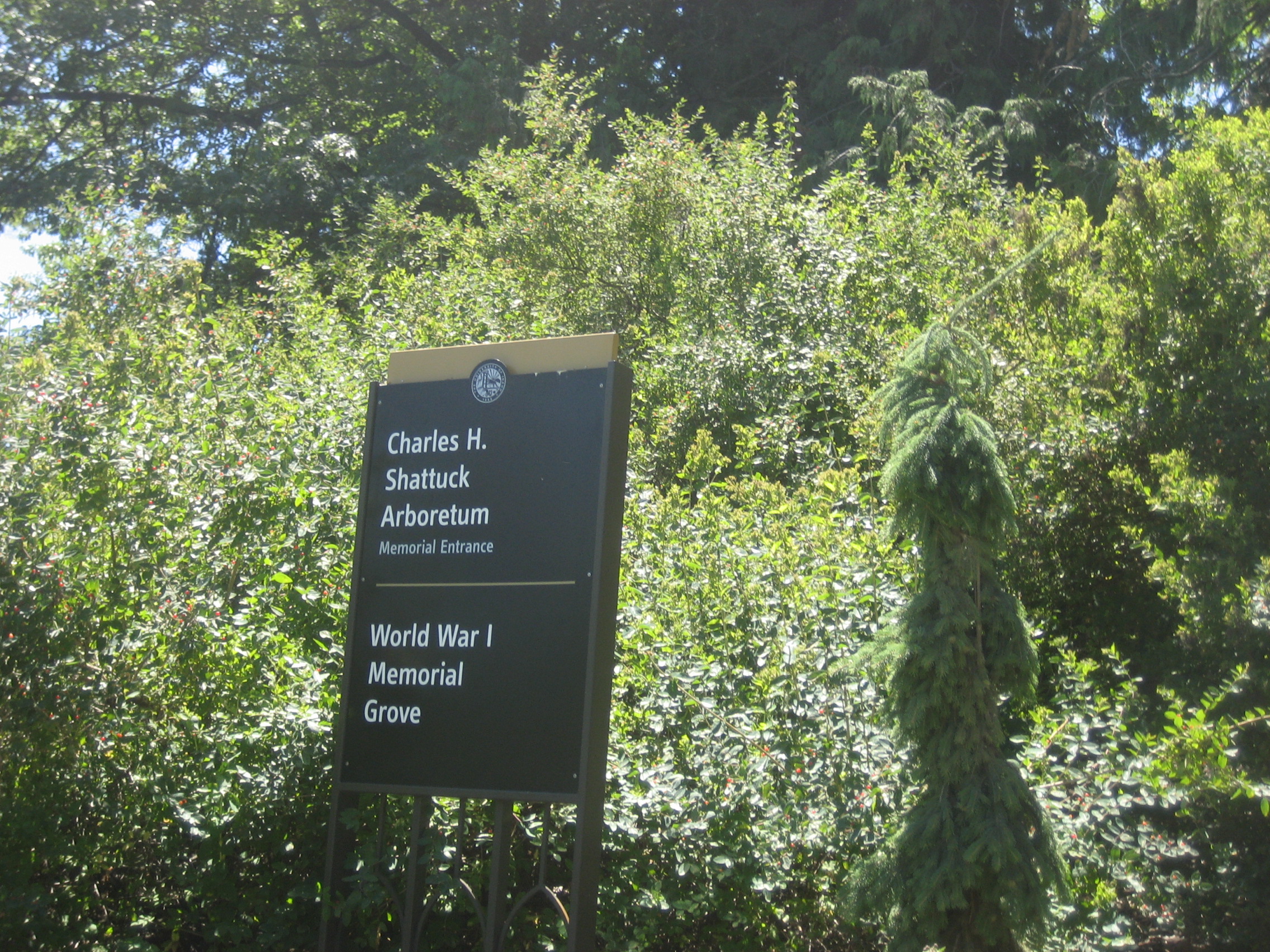
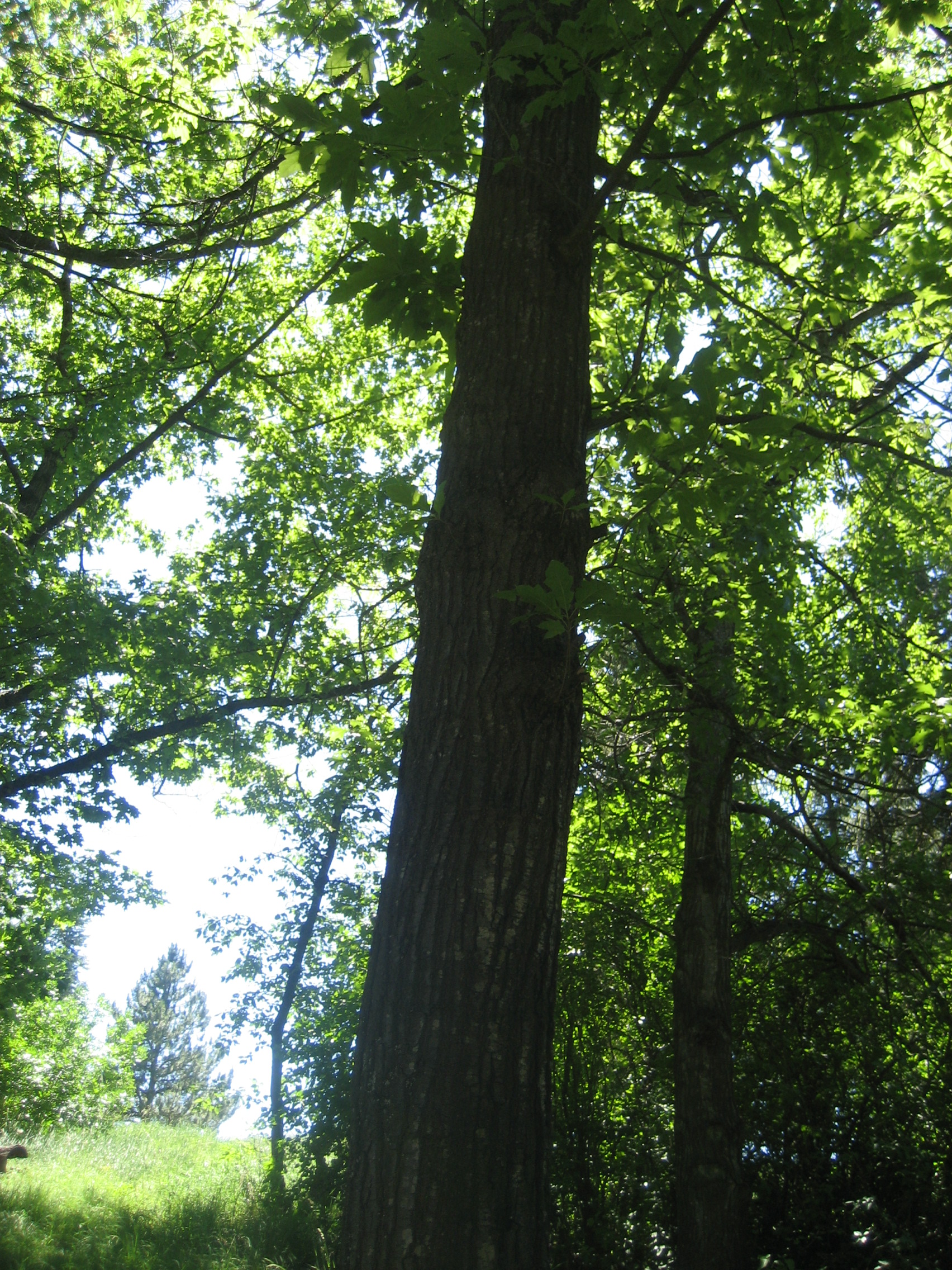
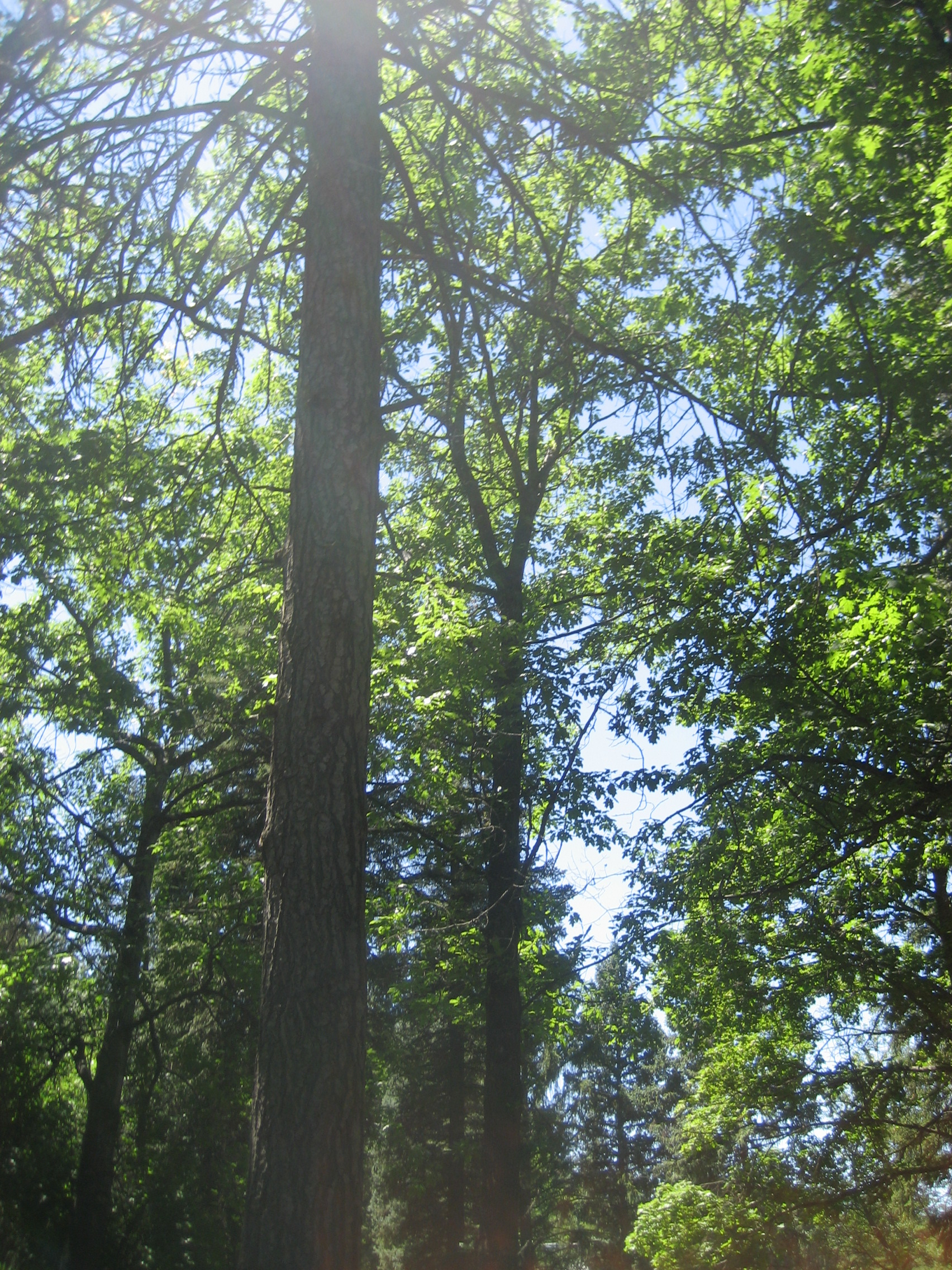
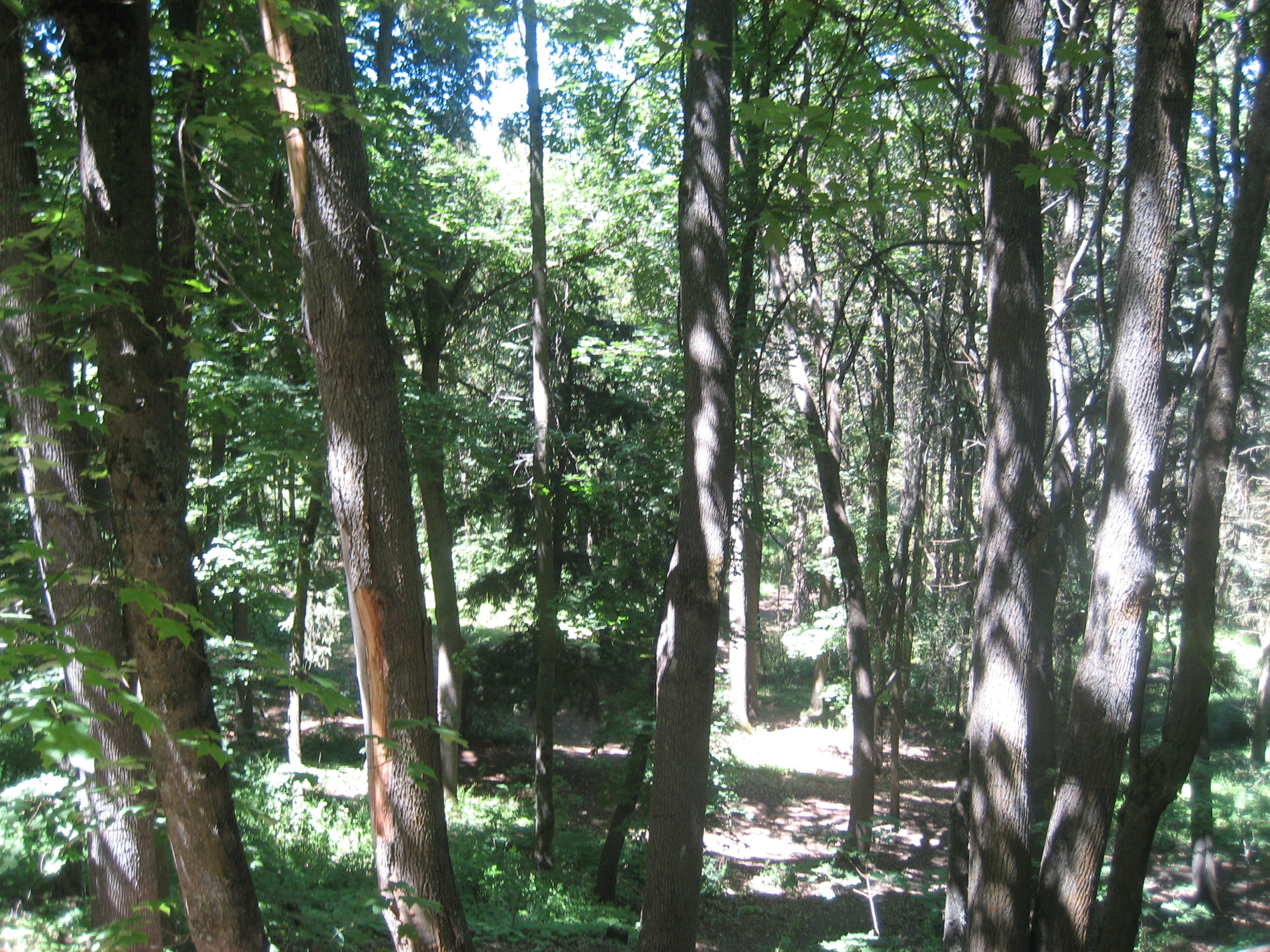
I spent about an hour at the University of Idaho, largely in its cool and impressive Charles E. Shattuck Arboretum
.
Here is the Red Oak that is the centerpiece of the World War I Memorial Grove.
The interior of the Arboretum offers trails that could keep one content for a few hours.
As with other universities, this would mean buying a Parking Pass, as established by the Administration, housed here.
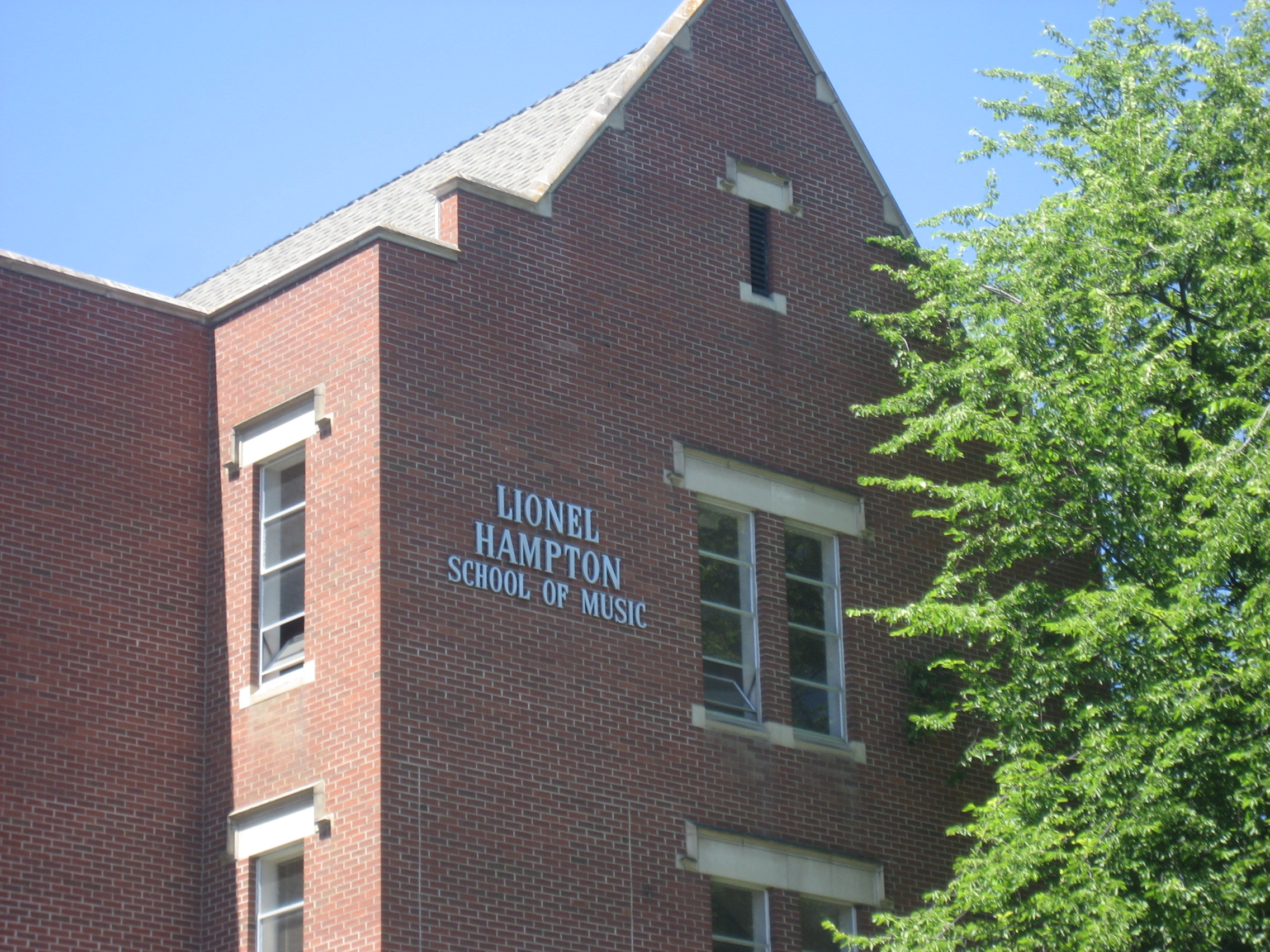
The university has the good fortune to have a School of Music named for one of the greats. Mr. Hampton worked with the University, from 1980, until the end of his life, to establish a home for jazz, in its School of Music. In 1987, he had the honour of seeing the School bear his name. A Jazz Festival has graced UI, since 1985. Lionel Hampton is the only jazz musician, thus far, to be so honoured by a University.
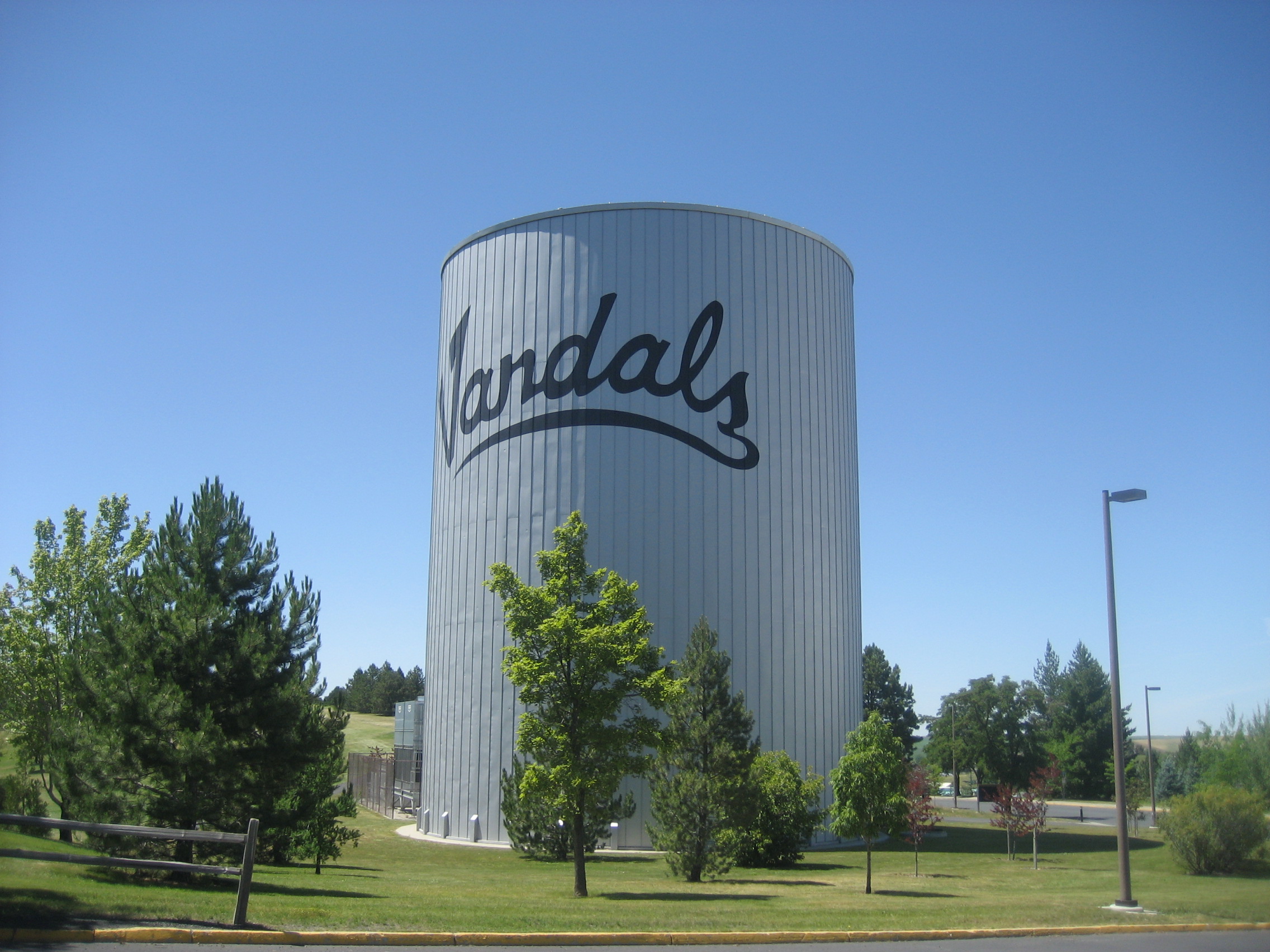
The University’s mascots are the Germanic tribe, the Vandals.
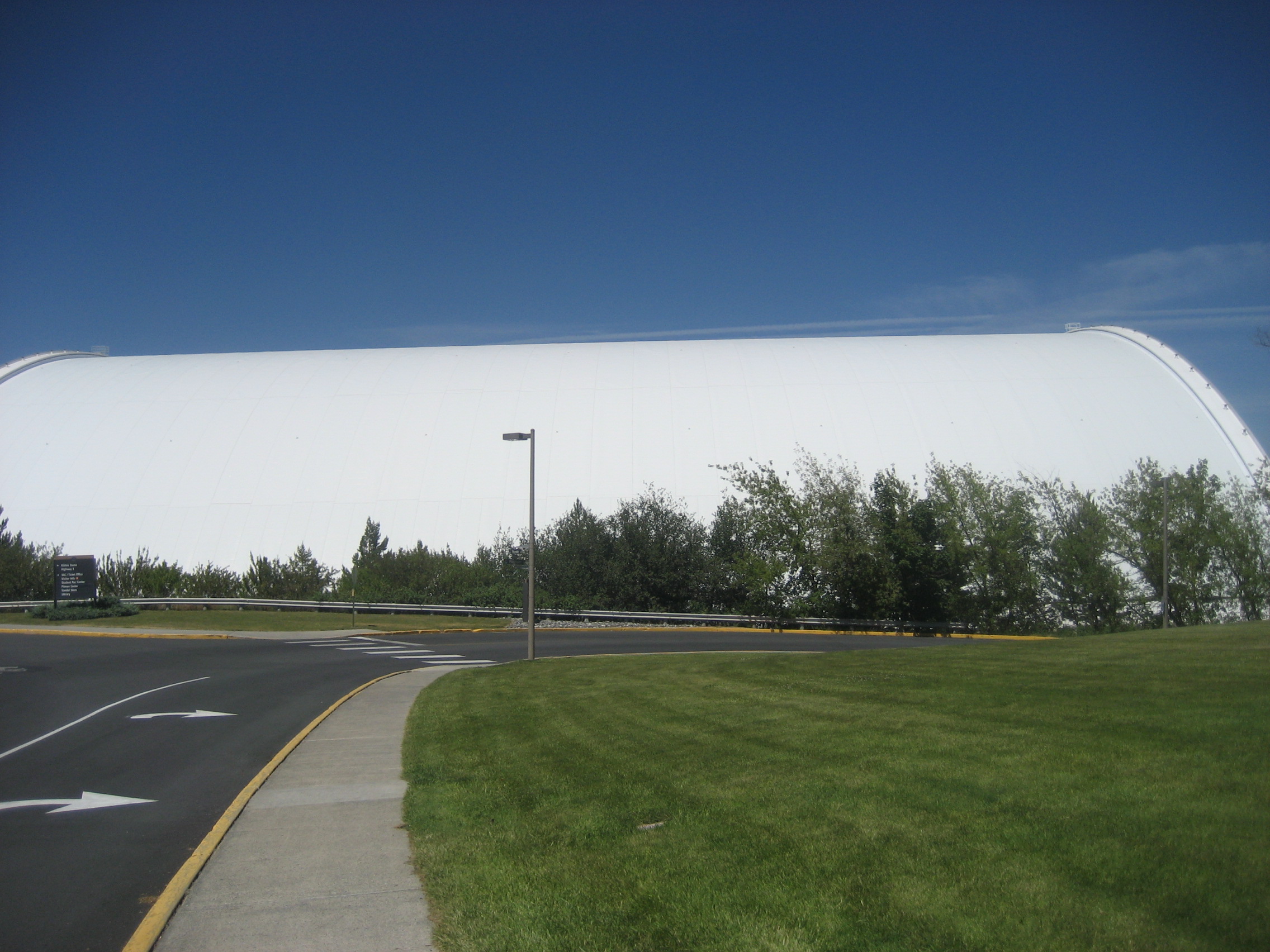
Their facility is impressive in its length and utility.
Moscow is a welcoming, and very comfortable town, and I would not be surprised to find myself passing through there, time and again.
July 6, 2015, Prescott- I read this morning about the “rising phenomenon” of children bullying their parents. Then, a short time later, a friend wrote me a message that her parent was referring to her in the most vulgar of terms.
This goes back to how I was raised, and how we tried to raise our son. No two people always get along, and the permutations of social discourse get more complicated with three, four, or ten, in the mix. The bottom line, though, is respect, Golden Rule, “how does the shoe feel on your foot?”
It’s a given that children regard having limits set as part of their safety net. Limit-free kids are scared, more often than not, and fearful people strike out. We raised our son with what common sense we could muster, encouraging his curiosity and exploration, and discouraging any tendency to view, and treat, us as eyeball-to-eyeball peers.
I would not have my wife be subjected to abuse, nor she, me. Son is a fine human being, and I don’t think he would be comfortable with being able to give too free vent to negative attitudes. In fact, he has said that, all in all, we set reasonable limits. Likewise, we did not ridicule or catcall at him, something that I have seen far too many people my age do with their children, in the name of “honesty” or “free speech.”
Millennials speak of “adulting”. I love that generation dearly, and certainly expect that acting one’s age will be de rigeur for them, as it should be for us, and for “Generation X”. Perhaps the term is natural, though, as we witness so many, from ages 21- 90, indulging in unseemly public behaviour, again in the name of “self-expression” or “my rights”. For the adult in the room to have plenty of company is a fine thing, and since it happens more often than the media would have us believe, it should be contagious.
My feeling is that, if children see adults being adults, consistently, and if they feel well- and fairly-attended, which means having limits set for them, then there will be less bullying, in either direction.
July 5, 2015, Prescott- I have it in my mind to return to Europe, at some point, probably some time in the second half of 2020, or later, as part of a 1-2 year sojourn, just because I feel I must earn back the money I spent on the trips taken, over these past three or four years. It’ll all boil down to what seemingly needs to be done, at the time.
That’s all pie in the sky, right now. I think of it, mainly because the news tells us that it is hotter in Madrid than it is in Dubai, or New Delhi. Budapest and Zurich are warmer than Istanbul. The sizzle factor is making things seem topsy-turvy, but don’t say this too loudly, lest someone think we have gone full-on Liberal.
I have to say this, just once: Name-calling has not, and will not, bring the temperatures back into what we regard as normal range. If that is even an option, we need to look at everyone’s habits. What can each of us do, and what is each of us willing to do, to bring the overall climate into a comfortable range? The areas of focus would include: Diet, daily cleansing and grooming, animal husbandry and crop rotation, forestry, fishing and manufacturing practices- especially production of technological products. Ever stop and think about how your smart phone components’ manufacture might relate to the raising of the atmosphere’s temperature? Didn’t think so.
Each of us has the role to play. Me? I drive with the windows down, when alone. With others in the car, AC is usually a must, but that is most often for short distances. Showers? Have to say, I keep them to 5 or 6 minutes, and there is no “eeeww” factor, of which I am aware. I drink small smoothies, when possible, though I don’t really go in for the idea that smoothies use more water than hamburgers, from start to finish.
These are just things to consider, next time your town hits an uncomfortable heat level.
June 24, 2015, Spokane- I was intrigued by the chocolatier’s use of Rocket Bakery as his sandwich purveyor, so this morning, Rocket was my first stop, after getting cash from the ATM. What a fine place! Like so many coffee houses in the Northwest, and our own Wild Iris, in Prescott, Rocket Bakery has a Steam Punk ambiance. Two lovely and effusive young ladies were the baristas, and sang along with each song that came on the house’s Sirius channel, as I savoured my drip coffee and scone. Rocket is a very happy place. It also has a bookshelf, a surprisingly rare feature among coffee houses, and one that is most welcome. The piano is also there, for anyone who can play decently.
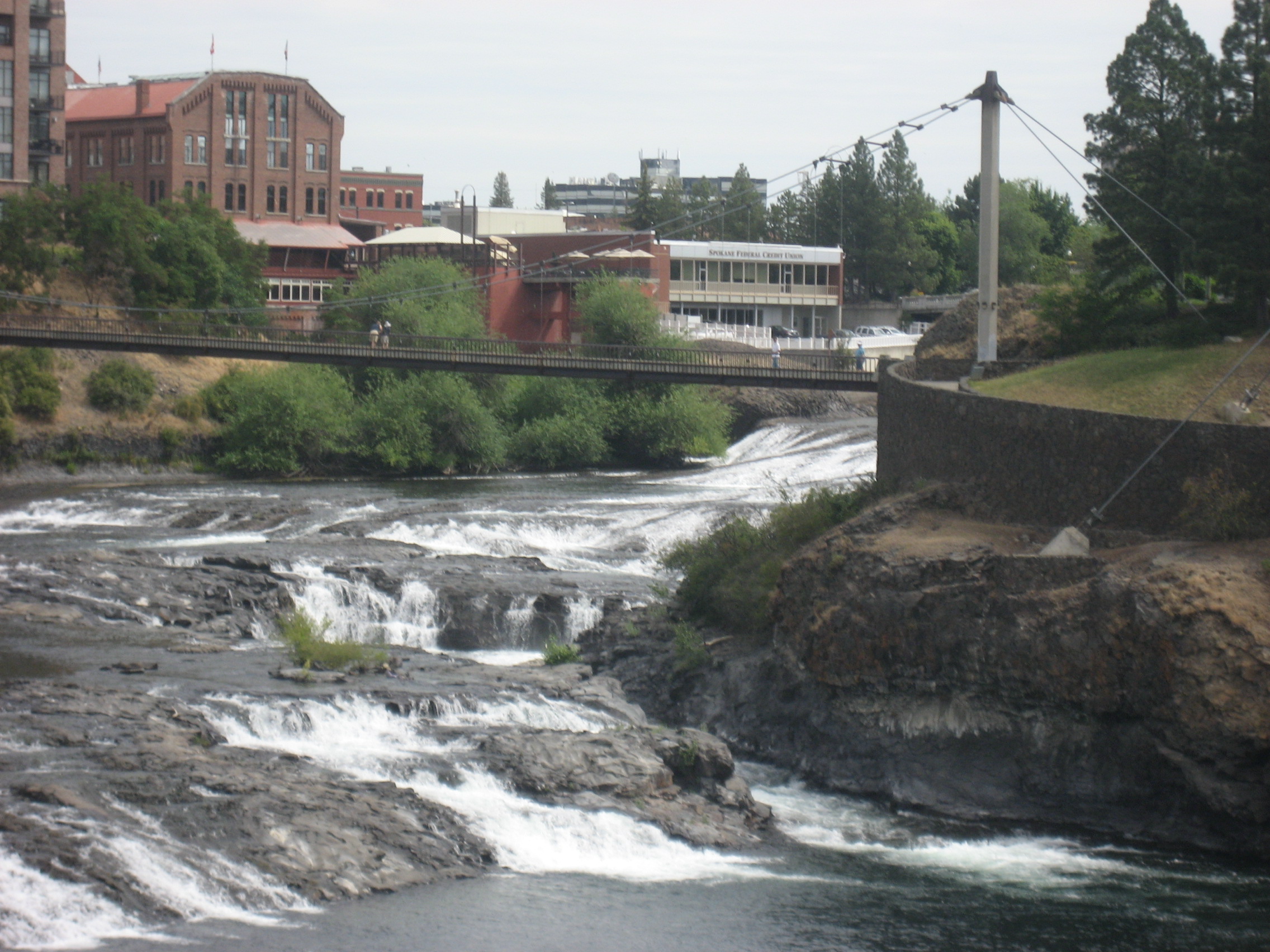
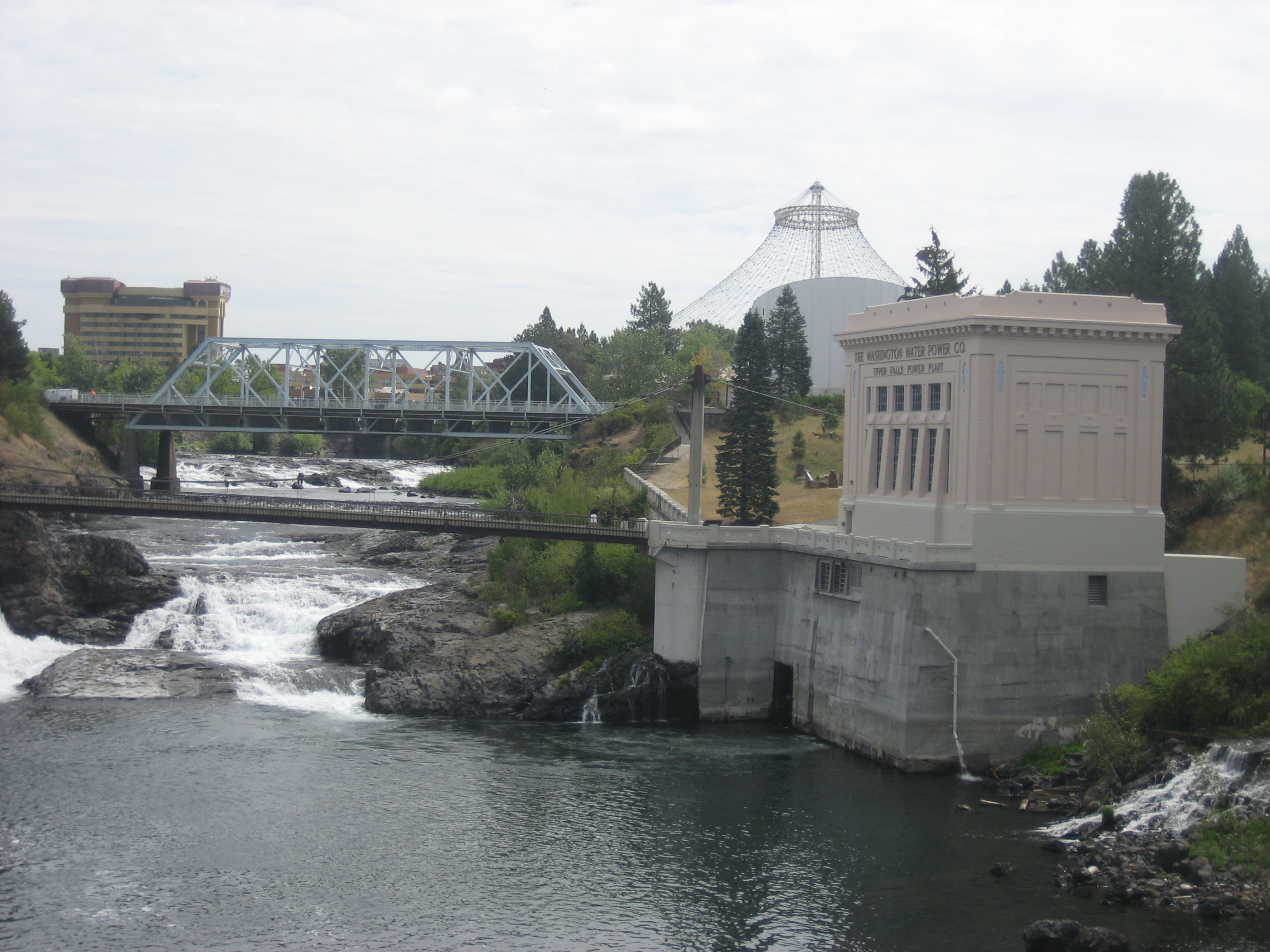
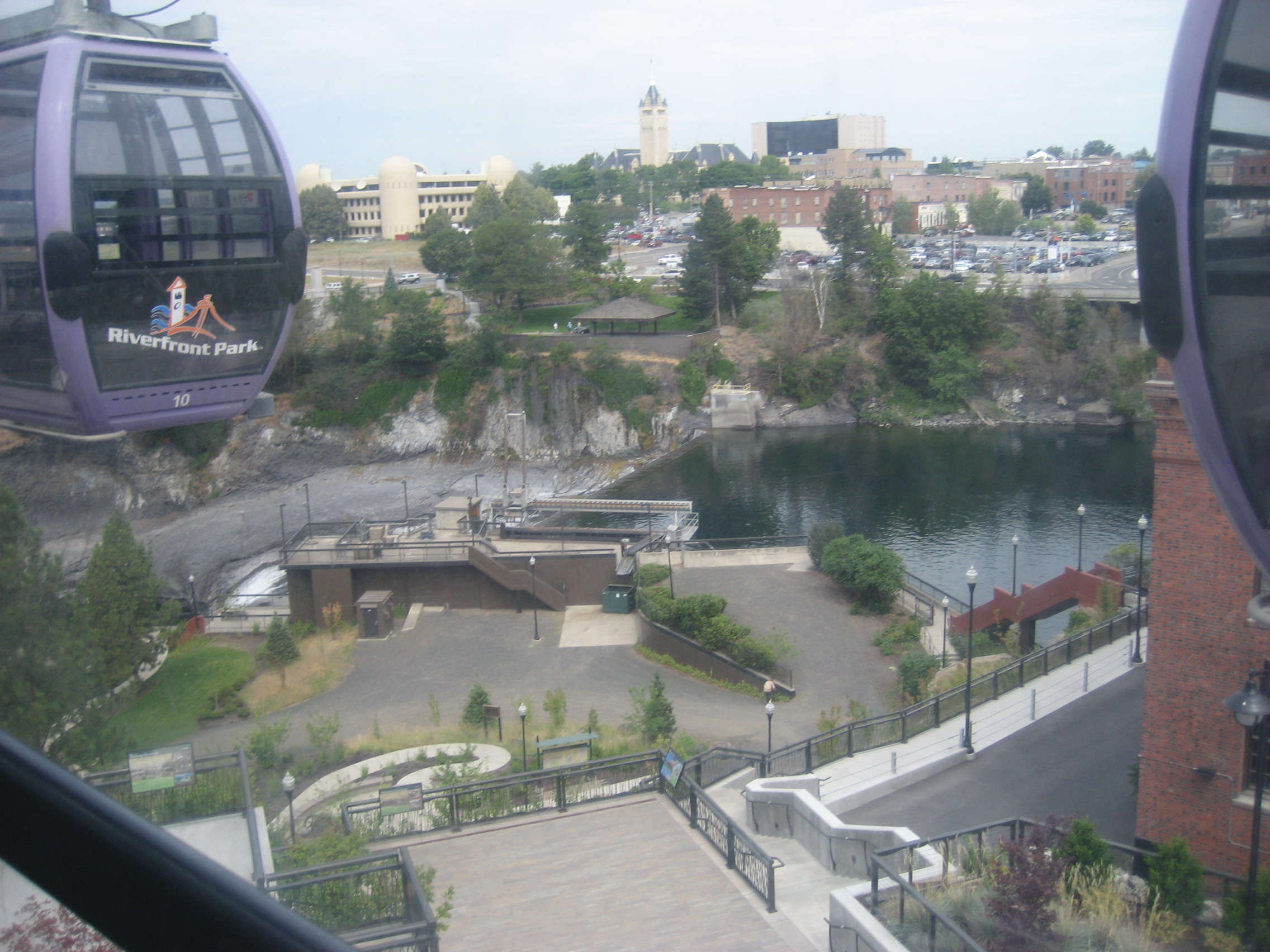
After the wonderful interlude, I headed back to Downtowner Motel, checked out and made a beeline back to Riverview Park. One of my friends in Spokane recommended taking the gondola, over the Falls. This I did, to the amusement of four high schoolers who were in line ahead of me. “Like, why is the old dude going up by himself?” Well, because it’s there. There are some decent views to be had, from the nosebleed level.
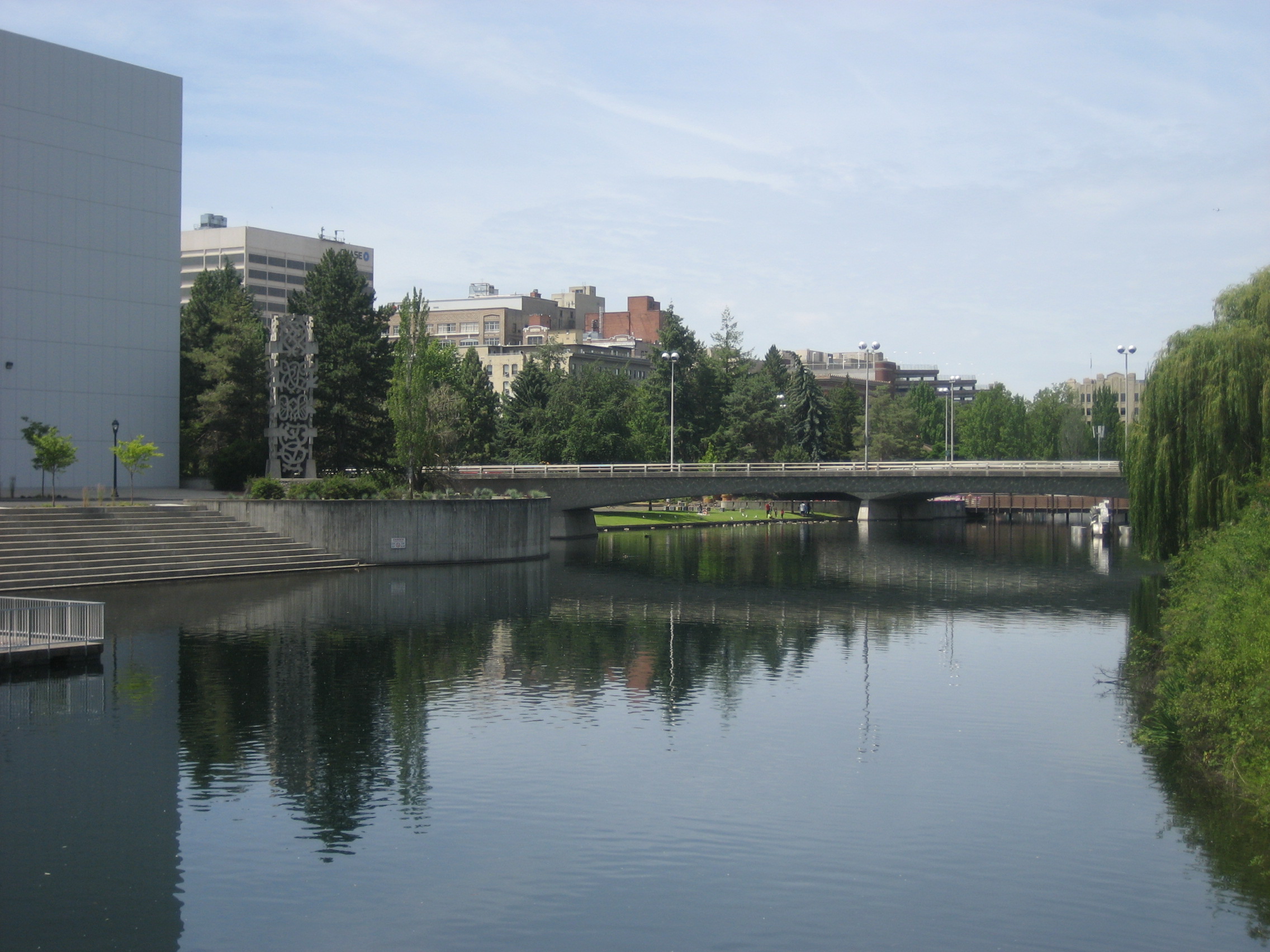
Once back down, I headed to the southern, less frenetic part of Riverside. I found the Clock Tower, Vietnam Veterans’ Memorial and World’s Fair Pavilion to be restful places for meditation.
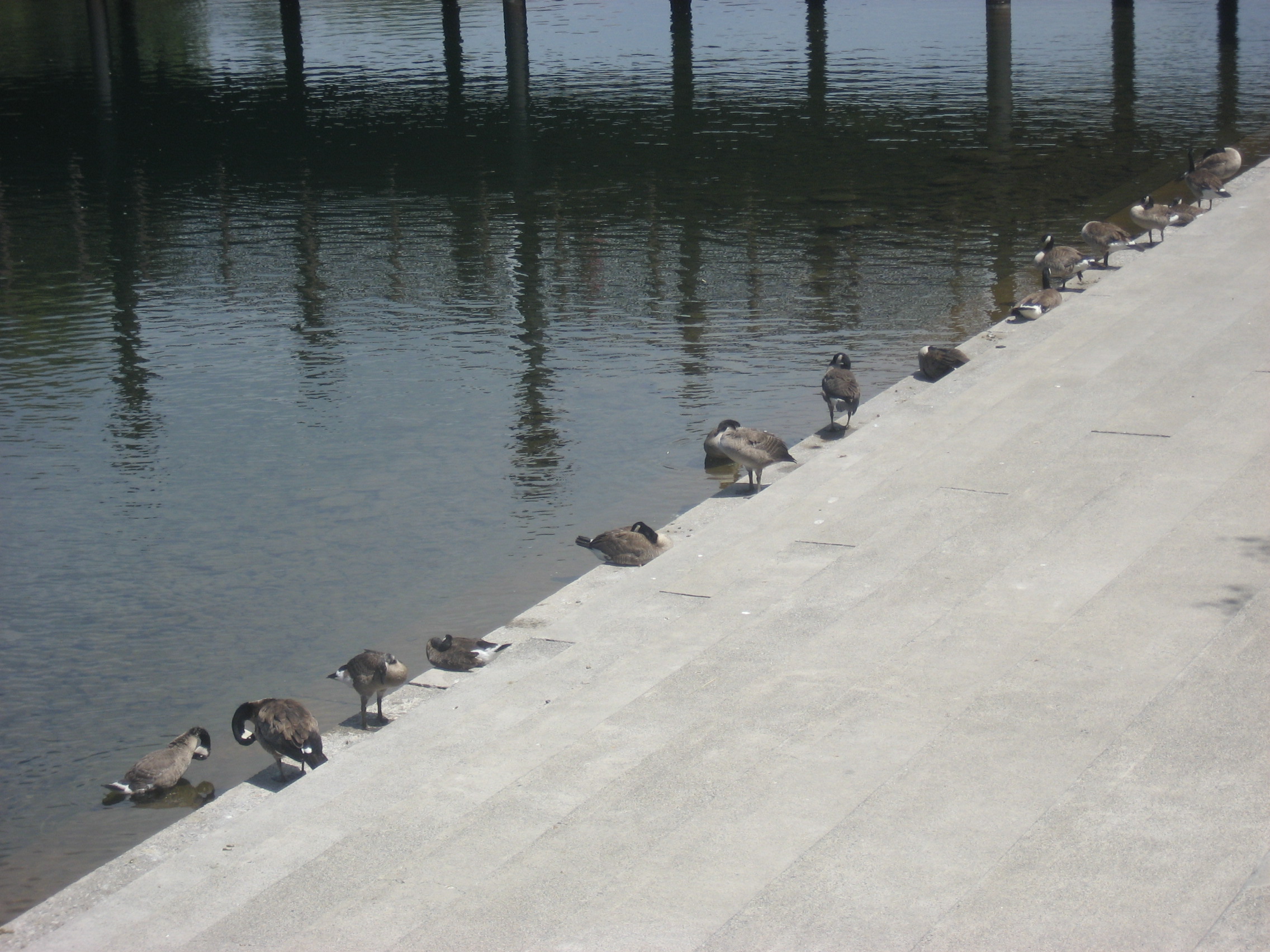
A flock of Canadian geese, lined up at the river’s edge, was an unusual sight. It almost seemed like the Bird Olympics was set to begin.
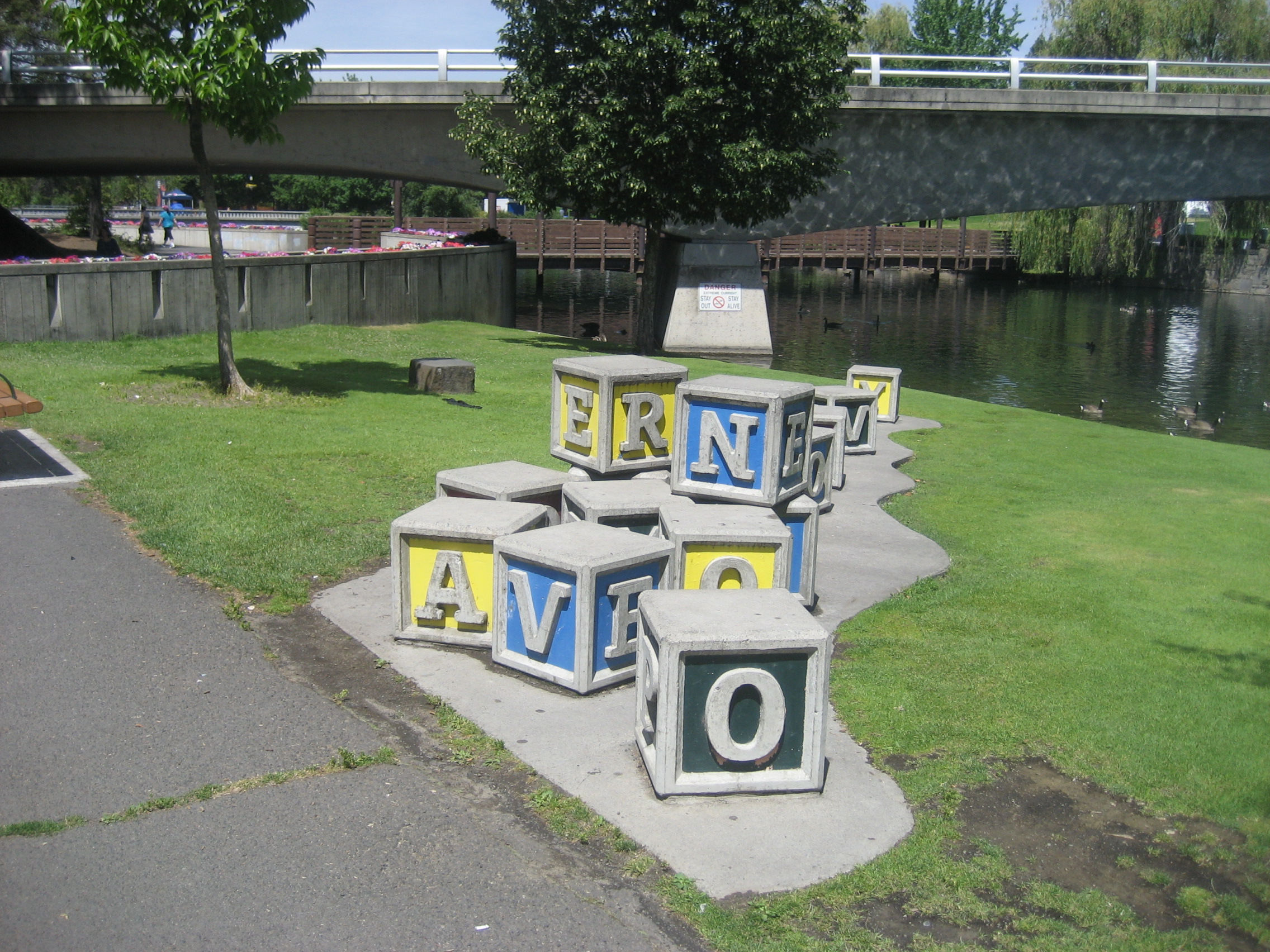
A unique feature, for kids and adults alike, was this set of giant blocks.
Lunch was from a hot dog vendor, in front of Atticus. As he advertised “all beef, no additives”, I was game. The coffee and gift shop was worth another visit, after lunch, for some chai and a few gift items. After an hour or so longer at the library, I called my local friend, and ascertained we weren’t going to meet, due to a sudden emergency.
So, it was off to the south side, and dinner at Chalet Restaurant, near a retirement community. I was received a bit cautiously by the waitstaff, but the salmon and side dishes were fine. Sometimes, it is a good idea to greet an “outsider”; like me, who tips 20 % to anyone who gives at least adequate service.
After attending a Baha’i worship service and social, nearby, and briefly connecting with an old friend from Arizona, now living in Spokane, (pictures didn’t come out), I headed east, then south. it was dark, so no photos of beautiful Coeur d’Alene. The night came to an end in Moscow, ID, at Royal Motor Lodge. I woke up the night clerk, who groggily lined me up with a room, and settled in for another comfortable night.
July 4, 2015, Prescott- It is a strange twist of fate that, on this 239th anniversary of the issuance of the Declaration of Independence, many Americans’ minds, and those of others around the world, are on Athens, the Birthplace of Democracy and now a seeming hotbed of rebellion against a global system that emphasizes money and profit as indicators of responsible behaviour.
There are several schools of thought about this global system. Many here in the United States are convinced that it is the work of a tightly-knit group of families, whose specific identities are unknown and are called, collectively, Illuminati. Dozens of TV series,and a few movies, have featured this entity, in various configurations, as their Archvillain. Christians immediately identify it as serving the Antichrist, or maybe being It.
I only know that such a controlling presence, if real, would only suffocate and oppress the human spirit. Working for wages has never been liberating, and only adopting an ethic of work as an act of worship, of service to humanity, has given most of us any kind of fulfillment. My best years of working were when I was a school counselor, followed, oddly enough, by my years as a substitute teacher. Most prospective employers who’ve looked at my resume have shaken their heads at this, and the selection process has ended for me, then and there.
Work, though, has to be an act of service, because our humanity is what we take with us, and besides, acts of service, in the long run, are what make us independent. Money can be taken from a person, by the government, by creditors, and, in the form of lost investments, by a collapsing economy in a place far away. One’s accomplishments and relationships, however, can never be taken away.
I thought about all this tonight, as my good friend was driving us back from viewing the fireworks at Pioneer Park, on the northwest corner of town. Her concerns are with an imposed world government, and contrived financial collapse. These things are possible, but study of the teachings of various faiths and some secular philosophies tells us that they are not the End Game. Each of us has individual DNA and each of us has a distinct soul. We are, by nature, independent and will only successfully act in a collective manner, if our acts of service lead to a collective consciousness.
As I saw the other night, on “The Celestine Prophecies”, that consciousness, and not an externally-imposed mindset or false world order, represents the next step in the evolution of the human spirit. This is chosen by each of us, in healthy independence.