September 24, 2025, Copenhagen– The amazing thing about today was the three instances of almost total quiet that enveloped a place where I happened to be, even though there were large numbers of people about.
First was Kastellet, a one-time regal fortress that was totally given over to the Danish military, following World War II. It had been fortified after a Swedish siege of Copenhagen, in the Seventeenth Century, but proved an effective deterrent against the British, in 1704. Today, I was impressed with the intensity of Danish troops engaged in individual and group training. Kastellet’s archives detail the various occasions in which Denmark has contributed to peacekeeping activities, since World War Ii. The nation is a vital part of NATO, and of United Nations peacekeeping efforts. It behooves other nations to keep this in mind.
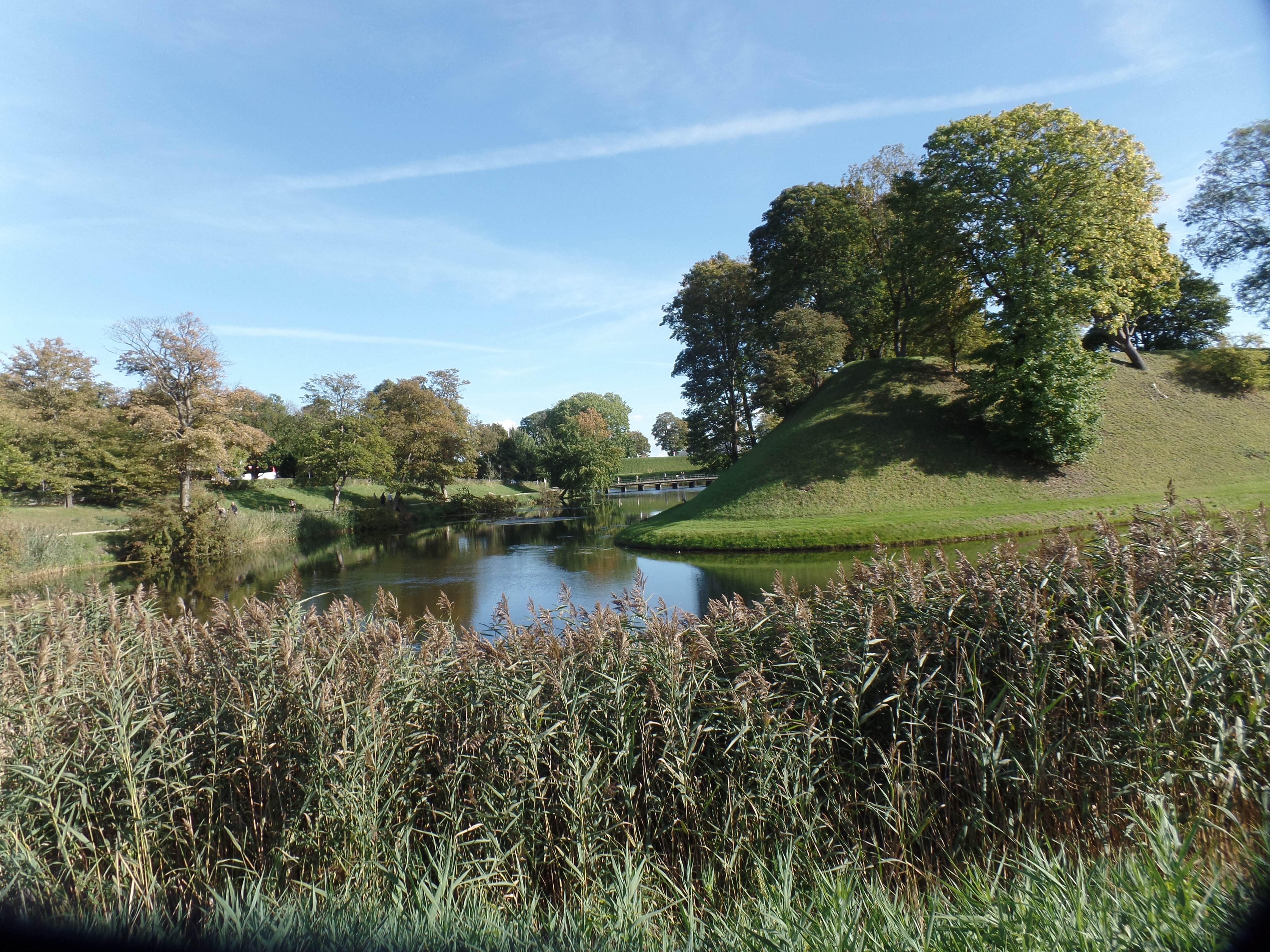
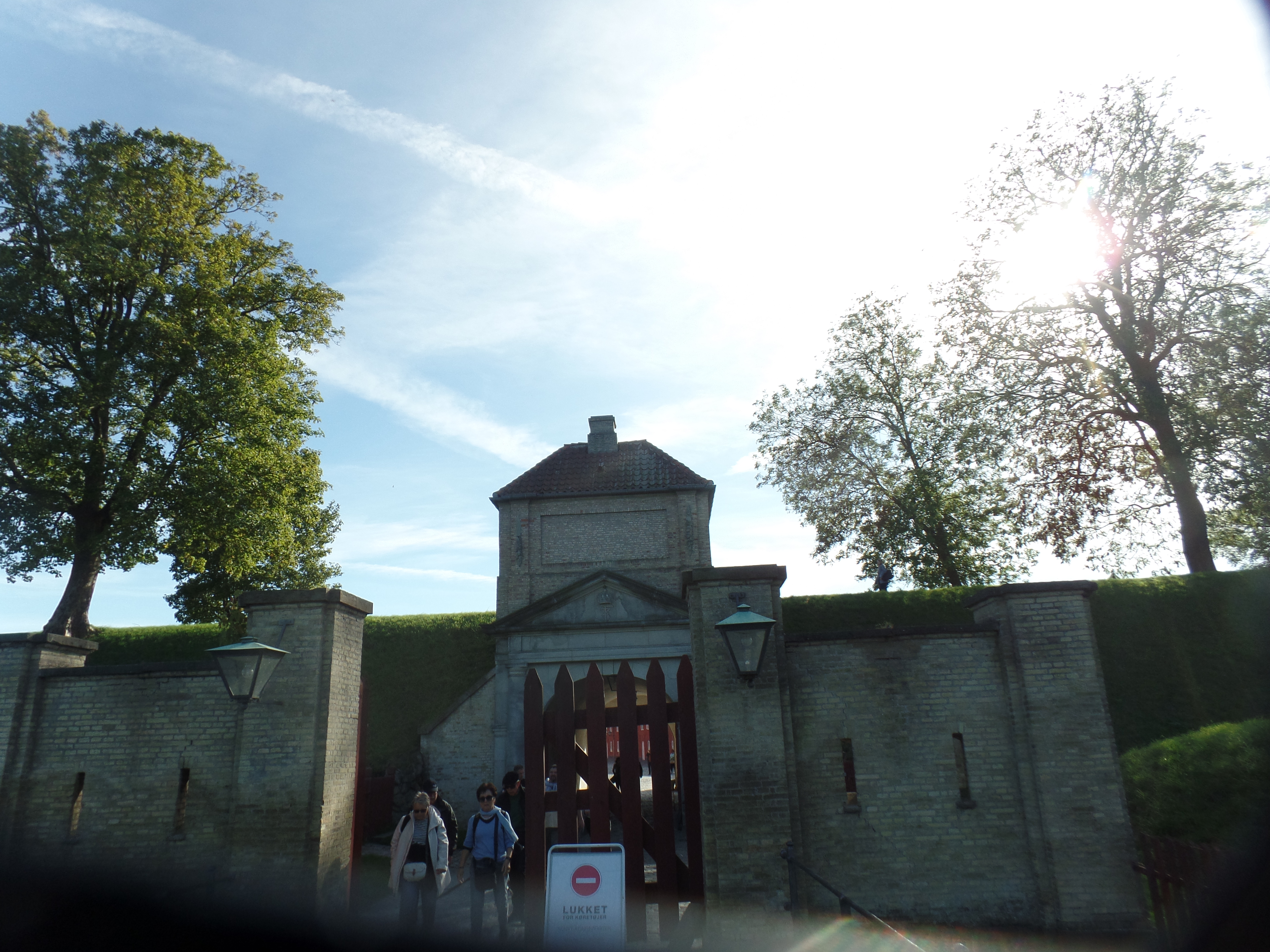
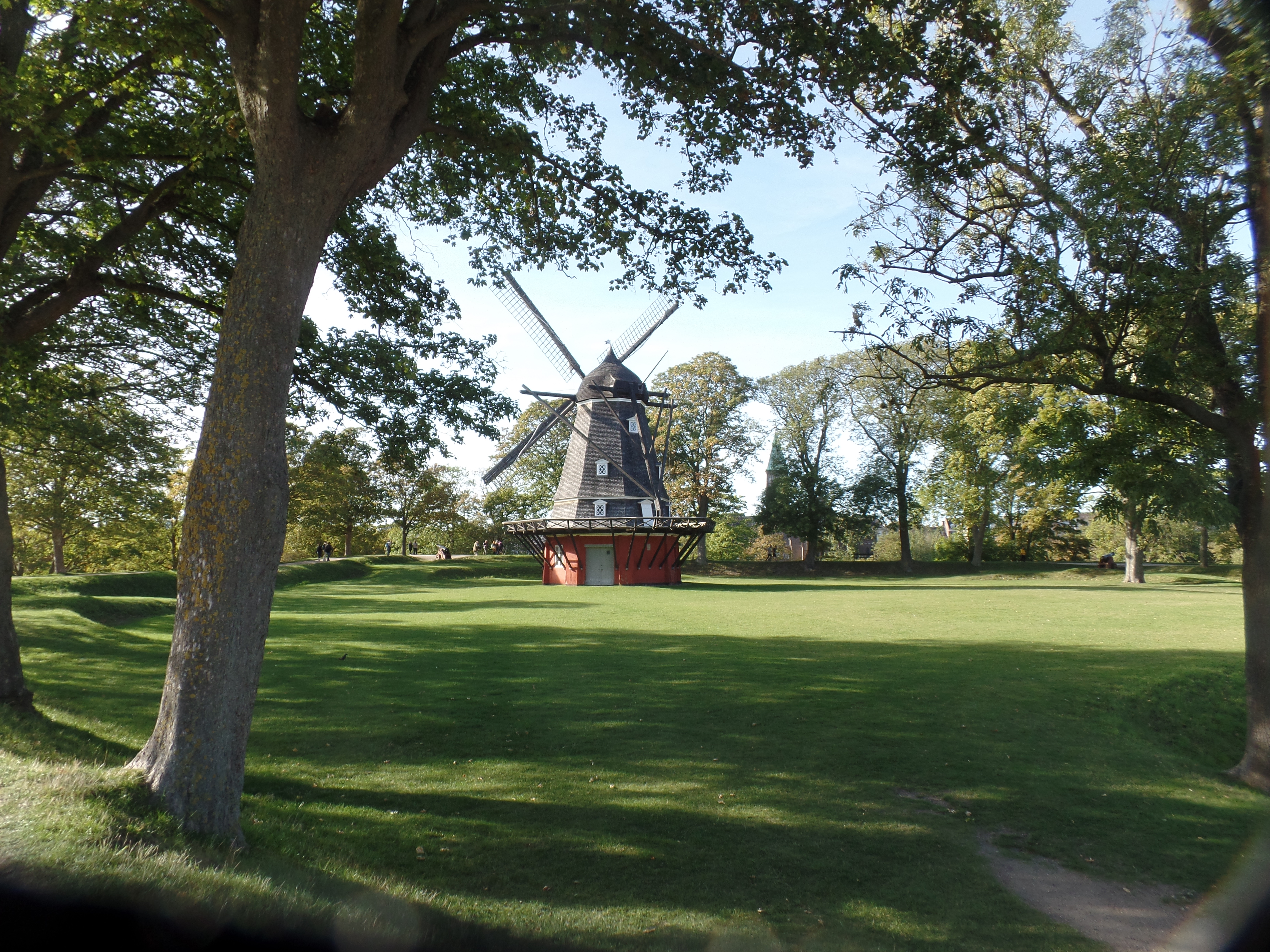
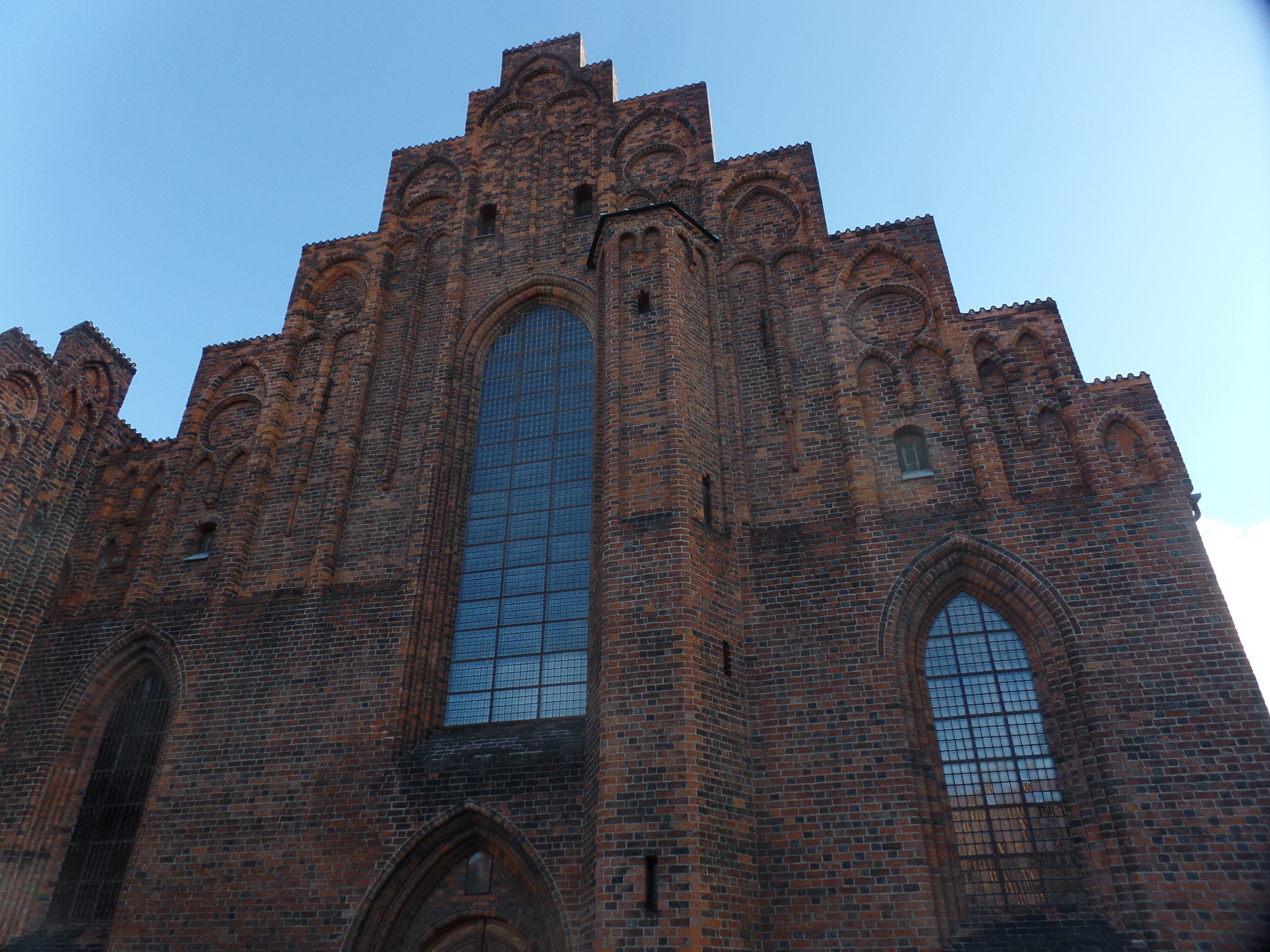
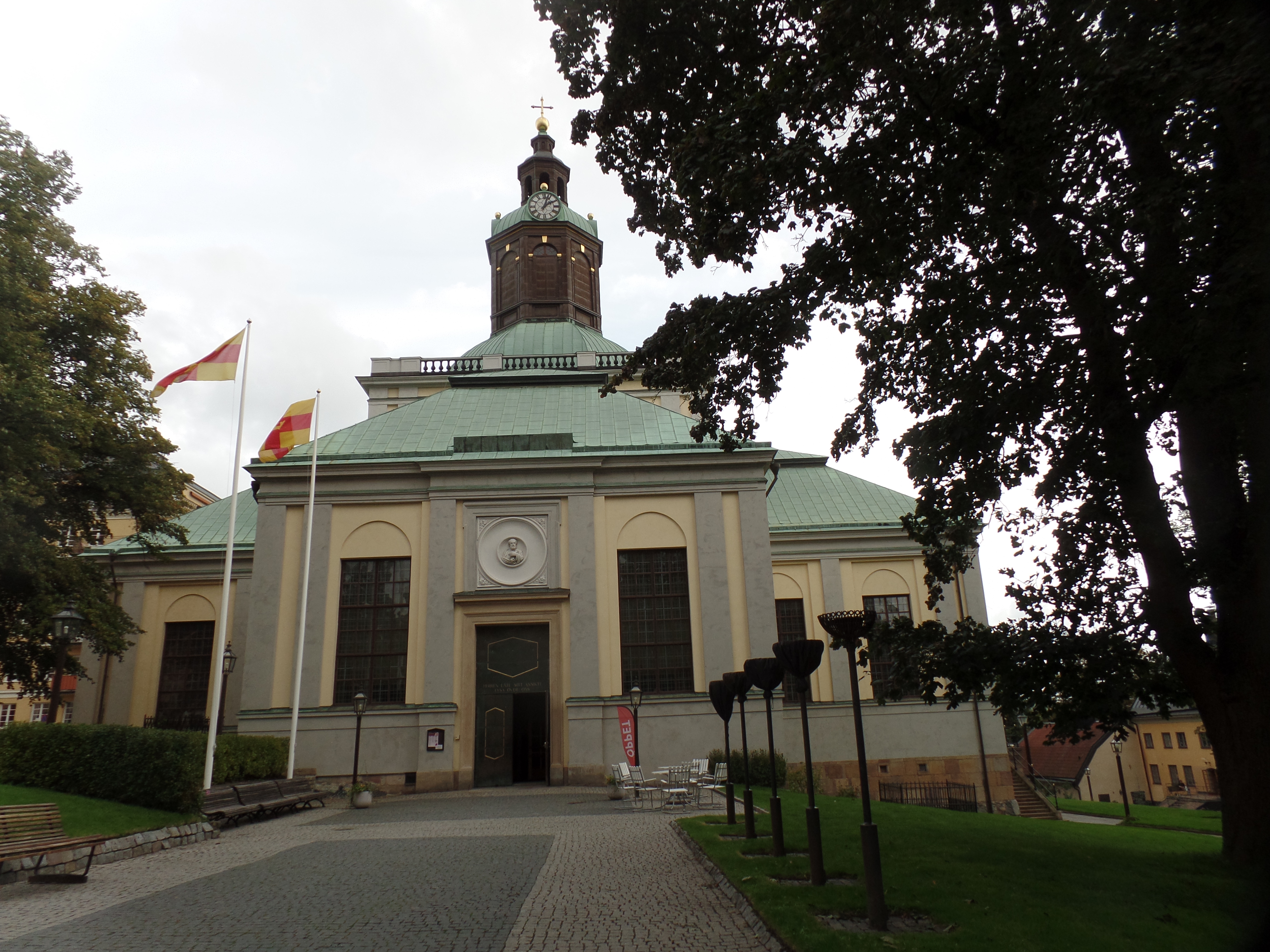
Moat at Kastellet, CopenhagenAnother visitor from North America-a Great Blue Heron!Another view of the moat and ramparts, KastelletA view of the wallCommander’s HouseBarracks, KastelletCitadel ChurchDutch-style windmill-replaced an earlier mill that was destroyed in a storm.
After leaving Kastellet, I had only to walk a short distance before noticing a large dome. This turned out to be Frederiks Kirke, and it is the largest domed church in Scandinavia. Once inside, all are to maintain silence-and we all did. Soft, soothing music was the only sound. No loudly-clicking cameras or flash photography are permitted inside, either.About seventy of us were inside, and quiet.
Frederiks Kirke
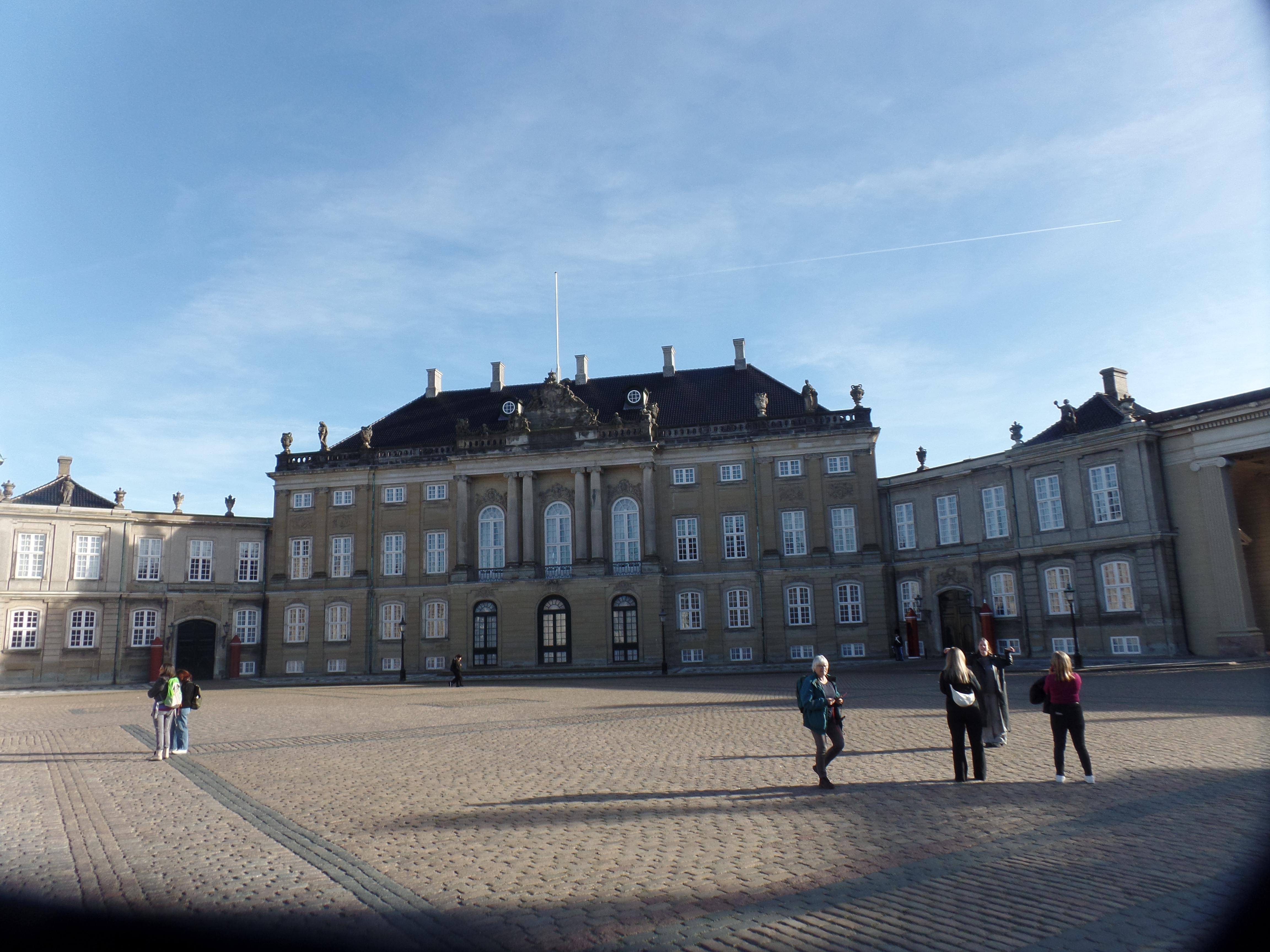
After spending about twenty minutes in the great church, I went across the street to the large complex of palaces, which punctuate Frederikssgade. Below are the palaces, in a clockwise direction.
Amalianborg, on the left, with Christian VIII’s palace to the right.Frederik VIII’s PalaceChristian IX’s palace
I left the quiet atmosphere of the royal courtyard, and went back to the bustle of Old Town, via the Yellow Palace, which now houses many offices of the Danish government.
Yellow Palace, Copenhagen
It was time to get a bit of supper, and reflect. Ironically, both would take me the third place of solitude- Kongen Have (King’s Garden) More on this bit of heaven, in the next post.
September 24, 2025, Copenhagen- Today started out as a minor shopping day: I had to replace lost sunglasses and a knot cap, as well as worn-out socks. So, a visit to Magasin du Nord, a major department store of Indre By (downtown) was the first order of business. MDN is a throwback to the great department stores of old. Department stores still mean something on this side of the Atlantic.
In the afternoon, I set out on another random stroll, heading west on Adelgade, towards a church that beckoned towards the midst of that street’s span. St. Petri Kirke’s conical spire calls out to the party animals at Generator. Being one to roam off the beaten path, I walked its way.
St.Petri Kirke, Frederiksstaden, Copenhagen
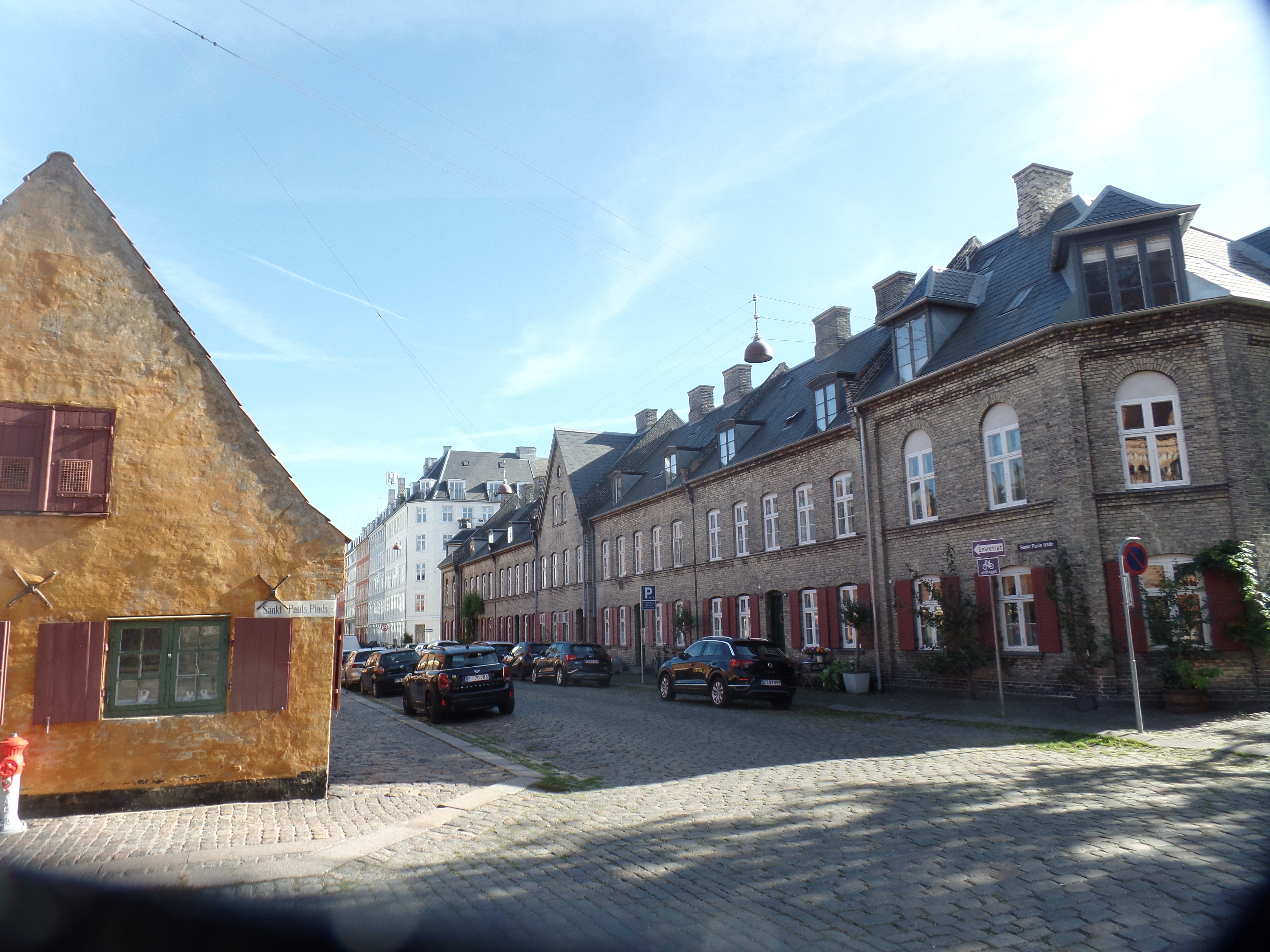
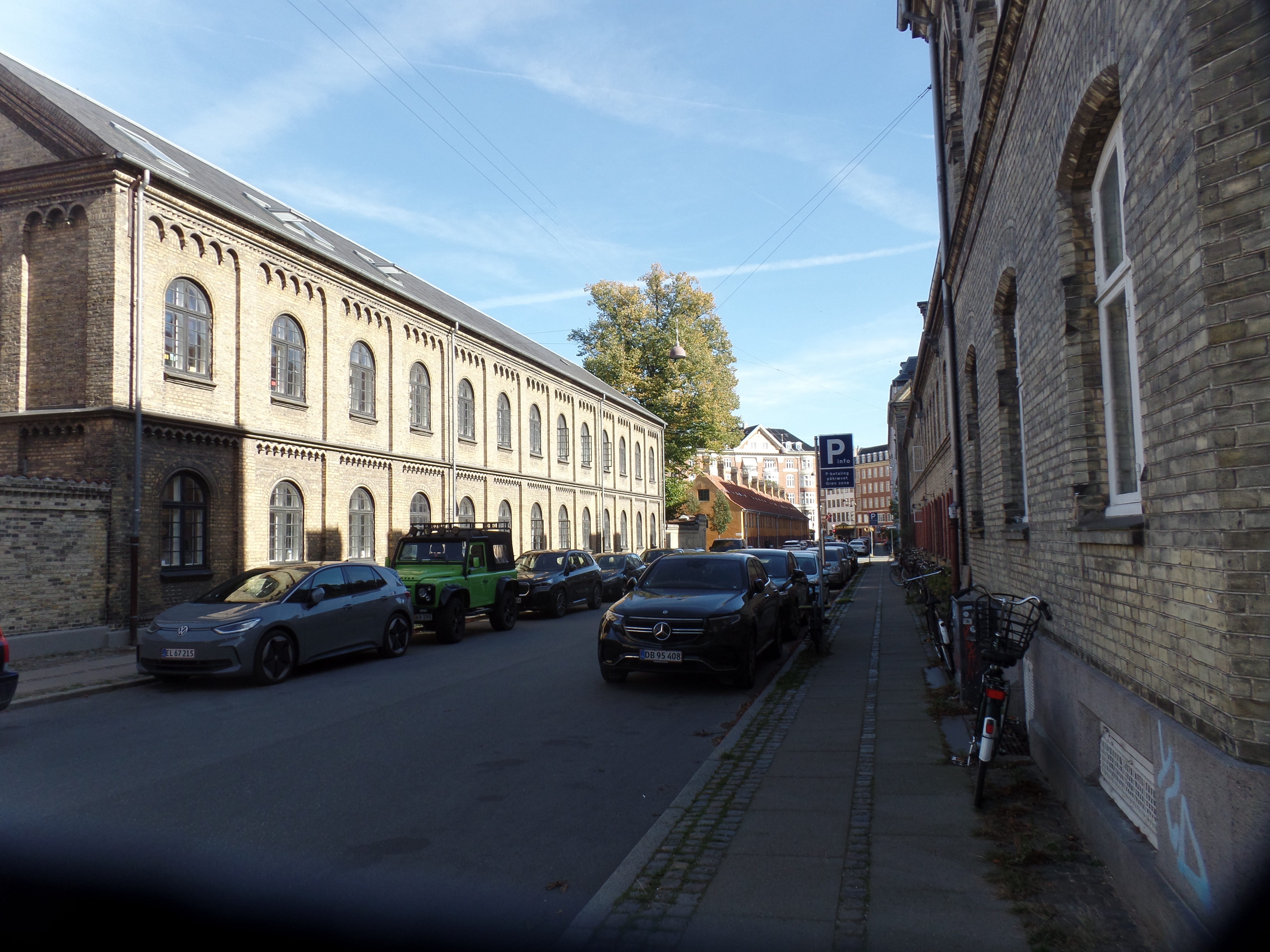
A block or so later, I came to Sankt Pauls Gade, the Nyboder district, built by King Christian IV for naval personnel and now preserved as a national treasure.
Nyboder, Sankt Pauls Gade (above and below)
It was another three blocks towards Osterport that I came upon a Swedish Church, close to the waterfront, and bordering a small marsh. Here is a view of Svenske Kirkes Julebasar.
Svenske Kirkes Julebasar (above and below)Senske Kirkes Julebasar
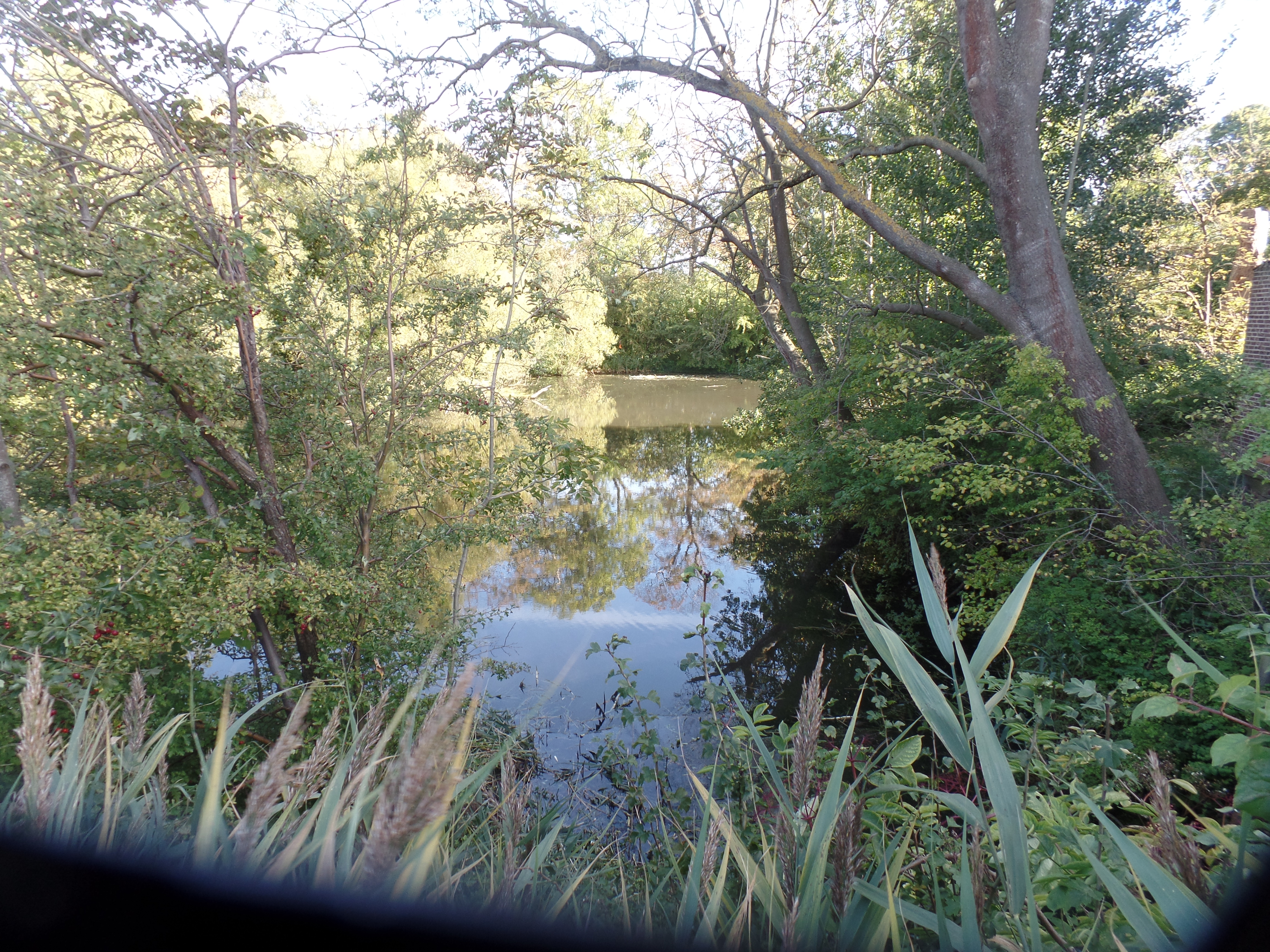
The small marsh became a stream, which became a moat. The afternoon was about to show the majesty of Frederiksstaden, as Osterport swung towards the International Ferry Terminal.
Small marsh and pond, near Svenke Kirkes Julebasar
I am taking my time with this, so next up will feature Kastellet, Frederiks Kirke and Amalienborg, with Part III focused on Kongen Have (King’s Garden) and the exterior of Rosenberg Palace.
September 23, 2025, Copenhagen- There is something fairy tale-like about Helsingor. Like a Danish version of Visby, it largely is filled with cobblestone streets. Unlike Visby, its Old Town is mostly a no-car zone. Here are some of the Old Town scenes I promised you last night.
Old Town street, HelsingorHamlet Hotel, Helsingor is across the street from Skandia, where I stayed last night.St.Marie’s Church, HelsingorDom Church (Cathedral) of Helsingor
Now, here is the crown jewel of Old Elsinore: Kronborg Castle, which was William Shakespeare’s setting for Hamlet.
Denmark has been a country since the 11th Century. Around 1424, King Eric VII built the prototype of the fortress, overlooking Oresund, which separates Sjaelland (“SHEL-land) from the Swedish Peninsula, at its narrowest point, In 1585, King Frederick II expanded the fortress into a magnificent castle. The fortress burned down, in 1629, after which King Kristian IV had it rebuilt. In 1658, the fortress proved insufficient to withstand an attack by Sweden, during the war in which the latter seized control of Scandia, the southernmost part of the peninsula, from the Danes. In 1785, Kronborg became a military barracks, as the king had moved to Copenhagen. It was given to the Danish people, in the 1920s, as an historical treasure.
What a treasure it is! Here are seven photos of the grounds and the interior, including the extensive Casemates (the dungeons and underground refuge of the royals, during the war with Sweden.).
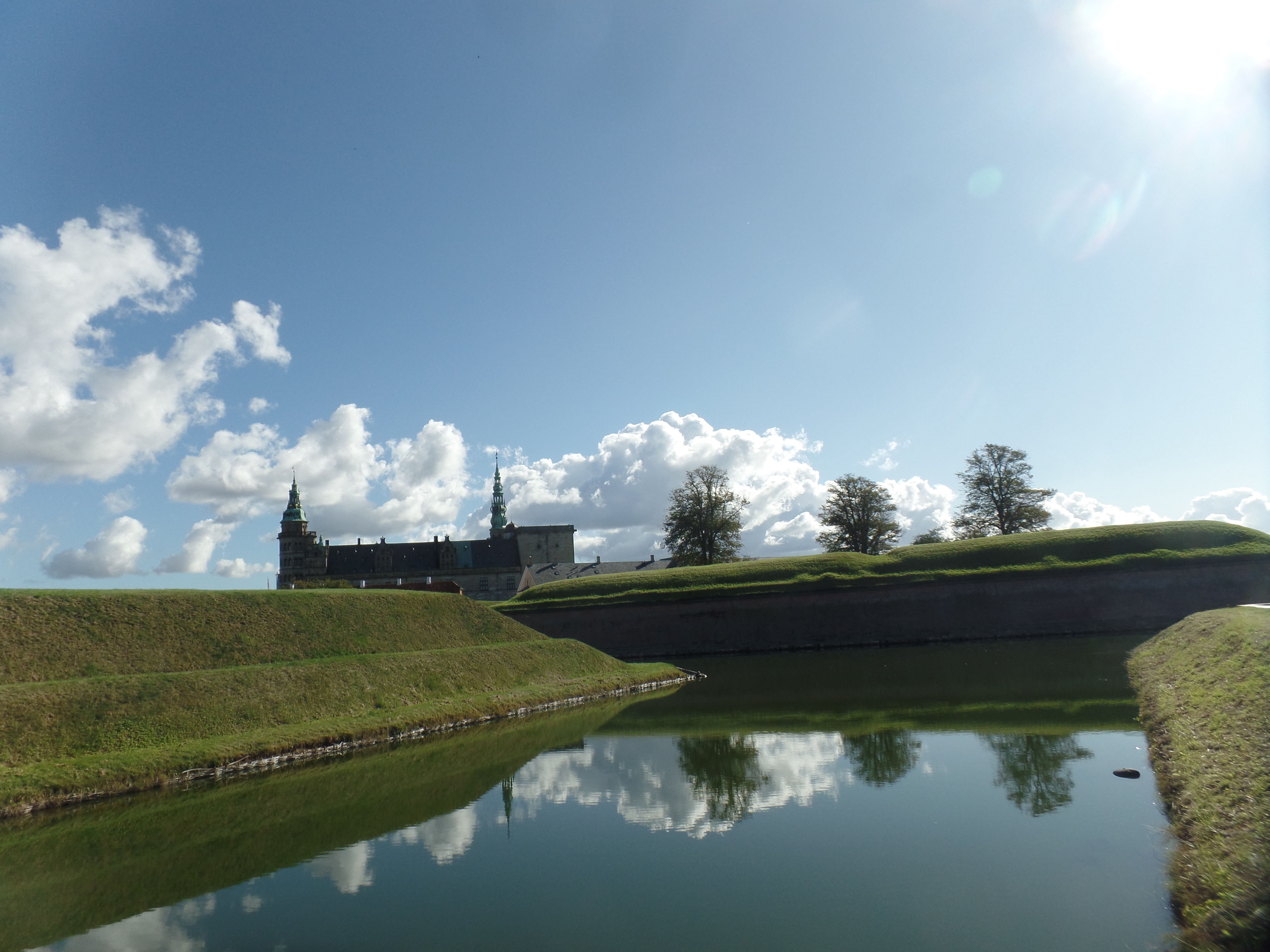
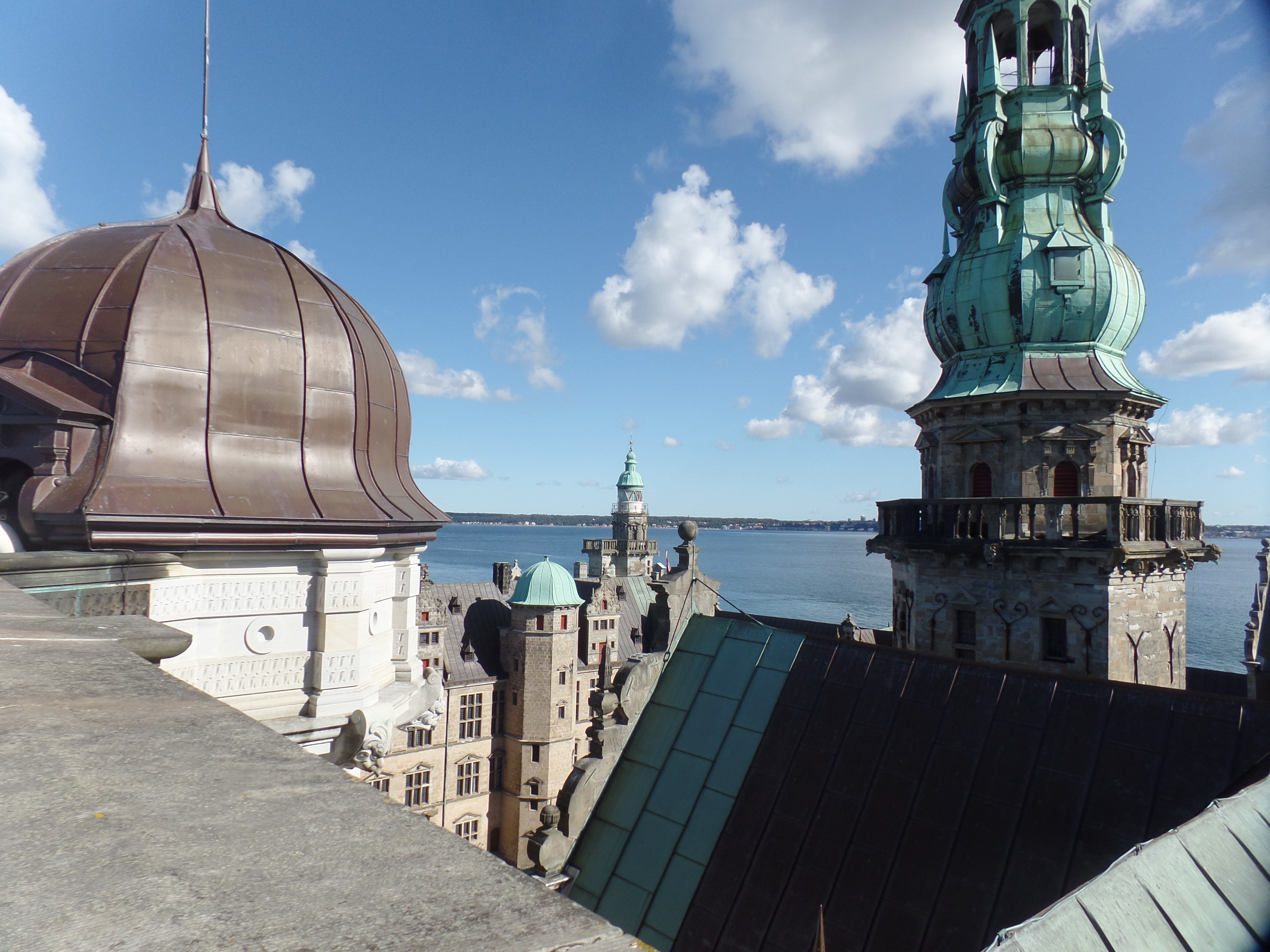
The Moat of Kronborg CastleCannons, facing north, from Kronborg CastleKronborg’s Cannon Tower, from the courtyardThe Chapel, which was the only area, not affected by the Fire of 1629.Oresund, and other parts of Kronborg, from the Cannon Tower. This viewpoint is reached after climbing 145 steps. I still have it, even if it means taking 2 twenty-second breathers going up.Holger the Dane, legendary protector of the nation, who awakens when Denmark has met its darkest hour. He otherwise sleeps in the Casemates.In the Casemates-Is down up or is up, down?A Word of Caution. Queen Margrethe I, who ruled Denmark and all of Scandinavia.
No display of a castle is complete without a scene of the ballroom. So here is #8.
The Ballroom
With this lovely visit, I headed back to Skandia, retrieved my bags and headed across the street to the train station. I learned last night, from the ferry monitor, how to work a ticket machine, and so got my own ticket to Copenhagen. Sadly, the Baha’i National Centre turned out to be in a suburban location-so I missed seeing the friends there. I did speak with one on the phone and may be able to join a meeting at my next place of visitation.
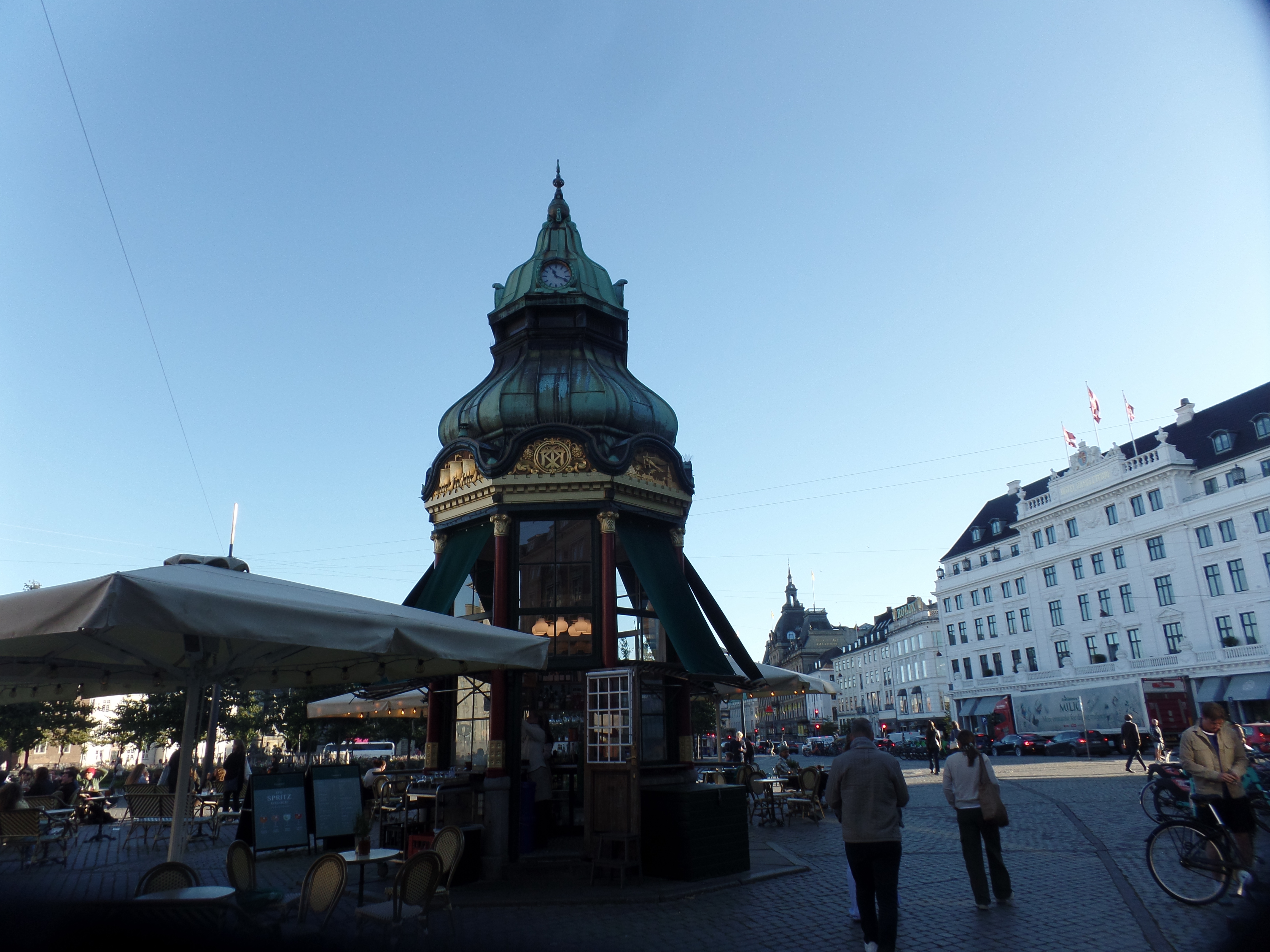
Copenhagen, though, is exquisite. I will be here tomorrow and early Thursday. Let us close with this scene of Indre By, the “Old Town” of the Danish capital, of which more tomorrow.
Ornate small cafe, with Hotel D’Angleterre in the background. An enterprising young woman runs a small coffee shop here.
Rumour has it that Tivoli is temporarily closed. I will check that one out further, tomorrow. Even so, there is plenty of opportunity to keep occupied here.
September 22, 2025, Helsingor, Sjaelland, Denmark- When I got to the Long-Distance trains, in Stockholm, accompanied by my friend from Nynashamn, two tings were obvious: The Rail App that I got for my iPhone, specifically to make catching trains easier, was not doing so AND I had oversimplified the booking process in my head. This led to learning curve #2 on this journey: Every leg of the process is different and every leg has to be set in motion, before showing up at the gate. I learned that it is best to go to the ticket office at the station, well before the desired time of departure-not 1/2 hour prior. The well-oiled team is what has got me this far, and given me a road map for the rest of the journey (no pun intended).
It all worked out; I got to say farewell to the kids and their father at the station in Nynasgard; I was able to purchase a ticket at the Central Station Billeting Office and friend was able to tend to an important matter of her own, after I boarded the train with time to spare, after all.
I found myself seated next to a very interesting person, who is writing historical novels, accenting the achievements of the Swedish people, rather than dwelling on the hardships and deprivations the country has faced, over the centuries. She is also a rather skilled photographer, and showed me some of her portfolio. I shared with her my philosophy of education and the basic teachings of Baha’i. After a time, we reverted to our own spaces and enjoyed the quiet ride through the heart of central and southern Sweden. When she met her partner, at Malmo, she told him of her interest in what I had shared. He seemed to be favourable to her comments.
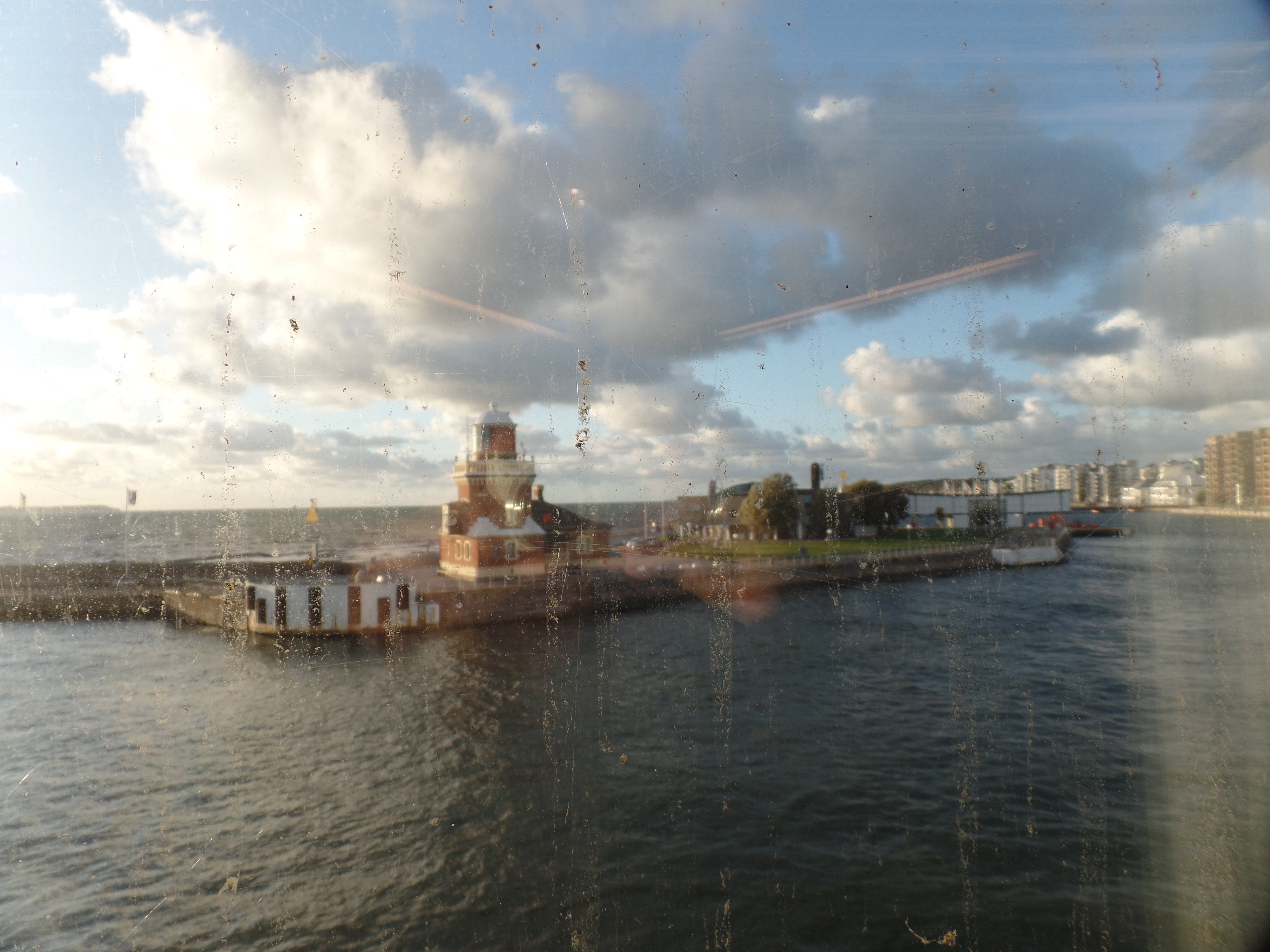
With help from a train conductor in Malmo, I reverted to my initial plan of taking the train to Helsingborg, then the ferry to Helsingor-as opposed to following the Stockholm ticket agent’s idea of going to Copenhagen and then up to my destination. That would have likely added a good hour to the journey. I had just enough time in Helsingborg to take photos of the interesting Centrum.
Helsingborg Centrum from the Ferry terminalHelsingborg Centrum (above and below)South Side of HelsingborgOld Harbour House, Helsingborg
We left Helsingborg, and Sweden, on time. My seatmate on the train from Stockholm to Malmo remarked that today was the first time she had seen that train leave on schedule, in nearly two years of back and forth. I have a different impression of Swedish punctuality, but maybe that is my luck-everything has been on the button, during my time here.
So far, I can only say I have experienced 90 % kindness, in both Iceland and Sweden. Certainly, the expectation is that the visitor will put forth effort to observe how things are done, and follow suit, but there is also a goodly measure of grace and forthright correction, when needed. I am used to taking life lessons in stride and not making the same mistake twice. This fits nicely with how people expect visitors to go about their time in both countries.
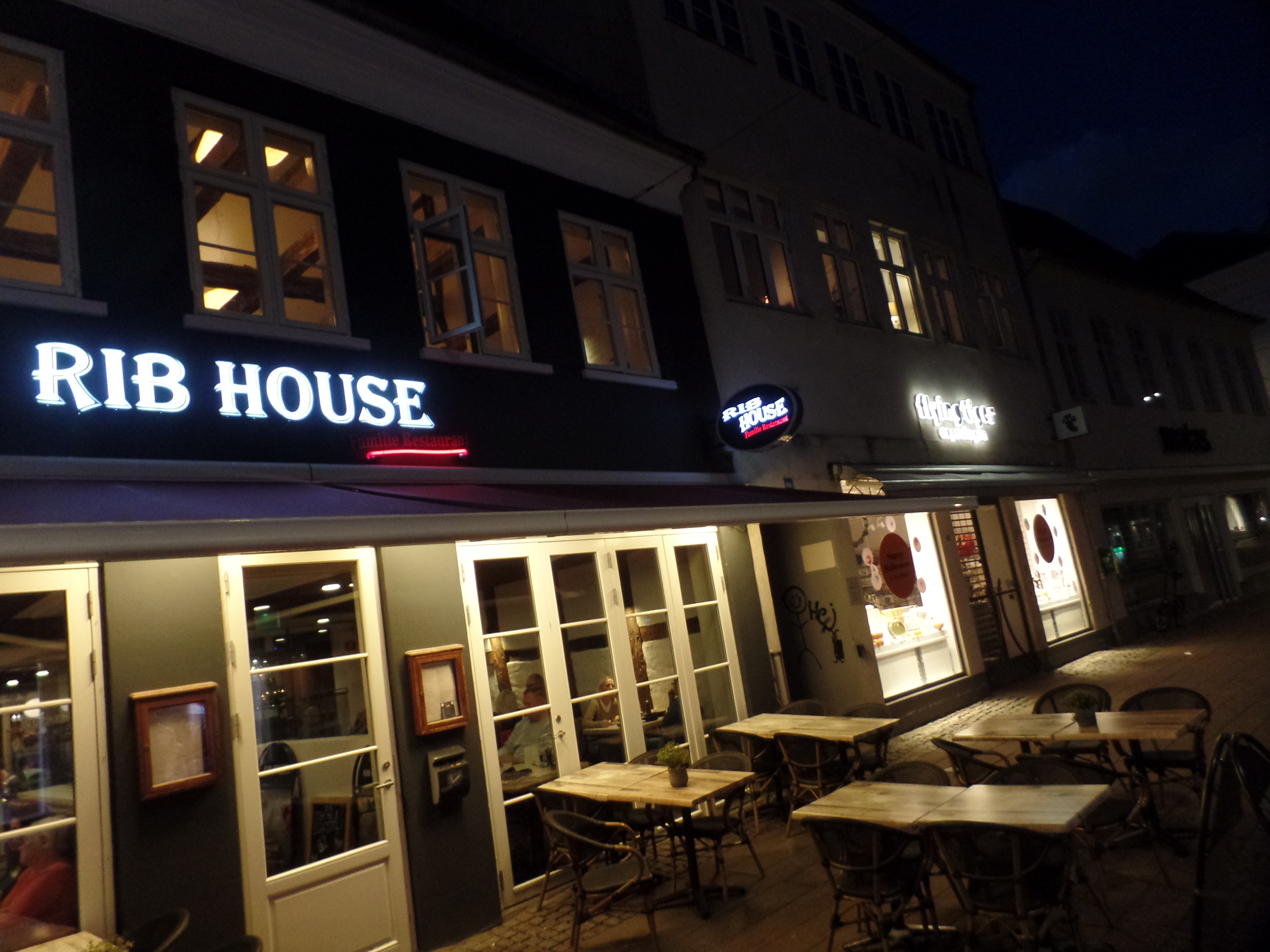
I expect it will be much the same in Denmark. Helsingor, for starters is compact. Hotel Skania, where I am tonight, is right across the tracks from the Train Station and Ferry Terminal. A short two blocks to the west and south is a row of restaurants and shops, with no cars allowed. Rib House, where I dined this evening, is a fun place, where each patron gets to check off the items chosen for the meal. There is a one-trip, or unlimited salad bar, in the style of American steak houses. How well meat is to be cooked is a choice item as are the type of potatoes one wants, and the sauces, if any, that are desired. Of course, one checks off what drink is desired.
Rib House, Helsingor Centrum
I will share more of Helsingor tomorrow. Now, it’s time for rest.
September 19, 2025, Visby, Gotland- Three grand buildings, or the shells of them, still stand in the center of Visby. These are all former Catholic churches, closed by the Duke of Gotland in the middle of the 14th Century, after the Black Plague and attacks by Danish forces spurred an economic downturn on the island.
I started the day with the first of two visits to Cafe Amalia, one of two breakfast establishments, within the Ringmuren (city walls) in town, that open before 9 a.m. The energetic young couple who work this branch of Amalia open at 7 a.m. I enjoyed a heaping bowl of Grandma Grot (Grandma’s Porridge) and a tasty omelet, which sustained me until dinner time.
Cafe Amalia’s uptown branch
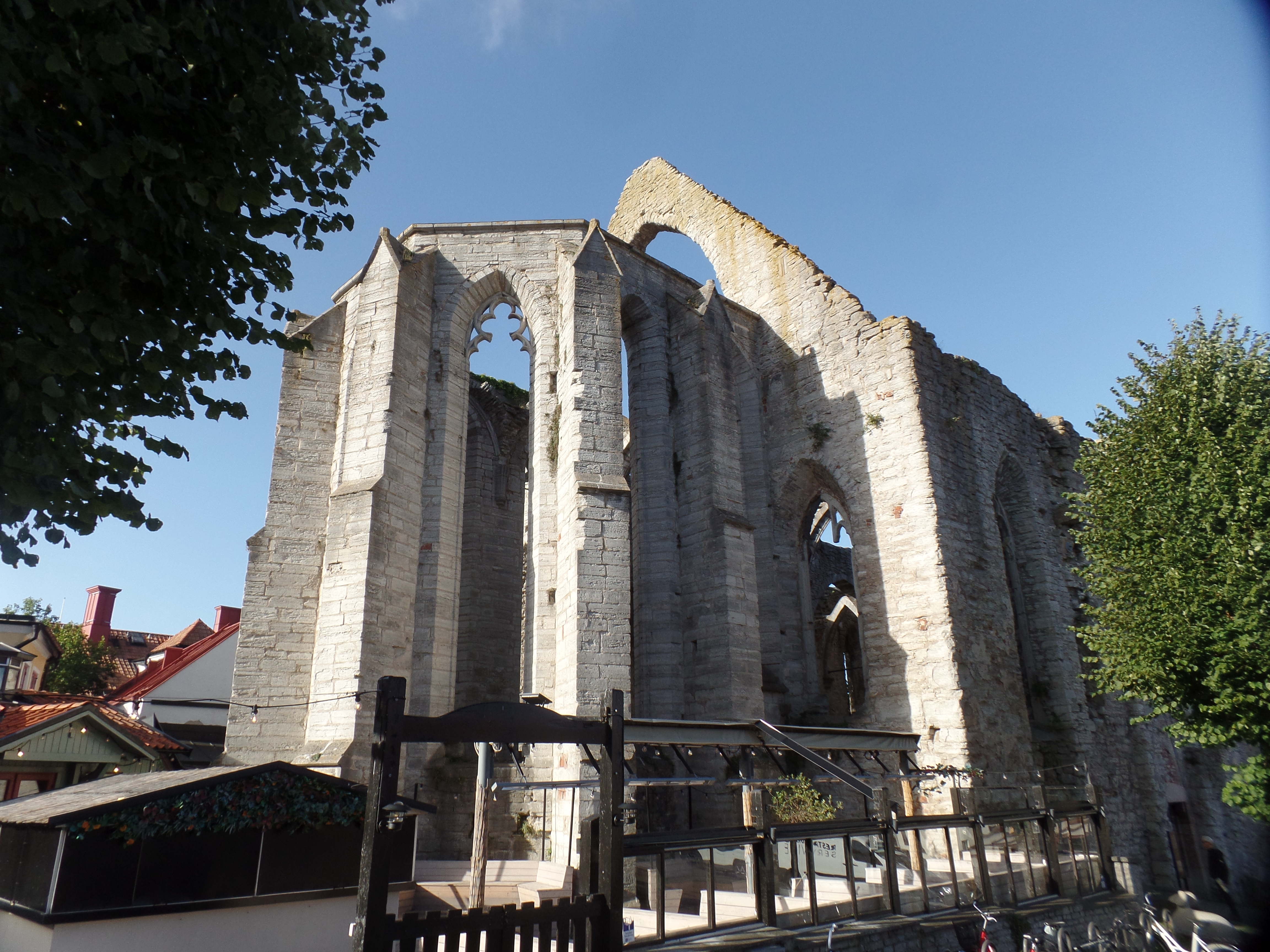
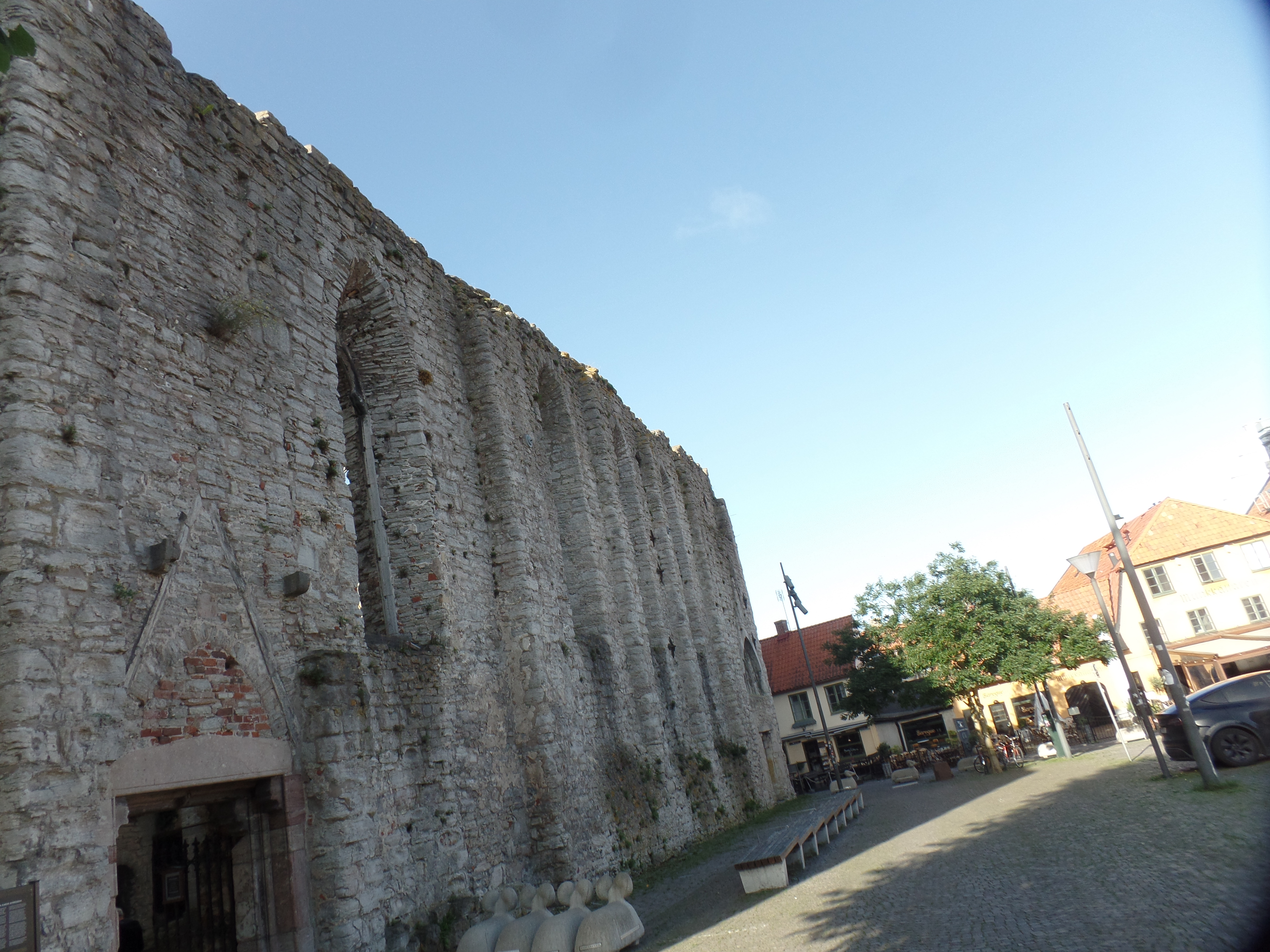
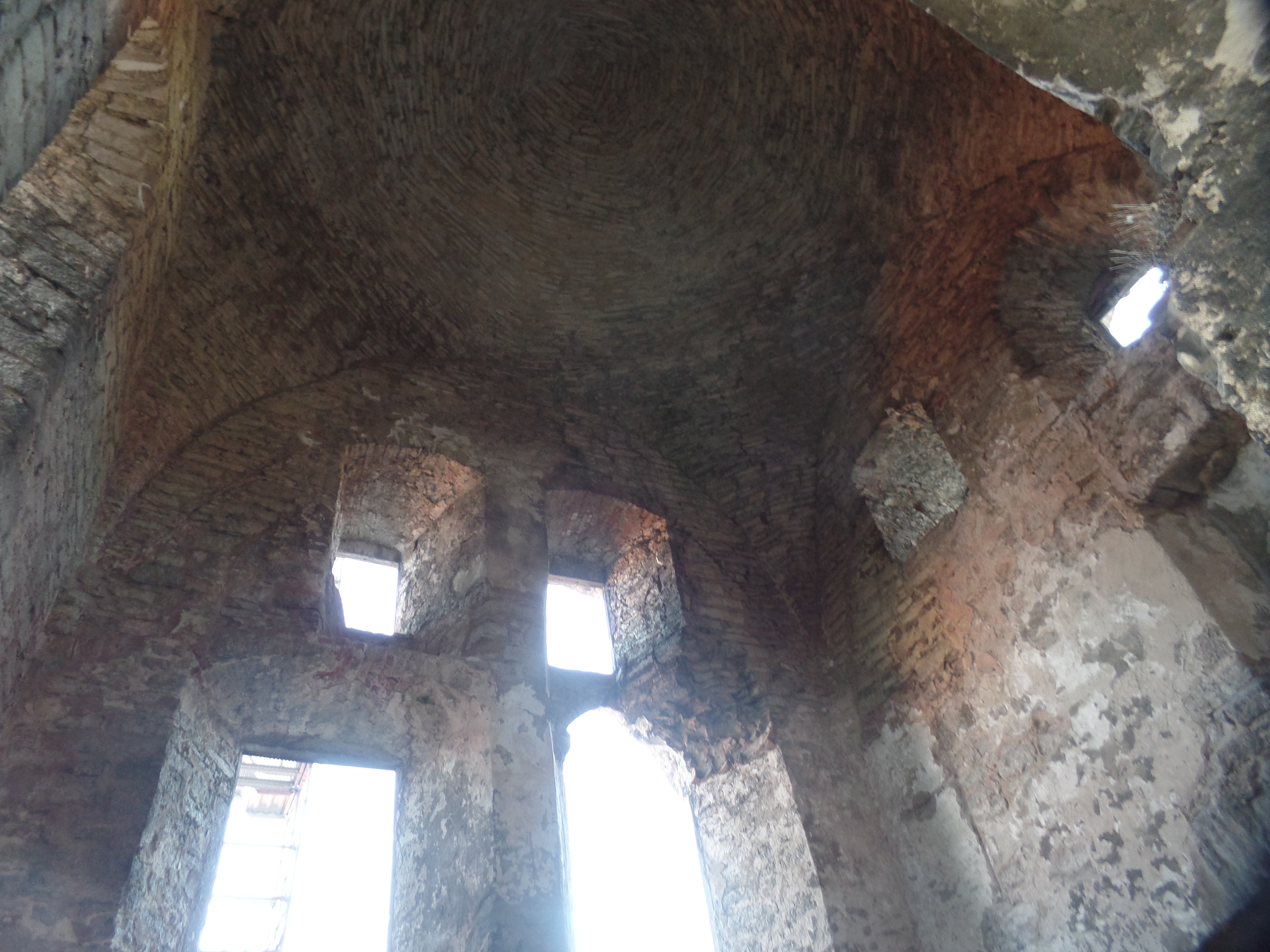
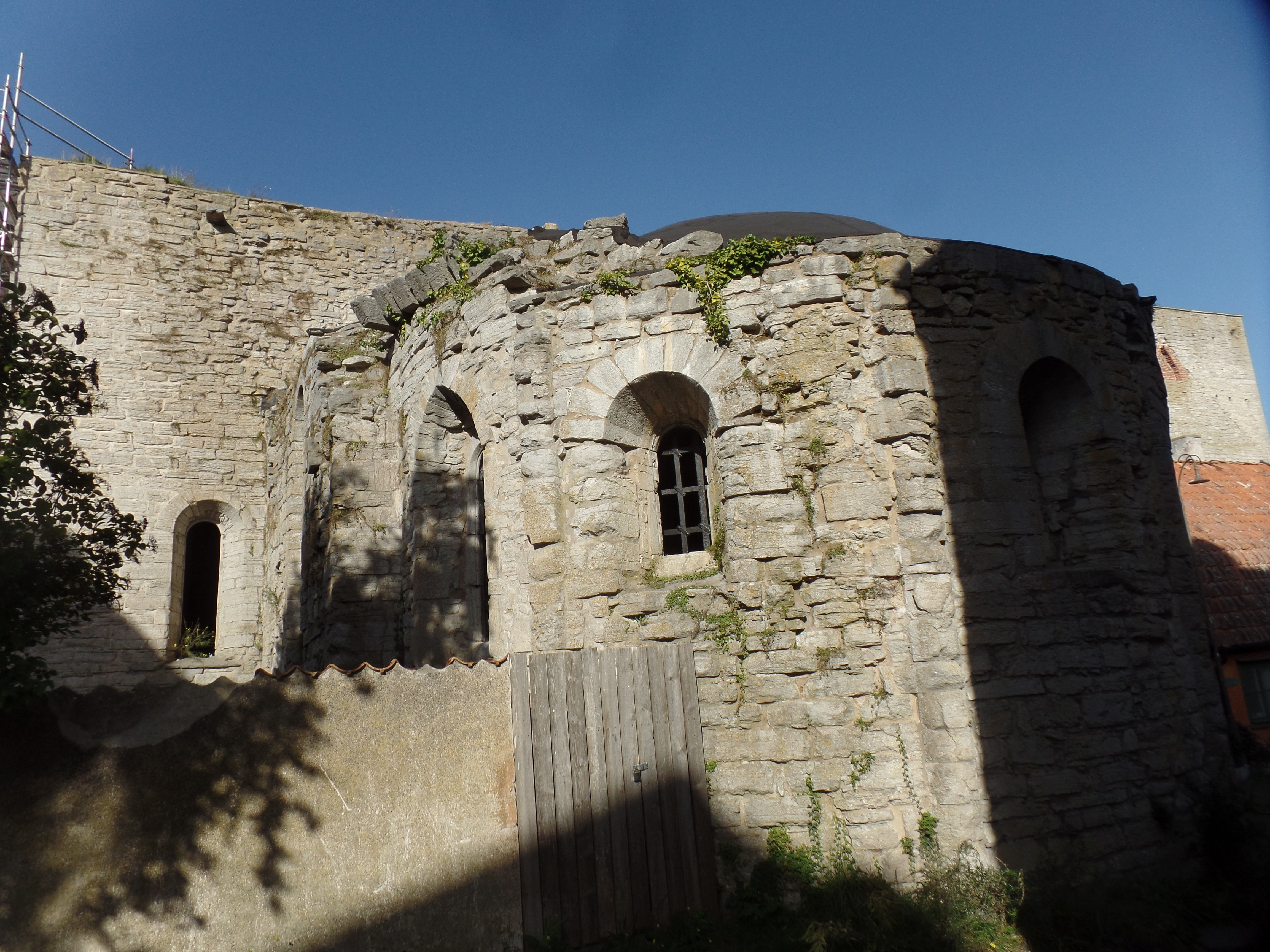
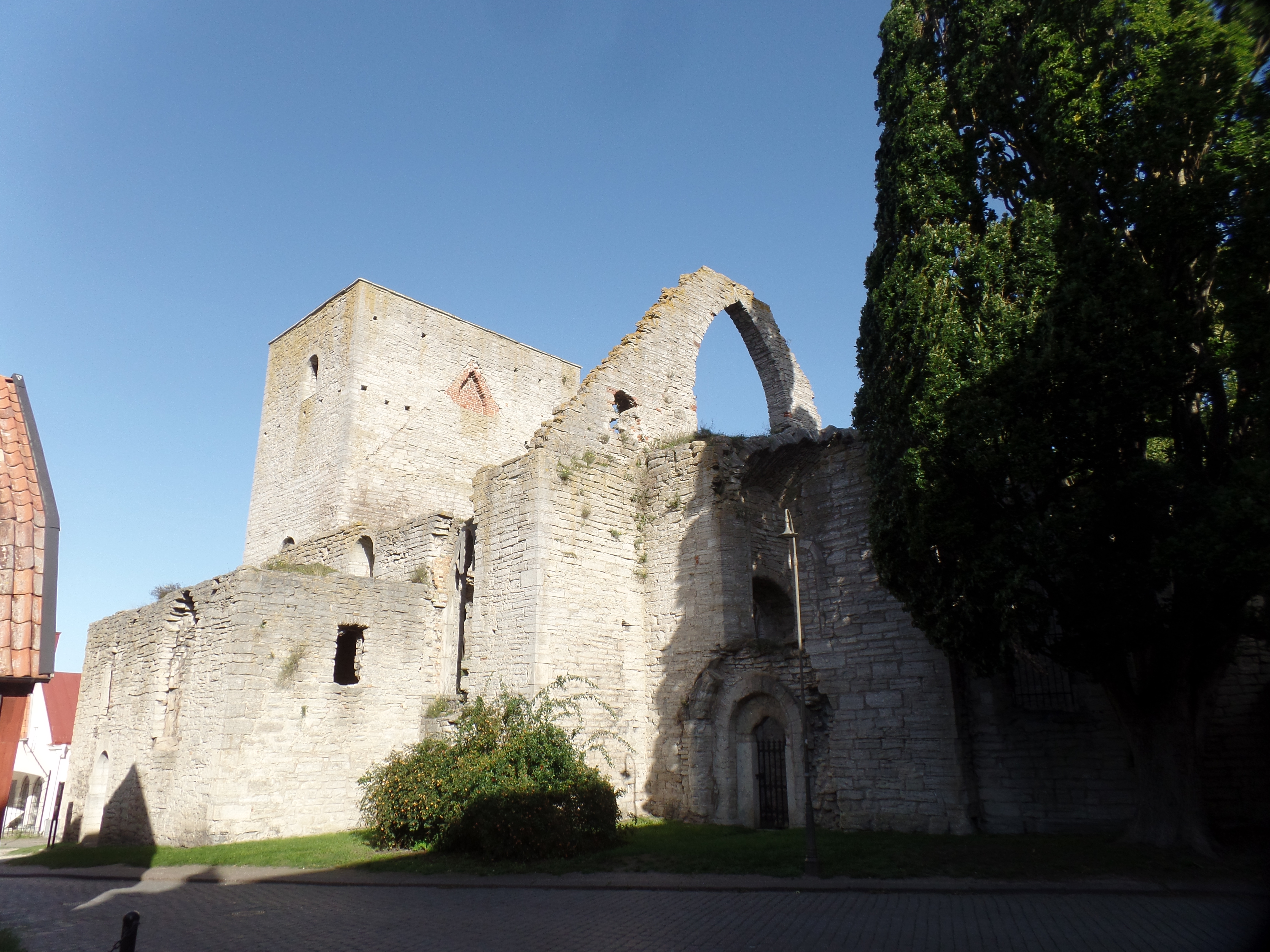
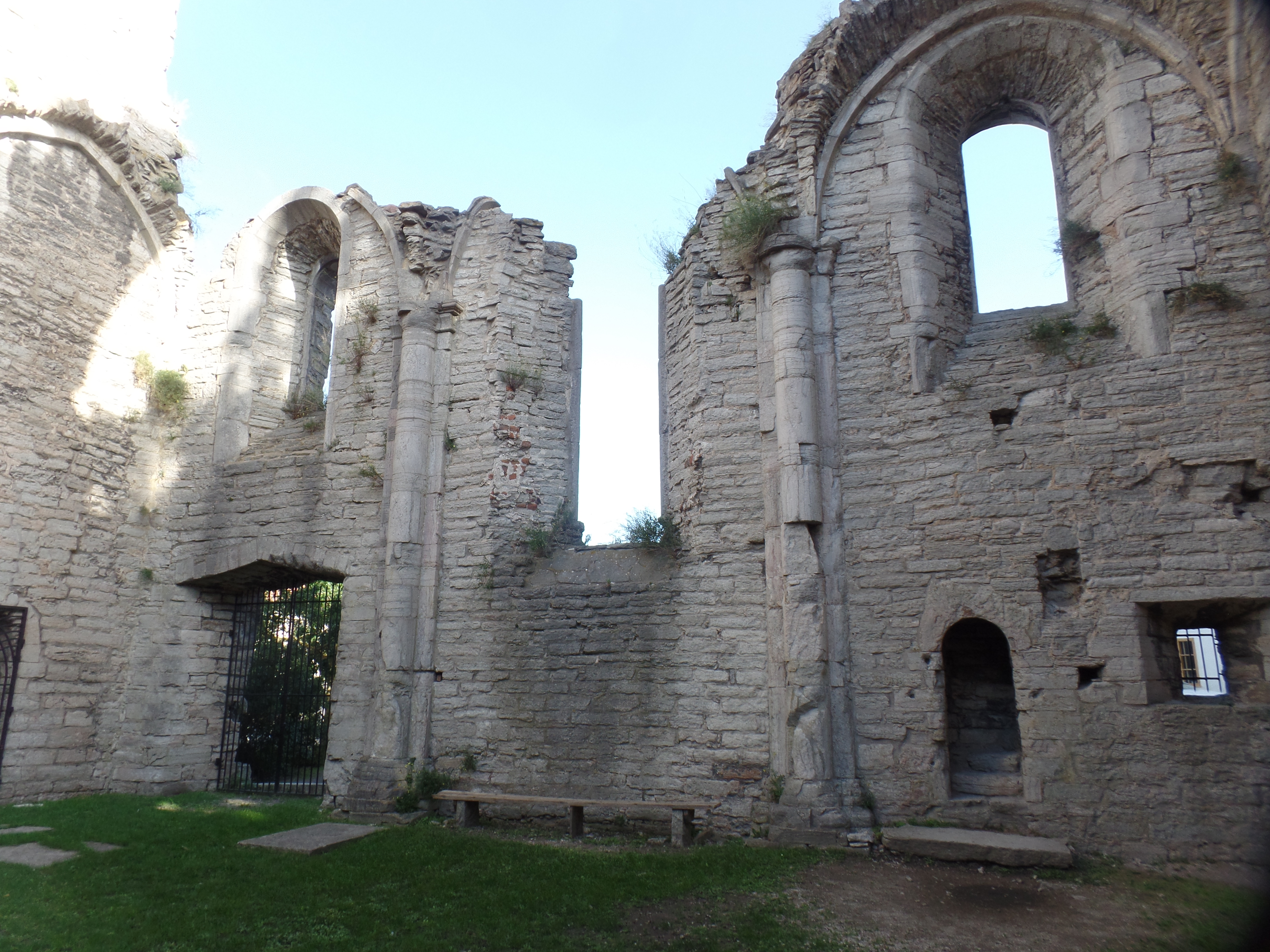
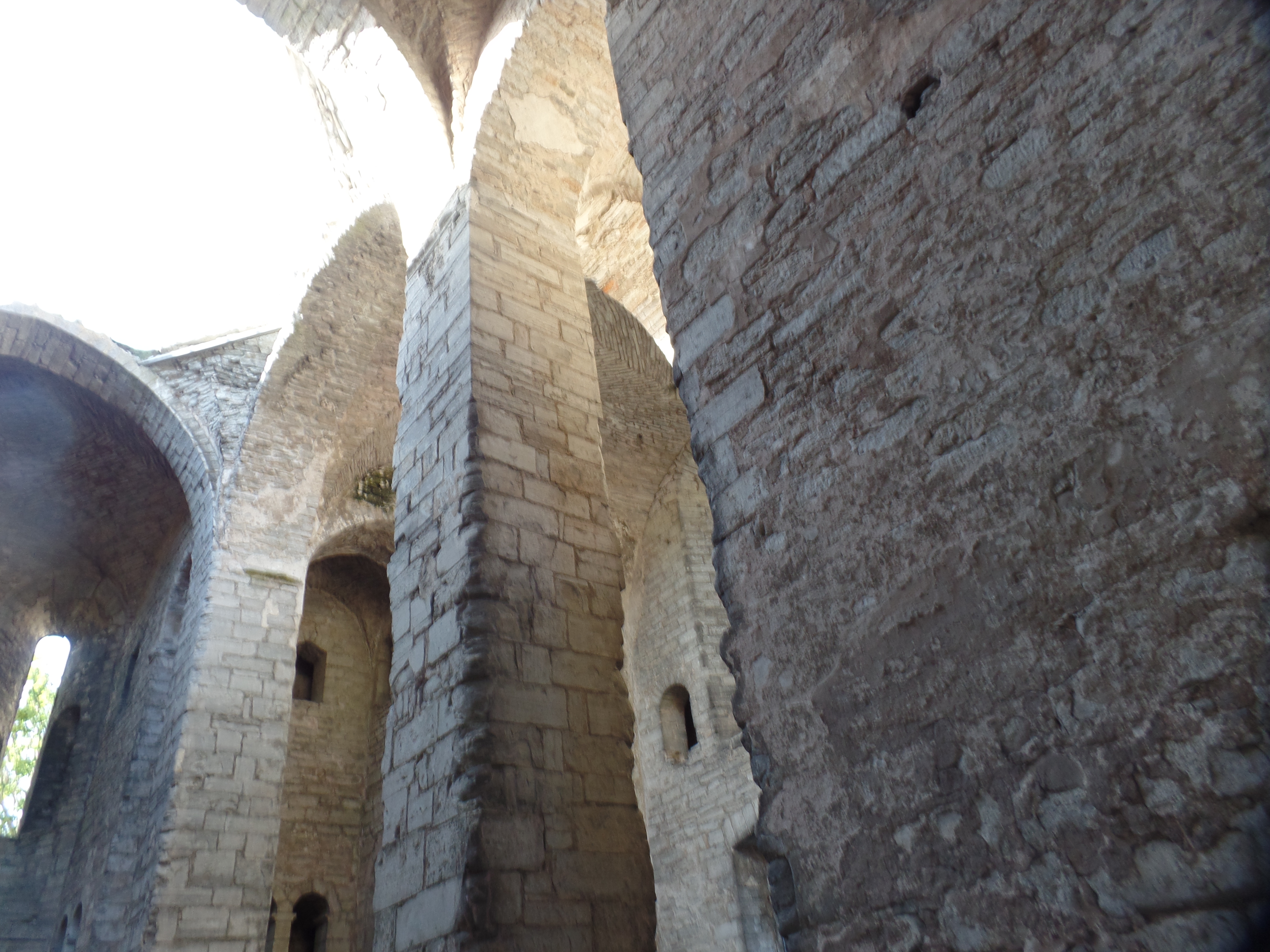
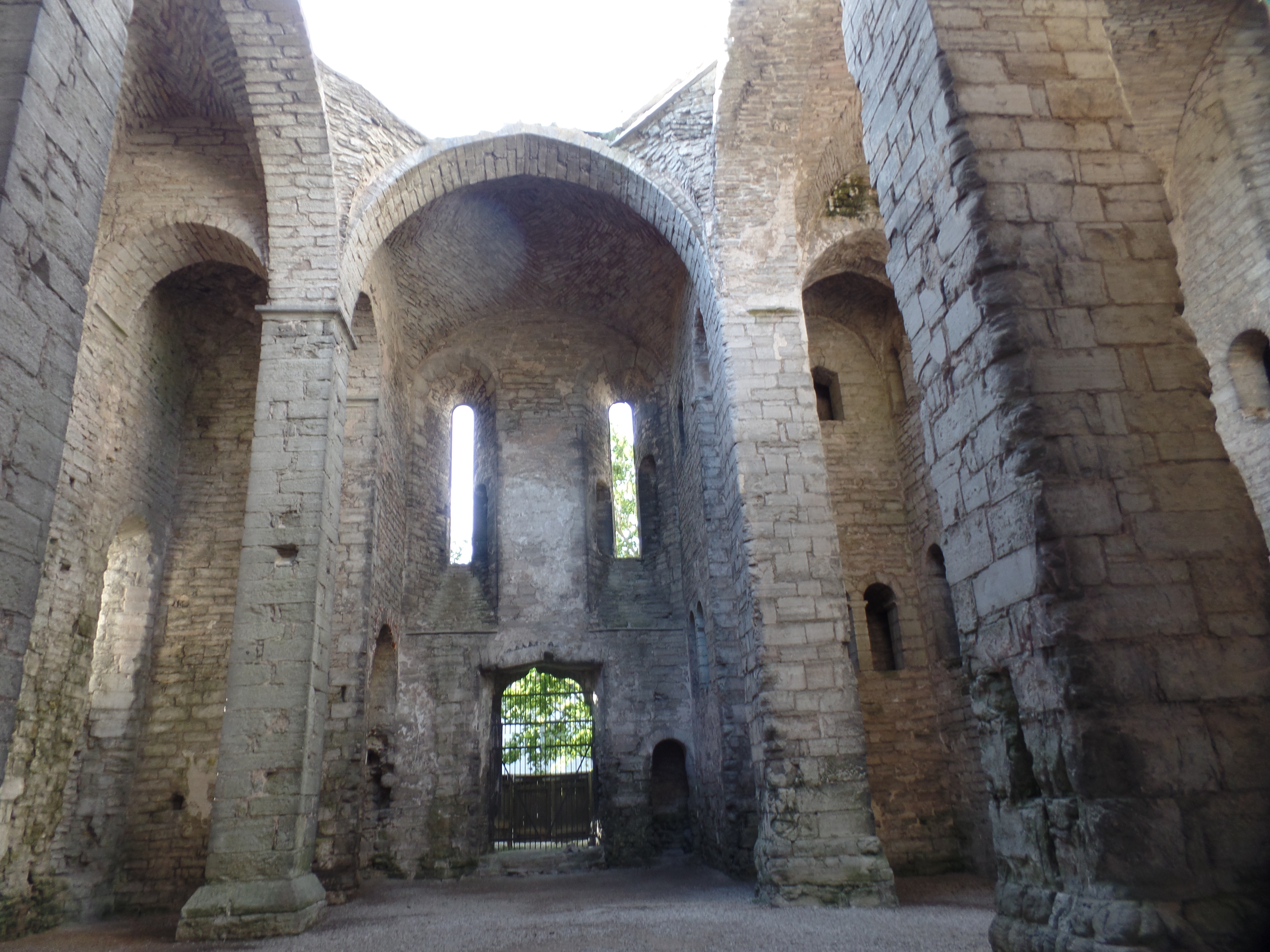
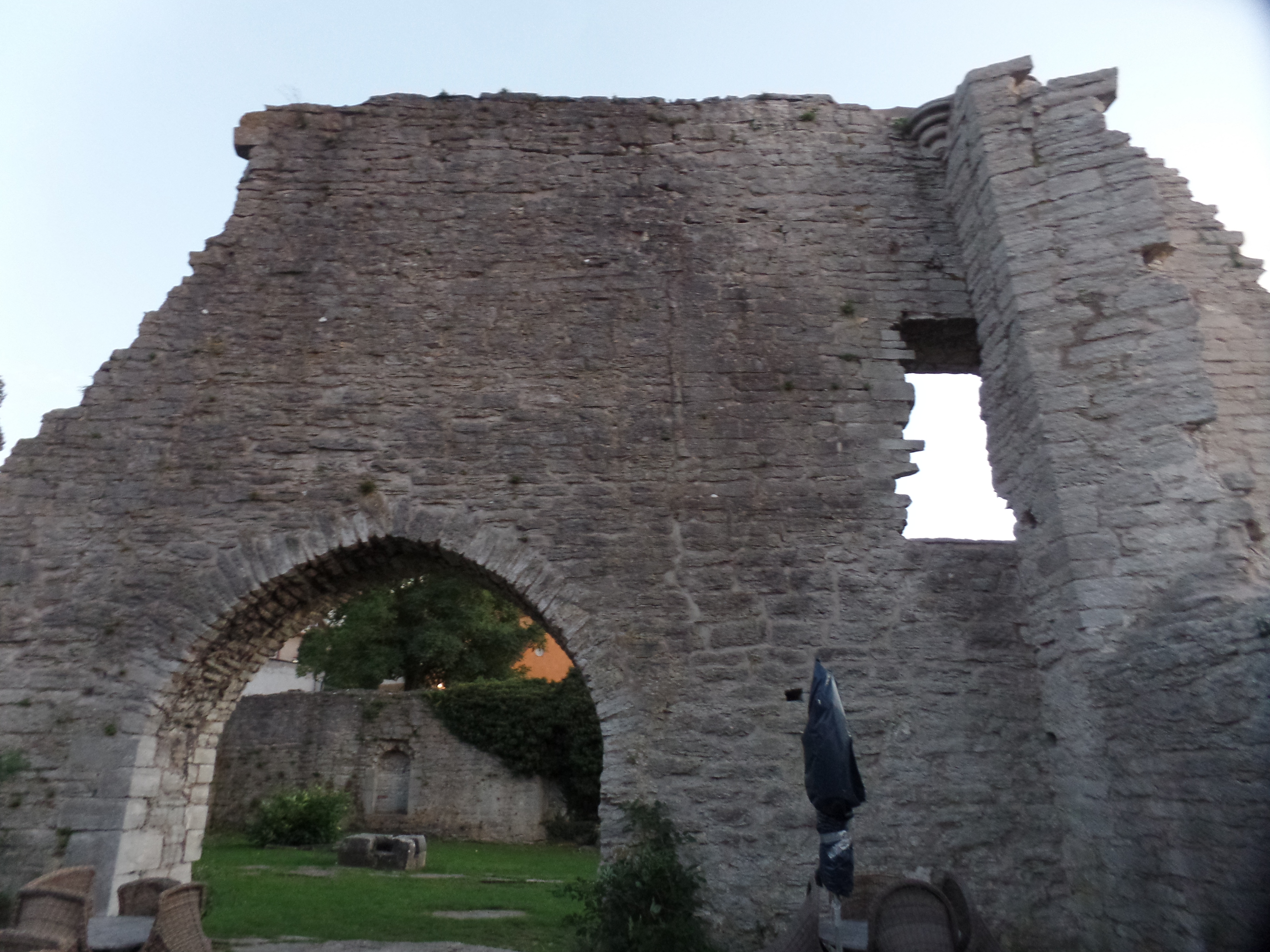
Then it was time to wander around a bit. I was surprised and delighted to find St. Karin’s Church. Karin, to Swedes, is a derivative of Katherine. What is left of St. Karin’s, and of two other churches that the Duke had closed, is protected by the Swedish government, as a matter of national heritage. So, here are some scenes of St. Karin’s.
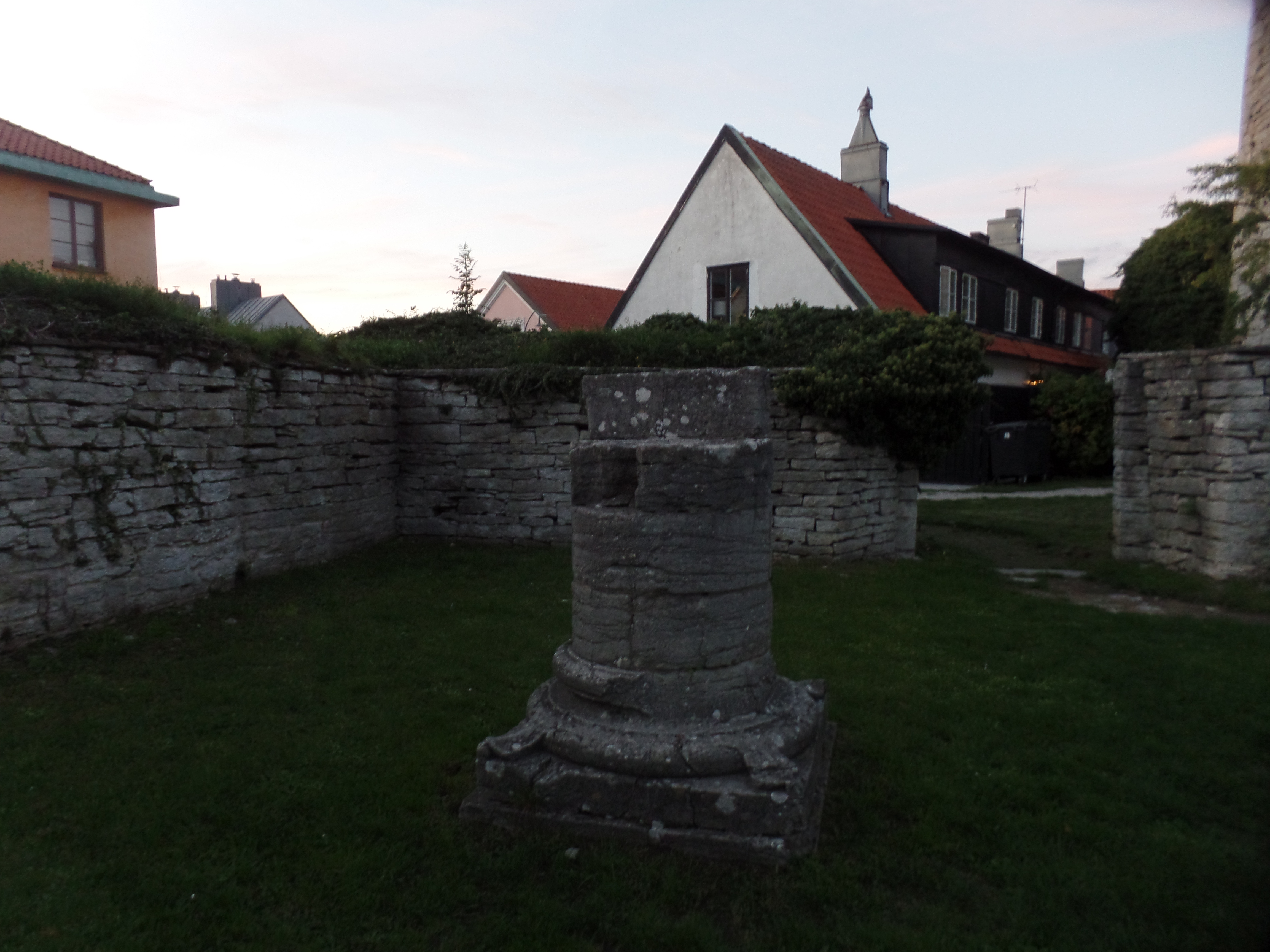
Exterior of St. Karin’s Church (ruined)Exterior wall of St. Karin’s ChurchInterior of St. Karin’s ChurchInterior of St. Karin’s ChurchInterior dome, St. Karin’s ChurchChurch of the Holy Trinity (aka Drotten Church). This house of worship was built in the early 13th Century, for German residents of Visby. “Drotten” means “ruler”.
This church had an extension built on, before the Duke ordered it closed as well.
Church of the Holy Trinity (Drotten)Interior of Holy Trinity Church (Drotten)Interior of Holy Trinity Church (Drotten)
Next was St. Lars (Lawrence) Church, closed about the same time as St. Karin’s.
St. Lars Church-exteriorInterior of St. Lars Church
St.Lars is the only one of the ruins that has stairs which are not blocked off. The little boy in me wanted to go up. The grown man did not, and won out.
Stair well, interior of St.Lars ChurchDome of St. Lars Church
Modernity has its contribution to ecclesiastical wonders in Visby. Here is St. Maria’s Cathedral, built after Gotland had become part of the Kingdom of Sweden. Note that it has three spires.
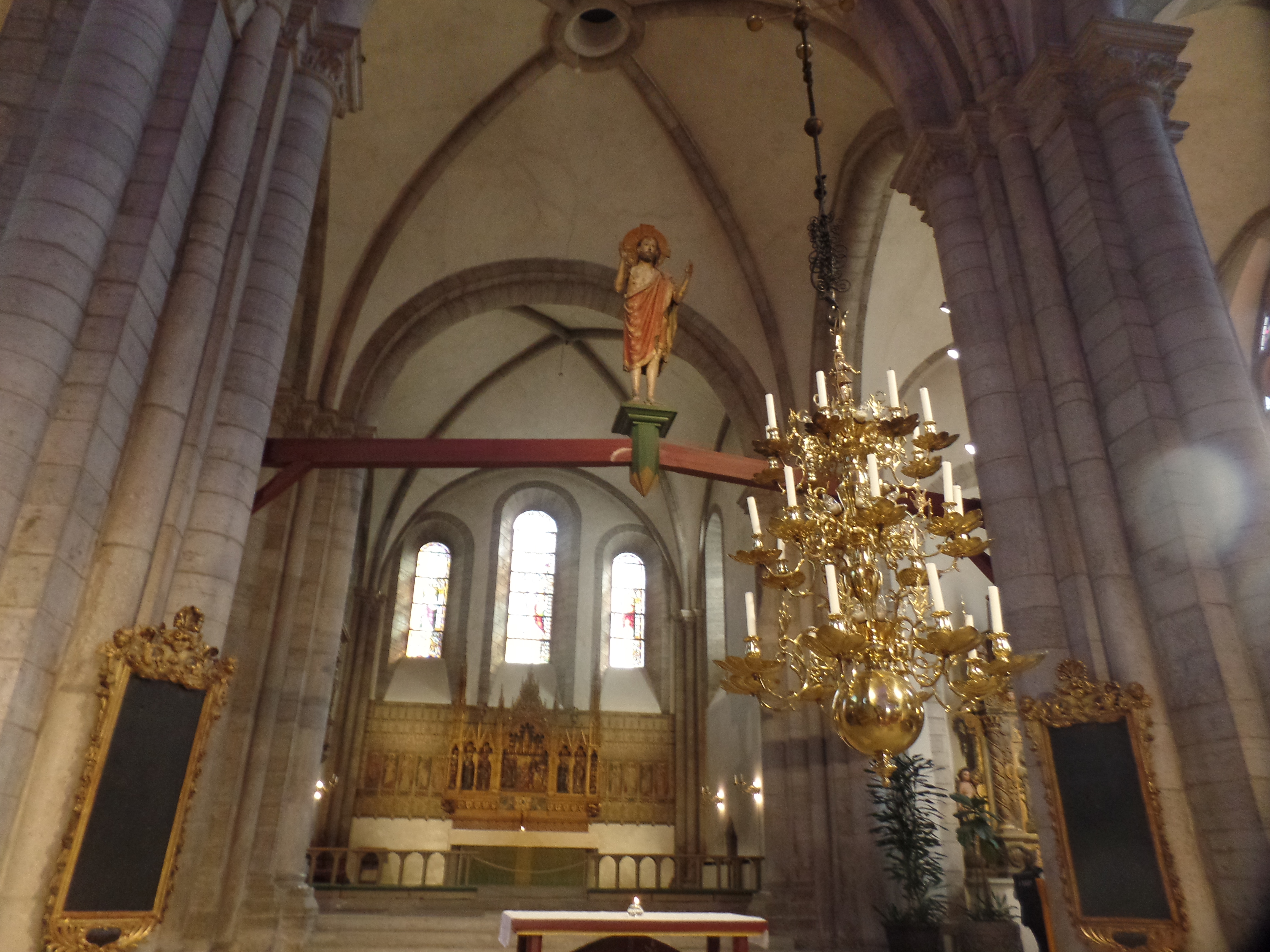
Cathedral of St.Maria (Visby Cathedral)Exterior of St. Maria’s CathedralInterior of St. Maria’s Cathedral (above and below)Interior of St. Maria’s CathedralAltar of St. Maria’s Cathedral
Here is a view of all three spires of St. Maria’s.
East Wall . It was through this gate that farmers bringing their produce to market had to stop and pay tolls, or risk fines or being flogged.
We can look at, and admire, the beauty of what has been preserved for us, yet would do well to remember the excesses of government that led to things like Ringmur (surrounding wall) of Visby.
September 18, 2025, Visby, Gotland- When I was in sixth grade, in 1961-62, our Social Studies focus was on “The Old World”. The class studied certain aspects of each time period, from the beginning of civilization to the Medieval Period. Somehow, the walled city of Visby, on the Swedish island of Gotland, has always stayed in my mind.
When the time came to plan a visit with a long-time friend, who lives in the port of Nynashamn, near Stockholm, I noted that Nynashamn is the mainland ferry connection to Visby, and Gotland. So, a short visit to the walled city was in order. In between days spent with my friend, her husband and children, here I am in the walled, old section of Visby, which is also a modern port and the site of a Swedish military facility.
It took three hours and ten minutes to get here, on generally calm waters-not bad at all for the Baltic Sea, this time of year. A further bonus was that once I got into my room and got organized, the sun came out and the sky pretty much cleared. It was time to check out the walled sections of town.
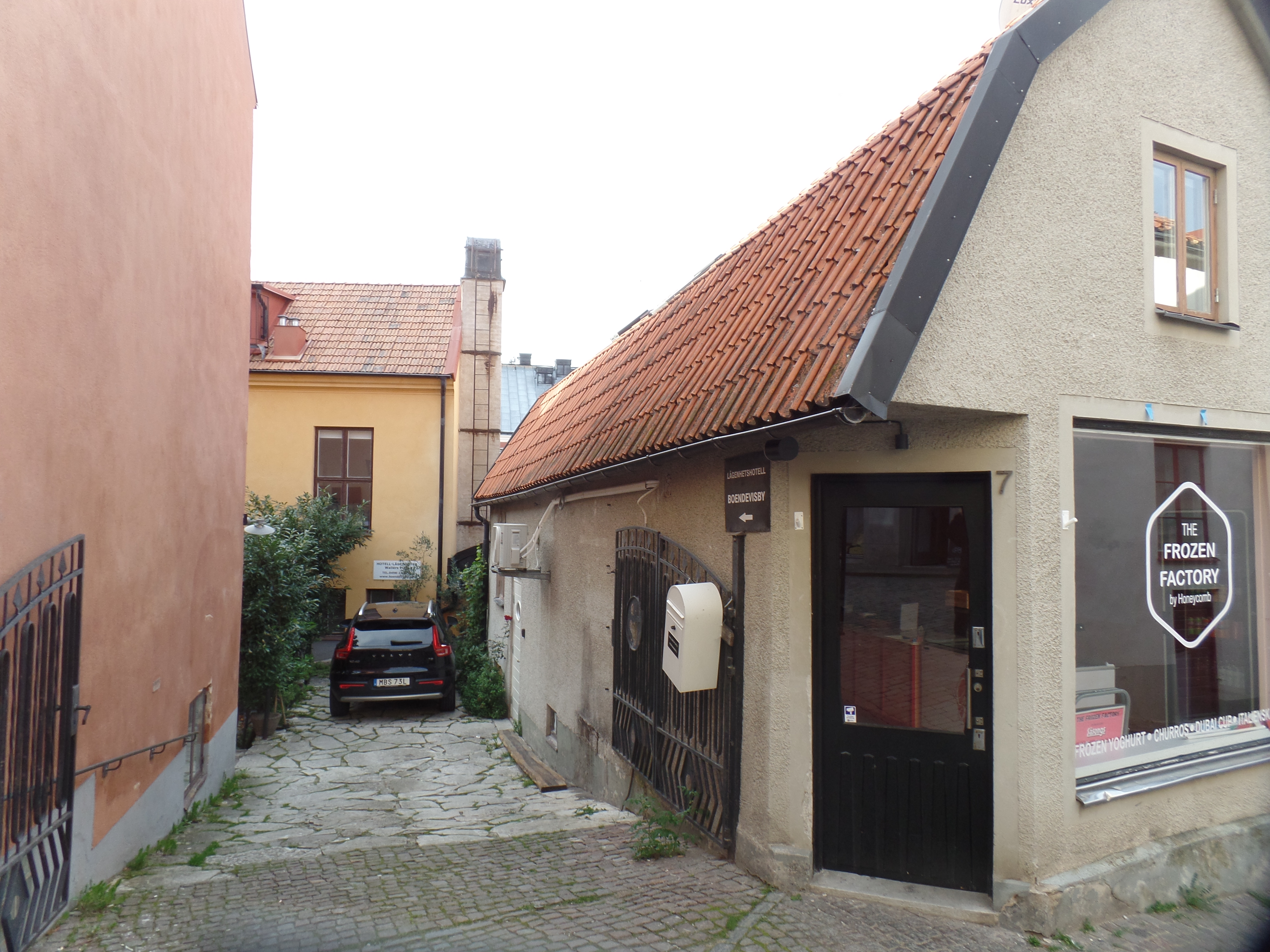
Boende BnB is around the corner. (It is actually pronounced Bo-EN-dee.)
In the process, I came upon Wisby Hof, an elegant place built into the wall, and which had Schnitzel-“Gotland-style”, so having indulged in other faves, like pizza, tacos and baked fish already this week, Wisby Hof it was, for dinner.
Wisby Hof
After dinner, I looked to see whether there were any places at which one might walk along the top of the roof-as there are on similar structures in places like Old Manila, Luxembourg Ville, or Rennes, the capital if Brittany. The answer is “No”. Looking at the stone that is used to build the wall, I can understand why. It would be problematic to allow the numbers of tourists who come here each year to scale the wall. It also accents the purpose of the wall as a formidable defense, against both seaborne attackers and against Swedish opponents of the Duke of Gotland.
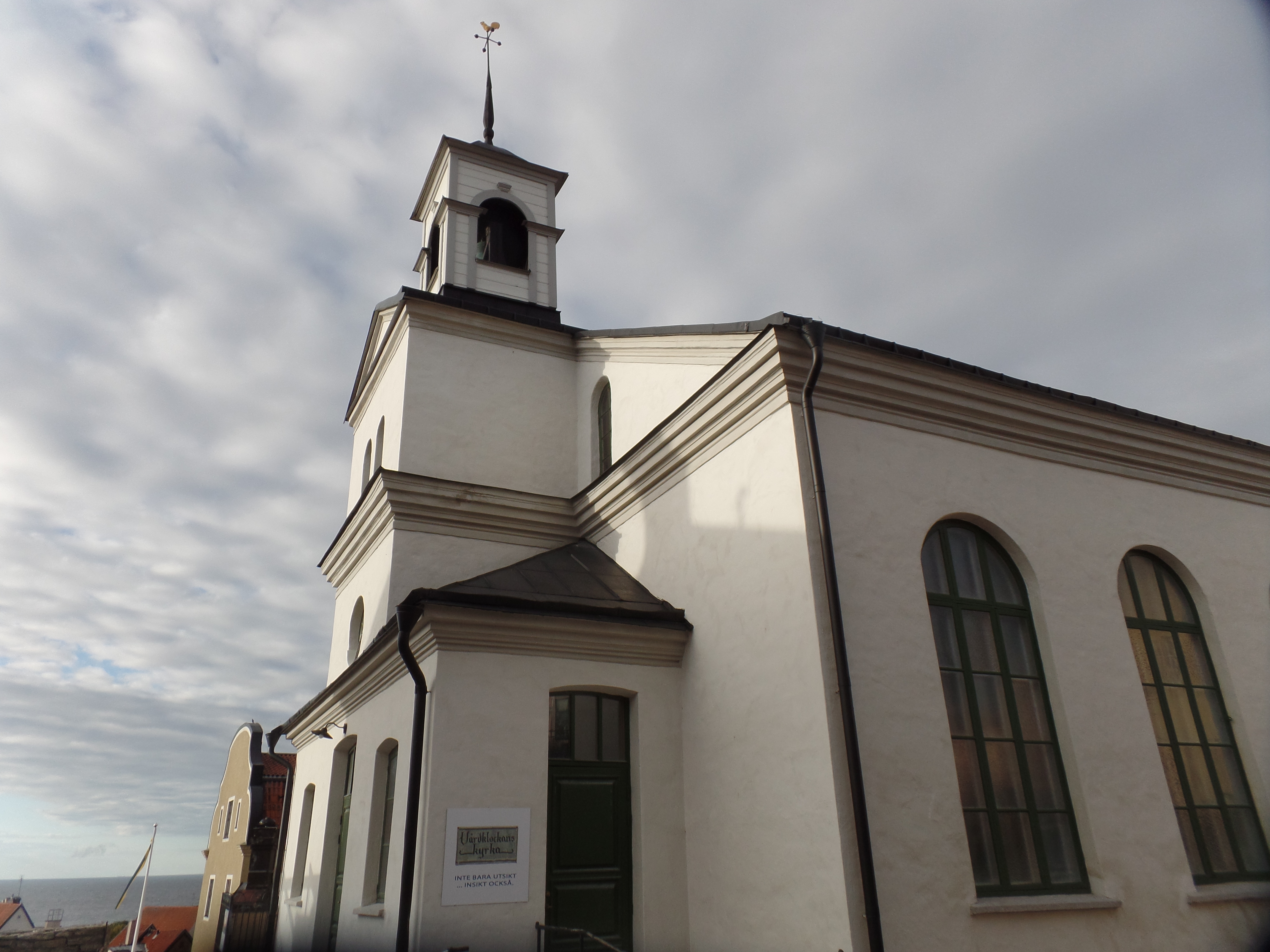
My after-dinner walk went back to the closest church to Boende.
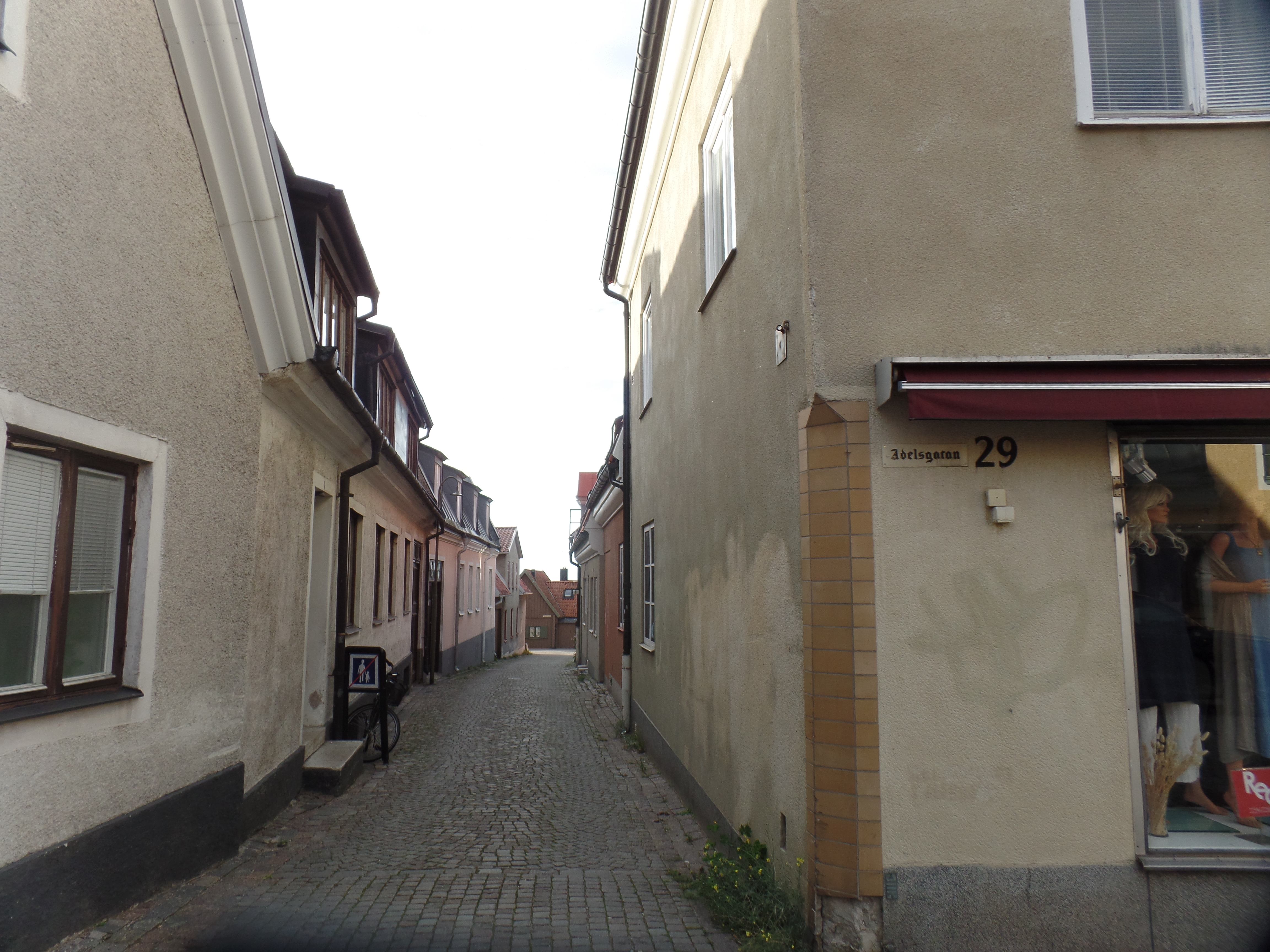
Vardklockans KyrkaThe village that lay protectedEvery narrow street has its story.So does every other narrow street.
Let’s look at the wall itself!
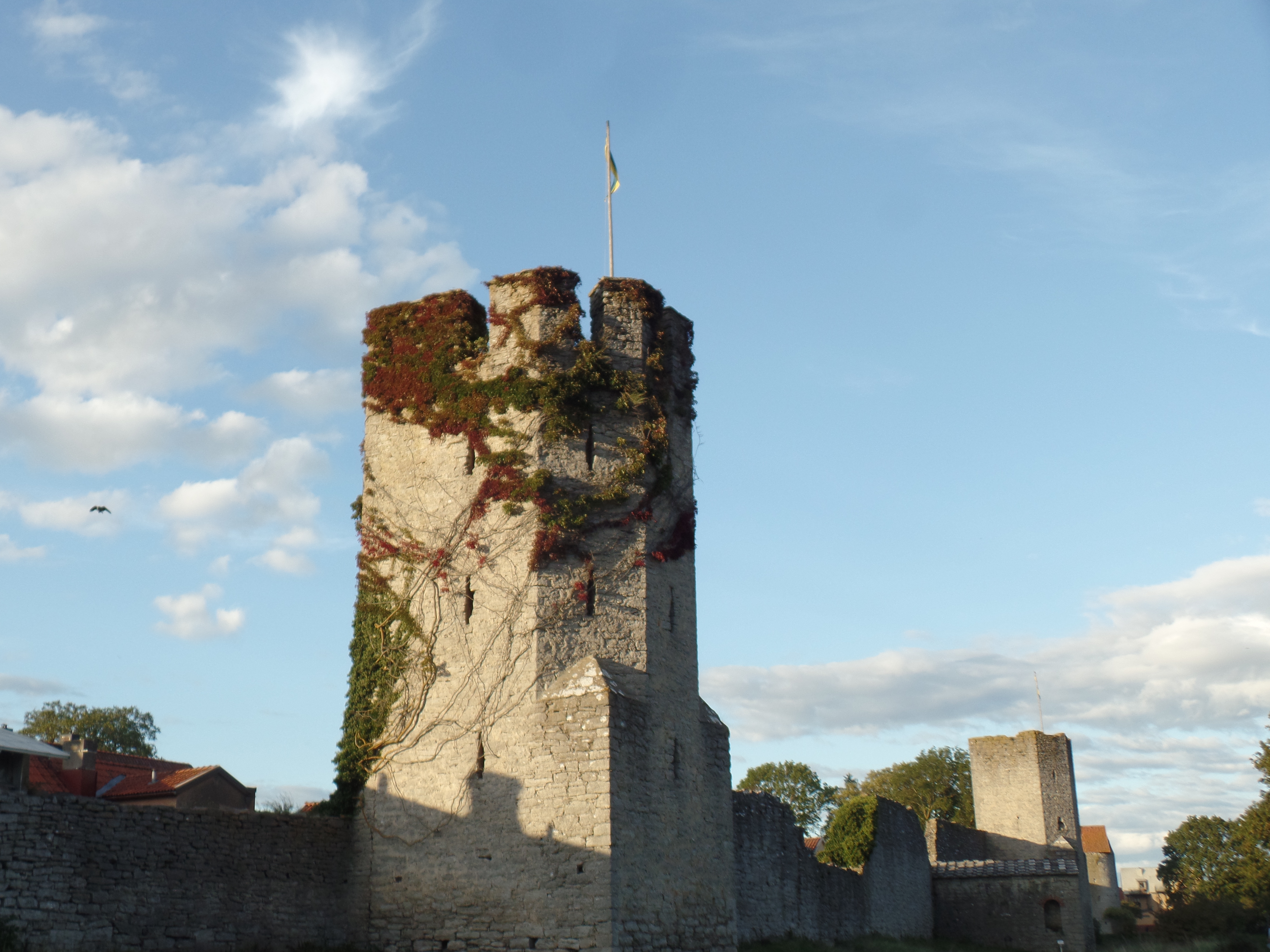
Section of wall being refurbishedTwo of four towers on the wall’s east flankLarge section of wall, between eastern towersRuins of the Churches of St, Hans and St. Per. The towers of these churches were pulled down, in the 1530s, so that their stones could not be used as fodder to bombard Viborg Castle, in Russia. The destruction, however, only got so far. The site is now considered part of Swedish national heritage.Section of wall that protected the Churches of St. Hans and St. Per.
September 17, 2025, Nynashamn- “Where is ‘That Guy’ staying, Momma?”, the little one asked, referring to yours truly. He and I actually bonded fairly quickly, though he’s typically slow to warm up to new people-as so many first-borns are. I was fortunate to meet friend “Asassa Gal’s” husband and children, at the end of a day of looking about this small port city’s Centrum, or downtown.
She and I went first to Espresso House. A key to my Swedish experience was to enjoy kanelbulle, a cinnamon bun. Espresso’s rendition did not disappoint. Kanelbullar are served warm and are not overwhelmingly huge ‘meals in themselves’. It was just the right size for a mid-morning snack.
Next up was Nynashamn Kyrka, the Lutheran Church that is atop a small hill. It seems to be most often closed, judging from other Trip Advisor reviews, and so it was today. I got plenty of coverage of the exterior, though, both just outside and from the harbour.
Nynashamn KyrkeNynashamn Kyrke, from Harbourside
We walked around the harbour, along with a group of pre-schoolers, who were put for a morning of outdoor exercise. This is quite common in Sweden, (and is getting more so back in Home Base I.) The kids ran for part of the path. We opted for a slower pace.
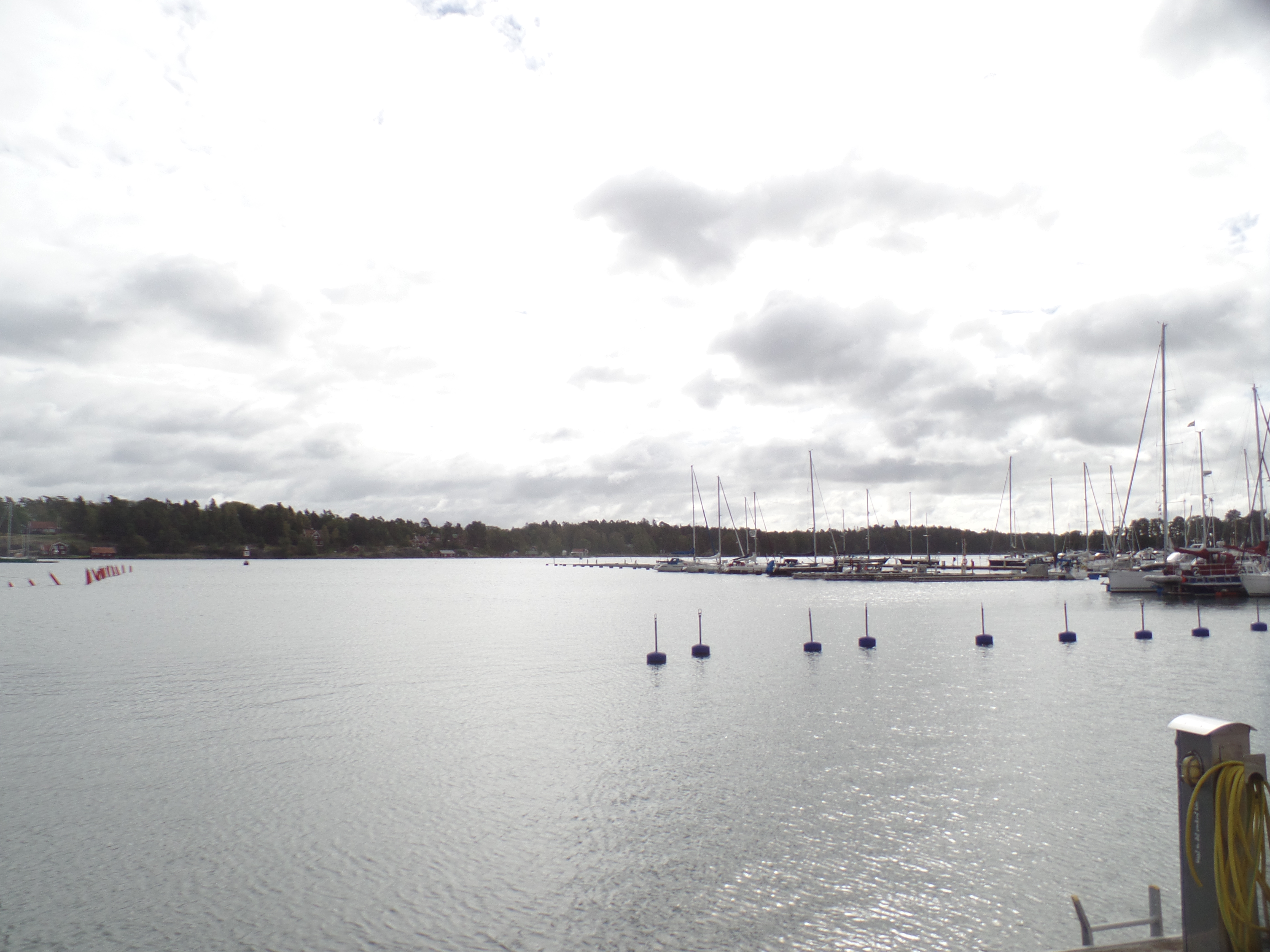
Buoys marking shallow waters, Nynashamn Harbour
Sas was gracious throughout the day, as was her family in the evening.
In late afternoon, we five enjoyed early dinner at Pizzeria Arena. “Family” pizzas here are huge, as one might expect. My Stockholm Archipelago family will get several extra meals from this excursion-I wouldn’t have it otherwise. I look forward to hanging out with them this weekend, after a day or so in Gotland, with its walled city of Visby.
For now, here is a sunset view of Nynashamn’s west harbour.
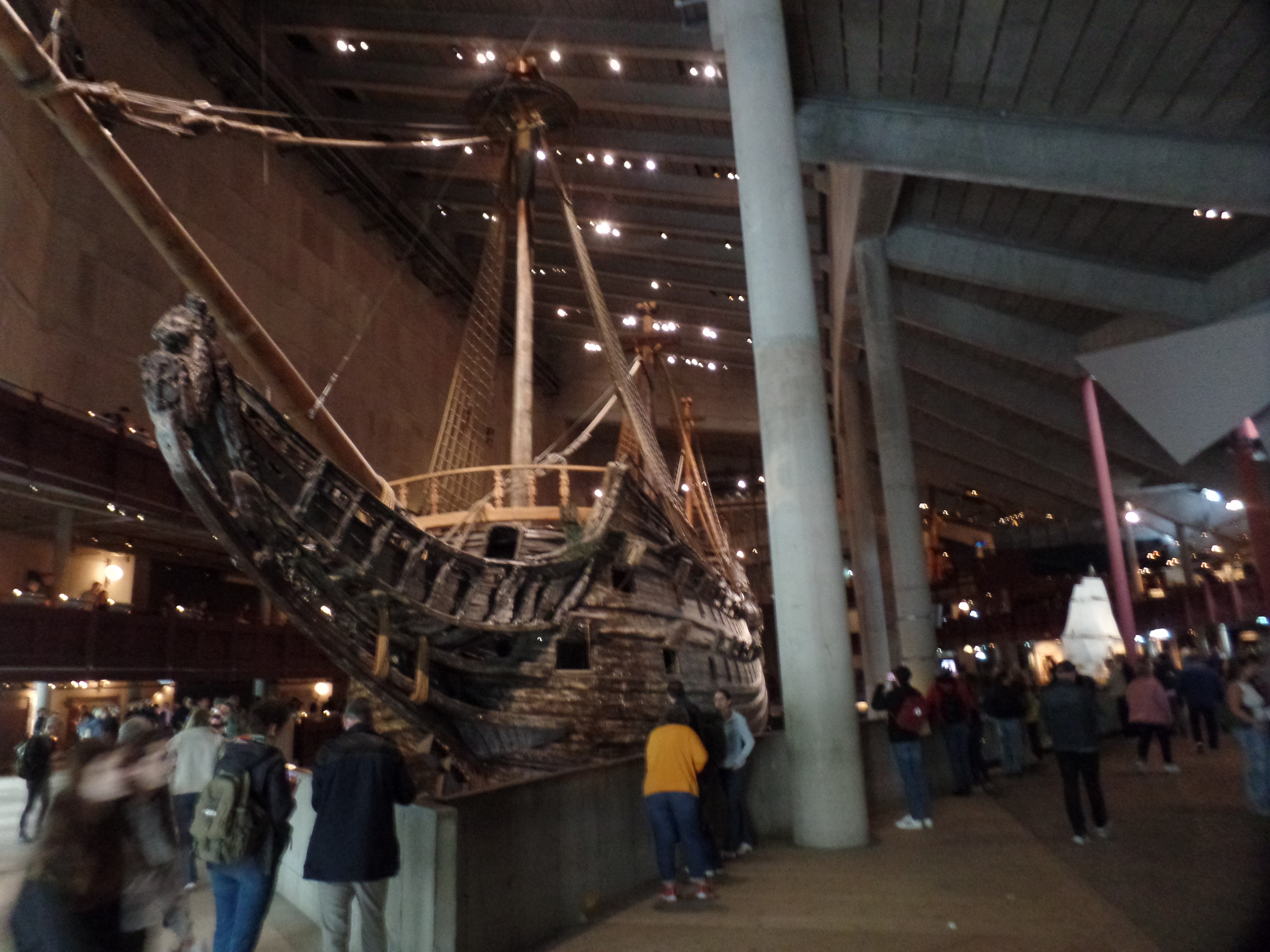
September 15, 2025, Stockholm- Beata and Cesar died in each other’s arms, as the “greatest ship” of their time capsized and sank, shortly into its maiden voyage. Cesar served in His Majesty’s Navy and Beata, his wife, was along for the stationment as flagship of the Reserve Fleet guarding the Stockholm Archipelago, in the midst of the Thirty Years War. The warship Vasa, with 64 guns and as many as 250 people aboard, did not make it out of Stockholm Harbour. 50 people went down with the ship that day-August 10, 1628.
A horrified public alerted the King’s Council, as Gustavus Adolphus was in Poland with his commanders, seeing to Sweden’s part in the conflict that had started as a civil war between rival princes of the Holy Roman Empire (essentially modern day Germany and Austria, with parts of northern Italy). France, Denmark, Poland and Russia had taken sides in the conflict. The Swedish king, styling himself a modern-day Augustus Caesar, was not to be left out.
Thus, in 1626, he commissioned the building of Vasa, named for his own royal house. Two years later, the great ship was deemed complete and seaworthy. The king had seen the completed ship with his own eyes, just prior to leaving with his army for Poland. He heartily approved of what he saw, and left the ship to its captain to steer towards the battle front.
The reality was, however, that the great ship was top-heavy, and in short order it became a testimony to the falsity of hubris. Gustavus Adolphus, and the Swedish nation, as great a military power as any of the era, were fighting on several fronts, feeling beleaguered by Catholic forces in Jutland, to the southwest, as well as by Poland and France. The king was therefore impatient to get the Vasa built and underway. Those immediately under him were cowed by the force of his personality, and kept their misgivings about the vessel’s seaworthiness to themselves. Further, an inquest after the ship’s sinking established no culpability in the matter. Vasa’s bronze guns were salvaged, but the ship itself was forgotten for centuries.
In the 1950s, King Gustav VI Adolf, namesake of the ship’s patron, commissioned a salvage operation, which was completed in 1961. Vasa’s hull was found mostly intact, owing to the brackish waters that impeded parasitic damage to the vessel. Its structure is now mounted in a dry dock, for all to see at the Vasa Museum.
Here are some scenes from my visit to Vasa Museum, this afternoon.
Entrance to Vasa Museum
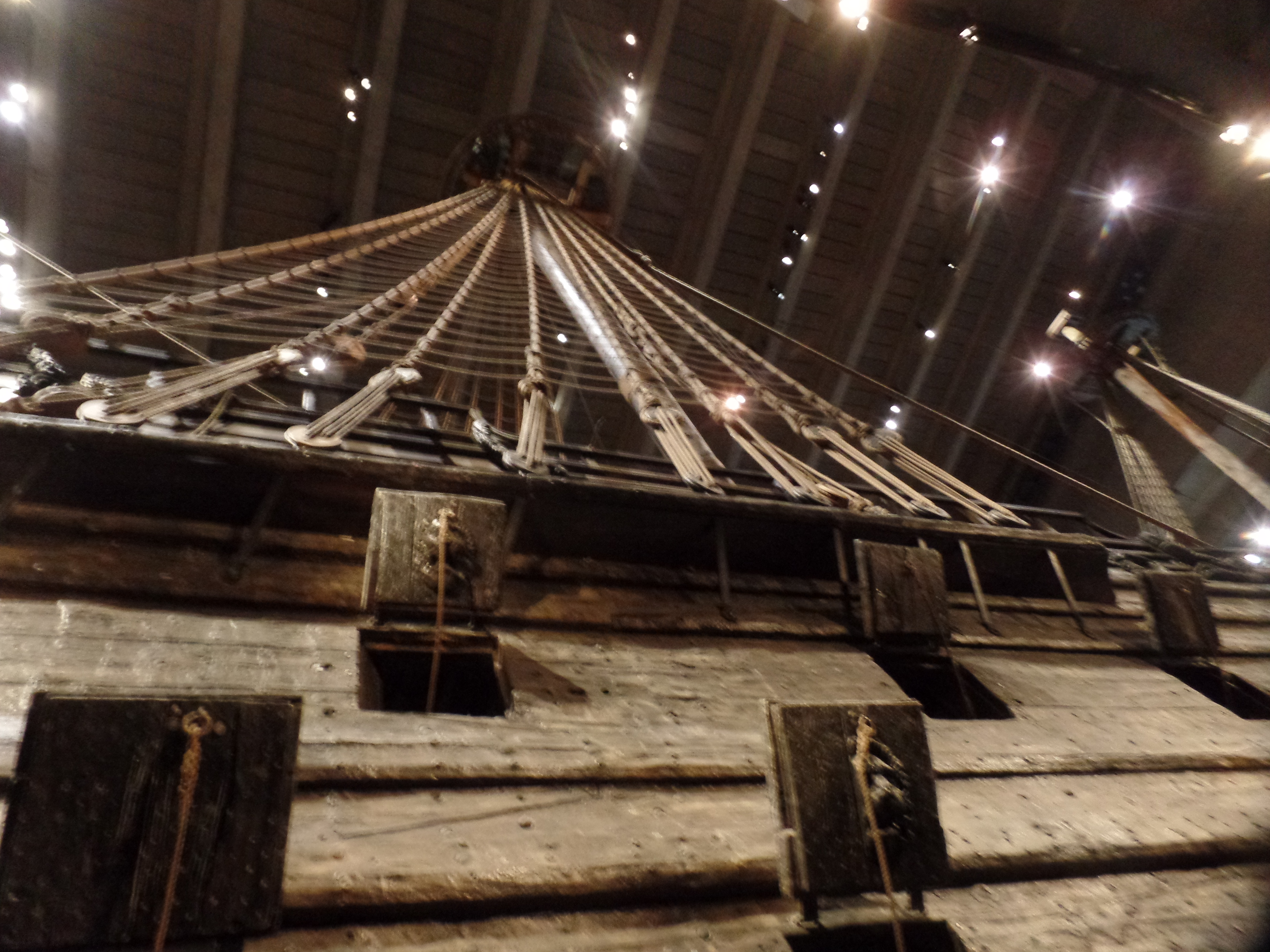
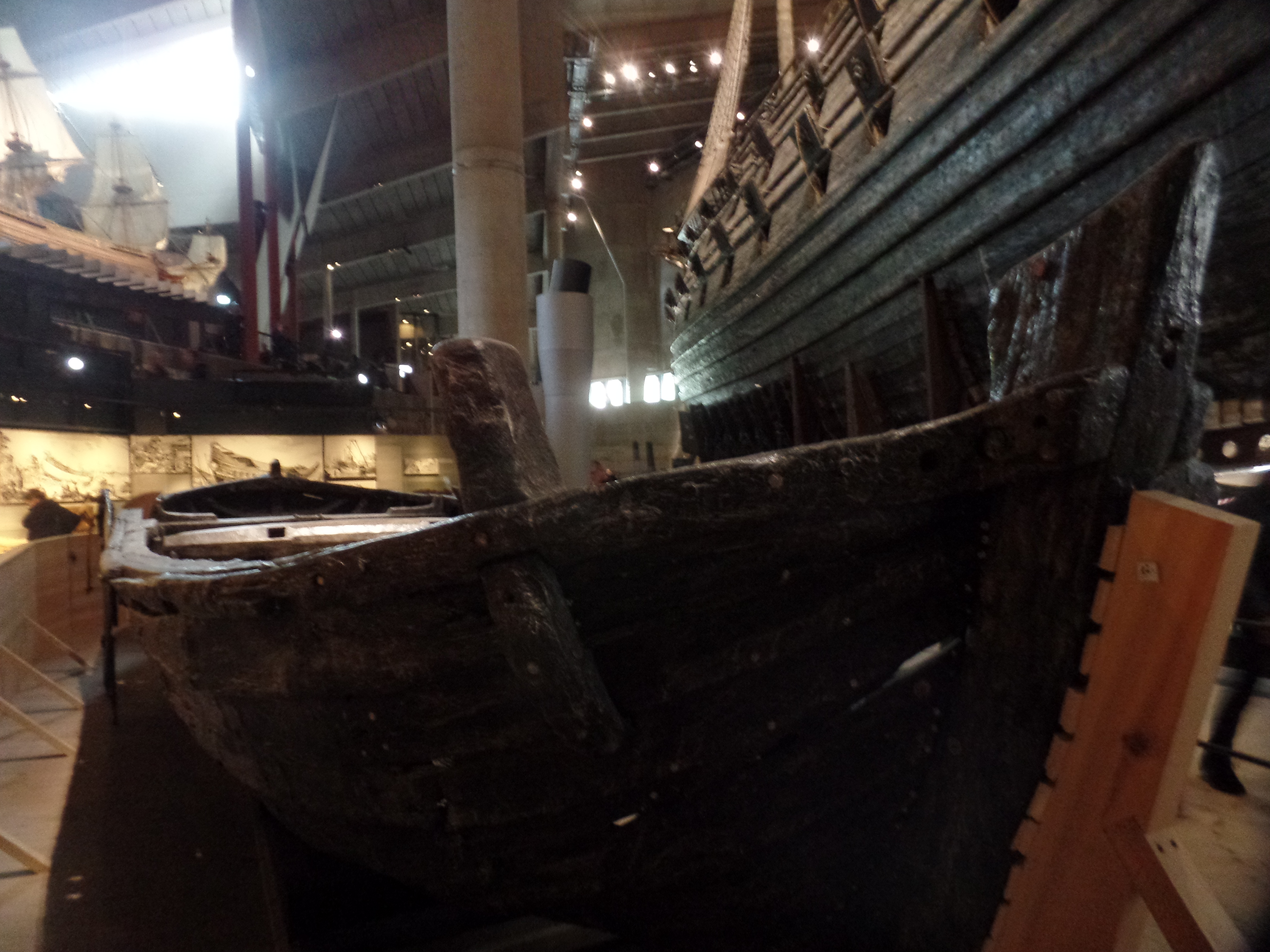
Hull of VasaLion image and air portal on port side of VasaView of Vasa’ s rigging (above and below)Images of Roman soldiersReproductions of colourful images from the sides of VasaGun ports on stern of VasaStarboard side of VasaDepiction of King and his Admiral, being briefed by Shipyard Mistress and her Crew ChiefFull port side view of Vasa, from aboveLifeboat from Vasa
I left the Vasa Museum feeling somber at the massive sense of loss that the Swedish people must have felt in the wake of the capsizing and sinking. It was surely on a scale similar to America’s losses at Pearl Harbor, or the attacks of 9/11/2001. Now, however, the country has chosen to share its great ship with the world. It is a cautionary tale, about hubris and impatience.
The Viking Museum, which I visited after taking lunch in Vasa’ cafeteria, was much more presentational, less graphic. Three docents were on hand to detail different aspects of Viking life. It was pointed out that the term, “Viking” refers to an inhabitant of a vik, or seaport. To that extent, only a fairly small percentage of Norwegians, Danes and Swedes were Vikings. Most were small farmers or inland fishermen.
Docent explains Norse farm lifeModel of a Viking residenceGuide stone, of the sort found at the entrance to a Northern village
After an hour or so of listening to discourses, one of which was almost nonstop for thirty minutes, I took a walk in Djurgarden, the royal public park, east of the Museum Quadrant. This, too, is one of Stockholm’s crown jewels.
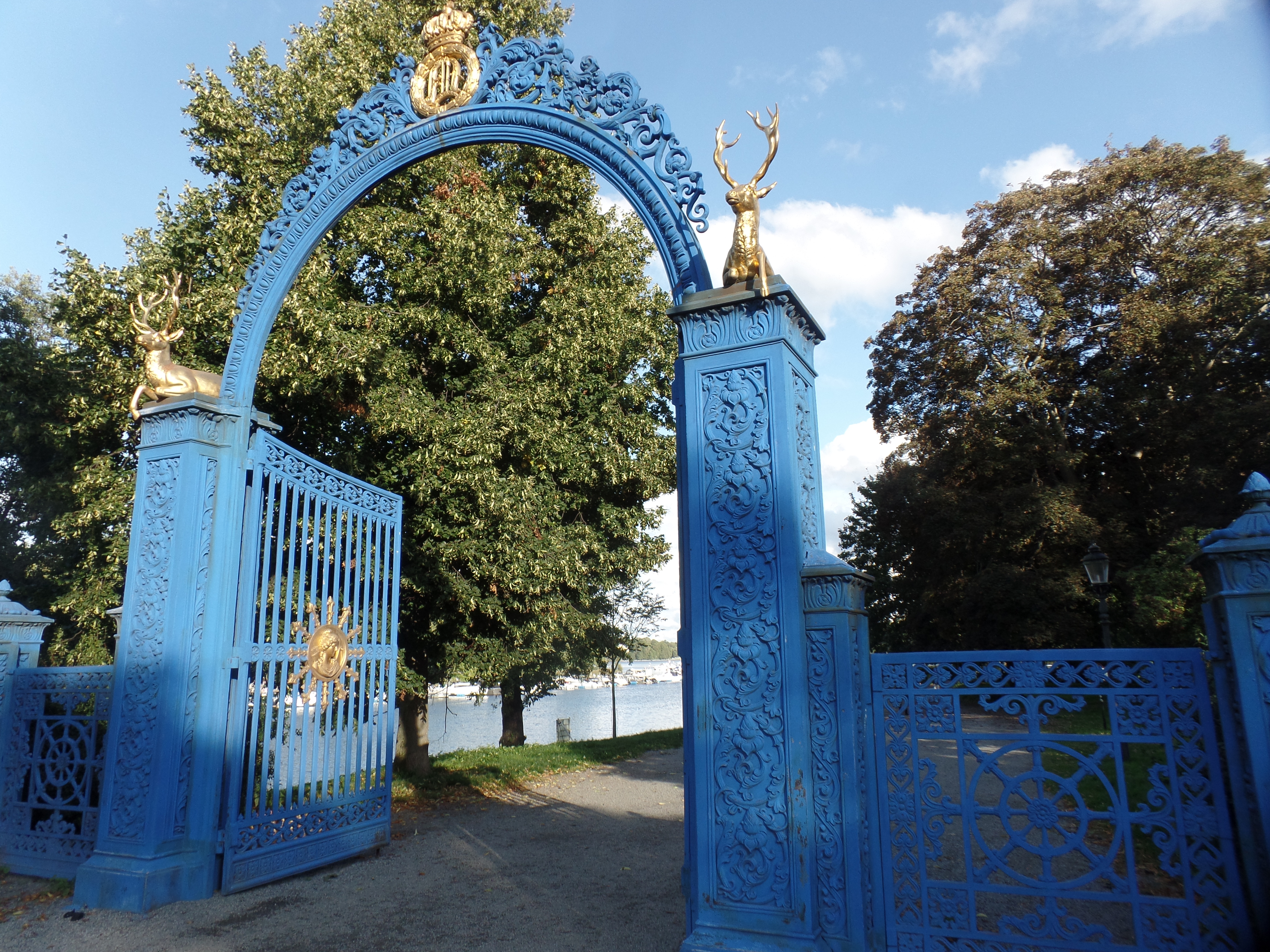
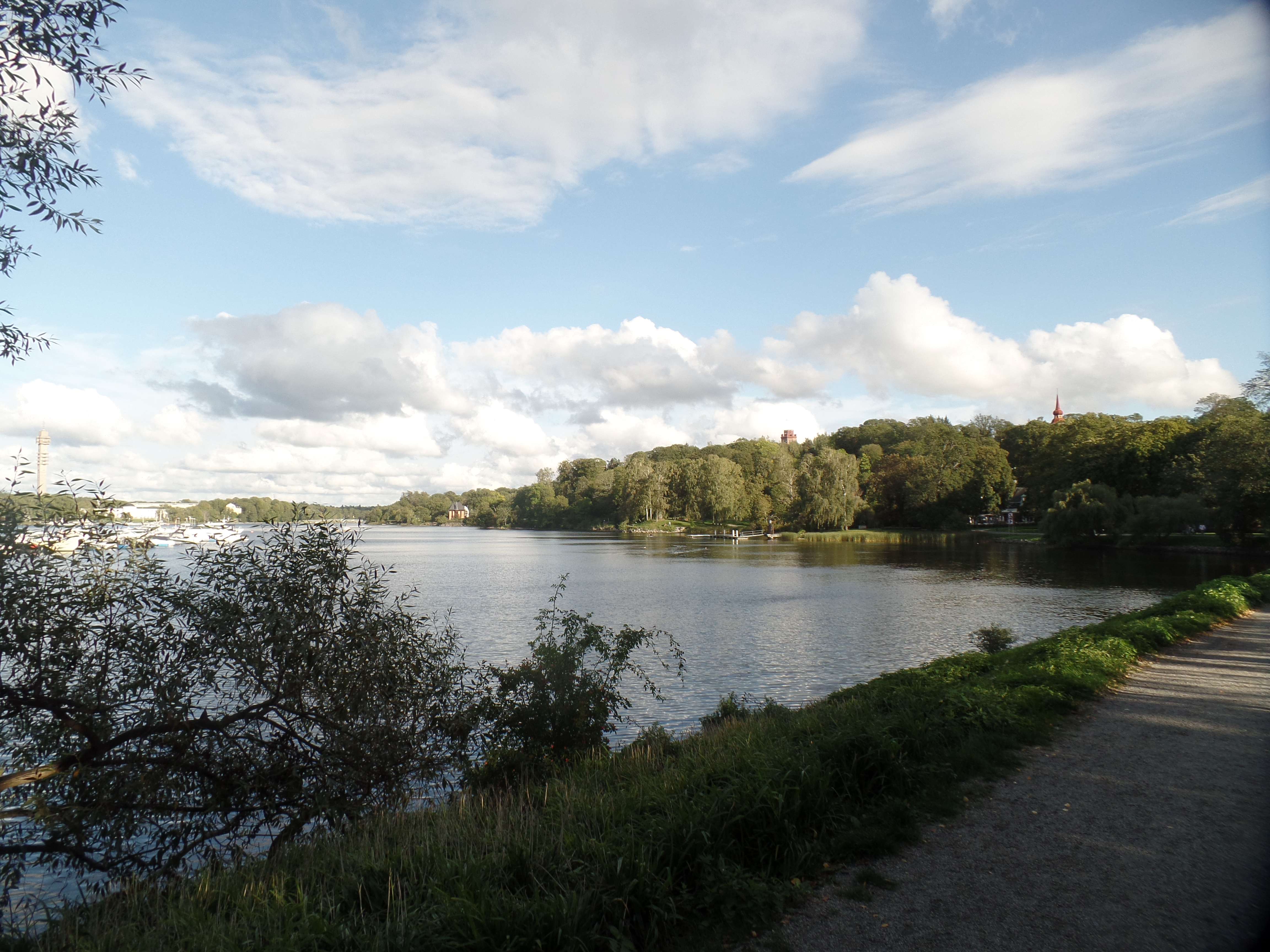
Entrance to DjurgardenRiverside in Djurgarden, Stockholm
I walked for about a half mile into the park, along the river, then doubled back to the tram and on back to Nomad Cave. Stockholm’s heritage is engraved in my memory.
September 14, 2025, Stockholm- Between Nomad Cave and Stockholm Palace are several interesting churches, Stockholm City Hall and the salubrious greenspace on both sides of Stockholm Strom. There are the two houses of Sweden’s Parliament and the northern end of the pedestrian mall that leads to Central Station.
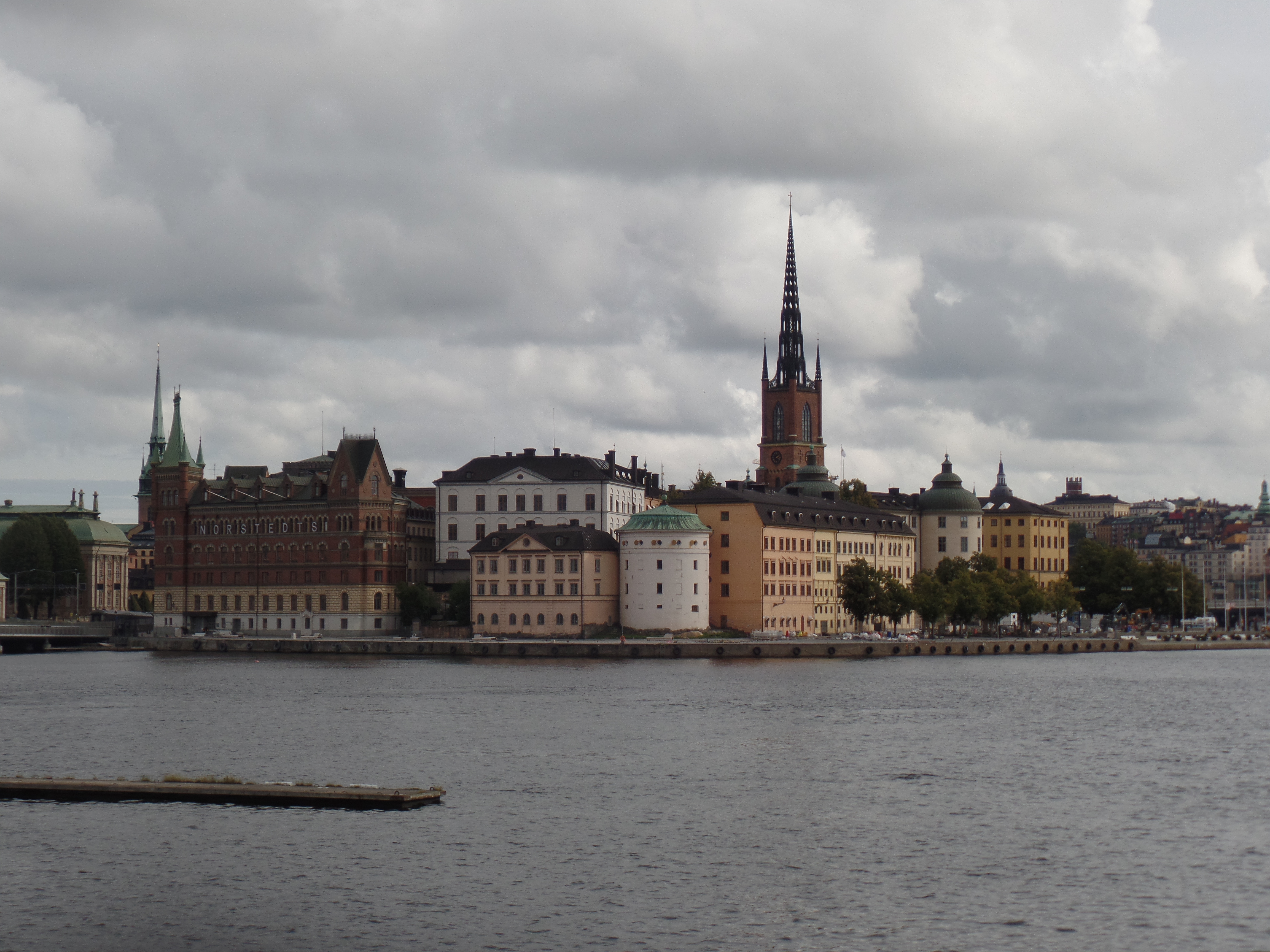
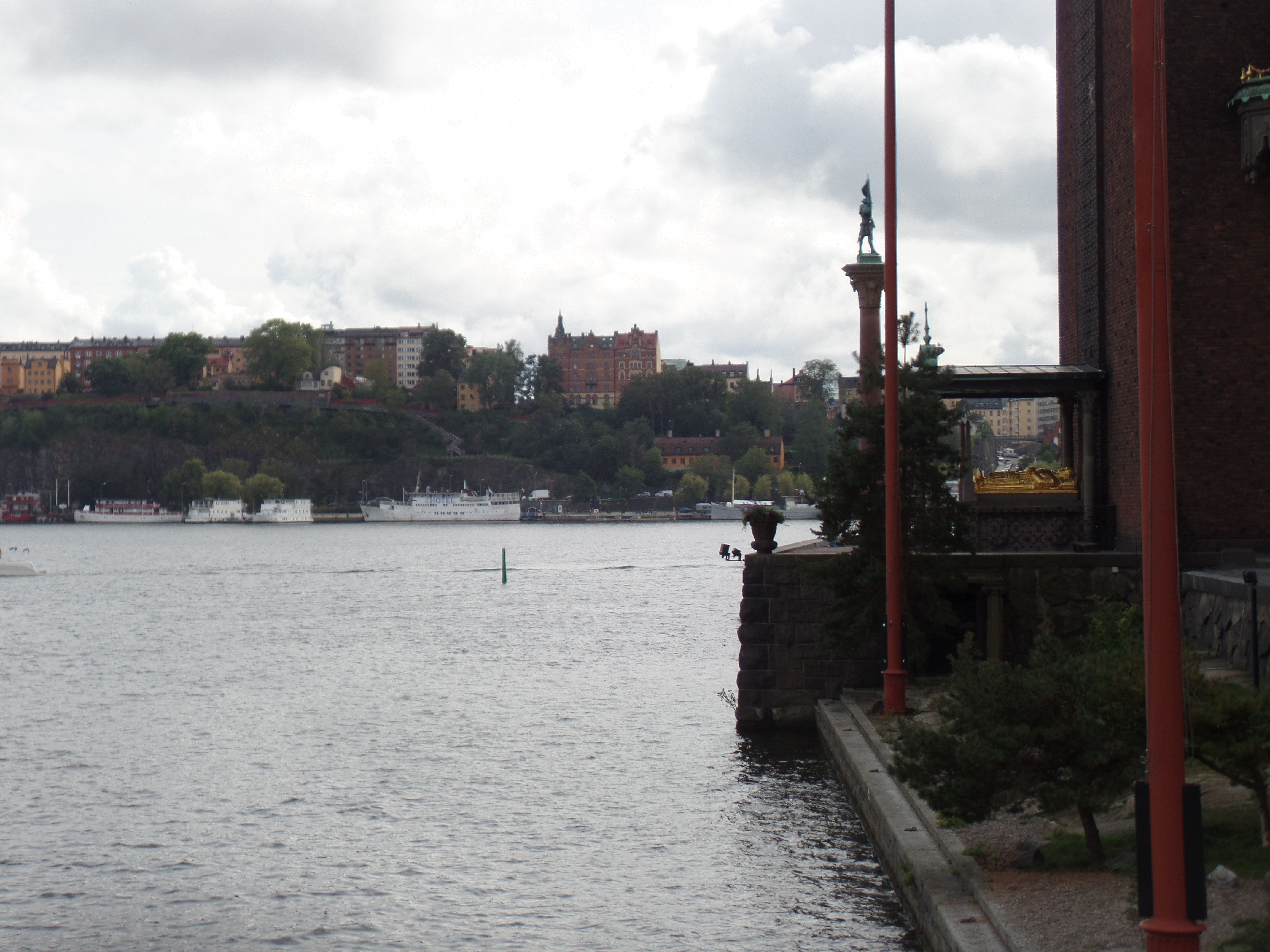
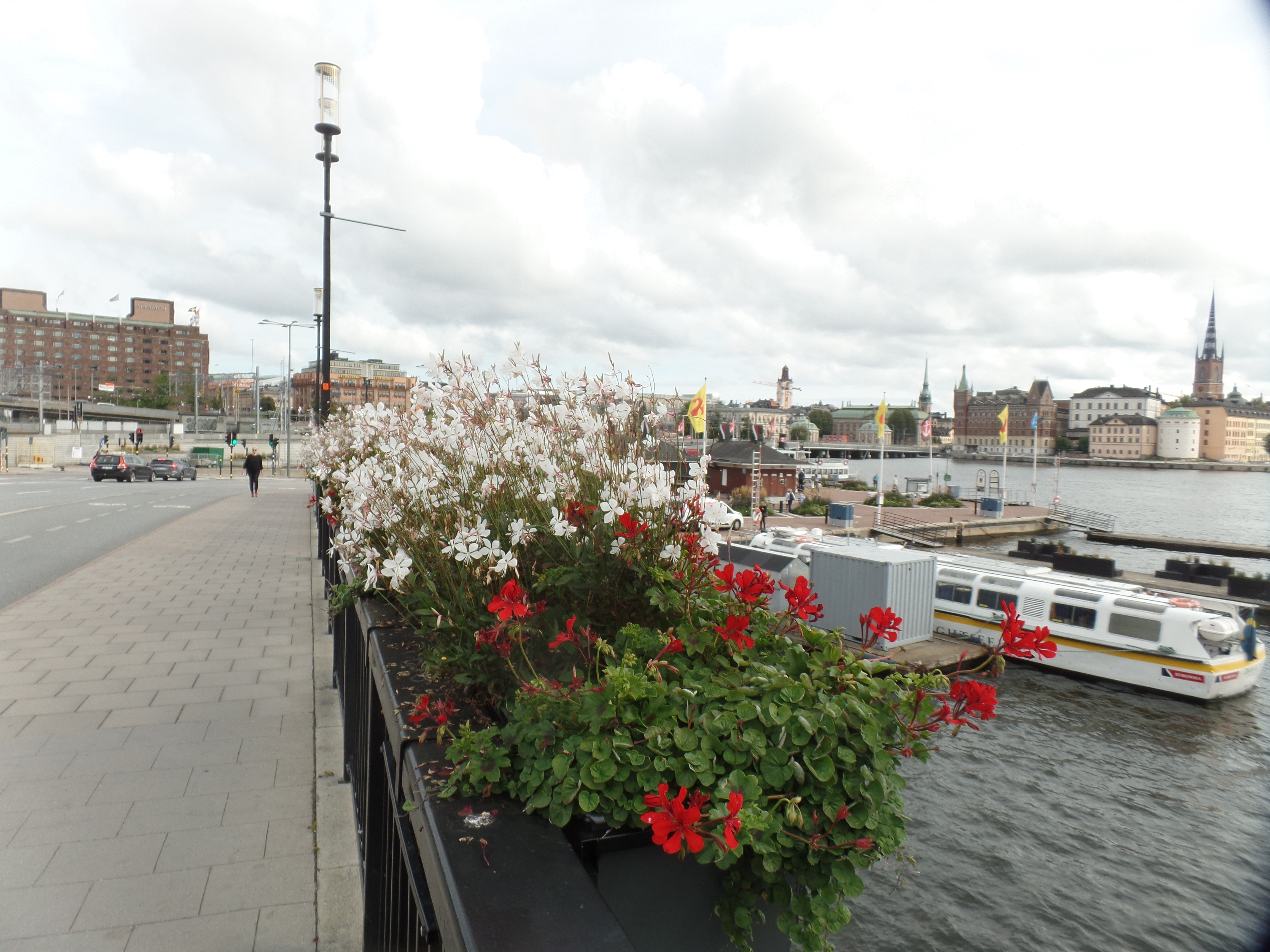
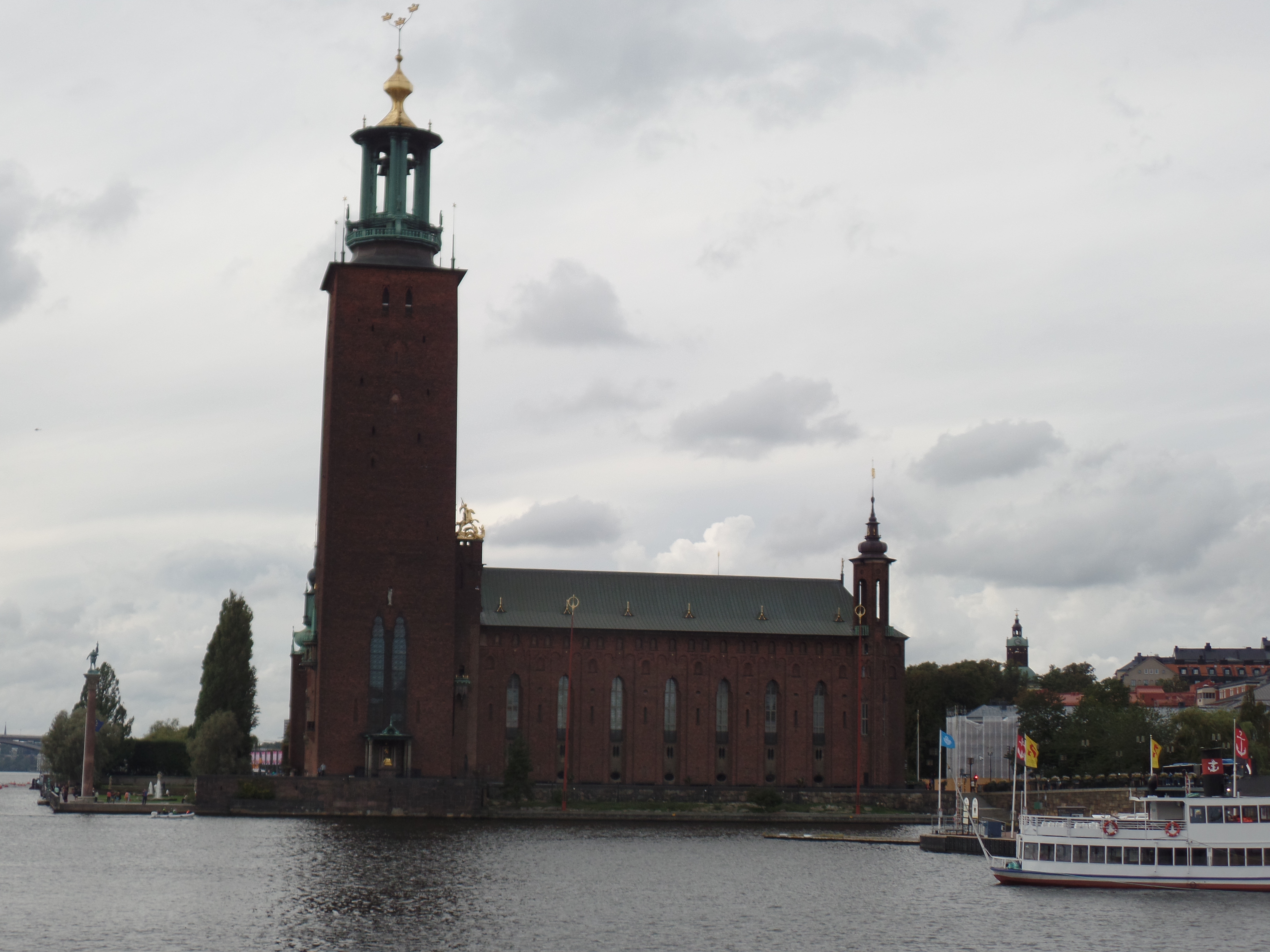
So, here are ten scenes of Kungsholmen (King’s Home), the neighbourhood where I am staying, and of Gamla Stan-the island which houses the Palace, Parliament and Stockholm’s Old Town.
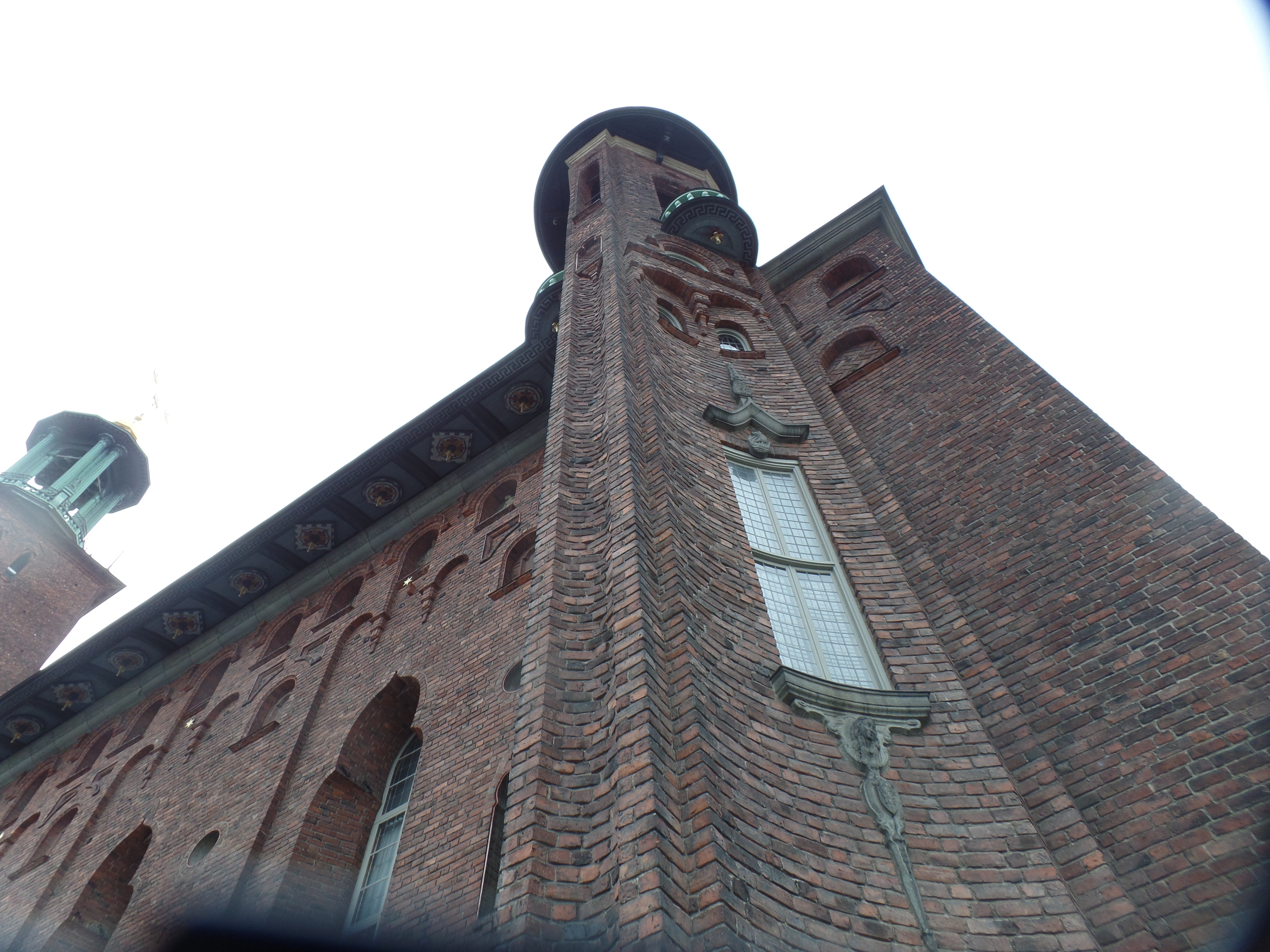
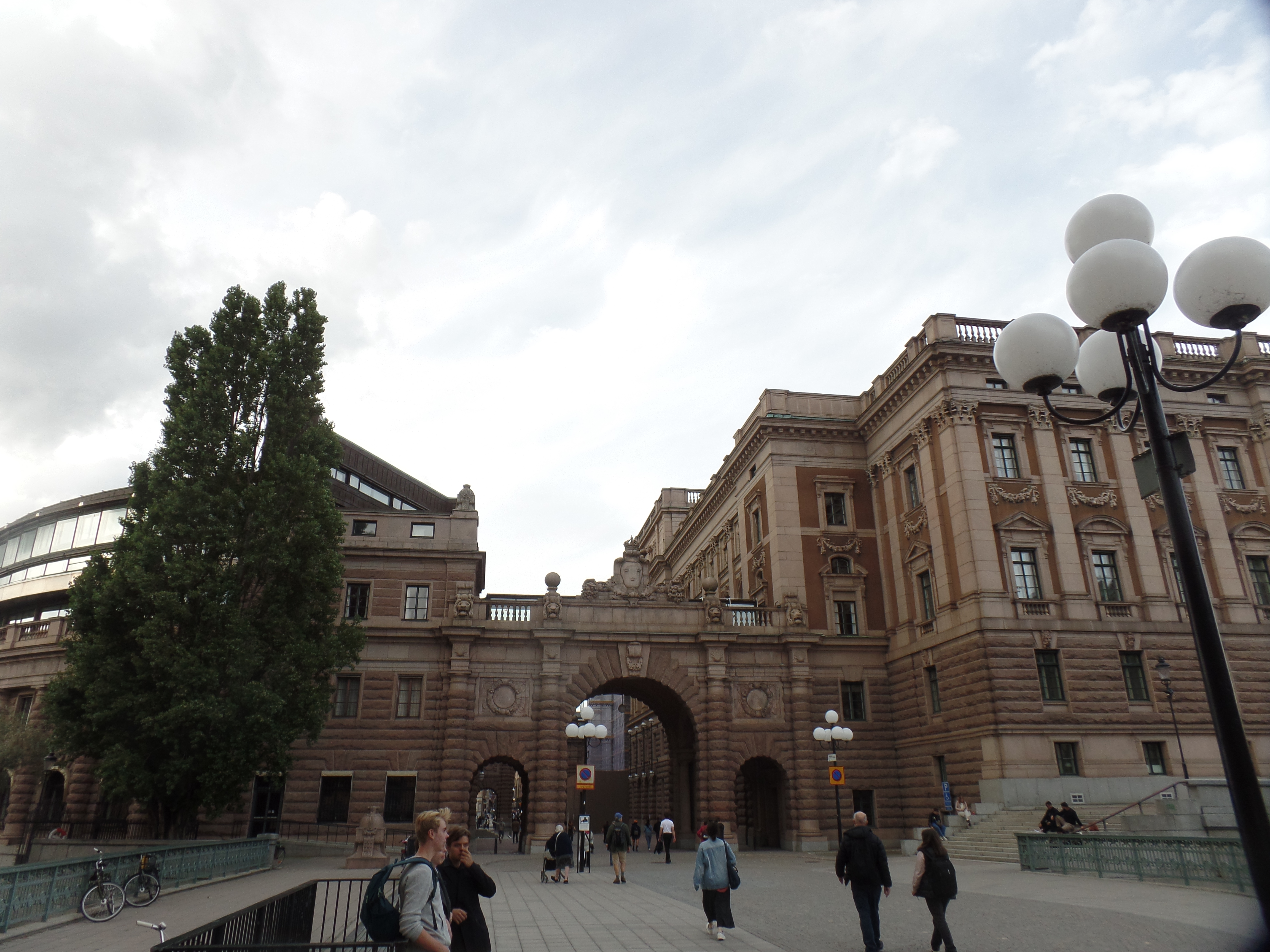
The stairs are just beyond the door. Be mindful!So much of Kungsholmen is stately and well-appointed.. Anna Whitlock was a Swedish social reformer and educator, at the turn of the 20th Century. Her Gymnasium continues to offer five academic preparatory programs, with the philosophy of total mind-body engagement.Kungsholms Kyrka’s Rector ordered a group of tourists out, just as I entered the foyer. I didn’t need to know Swedish to get his meaning!The upper reaches of Stockholm Stadshuis (City Hall)This is Gamla Stan, in a nutshellNear the southern dock along Stockholm StromHouseboaters like bright coloursA more complete view of Stockholm StadshuisThe two Houses of Parliament, viewed from the south.!2 Blocks of non-stop eating and shopping- Regeringsgatan is one of two long pedestrian malls in Central Stockholm.
Stockholm is a never-a-dull-moment kind of place. I noted some parents interacting with their children, around Stadshuis. Two boys were testing their mothers, by dawdling on their bicycles, while the mothers walked on ahead. One of the boys got the hint and “showed” how fast he could catch up to Mom. The other had to be retrieved, and got to hold his mother’s hand while slowly peddling towards home. Other young parents were dealing gently, but masterfully, with tired, squawking toddlers, as I purchased two bottles of Fortified Water, at the neighbourhood market, in Kungsholmen.
NEXT UP: The ill-fated Vasa and some hard-luck Vikings
September 14, 2025, Stockholm- I went on a short walk today, starting at this door.
Nomad Cave Hostel
The route was undefined; I was going west, passing Stockholm’s seemingly endless supply of huge, well-constructed stone behemoths. Crossing Stockholm Strom (channel), on a well-trod foot bridge, after heading past a few large churches and Stockholm Stadhuis (City Hall), I noticed several people going up or down a slight incline, near a long, most ornate complex.. This was it-Stockholm Palace, among Sweden’s greatest treasures, in the heart of Gamla Stan (Old Town).
The cheerful ticket clerk asked whether I was interested in seeing four museums for the price of admission to Gustav III’s Antiqmuseum. One of those was The Royal Palace Apartments, so I readily agreed.
Gustav was King of Sweden at a time when the country was much larger than now. It was a key player in European politics, on the order of France, Britain and Russia, thanks to his great-grandfather, Gustavus Adolphus, for whom he was named. His reign occurred at a time when many monarchs were currying favour with the Pope, in order to get their hands on Roman relics. Gustav managed to get possession of a trove of imperial busts-f both men and women, with a few animals thrown in. These treasures are displayed in the namesake museum, in two galleries:
A hall of female Roman statuaryHall of Male Statuary
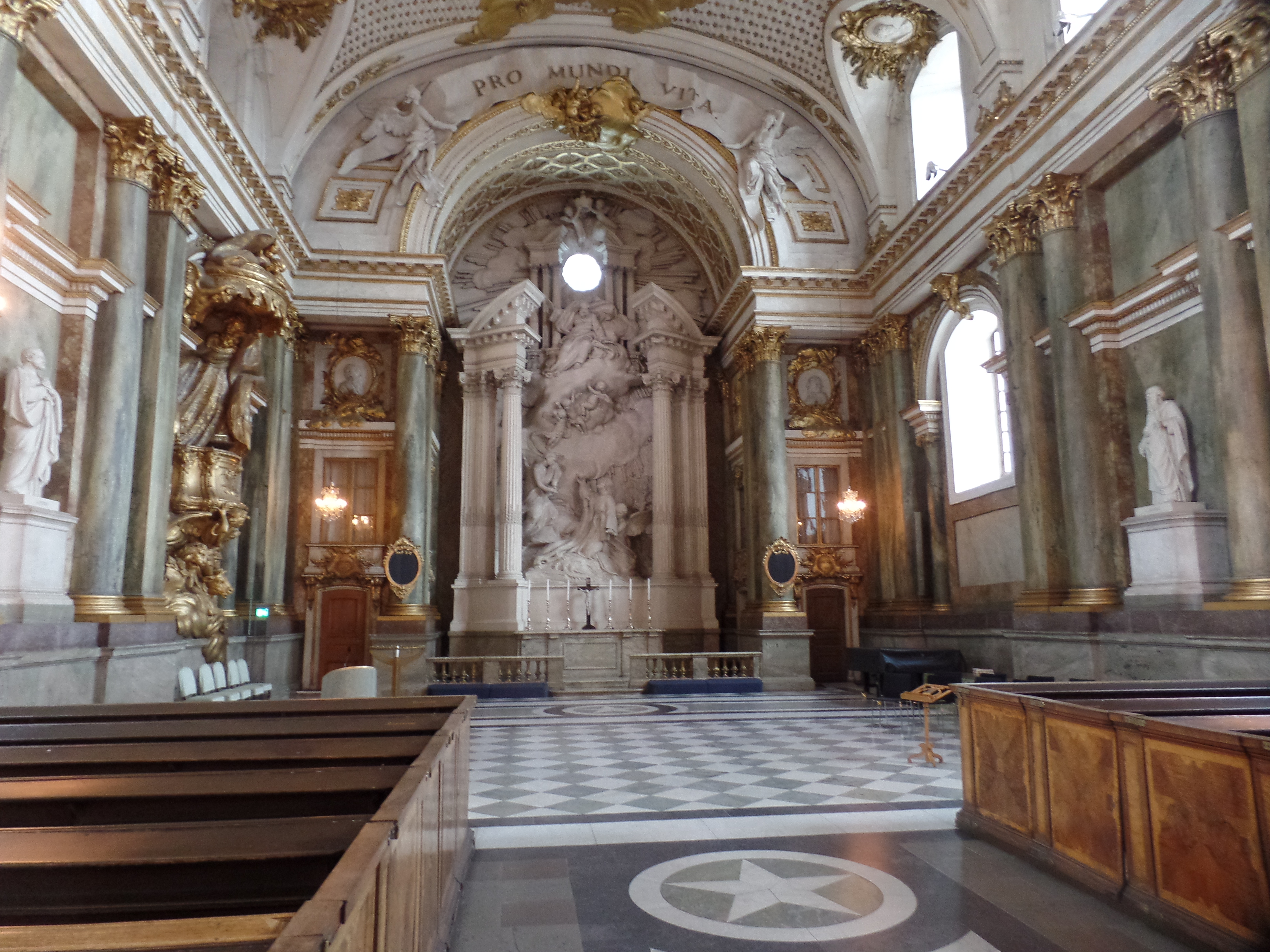
Around stoic, and obviously dedicated, palace guards, I went to the north entrance to the Palace, joining a small group of admirers of House Bernadotte (Sweden’s royal family). First stop in Kungliga Slottet was the Royal Chapel, set to the east of the main royal apartments. This edifice has served Swedish royalty and their courtiers since 1200.
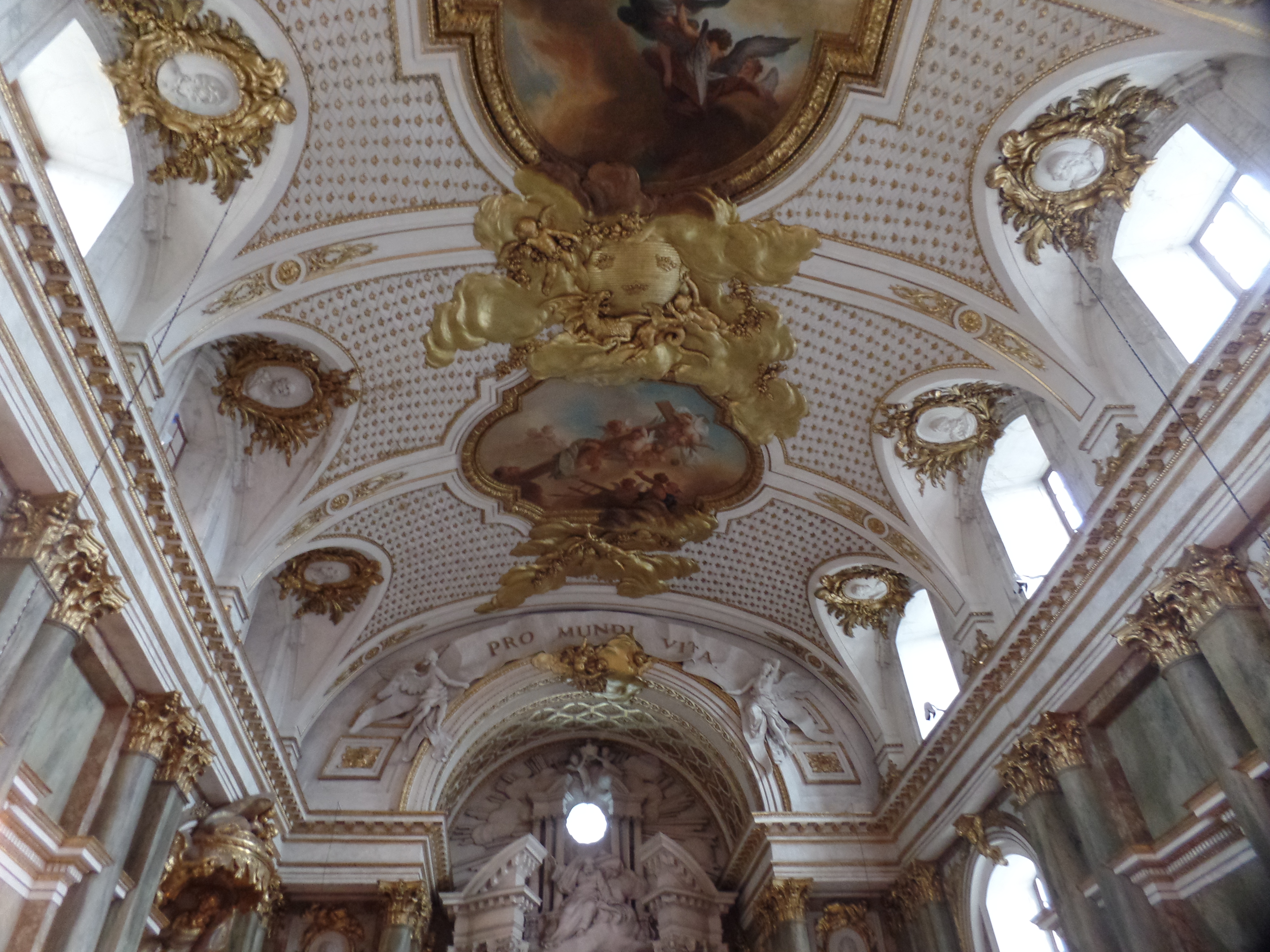
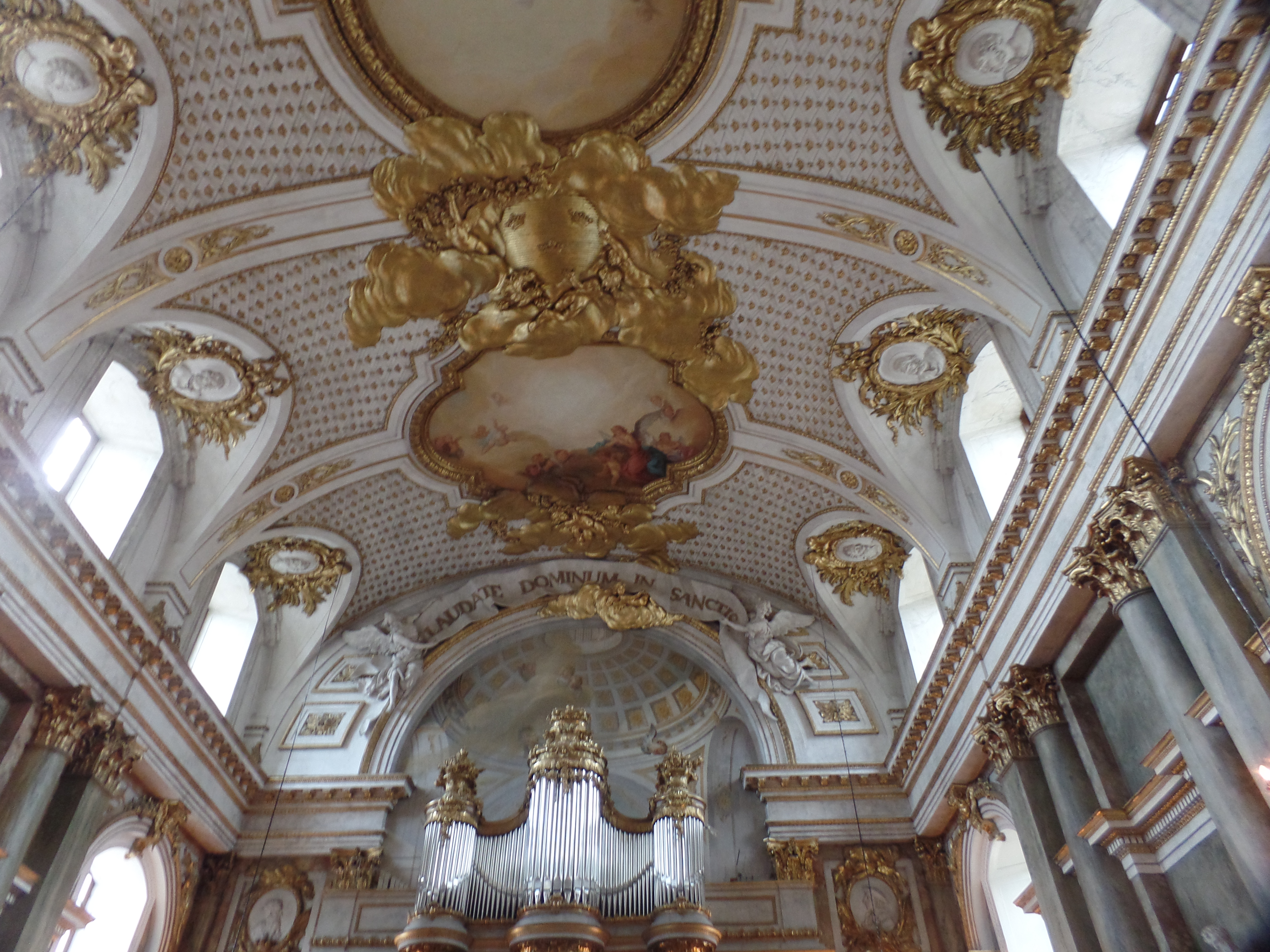
The Great AltarView of the Ceiling (Above and below)
Crossing the large foyer, and up another set of stairs, I was greeted by the Hall of State, with Queen Kristina’s Silver Throne. It is here that foreign dignitaries presented themselves to the monarch. Kristina was unique in her approaches to life and to ruling. She wanted to end the Thirty Years War in a peaceful way and believed that, as Queen, she should not submit to a husband’s dictates. For these, she was forced to abdicate, and settled in Rome, under the aegis of Pope Alexander VII.
The Silver Throne of Queen Kristina
The Palace has seven floors and over 800 rooms. We got to see 15 of them.
Several of these were Apartments of the Orders of Chivalry, which display the various Knighthood Orders.
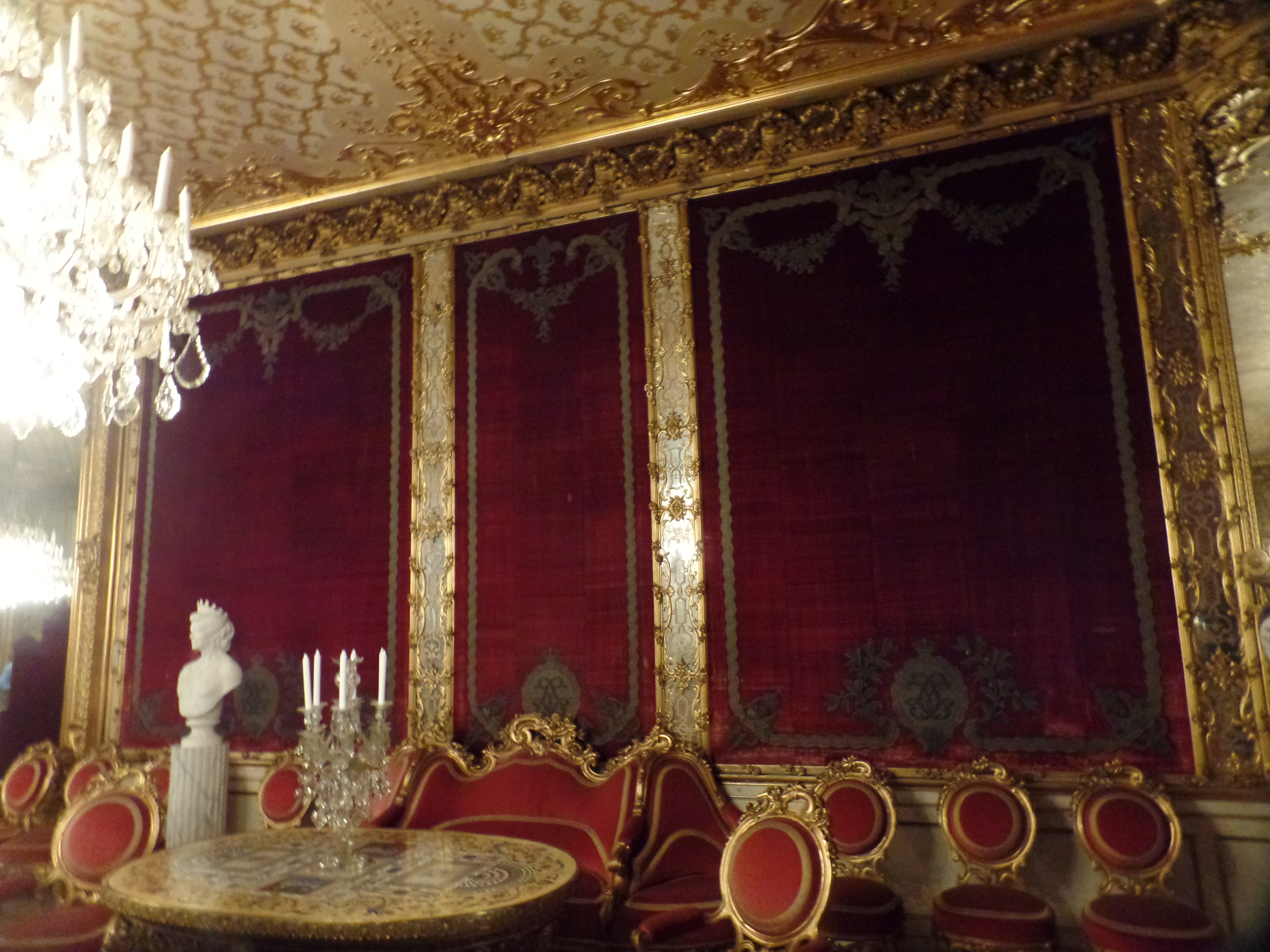
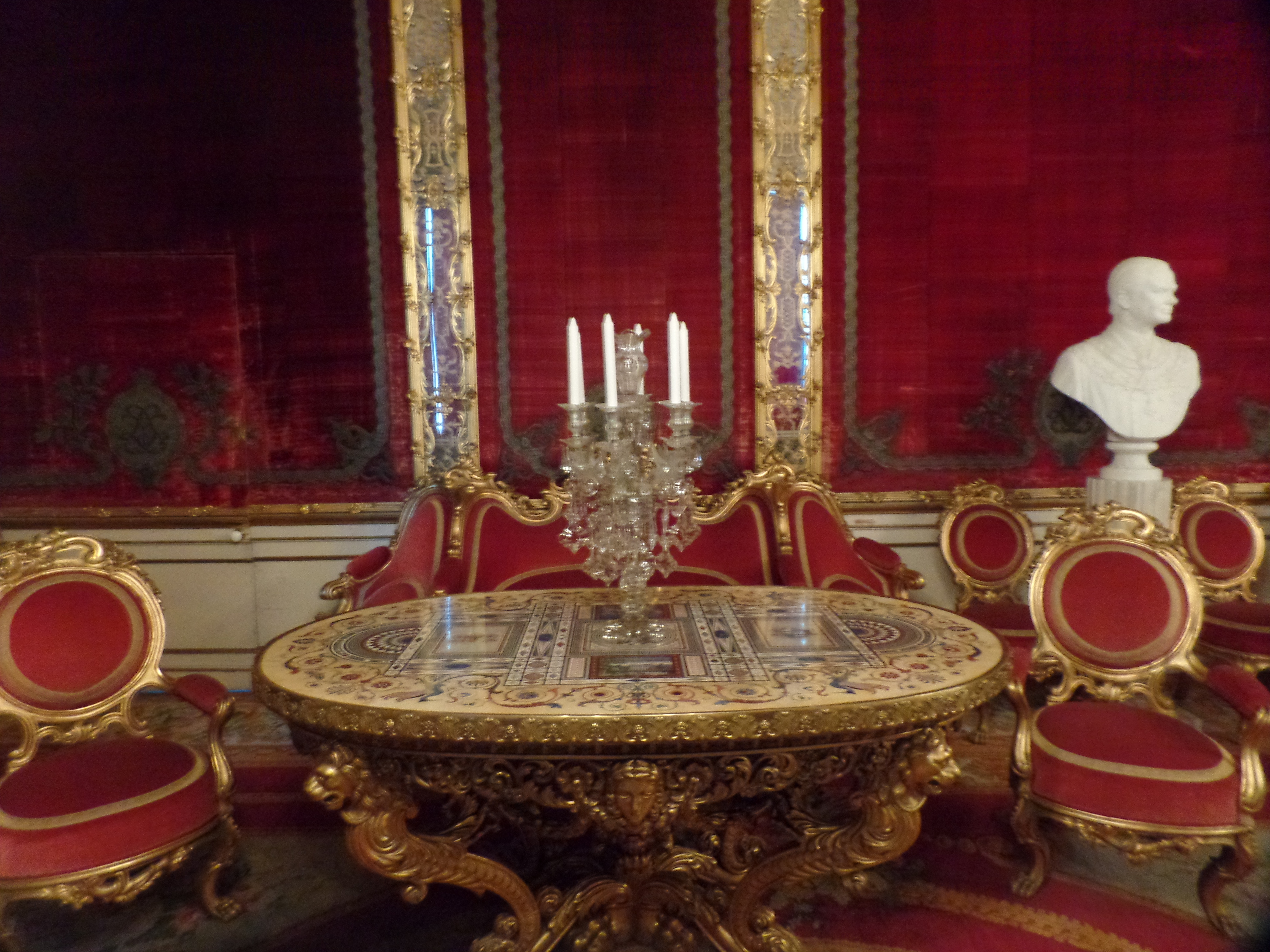
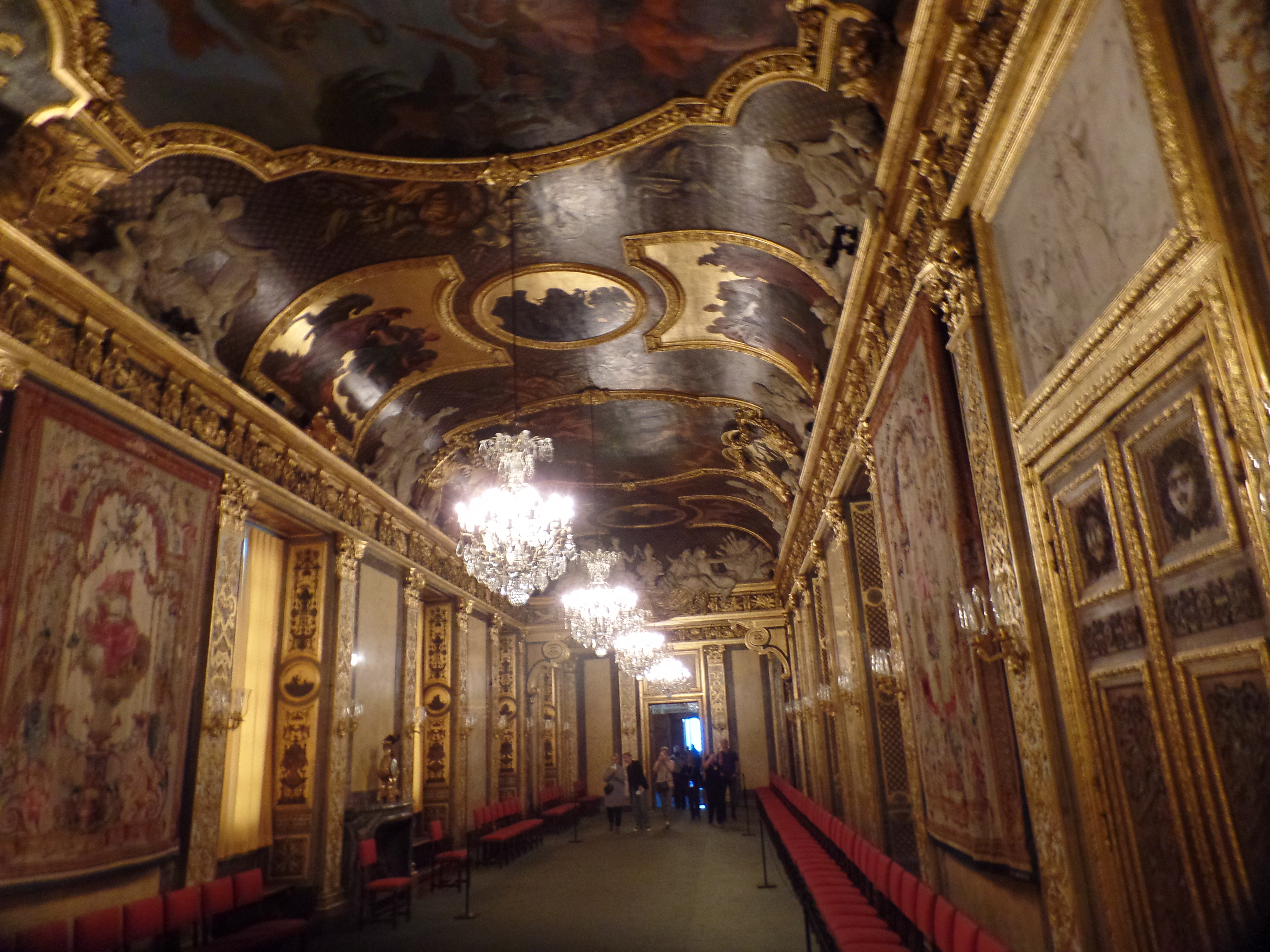
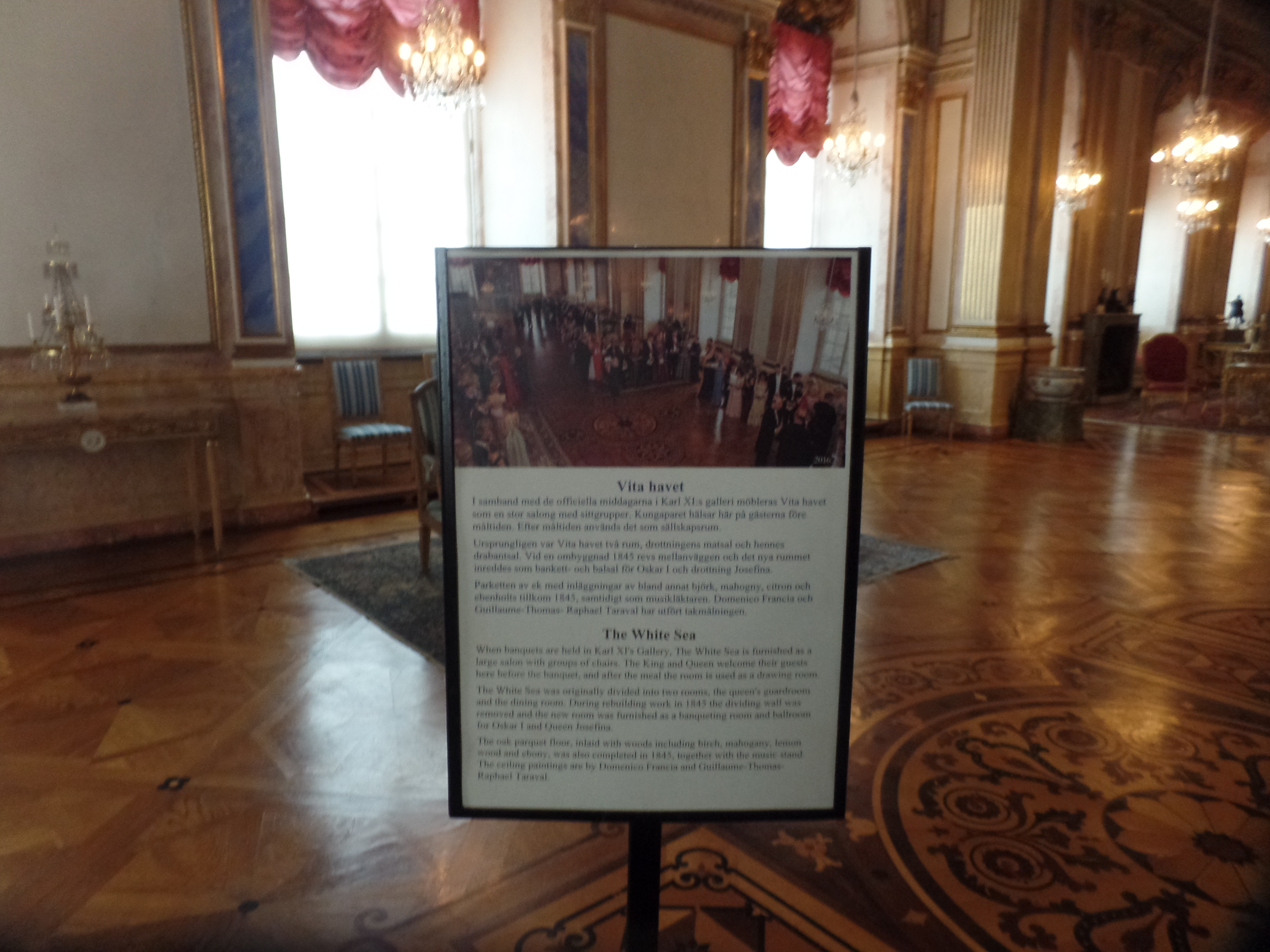
View of the MedallionsCoat of Arms of House BernadotteAudience room, Royal Apartments“Majesty will see you now!”King’s Conference Room. Karl Gustav XVI wanted a cheery atmosphere for his meetings.King’s ThroneThe Cabinet RoomLong Hallway to Royal Banquet HallExplanation of the term “White Sea”, with regard to the Royal Banquet Hall. It was originally two separate rooms, one for each monarch. In 1843, King Oskar I determined it was best that he and Queen Josefina dine together, with all their retinue present as deemed appropriate.The White Sea (Royal Banquet Hall)
The last area I visited in the palace was Three Crowns Room, in the palace basement. Here, such things as the wood piles used to heat the structure were stored and following the Great Fire of 1697, which resulted in the Chief Fire Warden and two of his deputies being found negligent, the three hapless men had to run 7 gauntlets of 200 soldiers, who beat them with sticks. The Chief Fire Warden did not survive this punishment.
Here are some artifacts from Three Crowns Room.
View of the very depths of the excavation (Above and below)Full view of the exit from Three Crowns
I walked from the palace, along Stockholm Strom, then over to the Houses of Parliament and along part of the pedestrian mall, which leads to Central Station.
I will show some of the other highlights of Old Town and central Stockholm in the next post. Then it will be time to pay a visit to the great ship Vasa.