November 2, 2025- The meeting, held unusually on a Sunday, was going like clockwork. Out of the blue came a rash of cursing and threatening language. Those involved knew fully well that they were disrupting the meeting next door. They made it clear that they didn’t care-and further, that no one was going to tell them to stop arguing and leave the building.
The right to use foul language and disrupt business, however, seems to end three feet from one’s neighbour’s face. In a privately-owned facility, moreover, a person may be compelled to leave, at the discretion of the building’s owner, or her/his lawful representatives. This is what ended up happening today. The person responsible for keeping order in the meeting, aided by two other officers, escorted the four disquiet people out of the building. There was some discussion outside, but the four went their separate ways, apparently understanding that attracting the attention of the police was not in their best interests.
This is my own main argument for not letting alcohol, or any mind-altering substance, affect one’s ability to carry on with life. I was, at one time, a terrible drunk, and I will leave it at that. I seldom, if ever, though, threw my weight around. On the few occasions that I did so, I was readily called to account, and there are those in my past who are all too happy to remind me of that time when…. So be it. Life is a series of mishaps and, hopefully, of lessons learned.
As a society, though, we still have drug allusions that are used to extol the virtues of a legitimate food or beverage-i.e. “It’s better than crack”. Oh? How do you know about crack? The fact that such a horrible substance is seen in a positive light gives me the willies. Disquietude can be found in any nook and cranny of society. Dealing with it, rooting it out, takes fortitude-and persistent effort-the kind that does not allow for a positive view of an addicting substance.
October 26, 2025, Edinburgh- We had a fine Scottish breakfast, on this misty morning. Again, there was no haggis-and nary a bit of porridge. Scrambled eggs, a small bit of bacon and grilled tomatoes filled the bill, along with Alan’s fresh-baked bread and plum jam-plus cheese.
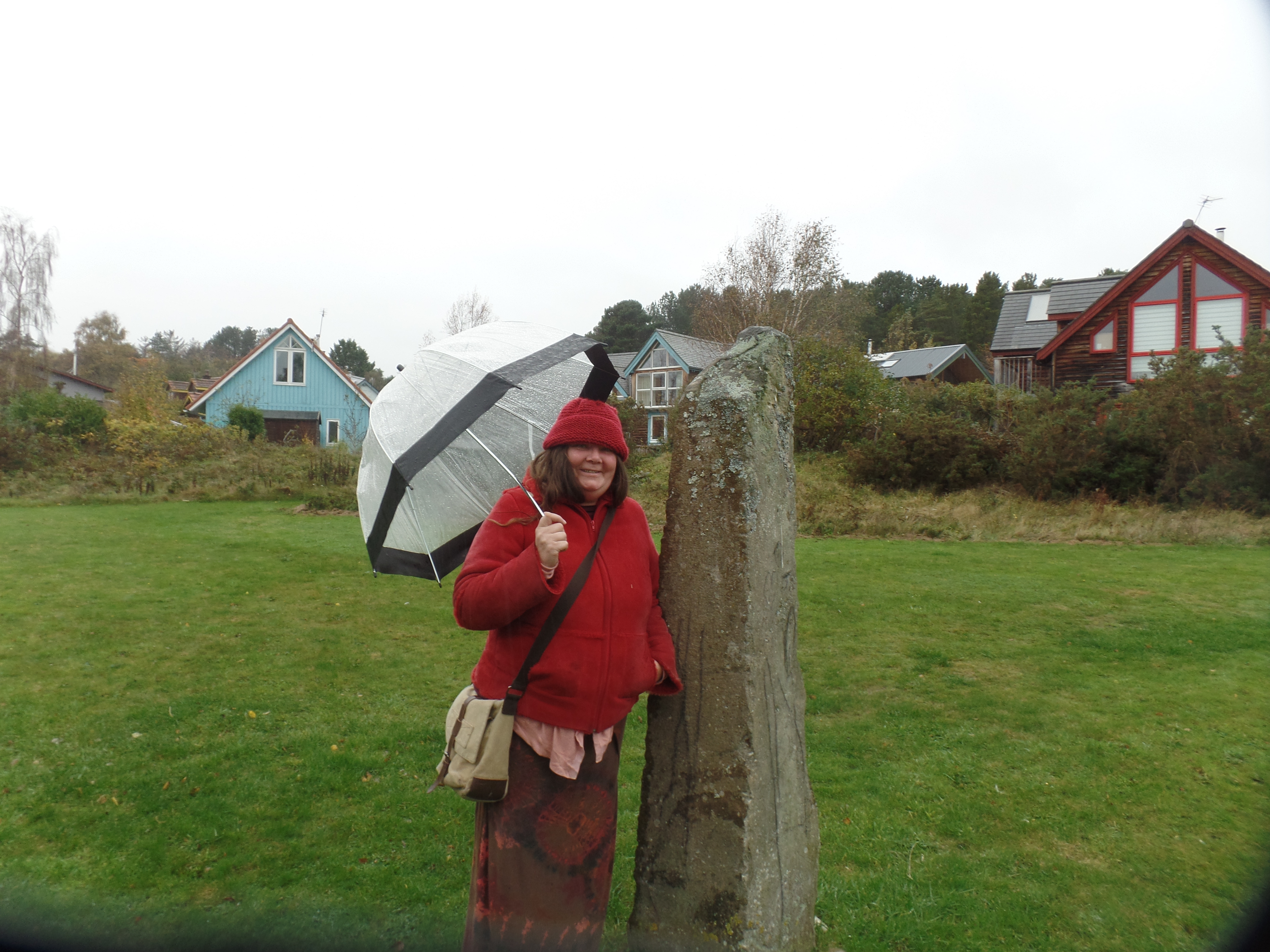
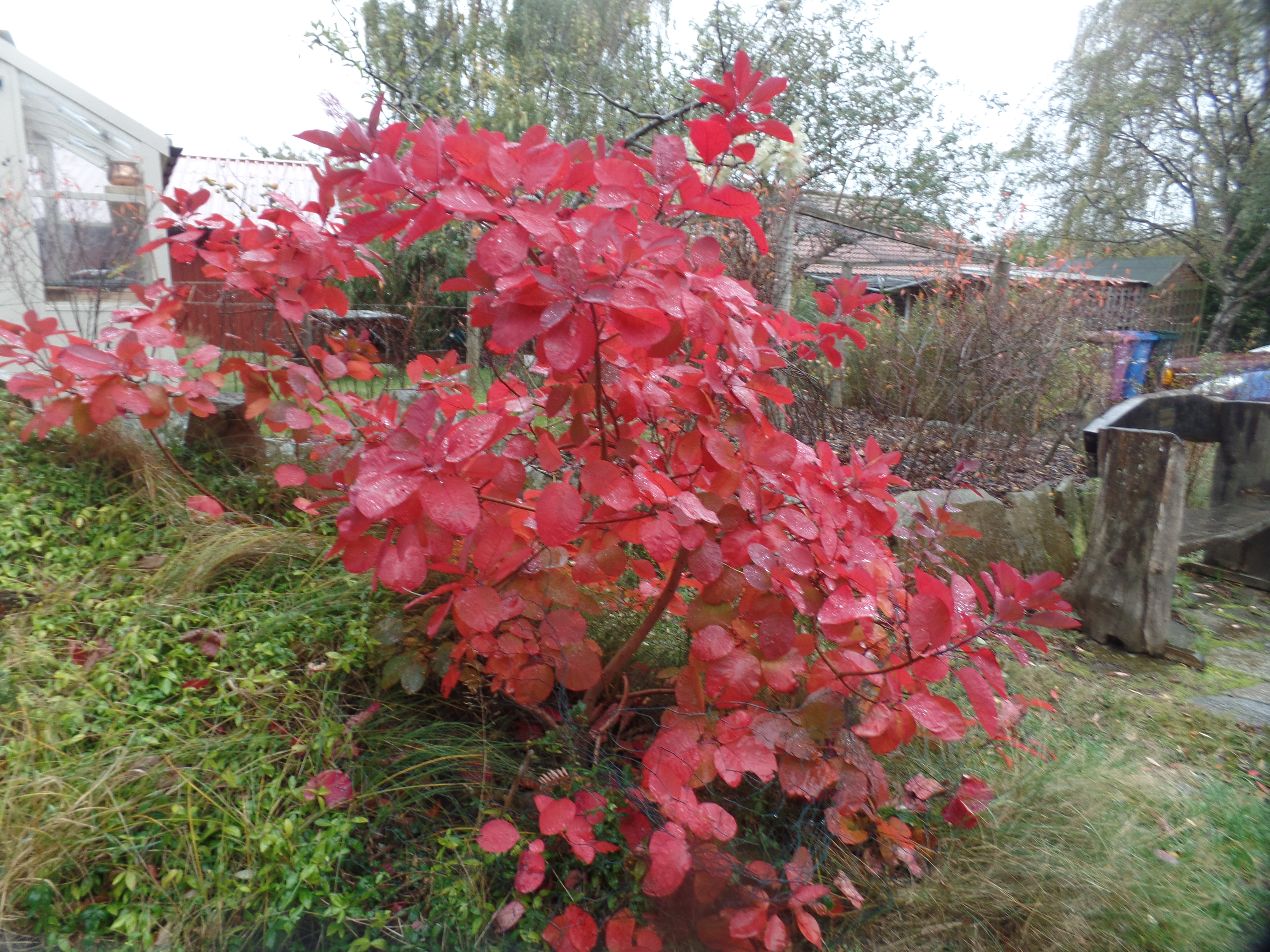
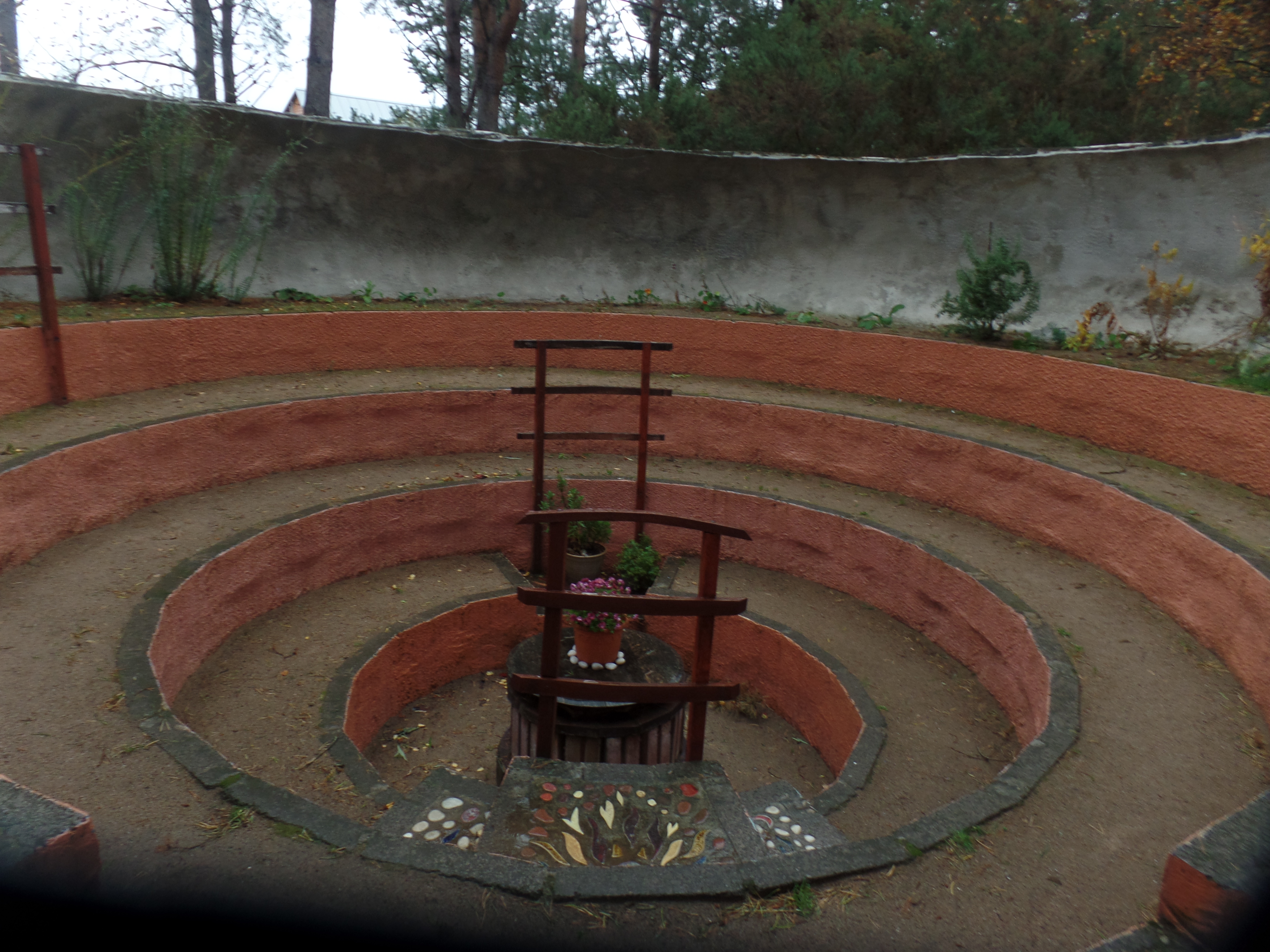
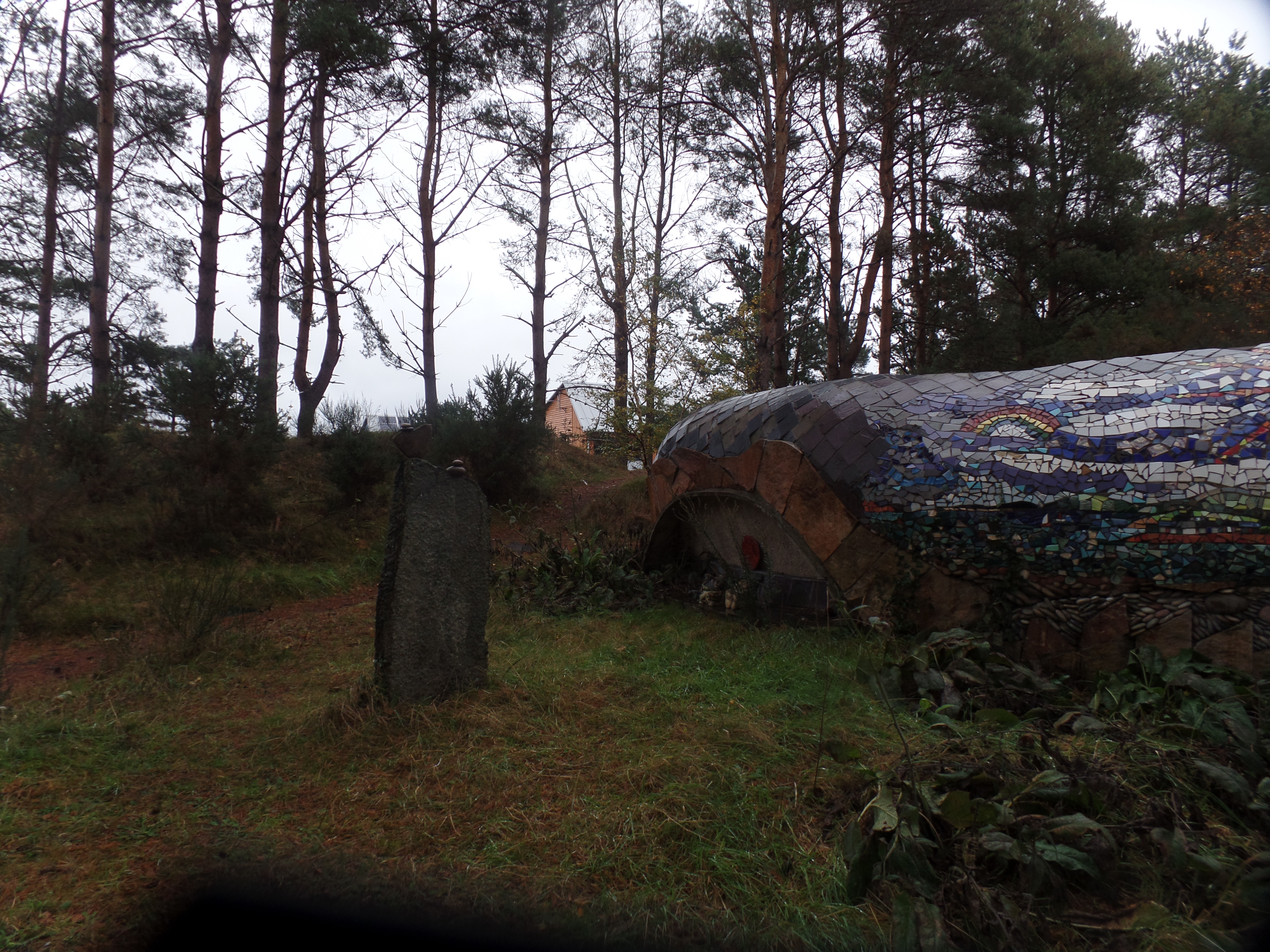
Lisa then took me on a tour of Findhorn’s round houses and small gardens. Here is a look at some of these.
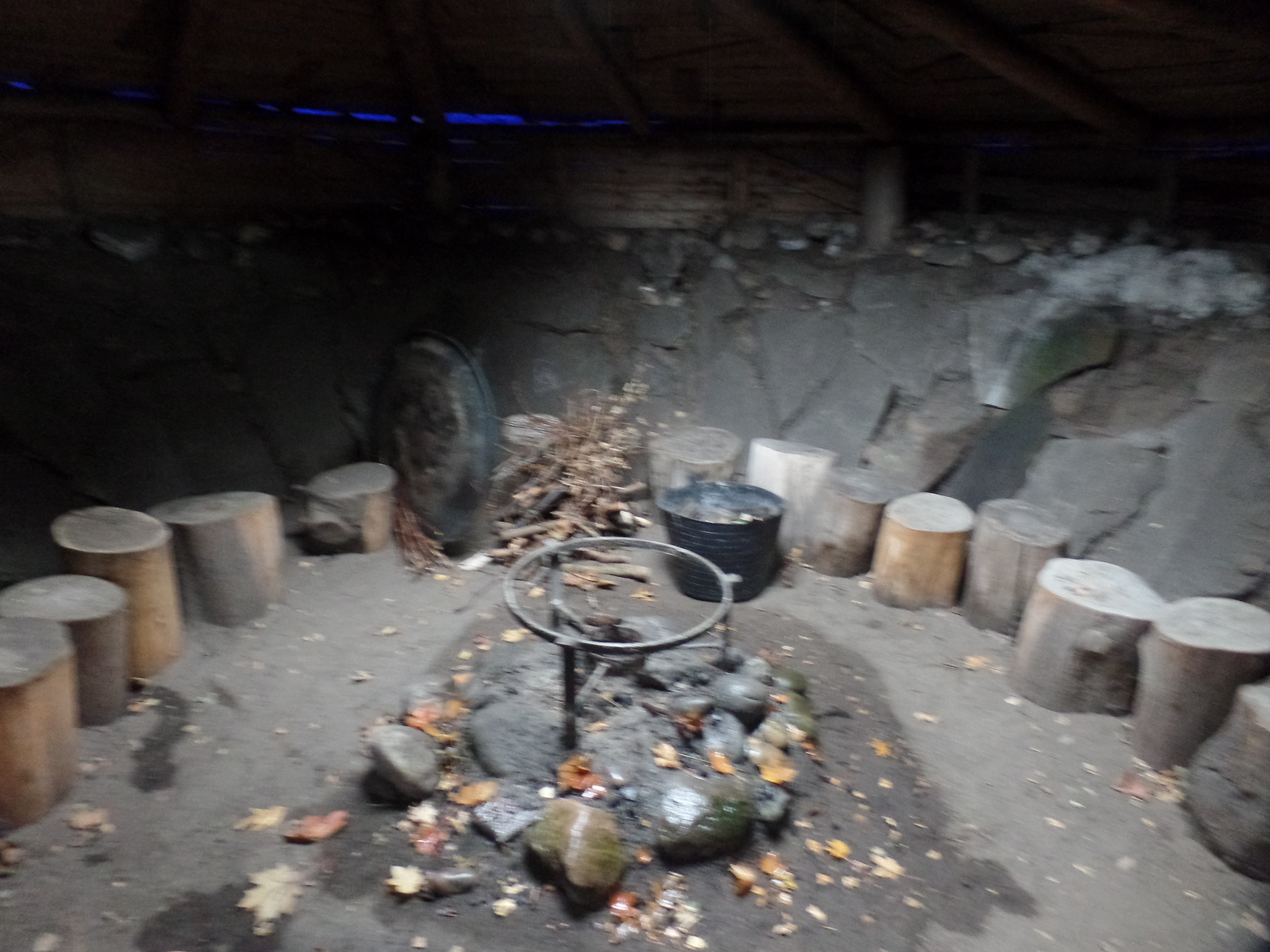
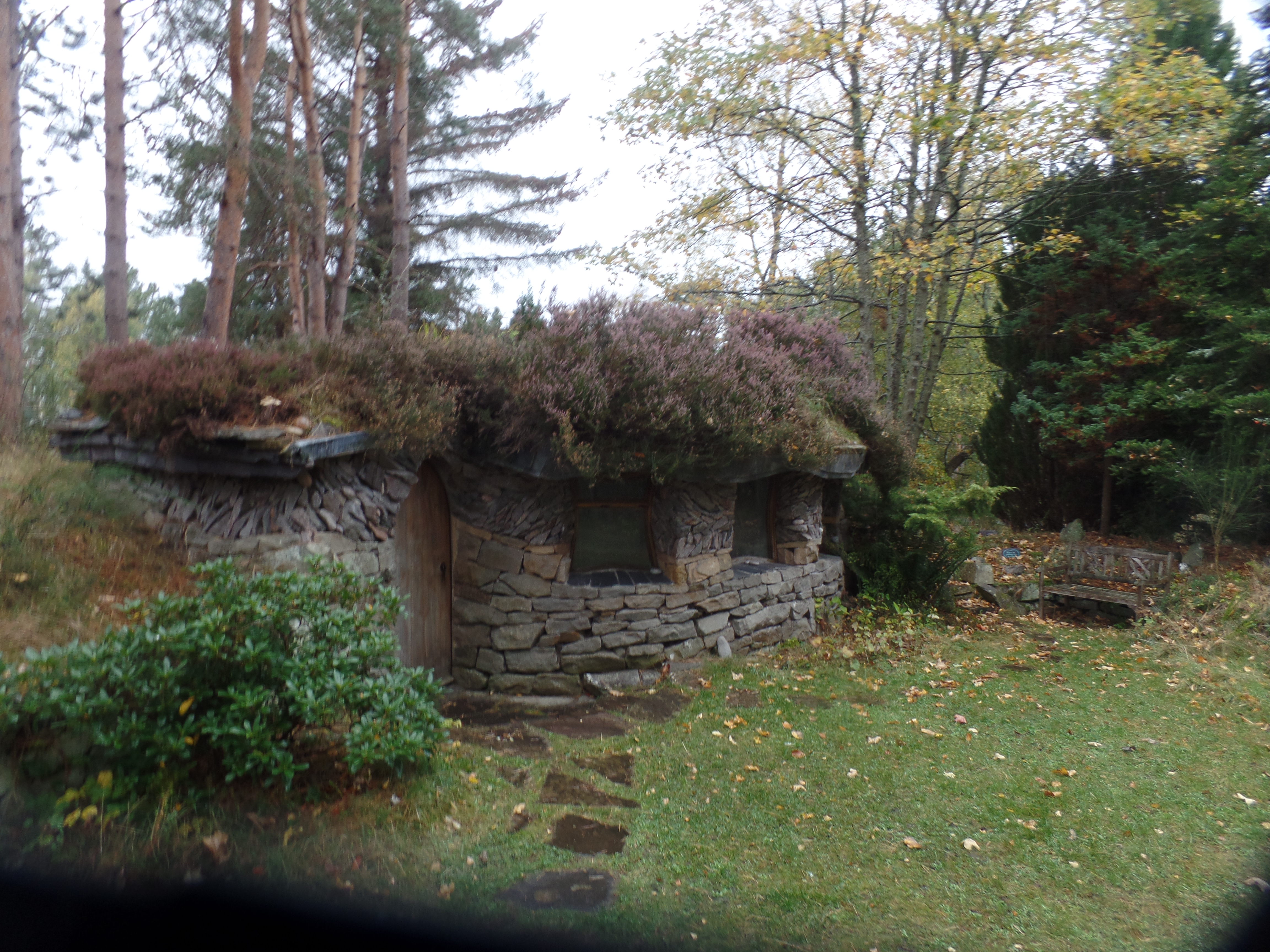
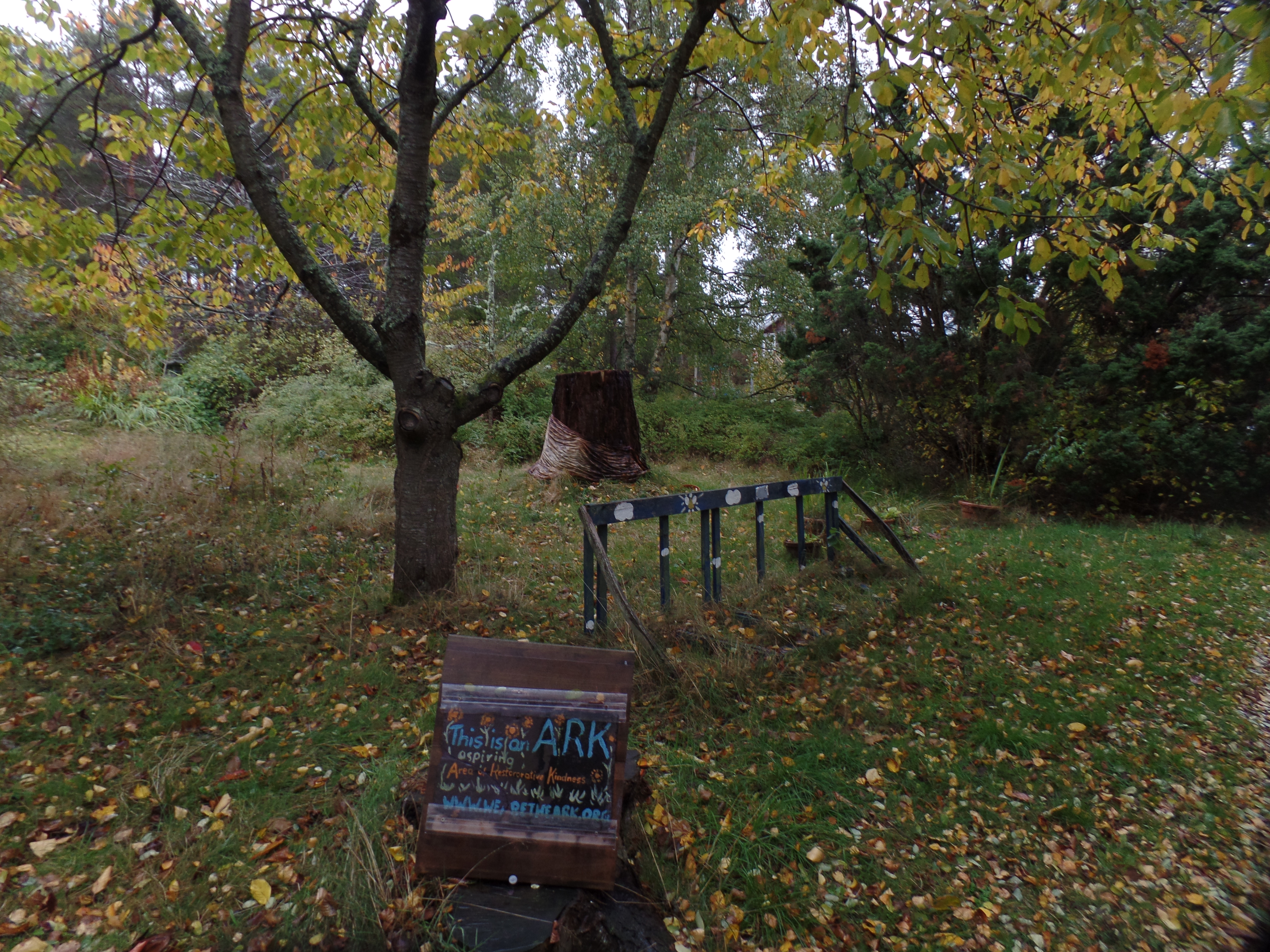
Round home, Findhorn Eco Village. Lisa said this house is presently unoccupied.Wishing Stone, Findhorn Eco Village. Here is a good place for meditation, on a fine day. (Above and below)Lisa at the Wishing StoneThis round house is near my lodging of last night.A wee bit of foliageTwo more round housesFindhorn ForestInside a gathering placeInside Meditation Round House. The similarity of this and another such house with Indigenous American round houses is remarkable.A “hobbit house” (Above and below)Community CenterOpen meditation centreOpen meditation centreAnother sacred space and standing stone, an ARK (Area of Restorative Kindness) above and below
This is the sort of place where one goes for restoration. Thankfully, I need not board a plane to find such a space. There are ARKs of this sort, just about anywhere one might go in the world, and we have our share in the Southwest U.S. I will return here again, if it be the Divine Will, yet in the meantime, it makes me all the more appreciative of sacred spaces closer to Home Base.
I bid farewell to Lisa, Alan and Pupak- and boarded a train bound for Edinburgh, via Aberdeen. The magic was not done with me yet.
October 6, 2025, Sarajevo- Once again, I found myself looking at piles of children’s shoes, mounds of abandoned luggage, faces of frightened families being herded onto to trucks-instead of train cars, with the same promise of “a better life”. I looked into hundreds of pairs of eyes, of men of various ages; indeed, some of the “men” were only 14 or 15. Every last one of the more than 8,000 male human beings killed in July, 1995, in and around Srebrenica, Bosnia& Hercegovina was “guilty” of only one thing-being a Muslim in what their captors conceived to be a pure, Christian, Serbian nation of Yugoslavia.
The Srebrenica Memorial Center sits in what is styled the Republic of Srpska (Serp-ska), its existence and its mission protected by the overarching government of Bosnia i Hercegovina, under the Dayton Accords, which ended the war in Bosnia, in 1996. The Bosnian Serbs make no pretense of liking the message the Museum offers, but they abide its presence. In that sense, it is no different from, say, the Civil Rights Museum in Montgomery, AL or the Sand Creek Massacre National Monument, in southern Colorado. Those who view things only one way cannot easily accept even established fact, when it disrupts their world view.
Three of us were taken to this Museum, by a man named Adis. He is a veteran of the Bosnian War for Independence. He is also an accomplished de-mining technician, and has helped remove mines in over two dozen countries, since 1998. Adis is a Bosnian Muslim. He told us of the background of the horrors that nearly tore his country apart, in the years 1992-96. He told us, as did staff members at the Museum, of the unreliability of United Nations Peacekeepers, held back by the envoy of the U.N. to Yugoslavia and by their own commanders. These men told us what was the result of overemphasis on preserving the status quo. The Big Picture fell on top of the people who only wanted to live their lives in peace.
Here are some of the scenes presented us at the Museum, in Srebrenica itself and at the Memorial Cemetery, down the street from this powerful institution.
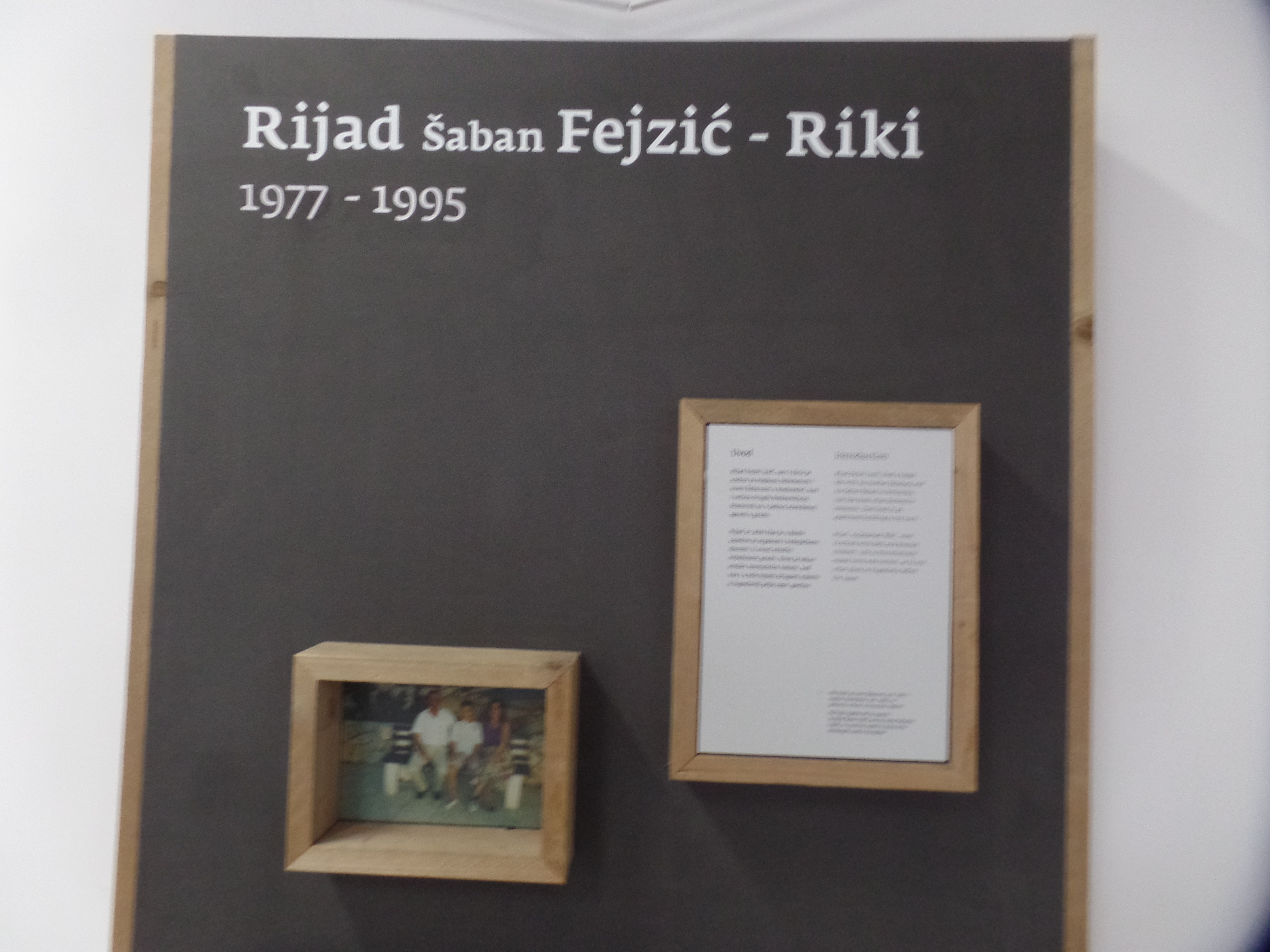
Srebrenica Memorial Center, Polocari, Bosnia i HercegovinaRijad Fejzic’s story
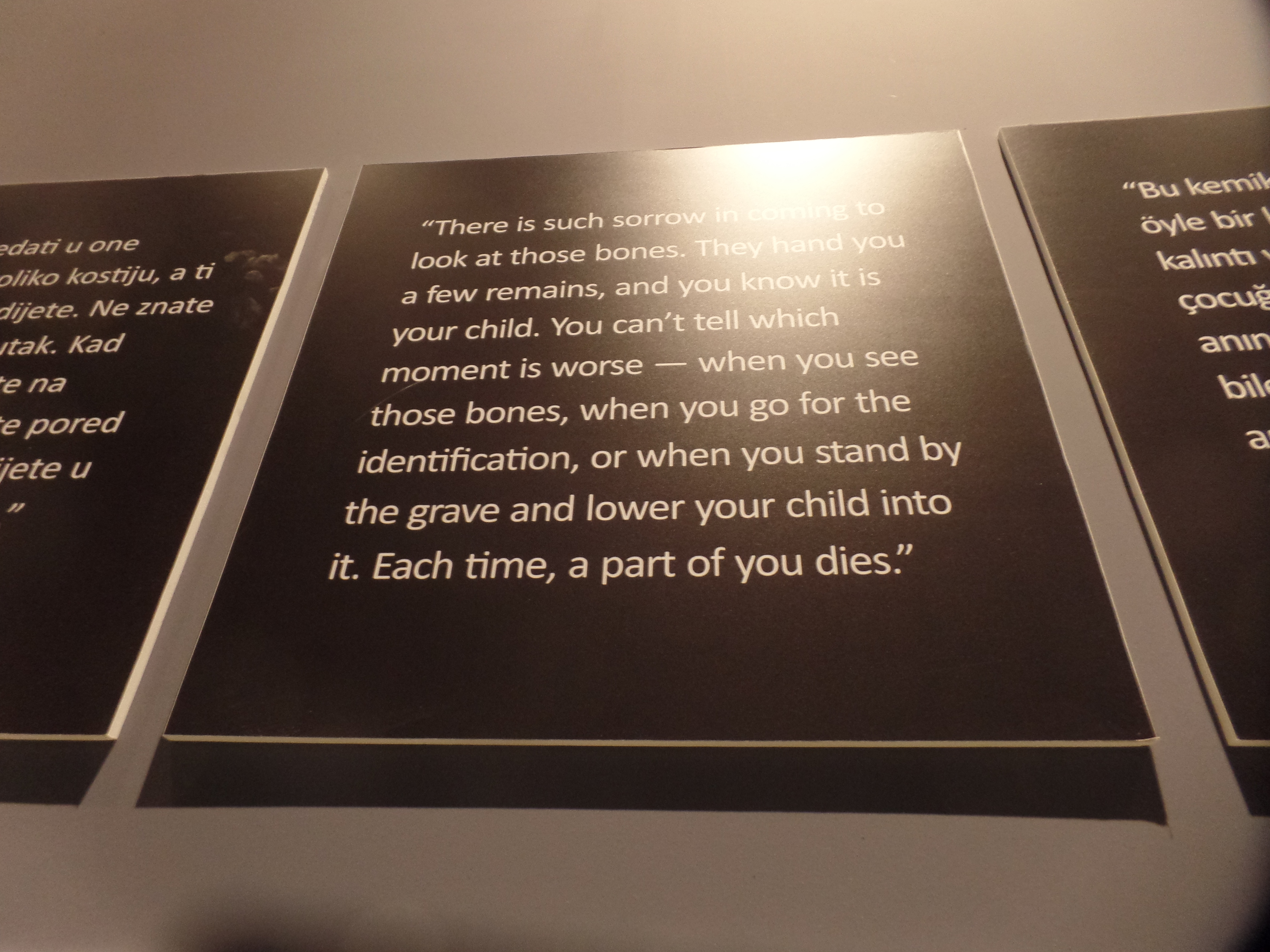
Riki was 18 when he died, probably alongside his father and most likely not when engaged in combat. He had no training, no weapon, only his faith and love for his family. Riki’s story is a recurring presence in the 26 rooms, in which the story of this conflict unfolds in the Memorial Center. His remains were only identified after the war had ended. His father’s have never been found. Riki was beaten to death.
Presentation at Memorial Center, Polocari
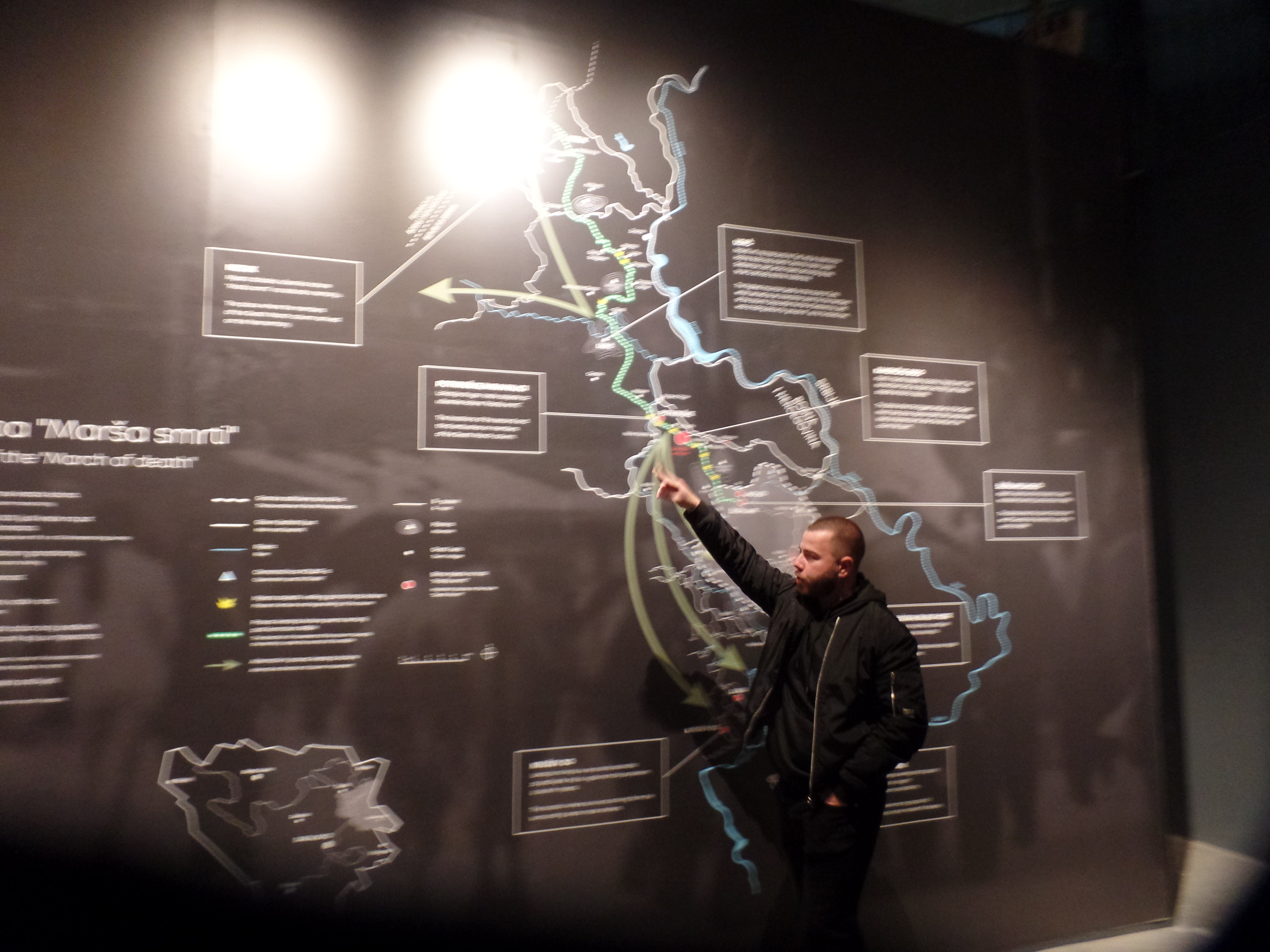
This man’s father was a Bosnian Army soldier. He himself has been a presenter at the Memorial Center, for almost fifteen years. He is showing the course of the attacks on Srebrenica, which had been deemed a protected zone of the United Nations. Bosnian Serb forces, aided by the Serbian regulars, decided to ignore the UN’s presence in the area, and marched on the town, on July 11, 1995. The UN’s troops, a Dutch battalion, were under-equipped and outnumbered. It could have been different, but those in control of the situation simply had other priorities.
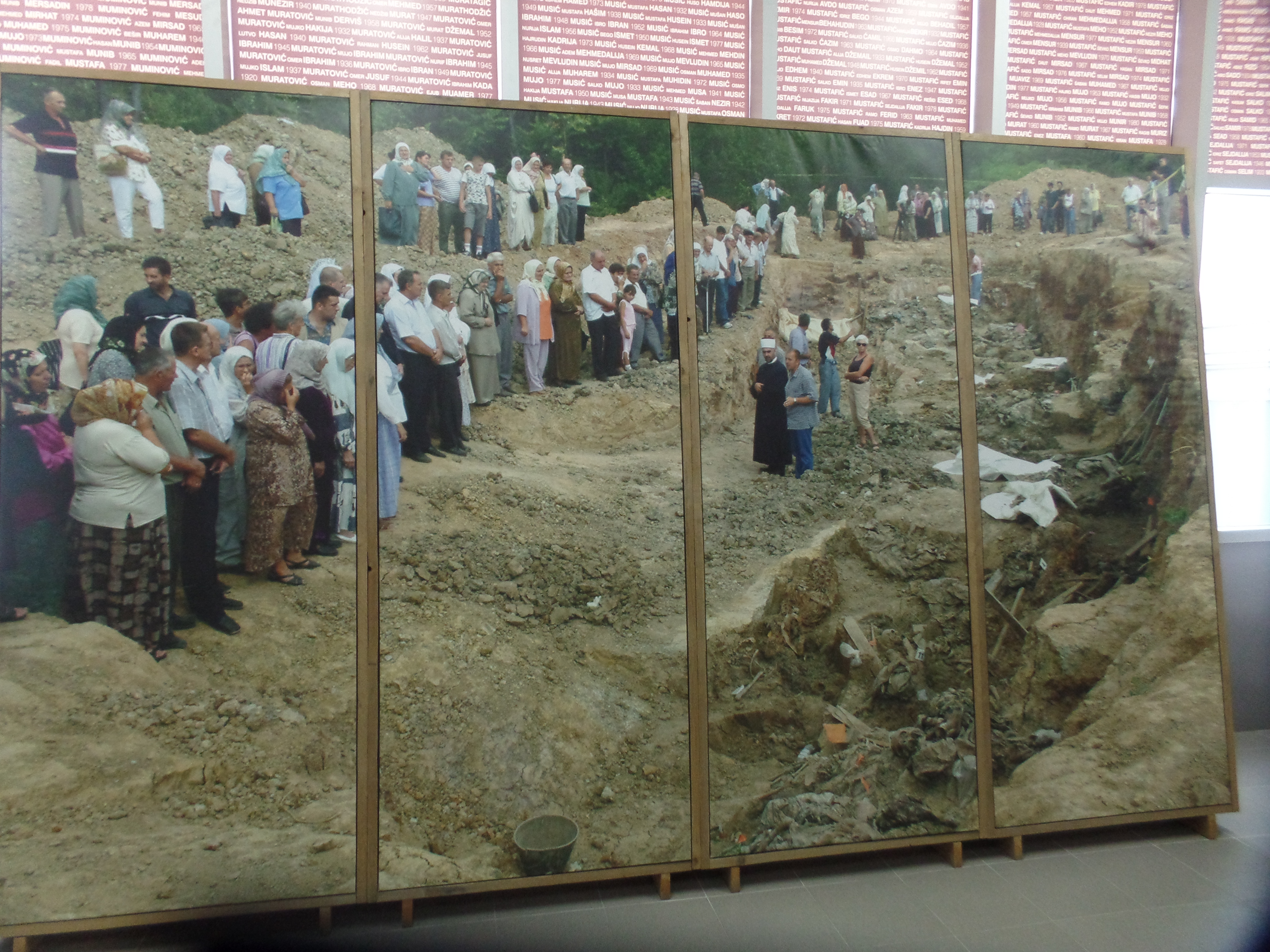
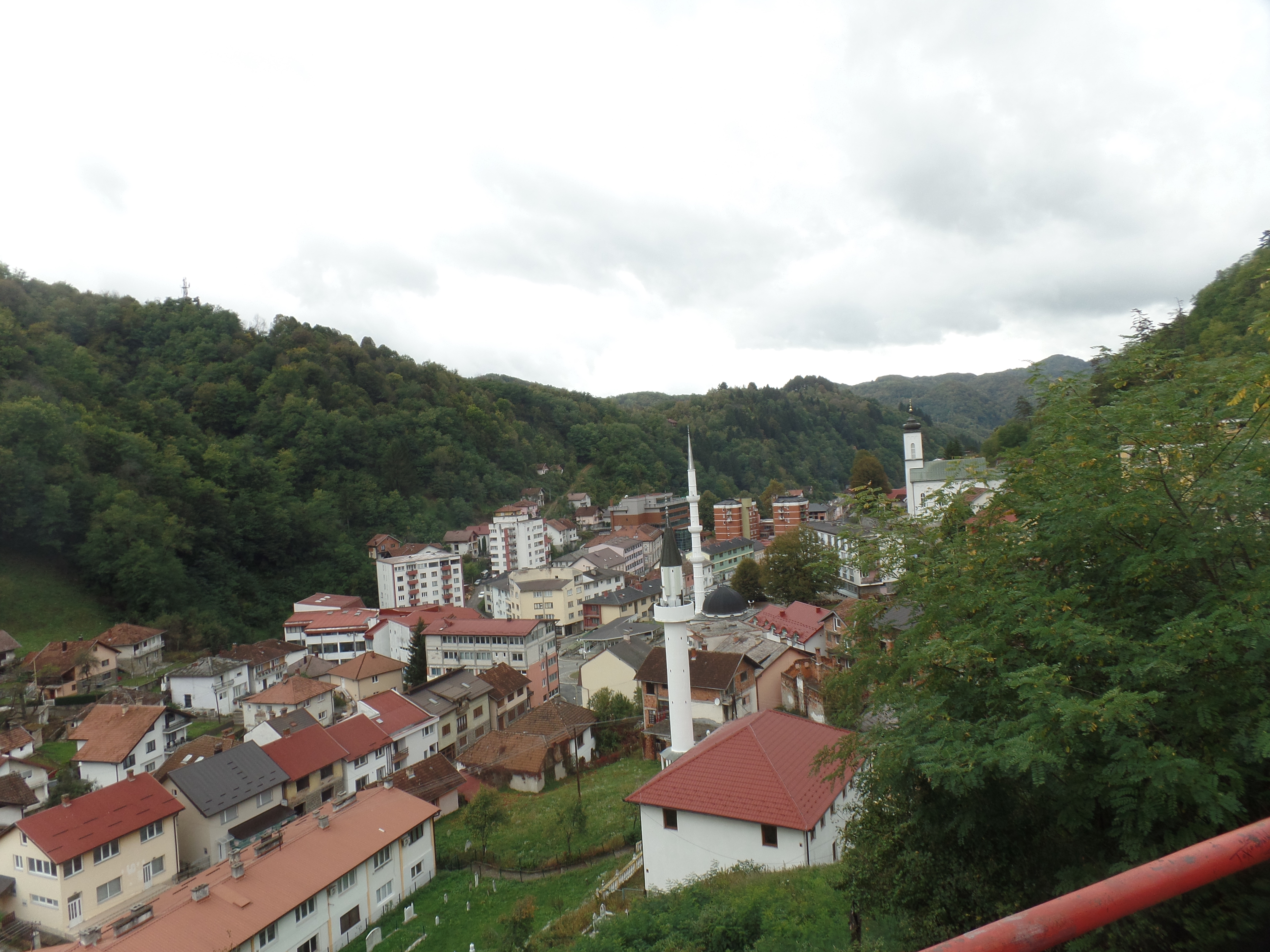
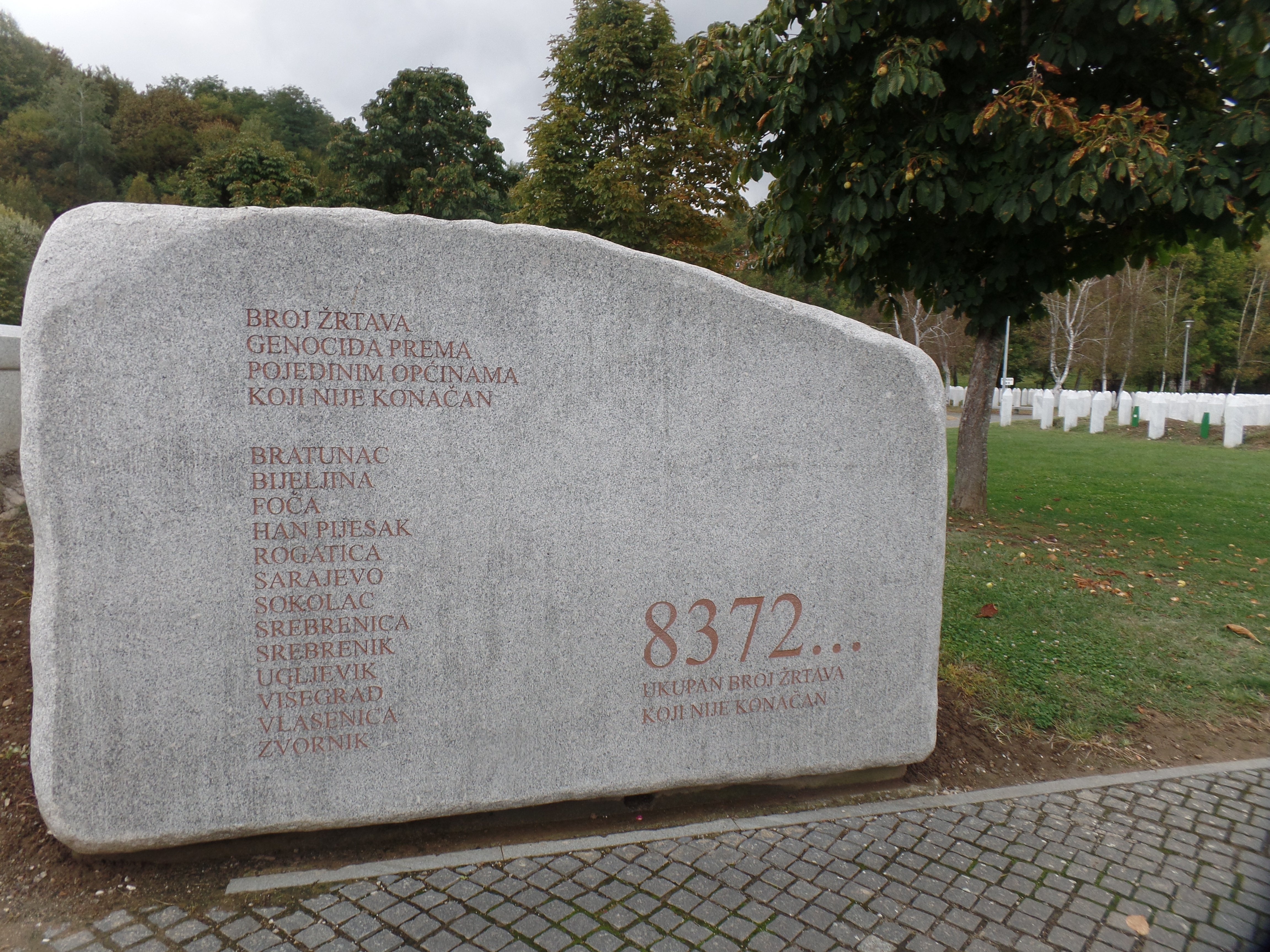
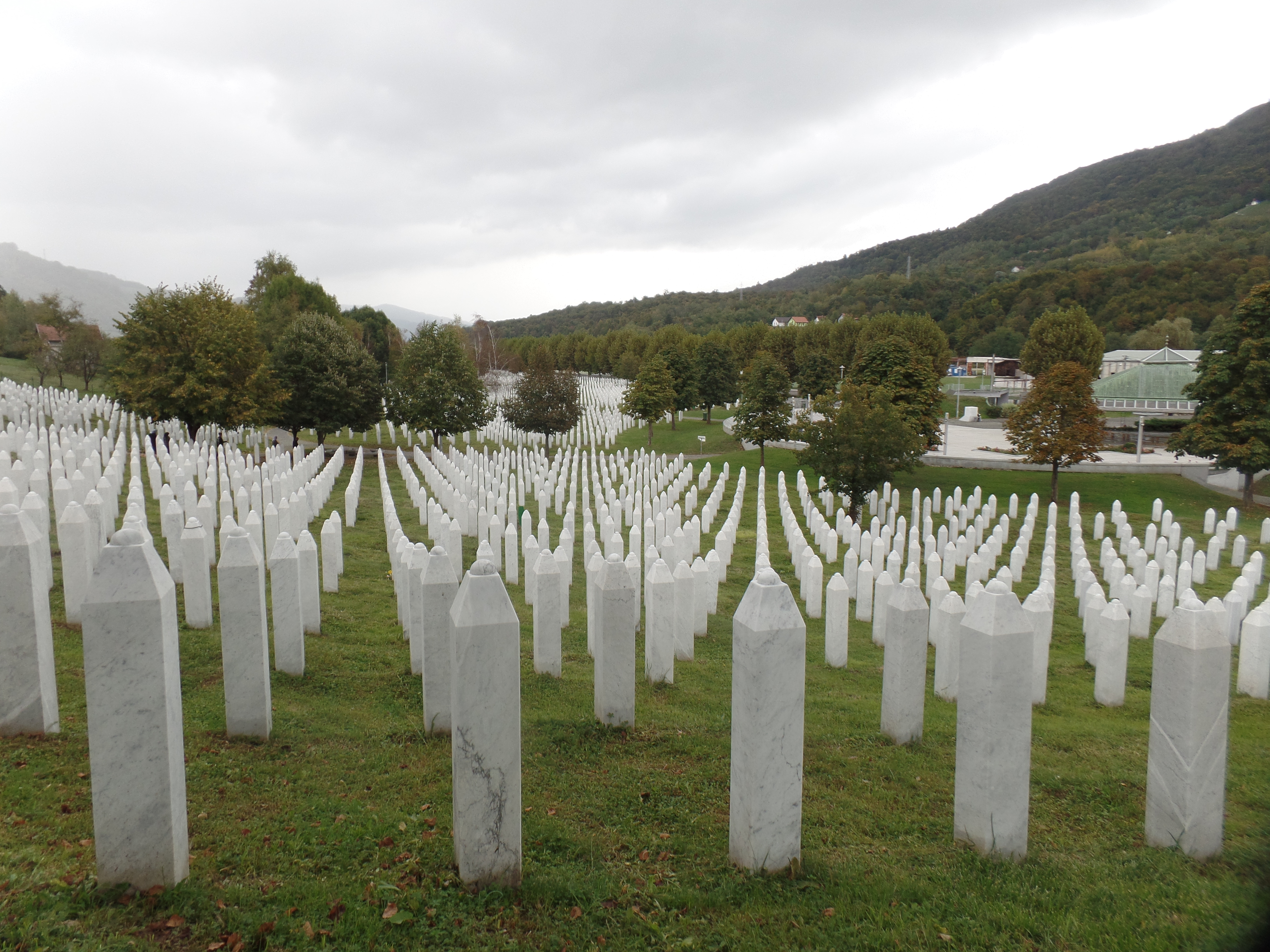
A relative few of the abandoned shoes left by fleeing children, in July, 2011.A mother’s sorrowTaking a page from Nazi Germany, the Bosnian Serb and Serbian commanders overruled even the misgivings of their own rank and file soldiers, many of whom had known the Bosnian Muslims as neighbours- for decades.Some of the 8,000 men and boys killed in July, 2011.Survivors gathered at the site of a mass grave, in 1996.The city of Srebrenica is a shell of its old self, but its young people still hold it close.The city from a former healing spa, high above. The spires are those of two mosques.Peace Monument in the central square of Srebrenica.An estimate of the total number of Bosnian men and boys killed in July, 1995. Posted at Memorial Cemetery.Row upon row of Muslim graves, all from that fateful day in July, 1995.
No one should condemn the Serbian people for what happened, any more than one could condemn the German nation for the Nazi reign of terror or the average Southern white male for the horrors of slavery and Jim Crow, or the majority of Hutu farmers for the slaughter of the Tutsi, in Rwanda. Adis put it clearly: “Most people just want to live their lives in peace and provide for their families. It’s as true of the Serbs around us as it is of we Bosniaks.”
The lesson of Srebrenica, of Auschwitz-Birkenau, of Rwanda, of Cambodia, of the oppression of Indigenous peoples the world over, is that the people of any given community cannot just leave the affairs of a community, state/province or nation to the ambitious and those with an agenda. Each of us has a say in what goes on around us. This is one of the keys to peace-It starts within and radiates outward, lest it die on its own vine.
October 4, 2025, Split, Croatia- Boris met me at the designated spot, which I found only by happenstance. This was another of those “We can’t help you because you have no Internet connection” catch-22s that Spectrum/Safari plays with abandon. (They are the ones denying Internet service, btw). I went to Pazar 1’s gate and waited just a bit-and there he was, telling me that I looked more like a Croatian local than he would have imagined. That felt good.
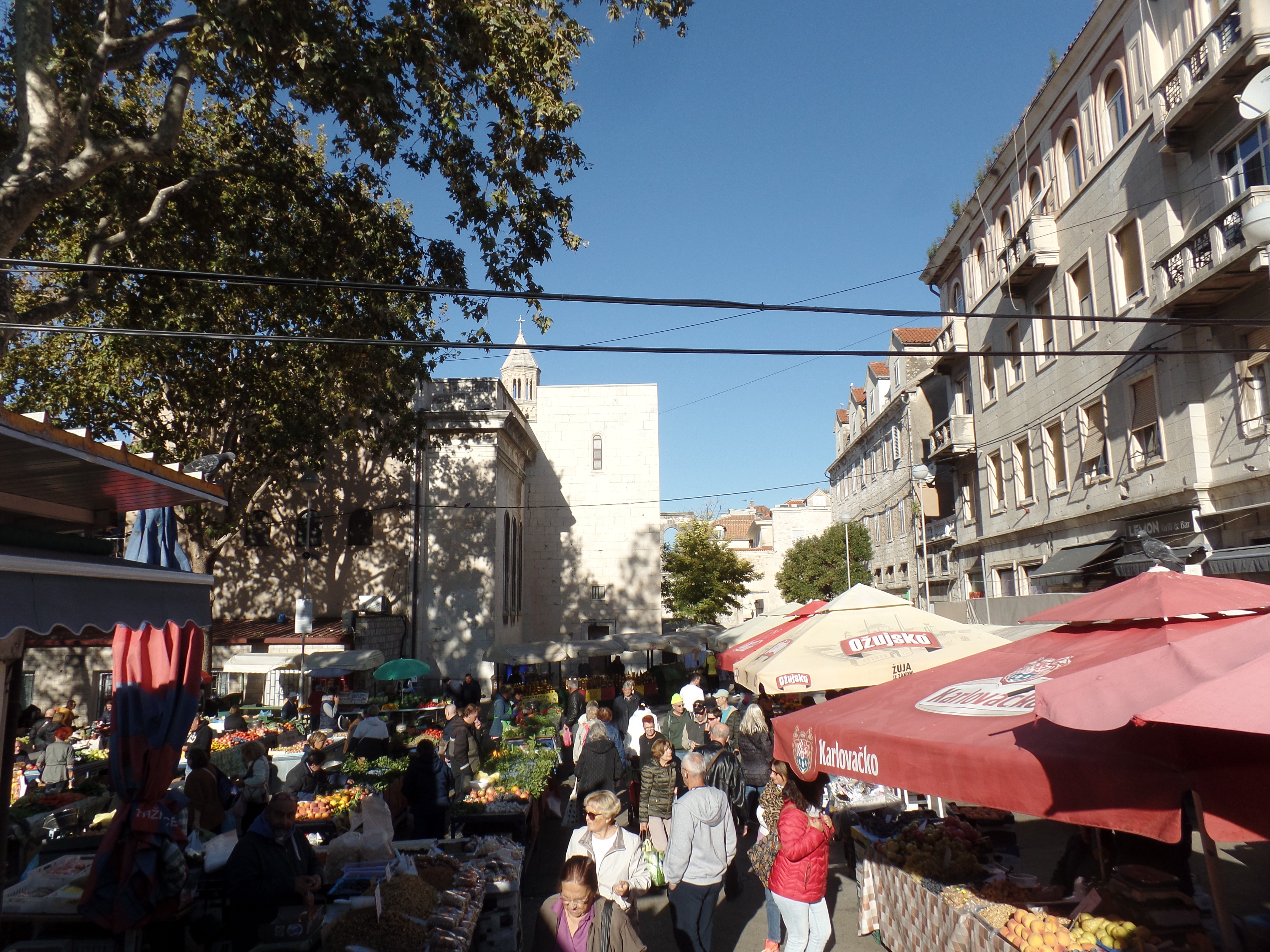
Pazar 1, Split
Our game plan was a full one: We walked through Pazar (the city market since Ottoman times, or longer.) The south and east areas of Diocletian’s Palace were next on the agenda. Diocletian was a native of this area, an Illyrian, born and raised in Salona, over the mountain, from what is now Split. He rose through the ranks of the Roman Army and became co-Emperor, at first along with Maximian in 286 AD/CE. This started the process of the Empire being divided into East and West. Diocletian built his palace at Spalatum, claiming the East for himself. Although he was an autocrat, Diocletian went along with Maximius’ plan to further divide the Empire, this time into four units, with Galerius and Constantius as junior co-Emperors. This arrangement actually helped the Romans defeat Persia, in 200, with the sacking of the Persian capital, Ctesiphon.
Diocletian carried out a bloody, but unsuccessful campaign to eradicate Christianity in the Empire. When the campaign failed, Diocletian retired from imperial duties, in 305. Co-Emperor Constantine, son of Constantius, recognized it as the official religion of the Roman Empire in 324. He lived out his days at this palace of Spalatum, now known as Split.
Pazar 1, east gate of Diocletian’s Palace and the Church of St,, Domnius
Domnius was sent, by the Apostle Paul to Dalmatia, the region that encompasses Croatia’s coast and the immediate interior, to preach the Gospel to the Illyrian people. Despite Diocletian’s imprisonment and execution of Domnius, in 304, Dalmatia became a steadfast Catholic region, under the encouragement of Constantine. Croatia is still a largely Roman Catholic country, as is neighbouring Slovenia.
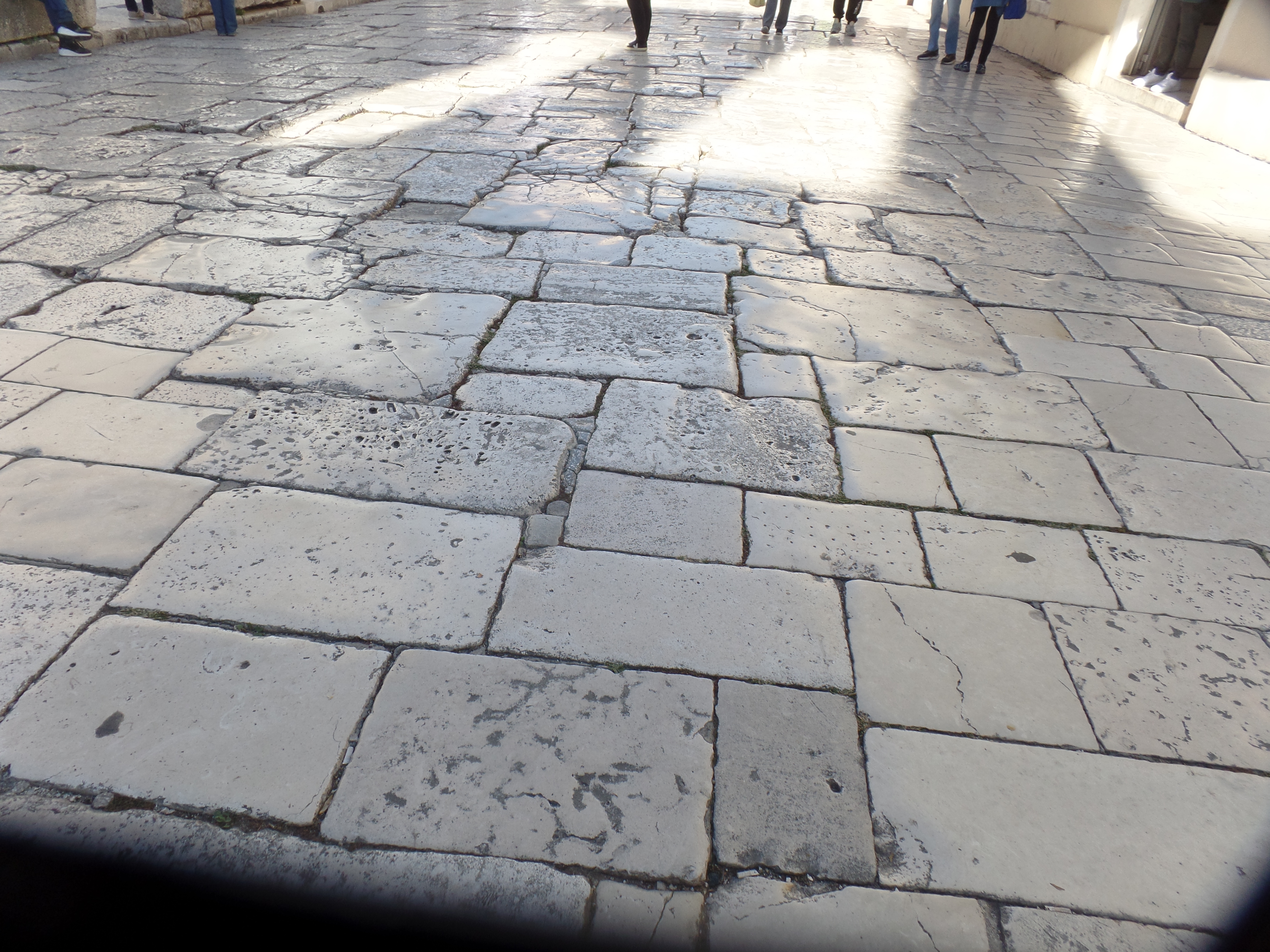
Church of St. Domnius, SplitOriginal paving stones from the time of Diocletian
Here is a more complete view of the east and south areas of Diocletian’s Palace.
South courtyard of Diocletian’s Palace, Split
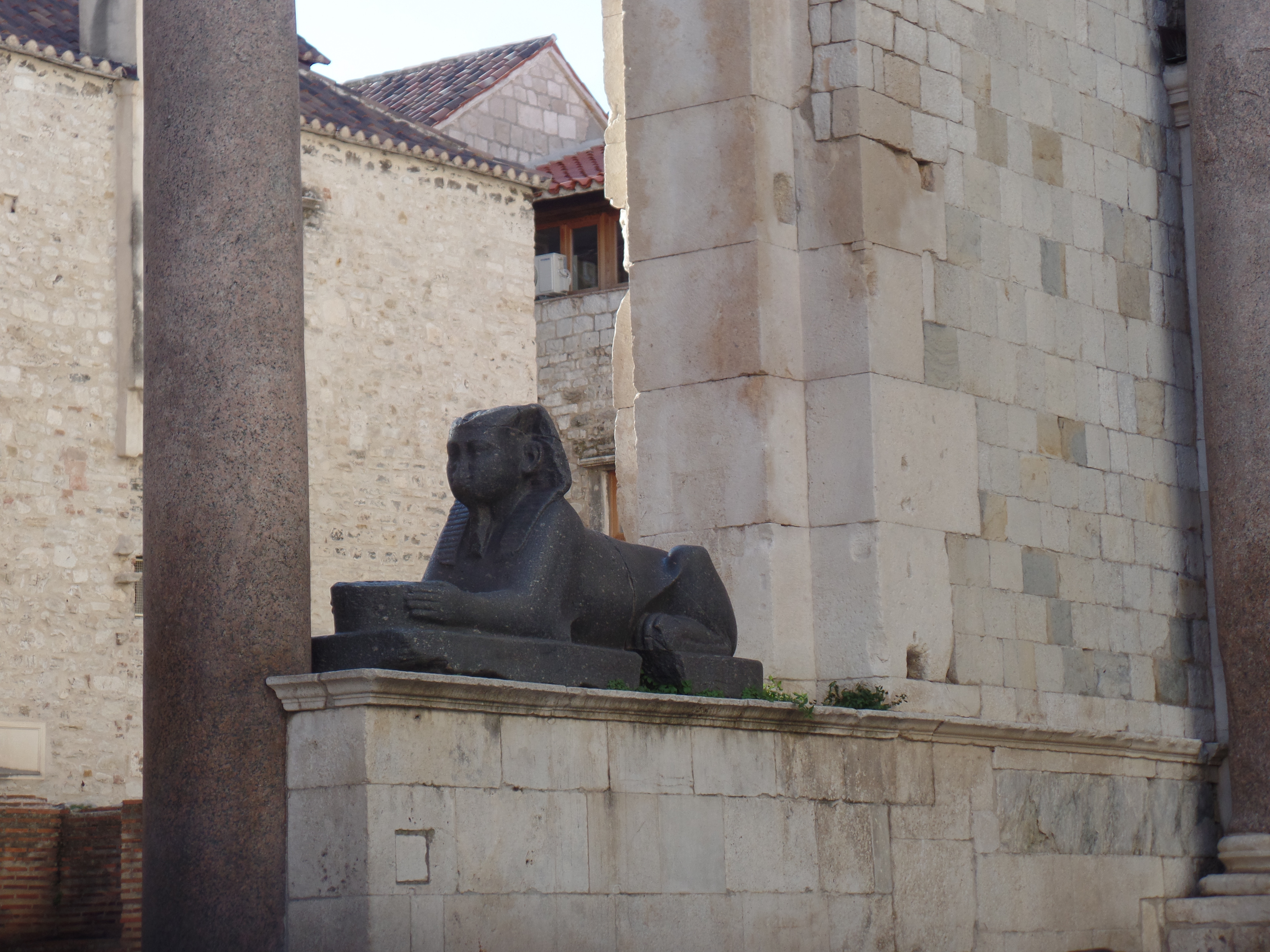
Diocletian’s Palace is the only place, outside ot Rome and Gizeh, that still has sphinxes (There are two here).
One of the two Sphinxes of Diocletian’s Palace, Split
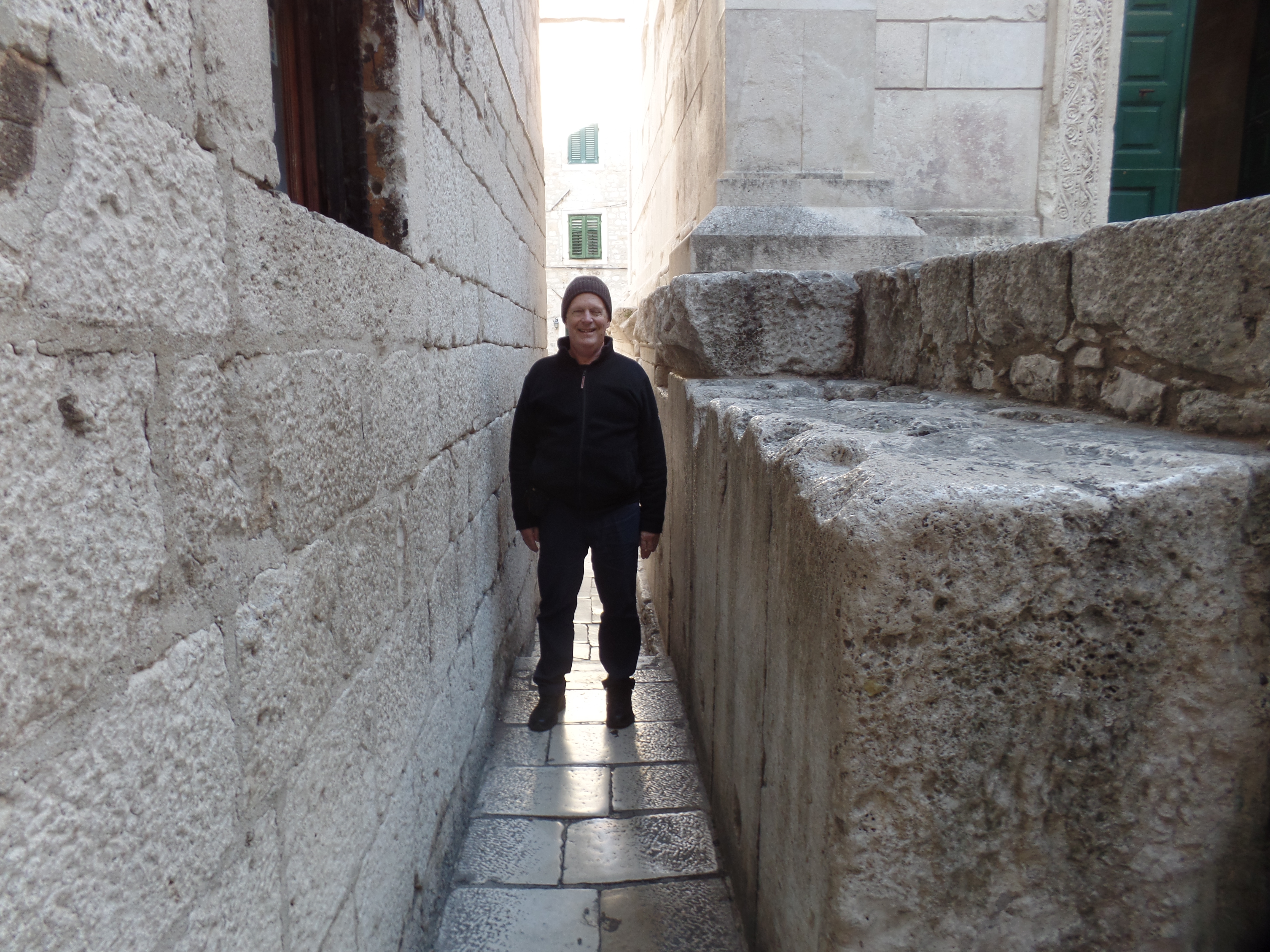
We left this part of the palace, heading toward Marjan (marYAN) Hill. To get there, we had to pass through the “Street that can fit only one at a time”. Here I am, having gotten through it.
“The street that can fit only only at a time”.
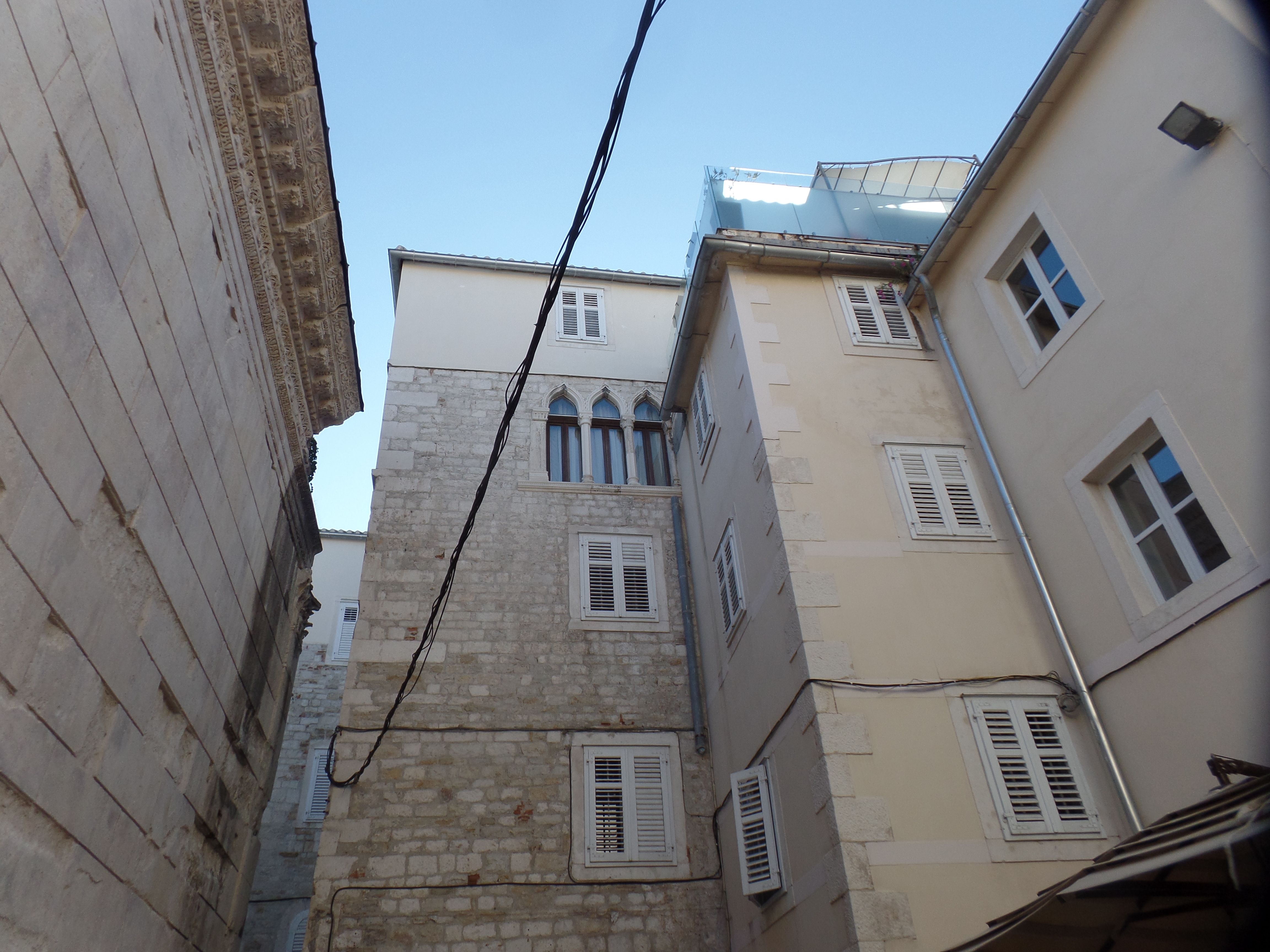
The next photo shows the melange of architectural styles that can be found in Split’s oldest neighbourhood. These are Roman, Venetian,Ottoman, and Austrian.
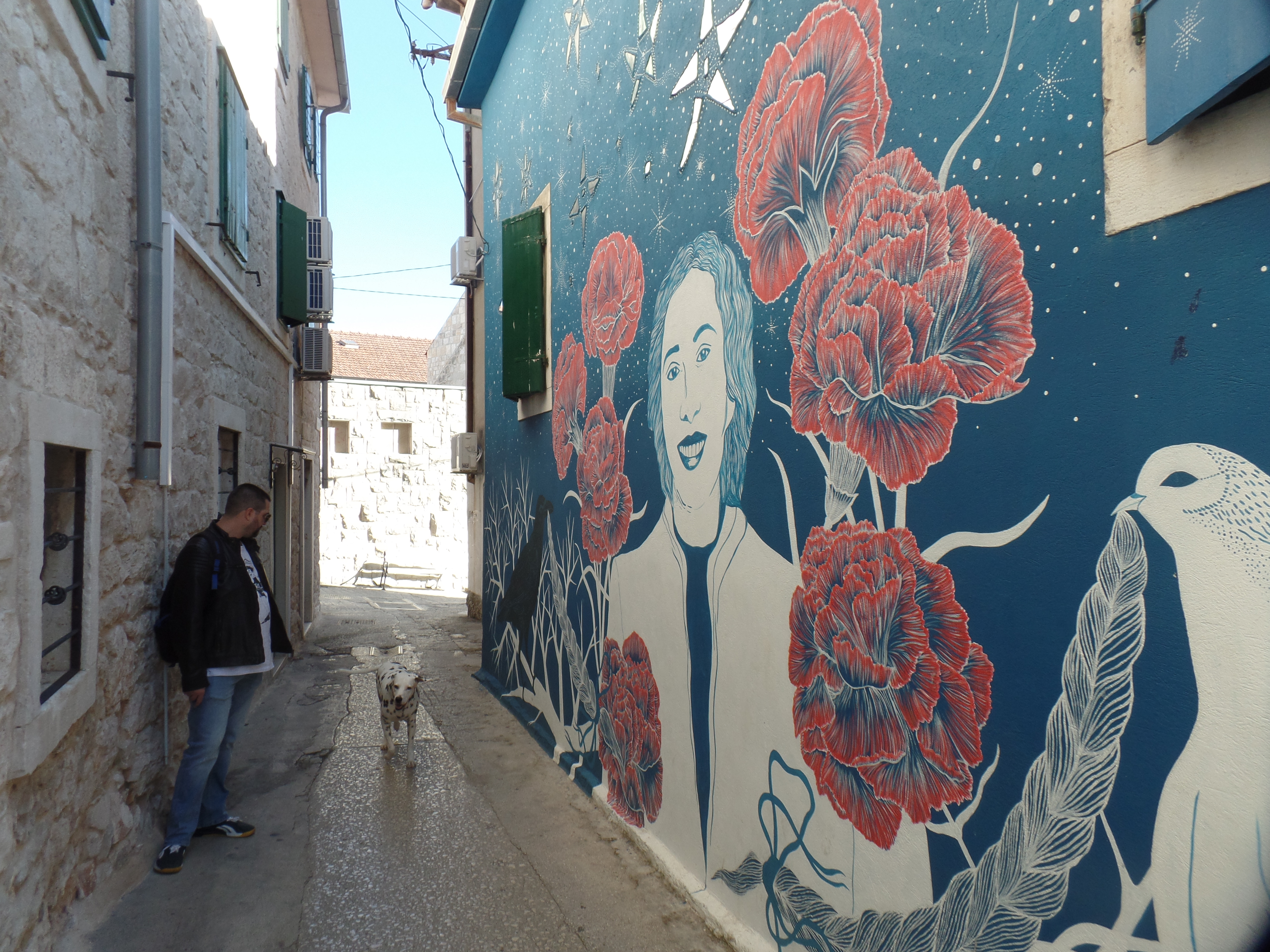
Four styles of architecture, in one neighbourhoodThe place to be seen in the Split of the mid-Twentieth Century.A martyr for freedom from Fascism-and a Dalmatian
Vahida Magajlic was a Croatian Muslim, who fought the puppet regime that was installed by the Nazis in Croatia. She gave her life for the freedom of Croatia-and of all Yugoslavia.
We took many steps up Marjan Hill. (Mar YAN).View from first overlook, Marjan Hill
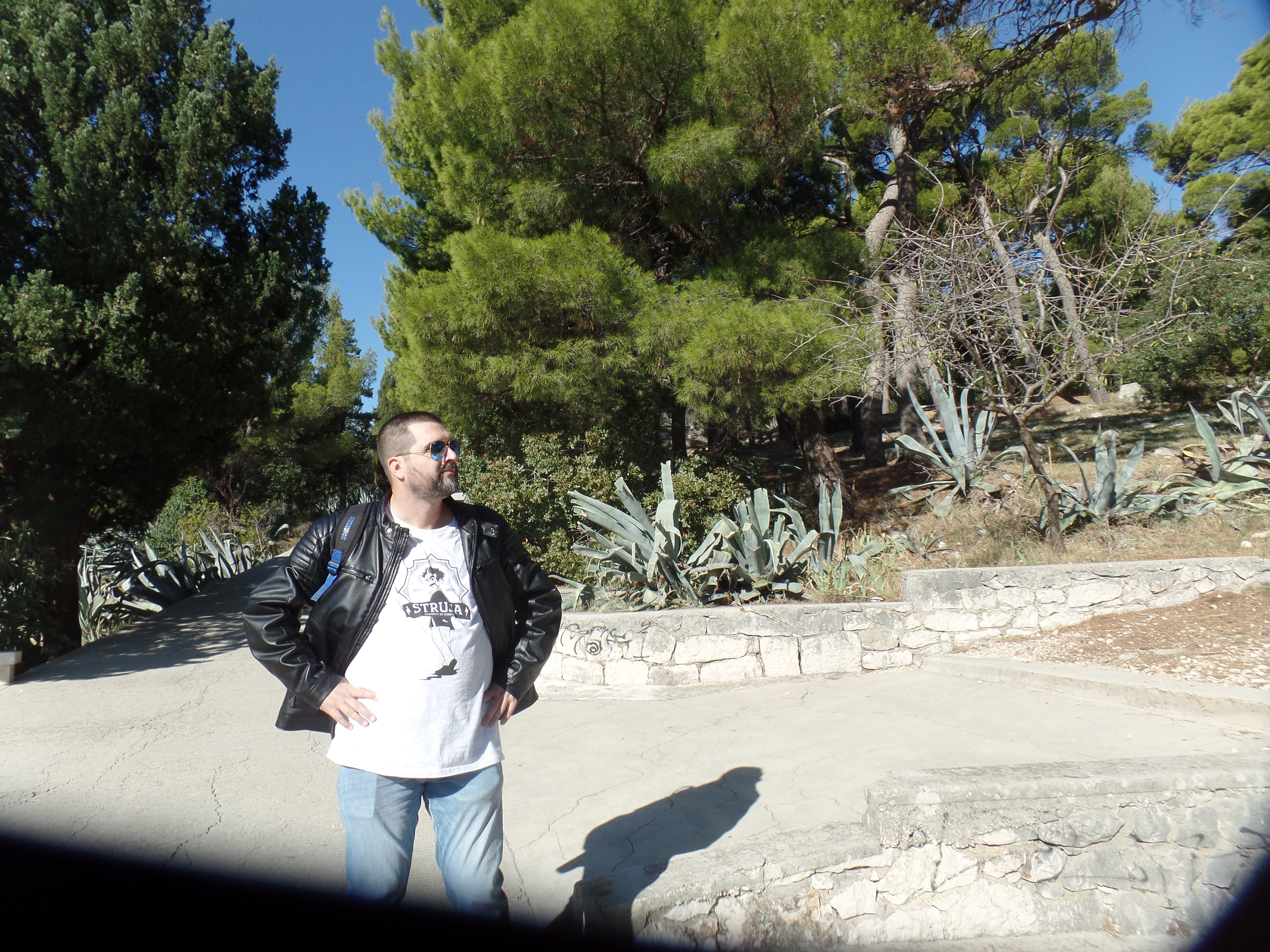
Boris enjoys coming up here, when he needs peace and quiet.
Boris at Marjan Hill’s Botanical GardenThe Adriatic, from atop Marjan Hill
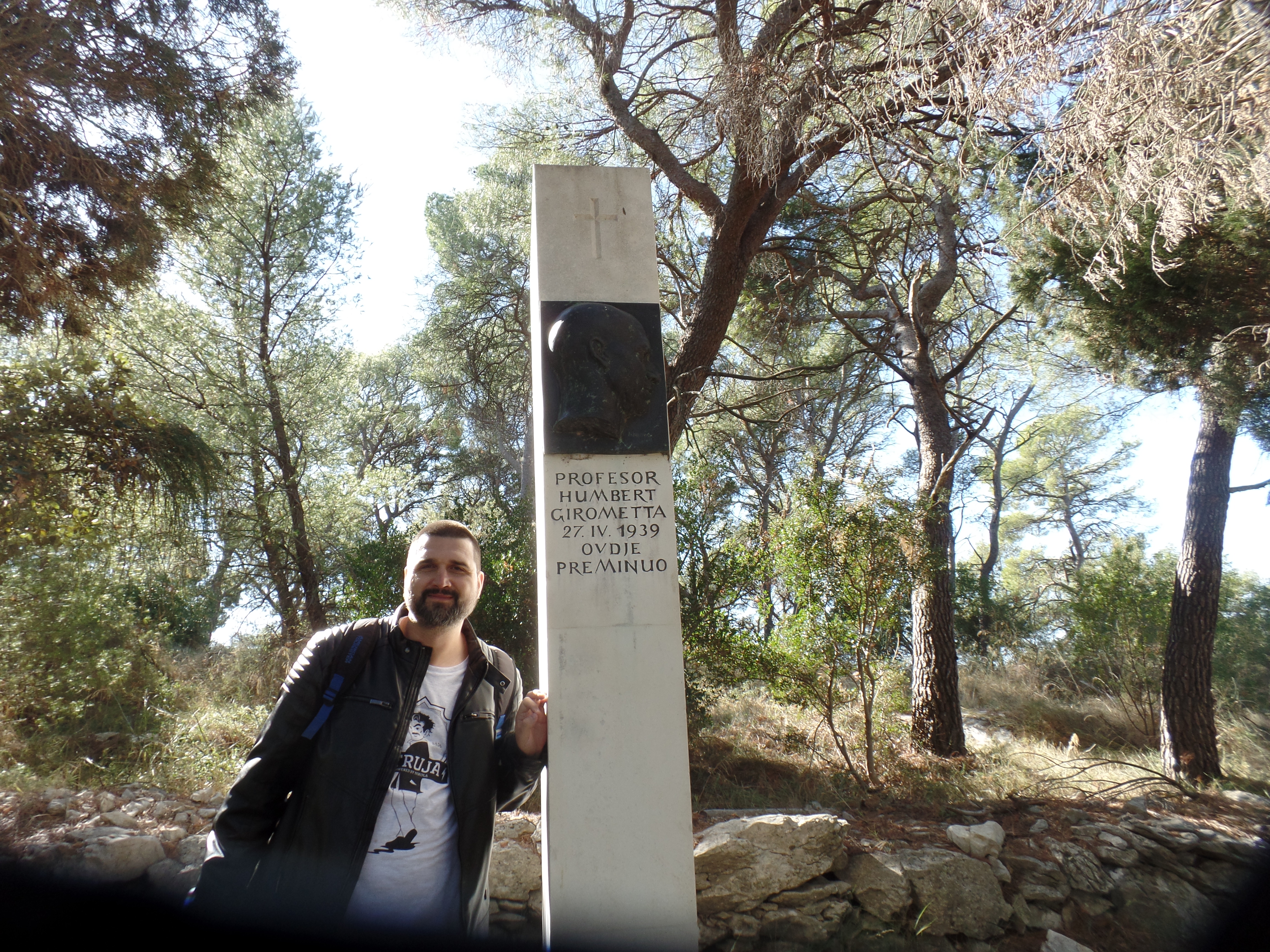
Orofessor Humbert Girometta was the man who spearheaded both this park and the promotion of hiking and wilderness training in the Split area. He was a mentor of Boris’ mentor.
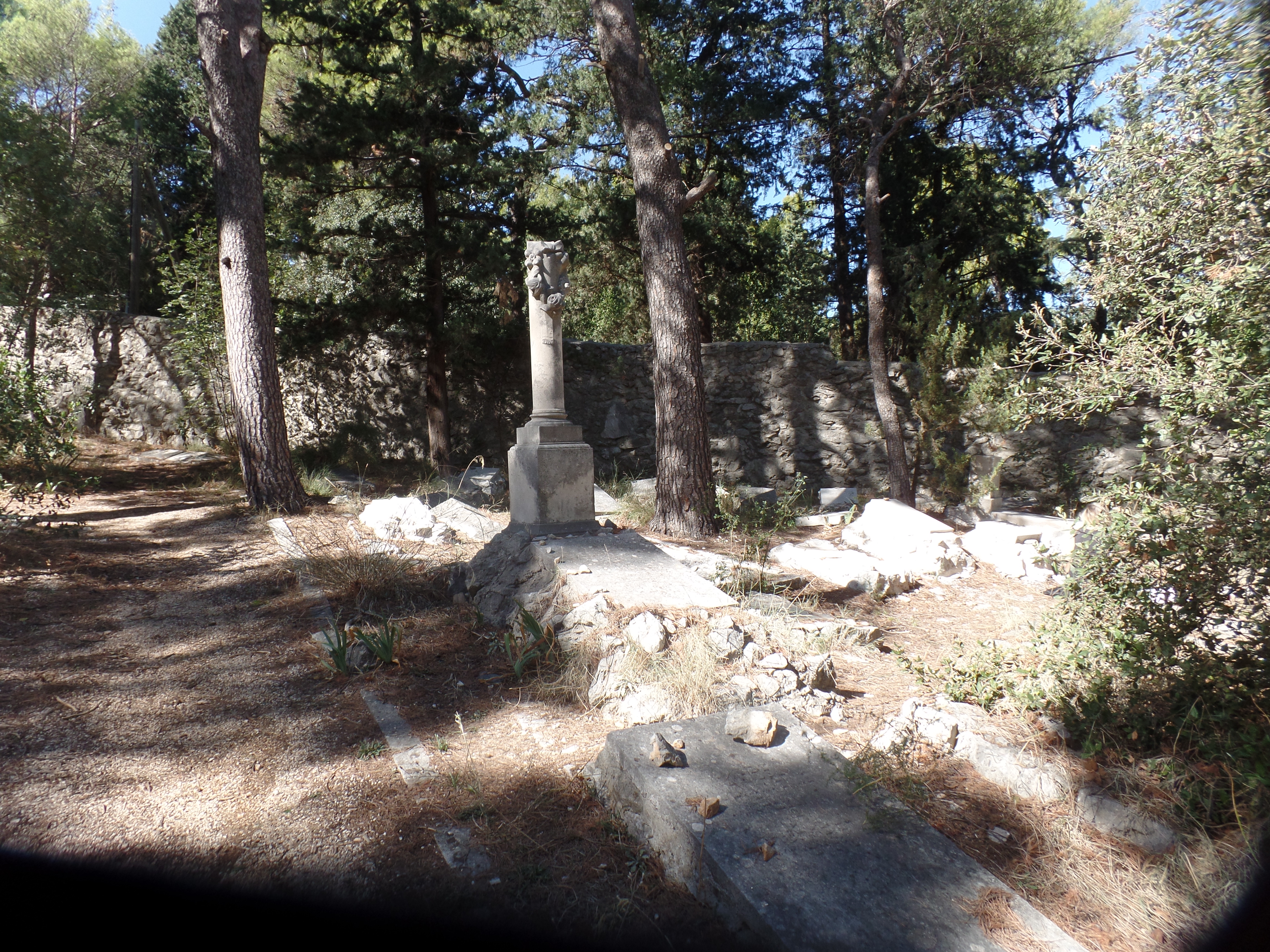
Memorial to Dr. Humbert Girometta, Marjan Hill, SplitThe Adriatic, from the third vantage point on Marjan Hill, SpliJewish Cemetery of Marjan Hill. Jews have been in Dalmatia since shortly after the destruction of the temple in Jerusalem, by the Romans.
We next had a delectable Croatian lunch, of beef in marinade, with a side of gnocchi and beet salad. Ice cream, dipped in chocolate, at Split’s oldest ice cream parlour, followed.
Next were the northern and western sides of Diocletian’s Palace
The exterior of the north side of Diocletian’s PalaceArchway, north side of Diocletian’s PalaceEntrance to North CourtyardAgain, three styles of architecture in one building.The grand north courtyard, Diocletian’s Palace
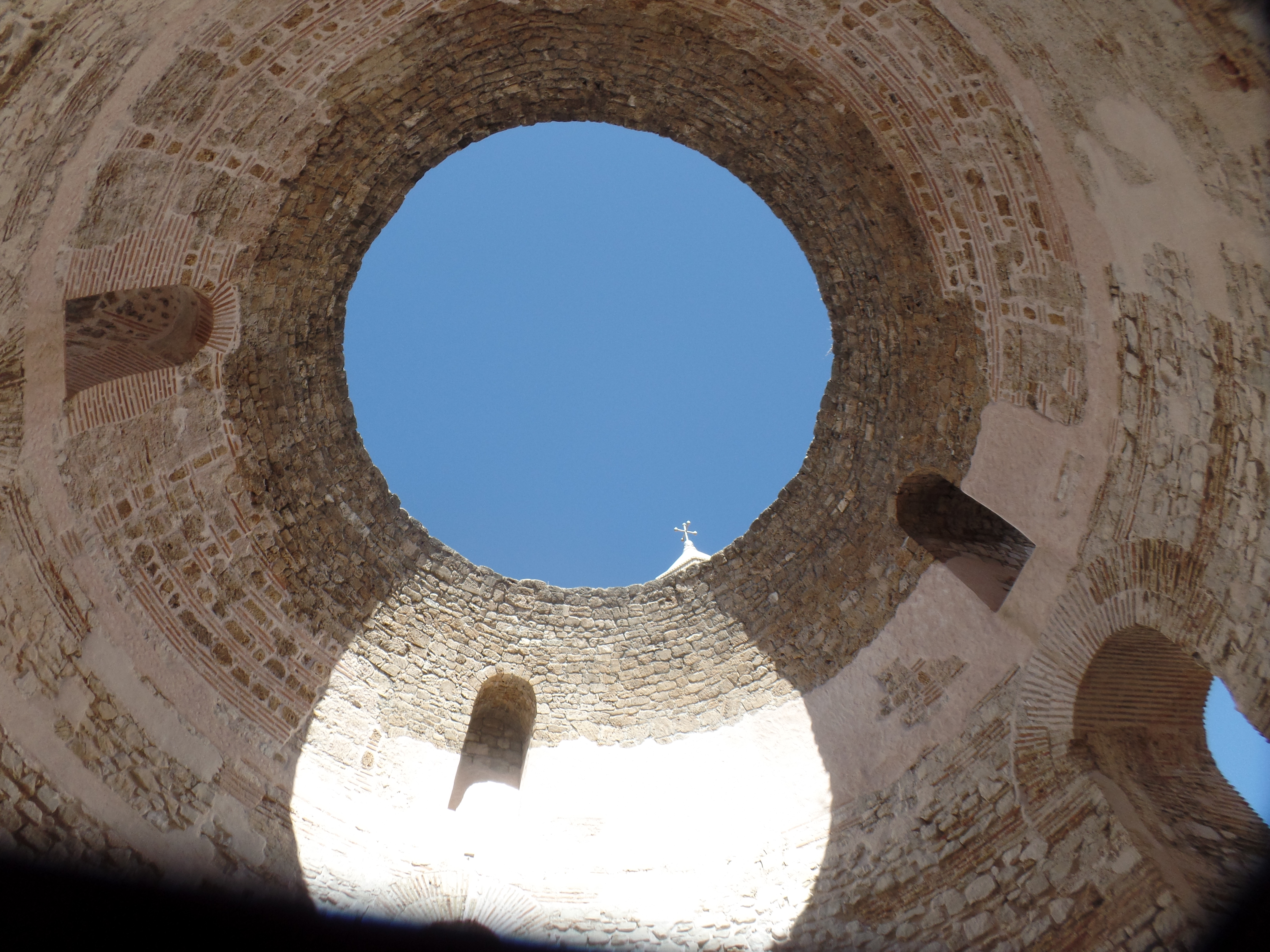
Here is the most astonishing view: The vestibule of Diocletian’s Palace, which once led to his living quarters.
Vestibule, Diocletian’s PalaceUnderneath the palace
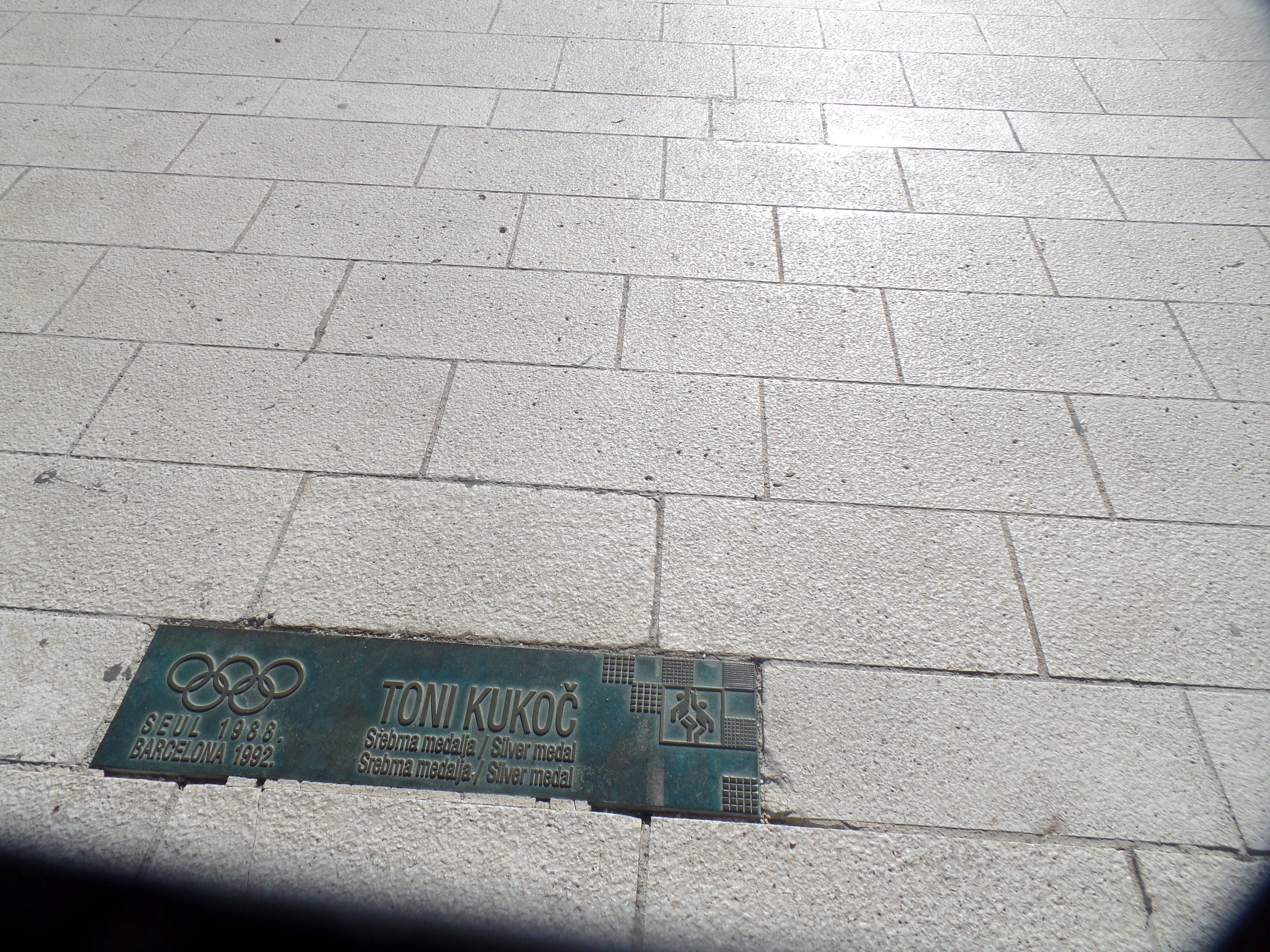
We closed out this extraordinary day with a visit to Split’s Athletes’ Walk of Fame. Many of Croatia’s stellar athletes came from Split.
Toni Kukoc, “The Croatian Sensation” of NBA fameGoran Ivanesevic, a great tennis player
With a few more views of the Walk of Fame, I bid farewell to my friend, Boris and headed back towards Hotel Pax, and a restful night, before the next leg of the journey: Bosnia and Hercegovina. Split will long shine in my heart.
September 30, 2025, Oswiecim, Poland– Today would have been Penny’s 71st birthday. Each year since I first met her, including the fourteen years since her passing, the day always brings a special event, either Baha’i teaching or a visit of significance.
Entrance to Auschwitz-Birkenau Museum
Today, I had the opportunity to visit the sites of one of the darkest chapters in human history. Auschwitz and Birkenau were concentration camps, separated by 3 kilometers, but under the same commander: The infamous Rudolf Hoss (not to be confused with Deputy Fuhrer Rudolf Hess), implemented the use of Zyklon B, a pesticide that became the nerve agent which alone killed a million people. Hoss was tried, convicted and executed in Poland, in 1947. (Rudolf Hess, as is well-known, flew to Scotland, believing he could convince Scottish “opponents” of the War to hasten British withdrawal from World War II. The Scots were not amused, Hess was imprisoned and then transferred to Germany’s Spandau Prison, in 1947. He was the sole remaining prisoner there, when he committed suicide, in 1987, at age 93.)
My late father-in-law was a Jewish-American, served as a soldier in the final months of World War II, during which he was captured during the tail-end of the Battle of the Bulge, and was held in the POW camp at Berga, in eastern Germany. I have been to Berga and seen the V-2 Rocket Factory’s remains. Pop was sent to work the salt mines. When he was rescued by a unit of American soldiers, in June, 1945, he was nearly skeletal.
That was the fate of many, if not most, of the survivors of Auschwitz and Birkenau, as well. They numbered about 6200, out of over 1,100,000 who had been held in at the Auschwitz Complex. Jews, who Hitler and his henchmen wanted above all to exterminate, were the preponderance of victims. Men between the ages of 17-60 were made to work, usually until they were broken, physically and mentally. They were then executed. Women, children, the elderly and the infirm, including the mentally ill, were summarily gassed to death.
Besides the Jews, Romany, Russians, Poles, Czechs, Freemasons and the occasional Afro-Germans, were also sent to concentration camps, and executed by poison gas. Auschwitz and Birkenau were the two largest facilities for such hideous practices. in time, even Christian critics of Hitler found themselves in the gas chambers. Birkenau, being the larger camp, had 30 gas chambers. Auschwitz, with four sectors, had ten. As the Soviet forces closed in on Auschwitz, the fleeing German Army forced most of the remaining prisoners west, on a Death March to Germany and Austria. Thus did many die on their feet, though not as many as were gassed.
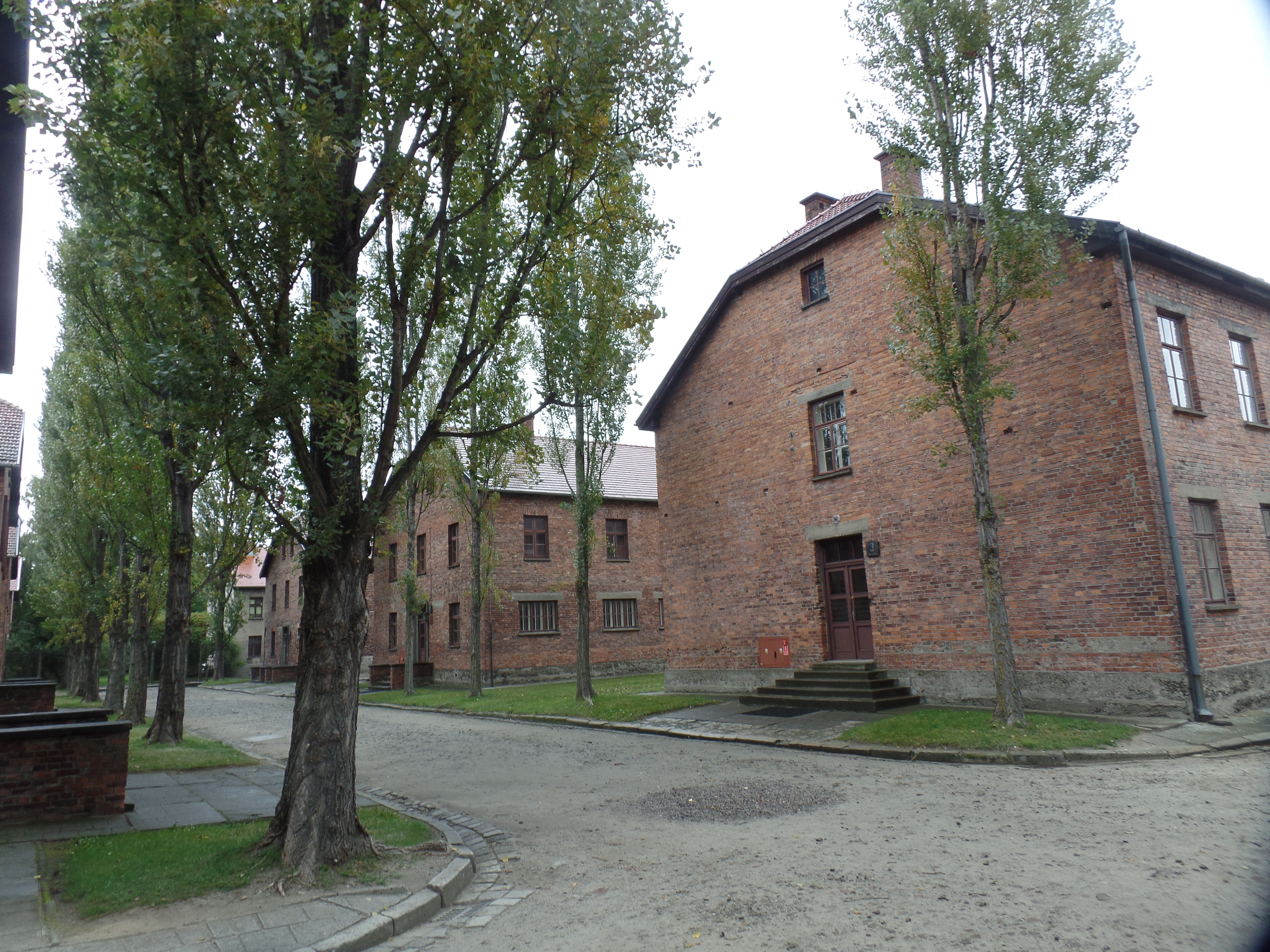
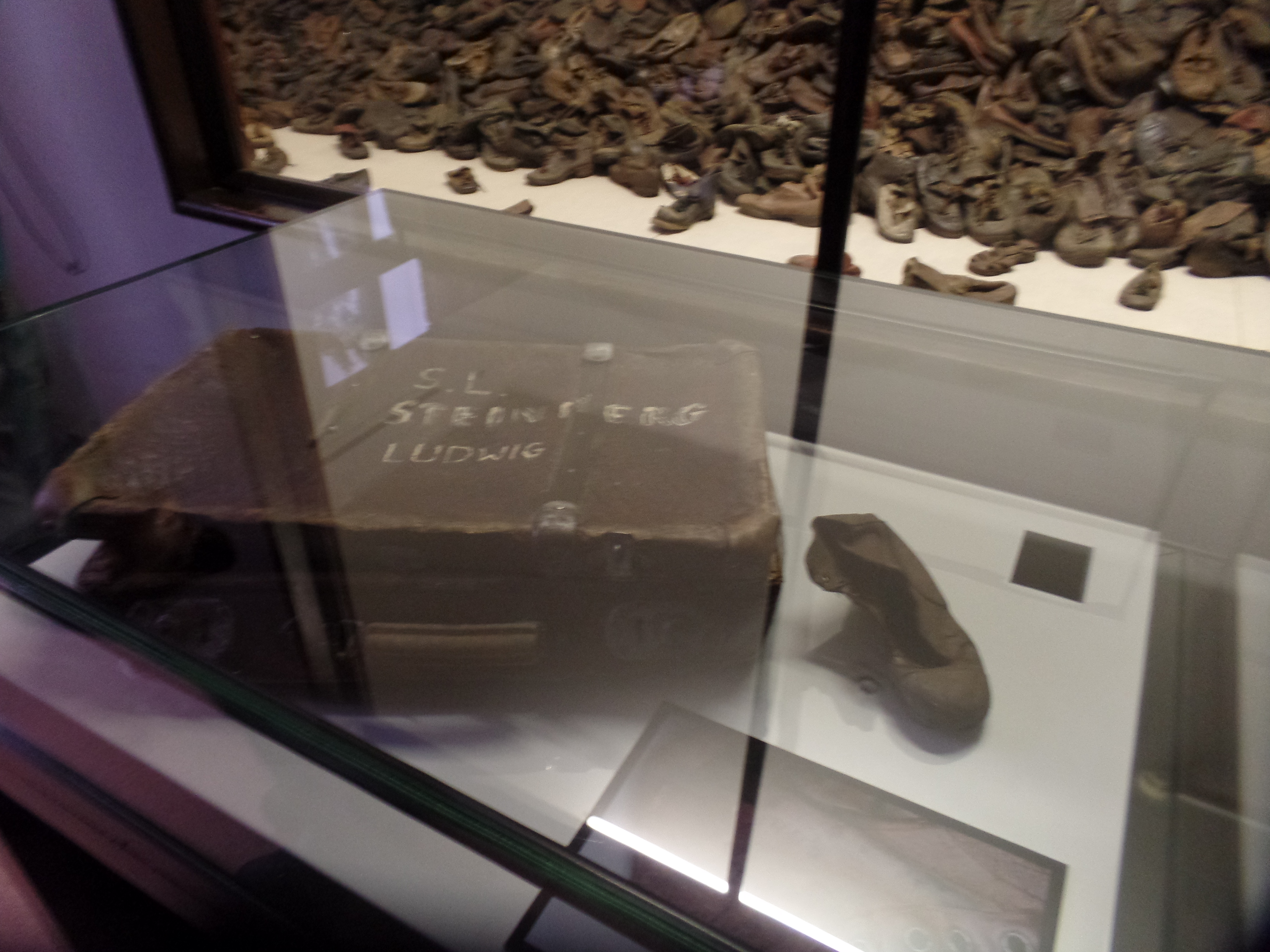
Here are five scenes that are here to remind us that the Holocaust was no Hologram.
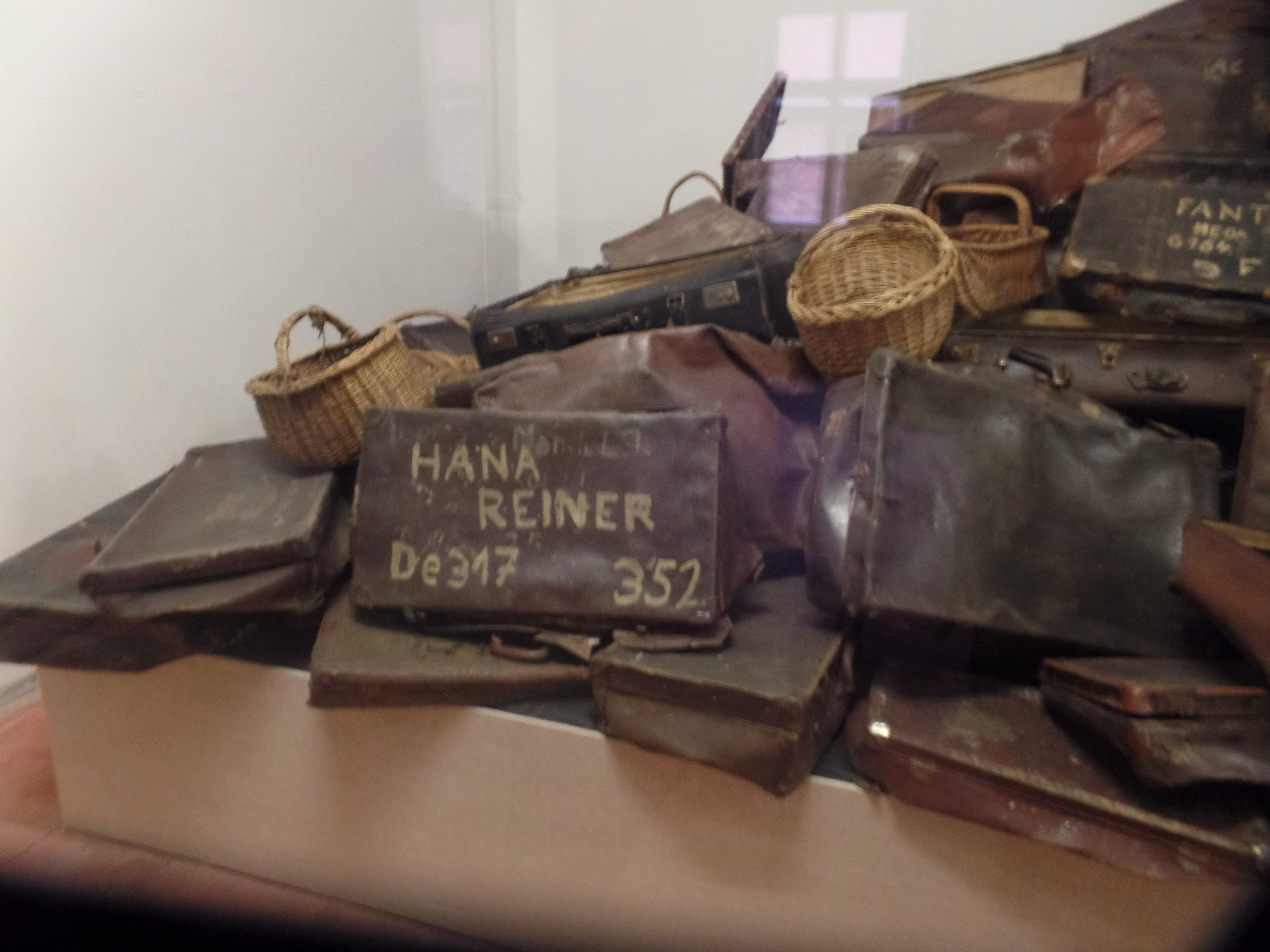
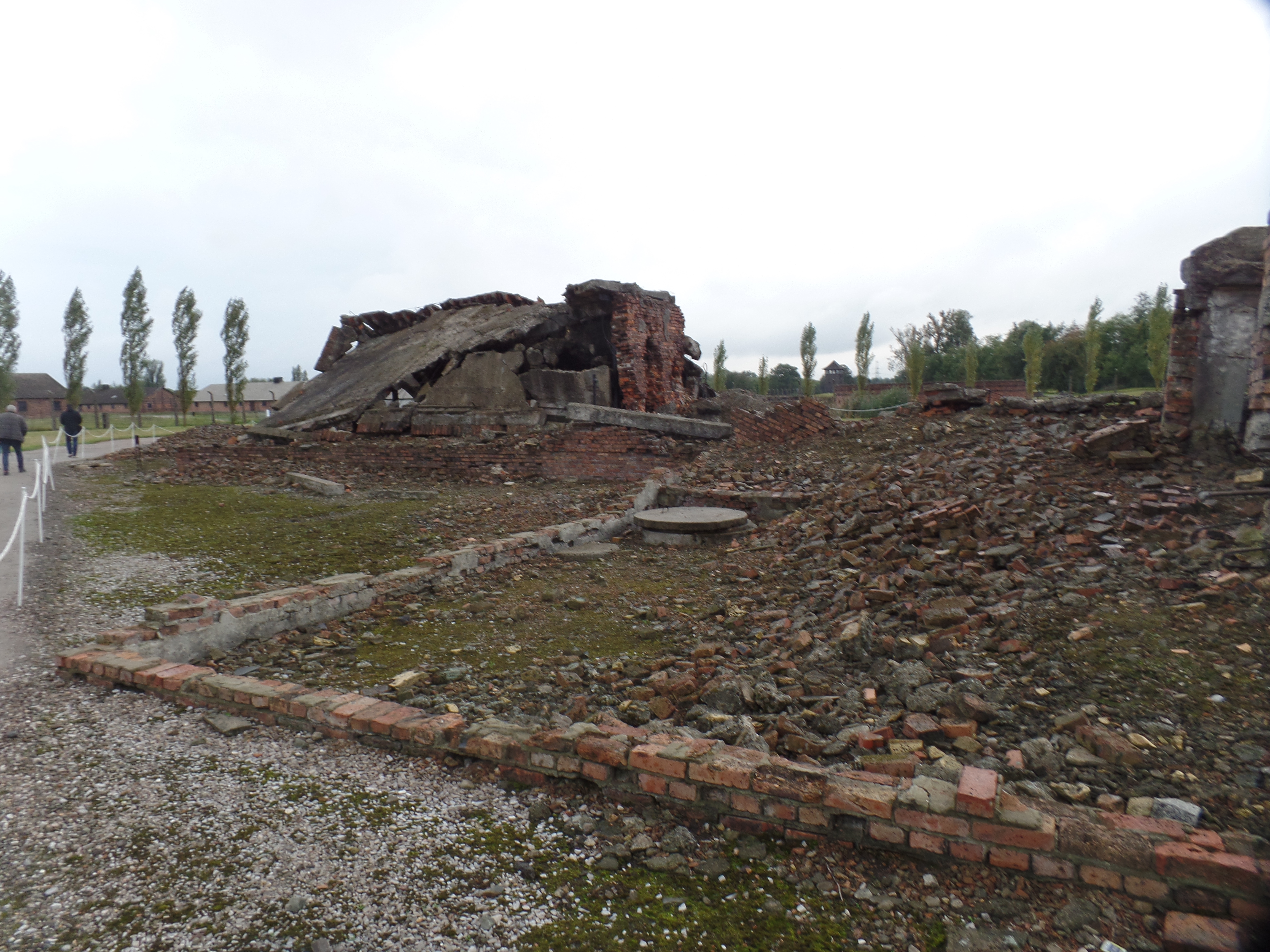
“Barracks” # 1, AuschwitzTorture House,, AuschwitzWomen and children victims, on their way to the gas chambers. (They had been told they were on their way to a glorious new life.)Discarded children’s shoes and a father’s suitcase, with his son’s name written on it.Hana Reiner would not let herself be forgotten. https://www.writeoutloud.net/public/blogentry.php?blogentryid=139212The Nazis themselves destroyed this barracks, rather than allow it to be preserved by the Soviets and Poles,for what it had been,
I thought back to the early morning, when I boarded a train in Krakow, bound for the city of Oswiecim, (the Polish name which was translated into German as Auschwitz). A mentally disabled man chose to sit across from me. He was an Italian, who had little vocabulary, in any language. He knew “English” and “Deutsch”, as well as a few words in Italian and Spanish. While he was annoying to the young man sitting by the window and the well-dressed Italian man who sat across the aisle, I let him show me the soccer games on his phone. At the end of the one-hour trip, he cheerfully said “Grazie!” and went on his way.
That gentle man would not have had a chance to ride the rails, in Hitler’s Germany. He’d have ended up in the pile of corpses found by the Russians, or in one of the piles of ashes that were dumped in the Vistula River or behind the Subcommandant’s House at Birkenau. He can ride the rails, as he pleases, in today’s Europe, not being harmed and harming no one,
Auschwitz-Birkenau, and all places like it, are needed reminders of exactly what levels of depravity can come from a deluded pursuit of false perfection.
September 25, 2025, Aarhus- The gathering was much larger than I had anticipated-and the kitchen manager apologetically told me there was no more room in the dining area during the Communal Dining session. I had come here to see how Danes manage their Slow Food movement.
Staying for the presentation afterward, all in Danish, of course, but worth watching for the dynamics, I enjoyed Miso Lasagna, with the healthful Japanese paste taking the place of cheese. There were organic ground beef and squash lasagna noodles, to round out the dish.
Here is a photo of one of the breakout groups, who discussed the benefits of communal food preparation and dining.
Communal Dining Presentation, at Roberta’s Society Hostel, Aarhus
We have similar gatherings, from time to time, in Prescott and this weekend, in Sacramento, there is a Slow Food Americas festival, with dozens of breakout groups and presentations, celebrating the benefits of healthful food production, sustainable agriculture and animal husbandry and careful composting.
Roberta’s Society Hostel, Aarhus
Roberta was not a person, as such, but a name attached to a concept: The Kalpin brothers, Danish entrepreneurs, established the hostel in a former library. The idea was to get away from the standard “locals shall not stay in hostels” policy that has been in place around the world for many decades, and bring people together in community, thus communal dining and other positive gatherings are regularly held at Roberta’s Society.
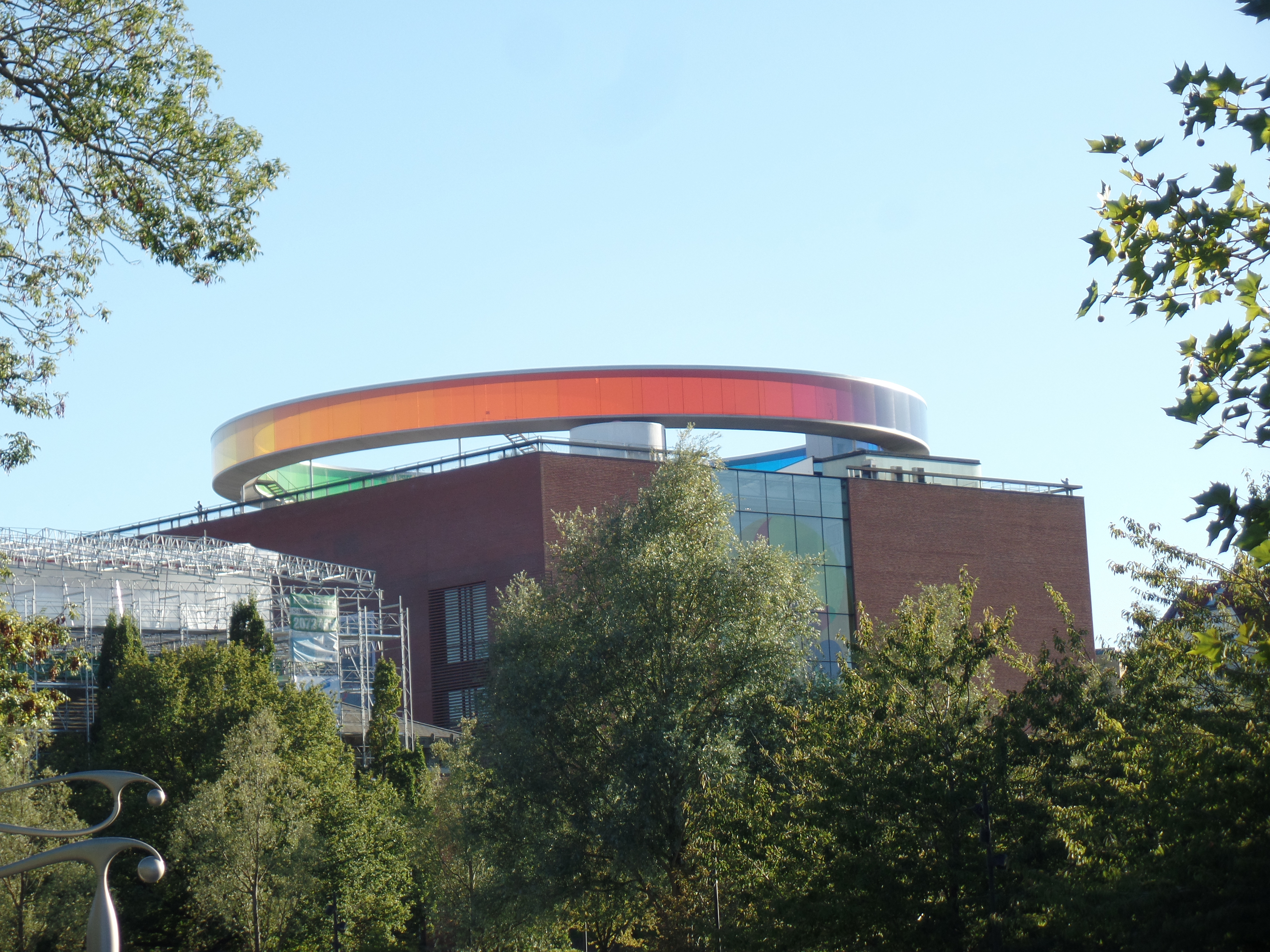
ARoS Aarhus Art Museum
The museum with a rainbow roof was designed by Danish/Icelandic artist, Olafur Eliasson. It is one of the reasons that Roberta’s is fairly easy to find, being just to the west of ARoS, near the northern portion of Aarhus’ tree-lined park. The city is fairly bustling,as any second-largest city would have to be, but Roberta’s is actually within walking distance of the train station.
I found that out, only after catching a bus and learning Aarhus’ unique phone-app based bus fare payment system. That involved going to three different 7-11 stores (The chain is big in Denmark) and finally getting a clerk to sell me a card that is affiliated with the phone app.
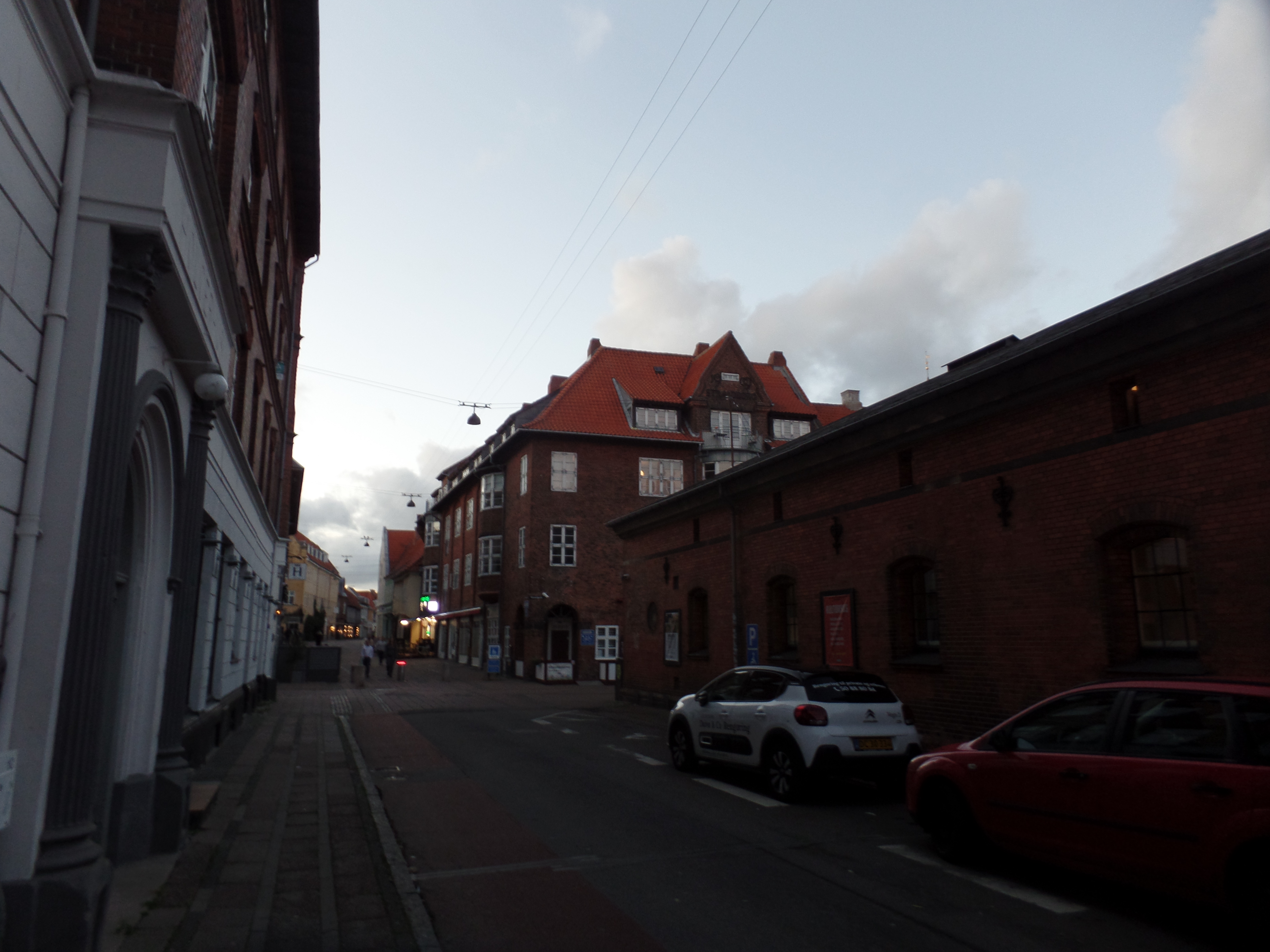
Walking close to Roberta’s, I captured a few of Aarhu’s older buildings, including this stately bank building.
Old Bank building, Central Aarhus
Aarhus embraces the new, in sculpture, as well as in cuisine. Here is Phil Price’s “Snake, Aarhus, 2253”.
Arhus is another fascinating place that would be worth 2-3 more days. Alas, I have promises to keep……..Next up, Berlin.
September 23, 2025, Copenhagen- There is something fairy tale-like about Helsingor. Like a Danish version of Visby, it largely is filled with cobblestone streets. Unlike Visby, its Old Town is mostly a no-car zone. Here are some of the Old Town scenes I promised you last night.
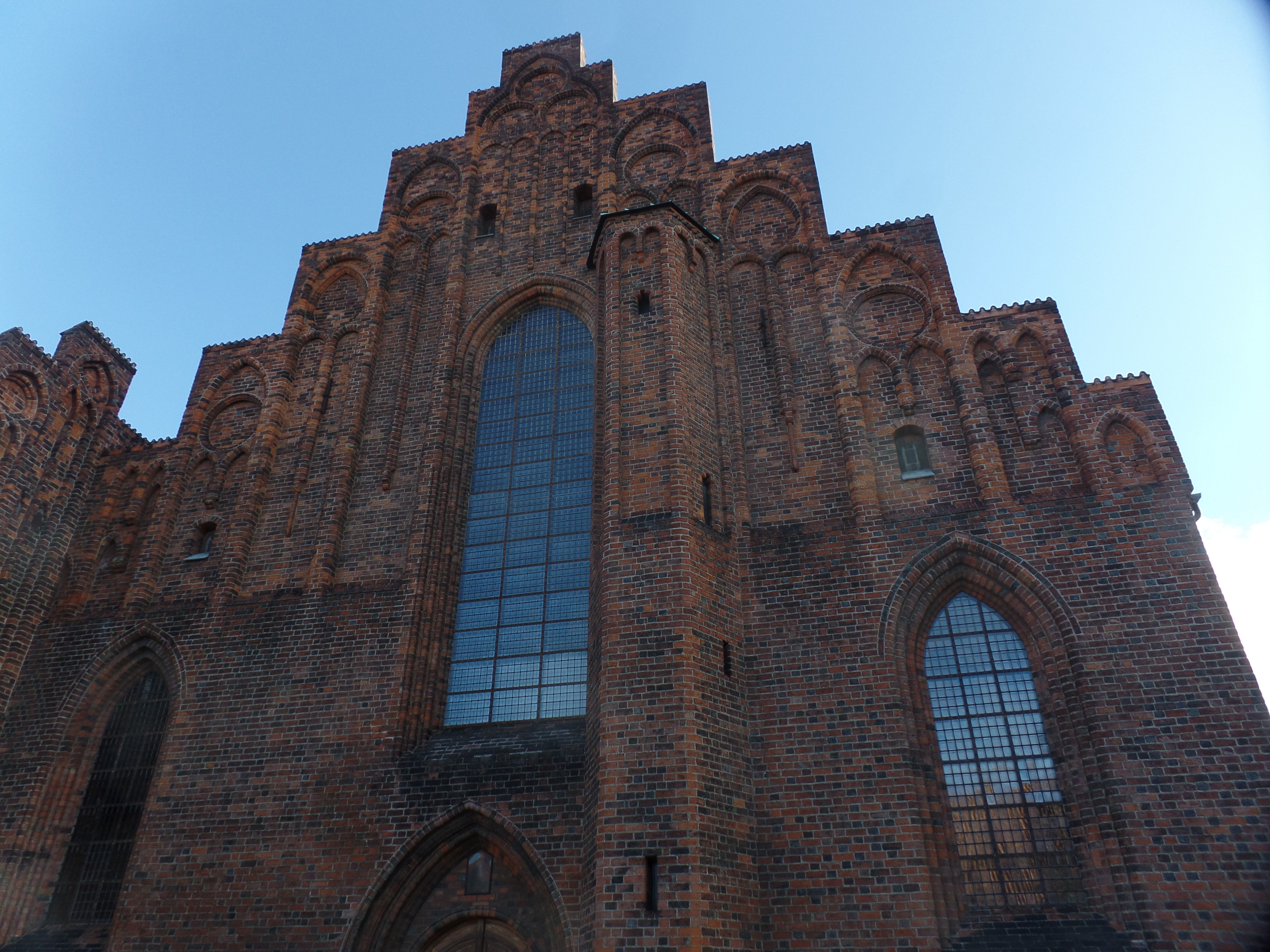
Old Town street, HelsingorHamlet Hotel, Helsingor is across the street from Skandia, where I stayed last night.St.Marie’s Church, HelsingorDom Church (Cathedral) of Helsingor
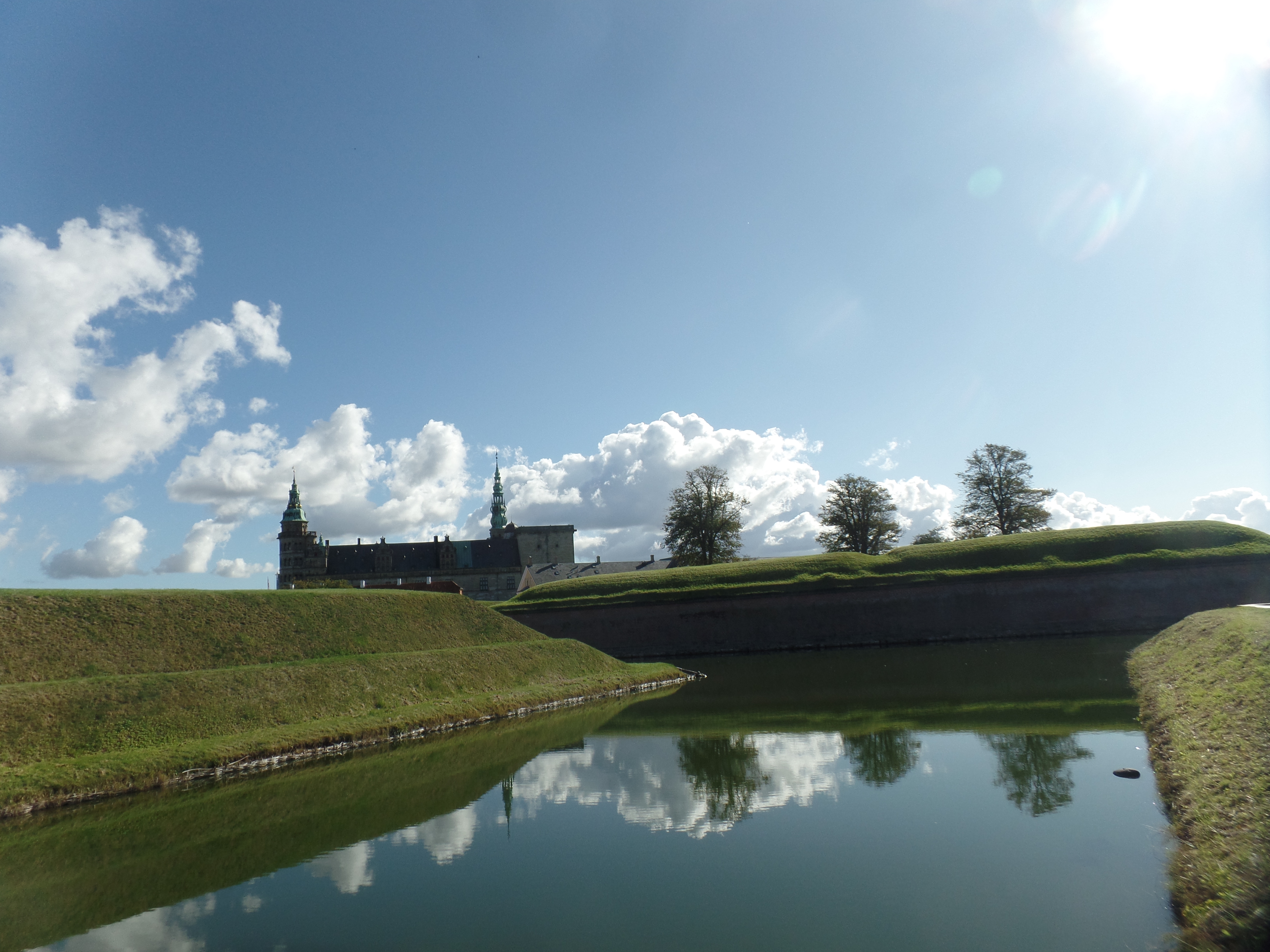
Now, here is the crown jewel of Old Elsinore: Kronborg Castle, which was William Shakespeare’s setting for Hamlet.
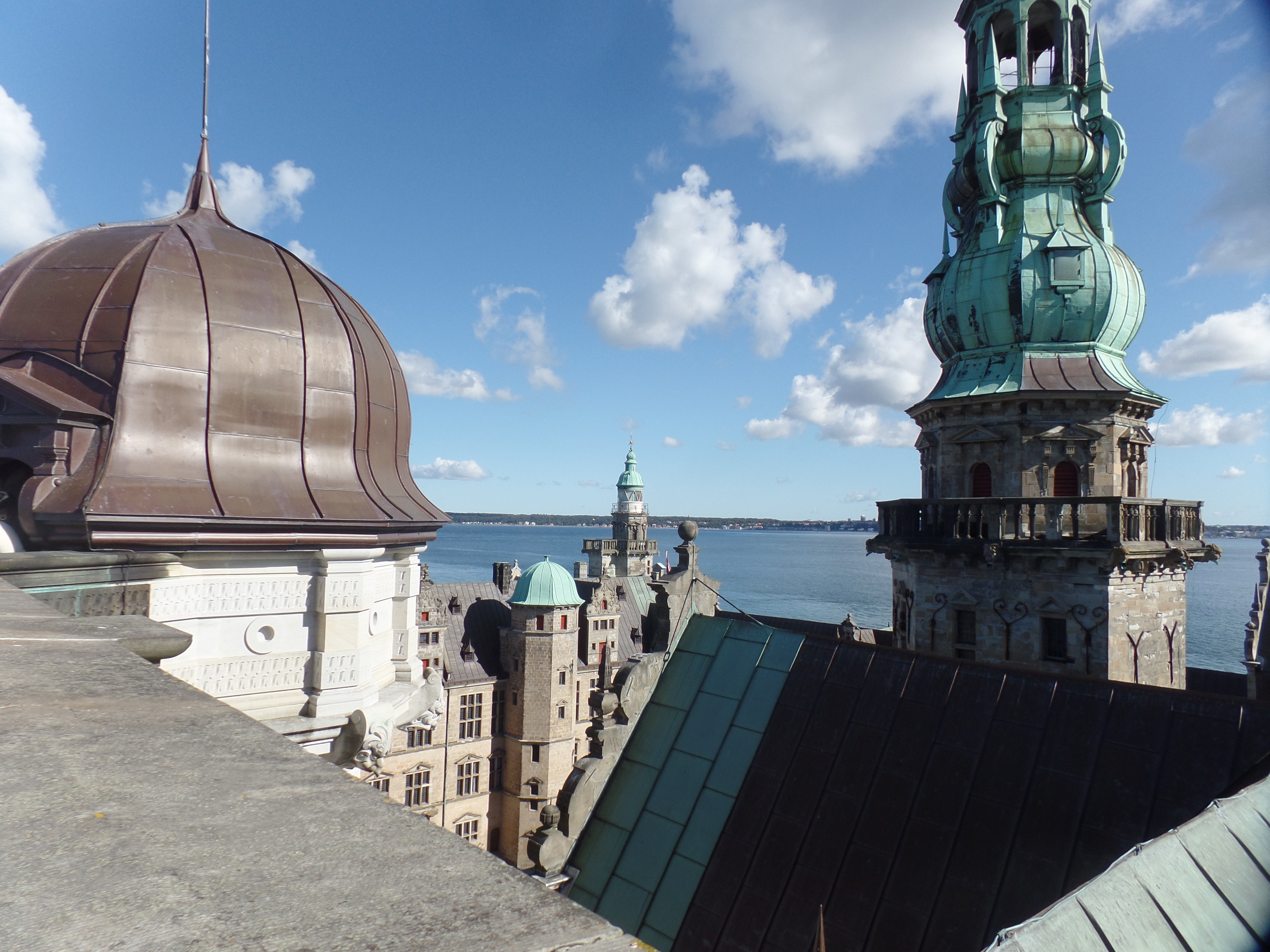
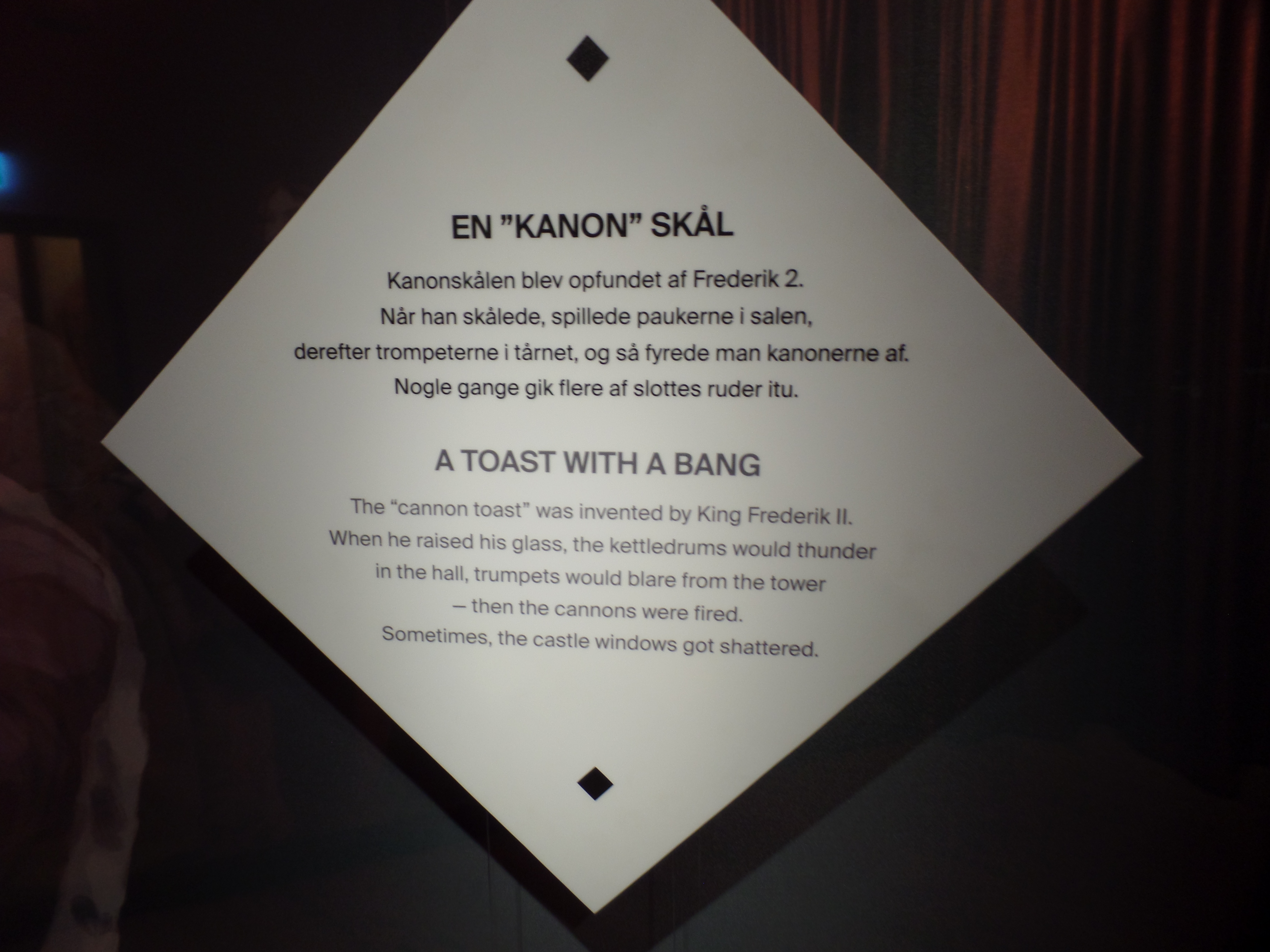
Denmark has been a country since the 11th Century. Around 1424, King Eric VII built the prototype of the fortress, overlooking Oresund, which separates Sjaelland (“SHEL-land) from the Swedish Peninsula, at its narrowest point, In 1585, King Frederick II expanded the fortress into a magnificent castle. The fortress burned down, in 1629, after which King Kristian IV had it rebuilt. In 1658, the fortress proved insufficient to withstand an attack by Sweden, during the war in which the latter seized control of Scandia, the southernmost part of the peninsula, from the Danes. In 1785, Kronborg became a military barracks, as the king had moved to Copenhagen. It was given to the Danish people, in the 1920s, as an historical treasure.
What a treasure it is! Here are seven photos of the grounds and the interior, including the extensive Casemates (the dungeons and underground refuge of the royals, during the war with Sweden.).
The Moat of Kronborg CastleCannons, facing north, from Kronborg CastleKronborg’s Cannon Tower, from the courtyardThe Chapel, which was the only area, not affected by the Fire of 1629.Oresund, and other parts of Kronborg, from the Cannon Tower. This viewpoint is reached after climbing 145 steps. I still have it, even if it means taking 2 twenty-second breathers going up.Holger the Dane, legendary protector of the nation, who awakens when Denmark has met its darkest hour. He otherwise sleeps in the Casemates.In the Casemates-Is down up or is up, down?A Word of Caution. Queen Margrethe I, who ruled Denmark and all of Scandinavia.
No display of a castle is complete without a scene of the ballroom. So here is #8.
The Ballroom
With this lovely visit, I headed back to Skandia, retrieved my bags and headed across the street to the train station. I learned last night, from the ferry monitor, how to work a ticket machine, and so got my own ticket to Copenhagen. Sadly, the Baha’i National Centre turned out to be in a suburban location-so I missed seeing the friends there. I did speak with one on the phone and may be able to join a meeting at my next place of visitation.
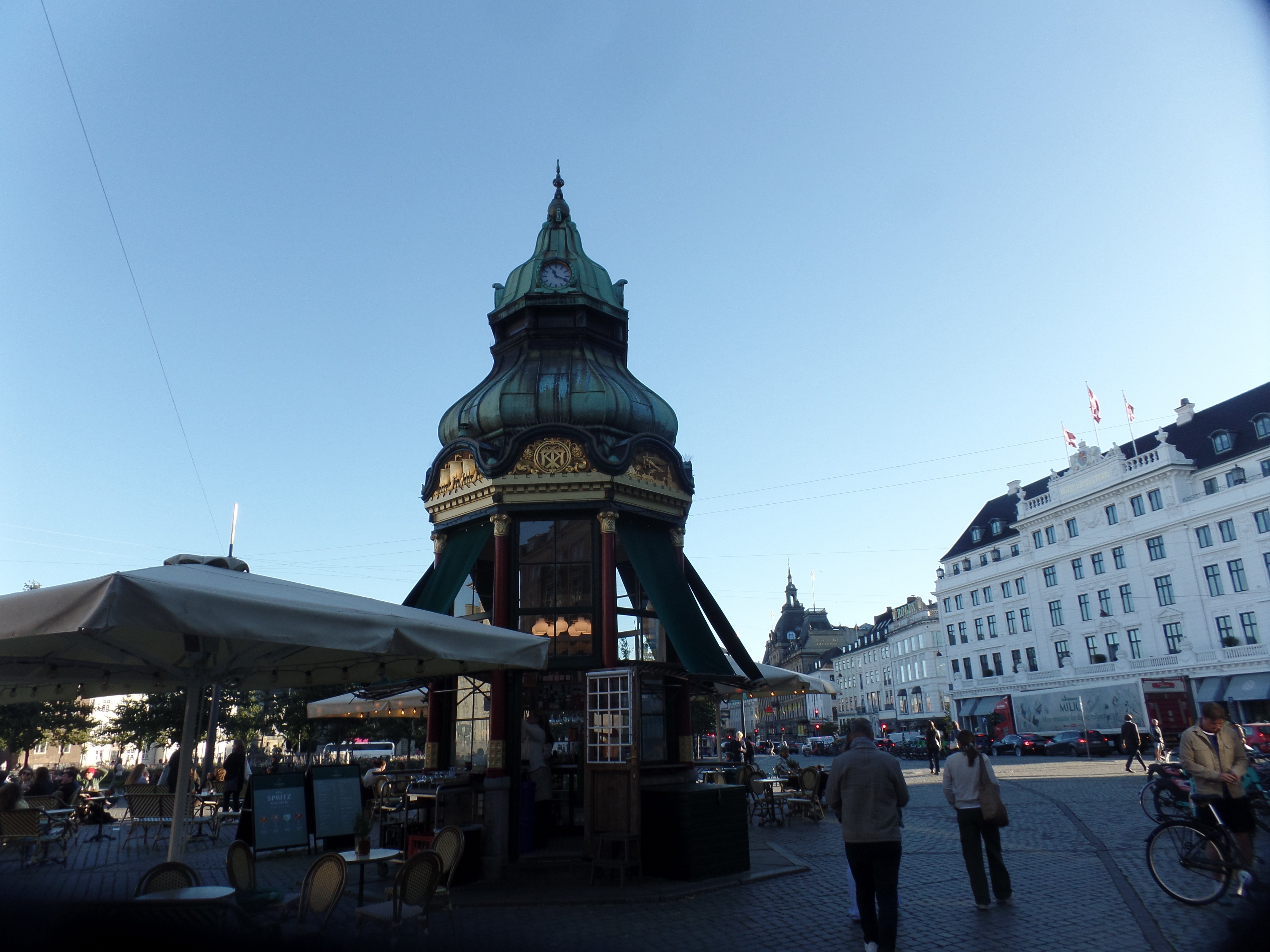
Copenhagen, though, is exquisite. I will be here tomorrow and early Thursday. Let us close with this scene of Indre By, the “Old Town” of the Danish capital, of which more tomorrow.
Ornate small cafe, with Hotel D’Angleterre in the background. An enterprising young woman runs a small coffee shop here.
Rumour has it that Tivoli is temporarily closed. I will check that one out further, tomorrow. Even so, there is plenty of opportunity to keep occupied here.
Today’s festivities will be shared in two parts, as some photos are on the iPhone gallery and the cable for my phone doesn’t quite connect to the Lenovo.
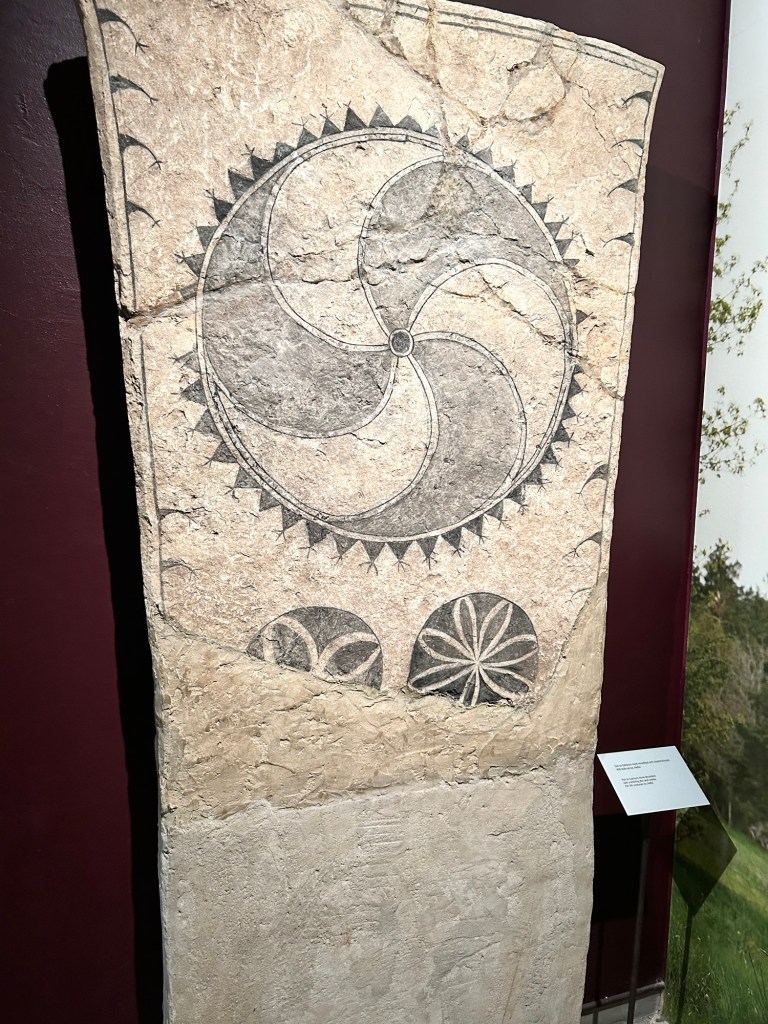
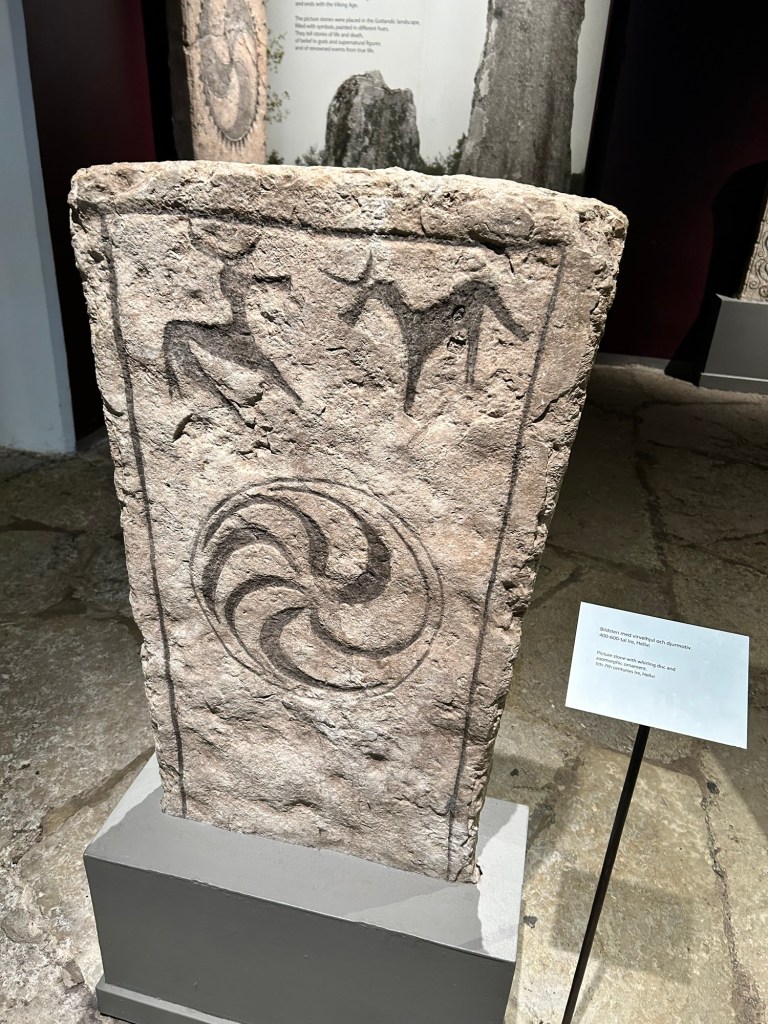
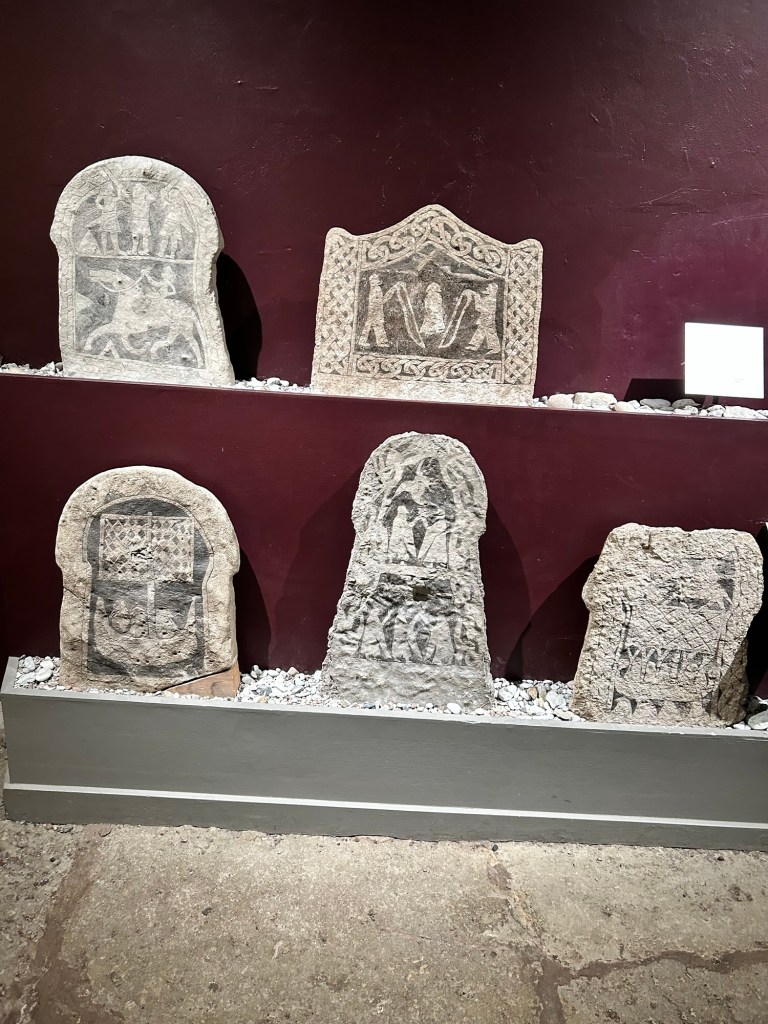
Sharing is caring, regardless, so let’s take a look at Gotland Museum. There are four floors, each with two or three galleries. Floor 0 is where we enter, pay admission, check out the bookstore and spend time with Gotland’s unique Picture Stones.
Many picture stones were originally painted with red, yellow or blue pigment. Most have lost the pigmentation, over the centuries.
The standing stones are all over Gotland and its northern offshore sibling, Faro (not to be confused with the resort city in Portugal’s Algarve). See gotlandpicturestones.se
Here are a few scenes of that gallery.
This came from the early Christian era, most likely commissioned by someone looking to protect his farm.The pinwheel also is a harbinger of good fortune.This tells the story of a horse and a deer.
This one has a sensor, which fills in the colours when someone approaches.
There are several others in the gallery, but here is a tableau of some smaller reproductions from around Gotland.
Up to Floor #1, we find The geology of Gotland. It, like the rest of Scandinavia, was once buried under ice. As the glaciers retreated, the Baltic Sea filled in, while islands like Oland, Aland, Bornholm and Gotland remained above water, being the tops of small hills.
Sandstone and limestone predominate the gently rising, but mostly flat landscape. There are some forests, but Gotland is still mostly farmland.
Floors 2 and 3 feature the history of Gotland and stories told by local children and youth, respectively. The historical part begins with a Norse creation story. Odin, representing the Sun, brings the world to life. He and other deities guide people in the ways of right living. All the while, the ravenous Wolf watches and waits. At the end time of Ragnarok, the Wolf will swallow Odin.
On that cheerful note, the story of Gotland proceeds, through its early days of increasingly successful farming, the Viking Era, Hanseatic League and incorporation into the Kingdom of Sweden.
It was during the Hanseatic period that the wall encircling Visby was built. At the East Gate, all peasants wanting to sell produce at Visby’s market had to pay a toll. Those trying to sell elsewhere were fined pr flogged. This was the stricture of the manorial system.
On the third floor, there are both paintings and recorded stories by Gotland residents.
The painting above shows the juxtaposition of hillside Visby with the sea.
The museum was founded in 1875, by Per Arvid Save( pronounced SAH- vay) and the Friends of Gotlanf, with the aim of preserving the island’s rich heritage and sharing it with the world. Dr. Save encouraged the farmers and fishers of Gotland to safeguard the picture stones they found about their homes and nearby lands.
Next, I will visit the ruined churches of Visby’s centrum, with the help of my laptop.
September 17, 2025, Nynashamn- “Where is ‘That Guy’ staying, Momma?”, the little one asked, referring to yours truly. He and I actually bonded fairly quickly, though he’s typically slow to warm up to new people-as so many first-borns are. I was fortunate to meet friend “Asassa Gal’s” husband and children, at the end of a day of looking about this small port city’s Centrum, or downtown.
She and I went first to Espresso House. A key to my Swedish experience was to enjoy kanelbulle, a cinnamon bun. Espresso’s rendition did not disappoint. Kanelbullar are served warm and are not overwhelmingly huge ‘meals in themselves’. It was just the right size for a mid-morning snack.
Next up was Nynashamn Kyrka, the Lutheran Church that is atop a small hill. It seems to be most often closed, judging from other Trip Advisor reviews, and so it was today. I got plenty of coverage of the exterior, though, both just outside and from the harbour.
Nynashamn KyrkeNynashamn Kyrke, from Harbourside
We walked around the harbour, along with a group of pre-schoolers, who were put for a morning of outdoor exercise. This is quite common in Sweden, (and is getting more so back in Home Base I.) The kids ran for part of the path. We opted for a slower pace.
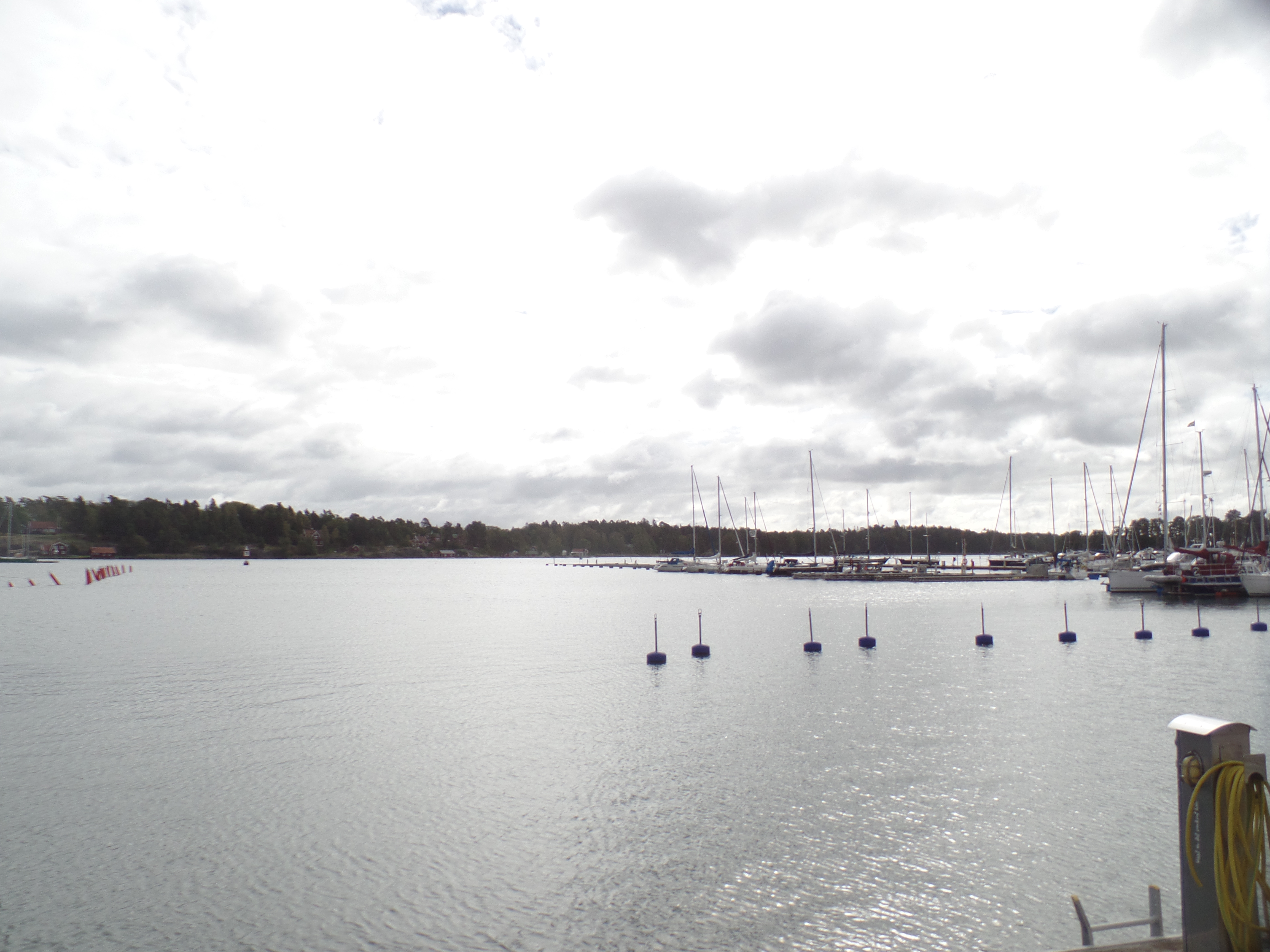
Buoys marking shallow waters, Nynashamn Harbour
Sas was gracious throughout the day, as was her family in the evening.
In late afternoon, we five enjoyed early dinner at Pizzeria Arena. “Family” pizzas here are huge, as one might expect. My Stockholm Archipelago family will get several extra meals from this excursion-I wouldn’t have it otherwise. I look forward to hanging out with them this weekend, after a day or so in Gotland, with its walled city of Visby.
For now, here is a sunset view of Nynashamn’s west harbour.
September 14, 2025, Stockholm- I went on a short walk today, starting at this door.
Nomad Cave Hostel
The route was undefined; I was going west, passing Stockholm’s seemingly endless supply of huge, well-constructed stone behemoths. Crossing Stockholm Strom (channel), on a well-trod foot bridge, after heading past a few large churches and Stockholm Stadhuis (City Hall), I noticed several people going up or down a slight incline, near a long, most ornate complex.. This was it-Stockholm Palace, among Sweden’s greatest treasures, in the heart of Gamla Stan (Old Town).
The cheerful ticket clerk asked whether I was interested in seeing four museums for the price of admission to Gustav III’s Antiqmuseum. One of those was The Royal Palace Apartments, so I readily agreed.
Gustav was King of Sweden at a time when the country was much larger than now. It was a key player in European politics, on the order of France, Britain and Russia, thanks to his great-grandfather, Gustavus Adolphus, for whom he was named. His reign occurred at a time when many monarchs were currying favour with the Pope, in order to get their hands on Roman relics. Gustav managed to get possession of a trove of imperial busts-f both men and women, with a few animals thrown in. These treasures are displayed in the namesake museum, in two galleries:
A hall of female Roman statuaryHall of Male Statuary
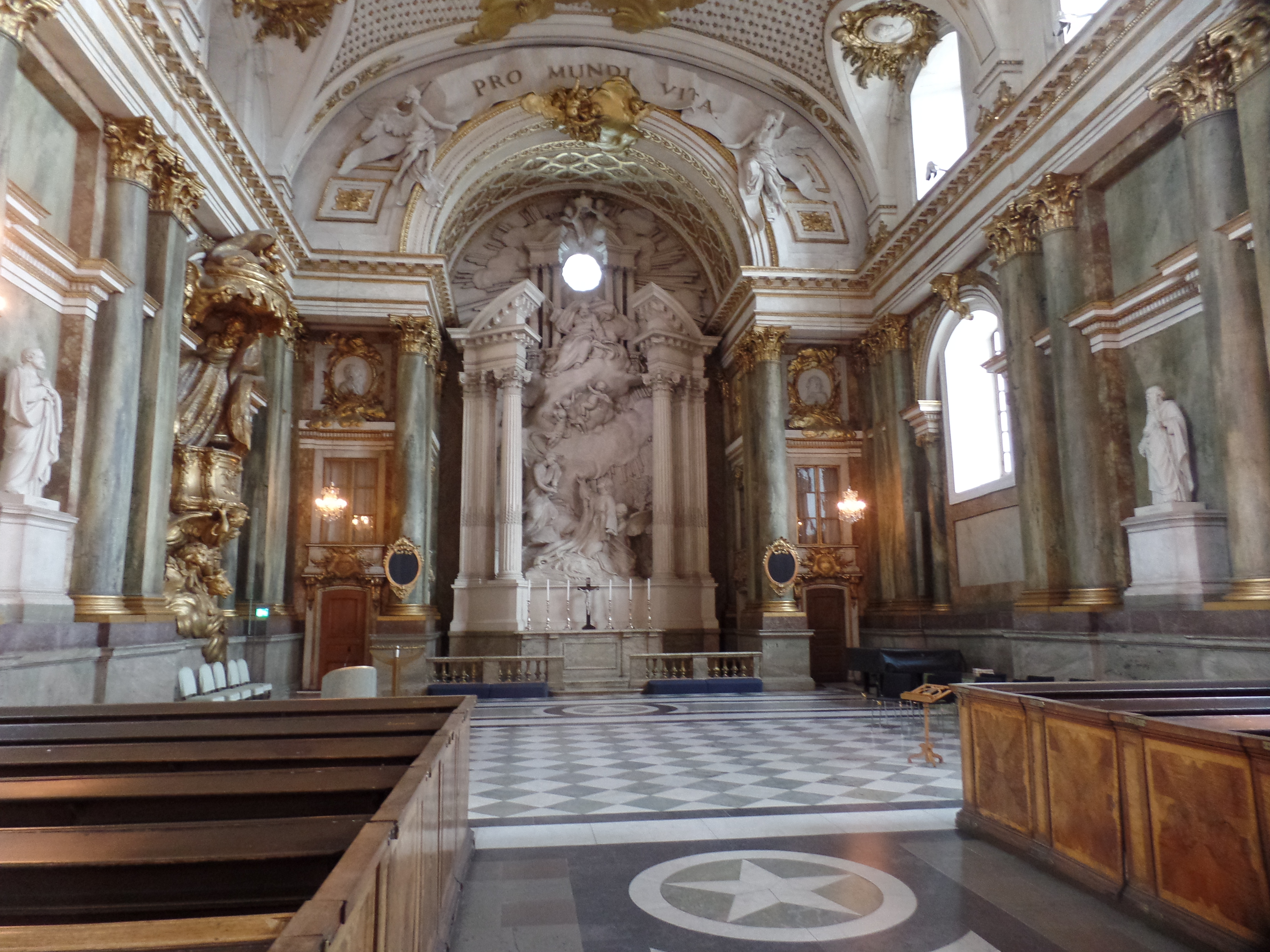
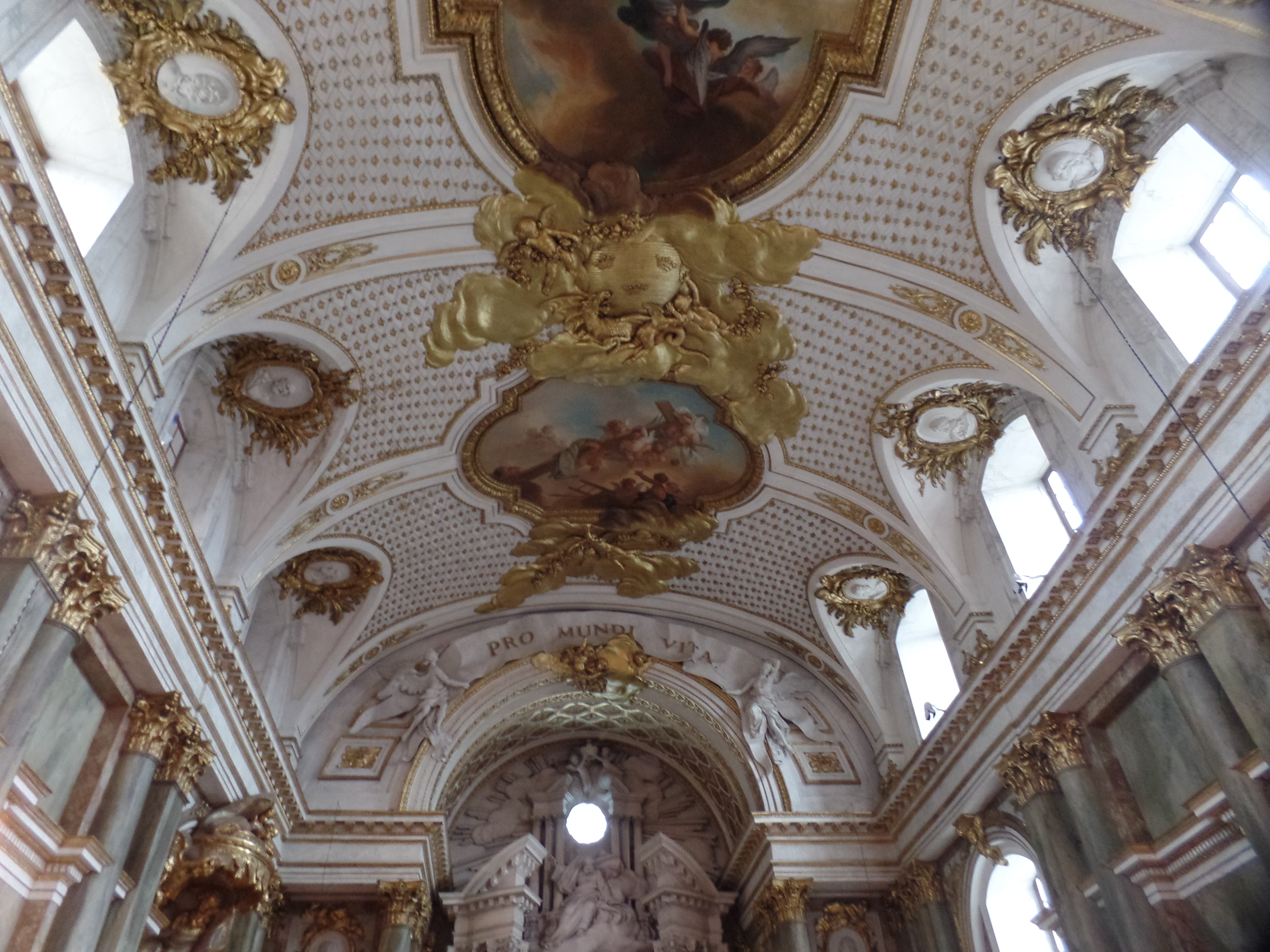
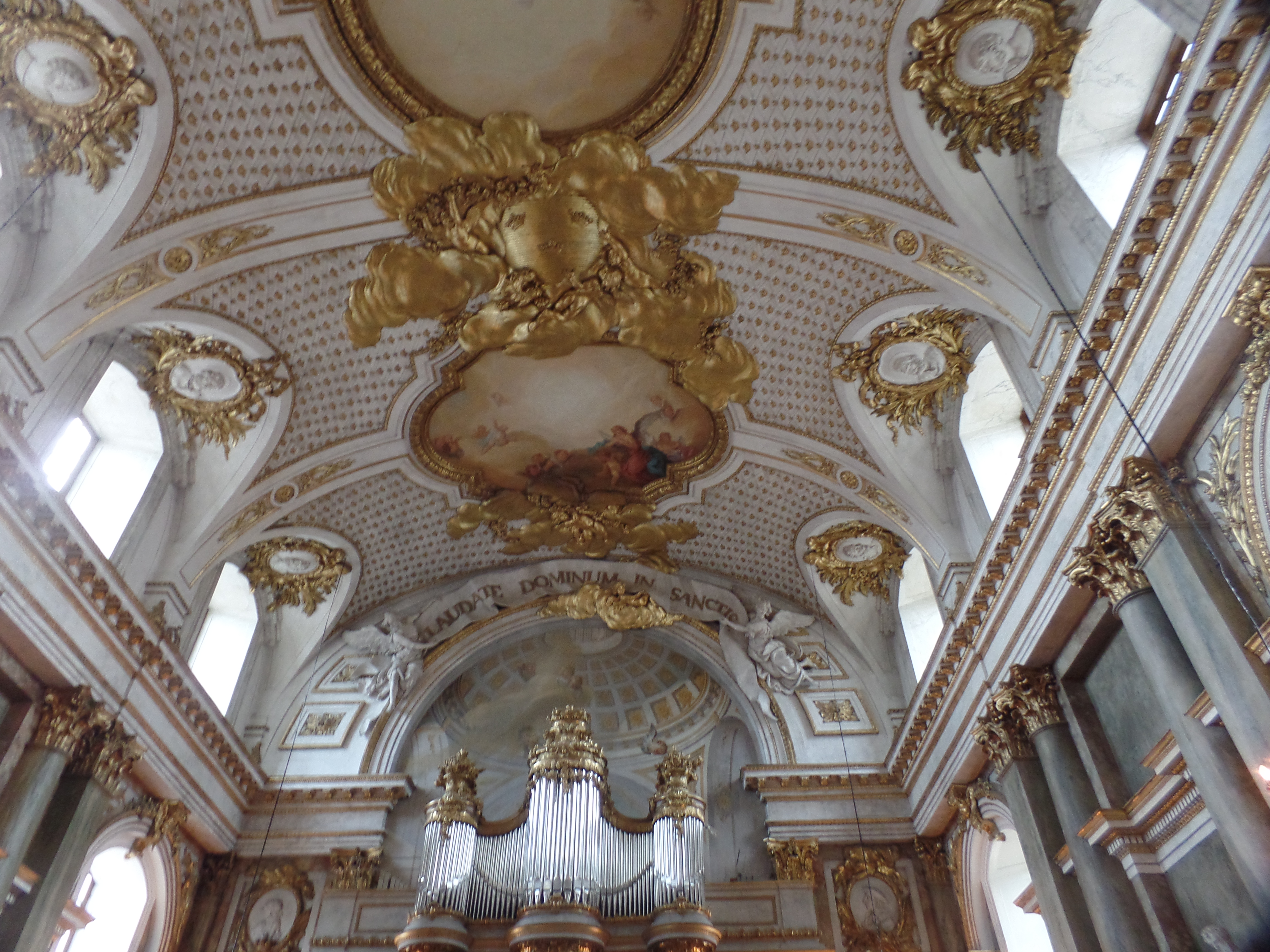
Around stoic, and obviously dedicated, palace guards, I went to the north entrance to the Palace, joining a small group of admirers of House Bernadotte (Sweden’s royal family). First stop in Kungliga Slottet was the Royal Chapel, set to the east of the main royal apartments. This edifice has served Swedish royalty and their courtiers since 1200.
The Great AltarView of the Ceiling (Above and below)
Crossing the large foyer, and up another set of stairs, I was greeted by the Hall of State, with Queen Kristina’s Silver Throne. It is here that foreign dignitaries presented themselves to the monarch. Kristina was unique in her approaches to life and to ruling. She wanted to end the Thirty Years War in a peaceful way and believed that, as Queen, she should not submit to a husband’s dictates. For these, she was forced to abdicate, and settled in Rome, under the aegis of Pope Alexander VII.
The Silver Throne of Queen Kristina
The Palace has seven floors and over 800 rooms. We got to see 15 of them.
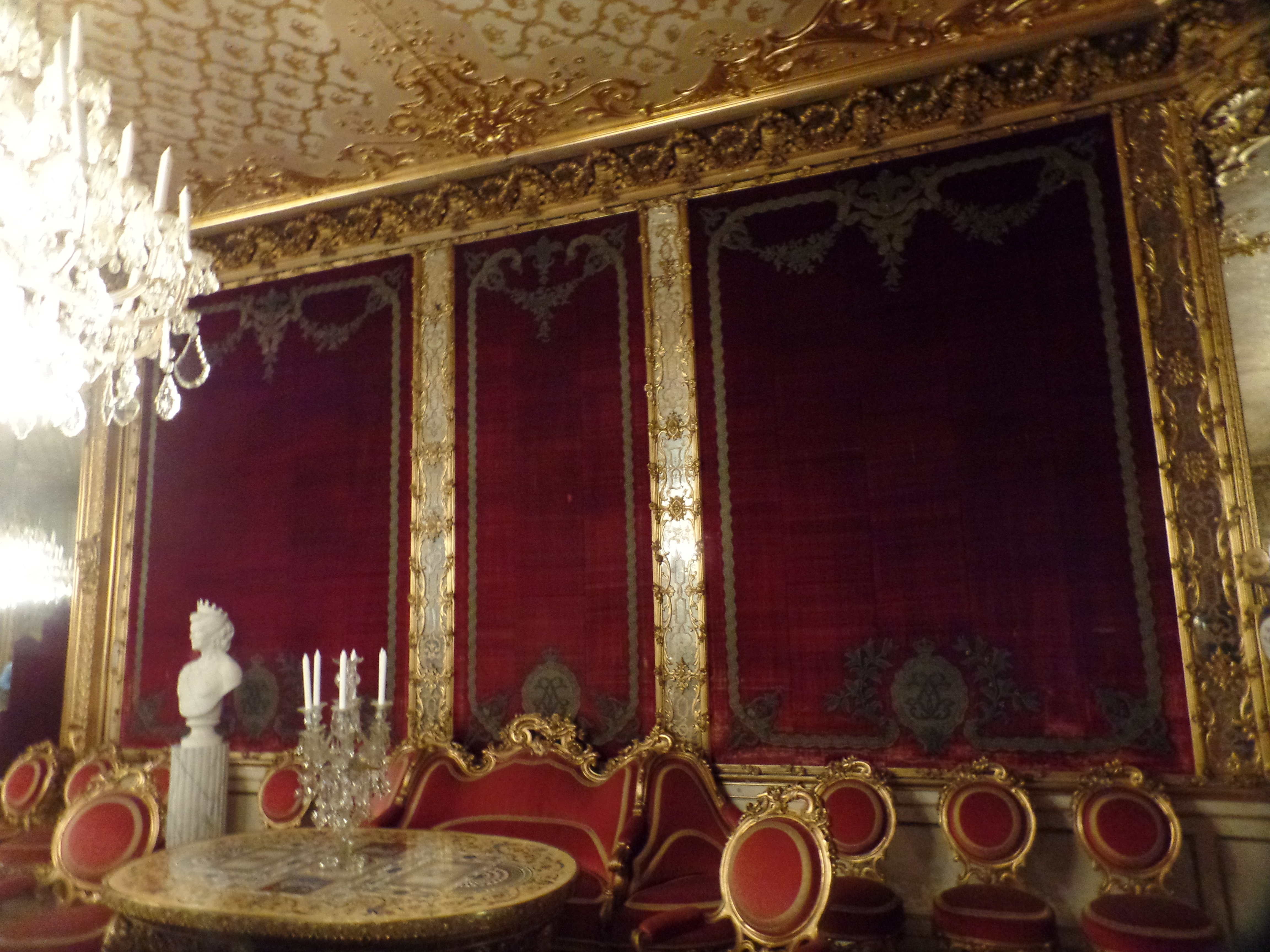
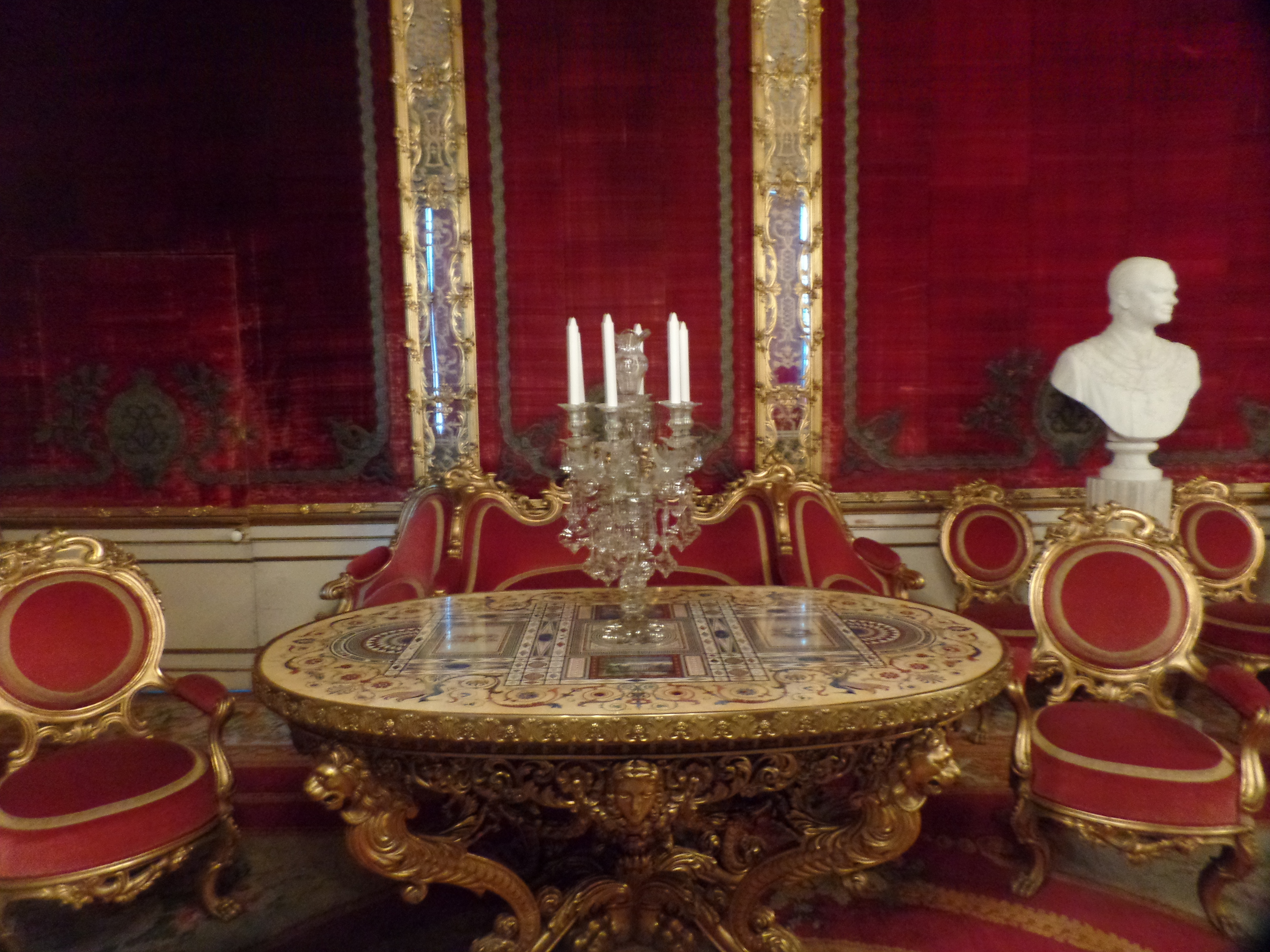
Several of these were Apartments of the Orders of Chivalry, which display the various Knighthood Orders.
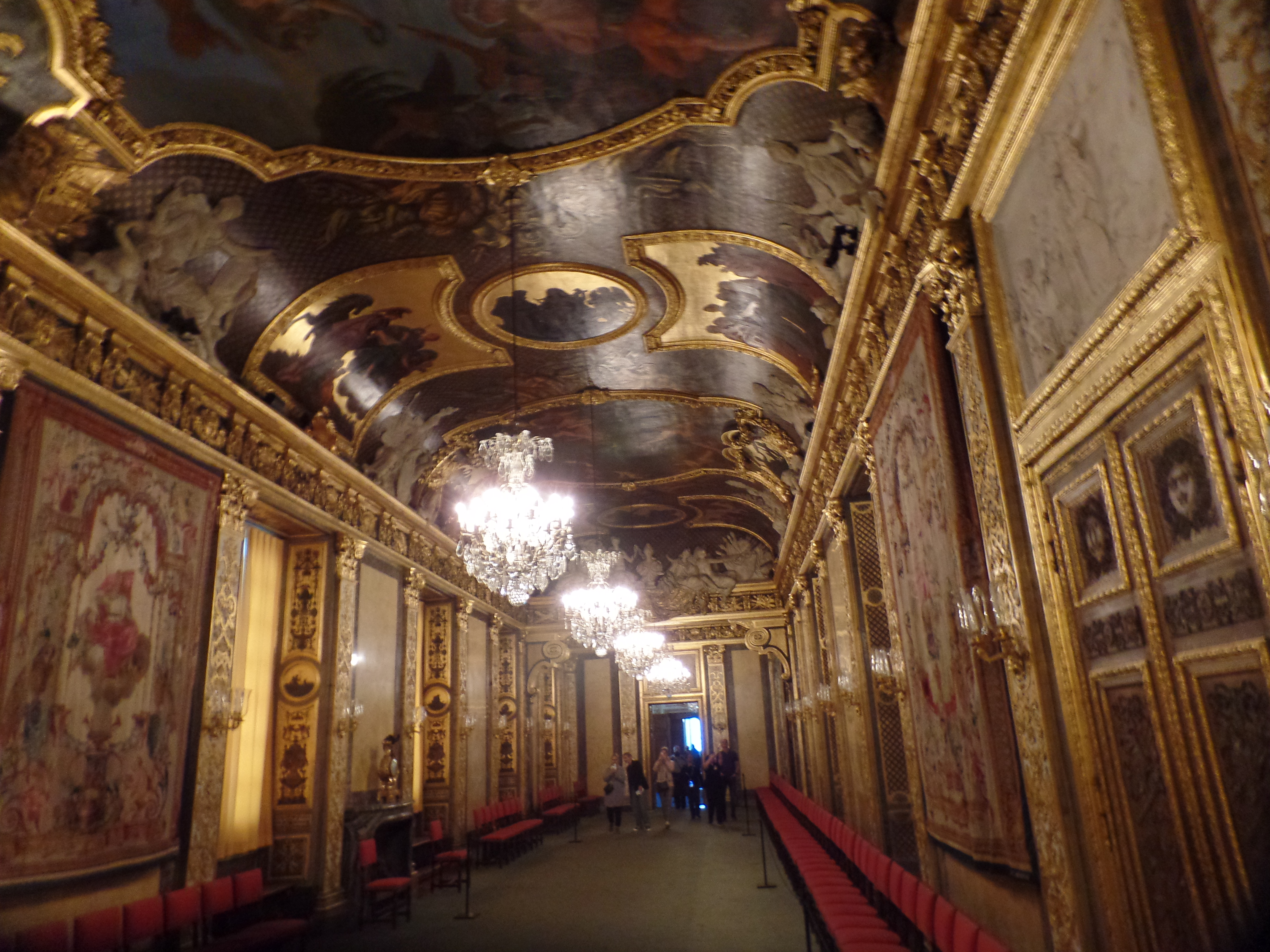
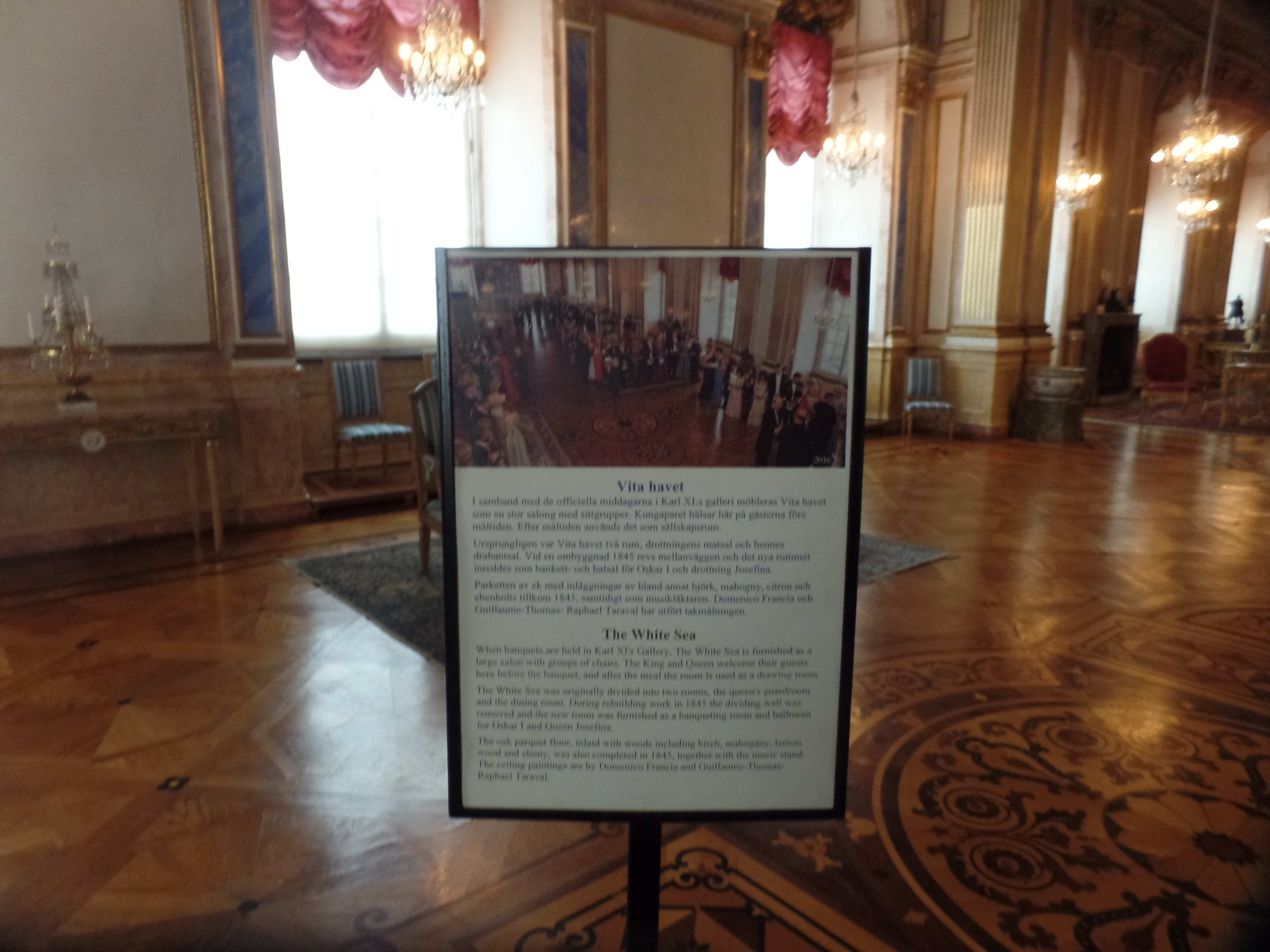
View of the MedallionsCoat of Arms of House BernadotteAudience room, Royal Apartments“Majesty will see you now!”King’s Conference Room. Karl Gustav XVI wanted a cheery atmosphere for his meetings.King’s ThroneThe Cabinet RoomLong Hallway to Royal Banquet HallExplanation of the term “White Sea”, with regard to the Royal Banquet Hall. It was originally two separate rooms, one for each monarch. In 1843, King Oskar I determined it was best that he and Queen Josefina dine together, with all their retinue present as deemed appropriate.The White Sea (Royal Banquet Hall)
The last area I visited in the palace was Three Crowns Room, in the palace basement. Here, such things as the wood piles used to heat the structure were stored and following the Great Fire of 1697, which resulted in the Chief Fire Warden and two of his deputies being found negligent, the three hapless men had to run 7 gauntlets of 200 soldiers, who beat them with sticks. The Chief Fire Warden did not survive this punishment.
Here are some artifacts from Three Crowns Room.
View of the very depths of the excavation (Above and below)Full view of the exit from Three Crowns
I walked from the palace, along Stockholm Strom, then over to the Houses of Parliament and along part of the pedestrian mall, which leads to Central Station.
I will show some of the other highlights of Old Town and central Stockholm in the next post. Then it will be time to pay a visit to the great ship Vasa.



















































 A Sagittarian Seeker