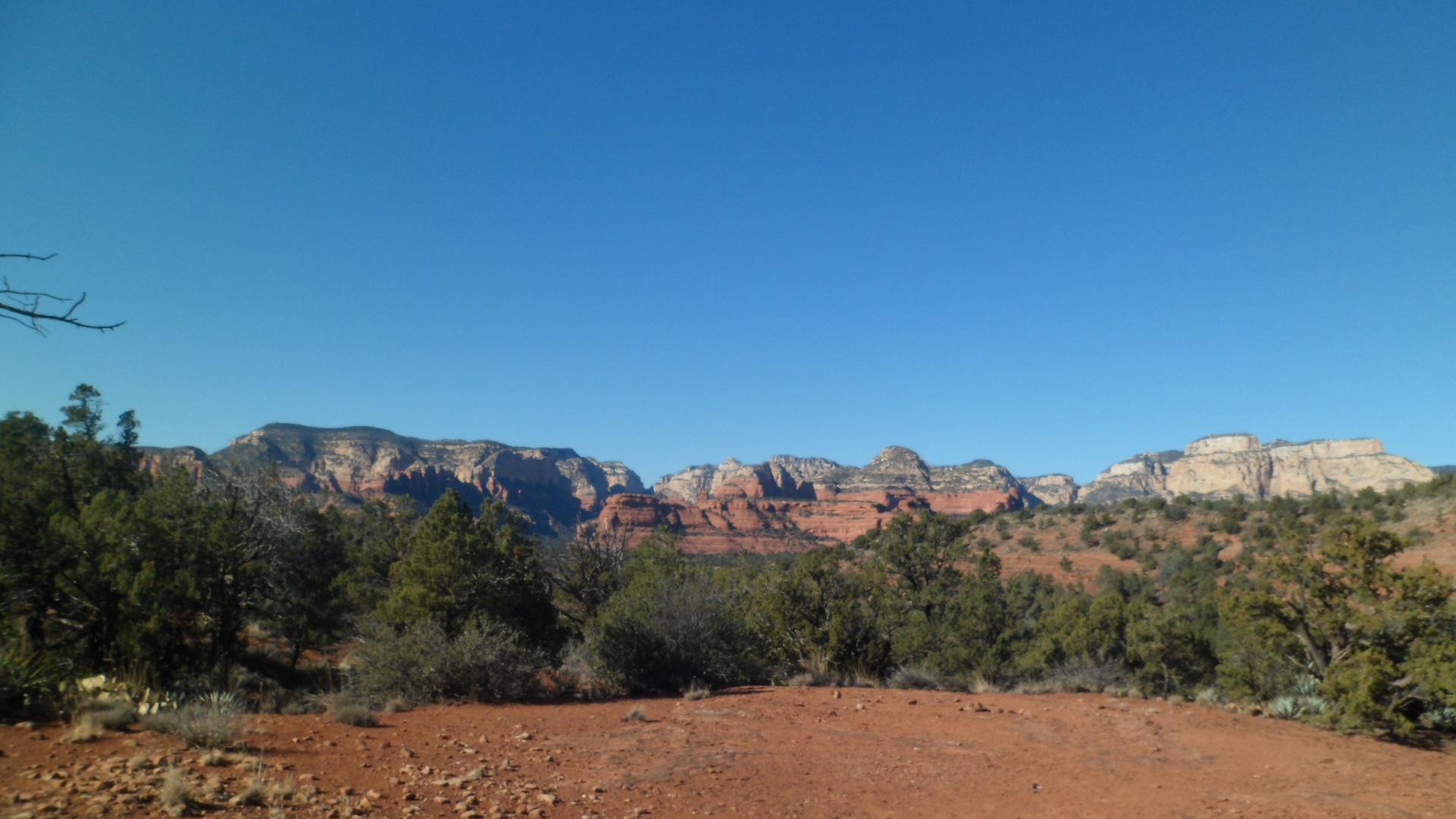
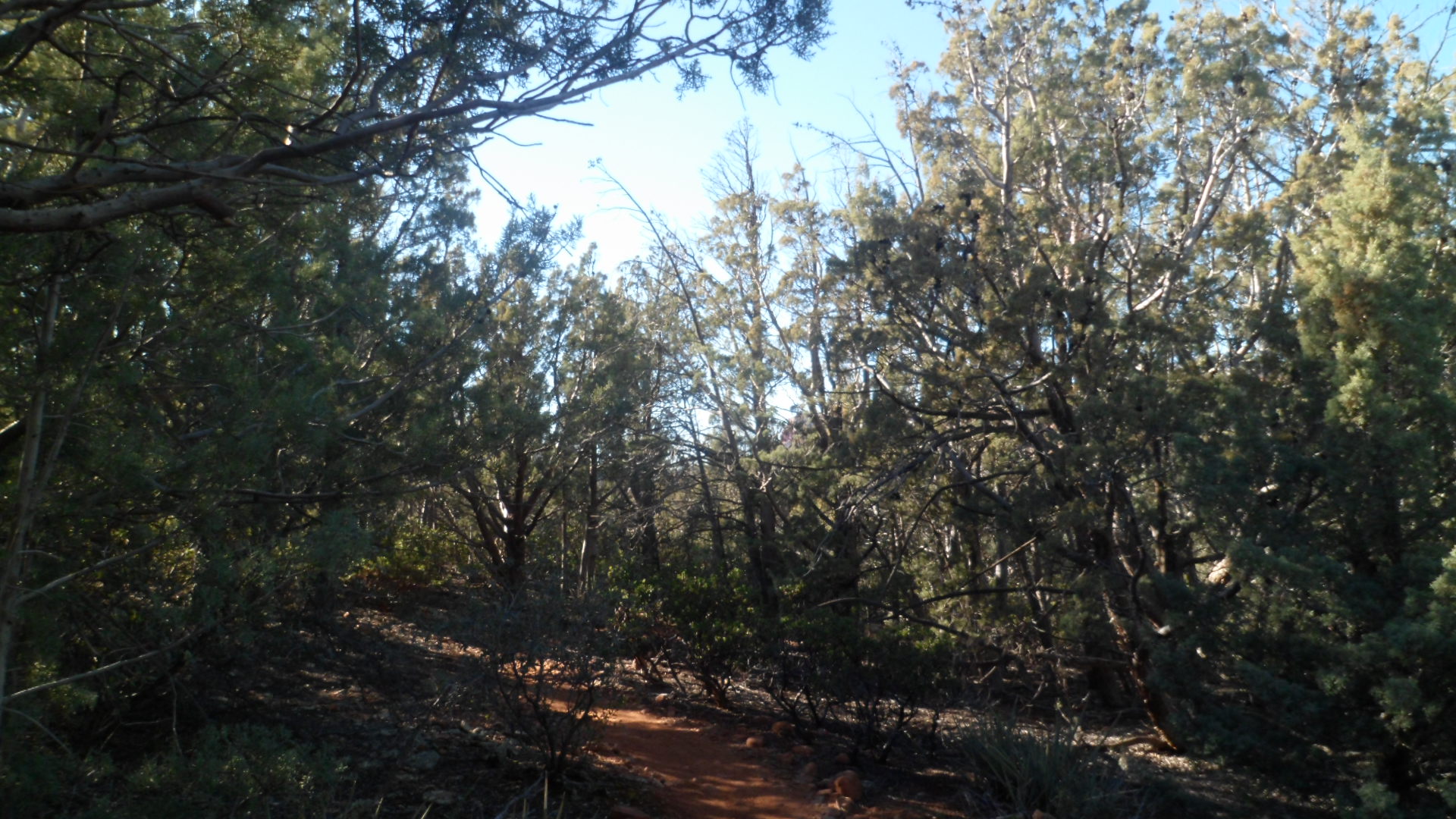
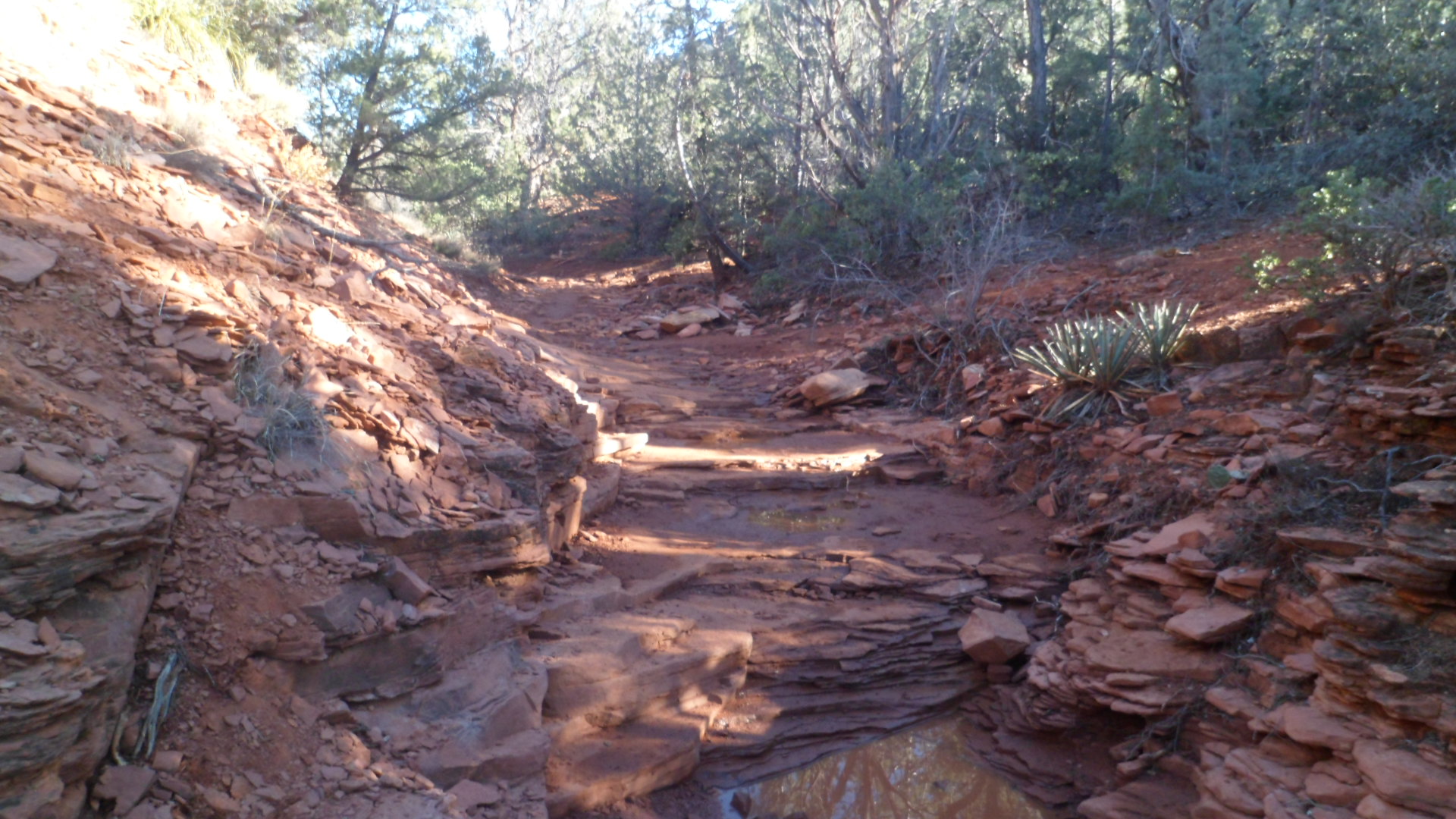
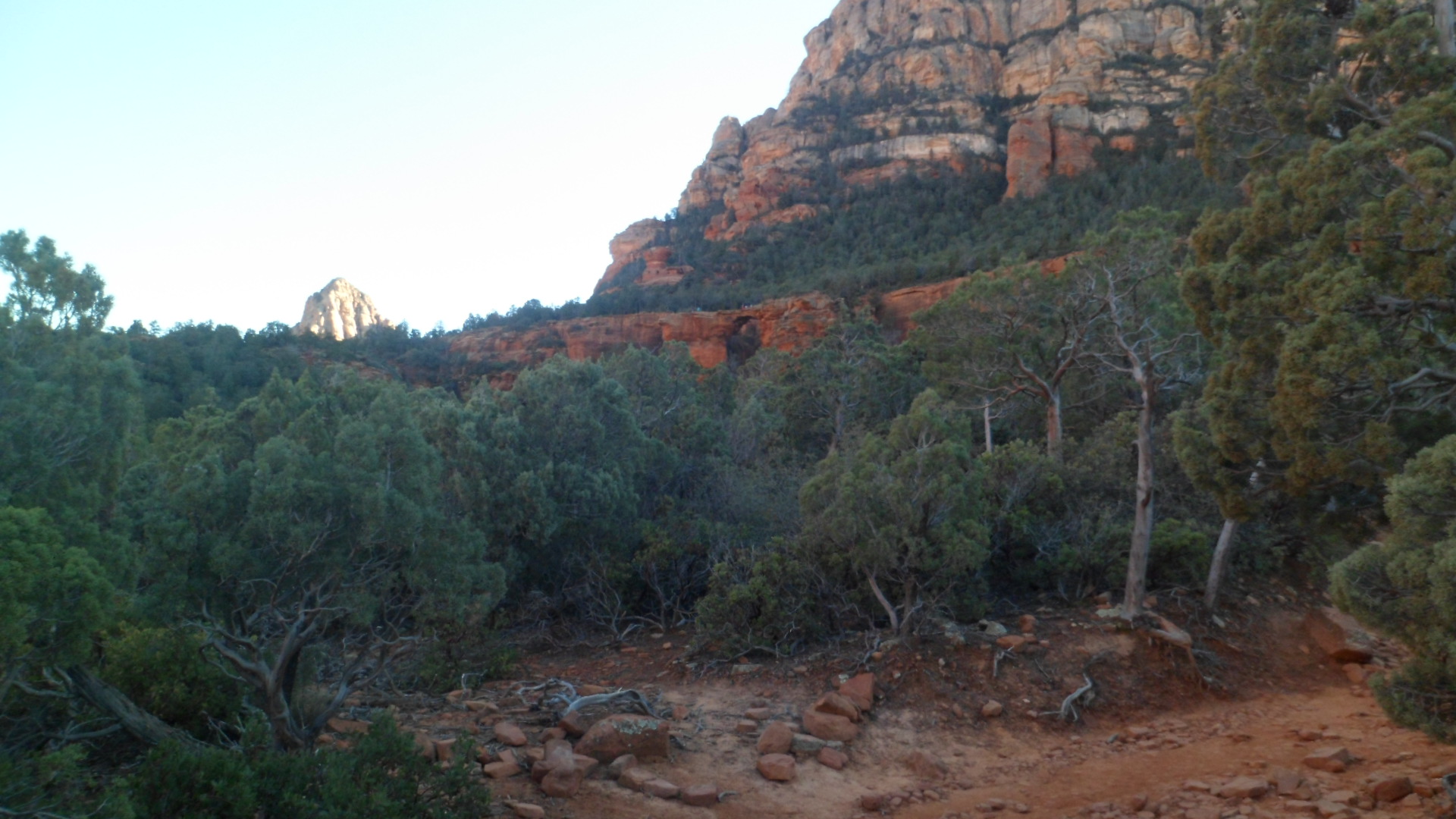
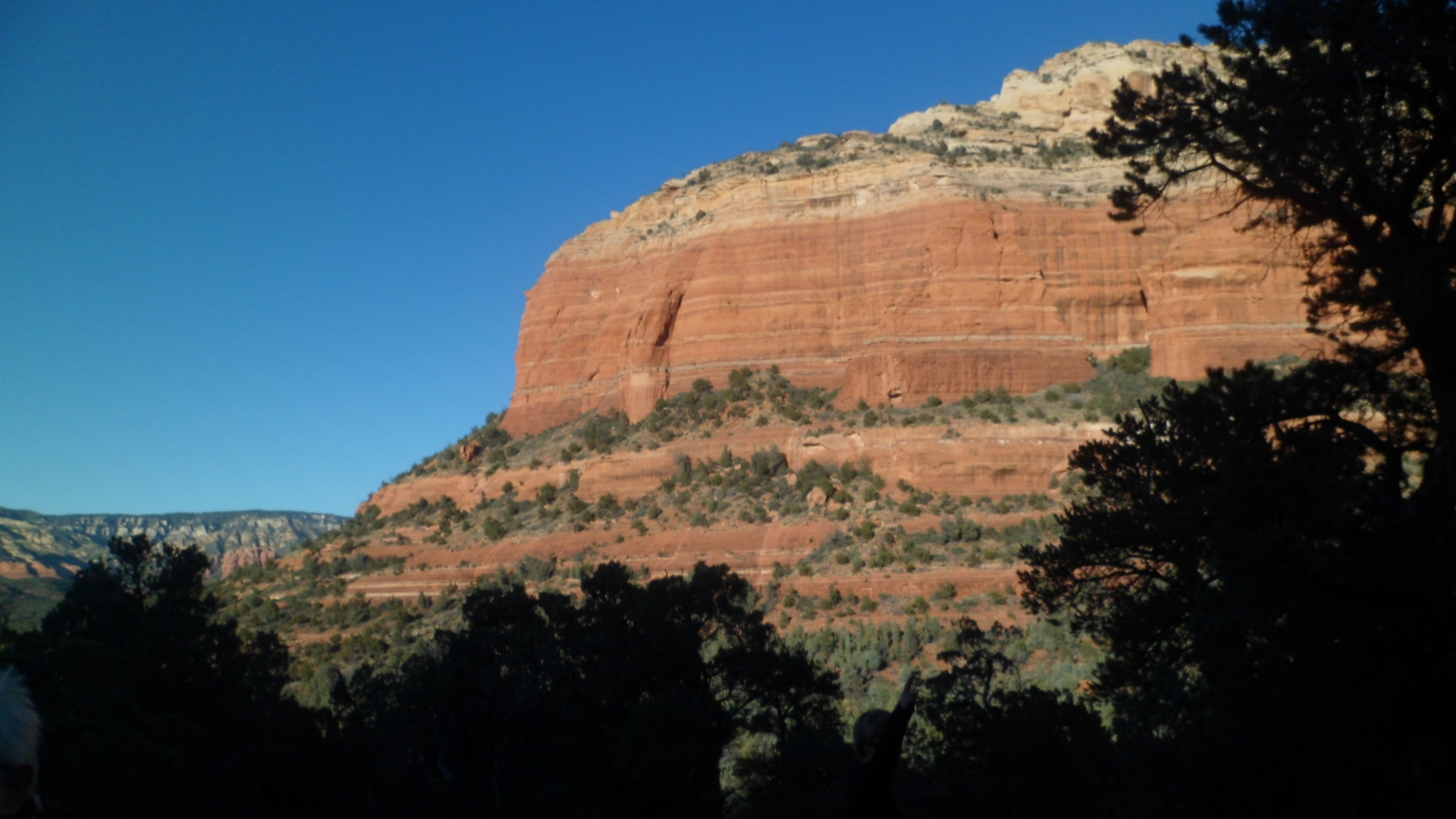
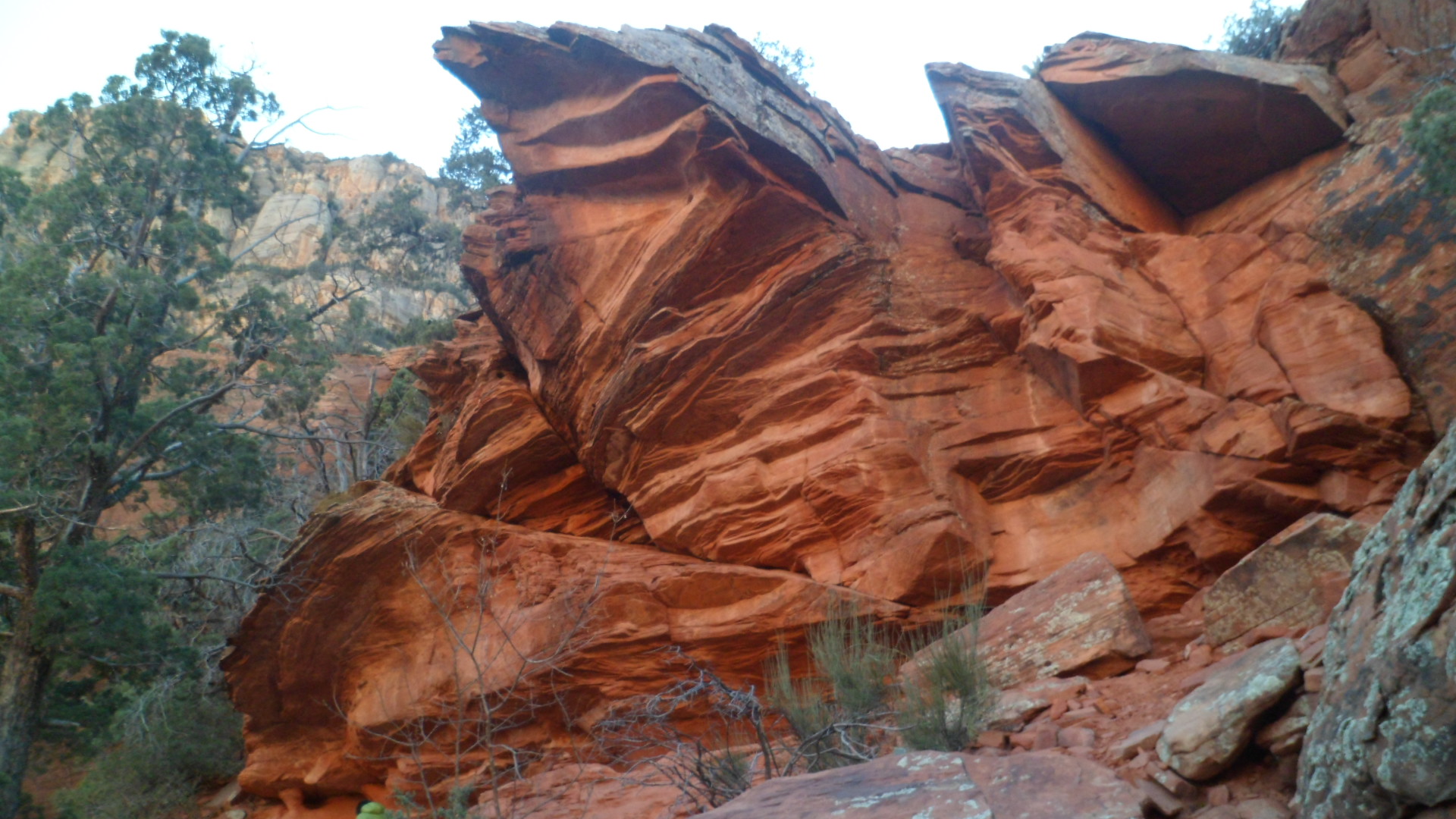
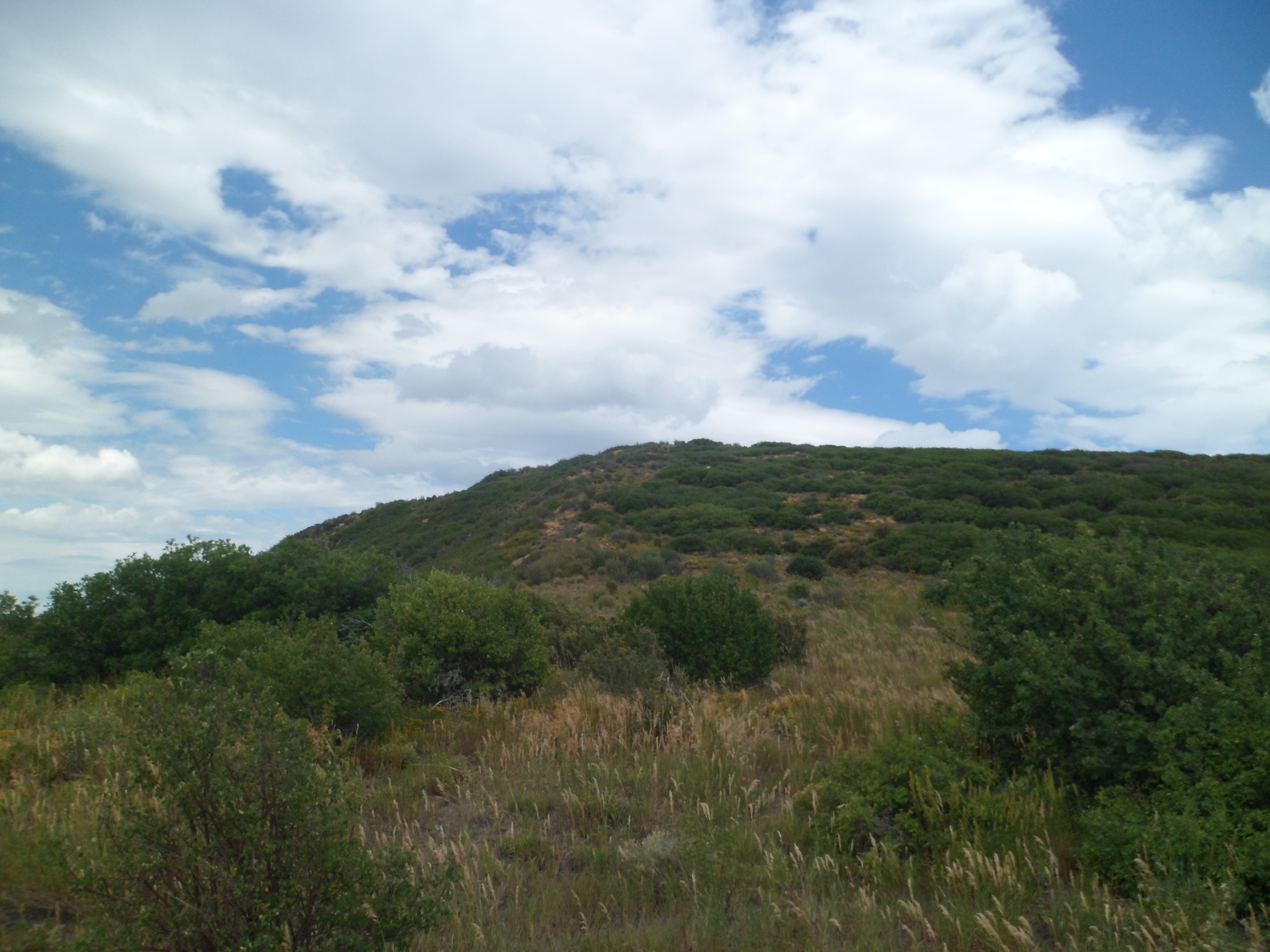
As with all things Sedona, this aptly-named trail, opened a few months ago, is a feast for the eyes. The “Chuck” is a loop trail, of about 3 miles. Yesterday, I took the segment that links with Devil’s Bridge Trail, so as to go up to Vultee Arch and get up close to that marvel of nature, also called Devil’s Bridge.
It is a moderate hike, in my estimation, not requiring much effort for most of the way- but asking the hiker to use caution on the final ascent to the Arch, as well as on the descent. Along the way, much attention was focused on three rock climbers , perched on the south face of Mescal Mountain, across the canyon to the north.
Here are several shots of the Chuck, and of Vultee Arch. First, is the Dry Creek Road Parking area.
I took the segment of Chuckwagon that went towards the Bridge.
The route to the Bridge goes east, through the scrub of the southern Great Basin, across Dry Creek (which actually had pockets of water, here and there) and back south a bit, to the Devils Bridge parking area ( a small dirt lot), off the four-wheel drive-only road.
Here, we can see the north section of Capitol Butte, which is home to the arch.
Mescal Mountain and Doe Mountain are visible to the north.
The trail is very easy here.
True to form, I found not one, but three, heart-shaped rocks along the trail.
There are riparian pockets along the way.
One can see the arch from a fair distance, once on the Devils Bridge Trail. That trail is about a mile long.
The view from the sandstone bench, southwest of the bridge, is also worth the short climb.
Here is an interesting sandstone “slice”, near the Devils Bridge Trailhead parking lot.
Finally, on the bridge itself, is an example of “Boys will be boys”.
I find myself feeling best, when on the trail, whether surrounded by throngs or in isolation. Hiking is one of the few things I haven’t messed up. Besides, it keeps me healthy.
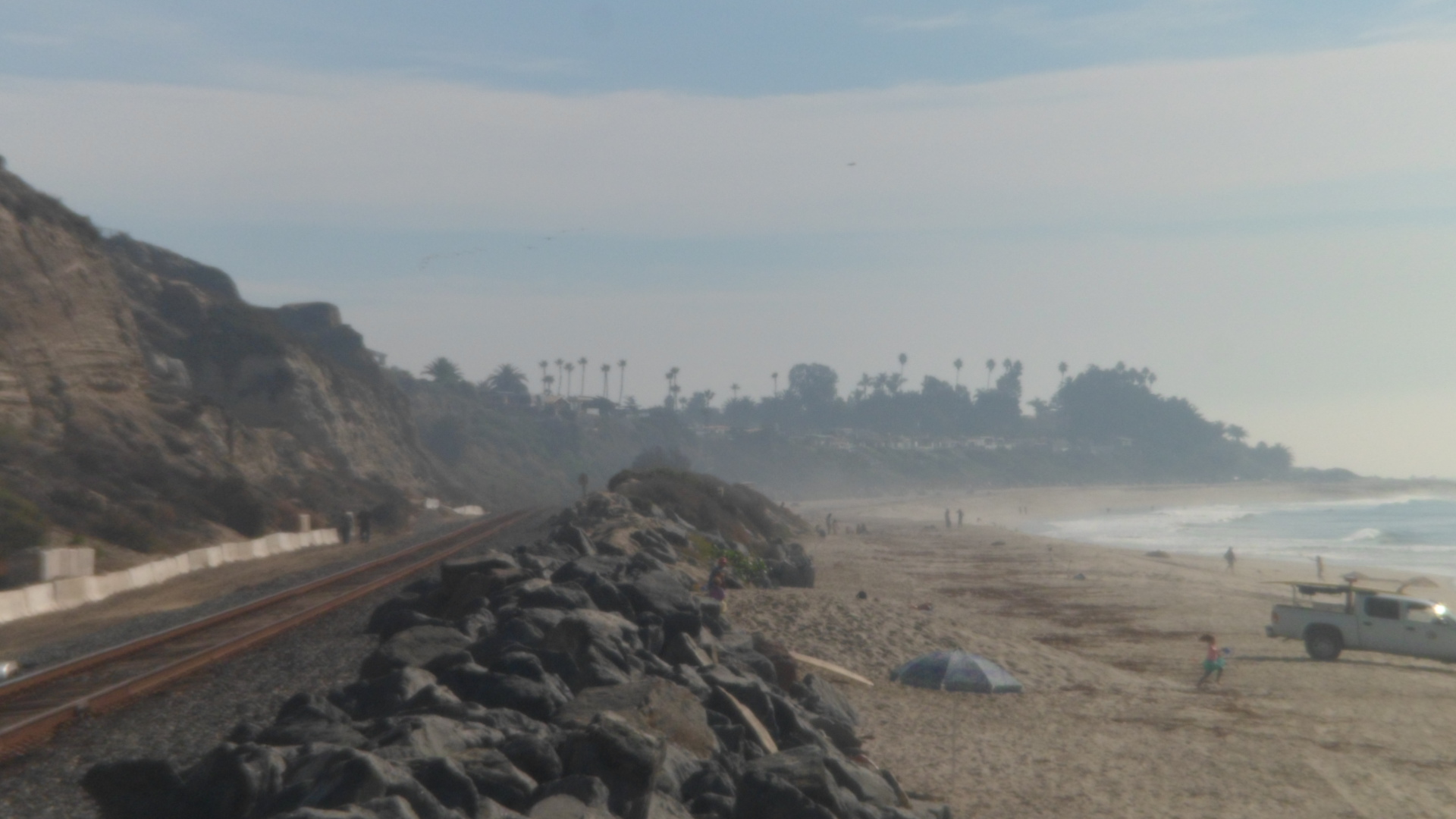
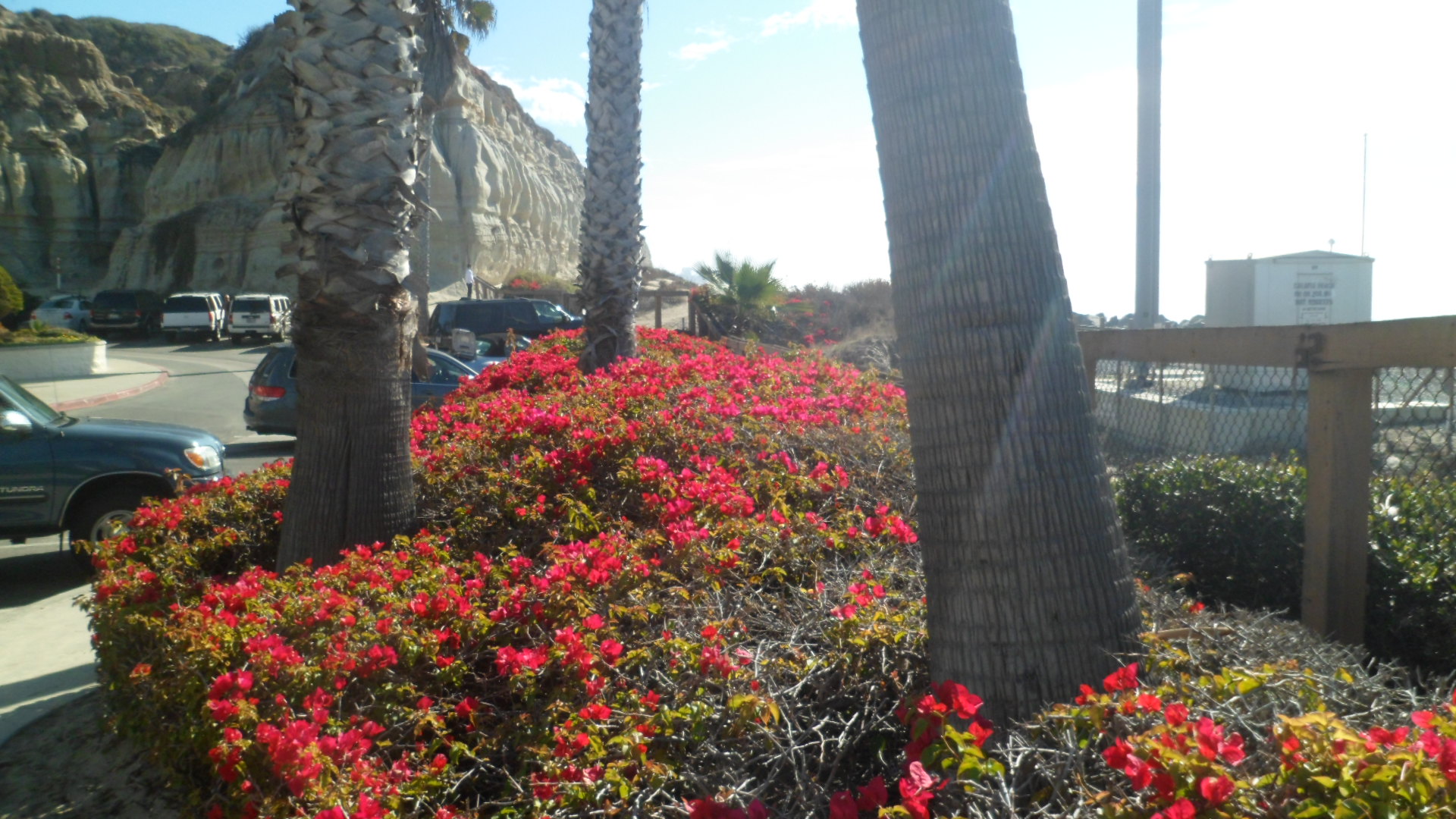
Saturday, November 30 led me up the coast to Orange County, as has been my wont, over the past several Southern California visits. I’ve been to all but two of the OC beaches, and elected to return to San Clemente Beach, for a short while on Saturday morning, so as to enjoy an early lunch and breathe a bit of salt air.
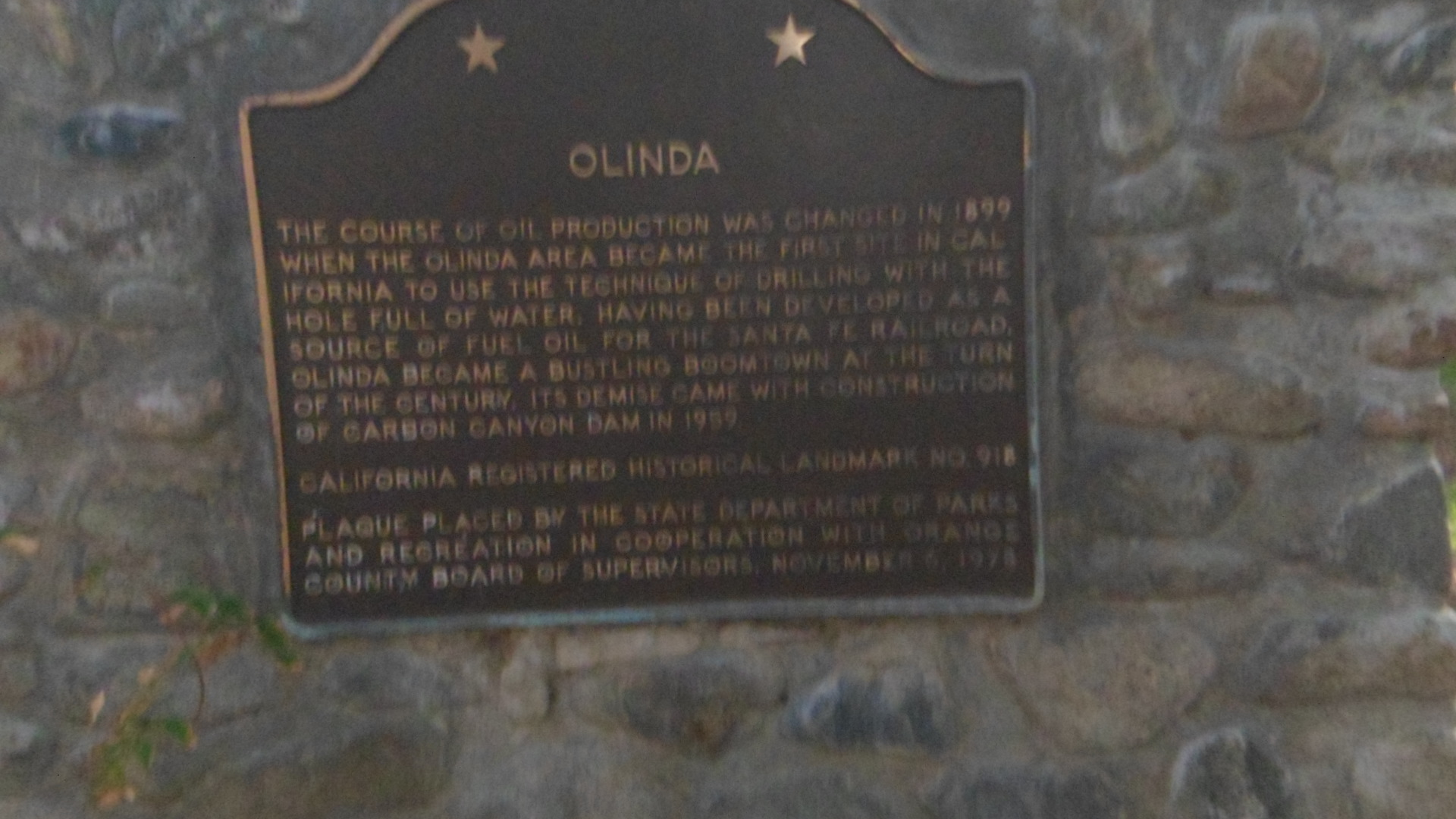
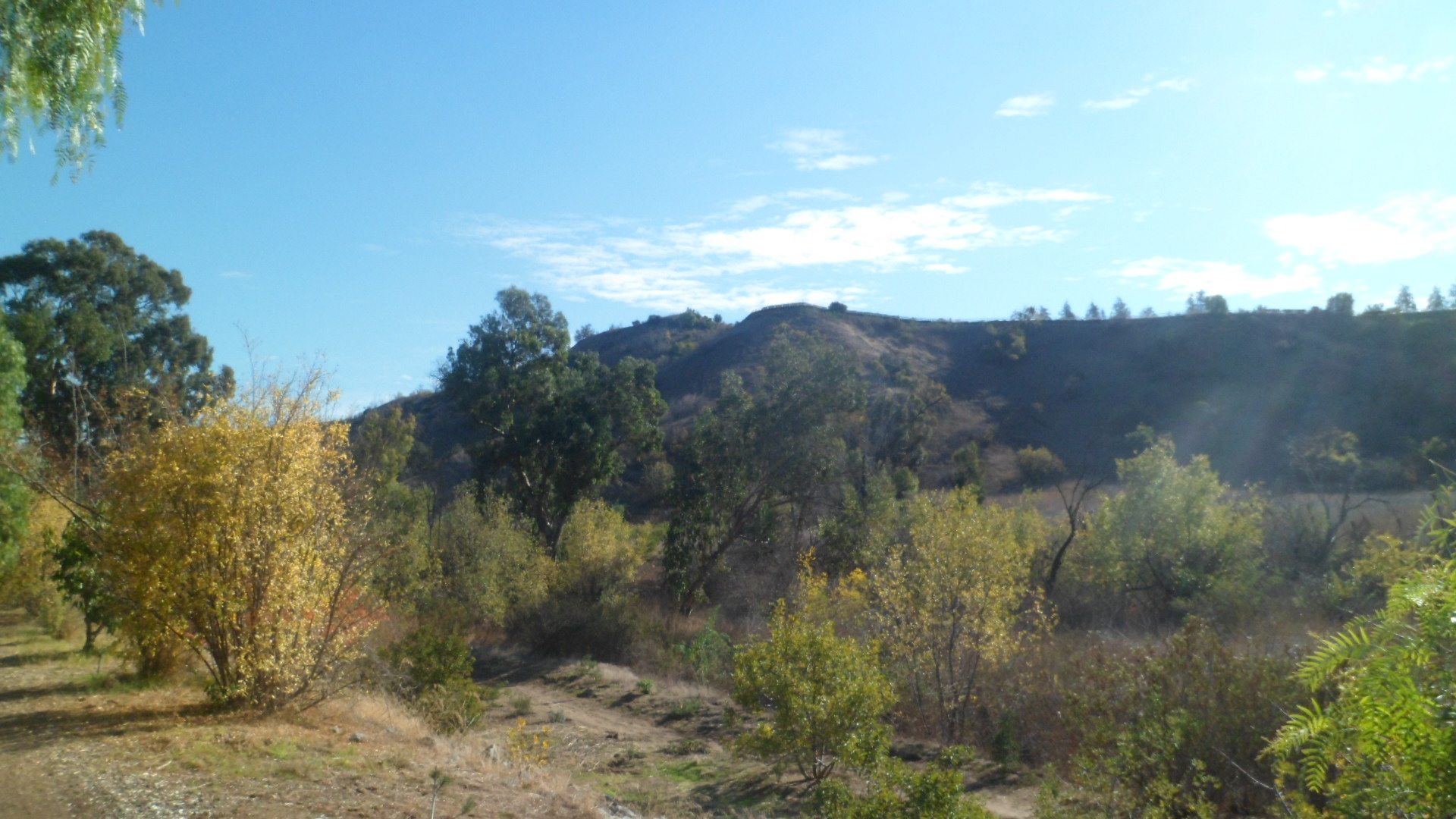
Not knowing what the traffic situation would bring, I headed north a bit, along the coastal highway. Glancing over at I-5, I spied, with my little eye, a line of traffic inching its way towards the Capistrano Beach exit. So, the coastal drive continued, as far as just north of Dana Point. I was able to easily cut over at Crown Valley, and followed the various highways up to Brea, leaving me plenty of time to enjoy Carbon Canyon, home to Orange County’s only remaining grove of Coastal Redwoods. The area is in what was once the oil-producing town of Olinda, now submerged by a reservoir that was created by the Carbon Canyon Dam.
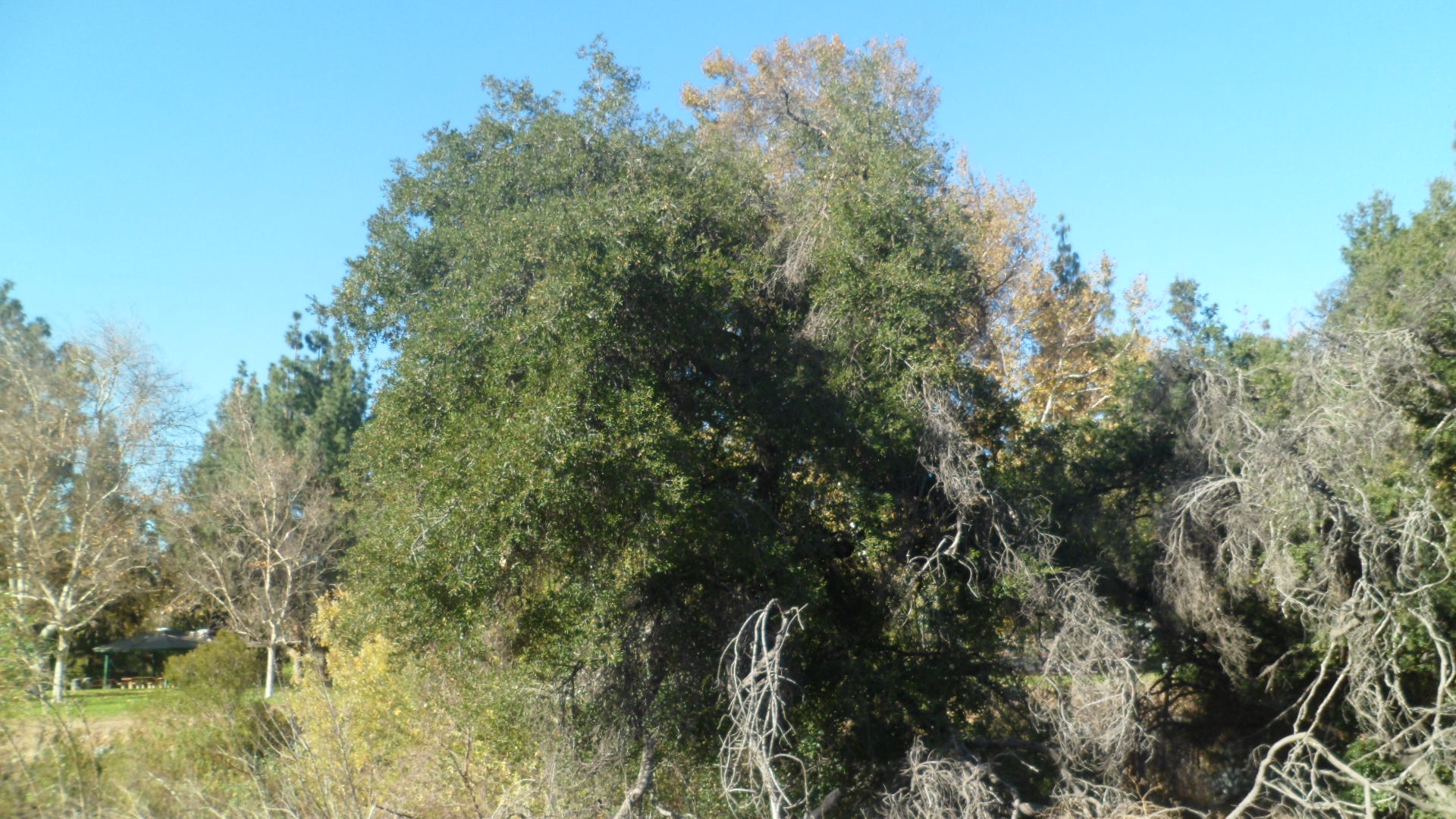
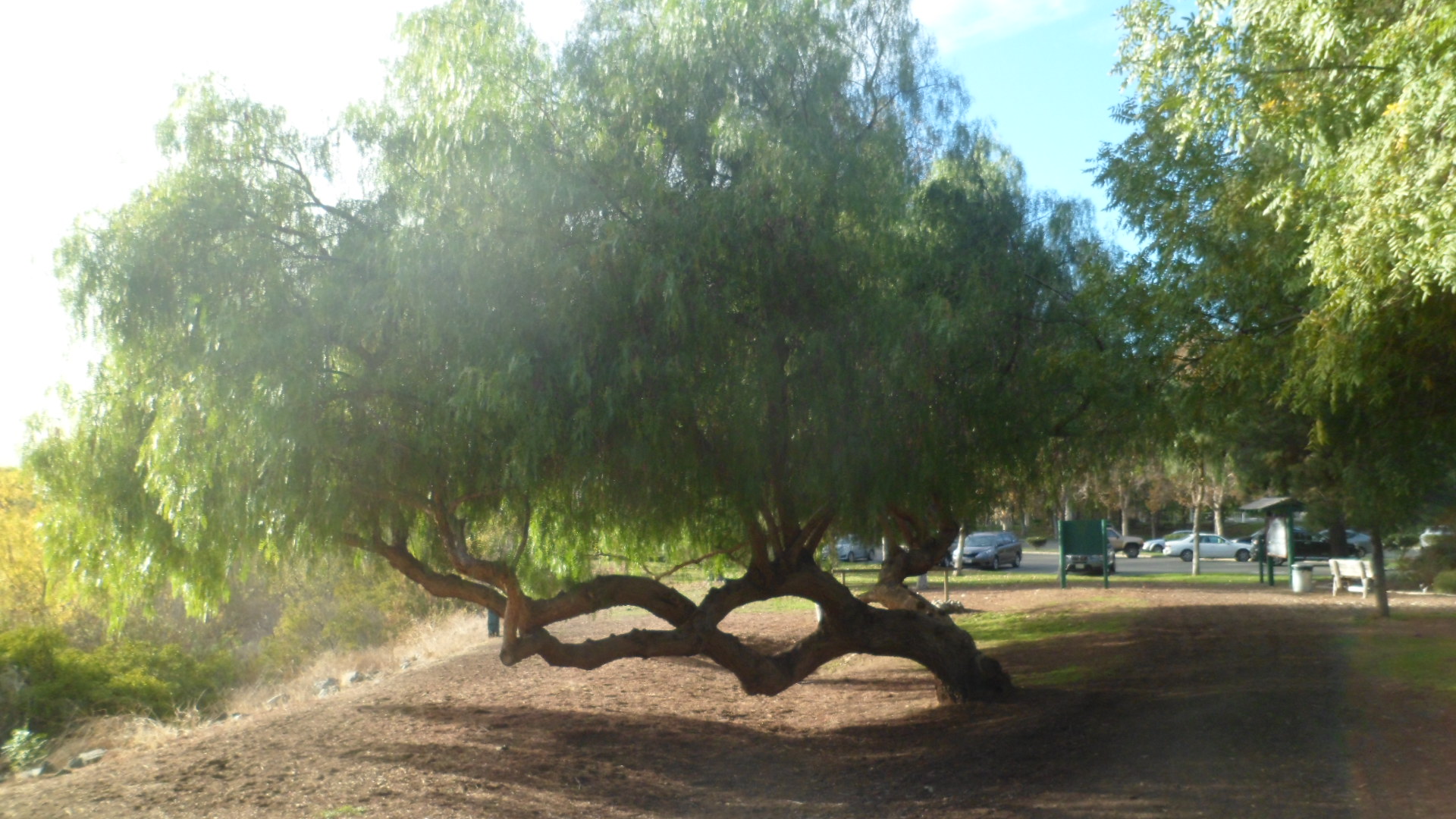
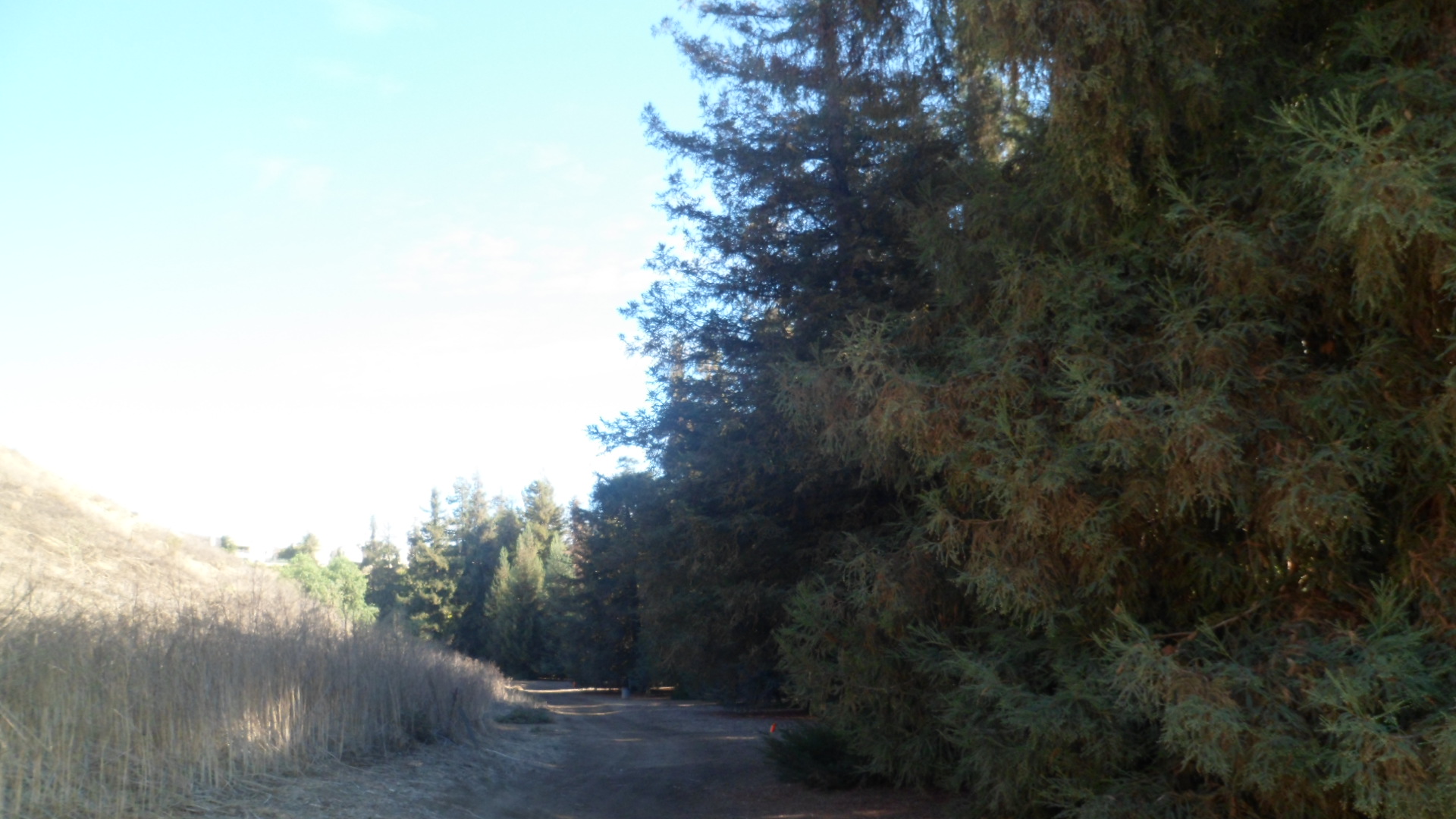
The first part of the regional park is standard SoCal wilderness, with a fledgling botanic garden, for effect. The dam has left two small reservoir ponds that are linked. Standard SoCal means plenty of manzanitas and California Live Oaks, but there is the promise- of redwoods.
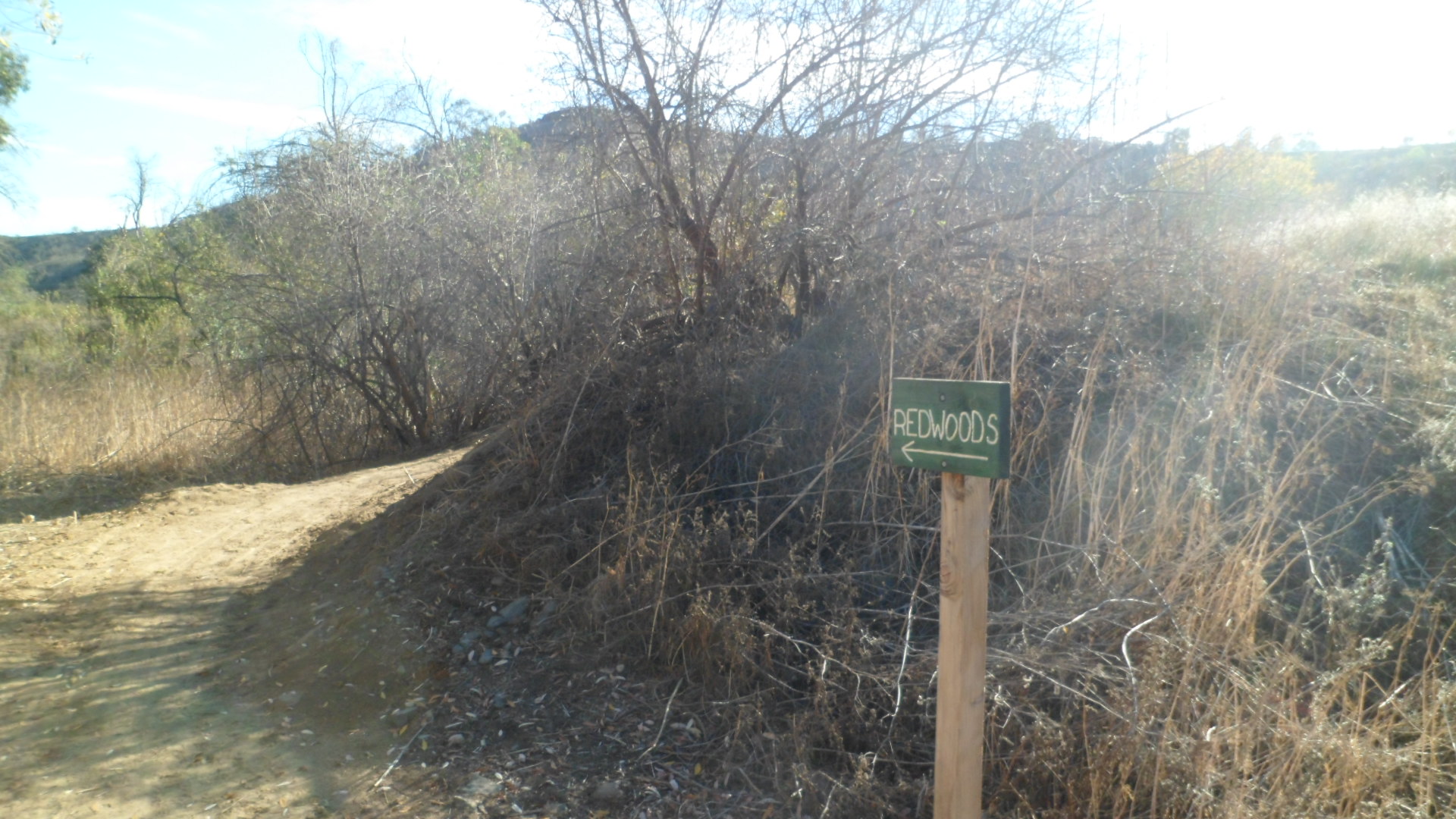
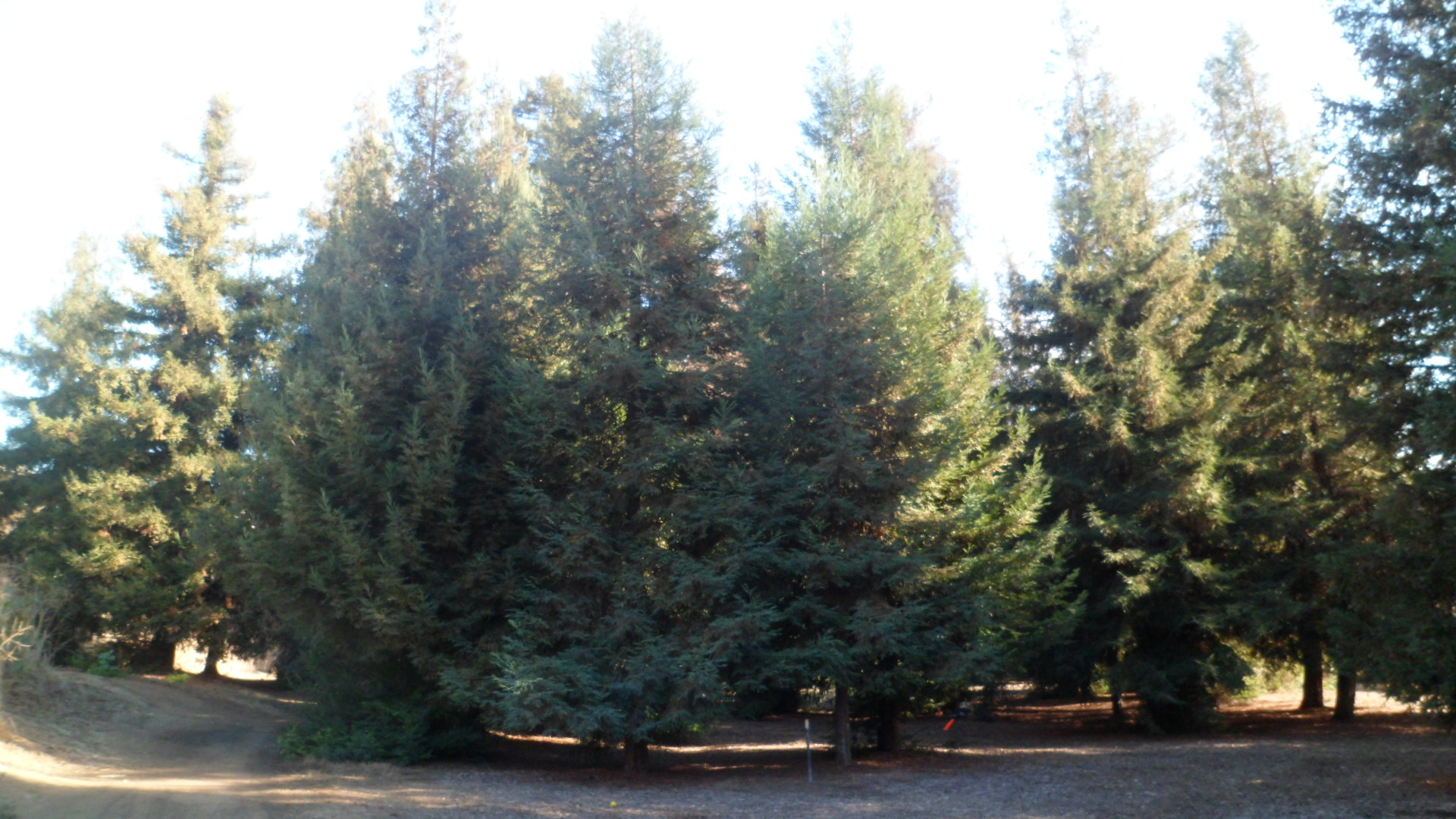
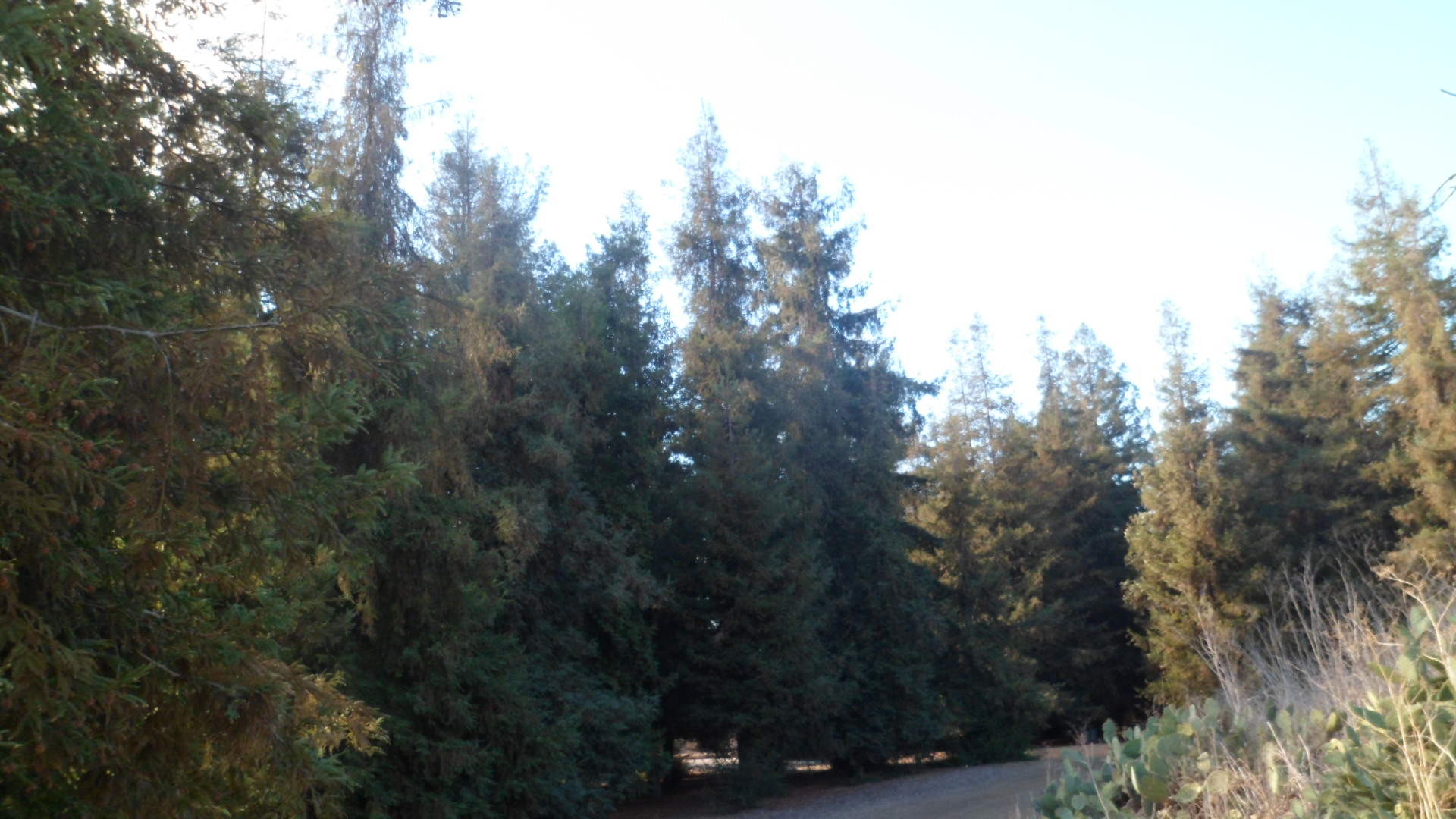
After a mile or so, there they are. No, it’s not a Christmas tree farm. These are for posterity, and new trees are growing!
The ponds are also a source of enjoyment to the people of Brea and Yorba Linda. There were almost as many people along the shore as there were enjoying the redwoods.
On the way back, one is reminded that this is still an extension of the Sonoran Desert.
Immediately to the east of Carbon Canyon lies Chino Hills State Park, with several gems of its own, extending from Olinda to the town of Chino Hills, nearly 20 miles eastward. This is a place to explore another time, but for now, here is the west end of Telegraph Canyon.
Doubling back through Carbon Canyon park, on my way back out, I spotted a bit of tree hugging.
It was a good point in time for time travel, of sorts, so I went to downtown Brea, and found some blasts from the past. Next post: Back to the seventies.
Thursday, November 28 was: Thanksgiving, the first day of Chanukah, the anniversary of the Ascension of ‘Abdu’l-Baha, another day in the dissolution of the comet that was challenging the Sun’s atmosphere. It was also my 63rd birthday. As such, all made for a perfect opportunity to spend a couple of days with my son, Aram, at and near his naval base, in San Diego. We shared things of which we are mutually passionate: Julian, CA and a couple of hiking trails, the latest installments of “The Hunger Games” and “Thor”, dinner at Applebee’s and DVD’s of the first season of “Game of Thrones”. He also introduced me to Zorba’s, a Greek-buffet. I sat out his Black Friday excursion, merely helping to transport the loot from my room at Navy Lodge, which is near the Navy Exchange, to his room, across base. He didn’t go to excess, for which I feel validated as a father.
Here is a photo-based chronology of November 27-28.
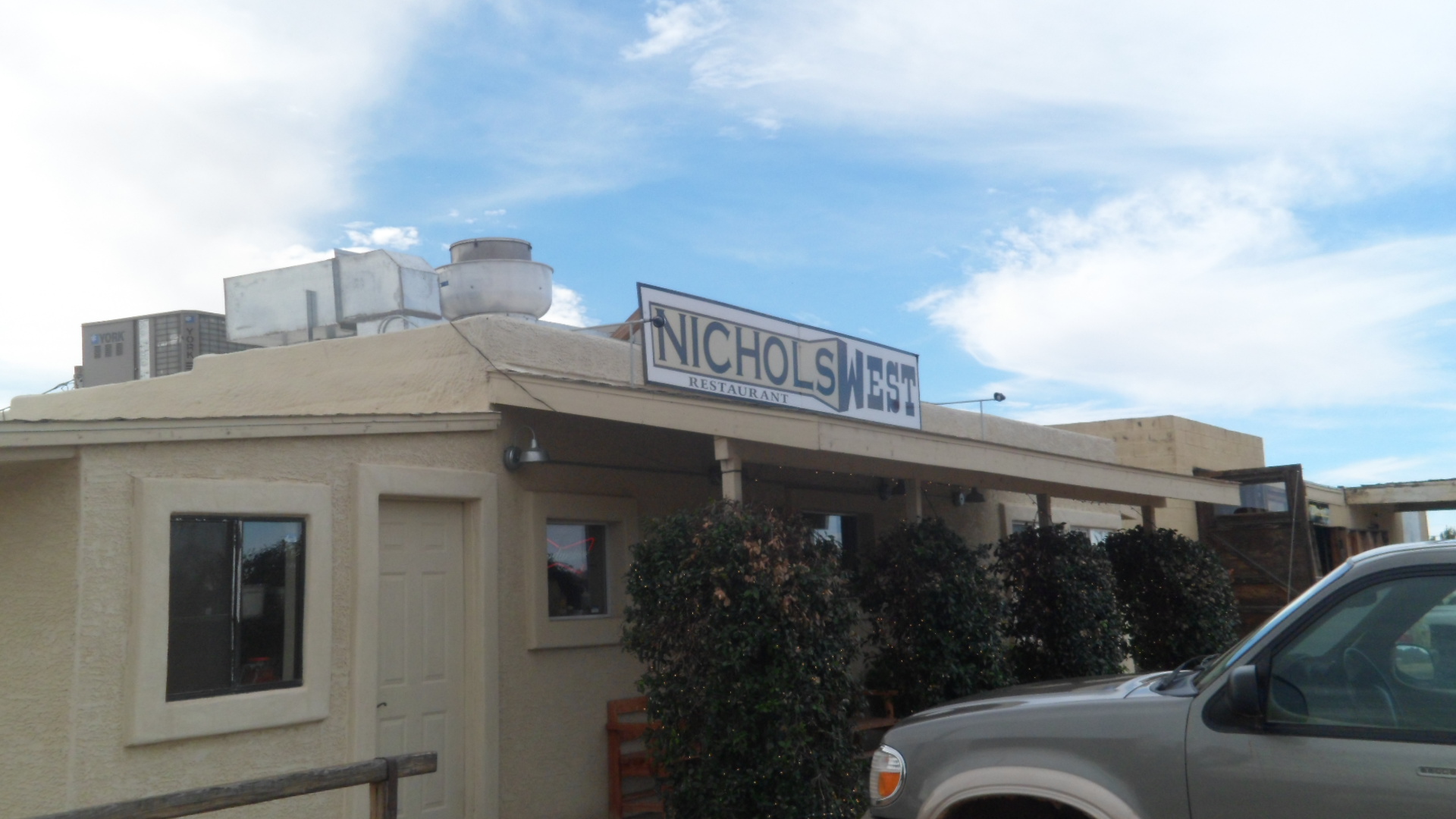
I left Prescott around 10 AM, on 11/27. Lunch consisted of superb shrimp tacos, at Nichols West, in Congress, AZ.
The owner said there is a Nichols East, somewhere in Long Island, NY. That’s as good a reason as any to explore Long Island. If the restaurant is closed, there are always Amagansett, Sag Harbor and Montauk, on which to fall back.
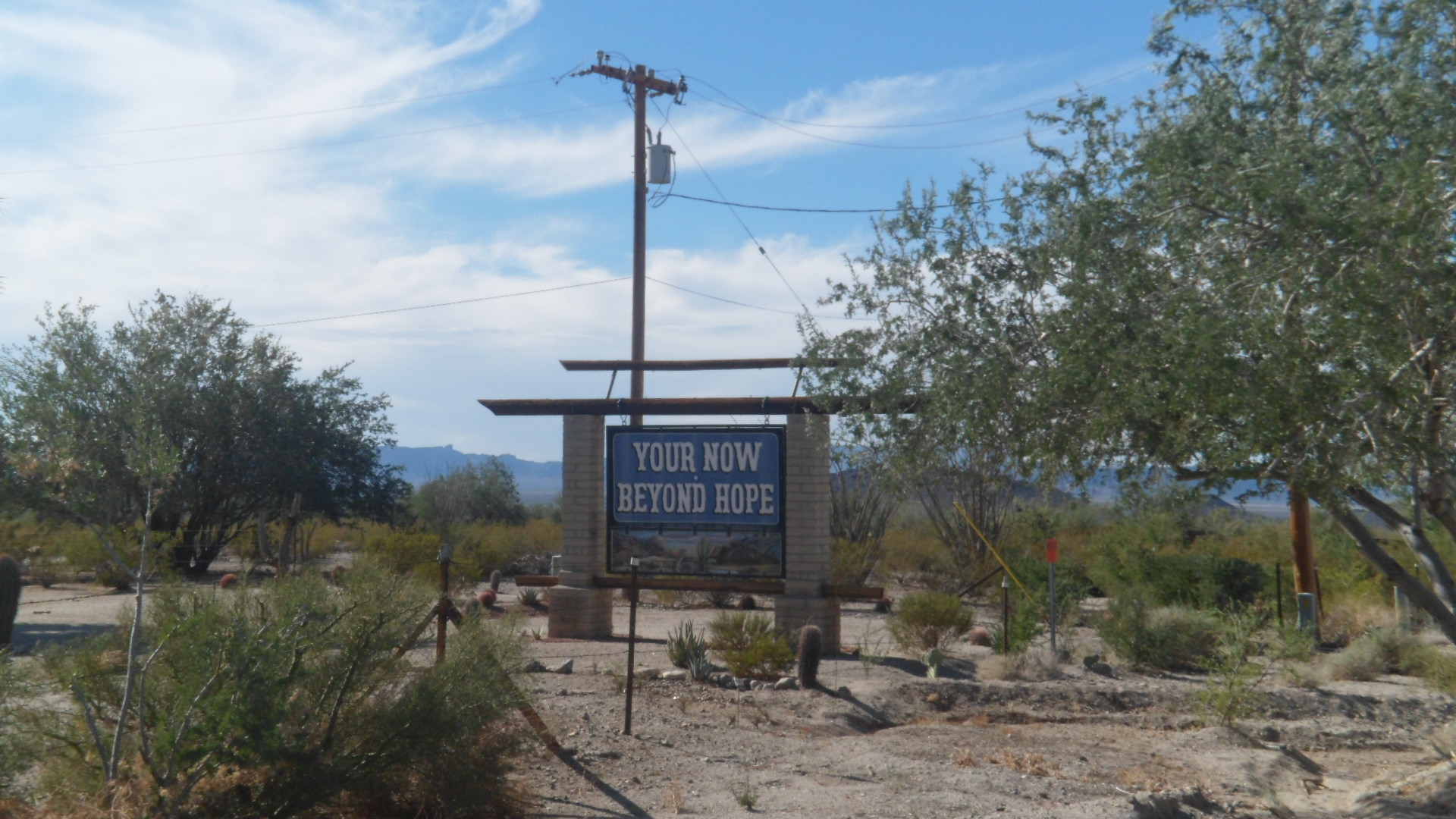
I continued on, after lunch, through Arizona’s Outback- only to read what I’ve often thought:
My inner Grammar Nazi got me through this one, just fine. It’s their Beyond Hope, not mine- LOL.
I arrived in San Diego around 6, courtesy of a couple of serious high-speed-induced crashes that led to traffic tie-ups for the rest of us. We got MOI settled into a cozy room at the Navy Lodge, and drove to Applebee’s in Plaza Bonita, near Chula Vista, on the south end of Metro. Afterwards, I joyously crashed and Aram went back to his barracks.
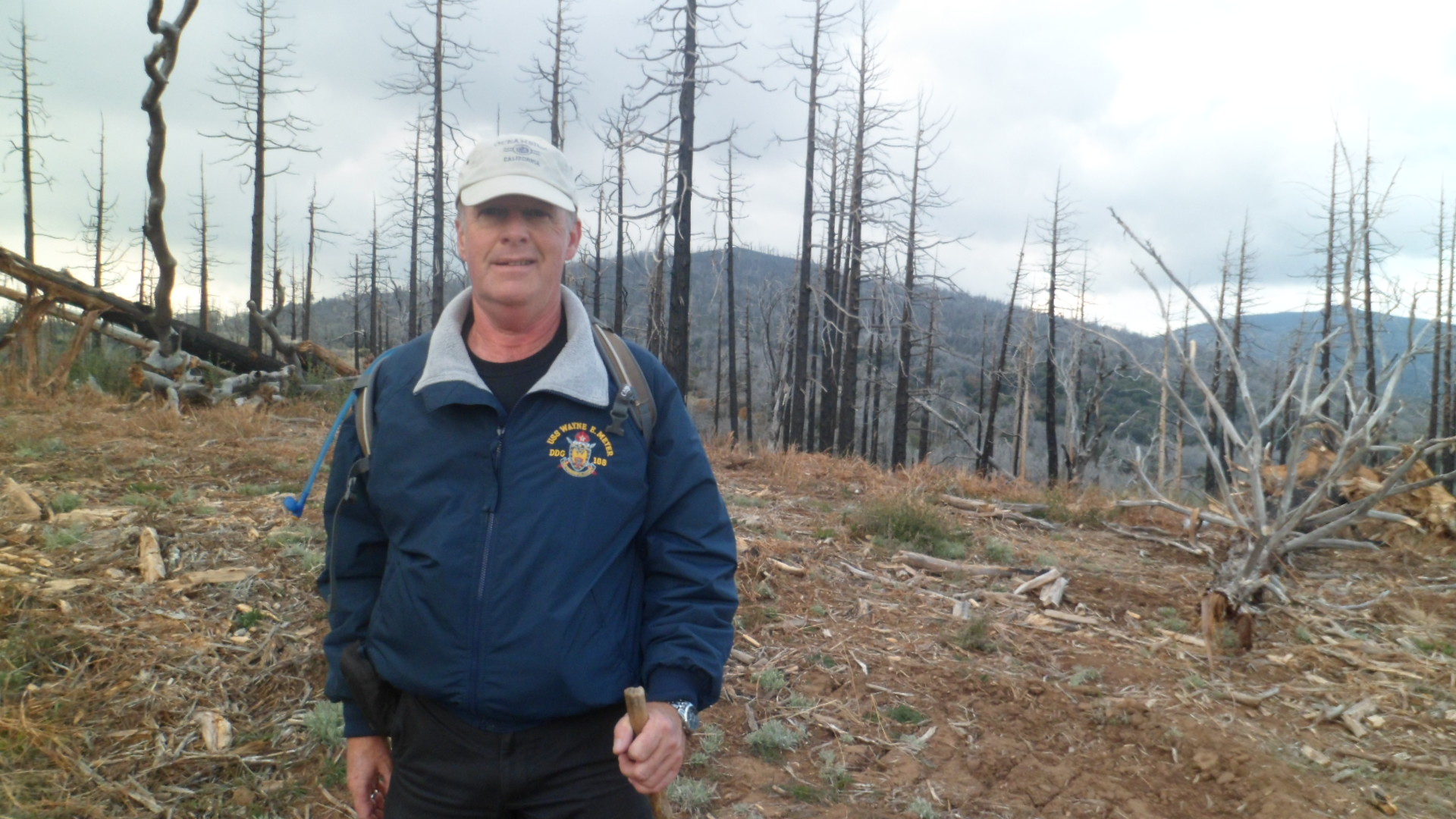
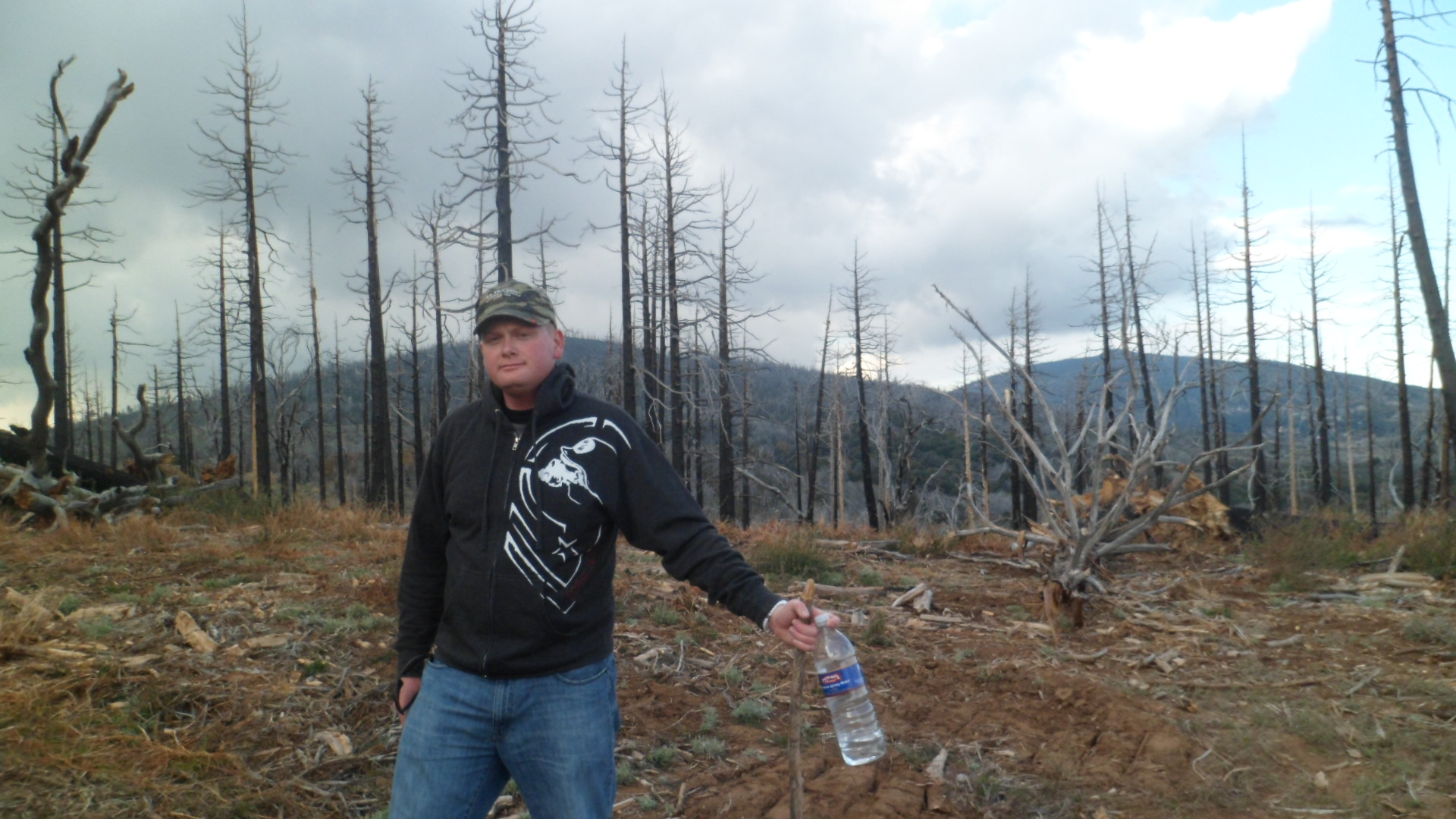
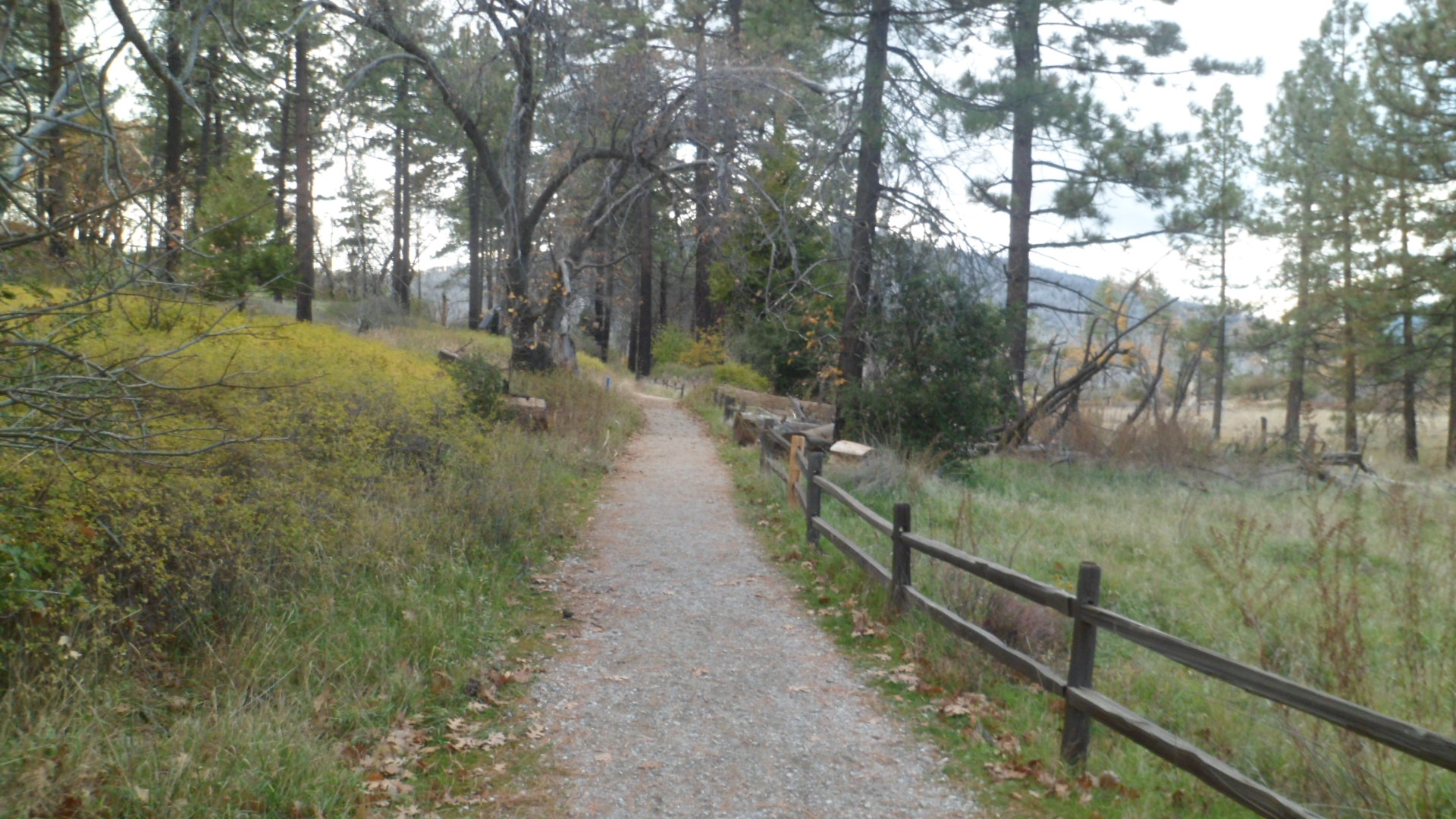
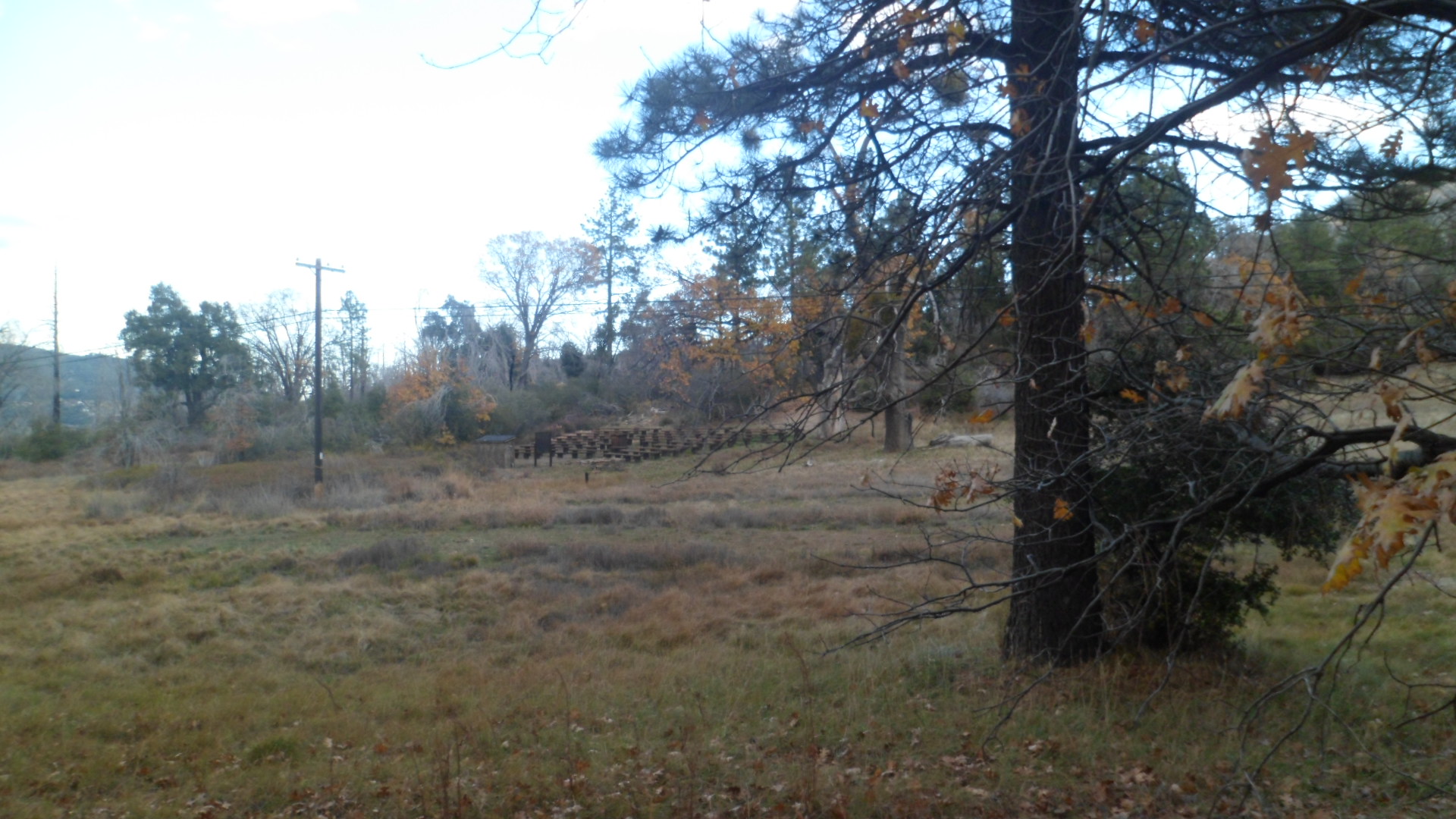
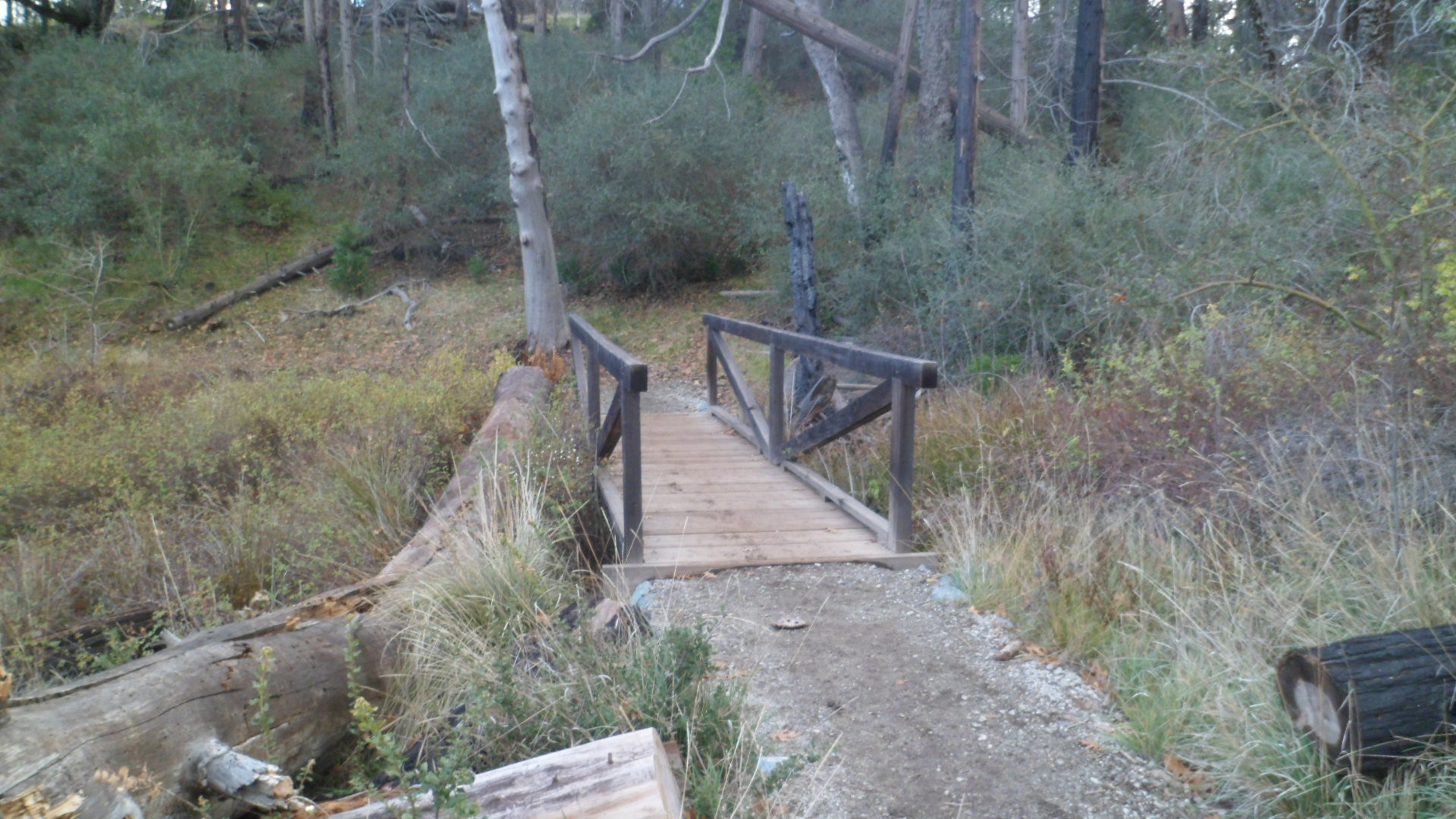
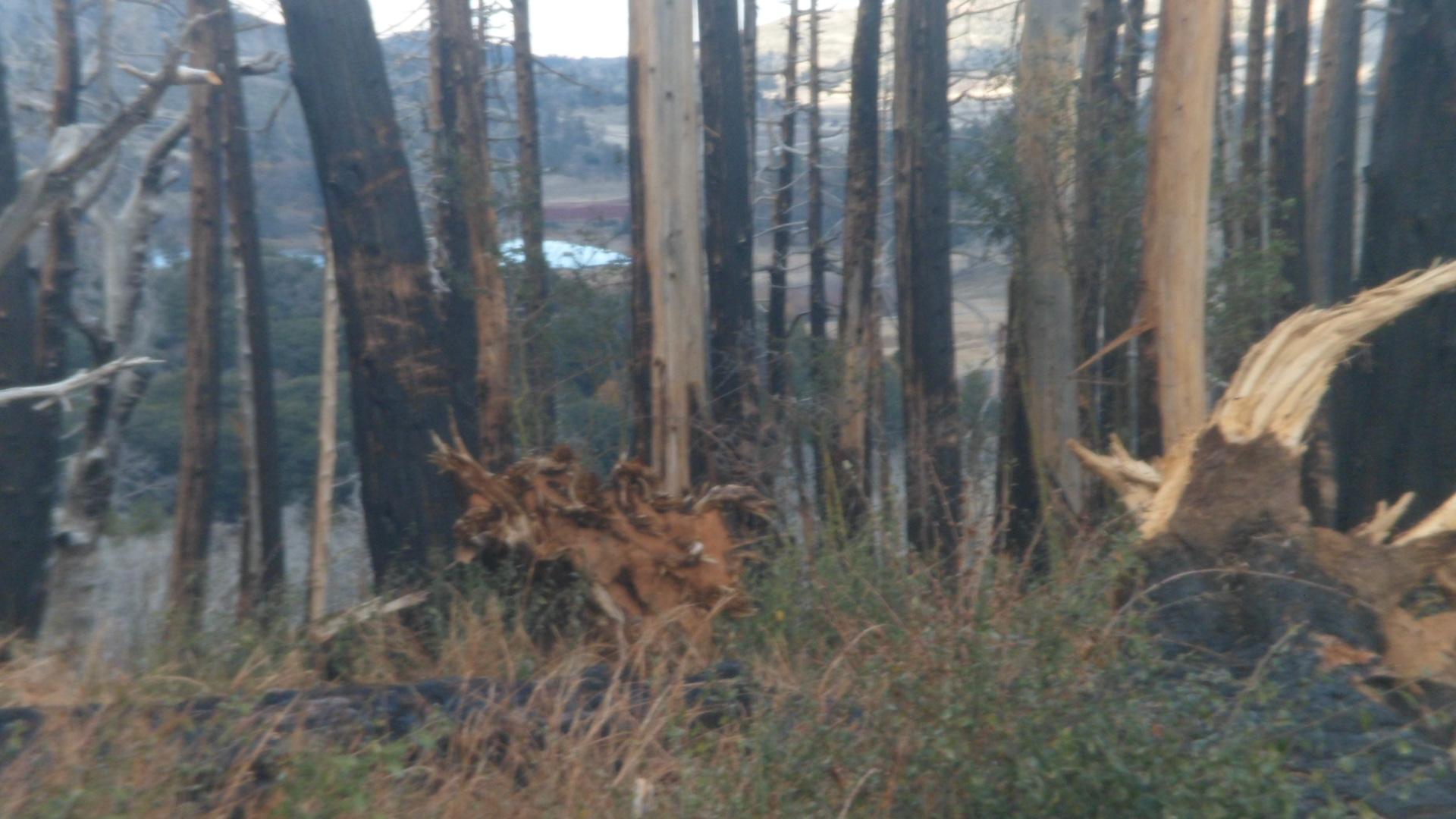
Thursday, Thanksgiving et al, was spent on the trail. The venue was Cuyamaca Park, a section of Anza-Borrego State Park, in the foothills of the Laguna Mountains, east of San Diego. There was a serious forest fire here, about three years ago. We were just happy to get out and enjoy the modest trails, even in the charred surroundings.
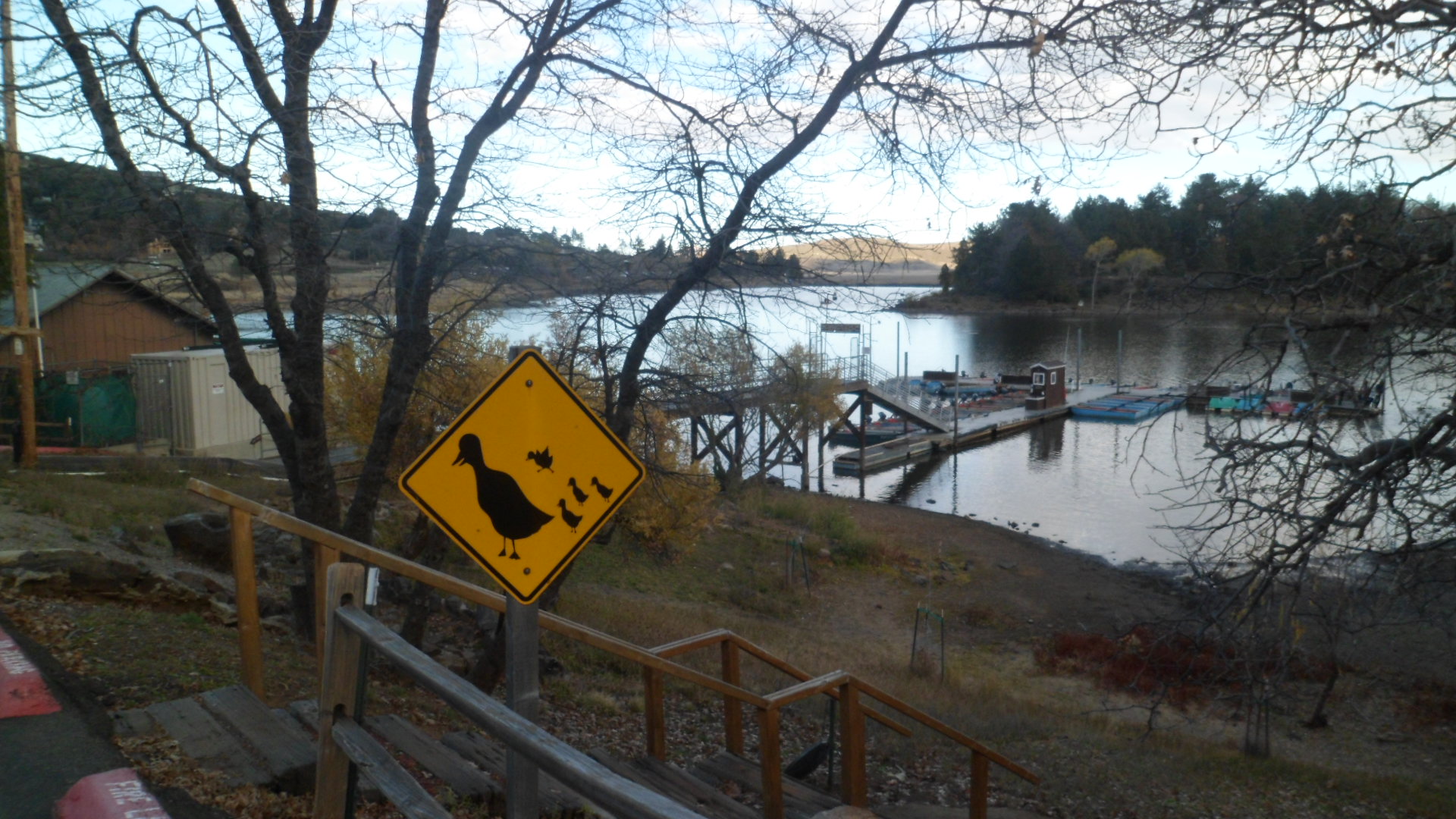
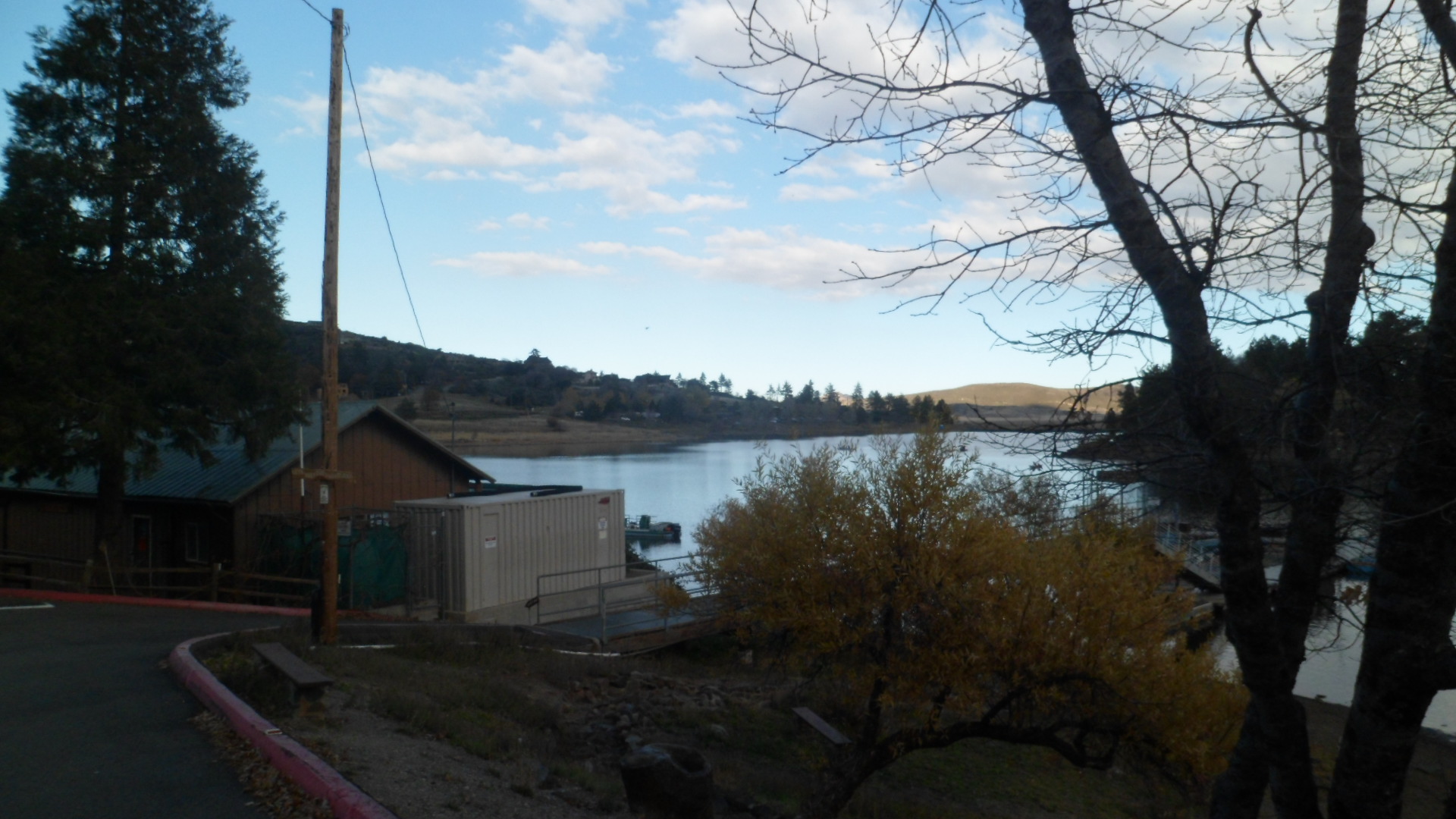
We continued back towards Julian, after an hour or so of hiking. It’s good to give a nod or two to Lake Cuyamaca.
Julian offered a few options for Thanksgiving Dinner. We chose Julian Cafe, where we had dined last year, on a different occasion. The traditional meal was fabulous, from apple-pumpkin soup and hot cider, through the full dinner plate centered on roast turkey and cornbread stuffing with chicken sausage. There was no dessert included, but I had hot pumpkin bread, as part of the meal and Aram got his caramel apple. So this Thanksgiving/birthday dinner was worth it.
The day was topped off with Jen. Ms. Lawrence and Company did a smashing job with “The Hunger Games: Catching Fire”. Even Donald Sutherland did a much better job this time, as the villain. There are some plot twists, especially at the end- no spoiler here.
So, the convergence of special days was a fine one. San Diego, Julian, and so many points in between, will always register dearly with me, because of over 30 years of family connections to the area.
Friday was lower key, being rather overcast. After tending to Aram’s stuff, and my trying on his gift of new hiking boots (great fit!), we went to see “Thor: The Dark World”. Tom Hiddleston excels again, as Loki, and Asgard looks like the kind of multi-racial world where all is going so well- until stuff happens, courtesy of some dark forces. The film is topsy-turvy, as is the universe during its plot unfoldment. After this, we went to Zorba’s, taking along one of Aram’s barracks mates, and had fine Greek buffet fare. The day ended with us watching several episodes from the first season of “Game of Thrones”- an HBO quasi-medieval-meets- Westerns series, that several of us have surely seen. Unsettling, but entertaining, in a quirky way, the series is mostly faithful to the serial novels of “A Song of Ice and Fire”, by George R.R. Martin.
The two days and three nights were among my fondest visits to SD. Next: Another fine day in the OC.
I undertook the Payne Steps, from the overlook to the seashore, as I can’t pass up an opportunity for a cardiovascular workout, especially when faced with luscious New England seafood.
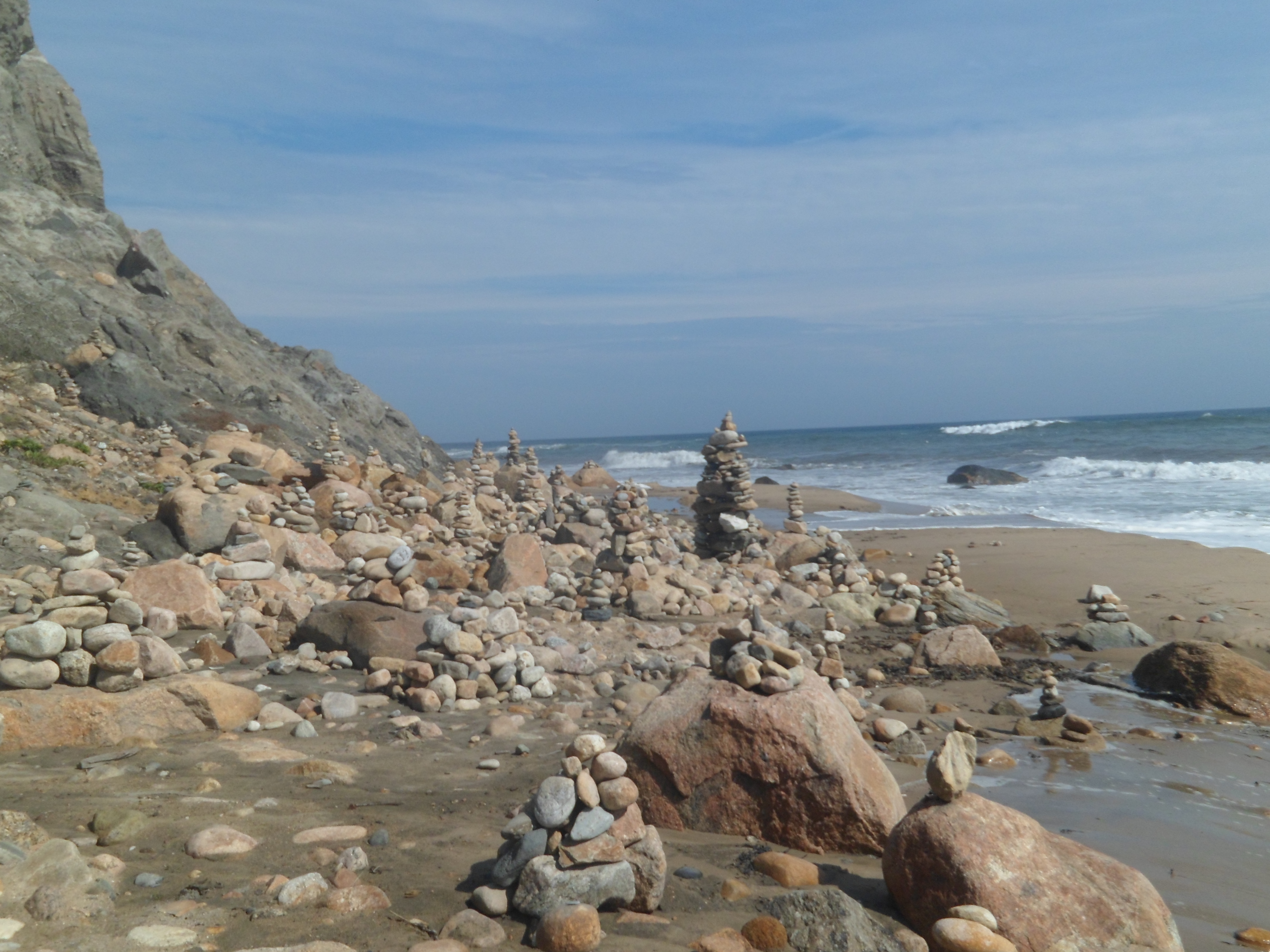
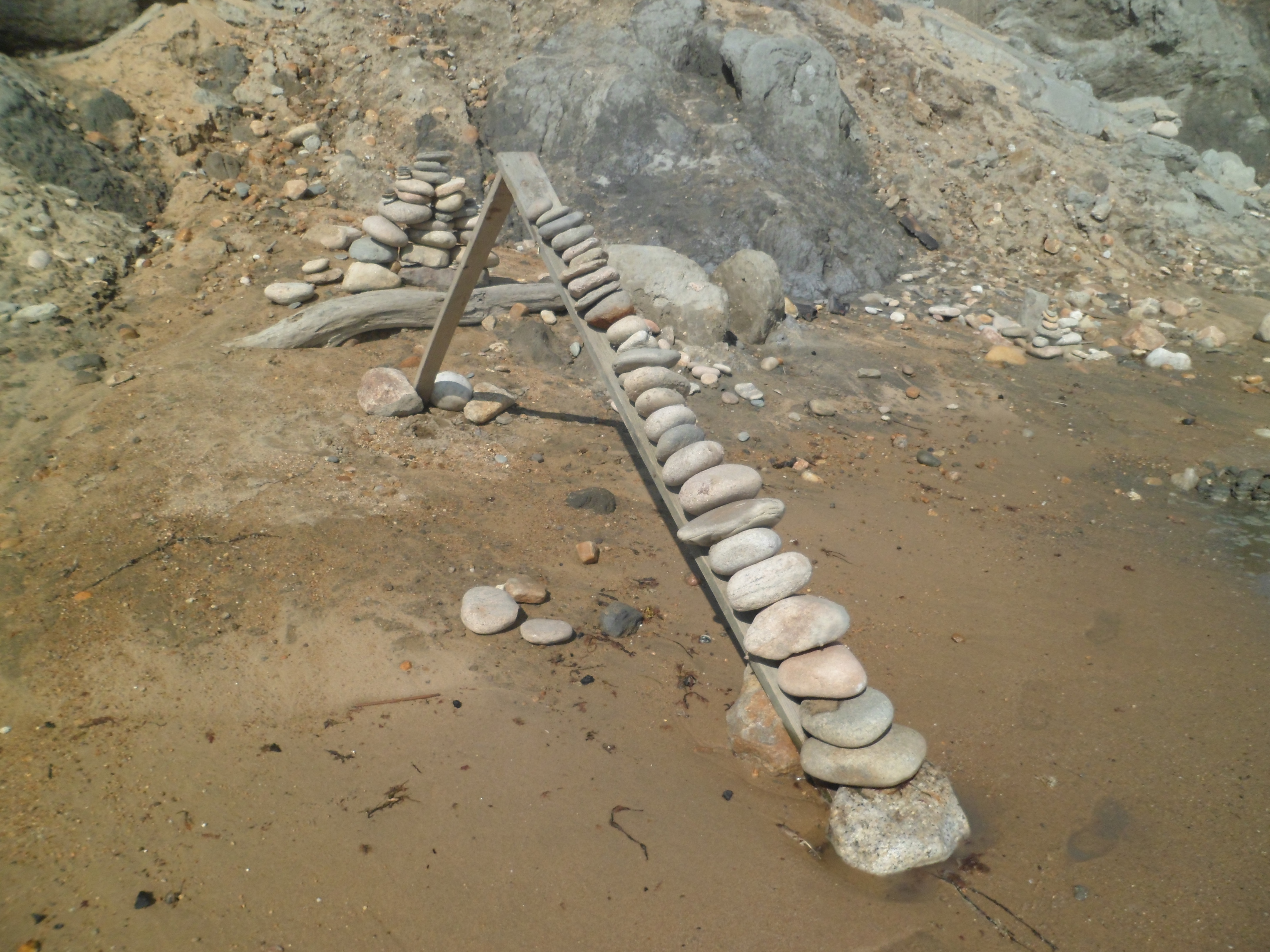
These are examples of cairn art, a pastime I have seen elsewhere along the New England coast. It seems to be in full flower here along Block Island’s eastern shore.
Here is a piece of detritus, actually adding some ambiance to the beach.
This “catapult” is of recent vintage, though several indigenous nations counciled here in the 17th Century, around the time of King Philip’s War.
The gypsum and limestone cliffs that ring the island provided a measure of protection for the gathered nations.
Moving inland, just a bit, one finds static, catchment-type ponds.
Along the approach to the glacial moraines of Rodman’s Hollow, an invitation to take a few swings at life.
Then, we get to Rodman’s Hollow.
Once out of the glacial moraines, I passed the airport and New Shoreham’s Town Hall.
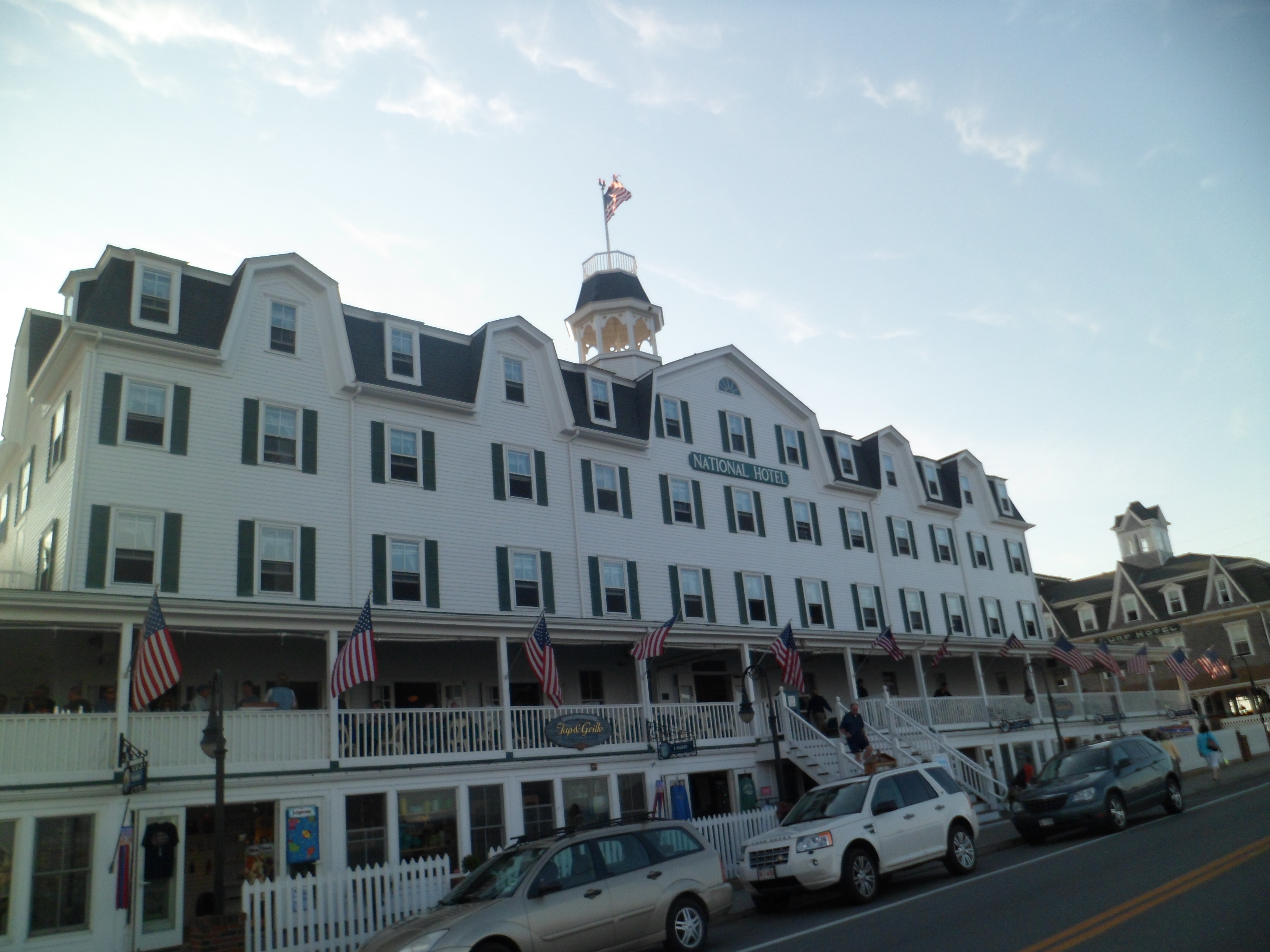
Back in town, en route to New Harbor, I passed three more of Block Island’s great hotels. First, is the National.
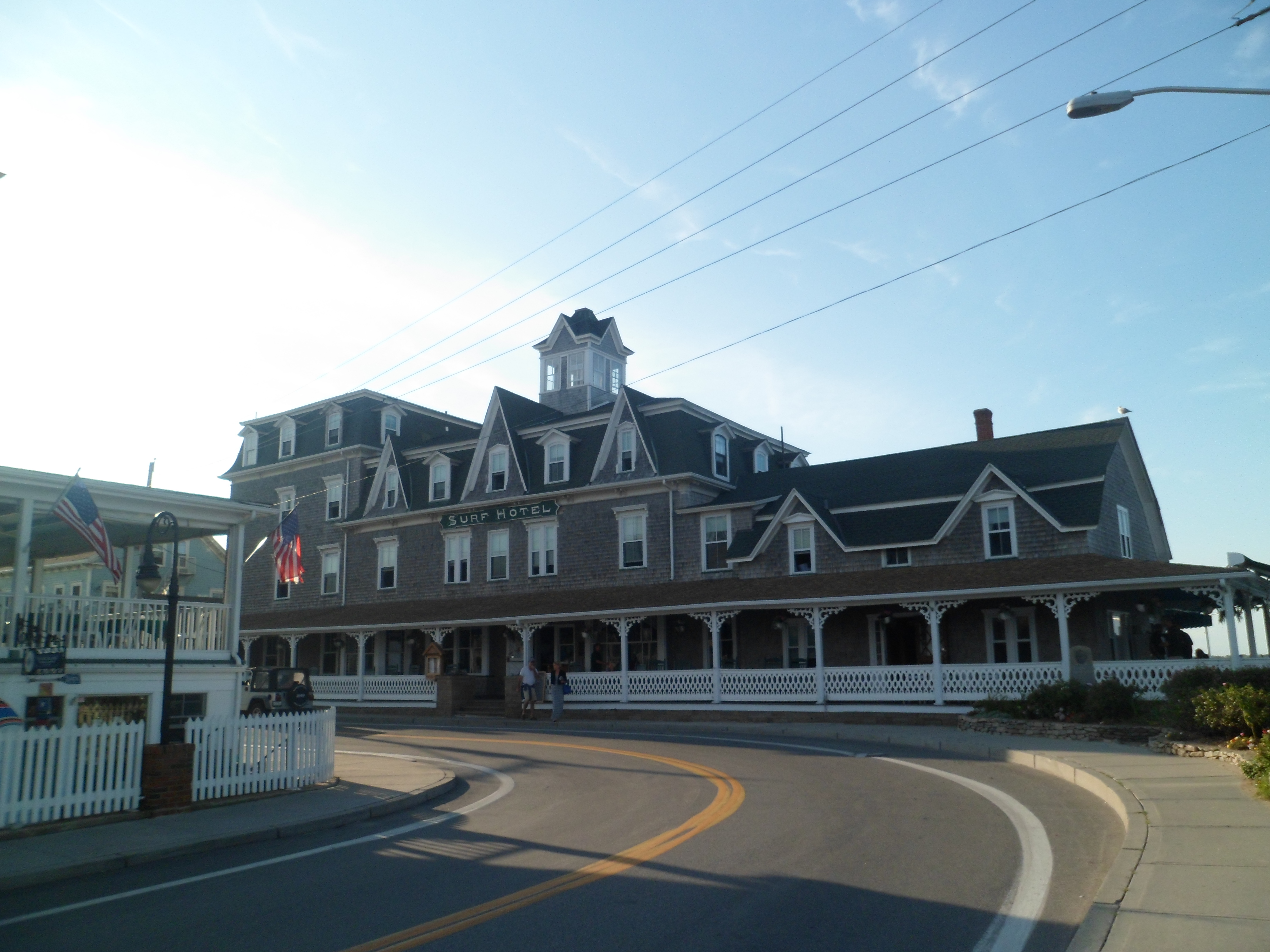
Next is the Surf Hotel.
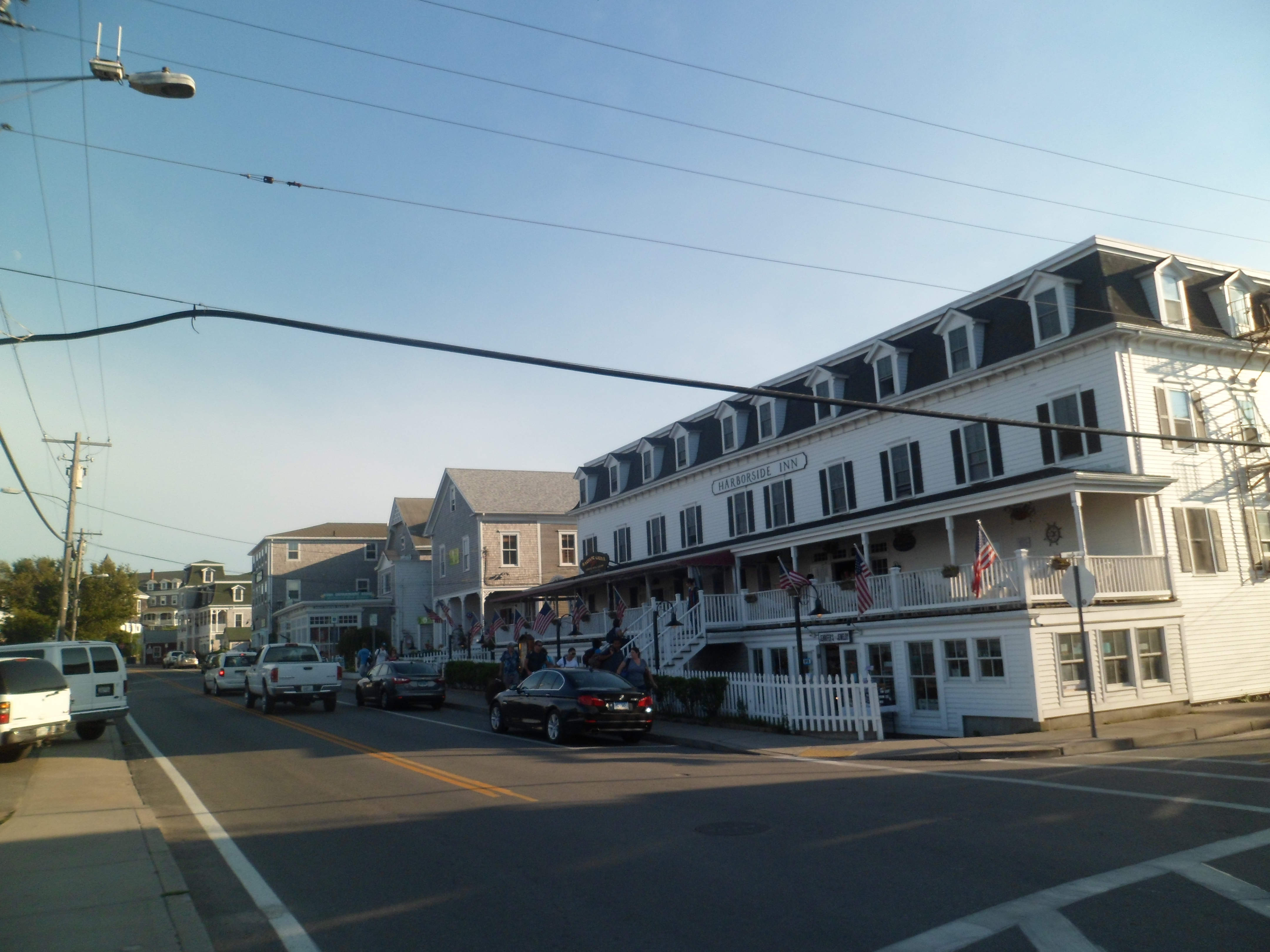
Finally, here is the Harborside Inn.
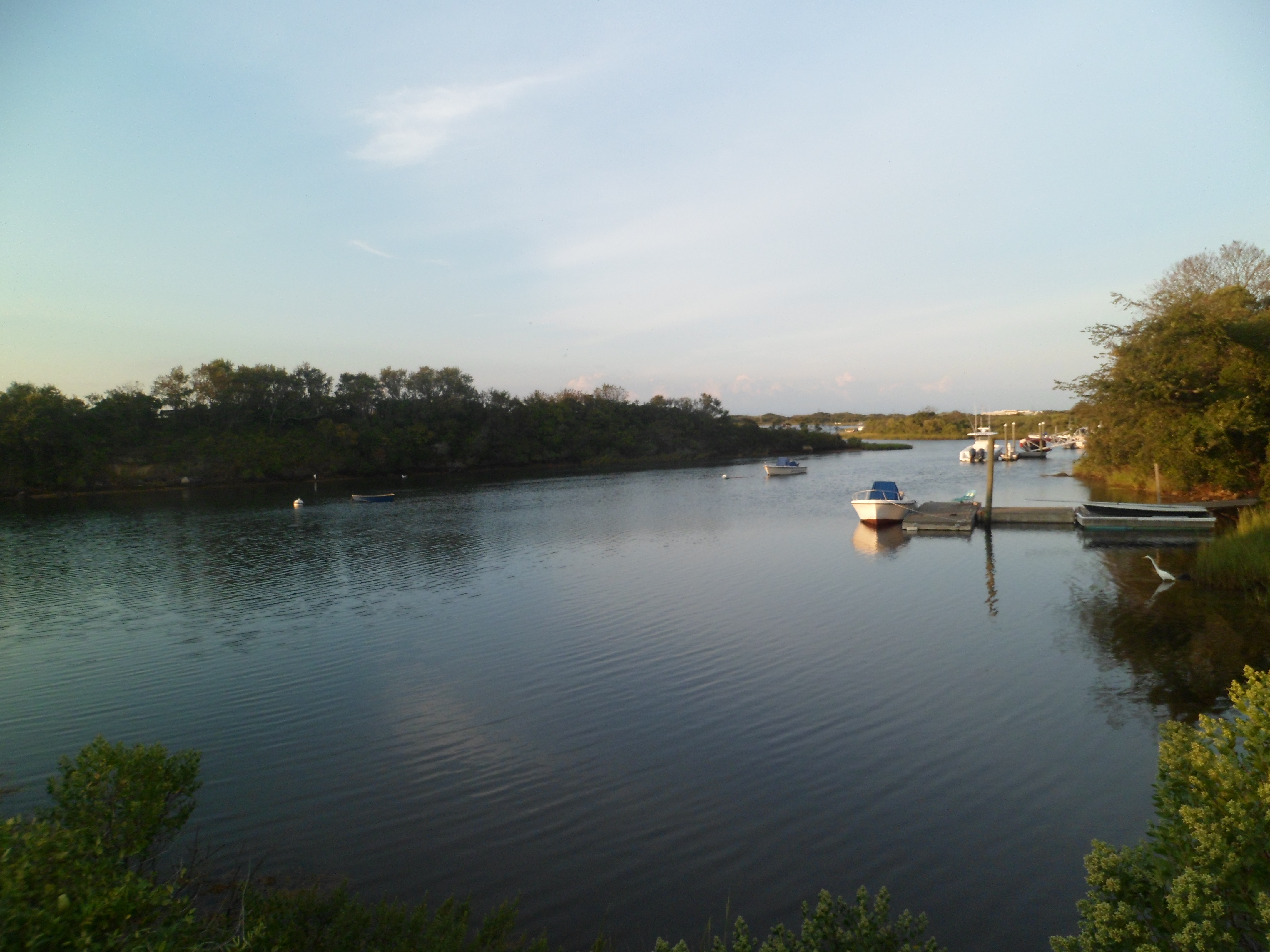
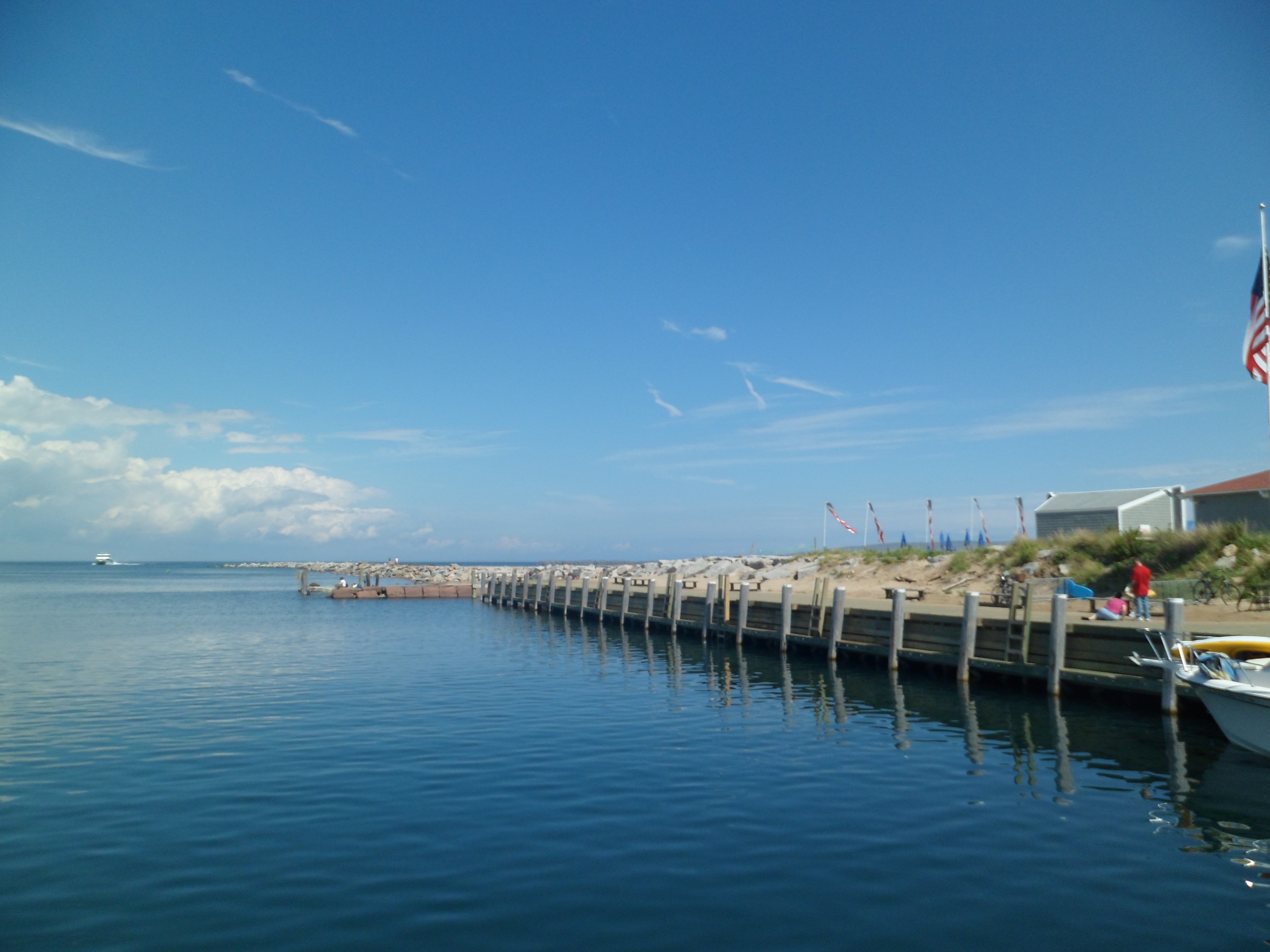
I came to New Harbor, a mile west of the Old, as the day was drawing to a close.
There is “lethal” twist to New Shoreham’s rather formidable line of restaurants.
Finally, as the ferry back to Point Judith pulled out, I caught the sunset.
This island, like its Massachusetts and New York neighbours, is a place of dreams.
I spent about two hours on this stretch of the walk, and found it the most varied in scenery. The crowds congregated around the great houses, between New Shoreham and North Point Fibers.
Here is the Manisses Hotel, owned by the Abrams family.
Lightburne House is a bed and breakfast, just south of the Manisses.
The Abrams’ also have an organic farm and exotic stock ranch. The animals may be fed with pellets, which are purchased outside the pens.
As it happened, only the donkey was much interested in eating.
Tank, the Galapagos tortoise, was just glad to be out and about.
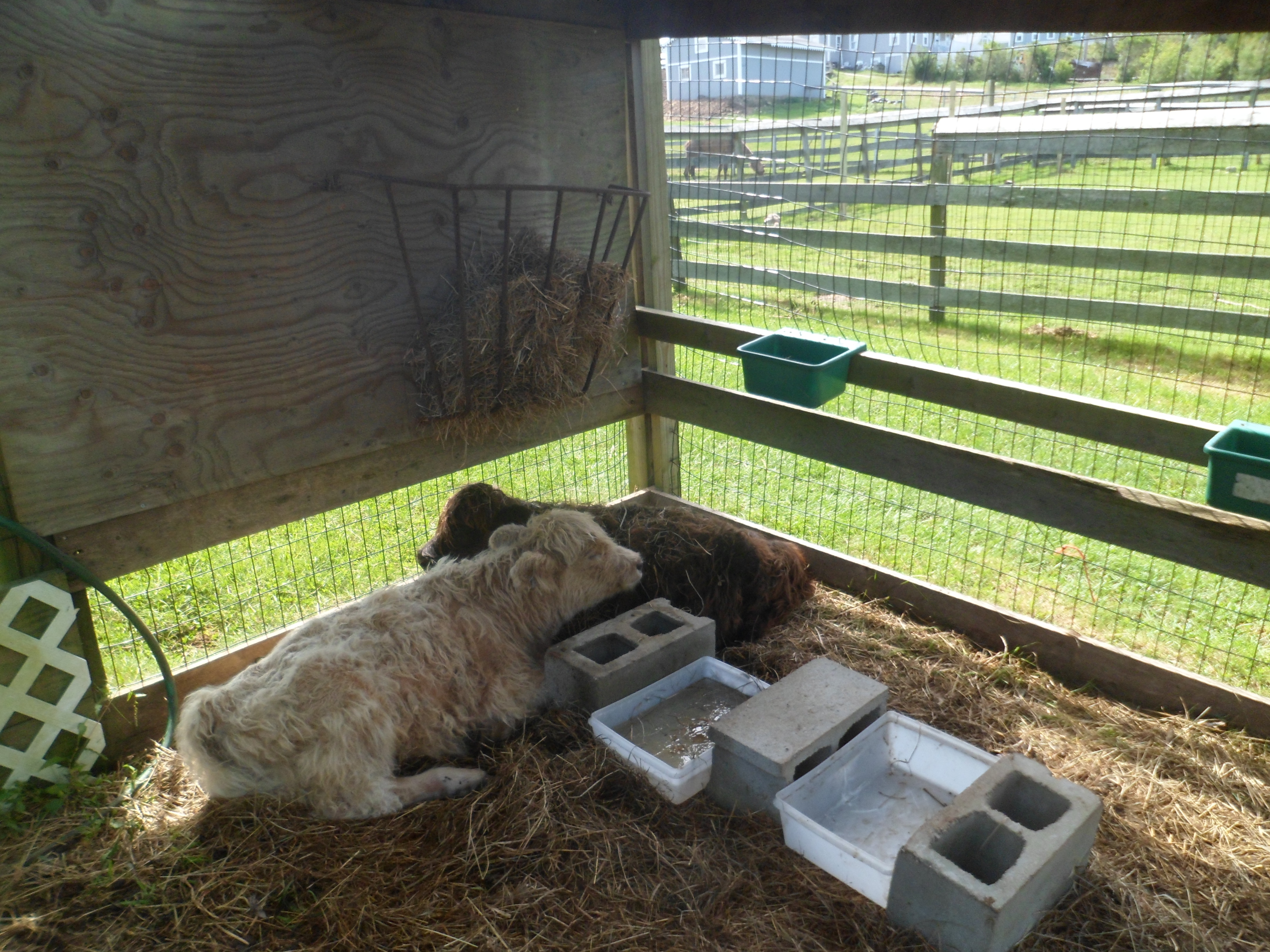
I have always liked long-haired, shaggy-looking Scottish cattle.
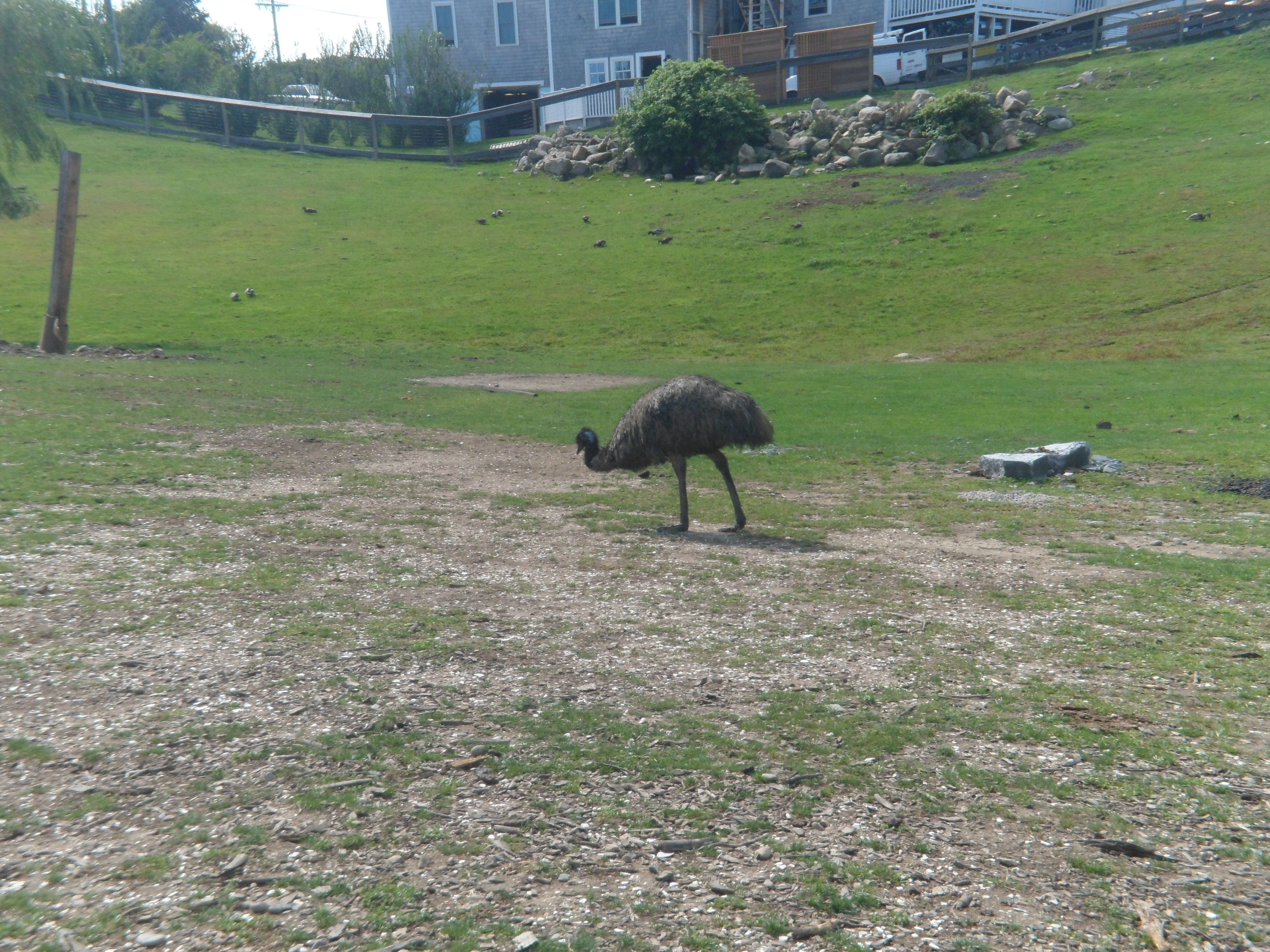
This seems to be my summer for emus.
The dromedaries were making a racket, but kept back from feeding.
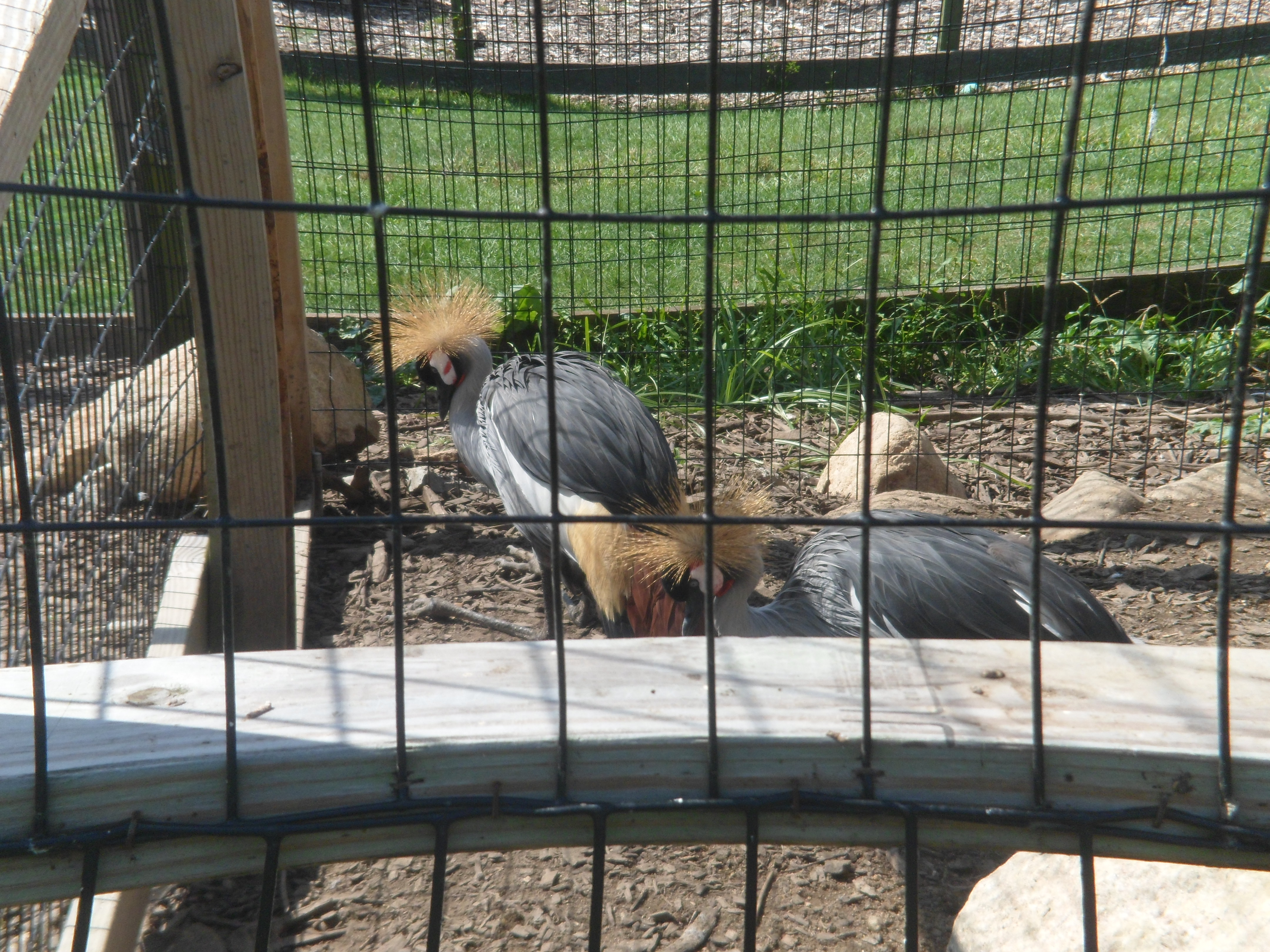
The Birds of Paradise were not flying up anyone’s nose, in this early afternoon.
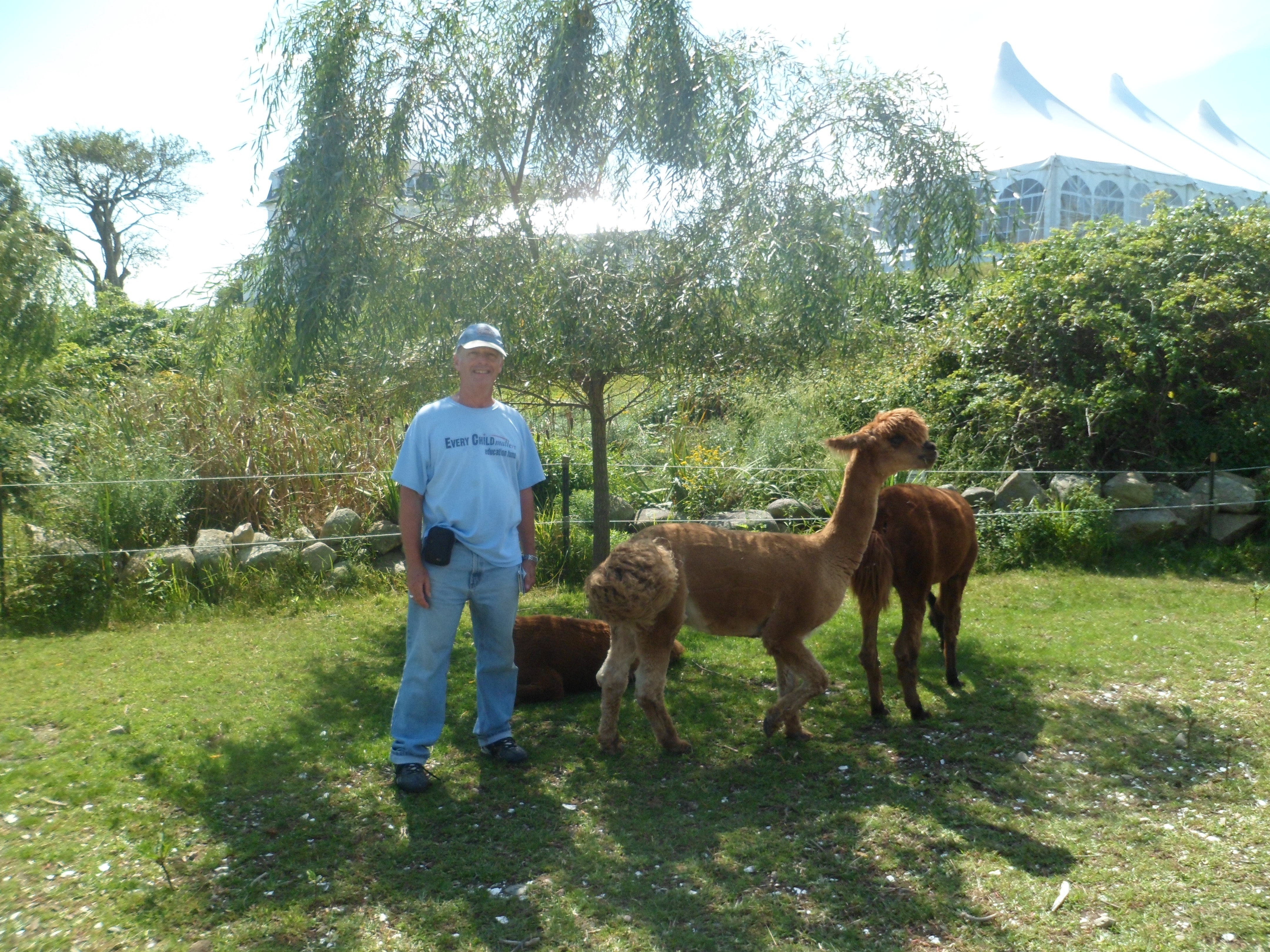
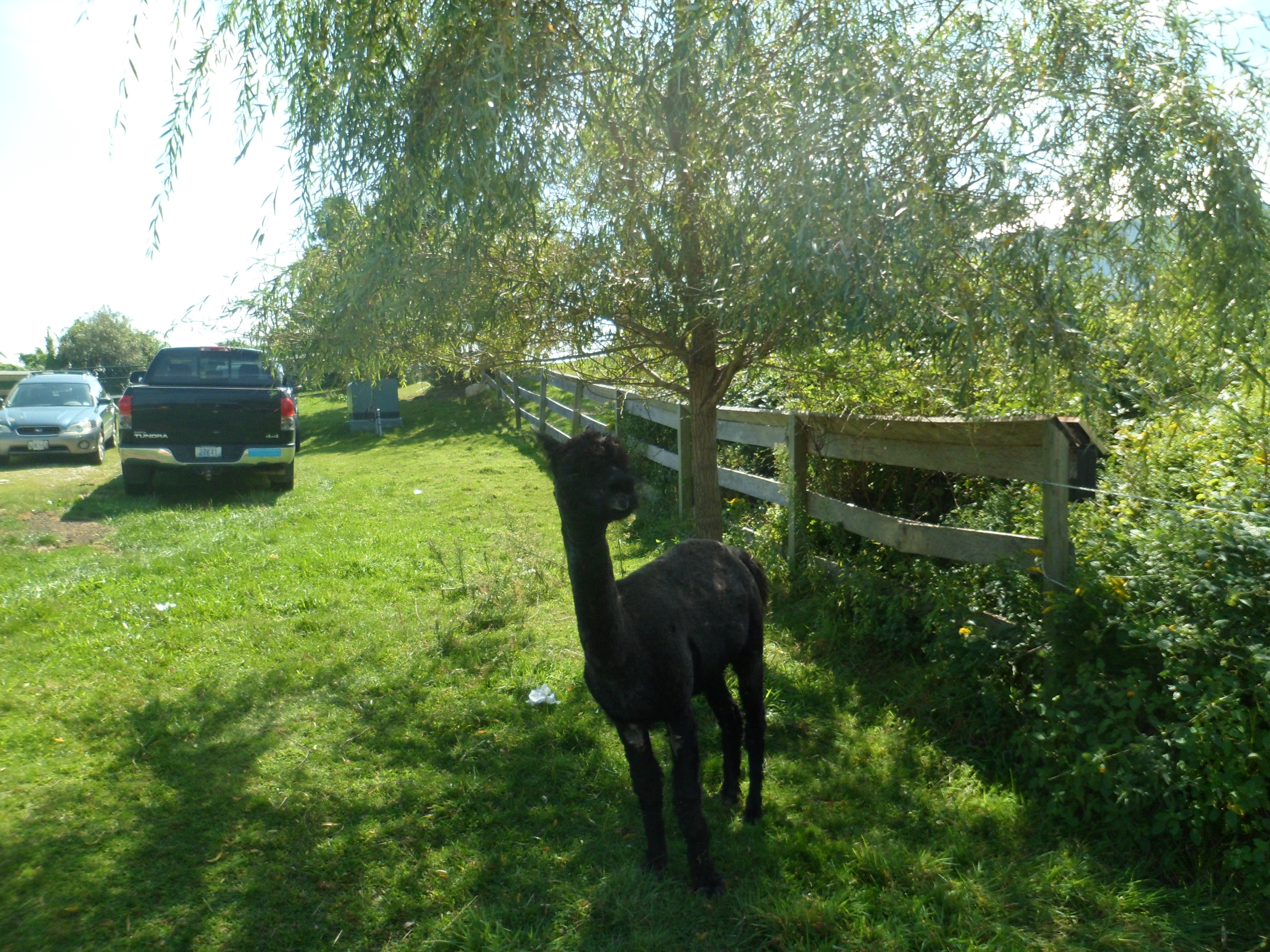
Free-ranging alpacas are the sources of wool for North Light Fibers, whose store is adjacent to the ranch.
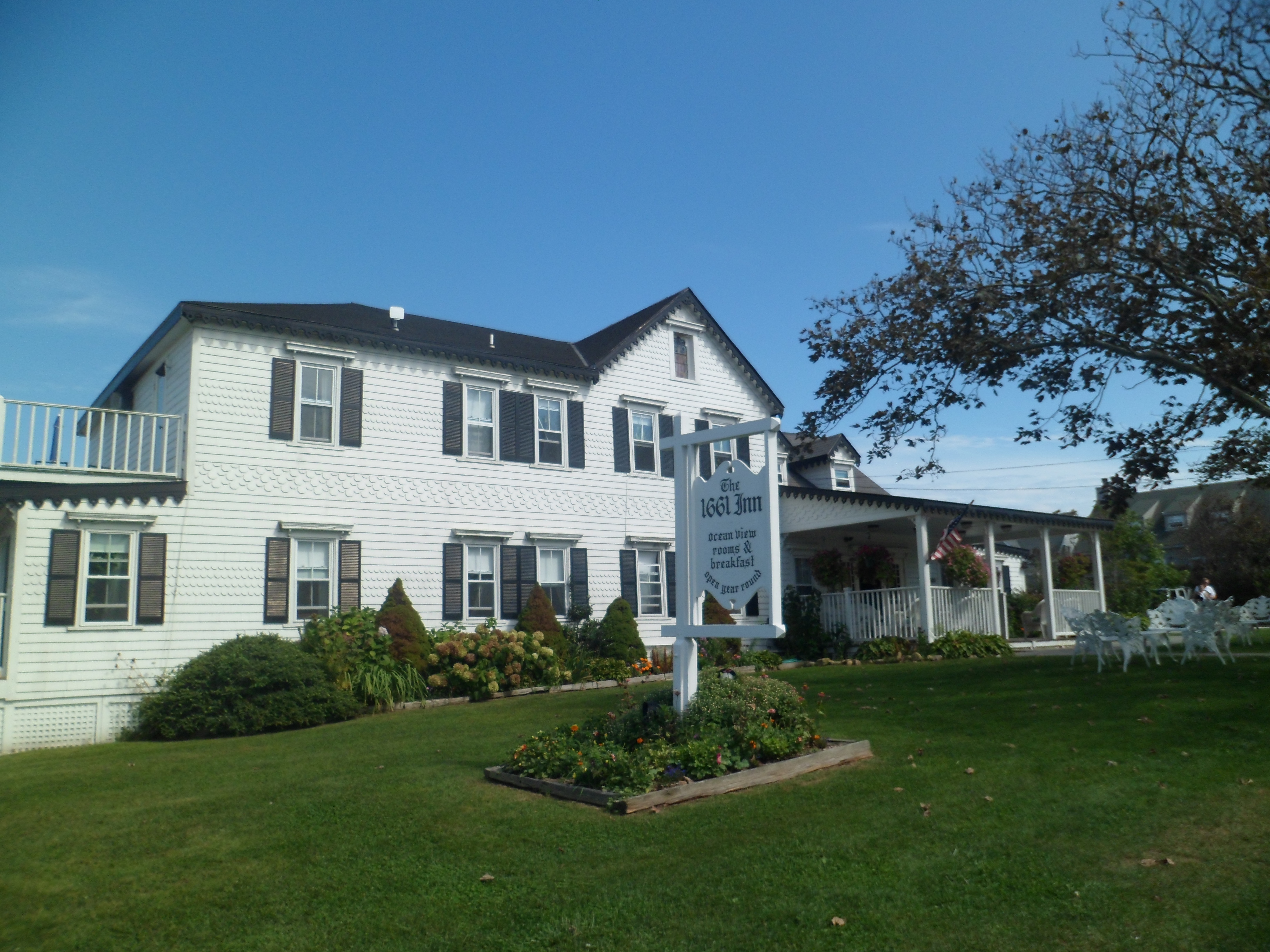
1661 House is the southernmost of the Abrams Family properties.
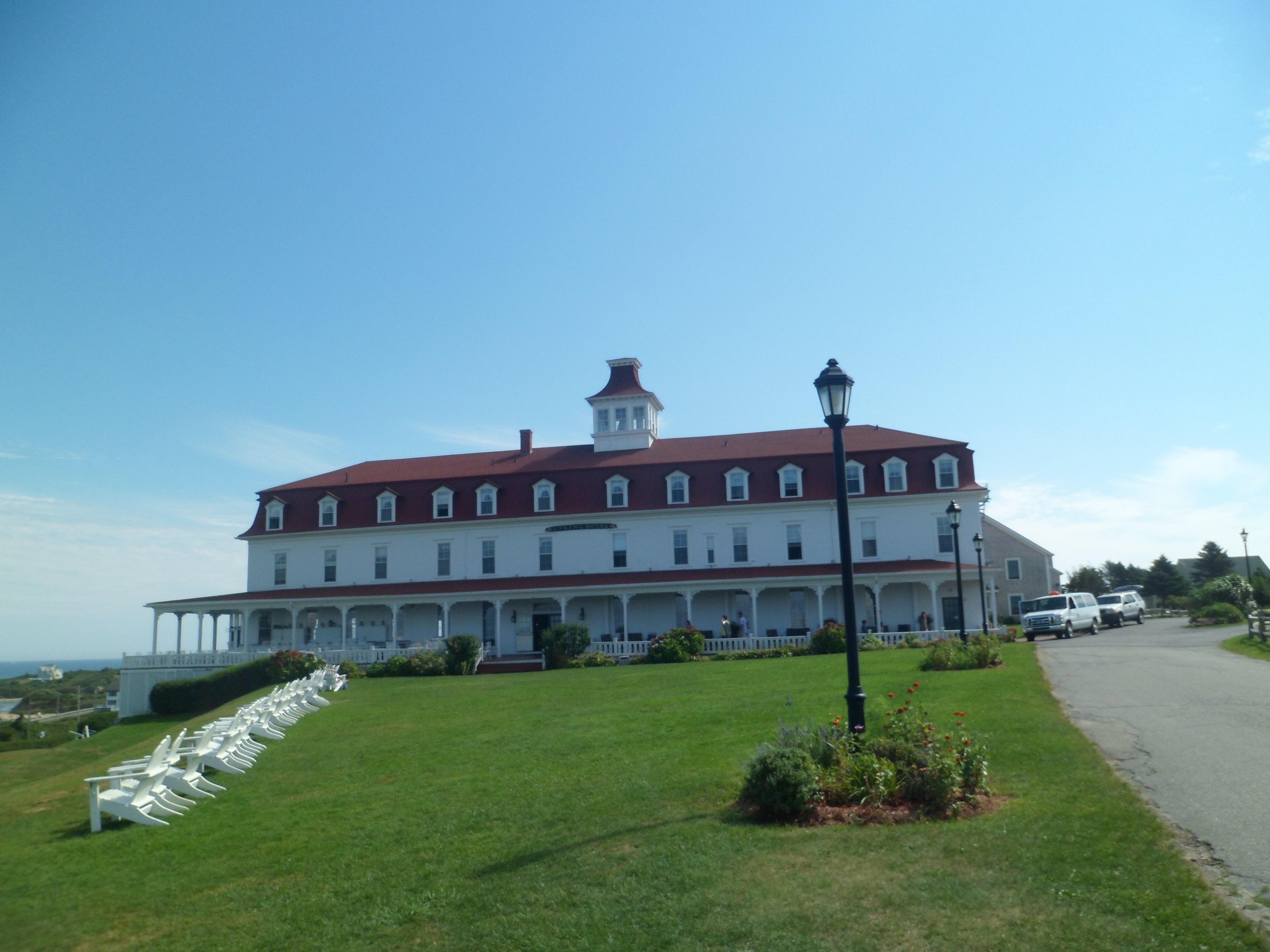
The Spring House is the last of the great resorts in the southeast quadrant.
Occasional views from the road reminded me that there is good reason for these resorts to be expensive.
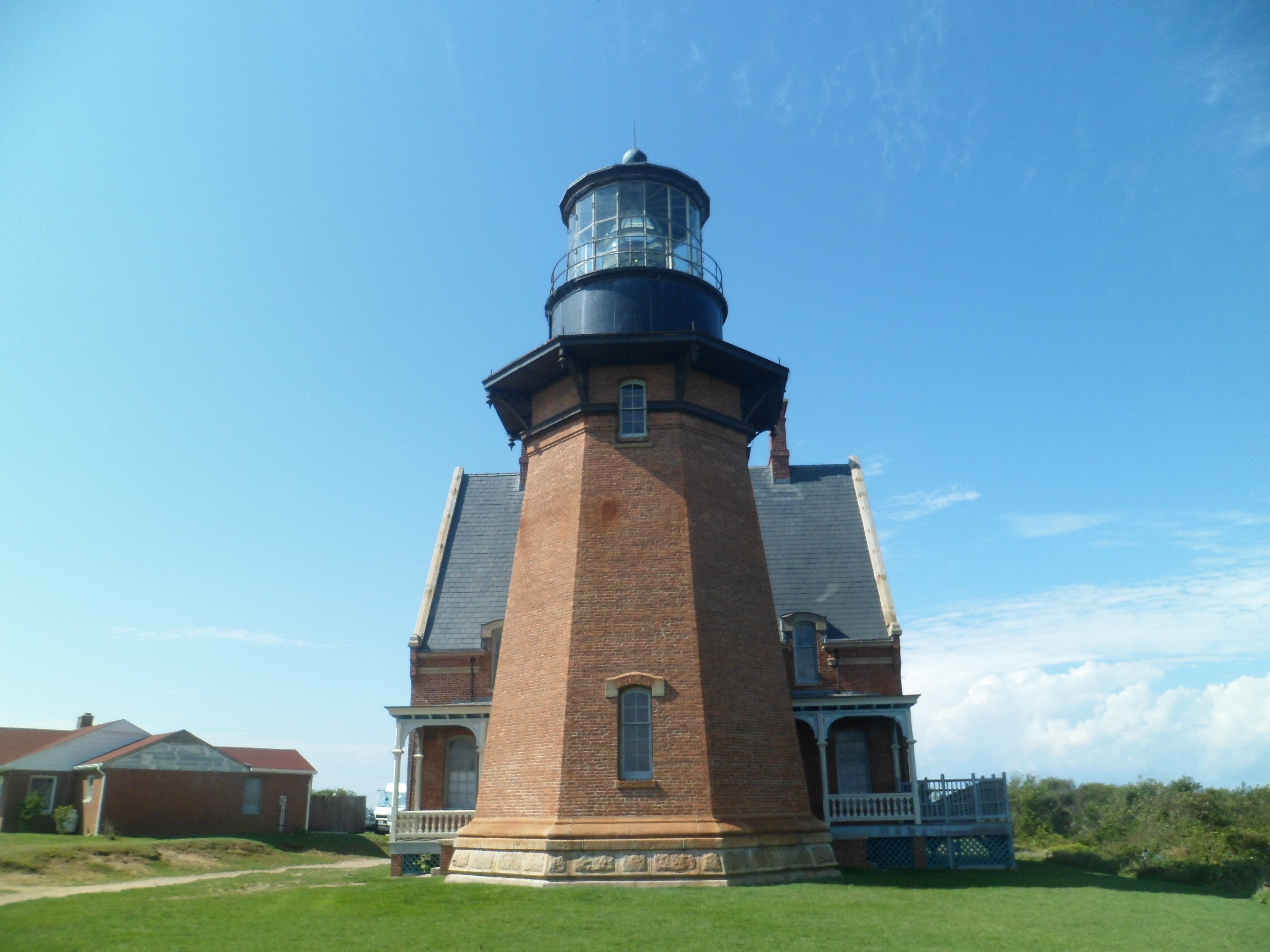
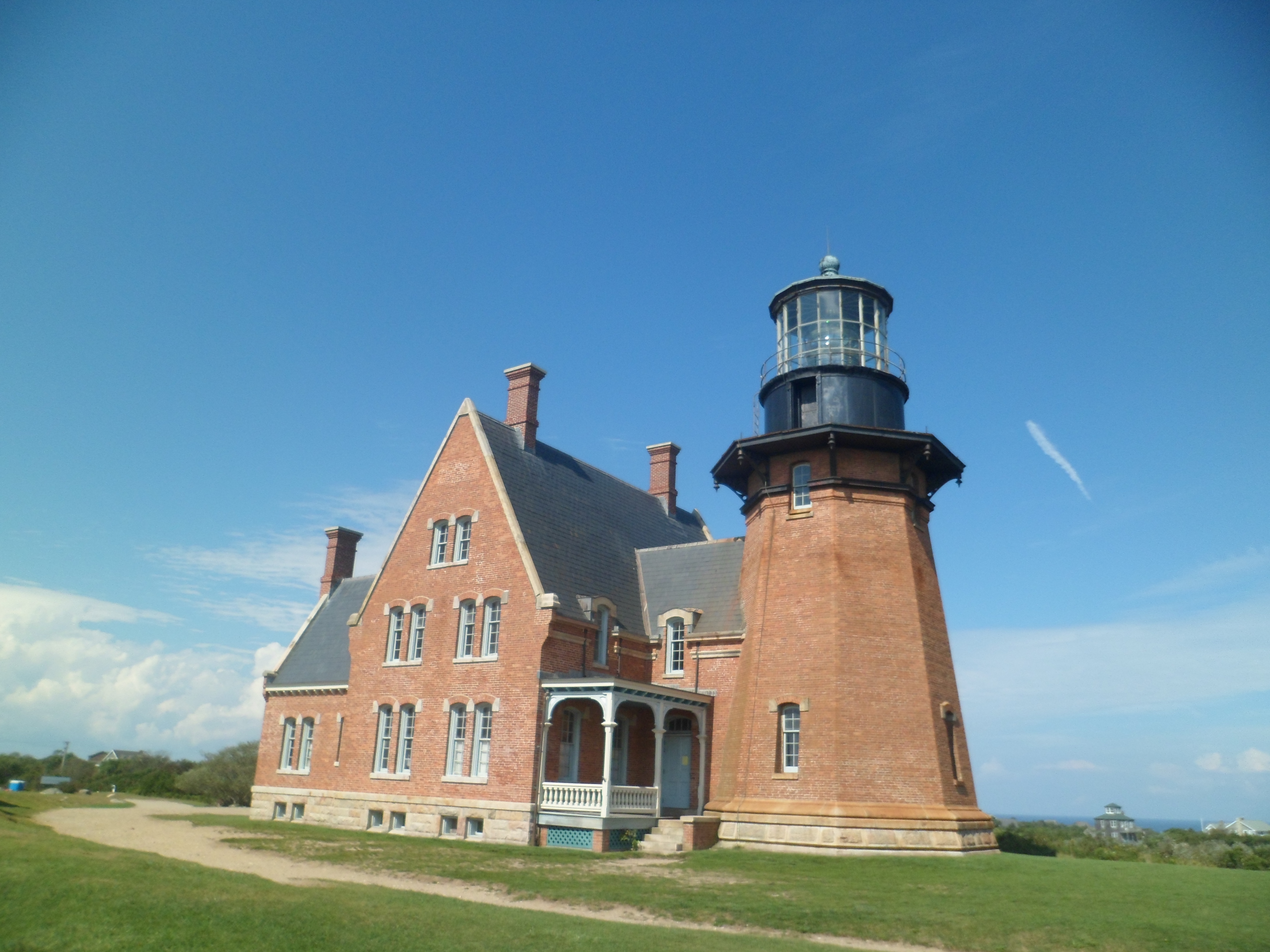
I arrived at Southeast Light House around 2:30. The house is unoccupied, but is maintained by the Block Island Historical Society.
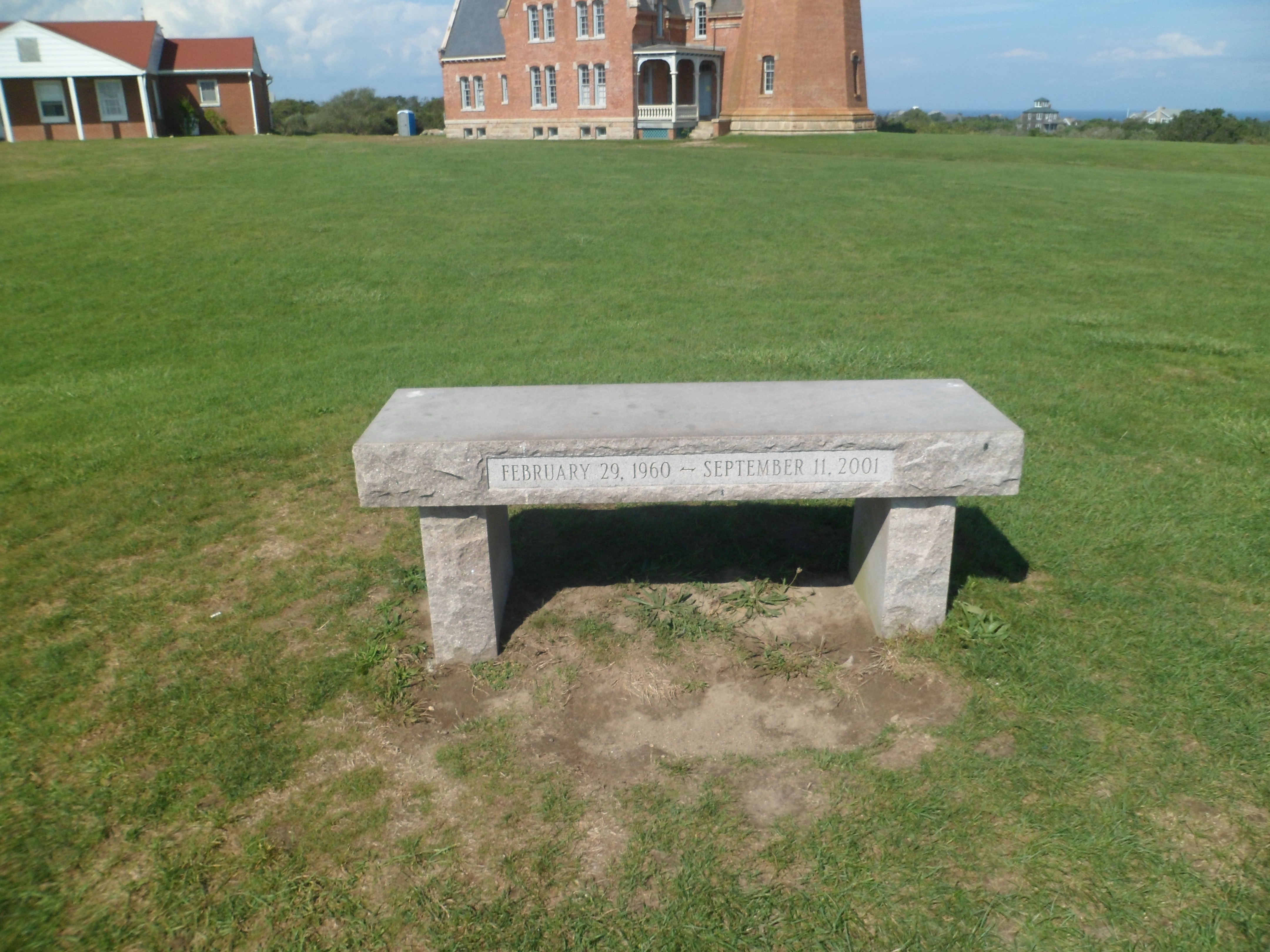
Like other communities, Block Island suffered a loss on September 11, 2001.
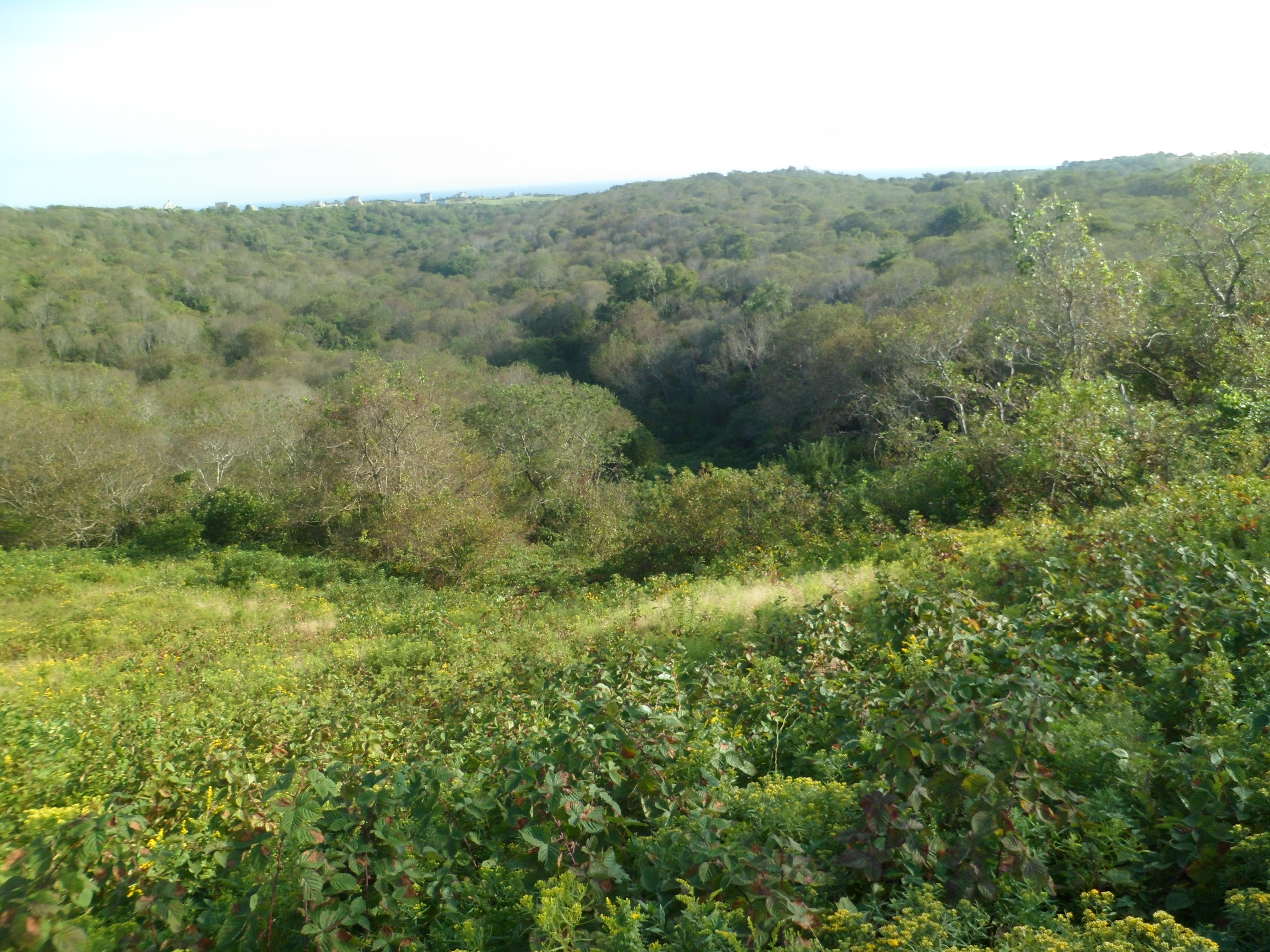
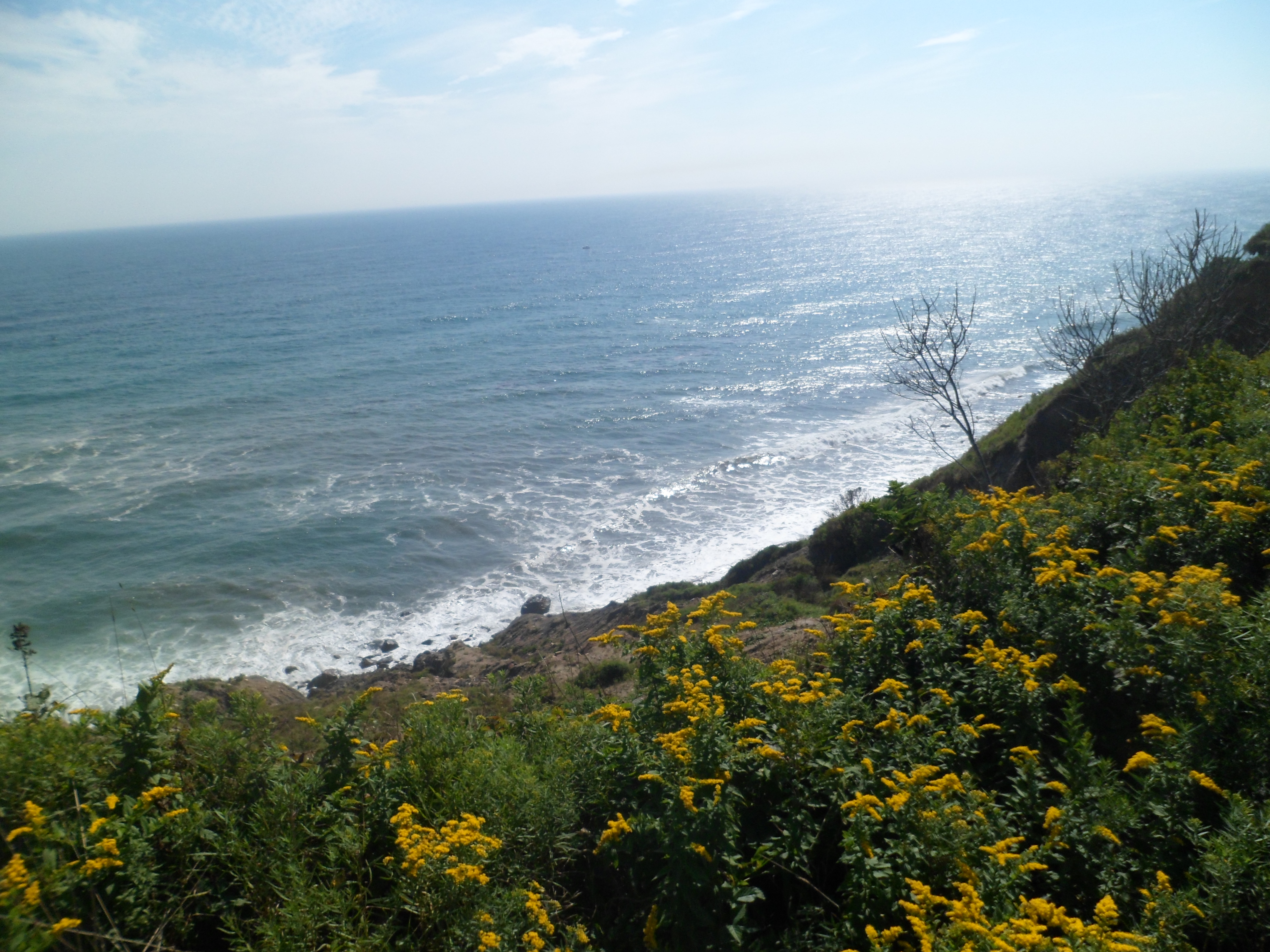
The view from Southeast Light is, nonetheless, breathtaking.
There were other gems awaiting: Payne Overlook, and its Steps to the Shore, and Rodman’s Hollow.
The small island that lies between Rhode Island’s southern coast and Long Island’s eastern tip has elements of both New England and New York. New Shoreham, the village on the north side of the island, is the business and administrative center of the island, and is home to most of the 900 or so year-round residents.
It is to New Shoreham that regular ferry boats come, each day, year round, from Point Judith (Galilee), RI, New London, CT and Montauk, NY. I took the 11 AM from Point Judith, arriving in New Shoreham at noon, on Friday the 13th. It turned out to be a fine day, and no one was brandishing a scythe.
I spent the day on foot, exploring much of the eastern portion of the island, from New Shoreham to Rodman’s Hollow and Black Rock Point. This post shows New Shoreham, and Ocean View, its town park, overlooking the sea to the east.
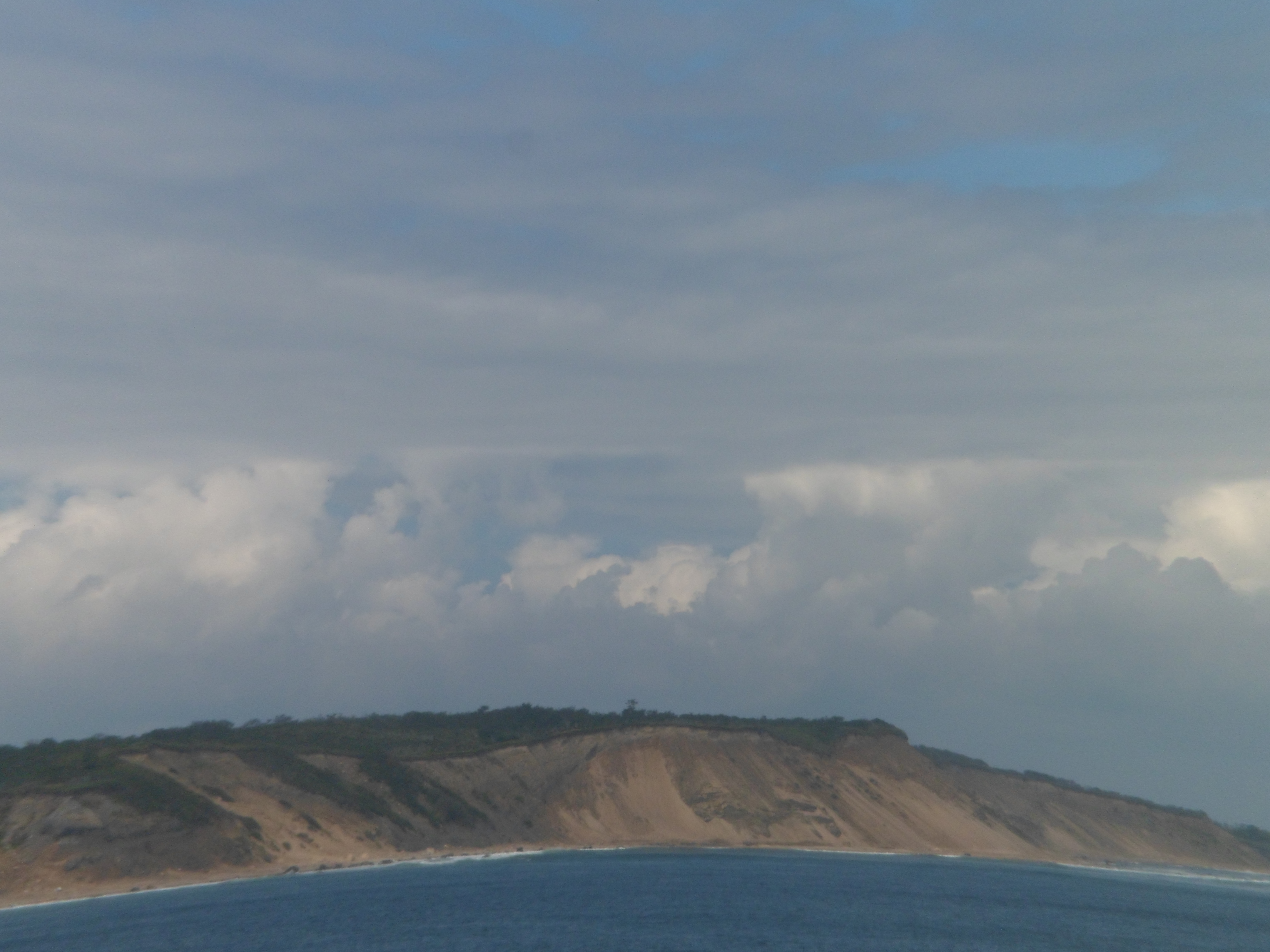
Here are some views of North Point, as we steamed towards the island’s Old Harbor.
Around noon, we came into New Shoreham.
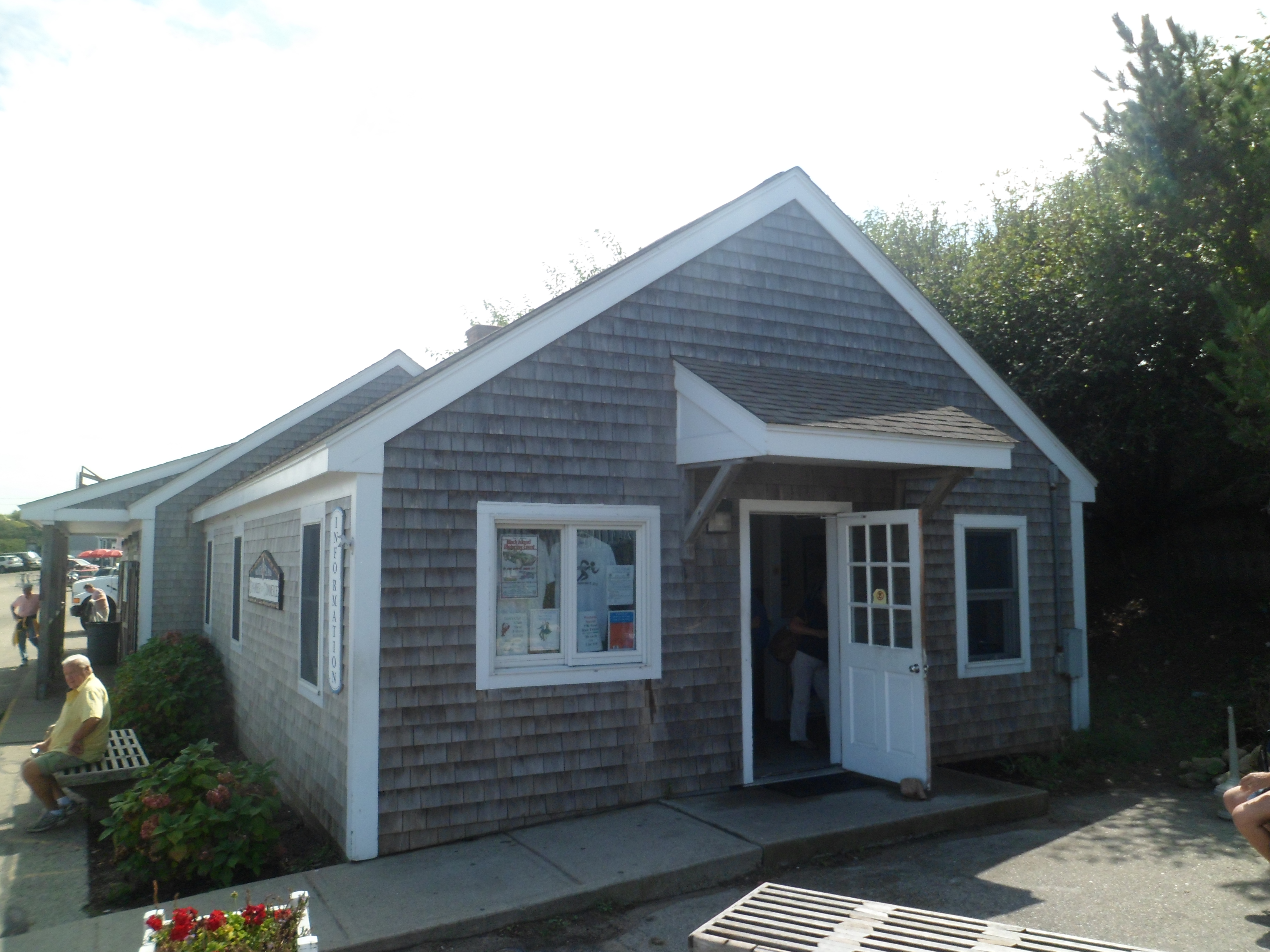
The Visitors Center greets one and all.
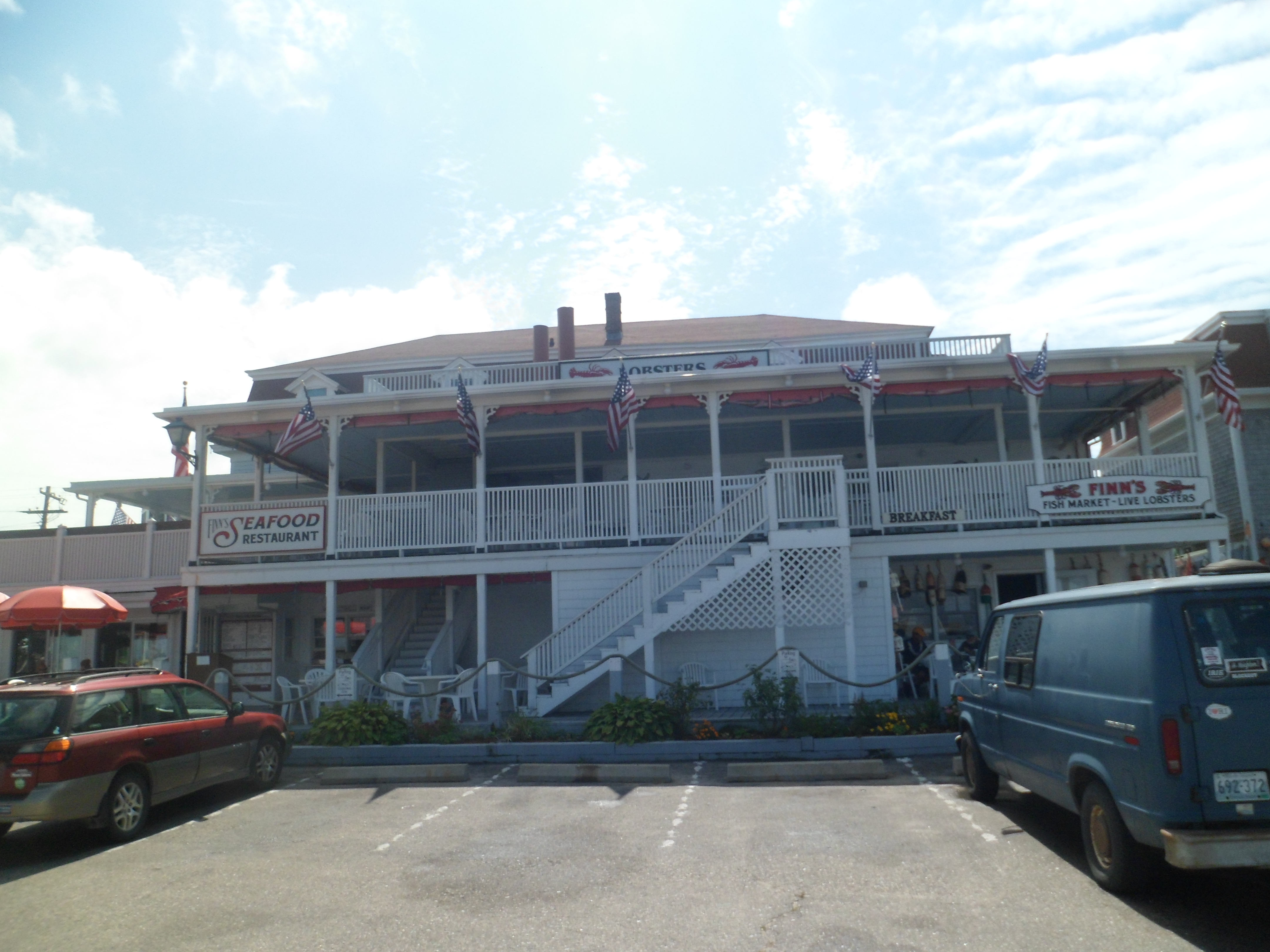
I enjoyed lunch at Finn’s, choosing an al fresco table.
Old Harbor Inn is one of nearly two dozen establishments where one could spend the night. I, of course, was a day traveler.
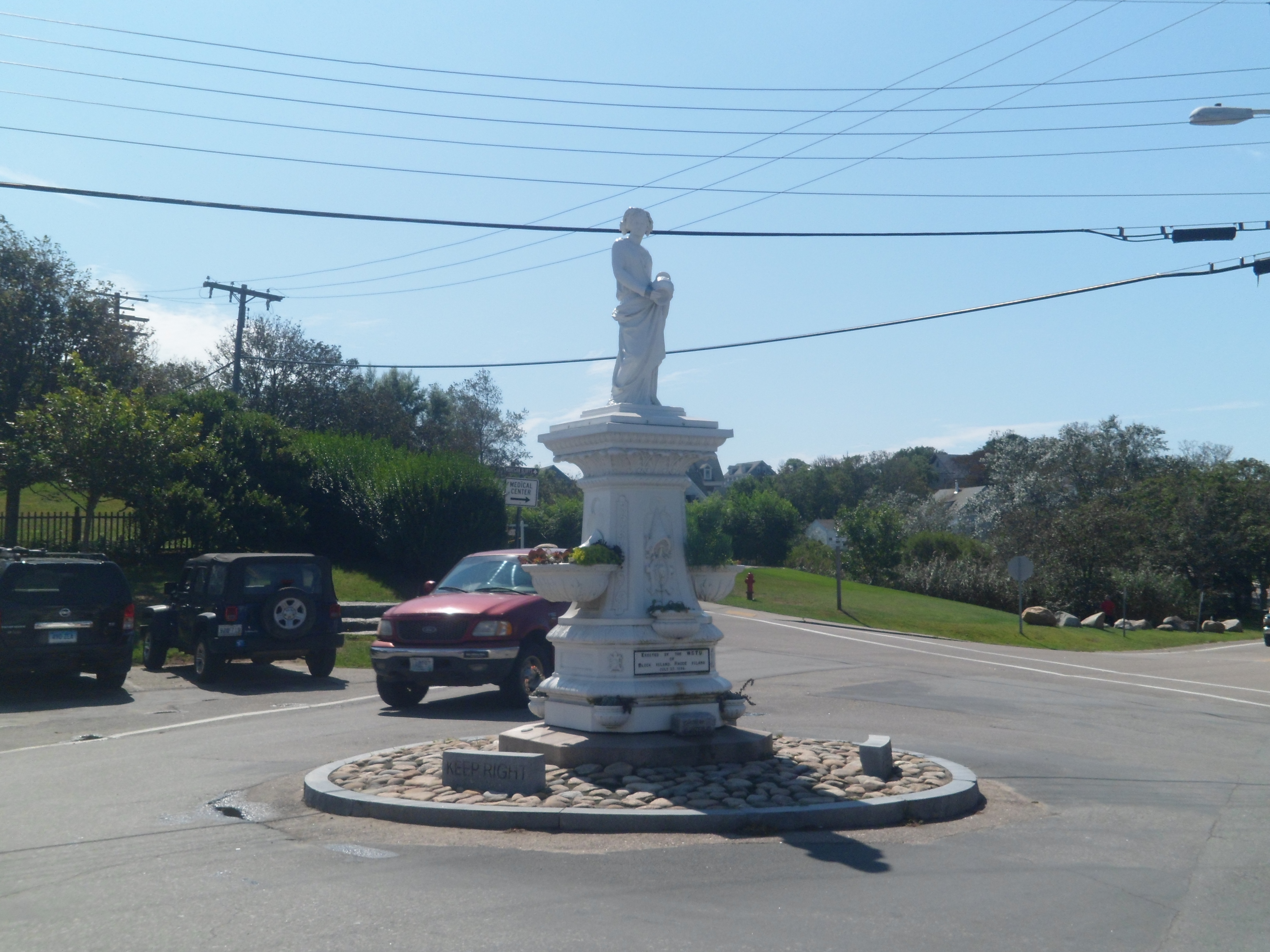
The island’s sole rotary is in the middle of New Shoreham.
Another Cape Cod style structure is the chapel on the hill.
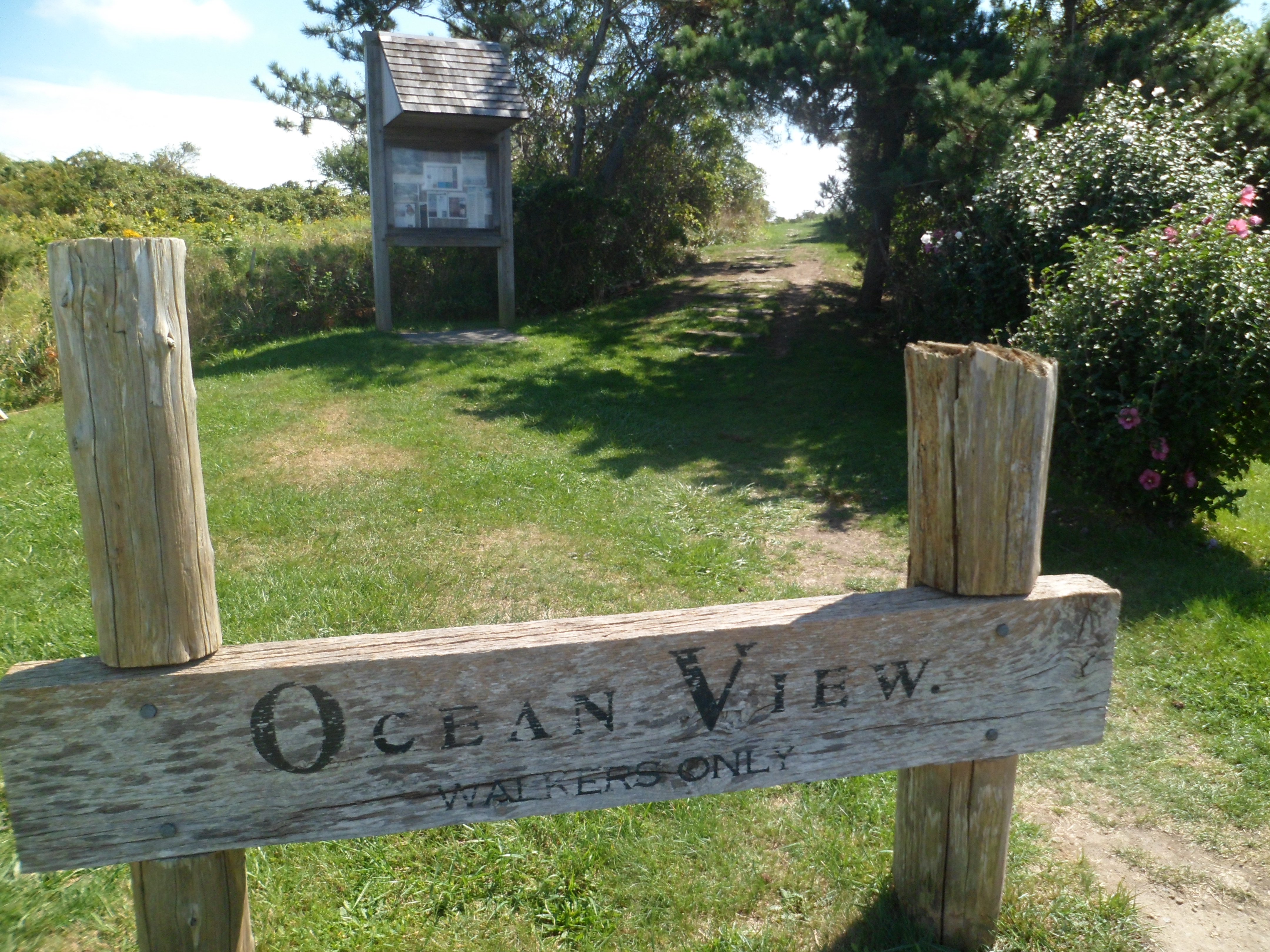
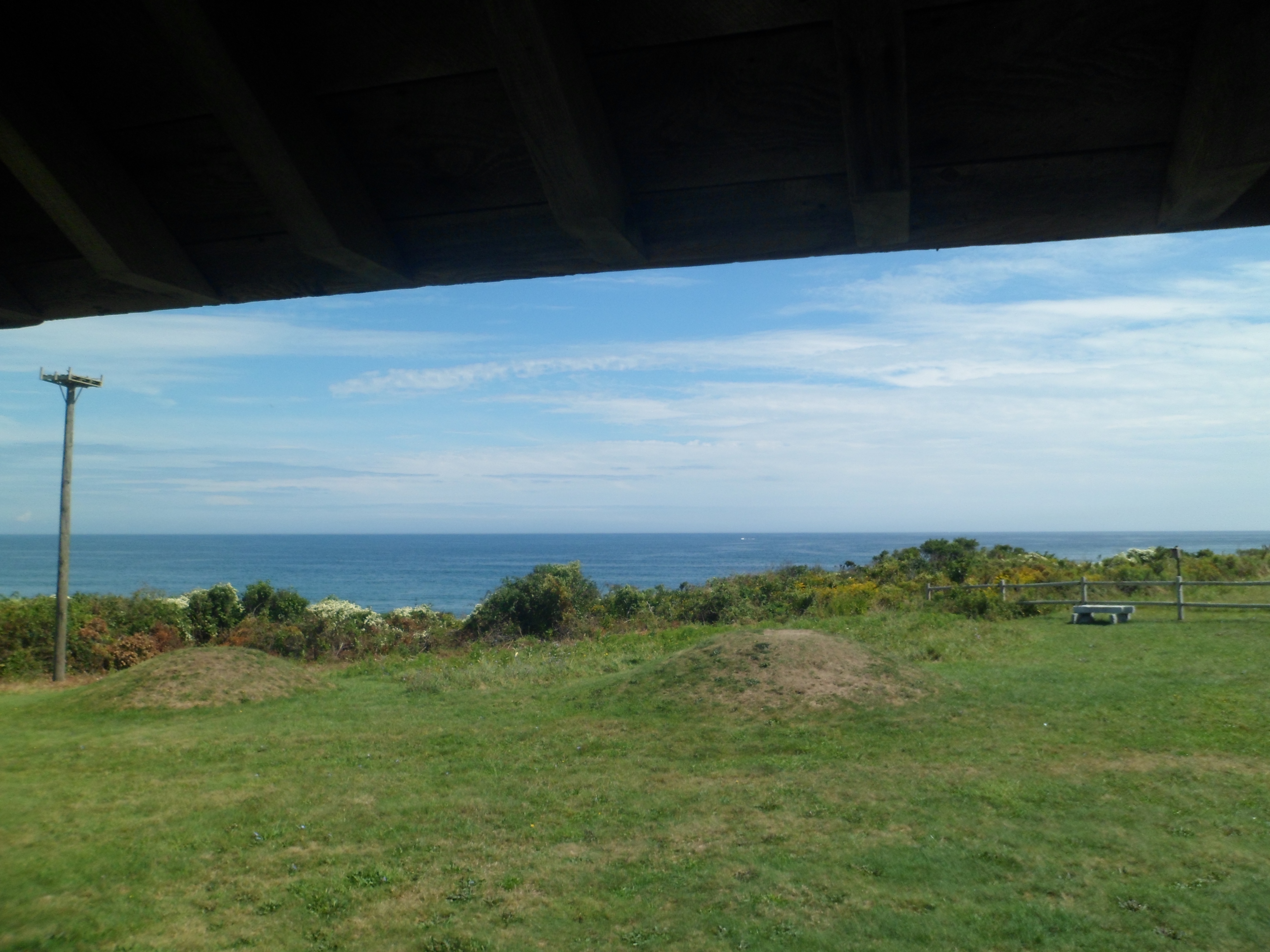
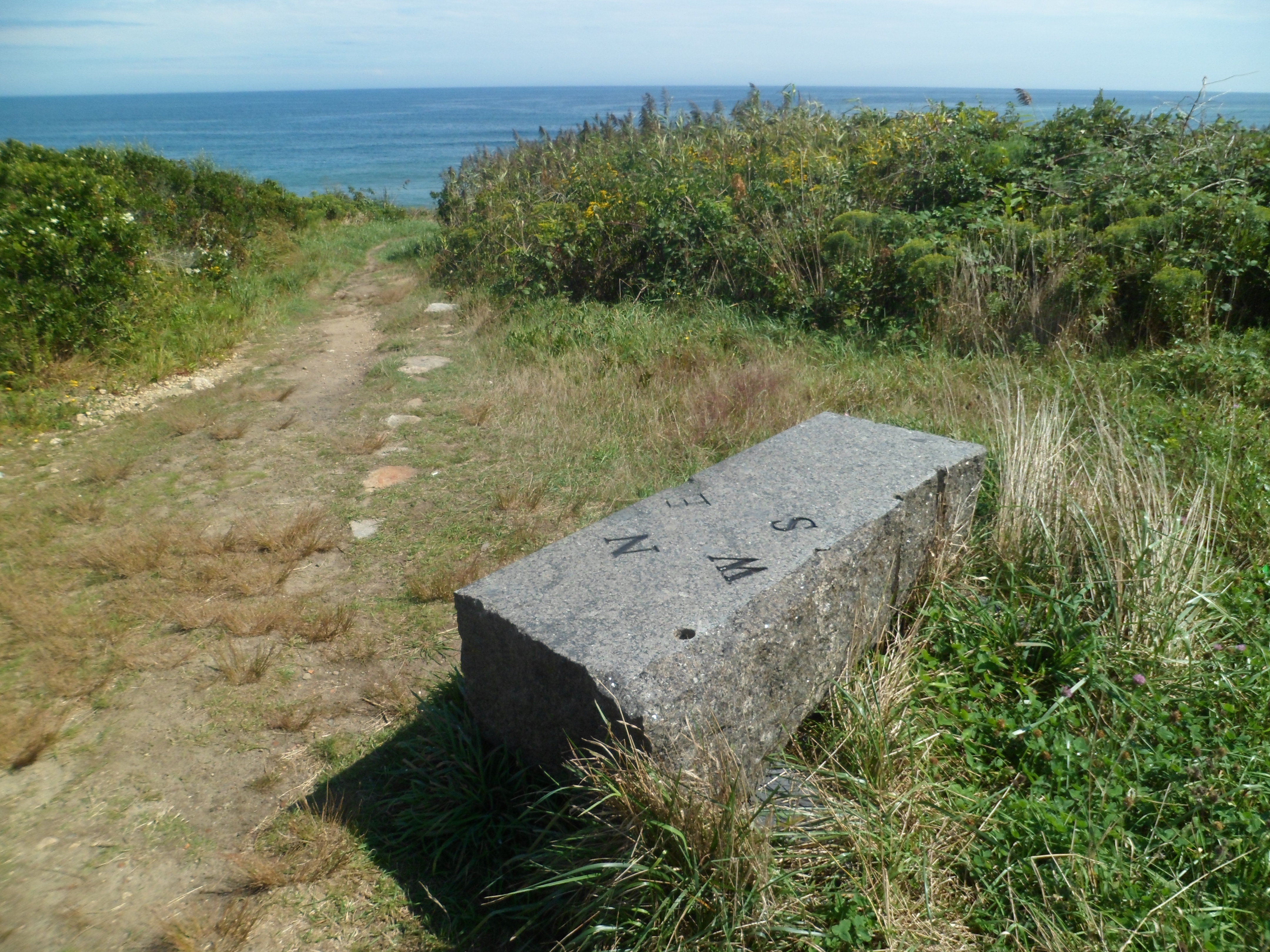
Just east of the chapel is Ocean View, with its meditation pavilion and short, but scenic trails.
Here are the stairs to nowhere. Actually, the area is a remnant of a small farm house, from the 18th Century.
A small cenotaph memorializes a fisherman from New Shoreham.
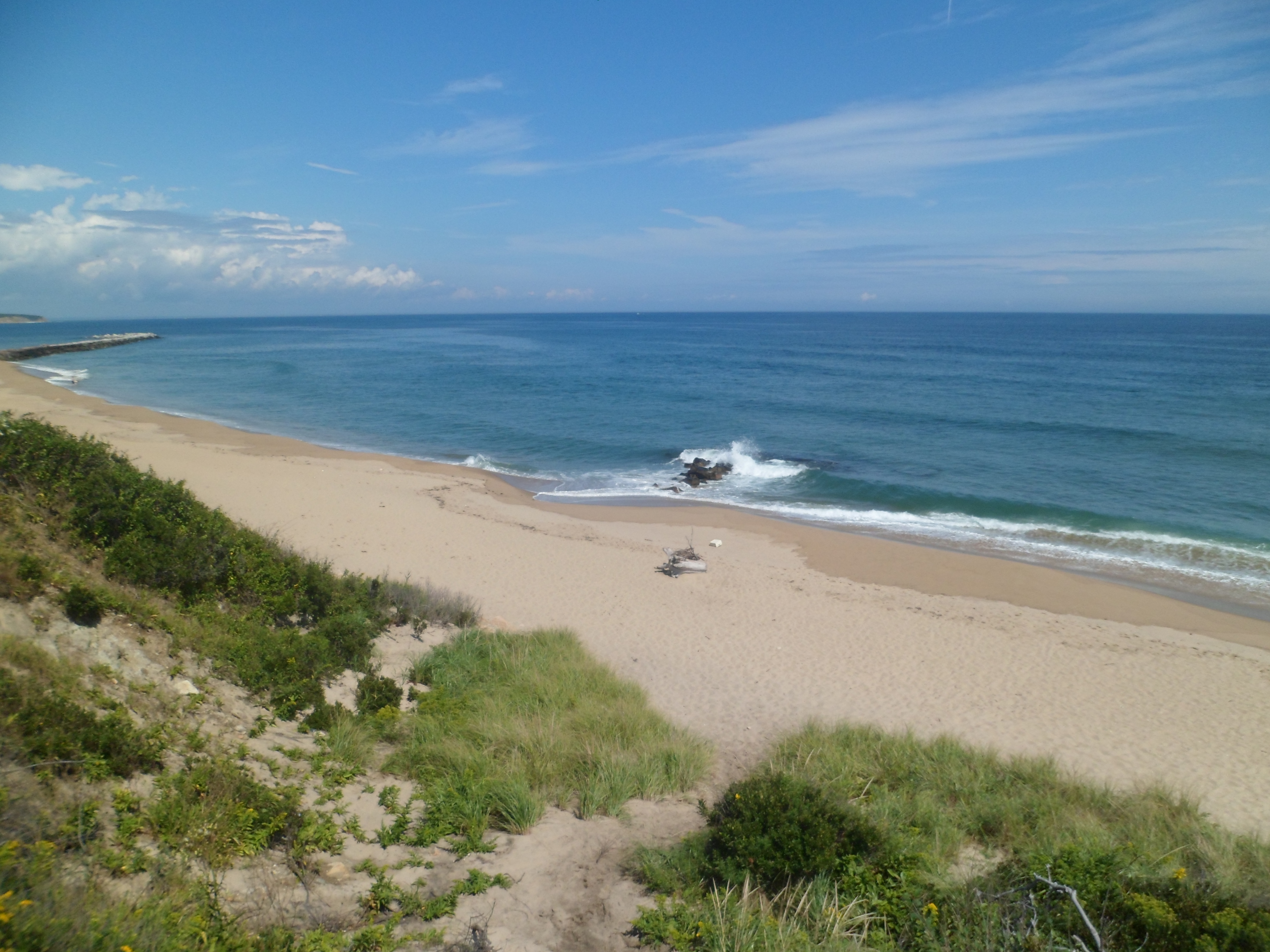
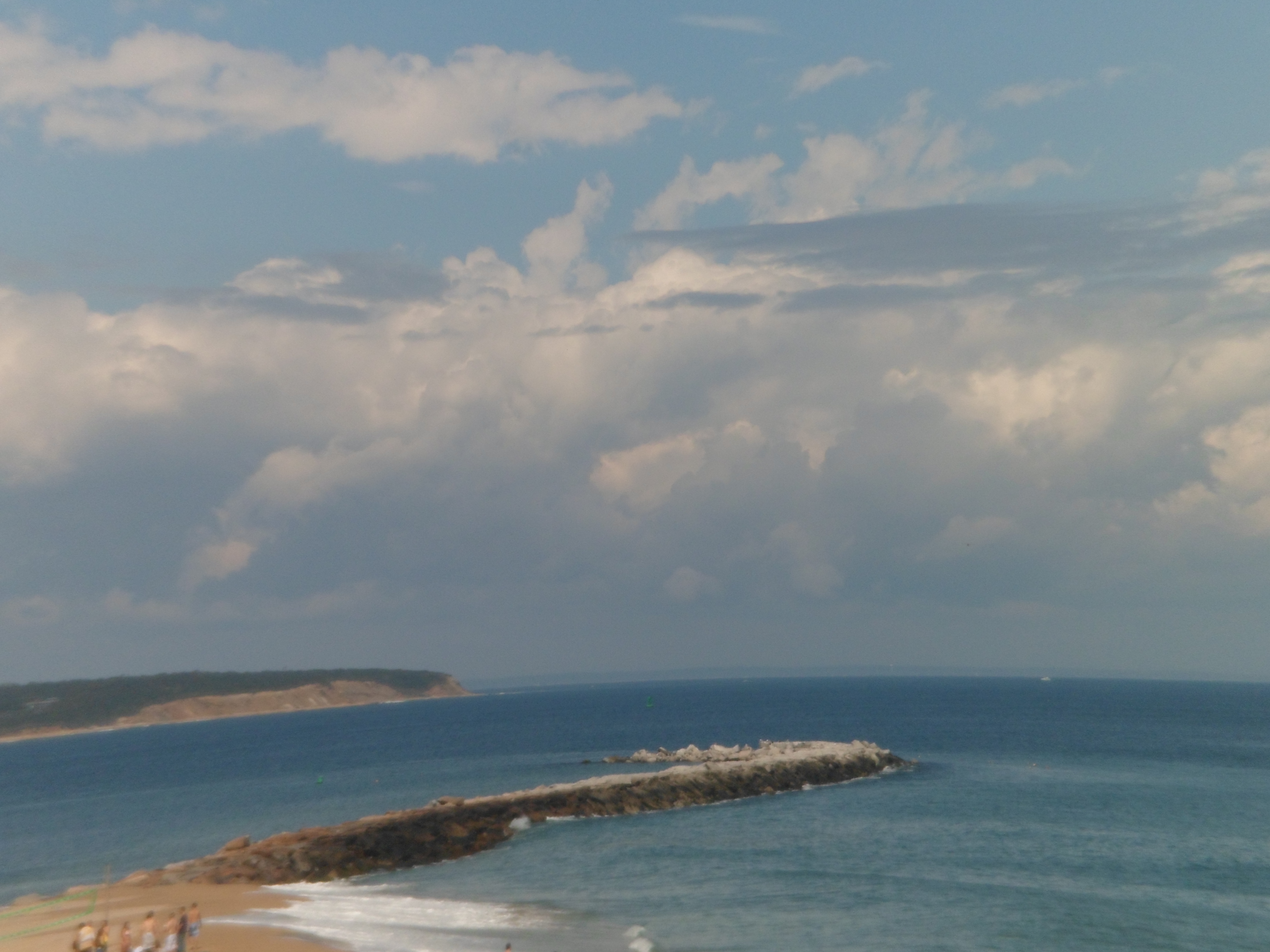
From the overlook, one can see Ballard’s Beach and jetty.
The inland trail takes one around to a small farm, run by the town’s public school. Ruins abound, of the abandoned farm.
The children decorated and laid these stones.
From Ocean View, the path took me past some other small farms.
Next: Part 2, East Side resorts to the Payne Overlook.
The place I knew as “downtown”, to which I ran errands for my mother by taking the bus, to which we went to the ocean for a swim, where we often went hiking in the woods, was Lynn. One of the earliest towns in Massachusetts Bay Colony, a bastion of Puritanism, Lynn became, in the Industrial Age, known as the “City of Sin”, for its gin mills, pubs and houses of ill repute.
The city is now moving forward with recognizing its heritage, and is taking steps to expand a long inchoate Museum of History.
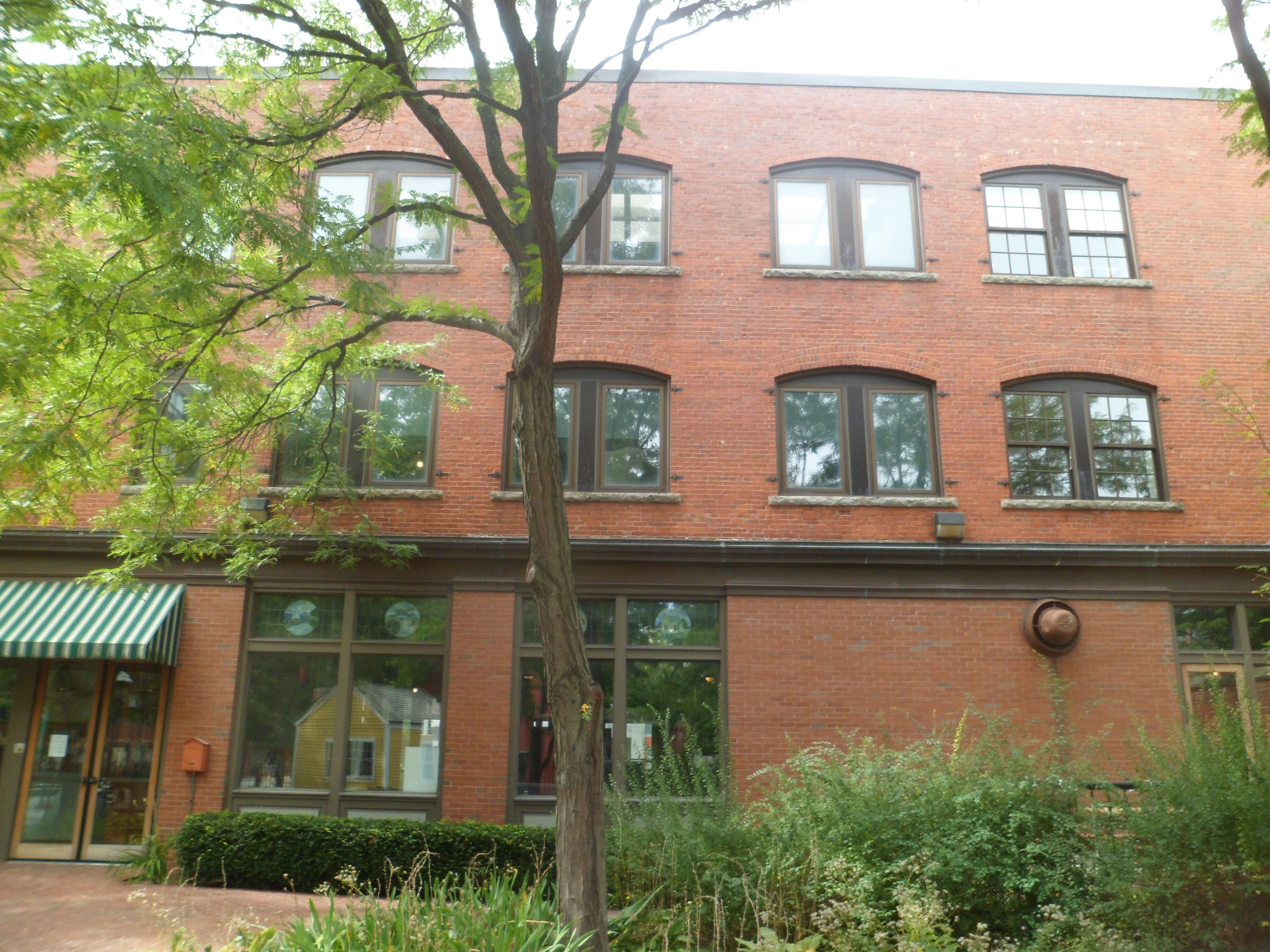
It was to Lynn Woods, though, that my feet needed to go, and so, after a half-hour walk around the museum, I headed five miles west.
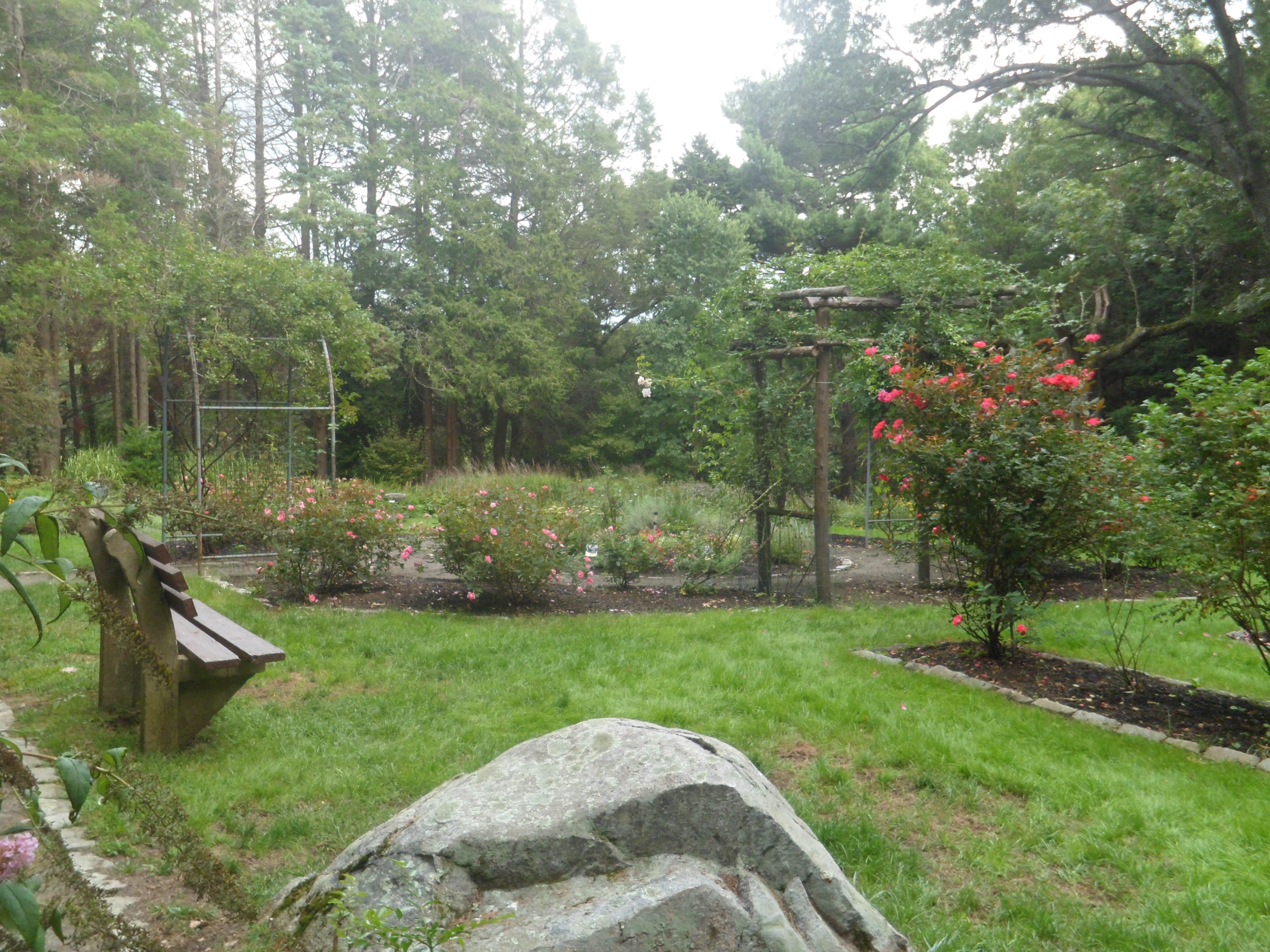
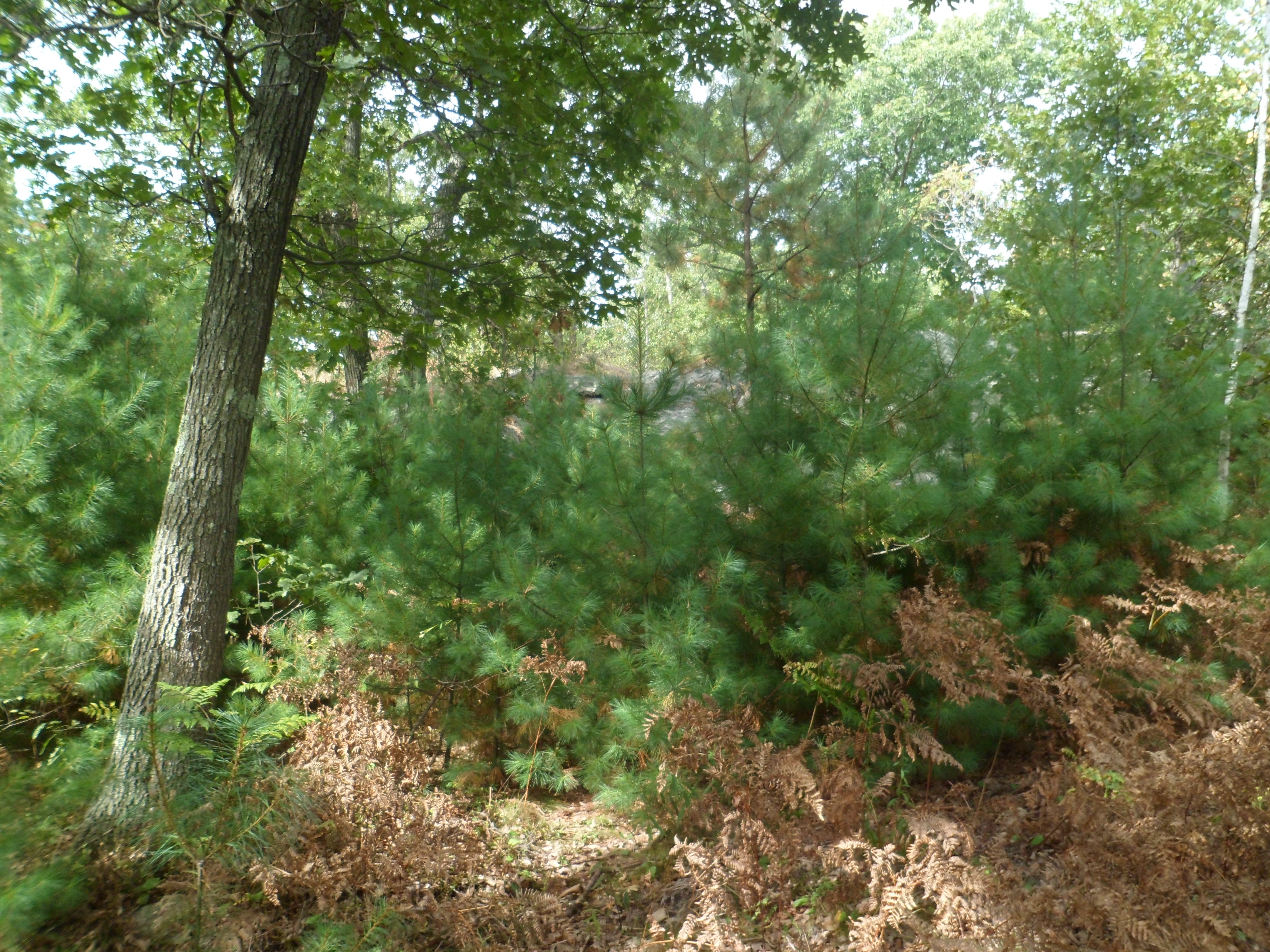
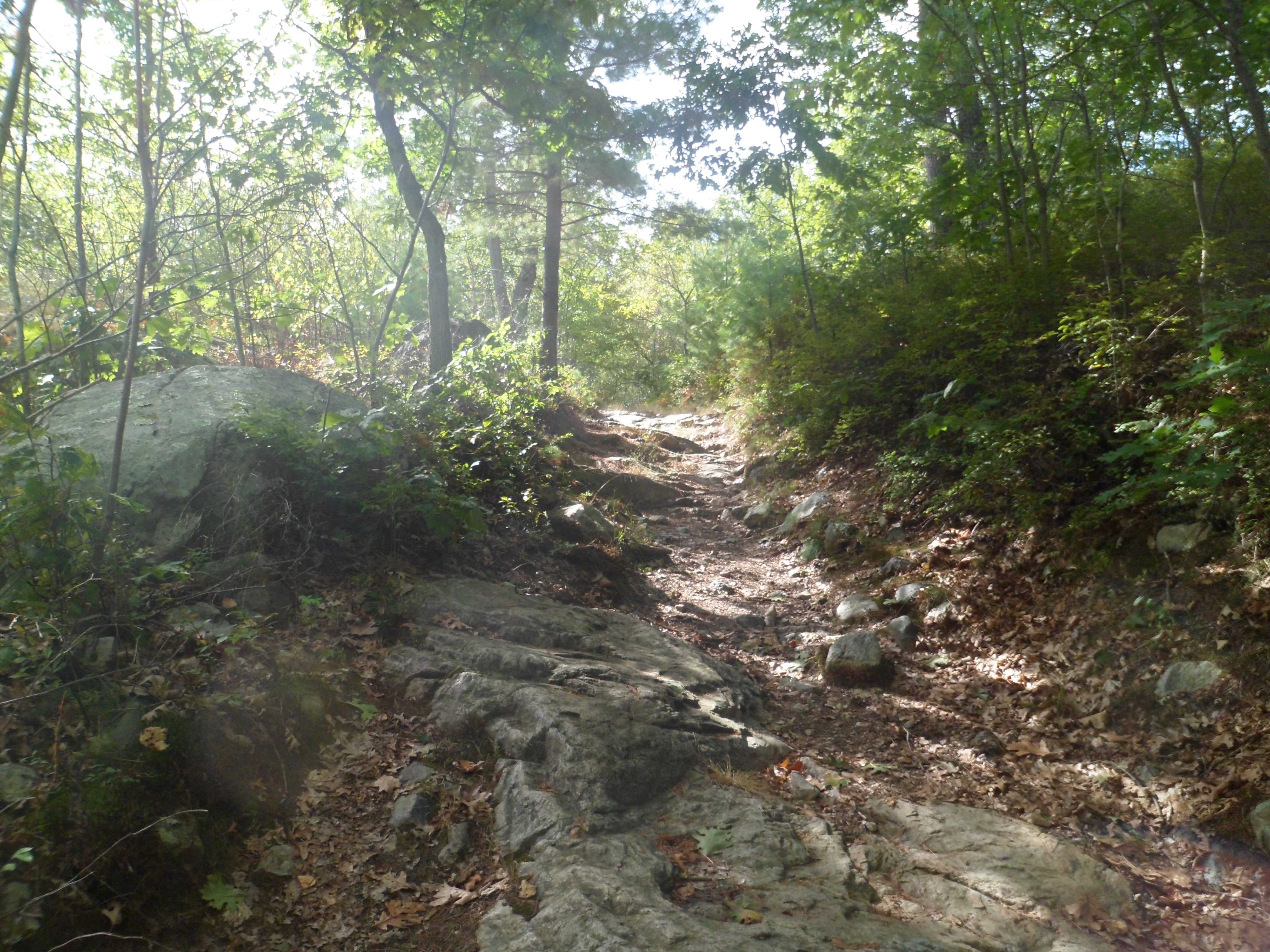
The Preserve has wide bicycle paths, a small rose garden and a shore along Lily Pond. Mostly, though, there are the trees, and rocks, that are the legacy of a glacial period.
Once arriving at these two rock gateposts, know that you have arrived at the park’s western limit.
Views of Lynn’s Walden Pond (not to be confused with the eponymous body of water in Concord, MA), are off to the north.
Of course, there is no connection between Penny and this bridge, but it touched my heart, anyway.
This encounter with my youthful past reminded me that there are good things, marvels, in anyone’s life, at any stage.
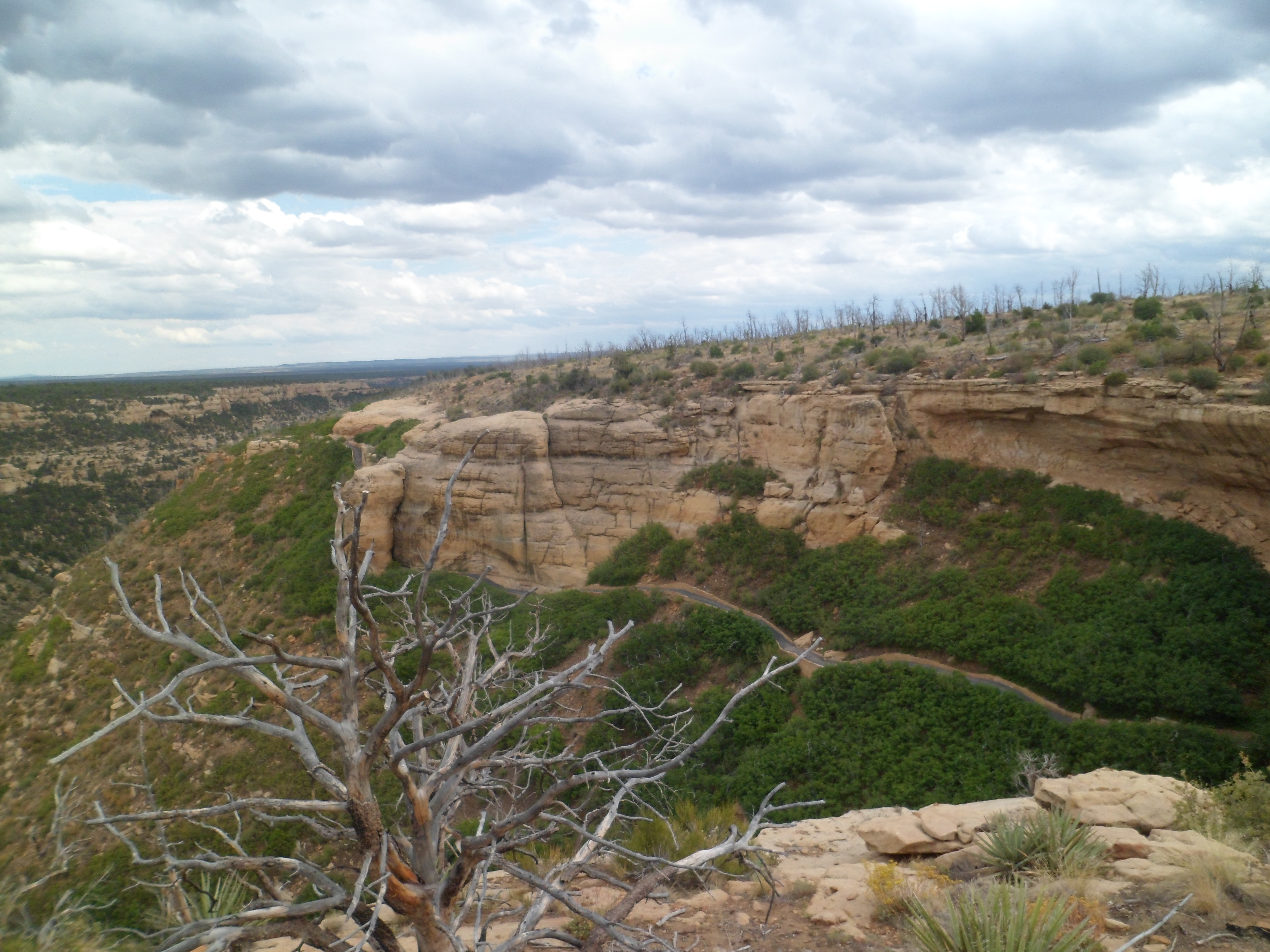
Wetherill Mesa, on the west side of the park, is one of the more patience-building areas in our National Park system. This is because it’s off-limits, much of the year, and is only open 6 hours a day, when it is accessible.
I recognize the reason- the narrow road, with sheer drop-offs in spots, would be horrific places to end one’s life.
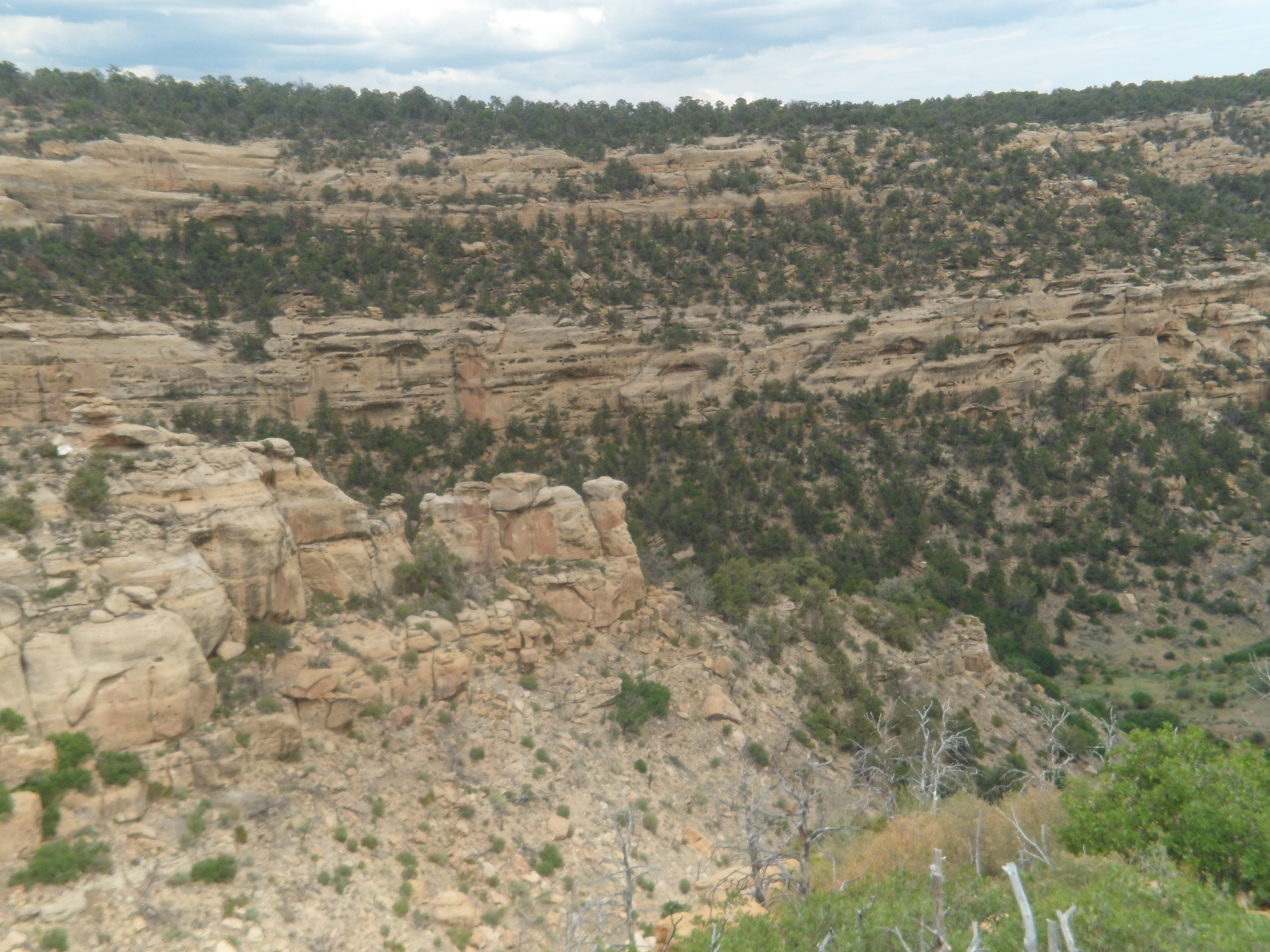
Here are some scenes from this final stop on my earlier spiritual quest, on August 1.
This is in two parts. First, from the gate to the trailhead for Step House, one of two preserved ruins at Wetherill.
A hawk graced the sky overhead, on that warm day.
Much of the area was ravaged by wild fire, in 2011.
Much of it is coming back, however.
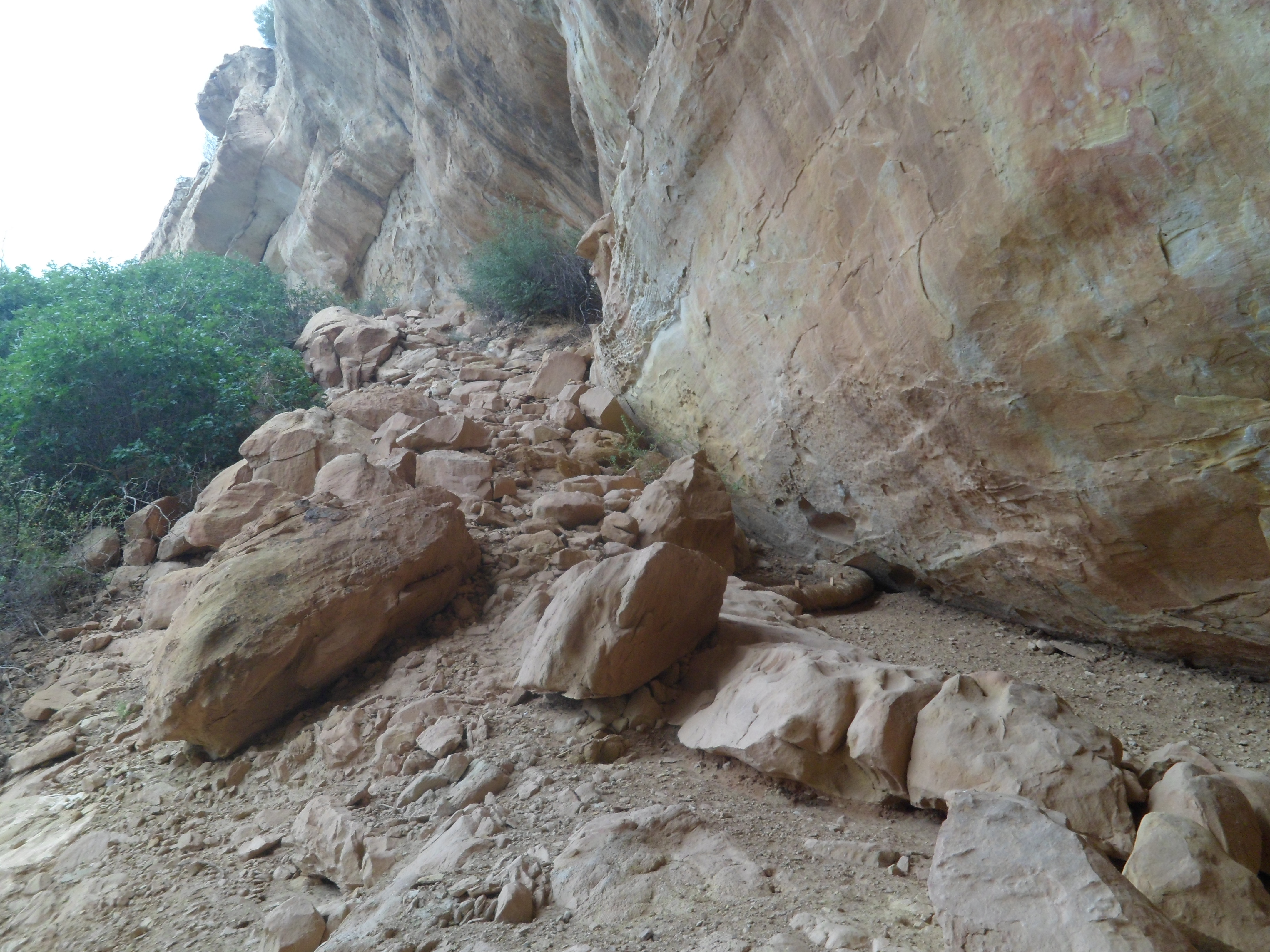
There are a fair number of pictographs and petroglyphs, along the approach to Step House.
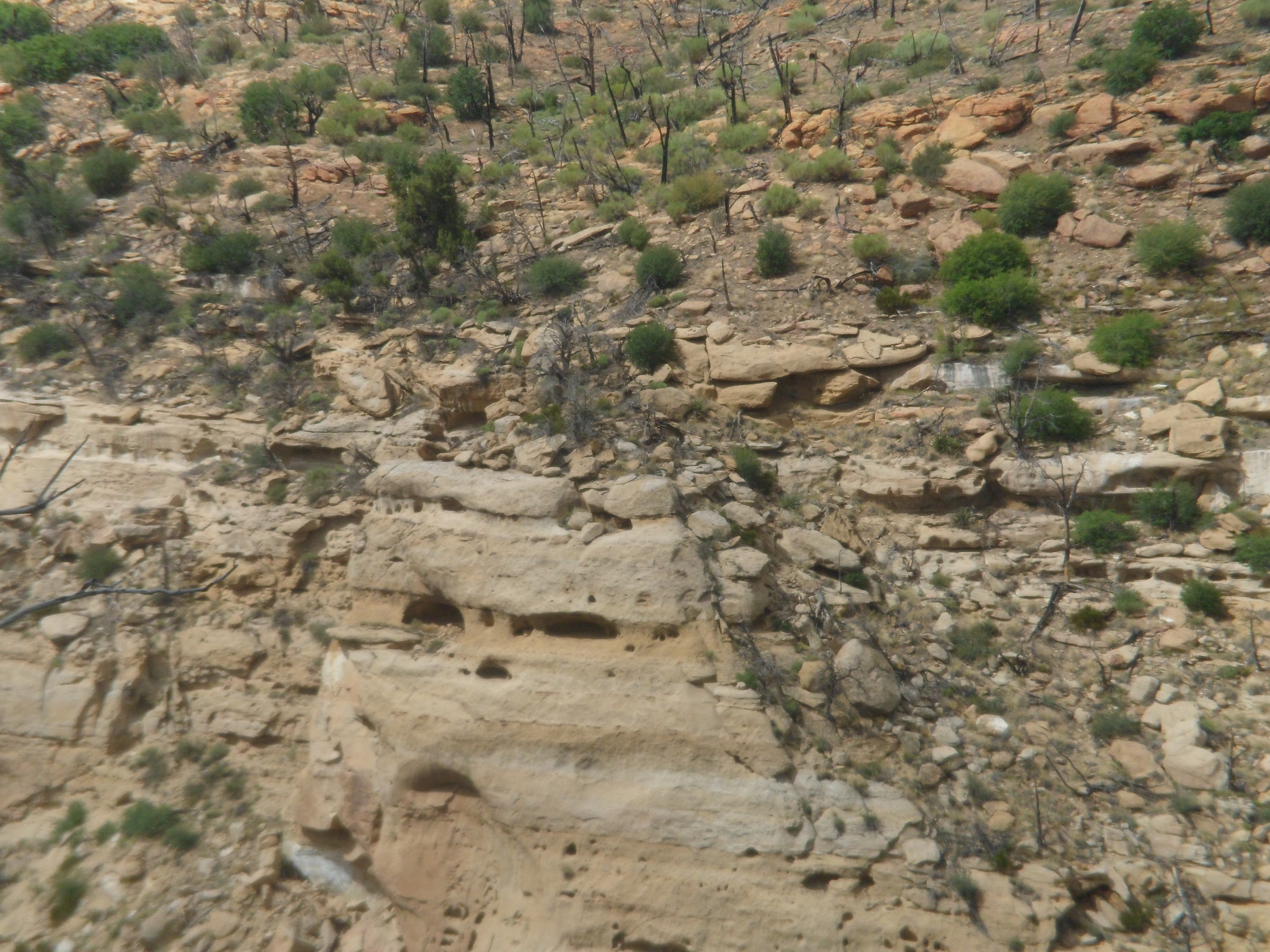
This abandoned settlement, east of Mesa Verde, predates the larger sets of ruins by 300-500 years. The settlement was built by people known these days only as “Ancient Puebloans”. They are regarded as the ancestors of those who built Mesa Verde and of the modern Zuni, Keresan and Tewa peoples, of New Mexico.
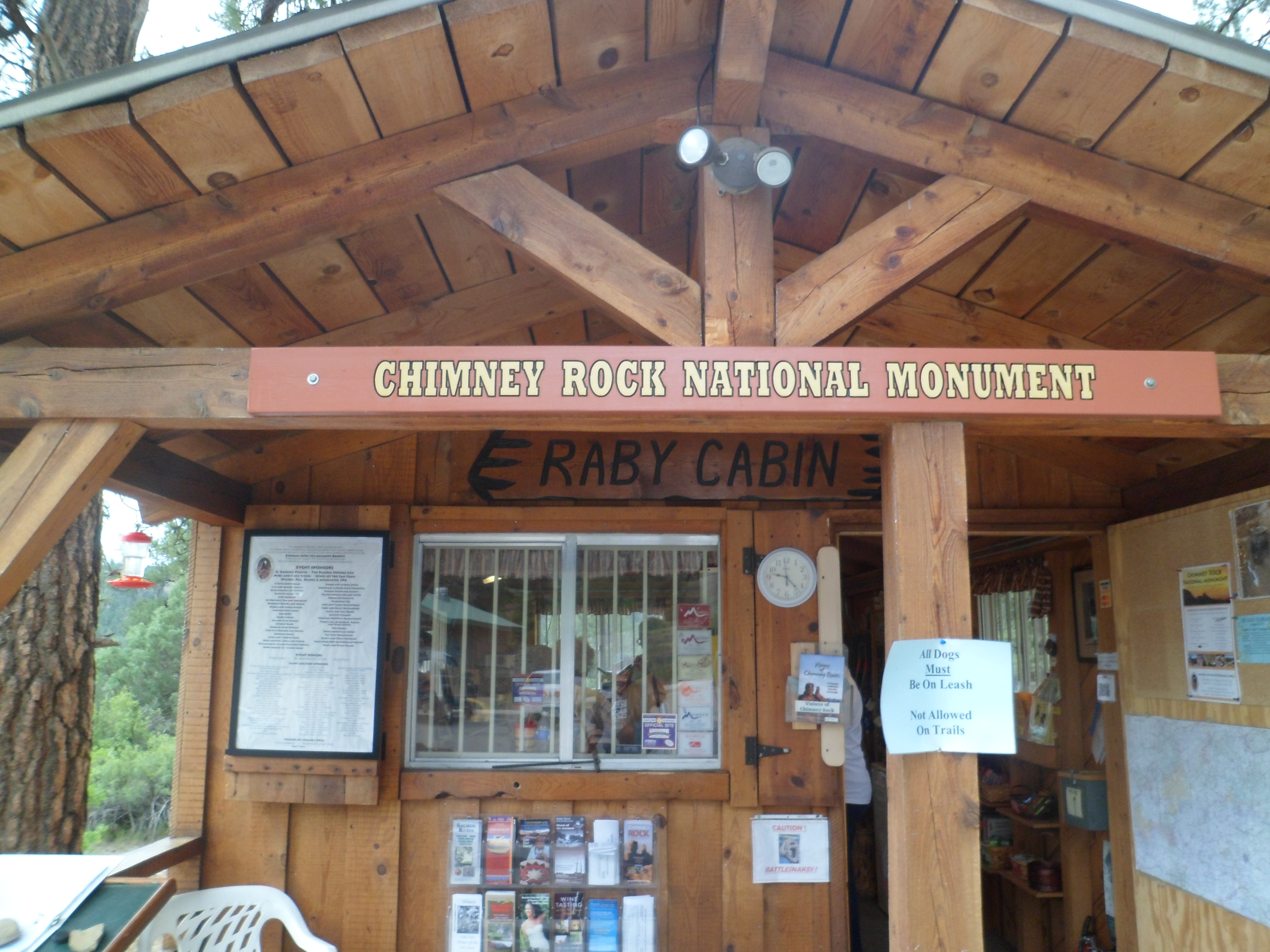
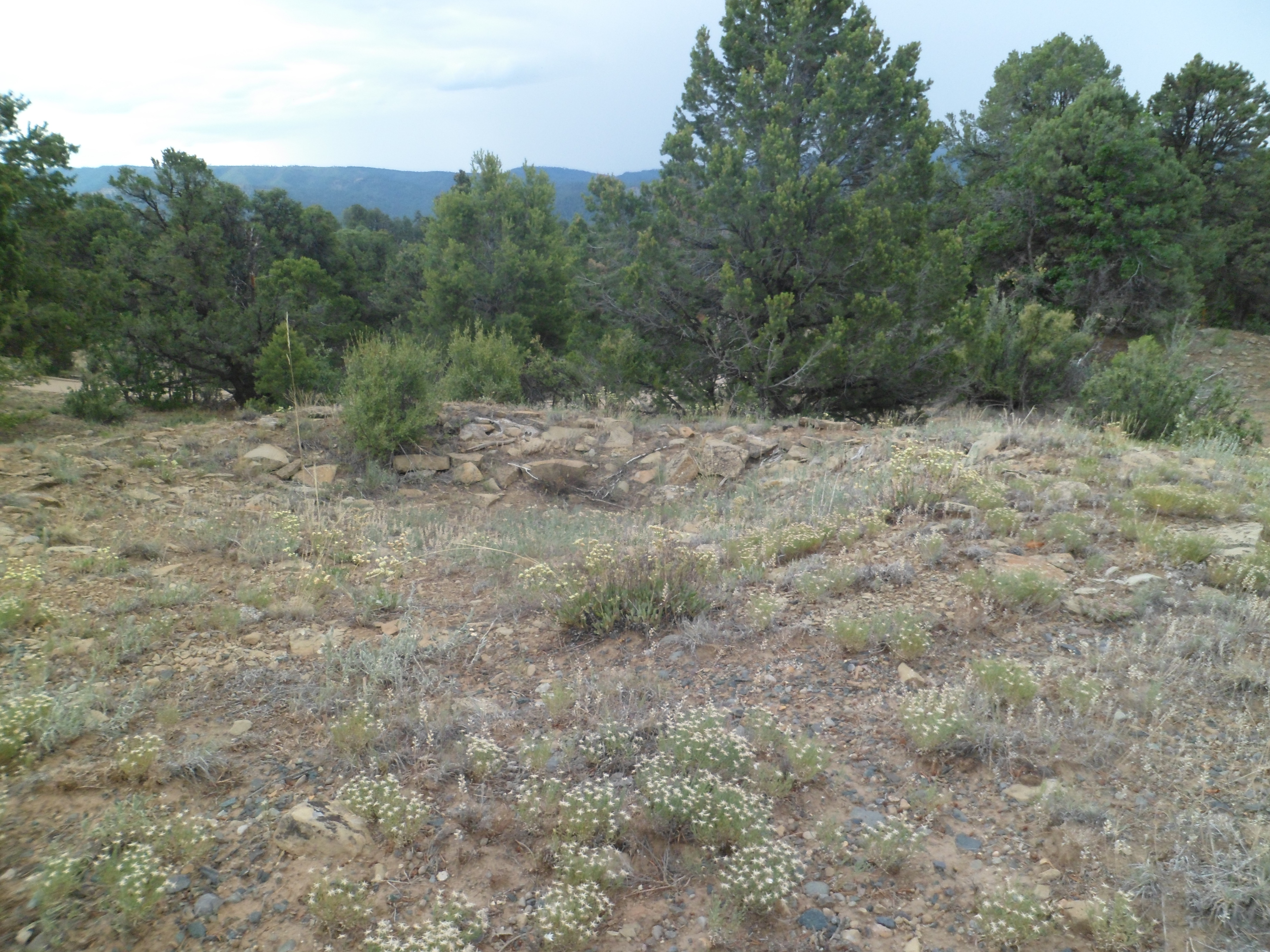
Here are some scenes of the area, taken during a guided tour, on August 1. All tours begin and end HERE.
Then, visitors pile into their vehicles and follow the guide, up the road. Scenes like this may be had, from the upper parking lot, near the first ruins.
Here is an example of an unexcavated house site.
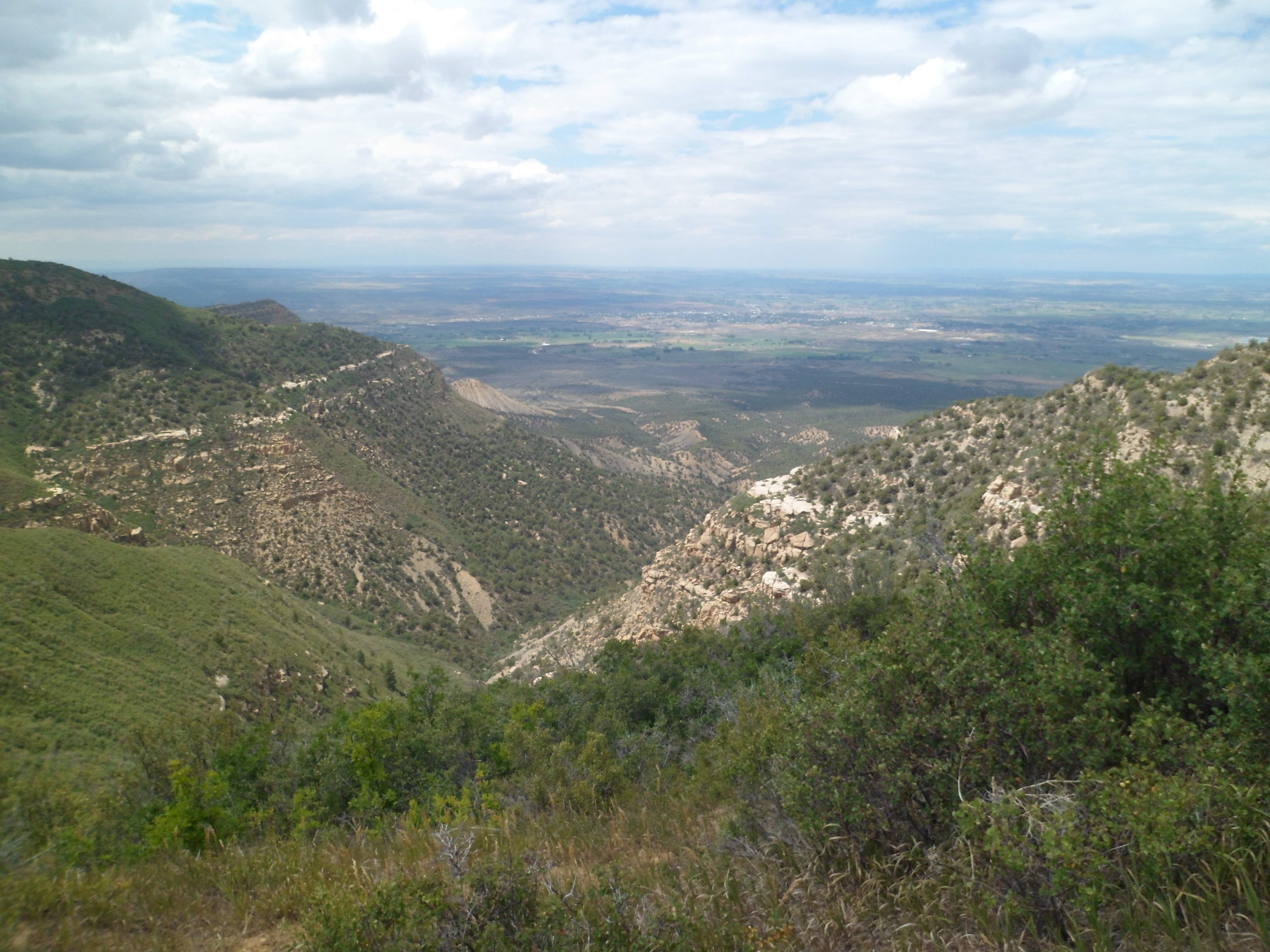
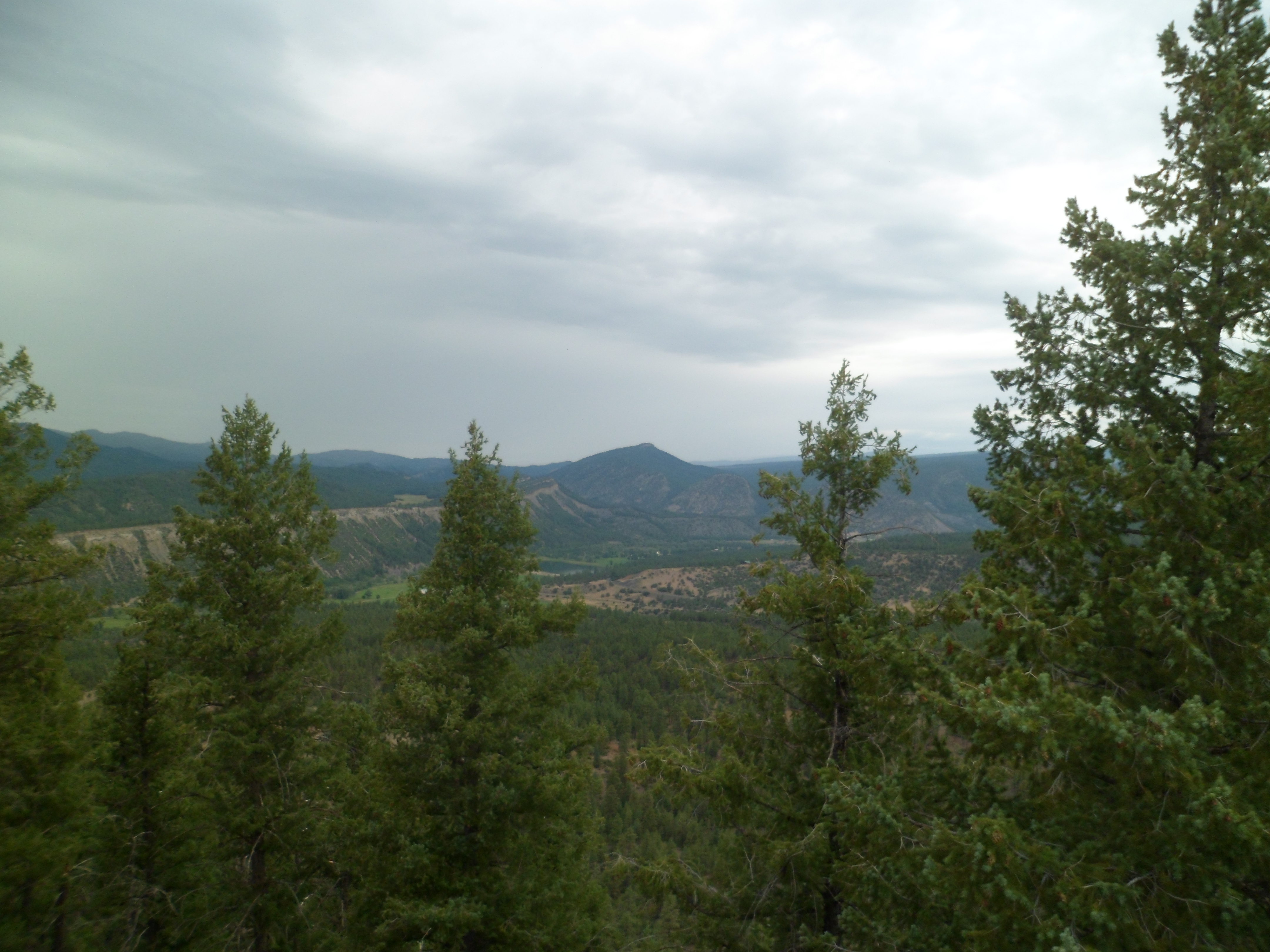
It was pretty hazy on that day, but one could get a sense of the ruggedness of this area.
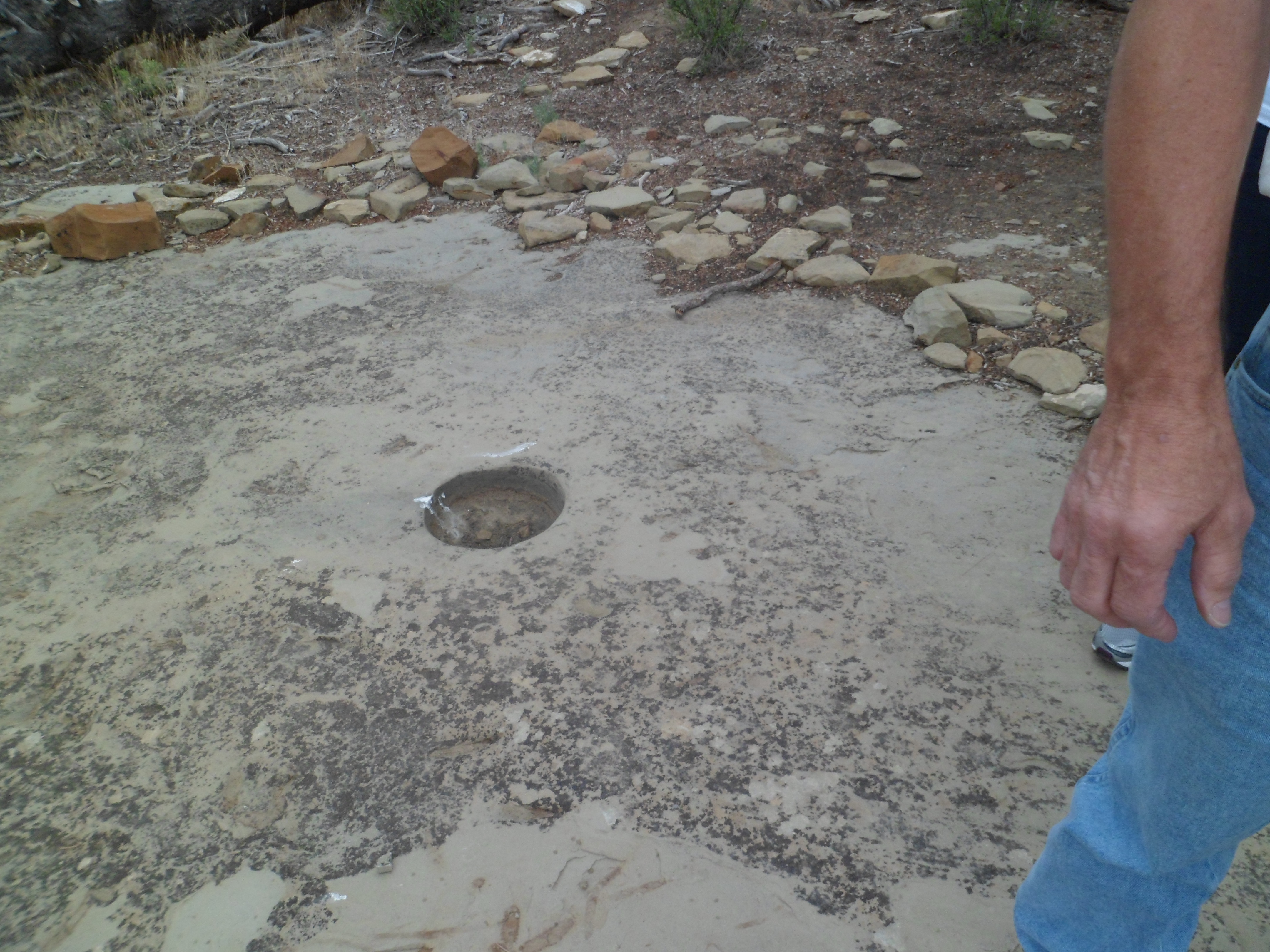
Here’s a semi-excavated site. ^ Below, is a marker, used by the ancients, for astronomical positioning.
Here is one of the granite formations near the first set of dwellings.
Now, we are at the major set of structures, including the kivas and larger dwellings.
This limestone bench made for a good resting place, for some of the disabled members of our tour group.
This alcove, on the south side of the Great House, was intended to provide support for the structure.
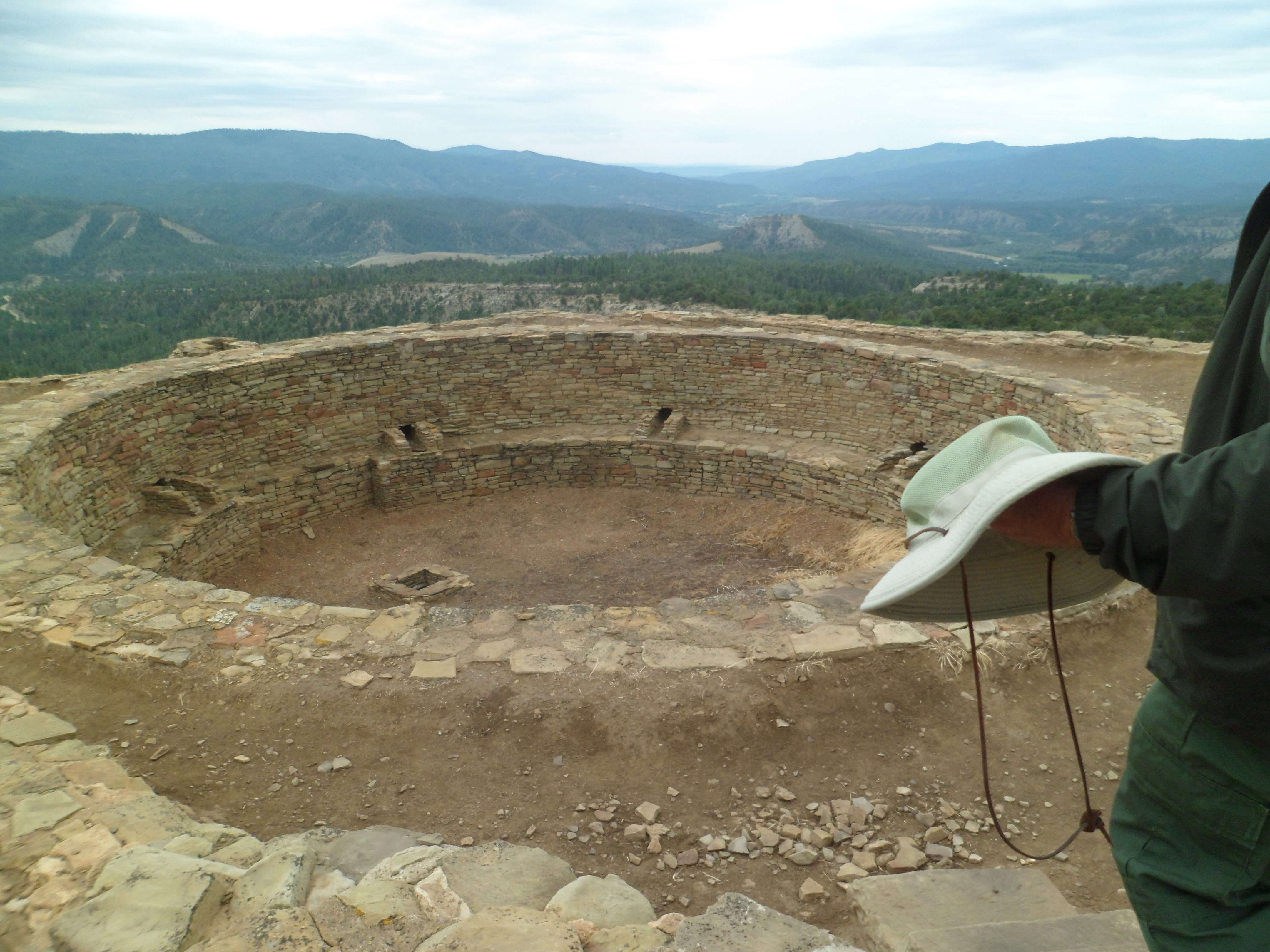
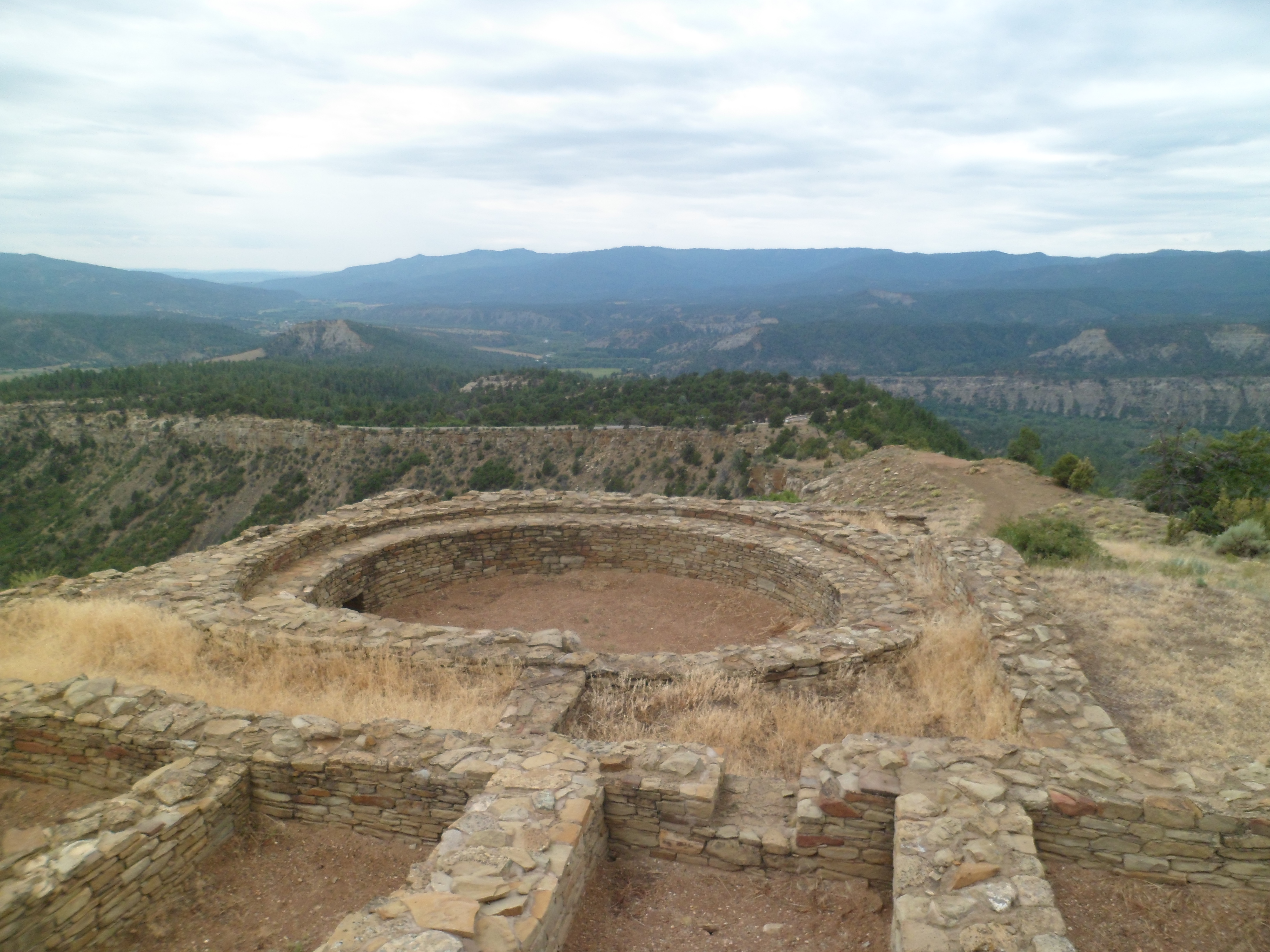
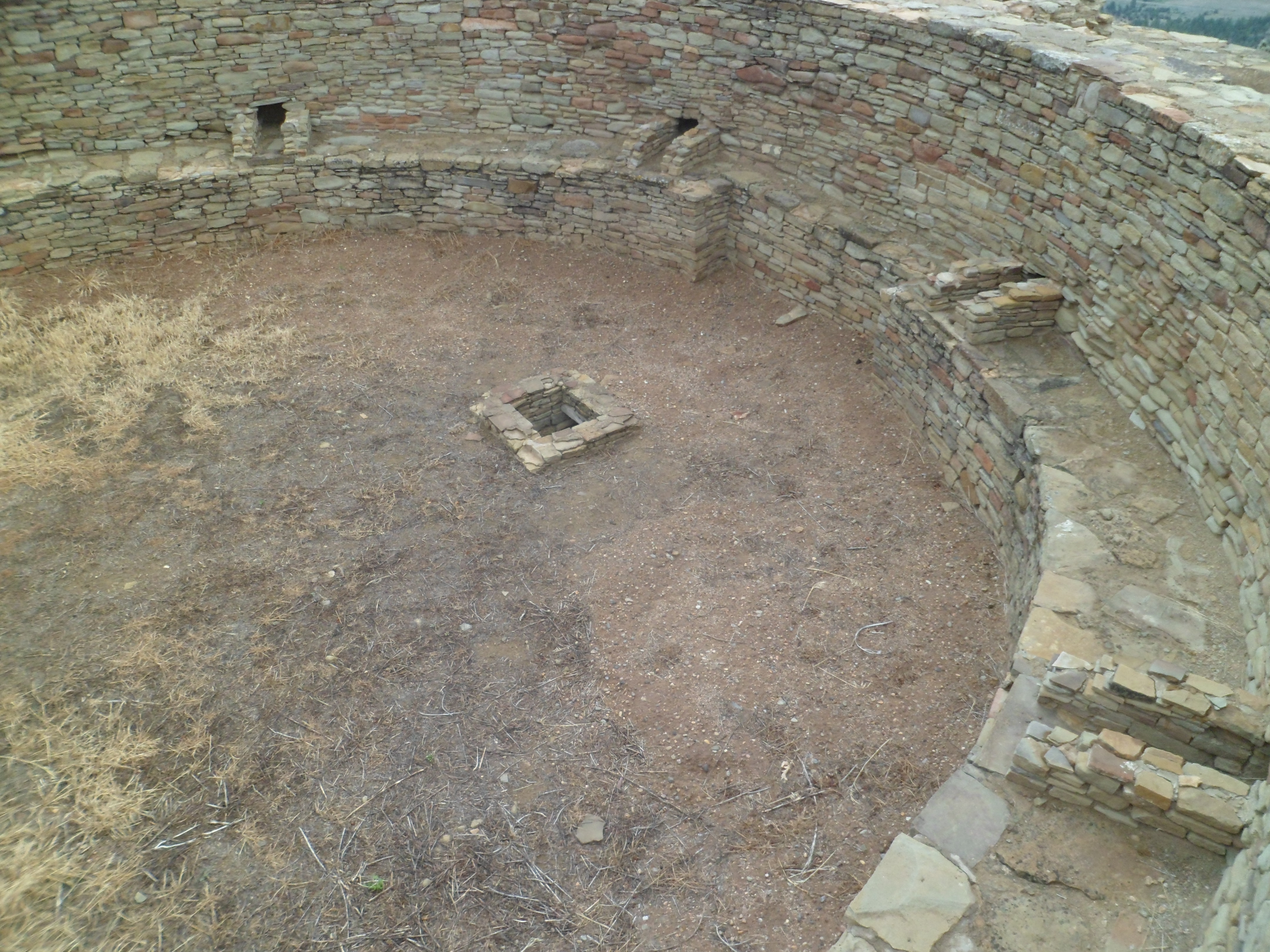
Here are some shots of the Grand Kiva, the major ceremonial site in the complex.
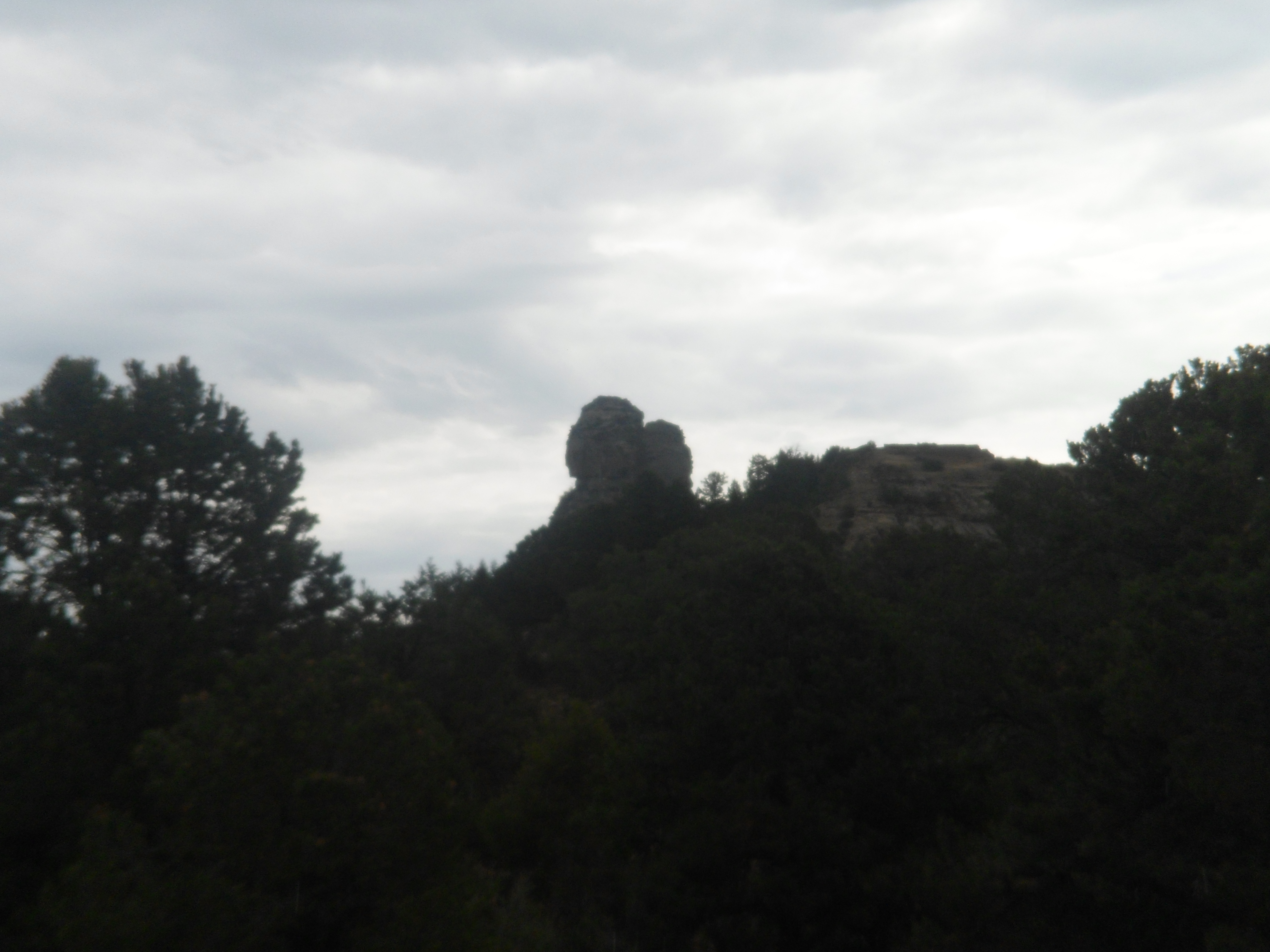
These granite formations are among those which give Chimney Rock its name.
Once I had finished here, one more goal remained on this spiritual journey: Wetherill Mesa.
Gloucester is a walking town, though if it hadn’t been, I’d have made it so. As it is, Stacey Promenade, named for a local hero, guides one along the harbor beach. South of the beach, Stage Fort Park has trails that wind around, the cliffs above Gloucester Harbor.
Here we go- scenes from the afternoon of September 4.
Meet Gloucester Harbor.
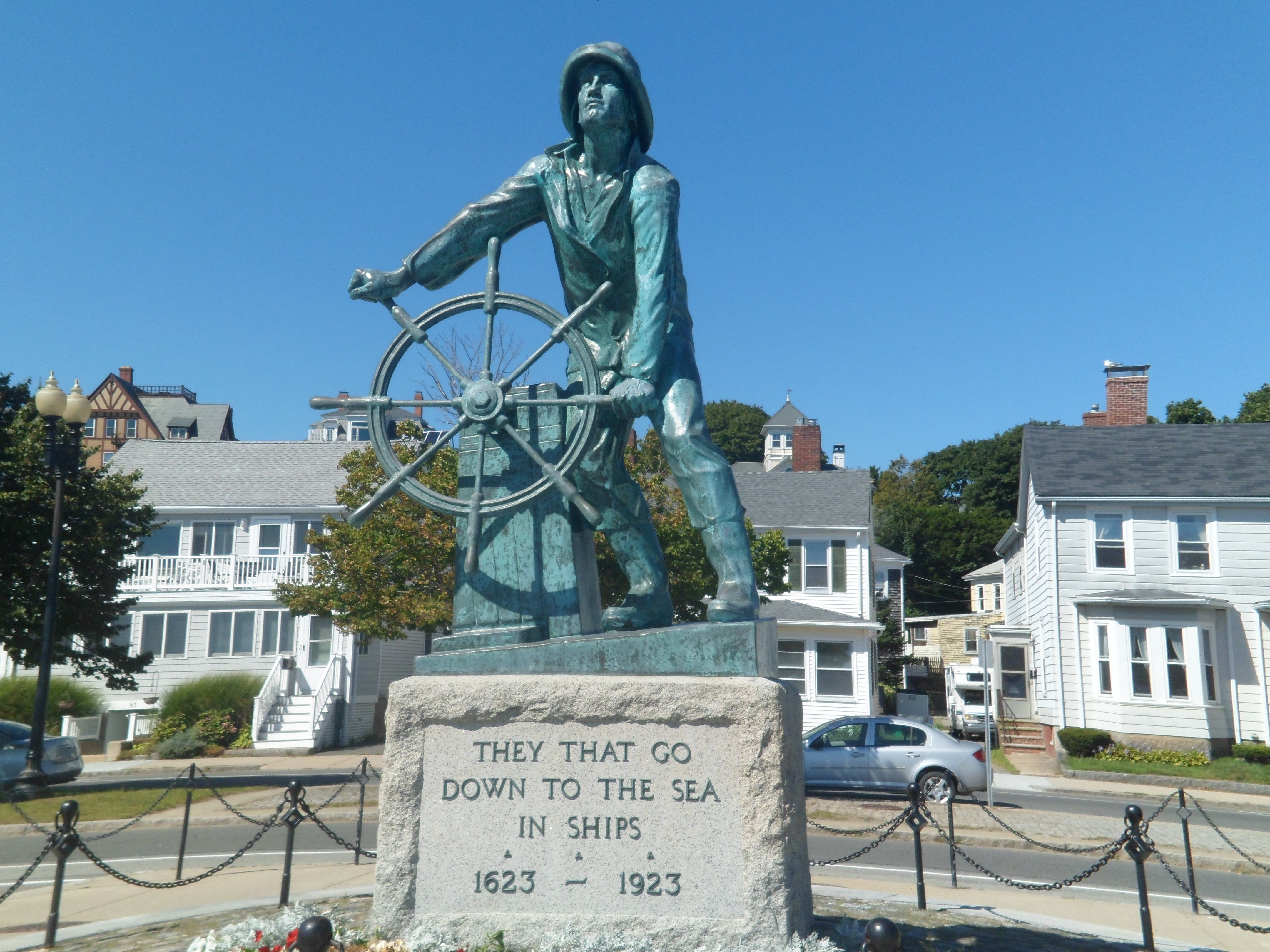
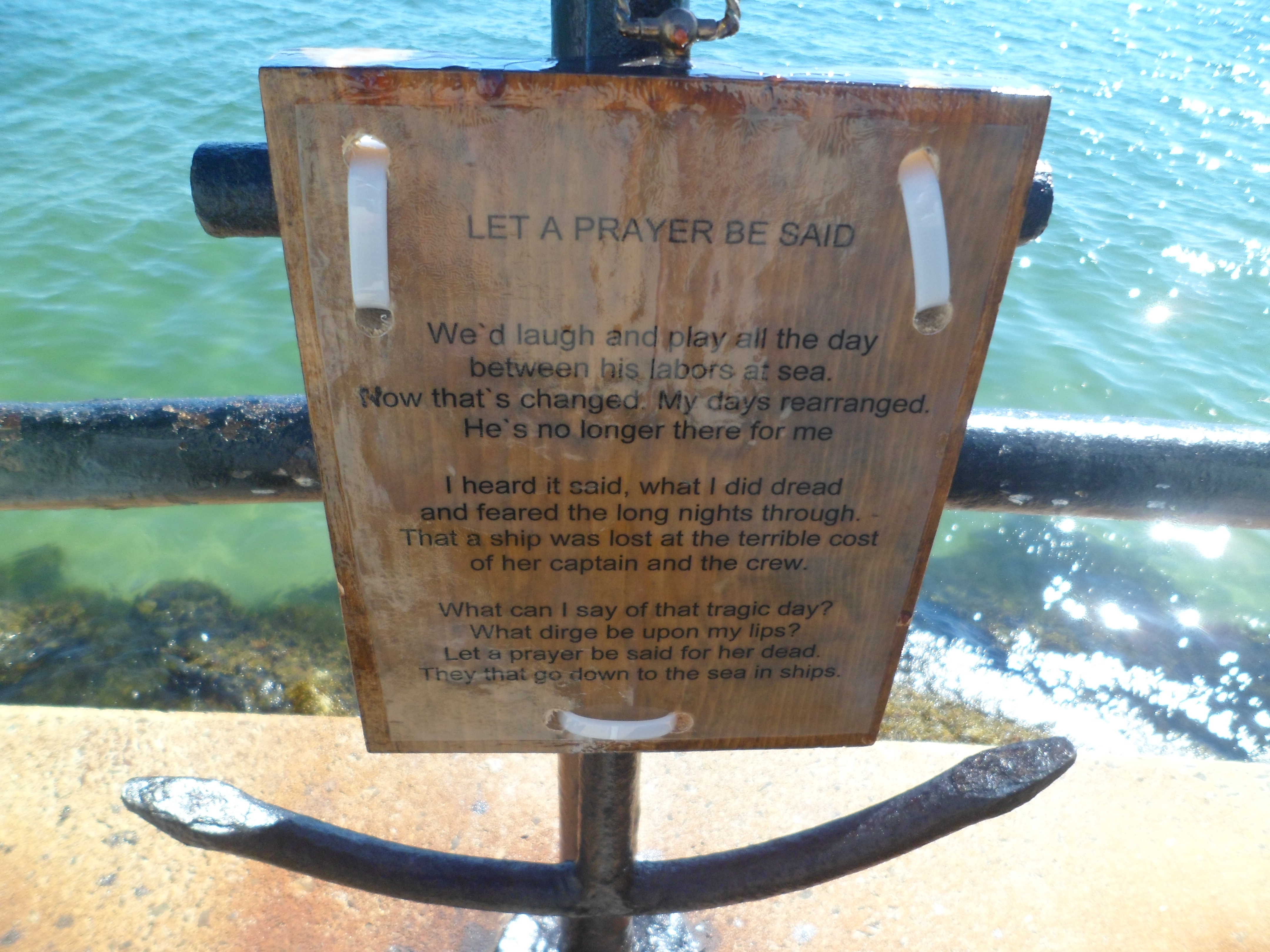
There are two stand-out statues along Stacy Esplanade. The first is the Fishermen’s Memorial.
A shoutout is here, to George O. Stacy, for whom the Esplanade is named.
The second important statue commemorates the wives of fishermen.
Once the Esplanade ends, Lucy Brown Trail begins, and takes one into Stage Fort Park.
This remarkable cliffside path reminds me of Golden Gate Park, in San Francisco.
These cannonades are reminders of the War of 1812.
One may sit for hours here, and contemplate the sea.
Along any beach in New England, there are small forested islets.
Looking across Gloucester harbor, one sees abandoned factory buildings, where fish used to be processed.
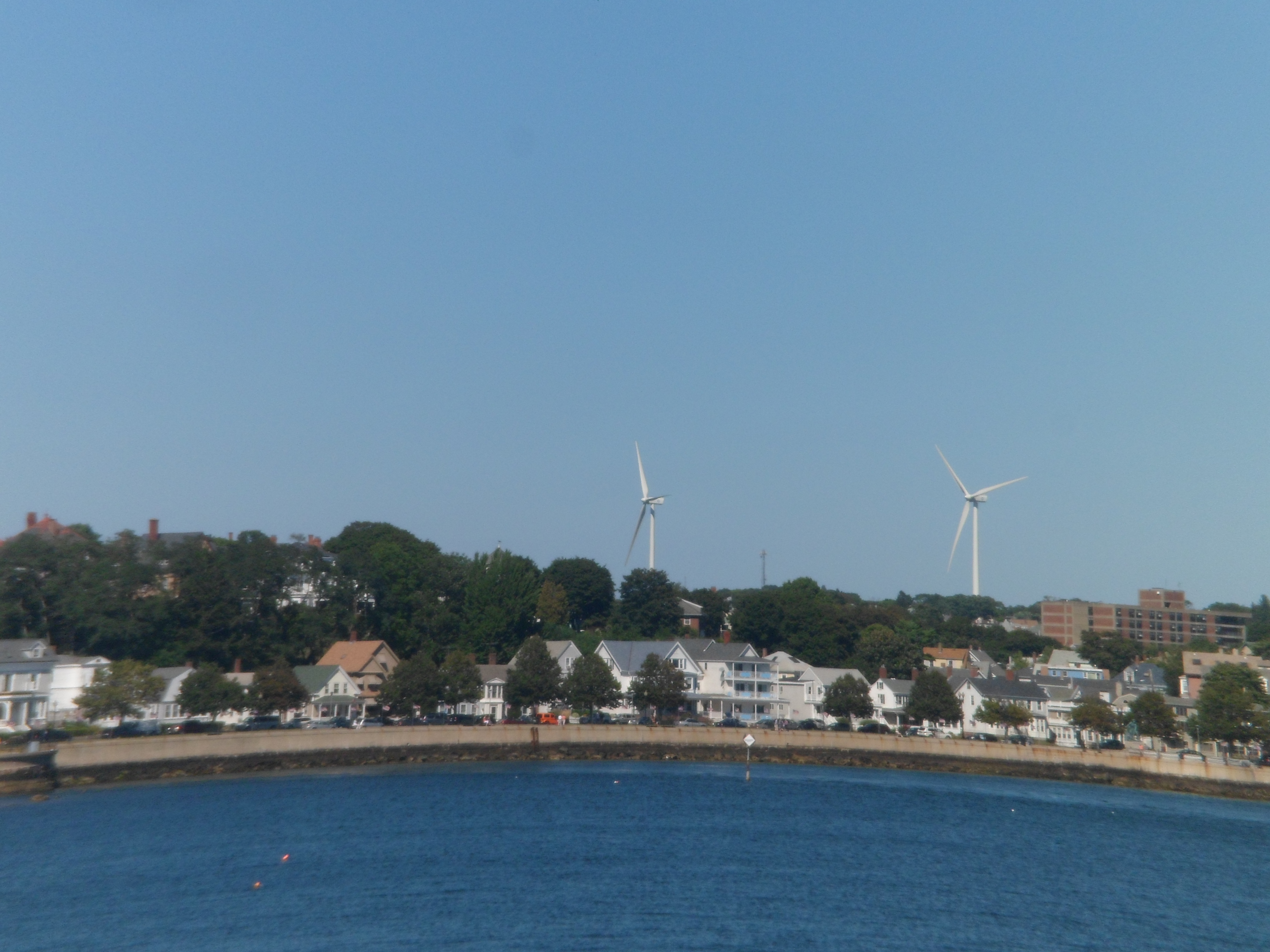
Wind power is a growing focus, along the coast.
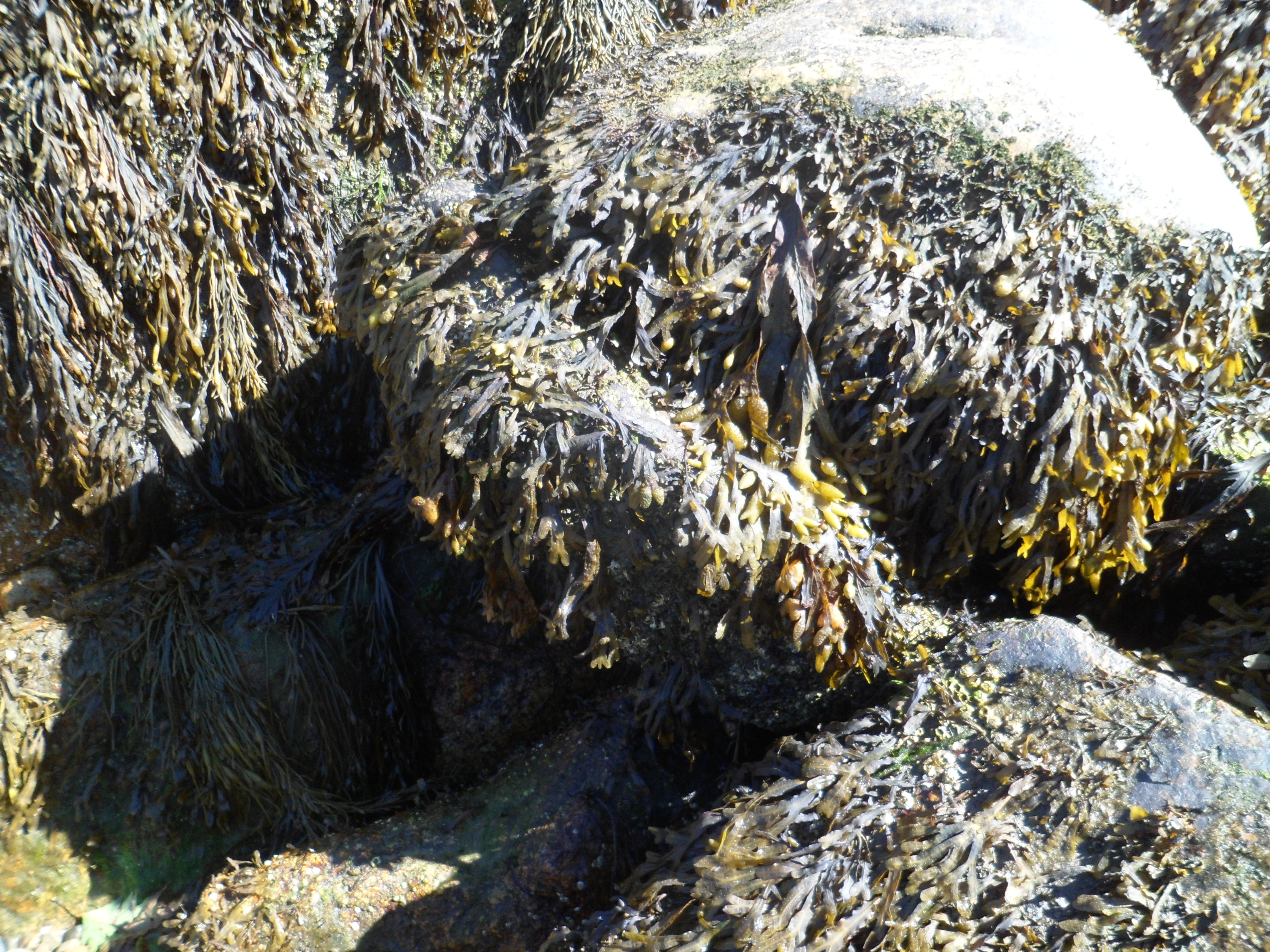
Kelp is a major product of the northeast coast. Altogether now, “EEEWWW”! 😛 Seriously, tough, this product is great for pregnant women, seeking to keep their iron intake up.
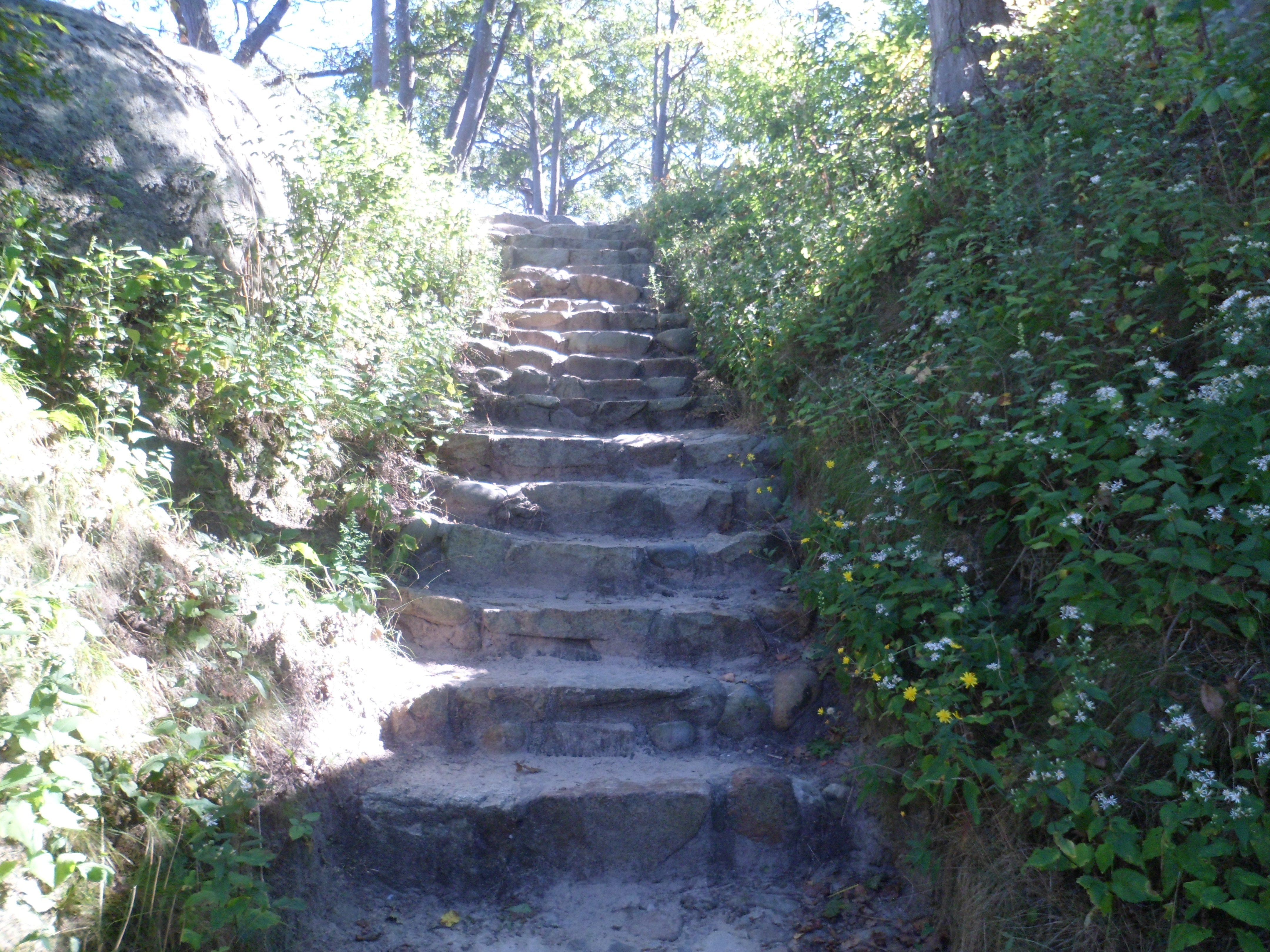
There are stairs aplenty, for those needing aerobic exercise.
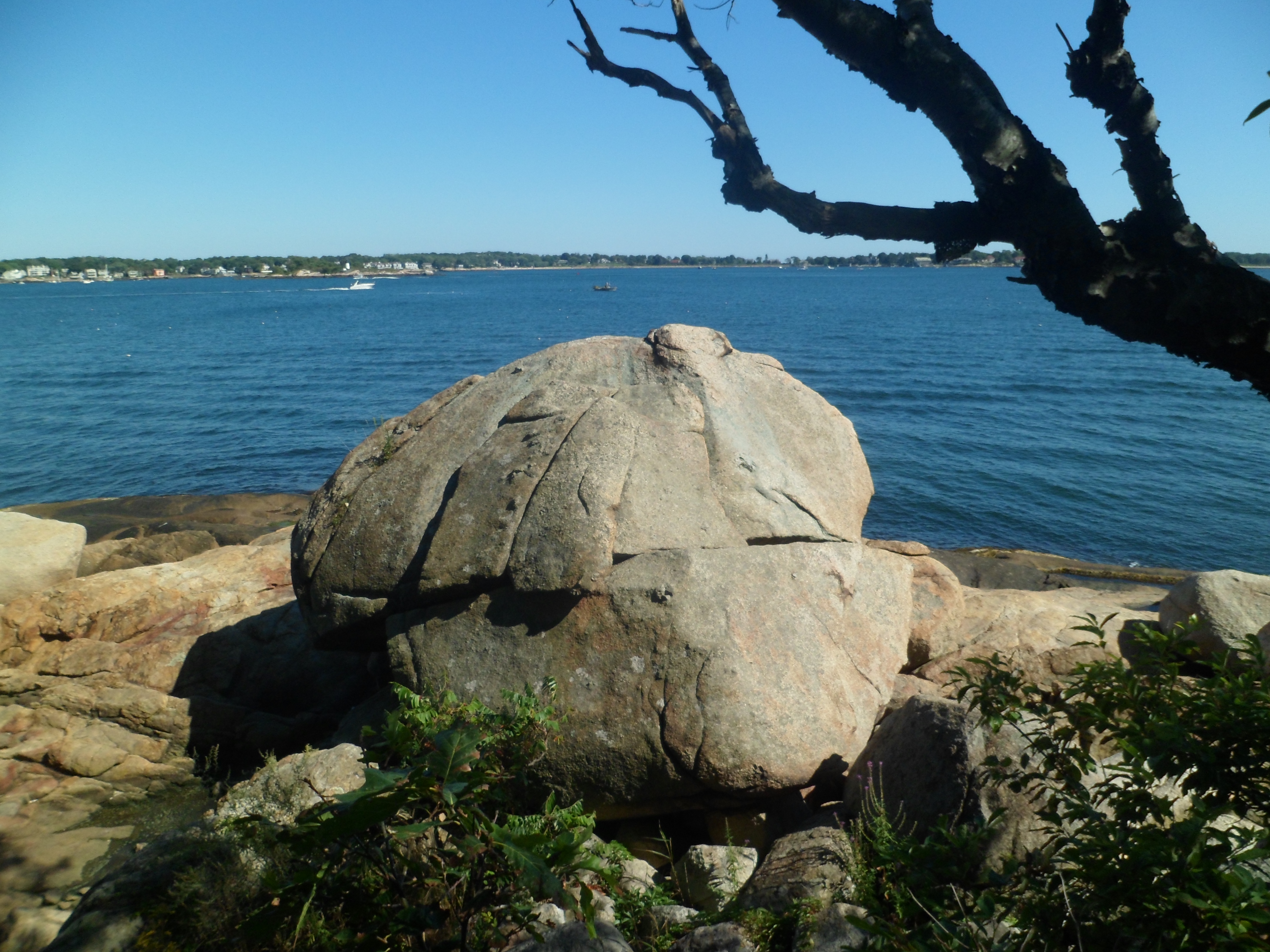
Octopus Head Rock sits atop an eastern cliff in Stage Fort.
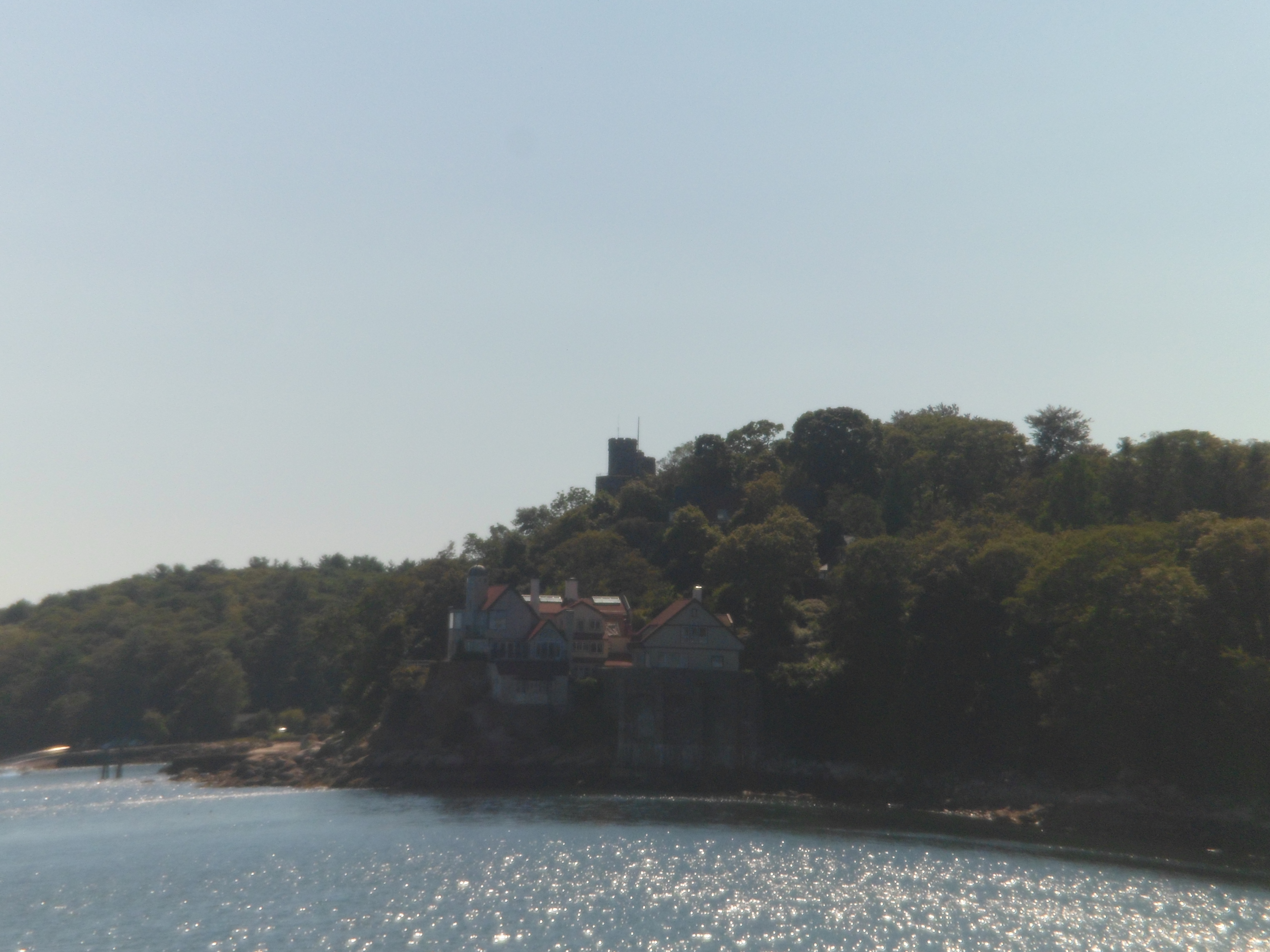
I spotted the turret of Hammond Castle, across the way, on the far south side of Gloucester.
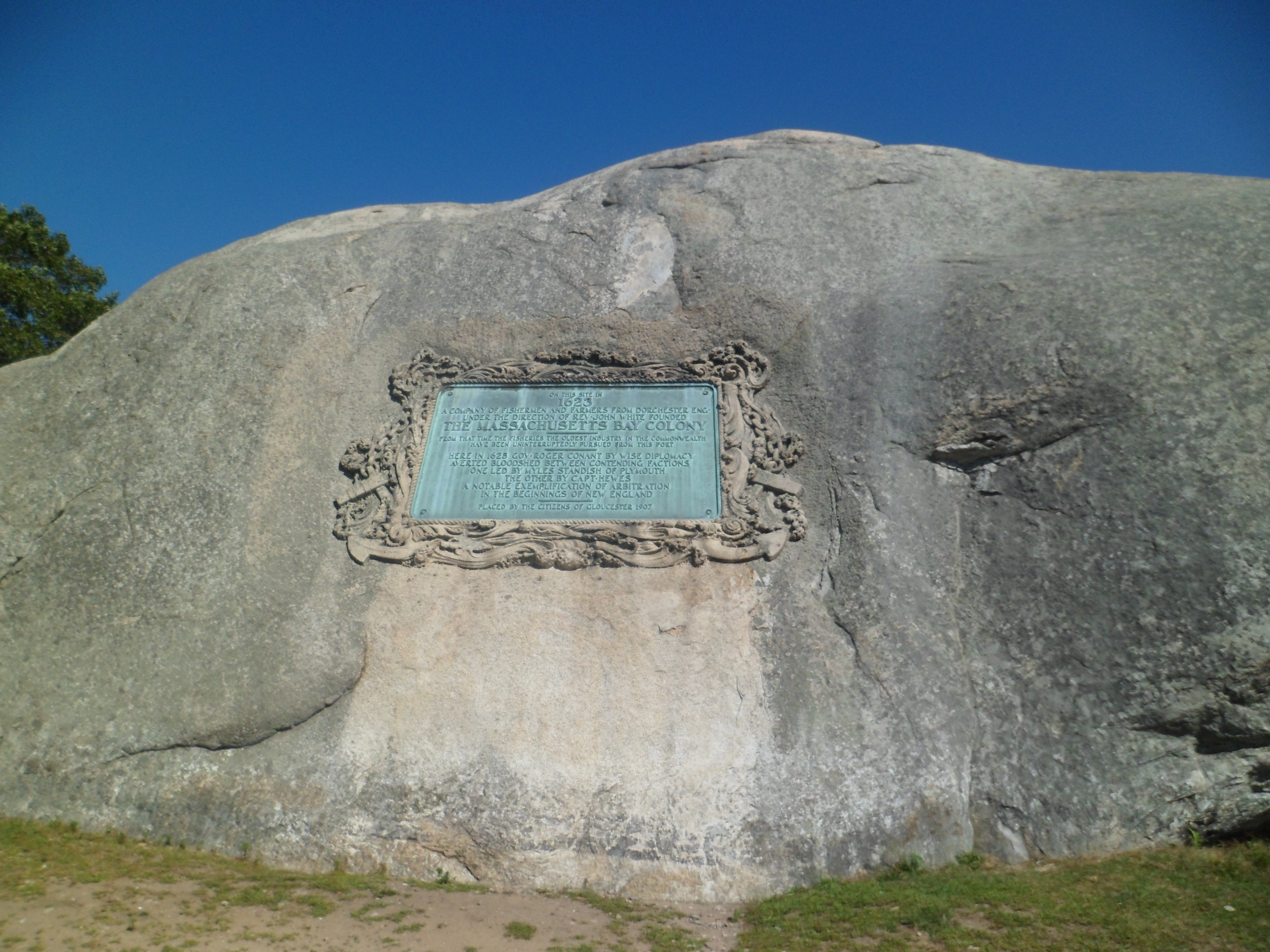
Atop Stage Fort Park, the Girls’ Track Team, from Gloucester High School, was having a practice. Since I don’t photograph other people’s children, without their parents’ permission, my focus went to reminders of Gloucester’s place in Colonial America.
Gloucester, like most small towns, has a gazebo in its main park.
Finally, Stage Fort Park’s southwest corner has a statue of Triton, mythical son of Poseidon.
Next; Gloucester, Part 3, the Interior of Downtown and the North Side.