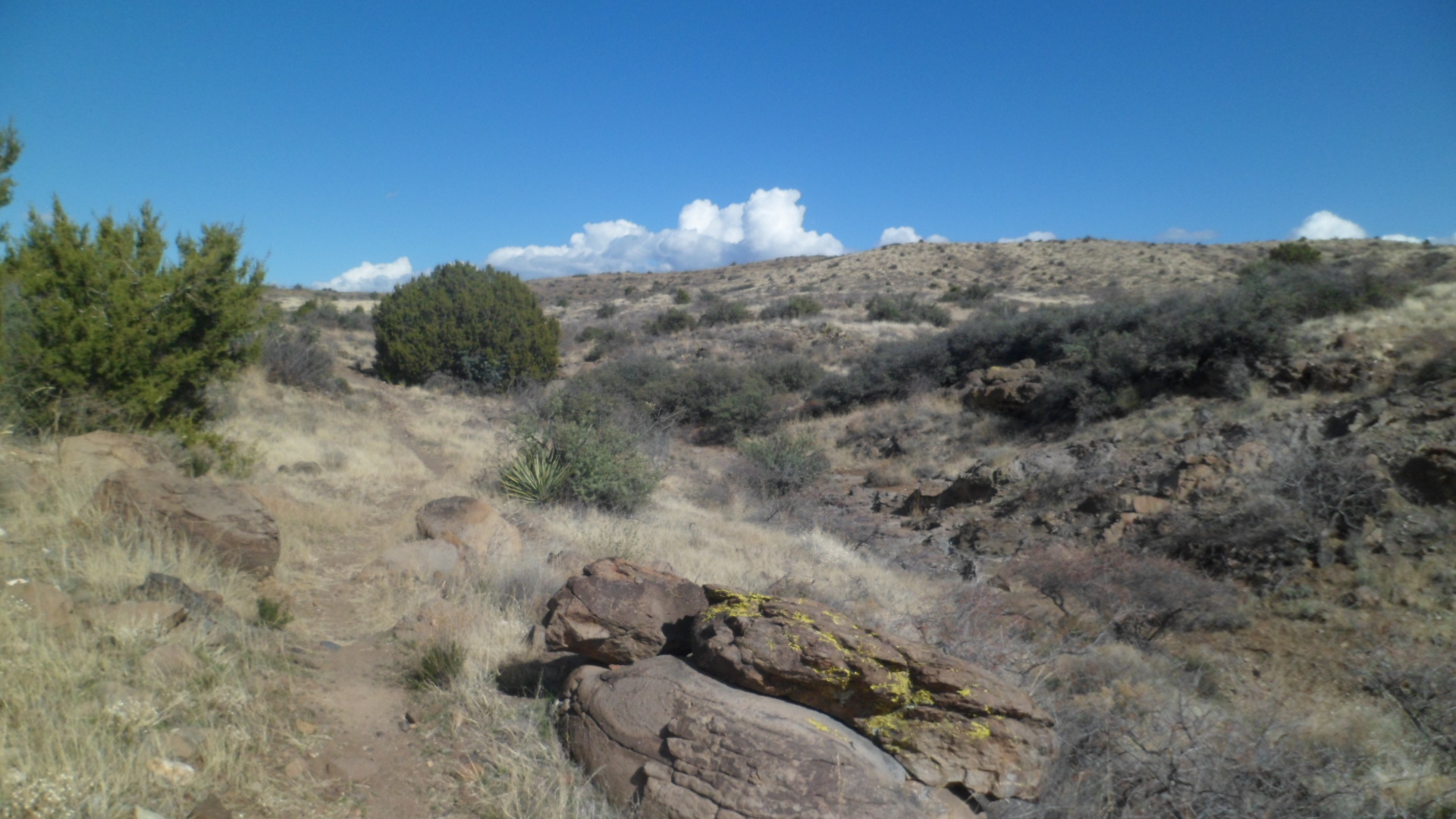
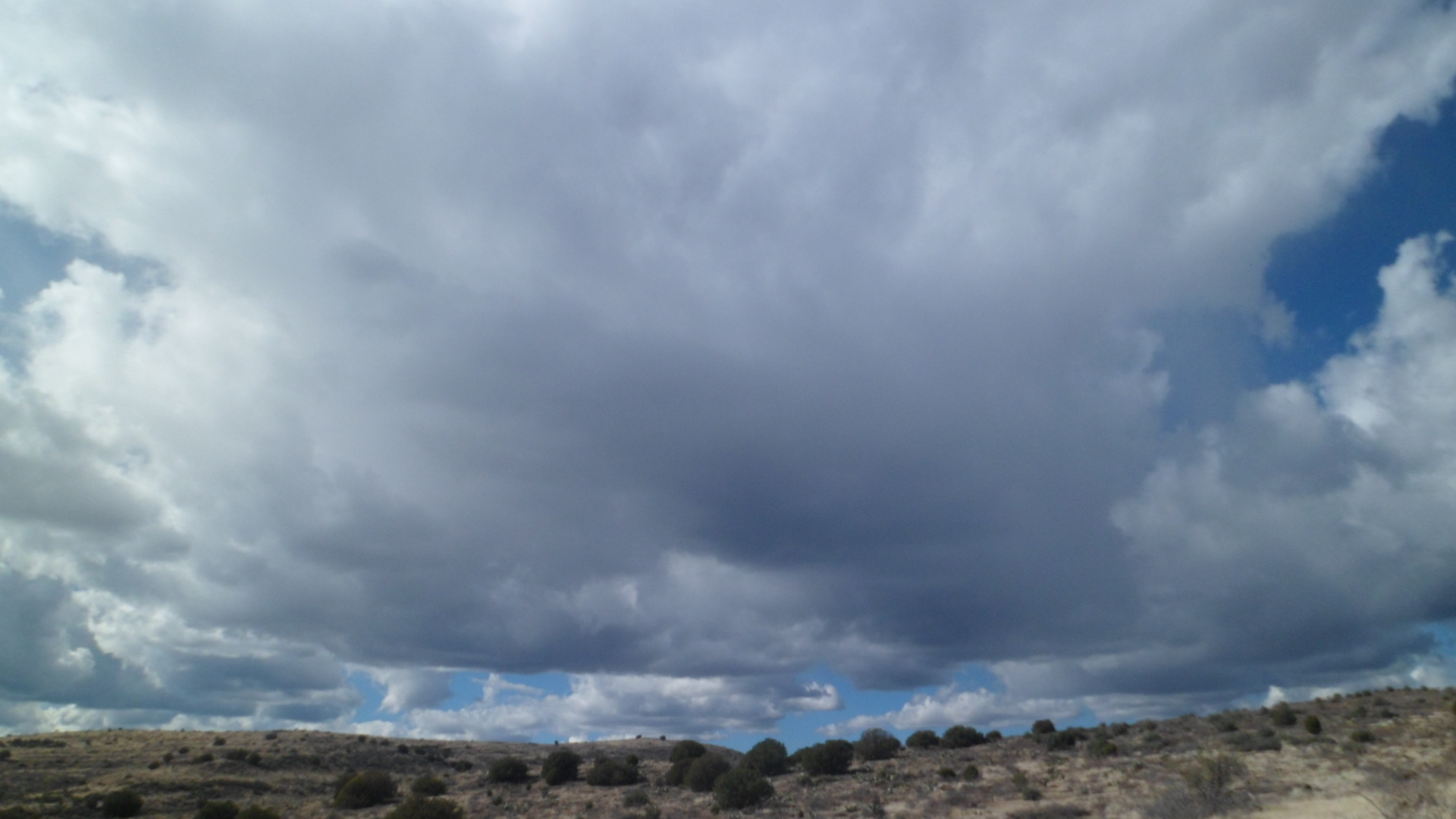
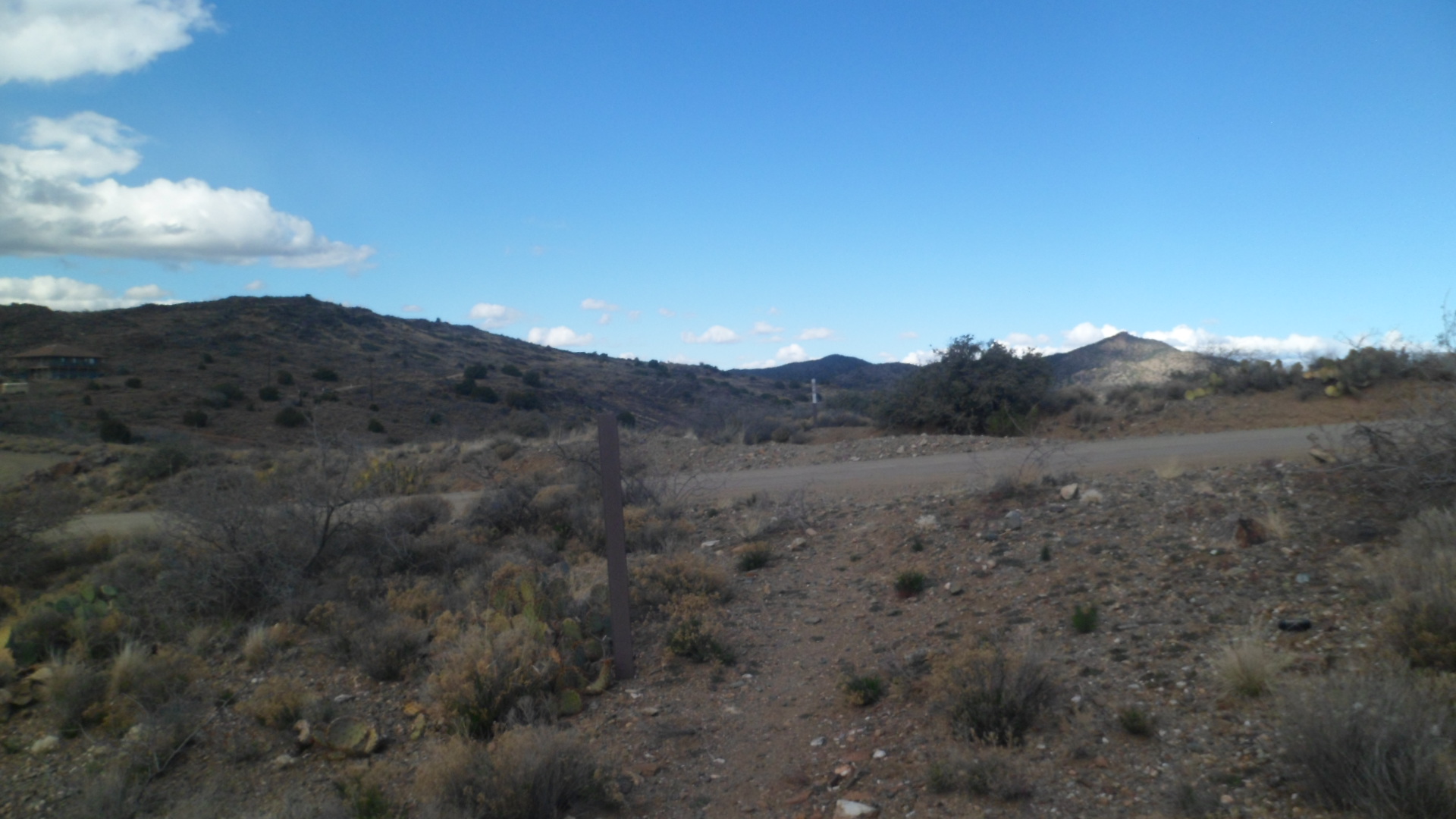
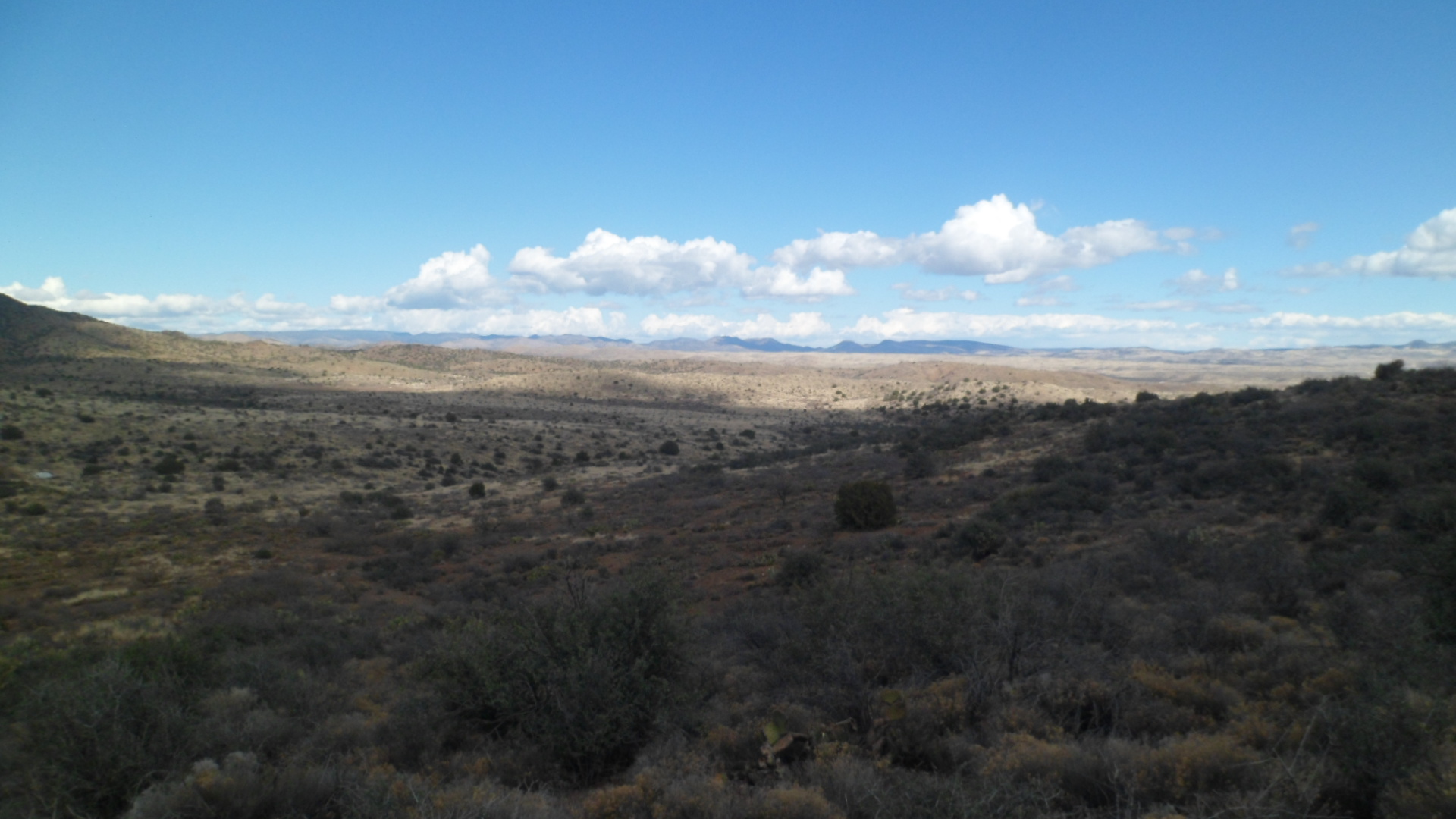
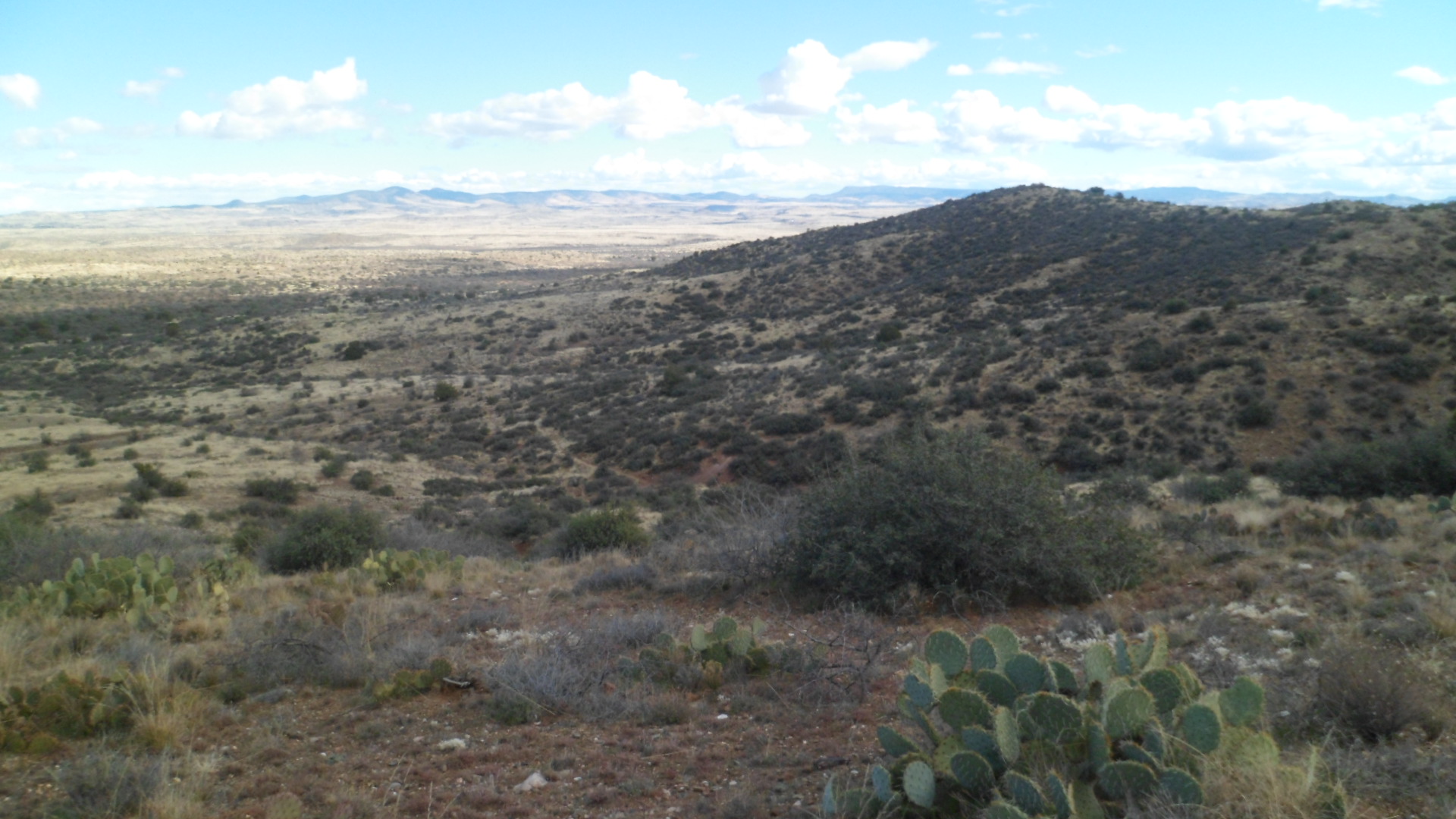
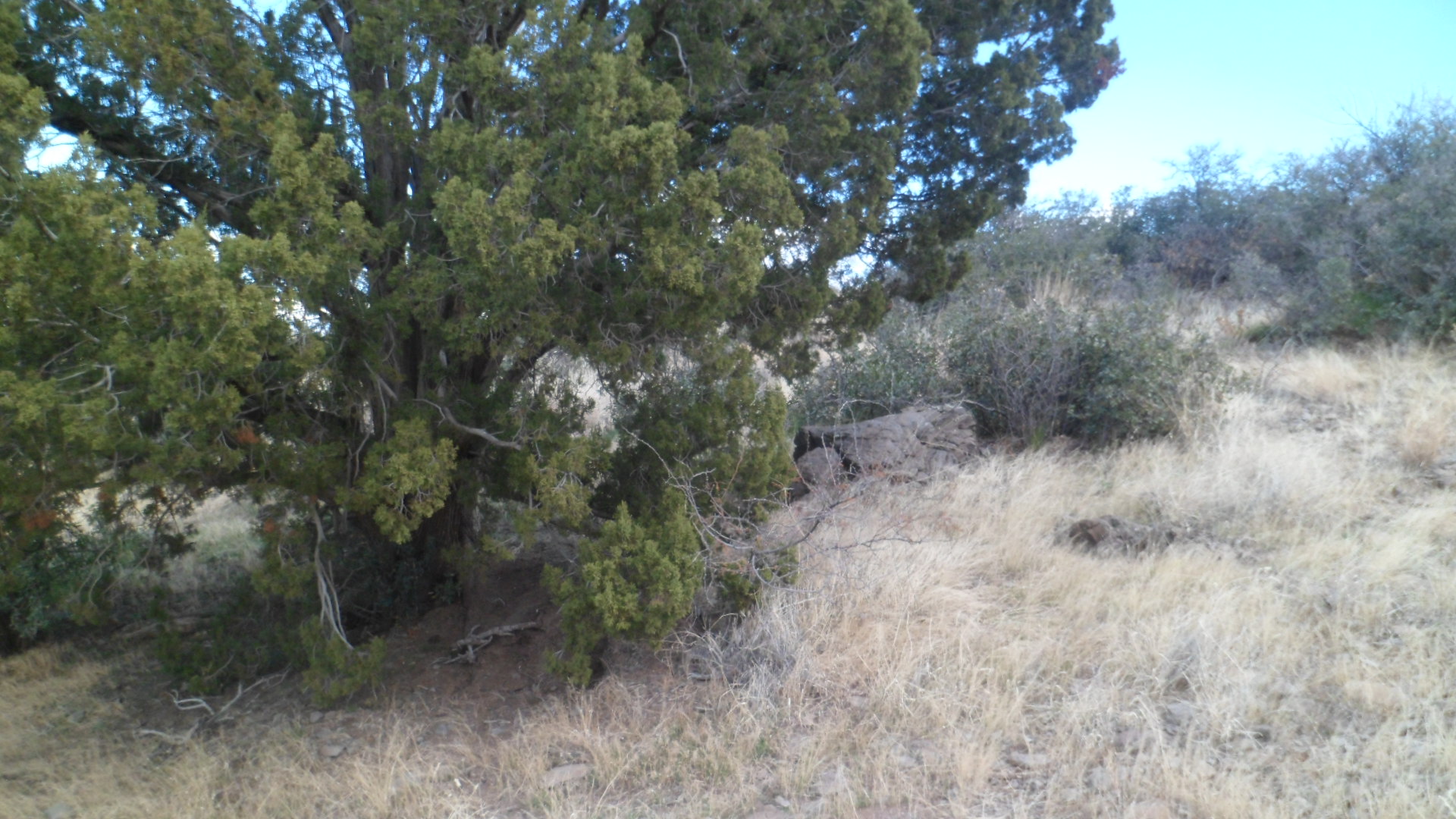
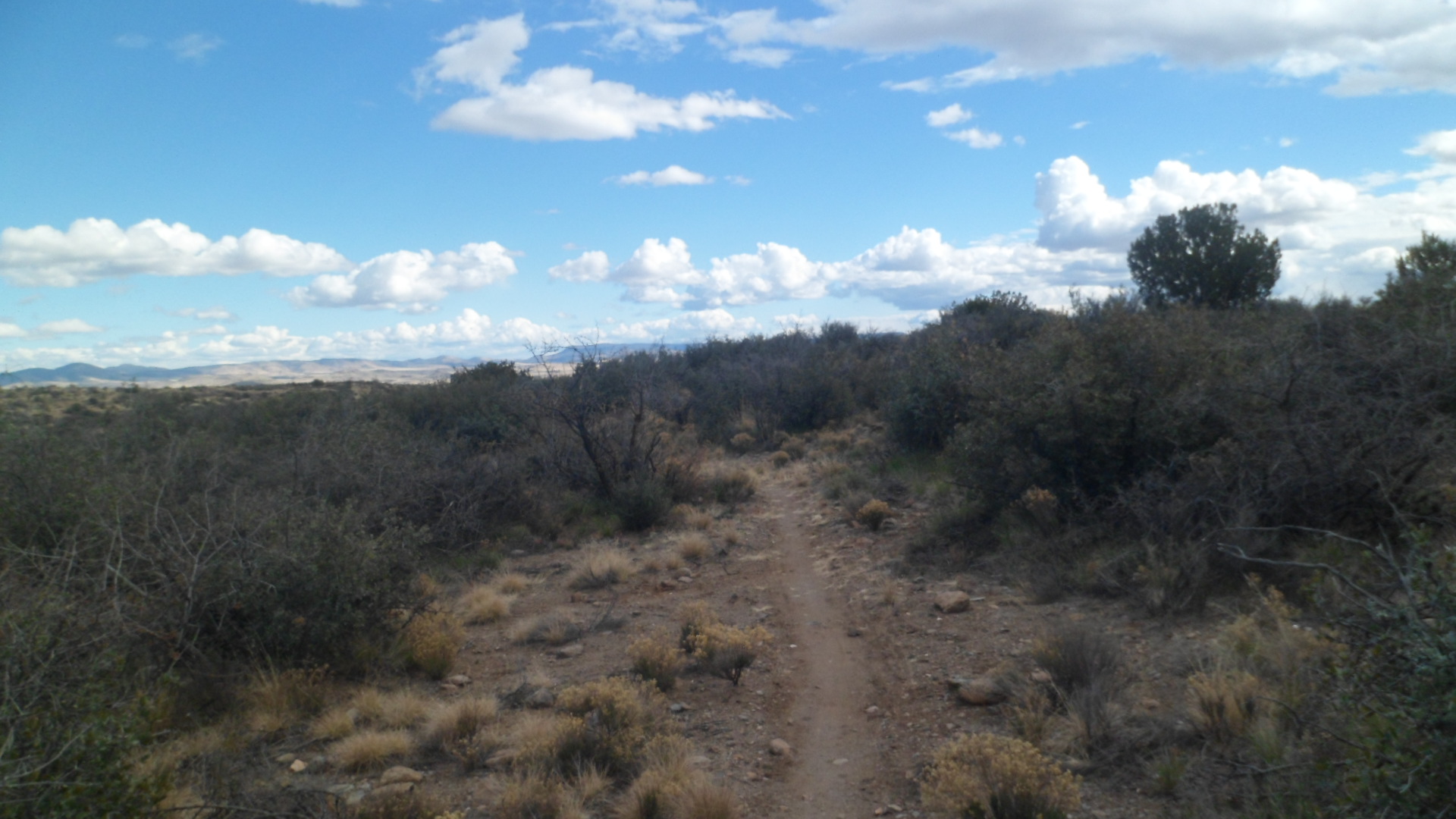
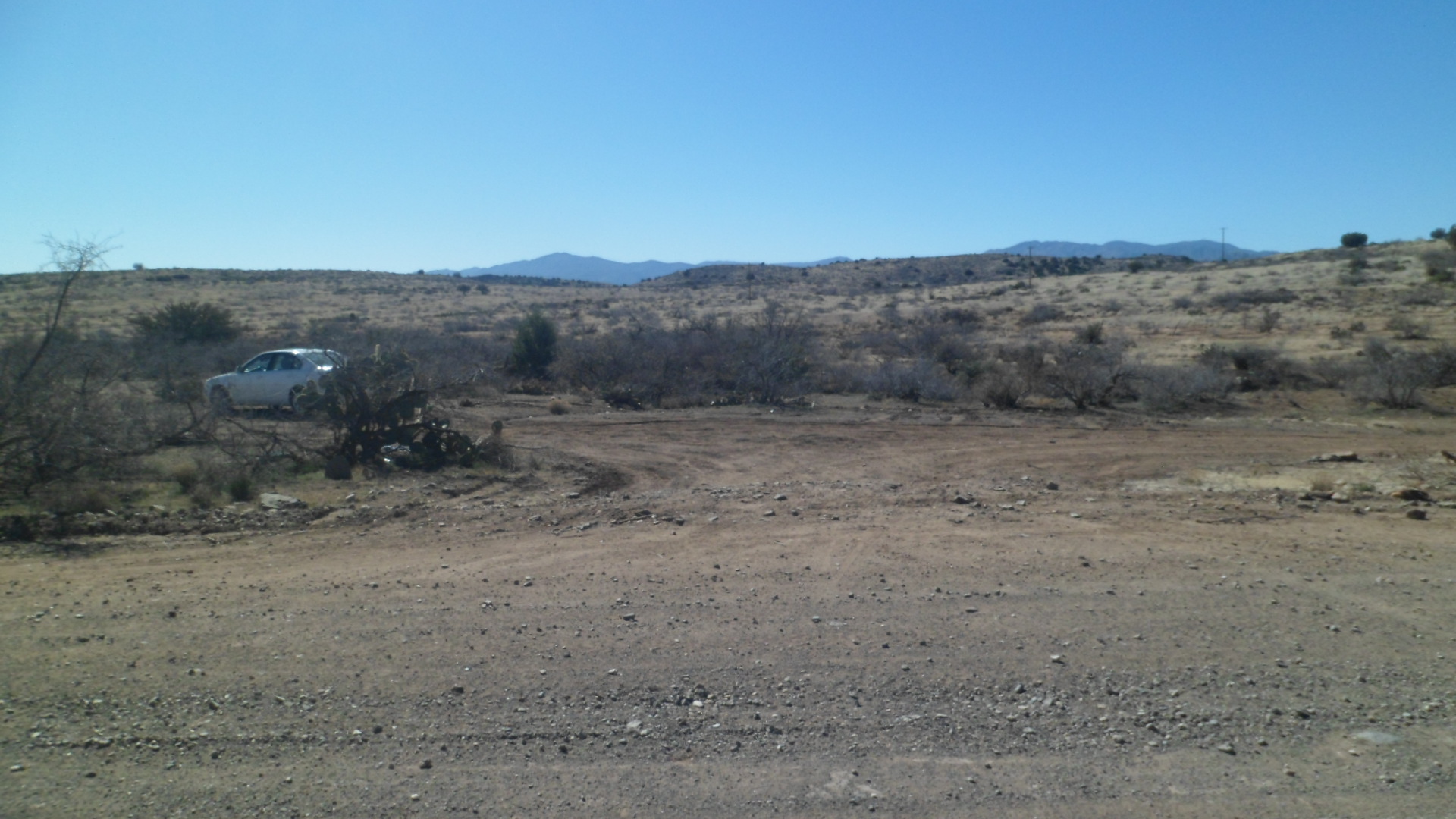
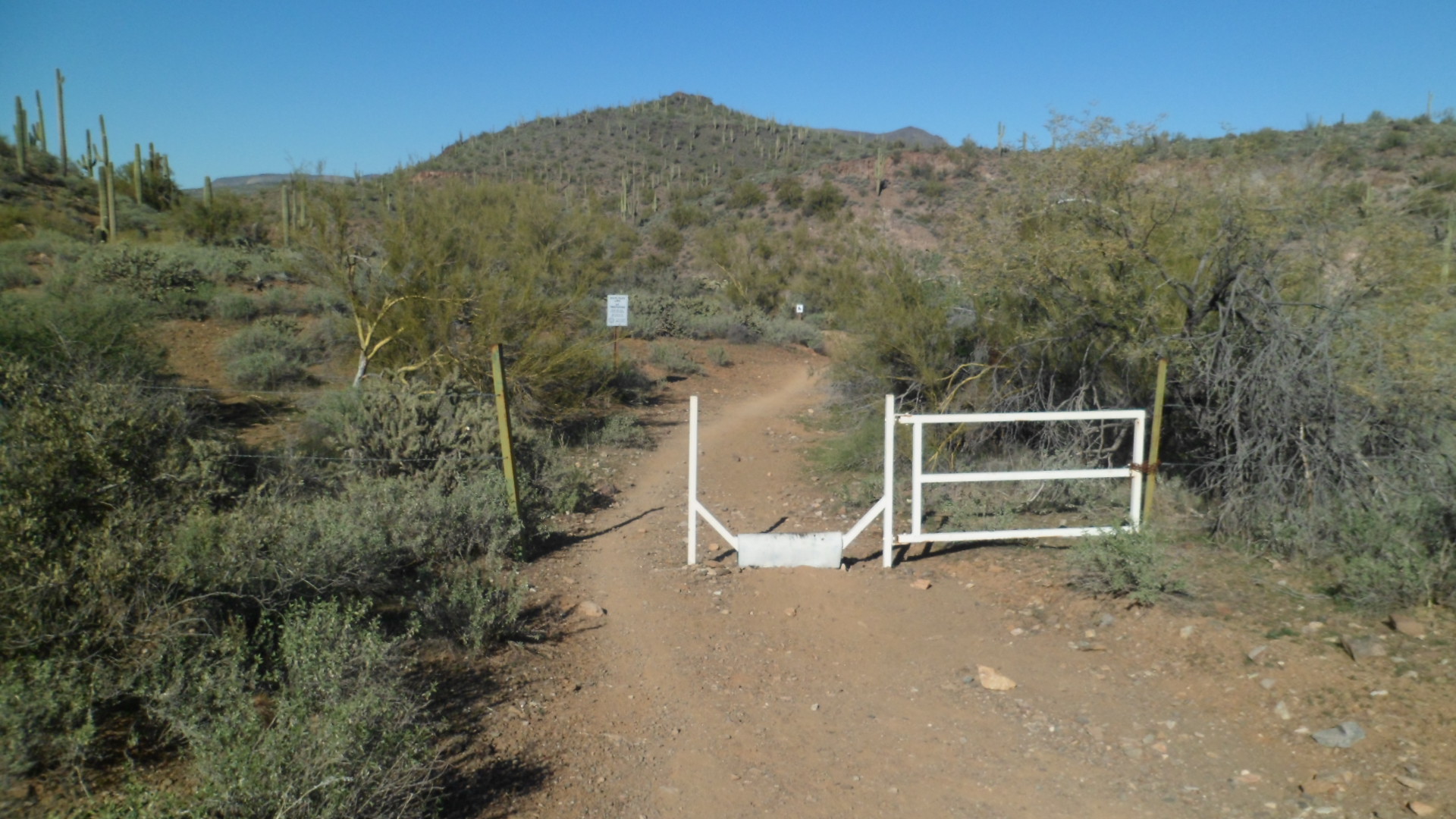
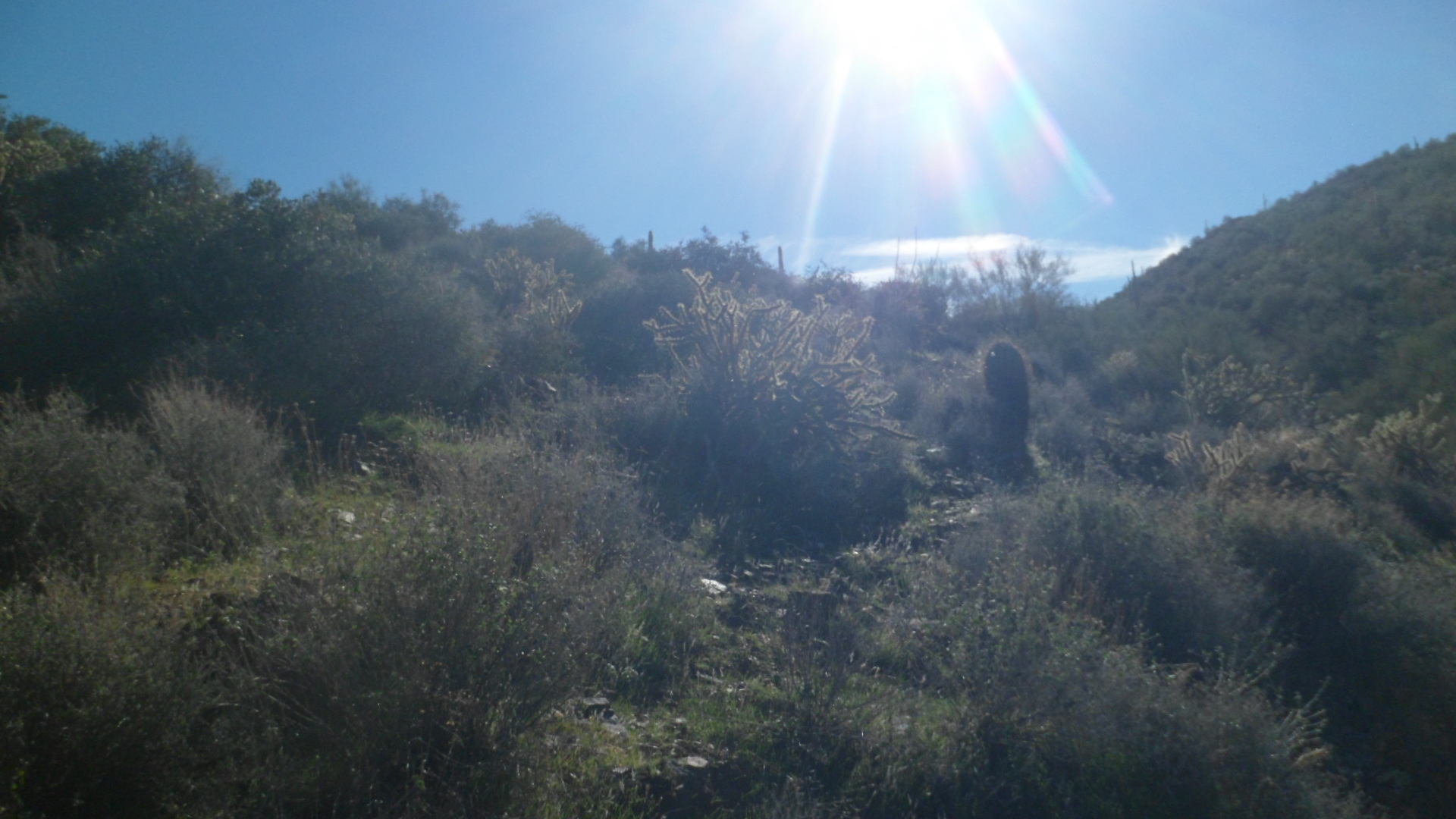
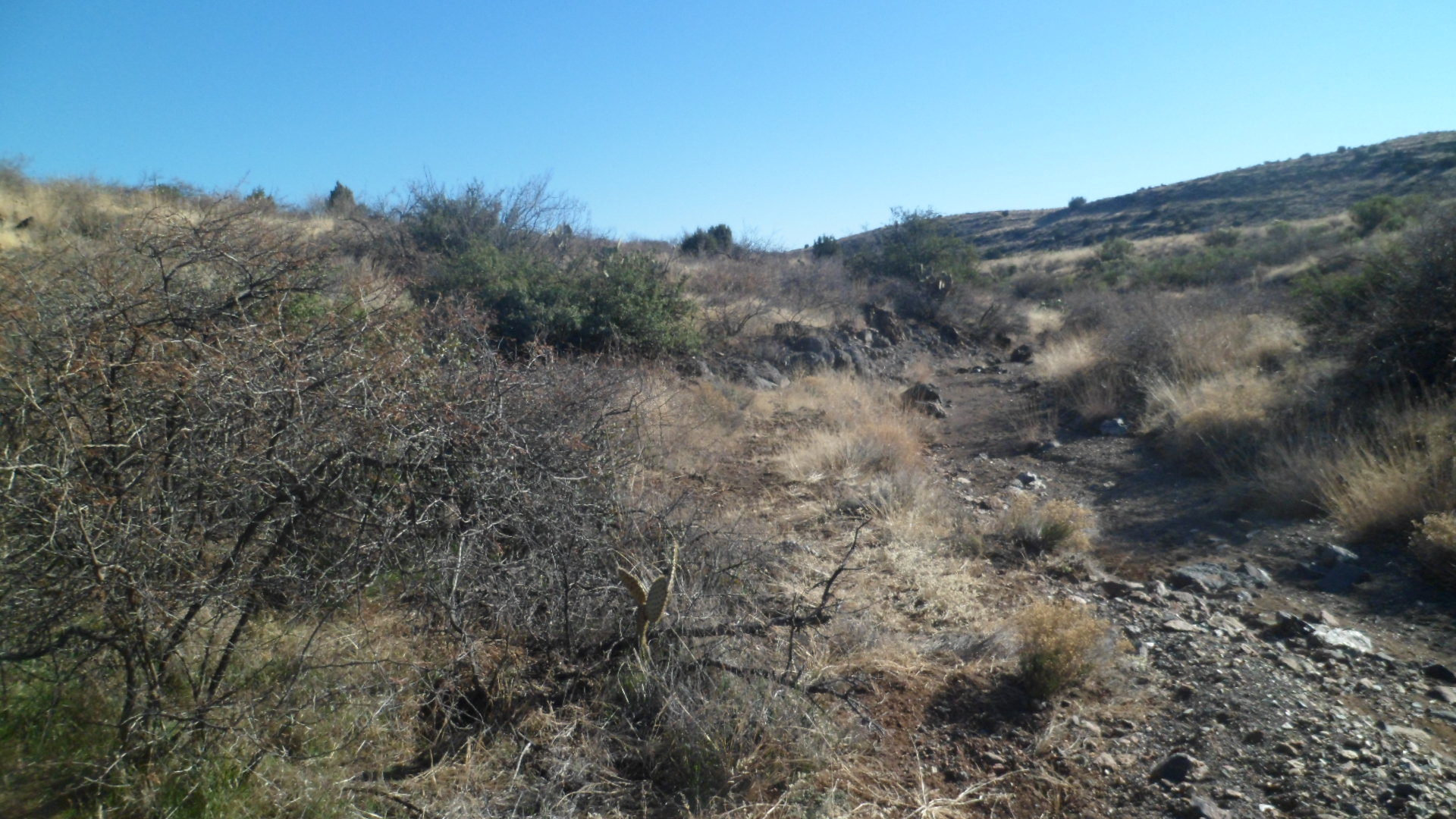
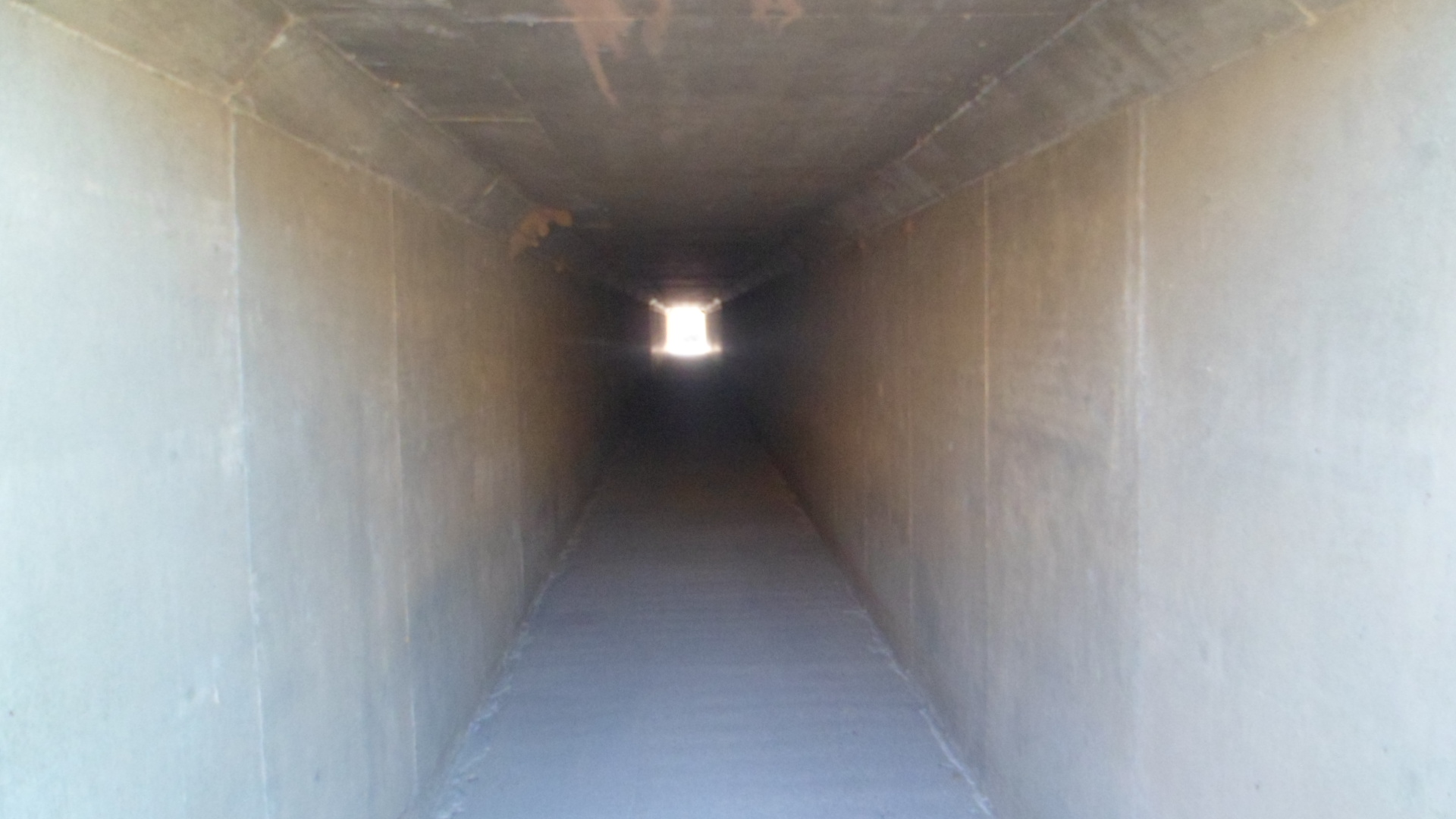
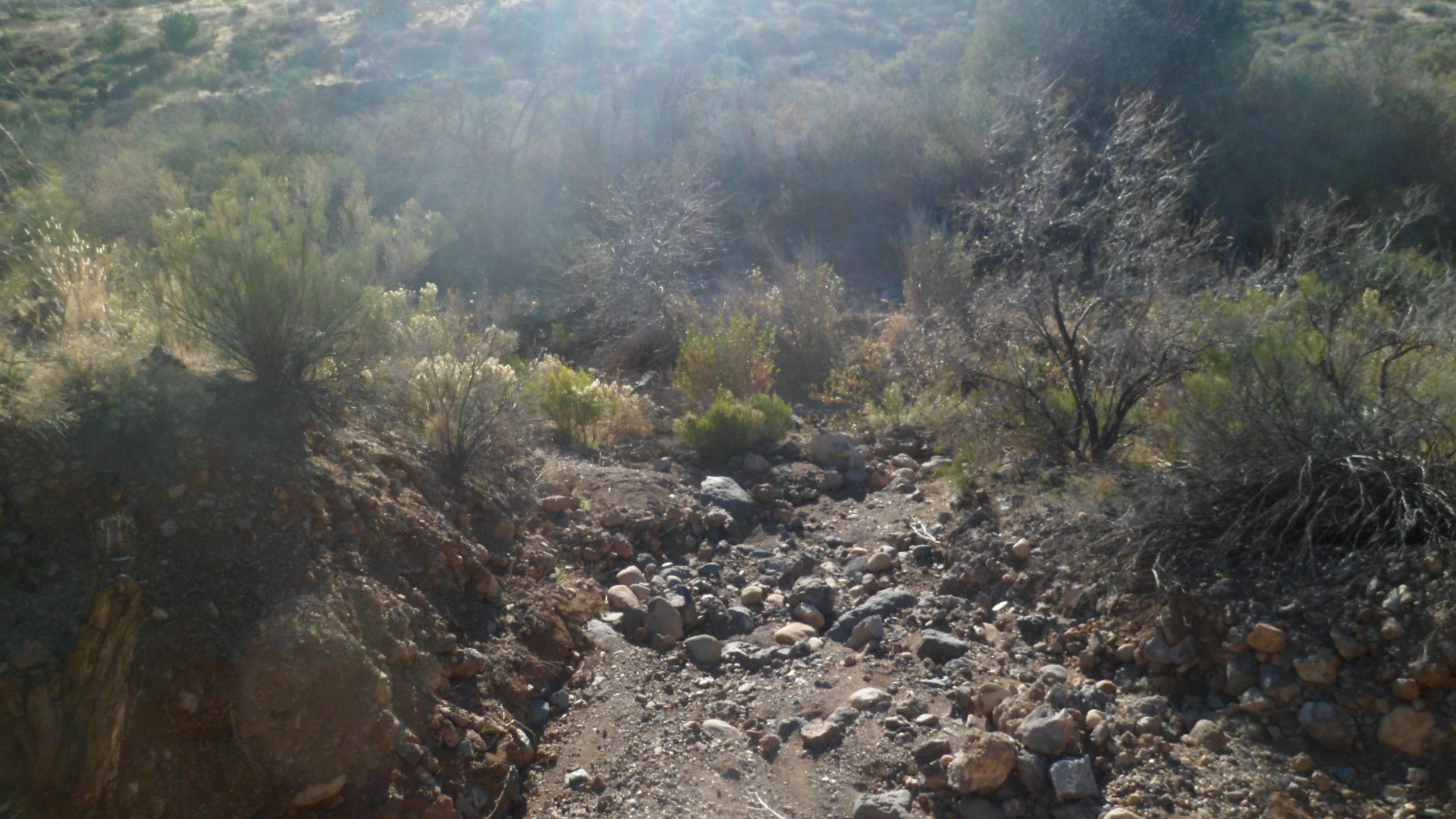
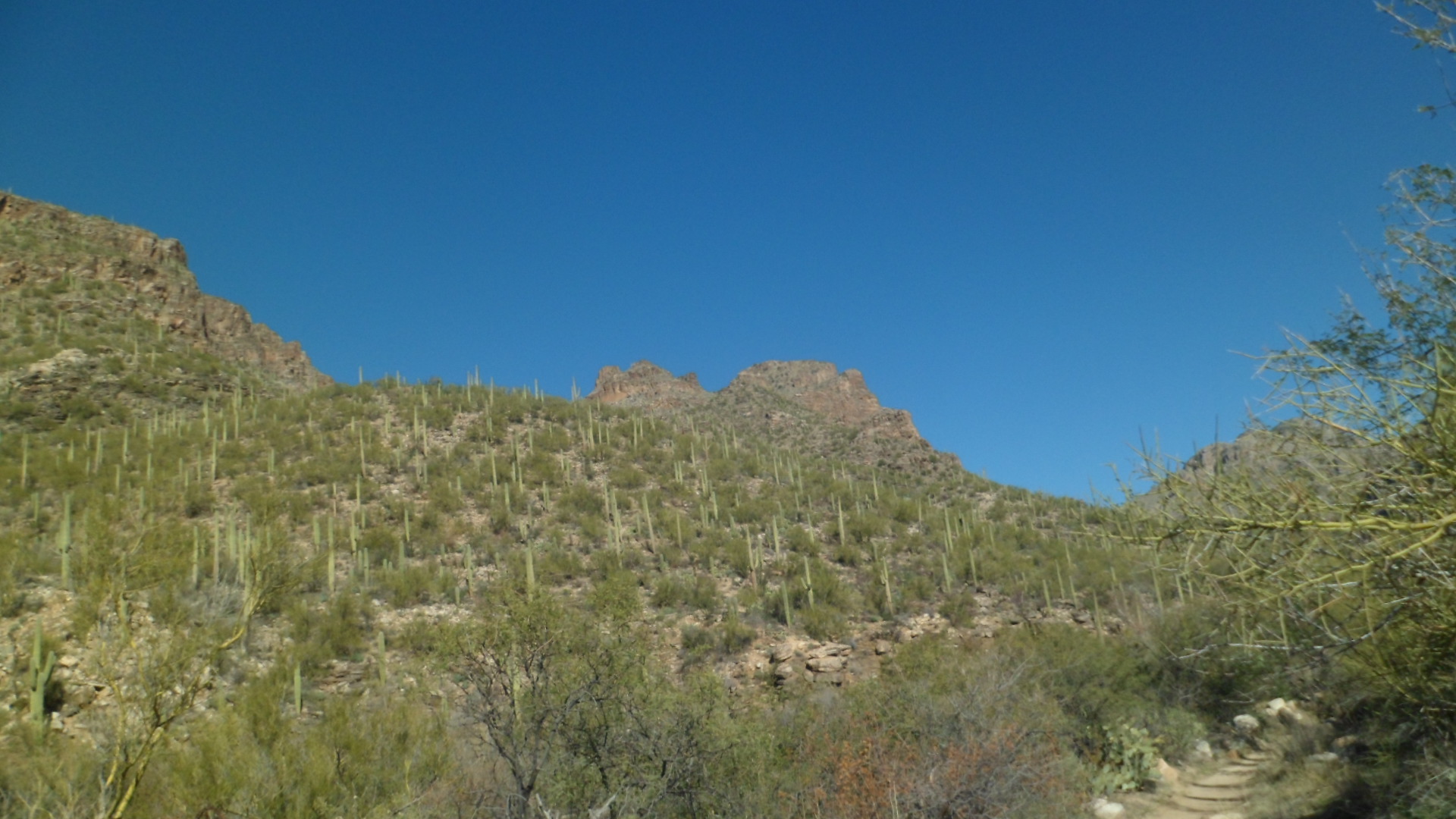
I again parked at Spring Valley’s Antelope Creek Road lot, and headed south, along the Drinking Snake segment of the Black Canyon, a distance of 4.2 miles one way. Here’s the north trailhead of Drinking Snake.
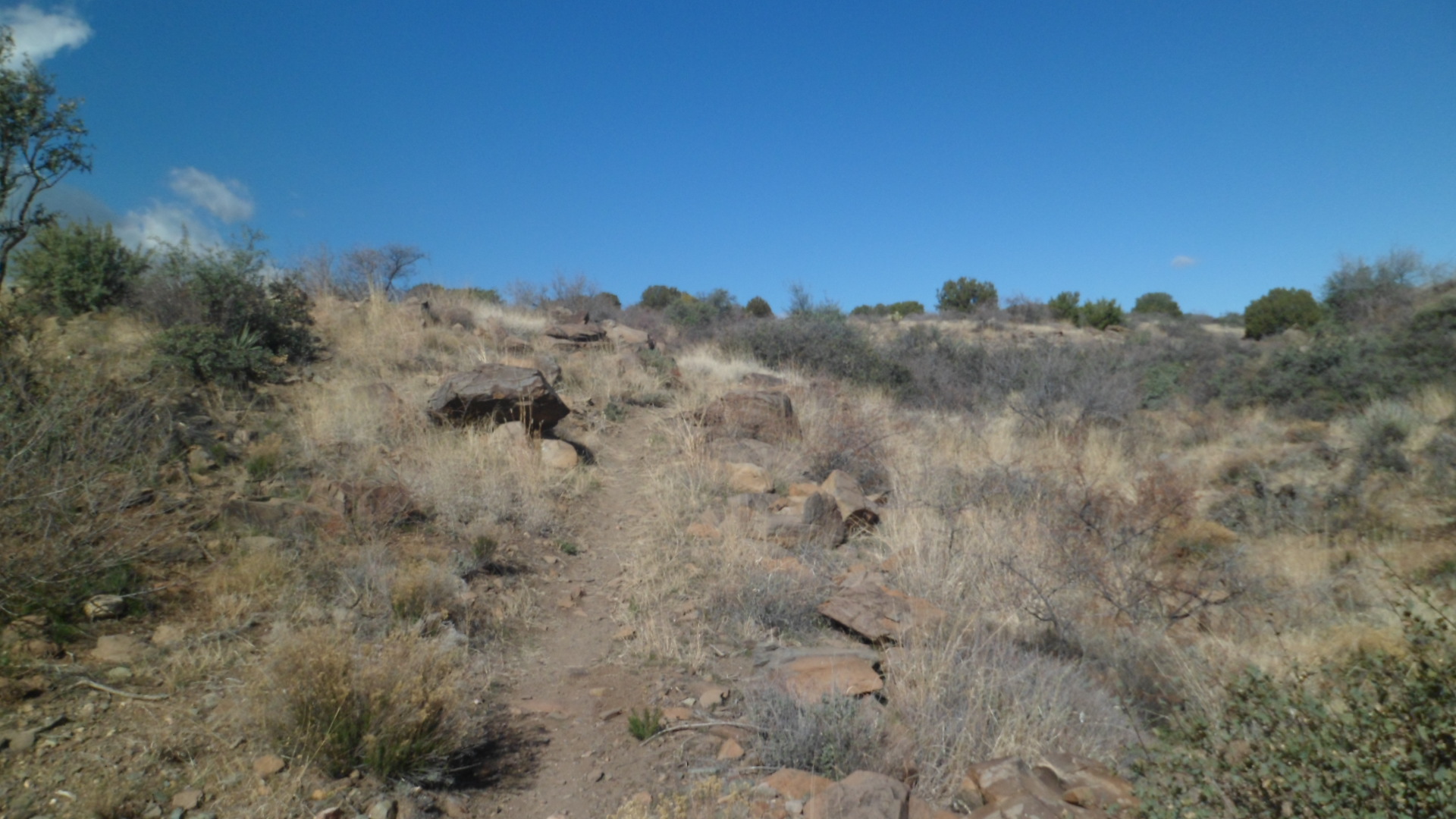
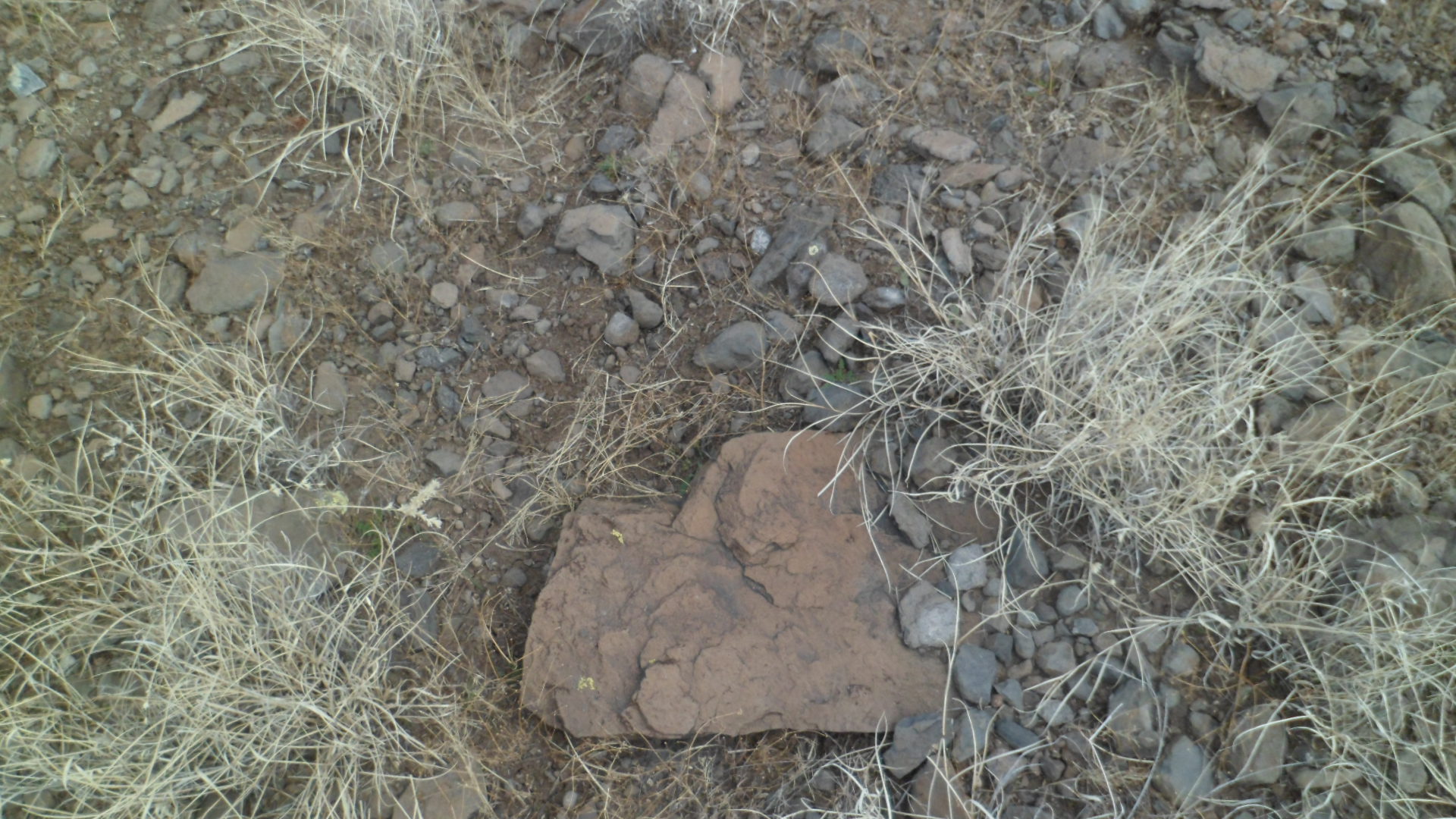
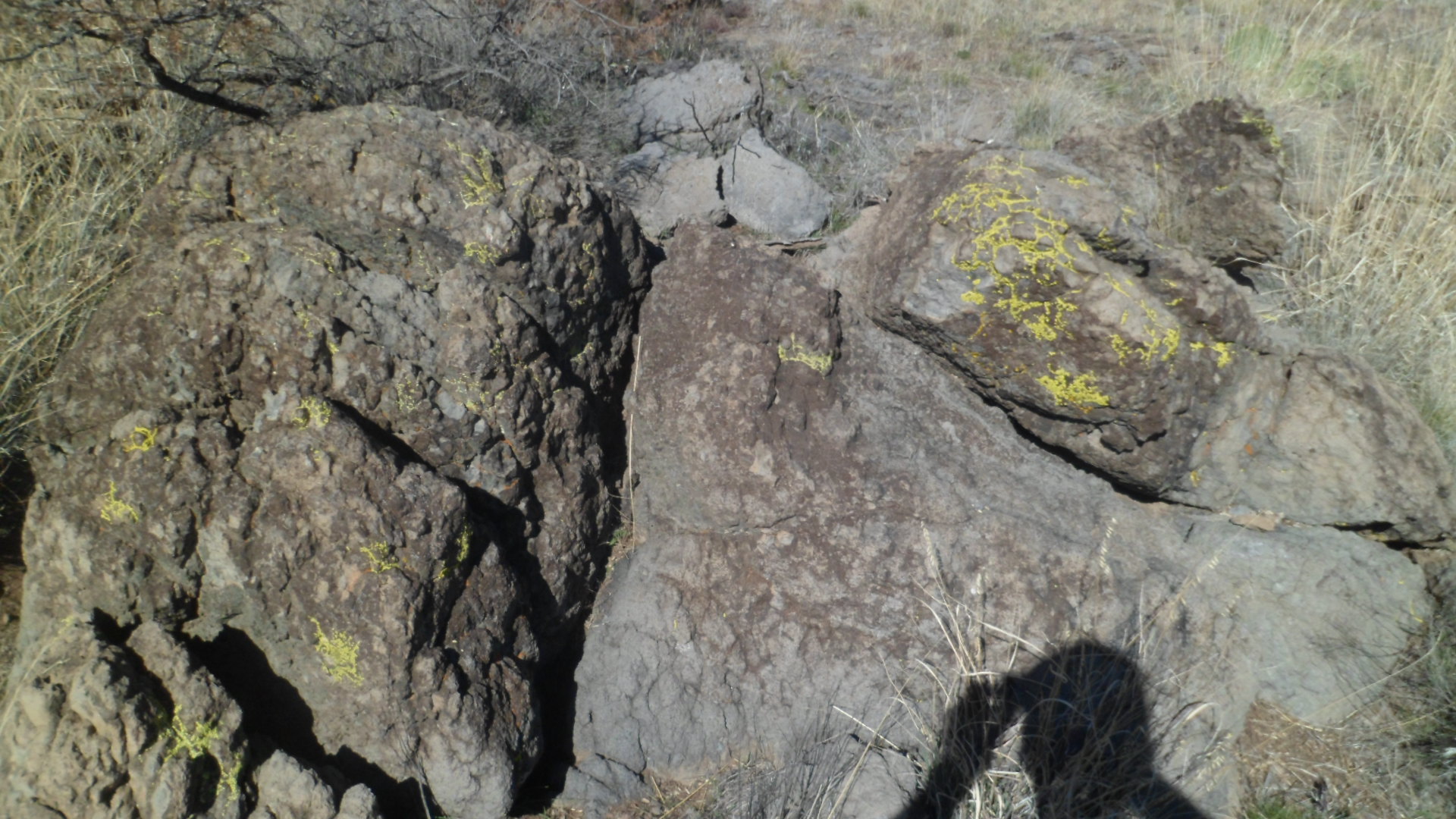
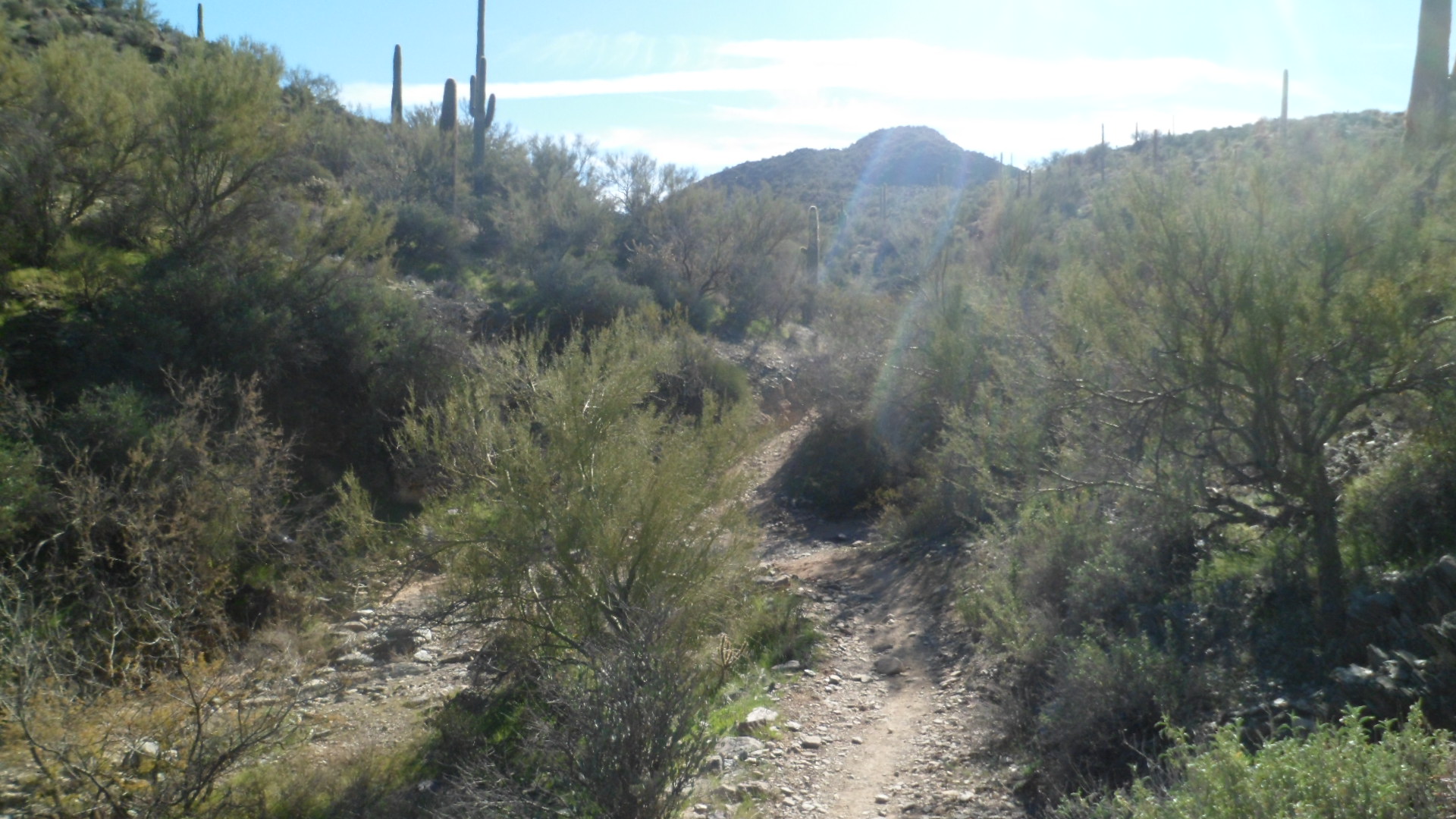
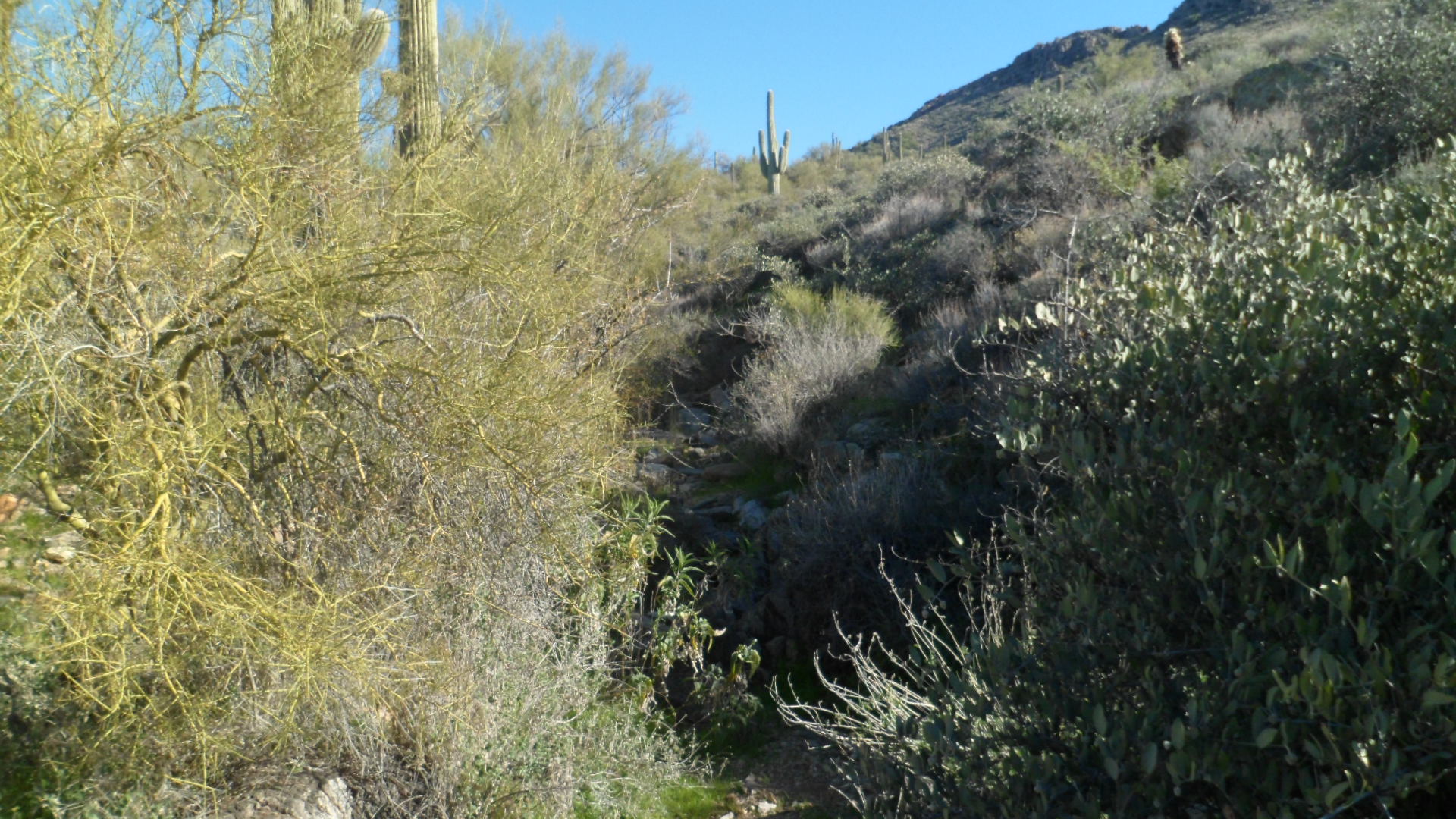
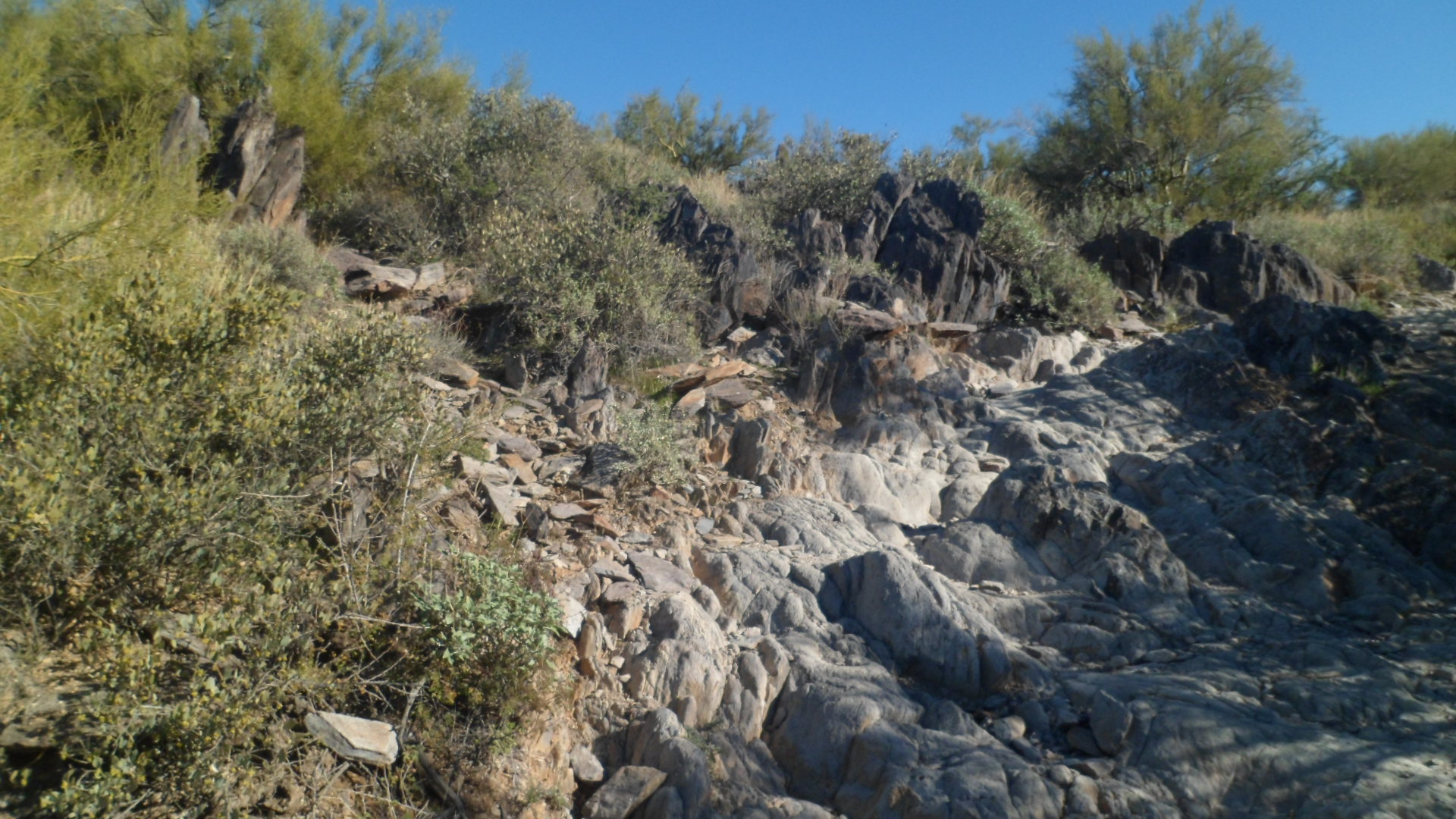
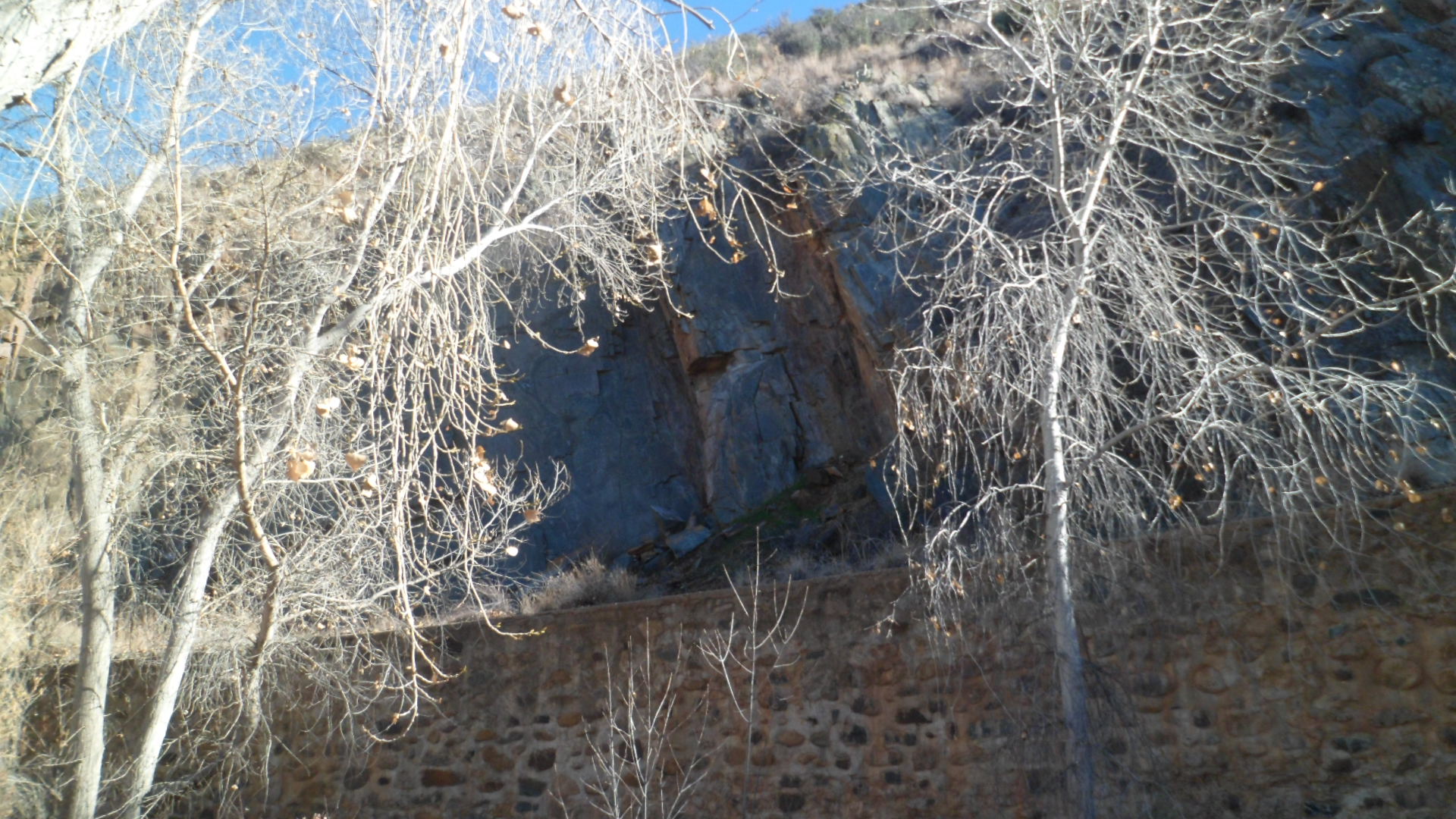
The trail is a bit more rugged than the Big Bug, at the outset. There is more volcanic debris in this area.
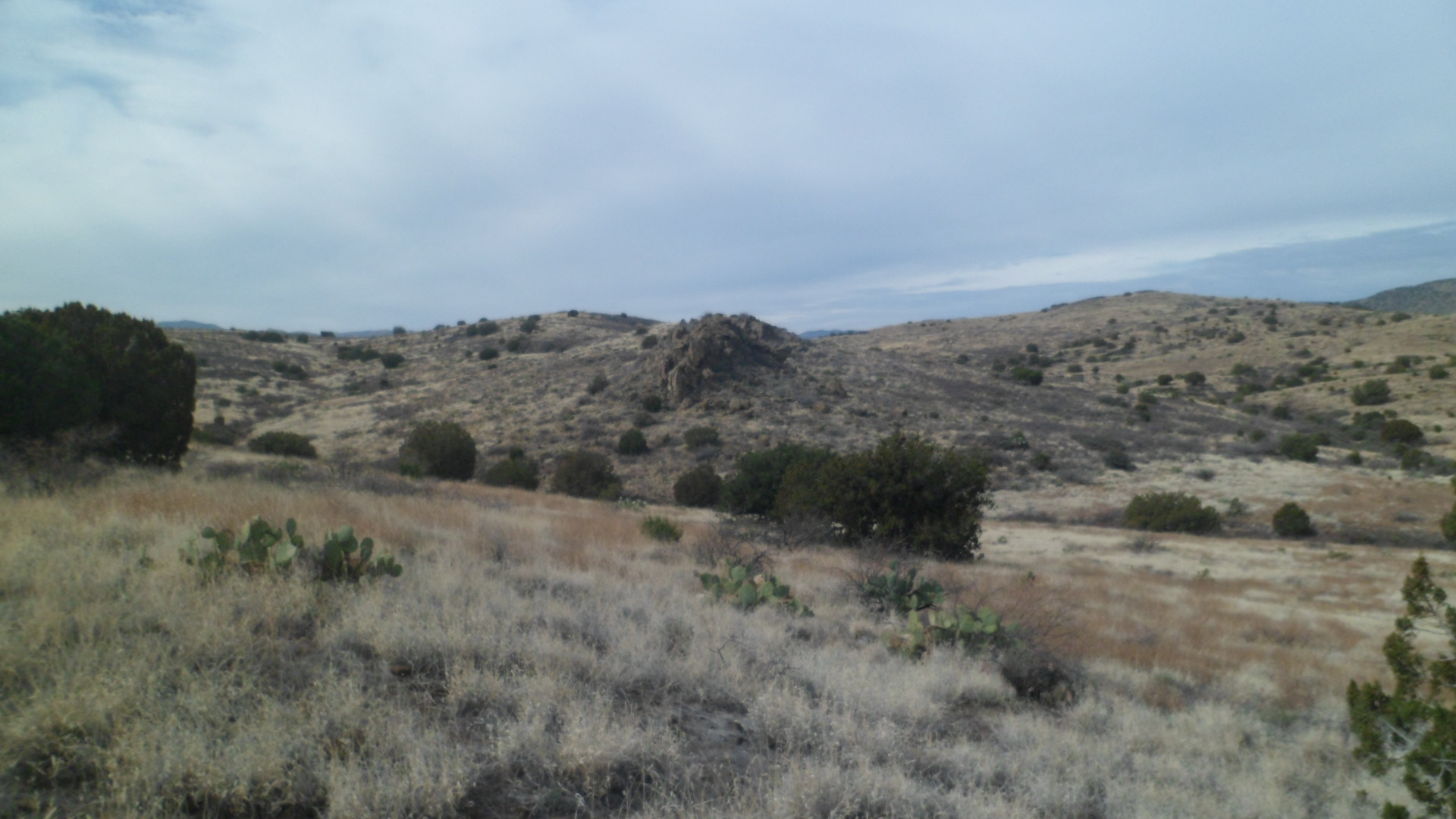
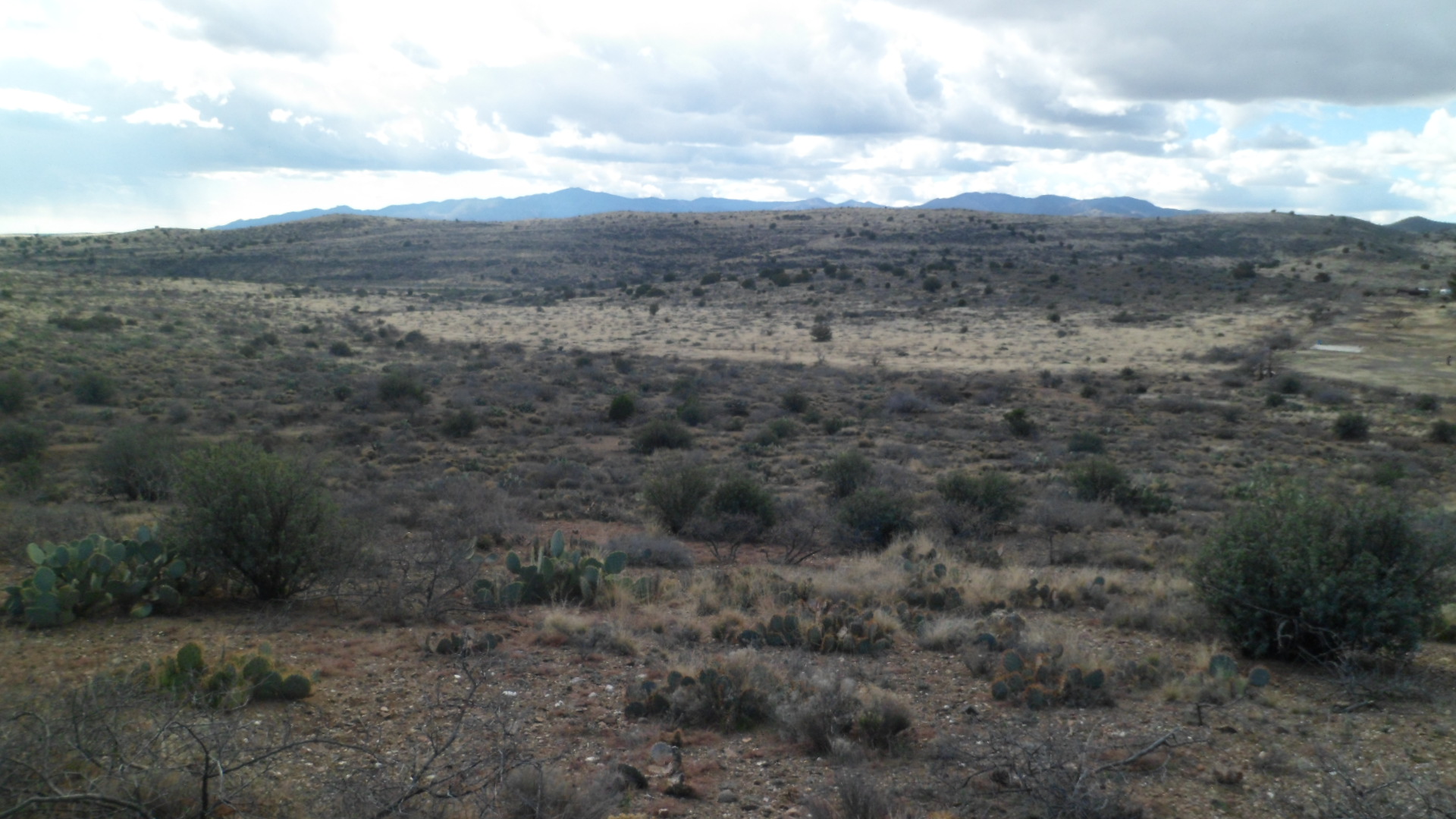
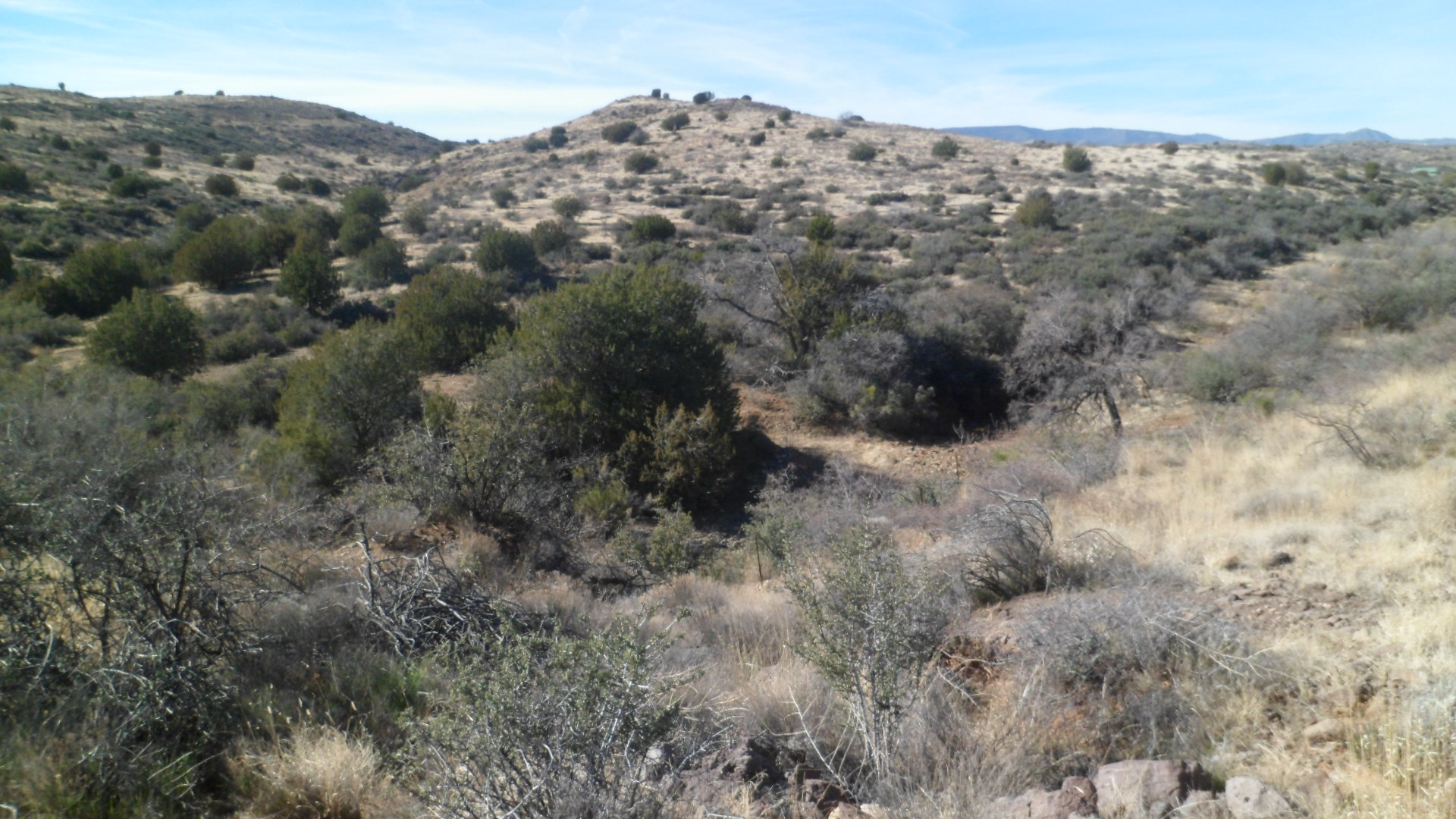
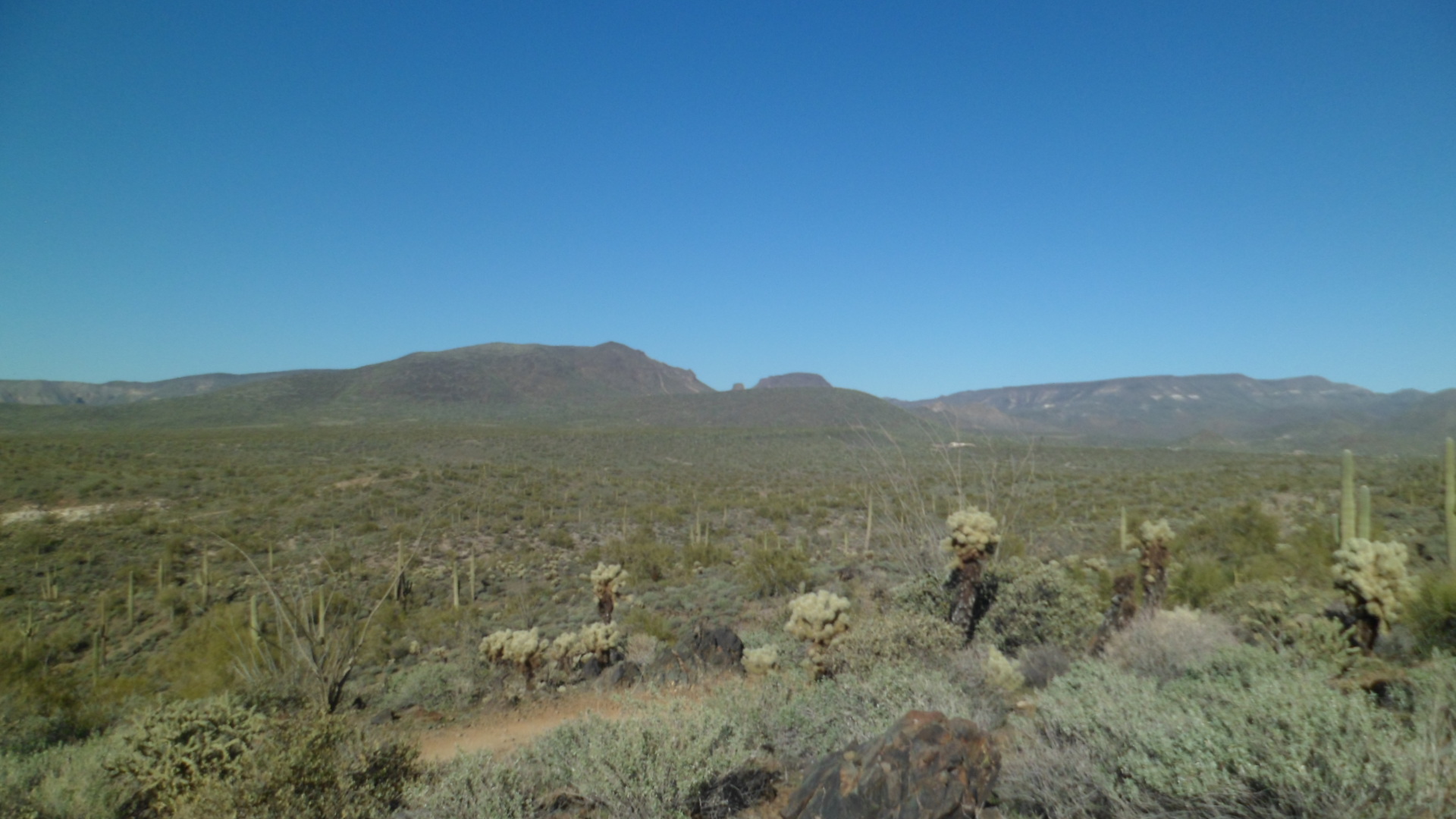
The views are just as sweeping here, as they are further north.
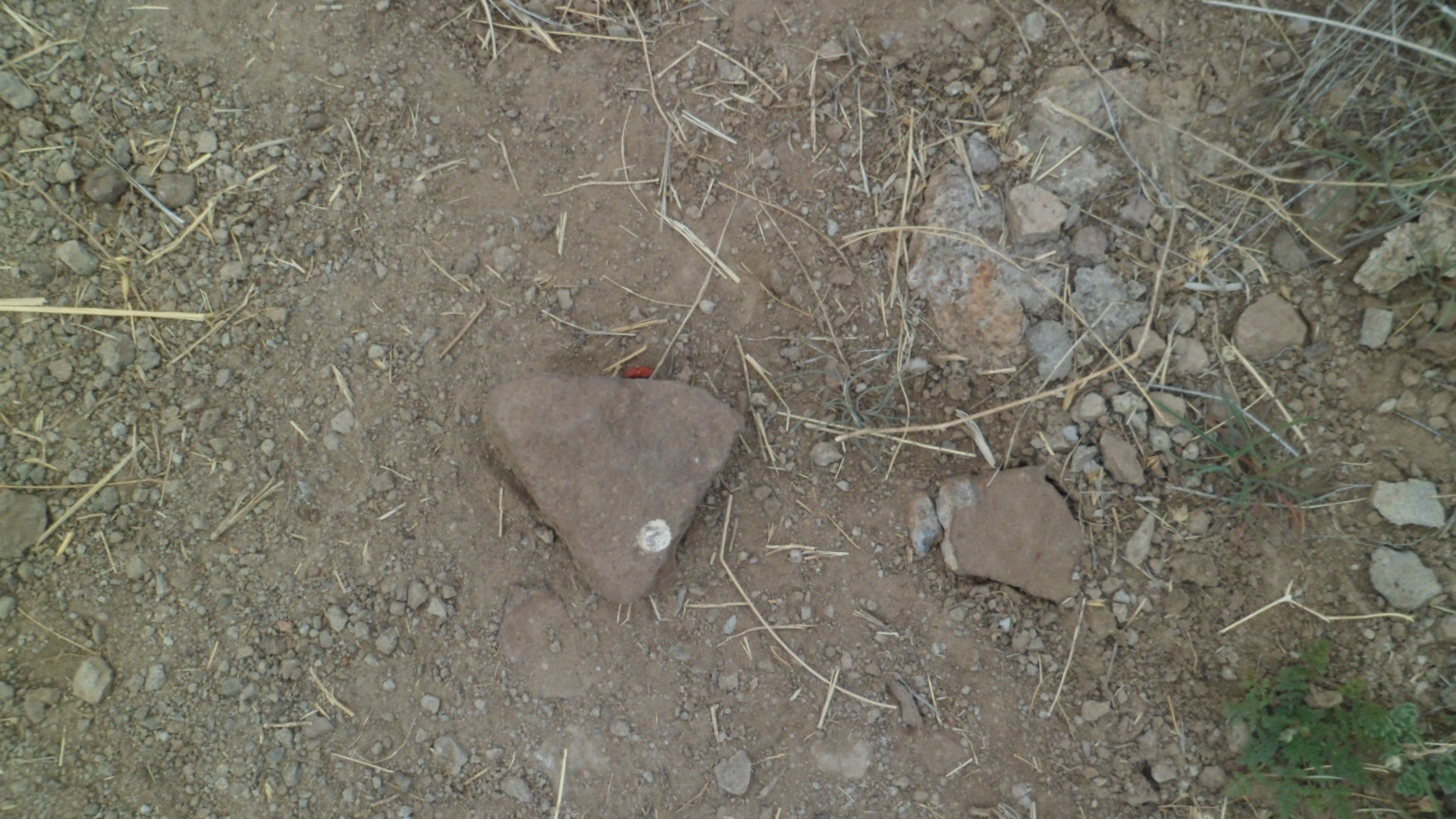
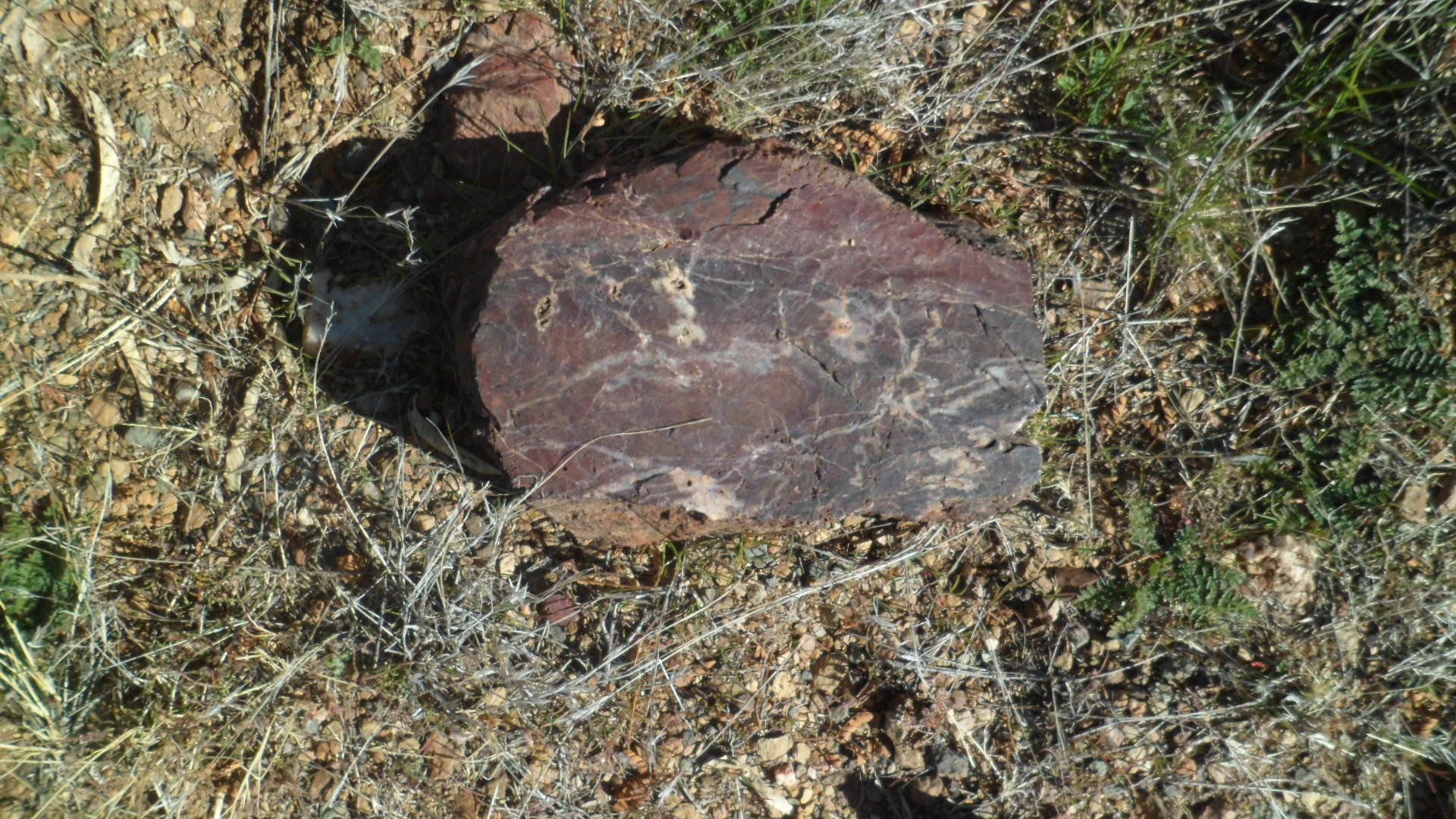
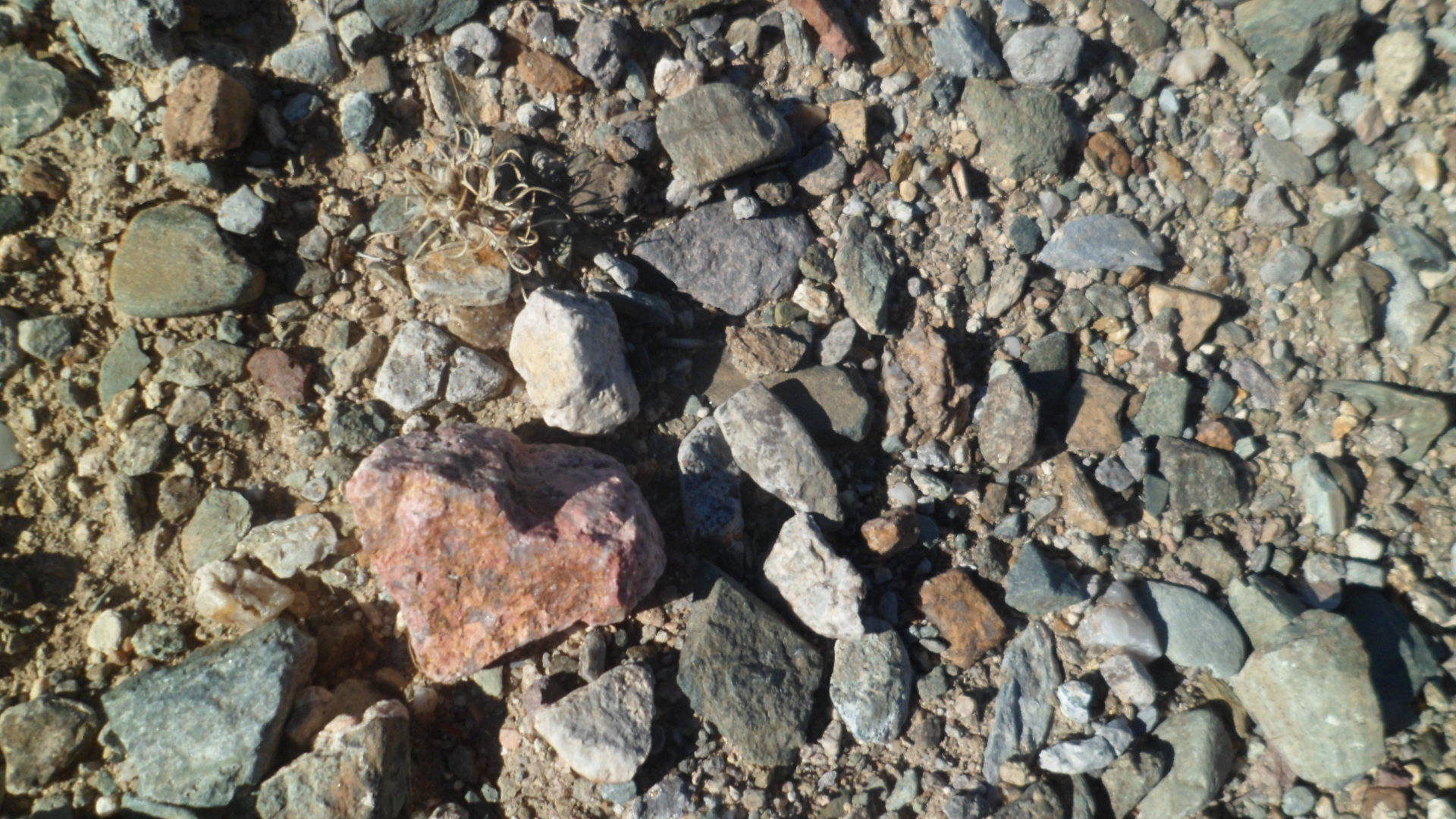
The hearts were both mineral and vegetable.
I arrived at an abandoned corral, water tank and windmill, near Dripping Spring, after an hour’s walk.
The canyon called Dripping Spring is the north end of a longer system that runs along to Crown King Road, another 1.7 miles to the south.
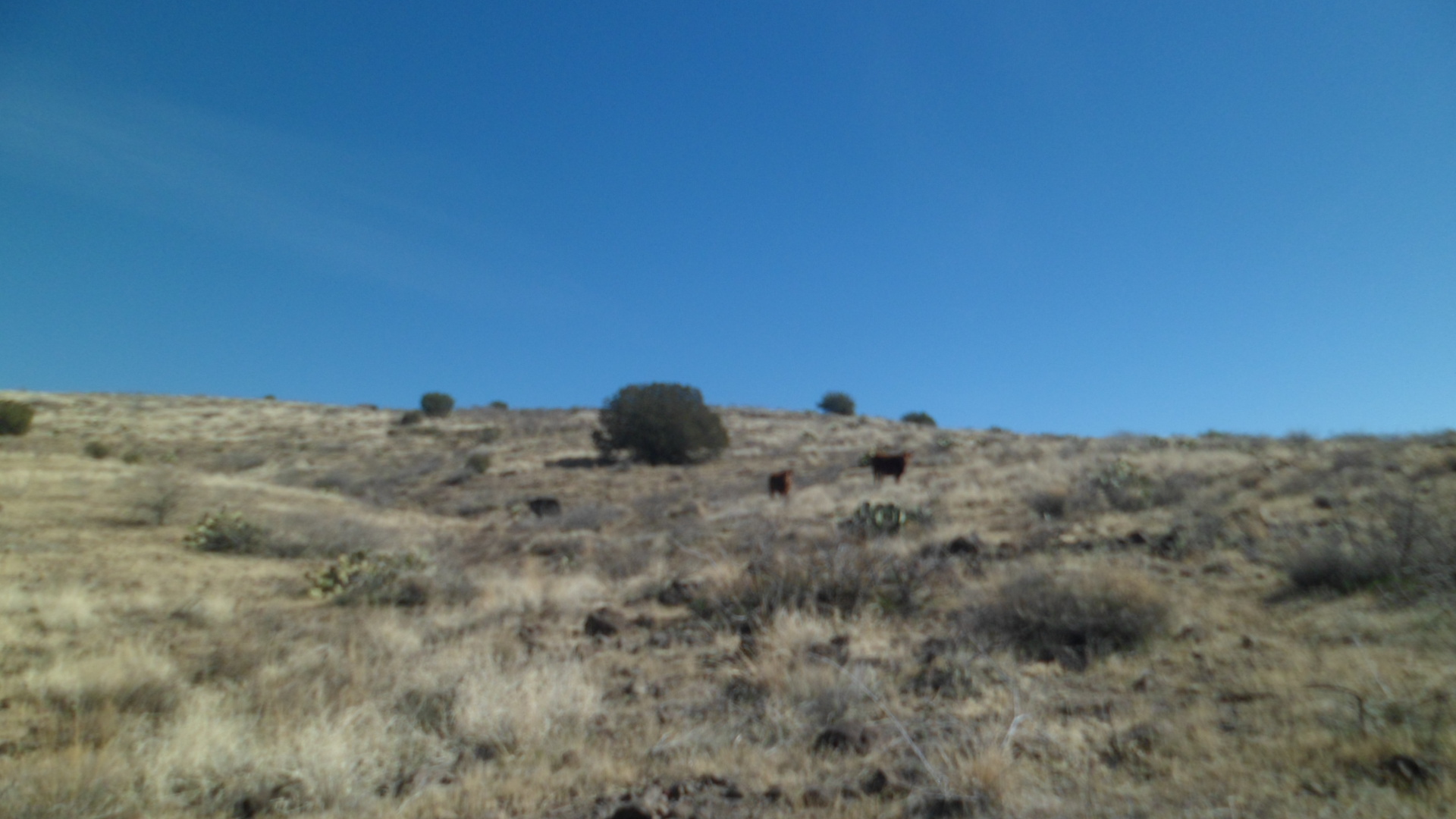
The hike from here is an easy rim walk, past a cow or two. The view, though, is exhilarating.
Next on this trail system is the Antelope Creek segment.
After making the hike back to Spring Valley, I stopped briefly at Cordes, the northernmost of four “ghost’ towns between Prescott and Black Canyon City. It was Sunday evening, so the place was closed.
My life will be topsy-turvy, in a good way, for the next five weeks, so while hiking will take a backseat to some other activities, I’m a happy blogger.
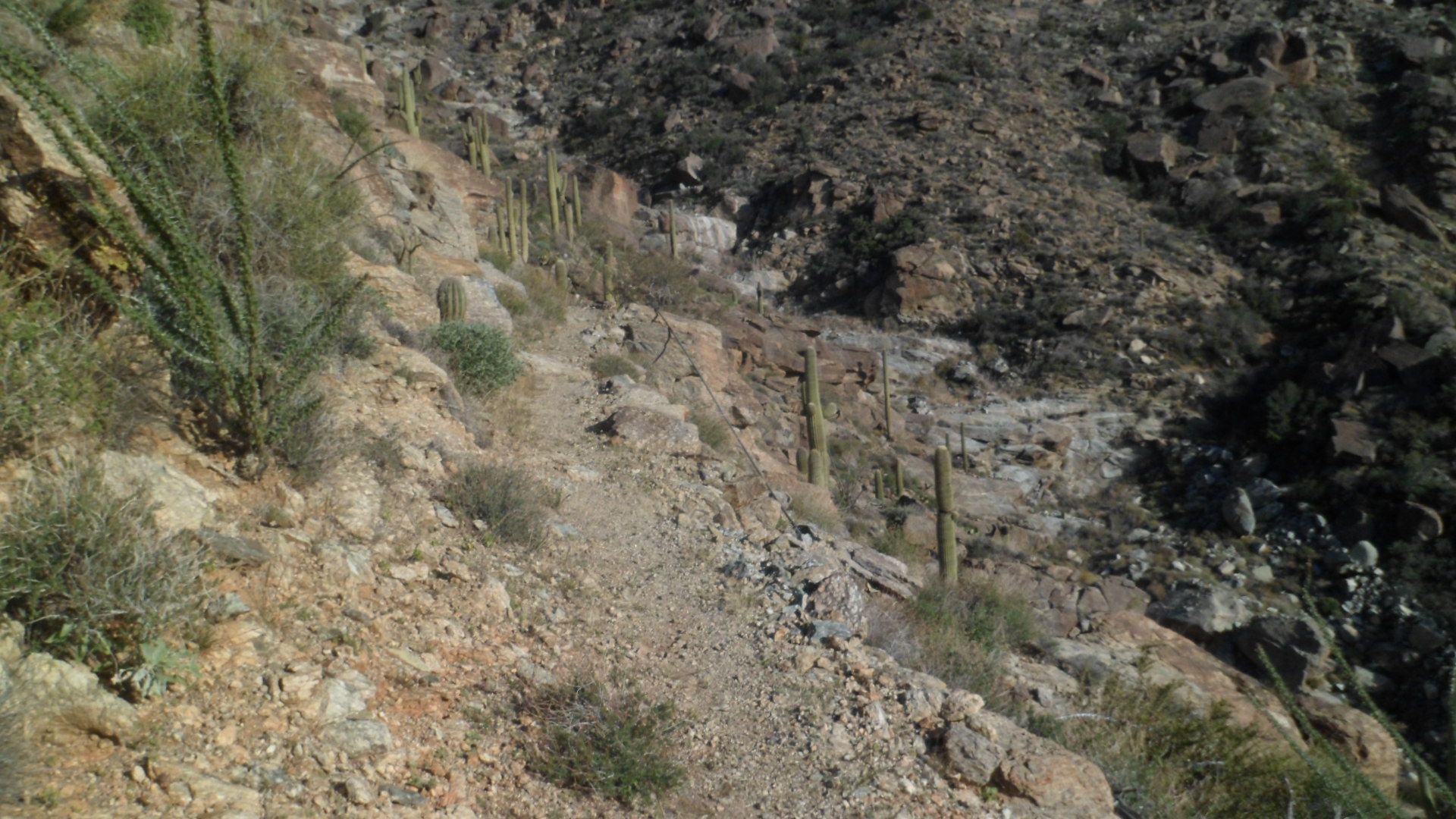
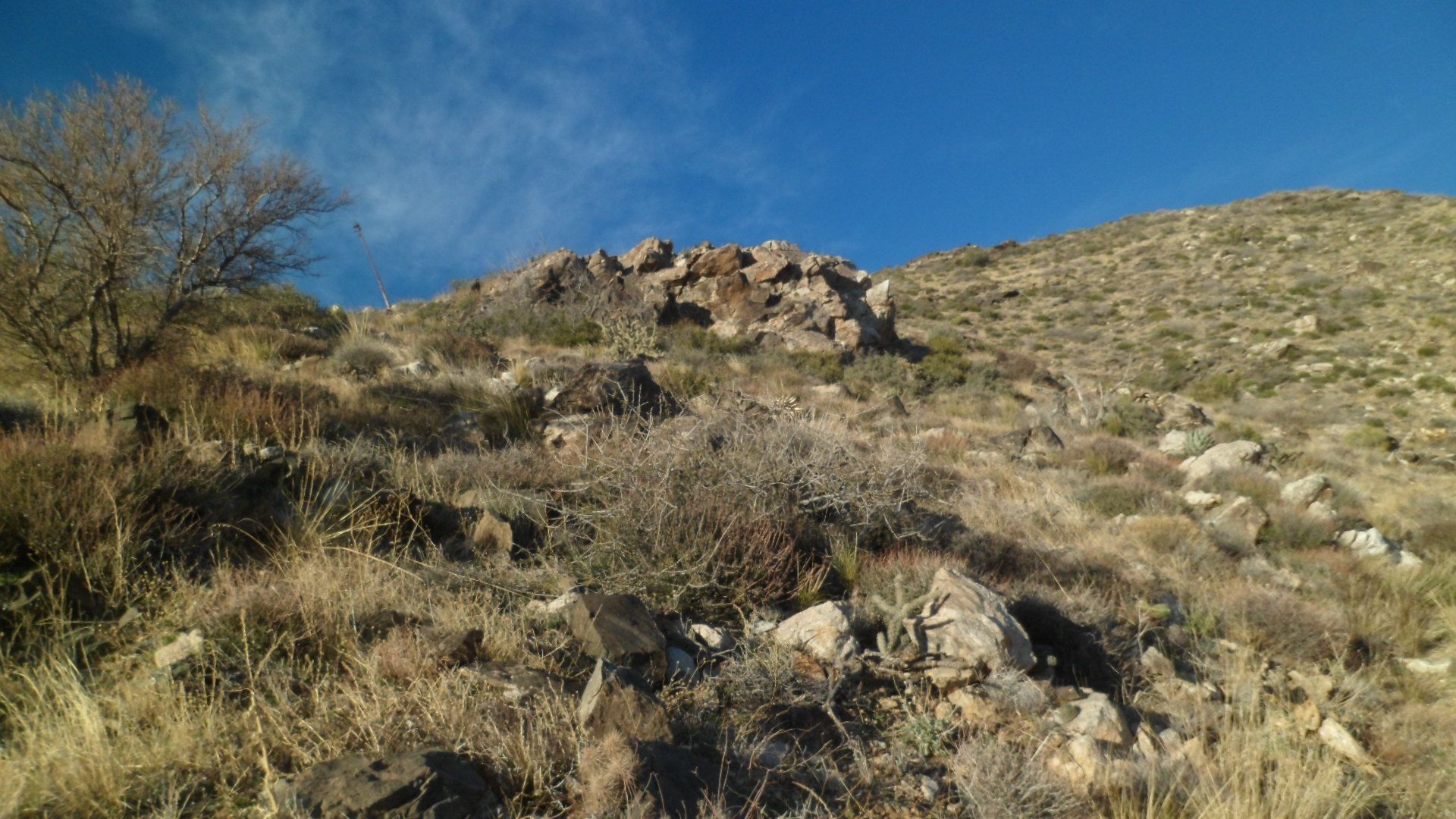
Sunday saw my first visit to Harquahala Wilderness, featuring the highest peak in La Paz County and in southwestern Arizona. The name, Harquahala bestowed by the Mohave people or their progenitors, means “Waterhigh up”. Harquahala Peak does get snow, every so often, though Sunday was dry and mild. I lived in nearby Salome, for a year, in the 1999-2000 Academic Year, and have passed by the entrance to this trail countless times, often wondering what the upper levels were like. I got there later than I had first planned, as an important gathering took up much of my Sunday morning. Still, the overall experience, over six hours, rivaled the best of other wilderness experiences I’ve had in the Southwest. The first two miles of the trail are standard Sonoran Desert fare, but don’t be jaded or lulled into boredom. There are some challenges ahead. This experience reminded me quite a bit of the Superstition Wilderness.
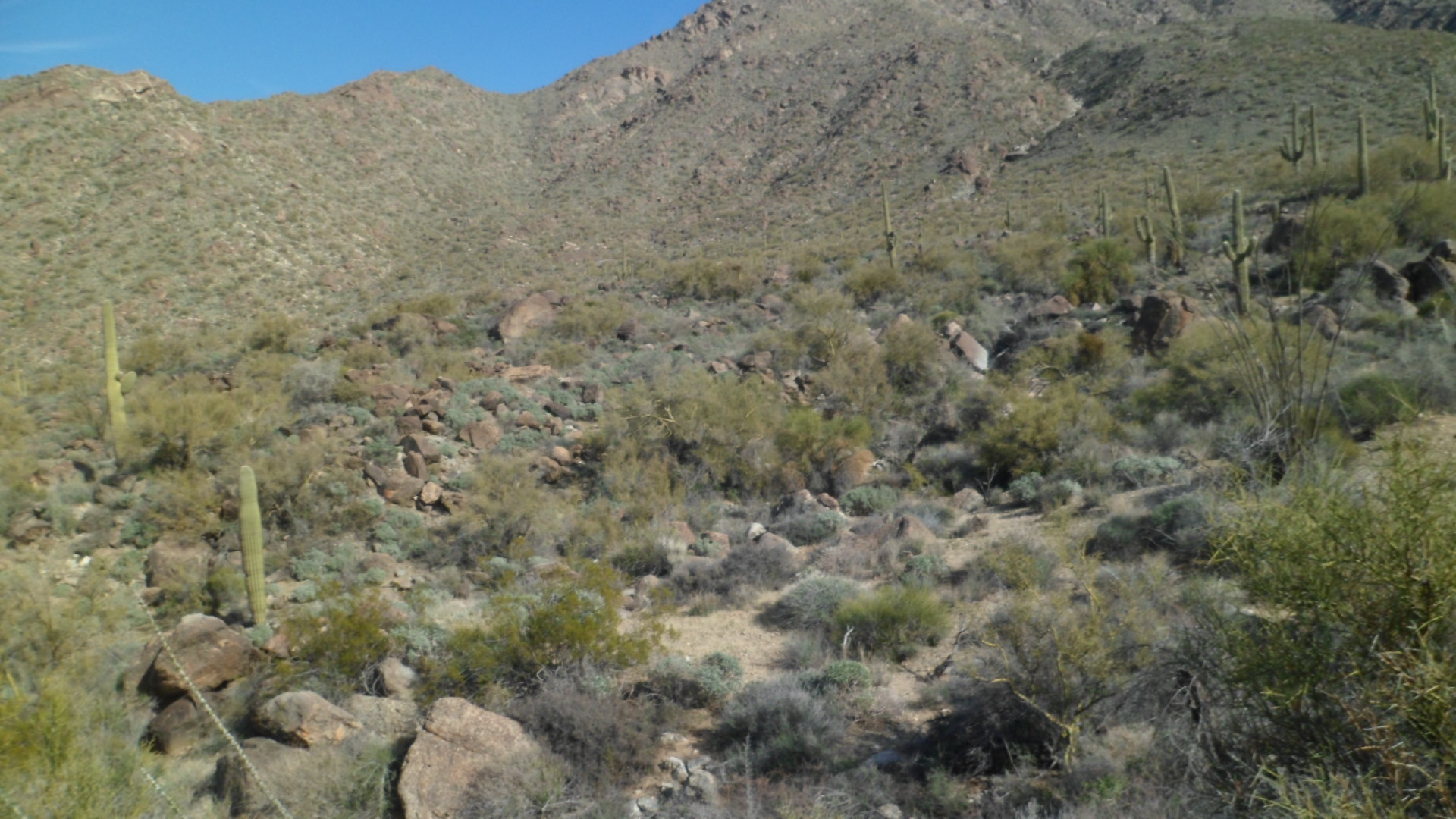
The full trail is 5.4 miles, one way. Once through the boulder fields, the switchbacks, and fun, begin.
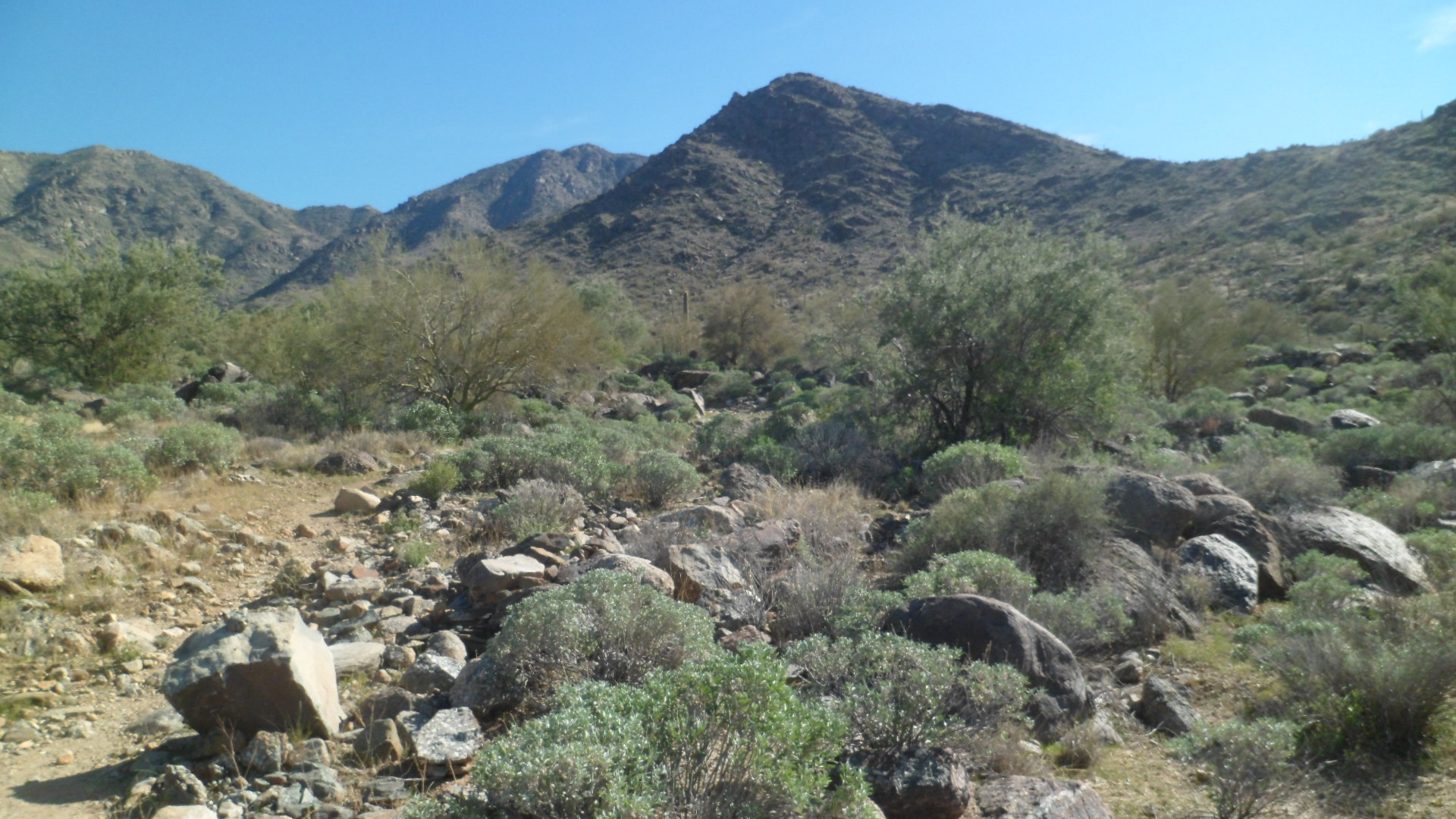
Looking down into the canyon is an exhilarating experience.
The cathedral spire-like quality of Chimney Rock is a motivation to keep on, with new vigour.
Two-thirds of the way to the summit, some gold prospectors tried their luck, in the 1900’s. It didn’t work out too well. The remains of their camp are preserved here.
The remnants of another Harquahala institution, an Observatory, built by the Smithsonian, and operated from 1921-1925, are found at the summit of Harquahala Peak, and are visible from the place where I chose to turn around.
The summit itself was another 35-40 minutes away, and once there, the sights are worth an hour or so of exploration. Owing to the fading daylight, and not wanting to depend on my flashlight to navigate the eastern rim’s switchbacks, I began my descent around 5 P.M.
There were abundant heart-shaped rocks here, so I felt fully-blessed.
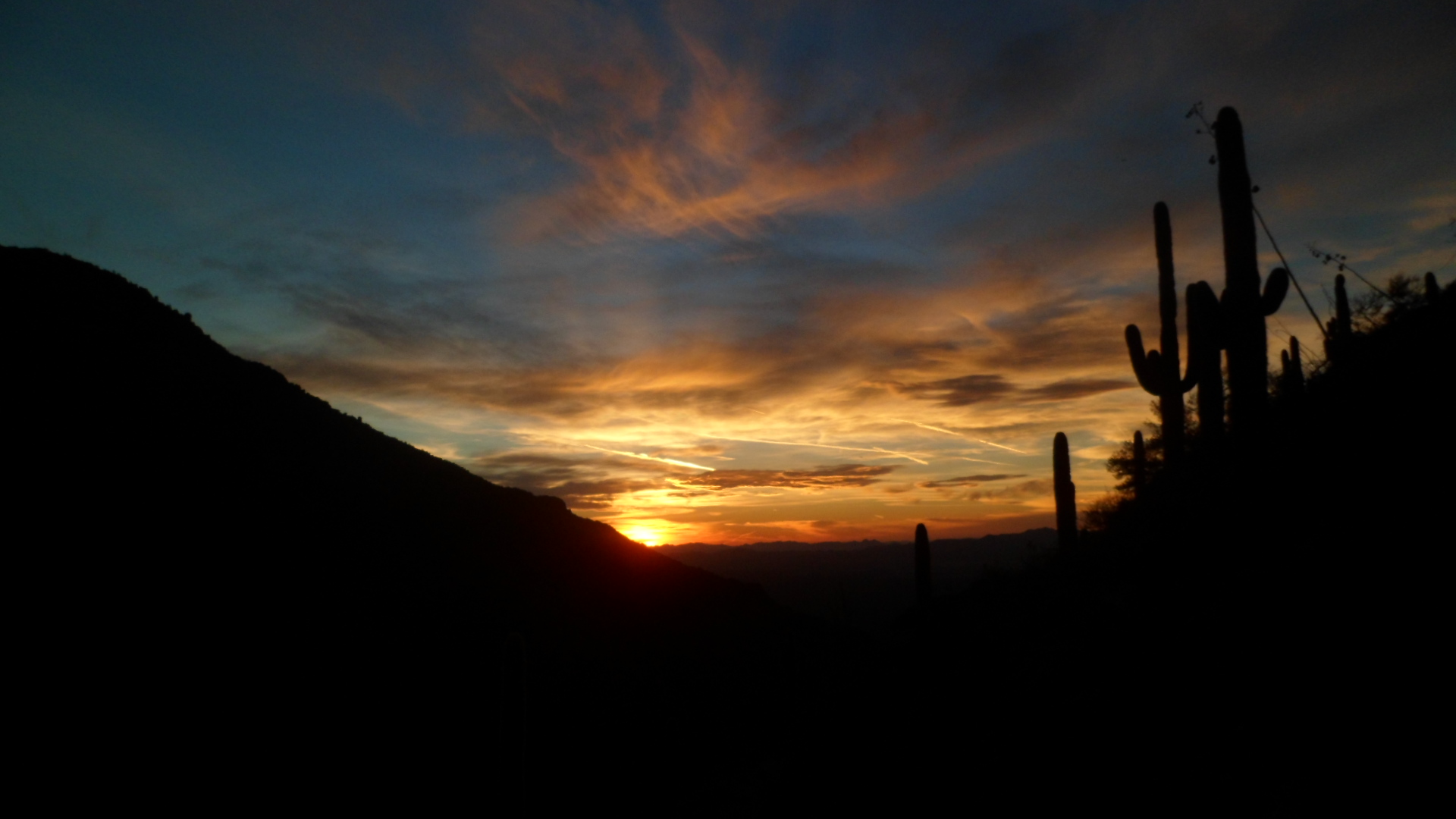
As I reached the last of the eastern switchbacks, the Sun bid farewell.
A night hike of ninety minutes, with my trusty flashlight, brought me back to the car. As I reached my vehicle, the coyotes began yipping and yowling, about a mile to the east. I will be back here someday, critters, and will get to the top, with plenty of time to do it justice.
(You probably guessed it. The Daily Bruin didn’t take, so I am back to writing less “me-centered” fare.)
As the day started bright and sunny, after yesterday’s intermittent rain, I heard the call of the trail loud and clear. So, after a brief visit to the Winter Farmer’s Market, I headed to Mayer, and the northernmost segment of Black Canyon Trail. Old Sycamore Sector stretches from just north of the culvert that goes under AZ Rte. 69, past Old Sycamore Road, to a series of rises and buttes some 3 1/2 miles to the north and east.
The first part of the trail heads up to old Sycamore Road, from Big Bug Wash, a distance of a half mile.
As with the lower elevated areas of Big Bug, the native lichen is a yellow sort.
The weather looked to be a bit challenging, but that doesn’t stop a true Westerner from going forth.
Here, one may see the far range of the Old Sycamore area.
I reached Old Sycamore Road, my northernmost attainment in the area, to date, in about 10 minutes. The trail signs were clearly visible at this point, about two miles further east from where I had hiked previously.
The trail led over and around a series of ridges, perfect exercise on a cool and windy day!
Looking straight ahead, I was delighted to watch a parade of pronghorns, unfortunately not visible through the camera lens, but a joy to behold, nonetheless.
Heart rocks abounded here, including one embedded in the trail- a good sign for the road ahead.
About 3/4 mile from Old Sycamore Road, I found this neat little picnic spot. Here, I enjoyed an energy bar and a healthy portion of the trail mix that I put together from various items I purchased from my friends, the Kaurs- owners of The Honeyman.
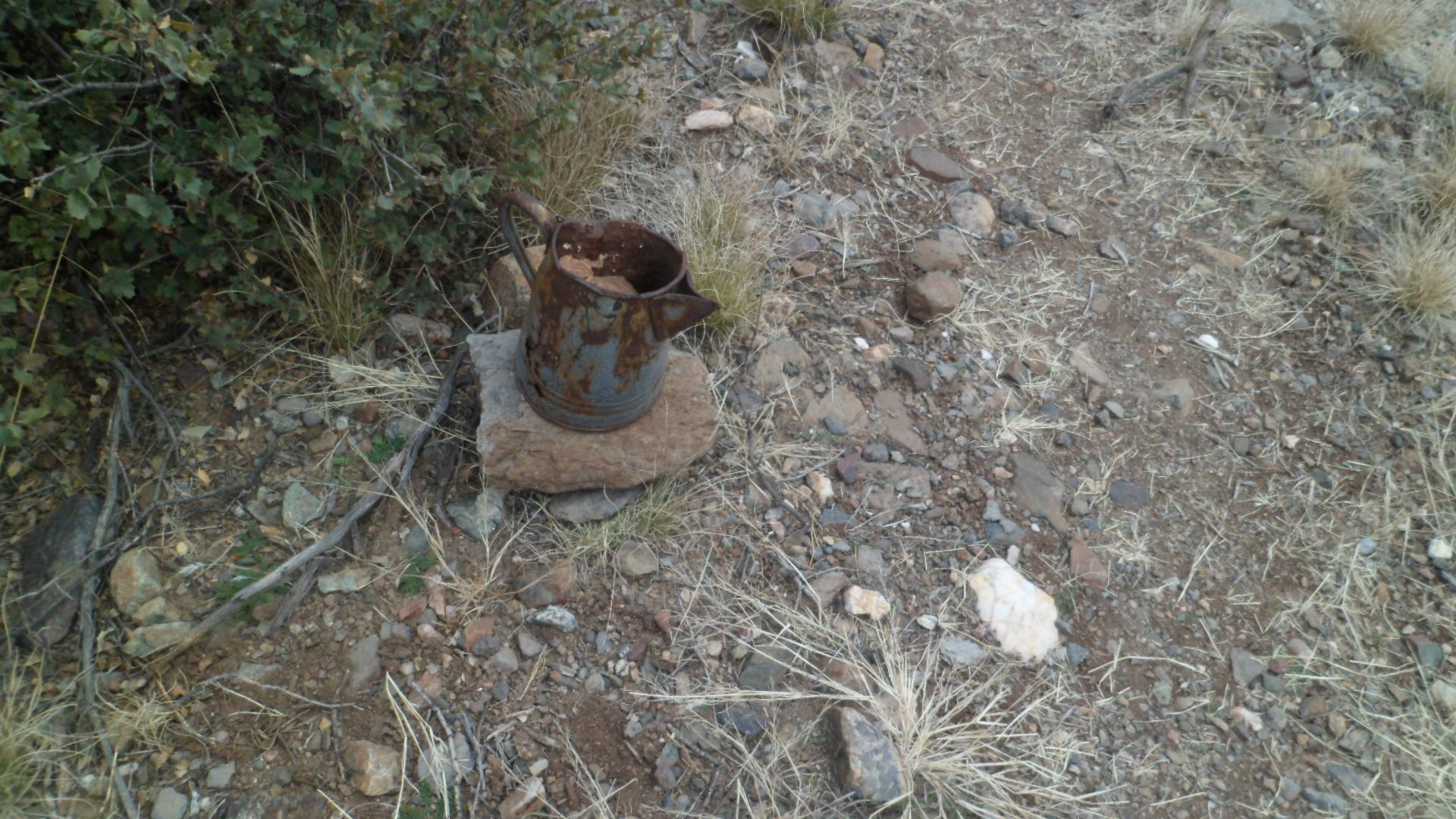
A gate separates the BLM area from a private ranch, and on the BLM side, there was a unique trail marker.
The northern fork of Big Bug Creek offers the most heavily-wooded area on the trail. Here there is an abundance of chaparral, mulberry and Gambel’s oak.
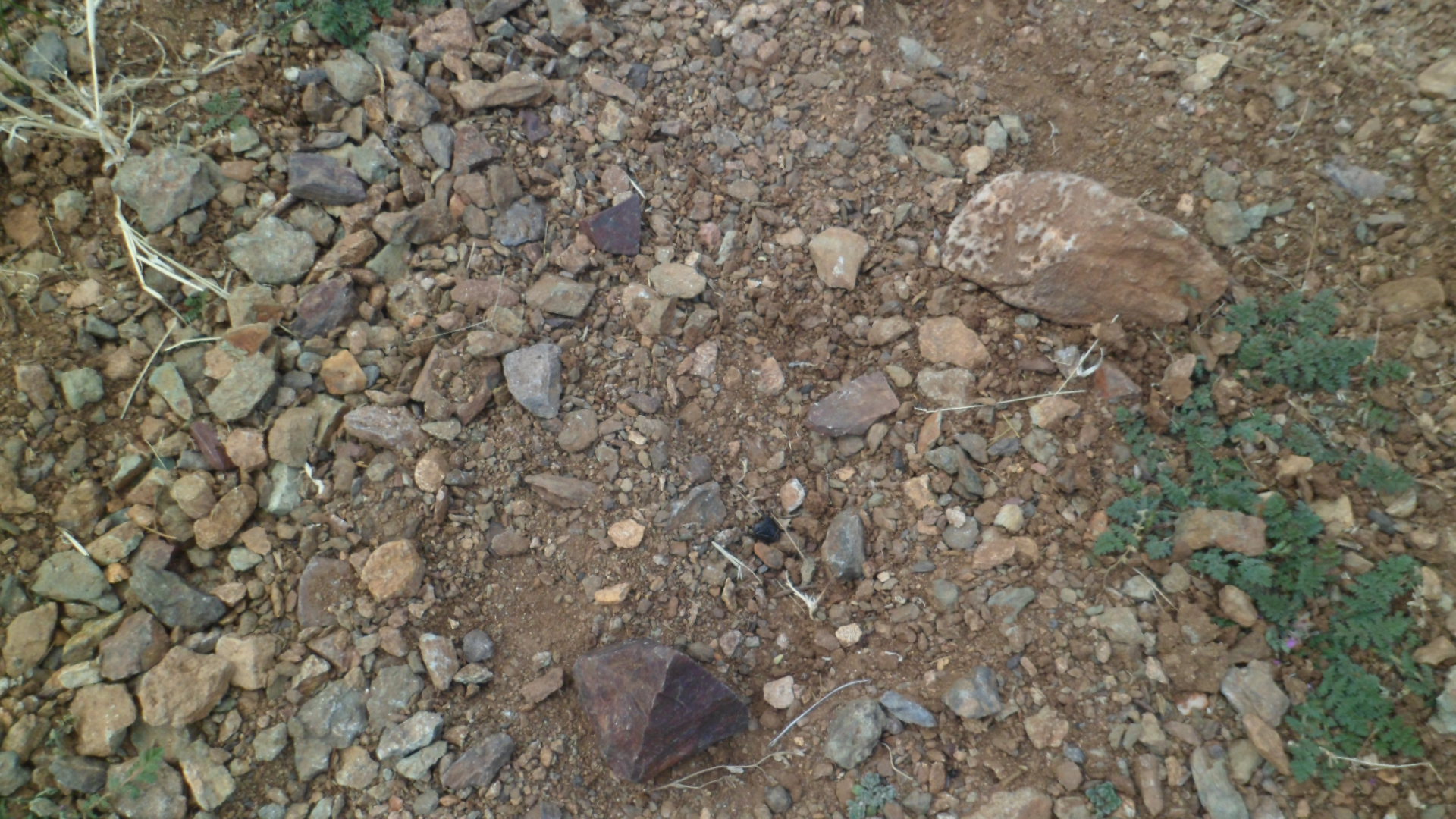
Once past the creek bed, I found a rare pyramid rock, in the middle of the trail.
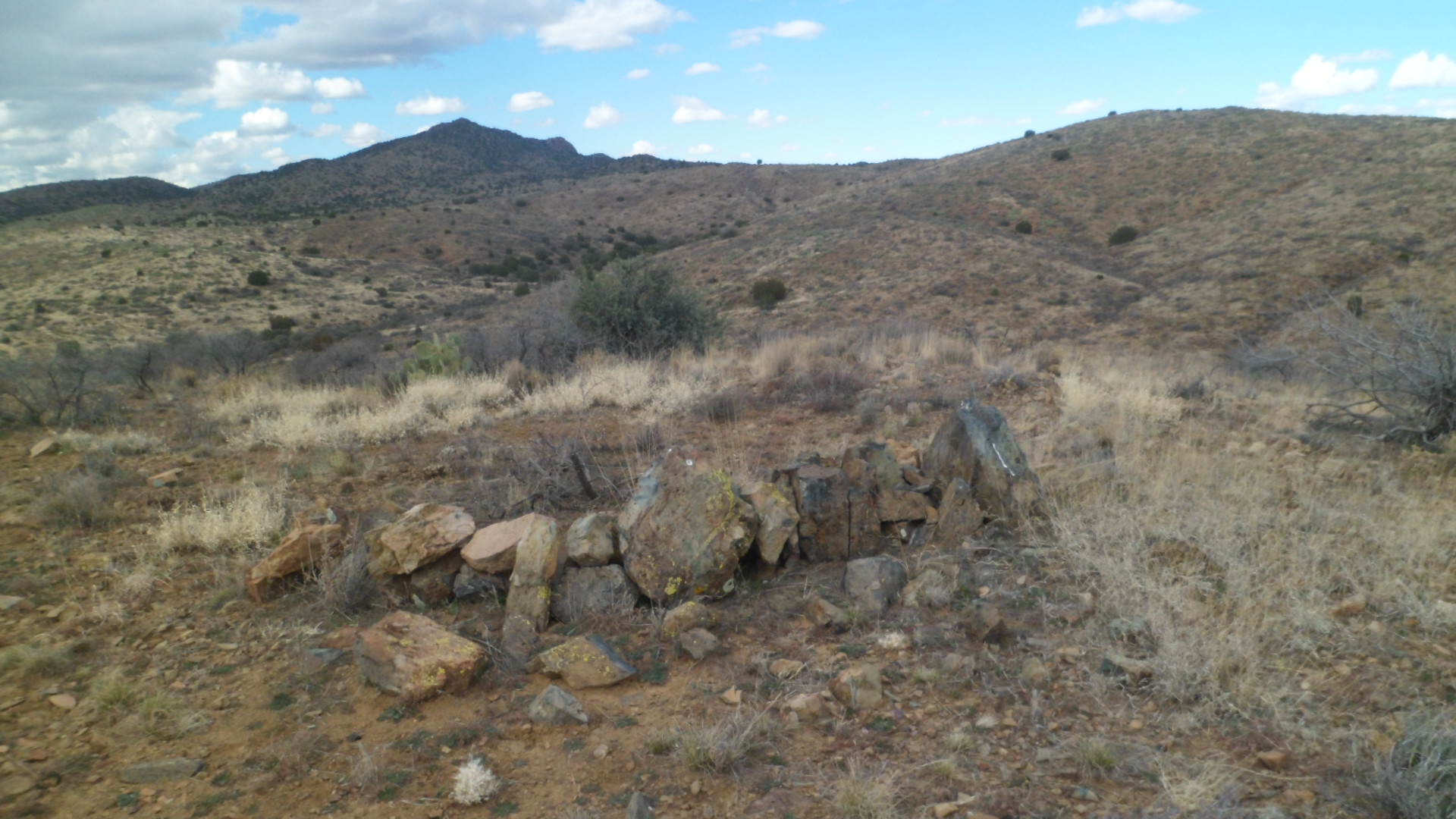
The northernmost cairn on the trail had been knocked down, quite a while ago, from the looks of it.
From there, the trail was less clear, and came to an end atop a small butte, looking off towards I-17 and a series of power lines.
So, now my curiosity about the foothills segments of Black Canyon is satisfied. Next, it’ll be time to gradually explore the trail from Antelope Creek Road, southwards to Carefree Highway, or vice versa.
Black Canyon National Recreation Trail is one of several such trails, for multiple non-motorized use, set aside by the Bureau of Land Management. It runs about 85 miles, south to north, from Lake Pleasant Road, in north Phoenix, to an area north of Mayer, AZ.
I plan to explore the trail, a sector at a time, during the course of this year. Careful following of a recent map led me to the south trailhead of Big Bug sector, west of the small community of Spring Valley, twenty-five miles southeast of Prescott. The sector is 2.5 miles, one way, from Antelope Creek Road to Highway 69.
This sector is an easy hike, going through range land and some mild desert badlands, before crossing through an underpass at Hwy 69, and continuing on north, for a few miles. I include all sectors in this series of hikes. Some will be rather barren; others will bring out the grandeur of the Bradshaw Mountains, whose base the Trail navigates.
Here is Big Bug sector. All trails start at the parking area, these days. This one is about two miles west of Spring Valley, on Antelope Creek Road. It’s a rather busy road, popular with ATV enthusiasts and those headed up into the Bradshaws.
The Black Canyon Trail, though, is sparsely used, at least on this end. I only saw three other hikers, with their dogs.
I did have other company, though, on the rangeland.
Once past the herds, though, one could see forever.
The BLM restricts cattle to a point south of this gate.
When vegetation is sparse, one’s attention is caught by features such as lichen- which here is yellow.
.
Some rocks have a glossy cover
Others are heart-shaped, letting me know I am being remembered in the Spirit World.
Up here, the village of Spring Valley is put into better perspective.
Big Bug Creek meanders in and out of the area, over five miles, east to west. The creek bed has been dry since October.
I feel comforted by cairns. Besides providing direction, they hearken back to roots which I sometimes overlook, in my day-to-day progress. This one was carefully placed, resembling a saucy cat.
Where the water is not far underground, the chaparral and other bushes keep a green eminence.
Early wildflowers have started to grace the land.
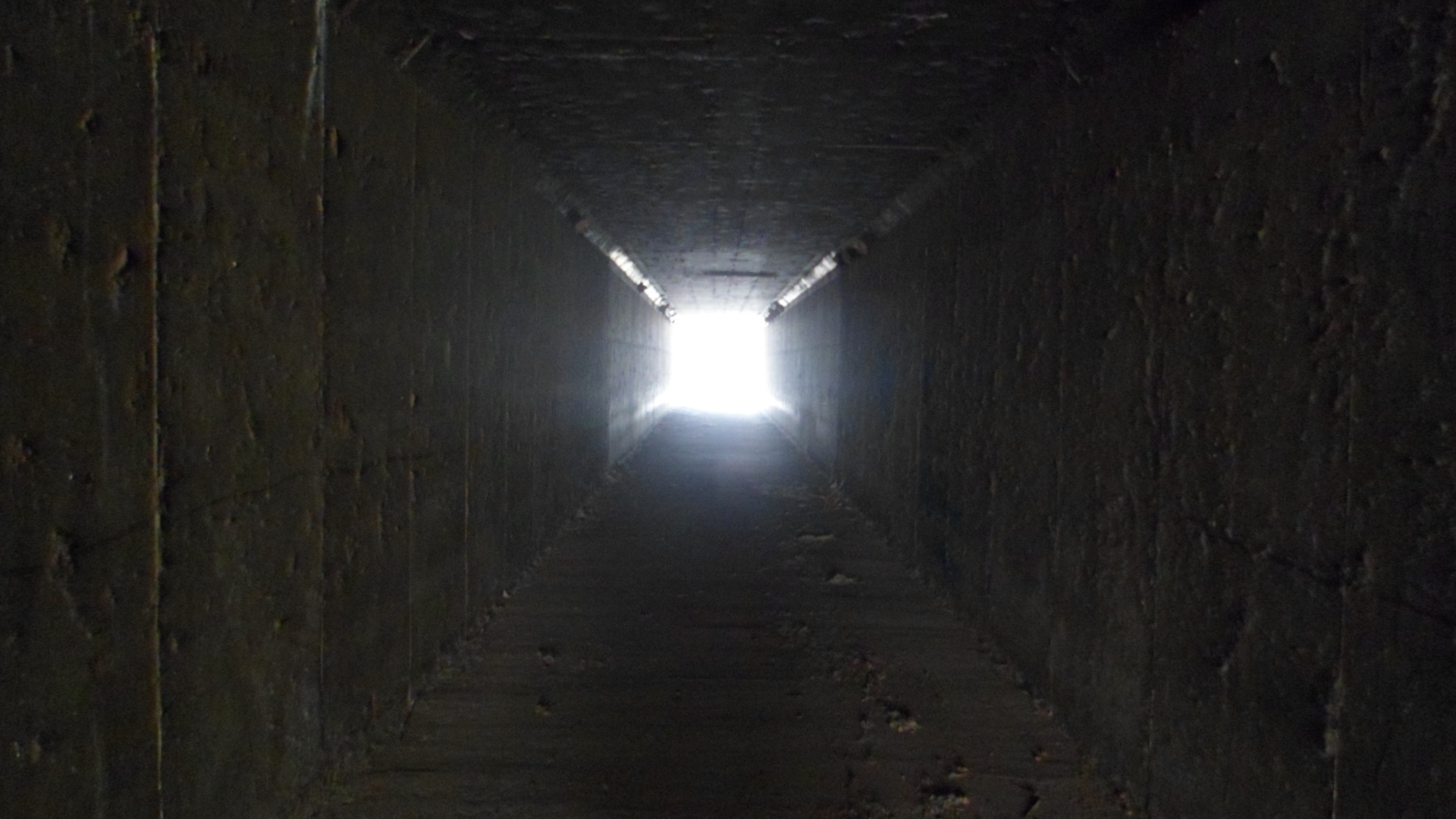
Underpass tunnels always cast an eerie glow.
This one took me under Highway 69, to the beginning of the Old Sycamore sector, which I will more properly investigate, soon.
An early dinner, at LeffT’s, one of my favourite spots in the Dewey-Humboldt area, also proferred some wisdom to me. “Old Men Rule” shared this: “The older I get, the better I was.” Of course, this was right next to a sign offering Fireball Cinnamon Whiskey. That’d be quite a taste test, were I still the imbibing sort.
Hope this week turns out a sight better for all up north and east- not to mention the Deep South, which doesn’t seem either deep, or south, right around now.
I made my first visit to the wilderness, northwest of Scottsdale, AZ, known as Cave Creek Regional Park, on Saturday. Actually, the park is the southern tip of a region which will be featured frequently in my posts this year. I began my exploration of the Cave Creek area by hiking Go John Trail, a loop which takes in the eastern two-thirds of the park.
No one seems to know the origin of the name “GoJohn”, but my guess is that it had something to do with the gold miners who thronged in this area, during the 1870’s. At any rate, GoJohn Trail goes from the Cave Creek Nature Center’s picnic grounds, north as far as the boundary with a parcel of State Trust Land, then loops around to the east, goes around GoJohn Mountain ( a mild ascent) and down through a canyon, cut by a branch of Cave Creek, and southward, back to the parking lot.
Here are some views of the trail.
Once at the junction with Overton Trail, which straddles the west side of the park, GoJohn heads north to the State Trust Land, which will lead any hiker with a permit to Spur Cross Ranch Conservation Area, a distance of 4.3 miles.
From a ridge on the northeast end of GoJohn, one spots Elephant Mountain, the centerpiece of Spur Cross Ranch.
The granite and basalt of Cave Creek Regional Park are most prominent on the east side of GoJohn.
The riparian character of the area is most pronounced, as the GoJohn heads back southward.
Heart rocks greet me everywhere, and this trail is no exception.
The trail turns into a Pink Carpet, of sorts, as the homestretch begins.
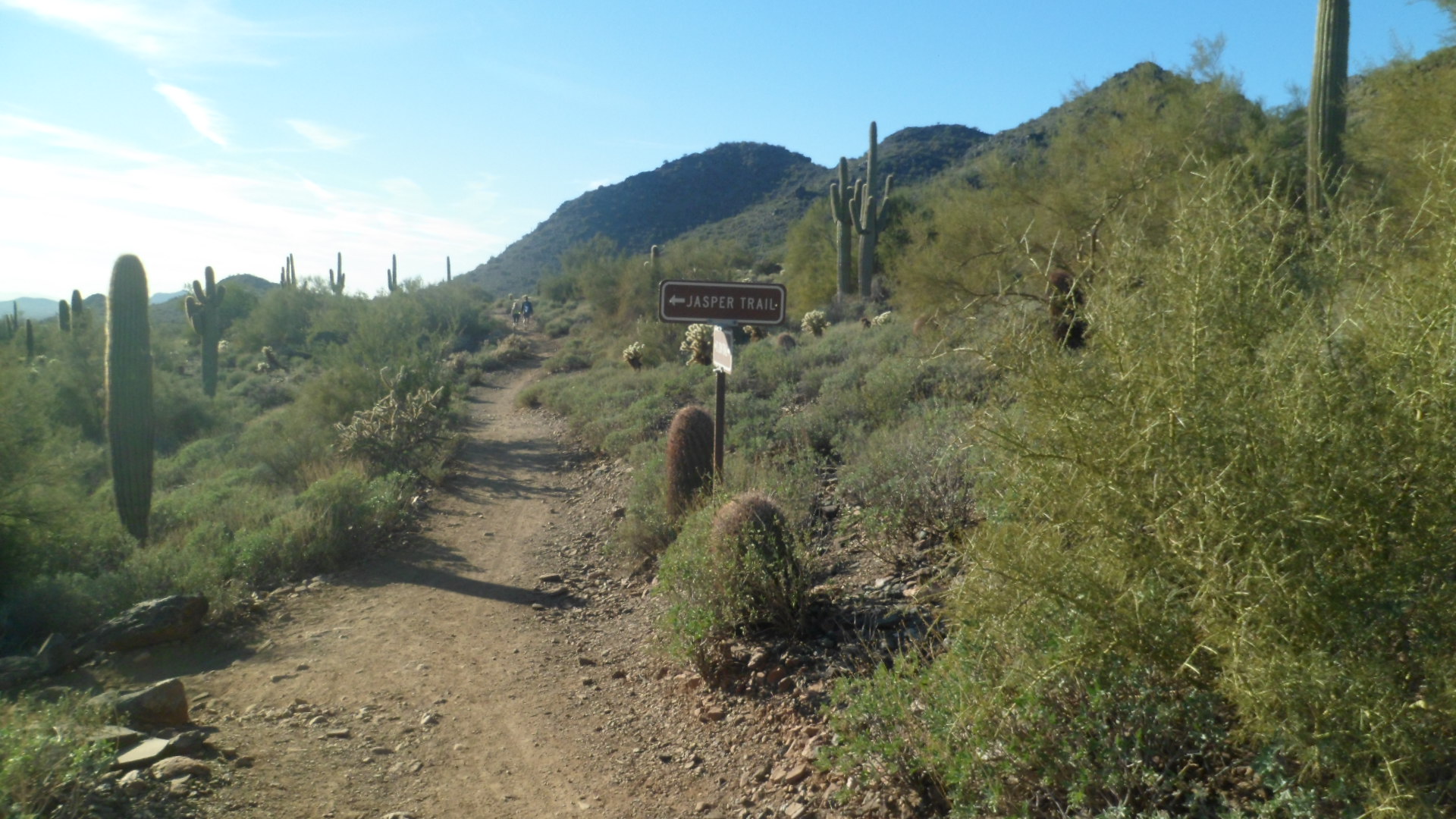
GoJohn meets up with two eastward-bound trails, the Quartz and the Jasper, along its last mile.
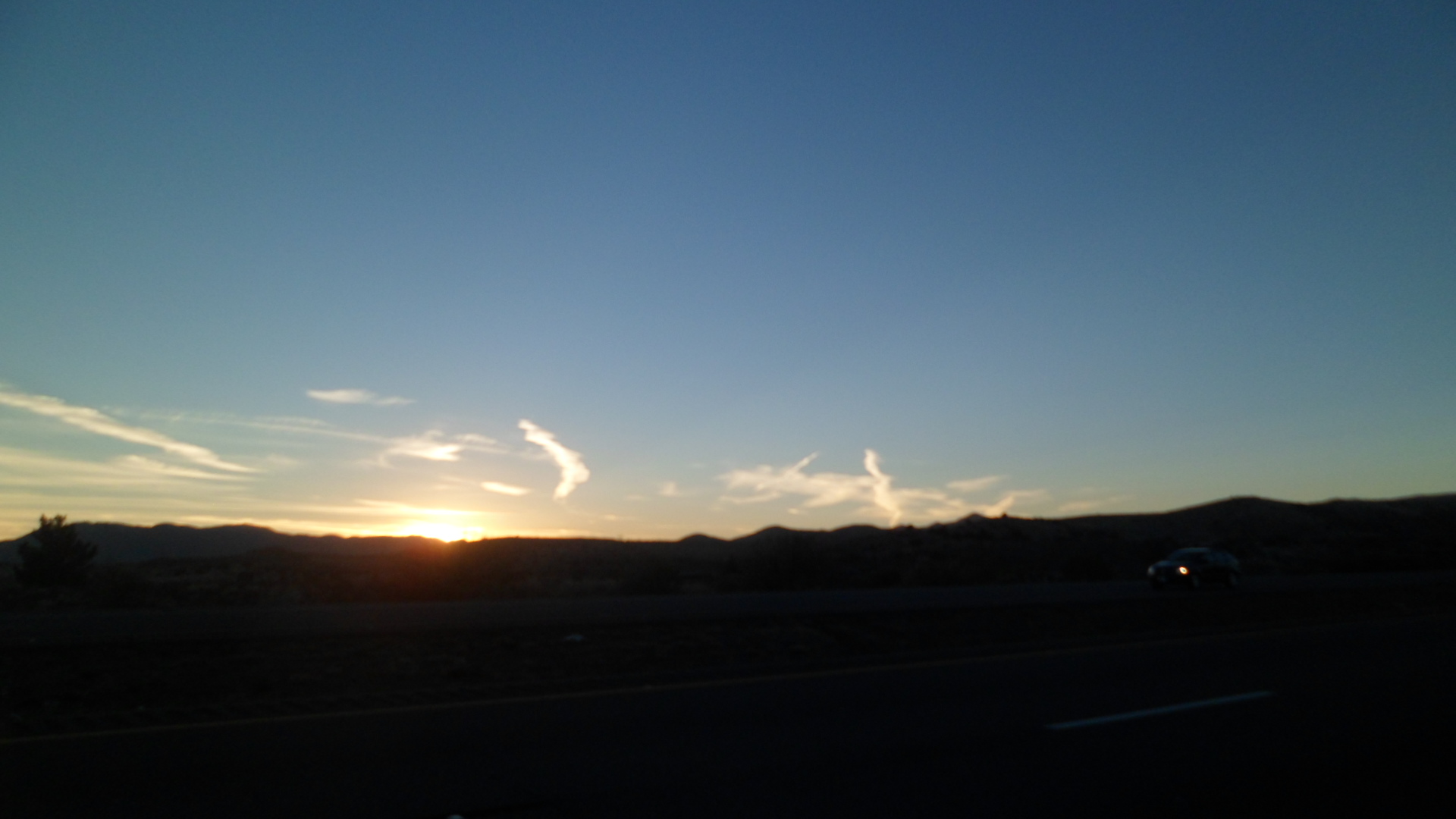
Lastly, the sunsets in the area do not disappoint.
Much more remains to be seen, in the area drained by Cave Creek.
The past two hiking excursions have been to the Big Bug Canyon area, between Mayer and Spring Valley, AZ. It is drained and informed by Big Bug Wash, which flows out of the Bradshaw Mountains, southeast of Prescott. I have been in search of the most ill-defined section of Black Canyon National Recreation Trail, which starts in north Phoenix and goes to Big Bug Canyon- a distance of some 85 miles. This section is the trail from the crags on the north side of Big Bug Canyon to Dripping Snake Spring. I focused, the past two hikes, on Big Bug Wash and on the ridge which is cut by Old Sycamore Road, north of the wash.
I may well have found the elusive, and seldom-used, trail sector. Here is the creekbed of Big Bug Wash, just below the remnants of Granite Dells Trading Post.
At the end of this segment of wash, lies Big Bug Dam, now little more than a retaining wall.
This was the scene last Tuesday, at what had been Granite Dells Trading Post.
This afternoon, I set out in search of the actual trailhead. Walking along the north rim of Big Bug Canyon was one ploy.
The rim road goes as far as this ranch, whose owner may or may not let hikers on the premises.
This road has lots of heart-shaped rocks, including this little pink granite.
Here is the apparent trail, between Old Sycamore Road and the tunnel under Highway 69.
Here is the tunnel.
On the south side of the tunnel, the climb down to, and past, the meandering Big Bug Wash awaits, for another day.
On the other side of the canyon, the ridges to the north are yet another beckoning site.
I have wanted to visit Arizona’s largest known publicly-accessible caverns, located nine miles south of Benson, for several years now. A few days ago, tickets to the two tour routes were purchased and I set aside Saturday, Jan. 4, as my Cave Man day.
After a pleasant night’s rest at Quarterhorse Motel, and a hearty breakfast at the Farm House Restaurant, I headed down the short stretch of U.S. 83.
I pulled into the gate, showed my ticket receipt and went to the Discovery Center, to get my actual tickets, which are collected by the tour guide and reused by many visitors. I was unable to take my camera or cell phone with me, into the caverns, so my own photos are of the Whetstone Mountains, which serve as the roof of Kartchner Caverns.
To the east, one can see the San Pedro River valley, southern Arizona’s most active riparian system.
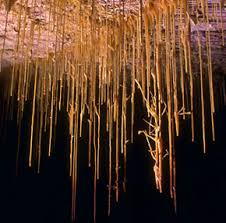
While I wasn’t able to take my own photos of the caverns, the Park itself graciously posts several, on Google. Here are three representative scenes.
Soda Straw Stalactites are made from the mineral deposits of a single drop of water, suspending over time.
^ @Copyright Arizona State Parks
Below is a drapery, which is a horizontal, rectangular mineral deposit. This is called bacon drapery, for obvious reasons.
Finally, we see Kublai Khan, a stalagmite, named for the Mongol Emperor of China, celebrated in verse by Samuel Taylor Coleridge. This formation, found in the Throne Room, is the centerpiece of a delightful laser-light show, at the end of the Throne Room tour.
^ @ Copyright Arizona State Parks
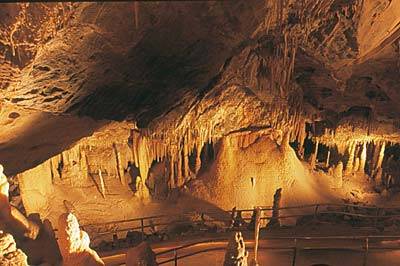
I also toured the Big Room, in the afternoon. This room is closed, from May-October, as large colonies of bats roost here then, whilst giving birth and nursing their young.
^ @ Copyright, GoCalifornia.com
The staff goes to great lengths to keep human oils, peeling skin and hair, as well as clothing lint, from getting in the cavern formations. Visitors stay on a paved pathway, there are drain cups all along the paths in the caves and no animals are allowed in the caverns.
Ironically, the first exhibit that greets us, in the Discovery Center, is that of a Shasta Ground Sloth, one of the smaller ground sloths of Pleistocene North America. The remains of one such sloth were found inside Kartchner, when the first two known explorers, Gary Tenen and Randy Tufts entered the caverns, in 1974. A dead coyote was later found in the caverns. These finds suggest an earlier passageway into the caverns, perhaps from Guindani Wash, which flows through the area, seasonally.
The Caverns, as mentioned earlier, are surrounded by the Whetstone Mountains, largely comprised of gray chert, which resembles the stone used in sharpening blades. These small mountains may be explored further, by way of Foothills Loop Trail (2.5 miles) and the Guindani Trail (4.2 miles). These two trails may be areas I explore later. For Saturday, the caverns were more than enough to occupy my attention.
Reaching the turning point of any journey is nearly always fulfilling- and last Friday’s arrival at the Falls was no exception. Getting up and in there is ALL the fun.
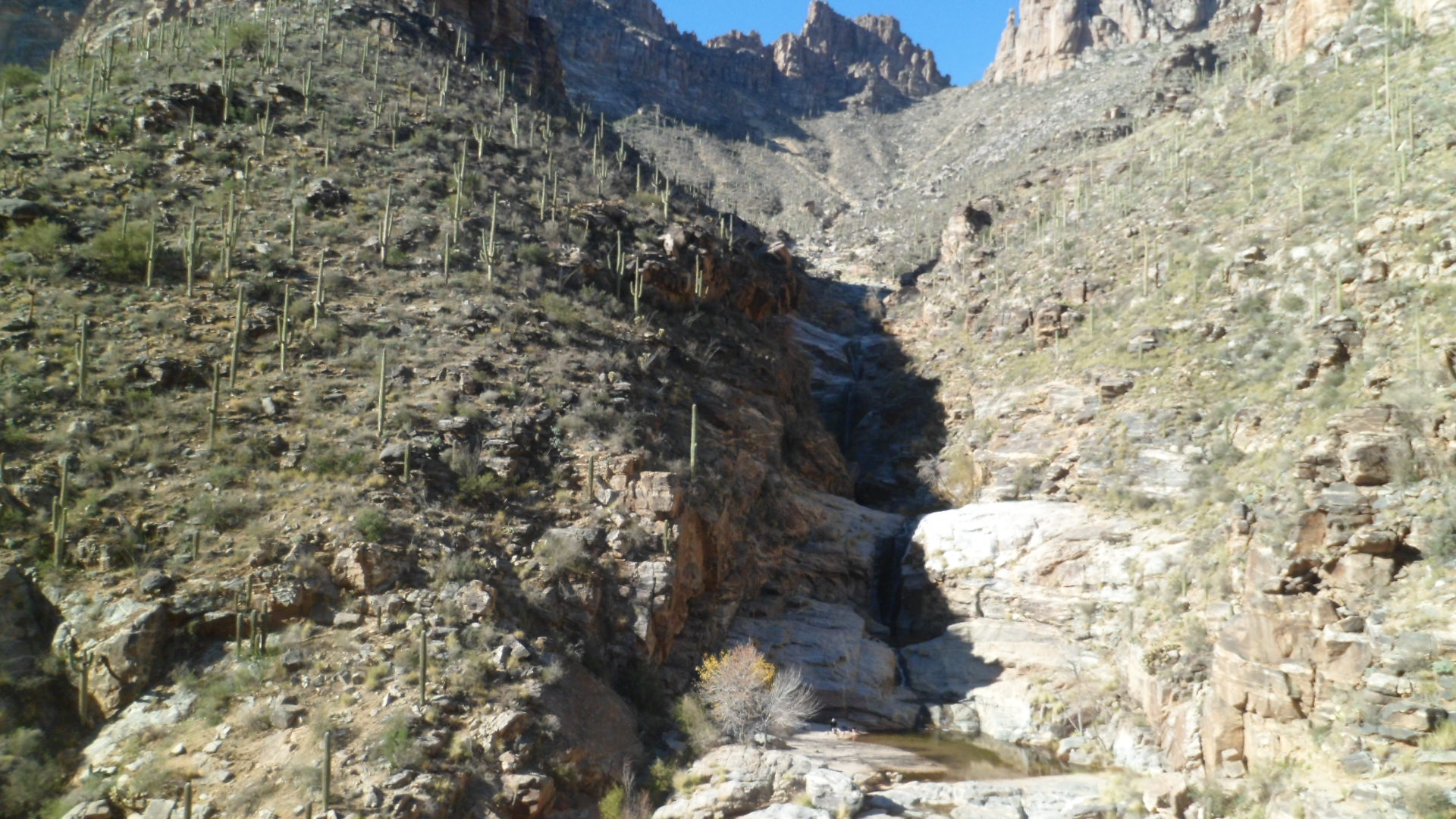
There are three falls that are accessible to the casual hiker. I imagine the rock climbers could manage to get permits to go down to the upper four cascades, but I was glad just to have a bear’s eye view to the top.
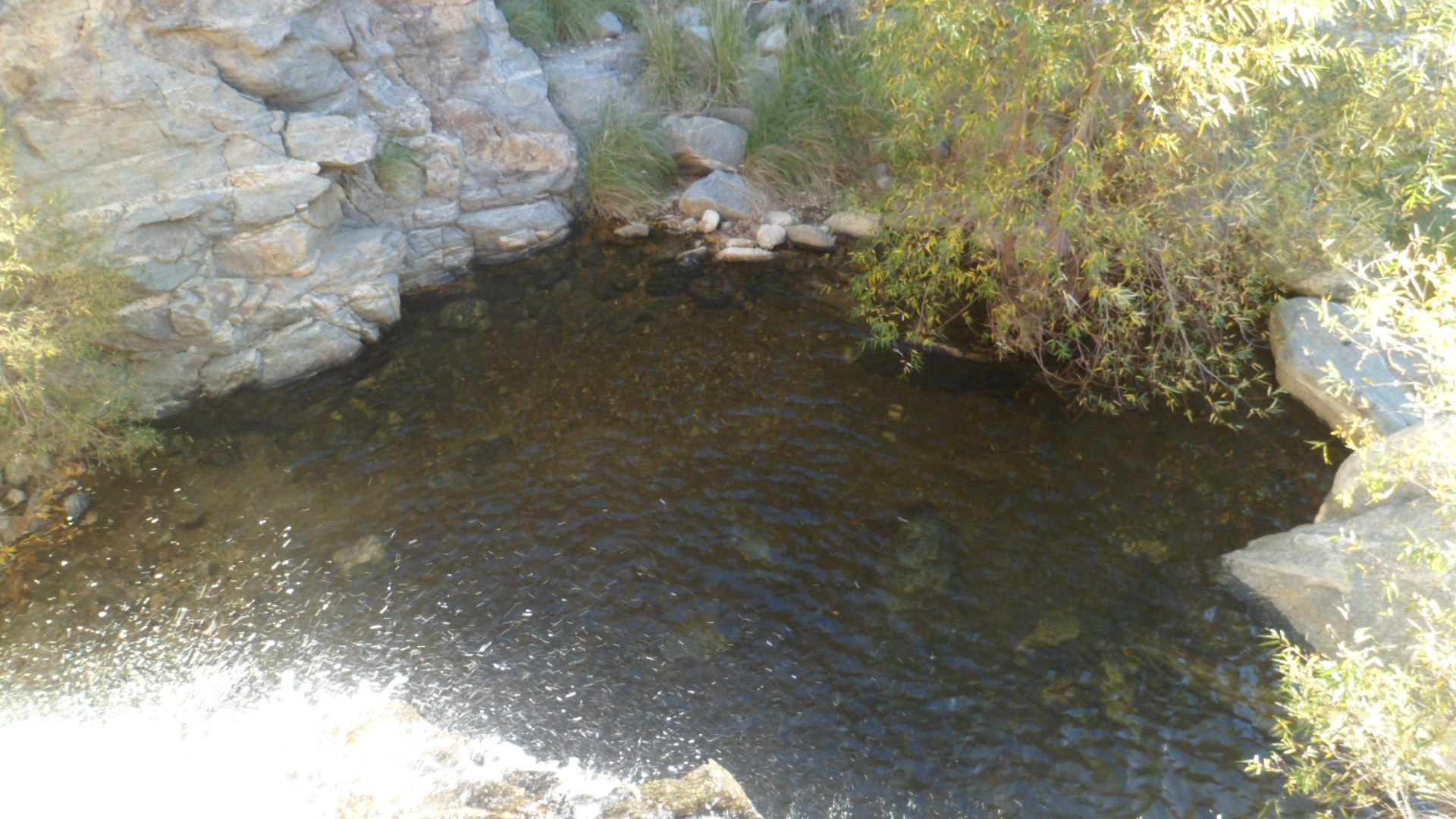
I spent about ten minutes examining the first cascade, and its pools- both the feeder and receiver.
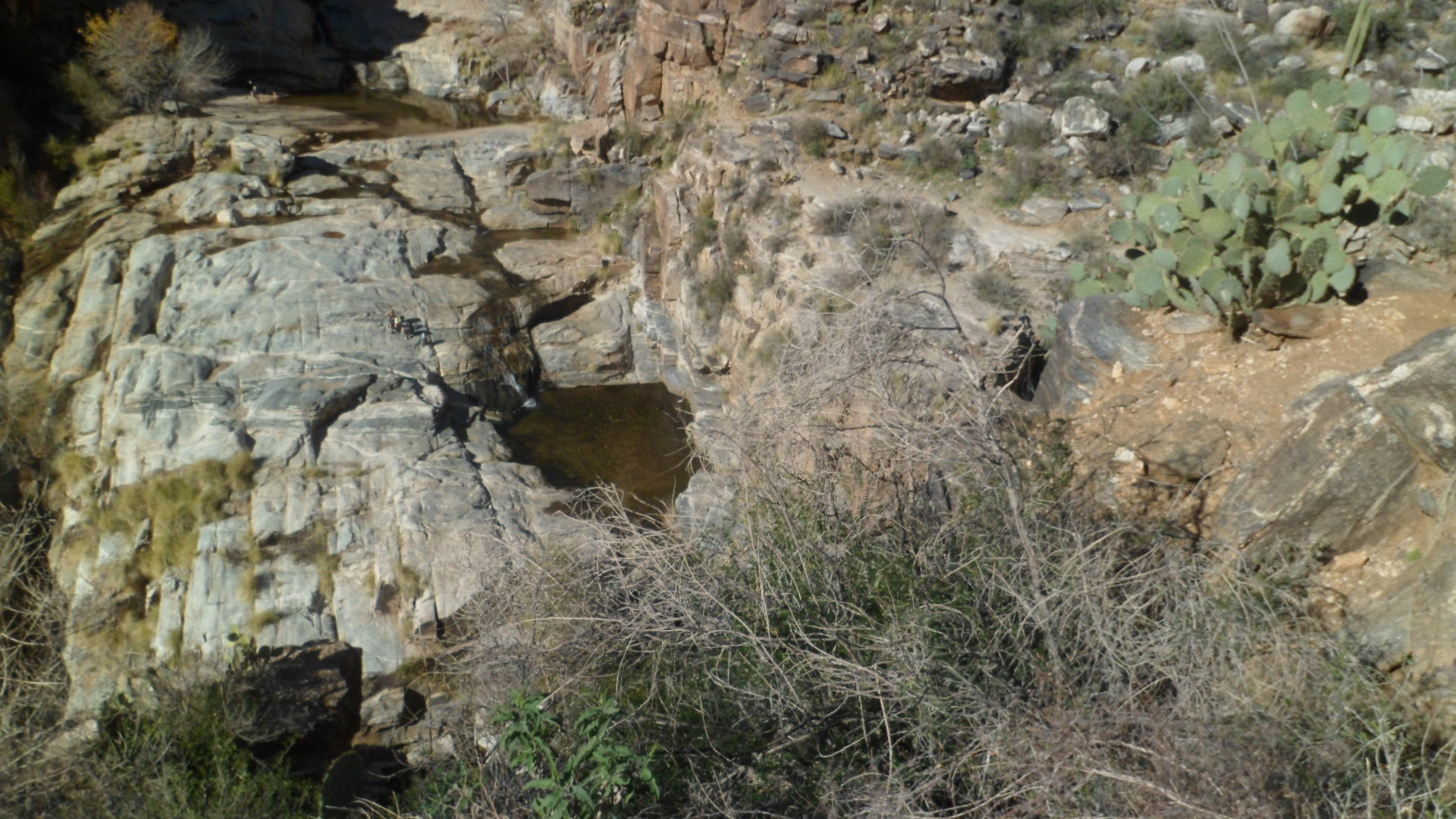
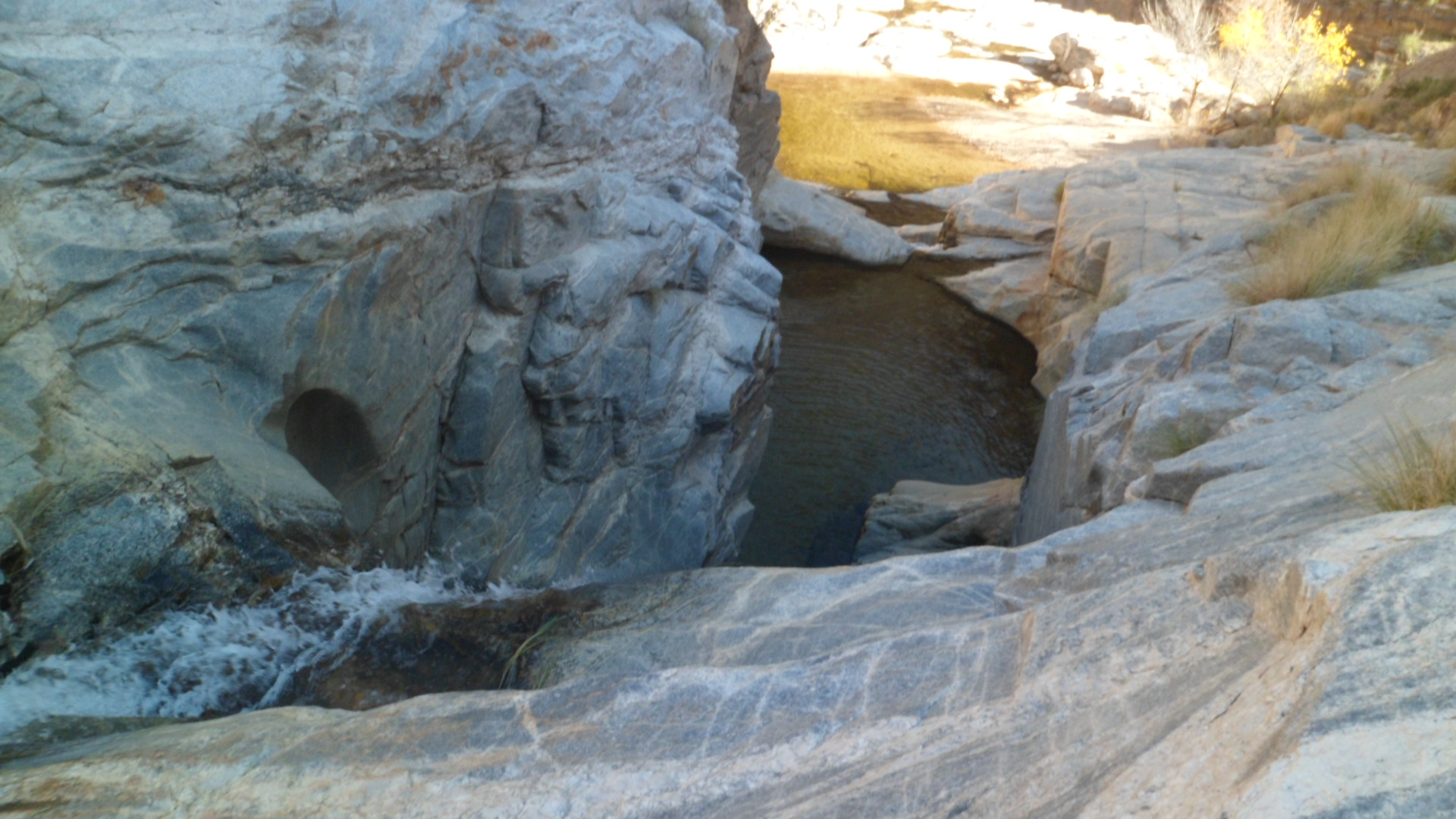
Climbing up a short ledge to Cascade # 2, we find this:
Going up to Falls # 3 is a slight alley-oop, through a safe rock ledge, to the left of the creek flow.
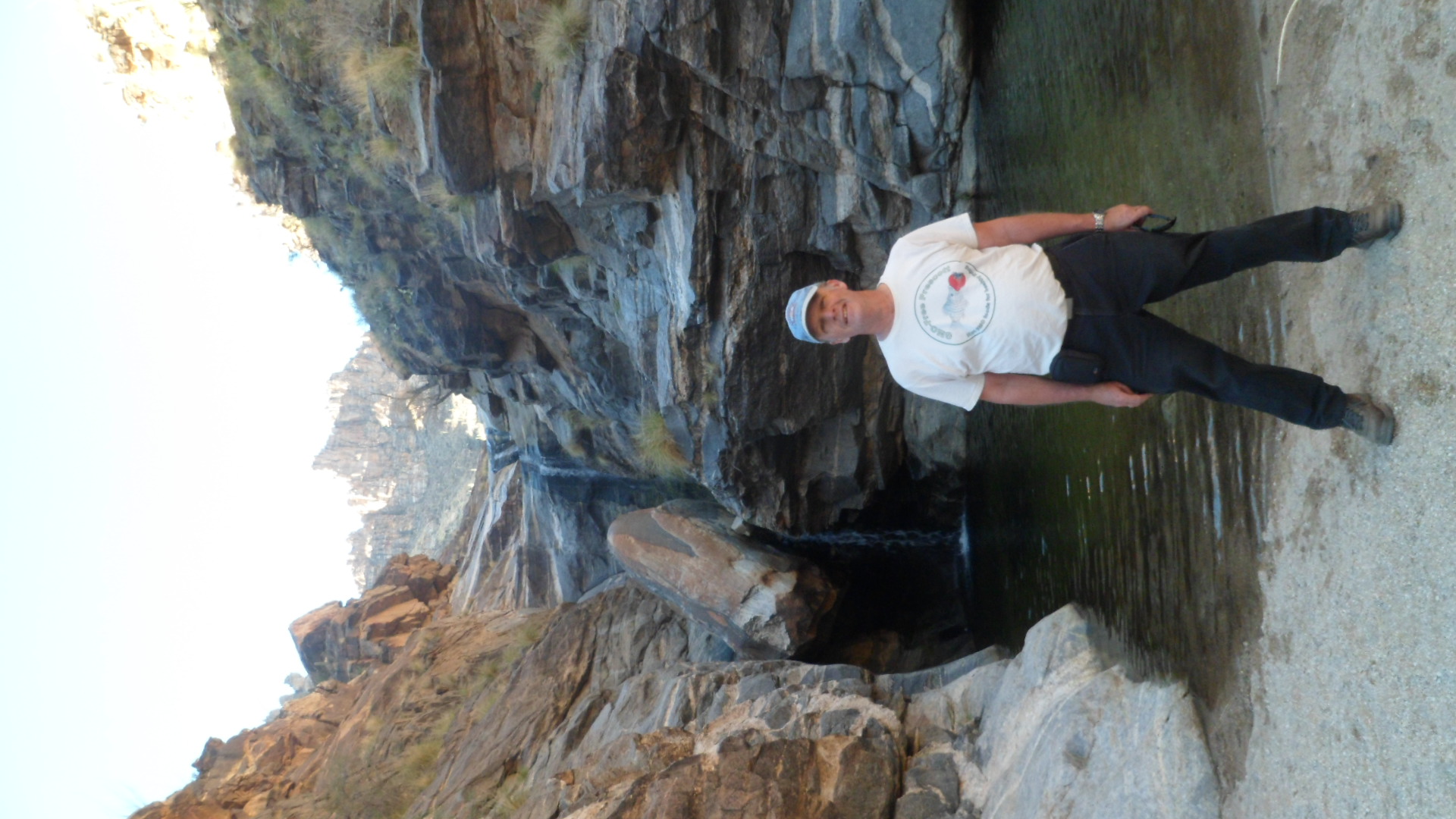
There is a small beach here, at the hiker’s terminus. I always count myself fortunate to find others at these sorts of places, so that I may take a photo of them as a couple or, as with the other day, a group of three. I’m always glad to get a record of my own visit, in kind.
Looking backwards, I feel blessed by the power of water. For me, a child of fire, that’s huge.
Going down the trail, back towards Sabino Visitor Center, I was always reminded that it has been a work in progress to keep this sacred spot in the state that it was known to the ancient Sonorans.
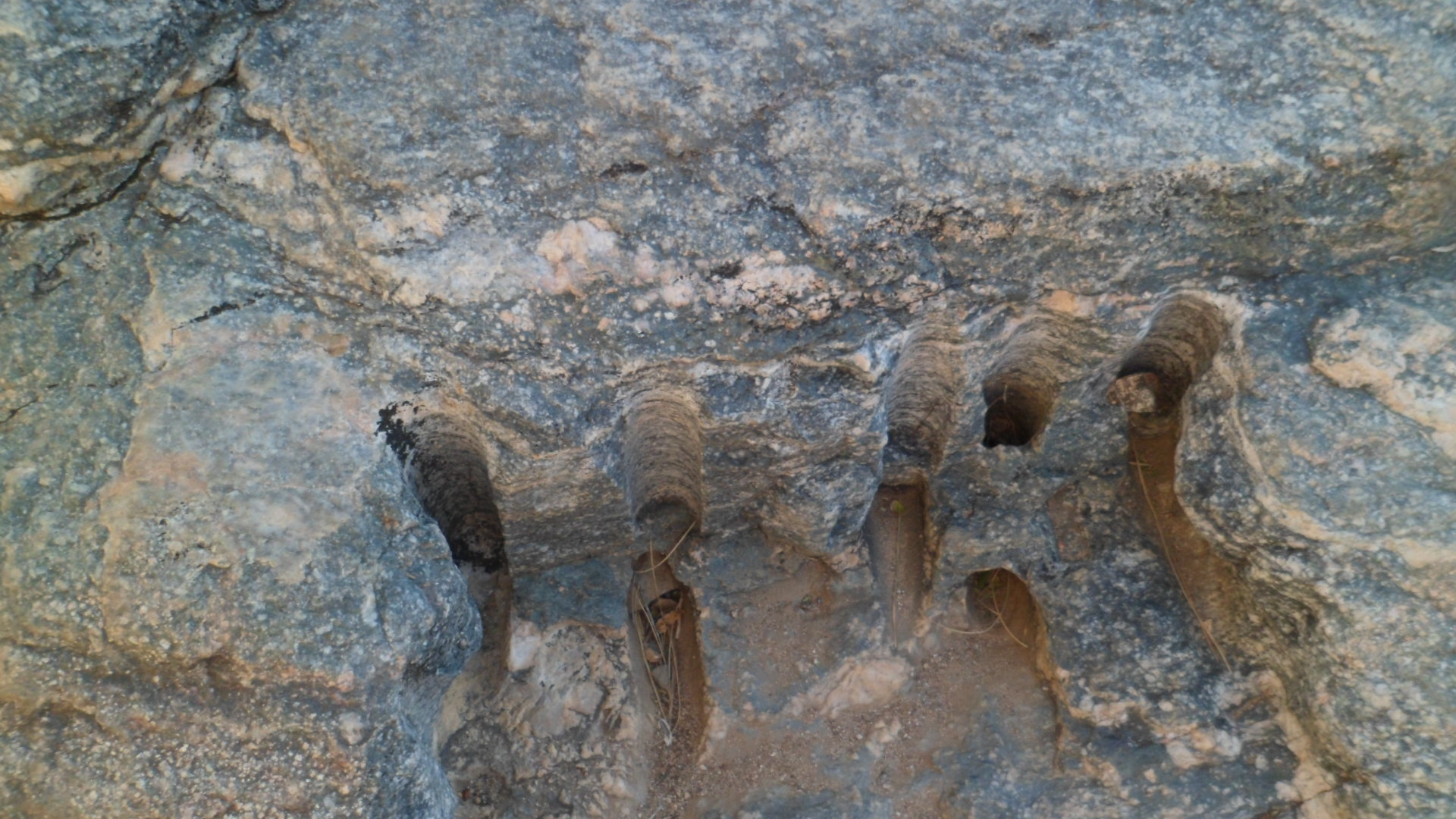
The first people here made their marks, but no doubt found the passage to the top of the ridge as formidable as we do.
I got a nice warning from Mr. Sun that our time together in this breathtaking canyon was getting short. The flashlight in my day pack wasn’t too fazed.
Besides, this is another place where I was being closely watched and guided.
These Seven Falls, in a dryer climate and lower in elevation than their Colorado counterparts, nonetheless inspire, comfort and reassure- just as much as the falls to the north.
The upper part of Bear Canyon features the last two creek crossings, then takes one up a moderate switchback and along a ledge trail, for the 2/3 mile remaining to Seven Falls themselves. I found a few families returning from the Falls and at least one hiker looking exhausted. Somehow, though, I did not get the feeling I was about to share his fate.
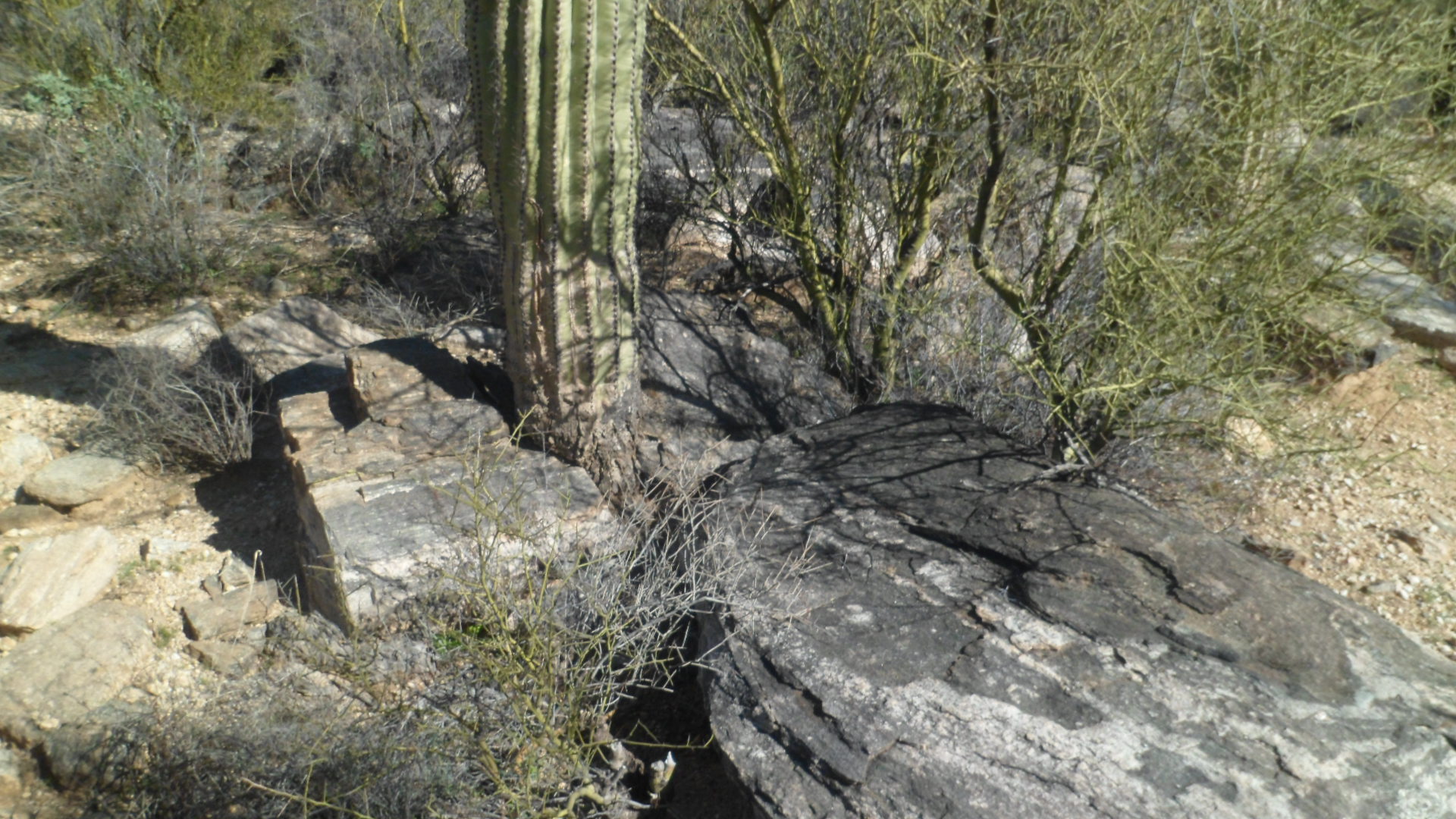
The striations on the boulders increase with the level of water activity, indicating heavier mineral deposits upstream.
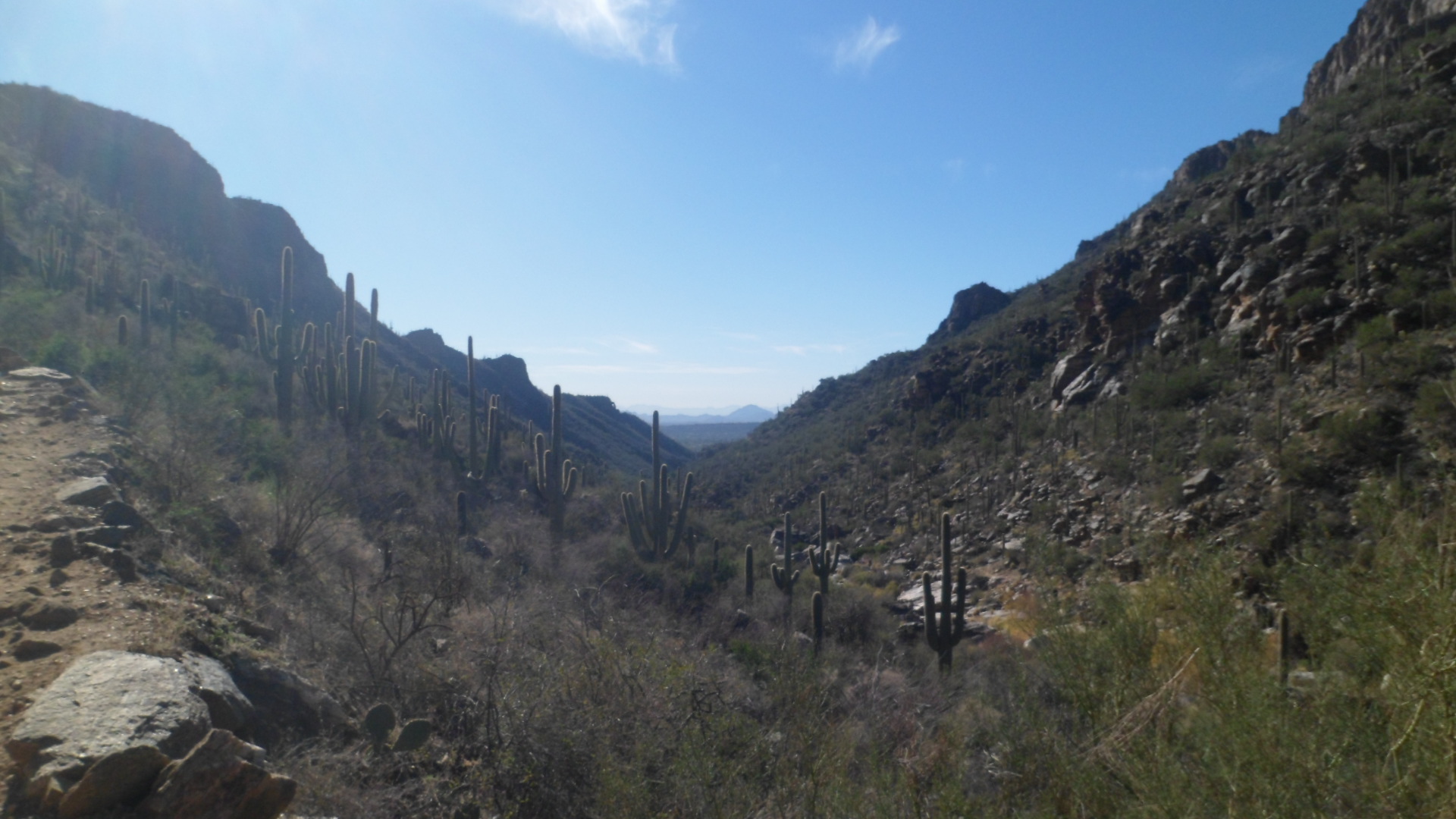
Here is a look westward, back at Bear Canyon.
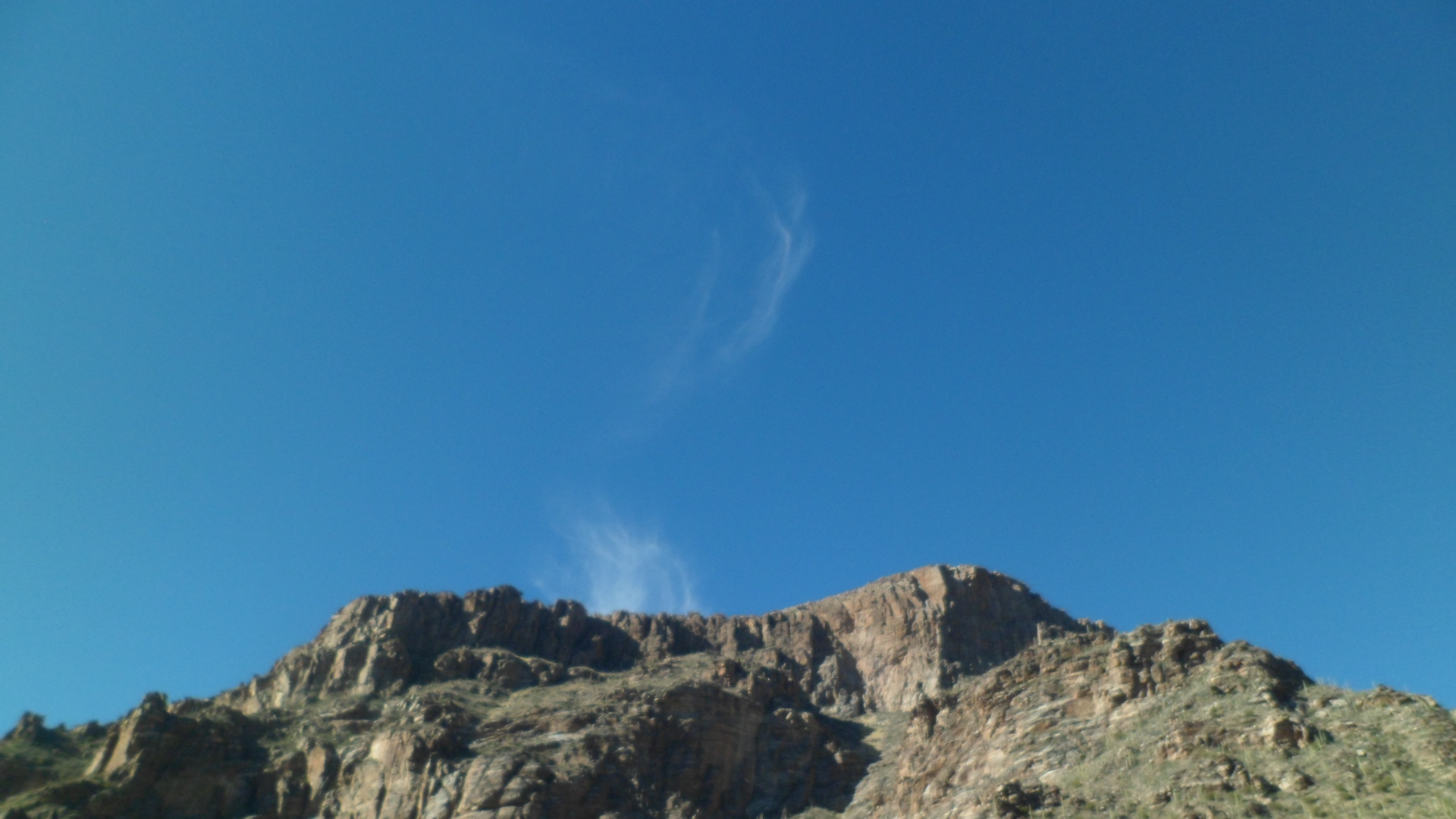
The wispy cloud rising up reminded me of Penny. There has not been a time that she has been more missed than right now.
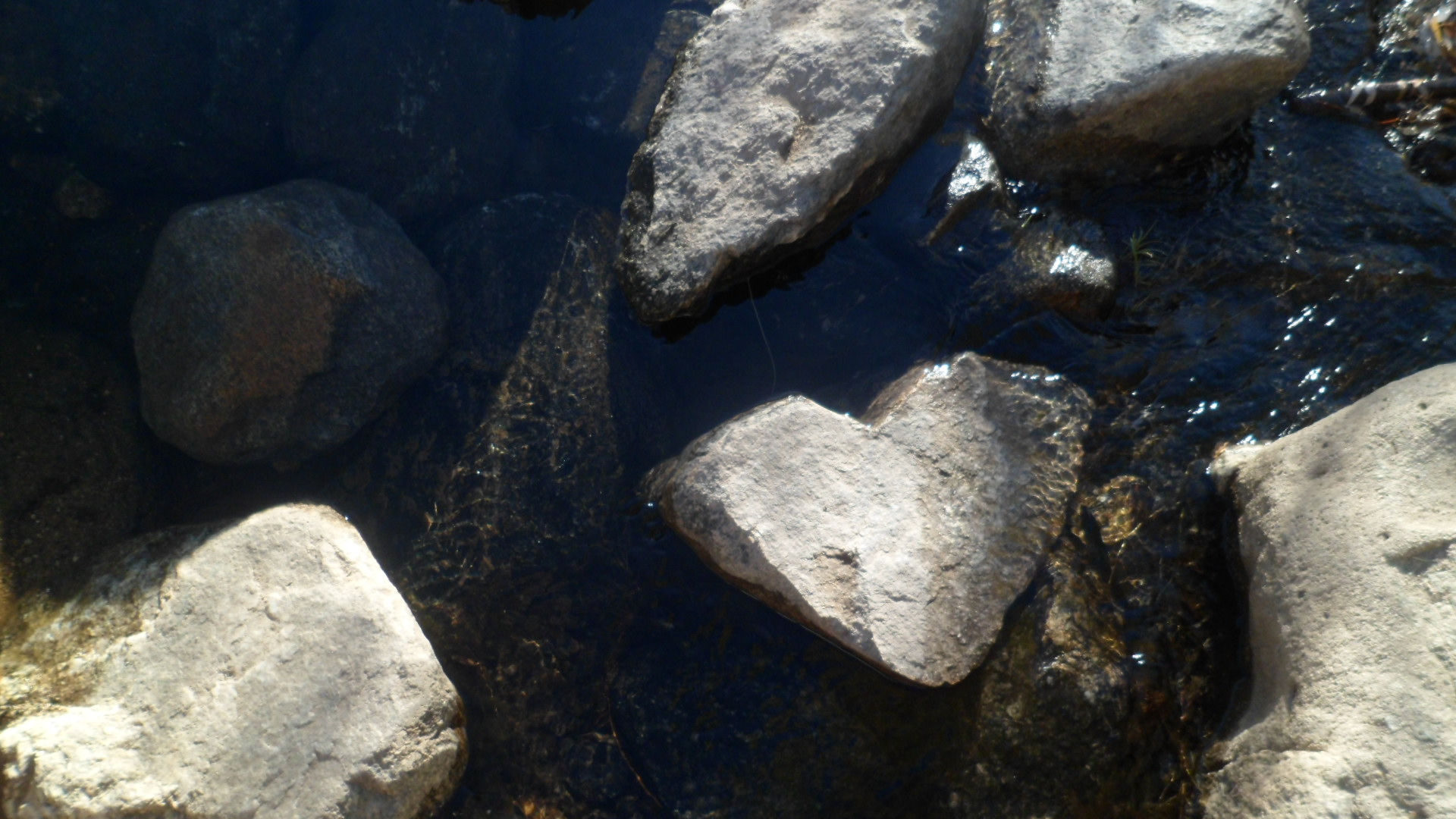
Heart-shaped rocks always seem to pop up, when I start to get a bit down-hearted. Guess it’s a message that I can get over whatever is weighing me down. This lovely canyon was just the right place, on that day.
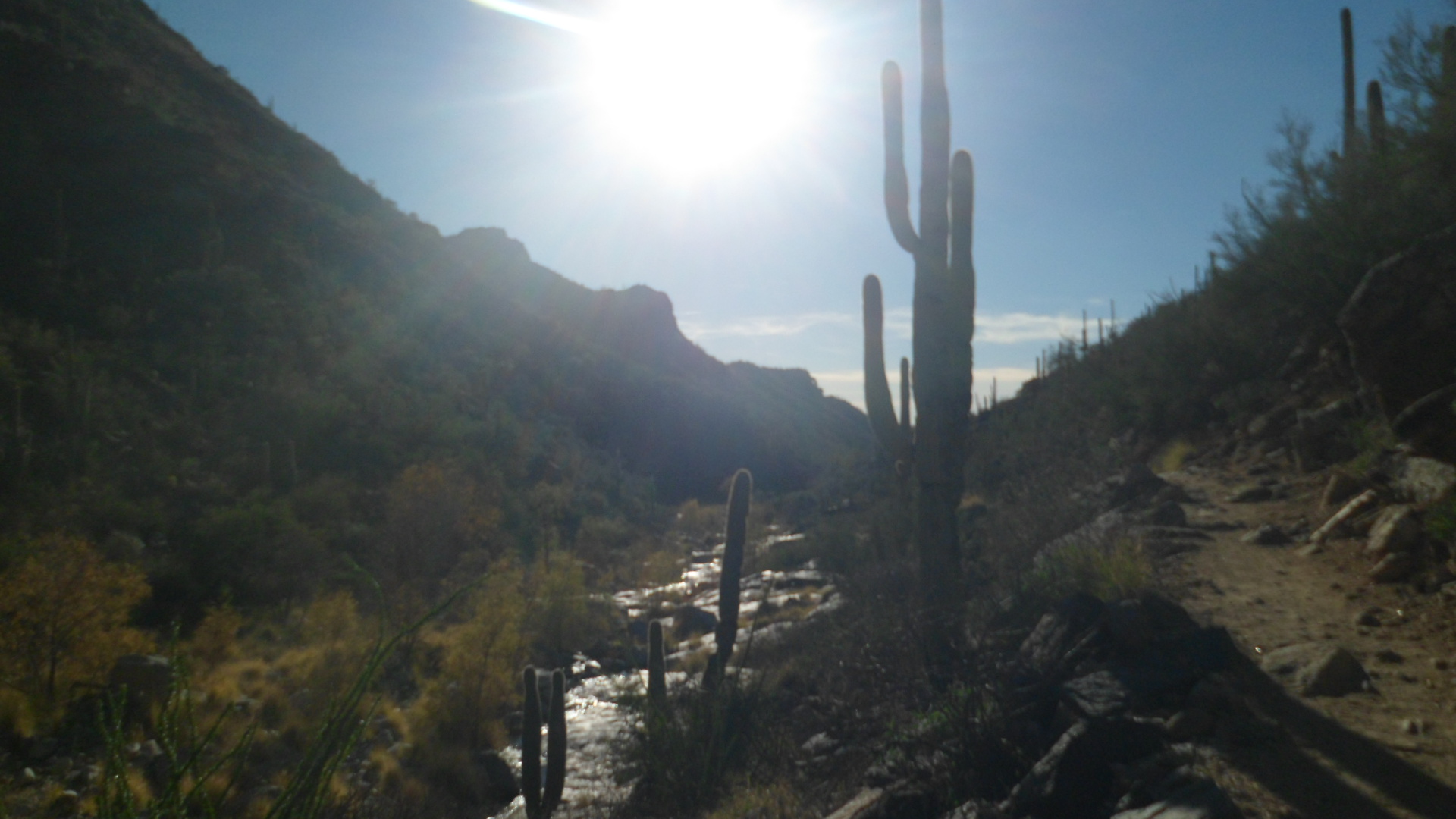
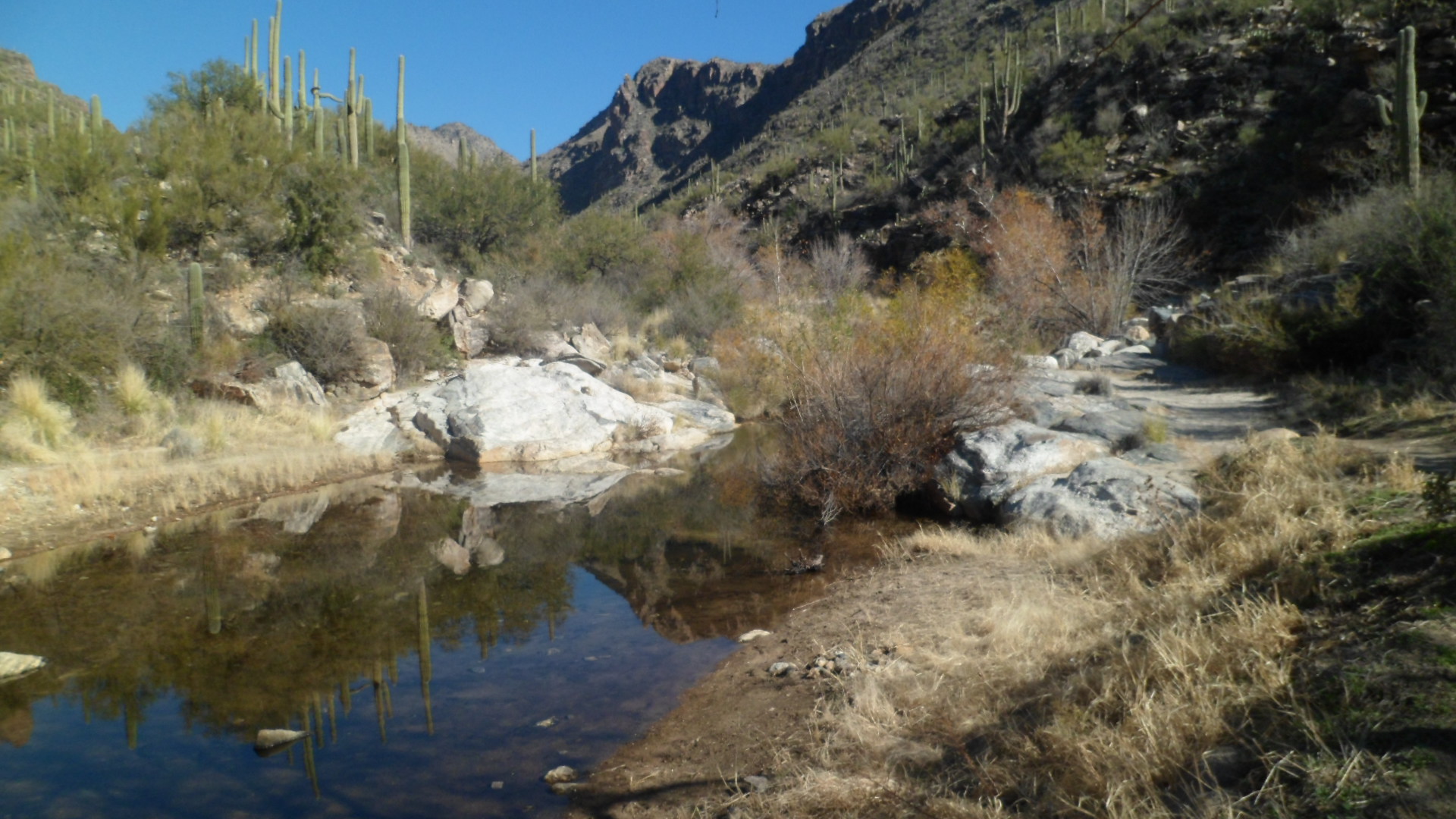
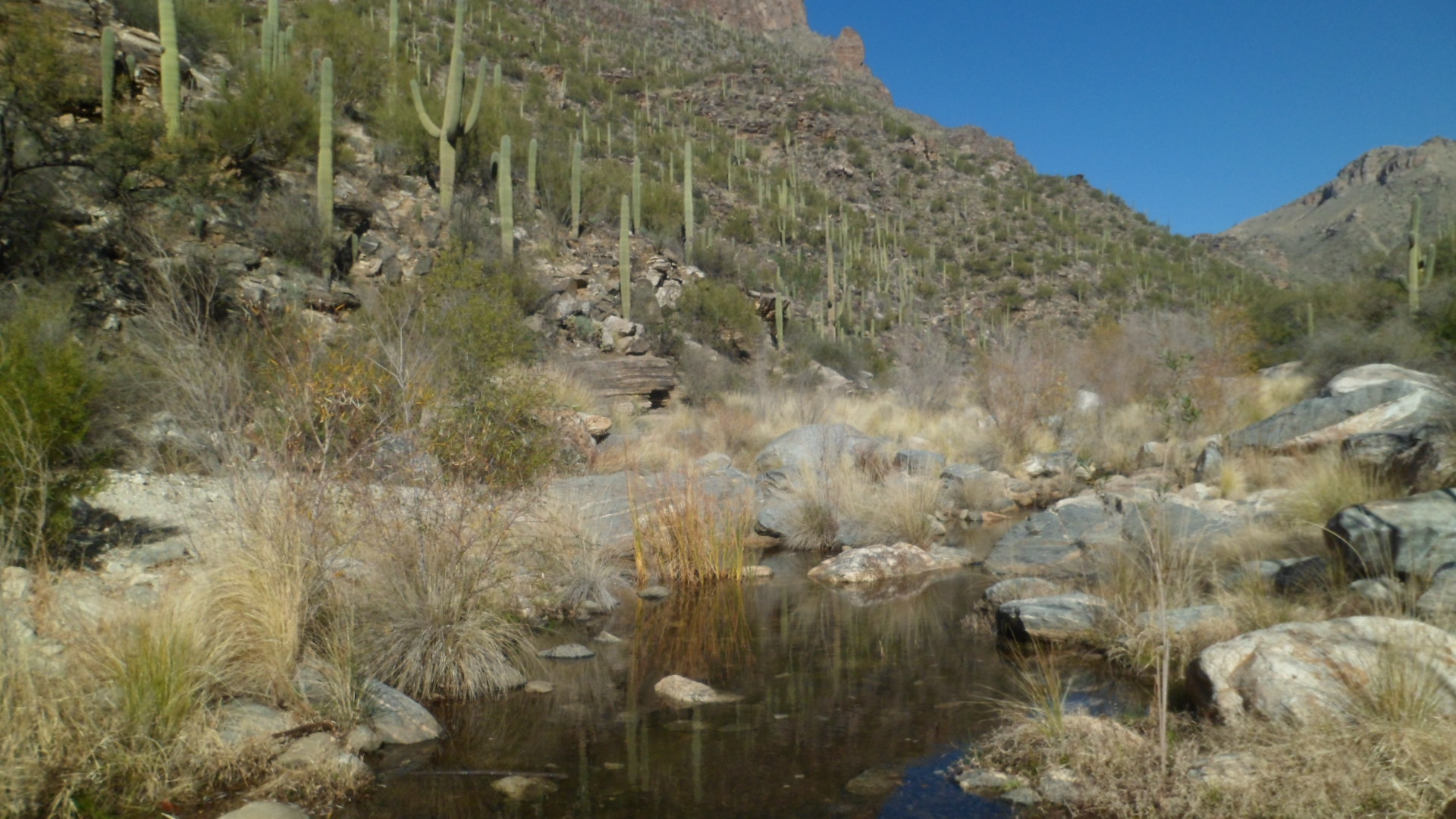
I had the pleasure, on Friday of this past week, of hiking the eight mile round trip, between Sabino Canyon Visitor Center and Seven Falls, in the Santa Catalina Range, northeast of Tucson. Bear Canyon Trail provides a generally easy path, for the first 2.5 miles,then 7 crossings of Bear Canyon Creek, which are quite straightforward, and have MOSTLY stable steppingstones. A walking stick, or two, are advisable for the stream crossings, though. Here are some views of the first 2.5 miles, including a heart-shaped rock.
Bridge crossing Sabino Creek.
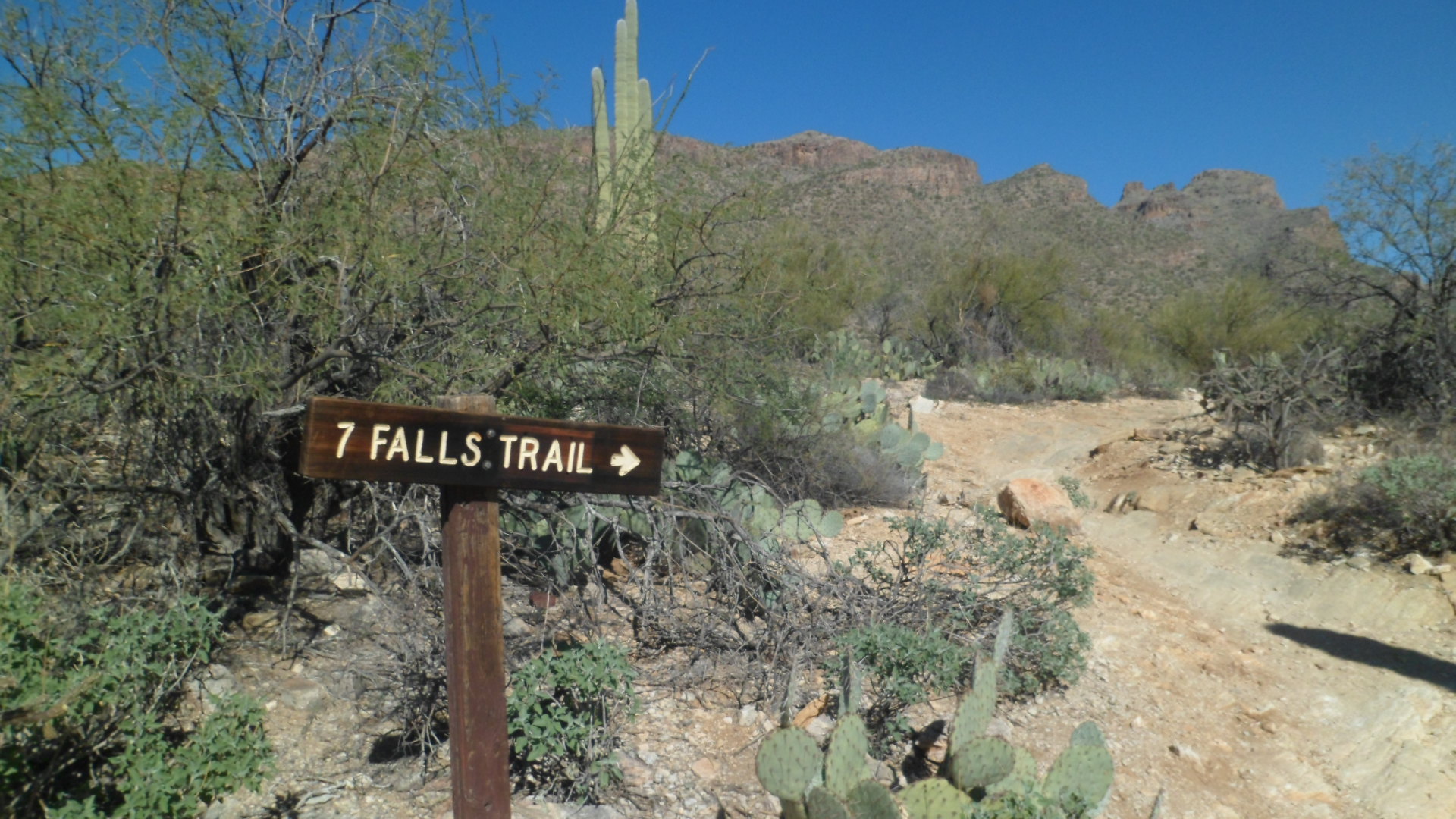
The trail to Bear Canyon diverges from Phone Line Trail here.
Note the striations on the rocks, which result from centuries of hard water activity.
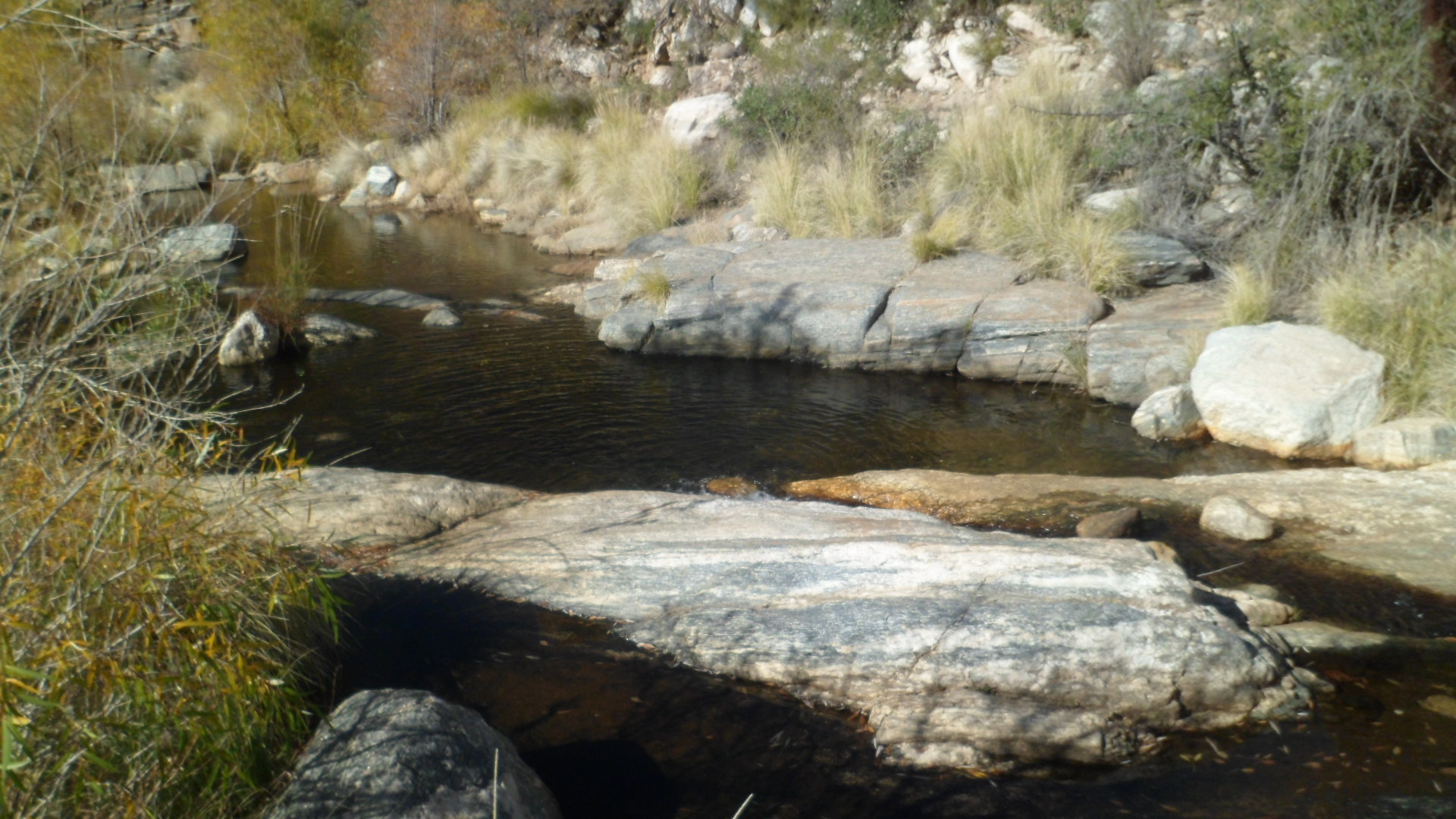
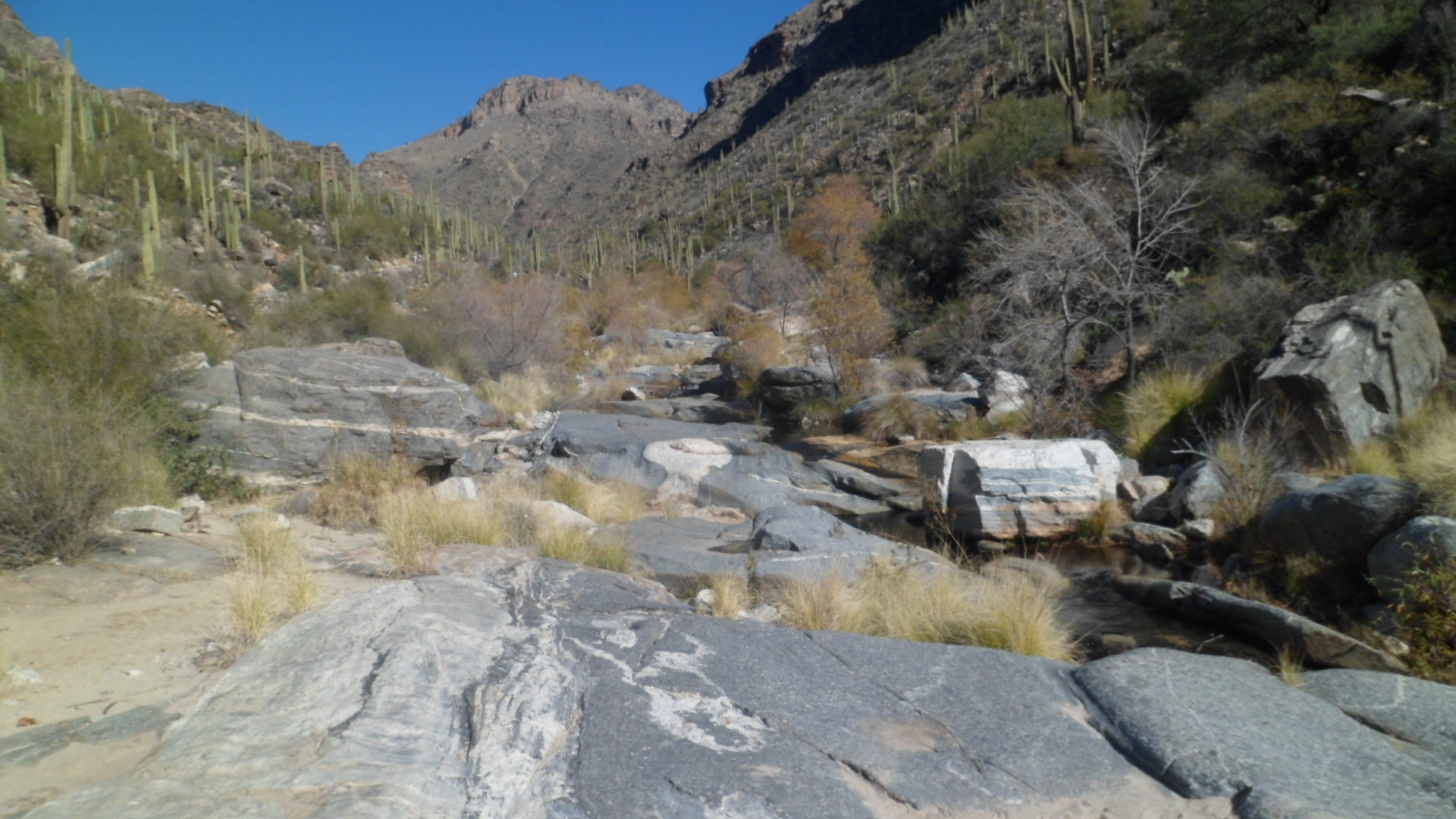
Here are several shots of Bear Canyon Creek.
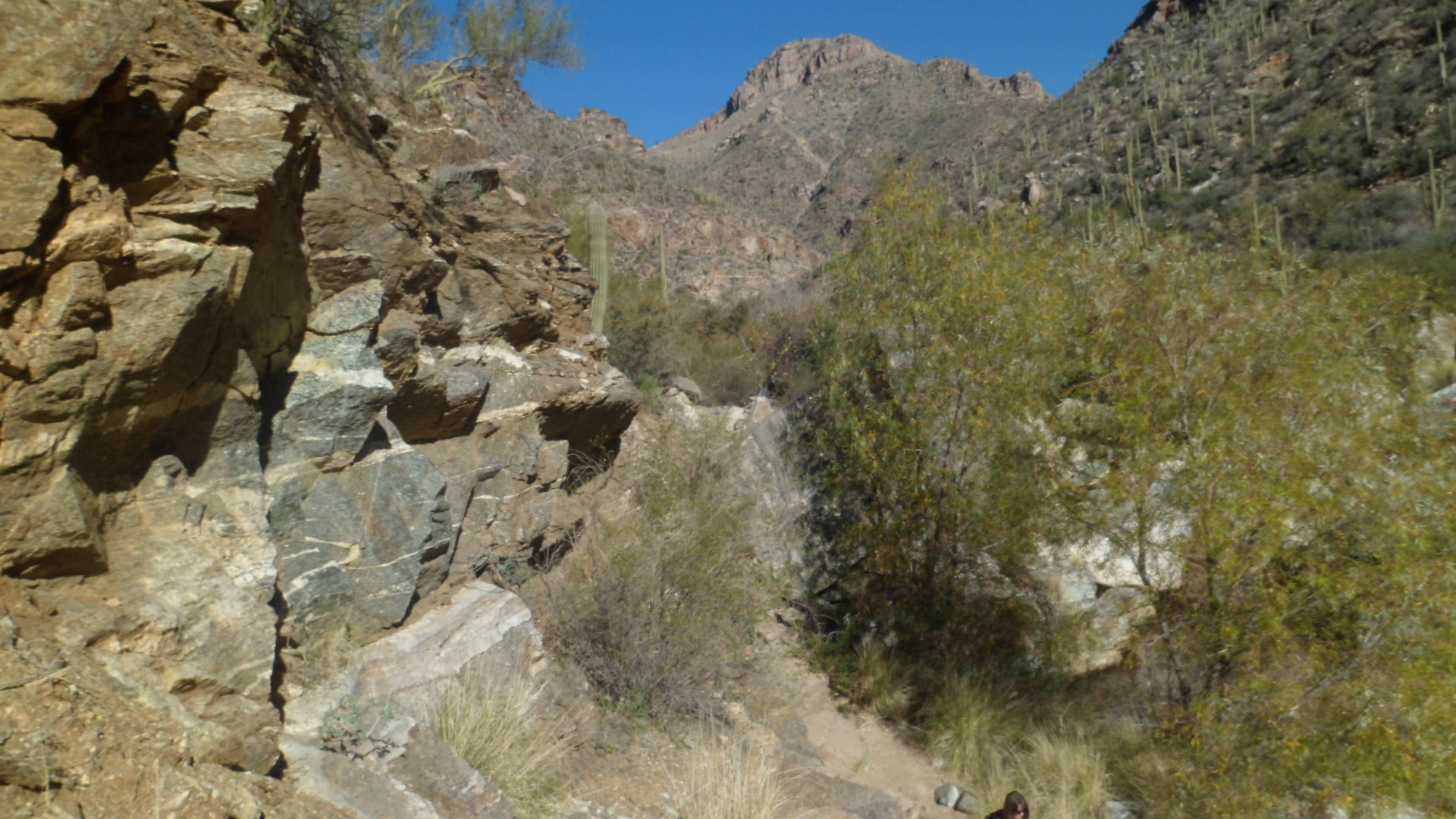
There are some interesting rock overhangs, and the long view to the canyon rim, along the way.