The Road to Diamond, Day 296: Picture Stones and A Watchful Wolf

0

September 19, 2025, Visby, Gotland-

Today’s festivities will be shared in two parts, as some photos are on the iPhone gallery and the cable for my phone doesn’t quite connect to the Lenovo.

Sharing is caring, regardless, so let’s take a look at Gotland Museum. There are four floors, each with two or three galleries. Floor 0 is where we enter, pay admission, check out the bookstore and spend time with Gotland’s unique Picture Stones.

Many picture stones were originally painted with red, yellow or blue pigment. Most have lost the pigmentation, over the centuries.

The standing stones are all over Gotland and its northern offshore sibling, Faro (not to be confused with the resort city in Portugal’s Algarve). See gotlandpicturestones.se

Here are a few scenes of that gallery.

This came from the early Christian era, most likely commissioned by someone looking to protect his farm.
The pinwheel also is a
harbinger of good fortune.
This tells the story of a horse and a deer.

This one has a sensor, which fills in the colours when someone approaches.

There are several others in the gallery, but here is a tableau of some smaller reproductions from around Gotland.

Up to Floor #1, we find The geology of Gotland. It, like the rest of Scandinavia, was once buried under ice. As the glaciers retreated, the Baltic Sea filled in, while islands like Oland, Aland, Bornholm and Gotland remained above water, being the tops of small hills.

Sandstone and limestone predominate the gently rising, but mostly flat landscape. There are some forests, but Gotland is still mostly farmland.

Floors 2 and 3 feature the history of Gotland and stories told by local children and youth, respectively. The historical part begins with a Norse creation story. Odin, representing the Sun, brings the world to life. He and other deities guide people in the ways of right living. All the while, the ravenous Wolf watches and waits. At the end time of Ragnarok, the Wolf will swallow Odin.

On that cheerful note, the story of Gotland proceeds, through its early days of increasingly successful farming, the Viking Era, Hanseatic League and incorporation into the Kingdom of Sweden.

It was during the Hanseatic period that the wall encircling Visby was built. At the East Gate, all peasants wanting to sell produce at Visby’s market had to pay a toll. Those trying to sell elsewhere were fined pr flogged. This was the stricture of the manorial system.

On the third floor, there are both paintings and recorded stories by Gotland residents.

The painting above shows the juxtaposition of hillside Visby with the sea.

The museum was founded in 1875, by Per Arvid Save( pronounced SAH- vay) and the Friends of Gotlanf, with the aim of preserving the island’s rich heritage and sharing it with the world. Dr. Save encouraged the farmers and fishers of Gotland to safeguard the picture stones they found about their homes and nearby lands.

Next, I will visit the ruined churches of Visby’s centrum, with the help of my laptop.

The Road to Diamond, Day 295: Pleasantly Walled In

2

September 18, 2025, Visby, Gotland- When I was in sixth grade, in 1961-62, our Social Studies focus was on “The Old World”. The class studied certain aspects of each time period, from the beginning of civilization to the Medieval Period. Somehow, the walled city of Visby, on the Swedish island of Gotland, has always stayed in my mind.

When the time came to plan a visit with a long-time friend, who lives in the port of Nynashamn, near Stockholm, I noted that Nynashamn is the mainland ferry connection to Visby, and Gotland. So, a short visit to the walled city was in order. In between days spent with my friend, her husband and children, here I am in the walled, old section of Visby, which is also a modern port and the site of a Swedish military facility.

It took three hours and ten minutes to get here, on generally calm waters-not bad at all for the Baltic Sea, this time of year. A further bonus was that once I got into my room and got organized, the sun came out and the sky pretty much cleared. It was time to check out the walled sections of town.

Boende BnB is around the corner. (It is actually pronounced Bo-EN-dee.)

In the process, I came upon Wisby Hof, an elegant place built into the wall, and which had Schnitzel-“Gotland-style”, so having indulged in other faves, like pizza, tacos and baked fish already this week, Wisby Hof it was, for dinner.

Wisby Hof

After dinner, I looked to see whether there were any places at which one might walk along the top of the roof-as there are on similar structures in places like Old Manila, Luxembourg Ville, or Rennes, the capital if Brittany. The answer is “No”. Looking at the stone that is used to build the wall, I can understand why. It would be problematic to allow the numbers of tourists who come here each year to scale the wall. It also accents the purpose of the wall as a formidable defense, against both seaborne attackers and against Swedish opponents of the Duke of Gotland.

My after-dinner walk went back to the closest church to Boende.

Vardklockans Kyrka
The village that lay protected
Every narrow street has its story.
So does every other narrow street.

Let’s look at the wall itself!

Section of wall being refurbished
Two of four towers on the wall’s east flank
Large section of wall, between eastern towers
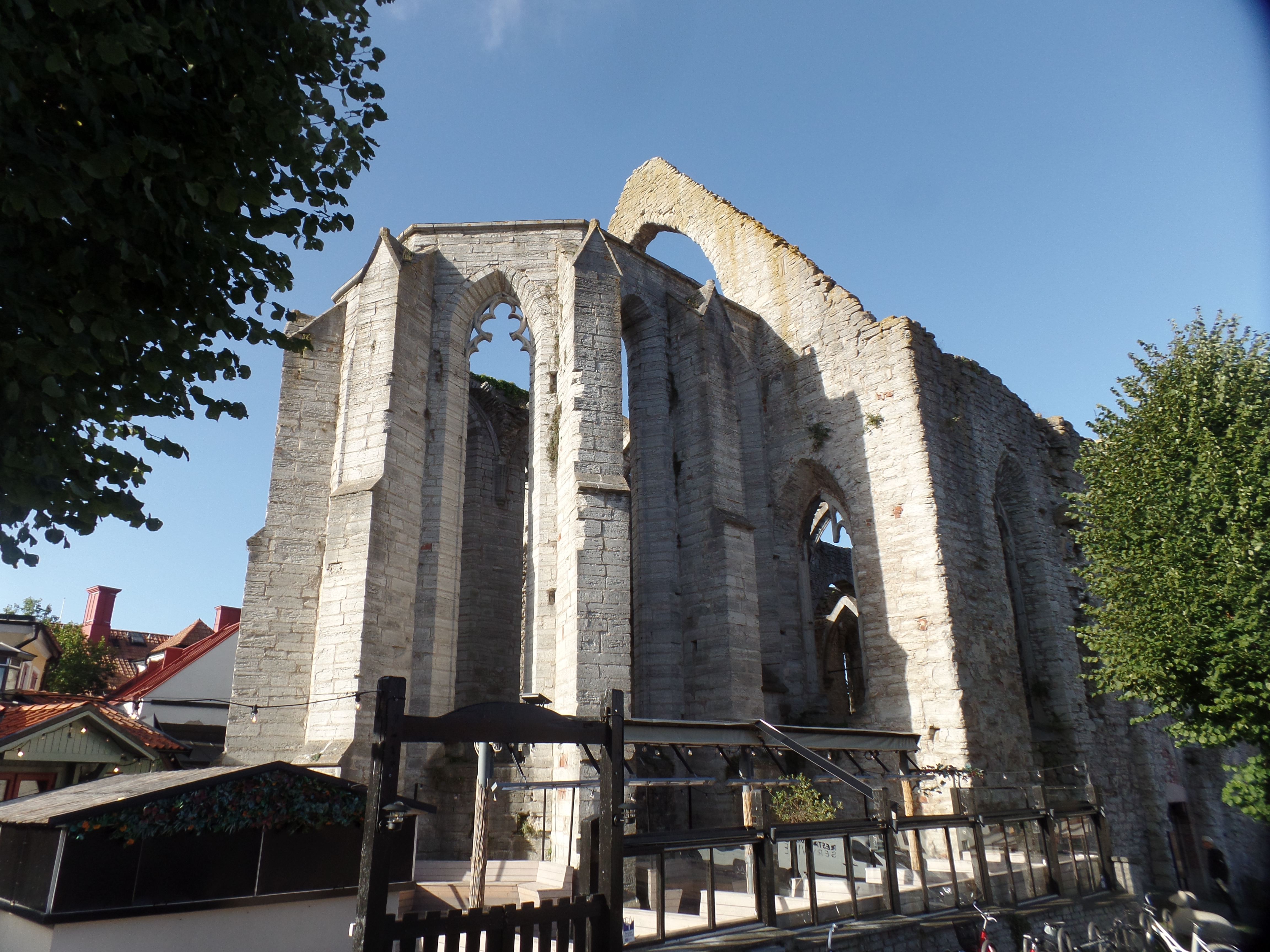
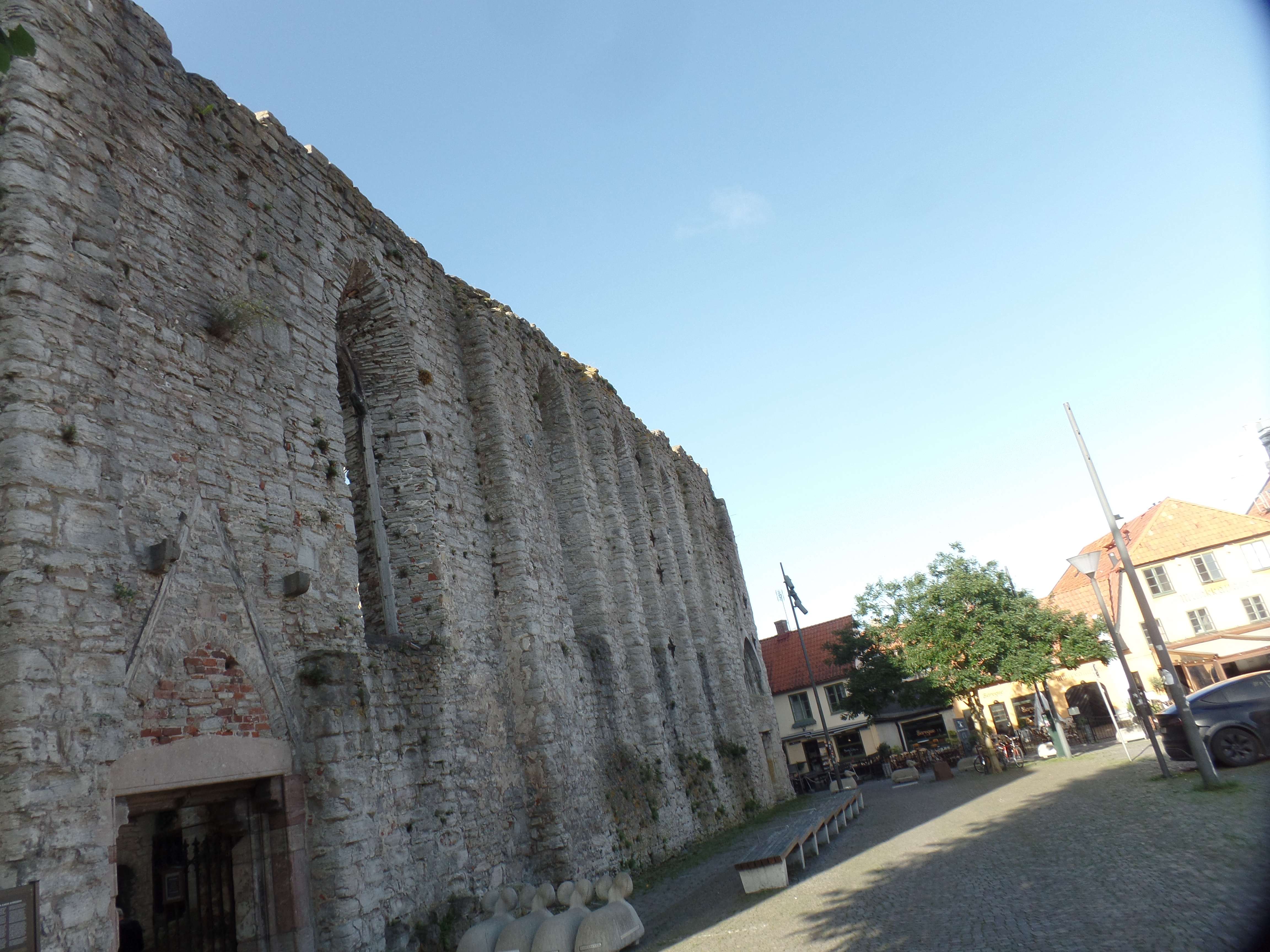
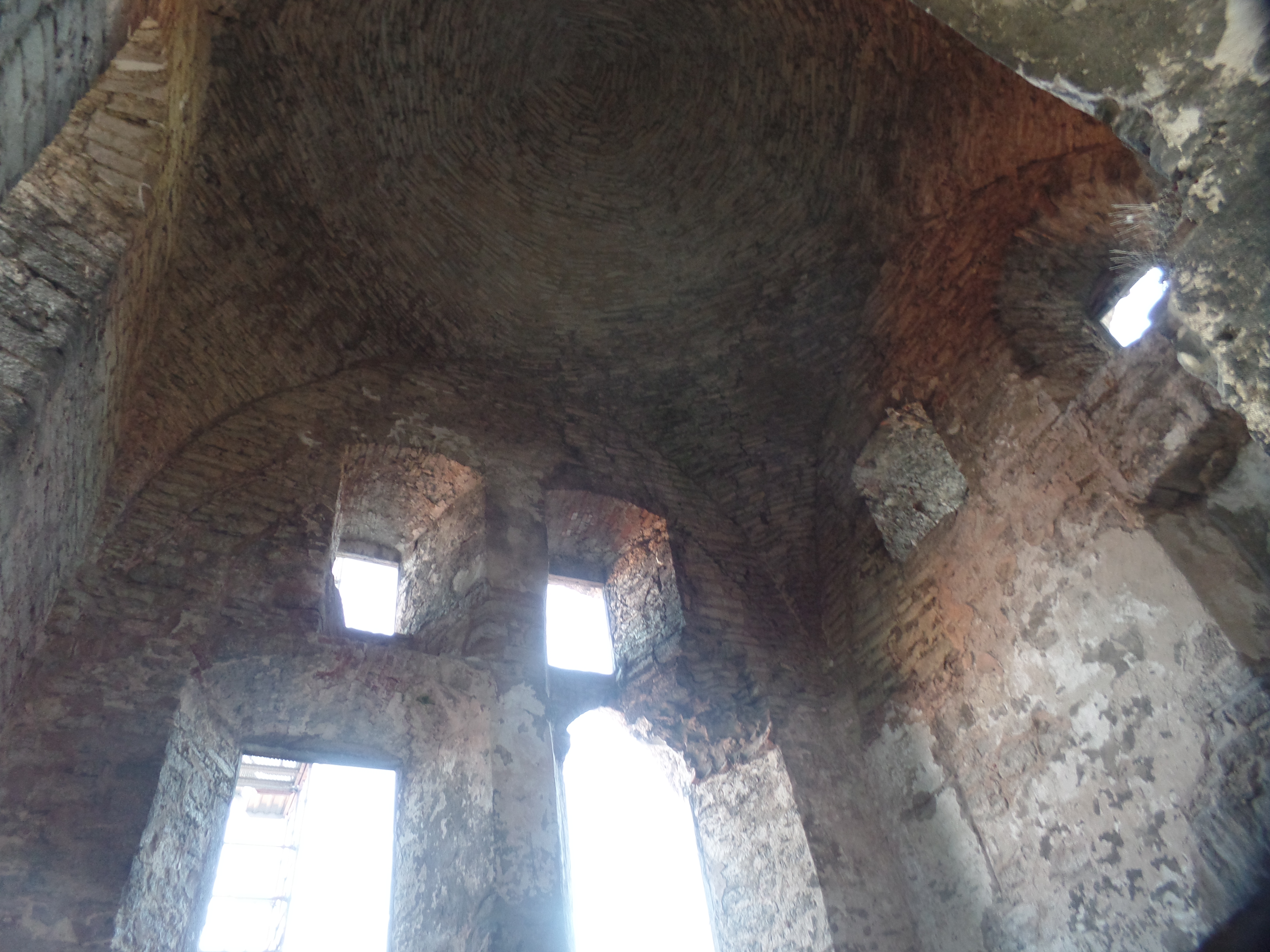
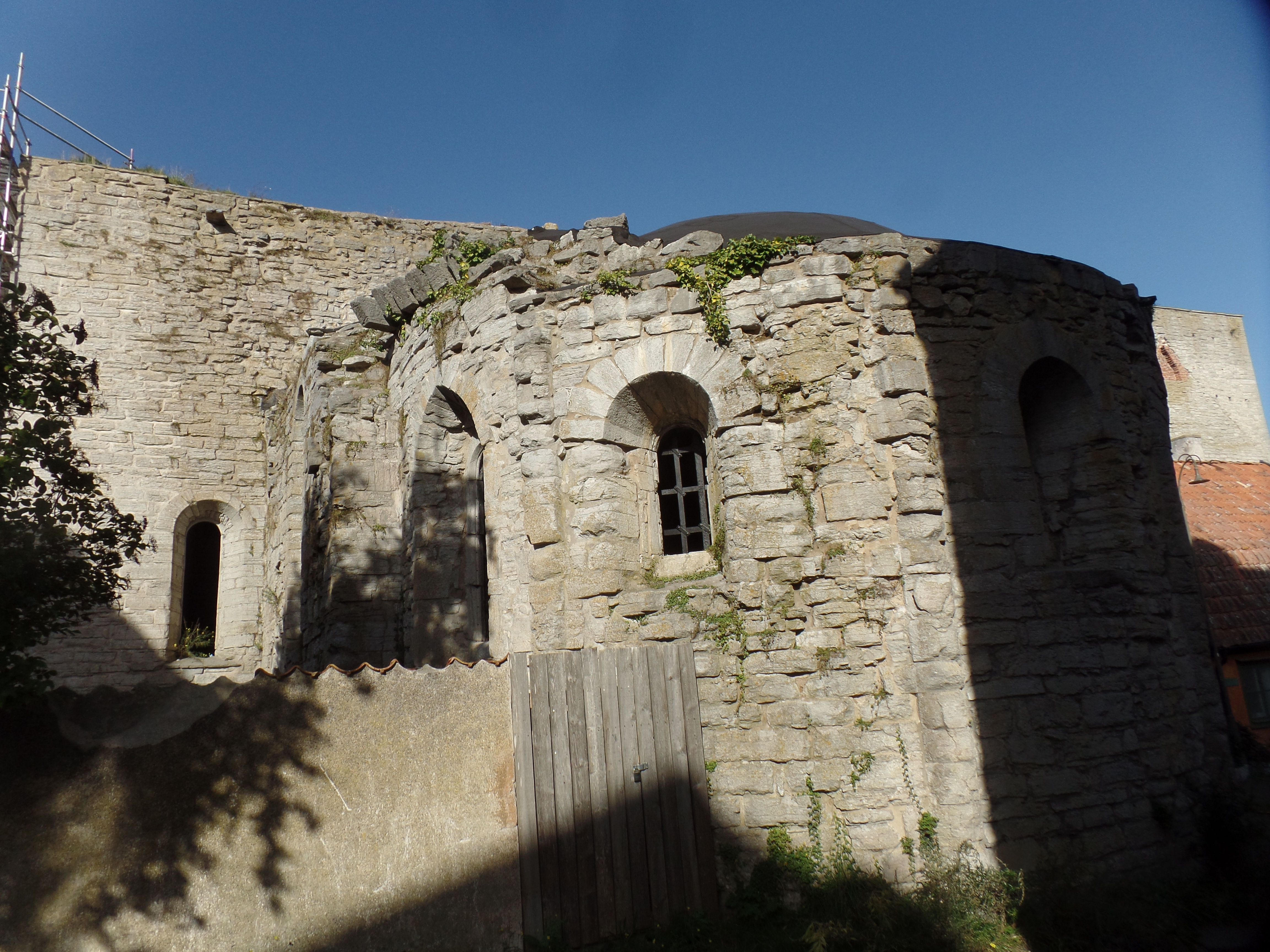
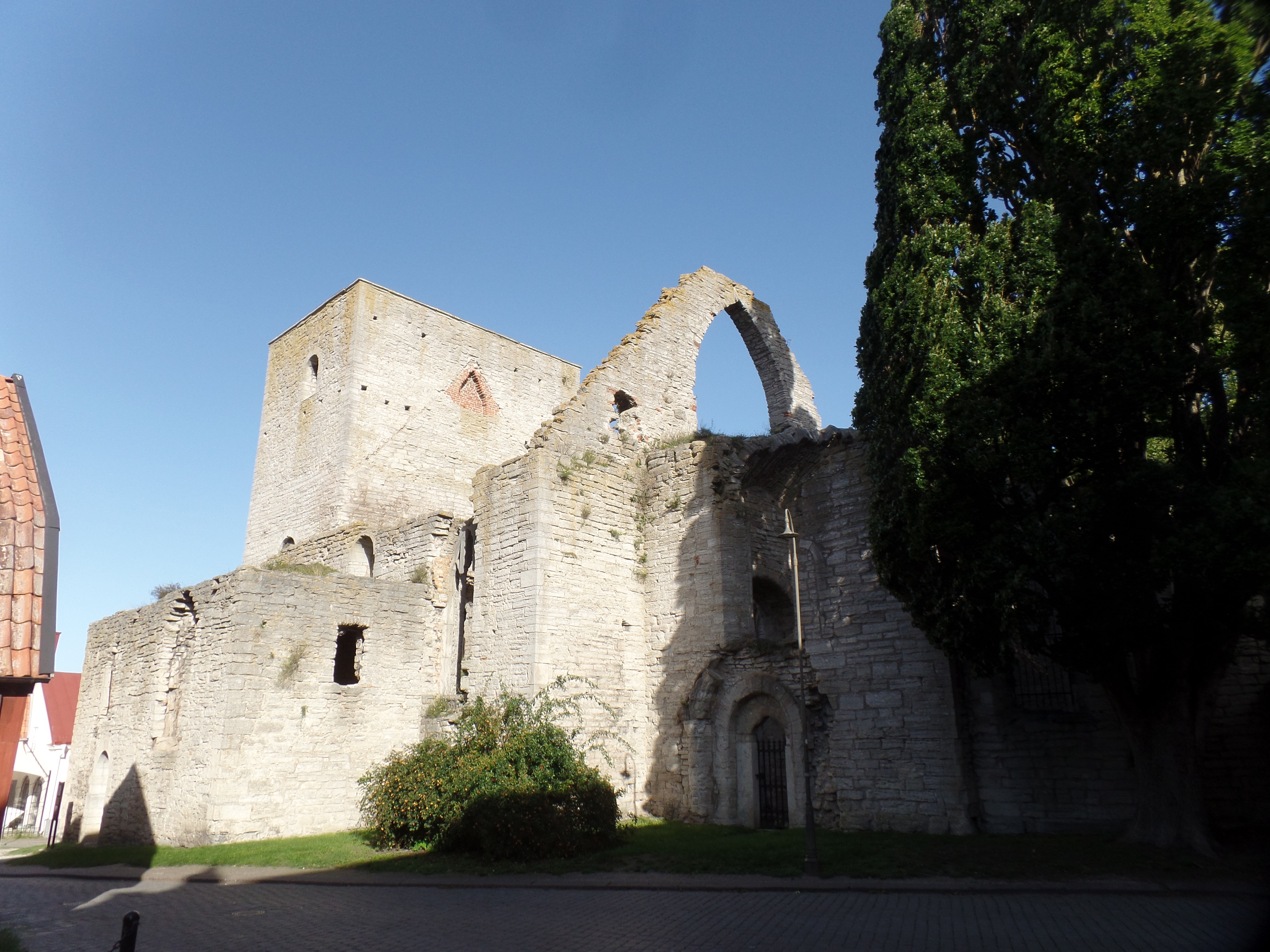
Ruins of the Churches of St, Hans and St. Per. The towers of these churches were pulled down, in the 1530s, so that their stones could not be used as fodder to bombard Viborg Castle, in Russia. The destruction, however, only got so far. The site is now considered part of Swedish national heritage.
Section of wall that protected the Churches of St. Hans and St. Per.

All good days can end with a better sunset.

Sunset over the Baltic

The Road to Diamond, Day 293: The Freebie

0

September 16,2025, Nynashamn, Stockholm County- The monitor scratched his head, when I asked where I should tap my card to pay for the train ride from Stockholm to here. “There ought to have been a green gate”, he said quizzically, “but you are here and did not get stopped. It appears you have a free ride.”

This is unusual, but as it turned out, he was correct. No one who looked to be over 65 was charged for the train ride. I will take the bonus. There was likely some point in this journey where I overpaid for transport. Thus, there was a rebate from the Cosmos.
Stockholm, with its ornate buildings, well-curated parks and celebrated heritage, is for now a genial memory. The impossibly crowded hostel of Saturday night became more manageable, almost empty on Sunday night and mildly occupied on Monday. As I checked out of my room and organized my bags, a large group came in. The day manager’s scowl only deepened, but his dissatisfaction with the place and the situation, whatever the cause, can only be helped if he speaks up.

I made it from Radhus Station, about 300 meters from the hostel, to Nynashamn Train Station, in about an hour. There was one Metro Train, a 1/2 mile walk and clear instructions to the commuter train that brought me here. The language may be different, but it is not unintelligible. Besides, there are enough people just about everywhere who can speak English.

Nynashamn is a small city, with my hostel about 2.3 miles from the Train Station. I was let off at the top of a hill, near some apartment buildings. After waiting out the rain by standing under a tree, I asked an apartment maintenance worker where First Camp was. He led me to the trail that took me the rest of the way. I was able to connect with the manager, after ten minutes, and am now the sole guest of First Camp Hostel, for the next day or so.

A walk to Nynashamn’s center led to upholding a tradition-Taco Tuesday! Taco Bar is open and thriving-and while there is no discernible salsa, beans or rice, the tacos and enchiladas are faithful to my expectations. First Camp definitely meets those expectations as well. Time with friends will follow, tomorrow, rain or shine.

The Road to Diamond, Day 292: Vasa and Vikings

0

September 15, 2025, Stockholm- Beata and Cesar died in each other’s arms, as the “greatest ship” of their time capsized and sank, shortly into its maiden voyage. Cesar served in His Majesty’s Navy and Beata, his wife, was along for the stationment as flagship of the Reserve Fleet guarding the Stockholm Archipelago, in the midst of the Thirty Years War. The warship Vasa, with 64 guns and as many as 250 people aboard, did not make it out of Stockholm Harbour. 50 people went down with the ship that day-August 10, 1628.

A horrified public alerted the King’s Council, as Gustavus Adolphus was in Poland with his commanders, seeing to Sweden’s part in the conflict that had started as a civil war between rival princes of the Holy Roman Empire (essentially modern day Germany and Austria, with parts of northern Italy). France, Denmark, Poland and Russia had taken sides in the conflict. The Swedish king, styling himself a modern-day Augustus Caesar, was not to be left out.

Thus, in 1626, he commissioned the building of Vasa, named for his own royal house. Two years later, the great ship was deemed complete and seaworthy. The king had seen the completed ship with his own eyes, just prior to leaving with his army for Poland. He heartily approved of what he saw, and left the ship to its captain to steer towards the battle front.

The reality was, however, that the great ship was top-heavy, and in short order it became a testimony to the falsity of hubris. Gustavus Adolphus, and the Swedish nation, as great a military power as any of the era, were fighting on several fronts, feeling beleaguered by Catholic forces in Jutland, to the southwest, as well as by Poland and France. The king was therefore impatient to get the Vasa built and underway. Those immediately under him were cowed by the force of his personality, and kept their misgivings about the vessel’s seaworthiness to themselves. Further, an inquest after the ship’s sinking established no culpability in the matter. Vasa’s bronze guns were salvaged, but the ship itself was forgotten for centuries.

In the 1950s, King Gustav VI Adolf, namesake of the ship’s patron, commissioned a salvage operation, which was completed in 1961. Vasa’s hull was found mostly intact, owing to the brackish waters that impeded parasitic damage to the vessel. Its structure is now mounted in a dry dock, for all to see at the Vasa Museum.

https://en.wikipedia.org/wiki/Vasa_(ship)

Here are some scenes from my visit to Vasa Museum, this afternoon.

Entrance to Vasa Museum

Hull of Vasa
Lion image and air portal on port side of Vasa
View of Vasa’ s rigging (above and below)
Images of Roman soldiers
Reproductions of colourful images from the sides of Vasa
Gun ports on stern of Vasa
Starboard side of Vasa
Depiction of King and his Admiral, being briefed by Shipyard Mistress and her Crew Chief
Full port side view of Vasa, from above
Lifeboat from Vasa

I left the Vasa Museum feeling somber at the massive sense of loss that the Swedish people must have felt in the wake of the capsizing and sinking. It was surely on a scale similar to America’s losses at Pearl Harbor, or the attacks of 9/11/2001. Now, however, the country has chosen to share its great ship with the world. It is a cautionary tale, about hubris and impatience.

The Viking Museum, which I visited after taking lunch in Vasa’ cafeteria, was much more presentational, less graphic. Three docents were on hand to detail different aspects of Viking life. It was pointed out that the term, “Viking” refers to an inhabitant of a vik, or seaport. To that extent, only a fairly small percentage of Norwegians, Danes and Swedes were Vikings. Most were small farmers or inland fishermen.

Docent explains Norse farm life
Model of a Viking residence
Guide stone, of the sort found at the entrance to a Northern village

After an hour or so of listening to discourses, one of which was almost nonstop for thirty minutes, I took a walk in Djurgarden, the royal public park, east of the Museum Quadrant. This, too, is one of Stockholm’s crown jewels.

Entrance to Djurgarden
Riverside in Djurgarden, Stockholm

I walked for about a half mile into the park, along the river, then doubled back to the tram and on back to Nomad Cave. Stockholm’s heritage is engraved in my memory.

The Road to Diamond, Day 291-Part II: Kungsholmen and Gamla Stan

0

September 14, 2025, Stockholm- Between Nomad Cave and Stockholm Palace are several interesting churches, Stockholm City Hall and the salubrious greenspace on both sides of Stockholm Strom. There are the two houses of Sweden’s Parliament and the northern end of the pedestrian mall that leads to Central Station.

So, here are ten scenes of Kungsholmen (King’s Home), the neighbourhood where I am staying, and of Gamla Stan-the island which houses the Palace, Parliament and Stockholm’s Old Town.

The stairs are just beyond the door. Be mindful!
So much of Kungsholmen is stately and well-appointed.. Anna Whitlock was a Swedish social reformer and educator, at the turn of the 20th Century. Her Gymnasium continues to offer five academic preparatory programs, with the philosophy of total mind-body engagement.
Kungsholms Kyrka’s Rector ordered a group of tourists out, just as I entered the foyer. I didn’t need to know Swedish to get his meaning!
The upper reaches of Stockholm Stadshuis (City Hall)
This is Gamla Stan, in a nutshell
Near the southern dock along Stockholm Strom
Houseboaters like bright colours
A more complete view of Stockholm Stadshuis
The two Houses of Parliament, viewed from the south.
!2 Blocks of non-stop eating and shopping- Regeringsgatan is one of two long pedestrian malls in Central Stockholm.

Stockholm is a never-a-dull-moment kind of place. I noted some parents interacting with their children, around Stadshuis. Two boys were testing their mothers, by dawdling on their bicycles, while the mothers walked on ahead. One of the boys got the hint and “showed” how fast he could catch up to Mom. The other had to be retrieved, and got to hold his mother’s hand while slowly peddling towards home. Other young parents were dealing gently, but masterfully, with tired, squawking toddlers, as I purchased two bottles of Fortified Water, at the neighbourhood market, in Kungsholmen.

NEXT UP: The ill-fated Vasa and some hard-luck Vikings

The Road to Diamond, Day 291,Part I: A Royal Flush

2

September 14, 2025, Stockholm- I went on a short walk today, starting at this door.

Nomad Cave Hostel

The route was undefined; I was going west, passing Stockholm’s seemingly endless supply of huge, well-constructed stone behemoths. Crossing Stockholm Strom (channel), on a well-trod foot bridge, after heading past a few large churches and Stockholm Stadhuis (City Hall), I noticed several people going up or down a slight incline, near a long, most ornate complex.. This was it-Stockholm Palace, among Sweden’s greatest treasures, in the heart of Gamla Stan (Old Town).

The cheerful ticket clerk asked whether I was interested in seeing four museums for the price of admission to Gustav III’s Antiqmuseum. One of those was The Royal Palace Apartments, so I readily agreed.

Gustav was King of Sweden at a time when the country was much larger than now. It was a key player in European politics, on the order of France, Britain and Russia, thanks to his great-grandfather, Gustavus Adolphus, for whom he was named. His reign occurred at a time when many monarchs were currying favour with the Pope, in order to get their hands on Roman relics. Gustav managed to get possession of a trove of imperial busts-f both men and women, with a few animals thrown in. These treasures are displayed in the namesake museum, in two galleries:

A hall of female Roman statuary
Hall of Male Statuary

Around stoic, and obviously dedicated, palace guards, I went to the north entrance to the Palace, joining a small group of admirers of House Bernadotte (Sweden’s royal family). First stop in Kungliga Slottet was the Royal Chapel, set to the east of the main royal apartments. This edifice has served Swedish royalty and their courtiers since 1200.

The Great Altar
View of the Ceiling (Above and below)

Crossing the large foyer, and up another set of stairs, I was greeted by the Hall of State, with Queen Kristina’s Silver Throne. It is here that foreign dignitaries presented themselves to the monarch. Kristina was unique in her approaches to life and to ruling. She wanted to end the Thirty Years War in a peaceful way and believed that, as Queen, she should not submit to a husband’s dictates. For these, she was forced to abdicate, and settled in Rome, under the aegis of Pope Alexander VII.

The Silver Throne of Queen Kristina

The Palace has seven floors and over 800 rooms. We got to see 15 of them.

Several of these were Apartments of the Orders of Chivalry, which display the various Knighthood Orders.

View of the Medallions
Coat of Arms of House Bernadotte
Audience room, Royal Apartments
“Majesty will see you now!”
King’s Conference Room. Karl Gustav XVI wanted a cheery atmosphere for his meetings.

King’s Throne
The Cabinet Room
Long Hallway to Royal Banquet Hall
Explanation of the term “White Sea”, with regard to the Royal Banquet Hall. It was originally two separate rooms, one for each monarch. In 1843, King Oskar I determined it was best that he and Queen Josefina dine together, with all their retinue present as deemed appropriate.
The White Sea (Royal Banquet Hall)

The last area I visited in the palace was Three Crowns Room, in the palace basement. Here, such things as the wood piles used to heat the structure were stored and following the Great Fire of 1697, which resulted in the Chief Fire Warden and two of his deputies being found negligent, the three hapless men had to run 7 gauntlets of 200 soldiers, who beat them with sticks. The Chief Fire Warden did not survive this punishment.

Here are some artifacts from Three Crowns Room.

View of the very depths of the excavation (Above and below)
Full view of the exit from Three Crowns

I walked from the palace, along Stockholm Strom, then over to the Houses of Parliament and along part of the pedestrian mall, which leads to Central Station.

I will show some of the other highlights of Old Town and central Stockholm in the next post. Then it will be time to pay a visit to the great ship Vasa.

The Road to Diamond, Day 290: Sunbows and A Crowded House

0

September 13, 2025, Stockholm- The small prismatic light showed briefly, against the small cloud. I had not seen a sunbow in many years, but the fact that it was followed by a cloud image of an angel was most comforting and reassuring. Another such prismatic would follow, about twenty minutes later.

I bid farewell to Iceland, around 10:30, and headed for this old and storied colossus of the north. I had achieved a sampler of that crossroads island, finding Reykjavik as cosmopolitan as anywhere I’ve been. There were no Blue Lagoon, Northern Lights or puffin watching, but I did stand on the edge of North America-at least on the edge of its tectonic plate. I did catch a glimpse of Reykjavik’s history, and enjoyed fresh fish. I did get sprayed by the outer mists of a geyser. I did come to appreciate just how hard the people need to work at making life successful there.

Ananada Express got me to central Stockholm in short order. I then had to cast about to find an information booth-eventually meeting with success at the Metro Station, and was able to connect with the receptionist at Nomad Cave Hostel, a couple of times, getting the general location of the facility, taking the right train, getting off at the right stop and with help from a nearby restaurateur, the numerical address of the Hostel itself. The lettering is faded, so it took another phone call to verify the locus.

Once there, I entered the door code (All the lodgings I have booked in Sweden have door codes. They exist elsewhere as well. Iceland’s hostels have them, and there is such a system in San Diego.) Opening the door, and….I stood and readied myself: The stairs downward are immediate, and steep. This is good practice for any encounters I might have with medieval castles, over the next seven weeks. I made it downstairs, bags and all, with no trip-altering tumble. The receptionist processed me and went over the rules-and the two remaining door codes-for the sleeping dorm and for the baggage storage room. Shoes come off at the base of the stairs, so it’s a good thing that I brought my comfy slippers. (I customarily remove street shoes at Home Base I, and in anyone else’s home, so this is no inconvenience.)

The dorm room itself was a sight to behold! There were eleven other people,which I expected. There were eleven other sets of bags, scattered random personal clothing and other items. Every step needs to be made carefully. I placed my bags in the storage room and took out everything I would need for Sunday, putting those items in my in-dorm locker.

There are top and bottom bunks. I got a bottom bunk-“owing to your age”. That’s fair, though I can still climb up in a pinch. The young lady who had the top bunk, for some reason, latched onto me-even to the point that while I was lying in bed awake, she asked me, several times, to stop snoring! I listened for the sound of someone sawing wood and eventually convinced her that the offender was in the next bunk over. She would be leaving early Sunday morning, and so finally relaxed and went to sleep. I followed suit after that. (No, there were no breaches of manners or decorum!)

One last item of note: Meno Male, just down the street from Nomad, is a family-owned pizzeria-with reasonably-sized pies, made with the finest fresh ingredients. This is a true bit of Italy, in the heart of Scandinavia. The love shown by the gregarious owner for her adult daughter is classic Italian. Their warm greeting of “Ciao” and farewell of “Arrivaderci”, for each patron is doubly heartwarming. A cousin of mine and his wife are, as I write this, themselves in Italy, no doubt enjoying the real deal, on the ground. Meno Male would be a regular haunt for me, if I lived here.

Two days and a morning lie ahead for me in this metropolis. I look forward to yet another Old Town and to the great ship, Vaasa.

The Road to Diamond, Day 278: Tying Loose Strands

0

September 2, 2025- Coming up to a ledge, on the trail between White Spar Mountain and Goldwater Lake, Hiking Buddy and I spotted nineteen American flags-the sign of a memorial to the 19 Wildland Firefighters, who died in 2013, at Yarnell Hill.

Other forms of death showed themselves nearby.

Beyond, though, are the many signs of life, for which these sacrifices have been made.

We made this short hike, as part of a run-up to my own seven-week absence from Home Base I, and from Arizona. I have had a good summer here, and now it is time to tie up loose ends. Connecting HB with an aficionado of her type of product was another result of today’s efforts. Finally getting through to a critic of local organic farming, earlier this morning, was another.

The rest of the week will see me on a worldwide prayer call, then up at Hopi for a brief visit with new arrivals in the Health Provider community and a Red Cross meeting here, on Thursday. Friday, I will continue my dry run of packing, as the weekend is full of special events, on which more, in a few days.

I have also carefully spoke my peace about other issues, and so far had little push back. Towards that end, I will not elaborate on my thoughts in this forum. We are all entitled to our own opinions, though not to our own facts.

No matter where I go, the sacrifices of those brave men commemorated above, and of others like them, will still figure large in my consciousness. They tied the loose strands of community, by giving their very lives.

The Road to Diamond, Day 255: 89 Seconds

2

August 10, 2025- The Doomsday Clock was shown at today’s presentation on the atomic bombings of Hiroshima and Nagasaki. It stands at 89 seconds until midnight (the marking of doomsday). The two bombings, which contributed towards the end of World War II, remain both the most horrific single attacks on civilian populations in our history (procedural genocide involves serial attacks) and the only attacks, to date, involving nuclear weapons.

The presenter, who has made several visits to the cities, showed graphic, if faded, photographs of the victims and of the damage to the cities. The effect was every bit as jarring as the scenes of the Holocaust of Germany and eastern Europe. It underscores the urgency of renewing a commitment to nuclear disarmament and non-proliferation.

Some people at a meeting last night took the view that it is counterproductive to keep harping on the tragedies of the past. I disagree-those who forget the horrors gone by are doomed to repeat them. We do well to both honour the victims and forge a path that will make weapons of mass destruction, both nuclear and conventional, unnecessary. Eighty years afterward, let Hiroshima and Nagasaki stand as examples and cautionary tales, not as harbingers or precursors.

The Road to Diamond, Day 250: “Every Story is A Treasure”

5

August 5,2025- I watched a remarkable 2015 Canadian miniseries, “The Book of Negroes”, based on novel by Lawrence Hill, which in turn was based on an actual British Naval record of 3000 freed African slaves who were brought to Nova Scotia and New Brunswick, after the American Revolution.

The story is told through the eyes of an African woman who is also a polymath, at a time when most Africans were seen as illiterate savages, worthy of no treatment better than brutality or manipulation. Aminata Diallo is a fictional character, somewhat inspired by Phillis Wheatly, who was an actual African-American poet of about the time Aminata’s story unfolded. Phillis lived in colonial Massachusetts, while Aminata’s story unfolds in what is now Guinea, then to South Carolina, moving by turns to New York, Nova Scotia, Sierra Leone and London. Actual historical characters General Guy Carleton, Samuel Fraunces and George Washington appear in the New York segment of the story, with Fraunces presented as a mentor and protector of Aminata.

Aminata tells her adult daughter that every story is a treasure, and that even the losses (of which she had several) are worthy of gratitude. Her story does not spare any of the principal forces in the slave trade, yet she faces them all with a life force born in honour. Her fortitude is showcased throughout, and most clearly when she humbles a young slavery advocate during a meeting of the British House of Commons, leading up to the vote to end the slave trade.

A childhood friend remarked to me, about ten years ago, that everyone our age has been through a fair amount of hardship. This is a man who has known quite a bit of success in life, so for him to come forward about the rough patches is quite a revelation. It underscores what Lawrence Hill addresses in his novel, and puts my own highs and lows into perspective. I stopped wallowing in self-pity some time back and can see exactly what Hill’s protagonist is saying.

Those of us who are fully alive have amassed many treasures.