The Road to Diamond, Day 78: 17 Presidents, 1 Scoop of Rice and 12 Line Dancers

0

February 15,2025, Manila- This is my last weekend in the Philippines, pending a few decisions on this end. Those choices will determine what I decide, once I get back to Home Base I. I leave the adults who are making those determinations to their quiet spaces and mindsets.

Today, though, was full of Philippine history, dinner at Mall of Asia, followed by a visit to Okada Casino, in Paranaque. Let’s look at Malacanang Museum-the heritage center of Malacanan Palace. For a description of the reasons behind this distinction, see: https://carlakalay.wordpress.com/2017/09/08/malacanan-or-malacanang-the-philippines-version-of-the-white-house/.

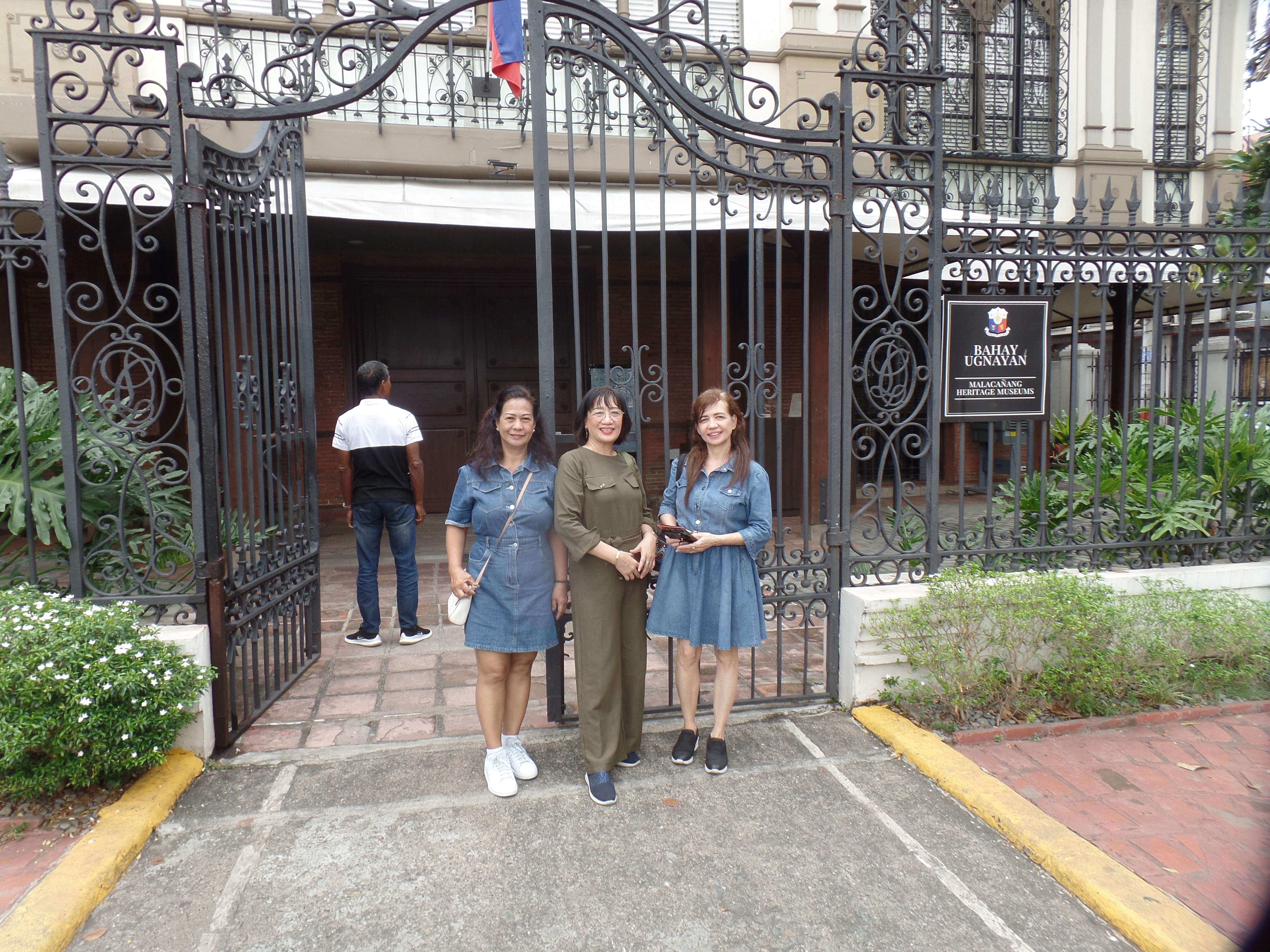
We visited two museums, the first of which, Ugnavan House, housed details in the life of the current President, Ferdinand Marcos, II. These include a replica of the staircase in Malacanan Palace, which the incoming President ascends and the departing President descends.

Replica of the Presidential staircase of Malacanan Palace, found in Ugnavan House.

Bahay, is pronounced like Baha’i, and in Tagalog, it means “house”.

Entrance to the museum of the sitting President of the Philippines.

We listened to the life story and accomplishments, thus far, of President Marcos, Jr., then went to Teus Mansion, which houses the “Treasures of Malacanang”, the heritage of the sixteen past presidents of this country, beginning with Emilio Aguinaldo, who served for two years as President of a nascent Philippine Republic, from 1899-1901, during the country’s struggle for independence first from Spain, then from the United States. Aguinaldo never gave up his campaign for nationhood, even while imprisoned in the United States, and was honoured by each of his successors, including Diosdado Macapagal, who presided over a State Funeral when Aguinaldo died, in 1964. The Philippines have had a continuous series of Presidents since 1935, when Manuel Quezon was elected President of the Commonwealth of the Philippines, still under American tutelage. While Quezon and his Vice President, Sergio Osmena, were in the United States during the Japanese occupation of 1942-45, the country was administered by Jose P. Laurel, ostensibly a puppet ruler acting on behalf of the Japanese, but in reality a conduit for the Quezon-Osmena administration to keep close watch on the country.

The country has essentially moved forward in material progress, and has learned some hard lessons about the trade-off between that progress and the right of people to chart their own path.

The rise of material progress was evident at Mall of Asia, where we enjoyed dinner at a crowded Inasal. The ladies chose chicken and I tried pork belly (liempo). My scoop of rice was Java Rice, a good alternative to “unli” (unlimited) white rice. We all enjoyed halo halo, (ice cream and fruit, on a bed of shaved ice) for dessert.

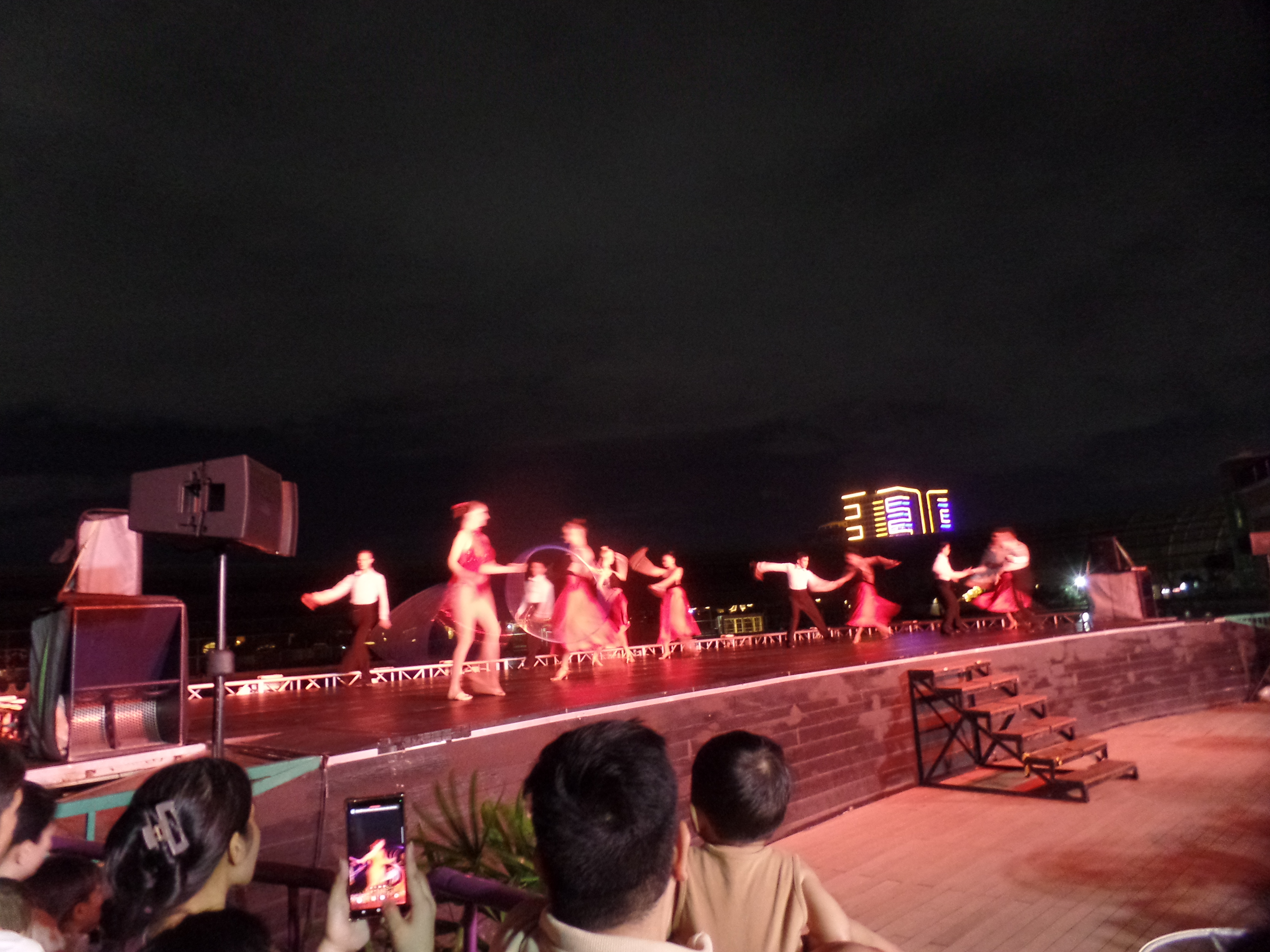
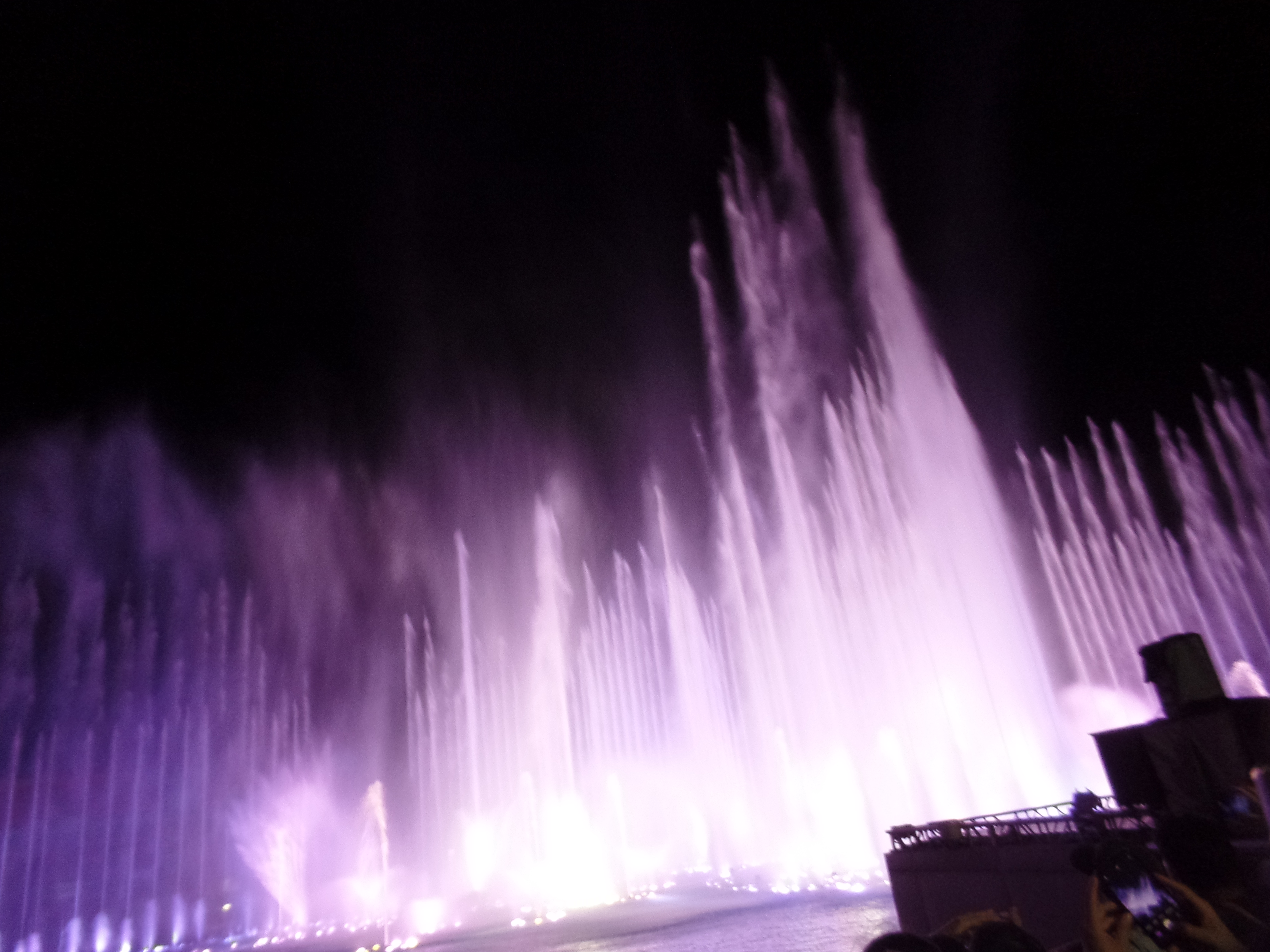
Okada Casino Resort was sort-of on the way back to Manila, so we stopped there, to take in a show that featured line dancers, some gymnastics, a juggler and hoop dancers, a talented singer-and some spectacular fountain art.

Line and hoop dancers, Okada Resort
Fountain action, Okada Resort (above and below)
The pageant in pink
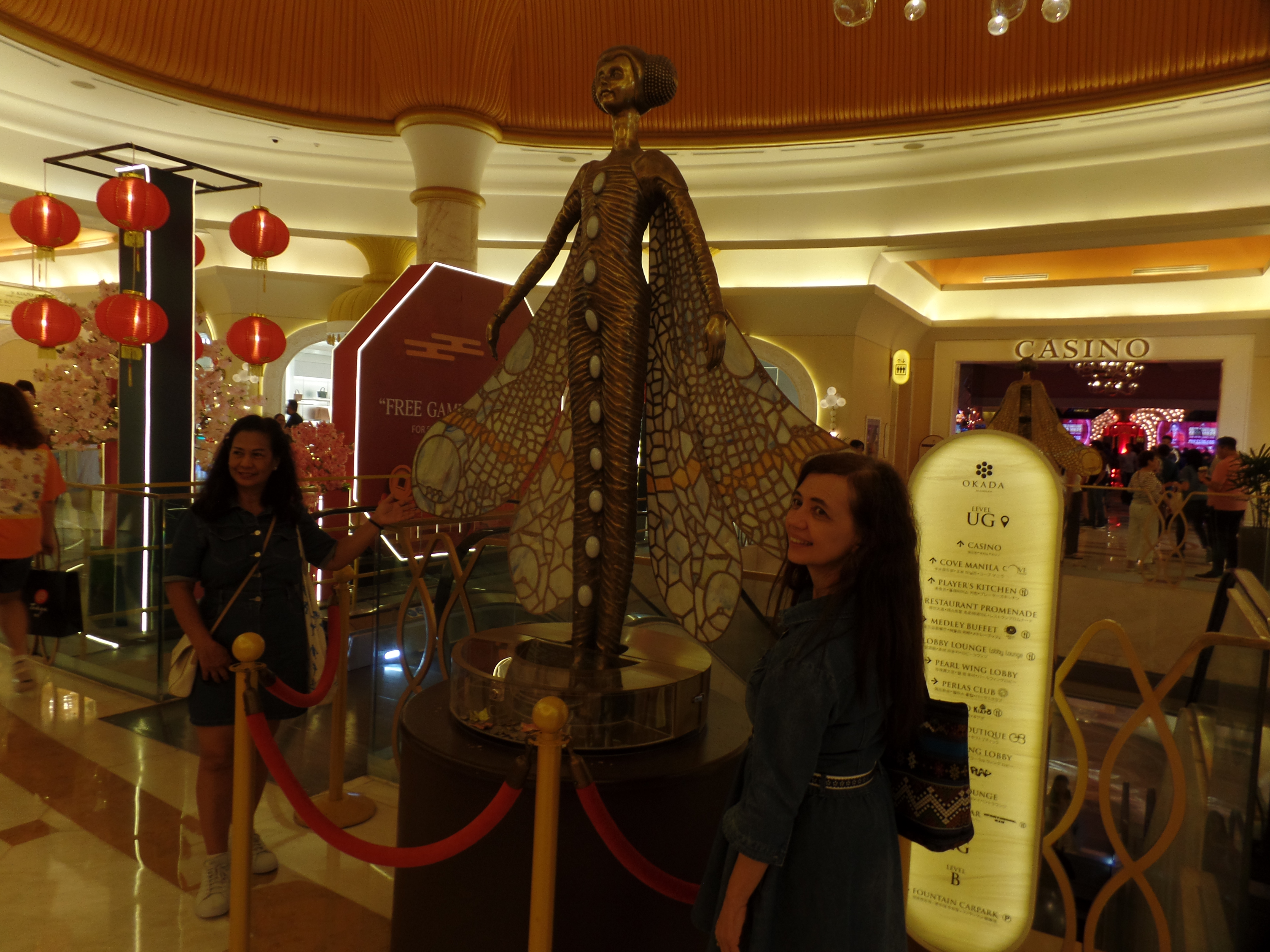
An odd butterfly with two angels.

My friends pull out all stops, when it comes to an enjoyable day. Tomorrow will be another one-at the Baha’i Temple Site, in the mountain city of Antipolo.

The Road to Diamond, Day 40: Cherishing

0

January 7, 2025- The animated teacher spoke of a calamitous event in our nation’s recent history. He wanted to remind the adolescent students, themselves only vaguely aware of that particular incident, just how fleeting such memories can be, and how easily they can be manipulated by those with ulterior motives. This conversation will continue tomorrow, and perhaps for several more days.

The freedom we have in this country is worth cherishing. So are the love and friendship that have been built, sometimes over decades. So are the gifts that the Divine has imparted to each of us. I thought of these things all day, as once again, I was placed in a setting where I could focus on one or two students at a time, and key in on the boy or girl and specific needs. I will do this for the next two days, as well. Part of the task is to support the teachers in their explanations and foci. Thus do I go forward.

In an evening orientation, for a Baha’i family who are moving to one of the Native American communities where Penny, Aram and I once lived, I also focused on what is cherished by First Nations people. There are friends in that area who I have not seen for several years and others from whom I hear, every so often. The reality, though, is that were I to return to the place, I would be at least welcomed by some, as if I had never left. That is what I wish for this new family, provided they open their hearts to the people.

I will likewise always cherish the friendships I have made here in the Prescott area, over nearly fifteen years. Regardless of what transpires, these next several months, this will always be a Home Base of my heart. The same will be true of the Philippines, no matter how things turn out on my next visit.

Life is for the cherishing, not for the expectancy.

Road to Diamond, Day 31: Perseverance

4

December 29,2024- The world said its first farewell to former President James Earl Carter, Jr., as he winged his flight to paradise, earlier today. His legacy was one of perseverance and his singularity of purpose was in public service. He was a micromanager and did not believe that public office entitled anyone to perquisites. I got that impression on Inauguration Day, 1977, when the President-elect and his Secret Service contingent walked from Blair House to the Capitol, so that he could take his oath of office. Everyone who called on him for breakfast at the White House paid for their meals. He kept a tight rein on the White House Tennis Court.

Practices like those disturbed many in Washington, and in Federal agencies across the country. In retrospect, a lot of the “swamp” characterizations of recent years could have been obviated, had Mr. Carter’s more reasonable management practices been incorporated into the operation of the Executive Branch, and by extension, the Legislative and Judicial Branches. How slowly we learn!

The high water mark of Jimmy Carter’s life came after he left the White House, with his tireless efforts on behalf of global health improvements and his advocacy of Habitat for Humanity, now a major force in providing housing for the disadvantaged. At an age when most people shun the climbing of ladders, there was Jimmy, feet firmly planted on the sixth or seventh rung, nailing boards to fascia and eaves. He was meticulous, in going up and down the ladder, in building techniques-and in teaching Sunday School, which he did continuously into his early 90s.

I remember thinking that maybe he was oversharing, talking about “lusting for women in his heart”, though he never acted on those urges. It then occurred to me that he meant it when he said “I’ll never lie to you.” He was true to Rosalynn, his wife of 77 years. He was, by all accounts, a gentle but firm father. He was a tireless public servant.

The tributes paid to President Carter, from across the political spectrum and from across the globe, attest to that tirelessness and to that honesty. May his achievements be indelible in our nation’s history and may he rest in peace.

The Road to Diamond, Day 5: Seoul

4

December 3, 2024- As I wrapped up my visit with Aram and Yunhee, stopping for a satisfying lunch at a Pollo Regio branch, just down the street from HB II, a drama was unfolding in Seoul, South Korea, that may have worldwide implications.

As Aram and I drove to DFW, and he jockeyed for position on the road with at least one driver who didn’t know what he wanted to do, much less know where he was headed, thousands of people in Seoul found they had been betrayed. These were young men, who had voted into office a man who told them what they wanted to hear, that he felt their pain in the midst of a world that no longer put them on a pedestal, and that he would reverse the course of society and make men the center of the Universe, once more. Now, that same President was declaring martial law, placing himself on a pedestal-for the first time since 1989, when the last authoritarian President left office.
I lived in South Korea, in the final years of Chun Doo-hwan’s regime. My little family and I were not treated badly, but I noticed that those who dissented publicly were routinely dispersed by pepper-spray and water cannon. I noticed that the riot police themselves were not treated much better, by their minders. There was wire-pulling going on, setting the common people against one another, 24/7. This lessened, to a great extent, after a series of democratically-elected leaders, beginning with the conservatives Roh Tae-woo and Kim Young-sam, and followed by progressives, themselves alternating with conservatives, proceeded to bring South Korea into a wider world.

Liberals and conservatives alike are fond of using phrases like “There’s no turning back” ,and “New World Order”. The two groups’ meanings are, at first blush, polar opposites of each other. There are, however, commonalities. Both see a world in which common people have a voice and the power brokers are reined in. Where they differ is with regard to exactly who those power brokers are. Conservatives see the “enemy” as Hollywood, “the Global Left”, Planned Parenthood and international financiers. Progressives see their foes as “the Christian Right” and mega-donors who control the levers of the media-both mainstream and social. In fact, those who stand in their way are the same forces-individuals and groups whose agenda rests in exercising control.

This is where what happened yesterday in Seoul matters to the world at large. The young men who voted in Yoon Suk-yeol, in 2022, are very similar to those who have voted in authoritarian leaders across the globe, in the past six years. Their locus of control is external, so they see any attempt by society and government to reduce the marginalization of women as a threat to their own well-being. This, as well as for different reasons that are specific to countries like Argentina, El Salvador, Hungary and the Netherlands, has brought similarly authoritarian leaders to the fore. Those, both male and female, who see themselves as being buffeted by forces out of their control, are bound to turn to the first, and loudest, appeal to their sense of well-being. I give you Weimar Germany, post-WWI Italy and Spain, resource-poor Japan of the 1920s and ’30s.

When Yoon Suk-yeol tried to return South Korea to the militarized days of 1960-88, the people found their inner locus of control-and took their country back, in short order. This looms large, for those who see authoritarianism as the wave of the future. “It ain’t necessarily so”-Ira Gershwin.

The true New World Order will arise from those whose locus of control is internal.

A Tanay Excursion-Part II

0

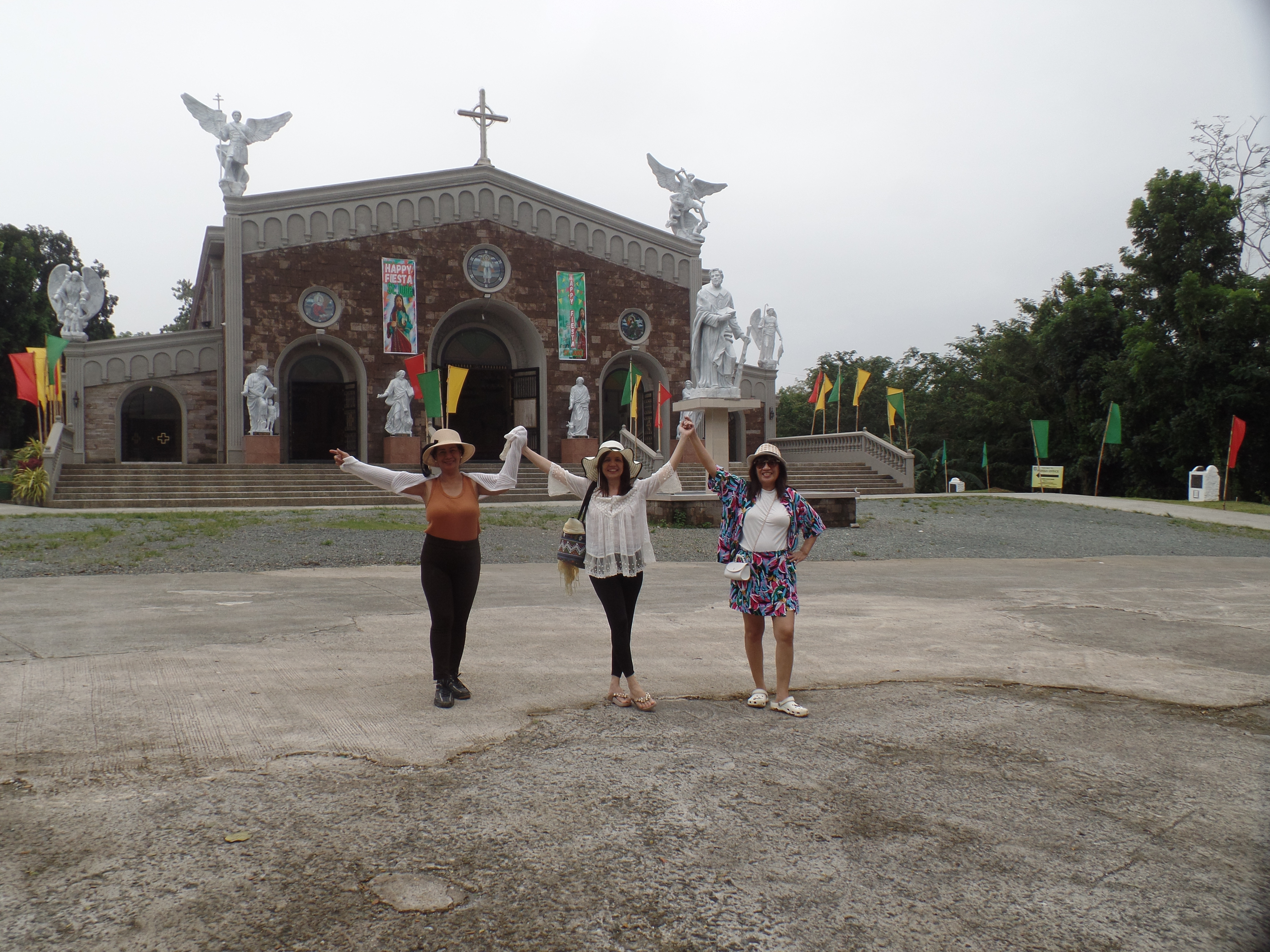
October 26, 2024, Manila- With a successful extraction from the muddy road behind us, the five adventurers took to more settled sites-the joys of central Tanay. First off was a fairly new church, Padre Pio Chapel. Here, the ladies indulged in another pose. Kathy could pose forever, and it would not get old.

Tres amigas, at Padre Pio Chapel, Tanay

We got directions from there to a chicken restaurant, Mang Inasal, in Tanay Town Center, where we enjoyed chicken inasal- grilled breast or leg. I covered this part of the meal. K bought us all Halo Halo, a treat that layers shaved us and frozen condensed milk, with bits of fruit.

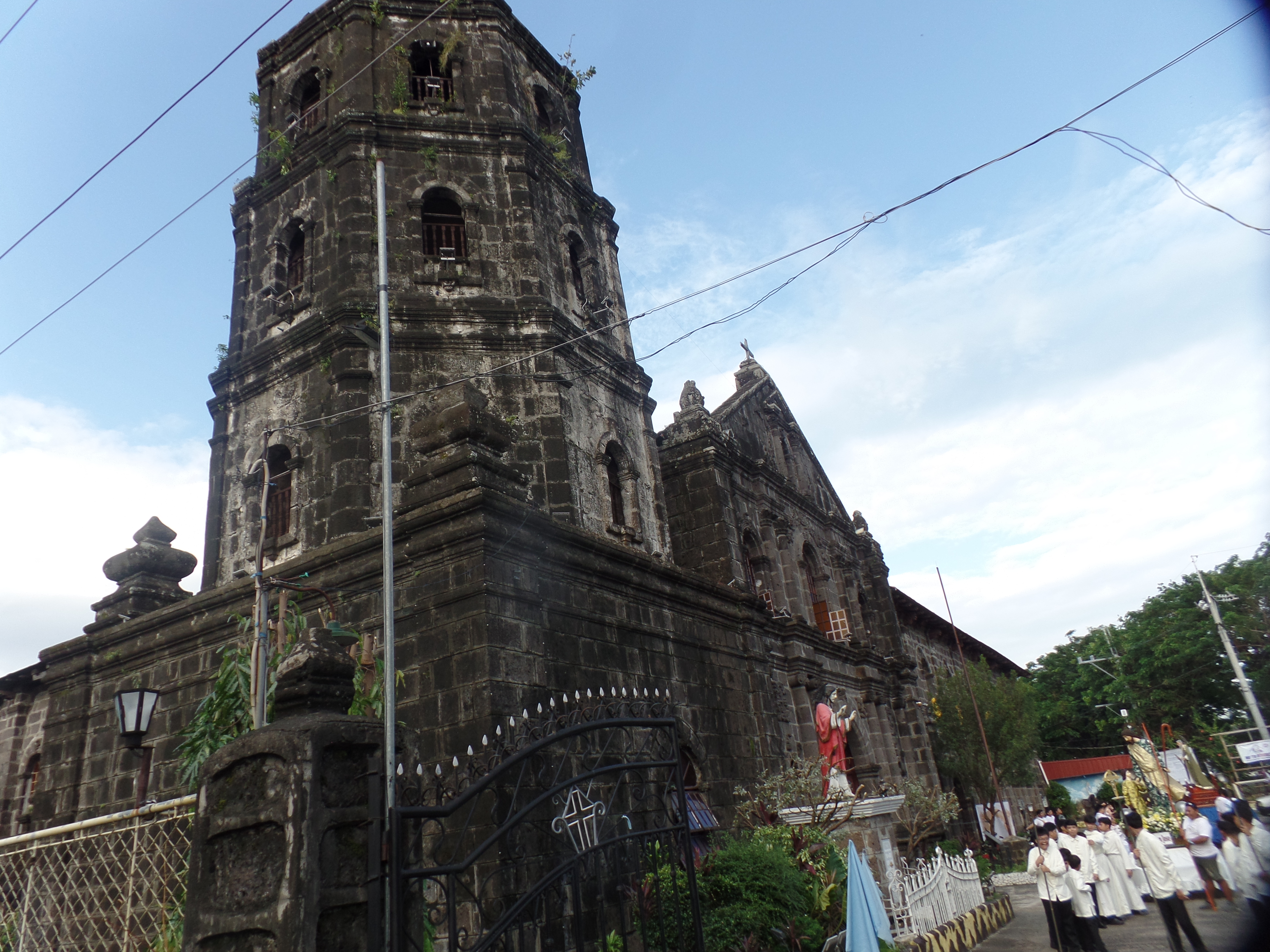
Following that delectable capstone to today’s journey, we headed over to San Ildfeonso de Toledo Catholic Church, built in 1563. There, we watched a procession of clergy and parishioners, quite common in the Philippines, following Sunday evening Mass.

Procession outside San Ildefonso de Toledo Church, Tanay
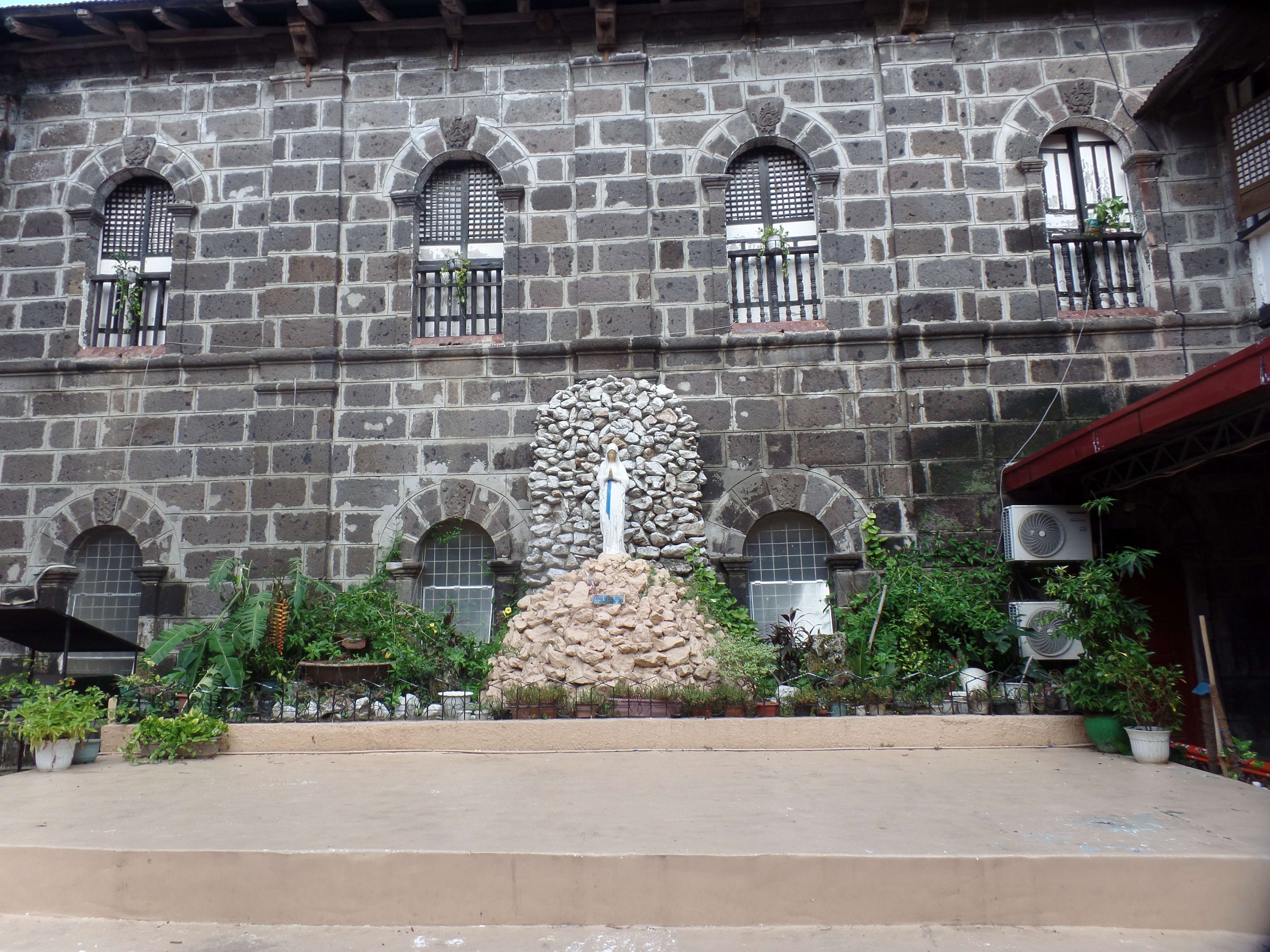
Courtyard of San Ildefonso de Toledo Church

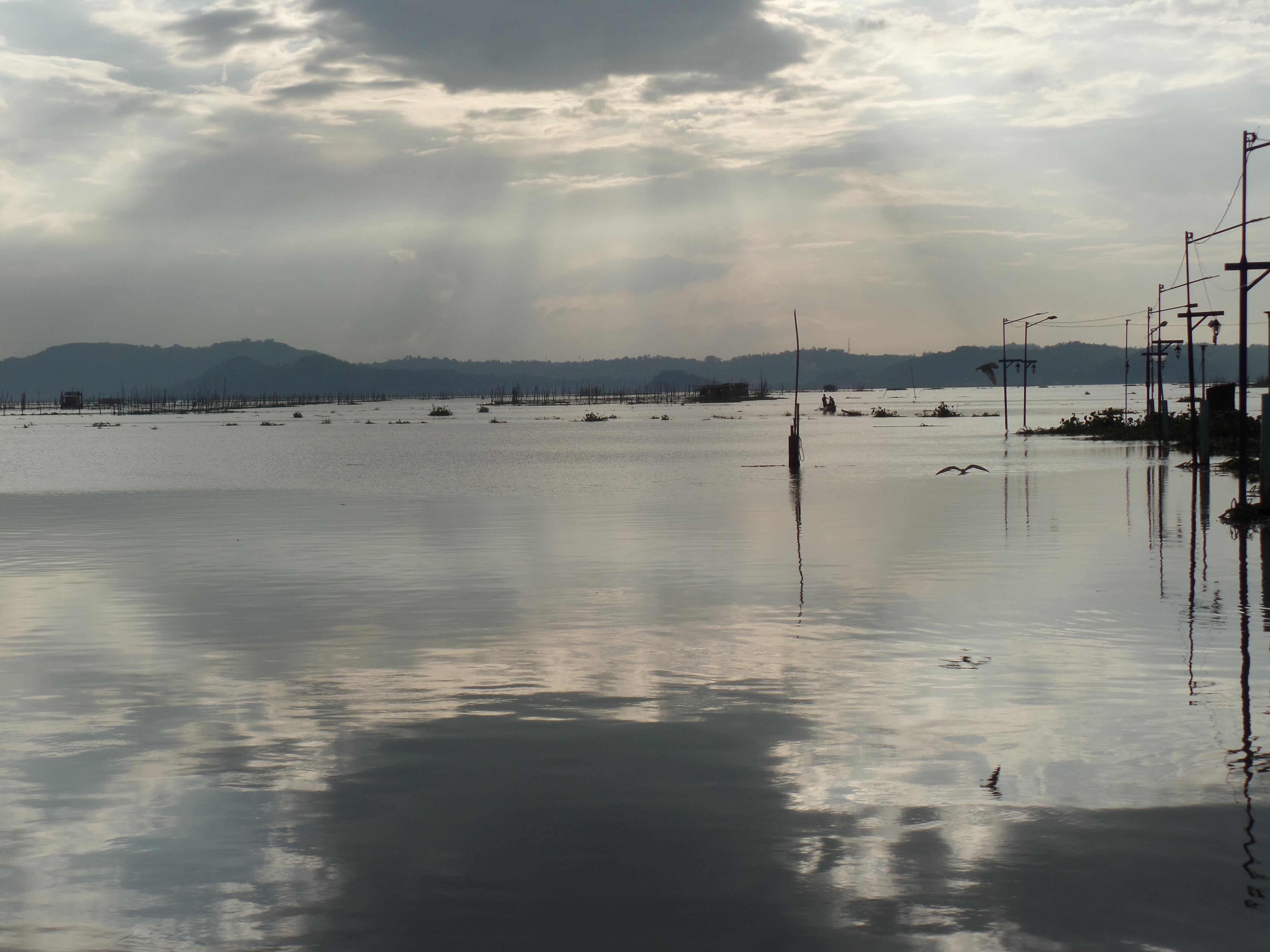
After the procession cleared, we made our way over to Tanay Wawa Park, where a small lighthouse stands on the north side of the brackish Laguna de Bay Lake, actually an inlet of Manila Bay. The lake itself is a rich fishing haven, with sea grass and water lilies in abundance, adding a relaxing air to the park.

Wawa, a thriving fishing village, south of Tanay (Above and below)
Tilapia, freshly caught: To buy or not to buy. K and I concluded that lack of a cooler was a problem.
We were satisfied with the decision.
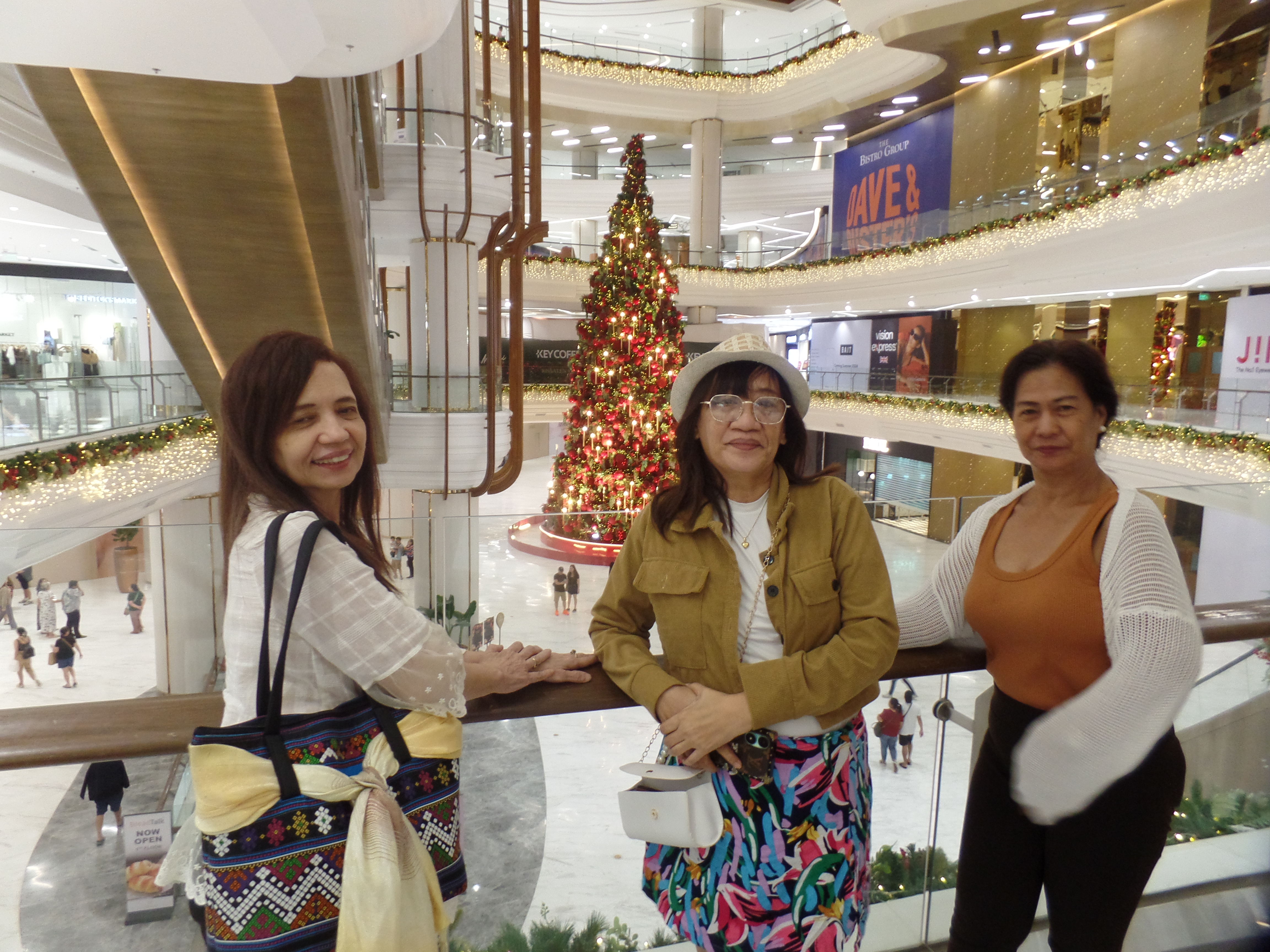
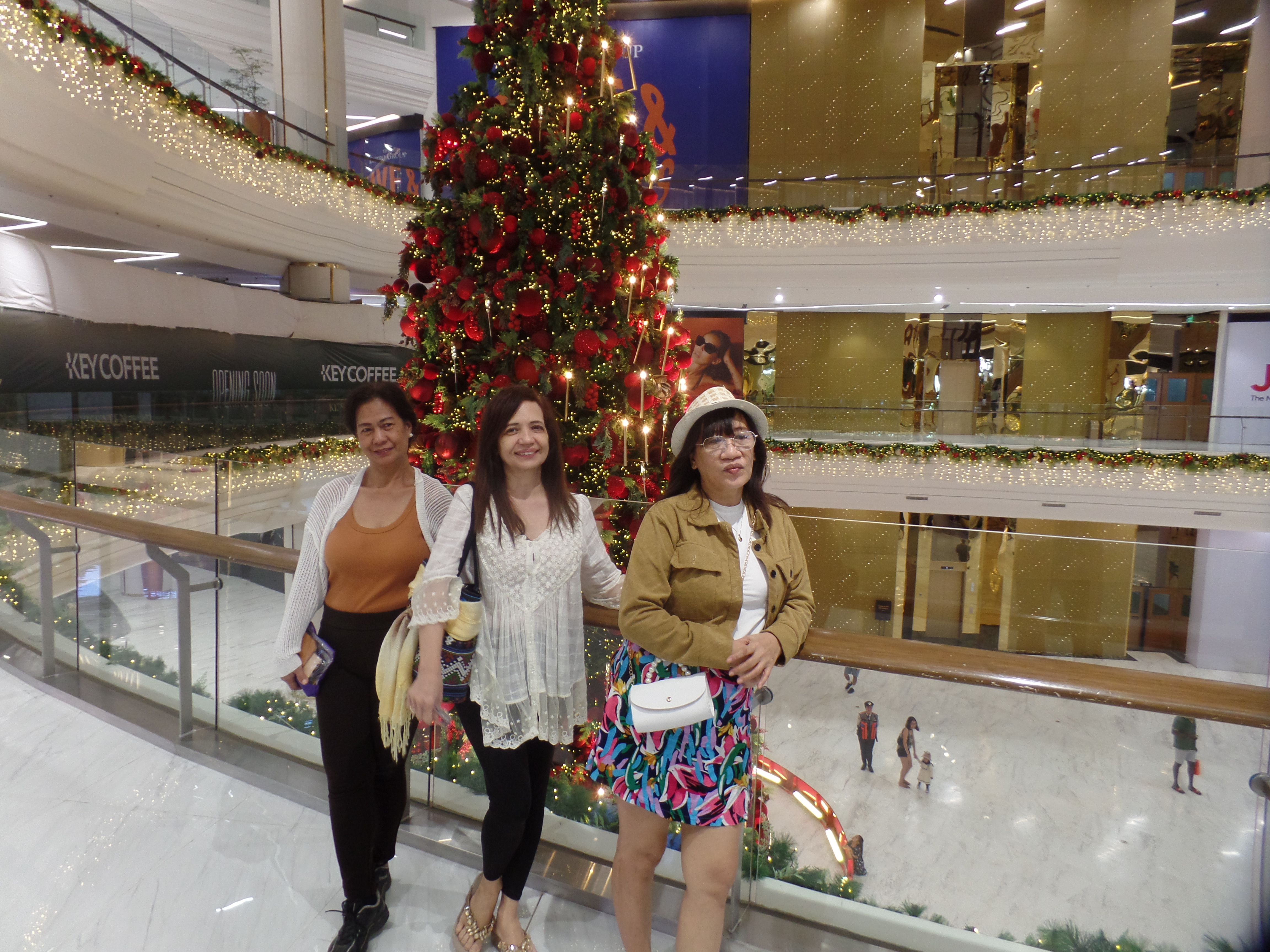
After talking with the fisherfolk, and my climbing the steps up to the top of Tanay Wawa Lighthouse, we headed back towards Manila-but not before stopping at Opus Mall, one of Pasig City’s most opulent. There, a “personal need” became the pretext for more photos. You have to know, I am a willing photographer.

Thus ended one of the sweetest days of this journey.

A Cluster of Parks, Part I

2

October 12, 2024, Manila- On days when K is busy, which are most days lately, I have determined routes for walking and found that Manila has a wealth of green spaces to check out, particularly in the area to the south and east of the Pasig River. Rizal Park, which memorializes the death of Dr. Jose A. Rizal, National Hero of the Philippines, and adjacent Luneta Park, occupy the eastern third of this greenway. This magnificent park was the second area, after Intramuros, that the ladies showed me, last year.

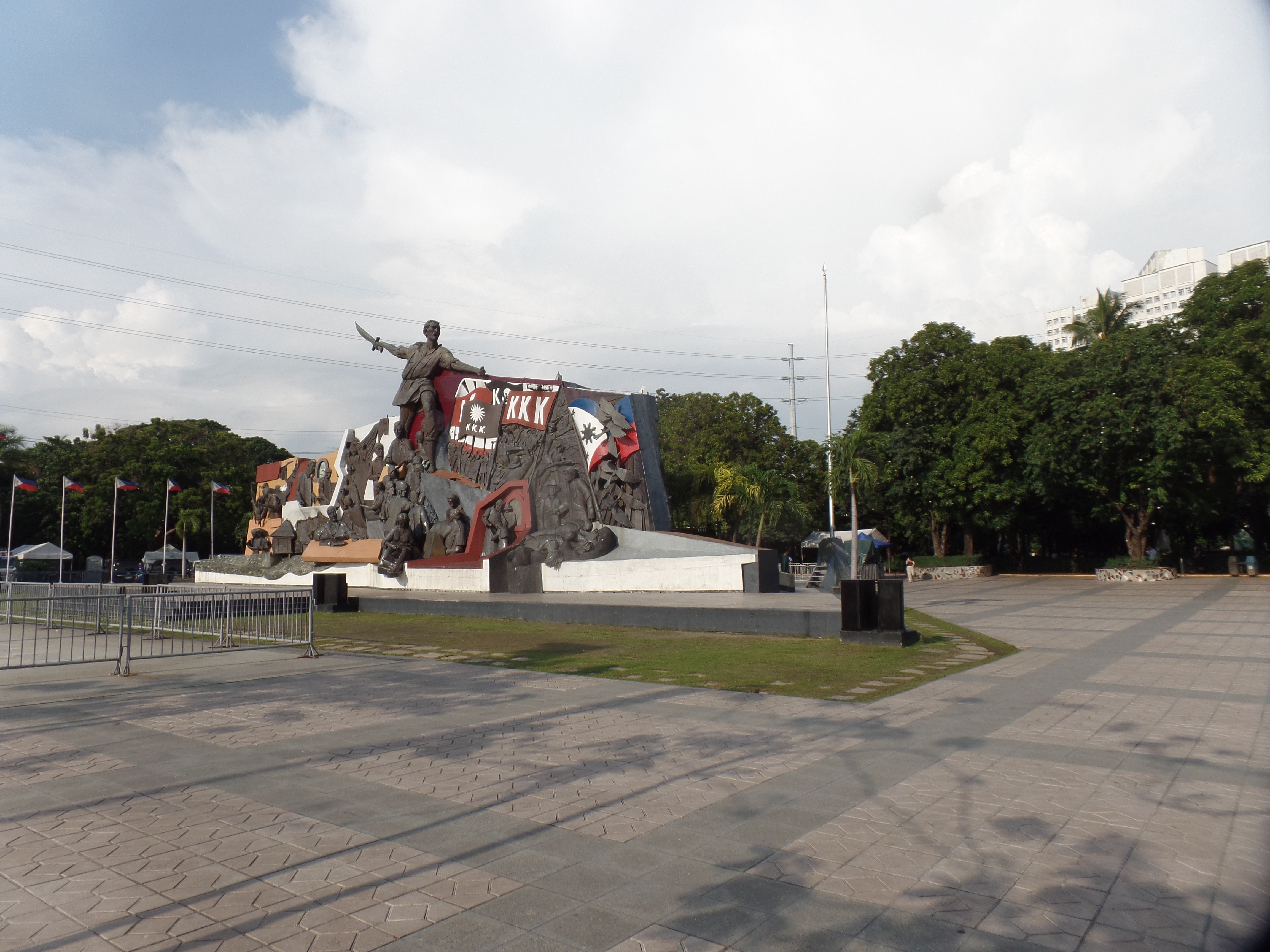
There are five smaller parks and gardens between Rizal/Luneta and the river. Yesterday, en route to a shopping run at SM City-Manila, I checked out Heroes Park. This small, but impressive, gem is also called Bonifacio Memorial. Andres Bonifacio is considered by many to have been the first President of the Philippine people, being a key leader of the movement towards a free Republic of the Tagalogs, in the mid-1890s. He was executed by the Spaniards, in 1897, and is viewed as a national hero by many, alongside his contemporary, Jose A. Rizal.

https://en.wikipedia.org/wiki/Andr%C3%A9s_Bonifacio

Bonifacio Memorial at Heroes Park, Manila (above and below)
Just so we’re clear, KKK refers to Kataastaasan Kagalanggalang na Katipunan, which is Tagalog for “Most Honourable Assembly”.

Near Heroes Park is the Clock Tower, which I captured only through the tree-tops. More on that edifice, later this coming week.

View of Manila Clock Tower, north of Heroes Park.

It is Kathy’s stated intention to get to more of the historical sites of the capital region, while I’m here. She’s doing the work of the Divine, though, so I am going to take up the slack and catalog as many sites as I can, on my own. It will make for a more interesting discourse, when we do get to visit the sites together.

My other mission was to replenish a few items and pick up some “breathable” cotton shirts, at SM City-Manila, not too far from Heroes Park. After walking past Arroceros Forest Park, a bit to the west of Bonifacio, I went about my shopping mission and enjoyed some Inasal Chicken, a breast barbecued in lime, pepper, vinegar and annatto/asuete ( derived from the seed of the achiote tree, as a natural food colouring). This style was developed in the area of Bacolod (Ba-KOO-lud), Negros. A couple of new polo shirts, some toiletries and a SIM card, w/ new adapter, for my camera accompanied me back to Ola! Hostel.

What started as a day of dark energy was turned around. Pondering the struggles of freedom fighters will do that. So will being grateful for having a certain person in my life.

Cave People, A Change Purse and a Cockroach

2

October 1, 2024, Manila- The three titular things stood out, in my visit yesterday, to Palawan Heritage Center. My guide, a knowledgeable, if soft-spoken, young lady named Irene, presented two videos: The first, on the island and its tributaries-which constitute the largest province in the Philippines. There are roughly 1, 780 islands and islets in the jurisdiction. The main island is 280 miles (450 km) long and 31 miles (50 km) wide. It is the mini-Chile of the Malay Archipelago. It is also the only part of the Philippines that was once part of mainland Asia.

The second video raised an issue of humanity: The Tau’t Bato, a small subgroup of the Palaw’an First Nation, live traditional, simple lives in the Singnapan Valley, of southern Palawan. They take shelter in nearby caves, during the rainy season. many of the Tau’t Bato came to live in cities, from Puerto Princesa to Manila and Cebu, in the 1970s to 2000s. They found urban life to be totally at variance with their experiences in the Singnapan, only finding “work” as house servants, trash pickers or purveyors of trinkets. They slept on the sidewalks and were generally treated as curiosities, at best, or outcasts, at worst. Many went back to Singnapan, though some still live in the larger communities. Fortunately, those who have returned to their homeland are protected by the provincial and national governments.

As Irene was showing me several paintings by local artists, a cockroach came onto the polished marble floor. I left it to her to decide the insect’s fate, and a janitor was summoned, whisked the creature onto a dustpan and deposited it in the garden outside. (I do this at home, when confronted with a sewer roach.)

The last item was a handmade change purse, which I bought for K, given her love of local handicrafts. I picked up a “glow-in-the-dark” trinket for myself.

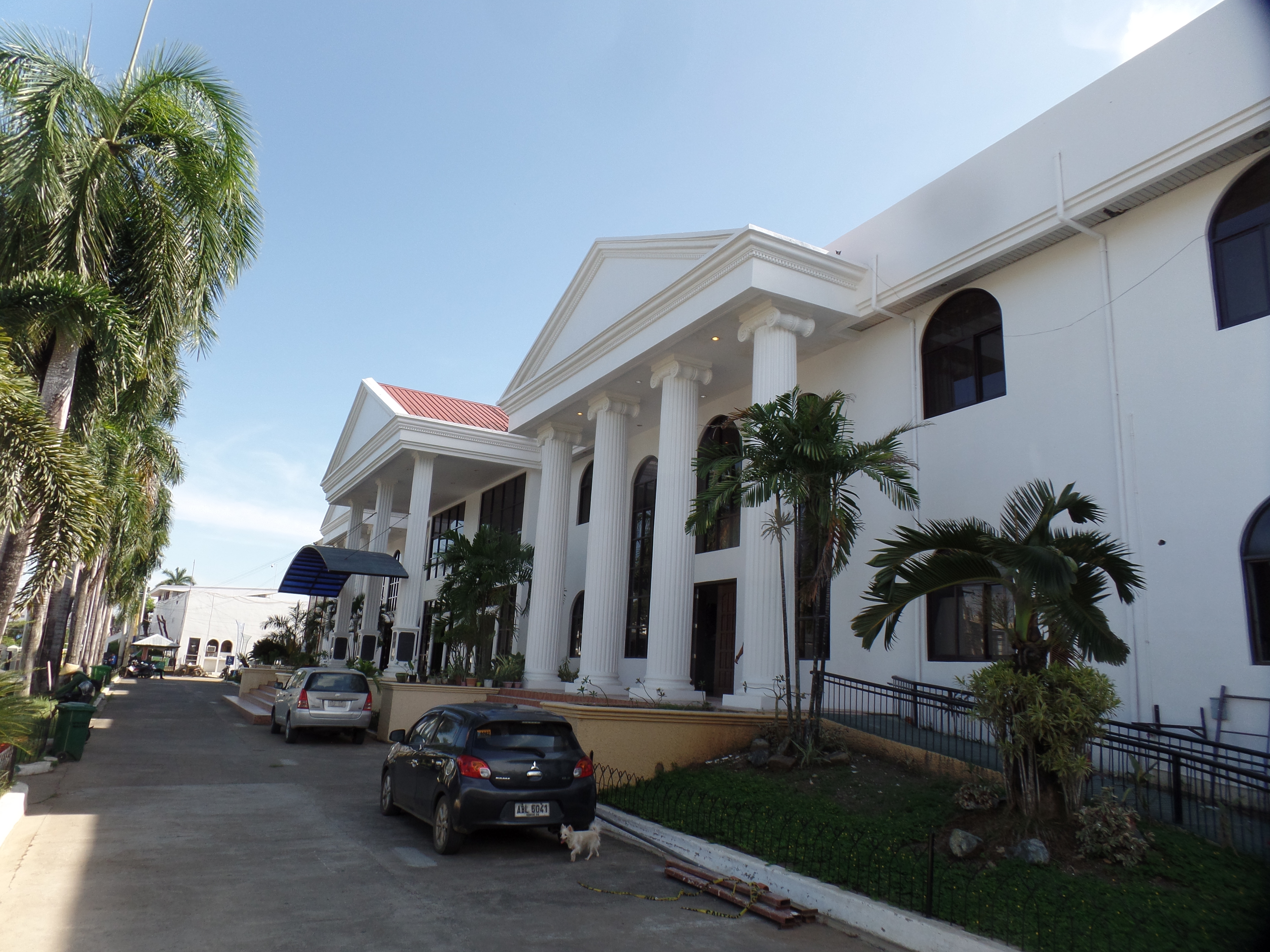
Here are a few scenes of the Palawan Heritage Center..

Palawan Provincial House
Some works by local painters
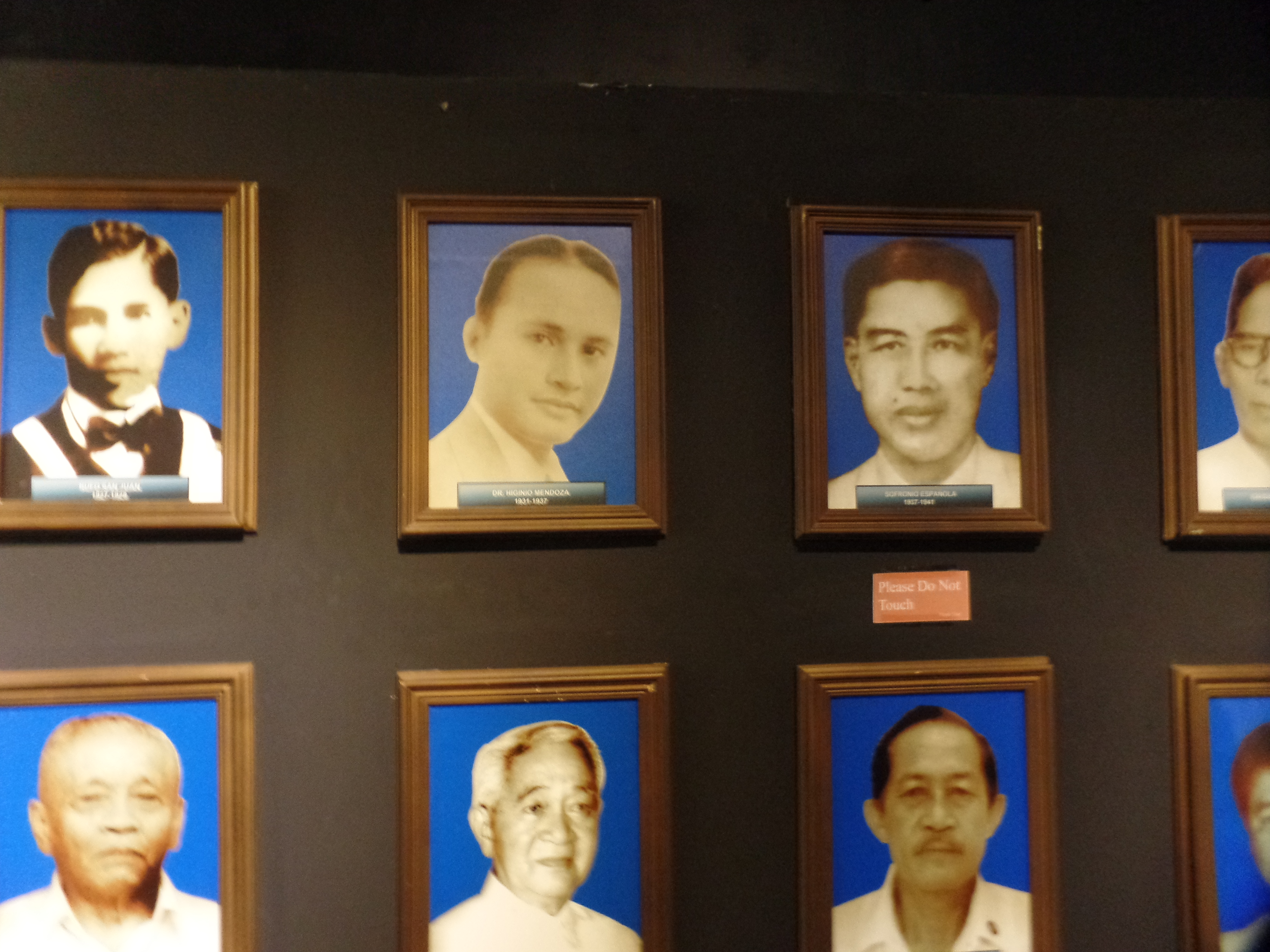
Dr. Higino Mendoza (top row, second from left) was the wartime governor of Palawan. He worked to keep his people safe from Japanese rule, and was executed for his trouble. He is regarded as the provincial hero of Palawan.
Here are more works by local artists.
Here is a replica of Plaza Cuartel’s gate, when it was intact. The present structure has fallen into disrepair.
This depiction of a babaylan ( a traditional healer) was intended, by the Spanish, to frighten children. The healer was actually a gentle soul, as a rule.
Here is a diorama of a Tau’t Bato home.
This may be as close as I get to a Palaw’an village, any time soon.

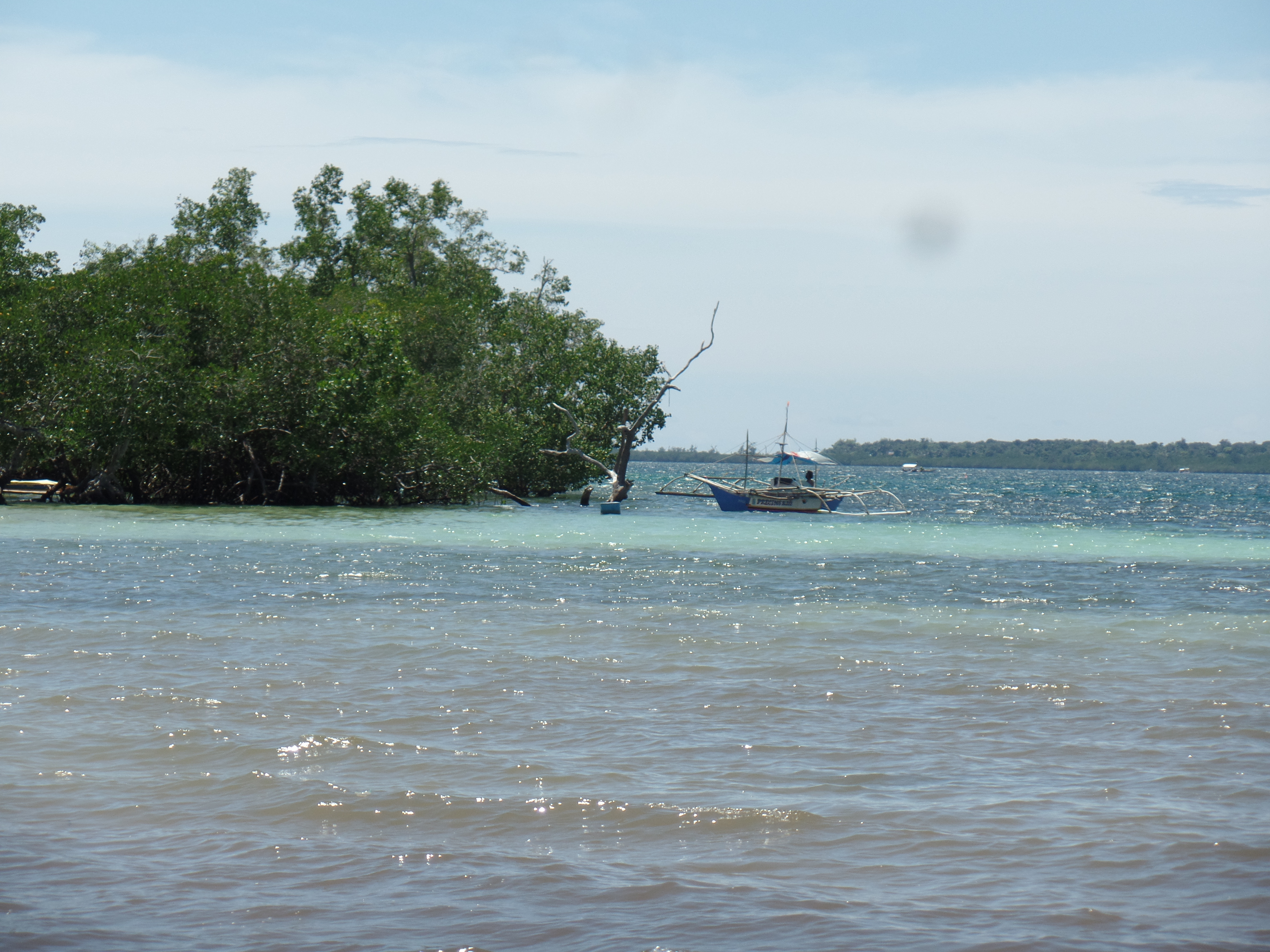
In the afternoon, I went with Roger to a small local beach, called Aquaman Beach Resort. It is in a small barangay called Bancao-Bancao. The tide was incoming, but the water was like a bath, so I walked around a bit and took some shots.

A view of the Philippine Sea, at Bancao-Bancao. (Above and below)
Roger, resembling Ernest Hemingway.
Longhouse, at high tide.
Lone tree, and a boat cabana
Long view of Aquaman Beach Resort.
Another “tree islet”
Forest trail, out of Aquaman Beach Resort.

My last day in Puerto Princesa ended with a nice meal at McCoy’s Restaurant, at Bay Walk Park. For now, having returned to the capital, Palawan will continue to exist in my heart. The Philippines as a whole will, as well, after I head back to North America, on October 27. Something tells me, though, that we will be far from done with one another.

Soloing

2

September 28, 2024, Puerto Princesa- The shoe, it turns out, was only moved a short distance from its untouched mate. Darkness keeps us in suspense, yet I sense when patience will win out, in daylight. The pair again adorn my feet.

I met another American, this morning. He has settled here in Palawan and farms with his wife, near BM Beach, which will itself be my beach experience on Monday. I have made it known that, so long as I am welcome in the Philippines, next year will bring a longer stay. The “Great Adventures” I had planned for the next five years are better off done with someone I have come to love-and trust- very much. Before them, then, comes earning trust, myself-and so I make that commitment, even with the adjustments this will bring to my comfortable life in Arizona.

Family has only grown larger, over the years, but I have seen a bigger picture than my local scene, since I was four years old. Always branching out, farther and farther-while never forgetting my roots, it has been such a rewarding life. Some of this has been imparted to my son, who is in the rootedness phase of life, and so will be the anchor of annual or semiannual jaunts back to North America. The wider family, though, will hardly shrink.

I felt comfortable enough, this evening, to walk south and west, and take in Puerto Princesa’s Bayside Park, its Cathedral and Plaza Cuartel- the scene of a brutal massacre during World War II. It may or may not be a hallmark of American travelers, but I go anywhere that is not off-limits, or is obviously dangerous turf. Puerto Princesa is not a dangerous place.

Statue of the “princess”, for whom the city is named. She was an elusive figure, it is said.

Peacock Statue (Tandikan)-the provincial bird of Palawan.

University crew members, in practice

City logo, at Bayside Park.

Cathedral of the Immaculate Conception, Puerto Princesa

Account of brutality that grew out of fear.

So went my solo visit to Hondo Bay and its interesting park.

A Split City

2

September 25, 2024, Manila- Stepping off the light rail car, at Fifth Avenue station, I spotted an ornate Chinese temple and adjoining pagoda. I was in Caloocan, the Philippines’ fourth-largest city, and the only one that is split by a neighbouring community. In this case, Quezon City, the largest city in the country and its former planned capital, has split Caloocan into the greater northern segment and a slender southern area, by way of the former’s aggressive annexation of land in the 1930s and again in the 1950s.

It is in southern Caloocan that the Chinese structures are found. The Taoist Temple, named Thai To, and its pagoda, lie to the south of the Fifth Avenue Light Rail Station. The outer gate of the complex was open, but the doors to the structures were not, so I confined my curiosity to their exteriors. I know from having lived in South Korea and visiting Taiwan that temple visitation involves serious protocol.

Thai To Taoist Temple and Pagoda, Caloogan South (above and below)

Crossing back to the main street, I noticed another old Mandarin-style building, on the north side. So, crossing over, I found Ung Siu Si, at the north end of a small area of shops and warehouses.

Ung Siu Si Temple, Caloocan South

Two older Chinese men, who had been lounging outside, got up and moved away, as they saw me approaching. A nearby security guard chuckled at their wariness, but no one had a problem with my photographing the building.

This was the extent of Caloocan South’s Chinatown remnant, save for a few small cafes with signs in Mandarin. I spent the rest of my solo afternoon at Co-Lab, a pleasant coffee shop, frequented by university students. It is ever a feature of my sojourns to seek out such haunts, and while away an hour or so by journaling. Co-Lab, also called The Coffee Project, is not far from Ola!, or from the Baha’i Center, so I will visit there again, when K and the sister-friends are busy with projects, on a given day.

Tomorrow, though, I will wrap this second stay in Manila and head southwest, to Palawan, for a three-day visit. It is the home of two of the sister-friends, who have been so important to our day-to-day activities.

A Noble Partnership

0

September 24, 2024- A groan came from the back of the taxi, and I turned to see my sister-friend trying to stomp a cockroach, which scurried out of harm’s way-toward my beloved, who also tried to stomp and missed. Being the man in the party of three, Filipino culture dictated that I sit in the front passenger seat, so despite my annoyance at the insect being near my friends, I could do nothing-but wait and see if it came towards my space. Somehow, it stayed hidden under my seat-and we all refocused.

We had been on an outing, first to the Philippine-American Cemetery, where 17,000 men and women, who died fighting the Japanese invaders, between 1941-45, are laid to rest. Those Missing in Action are named also named on a Wall of Honour. This wall is in three segments, each of which has several columns. Kathy wondered if any of my family members died in service, during World War II. None did, but my late father-in-law was a prisoner of war, in Berga, Germany, for five long months, in 1945. As a Jew, he was given “special” torment. Two of my maternal uncles were in the Navy, during the Battle of Midway. One of them served with valor, when his ship was shot out from under him and crew mates. He received a Silver Star for his actions. One of my paternal aunts served in the Women’s Naval Corps, the only member of her family who was able to serve at the time. I did find a distant relative, a Robert Boivin, USN, who was killed in action in the Philippines. There may be others, as we did not go to the Army, Marines or Coast Guard sections, which we will visit another day.

We viewed a film about the sequence of events There were so many heroic figures, among the Filipino and American forces, including many of both who acted as guerillas, constantly harassing the occupants. Filipino civilians also acted in wily fashion, many operating right under the noses of the overconfident Rising Sun. All those who died, made the soil of the Philippine nation fertile, in the best of ways. My head is bowed in tribute.

Here are some scenes from our visit to this hallowed spot.

The Home Front of America sprang to action.
People of colour were in the forefront of the battle for the Philippines, and elsewhere.
Kathy and Norlie are among the grateful.
So am I.
Norlie’s grandfather was one of the above.
I still stand ready.
This cenotaph honours the fallen, collectively.
Robert Boivin, Signal Corps, USN, was a distant cousin.
Three of Penny’s distant maternal cousins, Anthony, Ervin and Kyee Faust, were also in the forefront of the battle-at Leyte Gulf (1944).

Here is another view of the Cenotaph. It is actually a chapel, with a statue of St. Mary inside.

Afterwards, we went to one of the legacies of Philippine freedom: The new financial center of Manila: Bonifacio Global Center. There, we met another friend and I became the lovely ladies’ paparazzo.

Bonifacio Global Center
Norlie, Kathy and Ylona at “BGC”.

We got a late start today, but it didn’t matter.