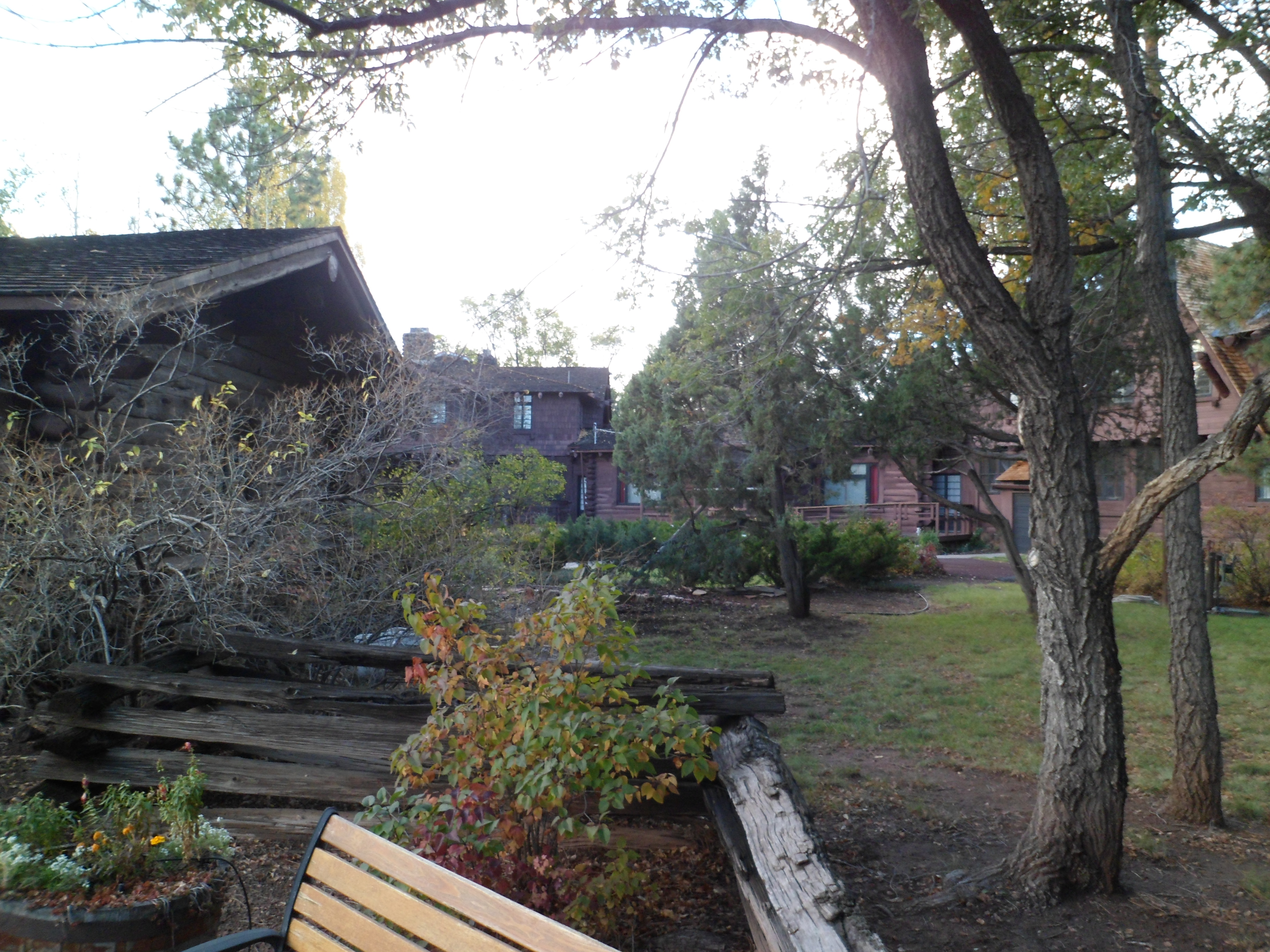
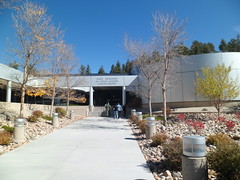
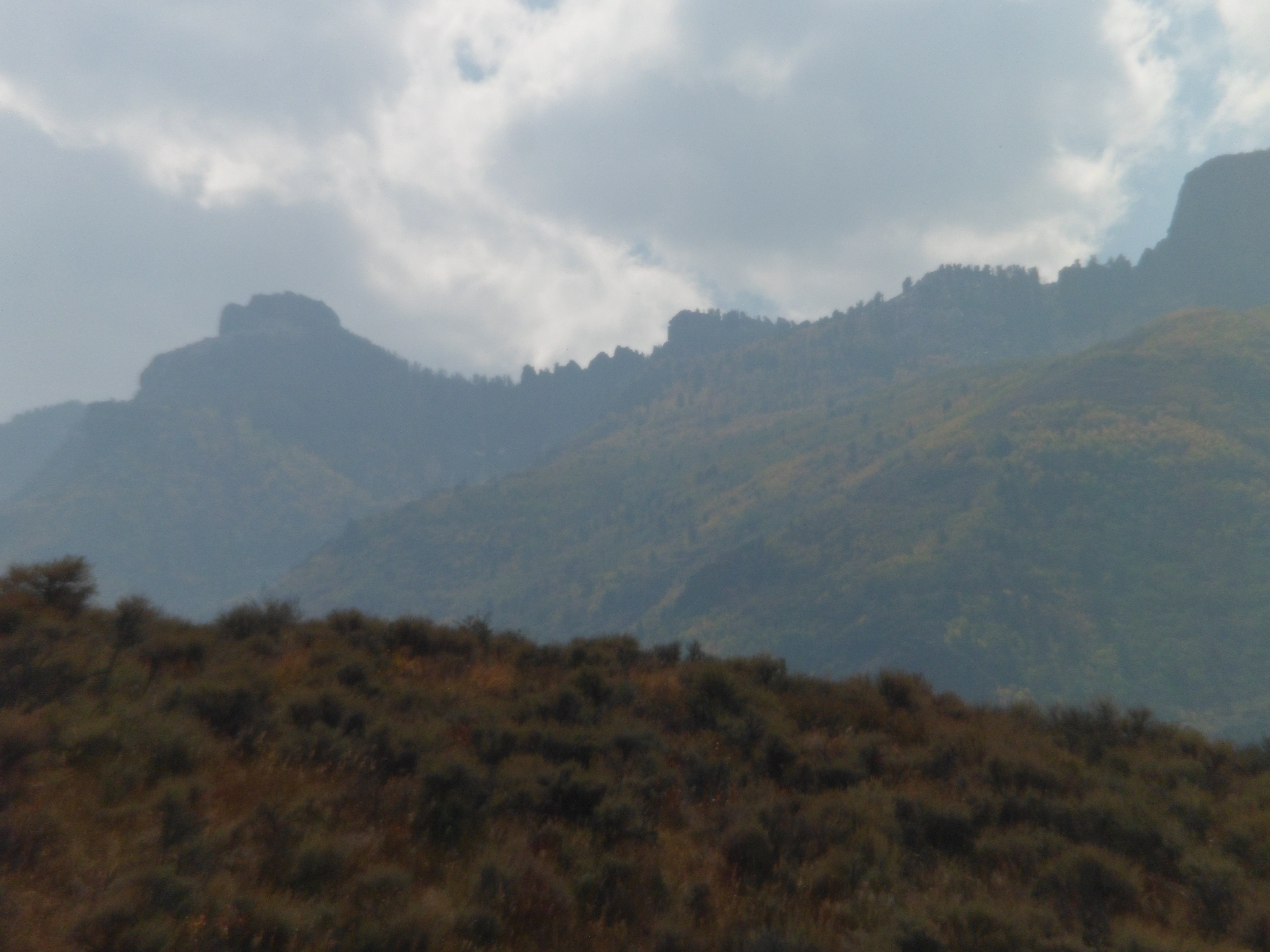
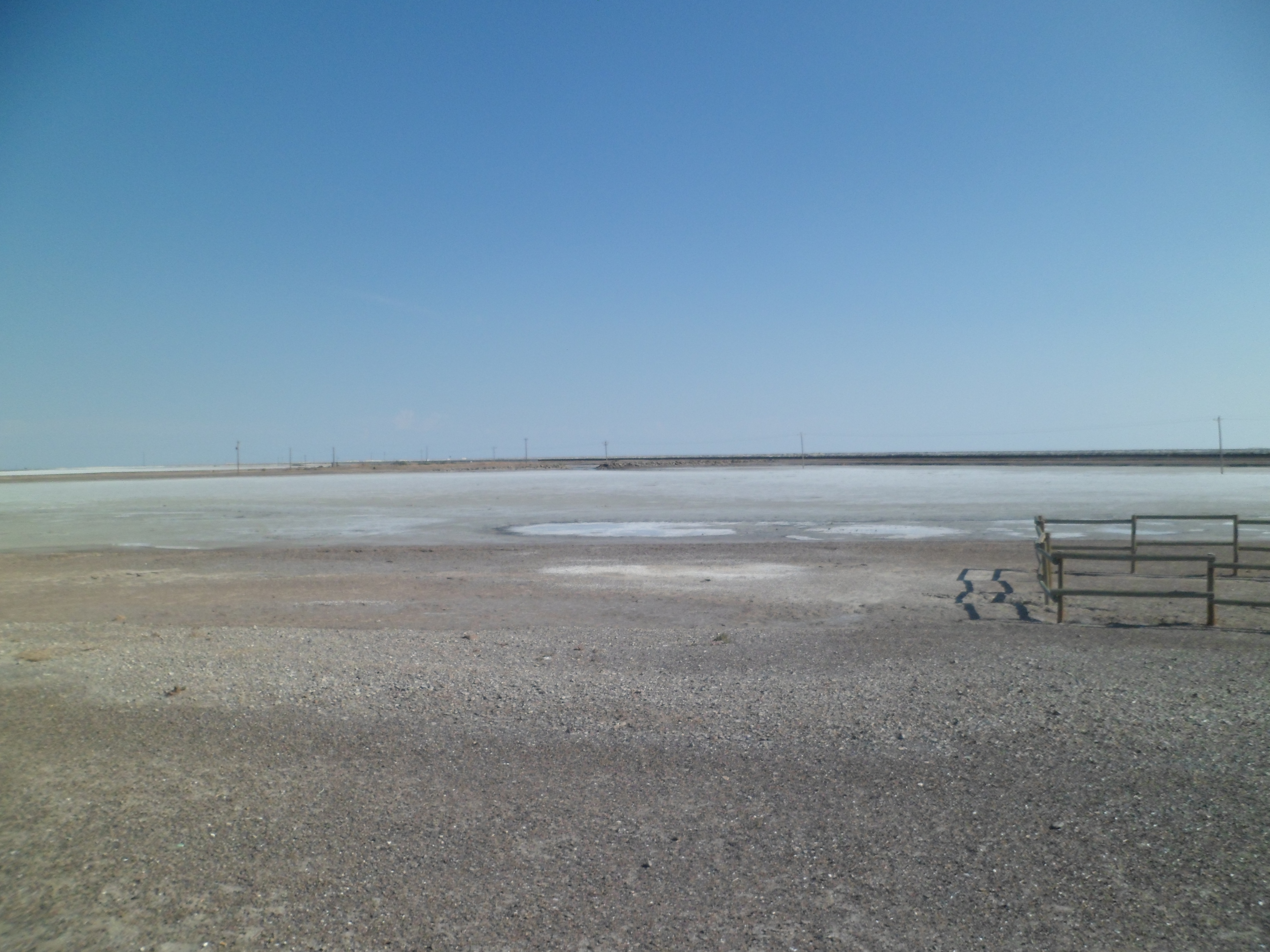
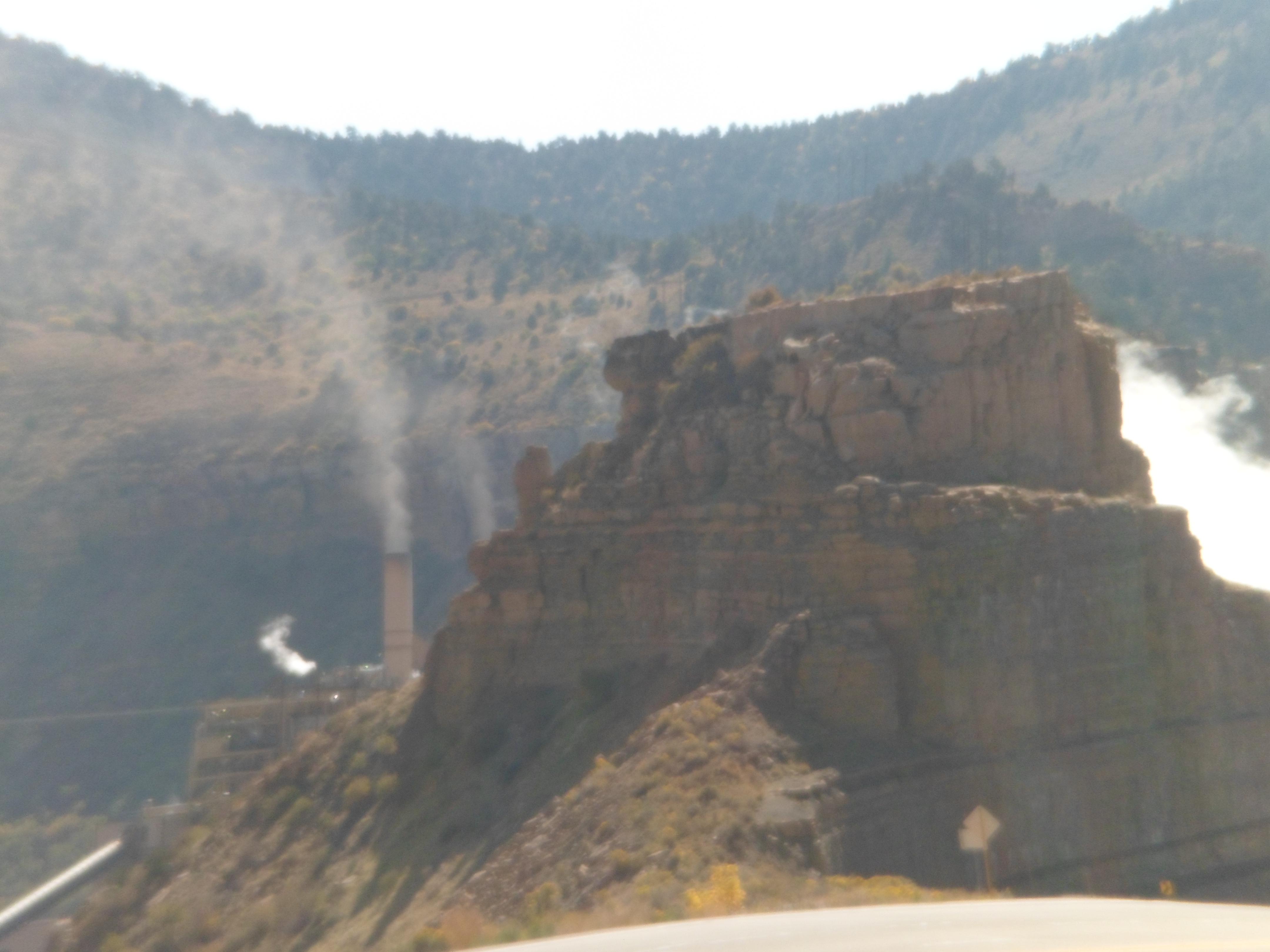
After I had finished visiting the Fort Valley area, the next order of business was to check out the grounds of Riordan Mansion State Park, which meant walking trough my alma mater, Northern Arizona University, The school has grown exponentially since my days there- which were, of course, thirty one years ago. One place that hasn’t changed much, at least outwardly, is the laboratory school, South Beaver Elementary School.
I scooted over to Riordan Mansion, before the gate closed. The edifice was built in 1904, for the brothers Timothy and Michael Riordan, who were timber barons in the Flagstaff area, in the early Twentieth Century. It is preserved as an acknowledgement of the timber industry’s historical importance to Arizona.
It was getting towards evening, so I stopped by Macy’s and verified the time of the evening program, then enjoyed a marvelous artisan Margherita pizza, at Pizzicletta, one of those “best-kept secrets” that I would love to see get out of the bag. If you are in Flagstaff, go see the Schiffs, on Phoenix Avenue, across the street from the large train station parking lot. Amazing pizza and salads, with highly praised gelato for dessert, await the patron. You know you are in a college town, when the bill is presented on an i-pad!
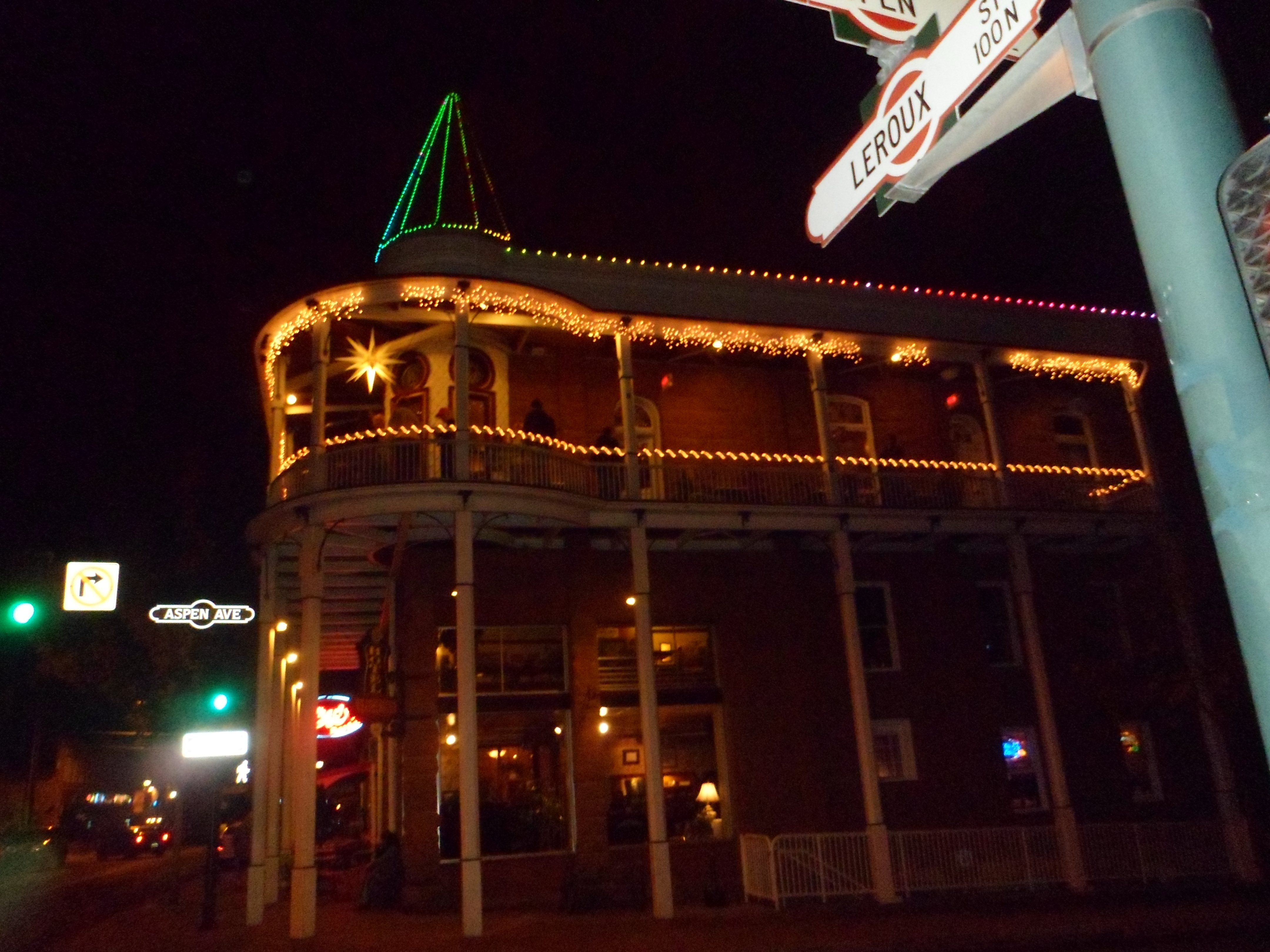
Then, it was time to go across Santa Fe Avenue, to the north side of downtown. Weatherford Hotel, where Penny and I occasionally stayed in the mid-80’s, is decked out for the upcoming holidays.
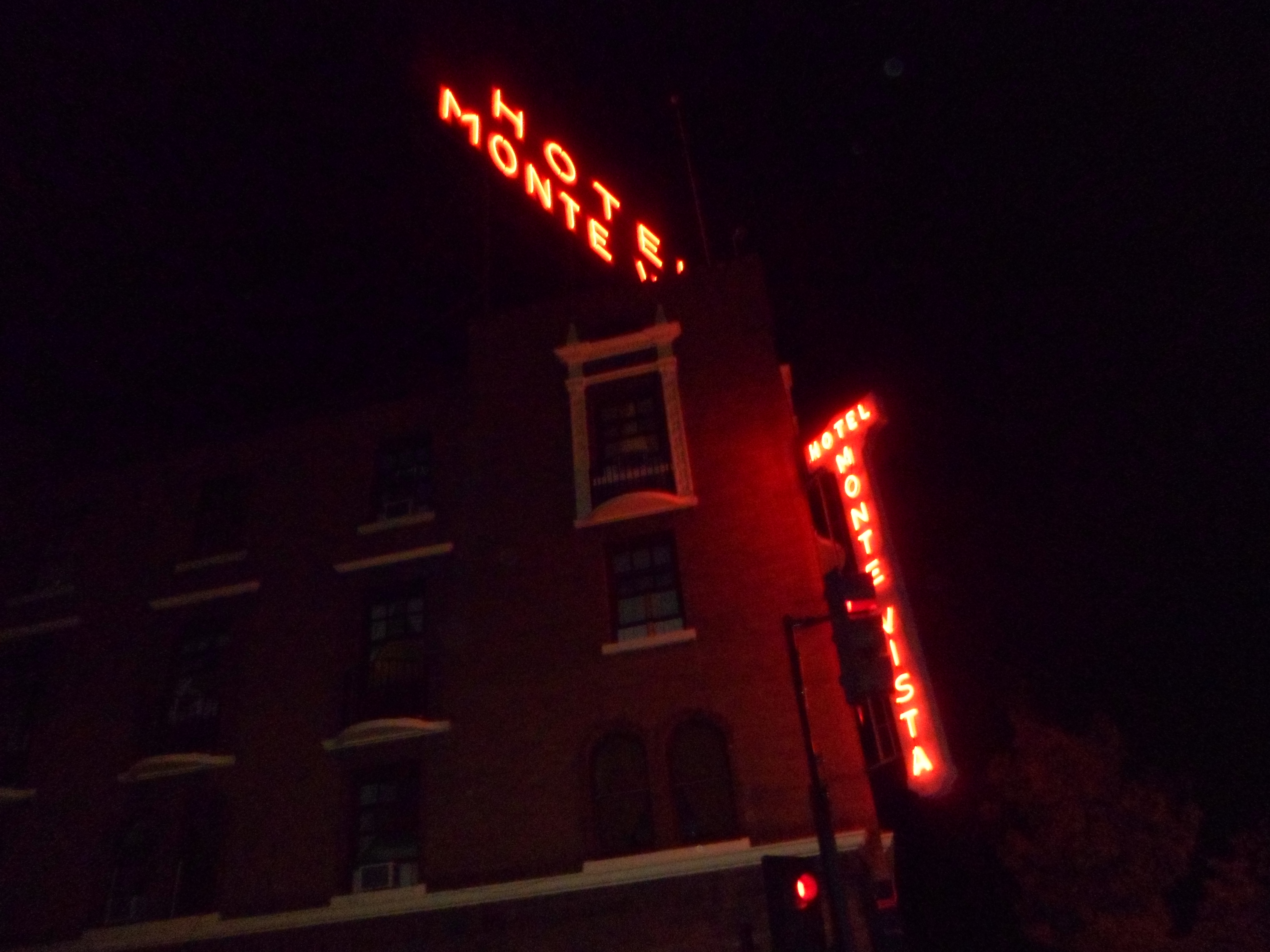
The Monte Vista, also a timber-era hotel, hasn’t quite caught the holiday bug, as yet.
My main reason for coming here, though, was to see my friend, Emiliano, from Phoenix, do a hip-hop performance at Macy’s. This was a packed house and Emil was terrific. He does a fine job of incorporating the Baha’i message into a hip-hop framework.
This energetic genre does not have to present a negative message. Emiliano’s hip-hop is nothing but positive
So, after your artisan pizza, coffee at Macy’s might hit the spot on a chilly Flagstaff evening. Breakfasts and lunches are equally good.
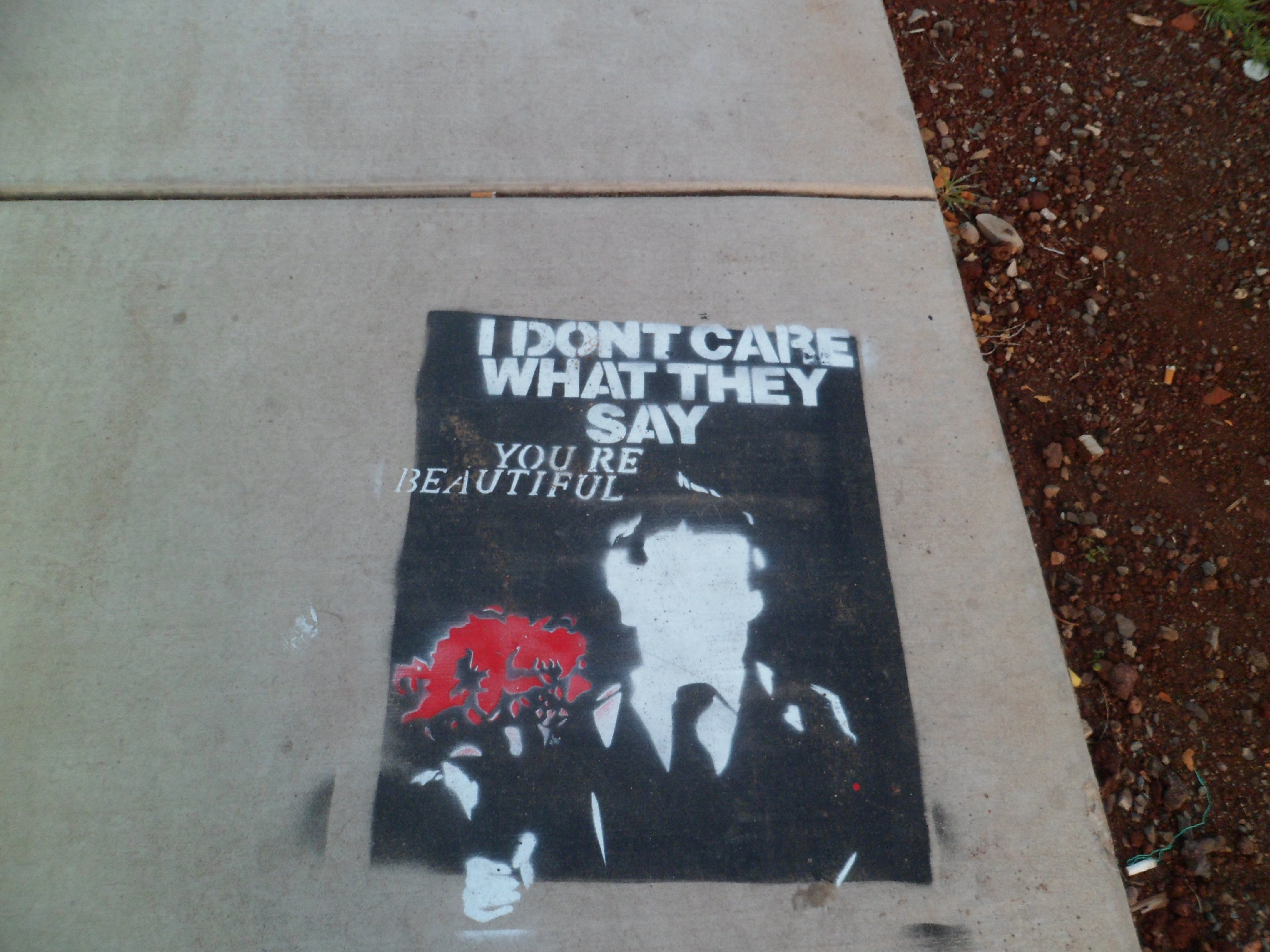
Finally, a message from some NAU students, to us all:
Have a great week. I will continue this series with tales from Oktoberfest Saturday and Sunday.
I lived a somewhat carefree life in Flagstaff, in 1980-81. I was in a mildly demanding graduate program, was in and out of a relationship with the woman who became my wife, and barely worked at a couple of jobs. Mostly, though, I was content to hang out in the historic downtown, reading a couple of papers, or studying, at Middle Earth Coffee House, (which became Macy’s European), going on hikes with the Full Speed Ahead trailblazers of NAU Hiking Club, enjoying the foliage of the Inner Basin and scarfing down all-you-can eat pizza at Caparelli’s (now long gone) or Alpine (still there).
There are several places around the country which resemble Flag- Boulder, Bend, Santa Cruz, Missoula, Burlington. In truth, though, each place has its specialness. Though each of the above has the common threads of youth, university, a thriving arts scene, lots of coffee and chai, and at least one artisan pizza house, I could not substitute Bend for Flagstaff, or vice versa.
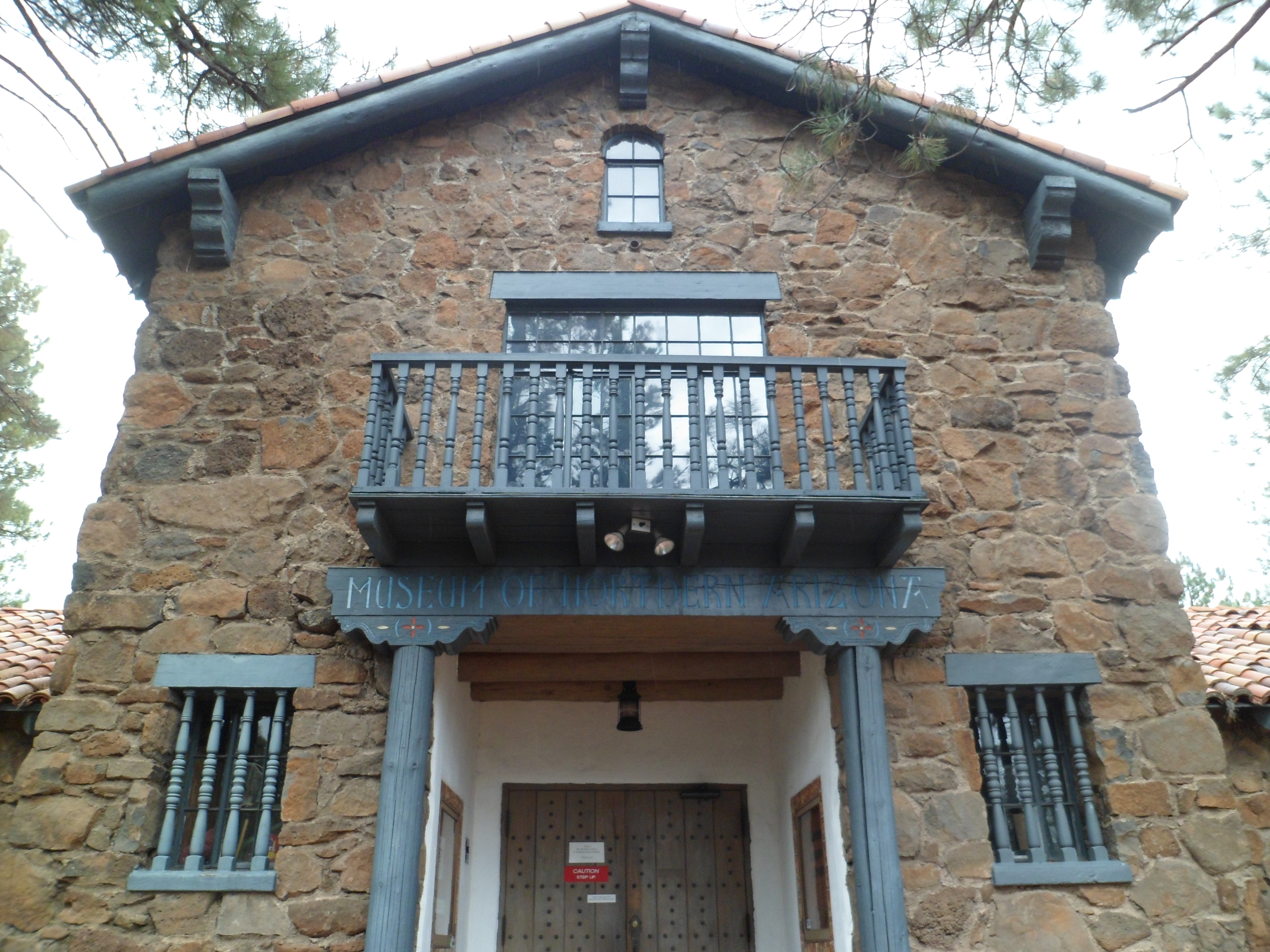
Flag would struggle, were it not for the university and the energy it generates, but it would thrive, in the end, like a supersized Silverton, Taos or Butte. Native arts are prominent at the Museum of Northern Arizona, which in turn, with the North Country Pioneer Museum and Riordan Mansion, tells the area’s story in stellar detail.
I enjoyed tracing the area’s geologic history, with its attendant changes in animal life. It was good to get a refresher in the development of indigenous cultures, from the proto-Puebloans, through the Sinagua and Ancestral Pueblo Peoples (formerly called Anasazi, or “ancient enemies”), to today’s Hopi, Zuni, Rio Grande Puebloans, Pai (Havasupai, Hualapai and Yavapai) and Athapascans (Navajo and Apache). Simply put, as the wanderers found a place in which they wanted to put down roots, their baskets got more firmly woven, their designs became more complex and their dwellings sturdier. Thus, we have Basketmakers I, II, and III , followed by the Sinagua, then by Pueblos I, II, III and IV. This last features the Hopis, Zunis and Rio Grande peoples.
I can think of nowhere I have felt more at home, than among the Hopi and Dine (Navajo). Of course, I will always be Bahaana/Bilagaana (White one), and the trust that was upset when we left for the city, in 1999, would not easily be re-established; but the sheer honesty, connectedness and essential decency of my Native friends cannot be shed from my heart’s memory. I felt it when I returned to Burntwater in July and again when I was in Glenwood Springs and Towaoc, a couple of weeks ago.
I digress, somewhat. The Museum also featured, until today, the works of Mary-Russell Ferrell Colton, a painter who, with her zoologist husband, Harold, founded the Museum of Northern Arizona in 1928. The blend of art and zoology is reflected in the museum’s current special exhibits: Mary-Russell’s extensive gallery is accented by the wealth of Native American art and counterpointed by an exhibit on the Mountain Lion- its habitat, life challenges, behaviour and prognosis.
Capping an hour or two on the inside of the facility is a walk along the Rio de Flag Nature Path. This rivulet flows from the San Francisco Peaks, through Fort Valley (where the Museum is found), and downtown Flagstaff, then heads east through Picture Canyon and on to the Little Colorado River. When I lived there, the Rio was often compared to the Los Angeles River, as a budding urban waste dump. Citizens got together and have largely reversed the situation, so the Rio is a pleasant spot by which to sit and sip a cup.(I’m told the situation is improving for the Los Angeles River, as well.) The Rio was barely flowing here, and you can’t see it, for the brush. It did snow and rain here yesterday, so help is on the way.
The second museum in the Fort Valley area is the Pioneer Museum, a northern extension of Tucson’s Arizona Historical Society. This museum is photo friendly, so I was able to capture some of its inside features. Many will remind my faithful readers of other pioneer venues, like Fort Worth’s Log Cabin Village, Old Town Burlington, CO or Lincoln’s New Salem, near Springfield, IL. Flagstaff’s early Caucasian settlers were mostly concerned with logging and the railroad, rather than displacing Native peoples, though some conflict has occurred over water rights and over the use of the San Francisco Peaks, sacred to at least four nations.
Some homes were comfortably-sized; others, only someone like me could feel okay with them. This is the cabin of the Doney family, who settled in an area east of Flagstaff which now bears their name: Doney Park.
The Lockett Cabin was platted in an area of the Inner Basin of the San Francisco Peaks that is now called Lockett Meadow.
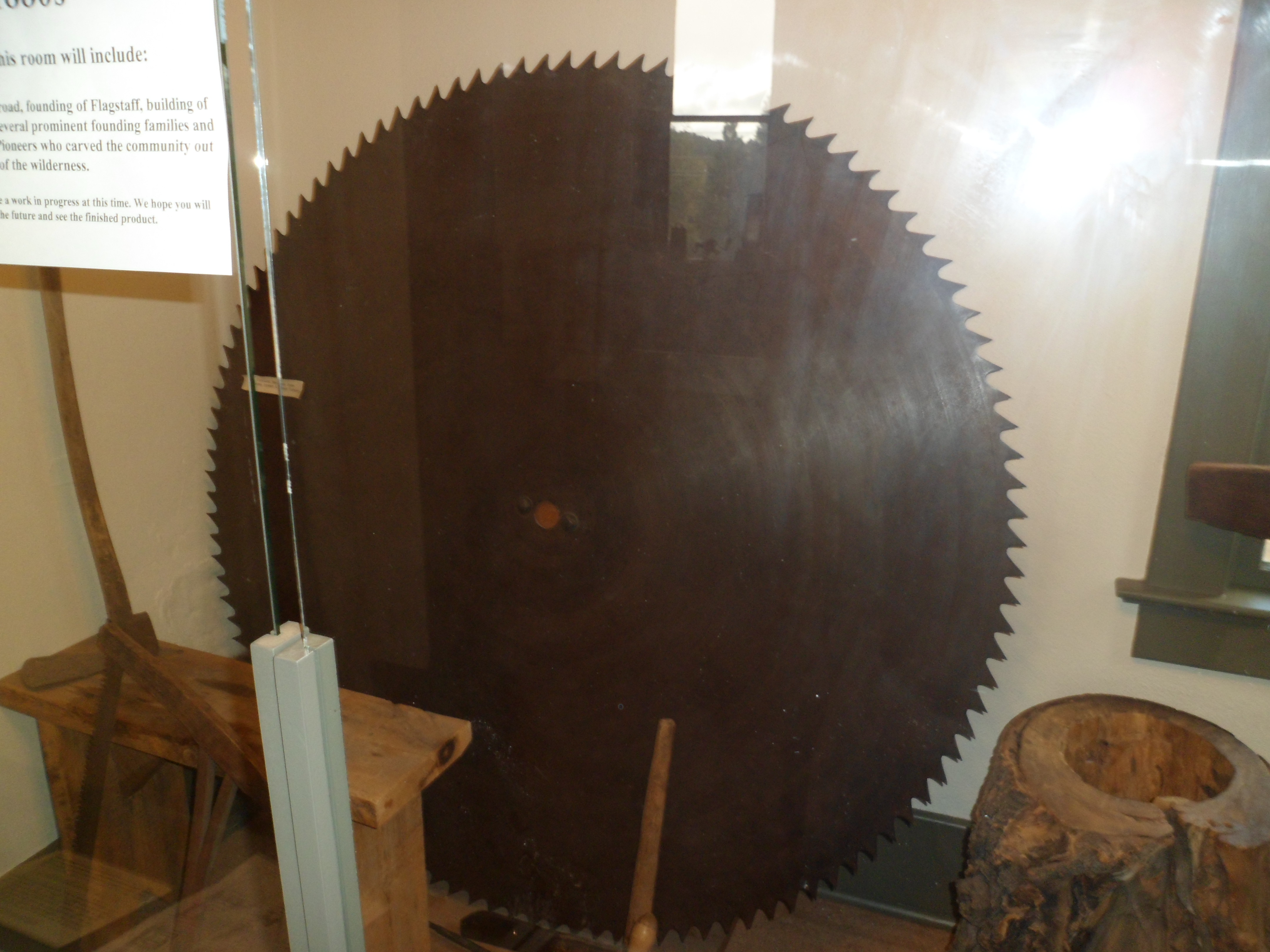
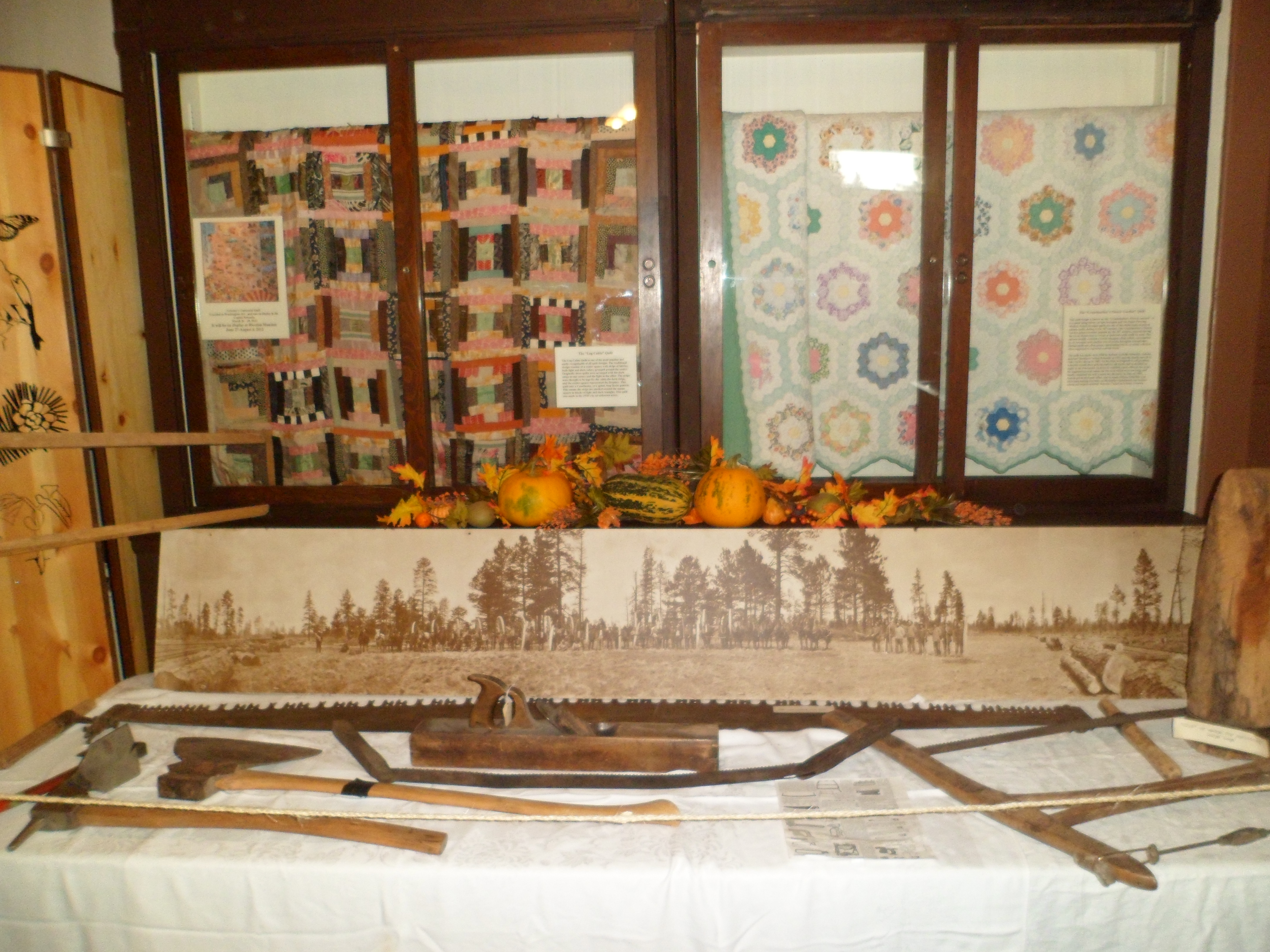
The main exhibits, arranged by decade from 1880- 1970, are on the second floor of the Main Building of the museum. It was originally Coconino County Hospital. Thus, we have logger’s tools, like this saw blade. Then, there are quilts and other logger’s tools, from the 1890’s. The nurses lived in the Hospital, in the early 20th Century. Here is a nurse’s bedroom.In the next post, we move on to the campus of Northern Arizona University, the adjacent grounds of Riordan Mansion and an Oktoberfest Friday night in downtown Flagstaff.
I spent part of this afternoon walking a segment of the Constellation Trail, in Granite Dells, that I had not hiked before. (I went sans camera, so rest assured I will be on that path again soon.) This was a time meant for attention to detail and reflection. It meant frequent sitting and thinking. Among the things that came to mind were my friendships, the structure of this planet-both material and social, and the resemblance of rock formations to characters, both real and imagined. I thought of friends here, in Tucson and in the Northwest. I thought of the solidity and fluidity of rock, water and social institutions like the family. I saw rocks that resembled Jabba the Hut, a kissing pair of dogs, a fish whispering to a whale and Buckingham Palace.
If I had no other reason to visit nature, this would be sufficient. Now, let me get back to nuts and bolts. Earlier today, I made arrangements to fly to Boston on Nov. 17 and return on Nov. 29. This will be my first New England Thanksgiving in almost 32 years. Having made that plan, let me set in motion the rest of 2012 and the year ahead.
Most of my time will actually be here in AZ, with Baha’i, Red Cross, American Legion and various other friends, in addition to work- which resumes next week. My journeys out of state over the next fourteen months, look like this thus far:
November 17-29 : Boston area, with 2 day visit to New Jersey (24th and 25th).
December 24-29 : San Diego, Crystal Cove, Catalina, Los Angeles County Museum of Art and Palm Springs tram.
2013
March 9-17: New Mexico, Oklahoma and Texas.
June 1-8: Colorado
July 5-9: Aram’s birthday; so, wherever he is.
July 14- September 15: Start- Devil’s Tower, WY. Key stops: Black Elk Peak, Mt. Rushmore and Pine Ridge, SD; Pipestone and the Twin Cities, MN; Ice Age Trail, Stevens Point and Milwaukee, WS; Chicago; Indiana Dunes; Fruitport, Sleeping Bear Dunes and Pictured Rocks, MI; Manitoulin, Toronto and Ottawa, ON; Montreal, Quebec and Gaspesie, QB; Northern New Brunswick, Saint John and Fundy National Park, NB; Pictou region and Cape Breton, NS; Newfoundland; Prince Edward Island; Acadia National Park, Boothbay and Eliot, ME; the Boston area ( Family stuff and my Mom’s fifteenth consecutive 40th birthday!); New York City; northern New Jersey ( More family stuff); Cape May, NJ; Philadelphia and Gettysburg, PA; Louisville area; western Illinois; Des Moines; Doorley Zoo, Omaha; then back home, through Kansas, the OP and New Mexico.
This is, as we all know, subject to expansion (unlikely) or contraction(always possible). Stops in between, here and there, are sometimes advisable, for the good of the order.
I am now happily back in my own house-sitting labour of love. I won’t have any photos to show on this one- redundancy is not my thing. Nonetheless, I look back and think fondly of the places I saw: Hoover Dam;Lake Mead; The Alien Store;Lake Merritt; San Francisco; Jack London Square; Tomales Bay; Muir Woods; the Coastal Redwoods; the Lost Coast; Point Coquille; Astoria Column; the Columbia at St. Helens and at The Dalles; Portland; Ocean Beach, WA; Lake Quinault; Kalaloch; Forks; Lake Ozette; Neah Bay and Cape Flattery; Port Angeles; Sequim and Jamestown; Seattle; Wenatchee and Ohme Gardens (even with the fires); Yakama Nation; Goldendale and Maryhill; Deschutes River, at Maupin, OR; Crooked River Gorge, at Culver, OR; Smith Rock; Downtown Bend; Rogue River Gorge, at Union Creek; Ashland, OR; Mount Shasta; McCloud, CA; Lake Britton; Lassen Volcanic National Park; Feather River and Spanish Creek Gorges; Reno; Winnemucca; Elko and the Ruby Mountains; Bonneville Salt Flat; Salt Lake City; Price Canyon; Fruita, CO; Glenwood Springs; Northglenn; Colorado Springs; Wolf Creek Pass; Mesa Verde; Ute Mountain Chimney Rock; Four Corners Butte; and my beloved Peaks, welcoming me home.
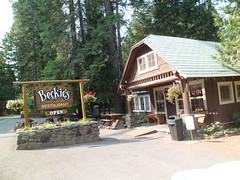
More important, though, are the people: The clerk at the Alien Store; the clerk and her little daughter, at Atomic Inn, Beatty; Tom, Michele and their kids, in Reno, my hosts on two occasions; the California Baha’i Regional Council, for such a masterful Commemorative Weekend; Marta, Christian and the team at San Francisco Baha’i Center, making the Bay Area feel like home; Dona and Ian, at Abalone Inn, Point Reyes; the put-upon staff at Nick’s Cove (because of the bees); the ranger at Standish-Hickey Recreation Area; the staff at Harbor Inn, Brookings; the waitresses at Matty’s (even if you didn’t like my politics); the waitresses and owner at Bonnie’s Grill, Port Orford; the clerk at Shooting Star Motel, Bandon; the waitress at High Tide Cafe, Charleston, OR; the staff at Sea Lion Caves; the owner of Budget Lodge, Portland; Khai and Jim, and the waitstaffs at Tina’s Corner and at Pastini’s, all of whom made my Portland visit special; the guys at Hawaiian Islands Cafe, St. Helens, OR; the gentle old man and his boss at Thunderbird Motel, Aberdeen, WA; the staff at Lake Quinault Cafe; the waitress at Kalaloch Lodge; the staff at In Place and the kids who found my camera, in Forks, WA; the waitress at Warmhouse, Neah Bay; the staff at Feiro Marine Life Center, Port Angeles, WA; Ted Lew and his mother, in Seattle, for being such gracious hosts for two days; the various vendors of Pike Place, especially the waitress at Athenian Seafood; Mr. Vinny, of Vital T-Leaf, for his kind seminar on tea preparation; the people of Seattle Chinatown; Robert and Carla Wilson, Mitra McCauley and her husband, Dan, and Caroline and Robert Kirkpatrick, of East Wenatchee, for bringing me to your community and letting me be a part of summoning the power of the Holy Spirit, in Wenatchee’s time of need; the staff at Mai Lee Thai, East Wenatchee; the staff at Ohme Gardens; the waitress at The Igloo, Wenatchee; Jackie and her husband, at Ponderosa Motel, Goldendale; the waitress at Top Hat, Goldendale; the couple at Bake My Day, Goldendale; the street coffee vendor in The Dalles; the staff at KOA, Culver, OR; the entire crew at Sidelines Grill, Bend; the reptile curator at Smith Rock; the staff at Union Creek Resort and Beckie’s Restaurant; Jody Bourne Weah, my host in Ashland, OR; the waitress at Greenleaf Restaurant, Ashland; the crew at Fireside Village, Hat Creek, CA; the NPS staff and volunteers at Lassen Volcanic National Park; the waitress at Joe Bob’s, Reno; Deborah and the crew at Flying Pig Barbecue, Winnemucca; the clerk at Economy Inn, Elko; the couple at McAdoo’s, Elko; Carol Curtis, my host in Salt Lake City; the Baha’is of Utah and Robert Stockman, for a marvelous Commemorative in Salt Lake City; the Spiritual Assembly of the Baha’is of Colorado Springs, for hosting such an intimate and unforgettable Commemorative Weekend at Glenwood Springs; the proprietors of Rodeway Inn, Glenwood Springs, the staff of Vic’s Route 6 Grill, and the waitress at Zheng Asian Bistro, for making my last weekend on the road so restful and nutritious; my dear sister and brother in Northglenn, Mindy and David Kosak, for hosting me once more; the faculty and students at the U.S. Air Force Academy, for putting our nation first; the volunteers at Garden of the Gods, for sharing such an exquisite place with humanity; the waitress at La Baguette, for reviving me with splendid pastry and tea; the waitress at Del’s Diner, Fort Garland; the gents at Wolf Creek Lodge; Jackie and the crew at Junction Restaurant, Pagosa Springs and, by no means least, the team at Macy’s European Coffee House- always ready with a hearty bowl of soup, vegetarian sandwich and epicurean beverage.
Thanks also to those of you who have borne with me for this past month. It has made me closer to my Lord, to Abdu’l-Baha, to my many friends and to my guardian angel and soul mate.
Yesterday, October 3 brought me along one of southwest Colorado’s most magnificent sights: Wolf Creek Pass, with its spectacular blends of foliage and rock.
This Castle Rock is at Wolf Creek Pass’s east summit.
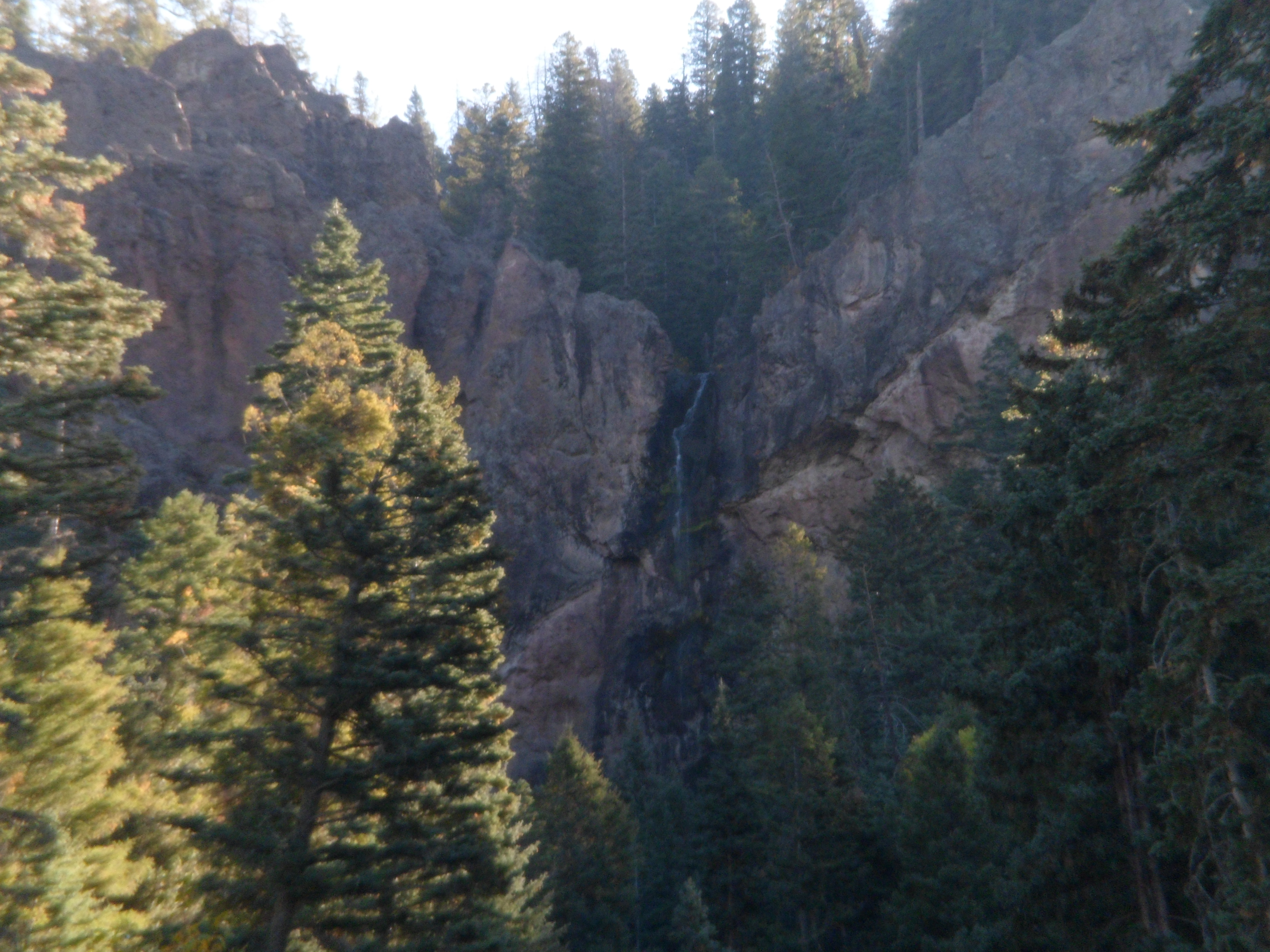
East meets south, at this face of WCP. Below, one can catch a glimpse of Treasure Falls, southwest of Wolf Creek Pass.
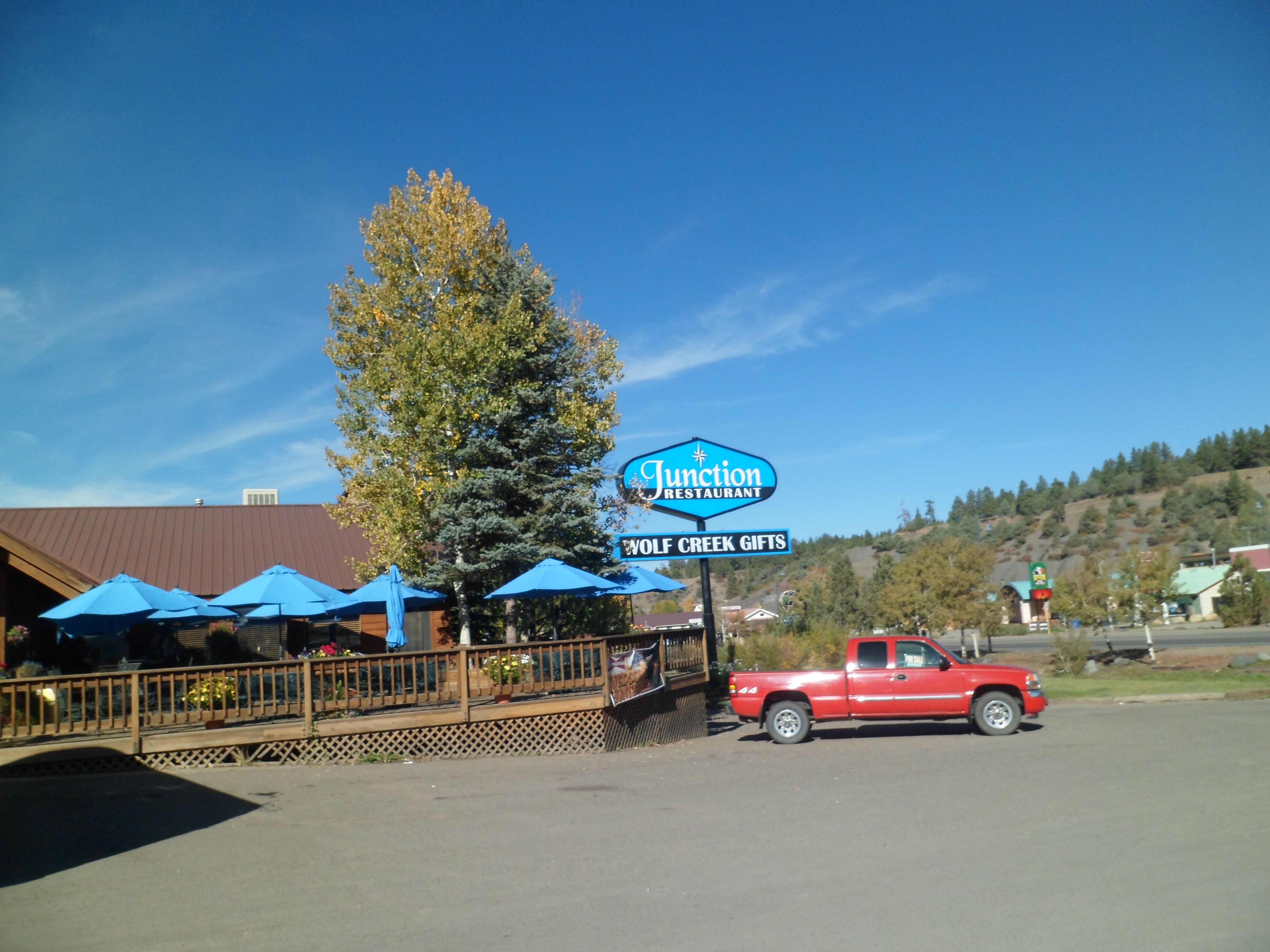
I finally found a breakfast spot, at 9:50. Junction Restaurant has tasty breakfast skillets, and Jackie will discuss anything from styles of eggs to the sorry state of the Everglades, in her native South Florida. Junction is on the east end of Pagosa Springs.
I had hoped to catch some views of Wetherill Mesa,at Mesa Verde National Park, but the gate attendant said Wetherill was closed on August 31. I did catch this view of fading foliage, near Mesa Verde’s entrance, before heading on to the Four Corners.
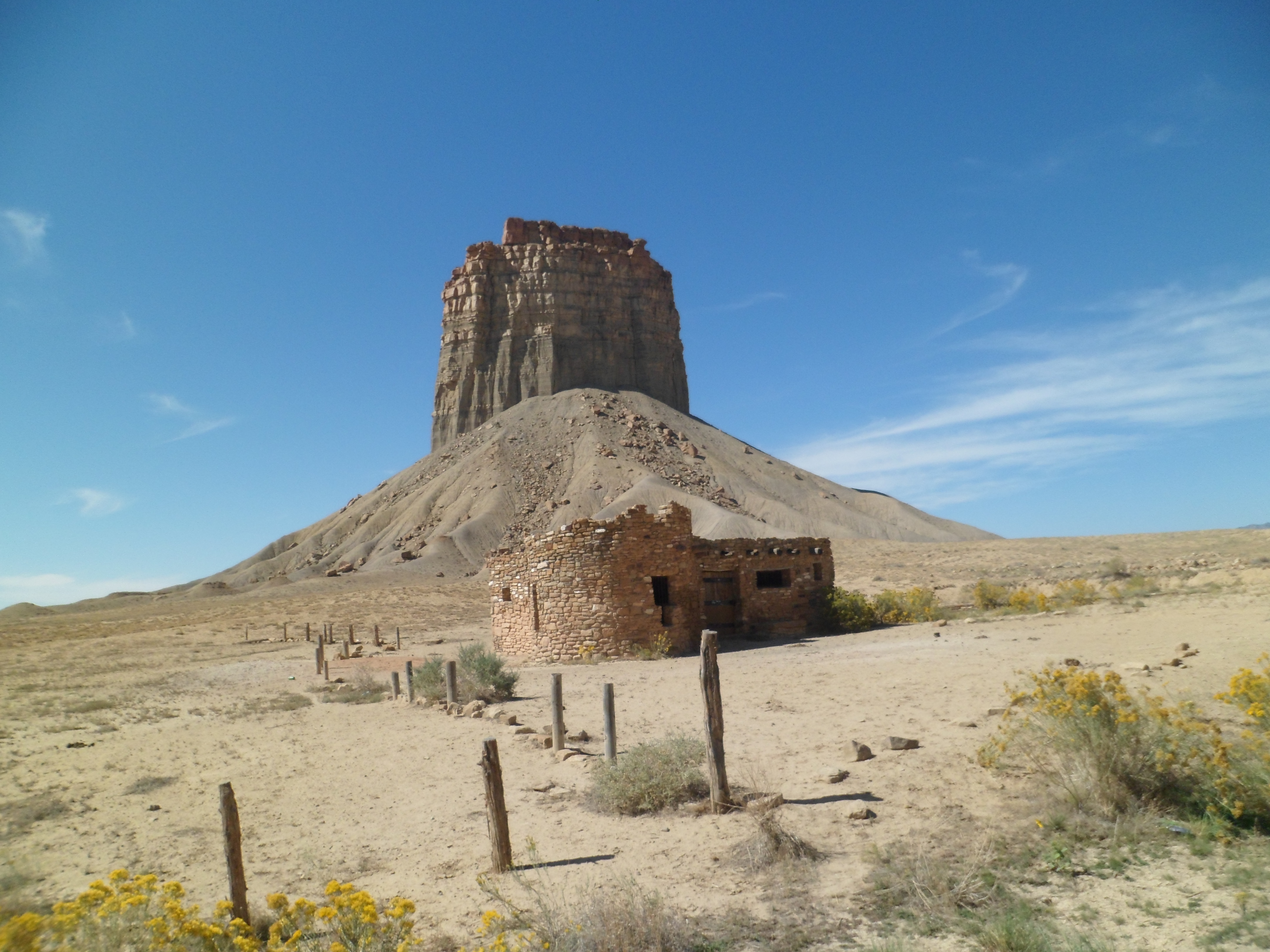
One of the truly special things about some of the southwest’s natural features is the way they seem to line up. There are two Chimney Rocks in Colorado. The one near Ignacio and Bayfield, east of Durango, is a newly-minted National Monument. The one south of Towaoc lines up almost perfectly north of Ship Rock, New Mexico and south of Sleeping Ute Mountain. I stopped for several minutes at the Ute Mountain Chimney Rock, approaching it with reverence and contemplating its seeming relationships with Ship Rock and Sleeping Ute Mountain.
The Four Corners has a raised platform, where one may simultaneously put a hand or foot on each of the four adjoining states: Arizona, Colorado, New Mexico and Utah. To me, Mother Earth has her own monument to this accident of politics: It’s the small rock formation, which is just at the northwest tip of New Mexico, seen below.
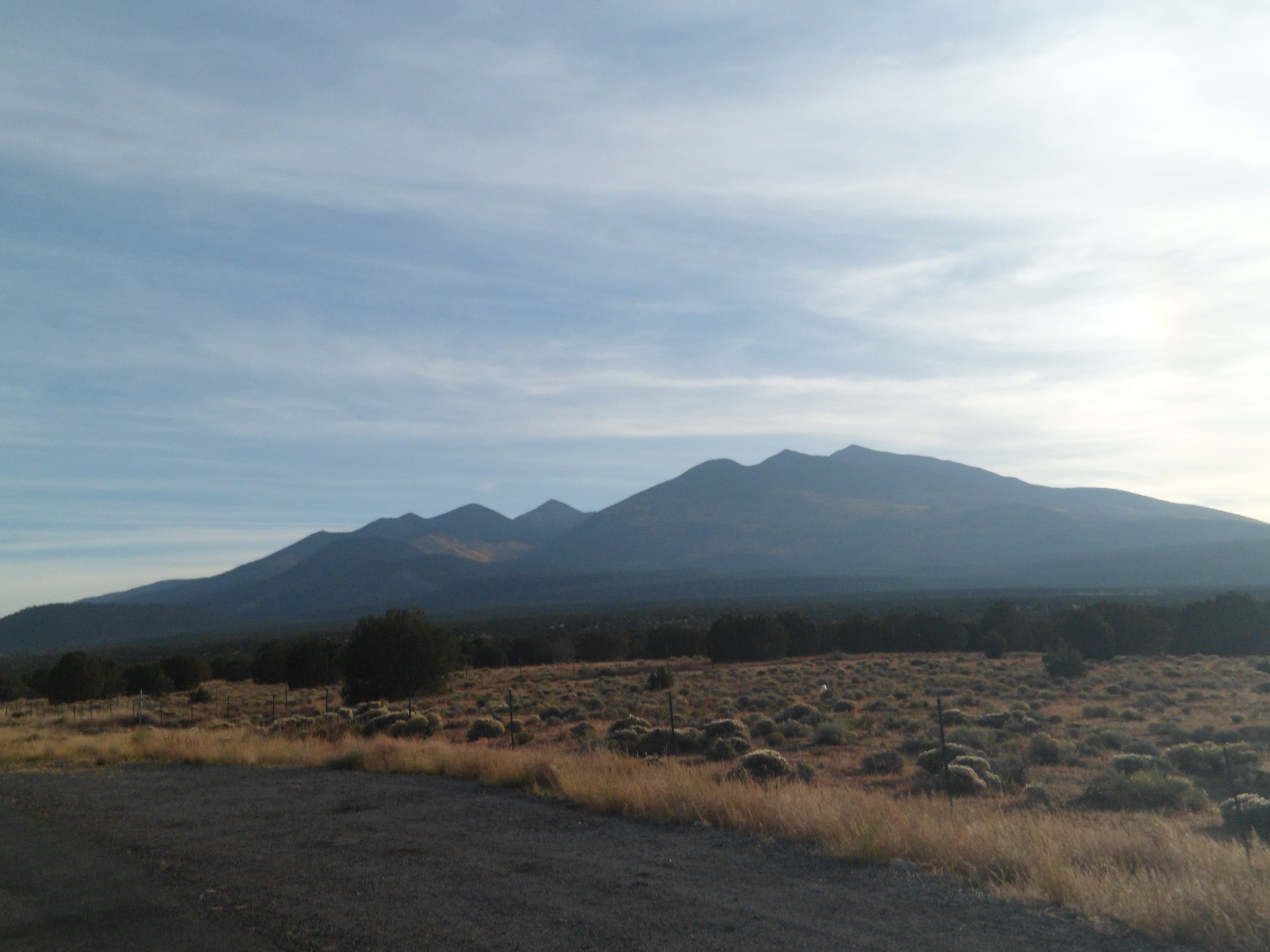
Just north of Flagstaff, the San Francisco Peaks, sacred to several indigenous nations, rise up and offer seasonal foliage of their own.
The Peaks told me I was close to the end of my journey, and after a satisfying supper at Macy’s European Coffee House, I was a short hour and twenty minutes away. Now, I have five weeks of being in one place.
Monday, October 1, was my change-of-season, do nothing day. Actually, I did walk about 1 1/2 miles on Northglenn’s Grange Hall Creek Trail, a paved route from Fox Run to the dog park. There were lots of prairie dogs in the area just across from the dog park, which is in west Northglenn.
Besides that walk, I chose to not take a chance on making my uncle in Longmont, or friends in Boulder, possibly catch what I felt was coming on. As it happened, I felt better by evening, having rested. Such was Day 12, of my journey towards home.
Tuesday was different. After patiently working my way past the logjam caused by an accident on Denver’s south side, I spent time in three of Colorado Springs’ signature attractions. First was the U.S. Air Force Academy, which marks the first time I have visited a service academy. The Air Force cadets lucked out, in terms of scenery, getting the mountains of CS’s north side as their backdrop.
The civilian visitor is more than welcome here, but must enter and exit through the North Gate. The Visitor Center offers a good overview of life at the Academy, both in video and in stationary display,
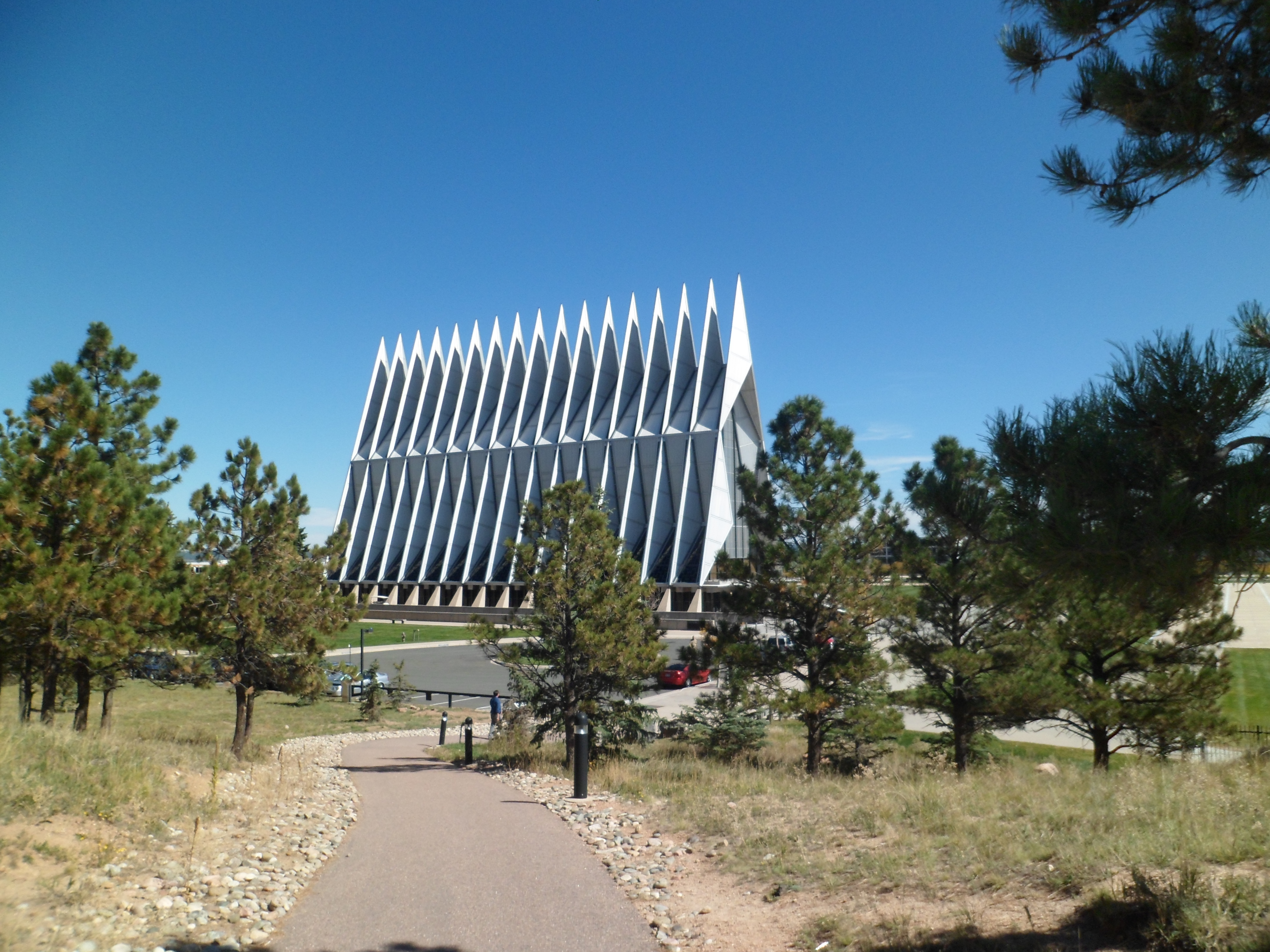
After a Philly steak, at the Visitor center’s food court, I checked out the Academy’s Cadet Chapel, which offers spiritual care for every Faith and denomination.
The interior is equally inspiring.
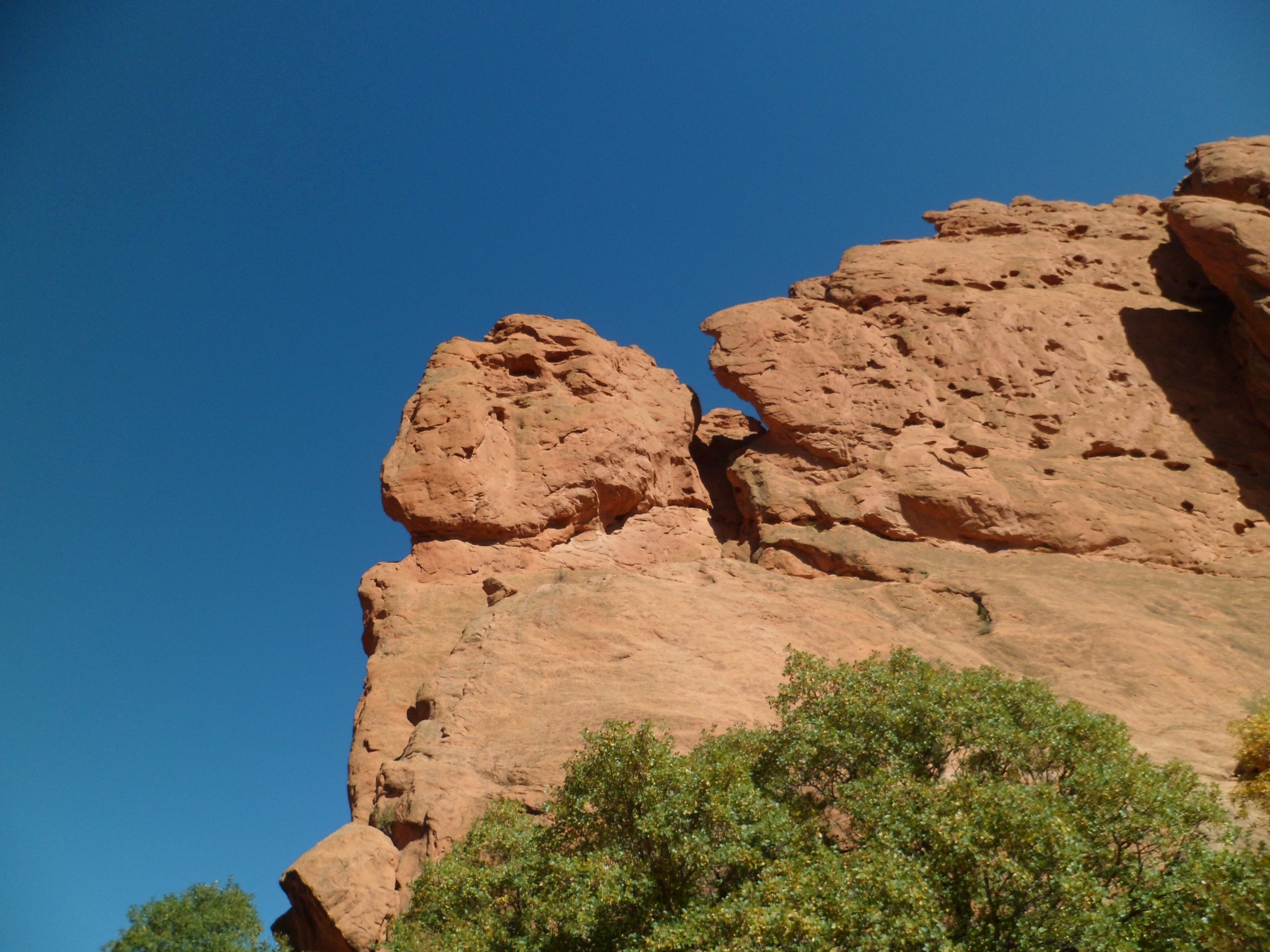
Feeling that our future Air Force officers are in good hands, I went on to the stunning scenery of Garden of the Gods. This is a city park of Colorado Springs, willed by its last private owner, Charles Elliott Perkins, who only visited the area twice. He insisted that the city keep the park free from commercial development, that it not serve alcoholic beverages in its cafe and that the park itself be free of charge to all visitors. ( A film on the park, at the Visitor Center does charge $5 admission, but the film is, of course, optional).
Here are five scenes from this magnificent place.
This is an view from the main parking lot, where we gathered for a free guided tour.
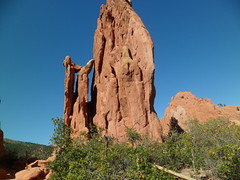
Here is Man and Lion. Below, are the Cathedral Spires.
On the very left of the photo below, one may discern the Kissing Camels. Sandstone can produce amazing images.
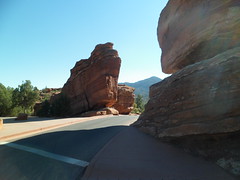
After the guided tour was over, I continued on to Balanced Rock, about three miles southwest of the Main Garden.
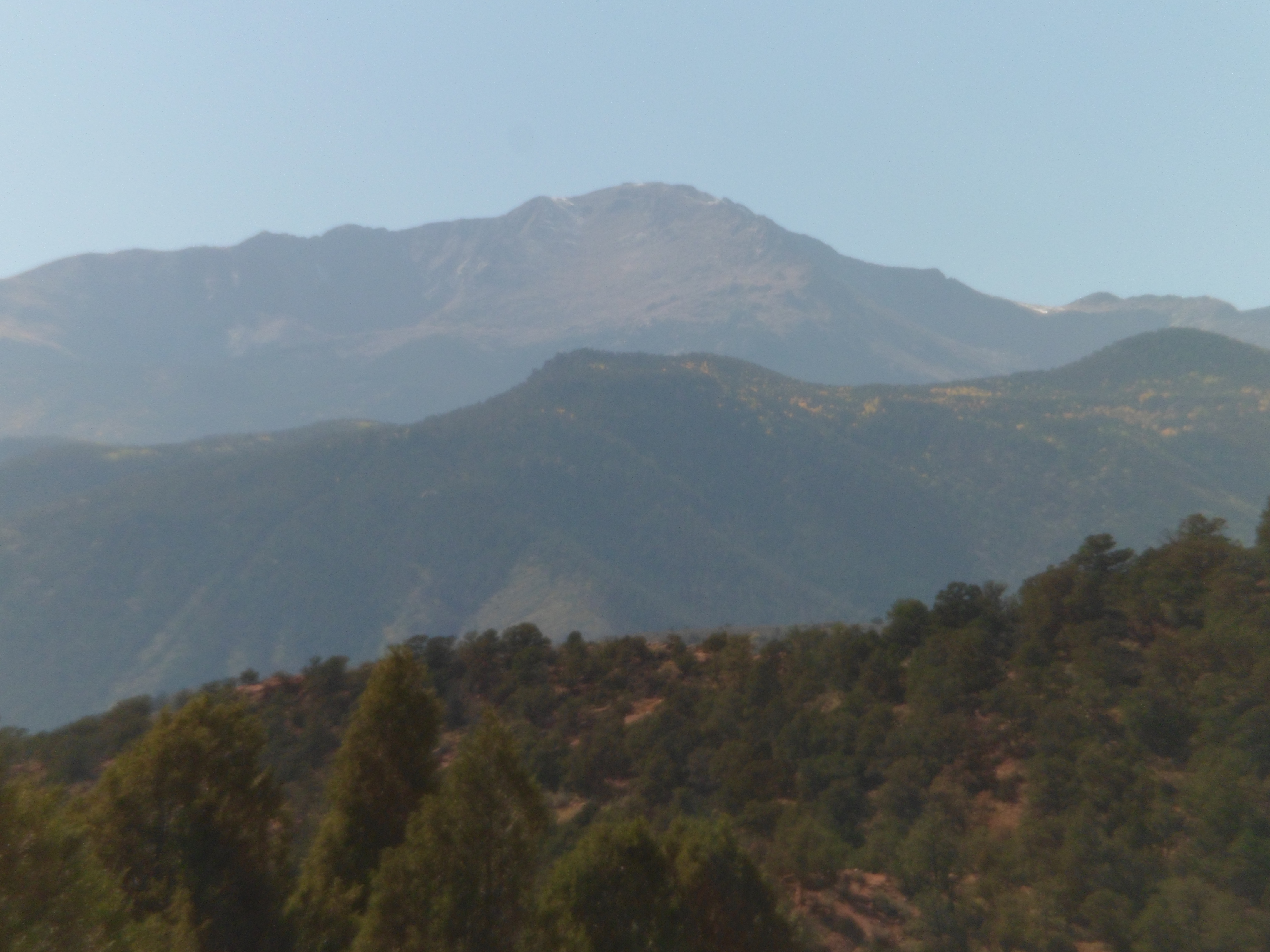
One major attraction of Colorado Springs, visible from the Garden, remains: Pikes Peak. I will start out early in the morning, when I next visit the area, in order to make that special hike.
The guide said the area on top of the ridge, between the Garden and Pikes Peak, had been the worst damaged area in the recent, horrific fire which hurt Colorado Springs so badly. It is, fortunately, barely visible to visitors to CS, now.
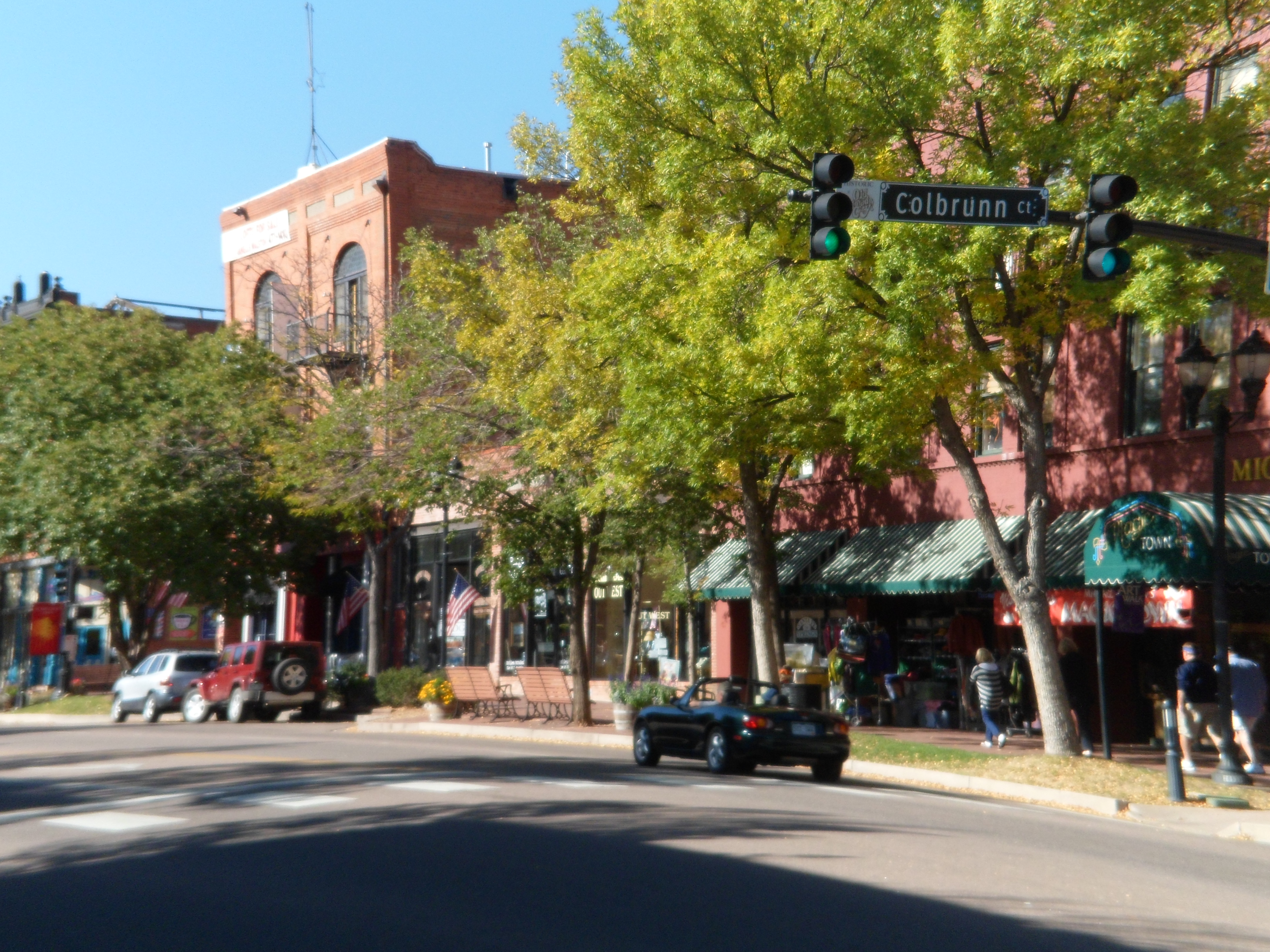
I had one area left to check out on Tuesday: Old Colorado City, on Colorado Springs’ west side.
On this south side of the street, I enjoyed a small eclair and iced tea, at La Baguette. Its namesake bread is available for a very low price, and the pastry, my first eclair (pronounced here AY-klayr, as it is in France) in nearly thirty years, was “magnifique”.
The north side of the street has its standouts, as well.
Bancroft Park is a small, but pleasant hang-out for area youth.
Colorado Springs, as shown here, is indeed younger than Denver, by just a year.
My journey had only a day left, so on I went, gassing up in Pueblo, the friendly desert town to the south of CS, getting supper in Fort Garland and stopping for the night at Wolf Creek Ranch, a reasonable ski resort, at the foot of formidable Wolf Creek Pass.
It’s not as big as Union Spring, but few places are.
The gathering at Glenwood Springs Community Center, yesterday and this morning, was the most emotionally intense of the three Commemorative events I’ve attended, marking Abdu’l-Baha’s visit to North America in 1912. The events in San Francisco and in Salt Lake City were exquisite, spiritually uplifting events, as was this one. They were brief, where this weekend’s event was spread out, time-wise.
San Francisco was the largest Baha’i event I’ve ever attended. That I had a great time there tells me I am making strides in socializing, even where I am a shrimp in the ocean. There were over 2,000 people, but, probably because I have friends in the Bay Area already and because we had the “ice-breaker” of a walk around Lake Merritt in Oakland, the day before, I felt more at home than I did at my last huge gathering in 1985. (I don’t count the Grand Canyon Baha’i Conferences, in Phoenix, because I always feel comfortable at “home” events.)
Salt Lake City was a small gathering, but I also enjoyed it greatly. This, too, is progress on the “me” front, because I did something spontaneous.
This weekend, though, was a riveting amalgam of high-level scholarship, reunion with long-lost friends and the fading, but still inspiring colours of a Colorado High Country autumn. The intimacy with which I was able to connect with Abdu’l-Baha and His life brought tears of joy to my eyes, which is not something for which I’m noted.
Photo time:
Here is the venue, Glenwood Springs Community Center.
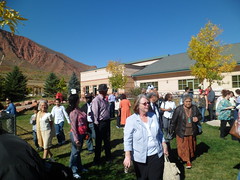
The mountain backdrop is showing the rust-colours of iron-rich soil.
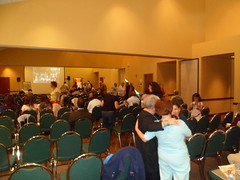
Session in Glenwood Springs Commemoration of Abdu’l-Baha’s Visit, in 1912- on Sept. 29, 2012. Mrs. Bushra Bruss presented on the topic of Abdu’l-Baha’s sojourn in Egypt, in 1910-11.
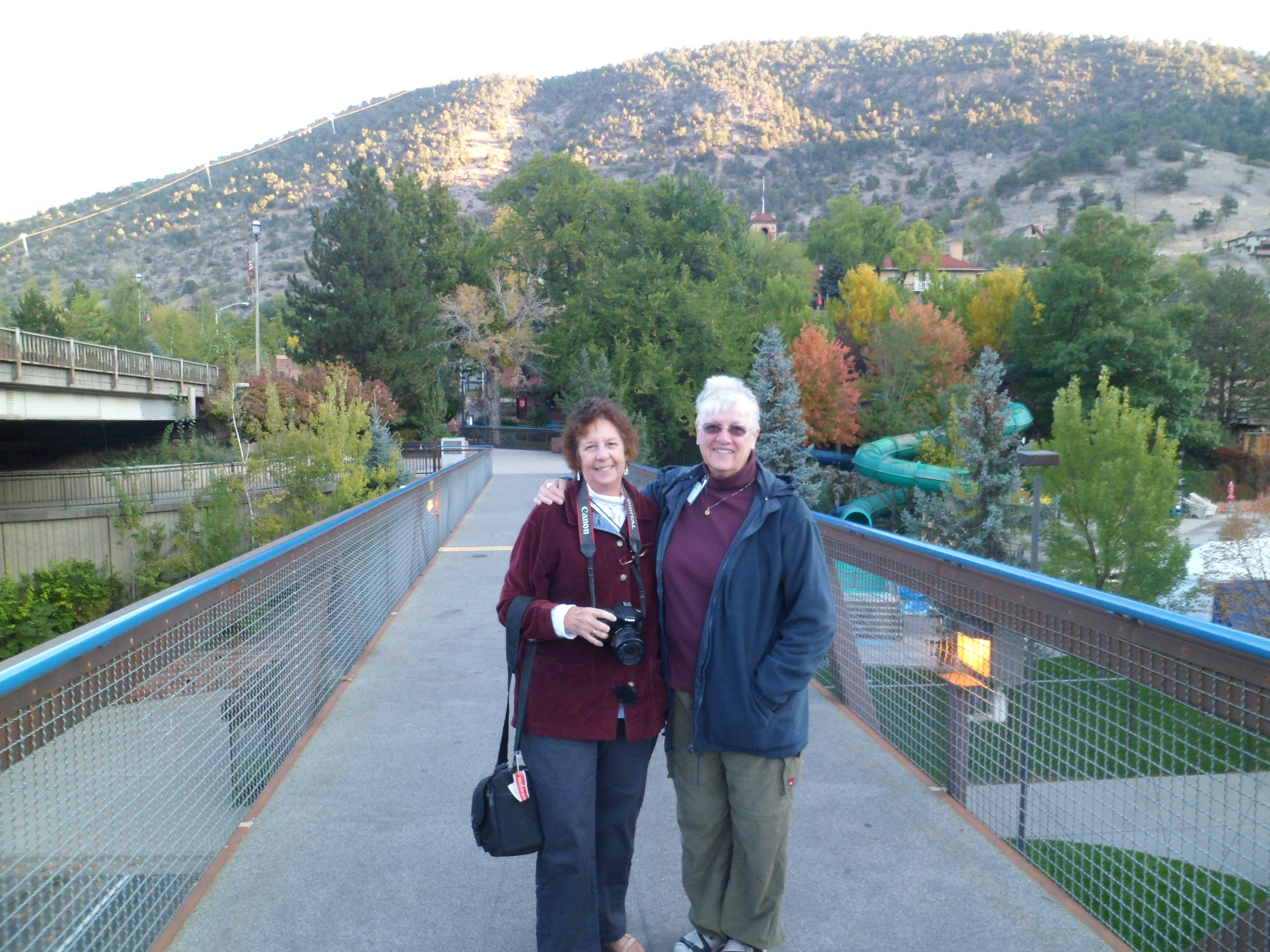
I drove to Glenwood Springs from Salt Lake City, in tandem with these two ladies. Carol is a long-time friend of Penny’s and mine. Jill is her friend from Washington State.
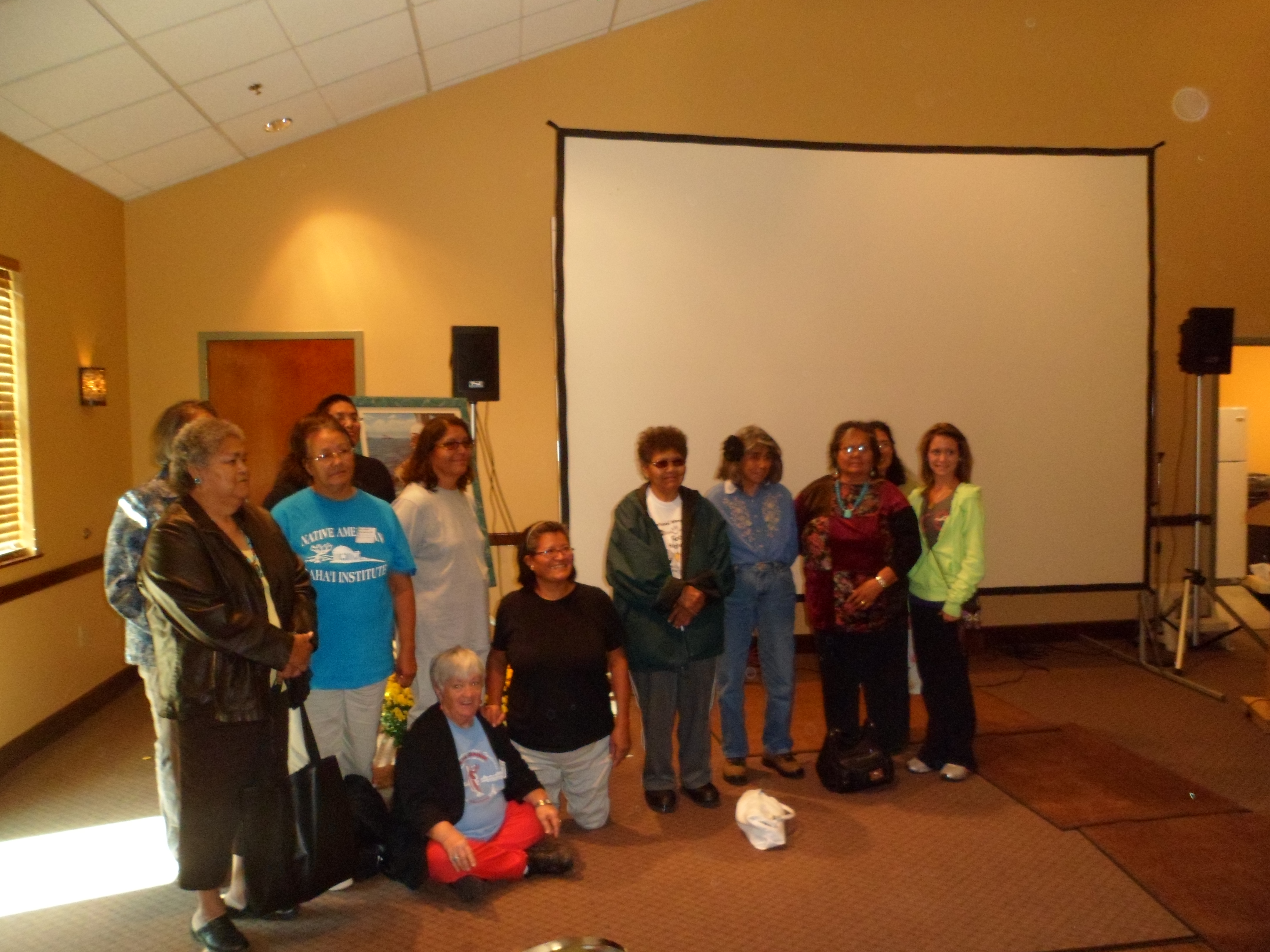
This morning’s presentations featured period-piece drama and a scholarly talk, both continued from yesterday’s session.
The two ladies above are playing the roles of two fin-de-siecle women in California, who knew Abdu’l-Baha. This dramatization is excerpted from a film in progress, entitled “The Luminous Journey”, by Tim and Anne Perry. Below, Kathryn Hogenson speaks on the topic of Phoebe Hearst and the Baha’i Faith, which she has thoroughly researched and on which she has written a fascinating, well-ordered book, entitled “Lighting the Western Skies”.
Today would have been Penny’s 58th birthday. That, and the intensity of seeing so many old friends from our days on the Navajo Nation, heightened the emotional intensity of this weekend, for me.
I will always hold the encounters and experiences of this past month, very high among the journeys of my life- right up with our pilgrimage to the Baha’i Holy Places in Israel and in London (1982), our teaching trips to Guyana and to South Dakota/Nebraska (1984) and our years in Korea (1986-92). Spirituality will be much more a part of my work and my travels, going forward.
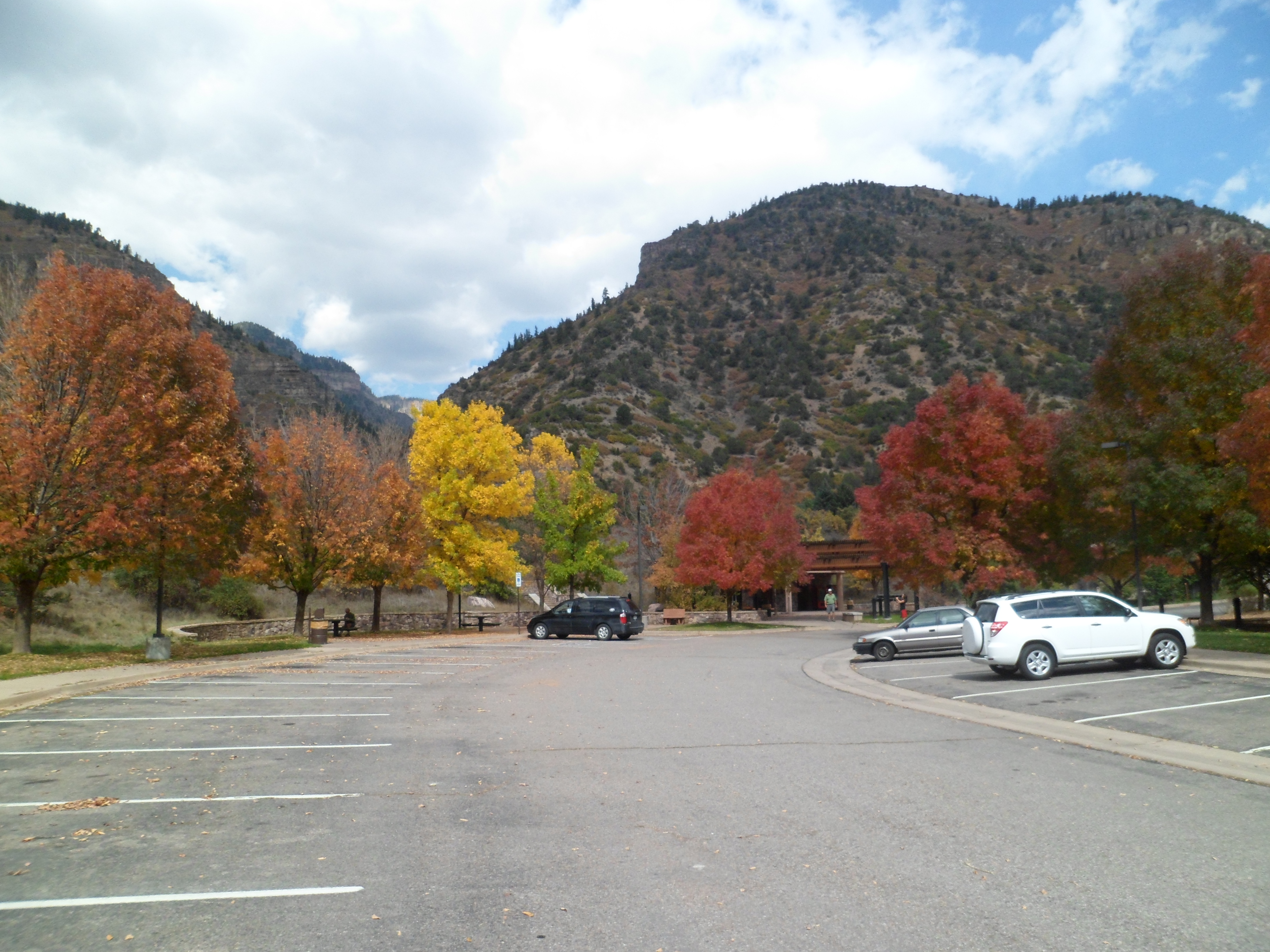
As I left Glenwood Springs, headed for the Denver suburb of Northglenn, for a visit with my sister-in-law and brother-in-law, the foliage in Glenwood Canyon was still bright, though it has peaked.
The Denver area will be my venue tomorrow, feeling like a home away from home.
I write of these two days together, as they were not specifically hiking or touristy days, but were intended to get me to gatherings honouring Abdu’l-Baha, on the Centenary of His visit to North America. Specific to yesterday and this coming weekend, we commemorate His visits to Glenwood Springs, CO and to Salt Lake City. Logistical concerns led us to observe the visits in reverse chronological order, so Salt Lake City had its observance last night.
I set out from Elko in early afternoon, after taking an hour or so to visit the area’s signature Ruby Mountains. Enjoying a picnic lunch by a burbling creek or river is always one of my life’s pleasures.
Here are a couple of reasons why a trip to northeast Nevada is delightful: The crest of the Ruby Mountains and Spring Creek, with its picnic ground at Power House.
Lamoille Canyon, Ruby Mountains, NV
The Ruby Mountains are the westernmost of three ranges that rise up from Nevada’s Great Basin. Heading east to Wells, one encounters the Humboldt Range and near Wendover are the Silver Island Mountains. From there, entering Utah, the mountains trail off to the north of I-80, and we are greeted by the Bonneville Salt Flats which, with the Great Salt Desert, make up the remains of ancient Lake Bonneville.
This area also fades, after about 50 miles, and scrub desert alternates with the foothills of the Wasatch, closer to Salt Lake City. I was pleased to reconnect with one of our old friends from the Reservation days- who was actually with Penny, the night she and I first met. About 120 people attended the commemoration event, held in a conference room on the fourth floor of Salt Lake City’s magnificent Central Library. I give you a file photo of that structure.
After a great night’s sleep and hearty breakfast, we headed out towards Glenwood Springs. I traveled alone, but no matter- we will all be together tomorrow and Sunday.
En route, I was amazed to see autumn foliage in Spanish Fork Canyon.
This sort of scene would repeat itself, along with stunning rock formations, in underrated, but fabulous Price Canyon, about sixty miles southeast of the Salt Lake Valley.
My lunch was at a rest stop in Horse Canyon, just north of Green River, UT and I-70.
My journey through the rest of the Great Basin, in Utah and Colorado, led past the turnoff to the Utah of legend: Arches, Canyonlands, Capitol Reef, etc. and thriving, lovely Fruita. Then came Grand Junction, Grand Mesa and the winding Colorado River. These will have their own share of my time, later on.
Glenwood Springs will be my home for the next two days.
Yesterday, I spent the entire morning examining the course of my life, with the help of a dear friend in Reno, and while writing my post about Day 5 of this return trip.
Since Penny passed, I have been occasionally influenced by friends and family to attempt certain ventures or go in a certain direction. Yet what remains most important to me is my relationship with the Creator. All else needs to be weighed against that. It follows that, since God and Baha’ullah value family, an ordered but inclusive society, based on justice and the unification of the entire planet, people need to follow certain basic rules. We tend to not like rules. They make us uncomfortable, often require sacrifice of individual wants, for the common good and sometimes appear, on the surface, to be at variance with individual freedom.
I long ago came to the conclusion that no freedom is without serious cost. On planet Earth, and probably elsewhere in the Universe, wherever there are sentient beings living together, there is a medium of exchange. Actually, there are several, money and barter being the pecuniary ones. Courtesy and reciprocity are the social ones. The medium of exchange between Creator and created, in my humble opinion, is the Creator gives us nearly limitless resources, opportunities to grow spiritually and boundless love. We, in turn, listen to His Messengers, follow certain rules and desist from whining, cursing and rebelling when things contrary to our wishes are mentioned in those rules.
All this, and more, came out of the conversation I had with my friend, Michele, yesterday morning. Had her husband, Tom, not been working, and been present, he would have most likely concurred with us. Obedience to the laws of the Universe imparts benefits, personal growth and long-term happiness. Rebellion and “the insistent self’ impart angst, doubt,depression and near-constant anger. We have free will, though, so we get to choose which of the two paths to follow, and God won’t decide for an individual which path he or she walks. Most of us dovetail between obedience and rebelliousness. I know I have, and I also know which path has brought more satisfaction to my life.
So, that was the upshot of our discourse. Having found this a lot more satisfying than a circumnavigation of Lake Tahoe, I leave that lovely spot for another journey. The road yesterday afternoon led east, across the Great Basin of northern Nevada. The beautiful spots in this sparsely-traveled area are largely in the interior, south of I-80. Most of the countryside along the Interstate looks like this:
It has its own vibrancy, though, this seeming wasteland. The people here are self-reliant and live by the type of sentiment I saw posted in a restaurant in the northeast Nevada commercial hub, Elko: “The best place to be is together.” I would say that’s true, both in terms of individual sensibility and of social connectedness. It has its water sources, like the Humboldt River, and the Truckee.
I heard Basque men speaking in their unique and melodic language, and found out what happens to pigs who attempt to fly. They become marvelous tasting pulled pork, like the kind served at Flying Pig Barbecue and Pub, in Winnemucca. ( I misread the sign last night- and called it “The Pig Barbecue”.)
En route to Elko, I passed by Battle Mountain, a testimony to the struggles between the Shoshone and the Euro-Americans in the latter part of the 19th Century.
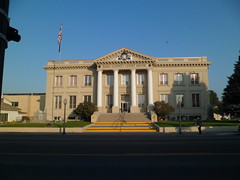
In Elko, I found a clean, friendly and eclectic community. The Hall of Justice is its most prominent building.
Elko has its share of casinos and some hidden gems, like the restaurants on East Fifth Street, of which I chose Mc Adoo’s for breakfast, on this morning of Day 8. The little sign in the photo, and the aforementioned quote, say it all about this unassuming little nook and the lovely couple who run it.
The chalkboard says “Happy Fall”. Same to you, Elko! 🙂
Next up: Day 8- On through the Great Basin, to Salt Lake City.
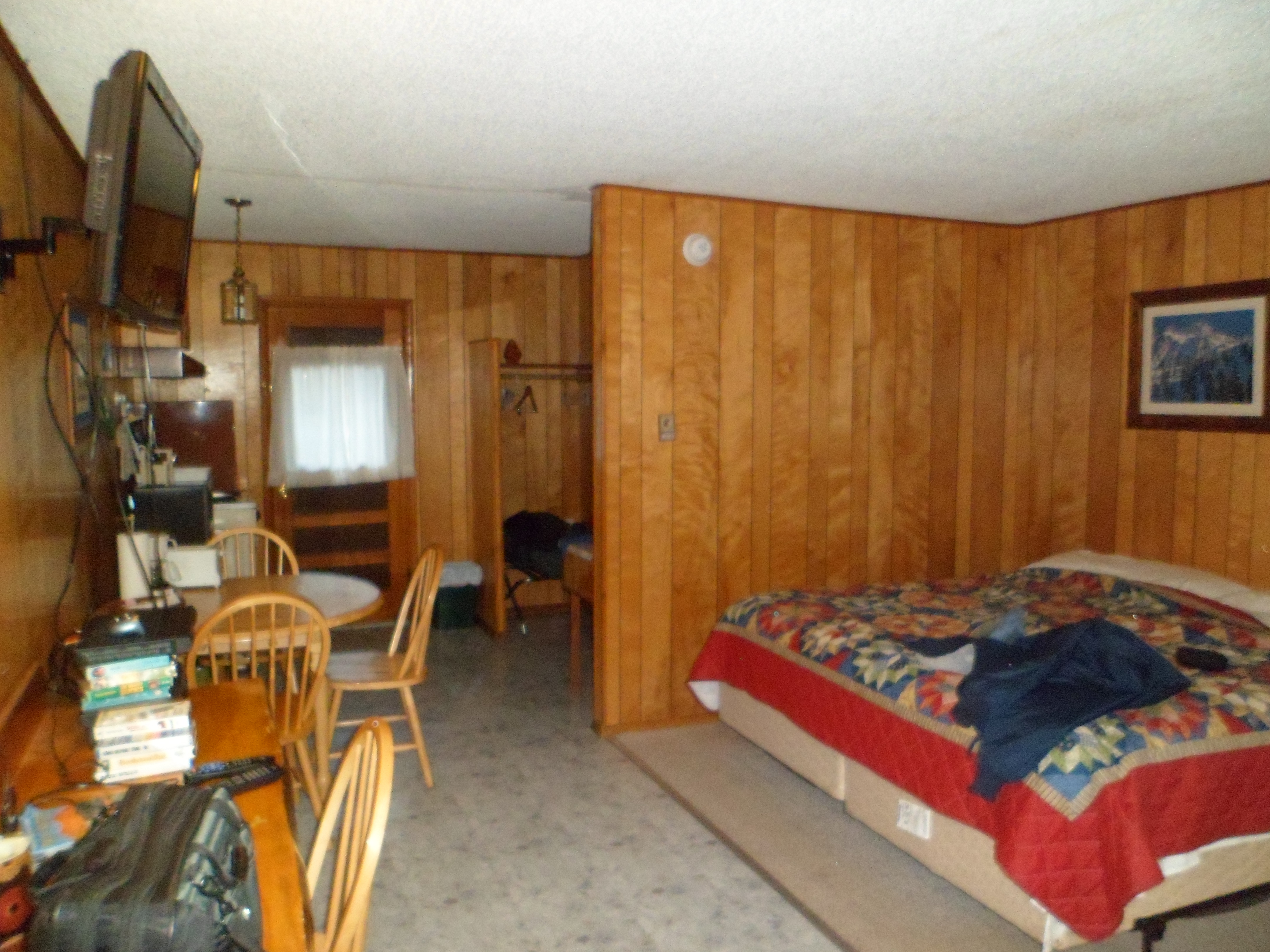
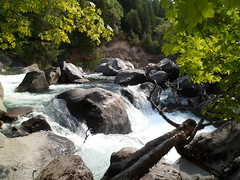
Monday, Sept. 24, found me waking up in one of the finer places in which I’ve stayed, hotel-wise. Union Creek Resort has several cabins, which are in reality country houses, along the upper Rogue River, east of Prospect, OR. I could easily stay here for several days and just relax, albeit sans TV- which I have done more often than not this trip, anyway. Here is the cabin I used the other night.
The folks here were as gracious and helpful as any I’ve met, anywhere in the world- and the Rogue River Gorge is a spectacular backdrop.
It’s quite apparent why the Rogue is a favourite of white water rafting buffs.
I stopped briefly downriver, at Mill Creek Falls, closer to “downtown” Prospect.
The Rogue River defines so much of what makes this southwestern sliver of Oregon’s interior. One could easily, as I said initially, spend days in relaxation and meditation.
I continued, through bustling Medford, to the laid back ambiance of Ashland, interior southwest Oregon’s southernmost town, and a haven for theater, especially Shakesperean theater. The Ashland Springs Hotel is among the tallest buildings between Portland and Santa Rosa, if not San Francisco. I waited briefly here for my friend to appear.
The staff here were very warm, in greeting the various guests, and phone inquirers, who happened along while I was waiting.
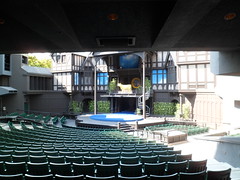
Once Jody arrived, we went by the Elizabethan Theater, and its two satellite theaters. This is the nation’s oldest Shakespearean venue, and is an outdoor theater-in-the-round.
The Shakespearean Festival takes place for several evenings, right around this time in September.
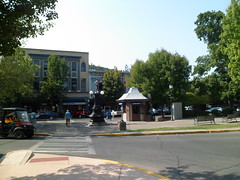
We had a fabulous lunch at Greenleaf Restaurant, along Ashland Creek and in the central plaza. It was hot in Ashland that afternoon, but the creek made a big difference in comfort level. I will caution against drinking much, if any, of the lithium water that is available on the plaza, for tasting. I gave it a shot, in sporting fashion, with no ill effects. Lithium water is what it is, though.
After lunch, before Jody had to leave, we sat in Lithia Park, by a duck pond, and discussed life in general.
After Jody left, I went back to Lithia Park and explored a bit further. Some resident deer had captivated a woman, who was hiding behind a post, so as to get several photos of the creatures. I found a blind of my own, and took the animals’ portrait.
There are numerous small gardens within Lithia Park as well.
My days tend to start early, get taken up longer than I expect, with posting and other aspects of my routine (praying, etc.), so before I know it, it’s mid-afternoon. I returned to my car, gassed up and headed towards Mt. Shasta and the small town of McCloud, CA. , which sits serenely at the great dormant volcano’s foot.
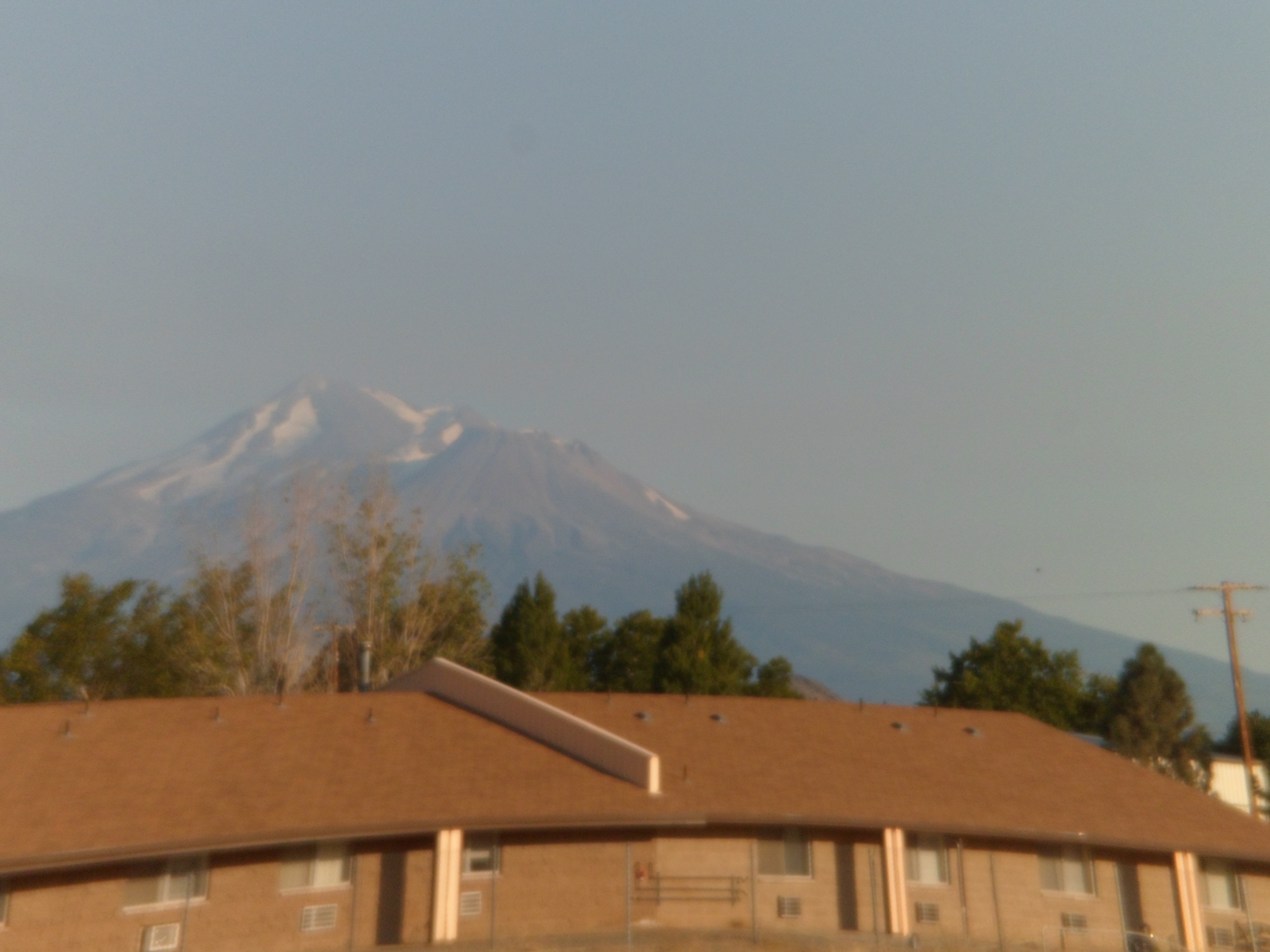
Here is a northern view of Mt. Shasta. Below, is McCloud Hotel.
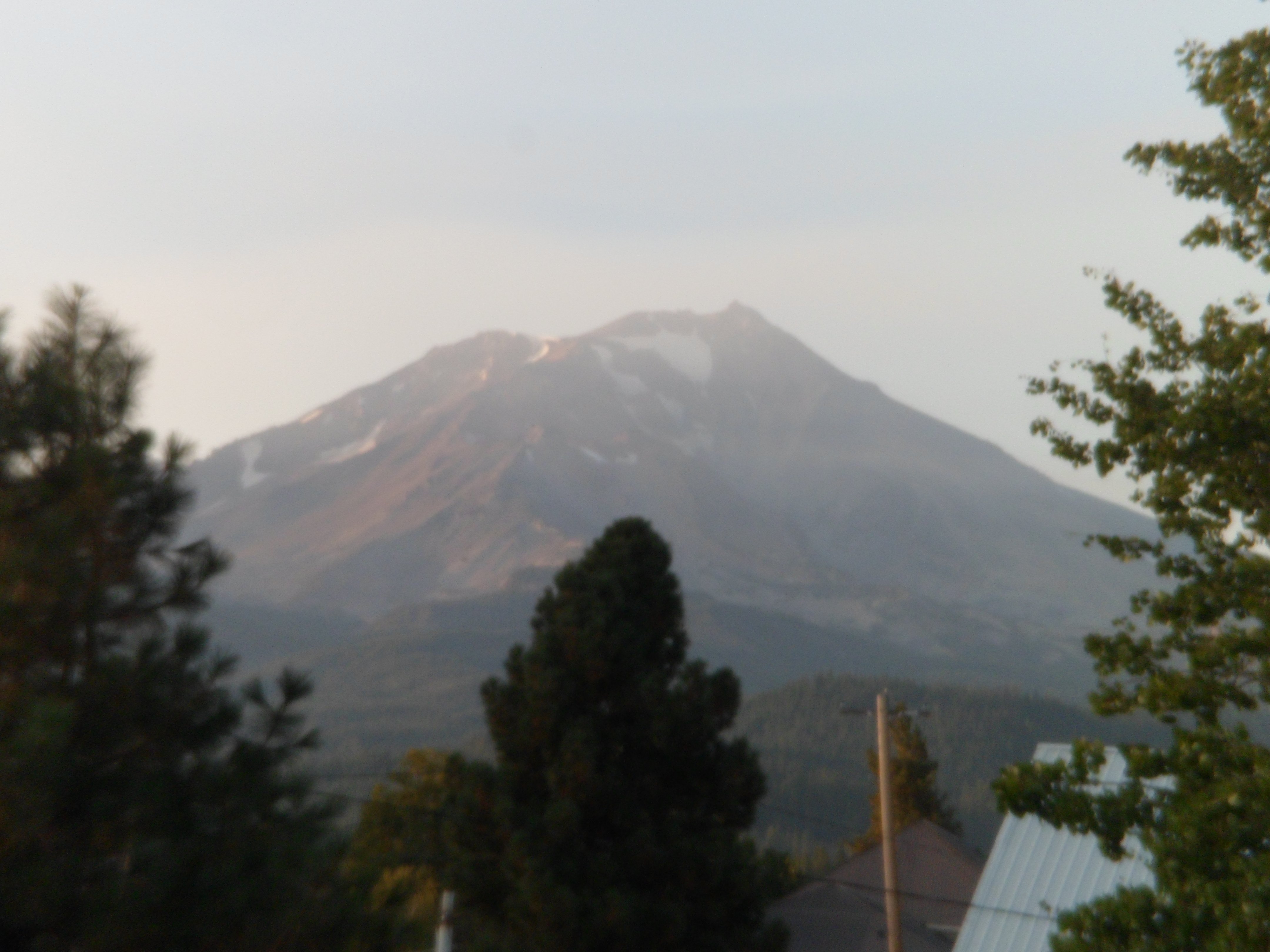
Mt. Shasta is more clearly visible from this southeast viewpoint.
Finally, I found Lake Britton, and a campsite operated by Pacific Gas & Electric Company, on forest service land, east of Mt. Shasta. This gave me the perfect amount of solitude, which I rarely crave, but needed on Monday evening.