The Road Back to San Diego, 2/26/2012

2

My week of February 26- March 3, 2012 was well-spent, as most of my weeks are.  One can never complain, though, when the days involve San Diego.  After the hike with my friends in Granite Basin, a joy in and of itself, I had a quick salad lunch, then got gas in the small town of Congress, about 32 miles southwest of Prescott.

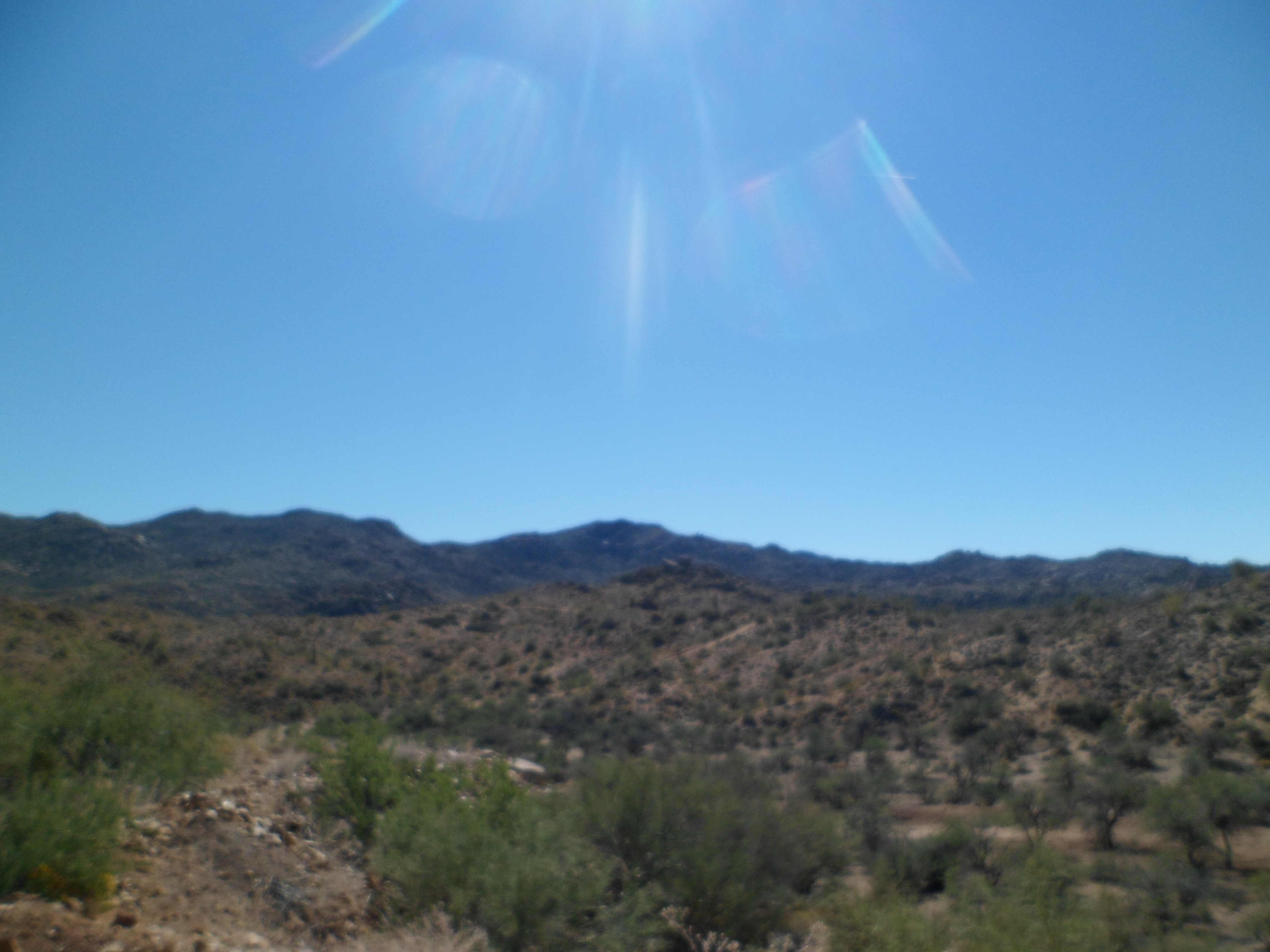
The road west took me through Arizona’s Outback, across the Colorado River, then through the southern tier of the Mojave Desert, which looks like this, at Wiley’s Well:

100_2081

Once further along the road, past the Coachella Valley and Inland Empire, it was time for dinner.  This meant the always reliable Ono Hawaiian Barbecue, a southern California standby.  The one in question is found in the Riverside suburb of Perris.  I enjoyed some fine chicken katsu, made a mental note to check out Perris’ lake on my next jaunt this way, and headed for San Diego.

My digs for the next two nights were at Easy-8, one of my favorite San Diego motels.  It’s off the Pacific Highway, near Old Town.  There is an interesting mix of people there- lots of “homeless”, most of whom are busy collecting recyclables.  It is also close to Perry’s Cafe, the “Breakfast House”, which serves up some killer fritattas.

HIGHLIGHT: Lunch at Salome Cafe-an old haunt.

Montezuma Wasn’t Here

2

Montezuma’s Castle and Montezuma Well, in the northeast corner of Verde Valley, were named so because one of the white settlers was convinced that the cliff dwellings and agricultural features on the area were the work of Aztec colonists.  In fact, the Native peoples of Mexico did trade with the inhabitants of this area, as did the Native peoples of the California coast, the Rocky Mountains and the Great Plains.

The Hohokam (Huhugam) of the Sonoran Desert began  agricultural settlements here in the Twelfth Century, having moved northward along the Verde River, from what is now Scottsdale.  They were joined here, around 1400, by the Sinagua, who came from the Colorado Plateau, to the north and northeast.  The two groups intermarried and got along well for about 200 years.  They eventually left the area around 1600, with some going northeast, to what are now the Hopi mesas and others going south to the Salt and Gila River Valleys, with their modern descendants becoming the Pima and Maricopa nations.  It’s not known what led to the earlier or later migrations.  The area wasn’t settled by European-Americans until the 1860’s.

Here are some views of Montezuma’s Castle National Monument.  The body of water here is Beaver Creek, a tributary of the Verde.


These are Arizona Sycamores, which grow in temperate riparian areas of the  desert Southwest.

Now, here are some views of Montezuma Well:


I briefly stopped at Lake Montezuma , a more contemporary diversion of water from the Verde River.

All good days end with a fine meal.  So it was with Presidents’ Day, 2012.  I went to the small town of Cornville, about thirteen miles east of Montezuma Well.  Here lies Grasshopper Grill.  Stop by sometime and see Chad and Sara.  You’ll be well treated and well fed.

The Indian Wars Were Complicated

0

  • Yesterday, being President’s Day, I decided to focus on historical venues.  Fort Verde State Park is the centerpiece of the town of Camp Verde, on the east side of the Verde River Valley.  The river itself flows just east and south of the park, but much to the chagrin of many visitors, it is not accessible on foot from the park, or anywhere else in town.

    The fort was intended to house soldiers who wanted to “pacify” the Apaches who lived east and north of the settlements of Camp Verde and McGuireville, in the “Indian Wars” period of 1870-90.  There were two schools of thought on this matter- Get to know the Apaches, set some land aside for them and live in peace among them (General George Crook) and Subdue the Apaches, kill them if necessary and ship the survivors to Oklahoma or Florida (General Nelson Miles).  Miles won out at first, but Crook’s philosophy was eventually adopted by President Grover Cleveland, then by Theodore Roosevelt.  The latter wanted Oklahoma for white settlers, anyway.
    Our government, by and large, treated Indians abysmally until the 1970’s.  Still, it is worth my while to know how an open, unstockaded fort existed, where Apaches could move in and out freely, as long as they were of peaceful intent.  It is also worth knowing that General Miles double-crossed Apache scouts who helped him subdue the Navajos, and their own fellow Apaches- by imprisoning them once the campaign ended.

    Here are some photos of Fort Verde, and the town.


    After viewing an informative video on the Apache scouts, and enjoying a cup of coffee at Thanks A Latte, I headed for Montezuma’s Castle and Montezuma Well National Monuments.  The Aztecs never lived in this area, but in the next post, I will talk about those who did.

West of Prescott, Just Below Heaven

0
  • On Sunday, I headed towards Wickenburg, with the express goal of climbing the town’s third anchor:  Vulture Peak, having visited Desert Caballeros Museum and Hassayampa Natural Preserve earlier this year.  Along the way down, and on the way back, I decided to give some love to the small gems that appear in the high desert.

    Here is Wilhoit, which sometimes refers to itself as “Nowhere, AZ”.


    A bt further on is Peeples Valley.
                                                      

    As you might guess, Peeples Valley is a ranching town.  A man named Maughan has a number of ranching properties here, and in nearby Yarnell.
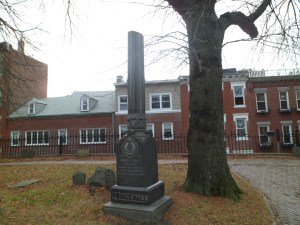
    I stopped in Yarnell for about an hour or so, to pick up a book on northern Arizona’s geology and a new ball cap, at Painted Lizard, plus check out three interesting landmarks.


    Above, and below, are views of Yarnell’s Flora Mae Ludden Memorial Park.


    Like Prescott to the northeast, Yarnell has its share of rock dells from the retreat of the glaciers.  Below are some boulders with names.


    The park where these are found is about 1/4 mile from the Shrine of St. Joseph.  This is a nondenominational shrine, featuring the Stations of the Cross.  I found walking it a deeply moving spiritual experience, though I don’t belong to a Christian church.  Christ’s Message still speaks through the ages, for those with open ears.


    Peeples Valley was named for a rancher, A.H. Peeples.  Yarnell was named for a prospector, Henry Yarnell.  I’ve found no record of Wilhoit’s namesake, as yet.

    On the way back from Wickenburg, I stopped by another little gem, this one four miles off the beaten track:  Kirkland.  Here is an old railroad hotel, restaurant and saloon, which is still very much in operation.  I had a marvelous steak dinner here, topped by a dessert called “Pecan Passion”. If you’re ever moseying around in the high desert between Wickenburg and Prescott, stop in and enjoy the hospitality of Herb and Barb Carabeo.  An extra sidelight:  The paper placemats were illustrated by a friend of ours from Clarkdale, AZ.  Her name is Ann Schnell.

    Kirkland has a small rock dell of its own.


    The village is named for William Kirkland, who also founded the city of Tempe, near Phoenix, before moving here in his later years.

Tucson’s Downtown and Old Pueblo

5

After visiting Bisbee and Tombstone, and enjoying the fare of High Desert Cafe and Market, and Screaming Banshee Pizza, both in Bisbee, I had a huge craving for good Mexican cuisine.  There is no better place for this than the area north of downtown Tucson, known as Old Pueblo.

I took some shots of downtown and its northern neighbour, then enjoyed fantastic  sopa de albondigas and a shrimp chimichanga, at El Charro, the Old Pueblo’s largest Mexican eatery.
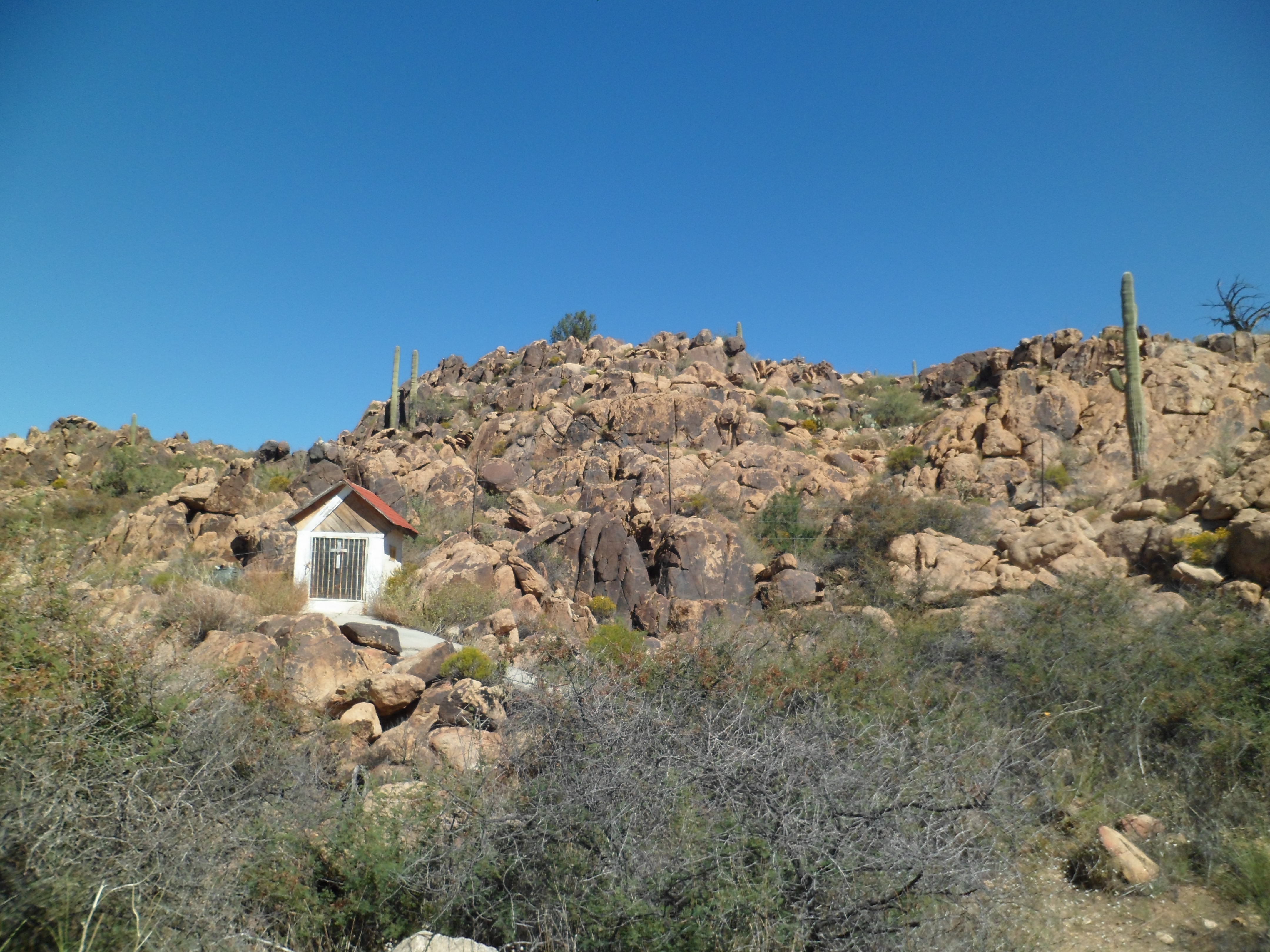
Here is Tucson City Hall.

These are views of Pima County Courthouse.

These are four views of Old Pueblo.

I will return to Tucson in late April or early May, to visit San Xavier del Bac and Mount Lemmon.

Tombstone’s Fantasy and Reality

0

After leaving Bisbee, one of my favourite AZ towns, I drove to Tombstone, which I only knew from interviewing unsuccessfully for a job, several years ago, and from the film of the 1990’s.

A brief stroll along Allen Street, the main drag, accents the hype:


In the Bird Cage Theater, one may see wax mannequins of the frontier days, and a steer or two:


The meat and potatoes of Tombstone, however, was, and is, silver.  The Good Enough Mine offers underground tours:

Rex was our knowledgeable subterranean guide.


There is green cuprite, resembling turquoise.

This photo amazed one of the kids in our group.

The red is for “Watch your head”.  Most of us wore hard hats. A lone Texas cowboy opted to just where his regular hat.

Here’s a dynamite cart.

Knowing more about the real Tombstone helps me understand how things got out of hand in the saloons.  Silver mining looks like grueling work.

Here are a few shots from Tombstone Courthouse Museum, an Arizona State Park.


There were three Earp brothers who were prominent in the Tombstone of the 1880’s.

Here is the jail cell.

Here is the gallows.

This is a panopticon, a primitive projector.

This bell called kids to school in 1880’s Tombstone.

This is the courtroom.

“and now, a word from our sponsor”.

Bisbee, Part 5 of 5

0

Here are some scenes of Bisbee’s historical record, as shown in the town’s Historical Museum.

This is some of the machinery used in the Queen Mine.

Here is Bisbee in 1907.

Serbians were among the dozens of ethnic groups  who made up the mine crews.                                                                                    Here is a Chinese tea set.

The flags of several nations flew at the mine in the 1900’s.

Here is an early miner at work.

This shows a rough estimate of the amount of copper used by the average American.

Bisbee, Part 4 of 5

0

Here are some shots of the Queen Copper Mine, which was established by George Warren and Edwin Reilly in 1879.  The Douglas family, and Phelps-Dodge Corporation (now Fairport-Mc Moran) later bought the mine and expanded on it.

  • Here are four shots of the mine, which may also be toured, if scheduled in advance.


    There is probably a fair amount of copper tailings in the Queen, but Fairport- McMoran’s operations have shifted to an area across the street.

    The mine was the focal point of a serious labour dispute in 1917.  This culminated in the deportations, on July 17 of that year, of 2,000  men, who were members of the International Workers of the World (IWW).  This was orchestrated by Sheriff Harry Wheeler, of Cochise County and Walter Douglas, the president of Phelps-Dodge Corporation, which owned the mine.  Wheeler was greatly concerned with “getting rid of German spies”, which is how he saw the labour activists.

Bisbee, Part 3 of 5

0

  • Here, I will show you some aspects of the community’s sense of artistic license.  These help make a small town a huge delight.


    This goes to show, great things come in small packages!

Bisbee, Part 2 of 5

0

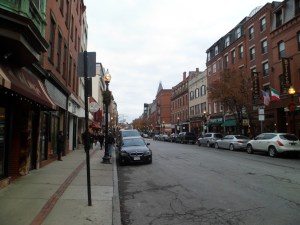
One of the most striking features of Bisbee is the prodigious use of colour in its many fine structures-  hotels, eateries and places of worship.

Let’s look around:

Yes, the trolley is ideal for those who prefer relaxation.

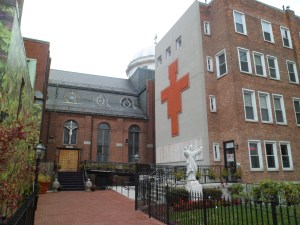
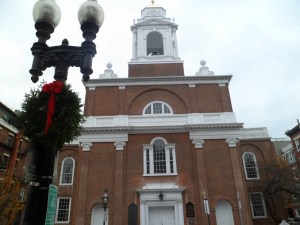
Here are some churches.


Hotels are not to be outdone, in style and substance.


Above, is the Copper Queen.


Houses have their own sense of artistry.


In the next post, I will show some  of the random art that the good folks of Bisbee share with their many guests.