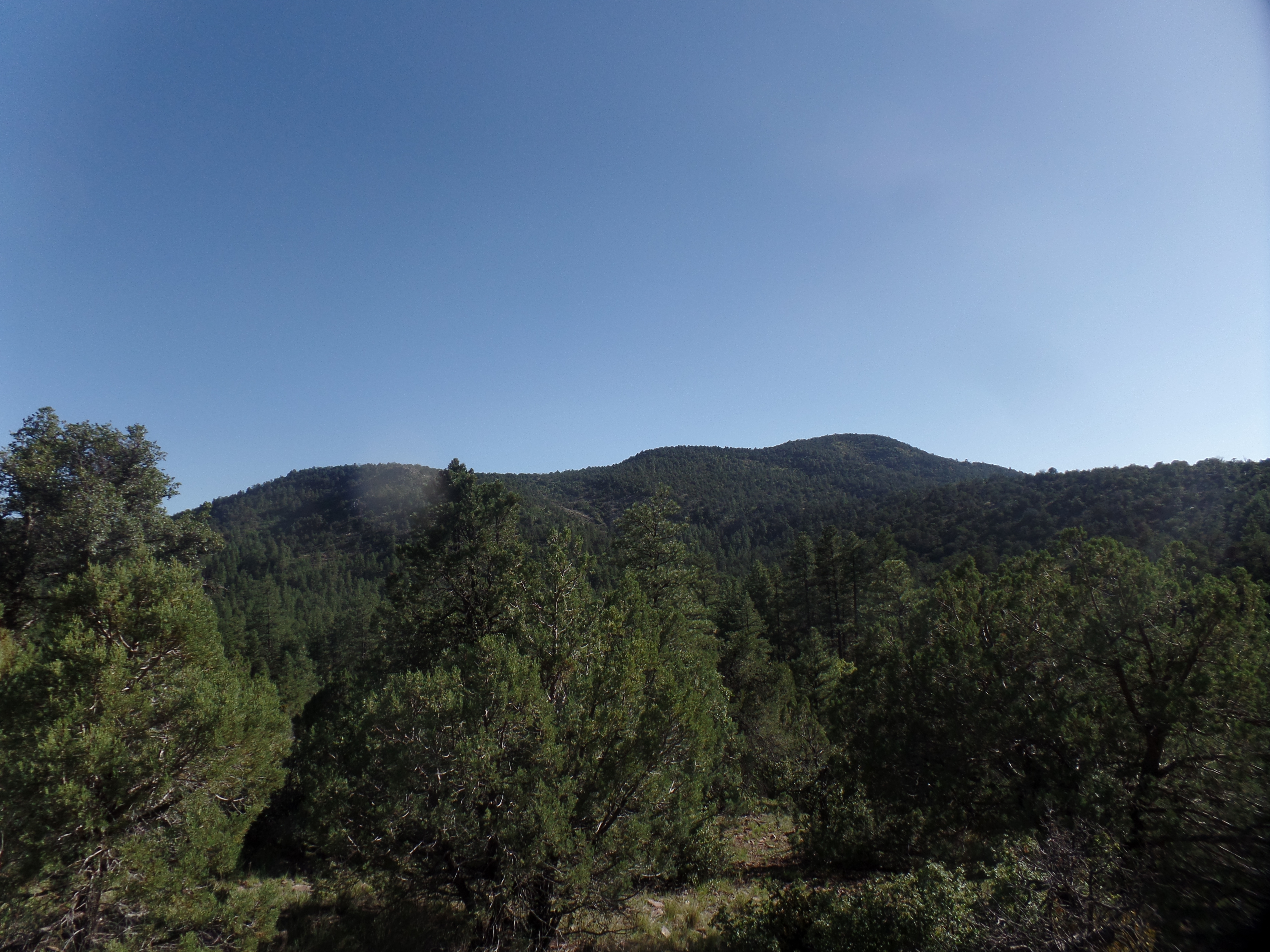
Juniper Mesa, from George Wood Canyon
September 4, 2016, Walnut Creek, AZ- This settlement is only intermittently populated, when researchers from Arizona’s public universities, and Prescott College, show up to conduct their monitoring of the high desert’s overall health, in an area far from any permanent, sizable human community. A few ranches break the landscape and, indeed, one of those ranches, just west of Juniper Mesa’s main trailhead, is sealed off from anyone not associated with its operation.
I came out here, in mid-afternoon, to explore the sky island known as Juniper Mesa. The place was, in the 1870’s and 80’s, a military encampment, an extension of Prescott’s Fort Whipple. It was, to the cavalrymen of the time, the perfect spot for a railway station, with the route commencing in Prescott, going through Del Rio (now Chino Valley) and pushing clear to the Colorado River, at Hardyville (now Bullhead City) and, from there, to San Pedro, one of the ports serving Los Angeles. The railroad was built, but it went north, to Ash Fork, then to Seligman and Kingman, connecting with a much larger, transcontinental track, the Santa Fe.
So, Juniper Mesa has reverted to a lonesomeness. I was the only person on the trail today. Fortunately, I have come to expect that, even in areas closer to Prescott. The large pack, with an ample water supply, a first aid kit, two knives, a detailed topographic map and a sturdy flashlight, along with one of my trusty walking sticks, has been an integral part of my communes with nature. What has occasionally caused chuckles, from the smug hipsters doing lakeside botanical and entomological research in Prescott’s city parks, is, to me, a must on any hike lasting more than an hour. Besides, it wasn’t too long ago, that one of those individuals had to be rescued from Watson Lake Park, a ten-minute walk from a North Prescott business district, because she was dehydrated and delirious.
I saw fairly fresh horse-hoof prints, along the way and smelled fresh bobcat urine, trail side, closer to evening, but it was the insects and I who had the place to ourselves, from all outward seeming. Juniper Mesa could be for lovers, but so far, it is for the soloists.
I used three trails, in the course of my loop hike: Oaks and Willows; Juniper Mesa (rim) and the steep Bull Spring Trail. Oaks and Willows meets Walnut Creek Road (County Road 125), proceeds through the lush George Wood Canyon to the top of Juniper Mesa, then branches off to the northeast.
Here are some scenes of Oaks and Willows.

Broad trail, along the Oaks and Willows, Juniper Mesa

Thick scrub, George Wood Canyon, Juniper Mesa Wilderness

View across George Wood Canyon

Sign, gnawed by black bears, over several years

Heart of George Wood Canyon, Juniper Mesa Wilderness
Once atop the mesa, I basically followed Juniper Mesa Rim Trail, though finding it rather sparse, in several places. Horse trails, though, are easy to identify by their indentation into the ground.

Alligator Juniper, top of Juniper Mesa. I almost see a parrot’s face, in the branch stump.
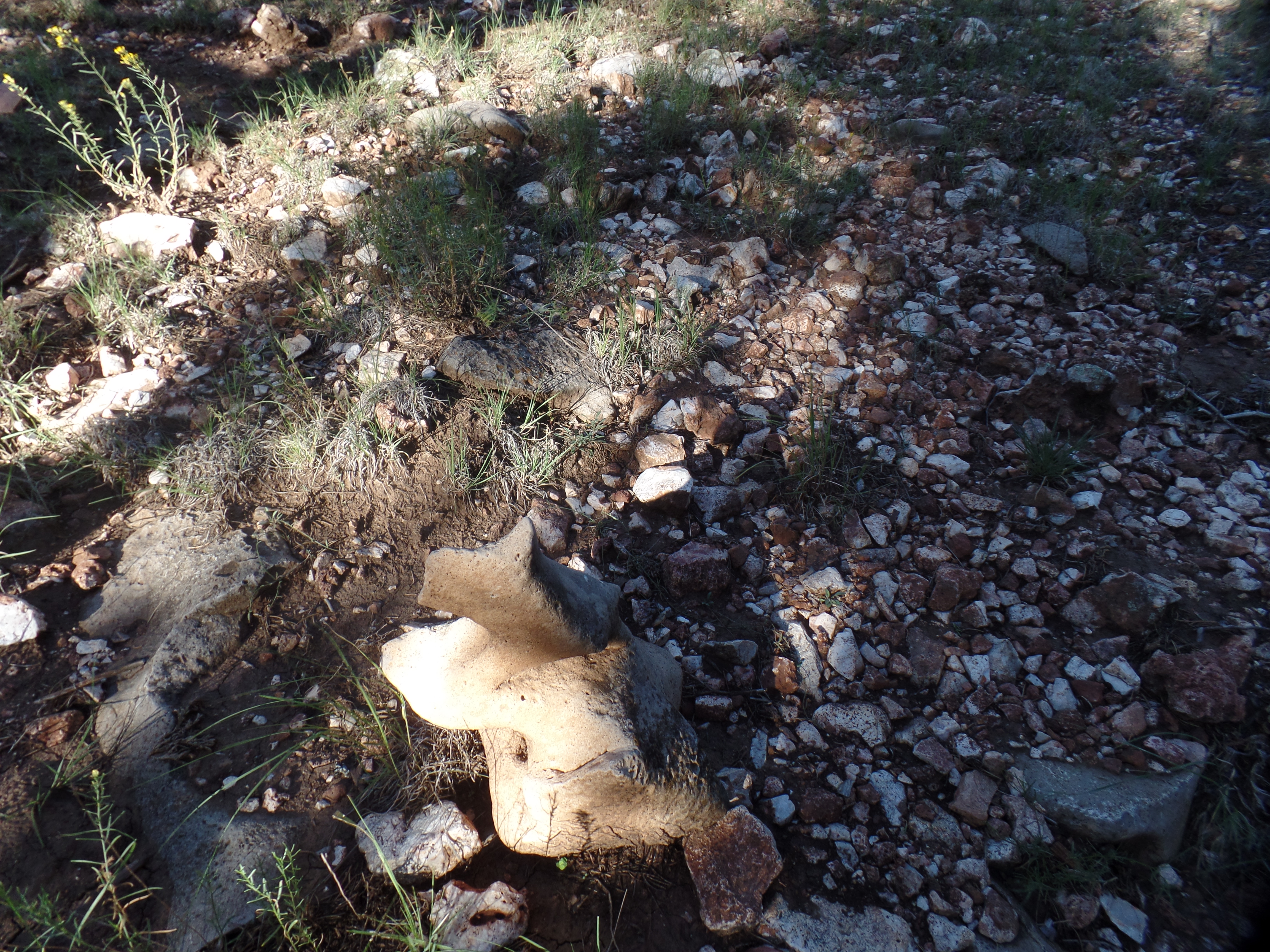
Bear image, small sandstone, Juniper Mesa Rim Trail
Bears are reported to be common here, but I saw no sign of them- not even old scat. They are probably further north, or in areas more sheltered from the lightning that hits Juniper Mesa frequently, during the monsoon season, that is in hiatus for several days.

Lightning-struck tree, Juniper Mesa Rim Trail
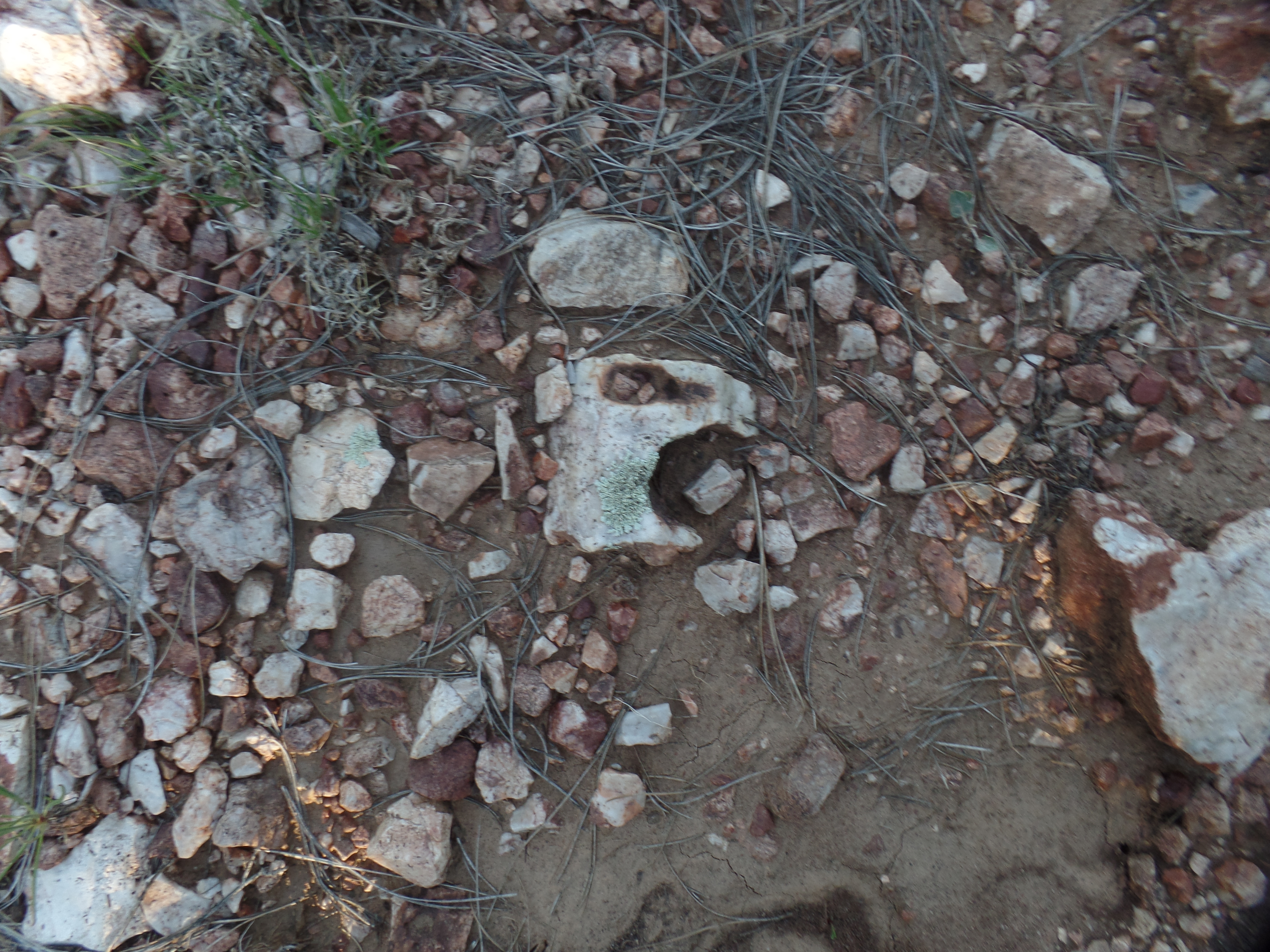
Lightning-struck piece of limestone, and heart rock, Juniper Mesa Rim Trail
The rock above was given a fierce countenance, by a recent lightning strike.
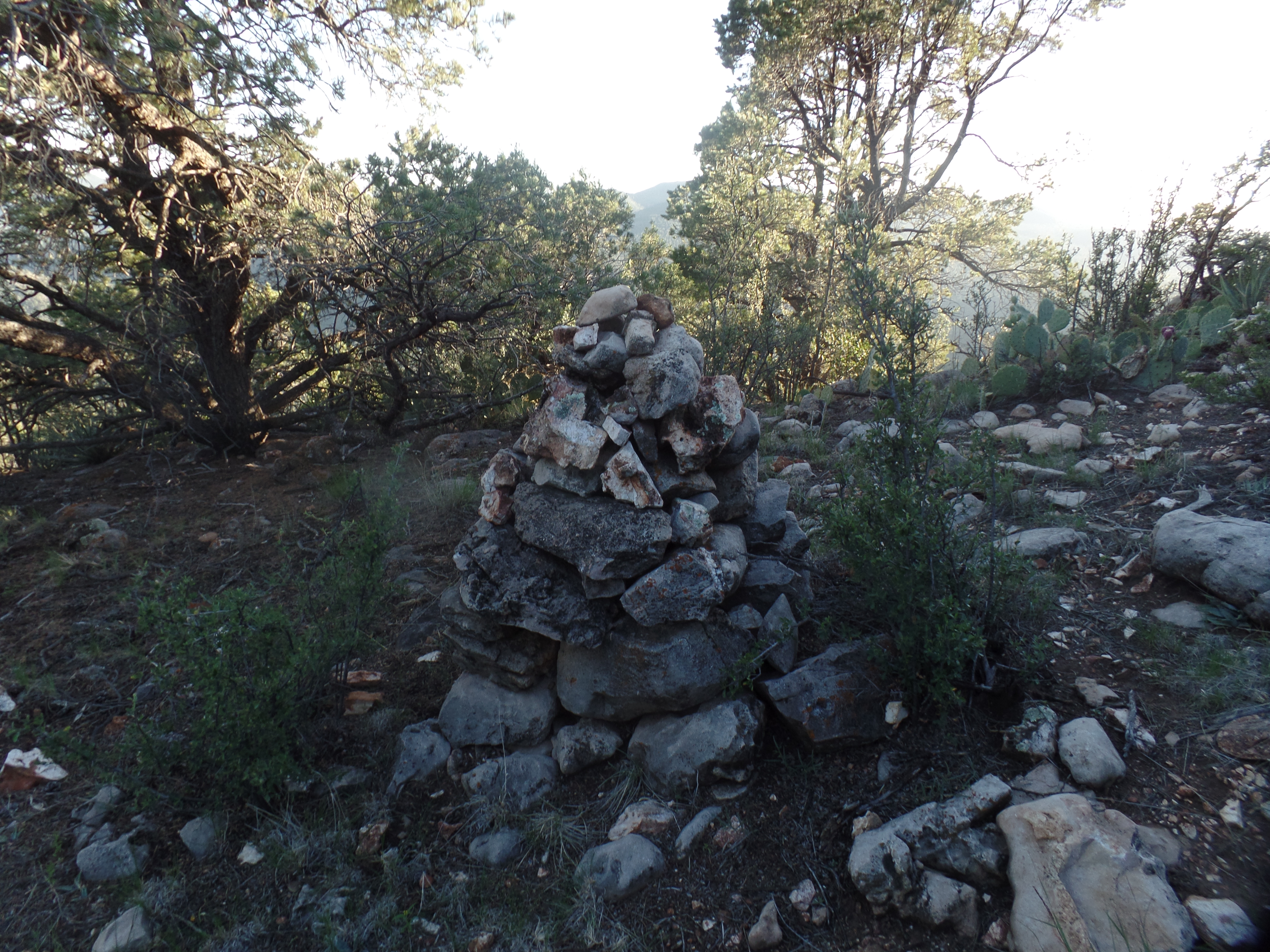
Cairn, Juniper Mesa Rim Trail
Large cairns mark Juniper Mesa Rim Trail, at several points, especially after Oaks and Willows Trail branches off to the north. A half-mile further east, I bid farewell to the benign rout along the rim, and began the descent, on steep Bull Springs Trail.

View of Walnut Creek settlement and the Santa Maria Range, from Bull Spring Trail
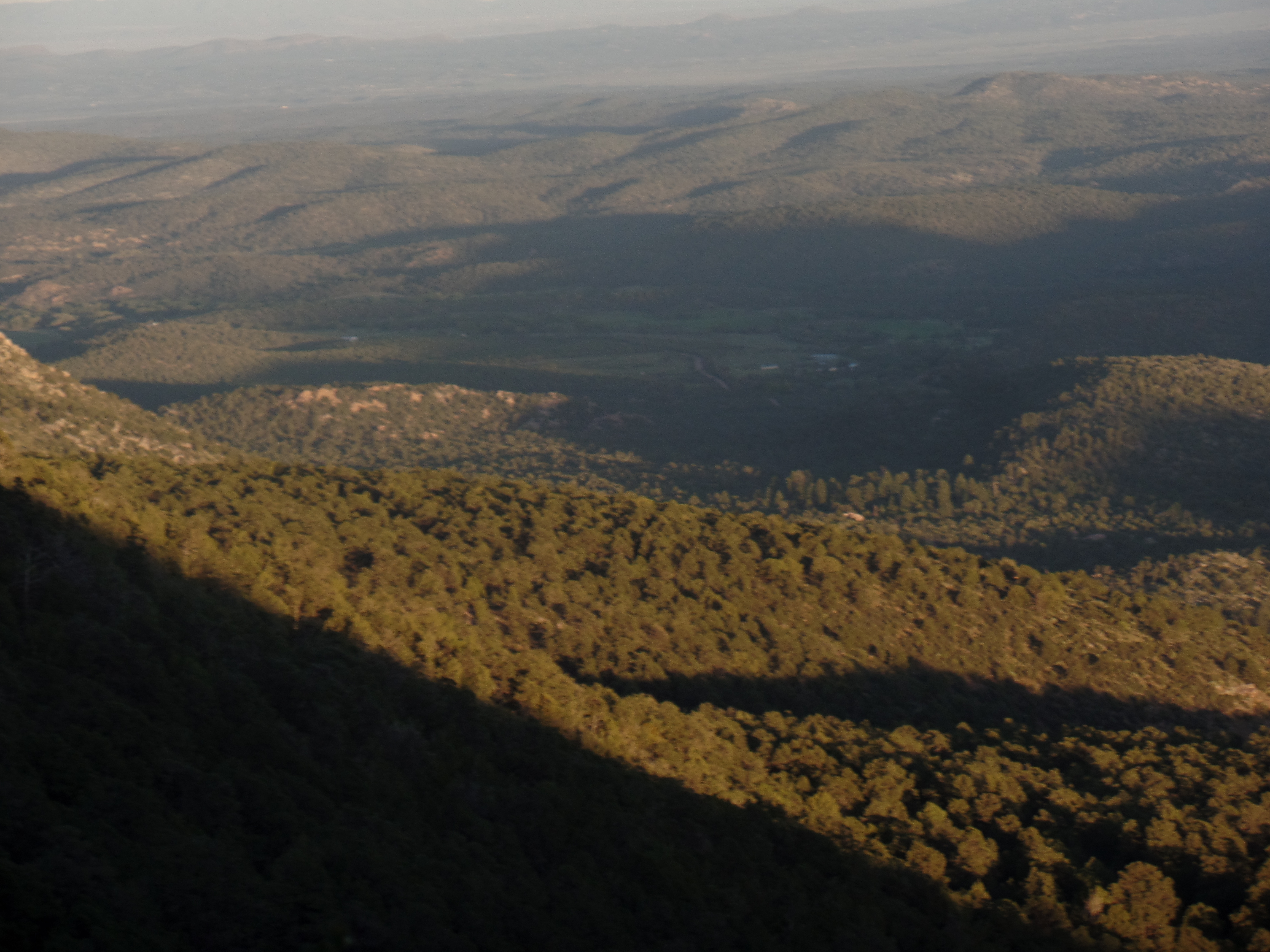
Hazy view of Walnut Creek settlement, from Bull Spring Trail

Limestone cliff, east end of Juniper Mesa
The cliffs seen above, and in the next photo, were redoubts for Yavapai and Hualapai warriors, who resisted the U.S. Cavalry in the 1870’s.

Limestone cliffs, east end of Juniper Mesa
After climbing down from the mesa top, I followed Bull Spring Trail, into the darkness. Although it was along this trail, that I smelled the bobcat’s markings, the animal itself stayed out of sight, and only small insects, attracted by the flashlight’s beam, showed me any interest. It took careful attention for me to find the last trail sign, returning to the nub of Oaks and Willows Trail that led me to the car, but I enjoyed a very deep sleep tonight- far from Juniper Mesa.
This is one of several places, in the middle of Arizona’s “nowhere”, that have been on my hiker’s list, in the wake of having completed Prescott Circle. Stay tuned for others.




 A Sagittarian Seeker