A Small Time Mariner’s Voyage, Days 2 & 3, Part Two: The Sanctuary Called Iolani

4

October 12-13, 2014, Honolulu- There is, in the story of any people, an account of their casting the net of interaction with both neighbouring peoples and those in far-off lands.

Such interactions go back further than is commonly thought, and were far more frequent than often supposed.  Hawaiian people, having come from islands far to the south, had little contact with outsiders, however, until the voyages of the English, under James Cook.  Conflicts between the two groups were not long in coming, however, as the concept of private property was far different in Hawaiian society than in that of the English.  Material goods and property under kapu, or special protection, were not to be taken or disturbed.  The rest was regarded as community property, much as it is in many Native American societies.

When the Hawaiians took items from English ships, after having fed and watered the English, an enraged Cook took action against them, killing a ceremonial chief and destroying a sacred temple.  In response, he was clubbed to death, and while the English fled the islands, they, and ships of several other nations, soon returned. Hawai’i’s strategic value began to draw Americans, Russians and Germans, as well as British and Spanish ships.

This is the background which led to American missionaries and industrialists taking interest in Hawai’i, Hawaiians taking an interest in the wider world, and the eventual de facto colonization of the islands by the United States.

Iolani Palace, built first by Kamehameha III, in 1844, and replaced by David Kalakaua, in 1879, as the first structure, being wooden, had fallen victim to termites.  Another palace (Aiolani Hale), across the street, built by Kamehameha V, is used as a Judiciary Building today.  Hale (HAH-lay) means “chief’s house”, in Hawaiian.  King David’s Iolani is the structure which at which visitors can come to appreciate the level of sophistication to which the Hawaiian nation had attained, by the 1870’s.  It was here that Queen Liliukalani was held, while under house arrest, during the American oocupation of the early 1890’s.

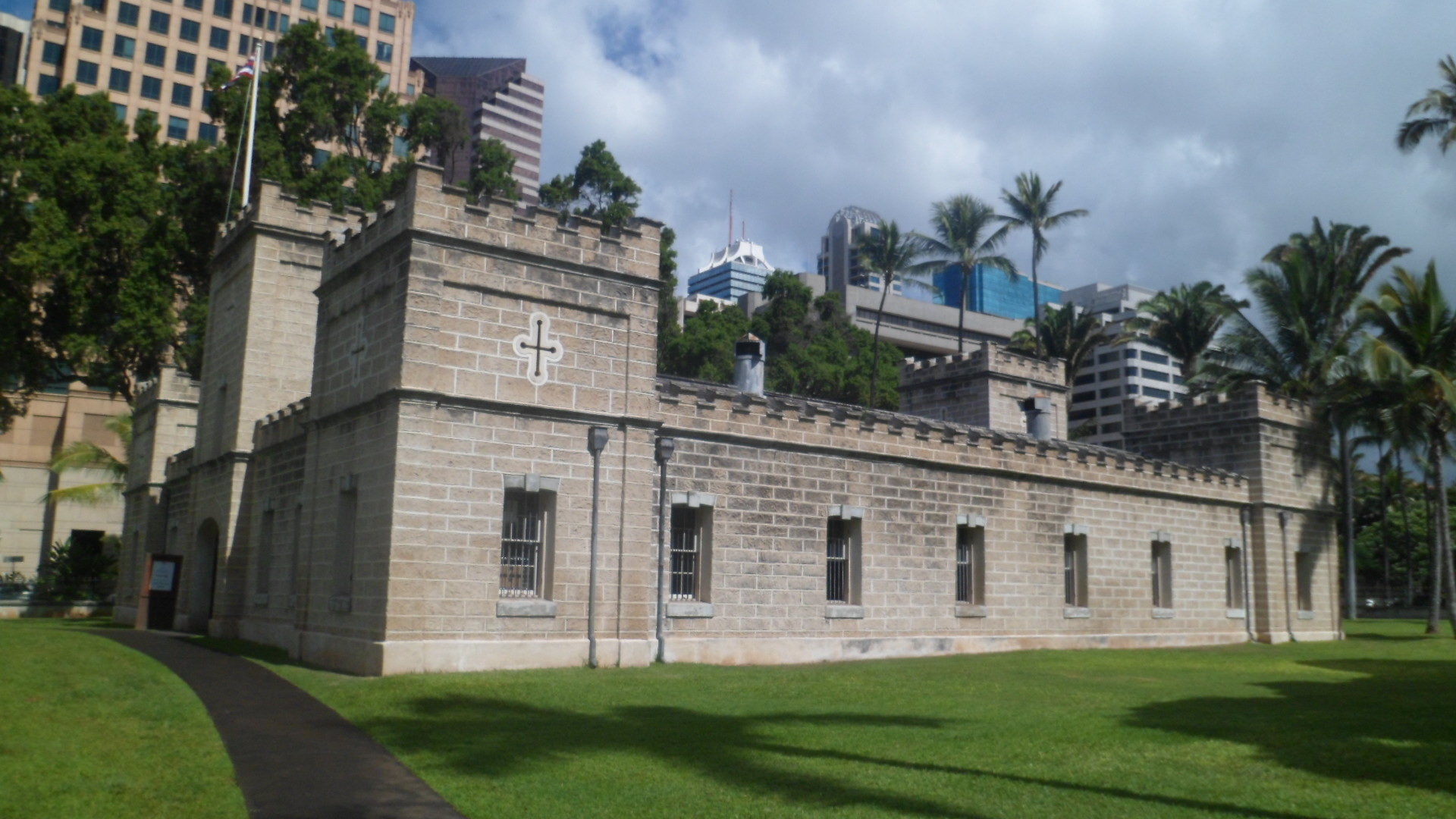
In the 1960’s, the new State of Hawai’i realized the need for preservation of structures such as Iolani Palace, and a preservation campaign ensued, resulting in the marvelous example of American Florentine architecture seen in the following photos.  First is the Iolani Barracks, where private security forces stayed, while taking control of Honolulu in the 1890’s.  It is now a Visitors’ Center for Iolani Palace.  Photos of the palace exterior follow.
SAM_2947

SAM_2946

SAM_2984

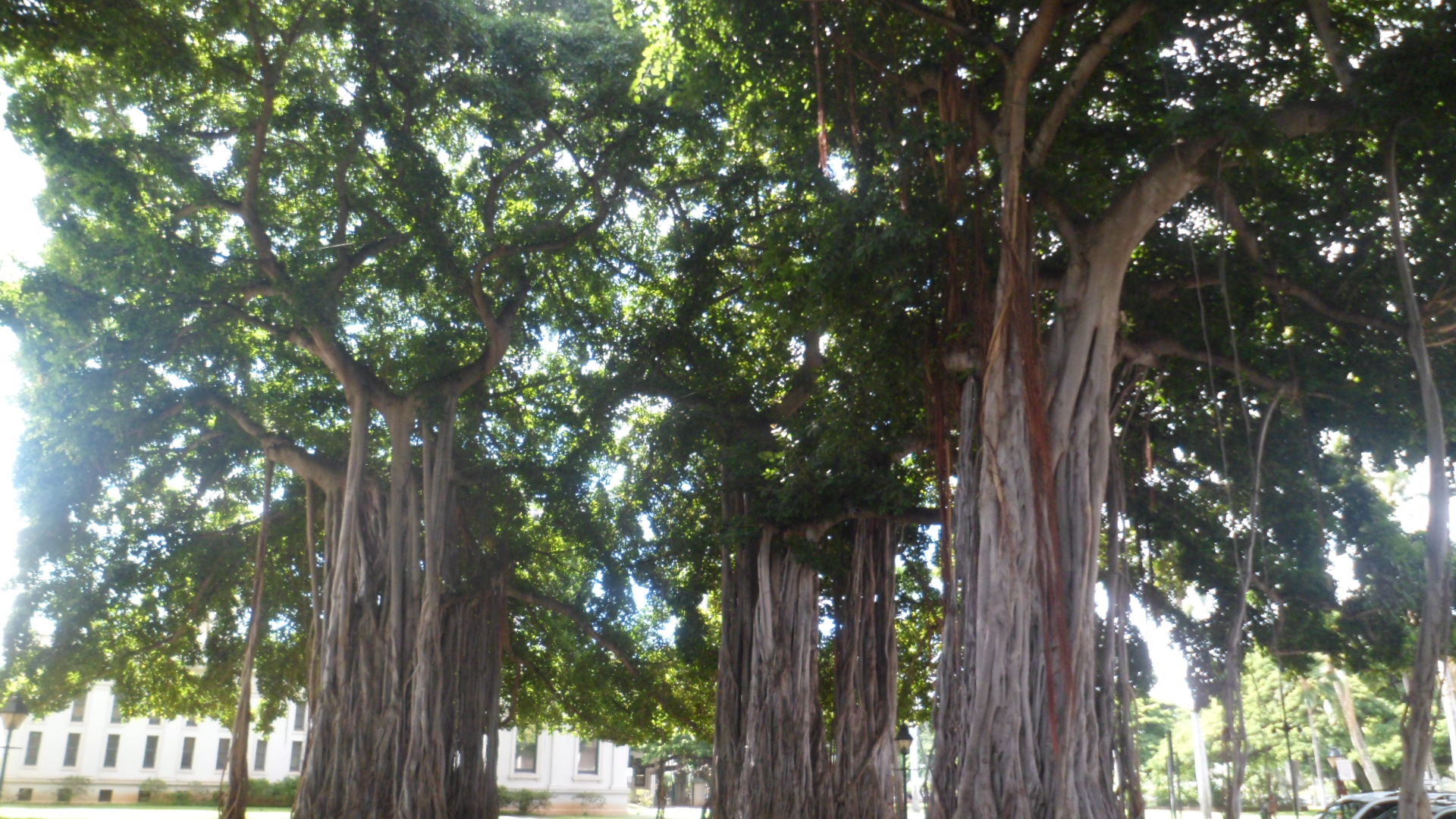
Banyan trees cover the grounds immediately to the north of the palace.
SAM_2945

Prior to entering the palace, visitors are briefed as to protocol, and given plastic booties, to place over their shoes.  This is a continuation of a practice begun by Kamahameha III.  Indeed, visitors to Hawaiian homes are expected to remove their shoes, before entering.

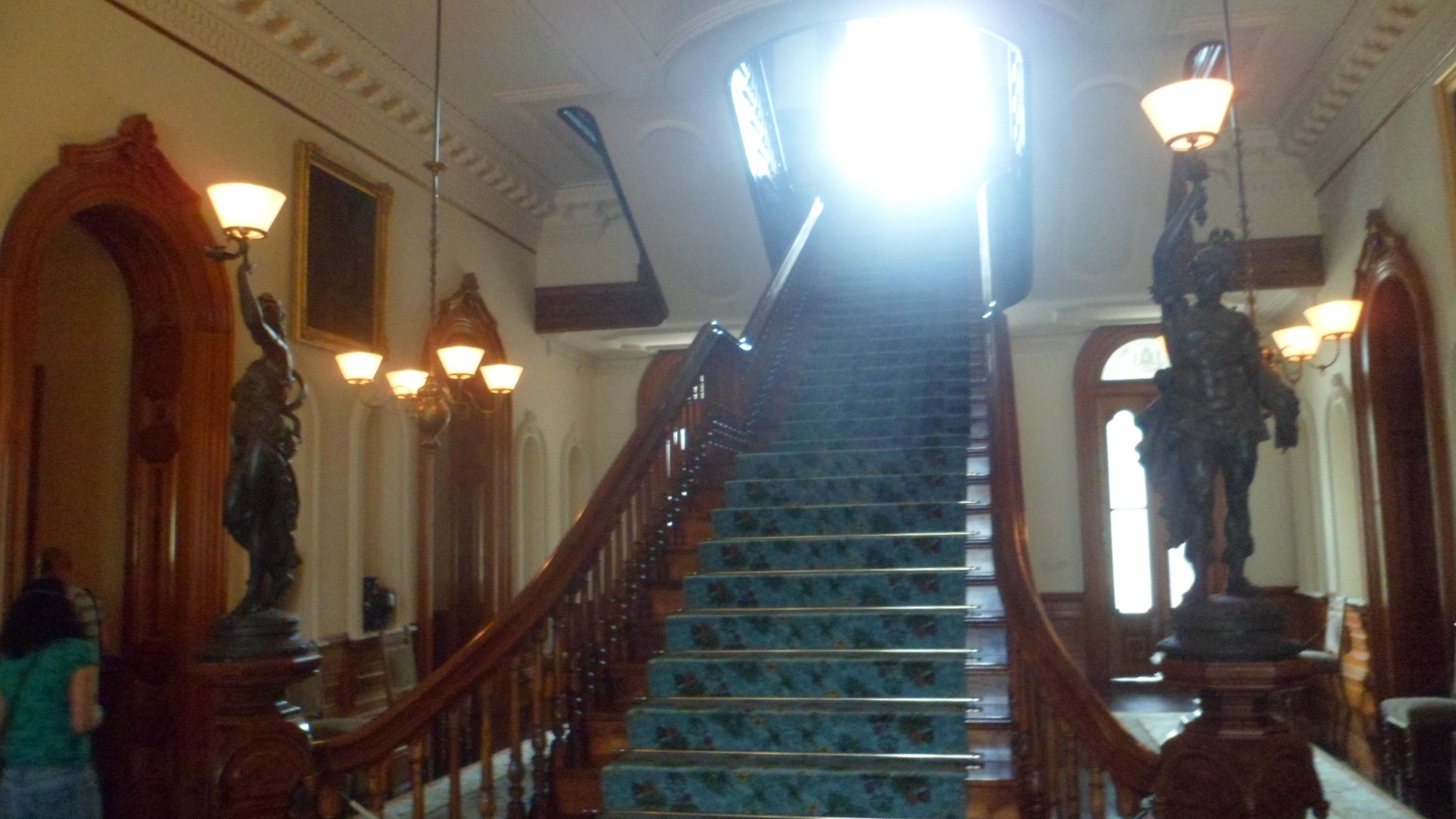
The Grand Staircase presents itself to the visitor, upon entry into Iolani Palace.  The architect initially wanted to build a separate staircase for royalty, but the King and Queen vetoed the idea, saying they could use the same entry and exit as their servants and advisers.  While Hawaiian society was quite stratified, there were key elements of egalitarianism in place.
SAM_2949

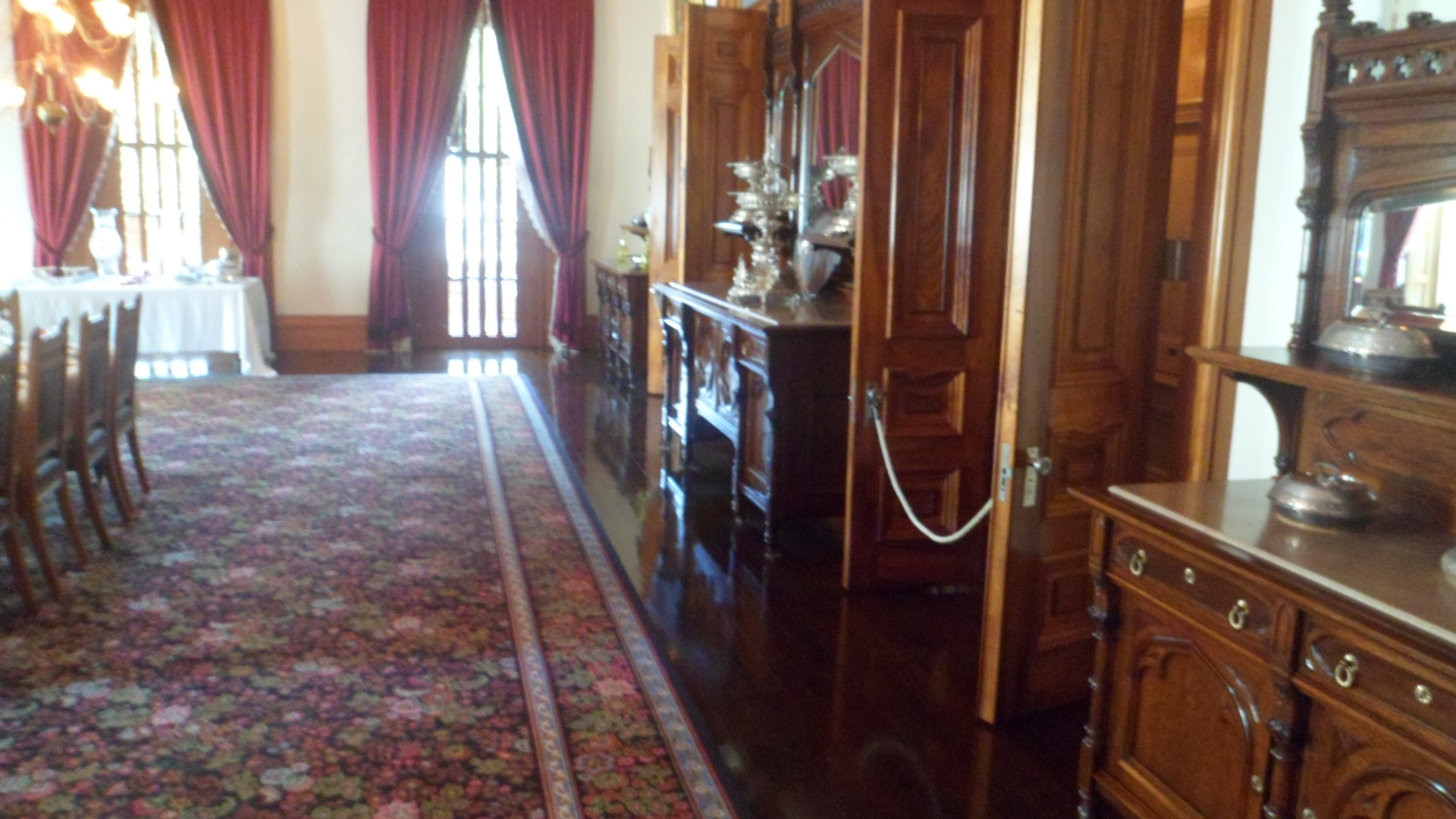
The dining room was maintained in the manner which David Kalakaua had seen in Europe, during his round the world journey.
SAM_2953

In fact, most of the Palace reflects European regalia.

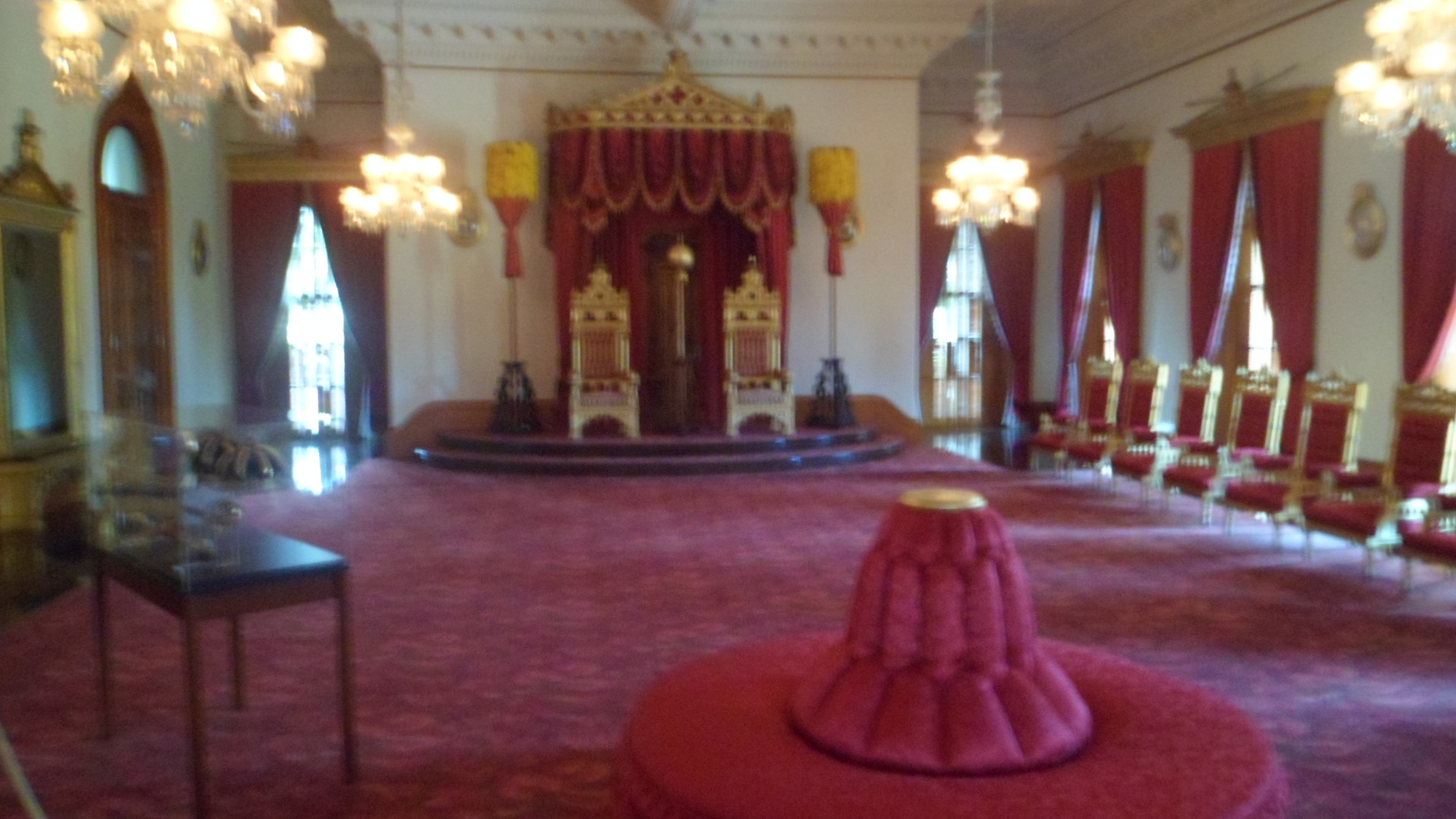
The Red Throne Room was a place of coronations, and of official greetings afforded visiting Heads of State, including Emperor Franz-Josef, of Austria-Hungary and his Empress.  The twin crowns placed on King David Kalakaua and Queen Kapiolani are shown in the bottom photo.  King David’s tastes were quite extravagant, which he justified by pointing to the similar largesse of the crowned heads of Europe.  Hawai’i, however, could not sustain the costs, and the country plunged into depression.  This opened the door for the Dole family and their accomplices to machinate for the overthrow of the monarchy.
SAM_2962

SAM_2964

The Blue Room is a conference room, and was also where the monarchs entertained their guests.  Queen Liliukalani, who briefly succeeded her brother, Kalakaua, was a prolific songstress and musician.  Several of her compositions, including Aloha Oe, are staples of Hawaiian music, to this day.
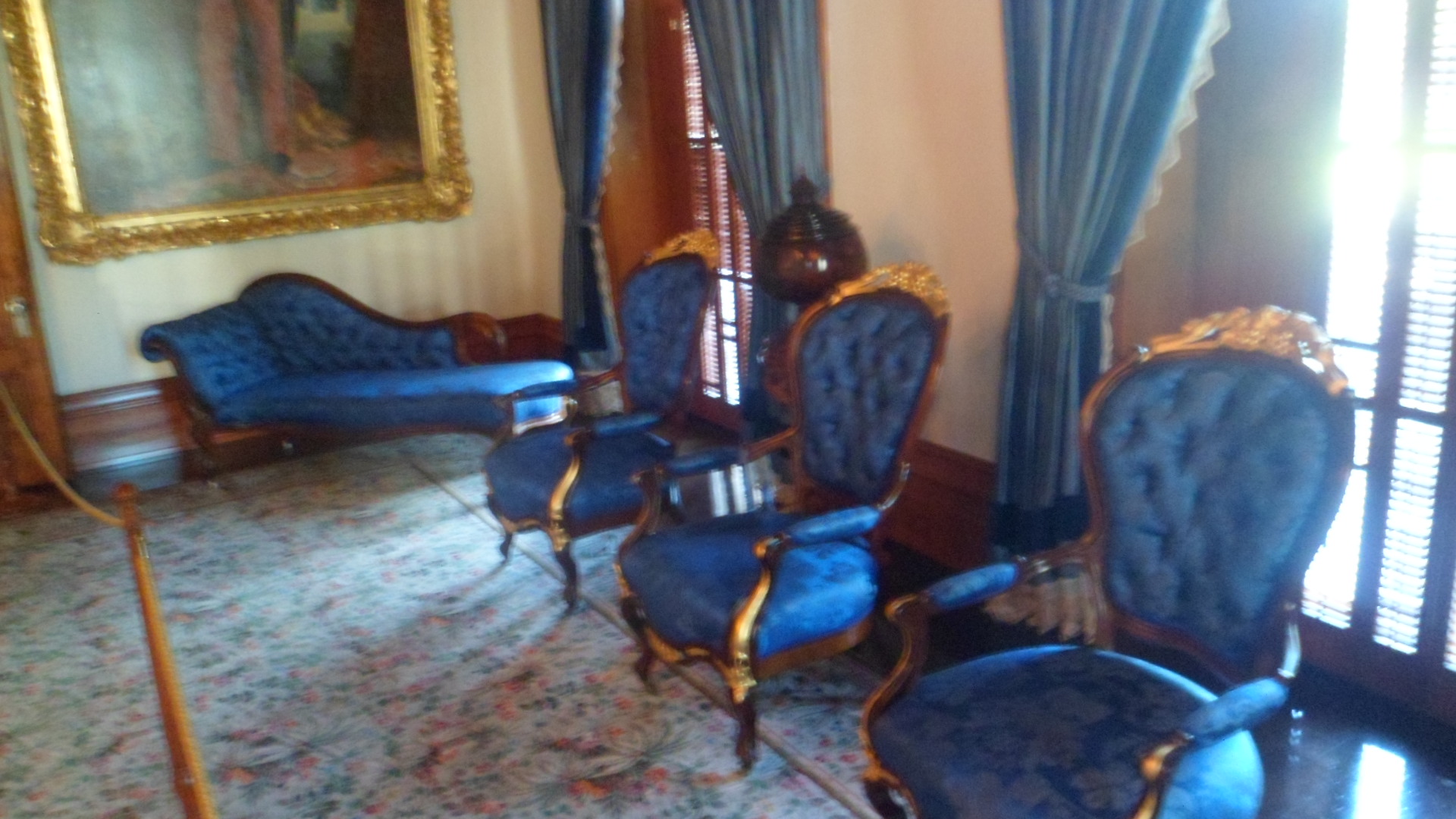
SAM_2960

Queen Liliukalani was held in this room, during the islands’ rule by the Committee of Safety, the term which the American businessmen used to justify their seizure of the country.

SAM_2968

While incarcerated, she sewed a magnificent quilt, shown here.
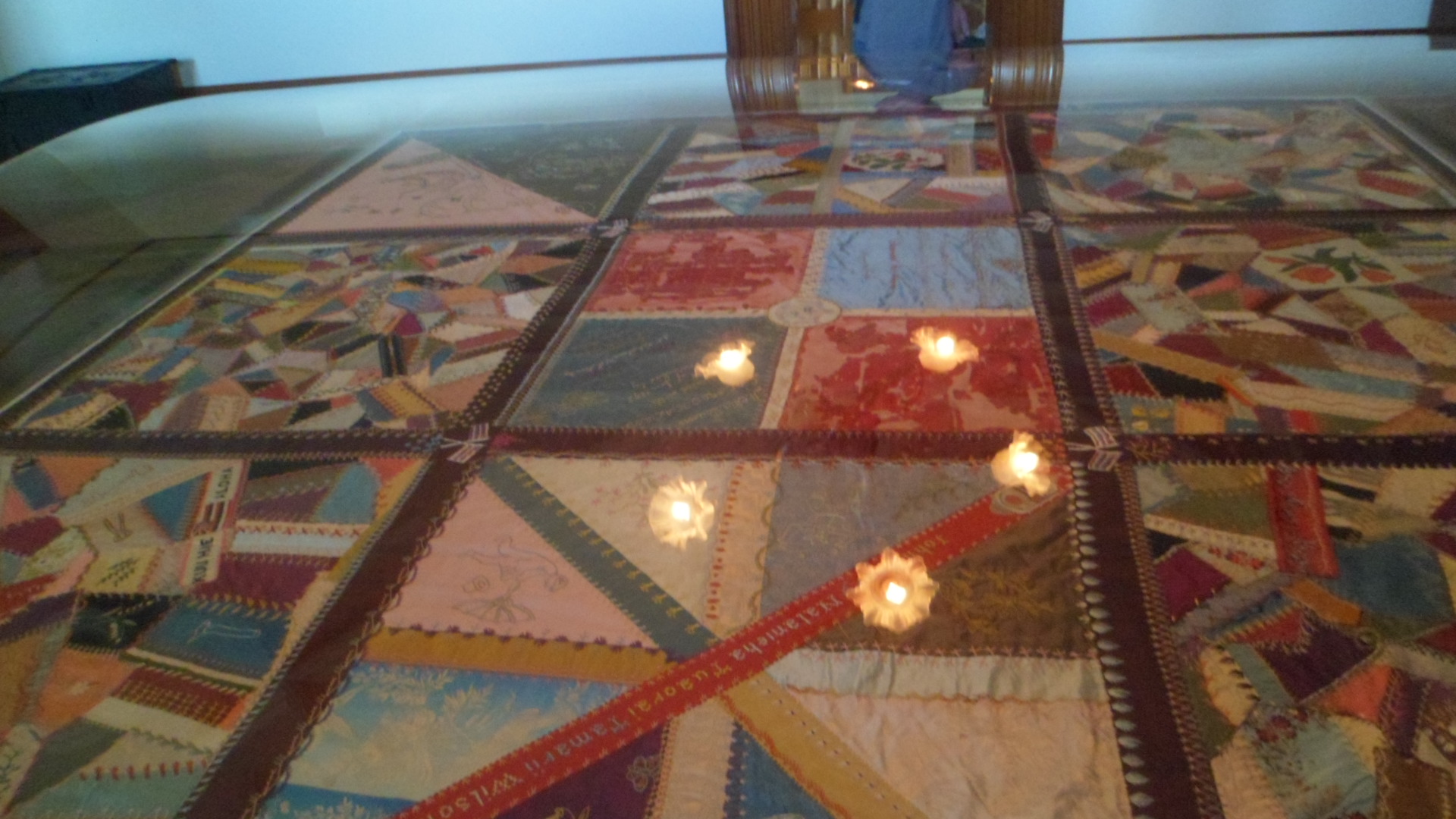
SAM_2970

Here are some other collections of the royal family- wine bottles and the family jewels.  These are found in the basement of the palace.
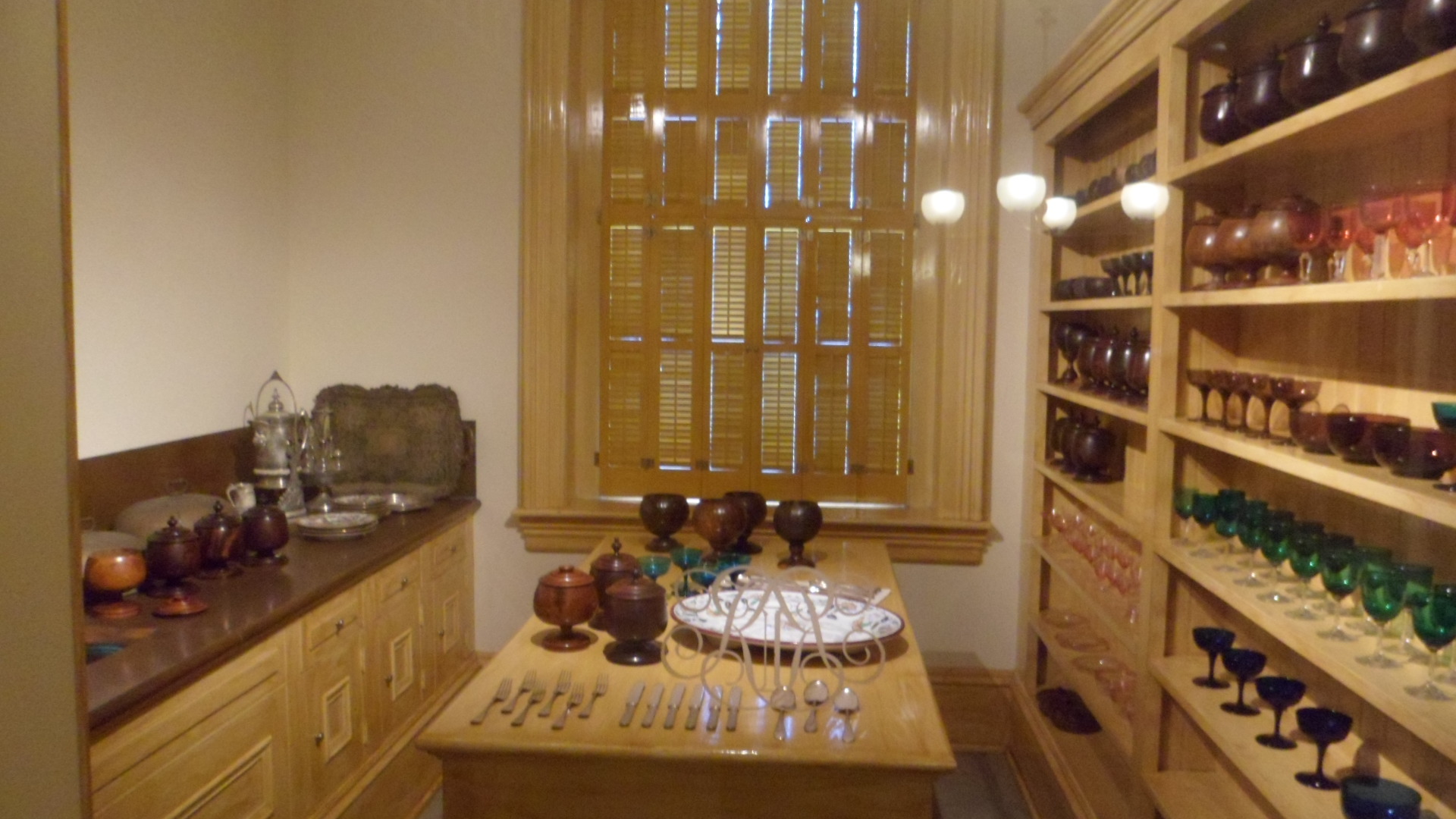
SAM_2977

SAM_2980

SAM_2981

Finally, here is a view of the Lord Chamberlain’s Office.

SAM_2983

Thus, we see the conundrum in which the Hawaiian people found themselves.  In striving for modernity and to be taken seriously as a country, Hawai’i walked right into the waiting arms of opportunists.  For a period of time, Native Hawaiians could not vote, and had few civil rights.  It is thus no wonder that Haole are viewed with mistrust, in certain circumstances.  In visiting this most unique part of our country, it is well that the visitor familiarize self with both the gentle Spirit of Aloha and the unresolved grief that lies behind the welcome. Below, are Queen Liliukalani and King Kamehameha I.    Mahalo, my friends.
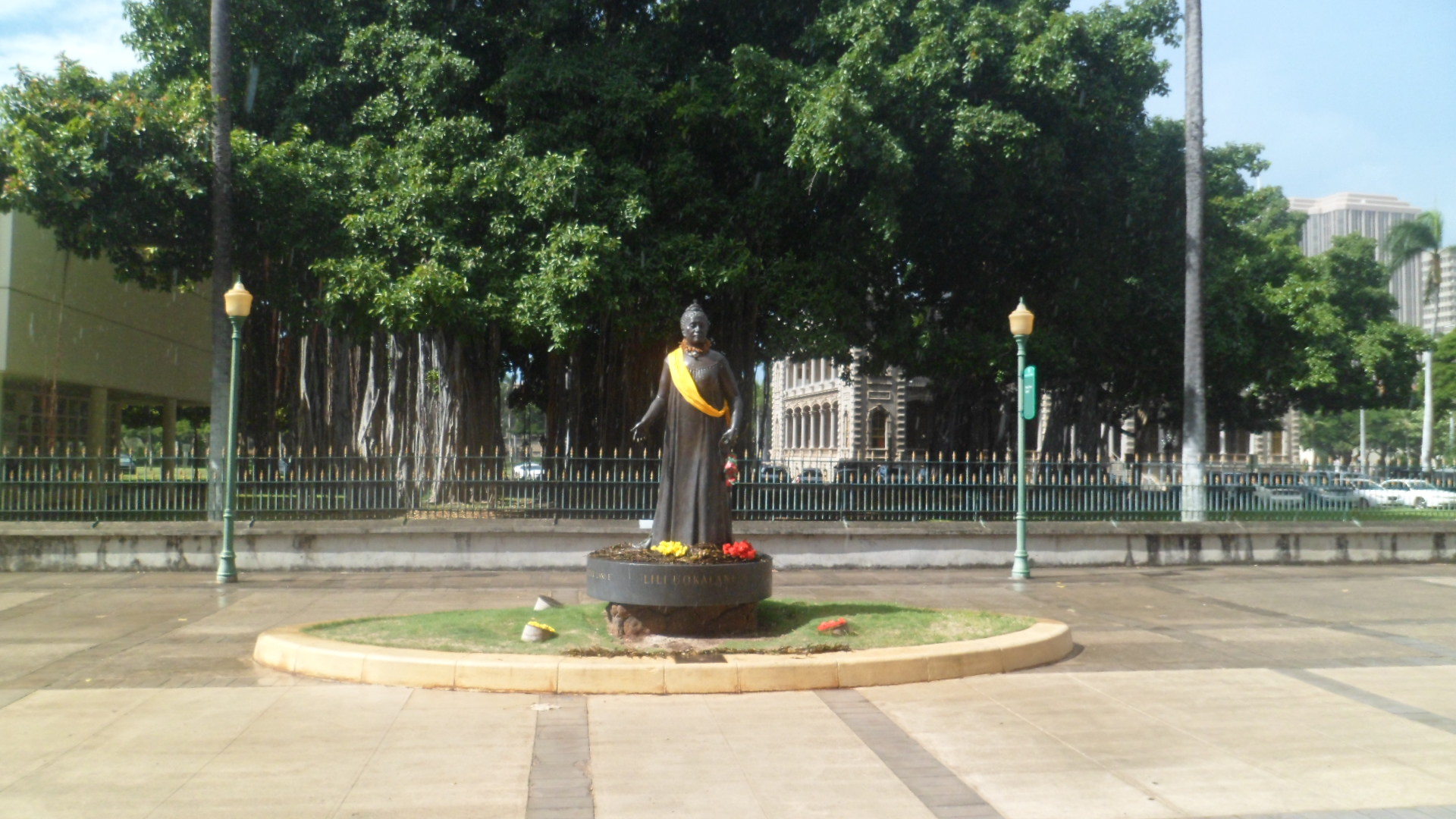
SAM_2939

SAM_2989

A Small Time Mariner’s Voyage, Days 2 &3, Part One: Amid Spouting Waters

5

October 12 & 13, Honolulu-  In five hours’ time, I found myself having left behind the measured bustle and polyglot ambiance of San Diego for- the measured relaxation and polyglot ambiance of Honolulu.  Seated beside me on the flight was a quiet, demure and mildly cordial Native Hawaiian woman, headed home.  This brought to mind the warnings I had gotten from some in Arizona, that “Locals in Oahu don’t like haoles (Caucasians).”  I didn’t get the vibes from her, or any other person in Honolulu, that I was particularly disliked; then again, I rarely have gotten those vibes from any person of colour- save the occasional drunk.   I take each person as I would have him or her take me.  It works, by and large. Hawai’i ought to be seen, first and foremost, as the sacred land of a deeply cultured and spiritual people- just like anywhere in the Americas.

I met my son, Aram, at Honolulu International Airport.  We took a Honolulu city bus to my hotel in Waikiki, sharing stories with a Brazilian man who was in the midst of a round-the-world journey.  He had much to say about Korea, India, Turkey and the Iberian Peninsula, in particular, the last being an exercise in “whose Portuguese is the true language?” I checked into Hokele Suites, two blocks north of the beach and an equal distance south of Ala Wai Channel.  The medium high rise has all the amenities needed by a modest sojourner like myself, and is near enough to the beach that I could don a swimsuit and a pair of reef runners- and get my fill of sand and surf.  Watching out for me was this composed wahine.

SAM_2913

Aram and I headed out to Kimukatsu, a restaurant specializing in Japanese-style cutlet, usually pork.  The Japanese tend to regard veal as a waste of  a good animal that is better used to provide mature beef.  So, the hog is a useful substitute.  Katsu  (cutlets) establishments abound in Japan, and in Korea, Guam, Hawai’i and anywhere else with large Japanese communities.    Kimu offered gourmet toppings, such as those shown in the second photo below.

SAM_2914

SAM_2915

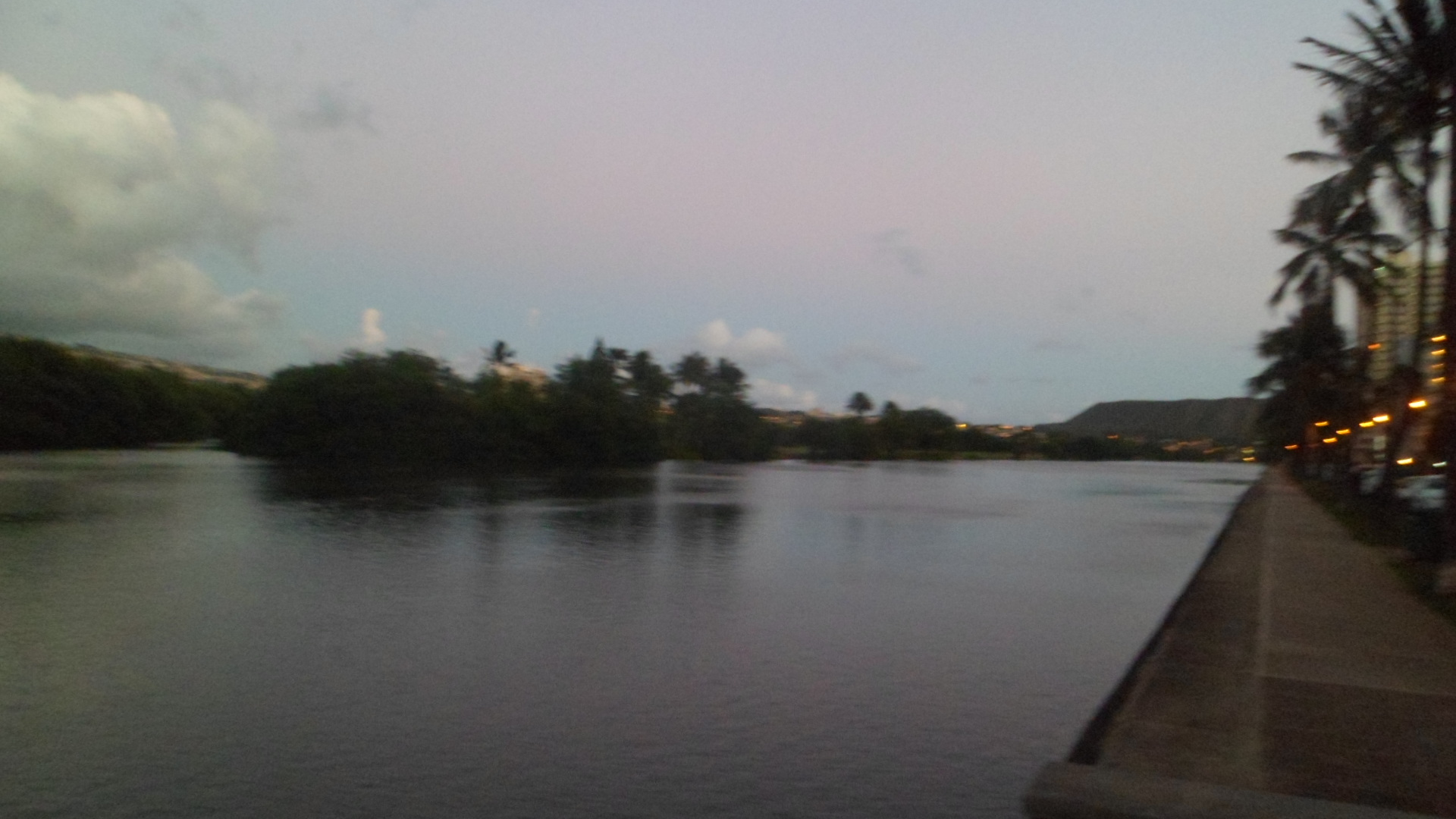
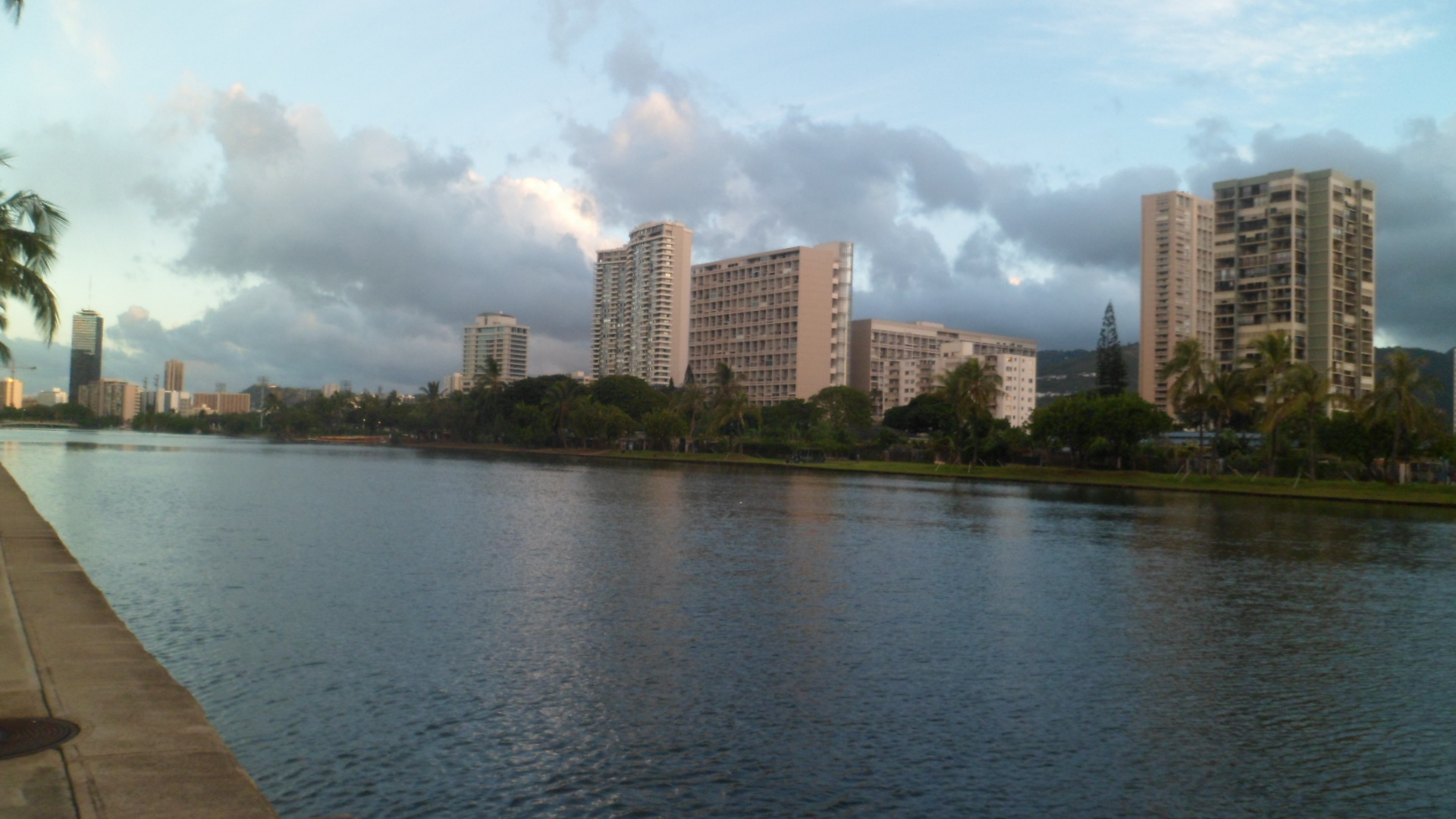
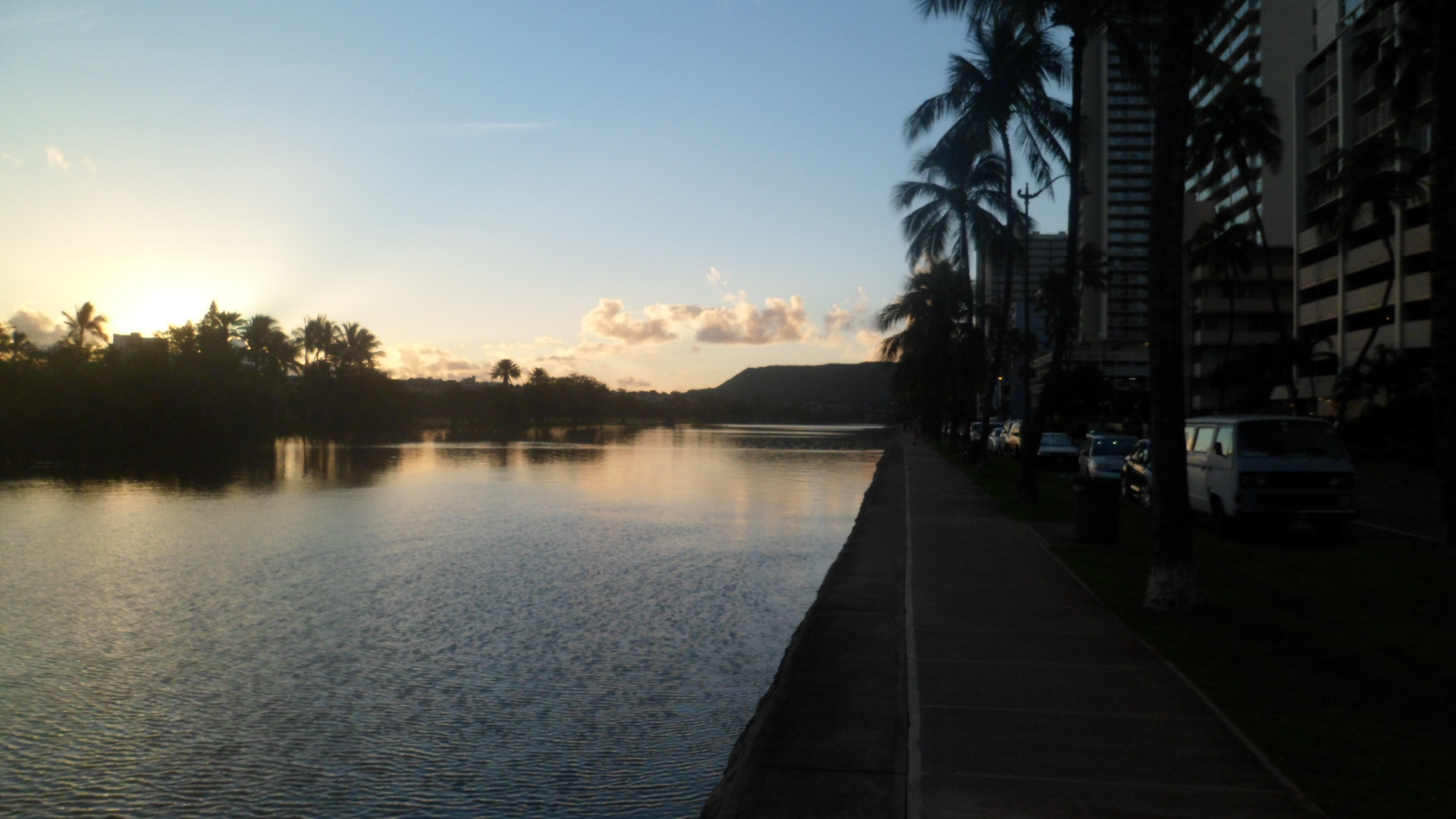
We then walked about the Ala Wai area, along the south bank of the channel, taking in Honolulu’s encroaching dusk.

SAM_2916

SAM_2918

Waikiki is inundated with high rises, both condominium and hotel, but the spirit of the place still reflects the spouting waters for which it is named.  Ala Wai is not the stinking mess I was told it had been in the ’80’s and 90’s.  It reminds me more of Riverwalk in San Antonio, or the paths along the Seine.  True, those places face the challenges of  being treasured by the masses, and I probably wouldn’t swim in Ala Wai, even if it were legal to do so.  There is, however, a growing civic sense that this is an area that is as much for year-round residents as it is for those who come and go.

The next morning, I saw the channel at sunrise.

SAM_2922

SAM_2923

After joining a fair number of locals in an IHOP, for a breakfast of Belgian waffles and coffee, I headed for Pauahi Garden, near the Sheraton Waikiki.  (Sushi, the alternative, somehow escapes me as a breakfast item, though it is common enough fare for the Asian communities here.)  Bernice Pauhi Bishop was of the royalty of Maui and Moloka’i.  She was highly educated and was an astute businesswoman, eventually owning 9 % of the island of O’ahu.  She died at age 52, of breast cancer, and left no heirs.  The small gardens in the hotel district of Waikiki Beach,though, were established in her honour.

SAM_2924

The hearts I invariably encounter on my journeys were in abundance here, in the form of leaves.

SAM_2925

No visit to Honolulu is complete without time in the sand, and at least a nod to Diamond Head.

SAM_2932

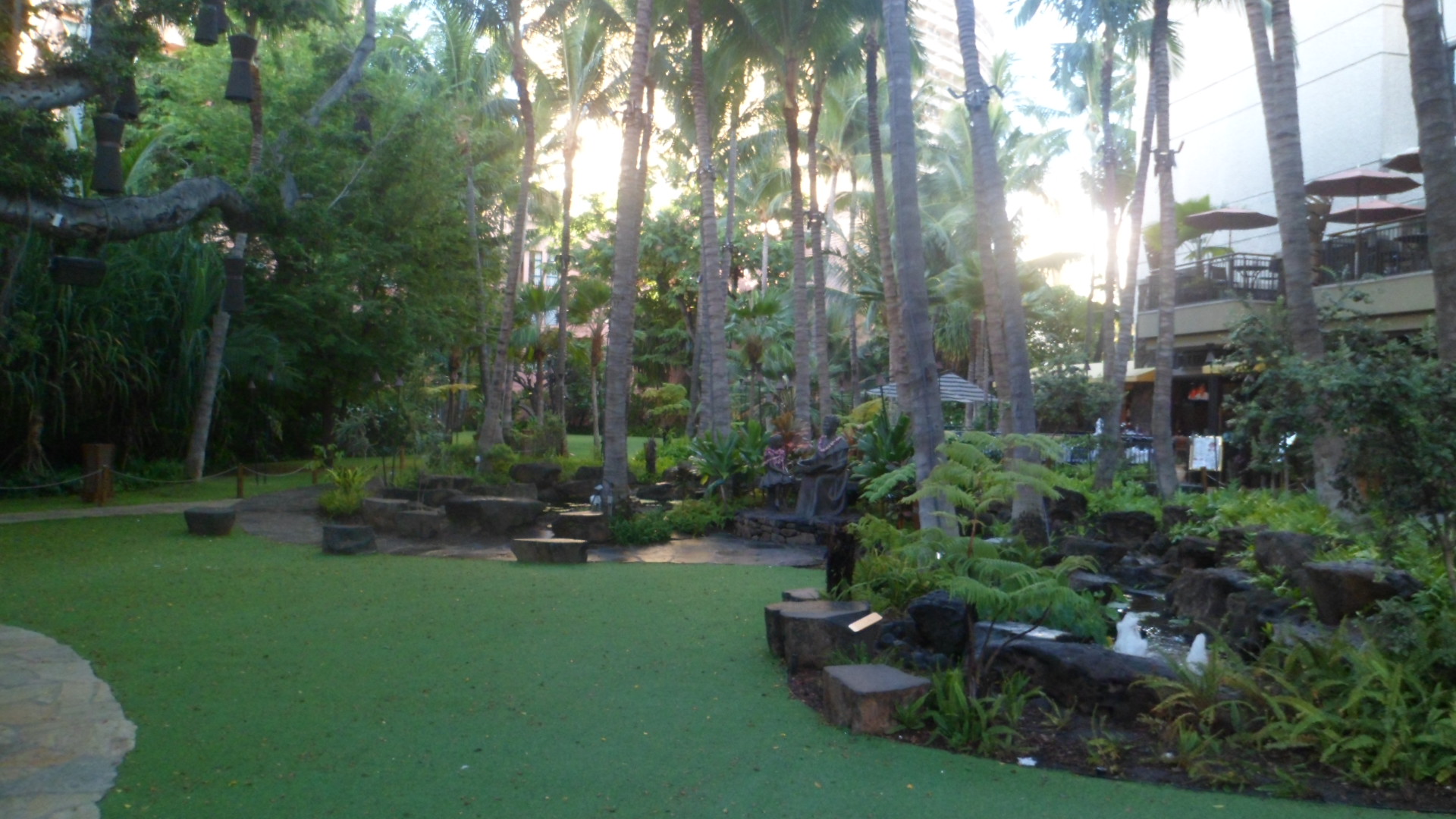
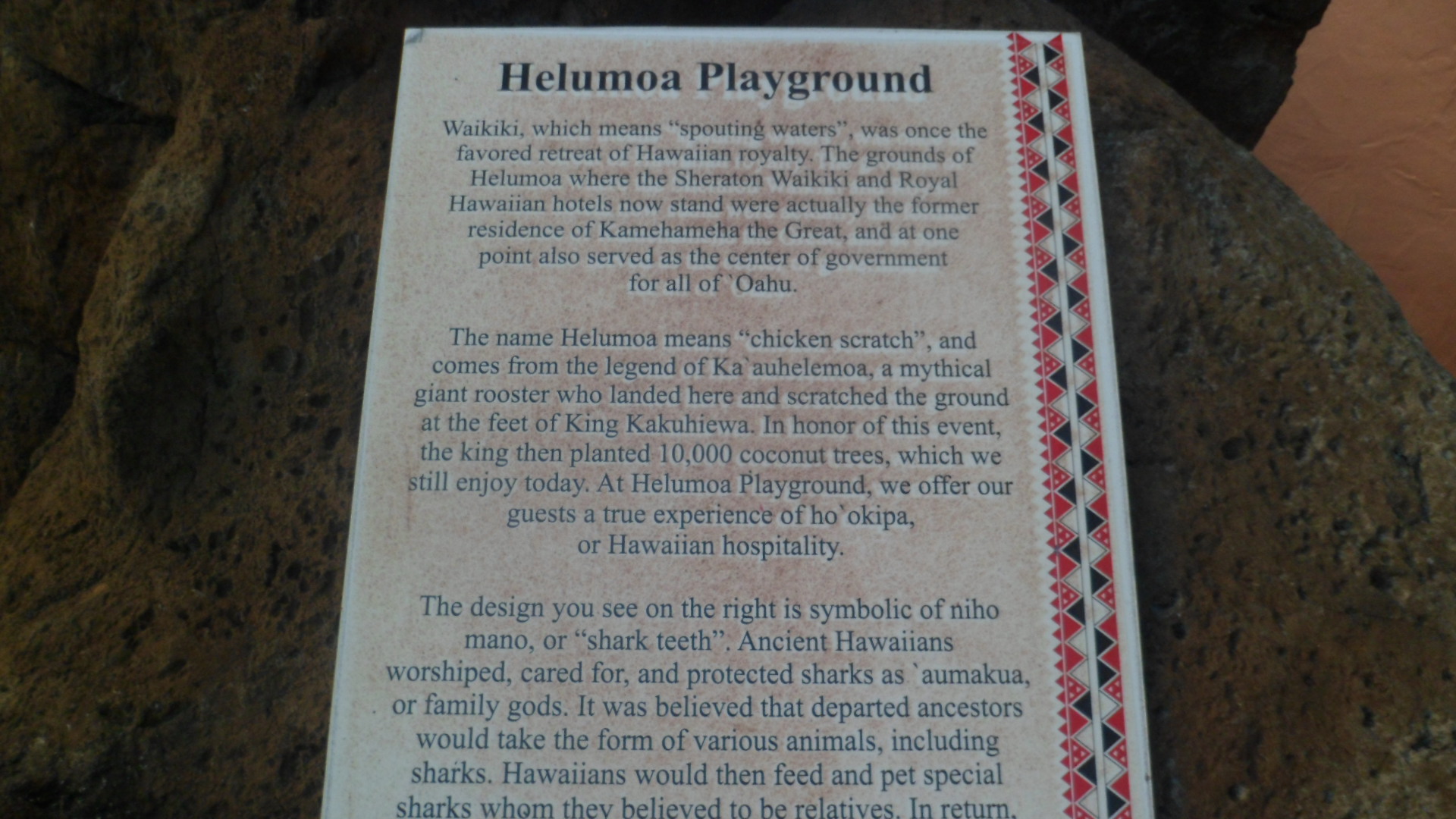
Helumoa, the midst of Waikiki (“Spouting Waters”, in Hawaiian), was the favoured relaxation site of Kamehameha I and his successors.  When  American businessmen took control of Hawai’i in 1898, they, too, saw the salubrious nature of the spot.  Being entrepreneurs, they set in motion the process which gave us the Waikiki shorefront of today.  Hawaiians revered the shark, yet somehow I don’t think they were quite prepared for the human sharks who descended on them in the lattter third of the 19th Century.  Waikiki today is in the process of balancing itself, to be more in tune with the natural beauty it once had in abundance.

SAM_2933

We have reached the stage in Honolulu’s legacy where the first hotel in Waikiki, the Surfrider, is a genuine historic site.

SAM_2994

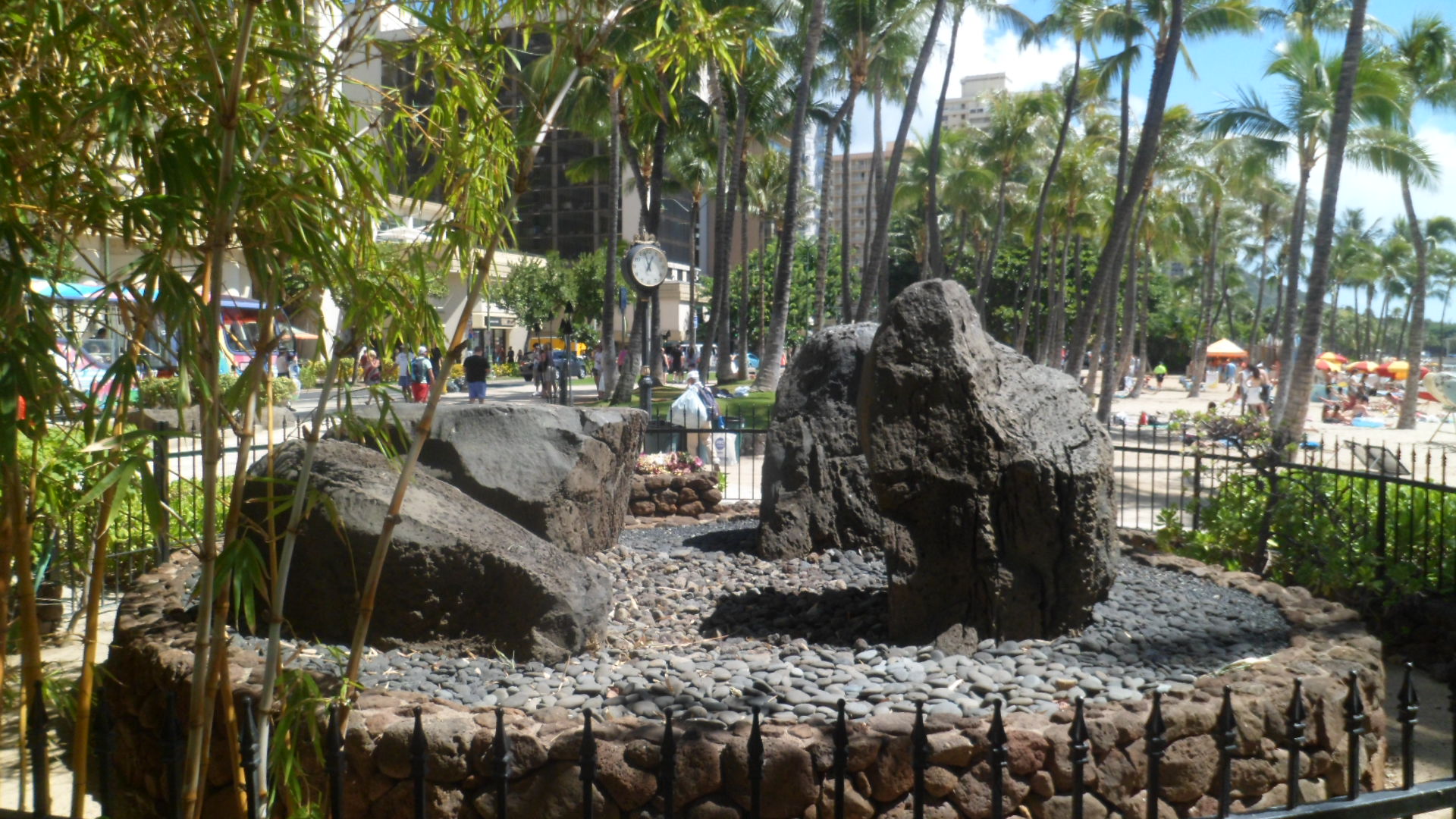
Later in the afternoon, before I headed to Pearl Harbor, and my son’s ship, another walk along the strand was in order.  The Wizard Stones, near Waikiki Police Substation, are held to have healing powers.  At the very least, they are reminders of nature’s power, having been sent here in a volcanic outburst, ages ago.  Lava also is used in the various breakwaters that line children’s pools and the boundaries of hotel properties along the strand.

SAM_2995

SAM_2997

SAM_2998

SAM_3003

Sand, though, is the prime real estate.  Below, King David Kalakaua, who succeeded the Kamehameha line in an election, of all things, continued the royal promotion of  education for all Hawaiian children.

SAM_2935

Those who promote Hawaiian culture to the world are also honoured.  Don Ho is remembered for pop  and lounge renditions of Hawaiian songs, and is revered by many here on O’ahu.,

SAM_2993

With limited time in Honolulu, I chose to focus much of the rest of my day on the true legacy of the Native Hawaiian people, and one of its treasure troves:  Iolani Palace.