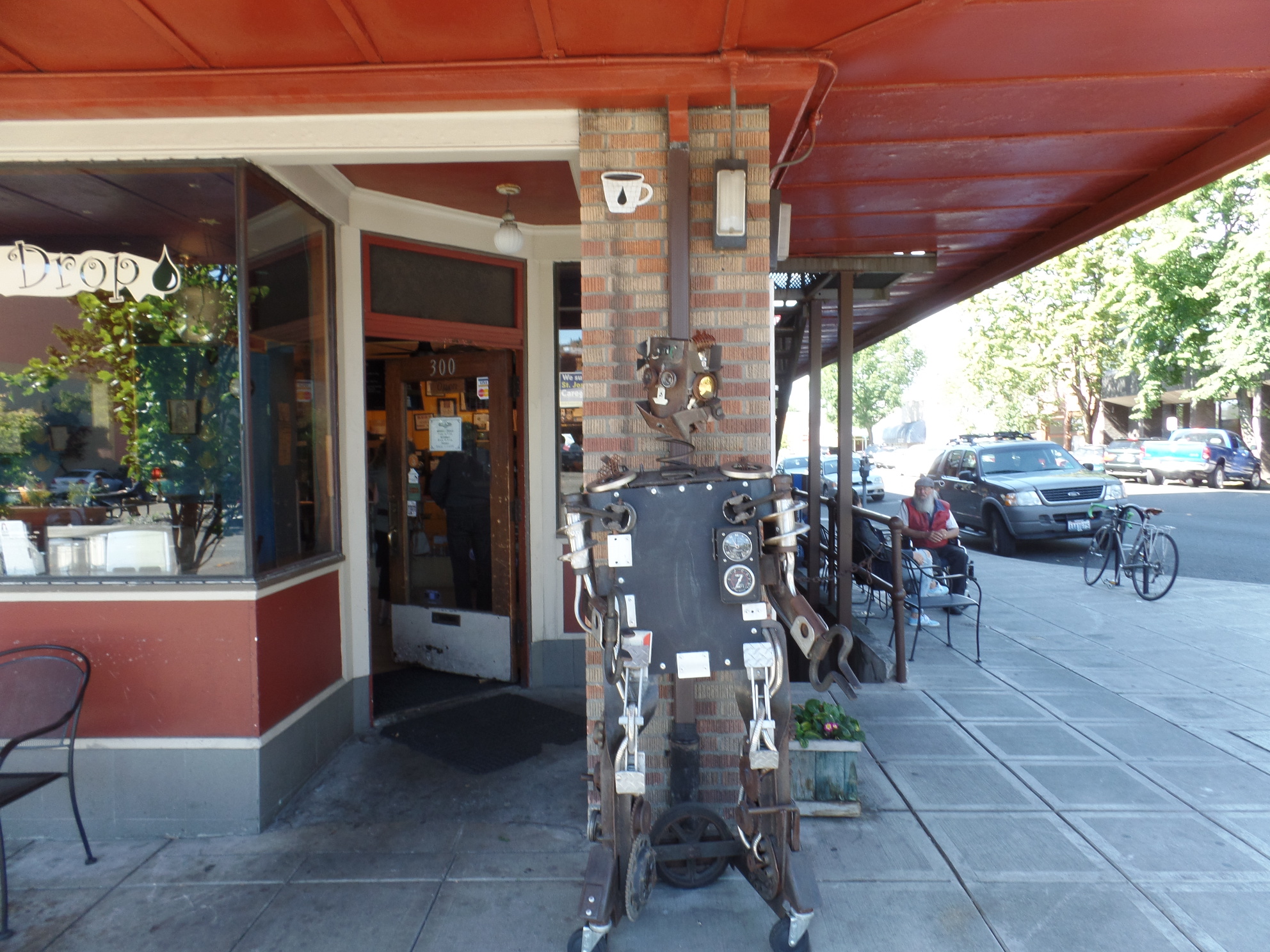
June 4-5, 2015, Bellingham- I have been here for nearly two days, and am amazed by the comprehensive effort that has gone into Whatcom Creek Trail, the Whatcom County Museum and the generality of Bellingham. There are more one-way streets in the center of this town, than any other town I’ve seen, of comparable size. This represented a pre-coffee wake-up call of short order, for me, this morning. The coffee part, though, was suitably addressed at Black Drop Coffee House. This is a congenial place-and seemingly many local residents’ ideal of a workplace.
The ceramic cups hold six ounces of “Joe”, so I got two refills, along with my cinnamon bun.C3PO certainly approves.
The waterfront was my first order of business, yesterday, after enjoying the fruit of the bean at a fine west side coffee house, Lettered Streets, owned by two enterprising young ladies, and equally valued by the folks of that neighbourhood.
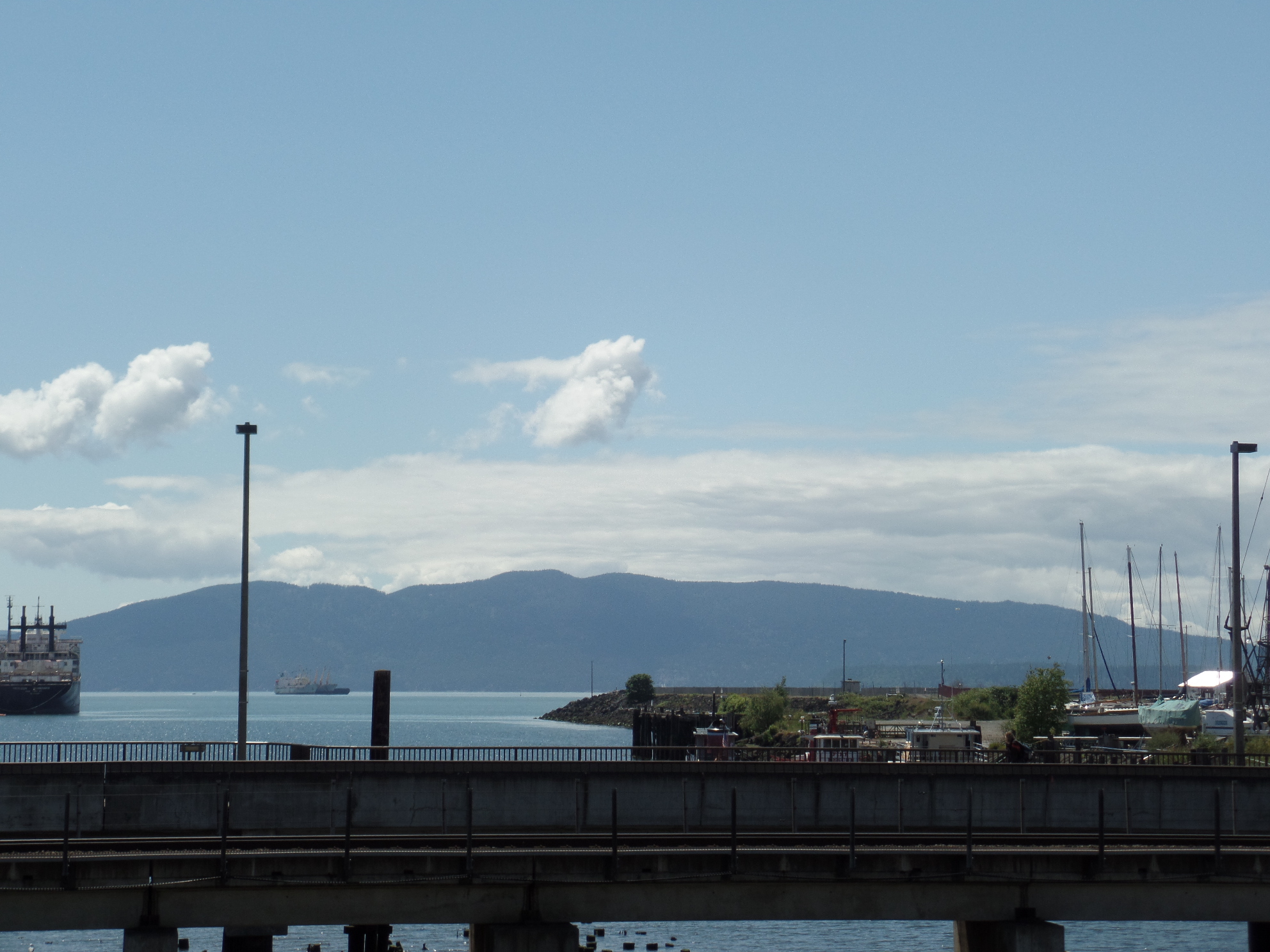
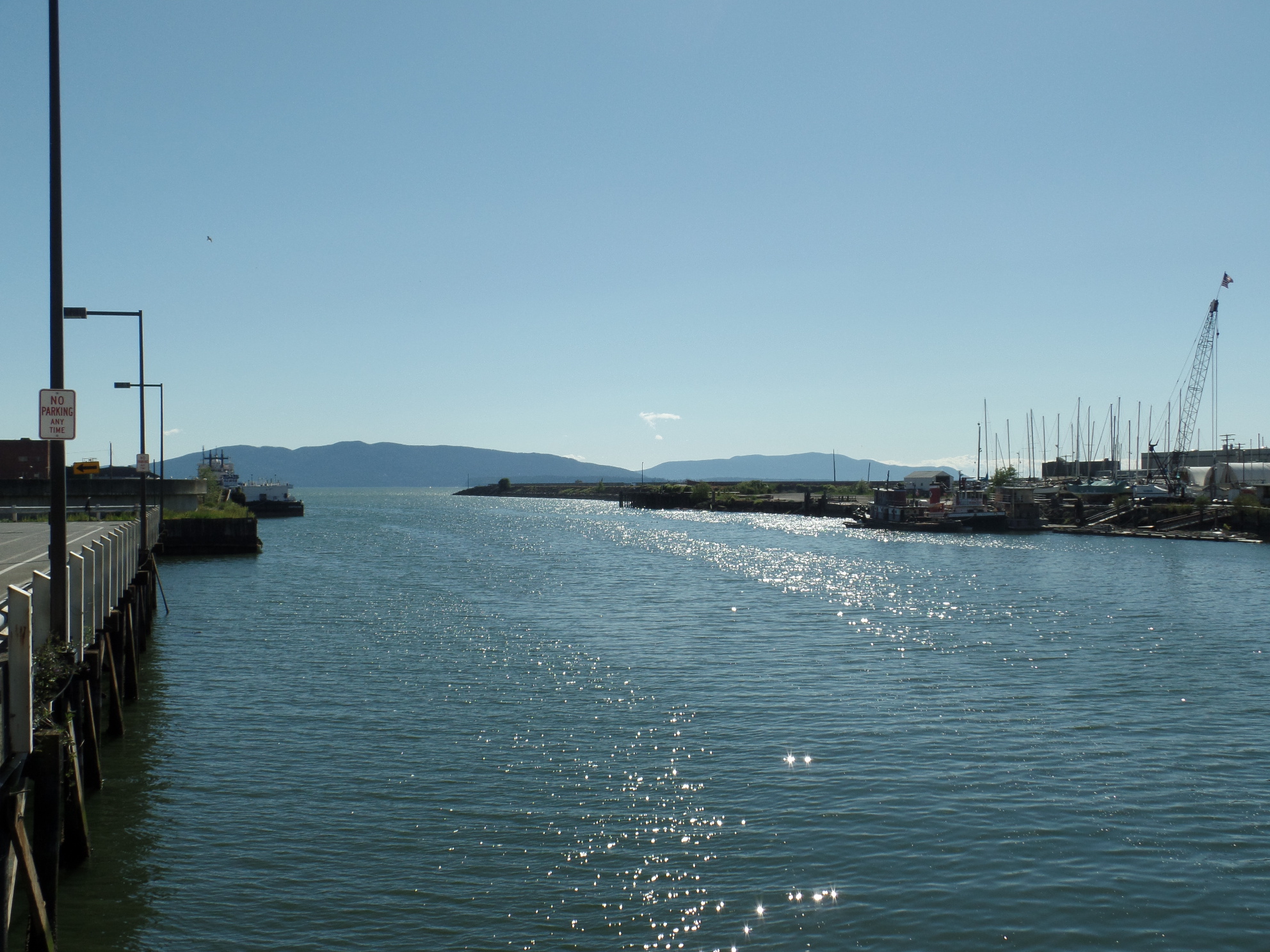
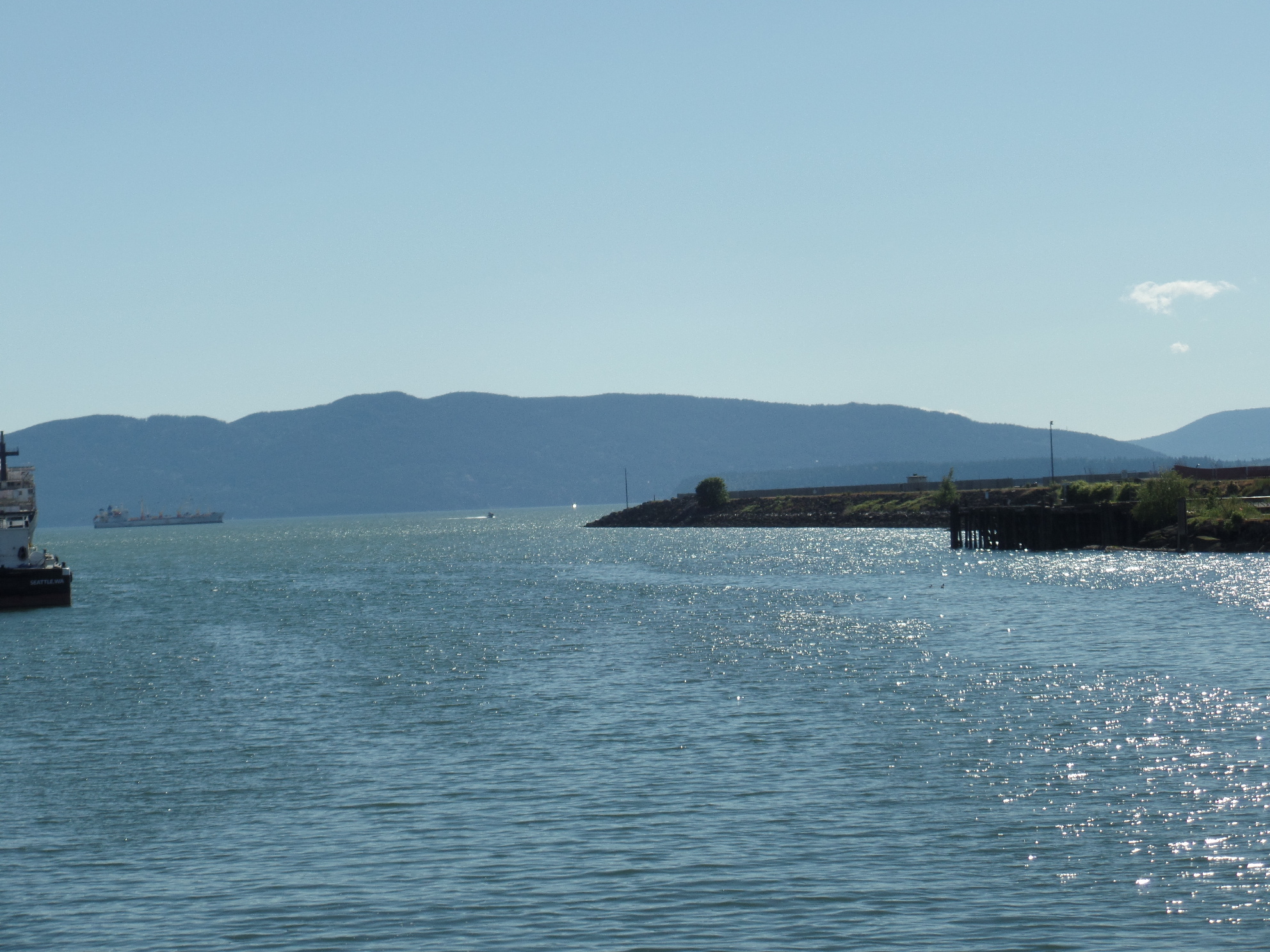
Here was my first glimpse of Bellingham Harbor.
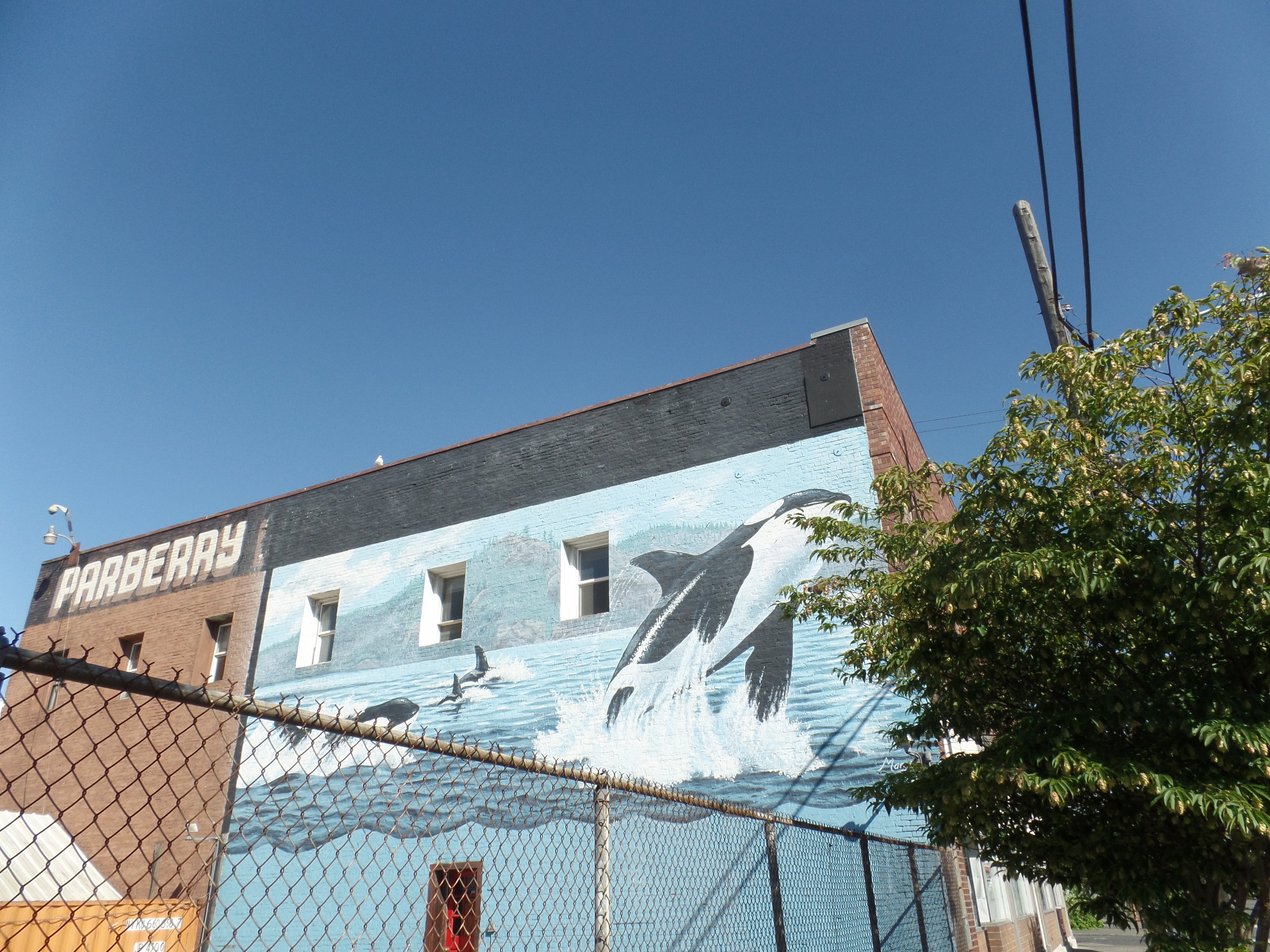
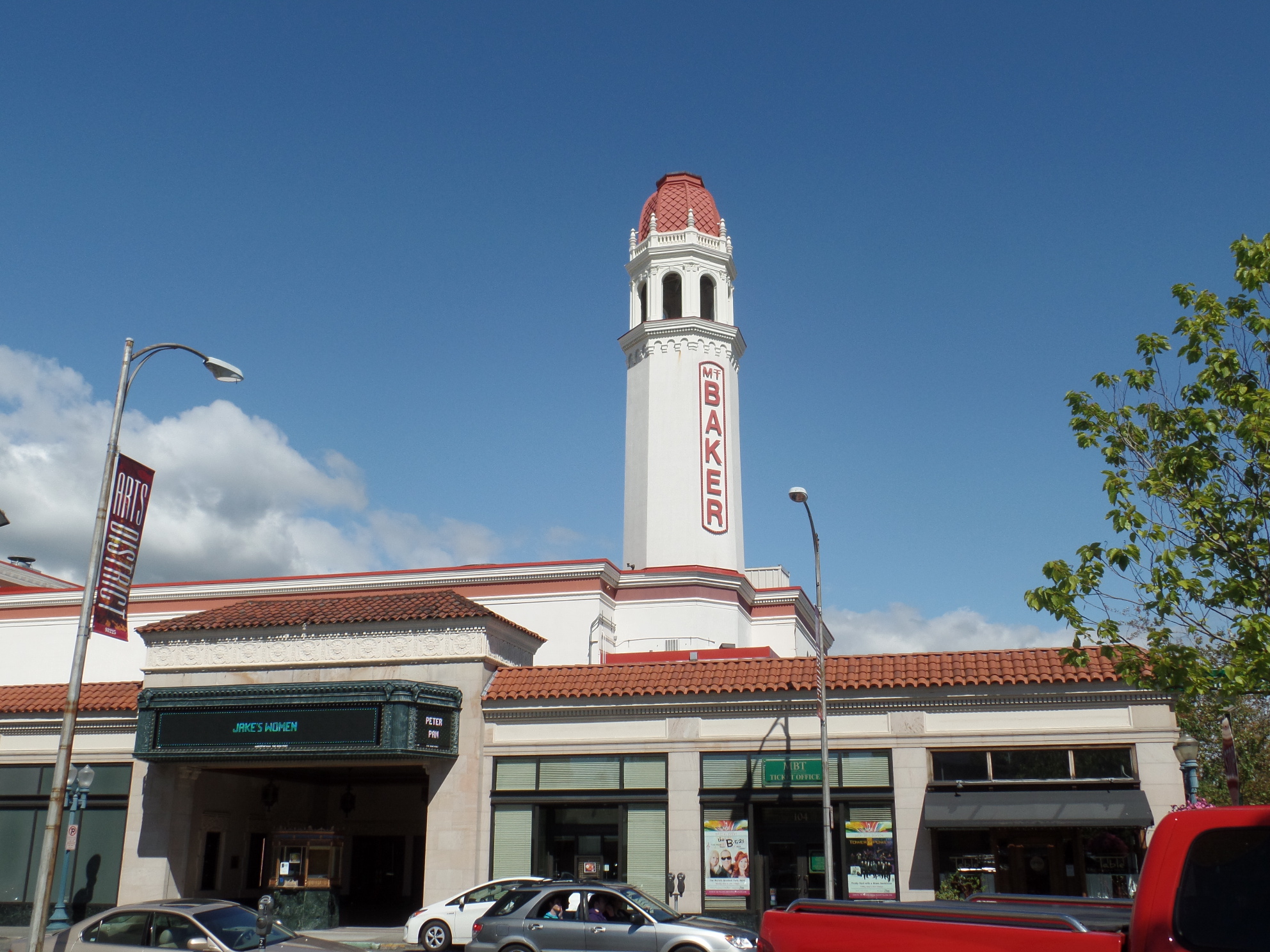
Of course, this was at low tide.Nonetheless, the harbor is a thriving place, and the second-busiest northern Washington port, after Everett.My eastward path crossed by the Train Station.The majesty of the orca is the subject of a mural, at the Parberry Building.I enjoyed a late lunch at this cozy downtown grill. The bar tender/waitress was a cheerful, talkative lady, from New Orleans. She has grown a love for the Northwest, and its four seasons.After lunch, it was time to enjoy the landmarks of uptown Bellingham. This is Mount Baker Theater, home of a local troupe.
The Whatcom County Museum is big on photographic exhibits, both at its main hall- the former Bellingham City Hall, and at Lightkeepers, a bright, multi-modal house, a bit further up the hill.
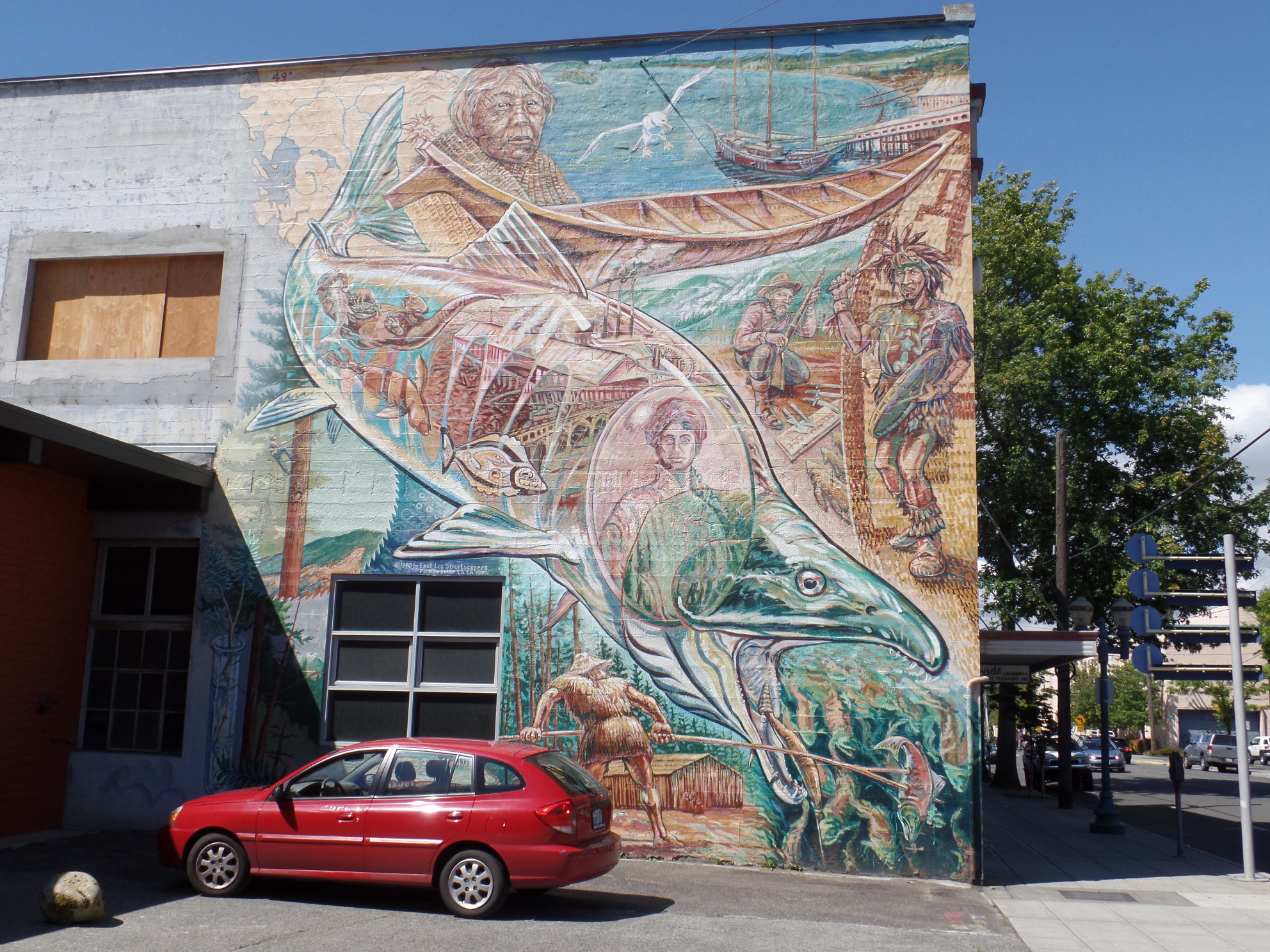
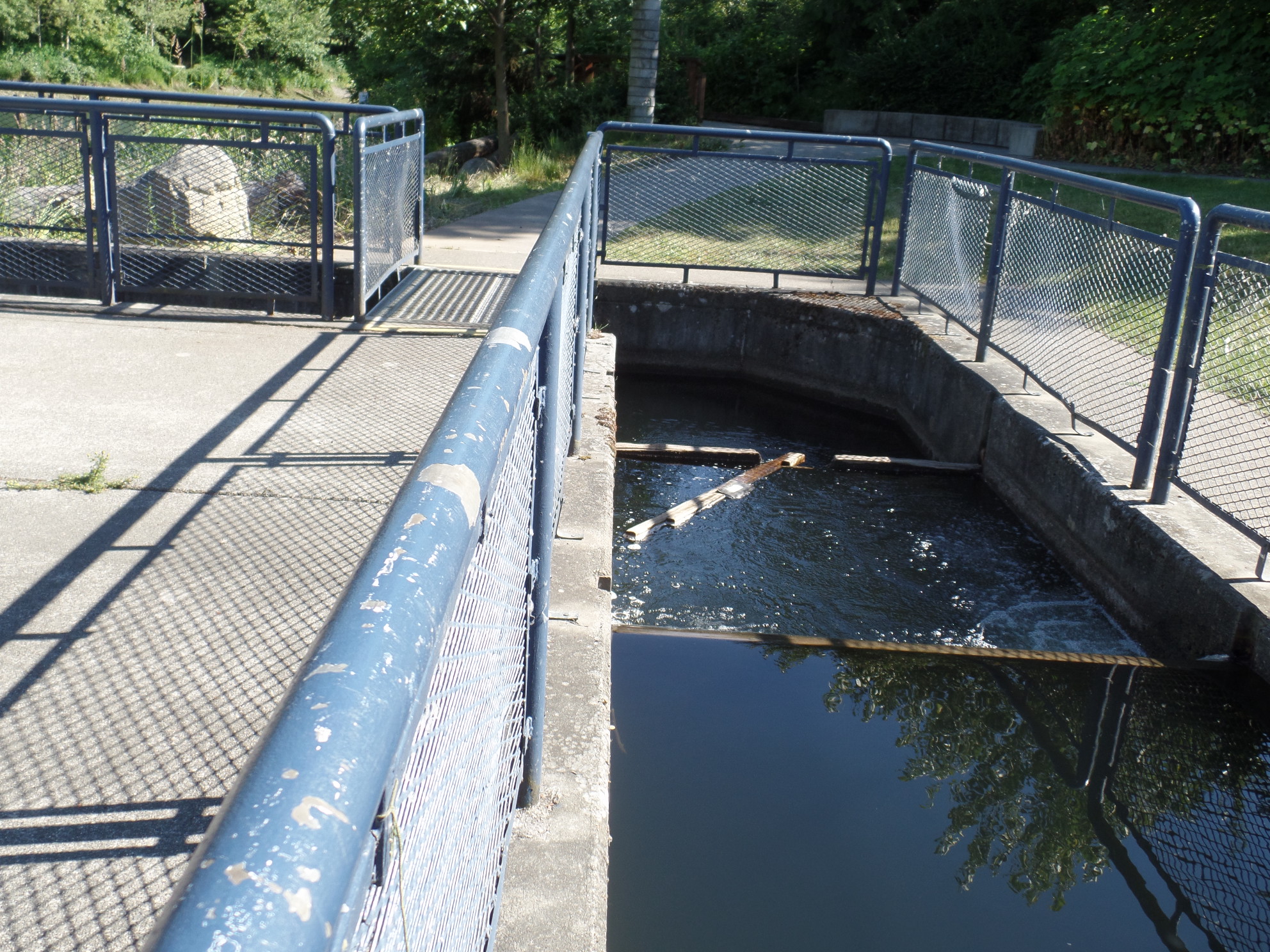
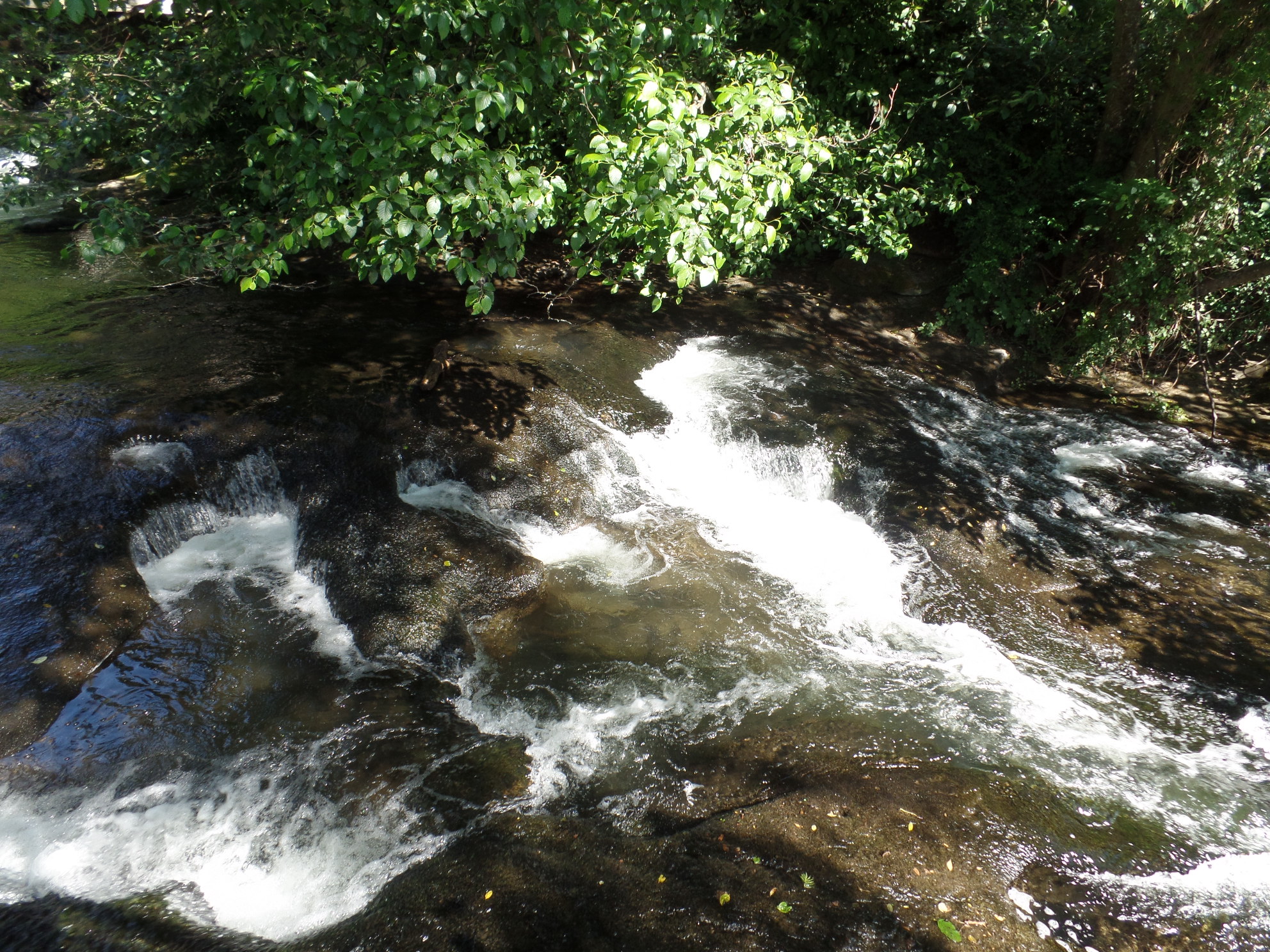
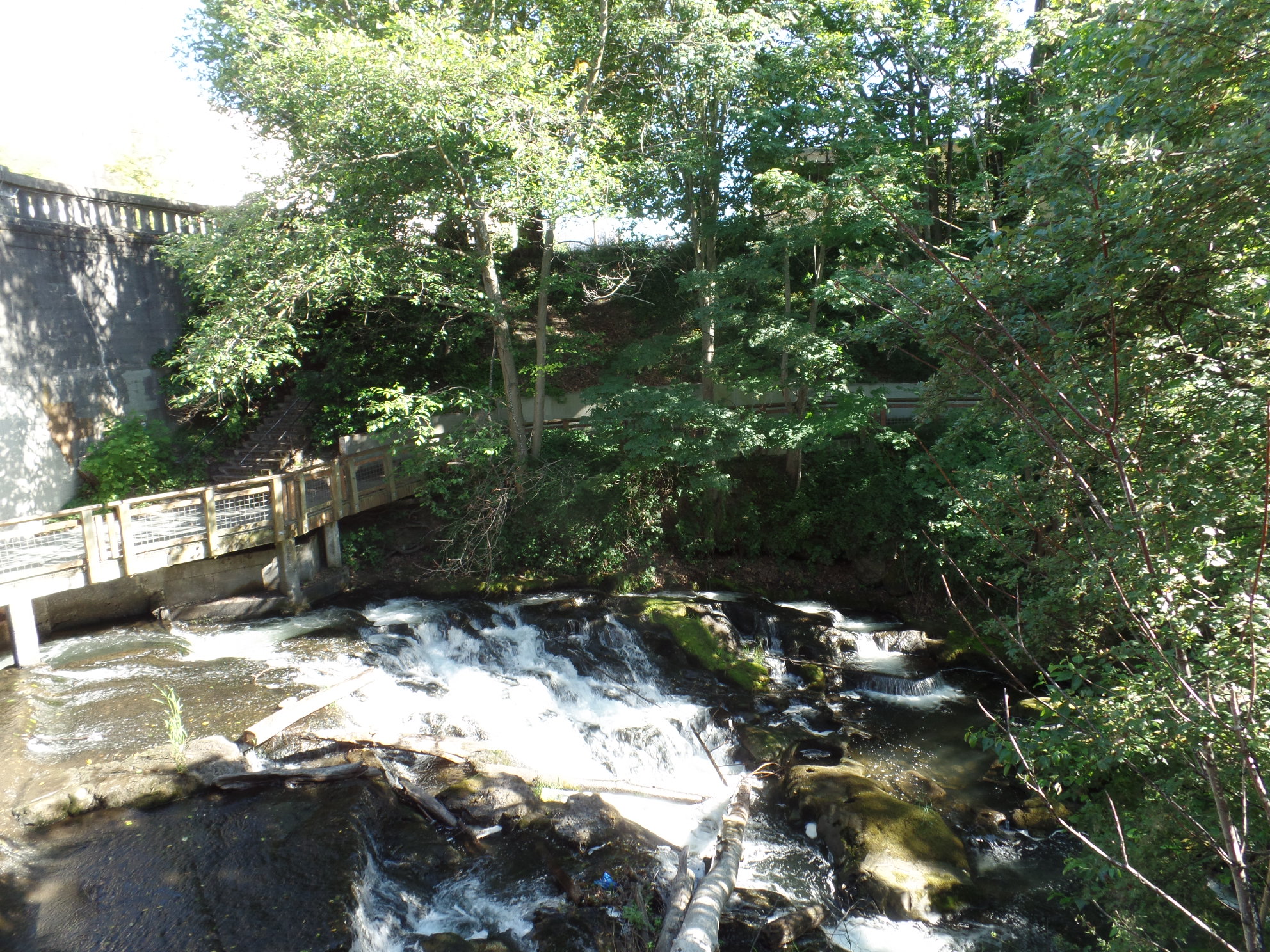
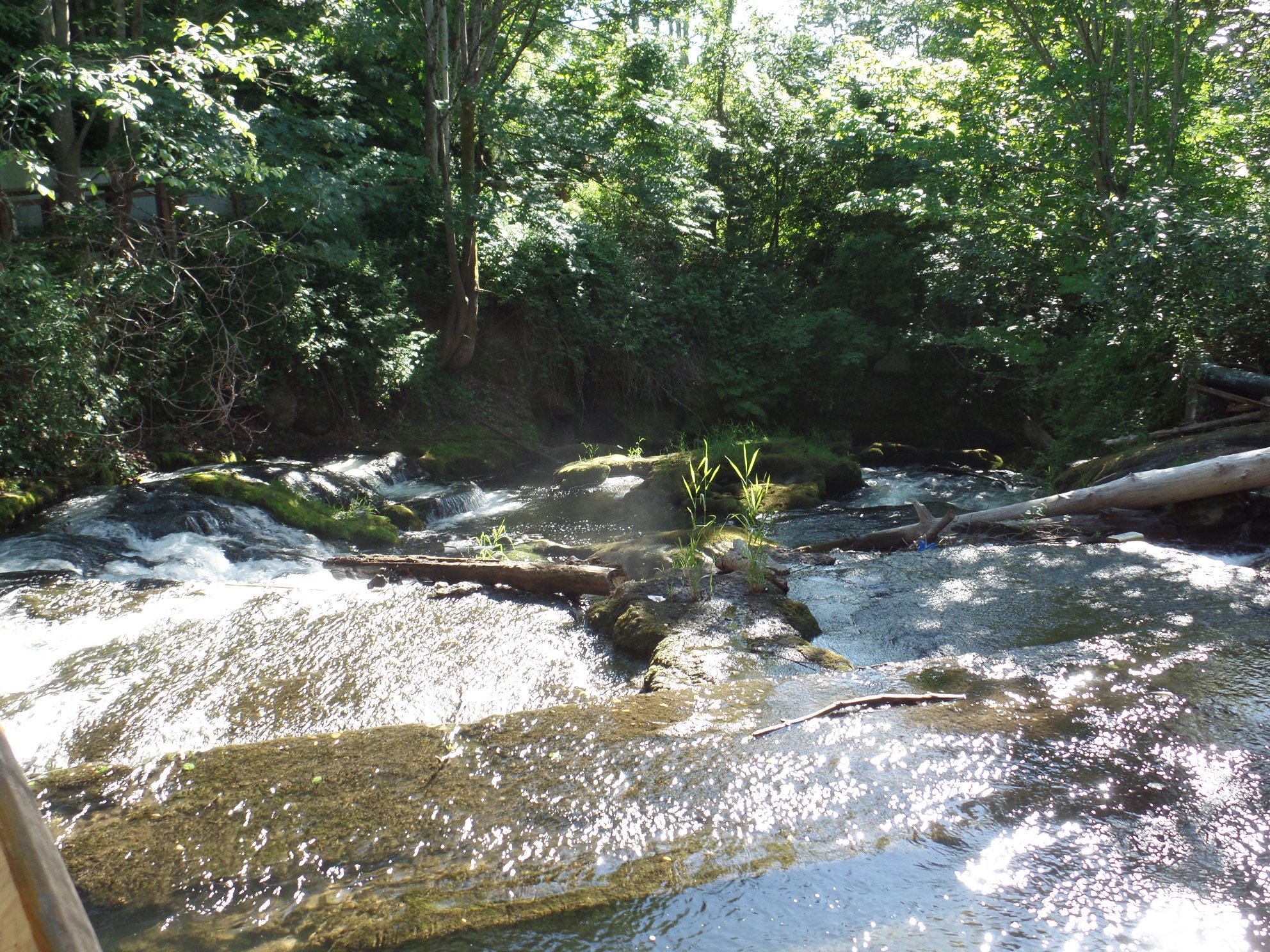
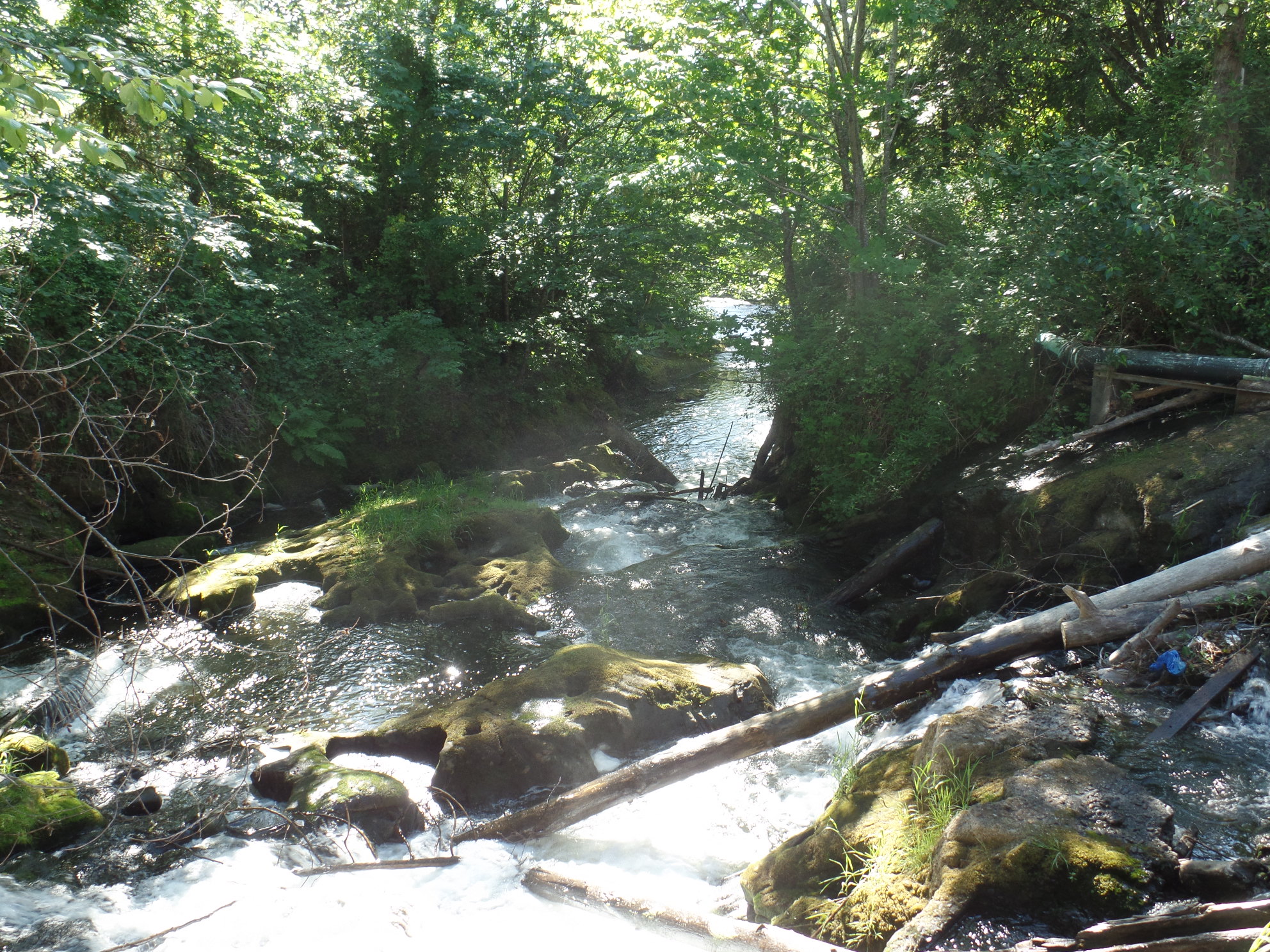
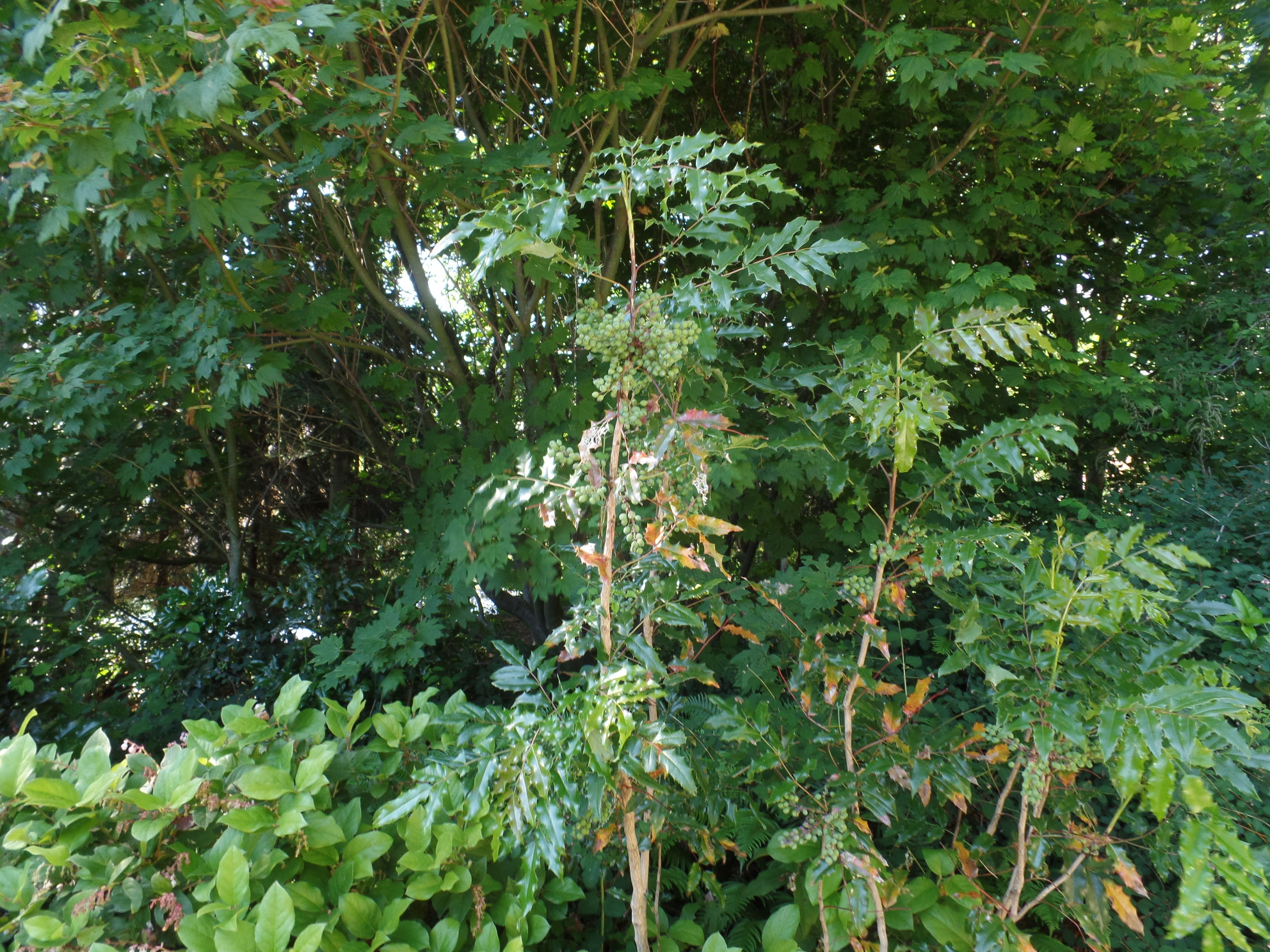
This is Old City Hall. I was captivated by the “Owl and Woodpecker” exhibit. “Woodies” are vital for the survival of many species, both avian and mammalian, through their excavation of domiciles, on trees both living and dead.A Native Peoples arts and craft center next door was closed, but this mural tells of how fish are viewed, traditionally, by the Lummi and Nooksack people.Here is a view of Bellingham’s bright Arts District.Whatcom Creek Greenway tells many stories, both old and new.The dead tree still reaches out to the birds and fish.These old wharf poles used to support a fishing weir, on the lower creek.A salmon-spawning fostering operation, is in full swing, on Whatcom Creek.A friend in Wrangell, Alaska has designed some of the spawning boxes that help make this operation one of the largest in the American West.The Whatcom is certainly a welcoming place for the noble fisI could have sat for hours, contemplating the life-giving strength of the rapids, and there were many who were doing just that.Here is the beginning of the salmon run.These lilacs were the beginning of the comprehensive “Native Plants” promenade.These Baldhip Roses are featured, just south of the creek.Each of the nearly two-dozen plants shown along the trail has an accompanying sign, giving the plant’s names, in Lummi and in Nooksack, as well as the proper uses of the plant.Beach strawberry is another valuable medicinal plant.
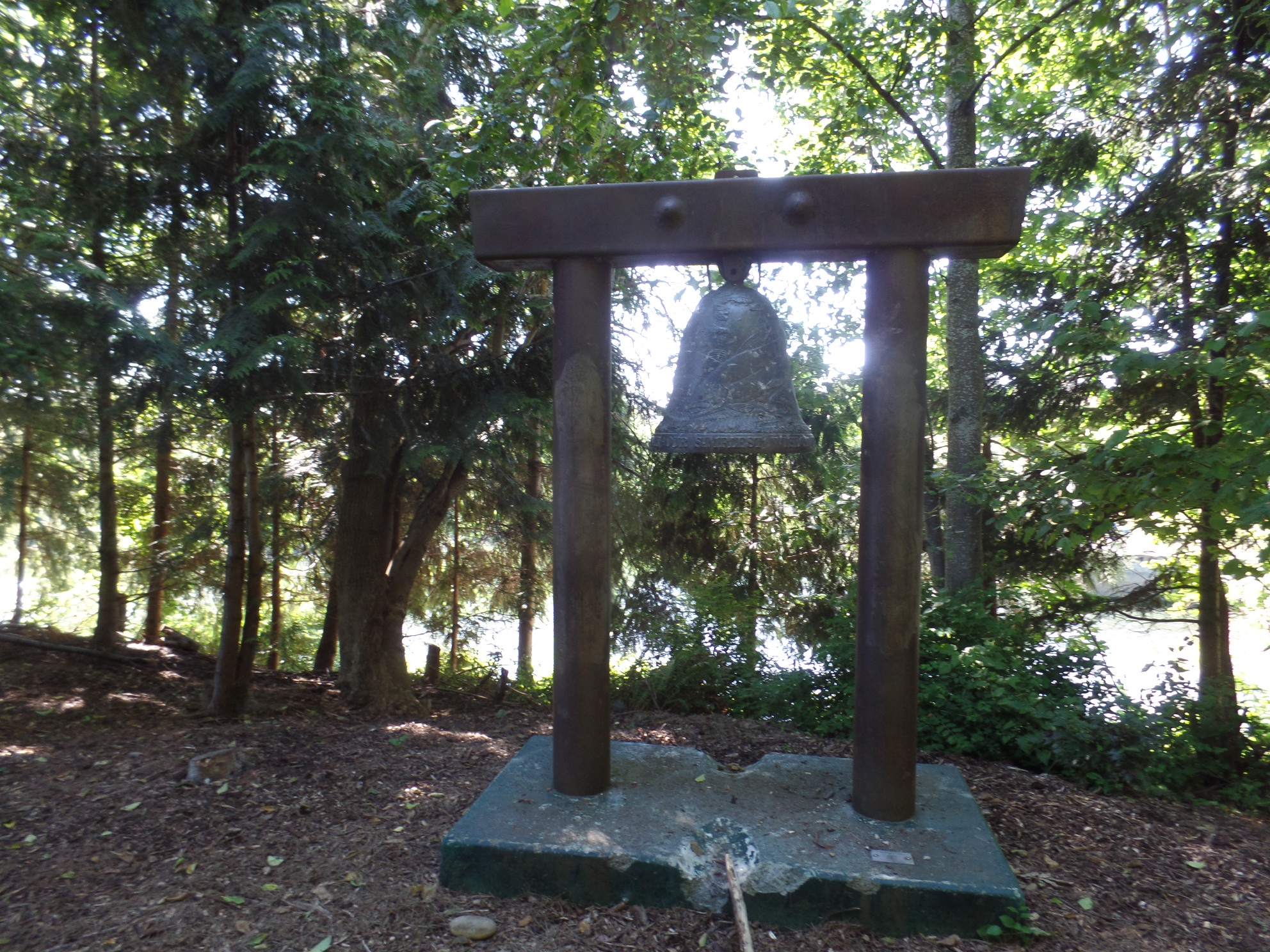
A ship’s bell is kept here, as a reminder of the strong tie between sea and mountain.
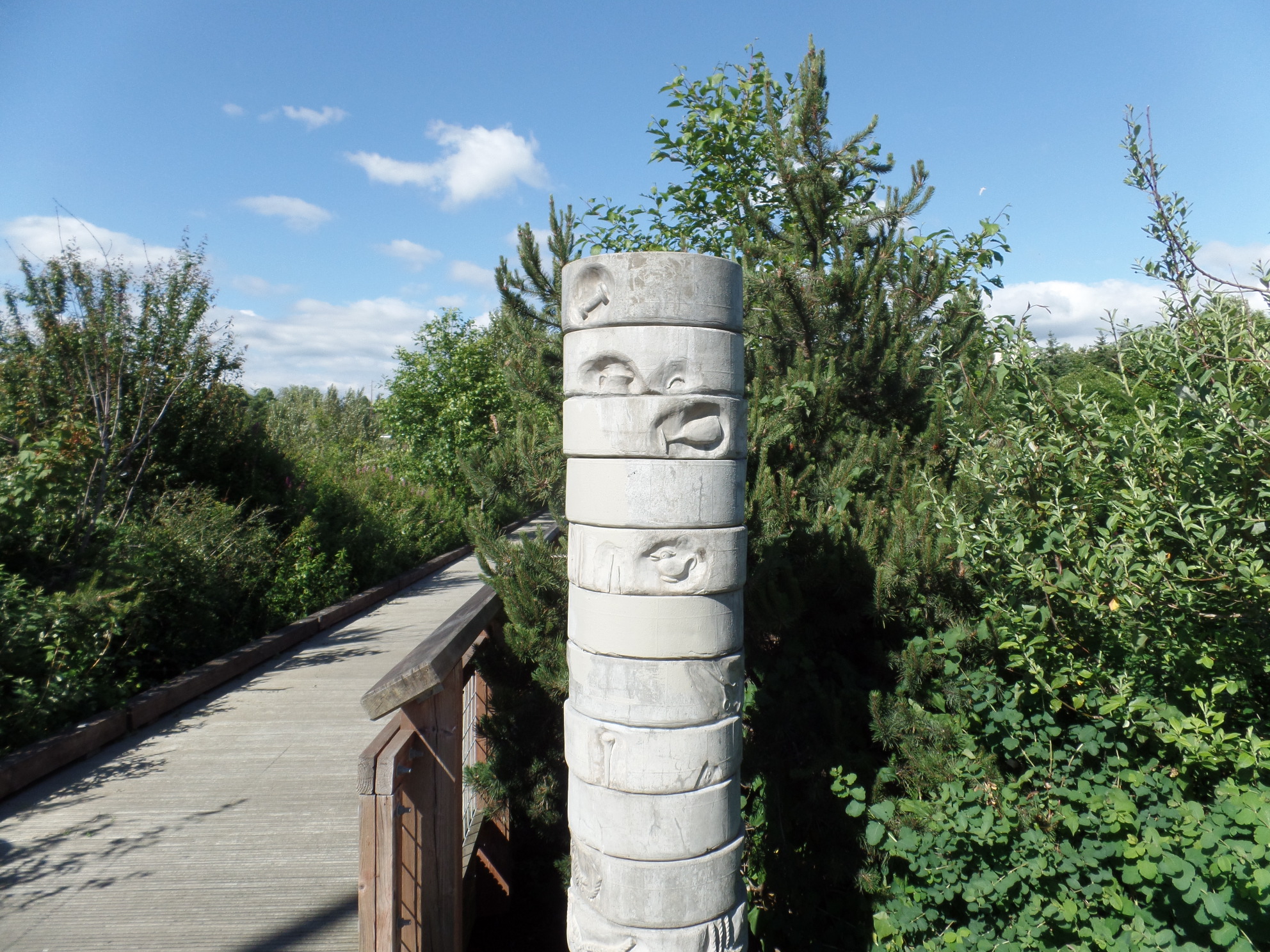
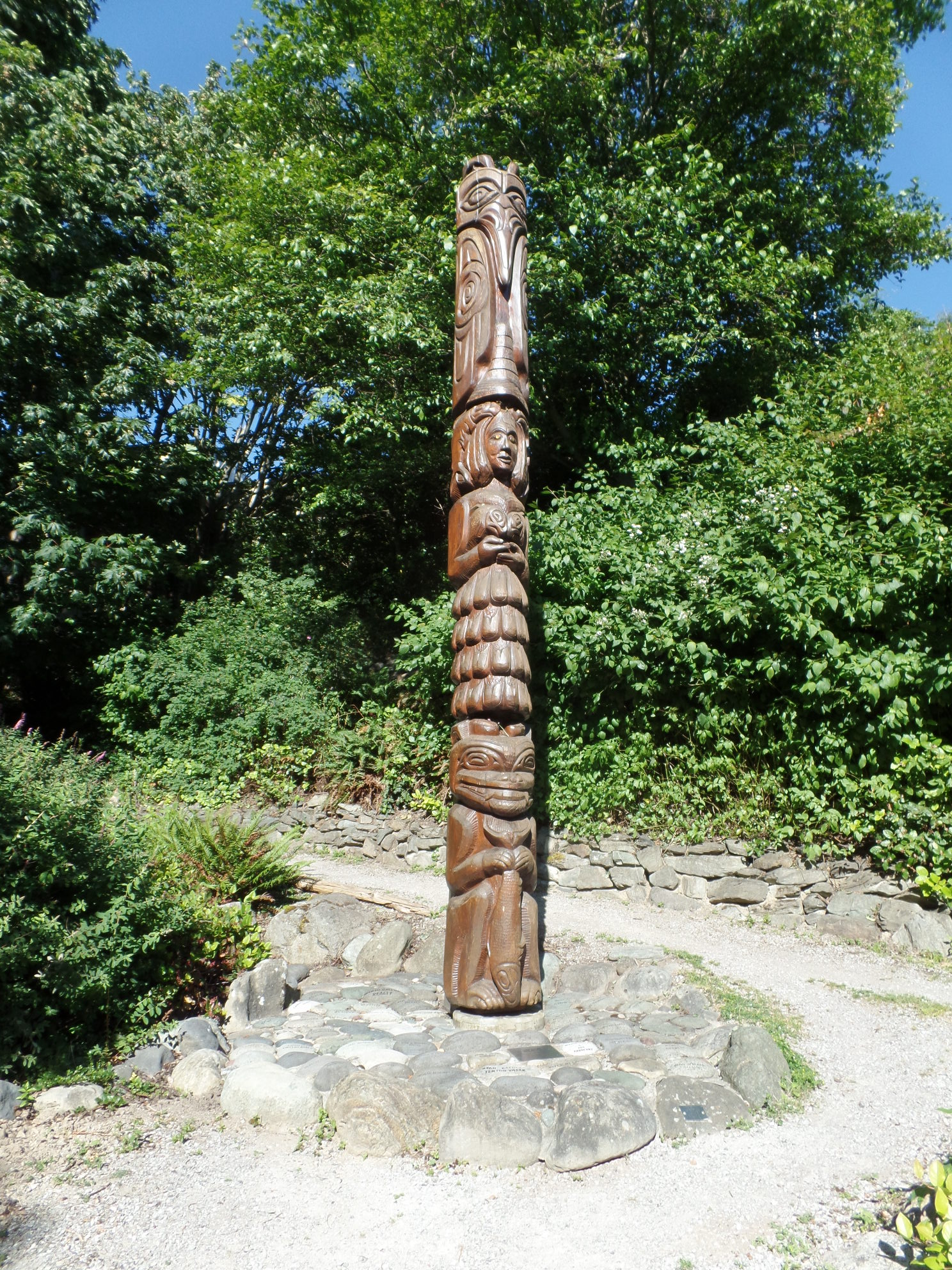
Read the fascinating story behind this totem pole, in the frame below.I hope this can be enlarged on the reader’s screen.
So, Bellingham, in a limited time, reveals itself to be a far more important cornerstone of the Northwest, than a cursory ride north on I-5 would ever indicate. I’m glad to have come back down here and spent the extra hours.