
May 18, 2024, Corner Brook- The giddy photographer stopped, rolled down his car window, and called out to the two moose who were nonchalantly grazing away, in a field adjacent to the road. He snapped a couple of photos, as I was passing by in the opposite direction, to tend to other business. When I got back, the shutterbug and moose had disappeared. Oh, well. They are probably not the last moose I will see this trip. There have been four, so far.
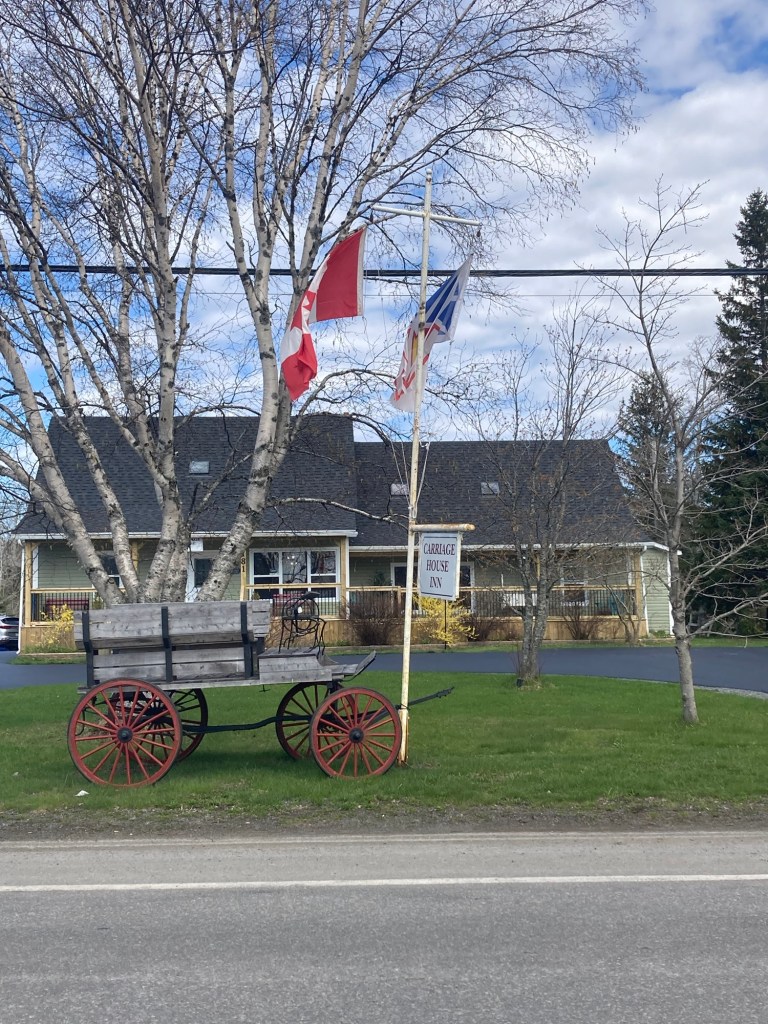
After opting for a light breakfast, this morning, I left Carriage Inn around 10:30. The road back to Corner Brook was generally lightly-trafficked and the weather was delightful. A lone cow moose, grazing off the road, was cause for people to flash bright lights at one another. The big elk could have cared less. She was way off the road and the grass must have been sweet.


I arrived at River’s End Motel, around 2, and was directed to use a code, in order to get into my room. This seems to be an anomaly, as yet, absentee owners and a brief, every-other-day housekeeping service. I am only here overnight, so it makes little difference to me. The room is clean and comfortable, so we’re good.
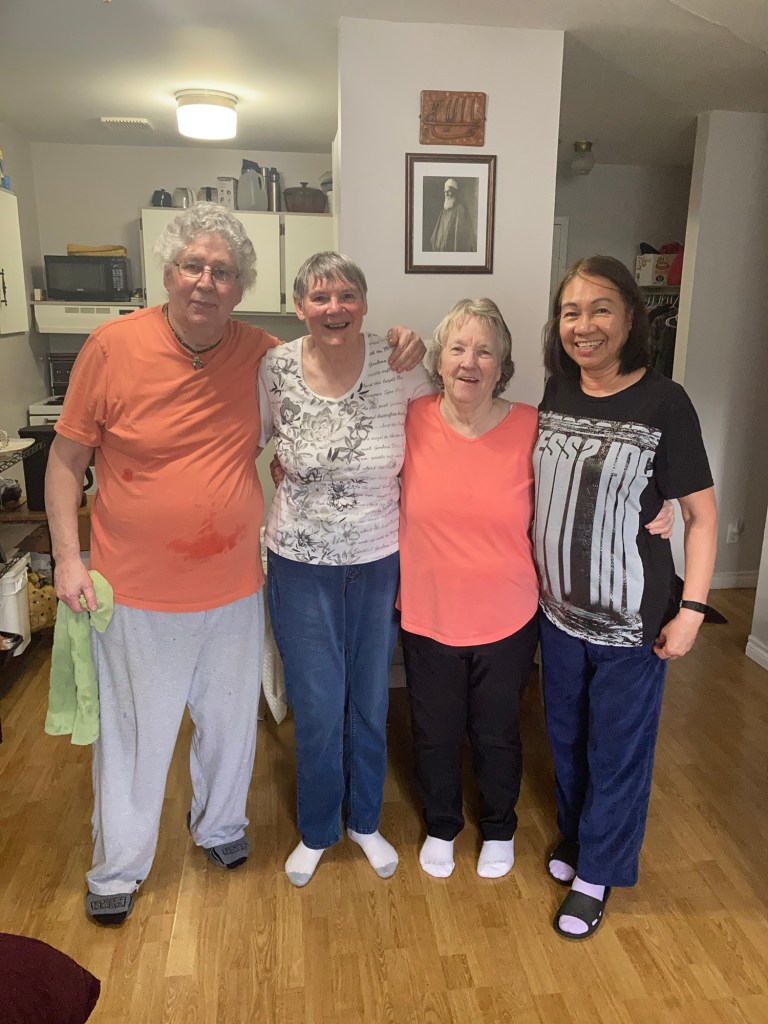
My visit to Baha’i friends here was more old school-a hearty and joyful conversation, of about two hours, followed by a simple and satisfying meal of pizza and chicken soup. Then, more conversation, focusing on ongoing issues with treatment of First Nations people in certain parts of Canada. I have seen some strides being made in that regard, in the west of the country, at least, and in some areas of Cape Breton, but as in the U.S., much remains to be accomplished.
Crow Gulch was an area, largely settled by Miqmaq families, just above a paper mill, on the outskirts of Corner Brook. It was the object of scorn from those who considered themselves “better off”, as the homes were seen as being haphazardly built, with few having electricity or running water. The community lasted from the 1920s until about 1980, when it was vacated and bulldozed. Crow Gulch is now honoured by a mural and by a book of poetry, written by a descendant of two of its residents. Those looking back on the place today recall it as having been a vibrant community, where the joy of close-knot families outweighed the hardships caused by outward poverty.
It is places like Crow Gulch that are as important to me, if not more important than, any swanky or upscale locales. The spirituality of a given place is its most important feature, and such strength of purpose is stronger, quite often, in rural communities than in areas where the pace of life is more brisk. This is recognized by many, in the video below.
Tomorrow marks my final day in Newfoundland, for this year, at least. It’s gratifying that I would be welcome back here, to stand with those making a decent life for themselves in this beautiful and sometimes harsh land of four seasons: Just another place to call home.
 A Sagittarian Seeker