

July 22, 2015, Santa Barbara- Mission Santa Barbara is the sixth California mission I have visited, and only the second I have visited twice, along with San Diego de Alcala. The first time scarcely counts, though, as the interior had closed. The same is true of Mission San Luis Obispo de Tolosa, which was about to close when we got there, in 1997.
Yet, let’s get back to the splendidly restored Santa Barbara, “Queen of the Missions”, and another erstwhile casualty of the earthquake of 1925. The community knew only one thing to do, afterwards, and that was to rebuild.

Even with its modern ambiance, Mission Santa Barbara exudes a strong spirituality, especially in its courtyard garden.

The Tower at Pisa has nothing on this olive tree.
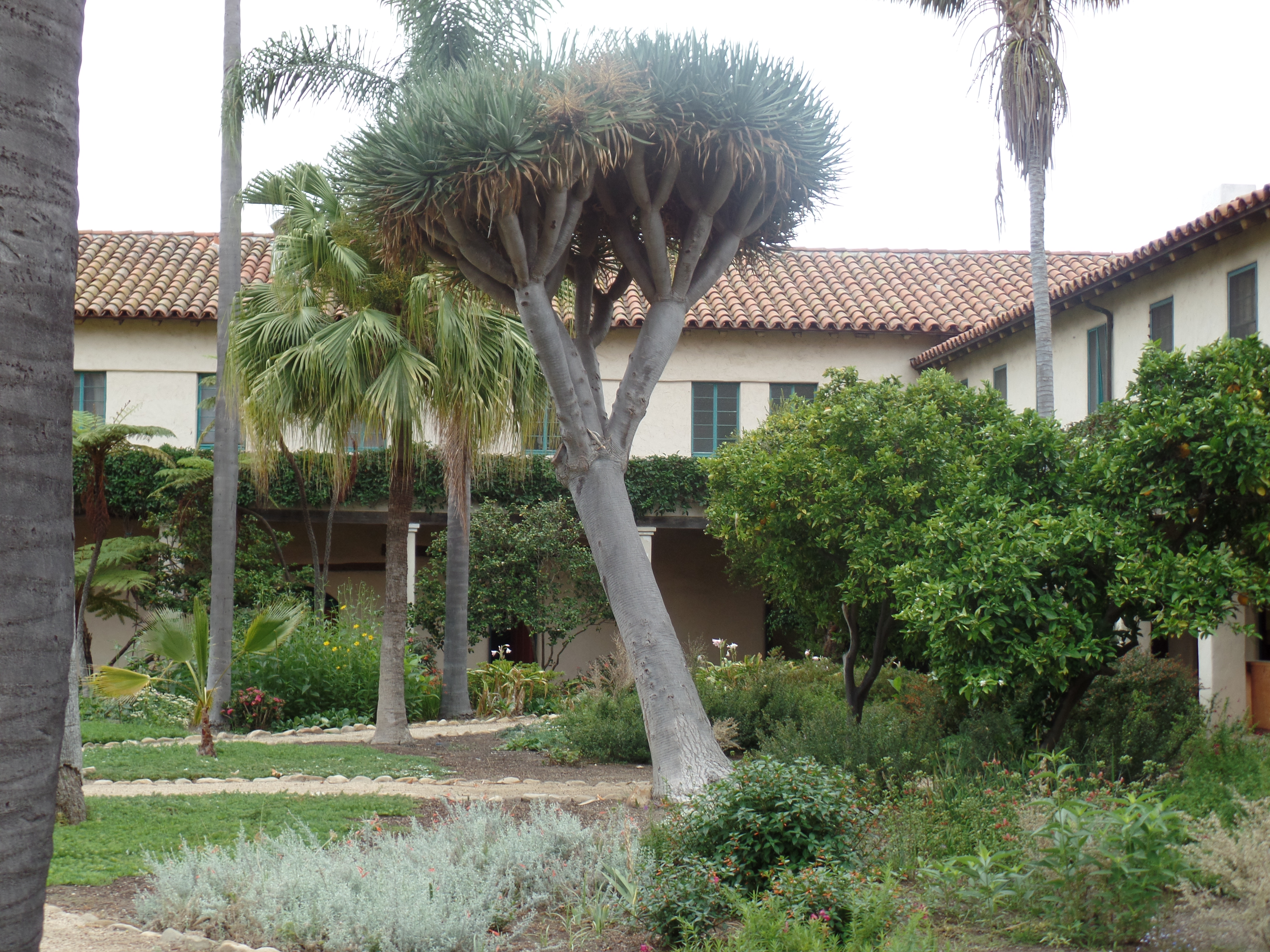
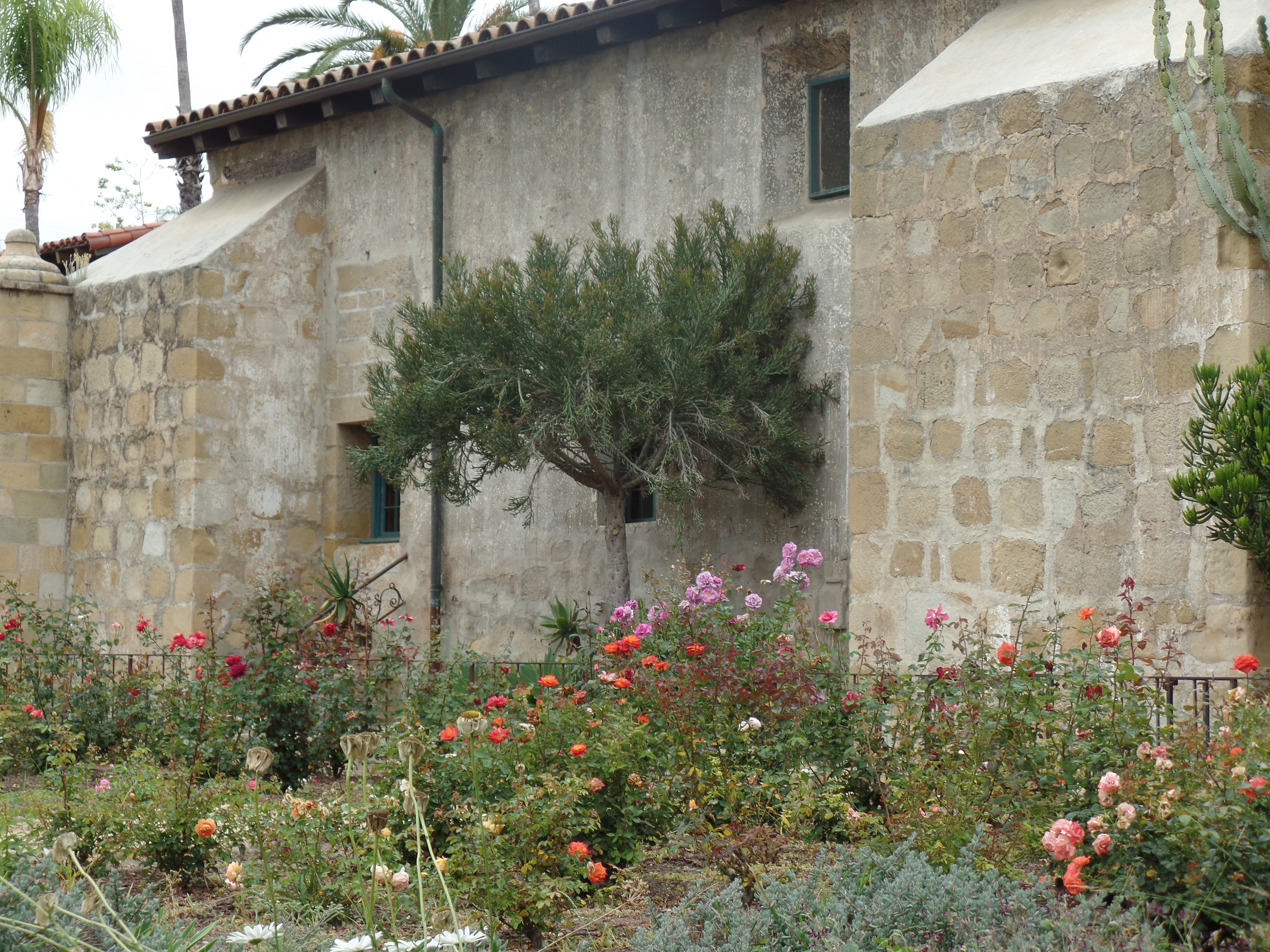
This garden font was operating on trickle mode, enough to show the tenacity of the “Queen”, whilst also showing sensitivity to the overall situation in the State of California.

This Mission is one of several which has one public entrance, through the gift shop, where a cashier collects the $8 fee (for adults, 18-64). The restoration work has all come from visitors’ fees, so they’ve been put to good use.

The bell tower, and much of the northern section of the Mission, are off limits to visitors.

As with other Spanish colonial structures, the walkways are shored up by exposed beams, in the ceilings.

Various small chapels are dedicated to Mother and Child, throughout the periphery of the Mission Church.
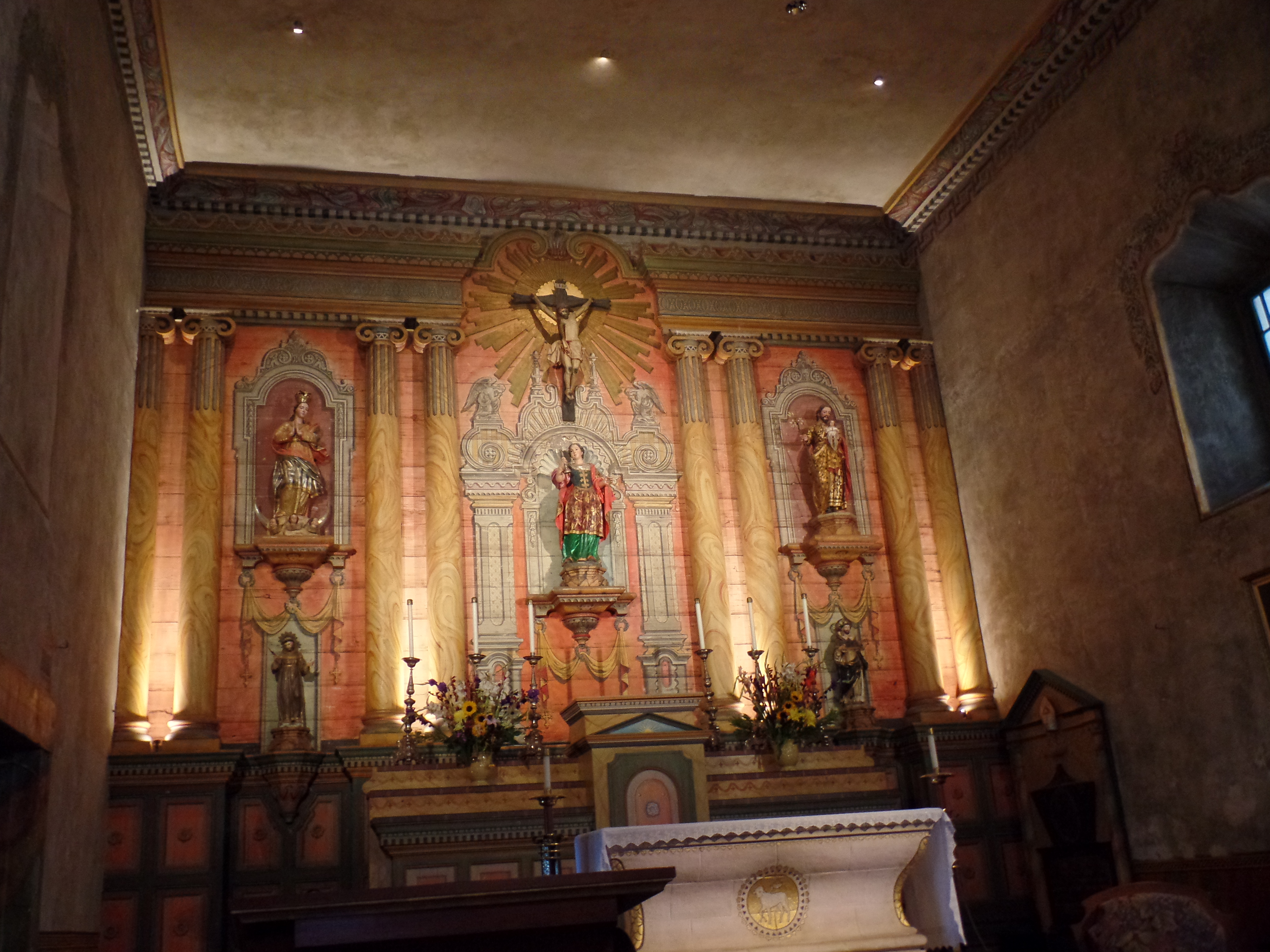
St. Peter is shown, honouring his suffering Lord.

The cemetery dates from the 1770’s.

Garden plots and funerary chapels are common here.

The doorway to the Mission Church is guarded by three skulls, so as to prevent malevolence from entering the sanctuary.

Silence is maintained here, as the church is an active parish’s place of worship, first and foremost.
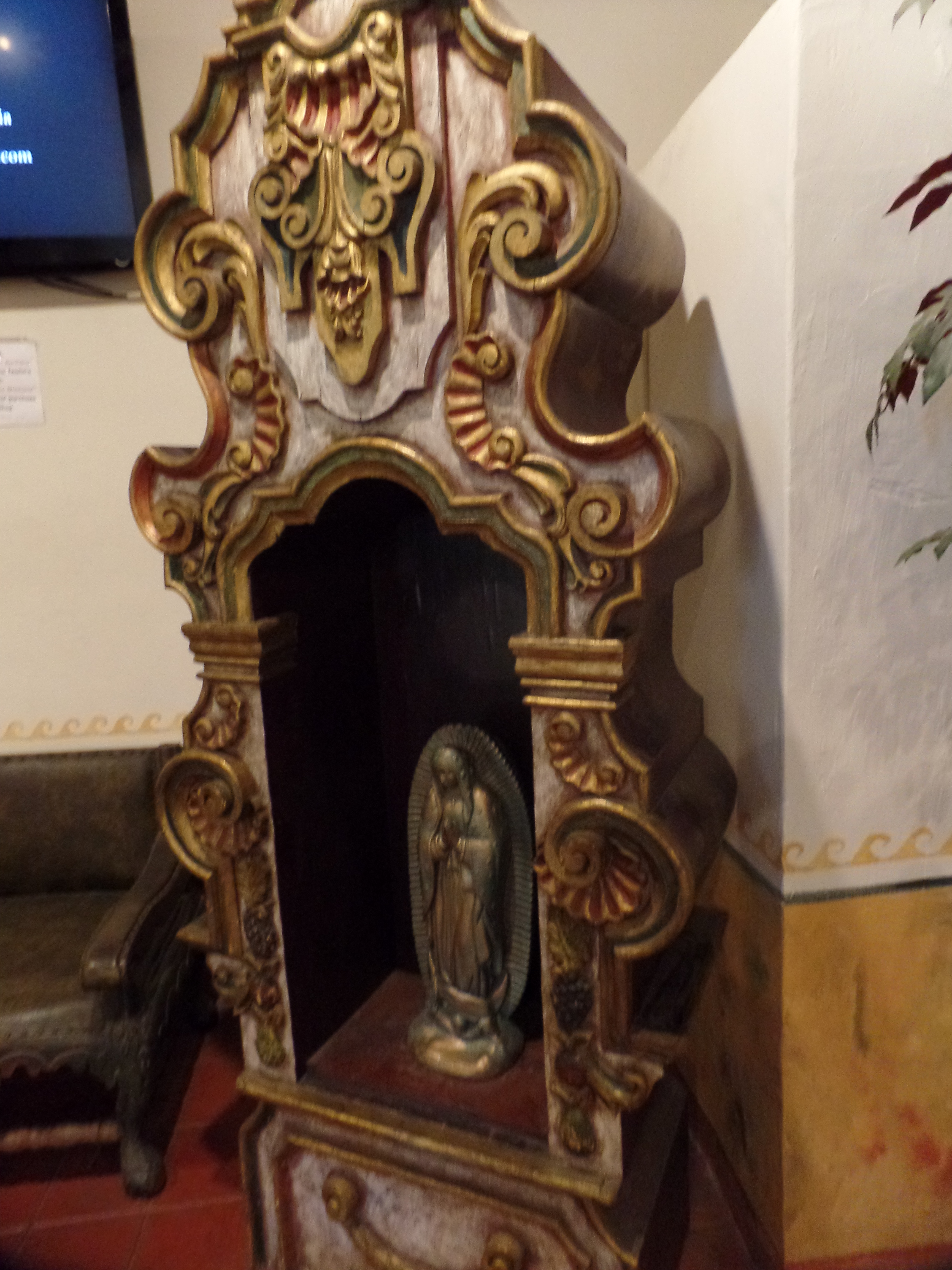
The framed flat column is a unique feature of Mission Santa Barbara. At least, I’ve not seen it in any other missions. It is intended as a place to make offerings.

Chumash art is found throughout the Mission, as well. This chandelier anchor also guards against demons.

The Chumash are among the first Indigenous nations to share their painting skills with Europeans.

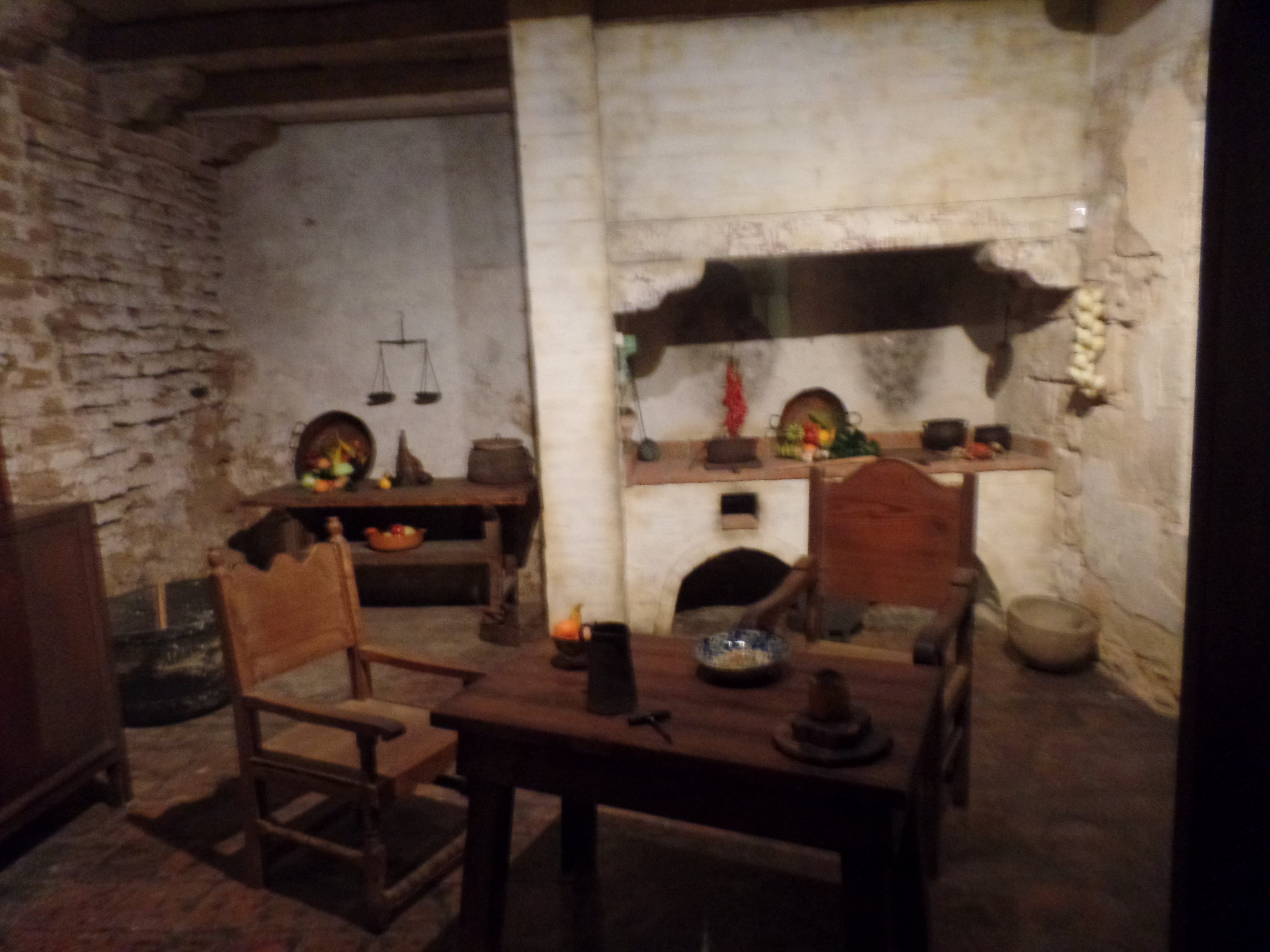
In the museum rooms, details of daily mission life are made clear. This is a depiction of the friary kitchen. It reminds me of its counterpart at Mission San Luis, in Tallahassee.
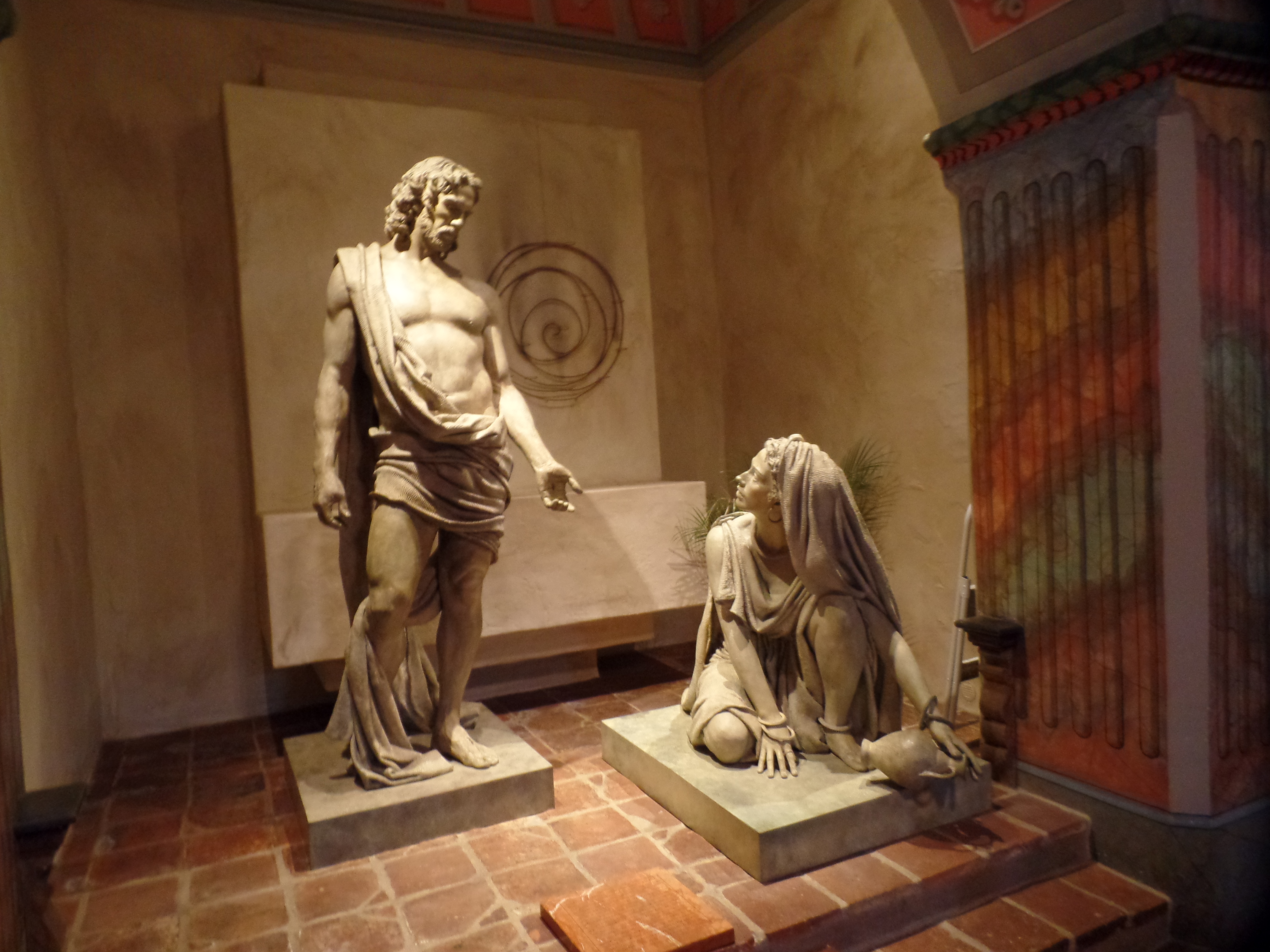
Between the Mission Church and the museum, Christ is depicted as a man of strength and courage, comforting Mary Magdalene.
This aqueduct was the place where Chumash workers would bathe, and wash their garments.

Although La Huerta, the signature garden of Mission Santa Barbara, was off-limits, the Olive Trail Garden, as well as the Courtyard Garden shown aforehand, were open to visitors. I have become quite enamored of anything bright red, on this trip.

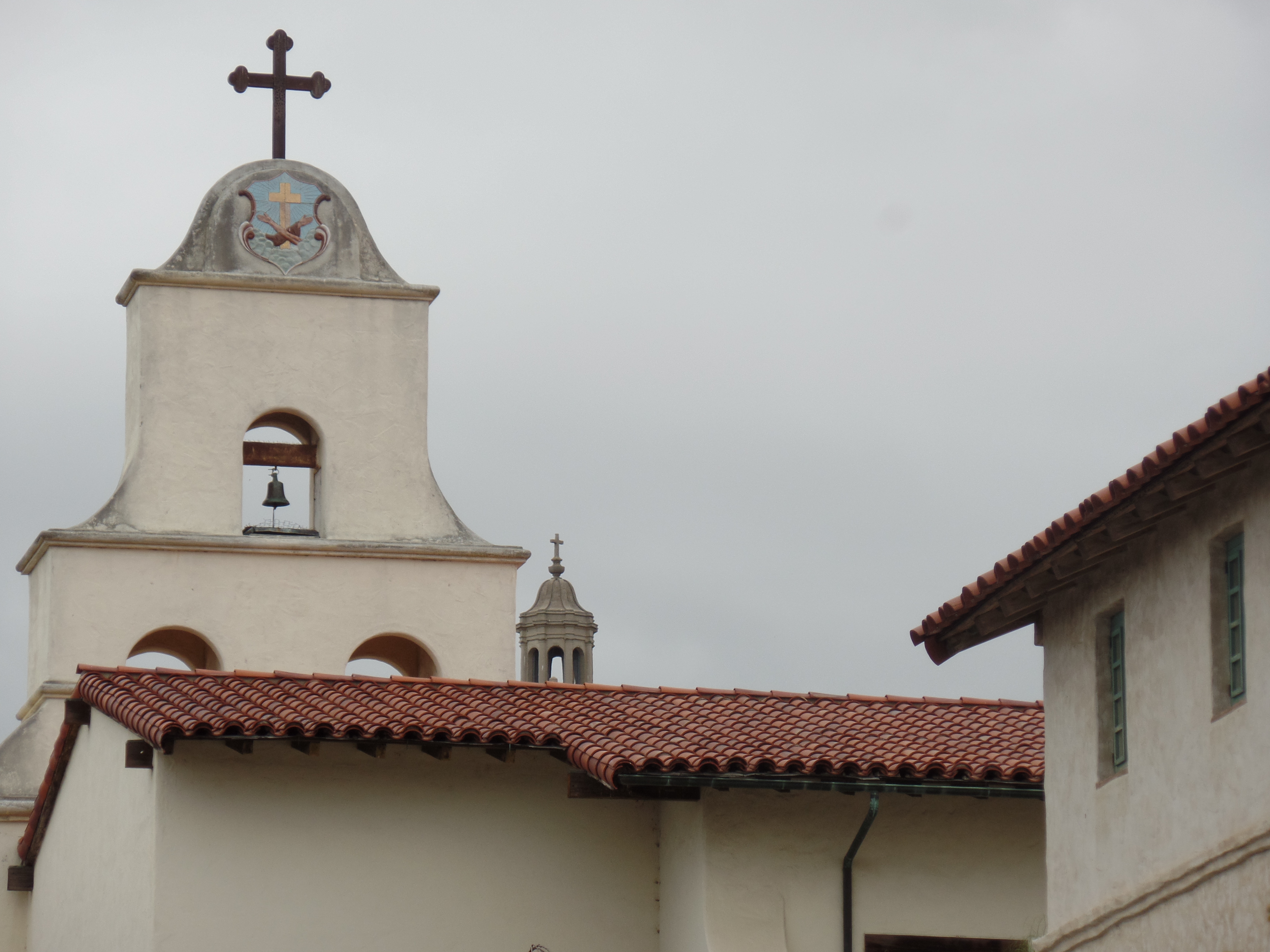
It was hot, being mid-afternoon, so I bid farewell to the Queen of Missions, with a nod to its place in the skyline.
Thus, my northward journey to the south-facing coastline began to wind down. Eastward ho! I drove to Santa Clarita, the recently incorporated (1987) conglomeration of San Fernando Valley communities, due east of Santa Barbara, and opted for the familiar format of Chili’s,in the Newhall section, as a dinner venue, foregoing a brief plan to head into the Saugus section of town, for a meal at Los Angeles County’s oldest restaurant. It was getting too late,but next time out- Saugus, CA will be on the itinerary.
A few hours later, via Palmdale and Victorville, I made my evening destination of Barstow. Motel 66 is a clean and eminently affordable Mom & Pop west side establishment, and I don’t need anything more. Tomorrow, I will head back to home base, through the familiar Mohave Desert and uplands of Yavapai County.

 When the Puritans, led by John Winthrop, settled Boston in 1621, they were looking for a place in which to produce iron locally. At first, they tried the hamlet of Braintree, 16 miles south of Boston, but found it meager as a foundry venue. An engineer named John Leader came from England, explored the lands of the Pawtuckets, and found a spot on the Saugus River. He named the place Hammersmith, and began the iron-making operation. Scottish indentured servants were brought in to do the non-farming labour that was loathed by the Puritans. The Scots were a rowdy, but hard-working bunch and made a good effort at producing quality iron. Leader and his Board of Directors were not sound businessmen, however, and the business failed after less than 20 years.

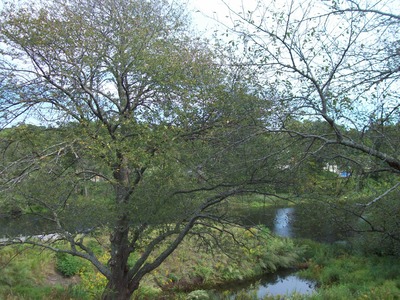
 Here are some close-ups of the forge, the rolling and slitting mill, the blacksmith shop and the river that helped it all happen.


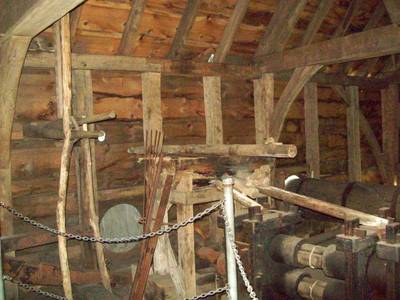

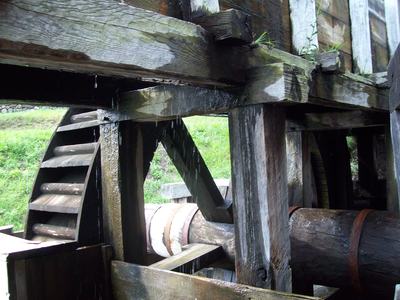
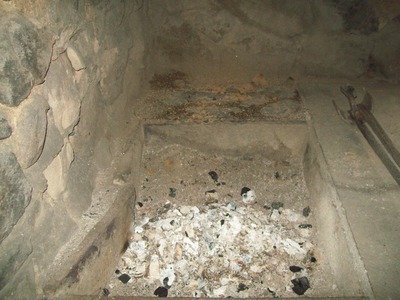

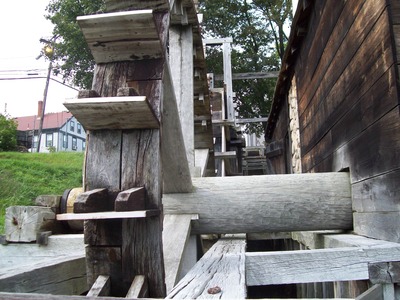




 The Scottish iron workers, and their descendants, carried the ironworking tradition to other parts of the country. One such new ironworking locale became Pawtucket, RI, in honor of the ironworkers’ first hosts. Saugus, the name that the Pawtuckets gave to the river, eventually became the name of the town in which the Ironworks is preserved.
 A Sagittarian Seeker