The Road to 65, Mile 201: Southeast IS Northwest, Day 10- More Totems, and More Floating

2

June 17, 2015, Ketchikan- I was fortunate today, to have the hostel agree, European-style, to hold my bags until it was near time for my ride to the ferry terminal.  The ten-day Alaskan experience was coming to a close.  I have enjoyed a fairly good taste of “Southeast”, and this last day on land, in Ketchikan, was no exception.  I had breakfast in two different venues:  A street stall, across from the Cruise Ship docks, which had fairly good muffins and coffee.,and in Sweet Mermaids, where the steel cut oatmeal and fresh berries were accompanied by an hour of WiFi.

When I was first walking around the waterfront, this morning, a man called out- “You, from Arizona!  How do you like Southeast?”   Hmmm, do Arizonans stick out?  Of course, I told him I thought the region was exquisite and that I was having a great time.  Turns out, he is from Scottsdale, and knew the Methodist pastor, who is from Tucson.  Even in a busy tourist venue like Ketchikan, word gets around fast.

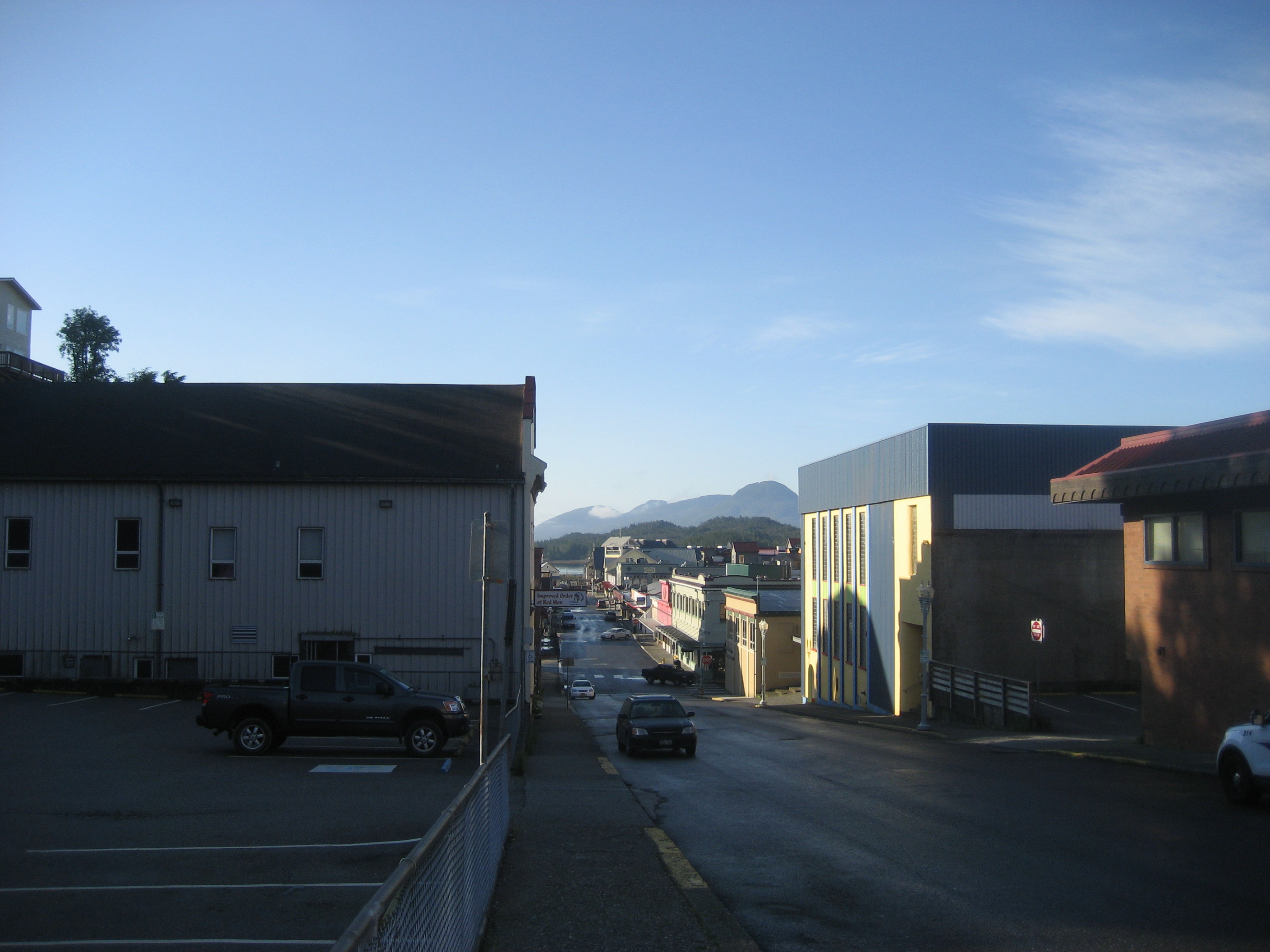
This is the street where the stall is located.
771

I spent some time walking along and observing the fisherfolk.  This craft was in the channel, just off Saxman.

772

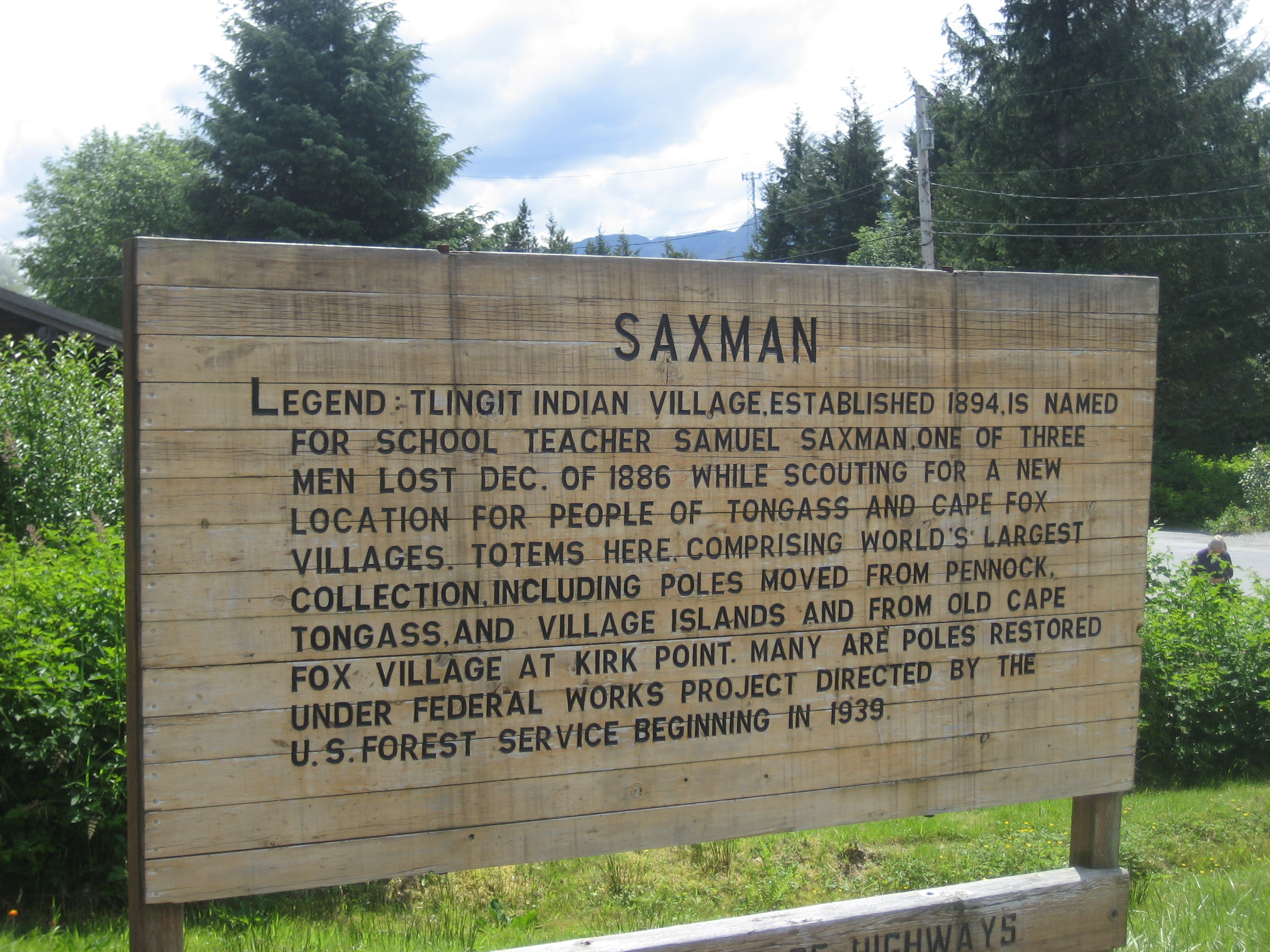
Saxman, two miles south of downtown Ketchikan, is a Tlingit village, named fro a great local teacher, who died in the line of service to his community.
806

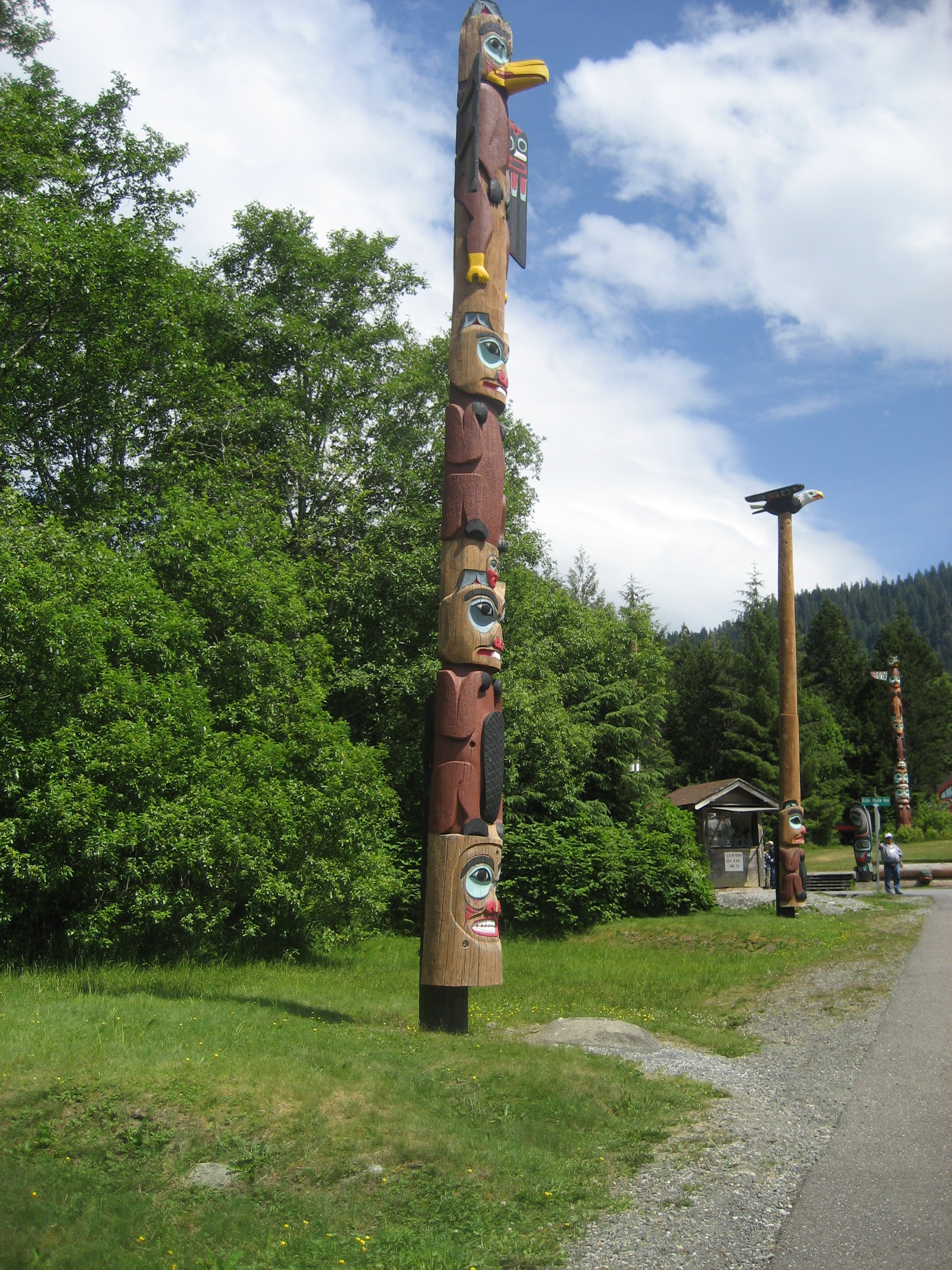
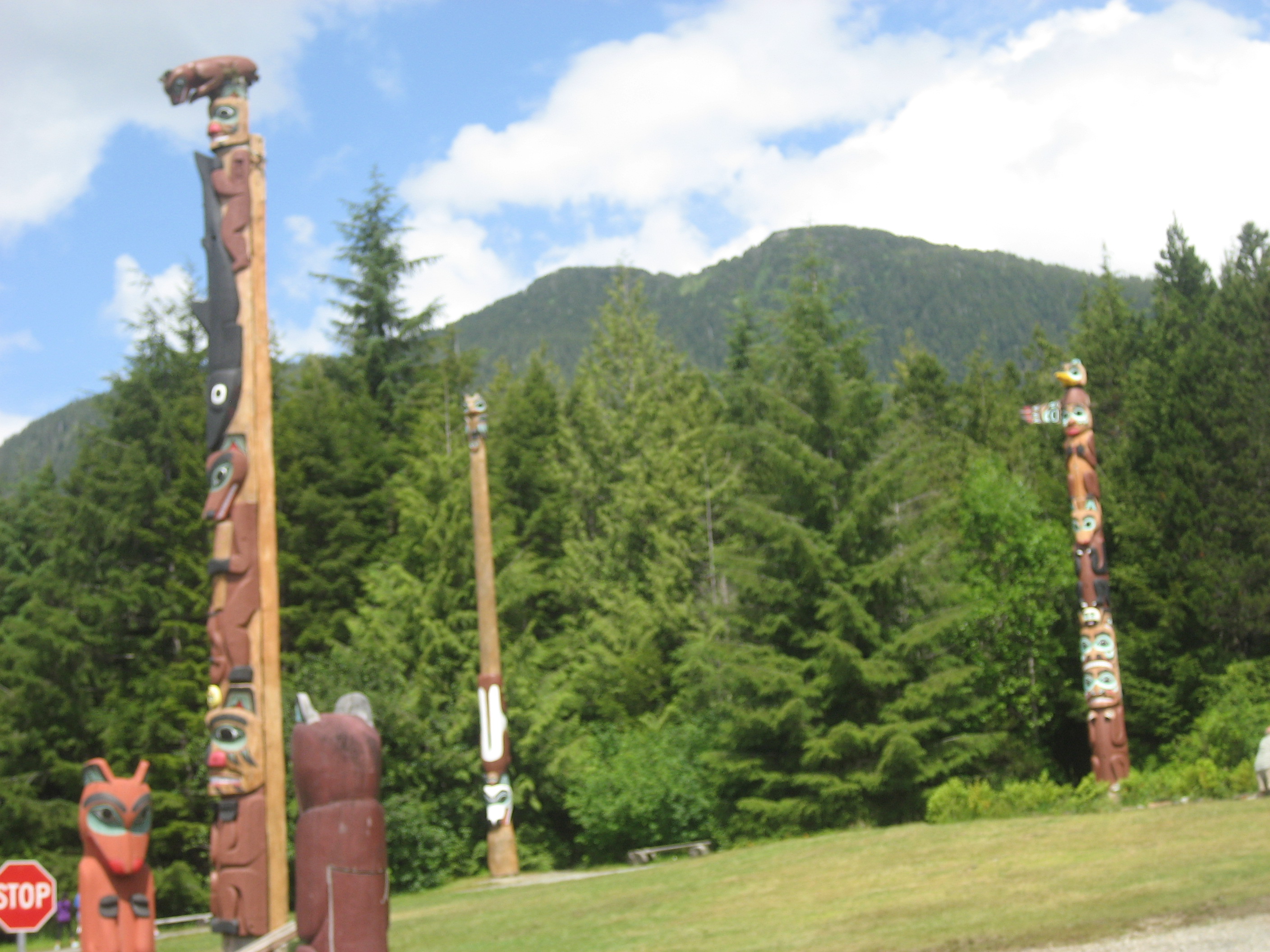
There are several totem poles, both honourific and modern, which comprise a public park.  Tourists wishing to visit the ceremonial hall and carving studio, must pay $ 5 per person, cash only.  The outside, however, is free of charge.  I bought a hand-made rattle, from the Village Store, and will use it at a Drum Circle which some friends back in AZ have, every month.

As you can see, many of the totem poles are well-maintained by their clan moieties.

790

792

Frogs are seen as protectors and sentinels of the water.
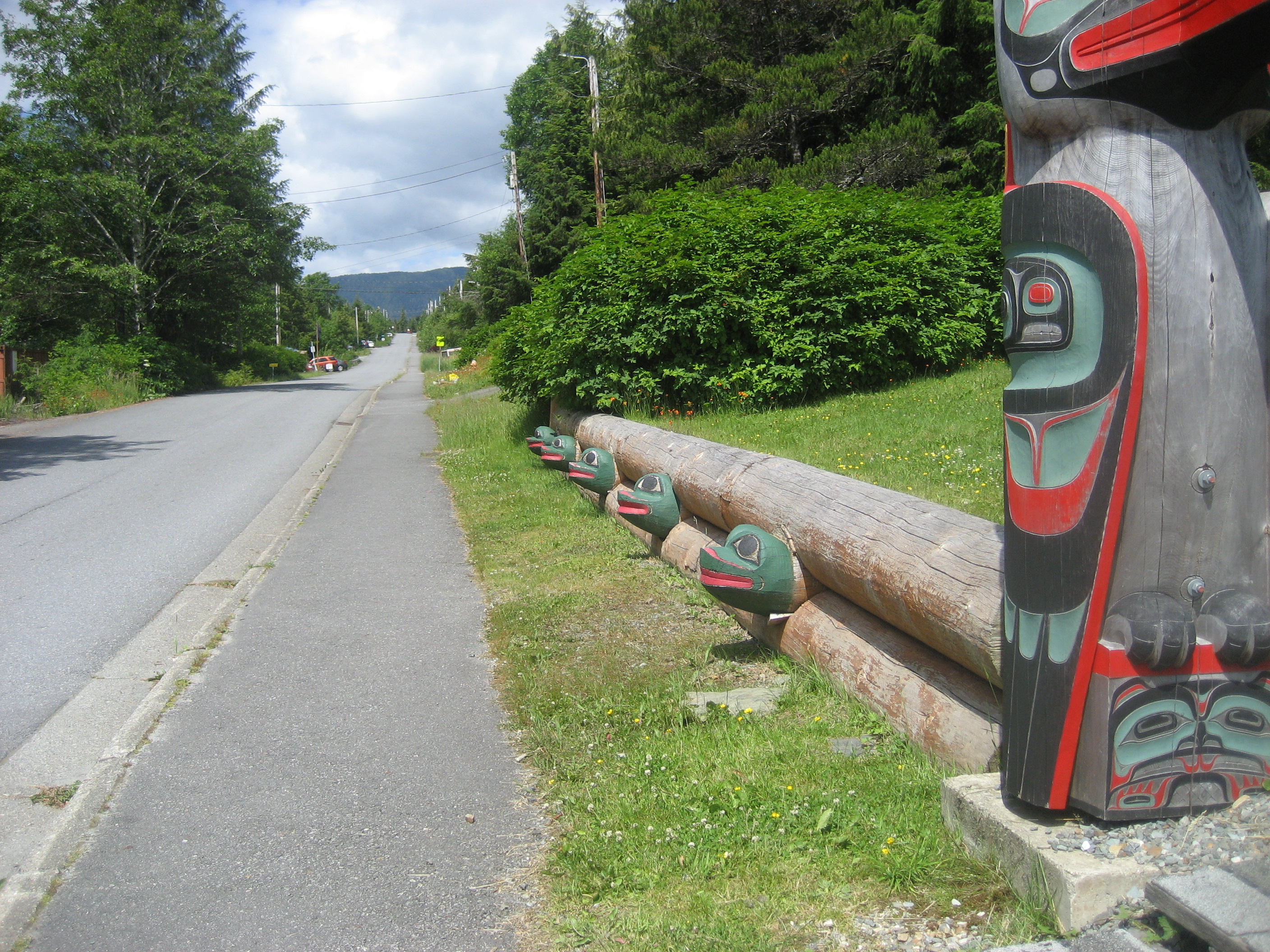
795

796

The guardian totems here are properly greeting the visitors.

800

Here is a view of the totem field.

811

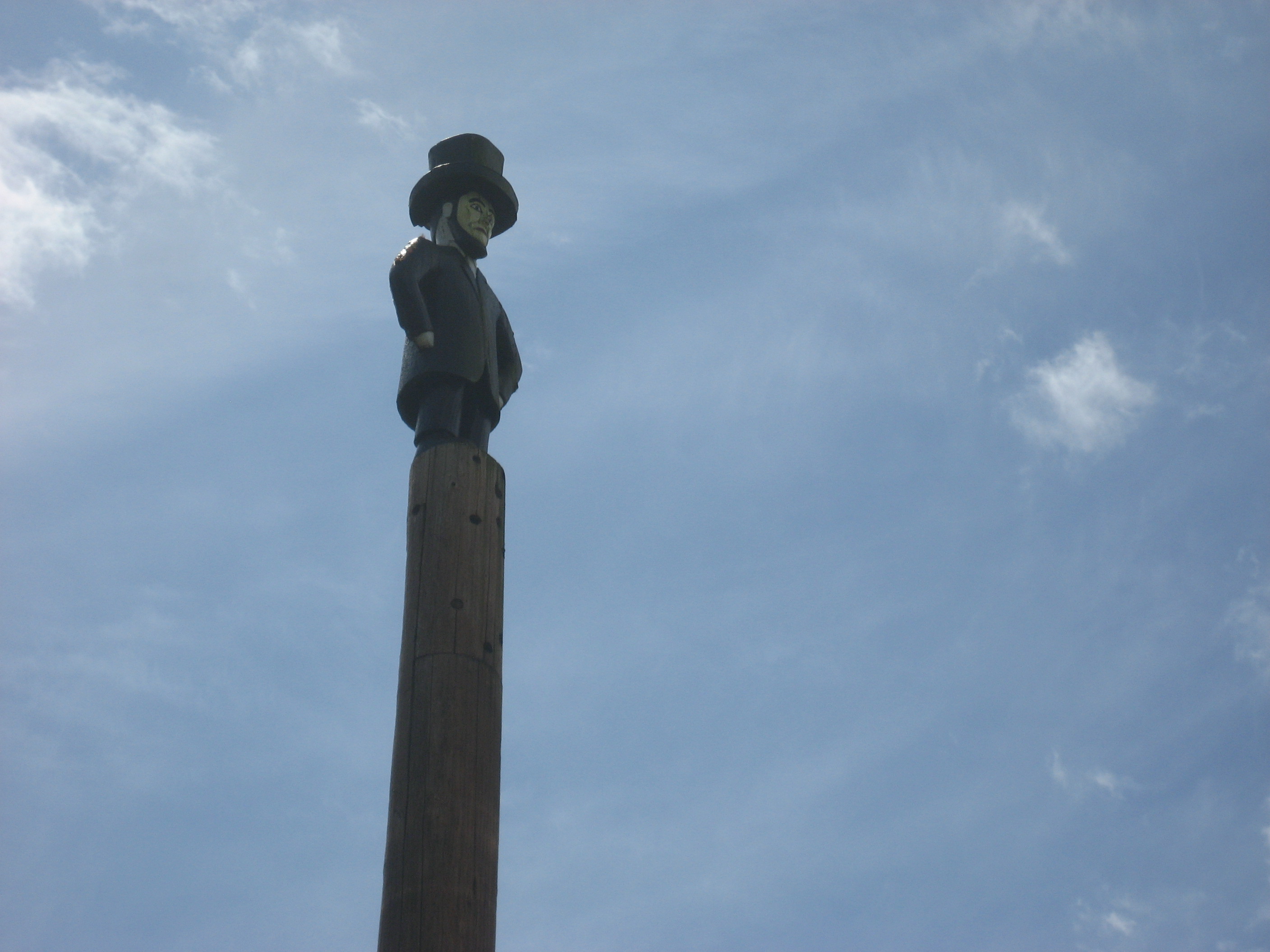
Abe Lincoln stands in exile, so situated because of his treatment of the Lakota Sioux, to which the Tlingit and Haida people take great umbrage.
808

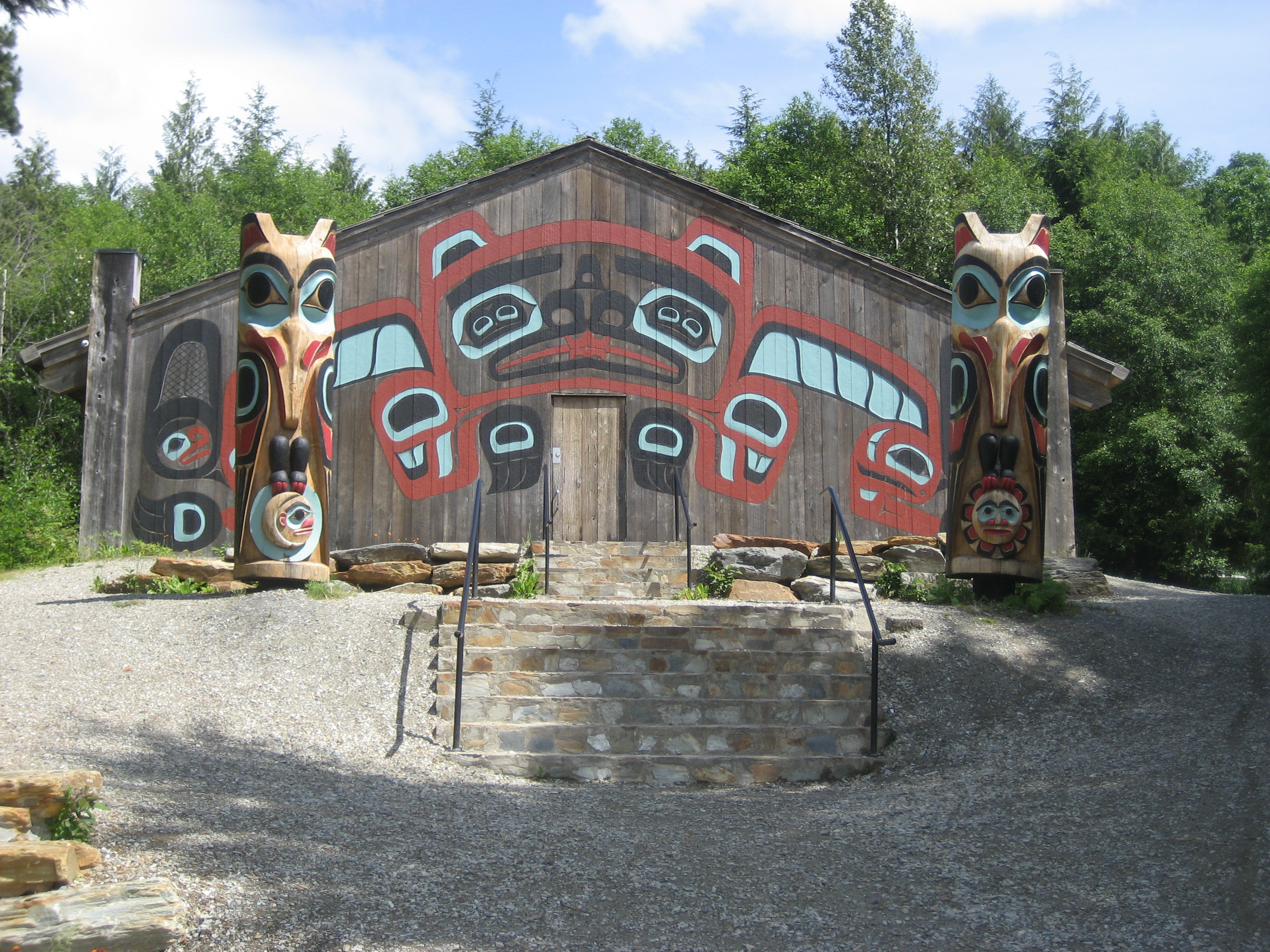
This is the exterior of the Ceremonial Hall, where drumming and singing take place.
802

This is the taxi driver’s pride and joy.

819

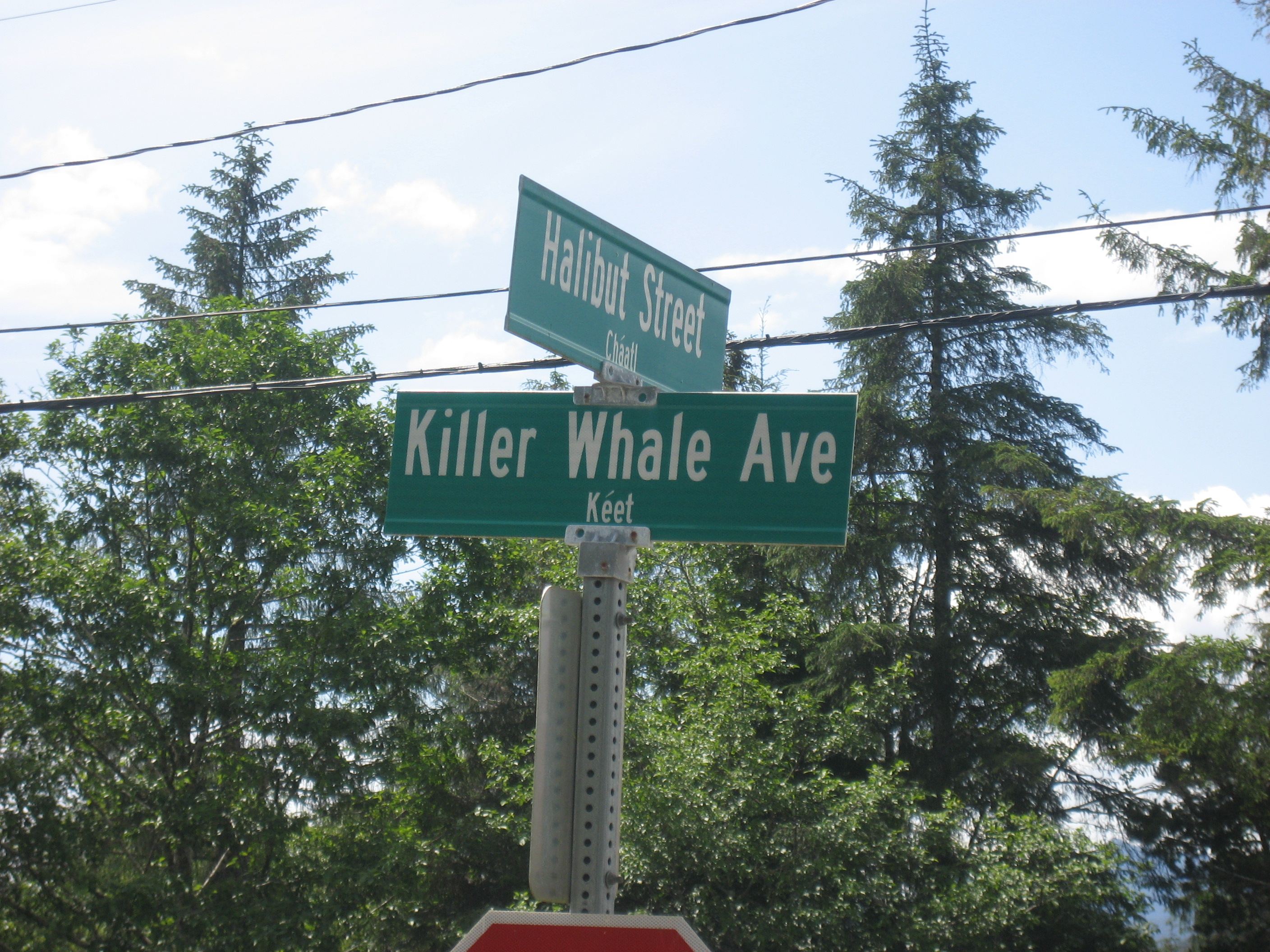
Street signs are in English and Tlingit.  The Tlingit language is offered in public schools, throughout southeast Alaska, and in coastal British Columbia.
820

Well, after this visit and a lunch at Polar Treats, downtown, it was time for me to head to the ferry. My Ketchikan friend, Ms. Chapman, took me to the terminal, and I bid a fond farewell to my new friends and communities of this magical set of peninsulas and islands.
826

The people who work the ship are also embedded in my heart.  After two days together, on the way up, several of the crew somehow remembered me, when I showed up again for meals and around the ship.

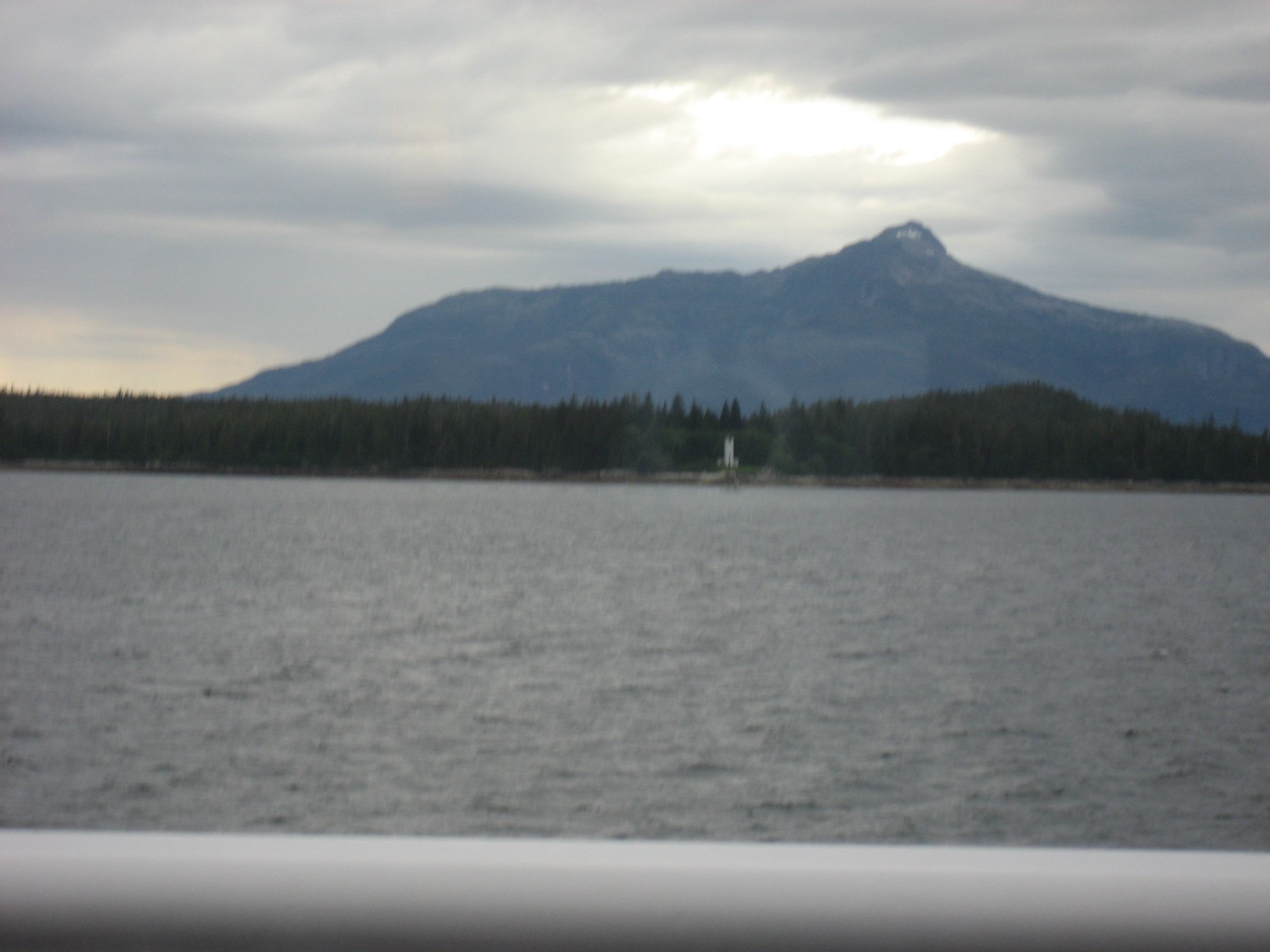
A couple of orcas were off the port side of the ship, as we left U.S. waters.
827

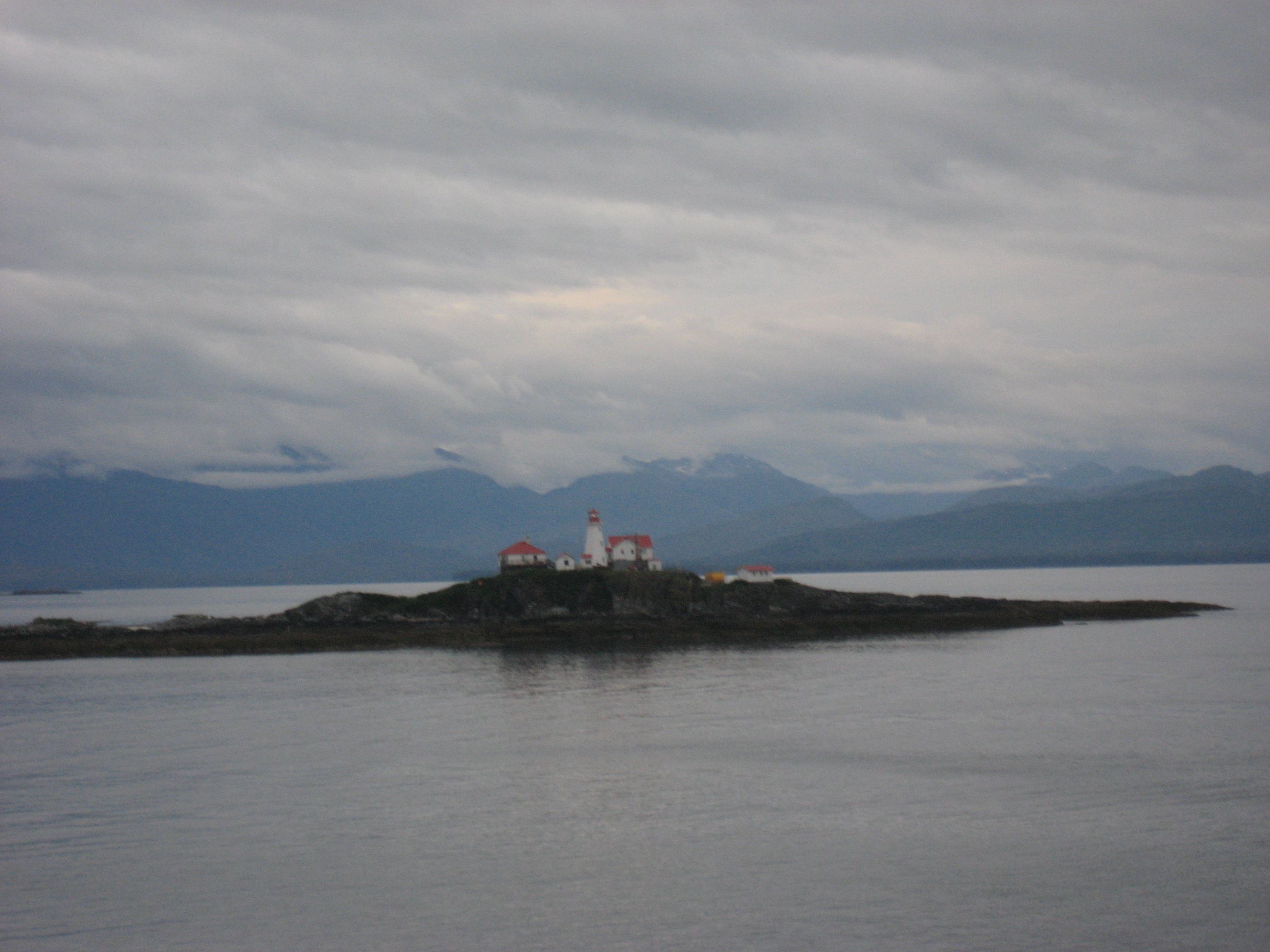
Green Island Light is manned by a Canadian family, who stay for a period of three months, then are succeeded by another family.
831

Cold and mist were the Alaskan farewell, as we headed into the waters off British Columbia.  I will be back some day.832

The Road to 65, Mile 200: Southeast IS Northwest, Day 9- Skyward to Ketchikan

1

June 16, 2015, Ketchikan- Actually, the flight from Sitka to Ketchikan lasts 49 minutes.  My friend in Sitka gave me a ride over to Gutierrez International Airport (all border fields are “International”), and from there it was a puddle jump, though in a conventional aircraft that was going from Anchorage to Seattle.

The Ketchikan Airport is on Gravina Island, from which one must take a $6, five-minute ferry, to the city proper, then a $5 taxi ride to the Main Ferry Terminal, from whence a city bus will take the visitor downtown.  I was told the Gravina Bridge was the Bridge to Nowhere that was never completed.  It was not a big deal to me- just a half-hour or so, of local colour.

Ketchikan does have its share of colourful characters, at all points along the human spectrum.  I found myself next to a tough fishwife who was loudly telling someone over the phone about how f*%#@ crazy her teen daughter was acting, as the girl was standing there, rolling her eyes.  A few minutes later, I arrived at the Methodist Church, where the kindly  pastor-emeritus welcomed me to their hostel and explained that only a church-approved Internet connection was available.  Since that link was not working, I ended up going to two different places to WiFi, the next day.  The hostel itself was adequate to my needs, otherwise.

My Ketchikan circuit began at the Tongass Visitors Center, a US Forest Service facility, which does an excellent job at explaining the various aspects of Tongass National Forest, its creatures, the surrounding sea and Man’s interaction with all of them.  There is a complicated balance at play here:  A thin soil layer, trees growing seemingly atop one another, the Native Alaskan understanding of land and sea use, European notions of said use and climate change- which is affecting the area far more dramatically than some other parts of the world, and people on Revillagigedo Island (pronounced by locals as it looks- Reh-vill-ah-GIG-eh-do), on which Ketchikan is located, are less skeptical of the changes than some are, elsewhere.685

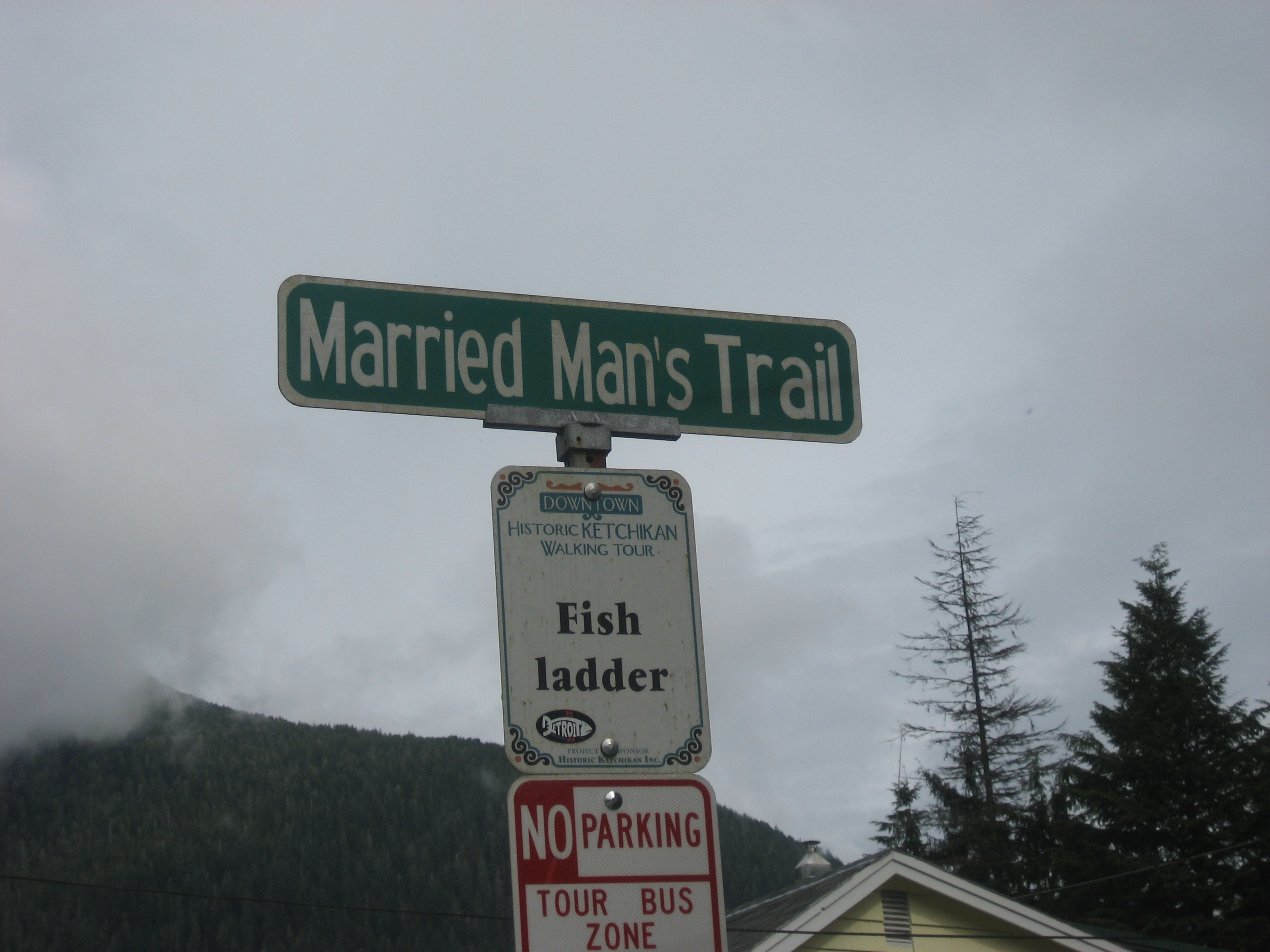
Prior to a meeting with friends, later this evening, I made a circuit of the harbour, Ketchikan Totem Heritage Center, City Park, Married Man’s Trail and back to downtown.  As you can see, the fishing part of Ketchikan is very lively.

688

Stensland Bayside is constantly being dredged and monitored, for seabed shifting, due to low-level seismic activity.

693

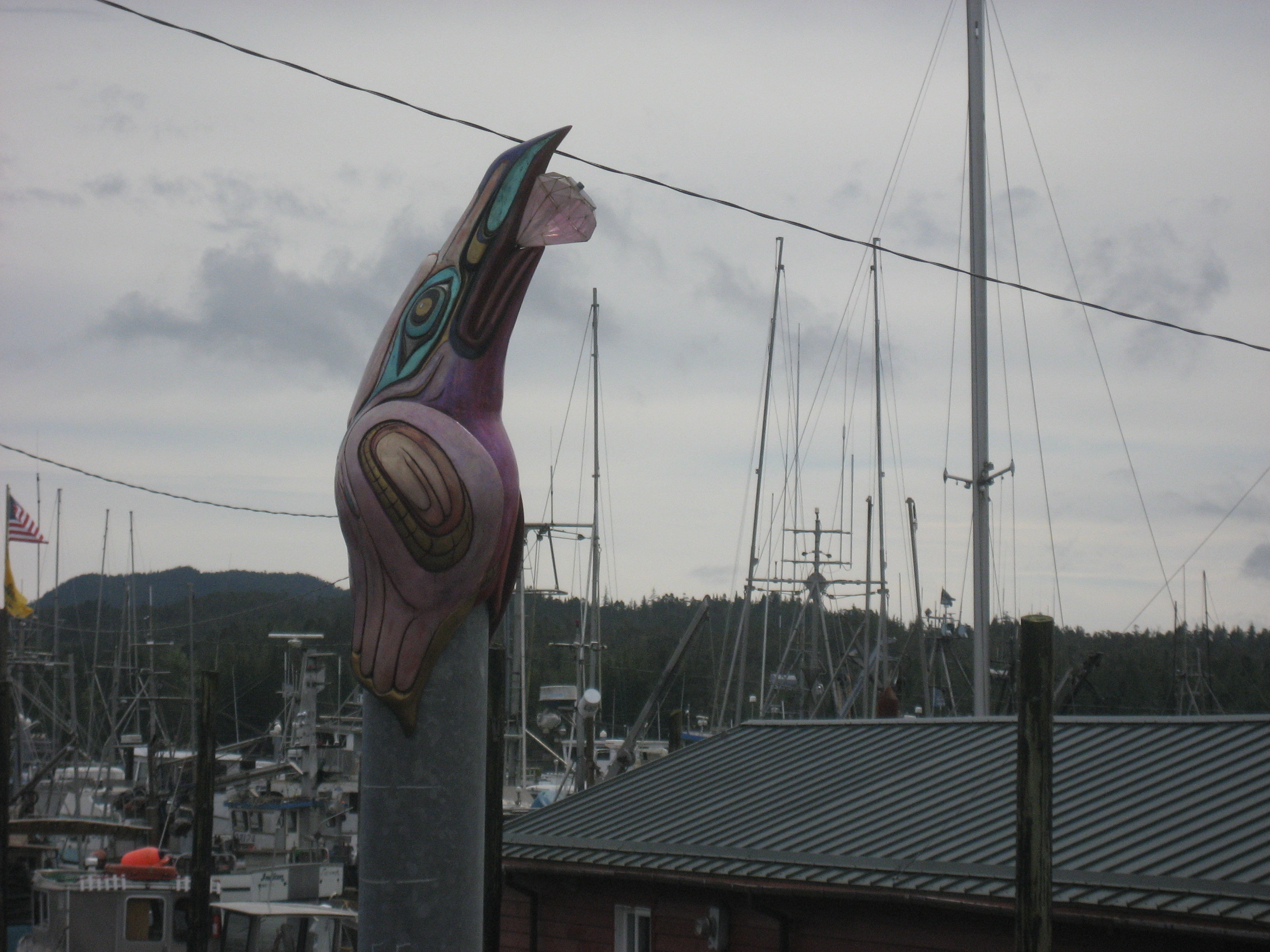
Thomas Basin, the older of Ketchikan’s marinas, is the favoured mooring for Tlingit fishermen.

695

Traditional totems adorn the wharf.

698

706

I walked up through the Ketchikan Native Community, to this thoughtfully-prepared facility.

710

Both indoor and outdoor totems adorn this lovely park.  A docent does double-duty, between here and the Tongass Museum, a city property, not to be confused with the USFS Visitor Center.

711

713

716

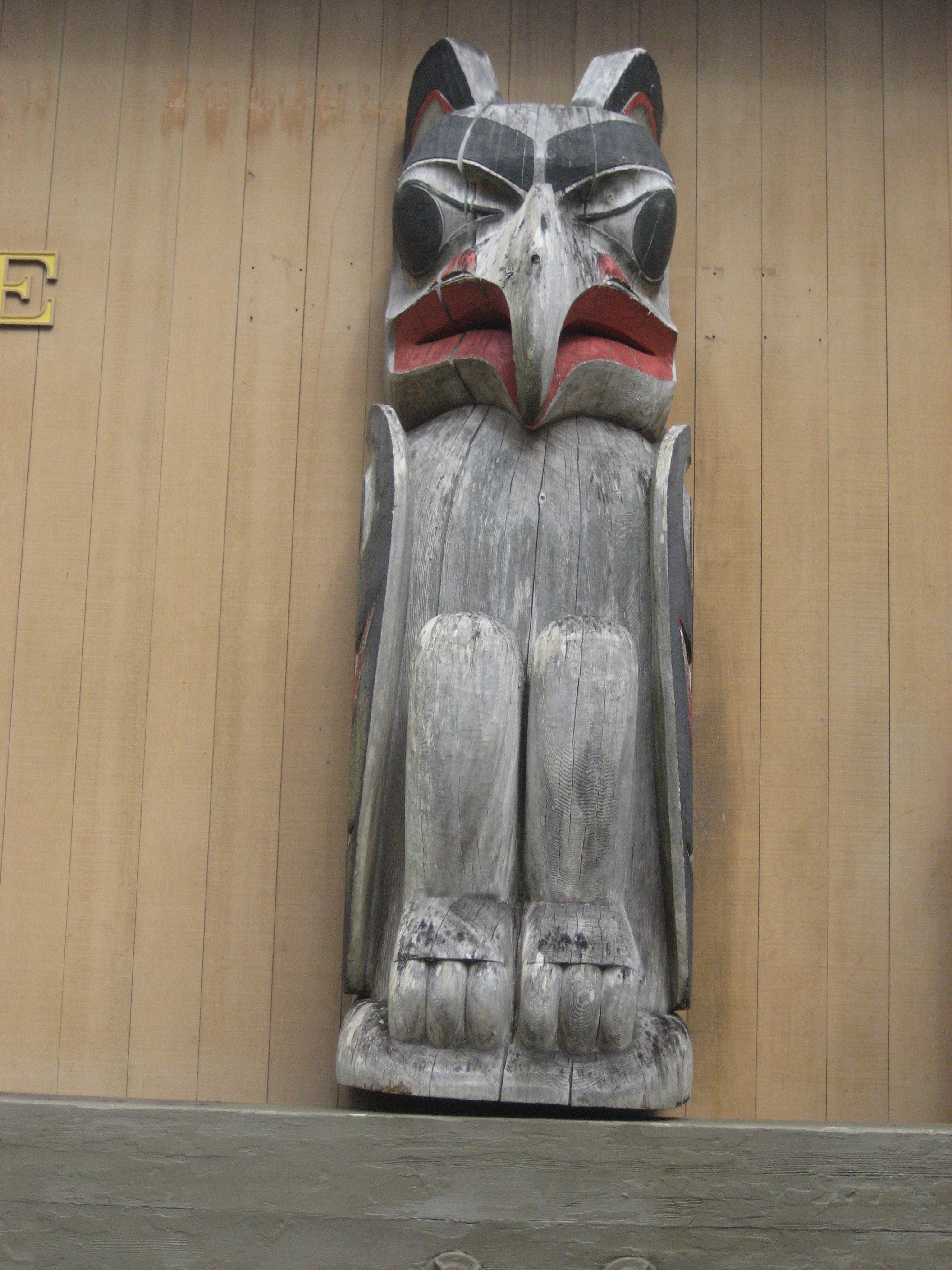
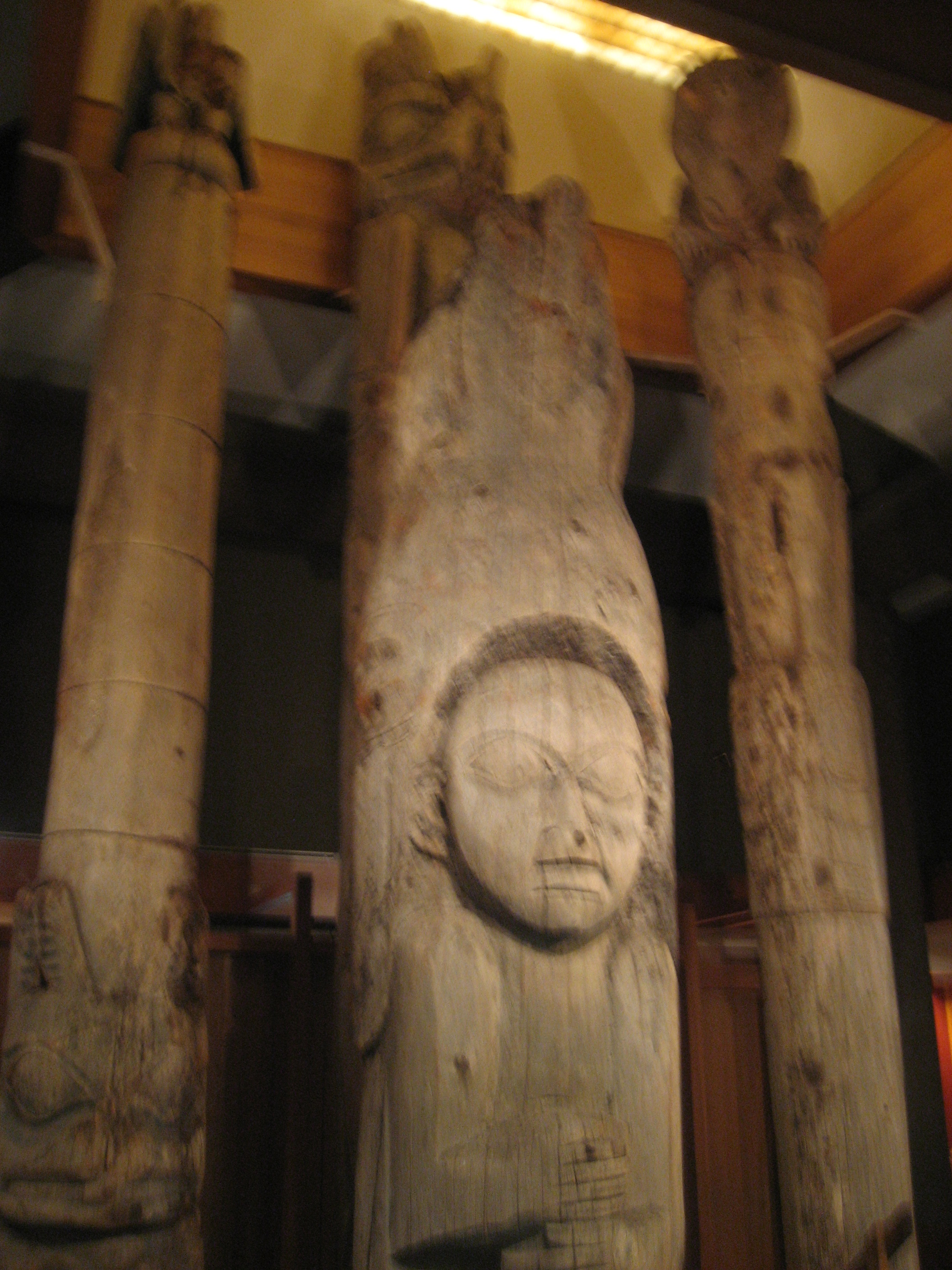
As you might have guessed by now, totem poles come in all heights and tell various stories, depending on the clanship of the carver(s).  Below, is one of the original Tlingit totem poles in the Ketchikan area.

721

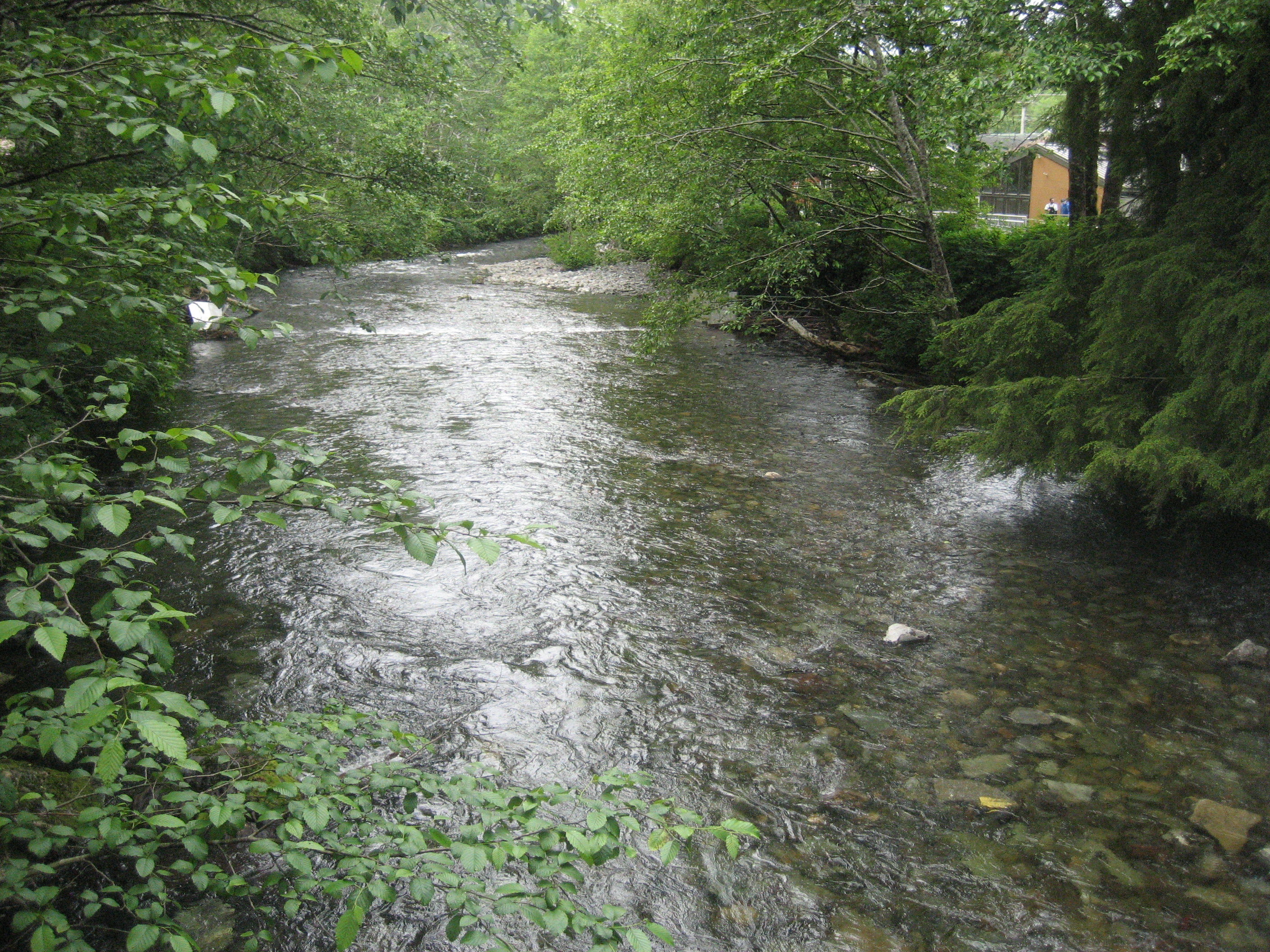
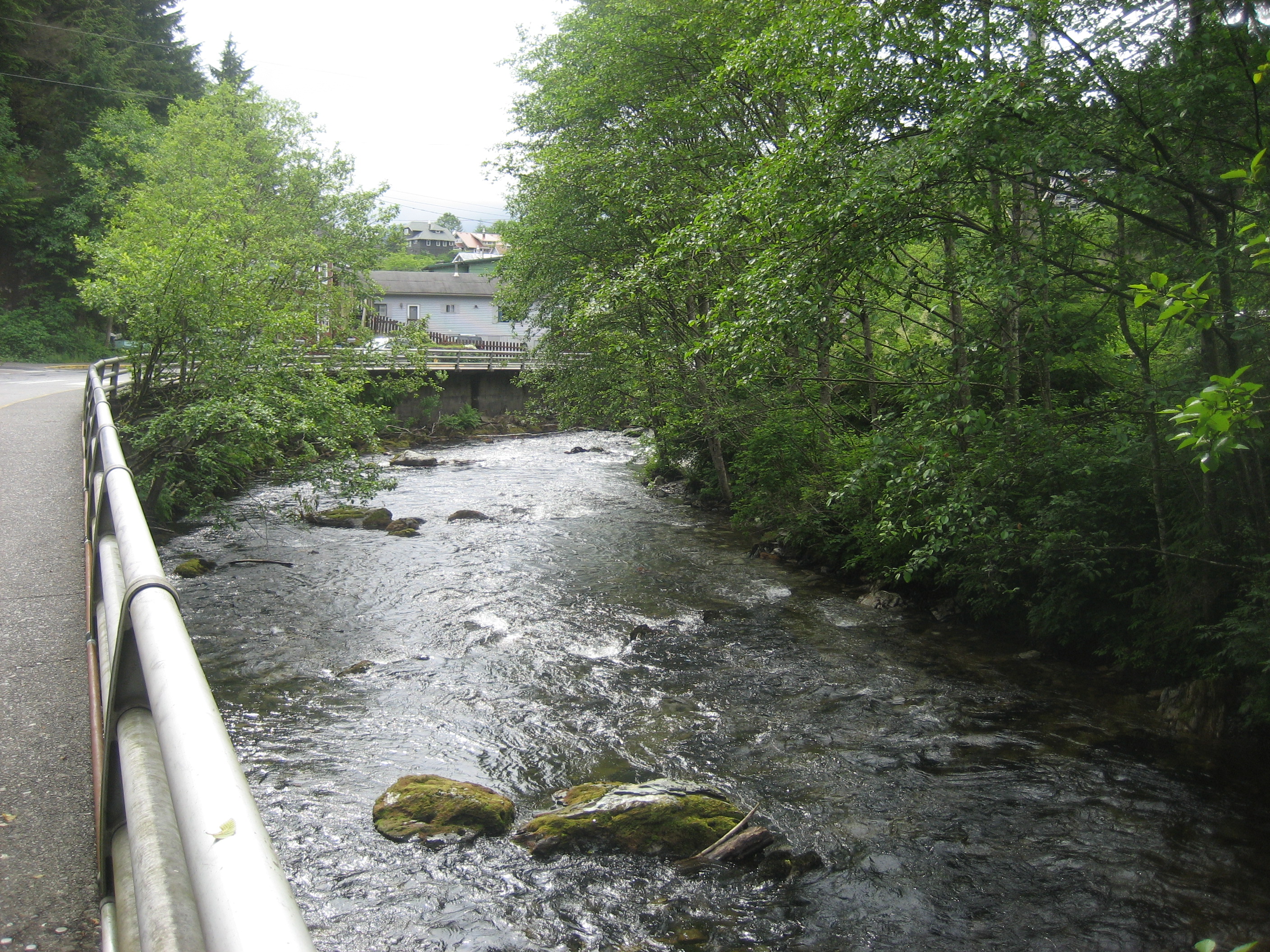
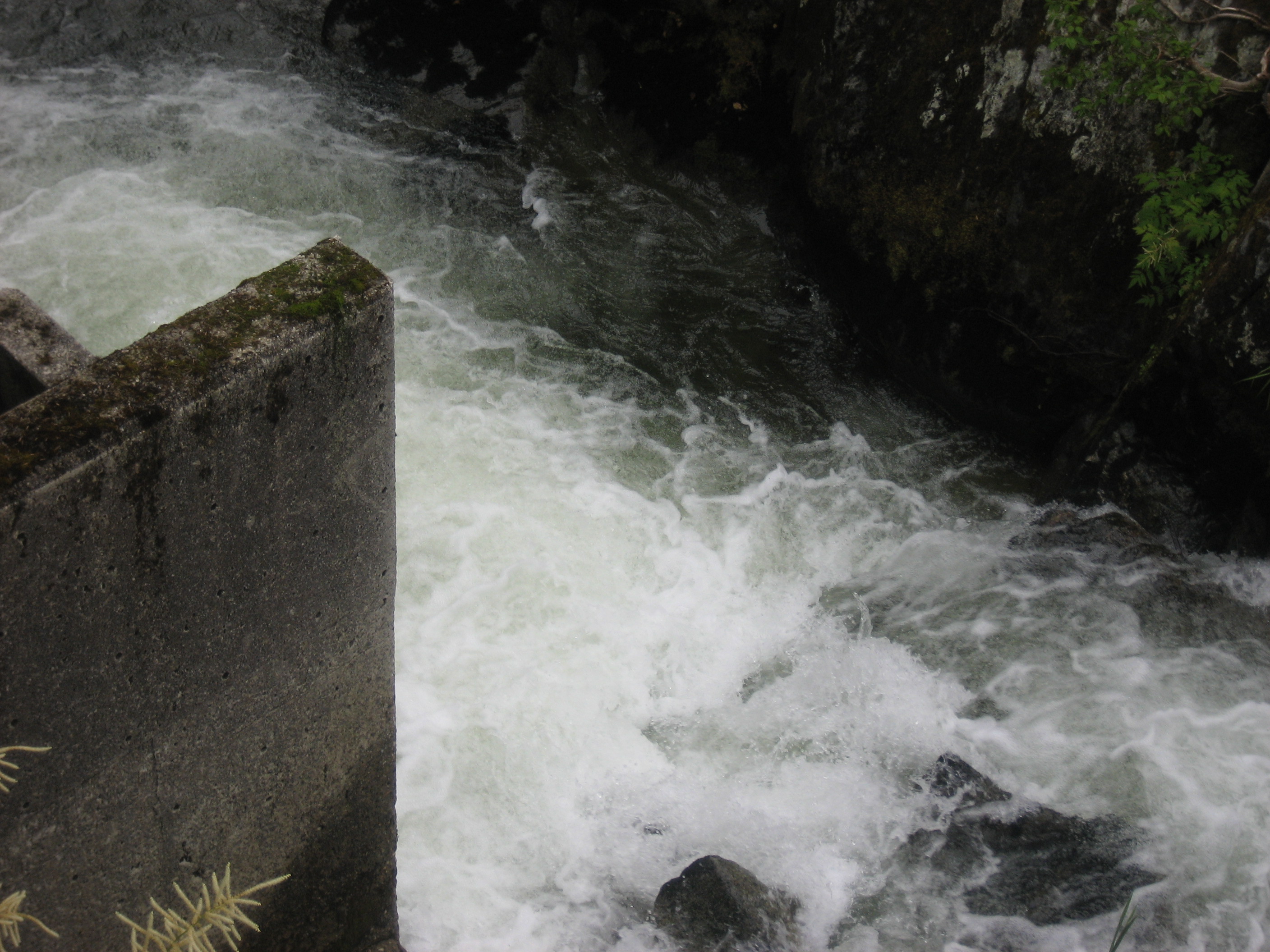
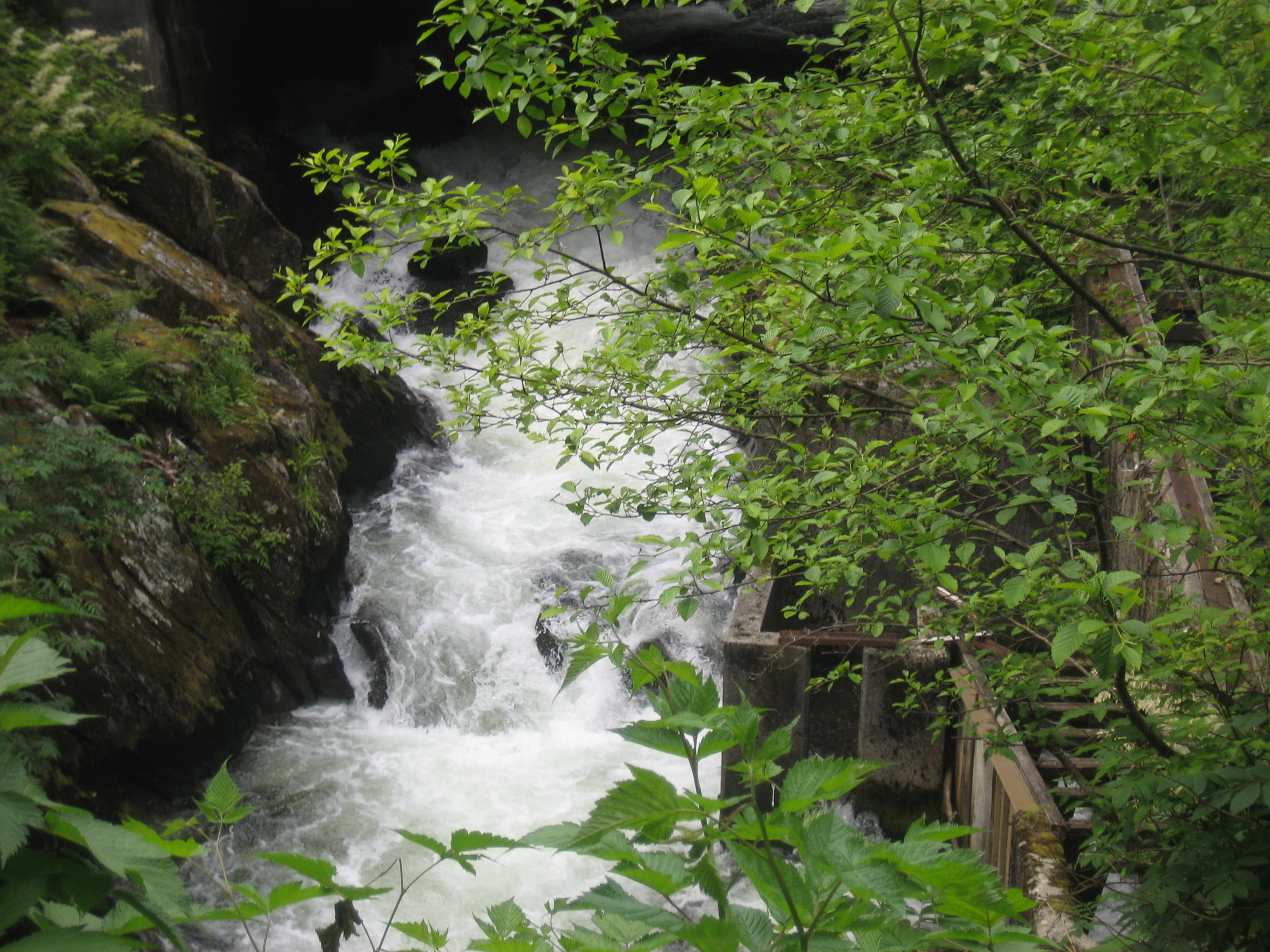
I followed Ketchikan Creek, from City Park, where it helps with a series of salmon ladders, to its confluence with the sea, near downtown.

719

730

The thin soil and the water action leave trees to fend for themselves, root-wise.

736

The Creek is variously calm and rambunctious, like all Alaskan waterways.

739

741

Married Man’s Trail takes commitment.744

746

742

African-Americans have had a key role to play in Alaskan life, since 1867.  Miss Annie was a fighter for women’s rights, before suffrage.

753

I met my friend, Ms. Chapman, downtown and went to a brief meeting at the Recreation Center.  While she was tending to other business afterward, I went over to Annabelle’s for fine Alaskan cuisine.

761

This tunnel goes under a rail link, and takes traffic from downtown to the ferry terminal.

763

I took these stairs to get to the hostel, where I again met Ms. Chapman.

764

From there, we went over to the evening meeting, which she and her daughter hosted.  This is a view from her neighbourhood.

768

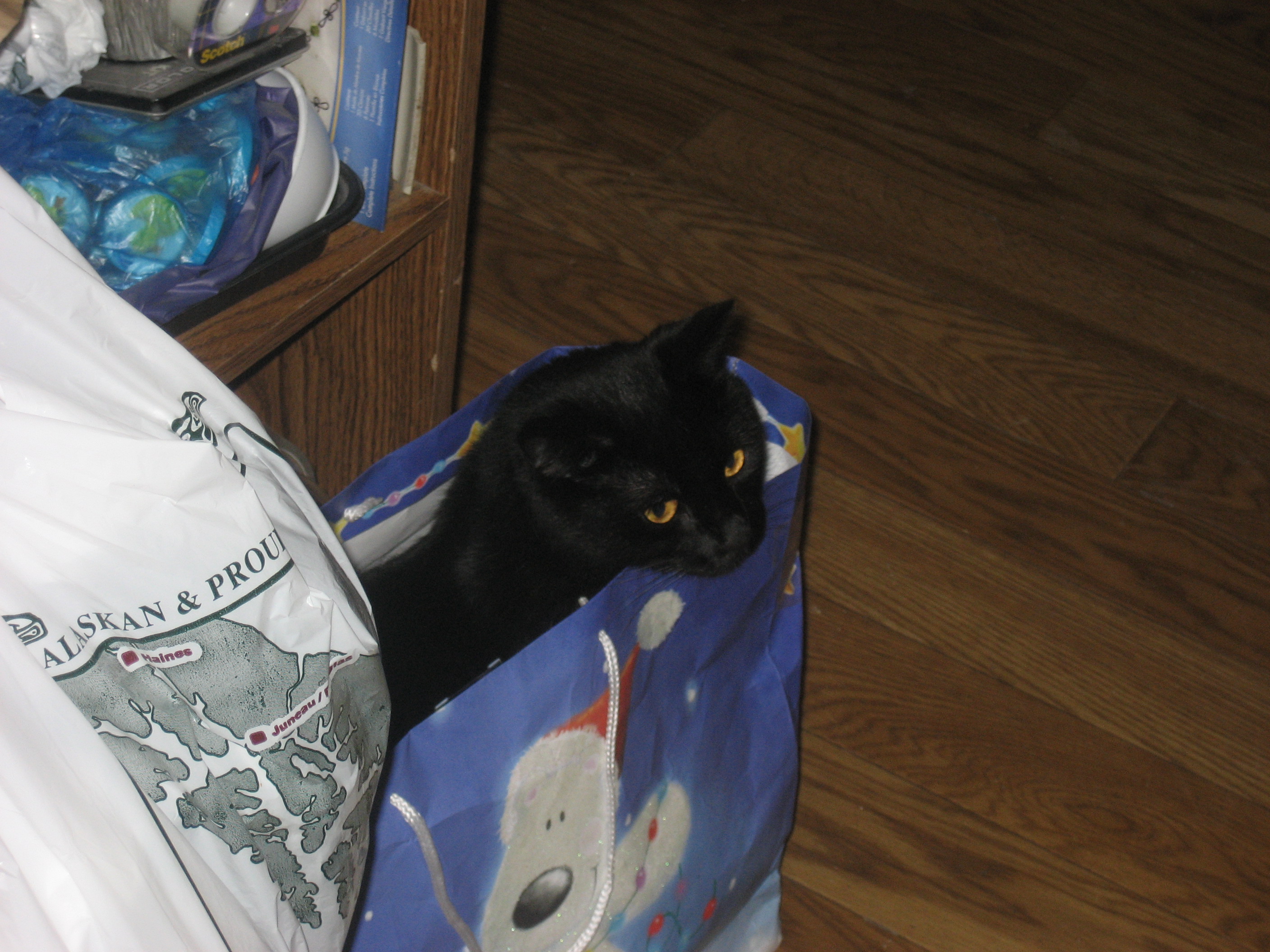
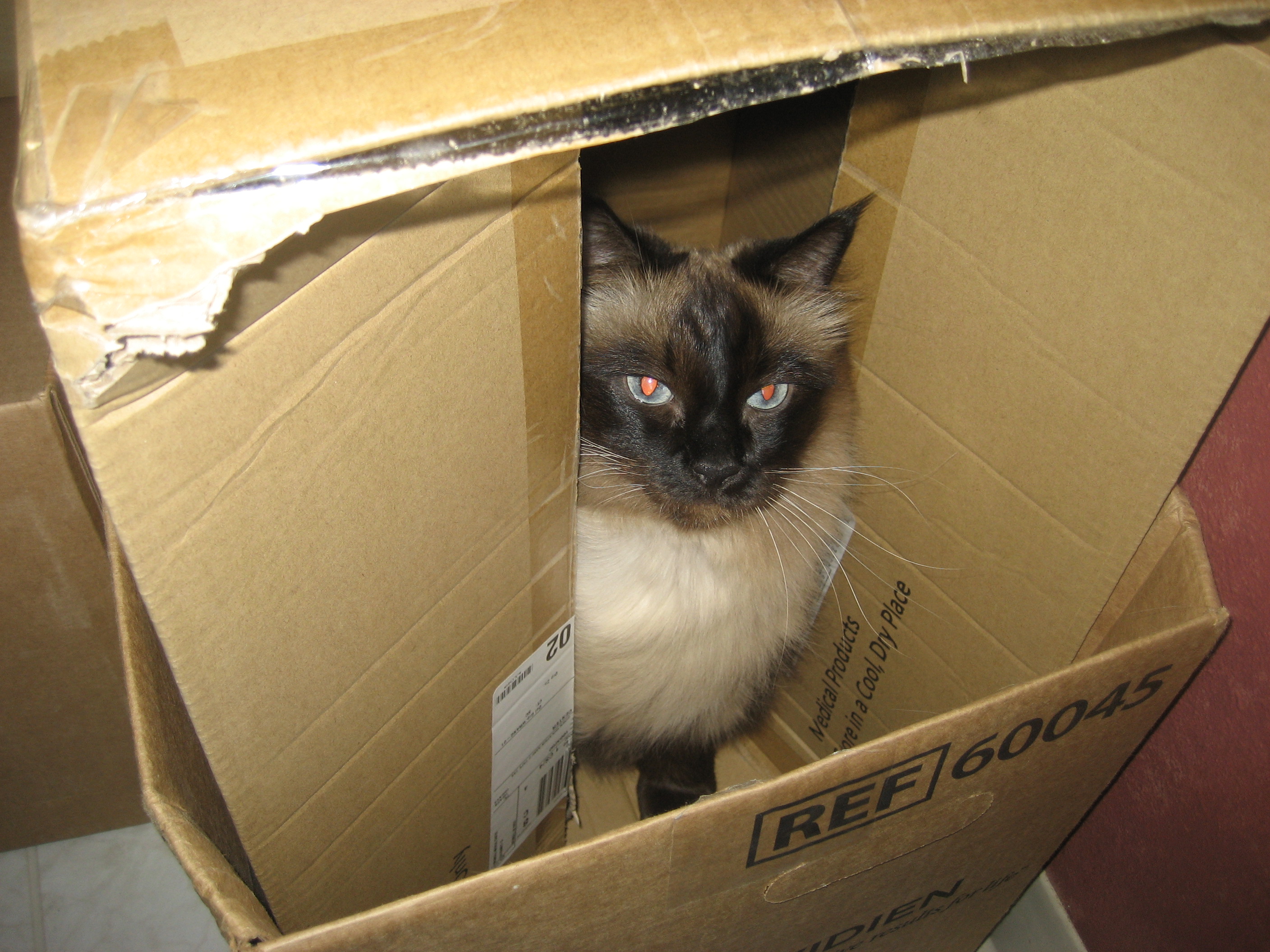
this is a cat’s eye view of the world.

769

My hosts were gracious, in the Alaska tradition.

770

So, my first of two days in Ketchikan was certainly very full.  So, too, would be the second day.

The Road to 65, Mile 199: Southeast IS Northwest, Day 8- Under The Eagles’ Gaze

9

June 15, 2015, Sitka-

 It’s said by the locals here, that eagles in Sitka are like pigeons elsewhere, and that black bears are like rats.  I didn’t see any bears, anywhere in southeast Alaska, but there were eagles aplenty, thought they took exception to photography, most of the time.

656

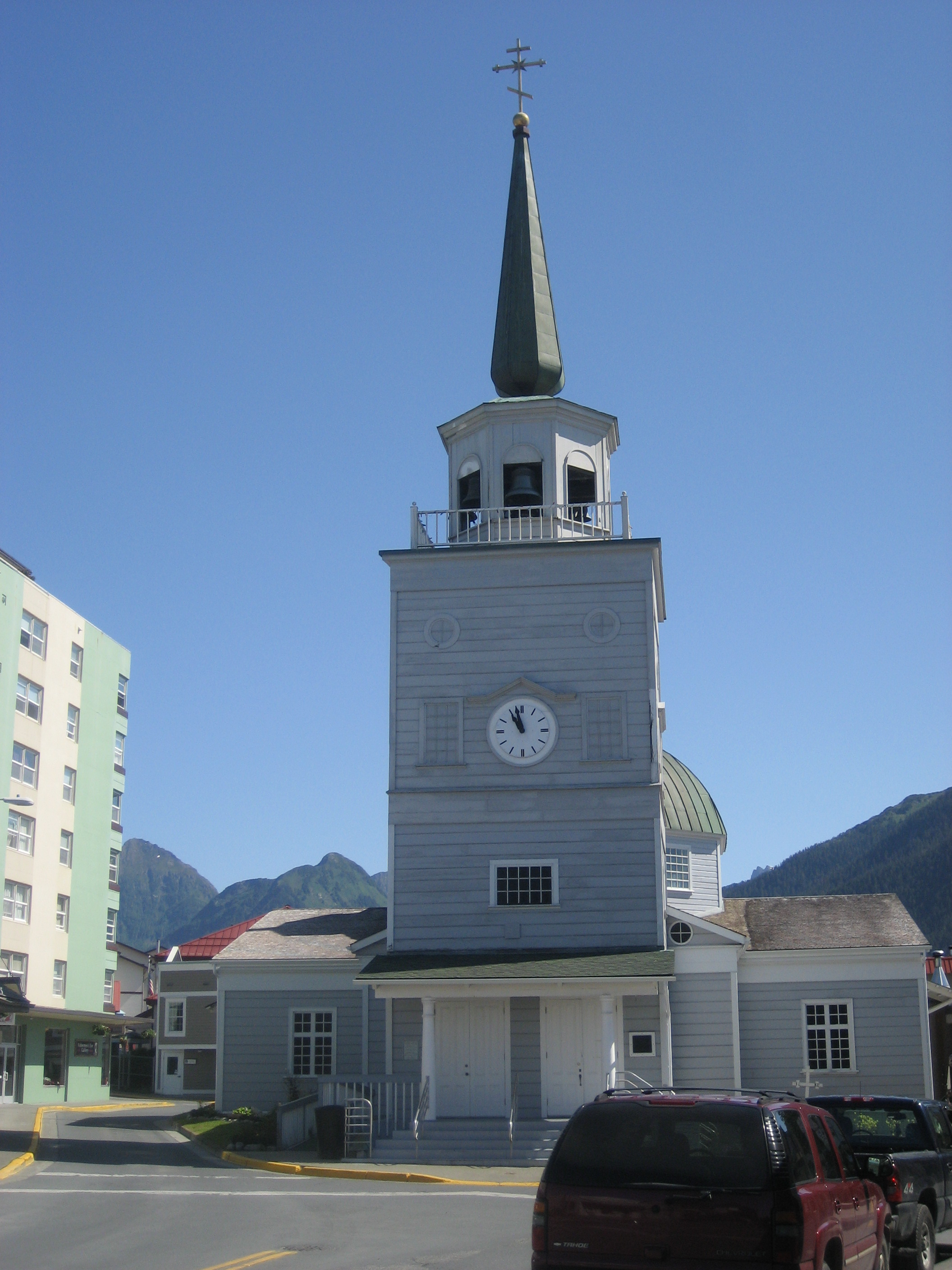
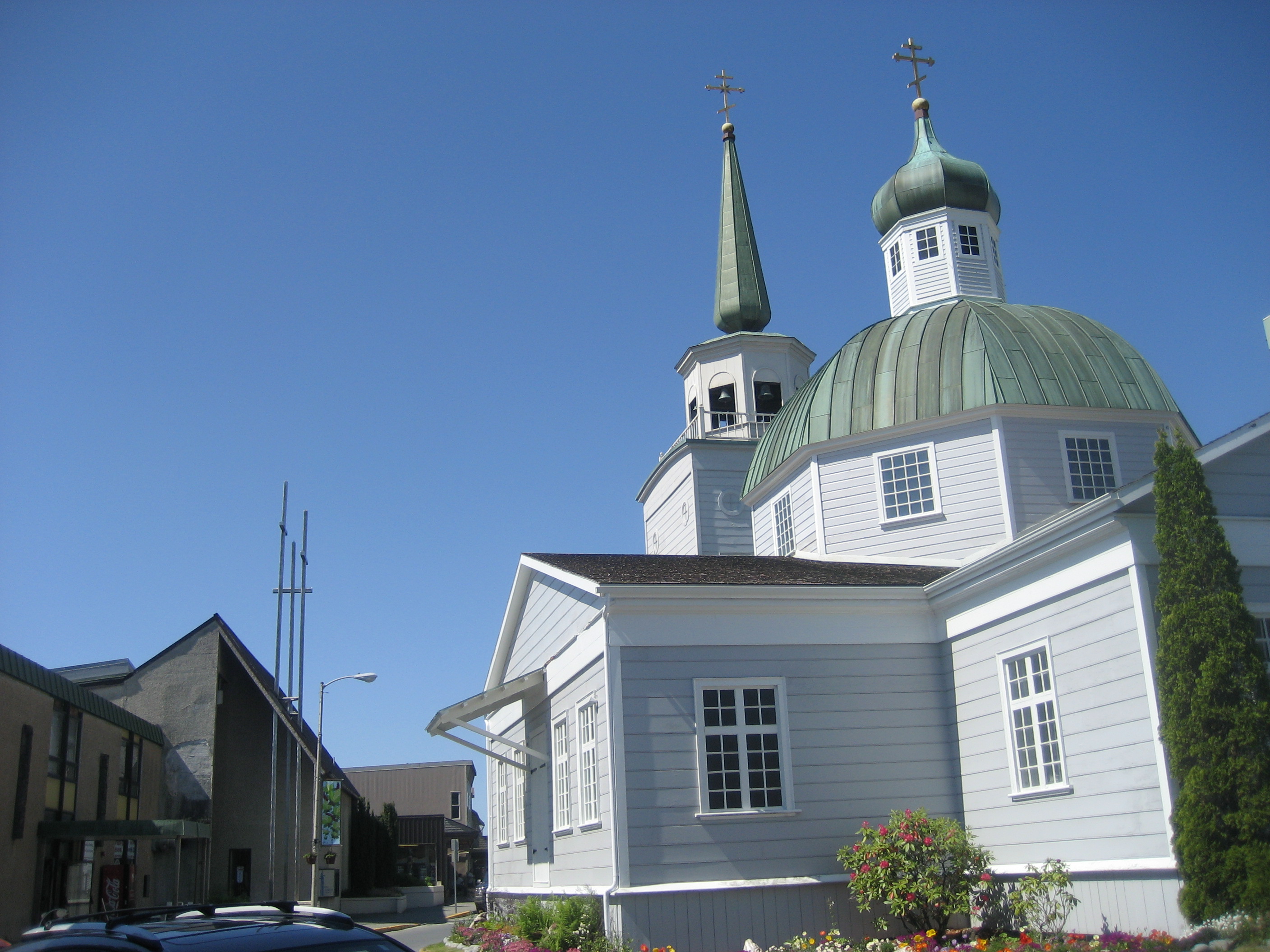
There have been eagles perched on the steeple of the Lutheran Church, and atop the adjacent St. Michael’s Eastern Orthodox Cathedral.

499

The Lutheran Church was built to accommodate Finnish shipwrights, who were brought to Sitka, both to build and repair ships, and to build the Russian Bishop’s House.  The house was the residence of the man now known as St. Innocent.  The church was placed across the street from the Orthodox Church, mostly so that the bishop could keep an eye on the Finns.

Both churches burned to the ground, in 1966.  Both have, of course, been rebuilt, and both are still active institutions in Sitka life.

523

The Lutheran Church is austere, though it has a fine old organ.

503

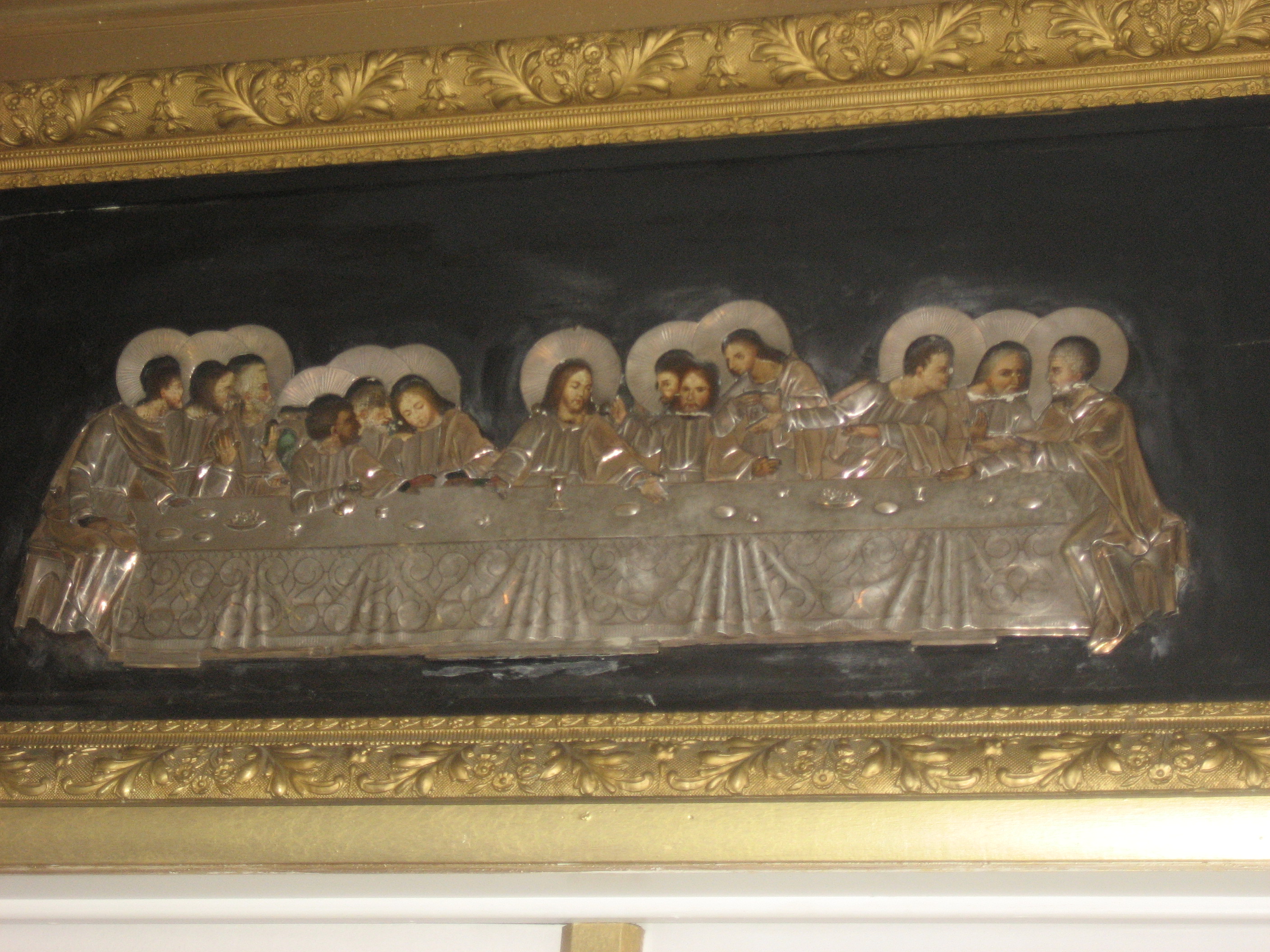
The Orthodox Church is replete with the gold, for which that denomination is well-known.

514

After looking at the interiors of the churches, I went to investigate the central waterfront.  A local boy was quite impressed with the work of a Haida canoe builder.  He was busy telling some other unruly kids to stay out of the canoe.

537

The Russian Bishop’s House is the centerpiece of Sitka National Historic Site.

560

I took a guided tour of the upstairs.  The docent explained that the home was built by Finnish shipwrights.  Their methods are obvious here, even today.

561

The Southeast Alaska Marine Center keeps close watch on sea stars, and other key creatures, as well as maintaining active fish-spawning ladders, primarily for salmon.  Volunteers, including our hostel manager, Katherine, are checking the beaches, most days, for marine creature health.

611

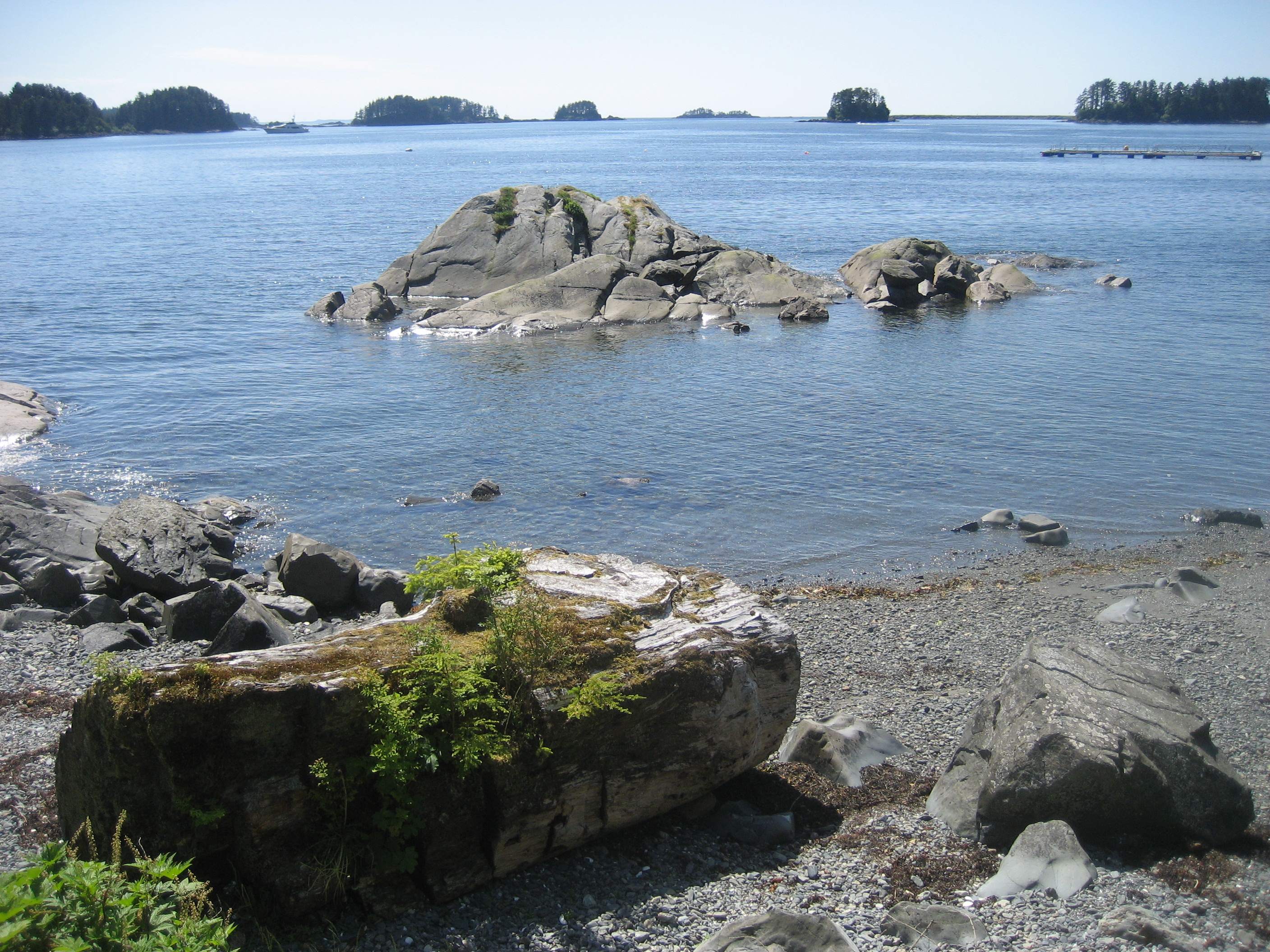
616This is Whale Park, to which our friend, Mary, took us, as part of her guided visit to the north and south ends of the island.

653

I visited the Totem Pole Trail on my own, prior to Mary’s guiding my new friend, A.,, and me.

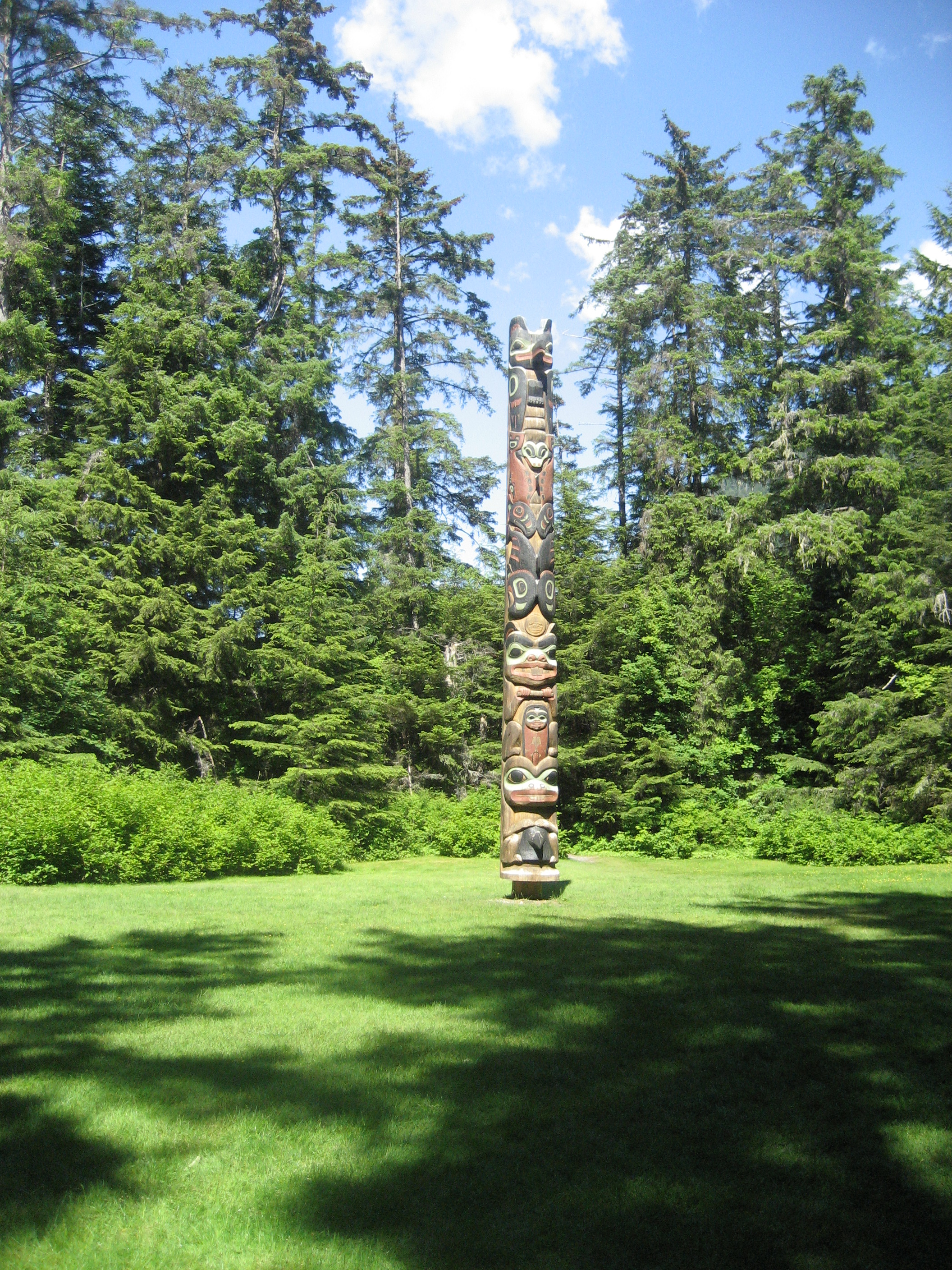
Every town in the Pacific Northwest has totem pole displays.

622

For the most part, the totem poles on display are replicas.  Those in the wire cage below, are originals.  All on this site, and elsewhere, are sacred to the Tlingit, Tsimshian and Haida people, throughout the southeast islands and peninsulas.

626

This pole marks the site of the Battle of Sitka, in 1704, in which the Russians defeated an army of Tlingits.  To this day, Tlingits look upon Russians with grave suspicion.

643

A. and I were photographed separately, at the south end signpost.658

The north end of the island has an artesian well, from which many locals obtain their drinking water.

666

Our last stop in Sitka, that evening, was the Baranof Totem Pole,  on Castle Hill,so built for Count Baranof, one of the last Russian governors of the territory.

672

I ended my time in Sitka, early the next morning, flying out to Ketchikan, on which I began Mile 200.

The Road to 65, Mile 195: Southeast IS Northwest, Day Four- Juneau

10

June 11, 2015, Juneau- There is no such thing as a wasted day, unless one revels in wastefulness.  Rain fell, constantly, during my first full day in the Alaskan capital.  One must take what is, however, and so I first headed over to the nearest coffee house:  Heritage Coffee, in the heart of downtown.  I had about 1 1/2 hours of wi fi, for the price of coffee and a scone, before whoever runs the wifi pulled the plug, and I moved on.

IMG_0964

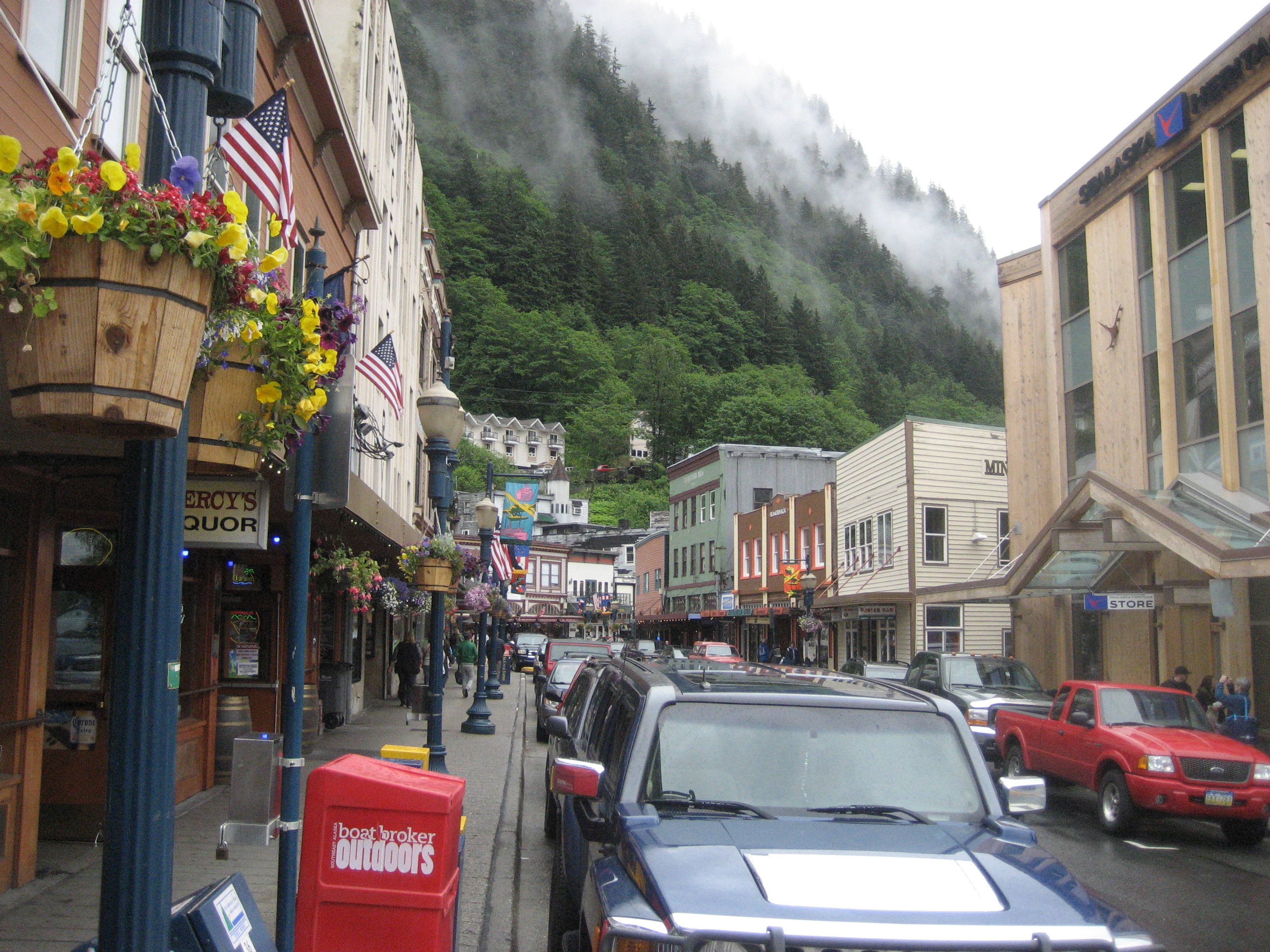
Thus, I took in the fullness of downtown Juneau, and gradually moved uphill.

IMG_0967

St. Nicholas Orthodox Church became a refuge for the Tlingit people, in the 1880’s and ’90’s, when American Christian groups insisted they give up their language and customs.  The Russian Orthodox missionaries made no such demand.  Therefore, the community remains strong in Juneau.

The Cathedral of the Nativity of the Blessed Virgin Mary has thrived, since the Catholics learned from the success of their Orthodox neighbours.  In truth, the only way to really reach people, especially in spiritual matters, is through their hearts.IMG_0972

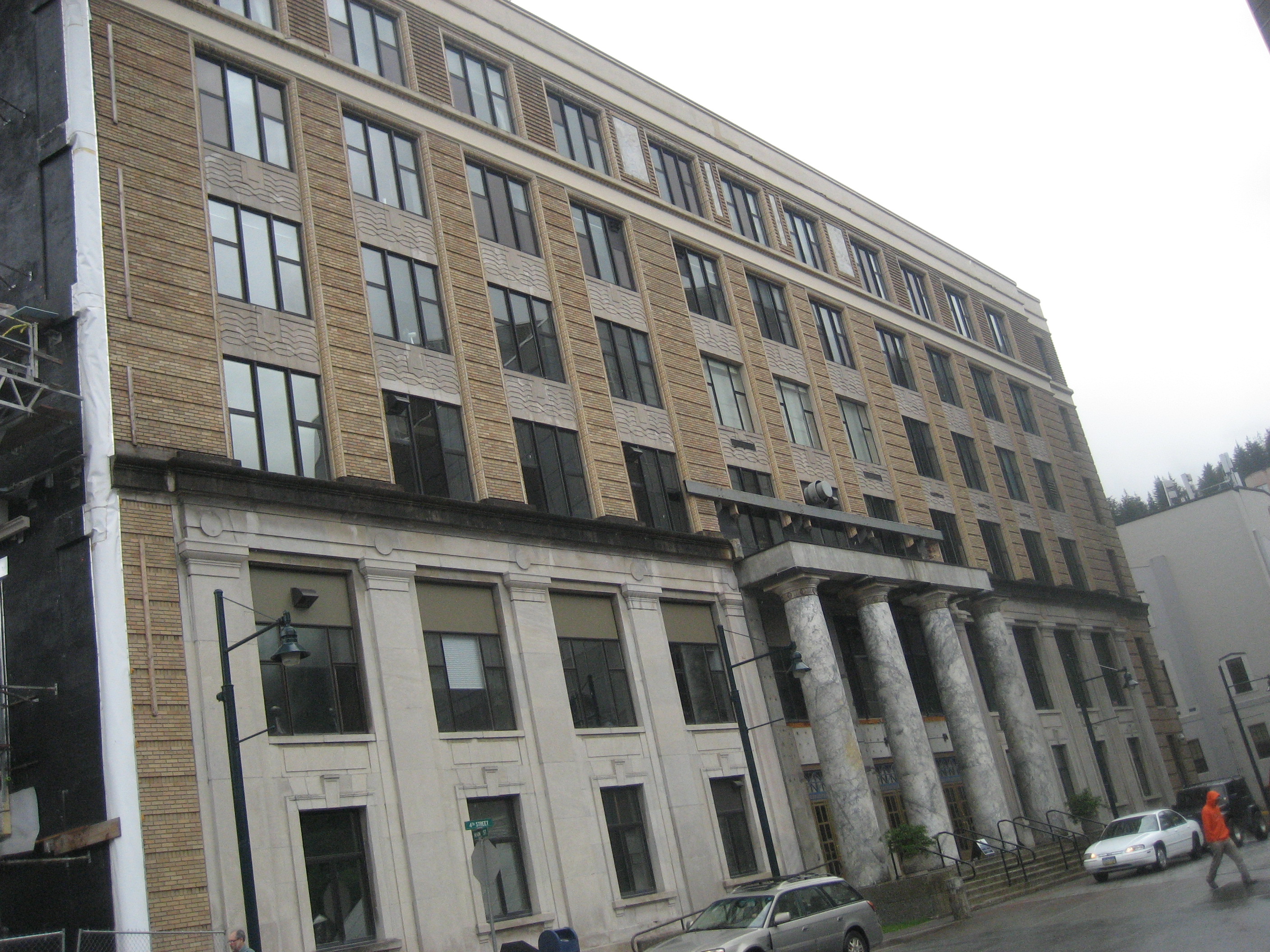
The Alaska State Capitol is under renovation now, so no one is allowed inside, as a visitor.  It is one of the most utilitarian, and unadorned of the state capitols, which suits me, and most Alaskans, just fine.

IMG_0973

All this going back and forth was leading me to check my watch, and, yes, it was lunch time.  So, off to Rainbow Foods, the local natural foods market, I went.  Some of my fellow hostelers were stunned, STUNNED, that I didn’t go to Fred Meyer or IGA.  As capable as the chain stores may be, local has more of the ambiance I seek.

IMG_0975

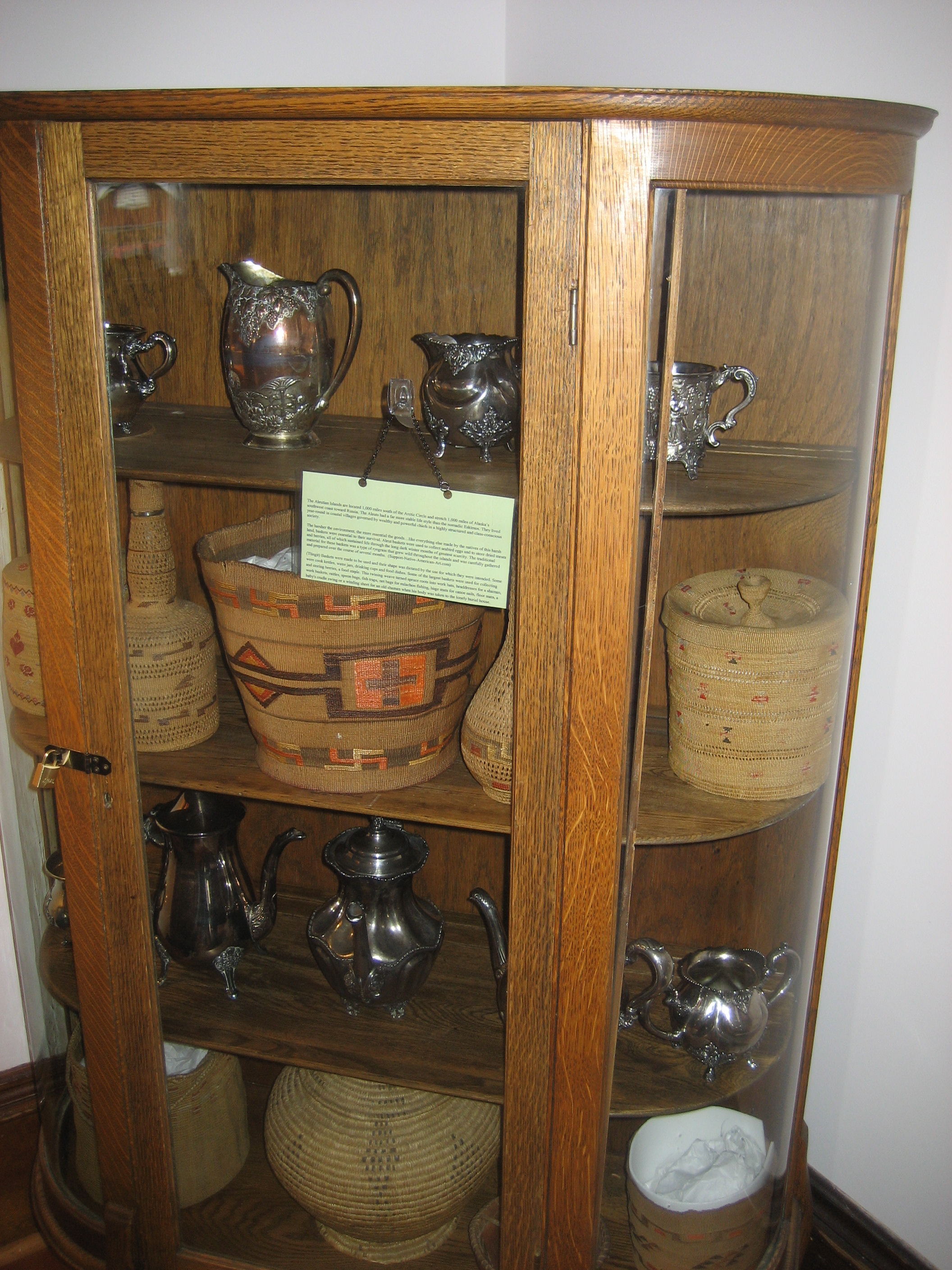
After the lunchtime interlude, I checked out Wickersham House, the early Twentieth Century home of a local judge, and his multi-talented second wife, who built strong, respectful relationships with the Tlingit and Haida people. The house is an Alaskan State Historic Site, and much of the judge’s native arts collection is preserved here.  Note the basketry, figurines and scrimshawed whale bone, below.

IMG_0985

IMG_0987

Next up, was a ninety-minute spiritual study with some local friends, then it was off to the heights above Juneau, with the hardiest of their number.

IMG_0991

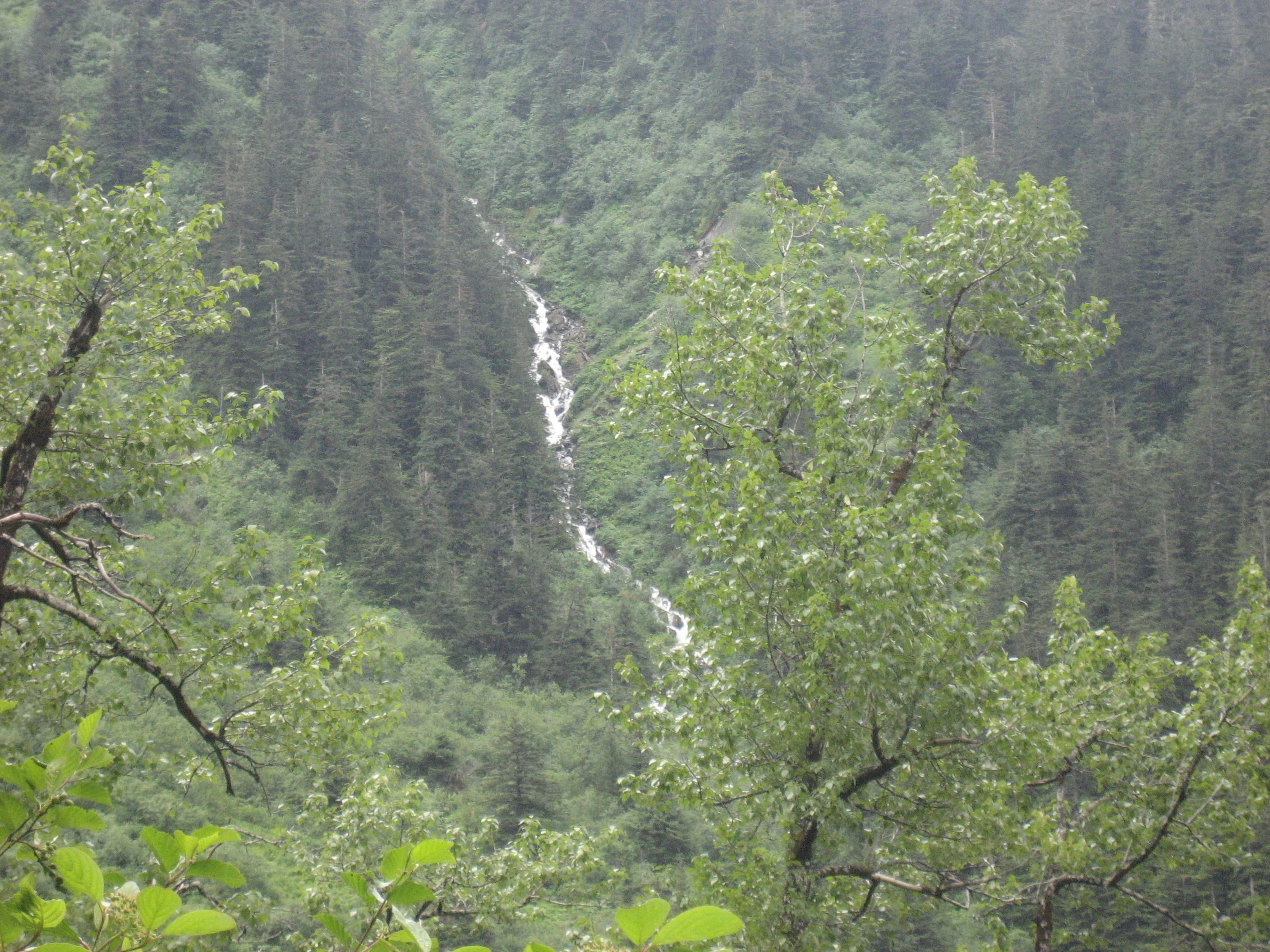
Our goal was Ebner Falls, which can be seen from a distance, below.

IMG_0993

IMG_0998

IMG_1002

IMG_1003

Above Ebner Falls, there rises Mount Juneau, accessible by a muddy path.

IMG_0999

The rain was our companion, all during this hike, but the falls are a greater attraction than the precipitation was a deterrent. I went with my friend, Dave P., to his boat, to prepare it for tomorrow’s expedition.  After pizza and salad, with Dave and his wife, my evening was occupied with  helping a young friend to heal herself, with the help of some essential oils.

The Road to 65, Mile 193: Southeast IS Northwest, Day Two in Wrangell

4

June 9, 2015, Wrangell- Baron Ferdinand’s little town has grown in my heart, already.  The little family with whom I have been staying is engaging and solicitous.  The community of Baha’i friends, likewise, has spared no warmth and consideration.  That there is amazing scenery around every corner in southeast Alaska doesn’t hurt, either.

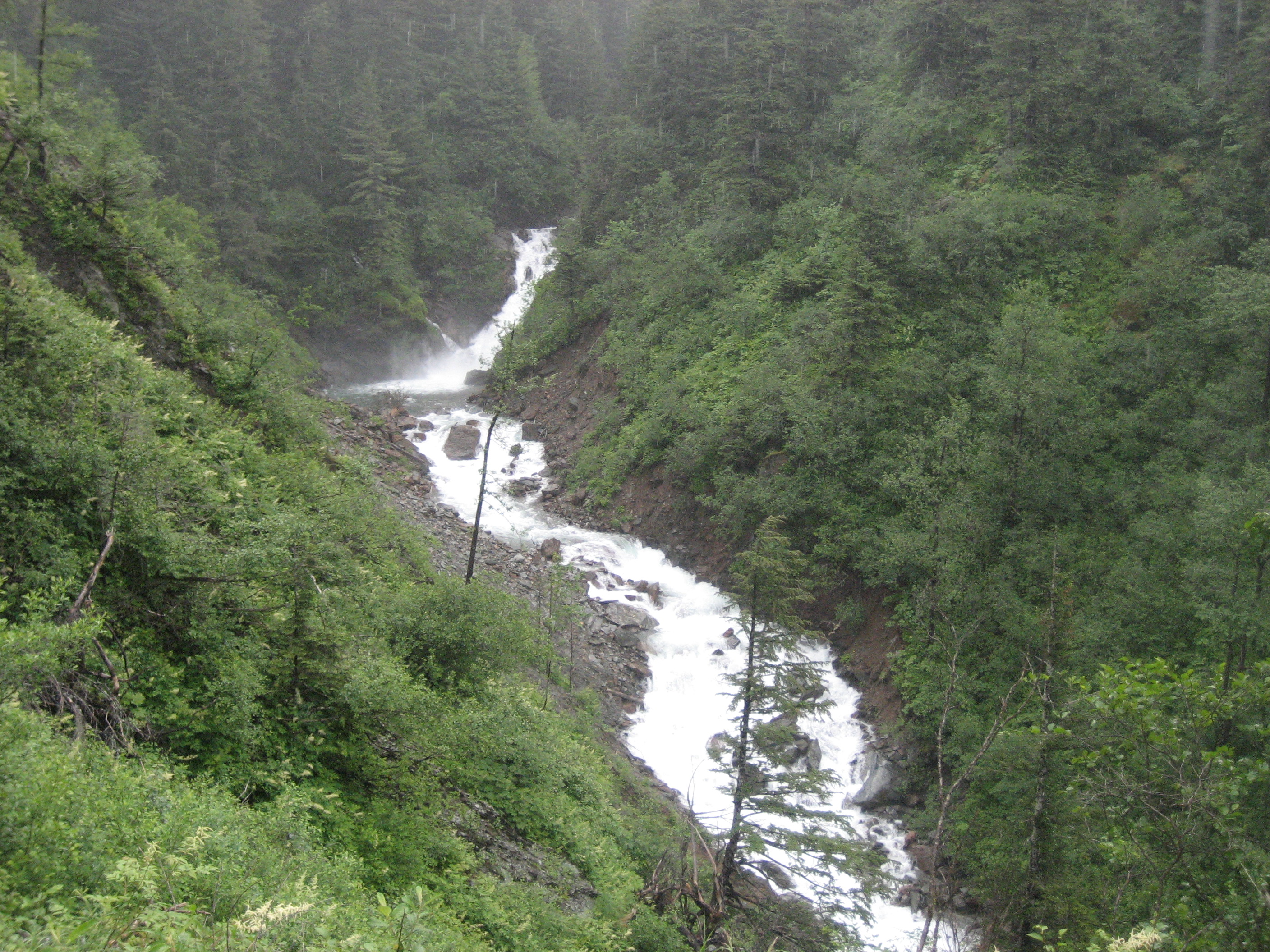
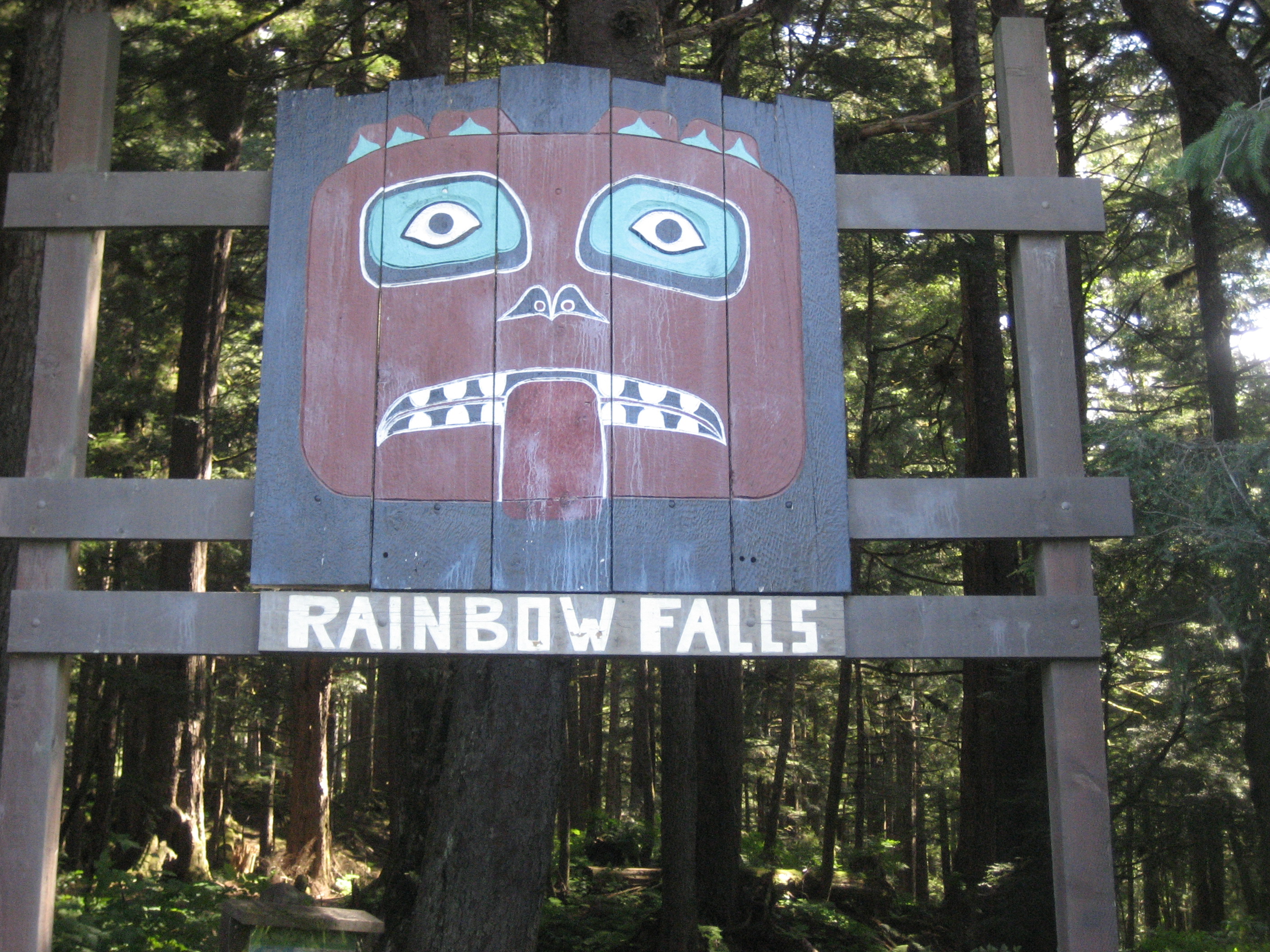
I spent the day alternating between hikes and community get-togethers.  The morning began with a walk up to Rainbow Falls, a delectable slice of Tongass National Forest,  four miles south of Wrangell.

IMG_0815

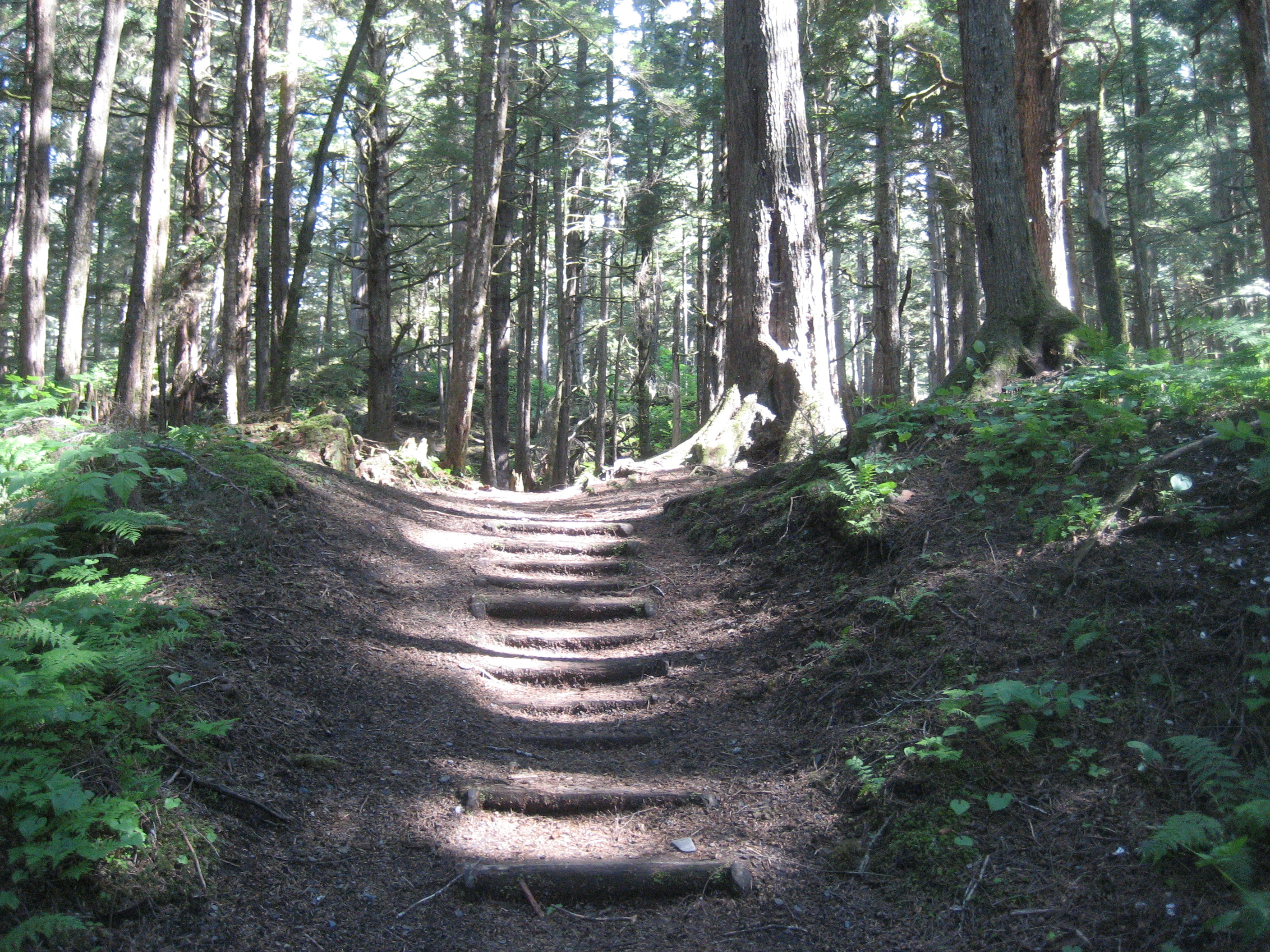
The trail is .6 miles long, and features about 200 steps, mostly on a planked trail.  Wrangell planks its trails, so as to avoid people having to hike in the mud.

IMG_0816

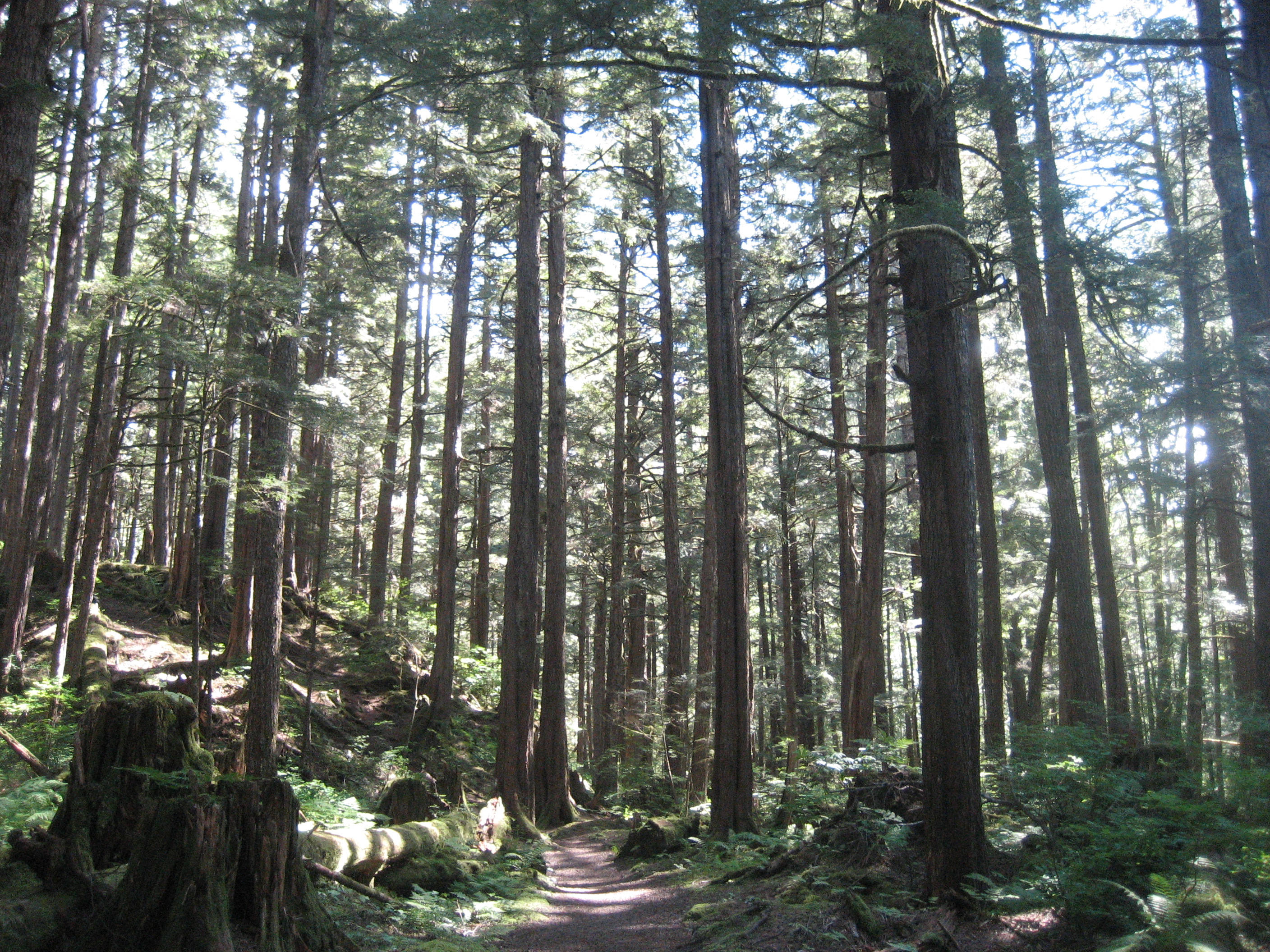
The Tongass is Alaska’s primary temperate canopied rain forest.

IMG_0817

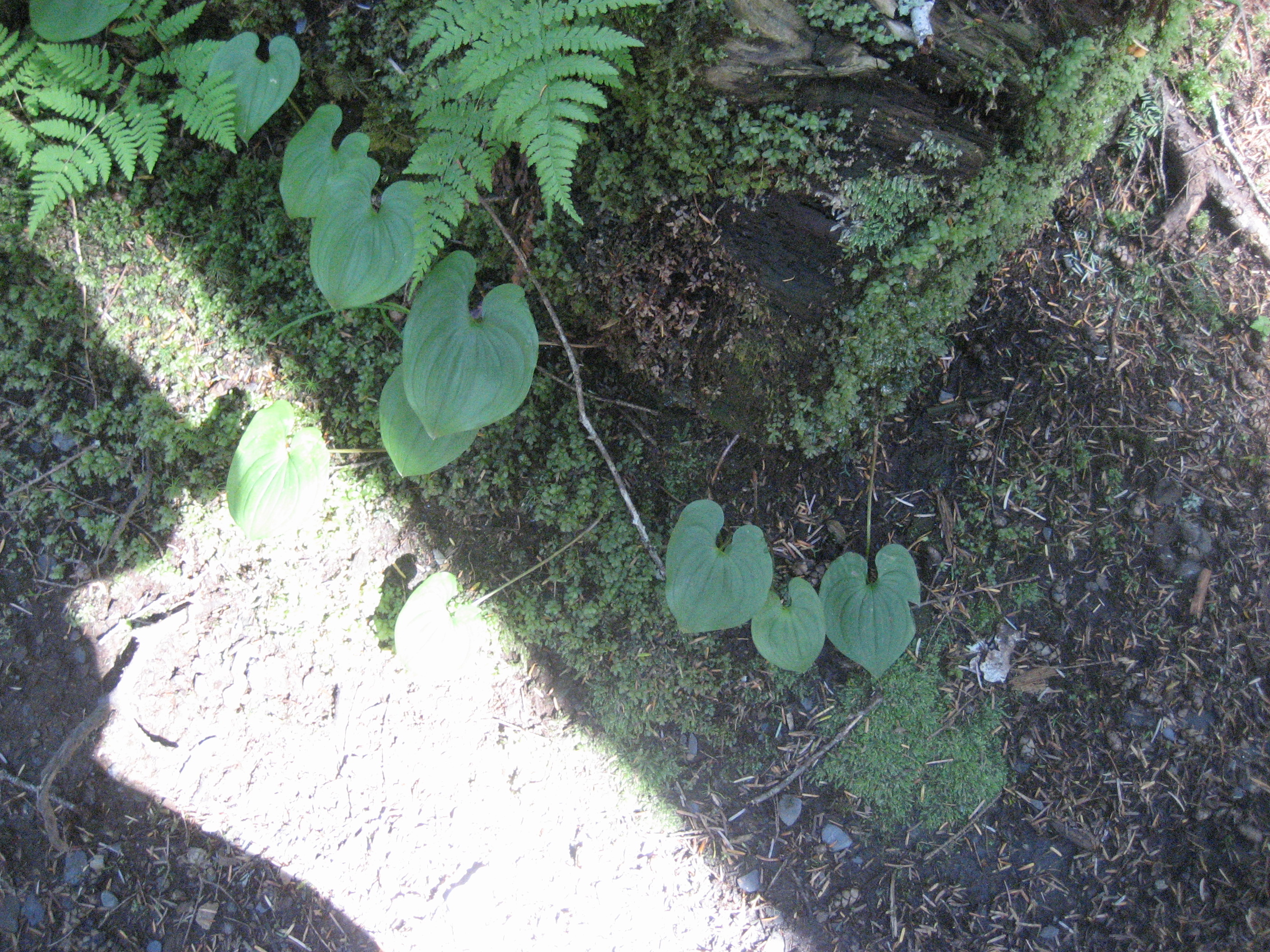
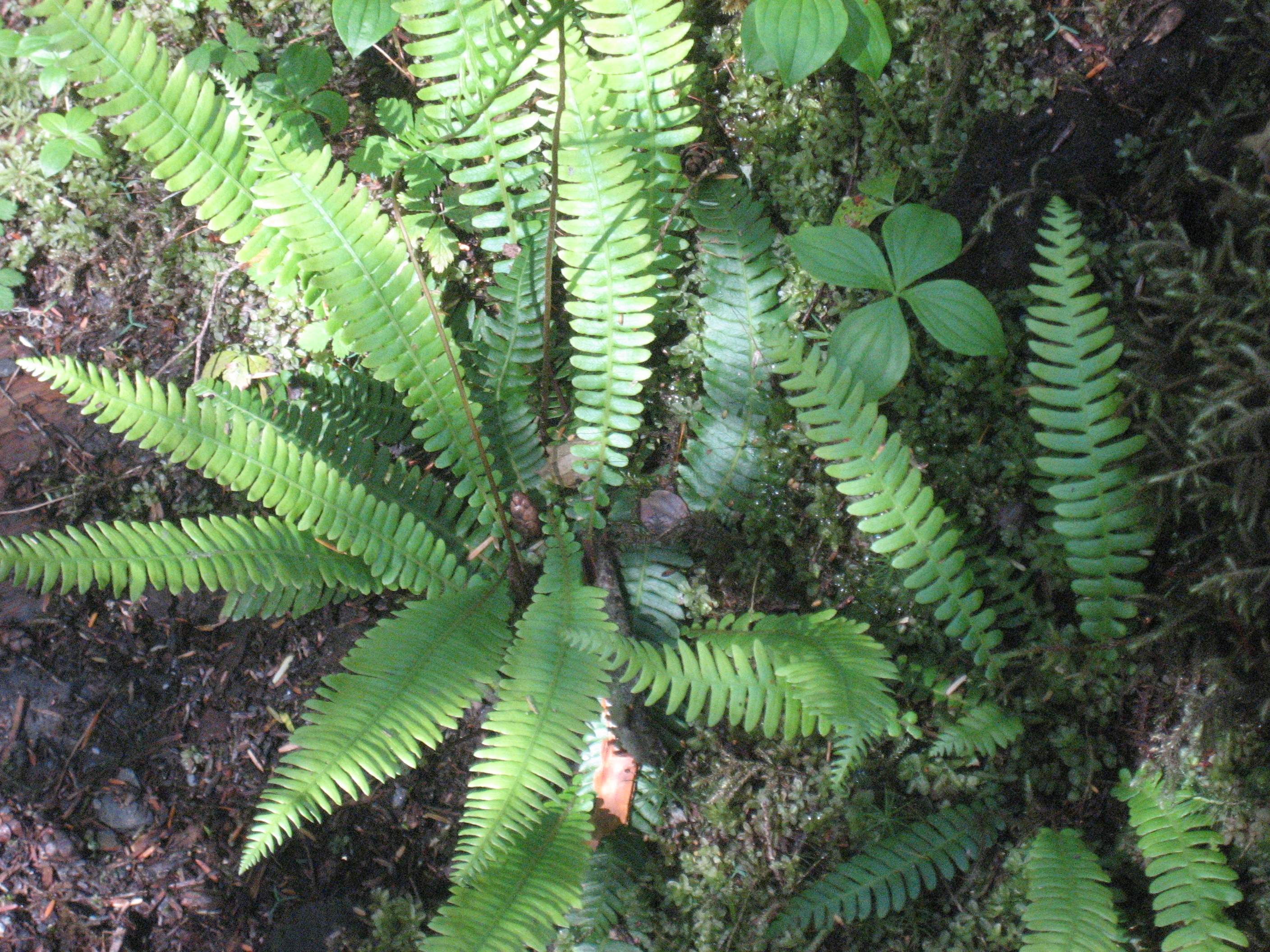
As with any canopied forest, the importance of the forest floor is huge.IMG_0819

IMG_0825

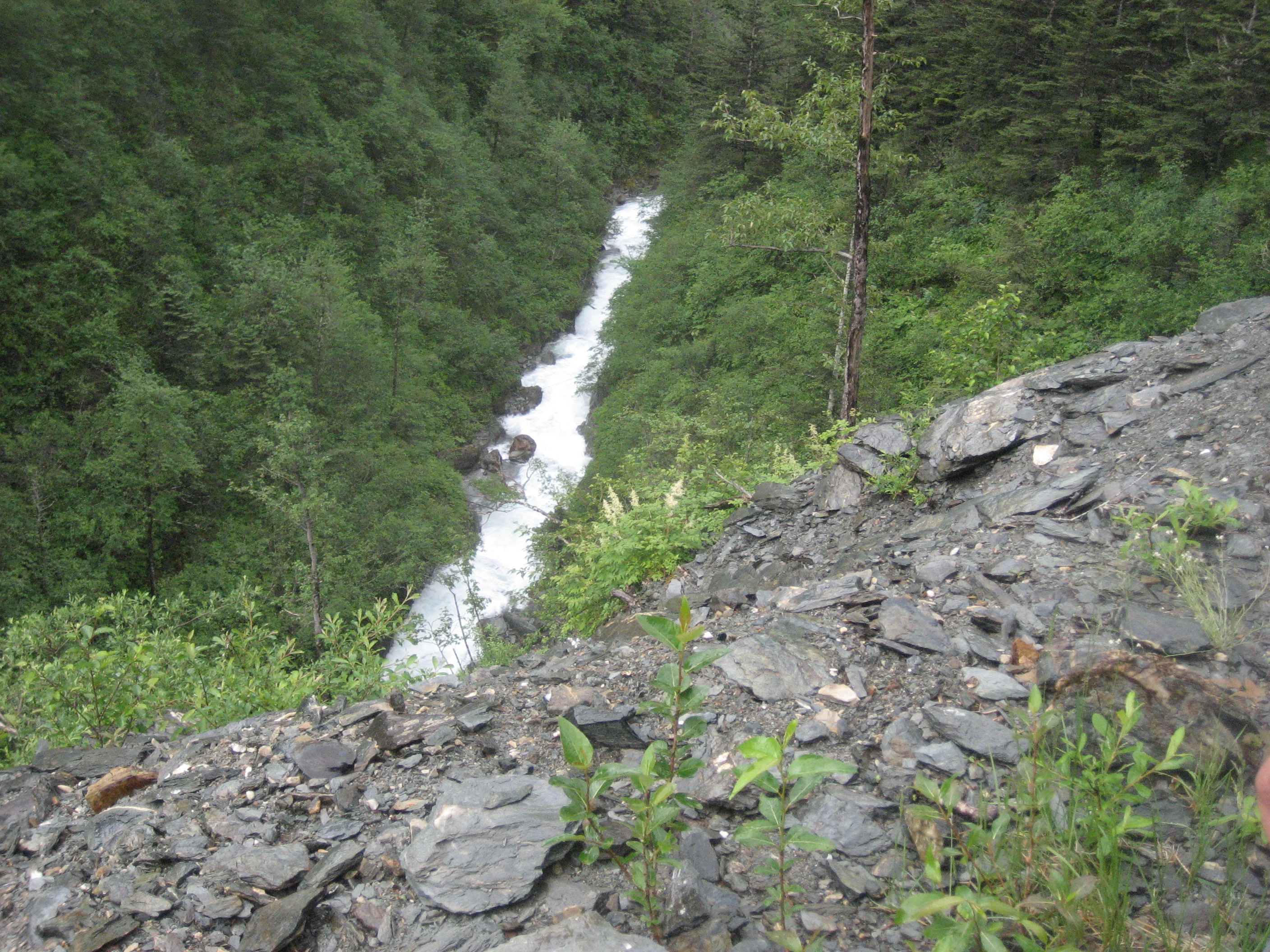
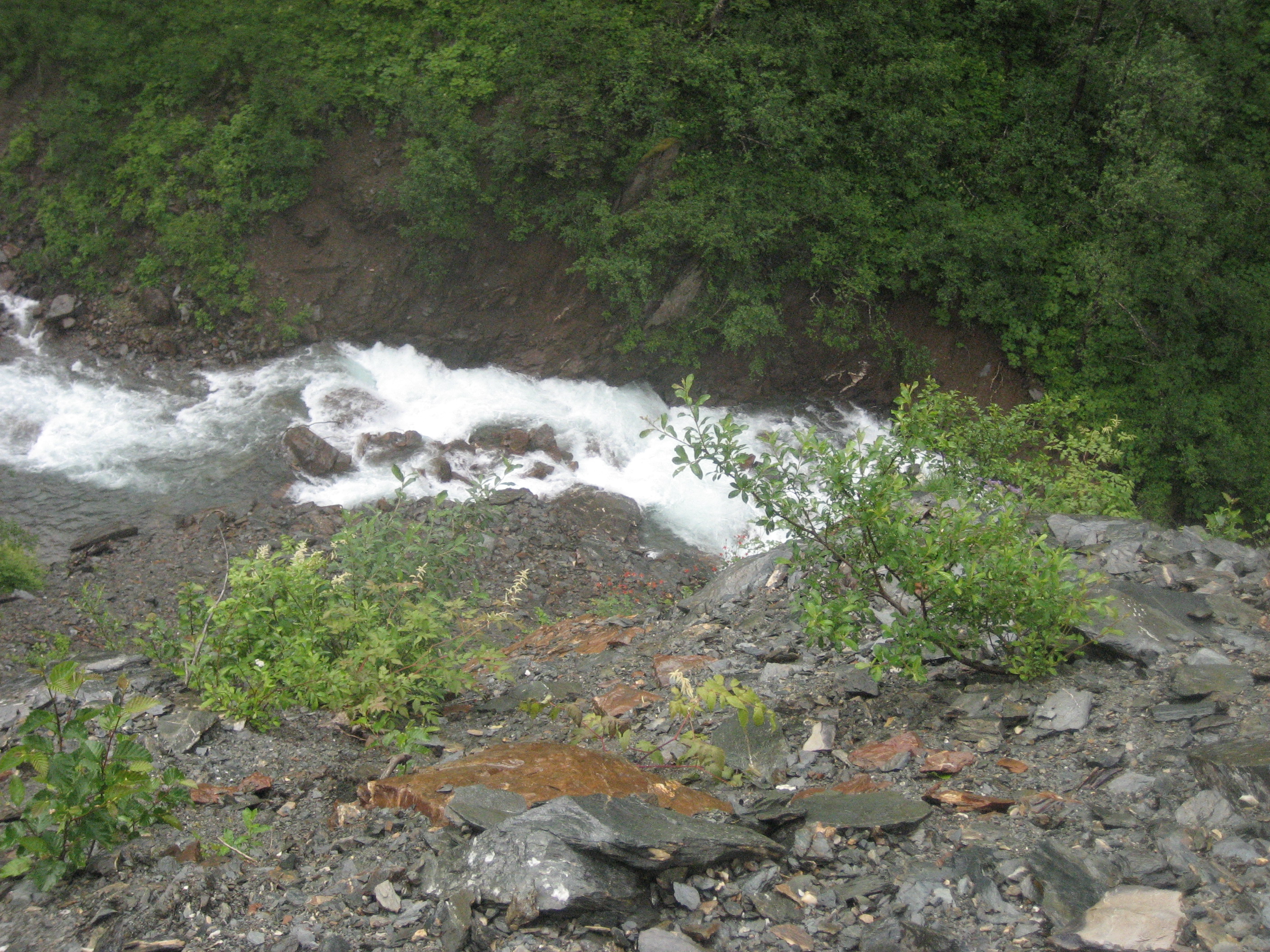
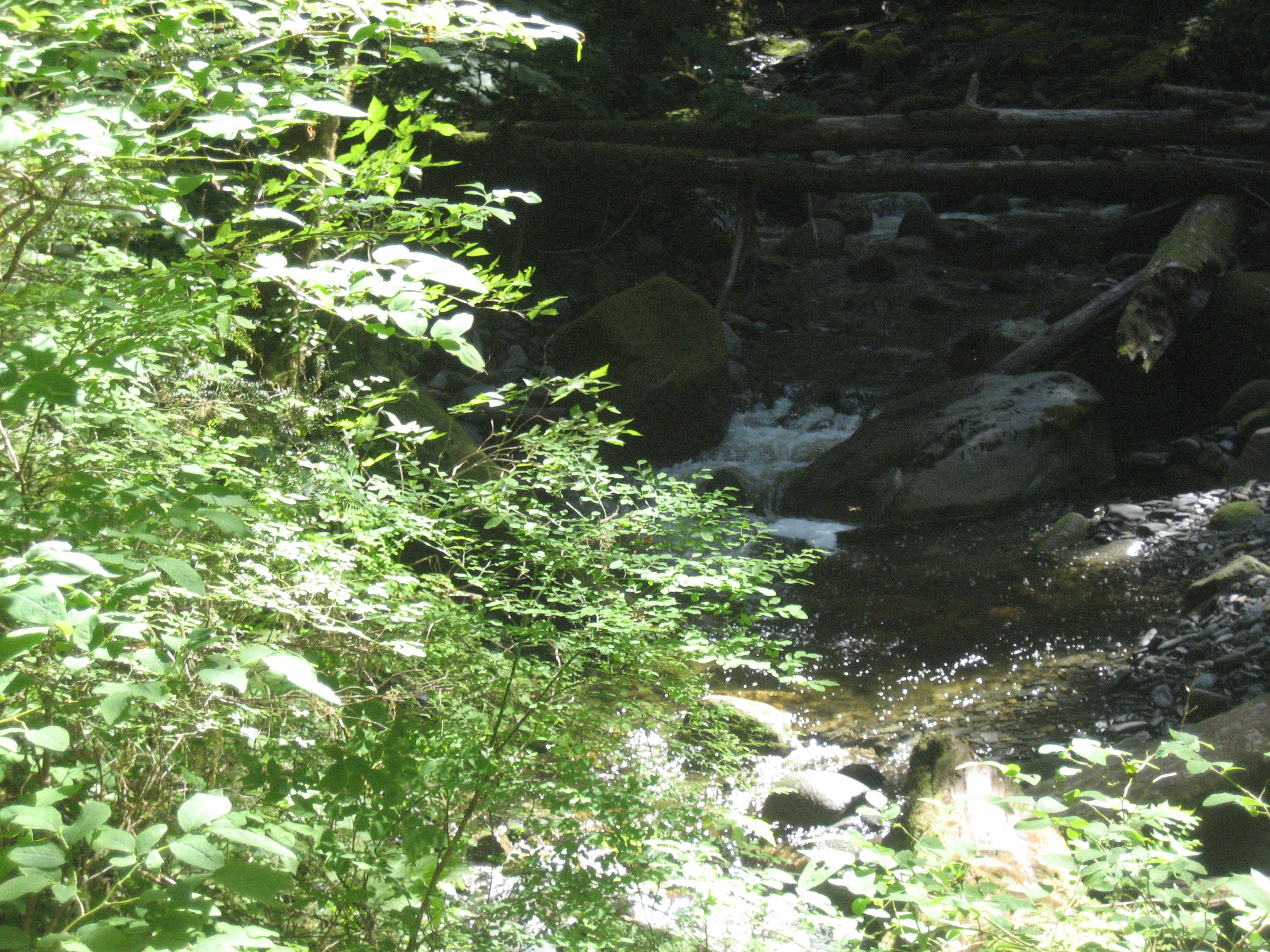
This is the first view of the creek that is fed by the Falls.IMG_0823

IMG_0830

The hanging moss resembles a squirrel tail.IMG_0831

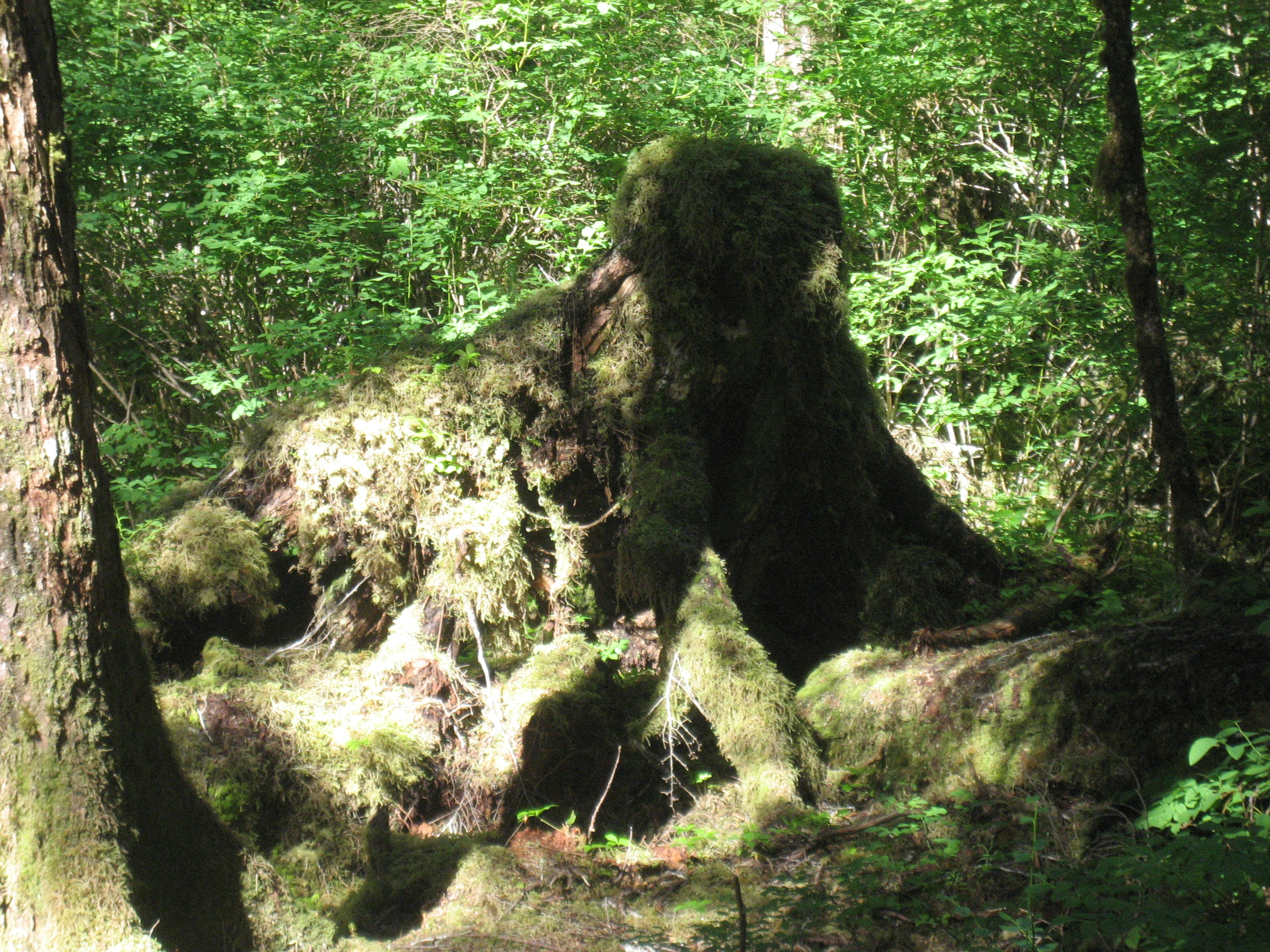
This moss-covered stump, on the other hand, resembles a woolly mammoth.IMG_0832

The first view of Rainbow Falls is the best.IMG_0837

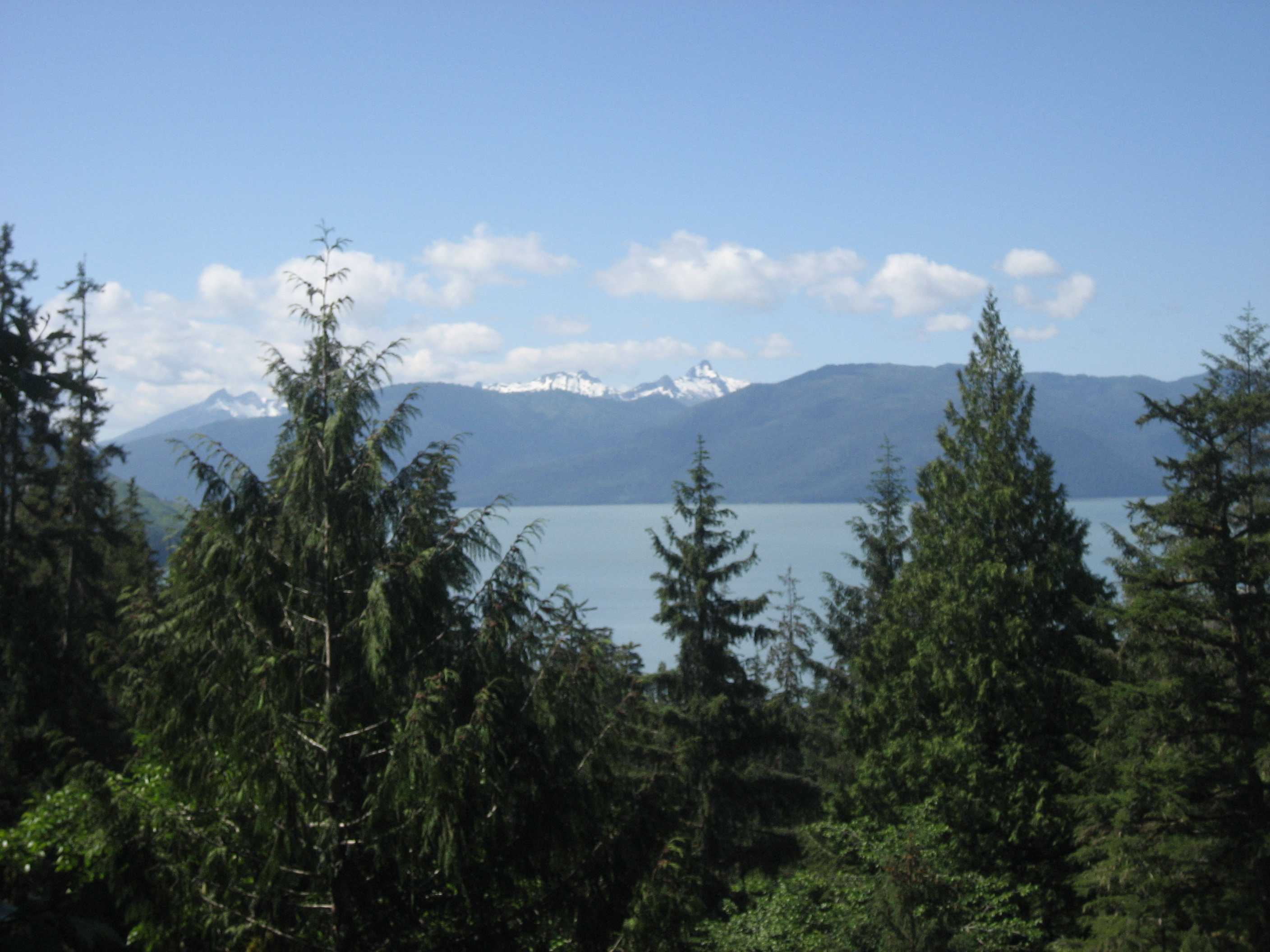
Looking westward, from the trail’s end, gives one another spectacular  view of Fool’s Inlet and Etolin Island, west of Wrangell.IMG_0838

After hiking down, I went downtown and purchased a freshly-made raspberry rhubarb pie, all the better to treat my host family, whilst helping another Baha’i family in its fundraiser for their daughter’s Homecoming Queen candidacy.  Of course, the proceeds would help her with higher education expenses, after high school, as well.  It looks like the pies, and their slices, were selling as fast as they were being delivered.

Following a brief after-lunch rest, I took in Wrangell’s Nolan Museum, devoted to island history, geology and artifacts.

IMG_0867

This is a Tlingit orca mask.

IMG_0849

I couldn’t decide whether this quartz crystal resembled a Sphinx, or Yoda.

IMG_0845

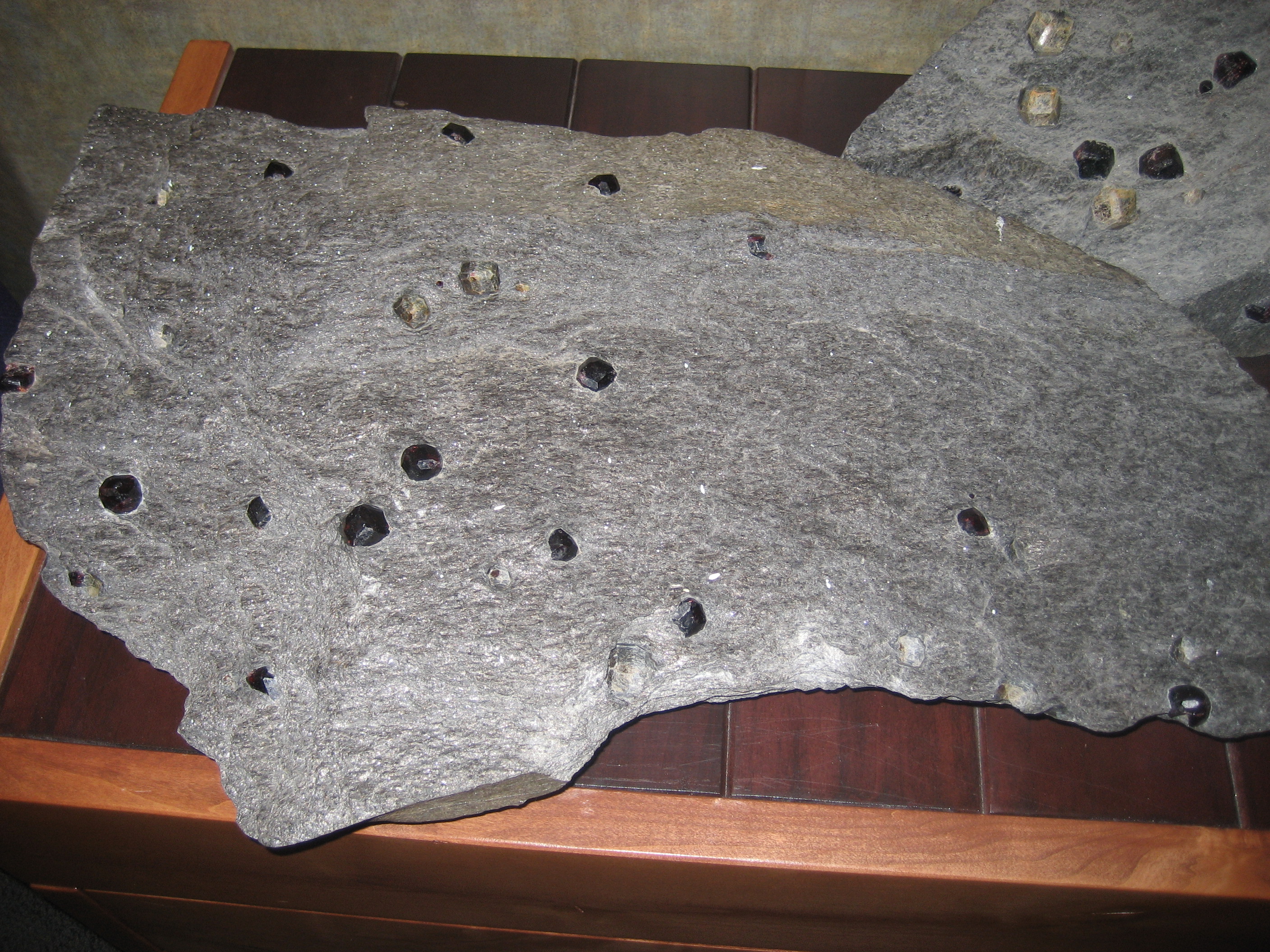
Wrangell school children sometimes have garnet hunts, and sell the gems for fundraising.IMG_0859

This display shows a traditional Wrangell Island sein and fishing kayak.IMG_0866

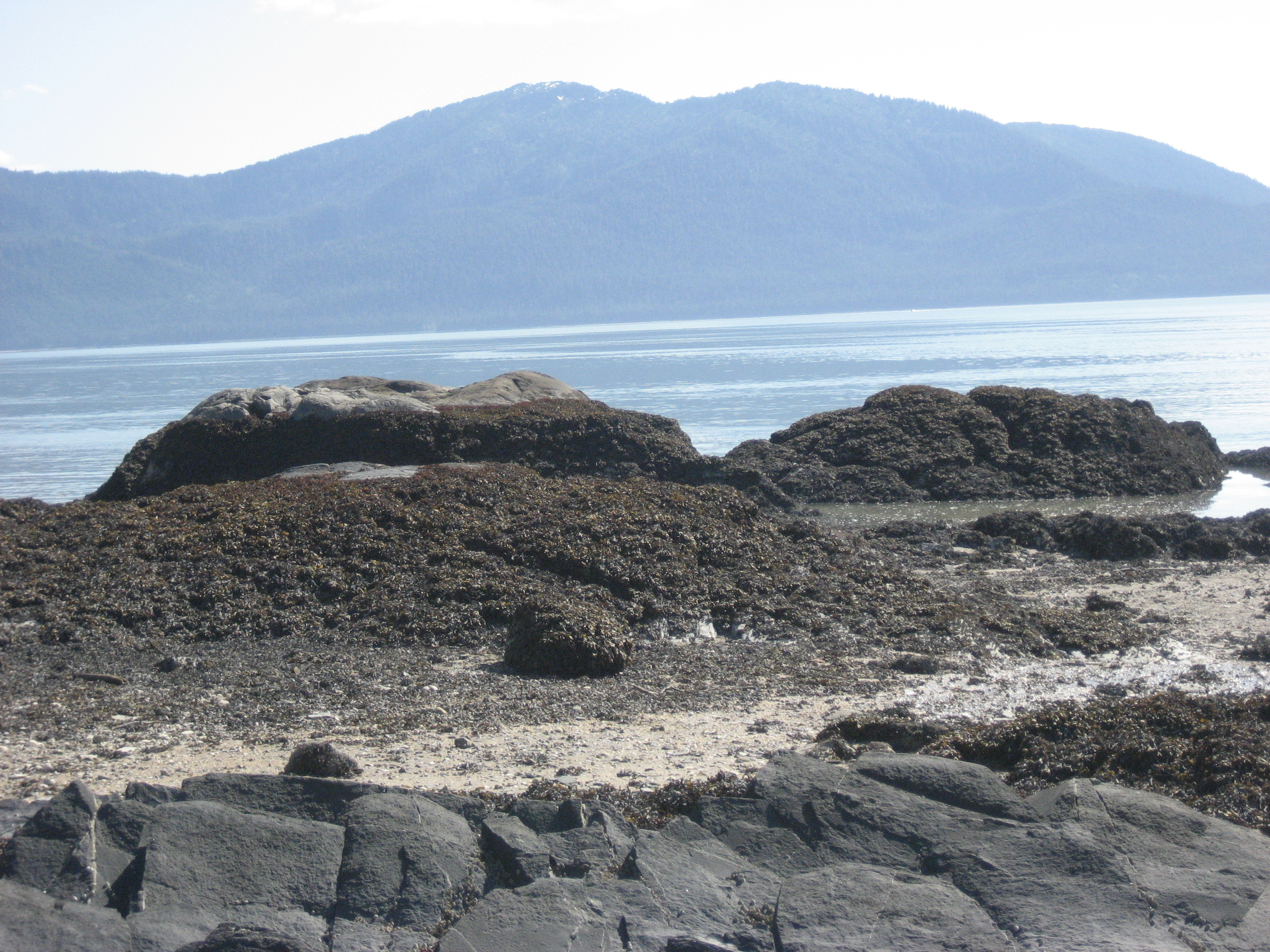
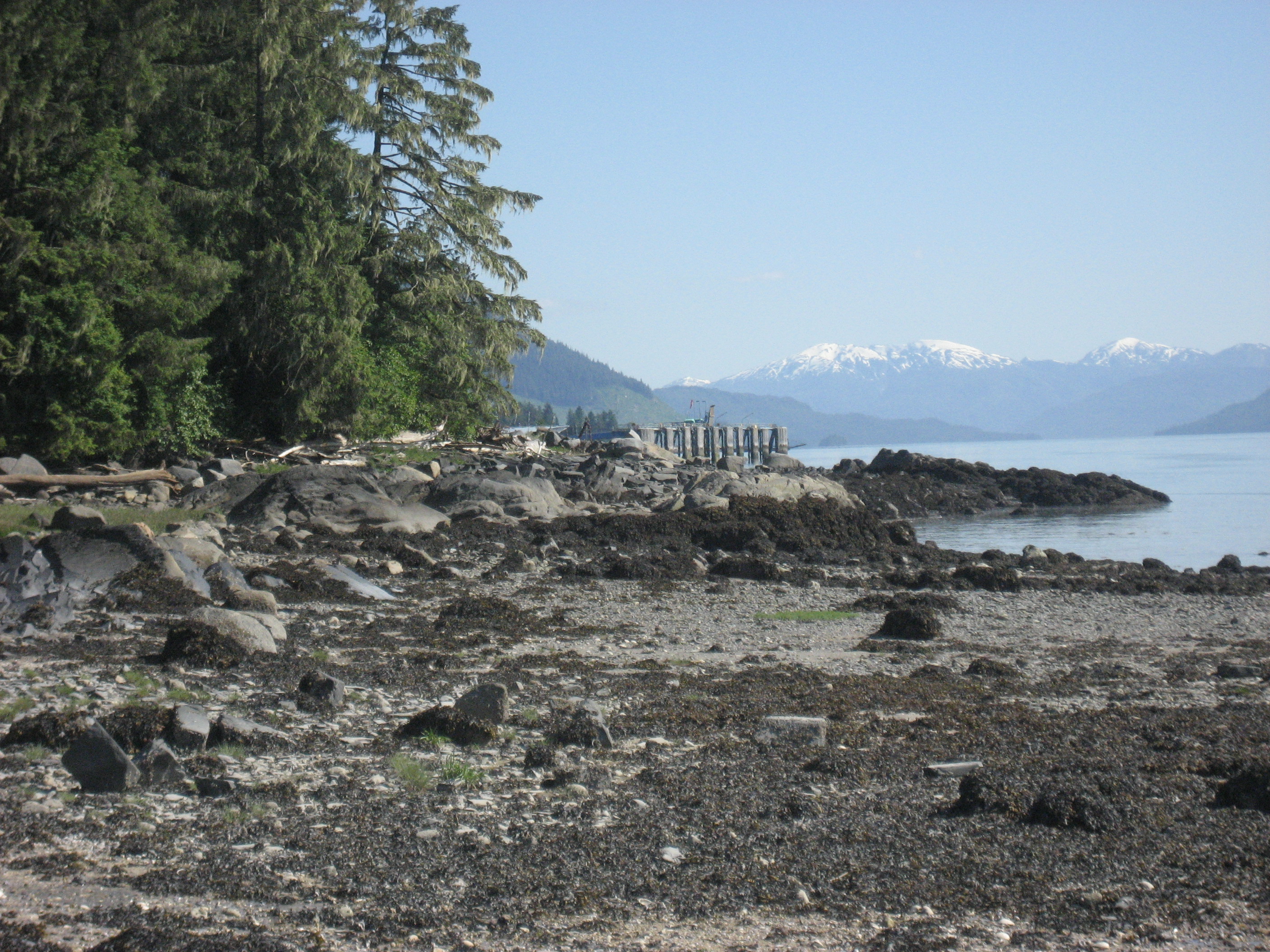
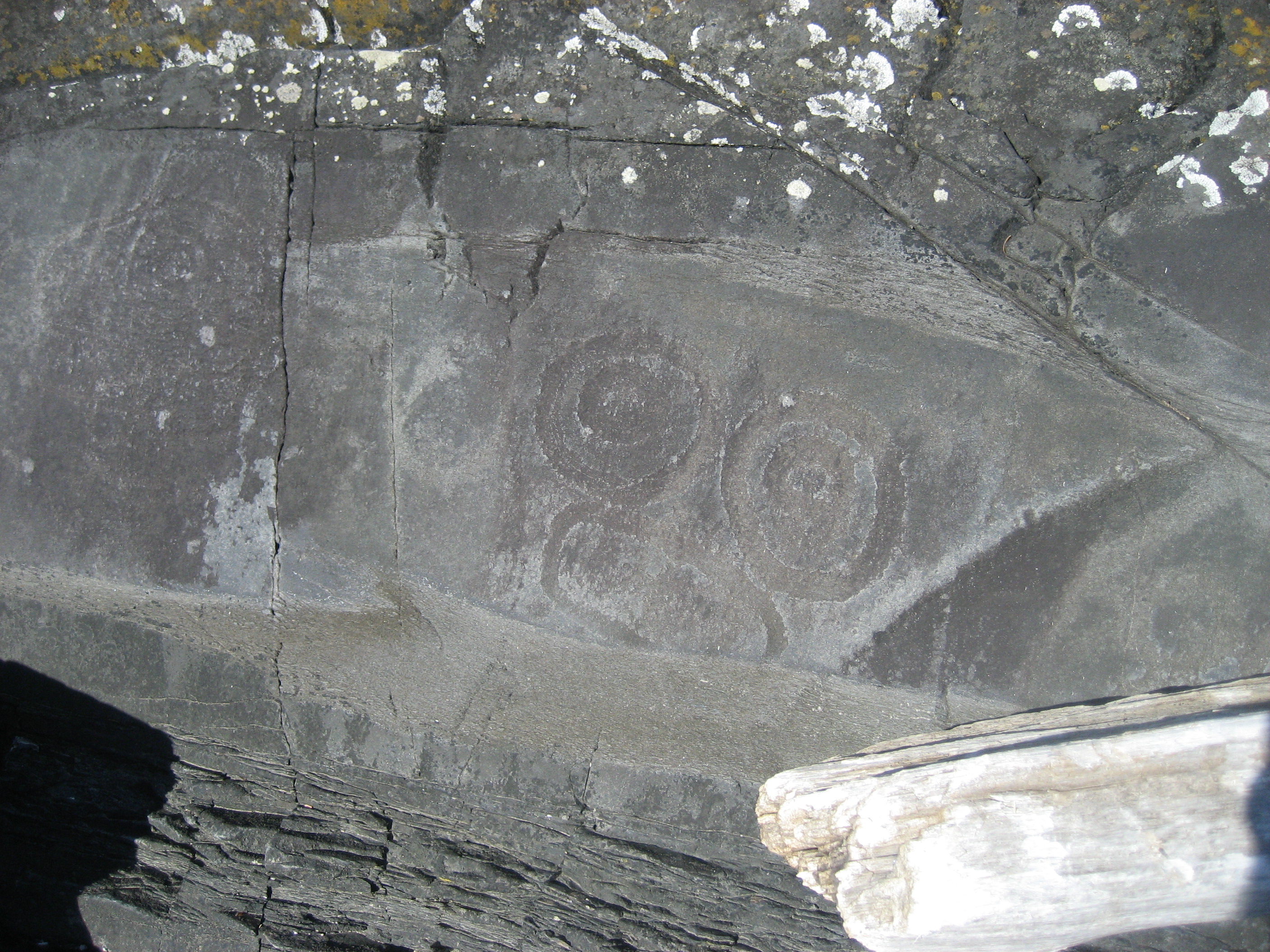
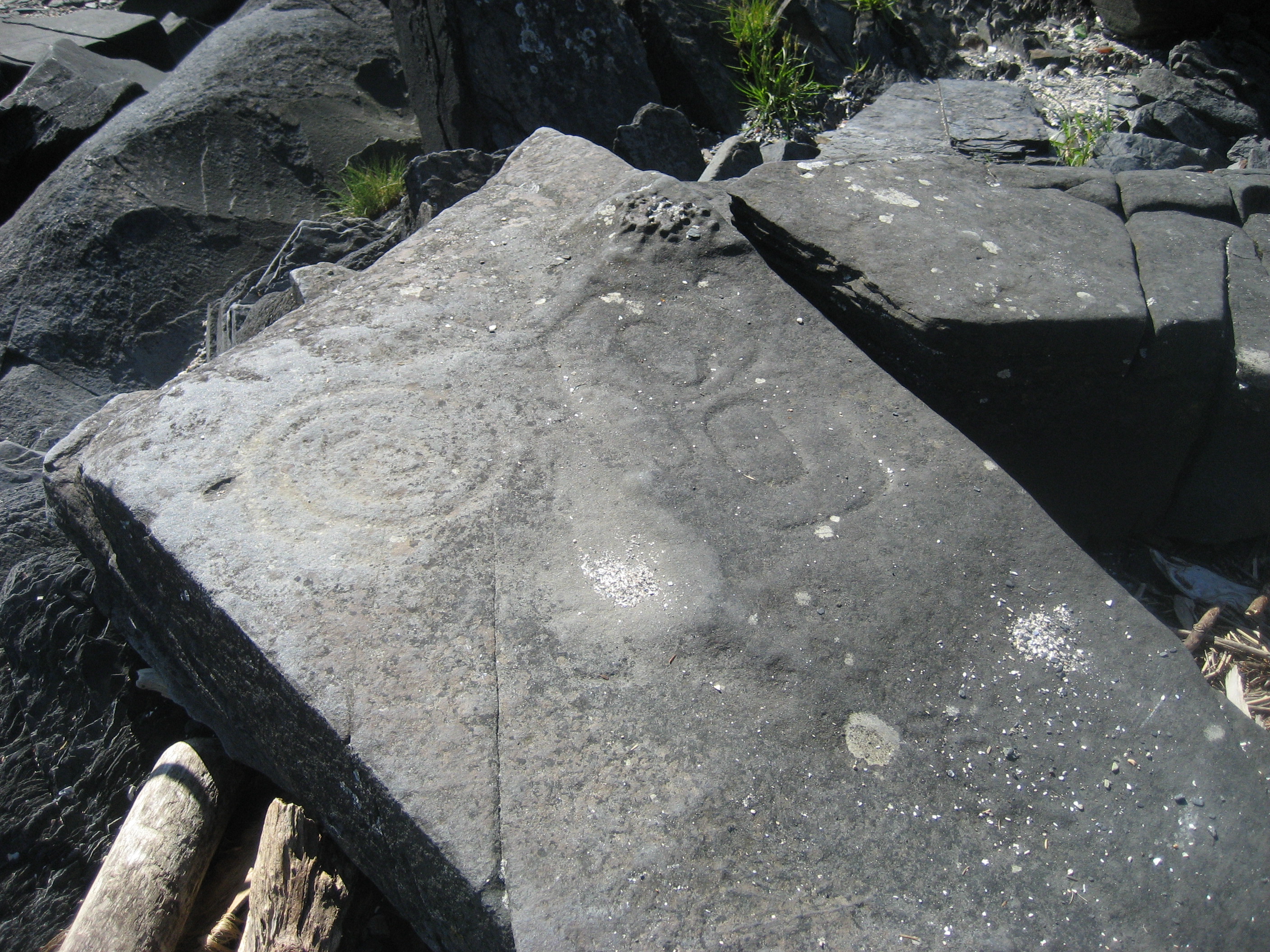
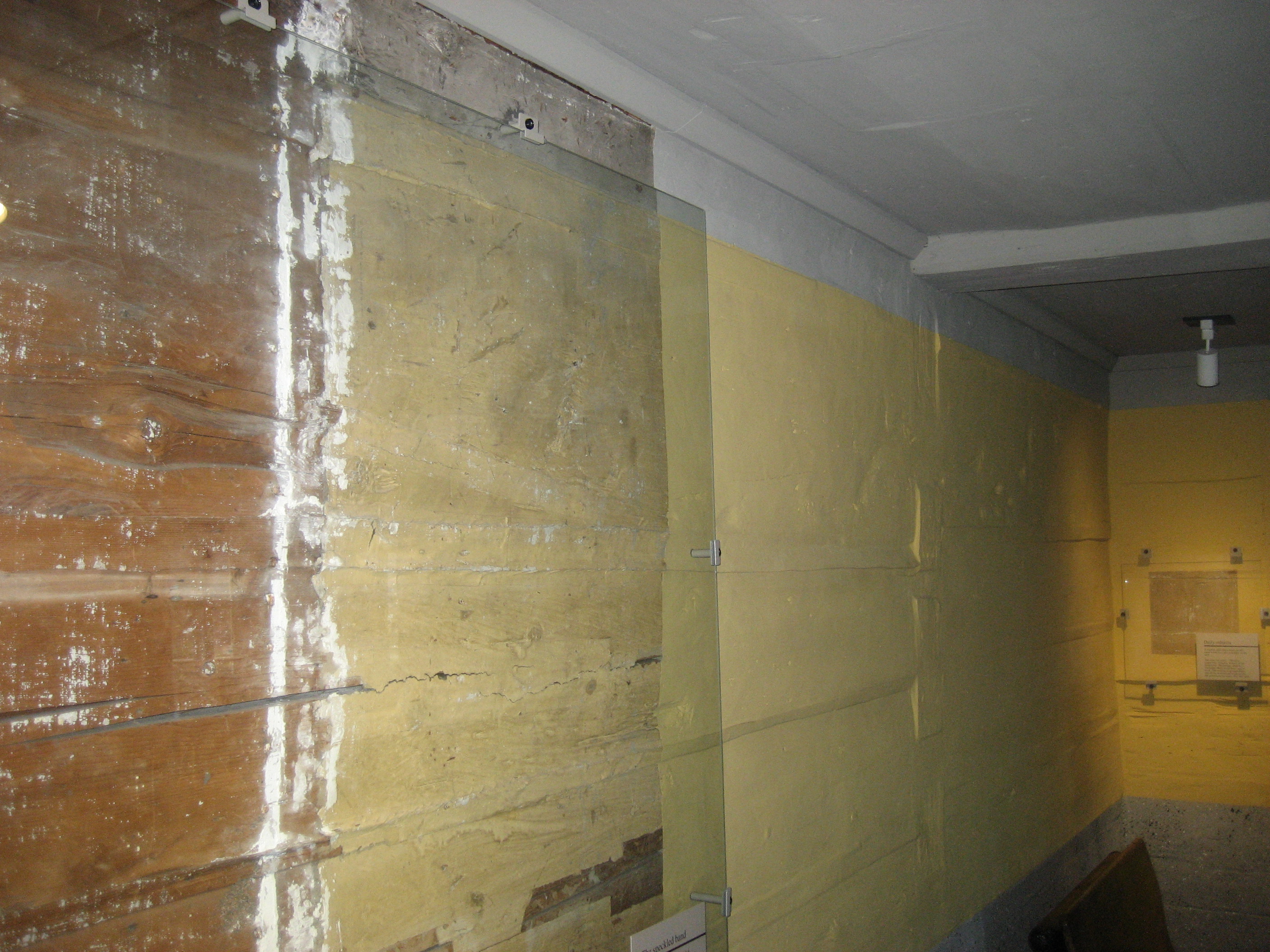
Petroglyph Beach, north of Wrangell, was my last nature excursion of the day.
IMG_0869

The basalt and shale along this rather temperate beach availed themselves to those wanting to carve messages, over the centuries.IMG_0871

IMG_0872

IMG_0878

IMG_0879

This smooth slate has not, as yet, drawn a lot of attention.

IMG_0882

I’m told that much of the rock art is on this area, and is only reachable at low tide.

IMG_0875

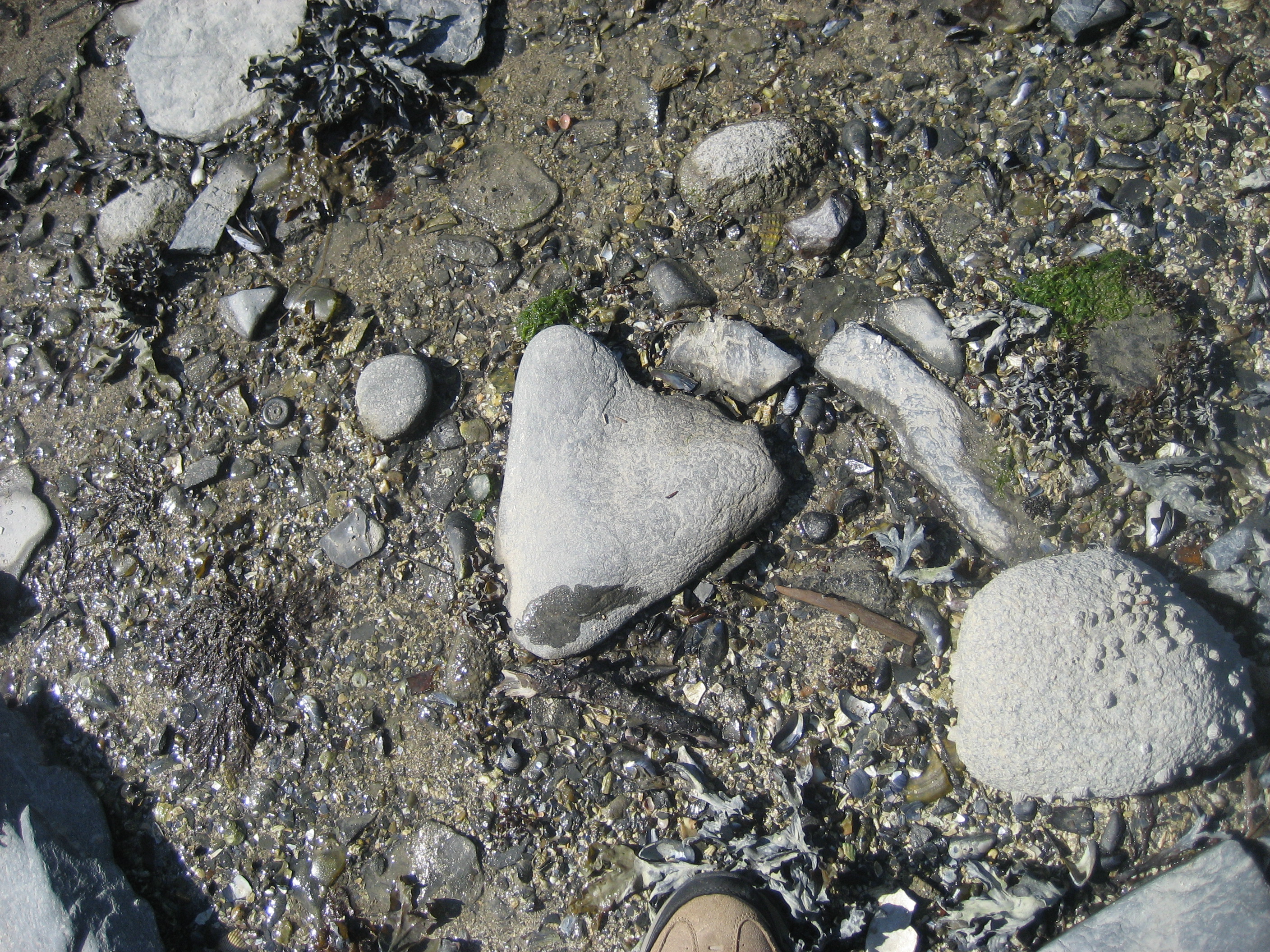
True to form, i found a heart waiting for me, on Petroglyph Beach.

IMG_0876

In the evening, I attended another Baha’i gathering, and met the Queen of the House.

IMG_0886

Her entourage was also quite feisty.

IMG_0888

So ended my two-day visit to an amazing little town.  I get the sense that the next three towns on my itinerary will be equally special, in their way.  Is there any such thing as a place that isn’t special?