The Road to Diamond, Day 362: Another ’70s “Show”

2

November 24, 2025, Moriarty, NM- I left Home Base I , around 8 a.m,, bound for Texas, with a few stops along the way. The first was the Monday morning Coffee Klatsch, where we each gave a rundown of Thanksgiving plans. I then set out for Winslow, encountering almost no traffic between Camp Verde and the famous corner from the Eagles’ tune. After a nice lunch at Relic Road (aka Sipp Shoppe), I found I-40 also relatively tame, even through Albuquerque, to this old ranching town that has become a favourite stopover of mine, being close to the Duke City and therefore halfway across New Mexico.

I did not focus on taking photos, having taken lots of the I-4- corridor, over the years. It is noteworthy, though, that late November is foliage season-for the cottonwood trees and shrubs along High Desert river banks. So, golds, bright yellows and rust-colours are a frequent site, across north central Arizona and New Mexico.

My attention was more drawn to a Sirius XM channel of ’70s Rock. A few songs conjured memories of people who figured in my life in that decade of dissolute behaviour. “Papa Was a Rolling Stone”, by the Temptations concerns the sons of a reckless, irresponsible man trying to determine the truth about him. The lyrics say he died on the Third of September. I knew a man who did pass away on that day, in 1971. That gentleman was the antithesis of the subject of the psychedelic soul tune. He was a man who never took a dime he hadn’t earned and who worked almost to the day he died.

“Seasons in the Sun, by Terry Jacks, brought the memory of four young men from my hometown, who were killed during the Vietnam Era, two in the war itself and two others, due to accidents in nearby countries. The notion of people dying young is voiced by Jacks, saying goodbye to his best friend, his father and his beloved. It struck many of us, at the time, as sappy and unrealistic. Yet, there were our contemporaries dying around us-and not just the four guys in the military. Disease and automobile accidents took their toll on our generation. One of my best friends in high school dies in a crash, not long after his graduation.

I switched to a folk song channel, just east of Gallup, being guided by less evocative tunes until arriving at Lariat Motel, where I am for the night. Still, the songs that came up on the ’70s “show” helped me that much more, in confronting lingering baggage.

The Road to Diamond, Day 116: George Foreman

2

March 24, 2025- In the early ’70s, watching heavyweight boxing championships was on par with watching professional baseball or hockey. It was always a group event, mostly involving men. Part of it was about demonstrations of power, but the replays, sometimes 4 or 5, were about noticing finesse. Muhammad Ali’s body English was the most watched, and re-watched. Later on, there was a group that was drawn to Leon Spinks. For sheer longevity, and evolution of class, though, no one outdid George Foreman.

George came out of east Texas, and the Fifth Ward of Houston. In both environments, he learned the way of the fist-starting off as a mugger, then being steered into boxing. He would become the titan of the 1968 U.S. Olympic Boxing squad, bringing home the Gold Medal and being welcomed into the White House, even as his main competitor, Cassius Clay, was irritating the government with his objections to the Vietnam War. Cassius, of course, embraced Islam and became Muhammad Ali. He and George would fight for the World Heavyweight Championship, and in 1974, George found himself worn to a frazzle by Ali’s antics, including the “Rope a Dope” maneuver of allowing George to push him to the ropes, then rest a bit and come out swinging. George had given Joe Frazier his first loss, a year earlier, thus becoming World Heavyweight Champion. In the “Rumble in the Jungle”, though, Muhammad came out on top.

George, bruised but not beaten, showed the world that “Forty is not a death sentence” and would continue to box professionally, in between serving as an ordained minister and as pitchman for his line of barbecue grills, until 1997. He sired twelve children, by five wives, naming each of his five sons George. This was his way, he said, of leaving a piece of himself for posterity.

He died on Friday, March 21, at the age of 76. His namesakes-and grills- aside, though, George Foreman will long live in the memory bank of anyone who grew up between 1965-87. He lived larger than his boxing skill set and more intensely than his religious fervour. May George be at peace, in the arms of his Lord.

Credibility

4

May 5, 2020-

Fifty years ago, yesterday, four students were slain, at Kent State University, Ohio,  in the midst of a “tough” government reaction to protests against the VietNam War.  At that time, as now, there was a stark division between those who wanted peace and those who favoured a hard response to an identified enemy.  I was little more than a child, then, and even though I was on active duty with the United States Army, I felt strongly that there had been an overreaction.

Coming from this incident, there was a very intense backlash among people of my generation-especially among those in college.  Hippiedom was still much in vogue, as less than a year had passed, since the Woodstock Festival.  A cliche arose, as well:  “Just because you’re paranoid, doesn’t mean that we’re not out to get you.”   There were also working class youth, like me, who were not exactly over the top for the Hippie culture, but still had our reservations about the Military-Industrial Complex.

Fast forward to the current crisis.  Many of the same people who had doubts about our government then, have the same reservations now.  The difference is in the target of those qualms.  Now, it’s the Scientific-Medical Complex, from Monsanto to “Big Pharma”, and anyone who stands to make a bundle off disease cure and prevention.

I will say this, having posted arguments from both sides on another social media platform:  At least half of the predicament in which large companies find themselves is a hoist of their own petard.  Lack of transparency always sticks in the craw of an educated populace.  Numbers have been fudged, quite frequently- and by those on both sides of an issue.  There has been fakery, to the point that one must even scrutinize the claims of fact checkers.

It all can be avoided by just telling the truth-but that may cost people money.  There is a hard choice to be made by many.

The 2018 Road, Day 38: Memphis, Part 2- Martin and The Mountain Top

12

July 2, 2018, Memphis-

SAMSUNG CAMERA PICTURES

From the time I was a nine-year-old, trying my best to vicariously understand why Black people were struggling for the same rights my parents seemed to have, I have been fascinated by people like Martin Luther King, Jr., Malcolm X and Fannie Lou Hamer.  Rosa Parks and her story came a bit later to my consciousness, when I was in high school, and the works of Langston Hughes were part of our tenth grade English curriculum.

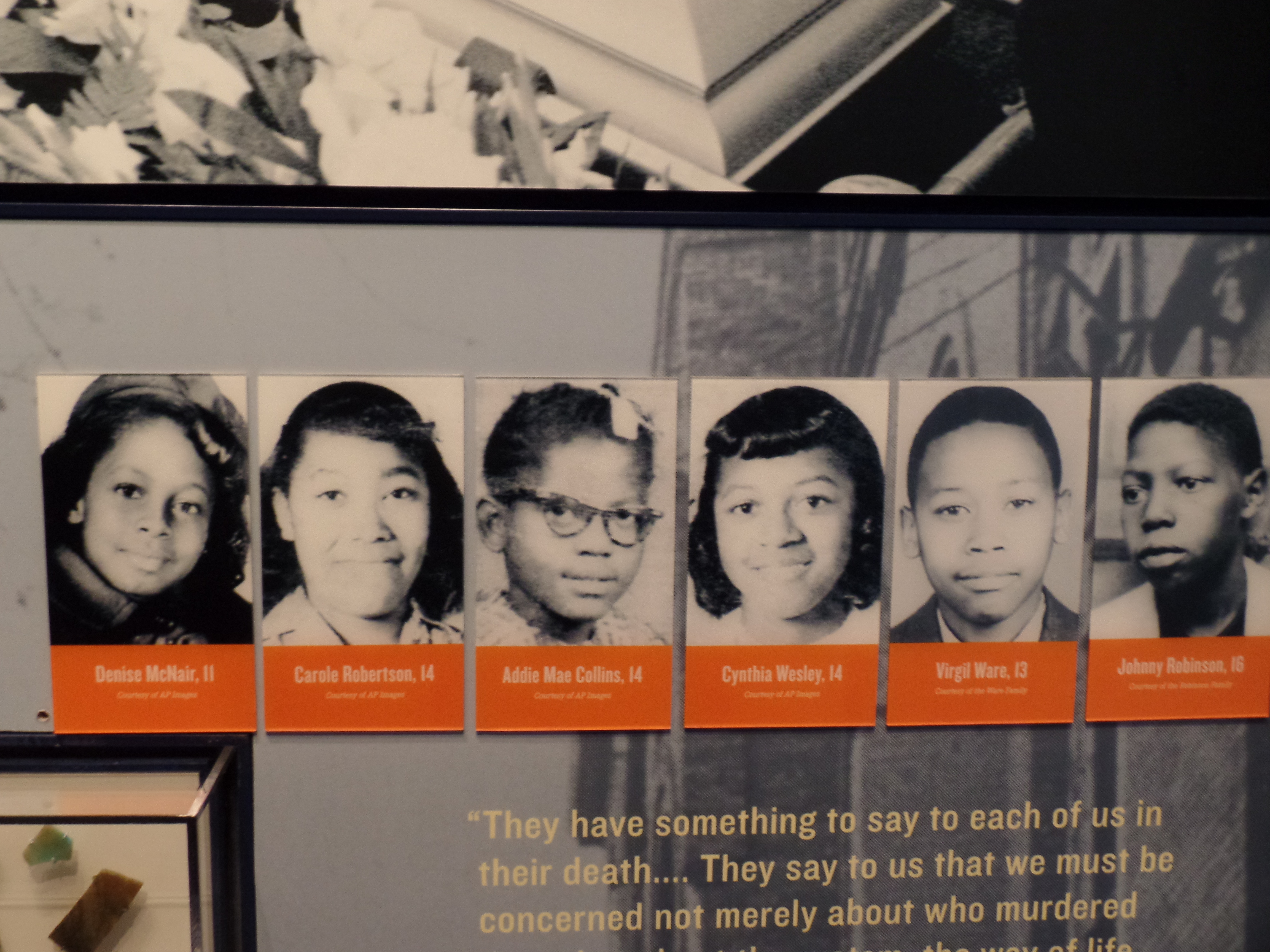
The murders of Emmett Till, the children in the Birmingham church bombing, the Civil Rights workers in both Alabama and Mississippi, Medgar Evers- all hit me hard.  I remember my Dad being pissed about the assassination of Malcolm X- “He was just starting to be reasonable”. It struck me that maybe that dialogue with White America was what got Malcolm killed; that maybe the powers that be don’t want the common folk to get along.  His death turned me from Goldwater youth to angry leftist radical.  The common denominator, for both alt-Right and Far Left seems to be the sense that the poor are just fodder-for those with money to burn.  1968 just added gasoline to my fire.

Time has made me recognize the complexity of the whole ball of wax.  I remain committed to a solid implementation of social justice, though, and visiting the National Civil Rights Museum brought me to my knees, in silent, shaking tears.

Martin Luther King, Jr, indeed made it to the mountain top. While his last physical gaze was at the eastern edge of downtown Memphis, his spiritual gaze saw the heights of recovery from a deeply-embedded misogyny, from a dalliance with classism and Marxism and from narrow focus on the cause of Black folk.  He spoke of, and was moving towards, leaving no one out:  Opposition to the Vietnam War was a part of his new credo, but so was the plight of hardscrabble farmers and miners in Appalachia and the Ozarks. Forging ties with La Raza Unida and Native American activists was a rising tide, but so was listening to the children of European immigrants who were living increasingly precarious lives, in poor urban neighbourhoods and rural slums, alike.

So, my morning was focused, in three museums in and around  Lorraine Motel.

SAMSUNG CAMERA PICTURES

This establishment had been one of a relative handful of inns, across the country, where African-Americans could stay in safety, whilst traveling.

SAMSUNG CAMERA PICTURES

In the main hall, there are replicas of key episodes in the Civil Rights struggle. Below, is a depiction of Rosa Parks, taking her rightful place on a Montgomery bus.

SAMSUNG CAMERA PICTURES

This credo has been, to varying extents, followed by the greatest of those who have sought to bring about meaningful change.

SAMSUNG CAMERA PICTURES

Those kids were my age, or younger, and that this did not matter to the bombers will forever burn in my heart.

SAMSUNG CAMERA PICTURES

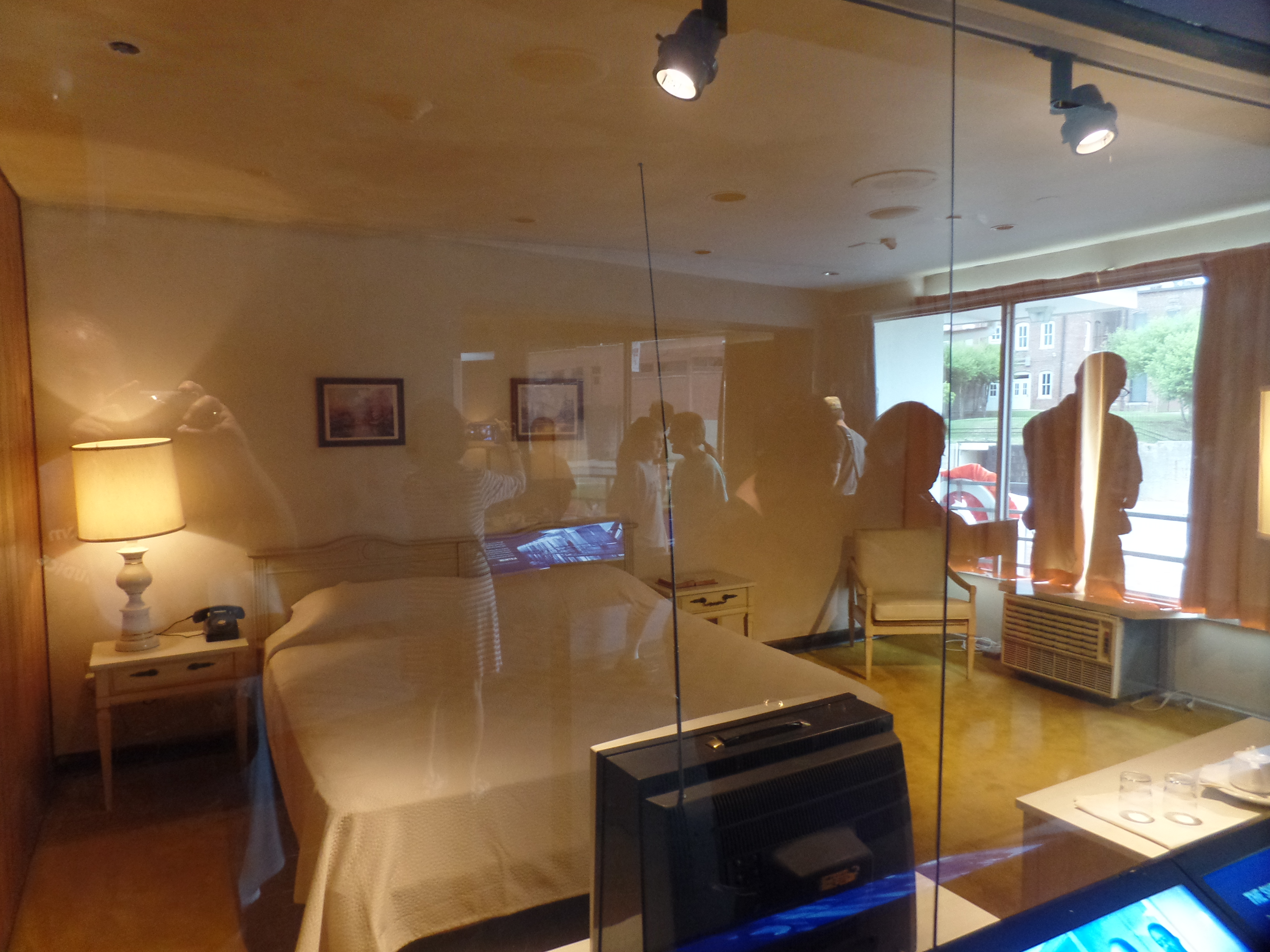
These two bedroom photos show the room occupied by  Dr. King (top) and by one of his top aides(bottom).

SAMSUNG CAMERA PICTURES

SAMSUNG CAMERA PICTURES

This museum, across the street from the Lorraine, features two floors that exhibit details and archives of the assassination and the investigation into James Earl Ray and his suspected associates.    The  killings of other key figures of the Civil Rights Era are also examined here.SAMSUNG CAMERA PICTURES

My evolution, as a compassionate soul, is far from finished.  Being a “woke white man” is a worthy goal, but I still feel a bit drowsy.  This has nothing to do with my visiting places associated with the Confederacy or pondering conservative statements:  One must know what the “other side” thinks, and why, if there is to be a lasting peace in society, and in the world.

Lastly, before heading to the musically significant Beale Street, I stopped for a late lunch at one of Memphis’ oldest eateries.  The Arcade has been around since 1959.  The crew definitely made me feel at home, at the counter.  I’ll be back again.

SAMSUNG CAMERA PICTURES