The Road to Diamond, Day 255: 89 Seconds

2

August 10, 2025- The Doomsday Clock was shown at today’s presentation on the atomic bombings of Hiroshima and Nagasaki. It stands at 89 seconds until midnight (the marking of doomsday). The two bombings, which contributed towards the end of World War II, remain both the most horrific single attacks on civilian populations in our history (procedural genocide involves serial attacks) and the only attacks, to date, involving nuclear weapons.

The presenter, who has made several visits to the cities, showed graphic, if faded, photographs of the victims and of the damage to the cities. The effect was every bit as jarring as the scenes of the Holocaust of Germany and eastern Europe. It underscores the urgency of renewing a commitment to nuclear disarmament and non-proliferation.

Some people at a meeting last night took the view that it is counterproductive to keep harping on the tragedies of the past. I disagree-those who forget the horrors gone by are doomed to repeat them. We do well to both honour the victims and forge a path that will make weapons of mass destruction, both nuclear and conventional, unnecessary. Eighty years afterward, let Hiroshima and Nagasaki stand as examples and cautionary tales, not as harbingers or precursors.

The Road to Diamond, Day 96: The Hounds of the Hoovervilles

2

March 4,2025- In the late 1920s, it was decided, by the Executive Branch, that the solution to the world’s gathering economic woes was to place trust in its economic elite, particularly the business titans of the United States. Granting exemptions and privileges to the “movers and shakers” was seen by the Hoover Administration as central to the nation’s, and the world’s , recovery following the Stock Market crash of October, 2029.

It proved to be too little, too late. The solution that worked proved to be the counterintuitive one-Massive investment by the government itself, large-scale programs that lifted society up by loaned bootstraps: The New Deal, a sequel to the Square Deal that was initiated by President Theodore Roosevelt, nearly thirty years earlier. That agenda increased government monitoring of business and enacted public health programs. The agenda of TR’s cousin, Franklin Delano Roosevelt, brought government into everything from flood control and rural electrification to the basic well-being of senior citizens and control of traded securities.

That the United States was drawn into World War II added to the economy in some respects and hampered it in others. War and defense industries flourished, while the workforce was limited by the need for so many men and women to go forth in safeguarding the nation’s, and the world’s, freedom.

Nearly a century after the Crash, we face a related reckoning. The notion that the government should be far less involved in social welfare is again gaining traction. It has been said, several times of late, including by the President in his speech to Congress, this evening, that payouts to deceased people have been ongoing. My wife of 29 years died, 14 years ago tomorrow. When she had been laid to rest, and the family members had gone back to their own lives, I took it upon myself to return funds that were no longer hers and to pay back her insurers that which had been overpaid. Further, time passed and I received Survivor Benefits from the Social Security Administration-until I filed for my own Retirement, upon reaching the age of 70. At that point, the Survivor Benefits stopped. I doubt that my handling of our situation is an anomaly.

I do not understand the insistence, by people who are independently wealthy and have no need of Social Security, that the rest of us should be asked to give up our benefits. Before anyone says that is not what Elon Musk and others are advocating-please note that he referred to Social Security as a Ponzi scheme. I paid into the fund, from November, 1966-February, 1987 and again from March, 1992- November, 2020. Heck, when I work occasionally as a Substitute Teacher, I am still paying into the Fund. I am getting back what I gave. I do not feel grifted.

Between the day after the Stock Market crash of October, 1929 and the inception of the New Deal, there emerged, across the nation, settlements of displaced workers and their families. These were called Hoovervilles. They gradually closed, as the economy slowly improved and the war effort took more people into the realm of military service. The Hoovervilles, in fairness, make today’s homeless encampments seem small by comparison-even in California.

I wonder, though, what will be the end result of slash and burn? What programs do the DOGE executives have in mind for those currently being displaced? Have they thought that far ahead, or are they acting as the new hounds of latter day Hoovervilles? I can work, if need be, for the foreseeable future. As I look around at my contemporaries, however, I see that not everyone can.

Love, to the Moon and Back

6

October 11, 2024, Manila- “If you love something, let it go. If it comes back, it’s yours.If not, it was never meant to be.” I’ve paid lip service to this, especially since Penny left for a better level. I have never felt she has been far away-and I have even felt that, when I fell for someone last year, this new love had Penny’s blessing.

I have no way of knowing in what direction my current friendship is going to head. Someone dear to me said, before I left for the Philippines this time, “You could love her to the moon and back, but if the feeling is not reciprocal, it can’t be faked.” I would be willing to make the life change and move here, but if it’s not a welcome move, it’s hardly a wise one. I have safe haven at Home Base I, and no one there who sees me through apprehensive eyes.

So, I will do what is prudent, in the time I have left here. I will visit Baha’i friends in another part of the country and pay further homage to those who died in World War II Another friend said, “No one needs to get married a second time”, and she is right. I know that I love my friend here, as deeply as I loved my wife. That is a rarity, and will not change. Still, there are twists and turns that she needs to navigate-and my presence would, for the time being, only be in the way. I have left the ball strictly in her court; she knows where she stands with me.

I am well, emotionally, with the caveat: “I am learning this, too: ‘We must not only be patient with others, infinitely patient!, but also with our own poor selves, remembering that even the Prophets of God sometimes got tired and cried out in despair!’ (Shoghi Effendi) And while I am deeply sure that ‘the Prophets of God’ had far more to despair about than I do or will, this quote gives me hope that I am not wallowing in my grief, but learning the lessons it will teach me.” (Borrowed, in gratitude, from a recently departed member of my spiritual family).

NOTE: Shoghi Effendi, the eldest surviving grandson of ‘Abdu’l-Baha, served as Guardian of the Baha’i Faith from ‘Abdu’l-Baha’s death, (1921), until his own passing (1957). He provided a wealth of translation, explanation and elucidation of the Writings of al-Bab, Baha’u’llah and ‘Abdu’l-Baha, as well as offering timeless insights into the growth and development of the Faith.

Cave People, A Change Purse and a Cockroach

2

October 1, 2024, Manila- The three titular things stood out, in my visit yesterday, to Palawan Heritage Center. My guide, a knowledgeable, if soft-spoken, young lady named Irene, presented two videos: The first, on the island and its tributaries-which constitute the largest province in the Philippines. There are roughly 1, 780 islands and islets in the jurisdiction. The main island is 280 miles (450 km) long and 31 miles (50 km) wide. It is the mini-Chile of the Malay Archipelago. It is also the only part of the Philippines that was once part of mainland Asia.

The second video raised an issue of humanity: The Tau’t Bato, a small subgroup of the Palaw’an First Nation, live traditional, simple lives in the Singnapan Valley, of southern Palawan. They take shelter in nearby caves, during the rainy season. many of the Tau’t Bato came to live in cities, from Puerto Princesa to Manila and Cebu, in the 1970s to 2000s. They found urban life to be totally at variance with their experiences in the Singnapan, only finding “work” as house servants, trash pickers or purveyors of trinkets. They slept on the sidewalks and were generally treated as curiosities, at best, or outcasts, at worst. Many went back to Singnapan, though some still live in the larger communities. Fortunately, those who have returned to their homeland are protected by the provincial and national governments.

As Irene was showing me several paintings by local artists, a cockroach came onto the polished marble floor. I left it to her to decide the insect’s fate, and a janitor was summoned, whisked the creature onto a dustpan and deposited it in the garden outside. (I do this at home, when confronted with a sewer roach.)

The last item was a handmade change purse, which I bought for K, given her love of local handicrafts. I picked up a “glow-in-the-dark” trinket for myself.

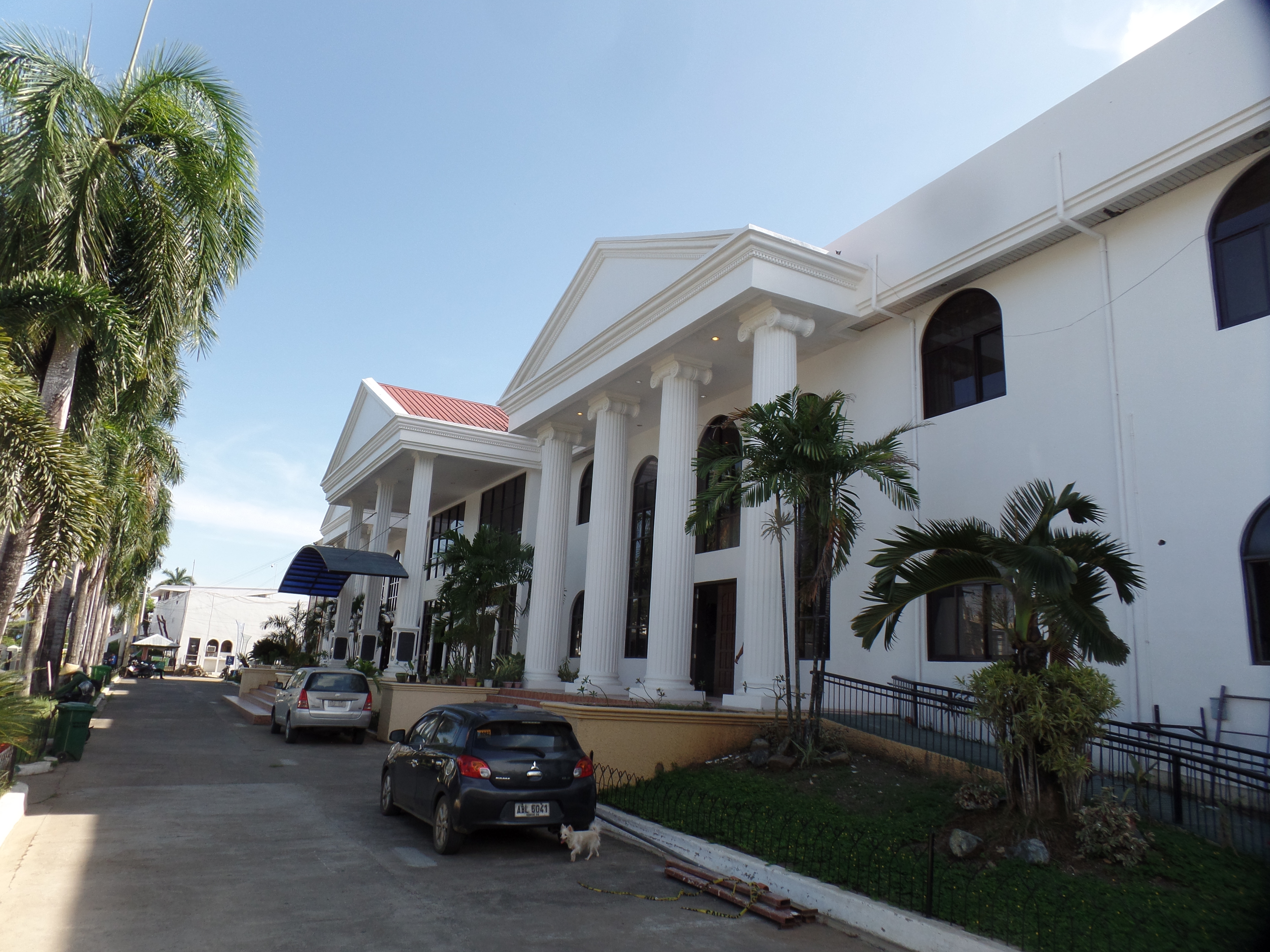
Here are a few scenes of the Palawan Heritage Center..

Palawan Provincial House
Some works by local painters
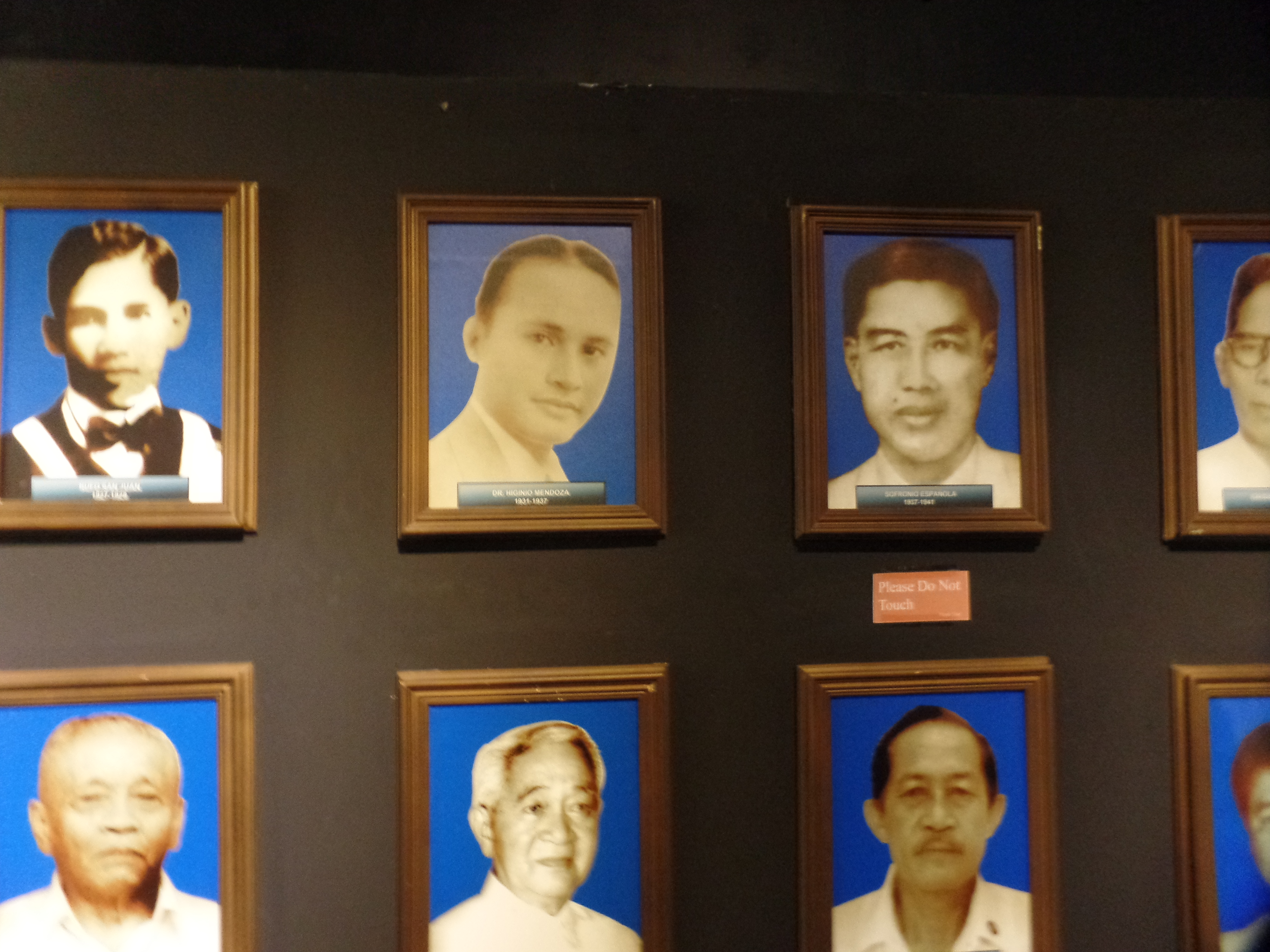
Dr. Higino Mendoza (top row, second from left) was the wartime governor of Palawan. He worked to keep his people safe from Japanese rule, and was executed for his trouble. He is regarded as the provincial hero of Palawan.
Here are more works by local artists.
Here is a replica of Plaza Cuartel’s gate, when it was intact. The present structure has fallen into disrepair.
This depiction of a babaylan ( a traditional healer) was intended, by the Spanish, to frighten children. The healer was actually a gentle soul, as a rule.
Here is a diorama of a Tau’t Bato home.
This may be as close as I get to a Palaw’an village, any time soon.

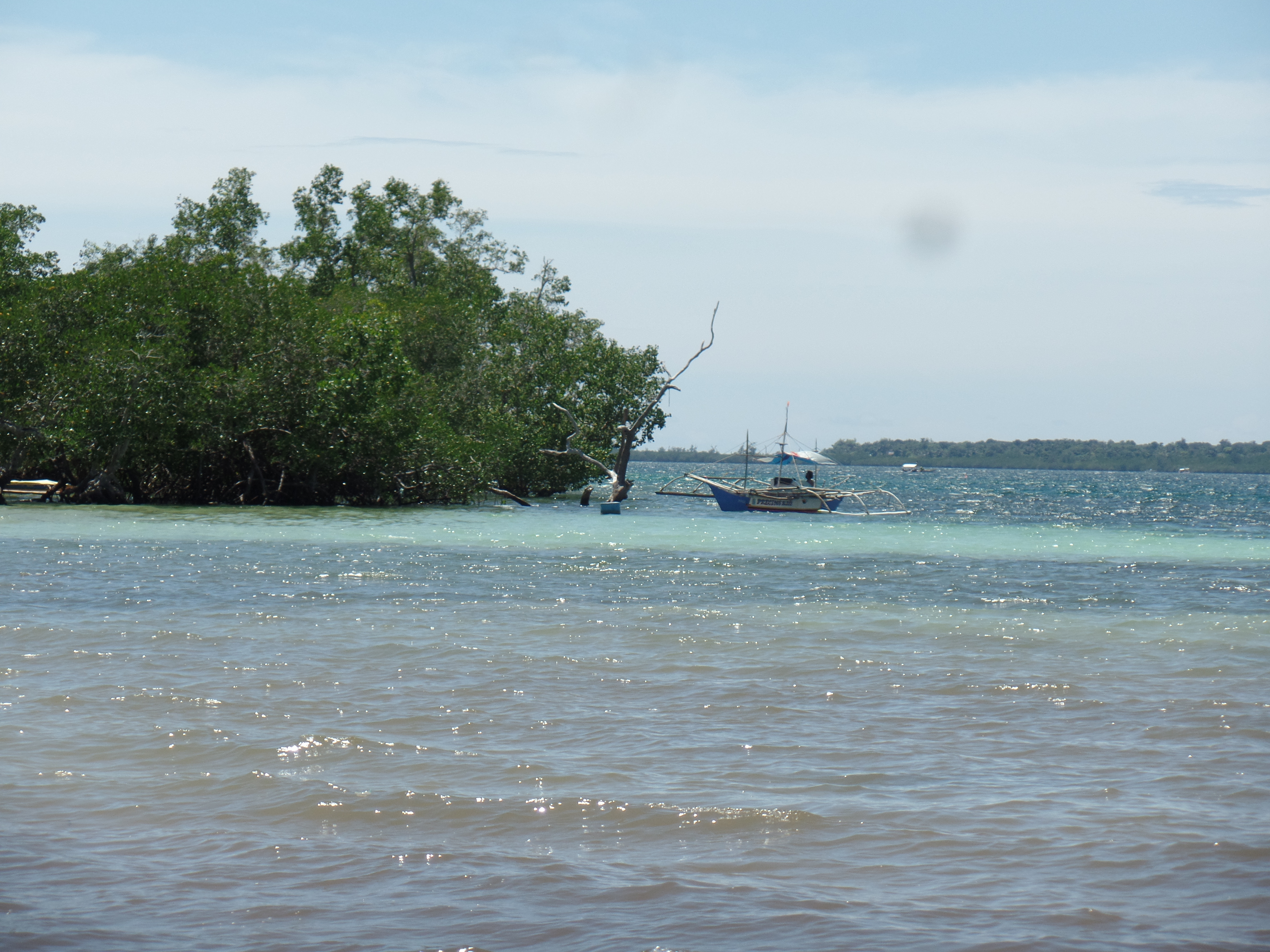
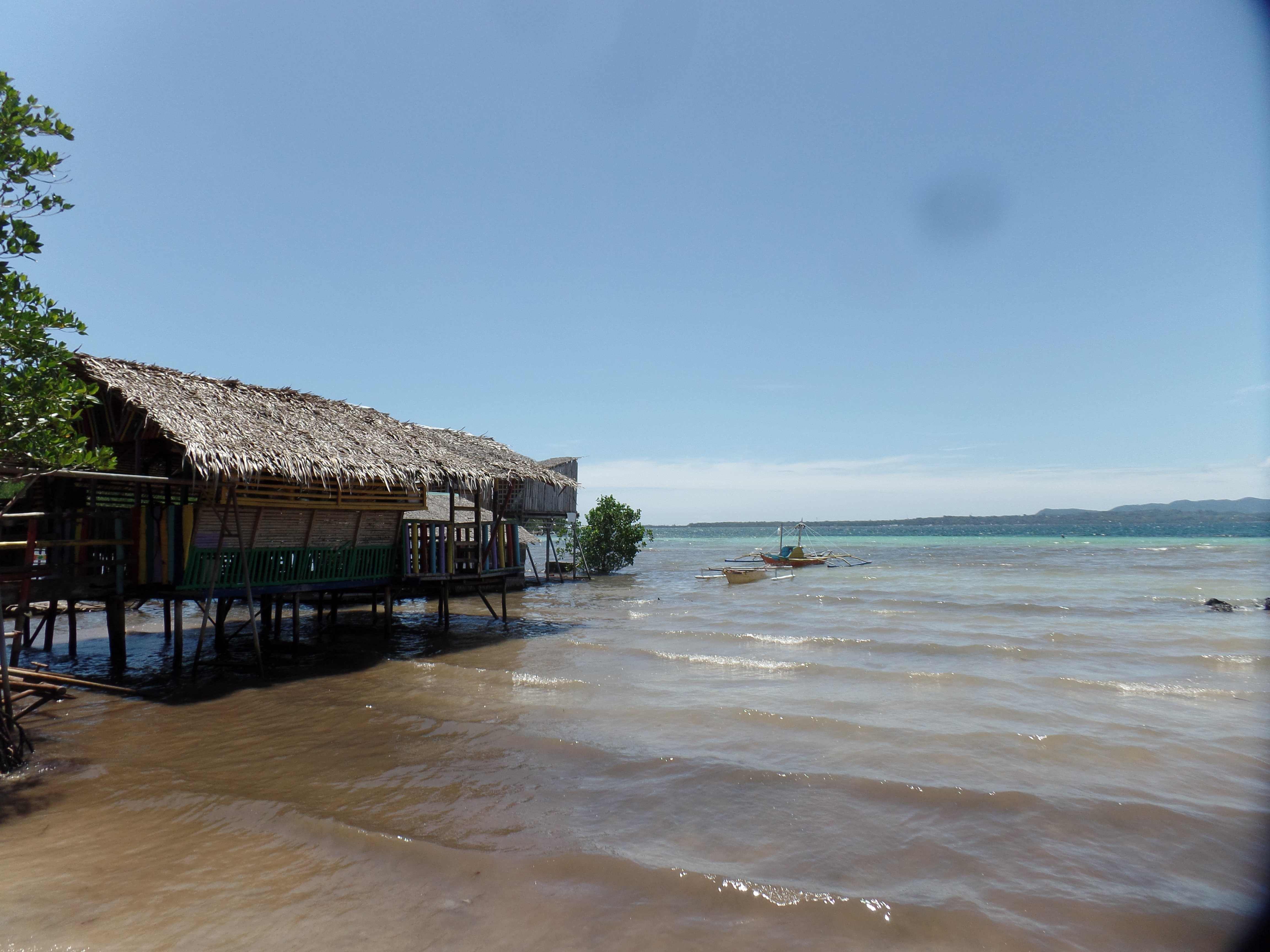
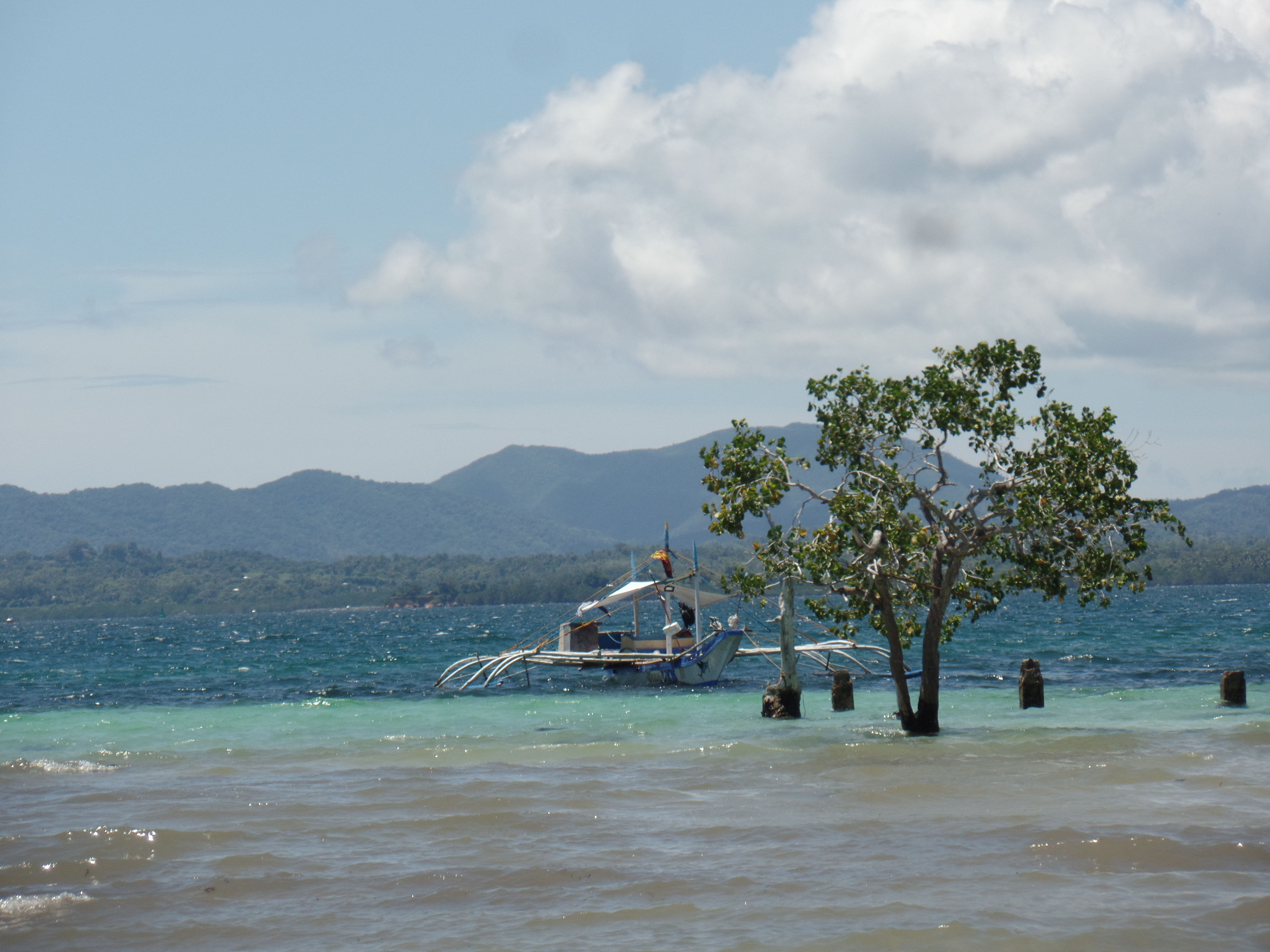
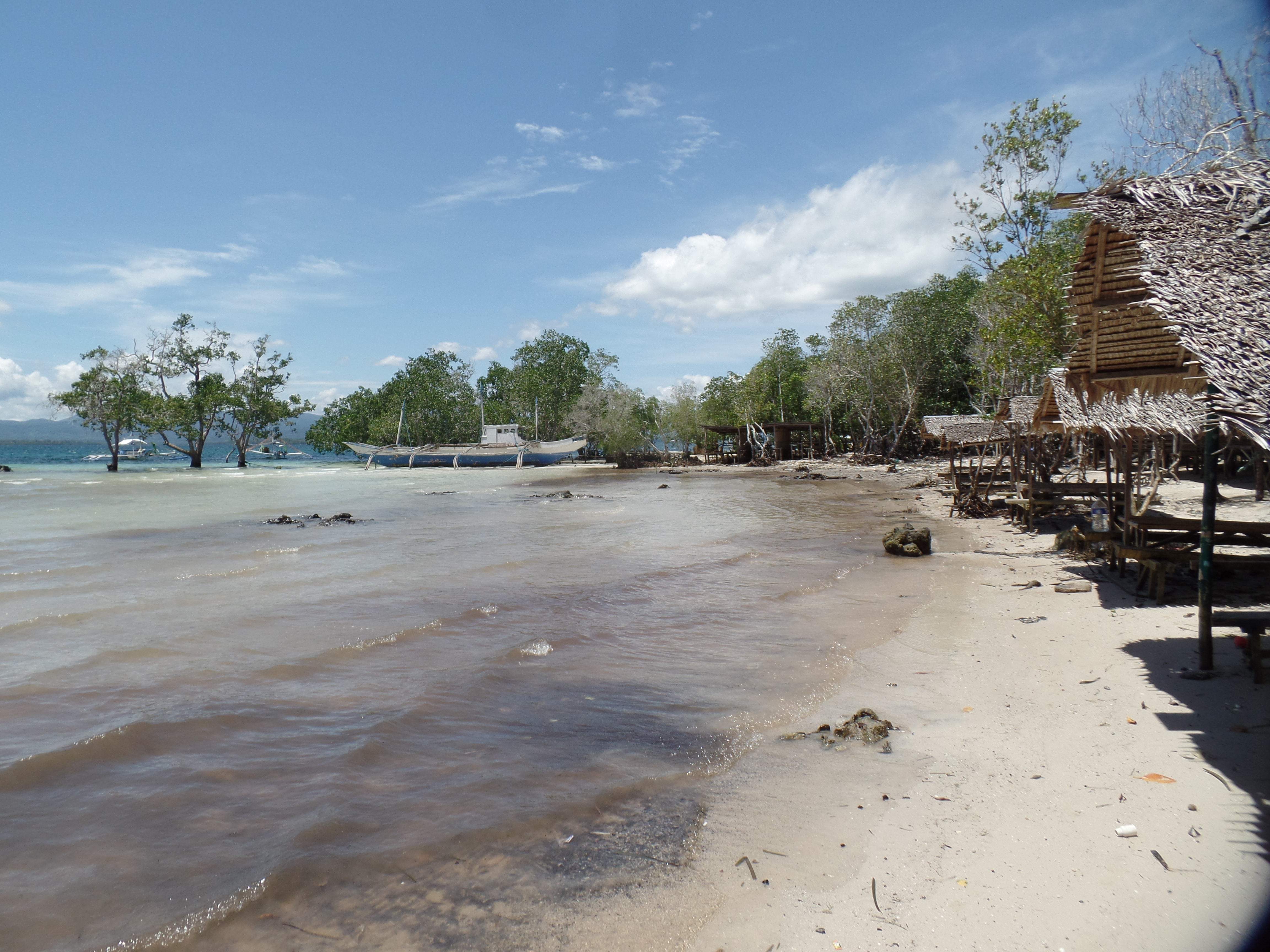
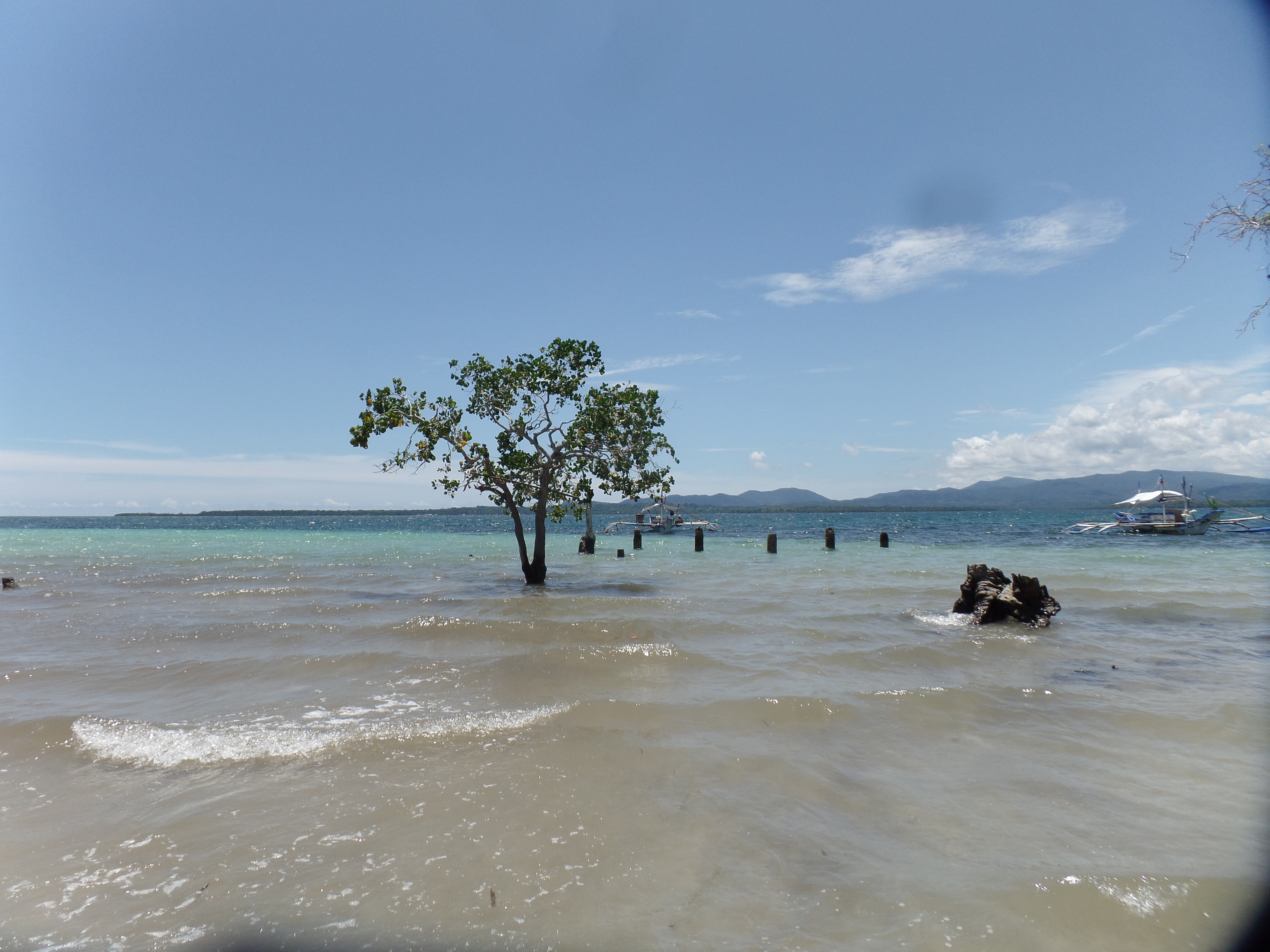
In the afternoon, I went with Roger to a small local beach, called Aquaman Beach Resort. It is in a small barangay called Bancao-Bancao. The tide was incoming, but the water was like a bath, so I walked around a bit and took some shots.

A view of the Philippine Sea, at Bancao-Bancao. (Above and below)
Roger, resembling Ernest Hemingway.
Longhouse, at high tide.
Lone tree, and a boat cabana
Long view of Aquaman Beach Resort.
Another “tree islet”
Forest trail, out of Aquaman Beach Resort.

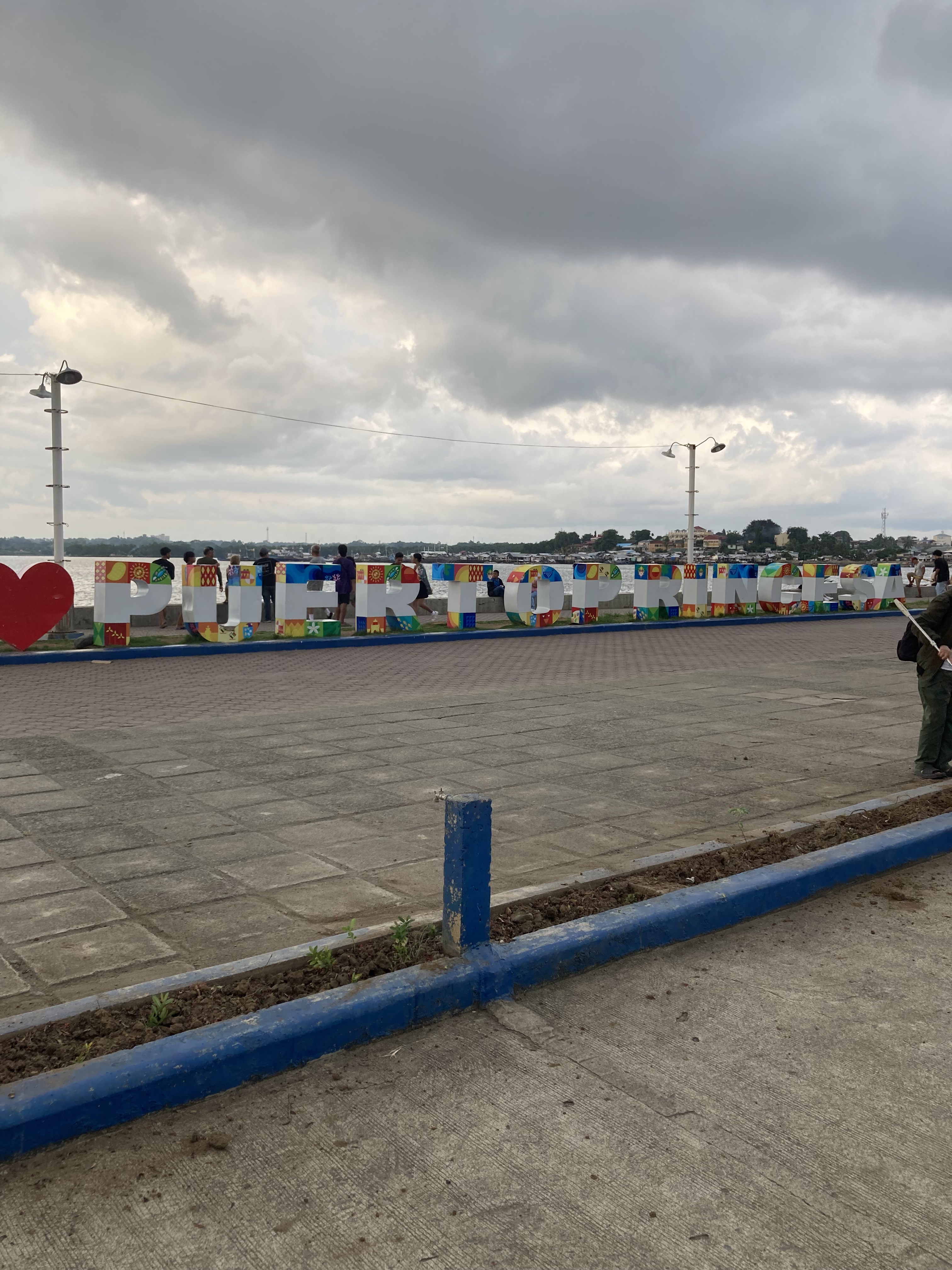
My last day in Puerto Princesa ended with a nice meal at McCoy’s Restaurant, at Bay Walk Park. For now, having returned to the capital, Palawan will continue to exist in my heart. The Philippines as a whole will, as well, after I head back to North America, on October 27. Something tells me, though, that we will be far from done with one another.

Soloing

2

September 28, 2024, Puerto Princesa- The shoe, it turns out, was only moved a short distance from its untouched mate. Darkness keeps us in suspense, yet I sense when patience will win out, in daylight. The pair again adorn my feet.

I met another American, this morning. He has settled here in Palawan and farms with his wife, near BM Beach, which will itself be my beach experience on Monday. I have made it known that, so long as I am welcome in the Philippines, next year will bring a longer stay. The “Great Adventures” I had planned for the next five years are better off done with someone I have come to love-and trust- very much. Before them, then, comes earning trust, myself-and so I make that commitment, even with the adjustments this will bring to my comfortable life in Arizona.

Family has only grown larger, over the years, but I have seen a bigger picture than my local scene, since I was four years old. Always branching out, farther and farther-while never forgetting my roots, it has been such a rewarding life. Some of this has been imparted to my son, who is in the rootedness phase of life, and so will be the anchor of annual or semiannual jaunts back to North America. The wider family, though, will hardly shrink.

I felt comfortable enough, this evening, to walk south and west, and take in Puerto Princesa’s Bayside Park, its Cathedral and Plaza Cuartel- the scene of a brutal massacre during World War II. It may or may not be a hallmark of American travelers, but I go anywhere that is not off-limits, or is obviously dangerous turf. Puerto Princesa is not a dangerous place.

Statue of the “princess”, for whom the city is named. She was an elusive figure, it is said.

Peacock Statue (Tandikan)-the provincial bird of Palawan.

University crew members, in practice

City logo, at Bayside Park.

Cathedral of the Immaculate Conception, Puerto Princesa

Account of brutality that grew out of fear.

So went my solo visit to Hondo Bay and its interesting park.

Boxcars, Boyos and Braceros

4

March 17, 2024- In 1946, a decorated soldier came back to his hometown of Galesburg, IL, and went with his friends to a downtown movie theater. They were directed, by an usher, to sit in the “Mexican section”. The honourably discharged soldier refused, saying that he wished to speak with the manager. When that wish was granted, the soldier told the manager that he had just finished serving their country, and fighting against Fascism, for nearly three years. He expected the same rights as any other citizen of the United States.

That began the end of racial segregation in Galesburg, and across Illinois. It would take another ten years for the practice to end across the northern and western states, as well as in Canada. It would be another 18-25 years for it to end in the southern states.

In 1917, as American men went off to fight in World War I, there was a vast labour shortage. Corporate representatives recruited Mexican men, by the thousands, to fill the vacant positions. These men were housed in re-purposed railway boxcars, as many of the positions were with the railroads. Boxcar villages, near towns like Galesburg, were established near the railyards.

The same thing happened, on a smaller scale, in World War II. By then, men were allowed to bring their families along, and more permanent “barrios”, many with row houses, were established by the railway companies, and other employers. Thousands of Mexican workers and families were thus brought into the United States, not by “liberal politicians”, but by business and industry leaders, seeking to accomplish their missions.

A century earlier, much the same process unfolded, on the East Coast and in the cities of the Midwest, as Irish (the boyos, they called themselves) and Italian workers, fleeing chaos in their homelands, arrived in the United States, having heard of opportunities here. They, too, encountered prejudice, and were enticed to quarrel with one another, so as to keep a united front from forming among the refuge-seekers and the dispossessed. That tactic would resurface, when each new group: Poles, Hungarians, Greeks, Arabs, Japanese, Chinese, Filipinos, arrived here and sought their chance at a new life. Then came newly freed people of African descent, fleeing the Jim Crow laws of the former Confederate states-and Mexicans, fleeing the repression and chaos of the Diaz years. Braceros, or manual labourers, did the work that few Americans wished to engage.

This is the backdrop, as the wall goes up and scapegoats are sought, by wirepullers, for the overlooking of homeless veterans and others. Two equally worthy groups of people need the help of their fellow humans, and yes, charity begins at home. It begins at home, and family members get first dibs, then community members-like those who served their country and are now getting short shrift, in many cases. It doesn’t end there, however. Only a truly unified human race can resolve the issue that stem from the mindset that some people are less than others, because of differences in their make-up, strengths and weaknesses, appearance, national origin, religion, personal predilections- you name it. Only seeing that there really is no other, just a mirror of ourselves, will lead to a systematic solution to all that has gone wrong-starting with family, then community, then state/province, country and region, until the entire globe gets the idea.

Maybe then, there will be no cross-border caravans, no twenty-foot walls, no former police/military officers seizing power in their destitute countries, no mindless interplay between ideological rivals, rather than each sharing viable solutions to deep-seated social ills.

Domhan go bragh. (Earth, til the end)

On Not Going Gently

2

February 25, 2024- The seat fairly screamed, in its emptiness. It has been occupied, at a weekly breakfast meeting, for nearly six years, by a true force of nature. It is unlikely that will continue to be the case. After a storied career in the military, age has caught up with the gentleman, and he must face the loss of his independence, at minimum. He may very well be going into that good night.

The Silent Generation, born in the midst of the Great Depression, and growing up in the harrowing uncertainty of World War II, has been anything but silent, seeing the changes in society-changes which must be as incomprehensible, to them, as the changes at the turn of the Twentieth Century were to the Gilded Age Generation. My friend regularly inveighed against both the emerging, often chaotic, claims of the Left and the efforts, to cling to power, of the wealthy on the Right. He wanted things to return to how they were, in the days of Eisenhower and Kennedy.

In his prime, and into his early eighties, he was a suave, sleek dancer. When the joints began to give way, and cardiopulmonary issues arose, he was dismayed, but kept doing what he could for himself- continuing to drive, attending weekly functions and winning at Bingo. Gradually, the help of steadfast friends kept him engaged in the activities that meant the most. Then the bottom began to fall out.

He will surely heed the plea of Dylan Thomas, and do his share of raging. In the end, like the great Bard’s father, he will have to close his fierce eyes and still his thundering voice. He will, at journey’s end, find himself in another realm of light. It may be tomorrow, or some time from now. I only pray that it will be gentle to him.

https://poets.org/poem/do-not-go-gentle-good-night

Expanding Home, Day 15: Patience, Please

0

October 24, 2023, Manila- Today was a day of rest for my hosts. It began with another member of the community questioning my reasons for being here-indicating that I was limiting myself to an area where not all that much was going on. My response was to just sit tight and let the message process. After a while, I got further information from one of my hosts, that there was the initial expectation that I would be blazing about the country, with some days in one spot and some in another.

Now I could reply: . This is not my last visit to the Philippines. In fact, when honouring the end of World War II, (God willing, and provided WW III hasn’t started in the meantime), two years hence, it will make the most sense for me to go from Europe to east Asia, rather than returning to the U.S. and leaving again after only a month at Home Base. That will give more time for the provincial activities the community member wants to see.

My Korean friends were fond of saying “Rome wasn’t built in a day”, though their context was more along the lines of excusing an extended lack of effort. In my case, I would excuse being overextended, but there is no sense in making excuses. 2025 will be what it is, and I am just glad to be here to listen to my hosts and offer assistance where I can, in terms of encouraging healing where it is needed, and connecting friends who live in the same part of the country, but who did not know one another, until a day or two ago. Networking has always been important in my life, and is as much a reason why I have traveled almost incessantly, since I was seven years old. (Going to different areas of Saugus was as big a deal then, as going to different parts of North America, and beyond, is now). It is all about connections.

I am happy to report that the community member has come to understand my mindset and has adjusted expectations. I hope and trust that others will do the same, as this decade plays out-and if immediate family needs arise,those will always take precedence.

Some Gave All

2

February 5, 2023- On February 3, 1943, four brave men stood, arm-in-arm, on the deck of an Army Troop Transport vessel, as it was sinking after having been hit by a German torpedo. They were military chaplains, who had given their own life jackets to four scared young men and seen to it that those men went onto a life raft. The four chaplains died, along with over 200 others, for whom there was no room on the rescue rafts. They died praying with those men.

I had the honour, for a second time, of reading the biography of one of the chaplains, as our American Legion Post held its Four Chaplains ceremony, this afternoon. All gave some; some gave all. This ceremony reduces grown, hardened men to tears-proof of what I mentioned in the last post. To respond to one of my critics, the fact that some women engage in dissolute behaviour has nothing to do with the presence of nurturing energy in men, nor is it proof of gender equality. The actions of the four chaplains, and of countless men who have engaged in similar acts of love for their fellows, are the definitive proof.

All gave some; some gave all. I can only hope that, if I am called to such an action, that I will find the strength to carry it forward. Some gave all.

Surprise Treasury, and Tragedy

2

June 3, 2022- The four boxes had sat in my bedroom closet, unopened for nearly four years. Once I cleaned out said closet, this afternoon, it was time to open the boxes and see just how much of a treasury of record was left behind by my father-in-law, with regard to his time as a Prisoner-of-War. The four boxes have a complete account of that harrowing time in his life and all the medals not included in a framed collage, which I also have.

These are all in a safe location and will be properly transferred to someone else in the family, at a later date. In the meantime, I will examine each box more carefully. This is probably the most precious historical collection which has ever been entrusted to me, and I’m honoured.

When Pops passed on, in 2014, he was accorded great honours-though due to a backlog at Arlington National Cemetery, it took several months to inter the man’s body. It was a grand and moving ceremony, despite that delay. It came on the heals of my visit to the sites of D-Day at Normandy, the Battle of the Bulge, in Bastogne and Metz, and Berga, where he was held prisoner. I will revisit these and other sites, in 2045, the centenary of the end of World War II.

The day ended with the discovery that one of my neighbours had died, alone and unnoticed for several days. I did not know him well, but was under the impression that he was being tended by “close friends”. He had told us, in the past, that he was doing “alright” and did not want to be disturbed. The circumstances of his passing underscore just how wrong the culture of anonymity is. We can’t very well impose ourselves on people, yet every soul deserves a full measure of dignity. I know enough about the man to know that he lived an honest life and worked hard as a cabinetmaker. May his peace be eternal.