The calls resumed even before I reached the El Paso city limits. Neediness knows few boundaries, in its self-perceived desperation. I bought some assurance of being left alone, so as to continue my drive in concentration and in peace.
I realize that I do not want a constant presence in my life that sucks that life out of me. I do not want someone in my business, constantly. I do not want to be tethered, or bled financially, drop by drop. My involvement in dealing with the dispossessed can’t be of such a form as to make me one of them. We all have a part to play in ending homelessness, but the solution can’t be piecemeal and it can’t be of such pressure tactics on individuals like me, as to breed resentment.
I feel tense, and a bit angry, at having to fend off constant requests for money- which I have to make last, a long time, ( thus my propensity for eating sparingly,for keeping my energy costs low, and, when traveling, for staying in cheap motels in winter, and campgrounds in warmer weather). Housing people in my apartment is forbidden by my landlord, and I am obedient to the terms of my lease.
On the other hand, when those who claim to be serving veterans and other homeless people adopt a piecemeal, almost capricious approach to service, enticing groups of men to their shelter and then staying closed in cold weather, they leave the people with no choice but to find abandoned homes, sleep in the forest, or in storage units, of all things. Utah offers small houses to their homeless, taking people off the streets and storefronts.
Thankfully, the local Interfaith Council has a meeting on this subject next month. I will encourage as many of the people who approach me for what I don’t have to give, to show up, presentably, at this meeting and at Prescott City Council meetings, and speak respectfully and as eloquently as possible, on what the current non-system of dealing with this issue is doing to the entire community.
We cannot continue,as a society, to think that putting people on buses out of town or merely thinking they will dry up and float away, will purge the issue from our midst. Quite the contrary, the numbers of dispossessed will only grow, as long as the issue is ignored. I know this, because I housed as many as ten people, over a three year period, when we lived in Phoenix.
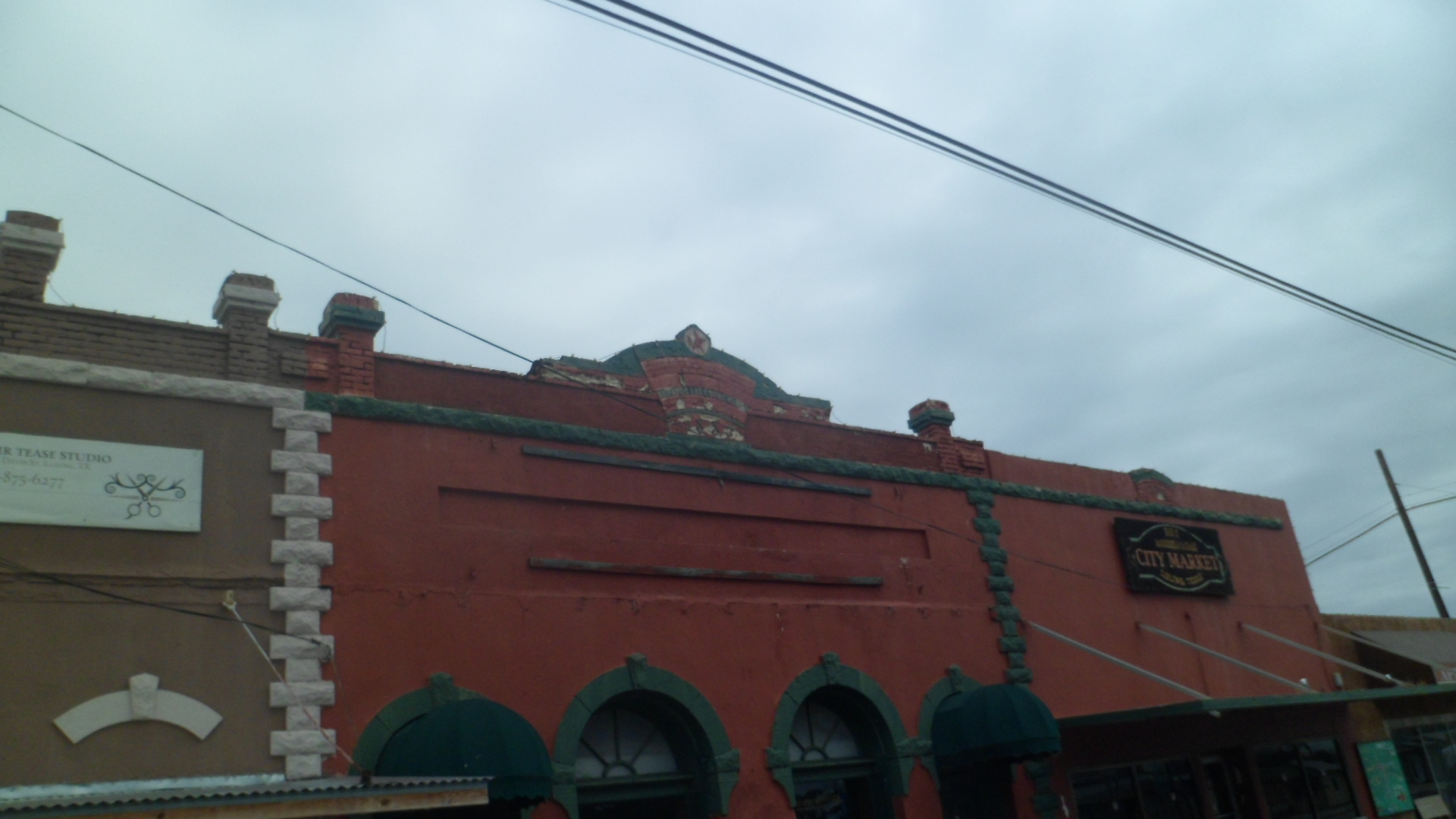
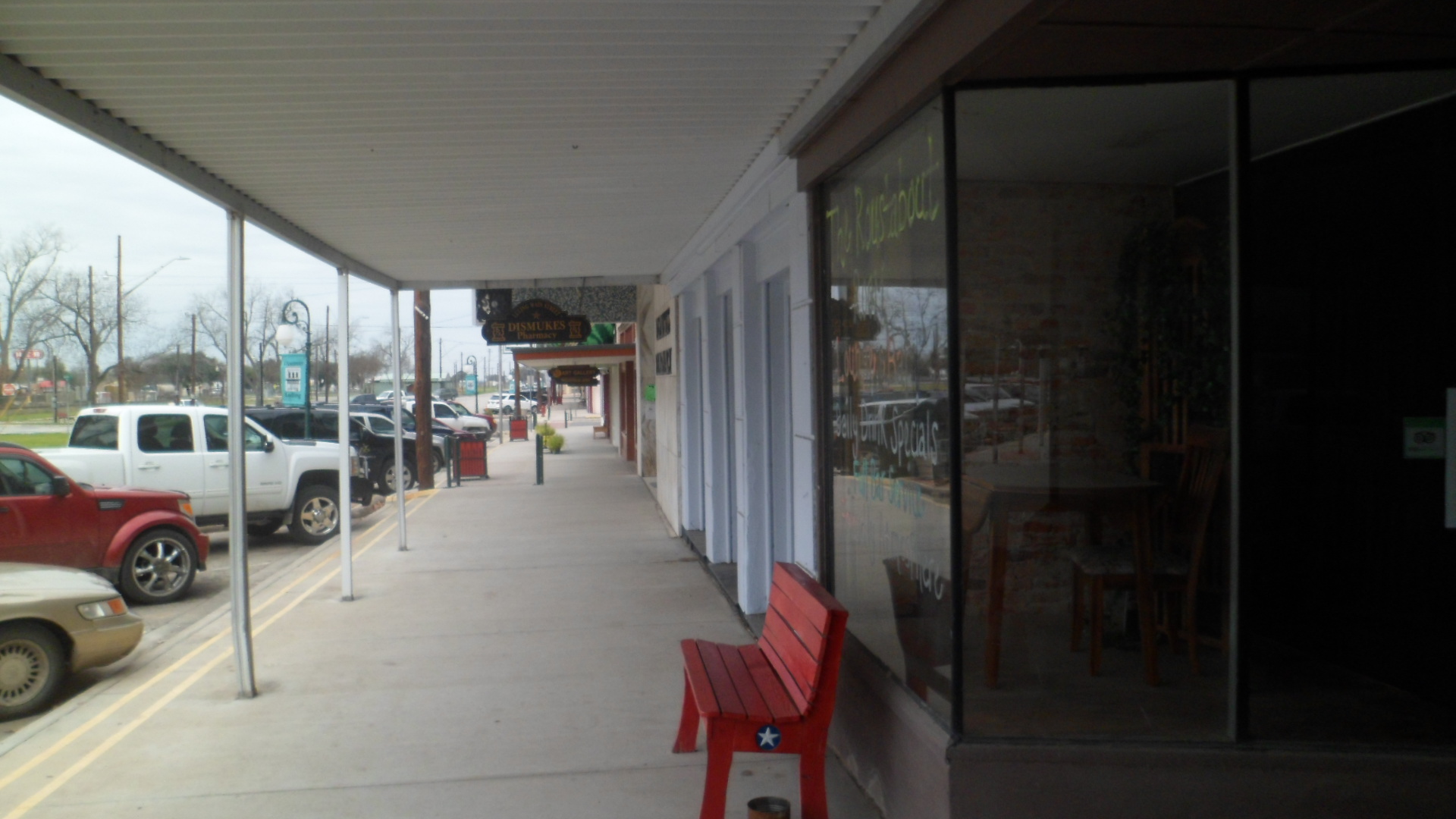
Big Bend National Park is way off the course I set for myself, upon leaving San Antonio, yesterday afternoon. I drove from Lackland AFB to Del Rio, almost without stopping. Uvalde is a nice town, which I visited in 2012, and may again, some day. Del Rio looks worth a few days, but at that point in time, it was rush hour and, even in that small town, things were a bit too congested for my frame of mind. So, onward it was, with a twenty-minute break overlooking the serenity of Amistad Reservoir, just past Comstock. I get the sense that one could meander for a dog’s age, along this section of Rio Grande/Rio Bravo- clear to Langtry, or down to Devils Lake, going the other direction.
When I got to the confluence of the Rio Grande and the Pecos, there was enough light left for a couple of keepsakes.
It was not so, when I pulled into Langtry, the home of the infamous Roy Bean. Everything was shut tight, and ghost towns aren’t much fun in the dark, so the place remains on my to-do list, for sometime between now and the Great Beyond.
I ended Tuesday in the small, “not much here” town of Sanderson, with its five motels, three restaurants (lunch and dinner, and closed at 8) and a sizable Stripes gas station, whose chimichanga and burrito were my 8:45 PM supper. I was grateful for the hospitality at Budget Inn, which offered a tray of snack foods, “just in case they’re all closed”, and a light India-style breakfast of sweet chai, crunchy puffed rice and a biscuit, this morning.
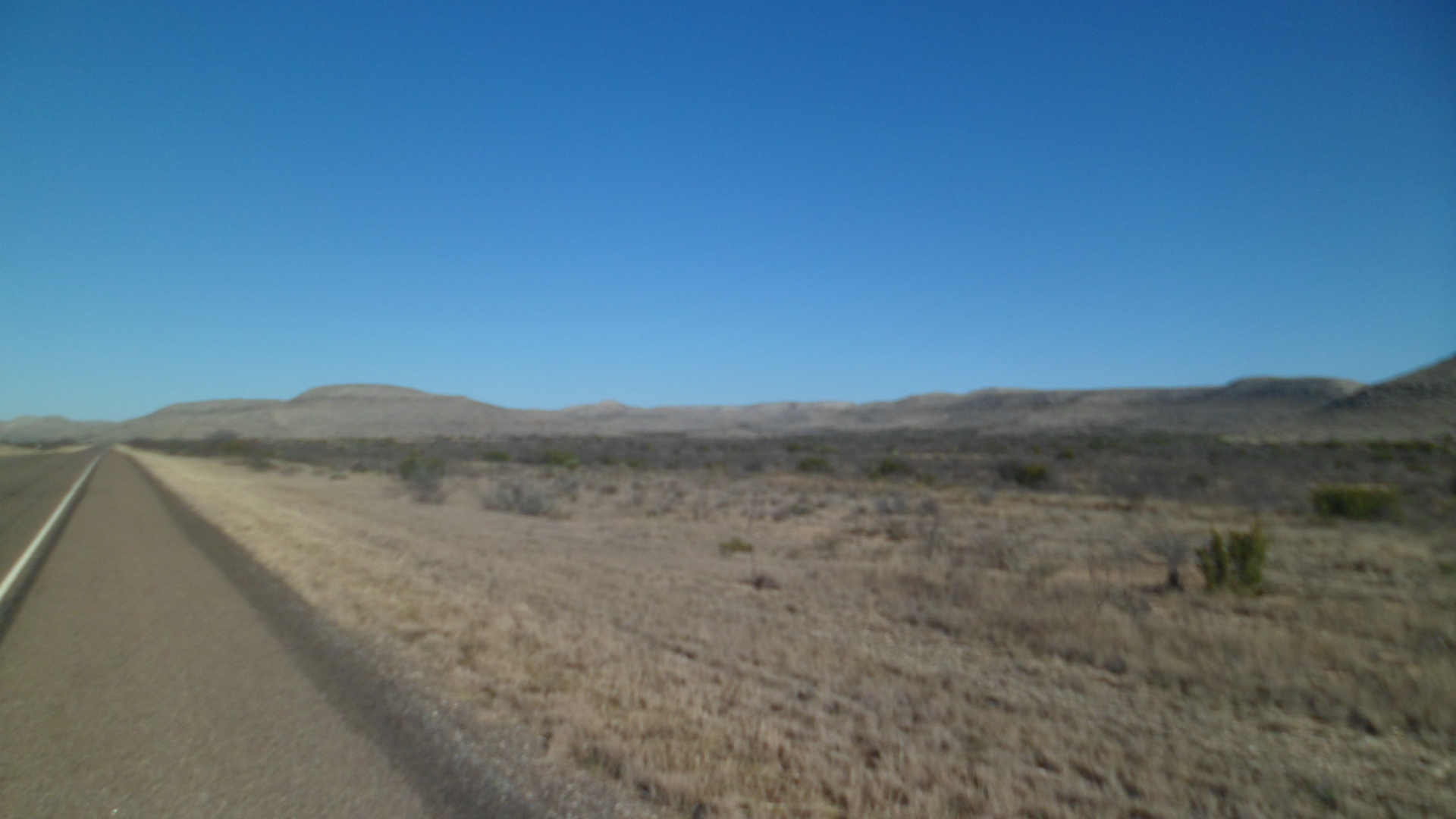
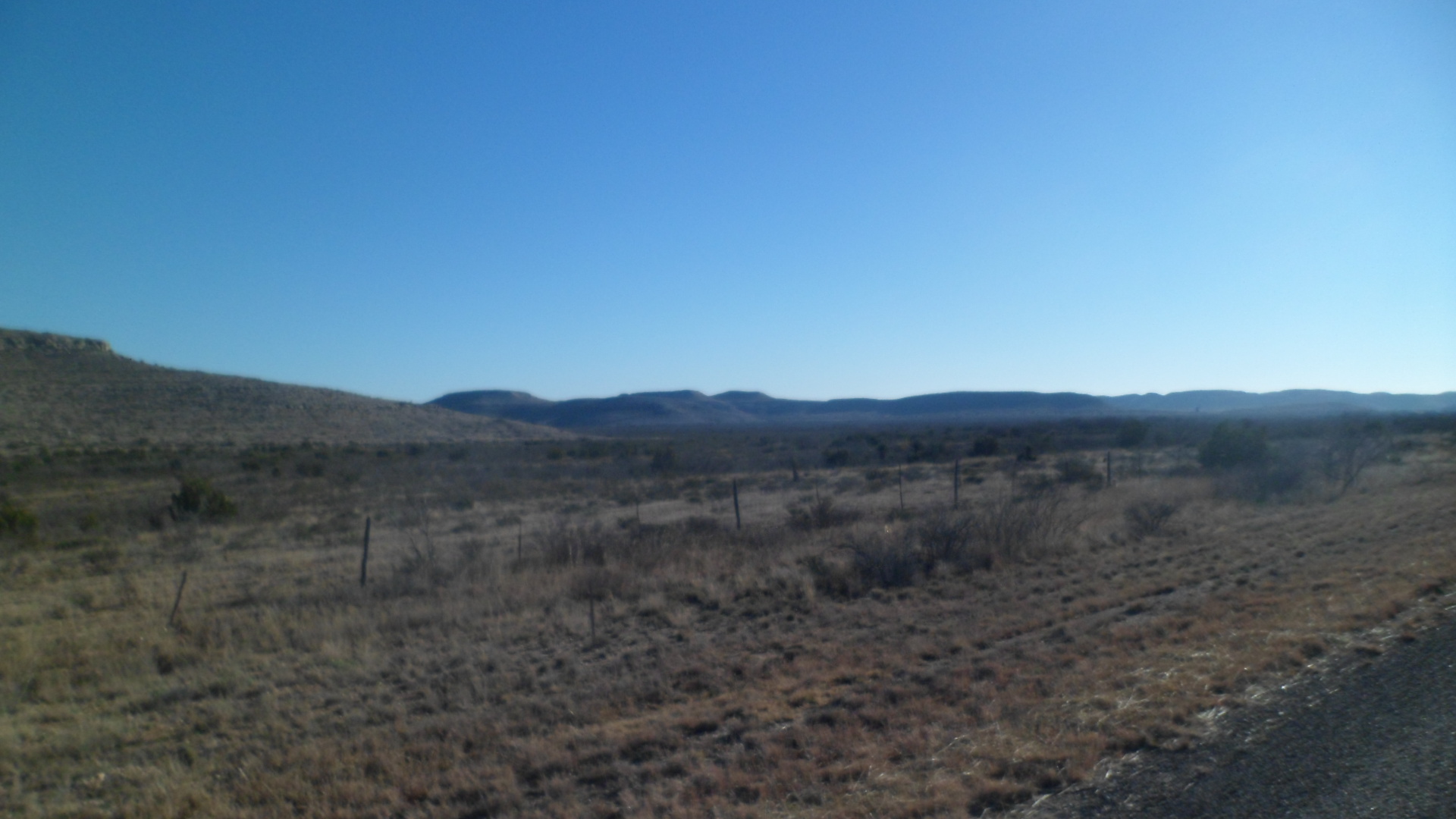
The road west, out of Sanderson, heads across the Chihuahua Desert, towards three unique and artsy towns: Marathon, Alpine and Marfa.
The foothills of the Chisos Mountains loom to the south.
Marathon (MA-ra-thun) is the most traditionally Western of the three, though Alpine has the Cowboy Poets Festival (Feb. 26-28) and Marfa has the supernatural aura.
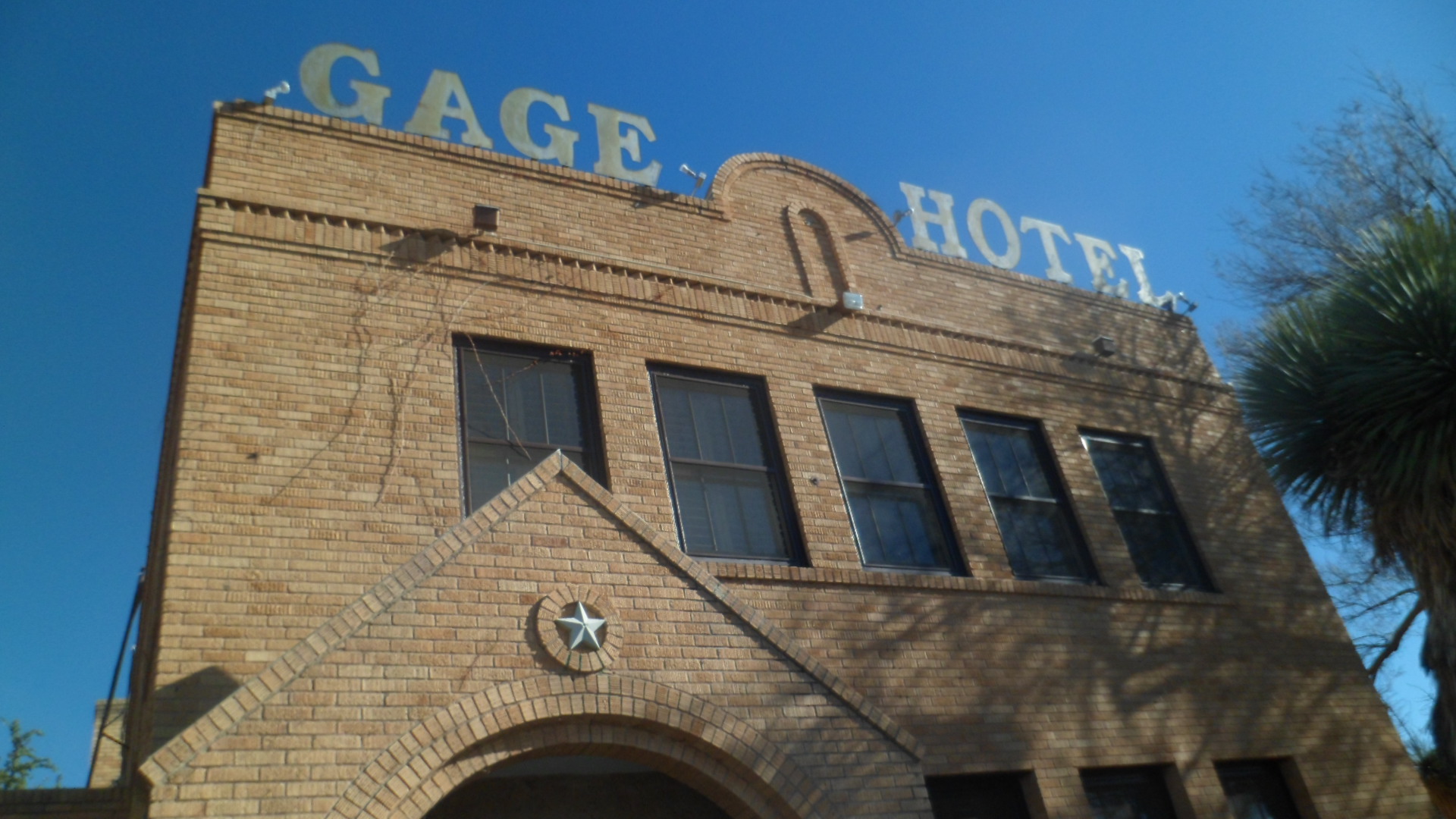
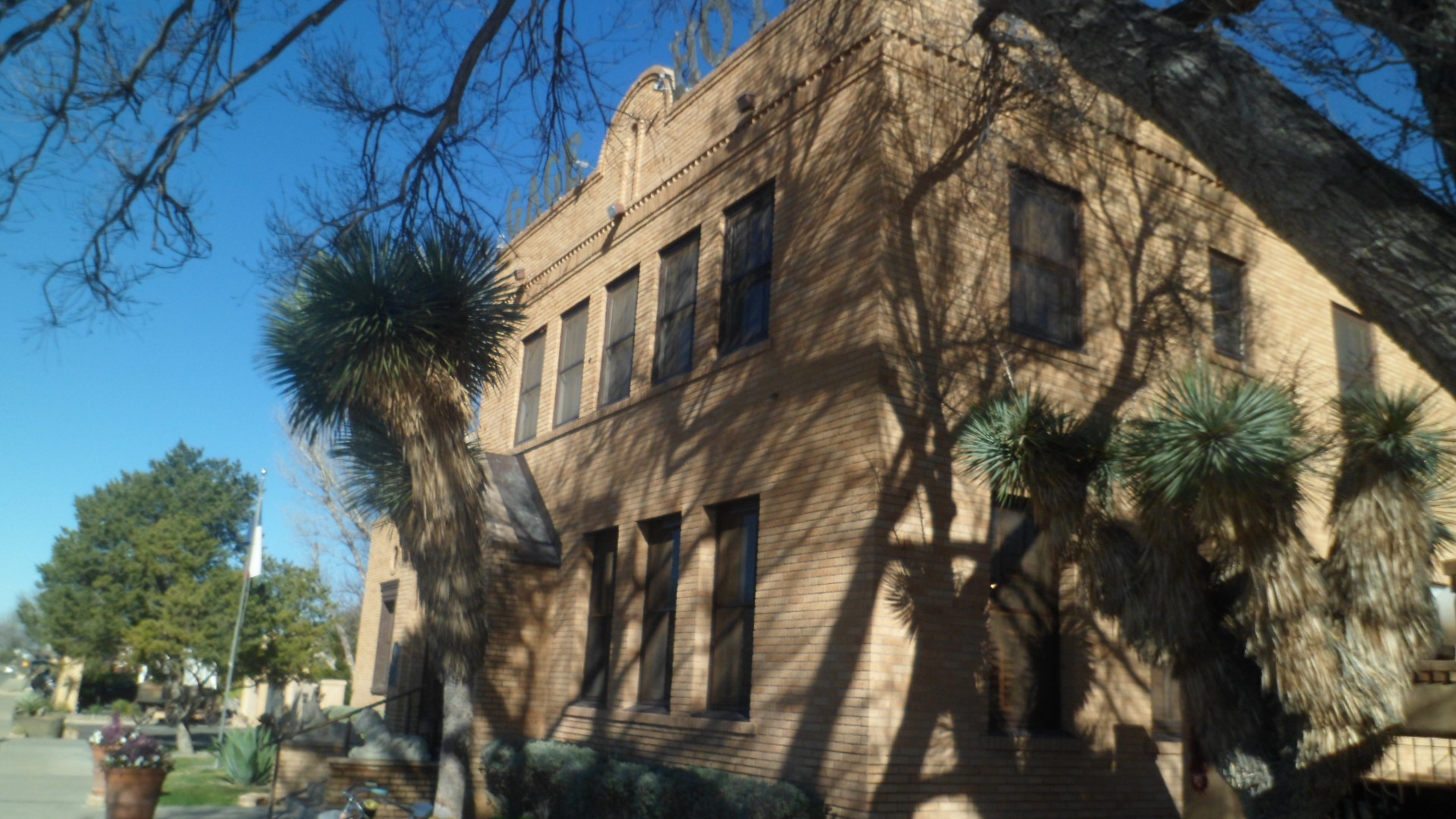
I stopped in Marathon for a sausage biscuit and coffee at Johnny B’s, and a look-see next door, at the Gage Hotel. The welcome at Johnny’s was a hearty “Howdy Do” and about five cups of coffee, in a twenty-minute stool sit.
The Gage is a solid, old-fashioned business hotel, with a satisfied group of return clients, from what I saw this morning.
Alpine, on this Wednesday morning, was all business. Sul Ross State College is the largest institution and employer in town. Lawrence Sullivan Ross was another of those larger-than-life Lone Star figures, associated with the Republic of Texas, the Confederate Army and Texas’ full-blown recovery from Reconstruction. Sul was governor of Texas for two terms, refused a third, and took on the establishment of Texas A & M University. After he passed, in 1898, the Legislature named the University of the Big Bend, in his honour.
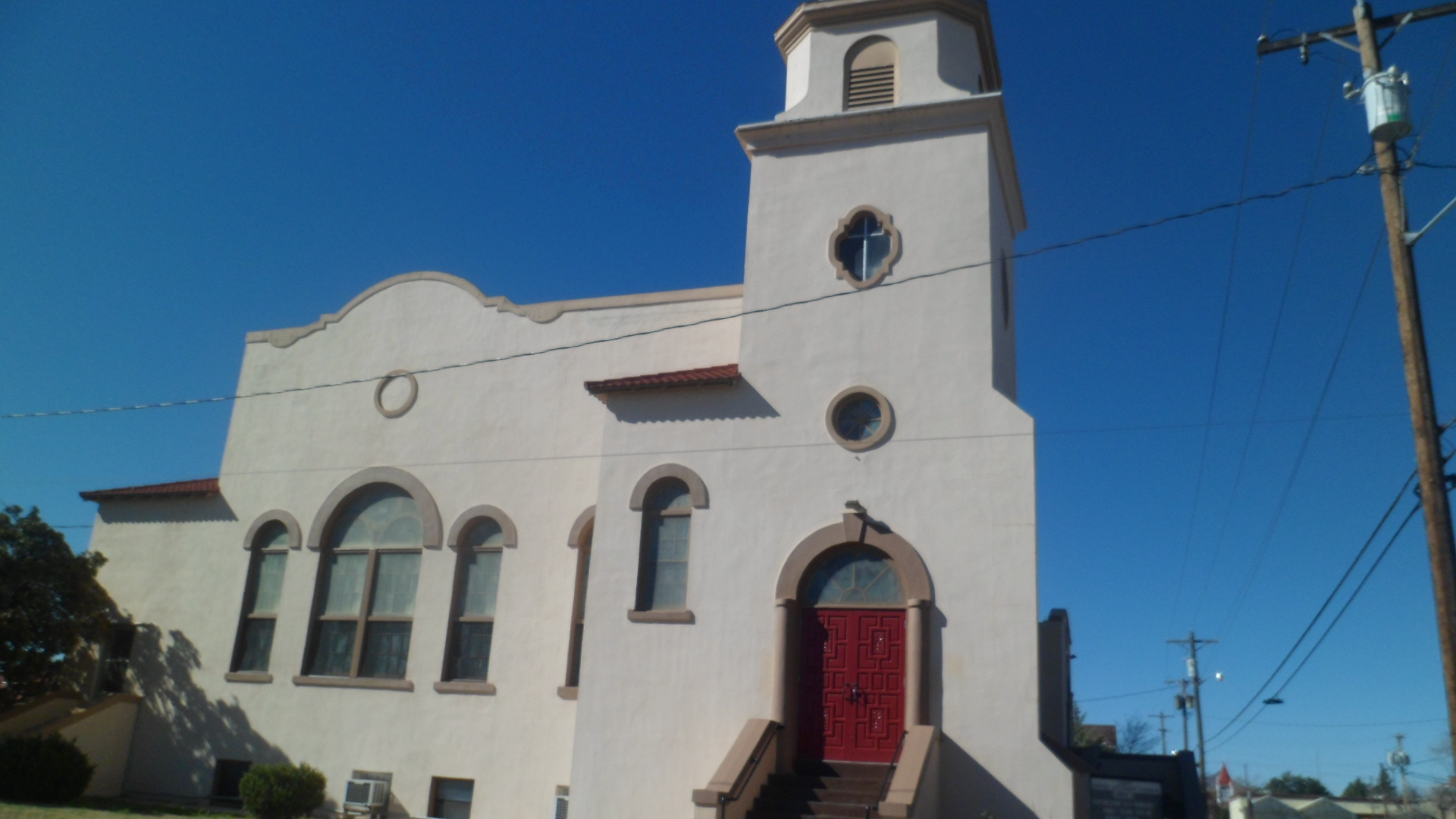
The downtown is dignified by three distinct churches:
Here is First Christian Church.
Down yonder, with the dome, is First Baptist.
Lastly, we find First Methodist,holding down the east side of town.
With all God’s children thus covered, here are a few shots of the commercial side of Alpine.
This edifice offers services for the disabled and abused, with handicrafts programs and a small store for the sale of the products.
I had intentions of taking lunch in Marfa, at the Thunderbird Cafe, which is also a culinary training facility, so I left Alpine and crossed the northern edge of the Chisos.
Marfa’s downtown features El Paisano Hotel, and Presidio County Courthouse. Marfa has an active arts scene, partly inspired by the eerie “Marfa Lights”. It being broad daylight, I set that thought aside. I will be back in this area, for a Big Bend- Fort Davis fortnight, sometime between April and November of 2016. In the meantime, here’s Marfa.
El Paisano Hotel was founded by Trost and Trost, in 1930. It served as James Dean’s stomping ground, during the making of the film, “Giant”, in 1955.
Even though Alpine holds the Cowboy Poets Gathering, Marfa gives it a good boost. Out here, neighbours are neighbourly.
Presidio County Courthouse’s dome may be seen fifty miles out, on a clear day, or so the tale goes.
First Christian Church is content to be seen from the edge of its own street.
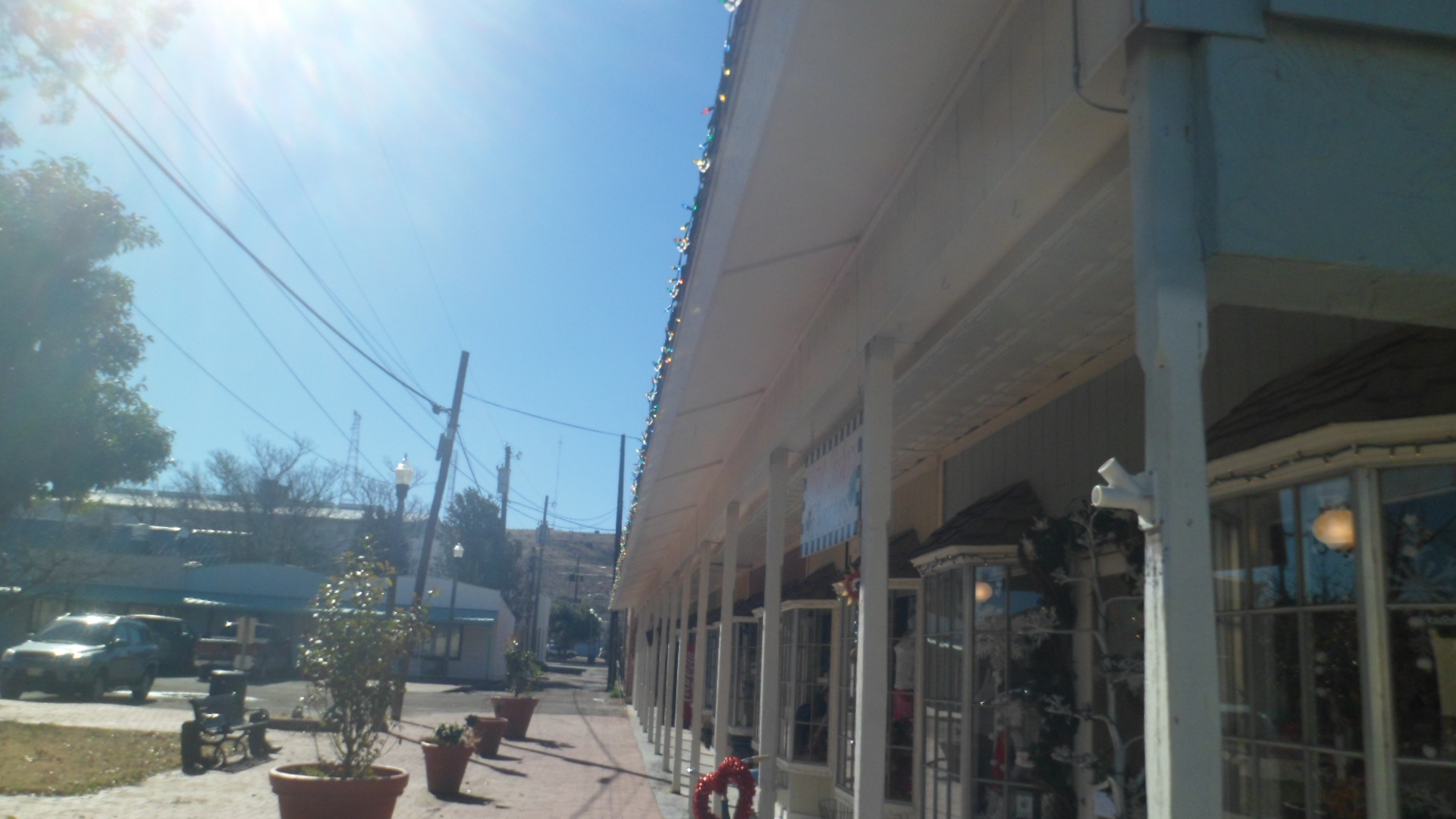
Downtown Marfa has several fine old Art-Deco buildings, along its main drag.
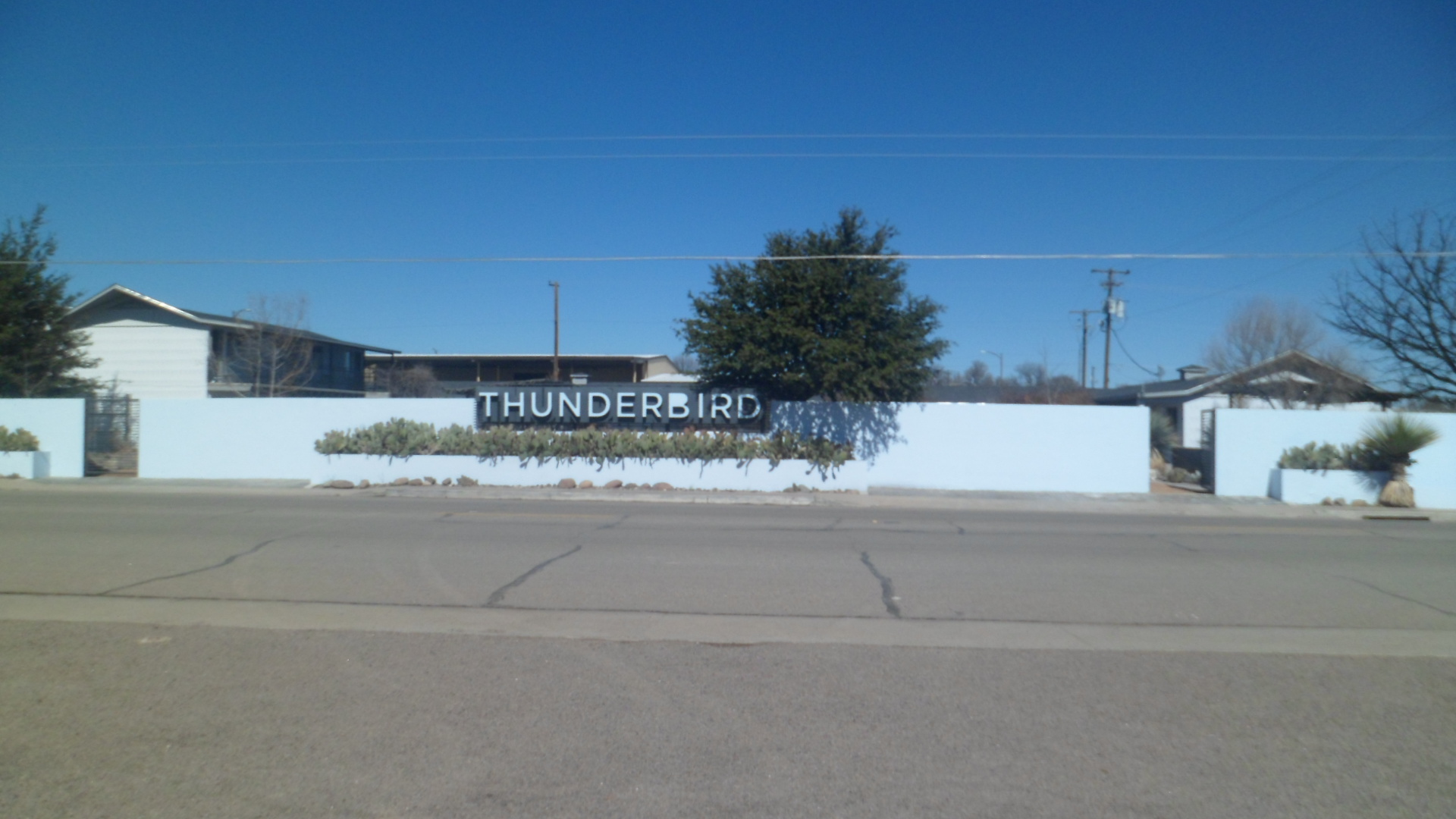
The Thunderbird is a restored business hotel, and has the town’s most dependable lunch spot, the culinary institute. It is unsigned, but for a small rectangle saying “Lunch”.
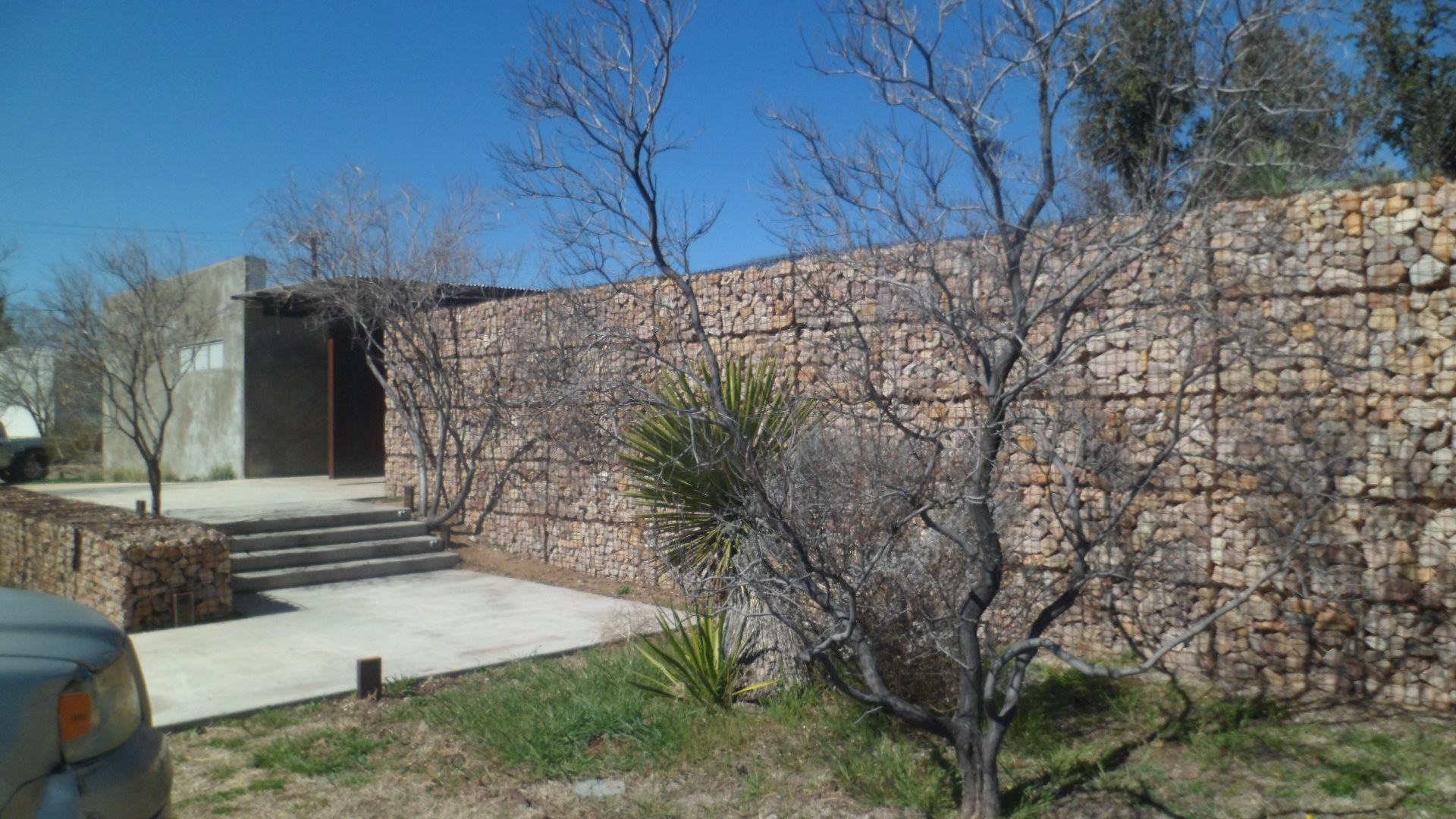
The institute is across the street from the above hotel sign. The entry is one block south, behind this creative wall of native stone.
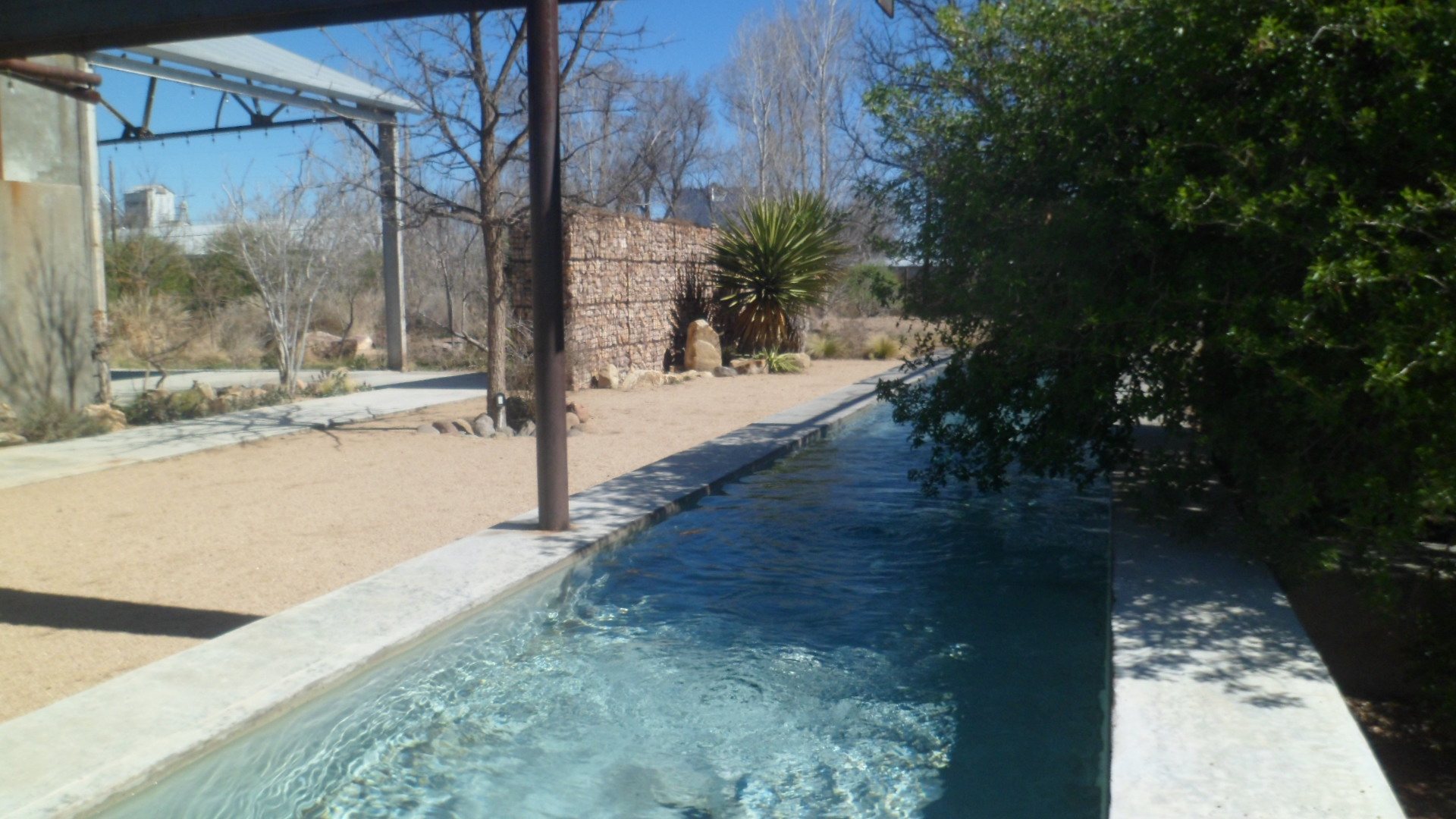
The courtyard was filled with appreciative locals, with whom I enjoyed lovely deli items and nouvelle-Mexican cuisine. The pulled pork reuben was a marvel, and definitely worthy of both the time it took to prepare and the $ 11. 00 price.
Yes, I will definitely be back this way. Home was calling though, so I did the rest of the way, to Van Horn, through El Paso, Las Cruces, Deming and Lordsburg, in short order- which meant four hours. Dinner was at another gem- La Casita, in Thatcher, AZ.
I felt at home, sitting at the counter as the booths and tables were full. The take-out trade was also fast and furious. La Casita’s food is that good. I was touched that the owner gave each of his waitresses a break, with fried ice cream as a treat. I filed that item in my head, in case I get back here during a lunch hour.
The rest of my jaunt homeward took three hours, so by 11:30, the quixotic and chaotic were done, for another few weeks, at least.
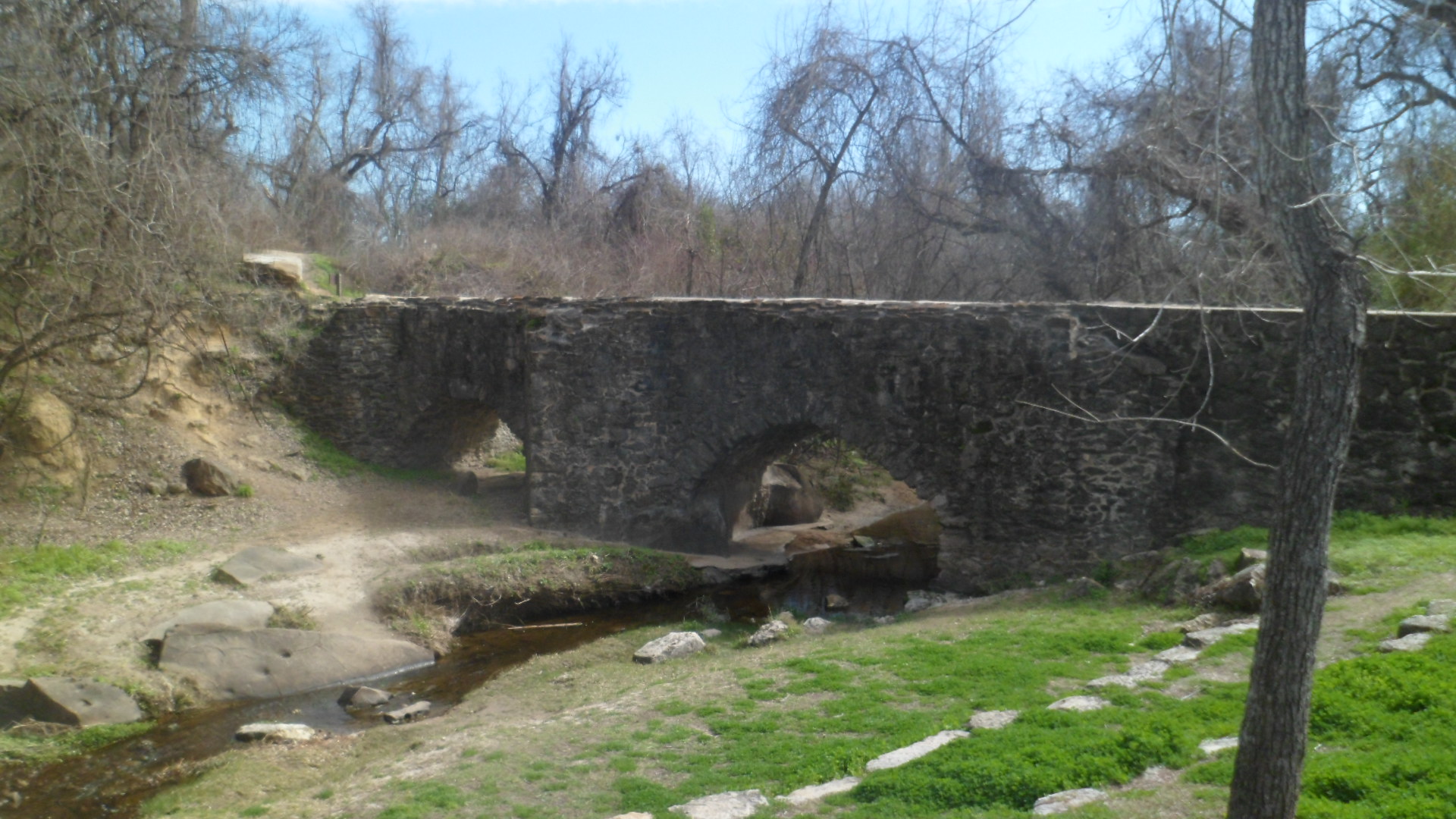
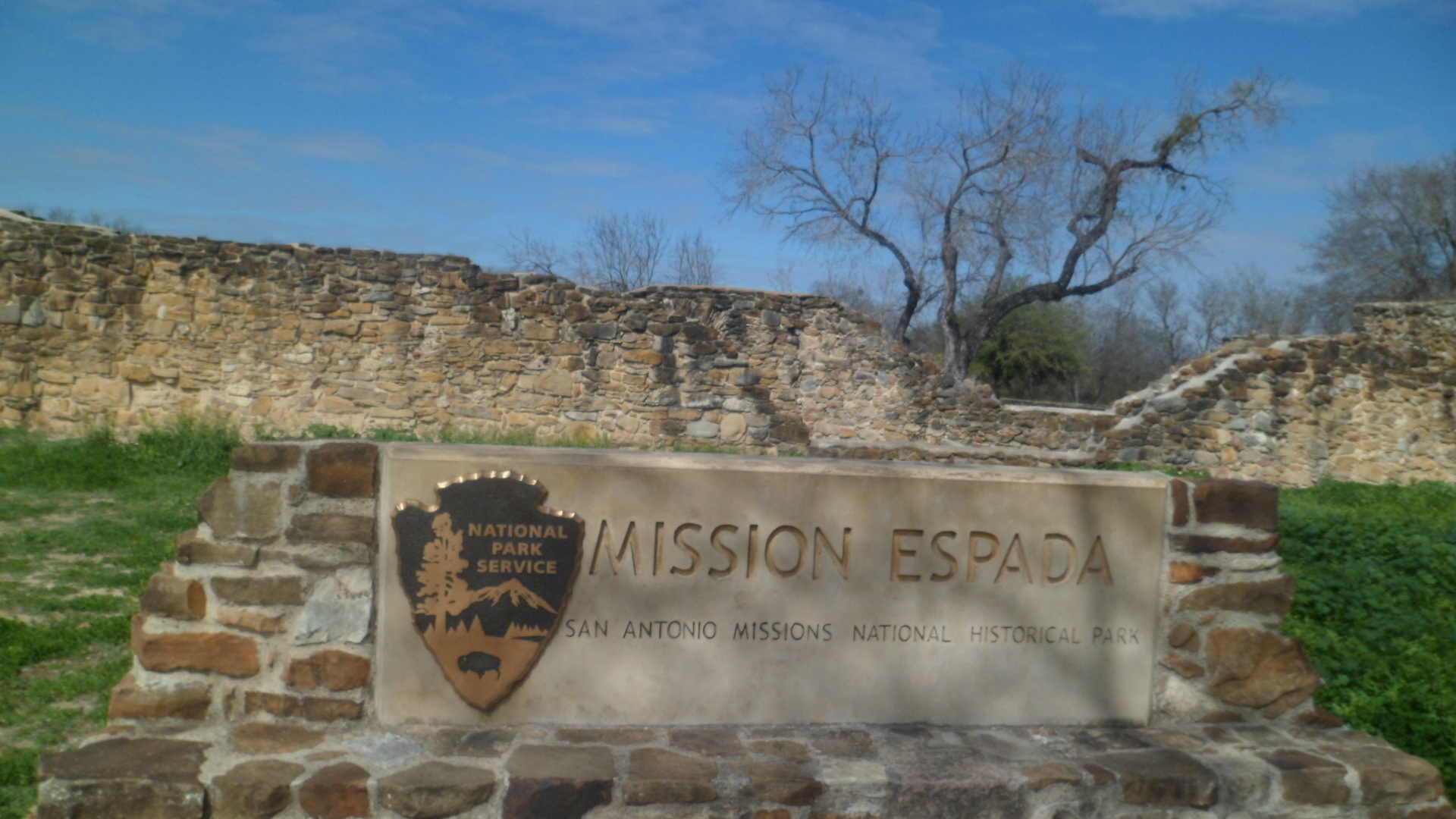
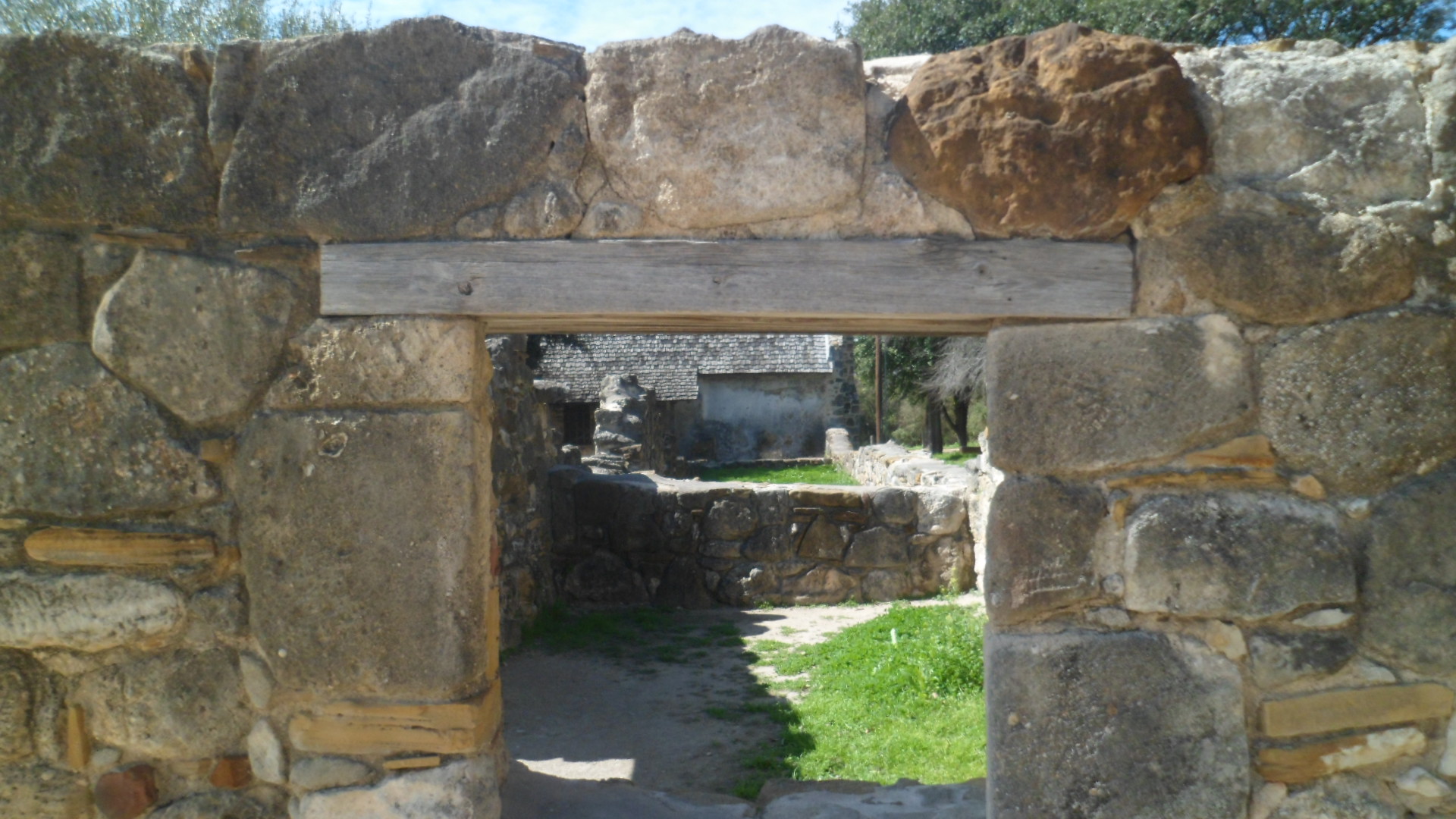
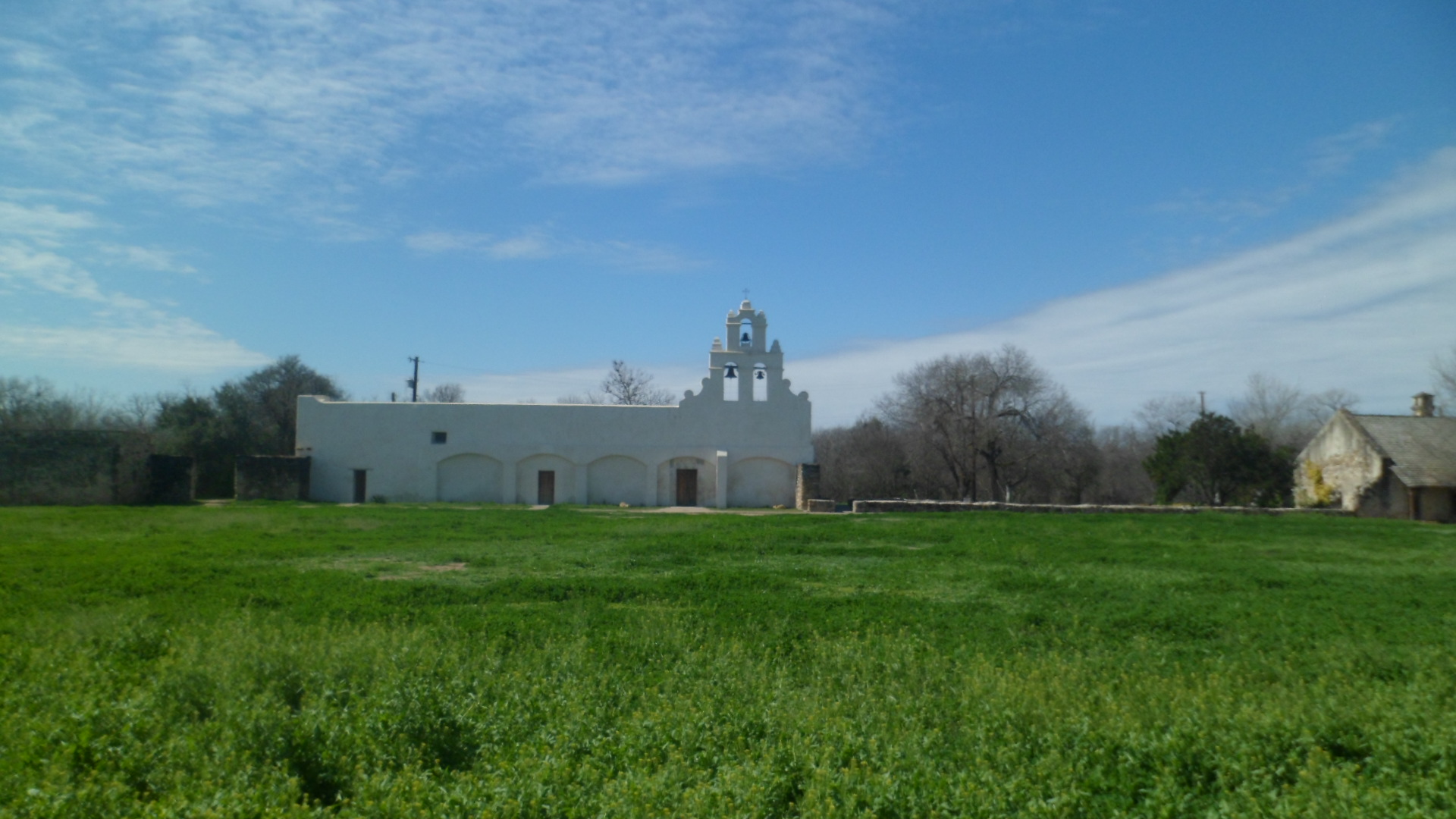
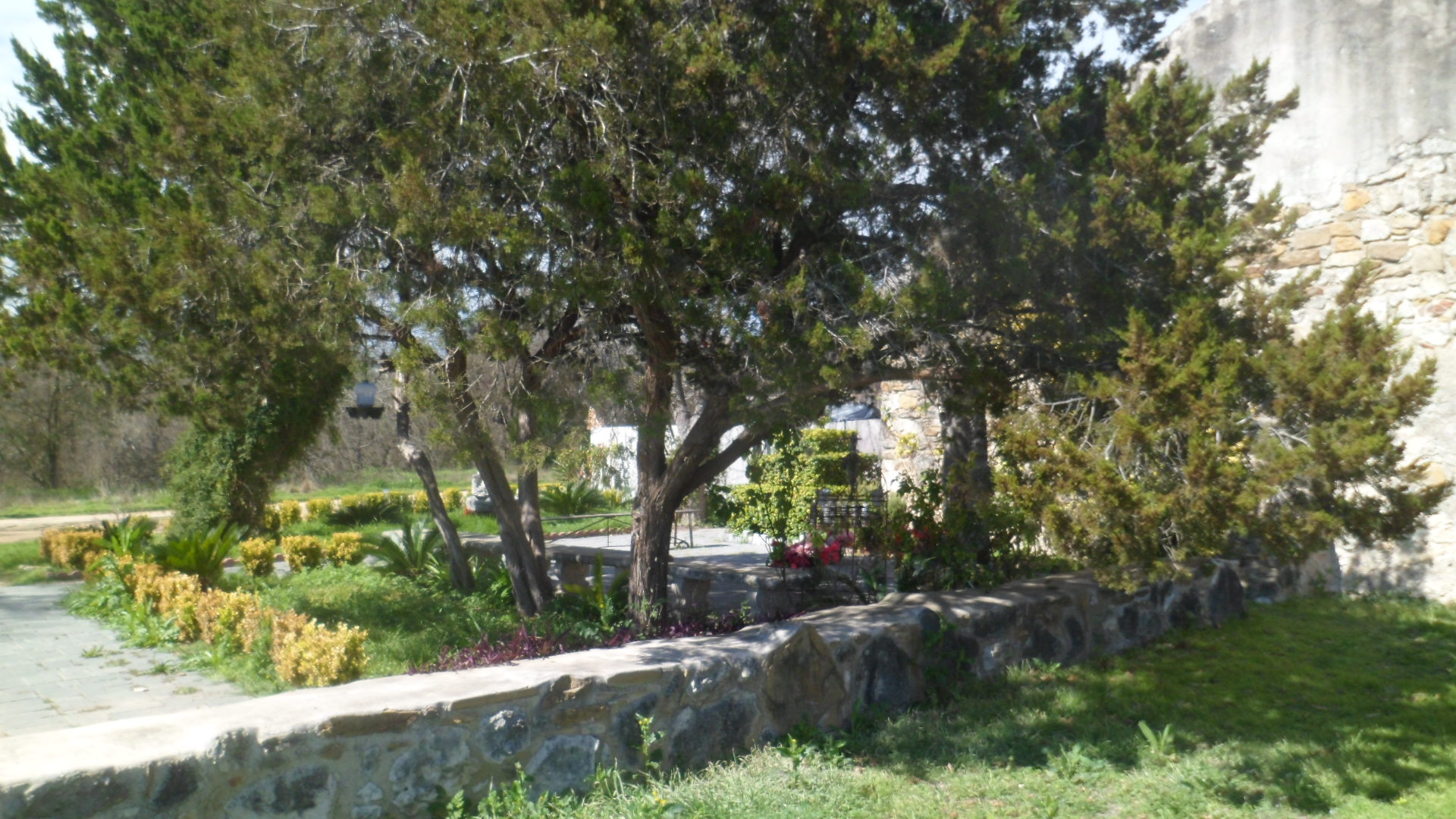
One must want to visit Mission San Francisco de la Espada, much as one must want to visit Death Valley, Key West or the Upper Peninsula of Michigan. I’m overstating, of course, but Espada is well out of the way of even its nearest neighbour, among the San Antonio Missions: San Juan Capistrano. To get to Espada, I drove past the southward extension of San Antonio Riverwalk, to the Espada Aqueduct, which waters the southernmost of San Antonio’s mission communities. From the Aqueduct, it is about three miles further to the Mission. The drive is worth every inch. I stopped briefly at Espada Dam and Acequia Park, near the southern end of Riverwalk. Several bicyclists and runners were enjoying the area, as were Canadian geese and these serene ducks.
The Aqueduct, however, was totally deserted and silent.
I arrived at the Mission about fifteen minutes later. A family was just concluding a funeral service, in the community building, so I kept a quiet profile and focused on the western sector of the grounds. The people seemed surprised to see a Gringo, but there are signs warning “Leave no valuables in your car. Break-ins have occurred.” This group seemed to me to be quite otherwise engaged, though I keep my car locked, electronically, anywhere I am.
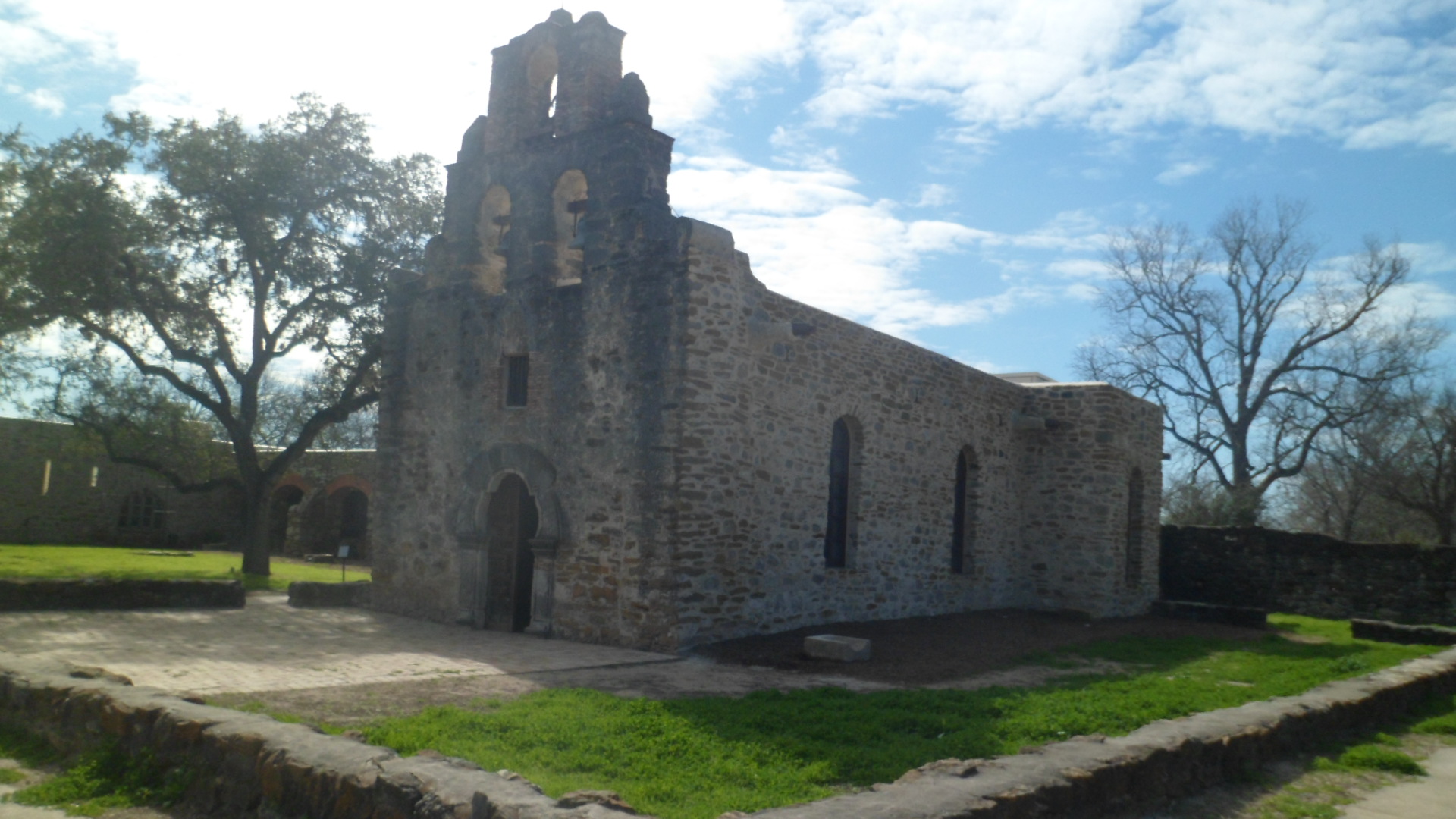
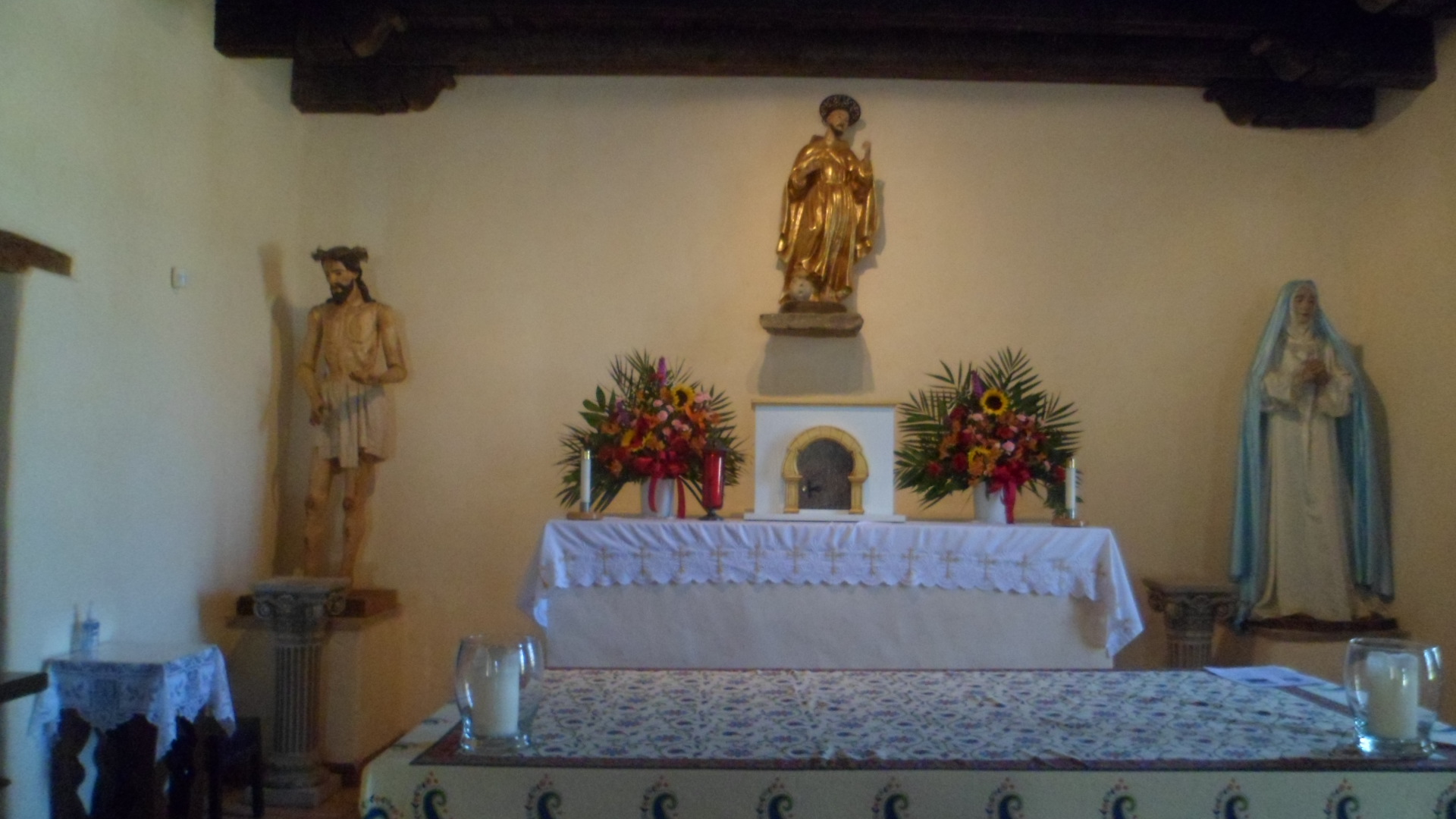
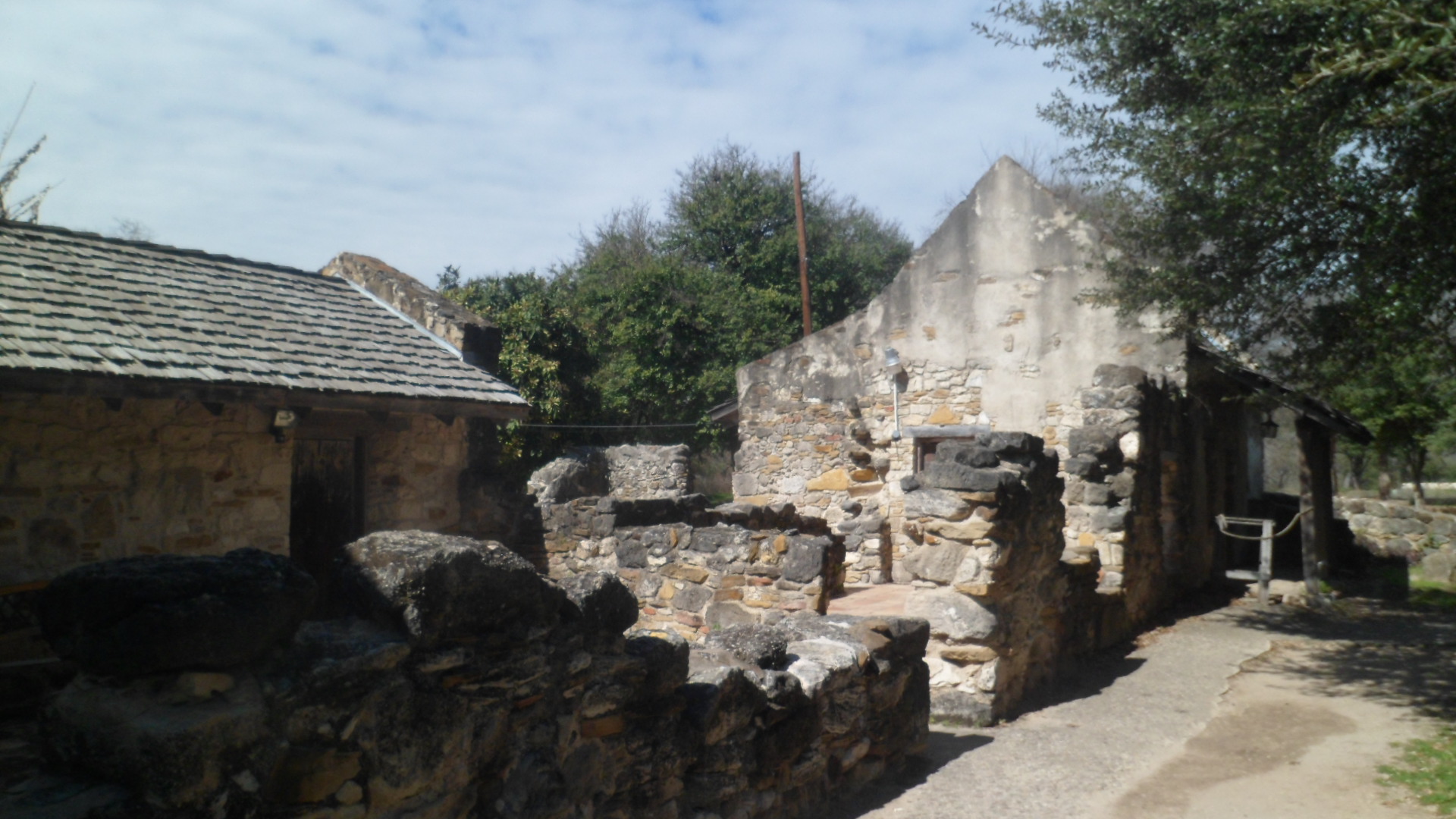
I was immediately struck by the solitary nature of the church and by the fact that the mission has an active school, which has in fact been its distinguishing feature. It has been Espada which has provided the lion’s share of education and training for the Coahuiltecans of southern San Antonio.
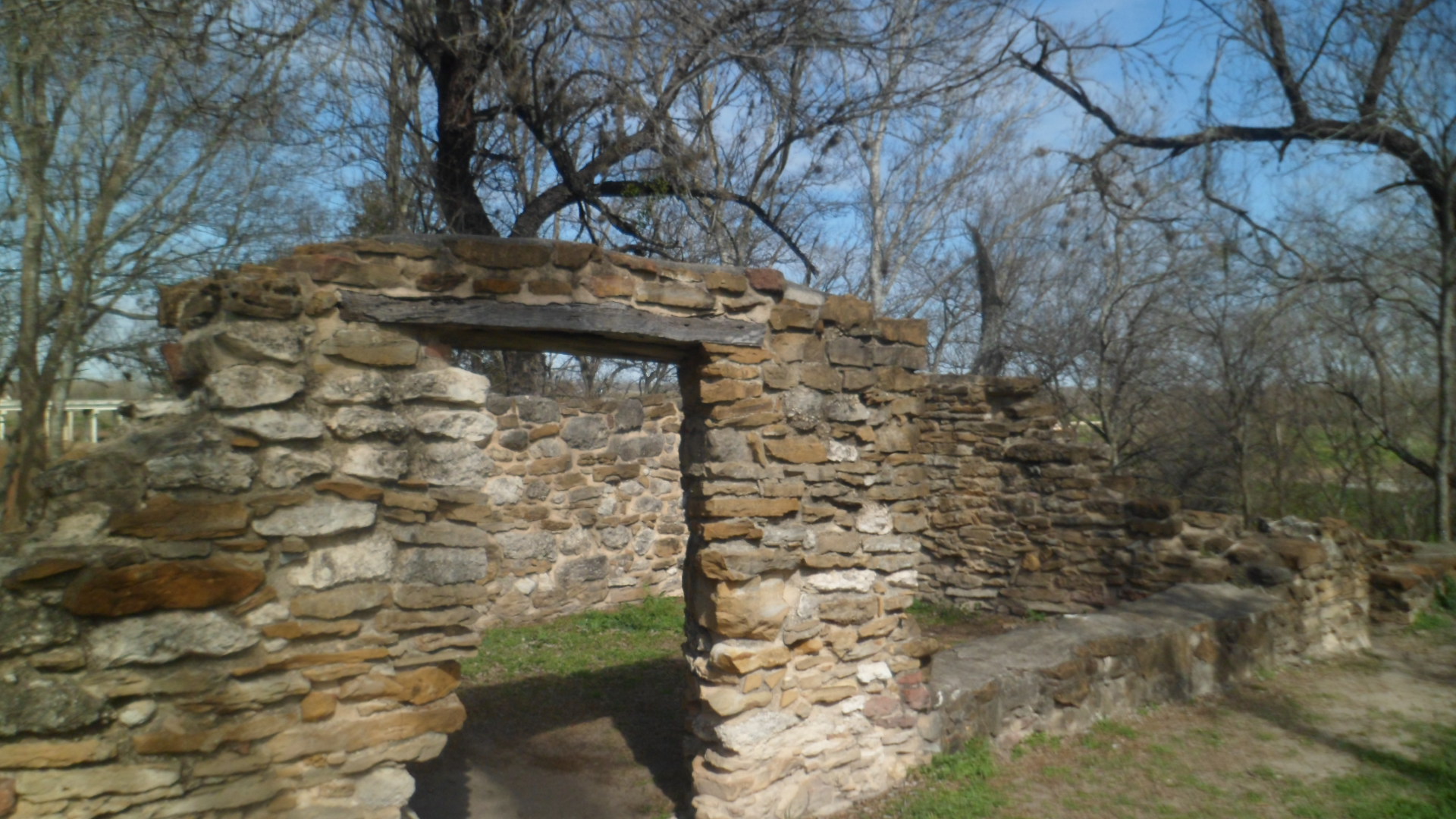
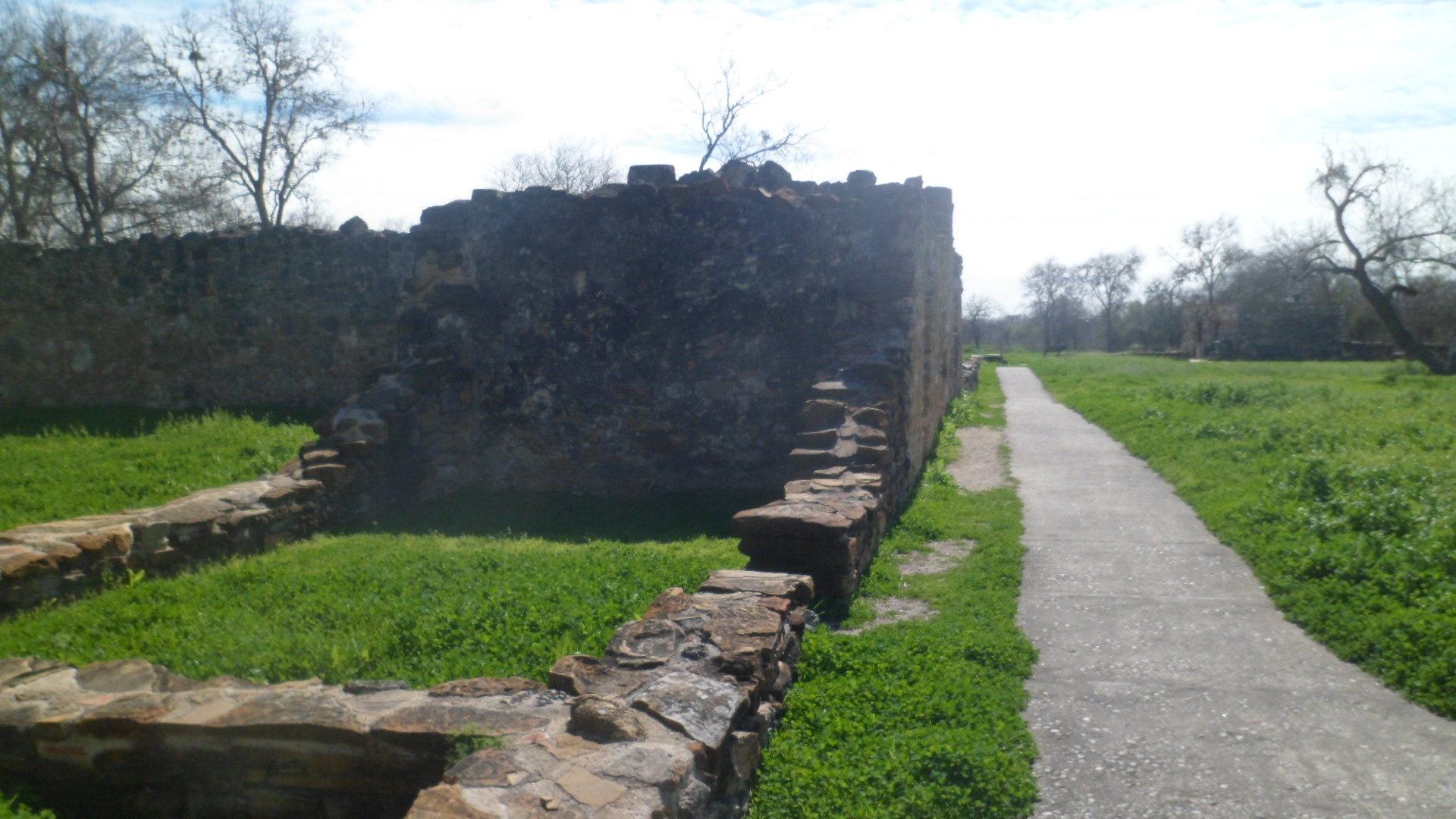
There are ruins of the small presidio, south of the church. Espada was not on the main route of the marauding tribes, so fewer soldiers were needed. The ranch which sustained the mission was another 20 or so “leagues” to the south, making it less attractive a target, still.
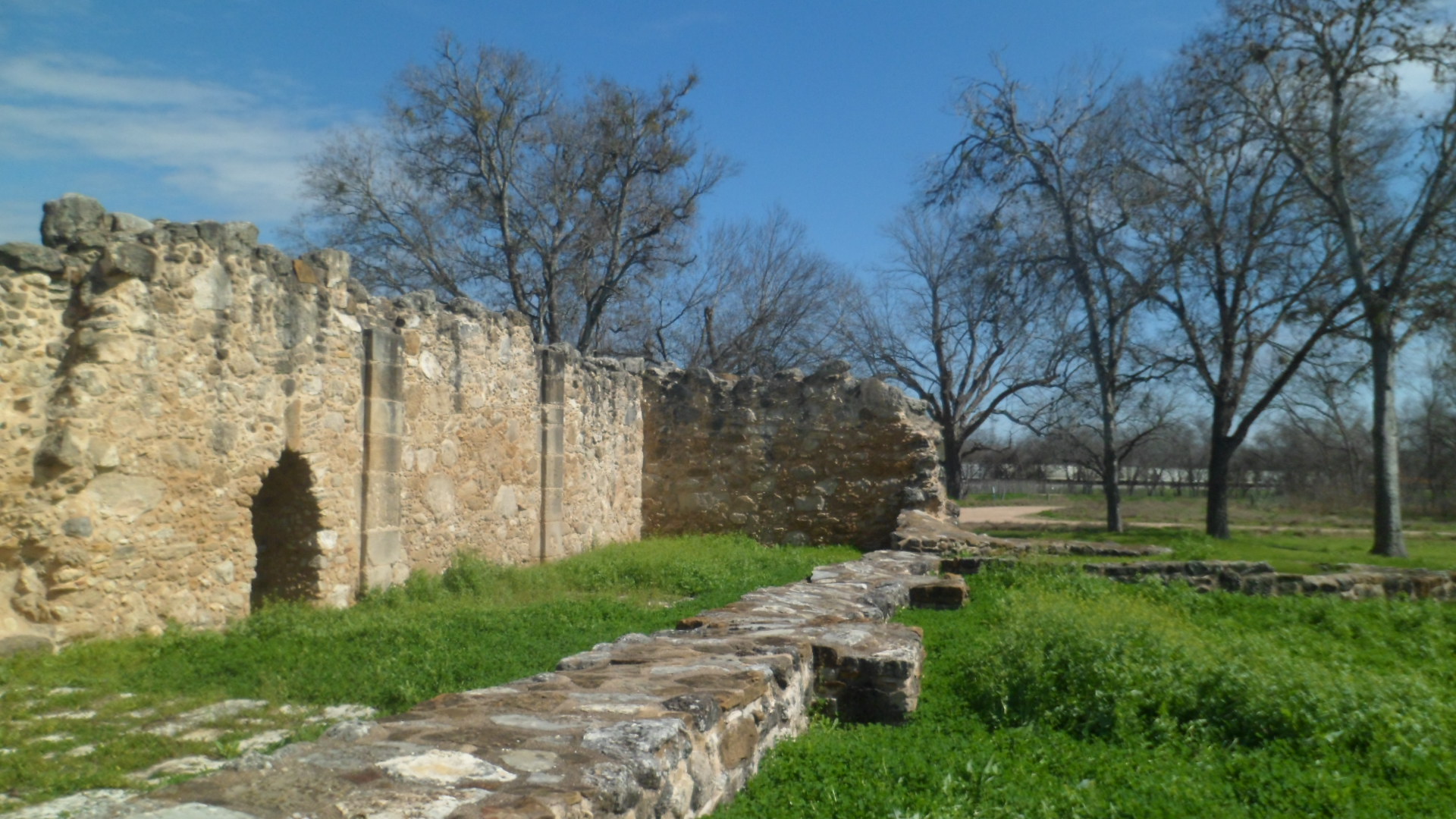
The original church was in the center of the mission grounds. It was destroyed by a kitchen fire in 1826.
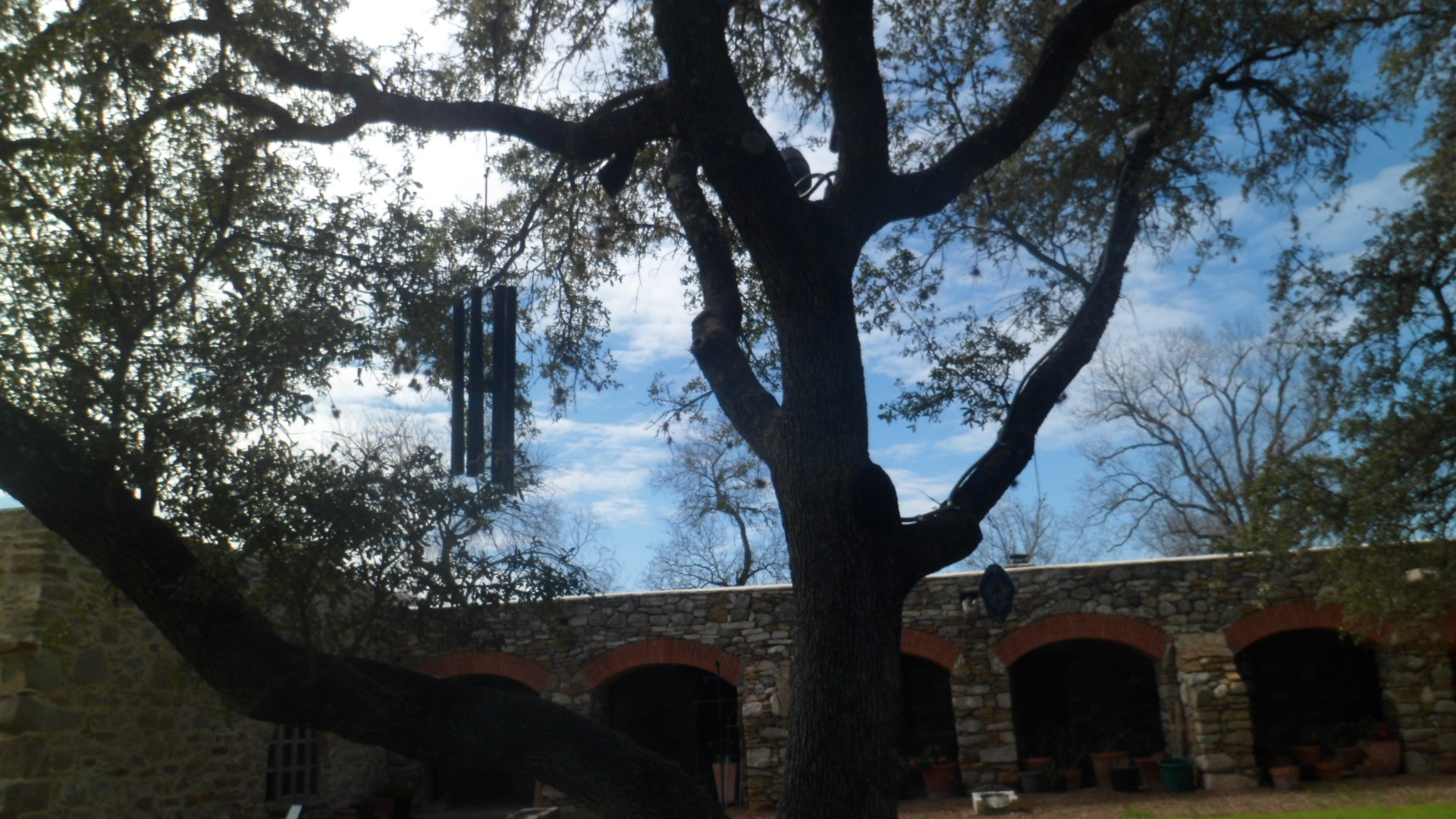
The chimes which gave the location its name still hang in front of the Convento.
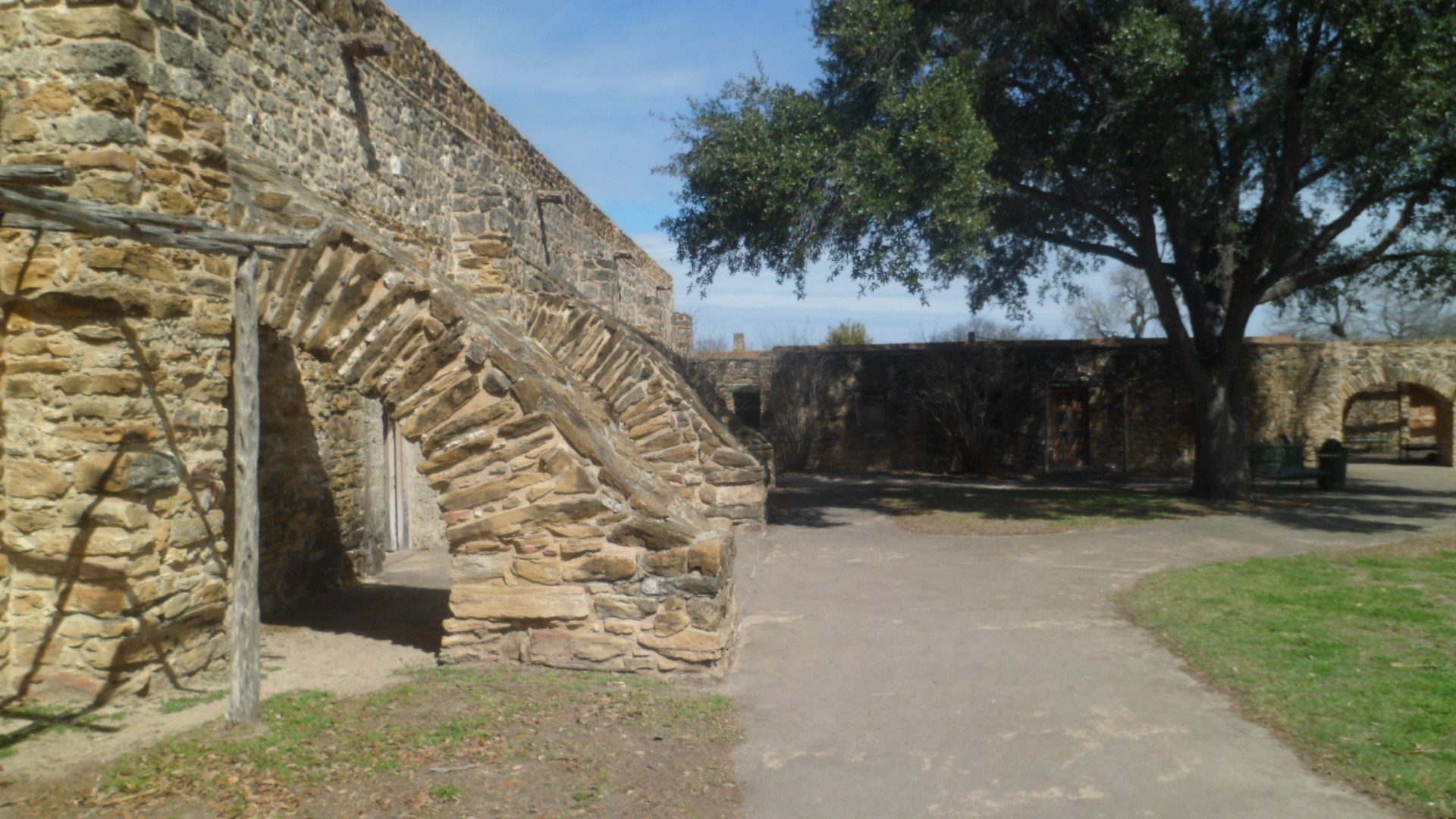
The granary survived the fire of 1826, mainly because it was nearly empty after a rare Comanche raid that year.
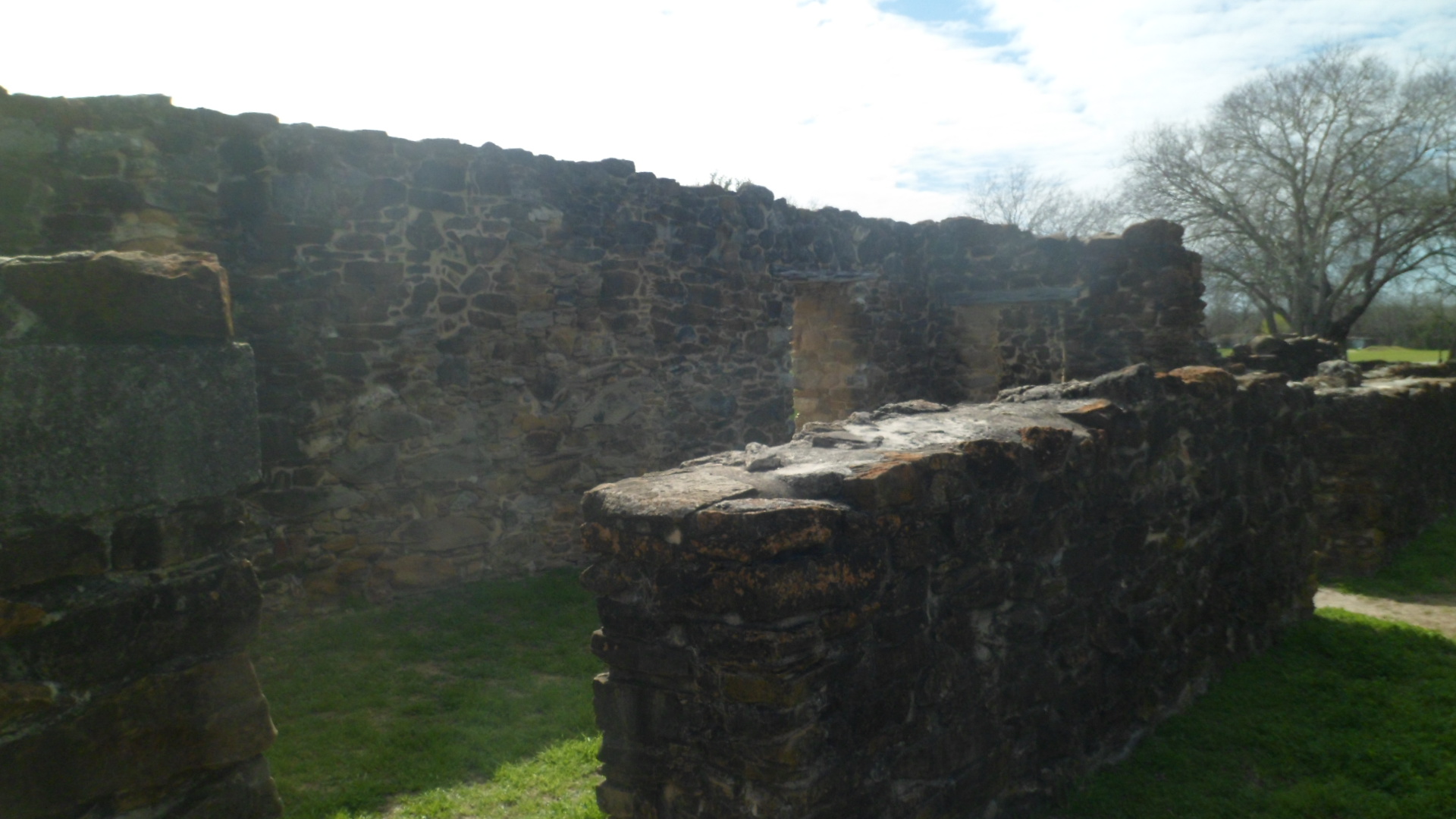
Other buildings were not so fortunate.
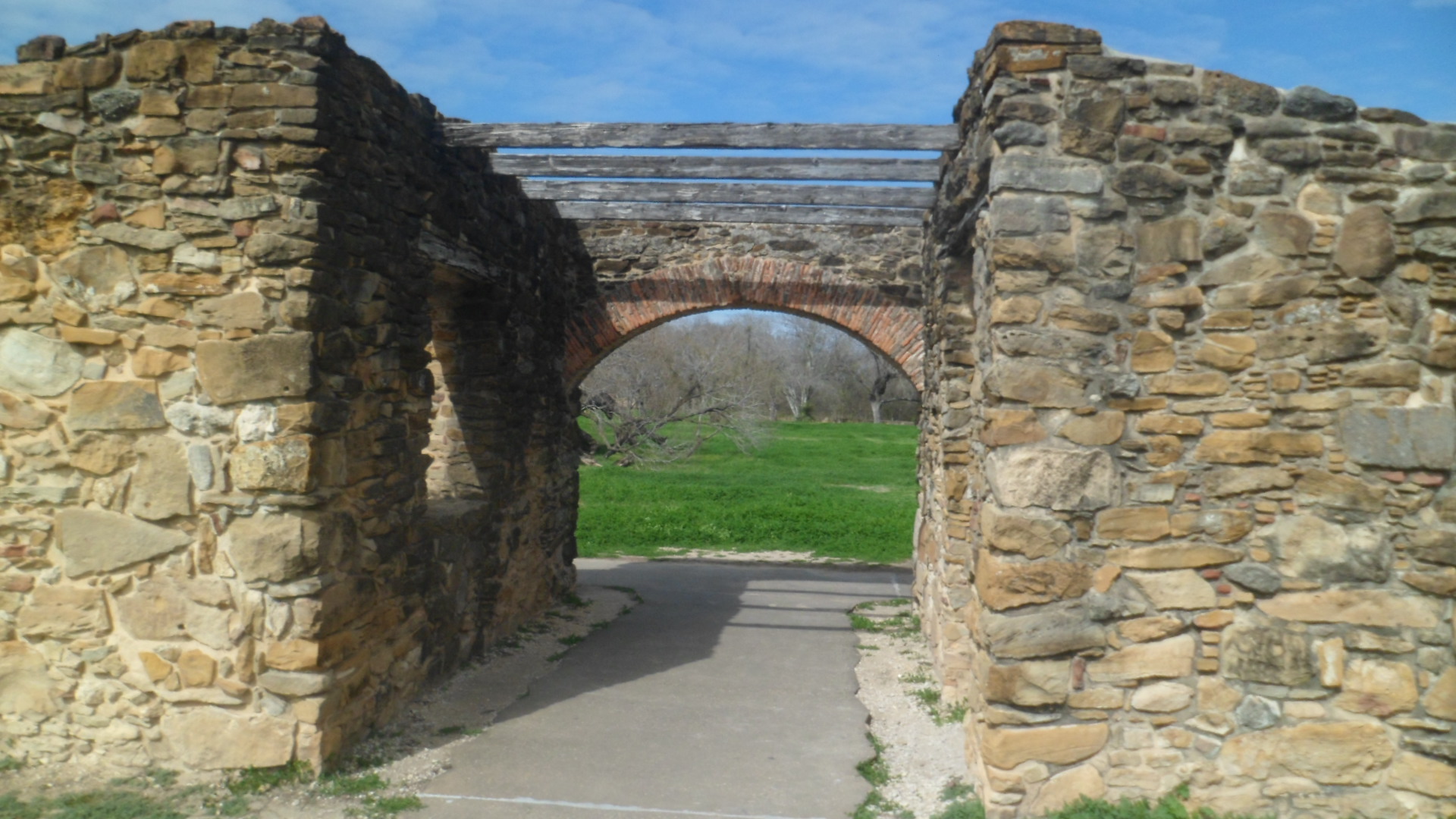
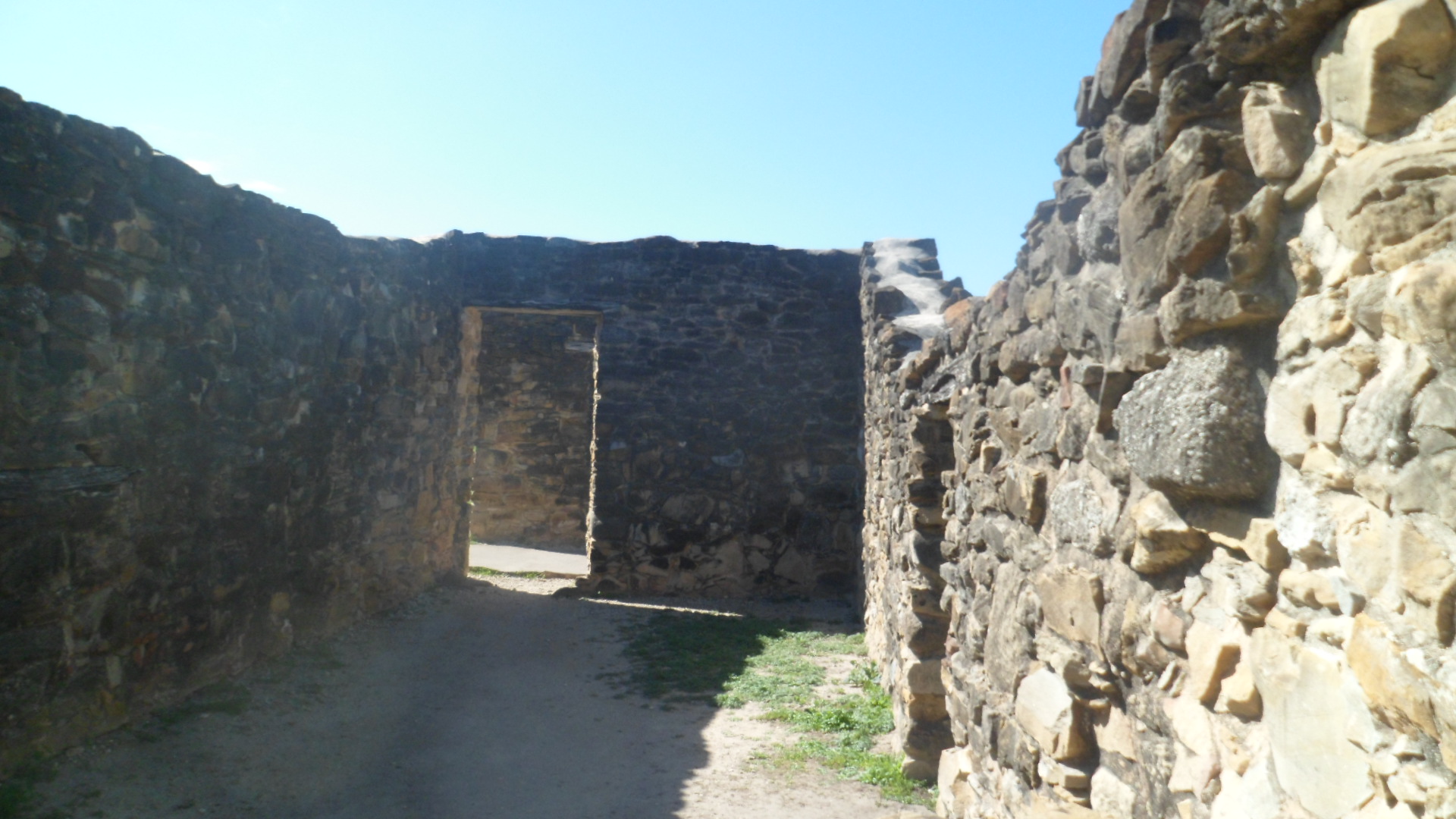
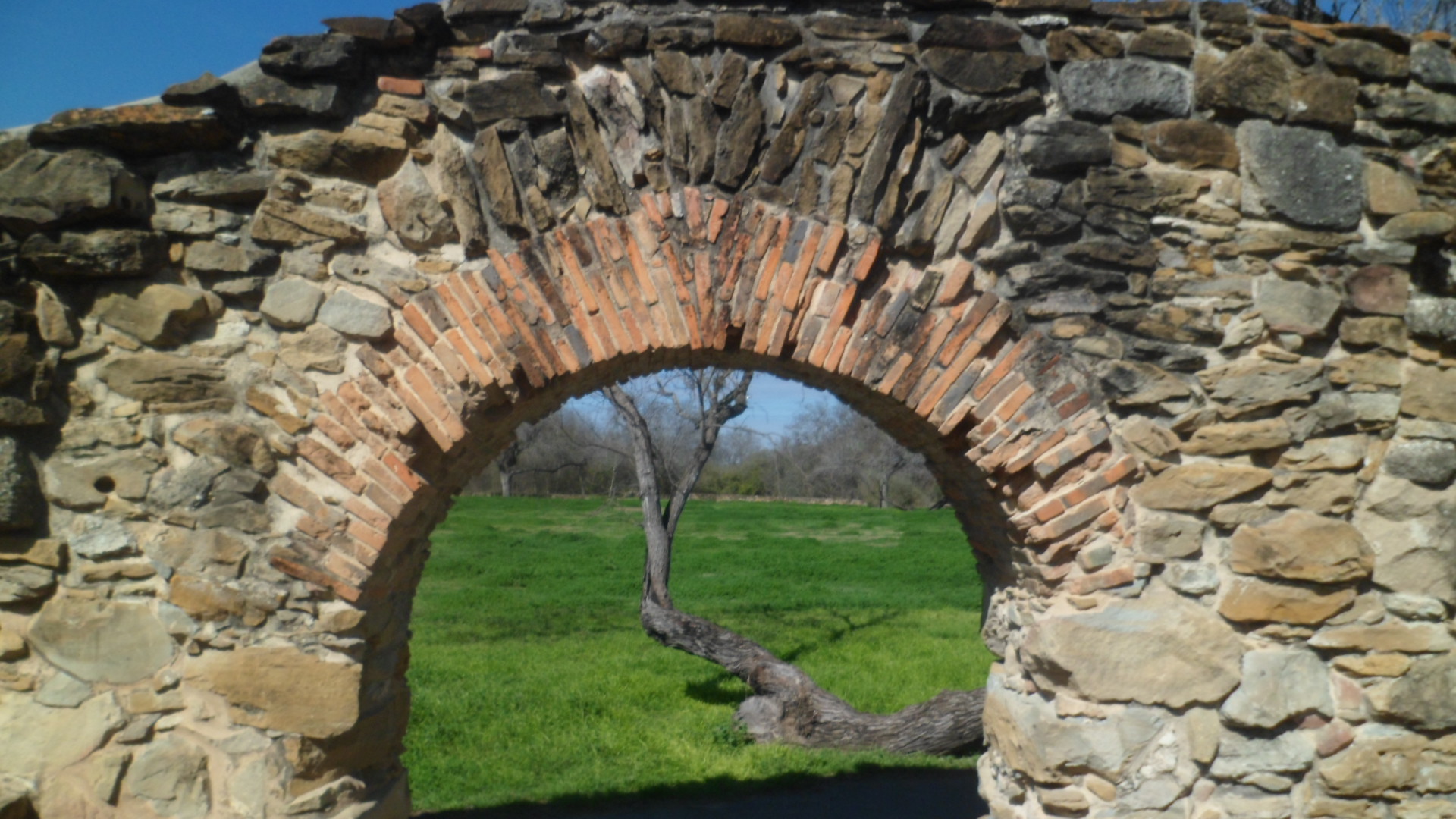
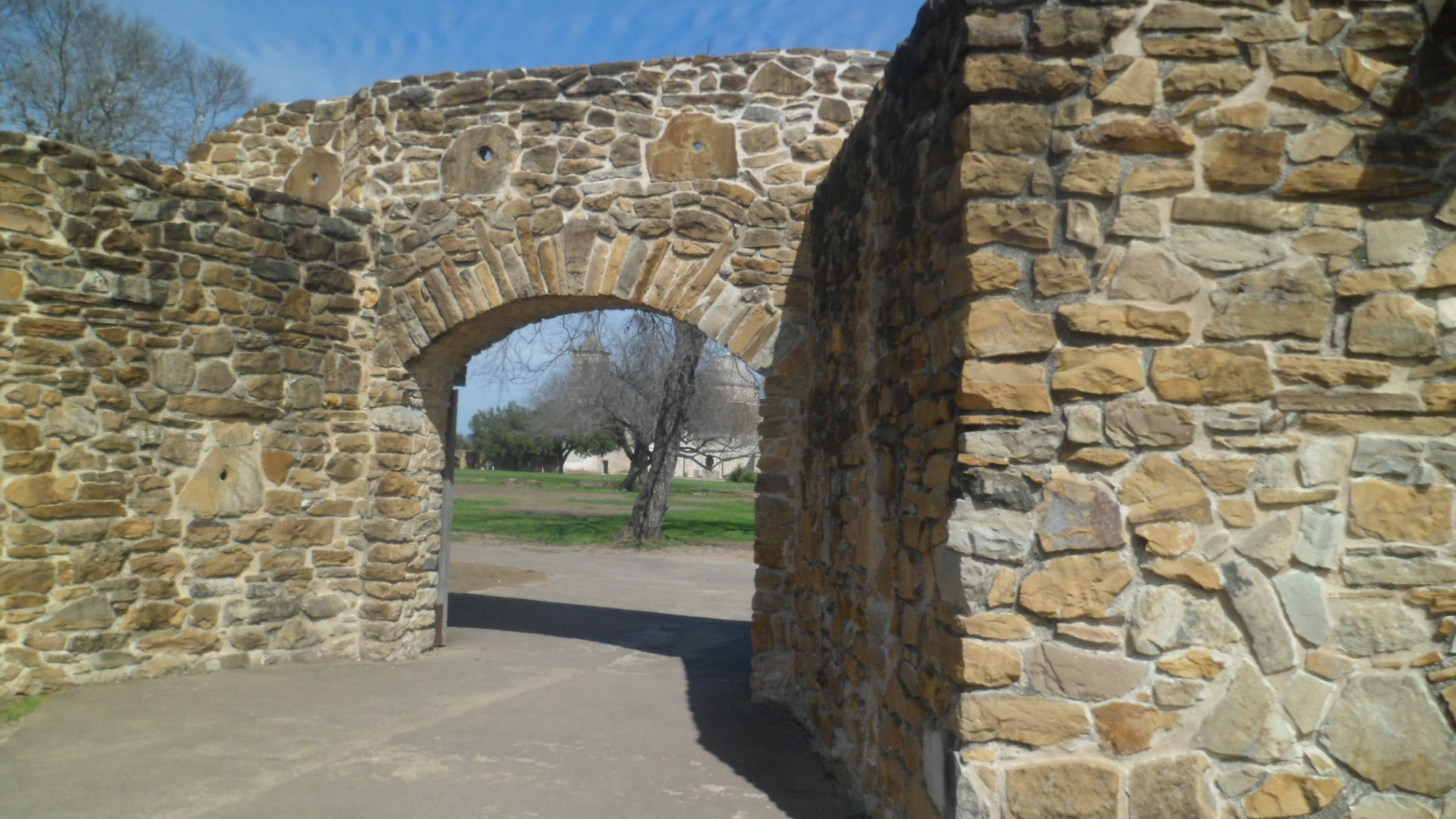
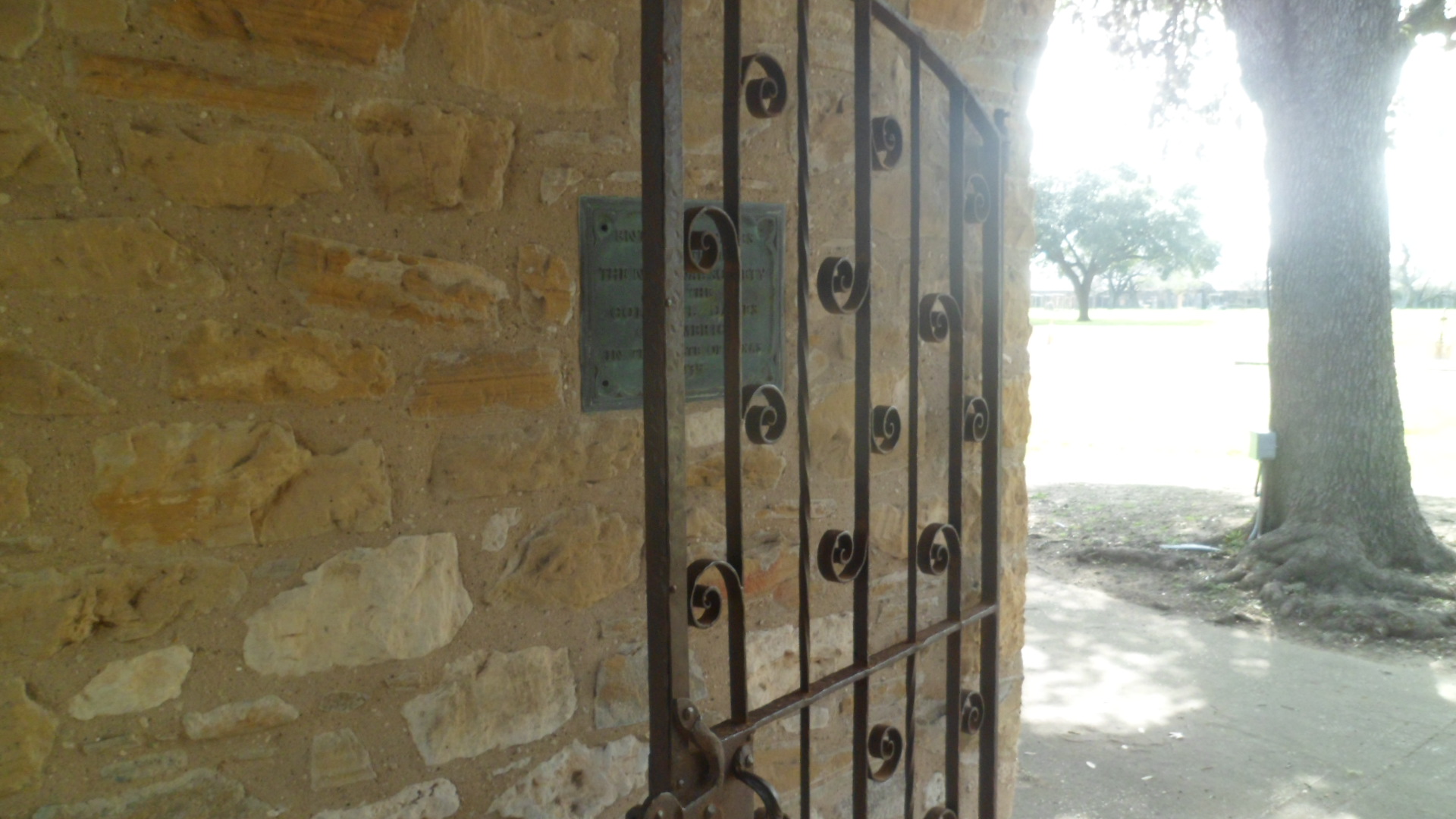
The two southern archways differ, with one being wide enough for horse-drawn carts and the other for travelers on foot to enter, and be searched.
This well-kept secret was a delicious finish to my long-desired visit to the southern missions of San Antonio. It was getting late in the afternoon, however, so I bid this exciting city farewell, and headed west on U.S. 90. The desolate beauty of west Texas was still ahead.
The justly famed Mission San Juan Capistrano, in southern California. has a Texas twin. This Mission San Juan was established in 1731, on the east bank of the San Antonio River, using the remnants of a previous mission near present-day Lufkin,which fell on hard times and the deaf ears of the Nazonis people.
The Coahuiltecans were, on the other hand, more than glad to have Spanish assistance, owing to the severe drought. The Spanish taught the people near Mission San Juan, how to build and use acequias and to domesticate cattle. Some of the first longhorn ranches were near this mission.
The principal acequia for this mission came from the Yanaguana, the Coahuiltecan name for the San Antonio River. A short nature trail allows the visitor a semblance of what was available to the residents of that time.
The water level was a bit higher then, than now. The present water supply is low, and sullied with clay.
Still, it allowed the populace to be fairly productive, botanically, as well as in animal husbandry. A replica of the main garden still produces herbs and legumes.
This is the site of the mission’s granary.
There are preserved foundations of the small presidio and of the old church. A campaign to enlarge the mission church ultimately failed, owing to scant manpower.
A section of the old church remains in use as a friary.
On the east side of the grounds, a post-colonial tufa house remains intact.
San Juan is still an active mission community, with Coahuiltecan people comprising a large percentage of the neighbouring community. The present-day church was last renovated in 2012. Good thing I waited until now, to visit.
This corner is a favourite outdoor gathering spot, for the parishioners, after Sunday Mass.
Having learned of the extensive ranching and farming at three of the four southern missions, I headed for the place where the Coahuiltecans themselves were taught academics and trades: Espada.
Mission San Jose y San Miguel de Aguayo, founded in 1720, is the largest of the San Antonio-area missions, and is known as “Queen of the Missions”. It is about 2.8 miles south of Mission Concepcion, which I profiled in Part 1 of this series.
I first visited this magnificent place in May, 2012, but at dusk. Only the exterior was then available for viewing, giving me the sense of San Jose’s enormity and the impetus for a return visit.
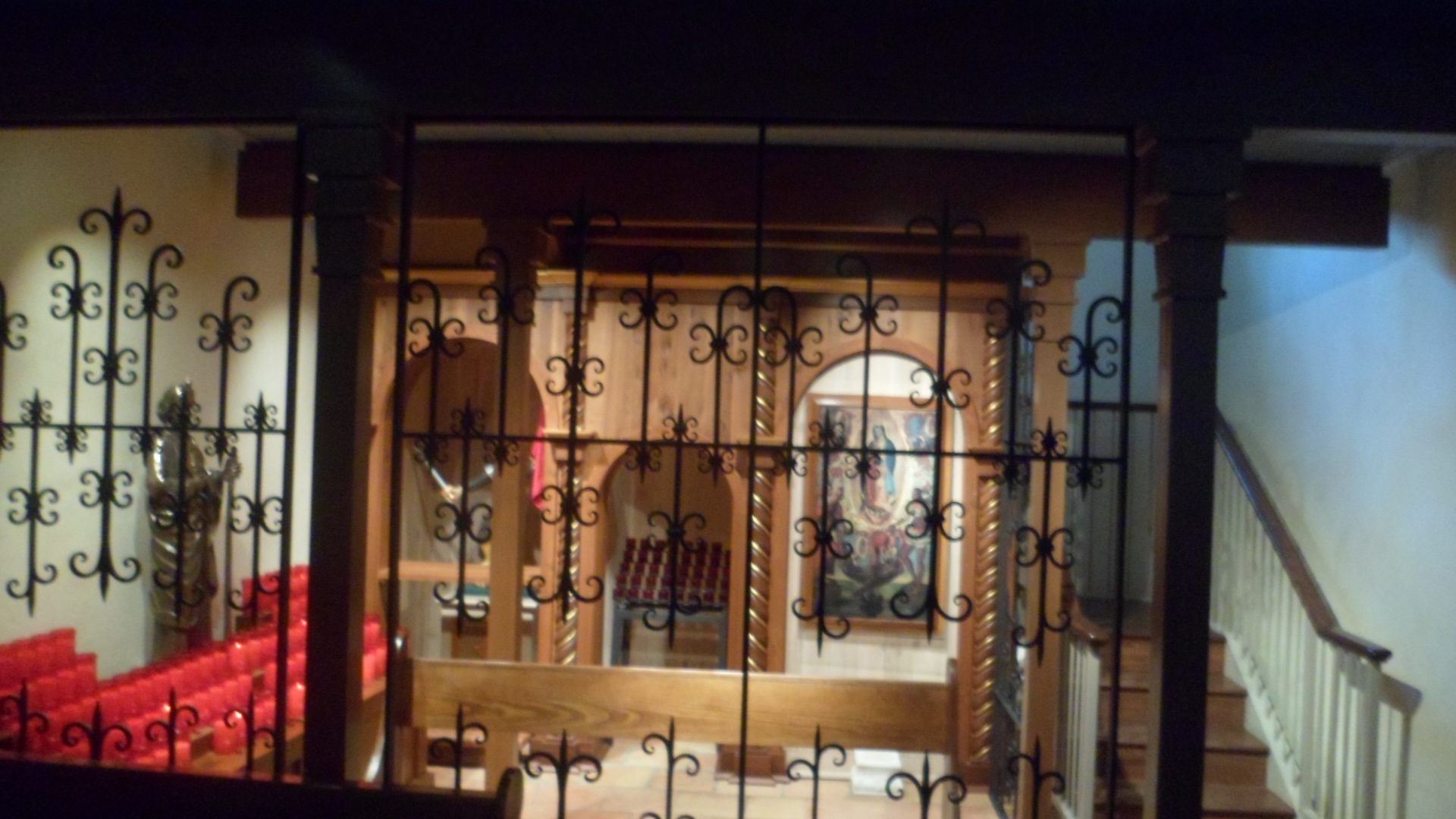
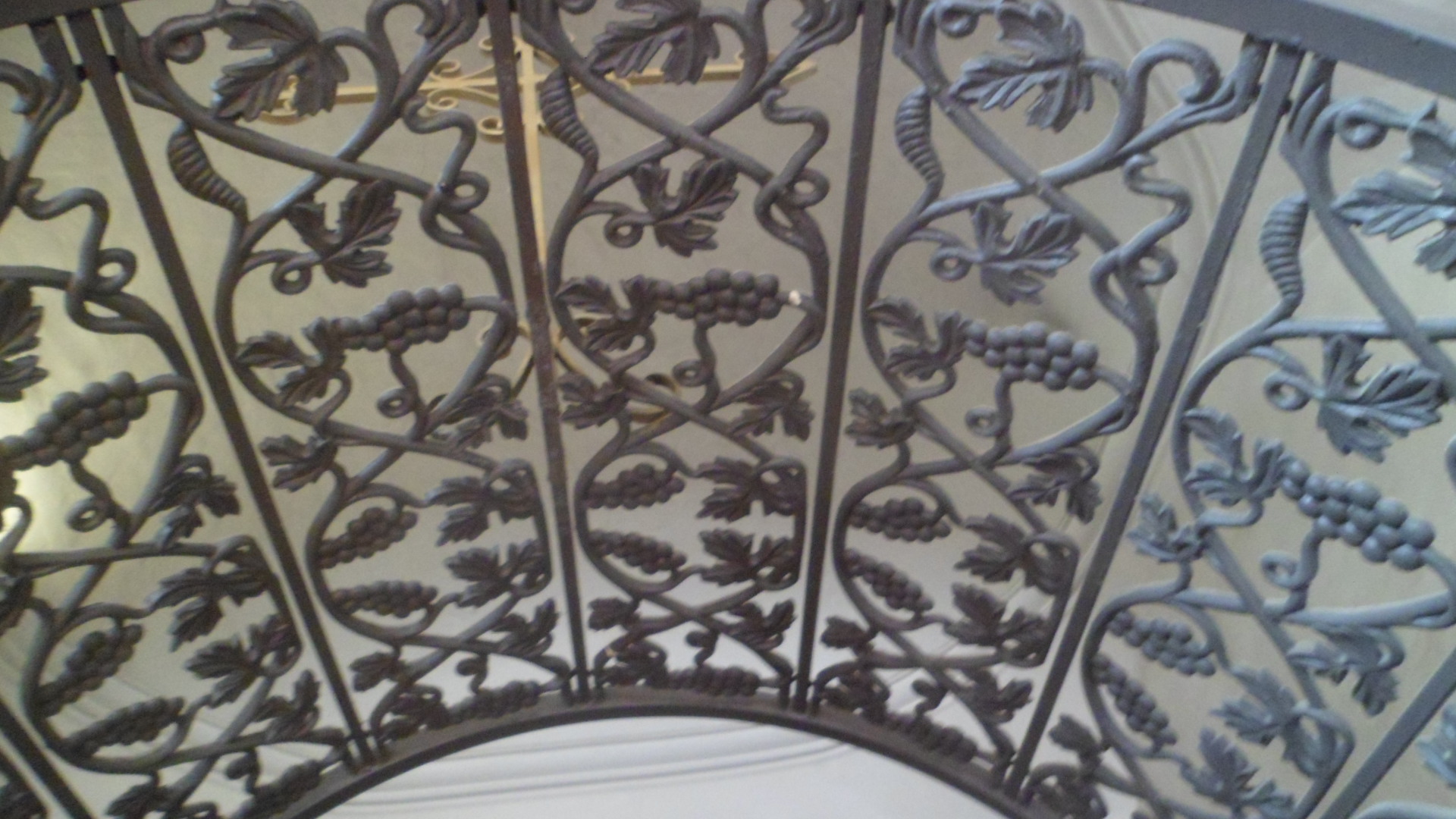
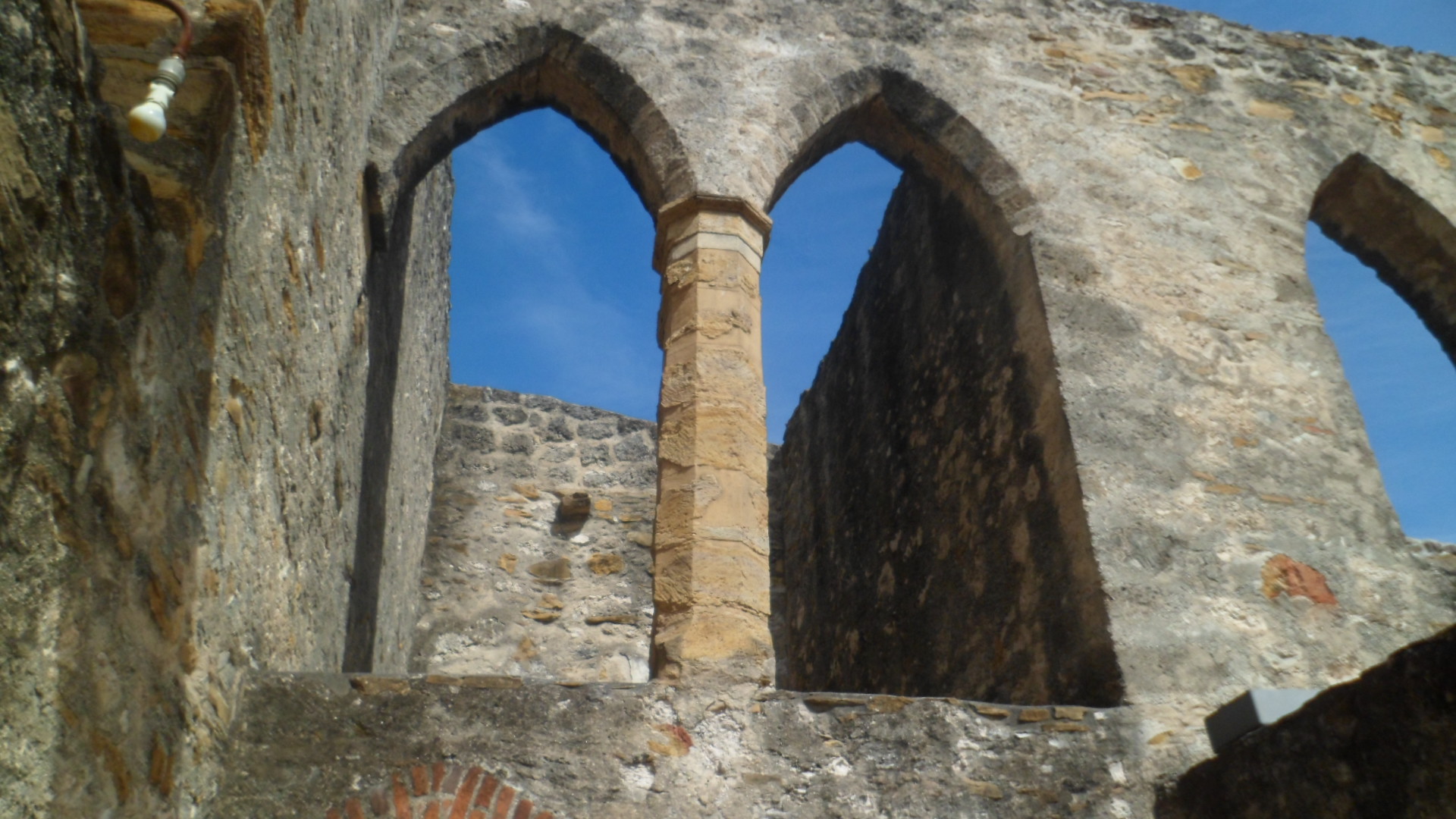
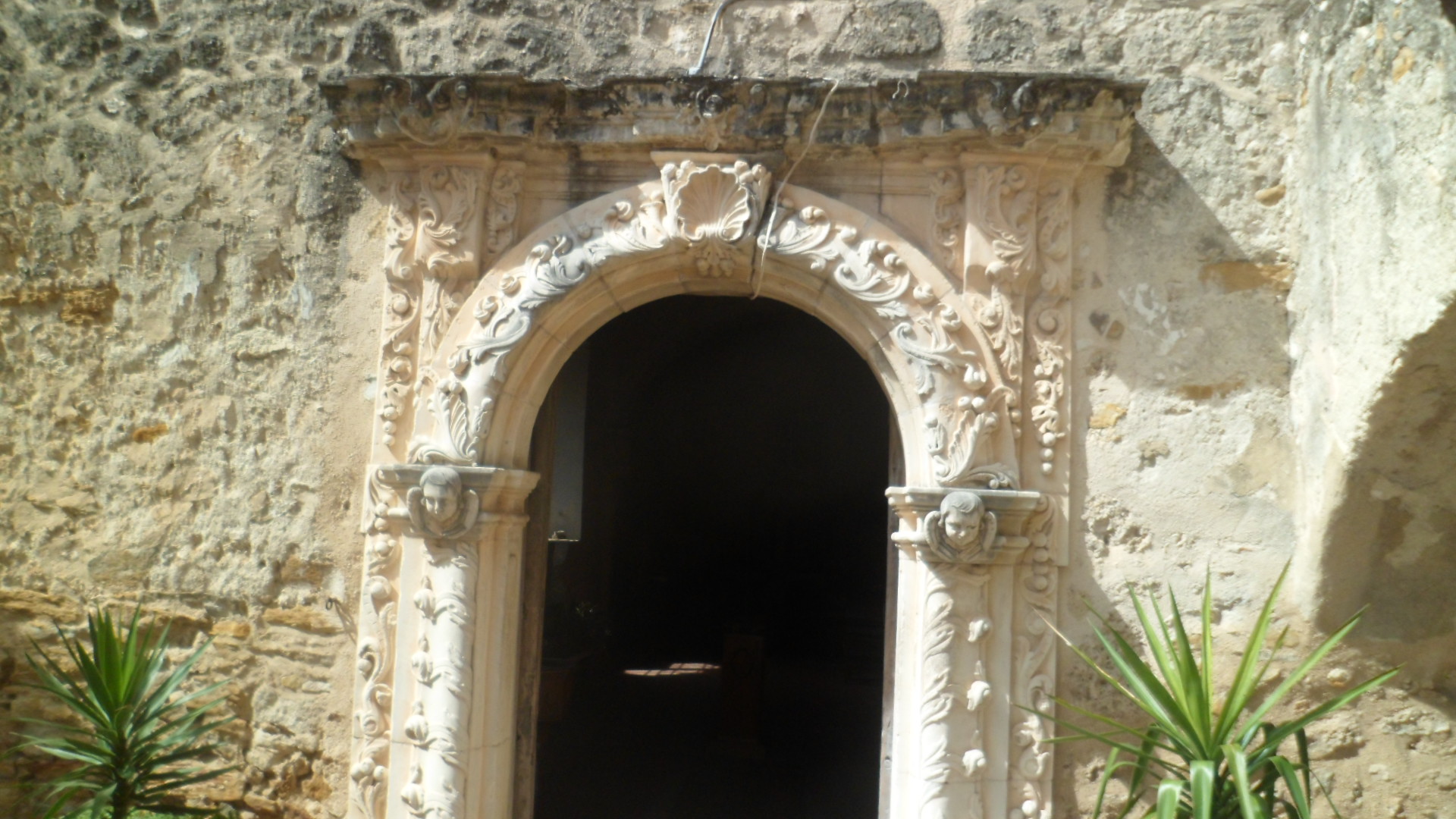
Here are some views of the mission’s interior, with the mission church and the soaring arches and beams of its surrounds, being especially impressive. Perhaps nowhere else in North America is the combination of Roman and Moorish influences so pronounced, as it is here.
In the former residential hall of the Coahuiltecan students, there is a scale model of the original mission.
The garrison encircled the mission church, and the residences of the indigenous, as it did at Mission Concepcion. The raids by Apache and Comanche warriors were aimed at the Spanish, but Coahuiltecans were seen as collaborators with the Europeans, and were equally targeted by the raiders. The thick walls worked, in safeguarding the settlement.
Food production was a major focus of the mission, for reasons of transforming the hunter-gatherer ethos, previously followed by the Coahuiltecans, which ill-served them, in a time of increasing drought. This waterworks and millhouse was a major asset for the populace.
Herbs and grains were dried on outdoor raised racks.
There were twelve outdoor beehive ovens, and at least one indoor fireplace, in each long room.
With nearly 1,500 people living within these walls, order had to be strictly maintained by the garrison commander and Franciscan padre, working closely.
I had an informative and enjoyable hour here at San Jose. As I was leaving, a large songbird I’d not seen before sat, contentedly and chirped a farewell. It seemed not to care, too much, of my being in relative proximity. This mission does get quite a few tour buses, though, so it’s not surprising.
It had cleared, somewhat, when I rolled out of Coachmen’s Inn, and up to Luling’s downtown. Going into The Coffee Shop, and seeing Granny’s baleful stare, I quickly agreed when the nice young barista offered to prepare a large coffee and blond brownie, to go. The area is as photogenic as Texas rail towns come
.
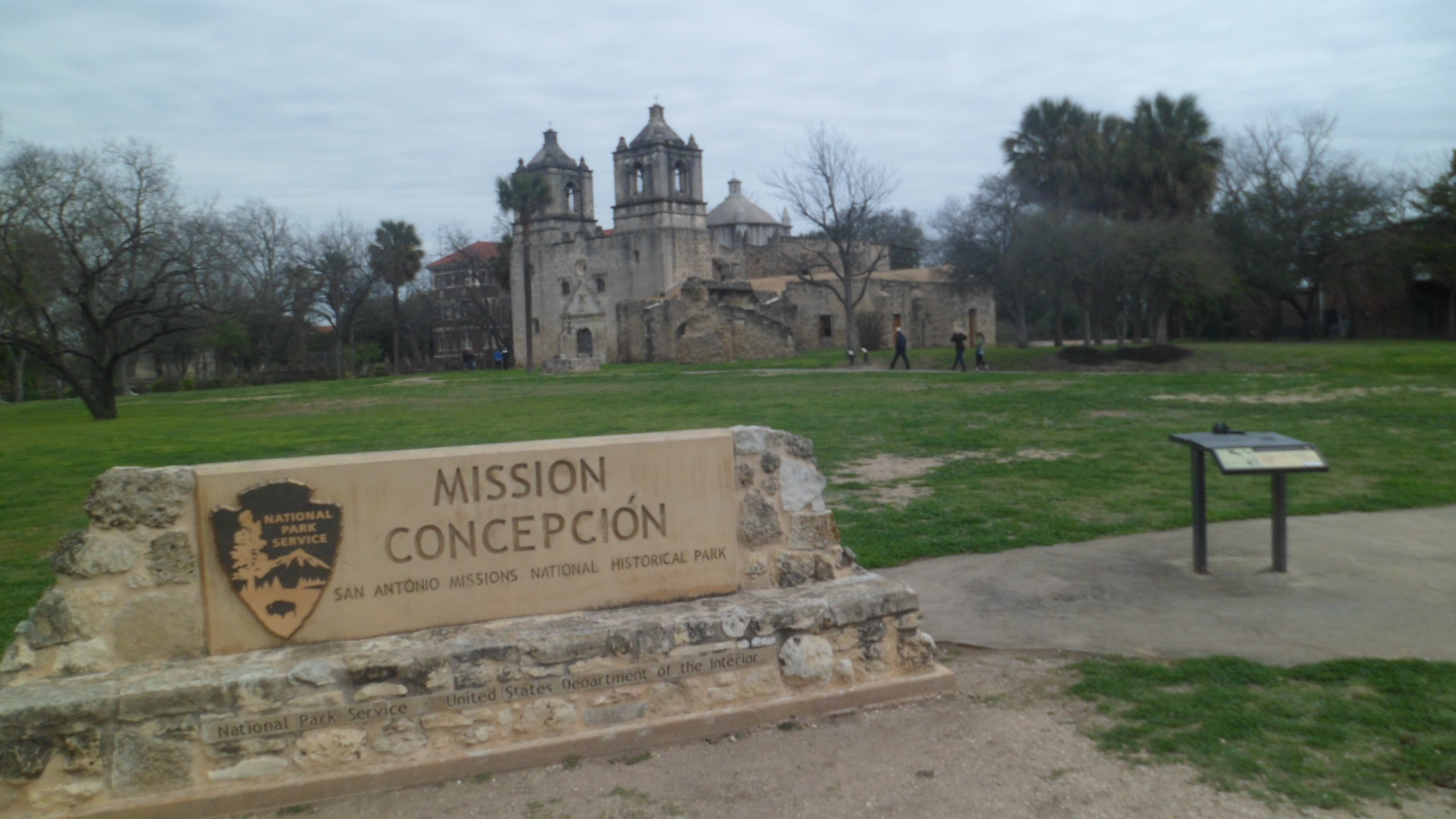
My inner urge carried the car and me on to the San Antonio Missions National Historical Park. I had visited the two missions closest to the Alamo, in 2012, but in twilight. Today, I would see all four of the magnificent facilities, yet in full daylight. To keep this manageable, I present the four missions one at a time, starting with the northernmost: Concepcion.
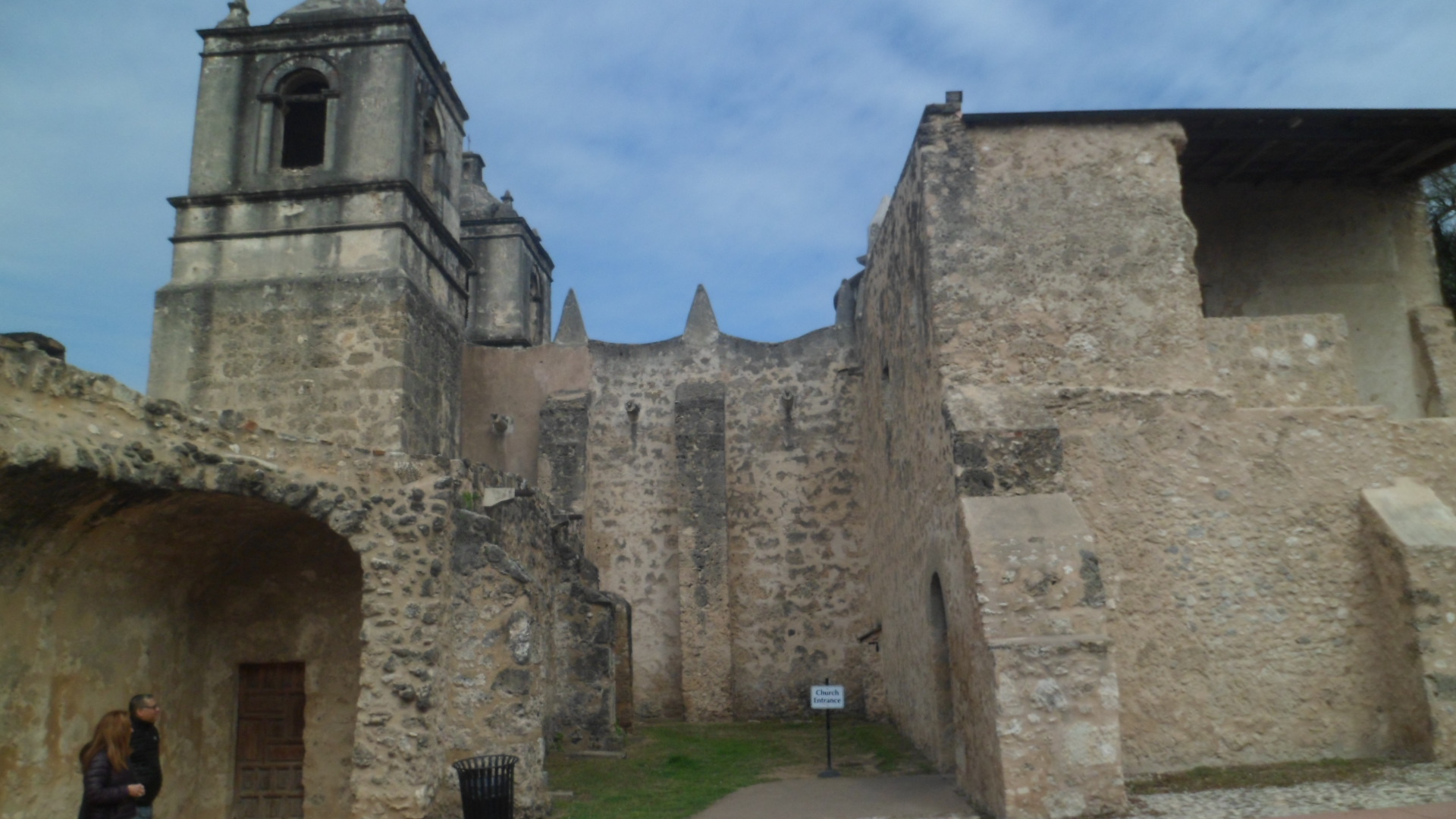
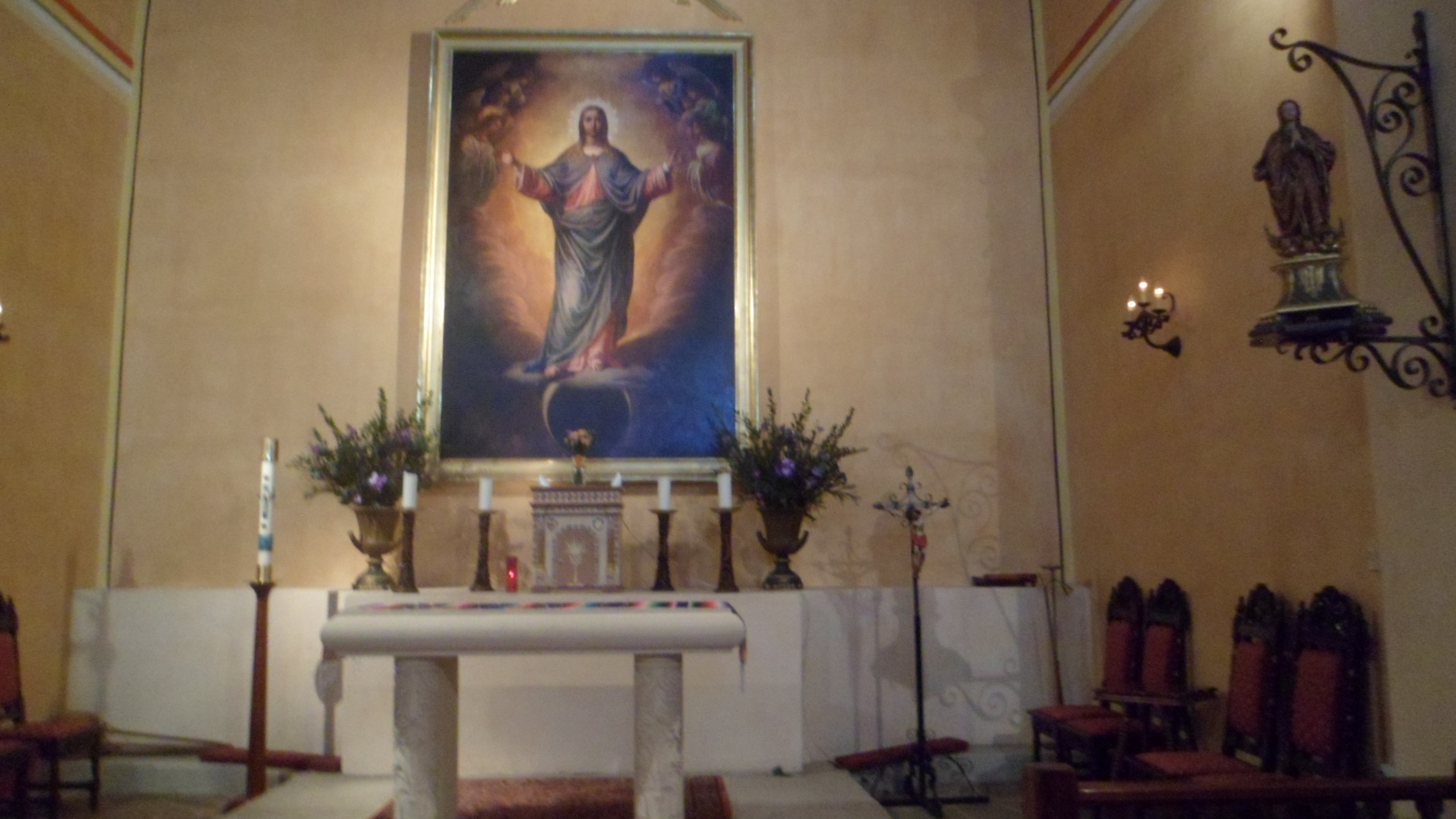
Mission Nuestra Senora de la Purisima Concepcion de Acuna was established in 1731, the fourth of five missions in the San Antonio River Valley. As with the Alamo, Concepcion was a Presidio, or garrison,as well as a mission. The Coahuiltecan people, who were hunter-gatherers, sought protection from raiding Apaches and Comanches. The Franciscan friars also taught agriculture to the Coahuiltecans.
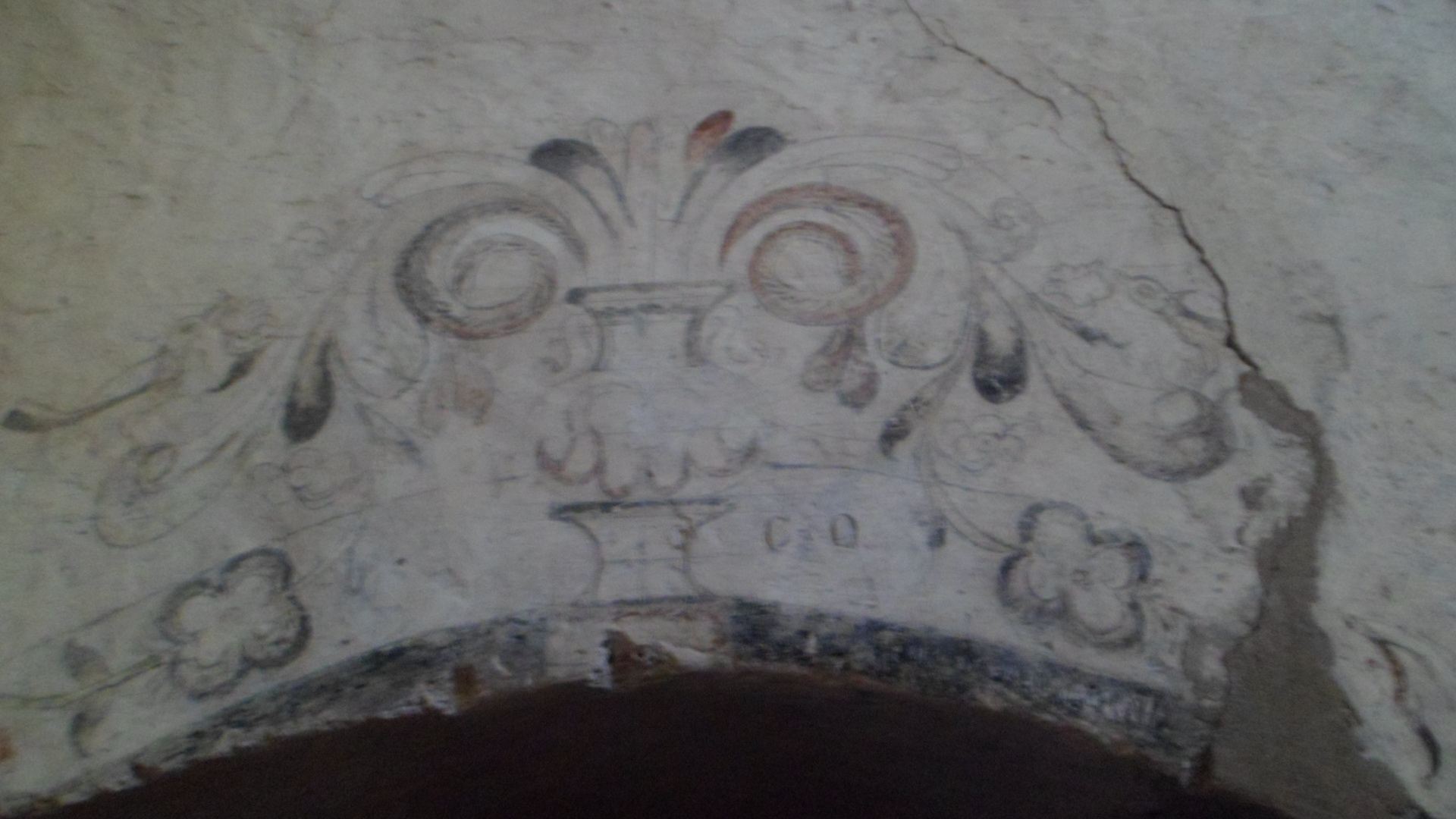
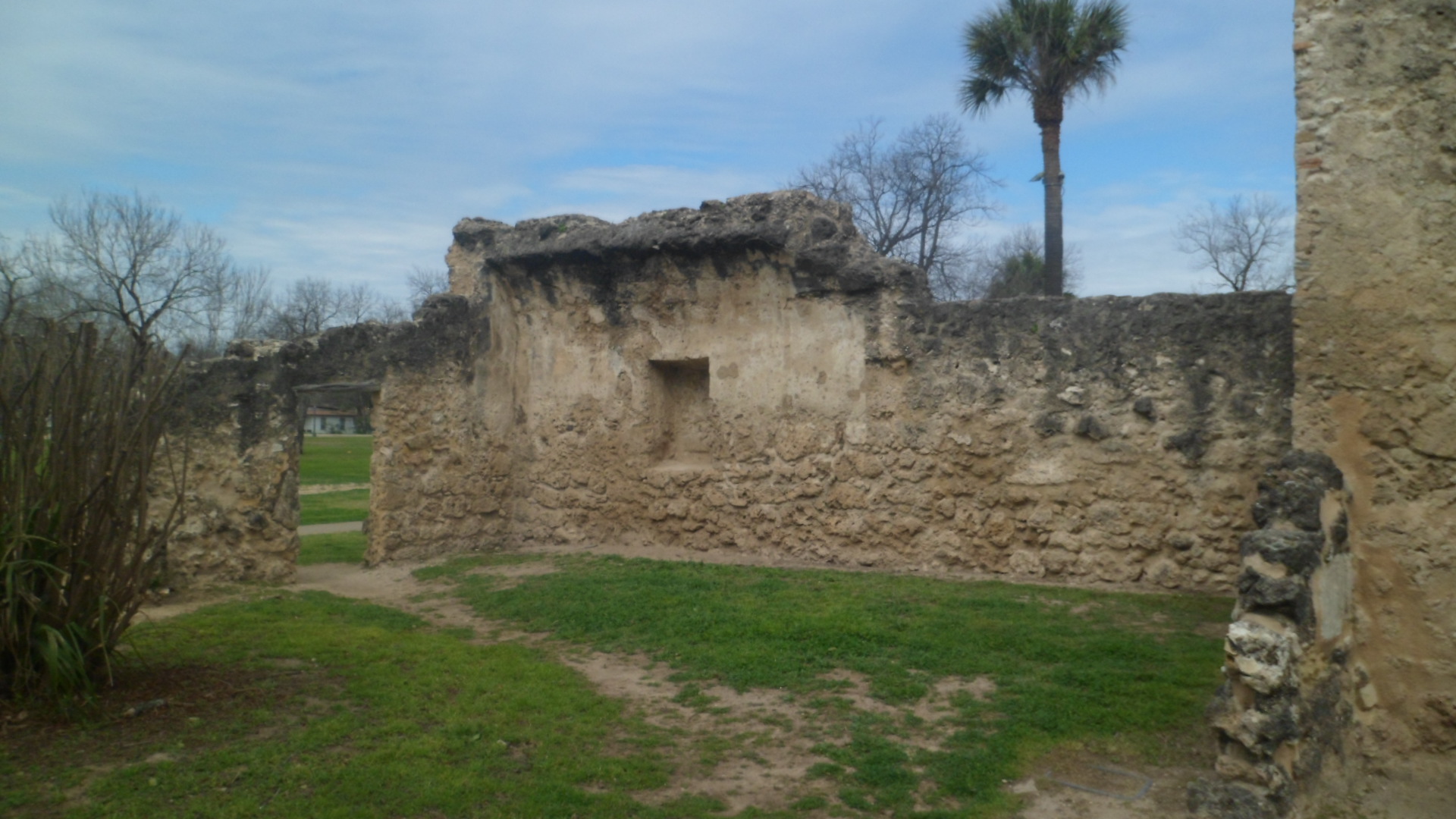
Here are several scenes of the walls, grounds and the magnificent mission church.
NEXT: The largest, and best-known,of the missions, outside the Alamo itself: San Jose.
February 16, 2015- Pearlington to Luling, With A Good Dose of NOLA
The Pearl River divides the eastern nub of Louisiana from Mississippi, before joining the Gulf of Mexico. It’s a working man’s river, so there were dozens of fisherfolk already at work, when I moseyed on through, on this President’s Day morning. It is a gray day, payback for three days of Florida sunshine. This was Cajun Land, though, and the good times would roll, regardless.
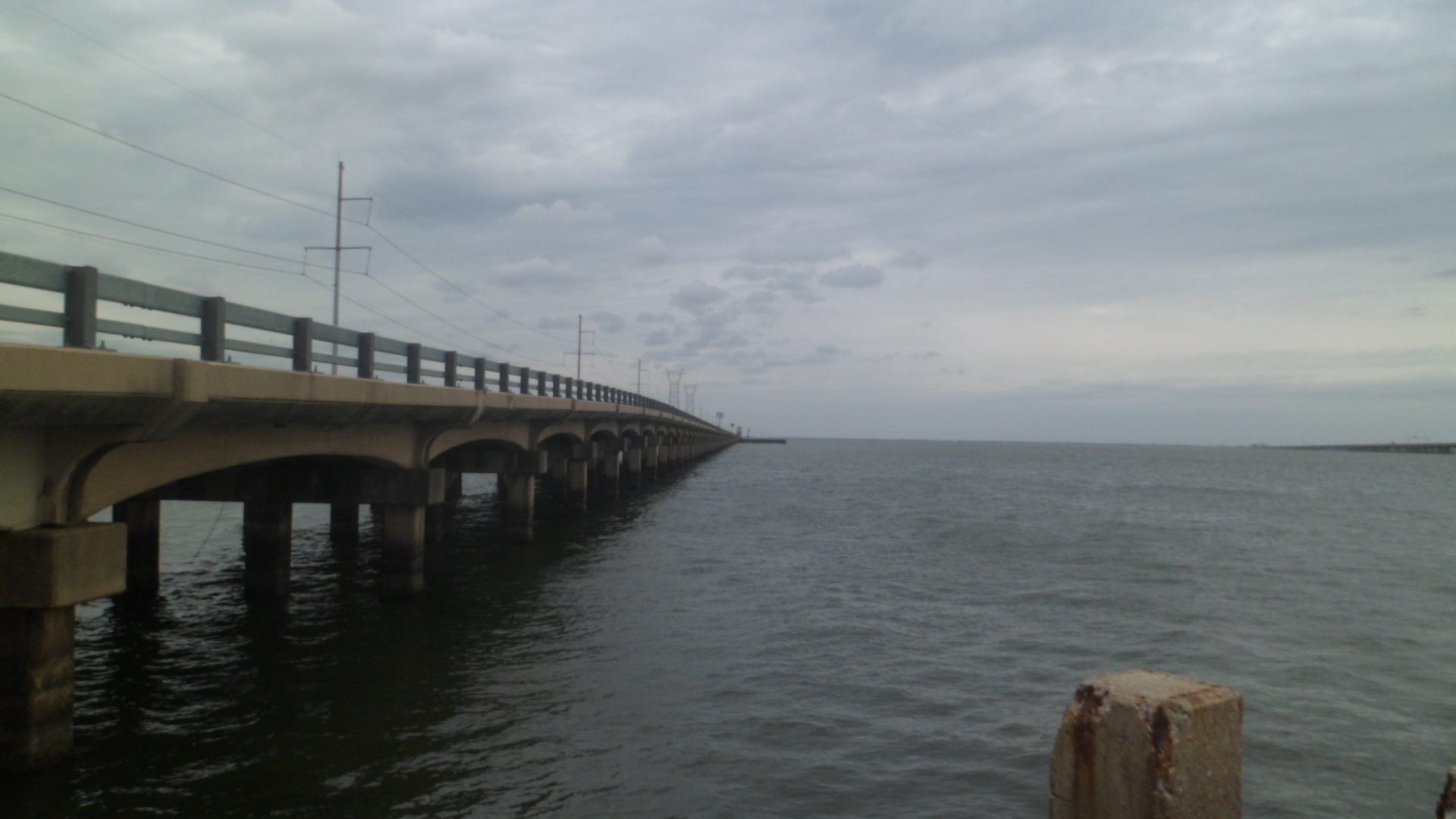
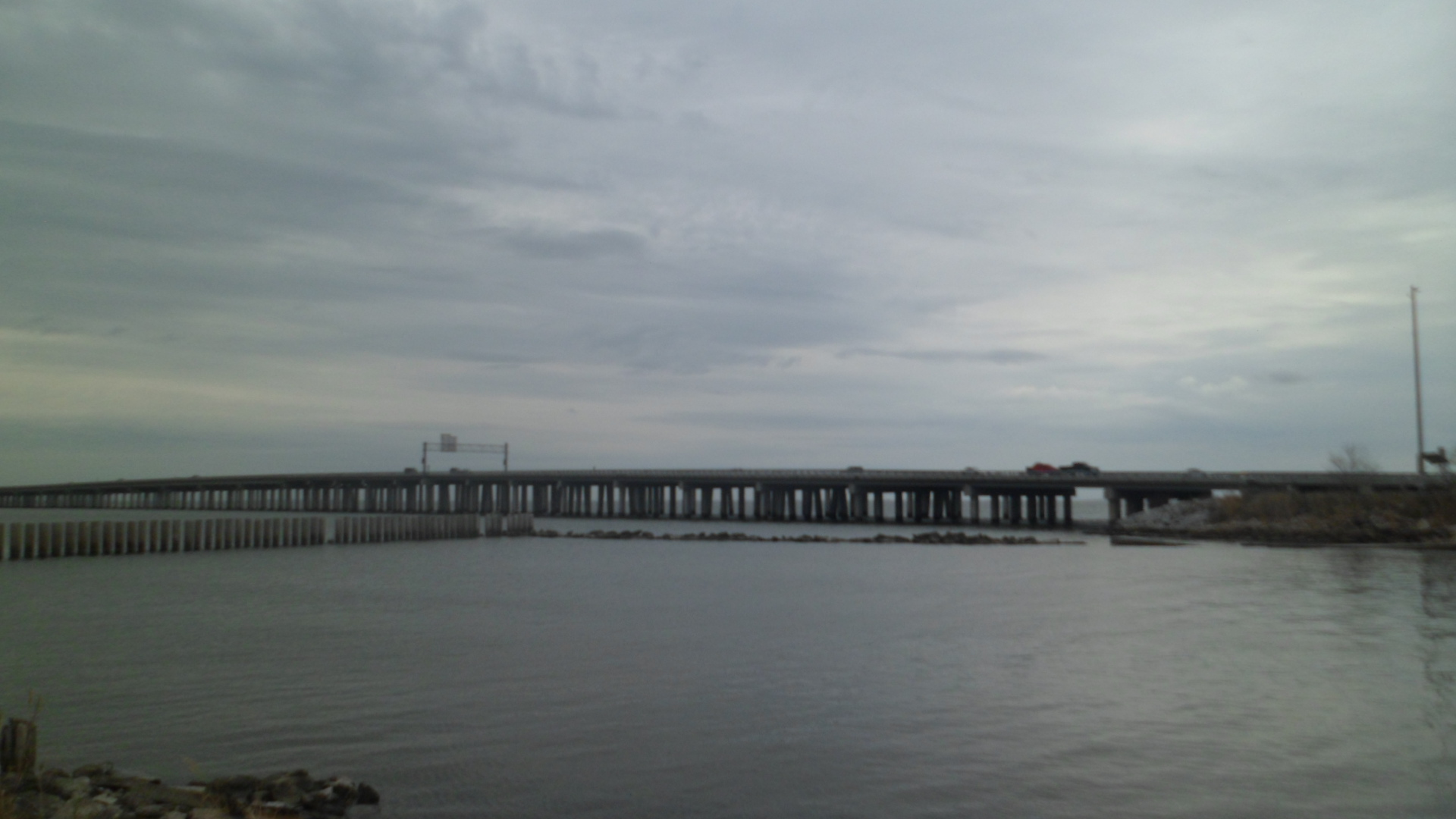
A few miles westward, Lake Pontchartrain unfolded, in all its Southern Cousin to the Great Lakes glory. It, too, is a working man’s waterway, and many were likewise hard at labour, on its shores. My brief visit was to Irish Bayou, on the southeast corner of the lake.
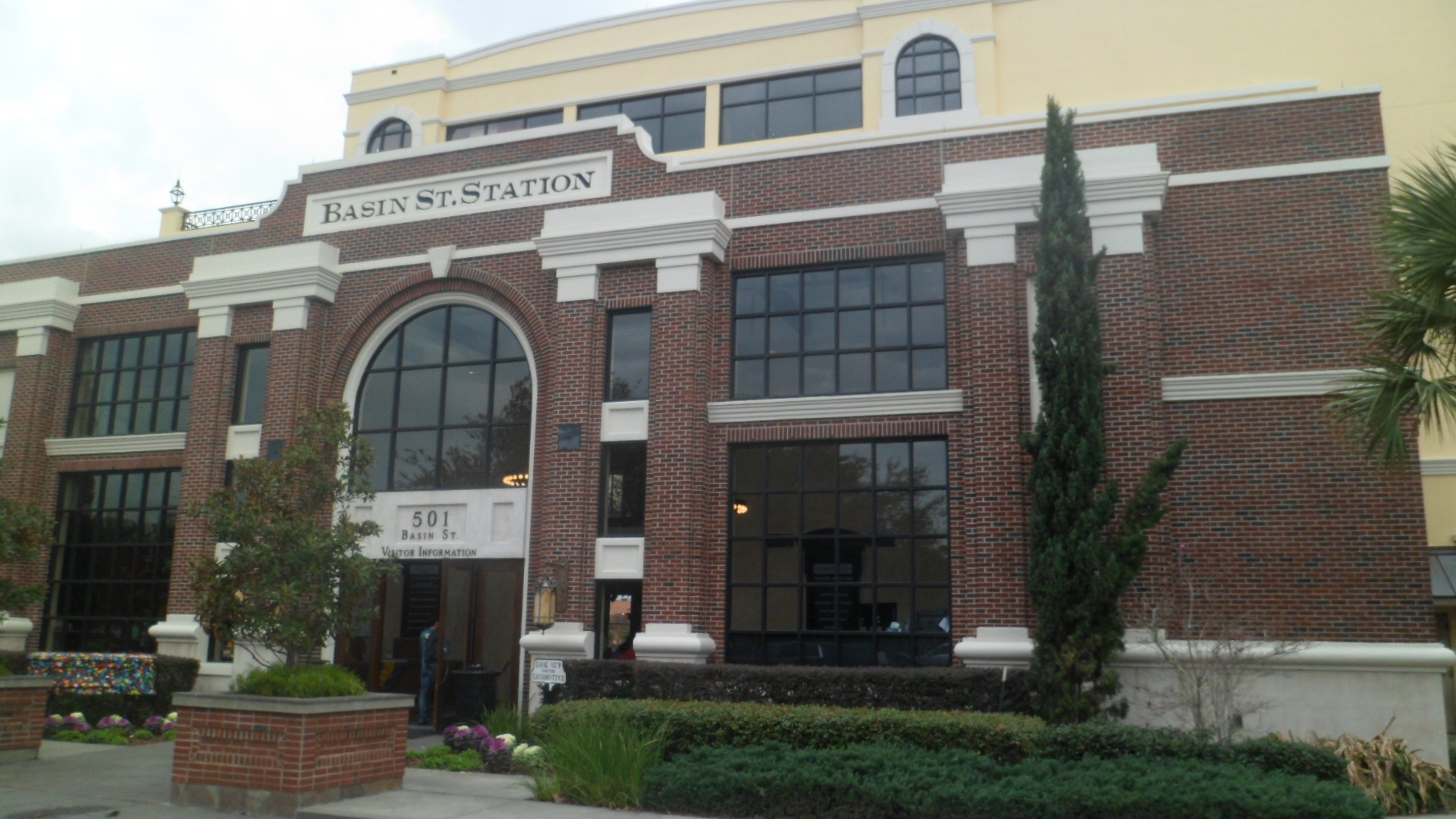
My main stop of the day, though, was New Orleans. Granted, the Big Event in Big Easy was to come tomorrow, but my Life Path would have me elsewhere by the actual Mardi Gras, and besides, this is a SEASON with which we’re dealing, not just a one-day deal. So, I parked at the Ten-Hour for $5 Lot, across from Basin Street Visitor Center, and made my way, slowly, towards Bourbon Street.
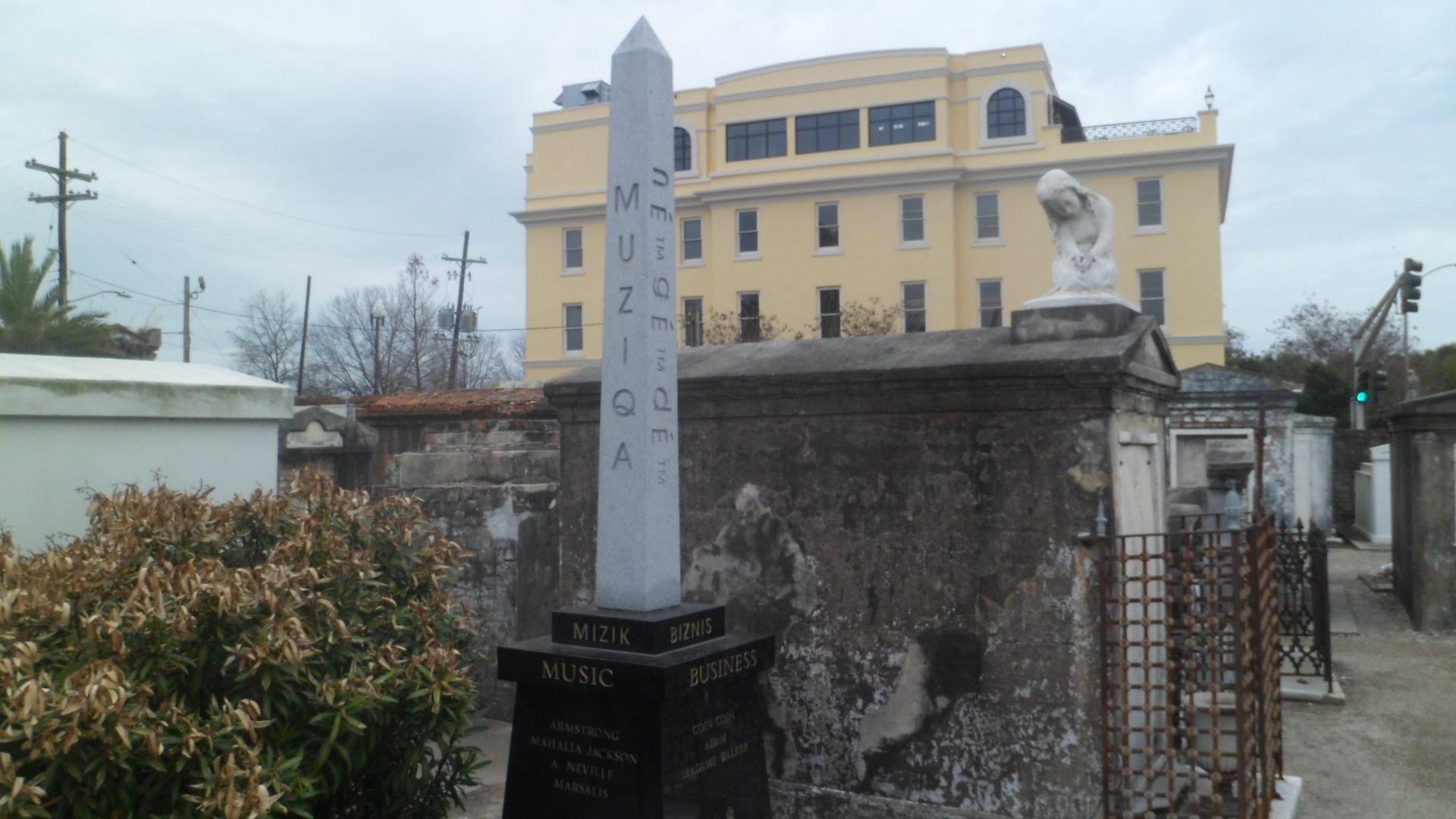
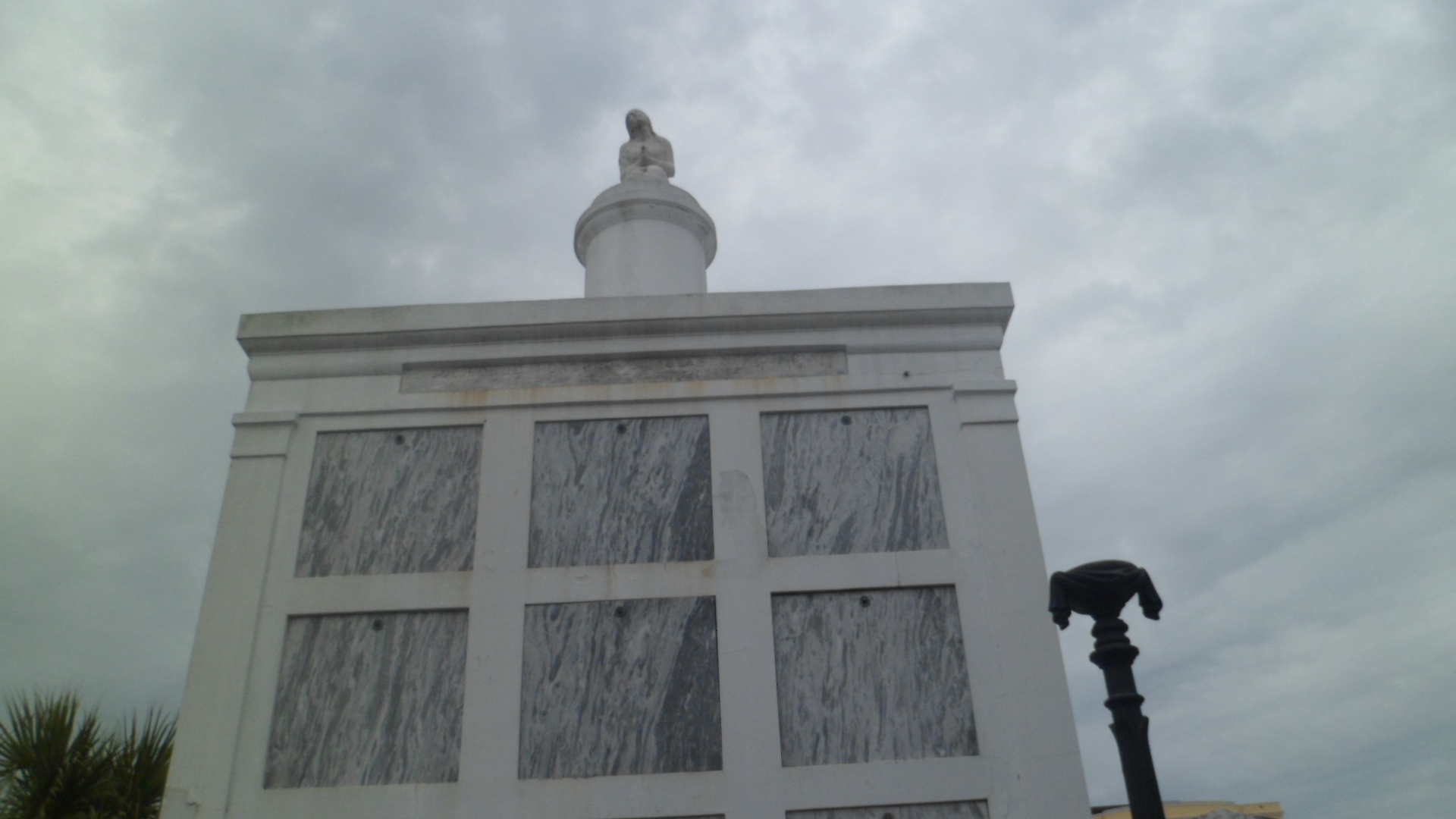
The first order of business was an homage to the departed, at St. Louis Cemetery.
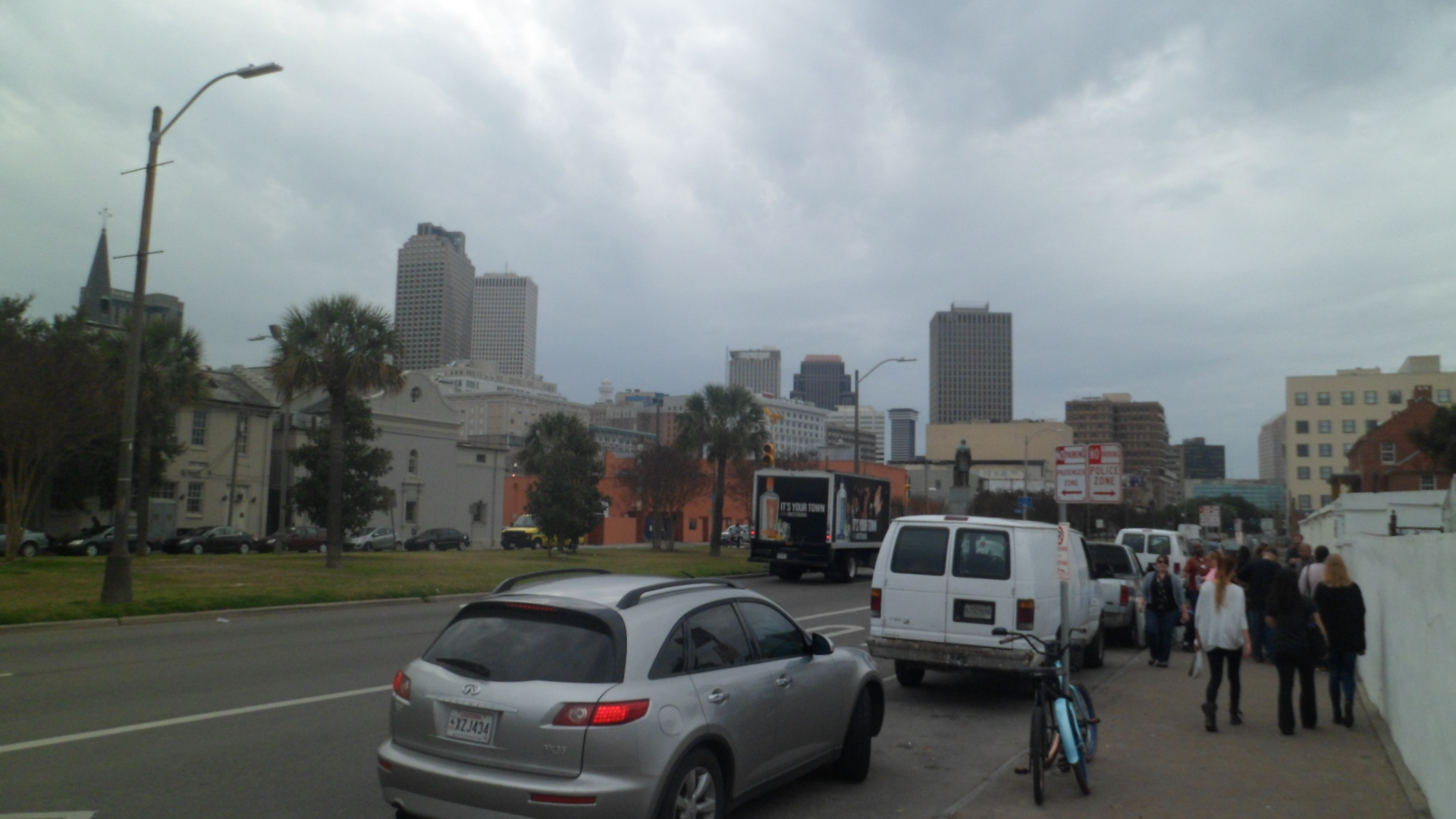
New Orleans’ skyline seems to have recovered quite a bit from 2005’s tempests and trials.
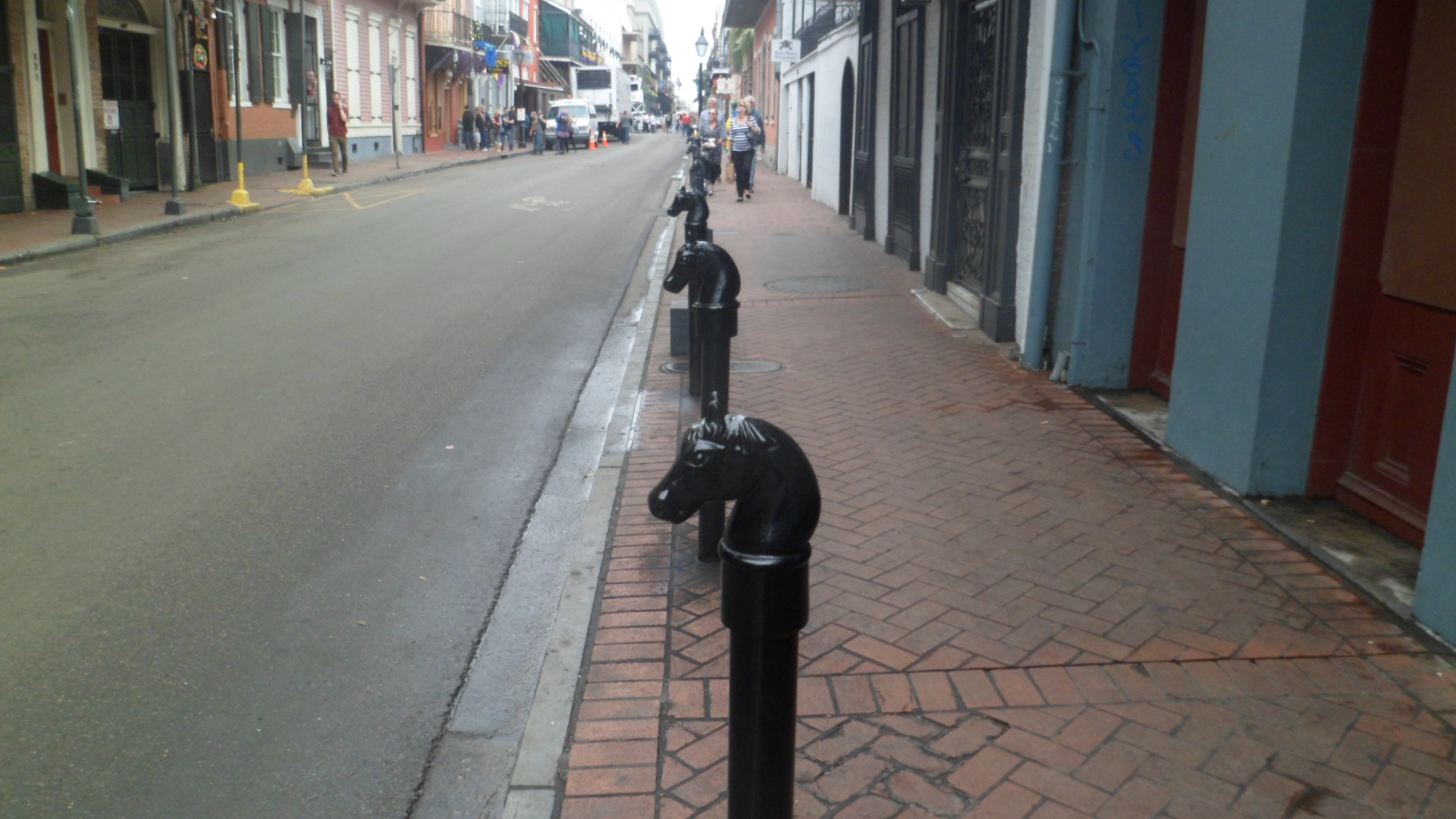
The Business District would wait for another time, though. Bourbon Street was the main focus. The Toulouse route was a bit on the quiet side.
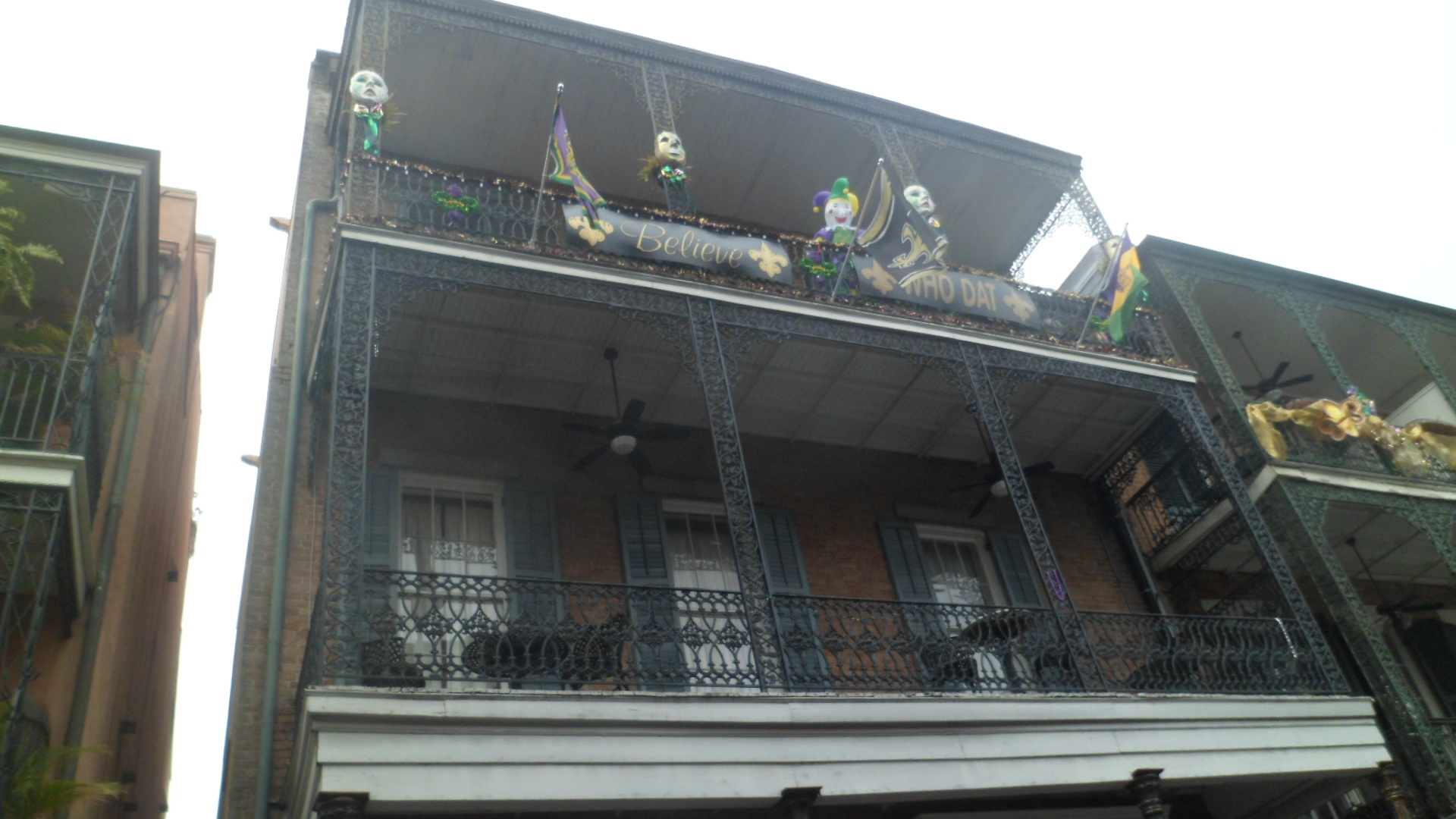
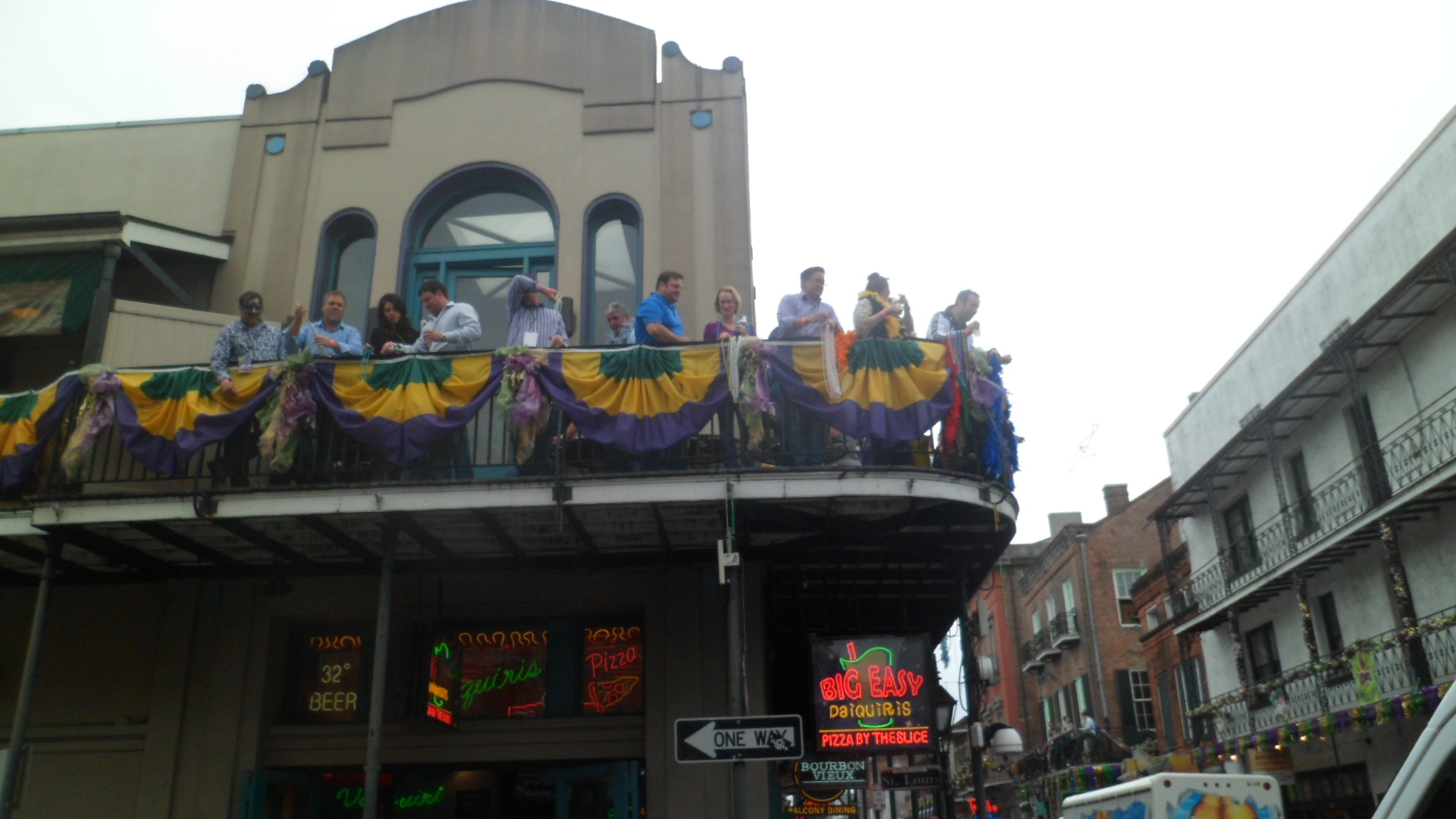
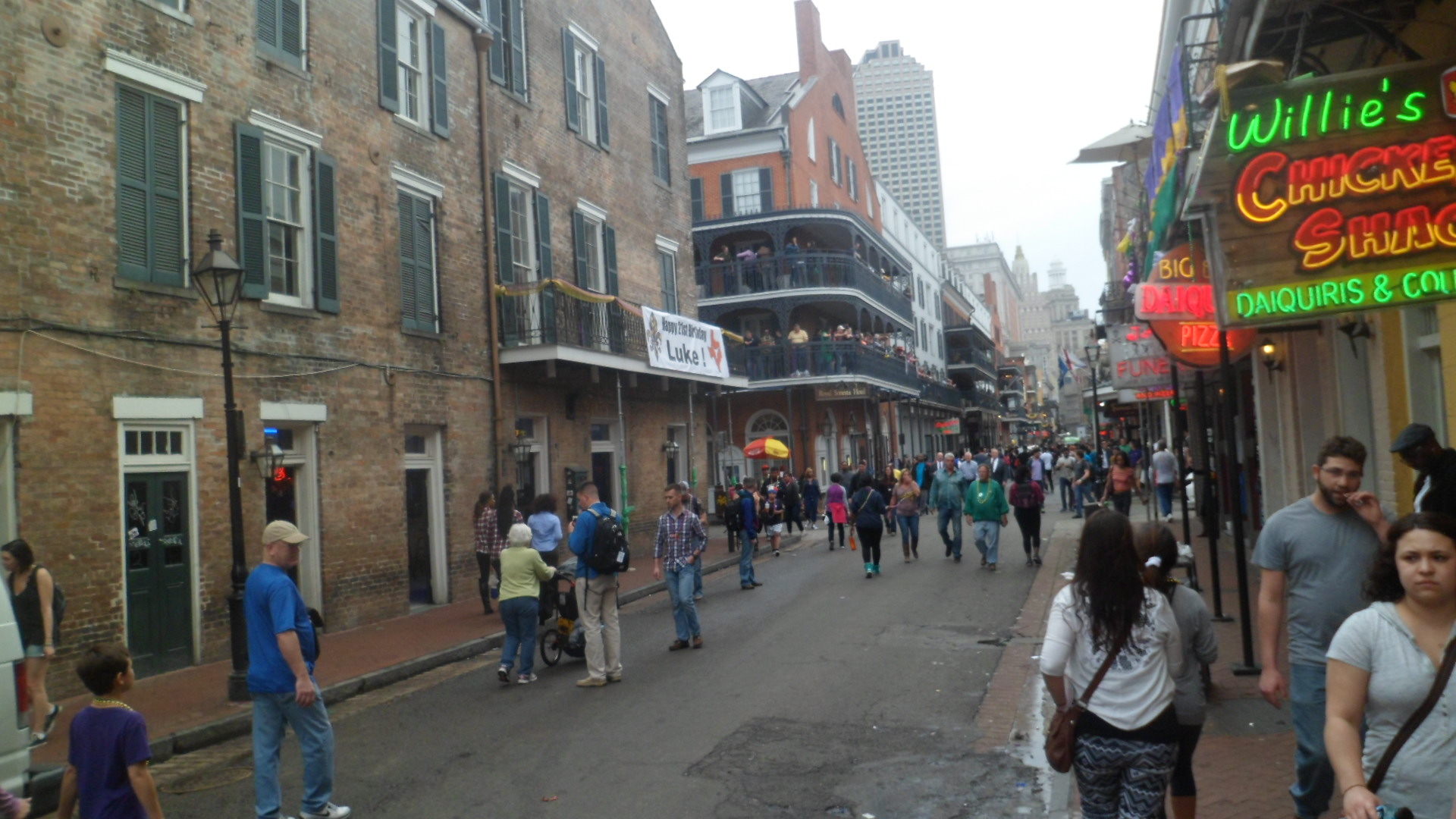
Things started popping, and beads flying, once I reached the edge of Bourbon.
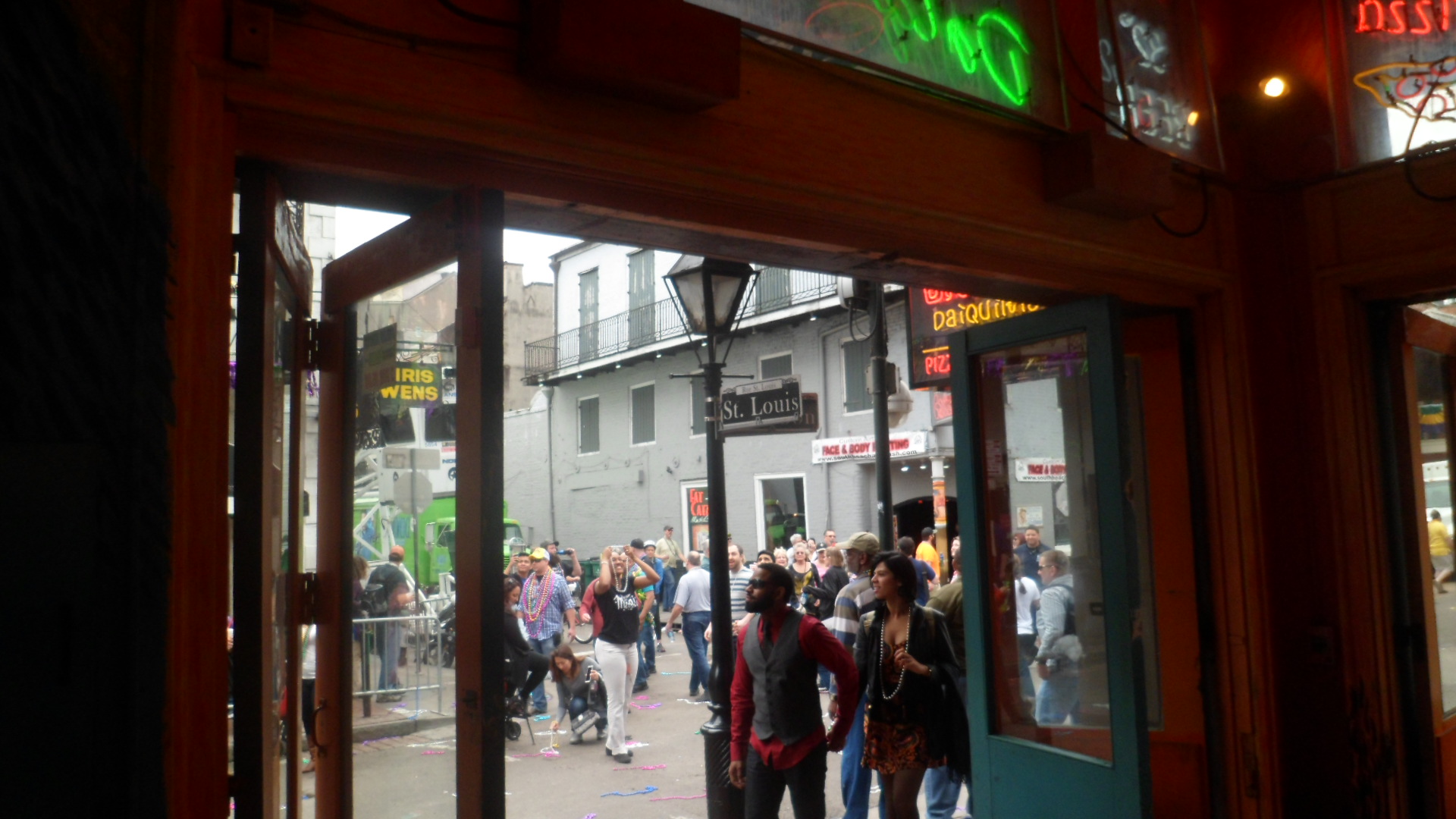
Having filled up on gumbo a few days earlier, I was happy with a jumbo slice of pizza. There was no seating, but the doorway gave a fine vantage point for what was going on outside.
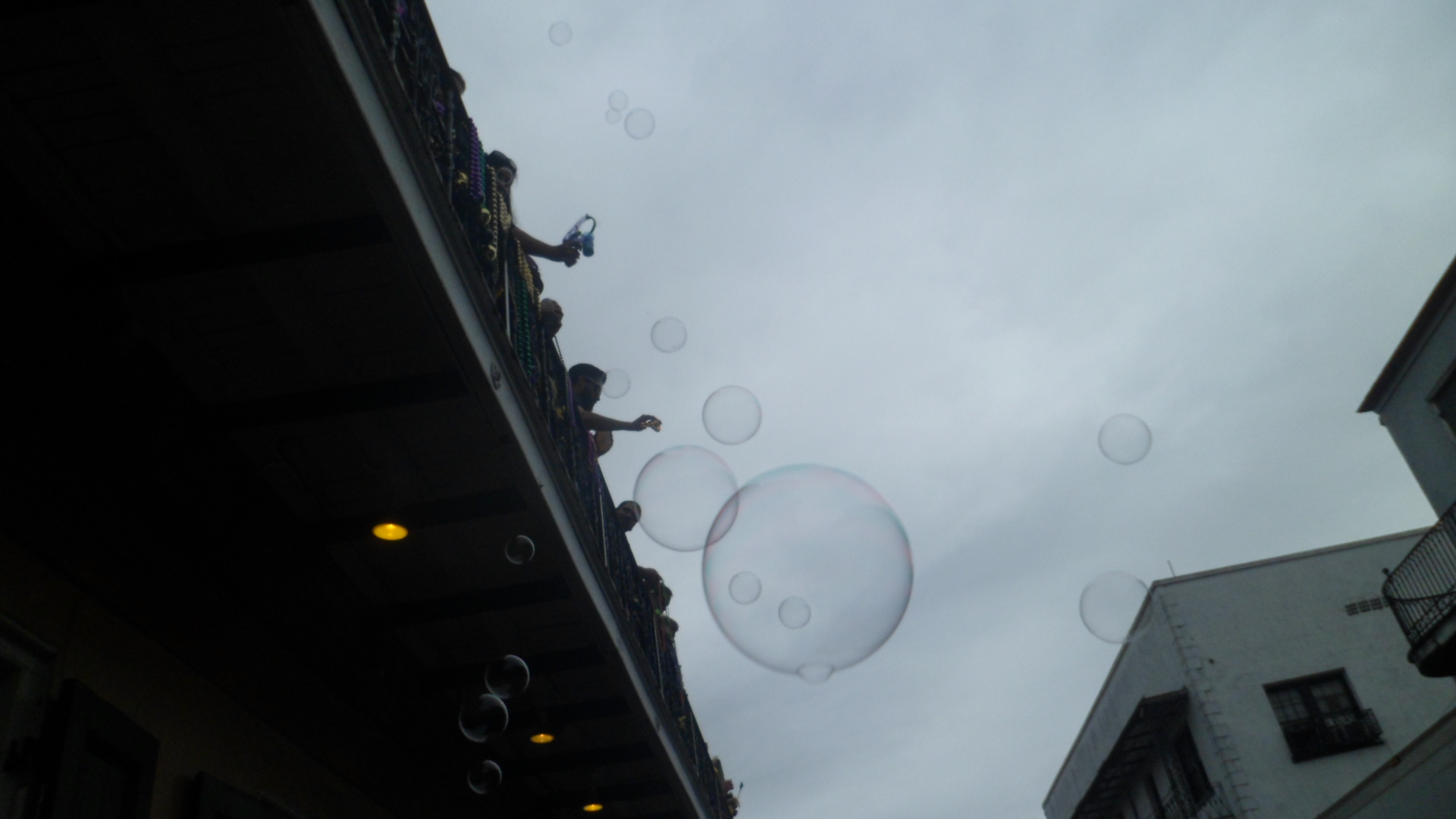
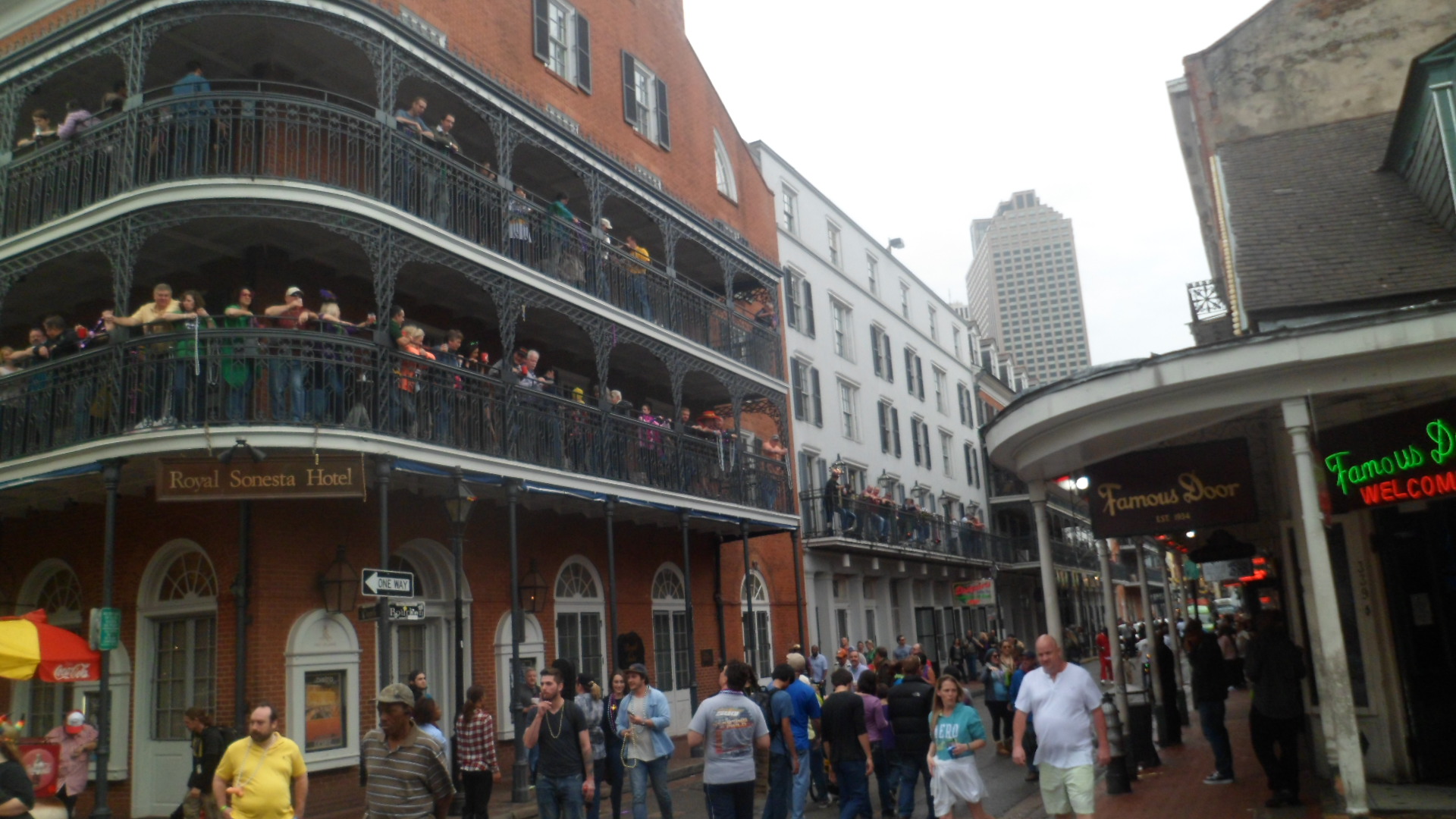
An Earth Angel was sending bubbles down on the happy crowd, from one of the ubiquitous balconies.
Bourbon, at lunchtime, was getting beaucoup crowded, always a good sign. I managed to garner four sets of beads, besides the small one I was given yesterday, in Ocean Springs.
It’s a nice idea, but I won’t be ready for this, for a good while yet.
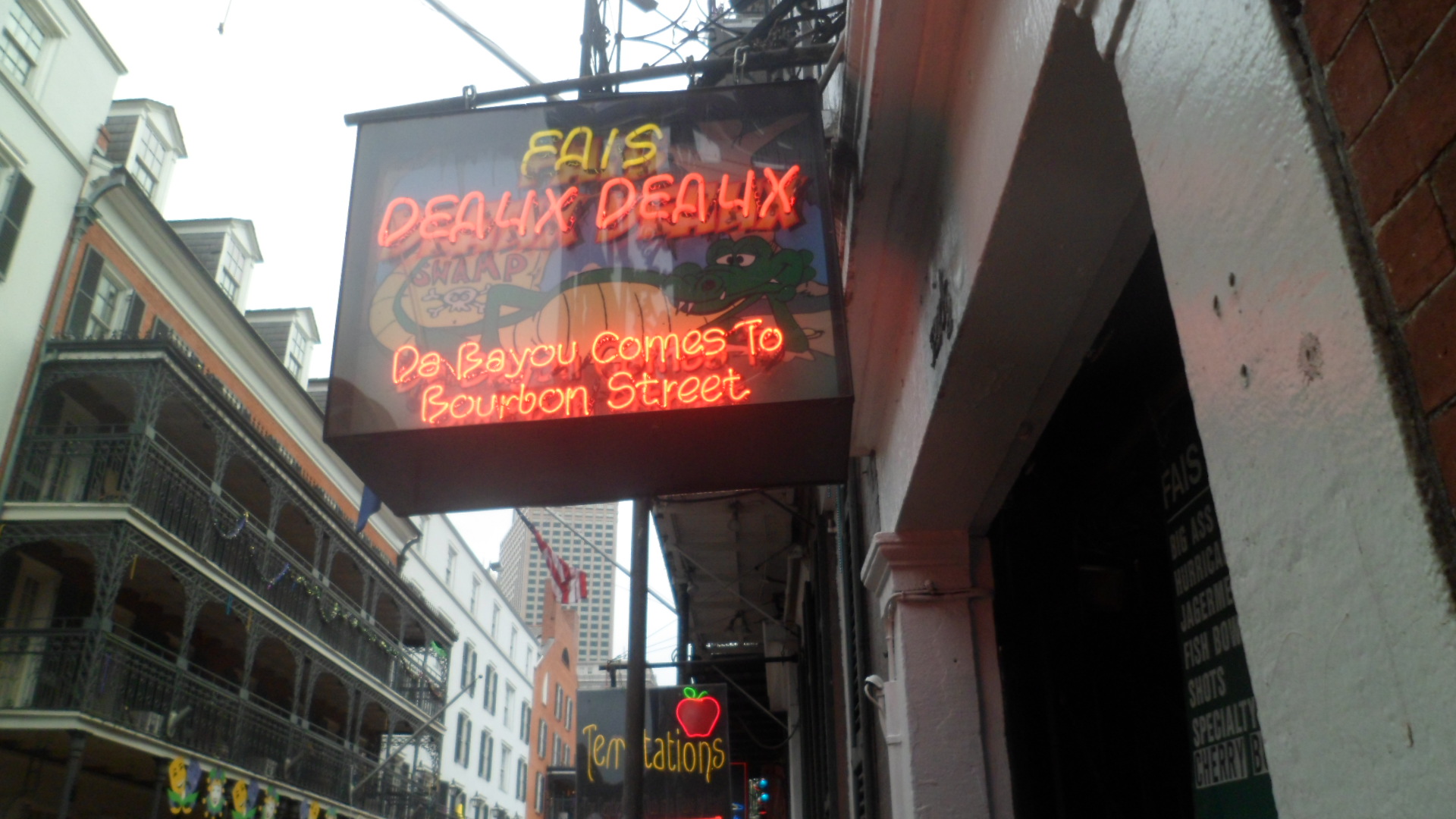
The bayou, that would be worth a week or so of camping among the Cajuns!
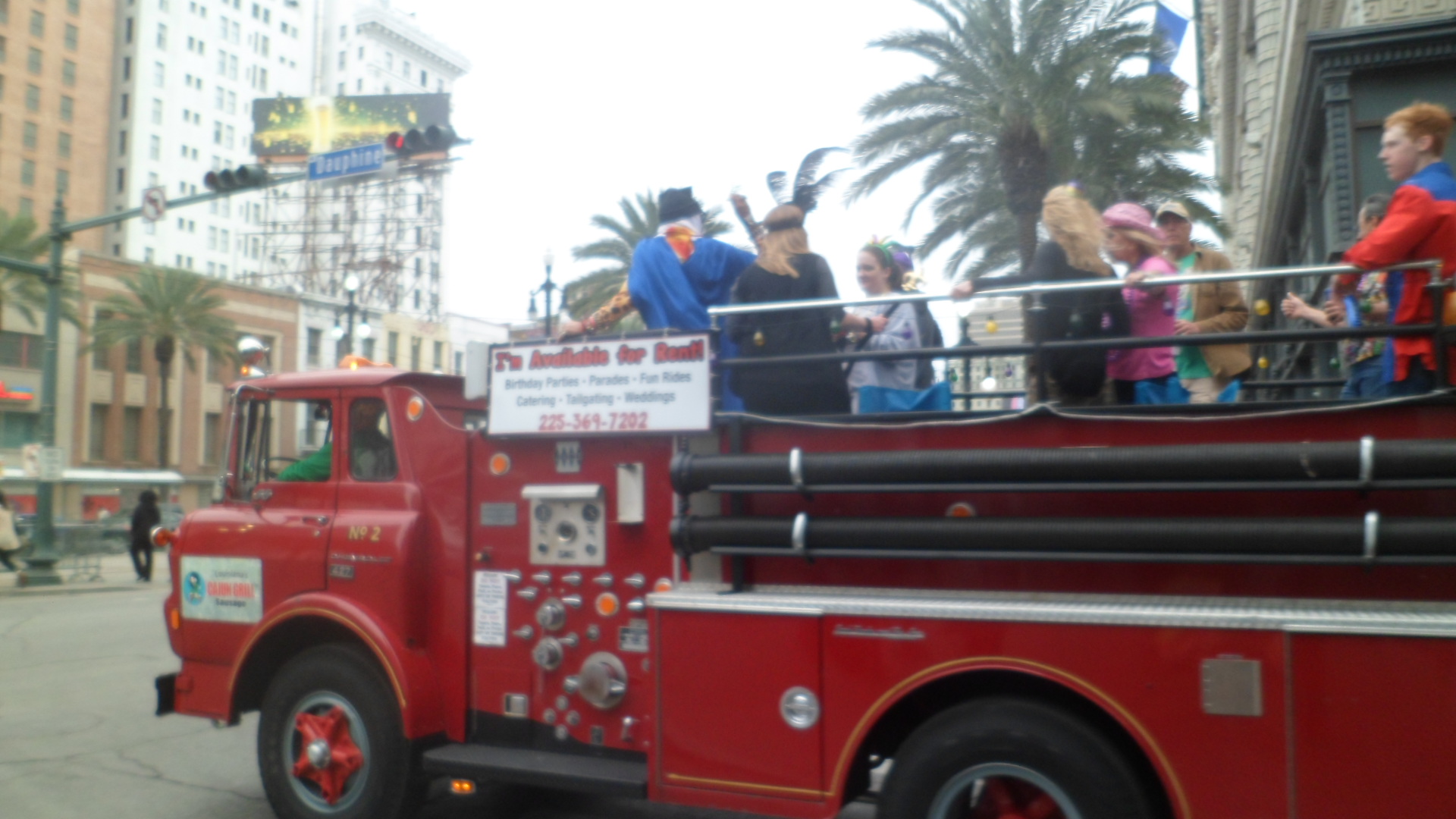
Although today was not a parade day, some krewes were out for a spin anyway.
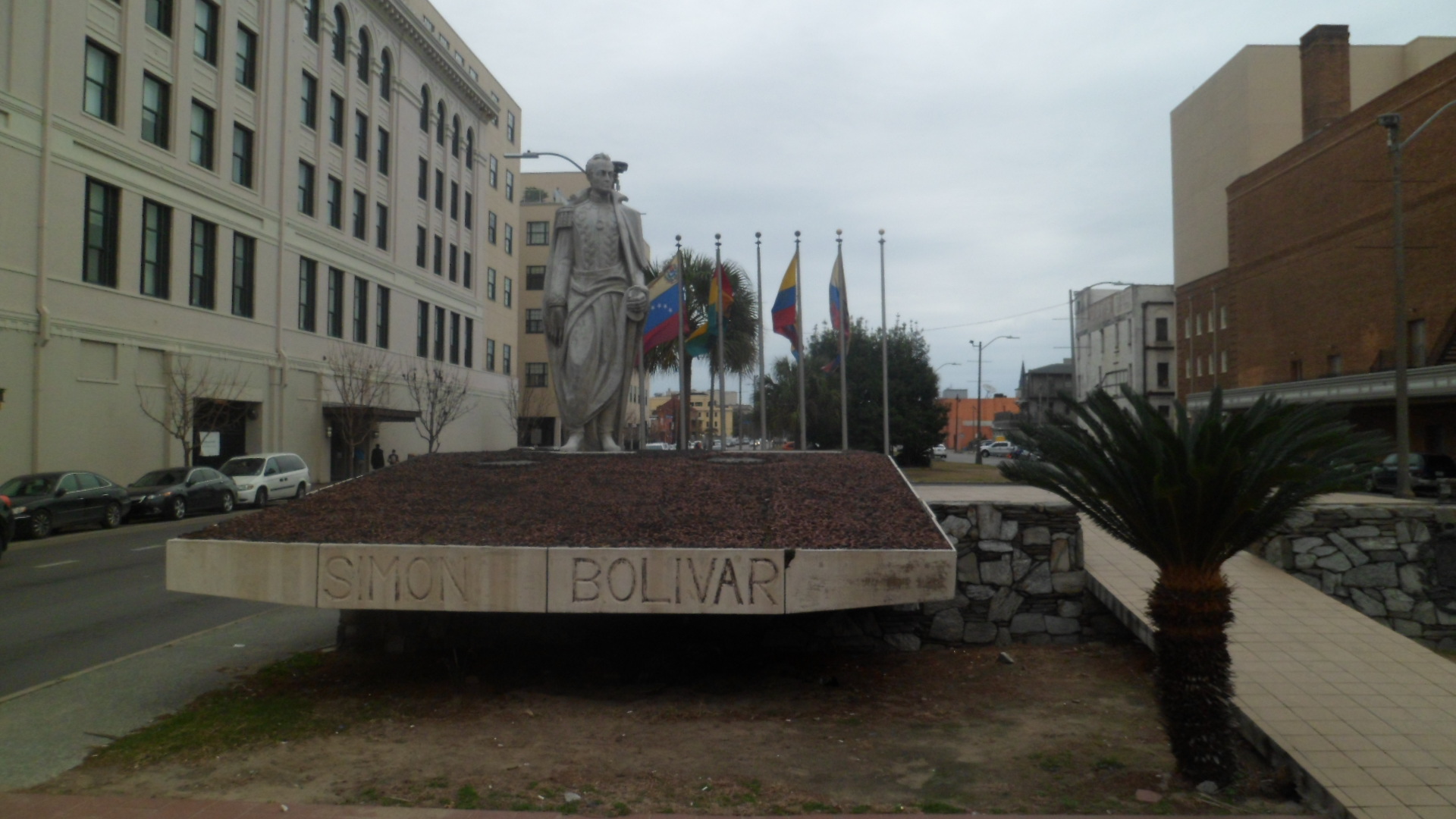
As I walked back towards Basin Street, Simon Bolivar was there, reminding us of the spirit off freedom that was starting to stir in the Gulf Region, at the dawn of the 19th Century. The enslaved, however, would not taste of liberty until our nation had nearly been rent asunder.
Once back in my car, I made an investigation into the listed address of New Orleans Baha’i Center. Shades of Brussels, the Baha’is have moved- the place is now a snow cone establishment. Today, being 50 degrees, was not a day for me to enjoy such fare. I headed out of town, accompanied by rain, clear to Luling, TX,my stop for the night. Lake Charles, however, has Steamboat Bill’s, right off the highway and packed to the rafters with diners- some of whom were headed to the Big Easy. I was good with a pile of catfish and hush puppies, and the company of a stuffed gator.
Three hours later, I was fine and dandy at Luling’s Coachmen’s Inn.
February 15, 2015- Panama City to Waveland I am a bit of a stick-in-the-mud, when it comes to breakfast. I want no fried, boiled or poached eggs, no bananas and I think keeping the heavy to a minimum is good- so very little, in the way of biscuits and gravy, hits my plate. I did, however, leave my friends’ home in Panama City, with a fair amount of freshly picked kumquats. They are a fabulous snack food, and full of Vitamin C, being the only citrus fruit which may be eaten, rind and all. I will hold these exquisite people in the highest regard, though, I’m not in the market for any of the various ladies with whom Host might want to arrange a relationship. My presence in anyone else’s life is too fleeting. Nonetheless, goodbyes don’t come easy.
The road between destinations always throws in its share of bounties and bestowals. That’s the magic of the journey. So it was, that I left Panama City, headed for Pensacola, with at least the intention of spending a couple of hours poking around the historic sights and sounds of Escambia Bay. There was, as it happened though, the chance of connecting with my friends from Alabama, down in Ocean Springs, MS, for a day or so. Mental arithmetic led to my decision to put off Pensacola and Mobile, until an as yet undetermined “next time”. I did stop at Shrimp Basket, in Pensacola, for a take-out lunch. That was a good thing, as Sunday lunch in the Florida Panhandle means wearing one’s Sunday Best. My attire was neat, clean-and very casual. The crab cakes, though, were very tasty, once I got to that picnic table, outside Ocean Springs. The view of the channel at the rest area, west of Pascagoula, was comforting in itself.
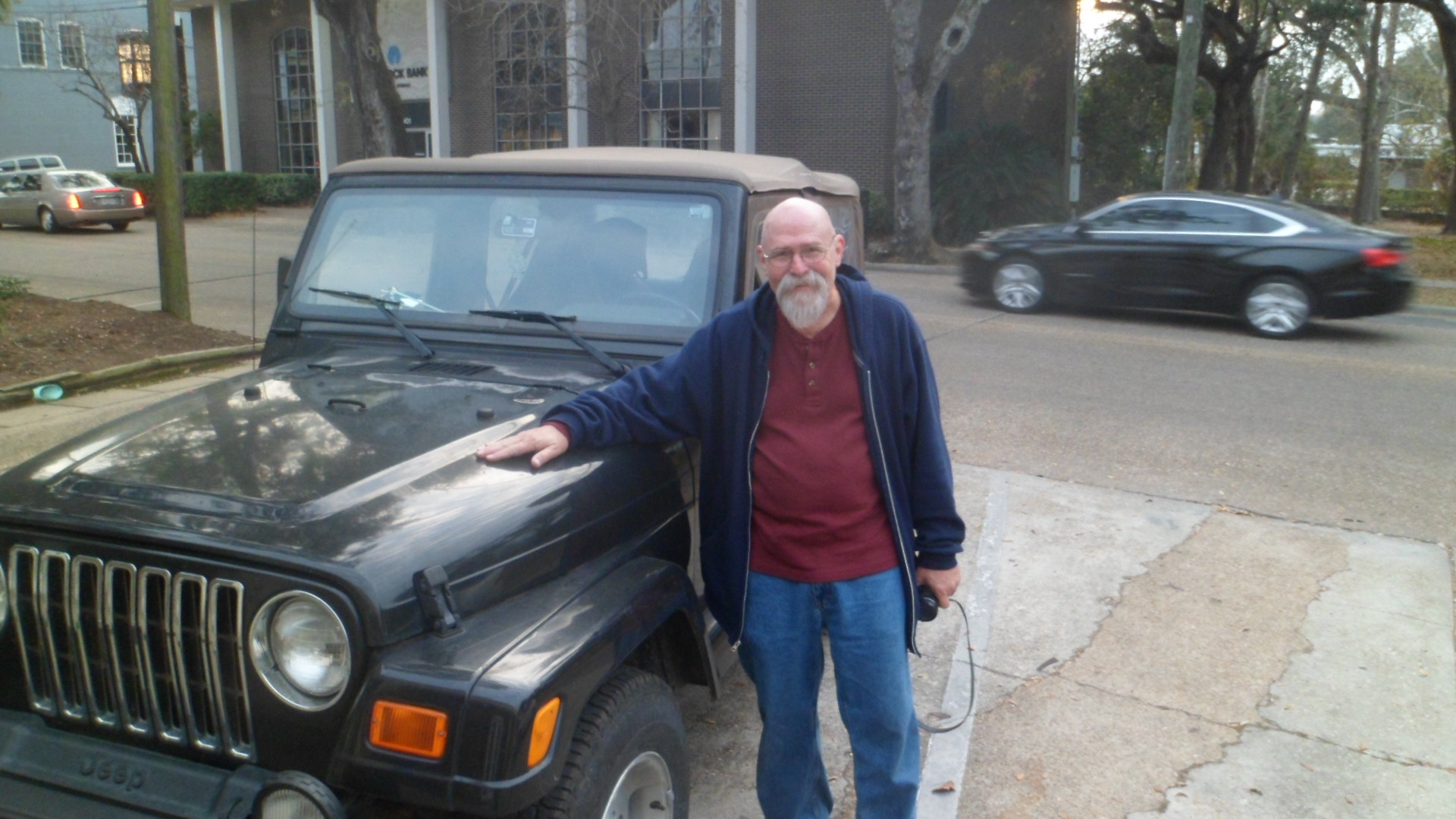
I called a new friend, who happened to be in Ocean Springs, and was pleased to share an hour or so, in that splendid little town, consisting of the two villages of Bienville and Iberville. We met outside the old Rail Station, as he walked towards my car.
As you might guess, he, too, is taking the slow and easy approach to life, at least for a time.
We took the jeep to the beach area, after savouring coffee, and, at least in my case, a cannoli, at the only Coffee House in town.
The beach here is a blend of sand, due to the recovery efforts from the Great Hurricanes of 2005.
You can see that there are still some stands of cypress trees and pin oaks, along the Causeway, north of the beach.
The Gulf here shimmers as well as it does everywhere, belying the ongoing recovery efforts from the Deep Water Horizon, which only the fishermen still feel.
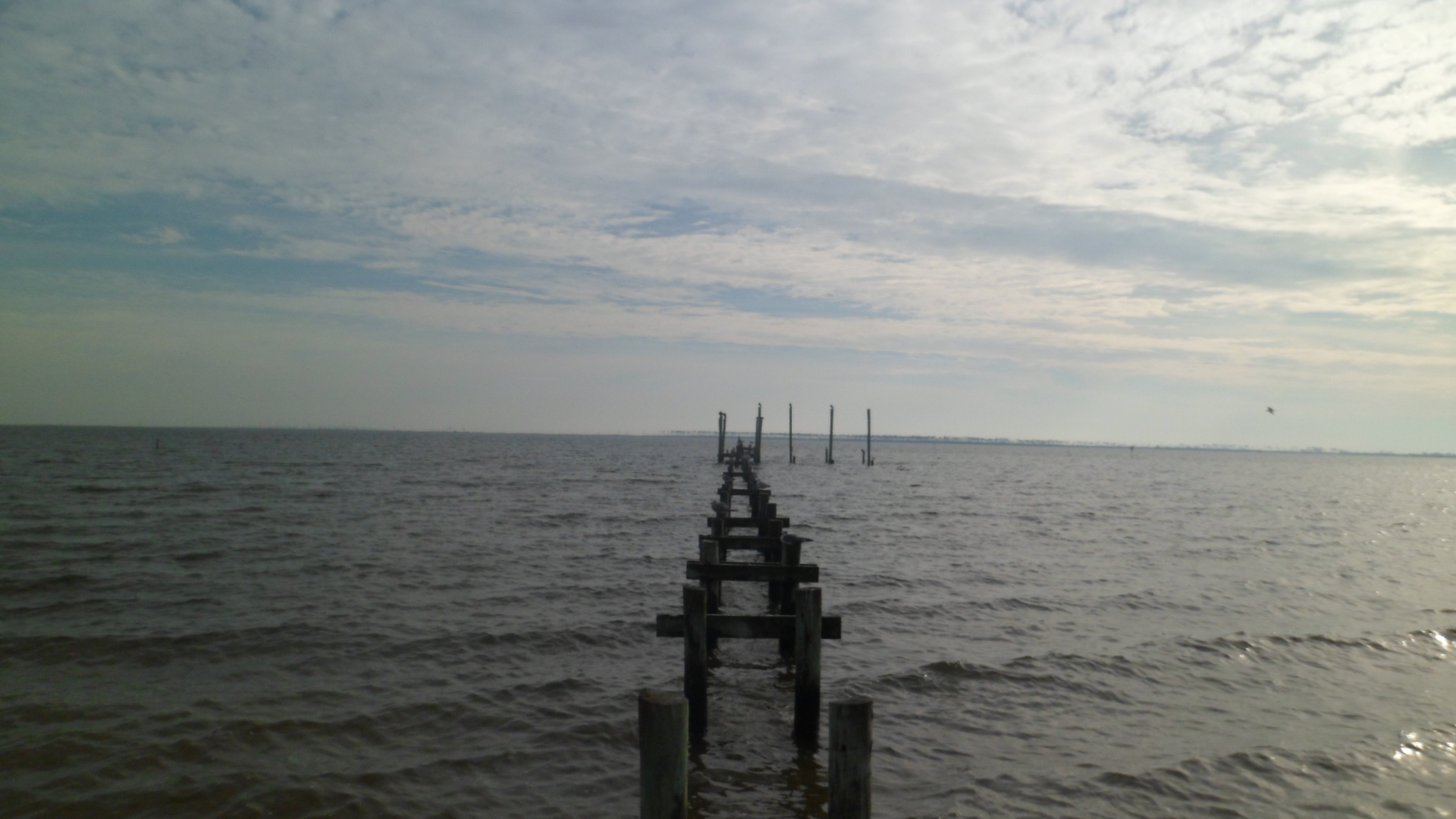
Well, the pelicans feel it, too. They were gathered this fine evening, on posts at the end of an old pier.
The beach towns have always been places to while away a day, in gentlemanly fashion. Had this been a weekday, chances are some would be gathered in the beach-side park, for a game of chess.
They’d have been greeted with a fine message.
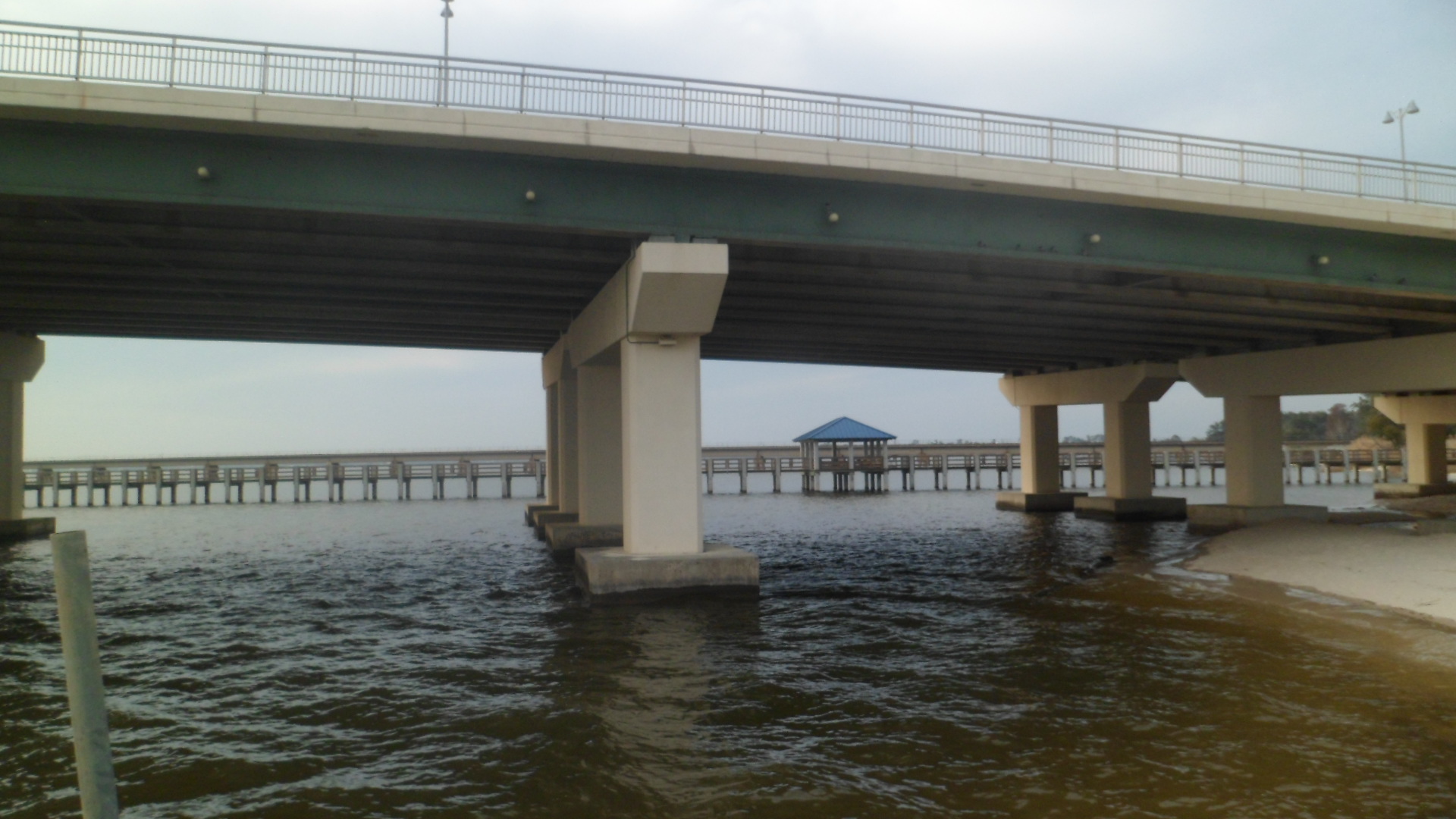
A suspension bridge connects Ocean Springs with the barrier islands just to the south.
Downtown Ocean Springs had celebrated Mardi Gras, just a few hours earlier, as had several towns along the coast. There were beads and other mementos of the festivities, strewn along the sidewalks. In this grand scheme of life, even Man’s best friend gets in the act.
Saying farewell to my friend, I headed further along, to Biloxi, another fine old French-heritage site. Before I ran out of daylight, some lovely memoirs of the Mississippi that was, showed themselves during an hour’s walk.
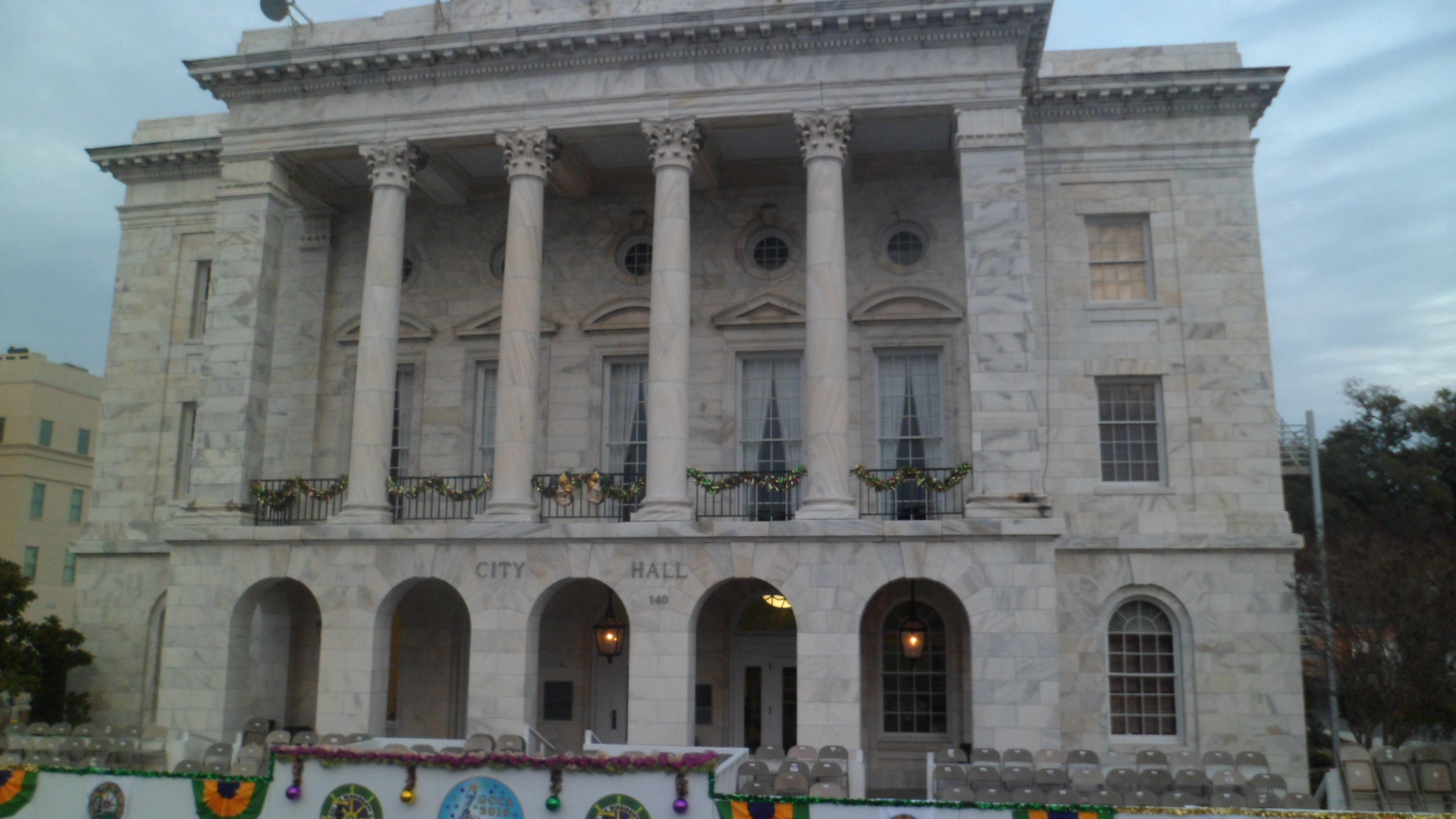
Here is Biloxi City Hall.
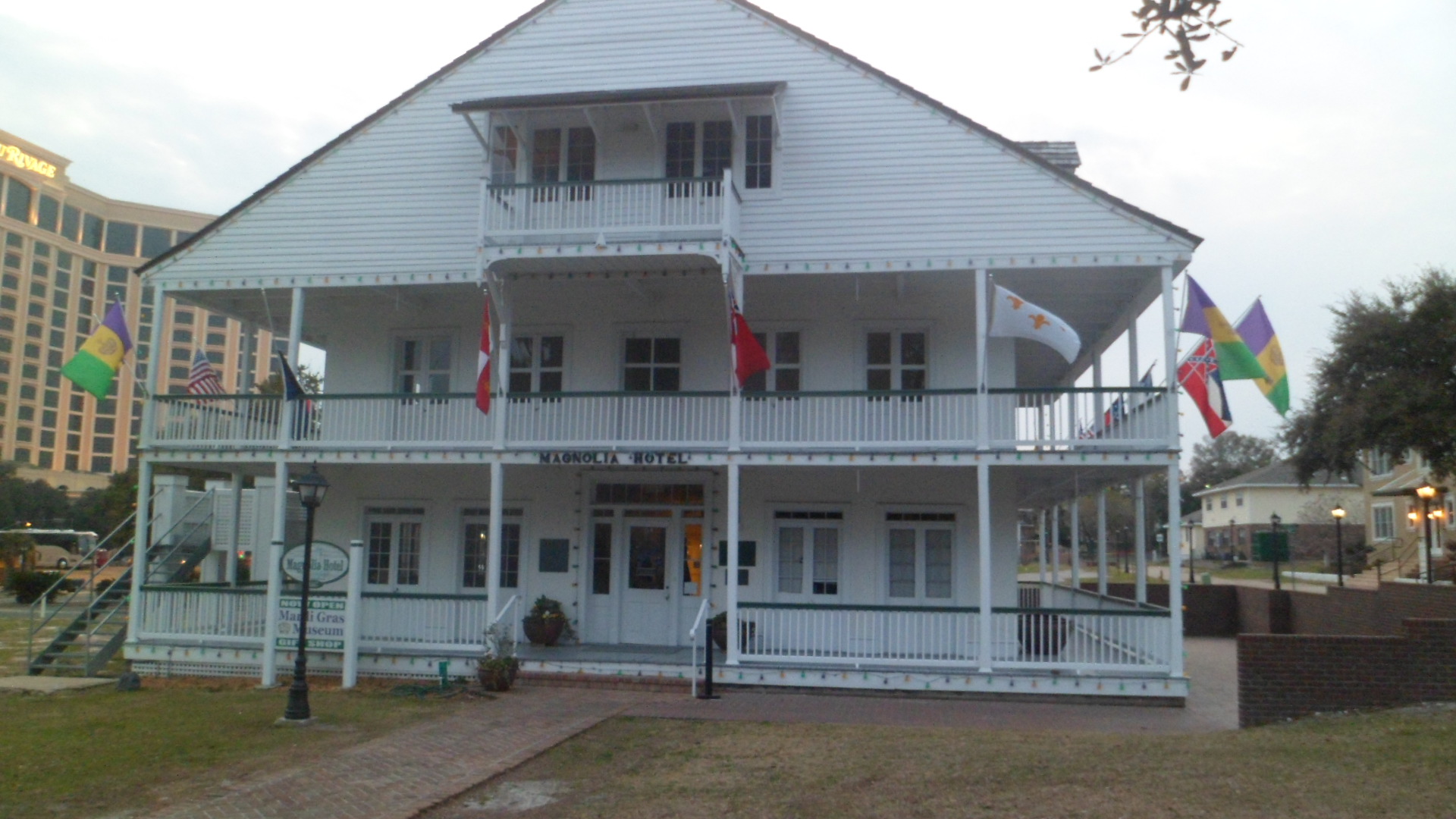
The Magnolia Hotel is Biloxi’s Grande Dame. It was built in 1847.
Mary Mahoney’s French House is the city’s premier restaurant.
The white sand beaches, though, are a key element of what keeps Biloxi thriving.
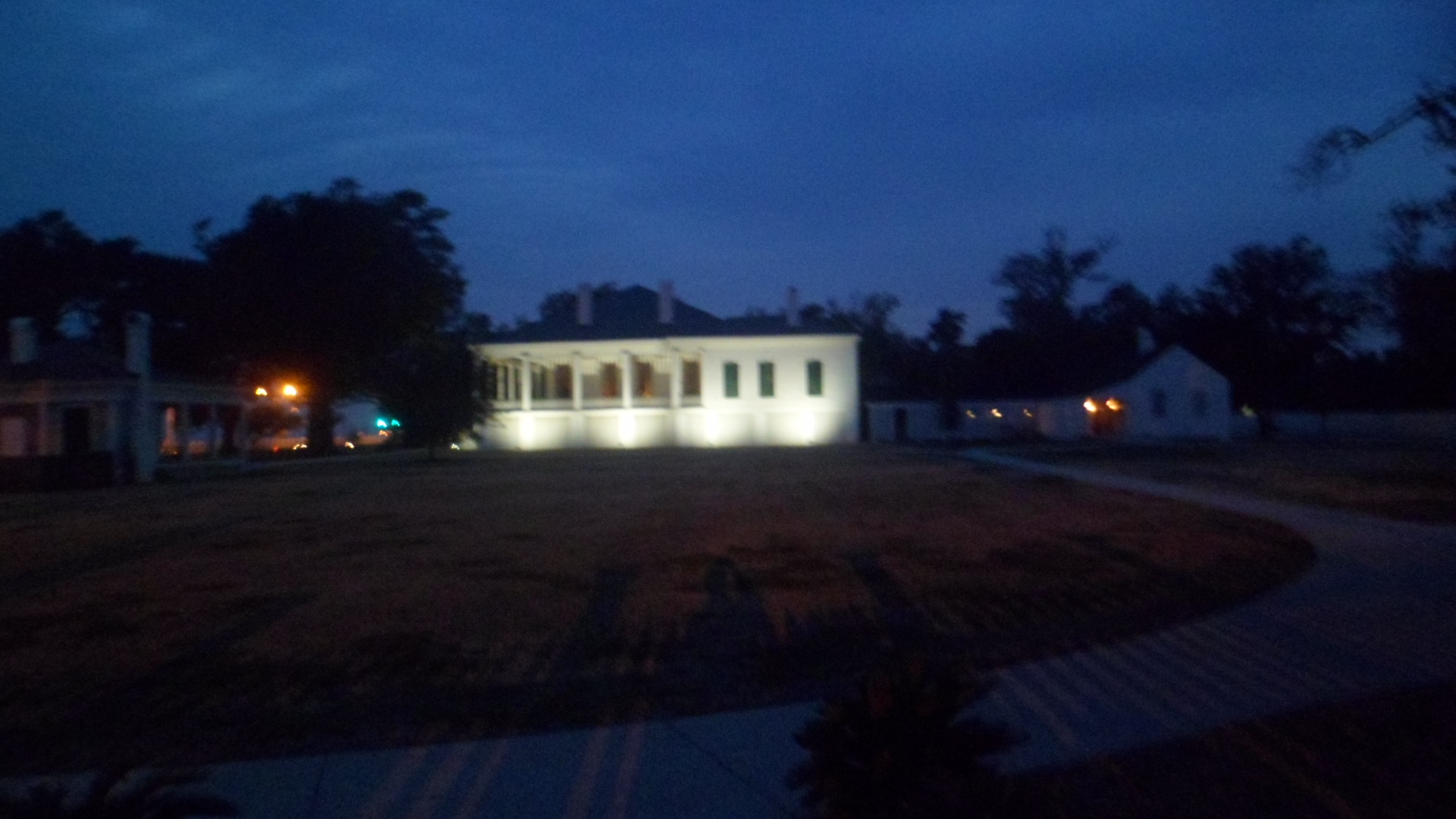
My last photo of the evening came with a brief stop at the grounds of a place bound to evoke mixed emotions for the history buff: Beauvoir, the Jefferson Davis Home and Library. Knowing the past helps shape the future, so on a future sojourn, I may well stop here and learn just what made the man form such an alternate view of how America was to evolve.
The night did not come in a shy manner. I continued on, through Pass Christian, which had just finished its Mardi Gras parade, Bay Saint Louis, where none of the Mom and Pop motels had their Welcome lights on, to Waveland, where I got a modest-sized room, for a premier price- this being so close to Mardi Gras and all. Dinner was cheap, though, at Third Base Bar and Grill, a honky tonk which is one of the most convivial places I’ve yet had the pleasure to visit. This is country Mississippi as I wish it had been in the 60’s, everyone getting along, without regard to who was from where, or from what background. I was treated just fine, with my mushroom Swiss burger, lightly-oiled fries and a pitcher of ice water- me being a teetotaler and all.
The journey becomes a destination, in and of itself.
February 14, 2015- Panama City, FL. Actors have an open-ended mission: To relieve tension in their audience, but also to incite thought. This is as true of those who devote themselves to small-city “stock” theater productions, becoming more intimate with both their audiences and their crews, as it is of those who stride the Red Carpet on awards night.
The rehearsal on which I sat in, this lovely north Florida morning, was intent on taking the viewer/listener back to childhood: Specifically, it addressed the Spelling Bee, on the surface level, and the issues of parents living through their children and the resulting effects this brazen, immature vicarious life has on the child, on the more crucial, underlying, level.
Two hours of love were put into this endeavour, at least from the actors’ perspective. There will be more, before the February 20 presentation. The troupe presents before school groups, so this play will hit home, for any child who is in an activity for the sake of his/her parents.
I started the morning watching my hosts’ dogs play, in the back yard. Dogs have the right perspective: Only do what feels right, do it as a team, and mess around a bit, while doing it.
The actors have the team thing down, and so will get through the production quite well. My host is one of the best at this, and while messing around is not on her agenda- there is no one who has more fun with her work.
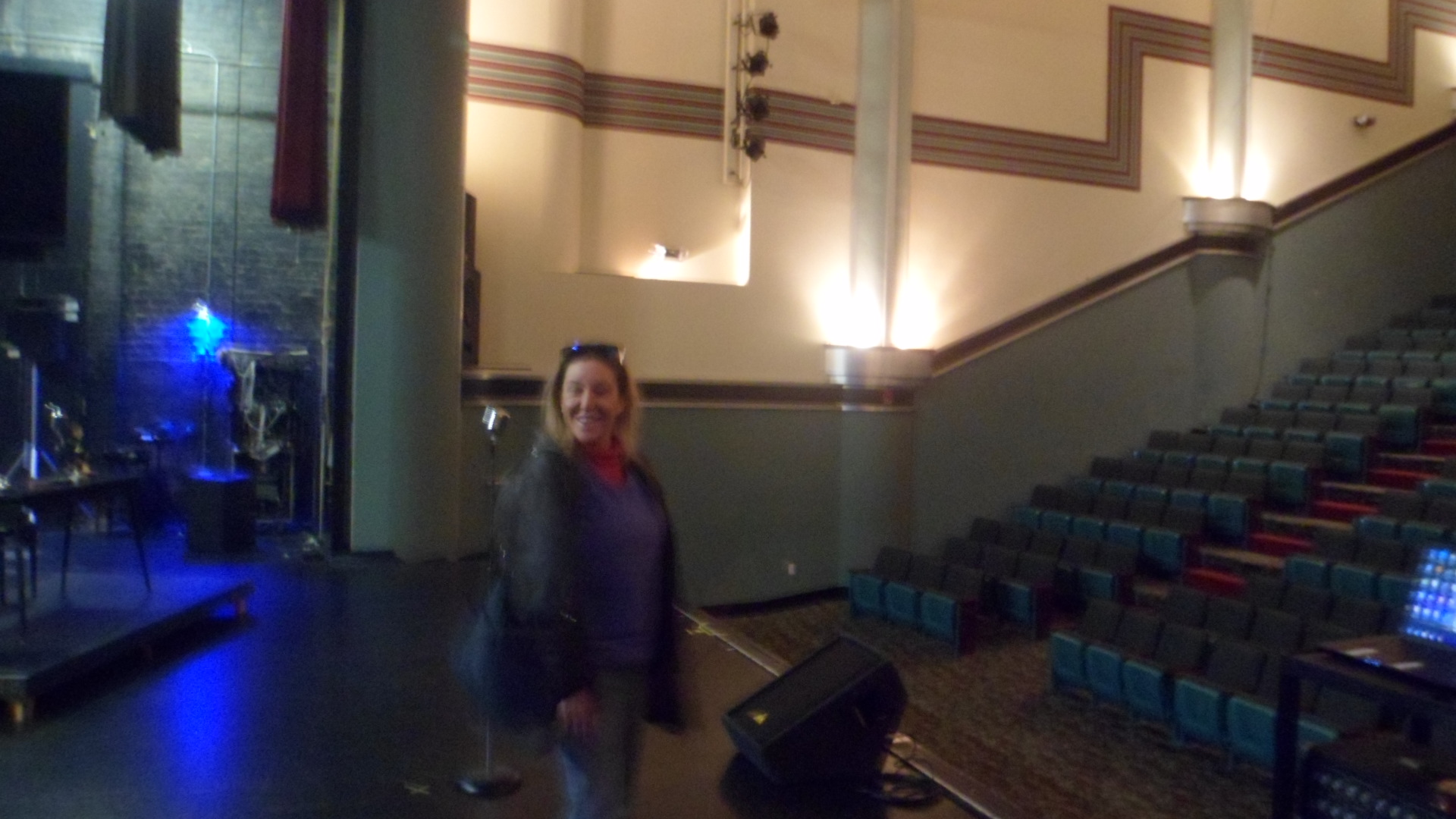
The Martin Theater, where the production will first be staged, is a venerable institution in Panama City, and was a USO site during World War II, when north Florida was a key staging area for the European Theatre of the conflict.
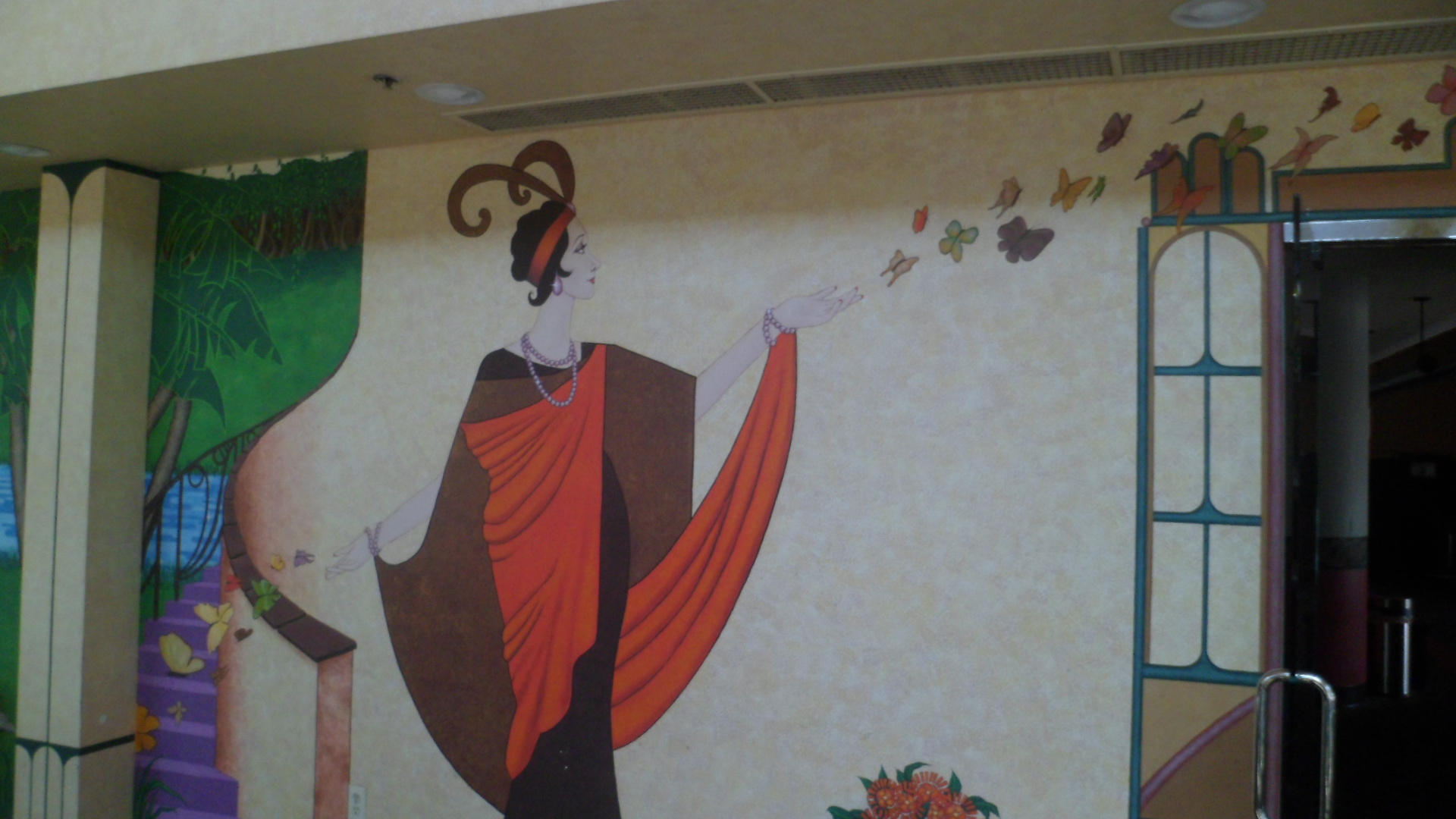
The murals on its south wall reflect the spirit of that time of national teamwork, and determination. Womankind in those days was far more than Rosie the Riveter. Style and grace remained key elements of maintaining morale.
After the two-hour practice, there was a new mission: Lunch. Where better to begin this important search, than at a Farmer’s Market. Panama City has a fine one, in the St. Andrews neighbourhood.
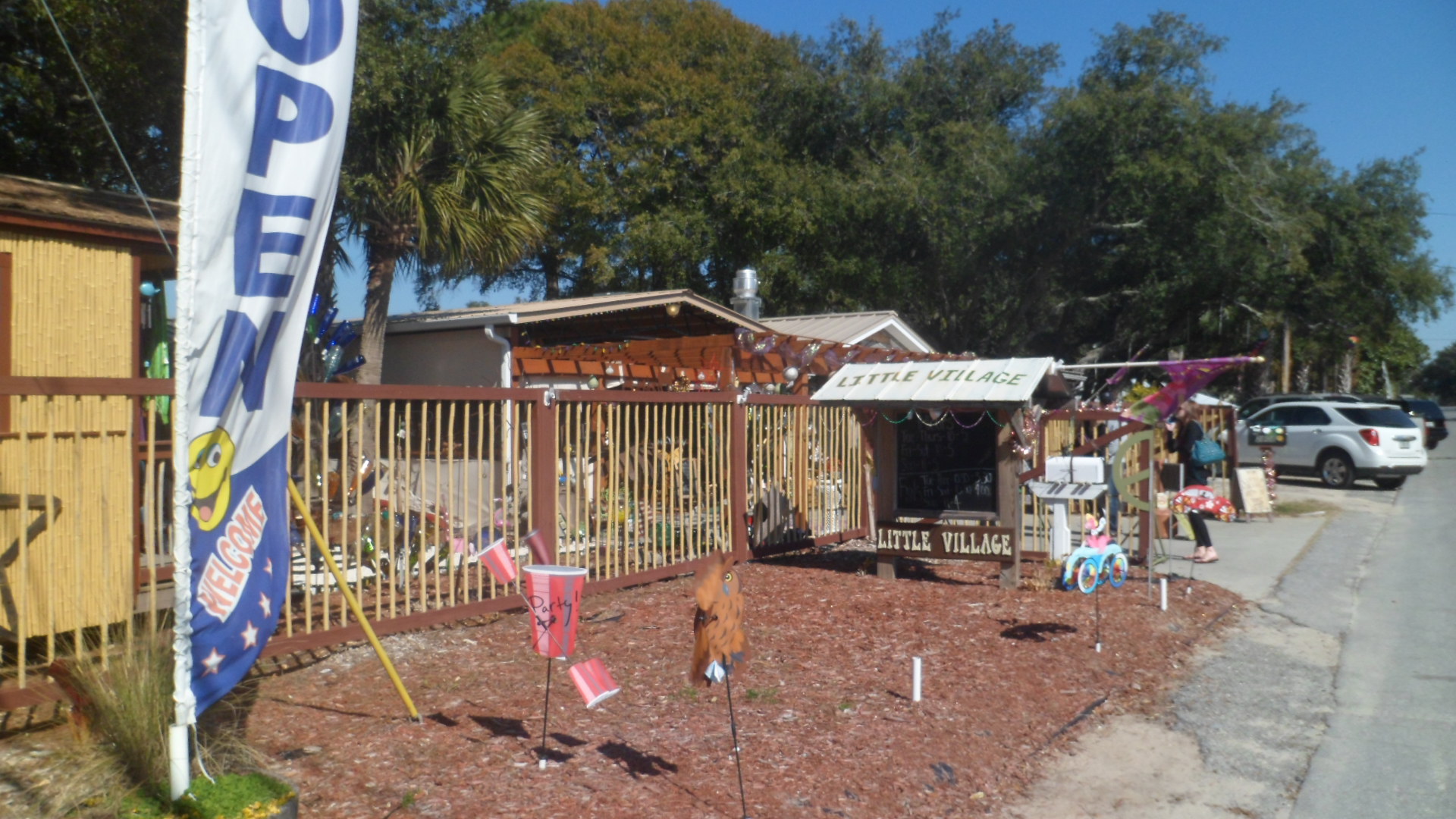
We found lots of arts, crafts and fresh vegetables, but a complete meal required crossing the street- to Little Village, a lovely old house that was converted by its owner into a small restaurant, bar and gift shop complex. It reminds me of a similar arrangement in an airplane hangar, at Oceanside, CA.
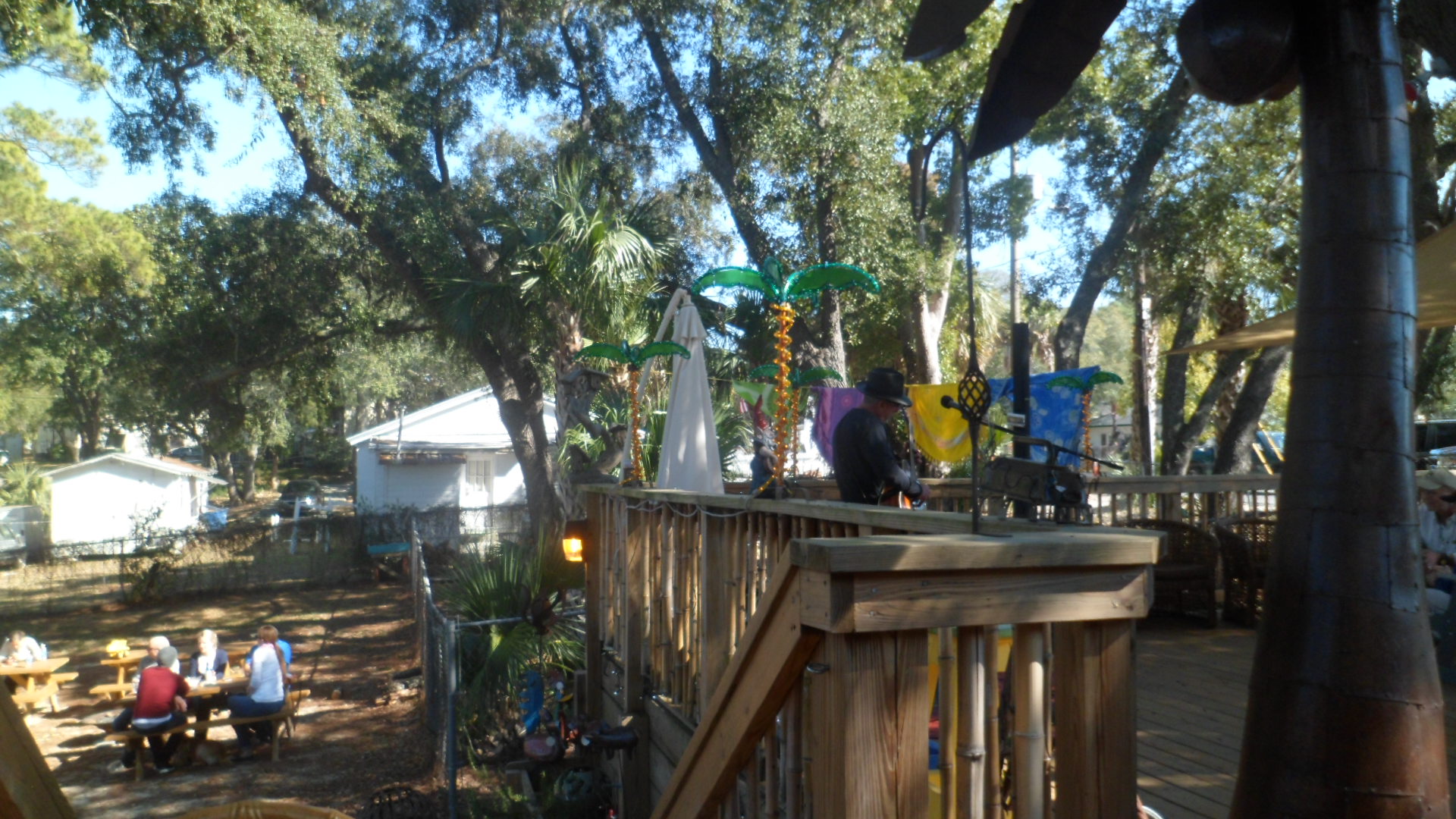
Little Village is certainly well appreciated by the residents of Panama City: The place was packed, and we got stuffed by the amazing Veracruz-style Mexican cuisine. Music was provided by a pianist-singer, evoking a cross between Billy Joel and Carlos Santana.
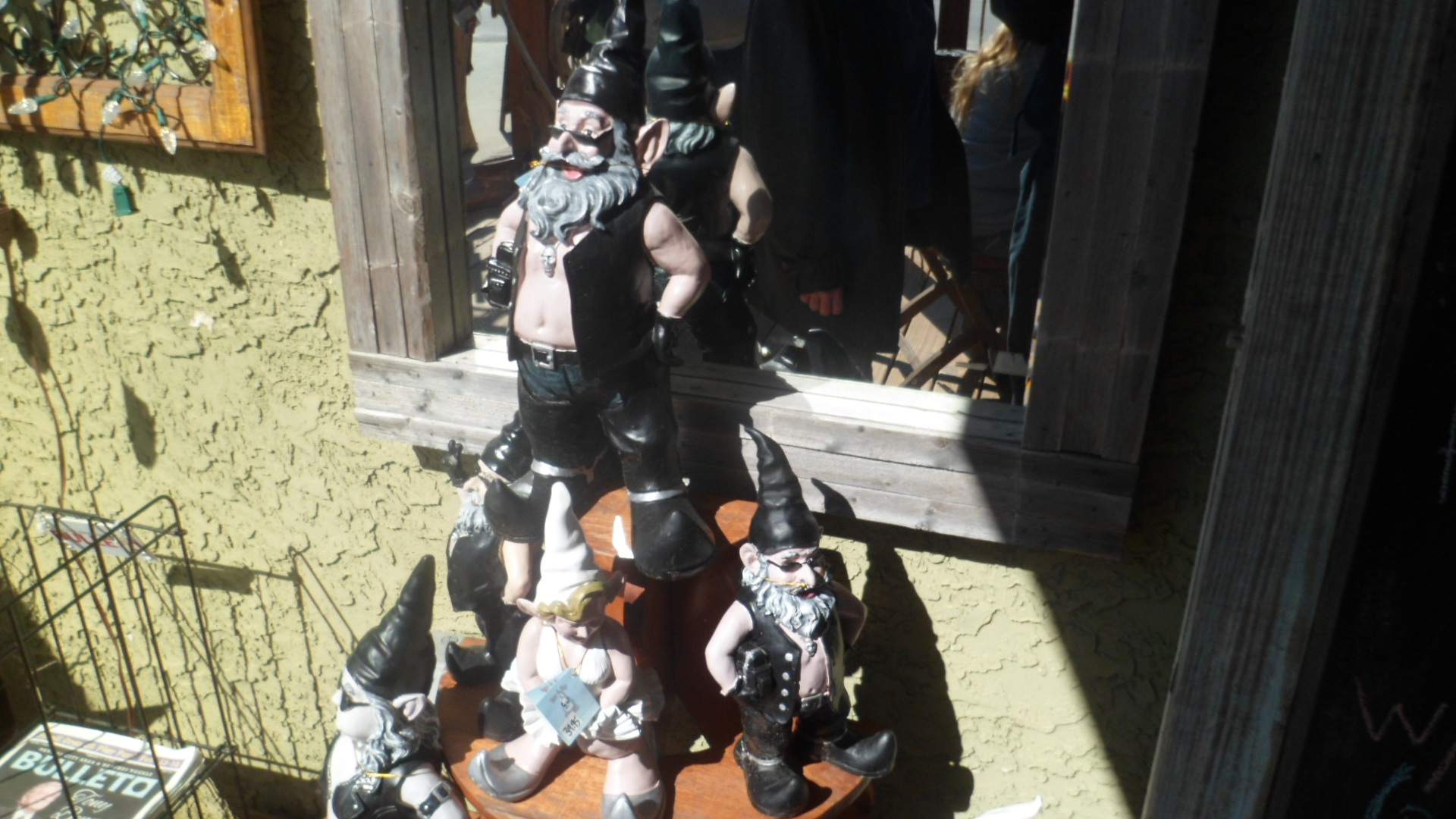
I was beginning to think that I might end this journey looking like these fellows.
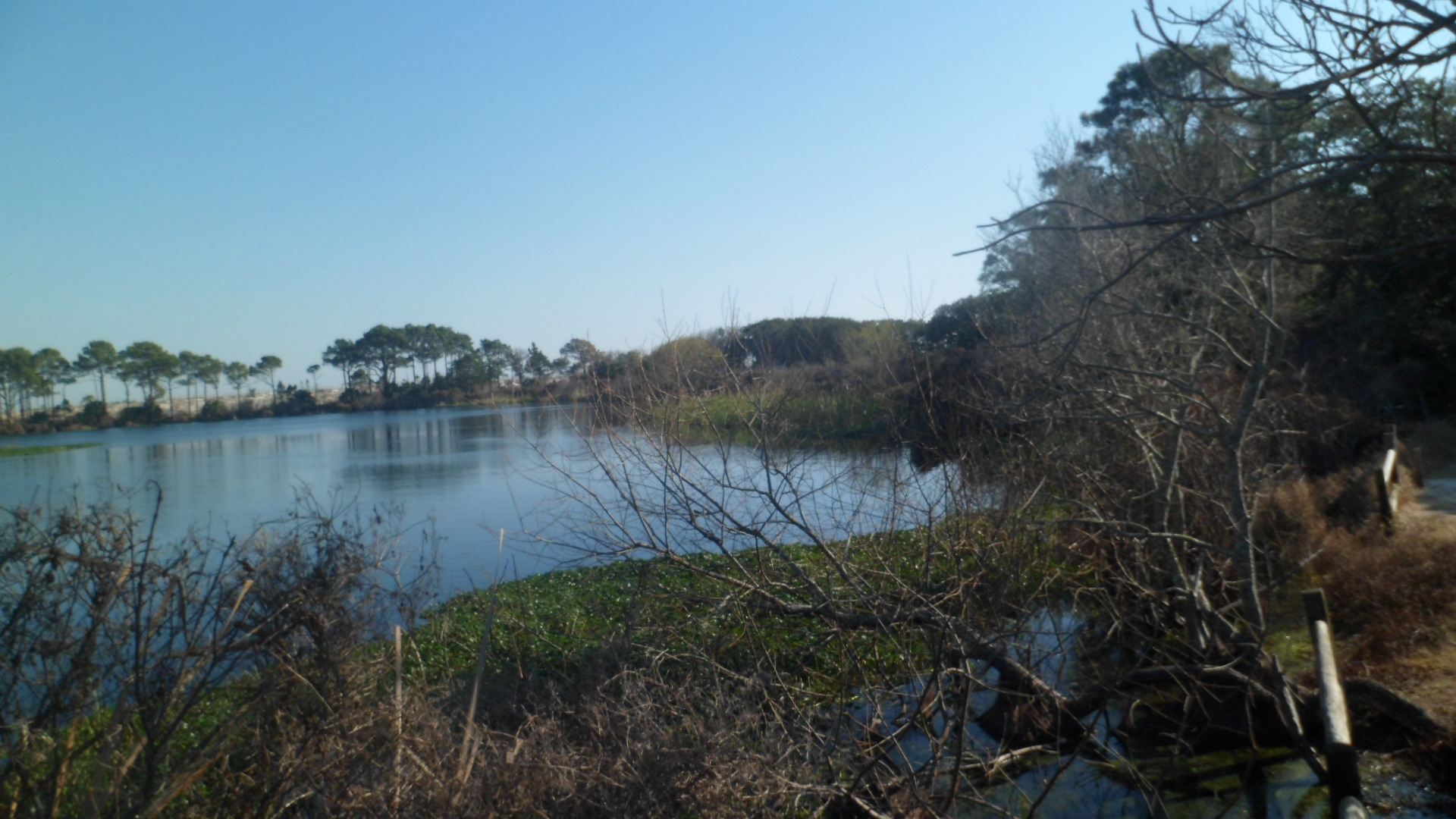
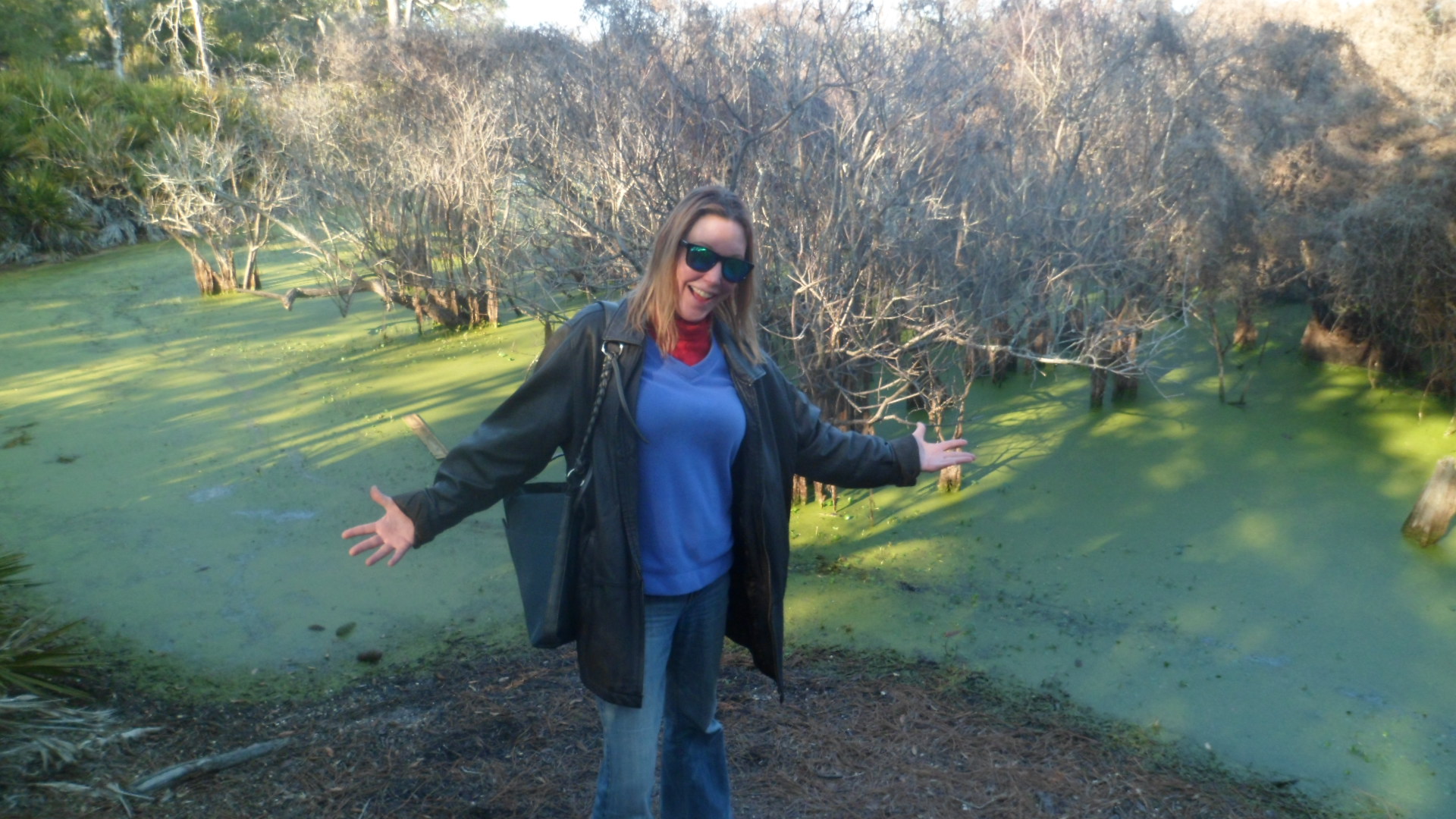
We decided to walk off the meal, as best we could, and drove to St. Andrews State Recreation Area, first visiting Gator Lake, an encounter with a swamp environment. The signature creatures were nowhere to be seen. Of course, it was early afternoon, and alligators usually prefer to be out and about in the morning.
The sand here is the whitest I’ve yet seen, being largely the result of shell deposits.
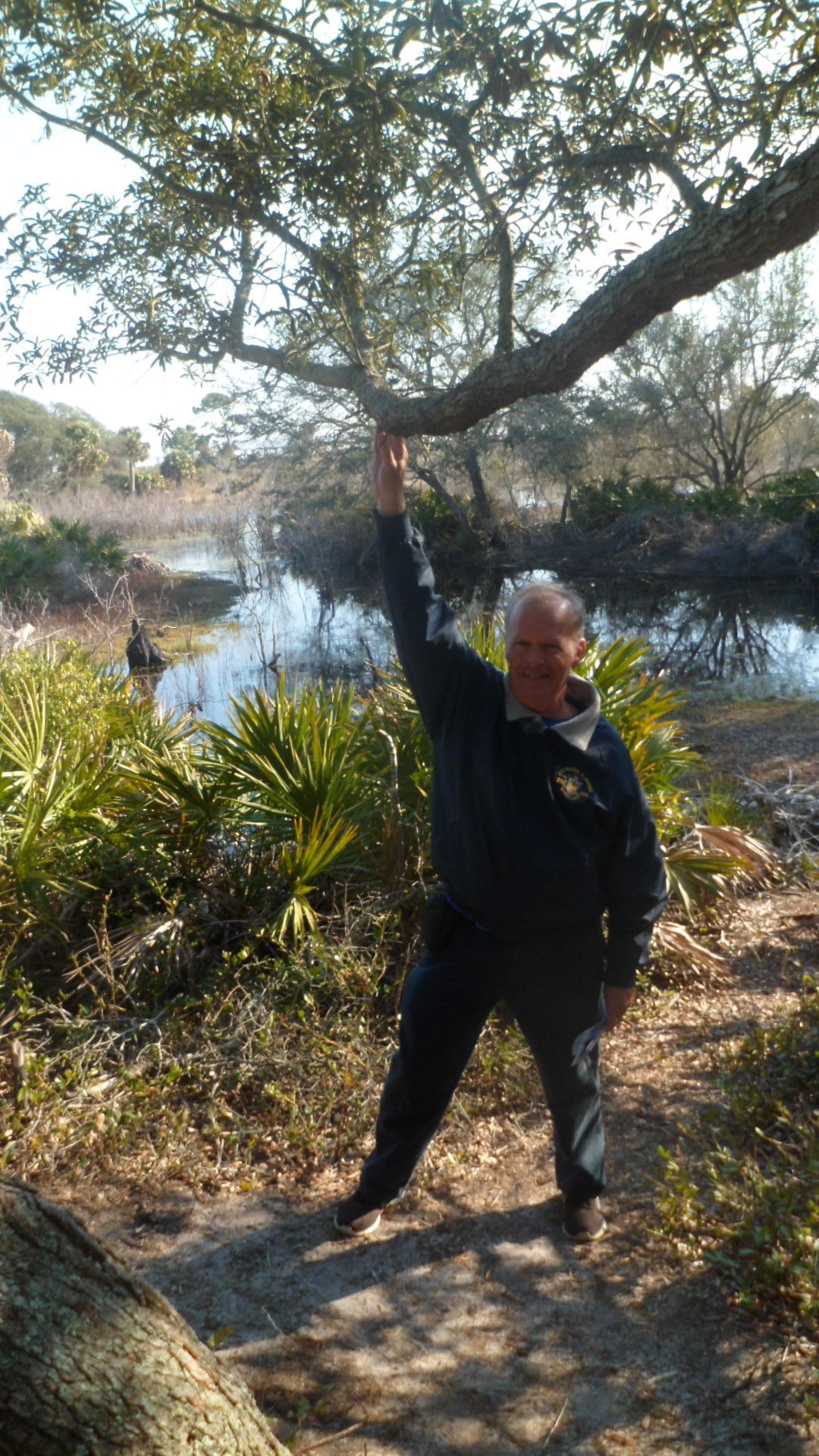
Needless to say, Host and I were both in our elements.
The afternoon would not have been complete, though, without going across the parking lot and seeing the fabulous stretches of pure white sand and rather feisty surf.
This was a very full St. Valentine’s Day. As much as sourpuss revisionists like to put down the Patron Saint of lovers, I like to think his devotion to his chosen mission was a path of love, much like that of the actors whom I watched last night, and this morning.
The theme of real love continued on into the night, as we sat in my hosts’ living room and watched “The Good Lie”, wherein Reese Witherspoon teaches, and is taught by, four refugees from Sudan. We did so in segments, around the work of loving parents who put their son and his needs first. Later this evening, with my exhausted hosts gone to bed, I had the pleasure of talking with another house guest, an amazingly insightful boy of twelve, for about ninety minutes of free-ranging exploration of just what is needed, in order for families that are fragmented, to reconnect and ultimately thrive. I think the man-child will do just fine.
July 13, 2015- Panama City, FL Yes, I believe from now on, I will add location to my datelines. I am back on track, writing, after several days of focusing just on what’s in front of me. Today, I connected with two friends: One, an extended family member who’s in an exile, of sorts and the other, an online friend who’s been after me to come by this town, off and on, for the last three years.
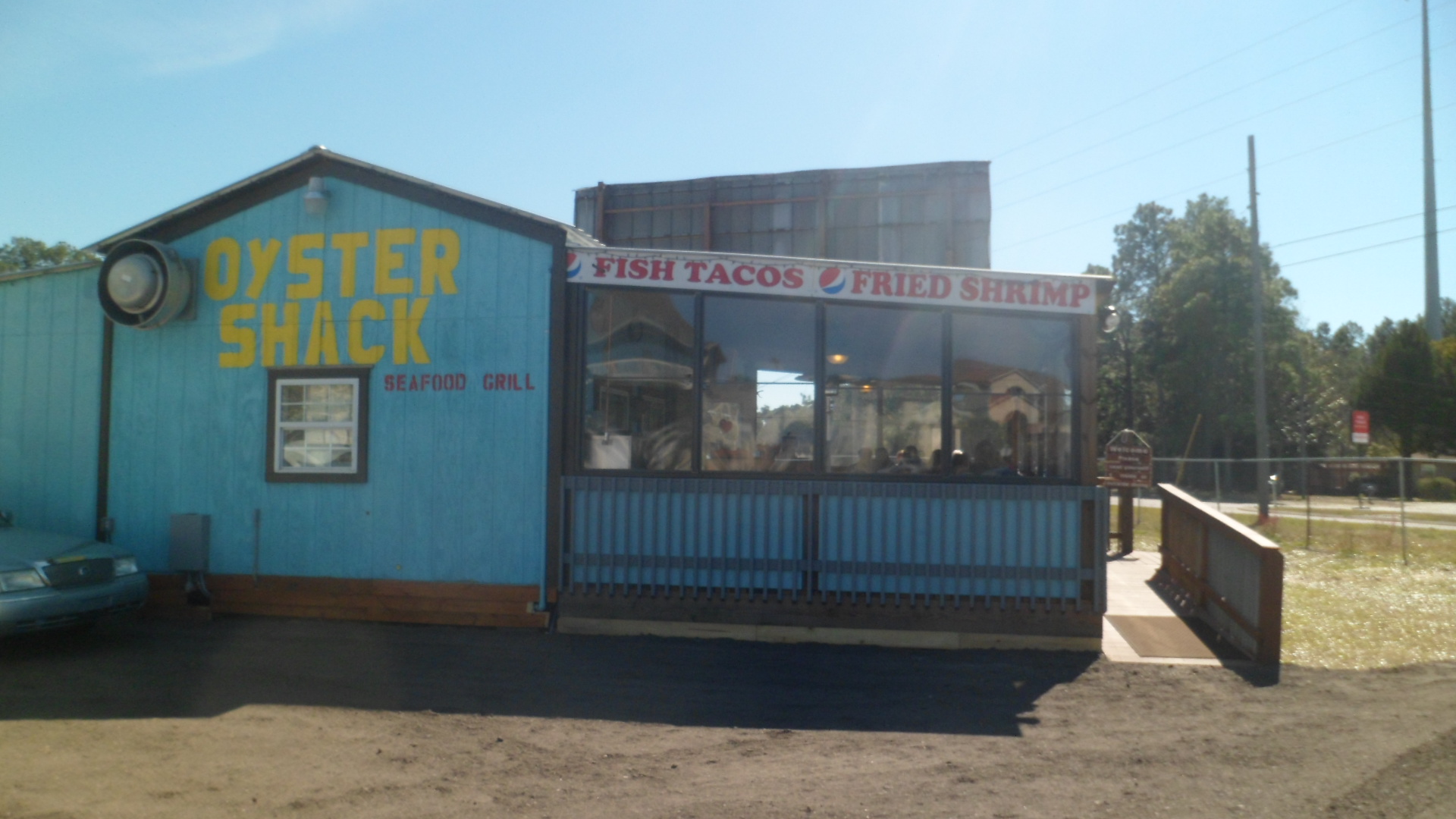
So, here I am, in lovely northwest Florida. The area does seem more soul-connected than some other parts of the Sunshine State, but maybe that’s because its heritage, along with that of St. Augustine and the northeast, runs a bit deeper. I began my visit by lunching with said family member at Gary’s Oyster Shack, in Springfield, about five miles east of PC. My eponymous restaurant host was a taciturn sort, a bit reserved, but he and his kids put forth some great Low Country Boil, and a full range of other dishes. It’s great to be back dining by, and of, the sea.
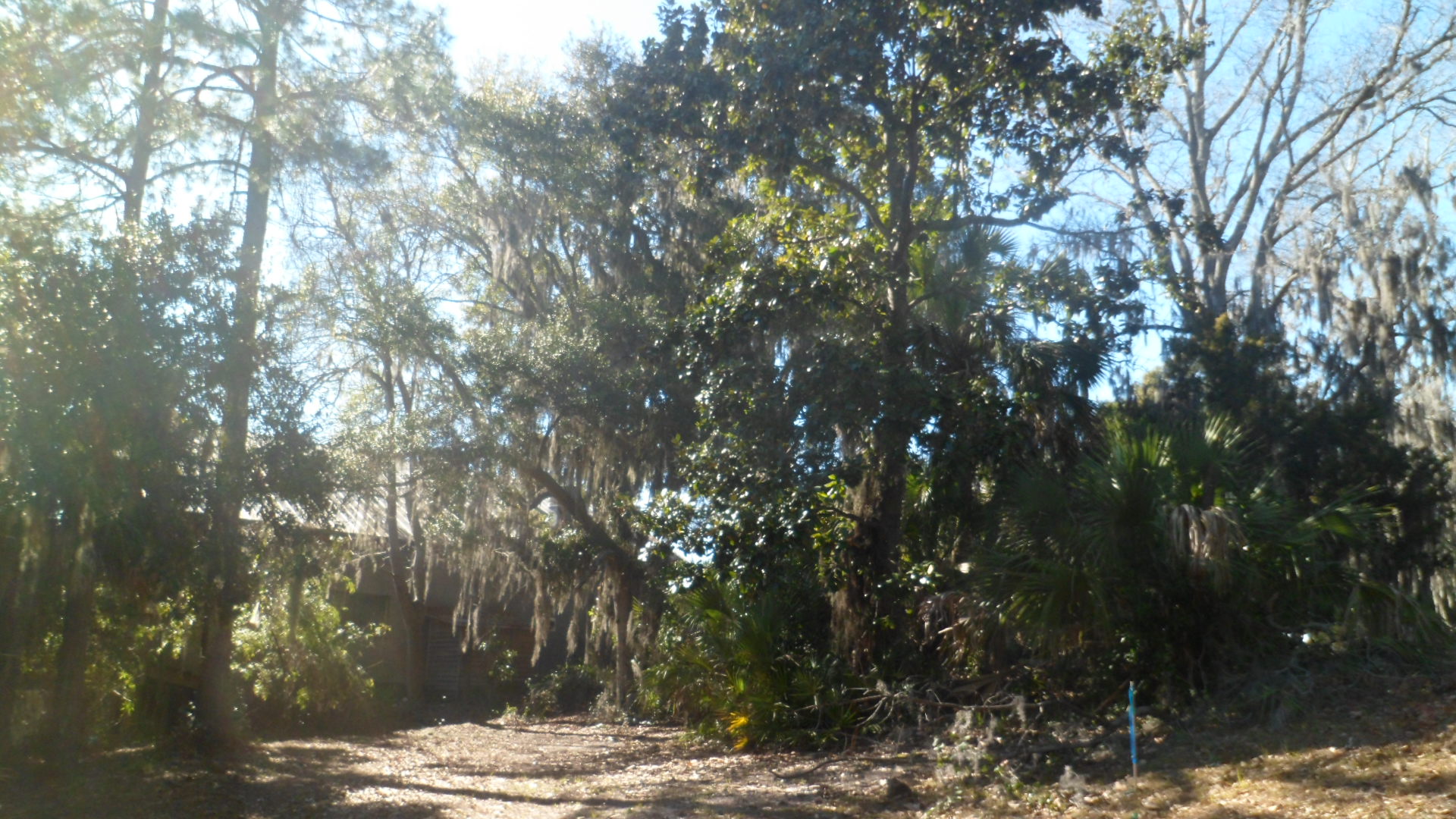
After an hour’s conversation, I bid farewell and Godspeed to my friend, and leaded forth to downtown Panama City. Walking around the seemingly defunct Hawk’s Nest Bar and Grill, I spotted signs that the place was once a fabulous place at which to while away an afternoon, or an evening. The woods outside make for a fine picnic spot.
Murals most often tell a good story, as this one does.
Then, there is the front veranda and patio- one of the great appeals of the Coastal South.
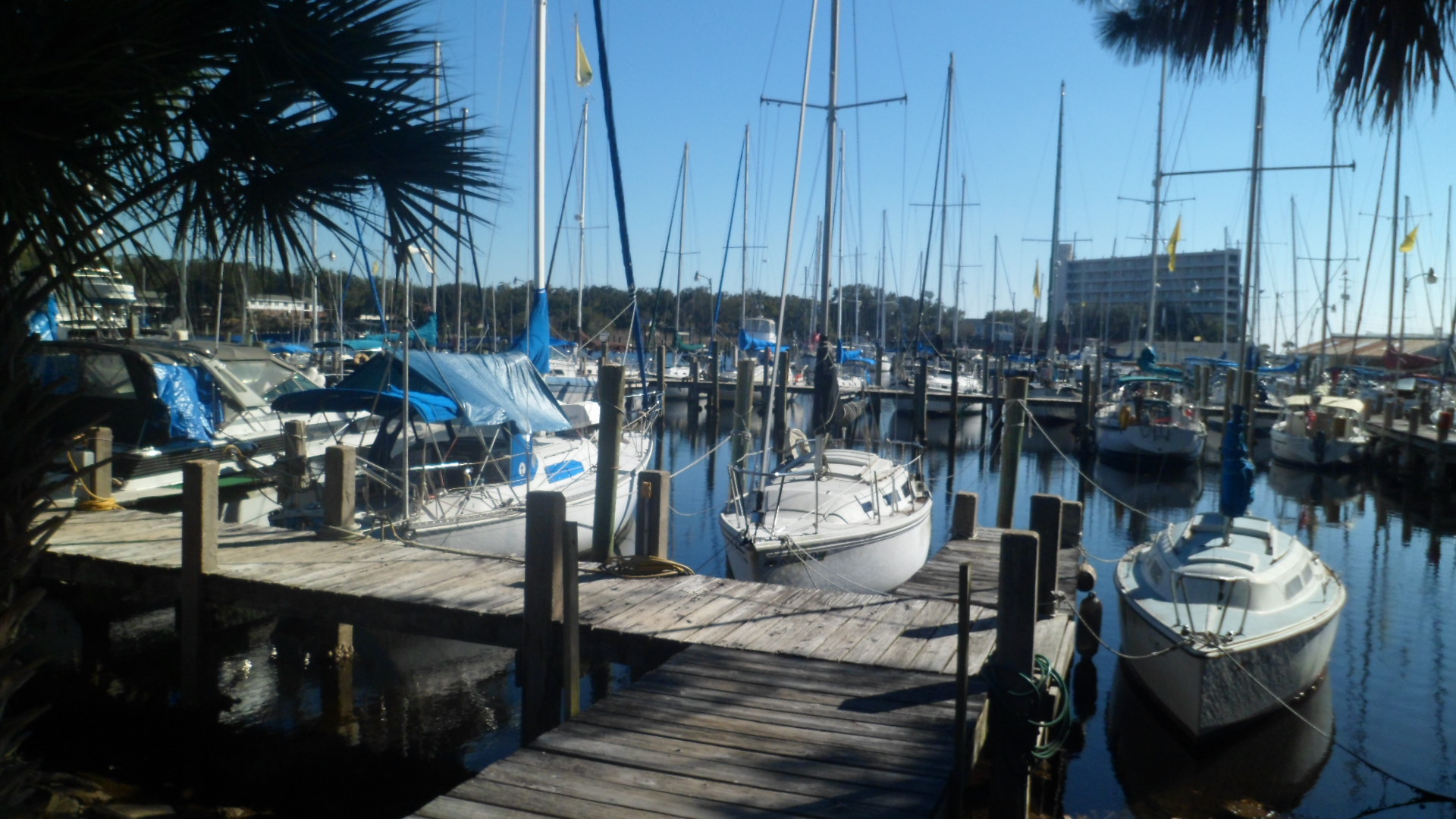
Back along the waterfront, there is a crowded marina- reminder of fishing’s prominence here.
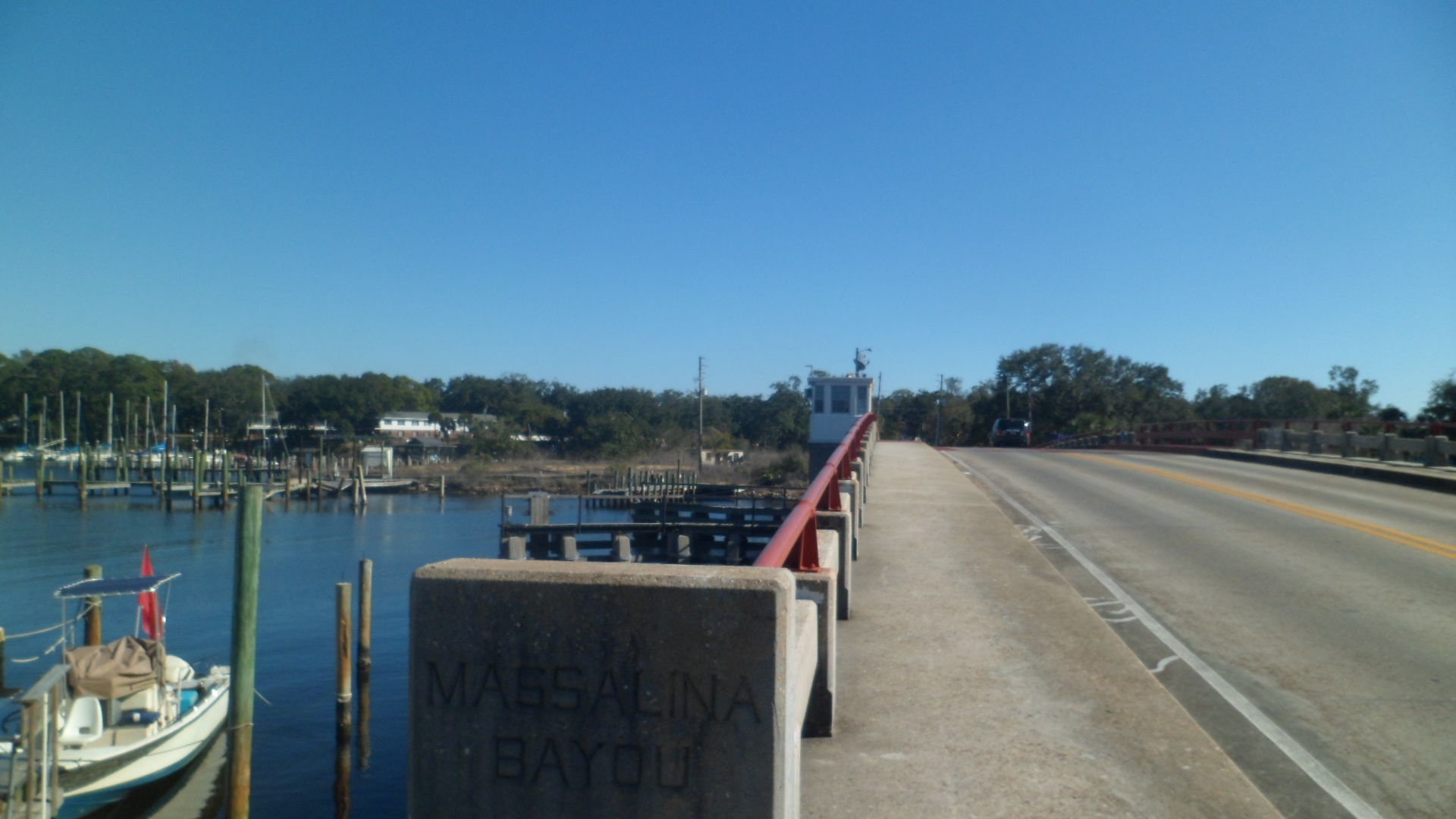
I walked along the coastal path, crossing a drawbridge- the oldest working such bridge in these parts.
Towards the end of the road, there were several lovely historical homes. Some are large, like the Howell/Hobbs House (1909).
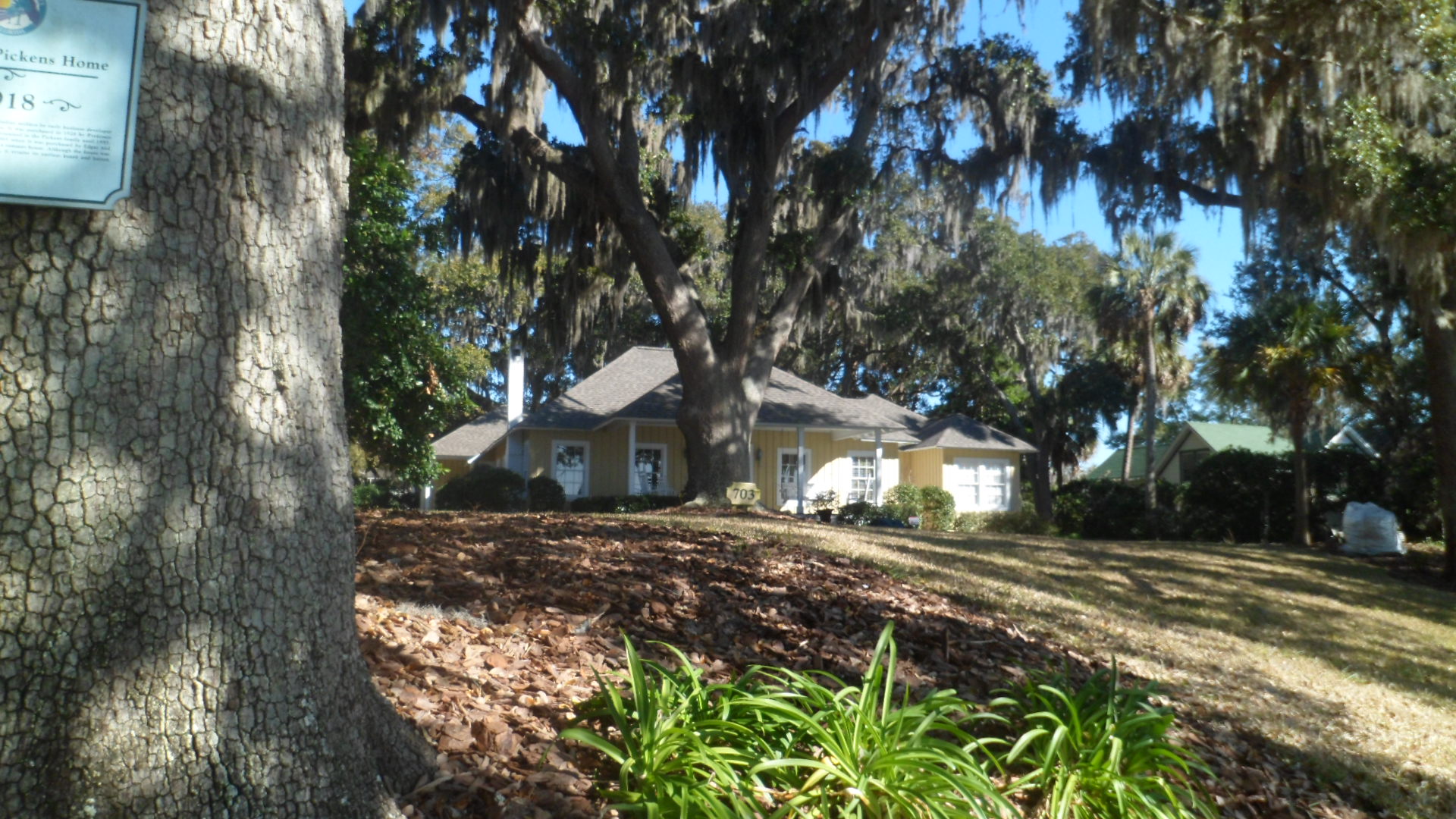
Others were cottage-style, like the McKenzie/Pickens House (1918).
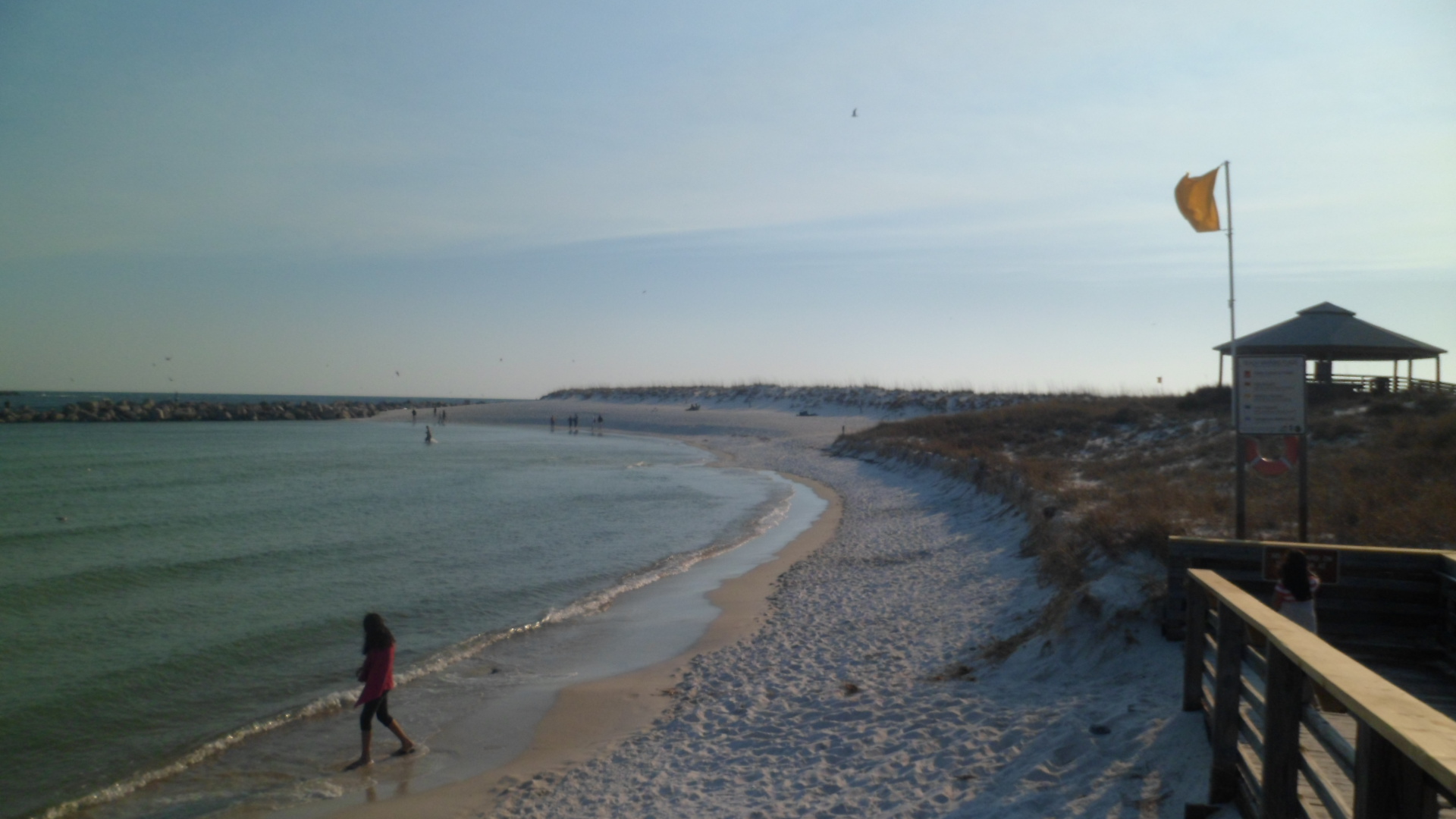
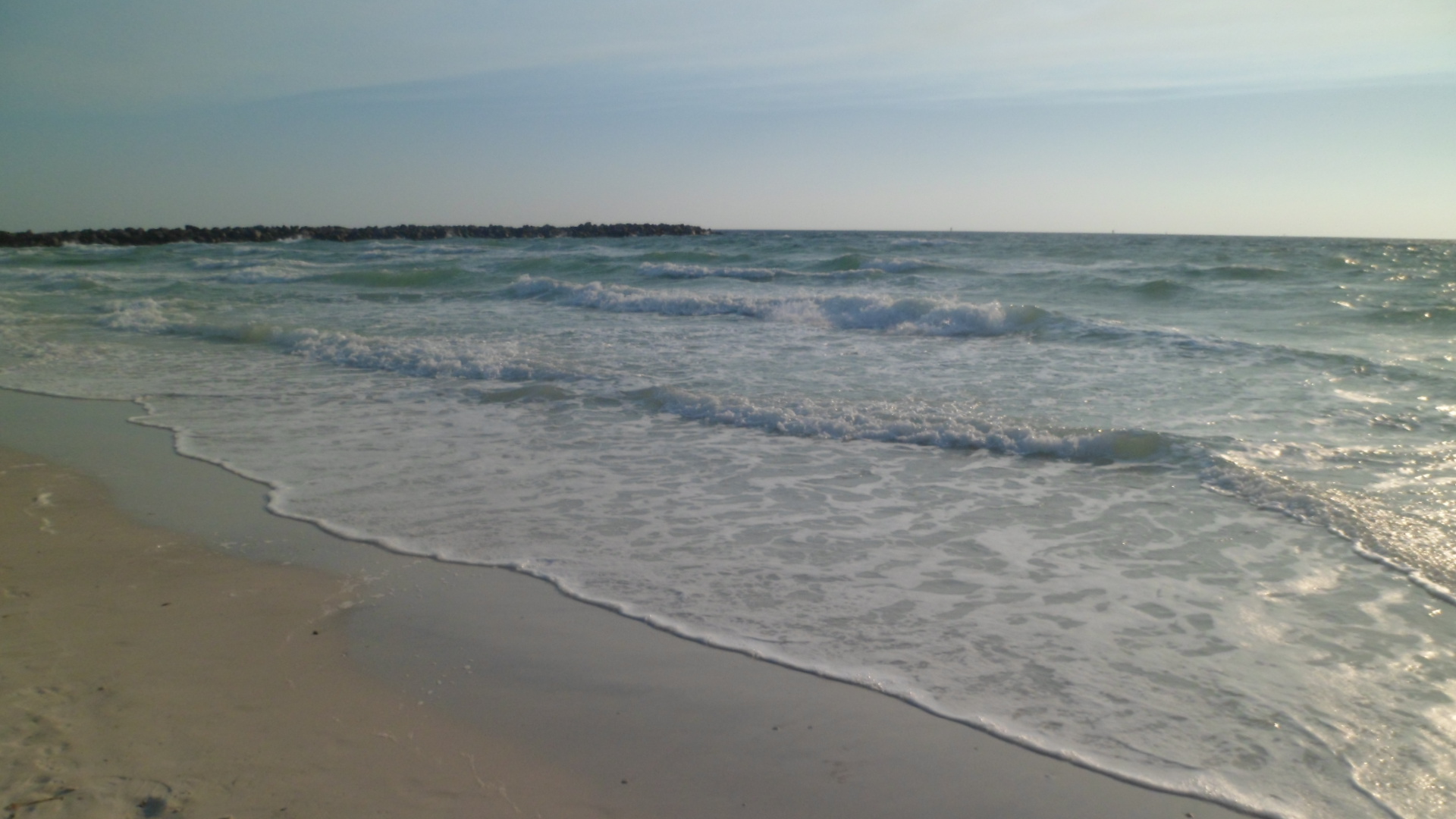
These homes are in grand proximity to some of the clearest ocean anywhere.
My host later explained to me that there are pools of fresh water, parallel to the ocean, and that alligators traverse between the two water supplies, feasting on the best of both.
I was in need of a rest, and of wifi, after this fine little outing, and so repaired to Willows British Tea House, just up Harrison Street, as it happens, from the Martin Theater, where I would observe a play practice in a day or so. The awning shows where Willows is located. There were some ladies inside, who did not wish to be photographed, so this is as close as I choose to show the lovely establishment. Here, I finally connected with my host, and arranged to meet her at the Martin. After a refreshing pot of orange tea and a piece of lemon cake, I headed for the theater.
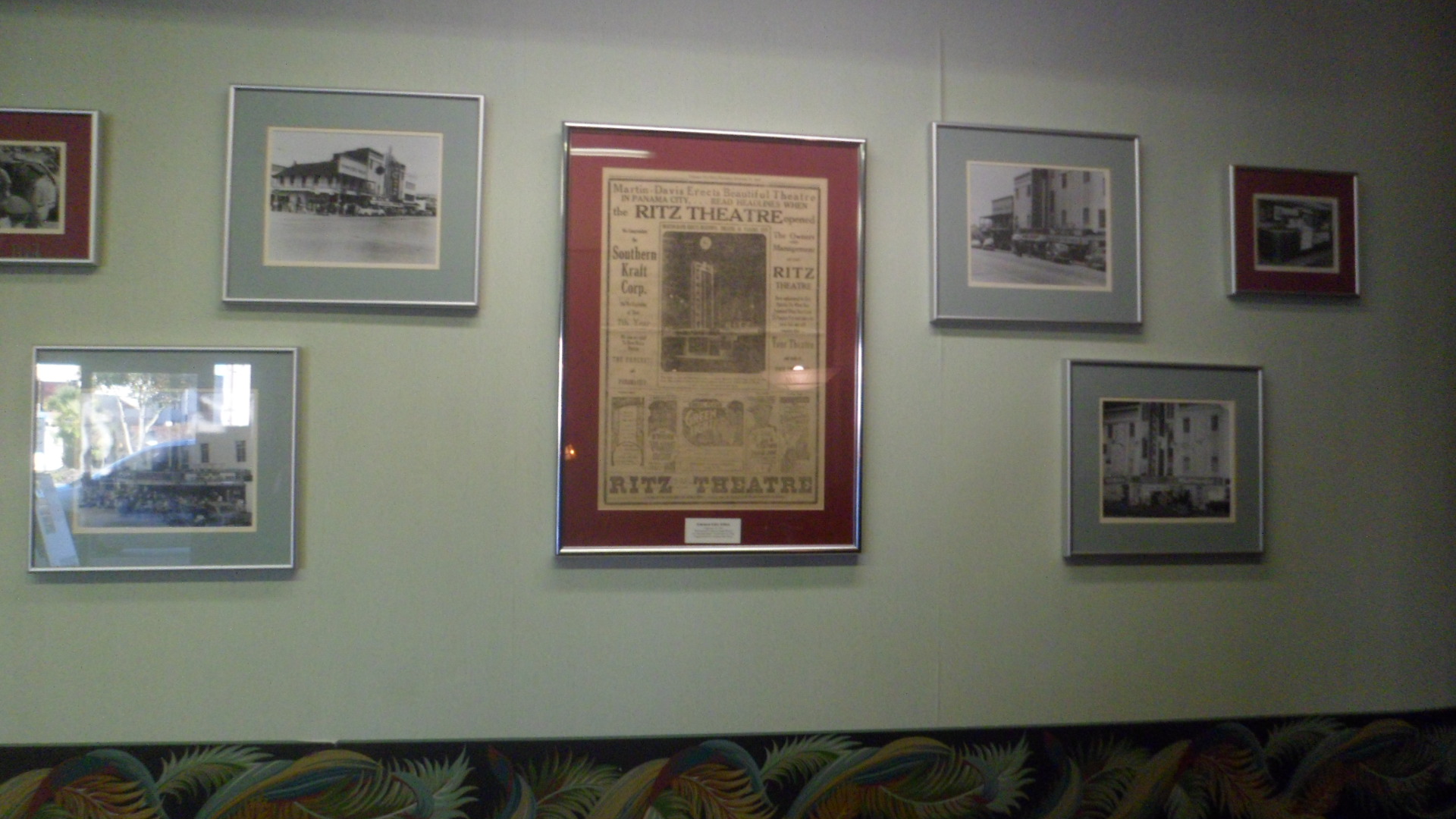
Here is a scene from the Martin Theater’s lobby. It has a long exchequer of fine performances, and still serves as Panama City’s center for showing art cinema.
That evening, after a marvelous meal of gumbo and rice, Kelly, Fernando and I headed for Kaleidoscope Theater and watched a pleasing, though overlong, production of a play entitled “There’s A Burglar In My Bed”- a British-style farce, where several people got in one another’s way, mostly in an inadvertent manner. It’s all great fun.